EP1686813A1 - signalling point - Google Patents
signalling point Download PDFInfo
- Publication number
- EP1686813A1 EP1686813A1 EP05300075A EP05300075A EP1686813A1 EP 1686813 A1 EP1686813 A1 EP 1686813A1 EP 05300075 A EP05300075 A EP 05300075A EP 05300075 A EP05300075 A EP 05300075A EP 1686813 A1 EP1686813 A1 EP 1686813A1
- Authority
- EP
- European Patent Office
- Prior art keywords
- signalling
- value
- linkset
- significant portion
- network
- Prior art date
- Legal status (The legal status is an assumption and is not a legal conclusion. Google has not performed a legal analysis and makes no representation as to the accuracy of the status listed.)
- Granted
Links
Images
Classifications
-
- H—ELECTRICITY
- H04—ELECTRIC COMMUNICATION TECHNIQUE
- H04Q—SELECTING
- H04Q3/00—Selecting arrangements
- H04Q3/0016—Arrangements providing connection between exchanges
- H04Q3/0025—Provisions for signalling
Definitions
- the invention relates to methods, and related apparatus, for controlling signalling points, such as signalling gateways, in signalling networks.
- PSTN public switched telephone network
- SS7 Signalling System No. 7
- SS7 Signalling System No. 7
- the SS7 protocol defines more than just a protocol for communication between switches. It also defmes an entire switching network for facilitating signalling for call establishment, routing, and information exchange functions of switched circuit networks.
- IP Intemet Protocol
- IETF Intemet Engineering Task Force
- SIGTRAN Group One IETF working group, called the SIGTRAN Group, is defining the protocols for back-hauling SS7 signalling messages across IP networks.
- signalling across an IP network involves replacing the lower levels of the SS7 layered protocol communications and transport layers with IP network protocol communications and transport layers.
- SIGTRAN SIGTRAN signalling gateways
- the signalling gateway can be distributed over several processes running in one or several computers, each of them being a Signalling Gateway Process (SGP). Every SGP belonging to a particular SG has the same SS7 point code (or the same list of PCs), with each SGP being connected to the SS7 network through redundant links.
- SGP Signalling Gateway Process
- each SGP is connected to Application Servers running the services.
- Each Application Server which can typically be identified with a single logical service, such as a Short Message Service Centre (SMSC), can be implemented in a distributed manner by one or more processes or computers - referred to as the Application Server Processes (ASPs).
- SMSC Short Message Service Centre
- ASPs Application Server Processes
- each SGP is typically directly connected to each ASP through an SCTP association such that there is one association between each SGP and each ASP.
- the Message Transfer Part (MTP) of the SS7 set of protocols serves for the transmission of the signalling messages and is arranged to ensure that signalling messages normally take the same route through the signalling network and in this way cannot overtake one another (see, for example, ITU recommendations Q. 701 through Q. 706).
- the signalling points are arranged so that signalling messages with a specific value in the signalling link selection field (SLS or SLS value) are always sent by MTP to a specific destination via the same signalling link in a given signalling link set, i.e., there is normally a fixed relationship between the SLS value of a message and an outbound signalling link of a signalling link set.
- SLS signalling link selection field
- Various techniques can then be employed to manage the situation where a signalling link goes out of service by reallocating messages having specific SLS values to other signalling links.
- the Protocol Data parameter contains a Signalling Link Selection parameter comprising 8 bits (unsigned integer).
- the Signalling Link Selection field contains the SLS bits from a routing label of an SS7 message justified to the least significant bit and in Network Byte Order. Unused bits are coded '0'.
- the full 8 bits of the SLS parameter of an M3UA data message can be used, for instance, to select the SCTP association and the stream to send the message over the IP network.
- the SLS parameter can have a different encoding according to the applicable variant of the SS7 standards. For instance, in ANSI 88 networks the SLS parameter is coded on 8 bits, but only 5 bits are used; in ANSI 96 networks, the SLS parameter is coded on 8 bits and the full 8 bits can be used; in ITU-T networks, the SLS parameter is coded on 4 bits only and in China, the SLS parameter is coded on 8 bits but only 4 bits are used.
- This invention relates to a routing process which allows a signalling point, such as a SIGTRAN Signalling Gateway, to distribute traffic over an available set of outgoing linksets and that serves to mitigate certain phenomena associated with the uneven distribution of messages.
- a signalling point such as a SIGTRAN Signalling Gateway
- the invention provides a method for controlling a signalling point in a signalling network to identify, using the value of a signalling link selection field within a message, a signalling link and a signalling linkset for forwarding the message, the method comprising the steps of:
- the function is a multiplication modulo 256 by a fixed parameter and the first range is values less than the fixed parameter minus 1 and the second range is values equal to or greater than the fixed parameter.
- the fixed parameter is 33, for instance for ANSI networks and 17 for ITU and Chinese networks.
- the signalling point is a signalling gateway linking an SS7 network and an IP network although it will be understood that application of the technique to similar or comparable environments is not excluded.
- the invention provides a signalling point for a signalling network, a method for controlling a signalling gateway and a computer program product for controlling a signalling gateway all using the above described techniques.
- each linkset 10 there is shown a set of linksets 10 each having M links 12 coupling a signalling point 14, which could be, for instance, a SIGTRAN signalling gateway, and an SS7 network 16. Where such an arrangement accords with applicable ANSI Specifications, each linkset 10 currently would have a maximum of sixteen links 12.
- Signalling point 14, is assumed to receive signalling messages from a sender (not shown) that could be a separate IP network in the case of a SIGTRAN gateway, but which could also be internal to the signalling network 16.
- the SS7 mechanism for distributing message traffic among M links in a linkset 10 is to use a field in the signalling messages called the signalling link selection parameter (SLS).
- SLS signalling link selection parameter
- signalling link selection parameters in incoming messages is assumed to be balanced by the sender - which in this example might be a SIGTRAN application server process (not shown) - prior to sending messages to signalling point 14.
- Signalling point 14 examines the signalling link selection code of each message and then determines outbound linkset and link identifiers and then dispatches the message in the corresponding link.
- the signalling points are arranged so that signalling messages with a specific value in the signalling link selection field are always sent to a specific destination via the same signalling link in a given signalling link set, i.e., there is normally a fixed relationship between the SLS value of a message and an outbound signalling link and signalling link set.
- Table I below shows an exemplary prior art signalling link selection code assignment, that is the linkset and data link ID selection sequence for a SLS growing linearly from 0 to 31, in the form Linkset 10 ID .data_link 12 ID (L.I), in the case of an ANSI 88 compatible SS7 network in the case where two signalling points are interconnected by two linksets that each comprise 16 links.
- the SLS value is taken to select the linkset and the data link in a given linkset modulo the number of linksets or links available.
- the most straightforward approach to selecting a linkset/link combination directly from the SLS value in a manner that provides backwards compatibility would be to use the M most significant bits of the SLS to select the linkset and L least significant bits used to select the link within the linkset where L is the number of bits used to encode the SLS parameter for the situation for which backwards compatibility is sought.
- the problem of such an approach is that the traffic is not evenly distributed in time on the routes in the case that a sender, such as an application server, balances the SLS values by generating SLS values sequentially across the full range of possible values as is often the case.
- the above-described simple routing algorithm would generate bursts of consecutive messages on the same linksets. These bursts can cause congestion problems at the data link level of the adjacent SS7 Point Code and possibly lead to link failure or loss of messages.
- a message is received and the SLS value extracted in generally known manner - step 20. If the SLS value is less than a value 2**L where L is the number of bits used to encode the SLS value for a backward compatible mode.
- L is the number of bits used to encode the SLS value for a backward compatible mode.
- the L lsb bits of the SLS value are used to select both the linkset and the data link in the linkset so that the messages are evenly distributed between the linksets.
- the multiplication by Z of the incoming SLS value introduces an offset that modifies the linkset id for each initial SLS value preserving an evenly uniform distribution of the linkset ids so as to obtain a linkset sequence that is more evenly distributed over time.
- Table III shows the selected linkset and link ids according to the initial SLS value for the largest ANSI configuration: 8 linksets with 16 data links each (only the first 128 SLS values are shown in Table III): SLS L.1 SLS L.1 SLS L.1 SLS L.1 SLS L.1 SLS L.1 SLS L.1 SLS L.1 0 0.0 8 0.8 16 0.0 24 0.8 32 1.0 40 1.8 48 1.0 56 1.8 1 1.1 9 1.9 17 1.1 25 1.9 33 2.1 41 2.9 49 2.1 57 2.9 2 2.2 10 2.10 18 2.2 26 2.10 34 3.2 42 3.10 50 3.2 58 3.10 3 3.3 11 3.11 19 3.3 27 3.11 35 4.3 43 4.11 50 4.3 59 4.11 4 4.4 12 4.12 20 4.4 28 4.12 36 5.4 44 5.12 52 5.4 60 5.12 5 5.5 13 5.13 21 5.5 29 5.13 37 6.5 45 6.13 53 6.5 61 6.13 6 6.6 14 6.14 22 6.6 30 6.14
- the selected linkset id changes with the SLS value and, where the SLS value grows sequentially, the traffic would be evenly distributed in time over on all routes without generating bursts of messages on any particular route.
- the underlined values are the distribution on linkset 0, for instance.
- SIGTRAN protocols More general background information regarding SIGTRAN protocols, reference may be made to the International Engineering Consortium, in document “SS7 Over IP Signalling Transport and SCTP,” which is available from the IEC website www.iec.org, and which is incorporated herein by reference as if reproduced in full.
Landscapes
- Engineering & Computer Science (AREA)
- Computer Networks & Wireless Communication (AREA)
- Data Exchanges In Wide-Area Networks (AREA)
- Acyclic And Carbocyclic Compounds In Medicinal Compositions (AREA)
- Small-Scale Networks (AREA)
Abstract
Description
- The invention relates to methods, and related apparatus, for controlling signalling points, such as signalling gateways, in signalling networks.
- Establishing connections between two telephones involves a complex interaction of digital messages, hereinafter referred to generally as signalling. Nowadays telephone systems perform what is known as "out-of-band" signalling. Out-of-band signalling means that the communications required between the switches and other equipment in the network take place on communication channels other than the channel by which the voice or data flows. Typically, the out-of-band signalling takes place by means of digital communication channels. Thus, the public switched telephone network (PSTN) generally uses two types of channels, media and signalling.
- Several protocols have been defined for out-of-band signalling. The most commonly used protocol, in North America, Asia and Europe, is known as Signalling System No. 7 (SS7). However, the SS7 protocol defines more than just a protocol for communication between switches. It also defmes an entire switching network for facilitating signalling for call establishment, routing, and information exchange functions of switched circuit networks.
- Since the amount of data transferred over data networks is now much larger than the voice traffic that is carried over the PSTN, carriers are in the process of consolidating both types of networks. In addition, telecommunication networks are increasingly making use of standard computing hardware in order to reduce IT costs.
- Therefore, there is a trend in the telephone industry to migrate telephone systems using SS7-based networks for signalling to Intemet Protocol (IP) networks. The Intemet protocols are standardised by the Intemet Engineering Task Force (IETF). Moving either or both of the media and signalling channels to an IP infrastructure involves the use of very different technologies and can be done independently. One IETF working group, called the SIGTRAN Group, is defining the protocols for back-hauling SS7 signalling messages across IP networks. Generally speaking, signalling across an IP network involves replacing the lower levels of the SS7 layered protocol communications and transport layers with IP network protocol communications and transport layers.
- The IETF in collaboration with the SIGTRAN group have taken the initiative to define open standards for transporting SS7 over IP networks. With SIGTRAN technology, telephone services which today lie on top of SS7 networks, can run Application Servers (ASs) lying on top of IP networks. The interworking with SS7 networks is performed by SIGTRAN signalling gateways (SGs).
- To enhance the availability of the signalling gateway, it can be distributed over several processes running in one or several computers, each of them being a Signalling Gateway Process (SGP). Every SGP belonging to a particular SG has the same SS7 point code (or the same list of PCs), with each SGP being connected to the SS7 network through redundant links.
- On the IP side, each SGP is connected to Application Servers running the services. Each Application Server, which can typically be identified with a single logical service, such as a Short Message Service Centre (SMSC), can be implemented in a distributed manner by one or more processes or computers - referred to as the Application Server Processes (ASPs). To provide improved reliability, each SGP is typically directly connected to each ASP through an SCTP association such that there is one association between each SGP and each ASP.
- The Message Transfer Part (MTP) of the SS7 set of protocols serves for the transmission of the signalling messages and is arranged to ensure that signalling messages normally take the same route through the signalling network and in this way cannot overtake one another (see, for example, ITU recommendations Q. 701 through Q. 706). Thus the signalling points are arranged so that signalling messages with a specific value in the signalling link selection field (SLS or SLS value) are always sent by MTP to a specific destination via the same signalling link in a given signalling link set, i.e., there is normally a fixed relationship between the SLS value of a message and an outbound signalling link of a signalling link set. Various techniques can then be employed to manage the situation where a signalling link goes out of service by reallocating messages having specific SLS values to other signalling links.
- In the relevant SIGTRAN standard (M3UA) defmed by RFC3332, the Protocol Data parameter contains a Signalling Link Selection parameter comprising 8 bits (unsigned integer). The Signalling Link Selection field contains the SLS bits from a routing label of an SS7 message justified to the least significant bit and in Network Byte Order. Unused bits are coded '0'.
- Thus in IP networks, the full 8 bits of the SLS parameter of an M3UA data message can be used, for instance, to select the SCTP association and the stream to send the message over the IP network.
- In SS7 networks on the other hand, the SLS parameter can have a different encoding according to the applicable variant of the SS7 standards. For instance, in ANSI 88 networks the SLS parameter is coded on 8 bits, but only 5 bits are used; in ANSI 96 networks, the SLS parameter is coded on 8 bits and the full 8 bits can be used; in ITU-T networks, the SLS parameter is coded on 4 bits only and in China, the SLS parameter is coded on 8 bits but only 4 bits are used.
- As the bandwidth of a modem IP network is typically much greater than that of legacy SS7 network, it is desirable to make use of the full 8 bits of the SLS parameter to enable a Signalling Gateway to loadshare the signalling traffic coming from the Application Servers over multiple outgoing linksets, each of which have a relatively limited bandwidth in legacy SS7 networks. For instance, in ITU and
Chinese networks 16 linksets of 16 data links can be used and in ANSI networks 8 linksets of 16 data links can be used. - This invention relates to a routing process which allows a signalling point, such as a SIGTRAN Signalling Gateway, to distribute traffic over an available set of outgoing linksets and that serves to mitigate certain phenomena associated with the uneven distribution of messages.
- To achieve this the invention provides a method for controlling a signalling point in a signalling network to identify, using the value of a signalling link selection field within a message, a signalling link and a signalling linkset for forwarding the message, the method comprising the steps of:
- dividing the value into a most significant portion and a least significant portion;
- deriving an identifier for the signalling link from the least significant portion;
- if the value is within a first range, deriving an identifier for the specific signalling linkset from the least significant portion of the value;
- if the value is within a second range; determining a quantity which is a function of the value and
- deriving an identifier for the specific signalling linkset from the most significant portion of the quantity, wherein the function is such that successive values of signalling link selection field are mapped to different values of the linkset identifier.
- In preferred embodiments, the function is a
multiplication modulo 256 by a fixed parameter and the first range is values less than the fixed parameter minus 1 and the second range is values equal to or greater than the fixed parameter. - The fixed parameter is 33, for instance for ANSI networks and 17 for ITU and Chinese networks.
- In preferred embodiments, the signalling point is a signalling gateway linking an SS7 network and an IP network although it will be understood that application of the technique to similar or comparable environments is not excluded.
- Thus, in other aspects, the invention provides a signalling point for a signalling network, a method for controlling a signalling gateway and a computer program product for controlling a signalling gateway all using the above described techniques.
- Embodiments of the invention will now be described by way of example only with reference to the accompanying drawings, wherein:
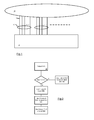
- Figure 1 illustrates a signalling point and an SS7 network;
- Figure 2 is a flow diagram illustrating the steps of a method.
- In FIG. 1, there is shown a set of
linksets 10 each having M links 12 coupling asignalling point 14, which could be, for instance, a SIGTRAN signalling gateway, and anSS7 network 16. Where such an arrangement accords with applicable ANSI Specifications, eachlinkset 10 currently would have a maximum of sixteenlinks 12.Signalling point 14, is assumed to receive signalling messages from a sender (not shown) that could be a separate IP network in the case of a SIGTRAN gateway, but which could also be internal to thesignalling network 16. - As is well known, the SS7 mechanism for distributing message traffic among M links in a
linkset 10 is to use a field in the signalling messages called the signalling link selection parameter (SLS). - It should be noted that the distribution of the values of signalling link selection parameters in incoming messages is assumed to be balanced by the sender - which in this example might be a SIGTRAN application server process (not shown) - prior to sending messages to
signalling point 14.Signalling point 14 examines the signalling link selection code of each message and then determines outbound linkset and link identifiers and then dispatches the message in the corresponding link. As is well known it is a requirement that the signalling points are arranged so that signalling messages with a specific value in the signalling link selection field are always sent to a specific destination via the same signalling link in a given signalling link set, i.e., there is normally a fixed relationship between the SLS value of a message and an outbound signalling link and signalling link set. - Table I below shows an exemplary prior art signalling link selection code assignment, that is the linkset and data link ID selection sequence for a SLS growing linearly from 0 to 31, in the
form Linkset 10ID .data_link 12 ID (L.I), in the case of an ANSI 88 compatible SS7 network in the case where two signalling points are interconnected by two linksets that each comprise 16 links. In this standard example, the SLS value is taken to select the linkset and the data link in a given linkset modulo the number of linksets or links available.Table I (PRIOR ART) SLS L.I SLS L.I SLS L.I SLS L.I 0 0.0 8 0.8 16 0.0 24 0.8 1 1.1 9 1.9 17 1.1 25 1.9 2 0.2 10 0.10 18 0.2 26 0.10 3 1.3 11 1.11 19 1.3 27 1.11 4 0.4 12 0.12 20 0.4 28 0.12 5 1.5 13 1.13 21 1.5 29 1.13 6 0.6 14 0.14 22 0.6 30 0.14 7 1.7 15 1.15 23 1.7 31 1.15 - For large link configurations, where the SLS parameter is coded on the full 8 bits, the most straightforward approach to selecting a linkset/link combination directly from the SLS value in a manner that provides backwards compatibility would be to use the M most significant bits of the SLS to select the linkset and L least significant bits used to select the link within the linkset where L is the number of bits used to encode the SLS parameter for the situation for which backwards compatibility is sought. The problem of such an approach is that the traffic is not evenly distributed in time on the routes in the case that a sender, such as an application server, balances the SLS values by generating SLS values sequentially across the full range of possible values as is often the case. In this case, the above-described simple routing algorithm would generate bursts of consecutive messages on the same linksets. These bursts can cause congestion problems at the data link level of the adjacent SS7 Point Code and possibly lead to link failure or loss of messages.
- This can be understood by reference to Table II which shows the selected linkset and data link identifiers generated using the above-described approach for an 8 bits SLS for the largest ANSI configuration comprising 8 linksets of 16 data links each for the first 128 SLS values only.
- It can be seen from Table II that in some cases the linkset id stays unchanged with the SLS value during 32 consecutive values.
- A similar behaviour can be observed for ITU-T and China with 16 linksets of 16 data links each.
Table II SLS L.1 SLS L.1 SLS L.1 SLS L.1 SLS L.1 SLS L.1 SLS L.1 SLS L.1 0 0.0 8 0.8 16 0.0 24 0.8 32 1.0 40 1.8 48 1.0 56 1.8 1 1.1 9 1.9 17 1.1 25 1.9 33 1.1 41 1.9 49 1.1 57 1.9 2 2.2 10 2.10 18 2.2 26 2.10 34 1.2 42 1.10 50 1.2 58 1.10 3 3.3 11 3.11 19 3.3 27 3.11 35 1.3 43 1.11 50 1.3 59 1.11 4 4.4 12 4.12 20 4.4 28 4.12 36 1.4 44 1.12 52 1.4 60 1.12 5 5.5 13 5.13 21 5.5 29 5.13 37 1.5 45 1.13 53 1.5 61 1.13 6 6.6 14 6.14 22 6.6 30 6.14 38 1.6 46 1.14 54 1.6 62 1.14 7 7.7 15 7.15 23 7.7 31 7.15 39 1.7 47 1.15 55 1.7 63 1.15 SLS L.1 SLS L.1 SLS L.1 SLS L.1 SLS L.1 SLS L.1 SLS L.1 SLS L.1 64 2.0 72 2.8 80 2.0 88 2.8 96 3.0 104 3.8 112 3.0 120 3.8 65 2.1 73 2.9 81 2.1 89 2.9 97 3.1 105 3.9 113 3.1 121 3.9 66 2.2 74 2.10 82 2.2 90 2.10 98 3.2 106 3.10 114 3.2 122 3.10 67 2.3 74 2.11 83 2.3 91 2.11 99 3.3 107 3.11 115 3.3 123 3.11 68 2.4 76 2.12 84 2.4 92 2.12 100 3.4 108 3.12 116 3.4 123 3.12 69 2.5 77 2.13 85 2.5 93 2.13 101 3.5 109 3.13 117 3.5 125 3.13 70 2.6 78 2.14 86 2.6 94 2.14 102 3.6 110 3.14 118 3.6 126 3.14 71 2.7 79 2.15 87 2.7 95 2.15 103 3.7 111 3.15 119 3.7 127 3.15 - There will now be described a link selection method that mitigates the above described drawback.
- First a message is received and the SLS value extracted in generally known manner -
step 20. If the SLS value is less than avalue 2**L where L is the number of bits used to encode the SLS value for a backward compatible mode. When the SLS is coded on 8 bits for instance, L= 5 and the maximum backward compatible SLS value that guarantees the backward compatibility with all the releases of a same MTP3 protocol variant (ANSI or ITU-T) is 32 and for ITU & China, L=4. - In this backward compatible mode, the L lsb bits of the SLS value are used to select both the linkset and the data link in the linkset so that the messages are evenly distributed between the linksets.
- If the SLS value is greater or equal than L**2, the input SLS value is multiplied by a parameter Z modulo 256 and the M msb bits of the result are used to select the linkset. Finally the L lsb bits of the initial SLS value are used to select the data link in the linkset with (M=3, L=5) for ANSI and (M=L=4) for ITU & China.
- The value of Z can be equal to the maximum backward compatible value of the SLS plus one: i.e. Z = 2**L + 1 , i.e 33 with L=5 for ANSI and 17 with L=4 for ITU & China.
- The multiplication by Z of the incoming SLS value introduces an offset that modifies the linkset id for each initial SLS value preserving an evenly uniform distribution of the linkset ids so as to obtain a linkset sequence that is more evenly distributed over time.
- Table III shows the selected linkset and link ids according to the initial SLS value for the largest ANSI configuration: 8 linksets with 16 data links each (only the first 128 SLS values are shown in Table III):
SLS L.1 SLS L.1 SLS L.1 SLS L.1 SLS L.1 SLS L.1 SLS L.1 SLS L.1 0 0.0 8 0.8 16 0.0 24 0.8 32 1.0 40 1.8 48 1.0 56 1.8 1 1.1 9 1.9 17 1.1 25 1.9 33 2.1 41 2.9 49 2.1 57 2.9 2 2.2 10 2.10 18 2.2 26 2.10 34 3.2 42 3.10 50 3.2 58 3.10 3 3.3 11 3.11 19 3.3 27 3.11 35 4.3 43 4.11 50 4.3 59 4.11 4 4.4 12 4.12 20 4.4 28 4.12 36 5.4 44 5.12 52 5.4 60 5.12 5 5.5 13 5.13 21 5.5 29 5.13 37 6.5 45 6.13 53 6.5 61 6.13 6 6.6 14 6.14 22 6.6 30 6.14 38 7.6 46 7.14 54 7.6 62 7.14 7 7.7 15 7.15 23 7.7 31 7.15 39 0.7 47 0.15 55 0.7 63 0.15 SLS L.1 SLS L.1 SLS L.1 SLS L.1 SLS L.1 SLS L.1 SLS L.1 SLS L.1 64 2.0 72 2.8 80 2.0 88 2.8 96 3.0 104 3.8 112 3.0 120 3.8 65 3.1 73 3.9 81 3.1 89 3.9 97 4.1 105 4.9 113 4.1 121 4.9 66 4.2 74 4.10 82 4.2 90 4.10 98 5.2 106 5.10 114 5.2 122 5.10 67 5.3 74 5.11 83 5.3 91 5.11 99 6.3 107 6.11 115 6.3 123 6.11 68 6.4 76 6.12 84 6.4 92 6.12 100 7.4 108 7.12 116 7.4 123 7.12 69 7.5 77 7.13 85 7.5 93 7.13 101 0.5 109 0.13 117 0.5 125 0.13 70 0.6 78 0.14 86 0.6 94 0.14 102 1.6 110 1.14 118 1.6 126 1.14 71 1.7 79 1.15 87 1.7 95 1.15 103 2.7 111 2.15 119 2.7 127 2.15 - It can be seen that the selected linkset id changes with the SLS value and, where the SLS value grows sequentially, the traffic would be evenly distributed in time over on all routes without generating bursts of messages on any particular route. The underlined values are the distribution on linkset 0, for instance.
- A similar behaviour can be obtained for the encodings for ITU-T and Chinese variants with 16 linksets of 16 data links each.
- In this way traffic can be evenly loadshared on the available routes and links avoiding congestion of adjacent SS7 network nodes. The CPU cost of calculating the link and linkset ID from the SLS value is low and the above described technique can provide backward compatibility with all the protocol releases and variants of MTP3, ANSI 88, ANSI 96, ITU-T White Book, Blue Book, Red Book and China.
- It will be understood that the same method can be used by an SUA Signalling Gateway to route SCCP class 0 messages coming from a SUA AS to route on SS7 via MTP3 or in any other similar or comparable circumstances.
- The foregoing discussion is premised upon one of ordinary skill in the art having a working understanding of the character and format of switching signals in the SS7 network, as well as the character and nature of converting SS7 signals for transport across IP networks. For additional information regarding SS7 network switching over IP networks, reference may be made to the (IETF) working drafts "Signalling Connecting Control Part User Adaptation Layer (SUA)" available from the IETF website at www.ietf.org, and IETF RFC 3332 "SS7 MTP3 - User Adaptation Layer (M3UA)", available from the IETF website, and which is incorporated herein by reference as if reproduced in full. It is noted that each of these IETF documents is a work in progress and is therefore subject to change. However, these documents exemplify the changes necessary to a standard SS7 signalling system for its implementation in an IP network context. As well as defming the functions of signalling gateways and signalling gateway processes, the SIGTRAN documents referred to above specify in detail the protocols to be implemented between an SGP and an ASP.
- More general background information regarding SIGTRAN protocols, reference may be made to the International Engineering Consortium, in document "SS7 Over IP Signalling Transport and SCTP," which is available from the IEC website www.iec.org, and which is incorporated herein by reference as if reproduced in full.
- It will be appreciated that commercialised forms of the present embodiment would in practice take the form of a set of computer programs adapted to run on specialised telecommunications platforms within general or special purpose operating environments such as are provided by the Linux or HP-UX operating systems and their related programming libraries and tools. These programs may be marketed in the form of suitably coded computer program products including program code elements that implement the functionality described. It will be appreciated though that the techniques described may equally be implemented as special purpose hardware or any combination of software, hardware and/or firmware.
- The above discussion is meant to be illustrative of the principles and various embodiments of the present invention. Numerous variations and modifications in each of the illustrated examples will become apparent to those skilled in the art once the above disclosure is fully appreciated. It is intended that the following claims be interpreted to embrace all such variations and modifications.
Claims (18)
- A method for controlling a signalling point in a signalling network to identify, using the value of a signalling link selection field within a message, a signalling link and a signalling linkset for forwarding the message, the method comprising the steps of:dividing the value into a most significant portion and a least significant portion;deriving an identifier for the signalling link from the least significant portion;if the value is within a first range, deriving an identifier for the specific signalling linkset from the least significant portion of the value;if the value is within a second range; determining a quantity which is a function of the value andderiving an identifier for the specific signalling linkset from the most significant portion of the quantity, wherein the function is such that successive values of signalling link selection field are mapped to different values of the linkset identifier.
- A method as claimed in claim 1 wherein the function is a multiplication modulo 256 by a fixed parameter.
- A method as claimed in claim 2 wherein the first range is values less than the fixed parameter minus 1 and the second range is values equal to or greater than the fixed parameter.
- A method as claimed in claim 3 wherein the fixed parameter is 33.
- A method as claimed in claim 3 wherein the fixed parameter is 17.
- A method as claimed in any preceding claim wherein the signalling point is a signalling gateway linking an SS7 network and an IP network.
- A signalling point for a signalling network comprising an arrangement for identifing, using the value of a signalling link selection field within a message, a signalling link and a signalling linkset for forwarding the message, the arrangement comprising the steps of:logic for dividing the value into a most significant portion and a least significant portion;logic for deriving an identifier for the signalling link from the least significant portion;logic for determining if the value is within a first range and if so deriving an identifier for the specific signalling linkset from the least significant portion of the value;logic for determining if the value is within a second range and , if so, determining a quantity which is a function of the value and deriving an identifier for the specific signalling linkset from the most significant portion of the quantity, wherein the function is such that successive values of signalling link selection field are mapped to different values of the linkset identifier.
- A signalling point as claimed in claim 7 wherein the function is a multiplication modulo 256 by a fixed parameter.
- A signalling point as claimed in claim 8 wherein the first range is values less than the fixed parameter minus 1 and the second range is values equal to or greater than the fixed parameter.
- A signalling point as claimed in claim 9 wherein the fixed parameter is 33.
- A signalling point as claimed in claim 9 wherein the fixed parameter is 17.
- A signalling point as claimed in any of claims 7 to 11 wherein the signalling point is a signalling gateway linking an SS7 network and an IP network.
- A method for controlling a signalling gateway linking an SS7 network and an IP network point to identify, using the value of a signalling link selection field within a message, a signalling link and a signalling linkset for forwarding the message to the SS7 network, the method comprising the steps of:dividing the value into a most significant portion and a least significant portion;deriving an identifier for the signalling link from the least significant portion;if the value is less than a fixed parameter minus 1, deriving an identifier for the specific signalling linkset from the least significant portion of the value;if the value is greater than the fixed paramter; multiplying the value modulo 256 by the fixed parameter and deriving an identifier for the specific signalling linkset from the most significant portion of the result.
- A method as claimed in claim 3 wherein the fixed parameter is 33.
- A method as claimed in claim 3 wherein the fixed parameter is 17.
- A computer program product for controlling a signalling gateway linking an SS7 network and an IP network point to identify, using the value of a signalling link selection field within a message, a signalling link and a signalling linkset for forwarding the message to the SS7 network, the program product comprising program code elements for:dividing the value into a most significant portion and a least significant portion;deriving an identifier for the signalling link from the least significant portion;if the value is less than a fixed parameter minus 1, deriving an identifier for the specific signalling linkset from the least significant portion of the value;if the value is greater than the fixed parameter; multiplying the value modulo 256 by the fixed parameter and deriving an identifier for the specific signalling linkset from the most significant portion of the result.
- A method as claimed in claim 16 wherein the fixed parameter is 33.
- A method as claimed in claim 16 wherein the fixed parameter is 17.
Priority Applications (3)
| Application Number | Priority Date | Filing Date | Title |
|---|---|---|---|
| EP05300075A EP1686813B1 (en) | 2005-01-31 | 2005-01-31 | signalling point |
| AT05300075T ATE401747T1 (en) | 2005-01-31 | 2005-01-31 | SIGNING POINT |
| DE602005008186T DE602005008186D1 (en) | 2005-01-31 | 2005-01-31 | Signaling point |
Applications Claiming Priority (1)
| Application Number | Priority Date | Filing Date | Title |
|---|---|---|---|
| EP05300075A EP1686813B1 (en) | 2005-01-31 | 2005-01-31 | signalling point |
Publications (2)
| Publication Number | Publication Date |
|---|---|
| EP1686813A1 true EP1686813A1 (en) | 2006-08-02 |
| EP1686813B1 EP1686813B1 (en) | 2008-07-16 |
Family
ID=34942496
Family Applications (1)
| Application Number | Title | Priority Date | Filing Date |
|---|---|---|---|
| EP05300075A Expired - Lifetime EP1686813B1 (en) | 2005-01-31 | 2005-01-31 | signalling point |
Country Status (3)
| Country | Link |
|---|---|
| EP (1) | EP1686813B1 (en) |
| AT (1) | ATE401747T1 (en) |
| DE (1) | DE602005008186D1 (en) |
Citations (2)
| Publication number | Priority date | Publication date | Assignee | Title |
|---|---|---|---|---|
| EP0912068A2 (en) * | 1997-10-20 | 1999-04-28 | Fujitsu Limited | Method for selecting a signaling link |
| US20040015964A1 (en) * | 2001-04-25 | 2004-01-22 | Mccann Thomas Matthew | Methods and systems for load sharing signaling messages among signaling links in networks utilizing international signaling protocols |
-
2005
- 2005-01-31 EP EP05300075A patent/EP1686813B1/en not_active Expired - Lifetime
- 2005-01-31 DE DE602005008186T patent/DE602005008186D1/en not_active Expired - Lifetime
- 2005-01-31 AT AT05300075T patent/ATE401747T1/en not_active IP Right Cessation
Patent Citations (2)
| Publication number | Priority date | Publication date | Assignee | Title |
|---|---|---|---|---|
| EP0912068A2 (en) * | 1997-10-20 | 1999-04-28 | Fujitsu Limited | Method for selecting a signaling link |
| US20040015964A1 (en) * | 2001-04-25 | 2004-01-22 | Mccann Thomas Matthew | Methods and systems for load sharing signaling messages among signaling links in networks utilizing international signaling protocols |
Also Published As
| Publication number | Publication date |
|---|---|
| DE602005008186D1 (en) | 2008-08-28 |
| ATE401747T1 (en) | 2008-08-15 |
| EP1686813B1 (en) | 2008-07-16 |
Similar Documents
| Publication | Publication Date | Title |
|---|---|---|
| EP1356686B1 (en) | Distributed signaling gateway | |
| EP1974282B1 (en) | Methods, systems, and computer program products for decentralized processing of signaling messages in a multi-application processing environment | |
| US20080317055A1 (en) | Shared risk group handling within a media gateway | |
| US20030206519A1 (en) | System and method for encoding and decoding messages | |
| AU761977B2 (en) | Security in telecommunications network gateways | |
| US9294344B2 (en) | Shared risk group handling within a media gateway | |
| US20050047401A1 (en) | Methods and apparatus for controlling signalling gateways | |
| US7257215B2 (en) | Load sharing in SS7 networks | |
| GB2410395A (en) | Signalling gateway aggregation | |
| US7675900B1 (en) | System and method for interfacing between signaling protocols | |
| EP1665824B1 (en) | Methods and apparatus for controlling signalling gateways | |
| AU768584B2 (en) | Media gateway control | |
| EP1619845B1 (en) | Methods and apparatus for providing signalling gateways with multi-network support | |
| EP1776838B1 (en) | Signalling gateway | |
| EP1643777B1 (en) | Methods and apparatus for controlling signalling gateways | |
| EP1686813B1 (en) | signalling point | |
| US7599352B2 (en) | Method for providing PSTN/ISDN services in next generation networks | |
| US20040008668A1 (en) | Method for the transmission of digital data over several data transmission networks, the associated units and associated program | |
| US7512152B1 (en) | Method for using digital data networks for the transmission of data via voice connection paths | |
| EP1197095B1 (en) | Method and media controller for sending signalling messages over a communication system comprising two different transport networks | |
| CN1239637A (en) | Means for interleaving data and signaling information | |
| US7006492B2 (en) | Method and apparatus for connecting networks of different types of transmission | |
| EP1095524B1 (en) | Signalling in a telecommunications network | |
| CN1402942A (en) | Gateway for connecting telecommunications networks and corresponding method | |
| HK1035292B (en) | Access network and information communication method for access network |
Legal Events
| Date | Code | Title | Description |
|---|---|---|---|
| PUAI | Public reference made under article 153(3) epc to a published international application that has entered the european phase |
Free format text: ORIGINAL CODE: 0009012 |
|
| AK | Designated contracting states |
Kind code of ref document: A1 Designated state(s): AT BE BG CH CY CZ DE DK EE ES FI FR GB GR HU IE IS IT LI LT LU MC NL PL PT RO SE SI SK TR |
|
| AX | Request for extension of the european patent |
Extension state: AL BA HR LV MK YU |
|
| 17P | Request for examination filed |
Effective date: 20070130 |
|
| AKX | Designation fees paid |
Designated state(s): AT BE BG CH CY CZ DE DK EE ES FI FR GB GR HU IE IS IT LI LT LU MC NL PL PT RO SE SI SK TR |
|
| 17Q | First examination report despatched |
Effective date: 20070328 |
|
| GRAP | Despatch of communication of intention to grant a patent |
Free format text: ORIGINAL CODE: EPIDOSNIGR1 |
|
| GRAS | Grant fee paid |
Free format text: ORIGINAL CODE: EPIDOSNIGR3 |
|
| GRAA | (expected) grant |
Free format text: ORIGINAL CODE: 0009210 |
|
| AK | Designated contracting states |
Kind code of ref document: B1 Designated state(s): AT BE BG CH CY CZ DE DK EE ES FI FR GB GR HU IE IS IT LI LT LU MC NL PL PT RO SE SI SK TR |
|
| REG | Reference to a national code |
Ref country code: GB Ref legal event code: FG4D |
|
| REG | Reference to a national code |
Ref country code: CH Ref legal event code: EP |
|
| REF | Corresponds to: |
Ref document number: 602005008186 Country of ref document: DE Date of ref document: 20080828 Kind code of ref document: P |
|
| REG | Reference to a national code |
Ref country code: IE Ref legal event code: FG4D |
|
| REG | Reference to a national code |
Ref country code: SE Ref legal event code: TRGR |
|
| NLV1 | Nl: lapsed or annulled due to failure to fulfill the requirements of art. 29p and 29m of the patents act | ||
| PG25 | Lapsed in a contracting state [announced via postgrant information from national office to epo] |
Ref country code: LT Free format text: LAPSE BECAUSE OF FAILURE TO SUBMIT A TRANSLATION OF THE DESCRIPTION OR TO PAY THE FEE WITHIN THE PRESCRIBED TIME-LIMIT Effective date: 20080716 Ref country code: IS Free format text: LAPSE BECAUSE OF FAILURE TO SUBMIT A TRANSLATION OF THE DESCRIPTION OR TO PAY THE FEE WITHIN THE PRESCRIBED TIME-LIMIT Effective date: 20081116 Ref country code: NL Free format text: LAPSE BECAUSE OF FAILURE TO SUBMIT A TRANSLATION OF THE DESCRIPTION OR TO PAY THE FEE WITHIN THE PRESCRIBED TIME-LIMIT Effective date: 20080716 |
|
| PG25 | Lapsed in a contracting state [announced via postgrant information from national office to epo] |
Ref country code: AT Free format text: LAPSE BECAUSE OF FAILURE TO SUBMIT A TRANSLATION OF THE DESCRIPTION OR TO PAY THE FEE WITHIN THE PRESCRIBED TIME-LIMIT Effective date: 20080716 Ref country code: BG Free format text: LAPSE BECAUSE OF FAILURE TO SUBMIT A TRANSLATION OF THE DESCRIPTION OR TO PAY THE FEE WITHIN THE PRESCRIBED TIME-LIMIT Effective date: 20081016 Ref country code: FI Free format text: LAPSE BECAUSE OF FAILURE TO SUBMIT A TRANSLATION OF THE DESCRIPTION OR TO PAY THE FEE WITHIN THE PRESCRIBED TIME-LIMIT Effective date: 20080716 Ref country code: ES Free format text: LAPSE BECAUSE OF FAILURE TO SUBMIT A TRANSLATION OF THE DESCRIPTION OR TO PAY THE FEE WITHIN THE PRESCRIBED TIME-LIMIT Effective date: 20081027 Ref country code: PT Free format text: LAPSE BECAUSE OF FAILURE TO SUBMIT A TRANSLATION OF THE DESCRIPTION OR TO PAY THE FEE WITHIN THE PRESCRIBED TIME-LIMIT Effective date: 20081216 Ref country code: SI Free format text: LAPSE BECAUSE OF FAILURE TO SUBMIT A TRANSLATION OF THE DESCRIPTION OR TO PAY THE FEE WITHIN THE PRESCRIBED TIME-LIMIT Effective date: 20080716 |
|
| PG25 | Lapsed in a contracting state [announced via postgrant information from national office to epo] |
Ref country code: BE Free format text: LAPSE BECAUSE OF FAILURE TO SUBMIT A TRANSLATION OF THE DESCRIPTION OR TO PAY THE FEE WITHIN THE PRESCRIBED TIME-LIMIT Effective date: 20080716 |
|
| PG25 | Lapsed in a contracting state [announced via postgrant information from national office to epo] |
Ref country code: EE Free format text: LAPSE BECAUSE OF FAILURE TO SUBMIT A TRANSLATION OF THE DESCRIPTION OR TO PAY THE FEE WITHIN THE PRESCRIBED TIME-LIMIT Effective date: 20080716 Ref country code: DK Free format text: LAPSE BECAUSE OF FAILURE TO SUBMIT A TRANSLATION OF THE DESCRIPTION OR TO PAY THE FEE WITHIN THE PRESCRIBED TIME-LIMIT Effective date: 20080716 |
|
| PLBE | No opposition filed within time limit |
Free format text: ORIGINAL CODE: 0009261 |
|
| STAA | Information on the status of an ep patent application or granted ep patent |
Free format text: STATUS: NO OPPOSITION FILED WITHIN TIME LIMIT |
|
| PG25 | Lapsed in a contracting state [announced via postgrant information from national office to epo] |
Ref country code: CZ Free format text: LAPSE BECAUSE OF FAILURE TO SUBMIT A TRANSLATION OF THE DESCRIPTION OR TO PAY THE FEE WITHIN THE PRESCRIBED TIME-LIMIT Effective date: 20080716 Ref country code: RO Free format text: LAPSE BECAUSE OF FAILURE TO SUBMIT A TRANSLATION OF THE DESCRIPTION OR TO PAY THE FEE WITHIN THE PRESCRIBED TIME-LIMIT Effective date: 20080716 Ref country code: SK Free format text: LAPSE BECAUSE OF FAILURE TO SUBMIT A TRANSLATION OF THE DESCRIPTION OR TO PAY THE FEE WITHIN THE PRESCRIBED TIME-LIMIT Effective date: 20080716 |
|
| 26N | No opposition filed |
Effective date: 20090417 |
|
| PG25 | Lapsed in a contracting state [announced via postgrant information from national office to epo] |
Ref country code: MC Free format text: LAPSE BECAUSE OF NON-PAYMENT OF DUE FEES Effective date: 20090131 Ref country code: IT Free format text: LAPSE BECAUSE OF FAILURE TO SUBMIT A TRANSLATION OF THE DESCRIPTION OR TO PAY THE FEE WITHIN THE PRESCRIBED TIME-LIMIT Effective date: 20080716 |
|
| REG | Reference to a national code |
Ref country code: CH Ref legal event code: PL |
|
| PG25 | Lapsed in a contracting state [announced via postgrant information from national office to epo] |
Ref country code: LI Free format text: LAPSE BECAUSE OF NON-PAYMENT OF DUE FEES Effective date: 20090131 Ref country code: CH Free format text: LAPSE BECAUSE OF NON-PAYMENT OF DUE FEES Effective date: 20090131 |
|
| PG25 | Lapsed in a contracting state [announced via postgrant information from national office to epo] |
Ref country code: IE Free format text: LAPSE BECAUSE OF NON-PAYMENT OF DUE FEES Effective date: 20090131 |
|
| PG25 | Lapsed in a contracting state [announced via postgrant information from national office to epo] |
Ref country code: PL Free format text: LAPSE BECAUSE OF FAILURE TO SUBMIT A TRANSLATION OF THE DESCRIPTION OR TO PAY THE FEE WITHIN THE PRESCRIBED TIME-LIMIT Effective date: 20080716 |
|
| PG25 | Lapsed in a contracting state [announced via postgrant information from national office to epo] |
Ref country code: GR Free format text: LAPSE BECAUSE OF FAILURE TO SUBMIT A TRANSLATION OF THE DESCRIPTION OR TO PAY THE FEE WITHIN THE PRESCRIBED TIME-LIMIT Effective date: 20081017 |
|
| PG25 | Lapsed in a contracting state [announced via postgrant information from national office to epo] |
Ref country code: LU Free format text: LAPSE BECAUSE OF NON-PAYMENT OF DUE FEES Effective date: 20090131 |
|
| PG25 | Lapsed in a contracting state [announced via postgrant information from national office to epo] |
Ref country code: HU Free format text: LAPSE BECAUSE OF FAILURE TO SUBMIT A TRANSLATION OF THE DESCRIPTION OR TO PAY THE FEE WITHIN THE PRESCRIBED TIME-LIMIT Effective date: 20090117 |
|
| PG25 | Lapsed in a contracting state [announced via postgrant information from national office to epo] |
Ref country code: TR Free format text: LAPSE BECAUSE OF FAILURE TO SUBMIT A TRANSLATION OF THE DESCRIPTION OR TO PAY THE FEE WITHIN THE PRESCRIBED TIME-LIMIT Effective date: 20080716 |
|
| PG25 | Lapsed in a contracting state [announced via postgrant information from national office to epo] |
Ref country code: CY Free format text: LAPSE BECAUSE OF FAILURE TO SUBMIT A TRANSLATION OF THE DESCRIPTION OR TO PAY THE FEE WITHIN THE PRESCRIBED TIME-LIMIT Effective date: 20080716 |
|
| REG | Reference to a national code |
Ref country code: FR Ref legal event code: PLFP Year of fee payment: 12 |
|
| PGFP | Annual fee paid to national office [announced via postgrant information from national office to epo] |
Ref country code: GB Payment date: 20151224 Year of fee payment: 12 |
|
| PGFP | Annual fee paid to national office [announced via postgrant information from national office to epo] |
Ref country code: SE Payment date: 20151223 Year of fee payment: 12 Ref country code: FR Payment date: 20151222 Year of fee payment: 12 |
|
| PGFP | Annual fee paid to national office [announced via postgrant information from national office to epo] |
Ref country code: DE Payment date: 20151217 Year of fee payment: 12 |
|
| REG | Reference to a national code |
Ref country code: DE Ref legal event code: R082 Ref document number: 602005008186 Country of ref document: DE Representative=s name: SCHOPPE, ZIMMERMANN, STOECKELER, ZINKLER, SCHE, DE Ref country code: DE Ref legal event code: R081 Ref document number: 602005008186 Country of ref document: DE Owner name: HEWLETT PACKARD ENTERPRISE DEVELOPMENT LP, HOU, US Free format text: FORMER OWNER: HEWLETT-PACKARD DEVELOPMENT COMPANY, L.P., HOUSTON, TEX., US |
|
| REG | Reference to a national code |
Ref country code: GB Ref legal event code: 732E Free format text: REGISTERED BETWEEN 20160616 AND 20160622 |
|
| REG | Reference to a national code |
Ref country code: FR Ref legal event code: TP Owner name: HEWLETT PACKARD ENTREPRISE DEVELOPMENT LP, US Effective date: 20160819 |
|
| REG | Reference to a national code |
Ref country code: DE Ref legal event code: R119 Ref document number: 602005008186 Country of ref document: DE |
|
| GBPC | Gb: european patent ceased through non-payment of renewal fee |
Effective date: 20170131 |
|
| REG | Reference to a national code |
Ref country code: SE Ref legal event code: EUG |
|
| REG | Reference to a national code |
Ref country code: FR Ref legal event code: ST Effective date: 20170929 |
|
| PG25 | Lapsed in a contracting state [announced via postgrant information from national office to epo] |
Ref country code: FR Free format text: LAPSE BECAUSE OF NON-PAYMENT OF DUE FEES Effective date: 20170131 |
|
| PG25 | Lapsed in a contracting state [announced via postgrant information from national office to epo] |
Ref country code: DE Free format text: LAPSE BECAUSE OF NON-PAYMENT OF DUE FEES Effective date: 20170801 Ref country code: GB Free format text: LAPSE BECAUSE OF NON-PAYMENT OF DUE FEES Effective date: 20170131 Ref country code: SE Free format text: LAPSE BECAUSE OF NON-PAYMENT OF DUE FEES Effective date: 20170201 |