EP1679319B1 - Methods for Preventing and Treating Alzheimer´s Disease (AD) - Google Patents
Methods for Preventing and Treating Alzheimer´s Disease (AD) Download PDFInfo
- Publication number
- EP1679319B1 EP1679319B1 EP05107898A EP05107898A EP1679319B1 EP 1679319 B1 EP1679319 B1 EP 1679319B1 EP 05107898 A EP05107898 A EP 05107898A EP 05107898 A EP05107898 A EP 05107898A EP 1679319 B1 EP1679319 B1 EP 1679319B1
- Authority
- EP
- European Patent Office
- Prior art keywords
- arg
- peptide
- glu
- asp
- peptides
- Prior art date
- Legal status (The legal status is an assumption and is not a legal conclusion. Google has not performed a legal analysis and makes no representation as to the accuracy of the status listed.)
- Expired - Lifetime
Links
Images


Classifications
-
- C—CHEMISTRY; METALLURGY
- C07—ORGANIC CHEMISTRY
- C07K—PEPTIDES
- C07K14/00—Peptides having more than 20 amino acids; Gastrins; Somatostatins; Melanotropins; Derivatives thereof
- C07K14/435—Peptides having more than 20 amino acids; Gastrins; Somatostatins; Melanotropins; Derivatives thereof from animals; from humans
- C07K14/46—Peptides having more than 20 amino acids; Gastrins; Somatostatins; Melanotropins; Derivatives thereof from animals; from humans from vertebrates
- C07K14/47—Peptides having more than 20 amino acids; Gastrins; Somatostatins; Melanotropins; Derivatives thereof from animals; from humans from vertebrates from mammals
- C07K14/4701—Peptides having more than 20 amino acids; Gastrins; Somatostatins; Melanotropins; Derivatives thereof from animals; from humans from vertebrates from mammals not used
- C07K14/4711—Alzheimer's disease; Amyloid plaque core protein
-
- A—HUMAN NECESSITIES
- A61—MEDICAL OR VETERINARY SCIENCE; HYGIENE
- A61K—PREPARATIONS FOR MEDICAL, DENTAL OR TOILETRY PURPOSES
- A61K38/00—Medicinal preparations containing peptides
- A61K38/04—Peptides having up to 20 amino acids in a fully defined sequence; Derivatives thereof
- A61K38/08—Peptides having 5 to 11 amino acids
-
- A—HUMAN NECESSITIES
- A61—MEDICAL OR VETERINARY SCIENCE; HYGIENE
- A61K—PREPARATIONS FOR MEDICAL, DENTAL OR TOILETRY PURPOSES
- A61K38/00—Medicinal preparations containing peptides
- A61K38/04—Peptides having up to 20 amino acids in a fully defined sequence; Derivatives thereof
- A61K38/10—Peptides having 12 to 20 amino acids
-
- A—HUMAN NECESSITIES
- A61—MEDICAL OR VETERINARY SCIENCE; HYGIENE
- A61K—PREPARATIONS FOR MEDICAL, DENTAL OR TOILETRY PURPOSES
- A61K38/00—Medicinal preparations containing peptides
- A61K38/16—Peptides having more than 20 amino acids; Gastrins; Somatostatins; Melanotropins; Derivatives thereof
- A61K38/17—Peptides having more than 20 amino acids; Gastrins; Somatostatins; Melanotropins; Derivatives thereof from animals; from humans
- A61K38/1703—Peptides having more than 20 amino acids; Gastrins; Somatostatins; Melanotropins; Derivatives thereof from animals; from humans from vertebrates
- A61K38/1709—Peptides having more than 20 amino acids; Gastrins; Somatostatins; Melanotropins; Derivatives thereof from animals; from humans from vertebrates from mammals
-
- A—HUMAN NECESSITIES
- A61—MEDICAL OR VETERINARY SCIENCE; HYGIENE
- A61P—SPECIFIC THERAPEUTIC ACTIVITY OF CHEMICAL COMPOUNDS OR MEDICINAL PREPARATIONS
- A61P25/00—Drugs for disorders of the nervous system
- A61P25/28—Drugs for disorders of the nervous system for treating neurodegenerative disorders of the central nervous system, e.g. nootropic agents, cognition enhancers, drugs for treating Alzheimer's disease or other forms of dementia
-
- C—CHEMISTRY; METALLURGY
- C07—ORGANIC CHEMISTRY
- C07K—PEPTIDES
- C07K7/00—Peptides having 5 to 20 amino acids in a fully defined sequence; Derivatives thereof
- C07K7/04—Linear peptides containing only normal peptide links
- C07K7/06—Linear peptides containing only normal peptide links having 5 to 11 amino acids
Definitions
- the present invention relates to methods for preventing and treating Alzheimer's disease (AD).
- AD Alzheimer's disease
- Amyloid- ⁇ peptide plays a central role in the neuropathology of Alzheimer's disease (AD) (Roher et al 1993: " ⁇ -Amyloid-(1-42) is a major component of cerebrovascular amyloid deposits: Implications for the pathology of Alzheimer disease” PNAS 90:10836). Familial forms of the disease have been linked to mutations in the amyloid precursor protein (APP) and the presenilin genes. Disease-linked mutations in these genes result in increased production of the 42-amino acid form of the peptide (A ⁇ 42), which is the predominant form found in the amyloid plaques of Alzheimer's disease. An animal model for the disease is commercially available.
- the PDAPP transgenic mouse which over-expresses mutant human APP (in which the amino acid at position 717 is F instead of V), progressively develops many of the neuropathological hallmarks of Alzheimer's disease in an age- and brain-dependent manner ( Games et al 1995: "Alzheimer-type neuropathology in transgenic mice overexpressing V717F ⁇ -amyloid precursor protein" Nature 373:523 ).
- plaques are subsequently removed by several mechanisms, including Fc-receptor mediated phagocytosis (Bard et al 2000: "Peripherally administered antibodies against amyloid ⁇ -peptide enter the central nervous system and reduce pathology in a mouse model of Alzheimer disease” Nature Med 6:916). This vaccine was also able to delay memory deficits ( Janus et al 2000: "A ⁇ peptide immunization reduces behavioural impairment and plaques in a model of Alzheimer's disease” Nature 408:979 ).
- the mouse antibodies were able to block A ⁇ fibrillogenesis and disrupted pre-existing A ⁇ fibers ( McLaurin et al 2002: "Therapeutically effective antibodies against amyloid- ⁇ peptide target amyloid- ⁇ residues 4-10 and inhibit cytotoxicity and fibrillogenesis" Nature Med 8:1263 ).
- the human antibodies do not react with APP exposed on the surface of cells or any other non-aggregated proteolytic product of the precursor ( Hock et al 2002: "Generation of antibodies specific for ⁇ -amyloid by vaccination of patients with Alzheimer disease” Nature Med 8:1270 ).
- a clear difference was observed between human and mouse sera: In contrast to human antibodies, mouse antibodies detect monomeric, oligomeric, and fibrillar A ⁇ .
- the WO 00/72880 A discloses the use of N-terminal fragments of A ⁇ 42 in a vaccine for Alzheimer's disease.
- the EP 1 361 439 A describes peptides to inhibit PPlc binding to Bcl-2, BCL-XI and BCL-W proteins, for example the peptide EEELE-FRGRSRSA.
- the use of inhibiting peptides for the treatment of Alzheimer's disease is contemplated therein.
- the antibody may be a monoclonal or polyclonal antibody preparation or any antibody part or derivative thereof, the only prerequisite is that the antibody molecule specifically recognises the DAEFRH epitope, i.e. that it does not bind to the natural N-terminally prolonged forms of the amyloid precursor protein, which means that the binding capacity to the DAEFRH epitope is at least 100 times, preferably at least 1000 times, more preferred at least 10 5 times, higher than to the APP molecule.
- the antibody may be an antibody showing the same or a higher binding capacity to the DAEFRH sequence as the antibody described by Johnson-Wood et al., 1997.
- antibodies with a lower binding capacity may be used (>10 %, >50 % or >80 % of the binding capacity of the Johnson-Wood et al.antibody), although the higher binding capacity is more preferred.
- the compounds according to the present invention bind to those antibodies with comparable specificity as the DAEFRH sequence.
- the pharmaceutically acceptable carrier is KLH, tetanus toxoid, albumin binding protein, bovine serum albumin, a dendrimer (MAP; Biol.Chem.358:581 ) as well as the adjuvant substances described in Singh et al., Nat. Biotech. 17(1999), 1075-1081 (specifically those in table 1 of this document) and O'Hagan et al., Nature Reviews, Drug Discovery 2(9)(2003), 727-735 (specifically the innate immune-potentiating compounds and the delivery systems described therein), or mixtures thereof.
- the vaccine composition may contain aluminium hydroxyde.
- Isolating suitable 5-mers according to the present invention can be achieved in the way described above, adapted to libraries with 5 amino acid variables, and may preferably be performed either by screening a library having amino acid variables X 1 to X 5 as described herein or by identifying suitable 5-mers in a positive member screened in a 6-mer-library (see: above).
- 7-mer, 8-mer, 9-mer, 10-mer, ... libraries may be applied accordingly to screen for suitable sequences which bind to the present antibody-type. Suitable antibody-binding fragments of such longer sequences can be found, e.g. by testing these fragments with a length of 5, 6, 7, 8, 9,... amino acid residues for binding to the present antibody.
- said peptides are provided in individualised form in said library, especially immobilised on a solid surface, such as e.g. possible with the MULTIPINTM peptide technology.
- the library may also be provided as a peptide mixture and the antibody:peptide complexes may be isolated after antibody binding. Alternatively, the antibody may be immobilised and the peptide library (in suspension or solution) is then contacted with the immobilised antibodies.
- mice are vaccinated with the 6mer peptide DAEFRH (natural N-terminal A ⁇ 42 sequence) linked to the protein bovine serum albumin BSA (to make use of the hapten-carrier-effect), emulsified in CFA (first injection) and IFA (booster injections).
- DAEFRH-peptide-specific, antibody-producing hybridomas are detected by ELISA (DAEFRH-peptide-coated ELISA plates).
- Peptide SEVKMDAEFRH (natural N-terminally prolonged sequence, APP-derived, containing the A ⁇ 42-derived sequence DAEFRH) is used as negative control peptide: hybridomas recognizing the prolonged peptide are excluded because they do not distinguish between A ⁇ 42-derived peptides with free aspartic acid at the N-terminus and APP-derived peptide DAEFRH without free aspartic acid.
- PepSet peptides are available with a variety of chemical modifications including acetylation, biotinylation, phosphorylation and cyclization.
- the solution phase (cleaved) peptides are shipped as lyophilized powders.
- Factors such as hydrophobicity and cleavage efficiency will affect peptide recovery, such that the expected yield of peptide is 0.5 to 1 micromole (around 1mg of a 15mer peptide) when the peptides are synthesized on the nominal 1 micromole scale, or a yield of 2.5 to 5 micromole for peptides synthesized on the nominal 5 micromole scale.
- Library 1 is a mixture of hexapeptides. Theoretically, all possible peptides containing 17 different amino acids (see below) are included. The mixture does not contain any lysine and cysteine residue. Furthermore, the mixture does not contain:
- the synthesis starts with weighing 1 mmol of all desired amino acids (amino groups and side chains protected). Then, a mixture of Asn, Gln, Gly, Ile, Leu, Met, Pro, Ser, Thr, Trp, Tyr, Val was produced. Position-specific, the following amino acids are added:
- the mixture is shaken in a flask for 1 h. Then, 1 ml methanol is added and the mixture is shaken for an additional 10 min.
- the loaded resin is extracted via a frit and washed twice with dimethylformamide, dichlormethane, isopropanol, methanol, and ether (30 ml of each). The drying is performed overnight in a high vacuum. The weigh-out quantity is 737 mg.
- the 6mer peptides EIDYHR, ELDYHR, and EVDYHR are examples for mimotopes that can be detected by the monoclonal antibody produced according to example 1. above.
- Peptide library 2 was constructed according to the method described above (under 2.1) for library 1.
- Library 3 A third peptide library is used in an additional approach to define mimotope sequences. This library contains the original sequence, and allows the detection of mimotopes more closely related to the original epitope.
- This 6mer library contains peptides with the following sequences (amino acid positions 1 to 6):
- the 6mer peptides DIDYRR, DLDYRR, and DVDYRR are examples for mimotopes that can be detected by the monoclonal antibody produced according to 1. above (D in position 1 and R in position 5 are identical with the original epitope).
- peptide libraries 1, 2, and 3 are generated with an Applied Biosystems 431A peptide synthesizer following classical Fmoc-chemistry.
- the commercially available peptide library 4 is generated according to the manufacturer's description (see above and under www.mimotopes.com).
- the 90 peptides are C-terminally linked to a pin.
- the peptide library is dissolved in 100% DMSO (final concentration 10 mg/ml).
- the peptide solution is further diluted in PBS.
- the peptide mixture is coated overnight (4 °C) onto ELISA plates (Nunc Maxisorp, Germany), starting with 500 ⁇ g/well, and titrated to 100 ng/well.
- the plates are washed 3x times with PBS/Tween 20 (0.1% v/v).
- the plates are blocked with PBS/BSA (2 h at room temperature).
- the plates are washed 3x times with PBS/Tween.
- the plates are incubated with biotinylated DAEFRH-specific mAb (10 ⁇ g/ml in PBS) for 4 h at room temperature.
- a fifth library is used to define mimotope sequences.
- This 6mer library is commercially available at EMC microcollections (Tübingen Germany) and contains 114 different hexapeptide mixtures, one position per mixture is defined by one of all natural aa except of C (19 possibilities), the remaining 5 positions are variable:
- peptide 1737 DAEFRH can compete with BSA-coupled, plate-bound peptide DAEFRH and thus inhibits recognition by the monoclonal antibody. Furthermore, it is shown that peptide 3003 is not able to inhibit binding of the monoclonal antibody to the original epitope. In contrast, peptides 3001, 3002, 3004, 3005, 3006, and 3007 (to a different extent) block epitope recognition. Whereas peptide 3004 is only inhibitory at a high concentration (50 ⁇ g/ml), peptides 3001, 3006, and 3007 are strongly inhibitory with an IC 50 of less than 0.5 ⁇ g/ml. Peptides 3002 and 3005 are "intermediate" inhibitors with an IC 50 of more than 0.5 ⁇ g/ml.
- peptide 1737 DAEFRH can successfully compete with BSA-coupled, plate-bound peptide DAEFRH for monoclonal antibody recognition in an additionally performed, independent experiment. Furthermore, it is shown that peptides 3010 and 3011 are not inhibitory at the concentrations tested, whereas peptides 3008 and 3009 are (relatively) weak inhibitors with an IC 50 of less than 5 ⁇ g/ml.
- Table 1 briefly summarizes the inhibitory capacity of mimotopes included in and obtained from libraries (as described): Table 1: Inhibitory capacity of mimotopes: Peptide 3001 DKELRI strong Peptide 3002 DWELRI intermediate Peptide 3003 YREFFI none Peptide 3004 YREFRI weak Peptide 3005 YAEFRG intermediate Peptide 3006 EAEFRG strong Peptide 3007 DYEFRG strong Peptide 3008 ELEFRG weak Peptide 3009 SFEFRG weak Peptide 3010 DISFRG none Peptide 3011 DIGWRG none
- Figures 4 and 5 describe the results of inhibition assays performed with mimotope peptides included in and obtained from the 5 libraries (as described).
- the mimotope peptides compete with the orginal epitope for recognition by the monoclonal antibody.
- Original epitope and mimotope peptides contain an additional C at the C-terminus (position 7) for coupling to a protein carrier (if desired).
- ELISA plates (Nunc Maxisorp) are coated with the original peptide epitope DAEFRH (C-terminally prolonged with C and coupled to bovine serum albumin BSA) at a concentration of 0.1 ⁇ g/ml peptide-BSA (100 ⁇ l/well, 12h, 4°C). After blocking with PBS/BSA 1% (200 ⁇ l/well, 12h, 4°C), the plates are washed 3x times with PBS/Tween. Then, biotinylated monoclonal antibody (1:2000, 50 ⁇ l/well) and peptides (50 ⁇ l/well) at different concentrations are added for 20 min. at 37°C.
- the plates are washed 3x times with PBS/Tween and are incubated with horseradish peroxidase (HRP)-labeled streptavidin (100 ⁇ l/well, 30 min, RT).
- HRP horseradish peroxidase
- the plates are washed 5x times with PBS/Tween and are incubated with ABTS + H 2 O 2 (0.1% w/v, 10 to 45 min) and the reaction is stopped with citric acid followed by photometric evaluation (wavelength 405 nm).
- peptide 1737 DAEFRH can compete with BSA-coupled, plate-bound peptide DAEFRH and thus inhibits recognition by the monoclonal antibody. Furthermore, it is shown that peptide 4004 is not able to inhibit binding of the monoclonal antibody to the original epitope. In contrast, peptides 4002 and 4003 (to a different extent) block epitope recognition. Whereas peptide 4003 is only inhibitory at a relatively high concentration (10 ⁇ g/ml), peptide 4002 is strongly inhibitory with an IC 50 of less than 0.4 ⁇ g/ml.
- peptide 1737 DAEFRH can successfully compete with BSA-coupled, plate-bound peptide DAEFRH for monoclonal antibody recognition in an additionally performed, independent experiment. Furthermore, it is shown that peptide 1234 is hardly inhibitory at the concentrations tested, whereas peptides 1235, 1236, 1237, 1238, 1239 and 1241 (to a different extent) block epitope recognition. Peptides 1235, 1238 and 1241 are strong inhibitors with an IC 50 of less than 0.5 pg/ml, whereas peptides 1236 and 1237 are (relatively) weak inhibitors with an IC 50 of more than 5 ⁇ g/ml. Peptide 1239 is an intermediate inhibitor with an IC 50 of more than 0.5 ⁇ g/ml.
- Table 2 briefly summarizes the inhibitory capacity of mimotopes included in and obtained from libraries (as described): Table 2: Inhibitory capacity of mimotopes: Peptide 1234 KKELRI none Peptide 1235 DRELRI strong Peptide 1236 DKELKI weak Peptide 1237 DRELKI weak Peptide 1238 DKELR strong Peptide 1239 EYEFRG intermediate Peptide 1241 DWEFRDA strong Peptide 4002 SWEFRT strong Peptide 4003 GREFRN weak Peptide 4004 WHWSWR none
Landscapes
- Health & Medical Sciences (AREA)
- Life Sciences & Earth Sciences (AREA)
- Chemical & Material Sciences (AREA)
- Medicinal Chemistry (AREA)
- General Health & Medical Sciences (AREA)
- Engineering & Computer Science (AREA)
- Proteomics, Peptides & Aminoacids (AREA)
- Organic Chemistry (AREA)
- Bioinformatics & Cheminformatics (AREA)
- Gastroenterology & Hepatology (AREA)
- Pharmacology & Pharmacy (AREA)
- Animal Behavior & Ethology (AREA)
- Public Health (AREA)
- Veterinary Medicine (AREA)
- Immunology (AREA)
- Epidemiology (AREA)
- Molecular Biology (AREA)
- Genetics & Genomics (AREA)
- Biophysics (AREA)
- Biochemistry (AREA)
- Zoology (AREA)
- Biomedical Technology (AREA)
- Neurology (AREA)
- Marine Sciences & Fisheries (AREA)
- Toxicology (AREA)
- Neurosurgery (AREA)
- Chemical Kinetics & Catalysis (AREA)
- Psychiatry (AREA)
- General Chemical & Material Sciences (AREA)
- Nuclear Medicine, Radiotherapy & Molecular Imaging (AREA)
- Hospice & Palliative Care (AREA)
- Peptides Or Proteins (AREA)
- Medicines Containing Antibodies Or Antigens For Use As Internal Diagnostic Agents (AREA)
- Pharmaceuticals Containing Other Organic And Inorganic Compounds (AREA)
- Acyclic And Carbocyclic Compounds In Medicinal Compositions (AREA)
- Medicines Containing Plant Substances (AREA)
- Medicines That Contain Protein Lipid Enzymes And Other Medicines (AREA)
- Medicinal Preparation (AREA)
- Steroid Compounds (AREA)
Abstract
Description
- The present invention relates to methods for preventing and treating Alzheimer's disease (AD).
- Amyloid-β peptide (Aβ) plays a central role in the neuropathology of Alzheimer's disease (AD) (Roher et al 1993: "β-Amyloid-(1-42) is a major component of cerebrovascular amyloid deposits: Implications for the pathology of Alzheimer disease" PNAS 90:10836). Familial forms of the disease have been linked to mutations in the amyloid precursor protein (APP) and the presenilin genes. Disease-linked mutations in these genes result in increased production of the 42-amino acid form of the peptide (Aβ42), which is the predominant form found in the amyloid plaques of Alzheimer's disease. An animal model for the disease is commercially available. The PDAPP transgenic mouse, which over-expresses mutant human APP (in which the amino acid at position 717 is F instead of V), progressively develops many of the neuropathological hallmarks of Alzheimer's disease in an age- and brain-dependent manner (Games et al 1995: "Alzheimer-type neuropathology in transgenic mice overexpressing V717F β-amyloid precursor protein" Nature 373:523).
- Vaccination studies with a "normal", not mimotope-based vaccine have already been performed. Transgenic animals were immunized with aggregated Aβ42, either before the onset of AD-type neuropathologies (6 weeks) or at an older age (11 months): Immunization of young animals prevented the development of plaque formation, neuritic dystrophy and astrogliosis. Treatment of older animals markedly reduced AD-like neuropathologies. This experimental vaccination approach induced the development of antibodies against Aβ42 able to cross the blood-brain barrier and attack amyloid plaques (Schenk et al 1999: "Immunization with amyloid-β attenuates Alzheimer-disease-like pathology in the PDAPP mouse" Nature 400:173). The plaques are subsequently removed by several mechanisms, including Fc-receptor mediated phagocytosis (Bard et al 2000: "Peripherally administered antibodies against amyloid β-peptide enter the central nervous system and reduce pathology in a mouse model of Alzheimer disease" Nature Med 6:916). This vaccine was also able to delay memory deficits (Janus et al 2000: "Aβ peptide immunization reduces behavioural impairment and plaques in a model of Alzheimer's disease" Nature 408:979).
- A highly promising immunization therapy for AD has been in clinical trials since late 1999. Immunization is presumed to trigger the immune system to attack the plaques and clear these deposits from the affected human brain, although the precise mechanism underlying needs to be characterized in more detail.
- These clinical trials were conducted by the pharmaceutical company Elan in conjunction with its corporate partner, American Home Products (therapeutic vaccine AN-1792, QS21 as adjuvant). Phase I trials were successfully completed in 2000. Phase II trials were begun late 2001 to test efficacy in a panel of patients with mild to moderate AD.
- Now these phase II trials have been permanently discontinued due to neuroinflammation in several patients (Editorial 2002 "Insoluble problem?" Nature Med 8:191). The symptoms included aseptic meningoencephalitis leading to the immediate halt of these world-wide trials. In the worst case scenario, affected patients will be shown to have mounted an autoimmune response - a risk inherent in many immunotherapies. Autoimmune complications could have been anticipated given the ubiquity of APP, which of course bears antigenic determinants in common with its proteolytic product. More recently, additional studies concentrated on the nature of aggregated Aβ42 immunization-induced antibodies (in humans and mice) revealing that most antibodies recognize a small domain between
amino acid 4 and 10 of Aβ42 (Aβ4-10). The mouse antibodies were able to block Aβ fibrillogenesis and disrupted pre-existing Aβ fibers (McLaurin et al 2002: "Therapeutically effective antibodies against amyloid-β peptide target amyloid-β residues 4-10 and inhibit cytotoxicity and fibrillogenesis" Nature Med 8:1263). Of note, the human antibodies do not react with APP exposed on the surface of cells or any other non-aggregated proteolytic product of the precursor (Hock et al 2002: "Generation of antibodies specific for β-amyloid by vaccination of patients with Alzheimer disease" Nature Med 8:1270). A clear difference was observed between human and mouse sera: In contrast to human antibodies, mouse antibodies detect monomeric, oligomeric, and fibrillar Aβ. This is of importance and may be a prerequisite for the therapeutic potency since evidence is accumulating that small oligomers of Aβ, which are not recognized by human anti-Aβ, are the major toxic players in the disease (Walsh et al 2002: "Naturally secreted oligomers of amyloid β protein potently inhibit hippocampal long-term potentiation in vivo" Nature 416:535). Thus, a potential new strategy is the immunization with a vaccine containing β-amyloid amino acids 4-10 (instead of aggregated Aβ42). Despite unknown efficacy this strategy may also face autoimmune problems since patients shall be directly immunized with a (linear B cell) "self" epitope. - The
WO 00/72880 A - The
EP 1 361 439 A describes peptides to inhibit PPlc binding to Bcl-2, BCL-XI and BCL-W proteins, for example the peptide EEELE-FRGRSRSA. The use of inhibiting peptides for the treatment of Alzheimer's disease is contemplated therein. - Despite these disappointing developments in recent AD vaccination strategies, an Aβ vaccine is still regarded as the most promising way for combatting AD. However, there is an urgent need for improvements and new strategies in AD vaccination. Especially, such a vaccine should not induce autoreactive T and/or B cells.
- Therefore, the present invention provides the use of a peptide compound of 5 to 15 amino acids comprising an amino acid sequence, selected from the group consisting of DKELRI, DWELRI YAEFRG, EAEFRG, DYEFRG, DRELRI, GREFRN, EYEFRG, DWEFRDA, SWEFRT, and DKELR, and optionally additionally comprising a covalently or non-covalently coupled linker or carrier for the preparation of a vaccine for Alzheimer's disease (AD).
- According to the present invention an Aβ42 mimotope is used for vaccination against AD: The mimotope induces the production of antibodies against Aβ42 but not against the native APP. The mimotope may be identified with a (monoclonal) antibody and (commercially available) peptide libraries (e.g. according to Reineke et al. 2002: "Identification of distinct antibody epitopes and mimotopes from a peptide array of 5520 randomly generated sequences" J Immunol Methods 267:37). A (monoclonal) antibody is used that does not recognize APP but detects only different Aβ species with amino-terminal aspartic acid (an example for such an antibody is described in Johnson-Wood et al 1997: "Amyloid precursor protein processing and Aβ42 deposition in a transgenic mouse model of Alzheimer disease" PNAS 94:1550). Such an antibody has been proven to be an ideal tool to identify the vaccine-suitable mimotopes in the course of the present invention. Although such monoclonal antibodies were shown to have beneficial effects in a mouse model of AD when directly administered to mice (Bard et al 2000: "Peripherally administered antibodies against amyloid β-peptide enter the central nervous system and reduce pathology in a mouse model of Alzheimer disease" Nature Med 6:916), these antibodies have never been proposed to be used as mimotope search tools for isolating AD vaccine compounds.
- In the prior art, all efforts were concentrated on the naturally occurring Aβ peptide. As mentioned above, Aβ peptide vaccine clinical trials were stopped due to neuroinflammation events. Indeed, T cell epitope prediction programs (BIMAS for class I-restricted epitopes and TEPITOPE for class II-restricted epitopes) propose high score (self) epitopes within the sequence. This could imply that the neuroinflammatory events are due to autoimmune reactions which would make such a vaccine unsuitable for a general application.
- In contrast to such Aβ vaccines proposed by the prior art, no autoimmune reactions are expected to occur during treatment with a vaccine containing a mimotope according to the present invention, because the (monoclonal) antibody used for mimotope identification according to the present invention does not recognize APP and the mimotope sequence is different from Aβ42-derived self sequences that have been used in trials so far or shall be used in future trials.
- The antibody used for the mimotope identification according to the present invention detects the Aβ-derived amino acid sequence DAEFRH (= original epitope) with a free amino terminal aspartic acid, thus it does not recognize native APP. The antibody may be a monoclonal or polyclonal antibody preparation or any antibody part or derivative thereof, the only prerequisite is that the antibody molecule specifically recognises the DAEFRH epitope, i.e. that it does not bind to the natural N-terminally prolonged forms of the amyloid precursor protein, which means that the binding capacity to the DAEFRH epitope is at least 100 times, preferably at least 1000 times, more preferred at least 105 times, higher than to the APP molecule. The antibody may be an antibody showing the same or a higher binding capacity to the DAEFRH sequence as the antibody described by Johnson-Wood et al., 1997. Of course, also antibodies with a lower binding capacity may be used (>10 %, >50 % or >80 % of the binding capacity of the Johnson-Wood et al.antibody), although the higher binding capacity is more preferred.
- The compounds according to the present invention bind to those antibodies with comparable specificity as the DAEFRH sequence.
- The compound (mimotope) according to the present invention has a preferred length of 5 to 15 amino acids. This compound may be provided in the vaccine in isolated (peptide) form or may be coupled or complexed to other molecules, such as pharmaceutical carrier substances or polypeptide, lipid or carbohydrate structures. Preferably, the mimotopes according to the present invention have a (minimum) length of between 5 and 15, 6 and 12 amino acid residues, specifically between 9 and 11. The mimotopes can, however, be coupled (covalently or non-covalent) to unspecific linkers or carriers, especially peptide linkers or protein carriers. Furthermore, the peptide linkers or protein carriers might consist of or contain T-cell helper epitopes.
- Preferably, the pharmaceutically acceptable carrier is KLH, tetanus toxoid, albumin binding protein, bovine serum albumin, a dendrimer (MAP; Biol.Chem.358:581) as well as the adjuvant substances described in Singh et al., Nat. Biotech. 17(1999), 1075-1081 (specifically those in table 1 of this document) and O'Hagan et al., Nature Reviews, Drug Discovery 2(9)(2003), 727-735 (specifically the innate immune-potentiating compounds and the delivery systems described therein), or mixtures thereof. In addition, the vaccine composition may contain aluminium hydroxyde.
- A vaccine comprising the present compound (mimotope) and the pharmaceutically acceptable carrier may be administered by any suitable application mode, e.g. i.v., i.p., i.m., intranasal, oral, subcutaneous, etc. and in any suitable delivery device (O'Hagan et al., Nature Reviews, Drug Discovery 2(9)(2003), 727-735). Typically, the vaccine contains the compound according to the present invention in an amount of 0,1 ng to 10 mg, preferably 10 ng to 1 mg, especially 100 ng to 100 µg or, alternatively e.g. 100 fmole to 10 pmole, preferably 10 pmole to 1 pmole, especially 100 pmole to 100 nmole. The vaccine may also comprise typical auxiliary substances, e.g. buffers, stabilizers, etc.
- A method for isolating a compound binding to an antibody being specific for the natural N-terminal Aβ42 sequence DAEFRH comprises the steps of
- providing a peptide compound library comprising peptides containing the following amino acid sequence
X1X2X3X4X5X6,
wherein X1 is an amino acid, except of C,
X2 is an amino acid, except of C,
X3 is an amino acid, except of C,
X4 is an amino acid, except of C,
X5 is an amino acid, except of C,
X6 is an amino acid, except of C,
and wherein X1X2X3X4X5X6 is not DAEFRH, - contacting said peptide library with said antibody and
- isolating those members of the peptide library which bind to said antibody.
A specific method for isolating a compound binding to an antibody being specific for the natural N-terminal Aβ42 sequence DAEFRH comprises the steps of - providing a peptide compound library comprising peptides containing the following amino acid sequence
X1X2X3X4X5X6,
wherein X1 is a natural amino acid, except of K and C,
X2 is a natural amino acid, except of C,
X3 is a natural amino acid, except of K and C,
X4 is a natural amino acid, except of K and C,
X5 is a natural amino acid, except of C,
X6 is a natural amino acid, except of P and C,
and wherein X1X2X3X4X5X6 is not DAEFRH, - contacting said peptide library with said antibody and
- isolating those members of the peptide library which bind to said antibody.
- Isolating suitable 5-mers according to the present invention can be achieved in the way described above, adapted to libraries with 5 amino acid variables, and may preferably be performed either by screening a library having amino acid variables X1 to X5 as described herein or by identifying suitable 5-mers in a positive member screened in a 6-mer-library (see: above). In the same way, also 7-mer, 8-mer, 9-mer, 10-mer, ... libraries may be applied accordingly to screen for suitable sequences which bind to the present antibody-type. Suitable antibody-binding fragments of such longer sequences can be found, e.g. by testing these fragments with a length of 5, 6, 7, 8, 9,... amino acid residues for binding to the present antibody.
- Such a method has been proven to be successful for providing Aβ mimotopes according to the present invention.
- Preferably, said peptides are provided in individualised form in said library, especially immobilised on a solid surface, such as e.g. possible with the MULTIPIN™ peptide technology. The library may also be provided as a peptide mixture and the antibody:peptide complexes may be isolated after antibody binding. Alternatively, the antibody may be immobilised and the peptide library (in suspension or solution) is then contacted with the immobilised antibodies.
- Preferably, the screening antibodies (or the members of the peptide library) comprise a suitable marker which allows the detection or isolation of the antibody or the antibody:peptide complex when bound to a peptide of the library. Suitable marker systems (i.a. biotinylation, fluorescence, radioactivity, magnetic markers, colour developing markers, secondary antibodies) are readily available to the skilled man in the art.
- The library has to be constructed to exclude the naturally occurring Aβ sequence (e.g. DAEFRH), since vaccination with this sequence is clearly excluded from this invention.
- A further suitable technique for isolating the epitopes according to the present invention is screening in phage-peptide libraries as e.g. described in
WO 03/020750 - The present invention also relates to a composition comprising an anti N-terminal Aβ42-antibody-binding peptide, selected from the group consisting of DKELRI, DWELRI YAEFRG, EAEFRG, DYEFRG, DRELRI, GREFRN, EYEFRG, DWEFRDA, SWEFRT, and DKELR (or, in certain cases preferred, a larger molecule comprising such a peptide (e.g. the peptide linked to a carrier or delivery molecule)) as defined herein (optionally as single effective component), preferably to a vaccine against Alzheimer's Disease comprising such an antigen, especially an antigen which includes at least one peptide selected from the group DKELRI, DWELRI YAEFRG, EAEFRG, DYEFRG, DRELRI, GREFRN, EYEFRG, DWEFRDA, SWEFRT, and DKELR. These peptides are - besides the other peptides provided with the present invention specifically suited to be used for the preparation of a pharmaceutical composition, especially for AD vaccines. These sequences are purely artificial Aβ-mimotopes. The peptides may - for vaccination purposes - be coupled (covalently or non-covalently) to suitable carriers and may be provided as peptide compounds or complexes together with other compounds or moieties, e.g. adjuvants, peptide or protein carriers, etc. and administered in a suitable manner (as e.g. described in O'Hagan et al., Nature Reviews, Drug Discovery 2(9)(2003), 727-735).
- The invention is further described in the following examples and the drawing figures, of course without being restricted thereto.
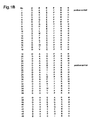
- Fig. 1 shows the individualised peptide members of library 4 used for the present screening process.
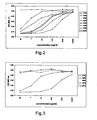
- Fig. 2 shows an inhibition assay with mimotopes for DAEFRH.
- Fig. 3 shows another inhibition assay with other mimotopes for DAEFRH.
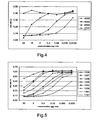
- Figures 4 and 5 describe the results of inhibition assays performed with mimotope peptides according to the present invention
- Mice are vaccinated with the 6mer peptide DAEFRH (natural N-terminal Aβ42 sequence) linked to the protein bovine serum albumin BSA (to make use of the hapten-carrier-effect), emulsified in CFA (first injection) and IFA (booster injections). DAEFRH-peptide-specific, antibody-producing hybridomas are detected by ELISA (DAEFRH-peptide-coated ELISA plates). Peptide SEVKMDAEFRH (natural N-terminally prolonged sequence, APP-derived, containing the Aβ42-derived sequence DAEFRH) is used as negative control peptide: hybridomas recognizing the prolonged peptide are excluded because they do not distinguish between Aβ42-derived peptides with free aspartic acid at the N-terminus and APP-derived peptide DAEFRH without free aspartic acid.
- The mimotopes of the present invention have been found by adapting the method of Reinke et al., 2000, by screening peptide libraries for binding to an antibody (preferably a monoclonal antibody) which is specific for Aβ species with amino-terminal aspartic acid. Another method is commercially available as MUL-TIPIN™ peptide technology.
- The Multipin™ peptide technology involves synthesizing peptides on to specially prepared polyethylene pins mounted on blocks in a format which is compatible with the standard 8 x 12 microtiter plate used for many biological assays. Both pin-bound (non-cleavable peptides which remain covalently bound to the pin) and solution phase peptides (those that have been cleaved off the pin surface) can be produced by this method. PepSets, based on the Multipin synthesis system, permit the simultaneous synthesis and screening of large numbers of peptides.
- PepSets consist of blocks of 96 individually synthesized peptides, two of which are carefully selected control sequences. Cleaved controls are assessed for purity by reverse phase HPLC and peptide content quantitated by amino acid analysis. Positive and negative non-cleavable controls are assessed by standard ELISA techniques.
- PepSet peptides are available with a variety of chemical modifications including acetylation, biotinylation, phosphorylation and cyclization. The solution phase (cleaved) peptides are shipped as lyophilized powders.
- For the production of solution phase peptides there is a choice of C-terminal endings, including acid and amide, depending on the intended peptide application. The cleavable bond is incorporated onto the pin surface, either as a preformed ester derivative of the C-terminal amino acid, or onto the "Rink" amide linker. Peptides with acid or amide end groups are then released by treating the pin-bound peptide with strong acid. Options for the scale of synthesis are a nominal 1 micromole or 5 micromole scale. Factors such as hydrophobicity and cleavage efficiency will affect peptide recovery, such that the expected yield of peptide is 0.5 to 1 micromole (around 1mg of a 15mer peptide) when the peptides are synthesized on the nominal 1 micromole scale, or a yield of 2.5 to 5 micromole for peptides synthesized on the nominal 5 micromole scale.
- Non-cleavable peptides remain covalently bound to the pins and can be used to rapidly screen for peptides of interest using ELISA techniques. Such peptides are useful for the purposes of antibody epitope scanning and structure-activity relationship (SAR) studies. Removal of bound antibodies or other proteins regenerates the peptides and allows their reuse in further assays. PepSets are used for a variety of applications including the identification of peptide leads of biological interest from scanning through protein sequences, the optimization of peptide leads, and the development of new generations of analogs. Flexibility in terms of the overall strategy used in screening procedures is greatly enhanced through the use of a variety of synthesis designs which together provide a systematic method to fully characterize the lead candidate.
- The comprehensive results obtained from systematic peptide sets not only identify peptides of interest, but also indicates critical residues, their replaceability and optimal peptide length. Consequently, a range of related peptides may be ranked as a result of such findings. Replacement of L-amino acids with D-amino acids and other unusual residues is a powerful approach to manipulate the structure and conformation of a peptide. This method is also a rapid way to discover new analogs with different pharmacological properties, such as antagonists and peptides with increased stability.
- Starting with a known protein sequence, all sequential antibody epitopes can be mapped using the Multipin approach. Several alternative procedures for mapping sequential B-cell epitopes are now possible. These include pin-bound peptides, solution phase peptides coated directly onto microtiter plates, and biotinylated peptides captured on microtiter plates previously coated with avidin or streptavidin.
- For the present examples, the antibody described in example 1 is used for screening peptide libraries, however, any antibody preparation specifically recognizing the DAEFRH-sequence, but not the naturally N-terminally prolonged sequence of the Aβ molecule (e.g. MDAEFRH, KMDAEFRH, SEVKMDAEFRH or the complete amyloid (precursor) protein, APP), such as e.g. described by Johnson-Wood et al., 1997.
- Four libraries have been constructed for this purpose:
-
- Position 1: all natural aa except of D, K, and C (17 possibilities)
- Position 2: all natural aa except of A, K, and C (17 possibilities)
- Position 3: all natural aa except of E, K, and C (17 possibilities)
- Position 4: all natural aa except of F, K, and C (17 possibilities)
- Position 5: all natural aa except of R, K, and C (17 possibilities)
- Position 6: all natural aa except of H, K, C, and P (16 possibilities)
- Library 1 is a mixture of hexapeptides. Theoretically, all possible peptides containing 17 different amino acids (see below) are included. The mixture does not contain any lysine and cysteine residue. Furthermore, the mixture does not contain:
- aspartic acid at the specific position 1,
- alanine at the
specific position 2, - glutamic acid at the specific position 3,
- phenylalanine at the specific position 4,
- arginine at the
specific position 5, and - histidine at the
specific position 6. - The synthesis is performed on an Applied Biosystems 431A-Synthesizer following the FastMoc protocol, with a synthesis scale of 0.25 mmol.
- The synthesis starts with weighing 1 mmol of all desired amino acids (amino groups and side chains protected). Then, a mixture of Asn, Gln, Gly, Ile, Leu, Met, Pro, Ser, Thr, Trp, Tyr, Val was produced. Position-specific, the following amino acids are added:
- Ala, Glu, Phe, Arg, His (position/mixture 1),
- Asp, Glu, Phe, Arg, His (position/mixture 2),
- Asp, Ala, Phe, Arg, His (position/mixture 3),
- Asp, Ala, Glu, Arg, His (position/mixture 4),
- Asp, Ala, Glu, Phe, His (position/mixture 5), and
- Asp, Ala, Glu, Phe, Arg (position/
mixture 6, without Pro). -
Mixture 6 was used to load the resin (2-chloro-tritylchloride resin, 1.49 mmol/g, Alexis Germany): - 1 mmol amino
acid residue mixture 6 - 611 mg resin (= 0.91 mmol reactive groups)
- 15 ml dichloromethane
- 5.5 equivalent = 5 mmol diisopropylethylamine (871 µl).
- The mixture is shaken in a flask for 1 h. Then, 1 ml methanol is added and the mixture is shaken for an additional 10 min. The loaded resin is extracted via a frit and washed twice with dimethylformamide, dichlormethane, isopropanol, methanol, and ether (30 ml of each). The drying is performed overnight in a high vacuum. The weigh-out quantity is 737 mg.
- An aliquot of 5.66 mg is treated for 30 min with 1 ml of 20% piperidine in DMF to define the density of the resin. Then, the mixture is centrifuged. The free Fmoc protective group is photometrically measured in the supernatant (301 nm, coefficient of extinction = 7800 M (e-1)). Accordingly, the density of the resin is 0.49 mmol/g.
- All following steps are performed at the synthesizer, using the other mixtures (put in 5 different cartridges). 515 mg of loaded resin are used (corresponding to 0.25 mmol: amino acid mixtures are used in 4-times excess). The N-terminal Fmoc protective group is cleaved at the end of the synthesis. After washing with ethanol and drying overnight, cleavage of the peptides from the resin is accomplished by TFA/H2O (95:5, v:v). The TFA solution is concentrated in a Speed Vac to 1/5 volume and precipitated and washed in diethylether and lyophilized.
- The 6mer peptides EIDYHR, ELDYHR, and EVDYHR are examples for mimotopes that can be detected by the monoclonal antibody produced according to example 1. above.
-
- Position 1: D (fixed)
- Position 2: all natural aa except of A, K, and C (17 possibilities)
- Position 3: all natural aa except of E, K, and C (17 possibilities)
- Position 4: all natural aa except of F, K, and C (17 possibilities)
- Position 5: all natural aa except of R, K, and C (17 possibilities)
- Position 6: all natural aa except of H, K, C, and P (16 possibilities).
-
Peptide library 2 was constructed according to the method described above (under 2.1) for library 1. - The 6mer peptides DIDYHR, DLDYHR, and DVDYHR are examples for mimotopes that can be detected by the monoclonal antibody produced according to 1. above.
- This 6mer library contains peptides with the following sequences (amino acid positions 1 to 6):
- Position 1: all natural aa except of K, and C (18 possibilities)
- Position 2: all natural aa except of K, and C (18 possibilities)
- Position 3: all natural aa except of K, and C (18 possibilities)
- Position 4: all natural aa except of K, and C (18 possibilities)
- Position 5: all natural aa except of K, and C (18 possibilities)
- Position 6: all natural aa except of K, C, and P (17 possibilities).
- Peptide library 3 was constructed according to the method described above (under 2.1) for library 1.
- The 6mer peptides DIDYRR, DLDYRR, and DVDYRR are examples for mimotopes that can be detected by the monoclonal antibody produced according to 1. above (D in position 1 and R in
position 5 are identical with the original epitope). -
- Position 1: D (fixed)
- Position 2: all natural amino acids except of K and C (18 different peptides)
- Position 3: all natural amino acids except of K and C (18 different peptides)
- Position 4: all natural amino acids except of K and C (18 different peptides)
- Position 5: all natural amino acids except of K and C (18 different peptides)
- Position 6: all natural amino acids except of K and C (18 different peptides).
- The individualised peptide members of library 4 are depicted in fig. 1. Peptides no. 1, 24, 48, 56 and 80 have the original sequence of the Aβ42 N-terminal sequence. All other peptides are candidate peptides which are tested with respect to their binding capacity to a DAEFRH-binding antibody.
- As mentioned above,
peptide libraries 1, 2, and 3 are generated with an Applied Biosystems 431A peptide synthesizer following classical Fmoc-chemistry. The commercially available peptide library 4 is generated according to the manufacturer's description (see above and under www.mimotopes.com). The 90 peptides are C-terminally linked to a pin. - The ELISA with each of the peptide libraries have been carried out following standard protocols:
- The peptide library is dissolved in 100% DMSO (
final concentration 10 mg/ml).
The peptide solution is further diluted in PBS.
The peptide mixture is coated overnight (4 °C) onto ELISA plates (Nunc Maxisorp, Germany), starting with 500 µg/well, and titrated to 100 ng/well.
The plates are washed 3x times with PBS/Tween 20 (0.1% v/v).
The plates are blocked with PBS/BSA (2 h at room temperature). The plates are washed 3x times with PBS/Tween.
The plates are incubated with biotinylated DAEFRH-specific mAb (10 µg/ml in PBS) for 4 h at room temperature.
The plates are washed 3x times with PBS/Tween.
The plates are incubated with streptavidin-horseradish-peroxidase (30 min at room temperature).
The plates are washed 5x times with PBS/Tween.
The plates are incubated with ABTS + H2O2 (0.1 % w/v; 10 to 45 min) and the reaction is stopped with citric acid followed by photometric evaluation (wavelength 405 nm). - In addition to the 4 libraries described above (see 2.1., 2.2., 2.3., and 2.4.) a fifth library is used to define mimotope sequences. This 6mer library is commercially available at EMC microcollections (Tübingen Germany) and contains 114 different hexapeptide mixtures, one position per mixture is defined by one of all natural aa except of C (19 possibilities), the remaining 5 positions are variable:
- Mixtures 01 to 06 (one position fixed, alanine A, remaining 5 variable, X):
- Mixture 01: AXXXXX
- Mixture 02: XAXXXX
- Mixture 03: XXAXXX
- Mixture 04: XXXAXX
- Mixture 05: XXXXAX
- Mixture 06: XXXXXA
- Mixtures 07 to 12 (one position fixed, arginine R, remaining 5 variable, X):
- Mixture 07: RXXXXX
- Mixture 08: XRXXXX
- Mixture 09: XXRXXX
- Mixture 10: XXXRXX
- Mixture 11: XXXXRX
- Mixture 12: XXXXXR
- Accordingly,
mixtures 13 to 114 are designed using all natural aa except of C. - Figures 2 and 3 describe the results of inhibition assays performed with mimotope peptides included in and obtained from the 5 libraries (as described). The mimotope peptides compete with the orginal epitope for recognition by the monoclonal antibody. Original epitope and mimotope peptides contain an additional C at the C-terminus for coupling to a protein carrier (if desired).
- The following peptides are used:
-
Peptide 1737 DAEFRH -
Peptide 3001 DKELRI -
Peptide 3002 DWELRI -
Peptide 3003 YREFFI - Peptide 3004 YREFRI
- Peptide 3005 YAEFRG
- Peptide 3006 EAEFRG
-
Peptide 3007 DYEFRG -
Peptide 3008 ELEFRG -
Peptide 3009 SFEFRG -
Peptide 3010 DISFRG -
Peptide 3011 DIGWRG - ELISA plates (Nunc Maxisorp) are coated with the original peptide epitope DAEFRH (C-terminally prolonged with C and coupled to bovine serum albumin BSA) at a concentration of 0.1 µg/ml peptide-BSA (100µl/well, 12h, 4°C). After blocking with PBS/BSA 1% (200µl/well, 12h, 4°C), the plates are washed 3x times with PBS/Tween. Then, biotinylated monoclonal antibody (1:2000, 50µl/well) and peptides (50µl/well) at 50, 5, 0.5, 0.05, 0.005, and 0.0005 µg/ml are added for 20 min. at 37°C. The plates are washed 3x times with PBS/Tween and are incubated with horseradish peroxidase (HRP)-labeled streptavidin (100µl/well, 30 min, RT). The plates are washed 5x times with PBS/Tween and are incubated with ABTS + H2O2 (0.1% w/v, 10 to 45 min) and the reaction is stopped with citric acid followed by photometric evaluation (
wavelength 405 nm). - As expected and seen in Fig.2,
peptide 1737 DAEFRH can compete with BSA-coupled, plate-bound peptide DAEFRH and thus inhibits recognition by the monoclonal antibody. Furthermore, it is shown thatpeptide 3003 is not able to inhibit binding of the monoclonal antibody to the original epitope. In contrast,peptides peptides Peptides 3002 and 3005 are "intermediate" inhibitors with an IC50 of more than 0.5 µg/ml. - As expected and seen in Fig.3,
peptide 1737 DAEFRH can successfully compete with BSA-coupled, plate-bound peptide DAEFRH for monoclonal antibody recognition in an additionally performed, independent experiment. Furthermore, it is shown thatpeptides peptides - Table 1 briefly summarizes the inhibitory capacity of mimotopes included in and obtained from libraries (as described):
Table 1: Inhibitory capacity of mimotopes: Peptide 3001 DKELRIstrong Peptide 3002 DWELRI intermediate Peptide 3003 YREFFI none Peptide 3004 YREFRI weak Peptide 3005 YAEFRG intermediate Peptide 3006 EAEFRG strong Peptide 3007 DYEFRG strong Peptide 3008 ELEFRG weak Peptide 3009 SFEFRG weak Peptide 3010 DISFRG none Peptide 3011 DIGWRG none - Figures 4 and 5 describe the results of inhibition assays performed with mimotope peptides included in and obtained from the 5 libraries (as described). The mimotope peptides compete with the orginal epitope for recognition by the monoclonal antibody. Original epitope and mimotope peptides contain an additional C at the C-terminus (position 7) for coupling to a protein carrier (if desired).
- The following peptides are used:
-
Peptide 1737 DAEFRH (original epitope + C) -
Peptide 1234 KKELRI -
Peptide 1235 DRELRI -
Peptide 1236 DKELKI -
Peptide 1237 DRELKI -
Peptide 1238 DKELR -
Peptide 1239 EYEFRG -
Peptide 1241 DWEFRDA -
Peptide 4002 SWEFRT -
Peptide 4003 GREFRN - Peptide 4004 WHWSWR
- ELISA plates (Nunc Maxisorp) are coated with the original peptide epitope DAEFRH (C-terminally prolonged with C and coupled to bovine serum albumin BSA) at a concentration of 0.1 µg/ml peptide-BSA (100µl/well, 12h, 4°C). After blocking with PBS/BSA 1% (200µl/well, 12h, 4°C), the plates are washed 3x times with PBS/Tween. Then, biotinylated monoclonal antibody (1:2000, 50µl/well) and peptides (50µl/well) at different concentrations are added for 20 min. at 37°C. The plates are washed 3x times with PBS/Tween and are incubated with horseradish peroxidase (HRP)-labeled streptavidin (100µl/well, 30 min, RT). The plates are washed 5x times with PBS/Tween and are incubated with ABTS + H2O2 (0.1% w/v, 10 to 45 min) and the reaction is stopped with citric acid followed by photometric evaluation (
wavelength 405 nm). - As expected and seen in Fig.4,
peptide 1737 DAEFRH can compete with BSA-coupled, plate-bound peptide DAEFRH and thus inhibits recognition by the monoclonal antibody. Furthermore, it is shown that peptide 4004 is not able to inhibit binding of the monoclonal antibody to the original epitope. In contrast,peptides 4002 and 4003 (to a different extent) block epitope recognition. Whereaspeptide 4003 is only inhibitory at a relatively high concentration (10 µg/ml),peptide 4002 is strongly inhibitory with an IC50 of less than 0.4 µg/ml. - As expected and seen in Fig.5,
peptide 1737 DAEFRH can successfully compete with BSA-coupled, plate-bound peptide DAEFRH for monoclonal antibody recognition in an additionally performed, independent experiment. Furthermore, it is shown thatpeptide 1234 is hardly inhibitory at the concentrations tested, whereaspeptides Peptides peptides Peptide 1239 is an intermediate inhibitor with an IC50 of more than 0.5 µg/ml. - Table 2 briefly summarizes the inhibitory capacity of mimotopes included in and obtained from libraries (as described):
Table 2: Inhibitory capacity of mimotopes: Peptide 1234KKELRI none Peptide 1235 DRELRI strong Peptide 1236 DKELKI weak Peptide 1237 DRELKI weak Peptide 1238 DKELR strong Peptide 1239 EYEFRG intermediate Peptide 1241 DWEFRDA strong Peptide 4002 SWEFRT strong Peptide 4003 GREFRN weak Peptide 4004 WHWSWR none - The results presented in Figures 4 and 5 show that in addition to various 6mer peptides (as shown here and before), 5mer peptides (namely
peptide 1238 DKELR) and 7mer peptides (namelypeptide 1241 DWEFRDA) may be used as epitopes in a mimotope-based Alzheimer vaccine. -
- <110> Mattner, Frank
- <120> Methods for Preventing and Treating Alzheimers Disease (AD)
- <130> R46048
- <140>
EP 05107898.8
<141> 2004-01-13 - <150>
AT A 36/2003
<151> 2003-01-14 - <150>
AT A 1464/2003
<151> 2003-09-17 - <160> 34
- <170> Patent In version 3.3
- <210> 1
<211> 6
<212> PRT
<213> Homo sapiens - <400> 1

- <210> 2
<211> 6
<212> PRT
<213> Artificial - <220>
<223> artificial epitope - <400> 2

- <210> 3
<211> 6
<212> PRT
<213> Artificial - <220>
<223> artificial epitope - <400> 3

- <210> 4
<211> 6
<212> PRT
<213> Artificial - <220>
<223> artificial epitope - <400> 4

- <210> 5
<211> 6
<212> PRT
<213> Artificial - <220>
<223> artificial epitope - <400> 5

- <210> 6
<211> 6
<212> PRT
<213> Artificial - <220>
<223> artificial epitope - <400> 6

- <210> 7
<211> 6
<212> PRT
<213> Artificial - <220>
<223> artificial epitope - <400> 7

- <210> 8
<211> 6
<212> PRT
<213> Artificial - <220>
<223> artificial epitope - <400> 8

- <210> 9
<211> 6
<212> PRT
<213> Artificial - <220>
<223> artificial epitope - <400> 9

- <210> 10
<211> 6
<212> PRT
<213> Artificial - <220>
<223> artificial epitope - <400> 10

- <210> 11
<211> 6
<212> PRT
<213> Artificial - <220>
<223> artificial epitope - <400> 11

- <210> 12
<211> 6
<212> PRT
<213> Artificial - <220>
<223> artificial epitope - <400> 12


- <210> 13
<211> 6
<212> PRT
<213> Artificial - <220>
<223> artificial epitope - <400> 13

- <210> 14
<211> 6
<212> PRT
<213> Artificial - <220>
<223> artificial epitope - <400> 14

- <210> 15
<211> 6
<212> PRT
<213> Artificial - <220>
<223> artificial epitope - <400> 15

- <210> 16
<211> 6
<212> PRT
<213> Artificial - <220>
<223> artificial epitope - <400> 16

- <210> 17
<211> 6
<212> PRT
<213> Artificial - <220>
<223> - <400> 17

- <210> 18
<211> 6
<212> PRT
<213> Artificial - <220>
<223> artificial epitope - <400> 18

- <210> 19
<211> 6
<212> PRT
<213> Artificial - <220>
<223> artificial epitope - <400> 19

- <210> 20
<211> 6
<212> PRT
<213> Artificial - <220>
<223> artificial epitope - <400> 20

- <210> 21
<211> 6
<212> PRT
<213> Artificial - <220>
<223> artificial epitope - <400> 21

- <210> 22
<211> 6
<212> PRT
<213> Artificial - <220>
<223> artificial epitope - <400> 22

- <210> 23
<211> 7
<212> PRT
<213> Artificial - <220>
<223> artificial epitope - <400> 23

- <210> 24
<211> 6
<212> PRT
<213> Artificial - <220>
<223> artificial epitope - <400> 24

- <210> 25
<211> 5
<212> PRT
<213> Artificial - <220>
<223> artificial epitope - <400> 25

- <210> 26
<211> 6
<212> PRT
<213> Artificial - <220>
<223> - <400> 26

- <210> 27
<211> 11
<212> PRT
<213> Artificial - <220>
<223> artificial epitope - <400> 27

- <210> 28
<211> 7
<212> PRT
<213> Artificial - <220>
<223> artificial epitope - <400> 28

- <210> 29
<211> 8
<212> PRT
<213> Artificial - <220>
<223> artificial epitope - <400> 29

- <210> 30
<211> 6
<212> PRT
<213> Artificial - <220>
<223> artificial epitope - <400> 30

- <210> 31
<211> 6
<212> PRT
<213> Artificial - <220>
<223> artificial epitope - <400> 31

- <210> 32
<211> 6
<212> PRT
<213> Artificial - <220>
<223> artificial epitope - <400> 32

- <210> 33
<211> 6
<212> PRT
<213> Artificial - <220>
<223> artificial epitope - <400> 33

- <210> 34
<211> 6
<212> PRT
<213> Artificial - <220>
<223> artificial epitope - <400> 34

Claims (6)
- Use of a peptide compound of 5 to 15 amino acids comprising an amino acid sequence, selected from the group consisting of DKELRI, DWELRI YAEFRG, EAEFRG, DYEFRG, DRELRI, GREFRN, EYEFRG, DWEFRDA, SWEFRT, and DKELR, and optionally additionally comprising a covalently or non-covalently coupled linker or carrier for the preparation of a vaccine for Alzheimer's disease (AD).
- Use according to claim 1 characterised in that said compound is a peptide, selected from the group consisting of DKELRI, DWELRI, YAEFRG, EAEFRG, DYEFRG, DRELRI, GREFRN, EYEFRG, DWEFRDA, SWEFRT, or DKELR.
- Use according to claim 1 or 2 characterised in that the compound is a polypeptide of 6 to 12 amino acid residues.
- Use according to any one of claims 1 to 3 characterised is that the compound is coupled to a pharmaceutically acceptable carrier, preferably KLH, and optionally aluminium hydroxide.
- Use according to any one of claims 1 to 4 characterised in that it contains the compound in an amount of 0,1 ng to 10 mg, preferably 10 ng to 1 mg, especially 100 ng to 100 µg.
- Vaccine against Alzheimer's Disease comprising an antigen which includes at least one peptide selected from the group DKELRI, DWELRI, YAEFRG, EAEFRG, DYEFRG, DRELRI, GREFRN, EYEFRG, DWEFRDA, SWEFRT,or DKELR.
Priority Applications (1)
| Application Number | Priority Date | Filing Date | Title |
|---|---|---|---|
| SI200430549T SI1679319T1 (en) | 2003-01-14 | 2004-01-13 | Methods for Preventing and Treating Alzheimer s Disease (AD) |
Applications Claiming Priority (3)
| Application Number | Priority Date | Filing Date | Title |
|---|---|---|---|
| AT362003 | 2003-01-14 | ||
| AT0146403A AT413945B (en) | 2003-01-14 | 2003-09-17 | Use of a compound having a binding capacity to an antibody specific for the natural N-terminal AB42 sequence, for preparing a vaccine for preventing and treating Alzheimer's disease |
| EP04701585A EP1583774B1 (en) | 2003-01-14 | 2004-01-13 | Methods for preventing and treating alzheimer's disease (ad) |
Related Parent Applications (1)
| Application Number | Title | Priority Date | Filing Date |
|---|---|---|---|
| EP04701585A Division EP1583774B1 (en) | 2003-01-14 | 2004-01-13 | Methods for preventing and treating alzheimer's disease (ad) |
Publications (2)
| Publication Number | Publication Date |
|---|---|
| EP1679319A1 EP1679319A1 (en) | 2006-07-12 |
| EP1679319B1 true EP1679319B1 (en) | 2007-10-24 |
Family
ID=32714004
Family Applications (2)
| Application Number | Title | Priority Date | Filing Date |
|---|---|---|---|
| EP04701585A Expired - Lifetime EP1583774B1 (en) | 2003-01-14 | 2004-01-13 | Methods for preventing and treating alzheimer's disease (ad) |
| EP05107898A Expired - Lifetime EP1679319B1 (en) | 2003-01-14 | 2004-01-13 | Methods for Preventing and Treating Alzheimer´s Disease (AD) |
Family Applications Before (1)
| Application Number | Title | Priority Date | Filing Date |
|---|---|---|---|
| EP04701585A Expired - Lifetime EP1583774B1 (en) | 2003-01-14 | 2004-01-13 | Methods for preventing and treating alzheimer's disease (ad) |
Country Status (14)
| Country | Link |
|---|---|
| US (2) | US7732568B2 (en) |
| EP (2) | EP1583774B1 (en) |
| JP (2) | JP4547373B2 (en) |
| CN (2) | CN102526699A (en) |
| AT (3) | AT413945B (en) |
| CA (1) | CA2513218C (en) |
| CY (2) | CY1107146T1 (en) |
| DE (2) | DE602004009705T2 (en) |
| DK (2) | DK1679319T3 (en) |
| ES (2) | ES2296084T3 (en) |
| PL (1) | PL209989B1 (en) |
| PT (2) | PT1679319E (en) |
| SI (1) | SI1583774T1 (en) |
| WO (1) | WO2004062556A2 (en) |
Cited By (1)
| Publication number | Priority date | Publication date | Assignee | Title |
|---|---|---|---|---|
| WO2013050248A1 (en) | 2011-10-04 | 2013-04-11 | Affiris Ag | Method for diagnosing alzheimer's disease (ad) |
Families Citing this family (40)
| Publication number | Priority date | Publication date | Assignee | Title |
|---|---|---|---|---|
| US20070010435A1 (en) | 2002-12-19 | 2007-01-11 | New York University | Method for treating amyloid disease |
| DE10303974A1 (en) | 2003-01-31 | 2004-08-05 | Abbott Gmbh & Co. Kg | Amyloid β (1-42) oligomers, process for their preparation and their use |
| AT413336B (en) * | 2003-09-12 | 2006-02-15 | Mattner Frank Dr | APHERESIS DEVICE |
| JP2007522119A (en) * | 2004-01-28 | 2007-08-09 | キュリックス エーピーエス | Conjugates of amyloid protein as vaccines for amyloid-related diseases |
| AT500483B1 (en) * | 2004-07-13 | 2006-01-15 | Mattner Frank Dr | Kit for prevention or treatment of Alzheimer's disease comprises means for inducing sequestration of amyloid beta in plasma and apheresis apparatus which exhibits an amyloid beta precursor protein receptor |
| AT413946B (en) * | 2004-07-13 | 2006-07-15 | Mattner Frank Dr | VACCINE AGAINST THE ALZHEIMER DISEASE |
| PT1976877E (en) | 2005-11-30 | 2014-04-29 | Abbvie Inc | Monoclonal antibodies against amyloid beta protein and uses thereof |
| BRPI0619249A2 (en) | 2005-11-30 | 2011-09-20 | Abbott Lab | anti-globulin-ß antibodies, antigen-binding fractions thereof, corresponding hybridomas, nucleic acids, vectors, host cells, methods of making said antibodies, compositions comprising said antibodies, uses of said antibodies and methods of using said antibodies |
| MX2008007477A (en) * | 2005-12-12 | 2008-09-03 | Ac Immune Sa | A beta 1-42 specific monoclonal antibodies with therapeutic properties. |
| EP1878747A1 (en) | 2006-07-11 | 2008-01-16 | greenovation Biotech GmbH | Glyco-engineered antibodies |
| NZ574188A (en) | 2006-07-14 | 2012-05-25 | Ac Immune Sa | Humanized antibody against amyloid beta |
| US8455626B2 (en) | 2006-11-30 | 2013-06-04 | Abbott Laboratories | Aβ conformer selective anti-aβ globulomer monoclonal antibodies |
| EP2124952A2 (en) | 2007-02-27 | 2009-12-02 | Abbott GmbH & Co. KG | Method for the treatment of amyloidoses |
| US8613923B2 (en) | 2007-06-12 | 2013-12-24 | Ac Immune S.A. | Monoclonal antibody |
| DK2170389T3 (en) * | 2007-06-12 | 2015-01-19 | Ac Immune Sa | Humanized antibodies against amyloid beta |
| US8048420B2 (en) * | 2007-06-12 | 2011-11-01 | Ac Immune S.A. | Monoclonal antibody |
| EP2650308A3 (en) * | 2007-10-05 | 2014-11-12 | Genentech, Inc. | Use of anti-amyloid beta antibody in ocular diseases |
| EP2205631B1 (en) * | 2007-10-05 | 2016-11-23 | Genentech, Inc. | Methods and compositions for diagnosis and treatment of amyloidosis |
| EP2586795B1 (en) * | 2007-10-05 | 2018-05-16 | Genentech, Inc. | Use of anti-amyloid beta antibody in ocular diseases |
| WO2009054537A1 (en) | 2007-10-25 | 2009-04-30 | Kagoshima University | PEPTIDE VACCINE USING MIMIC MOLECULE OF AMYLOID β-PEPTIDE |
| CN104098695B (en) * | 2007-10-29 | 2018-09-07 | 道健康生活医药株式会社 | Antibody and its application |
| AU2009236583B2 (en) | 2008-04-17 | 2015-07-16 | Declion Holdings Llc | Design and synthesis of directed sequence polymer compositions and antibodies thereof for the treatment of protein conformational disorders |
| AT506819B1 (en) * | 2008-06-12 | 2011-06-15 | Affiris Forschungs Und Entwicklungs Gmbh | VACCINE FOR THE TREATMENT OF ALZHEIMER DISEASE |
| AT509611B1 (en) * | 2008-06-12 | 2012-04-15 | Affiris Forschungs-Und Entwicklungs Gmbh | VACCINE |
| WO2009149487A2 (en) * | 2008-06-12 | 2009-12-17 | Affiris Ag | Compounds for treating symptoms associated with parkinson's disease |
| EP2558494B1 (en) | 2010-04-15 | 2018-05-23 | AbbVie Inc. | Amyloid-beta binding proteins |
| AU2011282536B2 (en) | 2010-07-30 | 2015-12-24 | Ac Immune S.A. | Safe and functional humanized anti beta-amyloid antibody |
| CN105348387B (en) | 2010-08-14 | 2020-08-25 | Abbvie 公司 | Amyloid beta binding proteins |
| US20120328605A1 (en) * | 2010-10-27 | 2012-12-27 | Daniel Larocque | Compositions and uses |
| GB201113570D0 (en) * | 2011-08-05 | 2011-09-21 | Glaxosmithkline Biolog Sa | Vaccine |
| EP2787347A1 (en) | 2013-04-03 | 2014-10-08 | Affiris AG | Method for detecting Aß-specific antibodies in a biological sample |
| US10381614B2 (en) * | 2013-04-17 | 2019-08-13 | Samsung Sdi Co., Ltd. | Battery module |
| WO2015165961A1 (en) | 2014-04-29 | 2015-11-05 | Affiris Ag | Treatment and prevention of alzheimer's disease (ad) |
| KR102857456B1 (en) | 2015-11-03 | 2025-09-08 | 에이씨 이뮨 에스에이 | Methods for immunization against autoantigens in human patients |
| CN105237628B (en) * | 2015-11-17 | 2018-08-07 | 南开大学 | A kind of polypeptide for treating alzheimer's disease |
| CN107022019B (en) * | 2016-11-24 | 2020-10-30 | 桂林医学院 | A kind of polypeptide for reducing iron in brain and removing free radicals, preparation method and application |
| EP3658172A4 (en) | 2017-07-25 | 2021-05-05 | TrueBinding, Inc. | CANCER TREATMENT BY BLOCKING THE INTERACTION OF TIM-3 AND ITS LIGAND |
| CN113711036B (en) | 2019-01-30 | 2025-03-18 | 真和制药有限公司 | Anti-GAL3 antibodies and uses thereof |
| CN116157151A (en) | 2020-05-26 | 2023-05-23 | 真和制药有限公司 | Methods of treating inflammatory diseases by blocking galectin-3 |
| US20250186580A1 (en) | 2022-02-28 | 2025-06-12 | Tridem Bioscience Gmbh & Co Kg | A CONJUGATE COMPRISING AT LEAST A ß-GLUCAN |
Family Cites Families (13)
| Publication number | Priority date | Publication date | Assignee | Title |
|---|---|---|---|---|
| DK590288D0 (en) * | 1988-10-24 | 1988-10-24 | Symbicom Ab | CHEMICAL COMPOUNDS |
| US5650489A (en) * | 1990-07-02 | 1997-07-22 | The Arizona Board Of Regents | Random bio-oligomer library, a method of synthesis thereof, and a method of use thereof |
| GB9022190D0 (en) * | 1990-10-12 | 1990-11-28 | Perham Richard N | Immunogenic material |
| US5639603A (en) * | 1991-09-18 | 1997-06-17 | Affymax Technologies N.V. | Synthesizing and screening molecular diversity |
| US7964192B1 (en) * | 1997-12-02 | 2011-06-21 | Janssen Alzheimer Immunotherapy | Prevention and treatment of amyloidgenic disease |
| US6088993A (en) | 1999-02-05 | 2000-07-18 | Irace; Francisco D. | Closure system |
| AU3158900A (en) | 1999-02-25 | 2000-09-14 | Smithkline Beecham Biologicals (Sa) | Immunogens comprising a peptide and a carrier derived from h.influenzae protein |
| US6703491B1 (en) * | 1999-03-17 | 2004-03-09 | Exelixis, Inc. | Drosophila sequences |
| ES2344189T3 (en) * | 1999-09-03 | 2010-08-20 | RAMOT UNIVERSITY AUTHORITY FOR APPLIED RESEARCH & INDUSTRIAL DEVELOPMENT LTD. | AGENTS, COMPOSITIONS AND METHODS THAT USE THEM USEFUL IN THE TREATMENT OR PREVENTION OF ALZHEIMER'S DISEASE. |
| WO2001064008A2 (en) | 2000-03-03 | 2001-09-07 | Smithkline Beecham Biologicals S.A. | Vaccine for the treatment of artherosclerosis |
| GB0024200D0 (en) * | 2000-10-03 | 2000-11-15 | Smithkline Beecham Sa | Component vaccine |
| DE50111493D1 (en) | 2001-09-03 | 2007-01-04 | Bio Life Science Forschungs & Entwicklungsgesellschaft Mbh | Antigen mimotope and vaccine against cancer |
| DE60232691D1 (en) * | 2002-05-07 | 2009-07-30 | Agronomique Inst Nat Rech | Screening method for PP1-interacting polypeptides or proteins, peptides that inhibit the binding of PP1c to the proteins Bcl-2, BCL-XL and BCL-W, and their use |
-
2003
- 2003-09-17 AT AT0146403A patent/AT413945B/en not_active IP Right Cessation
-
2004
- 2004-01-13 SI SI200431399T patent/SI1583774T1/en unknown
- 2004-01-13 ES ES05107898T patent/ES2296084T3/en not_active Expired - Lifetime
- 2004-01-13 CA CA2513218A patent/CA2513218C/en not_active Expired - Fee Related
- 2004-01-13 DE DE602004009705T patent/DE602004009705T2/en not_active Expired - Lifetime
- 2004-01-13 PL PL378333A patent/PL209989B1/en unknown
- 2004-01-13 DK DK05107898T patent/DK1679319T3/en active
- 2004-01-13 WO PCT/EP2004/000162 patent/WO2004062556A2/en not_active Ceased
- 2004-01-13 ES ES04701585T patent/ES2339447T3/en not_active Expired - Lifetime
- 2004-01-13 US US10/540,551 patent/US7732568B2/en not_active Expired - Fee Related
- 2004-01-13 DE DE602004025668T patent/DE602004025668D1/en not_active Expired - Lifetime
- 2004-01-13 DK DK04701585.4T patent/DK1583774T3/en active
- 2004-01-13 EP EP04701585A patent/EP1583774B1/en not_active Expired - Lifetime
- 2004-01-13 PT PT05107898T patent/PT1679319E/en unknown
- 2004-01-13 CN CN2011103110387A patent/CN102526699A/en active Pending
- 2004-01-13 EP EP05107898A patent/EP1679319B1/en not_active Expired - Lifetime
- 2004-01-13 CN CN200480002213.2A patent/CN1826354B/en not_active Expired - Fee Related
- 2004-01-13 JP JP2006500553A patent/JP4547373B2/en not_active Expired - Fee Related
- 2004-01-13 AT AT05107898T patent/ATE376559T1/en active
- 2004-01-13 AT AT04701585T patent/ATE458753T1/en active
- 2004-01-13 PT PT04701585T patent/PT1583774E/en unknown
-
2008
- 2008-01-17 CY CY20081100069T patent/CY1107146T1/en unknown
-
2010
- 2010-03-08 JP JP2010051012A patent/JP5282058B2/en not_active Expired - Fee Related
- 2010-04-01 US US12/752,451 patent/US20110015131A1/en not_active Abandoned
- 2010-05-07 CY CY20101100399T patent/CY1110634T1/en unknown
Cited By (2)
| Publication number | Priority date | Publication date | Assignee | Title |
|---|---|---|---|---|
| WO2013050248A1 (en) | 2011-10-04 | 2013-04-11 | Affiris Ag | Method for diagnosing alzheimer's disease (ad) |
| WO2013050249A1 (en) | 2011-10-04 | 2013-04-11 | Affiris Ag | METHOD FOR DETECTING Aß-SPECIFIC ANTIBODIES IN A BIOLOGICAL SAMPLE |
Also Published As
Similar Documents
| Publication | Publication Date | Title |
|---|---|---|
| EP1583774B1 (en) | Methods for preventing and treating alzheimer's disease (ad) | |
| US8022180B2 (en) | Method for preventing and treating Alzheimer's disease | |
| US9535076B2 (en) | Methods and compositions for eliciting an amyloid-selective immune response | |
| HK1245136A1 (en) | Mimotopes of alpha-synuclein and vaccines thereof for the treatment of neurodegenerative disorders | |
| HUE027563T2 (en) | Use of mimotopes of alpha-synuclein epitopes for treating lewy body diseases | |
| JP2017153480A (en) | Aβ1-42 SPECIFIC MONOCLONAL ANTIBODIES HAVING THERAPEUTIC PROPERTIES | |
| EP2143447A1 (en) | Bioconjugates comprising Aß-autoantibody-specific epitopes for active immunotherapy and diagnosis of Alzheimer's disease | |
| JPWO2009054537A1 (en) | Peptide vaccine using amyloid β peptide mimic molecule | |
| AU2004204349B2 (en) | Methods for preventing and treating Alzheimer's disease (AD) | |
| AU2017290907A1 (en) | Amino acid copolymer compositions and uses thereof | |
| Gevorkian et al. | Mimotopes of conformational epitopes in fibrillar β-amyloid | |
| HK1091499B (en) | Methods for preventing and treating alzheimer's disease (ad) |
Legal Events
| Date | Code | Title | Description |
|---|---|---|---|
| PUAI | Public reference made under article 153(3) epc to a published international application that has entered the european phase |
Free format text: ORIGINAL CODE: 0009012 |
|
| AC | Divisional application: reference to earlier application |
Ref document number: 1583774 Country of ref document: EP Kind code of ref document: P |
|
| AK | Designated contracting states |
Kind code of ref document: A1 Designated state(s): AT BE BG CH CY CZ DE DK EE ES FI FR GB GR HU IE IT LI LU MC NL PT RO SE SI SK TR |
|
| AX | Request for extension of the european patent |
Extension state: AL LT LV MK |
|
| 17P | Request for examination filed |
Effective date: 20070112 |
|
| AKX | Designation fees paid |
Designated state(s): AT BE BG CH CY CZ DE DK EE ES FI FR GB GR HU IE IT LI LU MC NL PT RO SE SI SK TR |
|
| GRAP | Despatch of communication of intention to grant a patent |
Free format text: ORIGINAL CODE: EPIDOSNIGR1 |
|
| GRAS | Grant fee paid |
Free format text: ORIGINAL CODE: EPIDOSNIGR3 |
|
| GRAA | (expected) grant |
Free format text: ORIGINAL CODE: 0009210 |
|
| RAP1 | Party data changed (applicant data changed or rights of an application transferred) |
Owner name: MATTNER, FRANK |
|
| RIN1 | Information on inventor provided before grant (corrected) |
Inventor name: MATTNER, FRANK |
|
| AC | Divisional application: reference to earlier application |
Ref document number: 1583774 Country of ref document: EP Kind code of ref document: P |
|
| AK | Designated contracting states |
Kind code of ref document: B1 Designated state(s): AT BE BG CH CY CZ DE DK EE ES FI FR GB GR HU IE IT LI LU MC NL PT RO SE SI SK TR |
|
| REG | Reference to a national code |
Ref country code: GB Ref legal event code: FG4D |
|
| REG | Reference to a national code |
Ref country code: CH Ref legal event code: EP |
|
| REG | Reference to a national code |
Ref country code: IE Ref legal event code: FG4D |
|
| REF | Corresponds to: |
Ref document number: 602004009705 Country of ref document: DE Date of ref document: 20071206 Kind code of ref document: P |
|
| REG | Reference to a national code |
Ref country code: PT Ref legal event code: SC4A Free format text: AVAILABILITY OF NATIONAL TRANSLATION Effective date: 20071227 |
|
| REG | Reference to a national code |
Ref country code: RO Ref legal event code: EPE |
|
| REG | Reference to a national code |
Ref country code: GR Ref legal event code: EP Ref document number: 20070403609 Country of ref document: GR |
|
| REG | Reference to a national code |
Ref country code: SE Ref legal event code: TRGR |
|
| REG | Reference to a national code |
Ref country code: DK Ref legal event code: T3 |
|
| REG | Reference to a national code |
Ref country code: CH Ref legal event code: NV Representative=s name: SPIERENBURG & PARTNER AG, PATENT- UND MARKENANWAEL |
|
| REG | Reference to a national code |
Ref country code: EE Ref legal event code: FG4A Ref document number: E001694 Country of ref document: EE Effective date: 20071128 |
|
| REG | Reference to a national code |
Ref country code: HU Ref legal event code: AG4A Ref document number: E002539 Country of ref document: HU |
|
| REG | Reference to a national code |
Ref country code: ES Ref legal event code: FG2A Ref document number: 2296084 Country of ref document: ES Kind code of ref document: T3 |
|
| ET | Fr: translation filed | ||
| PLBE | No opposition filed within time limit |
Free format text: ORIGINAL CODE: 0009261 |
|
| STAA | Information on the status of an ep patent application or granted ep patent |
Free format text: STATUS: NO OPPOSITION FILED WITHIN TIME LIMIT |
|
| 26N | No opposition filed |
Effective date: 20080725 |
|
| REG | Reference to a national code |
Ref country code: CH Ref legal event code: PUE Owner name: FFIRIS AG Free format text: MATTNER, FRANK#SIEVERINGER STRASSE 190#1190 VIENNA (AT) -TRANSFER TO- AFFIRIS AG#KARL-FARKAS-GASSE 22#1030 WIEN (AT) |
|
| REG | Reference to a national code |
Ref country code: PT Ref legal event code: PC4A Owner name: AFFIRIS AG, AT Effective date: 20100311 |
|
| NLS | Nl: assignments of ep-patents |
Owner name: AFFIRIS AG Effective date: 20100203 |
|
| REG | Reference to a national code |
Ref country code: EE Ref legal event code: GB1A Ref document number: E001694 Country of ref document: EE |
|
| REG | Reference to a national code |
Ref country code: SI Ref legal event code: SP73 Owner name: AFFIRIS AG; AT Effective date: 20100312 |
|
| REG | Reference to a national code |
Ref country code: ES Ref legal event code: PC2A |
|
| REG | Reference to a national code |
Ref country code: SK Ref legal event code: PC4A Ref document number: E 2743 Country of ref document: SK Owner name: AFFIRIS AG, VIENNA, AT Free format text: FORMER OWNER: MATTNER FRANK, VIENNA, AT Effective date: 20100126 |
|
| REG | Reference to a national code |
Ref country code: HU Ref legal event code: FH1C Free format text: FORMER REPRESENTATIVE(S): PARRAGH GABORNE DR., S.B.G. & K. SZABADALMI UEGYVIVOEI IRODA, HU Representative=s name: S.B.G. & K. SZABADALMI UEGYVIVOEI IRODA, HU Ref country code: HU Ref legal event code: GB9C Owner name: AFFIRIS AG, AT Free format text: FORMER OWNER(S): MATTNER, FRANK, AT |
|
| REG | Reference to a national code |
Ref country code: FR Ref legal event code: TP |
|
| PGFP | Annual fee paid to national office [announced via postgrant information from national office to epo] |
Ref country code: TR Payment date: 20120103 Year of fee payment: 9 |
|
| PGFP | Annual fee paid to national office [announced via postgrant information from national office to epo] |
Ref country code: EE Payment date: 20141218 Year of fee payment: 12 Ref country code: LU Payment date: 20141229 Year of fee payment: 12 Ref country code: BG Payment date: 20141223 Year of fee payment: 12 Ref country code: SK Payment date: 20141223 Year of fee payment: 12 Ref country code: CZ Payment date: 20141222 Year of fee payment: 12 Ref country code: MC Payment date: 20141224 Year of fee payment: 12 Ref country code: IE Payment date: 20141218 Year of fee payment: 12 |
|
| PGFP | Annual fee paid to national office [announced via postgrant information from national office to epo] |
Ref country code: PT Payment date: 20141218 Year of fee payment: 12 |
|
| PGFP | Annual fee paid to national office [announced via postgrant information from national office to epo] |
Ref country code: NL Payment date: 20150127 Year of fee payment: 12 |
|
| PGFP | Annual fee paid to national office [announced via postgrant information from national office to epo] |
Ref country code: HU Payment date: 20150121 Year of fee payment: 12 Ref country code: ES Payment date: 20141230 Year of fee payment: 12 Ref country code: DK Payment date: 20150121 Year of fee payment: 12 Ref country code: FI Payment date: 20150107 Year of fee payment: 12 Ref country code: RO Payment date: 20150113 Year of fee payment: 12 Ref country code: CH Payment date: 20150203 Year of fee payment: 12 Ref country code: IT Payment date: 20150114 Year of fee payment: 12 |
|
| PGFP | Annual fee paid to national office [announced via postgrant information from national office to epo] |
Ref country code: GR Payment date: 20150130 Year of fee payment: 12 Ref country code: SE Payment date: 20150119 Year of fee payment: 12 Ref country code: SI Payment date: 20141218 Year of fee payment: 12 Ref country code: CY Payment date: 20141229 Year of fee payment: 12 |
|
| PGFP | Annual fee paid to national office [announced via postgrant information from national office to epo] |
Ref country code: BE Payment date: 20150121 Year of fee payment: 12 |
|
| REG | Reference to a national code |
Ref country code: FR Ref legal event code: PLFP Year of fee payment: 13 |
|
| REG | Reference to a national code |
Ref country code: DE Ref legal event code: R082 Ref document number: 602004009705 Country of ref document: DE Representative=s name: COHAUSZ & FLORACK PATENT- UND RECHTSANWAELTE P, DE Ref country code: DE Ref legal event code: R081 Ref document number: 602004009705 Country of ref document: DE Owner name: SCHMIDT, WALTER, AT Free format text: FORMER OWNER: AFFIRIS AG, WIEN, AT Ref country code: DE Ref legal event code: R081 Ref document number: 602004009705 Country of ref document: DE Owner name: MATTNER, FRANK, AT Free format text: FORMER OWNER: AFFIRIS AG, WIEN, AT |
|
| REG | Reference to a national code |
Ref country code: GB Ref legal event code: 732E Free format text: REGISTERED BETWEEN 20160317 AND 20160323 |
|
| PG25 | Lapsed in a contracting state [announced via postgrant information from national office to epo] |
Ref country code: BE Free format text: LAPSE BECAUSE OF NON-PAYMENT OF DUE FEES Effective date: 20160131 |
|
| REG | Reference to a national code |
Ref country code: FR Ref legal event code: TQ Owner name: WALTER SCHMIDT, AT Effective date: 20160502 Ref country code: FR Ref legal event code: TQ Owner name: FRANK MATTNER, AT Effective date: 20160502 |
|
| REG | Reference to a national code |
Ref country code: EE Ref legal event code: MM4A Ref document number: E001694 Country of ref document: EE Effective date: 20160131 |
|
| REG | Reference to a national code |
Ref country code: DK Ref legal event code: EBP Effective date: 20160131 |
|
| PG25 | Lapsed in a contracting state [announced via postgrant information from national office to epo] |
Ref country code: LU Free format text: LAPSE BECAUSE OF NON-PAYMENT OF DUE FEES Effective date: 20160113 |
|
| REG | Reference to a national code |
Ref country code: CH Ref legal event code: PL |
|
| PG25 | Lapsed in a contracting state [announced via postgrant information from national office to epo] |
Ref country code: MC Free format text: LAPSE BECAUSE OF NON-PAYMENT OF DUE FEES Effective date: 20160201 |
|
| REG | Reference to a national code |
Ref country code: SK Ref legal event code: MM4A Ref document number: E 2743 Country of ref document: SK Effective date: 20160113 Ref country code: GR Ref legal event code: ML Ref document number: 20070403609 Country of ref document: GR Effective date: 20160803 |
|
| REG | Reference to a national code |
Ref country code: NL Ref legal event code: MM Effective date: 20160201 |
|
| REG | Reference to a national code |
Ref country code: SI Ref legal event code: KO00 Effective date: 20160906 |
|
| PG25 | Lapsed in a contracting state [announced via postgrant information from national office to epo] |
Ref country code: HU Free format text: LAPSE BECAUSE OF NON-PAYMENT OF DUE FEES Effective date: 20160114 Ref country code: FI Free format text: LAPSE BECAUSE OF NON-PAYMENT OF DUE FEES Effective date: 20160113 Ref country code: LI Free format text: LAPSE BECAUSE OF NON-PAYMENT OF DUE FEES Effective date: 20160131 Ref country code: CH Free format text: LAPSE BECAUSE OF NON-PAYMENT OF DUE FEES Effective date: 20160131 Ref country code: BG Free format text: LAPSE BECAUSE OF NON-PAYMENT OF DUE FEES Effective date: 20160930 Ref country code: EE Free format text: LAPSE BECAUSE OF NON-PAYMENT OF DUE FEES Effective date: 20160131 |
|
| REG | Reference to a national code |
Ref country code: IE Ref legal event code: MM4A |
|
| PG25 | Lapsed in a contracting state [announced via postgrant information from national office to epo] |
Ref country code: RO Free format text: LAPSE BECAUSE OF NON-PAYMENT OF DUE FEES Effective date: 20160113 Ref country code: SE Free format text: LAPSE BECAUSE OF NON-PAYMENT OF DUE FEES Effective date: 20160114 Ref country code: GR Free format text: LAPSE BECAUSE OF NON-PAYMENT OF DUE FEES Effective date: 20160803 Ref country code: SK Free format text: LAPSE BECAUSE OF NON-PAYMENT OF DUE FEES Effective date: 20160113 Ref country code: SI Free format text: LAPSE BECAUSE OF NON-PAYMENT OF DUE FEES Effective date: 20160114 Ref country code: PT Free format text: LAPSE BECAUSE OF NON-PAYMENT OF DUE FEES Effective date: 20160713 Ref country code: NL Free format text: LAPSE BECAUSE OF NON-PAYMENT OF DUE FEES Effective date: 20160201 Ref country code: CZ Free format text: LAPSE BECAUSE OF NON-PAYMENT OF DUE FEES Effective date: 20160113 Ref country code: CY Free format text: LAPSE BECAUSE OF NON-PAYMENT OF DUE FEES Effective date: 20160113 |
|
| REG | Reference to a national code |
Ref country code: FR Ref legal event code: PLFP Year of fee payment: 14 |
|
| PG25 | Lapsed in a contracting state [announced via postgrant information from national office to epo] |
Ref country code: IT Free format text: LAPSE BECAUSE OF NON-PAYMENT OF DUE FEES Effective date: 20160113 |
|
| PG25 | Lapsed in a contracting state [announced via postgrant information from national office to epo] |
Ref country code: IE Free format text: LAPSE BECAUSE OF NON-PAYMENT OF DUE FEES Effective date: 20160113 Ref country code: DK Free format text: LAPSE BECAUSE OF NON-PAYMENT OF DUE FEES Effective date: 20160131 |
|
| REG | Reference to a national code |
Ref country code: AT Ref legal event code: PC Ref document number: 376559 Country of ref document: AT Kind code of ref document: T Owner name: WALTER SCHMIDT, AT Effective date: 20170329 Ref country code: AT Ref legal event code: PC Ref document number: 376559 Country of ref document: AT Kind code of ref document: T Owner name: FRANK MATTNER, AT Effective date: 20170329 |
|
| REG | Reference to a national code |
Ref country code: FR Ref legal event code: PLFP Year of fee payment: 15 |
|
| PG25 | Lapsed in a contracting state [announced via postgrant information from national office to epo] |
Ref country code: ES Free format text: LAPSE BECAUSE OF NON-PAYMENT OF DUE FEES Effective date: 20160114 |
|
| REG | Reference to a national code |
Ref country code: ES Ref legal event code: FD2A Effective date: 20180626 |
|
| PGFP | Annual fee paid to national office [announced via postgrant information from national office to epo] |
Ref country code: FR Payment date: 20181120 Year of fee payment: 16 |
|
| PGFP | Annual fee paid to national office [announced via postgrant information from national office to epo] |
Ref country code: DE Payment date: 20190121 Year of fee payment: 16 Ref country code: GB Payment date: 20190121 Year of fee payment: 16 |
|
| PGFP | Annual fee paid to national office [announced via postgrant information from national office to epo] |
Ref country code: AT Payment date: 20190109 Year of fee payment: 16 |
|
| REG | Reference to a national code |
Ref country code: DE Ref legal event code: R119 Ref document number: 602004009705 Country of ref document: DE |
|
| REG | Reference to a national code |
Ref country code: AT Ref legal event code: MM01 Ref document number: 376559 Country of ref document: AT Kind code of ref document: T Effective date: 20200113 |
|
| GBPC | Gb: european patent ceased through non-payment of renewal fee |
Effective date: 20200113 |
|
| PG25 | Lapsed in a contracting state [announced via postgrant information from national office to epo] |
Ref country code: FR Free format text: LAPSE BECAUSE OF NON-PAYMENT OF DUE FEES Effective date: 20200131 Ref country code: GB Free format text: LAPSE BECAUSE OF NON-PAYMENT OF DUE FEES Effective date: 20200113 Ref country code: DE Free format text: LAPSE BECAUSE OF NON-PAYMENT OF DUE FEES Effective date: 20200801 |
|
| PG25 | Lapsed in a contracting state [announced via postgrant information from national office to epo] |
Ref country code: AT Free format text: LAPSE BECAUSE OF NON-PAYMENT OF DUE FEES Effective date: 20200113 |
|
| PG25 | Lapsed in a contracting state [announced via postgrant information from national office to epo] |
Ref country code: TR Free format text: LAPSE BECAUSE OF NON-PAYMENT OF DUE FEES Effective date: 20160113 |