EP1676924B1 - Cyclic GMP dependent protein kinase of toxoplasma gondii as a chemotherapeutic target for antiprotozoal agents - Google Patents
Cyclic GMP dependent protein kinase of toxoplasma gondii as a chemotherapeutic target for antiprotozoal agents Download PDFInfo
- Publication number
- EP1676924B1 EP1676924B1 EP06075135A EP06075135A EP1676924B1 EP 1676924 B1 EP1676924 B1 EP 1676924B1 EP 06075135 A EP06075135 A EP 06075135A EP 06075135 A EP06075135 A EP 06075135A EP 1676924 B1 EP1676924 B1 EP 1676924B1
- Authority
- EP
- European Patent Office
- Prior art keywords
- pkg
- kinase
- activity
- protein
- seq
- Prior art date
- Legal status (The legal status is an assumption and is not a legal conclusion. Google has not performed a legal analysis and makes no representation as to the accuracy of the status listed.)
- Expired - Lifetime
Links
- 108010003591 Cyclic GMP-Dependent Protein Kinases Proteins 0.000 title claims abstract description 264
- 102000004654 Cyclic GMP-Dependent Protein Kinases Human genes 0.000 title claims abstract description 264
- 239000003904 antiprotozoal agent Substances 0.000 title claims abstract description 17
- 241000223997 Toxoplasma gondii Species 0.000 title claims abstract description 13
- 230000000973 chemotherapeutic effect Effects 0.000 title description 6
- 150000001875 compounds Chemical class 0.000 claims description 97
- 238000000034 method Methods 0.000 claims description 77
- 230000027455 binding Effects 0.000 claims description 56
- 230000000694 effects Effects 0.000 claims description 56
- 108091000080 Phosphotransferase Proteins 0.000 claims description 47
- 102000020233 phosphotransferase Human genes 0.000 claims description 47
- 238000012360 testing method Methods 0.000 claims description 45
- 239000013604 expression vector Substances 0.000 claims description 30
- 239000002773 nucleotide Substances 0.000 claims description 30
- 125000003729 nucleotide group Chemical group 0.000 claims description 30
- 239000000758 substrate Substances 0.000 claims description 24
- 238000003556 assay Methods 0.000 claims description 23
- ZOOGRGPOEVQQDX-UUOKFMHZSA-N 3',5'-cyclic GMP Chemical compound C([C@H]1O2)OP(O)(=O)O[C@H]1[C@@H](O)[C@@H]2N1C(N=C(NC2=O)N)=C2N=C1 ZOOGRGPOEVQQDX-UUOKFMHZSA-N 0.000 claims description 20
- 239000000284 extract Substances 0.000 claims description 19
- 230000014509 gene expression Effects 0.000 claims description 19
- 108091033319 polynucleotide Proteins 0.000 claims description 18
- 102000040430 polynucleotide Human genes 0.000 claims description 18
- 239000002157 polynucleotide Substances 0.000 claims description 18
- 230000005764 inhibitory process Effects 0.000 claims description 16
- 150000007523 nucleic acids Chemical class 0.000 claims description 15
- 102000039446 nucleic acids Human genes 0.000 claims description 13
- 108020004707 nucleic acids Proteins 0.000 claims description 13
- 238000012216 screening Methods 0.000 claims description 12
- 239000013598 vector Substances 0.000 claims description 12
- 238000006243 chemical reaction Methods 0.000 claims description 11
- 241000224482 Apicomplexa Species 0.000 claims description 10
- 230000000842 anti-protozoal effect Effects 0.000 claims description 7
- 229930014626 natural product Natural products 0.000 claims description 7
- 239000000126 substance Substances 0.000 claims description 7
- 239000003795 chemical substances by application Substances 0.000 claims description 6
- 230000002401 inhibitory effect Effects 0.000 claims description 6
- 230000026731 phosphorylation Effects 0.000 claims description 6
- 238000006366 phosphorylation reaction Methods 0.000 claims description 6
- 239000013612 plasmid Substances 0.000 claims description 6
- 238000010790 dilution Methods 0.000 claims description 4
- 239000012895 dilution Substances 0.000 claims description 4
- 230000003993 interaction Effects 0.000 claims description 4
- 238000005259 measurement Methods 0.000 claims description 3
- 230000001105 regulatory effect Effects 0.000 claims description 3
- 238000001114 immunoprecipitation Methods 0.000 claims description 2
- 230000002934 lysing effect Effects 0.000 claims description 2
- 230000027405 negative regulation of phosphorylation Effects 0.000 claims description 2
- 239000011541 reaction mixture Substances 0.000 claims description 2
- 125000003275 alpha amino acid group Chemical group 0.000 claims 5
- 102000004190 Enzymes Human genes 0.000 abstract description 31
- 108090000790 Enzymes Proteins 0.000 abstract description 31
- 238000007423 screening assay Methods 0.000 abstract 1
- 108090000623 proteins and genes Proteins 0.000 description 90
- 102000004169 proteins and genes Human genes 0.000 description 83
- 239000003112 inhibitor Substances 0.000 description 81
- 210000004027 cell Anatomy 0.000 description 64
- 239000002299 complementary DNA Substances 0.000 description 60
- 108020004414 DNA Proteins 0.000 description 58
- 235000018102 proteins Nutrition 0.000 description 55
- 150000001413 amino acids Chemical group 0.000 description 42
- 108090000765 processed proteins & peptides Proteins 0.000 description 36
- 241001465754 Metazoa Species 0.000 description 26
- 239000000203 mixture Substances 0.000 description 24
- 235000001014 amino acid Nutrition 0.000 description 23
- 229940024606 amino acid Drugs 0.000 description 23
- 102000004196 processed proteins & peptides Human genes 0.000 description 23
- 241000223932 Eimeria tenella Species 0.000 description 22
- 208000015181 infectious disease Diseases 0.000 description 21
- 244000144977 poultry Species 0.000 description 19
- PEDCQBHIVMGVHV-UHFFFAOYSA-N Glycerine Chemical compound OCC(O)CO PEDCQBHIVMGVHV-UHFFFAOYSA-N 0.000 description 18
- 238000003752 polymerase chain reaction Methods 0.000 description 16
- 229920001184 polypeptide Polymers 0.000 description 16
- 108091028043 Nucleic acid sequence Proteins 0.000 description 15
- 108020004999 messenger RNA Proteins 0.000 description 15
- 108091034117 Oligonucleotide Proteins 0.000 description 14
- 201000010099 disease Diseases 0.000 description 14
- 208000037265 diseases, disorders, signs and symptoms Diseases 0.000 description 14
- 239000012634 fragment Substances 0.000 description 14
- 239000000523 sample Substances 0.000 description 14
- 238000011282 treatment Methods 0.000 description 14
- 108700026244 Open Reading Frames Proteins 0.000 description 13
- 239000000499 gel Substances 0.000 description 13
- 244000045947 parasite Species 0.000 description 13
- 239000013615 primer Substances 0.000 description 13
- 239000000047 product Substances 0.000 description 13
- 208000003495 Coccidiosis Diseases 0.000 description 12
- LFQSCWFLJHTTHZ-UHFFFAOYSA-N Ethanol Chemical compound CCO LFQSCWFLJHTTHZ-UHFFFAOYSA-N 0.000 description 12
- 206010023076 Isosporiasis Diseases 0.000 description 12
- 239000000872 buffer Substances 0.000 description 12
- 238000002360 preparation method Methods 0.000 description 12
- JLCPHMBAVCMARE-UHFFFAOYSA-N [3-[[3-[[3-[[3-[[3-[[3-[[3-[[3-[[3-[[3-[[3-[[5-(2-amino-6-oxo-1H-purin-9-yl)-3-[[3-[[3-[[3-[[3-[[3-[[5-(2-amino-6-oxo-1H-purin-9-yl)-3-[[5-(2-amino-6-oxo-1H-purin-9-yl)-3-hydroxyoxolan-2-yl]methoxy-hydroxyphosphoryl]oxyoxolan-2-yl]methoxy-hydroxyphosphoryl]oxy-5-(5-methyl-2,4-dioxopyrimidin-1-yl)oxolan-2-yl]methoxy-hydroxyphosphoryl]oxy-5-(6-aminopurin-9-yl)oxolan-2-yl]methoxy-hydroxyphosphoryl]oxy-5-(6-aminopurin-9-yl)oxolan-2-yl]methoxy-hydroxyphosphoryl]oxy-5-(6-aminopurin-9-yl)oxolan-2-yl]methoxy-hydroxyphosphoryl]oxy-5-(6-aminopurin-9-yl)oxolan-2-yl]methoxy-hydroxyphosphoryl]oxyoxolan-2-yl]methoxy-hydroxyphosphoryl]oxy-5-(5-methyl-2,4-dioxopyrimidin-1-yl)oxolan-2-yl]methoxy-hydroxyphosphoryl]oxy-5-(4-amino-2-oxopyrimidin-1-yl)oxolan-2-yl]methoxy-hydroxyphosphoryl]oxy-5-(5-methyl-2,4-dioxopyrimidin-1-yl)oxolan-2-yl]methoxy-hydroxyphosphoryl]oxy-5-(5-methyl-2,4-dioxopyrimidin-1-yl)oxolan-2-yl]methoxy-hydroxyphosphoryl]oxy-5-(6-aminopurin-9-yl)oxolan-2-yl]methoxy-hydroxyphosphoryl]oxy-5-(6-aminopurin-9-yl)oxolan-2-yl]methoxy-hydroxyphosphoryl]oxy-5-(4-amino-2-oxopyrimidin-1-yl)oxolan-2-yl]methoxy-hydroxyphosphoryl]oxy-5-(4-amino-2-oxopyrimidin-1-yl)oxolan-2-yl]methoxy-hydroxyphosphoryl]oxy-5-(4-amino-2-oxopyrimidin-1-yl)oxolan-2-yl]methoxy-hydroxyphosphoryl]oxy-5-(6-aminopurin-9-yl)oxolan-2-yl]methoxy-hydroxyphosphoryl]oxy-5-(4-amino-2-oxopyrimidin-1-yl)oxolan-2-yl]methyl [5-(6-aminopurin-9-yl)-2-(hydroxymethyl)oxolan-3-yl] hydrogen phosphate Polymers Cc1cn(C2CC(OP(O)(=O)OCC3OC(CC3OP(O)(=O)OCC3OC(CC3O)n3cnc4c3nc(N)[nH]c4=O)n3cnc4c3nc(N)[nH]c4=O)C(COP(O)(=O)OC3CC(OC3COP(O)(=O)OC3CC(OC3COP(O)(=O)OC3CC(OC3COP(O)(=O)OC3CC(OC3COP(O)(=O)OC3CC(OC3COP(O)(=O)OC3CC(OC3COP(O)(=O)OC3CC(OC3COP(O)(=O)OC3CC(OC3COP(O)(=O)OC3CC(OC3COP(O)(=O)OC3CC(OC3COP(O)(=O)OC3CC(OC3COP(O)(=O)OC3CC(OC3COP(O)(=O)OC3CC(OC3COP(O)(=O)OC3CC(OC3COP(O)(=O)OC3CC(OC3COP(O)(=O)OC3CC(OC3COP(O)(=O)OC3CC(OC3CO)n3cnc4c(N)ncnc34)n3ccc(N)nc3=O)n3cnc4c(N)ncnc34)n3ccc(N)nc3=O)n3ccc(N)nc3=O)n3ccc(N)nc3=O)n3cnc4c(N)ncnc34)n3cnc4c(N)ncnc34)n3cc(C)c(=O)[nH]c3=O)n3cc(C)c(=O)[nH]c3=O)n3ccc(N)nc3=O)n3cc(C)c(=O)[nH]c3=O)n3cnc4c3nc(N)[nH]c4=O)n3cnc4c(N)ncnc34)n3cnc4c(N)ncnc34)n3cnc4c(N)ncnc34)n3cnc4c(N)ncnc34)O2)c(=O)[nH]c1=O JLCPHMBAVCMARE-UHFFFAOYSA-N 0.000 description 11
- 238000009396 hybridization Methods 0.000 description 11
- 238000000746 purification Methods 0.000 description 11
- 108091026890 Coding region Proteins 0.000 description 10
- 241000282412 Homo Species 0.000 description 10
- 229920000936 Agarose Polymers 0.000 description 9
- 241000699670 Mus sp. Species 0.000 description 9
- 239000004480 active ingredient Substances 0.000 description 9
- 230000000295 complement effect Effects 0.000 description 9
- 230000003053 immunization Effects 0.000 description 9
- XLYOFNOQVPJJNP-UHFFFAOYSA-N water Substances O XLYOFNOQVPJJNP-UHFFFAOYSA-N 0.000 description 9
- 102000053602 DNA Human genes 0.000 description 8
- 230000000692 anti-sense effect Effects 0.000 description 8
- 230000003197 catalytic effect Effects 0.000 description 8
- 239000000843 powder Substances 0.000 description 8
- PUZPDOWCWNUUKD-UHFFFAOYSA-M sodium fluoride Chemical compound [F-].[Na+] PUZPDOWCWNUUKD-UHFFFAOYSA-M 0.000 description 8
- 108091032973 (ribonucleotides)n+m Proteins 0.000 description 7
- 108020004705 Codon Proteins 0.000 description 7
- 239000003155 DNA primer Substances 0.000 description 7
- 241000223924 Eimeria Species 0.000 description 7
- FAPWRFPIFSIZLT-UHFFFAOYSA-M Sodium chloride Chemical compound [Na+].[Cl-] FAPWRFPIFSIZLT-UHFFFAOYSA-M 0.000 description 7
- 239000002671 adjuvant Substances 0.000 description 7
- 238000002649 immunization Methods 0.000 description 7
- 239000007788 liquid Substances 0.000 description 7
- 201000004792 malaria Diseases 0.000 description 7
- IHIXIJGXTJIKRB-UHFFFAOYSA-N trisodium vanadate Chemical compound [Na+].[Na+].[Na+].[O-][V]([O-])([O-])=O IHIXIJGXTJIKRB-UHFFFAOYSA-N 0.000 description 7
- WIGDGIGALMYEBW-LLINQDLYSA-N 2-[[(2s)-2-[[(2s)-2-[[(2s)-2-[[(2s)-2-[[(2s)-2-[[(2s)-2-amino-4-methylpentanoyl]amino]-5-(diaminomethylideneamino)pentanoyl]amino]-5-(diaminomethylideneamino)pentanoyl]amino]propanoyl]amino]-3-hydroxypropanoyl]amino]-4-methylpentanoyl]amino]acetic acid Chemical compound CC(C)C[C@H](N)C(=O)N[C@@H](CCCN=C(N)N)C(=O)N[C@@H](CCCN=C(N)N)C(=O)N[C@@H](C)C(=O)N[C@@H](CO)C(=O)N[C@@H](CC(C)C)C(=O)NCC(O)=O WIGDGIGALMYEBW-LLINQDLYSA-N 0.000 description 6
- 241000238631 Hexapoda Species 0.000 description 6
- 241000282414 Homo sapiens Species 0.000 description 6
- 101001046426 Homo sapiens cGMP-dependent protein kinase 1 Proteins 0.000 description 6
- 238000012408 PCR amplification Methods 0.000 description 6
- DNIAPMSPPWPWGF-UHFFFAOYSA-N Propylene glycol Chemical compound CC(O)CO DNIAPMSPPWPWGF-UHFFFAOYSA-N 0.000 description 6
- 102000007056 Recombinant Fusion Proteins Human genes 0.000 description 6
- 108010008281 Recombinant Fusion Proteins Proteins 0.000 description 6
- 102000023732 binding proteins Human genes 0.000 description 6
- 108091008324 binding proteins Proteins 0.000 description 6
- 102100022422 cGMP-dependent protein kinase 1 Human genes 0.000 description 6
- 238000004587 chromatography analysis Methods 0.000 description 6
- 238000010367 cloning Methods 0.000 description 6
- 210000004408 hybridoma Anatomy 0.000 description 6
- 108010082683 kemptide Proteins 0.000 description 6
- 238000012986 modification Methods 0.000 description 6
- 230000004048 modification Effects 0.000 description 6
- 210000003250 oocyst Anatomy 0.000 description 6
- 230000036961 partial effect Effects 0.000 description 6
- 230000002265 prevention Effects 0.000 description 6
- 239000000243 solution Substances 0.000 description 6
- 241000894007 species Species 0.000 description 6
- JKMHFZQWWAIEOD-UHFFFAOYSA-N 2-[4-(2-hydroxyethyl)piperazin-1-yl]ethanesulfonic acid Chemical compound OCC[NH+]1CCN(CCS([O-])(=O)=O)CC1 JKMHFZQWWAIEOD-UHFFFAOYSA-N 0.000 description 5
- 241000223936 Cryptosporidium parvum Species 0.000 description 5
- 241000223109 Trypanosoma cruzi Species 0.000 description 5
- 241000700605 Viruses Species 0.000 description 5
- 238000001042 affinity chromatography Methods 0.000 description 5
- 239000011324 bead Substances 0.000 description 5
- 230000015572 biosynthetic process Effects 0.000 description 5
- 239000007795 chemical reaction product Substances 0.000 description 5
- 239000003651 drinking water Substances 0.000 description 5
- 235000020188 drinking water Nutrition 0.000 description 5
- 239000003814 drug Substances 0.000 description 5
- 229940079593 drug Drugs 0.000 description 5
- 238000005516 engineering process Methods 0.000 description 5
- 238000000338 in vitro Methods 0.000 description 5
- 239000004615 ingredient Substances 0.000 description 5
- 238000004519 manufacturing process Methods 0.000 description 5
- 230000003071 parasitic effect Effects 0.000 description 5
- 229920002401 polyacrylamide Polymers 0.000 description 5
- 238000000159 protein binding assay Methods 0.000 description 5
- 230000010076 replication Effects 0.000 description 5
- 239000001488 sodium phosphate Substances 0.000 description 5
- 229910000162 sodium phosphate Inorganic materials 0.000 description 5
- 238000010561 standard procedure Methods 0.000 description 5
- 238000013519 translation Methods 0.000 description 5
- RYFMWSXOAZQYPI-UHFFFAOYSA-K trisodium phosphate Chemical compound [Na+].[Na+].[Na+].[O-]P([O-])([O-])=O RYFMWSXOAZQYPI-UHFFFAOYSA-K 0.000 description 5
- KISWVXRQTGLFGD-UHFFFAOYSA-N 2-[[2-[[6-amino-2-[[2-[[2-[[5-amino-2-[[2-[[1-[2-[[6-amino-2-[(2,5-diamino-5-oxopentanoyl)amino]hexanoyl]amino]-5-(diaminomethylideneamino)pentanoyl]pyrrolidine-2-carbonyl]amino]-3-hydroxypropanoyl]amino]-5-oxopentanoyl]amino]-5-(diaminomethylideneamino)p Chemical compound C1CCN(C(=O)C(CCCN=C(N)N)NC(=O)C(CCCCN)NC(=O)C(N)CCC(N)=O)C1C(=O)NC(CO)C(=O)NC(CCC(N)=O)C(=O)NC(CCCN=C(N)N)C(=O)NC(CO)C(=O)NC(CCCCN)C(=O)NC(C(=O)NC(CC(C)C)C(O)=O)CC1=CC=C(O)C=C1 KISWVXRQTGLFGD-UHFFFAOYSA-N 0.000 description 4
- 206010001935 American trypanosomiasis Diseases 0.000 description 4
- 241000271566 Aves Species 0.000 description 4
- 241000894006 Bacteria Species 0.000 description 4
- 241000196324 Embryophyta Species 0.000 description 4
- DHCLVCXQIBBOPH-UHFFFAOYSA-N Glycerol 2-phosphate Chemical compound OCC(CO)OP(O)(O)=O DHCLVCXQIBBOPH-UHFFFAOYSA-N 0.000 description 4
- TWRXJAOTZQYOKJ-UHFFFAOYSA-L Magnesium chloride Chemical compound [Mg+2].[Cl-].[Cl-] TWRXJAOTZQYOKJ-UHFFFAOYSA-L 0.000 description 4
- 102000047918 Myelin Basic Human genes 0.000 description 4
- 101710107068 Myelin basic protein Proteins 0.000 description 4
- 208000030852 Parasitic disease Diseases 0.000 description 4
- NBIIXXVUZAFLBC-UHFFFAOYSA-N Phosphoric acid Chemical compound OP(O)(O)=O NBIIXXVUZAFLBC-UHFFFAOYSA-N 0.000 description 4
- 102000001253 Protein Kinase Human genes 0.000 description 4
- 238000010240 RT-PCR analysis Methods 0.000 description 4
- 238000010276 construction Methods 0.000 description 4
- LOKCTEFSRHRXRJ-UHFFFAOYSA-I dipotassium trisodium dihydrogen phosphate hydrogen phosphate dichloride Chemical compound P(=O)(O)(O)[O-].[K+].P(=O)(O)([O-])[O-].[Na+].[Na+].[Cl-].[K+].[Cl-].[Na+] LOKCTEFSRHRXRJ-UHFFFAOYSA-I 0.000 description 4
- 238000009472 formulation Methods 0.000 description 4
- 230000004927 fusion Effects 0.000 description 4
- 238000011534 incubation Methods 0.000 description 4
- 238000002347 injection Methods 0.000 description 4
- 239000007924 injection Substances 0.000 description 4
- 239000003446 ligand Substances 0.000 description 4
- 239000000463 material Substances 0.000 description 4
- 244000005700 microbiome Species 0.000 description 4
- 238000002156 mixing Methods 0.000 description 4
- 239000008194 pharmaceutical composition Substances 0.000 description 4
- 239000002953 phosphate buffered saline Substances 0.000 description 4
- 229920001223 polyethylene glycol Polymers 0.000 description 4
- 108060006633 protein kinase Proteins 0.000 description 4
- 239000011780 sodium chloride Substances 0.000 description 4
- 239000011775 sodium fluoride Substances 0.000 description 4
- 235000013024 sodium fluoride Nutrition 0.000 description 4
- 241001515965 unidentified phage Species 0.000 description 4
- WEVYAHXRMPXWCK-UHFFFAOYSA-N Acetonitrile Chemical compound CC#N WEVYAHXRMPXWCK-UHFFFAOYSA-N 0.000 description 3
- 208000000230 African Trypanosomiasis Diseases 0.000 description 3
- 208000024699 Chagas disease Diseases 0.000 description 3
- IAZDPXIOMUYVGZ-UHFFFAOYSA-N Dimethylsulphoxide Chemical compound CS(C)=O IAZDPXIOMUYVGZ-UHFFFAOYSA-N 0.000 description 3
- KCXVZYZYPLLWCC-UHFFFAOYSA-N EDTA Chemical compound OC(=O)CN(CC(O)=O)CCN(CC(O)=O)CC(O)=O KCXVZYZYPLLWCC-UHFFFAOYSA-N 0.000 description 3
- 108091060211 Expressed sequence tag Proteins 0.000 description 3
- OKKJLVBELUTLKV-UHFFFAOYSA-N Methanol Chemical compound OC OKKJLVBELUTLKV-UHFFFAOYSA-N 0.000 description 3
- 206010035226 Plasma cell myeloma Diseases 0.000 description 3
- 239000002202 Polyethylene glycol Substances 0.000 description 3
- YXFVVABEGXRONW-UHFFFAOYSA-N Toluene Chemical compound CC1=CC=CC=C1 YXFVVABEGXRONW-UHFFFAOYSA-N 0.000 description 3
- 230000001154 acute effect Effects 0.000 description 3
- 125000000539 amino acid group Chemical group 0.000 description 3
- BFNBIHQBYMNNAN-UHFFFAOYSA-N ammonium sulfate Chemical compound N.N.OS(O)(=O)=O BFNBIHQBYMNNAN-UHFFFAOYSA-N 0.000 description 3
- 229910052921 ammonium sulfate Inorganic materials 0.000 description 3
- 235000011130 ammonium sulphate Nutrition 0.000 description 3
- 210000004102 animal cell Anatomy 0.000 description 3
- 239000000427 antigen Substances 0.000 description 3
- 102000036639 antigens Human genes 0.000 description 3
- 108091007433 antigens Proteins 0.000 description 3
- 230000001580 bacterial effect Effects 0.000 description 3
- 239000013602 bacteriophage vector Substances 0.000 description 3
- 238000010804 cDNA synthesis Methods 0.000 description 3
- 239000000969 carrier Substances 0.000 description 3
- 230000001413 cellular effect Effects 0.000 description 3
- 238000012875 competitive assay Methods 0.000 description 3
- 239000006071 cream Substances 0.000 description 3
- 239000000287 crude extract Substances 0.000 description 3
- 230000034994 death Effects 0.000 description 3
- 239000003085 diluting agent Substances 0.000 description 3
- 239000006185 dispersion Substances 0.000 description 3
- 239000012530 fluid Substances 0.000 description 3
- 230000002538 fungal effect Effects 0.000 description 3
- 210000001035 gastrointestinal tract Anatomy 0.000 description 3
- 230000002068 genetic effect Effects 0.000 description 3
- 239000011521 glass Substances 0.000 description 3
- 230000012010 growth Effects 0.000 description 3
- 238000001990 intravenous administration Methods 0.000 description 3
- 238000000021 kinase assay Methods 0.000 description 3
- 235000014666 liquid concentrate Nutrition 0.000 description 3
- 238000005567 liquid scintillation counting Methods 0.000 description 3
- 210000004698 lymphocyte Anatomy 0.000 description 3
- 201000000050 myeloid neoplasm Diseases 0.000 description 3
- 239000002674 ointment Substances 0.000 description 3
- 210000000287 oocyte Anatomy 0.000 description 3
- 239000013600 plasmid vector Substances 0.000 description 3
- 230000008569 process Effects 0.000 description 3
- 244000000040 protozoan parasite Species 0.000 description 3
- 238000003127 radioimmunoassay Methods 0.000 description 3
- 238000003259 recombinant expression Methods 0.000 description 3
- 108091008146 restriction endonucleases Proteins 0.000 description 3
- 239000002904 solvent Substances 0.000 description 3
- 238000006467 substitution reaction Methods 0.000 description 3
- 239000006228 supernatant Substances 0.000 description 3
- 239000004094 surface-active agent Substances 0.000 description 3
- 239000000725 suspension Substances 0.000 description 3
- 208000024891 symptom Diseases 0.000 description 3
- 238000003786 synthesis reaction Methods 0.000 description 3
- 239000003826 tablet Substances 0.000 description 3
- 210000001519 tissue Anatomy 0.000 description 3
- 238000012546 transfer Methods 0.000 description 3
- 201000002311 trypanosomiasis Diseases 0.000 description 3
- 238000001262 western blot Methods 0.000 description 3
- IVLXQGJVBGMLRR-UHFFFAOYSA-N 2-aminoacetic acid;hydron;chloride Chemical compound Cl.NCC(O)=O IVLXQGJVBGMLRR-UHFFFAOYSA-N 0.000 description 2
- 229920001817 Agar Polymers 0.000 description 2
- 206010003445 Ascites Diseases 0.000 description 2
- VTYYLEPIZMXCLO-UHFFFAOYSA-L Calcium carbonate Chemical compound [Ca+2].[O-]C([O-])=O VTYYLEPIZMXCLO-UHFFFAOYSA-L 0.000 description 2
- 108020004635 Complementary DNA Proteins 0.000 description 2
- 208000008953 Cryptosporidiosis Diseases 0.000 description 2
- 206010011502 Cryptosporidiosis infection Diseases 0.000 description 2
- 241000295636 Cryptosporidium sp. Species 0.000 description 2
- 102000008130 Cyclic AMP-Dependent Protein Kinases Human genes 0.000 description 2
- 108010049894 Cyclic AMP-Dependent Protein Kinases Proteins 0.000 description 2
- 101710173353 Cytotoxicity-associated immunodominant antigen Proteins 0.000 description 2
- 241000255925 Diptera Species 0.000 description 2
- 241000223931 Eimeria acervulina Species 0.000 description 2
- 241000499566 Eimeria brunetti Species 0.000 description 2
- 241000223934 Eimeria maxima Species 0.000 description 2
- 241000499563 Eimeria necatrix Species 0.000 description 2
- 239000007995 HEPES buffer Substances 0.000 description 2
- 108010093488 His-His-His-His-His-His Proteins 0.000 description 2
- 102100034343 Integrase Human genes 0.000 description 2
- KFZMGEQAYNKOFK-UHFFFAOYSA-N Isopropanol Chemical compound CC(C)O KFZMGEQAYNKOFK-UHFFFAOYSA-N 0.000 description 2
- FFEARJCKVFRZRR-BYPYZUCNSA-N L-methionine Chemical compound CSCC[C@H](N)C(O)=O FFEARJCKVFRZRR-BYPYZUCNSA-N 0.000 description 2
- UEZVMMHDMIWARA-UHFFFAOYSA-N Metaphosphoric acid Chemical compound OP(=O)=O UEZVMMHDMIWARA-UHFFFAOYSA-N 0.000 description 2
- 241000699666 Mus <mouse, genus> Species 0.000 description 2
- 108020005187 Oligonucleotide Probes Proteins 0.000 description 2
- 229910019142 PO4 Inorganic materials 0.000 description 2
- 241000224016 Plasmodium Species 0.000 description 2
- 241000223960 Plasmodium falciparum Species 0.000 description 2
- 241000233872 Pneumocystis carinii Species 0.000 description 2
- 206010037075 Protozoal infections Diseases 0.000 description 2
- 108010092799 RNA-directed DNA polymerase Proteins 0.000 description 2
- 240000004808 Saccharomyces cerevisiae Species 0.000 description 2
- 108020004682 Single-Stranded DNA Proteins 0.000 description 2
- IQFYYKKMVGJFEH-XLPZGREQSA-N Thymidine Chemical compound O=C1NC(=O)C(C)=CN1[C@@H]1O[C@H](CO)[C@@H](O)C1 IQFYYKKMVGJFEH-XLPZGREQSA-N 0.000 description 2
- 241000723873 Tobacco mosaic virus Species 0.000 description 2
- 201000005485 Toxoplasmosis Diseases 0.000 description 2
- 241000209140 Triticum Species 0.000 description 2
- 235000021307 Triticum Nutrition 0.000 description 2
- 241000223105 Trypanosoma brucei Species 0.000 description 2
- 206010046914 Vaginal infection Diseases 0.000 description 2
- 201000008100 Vaginitis Diseases 0.000 description 2
- 230000009471 action Effects 0.000 description 2
- 239000008272 agar Substances 0.000 description 2
- 238000007605 air drying Methods 0.000 description 2
- 229910000147 aluminium phosphate Inorganic materials 0.000 description 2
- 230000003321 amplification Effects 0.000 description 2
- 229940124536 anticoccidial agent Drugs 0.000 description 2
- 239000011230 binding agent Substances 0.000 description 2
- 230000004071 biological effect Effects 0.000 description 2
- 210000004369 blood Anatomy 0.000 description 2
- 239000008280 blood Substances 0.000 description 2
- 239000002775 capsule Substances 0.000 description 2
- 235000014633 carbohydrates Nutrition 0.000 description 2
- 150000001720 carbohydrates Chemical class 0.000 description 2
- 239000003224 coccidiostatic agent Substances 0.000 description 2
- 230000009137 competitive binding Effects 0.000 description 2
- 239000012531 culture fluid Substances 0.000 description 2
- 125000004122 cyclic group Chemical group 0.000 description 2
- 238000001514 detection method Methods 0.000 description 2
- 238000011161 development Methods 0.000 description 2
- 235000005911 diet Nutrition 0.000 description 2
- 230000037213 diet Effects 0.000 description 2
- 238000001962 electrophoresis Methods 0.000 description 2
- 230000002255 enzymatic effect Effects 0.000 description 2
- 239000002532 enzyme inhibitor Substances 0.000 description 2
- 229940125532 enzyme inhibitor Drugs 0.000 description 2
- 239000008187 granular material Substances 0.000 description 2
- 238000004128 high performance liquid chromatography Methods 0.000 description 2
- 125000000487 histidyl group Chemical group [H]N([H])C(C(=O)O*)C([H])([H])C1=C([H])N([H])C([H])=N1 0.000 description 2
- 229910052588 hydroxylapatite Inorganic materials 0.000 description 2
- FDGQSTZJBFJUBT-UHFFFAOYSA-N hypoxanthine Chemical compound O=C1NC=NC2=C1NC=N2 FDGQSTZJBFJUBT-UHFFFAOYSA-N 0.000 description 2
- 238000001727 in vivo Methods 0.000 description 2
- 238000013074 in-gel kinase assay Methods 0.000 description 2
- 230000010354 integration Effects 0.000 description 2
- 238000002955 isolation Methods 0.000 description 2
- 150000002632 lipids Chemical class 0.000 description 2
- 239000000314 lubricant Substances 0.000 description 2
- 239000006166 lysate Substances 0.000 description 2
- 239000012139 lysis buffer Substances 0.000 description 2
- 229910001629 magnesium chloride Inorganic materials 0.000 description 2
- 210000004962 mammalian cell Anatomy 0.000 description 2
- 239000011159 matrix material Substances 0.000 description 2
- 238000000520 microinjection Methods 0.000 description 2
- 238000000465 moulding Methods 0.000 description 2
- 201000000626 mucocutaneous leishmaniasis Diseases 0.000 description 2
- 238000007857 nested PCR Methods 0.000 description 2
- 238000003199 nucleic acid amplification method Methods 0.000 description 2
- 239000003921 oil Substances 0.000 description 2
- 239000002751 oligonucleotide probe Substances 0.000 description 2
- 239000008188 pellet Substances 0.000 description 2
- XYJRXVWERLGGKC-UHFFFAOYSA-D pentacalcium;hydroxide;triphosphate Chemical compound [OH-].[Ca+2].[Ca+2].[Ca+2].[Ca+2].[Ca+2].[O-]P([O-])([O-])=O.[O-]P([O-])([O-])=O.[O-]P([O-])([O-])=O XYJRXVWERLGGKC-UHFFFAOYSA-D 0.000 description 2
- 239000000546 pharmaceutical excipient Substances 0.000 description 2
- NBIIXXVUZAFLBC-UHFFFAOYSA-K phosphate Chemical compound [O-]P([O-])([O-])=O NBIIXXVUZAFLBC-UHFFFAOYSA-K 0.000 description 2
- 239000010452 phosphate Substances 0.000 description 2
- 238000001556 precipitation Methods 0.000 description 2
- 239000003755 preservative agent Substances 0.000 description 2
- 125000002924 primary amino group Chemical group [H]N([H])* 0.000 description 2
- 230000000644 propagated effect Effects 0.000 description 2
- 208000028172 protozoa infectious disease Diseases 0.000 description 2
- 238000010839 reverse transcription Methods 0.000 description 2
- 238000012163 sequencing technique Methods 0.000 description 2
- 210000002966 serum Anatomy 0.000 description 2
- 238000007493 shaping process Methods 0.000 description 2
- 238000002741 site-directed mutagenesis Methods 0.000 description 2
- 210000002460 smooth muscle Anatomy 0.000 description 2
- 239000007787 solid Substances 0.000 description 2
- 230000003393 splenic effect Effects 0.000 description 2
- 238000003860 storage Methods 0.000 description 2
- 239000000829 suppository Substances 0.000 description 2
- 241000701447 unidentified baculovirus Species 0.000 description 2
- 238000005406 washing Methods 0.000 description 2
- 230000003442 weekly effect Effects 0.000 description 2
- DGVVWUTYPXICAM-UHFFFAOYSA-N β‐Mercaptoethanol Chemical compound OCCS DGVVWUTYPXICAM-UHFFFAOYSA-N 0.000 description 2
- VUDQSRFCCHQIIU-UHFFFAOYSA-N 1-(3,5-dichloro-2,6-dihydroxy-4-methoxyphenyl)hexan-1-one Chemical compound CCCCCC(=O)C1=C(O)C(Cl)=C(OC)C(Cl)=C1O VUDQSRFCCHQIIU-UHFFFAOYSA-N 0.000 description 1
- PMUNIMVZCACZBB-UHFFFAOYSA-N 2-hydroxyethylazanium;chloride Chemical compound Cl.NCCO PMUNIMVZCACZBB-UHFFFAOYSA-N 0.000 description 1
- QFVHZQCOUORWEI-UHFFFAOYSA-N 4-[(4-anilino-5-sulfonaphthalen-1-yl)diazenyl]-5-hydroxynaphthalene-2,7-disulfonic acid Chemical compound C=12C(O)=CC(S(O)(=O)=O)=CC2=CC(S(O)(=O)=O)=CC=1N=NC(C1=CC=CC(=C11)S(O)(=O)=O)=CC=C1NC1=CC=CC=C1 QFVHZQCOUORWEI-UHFFFAOYSA-N 0.000 description 1
- RBWNFHXBUDPAIO-UHFFFAOYSA-N 4-[2-(4-fluorophenyl)-5-(1-methylpiperidin-4-yl)-1h-pyrrol-3-yl]pyridine Chemical compound C1CN(C)CCC1C1=CC(C=2C=CN=CC=2)=C(C=2C=CC(F)=CC=2)N1 RBWNFHXBUDPAIO-UHFFFAOYSA-N 0.000 description 1
- TVZGACDUOSZQKY-LBPRGKRZSA-N 4-aminofolic acid Chemical compound C1=NC2=NC(N)=NC(N)=C2N=C1CNC1=CC=C(C(=O)N[C@@H](CCC(O)=O)C(O)=O)C=C1 TVZGACDUOSZQKY-LBPRGKRZSA-N 0.000 description 1
- 208000030507 AIDS Diseases 0.000 description 1
- GUBGYTABKSRVRQ-XLOQQCSPSA-N Alpha-Lactose Chemical compound O[C@@H]1[C@@H](O)[C@@H](O)[C@@H](CO)O[C@H]1O[C@@H]1[C@@H](CO)O[C@H](O)[C@H](O)[C@H]1O GUBGYTABKSRVRQ-XLOQQCSPSA-N 0.000 description 1
- 208000004881 Amebiasis Diseases 0.000 description 1
- 206010001980 Amoebiasis Diseases 0.000 description 1
- 241000099175 Anaplasma sp. Species 0.000 description 1
- 239000004475 Arginine Substances 0.000 description 1
- 208000002109 Argyria Diseases 0.000 description 1
- 241000244186 Ascaris Species 0.000 description 1
- DCXYFEDJOCDNAF-UHFFFAOYSA-N Asparagine Natural products OC(=O)C(N)CC(N)=O DCXYFEDJOCDNAF-UHFFFAOYSA-N 0.000 description 1
- 244000075850 Avena orientalis Species 0.000 description 1
- 235000007319 Avena orientalis Nutrition 0.000 description 1
- 241001490776 Babesia sp. Species 0.000 description 1
- 241001235572 Balantioides coli Species 0.000 description 1
- 241000359271 Besnoitia Species 0.000 description 1
- DWRXFEITVBNRMK-UHFFFAOYSA-N Beta-D-1-Arabinofuranosylthymine Natural products O=C1NC(=O)C(C)=CN1C1C(O)C(O)C(CO)O1 DWRXFEITVBNRMK-UHFFFAOYSA-N 0.000 description 1
- 108091003079 Bovine Serum Albumin Proteins 0.000 description 1
- 239000012619 Butyl Sepharose® Substances 0.000 description 1
- 241000283707 Capra Species 0.000 description 1
- 241000701489 Cauliflower mosaic virus Species 0.000 description 1
- 241000700198 Cavia Species 0.000 description 1
- 241000224483 Coccidia Species 0.000 description 1
- 241000186216 Corynebacterium Species 0.000 description 1
- 241000192700 Cyanobacteria Species 0.000 description 1
- 230000006820 DNA synthesis Effects 0.000 description 1
- 108010014303 DNA-directed DNA polymerase Proteins 0.000 description 1
- 102000016928 DNA-directed DNA polymerase Human genes 0.000 description 1
- 102000004163 DNA-directed RNA polymerases Human genes 0.000 description 1
- 108090000626 DNA-directed RNA polymerases Proteins 0.000 description 1
- 241000224495 Dictyostelium Species 0.000 description 1
- 241000157305 Dientamoeba Species 0.000 description 1
- 241000255581 Drosophila <fruit fly, genus> Species 0.000 description 1
- 241000223933 Eimeria bovis Species 0.000 description 1
- 241000179199 Eimeria mitis Species 0.000 description 1
- 241000224432 Entamoeba histolytica Species 0.000 description 1
- 241000283086 Equidae Species 0.000 description 1
- 208000002476 Falciparum Malaria Diseases 0.000 description 1
- 241000233866 Fungi Species 0.000 description 1
- 241000287828 Gallus gallus Species 0.000 description 1
- 241000224467 Giardia intestinalis Species 0.000 description 1
- 102000005720 Glutathione transferase Human genes 0.000 description 1
- 108010070675 Glutathione transferase Proteins 0.000 description 1
- 102000004144 Green Fluorescent Proteins Human genes 0.000 description 1
- 108010043121 Green Fluorescent Proteins Proteins 0.000 description 1
- HVLSXIKZNLPZJJ-TXZCQADKSA-N HA peptide Chemical compound C([C@@H](C(=O)N[C@@H](CC(O)=O)C(=O)N[C@@H](C(C)C)C(=O)N1[C@@H](CCC1)C(=O)N[C@@H](CC(O)=O)C(=O)N[C@@H](CC=1C=CC(O)=CC=1)C(=O)N[C@@H](C)C(O)=O)NC(=O)[C@H]1N(CCC1)C(=O)[C@@H](N)CC=1C=CC(O)=CC=1)C1=CC=C(O)C=C1 HVLSXIKZNLPZJJ-TXZCQADKSA-N 0.000 description 1
- 241000948219 Histomonas Species 0.000 description 1
- 229920002153 Hydroxypropyl cellulose Polymers 0.000 description 1
- UGQMRVRMYYASKQ-UHFFFAOYSA-N Hypoxanthine nucleoside Natural products OC1C(O)C(CO)OC1N1C(NC=NC2=O)=C2N=C1 UGQMRVRMYYASKQ-UHFFFAOYSA-N 0.000 description 1
- 206010061598 Immunodeficiency Diseases 0.000 description 1
- 241000955225 Isospora sp. Species 0.000 description 1
- DCXYFEDJOCDNAF-REOHCLBHSA-N L-asparagine Chemical compound OC(=O)[C@@H](N)CC(N)=O DCXYFEDJOCDNAF-REOHCLBHSA-N 0.000 description 1
- ZDXPYRJPNDTMRX-VKHMYHEASA-N L-glutamine Chemical compound OC(=O)[C@@H](N)CCC(N)=O ZDXPYRJPNDTMRX-VKHMYHEASA-N 0.000 description 1
- AGPKZVBTJJNPAG-WHFBIAKZSA-N L-isoleucine Chemical compound CC[C@H](C)[C@H](N)C(O)=O AGPKZVBTJJNPAG-WHFBIAKZSA-N 0.000 description 1
- ROHFNLRQFUQHCH-YFKPBYRVSA-N L-leucine Chemical compound CC(C)C[C@H](N)C(O)=O ROHFNLRQFUQHCH-YFKPBYRVSA-N 0.000 description 1
- KZSNJWFQEVHDMF-BYPYZUCNSA-N L-valine Chemical compound CC(C)[C@H](N)C(O)=O KZSNJWFQEVHDMF-BYPYZUCNSA-N 0.000 description 1
- GUBGYTABKSRVRQ-QKKXKWKRSA-N Lactose Natural products OC[C@H]1O[C@@H](O[C@H]2[C@H](O)[C@@H](O)C(O)O[C@@H]2CO)[C@H](O)[C@@H](O)[C@H]1O GUBGYTABKSRVRQ-QKKXKWKRSA-N 0.000 description 1
- 108091026898 Leader sequence (mRNA) Proteins 0.000 description 1
- 241000222722 Leishmania <genus> Species 0.000 description 1
- 241000222740 Leishmania braziliensis Species 0.000 description 1
- 241000222727 Leishmania donovani Species 0.000 description 1
- 208000004554 Leishmaniasis Diseases 0.000 description 1
- ROHFNLRQFUQHCH-UHFFFAOYSA-N Leucine Natural products CC(C)CC(N)C(O)=O ROHFNLRQFUQHCH-UHFFFAOYSA-N 0.000 description 1
- KDXKERNSBIXSRK-UHFFFAOYSA-N Lysine Natural products NCCCCC(N)C(O)=O KDXKERNSBIXSRK-UHFFFAOYSA-N 0.000 description 1
- 239000004472 Lysine Substances 0.000 description 1
- 101710175625 Maltose/maltodextrin-binding periplasmic protein Proteins 0.000 description 1
- 240000004658 Medicago sativa Species 0.000 description 1
- 235000017587 Medicago sativa ssp. sativa Nutrition 0.000 description 1
- 241001599018 Melanogaster Species 0.000 description 1
- 241000243190 Microsporidia Species 0.000 description 1
- 241000699660 Mus musculus Species 0.000 description 1
- 101710135898 Myc proto-oncogene protein Proteins 0.000 description 1
- 102100038895 Myc proto-oncogene protein Human genes 0.000 description 1
- 102000003505 Myosin Human genes 0.000 description 1
- 108060008487 Myosin Proteins 0.000 description 1
- NQTADLQHYWFPDB-UHFFFAOYSA-N N-Hydroxysuccinimide Chemical class ON1C(=O)CCC1=O NQTADLQHYWFPDB-UHFFFAOYSA-N 0.000 description 1
- 241001147662 Neospora caninum Species 0.000 description 1
- XOJVVFBFDXDTEG-UHFFFAOYSA-N Norphytane Natural products CC(C)CCCC(C)CCCC(C)CCCC(C)C XOJVVFBFDXDTEG-UHFFFAOYSA-N 0.000 description 1
- 108091005461 Nucleic proteins Proteins 0.000 description 1
- 244000020186 Nymphaea lutea Species 0.000 description 1
- 108010038807 Oligopeptides Proteins 0.000 description 1
- 102000015636 Oligopeptides Human genes 0.000 description 1
- 208000001388 Opportunistic Infections Diseases 0.000 description 1
- 241000283973 Oryctolagus cuniculus Species 0.000 description 1
- 101150019648 PKG gene Proteins 0.000 description 1
- 241000223785 Paramecium Species 0.000 description 1
- 240000009188 Phyllostachys vivax Species 0.000 description 1
- 241000235648 Pichia Species 0.000 description 1
- 201000011336 Plasmodium falciparum malaria Diseases 0.000 description 1
- 241000223821 Plasmodium malariae Species 0.000 description 1
- 206010035501 Plasmodium malariae infection Diseases 0.000 description 1
- 241001505293 Plasmodium ovale Species 0.000 description 1
- 206010035502 Plasmodium ovale infection Diseases 0.000 description 1
- 241000276498 Pollachius virens Species 0.000 description 1
- 101710093543 Probable non-specific lipid-transfer protein Proteins 0.000 description 1
- 229940124158 Protease/peptidase inhibitor Drugs 0.000 description 1
- 108091034057 RNA (poly(A)) Proteins 0.000 description 1
- 108020004518 RNA Probes Proteins 0.000 description 1
- 239000003391 RNA probe Substances 0.000 description 1
- 230000006819 RNA synthesis Effects 0.000 description 1
- 241000700159 Rattus Species 0.000 description 1
- 101000702488 Rattus norvegicus High affinity cationic amino acid transporter 1 Proteins 0.000 description 1
- 108020004511 Recombinant DNA Proteins 0.000 description 1
- 108091028664 Ribonucleotide Proteins 0.000 description 1
- 241000610417 Sarcocystis sp. Species 0.000 description 1
- 229940124639 Selective inhibitor Drugs 0.000 description 1
- 239000012506 Sephacryl® Substances 0.000 description 1
- 238000012300 Sequence Analysis Methods 0.000 description 1
- VYPSYNLAJGMNEJ-UHFFFAOYSA-N Silicium dioxide Chemical compound O=[Si]=O VYPSYNLAJGMNEJ-UHFFFAOYSA-N 0.000 description 1
- BQCADISMDOOEFD-UHFFFAOYSA-N Silver Chemical compound [Ag] BQCADISMDOOEFD-UHFFFAOYSA-N 0.000 description 1
- CZMRCDWAGMRECN-UGDNZRGBSA-N Sucrose Chemical compound O[C@H]1[C@H](O)[C@@H](CO)O[C@@]1(CO)O[C@@H]1[C@H](O)[C@@H](O)[C@H](O)[C@@H](CO)O1 CZMRCDWAGMRECN-UGDNZRGBSA-N 0.000 description 1
- 229930006000 Sucrose Natural products 0.000 description 1
- 108020005038 Terminator Codon Proteins 0.000 description 1
- 241000223892 Tetrahymena Species 0.000 description 1
- 241001126685 Theileria sp. Species 0.000 description 1
- 108091036066 Three prime untranslated region Proteins 0.000 description 1
- 241000223996 Toxoplasma Species 0.000 description 1
- 101710150448 Transcriptional regulator Myc Proteins 0.000 description 1
- 241000224526 Trichomonas Species 0.000 description 1
- 241000893962 Trichophyton equinum Species 0.000 description 1
- 241000219793 Trifolium Species 0.000 description 1
- YZCKVEUIGOORGS-NJFSPNSNSA-N Tritium Chemical compound [3H] YZCKVEUIGOORGS-NJFSPNSNSA-N 0.000 description 1
- 241001058196 Tritrichomonas foetus Species 0.000 description 1
- 241000223104 Trypanosoma Species 0.000 description 1
- 241001442399 Trypanosoma brucei gambiense Species 0.000 description 1
- 241001442397 Trypanosoma brucei rhodesiense Species 0.000 description 1
- 241000223107 Trypanosoma congolense Species 0.000 description 1
- 241000223089 Trypanosoma equiperdum Species 0.000 description 1
- 241000223095 Trypanosoma evansi Species 0.000 description 1
- 241000957275 Trypanosoma theileri Species 0.000 description 1
- 241000223099 Trypanosoma vivax Species 0.000 description 1
- 229910052770 Uranium Inorganic materials 0.000 description 1
- 241000700618 Vaccinia virus Species 0.000 description 1
- KZSNJWFQEVHDMF-UHFFFAOYSA-N Valine Natural products CC(C)C(N)C(O)=O KZSNJWFQEVHDMF-UHFFFAOYSA-N 0.000 description 1
- 206010047505 Visceral leishmaniasis Diseases 0.000 description 1
- 240000008042 Zea mays Species 0.000 description 1
- 235000005824 Zea mays ssp. parviglumis Nutrition 0.000 description 1
- 235000002017 Zea mays subsp mays Nutrition 0.000 description 1
- 238000009825 accumulation Methods 0.000 description 1
- 239000002253 acid Substances 0.000 description 1
- 238000007259 addition reaction Methods 0.000 description 1
- 238000005377 adsorption chromatography Methods 0.000 description 1
- 230000002411 adverse Effects 0.000 description 1
- 239000000443 aerosol Substances 0.000 description 1
- 239000011543 agarose gel Substances 0.000 description 1
- 230000004520 agglutination Effects 0.000 description 1
- 150000001412 amines Chemical class 0.000 description 1
- 229960003896 aminopterin Drugs 0.000 description 1
- 238000000137 annealing Methods 0.000 description 1
- 210000000628 antibody-producing cell Anatomy 0.000 description 1
- 239000003963 antioxidant agent Substances 0.000 description 1
- 235000006708 antioxidants Nutrition 0.000 description 1
- 239000003096 antiparasitic agent Substances 0.000 description 1
- 239000007864 aqueous solution Substances 0.000 description 1
- ODKSFYDXXFIFQN-UHFFFAOYSA-N arginine Natural products OC(=O)C(N)CCCNC(N)=N ODKSFYDXXFIFQN-UHFFFAOYSA-N 0.000 description 1
- 150000001483 arginine derivatives Chemical class 0.000 description 1
- 229960001230 asparagine Drugs 0.000 description 1
- 235000009582 asparagine Nutrition 0.000 description 1
- 235000003704 aspartic acid Nutrition 0.000 description 1
- 150000001510 aspartic acids Chemical class 0.000 description 1
- 238000000376 autoradiography Methods 0.000 description 1
- 201000008680 babesiosis Diseases 0.000 description 1
- 208000007456 balantidiasis Diseases 0.000 description 1
- IQFYYKKMVGJFEH-UHFFFAOYSA-N beta-L-thymidine Natural products O=C1NC(=O)C(C)=CN1C1OC(CO)C(O)C1 IQFYYKKMVGJFEH-UHFFFAOYSA-N 0.000 description 1
- 210000001772 blood platelet Anatomy 0.000 description 1
- 210000001124 body fluid Anatomy 0.000 description 1
- 239000010839 body fluid Substances 0.000 description 1
- 239000002374 bone meal Substances 0.000 description 1
- 229940036811 bone meal Drugs 0.000 description 1
- 210000004556 brain Anatomy 0.000 description 1
- 239000007853 buffer solution Substances 0.000 description 1
- 210000004899 c-terminal region Anatomy 0.000 description 1
- 102000036110 cGMP binding proteins Human genes 0.000 description 1
- 108091010969 cGMP binding proteins Proteins 0.000 description 1
- 229910000019 calcium carbonate Inorganic materials 0.000 description 1
- 229960003563 calcium carbonate Drugs 0.000 description 1
- 235000010216 calcium carbonate Nutrition 0.000 description 1
- 244000309466 calf Species 0.000 description 1
- 125000003178 carboxy group Chemical group [H]OC(*)=O 0.000 description 1
- 230000015556 catabolic process Effects 0.000 description 1
- 238000004113 cell culture Methods 0.000 description 1
- 239000013592 cell lysate Substances 0.000 description 1
- 210000004671 cell-free system Anatomy 0.000 description 1
- 230000033077 cellular process Effects 0.000 description 1
- 239000001913 cellulose Substances 0.000 description 1
- 229920002678 cellulose Polymers 0.000 description 1
- 210000001638 cerebellum Anatomy 0.000 description 1
- 238000012512 characterization method Methods 0.000 description 1
- 239000013522 chelant Substances 0.000 description 1
- 230000001684 chronic effect Effects 0.000 description 1
- 238000012411 cloning technique Methods 0.000 description 1
- 229940110456 cocoa butter Drugs 0.000 description 1
- 235000019868 cocoa butter Nutrition 0.000 description 1
- 238000004440 column chromatography Methods 0.000 description 1
- 238000013329 compounding Methods 0.000 description 1
- 239000007891 compressed tablet Substances 0.000 description 1
- 238000007906 compression Methods 0.000 description 1
- 230000006835 compression Effects 0.000 description 1
- 230000001010 compromised effect Effects 0.000 description 1
- 239000003636 conditioned culture medium Substances 0.000 description 1
- 238000012790 confirmation Methods 0.000 description 1
- 230000001276 controlling effect Effects 0.000 description 1
- 238000007796 conventional method Methods 0.000 description 1
- 235000005822 corn Nutrition 0.000 description 1
- 238000012136 culture method Methods 0.000 description 1
- 239000012228 culture supernatant Substances 0.000 description 1
- 235000013365 dairy product Nutrition 0.000 description 1
- 230000006378 damage Effects 0.000 description 1
- 238000000354 decomposition reaction Methods 0.000 description 1
- 230000007547 defect Effects 0.000 description 1
- 238000006731 degradation reaction Methods 0.000 description 1
- 238000012217 deletion Methods 0.000 description 1
- 230000037430 deletion Effects 0.000 description 1
- 238000013461 design Methods 0.000 description 1
- 238000003745 diagnosis Methods 0.000 description 1
- 239000002270 dispersing agent Substances 0.000 description 1
- 239000002612 dispersion medium Substances 0.000 description 1
- 239000002552 dosage form Substances 0.000 description 1
- 239000003937 drug carrier Substances 0.000 description 1
- 238000007876 drug discovery Methods 0.000 description 1
- 230000009977 dual effect Effects 0.000 description 1
- 238000010410 dusting Methods 0.000 description 1
- 208000001848 dysentery Diseases 0.000 description 1
- 230000004064 dysfunction Effects 0.000 description 1
- 238000004520 electroporation Methods 0.000 description 1
- 238000010828 elution Methods 0.000 description 1
- 239000000839 emulsion Substances 0.000 description 1
- 229940007078 entamoeba histolytica Drugs 0.000 description 1
- 150000002148 esters Chemical class 0.000 description 1
- 238000002474 experimental method Methods 0.000 description 1
- 210000003608 fece Anatomy 0.000 description 1
- 238000000855 fermentation Methods 0.000 description 1
- 230000004151 fermentation Effects 0.000 description 1
- 239000012894 fetal calf serum Substances 0.000 description 1
- 239000000796 flavoring agent Substances 0.000 description 1
- 244000144992 flock Species 0.000 description 1
- 235000013355 food flavoring agent Nutrition 0.000 description 1
- 238000005194 fractionation Methods 0.000 description 1
- 238000002523 gelfiltration Methods 0.000 description 1
- 229940085435 giardia lamblia Drugs 0.000 description 1
- 201000006592 giardiasis Diseases 0.000 description 1
- ZDXPYRJPNDTMRX-UHFFFAOYSA-N glutamine Natural products OC(=O)C(N)CCC(N)=O ZDXPYRJPNDTMRX-UHFFFAOYSA-N 0.000 description 1
- 229940074076 glycerol formal Drugs 0.000 description 1
- 239000005090 green fluorescent protein Substances 0.000 description 1
- 210000004349 growth plate Anatomy 0.000 description 1
- 230000036541 health Effects 0.000 description 1
- 238000003505 heat denaturation Methods 0.000 description 1
- 239000008241 heterogeneous mixture Substances 0.000 description 1
- 208000029080 human African trypanosomiasis Diseases 0.000 description 1
- 125000001165 hydrophobic group Chemical group 0.000 description 1
- 238000004191 hydrophobic interaction chromatography Methods 0.000 description 1
- 239000001863 hydroxypropyl cellulose Substances 0.000 description 1
- 235000010977 hydroxypropyl cellulose Nutrition 0.000 description 1
- 210000003016 hypothalamus Anatomy 0.000 description 1
- 230000001900 immune effect Effects 0.000 description 1
- 238000003018 immunoassay Methods 0.000 description 1
- 230000016784 immunoglobulin production Effects 0.000 description 1
- 238000010324 immunological assay Methods 0.000 description 1
- 239000003547 immunosorbent Substances 0.000 description 1
- 238000010348 incorporation Methods 0.000 description 1
- 239000003701 inert diluent Substances 0.000 description 1
- 239000012678 infectious agent Substances 0.000 description 1
- 230000002458 infectious effect Effects 0.000 description 1
- 206010022000 influenza Diseases 0.000 description 1
- 239000003999 initiator Substances 0.000 description 1
- 230000000968 intestinal effect Effects 0.000 description 1
- 230000003871 intestinal function Effects 0.000 description 1
- 210000002011 intestinal secretion Anatomy 0.000 description 1
- 238000007918 intramuscular administration Methods 0.000 description 1
- INQOMBQAUSQDDS-UHFFFAOYSA-N iodomethane Chemical compound IC INQOMBQAUSQDDS-UHFFFAOYSA-N 0.000 description 1
- 238000004255 ion exchange chromatography Methods 0.000 description 1
- 229960000310 isoleucine Drugs 0.000 description 1
- AGPKZVBTJJNPAG-UHFFFAOYSA-N isoleucine Natural products CCC(C)C(N)C(O)=O AGPKZVBTJJNPAG-UHFFFAOYSA-N 0.000 description 1
- 239000008101 lactose Substances 0.000 description 1
- 238000001638 lipofection Methods 0.000 description 1
- 230000007774 longterm Effects 0.000 description 1
- 239000006210 lotion Substances 0.000 description 1
- 210000004072 lung Anatomy 0.000 description 1
- 238000012423 maintenance Methods 0.000 description 1
- 238000013507 mapping Methods 0.000 description 1
- 239000003550 marker Substances 0.000 description 1
- 235000012054 meals Nutrition 0.000 description 1
- 235000013372 meat Nutrition 0.000 description 1
- 239000002609 medium Substances 0.000 description 1
- 239000012528 membrane Substances 0.000 description 1
- 229910052751 metal Inorganic materials 0.000 description 1
- 239000002184 metal Substances 0.000 description 1
- 229930182817 methionine Natural products 0.000 description 1
- 238000013508 migration Methods 0.000 description 1
- 230000005012 migration Effects 0.000 description 1
- 229940029985 mineral supplement Drugs 0.000 description 1
- 235000020786 mineral supplement Nutrition 0.000 description 1
- 235000013379 molasses Nutrition 0.000 description 1
- 239000007932 molded tablet Substances 0.000 description 1
- 238000010369 molecular cloning Methods 0.000 description 1
- 230000035772 mutation Effects 0.000 description 1
- -1 nimal Species 0.000 description 1
- 230000009871 nonspecific binding Effects 0.000 description 1
- 238000007899 nucleic acid hybridization Methods 0.000 description 1
- 238000001668 nucleic acid synthesis Methods 0.000 description 1
- 235000015816 nutrient absorption Nutrition 0.000 description 1
- 239000007764 o/w emulsion Substances 0.000 description 1
- 235000019198 oils Nutrition 0.000 description 1
- 230000003287 optical effect Effects 0.000 description 1
- 230000011164 ossification Effects 0.000 description 1
- 238000004806 packaging method and process Methods 0.000 description 1
- 238000007911 parenteral administration Methods 0.000 description 1
- 244000052769 pathogen Species 0.000 description 1
- 230000001717 pathogenic effect Effects 0.000 description 1
- 231100000255 pathogenic effect Toxicity 0.000 description 1
- 230000007170 pathology Effects 0.000 description 1
- 239000000137 peptide hydrolase inhibitor Substances 0.000 description 1
- 125000001151 peptidyl group Chemical group 0.000 description 1
- VLTRZXGMWDSKGL-UHFFFAOYSA-N perchloric acid Chemical compound OCl(=O)(=O)=O VLTRZXGMWDSKGL-UHFFFAOYSA-N 0.000 description 1
- 108091005981 phosphorylated proteins Proteins 0.000 description 1
- 230000000704 physical effect Effects 0.000 description 1
- 238000002264 polyacrylamide gel electrophoresis Methods 0.000 description 1
- 229920005862 polyol Polymers 0.000 description 1
- 150000003077 polyols Chemical class 0.000 description 1
- 239000013641 positive control Substances 0.000 description 1
- 235000014483 powder concentrate Nutrition 0.000 description 1
- 239000002244 precipitate Substances 0.000 description 1
- 239000002243 precursor Substances 0.000 description 1
- 230000002335 preservative effect Effects 0.000 description 1
- 230000037452 priming Effects 0.000 description 1
- 229940002612 prodrug Drugs 0.000 description 1
- 239000000651 prodrug Substances 0.000 description 1
- 229940043274 prophylactic drug Drugs 0.000 description 1
- 230000000069 prophylactic effect Effects 0.000 description 1
- 238000001742 protein purification Methods 0.000 description 1
- 210000001938 protoplast Anatomy 0.000 description 1
- 239000012264 purified product Substances 0.000 description 1
- 230000002285 radioactive effect Effects 0.000 description 1
- 230000009257 reactivity Effects 0.000 description 1
- 230000002829 reductive effect Effects 0.000 description 1
- 238000009877 rendering Methods 0.000 description 1
- 238000011160 research Methods 0.000 description 1
- 230000000717 retained effect Effects 0.000 description 1
- 210000001995 reticulocyte Anatomy 0.000 description 1
- 239000002336 ribonucleotide Substances 0.000 description 1
- 125000002652 ribonucleotide group Chemical group 0.000 description 1
- 150000003839 salts Chemical class 0.000 description 1
- 238000010517 secondary reaction Methods 0.000 description 1
- 230000000405 serological effect Effects 0.000 description 1
- 229910052709 silver Inorganic materials 0.000 description 1
- 239000004332 silver Substances 0.000 description 1
- 238000001542 size-exclusion chromatography Methods 0.000 description 1
- 201000002612 sleeping sickness Diseases 0.000 description 1
- 210000000813 small intestine Anatomy 0.000 description 1
- 150000003384 small molecules Chemical class 0.000 description 1
- 238000002415 sodium dodecyl sulfate polyacrylamide gel electrophoresis Methods 0.000 description 1
- 239000007790 solid phase Substances 0.000 description 1
- 125000006850 spacer group Chemical group 0.000 description 1
- 210000000952 spleen Anatomy 0.000 description 1
- 230000002269 spontaneous effect Effects 0.000 description 1
- 230000010473 stable expression Effects 0.000 description 1
- 238000010186 staining Methods 0.000 description 1
- 238000007920 subcutaneous administration Methods 0.000 description 1
- 239000005720 sucrose Substances 0.000 description 1
- 230000001225 therapeutic effect Effects 0.000 description 1
- 239000002562 thickening agent Substances 0.000 description 1
- 229940104230 thymidine Drugs 0.000 description 1
- 230000000699 topical effect Effects 0.000 description 1
- 239000012049 topical pharmaceutical composition Substances 0.000 description 1
- 238000013518 transcription Methods 0.000 description 1
- 230000035897 transcription Effects 0.000 description 1
- 238000001890 transfection Methods 0.000 description 1
- 230000009466 transformation Effects 0.000 description 1
- 238000011830 transgenic mouse model Methods 0.000 description 1
- 230000001052 transient effect Effects 0.000 description 1
- 229910052722 tritium Inorganic materials 0.000 description 1
- 238000000825 ultraviolet detection Methods 0.000 description 1
- 238000002211 ultraviolet spectrum Methods 0.000 description 1
- 241000701161 unidentified adenovirus Species 0.000 description 1
- 241001430294 unidentified retrovirus Species 0.000 description 1
- 239000004474 valine Substances 0.000 description 1
- 230000006492 vascular dysfunction Effects 0.000 description 1
- 235000015112 vegetable and seed oil Nutrition 0.000 description 1
- 239000008158 vegetable oil Substances 0.000 description 1
- 230000003612 virological effect Effects 0.000 description 1
- 238000012800 visualization Methods 0.000 description 1
- 235000013343 vitamin Nutrition 0.000 description 1
- 239000011782 vitamin Substances 0.000 description 1
- 229930003231 vitamin Natural products 0.000 description 1
- 229940088594 vitamin Drugs 0.000 description 1
- 239000011800 void material Substances 0.000 description 1
- 238000003260 vortexing Methods 0.000 description 1
- 239000007762 w/o emulsion Substances 0.000 description 1
- 210000005253 yeast cell Anatomy 0.000 description 1
Classifications
-
- C—CHEMISTRY; METALLURGY
- C12—BIOCHEMISTRY; BEER; SPIRITS; WINE; VINEGAR; MICROBIOLOGY; ENZYMOLOGY; MUTATION OR GENETIC ENGINEERING
- C12N—MICROORGANISMS OR ENZYMES; COMPOSITIONS THEREOF; PROPAGATING, PRESERVING, OR MAINTAINING MICROORGANISMS; MUTATION OR GENETIC ENGINEERING; CULTURE MEDIA
- C12N9/00—Enzymes; Proenzymes; Compositions thereof; Processes for preparing, activating, inhibiting, separating or purifying enzymes
- C12N9/10—Transferases (2.)
- C12N9/12—Transferases (2.) transferring phosphorus containing groups, e.g. kinases (2.7)
- C12N9/1205—Phosphotransferases with an alcohol group as acceptor (2.7.1), e.g. protein kinases
-
- C—CHEMISTRY; METALLURGY
- C12—BIOCHEMISTRY; BEER; SPIRITS; WINE; VINEGAR; MICROBIOLOGY; ENZYMOLOGY; MUTATION OR GENETIC ENGINEERING
- C12Q—MEASURING OR TESTING PROCESSES INVOLVING ENZYMES, NUCLEIC ACIDS OR MICROORGANISMS; COMPOSITIONS OR TEST PAPERS THEREFOR; PROCESSES OF PREPARING SUCH COMPOSITIONS; CONDITION-RESPONSIVE CONTROL IN MICROBIOLOGICAL OR ENZYMOLOGICAL PROCESSES
- C12Q1/00—Measuring or testing processes involving enzymes, nucleic acids or microorganisms; Compositions therefor; Processes of preparing such compositions
- C12Q1/02—Measuring or testing processes involving enzymes, nucleic acids or microorganisms; Compositions therefor; Processes of preparing such compositions involving viable microorganisms
- C12Q1/18—Testing for antimicrobial activity of a material
-
- C—CHEMISTRY; METALLURGY
- C12—BIOCHEMISTRY; BEER; SPIRITS; WINE; VINEGAR; MICROBIOLOGY; ENZYMOLOGY; MUTATION OR GENETIC ENGINEERING
- C12Q—MEASURING OR TESTING PROCESSES INVOLVING ENZYMES, NUCLEIC ACIDS OR MICROORGANISMS; COMPOSITIONS OR TEST PAPERS THEREFOR; PROCESSES OF PREPARING SUCH COMPOSITIONS; CONDITION-RESPONSIVE CONTROL IN MICROBIOLOGICAL OR ENZYMOLOGICAL PROCESSES
- C12Q1/00—Measuring or testing processes involving enzymes, nucleic acids or microorganisms; Compositions therefor; Processes of preparing such compositions
- C12Q1/48—Measuring or testing processes involving enzymes, nucleic acids or microorganisms; Compositions therefor; Processes of preparing such compositions involving transferase
- C12Q1/485—Measuring or testing processes involving enzymes, nucleic acids or microorganisms; Compositions therefor; Processes of preparing such compositions involving transferase involving kinase
-
- G—PHYSICS
- G01—MEASURING; TESTING
- G01N—INVESTIGATING OR ANALYSING MATERIALS BY DETERMINING THEIR CHEMICAL OR PHYSICAL PROPERTIES
- G01N2333/00—Assays involving biological materials from specific organisms or of a specific nature
- G01N2333/435—Assays involving biological materials from specific organisms or of a specific nature from animals; from humans
- G01N2333/44—Assays involving biological materials from specific organisms or of a specific nature from animals; from humans from protozoa
- G01N2333/45—Toxoplasma
Definitions
- the present invention relates to a novel protein kinase which may be used as a chemotherapeutic target for antiprotozoal agents.
- the invention further concerns a method for identifying potential antiprotozoal agents using the novel kinase, as well as a method for treating protozoal infections using a substance that inhibits the action of said kinase.
- Parasitic protozoa are responsible for a wide variety of infections in man and animals. Many of the diseases are life threatening to the host, and in animal husbandry, can cause considerable economic loss. For example, malaria remains a significant health threat to humans despite massive international attempts to eradicate the disease; trypanosomiasis such as Chagas disease caused by Trypanosoma cruzi and African sleeping sickness caused by T. brucei are not uncommon in South America and Africa, respectively; and opportunistic infections in immuno-compromised hosts caused by Pneumocystis carinii, Toxoplasma gondii, Cryptosporidium sp. are becoming increasingly significant in the developed countries.
- Coccidiosis a widespread disease of domesticated animals, is caused by protozoal infection. In the poultry industry, coccidiosis is responsible for high levels of morbidity and mortality in the bird population and may result in extreme economic losses.
- the infectious agents are protozoa of the genus Eimeria. Some of the most significant avian Eimeria species include E. tenella, E. acervulina, E. necatrix, E. brunetti and E. maxima.
- cGMP dependent protein kinases catalyze the phosphorylation of specific protein substrates. In the absence of cGMP the activity of these enzymes is very low, In mammalian cells there are two types of PKG, a soluble (PKG1) and a membrane bound form (PKG2). Multiple splice variants of the soluble protein have been identified. PKGs are known to control many cellular processes in higher animals. Mammalian PKG1 is most abundant in smooth muscle, platelets and cerebellum. Targeted disruption of PKG1 in mice generated phenotypes clearly associated with smooth muscle, namely severe intestinal and vascular dysfunctions. PKG2 expression is highest in the small intestine, several regions of the brain (particularly the hypothalamus) and lung.
- mice lacking PKG2 display a dwarfed phenotype caused by defects in ossification at the growth plates and also have intestinal secretion dysfunctions.
- PKGs have also been identified in Dictyostelium, Paramecium, Tetrahymena and Ascaris.
- the present invention relates to an isolated polynucleotide comprising a sequence of nucleotides that encodes a CAMP dependent protein kinase having an amino acid sequence as set forth in SEQ ID NO:13.
- the isolated polynucleotide comprises a nucleotide sequence as set forth in SEQ ID NO:12.
- the present invention relates to a host cell transformed or transfected with the nucleic acid molecule as described above.
- the present invention relates to an expression vector comprising the nucleic acid molecule as described above operably linked to a regulatory nucleotide sequence that controls expression of the nucleic acid molecule in a host cell.
- said vector is a plasmid.
- the present invention relates to a substantially pure cGMP dependent protein kinase G of the family Apicomplexan, comprising the amino acid sequence as set forth in SEQ ID NO:13.
- the present invention relates to a substantially pure cGMP dependent protein kinase G of the family Apicomplexan, comprising an amino acid sequence encoded by the nucleotide sequence set forth in SEQ ID NO:12.
- the present invention relates to a method for identifying compounds having antiprotozoal activity comprising:
- the present invention relates to a method of screening for substances which inhibit the activity of the isolated cGMP dependent protein kinase G as described above, comprising contacting said kinase with the substance to be detected and measuring the cGMP dependent protein kinase activity in said contacted isolated kinase G.
- the present invention relates to a method for identifying an antiprotozoal agent effective at inhibiting the kinase activity of a cGMP protein kinase G derived from Toxoplasma gondii, said method comprising the steps of:
- the present invention relates to a method of screening for a compound that inhibits the binding or kinase activity of the kinase as described above, said method comprising:
- said inhibition of the activity of the kinase is detected by direct binding of the test compound to the kinase.
- the said direct binding is determined by lysing the cell and performing an immunoprecipitation.
- the methods of the invention provides a facile and specific assay to screen compounds as potential antiprotozoal drugs.
- novel PKG of the present invention is of protozoal origin; in particular the enzyme is present in, but not restricted to, protozoa of the apicomplexan family,
- the native PKG from Toxoplasma gondii is approximately 115 kDa and having about 994 amino acids.
- the PKG of the present invention includes a crude extract of the soluble protein, a PKG purified fraction isolated from a protozoan parasite (native enzyme), affinity purified native PKG (purified from a soluble extract using cGMP, substrate based peptides, inhibitor based molecules or antibodies) as well as a PKG produced by recombinant DNA technology (recombinant expressed enzyme).
- PKG purified fraction refers to a PKG polypeptide which is free of most other proteins, lipids, carbohydrates, nucleic acids, or other materials with which it is naturally associated.
- One skilled in the art can purify PKG using standard techniques for protein purification.
- the PKG purified fraction will yield a major band on a reducing polyacrylamide gel.
- the sequence of the polypeptide can be determined by amino acid sequencing.
- the protozoal PKGs of the present invention include a polypeptide of SEQ ID NO:13, as well as functional polypeptides and fragments thereof.
- the term "functional polypeptides and fragments" refers to a polypeptide which possesses PKG activity. Minor modifications of the PKG primary amino acid sequence may result in proteins which have substantially equivalent activity as compared to the PKG polypeptide described herein. Such modifications may be deliberate, as by site-directed mutagenesis, or may be spontaneous. All of the polypeptides produced by these modifications are included herein as long as the enzymatic activity of PKG is present. Further, deletion of one or more amino acids can also result in a modification of the structure of the resultant molecule without significantly altering its kinase activity.
- the PKG polypeptide of the invention also includes conservative variations of the polypeptide sequence which do not substantially alter the biological activity of the protein.
- conservative variation denotes the replacement of an amino acid residue by another, biologically similar residue. Examples of conservative variations include the substitution of one hydrophobic residue such as isoleucine, valine or leucine for another, or the substitution of one polar residue for another, such as the substitution of arginine for lysine, glutamic for aspartic acids, or glutamine for asparagine, and the like,
- conservative variation also includes the use of a substituted amino acid in place of an unsubstituted parent amino acid provided that the activity of the enzyme is not substantially altered.
- polynucleotide sequences consisting essentially of a polynucleotide sequence encoding a polypeptide having the amino acid sequence of SEQ ID NO:13.
- polynucleotide refers to a polydeoxyribonucleotides or polyribonucleotides, in the form of a separate fragment or a larger construct, and includes DNA, cDNA and RNA sequences which encode protozoal PKG.
- isolated as used herein includes polynucleotides substantially free of other nucleic acids, proteins, lipids, carbohydrates or other materials with which it is naturally associated.
- polynucleotides encoding all or a portion of protozoal PKG are also included herein, as long as they encode a polypeptide with PKG kinase activity.
- Such polynucleotides include naturally occurring, synthetic, and intentionally manipulated polynucleotides.
- PKG polynucleotide may be subjected to site-directed mutagenesis.
- the cDNA inciudes an open reading frame of 2982 base pairs encoding a protein of about 994 amino acids, having a deduced molecular weight of about 112 kDa.
- the polynucleotides encoding PKG include the nucleotide sequence. SEQ ID NO:12, as well as nucleic acid sequences complementary to that sequence.
- a complementary sequence may include an antisense nucleotide.
- the sequence is RNA
- the deoxynucleotides A, G, C, and T are replaced by ribonucleotides A, G, C, and U, respectively.
- fragments of the above-described nucleic acid sequences that are at least 15 bases in length, which is sufficient to permit the fragment to selectively hybridize to DNA that encodes the proteins of the present invention including PKG of SEQ ID NO: 13.
- cDNA libraries may be prepared from cells or cell lines which have PKG activity.
- the selection of cells or cell lines for use in preparing a cDNA library to isolate a PKG cDNA may be done by first measuring cell associated PKG activity using any known assay for PKG activity,
- cDNA libraries can be performed by standard techniques well known in the art. Well known cDNA library construction techniques can be found for example, in Sambrook, et al., 1989, Molecular Cloning: A Laboratory Manual; Cold Spring Harbor Laboratory. Cold Spring Harbor, New York . Complementary DNA libraries may also be obtained from numerous commercial sources, including but not limited to Clontech Laboratories, Inc. and Stratagene.
- DNA encoding PKG may also be isolated from a suitable genomic DNA library. Construction of genomic DNA libraries can be performed by standard techniques well known in the art. Well known genomic DNA library construction techniques can be found in Sambrook, et al., supra . Genomic DNA libraries may also be obtained from numerous commercial sources, including but not limited to Clontech Laboratories, Inc, and Stratagene.
- the amino acid sequence or DNA sequence of PKG or a homologous protein may be necessary.
- the PKG or a homologous protein may be purified and partial amino acid sequence determined by automated sequenators. It is not necessary to determine the entire amino acid sequence, but the linear sequence of two regions of 6 to 8 amino acids can be determined for the PCR amplification of a partial PKG DNA fragment- Once suitable amino acid sequences have been identified, the DNA sequences capable of encoding them are synthesized.
- the amino acid sequence can be encoded by any of a set of similar DNA oligonucleotides. Only one member of the set will be identical to the PKG sequence but others in the set will be capable of hybridizing to PKG DNA even in the presence of DNA oligonucleotides with mismatches. The mismatched DNA oligonucleotides may still sufficiently hybridize to the PKG DNA to permit identification and isolation of PKG encoding DNA.
- nucleotide sequence of a region of an expressed sequence may be identified by searching one or more available databases.
- Gene-specific primers may be used to perform PCR amplification of a cDNA of interest from either a cDNA library or a population of cDNAs.
- the appropriate nucleotide sequence for use in a PCR-based method may be obtained from
- SEQ ID NO: 12 either for the purpose of isolating overlapping 5' and 3'RACE products for generation of a full-length sequence coding for PKG, or to isolate a portion of the nucleotide sequence coding for PKG for use as a probe to screen one or more cDNA- or genomic-based libraries to isolate a full-length sequence encoding PKG or PKG-like proteins.
- DNA sequences of the invention can be obtained by several methods.
- the DNA can be isolated using hybridization techniques which are well known in the art. These include, but are not limited to: 1) hybridization to genomic or cDNA libraries with probes to detect homologous nucleotide sequences; 2) antibody screening of expression libraries to detect cloned DNA fragments with shared structural features; and 3) PCR amplification of a desired nucleotide sequence using oligonucleotide primers.
- the PKG polynucleotide of the invention is derived from a protozoal organism, Screening procedures which rely on nucleic acid hybridization make it possible to isolate any gene sequence from any organism, provided the appropriate probe is available.
- Oligonucleotide probes which correspond to a part of the sequence encoding the protein in question, can be synthesized chemically, This requires that short, oligopeptide stretches of amino acid sequence must be known.
- the DNA sequence encoding the protein can be deduced from the genetic code; however, the degeneracy of the code must be taken into account. It is possible to perform a mixed addition reaction when the sequence is degenerate. This includes a heterogeneous mixture of denatured double-stranded DNA. For such screening, hybridization is preferably performed on either single-stranded DNA or denatured double-stranded DNA.
- Hybridization is particularly useful in the detection of cDNA clones derived from sources where an extremely low amount of mRNA sequences relating to the polypeptide of interest are present, In other words, by using stringent hybridization conditions directed to avoid non-specific binding, it is possible, for example, to allow the autoradiographic visualization of a specific cDNA clone by the hybridization of the target DNA to that single probe in the mixture which is its complete complement (Waltace, et al., Nucl. Acid Res., 9:879, 1981).
- DNA sequences encoding PKG can also be obtained by: 1) isolation of double-stranded DNA sequences from genomic DNA; 2) chemical manufacture of a DNA sequence to provide the necessary codons for the polypeptide of interest; and 3) in vitro synthesis of a double-stranded DNA sequence by reverse transcription of mRNA isolated from a eukaryotic donor cell. In the latter case, a double-stranded DNA complement of mRNA is eventually formed which is generally referred to as cDNA.
- the production of labeled single or double-stranded DNA or RNA probe sequences duplicating a sequence putatively present in the target cDNA may be employed in DNA/DNA hybridization procedures which are carried out on cloned copies of the cDNA which have been denatured into a single-stranded form.
- a preferred method for obtaining genomic DNA for example is the Polymerase Chain Reaction (PCR), which relies on an in vitro method of nucleic acid synthesis by which a particular segment of DNA is specifically replicated.
- PCR Polymerase Chain Reaction
- Two oligonucleotide primers that flank the DNA fragment to be amplified are utilized in repeated cycles of heat denaturation of the DNA, annealing of the primers to their complementary sequences, and extension of the annealed primers with DNA polymerase. These primers hybridize to opposite strands of the target sequence and are oriented so that DNA synthesis by the polymerase proceeds across the region between the primers.
- the extension products themselves are also complementary to and capable of binding primers, successive cycles of amplification essentially double the amount of the target DNA synthesized in the previous cycle. The result is an exponential accumulation of the specific target fragment, approximately 2 ⁇ n>, where n is the number of cycles of amplification performed (see PCR Protocols. Eds. Innis, et al.
- a cDNA expression library, in a vector such as lambda gt11, can be screened indirectly for PKG peptides having at least one epitope, using antibodies specific for PKG. Such antibodies can be either polyclonally or monoclonally derived and used to detect an expression product indicative of the presence of a PKG cDNA.
- the polynucleotide sequence for PKG also includes sequences complementary to the polynucleotide encoding PKG (antisense sequences).
- Antisense nucleic acids are DNA or RNA molecules that are complementary to at least a portion of a specific mRNA molecule ( Weintraub, Scientific American, 262:40, 1990 ).
- the invention embraces all antisense polynucleotides capable of inhibiting the production of the PKG polypeptide.
- the antisense nucleic acids hybridize to the corresponding mRNA, forming a double-stranded molecule.
- the antisense nucleic acids may interfere with the translation of the mRNA since the cell will not translate a mRNA that is double-stranded, or alternatively, the double-stranded mRNA is targeted for degradation.
- Antisense oligomers of about 15 nucleotides are preferred, since they are easily synthesized, small enough to enter the cell, and are less likely to cause problems than larger molecules when introduced into the target PKG-producing cell.
- the use of antisense methods to inhibit the translation of genes is well known in the art ( Marcus-Sakura, Anal. Biochem., 172:289, 1988 ).
- DNA sequences encoding PKG can be expressed in vitro by DNA transfer into a suitable host cell.
- "Host cells” are cells in which a vector carrying DNA sequences of interest can be propagated and the protein coded for by the DNA sequences can be expressed.
- the term also includes any progeny of the subject host cell. It is understood that all progeny may not be identical to the parental cell since there may be mutations that occur during replication. However, such progeny are included when the term "host cell” is used. Methods of stable transfer, meaning that the foreign DNA is continuously maintained in the host, are known in the art.
- expression vectors may be used to express recombinant PKG in host cells.
- "Expression vectors” are DNA sequences that are required for the transcription of cloned DNA and the translation of their mRNAs in an appropriate host.
- Such vectors can be used to express eukaryotic DNA in a variety of hosts such as bacteria, blue green algae, plant cells, insect cells, apicomplexan parasites and animal cells. Specifically designed vectors allow the shuttling of DNA between hosts such as bacteria-yeast, bacteria-insect cells, bacteria-apicomplexan parasites or bacteria-animal cells.
- An appropriately constructed expression vector should contain: an origin of replication for autonomous replication in host cells, selectable markers, a limited number of useful restriction enzyme sites, a potential for high copy number, and active promoters.
- Other expression vectors do not contain an origin of replication for autonomous replication in host cells but rather depend on the ability of the vector to stably integrate (either randomly or by a homologous integration event) using a marker to select for integration/maintenance.
- a promoter is defined as a DNA sequence that directs RNA polymerase to bind to DNA and initiate RNA synthesis.
- a strong promoter is one which causes mRNAs to be initiated at high frequency.
- Expression vectors may include, but are not limited to, cloning vectors, modified cloning vectors, specifically designed plasmids or viruses.
- mammalian expression vectors which may be suitable for recombinant PKG expression, include but are not limited to, pcDNA3, pcDNA3.1, pcDNAI, pcDNAIamp (Invitrogen), pMClneo (Stratagene), pXT1 (Stratagene), pSG5 (Stratagene), EBO-pSV2-neo (ATCC 37593) pBPV-1(8-2) (ATCC 37110), pdBPV-MMTneo(342-12) (ATCC 37224), pRSVgpt (ATCC 37199), pRSVneo (ATCC 37198), pSV2-dhfr (ATCC 37146), pUCTag (ATCC 37460), and ⁇ ZD35 (ATCC 37565).
- bacterial expression vectors may be used to express recombinant PKG in bacterial cells.
- Commercially available bacterial expression vectors which may be suitable for recombinant PKG expression include, but are not limited to pCR2.1 (Invitrogen), pET11a (Novagen), lambda gt11 (Invitrogen), pcDNAII (Invitrogen), pKK223-3 (Pharmacia), and pQE vectors (Qiagen).
- fungal cell expression vectors may be used to express recombinant PKG in fungal cells.
- Commercially available fungal cell expression vectors which may be suitable for recombinant PKG expression include but are not limited to pYES2 (Invitrogen), Pichia expression vector (Invitrogen).
- insect cell expression vectors may be used to express recombinant PKG in insect cells.
- Commercially available insect cell expression vectors which may be suitable for recombinant expression of PKG include but are not limited to pBlueBacIII, pBlueBacHis2 (Invitrogen) and pFastBac1, pFastBacHT (Life Technologies).
- expression vectors may be used to express recombinant PKG in apicomplexan parasites, most notably Toxoplasma gondii.
- Expression vectors which may be suitable for recombinant expression of PKG include but are not limited to pminCAT/HXGPRT-, pDHFR-TSc3/M3, pDHFR-TSc3/M2M3, pminiHXGPRT, and pminP30/G (NIH AIDS Research and Reference Reagent Program).
- the expression vector may be introduced into host cells via any one of a number of techniques including but not limited to infection, transformation, transfection, lipofection, protoplast fusion, and electroporation.
- the expression vector-containing cells are clonally propagated and individually analyzed to determine whether they produce PKG protein. Identification of PKG expressing host cell clones may be done by several means, including but not limited to immunological reactivity with anti-PKG antibodies.
- Expression of PKG DNA may also be performed using in vitro produced synthetic mRNA or native mRNA.
- Synthetic mRNA or mRNA isolated from PKG producing cells can be efficiently translated in various cell-free systems, including but not limited to wheat germ extracts and reticulocyte extracts, as well as efficiently translated in cell based systems, including but not limited to microinjection into frog oocytes, with microinjection into frog oocytes being preferred.
- a variety of host-expression vector systems may be utilized to express the PKG coding sequence. These include but are not limited to microorganisms such as bacteria transformed with recombinant bacteriophage DNA, plasmid DNA or cosmid DNA expression vectors containing the PKG coding sequence; yeast transformed with recombinant yeast expression vectors containing the PKG coding sequence; plant cell systems infected with recombinant virus expression vectors (e.g., cauliflower mosaic virus, CaMV; tobacco mosaic virus, TMV) or transformed with recombinant plasmid expression vectors (e.g., Ti plasmid) containing the PKG coding sequence; insect cell systems infected with recombinant virus expression vectors (e.g., baculovirus) containing the PKG coding sequence; or animal cell systems infected with recombinant virus expression vectors (e.g., retroviruses, adenovirus, vaccinia virus) containing the PKG coding sequence, or transformed animal cell
- PKG cDNA molecules including but not limited to the following can be constructed: the full-length open reading frame of the PKG cDNA and various constructs containing portions of the cDNA encoding only specific domains of the protein or rearranged domains of the protein. All constructs can be designed to contain none, all or portions of the 5' and/or 3' untranslated region of PKG. PKG activity and levels of protein expression can be determined following the introduction, both singly and in combination, of these constructs into appropriate host cells.
- this PKG cDNA construct is transferred to a variety of expression vectors (including recombinant viruses), including but not limited to those for mammalian cells, plant cells, insect cells, oocytes, bacteria, and yeast cells.
- expression vectors including recombinant viruses
- the protein coding region of the recombinant PKG coding sequence may also be modified at the level of the cDNA to add epitope tags. Modification of the cDNA sequence is usually but not exclusively directed to the amino- or carboxy-terminal end of the protein coding region. This is accomplished by any of several methods common in the art. Examples of modifications include but are not limited to the influenza viral HA tag, the FLAG tag, a hexahistidine tag, the c-myc tag, as well as fusions with maltose binding protein, glutathione transferase and green fluorescent protein. These tags can serve as a means to distinguish recombinant PKG from host PKG immunologically using commercially available antisera to the tag sequences and as a purification tool to resolve recombinant from host PKGs.
- PKG-specific affinity beads or PKG-specific antibodies are used to isolate PKG protein metabolically labeled with radioactive amino acids such as [ 3 H]-leucine or [ 35 S]-methionine or unlabelled PKG protein.
- Labeled PKG protein is analyzed by SDS-PAGE.
- Unlabelled PKG protein is detected by Western blotting, ELISA or RIA assays employing PKG-specific or epitope tag-specific antibodies.
- PKG protein may be recovered to provide PKG in active form.
- PKG purification procedures are available and suitable for use.
- Recombinant PKG may be purified from cell lysates and extracts, or from conditioned culture medium, by various combinations of, or individual application of salt fractionation, ion exchange chromatography, size exclusion chromatography, hydroxyapatite adsorption chromatography, hydrophobic interaction chromatography and cyclic nucleotide affinity chromatography.
- recombinant PKG can be separated from other cellular proteins by use of an immuno-affinity column made with monoclonal or polyclonal antibodies specific for full length PKG, or polypeptide fragments of PKG. Additionally, polyclonal or monoclonal antibodies may be raised against a synthetic peptide (usually from about 9 to about 25 amino acids in length) from a portion of the protein.
- Monospecific antibodies to PKG are purified from mammalian antisera containing antibodies reactive against PKG or are prepared as monoclonal antibodies reactive with PKG using the technique of Kohler and Milstein (1975, Nature 256: 495-497 ).
- Monospecific antibody as used herein is defined as a single antibody species or multiple antibody species with homogenous binding characteristics for PKG.
- Homogenous binding as used herein refers to the ability of the antibody species to bind to a specific antigen or epitope, such as those associated with the PKG, as described above.
- PKG specific antibodies are raised by immunizing animals such as mice, rats, guinea pigs, rabbits, goats, horses and the like, with an appropriate concentration of PKG or PKG synthetic peptide either with or without an immune adjuvant.
- Preimmune serum is collected prior to the first immunization.
- Each animal receives between about 0.1 ⁇ g and about 1000 ⁇ g of PKG associated with an acceptable immune adjuvant.
- acceptable adjuvants include, but are not limited to, Freund's complete, Freund's incomplete, alum-precipitate, water in oil emulsion containing Corynebacterium parvum and tRNA.
- the initial immunization consists of the PKG protein or PKG synthetic peptide in, preferably, Freund's complete adjuvant at multiple sites either subcutaneously (SC), intraperitoneally (IP) or both.
- SC subcutaneously
- IP intraperitoneally
- Each animal is bled at regular intervals, preferably weekly, to determine antibody titer.
- the animals may or may not receive booster injections following the initial immunization. Those animals receiving booster injections are generally given an equal or smaller amount of PKG in Freund's incomplete adjuvant by the same route. Booster injections are given at about three week intervals until maximal titers are obtained. At about 7 days after each booster immunization or about weekly after a single immunization, the animals are bled, the serum collected, and aliquots are stored at about -20°C.
- Monoclonal antibodies (mAb) reactive with PKG are prepared by immunizing inbred mice, preferably Balb/c, with PKG.
- the mice are immunized by the IP or SC route with about 1 ⁇ g to about 100 ⁇ g, preferably about 10 ⁇ g, of PKG in about 0.5 ml buffer or saline incorporated in an equal volume of an acceptable adjuvant, as discussed above. Freund's complete adjuvant is preferred.
- the mice receive an initial immunization on day 0 and are rested for about 3 to about 30 weeks.
- Immunized mice are given one or more booster immunizations of about 1 to about 100 ⁇ g of the same PKG antigen in a buffer solution such as phosphate buffered saline by the intravenous (IV) route.
- Lymphocytes from antibody positive mice, preferably splenic lymphocytes, are obtained by removing spleens from immunized mice by standard procedures known in the art.
- Hybridoma cells are produced by mixing the splenic lymphocytes with an appropriate fusion partner, preferably myeloma cells, under conditions which will allow the formation of stable hybridomas.
- Fusion partners may include, but are not limited to: mouse myelomas P3/NSl/Ag 4-1; MPC-11; S-194 and Sp 2/0, with Sp 2/0 being preferred.
- the antibody producing cells and myeloma cells are fused in polyethylene glycol, about 1000 mol. wt., at concentrations from about 30% to about 50%.
- Fused hybridoma cells are selected by growth in hypoxanthine, thymidine and aminopterin supplemented Dulbecco's Modified Eagles Medium (DMEM) by procedures known in the art.
- DMEM Dulbecco's Modified Eagles Medium
- Supernatant fluids are collected from growth positive wells on about days 14, 18, and 21 and are screened for antibody production by an immunoassay such as solid phase immunoradioassay (SPIRA) using PKG as the antigen.
- SPIRA solid phase immunoradioassay
- the culture fluids are also tested in the Ouchterlony precipitation assay to determine the isotype of the mAb.
- Hybridoma cells from antibody positive wells are cloned by a technique such as the soft agar technique of MacPherson, 1973, Soft Agar Techniques, in Tissue Culture Methods and Applications, Kruse and Paterson, Eds., Academic Press .
- Monoclonal antibodies are produced in vivo by injection of pristine primed Balb/c mice, approximately 0.5 ml per mouse, with about 2 x 10 6 to about 6 x 10 6 hybridoma cells about 4 days after priming. Ascites fluid is collected at approximately 8-12 days after cell transfer and the monoclonal antibodies are purified by techniques known in the art.
- In vitro production of anti-PKG monoclonal antibody is carried out by growing the hydridoma in DMEM containing about 2% fetal calf serum to obtain sufficient quantities of the specific monoclonal antibody.
- the monoclonal antibodies are purified by techniques known in the art.
- Antibody titers of ascites or hybridoma culture fluids are determined by various serological or immunological assays which include, but are not limited to, precipitation, passive agglutination, enzyme-linked immunosorbent antibody (ELISA) technique and radioimmunoassay (RIA) techniques. Similar assays are used to detect the presence of PKG in body fluids or tissue and cell extracts.
- serological or immunological assays include, but are not limited to, precipitation, passive agglutination, enzyme-linked immunosorbent antibody (ELISA) technique and radioimmunoassay (RIA) techniques. Similar assays are used to detect the presence of PKG in body fluids or tissue and cell extracts.
- PKG antibody affinity columns are made by adding the antibodies to Affigel-10 (Biorad), a gel support which is pre-activated with N-hydroxysuccinimide esters such that the antibodies form covalent linkages with the agarose gel bead support.
- the antibodies are then coupled to the get via amide bonds with the spacer arm.
- the remaining activated esters are then quenched with 1M ethanolamine HCl (pH 8).
- the column is washed with water followed by 0.23 M glycine HCl (pH 2.6) to remove any non-conjugated antibody or extraneous protein.
- the column is then equilibrated in phosphate buffered saline (pH 7.3) and the cell culture supernatants or cell extracts containing PKG or PKG fragments are slowly passed through the column.
- the column is then washed with phosphate buffered saline until the optical density (A 280 ) falls to background, then the protein is eluted with 0.23 M glycine-HCl (pH 2.6).
- the purified PKG protein is then dialyzed against phosphate buffered saline.
- a method for identifying compounds having antiprotozoal activity comprises:
- the PKG may be a purified or partially purified native enzyme, a cloned PKG or an engineered variant thereof, a crude preparation of the enzyme, or an extract containing PKG activity. Fragments of PKG that retain the desired enzyme activity are also within the scope of the invention.
- a compound that interacts with PKG may be one that is a substrate for the enzyme, or one that binds to the enzyme either at its active site or at an alternate site (e.g., the cGMP binding domains) that results in altered enzyme activity.
- a substrate may be a generic protein kinase substrate (e.g., myosin basic protein, MBP), a synthetic peptide or other naturally occurring substrates. Examples of compounds that bind to PKG are known inhibitors such as KT5823, synthetic or naturally occurring peptides as well as other small molecule (i.e.
- Non-peptidyl) inhibitors such as 2-(4-fluorophenyl)-5-(N-methylpiperidin-4-yl)-3-(4-pyridyl)pyrrole, which will be referred to herein as "Inhibitor Compound".
- the Inhibitor Compound and its preparation are disclosed in US Patent 5,792,778 .
- the compound that interacts with PKG is preferably labeled to allow easy quantitation of the level of interaction between the compound and the enzyme.
- Preferred radiolabels are [ 14 C] or [ 3 H].
- the tritiated Inhibitor Compound may be prepared as follows:
- the test compound may be a synthetic compound, a purified preparation, crude preparation, or an initial extract of a natural product obtained from plant, microorganism or animal sources.
- the enzyme inhibition assay involves adding PKG of the invention or an extract containing PKG to mixtures of enzyme substrates (one of which is radiolableled) and the test compound, each of which are present in known concentrations.
- the amount of the enzyme is chosen such that less than 20% of the radiolabeled substrate (usually [ 12 P]- or [ 32 P]-ATP,) is consumed during the assay.
- the assay is carried out with the test compound at a series of different dilution levels. After a period of incubation, the labeled portion of the ATP substrate becomes covalently attached by enzymatic action to the peptide or protein substrate.
- the assay is generally carried out in parallel with a control (no test compound) and a positive control (containing a known enzyme inhibitor instead of a test compound).
- concentration of the test compound at which 50% of the enzyme activity is inhibited (IC 50 ) is determined using a recognized method.
- the use of a crude extract may not always be suitable in the enzyme inhibition assay because other enzymes present in the extract may phosphorylate the test substrate,
- the competition binding assay is carried out by adding the PKG of the invention or an extract containing PKG activity to a mixture of the test compound and a labelled inhibitor, both of which are present in the mixture in known concentrations. After incubation, the enzyme-inhibitor complex is separated from the unbound labeled inhibitors and unlabeled test compound and counted. The concentration of the test compound required to inhibit 50% of the binding of the labeled inhibitor to the PKG (IC 50 ) is calculated.
- the method of the present invention utilizes a recombinant PKG, a native PKG, or an extract containing PKG obtained from a protozoal source, such as Toxoplasma sp.
- the method of the present invention further comprises determining the IC 50 of test compounds against host PKG in either the enzyme inhibition assay or the binding assay as described above, to identify those compounds that have selectivity for parasitic PKG over that of a host.
- the assays are the same as previously described, with the PKG activity obtained from a host of protozoa; for example the host PKG may be obtained from a mammalian source, e.g, human, or an avian source, e.g. chicken.
- Another method useful to identify inhibitors that are selective for parasitic PKG of the invention is the use of an in gel kinase assay to determine the level of substrate phosphorylation catalyzed by parasite PKG relative to host PKG or other cellular kinase activities.
- a test substrate e.g., myelin basic protein
- the target of the test compound may be verified by examining the level of native substrate phosphorylation.
- the intact host or parasitic cell containing the enzyme is treated with the test compound.
- intact host or parasite cells containing the enzyme are treated with test compound in the presence of labeled phosphate ([ 33 P] or [ 32 P] is the preferred label).
- labeled phosphate [ 33 P] or [ 32 P] is the preferred label.
- the cells are lysed, soluble proteins are partially purified, and analyzed by two dimensional polyacrylamide electrophoresis. Proteins are detected by staining or by detection of radiolabel by autoradiography or fluorography.
- Differentially phosphorylated species can readily be distinguished on such gels due to the altered migration of multiply phosphorylated proteins or by the presence/absence of an autoradiographic signal.
- a PKG inhibitor will block the incorporation of radiolabeled phosphate into substrate. Since this technique uses intact cells treated with the test compound, this technique may also be used to identify prodrugs that may be converted to a PKG inhibitor within the cellular environment, but may not be so identified by assay based on the enzyme itself.
- PKG inhibitors may be useful as antiprotozoal agents, and as such, they may be used in the treatment and prevention of protozoal diseases in human and animals, including poultry.
- PKG inhibitors may be administered to a host suffering from a protozoal infection a therapeutically effective amount of a compound which inhibits PKG.
- a therapeutically effective amount may be one that is sufficient to inhibit PKG of the causative protozoa.
- Examples of protozoal diseases against which PKG inhibitors may be used, and their respective causative pathogens include: 1) amoebiasis (Dientamoeba sp., Entamoeba histolytica); 2) giardiasis (Giardia lamblia); 3) malaria (Plasmodium species including P. vivax, P. falciparum, P. malariae and P. ovale); 4) leishmaniasis (Leishmania species including L. donovani, L tropica, L. mexicana, and L. braziliensis); 5) trypanosomiasis and Chagas disease (Trypanosoma species including T. brucei, T.
- vaginitis Trichomonas species including T.vaginitis, and T.
- coccidiosis Eimeria species including E. tenella, E. necatrix, E. acervulina, E. maxima. E. brunetti, E. mitis, E. bovis, E. melagramatis, and Isospora sp.
- enterohepatitis Histomonas gallinarum
- 14 infections caused by Anaplasma sp., Besnoitia sp., Leucocytozoan sp., Microsporidia sp., Sarcocystis sp., Theileria sp., and Pneumocystis carinii.
- PKG inhibitors are preferably used in the treatment or prevention of protozoal infections caused by a member of the sub-phyllum Apicomplexa. PKG inhibitors are also preferably used in the treatment or prevention of malaria, toxoplasmosis, cryptosporidiosis and trypanosomiasis in humans and animals; and in the management of coccidiosis, particularly in poultry, either to treat coccidial infection or to prevent the occurrence of such infection.
- the PKG inhibitor in the case that a PKG inhibitor is expected to be administered on a chronic basis, such as in the prevention of coccidiosis in poultry, the PKG inhibitor preferably is selective for protozoal over the host PKG activity. Long term administration of such a selective inhibitor would minimize adverse effects to the host due to PKG inhibition.
- PKG inhibitors Two specific examples of using PKG inhibitors to prevent the establishment of parasitic infections in humans and animals are 1) the prevention of Plasmodium (malaria) infection in humans in endemic areas and 2) the prevention of coccidiosis in poultry by administering the compound continuously in the feed or drinking water. Malaria is the number one cause of death in the world. The disease is transmitted by mosquitoes in endemic areas and can very rapidly progress to a life threatening infection. Therefore, individuals living in or visiting areas where malaria carrying mosquitoes are present routinely take prophylactic drugs to prevent infection.
- the PKG inhibitor would be administered orally or parenterally one or more time(s) a day. The dose would range from 0.01 mg/kg to 100 mg/kg. The compound could be administered for the entire period during which the patient or animal is at risk of acquiring a parasitic infection.
- Coccidiosis is a disease which can occur in humans and animals and is caused by several genera of coccidia. The most economically important occurrence of coccidiosis is the disease in poultry. Coccidiosis in poultry is caused by protozoal parasites of the genus Eimeria. The disease can spread quite rapidly throughout flocks of birds via contaminated feces. The parasites destroy gut tissue and therefore damage the gut lining impairing nutrient absorption. An outbreak of coccidiosis in a poultry house can cause such dramatic economic losses for poultry producers that it has become standard practice to use anticoccidial agents prophylactically in the feed.
- a PKG inhibitor would be administered in the feed or drinking water for a portion of, or the entire life of the birds. The dose would range between 0.1 ppm to 500 ppm in the feed or water.
- the PKG inhibitor could be administered orally or parenterally once the infection is suspected or diagnosed.
- the treatment period would vary according to the specific parasitic disease and the severity of the infection. In general the treatment would be continued until the parasites were eradicated and/or the symptoms of the disease were resolved.
- Two specific examples are the treatment of a 1) Cryptosporidium parvum infection in an animal or human and treatment of acute Plasmodium falciparum malaria in humans.
- Cryptosporidium parvum is a protozoal parasite that infects and destroys cells lining the intestinal tract of humans and animals. The infection establishes quite rapidly and has acute effects on the patient. In the case of humans, patients get severe dysentery for a period of 5-7 days.
- C. parvum infections can persist and can be life threatening.
- C. parvum infection is the number one cause of death in young dairy calves.
- a C. parvum infection can be easily diagnosed by symptoms and examination of a stool sample. Once the disease is suspected and/or diagnosed, treatment with a PKG inhibitor can be initiated. The dose would vary between 0.01 mg/kg to 500 mg/kg. Treatments would be one or more time(s) a day, orally or parenterally, until the infection is eliminated. Routinely this dosing period would be 1-3 weeks.
- P. falciparum causes acute life threatening malarial infections in humans.
- the infection if left untreated can quite often result in death of the patient.
- a malaria infection can be easily diagnosed by symptoms and examination of a blood sample from the patient. Treatment would be initiated following diagnosis.
- a PKG inhibitor would be administered one or more time(s) a day, orally or parenterally, until the infection was eliminated. The dose would range between 0.01 mg/kg to 200 mg/kg.
- PKG inhibitors may be administered to a host in need of treatment in a manner similar to that used for other antiprotozoal agents; for example, they may be administered parenterally, orally, topically, or rectally.
- the dosage to be administered will vary according to the particular compound used, the infectious organism involved, the particular host, the severity of the disease, physical condition of the host, and the selected route of administration: the appropriate dosage can be readily determined by a person skilled in the art.
- the dosage may range from 0.01 mg/kg to 500 mg/kg.
- the dosage may range from 0.01 mg/kg to 100 mg/kg.
- the compound is preferably administered in the animals' feed or drinking water. The dosage ranges from 0.1 ppm to 500 ppm.
- PKG inhibitors may be formulated according to conventional pharmaceutical compounding techniques.
- a PKG inhibitor composition may contain, in addition to the active ingredient, a pharmaceutically acceptable carrier and optionally other therapeutic ingredients.
- the composition may be one that is suitable for oral, rectal, topical, or parenteral (including subcutaneous, intramuscular, and intravenous) administrations, although the most suitable route in any given case will depend on the particular host, and nature and severity of the conditions for which the active ingredient is being administered.
- the composition may be conveniently presented in unit dosage form and prepared by any of the methods well-known in the art of pharmacy.
- compositions of the present invention suitable for oral administration may be presented as discrete units such as capsules, cachets or tablets each containing a predetermined amount of the active ingredient, as a powder or granules or as a solution or a suspension in an aqueous liquid, a non-aqueous liquid, an oil-in-water emulsion or a water-in-oil liquid emulsion.
- Such compositions may be prepared by any of the methods of pharmacy but all methods include the step of bringing into association the active ingredient with the carrier which constitutes one or more necessary ingredients.
- the compositions are prepared by uniformly and intimately admixing the active ingredient with liquid carriers or finely divided solid carriers or both, and then, if necessary, shaping the product into the desired presentation.
- a tablet may be prepared by compression or molding, optionally with one or more accessory ingredients.
- Compressed tablets may be prepared by compressing, in a suitable machine, the active ingredient in a free-flowing form such as powder or granules, optionally mixed with a binder, lubricant, inert diluent, surface active or dispersing agent.
- Molded tablets may be made by molding in a suitable machine, a mixture of the powdered compound moistened with an inert liquid diluent.
- each tablet contains from about 1 mg to about 500 mg of the active ingredient and each cachet or capsule contains from about 1 to about 500 mg of the active ingredient.
- compositions of the present invention suitable for parenteral administration may be prepared as solutions or suspensions of these active compounds in water suitably mixed with a surfactant such as hydroxypropylcellulose.
- Dispersions can also be prepared in glycerol, liquid polyethylene glycols, and mixtures thereof in oils. Under ordinary conditions of storage and use, these preparations contain a preservative to prevent the growth of microorganisms.
- the pharmaceutical forms suitable for injectable use include sterile aqueous solutions or dispersions and sterile powders for the extemporaneous preparation of sterile injectable solutions or dispersions.
- the form must be sterile and must be fluid to the extent that easy syringability exists. It must be stable under the conditions of manufacture and storage and must be preserved against the contaminating action of microorganisms such as bacteria and fungi.
- the carrier can be a solvent or dispersion medium containing, for example, water, ethanol, polyol (e.g. glycerol, propylene glycol and liquid polyethylene glycol), suitable mixtures thereof, and vegetable oils.
- Suitable topical formulations include transdermal devices, aerosols, creams, ointments, lotions, dusting powders, and the like. These formulations may be prepared via conventional methods containing the active ingredient. To illustrate, a cream or ointment is prepared by mixing sufficient quantities of hydrophilic material and water, containing from about 5-10% by weight of the compound, in sufficient quantities to produce a cream or ointment having the desired consistency.
- compositions suitable for rectal administration wherein the carrier is a solid are most preferably presented as unit dose suppositories.
- Suitable carriers include cocoa butter and other materials commonly used in the art, and the suppositories may be conveniently formed by admixture of the combination with the softened or melted carrier(s) followed by chilling and shaping moulds.
- the pharmaceutical formulations described above may include, as appropriate, one or more additional carrier ingredients such as diluents, buffers, flavoring agents, binders, surface-active agents, thickeners, lubricants, preservatives (including anti-oxidants) and the like, and substances included for the purpose of rendering the formulation isotonic with the blood of the intended recipient.
- additional carrier ingredients such as diluents, buffers, flavoring agents, binders, surface-active agents, thickeners, lubricants, preservatives (including anti-oxidants) and the like, and substances included for the purpose of rendering the formulation isotonic with the blood of the intended recipient.
- a PKG inhibitor may be conveniently administered as a component of a feed composition.
- Suitable poultry feed composition will typically contain from about 1 ppm to about 1000 ppm, preferably from about 0.01 % to about 0.1 % percent, by weight of a PKG inhibitor. The optimum levels will naturally vary with the species of Eimeria involved, and can be readily determined by one skilled in the art. Levels of in poultry feed of from about 0.01% to about 0.1% percent by weight of the diet are especially useful in controlling the pathology associated with E. tenella, while the preferred concentration for similar control of intestinal-dwelling species is from about 0.01% to about 0.1 % percent by weight of the diet. Amounts of about 0.01% to about 0.1% percent by weight are advantageous in reducing the pathogenic effects of both cecal and intestinal coccidiosis.
- a PKG inhibitor may be readily dispersed by mechanically mixing the same in finely ground form with the poultry feedstuff, or with an intermediate formulation (premix) that is subsequently blended with other components to prepare the final poultry feedstuff that is fed to the poultry.
- Typical components of poultry feedstuffs include molasses, fermentation residues, corn meal, ground and rolled oats, wheat shorts and middlings, alfalfa, clover and meat scraps, together with mineral supplements such as bone meal, calcium carbonate and vitamins.
- compositions containing a compound may also be prepared in powder or liquid concentrate form.
- conventional water soluble excipients such as lactose or sucrose, may be incorporated in the powders to improve their physical properties.
- suitable powders of this invention comprise 50 to 100% w/w, and preferably 60 to 80% w/w of the combination and 0 to 50% w/w and preferably 20 to 40% w/w of conventional veterinary excipients.
- These powders may either be added to animal feedstuffs, for example by way of an intermediate premix, or diluted in animal drinking water.
- Liquid concentrates of this invention suitably contain a water-soluble compound combination and may optionally include a veterinarily acceptable water miscible solvent, for example polyethylene glycol, propylene glycol, glycerol, glycerol formal or such a solvent mixed with up to 30% v/v of ethanol.
- a veterinarily acceptable water miscible solvent for example polyethylene glycol, propylene glycol, glycerol, glycerol formal or such a solvent mixed with up to 30% v/v of ethanol.
- the liquid concentrates may be administered to the drinking water of animals, particularly poultry.
- PKG may be the S100 fraction, crude preparation containing PKG activity, or recombinant PKG.
- the PKG preparation contains 20-50 ⁇ g of protein.
- E. tenella PKG purified fraction (obtained as described in Example 3) (0.05 ⁇ l) is incubated for 2 hours at room temperature in 20 ⁇ l of an incubation mixture containing: 25 mM HEPES, pH 7.4, 10 mM MgCl 2 , 5 mM beta-mercaptoethanol, 20 mM beta-glycerophosphate (or 100 ⁇ M sodium orthovanadate), 10 ⁇ M cGMP, 2 ⁇ M ATP. 10 nM [ 33 P] ATP (2000 Ci/mmole), 400 ⁇ M Kemptide (or 2 mM Kemptide or 0.43 mg/ml myelin basic protein).
- the reaction is then quenched with 2.5 ⁇ l of 0.25 M phosphoric acid per 20 ⁇ l assay volume, and the mixture is spotted on Whatman P81 chromatography paper.
- the chromatography paper is allowed to dry for 2 minutes, washed 5 times for 3 min. each with 150 mis of 75 mM phosphoric acid, then washed briefly with 95% ethanol. After air drying, labeled kemptide remaining on the filter is quantitated by liquid scintillation counting.
- oocysts were washed twice in 50 mls of 10 mM Hepes pH 7.4. Oocysts were then suspended in an equal volume of lysis buffer (20% glycerol. 10 mM Hepes, pH 7.4, 0.1 mM sodium orthovanadate, protease inhibitor cocktail, [Sigma P8340, diluted at 1:200]) and an equal volume of 3 mm glass beads and mixed by vortexing at 4°C for 15 minutes. Oocysts were examined microscopically for breakage; mixing continued until 95% of the oocysts were broken.
- lysis buffer 20% glycerol. 10 mM Hepes, pH 7.4, 0.1 mM sodium orthovanadate, protease inhibitor cocktail, [Sigma P8340, diluted at 1:200]
- the S100 fraction was dialyzed against 2L of Buffer A (30 mM sodium phosphate, pH 7.4, 1 mM DTT, 1 mM EDTA, 20% glycerol, 10 mM sodium fluoride, 0.1 mM sodium orthovanadate) overnight at room temperature.
- the dialysate was centrifuged at 100,000 x g for 1 hour and the pellet discarded.
- the supernatant was applied to a HiLoad Q 26/10 column (Pharmacia) that had been equilibrated in Buffer A.
- the column was washed with buffer A until the OD at 280 nm had returned to baseline indicating that no further protein was eluting from the column.
- the proteins were then eluted using a linear sodium chloride gradient (0 -1 M NaCl) in Buffer A. Each fraction was tested for binding using [ 3 H] Inhibitor Compound (described in Example 1 above).
- the binding activity eluted as a single peak and fractions containing binding activity were pooled and dialyzed overnight against 2L Buffer B (30 mM sodium phosphate, pH 7.4, 1 mM DTT, 1 mM EDTA, 10 mM sodium fluoride, 0.1 mM sodium orthovanadate, 1 M ammonium sulfate).
- the dialysed pool was applied to a butyl sepharose column (Pharmacia) that had been equilibrated in Buffer B.
- the column was washed with buffer B until the OD at 280 nm had returned to baseline indicating that no further protein was eluting from the column.
- the proteins were eluted from the column with a linear inverse gradient of ammonium sulfate (from 1 M to no ammonium sulfate) in Buffer B.
- Each fraction was tested for [ 3 H] Inhibitor Compound binding as above and the fractions containing binding activity pooled and dialyzed overnight against 2L Buffer C (10 mM sodium phosphate, pH 7.4, 1 mM DTT, 10 mM sodium fluoride, 0.1 mM sodium orthovanadate).
- the dialysate was applied to a hydroxyapatite column (Biorad) that had been equilibrated in Buffer C.
- the column was washed with Buffer C until the OD at 280 nm had returned to baseline indicating that no further protein was eluting from the column.
- Proteins were eluted from the column using a linear gradient of sodium phosphate (10 - 400 mM sodium phosphate) in Buffer C.
- the fractions were tested for binding to [ 3 H] Inhibitor Compound as described in Example 1, and the fractions containing binding activity were pooled and dialyzed overnight against 2L Buffer A.
- the dialysate was applied to a MonoQ 5/5 column (Pharmacia) that had been equilibrated in Buffer A, the column was washed with buffer A until the OD at 280 nm had returned to baseline indicating that no further protein was eluting from the column.
- the proteins were then eluted using a linear gradient of sodium chloride (zero to 1 M) in Buffer A. Each fraction was tested for binding to [ 3 H] Inhibitor Compound as above. Aliquots of the fractions containing binding activity were applied to 4-20% or 4-12% polyacrylamide gels (Novex) and electrophoresis was performed in the presence of SDS. The completed gels were stained with a silver stain kit according to the manufacturers instructions (Daiichi Pure Chemical Co. Ltd.). The two peak binding fractions are referred to as "PKG purified fraction" in subsequent experiments.
- RNA prepared from unsporulated oocysts of E. tenella was used as substrate with random hexamer primers in a reaction catalyzed by reverse transcriptase to synthesize cDNA copies of the RNA.
- An aliquot of this cDNA was then used as a template in a series of PCR reactions along with various combinations of the degenerate oligonucleotides described above.
- Nested PCR reactions using the primary PCR reaction product as template and a different degenerate oligonuelcotide(s) from the initial group of primers described above were performed to better identify interesting cDNA products.
- Those skilled in the method recognize that promiscuous hybridization of primers can and does occur during PCR reactions and that the frequency of promiscuous hybridization increases enormously when degenerate oligonucleotides are used.
- By performing a secondary or nested PCR reaction with a different single or pair of degenerate oligonucleotide primers derived from the initial set of peptide sequences one can have far greater confidence in the authenticity of the PCR reaction product(s) as it relates to the protein of interest.
- RT-PCR reaction products were cloned and sequenced in an attempt to identify an internal deduced peptide identical to one of the native peptides and/or an open reading frame (ORF) that bears resemblence to a known sequence in sequence databases.
- ORF open reading frame
- One of the RT-PCR products (clone Et.52035) has a single open reading frame defined at one end by a degenerate oligonucleotide derived from the fourth peptide listed above and at the other end by a degenerate oligonucleotide derived from the first peptide listed above.
- this ORF from clone Et.52035 has limited amino acid sequence identity with a D.
- oligonucleotides AG1-2 from peptide SEQ ID NO:5
- AG4-1 from SEQ ID NO:1
- the product of this PCR was then used as substrate in a secondary reaction with oligonucleotides AG3-1 (from peptide SEQ ID NO:4) and AG4-1 as a primer pair.
- double stranded cDNA was size fractionated by column chromatography using Sephacryl S-500 HR and then ligated into the phage vector lambda ZAP II (Stratagene). Ligation reaction products were then packaged using Gigapack III Gold packaging extract (Stratagene) according to the manufacturer's recommendations. A total of 1.25 x 10 6 recombinant phage were screened using the 453 base pair insert from clone Et.52035. Several plaque-pure positive clones were isolated from each library and subcloned into pBluescript SK (Stratagene) by in vivo excision according to the manufacturer's recommendations. Phagemid clones were characterized by restriction enzyme mapping and partial nucleotide sequence analysis. Automated DNA sequence was performed using an Applied Biosystems model 373 instrument with the Prism FS cycle sequencing kit.
- the longest cDNA clone purified in this screen (Et.PKG7) is nearly 4.3 kb in length with a deduced ORF of 1003 amino acids, capable of coding for a protein of 113 kDa.
- Each of the seven peptide sequences from the biochemically purified 120 kDa E. tenella protein can be located within this ORF.
- the nucleotide sequence of Et.PKG7 is shown as SEQ ID NO: 10, and the deduced amino acid sequence shown as SEQ ID NO:11.
- the deduced amino acid sequence still most closely resembles the Drosophila PKG; 31% identity to the dual cGMP binding domains and 45% identity to the catalytic domain.
- the Eimeria gene product is predicted to have nearly 300 amino acids between the two domains. This 300 amino acid length accounts for the majority of the size difference between the Eimeria protein and other PKGs.
- a 753 nucleotide length of E. tenella cDNA clone PKG7 (nucleotide position 2573 to 3325 within SEQ ID NO: 10) was amplified by PCR and used as a probe to screen a T. gondii cDNA library using reduced hybridization stringency to isolate a PKG homologue from this related protozoan parasite.
- This region of the Eimeria cDNA clone was chosen because it comprises the majority of the catalytic domain of the deduced protein product and is the region which is most highly conserved evolutionarily among PKG entries in nucleic acid databases. Full length T.
- gondii cDNA clones nearly 4.0 kb in length have been sequenced and code for a deduced protein 994 amino acids in length which is 69% identical and 77% similar to the protein predicted from E. tenella clone PKG7.
- the nucleotide sequence encoding T. gondii PKG is shown as SEQ ID NO:12, and the deduced amino acid sequence as SEQ ID NO:13.
- the open reading frame of cDNA clone Et.PKG7 has been modified by PCR to add six histidine residues at the C-terminal end of the protein. This has been accomplished using methods familiar to those skilled in the art. Oligonucleotide primers which hybridize to the ends of the deduced open reading frame from clone Et.PKG7 were synthesized. The 5'-oligonucleotide starts at what is presumed to be the initiator methionine and has been modified to add a Bam HI cloning site. The 3'-oligonucleotide carries sequence that is complementary to the nucleotide sequence that encodes the final six deduced amino acid residues of Et PKG.
- the synthetic oligonucleotide has 18 nucleotides capable of coding for six consecutive histidine residues. This length in turn is followed by a TAA nucleotide triplet (a translation termination codon) and then a Xba I restriction enzyme recognition sequence for cloning purposes.
- TAA nucleotide triplet a translation termination codon
- Xba I restriction enzyme recognition sequence for cloning purposes.
- These two synthetic primers were used in a PCR reaction with Et.PKG7 as template to generate a cDNA that corresponds to the protein coding region and which can be subcloned directionally as a 5'-Bam HI / 3'-Xba I fragment into the baculovirus expression vector pFastBacl (Life Technologies) for recombinant protein expression in invertebrate cells.
- the hexa-histidine motif serves both as an epitope to follow the expression and purification of the recombinant protein by Western blotting as well as an affinity tag to aid in the purification of recombinant Et.PKG7 by immobilized metal chelate affinity chromatography (IMAC).
- IMAC immobilized metal chelate affinity chromatography
Landscapes
- Chemical & Material Sciences (AREA)
- Life Sciences & Earth Sciences (AREA)
- Health & Medical Sciences (AREA)
- Organic Chemistry (AREA)
- Wood Science & Technology (AREA)
- Engineering & Computer Science (AREA)
- Zoology (AREA)
- Molecular Biology (AREA)
- Proteomics, Peptides & Aminoacids (AREA)
- Bioinformatics & Cheminformatics (AREA)
- Genetics & Genomics (AREA)
- General Engineering & Computer Science (AREA)
- Biochemistry (AREA)
- Biotechnology (AREA)
- General Health & Medical Sciences (AREA)
- Microbiology (AREA)
- Biophysics (AREA)
- Immunology (AREA)
- Physics & Mathematics (AREA)
- Analytical Chemistry (AREA)
- Biomedical Technology (AREA)
- Medicinal Chemistry (AREA)
- Toxicology (AREA)
- Measuring Or Testing Involving Enzymes Or Micro-Organisms (AREA)
- Peptides Or Proteins (AREA)
- Enzymes And Modification Thereof (AREA)
- Medicines That Contain Protein Lipid Enzymes And Other Medicines (AREA)
- Investigating Or Analysing Biological Materials (AREA)
- Micro-Organisms Or Cultivation Processes Thereof (AREA)
- Pharmaceuticals Containing Other Organic And Inorganic Compounds (AREA)
- Steroid Compounds (AREA)
Abstract
Description
- The present invention relates to a novel protein kinase which may be used as a chemotherapeutic target for antiprotozoal agents. The invention further concerns a method for identifying potential antiprotozoal agents using the novel kinase, as well as a method for treating protozoal infections using a substance that inhibits the action of said kinase.
- Parasitic protozoa are responsible for a wide variety of infections in man and animals. Many of the diseases are life threatening to the host, and in animal husbandry, can cause considerable economic loss. For example, malaria remains a significant health threat to humans despite massive international attempts to eradicate the disease; trypanosomiasis such as Chagas disease caused by Trypanosoma cruzi and African sleeping sickness caused by T. brucei are not uncommon in South America and Africa, respectively; and opportunistic infections in immuno-compromised hosts caused by Pneumocystis carinii, Toxoplasma gondii, Cryptosporidium sp. are becoming increasingly significant in the developed countries.
- Coccidiosis, a widespread disease of domesticated animals, is caused by protozoal infection. In the poultry industry, coccidiosis is responsible for high levels of morbidity and mortality in the bird population and may result in extreme economic losses. The infectious agents are protozoa of the genus Eimeria. Some of the most significant avian Eimeria species include E. tenella, E. acervulina, E. necatrix, E. brunetti and E. maxima.
- In some protozoal diseases, such as Chagas disease, there is no satisfactory treatment; in others, drug-resistant strains of the protozoa may develop. Accordingly, there exists a continued need to identify new and effective anti-protozoal drugs. However, antiparasitic drug discovery has been, for the most part, a random and laborious process through biological screening of natural products and synthetic compounds against a panel of parasites. This process can be greatly facilitated and made more specific if a biochemical target of antiprotozoal drugs can be identified, and incorporated into the screening process.
- cGMP dependent protein kinases (PKG) catalyze the phosphorylation of specific protein substrates. In the absence of cGMP the activity of these enzymes is very low, In mammalian cells there are two types of PKG, a soluble (PKG1) and a membrane bound form (PKG2). Multiple splice variants of the soluble protein have been identified. PKGs are known to control many cellular processes in higher animals. Mammalian PKG1 is most abundant in smooth muscle, platelets and cerebellum. Targeted disruption of PKG1 in mice generated phenotypes clearly associated with smooth muscle, namely severe intestinal and vascular dysfunctions. PKG2 expression is highest in the small intestine, several regions of the brain (particularly the hypothalamus) and lung. Transgenic mice lacking PKG2 display a dwarfed phenotype caused by defects in ossification at the growth plates and also have intestinal secretion dysfunctions. PKGs have also been identified in Dictyostelium, Paramecium, Tetrahymena and Ascaris.
- In a first aspect, the present invention relates to an isolated polynucleotide comprising a sequence of nucleotides that encodes a CAMP dependent protein kinase having an amino acid sequence as set forth in SEQ ID NO:13.
- Preferably, the isolated polynucleotide comprises a nucleotide sequence as set forth in SEQ ID NO:12.
- In a second aspect, the present invention relates to a host cell transformed or transfected with the nucleic acid molecule as described above.
- In a third aspect, the present invention relates to an expression vector comprising the nucleic acid molecule as described above operably linked to a regulatory nucleotide sequence that controls expression of the nucleic acid molecule in a host cell.
- Preferably, said vector is a plasmid.
- In a fourth aspect, the present invention relates to a substantially pure cGMP dependent protein kinase G of the family Apicomplexan, comprising the amino acid sequence as set forth in SEQ ID NO:13.
- In a fifth aspect, the present invention relates to a substantially pure cGMP dependent protein kinase G of the family Apicomplexan, comprising an amino acid sequence encoded by the nucleotide sequence set forth in SEQ ID NO:12.
- In a sixth aspect, the present invention relates to a method for identifying compounds having antiprotozoal activity comprising:
- (a) contacting protozoal cGMP dependent protein kinase G (PKG) of the family Apicomplexan comprising the amino acid sequence as set forth in SEQ ID NO:13 or encoded by the nucleotide sequence set forth in SEQ ID NO:12 with (i) a known amount of a labeled compound that interacts with a cGMP dependent protein kinase G and (ii) a known dilution of a test compound or a natural product extract; and
- (b) quantitating the percent inhibition of interaction of said labeled compound induced by said test compound.
- In a seventh aspect, the present invention relates to a method of screening for substances which inhibit the activity of the isolated cGMP dependent protein kinase G as described above, comprising contacting said kinase with the substance to be detected and measuring the cGMP dependent protein kinase activity in said contacted isolated kinase G.
- In an eighth aspect, the present invention relates to a method for identifying an antiprotozoal agent effective at inhibiting the kinase activity of a cGMP protein kinase G derived from Toxoplasma gondii, said method comprising the steps of:
- (i) combining in a reaction mixture (a) a rest agent, (b) a kinase characterized as having the amino acid sequence set forth in SEQ ID NO: 13 or encoded by the nucleotide sequence set forth in SEQ ID NO:12, (c) a suitable substrate specific for said kinase of (b) above, and (d) labeled ATP; and
- (ii) determining the extent to which the test agent inhibits phosphorylation of the substrate as compared to a control reaction lacking the test compound, wherein inhibition of phosphorylation in the presence of the compound is indicative that the test agent is an antiprotozoal agent.
- In a ninth aspect, the present invention relates to a method of screening for a compound that inhibits the binding or kinase activity of the kinase as described above, said method comprising:
- (a) combining the kinase with at least one test compound under conditions permissive for the activity of the kinase;
- (b) assessing the activity of the kinase in the presence of the test compound; and
- (c) comparing the activity of the kinase in the presence of the test compound with the activity of the kinase in the absence of the test compound, wherein a deviation between the activities is indicative of a compound that inhibits the activity of the kinase as described above.
- Preferably, said inhibition of the activity of the kinase is detected by direct binding of the test compound to the kinase.
- Preferably, the said direct binding is determined by lysing the cell and performing an immunoprecipitation.
- Preferably, said inhibition
- (i) is the measurement of the inhibitory efficacy of the kinase; and
- (ii) is detected by use of an assay for the activity of the kinase.
- The methods of the invention provides a facile and specific assay to screen compounds as potential antiprotozoal drugs.
- The novel PKG of the present invention is of protozoal origin; in particular the enzyme is present in, but not restricted to, protozoa of the apicomplexan family,
- The native PKG from Toxoplasma gondii is approximately 115 kDa and having about 994 amino acids. The PKG of the present invention includes a crude extract of the soluble protein, a PKG purified fraction isolated from a protozoan parasite (native enzyme), affinity purified native PKG (purified from a soluble extract using cGMP, substrate based peptides, inhibitor based molecules or antibodies) as well as a PKG produced by recombinant DNA technology (recombinant expressed enzyme). The term "PKG purified fraction" as used herein, refers to a PKG polypeptide which is free of most other proteins, lipids, carbohydrates, nucleic acids, or other materials with which it is naturally associated. One skilled in the art can purify PKG using standard techniques for protein purification. The PKG purified fraction will yield a major band on a reducing polyacrylamide gel. The sequence of the polypeptide can be determined by amino acid sequencing.
- The protozoal PKGs of the present invention include a polypeptide of SEQ ID NO:13, as well as functional polypeptides and fragments thereof. As used herein, the term "functional polypeptides and fragments" refers to a polypeptide which possesses PKG activity. Minor modifications of the PKG primary amino acid sequence may result in proteins which have substantially equivalent activity as compared to the PKG polypeptide described herein. Such modifications may be deliberate, as by site-directed mutagenesis, or may be spontaneous. All of the polypeptides produced by these modifications are included herein as long as the enzymatic activity of PKG is present. Further, deletion of one or more amino acids can also result in a modification of the structure of the resultant molecule without significantly altering its kinase activity. This can lead to the development of a smaller active molecule which may have broader utility. For example, it is possible to remove amino or carboxyl terminal amino acids which may not be required for kinase activity. Smaller peptides containing the biological activity of PKG are included in the invention.
- The PKG polypeptide of the invention also includes conservative variations of the polypeptide sequence which do not substantially alter the biological activity of the protein. The term "conservative variation" as used herein denotes the replacement of an amino acid residue by another, biologically similar residue. Examples of conservative variations include the substitution of one hydrophobic residue such as isoleucine, valine or leucine for another, or the substitution of one polar residue for another, such as the substitution of arginine for lysine, glutamic for aspartic acids, or glutamine for asparagine, and the like, The term "conservative variation" also includes the use of a substituted amino acid in place of an unsubstituted parent amino acid provided that the activity of the enzyme is not substantially altered.
- The invention also provides isolated polynucleotide sequences consisting essentially of a polynucleotide sequence encoding a polypeptide having the amino acid sequence of SEQ ID NO:13. As used herein, "polynucleotide" refers to a polydeoxyribonucleotides or polyribonucleotides, in the form of a separate fragment or a larger construct, and includes DNA, cDNA and RNA sequences which encode protozoal PKG. The term "isolated" as used herein includes polynucleotides substantially free of other nucleic acids, proteins, lipids, carbohydrates or other materials with which it is naturally associated. It is understood that all polynucleotides encoding all or a portion of protozoal PKG are also included herein, as long as they encode a polypeptide with PKG kinase activity. Such polynucleotides include naturally occurring, synthetic, and intentionally manipulated polynucleotides. For example, PKG polynucleotide may be subjected to site-directed mutagenesis.
- It is known that there is a substantial amount of redundancy in the various codons which code for specific amino acids. There are 20 natural amino acids, most of which are specified by more than one codon. Therefore, this invention is also directed to those DNA sequences which contain alternative codons which code for the eventual translation of the identical amino acid For purposes of this specification, a sequence bearing one or more replaced codons will be defined as a degenerate variation. Therefore, the present invention discloses codon redundancy which may result in differing DNA molecules expressing an identical protein.
- Specifically disclosed herein is a cDNA sequence 3898 base pair (bp) in length (SEQ. ID NO:12) containing the predicted coding region for T. gondii PKG. The cDNA inciudes an open reading frame of 2982 base pairs encoding a protein of about 994 amino acids, having a deduced molecular weight of about 112 kDa. The polynucleotides encoding PKG include the nucleotide sequence. SEQ ID NO:12, as well as nucleic acid sequences complementary to that sequence. A complementary sequence may include an antisense nucleotide. When the sequence is RNA, the deoxynucleotides A, G, C, and T are replaced by ribonucleotides A, G, C, and U, respectively. Also included in the invention are fragments of the above-described nucleic acid sequences that are at least 15 bases in length, which is sufficient to permit the fragment to selectively hybridize to DNA that encodes the proteins of the present invention including PKG of SEQ ID NO: 13.
- Any of a variety of procedures may be used to clone PKG. These methods include, but are not limited to,
- (1) a RACE PCR cloning technique (Frohman, et al., 1988, Proc. Natl. Acad. Sci.85: 8998-9002), 5' and/or 3' RACE may be performed to generate a full length cDNA sequence. This strategy involves using gene-specific oligonucleotide primers for PCR amplification of PKG cDNA. These gene-specific primers are designed through identification of an expressed sequence tag (EST) nucleotide sequence which has been identified by searching any number of publicly available nucleic acid and protein databases;
- (2) direct functional expression of the PKG cDNA following the construction of a PKG-containing cDNA library in an appropriate expression vector system:
- (3) screening a PKG-containing cDNA library constructed in a bacteriophage or plasmid vector with a labeled degenerate oligonucleotide probe designed from the amino acid sequence of the PKG protein:
- (4) screening a PKG-containing cDNA library constructed in a bacteriophage or plasmid vector with a partial cDNA encoding the PKG protein. This partial cDNA is obtained by the specific PCR amplification of PKG DNA fragments through the design of degenerate oligonucleotide primers from the amino acid sequence known for other kinases which are related to the PKG protein;
- (5) screening a PKG-containing cDNA library constructed in a bacteriophage or plasmid vector with a partial cDNA encoding the PKG protein. This strategy may also involve using gene-specific oligonucleotide primers for PCR amplification of PKG cDNA identified as an EST as described above; or
- (6) designing 5' and/or 3' gene specific oligonucleotides using SEQ ID NO:12 as a template so that either the full length cDNA may be generated by known RACE techniques, or a portion of the coding region may be generated by these same known RACE techniques to generate and isolate a portion of the coding region to use as a probe to screen one of numerous types of cDNA and/or genomic libraries in order to isolate a full length version of the nucleotide sequence encoding PKG.
- It is readily apparent to those skilled in the art that suitable cDNA libraries may be prepared from cells or cell lines which have PKG activity. The selection of cells or cell lines for use in preparing a cDNA library to isolate a PKG cDNA may be done by first measuring cell associated PKG activity using any known assay for PKG activity,
- Preparation of cDNA libraries can be performed by standard techniques well known in the art. Well known cDNA library construction techniques can be found for example, in Sambrook, et al., 1989, Molecular Cloning: A Laboratory Manual; Cold Spring Harbor Laboratory. Cold Spring Harbor, New York. Complementary DNA libraries may also be obtained from numerous commercial sources, including but not limited to Clontech Laboratories, Inc. and Stratagene.
- It is also readily apparent to those skilled in the art that DNA encoding PKG may also be isolated from a suitable genomic DNA library. Construction of genomic DNA libraries can be performed by standard techniques well known in the art. Well known genomic DNA library construction techniques can be found in Sambrook, et al., supra. Genomic DNA libraries may also be obtained from numerous commercial sources, including but not limited to Clontech Laboratories, Inc, and Stratagene.
- In order to clone the PKG gene by one of the preferred methods, the amino acid sequence or DNA sequence of PKG or a homologous protein may be necessary. To accomplish this, the PKG or a homologous protein may be purified and partial amino acid sequence determined by automated sequenators. It is not necessary to determine the entire amino acid sequence, but the linear sequence of two regions of 6 to 8 amino acids can be determined for the PCR amplification of a partial PKG DNA fragment- Once suitable amino acid sequences have been identified, the DNA sequences capable of encoding them are synthesized. Because the genetic code is degenerate, more than one codon may be used to encode a particular amino acid, and therefore, the amino acid sequence can be encoded by any of a set of similar DNA oligonucleotides. Only one member of the set will be identical to the PKG sequence but others in the set will be capable of hybridizing to PKG DNA even in the presence of DNA oligonucleotides with mismatches. The mismatched DNA oligonucleotides may still sufficiently hybridize to the PKG DNA to permit identification and isolation of PKG encoding DNA.
- Alternatively, the nucleotide sequence of a region of an expressed sequence may be identified by searching one or more available databases. Gene-specific primers may be used to perform PCR amplification of a cDNA of interest from either a cDNA library or a population of cDNAs. As noted above, the appropriate nucleotide sequence for use in a PCR-based method may be obtained from
- SEQ ID NO: 12, either for the purpose of isolating overlapping 5' and 3'RACE products for generation of a full-length sequence coding for PKG, or to isolate a portion of the nucleotide sequence coding for PKG for use as a probe to screen one or more cDNA- or genomic-based libraries to isolate a full-length sequence encoding PKG or PKG-like proteins.
- DNA sequences of the invention can be obtained by several methods. For example, the DNA can be isolated using hybridization techniques which are well known in the art. These include, but are not limited to: 1) hybridization to genomic or cDNA libraries with probes to detect homologous nucleotide sequences; 2) antibody screening of expression libraries to detect cloned DNA fragments with shared structural features; and 3) PCR amplification of a desired nucleotide sequence using oligonucleotide primers. Preferably the PKG polynucleotide of the invention is derived from a protozoal organism,
Screening procedures which rely on nucleic acid hybridization make it possible to isolate any gene sequence from any organism, provided the appropriate probe is available. Oligonucleotide probes, which correspond to a part of the sequence encoding the protein in question, can be synthesized chemically, This requires that short, oligopeptide stretches of amino acid sequence must be known. - The DNA sequence encoding the protein can be deduced from the genetic code; however, the degeneracy of the code must be taken into account. It is possible to perform a mixed addition reaction when the sequence is degenerate. This includes a heterogeneous mixture of denatured double-stranded DNA. For such screening, hybridization is preferably performed on either single-stranded DNA or denatured double-stranded DNA. Hybridization is particularly useful in the detection of cDNA clones derived from sources where an extremely low amount of mRNA sequences relating to the polypeptide of interest are present, In other words, by using stringent hybridization conditions directed to avoid non-specific binding, it is possible, for example, to allow the autoradiographic visualization of a specific cDNA clone by the hybridization of the target DNA to that single probe in the mixture which is its complete complement (Waltace, et al., Nucl. Acid Res., 9:879, 1981).
- The development of specific DNA sequences encoding PKG can also be obtained by: 1) isolation of double-stranded DNA sequences from genomic DNA; 2) chemical manufacture of a DNA sequence to provide the necessary codons for the polypeptide of interest; and 3) in vitro synthesis of a double-stranded DNA sequence by reverse transcription of mRNA isolated from a eukaryotic donor cell. In the latter case, a double-stranded DNA complement of mRNA is eventually formed which is generally referred to as cDNA.
- When the entire sequence of amino acid residues of the desired polypeptide is not known, the direct synthesis of DNA sequences is not possible and the method of choice is the synthesis of cDNA sequences. Among the standard procedures for isolating cDNA sequences of interest is the formation of plasmid- or phage-carrying cDNA libraries which are derived from reverse transcription of mRNA which is abundant in donor cells that have a high level of genetic expression. When used in combination with polymerase chain reaction technology, even rare expression products can be cloned. In those cases where significant portions of the amino acid sequence of the polypeptide are known, the production of labeled single or double-stranded DNA or RNA probe sequences duplicating a sequence putatively present in the target cDNA may be employed in DNA/DNA hybridization procedures which are carried out on cloned copies of the cDNA which have been denatured into a single-stranded form.
- A preferred method for obtaining genomic DNA for example is the Polymerase Chain Reaction (PCR), which relies on an in vitro method of nucleic acid synthesis by which a particular segment of DNA is specifically replicated. Two oligonucleotide primers that flank the DNA fragment to be amplified are utilized in repeated cycles of heat denaturation of the DNA, annealing of the primers to their complementary sequences, and extension of the annealed primers with DNA polymerase. These primers hybridize to opposite strands of the target sequence and are oriented so that DNA synthesis by the polymerase proceeds across the region between the primers. Since the extension products themselves are also complementary to and capable of binding primers, successive cycles of amplification essentially double the amount of the target DNA synthesized in the previous cycle. The result is an exponential accumulation of the specific target fragment, approximately 2<n>, where n is the number of cycles of amplification performed (see PCR Protocols. Eds. Innis, et al., Academic Press, Inc., 1990).
- A cDNA expression library, in a vector such as lambda gt11, can be screened indirectly for PKG peptides having at least one epitope, using antibodies specific for PKG. Such antibodies can be either polyclonally or monoclonally derived and used to detect an expression product indicative of the presence of a PKG cDNA. The polynucleotide sequence for PKG also includes sequences complementary to the polynucleotide encoding PKG (antisense sequences). Antisense nucleic acids are DNA or RNA molecules that are complementary to at least a portion of a specific mRNA molecule (Weintraub, Scientific American, 262:40, 1990). The invention embraces all antisense polynucleotides capable of inhibiting the production of the PKG polypeptide. In the cell, the antisense nucleic acids hybridize to the corresponding mRNA, forming a double-stranded molecule. The antisense nucleic acids may interfere with the translation of the mRNA since the cell will not translate a mRNA that is double-stranded, or alternatively, the double-stranded mRNA is targeted for degradation. Antisense oligomers of about 15 nucleotides are preferred, since they are easily synthesized, small enough to enter the cell, and are less likely to cause problems than larger molecules when introduced into the target PKG-producing cell. The use of antisense methods to inhibit the translation of genes is well known in the art (Marcus-Sakura, Anal. Biochem., 172:289, 1988).
- DNA sequences encoding PKG can be expressed in vitro by DNA transfer into a suitable host cell. "Host cells" are cells in which a vector carrying DNA sequences of interest can be propagated and the protein coded for by the DNA sequences can be expressed. The term also includes any progeny of the subject host cell. It is understood that all progeny may not be identical to the parental cell since there may be mutations that occur during replication. However, such progeny are included when the term "host cell" is used. Methods of stable transfer, meaning that the foreign DNA is continuously maintained in the host, are known in the art.
- A variety of expression vectors may be used to express recombinant PKG in host cells. "Expression vectors" are DNA sequences that are required for the transcription of cloned DNA and the translation of their mRNAs in an appropriate host. Such vectors can be used to express eukaryotic DNA in a variety of hosts such as bacteria, blue green algae, plant cells, insect cells, apicomplexan parasites and animal cells. Specifically designed vectors allow the shuttling of DNA between hosts such as bacteria-yeast, bacteria-insect cells, bacteria-apicomplexan parasites or bacteria-animal cells. An appropriately constructed expression vector should contain: an origin of replication for autonomous replication in host cells, selectable markers, a limited number of useful restriction enzyme sites, a potential for high copy number, and active promoters. Other expression vectors do not contain an origin of replication for autonomous replication in host cells but rather depend on the ability of the vector to stably integrate (either randomly or by a homologous integration event) using a marker to select for integration/maintenance. A promoter is defined as a DNA sequence that directs RNA polymerase to bind to DNA and initiate RNA synthesis. A strong promoter is one which causes mRNAs to be initiated at high frequency. Expression vectors may include, but are not limited to, cloning vectors, modified cloning vectors, specifically designed plasmids or viruses.
- Commercially available mammalian expression vectors which may be suitable for recombinant PKG expression, include but are not limited to, pcDNA3, pcDNA3.1, pcDNAI, pcDNAIamp (Invitrogen), pMClneo (Stratagene), pXT1 (Stratagene), pSG5 (Stratagene), EBO-pSV2-neo (ATCC 37593) pBPV-1(8-2) (ATCC 37110), pdBPV-MMTneo(342-12) (ATCC 37224), pRSVgpt (ATCC 37199), pRSVneo (ATCC 37198), pSV2-dhfr (ATCC 37146), pUCTag (ATCC 37460), and λZD35 (ATCC 37565).
- A variety of bacterial expression vectors may be used to express recombinant PKG in bacterial cells. Commercially available bacterial expression vectors which may be suitable for recombinant PKG expression include, but are not limited to pCR2.1 (Invitrogen), pET11a (Novagen), lambda gt11 (Invitrogen), pcDNAII (Invitrogen), pKK223-3 (Pharmacia), and pQE vectors (Qiagen).
- A variety of fungal cell expression vectors may be used to express recombinant PKG in fungal cells. Commercially available fungal cell expression vectors which may be suitable for recombinant PKG expression include but are not limited to pYES2 (Invitrogen), Pichia expression vector (Invitrogen).
- A variety of insect cell expression vectors may be used to express recombinant PKG in insect cells. Commercially available insect cell expression vectors which may be suitable for recombinant expression of PKG include but are not limited to pBlueBacIII, pBlueBacHis2 (Invitrogen) and pFastBac1, pFastBacHT (Life Technologies).
- A variety of expression vectors may be used to express recombinant PKG in apicomplexan parasites, most notably Toxoplasma gondii. Expression vectors which may be suitable for recombinant expression of PKG include but are not limited to pminCAT/HXGPRT-, pDHFR-TSc3/M3, pDHFR-TSc3/M2M3, pminiHXGPRT, and pminP30/G (NIH AIDS Research and Reference Reagent Program).
- The expression vector may be introduced into host cells via any one of a number of techniques including but not limited to infection, transformation, transfection, lipofection, protoplast fusion, and electroporation. The expression vector-containing cells are clonally propagated and individually analyzed to determine whether they produce PKG protein. Identification of PKG expressing host cell clones may be done by several means, including but not limited to immunological reactivity with anti-PKG antibodies.
- Expression of PKG DNA may also be performed using in vitro produced synthetic mRNA or native mRNA. Synthetic mRNA or mRNA isolated from PKG producing cells can be efficiently translated in various cell-free systems, including but not limited to wheat germ extracts and reticulocyte extracts, as well as efficiently translated in cell based systems, including but not limited to microinjection into frog oocytes, with microinjection into frog oocytes being preferred.
- A variety of host-expression vector systems may be utilized to express the PKG coding sequence. These include but are not limited to microorganisms such as bacteria transformed with recombinant bacteriophage DNA, plasmid DNA or cosmid DNA expression vectors containing the PKG coding sequence; yeast transformed with recombinant yeast expression vectors containing the PKG coding sequence; plant cell systems infected with recombinant virus expression vectors (e.g., cauliflower mosaic virus, CaMV; tobacco mosaic virus, TMV) or transformed with recombinant plasmid expression vectors (e.g., Ti plasmid) containing the PKG coding sequence; insect cell systems infected with recombinant virus expression vectors (e.g., baculovirus) containing the PKG coding sequence; or animal cell systems infected with recombinant virus expression vectors (e.g., retroviruses, adenovirus, vaccinia virus) containing the PKG coding sequence, or transformed animal cell systems engineered for stable expression.
- To determine the PKG cDNA sequence(s) that yields optimal levels of PKG protein, PKG cDNA molecules including but not limited to the following can be constructed: the full-length open reading frame of the PKG cDNA and various constructs containing portions of the cDNA encoding only specific domains of the protein or rearranged domains of the protein. All constructs can be designed to contain none, all or portions of the 5' and/or 3' untranslated region of PKG. PKG activity and levels of protein expression can be determined following the introduction, both singly and in combination, of these constructs into appropriate host cells. Following determination of the PKG cDNA cassette yielding optimal expression in transient assays, this PKG cDNA construct is transferred to a variety of expression vectors (including recombinant viruses), including but not limited to those for mammalian cells, plant cells, insect cells, oocytes, bacteria, and yeast cells.
- The protein coding region of the recombinant PKG coding sequence may also be modified at the level of the cDNA to add epitope tags. Modification of the cDNA sequence is usually but not exclusively directed to the amino- or carboxy-terminal end of the protein coding region. This is accomplished by any of several methods common in the art. Examples of modifications include but are not limited to the influenza viral HA tag, the FLAG tag, a hexahistidine tag, the c-myc tag, as well as fusions with maltose binding protein, glutathione transferase and green fluorescent protein. These tags can serve as a means to distinguish recombinant PKG from host PKG immunologically using commercially available antisera to the tag sequences and as a purification tool to resolve recombinant from host PKGs.
- Levels of recombinant PKG protein in host cells is quantified by a variety of techniques including, but not limited to, immunoaffinity and/or ligand affinity techniques. PKG-specific affinity beads or PKG-specific antibodies are used to isolate PKG protein metabolically labeled with radioactive amino acids such as [3H]-leucine or [35S]-methionine or unlabelled PKG protein. Labeled PKG protein is analyzed by SDS-PAGE. Unlabelled PKG protein is detected by Western blotting, ELISA or RIA assays employing PKG-specific or epitope tag-specific antibodies.
- Following expression of PKG in a host cell, PKG protein may be recovered to provide PKG in active form. Several PKG purification procedures are available and suitable for use. Recombinant PKG may be purified from cell lysates and extracts, or from conditioned culture medium, by various combinations of, or individual application of salt fractionation, ion exchange chromatography, size exclusion chromatography, hydroxyapatite adsorption chromatography, hydrophobic interaction chromatography and cyclic nucleotide affinity chromatography.
- In addition, recombinant PKG can be separated from other cellular proteins by use of an immuno-affinity column made with monoclonal or polyclonal antibodies specific for full length PKG, or polypeptide fragments of PKG. Additionally, polyclonal or monoclonal antibodies may be raised against a synthetic peptide (usually from about 9 to about 25 amino acids in length) from a portion of the protein.
- Monospecific antibodies to PKG are purified from mammalian antisera containing antibodies reactive against PKG or are prepared as monoclonal antibodies reactive with PKG using the technique of Kohler and Milstein (1975, Nature 256: 495-497). Monospecific antibody as used herein is defined as a single antibody species or multiple antibody species with homogenous binding characteristics for PKG. Homogenous binding as used herein refers to the ability of the antibody species to bind to a specific antigen or epitope, such as those associated with the PKG, as described above. PKG specific antibodies are raised by immunizing animals such as mice, rats, guinea pigs, rabbits, goats, horses and the like, with an appropriate concentration of PKG or PKG synthetic peptide either with or without an immune adjuvant.
- Preimmune serum is collected prior to the first immunization. Each animal receives between about 0.1 µg and about 1000 µg of PKG associated with an acceptable immune adjuvant. Such acceptable adjuvants include, but are not limited to, Freund's complete, Freund's incomplete, alum-precipitate, water in oil emulsion containing Corynebacterium parvum and tRNA. The initial immunization consists of the PKG protein or PKG synthetic peptide in, preferably, Freund's complete adjuvant at multiple sites either subcutaneously (SC), intraperitoneally (IP) or both. Each animal is bled at regular intervals, preferably weekly, to determine antibody titer. The animals may or may not receive booster injections following the initial immunization. Those animals receiving booster injections are generally given an equal or smaller amount of PKG in Freund's incomplete adjuvant by the same route. Booster injections are given at about three week intervals until maximal titers are obtained. At about 7 days after each booster immunization or about weekly after a single immunization, the animals are bled, the serum collected, and aliquots are stored at about -20°C.
- Monoclonal antibodies (mAb) reactive with PKG are prepared by immunizing inbred mice, preferably Balb/c, with PKG. The mice are immunized by the IP or SC route with about 1 µg to about 100 µg, preferably about 10 µg, of PKG in about 0.5 ml buffer or saline incorporated in an equal volume of an acceptable adjuvant, as discussed above. Freund's complete adjuvant is preferred. The mice receive an initial immunization on day 0 and are rested for about 3 to about 30 weeks. Immunized mice are given one or more booster immunizations of about 1 to about 100 µg of the same PKG antigen in a buffer solution such as phosphate buffered saline by the intravenous (IV) route. Lymphocytes, from antibody positive mice, preferably splenic lymphocytes, are obtained by removing spleens from immunized mice by standard procedures known in the art. Hybridoma cells are produced by mixing the splenic lymphocytes with an appropriate fusion partner, preferably myeloma cells, under conditions which will allow the formation of stable hybridomas. Fusion partners may include, but are not limited to: mouse myelomas P3/NSl/Ag 4-1; MPC-11; S-194 and Sp 2/0, with Sp 2/0 being preferred. The antibody producing cells and myeloma cells are fused in polyethylene glycol, about 1000 mol. wt., at concentrations from about 30% to about 50%. Fused hybridoma cells are selected by growth in hypoxanthine, thymidine and aminopterin supplemented Dulbecco's Modified Eagles Medium (DMEM) by procedures known in the art. Supernatant fluids are collected from growth positive wells on about days 14, 18, and 21 and are screened for antibody production by an immunoassay such as solid phase immunoradioassay (SPIRA) using PKG as the antigen. The culture fluids are also tested in the Ouchterlony precipitation assay to determine the isotype of the mAb. Hybridoma cells from antibody positive wells are cloned by a technique such as the soft agar technique of MacPherson, 1973, Soft Agar Techniques, in Tissue Culture Methods and Applications, Kruse and Paterson, Eds., Academic Press.
- Monoclonal antibodies are produced in vivo by injection of pristine primed Balb/c mice, approximately 0.5 ml per mouse, with about 2 x 10⁶ to about 6 x 10⁶ hybridoma cells about 4 days after priming. Ascites fluid is collected at approximately 8-12 days after cell transfer and the monoclonal antibodies are purified by techniques known in the art.
- In vitro production of anti-PKG monoclonal antibody is carried out by growing the hydridoma in DMEM containing about 2% fetal calf serum to obtain sufficient quantities of the specific monoclonal antibody. The monoclonal antibodies are purified by techniques known in the art.
- Antibody titers of ascites or hybridoma culture fluids are determined by various serological or immunological assays which include, but are not limited to, precipitation, passive agglutination, enzyme-linked immunosorbent antibody (ELISA) technique and radioimmunoassay (RIA) techniques. Similar assays are used to detect the presence of PKG in body fluids or tissue and cell extracts.
- It is readily apparent to those skilled in the art that the above described methods for producing monospecific antibodies may be utilized to produce antibodies specific for PKG polypeptide fragments, or full-length PKG polypeptide.
- PKG antibody affinity columns are made by adding the antibodies to Affigel-10 (Biorad), a gel support which is pre-activated with N-hydroxysuccinimide esters such that the antibodies form covalent linkages with the agarose gel bead support. The antibodies are then coupled to the get via amide bonds with the spacer arm. The remaining activated esters are then quenched with 1M ethanolamine HCl (pH 8). The column is washed with water followed by 0.23 M glycine HCl (pH 2.6) to remove any non-conjugated antibody or extraneous protein. The column is then equilibrated in phosphate buffered saline (pH 7.3) and the cell culture supernatants or cell extracts containing PKG or PKG fragments are slowly passed through the column. The column is then washed with phosphate buffered saline until the optical density (A280) falls to background, then the protein is eluted with 0.23 M glycine-HCl (pH 2.6). The purified PKG protein is then dialyzed against phosphate buffered saline.
- One skilled in the art will appreciate that the above described procedures for purification of recombinant expressed PKG are also suitable for purification of the native enzyme from a protozoan parasite.
- In another aspect of the present invention there is provided a method for identifying compounds having antiprotozoal activity. In one embodiment said method comprises:
- (a) contacting protozoal PKG. of the invention with (i) a known amount of a labelled compound that interacts with a PKG and (ii) a known diluent of a test compound or a natural product extract; and
- (b) quantitating the percent inhibition of interaction of said labeled compound induced by said test compound.
- The PKG may be a purified or partially purified native enzyme, a cloned PKG or an engineered variant thereof, a crude preparation of the enzyme, or an extract containing PKG activity. Fragments of PKG that retain the desired enzyme activity are also within the scope of the invention.
- A compound that interacts with PKG may be one that is a substrate for the enzyme, or one that binds to the enzyme either at its active site or at an alternate site (e.g., the cGMP binding domains) that results in altered enzyme activity. A substrate may be a generic protein kinase substrate (e.g., myosin basic protein, MBP), a synthetic peptide or other naturally occurring substrates. Examples of compounds that bind to PKG are known inhibitors such as KT5823, synthetic or naturally occurring peptides as well as other small molecule (i.e. non-peptidyl) inhibitors such as 2-(4-fluorophenyl)-5-(N-methylpiperidin-4-yl)-3-(4-pyridyl)pyrrole, which will be referred to herein as "Inhibitor Compound". The Inhibitor Compound and its preparation are disclosed in
US Patent 5,792,778 . The compound that interacts with PKG is preferably labeled to allow easy quantitation of the level of interaction between the compound and the enzyme. Preferred radiolabels are [14C] or [3H]. The tritiated Inhibitor Compound may be prepared as follows: - A solution of Inhibitor Compound (as the free amine, 2.5mg, 0.007mmol) in DMSO (0.8ml) was stirred for half-hour at room temperature, High specific activity tritium labeled methyl iodide (200mCi, 0,0026mmol, at 80Ci/mmol in 0.4 ml toluene solution) was added to this mixture and the resulting clear solution was stirred for 24 hour. The product was diluted with isopropanol (35 mL) evaporated to near dryness and dissolved with 3 mL of methanol for HPLC purification. The product was collected into a vial containing 7 mL of cold water (chilled in the refrigerator before use). After assay for radioactivity and radio-purity, the sample was stored in the refrigerator to prevent decomposition. Total activity of the purified product was 45mCi and at specific activity of 68Ci/mmol (by UV spectrum measurement). HPLC conditions are; Zorbax SB-C18 Semi-prep column (5um, 9.4mml.D. x 250mm), 65/35/0.1 (v/v/v) water/acetonitrile/HClO4. UV-detection at 230nm. 4.5ml/min, Rt=24.5min, radiochemical purity: 98.5%
- The test compound may be a synthetic compound, a purified preparation, crude preparation, or an initial extract of a natural product obtained from plant, microorganism or animal sources.
- One particular embodiment of the present method is based on test compound induced inhibition of PKG activity. The enzyme inhibition assay involves adding PKG of the invention or an extract containing PKG to mixtures of enzyme substrates (one of which is radiolableled) and the test compound, each of which are present in known concentrations. The amount of the enzyme is chosen such that less than 20% of the radiolabeled substrate (usually [12P]- or [32P]-ATP,) is consumed during the assay. The assay is carried out with the test compound at a series of different dilution levels. After a period of incubation, the labeled portion of the ATP substrate becomes covalently attached by enzymatic action to the peptide or protein substrate. This reaction product is separated from unincorporated precursor and counted, The assay is generally carried out in parallel with a control (no test compound) and a positive control (containing a known enzyme inhibitor instead of a test compound). The concentration of the test compound at which 50% of the enzyme activity is inhibited (IC50) is determined using a recognized method.
- Although enzyme inhibition is the most direct measure of the inhibitory activity of the rest compound, the present inventors have found that results obtained from competitive binding assay in which the test compound competes with a known inhibitor for binding to the enzyme active site correlate well with the results obtained from enzyme inhibition assay described above. Accordingly, another particular embodiment of the present method is based on competitive binding of test compound and a known PKG inhibitor, The binding assay represents a more convenient way to assess enzyme inhibition since it allows the use of a crude extract containing PKG rather than partially purified enzyme. The use of a crude extract may not always be suitable in the enzyme inhibition assay because other enzymes present in the extract may phosphorylate the test substrate, The competition binding assay is carried out by adding the PKG of the invention or an extract containing PKG activity to a mixture of the test compound and a labelled inhibitor, both of which are present in the mixture in known concentrations. After incubation, the enzyme-inhibitor complex is separated from the unbound labeled inhibitors and unlabeled test compound and counted. The concentration of the test compound required to inhibit 50% of the binding of the labeled inhibitor to the PKG (IC50) is calculated.
- In a preferred embodiment, the method of the present invention utilizes a recombinant PKG, a native PKG, or an extract containing PKG obtained from a protozoal source, such as Toxoplasma sp.
- In a more preferred embodiment, the method of the present invention further comprises determining the IC50 of test compounds against host PKG in either the enzyme inhibition assay or the binding assay as described above, to identify those compounds that have selectivity for parasitic PKG over that of a host. The assays are the same as previously described, with the PKG activity obtained from a host of protozoa; for example the host PKG may be obtained from a mammalian source, e.g, human, or an avian source, e.g. chicken.
- Another method useful to identify inhibitors that are selective for parasitic PKG of the invention is the use of an in gel kinase assay to determine the level of substrate phosphorylation catalyzed by parasite PKG relative to host PKG or other cellular kinase activities. Thus compounds that specifically inhibit phosphorylation of a test substrate (e.g., myelin basic protein) by parasite PKG and not a host PKG, would be considered selective parasitic PKG inhibitors.
- Where the enzyme inhibition or binding assay utilizes a crude preparation or an extract containing PKG, the target of the test compound may be verified by examining the level of native substrate phosphorylation. Thus, the intact host or parasitic cell containing the enzyme is treated with the test compound. Alternatively, intact host or parasite cells containing the enzyme are treated with test compound in the presence of labeled phosphate ([33P] or [32P] is the preferred label). In both cases the cells are lysed, soluble proteins are partially purified, and analyzed by two dimensional polyacrylamide electrophoresis. Proteins are detected by staining or by detection of radiolabel by autoradiography or fluorography. Differentially phosphorylated species can readily be distinguished on such gels due to the altered migration of multiply phosphorylated proteins or by the presence/absence of an autoradiographic signal. A PKG inhibitor will block the incorporation of radiolabeled phosphate into substrate. Since this technique uses intact cells treated with the test compound, this technique may also be used to identify prodrugs that may be converted to a PKG inhibitor within the cellular environment, but may not be so identified by assay based on the enzyme itself.
- Another embodiment of the method for identifying compounds having antiprotozoal activity comprises:
- (a) contacting an intact host or protozoal cell with a test compound or a natural product extract;
- (b) disrupting said cell to obtain a biochemical fraction possessing PKG catalytic activity; and
- (c) determining the level of PKG activity in said biochemical fraction.
- Thus intact host cell(s) are treated with a test compound at a known concentration (or a natural product extract at know dilution) for 1 minute to 12 hours. Thereafter the host cells are lysed, for example, using the method described in Example 3 or other known methods in the art. The level of PKG catalytic activity may be determined using methods hereinafter described in the Examples as well as other methods generally known by those skilled in the art.
- Compounds identified as PKG inhibitors may be useful as antiprotozoal agents, and as such, they may be used in the treatment and prevention of protozoal diseases in human and animals, including poultry. Thus, PKG inhibitors may be administered to a host suffering from a protozoal infection a therapeutically effective amount of a compound which inhibits PKG. A therapeutically effective amount may be one that is sufficient to inhibit PKG of the causative protozoa. Examples of protozoal diseases against which PKG inhibitors may be used, and their respective causative pathogens, include: 1) amoebiasis (Dientamoeba sp., Entamoeba histolytica); 2) giardiasis (Giardia lamblia); 3) malaria (Plasmodium species including P. vivax, P. falciparum, P. malariae and P. ovale); 4) leishmaniasis (Leishmania species including L. donovani, L tropica, L. mexicana, and L. braziliensis); 5) trypanosomiasis and Chagas disease (Trypanosoma species including T. brucei, T. theileri, T. rhodesiense, T. gambiense, T. evansi, T. equiperdum, T. equinum, T. congolense, T. vivax and T. cruzi); 6) toxoplasmosis (Toxoplasma gondii); 7) neosporosis (Neospora caninum); 8) babesiosis (Babesia sp.); 9) cryptosporidiosis (Cryptosporidium sp.); 10) dysentary (Balantidium coli); 11) vaginitis (Trichomonas species including T.vaginitis, and T. foetus); 12) coccidiosis (Eimeria species including E. tenella, E. necatrix, E. acervulina, E. maxima. E. brunetti, E. mitis, E. bovis, E. melagramatis, and Isospora sp.); 13) enterohepatitis (Histomonas gallinarum), and 14) infections caused by Anaplasma sp., Besnoitia sp., Leucocytozoan sp., Microsporidia sp., Sarcocystis sp., Theileria sp., and Pneumocystis carinii.
- PKG inhibitors are preferably used in the treatment or prevention of protozoal infections caused by a member of the sub-phyllum Apicomplexa. PKG inhibitors are also preferably used in the treatment or prevention of malaria, toxoplasmosis, cryptosporidiosis and trypanosomiasis in humans and animals; and in the management of coccidiosis, particularly in poultry, either to treat coccidial infection or to prevent the occurrence of such infection.
- In the case that a PKG inhibitor is expected to be administered on a chronic basis, such as in the prevention of coccidiosis in poultry, the PKG inhibitor preferably is selective for protozoal over the host PKG activity. Long term administration of such a selective inhibitor would minimize adverse effects to the host due to PKG inhibition.
- Two specific examples of using PKG inhibitors to prevent the establishment of parasitic infections in humans and animals are 1) the prevention of Plasmodium (malaria) infection in humans in endemic areas and 2) the prevention of coccidiosis in poultry by administering the compound continuously in the feed or drinking water. Malaria is the number one cause of death in the world. The disease is transmitted by mosquitoes in endemic areas and can very rapidly progress to a life threatening infection. Therefore, individuals living in or visiting areas where malaria carrying mosquitoes are present routinely take prophylactic drugs to prevent infection. The PKG inhibitor would be administered orally or parenterally one or more time(s) a day. The dose would range from 0.01 mg/kg to 100 mg/kg. The compound could be administered for the entire period during which the patient or animal is at risk of acquiring a parasitic infection.
- Coccidiosis is a disease which can occur in humans and animals and is caused by several genera of coccidia. The most economically important occurrence of coccidiosis is the disease in poultry. Coccidiosis in poultry is caused by protozoal parasites of the genus Eimeria. The disease can spread quite rapidly throughout flocks of birds via contaminated feces. The parasites destroy gut tissue and therefore damage the gut lining impairing nutrient absorption. An outbreak of coccidiosis in a poultry house can cause such dramatic economic losses for poultry producers that it has become standard practice to use anticoccidial agents prophylactically in the feed. A PKG inhibitor would be administered in the feed or drinking water for a portion of, or the entire life of the birds. The dose would range between 0.1 ppm to 500 ppm in the feed or water.
- For treatment of established parasitic infections in humans or animals, the PKG inhibitor could be administered orally or parenterally once the infection is suspected or diagnosed. The treatment period would vary according to the specific parasitic disease and the severity of the infection. In general the treatment would be continued until the parasites were eradicated and/or the symptoms of the disease were resolved. Two specific examples are the treatment of a 1) Cryptosporidium parvum infection in an animal or human and treatment of acute Plasmodium falciparum malaria in humans. Cryptosporidium parvum is a protozoal parasite that infects and destroys cells lining the intestinal tract of humans and animals. The infection establishes quite rapidly and has acute effects on the patient. In the case of humans, patients get severe dysentery for a period of 5-7 days. In immune compromised patients C. parvum infections can persist and can be life threatening. In animals C. parvum infection is the number one cause of death in young dairy calves. A C. parvum infection can be easily diagnosed by symptoms and examination of a stool sample. Once the disease is suspected and/or diagnosed, treatment with a PKG inhibitor can be initiated. The dose would vary between 0.01 mg/kg to 500 mg/kg. Treatments would be one or more time(s) a day, orally or parenterally, until the infection is eliminated. Routinely this dosing period would be 1-3 weeks.
- P. falciparum causes acute life threatening malarial infections in humans. The infection if left untreated can quite often result in death of the patient. A malaria infection can be easily diagnosed by symptoms and examination of a blood sample from the patient. Treatment would be initiated following diagnosis. A PKG inhibitor would be administered one or more time(s) a day, orally or parenterally, until the infection was eliminated. The dose would range between 0.01 mg/kg to 200 mg/kg.
- PKG inhibitors may be administered to a host in need of treatment in a manner similar to that used for other antiprotozoal agents; for example, they may be administered parenterally, orally, topically, or rectally. The dosage to be administered will vary according to the particular compound used, the infectious organism involved, the particular host, the severity of the disease, physical condition of the host, and the selected route of administration: the appropriate dosage can be readily determined by a person skilled in the art. For the treatment of protozoal diseases in human and animals, the dosage may range from 0.01 mg/kg to 500 mg/kg. For prophylactic use in human and animals, the dosage may range from 0.01 mg/kg to 100 mg/kg. For use as an anticoccidial agent, particularly in poultry, the compound is preferably administered in the animals' feed or drinking water. The dosage ranges from 0.1 ppm to 500 ppm.
- PKG inhibitors may be formulated according to conventional pharmaceutical compounding techniques. Thus a PKG inhibitor composition may contain, in addition to the active ingredient, a pharmaceutically acceptable carrier and optionally other therapeutic ingredients. The composition may be one that is suitable for oral, rectal, topical, or parenteral (including subcutaneous, intramuscular, and intravenous) administrations, although the most suitable route in any given case will depend on the particular host, and nature and severity of the conditions for which the active ingredient is being administered. The composition may be conveniently presented in unit dosage form and prepared by any of the methods well-known in the art of pharmacy.
- Pharmaceutical compositions of the present invention suitable for oral administration may be presented as discrete units such as capsules, cachets or tablets each containing a predetermined amount of the active ingredient, as a powder or granules or as a solution or a suspension in an aqueous liquid, a non-aqueous liquid, an oil-in-water emulsion or a water-in-oil liquid emulsion. Such compositions may be prepared by any of the methods of pharmacy but all methods include the step of bringing into association the active ingredient with the carrier which constitutes one or more necessary ingredients. In general, the compositions are prepared by uniformly and intimately admixing the active ingredient with liquid carriers or finely divided solid carriers or both, and then, if necessary, shaping the product into the desired presentation. For example, a tablet may be prepared by compression or molding, optionally with one or more accessory ingredients. Compressed tablets may be prepared by compressing, in a suitable machine, the active ingredient in a free-flowing form such as powder or granules, optionally mixed with a binder, lubricant, inert diluent, surface active or dispersing agent. Molded tablets may be made by molding in a suitable machine, a mixture of the powdered compound moistened with an inert liquid diluent. Desirably, each tablet contains from about 1 mg to about 500 mg of the active ingredient and each cachet or capsule contains from about 1 to about 500 mg of the active ingredient.
- Pharmaceutical compositions of the present invention suitable for parenteral administration may be prepared as solutions or suspensions of these active compounds in water suitably mixed with a surfactant such as hydroxypropylcellulose. Dispersions can also be prepared in glycerol, liquid polyethylene glycols, and mixtures thereof in oils. Under ordinary conditions of storage and use, these preparations contain a preservative to prevent the growth of microorganisms.
- The pharmaceutical forms suitable for injectable use include sterile aqueous solutions or dispersions and sterile powders for the extemporaneous preparation of sterile injectable solutions or dispersions. In all cases, the form must be sterile and must be fluid to the extent that easy syringability exists. It must be stable under the conditions of manufacture and storage and must be preserved against the contaminating action of microorganisms such as bacteria and fungi. The carrier can be a solvent or dispersion medium containing, for example, water, ethanol, polyol (e.g. glycerol, propylene glycol and liquid polyethylene glycol), suitable mixtures thereof, and vegetable oils.
- Suitable topical formulations include transdermal devices, aerosols, creams, ointments, lotions, dusting powders, and the like. These formulations may be prepared via conventional methods containing the active ingredient. To illustrate, a cream or ointment is prepared by mixing sufficient quantities of hydrophilic material and water, containing from about 5-10% by weight of the compound, in sufficient quantities to produce a cream or ointment having the desired consistency.
- Pharmaceutical compositions suitable for rectal administration wherein the carrier is a solid are most preferably presented as unit dose suppositories. Suitable carriers include cocoa butter and other materials commonly used in the art, and the suppositories may be conveniently formed by admixture of the combination with the softened or melted carrier(s) followed by chilling and shaping moulds.
- It should be understood that in addition to the aforementioned carrier ingredients the pharmaceutical formulations described above may include, as appropriate, one or more additional carrier ingredients such as diluents, buffers, flavoring agents, binders, surface-active agents, thickeners, lubricants, preservatives (including anti-oxidants) and the like, and substances included for the purpose of rendering the formulation isotonic with the blood of the intended recipient.
- For use in the management of coccidiosis in poultry, a PKG inhibitor may be conveniently administered as a component of a feed composition. Suitable poultry feed composition will typically contain from about 1 ppm to about 1000 ppm, preferably from about 0.01 % to about 0.1 % percent, by weight of a PKG inhibitor. The optimum levels will naturally vary with the species of Eimeria involved, and can be readily determined by one skilled in the art. Levels of in poultry feed of from about 0.01% to about 0.1% percent by weight of the diet are especially useful in controlling the pathology associated with E. tenella, while the preferred concentration for similar control of intestinal-dwelling species is from about 0.01% to about 0.1 % percent by weight of the diet. Amounts of about 0.01% to about 0.1% percent by weight are advantageous in reducing the pathogenic effects of both cecal and intestinal coccidiosis.
- In the preparation of poultry feed, a PKG inhibitor may be readily dispersed by mechanically mixing the same in finely ground form with the poultry feedstuff, or with an intermediate formulation (premix) that is subsequently blended with other components to prepare the final poultry feedstuff that is fed to the poultry. Typical components of poultry feedstuffs include molasses, fermentation residues, corn meal, ground and rolled oats, wheat shorts and middlings, alfalfa, clover and meat scraps, together with mineral supplements such as bone meal, calcium carbonate and vitamins.
- Compositions containing a compound may also be prepared in powder or liquid concentrate form. In accordance with standard veterinary formulation practice, conventional water soluble excipients, such as lactose or sucrose, may be incorporated in the powders to improve their physical properties. Thus particularly suitable powders of this invention comprise 50 to 100% w/w, and preferably 60 to 80% w/w of the combination and 0 to 50% w/w and preferably 20 to 40% w/w of conventional veterinary excipients. These powders may either be added to animal feedstuffs, for example by way of an intermediate premix, or diluted in animal drinking water.
- Liquid concentrates of this invention suitably contain a water-soluble compound combination and may optionally include a veterinarily acceptable water miscible solvent, for example polyethylene glycol, propylene glycol, glycerol, glycerol formal or such a solvent mixed with up to 30% v/v of ethanol. The liquid concentrates may be administered to the drinking water of animals, particularly poultry.
- The following examples are provided to illustrate the invention.
- PKG is incubated with appropriately diluted [3H]Inhibitor Compound for 60 minutes on ice and free ligand is separated from bound ligand by elution through 0.8 ml G-25 gel filtration columns (purchased from AGTC). The void volume, containing ligand-bound protein, is collected and radioactivity assessed by liquid scintillation counting. For competitive binding studies, excess or appropriately diluted cold competitor(s) are added simultaneously with, or 0.01- 5 minutes before, the addition of radiolabeled compound. The concentration of the test compound required to inhibit 50% (IC50) of the binding of the labeled inhibitor to the parasite drug binding protein(s) is calculated.
- For the competitive binding assay PKG may be the S100 fraction, crude preparation containing PKG activity, or recombinant PKG. Generally, the PKG preparation contains 20-50 µg of protein.
- E. tenella PKG purified fraction (obtained as described in Example 3) (0.05 µl) is incubated for 2 hours at room temperature in 20 µl of an incubation mixture containing: 25 mM HEPES, pH 7.4, 10 mM MgCl2, 5 mM beta-mercaptoethanol, 20 mM beta-glycerophosphate (or 100 µM sodium orthovanadate), 10 µM cGMP, 2 µM ATP. 10 nM [33P] ATP (2000 Ci/mmole), 400 µM Kemptide (or 2 mM Kemptide or 0.43 mg/ml myelin basic protein). The reaction is then quenched with 2.5 µl of 0.25 M phosphoric acid per 20 µl assay volume, and the mixture is spotted on Whatman P81 chromatography paper. The chromatography paper is allowed to dry for 2 minutes, washed 5 times for 3 min. each with 150 mis of 75 mM phosphoric acid, then washed briefly with 95% ethanol. After air drying, labeled kemptide remaining on the filter is quantitated by liquid scintillation counting.
- Approximately 6 x 10⁹ E. tenella unsporulated oocysts were washed twice in 50 mls of 10 mM Hepes pH 7.4. Oocysts were then suspended in an equal volume of lysis buffer (20% glycerol. 10 mM Hepes, pH 7.4, 0.1 mM sodium orthovanadate, protease inhibitor cocktail, [Sigma P8340, diluted at 1:200]) and an equal volume of 3 mm glass beads and mixed by vortexing at 4°C for 15 minutes. Oocysts were examined microscopically for breakage; mixing continued until 95% of the oocysts were broken. Glass beads were then removed and washed with 20 mls of lysis buffer which was added to the rest of the suspension. The resulting homogenate was separated from the glass beads and centrifuged at 100,000 x g for 1 hr. The pellet was discarded and the supernatant, referred to as the E. tenella S100 fraction, was retained for binding assays and further target purification. After estimating the protein concentration, the S100 fraction was aliquoted and frozen at -80°C.
- The S100 fraction was dialyzed against 2L of Buffer A (30 mM sodium phosphate, pH 7.4, 1 mM DTT, 1 mM EDTA, 20% glycerol, 10 mM sodium fluoride, 0.1 mM sodium orthovanadate) overnight at room temperature. The dialysate was centrifuged at 100,000 x g for 1 hour and the pellet discarded. The supernatant was applied to a HiLoad Q 26/10 column (Pharmacia) that had been equilibrated in Buffer A. The column was washed with buffer A until the OD at 280 nm had returned to baseline indicating that no further protein was eluting from the column. The proteins were then eluted using a linear sodium chloride gradient (0 -1 M NaCl) in Buffer A. Each fraction was tested for binding using [3H] Inhibitor Compound (described in Example 1 above). The binding activity eluted as a single peak and fractions containing binding activity were pooled and dialyzed overnight against 2L Buffer B (30 mM sodium phosphate, pH 7.4, 1 mM DTT, 1 mM EDTA, 10 mM sodium fluoride, 0.1 mM sodium orthovanadate, 1 M ammonium sulfate). The dialysed pool was applied to a butyl sepharose column (Pharmacia) that had been equilibrated in Buffer B. The column was washed with buffer B until the OD at 280 nm had returned to baseline indicating that no further protein was eluting from the column. The proteins were eluted from the column with a linear inverse gradient of ammonium sulfate (from 1 M to no ammonium sulfate) in Buffer B. Each fraction was tested for [3H] Inhibitor Compound binding as above and the fractions containing binding activity pooled and dialyzed overnight against 2L Buffer C (10 mM sodium phosphate, pH 7.4, 1 mM DTT, 10 mM sodium fluoride, 0.1 mM sodium orthovanadate). The dialysate was applied to a hydroxyapatite column (Biorad) that had been equilibrated in Buffer C. The column was washed with Buffer C until the OD at 280 nm had returned to baseline indicating that no further protein was eluting from the column. Proteins were eluted from the column using a linear gradient of sodium phosphate (10 - 400 mM sodium phosphate) in Buffer C. The fractions were tested for binding to [3H] Inhibitor Compound as described in Example 1, and the fractions containing binding activity were pooled and dialyzed overnight against 2L Buffer A. The dialysate was applied to a MonoQ 5/5 column (Pharmacia) that had been equilibrated in Buffer A, the column was washed with buffer A until the OD at 280 nm had returned to baseline indicating that no further protein was eluting from the column. The proteins were then eluted using a linear gradient of sodium chloride (zero to 1 M) in Buffer A. Each fraction was tested for binding to [3H] Inhibitor Compound as above. Aliquots of the fractions containing binding activity were applied to 4-20% or 4-12% polyacrylamide gels (Novex) and electrophoresis was performed in the presence of SDS. The completed gels were stained with a silver stain kit according to the manufacturers instructions (Daiichi Pure Chemical Co. Ltd.). The two peak binding fractions are referred to as "PKG purified fraction" in subsequent experiments.
- In the peak fractions a 120 kDa protein was identified that eluted with the same profile as the [3H] Inhibitor Compound binding activity. This protein was excised from a Coomassie Blue stained polyacrylamide gel, tryptic peptides generated and peptide sequence obtained. The peptides obtained are shown below:
- 1. AENRQFLA [SEQ ID NO:1]
- 2. VLYIL [SEQ ID NO:2]
- 3. LVSIK [SEQ ID NO:3]
- 4. EDTQAEDARLLGHLEK [SEQ ID NO:4]
- 5. FMPTASTGTPEQQQQQQQQ [SEQ ID NO:5]
- 6. HGEEQQQERKPSQQQQN [SEQ ID NO:6]
- 7. VFLXIV [SEQ ID NO:7]
- A series of degenerate oligonucleotides were synthesized from the sequence of the peptides listed above. Combinations of these degenerate oligonucleotides were used in coupled reverse transcriptase-polymerase chain reactions (RT-PCR). RNA prepared from unsporulated oocysts of E. tenella was used as substrate with random hexamer primers in a reaction catalyzed by reverse transcriptase to synthesize cDNA copies of the RNA. An aliquot of this cDNA was then used as a template in a series of PCR reactions along with various combinations of the degenerate oligonucleotides described above.
- Nested PCR reactions using the primary PCR reaction product as template and a different degenerate oligonuelcotide(s) from the initial group of primers described above were performed to better identify interesting cDNA products. Those skilled in the method recognize that promiscuous hybridization of primers can and does occur during PCR reactions and that the frequency of promiscuous hybridization increases enormously when degenerate oligonucleotides are used. By performing a secondary or nested PCR reaction with a different single or pair of degenerate oligonucleotide primers derived from the initial set of peptide sequences, one can have far greater confidence in the authenticity of the PCR reaction product(s) as it relates to the protein of interest. Using this criteria for selection, several of the RT-PCR reaction products were cloned and sequenced in an attempt to identify an internal deduced peptide identical to one of the native peptides and/or an open reading frame (ORF) that bears resemblence to a known sequence in sequence databases. One of the RT-PCR products (clone Et.52035) has a single open reading frame defined at one end by a degenerate oligonucleotide derived from the fourth peptide listed above and at the other end by a degenerate oligonucleotide derived from the first peptide listed above. Moreover, this ORF from clone Et.52035 has limited amino acid sequence identity with a D. melanogaster cGMP-dependent protein kinase (PKG) and the regulatory subunit of a S. cerevisiae cAMP-dependent protein kinase. The nucleotide sequence of clone Et.52035 is shown as SEQ ID NO: 8, and the deduced amino acid sequence is shown as SEQ ID NO:9. The degenerate oligonucleotides that were used to generate the Et.52035 PCR product are listed below. In the primary PCR reaction, oligonucleotides AG1-2 (from peptide SEQ ID NO:5) and AG4-1 (from SEQ ID NO:1) were used as a primer pair. The product of this PCR was then used as substrate in a secondary reaction with oligonucleotides AG3-1 (from peptide SEQ ID NO:4) and AG4-1 as a primer pair.
- AG1-2: 5'- ACN GGN CAN CCN GA(A/G) CA(A/G) CA -3'
- AG4-1: 5'- GCN A(A/G)(A/G) AA(C/T) TGN C(T/G)(A/G) TT(C/T) TC -3'
- AG3-1: 5'- GA(A/G) GA(C/T) ACN CA(A/G) GCN GA(A/G) GA(C/T) GC -3'
- The insert from clone Et.52035 was used as a hybridization probe to screen an E. tenella cDNA library. The cDNA library was constructed by methods common in the art. Total RNA was prepared from unsporulated oocysts (USO) of E. tenella. Poly (A) RNA was twice selected using oligo (dT) cellulose chromatography and used as a template for first strand cDNA synthesis with SuperScript reverse transcriptase (Life Technologies, Inc.) and primed with oligo (dT). Following second strand cDNA synthesis and EcoR I adapter ligation, double stranded cDNA was size fractionated by column chromatography using Sephacryl S-500 HR and then ligated into the phage vector lambda ZAP II (Stratagene). Ligation reaction products were then packaged using Gigapack III Gold packaging extract (Stratagene) according to the manufacturer's recommendations. A total of 1.25 x 10⁶ recombinant phage were screened using the 453 base pair insert from clone Et.52035. Several plaque-pure positive clones were isolated from each library and subcloned into pBluescript SK (Stratagene) by in vivo excision according to the manufacturer's recommendations. Phagemid clones were characterized by restriction enzyme mapping and partial nucleotide sequence analysis. Automated DNA sequence was performed using an Applied Biosystems model 373 instrument with the Prism FS cycle sequencing kit.
- The longest cDNA clone purified in this screen (Et.PKG7) is nearly 4.3 kb in length with a deduced ORF of 1003 amino acids, capable of coding for a protein of 113 kDa. Each of the seven peptide sequences from the biochemically purified 120 kDa E. tenella protein can be located within this ORF. The nucleotide sequence of Et.PKG7 is shown as SEQ ID NO: 10, and the deduced amino acid sequence shown as SEQ ID NO:11. The deduced amino acid sequence still most closely resembles the Drosophila PKG; 31% identity to the dual cGMP binding domains and 45% identity to the catalytic domain. Unlike all other PKGs in which these two functional domains are close to one another along the length of the protein, the Eimeria gene product is predicted to have nearly 300 amino acids between the two domains. This 300 amino acid length accounts for the majority of the size difference between the Eimeria protein and other PKGs.
- A 753 nucleotide length of E. tenella cDNA clone PKG7 (nucleotide position 2573 to 3325 within SEQ ID NO: 10) was amplified by PCR and used as a probe to screen a T. gondii cDNA library using reduced hybridization stringency to isolate a PKG homologue from this related protozoan parasite. This region of the Eimeria cDNA clone was chosen because it comprises the majority of the catalytic domain of the deduced protein product and is the region which is most highly conserved evolutionarily among PKG entries in nucleic acid databases. Full length T. gondii cDNA clones nearly 4.0 kb in length have been sequenced and code for a deduced protein 994 amino acids in length which is 69% identical and 77% similar to the protein predicted from E. tenella clone PKG7. The nucleotide sequence encoding T. gondii PKG is shown as SEQ ID NO:12, and the deduced amino acid sequence as SEQ ID NO:13.
- The open reading frame of cDNA clone Et.PKG7 has been modified by PCR to add six histidine residues at the C-terminal end of the protein. This has been accomplished using methods familiar to those skilled in the art. Oligonucleotide primers which hybridize to the ends of the deduced open reading frame from clone Et.PKG7 were synthesized. The 5'-oligonucleotide starts at what is presumed to be the initiator methionine and has been modified to add a Bam HI cloning site. The 3'-oligonucleotide carries sequence that is complementary to the nucleotide sequence that encodes the final six deduced amino acid residues of Et PKG. Following this the synthetic oligonucleotide has 18 nucleotides capable of coding for six consecutive histidine residues. This length in turn is followed by a TAA nucleotide triplet (a translation termination codon) and then a Xba I restriction enzyme recognition sequence for cloning purposes. These two synthetic primers were used in a PCR reaction with Et.PKG7 as template to generate a cDNA that corresponds to the protein coding region and which can be subcloned directionally as a 5'-Bam HI / 3'-Xba I fragment into the baculovirus expression vector pFastBacl (Life Technologies) for recombinant protein expression in invertebrate cells. The hexa-histidine motif serves both as an epitope to follow the expression and purification of the recombinant protein by Western blotting as well as an affinity tag to aid in the purification of recombinant Et.PKG7 by immobilized metal chelate affinity chromatography (IMAC). Western blot positive recombinant protein expressed in invertebrate Sf9 cells has been partially purified by sequential IMAC and cGMP-agarose affinity chromatographies (see below) for biochemical characterization.
- Identification of the native 120 kDa E. tenella [3H] Inhibitor Compound binding protein and the recombinant protein expressed from cDNA clone Et.PKG7 as a cGMP-dependent protein kinase
- (a) PKG catalytic activity. E. tenella PKG purified fraction as described above (0.05 µl) was incubated for 2 hours at room temperature in 20 µl of an incubation mixture containing: 25 mM HEPES, pH 7.4, 10 mM MgCl2, 5 mM beta-mercaptoethanol, 20 mM beta-glycerophosphate (or 100 µM sodium orthovanadate), 10 µM cGMP, 2 µM ATP, 10 nM [33P] ATP (2000 Ci/mmole), 400 µM Kemptide (or 2 mM Kemptide or 0.43 mg/ml myelin basic protein). The reaction was then quenched with 2.5 µl of 0.25 M phosphoric acid per 20 µl assay volume, and the mixture was spotted on Whatman P81 chromatography paper. The chromatography paper was allowed to dry for 2 minutes, washed 5 times for 3 min. each with 150 mls of 75 mM phosphoric acid, then washed briefly with 95% ethanol. After air drying, labeled kemptide remaining on the filter was quantitated by liquid scintillation counting.
The biochemically purified native E. tenella Inhibitor Compound binding protein contained very little kinase activity when tested in the absence of cyclic nucleotide cofactors. Kinase activity was marginally stimulated when assayed in the presence of cAMP, but was stimulated by greater than 400 fold with cGMP. - (b) "In-gel" kinase assay. To confirm that the kinase activity was contributed by the 120 kDa polypeptide and not by another minor protein in this biochemical fraction, an "in gel" kinase assay was conducted (see method below). The in gel kinase assay was performed according to the manufacturers instructions (Stratagene In-Gel Protein Kinase Assay Kit, Instruction Manual Cat. # 206020, Revision # 117002) except that the substrate provided in the kit was replaced with 0.33 mg myelin basic protein per ml of gel. In this method an SDS-polyacrylamide gel is impregnated with a kinase substrate and the purified fraction is electrophoresed into the gel. Following extensive washing to renature the kinase after exposure to SDS , 32P ATP and cGMP were added. The label becomes incorporated into the substrate at positions where catalytically active kinases are present. In this assay label was incorporated only at the position of the 120 kDa protein.
- (c) Soluble proteins derived from a lysate of E. tenella were chromatographed on a HiLoad Q column (see Example 3 above). Fractions were tested for kinase and binding activities. The results indicate that these two activities are coincident, providing further confirmation that the binding to [3H] Inhibitor Compound and kinase activity reside in the same protein.
- (d) cGMP agarose affinity chromatography. A 1 ml cGMP agarose column (Biolog) was equilibrated with cGMP agarose buffer (50 mM Hepes, pH 7.4, 10% glycerol, 10 mM sodium fluoride, 0.1 mM sodium orthovanadate, 1 mM EDTA) and the purified fraction applied to the column. The column was washed with 10 ml of cGMP agarose buffer. Non-specifically bound proteins were removed by washing with 5 ml of cGMP agarose buffer containing 1 mM GMP. Proteins were eluted with 5 ml of cGMP agarose buffer containing 15 mM cGMP and fractions were collected. Fractions were analyzed for [3H]-Inhibitor Compound binding, PKG activity and by silver staining following polyacrylamide gel electrophoresis. The affinity matrix, cGMP agarose (Biolog) binds cGMP binding proteins. When the purified native parasite PKG fraction was applied to such a column all of the Inhibitor Compound binding activity and PKG catalytic activity bound to the column and could be eluted with cGMP but not with GMP (see below). Stained gels of the eluates showed that the only protein eluted from the column was the 120 kDa polypeptide. Recombinant protein expressed in invertebrate cells from cDNA clone Et. PKG7 and partially purified by IMAC chromatography also binds to the cGMP-agarose affinity matrix and can be specifically eluted with buffer containing cGMP. Recombinant protein purified by these sequential affinity chromatographies is also a catalytically active PKG.
- The results from the above assays demonstrate that the 120 kDa E. tenella protein is a PKG and that it specifically binds Inhibitor Compound. In addition, both the native and the recombinant expressed PKG catalytic activity can be inhibited with Inhibitor Compound with an IC50 of <5nM.
-
- <110> Merck & Co., Inc.
- <120> CYCLIC GMP DEPENDENT PROTEIN KINASE AS A CHEMOTHERAPEUTIC TARGET FOR ANTIPROTOZOAL AGENTS
- <130> 20362 PCT
- <150>
09/521,511
<151> 2000-03-08 - <150>
60/129,058
<151> 1999-04-13 - <160> 16
- <170> FastSEQ for Windows Version 4.0
- <210> 1
<211> 8
<212> PRT
<213> Artificial Sequence - <220>
<223> Inhibitor Binding Protein - <400> 1

- <210> 2
<211> 5
<212> PRT
<213> Artificial Sequence - <220>
<223> Inhibitor Binding Protein - <400> 2

- <210> 3
<211> 5
<212> PRT
<213> Artificial Sequence - <220>
<223> Inhibitor Binding Protein - <400> 3

- <210> 4
<211> 16
<212> PRT
<213> Artificial Sequence - <220>
<223> Inhibitor Binding Protein - <400> 4

- <210> 5
<211> 19
<212> PRT
<213> Artificial Sequence - <220>
<223> Inhibitor Binding Protein - <400> 5

- <210> 6
<211> 17
<212> PRT
<213> Artificial Sequence - <220>
<223> Inhibitor Binding Protein - <400> 6

- <210> 7
<211> 6
<212> PRT
<213> Artificial Sequence - <220>
<223> Inhibitor Binding Protein - <221> VARIANT
<222> (4)...(4)
<223> Xaa = Any Amino Acid - <400> 7

- <210> 8
<211> 453
<212> DNA
<213> Artificial Sequence - <220>
<223> Probe - <400> 8


- <210> 9
<211> 151
<212> PRT
<213> Artificial Sequence - <220>
<223> PKG - <400> 9

- <210> 10
<211> 4262
<212> DNA
<213> Artificial Sequence - <220>
<223> PKG - <400> 10


- <210> 11
<211> 1003
<212> PRT
<213> Artificial Sequence - <220>
<223> PKG - <400> 11
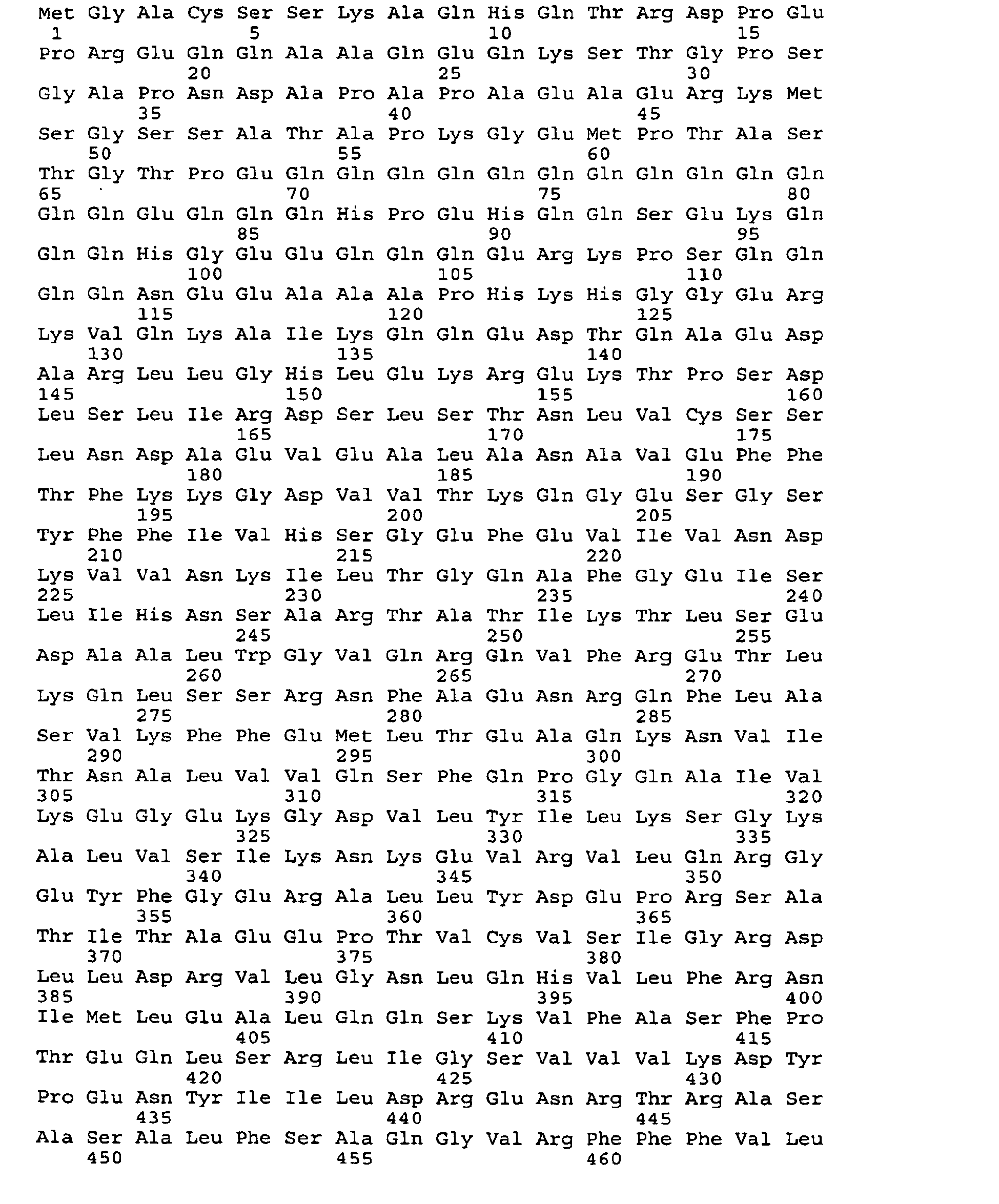


- <210> 12
<211> 7796
<212> DNA
<213> Artificial Sequence - <220>
<223> PKG - <400> 12


- <210> 13
<211> 994
<212> PRT
<213> Artificial Sequence - <220>
<223> PKG - <400> 13


-
- <110> Merck & Co., Inc.
- <120> CYCLIC GMP DEPENDENT PROTEIN KINASE AS A CHEMOTHERAPEUTIC TARGET FOR ANTIPROTOZOAL AGENTS
- <130> 20362A
- <140>
EP06075135
<141> 2000-4-10 - <150>
60/129,058
<151> 1999-04-13 - <160> 13
- <170> FastSEQ for Windows Version 4.0
- <210> 1
<211> 8
<212> PRT
<213> Artificial Sequence - <220>
<223> Inhibitor Binding Protein - <400> 1

- <210> 2
<211> 5
<212> PRT
<213> Artificial Sequence - <220>
<223> Inhibitor Binding Protein - <400> 2

- <210> 3
<211> 5
<212> PRT
<213> Artificial Sequence - <220>
<223> Inhibitor Binding Protein - <400> 3

- <210> 4
<211> 16
<212> PRT
<213> Artificial Sequence - <220>
<223> Inhibitor Binding Protein - <400> 4

- <210> 5
<211> 19
<212> PRT
<213> Artificial Sequence - <220>
<223> Inhibitor Binding Protein - <400> 5

- <210> 6
<211> 17
<212> PRT
<213> Artificial Sequence - <220>
<223> Inhibitor Binding Protein - <400> 6

- <210> 7
<211> 6
<212> PRT
<213> Artificial Sequence - <220>
<223> Inhibitor Binding Protein - <221> VARIANT
<222> (4)...(4)
<223> Xaa = Any Amino Acid - <400> 7

- <210> 8
<211> 453
<212> DNA
<213> Artificial Sequence - <220>
<223> Probe - <400> 8


- <210> 9
<211> 151
<212> PRT
<213> Artificial Sequence - <220>
<223> PKG - <400> 9

- <210> 10
<211> 4262
<212> DNA
<213> Artificial Sequence - <220>
<223> PKG - <400> 10


- <210> 11
<211> 1003
<212> PRT
<213> Artificial Sequence - <220>
<223> PKG - <400> 11


- <210> 12
<211> 7796
<212> DNA
<213> Artificial Sequence - <220>
<223> PKG - <400> 12
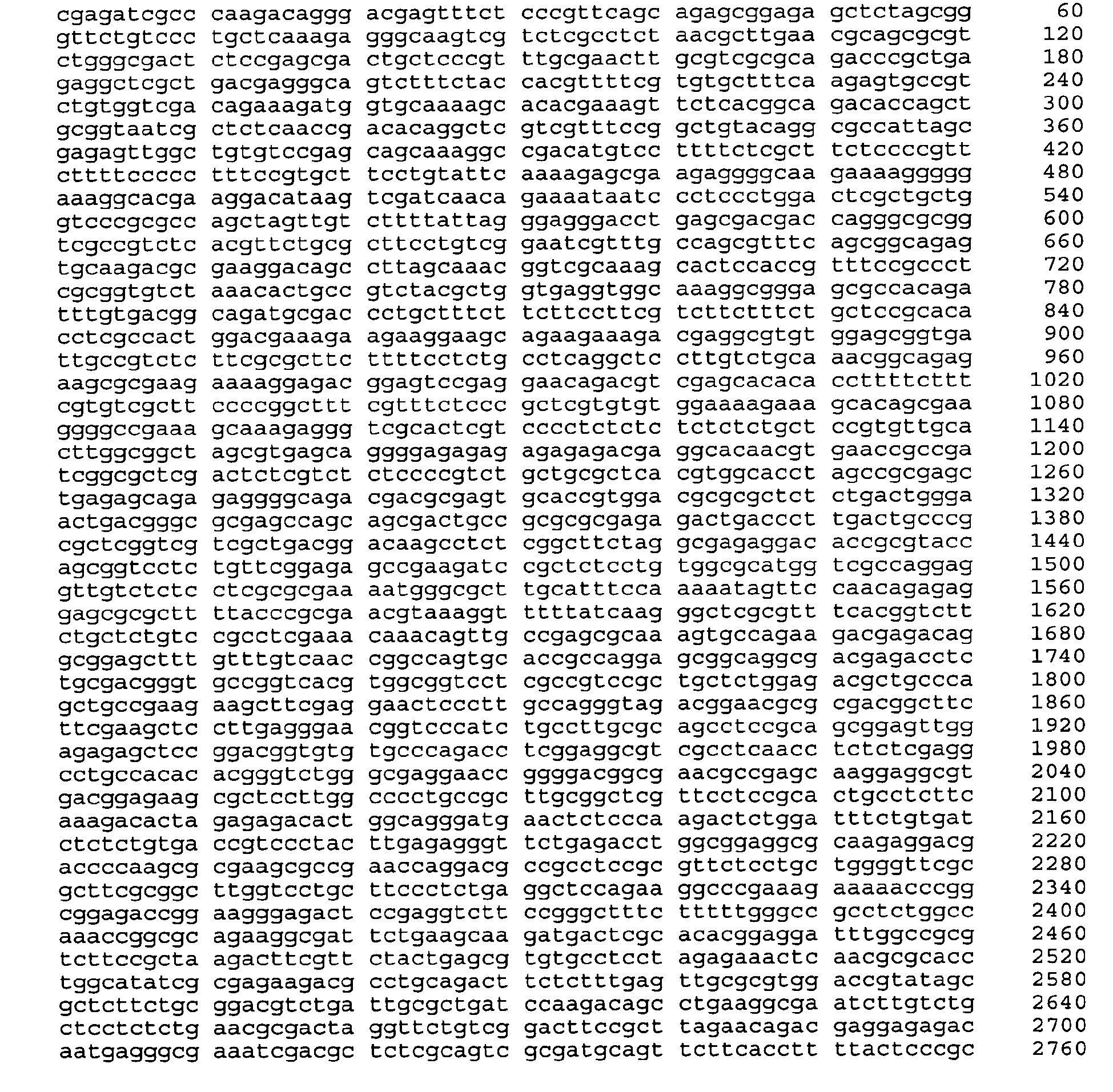


- <210> 13
<211> 994
<212> PRT
<213> Artificial Sequence - <220>
<223> PKG - <400> 13


-
- <110> Gurnett, Anne
Liberator, Paul A.
Donald, Robert
Schmatz, Dennis
Harris, Georgianna
Rattray, Sandra J. - <120> CYCLIC GMP DEPENDENT PROTEIN KINASE AS A CHEMOTHERAPEUTIC TARGET FOR ANTIPROTOZOAL AGENTS
- <130> 20362PV
- <140>
US 60/129,058 - <141> 1999-04-13
- <160> 13
- <170> FastSEQ for Windows Version 4.0
- <210> 1
<211> 8
<212> PRT
<213> Artificial Sequence - <220>
<223> Inhibitor Binding Protein - <400> 1

- <210> 2
<211> 5
<212> PRT
<213> Artificial Sequence - <220>
<223> Inhibitor Binding Protein - <400> 2

- <210> 3
<211> 5
<212> PRT
<213> Artificial Sequence - <220>
<223> Inhibitor Binding Protein - <400> 3

- <210> 4
<211> 16
<212> PRT
<213> Artificial Sequence - <220>
<223> Inhibitor Binding Protein - <400> 4

- <210> 5
<211> 19
<212> PRT
<213> Artificial Sequence - <220>
<223> Inhibitor Binding Protein - <400> 5

- <210> 6
<211> 17
<212> PRT
<213> Artificial Sequence - <220>
<223> Inhibitor Binding Protein - <400> 6

- <210> 7
<211> 6
<212> PRT
<213> Artificial Sequence - <220>
<223> Xaa = Any Amino Acid - <400> 7

- <210> 8
<211> 453
<212> DNA
<213> Artificial Sequence - <220>
<223> Probe - <400> 8

- <210> 9
<211> 151
<212> PRT
<213> Artificial Sequence - <220>
<223> PKG - <400> 9

- <210> 10
<211> 4262
<212> DNA
<213> Artificial Sequence - <220>
<223> PKG - <400> 10


- <210> 11
<211> 1003
<212> PRT
<213> Artificial Sequence - <220>
<223> PKG - <400> 11


- <210> 12
<211> 7796
<212> DNA
<213> Artificial Sequence - <220>
<223> PKG - <400> 12


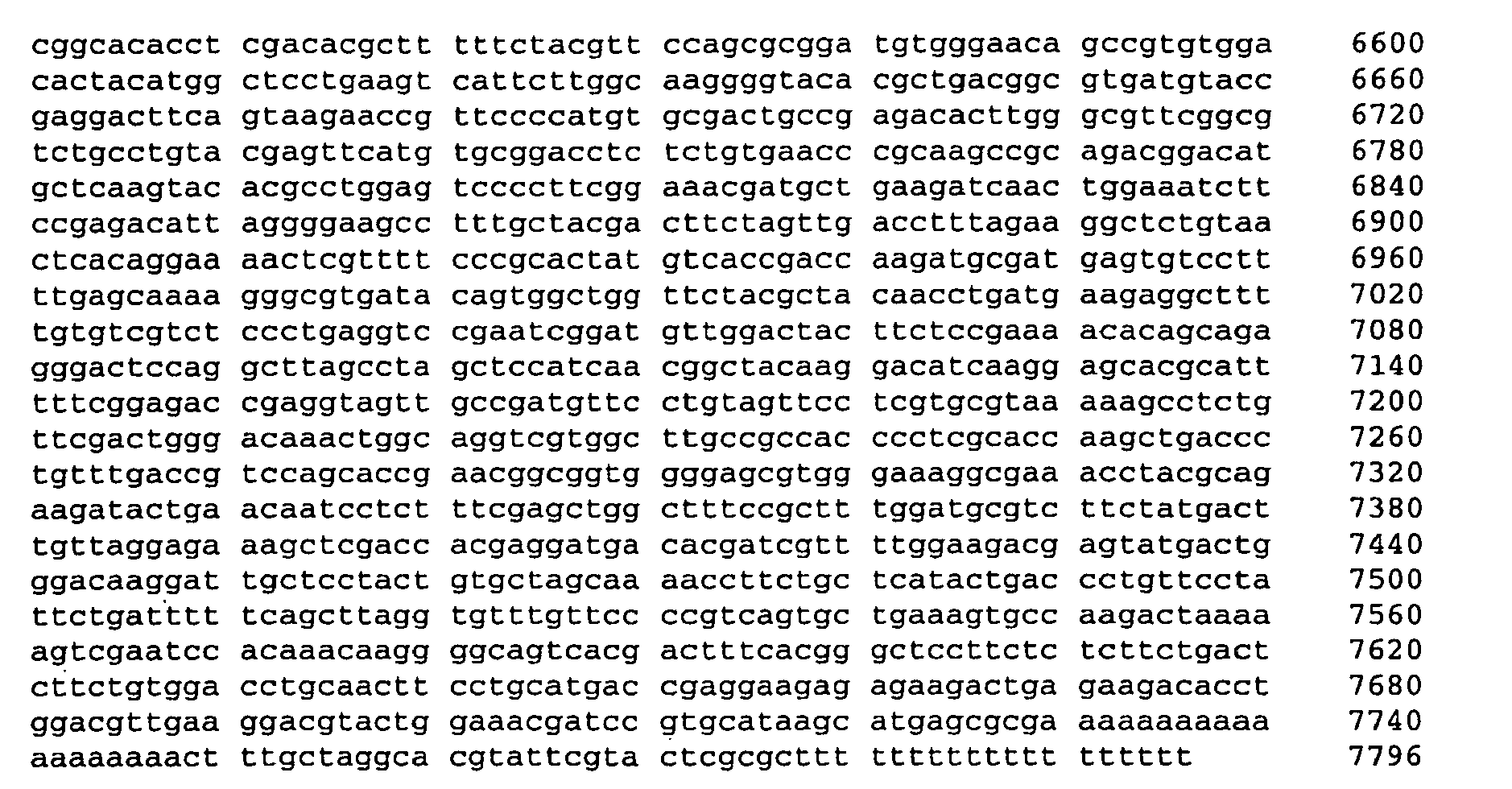
- <210> 13
<211> 994
<212> PRT
<213> Artificial Sequence - <220>
<223> PKG - <400> 13
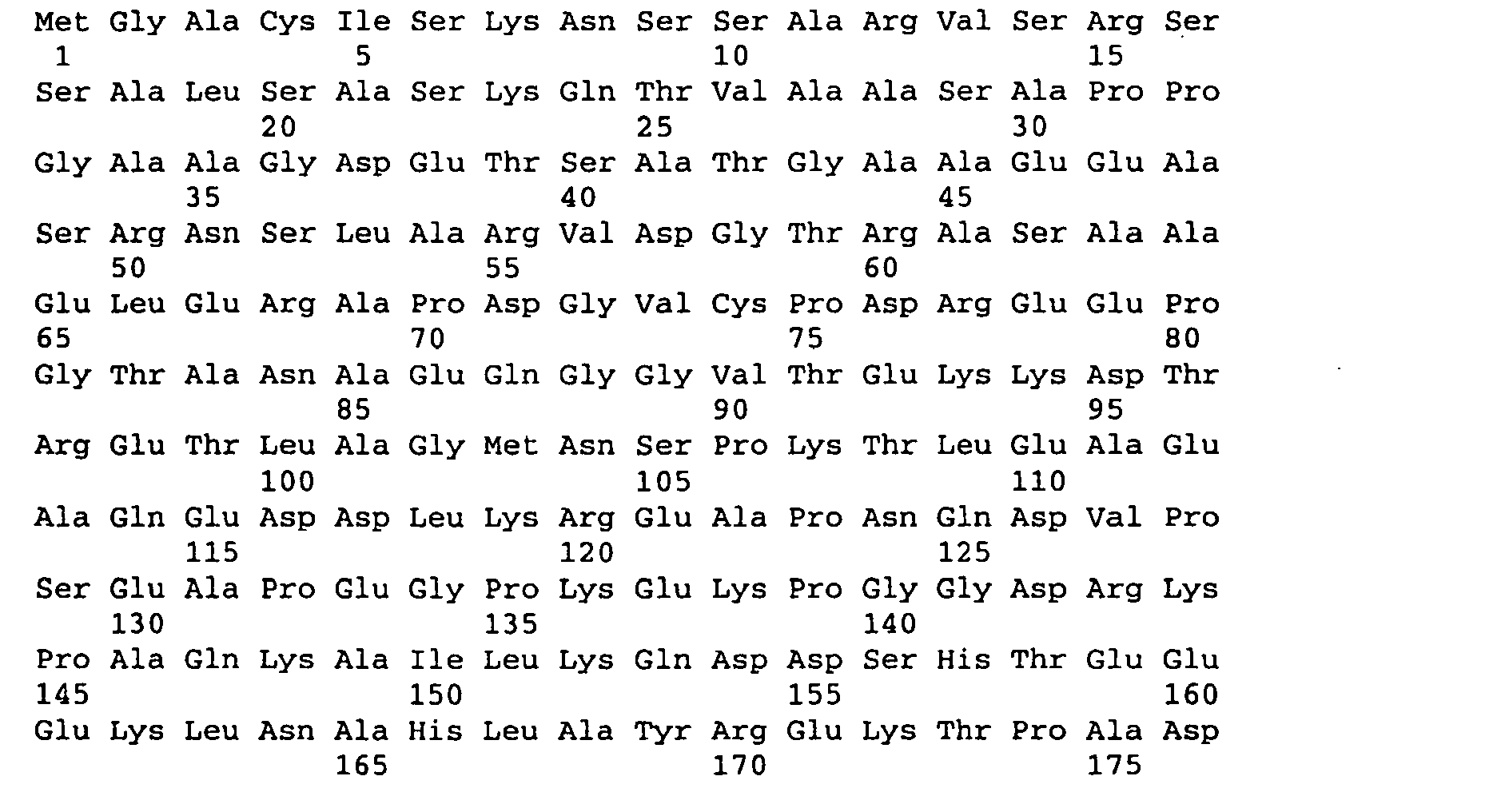


-
- <110> Merck & Co., Inc.
- <120> CYCLIC GMP DEPENDENT PROTEIN KINASE AS A CHEMOTHERAPEUTIC TARGET FOR ANTIPROTOZOAL AGENTS
- <130> 20362 PCT
- <150>
09/521,511
<151> 2000-03-08 - <150>
60/129,058
<151> 1999-04-13 - <160> 16
- <170> FastSEQ for Windows Version 4.0
- <210> 1
<211> 8
<212> PRT
<213> Artificial Sequence - <220>
<223> Inhibitor Binding Protein - <400> 1

- <210> 2
<211> 5
<212> PRT
<213> Artificial Sequence - <220>
<223> Inhibitor Binding Protein - <400> 2

- <210> 3
<211> 5
<212> PRT
<213> Artificial Sequence - <220>
<223> Inhibitor Binding Protein - <400> 3

- <210> 4
<211> 16
<212> PRT
<213> Artificial Sequence - <220>
<223> Inhibitor Binding Protein - <400> 4

- <210> 5
<211> 19
<212> PRT
<213> Artificial Sequence - <220>
<223> Inhibitor Binding Protein - <400> 5

- <210> 6
<211> 17
<212> PRT
<213> Artificial Sequence - <220>
<223> Inhibitor Binding Protein - <400> 6

- <210> 7
<211> 6
<212> PRT
<213> Artificial Sequence - <220>
<223> Inhibitor Binding Protein - <221> VARIANT
<222> (4)...(4)
<223> Xaa = Any Amino Acid - <400> 7

- <210> 8
<211> 453
<212> DNA
<213> Artificial Sequence - <220>
<223> Probe - <400> 8


- <210> 9
<211> 151
<212> PRT
<213> Artificial Sequence - <220>
<223> PKG - <400> 9

- <210> 10
<211> 4262
<212> DNA
<213> Artificial Sequence - <220>
<223> PKG - <400> 10


- <210> 11
<211> 1003
<212> PRT
<213> Artificial Sequence - <220>
<223> PKG - <400> 11


- <210> 12
<211> 7796
<212> DNA
<213> Artificial Sequence - <220>
<223> PKG - <400> 12


- <210> 13
<211> 994
<212> PRT
<213> Artificial Sequence - <220>
<223> PKG - <400> 13


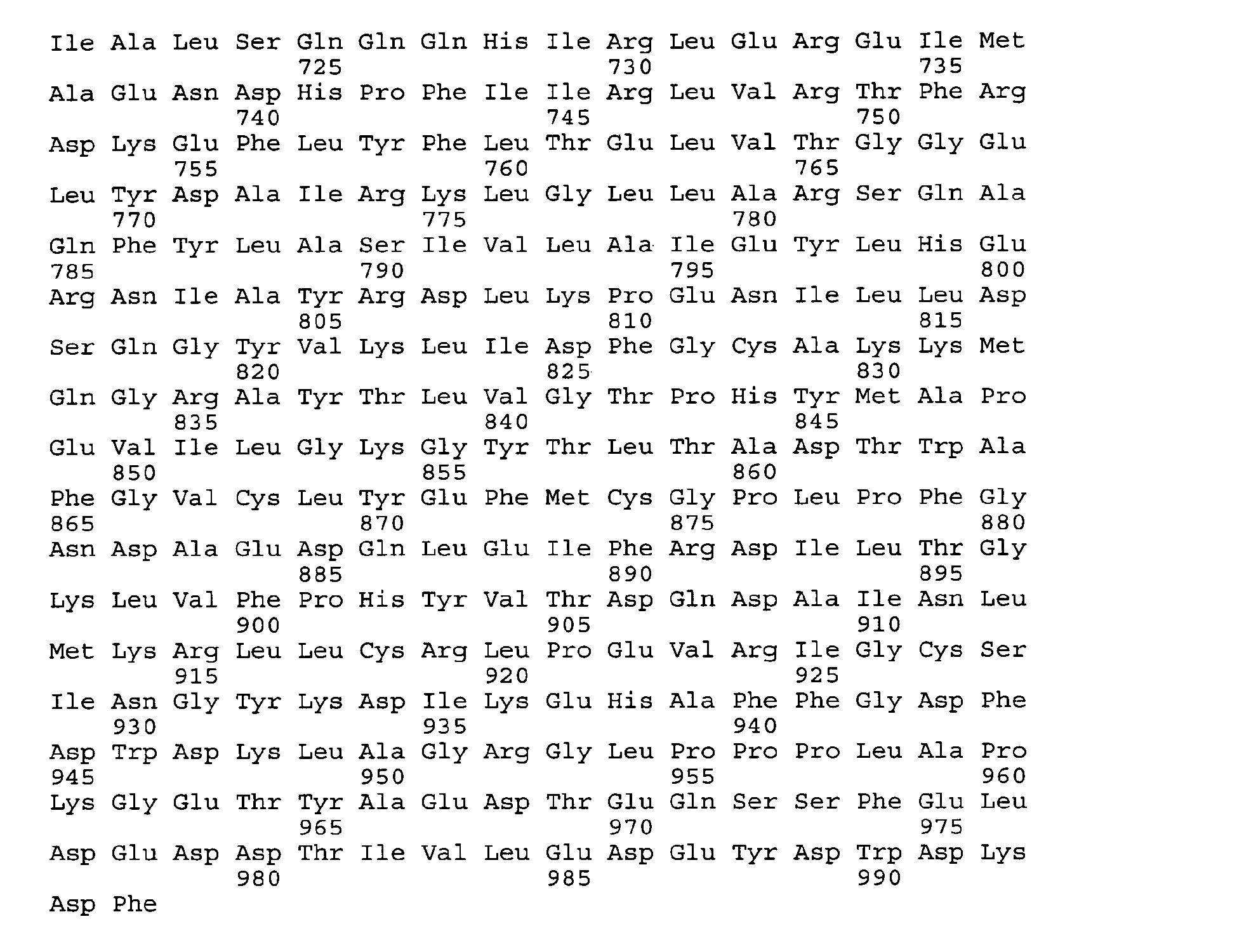
Claims (14)
- An isolated polynucleotide comprising a sequence of nucleotides that encodes a cGMP dependent protein kinase having an amino acid sequence as set forth in SEQ In NO: 13.
- An isolated polynucleotide according to claim 1 which comprises a nucleotide sequence as set forth in SEQ ID NO:12.
- A host cell transformed or transfected with the nucleic acid molecule of claim 1 or 2.
- An expression vector comprising the nucleic acid molecule of claim 1 or 2, operably linked to a regulatory nucleotide sequence that controls expression of the nucleic acid molecule in a host cell.
- The expression vector of claim 4 wherein said vector is a plasmid.
- A substantially pure cGMP dependent protein kinase G of the family Apicomplexan, comprising the amino acid sequence as set forth in SEQ ID NO:13.
- A substantially pure cGMP dependent protein kinase G of the family Apicomplexan, comprising an amino acid sequence encoded by the nucleotide sequence set forth in SEQ ID NO: 12.
- A method for identifying compounds having antiprotozoal activity comprising:(a) contacting protozoal cGMP dependent protein kinase G (PKG) of the family Apicomplexan comprising the amino acid sequence as set forth in SEQ ID NO:13 or encoded by the nucleotide sequence set forth in SEQ ID NO:12 with (i) a known amount of a labeled compound that interacts with a cGMP dependent protein kinase G and (ii) a known dilution of a test compound or a natural product extract; and(b) quantitating the percent inhibition of interaction of said labeled compound induced by said test compound.
- A method of screening for substances which inhibit the activity of the isolated cGMP dependent protein kinase G of claim 6 or 7, comprising contacting said kinase with the substance to be detected and measuring the cGMP dependent protein kinase activity in said contacted isolated kinase G.
- A method for identifying an antiprotozoal agent effective at inhibiting the kinase activity of a cGMP protein kinase G derived from Toxoplasma gondii, said method comprising the steps of:(i) combining in a reaction mixture (a) a test agent, (b) a kinase characterized as having the amino acid sequence set forth in SEQ ID NO:13 or encoded by the nucleotide sequence set forth in SEQ ID NO:12, (c) a suitable substrate specific for said kinase of (b) above, and (d) labeled ATP; and(ii) determining the extent to which the test agent inhibits phosphorylation of the substrate as compared to a control reaction lacking the test compound, wherein inhibition of phosphorylation in the presence of the compound is indicative that the test agent is an antiprotozoal agent.
- A method of screening for a compound that inhibits the binding or kinase activity of the kinase of claim 6 or 7, said method comprising:(a) combining the kinase with at least one test compound under conditions permissive for the activity of the kinase;(b) assessing the activity of the kinase in the presence of the test compound; and(c) comparing the activity of the kinase in the presence of the test compound with the activity of the kinase in the absence of the test compound, wherein a deviation between the activities is indicative of a compound that inhibits the activity of the kinase of claim 6 or 7.
- The method of claim 11, wherein said inhibition of the activity of the kinase is detected by direct binding of the test compound to the kinase.
- The method of claim 12, wherein the said direct binding is determined by lysing the cell and performing an immunoprecipitation.
- The method of claim 13, wherein said inhibition(i) is the measurement of the inhibitory efficacy of the kinase; and(ii) is detected by use of an assay for the activity of the kinase.
Priority Applications (2)
| Application Number | Priority Date | Filing Date | Title |
|---|---|---|---|
| SI200031022T SI1676924T1 (en) | 1999-04-13 | 2000-04-10 | Cyclic GMP dependent protein kinase of toxoplasma gondii as a chemotherapeutic target for antiprotozoal agents |
| CY20091100393T CY1108977T1 (en) | 1999-04-13 | 2009-04-03 | Protein Kinase Depending on the Circulating GMP of Toxoplasma gondii (Toxoplasma gondii) as a Chemotherapeutic Target for Antioxidants |
Applications Claiming Priority (2)
| Application Number | Priority Date | Filing Date | Title |
|---|---|---|---|
| US12905899P | 1999-04-13 | 1999-04-13 | |
| EP00922040A EP1212451B1 (en) | 1999-04-13 | 2000-04-10 | Cyclic gmp dependent protein kinase as a chemotherapeutic target for antiprotozoal agents |
Related Parent Applications (1)
| Application Number | Title | Priority Date | Filing Date |
|---|---|---|---|
| EP00922040A Division EP1212451B1 (en) | 1999-04-13 | 2000-04-10 | Cyclic gmp dependent protein kinase as a chemotherapeutic target for antiprotozoal agents |
Publications (2)
| Publication Number | Publication Date |
|---|---|
| EP1676924A1 EP1676924A1 (en) | 2006-07-05 |
| EP1676924B1 true EP1676924B1 (en) | 2009-01-07 |
Family
ID=22438270
Family Applications (2)
| Application Number | Title | Priority Date | Filing Date |
|---|---|---|---|
| EP06075135A Expired - Lifetime EP1676924B1 (en) | 1999-04-13 | 2000-04-10 | Cyclic GMP dependent protein kinase of toxoplasma gondii as a chemotherapeutic target for antiprotozoal agents |
| EP00922040A Expired - Lifetime EP1212451B1 (en) | 1999-04-13 | 2000-04-10 | Cyclic gmp dependent protein kinase as a chemotherapeutic target for antiprotozoal agents |
Family Applications After (1)
| Application Number | Title | Priority Date | Filing Date |
|---|---|---|---|
| EP00922040A Expired - Lifetime EP1212451B1 (en) | 1999-04-13 | 2000-04-10 | Cyclic gmp dependent protein kinase as a chemotherapeutic target for antiprotozoal agents |
Country Status (13)
| Country | Link |
|---|---|
| US (3) | US6555358B1 (en) |
| EP (2) | EP1676924B1 (en) |
| JP (2) | JP4540235B2 (en) |
| AT (2) | ATE420200T1 (en) |
| AU (1) | AU776066B2 (en) |
| CA (1) | CA2365919C (en) |
| CY (1) | CY1108977T1 (en) |
| DE (2) | DE60041369D1 (en) |
| DK (1) | DK1676924T3 (en) |
| ES (2) | ES2265932T3 (en) |
| PT (1) | PT1676924E (en) |
| SI (1) | SI1676924T1 (en) |
| WO (1) | WO2000061781A1 (en) |
Families Citing this family (4)
| Publication number | Priority date | Publication date | Assignee | Title |
|---|---|---|---|---|
| US20020009764A1 (en) * | 1999-10-08 | 2002-01-24 | W. Joseph Thompson | Methods for identifying compounds for inhibition of neoplastic lesions, and pharmaceutical compositions containing such compounds |
| US6555358B1 (en) * | 1999-04-13 | 2003-04-29 | Merck & Co., Inc. | Polynucleotide encoding eimeria tenella cGMP dependent protein kinase |
| EP1472266A4 (en) * | 2001-12-20 | 2005-06-29 | Merck & Co Inc | DNA ENCODING FOR NEW PROTEIN CYCLIC GMP-DEPENDENT KINASES DERIVED FROM TWO PROTOZOAES, USEFUL AS CHEMOTHERAPEUTIC TARGETS FOR ANTIPROTOZOA AGENTS |
| US7901884B2 (en) * | 2006-05-03 | 2011-03-08 | The Chinese University Of Hong Kong | Markers for prenatal diagnosis and monitoring |
Family Cites Families (2)
| Publication number | Priority date | Publication date | Assignee | Title |
|---|---|---|---|---|
| US655358A (en) * | 1900-05-14 | 1900-08-07 | Samuel Malcolm Smyth | Table-leg fastener. |
| US6555358B1 (en) * | 1999-04-13 | 2003-04-29 | Merck & Co., Inc. | Polynucleotide encoding eimeria tenella cGMP dependent protein kinase |
-
2000
- 2000-03-08 US US09/521,511 patent/US6555358B1/en not_active Expired - Lifetime
- 2000-04-10 ES ES00922040T patent/ES2265932T3/en not_active Expired - Lifetime
- 2000-04-10 WO PCT/US2000/009611 patent/WO2000061781A1/en not_active Ceased
- 2000-04-10 EP EP06075135A patent/EP1676924B1/en not_active Expired - Lifetime
- 2000-04-10 ES ES06075135T patent/ES2320026T3/en not_active Expired - Lifetime
- 2000-04-10 SI SI200031022T patent/SI1676924T1/en unknown
- 2000-04-10 JP JP2000611704A patent/JP4540235B2/en not_active Expired - Lifetime
- 2000-04-10 AT AT06075135T patent/ATE420200T1/en active
- 2000-04-10 AT AT00922040T patent/ATE331807T1/en not_active IP Right Cessation
- 2000-04-10 DK DK06075135T patent/DK1676924T3/en active
- 2000-04-10 CA CA2365919A patent/CA2365919C/en not_active Expired - Lifetime
- 2000-04-10 DE DE60041369T patent/DE60041369D1/en not_active Expired - Lifetime
- 2000-04-10 AU AU42283/00A patent/AU776066B2/en not_active Expired
- 2000-04-10 DE DE60029108T patent/DE60029108T2/en not_active Expired - Lifetime
- 2000-04-10 EP EP00922040A patent/EP1212451B1/en not_active Expired - Lifetime
- 2000-04-10 PT PT06075135T patent/PT1676924E/en unknown
-
2003
- 2003-01-21 US US10/348,155 patent/US7125700B2/en not_active Expired - Lifetime
-
2006
- 2006-09-21 US US11/525,062 patent/US7718390B2/en not_active Expired - Lifetime
-
2009
- 2009-04-03 CY CY20091100393T patent/CY1108977T1/en unknown
-
2010
- 2010-05-07 JP JP2010107098A patent/JP5118721B2/en not_active Expired - Lifetime
Also Published As
| Publication number | Publication date |
|---|---|
| PT1676924E (en) | 2009-04-03 |
| EP1212451B1 (en) | 2006-06-28 |
| JP5118721B2 (en) | 2013-01-16 |
| WO2000061781A1 (en) | 2000-10-19 |
| DE60029108T2 (en) | 2007-05-31 |
| US6555358B1 (en) | 2003-04-29 |
| JP2010193900A (en) | 2010-09-09 |
| ATE331807T1 (en) | 2006-07-15 |
| US20030211552A1 (en) | 2003-11-13 |
| SI1676924T1 (en) | 2009-06-30 |
| ES2265932T3 (en) | 2007-03-01 |
| CA2365919C (en) | 2013-07-23 |
| CY1108977T1 (en) | 2014-07-02 |
| US7125700B2 (en) | 2006-10-24 |
| JP4540235B2 (en) | 2010-09-08 |
| AU776066B2 (en) | 2004-08-26 |
| ES2320026T3 (en) | 2009-05-18 |
| AU4228300A (en) | 2000-11-14 |
| DK1676924T3 (en) | 2009-03-09 |
| EP1212451A4 (en) | 2002-11-27 |
| ATE420200T1 (en) | 2009-01-15 |
| CA2365919A1 (en) | 2000-10-19 |
| DE60029108D1 (en) | 2006-08-10 |
| DE60041369D1 (en) | 2009-02-26 |
| EP1212451A1 (en) | 2002-06-12 |
| EP1676924A1 (en) | 2006-07-05 |
| US7718390B2 (en) | 2010-05-18 |
| US20070009979A1 (en) | 2007-01-11 |
| JP2003524401A (en) | 2003-08-19 |
Similar Documents
| Publication | Publication Date | Title |
|---|---|---|
| Wiese | A mitogen‐activated protein (MAP) kinase homologue of Leishmania mexicana is essential for parasite survival in the infected host | |
| Kun et al. | A putative Plasmodium falciparum exported serine/threonine protein kinase | |
| Asai et al. | Neospora caninum: tachyzoites express a potent type-I nucleoside triphosphate hydrolase, but lack nucleoside diphosphate hydrolase activity | |
| JP5118721B2 (en) | Cyclic GMP-dependent protein kinase as a chemotherapeutic target for antiprotozoal agents | |
| EP3183574B1 (en) | Beta lactamase as biomarker for the specific detection of tuberculosis-complex bacteria | |
| US7671181B2 (en) | Polynucleotides encoding coccidian parasite casein kinase I, a chemotherapeutic target for antiprotozoal agents | |
| US6670161B1 (en) | Compositions and methods for template-dependent enzymatic synthesis of nucleic acid | |
| CA2471145C (en) | Dna encoding novel cyclic gmp dependent protein kinases from two protozoal sources for use as chemotherapeutic targets for antiprotozoal agents | |
| Jean et al. | Genomic organisation and developmentally regulated expression of an apicomplexan aspartyl proteinase | |
| Dong et al. | Molecular cloning and characterization of lactate dehydrogenase gene from Eimeria tenella | |
| US6270767B1 (en) | Trypanosoma cruzi antigen, gene encoding therefor and methods of detecting and treating chagas disease | |
| US6403103B1 (en) | Trypanosoma cruzi antigen, gene encoding therefore, and methods of detecting and treating chagas disease | |
| Dalrymple et al. | A polymerase chain reaction method for the identification of genes encoding members of the Bv60/p58 family of rhoptry protein homologues in the genusBabesia | |
| EP1664289B1 (en) | Cyclic nucleotide-specific phosphodiesterases from leishmania and uses thereof | |
| Iyer et al. | Antibodies targeting the PfRH1 binding domain inhibit invasion of plasmodium falciparum merozoites | |
| Gao et al. | Antibodies Targeting the PfRH1 Binding Domain Inhibit Invasion of Plasmodium falciparum | |
| Wu et al. | Hui Dong, Yange Wang, Qiping Zhao, Hongyu Han, Shunhai Zhu, Liujia Li | |
| Cui | S LLGLG LLLLLLGGG GGGGGG GGLL yTTTTSS | |
| MXPA96001346A (en) | Antigen novedoso of trypanosoma cruzi and the genque codifies for this last and its application for the detection of cha's disease | |
| WO2003076582A2 (en) | A novel protein kinase induced during sporangial cleavage in the oomycete phytophthora infestans | |
| FR2876107A1 (en) | Polypeptide sequence of an ABC transporter of Toxoplasma gondii useful for detecting T. gondii infections and other members of the ABC transporter family and for reducing intracellular concentrations of cytotoxic compounds |
Legal Events
| Date | Code | Title | Description |
|---|---|---|---|
| PUAI | Public reference made under article 153(3) epc to a published international application that has entered the european phase |
Free format text: ORIGINAL CODE: 0009012 |
|
| AC | Divisional application: reference to earlier application |
Ref document number: 1212451 Country of ref document: EP Kind code of ref document: P |
|
| AK | Designated contracting states |
Kind code of ref document: A1 Designated state(s): AT BE CH CY DE DK ES FI FR GB GR IE IT LI LU MC NL PT SE |
|
| AX | Request for extension of the european patent |
Extension state: AL LT LV MK RO SI |
|
| 17P | Request for examination filed |
Effective date: 20070105 |
|
| 17Q | First examination report despatched |
Effective date: 20070213 |
|
| AKX | Designation fees paid |
Designated state(s): AT BE CH CY DE DK ES FI FR GB GR IE IT LI LU MC NL PT SE |
|
| AXX | Extension fees paid |
Extension state: RO Payment date: 20070105 Extension state: LV Payment date: 20070105 Extension state: LT Payment date: 20070105 Extension state: AL Payment date: 20070105 Extension state: MK Payment date: 20070105 Extension state: SI Payment date: 20070105 |
|
| RAP1 | Party data changed (applicant data changed or rights of an application transferred) |
Owner name: MERIAL LIMITED |
|
| GRAP | Despatch of communication of intention to grant a patent |
Free format text: ORIGINAL CODE: EPIDOSNIGR1 |
|
| GRAS | Grant fee paid |
Free format text: ORIGINAL CODE: EPIDOSNIGR3 |
|
| GRAA | (expected) grant |
Free format text: ORIGINAL CODE: 0009210 |
|
| AC | Divisional application: reference to earlier application |
Ref document number: 1212451 Country of ref document: EP Kind code of ref document: P |
|
| AK | Designated contracting states |
Kind code of ref document: B1 Designated state(s): AT BE CH CY DE DK ES FI FR GB GR IE IT LI LU MC NL PT SE |
|
| AX | Request for extension of the european patent |
Extension state: AL LT LV MK RO SI |
|
| REG | Reference to a national code |
Ref country code: GB Ref legal event code: FG4D |
|
| REG | Reference to a national code |
Ref country code: CH Ref legal event code: EP |
|
| REG | Reference to a national code |
Ref country code: CH Ref legal event code: NV Representative=s name: BRAUNPAT BRAUN EDER AG |
|
| REG | Reference to a national code |
Ref country code: IE Ref legal event code: FG4D |
|
| REF | Corresponds to: |
Ref document number: 60041369 Country of ref document: DE Date of ref document: 20090226 Kind code of ref document: P |
|
| REG | Reference to a national code |
Ref country code: DK Ref legal event code: T3 |
|
| REG | Reference to a national code |
Ref country code: PT Ref legal event code: SC4A Free format text: AVAILABILITY OF NATIONAL TRANSLATION Effective date: 20090324 |
|
| REG | Reference to a national code |
Ref country code: SE Ref legal event code: TRGR |
|
| REG | Reference to a national code |
Ref country code: GR Ref legal event code: EP Ref document number: 20090400838 Country of ref document: GR |
|
| REG | Reference to a national code |
Ref country code: ES Ref legal event code: FG2A Ref document number: 2320026 Country of ref document: ES Kind code of ref document: T3 |
|
| PLBE | No opposition filed within time limit |
Free format text: ORIGINAL CODE: 0009261 |
|
| STAA | Information on the status of an ep patent application or granted ep patent |
Free format text: STATUS: NO OPPOSITION FILED WITHIN TIME LIMIT |
|
| 26N | No opposition filed |
Effective date: 20091008 |
|
| REG | Reference to a national code |
Ref country code: FR Ref legal event code: PLFP Year of fee payment: 16 |
|
| REG | Reference to a national code |
Ref country code: FR Ref legal event code: PLFP Year of fee payment: 17 |
|
| REG | Reference to a national code |
Ref country code: FR Ref legal event code: PLFP Year of fee payment: 18 |
|
| REG | Reference to a national code |
Ref country code: AT Ref legal event code: PC Ref document number: 420200 Country of ref document: AT Kind code of ref document: T Owner name: MERIAL, INC., US Effective date: 20170503 |
|
| REG | Reference to a national code |
Ref country code: FR Ref legal event code: PLFP Year of fee payment: 19 |
|
| REG | Reference to a national code |
Ref country code: CH Ref legal event code: PCAR Free format text: NEW ADDRESS: HOLEESTRASSE 87, 4054 BASEL (CH) |
|
| PGFP | Annual fee paid to national office [announced via postgrant information from national office to epo] |
Ref country code: MC Payment date: 20190322 Year of fee payment: 20 |
|
| PGFP | Annual fee paid to national office [announced via postgrant information from national office to epo] |
Ref country code: NL Payment date: 20190426 Year of fee payment: 20 Ref country code: LU Payment date: 20190429 Year of fee payment: 20 |
|
| PGFP | Annual fee paid to national office [announced via postgrant information from national office to epo] |
Ref country code: DK Payment date: 20190429 Year of fee payment: 20 Ref country code: IT Payment date: 20190423 Year of fee payment: 20 Ref country code: PT Payment date: 20190325 Year of fee payment: 20 Ref country code: ES Payment date: 20190503 Year of fee payment: 20 Ref country code: FI Payment date: 20190429 Year of fee payment: 20 Ref country code: CY Payment date: 20190322 Year of fee payment: 20 Ref country code: DE Payment date: 20190429 Year of fee payment: 20 Ref country code: IE Payment date: 20190429 Year of fee payment: 20 |
|
| PGFP | Annual fee paid to national office [announced via postgrant information from national office to epo] |
Ref country code: GR Payment date: 20190425 Year of fee payment: 20 Ref country code: FR Payment date: 20190425 Year of fee payment: 20 Ref country code: SE Payment date: 20190429 Year of fee payment: 20 Ref country code: BE Payment date: 20190429 Year of fee payment: 20 |
|
| PGFP | Annual fee paid to national office [announced via postgrant information from national office to epo] |
Ref country code: CH Payment date: 20190501 Year of fee payment: 20 |
|
| PGFP | Annual fee paid to national office [announced via postgrant information from national office to epo] |
Ref country code: AT Payment date: 20190320 Year of fee payment: 20 Ref country code: GB Payment date: 20190429 Year of fee payment: 20 |
|
| REG | Reference to a national code |
Ref country code: DE Ref legal event code: R071 Ref document number: 60041369 Country of ref document: DE |
|
| REG | Reference to a national code |
Ref country code: DK Ref legal event code: EUP Expiry date: 20200410 |
|
| REG | Reference to a national code |
Ref country code: CH Ref legal event code: PL Ref country code: NL Ref legal event code: MK Effective date: 20200409 |
|
| REG | Reference to a national code |
Ref country code: GB Ref legal event code: PE20 Expiry date: 20200409 |
|
| REG | Reference to a national code |
Ref country code: FI Ref legal event code: MAE |
|
| REG | Reference to a national code |
Ref country code: IE Ref legal event code: MK9A |
|
| REG | Reference to a national code |
Ref country code: BE Ref legal event code: MK Effective date: 20200410 |
|
| PG25 | Lapsed in a contracting state [announced via postgrant information from national office to epo] |
Ref country code: PT Free format text: LAPSE BECAUSE OF EXPIRATION OF PROTECTION Effective date: 20200422 Ref country code: IE Free format text: LAPSE BECAUSE OF EXPIRATION OF PROTECTION Effective date: 20200410 |
|
| REG | Reference to a national code |
Ref country code: AT Ref legal event code: MK07 Ref document number: 420200 Country of ref document: AT Kind code of ref document: T Effective date: 20200410 |
|
| PG25 | Lapsed in a contracting state [announced via postgrant information from national office to epo] |
Ref country code: GB Free format text: LAPSE BECAUSE OF EXPIRATION OF PROTECTION Effective date: 20200409 |
|
| REG | Reference to a national code |
Ref country code: ES Ref legal event code: FD2A Effective date: 20210129 |
|
| PG25 | Lapsed in a contracting state [announced via postgrant information from national office to epo] |
Ref country code: ES Free format text: LAPSE BECAUSE OF EXPIRATION OF PROTECTION Effective date: 20200411 |