EP1675372A1 - CTI-enabled call center with CTI link between SIP-phones and CTI server - Google Patents
CTI-enabled call center with CTI link between SIP-phones and CTI server Download PDFInfo
- Publication number
- EP1675372A1 EP1675372A1 EP05027290A EP05027290A EP1675372A1 EP 1675372 A1 EP1675372 A1 EP 1675372A1 EP 05027290 A EP05027290 A EP 05027290A EP 05027290 A EP05027290 A EP 05027290A EP 1675372 A1 EP1675372 A1 EP 1675372A1
- Authority
- EP
- European Patent Office
- Prior art keywords
- cti
- computer telephony
- telephonic
- sip
- call
- Prior art date
- Legal status (The legal status is an assumption and is not a legal conclusion. Google has not performed a legal analysis and makes no representation as to the accuracy of the status listed.)
- Withdrawn
Links
Images


Classifications
-
- H—ELECTRICITY
- H04—ELECTRIC COMMUNICATION TECHNIQUE
- H04M—TELEPHONIC COMMUNICATION
- H04M3/00—Automatic or semi-automatic exchanges
- H04M3/42—Systems providing special services or facilities to subscribers
- H04M3/50—Centralised arrangements for answering calls; Centralised arrangements for recording messages for absent or busy subscribers ; Centralised arrangements for recording messages
- H04M3/51—Centralised call answering arrangements requiring operator intervention, e.g. call or contact centers for telemarketing
- H04M3/5183—Call or contact centers with computer-telephony arrangements
- H04M3/5191—Call or contact centers with computer-telephony arrangements interacting with the Internet
-
- Y—GENERAL TAGGING OF NEW TECHNOLOGICAL DEVELOPMENTS; GENERAL TAGGING OF CROSS-SECTIONAL TECHNOLOGIES SPANNING OVER SEVERAL SECTIONS OF THE IPC; TECHNICAL SUBJECTS COVERED BY FORMER USPC CROSS-REFERENCE ART COLLECTIONS [XRACs] AND DIGESTS
- Y10—TECHNICAL SUBJECTS COVERED BY FORMER USPC
- Y10S—TECHNICAL SUBJECTS COVERED BY FORMER USPC CROSS-REFERENCE ART COLLECTIONS [XRACs] AND DIGESTS
- Y10S379/00—Telephonic communications
- Y10S379/90—Internet, e.g. Internet phone, webphone, internet-based telephony
Definitions
- the present invention relates generally to a CTI-enabled (Computer Telephony Integration-enabled) SIP-phone (Session Initiation Protocol-Phone) used within a CTI-enabled call center. More particularly, the present invention relates to an apparatus and associated method for a SIP-phone that includes embedding CTI sourcing functions within the phone.
- CTI-enabled Computer Telephony Integration-enabled
- SIP-phone Session Initiation Protocol-Phone
- a PBX private branch exchange with the CTI sourcing functionality is not required as the CTI sourcing functionality is embedded within the SIP-phone.
- SIP-to-CTI and CTI-to-SIP conversions are performed at the SIP-phone all the while using conventional information interfaces, conventionally used at conventional CTI-enabled call centers. Call center personnel are able to view, use, and operate familiar information interfaces while the CTI-sourcing functionality embedded at a SIP-phone provide for the functionalities that previously required functionalities maintained at a call-center PBX.
- Public-access telephonic networks through which the telephonic communications are conducted are widely deployed. Many users communicate telephonically both for business and non-business purposes and interconnection of different telephonic networks, deployed over different geographical areas, permit users to communicate over widely disparate areas.
- a user communicates by way of a telephonic network through use of a telephonic station, or set.
- Some conventional telephonic stations are connectable to a telephonic network by way of wireline or wireless connections.
- Telephonic networks of conventional construction utilize circuit-switched communication techniques.
- a circuit-switched connection When a circuit-switched connection is formed, a circuit-switched channel, a dedicated channel, is dedicated to the communication session between the telephonic stations for the duration of the communication session during which the communication service is effectuated.
- the dedicated, circuit-switched connection By providing the dedicated, circuit-switched connection between the telephonic stations, the connection is maintained between the telephonic stations during the communication session, irrespective of the amount of data that is communicated between the telephonic stations. Data might, for instance, be only intermittently communicated during the communication session.
- the communication capacity dedicated to the communication session by way of the circuit-switched connection is not fully utilized. And, as a result, the communication capacity of a telephonic communication system that utilizes circuit-switched connections is usually inefficiently utilized.
- Telephonic networks are increasingly constructed in manners that permit communications between telephonic stations upon shared channels using shared-channel communication techniques. By providing for communications using shared channels rather than dedicated channels, the communication capacity of the communication system is able to be utilized more efficiently.
- Packet-based communication schemes utilize packet-switched connections permitting shared channels to be used upon which to communicate data.
- Packet-formatted data is formed of discrete packets, the communication of which is permitted at discrete intervals.
- the same channel that is used to communicate data packets pursuant to a first communication session to effectuate a first communication service between a first set of telephonic stations is used also to communicate data packets in a second communication session, essentially concurrent with the first communication session, but between a second set of telephonic stations.
- a multiple increase in the communication capacity of the communication system, relative a corresponding circuit-switched communication system, is possible.
- Packet-formatting of the data is generally performed according to a standardized protocol.
- Various packet formatting protocols have been promulgated, some at different logical layers, and telephonic communication networks have been constructed to be operable to communicate data formatted according to such standard formatting protocols.
- Packet data networks include, for instance, the internet backbone networks permitting of general public access. Telephonic stations that are connectable to the internet backbone are commercially available and their usage has become increasingly popular. Communication costs associated with their use is generally less than, and sometimes substantially less than, the costs associated with telephonic communications by way of a conventional, circuit-switched communication system. Socalled, SIP-phones are exemplary of these telephonic stations. SIP-phones utilize a session initiation protocol (SIP).
- SIP session initiation protocol
- SIP-phones are peer-to-peer devices in that they are capable of direct communications by way of an appropriate communication fabric without requiring the communication fabric to provide functionality, other than, e.g., for the communication connection and routing of communication data.
- SIP-Phones and other packet-based phones are increasingly utilized in commercial applications, such as telephonic call centers in which call center agents utilize SIP-Phones pursuant to call center operations.
- Many conventional call centers have used conventional telephonic stations that are connected, by way of a PBX (Private Branch Exchange), with a public switched telephonic network.
- the call center PBX is also connected to a computer telephony integration device, such as a CTI server to which a personal computer is positioned in communication connectivity.
- the computer telephony integration device provides CTI information to users of the telephonic stations at the call center.
- the CTI information is typically provided to a user by way of a display screen of the personal computer, or the like, positioned at, or near, the work area of the user.
- CTI-sourcing functionality is conventionally embedded at a PBX and is used in conjunction with the CTI server to cause information to be used pursuant to call center operations to be displayed. That is to say, conventionally, call centers utilize screen-pop, click-to-dial, and customer relationship management (CRM) applications in order to achieve increased agent productivity, enhanced customer service, and reduced cost.
- CRM customer relationship management
- ECMA European Computer Manufacturers Association
- CSTA Computer Supported Telecommunications Applications
- uaCSTA SIP user agent
- this existing manner focuses on the control of SIP phones instead of CTI sourcing functions that are more typically carried out by a PBX, which includes, e.g., routing mechanisms in addition to control functions.
- this existing manner needs the CTI application software to be revised to carry the CSTA information.
- IP (Internet Protocol) PBXs are also available and also provide PBX functionality to SIP-enabled, or other packet-based, phones, such as those used at call centers.
- An IP PBX is also typically connected, in a call center application, to a computer telephony integration device.
- a PBX may be not mandatory in the future because SIP is a peer-to-peer protocol.
- a mechanism that would provide CTI functionality to a user of a SIP- phone at a call center without need to resort to a PBX at which the CTI-sourcing functionality is conventionally resident would therefore be advantageous.
- Call center agents are also generally familiar with existing CTI information interfaces, and it would be further advantageous for such mechanisms to utilize the existing CTI information interfaces, obviating the need for the call center agents to become accustomed to new interfaces.
- the present invention accordingly, advantageously provides apparatus, and an associated method, for a CTI-enabled (Computer Telephony Integration-enabled) SIP-Phone (Session Initiation Protocol-Phone).
- CTI-enabled Computer Telephony Integration-enabled
- SIP-Phone Session Initiation Protocol-Phone
- a manner for a SIP-phone that includes embedding CTI sourcing functions within the SIP-phone itself.
- Computer telephony integration sourcing functionalities, embedded at the SIP-phone is used to source CTI information.
- the need for a PBX to source such functionality is obviated.
- a SIP-based phone located, e.g., at a call center, and directly connected to a packet data network is able to obtain and to make use of CTI-sourced information.
- SIP-to-CTI and CTI-SIP conversions are performable at the SIP-phone.
- a PBX no longer necessary to interconnect the telephonic station with a PSTN also no longer is needed to provide the CTI-sourcing functions.
- CTI information sourcing functions are embedded within the SIP, or other packet-based, phones. The same functionalities are provided by the phone-embedded CTI information sourcing functions as those conventionally provided by a PBX.
- a PBX private branch exchange
- SIP-to-CTI and CTI-to-SIP conversions are performed at the SIP-phone all the while using conventional information interfaces, conventionally used at conventional CTI-enabled call centers.
- Call center personnel are able to view, use, and operate familiar information interfaces while the CTI-sourcing functionality embedded at a SIP-phone provide for the functionalities that previously required continued use of a call center PBX.
- an SIP invite message is routed through the packet data network and delivered to the SIP phone.
- the functionality embedded at the SIP phone causes the invite message to be converted to CTI format.
- the SIP phone generates a CTI alerting message that is provided to the CTI server.
- the CTI server will convert this CTI alerting message into another CTI format, which may be proprietary to various CTI applications, resident on end personal computers.
- the CTI application operates to return information to the SIP phone user.
- the information returned and made available to a user of the SIP phone comprises screen display information that is displayed at a screen display prior to the acceptance of the invitation.
- the display information includes, for instance, information that identifies the calling party that originates the SIP invite message. Responsive to viewing of the display information, the user of the SIP phone selects whether to accept the invitation. If the invitation is accepted, a SIP OK message is generated for return to the calling party.
- a call is originated at the SIP phone for termination at a remote station.
- the telephonic identifier that identifies the remote station is accessed at the CTI server through operation of an appropriate CTI application. And the number, once retrieved, is provided to the SIP phone.
- a CTI-to-SIP conversion is performed to convert the telephonic identifier and other information into SIP form.
- the SIP form generates a SIP invite message that is communicated to the remote station. If the remote station accepts the invitation, call connections are performed and the communication session between the SIP phone and the remote station commences.
- routing functionality is provided when multiple SIP phones are concurrently connected to permit their concurrent operation by a user to communicate telephonically while also obtaining CTI information.
- a CTI-SIP phone server is provided that is connectable to each of the SIP phones. And, the CTI-SIP phone server is coupled to a CTI server, or other device, at which the CTI applications are maintained.
- a single IP (Internet Protocol) connection is maintained between the CTI-SIP phone server and the CTI server.
- the phone server maintains a plurality of IP connections with the plurality of SIP phones.
- the phone server provides the routing functionality to provide information obtained form the CTI applications maintained at the CTI server for delivery to the individual SIP phones.
- a PBX By embedding the CTI information sourcing functionality in the SIP phone, a PBX, no longer needed to interconnect the phone to a PSTN, is also no longer needed to provide the CTI information sourcing functions.
- a call center is able, thereby, to be constructed wholly free of use of a PBX without changing or altering the existing CTI applications used by call center agents.
- Figure 1 illustrates a functional block diagram of an exemplary telephonic communication network in which an embodiment of the present invention is operable.
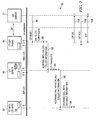
- Figure 2 illustrates a message sequence diagram representative of exemplary incoming call signaling generated during operation of the telephonic communication network shown in Figure 1 pursuant to operation of an embodiment of the present invention.
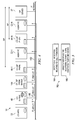
- Figure 3 illustrates a message sequence diagram representative of exemplary outgoing call signaling generated during operation of the telephonic communication network shown in Figure 1 pursuant to operation of an embodiment of the present invention.
- Figure 4 illustrates a functional block diagram representative of portions of the telephonic communication network of a further embodiment of the present invention.
- Figure 5 illustrates a method flow diagram illustrating the method of operation of the method of the embodiment of the present invention.
- a communication network shown generally at 10, provides for telephonic communications of voice and non-voice data.
- the communication network includes a packet data network 12 and, here, also a time division multiplexed (TDM) network represented by a public switched telephonic network (PSTN) 14.
- Telephonic stations are connectable to the networks 12 and 14.
- the telephonic station 16 is representative of a telephonic station connectable to either the network 12 or the network 14.
- a telephonic station constructed to be operable when connected to the PSTN 14 is operable generally pursuant to circuit-switched connections.
- a telephonic station 16 constructed to be operable when connected to the packet data network 12 is generally operable pursuant to packet-switched connections, i.e., connections which permit the use of a shared, rather than a dedicated, channel.
- the packet data network and the PSTN are interconnected by way of a media, or other appropriate, gateway 18, that, here, is functionally represented as part of the packet data network.
- the gateway provides for routing, and other, functions that permit telephonic communications between telephonic stations connected to the different types of networks.
- the packet data network includes various conventional functional entities, here including a proxy server 22, a domain name server 24, an application server 26, and a SIP server 27. Other functional entities used pursuant to conventional operation of the packet data network can analogously be shown.
- the communication network 10 further includes an enterprise network 28 that also forms a packet data network.
- the enterprise network is installed, for instance, to encompass a particular enterprise, such as a business, or the like.
- the enterprise network is connected to the PDN 12 by way of a proxy server 34 that is embodied at the packet data network.
- Telephonic stations such as the telephonic station 44, are connected in communication connectivity at the enterprise network.
- the enterprise network is installed at a telephonic call center.
- CTI computer telephony integration
- enterprise agents i.e., operators or users of the telephonic stations, such as the telephonic station 44, to facilitate call operations at the call center.
- CRM Customer relationship management
- Communication paths, represented by the arrow 58 are formed between the telephonic station 44 and the CTI server 48, communication paths are formed between the server 48 and the PC 52, here represented by the segment 62, also by way of the enterprise network.
- the CTI applications 54 are telephony or call center applications that run on the PC 52.
- the applications comprise displays that form, e.g., a 'front window,' such as an emulated telephone pad or other user interface.
- a 'background' part of the application generates an associated CTI message that is sent, e.g., to the CTI server 48.
- the CTI message at times designated herein as an APP-CTI is formatted pursuant to a proprietary protocol format, depending upon the particular application.
- the server converts the message into a format recognizable by various PBXs, and this format is, at times, designated herein as 'PBX-CTI.'
- the telephonic station 44 is a packet-based phone, here an SIP (Session Initiation Protocol) phone.
- SIP Session Initiation Protocol
- the SIP-phone is operable generally in conformity with the session initiation protocol.
- a call center utilizes a private branch exchange (PBX)
- PBX private branch exchange
- the call center forming part of the communication network 10 is digitally-implemented, using peer-to-peer communication devices, here SIP-phones.
- SIP-phones peer-to-peer communication devices
- the private PBX also includes CTI sourcing functionality that performs any of various sourcing functions.
- the private branch exchange provides not only interconnections with a PSTN but also the CTI-sourcing functions. Since SIP is capable of peer-to-peer communications, a packet-based SIP, or other, phone, may be connectable to a packet-based network without being interfaced by way of the PBX to an external communication network. The PBX may no longer be needed for interconnection purposes of the phone to the network. But, its additional functionality to provide the telephonic agents, or other users, of telephonic stations with the CTI-sourcing functionality requires its continued use.
- the telephonic station 44 includes apparatus 72 of an embodiment of the present invention.
- the apparatus 72 includes CTI-sourcing sourcing functionality 74 for sourcing CTI functions pursuant to call center operations.
- the functionality 74 of the apparatus 72 is embedded at the telephonic station and operates to provide any various CTI sourcing functions, such as conversion functions.
- the functionality is embedded at the telephonic station, i.e., the SIP phone, the need to utilize a PBX is wholly obviated.
- the call center encompassed by the enterprise network 32 is free of a PBX.
- the SIP, or other packet-based, phone forms a source of a PBX-CTI protocol, previously provided by a conventional PBX.
- the apparatus 72 further includes an initiator 76.
- An indication here represented to be provided to the initiator by way of the line 78, causes operation of the initiator to initiate operation of the sourcing functionality.
- the indication is received, variously, locally from the call center and from a location external to the enterprise network.
- a call to be terminated at the telephonic station is commenced with signaling overhead that is delivered from the originating station, such as the telephonic station 16. And, an overhead signaling message forms the indication that initiates operation of the initiator 76. And, signaling initiated via a CTI application and provided to the telephonic station when a call is originated from CTI application also, alternately, forms the indication provided to the initiator 76 to initiate operation of the functionality of the apparatus. Information retrieved from the CTI application is used to facilitate call center operations by the telephonic agent that operates the telephonic station. As the functionality of the sourcing function is embedded at the telephonic station, a PBX is not required to perform such functions.
- a message sequence diagram shown generally at 84, represents exemplary incoming call signaling generated during operation of the communication network 10 shown in Figure 1. Messages generated and communicated between the SIP server 27, the telephonic station 44, and the element 46, formed of the CTI server 48 and the personal computer 52 having the CTI applications 54.
- indications of the call initiation are routed to the SIP server 27.
- the manner by which the call initiation is routed is dependent upon the type of, and location of, the telephonic station from which the call is initiated.
- the SIP server Responsive to detection at the SIP server of the delivery of the indication of the call initiation, the SIP server generates a SIP invite message, indicated by the segment 86.
- the SIP invite message is routed through the packet data network and delivered to the telephonic station 44.
- the apparatus of an embodiment of the present invention converts the SIP message into a CTI (Computer Telephonic Integration) message.
- the SIP invite message here forms the indication that causes the initiator 76 (shown in Figure 1) to initiate operation of the computer telephony integration element to operate.
- operation performs interfacing by causing the conversion of the SIP message to the CTI message, such conversion indicated in the diagram by the segment 88.
- the apparatus embedded at the telephonic station causes an alert message, indicated by the segment 92, to be CTI server 48.
- the alert message contains call-related information, e.g., caller and callee information.
- the CTI server operates, conventionally, to perform CTI translation operations, indicated by the segment 94, then to invoke a selected CTI application by providing the personal computer at which the selected application is maintained with an indication of the incoming call with the callee/caller information, or other appropriate information, indicated by the segment 96. Responsive thereto, and as indicated by the segment 98, the application that is invoked retrieves data base information associated with the incoming call.
- the data base information includes, for instance, identification information associated with the calling party.
- the retrieved data base information is displayed in a manner permitting the telephonic agent, or other user, of the telephonic station 44 to review the displayed information.
- the retrieved information is provided to a PC display screen in viewing proximity of the telephonic agent.
- the user of the telephonic station 44 accepts the SIP invitation, causing the telephonic station to generate an SIP OK message 104.
- the acceptance of the invitation is, e.g., dependent upon the information displayed and viewed by the user of the telephonic station.
- an SIP acknowledge (SIP ACK) message is returned to the telephonic station.
- the RTP Real Time Protocol
- FIG 3 illustrates a message sequence diagram 114 for an outgoing call, also representative of exemplary operation of the communication network 10, shown in Figure 1.
- messages generated and communicated between the SIP server 27, the telephonic station 44, and the CTI device 46, formed of the CTI server 48 and the personal computer 52 are shown.
- Signaling represented by the diagram 114 is representative of operations pursuant to which a call is originated by the telephonic station 44.
- a telephonic agent operating the personal computer 52 enters identification information associated with the party that is to be called. The entry of the information is indicated by the segment 116 and is provided to the CTI server 52.
- the CTI server invokes a database lookup, indicated by the segment 118, that is delivered to a selected application at the personal computer.
- the information is retrieved pursuant to operation of the selected application and the numeric identifier of the called party is obtained.
- the number a click-to-dial number, is provided, indicated by the segment 122, to the CTI server.
- the CTI server upon delivery of the number to the CTI server, the CTI server performs CTI translation operations, indicated by the segment 124.
- the translated information is provided, indicated by the segment 126, to the telephonic station.
- the information forms a make call to number command.
- the apparatus embedded at the telephonic station causes the CTI-formatted numeric information to be converted, indicated by the segment 128, to an SIP format.
- the make call to number instruction, indicated by the segment 126 forms the indication that causes the initiator 76 (shown in Figure 1) to cause initiation of operation of the computer telephony integration element, here forming the CTI-to-SIP converter.
- the telephonic station 44 is caused to generate a SIP invite message, indicated by the segment 132.
- the invite message is routed to the SIP server 27.
- an SIP OK message indicated by the segment 134, is returned to the telephonic station.
- the telephonic station generates an SIP acknowledge (SIPACK) message, indicated by the segment 136.
- SIPACK SIP acknowledge
- RTP data is communicated thereafter, indicated by the segment 138, thereby to effectuate the telephonic communication service.
- Figure 4 illustrates portions of the telephonic communication network 10 forming the call center of a further embodiment of the present invention together with the SIP server 28, also forming part of the telephonic communication network 10.
- a plurality of telephonic stations, stations 44-1 through 44-n are shown to form part of the call center.
- a personal computer such as the personal computer 52, is associated with each of the telephonic stations, user interfaces of which are accessible by telephonic agents that operate the respective telephonic stations.
- a CTI server 56 and CTI applications 54 are again represented here. Additionally, a CTI-SIP phone server 144 is utilized. Each of the personal computers is coupled to the server 56. The phone server is utilized to provide for fan-out functionality.
- a single IP connection, indicated by the segment 148 is maintained between the CTI server 48 and the phone server 144. And, the phone server, in turn, provides the fan-out of functionality by maintaining multiple IP connections, here indicated by the segments 152, with the plurality of telephonic stations 44.
- Figure 5 illustrates a method flow diagram, shown generally at 162, representative of the method of operation of an embodiment of the present invention.
- the method 162 facilitates communications by a packet-based telephonic station that is connectable to a packet data network for communication with a remote station.
- the telephonic station is also connectable to a computer telephony device at which at least a first computer telephony integration application is accessible by the telephonic station.
- detection is made of a call indication relating to a call operation associated with the telephonic station.
- the telephonic station is interfaced directly the computer telephony device.
- the need for a PBX at which the functionality is conventionally provided, is obviated.
- the SIP-phone is directly connectable to a public, packet data network
- the need for use of a PBX to provide interconnections with a public communication network is also obviated.
- the need for a PBX at a telephonic call center is wholly obviated, the expenses associated with installation maintenance of a PBX are correspondingly obviated.
Landscapes
- Business, Economics & Management (AREA)
- Marketing (AREA)
- Engineering & Computer Science (AREA)
- Signal Processing (AREA)
- Telephonic Communication Services (AREA)
Abstract
When SIP-Phones are utilized rather than conventional, circuit-switched telephonic stations, a PBX may be not mandatory in the future because SIP is a peer-to-peer protocol. However, because the CTI information is currently provided through use of CTI sourcing functionally of the PBX, conventional schemes do not provide a manner otherwise conveniently to provide an agent at the call center with the CTI information.
This problem is solved by the application in that the conventional interaction between the PBX and the CTI server is replaced by an interaction between the SIP-Phone and the same CTI server. Then, the CTI-enabled SIP-Phone, responsive to a call operation indication, such as delivery to the phone of a SIP invite message, or of a CTI-formatted call instruction, interfaces with the CTI server by converting CTI-to-SIP or SIP-to-CTI.
Description
- The present invention relates generally to a CTI-enabled (Computer Telephony Integration-enabled) SIP-phone (Session Initiation Protocol-Phone) used within a CTI-enabled call center. More particularly, the present invention relates to an apparatus and associated method for a SIP-phone that includes embedding CTI sourcing functions within the phone.
- A PBX (private branch exchange) with the CTI sourcing functionality is not required as the CTI sourcing functionality is embedded within the SIP-phone. SIP-to-CTI and CTI-to-SIP conversions are performed at the SIP-phone all the while using conventional information interfaces, conventionally used at conventional CTI-enabled call centers. Call center personnel are able to view, use, and operate familiar information interfaces while the CTI-sourcing functionality embedded at a SIP-phone provide for the functionalities that previously required functionalities maintained at a call-center PBX.
- Public-access telephonic networks, through which the telephonic communications are conducted are widely deployed. Many users communicate telephonically both for business and non-business purposes and interconnection of different telephonic networks, deployed over different geographical areas, permit users to communicate over widely disparate areas.
- A user communicates by way of a telephonic network through use of a telephonic station, or set. Some conventional telephonic stations are connectable to a telephonic network by way of wireline or wireless connections.
- Telephonic networks of conventional construction utilize circuit-switched communication techniques. When a circuit-switched connection is formed, a circuit-switched channel, a dedicated channel, is dedicated to the communication session between the telephonic stations for the duration of the communication session during which the communication service is effectuated. By providing the dedicated, circuit-switched connection between the telephonic stations, the connection is maintained between the telephonic stations during the communication session, irrespective of the amount of data that is communicated between the telephonic stations. Data might, for instance, be only intermittently communicated during the communication session. During times in which data is not communicated between the telephonic stations, the communication capacity dedicated to the communication session by way of the circuit-switched connection is not fully utilized. And, as a result, the communication capacity of a telephonic communication system that utilizes circuit-switched connections is usually inefficiently utilized.
- Telephonic networks are increasingly constructed in manners that permit communications between telephonic stations upon shared channels using shared-channel communication techniques. By providing for communications using shared channels rather than dedicated channels, the communication capacity of the communication system is able to be utilized more efficiently.
- Packet-based communication schemes, for instance, utilize packet-switched connections permitting shared channels to be used upon which to communicate data. Packet-formatted data is formed of discrete packets, the communication of which is permitted at discrete intervals. The same channel that is used to communicate data packets pursuant to a first communication session to effectuate a first communication service between a first set of telephonic stations is used also to communicate data packets in a second communication session, essentially concurrent with the first communication session, but between a second set of telephonic stations. A multiple increase in the communication capacity of the communication system, relative a corresponding circuit-switched communication system, is possible.
- Packet-formatting of the data is generally performed according to a standardized protocol. Various packet formatting protocols have been promulgated, some at different logical layers, and telephonic communication networks have been constructed to be operable to communicate data formatted according to such standard formatting protocols. Packet data networks include, for instance, the internet backbone networks permitting of general public access. Telephonic stations that are connectable to the internet backbone are commercially available and their usage has become increasingly popular. Communication costs associated with their use is generally less than, and sometimes substantially less than, the costs associated with telephonic communications by way of a conventional, circuit-switched communication system. Socalled, SIP-phones are exemplary of these telephonic stations. SIP-phones utilize a session initiation protocol (SIP). More generally, telephonic stations connectable to packet networks are referred to as packet-based phones. SIP-phones are peer-to-peer devices in that they are capable of direct communications by way of an appropriate communication fabric without requiring the communication fabric to provide functionality, other than, e.g., for the communication connection and routing of communication data.
- SIP-Phones and other packet-based phones are increasingly utilized in commercial applications, such as telephonic call centers in which call center agents utilize SIP-Phones pursuant to call center operations. Many conventional call centers have used conventional telephonic stations that are connected, by way of a PBX (Private Branch Exchange), with a public switched telephonic network. Typically, the call center PBX is also connected to a computer telephony integration device, such as a CTI server to which a personal computer is positioned in communication connectivity. The computer telephony integration device provides CTI information to users of the telephonic stations at the call center.
- The CTI information is typically provided to a user by way of a display screen of the personal computer, or the like, positioned at, or near, the work area of the user. CTI-sourcing functionality is conventionally embedded at a PBX and is used in conjunction with the CTI server to cause information to be used pursuant to call center operations to be displayed. That is to say, conventionally, call centers utilize screen-pop, click-to-dial, and customer relationship management (CRM) applications in order to achieve increased agent productivity, enhanced customer service, and reduced cost. This functionality is typically achieved by coupling a CTI link from the PBX of the call center, through a CTI server, to CTI client applications residing on the personal computer used at the work area of the user.
- An existing ECMA (European Computer Manufacturers Association) technical report describes a manner by which to use CSTA (Computer Supported Telecommunications Applications) over a SIP session to control and observe a SIP user agent (uaCSTA). That is, a personal computer-based application can use uaCSTA directly to control and observe its associated SIP user agent phone. However, this existing manner focuses on the control of SIP phones instead of CTI sourcing functions that are more typically carried out by a PBX, which includes, e.g., routing mechanisms in addition to control functions. And, this existing manner needs the CTI application software to be revised to carry the CSTA information.
- IP (Internet Protocol) PBXs are also available and also provide PBX functionality to SIP-enabled, or other packet-based, phones, such as those used at call centers. An IP PBX is also typically connected, in a call center application, to a computer telephony integration device.
- When SIP-Phones are utilized rather than conventional, circuit-switched telephonic stations, a PBX may be not mandatory in the future because SIP is a peer-to-peer protocol.
- However, because the CTI information is currently provided through use of CTI sourcing functionally of the PBX, conventional schemes do not provide a manner otherwise conveniently to provide an agent at the call center with the CTI information.
- A mechanism that would provide CTI functionality to a user of a SIP- phone at a call center without need to resort to a PBX at which the CTI-sourcing functionality is conventionally resident would therefore be advantageous. Call center agents are also generally familiar with existing CTI information interfaces, and it would be further advantageous for such mechanisms to utilize the existing CTI information interfaces, obviating the need for the call center agents to become accustomed to new interfaces.
- It is in light of this background information related to packet-based telephonic stations that the significant improvements of the present invention have evolved.
- The present invention, accordingly, advantageously provides apparatus, and an associated method, for a CTI-enabled (Computer Telephony Integration-enabled) SIP-Phone (Session Initiation Protocol-Phone).
- Through operation of an embodiment of the present invention, a manner is provided for a SIP-phone that includes embedding CTI sourcing functions within the SIP-phone itself. Computer telephony integration sourcing functionalities, embedded at the SIP-phone is used to source CTI information. The need for a PBX to source such functionality is obviated. And, a SIP-based phone located, e.g., at a call center, and directly connected to a packet data network, is able to obtain and to make use of CTI-sourced information. SIP-to-CTI and CTI-SIP conversions are performable at the SIP-phone. A PBX, no longer necessary to interconnect the telephonic station with a PSTN also no longer is needed to provide the CTI-sourcing functions.
- CTI information sourcing functions are embedded within the SIP, or other packet-based, phones. The same functionalities are provided by the phone-embedded CTI information sourcing functions as those conventionally provided by a PBX.
- In one aspect of the present invention, a PBX (private branch exchange) at which the CTI sourcing functionality is typically maintained in conventional call centers is not required as the CTI sourcing functionality is embedded at the SIP phone. SIP-to-CTI and CTI-to-SIP conversions are performed at the SIP-phone all the while using conventional information interfaces, conventionally used at conventional CTI-enabled call centers. Call center personnel are able to view, use, and operate familiar information interfaces while the CTI-sourcing functionality embedded at a SIP-phone provide for the functionalities that previously required continued use of a call center PBX.
- When a call request is to be terminated at the SIP phone, an SIP invite message is routed through the packet data network and delivered to the SIP phone. Responsive to the detection at the SIP phone of the SIP invite message, the functionality embedded at the SIP phone causes the invite message to be converted to CTI format. And, once converted into the CTI format, the SIP phone generates a CTI alerting message that is provided to the CTI server. Then the CTI server will convert this CTI alerting message into another CTI format, which may be proprietary to various CTI applications, resident on end personal computers. And, responsive to the alerting message, the CTI application operates to return information to the SIP phone user. For instance, the information returned and made available to a user of the SIP phone comprises screen display information that is displayed at a screen display prior to the acceptance of the invitation. The display information includes, for instance, information that identifies the calling party that originates the SIP invite message. Responsive to viewing of the display information, the user of the SIP phone selects whether to accept the invitation. If the invitation is accepted, a SIP OK message is generated for return to the calling party.
- In another aspect of the present invention, a call is originated at the SIP phone for termination at a remote station. The telephonic identifier that identifies the remote station is accessed at the CTI server through operation of an appropriate CTI application. And the number, once retrieved, is provided to the SIP phone. At the SIP phone, a CTI-to-SIP conversion is performed to convert the telephonic identifier and other information into SIP form. And, thereafter, the SIP form generates a SIP invite message that is communicated to the remote station. If the remote station accepts the invitation, call connections are performed and the communication session between the SIP phone and the remote station commences.
- In another aspect of the present invention, routing functionality is provided when multiple SIP phones are concurrently connected to permit their concurrent operation by a user to communicate telephonically while also obtaining CTI information. A CTI-SIP phone server is provided that is connectable to each of the SIP phones. And, the CTI-SIP phone server is coupled to a CTI server, or other device, at which the CTI applications are maintained. A single IP (Internet Protocol) connection is maintained between the CTI-SIP phone server and the CTI server. And, the phone server maintains a plurality of IP connections with the plurality of SIP phones. The phone server provides the routing functionality to provide information obtained form the CTI applications maintained at the CTI server for delivery to the individual SIP phones.
- By embedding the CTI information sourcing functionality in the SIP phone, a PBX, no longer needed to interconnect the phone to a PSTN, is also no longer needed to provide the CTI information sourcing functions. A call center is able, thereby, to be constructed wholly free of use of a PBX without changing or altering the existing CTI applications used by call center agents.
- A more complete appreciation of the present invention and the scope thereof can be obtained from the accompanying drawings that are briefly summarized below, the following detailed description of the presently-preferred embodiments of the present invention, and the appended claims.
- Figure 1 illustrates a functional block diagram of an exemplary telephonic communication network in which an embodiment of the present invention is operable.
- Figure 2 illustrates a message sequence diagram representative of exemplary incoming call signaling generated during operation of the telephonic communication network shown in Figure 1 pursuant to operation of an embodiment of the present invention.
- Figure 3 illustrates a message sequence diagram representative of exemplary outgoing call signaling generated during operation of the telephonic communication network shown in Figure 1 pursuant to operation of an embodiment of the present invention.
- Figure 4 illustrates a functional block diagram representative of portions of the telephonic communication network of a further embodiment of the present invention.
- Figure 5 illustrates a method flow diagram illustrating the method of operation of the method of the embodiment of the present invention.
- Referring first to Figure 1, a communication network, shown generally at 10, provides for telephonic communications of voice and non-voice data. The communication network includes a
packet data network 12 and, here, also a time division multiplexed (TDM) network represented by a public switched telephonic network (PSTN) 14. Telephonic stations are connectable to thenetworks telephonic station 16 is representative of a telephonic station connectable to either thenetwork 12 or thenetwork 14. A telephonic station constructed to be operable when connected to thePSTN 14 is operable generally pursuant to circuit-switched connections. And, atelephonic station 16 constructed to be operable when connected to thepacket data network 12 is generally operable pursuant to packet-switched connections, i.e., connections which permit the use of a shared, rather than a dedicated, channel. The packet data network and the PSTN are interconnected by way of a media, or other appropriate,gateway 18, that, here, is functionally represented as part of the packet data network. The gateway provides for routing, and other, functions that permit telephonic communications between telephonic stations connected to the different types of networks. - The packet data network includes various conventional functional entities, here including a
proxy server 22, adomain name server 24, anapplication server 26, and aSIP server 27. Other functional entities used pursuant to conventional operation of the packet data network can analogously be shown. - The
communication network 10 further includes anenterprise network 28 that also forms a packet data network. The enterprise network is installed, for instance, to encompass a particular enterprise, such as a business, or the like. The enterprise network is connected to thePDN 12 by way of aproxy server 34 that is embodied at the packet data network. Telephonic stations, such as thetelephonic station 44, are connected in communication connectivity at the enterprise network. - In the exemplary representation of the figure, the enterprise network is installed at a telephonic call center. As is conventional of call centers, computer telephony integration (CTI) functionality is provided to enterprise agents, i.e., operators or users of the telephonic stations, such as the
telephonic station 44, to facilitate call operations at the call center. Customer relationship management (CRM) functions are amongst the functionalities available to a telephonic agent, or other user, of atelephonic station 44. - A
CTI server 48 and a personal computer (PC) 52 at whichCTI applications 54 are embodied, are also located at the call center. Communication paths, represented by thearrow 58 are formed between thetelephonic station 44 and theCTI server 48, communication paths are formed between theserver 48 and thePC 52, here represented by thesegment 62, also by way of the enterprise network. - The
CTI applications 54 are telephony or call center applications that run on thePC 52. The applications comprise displays that form, e.g., a 'front window,' such as an emulated telephone pad or other user interface. A 'background' part of the application generates an associated CTI message that is sent, e.g., to theCTI server 48. The CTI message, at times designated herein as an APP-CTI is formatted pursuant to a proprietary protocol format, depending upon the particular application. When such a message is delivered to the CTI server, the server converts the message into a format recognizable by various PBXs, and this format is, at times, designated herein as 'PBX-CTI.' - The
telephonic station 44 is a packet-based phone, here an SIP (Session Initiation Protocol) phone. The SIP-phone is operable generally in conformity with the session initiation protocol. - While, conventionally, a call center utilizes a private branch exchange (PBX), the call center forming part of the
communication network 10 is digitally-implemented, using peer-to-peer communication devices, here SIP-phones. - Conventionally, however, when a PBX is utilized, the private PBX also includes CTI sourcing functionality that performs any of various sourcing functions. In other words, conventionally, the private branch exchange provides not only interconnections with a PSTN but also the CTI-sourcing functions. Since SIP is capable of peer-to-peer communications, a packet-based SIP, or other, phone, may be connectable to a packet-based network without being interfaced by way of the PBX to an external communication network. The PBX may no longer be needed for interconnection purposes of the phone to the network. But, its additional functionality to provide the telephonic agents, or other users, of telephonic stations with the CTI-sourcing functionality requires its continued use.
- To obviate the otherwise continued need for a PBX, the
telephonic station 44 includesapparatus 72 of an embodiment of the present invention. Theapparatus 72 includes CTI-sourcing sourcing functionality 74 for sourcing CTI functions pursuant to call center operations. Thefunctionality 74 of theapparatus 72 is embedded at the telephonic station and operates to provide any various CTI sourcing functions, such as conversion functions. As the functionality is embedded at the telephonic station, i.e., the SIP phone, the need to utilize a PBX is wholly obviated. Accordingly, and as shown in thecommunication network 10, the call center encompassed by the enterprise network 32 is free of a PBX. The SIP, or other packet-based, phone forms a source of a PBX-CTI protocol, previously provided by a conventional PBX. - Here, the
apparatus 72 further includes aninitiator 76. An indication, here represented to be provided to the initiator by way of theline 78, causes operation of the initiator to initiate operation of the sourcing functionality. The indication is received, variously, locally from the call center and from a location external to the enterprise network. - A call to be terminated at the telephonic station is commenced with signaling overhead that is delivered from the originating station, such as the
telephonic station 16. And, an overhead signaling message forms the indication that initiates operation of theinitiator 76. And, signaling initiated via a CTI application and provided to the telephonic station when a call is originated from CTI application also, alternately, forms the indication provided to theinitiator 76 to initiate operation of the functionality of the apparatus. Information retrieved from the CTI application is used to facilitate call center operations by the telephonic agent that operates the telephonic station. As the functionality of the sourcing function is embedded at the telephonic station, a PBX is not required to perform such functions. - Turning next to Figure 2, a message sequence diagram, shown generally at 84, represents exemplary incoming call signaling generated during operation of the
communication network 10 shown in Figure 1. Messages generated and communicated between theSIP server 27, thetelephonic station 44, and the element 46, formed of theCTI server 48 and thepersonal computer 52 having theCTI applications 54. - When a call is initiated remotely, such as by a telephonic station 16 (shown in Figure 1), indications of the call initiation are routed to the
SIP server 27. The manner by which the call initiation is routed is dependent upon the type of, and location of, the telephonic station from which the call is initiated. Responsive to detection at the SIP server of the delivery of the indication of the call initiation, the SIP server generates a SIP invite message, indicated by thesegment 86. The SIP invite message is routed through the packet data network and delivered to thetelephonic station 44. Once delivered to the telephonic station, the apparatus of an embodiment of the present invention, embedded at the telephonic station, converts the SIP message into a CTI (Computer Telephonic Integration) message. The SIP invite message here forms the indication that causes the initiator 76 (shown in Figure 1) to initiate operation of the computer telephony integration element to operate. Here, operation performs interfacing by causing the conversion of the SIP message to the CTI message, such conversion indicated in the diagram by thesegment 88. - Once the conversion into the CTI format has been made, the apparatus embedded at the telephonic station causes an alert message, indicated by the
segment 92, to beCTI server 48. The alert message contains call-related information, e.g., caller and callee information. Once delivered to the CTI server, the CTI server operates, conventionally, to perform CTI translation operations, indicated by thesegment 94, then to invoke a selected CTI application by providing the personal computer at which the selected application is maintained with an indication of the incoming call with the callee/caller information, or other appropriate information, indicated by thesegment 96. Responsive thereto, and as indicated by thesegment 98, the application that is invoked retrieves data base information associated with the incoming call. The data base information includes, for instance, identification information associated with the calling party. The retrieved data base information is displayed in a manner permitting the telephonic agent, or other user, of thetelephonic station 44 to review the displayed information. In one implementation, the retrieved information is provided to a PC display screen in viewing proximity of the telephonic agent. - And, the user of the
telephonic station 44 accepts the SIP invitation, causing the telephonic station to generate an SIPOK message 104. The acceptance of the invitation is, e.g., dependent upon the information displayed and viewed by the user of the telephonic station. And, as indicated by thesegment 106, an SIP acknowledge (SIP ACK) message is returned to the telephonic station. Then, and as indicated by theblock 108, the RTP (Real Time Protocol) communications are carried out to effectuate the telephonic communication with thetelephonic station 44. - Figure 3 illustrates a message sequence diagram 114 for an outgoing call, also representative of exemplary operation of the
communication network 10, shown in Figure 1. Again, messages generated and communicated between theSIP server 27, thetelephonic station 44, and the CTI device 46, formed of theCTI server 48 and thepersonal computer 52, are shown. Signaling represented by the diagram 114 is representative of operations pursuant to which a call is originated by thetelephonic station 44. Here, a telephonic agent, operating thepersonal computer 52 enters identification information associated with the party that is to be called. The entry of the information is indicated by thesegment 116 and is provided to theCTI server 52. The CTI server invokes a database lookup, indicated by thesegment 118, that is delivered to a selected application at the personal computer. The information is retrieved pursuant to operation of the selected application and the numeric identifier of the called party is obtained. The number, a click-to-dial number, is provided, indicated by thesegment 122, to the CTI server. And, upon delivery of the number to the CTI server, the CTI server performs CTI translation operations, indicated by thesegment 124. And, the translated information is provided, indicated by thesegment 126, to the telephonic station. The information forms a make call to number command. - Once delivered to the telephonic station, the apparatus embedded at the telephonic station causes the CTI-formatted numeric information to be converted, indicated by the
segment 128, to an SIP format. The make call to number instruction, indicated by thesegment 126, forms the indication that causes the initiator 76 (shown in Figure 1) to cause initiation of operation of the computer telephony integration element, here forming the CTI-to-SIP converter. - Subsequent to the conversion, the
telephonic station 44 is caused to generate a SIP invite message, indicated by thesegment 132. The invite message is routed to theSIP server 27. And, in response, an SIP OK message, indicated by thesegment 134, is returned to the telephonic station. And, the telephonic station generates an SIP acknowledge (SIPACK) message, indicated by thesegment 136. RTP data is communicated thereafter, indicated by thesegment 138, thereby to effectuate the telephonic communication service. - Figure 4 illustrates portions of the
telephonic communication network 10 forming the call center of a further embodiment of the present invention together with theSIP server 28, also forming part of thetelephonic communication network 10. Here, a plurality of telephonic stations, stations 44-1 through 44-n are shown to form part of the call center. A personal computer, such as thepersonal computer 52, is associated with each of the telephonic stations, user interfaces of which are accessible by telephonic agents that operate the respective telephonic stations. A CTI server 56 andCTI applications 54 are again represented here. Additionally, a CTI-SIP phone server 144 is utilized. Each of the personal computers is coupled to the server 56. The phone server is utilized to provide for fan-out functionality. A single IP connection, indicated by thesegment 148 is maintained between theCTI server 48 and thephone server 144. And, the phone server, in turn, provides the fan-out of functionality by maintaining multiple IP connections, here indicated by thesegments 152, with the plurality oftelephonic stations 44. - Figure 5 illustrates a method flow diagram, shown generally at 162, representative of the method of operation of an embodiment of the present invention. The
method 162 facilitates communications by a packet-based telephonic station that is connectable to a packet data network for communication with a remote station. The telephonic station is also connectable to a computer telephony device at which at least a first computer telephony integration application is accessible by the telephonic station. - First, and as indicated by the
block 164, detection is made of a call indication relating to a call operation associated with the telephonic station. - And, as indicated by the
block 166, responsive to the call indication, the telephonic station is interfaced directly the computer telephony device. - Because of the functionality embedded at the packet-based phone, the need for a PBX, at which the functionality is conventionally provided, is obviated. As the SIP-phone is directly connectable to a public, packet data network, the need for use of a PBX to provide interconnections with a public communication network is also obviated. As the need for a PBX at a telephonic call center is wholly obviated, the expenses associated with installation maintenance of a PBX are correspondingly obviated.
- The following features, separately or in any combination, may also constitute advantageous embodiments of the described or claimed invention:
- The claimed and/or described apparatus wherein the session-initiation-protocol formatted information comprises a session initiation protocol invite message delivered to the telephonic station;
- The claimed and/or described apparatus wherein the first computer telephony integration application comprises a customer relationship management application and wherein said initiator initiates interfacing by said computer telephony integration element with the customer relationship management application;
- The claimed and/or described apparatus wherein the computer telephony device comprises a computer telephony integration server, wherein the packet-data telephonic station comprises a computer-telephony integration/session initiation protocol telephonic station and wherein said computer telephony integration sourcing functionality element comprises a converter for converting between computer telephony integration and session initiation protocol formats;
- The claimed and/or described apparatus wherein the call indication responsive to which said initiator initiates conversions by said converter is originated at any of the remote station and the computer telephony device;
- The claimed and/or described apparatus wherein said computer telephony integration element sources CTI protocol-formatted information;
- The claimed and/or described method wherein the call indication comprises a session-initiation-protocol invite message delivered to the telephonic station by the remote station;
- The claimed and/or described method wherein the call indication comprises a message delivered to the telephonic station by the computer telephony device;
- The claimed and/or described method wherein said operation of interfacing comprises converting information between a first format used at the computer telephony device and a second format used at the packet-data network;
- The claimed and/or described method wherein the first format used at the computer telephony device comprises a computer telephony interface format;
- The claimed and/or described method wherein the second format used at the packet data network comprises a session initiation protocol format.
- The previous descriptions are of preferred examples for implementing the invention, and the scope of the invention should not necessarily be limited by this description. The scope of the present invention is defined by the following claims.
Claims (10)
- Communication apparatus for a packet-based telephonic station operable by a user and connectable to a packet data network for communication with a remote station, and the telephonic station connected to a computer telephony device at which at least a first computer telephony integration application is accessible by the telephonic station, said apparatus comprising:a computer telephony integration sourcing functionality element embodied at the packet-based telephonic station, said computer telephony integration sourcing functionality element for performing a selected computer telephony integration sourcing function, related to the first computer telephony integration application; andan initiator operable responsive to a call-related indication for initiating operation of said computer telephony integration sourcing functionality element.
- The communication apparatus of claim 1 wherein the telephonic station and the computer telephony device are positioned at a telephonic call center and wherein said computer telephony integration sourcing functionality element is for performing a call-center-related function.
- The communication apparatus of claim 2 wherein the call-center-related function that said computer telephony integration sourcing functionality element performs a computer telephony integration command translation.
- The apparatus of claim 1 wherein the call indication responsive to which said initiator initiates interfacing by said computer telephony integration sourcing functionality element comprises a call termination indication, indicative of a terminating call placed to the packet-based telephonic station.
- The apparatus of claim 4 wherein the packet-based telephonic station comprises a Session-Initiation-Protocol telephonic station operable to communicate pursuant to a Session Initiation Protocol and wherein the call termination indication comprises a session-initiation-protocol invitation message.
- The apparatus of claim 1 wherein the information associated with the first computer telephony integration application comprises computer telephony integration sourcing functionality formatted information and wherein said computer telephony integration element converts the computer telephony integration formatted information to session-initiation-protocol form.
- The apparatus of claim 6 wherein the computer telephony integration formatted information is provided to the telephonic station pursuant to a call to the remote station originating at the telephonic station.
- The apparatus of claim 7 wherein the session-initiation-protocol form into which the information is converted comprises a session initiation protocol invite message for communication to the remote station.
- The apparatus of claim 1 wherein the information associated with the first computer telephony integration application comprises computer telephony integration formatted information and wherein said computer telephony integration sourcing functionality element converts session-initiation-protocol formatted information to computer telephony integration to formatted form.
- A method for facilitating communications by a packet-based telephonic station operable by a user and connectable to a packet data network for communication with a remote station, and the telephonic station connectable to a computer telephony device at which at least a first computer telephony integration application is accessible by the user of the telephonic station, said method comprising the operations of:detecting a call indication relating to a call operation associated with the telephonic station; andinterfacing, at the telephonic station, responsive to the call indication detected during said operation of detecting, the telephonic station directly with the computer telephony device.
Applications Claiming Priority (1)
| Application Number | Priority Date | Filing Date | Title |
|---|---|---|---|
| US11/020,373 US8180034B2 (en) | 2001-07-27 | 2004-12-22 | Apparatus, and associated method, for a CTI-enabled SIP-phone |
Publications (1)
| Publication Number | Publication Date |
|---|---|
| EP1675372A1 true EP1675372A1 (en) | 2006-06-28 |
Family
ID=35735527
Family Applications (1)
| Application Number | Title | Priority Date | Filing Date |
|---|---|---|---|
| EP05027290A Withdrawn EP1675372A1 (en) | 2004-12-22 | 2005-12-14 | CTI-enabled call center with CTI link between SIP-phones and CTI server |
Country Status (3)
| Country | Link |
|---|---|
| US (1) | US8180034B2 (en) |
| EP (1) | EP1675372A1 (en) |
| CN (1) | CN1794768B (en) |
Cited By (3)
| Publication number | Priority date | Publication date | Assignee | Title |
|---|---|---|---|---|
| WO2009101191A3 (en) * | 2008-02-13 | 2009-10-08 | Orange Personal Communications Services Limited | Control of supplementary services such as call hold for sip phones via pc |
| EP3254164A4 (en) * | 2015-02-04 | 2018-10-31 | LogiCom & Wireless Ltd. | Flight management system for uavs |
| CN112468661A (en) * | 2020-11-14 | 2021-03-09 | 北京鸿联九五信息产业有限公司 | Call center system and call method thereof |
Families Citing this family (12)
| Publication number | Priority date | Publication date | Assignee | Title |
|---|---|---|---|---|
| DE102006031080B4 (en) * | 2006-07-05 | 2008-04-30 | Siemens Ag | Method and communication terminal for providing VoIP |
| US8218529B2 (en) * | 2006-07-07 | 2012-07-10 | Avaya Canada Corp. | Device for and method of terminating a VoIP call |
| DE102006039170B4 (en) * | 2006-08-21 | 2009-01-15 | Nokia Siemens Networks Gmbh & Co.Kg | Method for offering a call center service in a peer-to-peer network |
| US8775315B2 (en) * | 2006-10-02 | 2014-07-08 | Salesforce.Com, Inc. | Method and system for integrating a PBX-equipped client and an on-demand database service |
| US8929533B2 (en) * | 2006-11-27 | 2015-01-06 | Rockstar Consortium Us Lp | Peer to peer contact center |
| JP2008311905A (en) * | 2007-06-14 | 2008-12-25 | Hitachi Communication Technologies Ltd | SIP converter device |
| US8300630B2 (en) * | 2008-03-14 | 2012-10-30 | International Business Machines Corporation | UPD-based soft phone state monitoring for CTI applications |
| US8467306B2 (en) * | 2008-12-04 | 2013-06-18 | At&T Intellectual Property I, L. P. | Blending telephony services in an internet protocol multimedia subsystem |
| CN102291504A (en) * | 2011-09-19 | 2011-12-21 | 东南大学 | Incoming call popup screen system in unified communication and realizing method |
| DE102013008933A1 (en) * | 2013-05-24 | 2014-12-11 | Unify Gmbh & Co. Kg | Method and arrangement for setting up telecommunication connections |
| CN110740051A (en) * | 2018-07-20 | 2020-01-31 | 中兴通讯股份有限公司 | Disaster recovery method, communication device and storage medium for customer service system |
| US12052312B2 (en) * | 2021-04-02 | 2024-07-30 | Salesforce, Inc. | Secure integration between an external telephony system and a customer relationship management (CRM) system |
Citations (2)
| Publication number | Priority date | Publication date | Assignee | Title |
|---|---|---|---|---|
| EP1089529A2 (en) * | 1999-09-30 | 2001-04-04 | Siemens Aktiengesellschaft | System for controlling and monitoring telecommunication terminals connected to a private branch exchange (PBX) or a wide area network (WAN) |
| EP1124361A2 (en) * | 2000-02-10 | 2001-08-16 | Siemens Aktiengesellschaft | Method for controlling additional performance function, corresponding communication network and program |
Family Cites Families (8)
| Publication number | Priority date | Publication date | Assignee | Title |
|---|---|---|---|---|
| US6480600B1 (en) * | 1997-02-10 | 2002-11-12 | Genesys Telecommunications Laboratories, Inc. | Call and data correspondence in a call-in center employing virtual restructuring for computer telephony integrated functionality |
| US6856618B2 (en) * | 1997-10-21 | 2005-02-15 | Intel Corporation | Apparatus and method for computer telephone integration in packet switched telephone networks |
| US6876633B2 (en) | 1997-10-21 | 2005-04-05 | Intel Corporation | Apparatus and method for computer telephone integration in packet switched telephone networks |
| US6909778B2 (en) * | 2001-07-27 | 2005-06-21 | Alcatel | Enhanced IP phone operation |
| US20040008837A1 (en) * | 2002-07-12 | 2004-01-15 | Nortel Networks Limited | Combining multimedia services with traditional telephony services in a public branch exchange |
| US20040249955A1 (en) * | 2003-06-05 | 2004-12-09 | Randy Wuerful | Method and apparatus for passing call control application information within a network signaling protocol |
| US7460652B2 (en) * | 2003-09-26 | 2008-12-02 | At&T Intellectual Property I, L.P. | VoiceXML and rule engine based switchboard for interactive voice response (IVR) services |
| US7940792B2 (en) * | 2004-02-11 | 2011-05-10 | Microsoft Corporation | System and methods for facilitating third-party call and device control |
-
2004
- 2004-12-22 US US11/020,373 patent/US8180034B2/en not_active Expired - Fee Related
-
2005
- 2005-12-14 EP EP05027290A patent/EP1675372A1/en not_active Withdrawn
- 2005-12-20 CN CN2005101326822A patent/CN1794768B/en not_active Expired - Fee Related
Patent Citations (2)
| Publication number | Priority date | Publication date | Assignee | Title |
|---|---|---|---|---|
| EP1089529A2 (en) * | 1999-09-30 | 2001-04-04 | Siemens Aktiengesellschaft | System for controlling and monitoring telecommunication terminals connected to a private branch exchange (PBX) or a wide area network (WAN) |
| EP1124361A2 (en) * | 2000-02-10 | 2001-08-16 | Siemens Aktiengesellschaft | Method for controlling additional performance function, corresponding communication network and program |
Non-Patent Citations (2)
| Title |
|---|
| "Using CSTA for SIP Phone User Agents (uaCSTA); ETSI TR 102 348", ETSI STANDARDS, EUROPEAN TELECOMMUNICATIONS STANDARDS INSTITUTE, SOPHIA-ANTIPO, FR, vol. ECMATC32, no. V111, September 2004 (2004-09-01), XP014015637, ISSN: 0000-0001 * |
| OLIVER N ET AL: "Notes on CSTA in IP Telecommunications", X, 21 September 1999 (1999-09-21), XP002241462 * |
Cited By (3)
| Publication number | Priority date | Publication date | Assignee | Title |
|---|---|---|---|---|
| WO2009101191A3 (en) * | 2008-02-13 | 2009-10-08 | Orange Personal Communications Services Limited | Control of supplementary services such as call hold for sip phones via pc |
| EP3254164A4 (en) * | 2015-02-04 | 2018-10-31 | LogiCom & Wireless Ltd. | Flight management system for uavs |
| CN112468661A (en) * | 2020-11-14 | 2021-03-09 | 北京鸿联九五信息产业有限公司 | Call center system and call method thereof |
Also Published As
| Publication number | Publication date |
|---|---|
| US8180034B2 (en) | 2012-05-15 |
| CN1794768A (en) | 2006-06-28 |
| CN1794768B (en) | 2012-05-23 |
| US20060133349A1 (en) | 2006-06-22 |
Similar Documents
| Publication | Publication Date | Title |
|---|---|---|
| US6829243B1 (en) | Directory assistance for IP telephone subscribers | |
| CN101953126B (en) | Method and apparatus for alerting emergency service numbers in an internet protocol network | |
| US9264544B2 (en) | Automated attendant multimedia session | |
| EP1675372A1 (en) | CTI-enabled call center with CTI link between SIP-phones and CTI server | |
| US7002970B1 (en) | Private dialing plan for voice on a packet-based network | |
| CN101485172B (en) | Method and communication terminal for provision of VOIP | |
| KR100876760B1 (en) | Call Processing Message Converter and Message Converting Method in Internet Protocol Telephony System | |
| WO2004008729A2 (en) | Combined user agent for pstn and data communications | |
| US7212521B2 (en) | Method and apparatus for serving of station group in internet protocol telephony exchange system | |
| US7443834B1 (en) | Combining multimedia services with traditional telephony | |
| US7050565B2 (en) | Multimedia augmented call coverage | |
| US8675638B2 (en) | Method and apparatus for enabling dual tone multi-frequency signal processing in the core voice over internet protocol network | |
| KR100694243B1 (en) | Integrated multimedia communication system and call method using the same to establish optimal communication path according to user's multimedia communication environment | |
| US8897436B2 (en) | Method and apparatus for providing emergency ring tones for urgent calls | |
| US20110305238A1 (en) | Communication apparatus for hosted-pbx service | |
| CN1930849B (en) | A method for setting up a call in a telecommunications network; a telecommunications network; and control device of packet network | |
| US7539177B2 (en) | Call hold/terminal portability in H.323/ISUP-BICC-SIP networks | |
| US7496192B1 (en) | Interworking of multimedia and telephony equipment | |
| KR100416211B1 (en) | Accounting Method In Gatekeeper Direct Mode | |
| US7590107B2 (en) | TCP/IP transport interface for ISDN telephone | |
| US11277521B1 (en) | On premises gateways interconnecting VoIP systems, the public switched telephone network and private branch exchanges and other telephony infrastructure | |
| US7372876B2 (en) | Method for setting up a useful data link between terminals in a VoIP system | |
| US8532088B1 (en) | Method and apparatus for providing call center agents with calling party information | |
| AU2007260576A1 (en) | Method and apparatus for forming communications between telephony devices |
Legal Events
| Date | Code | Title | Description |
|---|---|---|---|
| PUAI | Public reference made under article 153(3) epc to a published international application that has entered the european phase |
Free format text: ORIGINAL CODE: 0009012 |
|
| AK | Designated contracting states |
Kind code of ref document: A1 Designated state(s): AT BE BG CH CY CZ DE DK EE ES FI FR GB GR HU IE IS IT LI LT LU LV MC NL PL PT RO SE SI SK TR |
|
| AX | Request for extension of the european patent |
Extension state: AL BA HR MK YU |
|
| AKX | Designation fees paid | ||
| RAP1 | Party data changed (applicant data changed or rights of an application transferred) |
Owner name: ALCATEL LUCENT |
|
| REG | Reference to a national code |
Ref country code: DE Ref legal event code: 8566 |
|
| STAA | Information on the status of an ep patent application or granted ep patent |
Free format text: STATUS: THE APPLICATION IS DEEMED TO BE WITHDRAWN |
|
| 18D | Application deemed to be withdrawn |
Effective date: 20061229 |