EP1674297A1 - Tire support ring - Google Patents
Tire support ring Download PDFInfo
- Publication number
- EP1674297A1 EP1674297A1 EP05112085A EP05112085A EP1674297A1 EP 1674297 A1 EP1674297 A1 EP 1674297A1 EP 05112085 A EP05112085 A EP 05112085A EP 05112085 A EP05112085 A EP 05112085A EP 1674297 A1 EP1674297 A1 EP 1674297A1
- Authority
- EP
- European Patent Office
- Prior art keywords
- support ring
- alcohol
- run flat
- safety support
- formula
- Prior art date
- Legal status (The legal status is an assumption and is not a legal conclusion. Google has not performed a legal analysis and makes no representation as to the accuracy of the status listed.)
- Withdrawn
Links
- 229920001971 elastomer Polymers 0.000 claims abstract description 61
- 239000005060 rubber Substances 0.000 claims abstract description 57
- 239000000203 mixture Substances 0.000 claims abstract description 45
- 239000000654 additive Substances 0.000 claims abstract description 18
- 150000002148 esters Chemical class 0.000 claims abstract description 18
- 230000000996 additive effect Effects 0.000 claims abstract description 16
- 150000001408 amides Chemical class 0.000 claims abstract description 15
- 150000001298 alcohols Chemical class 0.000 claims abstract description 8
- 125000000217 alkyl group Chemical group 0.000 claims abstract description 8
- 230000001050 lubricating effect Effects 0.000 claims abstract description 6
- 125000003342 alkenyl group Chemical group 0.000 claims abstract description 3
- GLDOVTGHNKAZLK-UHFFFAOYSA-N octadecan-1-ol Chemical compound CCCCCCCCCCCCCCCCCCO GLDOVTGHNKAZLK-UHFFFAOYSA-N 0.000 claims description 27
- VYPSYNLAJGMNEJ-UHFFFAOYSA-N Silicium dioxide Chemical compound O=[Si]=O VYPSYNLAJGMNEJ-UHFFFAOYSA-N 0.000 claims description 18
- NINIDFKCEFEMDL-UHFFFAOYSA-N Sulfur Chemical compound [S] NINIDFKCEFEMDL-UHFFFAOYSA-N 0.000 claims description 17
- 229910052717 sulfur Inorganic materials 0.000 claims description 16
- 239000011593 sulfur Substances 0.000 claims description 16
- 125000004432 carbon atom Chemical group C* 0.000 claims description 13
- BXWNKGSJHAJOGX-UHFFFAOYSA-N hexadecan-1-ol Chemical compound CCCCCCCCCCCCCCCCO BXWNKGSJHAJOGX-UHFFFAOYSA-N 0.000 claims description 12
- 239000006229 carbon black Substances 0.000 claims description 11
- LQZZUXJYWNFBMV-UHFFFAOYSA-N 1-dodecanol group Chemical group C(CCCCCCCCCCC)O LQZZUXJYWNFBMV-UHFFFAOYSA-N 0.000 claims description 10
- BTFJIXJJCSYFAL-UHFFFAOYSA-N icosan-1-ol Chemical compound CCCCCCCCCCCCCCCCCCCCO BTFJIXJJCSYFAL-UHFFFAOYSA-N 0.000 claims description 10
- HLZKNKRTKFSKGZ-UHFFFAOYSA-N tetradecan-1-ol Chemical compound CCCCCCCCCCCCCCO HLZKNKRTKFSKGZ-UHFFFAOYSA-N 0.000 claims description 10
- NOPFSRXAKWQILS-UHFFFAOYSA-N docosan-1-ol Chemical compound CCCCCCCCCCCCCCCCCCCCCCO NOPFSRXAKWQILS-UHFFFAOYSA-N 0.000 claims description 9
- LYRFLYHAGKPMFH-UHFFFAOYSA-N octadecanamide Chemical compound CCCCCCCCCCCCCCCCCC(N)=O LYRFLYHAGKPMFH-UHFFFAOYSA-N 0.000 claims description 8
- REZQBEBOWJAQKS-UHFFFAOYSA-N triacontan-1-ol Chemical compound CCCCCCCCCCCCCCCCCCCCCCCCCCCCCCO REZQBEBOWJAQKS-UHFFFAOYSA-N 0.000 claims description 8
- GOQYKNQRPGWPLP-UHFFFAOYSA-N n-heptadecyl alcohol Natural products CCCCCCCCCCCCCCCCCO GOQYKNQRPGWPLP-UHFFFAOYSA-N 0.000 claims description 7
- 150000003961 organosilicon compounds Chemical class 0.000 claims description 7
- 239000000377 silicon dioxide Substances 0.000 claims description 7
- 239000000945 filler Substances 0.000 claims description 6
- 229960000735 docosanol Drugs 0.000 claims description 5
- FATBGEAMYMYZAF-KTKRTIGZSA-N oleamide Chemical compound CCCCCCCC\C=C/CCCCCCCC(N)=O FATBGEAMYMYZAF-KTKRTIGZSA-N 0.000 claims description 5
- FATBGEAMYMYZAF-UHFFFAOYSA-N oleicacidamide-heptaglycolether Natural products CCCCCCCCC=CCCCCCCCC(N)=O FATBGEAMYMYZAF-UHFFFAOYSA-N 0.000 claims description 5
- 239000004215 Carbon black (E152) Substances 0.000 claims description 4
- QOEHNLSDMADWEF-UHFFFAOYSA-N I-Dotriacontanol Chemical compound CCCCCCCCCCCCCCCCCCCCCCCCCCCCCCCCO QOEHNLSDMADWEF-UHFFFAOYSA-N 0.000 claims description 4
- 229960000541 cetyl alcohol Drugs 0.000 claims description 4
- IRHTZOCLLONTOC-UHFFFAOYSA-N hexacosan-1-ol Chemical compound CCCCCCCCCCCCCCCCCCCCCCCCCCO IRHTZOCLLONTOC-UHFFFAOYSA-N 0.000 claims description 4
- 229930195733 hydrocarbon Natural products 0.000 claims description 4
- 150000002430 hydrocarbons Chemical class 0.000 claims description 4
- TYWMIZZBOVGFOV-UHFFFAOYSA-N tetracosan-1-ol Chemical compound CCCCCCCCCCCCCCCCCCCCCCCCO TYWMIZZBOVGFOV-UHFFFAOYSA-N 0.000 claims description 4
- OULAJFUGPPVRBK-UHFFFAOYSA-N tetratriacontan-1-ol Chemical compound CCCCCCCCCCCCCCCCCCCCCCCCCCCCCCCCCCO OULAJFUGPPVRBK-UHFFFAOYSA-N 0.000 claims description 4
- PLZVEHJLHYMBBY-UHFFFAOYSA-N Tetradecylamine Chemical compound CCCCCCCCCCCCCCN PLZVEHJLHYMBBY-UHFFFAOYSA-N 0.000 claims description 3
- 125000003545 alkoxy group Chemical group 0.000 claims description 3
- 125000004079 stearyl group Chemical group [H]C([*])([H])C([H])([H])C([H])([H])C([H])([H])C([H])([H])C([H])([H])C([H])([H])C([H])([H])C([H])([H])C([H])([H])C([H])([H])C([H])([H])C([H])([H])C([H])([H])C([H])([H])C([H])([H])C([H])([H])C([H])([H])[H] 0.000 claims description 3
- 229940094997 1-tetracosanol Drugs 0.000 claims description 2
- SNRUBQQJIBEYMU-UHFFFAOYSA-N Dodecane Natural products CCCCCCCCCCCC SNRUBQQJIBEYMU-UHFFFAOYSA-N 0.000 claims description 2
- 239000002253 acid Substances 0.000 claims description 2
- 150000007513 acids Chemical class 0.000 claims description 2
- 125000001204 arachidyl group Chemical group [H]C([*])([H])C([H])([H])C([H])([H])C([H])([H])C([H])([H])C([H])([H])C([H])([H])C([H])([H])C([H])([H])C([H])([H])C([H])([H])C([H])([H])C([H])([H])C([H])([H])C([H])([H])C([H])([H])C([H])([H])C([H])([H])C([H])([H])C([H])([H])[H] 0.000 claims description 2
- 125000002511 behenyl group Chemical group [H]C([*])([H])C([H])([H])C([H])([H])C([H])([H])C([H])([H])C([H])([H])C([H])([H])C([H])([H])C([H])([H])C([H])([H])C([H])([H])C([H])([H])C([H])([H])C([H])([H])C([H])([H])C([H])([H])C([H])([H])C([H])([H])C([H])([H])C([H])([H])C([H])([H])C([H])([H])[H] 0.000 claims description 2
- 125000000000 cycloalkoxy group Chemical group 0.000 claims description 2
- 125000000113 cyclohexyl group Chemical group [H]C1([H])C([H])([H])C([H])([H])C([H])(*)C([H])([H])C1([H])[H] 0.000 claims description 2
- ILRSCQWREDREME-UHFFFAOYSA-N dodecanamide Chemical compound CCCCCCCCCCCC(N)=O ILRSCQWREDREME-UHFFFAOYSA-N 0.000 claims description 2
- 125000003438 dodecyl group Chemical group [H]C([H])([H])C([H])([H])C([H])([H])C([H])([H])C([H])([H])C([H])([H])C([H])([H])C([H])([H])C([H])([H])C([H])([H])C([H])([H])C([H])([H])* 0.000 claims description 2
- 125000000755 henicosyl group Chemical group [H]C([*])([H])C([H])([H])C([H])([H])C([H])([H])C([H])([H])C([H])([H])C([H])([H])C([H])([H])C([H])([H])C([H])([H])C([H])([H])C([H])([H])C([H])([H])C([H])([H])C([H])([H])C([H])([H])C([H])([H])C([H])([H])C([H])([H])C([H])([H])C([H])([H])[H] 0.000 claims description 2
- HSEMFIZWXHQJAE-UHFFFAOYSA-N hexadecanamide Chemical compound CCCCCCCCCCCCCCCC(N)=O HSEMFIZWXHQJAE-UHFFFAOYSA-N 0.000 claims description 2
- 125000002960 margaryl group Chemical group [H]C([*])([H])C([H])([H])C([H])([H])C([H])([H])C([H])([H])C([H])([H])C([H])([H])C([H])([H])C([H])([H])C([H])([H])C([H])([H])C([H])([H])C([H])([H])C([H])([H])C([H])([H])C([H])([H])C([H])([H])[H] 0.000 claims description 2
- 229940043348 myristyl alcohol Drugs 0.000 claims description 2
- 125000001421 myristyl group Chemical group [H]C([*])([H])C([H])([H])C([H])([H])C([H])([H])C([H])([H])C([H])([H])C([H])([H])C([H])([H])C([H])([H])C([H])([H])C([H])([H])C([H])([H])C([H])([H])C([H])([H])[H] 0.000 claims description 2
- 125000001196 nonadecyl group Chemical group [H]C([*])([H])C([H])([H])C([H])([H])C([H])([H])C([H])([H])C([H])([H])C([H])([H])C([H])([H])C([H])([H])C([H])([H])C([H])([H])C([H])([H])C([H])([H])C([H])([H])C([H])([H])C([H])([H])C([H])([H])C([H])([H])C([H])([H])[H] 0.000 claims description 2
- LTHCSWBWNVGEFE-UHFFFAOYSA-N octanamide Chemical compound CCCCCCCC(N)=O LTHCSWBWNVGEFE-UHFFFAOYSA-N 0.000 claims description 2
- ZQPPMHVWECSIRJ-KTKRTIGZSA-N oleic acid group Chemical group C(CCCCCCC\C=C/CCCCCCCC)(=O)O ZQPPMHVWECSIRJ-KTKRTIGZSA-N 0.000 claims description 2
- IPCSVZSSVZVIGE-UHFFFAOYSA-N palmitic acid group Chemical group C(CCCCCCCCCCCCCCC)(=O)O IPCSVZSSVZVIGE-UHFFFAOYSA-N 0.000 claims description 2
- 125000000913 palmityl group Chemical group [H]C([*])([H])C([H])([H])C([H])([H])C([H])([H])C([H])([H])C([H])([H])C([H])([H])C([H])([H])C([H])([H])C([H])([H])C([H])([H])C([H])([H])C([H])([H])C([H])([H])C([H])([H])C([H])([H])[H] 0.000 claims description 2
- 125000002958 pentadecyl group Chemical group [H]C([*])([H])C([H])([H])C([H])([H])C([H])([H])C([H])([H])C([H])([H])C([H])([H])C([H])([H])C([H])([H])C([H])([H])C([H])([H])C([H])([H])C([H])([H])C([H])([H])C([H])([H])[H] 0.000 claims description 2
- 125000001997 phenyl group Chemical group [H]C1=C([H])C([H])=C(*)C([H])=C1[H] 0.000 claims description 2
- 125000002889 tridecyl group Chemical group [H]C([*])([H])C([H])([H])C([H])([H])C([H])([H])C([H])([H])C([H])([H])C([H])([H])C([H])([H])C([H])([H])C([H])([H])C([H])([H])C([H])([H])C([H])([H])[H] 0.000 claims description 2
- -1 1-octaconsanol Chemical compound 0.000 description 17
- KAKZBPTYRLMSJV-UHFFFAOYSA-N Butadiene Chemical compound C=CC=C KAKZBPTYRLMSJV-UHFFFAOYSA-N 0.000 description 14
- PPBRXRYQALVLMV-UHFFFAOYSA-N Styrene Chemical compound C=CC1=CC=CC=C1 PPBRXRYQALVLMV-UHFFFAOYSA-N 0.000 description 10
- XLOMVQKBTHCTTD-UHFFFAOYSA-N Zinc monoxide Chemical compound [Zn]=O XLOMVQKBTHCTTD-UHFFFAOYSA-N 0.000 description 10
- 235000019241 carbon black Nutrition 0.000 description 10
- 235000014113 dietary fatty acids Nutrition 0.000 description 9
- 239000000194 fatty acid Substances 0.000 description 9
- 229930195729 fatty acid Natural products 0.000 description 9
- 239000005062 Polybutadiene Substances 0.000 description 8
- 150000004665 fatty acids Chemical class 0.000 description 7
- 229920003048 styrene butadiene rubber Polymers 0.000 description 7
- LFQSCWFLJHTTHZ-UHFFFAOYSA-N Ethanol Chemical compound CCO LFQSCWFLJHTTHZ-UHFFFAOYSA-N 0.000 description 6
- 239000002174 Styrene-butadiene Substances 0.000 description 6
- 150000001875 compounds Chemical class 0.000 description 6
- DOIRQSBPFJWKBE-UHFFFAOYSA-N dibutyl phthalate Chemical compound CCCCOC(=O)C1=CC=CC=C1C(=O)OCCCC DOIRQSBPFJWKBE-UHFFFAOYSA-N 0.000 description 6
- 239000000463 material Substances 0.000 description 6
- 238000002156 mixing Methods 0.000 description 6
- 238000004073 vulcanization Methods 0.000 description 6
- 239000003963 antioxidant agent Substances 0.000 description 5
- 239000003795 chemical substances by application Substances 0.000 description 5
- YSSSPARMOAYJTE-UHFFFAOYSA-N dibenzo-18-crown-6 Chemical compound O1CCOCCOC2=CC=CC=C2OCCOCCOC2=CC=CC=C21 YSSSPARMOAYJTE-UHFFFAOYSA-N 0.000 description 5
- NKBWPOSQERPBFI-UHFFFAOYSA-N octadecyl octadecanoate Chemical compound CCCCCCCCCCCCCCCCCCOC(=O)CCCCCCCCCCCCCCCCC NKBWPOSQERPBFI-UHFFFAOYSA-N 0.000 description 5
- 229920002857 polybutadiene Polymers 0.000 description 5
- 239000011787 zinc oxide Substances 0.000 description 5
- NLHHRLWOUZZQLW-UHFFFAOYSA-N Acrylonitrile Chemical compound C=CC#N NLHHRLWOUZZQLW-UHFFFAOYSA-N 0.000 description 4
- RRHGJUQNOFWUDK-UHFFFAOYSA-N Isoprene Chemical compound CC(=C)C=C RRHGJUQNOFWUDK-UHFFFAOYSA-N 0.000 description 4
- GWFGDXZQZYMSMJ-UHFFFAOYSA-N Octadecansaeure-heptadecylester Natural products CCCCCCCCCCCCCCCCCOC(=O)CCCCCCCCCCCCCCCCC GWFGDXZQZYMSMJ-UHFFFAOYSA-N 0.000 description 4
- 238000005299 abrasion Methods 0.000 description 4
- 229910052799 carbon Inorganic materials 0.000 description 4
- 239000000806 elastomer Substances 0.000 description 4
- 229920001194 natural rubber Polymers 0.000 description 4
- 229910052757 nitrogen Inorganic materials 0.000 description 4
- 239000003921 oil Substances 0.000 description 4
- 239000000049 pigment Substances 0.000 description 4
- 230000000930 thermomechanical effect Effects 0.000 description 4
- LYCAIKOWRPUZTN-UHFFFAOYSA-N Ethylene glycol Chemical compound OCCO LYCAIKOWRPUZTN-UHFFFAOYSA-N 0.000 description 3
- 244000043261 Hevea brasiliensis Species 0.000 description 3
- DNIAPMSPPWPWGF-UHFFFAOYSA-N Propylene glycol Chemical compound CC(O)CO DNIAPMSPPWPWGF-UHFFFAOYSA-N 0.000 description 3
- 150000001412 amines Chemical class 0.000 description 3
- 229920003193 cis-1,4-polybutadiene polymer Polymers 0.000 description 3
- 229960002380 dibutyl phthalate Drugs 0.000 description 3
- 238000010528 free radical solution polymerization reaction Methods 0.000 description 3
- 229920003052 natural elastomer Polymers 0.000 description 3
- 239000011347 resin Substances 0.000 description 3
- 229920005989 resin Polymers 0.000 description 3
- 229940037312 stearamide Drugs 0.000 description 3
- 229920003051 synthetic elastomer Polymers 0.000 description 3
- 239000001993 wax Substances 0.000 description 3
- DNIAPMSPPWPWGF-GSVOUGTGSA-N (R)-(-)-Propylene glycol Chemical compound C[C@@H](O)CO DNIAPMSPPWPWGF-GSVOUGTGSA-N 0.000 description 2
- ZGHFDIIVVIFNPS-UHFFFAOYSA-N 3-Methyl-3-buten-2-one Chemical compound CC(=C)C(C)=O ZGHFDIIVVIFNPS-UHFFFAOYSA-N 0.000 description 2
- HGINCPLSRVDWNT-UHFFFAOYSA-N Acrolein Chemical compound C=CC=O HGINCPLSRVDWNT-UHFFFAOYSA-N 0.000 description 2
- QGZKDVFQNNGYKY-UHFFFAOYSA-N Ammonia Chemical compound N QGZKDVFQNNGYKY-UHFFFAOYSA-N 0.000 description 2
- BWGNESOTFCXPMA-UHFFFAOYSA-N Dihydrogen disulfide Chemical compound SS BWGNESOTFCXPMA-UHFFFAOYSA-N 0.000 description 2
- PEDCQBHIVMGVHV-UHFFFAOYSA-N Glycerine Chemical compound OCC(O)CO PEDCQBHIVMGVHV-UHFFFAOYSA-N 0.000 description 2
- ZRALSGWEFCBTJO-UHFFFAOYSA-N Guanidine Chemical compound NC(N)=N ZRALSGWEFCBTJO-UHFFFAOYSA-N 0.000 description 2
- 239000006057 Non-nutritive feed additive Substances 0.000 description 2
- 230000009102 absorption Effects 0.000 description 2
- 238000010521 absorption reaction Methods 0.000 description 2
- XAGFODPZIPBFFR-UHFFFAOYSA-N aluminium Chemical compound [Al] XAGFODPZIPBFFR-UHFFFAOYSA-N 0.000 description 2
- 229910052782 aluminium Inorganic materials 0.000 description 2
- 230000003078 antioxidant effect Effects 0.000 description 2
- 239000010692 aromatic oil Substances 0.000 description 2
- 229920005549 butyl rubber Polymers 0.000 description 2
- 239000000969 carrier Substances 0.000 description 2
- 238000006243 chemical reaction Methods 0.000 description 2
- 229920003211 cis-1,4-polyisoprene Polymers 0.000 description 2
- 229920001577 copolymer Polymers 0.000 description 2
- 239000012990 dithiocarbamate Substances 0.000 description 2
- 239000000839 emulsion Substances 0.000 description 2
- 238000007720 emulsion polymerization reaction Methods 0.000 description 2
- 230000032050 esterification Effects 0.000 description 2
- 238000005886 esterification reaction Methods 0.000 description 2
- FJKIXWOMBXYWOQ-UHFFFAOYSA-N ethenoxyethane Chemical compound CCOC=C FJKIXWOMBXYWOQ-UHFFFAOYSA-N 0.000 description 2
- 238000010438 heat treatment Methods 0.000 description 2
- FIPPFBHCBUDBRR-UHFFFAOYSA-N henicosan-1-ol Chemical compound CCCCCCCCCCCCCCCCCCCCCO FIPPFBHCBUDBRR-UHFFFAOYSA-N 0.000 description 2
- NAQMVNRVTILPCV-UHFFFAOYSA-N hexane-1,6-diamine Chemical compound NCCCCCCN NAQMVNRVTILPCV-UHFFFAOYSA-N 0.000 description 2
- 239000004615 ingredient Substances 0.000 description 2
- 238000000034 method Methods 0.000 description 2
- 239000000178 monomer Substances 0.000 description 2
- XGFDHKJUZCCPKQ-UHFFFAOYSA-N nonadecan-1-ol Chemical compound CCCCCCCCCCCCCCCCCCCO XGFDHKJUZCCPKQ-UHFFFAOYSA-N 0.000 description 2
- REIUXOLGHVXAEO-UHFFFAOYSA-N pentadecan-1-ol Chemical compound CCCCCCCCCCCCCCCO REIUXOLGHVXAEO-UHFFFAOYSA-N 0.000 description 2
- 230000000704 physical effect Effects 0.000 description 2
- 229920001084 poly(chloroprene) Polymers 0.000 description 2
- 238000010058 rubber compounding Methods 0.000 description 2
- 229920006395 saturated elastomer Polymers 0.000 description 2
- 239000000126 substance Substances 0.000 description 2
- 239000005061 synthetic rubber Substances 0.000 description 2
- 229920001897 terpolymer Polymers 0.000 description 2
- 125000000391 vinyl group Chemical group [H]C([*])=C([H])[H] 0.000 description 2
- PMJHHCWVYXUKFD-SNAWJCMRSA-N (E)-1,3-pentadiene Chemical compound C\C=C\C=C PMJHHCWVYXUKFD-SNAWJCMRSA-N 0.000 description 1
- QGLWBTPVKHMVHM-KTKRTIGZSA-N (z)-octadec-9-en-1-amine Chemical compound CCCCCCCC\C=C/CCCCCCCCN QGLWBTPVKHMVHM-KTKRTIGZSA-N 0.000 description 1
- FJLUATLTXUNBOT-UHFFFAOYSA-N 1-Hexadecylamine Chemical compound CCCCCCCCCCCCCCCCN FJLUATLTXUNBOT-UHFFFAOYSA-N 0.000 description 1
- XFRVVPUIAFSTFO-UHFFFAOYSA-N 1-Tridecanol Chemical compound CCCCCCCCCCCCCO XFRVVPUIAFSTFO-UHFFFAOYSA-N 0.000 description 1
- KGRVJHAUYBGFFP-UHFFFAOYSA-N 2,2'-Methylenebis(4-methyl-6-tert-butylphenol) Chemical compound CC(C)(C)C1=CC(C)=CC(CC=2C(=C(C=C(C)C=2)C(C)(C)C)O)=C1O KGRVJHAUYBGFFP-UHFFFAOYSA-N 0.000 description 1
- LLMLGZUZTFMXSA-UHFFFAOYSA-N 2,3,4,5,6-pentachlorobenzenethiol Chemical compound SC1=C(Cl)C(Cl)=C(Cl)C(Cl)=C1Cl LLMLGZUZTFMXSA-UHFFFAOYSA-N 0.000 description 1
- SDJHPPZKZZWAKF-UHFFFAOYSA-N 2,3-dimethylbuta-1,3-diene Chemical compound CC(=C)C(C)=C SDJHPPZKZZWAKF-UHFFFAOYSA-N 0.000 description 1
- SMZOUWXMTYCWNB-UHFFFAOYSA-N 2-(2-methoxy-5-methylphenyl)ethanamine Chemical compound COC1=CC=C(C)C=C1CCN SMZOUWXMTYCWNB-UHFFFAOYSA-N 0.000 description 1
- NIXOWILDQLNWCW-UHFFFAOYSA-N 2-Propenoic acid Natural products OC(=O)C=C NIXOWILDQLNWCW-UHFFFAOYSA-N 0.000 description 1
- ZCYVEMRRCGMTRW-UHFFFAOYSA-N 7553-56-2 Chemical compound [I] ZCYVEMRRCGMTRW-UHFFFAOYSA-N 0.000 description 1
- IJGRMHOSHXDMSA-UHFFFAOYSA-N Atomic nitrogen Chemical compound N#N IJGRMHOSHXDMSA-UHFFFAOYSA-N 0.000 description 1
- 238000004438 BET method Methods 0.000 description 1
- OKTJSMMVPCPJKN-UHFFFAOYSA-N Carbon Chemical compound [C] OKTJSMMVPCPJKN-UHFFFAOYSA-N 0.000 description 1
- PIICEJLVQHRZGT-UHFFFAOYSA-N Ethylenediamine Chemical compound NCCN PIICEJLVQHRZGT-UHFFFAOYSA-N 0.000 description 1
- VQTUBCCKSQIDNK-UHFFFAOYSA-N Isobutene Chemical group CC(C)=C VQTUBCCKSQIDNK-UHFFFAOYSA-N 0.000 description 1
- CERQOIWHTDAKMF-UHFFFAOYSA-N Methacrylic acid Chemical compound CC(=C)C(O)=O CERQOIWHTDAKMF-UHFFFAOYSA-N 0.000 description 1
- VVQNEPGJFQJSBK-UHFFFAOYSA-N Methyl methacrylate Chemical compound COC(=O)C(C)=C VVQNEPGJFQJSBK-UHFFFAOYSA-N 0.000 description 1
- UTGQNNCQYDRXCH-UHFFFAOYSA-N N,N'-diphenyl-1,4-phenylenediamine Chemical compound C=1C=C(NC=2C=CC=CC=2)C=CC=1NC1=CC=CC=C1 UTGQNNCQYDRXCH-UHFFFAOYSA-N 0.000 description 1
- CHJJGSNFBQVOTG-UHFFFAOYSA-N N-methyl-guanidine Natural products CNC(N)=N CHJJGSNFBQVOTG-UHFFFAOYSA-N 0.000 description 1
- REYJJPSVUYRZGE-UHFFFAOYSA-N Octadecylamine Chemical compound CCCCCCCCCCCCCCCCCCN REYJJPSVUYRZGE-UHFFFAOYSA-N 0.000 description 1
- BPQQTUXANYXVAA-UHFFFAOYSA-N Orthosilicate Chemical compound [O-][Si]([O-])([O-])[O-] BPQQTUXANYXVAA-UHFFFAOYSA-N 0.000 description 1
- 239000002202 Polyethylene glycol Substances 0.000 description 1
- BLRPTPMANUNPDV-UHFFFAOYSA-N Silane Chemical compound [SiH4] BLRPTPMANUNPDV-UHFFFAOYSA-N 0.000 description 1
- XUIMIQQOPSSXEZ-UHFFFAOYSA-N Silicon Chemical compound [Si] XUIMIQQOPSSXEZ-UHFFFAOYSA-N 0.000 description 1
- 239000004115 Sodium Silicate Substances 0.000 description 1
- 235000021355 Stearic acid Nutrition 0.000 description 1
- ATJFFYVFTNAWJD-UHFFFAOYSA-N Tin Chemical compound [Sn] ATJFFYVFTNAWJD-UHFFFAOYSA-N 0.000 description 1
- 239000012190 activator Substances 0.000 description 1
- 150000001299 aldehydes Chemical class 0.000 description 1
- 150000001336 alkenes Chemical class 0.000 description 1
- PNEYBMLMFCGWSK-UHFFFAOYSA-N aluminium oxide Inorganic materials [O-2].[O-2].[O-2].[Al+3].[Al+3] PNEYBMLMFCGWSK-UHFFFAOYSA-N 0.000 description 1
- 229910021529 ammonia Inorganic materials 0.000 description 1
- 125000003118 aryl group Chemical group 0.000 description 1
- 230000009286 beneficial effect Effects 0.000 description 1
- 229920005557 bromobutyl Polymers 0.000 description 1
- RTACIUYXLGWTAE-UHFFFAOYSA-N buta-1,3-diene;2-methylbuta-1,3-diene;styrene Chemical compound C=CC=C.CC(=C)C=C.C=CC1=CC=CC=C1 RTACIUYXLGWTAE-UHFFFAOYSA-N 0.000 description 1
- WFYPICNXBKQZGB-UHFFFAOYSA-N butenyne Chemical group C=CC#C WFYPICNXBKQZGB-UHFFFAOYSA-N 0.000 description 1
- 239000000378 calcium silicate Substances 0.000 description 1
- 229910052918 calcium silicate Inorganic materials 0.000 description 1
- OYACROKNLOSFPA-UHFFFAOYSA-N calcium;dioxido(oxo)silane Chemical compound [Ca+2].[O-][Si]([O-])=O OYACROKNLOSFPA-UHFFFAOYSA-N 0.000 description 1
- 238000003490 calendering Methods 0.000 description 1
- DKVNPHBNOWQYFE-UHFFFAOYSA-N carbamodithioic acid Chemical compound NC(S)=S DKVNPHBNOWQYFE-UHFFFAOYSA-N 0.000 description 1
- 229920005556 chlorobutyl Polymers 0.000 description 1
- 239000002131 composite material Substances 0.000 description 1
- 239000000470 constituent Substances 0.000 description 1
- 230000003111 delayed effect Effects 0.000 description 1
- 230000001419 dependent effect Effects 0.000 description 1
- 230000001066 destructive effect Effects 0.000 description 1
- 150000001993 dienes Chemical class 0.000 description 1
- CJSBUWDGPXGFGA-UHFFFAOYSA-N dimethyl-butadiene Natural products CC(C)=CC=C CJSBUWDGPXGFGA-UHFFFAOYSA-N 0.000 description 1
- SWSQBOPZIKWTGO-UHFFFAOYSA-N dimethylaminoamidine Natural products CN(C)C(N)=N SWSQBOPZIKWTGO-UHFFFAOYSA-N 0.000 description 1
- 229910001873 dinitrogen Inorganic materials 0.000 description 1
- 150000002019 disulfides Chemical class 0.000 description 1
- 150000004659 dithiocarbamates Chemical class 0.000 description 1
- JRBPAEWTRLWTQC-UHFFFAOYSA-N dodecylamine Chemical compound CCCCCCCCCCCCN JRBPAEWTRLWTQC-UHFFFAOYSA-N 0.000 description 1
- 230000002708 enhancing effect Effects 0.000 description 1
- 150000002170 ethers Chemical class 0.000 description 1
- 125000002534 ethynyl group Chemical class [H]C#C* 0.000 description 1
- 235000011187 glycerol Nutrition 0.000 description 1
- 150000002357 guanidines Chemical class 0.000 description 1
- 229920005555 halobutyl Polymers 0.000 description 1
- 125000004968 halobutyl group Chemical group 0.000 description 1
- 229910052740 iodine Inorganic materials 0.000 description 1
- 239000011630 iodine Substances 0.000 description 1
- 150000002576 ketones Chemical class 0.000 description 1
- 239000000314 lubricant Substances 0.000 description 1
- 238000002844 melting Methods 0.000 description 1
- 230000008018 melting Effects 0.000 description 1
- RTWNYYOXLSILQN-UHFFFAOYSA-N methanediamine Chemical compound NCN RTWNYYOXLSILQN-UHFFFAOYSA-N 0.000 description 1
- QIQXTHQIDYTFRH-UHFFFAOYSA-N octadecanoic acid Chemical compound CCCCCCCCCCCCCCCCCC(O)=O QIQXTHQIDYTFRH-UHFFFAOYSA-N 0.000 description 1
- OQCDKBAXFALNLD-UHFFFAOYSA-N octadecanoic acid Natural products CCCCCCCC(C)CCCCCCCCC(O)=O OQCDKBAXFALNLD-UHFFFAOYSA-N 0.000 description 1
- IOQPZZOEVPZRBK-UHFFFAOYSA-N octan-1-amine Chemical compound CCCCCCCCN IOQPZZOEVPZRBK-UHFFFAOYSA-N 0.000 description 1
- JRZJOMJEPLMPRA-UHFFFAOYSA-N olefin Natural products CCCCCCCC=C JRZJOMJEPLMPRA-UHFFFAOYSA-N 0.000 description 1
- 125000001979 organolithium group Chemical group 0.000 description 1
- 230000020477 pH reduction Effects 0.000 description 1
- 239000002245 particle Substances 0.000 description 1
- PMJHHCWVYXUKFD-UHFFFAOYSA-N penta-1,3-diene Chemical compound CC=CC=C PMJHHCWVYXUKFD-UHFFFAOYSA-N 0.000 description 1
- WXZMFSXDPGVJKK-UHFFFAOYSA-N pentaerythritol Chemical compound OCC(CO)(CO)CO WXZMFSXDPGVJKK-UHFFFAOYSA-N 0.000 description 1
- 239000004014 plasticizer Substances 0.000 description 1
- 229920001223 polyethylene glycol Polymers 0.000 description 1
- 229920001195 polyisoprene Polymers 0.000 description 1
- 229920000642 polymer Polymers 0.000 description 1
- 230000000379 polymerizing effect Effects 0.000 description 1
- 239000005077 polysulfide Substances 0.000 description 1
- 229920001021 polysulfide Polymers 0.000 description 1
- 150000008117 polysulfides Polymers 0.000 description 1
- 230000001698 pyrogenic effect Effects 0.000 description 1
- 238000010074 rubber mixing Methods 0.000 description 1
- 238000010057 rubber processing Methods 0.000 description 1
- 229910000077 silane Inorganic materials 0.000 description 1
- 239000000741 silica gel Substances 0.000 description 1
- 229910002027 silica gel Inorganic materials 0.000 description 1
- 239000010703 silicon Substances 0.000 description 1
- 229910052710 silicon Inorganic materials 0.000 description 1
- NTHWMYGWWRZVTN-UHFFFAOYSA-N sodium silicate Chemical compound [Na+].[Na+].[O-][Si]([O-])=O NTHWMYGWWRZVTN-UHFFFAOYSA-N 0.000 description 1
- 229910052911 sodium silicate Inorganic materials 0.000 description 1
- 239000002904 solvent Substances 0.000 description 1
- 239000008117 stearic acid Substances 0.000 description 1
- 150000005846 sugar alcohols Polymers 0.000 description 1
- QAZLUNIWYYOJPC-UHFFFAOYSA-M sulfenamide Chemical group [Cl-].COC1=C(C)C=[N+]2C3=NC4=CC=C(OC)C=C4N3SCC2=C1C QAZLUNIWYYOJPC-UHFFFAOYSA-M 0.000 description 1
- 229920001059 synthetic polymer Polymers 0.000 description 1
- 150000003557 thiazoles Chemical class 0.000 description 1
- 150000003568 thioethers Chemical class 0.000 description 1
- 150000003585 thioureas Chemical class 0.000 description 1
- 229960002447 thiram Drugs 0.000 description 1
- 229940087291 tridecyl alcohol Drugs 0.000 description 1
- VTHOKNTVYKTUPI-UHFFFAOYSA-N triethoxy-[3-(3-triethoxysilylpropyltetrasulfanyl)propyl]silane Chemical compound CCO[Si](OCC)(OCC)CCCSSSSCCC[Si](OCC)(OCC)OCC VTHOKNTVYKTUPI-UHFFFAOYSA-N 0.000 description 1
- 229920001567 vinyl ester resin Polymers 0.000 description 1
- 239000012991 xanthate Substances 0.000 description 1
Images
Classifications
-
- B—PERFORMING OPERATIONS; TRANSPORTING
- B60—VEHICLES IN GENERAL
- B60C—VEHICLE TYRES; TYRE INFLATION; TYRE CHANGING; CONNECTING VALVES TO INFLATABLE ELASTIC BODIES IN GENERAL; DEVICES OR ARRANGEMENTS RELATED TO TYRES
- B60C17/00—Tyres characterised by means enabling restricted operation in damaged or deflated condition; Accessories therefor
- B60C17/04—Tyres characterised by means enabling restricted operation in damaged or deflated condition; Accessories therefor utilising additional non-inflatable supports which become load-supporting in emergency
- B60C17/06—Tyres characterised by means enabling restricted operation in damaged or deflated condition; Accessories therefor utilising additional non-inflatable supports which become load-supporting in emergency resilient
-
- B—PERFORMING OPERATIONS; TRANSPORTING
- B60—VEHICLES IN GENERAL
- B60C—VEHICLE TYRES; TYRE INFLATION; TYRE CHANGING; CONNECTING VALVES TO INFLATABLE ELASTIC BODIES IN GENERAL; DEVICES OR ARRANGEMENTS RELATED TO TYRES
- B60C17/00—Tyres characterised by means enabling restricted operation in damaged or deflated condition; Accessories therefor
- B60C17/08—Means facilitating folding of sidewalls, e.g. run-flat sidewalls
-
- B—PERFORMING OPERATIONS; TRANSPORTING
- B60—VEHICLES IN GENERAL
- B60C—VEHICLE TYRES; TYRE INFLATION; TYRE CHANGING; CONNECTING VALVES TO INFLATABLE ELASTIC BODIES IN GENERAL; DEVICES OR ARRANGEMENTS RELATED TO TYRES
- B60C17/00—Tyres characterised by means enabling restricted operation in damaged or deflated condition; Accessories therefor
-
- B—PERFORMING OPERATIONS; TRANSPORTING
- B60—VEHICLES IN GENERAL
- B60C—VEHICLE TYRES; TYRE INFLATION; TYRE CHANGING; CONNECTING VALVES TO INFLATABLE ELASTIC BODIES IN GENERAL; DEVICES OR ARRANGEMENTS RELATED TO TYRES
- B60C17/00—Tyres characterised by means enabling restricted operation in damaged or deflated condition; Accessories therefor
- B60C17/10—Internal lubrication
-
- C—CHEMISTRY; METALLURGY
- C08—ORGANIC MACROMOLECULAR COMPOUNDS; THEIR PREPARATION OR CHEMICAL WORKING-UP; COMPOSITIONS BASED THEREON
- C08K—Use of inorganic or non-macromolecular organic substances as compounding ingredients
- C08K5/00—Use of organic ingredients
- C08K5/04—Oxygen-containing compounds
- C08K5/05—Alcohols; Metal alcoholates
-
- C—CHEMISTRY; METALLURGY
- C08—ORGANIC MACROMOLECULAR COMPOUNDS; THEIR PREPARATION OR CHEMICAL WORKING-UP; COMPOSITIONS BASED THEREON
- C08K—Use of inorganic or non-macromolecular organic substances as compounding ingredients
- C08K5/00—Use of organic ingredients
- C08K5/04—Oxygen-containing compounds
- C08K5/10—Esters; Ether-esters
- C08K5/101—Esters; Ether-esters of monocarboxylic acids
-
- C—CHEMISTRY; METALLURGY
- C08—ORGANIC MACROMOLECULAR COMPOUNDS; THEIR PREPARATION OR CHEMICAL WORKING-UP; COMPOSITIONS BASED THEREON
- C08K—Use of inorganic or non-macromolecular organic substances as compounding ingredients
- C08K5/00—Use of organic ingredients
- C08K5/16—Nitrogen-containing compounds
- C08K5/20—Carboxylic acid amides
Definitions
- Such objectives have been proposed to be accomplished by positioning a run-flat device such as a support ring within the tire-wheel cavity to prevent the tire, upon an appreciable loss of internal inflation pressure, from going completely flat.
- a run-flat device such as a support ring
- Such run-flat devices can be substantially rigid in nature and prevent a total collapse of the tire by supporting the tire's inner surface in its crown region in proximity of the ground contacting portion. In such condition, the tire is prevented from going flat against its rim and, moreover, substantially retains its inflated circumferential shape and enables its vehicle to continue its travel over a more reasonable distance.
- the present invention relates to a run flat safety support ring according to claim 1.
- Dependent claims cover preferred embodiments of the invention.
- a run flat safety support ring intended to be mounted on a wheel rim inside a tire equipping a vehicle for supporting the tire tread in case of loss of inflation pressure, comprising a generally cylindrical crown intended to come in contact with the interior of the tire tread in the event of the loss of inflation pressure, and leaving a clearance from the tire tread interior at normal pressure, the crown comprising a self lubricating rubber composition, the self lubricating rubber composition comprising at least one rubber and from 1 to 50 phr of at least one additive selected from alcohols of formula I, esters of formula II, or amides of formula III R 1 -OH (1) wherein R 1 and R 2 are independently selected from C 12 - C 36 alkyl, C 12 - C 36 alkenyl, or 12 - C 36 alkadienyl.
- the rubber composition may include at least one alcohol of formula I R 1 -OH (I) where R 1 is C 12 - C 36 alkyl, C 12 - C 36 alkenyl, or C 12 - C 36 alkadienyl.
- the alcohol may include 1-dodecanol (lauryl alcohol), 1-tetradecanol (myristyl alcohol), 1-hexadecanol (cetyl alcohol), 1-octadecanol (stearyl alcohol), 1-eicosanol (arachidyl alcohol), 1-docosanol (behenyl alcohol), 1-tetracosanol, 1-hexacosanol, 1-octaconsanol, 1-triacontanol (melissyl alcohol), 1-dotriacontanol, 1-tetratriacontanol and mixtures thereof.
- the alcohol comprises 1-octadecanol.
- One suitable octadecanol is commercially available from Procter & Gamble Chemicals under the designation CO-1895 Stearyl Alcohol. This product has a melting point of 58°C and a G.C. Chain length distribution (percent by weight) of C 14 , 0.1 percent; C 16 , 1.3 percent; C 18 , 95.5 percent; and C 20 , 0.9 percent.
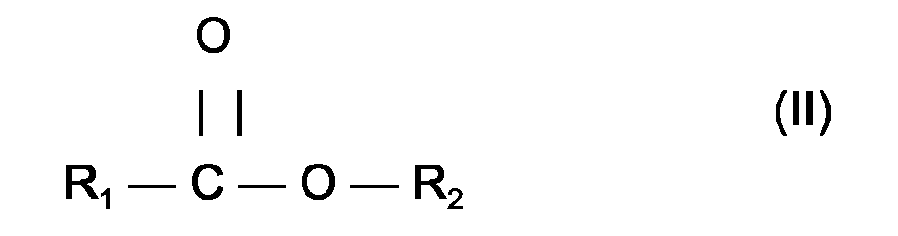
- the rubber composition may include at least one ester of formula II where R 1 and R 2 are independently selected from C 12 - C 36 alkyls.
- the esters may be produced by esterification of C 12 -C 36 fatty acids with C 12 -C 36 alcohols under suitable conditions as is known in the art.
- the ester may be formed by reaction of the C 12 -C 36 fatty acid with an aliphatic alcohol having from about 12 to about 36 carbon atoms under esterification conditions.
- ester may be formed by reaction of a C 12 -C 36 fatty acid with a dihydric or polyhydric alcohol, for example, glycerin, ethylene glycol, propylene glycol, pentaerythritol, and polyethylene glycol, and the like.
- a dihydric or polyhydric alcohol for example, glycerin, ethylene glycol, propylene glycol, pentaerythritol, and polyethylene glycol, and the like.
- the ester may be a fatty acid ester of an aliphatic alcohol including dodecyl alcohol, tridecyl alcohol, tetradecyl alcohol, pentadecyl alcohol, hexadecyl alcohol, heptadecyl alcohol, octadecyl alcohol, nonadecyl alcohol, eicosyl alcohol, heneicosyl alcohol, docosyl alcohol or mixtures thereof.
- an aliphatic alcohol including dodecyl alcohol, tridecyl alcohol, tetradecyl alcohol, pentadecyl alcohol, hexadecyl alcohol, heptadecyl alcohol, octadecyl alcohol, nonadecyl alcohol, eicosyl alcohol, heneicosyl alcohol, docosyl alcohol or mixtures thereof.
- the ester may be any of the dodecyl, tridecyl, tetradecyl, pentadecyl, hexadecyl, heptadecyl, octadecyl, nonadecyl, eicosyl, heneicosyl, or docosyl esters of any of stearic, oleic, palmitic, 9,12-linoleic, 9,11-linoleic (conjugated linoleic), pinolenic, eicosenoic, palmitoleic, magaric, octadecadienoic, or octadectrienoic acids.
- the ester is a fatty acid ester of dodecyl alcohol, hexadecyl alcohol or octadecyl alcohol. In one embodiment, the ester comprises octadecyl octadecanoate (also known as stearyl stearate).
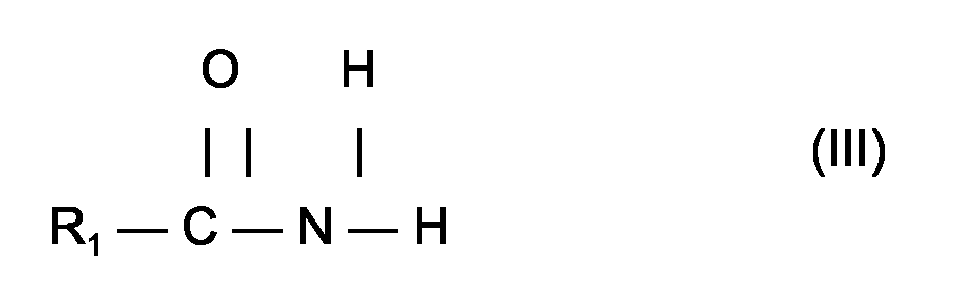
- the rubber composition may include at least one amide of the formula III where R 1 is C 12 - C 36 alkyl, C 12 - C 36 alkenyl, or C 12 - C 36 alkadienyl.
- the amide may be an amide of a saturated or unsaturated monovalent amines, or saturated or unsaturated polyvalent amines, for example, caprylamine, laurylamine, palmitylamine, stearylamine, oleylamine, myristylamine, methylenediamine, ethylenediamine, hexamethylenediamine, and ammonia, and the like.
- the amide may be caprylamide, laurylamide, palmitylamide, stearylamide, oleamide, myristylamide, and the like.
- the alcohol of formula I, ester of formula II, or amide of formula III may be used as is or may be deposited on suitable carriers.
- suitable carriers include silica, carbon black, alumina, kieselguhr, silica gel and calcium silicate.
- the rubber composition comprises from 1 to 50 parts by weight, per 100 parts by weight of rubber (phr), of the additive selected from alcohols of formula I, esters of formula II, and amides of formula III. In another embodiment, the rubber composition comprises from 2 to 25 phr of the additive selected from alcohols of formula I, esters of formula II, and amides of formula III.
- the rubber composition contains a rubber containing olefinic unsaturation.
- rubber or elastomer containing olefinic unsaturation is intended to include both natural rubber and its various raw and reclaim forms as well as various synthetic rubbers.
- the terms “rubber” and “elastomer” may be used interchangeably, unless otherwise prescribed.
- the terms “rubber composition”, “compounded rubber” and “rubber compound” are used interchangeably to refer to rubber which has been blended or mixed with various ingredients and materials and such terms are well known to those having skill in the rubber mixing or rubber compounding art.
- Representative synthetic polymers are the homopolymerization products of butadiene and its homologues and derivatives, for example, methylbutadiene, dimethylbutadiene and pentadiene as well as copolymers such as those formed from butadiene or its homologues or derivatives with other unsaturated monomers.
- acetylenes for example, vinyl acetylene
- olefins for example, isobutylene, which copolymerizes with isoprene to form butyl rubber
- vinyl compounds for example, acrylic acid, acrylonitrile (which polymerize with butadiene to form NBR), methacrylic acid and styrene, the latter compound polymerizing with butadiene to form SBR, as well as vinyl esters and various unsaturated aldehydes, ketones and ethers, e.g., acrolein, methyl isopropenyl ketone and vinylethyl ether.
- synthetic rubbers include neoprene (polychloroprene), polybutadiene (including cis-1,4-polybutadiene), polyisoprene (including cis-1,4-polyisoprene), butyl rubber, halobutyl rubber such as chlorobutyl rubber or bromobutyl rubber, styrene/isoprene/butadiene rubber, copolymers of 1,3-butadiene or isoprene with monomers such as styrene, acrylonitrile and methyl methacrylate.
- neoprene polychloroprene
- polybutadiene including cis-1,4-polybutadiene
- polyisoprene including cis-1,4-polyisoprene
- butyl rubber halobutyl rubber such as chlorobutyl rubber or bromobutyl rubber
- rubbers which may be used include a carboxylated rubber, silicon-coupled and tin-coupled star-branched polymers.
- the rubber or elastomers are polybutadiene, SBR, and synthetic and natural polyisoprene.
- the rubber to be combined with the additive selected from alcohols of formula I, esters of formula II, and amides of formula III may be a blend of at least two diene based rubbers.
- a blend of two or more rubbers may be used such as cis 1,4-polyisoprene rubber (natural or synthetic), emulsion and solution polymerization derived styrene butadiene rubbers, and cis 1,4-polybutadiene rubbers.
- E-SBR emulsion polymerization prepared E-SBR
- styrene and 1,3-butadiene are copolymerized as an aqueous emulsion.
- the bound styrene content can vary, for example, from 5 to 50 percent.
- the E-SBR may also contain acrylonitrile to form a terpolymer rubber, as E-SBAR, in amounts, for example, of 2 to 30 weight percent bound acrylonitrile in the terpolymer.
- S-SBR solution polymerization prepared SBR
- S-SBR typically has a bound styrene content in a range of 5 to 50, alternatively 9 to 36, percent.
- the S-SBR can be conveniently prepared, for example, by organo lithium catalyzation in the presence of an organic hydrocarbon solvent.
- the cis 1,4-polybutadiene rubber is considered to be beneficial for a purpose of enhancing the tire wear.
- Such BR can be prepared, for example, by organic solution polymerization of 1,3-butadiene.
- the BR may be conveniently characterized, for example, by having at least a 90 percent cis 1,4-content.
- conventional fillers may be also present.
- the amount of such conventional fillers may range from 10 to 250 phr. In one embodiment, the filler is present in an amount ranging from 20 to 100 phr.
- the commonly employed siliceous pigments which may be used in the rubber compound include conventional pyrogenic and precipitated siliceous pigments (silica). In one embodiment precipitated silica is used.
- the conventional siliceous pigments that may be employed in this invention are in one embodiment precipitated silicas such as, for example, those obtained by the acidification of a soluble silicate, e.g., sodium silicate.
- Such conventional silicas might be characterized, for example, by having a BET surface area, as measured using nitrogen gas, in one embodiment in the range of 40 to 600, and in another embodiment in a range of 50 to 300 square meters per gram.
- the BET method of measuring surface area is described in the Journal of the American Chemical Society, Volume 60, Page 304 (1930).
- the conventional silica may also be typically characterized by having a dibutylphthalate (DBP) absorption value in a range of 100 to 400, and more usually 150 to 300.
- DBP dibutylphthalate
- the conventional silica might be expected to have an average ultimate particle size, for example, in the range of 0.01 to 0.05 micron as determined by the electron microscope, although the silica particles may be even smaller, or possibly larger, in size.
- silicas such as, only for example herein, and without limitation, silicas commercially available from PPG Industries under the Hi-Sil trademark with designations 210, 243, etc; silicas available from Rhone-Poulenc, with, for example, designations of Z1165MP and Z165GR and silicas available from Degussa AG with, for example, designations VN2 and VN3, etc.
- carbon blacks can be used as a conventional filler.
- Representative examples of such carbon blacks include N110, N115, N121, N134, N220, N231, N234, N242, N293, N299, N315, N326, N330, M332, N339, N343, N347, N351, N358, N375, N539, N550, N582, N630, N642, N650, N660, N683, N754, N762, N765, N774, N787, N907, N908, N990 and N991.
- These carbon blacks have iodine absorptions ranging from 9 to 170 g/kg and DBP No. ranging from 34 to 150 cm 3 /100 g.
- the rubber composition for use in the tire component may additionally contain a sulfur containing organosilicon compound.
- suitable sulfur containing organosilicon compounds are of the formula: Z - Alk - S n - Alk - Z in which Z is selected from the group consisting of where R 5 is an alkyl group of 1 to 4 carbon atoms, cyclohexyl or phenyl; R 6 is alkoxy of 1 to 8 carbon atoms, or cycloalkoxy of 5 to 8 carbon atoms; Alk is a divalent hydrocarbon of 1 to 18 carbon atoms and n is an integer of 2 to 8.
- sulfur containing organosilicon compounds which may be used in accordance with the present invention include: 3,3'-bis(methyl butylethoxysilylpropyl) tetrasulfide, 3,3'-bis(di t-butylmethoxysilylpropyl) tetrasulfide, 2,2'-bis(phenyl methyl methoxysilylethyl) trisulfide, 3,3'-bis(diphenyl isopropoxysilylpropyl) tetrasulfide, 3,3'-bis(diphenyl cyclohexoxysilylpropyl) disulfide, 3,3'-bis(dimethyl ethylmercaptosilylpropyl) tetrasulfide,and 4,4'-bis(trimethoxysilylcyclohexylene) tetrasulfide.
- the sulfur containing organosilicon compounds are 3,3'-bis(trimethoxy or triethoxy silylpropyl) sulfides.
- the compounds are 3,3'-bis(triethoxysilylpropyl) disulfide and 3,3'-bis(triethoxysilylpropyl) tetrasulfide. Therefore as to the above formula, in one embodiment Z is where R 6 is an alkoxy of 2 to 4 carbon atoms, with 2 carbon atoms being used in one embodiment; alk is a divalent hydrocarbon of 2 to 4 carbon atoms with 3 carbon atoms being used in one embodiment; and n is an integer of from 2 to 5 with 2 and 4 being used in one embodiment.
- the amount of the sulfur containing organosilicon compound of the above formula in a rubber composition will vary depending on the level of other additives that are used. Generally speaking, the amount of the compound of the above formula will range from 0.5 to 20 phr.
- the rubber composition would be compounded by methods generally known in the rubber compounding art, such as mixing the various sulfur-vulcanizable constituent rubbers with various commonly used additive materials such as, for example, sulfur donors, curing aids, such as activators and retarders and processing additives, such as oils, resins including tackifying resins and plasticizers, fillers, pigments, fatty acid, zinc oxide, waxes, antioxidants and antiozonants and peptizing agents.
- sulfur donors include elemental sulfur (free sulfur), an amine disulfide, polymeric polysulfide and sulfur olefin adducts.
- the sulfur vulcanizing agent is elemental sulfur.
- the sulfur vulcanizing agent may be used in an amount ranging from 0.5 to 8 phr.
- Typical amounts of tackifier resins, if used, comprise 0.5 to 10 phr.
- Typical amounts of processing aids comprise 1 to 50 phr. Such processing aids can include, for example, aromatic, naphthenic, and/or paraffinic processing oils.
- Typical amounts of antioxidants comprise 1 to 5 phr. Representative antioxidants may be, for example, diphenyl-p-phenylenediamine.
- Typical amounts of antiozonants comprise 1 to 5 phr.
- Typical amounts of fatty acids, if used, which can include stearic acid comprise 0.5 to 3 phr.
- Typical amounts of zinc oxide comprise 2 to 5 phr.
- Typical amounts of waxes comprise 1 to 5 phr.
- Typical amounts of peptizers comprise 0.1 to 1 phr.
- Typical peptizers may be, for example, pentachlorothiophenol and dibenzamidodiphenyl disulfide.
- Accelerators are used to control the time and/or temperature required for vulcanization and to improve the properties of the vulcanizate.
- a single accelerator system may be used, i.e., primary accelerator.
- the primary accelerator(s) may be used in total amounts ranging from 0.5 to 4.
- delayed action accelerators may be used which are not affected by normal processing temperatures but produce a satisfactory cure at ordinary vulcanization temperatures.
- Vulcanization retarders might also be used.
- Suitable types of accelerators that may be used in the present invention are amines, disulfides, guanidines, thioureas, thiazoles, thiurams, sulfenamides, dithiocarbamates and xanthates.
- the primary accelerator is a sulfenamide. If a second accelerator is used, the secondary accelerator is in one embodiment a guanidine, dithiocarbamate or thiuram compound.
- the ingredients are typically mixed in at least two stages, namely at least one non-productive stage followed by a productive mix stage.
- the final curatives including sulfur vulcanizing agents are typically mixed in the final stage which is conventionally called the "productive" mix stage in which the mixing typically occurs at a temperature, or ultimate temperature, lower than the mix temperature(s) than the preceding non-productive mix stage(s).
- the rubber and compound is mixed in one or more non-productive mix stages.
- the rubber composition contains a sulfur-containing organosilicon compound, one may subject the rubber composition to a thermomechanical mixing step.
- the thermomechanical mixing step generally comprises a mechanical working in a mixer or extruder for a period of time suitable in order to produce a rubber temperature between 140°C and 190°C.
- the appropriate duration of the thermomechanical working varies as a function of the operating conditions and the volume and nature of the components. For example, the thermomechanical working may be from 1 to 20 minutes.
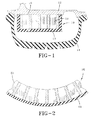
- FIGS. 1 and 2 illustrate a support ring 10 in accordance with one embodiment of the present invention.
- the ring 10 is mounted around a tire rim 12, and inside the cavity of a corresponding tire 14.
- the rim 12 is asymmetrical, and has a platform 16 on which the support ring is mounted.
- the support ring 10 is generally cylindrical and has a crown 18 and a rigid annular body 20 located radially inward of the crown 18.
- the crown 18 is intended to come into contact with the interior of the tire 14 in the event of the loss of inflation pressure.
- Annular body 20 may be constructed of any suitable rigid material capable of providing support during a deflation event, for example, a reinforced composite.
- Crown 18 comprises the self-lubricating rubber composition of the present invention crown and is intended to come in contact with the interior of the tire 14 in the event of the loss of inflation pressure.
- the rubber crown may be constructed by any of various rubber processing methods as are known in the art, including but not limited to calendaring.
- the calendared rubber composition may be joined to annular support to form crown of the support ring.
- the rubber composition in the crown may be cured before or after joining with the annular support.
- Vulcanization of the support ring crown is generally carried out at conventional temperatures ranging from about 100°C to 200°C.
- the vulcanization is conducted at temperatures ranging from about 110°C to 180°C.
- Any of the usual vulcanization processes may be used such as heating in a press or mold, heating with superheated steam or hot air.
- Rubber compositions containing the materials set out in Table 1 were prepared using four separate stages of addition (mixing); namely three non-productive mix stages and one productive mix stage.
- the non-productive stages were mixed for four minutes to a rubber temperature of 160°C.
- the productive stage was mixed for two minutes, and the drop temperature for the productive mix stage was 115°C.
- Sample A-H The rubber compositions are identified as Sample A-H. Samples A, D, E and H are considered as controls due to the absence of the alcohol or ester.
- the Samples were cured at 150°C for 32 minutes.
- Table 2 illustrates the physical properties of the cured Samples A through H.
- COF coefficient of friction
- Rubber compositions containing the materials set out in Table 3 were prepared using four separate stages of addition (mixing); namely three non-productive mix stages and one productive mix stage.
- the non-productive stages were mixed for four minutes to a rubber temperature of 160°C.
- the productive stage was mixed for two minutes, and the drop temperature for the productive mix stage was 115°C.
- Samples I-P The rubber compositions are identified as Samples I-P. Samples I, L, M and P are considered as controls due to the absence of the amide.
- the Samples were cured at 150°C for 32 minutes.
- Table 4 illustrates the physical properties of the cured Samples I through P.
- COF coefficient of friction
Landscapes
- Chemical & Material Sciences (AREA)
- Engineering & Computer Science (AREA)
- Mechanical Engineering (AREA)
- Health & Medical Sciences (AREA)
- Chemical Kinetics & Catalysis (AREA)
- Medicinal Chemistry (AREA)
- Polymers & Plastics (AREA)
- Organic Chemistry (AREA)
- Compositions Of Macromolecular Compounds (AREA)
Abstract
R1-OH (I)

Description
- It is often desired to provide tires for vehicles that can be operated in a deflated condition for a suitable distance at a desired speed. The purposes have been varied, ranging from a desire to eliminate a vehicular spare tire so that its occupied space could be more efficiently used for other purposes and, also, a desire to enable a vehicle to remain operable even with a punctured pneumatic tire for a suitable time or distance whether or not a spare tire is available.
- In some instances, such objectives have been proposed to be accomplished by positioning a run-flat device such as a support ring within the tire-wheel cavity to prevent the tire, upon an appreciable loss of internal inflation pressure, from going completely flat. Such run-flat devices can be substantially rigid in nature and prevent a total collapse of the tire by supporting the tire's inner surface in its crown region in proximity of the ground contacting portion. In such condition, the tire is prevented from going flat against its rim and, moreover, substantially retains its inflated circumferential shape and enables its vehicle to continue its travel over a more reasonable distance.
- However, it is considered necessary to provide lubricity at the interface between the supporting ring and a collapsing tire's inner surface in order to retard or reduce an attendant potential frictional, destructive heat build up at the tire's inner surface. Accordingly, it is often desired to provide a lubricant for such interface.
- The present invention relates to a run flat safety support ring according to claim 1. Dependent claims cover preferred embodiments of the invention.
-
- Fig. 1 shows a cross-section of a safety support ring in a tire.
- Fig. 2 illustrates a safety support ring along section 2-2 of Fig. 1.
- There is disclosed a run flat safety support ring intended to be mounted on a wheel rim inside a tire equipping a vehicle for supporting the tire tread in case of loss of inflation pressure, comprising a generally cylindrical crown intended to come in contact with the interior of the tire tread in the event of the loss of inflation pressure, and leaving a clearance from the tire tread interior at normal pressure, the crown comprising a self lubricating rubber composition, the self lubricating rubber composition comprising at least one rubber and from 1 to 50 phr of at least one additive selected from alcohols of formula I, esters of formula II, or amides of formula III
R1-OH (1)

- In one embodiment, the rubber composition may include at least one alcohol of formula I
R1-OH (I)
where R1 is C12 - C36 alkyl, C12 - C36alkenyl, or C12 - C36alkadienyl. In one embodiment, the alcohol may include 1-dodecanol (lauryl alcohol), 1-tetradecanol (myristyl alcohol), 1-hexadecanol (cetyl alcohol), 1-octadecanol (stearyl alcohol), 1-eicosanol (arachidyl alcohol), 1-docosanol (behenyl alcohol), 1-tetracosanol, 1-hexacosanol, 1-octaconsanol, 1-triacontanol (melissyl alcohol), 1-dotriacontanol, 1-tetratriacontanol and mixtures thereof. In one embodiment, the alcohol comprises 1-octadecanol. - One suitable octadecanol is commercially available from Procter & Gamble Chemicals under the designation CO-1895 Stearyl Alcohol. This product has a melting point of 58°C and a G.C. Chain length distribution (percent by weight) of C14, 0.1 percent; C16, 1.3 percent; C18, 95.5 percent; and C20, 0.9 percent.
- In one embodiment, the rubber composition may include at least one ester of formula II

- In one embodiment, the rubber composition may include at least one amide of the formula III

- For ease in handling, the alcohol of formula I, ester of formula II, or amide of formula III may be used as is or may be deposited on suitable carriers. Examples of carriers which may be used in the present invention include silica, carbon black, alumina, kieselguhr, silica gel and calcium silicate.
- In one embodiment, the rubber composition comprises from 1 to 50 parts by weight, per 100 parts by weight of rubber (phr), of the additive selected from alcohols of formula I, esters of formula II, and amides of formula III. In another embodiment, the rubber composition comprises from 2 to 25 phr of the additive selected from alcohols of formula I, esters of formula II, and amides of formula III.
- In addition to the additive selected from alcohols of formula I, esters of formula II, and amides of formula III, the rubber composition contains a rubber containing olefinic unsaturation. The phrase "rubber or elastomer containing olefinic unsaturation" is intended to include both natural rubber and its various raw and reclaim forms as well as various synthetic rubbers. In the description of this invention, the terms "rubber" and "elastomer" may be used interchangeably, unless otherwise prescribed. The terms "rubber composition", "compounded rubber" and "rubber compound" are used interchangeably to refer to rubber which has been blended or mixed with various ingredients and materials and such terms are well known to those having skill in the rubber mixing or rubber compounding art. Representative synthetic polymers are the homopolymerization products of butadiene and its homologues and derivatives, for example, methylbutadiene, dimethylbutadiene and pentadiene as well as copolymers such as those formed from butadiene or its homologues or derivatives with other unsaturated monomers. Among the latter are acetylenes, for example, vinyl acetylene; olefins, for example, isobutylene, which copolymerizes with isoprene to form butyl rubber; vinyl compounds, for example, acrylic acid, acrylonitrile (which polymerize with butadiene to form NBR), methacrylic acid and styrene, the latter compound polymerizing with butadiene to form SBR, as well as vinyl esters and various unsaturated aldehydes, ketones and ethers, e.g., acrolein, methyl isopropenyl ketone and vinylethyl ether. Specific examples of synthetic rubbers include neoprene (polychloroprene), polybutadiene (including cis-1,4-polybutadiene), polyisoprene (including cis-1,4-polyisoprene), butyl rubber, halobutyl rubber such as chlorobutyl rubber or bromobutyl rubber, styrene/isoprene/butadiene rubber, copolymers of 1,3-butadiene or isoprene with monomers such as styrene, acrylonitrile and methyl methacrylate. Additional examples of rubbers which may be used include a carboxylated rubber, silicon-coupled and tin-coupled star-branched polymers. In one embodiment the rubber or elastomers are polybutadiene, SBR, and synthetic and natural polyisoprene.
- In one embodiment, the rubber to be combined with the additive selected from alcohols of formula I, esters of formula II, and amides of formula III may be a blend of at least two diene based rubbers. In one embodiment, a blend of two or more rubbers may be used such as cis 1,4-polyisoprene rubber (natural or synthetic), emulsion and solution polymerization derived styrene butadiene rubbers, and cis 1,4-polybutadiene rubbers.
- By emulsion polymerization prepared E-SBR, it is meant that styrene and 1,3-butadiene are copolymerized as an aqueous emulsion. The bound styrene content can vary, for example, from 5 to 50 percent. In one aspect, the E-SBR may also contain acrylonitrile to form a terpolymer rubber, as E-SBAR, in amounts, for example, of 2 to 30 weight percent bound acrylonitrile in the terpolymer.
- The solution polymerization prepared SBR (S-SBR) typically has a bound styrene content in a range of 5 to 50, alternatively 9 to 36, percent. The S-SBR can be conveniently prepared, for example, by organo lithium catalyzation in the presence of an organic hydrocarbon solvent.
- The cis 1,4-polybutadiene rubber (BR) is considered to be beneficial for a purpose of enhancing the tire wear. Such BR can be prepared, for example, by organic solution polymerization of 1,3-butadiene. The BR may be conveniently characterized, for example, by having at least a 90 percent cis 1,4-content.
- The term "phr" as used herein, and according to conventional practice, refers to "parts by weight of a respective material per 100 parts by weight of rubber, or elastomer."
- In addition, conventional fillers may be also present. The amount of such conventional fillers may range from 10 to 250 phr. In one embodiment, the filler is present in an amount ranging from 20 to 100 phr.
- The commonly employed siliceous pigments which may be used in the rubber compound include conventional pyrogenic and precipitated siliceous pigments (silica). In one embodiment precipitated silica is used. The conventional siliceous pigments that may be employed in this invention are in one embodiment precipitated silicas such as, for example, those obtained by the acidification of a soluble silicate, e.g., sodium silicate.
- Such conventional silicas might be characterized, for example, by having a BET surface area, as measured using nitrogen gas, in one embodiment in the range of 40 to 600, and in another embodiment in a range of 50 to 300 square meters per gram. The BET method of measuring surface area is described in the Journal of the American Chemical Society, Volume 60, Page 304 (1930). The conventional silica may also be typically characterized by having a dibutylphthalate (DBP) absorption value in a range of 100 to 400, and more usually 150 to 300.
- The conventional silica might be expected to have an average ultimate particle size, for example, in the range of 0.01 to 0.05 micron as determined by the electron microscope, although the silica particles may be even smaller, or possibly larger, in size.
- Various commercially available silicas may be used, such as, only for example herein, and without limitation, silicas commercially available from PPG Industries under the Hi-Sil trademark with designations 210, 243, etc; silicas available from Rhone-Poulenc, with, for example, designations of Z1165MP and Z165GR and silicas available from Degussa AG with, for example, designations VN2 and VN3, etc.
- Commonly employed carbon blacks can be used as a conventional filler. Representative examples of such carbon blacks include N110, N115, N121, N134, N220, N231, N234, N242, N293, N299, N315, N326, N330, M332, N339, N343, N347, N351, N358, N375, N539, N550, N582, N630, N642, N650, N660, N683, N754, N762, N765, N774, N787, N907, N908, N990 and N991. These carbon blacks have iodine absorptions ranging from 9 to 170 g/kg and DBP No. ranging from 34 to 150 cm3/100 g.
- In one embodiment the rubber composition for use in the tire component may additionally contain a sulfur containing organosilicon compound. Examples of suitable sulfur containing organosilicon compounds are of the formula:
Z - Alk - Sn - Alk - Z
in which Z is selected from the group consisting of
- Specific examples of sulfur containing organosilicon compounds which may be used in accordance with the present invention include: 3,3'-bis(methyl butylethoxysilylpropyl) tetrasulfide, 3,3'-bis(di t-butylmethoxysilylpropyl) tetrasulfide, 2,2'-bis(phenyl methyl methoxysilylethyl) trisulfide, 3,3'-bis(diphenyl isopropoxysilylpropyl) tetrasulfide, 3,3'-bis(diphenyl cyclohexoxysilylpropyl) disulfide, 3,3'-bis(dimethyl ethylmercaptosilylpropyl) tetrasulfide,and 4,4'-bis(trimethoxysilylcyclohexylene) tetrasulfide.
- In one embodiment the sulfur containing organosilicon compounds are 3,3'-bis(trimethoxy or triethoxy silylpropyl) sulfides. In one embodiment the compounds are 3,3'-bis(triethoxysilylpropyl) disulfide and 3,3'-bis(triethoxysilylpropyl) tetrasulfide. Therefore as to the above formula, in one embodiment Z is

- The amount of the sulfur containing organosilicon compound of the above formula in a rubber composition will vary depending on the level of other additives that are used. Generally speaking, the amount of the compound of the above formula will range from 0.5 to 20 phr.
- It is readily understood by those having skill in the art that the rubber composition would be compounded by methods generally known in the rubber compounding art, such as mixing the various sulfur-vulcanizable constituent rubbers with various commonly used additive materials such as, for example, sulfur donors, curing aids, such as activators and retarders and processing additives, such as oils, resins including tackifying resins and plasticizers, fillers, pigments, fatty acid, zinc oxide, waxes, antioxidants and antiozonants and peptizing agents. Representative examples of sulfur donors include elemental sulfur (free sulfur), an amine disulfide, polymeric polysulfide and sulfur olefin adducts. In one embodiment, the sulfur vulcanizing agent is elemental sulfur. The sulfur vulcanizing agent may be used in an amount ranging from 0.5 to 8 phr. Typical amounts of tackifier resins, if used, comprise 0.5 to 10 phr. Typical amounts of processing aids comprise 1 to 50 phr. Such processing aids can include, for example, aromatic, naphthenic, and/or paraffinic processing oils. Typical amounts of antioxidants comprise 1 to 5 phr. Representative antioxidants may be, for example, diphenyl-p-phenylenediamine. Typical amounts of antiozonants comprise 1 to 5 phr. Typical amounts of fatty acids, if used, which can include stearic acid comprise 0.5 to 3 phr. Typical amounts of zinc oxide comprise 2 to 5 phr. Typical amounts of waxes comprise 1 to 5 phr. Typical amounts of peptizers comprise 0.1 to 1 phr. Typical peptizers may be, for example, pentachlorothiophenol and dibenzamidodiphenyl disulfide.
- Accelerators are used to control the time and/or temperature required for vulcanization and to improve the properties of the vulcanizate. In one embodiment, a single accelerator system may be used, i.e., primary accelerator. The primary accelerator(s) may be used in total amounts ranging from 0.5 to 4. In addition, delayed action accelerators may be used which are not affected by normal processing temperatures but produce a satisfactory cure at ordinary vulcanization temperatures. Vulcanization retarders might also be used. Suitable types of accelerators that may be used in the present invention are amines, disulfides, guanidines, thioureas, thiazoles, thiurams, sulfenamides, dithiocarbamates and xanthates. In one embodiment, the primary accelerator is a sulfenamide. If a second accelerator is used, the secondary accelerator is in one embodiment a guanidine, dithiocarbamate or thiuram compound.
- The ingredients are typically mixed in at least two stages, namely at least one non-productive stage followed by a productive mix stage. The final curatives including sulfur vulcanizing agents are typically mixed in the final stage which is conventionally called the "productive" mix stage in which the mixing typically occurs at a temperature, or ultimate temperature, lower than the mix temperature(s) than the preceding non-productive mix stage(s). The rubber and compound is mixed in one or more non-productive mix stages. If the rubber composition contains a sulfur-containing organosilicon compound, one may subject the rubber composition to a thermomechanical mixing step. The thermomechanical mixing step generally comprises a mechanical working in a mixer or extruder for a period of time suitable in order to produce a rubber temperature between 140°C and 190°C. The appropriate duration of the thermomechanical working varies as a function of the operating conditions and the volume and nature of the components. For example, the thermomechanical working may be from 1 to 20 minutes.
- FIGS. 1 and 2 illustrate a
support ring 10 in accordance with one embodiment of the present invention. Thering 10 is mounted around atire rim 12, and inside the cavity of a correspondingtire 14. Therim 12 is asymmetrical, and has a platform 16 on which the support ring is mounted. Thesupport ring 10 is generally cylindrical and has acrown 18 and a rigidannular body 20 located radially inward of thecrown 18. Thecrown 18 is intended to come into contact with the interior of thetire 14 in the event of the loss of inflation pressure. During normal inflation pressure, as seen in FIG. 1, there is clearance between thecrown 18 and the tire inside.Annular body 20 may be constructed of any suitable rigid material capable of providing support during a deflation event, for example, a reinforced composite.Crown 18 comprises the self-lubricating rubber composition of the present invention crown and is intended to come in contact with the interior of thetire 14 in the event of the loss of inflation pressure. - The rubber crown may be constructed by any of various rubber processing methods as are known in the art, including but not limited to calendaring. In one embodiment, the calendared rubber composition may be joined to annular support to form crown of the support ring. The rubber composition in the crown may be cured before or after joining with the annular support.
- Vulcanization of the support ring crown is generally carried out at conventional temperatures ranging from about 100°C to 200°C. Preferably, the vulcanization is conducted at temperatures ranging from about 110°C to 180°C. Any of the usual vulcanization processes may be used such as heating in a press or mold, heating with superheated steam or hot air.
- In this Example, a alcohol of formula I and an ester of formula II were evaluated in a rubber composition containing carbon black.
- Rubber compositions containing the materials set out in Table 1 were prepared using four separate stages of addition (mixing); namely three non-productive mix stages and one productive mix stage. The non-productive stages were mixed for four minutes to a rubber temperature of 160°C. The productive stage was mixed for two minutes, and the drop temperature for the productive mix stage was 115°C.
- The rubber compositions are identified as Sample A-H. Samples A, D, E and H are considered as controls due to the absence of the alcohol or ester.
- The Samples were cured at 150°C for 32 minutes.
- Table 2 illustrates the physical properties of the cured Samples A through H.
- The coefficient of friction (COF) test is done according to ASTM D-1894 on a Model SP-2000 Slip/Peel Tester from IMASS Inc. Samples are tested at 6 inches per minute using a 200 g sled. The COF is measured against a polished aluminum surface.
Table 1 Sample Control A B C Control D Control E F G Control H Non Productive Stage 1 Natural Rubber 80 80 80 80 80 80 80 80 Carbon Black 12 12 12 12 12 12 12 12 Wax 0.4 0.4 0.4 0.4 0.4 0.4 0.4 0.4 Fatty Acid 2 2 2 2 2 2 2 2 Zinc Oxide 3 3 3 3 3 3 3 3 Stearyl stearate 0 2.5 5 0 0 0 0 0 Aromatic oil 0 0 0 2.5 5 0 0 0 Octadecanol 0 0 0 0 0 2.5 5 0 Non Productive Stage 2 polybutadiene 20 20 20 20 20 20 20 20 Carbon black 10 10 10 10 10 10 10 10 Silica 7 7 7 7 7 7 7 7 Non Productive Stage 3 carbon black 13 13 13 13 13 13 13 13 Antioxidant 1 1 1 1 1 1 1 1 Silane Coupler 3 3 3 3 3 3 3 3 Productive Stage Antioxidant 0.5 0.5 0.5 0.5 0.5 0.5 0.5 0.5 Zinc Oxide 1 1 1 1 1 1 1 1 Sulfur 1.9 1.9 1.9 1.9 1.9 1.91 1.9 1.9 Accelerator 1.35 1.35 1.35 1.35 1.35 1.35 1.35 1.35 Table 2 A B C D E F G H RPA 500 Uncured G' Cured G' 142 131 127 139 129 132 122 155 10% Strain Cured TD 1546 1427 1331 1479 1412 1443 1345 1574 10% Strain 0.061 0.059 0.053 0.054 0.057 0.054 0.05 0.055 Rheometer, 150°C Max Torq 20.98 19.65 18.3 19.93 19.2 19.41 18.35 20.85 Min Torq 1.89 1.73 1.69 1.83 1.76 1.77 1.61 2.02 Delta Torq 19.09 17.92 16.61 18.1 17.44 17.64 16.74 18.83 T90 10.34 10.56 10.76 10.81 11.25 10.25 9.85 10.48 Stress-Strain, cured 32 minutes at 150° Tens Strength 21.63 23.11 23.93 23.23 22.46 22.8 23.2 24.57 Elong Break 406 443 468 448 455 439 460 442 M300 15.14 14.14 13.34 13.96 12.99 14.08 13.27 15.15 Hardness, cured 32 minutes at 150°C RT 66 65 64 63 63 65 64 65 100°C 62 61 58 60 59 60 58 61 Rebound, cured 32 minutes at 150°C RT 63 62 61 63 62 62 60 64 100°C 73 74 74 74 73 74 74 74 Tear Strength 32/150°C 95°C, N 36 47 53 44 49 43 49 36 Tear Strength 32/150°C 23°C, N 143 166 181 181 236 168 178 168 DIN Abrasion 32/150°C Relative loss 105 91 85 105 108 79 60 95 Coefficient of Friction Value 2.86 2.38 2.17 2.87 2.79 2.23 1.59 2.71 - It can be seen from Table 2 that use of stearyl stearate or stearyl alcohol resulted in reduced coefficient of friction as compared with use of aromatic oil or no additive. In addition, the use of stearyl stearate or stearyl alcohol results in improved abrasion resistance as compared with the controls.
- In this Example, two amides of formula III were evaluated in a rubber composition containing carbon black.
- Rubber compositions containing the materials set out in Table 3 were prepared using four separate stages of addition (mixing); namely three non-productive mix stages and one productive mix stage. The non-productive stages were mixed for four minutes to a rubber temperature of 160°C. The productive stage was mixed for two minutes, and the drop temperature for the productive mix stage was 115°C.
- The rubber compositions are identified as Samples I-P. Samples I, L, M and P are considered as controls due to the absence of the amide.
- The Samples were cured at 150°C for 32 minutes.
- Table 4 illustrates the physical properties of the cured Samples I through P.
- The coefficient of friction (COF) test is done according to ASTM D-1894 on a Model SP-2000 Slip/Peel Tester from IMASS Inc. Samples are tested at 6 inches per minute using a 200 g sled. The COF is measured against a polished aluminum surface.
Table 3 Control I J K Control L Control M N O Control P Non Productive Stage Natural Rubber 100 100 100 100 70 70 70 70 polybutadiene 0 0 0 0 12 12 12 12 E-SBR 0 0 0 0 18 18 18 18 Carbon black 50 50 50 50 50 50 50 50 Fatty Acid 2 2 2 2 2 2 2 2 Zinc Oxide 5 5 5 5 5 5 5 5 Antioxidant 2 2 2 2 2 2 2 2 Stearamide 0 5 0 0 0 5 0 5 Oleamide 0 0 5 0 0 0 5 0 Processing Oil 5 0 0 5 5 0 0 5 Productive Mix Stage Sulfur 1.4 1.4 1.4 1.4 1.4 1.4 1.4 1.4 Accelerator 1 1 1 1 1 1 1 1 Table 4 RPA 500 Unc G' Cured G' 190 181 184 195 204 174 192 183 10% Strain Cured TD 1351 1370 1339 1374 1474 1471 1434 1418 10% Strain 0.102 0.097 0.098 0.104 0.105 0.09 0.103 0.105 Rheometer, 150°C Max Torq 16.68 17.79 17.32 16.66 17.71 17.83 18.01 17.25 Min Torq 2.6 2.53 2.62 2.55 2.62 2.37 2.63 2.47 Delta Torq 14.08 15.26 14.7 14.11 14.55 15.46 15.38 14.78 T90 12.15 6.79 6.81 11.93 16.61 8.72 8.32 16.2 Stress-Strain 32/150°C Tens Strength 24 24.2 24.8 23.2 22.5 22.6 23.1 22.5 Elong Break 482 450 486 473 462 432 460 464 M300 12.8 15.2 13.5 12.8 13 14.8 13.7 13 Hardness 32/150°C RT 64 69 66 64 67 71 68 66 100°C 58 58 57 58 60 60 60 60 Rebound 32/150°C RT 49 46 44 48 48 45 43 47 100°C 62 64 63 61 60 61 61 60 Tear Strength 32/150°C 95°C, N 195 145 162 175 119 95 103 109 Tear Strength 32/150°C 95°C, N, Aged 136 96 137 121 69 161 76 69 DIN Abrasion 32/150°C Relative loss 149 120 121 156 121 104 93 112 Coefficient of Friction Value 3.22 2.61 1.9 3.41 3.26 1.58 1.35 2.97 - It can be seen from Table 4 that use of stearamide or oleamide resulted in reduced coefficient of friction as compared with use of processing oil or no additive. In addition, the use of stearamide or oleamide results in improved abrasion resistance as compared with the controls.
Claims (9)
- A run flat safety support ring intended to be mounted on a wheel rim (12) inside a tire (14) equipping a vehicle for supporting the tire tread in case of loss of inflation pressure, the support ring (10) comprising a generally cylindrical crown (18) intended to come in contact with the interior of the tire tread in the event of the loss of inflation pressure, and leaving a clearance from the tire tread interior at normal pressure, characterized by the crown (18) comprising a self lubricating rubber composition, the self lubricating rubber composition comprising at least one rubber and from 1 to 50 phr of at least one additive selected from alcohols of formula I, esters of formula II, or amides of formula III
R1-OH (I)


- The run flat safety support ring of claim 1, wherein the additive comprises 1-octadecanol and/or wherein the additive comprises stearyl sterate.
- The run flat safety support ring of claim 1 or 2, wherein the additive comprises an amide selected from caprylamide, laurylamide, palmitylamide, stearylamide, oleamide, and myristylamide.
- The run flat safety support ring of at least one of the previous claims, wherein the composition further comprises 10 to 250 phr of a filler selected from carbon black and silica.
- The run flat safety support ring of at least one of the previous claims, wherein the composition further comprises from 0.5 to 20 phr of a sulfur containing organosilicon compound of the formula:
Z - Alk - Sn - Alk - Z
in which Z is selected from the group consisting of
- The run flat safety support ring of at least one of the previous claims, wherein the at least one additive is present in an amount ranging from 2 to 25 phr.
- The run flat safety support ring of at least one of the previous claims, wherein the at least one additive is selected from 1-dodecanol (lauryl alcohol), 1-tetradecanol (myristyl alcohol), 1-hexadecanol (cetyl alcohol), 1-octadecanol (stearyl alcohol), 1-eicosanol (arachidyl alcohol), 1-docosanol (behenyl alcohol), 1-tetracosanol, 1-hexacosanol, 1-octaconsanol, 1-triacontanol (melissyl alcohol), 1-dotriacontanol, and 1-tetratriacontanol.
- The run flat safety support ring of at least one of the previous claims, wherein the at least one additive is selected from the dodecyl, tridecyl, tetradecyl, pentadecyl, hexadecyl, heptadecyl, octadecyl, nonadecyl, eicosyl, heneicosyl, or docosyl esters of any of stearic, oleic, palmitic, 9,12-linoleic, 9,11-linoleic (conjugated linoleic), pinolenic, eicosenoic, palmitoleic, magaric, octadecadienoic, or octadectrienoic acids.
- A run flat tire and wheel assembly comprising the run flat safety support ring (10) of at least one of the previous claims.
Applications Claiming Priority (1)
| Application Number | Priority Date | Filing Date | Title |
|---|---|---|---|
| US11/018,823 US20060130948A1 (en) | 2004-12-21 | 2004-12-21 | Tire support ring |
Publications (1)
| Publication Number | Publication Date |
|---|---|
| EP1674297A1 true EP1674297A1 (en) | 2006-06-28 |
Family
ID=36144495
Family Applications (1)
| Application Number | Title | Priority Date | Filing Date |
|---|---|---|---|
| EP05112085A Withdrawn EP1674297A1 (en) | 2004-12-21 | 2005-12-13 | Tire support ring |
Country Status (3)
| Country | Link |
|---|---|
| US (1) | US20060130948A1 (en) |
| EP (1) | EP1674297A1 (en) |
| KR (1) | KR20060071335A (en) |
Families Citing this family (5)
| Publication number | Priority date | Publication date | Assignee | Title |
|---|---|---|---|---|
| US9163126B2 (en) * | 2008-12-23 | 2015-10-20 | The Goodyear Tire & Rubber Company | Silica-rich rubber compositions and methods of making same |
| US10179479B2 (en) | 2015-05-19 | 2019-01-15 | Bridgestone Americas Tire Operations, Llc | Plant oil-containing rubber compositions, tread thereof and race tires containing the tread |
| US10208189B2 (en) * | 2017-04-04 | 2019-02-19 | The Goodyear Tire & Rubber Company | Tire with tread with oxidized carbon black |
| ES2906698T3 (en) * | 2017-05-15 | 2022-04-20 | Bridgestone Corp | Rubber composition for tire, and tire |
| CN115197481B (en) * | 2022-07-04 | 2024-06-04 | 亚新科噪声与振动技术(安徽)有限公司 | Self-lubricating high-durability natural rubber material and preparation method thereof |
Citations (5)
| Publication number | Priority date | Publication date | Assignee | Title |
|---|---|---|---|---|
| GB1571916A (en) * | 1976-01-09 | 1980-07-23 | Uniroyal Gmbh | Vehicle wheel assembly |
| US4607675A (en) * | 1985-05-06 | 1986-08-26 | The Goodyear Tire & Rubber Company | Lubricant for run-flat tire application and run-flat tire therewith |
| EP1325819A2 (en) * | 2002-01-07 | 2003-07-09 | The Goodyear Tire & Rubber Company | Tread supporting ring for use with a rim for a tire having two beads |
| EP1400377A1 (en) * | 2002-09-17 | 2004-03-24 | The Goodyear Tire & Rubber Company | Lubrification for tread supporting ring |
| EP1486356A1 (en) * | 2003-06-09 | 2004-12-15 | Sumitomo Rubber Industries Ltd. | Emergency support ring for a pneumatic tyre and wheel rim assembly |
Family Cites Families (12)
| Publication number | Priority date | Publication date | Assignee | Title |
|---|---|---|---|---|
| US4248286A (en) * | 1978-06-30 | 1981-02-03 | The Goodyear Tire & Rubber Company | Safety support assembly for pneumatic tires |
| JPH0826207B2 (en) * | 1988-04-15 | 1996-03-13 | ポリプラスチックス株式会社 | Polyacetal resin composition for sliding member and guide roller or guide pole using the same |
| AU642579B2 (en) * | 1991-02-18 | 1993-10-21 | Mitsubishi Gas Chemical Company, Inc. | Polyacetal resin composition and its molded article |
| DE4137997A1 (en) * | 1991-11-19 | 1993-05-27 | Henkel Kgaa | GREASE CONTAINING |
| US5252650A (en) * | 1992-08-24 | 1993-10-12 | The Goodyear Tire & Rubber Company | Rubber compounds containing alkyl (C12 -C22) esters of a mixture of fatty acids |
| US6239203B1 (en) * | 1997-09-04 | 2001-05-29 | The Goodyear Tire & Rubber Company | Method of improving the abrasion resistance of a rubber composition |
| US6057392A (en) * | 1998-02-17 | 2000-05-02 | The Goodyear Tire & Rubber Company | Thermomechanically mixing rubber compounds containing an alkyl (C12 -C22) ester of a fatty acid |
| FR2803595A1 (en) * | 2000-01-12 | 2001-07-13 | Michelin Soc Tech | RUBBER COMPOSITION FOR USE IN A VULCANIZED CONDITION AS A SAFETY SUPPORT FOR TIRES AND SUCH A SUPPORT |
| EP1116607B1 (en) * | 2000-01-12 | 2008-11-19 | Société de Technologie Michelin | Rubber composition suitable in vulcanised state as safety support for tyre and such a support |
| US7021633B2 (en) * | 2001-09-11 | 2006-04-04 | Gorman Company, Inc. | Low friction fluid seal device with additive to rubber compound |
| US6884832B2 (en) * | 2002-05-09 | 2005-04-26 | The C.P. Hall Company | Adhesion promoter for cord-reinforced rubber and metal or polymer substrate/rubber composites |
| US6824485B2 (en) * | 2002-07-09 | 2004-11-30 | The Gates Corporation | Power transmission belt |
-
2004
- 2004-12-21 US US11/018,823 patent/US20060130948A1/en not_active Abandoned
-
2005
- 2005-12-13 EP EP05112085A patent/EP1674297A1/en not_active Withdrawn
- 2005-12-20 KR KR1020050126110A patent/KR20060071335A/en not_active Withdrawn
Patent Citations (5)
| Publication number | Priority date | Publication date | Assignee | Title |
|---|---|---|---|---|
| GB1571916A (en) * | 1976-01-09 | 1980-07-23 | Uniroyal Gmbh | Vehicle wheel assembly |
| US4607675A (en) * | 1985-05-06 | 1986-08-26 | The Goodyear Tire & Rubber Company | Lubricant for run-flat tire application and run-flat tire therewith |
| EP1325819A2 (en) * | 2002-01-07 | 2003-07-09 | The Goodyear Tire & Rubber Company | Tread supporting ring for use with a rim for a tire having two beads |
| EP1400377A1 (en) * | 2002-09-17 | 2004-03-24 | The Goodyear Tire & Rubber Company | Lubrification for tread supporting ring |
| EP1486356A1 (en) * | 2003-06-09 | 2004-12-15 | Sumitomo Rubber Industries Ltd. | Emergency support ring for a pneumatic tyre and wheel rim assembly |
Also Published As
| Publication number | Publication date |
|---|---|
| US20060130948A1 (en) | 2006-06-22 |
| KR20060071335A (en) | 2006-06-26 |
Similar Documents
| Publication | Publication Date | Title |
|---|---|---|
| US7533707B2 (en) | Two-piece tire | |
| US20070199638A1 (en) | Tire with chafer | |
| JP5437608B2 (en) | Manufacturing method of tire having black sidewall and tire manufactured by the method | |
| US8701727B2 (en) | Truck drive tire | |
| KR20050002643A (en) | Pneumatic tire having a component containing low pca oil | |
| US5718782A (en) | Truck tire with cap/base construction tread | |
| JP2009046677A (en) | Tire with component having combination plasticizer | |
| US7048023B2 (en) | Pneumatic tire having a component containing high trans styrene-butadiene rubber | |
| EP4035907B1 (en) | Fatty acid-modified vegetable oils in rubber compositions and tires | |
| US7640957B2 (en) | Tire with rubber tread highly loaded with a combination of filler reinforcement and oil | |
| US9758650B1 (en) | Pneumatic tire | |
| RU2597311C2 (en) | Pneumatic tyre with rubber component containing composite material from thermoplastic polymer and filler | |
| US5772807A (en) | Truck tire with thread of rib/groove configuration | |
| US8539999B2 (en) | Tire with chafer | |
| EP2570275B1 (en) | Tire with outside-in, turn-up ply construction | |
| EP2730608B1 (en) | Tire with chafer and sidewall | |
| US20060130948A1 (en) | Tire support ring | |
| EP1400377B1 (en) | Lubrification for tread supporting ring | |
| EP2733167B1 (en) | Rubber composition and tire | |
| EP4566839A1 (en) | Coating composition |
Legal Events
| Date | Code | Title | Description |
|---|---|---|---|
| PUAI | Public reference made under article 153(3) epc to a published international application that has entered the european phase |
Free format text: ORIGINAL CODE: 0009012 |
|
| AK | Designated contracting states |
Kind code of ref document: A1 Designated state(s): AT BE BG CH CY CZ DE DK EE ES FI FR GB GR HU IE IS IT LI LT LU LV MC NL PL PT RO SE SI SK TR |
|
| AX | Request for extension of the european patent |
Extension state: AL BA HR MK YU |
|
| 17P | Request for examination filed |
Effective date: 20061228 |
|
| 17Q | First examination report despatched |
Effective date: 20070208 |
|
| AKX | Designation fees paid |
Designated state(s): DE FR GB IT |
|
| STAA | Information on the status of an ep patent application or granted ep patent |
Free format text: STATUS: THE APPLICATION IS DEEMED TO BE WITHDRAWN |
|
| 18D | Application deemed to be withdrawn |
Effective date: 20070821 |