EP1673221B1 - Delimitation-resistant multilayer container, preform, article and method of manufacture - Google Patents
Delimitation-resistant multilayer container, preform, article and method of manufacture Download PDFInfo
- Publication number
- EP1673221B1 EP1673221B1 EP20040777965 EP04777965A EP1673221B1 EP 1673221 B1 EP1673221 B1 EP 1673221B1 EP 20040777965 EP20040777965 EP 20040777965 EP 04777965 A EP04777965 A EP 04777965A EP 1673221 B1 EP1673221 B1 EP 1673221B1
- Authority
- EP
- European Patent Office
- Prior art keywords
- resin
- set forth
- blend
- barrier
- evoh
- Prior art date
- Legal status (The legal status is an assumption and is not a legal conclusion. Google has not performed a legal analysis and makes no representation as to the accuracy of the status listed.)
- Expired - Lifetime
Links
- 238000000034 method Methods 0.000 title claims description 26
- 238000004519 manufacturing process Methods 0.000 title claims description 10
- 230000004888 barrier function Effects 0.000 claims abstract description 92
- 229920005989 resin Polymers 0.000 claims abstract description 81
- 239000011347 resin Substances 0.000 claims abstract description 81
- 229920000642 polymer Polymers 0.000 claims abstract description 66
- 239000000463 material Substances 0.000 claims abstract description 54
- 239000011159 matrix material Substances 0.000 claims abstract description 31
- 229920002873 Polyethylenimine Polymers 0.000 claims abstract description 30
- -1 alkylene imine Chemical class 0.000 claims abstract description 24
- 229920003023 plastic Polymers 0.000 claims abstract description 16
- 239000004033 plastic Substances 0.000 claims abstract description 16
- 229920000728 polyester Polymers 0.000 claims abstract description 16
- 150000001412 amines Chemical class 0.000 claims abstract description 14
- 150000002148 esters Chemical class 0.000 claims abstract description 14
- 150000002466 imines Chemical class 0.000 claims abstract description 4
- 239000000203 mixture Substances 0.000 claims description 54
- 239000004715 ethylene vinyl alcohol Substances 0.000 claims description 43
- 229920000219 Ethylene vinyl alcohol Polymers 0.000 claims description 42
- 239000004952 Polyamide Substances 0.000 claims description 27
- 229920002647 polyamide Polymers 0.000 claims description 27
- 229920001577 copolymer Polymers 0.000 claims description 18
- 229920001225 polyester resin Polymers 0.000 claims description 18
- 239000004645 polyester resin Substances 0.000 claims description 18
- 229920000954 Polyglycolide Polymers 0.000 claims description 8
- 239000004633 polyglycolic acid Substances 0.000 claims description 8
- 238000000071 blow moulding Methods 0.000 claims description 6
- 229920000089 Cyclic olefin copolymer Polymers 0.000 claims description 5
- 239000004713 Cyclic olefin copolymer Substances 0.000 claims description 5
- 239000004927 clay Substances 0.000 claims description 5
- 229920000554 ionomer Polymers 0.000 claims description 5
- 239000002114 nanocomposite Substances 0.000 claims description 5
- 230000008569 process Effects 0.000 claims description 5
- NLHHRLWOUZZQLW-UHFFFAOYSA-N Acrylonitrile Chemical compound C=CC#N NLHHRLWOUZZQLW-UHFFFAOYSA-N 0.000 claims description 4
- 238000001746 injection moulding Methods 0.000 claims description 4
- 238000002156 mixing Methods 0.000 claims description 4
- 239000005033 polyvinylidene chloride Substances 0.000 claims description 4
- 229920001328 Polyvinylidene chloride Polymers 0.000 claims description 3
- 238000000748 compression moulding Methods 0.000 claims description 2
- UFRKOOWSQGXVKV-UHFFFAOYSA-N ethene;ethenol Chemical compound C=C.OC=C UFRKOOWSQGXVKV-UHFFFAOYSA-N 0.000 claims 14
- 229920006149 polyester-amide block copolymer Polymers 0.000 claims 3
- VEXZGXHMUGYJMC-UHFFFAOYSA-M Chloride anion Chemical compound [Cl-] VEXZGXHMUGYJMC-UHFFFAOYSA-M 0.000 claims 1
- 125000001302 tertiary amino group Chemical group 0.000 abstract description 3
- 125000002924 primary amino group Chemical class [H]N([H])* 0.000 abstract 1
- 125000000467 secondary amino group Chemical class [H]N([*:1])[*:2] 0.000 abstract 1
- 239000010410 layer Substances 0.000 description 54
- RZXDTJIXPSCHCI-UHFFFAOYSA-N hexa-1,5-diene-2,5-diol Chemical compound OC(=C)CCC(O)=C RZXDTJIXPSCHCI-UHFFFAOYSA-N 0.000 description 27
- 239000005020 polyethylene terephthalate Substances 0.000 description 27
- 229920000139 polyethylene terephthalate Polymers 0.000 description 27
- CURLTUGMZLYLDI-UHFFFAOYSA-N Carbon dioxide Chemical compound O=C=O CURLTUGMZLYLDI-UHFFFAOYSA-N 0.000 description 22
- 238000012360 testing method Methods 0.000 description 17
- 229910002092 carbon dioxide Inorganic materials 0.000 description 16
- 230000032798 delamination Effects 0.000 description 16
- 101000576320 Homo sapiens Max-binding protein MNT Proteins 0.000 description 7
- 229920006121 Polyxylylene adipamide Polymers 0.000 description 7
- 239000001569 carbon dioxide Substances 0.000 description 7
- 239000007789 gas Substances 0.000 description 7
- 229920000768 polyamine Polymers 0.000 description 7
- XLYOFNOQVPJJNP-UHFFFAOYSA-N water Chemical compound O XLYOFNOQVPJJNP-UHFFFAOYSA-N 0.000 description 7
- 230000005540 biological transmission Effects 0.000 description 6
- 239000002356 single layer Substances 0.000 description 6
- 239000004793 Polystyrene Substances 0.000 description 5
- 239000011112 polyethylene naphthalate Substances 0.000 description 5
- 229920002223 polystyrene Polymers 0.000 description 5
- 239000007788 liquid Substances 0.000 description 4
- 229920003207 poly(ethylene-2,6-naphthalate) Polymers 0.000 description 4
- 230000001737 promoting effect Effects 0.000 description 4
- YXFVVABEGXRONW-UHFFFAOYSA-N Toluene Chemical compound CC1=CC=CC=C1 YXFVVABEGXRONW-UHFFFAOYSA-N 0.000 description 3
- 230000002378 acidificating effect Effects 0.000 description 3
- 238000009863 impact test Methods 0.000 description 3
- 230000004048 modification Effects 0.000 description 3
- 238000012986 modification Methods 0.000 description 3
- 239000000126 substance Substances 0.000 description 3
- IJGRMHOSHXDMSA-UHFFFAOYSA-N Atomic nitrogen Chemical compound N#N IJGRMHOSHXDMSA-UHFFFAOYSA-N 0.000 description 2
- 239000004594 Masterbatch (MB) Substances 0.000 description 2
- WYURNTSHIVDZCO-UHFFFAOYSA-N Tetrahydrofuran Chemical compound C1CCOC1 WYURNTSHIVDZCO-UHFFFAOYSA-N 0.000 description 2
- FDLQZKYLHJJBHD-UHFFFAOYSA-N [3-(aminomethyl)phenyl]methanamine Chemical compound NCC1=CC=CC(CN)=C1 FDLQZKYLHJJBHD-UHFFFAOYSA-N 0.000 description 2
- 235000013405 beer Nutrition 0.000 description 2
- 235000014171 carbonated beverage Nutrition 0.000 description 2
- 235000012174 carbonated soft drink Nutrition 0.000 description 2
- 230000003247 decreasing effect Effects 0.000 description 2
- 238000010586 diagram Methods 0.000 description 2
- 239000000796 flavoring agent Substances 0.000 description 2
- 235000019634 flavors Nutrition 0.000 description 2
- 239000003205 fragrance Substances 0.000 description 2
- 238000002347 injection Methods 0.000 description 2
- 239000007924 injection Substances 0.000 description 2
- VLKZOEOYAKHREP-UHFFFAOYSA-N n-Hexane Chemical compound CCCCCC VLKZOEOYAKHREP-UHFFFAOYSA-N 0.000 description 2
- 238000004806 packaging method and process Methods 0.000 description 2
- 229920003229 poly(methyl methacrylate) Polymers 0.000 description 2
- 229920001707 polybutylene terephthalate Polymers 0.000 description 2
- 238000006116 polymerization reaction Methods 0.000 description 2
- 239000004926 polymethyl methacrylate Substances 0.000 description 2
- 150000003141 primary amines Chemical class 0.000 description 2
- 150000003335 secondary amines Chemical class 0.000 description 2
- 235000014214 soft drink Nutrition 0.000 description 2
- 239000000341 volatile oil Substances 0.000 description 2
- NOWKCMXCCJGMRR-UHFFFAOYSA-N Aziridine Chemical compound C1CN1 NOWKCMXCCJGMRR-UHFFFAOYSA-N 0.000 description 1
- LFQSCWFLJHTTHZ-UHFFFAOYSA-N Ethanol Chemical compound CCO LFQSCWFLJHTTHZ-UHFFFAOYSA-N 0.000 description 1
- VGGSQFUCUMXWEO-UHFFFAOYSA-N Ethene Chemical compound C=C VGGSQFUCUMXWEO-UHFFFAOYSA-N 0.000 description 1
- XEKOWRVHYACXOJ-UHFFFAOYSA-N Ethyl acetate Chemical compound CCOC(C)=O XEKOWRVHYACXOJ-UHFFFAOYSA-N 0.000 description 1
- 239000005977 Ethylene Substances 0.000 description 1
- PIICEJLVQHRZGT-UHFFFAOYSA-N Ethylenediamine Chemical compound NCCN PIICEJLVQHRZGT-UHFFFAOYSA-N 0.000 description 1
- 239000004743 Polypropylene Substances 0.000 description 1
- 229910000831 Steel Inorganic materials 0.000 description 1
- XTXRWKRVRITETP-UHFFFAOYSA-N Vinyl acetate Chemical class CC(=O)OC=C XTXRWKRVRITETP-UHFFFAOYSA-N 0.000 description 1
- 239000002253 acid Substances 0.000 description 1
- 229920006020 amorphous polyamide Polymers 0.000 description 1
- 235000013361 beverage Nutrition 0.000 description 1
- 239000001045 blue dye Substances 0.000 description 1
- 239000012159 carrier gas Substances 0.000 description 1
- 125000002091 cationic group Chemical group 0.000 description 1
- 239000004568 cement Substances 0.000 description 1
- 230000008859 change Effects 0.000 description 1
- 238000007385 chemical modification Methods 0.000 description 1
- 239000007795 chemical reaction product Substances 0.000 description 1
- 239000003795 chemical substances by application Substances 0.000 description 1
- 238000010276 construction Methods 0.000 description 1
- 238000000354 decomposition reaction Methods 0.000 description 1
- 230000007423 decrease Effects 0.000 description 1
- 230000004069 differentiation Effects 0.000 description 1
- 238000010790 dilution Methods 0.000 description 1
- 239000012895 dilution Substances 0.000 description 1
- 239000000975 dye Substances 0.000 description 1
- 230000000694 effects Effects 0.000 description 1
- 239000005038 ethylene vinyl acetate Substances 0.000 description 1
- 125000002485 formyl group Chemical class [H]C(*)=O 0.000 description 1
- 230000008014 freezing Effects 0.000 description 1
- 238000007710 freezing Methods 0.000 description 1
- 239000000446 fuel Substances 0.000 description 1
- 125000000524 functional group Chemical group 0.000 description 1
- 229910000078 germane Inorganic materials 0.000 description 1
- 230000005484 gravity Effects 0.000 description 1
- 229920001519 homopolymer Polymers 0.000 description 1
- 238000010348 incorporation Methods 0.000 description 1
- 239000000155 melt Substances 0.000 description 1
- 230000005012 migration Effects 0.000 description 1
- 238000013508 migration Methods 0.000 description 1
- 238000000465 moulding Methods 0.000 description 1
- NONKGIYRMOXVHW-UHFFFAOYSA-N n'-(2-aminoethyl)ethane-1,2-diamine;aziridine Chemical compound C1CN1.NCCNCCN NONKGIYRMOXVHW-UHFFFAOYSA-N 0.000 description 1
- 229910052757 nitrogen Inorganic materials 0.000 description 1
- 239000002245 particle Substances 0.000 description 1
- 239000008188 pellet Substances 0.000 description 1
- 229920000333 poly(propyleneimine) Polymers 0.000 description 1
- 229920002401 polyacrylamide Polymers 0.000 description 1
- 229920000058 polyacrylate Polymers 0.000 description 1
- 229920001281 polyalkylene Polymers 0.000 description 1
- 229920000515 polycarbonate Polymers 0.000 description 1
- 239000004417 polycarbonate Substances 0.000 description 1
- 239000004626 polylactic acid Substances 0.000 description 1
- 229920000098 polyolefin Polymers 0.000 description 1
- 229920001155 polypropylene Polymers 0.000 description 1
- 229920000036 polyvinylpyrrolidone Polymers 0.000 description 1
- 235000013855 polyvinylpyrrolidone Nutrition 0.000 description 1
- 239000001267 polyvinylpyrrolidone Substances 0.000 description 1
- 239000000047 product Substances 0.000 description 1
- 239000002516 radical scavenger Substances 0.000 description 1
- 229920006114 semi-crystalline semi-aromatic polyamide Polymers 0.000 description 1
- 239000007787 solid Substances 0.000 description 1
- 239000010959 steel Substances 0.000 description 1
- 238000003860 storage Methods 0.000 description 1
- 229920001169 thermoplastic Polymers 0.000 description 1
- 239000012815 thermoplastic material Substances 0.000 description 1
- 239000004416 thermosoftening plastic Substances 0.000 description 1
- 229920002554 vinyl polymer Polymers 0.000 description 1
- 230000000007 visual effect Effects 0.000 description 1
- 238000011179 visual inspection Methods 0.000 description 1
Images



Classifications
-
- B—PERFORMING OPERATIONS; TRANSPORTING
- B32—LAYERED PRODUCTS
- B32B—LAYERED PRODUCTS, i.e. PRODUCTS BUILT-UP OF STRATA OF FLAT OR NON-FLAT, e.g. CELLULAR OR HONEYCOMB, FORM
- B32B7/00—Layered products characterised by the relation between layers; Layered products characterised by the relative orientation of features between layers, or by the relative values of a measurable parameter between layers, i.e. products comprising layers having different physical, chemical or physicochemical properties; Layered products characterised by the interconnection of layers
- B32B7/04—Interconnection of layers
- B32B7/12—Interconnection of layers using interposed adhesives or interposed materials with bonding properties
-
- B—PERFORMING OPERATIONS; TRANSPORTING
- B29—WORKING OF PLASTICS; WORKING OF SUBSTANCES IN A PLASTIC STATE IN GENERAL
- B29B—PREPARATION OR PRETREATMENT OF THE MATERIAL TO BE SHAPED; MAKING GRANULES OR PREFORMS; RECOVERY OF PLASTICS OR OTHER CONSTITUENTS OF WASTE MATERIAL CONTAINING PLASTICS
- B29B11/00—Making preforms
- B29B11/06—Making preforms by moulding the material
- B29B11/12—Compression moulding
-
- B—PERFORMING OPERATIONS; TRANSPORTING
- B29—WORKING OF PLASTICS; WORKING OF SUBSTANCES IN A PLASTIC STATE IN GENERAL
- B29B—PREPARATION OR PRETREATMENT OF THE MATERIAL TO BE SHAPED; MAKING GRANULES OR PREFORMS; RECOVERY OF PLASTICS OR OTHER CONSTITUENTS OF WASTE MATERIAL CONTAINING PLASTICS
- B29B11/00—Making preforms
- B29B11/14—Making preforms characterised by structure or composition
-
- B—PERFORMING OPERATIONS; TRANSPORTING
- B29—WORKING OF PLASTICS; WORKING OF SUBSTANCES IN A PLASTIC STATE IN GENERAL
- B29C—SHAPING OR JOINING OF PLASTICS; SHAPING OF MATERIAL IN A PLASTIC STATE, NOT OTHERWISE PROVIDED FOR; AFTER-TREATMENT OF THE SHAPED PRODUCTS, e.g. REPAIRING
- B29C49/00—Blow-moulding, i.e. blowing a preform or parison to a desired shape within a mould; Apparatus therefor
- B29C49/02—Combined blow-moulding and manufacture of the preform or the parison
- B29C49/04—Extrusion blow-moulding
-
- B—PERFORMING OPERATIONS; TRANSPORTING
- B29—WORKING OF PLASTICS; WORKING OF SUBSTANCES IN A PLASTIC STATE IN GENERAL
- B29C—SHAPING OR JOINING OF PLASTICS; SHAPING OF MATERIAL IN A PLASTIC STATE, NOT OTHERWISE PROVIDED FOR; AFTER-TREATMENT OF THE SHAPED PRODUCTS, e.g. REPAIRING
- B29C49/00—Blow-moulding, i.e. blowing a preform or parison to a desired shape within a mould; Apparatus therefor
- B29C49/071—Preforms or parisons characterised by their configuration, e.g. geometry, dimensions or physical properties
-
- B—PERFORMING OPERATIONS; TRANSPORTING
- B32—LAYERED PRODUCTS
- B32B—LAYERED PRODUCTS, i.e. PRODUCTS BUILT-UP OF STRATA OF FLAT OR NON-FLAT, e.g. CELLULAR OR HONEYCOMB, FORM
- B32B27/00—Layered products comprising a layer of synthetic resin
- B32B27/06—Layered products comprising a layer of synthetic resin as the main or only constituent of a layer, which is next to another layer of the same or of a different material
- B32B27/08—Layered products comprising a layer of synthetic resin as the main or only constituent of a layer, which is next to another layer of the same or of a different material of synthetic resin
-
- B—PERFORMING OPERATIONS; TRANSPORTING
- B32—LAYERED PRODUCTS
- B32B—LAYERED PRODUCTS, i.e. PRODUCTS BUILT-UP OF STRATA OF FLAT OR NON-FLAT, e.g. CELLULAR OR HONEYCOMB, FORM
- B32B27/00—Layered products comprising a layer of synthetic resin
- B32B27/36—Layered products comprising a layer of synthetic resin comprising polyesters
-
- B—PERFORMING OPERATIONS; TRANSPORTING
- B32—LAYERED PRODUCTS
- B32B—LAYERED PRODUCTS, i.e. PRODUCTS BUILT-UP OF STRATA OF FLAT OR NON-FLAT, e.g. CELLULAR OR HONEYCOMB, FORM
- B32B7/00—Layered products characterised by the relation between layers; Layered products characterised by the relative orientation of features between layers, or by the relative values of a measurable parameter between layers, i.e. products comprising layers having different physical, chemical or physicochemical properties; Layered products characterised by the interconnection of layers
- B32B7/04—Interconnection of layers
- B32B7/10—Interconnection of layers at least one layer having inter-reactive properties
-
- B—PERFORMING OPERATIONS; TRANSPORTING
- B65—CONVEYING; PACKING; STORING; HANDLING THIN OR FILAMENTARY MATERIAL
- B65D—CONTAINERS FOR STORAGE OR TRANSPORT OF ARTICLES OR MATERIALS, e.g. BAGS, BARRELS, BOTTLES, BOXES, CANS, CARTONS, CRATES, DRUMS, JARS, TANKS, HOPPERS, FORWARDING CONTAINERS; ACCESSORIES, CLOSURES, OR FITTINGS THEREFOR; PACKAGING ELEMENTS; PACKAGES
- B65D1/00—Rigid or semi-rigid containers having bodies formed in one piece, e.g. by casting metallic material, by moulding plastics, by blowing vitreous material, by throwing ceramic material, by moulding pulped fibrous material or by deep-drawing operations performed on sheet material
- B65D1/02—Bottles or similar containers with necks or like restricted apertures, designed for pouring contents
- B65D1/0207—Bottles or similar containers with necks or like restricted apertures, designed for pouring contents characterised by material, e.g. composition, physical features
- B65D1/0215—Bottles or similar containers with necks or like restricted apertures, designed for pouring contents characterised by material, e.g. composition, physical features multilayered
-
- B—PERFORMING OPERATIONS; TRANSPORTING
- B29—WORKING OF PLASTICS; WORKING OF SUBSTANCES IN A PLASTIC STATE IN GENERAL
- B29C—SHAPING OR JOINING OF PLASTICS; SHAPING OF MATERIAL IN A PLASTIC STATE, NOT OTHERWISE PROVIDED FOR; AFTER-TREATMENT OF THE SHAPED PRODUCTS, e.g. REPAIRING
- B29C2949/00—Indexing scheme relating to blow-moulding
- B29C2949/07—Preforms or parisons characterised by their configuration
- B29C2949/0715—Preforms or parisons characterised by their configuration the preform having one end closed
-
- B—PERFORMING OPERATIONS; TRANSPORTING
- B29—WORKING OF PLASTICS; WORKING OF SUBSTANCES IN A PLASTIC STATE IN GENERAL
- B29C—SHAPING OR JOINING OF PLASTICS; SHAPING OF MATERIAL IN A PLASTIC STATE, NOT OTHERWISE PROVIDED FOR; AFTER-TREATMENT OF THE SHAPED PRODUCTS, e.g. REPAIRING
- B29C2949/00—Indexing scheme relating to blow-moulding
- B29C2949/07—Preforms or parisons characterised by their configuration
- B29C2949/076—Preforms or parisons characterised by their configuration characterised by the shape
- B29C2949/0768—Preforms or parisons characterised by their configuration characterised by the shape characterised by the shape of specific parts of preform
- B29C2949/077—Preforms or parisons characterised by their configuration characterised by the shape characterised by the shape of specific parts of preform characterised by the neck
- B29C2949/0772—Closure retaining means
- B29C2949/0773—Threads
-
- B—PERFORMING OPERATIONS; TRANSPORTING
- B29—WORKING OF PLASTICS; WORKING OF SUBSTANCES IN A PLASTIC STATE IN GENERAL
- B29C—SHAPING OR JOINING OF PLASTICS; SHAPING OF MATERIAL IN A PLASTIC STATE, NOT OTHERWISE PROVIDED FOR; AFTER-TREATMENT OF THE SHAPED PRODUCTS, e.g. REPAIRING
- B29C2949/00—Indexing scheme relating to blow-moulding
- B29C2949/20—Preforms or parisons whereby a specific part is made of only one component, e.g. only one layer
- B29C2949/22—Preforms or parisons whereby a specific part is made of only one component, e.g. only one layer at neck portion
-
- B—PERFORMING OPERATIONS; TRANSPORTING
- B29—WORKING OF PLASTICS; WORKING OF SUBSTANCES IN A PLASTIC STATE IN GENERAL
- B29C—SHAPING OR JOINING OF PLASTICS; SHAPING OF MATERIAL IN A PLASTIC STATE, NOT OTHERWISE PROVIDED FOR; AFTER-TREATMENT OF THE SHAPED PRODUCTS, e.g. REPAIRING
- B29C2949/00—Indexing scheme relating to blow-moulding
- B29C2949/20—Preforms or parisons whereby a specific part is made of only one component, e.g. only one layer
- B29C2949/24—Preforms or parisons whereby a specific part is made of only one component, e.g. only one layer at flange portion
-
- B—PERFORMING OPERATIONS; TRANSPORTING
- B29—WORKING OF PLASTICS; WORKING OF SUBSTANCES IN A PLASTIC STATE IN GENERAL
- B29C—SHAPING OR JOINING OF PLASTICS; SHAPING OF MATERIAL IN A PLASTIC STATE, NOT OTHERWISE PROVIDED FOR; AFTER-TREATMENT OF THE SHAPED PRODUCTS, e.g. REPAIRING
- B29C2949/00—Indexing scheme relating to blow-moulding
- B29C2949/20—Preforms or parisons whereby a specific part is made of only one component, e.g. only one layer
- B29C2949/26—Preforms or parisons whereby a specific part is made of only one component, e.g. only one layer at body portion
-
- B—PERFORMING OPERATIONS; TRANSPORTING
- B29—WORKING OF PLASTICS; WORKING OF SUBSTANCES IN A PLASTIC STATE IN GENERAL
- B29C—SHAPING OR JOINING OF PLASTICS; SHAPING OF MATERIAL IN A PLASTIC STATE, NOT OTHERWISE PROVIDED FOR; AFTER-TREATMENT OF THE SHAPED PRODUCTS, e.g. REPAIRING
- B29C2949/00—Indexing scheme relating to blow-moulding
- B29C2949/20—Preforms or parisons whereby a specific part is made of only one component, e.g. only one layer
- B29C2949/28—Preforms or parisons whereby a specific part is made of only one component, e.g. only one layer at bottom portion
-
- B—PERFORMING OPERATIONS; TRANSPORTING
- B29—WORKING OF PLASTICS; WORKING OF SUBSTANCES IN A PLASTIC STATE IN GENERAL
- B29C—SHAPING OR JOINING OF PLASTICS; SHAPING OF MATERIAL IN A PLASTIC STATE, NOT OTHERWISE PROVIDED FOR; AFTER-TREATMENT OF THE SHAPED PRODUCTS, e.g. REPAIRING
- B29C2949/00—Indexing scheme relating to blow-moulding
- B29C2949/30—Preforms or parisons made of several components
- B29C2949/3008—Preforms or parisons made of several components at neck portion
-
- B—PERFORMING OPERATIONS; TRANSPORTING
- B29—WORKING OF PLASTICS; WORKING OF SUBSTANCES IN A PLASTIC STATE IN GENERAL
- B29C—SHAPING OR JOINING OF PLASTICS; SHAPING OF MATERIAL IN A PLASTIC STATE, NOT OTHERWISE PROVIDED FOR; AFTER-TREATMENT OF THE SHAPED PRODUCTS, e.g. REPAIRING
- B29C2949/00—Indexing scheme relating to blow-moulding
- B29C2949/30—Preforms or parisons made of several components
- B29C2949/3012—Preforms or parisons made of several components at flange portion
-
- B—PERFORMING OPERATIONS; TRANSPORTING
- B29—WORKING OF PLASTICS; WORKING OF SUBSTANCES IN A PLASTIC STATE IN GENERAL
- B29C—SHAPING OR JOINING OF PLASTICS; SHAPING OF MATERIAL IN A PLASTIC STATE, NOT OTHERWISE PROVIDED FOR; AFTER-TREATMENT OF THE SHAPED PRODUCTS, e.g. REPAIRING
- B29C2949/00—Indexing scheme relating to blow-moulding
- B29C2949/30—Preforms or parisons made of several components
- B29C2949/3016—Preforms or parisons made of several components at body portion
-
- B—PERFORMING OPERATIONS; TRANSPORTING
- B29—WORKING OF PLASTICS; WORKING OF SUBSTANCES IN A PLASTIC STATE IN GENERAL
- B29C—SHAPING OR JOINING OF PLASTICS; SHAPING OF MATERIAL IN A PLASTIC STATE, NOT OTHERWISE PROVIDED FOR; AFTER-TREATMENT OF THE SHAPED PRODUCTS, e.g. REPAIRING
- B29C2949/00—Indexing scheme relating to blow-moulding
- B29C2949/30—Preforms or parisons made of several components
- B29C2949/302—Preforms or parisons made of several components at bottom portion
-
- B—PERFORMING OPERATIONS; TRANSPORTING
- B29—WORKING OF PLASTICS; WORKING OF SUBSTANCES IN A PLASTIC STATE IN GENERAL
- B29C—SHAPING OR JOINING OF PLASTICS; SHAPING OF MATERIAL IN A PLASTIC STATE, NOT OTHERWISE PROVIDED FOR; AFTER-TREATMENT OF THE SHAPED PRODUCTS, e.g. REPAIRING
- B29C2949/00—Indexing scheme relating to blow-moulding
- B29C2949/30—Preforms or parisons made of several components
- B29C2949/3024—Preforms or parisons made of several components characterised by the number of components or by the manufacturing technique
- B29C2949/3026—Preforms or parisons made of several components characterised by the number of components or by the manufacturing technique having two or more components
- B29C2949/3028—Preforms or parisons made of several components characterised by the number of components or by the manufacturing technique having two or more components having three or more components
- B29C2949/303—Preforms or parisons made of several components characterised by the number of components or by the manufacturing technique having two or more components having three or more components having more than three components
-
- B—PERFORMING OPERATIONS; TRANSPORTING
- B29—WORKING OF PLASTICS; WORKING OF SUBSTANCES IN A PLASTIC STATE IN GENERAL
- B29C—SHAPING OR JOINING OF PLASTICS; SHAPING OF MATERIAL IN A PLASTIC STATE, NOT OTHERWISE PROVIDED FOR; AFTER-TREATMENT OF THE SHAPED PRODUCTS, e.g. REPAIRING
- B29C2949/00—Indexing scheme relating to blow-moulding
- B29C2949/30—Preforms or parisons made of several components
- B29C2949/3032—Preforms or parisons made of several components having components being injected
-
- B—PERFORMING OPERATIONS; TRANSPORTING
- B29—WORKING OF PLASTICS; WORKING OF SUBSTANCES IN A PLASTIC STATE IN GENERAL
- B29C—SHAPING OR JOINING OF PLASTICS; SHAPING OF MATERIAL IN A PLASTIC STATE, NOT OTHERWISE PROVIDED FOR; AFTER-TREATMENT OF THE SHAPED PRODUCTS, e.g. REPAIRING
- B29C2949/00—Indexing scheme relating to blow-moulding
- B29C2949/30—Preforms or parisons made of several components
- B29C2949/3032—Preforms or parisons made of several components having components being injected
- B29C2949/3034—Preforms or parisons made of several components having components being injected having two or more components being injected
- B29C2949/3036—Preforms or parisons made of several components having components being injected having two or more components being injected having three or more components being injected
- B29C2949/3038—Preforms or parisons made of several components having components being injected having two or more components being injected having three or more components being injected having more than three components being injected
-
- B—PERFORMING OPERATIONS; TRANSPORTING
- B29—WORKING OF PLASTICS; WORKING OF SUBSTANCES IN A PLASTIC STATE IN GENERAL
- B29C—SHAPING OR JOINING OF PLASTICS; SHAPING OF MATERIAL IN A PLASTIC STATE, NOT OTHERWISE PROVIDED FOR; AFTER-TREATMENT OF THE SHAPED PRODUCTS, e.g. REPAIRING
- B29C43/00—Compression moulding, i.e. applying external pressure to flow the moulding material; Apparatus therefor
-
- B—PERFORMING OPERATIONS; TRANSPORTING
- B29—WORKING OF PLASTICS; WORKING OF SUBSTANCES IN A PLASTIC STATE IN GENERAL
- B29C—SHAPING OR JOINING OF PLASTICS; SHAPING OF MATERIAL IN A PLASTIC STATE, NOT OTHERWISE PROVIDED FOR; AFTER-TREATMENT OF THE SHAPED PRODUCTS, e.g. REPAIRING
- B29C49/00—Blow-moulding, i.e. blowing a preform or parison to a desired shape within a mould; Apparatus therefor
- B29C49/02—Combined blow-moulding and manufacture of the preform or the parison
- B29C49/06—Injection blow-moulding
-
- B—PERFORMING OPERATIONS; TRANSPORTING
- B29—WORKING OF PLASTICS; WORKING OF SUBSTANCES IN A PLASTIC STATE IN GENERAL
- B29K—INDEXING SCHEME ASSOCIATED WITH SUBCLASSES B29B, B29C OR B29D, RELATING TO MOULDING MATERIALS OR TO MATERIALS FOR MOULDS, REINFORCEMENTS, FILLERS OR PREFORMED PARTS, e.g. INSERTS
- B29K2023/00—Use of polyalkenes or derivatives thereof as moulding material
- B29K2023/04—Polymers of ethylene
- B29K2023/08—Copolymers of ethylene
- B29K2023/083—EVA, i.e. ethylene vinyl acetate copolymer
-
- B—PERFORMING OPERATIONS; TRANSPORTING
- B29—WORKING OF PLASTICS; WORKING OF SUBSTANCES IN A PLASTIC STATE IN GENERAL
- B29K—INDEXING SCHEME ASSOCIATED WITH SUBCLASSES B29B, B29C OR B29D, RELATING TO MOULDING MATERIALS OR TO MATERIALS FOR MOULDS, REINFORCEMENTS, FILLERS OR PREFORMED PARTS, e.g. INSERTS
- B29K2023/00—Use of polyalkenes or derivatives thereof as moulding material
- B29K2023/04—Polymers of ethylene
- B29K2023/08—Copolymers of ethylene
- B29K2023/086—EVOH, i.e. ethylene vinyl alcohol copolymer
-
- B—PERFORMING OPERATIONS; TRANSPORTING
- B29—WORKING OF PLASTICS; WORKING OF SUBSTANCES IN A PLASTIC STATE IN GENERAL
- B29K—INDEXING SCHEME ASSOCIATED WITH SUBCLASSES B29B, B29C OR B29D, RELATING TO MOULDING MATERIALS OR TO MATERIALS FOR MOULDS, REINFORCEMENTS, FILLERS OR PREFORMED PARTS, e.g. INSERTS
- B29K2067/00—Use of polyesters or derivatives thereof, as moulding material
- B29K2067/04—Polyesters derived from hydroxycarboxylic acids
- B29K2067/043—PGA, i.e. polyglycolic acid or polyglycolide
-
- B—PERFORMING OPERATIONS; TRANSPORTING
- B29—WORKING OF PLASTICS; WORKING OF SUBSTANCES IN A PLASTIC STATE IN GENERAL
- B29K—INDEXING SCHEME ASSOCIATED WITH SUBCLASSES B29B, B29C OR B29D, RELATING TO MOULDING MATERIALS OR TO MATERIALS FOR MOULDS, REINFORCEMENTS, FILLERS OR PREFORMED PARTS, e.g. INSERTS
- B29K2067/00—Use of polyesters or derivatives thereof, as moulding material
- B29K2067/04—Polyesters derived from hydroxycarboxylic acids
- B29K2067/046—PLA, i.e. polylactic acid or polylactide
-
- B—PERFORMING OPERATIONS; TRANSPORTING
- B29—WORKING OF PLASTICS; WORKING OF SUBSTANCES IN A PLASTIC STATE IN GENERAL
- B29K—INDEXING SCHEME ASSOCIATED WITH SUBCLASSES B29B, B29C OR B29D, RELATING TO MOULDING MATERIALS OR TO MATERIALS FOR MOULDS, REINFORCEMENTS, FILLERS OR PREFORMED PARTS, e.g. INSERTS
- B29K2077/00—Use of PA, i.e. polyamides, e.g. polyesteramides or derivatives thereof, as moulding material
-
- B—PERFORMING OPERATIONS; TRANSPORTING
- B29—WORKING OF PLASTICS; WORKING OF SUBSTANCES IN A PLASTIC STATE IN GENERAL
- B29K—INDEXING SCHEME ASSOCIATED WITH SUBCLASSES B29B, B29C OR B29D, RELATING TO MOULDING MATERIALS OR TO MATERIALS FOR MOULDS, REINFORCEMENTS, FILLERS OR PREFORMED PARTS, e.g. INSERTS
- B29K2105/00—Condition, form or state of moulded material or of the material to be shaped
- B29K2105/25—Solid
- B29K2105/253—Preform
- B29K2105/258—Tubular
-
- B—PERFORMING OPERATIONS; TRANSPORTING
- B29—WORKING OF PLASTICS; WORKING OF SUBSTANCES IN A PLASTIC STATE IN GENERAL
- B29K—INDEXING SCHEME ASSOCIATED WITH SUBCLASSES B29B, B29C OR B29D, RELATING TO MOULDING MATERIALS OR TO MATERIALS FOR MOULDS, REINFORCEMENTS, FILLERS OR PREFORMED PARTS, e.g. INSERTS
- B29K2667/00—Use of polyesters or derivatives thereof for preformed parts, e.g. for inserts
- B29K2667/04—Polyesters derived from hydroxycarboxylic acids
- B29K2667/043—PGA, i.e. polyglycolic acid or polyglycolide
-
- B—PERFORMING OPERATIONS; TRANSPORTING
- B29—WORKING OF PLASTICS; WORKING OF SUBSTANCES IN A PLASTIC STATE IN GENERAL
- B29K—INDEXING SCHEME ASSOCIATED WITH SUBCLASSES B29B, B29C OR B29D, RELATING TO MOULDING MATERIALS OR TO MATERIALS FOR MOULDS, REINFORCEMENTS, FILLERS OR PREFORMED PARTS, e.g. INSERTS
- B29K2995/00—Properties of moulding materials, reinforcements, fillers, preformed parts or moulds
- B29K2995/0037—Other properties
- B29K2995/0065—Permeability to gases
- B29K2995/0067—Permeability to gases non-permeable
-
- B—PERFORMING OPERATIONS; TRANSPORTING
- B29—WORKING OF PLASTICS; WORKING OF SUBSTANCES IN A PLASTIC STATE IN GENERAL
- B29L—INDEXING SCHEME ASSOCIATED WITH SUBCLASS B29C, RELATING TO PARTICULAR ARTICLES
- B29L2031/00—Other particular articles
- B29L2031/712—Containers; Packaging elements or accessories, Packages
- B29L2031/7158—Bottles
-
- B—PERFORMING OPERATIONS; TRANSPORTING
- B32—LAYERED PRODUCTS
- B32B—LAYERED PRODUCTS, i.e. PRODUCTS BUILT-UP OF STRATA OF FLAT OR NON-FLAT, e.g. CELLULAR OR HONEYCOMB, FORM
- B32B2439/00—Containers; Receptacles
- B32B2439/40—Closed containers
- B32B2439/60—Bottles
-
- Y—GENERAL TAGGING OF NEW TECHNOLOGICAL DEVELOPMENTS; GENERAL TAGGING OF CROSS-SECTIONAL TECHNOLOGIES SPANNING OVER SEVERAL SECTIONS OF THE IPC; TECHNICAL SUBJECTS COVERED BY FORMER USPC CROSS-REFERENCE ART COLLECTIONS [XRACs] AND DIGESTS
- Y10—TECHNICAL SUBJECTS COVERED BY FORMER USPC
- Y10T—TECHNICAL SUBJECTS COVERED BY FORMER US CLASSIFICATION
- Y10T428/00—Stock material or miscellaneous articles
- Y10T428/13—Hollow or container type article [e.g., tube, vase, etc.]
- Y10T428/1352—Polymer or resin containing [i.e., natural or synthetic]
-
- Y—GENERAL TAGGING OF NEW TECHNOLOGICAL DEVELOPMENTS; GENERAL TAGGING OF CROSS-SECTIONAL TECHNOLOGIES SPANNING OVER SEVERAL SECTIONS OF THE IPC; TECHNICAL SUBJECTS COVERED BY FORMER USPC CROSS-REFERENCE ART COLLECTIONS [XRACs] AND DIGESTS
- Y10—TECHNICAL SUBJECTS COVERED BY FORMER USPC
- Y10T—TECHNICAL SUBJECTS COVERED BY FORMER US CLASSIFICATION
- Y10T428/00—Stock material or miscellaneous articles
- Y10T428/31504—Composite [nonstructural laminate]
- Y10T428/31551—Of polyamidoester [polyurethane, polyisocyanate, polycarbamate, etc.]
- Y10T428/31565—Next to polyester [polyethylene terephthalate, etc.]
Definitions
- the present invention is directed to multilayer plastic containers, preforms, articles, and to methods of manufacturing such containers, preforms and articles.
- FR-A-2752452 discloses a multilayer hose, particularly for the transport of fuel, having a permeation-free layer and a second layer connected to it composed of a thermoplastic treated and/or mixed with a polyethylene imine.
- US-A-5362784 discloses a blend of a polyester resin and a polyalkylene imine used as an aldehyde scavenging agent. Said blend can be formed into a layer that is attached to a very thin polyester barrier film. The obtained multilayered structure is used in the field of food packaging.
- Multilayer plastic containers and preforms typically include one or more layers of plastic matrix resin such as polyethylene terephthalate (PET) alternating with one or more layers of barrier resin such as polyamide or ethylene vinyl alcohol (EVOH) to resist transmission of gas, water vapor and/or flavorants, including odorants and essential oils, through the container wall.
- plastic matrix resin such as polyethylene terephthalate (PET)
- barrier resin such as polyamide or ethylene vinyl alcohol (EVOH)
- EVOH ethylene vinyl alcohol
- the present invention provides a multilayer article which is a preform for blow molding a plastic container having a multilayer wall or a plastic container having a multilayer wall and, which article includes: at least one layer of matrix resin containing an ester containing polymer, at least one layer of barrier resin, and material blended withsaid barrier resin to promote adhesion beween said barrier and matrix layers, said material including an amine polymer.
- the present invention provides a method of making a multilayer plastic article that includes: (a) blending with a barrier resin, an adhesion-promoting material comprising an amine polymer, and (b) forming a preform for blow molding a plastic container having a multilayered wall, in which preform the blend formed in step (a) is in layers alternating with layers of matrix resin containing an ester containing polymer, and in which said amine polymer promotes adhesion between said barrier resin and said matrix resin.
- the adhesion-promoting material is an amine polymer, preferably an imine polymer, having a plurality of available primary, secondary, or tertiary amine groups.
- Such polyamine polymers preferably are an alkylene imine polymer or an alkylene amine polymer.
- Alkylene imine polymers, particularly polyethyleneimine (PEI) polymers, are particularly preferred. PEI polymers are sold by Nippon Shokubai Co., Ltd. under the trade name Epomin, and the EPOMIN bulletin published by Nippon Shokubai Co., Ltd. is incorporated herein by reference.
- the polyamines of the present invention are polymeric, either homopolymeric or copolymeric polyamines, and preferably is an alkylene amine polymer or an alkylene imine polymer having molecular weights of from about 150 to about 2,000,000, with about 150 to about 400,000 preferred, and most preferred being from about 300 to about 80,000.
- Examples of polyamines useful for the invention include polyvinyl amines, aminofunctional polyacrylamides, polyDADMAC's, polyvinyl pyrrolidone copolymers, polyethyleneimine, polypropyleneimine and the reaction product of ethylene diamine and epichlorohydrin copolymers.
- a preferred polyamine that can be used to achieve adhesion promoting characteristics is the class of polyamines referred to as polyalkylenimines, such as polyethyleneimine, which is readily available in a wide range of molecular weights and different degrees of branchings.
- Polyethyleneimines consist of a large family of water-soluble polyamines of varying molecular weight and degree of chemical modification. It is generally known that the polymerization of ethylenimine does not result in a polymer that is completely composed of units having a linear structure, but that also the degree of branching in polyethyleneimines depends on the acid concentration and the temperature during polymerization. Additional groups may be grafted onto polyethyleneimines using methods well known in the art to change other desirable physical and chemical properties.
- Preferred molecular weights of the polyethyleneimine are from about 150 to 80,000. Most preferred molecular weights of the polyethyleneimine are from about 300 to 80,000 for reasons of material viscosity.
- PEI polymers blended in the barrier or matrix layer can also interact with acidic gases such as carbon dioxide to provide enhanced acidic gas barrier polymers, to provide increased carbon dioxide barrier performance of the container. This is particularly useful in reducing carbon dioxide loss from the package when the resulting container is used to package carbonated beverages such as soft drinks or beer.
- the matrix polymer preferably is an ester-containing polymer - i.e., polymers having an ester in the main polymer chain, ester moities grafted to the main polymer chain, or ester moities as side groups to the chain.
- Polyester resin is particularly preferred.
- the polyester resin may be any suitable polyester resin having an ester in the main polymer chain. Suitable polyesters include polyethylene terephthalate (PET), polybutylene terephthalate (PBT), polypropylene terephthalate (PPT), polyethylene naphthalate (PEN), polyglycolic acid (PGA), polycarbonate (PC) and polylactic acid (PLA).
- suitable matrix polymers include polyacrylates such as polymethyl methacrylate (PMMA), polyethylene methacrylate (PEMA) and vinyl acetates. Also usable are blends and copolymers of the above, and process and post-consumer regrind that consists essentially of the above, or blends or copolymers of the above. PET-based resins, blends, copolymers and regrinds are particularly preferred. Other matrix polymers include polyolefins and polyamides.
- the PEI polymers are known to carry a high cationic charge density by virtue of their incorporation of high amounts of primary, secondary and tertiary amine functionalities. While not being bound to any particular theory, it appears that these amine functionalities strongly interact with esters or other functional groups to achieve improved adhesion between the barrier and ester-containing layers to reduce or prevent delamination of the wall layers during handling and use of the containers.
- the barrier resin preferably is selected from the group consisting of EVOH, polyamide, acrylonitrile copolymers, blends of EVOH and polyamide, nanocomposites of EVOH or polyamide and clay, blends of EVOH and an ionomer, acrylonitrile, cyclic olefin copolymers, polyvinylidene chloride (PVDC), polyglycolic acid (PGA), and blends thereof.
- EVOH and metaxylylenediamine (MXD) polyamide are particularly preferred.
- the invention thus achieves improved adhesion between the barrier and polyester layers to reduce or prevent delamination of the wall layers during handling and use of the containers.
- Containers and preforms in accordance with the present invention have a multilayer wall with at least one layer of matrix resin alternating with at least one layer of barrier resin.
- Additional layers not germane to the present invention may also be included, such as post consumer resin layers.
- a three-layer container or preform may have a wall with layers in the sequence polyester/barrier/polyester.
- a five-layer container or preform may have wall layers in the sequence polyester/barrier/polyester/barrier/polyester.
- the barrier layer or layers may extend throughout the bottom wall and the sidewall of the container or preform, or may be confined to a portion of the sidewall or base, for example.
- the barrier layers may or may not extend into the finish of the container or preform.
- an adhesion-promoting material is blended with the barrier resin such as EVOH to promote adhesion between the barrier and polyester layers.
- the adhesion promoting material may be blended with the matrix resin such as polyester resin.
- This adhesion promoting material includes an alkylene amine polymer, of which an alkylene imine polymer is preferred, particularly a polyethyleneimine (PEI) polymer.
- PEI polymers are EPOMIN (trade name) grade SP-012 polymers manufactured by Nippon Shokubai Co., Ltd.
- Other PEI polymers may be employed, including other EPOMIN polymers and PEI polymers marketed by other resin manufacturers such as BASF under the trade name LUPASOL.
- the polyester resin preferably is selected from the group consisting of PET, PEN, blends and copolymers of PET and PEN, and process or post consumer regrind that consists essentially of PET, PEN, or blends or copolymers of PET and PEN.
- the resin is PET-based polyester.
- the barrier resin is a thermoplastic material that has a low gas and/or water vapor transmission rate, and/or exhibits a high barrier to transmission of flavorants including odorants and essential oils.
- the following barrier resin materials are preferred: EVOH, polyamide (including amorphous polyamide and semicrystalline polyamide such as MXD6), acrylonitrile copolymers, blends of EVOH and polyamide, blends of polyester (e.g. PET) and polyamide, blends of EVOH and an ionomer, cyclic olefin copolymers, PGA, nanocomposites of EVOH or polyamide and clay, polyvinylidene chloride and blends thereof, EVOH and polyamide are particularly preferred.
- MXD6 polyamide and EVOH are employed as barrier resins in the examples discussed in this application.
- One or more other barrier compositions also may be employed.
- the adhesion-promoting material is blended with the barrier resin. Because the barrier resin layers form a relatively small percentage by weight of the overall preform or container, a lesser quantity of adhesion-promoting material is required than if the adhesion-promoting material is blended with the matrix resin. However, the adhesion-promoting material could additionally be blended with the matrix resin, i.e. with both the matrix resin and the barrier resin, in accordance with the broadest aspects of the intention.
- the adhesion-promoting material typically is in the form of a liquid, and preferably is blended with the barrier resin material prior to forming the multilayer preform or container.
- this blending may be performed by high pressure liquid injection of the adhesion-promoting material into an extruder through which the barrier material is flowing, or by placing the barrier material into the same feed throat of the extruder in such a way that the adhesion-promoting material and the barrier resin do not come into contact until they are adjacent to the extruder screw.
- the high pressure liquid injection resin method or common feedthroat method described above for the introduction of the adhesion-promoting material to the EVOH barrier resin may be employed to make an adhesion-promoting material-EVOH master batch material that is subsequently pelletized by methods well known in the art. These masterbatch pellets can then be blended with the EVOH barrier resin at an appropriate dilution ratio prior to forming the multilayer preform or container.
- the liquid adhesion-promoting material addictive may be blended with particles of the barrier material at room temperature before feeding the blend to an extruder.
- the amount of adhesion-promoting resin usually is no more than is necessary to achieve the desired level of adhesion, as increasing the proportion of adhesion-promoting material may affect the viscosity or other properties of the resin with which it is blended.
- the amount of adhesion-promoting material blended with the barrier resin (and optionally the matrix resin) preferably does not exceed about 10%, and preferably does not exceed 5% by weight of the blend used to form the multilayer article.
- the adhesion-promoting material is blended with the barrier resin and preferably does not exceed about 10% by weight of the blend.
- the amount of adhesion promoting material more preferably does not exceed about 5% by weight of the blend with the barrier resin used to form the multilayer articles. In many applications, the amount of the adhesion-promoting material does not exceed 2% or 3% by weight of the blend with the barrier resin. All blend percentages in this application are by weight unless otherwise indicated.
- the process of container manufacture preferably involves manufacture of a preform, followed by blow molding the preform to form the container.
- the preform is formed in a sequential injection molding operation of a type illustrated in U.S. Patents 4,550,043 , 4,609,516 , 4,710,118 and 4,954,376 .
- FIGS. 1A and 1B are schematic illustrations or a preform, the size and geometry being exemplary for illustrative purposes only.
- the preform can also be formed in a simultaneous injection molding operation of a type illustrated in U.S. Patents 4,990,301 and 5,098,274 , an over-molding operation of a type illustrated in U.S.
- Patent 6,428,737 a compression molding operation of a type illustrated in U.S. published application 2002/0098310 using a mold charge that includes the polyester resin and the barrier resin/adhesion-promoting material blend, or in a coextrusion operation that produces a hollow tube having alternate layers of matrix resin and barrier resin blend.
- the preferred PEI adhesion-promoting materials promote bonding between matrix and barrier resin layers while the materials are in contact with at least one material at elevated melt temperature, and it is difficult to separate the layers of a preform after the preform has cooled.
- the presently preferred adhesion-promoting materials identified above are well suited for the chemistries of the disclosed barrier and matrix resins.
- the invention achieves improved adhesion between the barrier and matrix (e.g. polyester) layers to reduce or prevent delamination of the wall layers during handling and use of the multilayer articles, including preforms and containers.
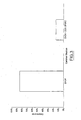
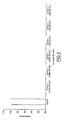
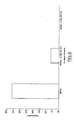
- FIGS. 3-7 illustrate delamination test results on various container samples constructed in accordance with the present invention.
- Each container has a five-layer wall of PET/MXD6/PET/MXD6/PET configuration ( FIGS. 6-7 ) or PET/EVOH/PET/EVOH/PET configuration ( FIGS. 3-5 ).
- the test containers of Fig. 3 have nominal layer mil thicknesses of 6.5/0.25/11.5/0.25/6.5. These are averages measured at the center of wide panel areas of the sidewall.
- the test containers of Figs. 4-7 have nominal sidewall mil thicknesses of 3/0.5/6/0.5/3 as discussed below. In all tests, the containers are experimental containers constructed for comparison purposes only.
- the tests are arbitrarily devised to obtain differentiation in data, and do not reflect any performance specification or conditions of use.
- the ordinate indicates the percentage of containers in which delamination is observed by visual inspection as a result of the test
- the abscissa indicates the container structure, specifically the total amount of barrier material by weight and the amount of the adhesion-promoting material employed.
- the amount of adhesion-promoting material and the type of barrier resin employed EVOH or MXD6
- the adhesion-promoting material is a grade SP-012 PEI material marketed under the trade name EPOMIN by Nippon Shokubai Co., Ltd.
- This material has the following properties, according to the resin manufacturer: Molecular weight 1200 (approx.) Specific gravity 1.05 @ 25°C Amine value 19 mg eq./g solid Freezing point Less than -20°C Decomposition temp. 290°C Flash point 260°C Amine ratios primary 35% secondary 35% tertiary 30% Chemical Abstract Specification (CAS) No. 106899-94-9
- the grade SP-012 material is stated by the manufacturer to be soluble in water and alcohol, partially soluble in ethyacetate, THF and toluene, and insoluble in n-hexane.
- FIG. 3 illustrates the results of drop tests performed on twenty-four ounce containers having a rounded rectangular cross section.
- the containers are filled with water, in which a blue dye is added to facilitate visual identification of delaminations where they occurred. (The water/dye blend is used in all tests discussed in this application.)
- the barrier layers total 1.5% of the containers by weight, with the percentages of SP-012 indicated in FIG. 3 (and in FIGS. 4-7 ) being percentages of the total barrier layers -e.g., 2.0% of the 1.5% barrier layer or 0.03 % adhesion-promoting material based upon the total weight of the container.
- the filled containers are dropped onto a cement base from a height of three feet so that the containers impact on their bottoms, and then are examined for delamination. As shown in FIG. 3 , 84% of the containers show delamination without the SP-012 adhesion-promoting material in the barrier layers.
- the containers having EVOH blended with 2.0 % SP-012 show delamination in only 14% of the
- FIGS. 4 and 5 illustrate side-impact test results on 400 ml cylindrical containers for carbonated soft drinks. This side-impact testing involve a single impact against the container sidewall with a steel wedge and with the container clamped in stationary position. The energy of the impact is approximately 3.3 joules.
- FIG. 4 illustrates test results with the containers filled with non-carbonated water
- FIG. 5 illustrates test results with the containers filled with water and carbonated at 4.2 GV (gas volumes).
- the barrier resin layers totaled 3% by weight of the containers.
- the adhesion-promoting material is progressively increased from 0.25% through 0.50%, 0.75%, 1.0%, 1.5% to 2.0% of the barrier layer weight. As can be seen in FIG.
- FIGS. 6 and 7 show the results of side-impact tests on 400 ml CSD containers under conditions respectively identical to those in connection with FIGS. 4 and 5 .
- MXD6 polyamide is used instead of EVOH as the barrier resin.
- occurrence of delamination decreases from about 36% to about 7% by addition of 0.25% SP-012, and no delamination is observed with 0.5% SP-012.
- no delamination is observed in any of the samples with the adhesion-promoting material.
- the PEI polymers that are presently preferred as adhesive-promoting agents also exhibit an enhanced barrier effect with acidic gases such as carbon dioxide, and can act to improve carbon dioxide barrier properties in the barrier layer in addition to their adhesive-promoting function. This is particularly advantagous in decreasing carbon dioxide loss when the container is used to package carbonated beverages such as soft drinks and beer.
- the following table shows the increase in barrier properties associated with the PEI polymer, specifically EPOMIN SP-012 in these tests, where 28mm 400 ml beverage containers are filled at 4.0 gas volumes of CO 2 by chemical carbonation techniques and are capped with 28 mm closures.
- These closures are polypropylene closures with ethylene vinyl acetate (EVA) liners as disclosed in U.S. Patent 5,306,542 .
- EVA ethylene vinyl acetate
- the total container CO 2 transmission rate is measured by placing the container within a sealed vessel with a known capture volume.
- the sealed vessel has two ports through which nitrogen carrier gas flowed in through one of the ports and exits the vessel from the other port.
- the exit port is directed to a Mocon C-IV CO 2 test machine for detecting the amount of CO 2 .
- the quantity of CO 2 is measured for a period of time, from which the CO 2 transmission rate is determined.
- each container has a five layer 13 mil nominal sidewall of PET/Barrier/PETBarrier/PET of nominal mil thicknesses of 3/0.5/6/0.5/3, respectively.
- the "monolayer" PET container was made using a five-layer process with all layers being PET.
- the two "barrier" layers total 3% of the container weight, with the percentages of SP-012 being percentages of the total batter layers - e.g. 1% of the 3% barrier layers or 0.03% adhesion-promoting material based upon total container weight.
- the results in Table 1 are an average for five of each container.
- Containers (2) having polystyrene "barrier layers” exhibit poorer barrier properties than the monolayer PET container (1).
- PEI SP-012 significantly improves the CO 2 barrier properties of containers (3) and (4) as compared to containers (2). Blending with PEI SP-012 also significantly improved the CO 2 barrier properties of containers (7), (8) and (9) with the EVOH barrier layers as compared to containers (5), although the performance trends in these tests as a function of concentration of the PEI SP-012 appear to be variable.
Landscapes
- Engineering & Computer Science (AREA)
- Mechanical Engineering (AREA)
- Manufacturing & Machinery (AREA)
- Physics & Mathematics (AREA)
- Geometry (AREA)
- Ceramic Engineering (AREA)
- Laminated Bodies (AREA)
- Blow-Moulding Or Thermoforming Of Plastics Or The Like (AREA)
- Containers Having Bodies Formed In One Piece (AREA)
- Processing And Handling Of Plastics And Other Materials For Molding In General (AREA)
- Compositions Of Macromolecular Compounds (AREA)
- Detergent Compositions (AREA)
Abstract
Description
- The present invention is directed to multilayer plastic containers, preforms, articles, and to methods of manufacturing such containers, preforms and articles.
-
FR-A-2752452 -
US-A-5362784 discloses a blend of a polyester resin and a polyalkylene imine used as an aldehyde scavenging agent. Said blend can be formed into a layer that is attached to a very thin polyester barrier film. The obtained multilayered structure is used in the field of food packaging. - Multilayer plastic containers and preforms typically include one or more layers of plastic matrix resin such as polyethylene terephthalate (PET) alternating with one or more layers of barrier resin such as polyamide or ethylene vinyl alcohol (EVOH) to resist transmission of gas, water vapor and/or flavorants, including odorants and essential oils, through the container wall. An important property of containers of this type is interlaminar adhesion to resist delamination between or among the various layers during filling and handling of the containers by the container manufacturer and the product packager, and during use of the container by the consumer, and there is a need for increasing interlaminar adhesion without detrimentally affecting other container features, such as barrier properties and container clarity. It is therefore a general object of the present invention to provide a multilayer container, a container preform, a multilayer article of manufacture, a method of manufacture and a barrier resin blend having improved adhesion characteristics between the layers of the preform and the container made therefrom.
- In one aspect the present invention provides a multilayer article which is a preform for blow molding a plastic container having a multilayer wall or a plastic container having a multilayer wall and, which article includes: at least one layer of matrix resin containing an ester containing polymer, at least one layer of barrier resin, and material blended withsaid barrier resin to promote adhesion beween said barrier and matrix layers, said material including an amine polymer.
- In another aspect, the present invention provides a method of making a multilayer plastic article that includes: (a) blending with a barrier resin, an adhesion-promoting material comprising an amine polymer, and (b) forming a preform for blow molding a plastic container having a multilayered wall, in which preform the blend formed in step (a) is in layers alternating with layers of matrix resin containing an ester containing polymer, and in which said amine polymer promotes adhesion between said barrier resin and said matrix resin.
- The adhesion-promoting material is an amine polymer, preferably an imine polymer, having a plurality of available primary, secondary, or tertiary amine groups. Such polyamine polymers preferably are an alkylene imine polymer or an alkylene amine polymer. Alkylene imine polymers, particularly polyethyleneimine (PEI) polymers, are particularly preferred. PEI polymers are sold by Nippon Shokubai Co., Ltd. under the trade name Epomin, and the EPOMIN bulletin published by Nippon Shokubai Co., Ltd. is incorporated herein by reference.
- The polyamines of the present invention are polymeric, either homopolymeric or copolymeric polyamines, and preferably is an alkylene amine polymer or an alkylene imine polymer having molecular weights of from about 150 to about 2,000,000, with about 150 to about 400,000 preferred, and most preferred being from about 300 to about 80,000. Examples of polyamines useful for the invention include polyvinyl amines, aminofunctional polyacrylamides, polyDADMAC's, polyvinyl pyrrolidone copolymers, polyethyleneimine, polypropyleneimine and the reaction product of ethylene diamine and epichlorohydrin copolymers.
- A preferred polyamine that can be used to achieve adhesion promoting characteristics is the class of polyamines referred to as polyalkylenimines, such as polyethyleneimine, which is readily available in a wide range of molecular weights and different degrees of branchings. Polyethyleneimines consist of a large family of water-soluble polyamines of varying molecular weight and degree of chemical modification. It is generally known that the polymerization of ethylenimine does not result in a polymer that is completely composed of units having a linear structure, but that also the degree of branching in polyethyleneimines depends on the acid concentration and the temperature during polymerization. Additional groups may be grafted onto polyethyleneimines using methods well known in the art to change other desirable physical and chemical properties. Preferred molecular weights of the polyethyleneimine are from about 150 to 80,000. Most preferred molecular weights of the polyethyleneimine are from about 300 to 80,000 for reasons of material viscosity. As an additional feature of the present invention, PEI polymers blended in the barrier or matrix layer can also interact with acidic gases such as carbon dioxide to provide enhanced acidic gas barrier polymers, to provide increased carbon dioxide barrier performance of the container. This is particularly useful in reducing carbon dioxide loss from the package when the resulting container is used to package carbonated beverages such as soft drinks or beer.
- The matrix polymer preferably is an ester-containing polymer - i.e., polymers having an ester in the main polymer chain, ester moities grafted to the main polymer chain, or ester moities as side groups to the chain. Polyester resin is particularly preferred. The polyester resin may be any suitable polyester resin having an ester in the main polymer chain. Suitable polyesters include polyethylene terephthalate (PET), polybutylene terephthalate (PBT), polypropylene terephthalate (PPT), polyethylene naphthalate (PEN), polyglycolic acid (PGA), polycarbonate (PC) and polylactic acid (PLA). Other suitable matrix polymers include polyacrylates such as polymethyl methacrylate (PMMA), polyethylene methacrylate (PEMA) and vinyl acetates. Also usable are blends and copolymers of the above, and process and post-consumer regrind that consists essentially of the above, or blends or copolymers of the above. PET-based resins, blends, copolymers and regrinds are particularly preferred. Other matrix polymers include polyolefins and polyamides.
- The PEI polymers are known to carry a high cationic charge density by virtue of their incorporation of high amounts of primary, secondary and tertiary amine functionalities. While not being bound to any particular theory, it appears that these amine functionalities strongly interact with esters or other functional groups to achieve improved adhesion between the barrier and ester-containing layers to reduce or prevent delamination of the wall layers during handling and use of the containers.
- The barrier resin preferably is selected from the group consisting of EVOH, polyamide, acrylonitrile copolymers, blends of EVOH and polyamide, nanocomposites of EVOH or polyamide and clay, blends of EVOH and an ionomer, acrylonitrile, cyclic olefin copolymers, polyvinylidene chloride (PVDC), polyglycolic acid (PGA), and blends thereof. EVOH and metaxylylenediamine (MXD) polyamide are particularly preferred. The invention thus achieves improved adhesion between the barrier and polyester layers to reduce or prevent delamination of the wall layers during handling and use of the containers.
- The invention, together with additional objects, features, advantages and aspects thereof, will be best understood from the following description, the appended claims and the accompanying drawings, in which:
-
FIGS. 1A and 1B are schematic diagrams of a container preform in accordance with one aspect of the invention, -
FIGS. 2A and 2B are schematic diagrams of a plastic container in accordance with another aspect of the invention, and -
FIGS. 3 to 7 are graphic illustrations of test results on containers fabricated in accordance with exemplary embodiments of the invention. - Containers and preforms in accordance with the present invention have a multilayer wall with at least one layer of matrix resin alternating with at least one layer of barrier resin. (Additional layers not germane to the present invention may also be included, such as post consumer resin layers.) For example, a three-layer container or preform may have a wall with layers in the sequence polyester/barrier/polyester. A five-layer container or preform may have wall layers in the sequence polyester/barrier/polyester/barrier/polyester. The barrier layer or layers may extend throughout the bottom wall and the sidewall of the container or preform, or may be confined to a portion of the sidewall or base, for example. The barrier layers may or may not extend into the finish of the container or preform.
FIGS. 2A and 2B are schematic illustrations of a five-layer container in accordance with an exemplary implimentation of the invention, the size and geometry being exemplary for illustrative purposes only. All exemplary test containers (and preforms) discussed in this application (except container (1) in table 1) are five-layer containers (and preforms). In accordance with the present invention, an adhesion-promoting material is blended with the barrier resin such as EVOH to promote adhesion between the barrier and polyester layers. Optionally, additionally the adhesion promoting material may be blended with the matrix resin such as polyester resin. This adhesion promoting material includes an alkylene amine polymer, of which an alkylene imine polymer is preferred, particularly a polyethyleneimine (PEI) polymer. Particularly preferred PEI polymers are EPOMIN (trade name) grade SP-012 polymers manufactured by Nippon Shokubai Co., Ltd. Other PEI polymers may be employed, including other EPOMIN polymers and PEI polymers marketed by other resin manufacturers such as BASF under the trade name LUPASOL. - The polyester resin preferably is selected from the group consisting of PET, PEN, blends and copolymers of PET and PEN, and process or post consumer regrind that consists essentially of PET, PEN, or blends or copolymers of PET and PEN. In the examples discussed in the present application, the resin is PET-based polyester.
- The barrier resin is a thermoplastic material that has a low gas and/or water vapor transmission rate, and/or exhibits a high barrier to transmission of flavorants including odorants and essential oils. The following barrier resin materials are preferred: EVOH, polyamide (including amorphous polyamide and semicrystalline polyamide such as MXD6), acrylonitrile copolymers, blends of EVOH and polyamide, blends of polyester (e.g. PET) and polyamide, blends of EVOH and an ionomer, cyclic olefin copolymers, PGA, nanocomposites of EVOH or polyamide and clay, polyvinylidene chloride and blends thereof, EVOH and polyamide are particularly preferred. MXD6 polyamide and EVOH are employed as barrier resins in the examples discussed in this application. One or more other barrier compositions also may be employed.
- The adhesion-promoting material is blended with the barrier resin. Because the barrier resin layers form a relatively small percentage by weight of the overall preform or container, a lesser quantity of adhesion-promoting material is required than if the adhesion-promoting material is blended with the matrix resin. However, the adhesion-promoting material could additionally be blended with the matrix resin, i.e. with both the matrix resin and the barrier resin, in accordance with the broadest aspects of the intention.
- The adhesion-promoting material typically is in the form of a liquid, and preferably is blended with the barrier resin material prior to forming the multilayer preform or container. When using an EVOH barrier resin, this blending may be performed by high pressure liquid injection of the adhesion-promoting material into an extruder through which the barrier material is flowing, or by placing the barrier material into the same feed throat of the extruder in such a way that the adhesion-promoting material and the barrier resin do not come into contact until they are adjacent to the extruder screw. Alternatively, the high pressure liquid injection resin method or common feedthroat method described above for the introduction of the adhesion-promoting material to the EVOH barrier resin may be employed to make an adhesion-promoting material-EVOH master batch material that is subsequently pelletized by methods well known in the art. These masterbatch pellets can then be blended with the EVOH barrier resin at an appropriate dilution ratio prior to forming the multilayer preform or container. When using an MXD6 barrier resin, the liquid adhesion-promoting material addictive may be blended with particles of the barrier material at room temperature before feeding the blend to an extruder.
- The amount of adhesion-promoting resin usually is no more than is necessary to achieve the desired level of adhesion, as increasing the proportion of adhesion-promoting material may affect the viscosity or other properties of the resin with which it is blended. The amount of adhesion-promoting material blended with the barrier resin (and optionally the matrix resin) preferably does not exceed about 10%, and preferably does not exceed 5% by weight of the blend used to form the multilayer article. In this regard, the adhesion-promoting material is blended with the barrier resin and preferably does not exceed about 10% by weight of the blend. The amount of adhesion promoting material more preferably does not exceed about 5% by weight of the blend with the barrier resin used to form the multilayer articles. In many applications, the amount of the adhesion-promoting material does not exceed 2% or 3% by weight of the blend with the barrier resin. All blend percentages in this application are by weight unless otherwise indicated.
- The process of container manufacture preferably involves manufacture of a preform, followed by blow molding the preform to form the container. In the examples discussed in this application, the preform is formed in a sequential injection molding operation of a type illustrated in
U.S. Patents 4,550,043 ,4,609,516 ,4,710,118 and4,954,376 .FIGS. 1A and 1B are schematic illustrations or a preform, the size and geometry being exemplary for illustrative purposes only. However, the preform can also be formed in a simultaneous injection molding operation of a type illustrated inU.S. Patents 4,990,301 and5,098,274 , an over-molding operation of a type illustrated inU.S. Patent 6,428,737 , a compression molding operation of a type illustrated inU.S. published application 2002/0098310 using a mold charge that includes the polyester resin and the barrier resin/adhesion-promoting material blend, or in a coextrusion operation that produces a hollow tube having alternate layers of matrix resin and barrier resin blend. These specific citations are merely exemplary. - The preferred PEI adhesion-promoting materials promote bonding between matrix and barrier resin layers while the materials are in contact with at least one material at elevated melt temperature, and it is difficult to separate the layers of a preform after the preform has cooled. The presently preferred adhesion-promoting materials identified above are well suited for the chemistries of the disclosed barrier and matrix resins. The invention achieves improved adhesion between the barrier and matrix (e.g. polyester) layers to reduce or prevent delamination of the wall layers during handling and use of the multilayer articles, including preforms and containers.
-
FIGS. 3-7 illustrate delamination test results on various container samples constructed in accordance with the present invention. Each container has a five-layer wall of PET/MXD6/PET/MXD6/PET configuration (FIGS. 6-7 ) or PET/EVOH/PET/EVOH/PET configuration (FIGS. 3-5 ). The test containers ofFig. 3 have nominal layer mil thicknesses of 6.5/0.25/11.5/0.25/6.5. These are averages measured at the center of wide panel areas of the sidewall. The test containers ofFigs. 4-7 have nominal sidewall mil thicknesses of 3/0.5/6/0.5/3 as discussed below. In all tests, the containers are experimental containers constructed for comparison purposes only. The tests are arbitrarily devised to obtain differentiation in data, and do not reflect any performance specification or conditions of use. In each figure, the ordinate indicates the percentage of containers in which delamination is observed by visual inspection as a result of the test, while the abscissa indicates the container structure, specifically the total amount of barrier material by weight and the amount of the adhesion-promoting material employed. With the exception of the amount of adhesion-promoting material and the type of barrier resin employed (EVOH or MXD6), all containers in each test are identical. - In all of the test described in this application, the adhesion-promoting material is a grade SP-012 PEI material marketed under the trade name EPOMIN by Nippon Shokubai Co., Ltd. This material has the following properties, according to the resin manufacturer:
Molecular weight 1200 (approx.) Specific gravity 1.05 @ 25°C Amine value 19 mg eq./g solid Freezing point Less than -20°C Decomposition temp. 290°C Flash point 260°C Amine ratios primary 35% secondary 35% tertiary 30% Chemical Abstract Specification (CAS) No. 106899-94-9 -
FIG. 3 illustrates the results of drop tests performed on twenty-four ounce containers having a rounded rectangular cross section. The containers are filled with water, in which a blue dye is added to facilitate visual identification of delaminations where they occurred. (The water/dye blend is used in all tests discussed in this application.) The barrier layers total 1.5% of the containers by weight, with the percentages of SP-012 indicated inFIG. 3 (and inFIGS. 4-7 ) being percentages of the total barrier layers -e.g., 2.0% of the 1.5% barrier layer or 0.03 % adhesion-promoting material based upon the total weight of the container. The filled containers are dropped onto a cement base from a height of three feet so that the containers impact on their bottoms, and then are examined for delamination. As shown inFIG. 3 , 84% of the containers show delamination without the SP-012 adhesion-promoting material in the barrier layers. The containers having EVOH blended with 2.0 % SP-012 show delamination in only 14% of the containers. -
FIGS. 4 and5 illustrate side-impact test results on 400 ml cylindrical containers for carbonated soft drinks. This side-impact testing involve a single impact against the container sidewall with a steel wedge and with the container clamped in stationary position. The energy of the impact is approximately 3.3 joules.FIG. 4 illustrates test results with the containers filled with non-carbonated water, whileFIG. 5 illustrates test results with the containers filled with water and carbonated at 4.2 GV (gas volumes). The barrier resin layers totaled 3% by weight of the containers. In the samples having a adhesion-promoting material, the adhesion-promoting material is progressively increased from 0.25% through 0.50%, 0.75%, 1.0%, 1.5% to 2.0% of the barrier layer weight. As can be seen inFIG. 4 , the occurrence of delamination progressively decreased in the non-carbonated samples to no delamination at 2.0% SP-012. In the carbonated samples ofFIG. 5 , there is no delamination seen in the samples with the SP-012 adhesion-promoting material. -
FIGS. 6 and7 show the results of side-impact tests on 400 ml CSD containers under conditions respectively identical to those in connection withFIGS. 4 and5 . In the containers ofFIGS. 6 and7 , however, MXD6 polyamide is used instead of EVOH as the barrier resin. In the non-carbonated packages ofFIG. 6 , occurrence of delamination decreases from about 36% to about 7% by addition of 0.25% SP-012, and no delamination is observed with 0.5% SP-012. In the carbonated packages ofFIG. 7 , no delamination is observed in any of the samples with the adhesion-promoting material. - As noted above, the PEI polymers that are presently preferred as adhesive-promoting agents also exhibit an enhanced barrier effect with acidic gases such as carbon dioxide, and can act to improve carbon dioxide barrier properties in the barrier layer in addition to their adhesive-promoting function. This is particularly advantagous in decreasing carbon dioxide loss when the container is used to package carbonated beverages such as soft drinks and beer.
- The following table shows the increase in barrier properties associated with the PEI polymer, specifically EPOMIN SP-012 in these tests, where 28mm 400 ml beverage containers are filled at 4.0 gas volumes of CO2 by chemical carbonation techniques and are capped with 28 mm closures. These closures are polypropylene closures with ethylene vinyl acetate (EVA) liners as disclosed in
U.S. Patent 5,306,542 . After being allowed to equilibrate for 14 days at 68F/50% RH storage, the total container CO2 transmission rate is measured by placing the container within a sealed vessel with a known capture volume. The sealed vessel has two ports through which nitrogen carrier gas flowed in through one of the ports and exits the vessel from the other port. The exit port is directed to a Mocon C-IV CO2 test machine for detecting the amount of CO2. The quantity of CO2 is measured for a period of time, from which the CO2 transmission rate is determined. - With the exception of the monolayer PET container, each container has a five layer 13 mil nominal sidewall of PET/Barrier/PETBarrier/PET of nominal mil thicknesses of 3/0.5/6/0.5/3, respectively. (The "monolayer" PET container was made using a five-layer process with all layers being PET.) In containers (2) through (9), the two "barrier" layers total 3% of the container weight, with the percentages of SP-012 being percentages of the total batter layers - e.g. 1% of the 3% barrier layers or 0.03% adhesion-promoting material based upon total container weight. The results in Table 1 are an average for five of each container. Containers (2) having polystyrene "barrier layers" exhibit poorer barrier properties than the monolayer PET container (1). However, the addition of PEI SP-012 significantly improves the CO2 barrier properties of containers (3) and (4) as compared to containers (2). Blending with PEI SP-012 also significantly improved the CO2 barrier properties of containers (7), (8) and (9) with the EVOH barrier layers as compared to containers (5), although the performance trends in these tests as a function of concentration of the PEI SP-012 appear to be variable.
Table 1 Container Construction Transmission Rate in cc-CO2 / day 1 Monolayer PET 4.55 2 3% Polystyrene 4.81 3 3% (Polystyrene + 1% Epomin SP-012) 4.25 4 3% (Polystyrene + 2% Epomin SP-012) 3.8 5 3% EVOH 2.48 6 3% (EVOH + 1% Epomin SP-012) 2.5 7 3% (EVOH + 2% Epomin SP-012) 1.69 8 3% (EVOH + 3% Epomin SP-012) 1.76 9 3% (EVOH + 4% Epomin SP-012) 1.87 In the exemplary containers: - The PET resin is Cleartuf 8006 which is a PET copolymer having an intrinsic viscosity of 0.8dl/g sold by M&G Polymer USA.
- The polystyrene is Chevron EA3400 having a melt index of 9g/10 min according to ASTMD1238, condition G.
- The EVOH is Eval Company of America, Grade F171A which is 32 mol% ethylene content poly(ethylene vinyl alcohol) copolymer.
-
- There have thus been disclosed a multilayer container, a multilayer preform, a barrier resin blend for use in a multilayer container, and a method of making a multilayer preform or container, that fully satisfy all of the objects and aims previously set forth. The container, barrier blend and method of manufacture have been disclosed in conjunction with a number of exemplary embodiments thereof, and several modifications and variations have been discussed. Other modifications and variations will readily suggest themselves to a person of ordinary skill in the art. The invention is intended to embrace all such modifications and variations as fall within the broad scope of the appended claims.
Claims (22)
- A multilayer article which is a preform for blow molding a plastic container having a multilayer wall or a plastic container having a multilayer wall and, which article includes:at least one layer of matrix resin containing ester containing polymer, at least one layer of barrier resin, and material blended with said barrier resin to promote adhesion between said barrier and matrix layers, said material including an amine polymer.
- The article set forth in claim 1 wherein said ester containing polymer is polyester and said barrier resin is polyamide or EVOH.
- The article set forth in claim 1 wherein said matrix resin is polyester resin.
- The article set forth in claim 3 wherein said polyester resin is PET, PEN, a blend or copolymer of PET and PEN, or regrind that includes PET, PEN or blends or copolymers of PET and PET.
- The article set forth in claim 1 wherein the amine polymer is an imine polymer.
- The article set forth in claim 1 wherein said amine polymer is an alkylene amine polymer.
- The article set forth in claim 6 wherein said alkylene amine polymer is an alkylene imine polymer.
- The article set forth in claim 7 wherein said alkylene imine polymer is a polyethyleneimine polymer.
- The article set forth in claim 1 wherein said barrier resin is EVOH, polyamide, an acrylonitrile copolymer, a blend of EVOH and polyamide, a blend of polyester and polyamide, a nanocomposite of EVOH or polyamide and clay, a blend of EVOH and an ionomer, acrylonitrile, a cyclic olefin copolymer, polyglycolic acid, polyvinylidine chloride, or blends thereof
- The article set forth in any foregoing claim, wherein:the at least one layer of matrix resin comprises at least one layer of polyester resin selected from the group consisting of PET, PEN, blends or copolymers of PET and PEN, and regrind that consists essentially of PET, PEN, or blends or copolymers of PET and PEN,the at least one layer of barrier resin is selected from the group consisting of EVOH, polyamide, acrylonitrile copolymers, blends of EVOH and polyamide, a blend of polyester and polyamide, nanocomposites of EVOH or polyamide and clay, blends of EVOH and an ionomer, acrylonitrile, cyclic olefin copolymers, polyglycolic acid, polyvinylidene chloride, and blends thereof, andsaid material comprises a polyethyleneimine blended in said at least one layer of barrier resin to promote adhesion between said barrier and polyester layers.
- A method of making a multilayer plastic article that includes: (a) blending with a barrier resin, an adhesion-promoting material comprising an amine polymer, and (b) forming a preform for blow molding a plastic container having a multilayered wall, in which preform the blend formed in step (a) is in layers alternating with layers of matrix resin containing an ester containing polymer, and in which said amine polymer promotes adhesion between said barrier resin and said matrix resin.
- The method set forth in claim 11 wherein said step (b) is carried out while at least one of said blend formed in said step (a) and said matrix resin is in melt phase.
- The method set forth in claim 12 wherein said amine polymer is an alkylene imine polymer.
- The method set forth in claim 13 wherein said alkylene imine polymer is a polyethyleneimine polymer.
- The method set forth in claim 11 wherein said ester containing polymer is a polyester and said barrier resin is polyamide or EVOH.
- The method set forth in claim 11 wherein said matrix resin is a polyester resin.
- The method as set forth in claim 16 wherein the multilayer plastic article is a multilayer plastic container, the amine polymer is an alkylene amine polymer and the method further includes: (c) blow molding the preform formed in step (b) into a hollow plastic container.
- The method set forth in claim 17 wherein said step (b) is carried out while at least one of said blend formed in said step (a) and said polyester resin is in melt phase.
- The method set forth in claim 18 wherein said step (b) is carried out by a process selected from the group consisting of simultaneously injection molding said polyester resin and said barrier resin blend, sequentially injection molding said polyester resin and said barrier resin blend, overmolding sequential layers of said polyester resin and said barrier resin blend, compression molding a mold charge that includes said polyester resin and said barrier resin blend, and extruding a hollow tube that includes alternate layers of said polyester resin and said barrier resin blend.
- The method set forth in claim 19 wherein said adhesion-promoting material is a polyethyleneimine polymer.
- The method set forth in claim 16 or claim 20 wherein said polyester resin is PET, PEN, a blend or copolymer of PET and PEN, or regrind that includes PET, PEN, or blends or copolymers of PET and PEN.
- The method set forth in any one of claims 11, 16 or 17 wherein said barrier resin is EVOH, polyamide, an acrylonitrile copolymer, a blend of EVOH and polyamide, a blend of polyester and polyamide, a nanocomposite of EVOH or polyamide and clay, a blend of EVOH and an ionomer, acrylonitrile, a cyclic olefin copolymer, polyglycolic acid, polyvinylidene chloride, or blends thereof.
Applications Claiming Priority (2)
| Application Number | Priority Date | Filing Date | Title |
|---|---|---|---|
| US10/688,432 US7491359B2 (en) | 2003-10-16 | 2003-10-16 | Delamination-resistant multilayer container, preform, article and method of manufacture |
| PCT/US2004/022213 WO2005039876A1 (en) | 2003-10-16 | 2004-07-09 | Delimitation-resistant multilayer container, preform, article and method of manufacture |
Publications (2)
| Publication Number | Publication Date |
|---|---|
| EP1673221A1 EP1673221A1 (en) | 2006-06-28 |
| EP1673221B1 true EP1673221B1 (en) | 2010-02-10 |
Family
ID=34521167
Family Applications (1)
| Application Number | Title | Priority Date | Filing Date |
|---|---|---|---|
| EP20040777965 Expired - Lifetime EP1673221B1 (en) | 2003-10-16 | 2004-07-09 | Delimitation-resistant multilayer container, preform, article and method of manufacture |
Country Status (11)
| Country | Link |
|---|---|
| US (2) | US7491359B2 (en) |
| EP (1) | EP1673221B1 (en) |
| JP (1) | JP2007508167A (en) |
| CN (1) | CN1867449A (en) |
| AT (1) | ATE457229T1 (en) |
| AU (1) | AU2004284044B2 (en) |
| BR (1) | BRPI0415472A (en) |
| CA (1) | CA2541698A1 (en) |
| DE (1) | DE602004025487D1 (en) |
| EC (1) | ECSP066498A (en) |
| WO (1) | WO2005039876A1 (en) |
Families Citing this family (21)
| Publication number | Priority date | Publication date | Assignee | Title |
|---|---|---|---|---|
| US8075966B2 (en) * | 2004-07-22 | 2011-12-13 | Graham Packaging Company, Ltd. | Delamination-resistant multilayer container, preform, article and method with oxygen barrier formulations |
| US8465818B2 (en) * | 2005-10-07 | 2013-06-18 | M & G Usa Corporation | Polyamides and polyesters blended with a lithium salt interfacial tension reducing agent |
| US20080064796A1 (en) * | 2006-09-11 | 2008-03-13 | Graham Packaging Company, Lp | Articles formed of phosphorous containing reprocessed polymer materials |
| US20080061474A1 (en) * | 2006-09-11 | 2008-03-13 | Graham Packaging Company, Lp | Thermally stabilized adhesion promoting material for use in multilayer articles |
| US20100119854A1 (en) * | 2007-04-04 | 2010-05-13 | Denki Kagaku Kogyo Kabushiki Kaisha | Primer composition for acrylic adhesive, bonding method and assembly |
| FR2925030B1 (en) * | 2007-12-17 | 2010-05-28 | Plastiques Andre Verchere | RECYCLABLE PLASTIC CONTAINER AND CORRESPONDING CLOSURE DEVICE |
| EP2082986A1 (en) * | 2008-01-25 | 2009-07-29 | Carlsberg Breweries A/S | A method of producing a beverage container |
| MX2011001623A (en) * | 2008-08-15 | 2011-05-24 | Toray Plastics America Inc | Biaxially oriented polylactic acid film with high barrier. |
| DE102009005142A1 (en) * | 2009-01-15 | 2010-07-22 | Krones Ag | Stretch blow molder with heatable blow mold |
| US9150004B2 (en) * | 2009-06-19 | 2015-10-06 | Toray Plastics (America), Inc. | Biaxially oriented polylactic acid film with improved heat seal properties |
| US9023443B2 (en) * | 2009-09-25 | 2015-05-05 | Toray Plastics (America), Inc. | Multi-layer high moisture barrier polylactic acid film |
| WO2011103452A1 (en) * | 2010-02-19 | 2011-08-25 | Toray Plastics (America) , Inc. | Multi-layer high moisture barrier polylactic acid film |
| US9492962B2 (en) | 2010-03-31 | 2016-11-15 | Toray Plastics (America), Inc. | Biaxially oriented polylactic acid film with reduced noise level and improved moisture barrier |
| WO2011123165A1 (en) | 2010-03-31 | 2011-10-06 | Toray Plastics (America), Inc. | Biaxially oriented polyactic acid film with reduced noise level |
| US8822001B2 (en) | 2010-04-27 | 2014-09-02 | Graham Packaging Company, L.P. | Delamination resistant multilayer containers |
| US20120061279A1 (en) * | 2010-09-13 | 2012-03-15 | Ipl, Inc. | Oxygen barrier molded container and method for production thereof |
| NL2010647A (en) * | 2012-05-04 | 2013-11-06 | Asml Netherlands Bv | Design rule and lithographic process co-optimization. |
| US9778169B2 (en) | 2014-04-18 | 2017-10-03 | Vermeer Manufacturing Company | Twist delamination test |
| EP3397474B1 (en) * | 2016-03-24 | 2023-06-07 | Jindal Innovation Center SRL | Multilayer film |
| BR112020011972B1 (en) * | 2017-12-13 | 2023-01-31 | Amcor Rigid Packaging Usa, Llc | INSERTION OF A PASSIVE BARRIER LAYER INSIDE THE WALL OF THE CARBONATE BEVERAGE CONTAINER TO IMPROVE SHELF LIFE |
| JP7477477B2 (en) * | 2021-03-22 | 2024-05-01 | 花王株式会社 | Heating equipment container |
Family Cites Families (79)
| Publication number | Priority date | Publication date | Assignee | Title |
|---|---|---|---|---|
| US44553A (en) * | 1864-10-04 | Improved automatic fan | ||
| US22974A (en) * | 1859-02-15 | Improvement in machines for making bullets | ||
| NL276939A (en) * | 1961-04-07 | |||
| JPS4530600B1 (en) * | 1966-07-15 | 1970-10-03 | ||
| US4041005A (en) | 1976-01-15 | 1977-08-09 | The Standard Oil Company | Impact improvement of rubber-modified nitrile resins |
| US4526821A (en) * | 1979-07-20 | 1985-07-02 | American Can Company | Multi-layer container and method of making same |
| JPS61227821A (en) | 1985-04-01 | 1986-10-09 | Kawasaki Heavy Ind Ltd | Removing method for carbonic acid gas |
| DE68928668T2 (en) * | 1988-02-04 | 1998-11-26 | Ppg Industries, Inc., Pittsburgh, Pa. | Barrier coatings |
| US5300541A (en) * | 1988-02-04 | 1994-04-05 | Ppg Industries, Inc. | Polyamine-polyepoxide gas barrier coatings |
| US4990301A (en) | 1989-01-25 | 1991-02-05 | Continental Pet Technologies, Inc. | Method and apparatus for injection molding of multilayer preforms |
| US5248364A (en) * | 1991-12-30 | 1993-09-28 | Eastman Kodak Company | Polypropylene laminates and process for the production thereof |
| JPH0649354B2 (en) | 1989-07-10 | 1994-06-29 | 東洋製罐株式会社 | Plastic multi-layer container |
| US5077111A (en) | 1990-01-12 | 1991-12-31 | Continental Pet Technologies, Inc. | Recyclable multilayer plastic preform and container blown therefrom |
| US5281360A (en) | 1990-01-31 | 1994-01-25 | American National Can Company | Barrier composition and articles made therefrom |
| US5156904A (en) | 1990-05-18 | 1992-10-20 | Hoechst Celanese Corporation | Polymeric film coated in-line with polyethyleneimine |
| US5102699A (en) | 1990-08-10 | 1992-04-07 | E. I. Du Pont De Nemours And Company | Solvent blockers and multilayer barrier coatings for thin films |
| US5105950A (en) * | 1990-09-17 | 1992-04-21 | Moore Business Forms, Inc. | Zip off lid for two piece crushable carton |
| US5196469A (en) | 1991-03-28 | 1993-03-23 | Mica Corporation | Ethylene/vinyl alcohol coatings |
| CA2062083C (en) | 1991-04-02 | 2002-03-26 | Drew Ve Speer | Compositions, articles and methods for scavenging oxygen |
| ZA921914B (en) | 1991-04-02 | 1993-09-16 | Grace W R & Co | Compositions, articles and methods for scavenging oxygen |
| EP0526977A2 (en) | 1991-07-03 | 1993-02-10 | E.I. Du Pont De Nemours And Company | Novel packaging compositions that extend shelf life of oil-containing foods |
| JPH0551508A (en) | 1991-08-27 | 1993-03-02 | Monsant Kasei Kk | High-nitrile resin composition |
| US5604042A (en) | 1991-12-23 | 1997-02-18 | Mobil Oil Corporation | Cellulose material containing barrier film structures |
| US5512338A (en) | 1991-12-23 | 1996-04-30 | Mobil Oil Corp. | Oxygen, flavor/odor, grease/oil and moisture barrier film structures |
| US5981011A (en) | 1992-01-22 | 1999-11-09 | A*Ware Technologies, L.C. | Coated sheet material |
| JPH069832A (en) | 1992-06-26 | 1994-01-18 | Showa Denko Kk | Adhesive resin composition |
| US5308473A (en) * | 1992-09-18 | 1994-05-03 | Mobil Oil Corporation | Low NOx FCC regeneration process and apparatus |
| US5382473A (en) | 1992-10-20 | 1995-01-17 | Mobil Oil Corporation | Multilayer film structure |
| US5380587A (en) | 1992-10-20 | 1995-01-10 | Mobil Oil Corporation | Multilayer film structure |
| US5284892A (en) | 1992-11-10 | 1994-02-08 | E. I. Du Pont De Nemours And Company | Aldehyde scavenging compositions and methods relating thereto |
| DE4308395A1 (en) * | 1993-03-17 | 1994-09-22 | Basf Ag | Pest control procedures |
| US5362784A (en) | 1993-05-28 | 1994-11-08 | E. I. Du Pont De Nemours And Company | Aldehyde scavenging compositions and methods relating thereto |
| US6906146B2 (en) | 1993-07-13 | 2005-06-14 | Phillips Petroleum Company | Compositions having ethylenic backbone and benzylic, allylic, or ether-containing side-chains, oxygen scavenging compositions containing same, and process for making these compositions by esterification or transesterification of a polymer melt |
| DE69413902T2 (en) | 1993-08-05 | 1999-05-12 | ICI Americas Inc., Wilmington, Del. | Polymer film |
| JP3630706B2 (en) | 1993-09-01 | 2005-03-23 | 東洋製罐株式会社 | Plastic multilayer container with excellent content preservation |
| US5453325A (en) * | 1993-12-09 | 1995-09-26 | Eastman Kodak Company | Nonlinear optical waveguide multilayer structure |
| CA2158945A1 (en) | 1994-01-24 | 1995-07-27 | Sumitomo Chemical Co., Ltd. | Laminate, laminated film and molding |
| US6025059A (en) | 1998-02-18 | 2000-02-15 | Mobil Oil Corporation | Coated plastic substrates having wet-scratch resistance |
| ES2210302T3 (en) | 1994-07-08 | 2004-07-01 | Exxonmobil Oil Corporation | FILM STRUCTURES WITH BARRIER EFFECT. |
| US5759653A (en) | 1994-12-14 | 1998-06-02 | Continental Pet Technologies, Inc. | Oxygen scavenging composition for multilayer preform and container |
| US5660761A (en) | 1995-02-15 | 1997-08-26 | Chevron Chemical Company | Multi-component oxygen scavenger system useful in film packaging |
| US5776361A (en) | 1995-02-15 | 1998-07-07 | Chevron Chemical Company | Multi-component oxygen scavenging composition |
| BE1009189A3 (en) | 1995-03-14 | 1996-12-03 | Solvay | Process for producing a hollow body. |
| JP3441594B2 (en) * | 1995-03-14 | 2003-09-02 | ダイセル化学工業株式会社 | Barrier composite film and method for producing the same |
| AU6424296A (en) | 1995-08-29 | 1997-03-06 | Sumitomo Chemical Company, Limited | Gas barrier resin composition and process for producing the same |
| DE19537003A1 (en) | 1995-10-04 | 1997-04-10 | Inventa Ag | Adhesion promoter based on polyamide |
| JP2836562B2 (en) * | 1996-02-08 | 1998-12-14 | 日本電気株式会社 | Semiconductor wafer wet processing method |
| US6057013A (en) | 1996-03-07 | 2000-05-02 | Chevron Chemical Company | Oxygen scavenging system including a by-product neutralizing material |
| US5942297A (en) | 1996-03-07 | 1999-08-24 | Cryovac, Inc. | By-product absorbers for oxygen scavenging systems |
| DE19633133C1 (en) | 1996-08-16 | 1998-03-05 | Veritas Gummiwerke Ag | Tough, dimensionally-stable multilayer tubing |
| US6042908A (en) | 1996-08-22 | 2000-03-28 | Eastman Chemical Company | Process for improving the flavor retaining property of polyester/polyamide blend containers for ozonated water |
| JPH1076593A (en) * | 1996-09-03 | 1998-03-24 | Daicel Chem Ind Ltd | Barrier composite film and its manufacture |
| MY124157A (en) | 1997-01-17 | 2006-06-30 | Innovia Films Ltd | Alkylenimine/ organic barrier coatings method of manufacture and applications thereof |
| GB9700904D0 (en) | 1997-01-17 | 1997-03-05 | Dow Corning | Reactive silicone/alkylenimine barrier laminating adhesives and applications thereof |
| WO1998058656A1 (en) | 1997-06-23 | 1998-12-30 | Hauser, Inc. | Storage stable, citrus-flavored compositions comprising plant extracts |
| US6026059A (en) * | 1997-11-14 | 2000-02-15 | Petroleum Geo-Services (Us), Inc. | Method of creating common-offset/common-azimuth gathers in 3-D seismic surveys and method of conducting reflection attribute variation analysis |
| JPH11151786A (en) * | 1997-11-20 | 1999-06-08 | Toray Ind Inc | Gas barrier film and packaging materials |
| JPH11292152A (en) * | 1998-04-08 | 1999-10-26 | Ueno Hiroshi | Oil-absorbing and water-absorbing packaging material |
| JPH11348194A (en) * | 1998-04-09 | 1999-12-21 | Kuraray Co Ltd | Co-injection stretch blow molded container |
| US6677013B1 (en) * | 1998-04-17 | 2004-01-13 | Pechiney Emballage Flexible Europe | Transparent multilayer polypropylene container with barrier protection |
| US6060410A (en) * | 1998-04-22 | 2000-05-09 | Gillberg-Laforce; Gunilla Elsa | Coating of a hydrophobic polymer substrate with a nonstoichiometric polyelectrolyte complex |
| US6106950A (en) | 1998-06-04 | 2000-08-22 | H. B. Fuller Licesing & Financing Inc. | Waterborne primer and oxygen barrier coating with improved adhesion |
| US6946175B2 (en) | 1998-07-31 | 2005-09-20 | Chevron Phillips Chemical Co., Lp | Oxygen scavenging polymers as active barrier tie layers in multilayered structures |
| US7303797B1 (en) | 1999-02-16 | 2007-12-04 | E.I. Du Pont De Nemours And Company | Gas barrier coating system for polymeric films and rigid containers |
| EP1102336B1 (en) | 1999-04-08 | 2007-09-12 | Dai Nippon Printing Co., Ltd. | Lithium battery packaging laminated multilayer structure |
| US6565938B1 (en) | 1999-11-16 | 2003-05-20 | Nippon Gohsei Kagaku Kogyo Kabushiki Kaisha | Resin composition and layered product |
| JP3918168B2 (en) * | 2000-11-28 | 2007-05-23 | 株式会社吉野工業所 | Polyester resin laminated container and molding method thereof |
| US6541088B1 (en) * | 2000-03-03 | 2003-04-01 | Eg Technology Partners, L.P. | Alkylenimine/organic barrier coatings having bis-silane additives |
| US6436498B1 (en) | 2000-03-03 | 2002-08-20 | Dow Corning Corporation | Reactive silicone/alkyleneimine barrier laminating adhesives having bis-silane additives |
| US6525123B1 (en) | 2000-05-19 | 2003-02-25 | Chevron Phillips Chemical Company Lp | Compatible blend systems from ethylene vinyl alcohol and oxygen scavenging polymers |
| JP2002059519A (en) * | 2000-08-17 | 2002-02-26 | Nippon Shokubai Co Ltd | Gas-barrier surface-coated molding |
| WO2002018489A1 (en) | 2000-09-01 | 2002-03-07 | Kuraray Co., Ltd. | Polyvinyl alcohol resin composition and multilayer packages |
| DE10045165C2 (en) | 2000-09-13 | 2002-08-08 | Veritas Ag | Multi-layer hose |
| ATE434022T1 (en) | 2001-04-26 | 2009-07-15 | Toyo Seikan Kaisha Ltd | OXYGEN ABSORBING RESIN COMPOSITION AND MULTI-LAYER CONTAINER HAVING AT LEAST ONE LAYER THEREOF |
| US20030044553A1 (en) | 2001-08-23 | 2003-03-06 | Ravi Ramanathan | Fuel tanks |
| US6514660B1 (en) | 2001-10-29 | 2003-02-04 | Eastman Kodak Company | Polyethyleneimine primer for imaging materials |
| JP2003236992A (en) * | 2002-02-18 | 2003-08-26 | Nippon Shokubai Co Ltd | Oxygen gas-barrier film and packaging material using the same |
| ATE309291T1 (en) * | 2002-04-15 | 2005-11-15 | Coca Cola Co | COATING COMPOSITION CONTAINING AN EPOXY ADDITIVE AND STRUCTURES COATED THEREFROM |
| US8192811B2 (en) * | 2003-03-14 | 2012-06-05 | Graham Packaging Pet Technologies Inc. | Delamination-resistant multilayer container, preform and method of manufacture |
-
2003
- 2003-10-16 US US10/688,432 patent/US7491359B2/en not_active Expired - Fee Related
-
2004
- 2004-07-09 CA CA 2541698 patent/CA2541698A1/en not_active Abandoned
- 2004-07-09 DE DE200460025487 patent/DE602004025487D1/en not_active Expired - Fee Related
- 2004-07-09 WO PCT/US2004/022213 patent/WO2005039876A1/en not_active Ceased
- 2004-07-09 CN CNA2004800306172A patent/CN1867449A/en active Pending
- 2004-07-09 JP JP2006535477A patent/JP2007508167A/en active Pending
- 2004-07-09 EP EP20040777965 patent/EP1673221B1/en not_active Expired - Lifetime
- 2004-07-09 AT AT04777965T patent/ATE457229T1/en not_active IP Right Cessation
- 2004-07-09 BR BRPI0415472 patent/BRPI0415472A/en not_active IP Right Cessation
- 2004-07-09 AU AU2004284044A patent/AU2004284044B2/en not_active Ceased
-
2006
- 2006-04-10 EC ECSP066498 patent/ECSP066498A/en unknown
-
2009
- 2009-01-30 US US12/362,511 patent/US20090136760A1/en not_active Abandoned
Also Published As
| Publication number | Publication date |
|---|---|
| BRPI0415472A (en) | 2006-12-19 |
| US20050084635A1 (en) | 2005-04-21 |
| US20090136760A1 (en) | 2009-05-28 |
| ECSP066498A (en) | 2006-10-10 |
| EP1673221A1 (en) | 2006-06-28 |
| AU2004284044B2 (en) | 2010-01-21 |
| ATE457229T1 (en) | 2010-02-15 |
| US7491359B2 (en) | 2009-02-17 |
| JP2007508167A (en) | 2007-04-05 |
| CN1867449A (en) | 2006-11-22 |
| WO2005039876A1 (en) | 2005-05-06 |
| AU2004284044A1 (en) | 2005-05-06 |
| DE602004025487D1 (en) | 2010-03-25 |
| CA2541698A1 (en) | 2005-05-06 |
Similar Documents
| Publication | Publication Date | Title |
|---|---|---|
| US20090136760A1 (en) | Delamination-resistant multilayer container, preform, article and method of manufacture | |
| US8871846B2 (en) | Oxygen scavenging plastic material | |
| EP1651527B1 (en) | Composition for making a packaging article having oxygen-scavenging properties and low haze | |
| EP2483350B1 (en) | Multi-layered article | |
| RU2411129C2 (en) | Multilayer bottle | |
| CN101111585A (en) | Blends of oxygen-scavenging polyamides and polyesters containing zinc and cobalt | |
| US20180194059A1 (en) | Multilayered preform and multilayered stretch-blow-formed container | |
| AU2004201837A1 (en) | Multilayer container | |
| US20180141733A1 (en) | Cup-type multilayered container | |
| EP1515895A2 (en) | Multilayered plastic container | |
| US8192811B2 (en) | Delamination-resistant multilayer container, preform and method of manufacture | |
| JP2010247497A (en) | Plastic multilayer structure | |
| JPS58160344A (en) | Hollow polyester molding having excellent gas barrier properties | |
| JP2004351927A (en) | Multi-layer container | |
| MXPA06004062A (en) | Delimitation-resistant multilayer container, preform, article and method of manufacture | |
| KR20070031265A (en) | Peel-Resistant Multilayer Containers, Preforms, Articles, and Manufacturing Methods | |
| JPS6279258A (en) | Polyester bottle and production thereof | |
| AU2004322268B2 (en) | Delamination-resistant multilayer container, preform and method of manufacture | |
| US12115760B2 (en) | Resin layered body | |
| WO2008033756A1 (en) | Thermally stabilized adhesion promoting material for use in multilayer articles | |
| JPS61211037A (en) | Laminated structure | |
| JPH06279632A (en) | Resin composition |
Legal Events
| Date | Code | Title | Description |
|---|---|---|---|
| PUAI | Public reference made under article 153(3) epc to a published international application that has entered the european phase |
Free format text: ORIGINAL CODE: 0009012 |
|
| 17P | Request for examination filed |
Effective date: 20060330 |
|
| AK | Designated contracting states |
Kind code of ref document: A1 Designated state(s): AT BE BG CH CY CZ DE DK EE ES FI FR GB GR HU IE IT LI LU MC NL PL PT RO SE SI SK TR |
|
| 17Q | First examination report despatched |
Effective date: 20060721 |
|
| DAX | Request for extension of the european patent (deleted) | ||
| GRAP | Despatch of communication of intention to grant a patent |
Free format text: ORIGINAL CODE: EPIDOSNIGR1 |
|
| GRAS | Grant fee paid |
Free format text: ORIGINAL CODE: EPIDOSNIGR3 |
|
| GRAA | (expected) grant |
Free format text: ORIGINAL CODE: 0009210 |
|
| AK | Designated contracting states |
Kind code of ref document: B1 Designated state(s): AT BE BG CH CY CZ DE DK EE ES FI FR GB GR HU IE IT LI LU MC NL PL PT RO SE SI SK TR |
|
| REG | Reference to a national code |
Ref country code: GB Ref legal event code: FG4D |
|
| REG | Reference to a national code |
Ref country code: CH Ref legal event code: EP |
|
| REG | Reference to a national code |
Ref country code: IE Ref legal event code: FG4D |
|
| REF | Corresponds to: |
Ref document number: 602004025487 Country of ref document: DE Date of ref document: 20100325 Kind code of ref document: P |
|
| REG | Reference to a national code |
Ref country code: NL Ref legal event code: VDEP Effective date: 20100210 |
|
| PG25 | Lapsed in a contracting state [announced via postgrant information from national office to epo] |
Ref country code: ES Free format text: LAPSE BECAUSE OF FAILURE TO SUBMIT A TRANSLATION OF THE DESCRIPTION OR TO PAY THE FEE WITHIN THE PRESCRIBED TIME-LIMIT Effective date: 20100521 Ref country code: PT Free format text: LAPSE BECAUSE OF FAILURE TO SUBMIT A TRANSLATION OF THE DESCRIPTION OR TO PAY THE FEE WITHIN THE PRESCRIBED TIME-LIMIT Effective date: 20100611 |
|
| PG25 | Lapsed in a contracting state [announced via postgrant information from national office to epo] |
Ref country code: SI Free format text: LAPSE BECAUSE OF FAILURE TO SUBMIT A TRANSLATION OF THE DESCRIPTION OR TO PAY THE FEE WITHIN THE PRESCRIBED TIME-LIMIT Effective date: 20100210 Ref country code: PL Free format text: LAPSE BECAUSE OF FAILURE TO SUBMIT A TRANSLATION OF THE DESCRIPTION OR TO PAY THE FEE WITHIN THE PRESCRIBED TIME-LIMIT Effective date: 20100210 Ref country code: FI Free format text: LAPSE BECAUSE OF FAILURE TO SUBMIT A TRANSLATION OF THE DESCRIPTION OR TO PAY THE FEE WITHIN THE PRESCRIBED TIME-LIMIT Effective date: 20100210 Ref country code: AT Free format text: LAPSE BECAUSE OF FAILURE TO SUBMIT A TRANSLATION OF THE DESCRIPTION OR TO PAY THE FEE WITHIN THE PRESCRIBED TIME-LIMIT Effective date: 20100210 |
|
| PG25 | Lapsed in a contracting state [announced via postgrant information from national office to epo] |
Ref country code: SE Free format text: LAPSE BECAUSE OF FAILURE TO SUBMIT A TRANSLATION OF THE DESCRIPTION OR TO PAY THE FEE WITHIN THE PRESCRIBED TIME-LIMIT Effective date: 20100210 Ref country code: RO Free format text: LAPSE BECAUSE OF FAILURE TO SUBMIT A TRANSLATION OF THE DESCRIPTION OR TO PAY THE FEE WITHIN THE PRESCRIBED TIME-LIMIT Effective date: 20100210 Ref country code: NL Free format text: LAPSE BECAUSE OF FAILURE TO SUBMIT A TRANSLATION OF THE DESCRIPTION OR TO PAY THE FEE WITHIN THE PRESCRIBED TIME-LIMIT Effective date: 20100210 Ref country code: GR Free format text: LAPSE BECAUSE OF FAILURE TO SUBMIT A TRANSLATION OF THE DESCRIPTION OR TO PAY THE FEE WITHIN THE PRESCRIBED TIME-LIMIT Effective date: 20100511 Ref country code: EE Free format text: LAPSE BECAUSE OF FAILURE TO SUBMIT A TRANSLATION OF THE DESCRIPTION OR TO PAY THE FEE WITHIN THE PRESCRIBED TIME-LIMIT Effective date: 20100210 Ref country code: CY Free format text: LAPSE BECAUSE OF FAILURE TO SUBMIT A TRANSLATION OF THE DESCRIPTION OR TO PAY THE FEE WITHIN THE PRESCRIBED TIME-LIMIT Effective date: 20100210 Ref country code: BE Free format text: LAPSE BECAUSE OF FAILURE TO SUBMIT A TRANSLATION OF THE DESCRIPTION OR TO PAY THE FEE WITHIN THE PRESCRIBED TIME-LIMIT Effective date: 20100210 |
|
| PG25 | Lapsed in a contracting state [announced via postgrant information from national office to epo] |
Ref country code: CZ Free format text: LAPSE BECAUSE OF FAILURE TO SUBMIT A TRANSLATION OF THE DESCRIPTION OR TO PAY THE FEE WITHIN THE PRESCRIBED TIME-LIMIT Effective date: 20100210 Ref country code: SK Free format text: LAPSE BECAUSE OF FAILURE TO SUBMIT A TRANSLATION OF THE DESCRIPTION OR TO PAY THE FEE WITHIN THE PRESCRIBED TIME-LIMIT Effective date: 20100210 Ref country code: BG Free format text: LAPSE BECAUSE OF FAILURE TO SUBMIT A TRANSLATION OF THE DESCRIPTION OR TO PAY THE FEE WITHIN THE PRESCRIBED TIME-LIMIT Effective date: 20100510 |
|
| PLBE | No opposition filed within time limit |
Free format text: ORIGINAL CODE: 0009261 |
|
| STAA | Information on the status of an ep patent application or granted ep patent |
Free format text: STATUS: NO OPPOSITION FILED WITHIN TIME LIMIT |
|
| 26N | No opposition filed |
Effective date: 20101111 |
|
| PG25 | Lapsed in a contracting state [announced via postgrant information from national office to epo] |
Ref country code: DK Free format text: LAPSE BECAUSE OF FAILURE TO SUBMIT A TRANSLATION OF THE DESCRIPTION OR TO PAY THE FEE WITHIN THE PRESCRIBED TIME-LIMIT Effective date: 20100210 |
|
| PG25 | Lapsed in a contracting state [announced via postgrant information from national office to epo] |
Ref country code: MC Free format text: LAPSE BECAUSE OF NON-PAYMENT OF DUE FEES Effective date: 20100731 |
|
| REG | Reference to a national code |
Ref country code: CH Ref legal event code: PL |
|
| GBPC | Gb: european patent ceased through non-payment of renewal fee |
Effective date: 20100709 |
|
| PG25 | Lapsed in a contracting state [announced via postgrant information from national office to epo] |
Ref country code: IT Free format text: LAPSE BECAUSE OF FAILURE TO SUBMIT A TRANSLATION OF THE DESCRIPTION OR TO PAY THE FEE WITHIN THE PRESCRIBED TIME-LIMIT Effective date: 20100210 |
|
| REG | Reference to a national code |
Ref country code: FR Ref legal event code: ST Effective date: 20110331 |
|
| PG25 | Lapsed in a contracting state [announced via postgrant information from national office to epo] |
Ref country code: DE Free format text: LAPSE BECAUSE OF NON-PAYMENT OF DUE FEES Effective date: 20110201 Ref country code: CH Free format text: LAPSE BECAUSE OF NON-PAYMENT OF DUE FEES Effective date: 20100731 Ref country code: LI Free format text: LAPSE BECAUSE OF NON-PAYMENT OF DUE FEES Effective date: 20100731 |
|
| REG | Reference to a national code |
Ref country code: DE Ref legal event code: R119 Ref document number: 602004025487 Country of ref document: DE Effective date: 20110201 |
|
| PG25 | Lapsed in a contracting state [announced via postgrant information from national office to epo] |
Ref country code: FR Free format text: LAPSE BECAUSE OF NON-PAYMENT OF DUE FEES Effective date: 20100802 |
|
| PG25 | Lapsed in a contracting state [announced via postgrant information from national office to epo] |
Ref country code: GB Free format text: LAPSE BECAUSE OF NON-PAYMENT OF DUE FEES Effective date: 20100709 Ref country code: IE Free format text: LAPSE BECAUSE OF NON-PAYMENT OF DUE FEES Effective date: 20100709 |
|
| PG25 | Lapsed in a contracting state [announced via postgrant information from national office to epo] |
Ref country code: HU Free format text: LAPSE BECAUSE OF FAILURE TO SUBMIT A TRANSLATION OF THE DESCRIPTION OR TO PAY THE FEE WITHIN THE PRESCRIBED TIME-LIMIT Effective date: 20100811 Ref country code: LU Free format text: LAPSE BECAUSE OF NON-PAYMENT OF DUE FEES Effective date: 20100709 |
|
| PG25 | Lapsed in a contracting state [announced via postgrant information from national office to epo] |
Ref country code: TR Free format text: LAPSE BECAUSE OF FAILURE TO SUBMIT A TRANSLATION OF THE DESCRIPTION OR TO PAY THE FEE WITHIN THE PRESCRIBED TIME-LIMIT Effective date: 20100210 |