EP1672896A1 - Providing customized messages to callers of unavailable called subscribers - Google Patents
Providing customized messages to callers of unavailable called subscribers Download PDFInfo
- Publication number
- EP1672896A1 EP1672896A1 EP05027289A EP05027289A EP1672896A1 EP 1672896 A1 EP1672896 A1 EP 1672896A1 EP 05027289 A EP05027289 A EP 05027289A EP 05027289 A EP05027289 A EP 05027289A EP 1672896 A1 EP1672896 A1 EP 1672896A1
- Authority
- EP
- European Patent Office
- Prior art keywords
- caller
- information
- subscriber
- preference information
- customized
- Prior art date
- Legal status (The legal status is an assumption and is not a legal conclusion. Google has not performed a legal analysis and makes no representation as to the accuracy of the status listed.)
- Granted
Links
Images

Classifications
-
- H—ELECTRICITY
- H04—ELECTRIC COMMUNICATION TECHNIQUE
- H04M—TELEPHONIC COMMUNICATION
- H04M3/00—Automatic or semi-automatic exchanges
- H04M3/42—Systems providing special services or facilities to subscribers
- H04M3/42025—Calling or Called party identification service
- H04M3/42034—Calling party identification service
- H04M3/42059—Making use of the calling party identifier
-
- H—ELECTRICITY
- H04—ELECTRIC COMMUNICATION TECHNIQUE
- H04M—TELEPHONIC COMMUNICATION
- H04M3/00—Automatic or semi-automatic exchanges
- H04M3/42—Systems providing special services or facilities to subscribers
- H04M3/42365—Presence services providing information on the willingness to communicate or the ability to communicate in terms of media capability or network connectivity
- H04M3/42374—Presence services providing information on the willingness to communicate or the ability to communicate in terms of media capability or network connectivity where the information is provided to a monitoring entity such as a potential calling party or a call processing server
-
- H—ELECTRICITY
- H04—ELECTRIC COMMUNICATION TECHNIQUE
- H04M—TELEPHONIC COMMUNICATION
- H04M3/00—Automatic or semi-automatic exchanges
- H04M3/42—Systems providing special services or facilities to subscribers
- H04M3/487—Arrangements for providing information services, e.g. recorded voice services or time announcements
- H04M3/4872—Non-interactive information services
-
- H—ELECTRICITY
- H04—ELECTRIC COMMUNICATION TECHNIQUE
- H04M—TELEPHONIC COMMUNICATION
- H04M3/00—Automatic or semi-automatic exchanges
- H04M3/42—Systems providing special services or facilities to subscribers
- H04M3/50—Centralised arrangements for answering calls; Centralised arrangements for recording messages for absent or busy subscribers ; Centralised arrangements for recording messages
- H04M3/53—Centralised arrangements for recording incoming messages, i.e. mailbox systems
- H04M3/533—Voice mail systems
- H04M3/53366—Message disposing or creating aspects
- H04M3/53383—Message registering commands or announcements; Greetings
- H04M3/53391—Message registering commands or announcements; Greetings dependent on calling party
Definitions
- the present invention relates in general to a presence-based interactive communications system, and in particular, to handling of missed contact attempts based on preference and presence information.
- Presence-based interactive communication services are callee-centric, where callees (presentities) publish, in real time, their presence information (such as, the availability, activity, local time, location, current status of the active devices/applications and the corresponding preferences, etc.) to callers (presence watchers) who have subscribed to the presence information.
- the presence information is designed to enable the callers to more efficiently and effectively contact the callees.
- a message is generated and transmitted to the caller based only on the callee's (presentity's) presence information, but not on the callee's or caller's media preference.
- the caller may prefer to receive the response message using either a real-time text, voice and/or multimedia media type (e.g., instant messenger or a customized voice greeting) or a non-real-time text, voice and/or multimedia media type (e.g., e-mail or sending message directly to the caller's voice mailbox).
- a real-time text, voice and/or multimedia media type e.g., instant messenger or a customized voice greeting
- a non-real-time text, voice and/or multimedia media type e.g., e-mail or sending message directly to the caller's voice mailbox.
- existing presence systems do not accommodate for the media preference of both the caller and the callee.
- callee presence information provides only limited callee presence information to the caller in a response message. For example, when a caller attempts to communicate with a callee by text, voice or multimedia, and the callee is unavailable for the communication session, the caller may want to obtain the following information: (1) the callee's current activity is; (2) when the callee will be available; (3) emergency contact number for the callee; and (4) alternative contact names/numbers. Based on existing presence technology, the caller may receive a presence-based voice greeting that includes the callee's current activity, but not any of the additional information listed above.
- the callee is not able to control the content of missed call response messages according to different authorities or priorities granted to the caller by the callee, which may reduce the callee's communication and privacy satisfaction. For example, depending upon the importance of the caller to the callee or the category of the caller, the callee may want to provide more or less presence information to the caller. However, current presence systems do not allow a callee to provide different presence information to different callers.
- Embodiments of the present invention provide a communications system for providing customized messages based on presence and preference information.
- the communications system includes a presence server for collecting presence information and preference information on a plurality of subscribers.
- the presence information includes information on the availability of a subscriber, while the preference information includes policies for different priority levels of callers.
- the communications system further includes a communications manager for receiving a request for a communication session with one of the subscribers from a caller. In response to unavailability of the called subscriber for the communication session, the communications manager transmits a customized response to the caller that is generated based on the presence information and the preference information of the called subscriber.
- the customized message includes at least a portion of the presence information of the called subscriber based on a priority level granted to the caller in the preference information of the called subscriber. In another embodiment, the customized message is a default message based on the priority level granted to the caller.
- the communications manager further extracts presence information and preference information of the caller from the presence server when the caller is one of the subscribers.
- the presence information can include a media status of the caller and the preference information can include a media preference of the caller to enable the communications manager to transmit the customized message to the caller based on the media status and the media preference of the caller.
- embodiments of the present invention increase communication efficiency by providing additional information on when and/or how to reach the callee, and in some cases whom to contact alternatively.
- embodiments of the present invention provide improved caller satisfaction during communication, and improved callee control on his/her privacy information by customizing the privileges granted to different callers.
- the presence system 100 includes a presentity 110 and one or more devices 120 associated with the presentity 110.
- the presentity 110 represents the callee and provides presence information 180 on the callee's presence status to the presence system 100.
- Each device 120 is a physical communications device capable of sending and/or receiving communications over a communications network 130. Examples of such devices 120 include, but are not limited to, a desktop phone 120a, a laptop computer 120b, a personal computer 120c, a cell phone 120d and a personal digital assistant (PDA) 120e.
- PDA personal digital assistant
- the communications network 130 represents any type of network over which media (circuit-switched or packet-switched voice or data) may be sent.
- the communications network 130 can include the Public Switched Telephone Network (PSTN), Public Land Mobile Network (PLMN), one or more private local area networks (LANs), the Internet and/or any other type or combination of networks.
- PSTN Public Switched Telephone Network
- PLMN Public Land Mobile Network
- LANs private local area networks
- the Internet any other type or combination of networks.
- the presence system 100 further includes one or more presence user agents 140 (PUAs), a presence agent (PA) 150, a presence server 160 and one or more watchers 170 of the presentity 110.
- PUAs 140 are capable of manipulating and providing preference information 190 and presence information 180 for the presentity 110.
- a separate PUA 140 is shown for each device 120.
- the number of PUAs 140 can vary based on the number and type of devices 120, the applications supported by the devices 120 and the system configuration.
- Each PUA 140 independently generates a component of the overall presence information 180 for a presentity 110.
- PUA's 140 generate presence information 180 when a change in presence status occurs.
- Examples of changes in presence status include, but are not limited to, turning on and off a device 120, modifying the registration from a device 120 and changing the instant messaging status on a device 120.
- Preference information 190 is entered into the presence system 100 by the presentity 110 and/or may be at least partially configured by the operator of the presence system 100.
- the presence information 180 and preference information 190 from each of the PUAs 140 is collected by one or more presence agents (PAs) 150.
- PAs presence agents
- FIGURE 1 only one PA 150 is shown for simplicity. However, it should be understood that in other embodiments, there can be multiple PAs 150 for a presentity 110, each of which is responsible for a subset of the total subscriptions (requests for presence information from watchers 170) currently active for the presentity 110.
- the PA 150 maintains the current complete presence information 180 for the presentity 110 and provides the presence information to one or more watchers 170 (callers) of the presentity 110.
- the presence server 160 is a physical entity that can operate as either the PA 150 or as a proxy server for routing requests from watchers 170 to the PA 150.
- the PA 150 in combination with the presence server 160, is operable to receive preference and presence information 190 and 180, respectively, of the presentity 110 from the PUAs 140, receive preference and presence information from the watcher 170, receive requests from the watcher 170 for presence and preference information 180 and 190, respectively, of the presentity 110 and provide the presence and preference information 180 and 190, respectively, of the presentity 110 to the watcher 170.
- the presence server 160 can also be co-located with a PUA 140.
- the presence server 160 is shown operating as a PA 150 by collecting and storing presence information 180 and preference information 190 for a plurality of subscribers (e.g., presentities 110 and watchers 170).
- presence information 180 include, but are not limited to, the subscriber's current activity (e.g., meeting, voice call, multimedia communication session, etc.), information on when the subscriber will be available, emergency contact numbers for the subscriber and alternative contact names/numbers.
- preference information 190 include, but are not limited to, policies for different priority levels of callers and the subscriber's media preferences.
- the presence system 100 uses a presence protocol to provide presence services to presentities 110 and watchers 170.
- a presence protocol that can be used in the presence system 100 is the Session Initiation Protocol (SIP), as described in J. Rosenberg, et al., "SIP: Session Initiation Protocol” RFC: 3261, June 2002 and in A. Roach, et al., "Session Initiation Protocol (SIP) - Specific Event Notification," RFC: 3265, June 2002, each of which are hereby incorporated by reference.
- SIP Session Initiation Protocol
- SIP Session Initiation Protocol
- SIP can be used with other protocols, such as the Real-time Transport Protocol (RTP), the Real-Time Streaming Protocol (RTSP), the Session Description Protocol (SDP), the International Telecommunication Union - Telecommunications ("ITU-T") H.263 standard (video CODEC), the G.711 and G.729 standards (audio CODECs), and other or additional standards or protocols.
- RTP Real-time Transport Protocol
- RTSP Real-Time Streaming Protocol
- SDP Session Description Protocol
- ITU-T International Telecommunication Union - Telecommunications
- video CODEC video CODEC
- G.711 and G.729 standards audio CODECs
- other or additional protocols and configurations may be used.
- SIP networks are capable of routing requests from any user on the network to the server that maintains the registration state for a user.
- SIP networks enable a caller (watcher) to transmit a SUBSCRIBE request for presence and preference information relating to a particular callee (presentity 110) to be routed to the presence server 160 that maintains the presence and preference information for the presentity 110.
- the presence server 160 and PA 150 may be co-located with the SIP proxy/registrar for efficiency purposes.
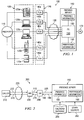
- FIGURE 2 there is illustrated an exemplary communications system 200 incorporating a presence system to generate and transmit customized call response messages based on the presence information and preference information of the called subscriber, in accordance with embodiments of the present invention.
- a caller 210 sends a request 205 for a communication session (e.g., real-time or non-real-time voice, text or multimedia) with a callee (called subscriber, not specifically shown) to a media gateway (MG) 230 through a communications network 200 (e.g., PSTN, PLMN, LAN, Internet, etc.).
- a communication session e.g., real-time or non-real-time voice, text or multimedia
- MG media gateway
- a communications network 200 e.g., PSTN, PLMN, LAN, Internet, etc.
- the MG 230 includes any device, such as a circuit switch, IP gateway or other device that converts data from the format required by one type of network to the format required by another type of network. It should be understood that if the caller 210 and the called subscriber are both connected to the same network, the MG 230 may not be necessary.
- the MG 230 forwards the request 205 to a Communications Manager (CM) 240 for the called subscriber.
- CM Communications Manager
- the CM 240 manages communication sessions for the called subscriber and other subscribers registered with the presence server 160.
- the CM 240 is typically located on the called subscriber's premises with the presence server 160. However, in other embodiments, the CM 240 may distributed or remote from the presence server 160.
- the CM 240 may be co-located with the MG 230 or the presence server 160 or may be implemented on a separate device.
- the CM 240 determines if the called subscriber is available for the requested communication session, and if not, sends a request 225 to the presence server 160 for the called subscriber's presence information 180 and preference information 190.
- the presence server 160 integrates presence information 180 for the called subscriber from internal presence information provided by PUA's (as shown in FIGURE 1), a calendar database 250 associated with the called subscriber and other sources 260 of presence information, and sends the integrated presence information 180 back to the CM 240.
- the CM 240 also retrieves the presence information 180 and preference information 190 for the caller 210 from the presence server 160.
- the CM 240 processes the returned presence information 180 and preference information 190 from the presence server 160, generates a customized message 270 based on the called subscriber's presence information 180 and preference information 190 and transmits the customized message 270 to the MG 230 for forwarding back to the caller 210.
- the preference information 190 of the called subscriber determines the type and amount of the called subscriber's presence information 180 that is disclosed to the caller 210 in the customized message 270.
- the preference information 180 includes policies for different priority levels granted to callers.
- the CM 240 compares the identity of the caller 210 to the preference information 180 to determine if the called subscriber has set a specific priority level for the caller 210.
- an employee called subscriber may set a priority level for his/her boss to a high priority level to provide as much presence information 180 as possible in the customized message 270.
- presence information 180 for the employee called subscriber include, but are not limited to, current activity of employee (e.g., meeting, vacation, traveling, etc.), current location of employee (e.g., meeting room number or outside location), a time when the employee will next be available, and an emergency contact number or emergency contact method for the employee.
- the employee called subscriber may set a priority level for an important customer to a different priority level than that of the employee's boss to provide different presence information 180 to the customer. For example, if the customer calls or sends an e-mail to the employee called subscriber to inquiry about product information, and the employee called subscriber is not available, the priority level of the customer may indicate to the CM 240 that the customized message 270 should be an e-mail that includes a time when the employee will be available, an emergency contact number and an alternative contact name and number. In addition, the priority level granted to the customer by the employee called subscriber may also indicate to the CM 240 that the CM 240 should automatically forward the e-mail or call to the employee's manager.
- the employee called subscriber may set a priority level for an unknown caller to a low priority level to provide minimal employee presence information 180 to the unknown caller.
- the low priority level may indicate to the CM 240 to provide either no presence information to the unknown caller (e.g., no response for email), a default voice greeting or other default message (e.g., "I am on vacation and will be back on a certain date.") in the customized message 270.
- the CM 240 may also retrieve the presence information 180 and preference information 190 for the caller 210.
- the presence information 180 can include the media status of the caller 210
- the preference information 190 can include the media preferences of the caller 210.
- the media status indicates the availability of the caller 210 per media type.
- the media preference indicates the media type that the caller 210 prefers for receiving customized call response messages 270.
- An exemplary method for determining the media preferences of a subscriber is described in co-pending and commonly assigned U.S. Application for Patent Serial No. 11/012,670 (Attorney Docket Number 139288), filed on even date herewith, and which is hereby incorporated by reference.
- the CM 240 determines the media channel(s) for delivering the customized message 270 to the caller 210. For example, the CM 240 may deliver the customized message 270 to the caller 210 using the preferred available real-time media for the caller 210. However, if the caller 210 is not a subscriber of the presence server 160, or the presence server 160 does not return any presence information 180 or preference information 190 for the caller 210, the CM 240 can use the caller's current communication channel to transmit the customized message 270.
- the presence and preference information of the boss may indicate to the CM 240 to send the customized message 270 to the boss's cell phone mailbox to avoid interfering with the meeting.
- the CM 240 may be constructed or configured using hardware, software, firmware, or combination thereof for managing communication sessions (e.g., real-time and non-real-time voice, text and multimedia communication sessions).
- the CM 240 could include one or more processors that execute instructions and one or more memories that store instructions and data used by the processors.
- the processor is generally understood to be a device that drives a general-purpose computer. It is noted, however, that other processor devices such as microcontrollers, Field Programmable Gate Arrays (FPGAs), or Application Specific Integrated Circuits (ASICs), or a combination thereof, can be used as well and achieve the benefits and advantages described herein.
- the CM 240 can include one or more processes, such as software applications providing an activity, a function, or a systematic sequence of tasks that produces a specified result, for managing communications sessions.
- FIGURE 3 is a flowchart illustrating an exemplary process 300 for generating and transmitting a customized call response message, in accordance with embodiments of the present invention.
- a request for a communication session (e.g., text, voice, multimedia or any combination thereof) from a caller to a called subscriber is received at the Communication Manager (CM) of the called subscriber's network.
- CM Communication Manager
- the CM checks the status of the called subscriber at block 315, and if the called subscriber is available, the CM establishes a connection with the called subscriber for the communication session at block 320.
- the CM retrieves the presence information for the called subscriber from the presence server. In addition, at block 330, the CM retrieves the priority level (preference information) granted to the caller by the called subscriber. At block 335, if the caller is not a subscriber of the called subscriber's presence server, no presence or preference information for the caller is retrieved by the CM from the presence server. Therefore, at block 340, the CM generates the customized message based only on the called subscriber's presence and preference information and transmits the customized message to the caller using the caller's current communication media at block 345. The customized message includes the presence information of the called subscriber that is associated with the priority level granted to the caller.
- the CM retrieves from the presence server the caller's presence and preference information.
- the caller's presence information can include the media status of the caller
- the caller's preference information can include the media preference(s) of the caller.
- the CM generates the customized message based on both the caller's and the called subscriber's presence and preference information, and transmits the customized message to the caller based on the caller's media status and media preference at block 360.
Landscapes
- Engineering & Computer Science (AREA)
- Signal Processing (AREA)
- Telephonic Communication Services (AREA)
Abstract
Current systems have the disadvantage that they do not allow a callee to provide different presence information to different callers. This disadvantage is overcome by the application in that a communication manager (240) which transmits a response (270) to a caller (210) has access to preference information (190) which includes policies for different priority levels of callers. Thereby the response can be customized to said caller. In particular, the preference information of the called subscriber determines the type and amount of the called subscriber's presence information (180) that is disclosed to the caller (210) in the customized message.
Description
- The present invention relates in general to a presence-based interactive communications system, and in particular, to handling of missed contact attempts based on preference and presence information.
- Presence-based interactive communication services are callee-centric, where callees (presentities) publish, in real time, their presence information (such as, the availability, activity, local time, location, current status of the active devices/applications and the corresponding preferences, etc.) to callers (presence watchers) who have subscribed to the presence information. The presence information is designed to enable the callers to more efficiently and effectively contact the callees.
- Currently, when a caller requests a communication session (e.g., voice, text or multimedia) with a callee, but due to the unavailability of the callee, the communication session is unable to be established, a message is generated and transmitted to the caller based only on the callee's (presentity's) presence information, but not on the callee's or caller's media preference. For example, the caller may prefer to receive the response message using either a real-time text, voice and/or multimedia media type (e.g., instant messenger or a customized voice greeting) or a non-real-time text, voice and/or multimedia media type (e.g., e-mail or sending message directly to the caller's voice mailbox). However, existing presence systems do not accommodate for the media preference of both the caller and the callee.
- In addition, existing preference and presence systems provide only limited callee presence information to the caller in a response message. For example, when a caller attempts to communicate with a callee by text, voice or multimedia, and the callee is unavailable for the communication session, the caller may want to obtain the following information: (1) the callee's current activity is; (2) when the callee will be available; (3) emergency contact number for the callee; and (4) alternative contact names/numbers. Based on existing presence technology, the caller may receive a presence-based voice greeting that includes the callee's current activity, but not any of the additional information listed above.
- Furthermore, the callee is not able to control the content of missed call response messages according to different authorities or priorities granted to the caller by the callee, which may reduce the callee's communication and privacy satisfaction. For example, depending upon the importance of the caller to the callee or the category of the caller, the callee may want to provide more or less presence information to the caller. However, current presence systems do not allow a callee to provide different presence information to different callers.
- As a result, what is needed is a communications system and method for generating and providing customized messages to callers based on presence information and preference information of both the callee and the caller.
- Embodiments of the present invention provide a communications system for providing customized messages based on presence and preference information. The communications system includes a presence server for collecting presence information and preference information on a plurality of subscribers. The presence information includes information on the availability of a subscriber, while the preference information includes policies for different priority levels of callers. The communications system further includes a communications manager for receiving a request for a communication session with one of the subscribers from a caller. In response to unavailability of the called subscriber for the communication session, the communications manager transmits a customized response to the caller that is generated based on the presence information and the preference information of the called subscriber.
- In one embodiment, the customized message includes at least a portion of the presence information of the called subscriber based on a priority level granted to the caller in the preference information of the called subscriber. In another embodiment, the customized message is a default message based on the priority level granted to the caller.
- In a further embodiment, the communications manager further extracts presence information and preference information of the caller from the presence server when the caller is one of the subscribers. For example, the presence information can include a media status of the caller and the preference information can include a media preference of the caller to enable the communications manager to transmit the customized message to the caller based on the media status and the media preference of the caller.
- Advantageously, embodiments of the present invention increase communication efficiency by providing additional information on when and/or how to reach the callee, and in some cases whom to contact alternatively. In addition, embodiments of the present invention provide improved caller satisfaction during communication, and improved callee control on his/her privacy information by customizing the privileges granted to different callers.
- A more complete understanding of the present invention may be obtained by reference to the following detailed description when taken in conjunction with the accompanying drawings wherein:
- FIGURE 1 illustrates an exemplary presence system in accordance with embodiments of the present invention;
- FIGURE 2 illustrates an exemplary communications system incorporating a presence system to generate and transmit customized call response messages based on the presence information and preference information of the called subscriber, in accordance with embodiments of the present invention; and
- FIGURE 3 is a flowchart illustrating an exemplary process for generating and transmitting a customized call response message, in accordance with embodiments of the present invention.
- Referring to FIGURE 1, there is illustrated an
exemplary presence system 100 capable of implementing various embodiments of the present invention. Thepresence system 100 includes apresentity 110 and one ormore devices 120 associated with thepresentity 110. Thepresentity 110 represents the callee and providespresence information 180 on the callee's presence status to thepresence system 100. Eachdevice 120 is a physical communications device capable of sending and/or receiving communications over acommunications network 130. Examples ofsuch devices 120 include, but are not limited to, adesktop phone 120a, alaptop computer 120b, apersonal computer 120c, acell phone 120d and a personal digital assistant (PDA) 120e. In FIGURE 1, thecommunications network 130 represents any type of network over which media (circuit-switched or packet-switched voice or data) may be sent. For example, thecommunications network 130 can include the Public Switched Telephone Network (PSTN), Public Land Mobile Network (PLMN), one or more private local area networks (LANs), the Internet and/or any other type or combination of networks. - The
presence system 100 further includes one or more presence user agents 140 (PUAs), a presence agent (PA) 150, apresence server 160 and one ormore watchers 170 of thepresentity 110. ThePUAs 140 are capable of manipulating and providingpreference information 190 andpresence information 180 for thepresentity 110. In FIGURE 1, aseparate PUA 140 is shown for eachdevice 120. However, it should be understood that in other embodiments, the number ofPUAs 140 can vary based on the number and type ofdevices 120, the applications supported by thedevices 120 and the system configuration. EachPUA 140 independently generates a component of theoverall presence information 180 for apresentity 110. Typically, PUA's 140 generatepresence information 180 when a change in presence status occurs. Examples of changes in presence status include, but are not limited to, turning on and off adevice 120, modifying the registration from adevice 120 and changing the instant messaging status on adevice 120.Preference information 190 is entered into thepresence system 100 by thepresentity 110 and/or may be at least partially configured by the operator of thepresence system 100. - The
presence information 180 andpreference information 190 from each of thePUAs 140 is collected by one or more presence agents (PAs) 150. In FIGURE 1, only onePA 150 is shown for simplicity. However, it should be understood that in other embodiments, there can bemultiple PAs 150 for apresentity 110, each of which is responsible for a subset of the total subscriptions (requests for presence information from watchers 170) currently active for thepresentity 110. The PA 150 maintains the currentcomplete presence information 180 for thepresentity 110 and provides the presence information to one or more watchers 170 (callers) of thepresentity 110. - The
presence server 160 is a physical entity that can operate as either thePA 150 or as a proxy server for routing requests fromwatchers 170 to thePA 150. Thus, thePA 150 in combination with thepresence server 160, is operable to receive preference andpresence information presentity 110 from thePUAs 140, receive preference and presence information from thewatcher 170, receive requests from thewatcher 170 for presence andpreference information presentity 110 and provide the presence andpreference information presentity 110 to thewatcher 170. When acting as aPA 150, thepresence server 160 can also be co-located with aPUA 140. - In FIGURE 1, the
presence server 160 is shown operating as aPA 150 by collecting and storingpresence information 180 andpreference information 190 for a plurality of subscribers (e.g.,presentities 110 and watchers 170). Examples ofpresence information 180 include, but are not limited to, the subscriber's current activity (e.g., meeting, voice call, multimedia communication session, etc.), information on when the subscriber will be available, emergency contact numbers for the subscriber and alternative contact names/numbers. Examples ofpreference information 190 include, but are not limited to, policies for different priority levels of callers and the subscriber's media preferences. - The
presence system 100 uses a presence protocol to provide presence services topresentities 110 andwatchers 170. An example of a presence protocol that can be used in thepresence system 100 is the Session Initiation Protocol (SIP), as described in J. Rosenberg, et al., "SIP: Session Initiation Protocol" RFC: 3261, June 2002 and in A. Roach, et al., "Session Initiation Protocol (SIP) - Specific Event Notification," RFC: 3265, June 2002, each of which are hereby incorporated by reference. SIP is an application-layer control protocol used to create, modify and terminate communication (voice, text and/or multimedia) sessions. SIP can be used with other protocols, such as the Real-time Transport Protocol (RTP), the Real-Time Streaming Protocol (RTSP), the Session Description Protocol (SDP), the International Telecommunication Union - Telecommunications ("ITU-T") H.263 standard (video CODEC), the G.711 and G.729 standards (audio CODECs), and other or additional standards or protocols. As will be appreciated, other or additional protocols and configurations may be used. - SIP networks are capable of routing requests from any user on the network to the server that maintains the registration state for a user. Thus, SIP networks enable a caller (watcher) to transmit a SUBSCRIBE request for presence and preference information relating to a particular callee (presentity 110) to be routed to the
presence server 160 that maintains the presence and preference information for thepresentity 110. In operation, thepresence server 160 andPA 150 may be co-located with the SIP proxy/registrar for efficiency purposes. - Referring now to FIGURE 2, there is illustrated an
exemplary communications system 200 incorporating a presence system to generate and transmit customized call response messages based on the presence information and preference information of the called subscriber, in accordance with embodiments of the present invention. In FIGURE 2, acaller 210 sends arequest 205 for a communication session (e.g., real-time or non-real-time voice, text or multimedia) with a callee (called subscriber, not specifically shown) to a media gateway (MG) 230 through a communications network 200 (e.g., PSTN, PLMN, LAN, Internet, etc.). TheMG 230 includes any device, such as a circuit switch, IP gateway or other device that converts data from the format required by one type of network to the format required by another type of network. It should be understood that if thecaller 210 and the called subscriber are both connected to the same network, theMG 230 may not be necessary. - The
MG 230 forwards therequest 205 to a Communications Manager (CM) 240 for the called subscriber. TheCM 240 manages communication sessions for the called subscriber and other subscribers registered with thepresence server 160. TheCM 240 is typically located on the called subscriber's premises with thepresence server 160. However, in other embodiments, theCM 240 may distributed or remote from thepresence server 160. TheCM 240 may be co-located with theMG 230 or thepresence server 160 or may be implemented on a separate device. - The
CM 240 determines if the called subscriber is available for the requested communication session, and if not, sends arequest 225 to thepresence server 160 for the called subscriber'spresence information 180 andpreference information 190. Thepresence server 160 integratespresence information 180 for the called subscriber from internal presence information provided by PUA's (as shown in FIGURE 1), acalendar database 250 associated with the called subscriber andother sources 260 of presence information, and sends theintegrated presence information 180 back to theCM 240. In an additional embodiment, if thecaller 210 is a subscriber to the presence server, theCM 240 also retrieves thepresence information 180 andpreference information 190 for thecaller 210 from thepresence server 160. TheCM 240 processes the returnedpresence information 180 andpreference information 190 from thepresence server 160, generates a customizedmessage 270 based on the called subscriber'spresence information 180 andpreference information 190 and transmits the customizedmessage 270 to theMG 230 for forwarding back to thecaller 210. - The
preference information 190 of the called subscriber determines the type and amount of the called subscriber'spresence information 180 that is disclosed to thecaller 210 in the customizedmessage 270. In one embodiment, thepreference information 180 includes policies for different priority levels granted to callers. Thus, theCM 240 compares the identity of thecaller 210 to thepreference information 180 to determine if the called subscriber has set a specific priority level for thecaller 210. - For example, an employee called subscriber may set a priority level for his/her boss to a high priority level to provide as
much presence information 180 as possible in the customizedmessage 270. Examples ofpresence information 180 for the employee called subscriber include, but are not limited to, current activity of employee (e.g., meeting, vacation, traveling, etc.), current location of employee (e.g., meeting room number or outside location), a time when the employee will next be available, and an emergency contact number or emergency contact method for the employee. - As another example, the employee called subscriber may set a priority level for an important customer to a different priority level than that of the employee's boss to provide
different presence information 180 to the customer. For example, if the customer calls or sends an e-mail to the employee called subscriber to inquiry about product information, and the employee called subscriber is not available, the priority level of the customer may indicate to theCM 240 that the customizedmessage 270 should be an e-mail that includes a time when the employee will be available, an emergency contact number and an alternative contact name and number. In addition, the priority level granted to the customer by the employee called subscriber may also indicate to theCM 240 that theCM 240 should automatically forward the e-mail or call to the employee's manager. - As a further example, the employee called subscriber may set a priority level for an unknown caller to a low priority level to provide minimal
employee presence information 180 to the unknown caller. For example, the low priority level may indicate to theCM 240 to provide either no presence information to the unknown caller (e.g., no response for email), a default voice greeting or other default message (e.g., "I am on vacation and will be back on a certain date.") in the customizedmessage 270. - As described above, if the
caller 210 is a subscriber of thepresence server 160, theCM 240 may also retrieve thepresence information 180 andpreference information 190 for thecaller 210. For example, thepresence information 180 can include the media status of thecaller 210, and thepreference information 190 can include the media preferences of thecaller 210. The media status indicates the availability of thecaller 210 per media type. An exemplary method for determining the media status of a subscriber is described in co-pending and commonly assigned U.S. Application for Patent Serial No. 11/013,265 (Attorney Docket Number 139306), filed on even date herewith, and which is hereby incorporated by reference. The media preference indicates the media type that thecaller 210 prefers for receiving customizedcall response messages 270. An exemplary method for determining the media preferences of a subscriber is described in co-pending and commonly assigned U.S. Application for Patent Serial No. 11/012,670 (Attorney Docket Number 139288), filed on even date herewith, and which is hereby incorporated by reference. - Based on the caller's media status and media preferences, the
CM 240 determines the media channel(s) for delivering the customizedmessage 270 to thecaller 210. For example, theCM 240 may deliver the customizedmessage 270 to thecaller 210 using the preferred available real-time media for thecaller 210. However, if thecaller 210 is not a subscriber of thepresence server 160, or thepresence server 160 does not return anypresence information 180 orpreference information 190 for thecaller 210, theCM 240 can use the caller's current communication channel to transmit the customizedmessage 270. - Using the employee called subscriber example described above, if the employee's boss is in a meeting and wants to know a testing result from the unavailable employee, the presence and preference information of the boss may indicate to the
CM 240 to send the customizedmessage 270 to the boss's cell phone mailbox to avoid interfering with the meeting. - It should be noted that the
CM 240 may be constructed or configured using hardware, software, firmware, or combination thereof for managing communication sessions (e.g., real-time and non-real-time voice, text and multimedia communication sessions). As an example, theCM 240 could include one or more processors that execute instructions and one or more memories that store instructions and data used by the processors. The processor is generally understood to be a device that drives a general-purpose computer. It is noted, however, that other processor devices such as microcontrollers, Field Programmable Gate Arrays (FPGAs), or Application Specific Integrated Circuits (ASICs), or a combination thereof, can be used as well and achieve the benefits and advantages described herein. In one embodiment, theCM 240 can include one or more processes, such as software applications providing an activity, a function, or a systematic sequence of tasks that produces a specified result, for managing communications sessions. - FIGURE 3 is a flowchart illustrating an
exemplary process 300 for generating and transmitting a customized call response message, in accordance with embodiments of the present invention. Initially, atblock 310, a request for a communication session (e.g., text, voice, multimedia or any combination thereof) from a caller to a called subscriber is received at the Communication Manager (CM) of the called subscriber's network. The CM checks the status of the called subscriber atblock 315, and if the called subscriber is available, the CM establishes a connection with the called subscriber for the communication session atblock 320. - However, if the called subscriber is unavailable, at
block 325, the CM retrieves the presence information for the called subscriber from the presence server. In addition, atblock 330, the CM retrieves the priority level (preference information) granted to the caller by the called subscriber. Atblock 335, if the caller is not a subscriber of the called subscriber's presence server, no presence or preference information for the caller is retrieved by the CM from the presence server. Therefore, atblock 340, the CM generates the customized message based only on the called subscriber's presence and preference information and transmits the customized message to the caller using the caller's current communication media atblock 345. The customized message includes the presence information of the called subscriber that is associated with the priority level granted to the caller. - However, if the caller is a subscriber of the called subscriber's presence server, at
block 350, the CM retrieves from the presence server the caller's presence and preference information. For example, the caller's presence information can include the media status of the caller, and the caller's preference information can include the media preference(s) of the caller. Atblock 355, the CM generates the customized message based on both the caller's and the called subscriber's presence and preference information, and transmits the customized message to the caller based on the caller's media status and media preference atblock 360. - The following features, separately or in any combination, may also constitute advantageous embodiments of the described or claimed invention:
- The claimed and/or described communications system, wherein said customized message includes an emergency contact number for said select subscriber based on said priority level granted to said caller;
- The claimed and/or described communications system, wherein customized message is a default message based on said priority level granted to said caller;
- The claimed and/or described communications system, wherein said communications manager is further operable to perform additional handling of said communication session based on said priority level granted to said caller;
- The claimed and/or described communications system, wherein said presence server is further capable of integrating said presence information from one or more sources of presence data;
- The claimed and/or described communications system, wherein said communications manager is further operable to transmit said customized message to said caller using a current communication media of said caller;
- The claimed and/or described method, further comprising the step of: performing additional handling of said communication session based on said priority level granted to said caller;
- The claimed and/or described method, further comprising the step of: retrieving presence information and preference information of said caller, said presence information including a media status of said caller and said preference information including a media preference of said caller;
- The claimed and/or described method, wherein said transmitting further comprises the step of: transmitting said customized message to said caller based on said media status and said media preference;
- The claimed and/or described method, further comprising the step of: collecting said presence information from one or more sources of presence data;
- The claimed and/or described method, wherein said step of transmitting further comprises the step of: transmitting said customized message to said caller using a current communication media of said caller.
- As will be recognized by those skilled in the art, the innovative concepts described in the present application can be modified and varied over a wide rage of applications. Accordingly, the scope of patents subject matter should not be limited to any of the specific exemplary teachings discussed, but is instead defined by the following claims.
Claims (10)
- A communications system for providing customized messages based on presence and preference information, comprising:a presence server capable of collecting presence information and preference information on a plurality of subscribers, wherein said presence information includes availability of a subscriber and said preference information includes policies for different priority levels of callers; anda communications manager connected to receive a request for a communication session with a select one of said plurality of subscribers from a caller, wherein said communications manager is operable to extract said presence information and said preference information of said select subscriber from said presence server, and in response to unavailability of said select subscriber for said communication session, transmit a customized response to said caller, wherein said customized response is generated based on said presence information and said preference information of said select subscriber.
- The communications system of Claim 1, wherein said customized message includes at least a portion of said presence information of said select subscriber based on a priority level granted to said caller in said preference information of said select subscriber.
- The communications system of Claim 2, wherein said customized message includes an alternate contact number based on said priority level granted to said caller.
- The communications system of Claim 1, wherein said communications manager is further operable to extract said presence information and said preference information of said caller from said presence server when said caller is one of said plurality of subscribers.
- The communications system of Claim 4, wherein said presence information including a media status of said caller and said preference information including a media preference of said caller, and wherein said communications manager is further operale to transmit said customized message to said caller based on said media status and said media preference.
- A method for providing customized messages based on presence and preference information, comprising the steps of:receiving a request for a communication session with a subscriber from a caller;retrieving presence information and preference information of said select subscriber, wherein said presence information includes availability of said subscriber and said preference information includes policies for different priority levels of callers; andtransmitting a customized response to said caller in response to unavailability of said select subscriber for said communication session, wherein said customized response is generated based on said presence information and said preference information of said select subscriber.
- The method of Claim 6, wherein said transmitting further comprises the step of:generating said customized message including at least a portion of said presence information of said subscriber based on a priority level granted to said caller in said preference information of said subscriber.
- The method of Claim 7, wherein said generating further comprises the step of:generating said customized message including an alternate contact number based on said priority level granted to said caller.
- The method of Claim 7, wherein said generating further comprises the step of:generating said customized message including an emergency contact number for said subscriber based on said priority level granted to said caller.
- The method of Claim 7, wherein said generating further comprises the step of:generating said customized message as a default message based on said priority level granted to said caller.
Applications Claiming Priority (1)
| Application Number | Priority Date | Filing Date | Title |
|---|---|---|---|
| US11/016,254 US7359496B2 (en) | 2004-12-17 | 2004-12-17 | Communications system and method for providing customized messages based on presence and preference information |
Publications (3)
| Publication Number | Publication Date |
|---|---|
| EP1672896A1 true EP1672896A1 (en) | 2006-06-21 |
| EP1672896B1 EP1672896B1 (en) | 2018-07-25 |
| EP1672896B9 EP1672896B9 (en) | 2019-01-02 |
Family
ID=35911255
Family Applications (1)
| Application Number | Title | Priority Date | Filing Date |
|---|---|---|---|
| EP05027289.7A Expired - Lifetime EP1672896B9 (en) | 2004-12-17 | 2005-12-14 | Providing customized messages to callers of unavailable called subscribers |
Country Status (3)
| Country | Link |
|---|---|
| US (1) | US7359496B2 (en) |
| EP (1) | EP1672896B9 (en) |
| CN (1) | CN1791093B (en) |
Cited By (8)
| Publication number | Priority date | Publication date | Assignee | Title |
|---|---|---|---|---|
| EP2285070A1 (en) * | 2005-04-28 | 2011-02-16 | Cisco Technology, Inc. | System and method for providing presence information to voicemail users |
| FR2953673A1 (en) * | 2009-12-07 | 2011-06-10 | Orange Vallee | METHOD AND SYSTEM FOR CUSTOMIZING MESSAGES OF UNAVAILABILITY |
| WO2014164304A1 (en) * | 2013-03-11 | 2014-10-09 | Qualcomm Incorporated | Intent engine for enhanced responsiveness in interactive remote communications |
| CN105095182A (en) * | 2014-05-22 | 2015-11-25 | 华为技术有限公司 | Reply information recommendation method and apparatus |
| CN105812229A (en) * | 2014-12-30 | 2016-07-27 | 中国移动通信集团公司 | Terminal communication method, system and related device |
| US10127227B1 (en) | 2017-05-15 | 2018-11-13 | Google Llc | Providing access to user-controlled resources by automated assistants |
| US11087023B2 (en) | 2018-08-07 | 2021-08-10 | Google Llc | Threshold-based assembly of automated assistant responses |
| US11436417B2 (en) | 2017-05-15 | 2022-09-06 | Google Llc | Providing access to user-controlled resources by automated assistants |
Families Citing this family (50)
| Publication number | Priority date | Publication date | Assignee | Title |
|---|---|---|---|---|
| US20020160757A1 (en) * | 2001-04-26 | 2002-10-31 | Moshe Shavit | Selecting the delivery mechanism of an urgent message |
| US7269627B2 (en) * | 2001-07-27 | 2007-09-11 | Intel Corporation | Routing messages using presence information |
| JP2005518114A (en) * | 2002-02-14 | 2005-06-16 | アバイア テクノロジー コーポレーション | Presence tracking and namespace interconnect technology |
| US7023980B2 (en) * | 2002-12-04 | 2006-04-04 | Avaya Technology Corp. | Outbound dialing decision criteria based |
| US7474741B2 (en) | 2003-01-20 | 2009-01-06 | Avaya Inc. | Messaging advise in presence-aware networks |
| US9398152B2 (en) * | 2004-02-25 | 2016-07-19 | Avaya Inc. | Using business rules for determining presence |
| US20050210508A1 (en) * | 2004-03-19 | 2005-09-22 | Lau Vincent W | System and method for managing time-go-live information of media content |
| US7623633B2 (en) * | 2005-04-28 | 2009-11-24 | Cisco Technology, Inc. | System and method for providing presence information to voicemail users |
| US8332475B2 (en) * | 2005-08-22 | 2012-12-11 | Triplay Communications Ltd. | Messaging system and method |
| JP4944415B2 (en) * | 2005-09-14 | 2012-05-30 | Necインフロンティア株式会社 | COMMUNICATION SYSTEM, PRESENCE SERVER, AND COMMUNICATION METHOD USED FOR THEM |
| US7917485B1 (en) * | 2005-09-30 | 2011-03-29 | National Semiconductor Corporation | Rapid specification and electronic delivery of customized product information |
| US8005073B2 (en) * | 2006-02-13 | 2011-08-23 | Nokia Corporation | Representing network availability status information in presence information |
| US8842660B2 (en) * | 2006-03-31 | 2014-09-23 | Microsoft Corporation | VoIP variable metadata |
| US8228824B2 (en) * | 2006-04-06 | 2012-07-24 | Microsoft Corporation | VoIP contextual information processing |
| US20070253407A1 (en) * | 2006-05-01 | 2007-11-01 | Microsoft Corporation | Enhanced VoIP services |
| US20070270126A1 (en) * | 2006-05-18 | 2007-11-22 | Microsoft Corporation | Authentication of a digital voice conversation |
| US20070274293A1 (en) * | 2006-05-26 | 2007-11-29 | Microsoft Corporation | Archiving VoIP conversations |
| US20070280225A1 (en) * | 2006-05-31 | 2007-12-06 | Microsoft Corporation | Extended services and recommendations |
| JP2008035453A (en) * | 2006-08-01 | 2008-02-14 | Fujitsu Ltd | Presence information management system, presence server device, gateway device, and client device |
| US8374590B1 (en) * | 2006-10-12 | 2013-02-12 | At&T Mobility Ii Llc | Systems and methods for updating user availability for wireless communication applications |
| DE102006054284A1 (en) * | 2006-11-17 | 2008-05-21 | Deutsche Telekom Ag | Accessibility managing method for electronic management system, involves signalizing contact request of contact over communication medium to terminal, where terminal is composed of information, which is not accessed by related user |
| US8150003B1 (en) * | 2007-01-23 | 2012-04-03 | Avaya Inc. | Caller initiated undivert from voicemail |
| US20080285736A1 (en) * | 2007-05-16 | 2008-11-20 | Unison Technolgies Llc | Systems and methods for providing unified collaboration systems with conditional communication handling |
| US8423056B2 (en) * | 2007-08-20 | 2013-04-16 | HGST Netherlands B.V. | Sending time-sensitive information via a short message service |
| US8194831B2 (en) * | 2008-07-01 | 2012-06-05 | Avaya Inc. | Determining a preferable mode of communicating with a called party |
| US8433805B2 (en) * | 2008-09-19 | 2013-04-30 | Apple Inc. | Method and system for facilitating contacting people using electronic devices |
| US9143611B2 (en) * | 2008-09-30 | 2015-09-22 | International Business Machines Corporation | System and method for routing calls |
| US8135809B2 (en) * | 2009-01-21 | 2012-03-13 | Microsoft Corporation | Presence capabilities and preferences |
| US8718678B2 (en) * | 2009-02-20 | 2014-05-06 | Sprint Communications Company L.P. | Selective delivery of presence messages for wireless communication devices |
| US8606233B2 (en) * | 2009-02-24 | 2013-12-10 | Blackberry Limited | Content-based publication-subscription system for presence information |
| EP2222106A1 (en) * | 2009-02-24 | 2010-08-25 | Research In Motion Limited | Method and system for registering a presence user with a presence service |
| US20100217614A1 (en) * | 2009-02-24 | 2010-08-26 | Research In Motion Limited | Method and system for updating a virtual business card |
| US8265239B2 (en) | 2009-02-25 | 2012-09-11 | International Business Machines Corporation | Callee centric location and presence enabled voicemail using session initiated protocol enabled signaling for IP multimedia subsystem networks |
| US9185184B2 (en) | 2009-03-31 | 2015-11-10 | Match.Com, L.L.C. | System and method for providing calendar and speed dating features for matching users in a network environment |
| US9148333B2 (en) | 2009-03-31 | 2015-09-29 | Match.Com, L.L.C. | System and method for providing anonymity in a session initiated protocol network |
| US8594296B2 (en) * | 2009-05-20 | 2013-11-26 | Microsoft Corporation | Multimodal callback tagging |
| US8266226B2 (en) | 2009-06-26 | 2012-09-11 | International Business Machines Corporation | System and method to enhance user presence management to enable the federation of rich media sessions |
| US8301581B2 (en) * | 2009-09-24 | 2012-10-30 | Avaya Inc. | Group compositing algorithms for presence |
| WO2011081207A1 (en) * | 2010-01-04 | 2011-07-07 | 日本電気株式会社 | Communication support system, communication support method, and recording medium |
| US8369505B2 (en) | 2010-04-14 | 2013-02-05 | Research In Motion Limited | Call access management |
| WO2011149558A2 (en) | 2010-05-28 | 2011-12-01 | Abelow Daniel H | Reality alternate |
| US8676908B2 (en) * | 2010-11-25 | 2014-03-18 | Infosys Limited | Method and system for seamless interaction and content sharing across multiple networks |
| US8699499B2 (en) * | 2010-12-08 | 2014-04-15 | At&T Intellectual Property I, L.P. | Methods and apparatus to provision cloud computing network elements |
| CN102843391B (en) * | 2011-06-21 | 2017-04-05 | 中兴通讯股份有限公司 | A kind of method for sending information and gateway |
| CN103902630B (en) | 2012-12-31 | 2017-08-18 | 华为技术有限公司 | Handle method, terminal and the system of message |
| CN104252468B (en) | 2013-06-26 | 2019-04-12 | Sap欧洲公司 | For maximizing the method and its system of the information gain of continuous events |
| US9525777B2 (en) * | 2014-03-17 | 2016-12-20 | Leadpoint, Inc. | System and method for managing a communication session |
| US9445231B2 (en) * | 2014-08-19 | 2016-09-13 | Verizon Patent And Licensing Inc. | Geo-fenced premium content |
| US10203987B2 (en) * | 2017-01-01 | 2019-02-12 | International Business Machines Corporation | Technology for increasing data processing by users |
| US10484648B1 (en) * | 2019-03-21 | 2019-11-19 | Securus Technologies, Inc. | Inbound calls to controlled-environment facility resident telephone numbers |
Citations (3)
| Publication number | Priority date | Publication date | Assignee | Title |
|---|---|---|---|---|
| EP1267557A1 (en) * | 2001-06-11 | 2002-12-18 | Lucent Technologies Inc. | Caller selection of an alternate call destination when called terminal is unavailable |
| WO2003019908A2 (en) * | 2001-08-23 | 2003-03-06 | Stephen Andrew Leigh | Voice messaging |
| US20030161452A1 (en) * | 2000-06-19 | 2003-08-28 | Marc Fournier | Telephone correspondent reception system for unavailable subscriber |
Family Cites Families (4)
| Publication number | Priority date | Publication date | Assignee | Title |
|---|---|---|---|---|
| US6807423B1 (en) * | 1999-12-14 | 2004-10-19 | Nortel Networks Limited | Communication and presence spanning multiple access networks |
| AU2003207556A1 (en) * | 2002-01-15 | 2003-07-30 | Avaya Technology Corp. | Communication application server for converged communication services |
| US7035923B1 (en) * | 2002-04-10 | 2006-04-25 | Nortel Networks Limited | Presence information specifying communication preferences |
| KR100469609B1 (en) * | 2003-01-17 | 2005-02-02 | 주식회사 케이티프리텔 | Apparatus and method of wire-wireless unfinished call caller information offering service |
-
2004
- 2004-12-17 US US11/016,254 patent/US7359496B2/en not_active Expired - Lifetime
-
2005
- 2005-12-14 EP EP05027289.7A patent/EP1672896B9/en not_active Expired - Lifetime
- 2005-12-15 CN CN2005101318578A patent/CN1791093B/en not_active Expired - Fee Related
Patent Citations (3)
| Publication number | Priority date | Publication date | Assignee | Title |
|---|---|---|---|---|
| US20030161452A1 (en) * | 2000-06-19 | 2003-08-28 | Marc Fournier | Telephone correspondent reception system for unavailable subscriber |
| EP1267557A1 (en) * | 2001-06-11 | 2002-12-18 | Lucent Technologies Inc. | Caller selection of an alternate call destination when called terminal is unavailable |
| WO2003019908A2 (en) * | 2001-08-23 | 2003-03-06 | Stephen Andrew Leigh | Voice messaging |
Cited By (21)
| Publication number | Priority date | Publication date | Assignee | Title |
|---|---|---|---|---|
| EP2285070A1 (en) * | 2005-04-28 | 2011-02-16 | Cisco Technology, Inc. | System and method for providing presence information to voicemail users |
| FR2953673A1 (en) * | 2009-12-07 | 2011-06-10 | Orange Vallee | METHOD AND SYSTEM FOR CUSTOMIZING MESSAGES OF UNAVAILABILITY |
| WO2011070247A1 (en) | 2009-12-07 | 2011-06-16 | Orange Vallee | Method and system for personalizing unavailability messages |
| US8831574B2 (en) | 2009-12-07 | 2014-09-09 | France Telecom | Method and system for personalizing unavailability messages |
| WO2014164304A1 (en) * | 2013-03-11 | 2014-10-09 | Qualcomm Incorporated | Intent engine for enhanced responsiveness in interactive remote communications |
| US10460029B2 (en) | 2014-05-22 | 2019-10-29 | Huawei Technologies Co., Ltd. | Reply information recommendation method and apparatus |
| CN105095182A (en) * | 2014-05-22 | 2015-11-25 | 华为技术有限公司 | Reply information recommendation method and apparatus |
| CN105095182B (en) * | 2014-05-22 | 2018-11-06 | 华为技术有限公司 | A kind of return information recommendation method and device |
| WO2015176518A1 (en) * | 2014-05-22 | 2015-11-26 | 华为技术有限公司 | Reply information recommending method and device |
| CN105812229A (en) * | 2014-12-30 | 2016-07-27 | 中国移动通信集团公司 | Terminal communication method, system and related device |
| US11436417B2 (en) | 2017-05-15 | 2022-09-06 | Google Llc | Providing access to user-controlled resources by automated assistants |
| US10685187B2 (en) | 2017-05-15 | 2020-06-16 | Google Llc | Providing access to user-controlled resources by automated assistants |
| US10127227B1 (en) | 2017-05-15 | 2018-11-13 | Google Llc | Providing access to user-controlled resources by automated assistants |
| US12175205B2 (en) | 2017-05-15 | 2024-12-24 | Google Llc | Providing access to user-controlled resources by automated assistants |
| US11087023B2 (en) | 2018-08-07 | 2021-08-10 | Google Llc | Threshold-based assembly of automated assistant responses |
| US20220083687A1 (en) | 2018-08-07 | 2022-03-17 | Google Llc | Threshold-based assembly of remote automated assistant responses |
| US11314890B2 (en) | 2018-08-07 | 2022-04-26 | Google Llc | Threshold-based assembly of remote automated assistant responses |
| US11455418B2 (en) | 2018-08-07 | 2022-09-27 | Google Llc | Assembling and evaluating automated assistant responses for privacy concerns |
| US11790114B2 (en) | 2018-08-07 | 2023-10-17 | Google Llc | Threshold-based assembly of automated assistant responses |
| US11822695B2 (en) | 2018-08-07 | 2023-11-21 | Google Llc | Assembling and evaluating automated assistant responses for privacy concerns |
| US11966494B2 (en) | 2018-08-07 | 2024-04-23 | Google Llc | Threshold-based assembly of remote automated assistant responses |
Also Published As
| Publication number | Publication date |
|---|---|
| US20060146997A1 (en) | 2006-07-06 |
| EP1672896B9 (en) | 2019-01-02 |
| EP1672896B1 (en) | 2018-07-25 |
| US7359496B2 (en) | 2008-04-15 |
| CN1791093A (en) | 2006-06-21 |
| CN1791093B (en) | 2011-11-09 |
Similar Documents
| Publication | Publication Date | Title |
|---|---|---|
| US7359496B2 (en) | Communications system and method for providing customized messages based on presence and preference information | |
| US7571249B2 (en) | System and method for routing communication sessions based on priority, presence and preference information | |
| EP1675370B1 (en) | Presence system and method for event-driven presence subscription | |
| US8701017B2 (en) | System and method for representation of presentity presence states for contacts in a contact list | |
| US8130931B2 (en) | Call waiting using external notification and presence detection | |
| EP1720124A1 (en) | Communication system and method for determining next joint availability using presence information | |
| EP1718030B1 (en) | System and method for managing user groups in presence systems | |
| US7945035B2 (en) | Dynamic presence proxy for call sessions | |
| CA2783013C (en) | Methods, systems, and computer readable media for deriving user availability from user context and user responses to communications requests | |
| EP1806903B1 (en) | Custom presence icons | |
| US20060252444A1 (en) | Presence enabled call hunting group | |
| US7684356B2 (en) | System and method for providing hotline and preemption features in real-time communications using presence and preference information | |
| EP1718049A1 (en) | Interactive voice response system and method for updating presence information | |
| US20090043627A1 (en) | System and method for calendar presence retrieval | |
| US7856478B2 (en) | Presence system and method for providing access to web services | |
| US7801284B1 (en) | Voice terminal for dialing by name with presence | |
| EP1675371A1 (en) | Providing presence information of callers and/or senders of messages | |
| US20060167977A1 (en) | Presence system and method for transforming device view of presentity preferences into media view | |
| US8706090B2 (en) | Method and apparatus for delivering a voice mail message with an indication of the presence of the sender | |
| US9401812B1 (en) | Message presence |
Legal Events
| Date | Code | Title | Description |
|---|---|---|---|
| PUAI | Public reference made under article 153(3) epc to a published international application that has entered the european phase |
Free format text: ORIGINAL CODE: 0009012 |
|
| AK | Designated contracting states |
Kind code of ref document: A1 Designated state(s): AT BE BG CH CY CZ DE DK EE ES FI FR GB GR HU IE IS IT LI LT LU LV MC NL PL PT RO SE SI SK TR |
|
| AX | Request for extension of the european patent |
Extension state: AL BA HR MK YU |
|
| 17P | Request for examination filed |
Effective date: 20061207 |
|
| 17Q | First examination report despatched |
Effective date: 20070108 |
|
| AKX | Designation fees paid |
Designated state(s): AT BE BG CH CY CZ DE DK EE ES FI FR GB GR HU IE IS IT LI LT LU LV MC NL PL PT RO SE SI SK TR |
|
| RAP1 | Party data changed (applicant data changed or rights of an application transferred) |
Owner name: ALCATEL LUCENT |
|
| RAP1 | Party data changed (applicant data changed or rights of an application transferred) |
Owner name: ALCATEL LUCENT |
|
| 111Z | Information provided on other rights and legal means of execution |
Free format text: AT BE BG CH CY CZ DE DK EE ES FI FR GB GR HU IE IS IT LI LT LU LV MC NL PL PT RO SE SI SK TR Effective date: 20130410 |
|
| RAP1 | Party data changed (applicant data changed or rights of an application transferred) |
Owner name: ALCATEL LUCENT |
|
| D11X | Information provided on other rights and legal means of execution (deleted) | ||
| GRAP | Despatch of communication of intention to grant a patent |
Free format text: ORIGINAL CODE: EPIDOSNIGR1 |
|
| STAA | Information on the status of an ep patent application or granted ep patent |
Free format text: STATUS: GRANT OF PATENT IS INTENDED |
|
| RIC1 | Information provided on ipc code assigned before grant |
Ipc: H04M 3/533 20060101ALI20170626BHEP Ipc: H04M 3/487 20060101AFI20170626BHEP Ipc: H04M 3/42 20060101ALN20170626BHEP |
|
| INTG | Intention to grant announced |
Effective date: 20170711 |
|
| GRAJ | Information related to disapproval of communication of intention to grant by the applicant or resumption of examination proceedings by the epo deleted |
Free format text: ORIGINAL CODE: EPIDOSDIGR1 |
|
| STAA | Information on the status of an ep patent application or granted ep patent |
Free format text: STATUS: EXAMINATION IS IN PROGRESS |
|
| GRAP | Despatch of communication of intention to grant a patent |
Free format text: ORIGINAL CODE: EPIDOSNIGR1 |
|
| STAA | Information on the status of an ep patent application or granted ep patent |
Free format text: STATUS: GRANT OF PATENT IS INTENDED |
|
| INTC | Intention to grant announced (deleted) | ||
| RIC1 | Information provided on ipc code assigned before grant |
Ipc: H04M 3/42 20060101ALN20171030BHEP Ipc: H04M 3/487 20060101AFI20171030BHEP Ipc: H04M 3/533 20060101ALI20171030BHEP |
|
| INTG | Intention to grant announced |
Effective date: 20171122 |
|
| GRAS | Grant fee paid |
Free format text: ORIGINAL CODE: EPIDOSNIGR3 |
|
| RAP1 | Party data changed (applicant data changed or rights of an application transferred) |
Owner name: ALCATEL LUCENT |
|
| GRAA | (expected) grant |
Free format text: ORIGINAL CODE: 0009210 |
|
| STAA | Information on the status of an ep patent application or granted ep patent |
Free format text: STATUS: THE PATENT HAS BEEN GRANTED |
|
| AK | Designated contracting states |
Kind code of ref document: B1 Designated state(s): AT BE BG CH CY CZ DE DK EE ES FI FR GB GR HU IE IS IT LI LT LU LV MC NL PL PT RO SE SI SK TR |
|
| RAP1 | Party data changed (applicant data changed or rights of an application transferred) |
Owner name: PROVENANCE ASSET GROUP LLC |
|
| REG | Reference to a national code |
Ref country code: GB Ref legal event code: FG4D |
|
| REG | Reference to a national code |
Ref country code: CH Ref legal event code: EP |
|
| REG | Reference to a national code |
Ref country code: AT Ref legal event code: REF Ref document number: 1023009 Country of ref document: AT Kind code of ref document: T Effective date: 20180815 |
|
| REG | Reference to a national code |
Ref country code: DE Ref legal event code: R096 Ref document number: 602005054305 Country of ref document: DE |
|
| REG | Reference to a national code |
Ref country code: IE Ref legal event code: FG4D |
|
| REG | Reference to a national code |
Ref country code: NL Ref legal event code: MP Effective date: 20180725 |
|
| REG | Reference to a national code |
Ref country code: LT Ref legal event code: MG4D |
|
| REG | Reference to a national code |
Ref country code: CH Ref legal event code: PK Free format text: BERICHTIGUNG B9 |
|
| PG25 | Lapsed in a contracting state [announced via postgrant information from national office to epo] |
Ref country code: NL Free format text: LAPSE BECAUSE OF FAILURE TO SUBMIT A TRANSLATION OF THE DESCRIPTION OR TO PAY THE FEE WITHIN THE PRESCRIBED TIME-LIMIT Effective date: 20180725 |
|
| REG | Reference to a national code |
Ref country code: AT Ref legal event code: MK05 Ref document number: 1023009 Country of ref document: AT Kind code of ref document: T Effective date: 20180725 |
|
| PG25 | Lapsed in a contracting state [announced via postgrant information from national office to epo] |
Ref country code: FI Free format text: LAPSE BECAUSE OF FAILURE TO SUBMIT A TRANSLATION OF THE DESCRIPTION OR TO PAY THE FEE WITHIN THE PRESCRIBED TIME-LIMIT Effective date: 20180725 Ref country code: AT Free format text: LAPSE BECAUSE OF FAILURE TO SUBMIT A TRANSLATION OF THE DESCRIPTION OR TO PAY THE FEE WITHIN THE PRESCRIBED TIME-LIMIT Effective date: 20180725 Ref country code: IS Free format text: LAPSE BECAUSE OF FAILURE TO SUBMIT A TRANSLATION OF THE DESCRIPTION OR TO PAY THE FEE WITHIN THE PRESCRIBED TIME-LIMIT Effective date: 20181125 Ref country code: BG Free format text: LAPSE BECAUSE OF FAILURE TO SUBMIT A TRANSLATION OF THE DESCRIPTION OR TO PAY THE FEE WITHIN THE PRESCRIBED TIME-LIMIT Effective date: 20181025 Ref country code: SE Free format text: LAPSE BECAUSE OF FAILURE TO SUBMIT A TRANSLATION OF THE DESCRIPTION OR TO PAY THE FEE WITHIN THE PRESCRIBED TIME-LIMIT Effective date: 20180725 Ref country code: GR Free format text: LAPSE BECAUSE OF FAILURE TO SUBMIT A TRANSLATION OF THE DESCRIPTION OR TO PAY THE FEE WITHIN THE PRESCRIBED TIME-LIMIT Effective date: 20181026 Ref country code: LT Free format text: LAPSE BECAUSE OF FAILURE TO SUBMIT A TRANSLATION OF THE DESCRIPTION OR TO PAY THE FEE WITHIN THE PRESCRIBED TIME-LIMIT Effective date: 20180725 Ref country code: PL Free format text: LAPSE BECAUSE OF FAILURE TO SUBMIT A TRANSLATION OF THE DESCRIPTION OR TO PAY THE FEE WITHIN THE PRESCRIBED TIME-LIMIT Effective date: 20180725 |
|
| PG25 | Lapsed in a contracting state [announced via postgrant information from national office to epo] |
Ref country code: LV Free format text: LAPSE BECAUSE OF FAILURE TO SUBMIT A TRANSLATION OF THE DESCRIPTION OR TO PAY THE FEE WITHIN THE PRESCRIBED TIME-LIMIT Effective date: 20180725 Ref country code: ES Free format text: LAPSE BECAUSE OF FAILURE TO SUBMIT A TRANSLATION OF THE DESCRIPTION OR TO PAY THE FEE WITHIN THE PRESCRIBED TIME-LIMIT Effective date: 20180725 |
|
| REG | Reference to a national code |
Ref country code: DE Ref legal event code: R097 Ref document number: 602005054305 Country of ref document: DE |
|
| PG25 | Lapsed in a contracting state [announced via postgrant information from national office to epo] |
Ref country code: RO Free format text: LAPSE BECAUSE OF FAILURE TO SUBMIT A TRANSLATION OF THE DESCRIPTION OR TO PAY THE FEE WITHIN THE PRESCRIBED TIME-LIMIT Effective date: 20180725 Ref country code: CZ Free format text: LAPSE BECAUSE OF FAILURE TO SUBMIT A TRANSLATION OF THE DESCRIPTION OR TO PAY THE FEE WITHIN THE PRESCRIBED TIME-LIMIT Effective date: 20180725 Ref country code: IT Free format text: LAPSE BECAUSE OF FAILURE TO SUBMIT A TRANSLATION OF THE DESCRIPTION OR TO PAY THE FEE WITHIN THE PRESCRIBED TIME-LIMIT Effective date: 20180725 Ref country code: EE Free format text: LAPSE BECAUSE OF FAILURE TO SUBMIT A TRANSLATION OF THE DESCRIPTION OR TO PAY THE FEE WITHIN THE PRESCRIBED TIME-LIMIT Effective date: 20180725 |
|
| PG25 | Lapsed in a contracting state [announced via postgrant information from national office to epo] |
Ref country code: DK Free format text: LAPSE BECAUSE OF FAILURE TO SUBMIT A TRANSLATION OF THE DESCRIPTION OR TO PAY THE FEE WITHIN THE PRESCRIBED TIME-LIMIT Effective date: 20180725 Ref country code: SK Free format text: LAPSE BECAUSE OF FAILURE TO SUBMIT A TRANSLATION OF THE DESCRIPTION OR TO PAY THE FEE WITHIN THE PRESCRIBED TIME-LIMIT Effective date: 20180725 |
|
| PLBE | No opposition filed within time limit |
Free format text: ORIGINAL CODE: 0009261 |
|
| STAA | Information on the status of an ep patent application or granted ep patent |
Free format text: STATUS: NO OPPOSITION FILED WITHIN TIME LIMIT |
|
| 26N | No opposition filed |
Effective date: 20190426 |
|
| REG | Reference to a national code |
Ref country code: CH Ref legal event code: PL |
|
| PG25 | Lapsed in a contracting state [announced via postgrant information from national office to epo] |
Ref country code: SI Free format text: LAPSE BECAUSE OF FAILURE TO SUBMIT A TRANSLATION OF THE DESCRIPTION OR TO PAY THE FEE WITHIN THE PRESCRIBED TIME-LIMIT Effective date: 20180725 Ref country code: LU Free format text: LAPSE BECAUSE OF NON-PAYMENT OF DUE FEES Effective date: 20181214 Ref country code: MC Free format text: LAPSE BECAUSE OF FAILURE TO SUBMIT A TRANSLATION OF THE DESCRIPTION OR TO PAY THE FEE WITHIN THE PRESCRIBED TIME-LIMIT Effective date: 20180725 |
|
| REG | Reference to a national code |
Ref country code: IE Ref legal event code: MM4A |
|
| REG | Reference to a national code |
Ref country code: BE Ref legal event code: MM Effective date: 20181231 |
|
| PG25 | Lapsed in a contracting state [announced via postgrant information from national office to epo] |
Ref country code: IE Free format text: LAPSE BECAUSE OF NON-PAYMENT OF DUE FEES Effective date: 20181214 Ref country code: FR Free format text: LAPSE BECAUSE OF NON-PAYMENT OF DUE FEES Effective date: 20181231 |
|
| PG25 | Lapsed in a contracting state [announced via postgrant information from national office to epo] |
Ref country code: BE Free format text: LAPSE BECAUSE OF NON-PAYMENT OF DUE FEES Effective date: 20181231 |
|
| PG25 | Lapsed in a contracting state [announced via postgrant information from national office to epo] |
Ref country code: CH Free format text: LAPSE BECAUSE OF NON-PAYMENT OF DUE FEES Effective date: 20181231 Ref country code: LI Free format text: LAPSE BECAUSE OF NON-PAYMENT OF DUE FEES Effective date: 20181231 |
|
| PG25 | Lapsed in a contracting state [announced via postgrant information from national office to epo] |
Ref country code: TR Free format text: LAPSE BECAUSE OF FAILURE TO SUBMIT A TRANSLATION OF THE DESCRIPTION OR TO PAY THE FEE WITHIN THE PRESCRIBED TIME-LIMIT Effective date: 20180725 |
|
| PG25 | Lapsed in a contracting state [announced via postgrant information from national office to epo] |
Ref country code: PT Free format text: LAPSE BECAUSE OF FAILURE TO SUBMIT A TRANSLATION OF THE DESCRIPTION OR TO PAY THE FEE WITHIN THE PRESCRIBED TIME-LIMIT Effective date: 20180725 |
|
| PG25 | Lapsed in a contracting state [announced via postgrant information from national office to epo] |
Ref country code: CY Free format text: LAPSE BECAUSE OF FAILURE TO SUBMIT A TRANSLATION OF THE DESCRIPTION OR TO PAY THE FEE WITHIN THE PRESCRIBED TIME-LIMIT Effective date: 20180725 Ref country code: HU Free format text: LAPSE BECAUSE OF FAILURE TO SUBMIT A TRANSLATION OF THE DESCRIPTION OR TO PAY THE FEE WITHIN THE PRESCRIBED TIME-LIMIT; INVALID AB INITIO Effective date: 20051214 |
|
| PGFP | Annual fee paid to national office [announced via postgrant information from national office to epo] |
Ref country code: DE Payment date: 20201027 Year of fee payment: 16 Ref country code: GB Payment date: 20201029 Year of fee payment: 16 |
|
| REG | Reference to a national code |
Ref country code: DE Ref legal event code: R119 Ref document number: 602005054305 Country of ref document: DE |
|
| GBPC | Gb: european patent ceased through non-payment of renewal fee |
Effective date: 20211214 |
|
| PG25 | Lapsed in a contracting state [announced via postgrant information from national office to epo] |
Ref country code: GB Free format text: LAPSE BECAUSE OF NON-PAYMENT OF DUE FEES Effective date: 20211214 Ref country code: DE Free format text: LAPSE BECAUSE OF NON-PAYMENT OF DUE FEES Effective date: 20220701 |