EP1671437B1 - Methods and systems for providing session initiation protocol (sip) trunk groups - Google Patents
Methods and systems for providing session initiation protocol (sip) trunk groups Download PDFInfo
- Publication number
- EP1671437B1 EP1671437B1 EP04794199.2A EP04794199A EP1671437B1 EP 1671437 B1 EP1671437 B1 EP 1671437B1 EP 04794199 A EP04794199 A EP 04794199A EP 1671437 B1 EP1671437 B1 EP 1671437B1
- Authority
- EP
- European Patent Office
- Prior art keywords
- trunk
- call
- group
- sip
- per
- Prior art date
- Legal status (The legal status is an assumption and is not a legal conclusion. Google has not performed a legal analysis and makes no representation as to the accuracy of the status listed.)
- Expired - Lifetime
Links
- 238000000034 method Methods 0.000 title claims description 40
- 230000000977 initiatory effect Effects 0.000 title claims 3
- 238000012545 processing Methods 0.000 claims description 123
- 230000011664 signaling Effects 0.000 claims description 27
- 238000012216 screening Methods 0.000 claims description 8
- 230000008569 process Effects 0.000 claims description 4
- 230000004044 response Effects 0.000 claims description 2
- 230000002452 interceptive effect Effects 0.000 claims 1
- 238000010586 diagram Methods 0.000 description 4
- 238000011282 treatment Methods 0.000 description 4
- 230000003287 optical effect Effects 0.000 description 3
- 238000013519 translation Methods 0.000 description 3
- 230000014616 translation Effects 0.000 description 3
- 239000000969 carrier Substances 0.000 description 2
- 238000004891 communication Methods 0.000 description 2
- 230000002349 favourable effect Effects 0.000 description 2
- 230000008520 organization Effects 0.000 description 2
- 238000013459 approach Methods 0.000 description 1
- 230000005540 biological transmission Effects 0.000 description 1
- 239000003795 chemical substances by application Substances 0.000 description 1
- 235000014510 cooky Nutrition 0.000 description 1
- 230000007423 decrease Effects 0.000 description 1
- 230000001360 synchronised effect Effects 0.000 description 1
- 230000007723 transport mechanism Effects 0.000 description 1
- 230000001960 triggered effect Effects 0.000 description 1
Images


Classifications
-
- H—ELECTRICITY
- H04—ELECTRIC COMMUNICATION TECHNIQUE
- H04L—TRANSMISSION OF DIGITAL INFORMATION, e.g. TELEGRAPHIC COMMUNICATION
- H04L45/00—Routing or path finding of packets in data switching networks
- H04L45/24—Multipath
- H04L45/245—Link aggregation, e.g. trunking
-
- H—ELECTRICITY
- H04—ELECTRIC COMMUNICATION TECHNIQUE
- H04L—TRANSMISSION OF DIGITAL INFORMATION, e.g. TELEGRAPHIC COMMUNICATION
- H04L65/00—Network arrangements, protocols or services for supporting real-time applications in data packet communication
- H04L65/1066—Session management
- H04L65/1101—Session protocols
- H04L65/1104—Session initiation protocol [SIP]
-
- H—ELECTRICITY
- H04—ELECTRIC COMMUNICATION TECHNIQUE
- H04M—TELEPHONIC COMMUNICATION
- H04M7/00—Arrangements for interconnection between switching centres
- H04M7/006—Networks other than PSTN/ISDN providing telephone service, e.g. Voice over Internet Protocol (VoIP), including next generation networks with a packet-switched transport layer
-
- H—ELECTRICITY
- H04—ELECTRIC COMMUNICATION TECHNIQUE
- H04M—TELEPHONIC COMMUNICATION
- H04M7/00—Arrangements for interconnection between switching centres
- H04M7/0096—Trunk circuits
-
- Y—GENERAL TAGGING OF NEW TECHNOLOGICAL DEVELOPMENTS; GENERAL TAGGING OF CROSS-SECTIONAL TECHNOLOGIES SPANNING OVER SEVERAL SECTIONS OF THE IPC; TECHNICAL SUBJECTS COVERED BY FORMER USPC CROSS-REFERENCE ART COLLECTIONS [XRACs] AND DIGESTS
- Y02—TECHNOLOGIES OR APPLICATIONS FOR MITIGATION OR ADAPTATION AGAINST CLIMATE CHANGE
- Y02D—CLIMATE CHANGE MITIGATION TECHNOLOGIES IN INFORMATION AND COMMUNICATION TECHNOLOGIES [ICT], I.E. INFORMATION AND COMMUNICATION TECHNOLOGIES AIMING AT THE REDUCTION OF THEIR OWN ENERGY USE
- Y02D30/00—Reducing energy consumption in communication networks
- Y02D30/50—Reducing energy consumption in communication networks in wire-line communication networks, e.g. low power modes or reduced link rate
Definitions
- the present invention relates to methods and systems for providing trunk groups in IP telephony networks. More particularly, the present invention relates to methods and systems for providing SIP trunk groups in IP telephony networks.
- trunk groups are physical facilities used to carry bearer data and signaling between switching offices. Since different trunks and trunk groups are associated with different physical facilities, in the PSTN, features can be defined on a per-trunk-group basis. For example, telecommunications customers can request special features on trunk groups, such as call screening, automatic number identification, and quality of service.
- SIP Session In IP telephony networks, there is no analog to PSTN trunk groups.
- SIP Session In IP telephony networks, there is no analog to PSTN trunk groups.
- SIP is used to establish multimedia communication sessions between end users over an underlying IP network.
- SIP involves exchanging messages between peer entities, referred to as proxy servers, to establish a multimedia communications session between the SIP end users.
- proxy servers peer entities
- SIP Unlike PSTN trunk groups where an incoming trunk group can be identified based on the trunk over which a message is received, in SIP, all messages arrive over the same signaling interface. For example, SIP messages are carried over TCP or UDP and all SIP messages arrive at port 5060.
- one problem with providing trunk-group-like features in a SIP network includes identifying an incoming signaling trunk.
- Another problem with using SIP to create to PSTN-trunk-group-like features is that even if the trunk group can be identified, the SIP protocol specification does not specify methods for providing PSTN-trunk-group-like features.
- the present invention includes a method and a SIP call processor for providing SIP trunk group according to the appended independent claims.
- the invention includes receiving a SIP call signaling message at a SIP call processing node.
- the SIP call signaling message may be an INVITE message.
- an incoming SIP trunk group is identified. Once the incoming SIP trunk group is identified, the incoming trunk group is used to select per-trunk-group call processing data for the call.
- a separate per-incoming-trunk-group call processing table may be assigned to each incoming SIP trunk group. Each table contains call processing instructions for calls on the associated incoming SIP trunk group.
- the present invention enables PSTN-trunk-group-like features to be associated with IP telephony calls.
- FIG. 1 is a block diagram illustrating an exemplary architecture for a SIP call processing node according to an embodiment of the present invention.
- a SIP call processing node 100 includes a plurality of functions or processes that implement SIP trunk groups. It is understood that these functions or processes can be implemented in hardware, software, firmware, or any combination thereof. Accordingly, SIP call processing node 100 may be a general purpose computing platform including one or more microprocessors for implementing the SIP trunk group functions as described herein.
- SIP call processing node 100 includes a protocol stack for communicating with other SIP call processing nodes over an external network.
- the protocol stack includes a physical layer 102, a data link layer 104, a network layer 106, and a transport layer 108.
- Physical layer 102 may include any suitable hardware and/or software for implementing OSI physical layer functions, such as sending and receiving data over a physical medium.
- physical layer 102 and data link layer 104 may be implemented using an Ethernet interface.
- An Ethernet interface controls access to the underlying medium using a carrier sense multiple access (CSMA) protocol. Retransmissions and exponential back off are used to resolve collisions on the underlying network. It is understood that such an Ethernet interface includes a MAC address that other nodes on the network use to identify the interface.
- CSMA carrier sense multiple access
- SIP call processing node 100 may include physical and data link layers for sending and receiving data over an optical network, such as a synchronous optical network (SONET).
- SIP call processing node 100 may include a wireless LAN interface, such as an 802.11x interface, for sending and receiving SIP messages over a wireless 802.11 x network.
- Network layer 106 may be any suitable network layer protocol for sending and receiving messages between non-directly connected nodes.
- network layer 104 may be an Internet protocol (IP) layer.
- IP Internet protocol
- SIP functions properly with both IP version 4 and IP version 6.
- network layer 106 may implement IP version 4 and/or IP version 6.
- Transport layer 108 may implement any suitable reliable or unreliable transport mechanism for sending and receiving SIP messages over an underlying network.
- transport layer 108 may implement the user datagram protocol (UDP), the transport control protocol (TCP), or the stream control transmission protocol (SCTP), as described in the correspondingly named IETF Internet Drafts and RFCs.
- UDP user datagram protocol
- TCP transport control protocol
- SCTP stream control transmission protocol
- SIP call processor 110 includes functions for identifying SIP trunk groups and for processing calls on a per-trunk-group basis.
- SIP call processor 110 includes an incoming trunk group identifier 112 for identifying incoming SIP trunk groups based on one or more parameters in received SIP messages. At the limit, if there is no SIP parameter identifying the incoming trunk group, this can be done based on the source IP address and/or the transport layer port, such as the TCP, UDP, or SCTP port, of the packet.
- SIP call processor 110 also includes a per-trunk-group call processor for selectively processing calls based on the incoming trunk group using data stored in per-trunk-group call processing tables 116. Detailed examples of SIP trunk group identification and per-trunk-group call processing will be described below.
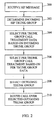
- FIG. 2 is a flow chart illustrating exemplary steps that may be performed by SIP call processor 110 in identifying incoming SIP trunk groups and for selectively processing calls based on the incoming SIP trunk group.
- SIP call processor 110 receives a SIP message.
- the SIP message may be an INVITE message from a SIP proxy server inviting a user to participate in a multimedia conference, such as a telephone call.
- incoming trunk group identifier 112 of SIP call processor 110 identifies the incoming trunk group associated with the call. Identifying the incoming trunk group may include decoding the SIP message to extract one or more parameters from the SIP message and performing a lookup in a trunk group identification table based on the parameters.
- Exemplary SIP parameters that may be used to identify an incoming trunk group include parameters in the SIP via header, the source IP address, or proprietary extensions to the SIP message.
- per-trunk-group call processor 114 selects per-trunk-group call treatment data based on the incoming trunk group. For example, call processor 114 may select a per-trunk-group call processing table from tables 116 that corresponds to the particular incoming trunk group. The ability to have different processing tables for each trunk group enables different features to be associated with individual trunk groups. As a result, differential processing can be applied on a per-incoming-trunk-group basis.
- per-trunk-group call processor 114 selects per-trunk-group call treatment based on the per-trunk-group data.
- Exemplary call treatments include routing to logical peer groups, load sharing, applying profiles, screening, privacy, quality of service routing, bearer capability routing, time of day routing, carrier routing, or any feature that may be associated with a PSTN trunk group.
- per-trunk-group call processor 114 selects an outgoing trunk group for the call.
- the outgoing trunk group may be specified in the per-trunk-group call processing data.
- the next node in the path may use the outgoing trunk group data to determine how the call should be treated at the next top in the call setup sequence.
- Subsequent messages associated with a call for which incoming and outgoing trunk groups have been identified may be processed using the SIP call-id header.
- the call-id remains the same for all messages relating to a given call.
- the call-id associates then with a call, which in turn has been associated with an incoming SIP trunk group when the initial INVITE was received.
- the call-id header provides a method for processing subsequent messages associated with a call on a per-trunk-group basis.
- FIG. 3 illustrates exemplary data that may be used to identify an incoming trunk group and per-trunk-group call processing tables according to an embodiment of the present invention.
- an incoming trunk group identification table 300 may be used by incoming trunk group identifier 112 illustrated in Figure 2 to identify the incoming SIP trunk group.
- table 300 includes a first field that lists via or other SIP parameters used to identify the incoming SIP trunk group and a second field that contains an identifier for the incoming trunk group.
- the via or other parameter field contains branch id parameters that are part of the SIP via header. According to the SIP protocol specification, the branch parameter value must be unique across space and time for all requests sent by a SIP user agent.
- the branch id must always begin with the characters z9hG4bk. These seven characters are defined in the SIP protocol specification as a cookie used by servers receiving incoming call requests to identify that the branch id was constructed according to the SIP protocol specification. The remaining characters in the branch id may be used by SIP trunk group identifier 112 to distinguish among SIP trunk groups. For example, incoming SIP trunk group identifier 112 may use the branch id in the outermost SIP via header in an incoming SIP INVITE message as a key to perform a lookup in table 300 to determine an incoming trunk group id.
- each incoming trunk group is associated with one of the per-trunk-group call processing tables 116.
- each table 116 includes per-trunk-group call processing instructions.
- table 302 may define peer entities at the remote end of a trunk group as members of a logical group. Accordingly, per-trunk-group call processor 114 may use the data in table 302 to route the call to one of the peer entities in the logical group.
- table 304 may include instructions for load sharing calls among peers assigned to the particular incoming SIP trunk group.
- Table 306 may define SIP peers and the operational status associated with each peer based on heartbeat messages sent to and received from each peer. The operational status may be used to determine the SIP peer to which a call assigned the particular incoming trunk group should be routed. For example, if table 306 indicates that a SIP peer associated with a particular outgoing trunk group is unavailable, then per-trunk-group call processor 114 may select an alternate trunk group based on peer availability indicated by the table. In SIP, there is no procedure specified to maintain peer status and route only to available peers. The result of routing a message to an unavailable peer in SIP may be a timeout at the originator and a retransmission. By maintaining peer availability status in per-trunk-group call processing tables, the present invention increases the likelihood that calls will be routed to available peers and thus decreases the need for such timeouts and retransmissions.
- Table 307 may maintain per-trunk-group profiles. Such profiles may contain instructions as to whether or not to clear all calls associated with a particular trunk group in response to a disconnect.
- Table 308 may maintain protocol variant and vendor-specific information about each peer associated with an incoming trunk group. For example, one peer associated with the incoming trunk group may support a non-standard extension of the SIP protocol. In this situation, per-trunk-group call processor 114 would use the extension specified in table 308 for the particular peer when routing calls to that peer. By defining protocol restrictions on a per-peer basis, the restrictions or proprietary extensions can be used in both directions and will only be used with appropriate peers. In standard SIP, there is no way to know the capabilities supported by a peer.
- Table 310 may associate screening parameters with a particular incoming trunk group.
- the screening parameters may be used to block call types on certain incoming or outgoing trunk groups. For example, toll calls may be blocked for certain incoming trunk groups.
- Per-trunk-group call processing table 312 may apply a privacy policy based on the incoming or outgoing trunk group.
- table 312 may define a plurality of outgoing trunk groups associated with the incoming trunk group. Each outgoing trunk group may be associated with a SIP peer. Different privacy policies may be applied depending on the SIP peer.
- Table 314 may specify a plurality of SIP peers to which a call can be routed and whether each SIP peer is trusted or non-trusted. If the SIP peer is trusted, table 314 may simply specify that the call should be routed normally over that trunk group. If the SIP peer is defined as non-trusted, table 314 may specify that the calling party number be hidden or removed from signaling messages sent to the non-trusted peer.
- Table 316 may apply a quality of service or cost of service routing policy based on the incoming or outgoing trunk group. For example, certain calls, such as 911 calls, may be routed with higher priority. Per-trunk-group call processor 114 may use data in Table 316 to select an outgoing trunk group from a group of outgoing trunk groups associated with the call destination. If the destination is a priority destination, such as a 911 destination, the call may be routed with higher priority or over a high-speed trunk group. Similarly, if the incoming trunk group that resulted in selection of table 316 is identified by table 316 to be a high priority trunk group, such calls may be routed with higher priority.
- a priority destination such as a 911 destination
- Table 318 may apply different bearer capabilities on a per-trunk-group basis. For example, different codecs and packetization methods may be associated with different outgoing trunk groups and/or peers associated with an incoming trunk group. For example, once the incoming trunk group is used to select table 318, an outgoing trunk group may be selected from table 318. Table 318 may specify the codec or packetization method for the selected outgoing trunk group. Thus, table 318 allows codecs and packetization methods to be individually associated with each outgoing trunk group or peer.
- Table 320 may contain instructions for associating carrier capability routing with certain trunk groups. Certain routes may be accessible through several peers. However, the call-id or other SIP parameters may determine the service provider or peer to which the call should be routed. For example, a service provider from which a call is established may have agreements for favorable tariffs with certain carriers. Table 320 may contain instructions to preferentially select outgoing trunk groups associated with carriers with which the originating carrier has favorable routing or tariff agreements.
- Table 322 may include AIN functions to be associated with an incoming trunk group. Examples of AIN functions may include LNP, C-NAM, and free phone. When an incoming call results in selection of table 322, an AIN function may be triggered. For example, for the LNP case, table 322 may trigger per-trunk-group call processor 114 to formulate an LNP query to an LNP database. The LNP database may respond by providing a routing number corresponding to the dialed digits in the received call signaling message. Per-trunk-group call processor 114 may insert the routing number in the call signaling message and route the message to the network corresponding to the routing number.
- Table 324 may include routing policies to be applied on a per-trunk-group basis. Examples of routing policies may include policies based on operational status, current load or congestion, and time of day. For example, the owner of an organization associated with a particular incoming trunk group may desire to allow toll calls during a certain time of day, such as during business hours. Another organization may not have such restrictions. Per-trunk-group call processing tables, such as table 320, allow such differentiated treatment on a per-trunk-group basis.
- Table 326 may include instructions for collecting certain billing or accounting information for a particular trunk group.
- table 326 may contain instructions for generating call detail records for IP telephony calls.
- Such CDRs may include the sequences of signaling messages used to establish, maintain, and release a call. These CDRs may be stored in a database and used for billing purposes.
- Table 328 may include instructions for associating pre-translation, translation, and routing functions with the trunk group. Routing may be based on pattern matching, as with traditional trunk groups. However, the scheme associated with SIP trunk groups may be much more elaborate, involving the mix of successive translations, intercepts, processing, and even collecting new digits and starting over. For example, table 328 may route calls for a particular incoming trunk group to an IVR server for digit collection and automated services.
- the per-trunk-group processing tables illustrated in Figure 3 are merely illustrative of the types of SIP processing that may be performed on a per incoming trunk group basis. Combinations of the processing instructions in tables 116 may be applied to any of the incoming trunk groups without departing from the scope of the invention.
- the present invention is not limited to storing the per-trunk-group call processing instructions in a table format. Any suitable data structure for storing the per-trunk-group call processing data is intended to be within the scope of the invention.
- Using a data-driven approach allows features associated with incoming trunk groups to be changed without re-compiling source code.
- the present invention allows PSTN-like-trunk-group features to be implemented in a SIP environment.
Landscapes
- Engineering & Computer Science (AREA)
- Computer Networks & Wireless Communication (AREA)
- Signal Processing (AREA)
- Business, Economics & Management (AREA)
- General Business, Economics & Management (AREA)
- Multimedia (AREA)
- Telephonic Communication Services (AREA)
- Data Exchanges In Wide-Area Networks (AREA)
Description
- The present invention relates to methods and systems for providing trunk groups in IP telephony networks. More particularly, the present invention relates to methods and systems for providing SIP trunk groups in IP telephony networks.
- In the public switched telephone network (PSTN), trunk groups are physical facilities used to carry bearer data and signaling between switching offices. Since different trunks and trunk groups are associated with different physical facilities, in the PSTN, features can be defined on a per-trunk-group basis. For example, telecommunications customers can request special features on trunk groups, such as call screening, automatic number identification, and quality of service.
- In IP telephony networks, there is no analog to PSTN trunk groups. For example, SIP is used to establish multimedia communication sessions between end users over an underlying IP network. SIP involves exchanging messages between peer entities, referred to as proxy servers, to establish a multimedia communications session between the SIP end users. Unlike PSTN trunk groups where an incoming trunk group can be identified based on the trunk over which a message is received, in SIP, all messages arrive over the same signaling interface. For example, SIP messages are carried over TCP or UDP and all SIP messages arrive at port 5060. Thus, one problem with providing trunk-group-like features in a SIP network includes identifying an incoming signaling trunk.
- Another problem with using SIP to create to PSTN-trunk-group-like features is that even if the trunk group can be identified, the SIP protocol specification does not specify methods for providing PSTN-trunk-group-like features.
- Accordingly, there exists a long felt need in the industry for methods and systems for identifying SIP trunk groups and for selectively processing calls on a per-trunk-group basis. The IETF document: draft-ietf-iptel-trunk-group-00 deals with representing trunk group identifiers in SIP/TEL URIs.
- The present invention includes a method and a SIP call processor for providing SIP trunk group according to the appended independent claims.According to one aspect, the invention includes receiving a SIP call signaling message at a SIP call processing node. For example, the SIP call signaling message may be an INVITE message. Based on one or more parameters in the signaling message, an incoming SIP trunk group is identified. Once the incoming SIP trunk group is identified, the incoming trunk group is used to select per-trunk-group call processing data for the call. In one implementation, a separate per-incoming-trunk-group call processing table may be assigned to each incoming SIP trunk group. Each table contains call processing instructions for calls on the associated incoming SIP trunk group. Thus, by associating per-trunk-group call processing data with each incoming SIP trunk group, the present invention enables PSTN-trunk-group-like features to be associated with IP telephony calls.
- Accordingly, it is an object of the invention to provide methods and systems for providing SIP trunk groups.
- It is another object of the invention to provide methods and systems for selectively processing SIP calls on a per-incoming-trunk-group basis.
- Some of the objects of the invention having been stated hereinabove, and which are addressed in whole or in part by the present invention, other objects will become evident as the description proceeds when taken in connection with the accompanying drawings as best described hereinbelow.
- Preferred embodiments of the invention will now be explained with reference to the accompanying drawings, of which:
-
Figure 1 is a block diagram of a SIP call processing node according to an embodiment of the present invention; -
Figure 2 is a block diagram of exemplary steps that may be performed by a SIP call processing node in identifying an incoming trunk group for a call and for selectively processing the call based on the incoming trunk group; and -
Figure 3 is a block diagram illustrating an incoming trunk group identification table and per-trunk-group call processing tables according to an embodiment of the present invention. -
Figure 1 is a block diagram illustrating an exemplary architecture for a SIP call processing node according to an embodiment of the present invention. Referring toFigure 1 , a SIPcall processing node 100 includes a plurality of functions or processes that implement SIP trunk groups. It is understood that these functions or processes can be implemented in hardware, software, firmware, or any combination thereof. Accordingly, SIPcall processing node 100 may be a general purpose computing platform including one or more microprocessors for implementing the SIP trunk group functions as described herein. - In
Figure 1 , SIPcall processing node 100 includes a protocol stack for communicating with other SIP call processing nodes over an external network. In the illustrated example, the protocol stack includes aphysical layer 102, adata link layer 104, anetwork layer 106, and atransport layer 108.Physical layer 102 may include any suitable hardware and/or software for implementing OSI physical layer functions, such as sending and receiving data over a physical medium. In one example,physical layer 102 anddata link layer 104 may be implemented using an Ethernet interface. An Ethernet interface controls access to the underlying medium using a carrier sense multiple access (CSMA) protocol. Retransmissions and exponential back off are used to resolve collisions on the underlying network. It is understood that such an Ethernet interface includes a MAC address that other nodes on the network use to identify the interface. - The present invention is not limited to using an Ethernet interface. Any appropriate electrical or optical interface for sending and receiving SIP messages between nodes may be used without departing from the scope of the invention. For example, in an alternate embodiment of the invention, SIP
call processing node 100 may include physical and data link layers for sending and receiving data over an optical network, such as a synchronous optical network (SONET). In yet another alternate implementation, SIPcall processing node 100 may include a wireless LAN interface, such as an 802.11x interface, for sending and receiving SIP messages over a wireless 802.11 x network. -
Network layer 106 may be any suitable network layer protocol for sending and receiving messages between non-directly connected nodes. In one example,network layer 104 may be an Internet protocol (IP) layer. According to the SIP protocol specification, SIP functions properly with both IP version 4 and IP version 6. Accordingly,network layer 106 may implement IP version 4 and/or IP version 6. -
Transport layer 108 may implement any suitable reliable or unreliable transport mechanism for sending and receiving SIP messages over an underlying network. For example,transport layer 108 may implement the user datagram protocol (UDP), the transport control protocol (TCP), or the stream control transmission protocol (SCTP), as described in the correspondingly named IETF Internet Drafts and RFCs. -
SIP call processor 110 includes functions for identifying SIP trunk groups and for processing calls on a per-trunk-group basis. In the illustrated example,SIP call processor 110 includes an incomingtrunk group identifier 112 for identifying incoming SIP trunk groups based on one or more parameters in received SIP messages. At the limit, if there is no SIP parameter identifying the incoming trunk group, this can be done based on the source IP address and/or the transport layer port, such as the TCP, UDP, or SCTP port, of the packet.SIP call processor 110 also includes a per-trunk-group call processor for selectively processing calls based on the incoming trunk group using data stored in per-trunk-group call processing tables 116. Detailed examples of SIP trunk group identification and per-trunk-group call processing will be described below. -
Figure 2 is a flow chart illustrating exemplary steps that may be performed bySIP call processor 110 in identifying incoming SIP trunk groups and for selectively processing calls based on the incoming SIP trunk group. Referring toFigure 2 , instep 200,SIP call processor 110 receives a SIP message. For example, the SIP message may be an INVITE message from a SIP proxy server inviting a user to participate in a multimedia conference, such as a telephone call. Instep 202, incomingtrunk group identifier 112 ofSIP call processor 110 identifies the incoming trunk group associated with the call. Identifying the incoming trunk group may include decoding the SIP message to extract one or more parameters from the SIP message and performing a lookup in a trunk group identification table based on the parameters. Exemplary SIP parameters that may be used to identify an incoming trunk group include parameters in the SIP via header, the source IP address, or proprietary extensions to the SIP message. - In
step 204, once the incoming trunk group has been identified, per-trunk-group call processor 114 selects per-trunk-group call treatment data based on the incoming trunk group. For example,call processor 114 may select a per-trunk-group call processing table from tables 116 that corresponds to the particular incoming trunk group. The ability to have different processing tables for each trunk group enables different features to be associated with individual trunk groups. As a result, differential processing can be applied on a per-incoming-trunk-group basis. - Using the data in
step 204, instep 206, per-trunk-group call processor 114 selects per-trunk-group call treatment based on the per-trunk-group data. Exemplary call treatments include routing to logical peer groups, load sharing, applying profiles, screening, privacy, quality of service routing, bearer capability routing, time of day routing, carrier routing, or any feature that may be associated with a PSTN trunk group. - In
step 208, per-trunk-group call processor 114 selects an outgoing trunk group for the call. The outgoing trunk group may be specified in the per-trunk-group call processing data. The next node in the path may use the outgoing trunk group data to determine how the call should be treated at the next top in the call setup sequence. - Subsequent messages associated with a call for which incoming and outgoing trunk groups have been identified may be processed using the SIP call-id header. The call-id remains the same for all messages relating to a given call. As a result, when subsequent messages for a call come in, the call-id associates then with a call, which in turn has been associated with an incoming SIP trunk group when the initial INVITE was received. Because subsequent messages may not have the same via header stack, the call-id header provides a method for processing subsequent messages associated with a call on a per-trunk-group basis.
-
Figure 3 illustrates exemplary data that may be used to identify an incoming trunk group and per-trunk-group call processing tables according to an embodiment of the present invention. Referring toFigure 3 , an incoming trunk group identification table 300 may be used by incomingtrunk group identifier 112 illustrated inFigure 2 to identify the incoming SIP trunk group. In the illustrated example, table 300 includes a first field that lists via or other SIP parameters used to identify the incoming SIP trunk group and a second field that contains an identifier for the incoming trunk group. In the illustrated example, the via or other parameter field contains branch id parameters that are part of the SIP via header. According to the SIP protocol specification, the branch parameter value must be unique across space and time for all requests sent by a SIP user agent. The branch id must always begin with the characters z9hG4bk. These seven characters are defined in the SIP protocol specification as a cookie used by servers receiving incoming call requests to identify that the branch id was constructed according to the SIP protocol specification. The remaining characters in the branch id may be used by SIPtrunk group identifier 112 to distinguish among SIP trunk groups. For example, incoming SIPtrunk group identifier 112 may use the branch id in the outermost SIP via header in an incoming SIP INVITE message as a key to perform a lookup in table 300 to determine an incoming trunk group id. - In
Figure 3 , each incoming trunk group is associated with one of the per-trunk-group call processing tables 116. In the illustrated example, each table 116 includes per-trunk-group call processing instructions. For example, table 302 may define peer entities at the remote end of a trunk group as members of a logical group. Accordingly, per-trunk-group call processor 114 may use the data in table 302 to route the call to one of the peer entities in the logical group. In a similar manner, table 304 may include instructions for load sharing calls among peers assigned to the particular incoming SIP trunk group. - Table 306 may define SIP peers and the operational status associated with each peer based on heartbeat messages sent to and received from each peer. The operational status may be used to determine the SIP peer to which a call assigned the particular incoming trunk group should be routed. For example, if table 306 indicates that a SIP peer associated with a particular outgoing trunk group is unavailable, then per-trunk-
group call processor 114 may select an alternate trunk group based on peer availability indicated by the table. In SIP, there is no procedure specified to maintain peer status and route only to available peers. The result of routing a message to an unavailable peer in SIP may be a timeout at the originator and a retransmission. By maintaining peer availability status in per-trunk-group call processing tables, the present invention increases the likelihood that calls will be routed to available peers and thus decreases the need for such timeouts and retransmissions. - Table 307 may maintain per-trunk-group profiles. Such profiles may contain instructions as to whether or not to clear all calls associated with a particular trunk group in response to a disconnect.
- Table 308 may maintain protocol variant and vendor-specific information about each peer associated with an incoming trunk group. For example, one peer associated with the incoming trunk group may support a non-standard extension of the SIP protocol. In this situation, per-trunk-
group call processor 114 would use the extension specified in table 308 for the particular peer when routing calls to that peer. By defining protocol restrictions on a per-peer basis, the restrictions or proprietary extensions can be used in both directions and will only be used with appropriate peers. In standard SIP, there is no way to know the capabilities supported by a peer. - Table 310 may associate screening parameters with a particular incoming trunk group. The screening parameters may be used to block call types on certain incoming or outgoing trunk groups. For example, toll calls may be blocked for certain incoming trunk groups.
- Per-trunk-group call processing table 312 may apply a privacy policy based on the incoming or outgoing trunk group. For example, table 312 may define a plurality of outgoing trunk groups associated with the incoming trunk group. Each outgoing trunk group may be associated with a SIP peer. Different privacy policies may be applied depending on the SIP peer.
- Table 314 may specify a plurality of SIP peers to which a call can be routed and whether each SIP peer is trusted or non-trusted. If the SIP peer is trusted, table 314 may simply specify that the call should be routed normally over that trunk group. If the SIP peer is defined as non-trusted, table 314 may specify that the calling party number be hidden or removed from signaling messages sent to the non-trusted peer.
- Table 316 may apply a quality of service or cost of service routing policy based on the incoming or outgoing trunk group. For example, certain calls, such as 911 calls, may be routed with higher priority. Per-trunk-
group call processor 114 may use data in Table 316 to select an outgoing trunk group from a group of outgoing trunk groups associated with the call destination. If the destination is a priority destination, such as a 911 destination, the call may be routed with higher priority or over a high-speed trunk group. Similarly, if the incoming trunk group that resulted in selection of table 316 is identified by table 316 to be a high priority trunk group, such calls may be routed with higher priority. - Table 318 may apply different bearer capabilities on a per-trunk-group basis. For example, different codecs and packetization methods may be associated with different outgoing trunk groups and/or peers associated with an incoming trunk group. For example, once the incoming trunk group is used to select table 318, an outgoing trunk group may be selected from table 318. Table 318 may specify the codec or packetization method for the selected outgoing trunk group. Thus, table 318 allows codecs and packetization methods to be individually associated with each outgoing trunk group or peer.
- Table 320 may contain instructions for associating carrier capability routing with certain trunk groups. Certain routes may be accessible through several peers. However, the call-id or other SIP parameters may determine the service provider or peer to which the call should be routed. For example, a service provider from which a call is established may have agreements for favorable tariffs with certain carriers. Table 320 may contain instructions to preferentially select outgoing trunk groups associated with carriers with which the originating carrier has favorable routing or tariff agreements.
- Table 322 may include AIN functions to be associated with an incoming trunk group. Examples of AIN functions may include LNP, C-NAM, and free phone. When an incoming call results in selection of table 322, an AIN function may be triggered. For example, for the LNP case, table 322 may trigger per-trunk-
group call processor 114 to formulate an LNP query to an LNP database. The LNP database may respond by providing a routing number corresponding to the dialed digits in the received call signaling message. Per-trunk-group call processor 114 may insert the routing number in the call signaling message and route the message to the network corresponding to the routing number. - Table 324 may include routing policies to be applied on a per-trunk-group basis. Examples of routing policies may include policies based on operational status, current load or congestion, and time of day. For example, the owner of an organization associated with a particular incoming trunk group may desire to allow toll calls during a certain time of day, such as during business hours. Another organization may not have such restrictions. Per-trunk-group call processing tables, such as table 320, allow such differentiated treatment on a per-trunk-group basis.
- Table 326 may include instructions for collecting certain billing or accounting information for a particular trunk group. For example, table 326 may contain instructions for generating call detail records for IP telephony calls. Such CDRs may include the sequences of signaling messages used to establish, maintain, and release a call. These CDRs may be stored in a database and used for billing purposes.
- Table 328 may include instructions for associating pre-translation, translation, and routing functions with the trunk group. Routing may be based on pattern matching, as with traditional trunk groups. However, the scheme associated with SIP trunk groups may be much more elaborate, involving the mix of successive translations, intercepts, processing, and even collecting new digits and starting over. For example, table 328 may route calls for a particular incoming trunk group to an IVR server for digit collection and automated services.
- The per-trunk-group processing tables illustrated in
Figure 3 are merely illustrative of the types of SIP processing that may be performed on a per incoming trunk group basis. Combinations of the processing instructions in tables 116 may be applied to any of the incoming trunk groups without departing from the scope of the invention. In addition, while the invention has been described in terms of per-trunk-group call processing tables, the present invention is not limited to storing the per-trunk-group call processing instructions in a table format. Any suitable data structure for storing the per-trunk-group call processing data is intended to be within the scope of the invention. Using a data-driven approach allows features associated with incoming trunk groups to be changed without re-compiling source code. Thus, by identifying the incoming trunk group and enabling per-trunk-group processing instructions, the present invention allows PSTN-like-trunk-group features to be implemented in a SIP environment. - It will be understood that various details of the invention may be changed without departing from the scope of the invention. Furthermore, the foregoing description is for the purpose of illustration only, and not for the purpose of limitation-the invention being defined by the claims.
Claims (40)
- A method for implementing session initiation protocol SIP trunk groups on a per call basis, the method comprising:(a) receiving a first SIP signaling message associated with a new call (200);(b) identifying, based on at least one of one or more parameters in a via header of the first SIP signaling message, a source Internet protocol IP address of the first SIP signaling message, and a proprietary extension of the first SIP signaling message, an incoming SIP trunk group for the new call (202),
wherein the incoming SIP trunk group comprises a logical group of associated peer entities and
wherein, if there is no SIP parameter identifying the incoming trunk group, the incoming SIP trunk group is identified based on the source IP address and/or a transport layer port;(c) selecting, based on the incoming SIP trunk group, a first set of per-trunk-group call processing data from a plurality of sets of different call processing data associated with different incoming SIP trunk group (204); and(d) processing the new call using the first set of per-trunk-group call processing data (206). - The method of claim 1 wherein receiving a first SIP signaling message includes receiving a SIP INVITE message.
- The method of claim 1 wherein identifying an incoming SIP trunk group for the new call includes examining a via header in the first SIP signaling message and selecting the incoming SIP trunk group based on the via header.
- The method of claim 1 wherein identifying an incoming SIP trunk group for the new call includes decoding a predetermined extension from the SIP message and selecting the incoming SIP trunk group based on the extension.
- The method of claim 1 wherein identifying an incoming SIP trunk group for the new call includes determining a source IP address of the first SIP signaling message and selecting the incoming SIP trunk group based on the source IP address.
- The method of claim 1 wherein processing the new call using the first set of per-trunk-group call processing data includes routing the new call to a SIP peer in a SIP logical peer group associated with the incoming trunk group by the first set of per-trunk-group call processing data.
- The method of claim 1 wherein processing the new call using the first set of per-trunk-group call processing data includes routing the new call to a peer of a redundant set of peers associated with the incoming trunk group by the first set of per-trunk-group call processing data.
- The method of claim 1 wherein processing the new call using the first set of per-trunk-group call processing data includes routing the new call to a SIP peer based on operational status information regarding SIP peers associated with the incoming trunk group by the first set of the per-trunk-group call processing data.
- The method of claim 1 wherein processing the new call using the first set of per-trunk-group call processing data includes processing the new call based on profiles associated with the incoming trunk group by the first set of per-trunk-group call processing data.
- The method of claim 1 wherein processing the new call using the first set of per-trunk-group call processing data includes processing the new call based on protocol variant information and vendor-specific information regarding a SIP peer associated with the incoming trunk group by the first set of per-trunk-group call processing data.
- The method of claim 1 wherein processing the new call using the first set of per-trunk-group call processing data includes screening the new call using call screening parameters associated with the incoming SIP trunk group by the first set of per-trunk-group call processing data.
- The method of claim 1 wherein processing the new call using the first set of per-trunk-group call processing data includes processing the new call based on a privacy policy associated with the incoming trunk group by the first set of per-trunk-group call processing data.
- The method of claim 1 wherein processing the new call using the first set of per-trunk-group call processing data includes selecting an outgoing trunk group from a plurality of outgoing trunk groups associated with the incoming trunk group by the first set of per-trunk-group call processing data.
- The method of claim 1 wherein processing the new call using the first set of per-trunk-group call processing data includes applying quality of service routing to the call using QoS parameters specified for the incoming trunk group in the first set of per-trunk-group call processing data.
- The method of claim 1 wherein processing the new call using the first set of per-trunk-group call processing data includes processing the new call based on bearer capability routing defined for the incoming trunk group in the first set of per-trunk-group call processing data.
- The method of claim 1 wherein processing the new call using the first set of per-trunk-group call processing data includes processing the new call based on carrier routing defined for the incoming trunk group in the first set of per-trunk-group call processing data.
- The method of claim 1 wherein processing the new call using the per-trunk-group call processing data includes processing the new call based on an advanced intelligent network function associated with the incoming trunk group by the first set of per-trunk-group call processing data.
- The method of claim 1 wherein processing the new call using the per-trunk-group call processing data includes processing the new call based on routing policies defined for the incoming trunk group in the first set of per-trunk-group call processing data.
- The method of claim 1 wherein processing the new call using the first set of per-trunk group call processing data includes generating customized billing information specified for the incoming trunk group in the first set of per-trunk-group call processing data.
- The method of claim 1 comprising receiving a second SIP signaling message associated with a second new call, identifying a different incoming SIP trunk group for the second signaling message, selecting a second set of per-trunk-group call processing data using the incoming trunk group identified for the second SIP signaling message, and processing the second new call using the second set of per-trunk-group call processing data.
- The method of claim 1 comprising maintaining operational status of SIP peers based on heartbeat messages sent to and received from each peer.
- The method of claim 21 wherein processing the new call includes selecting an outgoing trunk group for the new call based on the operational status maintained for each peer.
- A session initiation protocol SIP call processor (110) comprising:(a) an incoming trunk group identifier (112) for identifying an incoming SIP trunk group associated with a first SIP call based on at least one of one or more parameters in a via header of a first SIP signaling message received for the first call, a source Internet protocol IP address of a first SIP signaling message received for the first call, and a proprietary extension of a first SIP signaling message received for the first call,
wherein the incoming SIP trunk group comprises a logical group of associated peer entities and
wherein, if there is no SIP parameter identifying the incoming trunk group, the incoming SIP trunk group is identified based on the source IP address and/or a transport layer port;(b) a per-trunk-group call processor operatively associated with the incoming trunk group identifier for implementing per-incoming-trunk-group call processing based on the incoming SIP trunk group identified for each received call; and(c) a plurality of per-trunk-group call processing data sets (116) usable by the per-trunk-group call processor for applying differentiated processing for calls on different incoming SIP trunk groups, each of the per-trunk-group call processing data sets being assigned to an incoming SIP trunk group and containing instructions for processing calls from the assigned incoming SIP trunk group, wherein the per-trunk group call processor is adapted to select a first per-trunk-group call processing data set for processing the first call and to process the first call using data in the first per-trunk-group call processing data set. - The SIP call processor of claim 23 wherein the incoming trunk group identifier is adapted to identify the incoming SIP trunk group for the first call based on a predetermined parameter in a via header of the first SIP signaling message.
- The SIP call processor of claim 23 wherein the incoming trunk group identifier is adapted to identify the incoming SIP trunk group for the first call based on a SIP extension in the first SIP signaling message.
- The SIP call processor of claim 23 wherein the incoming trunk group identifier is adapted to identify the incoming SIP trunk group for the first call based on a source IP address associated with the first SIP signaling message.
- The SIP call processor of claim 23 wherein the per-trunk-group call processor is adapted to route the first call to a peer SIP entity based on peer entities defined for the incoming SIP trunk group for the first call in the first per-trunk-group call processing data set.
- The SIP call processor of claim 23 wherein the per-trunk-group call processor is adapted to route the first call to a peer among a set of redundant peers defined for the incoming SIP trunk group for the first call in the first per-trunk-group call processing data set.
- The SIP call processor of claim 23 wherein the per-trunk-group call processor is adapted to route the first call to an available peer associated with the incoming SIP trunk group identified for the first call based on peer entity status maintained in the first per-trunk-group call processing data set.
- The SIP call processor of claim 23 wherein the per-trunk-group call processor is adapted to perform call screening for the first call based on call screening parameters in the first per-trunk-group call processing data set.
- The SIP call processor of claim 23 wherein the per-trunk-group call processor is adapted to apply a privacy policy to the first call based on a privacy policy defined in the first per-trunk-group call processing data set.
- The SIP call processor of claim 23 wherein the per-trunk-group call processor is adapted to identify trusted peers associated with an originator of the first call based on the first per-trunk-group call processing data set.
- The SIP call processor of claim 23 wherein the per-trunk-group call processor is adapted to apply a quality of service QoS or a cost of service CoS routing policy based on data specified for the incoming trunk group in the first per-trunk-group call processing data set.
- The SIP call processor of claim 23 wherein the per-trunk-group call processor is adapted to apply bearer capability routing based on bearer capabilities defined for outgoing trunk groups associated with the incoming trunk group for the first call in the first per-trunk-group call processing data set.
- The SIP call processor of claim 23 wherein the per-trunk-group call processor is adapted to apply a carrier routing policy based on carrier routing parameters defined for the incoming trunk group identified for the first call in the first per-trunk-group call processing data set.
- The SIP call processor of claim 23 wherein the per-trunk-group call processor is adapted to perform predetermined advanced intelligent network AIN functions for the first call based on AIN functions defined for the incoming trunk group identified for the first call in the first per-trunk-group call processing data set.
- The SIP call processor of claim 23 wherein the per-trunk-group call processor is adapted to apply a routing policy to the first call using the first per-trunk-group call processing data set.
- The SIP call processor of claim 23 wherein the per-trunk-group call processor is adapted to collect accounting information for the first call specified for the incoming trunk group in the first per-trunk-group call processing data set.
- The SIP call processor of claim 23 wherein the per-trunk-group call processor is adapted to route the first call to an interactive voice response IVR server for digit collection and announcements based on the first per-trunk-group call processing data set.
- The SIP call processor of claim 23 wherein the incoming trunk group identifier is adapted to identify an incoming trunk group for a second call based on a second received SIP signaling message, and wherein the per-trunk-group call processor is adapted to select a second per-trunk-group call processing data set for processing the second call based on the incoming SIP trunk group identified for the second call and to process the second call differently from the first call using the second per-trunk-group call processing data set.
Applications Claiming Priority (2)
| Application Number | Priority Date | Filing Date | Title |
|---|---|---|---|
| US10/679,808 US6977933B2 (en) | 2003-10-06 | 2003-10-06 | Methods and systems for providing session initiation protocol (SIP) trunk groups |
| PCT/US2004/032760 WO2005039152A2 (en) | 2003-10-06 | 2004-10-05 | Methods and systems for providing session initiation protocol (sip) trunk groups |
Publications (3)
| Publication Number | Publication Date |
|---|---|
| EP1671437A2 EP1671437A2 (en) | 2006-06-21 |
| EP1671437A4 EP1671437A4 (en) | 2011-02-23 |
| EP1671437B1 true EP1671437B1 (en) | 2015-08-26 |
Family
ID=34394244
Family Applications (1)
| Application Number | Title | Priority Date | Filing Date |
|---|---|---|---|
| EP04794199.2A Expired - Lifetime EP1671437B1 (en) | 2003-10-06 | 2004-10-05 | Methods and systems for providing session initiation protocol (sip) trunk groups |
Country Status (3)
| Country | Link |
|---|---|
| US (1) | US6977933B2 (en) |
| EP (1) | EP1671437B1 (en) |
| WO (1) | WO2005039152A2 (en) |
Families Citing this family (42)
| Publication number | Priority date | Publication date | Assignee | Title |
|---|---|---|---|---|
| US7535915B2 (en) * | 2001-12-31 | 2009-05-19 | Samsung Electronics Co., Ltd. | System and method for scalable and redundant SIP message routing in an IP multimedia subsystem |
| US7631107B2 (en) * | 2002-06-11 | 2009-12-08 | Pandya Ashish A | Runtime adaptable protocol processor |
| US7536462B2 (en) | 2002-06-11 | 2009-05-19 | Pandya Ashish A | Memory system for a high performance IP processor |
| US7420962B2 (en) * | 2003-09-26 | 2008-09-02 | Lucent Technologies Inc. | Method for management of voice-over IP communications of various relative priority levels |
| US7522607B2 (en) * | 2004-01-26 | 2009-04-21 | Sprint Communications Company Lp | Congestion handling in a packet communication system |
| US20050180390A1 (en) * | 2004-02-18 | 2005-08-18 | Ronald Baruzzi | Method to provide cost-effective migration of call handling from a legacy network to a new network |
| EP1578080A1 (en) * | 2004-03-18 | 2005-09-21 | Hewlett-Packard Development Company, L.P. | Improvements in or relating to session initiation protocol (SIP) |
| ATE523018T1 (en) * | 2004-09-29 | 2011-09-15 | Sonus Networks Inc | CONTROLLING TIME-CRITICAL DATA IN A PACKET-BASED NETWORK |
| US20060092916A1 (en) * | 2004-10-29 | 2006-05-04 | Fujitsu Network Communications, Inc. | Routing frames in an IP sonet ring using an IP proxy server |
| US8194640B2 (en) * | 2004-12-31 | 2012-06-05 | Genband Us Llc | Voice over IP (VoIP) network infrastructure components and method |
| US7643472B2 (en) | 2005-10-19 | 2010-01-05 | At&T Intellectual Property I, Lp | Methods and apparatus for authorizing and allocating outdial communication services |
| US20070086433A1 (en) * | 2005-10-19 | 2007-04-19 | Cunetto Philip C | Methods and apparatus for allocating shared communication resources to outdial communication services |
| US7924987B2 (en) * | 2005-10-19 | 2011-04-12 | At&T Intellectual Property I., L.P. | Methods, apparatus and data structures for managing distributed communication systems |
| US8238327B2 (en) * | 2005-10-19 | 2012-08-07 | At&T Intellectual Property I, L.P. | Apparatus and methods for subscriber and enterprise assignments and resource sharing |
| US7839988B2 (en) | 2005-10-19 | 2010-11-23 | At&T Intellectual Property I, L.P. | Methods and apparatus for data structure driven authorization and/or routing of outdial communication services |
| US20070116234A1 (en) * | 2005-10-19 | 2007-05-24 | Marco Schneider | Methods and apparatus for preserving access information during call transfers |
| US20070086432A1 (en) * | 2005-10-19 | 2007-04-19 | Marco Schneider | Methods and apparatus for automated provisioning of voice over internet protocol gateways |
| US8532088B1 (en) * | 2005-12-05 | 2013-09-10 | At&T Intellectual Property Ii, L.P. | Method and apparatus for providing call center agents with calling party information |
| US9060047B2 (en) * | 2005-12-21 | 2015-06-16 | Genband Us Llc | Media stream management |
| US8204056B2 (en) | 2006-03-31 | 2012-06-19 | Verint Americas, Inc. | Systems and methods for endpoint recording using a media application server |
| US8594313B2 (en) * | 2006-03-31 | 2013-11-26 | Verint Systems, Inc. | Systems and methods for endpoint recording using phones |
| US8130938B2 (en) | 2006-03-31 | 2012-03-06 | Verint Americas, Inc. | Systems and methods for endpoint recording using recorders |
| CN1901541B (en) * | 2006-07-21 | 2010-08-11 | 华为技术有限公司 | System and communication method with SIP trunk group |
| US7813335B2 (en) * | 2006-08-30 | 2010-10-12 | Level 3 Communications, Llc | Internet protocol trunk groups |
| US7995561B2 (en) * | 2006-12-07 | 2011-08-09 | Nortel Networks Limited | Techniques for implementing logical trunk groups with session initiation protocol (SIP) |
| US7996348B2 (en) | 2006-12-08 | 2011-08-09 | Pandya Ashish A | 100GBPS security and search architecture using programmable intelligent search memory (PRISM) that comprises one or more bit interval counters |
| US9141557B2 (en) | 2006-12-08 | 2015-09-22 | Ashish A. Pandya | Dynamic random access memory (DRAM) that comprises a programmable intelligent search memory (PRISM) and a cryptography processing engine |
| JP4762181B2 (en) * | 2007-03-19 | 2011-08-31 | 株式会社東芝 | SIP trunk gateway device and method for controlling SIP trunk gateway device |
| US9213533B1 (en) | 2007-10-17 | 2015-12-15 | Cisco Technology, Inc. | Dynamically provisioning digital voice trunks |
| US7961720B2 (en) * | 2007-11-19 | 2011-06-14 | Level 3 Communications, Llc | Geographic trunk groups |
| US7907533B2 (en) * | 2007-11-28 | 2011-03-15 | Tekelec | Methods, systems, and computer program products for performing IP link proving using heartbeat messages |
| JP4599424B2 (en) * | 2008-03-26 | 2010-12-15 | 株式会社東芝 | Telephone system, exchange device thereof, and transmission control method |
| US8856003B2 (en) | 2008-04-30 | 2014-10-07 | Motorola Solutions, Inc. | Method for dual channel monitoring on a radio device |
| US20100202451A1 (en) * | 2008-10-31 | 2010-08-12 | Enfora, Inc. | Modified internet protocol (ip) data packet for asynchronous ip communications |
| US9621561B2 (en) | 2009-02-27 | 2017-04-11 | Microsoft Technology Licensing, Llc | Enabling trusted conferencing services |
| US9485548B2 (en) * | 2010-10-27 | 2016-11-01 | Comcast Cable Communications, Llc | Origination and destination based routing |
| US8442205B2 (en) | 2010-10-27 | 2013-05-14 | Comcast Cable Communications, Llc | Data and call routing and forwarding |
| US20120275450A1 (en) * | 2011-04-29 | 2012-11-01 | Comcast Cable Communications, Llc | Obtaining Services Through a Local Network |
| CN103428645B (en) * | 2012-05-17 | 2016-08-03 | 电信科学技术研究院 | A kind of system and device for achieving cluster service |
| EP3026940A1 (en) | 2014-11-27 | 2016-06-01 | Motorola Solutions, Inc. | Method and system for managing modification of quality of service in a communication system handling a communication group |
| US9735981B2 (en) | 2015-03-03 | 2017-08-15 | At&T Intellectual Property I, L.P. | Facilitation of session initiation protocol trunking |
| US20190089750A1 (en) * | 2017-09-15 | 2019-03-21 | Microsoft Technology Licensing, Llc | Trunk Routing using a Service Parameter |
Family Cites Families (9)
| Publication number | Priority date | Publication date | Assignee | Title |
|---|---|---|---|---|
| US6275574B1 (en) * | 1998-12-22 | 2001-08-14 | Cisco Technology, Inc. | Dial plan mapper |
| US6625141B1 (en) * | 1999-06-18 | 2003-09-23 | Telefonaktiebolaget L M Ericsson (Publ) | System and method for providing value-added services (VAS) in an integrated telecommunications network using session initiation protocol (SIP) |
| US7388953B2 (en) * | 1999-09-24 | 2008-06-17 | Verizon Business Global Llc | Method and system for providing intelligent network control services in IP telephony |
| US7406306B2 (en) * | 2001-03-20 | 2008-07-29 | Verizon Business Global Llc | Method for billing in a telecommunications network |
| US20020138427A1 (en) * | 2001-03-20 | 2002-09-26 | Trivedi Prakash A. | Systems and methods for communicating from an integration platform to a billing unit |
| US20020141386A1 (en) * | 2001-03-29 | 2002-10-03 | Minert Brian D. | System, apparatus and method for voice over internet protocol telephone calling using enhanced signaling packets and localized time slot interchanging |
| US7069331B2 (en) * | 2001-09-13 | 2006-06-27 | Utstarcom, Inc. | Trunk group implementation in networks |
| US7092738B2 (en) * | 2002-12-20 | 2006-08-15 | International Business Machines Corporation | Navigation of interactive voice response application using a wireless communications device graphical user interface |
| US7639664B2 (en) * | 2003-05-30 | 2009-12-29 | Alcatel-Lucent Usa Inc. | Dynamic management of trunk group members |
-
2003
- 2003-10-06 US US10/679,808 patent/US6977933B2/en not_active Expired - Lifetime
-
2004
- 2004-10-05 EP EP04794199.2A patent/EP1671437B1/en not_active Expired - Lifetime
- 2004-10-05 WO PCT/US2004/032760 patent/WO2005039152A2/en not_active Ceased
Also Published As
| Publication number | Publication date |
|---|---|
| US20050074026A1 (en) | 2005-04-07 |
| US6977933B2 (en) | 2005-12-20 |
| EP1671437A2 (en) | 2006-06-21 |
| WO2005039152A2 (en) | 2005-04-28 |
| EP1671437A4 (en) | 2011-02-23 |
| WO2005039152A3 (en) | 2005-09-15 |
Similar Documents
| Publication | Publication Date | Title |
|---|---|---|
| US6977933B2 (en) | Methods and systems for providing session initiation protocol (SIP) trunk groups | |
| EP1832069B1 (en) | Voip network infrastructure components | |
| US10038779B2 (en) | Intercepting voice over IP communications and other data communications | |
| US7016343B1 (en) | PSTN call routing control features applied to a VoIP | |
| US20070291734A1 (en) | Methods and Apparatus for Multistage Routing of Packets Using Call Templates | |
| US8300795B2 (en) | Method and apparatus for providing access and egress uniform resource identifiers for routing | |
| US20030131132A1 (en) | Method and system for a routing server for selecting a PSTN gateway | |
| JP2003198620A (en) | Softswitch using split firewall for load sharing voice over internet protocol traffic in internet protocol network | |
| US8787360B2 (en) | Method and apparatus for processing multiple services per call | |
| US7995561B2 (en) | Techniques for implementing logical trunk groups with session initiation protocol (SIP) |
Legal Events
| Date | Code | Title | Description |
|---|---|---|---|
| PUAI | Public reference made under article 153(3) epc to a published international application that has entered the european phase |
Free format text: ORIGINAL CODE: 0009012 |
|
| 17P | Request for examination filed |
Effective date: 20060411 |
|
| AK | Designated contracting states |
Kind code of ref document: A2 Designated state(s): AT BE BG CH CY CZ DE DK EE ES FI FR GB GR HU IE IT LI LU MC NL PL PT RO SE SI SK TR |
|
| DAX | Request for extension of the european patent (deleted) | ||
| RAP1 | Party data changed (applicant data changed or rights of an application transferred) |
Owner name: GENBAND, INC. |
|
| A4 | Supplementary search report drawn up and despatched |
Effective date: 20110121 |
|
| RIC1 | Information provided on ipc code assigned before grant |
Ipc: H04L 29/06 20060101AFI20110117BHEP |
|
| 17Q | First examination report despatched |
Effective date: 20110722 |
|
| REG | Reference to a national code |
Ref country code: DE Ref legal event code: R079 Ref document number: 602004047772 Country of ref document: DE Free format text: PREVIOUS MAIN CLASS: H04J0003160000 Ipc: H04L0029060000 |
|
| GRAP | Despatch of communication of intention to grant a patent |
Free format text: ORIGINAL CODE: EPIDOSNIGR1 |
|
| RIC1 | Information provided on ipc code assigned before grant |
Ipc: H04L 29/06 20060101AFI20150402BHEP Ipc: H04M 7/00 20060101ALI20150402BHEP Ipc: H04L 12/709 20130101ALI20150402BHEP |
|
| INTG | Intention to grant announced |
Effective date: 20150421 |
|
| GRAS | Grant fee paid |
Free format text: ORIGINAL CODE: EPIDOSNIGR3 |
|
| GRAA | (expected) grant |
Free format text: ORIGINAL CODE: 0009210 |
|
| RAP1 | Party data changed (applicant data changed or rights of an application transferred) |
Owner name: GENBAND US LLC |
|
| AK | Designated contracting states |
Kind code of ref document: B1 Designated state(s): AT BE BG CH CY CZ DE DK EE ES FI FR GB GR HU IE IT LI LU MC NL PL PT RO SE SI SK TR |
|
| REG | Reference to a national code |
Ref country code: GB Ref legal event code: FG4D |
|
| REG | Reference to a national code |
Ref country code: CH Ref legal event code: EP |
|
| REG | Reference to a national code |
Ref country code: AT Ref legal event code: REF Ref document number: 745798 Country of ref document: AT Kind code of ref document: T Effective date: 20150915 |
|
| REG | Reference to a national code |
Ref country code: IE Ref legal event code: FG4D |
|
| REG | Reference to a national code |
Ref country code: DE Ref legal event code: R096 Ref document number: 602004047772 Country of ref document: DE |
|
| REG | Reference to a national code |
Ref country code: FR Ref legal event code: PLFP Year of fee payment: 12 |
|
| REG | Reference to a national code |
Ref country code: AT Ref legal event code: MK05 Ref document number: 745798 Country of ref document: AT Kind code of ref document: T Effective date: 20150826 |
|
| PG25 | Lapsed in a contracting state [announced via postgrant information from national office to epo] |
Ref country code: FI Free format text: LAPSE BECAUSE OF FAILURE TO SUBMIT A TRANSLATION OF THE DESCRIPTION OR TO PAY THE FEE WITHIN THE PRESCRIBED TIME-LIMIT Effective date: 20150826 Ref country code: GR Free format text: LAPSE BECAUSE OF FAILURE TO SUBMIT A TRANSLATION OF THE DESCRIPTION OR TO PAY THE FEE WITHIN THE PRESCRIBED TIME-LIMIT Effective date: 20151127 |
|
| REG | Reference to a national code |
Ref country code: NL Ref legal event code: MP Effective date: 20150826 |
|
| PG25 | Lapsed in a contracting state [announced via postgrant information from national office to epo] |
Ref country code: PL Free format text: LAPSE BECAUSE OF FAILURE TO SUBMIT A TRANSLATION OF THE DESCRIPTION OR TO PAY THE FEE WITHIN THE PRESCRIBED TIME-LIMIT Effective date: 20150826 Ref country code: PT Free format text: LAPSE BECAUSE OF FAILURE TO SUBMIT A TRANSLATION OF THE DESCRIPTION OR TO PAY THE FEE WITHIN THE PRESCRIBED TIME-LIMIT Effective date: 20151228 Ref country code: ES Free format text: LAPSE BECAUSE OF FAILURE TO SUBMIT A TRANSLATION OF THE DESCRIPTION OR TO PAY THE FEE WITHIN THE PRESCRIBED TIME-LIMIT Effective date: 20150826 Ref country code: AT Free format text: LAPSE BECAUSE OF FAILURE TO SUBMIT A TRANSLATION OF THE DESCRIPTION OR TO PAY THE FEE WITHIN THE PRESCRIBED TIME-LIMIT Effective date: 20150826 Ref country code: SE Free format text: LAPSE BECAUSE OF FAILURE TO SUBMIT A TRANSLATION OF THE DESCRIPTION OR TO PAY THE FEE WITHIN THE PRESCRIBED TIME-LIMIT Effective date: 20150826 |
|
| PG25 | Lapsed in a contracting state [announced via postgrant information from national office to epo] |
Ref country code: NL Free format text: LAPSE BECAUSE OF FAILURE TO SUBMIT A TRANSLATION OF THE DESCRIPTION OR TO PAY THE FEE WITHIN THE PRESCRIBED TIME-LIMIT Effective date: 20150826 |
|
| PG25 | Lapsed in a contracting state [announced via postgrant information from national office to epo] |
Ref country code: DK Free format text: LAPSE BECAUSE OF FAILURE TO SUBMIT A TRANSLATION OF THE DESCRIPTION OR TO PAY THE FEE WITHIN THE PRESCRIBED TIME-LIMIT Effective date: 20150826 Ref country code: EE Free format text: LAPSE BECAUSE OF FAILURE TO SUBMIT A TRANSLATION OF THE DESCRIPTION OR TO PAY THE FEE WITHIN THE PRESCRIBED TIME-LIMIT Effective date: 20150826 Ref country code: SK Free format text: LAPSE BECAUSE OF FAILURE TO SUBMIT A TRANSLATION OF THE DESCRIPTION OR TO PAY THE FEE WITHIN THE PRESCRIBED TIME-LIMIT Effective date: 20150826 Ref country code: CZ Free format text: LAPSE BECAUSE OF FAILURE TO SUBMIT A TRANSLATION OF THE DESCRIPTION OR TO PAY THE FEE WITHIN THE PRESCRIBED TIME-LIMIT Effective date: 20150826 Ref country code: IT Free format text: LAPSE BECAUSE OF FAILURE TO SUBMIT A TRANSLATION OF THE DESCRIPTION OR TO PAY THE FEE WITHIN THE PRESCRIBED TIME-LIMIT Effective date: 20150826 |
|
| REG | Reference to a national code |
Ref country code: DE Ref legal event code: R097 Ref document number: 602004047772 Country of ref document: DE |
|
| PG25 | Lapsed in a contracting state [announced via postgrant information from national office to epo] |
Ref country code: RO Free format text: LAPSE BECAUSE OF FAILURE TO SUBMIT A TRANSLATION OF THE DESCRIPTION OR TO PAY THE FEE WITHIN THE PRESCRIBED TIME-LIMIT Effective date: 20150826 Ref country code: LU Free format text: LAPSE BECAUSE OF FAILURE TO SUBMIT A TRANSLATION OF THE DESCRIPTION OR TO PAY THE FEE WITHIN THE PRESCRIBED TIME-LIMIT Effective date: 20151005 |
|
| REG | Reference to a national code |
Ref country code: CH Ref legal event code: PL |
|
| PG25 | Lapsed in a contracting state [announced via postgrant information from national office to epo] |
Ref country code: MC Free format text: LAPSE BECAUSE OF FAILURE TO SUBMIT A TRANSLATION OF THE DESCRIPTION OR TO PAY THE FEE WITHIN THE PRESCRIBED TIME-LIMIT Effective date: 20150826 |
|
| PLBE | No opposition filed within time limit |
Free format text: ORIGINAL CODE: 0009261 |
|
| STAA | Information on the status of an ep patent application or granted ep patent |
Free format text: STATUS: NO OPPOSITION FILED WITHIN TIME LIMIT |
|
| REG | Reference to a national code |
Ref country code: IE Ref legal event code: MM4A |
|
| PG25 | Lapsed in a contracting state [announced via postgrant information from national office to epo] |
Ref country code: LI Free format text: LAPSE BECAUSE OF NON-PAYMENT OF DUE FEES Effective date: 20151031 Ref country code: CH Free format text: LAPSE BECAUSE OF NON-PAYMENT OF DUE FEES Effective date: 20151031 |
|
| 26N | No opposition filed |
Effective date: 20160530 |
|
| PG25 | Lapsed in a contracting state [announced via postgrant information from national office to epo] |
Ref country code: SI Free format text: LAPSE BECAUSE OF FAILURE TO SUBMIT A TRANSLATION OF THE DESCRIPTION OR TO PAY THE FEE WITHIN THE PRESCRIBED TIME-LIMIT Effective date: 20150826 |
|
| REG | Reference to a national code |
Ref country code: FR Ref legal event code: PLFP Year of fee payment: 13 |
|
| PG25 | Lapsed in a contracting state [announced via postgrant information from national office to epo] |
Ref country code: IE Free format text: LAPSE BECAUSE OF NON-PAYMENT OF DUE FEES Effective date: 20151005 |
|
| PG25 | Lapsed in a contracting state [announced via postgrant information from national office to epo] |
Ref country code: BE Free format text: LAPSE BECAUSE OF FAILURE TO SUBMIT A TRANSLATION OF THE DESCRIPTION OR TO PAY THE FEE WITHIN THE PRESCRIBED TIME-LIMIT Effective date: 20150826 |
|
| PG25 | Lapsed in a contracting state [announced via postgrant information from national office to epo] |
Ref country code: BG Free format text: LAPSE BECAUSE OF FAILURE TO SUBMIT A TRANSLATION OF THE DESCRIPTION OR TO PAY THE FEE WITHIN THE PRESCRIBED TIME-LIMIT Effective date: 20150826 Ref country code: HU Free format text: LAPSE BECAUSE OF FAILURE TO SUBMIT A TRANSLATION OF THE DESCRIPTION OR TO PAY THE FEE WITHIN THE PRESCRIBED TIME-LIMIT; INVALID AB INITIO Effective date: 20041005 |
|
| PG25 | Lapsed in a contracting state [announced via postgrant information from national office to epo] |
Ref country code: CY Free format text: LAPSE BECAUSE OF FAILURE TO SUBMIT A TRANSLATION OF THE DESCRIPTION OR TO PAY THE FEE WITHIN THE PRESCRIBED TIME-LIMIT Effective date: 20150826 |
|
| PG25 | Lapsed in a contracting state [announced via postgrant information from national office to epo] |
Ref country code: TR Free format text: LAPSE BECAUSE OF FAILURE TO SUBMIT A TRANSLATION OF THE DESCRIPTION OR TO PAY THE FEE WITHIN THE PRESCRIBED TIME-LIMIT Effective date: 20150826 |
|
| REG | Reference to a national code |
Ref country code: FR Ref legal event code: PLFP Year of fee payment: 14 |
|
| REG | Reference to a national code |
Ref country code: FR Ref legal event code: PLFP Year of fee payment: 15 |
|
| REG | Reference to a national code |
Ref country code: DE Ref legal event code: R079 Ref document number: 602004047772 Country of ref document: DE Free format text: PREVIOUS MAIN CLASS: H04L0029060000 Ipc: H04L0065000000 |
|
| P01 | Opt-out of the competence of the unified patent court (upc) registered |
Effective date: 20230524 |
|
| PGFP | Annual fee paid to national office [announced via postgrant information from national office to epo] |
Ref country code: GB Payment date: 20231027 Year of fee payment: 20 |
|
| PGFP | Annual fee paid to national office [announced via postgrant information from national office to epo] |
Ref country code: FR Payment date: 20231025 Year of fee payment: 20 Ref country code: DE Payment date: 20231027 Year of fee payment: 20 |
|
| REG | Reference to a national code |
Ref country code: DE Ref legal event code: R071 Ref document number: 602004047772 Country of ref document: DE |
|
| REG | Reference to a national code |
Ref country code: GB Ref legal event code: PE20 Expiry date: 20241004 |
|
| PG25 | Lapsed in a contracting state [announced via postgrant information from national office to epo] |
Ref country code: GB Free format text: LAPSE BECAUSE OF EXPIRATION OF PROTECTION Effective date: 20241004 |
|
| PG25 | Lapsed in a contracting state [announced via postgrant information from national office to epo] |
Ref country code: GB Free format text: LAPSE BECAUSE OF EXPIRATION OF PROTECTION Effective date: 20241004 |