EP1670210A1 - Mobile communication system, management agent apparatus and server function moving method - Google Patents
Mobile communication system, management agent apparatus and server function moving method Download PDFInfo
- Publication number
- EP1670210A1 EP1670210A1 EP20050111693 EP05111693A EP1670210A1 EP 1670210 A1 EP1670210 A1 EP 1670210A1 EP 20050111693 EP20050111693 EP 20050111693 EP 05111693 A EP05111693 A EP 05111693A EP 1670210 A1 EP1670210 A1 EP 1670210A1
- Authority
- EP
- European Patent Office
- Prior art keywords
- server
- mobile node
- temporary
- destination
- mobile
- Prior art date
- Legal status (The legal status is an assumption and is not a legal conclusion. Google has not performed a legal analysis and makes no representation as to the accuracy of the status listed.)
- Withdrawn
Links
Images





Classifications
-
- H—ELECTRICITY
- H04—ELECTRIC COMMUNICATION TECHNIQUE
- H04W—WIRELESS COMMUNICATION NETWORKS
- H04W8/00—Network data management
- H04W8/02—Processing of mobility data, e.g. registration information at HLR [Home Location Register] or VLR [Visitor Location Register]; Transfer of mobility data, e.g. between HLR, VLR or external networks
- H04W8/04—Registration at HLR or HSS [Home Subscriber Server]
-
- H—ELECTRICITY
- H04—ELECTRIC COMMUNICATION TECHNIQUE
- H04L—TRANSMISSION OF DIGITAL INFORMATION, e.g. TELEGRAPHIC COMMUNICATION
- H04L41/00—Arrangements for maintenance, administration or management of data switching networks, e.g. of packet switching networks
- H04L41/04—Network management architectures or arrangements
- H04L41/046—Network management architectures or arrangements comprising network management agents or mobile agents therefor
- H04L41/048—Network management architectures or arrangements comprising network management agents or mobile agents therefor mobile agents
-
- H—ELECTRICITY
- H04—ELECTRIC COMMUNICATION TECHNIQUE
- H04L—TRANSMISSION OF DIGITAL INFORMATION, e.g. TELEGRAPHIC COMMUNICATION
- H04L61/00—Network arrangements, protocols or services for addressing or naming
-
- H—ELECTRICITY
- H04—ELECTRIC COMMUNICATION TECHNIQUE
- H04L—TRANSMISSION OF DIGITAL INFORMATION, e.g. TELEGRAPHIC COMMUNICATION
- H04L41/00—Arrangements for maintenance, administration or management of data switching networks, e.g. of packet switching networks
- H04L41/02—Standardisation; Integration
- H04L41/0213—Standardised network management protocols, e.g. simple network management protocol [SNMP]
-
- H—ELECTRICITY
- H04—ELECTRIC COMMUNICATION TECHNIQUE
- H04W—WIRELESS COMMUNICATION NETWORKS
- H04W8/00—Network data management
- H04W8/02—Processing of mobility data, e.g. registration information at HLR [Home Location Register] or VLR [Visitor Location Register]; Transfer of mobility data, e.g. between HLR, VLR or external networks
- H04W8/08—Mobility data transfer
- H04W8/082—Mobility data transfer for traffic bypassing of mobility servers, e.g. location registers, home PLMNs or home agents
-
- H—ELECTRICITY
- H04—ELECTRIC COMMUNICATION TECHNIQUE
- H04W—WIRELESS COMMUNICATION NETWORKS
- H04W80/00—Wireless network protocols or protocol adaptations to wireless operation
- H04W80/04—Network layer protocols, e.g. mobile IP [Internet Protocol]
-
- H—ELECTRICITY
- H04—ELECTRIC COMMUNICATION TECHNIQUE
- H04W—WIRELESS COMMUNICATION NETWORKS
- H04W80/00—Wireless network protocols or protocol adaptations to wireless operation
- H04W80/08—Upper layer protocols
- H04W80/10—Upper layer protocols adapted for application session management, e.g. SIP [Session Initiation Protocol]
Definitions
- the present invention relates to a mobile communication system, management agent apparatus, and server function moving method and, more particularly, to a method of connecting a mobile node to a network after the mobile node moves in the mobile communication system.
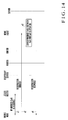
- the mobile node moves, acquires an address in a foreign network, and transmits a registration request via an SIP server (proxy), as shown in Fig. 15 (f3 and f4 in Fig. 15). Then, the mobile node registers the destination address in the SIP server having a registration function (f5 and f6 in Fig. 15). Assume that a server serving as a communication partner of the mobile node is separately registered in the SIP server (f1 and f2 in Fig. 15).
- SIP Session Initiation Protocol
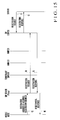
- the server serving as a communication partner of the mobile node is registered in the SIP server of the server, as shown in Fig. 16 (g1 and g2 in Fig. 16).
- the mobile node moves, acquires an address in a foreign network, and transmits a registration request via the SIP server (proxy) (g3 and g4 in Fig. 16). Then, the mobile node registers the destination address in the SIP server having the registration function for the mobile node (g5 and g6 in Fig. 16).
- the mobile node when moving to a foreign network, acquires an address in the foreign network, registers the address in the home agent or SIP server having the registration function, and thereby establishes a session with the server.
- a mobile node 3 cannot select any server optimal for a destination, as shown in Fig. 17.
- the transmission delay to a server 1 is large, the throughput is low, the response time is long, and it is difficult to provide information corresponding to the destination.
- some conventional mobile communication systems employ broadcast and anycast as means for selecting a server corresponding to a destination.
- the broadcast method requires a dedicated server in a foreign network.
- the anycast method cannot establish any TCP (Transmission Control Protocol) session, and it is hard for an application to cope with the method.
- TCP Transmission Control Protocol
- load balancing using DNSs (Domain Name Systems) 51 to 53 is proposed as a method of dynamically selecting a server.
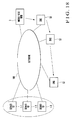
- inquiries to the DNS 53 having servers 1-1 to 1-3 are made at many stages, the position of the mobile node 3 is concealed, and no optimal server can be selected.
- An optimal server can be selected in only the same domain managed by the DNS 51 which can directly communicate with the mobile node 3.
- the conventional load distribution method can distribute the load by only a predetermined server function. Another server function cannot be provided to another user.
- a mobile communication system comprises a management agent which manages a destination of a mobile node, a server which serves as a communication partner of the mobile node, and a temporary server which has a network function equivalent to a network function of the server, the management agent comprising a position registration unit which registers position information of the destination of the mobile node when the mobile node moves, and a server function relocation unit which sets the temporary server as the communication partner of the mobile node instead of the server.
- a management agent apparatus comprises a position registration unit which registers position information of a destination of a mobile node when the mobile node moves, and a server function relocation unit which sets, as a communication partner of the mobile node, a temporary server having a network function equivalent to a network function of a server, instead of the server serving as the communication partner of the mobile node.
- a server function moving method comprises the steps of, when a mobile node moves, registering position information of a destination in a management agent which manages the destination of the mobile node, and setting, as a communication partner of the mobile node, a temporary server having a network function equivalent to a network function of a server, instead of the server serving as the communication partner of the mobile node.
- a mobile communication system comprises a server (S) 1, temporary server (S') 2, mobile node (MN) 3, agent (A) 4, and database (DB) 5.
- the server 1, temporary server 2, mobile node 3, and agent 4 are connected to a network 100.
- the agent 4 sets the temporary server 2 at a location suitable for the mobile node 3 as if the temporary server 2 were the server 1, and causes the temporary server 2 to communicate with the mobile node 3 instead of the server 1.
- This configuration can select a server optimal for the destination of the mobile node 3, i.e., the temporary server 2 at the destination that has a small transmission delay, high throughput, and short response time and can provide information corresponding to the destination.
- a mobile communication system according to the first embodiment of the present invention is comprised of a home network (HL) 200 and foreign network (FL) 300.
- HL home network
- FL foreign network
- a home agent (HA) 4 serving as a Mobile IP (Internet Protocol) management agent
- a server (S) 1 serving as a communication partner of a mobile node (MN) 3, and a router (R) 6
- the home agent 4 is connected to a server database 5 which manages a list of at least one temporary server 2 serving as a proxy of the server 1.
- the server database 5 contains position information of the temporary server 2, e.g., prefix information of the temporary server 2.
- a router (R) 7 an access router/foreign agent (AR/FA) 8, a radio communication base station (BS) 9, and the temporary server 2 for communicating with the mobile node 3 instead of the server 1 are installed.
- a plurality of networks 300 may exist, or a plurality of temporary servers 2 may be set in one network 300.
- the home network 200 and foreign network 300 are connected to each other via the routers 6 and 7.
- the temporary server 2 in Fig. 2 is formed from a controller (CPU: Central Processing Unit) 21, a main memory 22 which stores a control program 22a executed by the controller 21, a storage device 23 which stores a correspondence table 231 between the mobile node 3 and the server 1, and a communication controller 24 which controls communication.
- the controller 21, main memory 22, storage device 23, and communication controller 24 are connected to each other via an internal bus 210.
- the temporary server 2 has network functions equivalent to those of the server 1.
- the home agent 4 in Fig. 2 is formed from a controller (CPU) 41, a main memory 42 which stores a control program 42a executed by the controller 41, a storage device 43 which stores a correspondence table 431 between the home address HoA of the mobile node 3 and the care-of address CoA of the foreign network 300, a communication controller 44 which controls communication, and a database interface 45 for communicating data with the server database 5.
- the controller 41, main memory 42, storage device 43, communication controller 44, and database interface 45 are connected to each other via an internal bus 410.
- the controller 21 executes the control program 22a to implement a position registration unit 4a, temporary server selection unit 4b, server function relocation unit 4c, and packet transfer unit 4d in the home agent 4, as shown in Fig. 5.
- the position registration unit 4a registers position information of the destination of the mobile node 3 when the mobile node 3 moves. More specifically, the position registration unit 4a performs processes a3 and a4 in Fig. 7 and processes b3 and b4 in Fig. 9 (to be described later).
- the temporary server selection unit 4b selects, as the temporary server 2, one of temporary server candidates managed by the server database 5 in accordance with the destination of the mobile node 3. More specifically, the temporary server selection unit 4b performs a process a5 in Fig. 7, processes b5 and b6 in Fig. 9, and steps S1 to S3 in Fig. 10 (to be described later).
- the server function relocation unit 4c sets the temporary server 2 selected by the temporary server selection unit 4b to be a communication partner of the mobile node 3, instead of the server 1. More specifically, the server function relocation unit 4c performs a process a6 in Fig. 7 and a process b7 in Fig. 9 (to be described later).
- the packet transfer unit 4d receives a packet transmitted from the mobile node 3 to the server 1, and transfers the packet to the temporary server 2. More specifically, the packet transfer unit 4d performs a process a10 in Fig. 7 and a process b11 in Fig. 9 (to be described later).
- the temporary server selection unit 4b includes first and second selection units 4b1 and 4b2 shown in Fig. 6.
- the first selection unit 4b1 selects the temporary server 2 by comparing position information of the destination of the mobile node 3 with pieces of position information of temporary servers that are managed by the server database 5. More specifically, the first selection unit 4b1 performs a process a5 in Fig. 7 (to be described later).
- the second selection unit 4b2 selects the temporary server by performing a route finding process based on ICMP (Internet Control Message Protocol). More specifically, the second selection unit 4b2 performs processes b5 and b6 in Fig. 9 and steps S1 to S3 in Fig. 10 (to be described later).
- ICMP Internet Control Message Protocol
- the mobile node 3 when the mobile node 3 is connected to the foreign network 300, it acquires the care-of address CoA of the foreign network 300 from the access router/foreign agent 8 (a1 in Fig. 7), and requests the home agent 4 to register the position of the mobile node 3 (a2 in Fig. 7).
- the home agent 4 registers the home address HoA and CoA of the mobile node 3 in the correspondence table 431 (a3 in Fig. 7), and sends back a registration response to the mobile node 3 (a4 in Fig. 7).
- the home agent 4 extracts prefix information from the CoA, performs matching between the extracted prefix information and pieces of prefix information of temporary server candidates that are managed by the server database 5, and selects the temporary server 2 from the candidates (a5 in Fig. 7).
- the home agent 4 notifies the selected temporary server 2 of the HoA and CoA of the mobile node 3 and the IP address of the server 1, and issues a setting request so that the temporary server 2 operates as the server 1 for the mobile node 3 (a6 in Fig. 7).
- the temporary server 2 creates the correspondence table 231 between the mobile node 3 and the server 1 on the basis of the notified HoA and CoA of the mobile node 3 and the IP address of the server 1 (a7 in Fig. 7), and sends back a setting response to the home agent 4 (a8 in Fig. 7).
- the temporary server 2 uses the notified IP address of the server 1 as the home address of the server 1, and the IP address of the temporary server 2 itself as the care-of address of the server 1.
- the mobile node 3 executes communication in accordance with these settings.
- a packet addressed to the server 1 is transmitted to the home agent 4 (a9 in Fig. 7), and transferred from the home agent 4 to the temporary server 2 (a10 in Fig. 7).
- the temporary server 2 establishes a session (a11 in Fig. 7).
- the mobile node 3 and temporary server 2 communicate with each other via the shortest route through the Mobile IP route optimization procedure (a12 in Fig. 7)
- reference symbols P1 to P4 denote node devices serving as candidates of the temporary server 2.
- the mobile node (MN) 3, home agent (HA) 4, and server (S) 1 are arranged.
- the route from the home agent HA to each temporary server is determined by an ICMP route finding process which is a conventional method in the Internet. Determined route information is recorded in the server database 5 together with position information of each server.
- the home agent 4 After the mobile node 3 registers its position in the home agent 4 (b1 to b4 in Fig. 9), the home agent 4 performs CoA route finding by transmitting a packet for ICMP route finding to the CoA of the mobile node 3 (b5 in Fig. 9).
- route finding the route is generally detected by increasing the hop limit of packets one by one, but a long time is taken for this method.
- a sequence number contained in ICMP is generally contained in a response message, and thus the route may be analyzed from a response by transmitting packets at once.
- the home agent 4 selects the temporary server 2 by the temporary server selection procedure (b6 in Fig. 9). In this case, the home agent 4 selects node devices at which routes overlap, as candidates of the temporary server 2 on the basis of the routes of the node devices P1 to P4 that are obtained in advance, and routes to the CoA (step S1 in Fig. 10).
- the home agent 4 obtains branch points between the CoA and the node devices P1 to P4, and sets, as candidates of the temporary server 2, the node devices P1 and P2 having the smallest sum among the sums of the numbers of hops between the CoA and branch points and between the node devices P1 to P4 and branch points (step S2 in Fig. 10). Finally, the home agent 4 selects, as the temporary server 2, the node device P2 having the smallest number of hops from the branch point (step S3 in Fig. 10).
- the home agent 4 can also transmit directly to the mobile node 3 a setting request to update the correspondence table of the mobile node 3 so as to change a network route extending to the server 1 to that extending to the temporary server 2.
- packets addressed to the server 1 are directly transmitted from the mobile node 3 to the temporary server 2. Since the temporary server 2 is set to operate as the server 1 for the mobile node 3, it directly responds to the mobile node 3 and establishes a session.
- the route at this time is set by the same mechanism as route optimization by Mobile IP. Note that b7 to b13 in Fig. 9 are identical to a6 to a12 in Fig. 7.
- the temporary server 2 optimal for the destination of the mobile node 3 can be selected by the above configuration and operation, and a relay server can be seamlessly set for the mobile node 3.
- the temporary server 2 optimal for the destination of the mobile node 3 can be selected by the above configuration and operation.
- an optimal foreign server i.e., the temporary server 2 at the destination that has a small transmission delay, high throughput, and short response time and can provide information corresponding to the destination can be selected.
- an SIP server 11 having a registration function and serving as a management agent is installed in a home network (HL) 400, and an SIP server (proxy) 15 is installed in a foreign network (FL) 500.
- HL home network
- proxy foreign network
- the home network 400 has a server (SIP client) 12 serving as a communication partner of a mobile node 3.
- An SIP client database (SIP client DB) 13 which manages a list of candidates of a temporary server (temporary SIP client) 14 in the foreign network 500 is connected to the SIP server 11.
- the foreign network 500 has the temporary server 14. Similar to the mobile communication system according to the first embodiment of the present invention described above, the home network 400 and foreign network 500 are connected by routers 6 and 7, and this network is a general one.
- the temporary server 14 and SIP server 11 shown in Fig. 12 have the same configurations as those of the temporary server 2 and home agent 4 described above. Processes by the temporary server 14 and SIP server 11 shown in Fig. 12 can be implemented by executing control programs by their controllers.
- the mobile node 3 acquires an address in the foreign network 500, transmits a registration request via the SIP server (proxy) 15, and registers the destination address in the SIP server 11 having the registration function (c3 to c6 in Fig. 12).
- the server (SIP client) 12 serving as a communication partner is separately registered in the SIP server 11 (c1 and c2 in Fig. 12).
- the SIP server 11 selects the temporary server (temporary SIP client) 14 from the SIP client database 13 on the basis of prefix information of the destination address CoA of the mobile node 3 (c7 in Fig. 12).
- the SIP server 11 transmits the SIP URL (Uniform Resource Locator) and CoA of the mobile node 3 and the SIP URL of the server (SIP client) 12 to the temporary server (temporary SIP client) 14 (c8 in Fig. 12).
- SIP URL Uniform Resource Locator
- CoA CoA of the mobile node 3
- SIP URL of the server (SIP client) 12 to the temporary server (temporary SIP client) 14 (c8 in Fig. 12).
- the temporary server (temporary SIP client) 14 creates a correspondence table between the SIP URL (Uniform Resource Locator) and CoA of the mobile node 3 and the SIP URL of the server (SIP client) 12 on the basis of the SIP URLs and CoA which have been transmitted from the SIP server 11 (c9 in Fig. 12), and sends back a setting response to the SIP server 11 (c10 in Fig. 12).
- SIP URL Uniform Resource Locator
- the temporary server (temporary SIP client) 14 performs a registration process for the SIP server 11 so that the temporary server (temporary SIP client) 14 operates as the server (SIP client) 12 for only the mobile node 3 (c11 and c12 in Fig. 12).
- the temporary server (temporary SIP client) 14 may execute a data federation procedure with the server (SIP client) 12 (c13 in Fig. 12), which is not defined in this embodiment.
- the mobile node 3 When the mobile node 3 requests connection to the server (SIP client) 12, the request reaches the SIP server 11 via the SIP server (proxy) 15 (c14 and c15 in Fig. 12). Because of the request from the mobile node 3, the SIP server 11 sends back the address of the temporary server (temporary SIP client) 14 (c16 to c18 in Fig. 12). The mobile node 3 establishes a session with the temporary server (temporary SIP client) 14, and starts communication (c19 in Fig. 12).
- a mobile node and server (SIP client) are separately managed by the SIP server of the mobile node and that of the server.
- the SIP server of the server receives a registration request from the temporary server (temporary SIP client), and performs a registration process so that the temporary server (temporary SIP client) operates as the server (SIP client) for only the mobile node (d11 to d13 in Fig. 13).
- the mobile node and server are separately managed by the SIP server of the mobile node and that of the server. Even in this case, when the mobile node issues a connection request to the server (SIP client), the SIP server of the server sends back the address of the temporary server (temporary SIP client), and thus a session is established between the mobile node and the temporary server (temporary SIP client) (d14 to d19 in Fig. 13).
Landscapes
- Engineering & Computer Science (AREA)
- Computer Networks & Wireless Communication (AREA)
- Signal Processing (AREA)
- Databases & Information Systems (AREA)
- Mobile Radio Communication Systems (AREA)
- Data Exchanges In Wide-Area Networks (AREA)
Abstract
A mobile communication system includes a management agent, server, and temporary server. The management agent manages the destination of a mobile node. The server serves as a communication partner of the mobile node. The temporary server has a network function equivalent to that of the server. The management agent includes a position registration unit which registers position information of the destination of the mobile node when the mobile node moves, and a server function relocation unit which sets the temporary server as the communication partner of the mobile node instead of the server. A management agent apparatus and server function moving method are also disclosed.
Description
- The present invention relates to a mobile communication system, management agent apparatus, and server function moving method and, more particularly, to a method of connecting a mobile node to a network after the mobile node moves in the mobile communication system.
- For Mobile IP (Internet Protocol) in a conventional mobile communication system of this type, when a mobile node (MN) moves and is connected to a foreign network, as shown in Fig. 14, it acquires the care-of address CoA (Care of Address) of the foreign network, and requests a home agent (HA) to register the position of the mobile node (e1 and e2 in Fig. 14). The home agent registers the home address HoA (Home of Address) and CoA of the mobile node (e3 and e4 in Fig. 14) (see, e.g., reference 1 (Japanese Patent Laid-Open No. 2002-094557)).
- For SIP (Session Initiation Protocol), the mobile node moves, acquires an address in a foreign network, and transmits a registration request via an SIP server (proxy), as shown in Fig. 15 (f3 and f4 in Fig. 15). Then, the mobile node registers the destination address in the SIP server having a registration function (f5 and f6 in Fig. 15). Assume that a server serving as a communication partner of the mobile node is separately registered in the SIP server (f1 and f2 in Fig. 15).
- When the mobile node and server are managed by separate SIP servers, the server serving as a communication partner of the mobile node is registered in the SIP server of the server, as shown in Fig. 16 (g1 and g2 in Fig. 16). The mobile node moves, acquires an address in a foreign network, and transmits a registration request via the SIP server (proxy) (g3 and g4 in Fig. 16). Then, the mobile node registers the destination address in the SIP server having the registration function for the mobile node (g5 and g6 in Fig. 16).
- By this processing operation, when moving to a foreign network, the mobile node acquires an address in the foreign network, registers the address in the home agent or SIP server having the registration function, and thereby establishes a session with the server.
- In the conventional mobile communication system described above, a
mobile node 3 cannot select any server optimal for a destination, as shown in Fig. 17. The transmission delay to aserver 1 is large, the throughput is low, the response time is long, and it is difficult to provide information corresponding to the destination. - To solve these problems, some conventional mobile communication systems employ broadcast and anycast as means for selecting a server corresponding to a destination. However, the broadcast method requires a dedicated server in a foreign network. The anycast method cannot establish any TCP (Transmission Control Protocol) session, and it is hard for an application to cope with the method.
- In a conventional mobile communication system, load balancing using DNSs (Domain Name Systems) 51 to 53, as shown in Fig. 18, is proposed as a method of dynamically selecting a server. According to this method, however, inquiries to the
DNS 53 having servers 1-1 to 1-3 are made at many stages, the position of themobile node 3 is concealed, and no optimal server can be selected. An optimal server can be selected in only the same domain managed by the DNS 51 which can directly communicate with themobile node 3. - As described above, regardless of the DNS method or the method using a load balancer which typifies a general-purpose server, the conventional load distribution method can distribute the load by only a predetermined server function. Another server function cannot be provided to another user.
- It is an object of the present invention to make it possible to select a server optimal for the destination of a mobile node.
- A mobile communication system according to the present invention comprises a management agent which manages a destination of a mobile node, a server which serves as a communication partner of the mobile node, and a temporary server which has a network function equivalent to a network function of the server, the management agent comprising a position registration unit which registers position information of the destination of the mobile node when the mobile node moves, and a server function relocation unit which sets the temporary server as the communication partner of the mobile node instead of the server.
- A management agent apparatus according to the present invention comprises a position registration unit which registers position information of a destination of a mobile node when the mobile node moves, and a server function relocation unit which sets, as a communication partner of the mobile node, a temporary server having a network function equivalent to a network function of a server, instead of the server serving as the communication partner of the mobile node.
- A server function moving method according to the present invention comprises the steps of, when a mobile node moves, registering position information of a destination in a management agent which manages the destination of the mobile node, and setting, as a communication partner of the mobile node, a temporary server having a network function equivalent to a network function of a server, instead of the server serving as the communication partner of the mobile node.
-
- Fig. 1 is a block diagram showing the configuration of a mobile communication system according to an embodiment of the present invention;
- Fig. 2 is a block diagram showing the configuration of a mobile communication system according to the first embodiment of the present invention;
- Fig. 3 is a block diagram showing the configuration of a temporary server in Fig. 2;
- Fig. 4 is a block diagram showing the configuration of a home agent in Fig. 2;
- Fig. 5 is a functional block diagram showing the home agent in Fig. 2;
- Fig. 6 is a functional block diagram showing a temporary server selection unit in Fig. 5;
- Fig. 7 is a sequence chart showing operation of the mobile communication system according to the first embodiment of the present invention;
- Fig. 8 is a view for explaining a route finding process according to the first embodiment of the present invention;
- Fig. 9 is a sequence chart showing operation when no temporary server can be selected from prefix information in the mobile communication system according to the first embodiment of the present invention;
- Fig. 10 is a flowchart showing a temporary server selection procedure in Fig. 9;
- Fig. 11 is a block diagram showing the configuration of a mobile communication system according to the second embodiment of the present invention;
- Fig. 12 is a sequence chart showing operation of the mobile communication system according to the second embodiment of the present invention;
- Fig. 13 is a sequence chart showing operation of a mobile communication system according to the third embodiment of the present invention;
- Fig. 14 is a sequence chart showing a network connection method based on Mobile IP;
- Fig. 15 is a sequence chart showing a network connection method based on SIP;
- Fig. 16 is a sequence chart showing a network connection method when a mobile node and server are managed by separate SIP servers;
- Fig. 17 is a block diagram showing the configuration of a conventional mobile communication system; and
- Fig. 18 is a block diagram showing another configuration of the conventional mobile communication system.
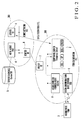
- An embodiment of the present invention will be described with reference to Fig. 1. In Fig. 1, a mobile communication system according to the embodiment comprises a server (S) 1, temporary server (S') 2, mobile node (MN) 3, agent (A) 4, and database (DB) 5. The
server 1,temporary server 2,mobile node 3, andagent 4 are connected to anetwork 100. - According to the embodiment, in a system in which, when the
mobile node 3 moves, the position of themobile node 3 is registered in theagent 4 serving as a management agent for managing the destination, theagent 4 sets thetemporary server 2 at a location suitable for themobile node 3 as if thetemporary server 2 were theserver 1, and causes thetemporary server 2 to communicate with themobile node 3 instead of theserver 1. - This configuration can select a server optimal for the destination of the
mobile node 3, i.e., thetemporary server 2 at the destination that has a small transmission delay, high throughput, and short response time and can provide information corresponding to the destination. - The first embodiment of the present invention will be described. In Fig. 2, a mobile communication system according to the first embodiment of the present invention is comprised of a home network (HL) 200 and foreign network (FL) 300.
- In the
home network 200, a home agent (HA) 4 serving as a Mobile IP (Internet Protocol) management agent, a server (S) 1 serving as a communication partner of a mobile node (MN) 3, and a router (R) 6 are installed. Thehome agent 4 is connected to aserver database 5 which manages a list of at least onetemporary server 2 serving as a proxy of theserver 1. Theserver database 5 contains position information of thetemporary server 2, e.g., prefix information of thetemporary server 2. - In the
foreign network 300, a router (R) 7, an access router/foreign agent (AR/FA) 8, a radio communication base station (BS) 9, and thetemporary server 2 for communicating with themobile node 3 instead of theserver 1 are installed. A plurality ofnetworks 300 may exist, or a plurality oftemporary servers 2 may be set in onenetwork 300. - The
home network 200 andforeign network 300 are connected to each other via therouters - As shown in Fig. 3, the
temporary server 2 in Fig. 2 is formed from a controller (CPU: Central Processing Unit) 21, amain memory 22 which stores acontrol program 22a executed by thecontroller 21, astorage device 23 which stores a correspondence table 231 between themobile node 3 and theserver 1, and acommunication controller 24 which controls communication. Thecontroller 21,main memory 22,storage device 23, andcommunication controller 24 are connected to each other via aninternal bus 210. Thetemporary server 2 has network functions equivalent to those of theserver 1. - As shown in Fig. 4, the
home agent 4 in Fig. 2 is formed from a controller (CPU) 41, amain memory 42 which stores acontrol program 42a executed by thecontroller 41, astorage device 43 which stores a correspondence table 431 between the home address HoA of themobile node 3 and the care-of address CoA of theforeign network 300, acommunication controller 44 which controls communication, and adatabase interface 45 for communicating data with theserver database 5. Thecontroller 41,main memory 42,storage device 43,communication controller 44, anddatabase interface 45 are connected to each other via aninternal bus 410. - The
controller 21 executes thecontrol program 22a to implement aposition registration unit 4a, temporaryserver selection unit 4b, serverfunction relocation unit 4c, andpacket transfer unit 4d in thehome agent 4, as shown in Fig. 5. - The
position registration unit 4a registers position information of the destination of themobile node 3 when themobile node 3 moves. More specifically, theposition registration unit 4a performs processes a3 and a4 in Fig. 7 and processes b3 and b4 in Fig. 9 (to be described later). - The temporary
server selection unit 4b selects, as thetemporary server 2, one of temporary server candidates managed by theserver database 5 in accordance with the destination of themobile node 3. More specifically, the temporaryserver selection unit 4b performs a process a5 in Fig. 7, processes b5 and b6 in Fig. 9, and steps S1 to S3 in Fig. 10 (to be described later). - The server
function relocation unit 4c sets thetemporary server 2 selected by the temporaryserver selection unit 4b to be a communication partner of themobile node 3, instead of theserver 1. More specifically, the serverfunction relocation unit 4c performs a process a6 in Fig. 7 and a process b7 in Fig. 9 (to be described later). - When the
mobile node 3 communicates with theserver 1, thepacket transfer unit 4d receives a packet transmitted from themobile node 3 to theserver 1, and transfers the packet to thetemporary server 2. More specifically, thepacket transfer unit 4d performs a process a10 in Fig. 7 and a process b11 in Fig. 9 (to be described later). - The temporary
server selection unit 4b includes first and second selection units 4b1 and 4b2 shown in Fig. 6. - The first selection unit 4b1 selects the
temporary server 2 by comparing position information of the destination of themobile node 3 with pieces of position information of temporary servers that are managed by theserver database 5. More specifically, the first selection unit 4b1 performs a process a5 in Fig. 7 (to be described later). - The second selection unit 4b2 selects the temporary server by performing a route finding process based on ICMP (Internet Control Message Protocol). More specifically, the second selection unit 4b2 performs processes b5 and b6 in Fig. 9 and steps S1 to S3 in Fig. 10 (to be described later).
- Operation of the mobile communication system according to the first embodiment will be explained with reference to Figs. 2 to 7. Note that processes by the
temporary server 2 andhome agent 4 shown in Fig. 7 are implemented by executing thecontrol programs controllers - In Mobile IP, when the
mobile node 3 is connected to theforeign network 300, it acquires the care-of address CoA of theforeign network 300 from the access router/foreign agent 8 (a1 in Fig. 7), and requests thehome agent 4 to register the position of the mobile node 3 (a2 in Fig. 7). Thehome agent 4 registers the home address HoA and CoA of themobile node 3 in the correspondence table 431 (a3 in Fig. 7), and sends back a registration response to the mobile node 3 (a4 in Fig. 7). - The
home agent 4 extracts prefix information from the CoA, performs matching between the extracted prefix information and pieces of prefix information of temporary server candidates that are managed by theserver database 5, and selects thetemporary server 2 from the candidates (a5 in Fig. 7). Thehome agent 4 notifies the selectedtemporary server 2 of the HoA and CoA of themobile node 3 and the IP address of theserver 1, and issues a setting request so that thetemporary server 2 operates as theserver 1 for the mobile node 3 (a6 in Fig. 7). - The
temporary server 2 creates the correspondence table 231 between themobile node 3 and theserver 1 on the basis of the notified HoA and CoA of themobile node 3 and the IP address of the server 1 (a7 in Fig. 7), and sends back a setting response to the home agent 4 (a8 in Fig. 7). Thetemporary server 2 uses the notified IP address of theserver 1 as the home address of theserver 1, and the IP address of thetemporary server 2 itself as the care-of address of theserver 1. Themobile node 3 executes communication in accordance with these settings. - When the
mobile node 3 communicates with theserver 1, a packet addressed to theserver 1 is transmitted to the home agent 4 (a9 in Fig. 7), and transferred from thehome agent 4 to the temporary server 2 (a10 in Fig. 7). In order to operate as theserver 1 for themobile node 3, thetemporary server 2 establishes a session (a11 in Fig. 7). Themobile node 3 andtemporary server 2 communicate with each other via the shortest route through the Mobile IP route optimization procedure (a12 in Fig. 7) - Operation when no
temporary server 2 can be selected from prefix information in the mobile communication system according to the first embodiment will be explained with reference to Figs. 8 to 10. Note that processes by thetemporary server 2 in Fig. 9, and processes by thehome agent 4 in Figs. 9 and 10 are implemented by executing thecontrol programs controllers - If no
temporary server 2 can be selected from prefix information in selecting thetemporary server 2, the following procedures are executed. In Fig. 8, reference symbols P1 to P4 denote node devices serving as candidates of thetemporary server 2. In a network in which the node devices P1 to P4 are connected by routers R1 to R9, the mobile node (MN) 3, home agent (HA) 4, and server (S) 1 are arranged. - The route from the home agent HA to each temporary server is determined by an ICMP route finding process which is a conventional method in the Internet. Determined route information is recorded in the
server database 5 together with position information of each server. - After the
mobile node 3 registers its position in the home agent 4 (b1 to b4 in Fig. 9), thehome agent 4 performs CoA route finding by transmitting a packet for ICMP route finding to the CoA of the mobile node 3 (b5 in Fig. 9). In route finding, the route is generally detected by increasing the hop limit of packets one by one, but a long time is taken for this method. A sequence number contained in ICMP is generally contained in a response message, and thus the route may be analyzed from a response by transmitting packets at once. - The
home agent 4 selects thetemporary server 2 by the temporary server selection procedure (b6 in Fig. 9). In this case, thehome agent 4 selects node devices at which routes overlap, as candidates of thetemporary server 2 on the basis of the routes of the node devices P1 to P4 that are obtained in advance, and routes to the CoA (step S1 in Fig. 10). - The
home agent 4 obtains branch points between the CoA and the node devices P1 to P4, and sets, as candidates of thetemporary server 2, the node devices P1 and P2 having the smallest sum among the sums of the numbers of hops between the CoA and branch points and between the node devices P1 to P4 and branch points (step S2 in Fig. 10). Finally, thehome agent 4 selects, as thetemporary server 2, the node device P2 having the smallest number of hops from the branch point (step S3 in Fig. 10). - The
home agent 4 can also transmit directly to the mobile node 3 a setting request to update the correspondence table of themobile node 3 so as to change a network route extending to theserver 1 to that extending to thetemporary server 2. - In this case, packets addressed to the
server 1 are directly transmitted from themobile node 3 to thetemporary server 2. Since thetemporary server 2 is set to operate as theserver 1 for themobile node 3, it directly responds to themobile node 3 and establishes a session. The route at this time is set by the same mechanism as route optimization by Mobile IP. Note that b7 to b13 in Fig. 9 are identical to a6 to a12 in Fig. 7. - When the
home network 200 andforeign network 300 are away from each other and themobile node 3 directly communicates with theserver 1, the communication speed decreases owing to the transmission delay between them. However, transmission via a relay server is known to increase the throughput and shorten the response time. - In the first embodiment, the
temporary server 2 optimal for the destination of themobile node 3 can be selected by the above configuration and operation, and a relay server can be seamlessly set for themobile node 3. - In the first embodiment, the
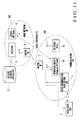
temporary server 2 optimal for the destination of themobile node 3 can be selected by the above configuration and operation. When themobile node 3 tries to communicate with an information providing server at a destination that is compatible with the destination, an optimal foreign server, i.e., thetemporary server 2 at the destination that has a small transmission delay, high throughput, and short response time and can provide information corresponding to the destination can be selected. - The second embodiment of the present invention will be described. In a mobile communication system by a mobile management method based on SIP (Session Initiation Protocol) according to the second embodiment of the present invention in Fig. 11, an
SIP server 11 having a registration function and serving as a management agent is installed in a home network (HL) 400, and an SIP server (proxy) 15 is installed in a foreign network (FL) 500. - The
home network 400 has a server (SIP client) 12 serving as a communication partner of amobile node 3. An SIP client database (SIP client DB) 13 which manages a list of candidates of a temporary server (temporary SIP client) 14 in theforeign network 500 is connected to theSIP server 11. - The
foreign network 500 has thetemporary server 14. Similar to the mobile communication system according to the first embodiment of the present invention described above, thehome network 400 andforeign network 500 are connected byrouters - Operation of the mobile communication system according to the second embodiment will be explained with reference to Figs. 11 and 12. The
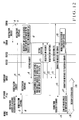
temporary server 14 andSIP server 11 shown in Fig. 12 have the same configurations as those of thetemporary server 2 andhome agent 4 described above. Processes by thetemporary server 14 andSIP server 11 shown in Fig. 12 can be implemented by executing control programs by their controllers. - In the SIP mobile management method, the
mobile node 3 acquires an address in theforeign network 500, transmits a registration request via the SIP server (proxy) 15, and registers the destination address in theSIP server 11 having the registration function (c3 to c6 in Fig. 12). The server (SIP client) 12 serving as a communication partner is separately registered in the SIP server 11 (c1 and c2 in Fig. 12). - The
SIP server 11 selects the temporary server (temporary SIP client) 14 from theSIP client database 13 on the basis of prefix information of the destination address CoA of the mobile node 3 (c7 in Fig. 12). - The
SIP server 11 transmits the SIP URL (Uniform Resource Locator) and CoA of themobile node 3 and the SIP URL of the server (SIP client) 12 to the temporary server (temporary SIP client) 14 (c8 in Fig. 12). - The temporary server (temporary SIP client) 14 creates a correspondence table between the SIP URL (Uniform Resource Locator) and CoA of the
mobile node 3 and the SIP URL of the server (SIP client) 12 on the basis of the SIP URLs and CoA which have been transmitted from the SIP server 11 (c9 in Fig. 12), and sends back a setting response to the SIP server 11 (c10 in Fig. 12). - The temporary server (temporary SIP client) 14 performs a registration process for the
SIP server 11 so that the temporary server (temporary SIP client) 14 operates as the server (SIP client) 12 for only the mobile node 3 (c11 and c12 in Fig. 12). The temporary server (temporary SIP client) 14 may execute a data federation procedure with the server (SIP client) 12 (c13 in Fig. 12), which is not defined in this embodiment. - When the
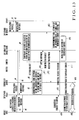
mobile node 3 requests connection to the server (SIP client) 12, the request reaches theSIP server 11 via the SIP server (proxy) 15 (c14 and c15 in Fig. 12). Because of the request from themobile node 3, theSIP server 11 sends back the address of the temporary server (temporary SIP client) 14 (c16 to c18 in Fig. 12). Themobile node 3 establishes a session with the temporary server (temporary SIP client) 14, and starts communication (c19 in Fig. 12). - Operation of a mobile communication system according to the third embodiment of the present invention will be described with reference to Fig. 13. In the mobile communication system according to the third embodiment, a mobile node and server (SIP client) are separately managed by the SIP server of the mobile node and that of the server.
- The SIP server of the server receives a registration request from the temporary server (temporary SIP client), and performs a registration process so that the temporary server (temporary SIP client) operates as the server (SIP client) for only the mobile node (d11 to d13 in Fig. 13).
- In the third embodiment, the mobile node and server (SIP client) are separately managed by the SIP server of the mobile node and that of the server. Even in this case, when the mobile node issues a connection request to the server (SIP client), the SIP server of the server sends back the address of the temporary server (temporary SIP client), and thus a session is established between the mobile node and the temporary server (temporary SIP client) (d14 to d19 in Fig. 13).
Claims (23)
- A mobile communication system characterized by comprising:a management agent (4, 11) which manages a destination of a mobile node (3);a server (1, 12) which serves as a communication partner of the mobile node; anda temporary server (2, 14) which has a network function equivalent to a network function of said server,said management agent comprisinga position registration unit (4a) which registers position information of the destination of said mobile node when said mobile node moves, anda server function relocation unit (4c) which sets said temporary server as the communication partner of said mobile node instead of said server.
- A system according to claim 1, wherein
said temporary server includes a plurality of temporary servers,
said management agent further comprises a temporary server selection unit (4b) which selects one of said temporary servers in accordance with the destination of said mobile node, and
said server function relocation unit sets said selected temporary server as the communication partner of said mobile node. - A system according to claim 2, further comprising a database (5, 13) which manages position information of said temporary server,
wherein said temporary server selection unit comprises a first selection unit (4b1) which selects said temporary server by comparing the position information of the destination of said mobile node with the position information of said temporary server that is managed by said database. - A system according to claim 2 or 3, wherein said temporary server selection unit comprises a second selection unit (4b2) which selects said temporary server by performing a route finding process based on ICMP (Internet Control Message Protocol).
- A system according to one of claims 1 to 4, wherein said temporary server exists at the destination of said mobile node.
- A system according to one of claims 2 to 5, wherein
said management agent and said server belong to a home network (200, 400) of said mobile node,
said temporary server belongs to a network (300, 500) different from the home network, and
said temporary server selection unit selects a temporary server belonging to a network at the destination of said mobile node. - A system according to one of claims 1 to 6, wherein said management agent includes a home agent (4) of Mobile IP (Internet Protocol).
- A system according to one of claims 1 to 7, wherein said management agent includes an SIP server (11) having a registration function in a mobile management method based on SIP (Session Initiation Protocol).
- A management agent apparatus (4, 11) characterized by comprising:a position registration unit (4a) which registers position information of a destination of a mobile node (3) when the mobile node moves; anda server function relocation unit (4c) which sets, as a communication partner of the mobile node, a temporary server (2, 14) having a network function equivalent to a network function of a server (1, 12), instead of the server serving as the communication partner of the mobile node.
- An apparatus according to claim 9, further comprising a temporary server selection unit (4b) which, when a plurality of temporary servers exist, selects one of the temporary servers in accordance with the destination of the mobile node,
wherein said server function relocation unit sets the selected temporary server as the communication partner of the mobile node. - An apparatus according to claim 10, wherein said temporary server selection unit comprises a first selection unit (4b1) which selects the temporary server by comparing the position information of the destination of the mobile node with position information of the temporary server.
- An apparatus according to claim 10 or 11, wherein said temporary server selection unit comprises a second selection unit (4b2) which selects the temporary server by performing a route finding process based on ICMP (Internet Control Message Protocol).
- An apparatus according to one of claims 9 to 12, wherein the temporary server exists at the destination of the mobile node.
- An apparatus according to one of claims 9 to 13, wherein the management agent apparatus includes a home agent (4) of Mobile IP (Internet Protocol).
- An apparatus according to one of claims 9 to 14, wherein the management agent apparatus includes an SIP server (11) having a registration function in a mobile management method based on SIP (Session Initiation Protocol).
- A server function moving method characterized by comprising:the step (a3, b3) of, when a mobile node (3) moves, registering position information of a destination in a management agent (4, 11) which manages the destination of the mobile node; andthe step (a6, b7) of setting, as a communication partner of the mobile node, a temporary server (2, 14) having a network function equivalent to a network function of a server (1, 12), instead of the server serving as the communication partner of the mobile node.
- A method according to claim 16, further comprising the step (a5, b5, b6) of, when a plurality of temporary servers exist, selecting one of the temporary servers in accordance with the destination of the mobile node,
wherein in the setting step, the selected temporary server is set as the communication partner of the mobile node. - A method according to claim 17, wherein the selecting step comprises the step (a5) of selecting the temporary server by comparing the position information of the destination of the mobile node with position information of the temporary server that is managed by a database.
- A method according to claim 17 or 18, wherein the selecting step comprises the step of selecting the temporary server by performing a route finding process based on ICMP (Internet Control Message Protocol).
- A method according to one of claims 16 to 19, wherein the temporary server exists at the destination of the mobile node.
- A method according to one of claims 16 to 20, wherein the management agent apparatus includes a home agent (4) of Mobile IP (Internet Protocol).
- A method according to one of claims 16 to 21, wherein the management agent apparatus includes an SIP server (11) having a registration function in a mobile management method based on SIP (Session Initiation Protocol).
- A recording medium characterized by recording a program for causing a computer to execute
the step (a3, b3) of, when a mobile node (3) moves, registering position information of a destination in a management agent (4, 11) which manages the destination of the mobile node, and
the step (a6, b7) of setting, as a communication partner of the mobile node, a temporary server (2, 14) having a network function equivalent to a network function of a server (1, 12), instead of the server serving as the communication partner of the mobile node.
Applications Claiming Priority (1)
| Application Number | Priority Date | Filing Date | Title |
|---|---|---|---|
| JP2004354771A JP2006166040A (en) | 2004-12-08 | 2004-12-08 | Mobile object communication system, management agent device, server function moving method used for them and its program |
Publications (1)
| Publication Number | Publication Date |
|---|---|
| EP1670210A1 true EP1670210A1 (en) | 2006-06-14 |
Family
ID=36102555
Family Applications (1)
| Application Number | Title | Priority Date | Filing Date |
|---|---|---|---|
| EP20050111693 Withdrawn EP1670210A1 (en) | 2004-12-08 | 2005-12-05 | Mobile communication system, management agent apparatus and server function moving method |
Country Status (3)
| Country | Link |
|---|---|
| US (1) | US7684796B2 (en) |
| EP (1) | EP1670210A1 (en) |
| JP (1) | JP2006166040A (en) |
Families Citing this family (8)
| Publication number | Priority date | Publication date | Assignee | Title |
|---|---|---|---|---|
| KR101398908B1 (en) * | 2007-05-22 | 2014-05-26 | 삼성전자주식회사 | Method and system for managing mobility in mobile telecommunication system using mobile ip |
| TWI363537B (en) * | 2007-07-27 | 2012-05-01 | Qubes Inc | Method for establishing network connection and mobile communication system thereof |
| EP2241087A1 (en) * | 2008-01-23 | 2010-10-20 | Telefonaktiebolaget L M Ericsson (publ) | Method and apparatus for pooling network resources |
| KR100970385B1 (en) * | 2008-06-09 | 2010-07-15 | 한국전자통신연구원 | Method and apparatus for routing a wireless network |
| US8667564B1 (en) * | 2008-09-24 | 2014-03-04 | Sprint Communications Company L.P. | Mobile internet protocol V6 SIP proxy bootstrapping |
| US8335212B2 (en) * | 2008-09-26 | 2012-12-18 | Mformation | System and method for providing least-cost routing of voice connections between home and foreign networks using voice-over-IP infrastructure |
| JP5322325B2 (en) * | 2010-06-09 | 2013-10-23 | パナソニック株式会社 | Radio base station apparatus, handover control system, and handover control method |
| JP2016045690A (en) | 2014-08-22 | 2016-04-04 | キヤノン株式会社 | Management system and method for controlling management system |
Citations (3)
| Publication number | Priority date | Publication date | Assignee | Title |
|---|---|---|---|---|
| US20030093553A1 (en) * | 2001-11-09 | 2003-05-15 | Franck Le | Method, system and system entities for providing location privacy in communication networks |
| WO2003088615A2 (en) * | 2002-04-18 | 2003-10-23 | Matsushita Electric Industrial Co., Ltd. | Mobile node, router, server and method for mobile communications under ip version 6 (ipv6) protocol |
| WO2004004281A1 (en) * | 2002-06-28 | 2004-01-08 | Cisco Technology, Inc. | Methods and apparatus for anchoring of mobile nodes using dns |
Family Cites Families (4)
| Publication number | Priority date | Publication date | Assignee | Title |
|---|---|---|---|---|
| JP3617952B2 (en) | 2000-09-14 | 2005-02-09 | Kddi株式会社 | Data transfer method and system in mobile IP |
| JP4180279B2 (en) * | 2002-01-11 | 2008-11-12 | Kddi株式会社 | Routing method and system using name resolution |
| JP4088540B2 (en) * | 2003-03-03 | 2008-05-21 | 株式会社日立製作所 | Packet communication system, communication network, and IP address selection method in mobile node |
| GB2400273A (en) * | 2003-04-05 | 2004-10-06 | Hewlett Packard Development Co | Managing use of services in wireless networks |
-
2004
- 2004-12-08 JP JP2004354771A patent/JP2006166040A/en active Pending
-
2005
- 2005-12-05 US US11/293,182 patent/US7684796B2/en active Active
- 2005-12-05 EP EP20050111693 patent/EP1670210A1/en not_active Withdrawn
Patent Citations (3)
| Publication number | Priority date | Publication date | Assignee | Title |
|---|---|---|---|---|
| US20030093553A1 (en) * | 2001-11-09 | 2003-05-15 | Franck Le | Method, system and system entities for providing location privacy in communication networks |
| WO2003088615A2 (en) * | 2002-04-18 | 2003-10-23 | Matsushita Electric Industrial Co., Ltd. | Mobile node, router, server and method for mobile communications under ip version 6 (ipv6) protocol |
| WO2004004281A1 (en) * | 2002-06-28 | 2004-01-08 | Cisco Technology, Inc. | Methods and apparatus for anchoring of mobile nodes using dns |
Also Published As
| Publication number | Publication date |
|---|---|
| JP2006166040A (en) | 2006-06-22 |
| US20060120340A1 (en) | 2006-06-08 |
| US7684796B2 (en) | 2010-03-23 |
Similar Documents
| Publication | Publication Date | Title |
|---|---|---|
| JP3994103B2 (en) | Optimal information transfer related to IP session relocation in mobile communication systems | |
| US11265238B2 (en) | Bypassing routing stacks using mobile internet protocol | |
| CN105164990B (en) | Method of network node functionality operating in a network node, client device | |
| US7016328B2 (en) | Method for allowing a client to access a wireless system | |
| US8064404B2 (en) | Method of subnet roaming within a network | |
| CN100586098C (en) | Packet Communication System and Method for Selecting IP Address of Mobile Node | |
| Jeon et al. | Distributed mobility management for the future mobile networks: A comprehensive analysis of key design options | |
| CN1522550A (en) | Candidate access router discovery | |
| AU2002224061B2 (en) | Relay device | |
| CN109314725B (en) | Local breakout in mobile IP networks | |
| EP1670210A1 (en) | Mobile communication system, management agent apparatus and server function moving method | |
| US20060280146A1 (en) | Handover support for multiple types of traffic | |
| KR100638591B1 (en) | DNA address update method in mobile IP terminal | |
| JP2004274652A (en) | Mobile terminal and packet communication method for IP network | |
| KR101556031B1 (en) | Method and system of distributed mobility control on network | |
| JP3940667B2 (en) | Network system and network connection device | |
| US20090034494A1 (en) | Method for Allocating a Temporary Address to a Mobile Node of a Telecommunication System, Equipment and Programs for Implementing Same | |
| Nguyen et al. | Personal mesh: A design of flexible and seamless Internet access for personal area network | |
| CN119946765A (en) | Routing selection method and device | |
| KR20090054147A (en) | Mobile IP6 Handover System and Method Based on Domain Name System | |
| JP2006054649A (en) | Packet transmission method and packet transmission system | |
| JP2004247836A (en) | Communication control method, relay device, program, and storage medium |
Legal Events
| Date | Code | Title | Description |
|---|---|---|---|
| PUAI | Public reference made under article 153(3) epc to a published international application that has entered the european phase |
Free format text: ORIGINAL CODE: 0009012 |
|
| AK | Designated contracting states |
Kind code of ref document: A1 Designated state(s): AT BE BG CH CY CZ DE DK EE ES FI FR GB GR HU IE IS IT LI LT LU LV MC NL PL PT RO SE SI SK TR |
|
| AX | Request for extension of the european patent |
Extension state: AL BA HR MK YU |
|
| 17P | Request for examination filed |
Effective date: 20061211 |
|
| AKX | Designation fees paid |
Designated state(s): DE FR GB |
|
| STAA | Information on the status of an ep patent application or granted ep patent |
Free format text: STATUS: THE APPLICATION HAS BEEN WITHDRAWN |
|
| 18W | Application withdrawn |
Effective date: 20100324 |