EP1669833B1 - Method of validating a trusted computer system - Google Patents
Method of validating a trusted computer system Download PDFInfo
- Publication number
- EP1669833B1 EP1669833B1 EP04368072.7A EP04368072A EP1669833B1 EP 1669833 B1 EP1669833 B1 EP 1669833B1 EP 04368072 A EP04368072 A EP 04368072A EP 1669833 B1 EP1669833 B1 EP 1669833B1
- Authority
- EP
- European Patent Office
- Prior art keywords
- component
- qualification
- file
- signature
- data
- Prior art date
- Legal status (The legal status is an assumption and is not a legal conclusion. Google has not performed a legal analysis and makes no representation as to the accuracy of the status listed.)
- Expired - Lifetime
Links
Images


Classifications
-
- G—PHYSICS
- G06—COMPUTING OR CALCULATING; COUNTING
- G06F—ELECTRIC DIGITAL DATA PROCESSING
- G06F21/00—Security arrangements for protecting computers, components thereof, programs or data against unauthorised activity
- G06F21/50—Monitoring users, programs or devices to maintain the integrity of platforms, e.g. of processors, firmware or operating systems
- G06F21/57—Certifying or maintaining trusted computer platforms, e.g. secure boots or power-downs, version controls, system software checks, secure updates or assessing vulnerabilities
-
- G—PHYSICS
- G06—COMPUTING OR CALCULATING; COUNTING
- G06F—ELECTRIC DIGITAL DATA PROCESSING
- G06F2221/00—Indexing scheme relating to security arrangements for protecting computers, components thereof, programs or data against unauthorised activity
- G06F2221/21—Indexing scheme relating to G06F21/00 and subgroups addressing additional information or applications relating to security arrangements for protecting computers, components thereof, programs or data against unauthorised activity
- G06F2221/2129—Authenticate client device independently of the user
Definitions
- the invention relates to Information Handling telecommunications and more particularly to a process and apparatus for securing access to an Information Handling System (IHS)
- IHS Information Handling System
- One of the first techniques which was used was the combination of the well-known user id and password which guarantees - up to a certain extent - that an user trying to access a predetermined system is an authorized user. Any user having neither user id nor the corresponding password will be considered as an unauthorized user and the access to the resource will be denied. While such a system has shown great efficiency in the past, it now shows to be clearly insufficient in the more recent systems.
- the combination of the user identifier and the password was improved by the use of a specific smart card reader.
- the logon procedure is replaced (or completed) by the simultaneous use of an secure smart card reader in order to enable a remote system make sure that the supposed user is the one who owns the authentication smart card.
- Clearly such a solution is a significant improvement brought to the security of the system, but it does not prevent any unauthorized modification or setting to the configuration of the system requesting access to the service.
- I.P. Internet Protocol
- Such systems provide partial solutions to some security issue, but do not provide an overall solution which can be used for a wide variety of IHS systems, based on multiple configuration, which encompasses as well as the user data and the internal configuration of the system.
- EP-A-1 182 534 discloses a method and apparatus for establishing trust between a user and a computer view as a trusted party, by means of the involvement of a trusted device (TD).
- TD trusted device
- figure 1 illustrates a basic structure of a system for embodying the present invention.
- the system may be any Information Handling System or device which is equipped with processing resources.
- P.D.A. Personal Digital Assistant
- FIG. 1 more particularly illustrates the structure and components of such a system 100 which, in the preferred embodiment, is a desktop or a laptop computer or any handheld/PDA computer fitted with hardware components 110 and software elements.
- Hardware components include a motherboard 111 fitted with a processor, memory, power and battery equipments, and a set of adapters or controllers as well as Input /output buses and ports.
- the motherboard cooperates with specialized adapters, such as Local Area Network (L.A.N.) or Wide Area Network (W.A.N) cards, or any specialized cards or adapters (video or audio) providing specialized functions and processing capabilities.
- L.A.N. Local Area Network
- W.A.N Wide Area Network
- the system 100 further includes a set of external devices, such as the traditional main devices 112, ie the well known display-keyboard-mouse equipment and some storage facilities (hard disks, floppy disks, Cdrom or DVD rom drives etc ).
- the system may further includes secondary devices 113 attached to the mother board via appropriate I/O ports, ie a printer, a scanner, video and photo equipments, communication devices (Bluetooth, WIFI, Infrared, telephony GSM-GPRS, modem), and even more specialized devices, such as a radio frequency identification (RFID) reader, a biometric reader and, more generally, any other equipment which is likely to be a source of information.
- RFID radio frequency identification
- System 100 is operated under the control of software code, which is organized in low-level code 121 - the known Basic Input Output System (BIOS) code cooperating with the Operating System (O.S.) and higher level code including special software components and applications.
- system 100 is operated under the well known WINDOWS (TM) operating system marketed by MICROSOFT Corp.
- TM WINDOWS
- An hand-held computer can be equipped with the WINDOWS CE (Trademark of Microsoft Comp.) operating system designed for pocket PCs.
- WINDOWS CE Trademark of Microsoft Comp.
- the skilled man will adapt the invention to any alternate operating system, such as LINUX or PalmOS (TM) for instance.
- system 100 is given access, via interface 130, to a wide range of information, such as contextual or environmental information 131 as well as user related information 132.
- Environment information 131 may be , without any limitation, information regarding Global Positioning System (G.P.S.), the date and the time, the relevant temperature of the room wherein the system is being operated, the phone line number provided by the modem adapter, the Media Access Control (MAC)/IP address assigned by the network adapter .
- User related information 132 may include data such as biometric data, PIN code, login-password, ID card or any personal information provided by the user....
- the system 100 is viewed as a set of hardware and software components which are combined together in order to provide the user with an access to some resources or the completion of a given transaction (for instance with a - not known - remote server).
- the invention achieves high security in transaction or any service by systemically performing, prior to any transaction, a complete authentication procedure which includes both a qualification and a validation procedure.
- a component - is understood to encompass hardware and software element which are constituents of the system. More precisely, a component is a constitutive element of a system. It can be a built-in card (mother board, network adapter card), a microprocessor chip, a memory chip, a hard disk... More generally, a peripheral device (biometric reader) and a software component or application program is considered to be a component.
- every component is associated to component data which includes, without limitation, Component Identification Data (CID) and Component Contextual Data (CCD).
- CID Component Identification Data
- CCD Component Contextual Data
- CID Component Identification Data
- CID is an identifier which uniquely identifies the component itself. Clearly, it can be any unique alphanumerical string which identifies the corresponding component, be it hardware or software.
- each processor has a unique serial number; each installed software (under Windows (TM) for example) (or software component as Active X) has a Globally Unique Identifier (GUID) and/or a ClaSs IDentifier (CLSID).
- GUID Globally Unique Identifier
- CLSID ClaSs IDentifier
- Such identifiers are particularly used for permitting the different drivers corresponding to the different devices to be installed within a given operating system, for instance the Windows (TM) type operating system.
- TM Windows
- the invention takes advantage of the already existing identifiers for improving security and authentication in the transactions and access to information handling systems.
- the Component data further includes a Component Contextual Data (CCD) which does not identify the component itself but are the data returned by the component when it is in used.
- CCD is the GPS coordinates on a specific request provided by a GPS device component.
- CID and CDD data may be combined for creating a complex contextual identification reference which will be used for authorizing or denying the access to the system 100.
- This complex identification is used in a secured authentication process which involves two successive qualification and validation processes which substantially increase the security of access to the transaction or to the service.
- the first qualification process permits the generation of a Reference Qualification Signature (RQS) which is a snapshot of the authorized configuration of the system - covering both the component identifiers and possibly the contextual data provided by some components - which signature is used in a subsequent validation process for the purpose of authorizing or denying access to a transaction or to a service.
- RQS Reference Qualification Signature
- the invention can be used for a wide variety of systems and for a wide variety of applications, including financial, legal or economic applications involving access to sensitive data.
- it can be used in two different contexts, by securing a remote transaction between system 100 and a distant server or even, locally, by securing the use of system 100.
- Figure 2 illustrates a first embodiment of a qualification process in a client-server configuration, where system 100 is used for accessing a transaction or a service from a remote server (not shown in the figure).
- the Qualification process is initiated with a step 201 which consists in the installation of a so-called Qualifying agent which is installed within system 100.
- the setup of Qualifying agent can be achieved from different conventional ways: from a media as a CDROM or a floppy disk, via a downloaded transfer (through a secure https internet connection for example).
- system 100 is operated under a Windows NT or Windows 2000 type operating system, it should be noticed that the administrative rights are required for achieving installation of Qualifying Agent. For the more critical applications, it will be useful to reserve the execution of the Qualifying process described below only to specialized staff having administrative rights over the computer or system 100.
- SQF System Qualification File
- XML extended Markup Language
- the SQF file presents a structured organization which allows storage of the data corresponding to the different components detected within system 100, which includes the Component Identification Data (CID) and, possibly, the Component - Contextual Data (CCD) which can be returned by one or more particular component.
- CID Component Identification Data
- CCD Component - Contextual Data
- the whole pieces of information will be combined in a same file which will be encrypted for the purpose of generating a reference qualifying signature providing enhanced security to the system.
- SQF System Qualification File
- XML extended Markup Language
- the SQF file comprises, upon its creation, so-called Component Presence Parameter (CPP) which are predefined parameters associated to generic type of components (such as hard disk, motherboard, etc%) which will be used for securing more particularly both the Qualification and the Validation process and, thus, advantageously increasing the efficiency of the authentication process.
- CPP Component Presence Parameter
- the CPP parameters can be the followings:
- the SQF file is created by selecting one particular file among a set of predefined templates which correspond to different sets of profiles or different levels of security or qualification , or even to different applications which can be secured by the authentication process. That permits to organize different levels of qualifications with different configurations of components which will be detected, tracked and checked by means of their corresponding CPP parameters.
- a four levels classification is organized by means of four distinctive templates for the SQF file, as follows:
- the first example which is indicated below corresponds to one profile wherein the motherboard, the CPU and the RAM cannot be changed once qualifying process is completed (TOFILL replaced with CID in the Fill Up Component Identifier data step 207).
- the motherboard, the CPU and the RAM are defined to be “mandatory" and the field TOFILL will be replaced by the individual data extracted during detection of the components.
- the second example shows a situation where no smartcard is allowed to be connected to the system 100 since the CPP parameter is set to 'prohibited', what prohibits the presence of such component during the qualification or the validation processes.
- the GPS component is assigned a "mandatory" CPP parameter and the SQF file contains a ⁇ CCD> section with attributes which defines some predefined geographical ranges and already contained into the file.
- step 203 is an entering point for a loop, based on steps 203-208, which is used for detecting, tracking and registering the different components which can be detected within system 100 in accordance with the structure of the SQF file which was created in step 202.
- the process refers to the QSF and extracts thereof - if any - the corresponding Component Presence Parameter (CPP) from the QSF. That value is read in a step 204.
- CCP Component Presence Parameter
- the process checks the conformity of the system with the CPP parameter corresponding to the component being considered. This is achieved by detection of the list of components existing into the system and comparing said list with the contents of the XML structure of SQF file.
- the qualifying process extracts system information directly from the SMBIOS tables, or interrogates the Distributed Management Interface (DMI), or Windows Management Instrumentation (WMI) as known from Microsoft.
- DMI Distributed Management Interface
- WMI Windows Management Instrumentation
- the DMI interface is an Application Programming Interface (API) that consists of a set of routines that are called for accessing the information stored within the BIOS layer.
- API Application Programming Interface
- Basic information relating to the DMI programming interface can be found at the address http://www.dmtf.org/spec/html.
- the Qualifying process accesses the different tables contained in the System Management BIOS (SMBIOS) for the purpose of reporting comprehensive information regarding the user's preferred software configuration, and required for completing a request for transaction.
- SMBIOS System Management BIOS
- Such information includes the type of processor, the type of chipset, the number of hard disk drives, the particular graphic card being used, the serial number of the display, the reference of the operating system and so on.
- the process may access the BIOS level to determine the different components, such as follows:
- step 206 which interrupts the qualification process.
- system 100 will be considered as being a NON QUALIFIED system which can be used for normal or routines tasks but certainly not for accessing sensitive or critical information or transactions.
- This is a great advantage of the process of the invention which permits modifications to be brought to one computer (for instance by plugging some external devices) and continuing to use the system for "normal" and routine tasks.
- the system when the system is applied for qualification, the system will have to be in a predefined condition - including hardware and software configuration - to allow completion of the qualification process and the creation of the reference signature which will be discussed below.
- the process proceeds to a step 207 where the information associated to the corresponding component, i.e. the Component Identification Data (CID) and the Component Contextual Data (CCD) retrieved from said component, are being precisely introduced at the appropriate location (field FILLIN) within the XML structure of the SQF file.
- the CID will identify the captor while the CCD may consist, for instance, of a raw bitmap image of a fingerprint of the user. It consequently integrates user data into the gathered information inside the qualifying protocol file template.
- the qualifying process reads the receiver hardware identifiers (CID) and the GPS data provided by the said receiver (CCD) and such information is stored within the XML structure of the SQF file.
- the process then proceeds with a step 208 where the next component in the template of the SQF file will be considered, and the process goes back to entry point 203.
- step 209 the System Qualification File (SQF) is being encrypted by a cryptology algorithm (such as RSA, PGP ... based on public and private keys).
- a cryptology algorithm such as RSA, PGP ... based on public and private keys.
- RQS Reference Qualifying Signature
- CDD contextual data
- the CID and CCD data were introduced within the template of the SQF file in order to derive one unique completed SQF file.
- the originating SQF file may remain as a template and the CID and the CDD data may be stored into a separate file, which results in the generation of two encrypted files: a first file containing the CPP defining the level of qualification and a second file containing the CID and CDD data retrieved from all the components.
- the Qualification process generates one unique Reference Qualification Signature (RQS) - based on one unique encrypted SQF file - which encompasses CPP, CID and CID data.
- RQS Reference Qualification Signature
- a step 210 the process then performs a secure transfer of the RQS signature to the remote system and the latter is then stored in a step 211.
- the RQS reference qualifying signature is sent via common secured remote protocols (such as HTTPs, VPN ).
- the remote server then stores the qualifying signature relatively to the system (in a database or a XML file) in order to be able to access to these information during a subsequent Validation process.
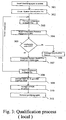
- Figure 3 illustrates an alternate embodiment where the Qualification process is used for increasing security of use of a system, considered per se, ie irrespectively of any connection to any server.
- Steps 201 to 209 are respectively the same than steps 301 to 309.
- the process After encryption of the SQF file, the process then stores the latter in a protected area of the system in a step 310. Then, in a step 311 , the process proceeds with the suppression of the qualifying agent from the system.
- the two embodiments which are respectively illustrated in figure 2 and Figure 3 differ from one another by the fact that, in one case, the Reference Qualifying Signature RQS is stored within the system while, in the other case, it is uploaded to the remote server which certainly increases the level of the security.
- authentication of the system 100 is substantially improved by use of the validation process which will now be described and which, again, will execute a complete checking of a system applying for validation, prior to allowing such system to complete any transaction or to access critical data.
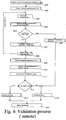
- Figure 4 illustrates the validation process of the invention in a client server configuration.
- the validation process starts with a step 401 where, similarly to step 201 of figure 2 , a validation agent is being installed within the system requesting a transaction with the server or any kind of remote service.
- the process then proceeds with a step 402 where the validation agent creates a System Qualification File SQF corresponding to the level of qualification which is required from the system 100.
- the process Preferably, the process generates a template having the same structure than the template used in step 202 of figure 2 , and thus having corresponding Component Presence Parameter (CPP).
- CPP Component Presence Parameter
- step 403 is an entry point of a loop 403-408 used for separately processing all the components conforming to the list identified within the SQF file.
- the validation process extracts the CPP parameter from the template and, in a step 405 , it performs a detection operation (by using similar methods than those discussed above) for checking conformity of the actual system to the CPP being listed.
- the validation is interrupted in a step 406 and then access to the transaction or to the resource is denied to the user, in a step 414.
- step 405 the process proceeds with a step 407 where the CID and CCD data are retrieved from the corresponding component and used for filling the SQF files.
- Step 408 is used for considering the next component within the list of generic components defined in SQF file and the process returns back to step 403 for processing this new component.
- step 409 which encrypts the fully completed SQF file in order to generate a Checking Signature (CS) there from.
- CS Checking Signature
- step 410 the checking signature (CS) is transmitted to the remote server.
- Step 411 is an optional step where the validation agent can be removed from the system applying for validation.
- step 412 a test is performed on the server in order to determine whether the checking signature CS is equal to the Reference Qualifying Signature which was computed during the Qualification process of the system and stored within the remote server.
- the remote server generates a temporary session ID (or a time stamp) on step 401 which will be also checked in step 412. If the session ID has expired (for example, it can be for a time out reason between steps 401 and 412), the access will be denied. This additional procedure improves the security.
- Access to the transaction or to the service is thus authorized in a step 413 and the validation process then completes in a step 415 which can be the end of the connection.
- step 412 determines whether the system 100 is not fully compliant with the requirements listed within the RQS stored within the server, for instance because some internal parts of the system were changed or the user is not the registered user, and thus access to the transaction or to the service is denied in a step 414.
- the process then proceeds with step 415 which is the end of the validation process.
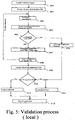
- Figure 5 shows an alternate embodiment of the validation process which is used in a local configuration for the purpose of securing an access to system 100 assumed to be in a stand-alone configuration.
- the validation process involves steps 501-509 which are identical to steps 401-409 of the validation process in the remote configuration.
- a validation agent is installed (step 501) for the purpose of creating a SQF file on the system (step 502) and, for each component having a type listed within the SQF file, the CPP parameters are read (step 504), then checked for conformity (step 505).
- the CID and the contextual CDD data are then retrieved for the purpose of filling the SQF file.
- step 513 the access to the transaction or to the service is allowed.
- step 509 determines whether the test of step 509 fails. If the test of step 509 fails, then the validation process proceeds with a step 514 where access to the transaction or to the service is denied to the system 100.
- the validation process then completes in a step 515.
- the Reference system qualifying signature is not provided by the product manufacturer of the component, but is automatically generated by the new qualifying process which was described above, for the purpose of providing a reference which can be used within the validation process and thus secure the access to the IHS system or to the transaction.
- the invention can be directly applied to the use of national ID card. Indeed, some countries, including France, are reconsidering the generalization of a new type of ID cards which integrate an electronic chip to contain digital biometric data of the bearer.
- France in order to enable city halls to collect the biometric data of the citizens who order an ID card, the government provides mobile equipments, which are transported from city hall to city hall, to record the information. Needless to say how essential it is that those mobile equipments be not tampered with, in order to make sure that they are only used by authorized administration personnel, and that recorded biometric information is not modified or unduly extracted after recording. Only approved systems and users should then be allowed to record and transmit information to the central server which controls the production of ID documents, the integrity of the whole chain should be checked and the process should be fully traceable.
- biometric information generalized on passports is underway. To protect the privacy of traveling citizens, it is important to make sure that their biometric data are not collected unduly when they identify themselves. Therefore, only qualified and fully validated systems should be used for processing such information, and the integrity of the systems should be checkable.
- the invention can also be used for providing efficient warranty service by a product manufacturer.
- a product manufacturer In case of rent of a computer, for instance, it can be of interest for the company providing the system to be sure that the system is identical when it returns from leasing with respect to the configuration it has when it was shipped to the client.
- the invention provides a fast and easy way to check if the computer has been opened and modified by the customer. It definitely replaces the old and unsafe warranty sticker.
- the innovation provides a technical solution for securing unauthorized changes by remote checks. This is particularly valuable for some applications when it is desired that no unauthorized modification occurred in one computer or one system, from a preconfigured, predefined and registered setting. New possibilities for leasing or for commercial rent are made possible with the invention.
- Another advantage from the use of the invention is the possibility to control the access to the service from the physical location of said machine.
Landscapes
- Engineering & Computer Science (AREA)
- Computer Hardware Design (AREA)
- General Engineering & Computer Science (AREA)
- Computer Security & Cryptography (AREA)
- Software Systems (AREA)
- Theoretical Computer Science (AREA)
- Physics & Mathematics (AREA)
- General Physics & Mathematics (AREA)
- Storage Device Security (AREA)
Description
- The invention relates to Information Handling telecommunications and more particularly to a process and apparatus for securing access to an Information Handling System (IHS)
- The constant progress of the communication systems and technology and that of the communication systems, particularly with the explosion of the Internet and intranet networks, has resulted in the development of an era of information and services. Nowadays, computers and more generally the Information Handling Systems (I.H.S.) such as the desktop computers, the laptop computers and any type of hand-held or portable systems can be used for accessing a wide variety of transactions or services, wherever the user or the customer of the new information era is.
- This clearly raises the problem of the security of access to the source of information and, more generally, to the transaction and services.
- In the new world of information, exemplified by the development of the Internet and intranet networks, security issues are showing to be more and more critical.
- Some techniques are already known for solving - at least partly - the problem of security of access to sensitive databases and, more generally, to any Information Handling System.
- One of the first techniques which was used was the combination of the well-known user id and password which guarantees - up to a certain extent - that an user trying to access a predetermined system is an authorized user. Any user having neither user id nor the corresponding password will be considered as an unauthorized user and the access to the resource will be denied. While such a system has shown great efficiency in the past, it now shows to be clearly insufficient in the more recent systems.
- The combination of the user identifier and the password was improved by the use of a specific smart card reader. In a more sophisticated way, the logon procedure is replaced (or completed) by the simultaneous use of an secure smart card reader in order to enable a remote system make sure that the supposed user is the one who owns the authentication smart card. Clearly such a solution is a significant improvement brought to the security of the system, but it does not prevent any unauthorized modification or setting to the configuration of the system requesting access to the service.
- More sophisticated systems were developed, based on the use of biometric identification or even the checking of some parameters internal to the user configuration, such as the Internet Protocol (I.P.) address of the customer home or office when the latter tries a connection to a remote system. Such systems provide partial solutions to some security issue, but do not provide an overall solution which can be used for a wide variety of IHS systems, based on multiple configuration, which encompasses as well as the user data and the internal configuration of the system.
- No solution guarantees that the system has not been modified. Simple modifications, like adding devices such as USB data storage, or replacing a biometric reader by another device, may be harmful, as they allow to bypass applications security.
-
EP-A-1 182 534 discloses a method and apparatus for establishing trust between a user and a computer view as a trusted party, by means of the involvement of a trusted device (TD). - The above mentioned prior art present the drawback of involving a trusted device and, more particularly, specially designed components being assigned specific Component Configuration Values (CCV) stored into specific so called Component Configuration Registers (CCR) registers. This mechanism requires the modification of a whole set of components composing so as to implement the process and does not provide any solution for already existing components.
- Clearly, there is still a need for a global solution for improving security in computers and more generally IHS systems, based on a wide variety of machines and their various configurations.
- It is an object of the present invention to improve security in the access of an Information Handling System (I.H.S.) according to the invention defined in the appended claims.
- An embodiment of the invention will now be described, by way of example only, with reference to the accompanying drawings, wherein:
-
Figure 1 illustrates a basic structure of an information handling system which can take advantage of the process according to the present invention. -
Figure 2 andFigure 4 respectively illustrate the qualification and the validation process of a first embodiment of the invention, operating in a client-server configuration. -
Figure 3 andFigure 5 respectively illustrate a second embodiment of the invention where the qualification and a validation processes are only executed locally withinsystem 100. - The process and apparatus will be more particularly described in reference with
figure 1 which illustrates a basic structure of a system for embodying the present invention. - Generally speaking the system may be any Information Handling System or device which is equipped with processing resources. This clearly includes, without any limitation, desktop computers, portable computers and laptops, hand-held or pocket PC's also known as Personal Digital Assistant (P.D.A.), and even the latest mobile phones equipped with processing resources.
-
Figure 1 more particularly illustrates the structure and components of such asystem 100 which, in the preferred embodiment, is a desktop or a laptop computer or any handheld/PDA computer fitted withhardware components 110 and software elements. Hardware components include amotherboard 111 fitted with a processor, memory, power and battery equipments, and a set of adapters or controllers as well as Input /output buses and ports. The motherboard cooperates with specialized adapters, such as Local Area Network (L.A.N.) or Wide Area Network (W.A.N) cards, or any specialized cards or adapters (video or audio) providing specialized functions and processing capabilities. - In addition to the mother board, the
system 100 further includes a set of external devices, such as the traditionalmain devices 112, ie the well known display-keyboard-mouse equipment and some storage facilities (hard disks, floppy disks, Cdrom or DVD rom drives etc ...). The system may further includessecondary devices 113 attached to the mother board via appropriate I/O ports, ie a printer, a scanner, video and photo equipments, communication devices (Bluetooth, WIFI, Infrared, telephony GSM-GPRS, modem), and even more specialized devices, such as a radio frequency identification (RFID) reader, a biometric reader and, more generally, any other equipment which is likely to be a source of information. -
System 100 is operated under the control of software code, which is organized in low-level code 121 - the known Basic Input Output System (BIOS) code cooperating with the Operating System (O.S.) and higher level code including special software components and applications. In the preferred embodiment of the invention,system 100 is operated under the well known WINDOWS (TM) operating system marketed by MICROSOFT Corp. An hand-held computer can be equipped with the WINDOWS CE (Trademark of Microsoft Comp.) operating system designed for pocket PCs. Clearly, the skilled man will adapt the invention to any alternate operating system, such as LINUX or PalmOS (TM) for instance. - Considering now more particularly the information which
system 100 may access through its general purpose and more specialized devices, it can be seen thatsystem 100 is given access, viainterface 130, to a wide range of information, such as contextual orenvironmental information 131 as well as userrelated information 132.Environment information 131 may be , without any limitation, information regarding Global Positioning System (G.P.S.), the date and the time, the relevant temperature of the room wherein the system is being operated, the phone line number provided by the modem adapter, the Media Access Control (MAC)/IP address assigned by the network adapter ..... Userrelated information 132 may include data such as biometric data, PIN code, login-password, ID card or any personal information provided by the user.... - As it is illustrated in
figure 1 , thesystem 100 is viewed as a set of hardware and software components which are combined together in order to provide the user with an access to some resources or the completion of a given transaction (for instance with a - not known - remote server). - The invention achieves high security in transaction or any service by systemically performing, prior to any transaction, a complete authentication procedure which includes both a qualification and a validation procedure.
- During both the qualification and the validation procedure, all the components forming part of the hardware or software equipment of the system being authenticated are identified, checked and validated as will be described hereinafter with details.
- Every component within
system 100 is being identified, registered and validated prior to the transaction or prior to accessing to any secured service. In the frame of the subject invention, a component - is understood to encompass hardware and software element which are constituents of the system. More precisely, a component is a constitutive element of a system. It can be a built-in card (mother board, network adapter card), a microprocessor chip, a memory chip, a hard disk... More generally, a peripheral device (biometric reader) and a software component or application program is considered to be a component. - In the preferred embodiment of the invention, every component is associated to component data which includes, without limitation, Component Identification Data (CID) and Component Contextual Data (CCD).
- Component Identification Data (CID) is an identifier which uniquely identifies the component itself. Clearly, it can be any unique alphanumerical string which identifies the corresponding component, be it hardware or software.
- It should be noticed that, in the technical field of computers, it is common practice to the product manufacturers and to the providers of individual parts to assign references which individually identify one particular element. For instance, each processor has a unique serial number; each installed software (under Windows (TM) for example) (or software component as Active X) has a Globally Unique Identifier (GUID) and/or a ClaSs IDentifier (CLSID). For the software GUID/CLSID, there could be no collision between two identifiers as they are building up to be unique in an OS. For the hardware components, a Computer ID could be created by concatenating the identifier of the manufacturer, the identifier of the model and the serial number of the component itself. Clearly, the skilled man will adapt the invention to any alternate operating system, such as LINUX.
- Such identifiers are particularly used for permitting the different drivers corresponding to the different devices to be installed within a given operating system, for instance the Windows (TM) type operating system.
- The invention takes advantage of the already existing identifiers for improving security and authentication in the transactions and access to information handling systems.
- In addition to Component Identification Data, the Component data further includes a Component Contextual Data (CCD) which does not identify the component itself but are the data returned by the component when it is in used. For instance, the CCD is the GPS coordinates on a specific request provided by a GPS device component. CID and CDD data may be combined for creating a complex contextual identification reference which will be used for authorizing or denying the access to the
system 100. - This complex identification is used in a secured authentication process which involves two successive qualification and validation processes which substantially increase the security of access to the transaction or to the service. The first qualification process permits the generation of a Reference Qualification Signature (RQS) which is a snapshot of the authorized configuration of the system - covering both the component identifiers and possibly the contextual data provided by some components - which signature is used in a subsequent validation process for the purpose of authorizing or denying access to a transaction or to a service.
- It can be seen that the invention can be used for a wide variety of systems and for a wide variety of applications, including financial, legal or economic applications involving access to sensitive data. In particular, it can be used in two different contexts, by securing a remote transaction between
system 100 and a distant server or even, locally, by securing the use ofsystem 100. -
Figure 2 illustrates a first embodiment of a qualification process in a client-server configuration, wheresystem 100 is used for accessing a transaction or a service from a remote server (not shown in the figure). - The Qualification process is initiated with a
step 201 which consists in the installation of a so-called Qualifying agent which is installed withinsystem 100. The setup of Qualifying agent can be achieved from different conventional ways: from a media as a CDROM or a floppy disk, via a downloaded transfer (through a secure https internet connexion for example). Whensystem 100 is operated under a Windows NT or Windows 2000 type operating system, it should be noticed that the administrative rights are required for achieving installation of Qualifying Agent. For the more critical applications, it will be useful to reserve the execution of the Qualifying process described below only to specialized staff having administrative rights over the computer orsystem 100. - The Qualification process then proceeds with a
step 202 where a so-called System Qualification File (SQF) is created which, in the preferred embodiment, takes the form of a extended Markup Language (XML) file which is ideally stored in a secured and temporary area of the system (for example in the memory or on the hard disk). - The SQF file presents a structured organization which allows storage of the data corresponding to the different components detected within
system 100, which includes the Component Identification Data (CID) and, possibly, the Component - Contextual Data (CCD) which can be returned by one or more particular component. The whole pieces of information will be combined in a same file which will be encrypted for the purpose of generating a reference qualifying signature providing enhanced security to the system. - System Qualification File (SQF) is arranged as a template for a extended Markup Language (XML) file which is structured to provide space available for receiving, for every generic type of component, the CID and the CCD of the actual component detected and identified within the system. Preferably, the SQF file comprises, upon its creation, so-called Component Presence Parameter (CPP) which are predefined parameters associated to generic type of components (such as hard disk, motherboard, etc...) which will be used for securing more particularly both the Qualification and the Validation process and, thus, advantageously increasing the efficiency of the authentication process. The CPP parameters can be the followings:
- Mandatory: the corresponding component must be present within the system to permit full execution of the Qualification or the Validation process
- Optional: the component can be present or not. Its presence does not influence the execution of the Qualification nor the Validation process
- Prohibited: the component cannot be present. Detection of the presence of the components will stop the execution of the Qualification or the Validation process.
- More preferably, the SQF file is created by selecting one particular file among a set of predefined templates which correspond to different sets of profiles or different levels of security or qualification, or even to different applications which can be secured by the authentication process. That permits to organize different levels of qualifications with different configurations of components which will be detected, tracked and checked by means of their corresponding CPP parameters.
- Preferably, a four levels classification is organized by means of four distinctive templates for the SQF file, as follows:
- Qualification Level 1: confidential
- Qualification Level 2: restricted
- Qualification Level 3: critical
- Qualification Level 4: Highly critical
- For clarity's sake, there will now be detailed three examples of SQF files corresponding to three different set of qualifications.
- The first example which is indicated below corresponds to one profile wherein the motherboard, the CPU and the RAM cannot be changed once qualifying process is completed (TOFILL replaced with CID in the Fill Up Component Identifier data step 207).
 <?xml version="1.0"?>
 <Computer QualificationLevel="3">
  <motherboard CPP="mandatory">
   <CID>
    <manufacturer> TOFILL </manufacturer>
    <model> TOFILL </model>
    <chipset> TOFILL </chipset>
   </CID>
  </motherboard>
  <CPU CPP="mandatory">
   <CID>
   <manufacturer> TOFILL </manufacturer>
   <model> TOFILL </model>
   <speed> TOFILL </speed>
   <SN> TOFILL </SN>
  <CID>
 </CPU>
 <RAM CPP="mandatory">
 </RAM>
 <?xml version='1.0"?>
 <Computer QualificationLevel="2">
  <SmartCardReader CPP="prohibited">
  </SmartCardReader>
 </Computer>
 <?xml version="1.0"?>
 <Computer QualificationLevel="1">
 <GPS CPP="mandatory">
  <CID>
   <manufacturer> TOFILL </manufacturer>
   <model> TOFILL </model>
   <SN> TOFILL </SN>
  <CCD>
    <Lattitude RangeMin="-10" RangeMax="+30"> TOFILL </Lattitude>
    <Longitude RangeMin="-50" RangeMax="+50"> TOFILL </Longitude>
  </CCD>
 </GPS>
 BOOL GetVolumeInformation(
 LPCTSTR lpRootPathNatne,
 LPTSTR lpVolumeNameBuffer,
 DWORD nVolumeNameSize,
 LPDWORD lpVolumeSerialNumber,
 LPDWORD lpMaximumComponentLength,
 LPDWORD lpFileSystemFlags,
 LPTSTR lpFileSystemNameBuffer,
 DWORD nFileSystemNameSize
 );
 class Win32 _BIOS: CIM_BIOSElement
 {
 uint16 BiosCharacteristics[];
 string BIOS Version[];
 string BuildNumber;
 string Caption;
 string CodeSet;
 string CurrentLanguage;
 string Description;
 string IdentificationCode;
 uint16 InstallableLanguages;
 datetime InstallDate;
 string LanguageEdition;
 String ListOfLanguages[];
 string Manufacturer;
 string Name;
 string OtherTargetOS;
 boolean PrimaryBIOS;
 datetime ReleaseDate;
 string SerialNumber;
 string SMBIOSBIOSVersion;
 uint16 SMBIOSMajorVersion;
 uint16 SMBIOSMinorVersion;
 boolean SMBIOSPresent;
 string SoftwareElementID;
 uint16 SoftwareElementState;
 string Status;
 uint16 TargetOperatingSystem;
 string Version;
 };
- 1. make sure that only authorized personnel access these data bases
- 2. enable tracing of accesses
- 3. enforce even stricter regulations to control who modifies the content of the data bases.
When a computer (or any electronic server) is sold, the invention provides a fast and easy way to check if the computer has been opened and modified by the customer. It definitely replaces the old and unsafe warranty sticker.
Claims (11)
- Process for securing the access to the resources of an Information Handling System (I.H.S.), said I.H.S. comprising a set of hardware components including information representative of the manufacturer, model and serial number of said hardware components, said I.H.S. further comprising an Operating System (O.S.) used for running applications and providing an Application Programming Interface (API) for accessing said information representative of the manufacturer, model and serial number of said hardware components, said process involving the steps of initiating a preliminary qualification process based on the detection of the components of said system, followed by the generation of a reference qualification signature;- a validation process subsequent to said qualification process comprising, prior to any transaction with or access to a remote server, a further detection of the components for the purpose of generating a new signature to be compared with said reference qualification signature,
characterized in that
said qualification process Involves the steps of:- detecting a set of components present within said system by using said Application Programming Interface for accessing said information representative of the manufacturer, model and serial number of said hardware components, and- generating for each hardware component a Component Identification Data (CID) by concatening said information representative of the manufacturer, model and said serial number, so as to complete a system qualification file (SQF) listing said components with corresponding Component Identification Data (CID);- encrypting said system qualification file in order to create a reference qualification signature (RQS);- transmitting and storing said reference qualification signature (RQS) on said remote server;- said validation process involves- performing a new Identification and detection of the hardware components and a subsequent generation of a new system qualification file;- encrypting said new system qualification file in order to generate a checking signature;- comparing said checking signature with said reference qualification signature (RQS) stored within said remote server and, in response to said comparison, allowing or denying access to said transaction with or said access to said remote server. - Process according to claim 1 characterized in that said system qualification file is organized under a structured form, listing a set of generic component associated with component presence parameters (CPP) defining whether the presence of the component is mandatory, prohibited or optional.
- Process according to claim 2 characterized In that said qualification process or said validation process checks the conformity of every component identified with said system with the corresponding component presence parameter (CPP).
- Process according to claim 2 characterized in that said qualification process generates a system qualification file which is chosen between a set of predefined templates corresponding to different levels of security or different applications.
- Process according to claim 2 characterized in that said system qualification file comprises, for each generic component being listed, a set of fields which receives Component Identification Data (CID) Identifying said component and Component Contextual Data (CCD) for storing data retrieved by said component.
- Process according to anyone of the preceding claims characterized in that It Is used during a communication session between said system and a remote server and that the Reference qualification signature is stored within said server and removed from said system in order to secure an access to said server.
- Process according to claim 6 characterized in that a validation session request is time limited by a predetermined period and the server causes the validation process to fall after expiration of said period
- Process according to anyone of the preceding claims characterized in that one component is a GPS receiver which provides CID identifying said receiver and which provides ranges (x,y) coordinates which are used and stored Into said system qualifying file as component contextual data (CCD).
- Process according to anyone of the preceding claims characterized in that one component is a biometric sensor providing CID data identifying said sensor and biometric data which are used as CCD into said system qualification file.
- Process according to anyone of the preceding claims characterized in that one component is a smartcard reader providing CID data identifying said sensor and smartcard data which are used as CCD into said system qualification file.
- A security program computer for securing the access to the resources of an Information Handling System (I.H.S.), said component computer program product having program code elements for carrying out a method as claimed in any of claims 1 to 10.
Priority Applications (3)
| Application Number | Priority Date | Filing Date | Title |
|---|---|---|---|
| EP04368072.7A EP1669833B1 (en) | 2004-12-01 | 2004-12-01 | Method of validating a trusted computer system |
| ES04368072.7T ES2638553T3 (en) | 2004-12-01 | 2004-12-01 | Method to validate a trusted computer system |
| US11/292,181 US7877614B2 (en) | 2004-12-01 | 2005-12-01 | Process for securing the access to the resources of an information handling system (I.H.S.) |
Applications Claiming Priority (1)
| Application Number | Priority Date | Filing Date | Title |
|---|---|---|---|
| EP04368072.7A EP1669833B1 (en) | 2004-12-01 | 2004-12-01 | Method of validating a trusted computer system |
Publications (2)
| Publication Number | Publication Date |
|---|---|
| EP1669833A1 EP1669833A1 (en) | 2006-06-14 |
| EP1669833B1 true EP1669833B1 (en) | 2017-07-26 |
Family
ID=34931822
Family Applications (1)
| Application Number | Title | Priority Date | Filing Date |
|---|---|---|---|
| EP04368072.7A Expired - Lifetime EP1669833B1 (en) | 2004-12-01 | 2004-12-01 | Method of validating a trusted computer system |
Country Status (3)
| Country | Link |
|---|---|
| US (1) | US7877614B2 (en) |
| EP (1) | EP1669833B1 (en) |
| ES (1) | ES2638553T3 (en) |
Families Citing this family (20)
| Publication number | Priority date | Publication date | Assignee | Title |
|---|---|---|---|---|
| WO2008073606A2 (en) * | 2006-11-02 | 2008-06-19 | Legitimi Limited | Access control system based on a hardware and software signature of a requesting device |
| DE102007005638B4 (en) * | 2007-02-05 | 2014-10-09 | Siemens Aktiengesellschaft | Method for authorizing access to at least one automation component of a technical installation |
| US8479013B2 (en) * | 2008-01-18 | 2013-07-02 | Photonic Data Security, Llc | Secure portable data transport and storage system |
| US9727628B2 (en) * | 2008-08-11 | 2017-08-08 | Innography, Inc. | System and method of applying globally unique identifiers to relate distributed data sources |
| TW201025015A (en) * | 2008-12-30 | 2010-07-01 | Wistron Corp | Method for safely removing an external image processing device for a computer system and related computer system |
| EP2251807A1 (en) | 2009-05-14 | 2010-11-17 | METADAT IT-Beratungs- und Entwicklungs-GmbH | Computer system to improve the control of access to data |
| ES2782329T3 (en) | 2009-09-22 | 2020-09-14 | Amadeus Sas | Process to ensure the communication of a digital file through a communication network |
| US8510422B2 (en) | 2009-09-30 | 2013-08-13 | Dell Products L.P. | Systems and methods for extension of server management functions |
| FR2964812B1 (en) * | 2010-09-09 | 2013-04-12 | Mobilegov France | AUTHENTICATION METHOD FOR ACCESSING A WEB SITE |
| FR2964766B1 (en) * | 2010-09-09 | 2013-04-26 | Mobilegov France | METHOD FOR GENERATING PERSONALIZED WEB PAGES |
| US8832369B2 (en) | 2010-10-27 | 2014-09-09 | Dell Products, Lp | Systems and methods for remote raid configuration in an embedded environment |
| US9146812B2 (en) | 2012-02-03 | 2015-09-29 | Dell Products Lp | Systems and methods for out-of-band backup and restore of hardware profile information |
| US8838848B2 (en) | 2012-09-14 | 2014-09-16 | Dell Products Lp | Systems and methods for intelligent system profile unique data management |
| EP3271847A4 (en) | 2015-03-17 | 2018-11-14 | Amphenol Thermometrics, Inc. | Intelligent thermal validation & monitoring system with asset management and self diagnosis capabilities |
| US9996679B2 (en) * | 2016-05-03 | 2018-06-12 | Pegasus Media Security, Llc | Methods and apparatus for device authentication and secure data exchange between a server application and a device |
| FR3068496B1 (en) * | 2017-06-29 | 2022-03-18 | Amadeus Sas | TERMINAL AUTHENTICATION |
| US10681037B2 (en) | 2017-06-29 | 2020-06-09 | Amadeus S.A.S. | Terminal authentication |
| EP3422229B1 (en) * | 2017-06-29 | 2021-07-28 | Amadeus S.A.S. | Terminal authentication |
| US12265625B2 (en) * | 2021-10-22 | 2025-04-01 | Dell Products, L.P. | Physical port validation for information handling systems |
| US12153643B2 (en) * | 2022-10-19 | 2024-11-26 | Dell Products L.P. | Software-defined FRU |
Family Cites Families (5)
| Publication number | Priority date | Publication date | Assignee | Title |
|---|---|---|---|---|
| EP0968585A1 (en) * | 1997-03-14 | 2000-01-05 | Cryptoworks Inc. | Digital product rights management technique |
| US6148407A (en) * | 1997-09-30 | 2000-11-14 | Intel Corporation | Method and apparatus for producing computer platform fingerprints |
| US6694434B1 (en) * | 1998-12-23 | 2004-02-17 | Entrust Technologies Limited | Method and apparatus for controlling program execution and program distribution |
| GB0020371D0 (en) * | 2000-08-18 | 2000-10-04 | Hewlett Packard Co | Apparatus and method for establishing trust |
| US6968453B2 (en) * | 2001-01-17 | 2005-11-22 | International Business Machines Corporation | Secure integrated device with secure, dynamically-selectable capabilities |
-
2004
- 2004-12-01 EP EP04368072.7A patent/EP1669833B1/en not_active Expired - Lifetime
- 2004-12-01 ES ES04368072.7T patent/ES2638553T3/en not_active Expired - Lifetime
-
2005
- 2005-12-01 US US11/292,181 patent/US7877614B2/en active Active
Also Published As
| Publication number | Publication date |
|---|---|
| US7877614B2 (en) | 2011-01-25 |
| US20060117377A1 (en) | 2006-06-01 |
| EP1669833A1 (en) | 2006-06-14 |
| ES2638553T3 (en) | 2017-10-23 |
Similar Documents
| Publication | Publication Date | Title |
|---|---|---|
| US7877614B2 (en) | Process for securing the access to the resources of an information handling system (I.H.S.) | |
| US8413214B2 (en) | Terminal system for guaranteeing authenticity, terminal, and terminal management server | |
| US9667426B2 (en) | Information processing apparatus, program, storage medium and information processing system | |
| CN112217835B (en) | Message data processing method and device, server and terminal equipment | |
| CN110310205B (en) | Block chain data monitoring method, device, equipment and medium | |
| EP3067817B1 (en) | Dynamic data masking for mainframe application | |
| US20070204166A1 (en) | Trusted host platform | |
| US9336369B2 (en) | Methods of licensing software programs and protecting them from unauthorized use | |
| EP2239677A1 (en) | Integration of a non-token-based relying party into a token-based information card system | |
| KR20120083491A (en) | Terminal management system and terminal management method | |
| US9350761B1 (en) | System for the distribution and deployment of applications, with provisions for security and policy conformance | |
| JP4055393B2 (en) | Data processing apparatus and method and program thereof | |
| US7594274B2 (en) | Method of authenticating an application for personal digital assistant using a unique ID based on a personal computer and system using thereof | |
| JP2008047085A (en) | Data security system, apparatus and method using USB device | |
| CN1601954B (en) | Moving principals across security boundaries without service interruption | |
| JP4718216B2 (en) | Program, client authentication request method, server authentication request processing method, client, and server | |
| CN112150113A (en) | Method, device and system for borrowing file data and method for borrowing data | |
| EP3407241B1 (en) | User authentication and authorization system for a mobile application | |
| CN109800596B (en) | Personal data safety management system | |
| US20060136425A1 (en) | Data-centric distributed computing | |
| Otterbein et al. | The German eID as an authentication token on android devices | |
| CN106534047A (en) | A method and device for information transmission based on Trust application | |
| JP5005394B2 (en) | Mail server access method and e-mail system | |
| US8285746B2 (en) | Securing data from a shared device | |
| US20070016770A1 (en) | System and method for managing the initiation of software programs in an information handling system |
Legal Events
| Date | Code | Title | Description |
|---|---|---|---|
| PUAI | Public reference made under article 153(3) epc to a published international application that has entered the european phase |
Free format text: ORIGINAL CODE: 0009012 |
|
| AK | Designated contracting states |
Kind code of ref document: A1 Designated state(s): AT BE BG CH CY CZ DE DK EE ES FI FR GB GR HU IE IS IT LI LT LU MC NL PL PT RO SE SI SK TR |
|
| AX | Request for extension of the european patent |
Extension state: AL BA HR LV MK YU |
|
| 17P | Request for examination filed |
Effective date: 20061213 |
|
| AKX | Designation fees paid |
Designated state(s): AT BE BG CH CY CZ DE DK EE ES FI FR GB GR HU IE IS IT LI LT LU MC NL PL PT RO SE SI SK TR |
|
| 17Q | First examination report despatched |
Effective date: 20070313 |
|
| APBK | Appeal reference recorded |
Free format text: ORIGINAL CODE: EPIDOSNREFNE |
|
| APBN | Date of receipt of notice of appeal recorded |
Free format text: ORIGINAL CODE: EPIDOSNNOA2E |
|
| APBR | Date of receipt of statement of grounds of appeal recorded |
Free format text: ORIGINAL CODE: EPIDOSNNOA3E |
|
| APAF | Appeal reference modified |
Free format text: ORIGINAL CODE: EPIDOSCREFNE |
|
| APBT | Appeal procedure closed |
Free format text: ORIGINAL CODE: EPIDOSNNOA9E |
|
| RAP1 | Party data changed (applicant data changed or rights of an application transferred) |
Owner name: LOGIN PEOPLE |
|
| REG | Reference to a national code |
Ref country code: DE Ref legal event code: R079 Ref document number: 602004051579 Country of ref document: DE Free format text: PREVIOUS MAIN CLASS: G06F0001000000 Ipc: G06F0021570000 |
|
| RIC1 | Information provided on ipc code assigned before grant |
Ipc: G06F 21/57 20130101AFI20160712BHEP |
|
| GRAP | Despatch of communication of intention to grant a patent |
Free format text: ORIGINAL CODE: EPIDOSNIGR1 |
|
| INTG | Intention to grant announced |
Effective date: 20161110 |
|
| GRAS | Grant fee paid |
Free format text: ORIGINAL CODE: EPIDOSNIGR3 |
|
| 19U | Interruption of proceedings before grant |
Effective date: 20160518 |
|
| 19W | Proceedings resumed before grant after interruption of proceedings |
Effective date: 20170601 |
|
| GRAA | (expected) grant |
Free format text: ORIGINAL CODE: 0009210 |
|
| RAP1 | Party data changed (applicant data changed or rights of an application transferred) |
Owner name: AMADEUS S.A.S. |
|
| AK | Designated contracting states |
Kind code of ref document: B1 Designated state(s): AT BE BG CH CY CZ DE DK EE ES FI FR GB GR HU IE IS IT LI LT LU MC NL PL PT RO SE SI SK TR |
|
| REG | Reference to a national code |
Ref country code: GB Ref legal event code: FG4D |
|
| REG | Reference to a national code |
Ref country code: CH Ref legal event code: EP |
|
| REG | Reference to a national code |
Ref country code: AT Ref legal event code: REF Ref document number: 912927 Country of ref document: AT Kind code of ref document: T Effective date: 20170815 |
|
| REG | Reference to a national code |
Ref country code: IE Ref legal event code: FG4D |
|
| REG | Reference to a national code |
Ref country code: DE Ref legal event code: R096 Ref document number: 602004051579 Country of ref document: DE |
|
| REG | Reference to a national code |
Ref country code: ES Ref legal event code: FG2A Ref document number: 2638553 Country of ref document: ES Kind code of ref document: T3 Effective date: 20171023 |
|
| REG | Reference to a national code |
Ref country code: FR Ref legal event code: PLFP Year of fee payment: 14 |
|
| REG | Reference to a national code |
Ref country code: NL Ref legal event code: MP Effective date: 20170726 |
|
| REG | Reference to a national code |
Ref country code: LT Ref legal event code: MG4D |
|
| REG | Reference to a national code |
Ref country code: AT Ref legal event code: MK05 Ref document number: 912927 Country of ref document: AT Kind code of ref document: T Effective date: 20170726 |
|
| PG25 | Lapsed in a contracting state [announced via postgrant information from national office to epo] |
Ref country code: AT Free format text: LAPSE BECAUSE OF FAILURE TO SUBMIT A TRANSLATION OF THE DESCRIPTION OR TO PAY THE FEE WITHIN THE PRESCRIBED TIME-LIMIT Effective date: 20170726 Ref country code: FI Free format text: LAPSE BECAUSE OF FAILURE TO SUBMIT A TRANSLATION OF THE DESCRIPTION OR TO PAY THE FEE WITHIN THE PRESCRIBED TIME-LIMIT Effective date: 20170726 Ref country code: SE Free format text: LAPSE BECAUSE OF FAILURE TO SUBMIT A TRANSLATION OF THE DESCRIPTION OR TO PAY THE FEE WITHIN THE PRESCRIBED TIME-LIMIT Effective date: 20170726 Ref country code: LT Free format text: LAPSE BECAUSE OF FAILURE TO SUBMIT A TRANSLATION OF THE DESCRIPTION OR TO PAY THE FEE WITHIN THE PRESCRIBED TIME-LIMIT Effective date: 20170726 Ref country code: NL Free format text: LAPSE BECAUSE OF FAILURE TO SUBMIT A TRANSLATION OF THE DESCRIPTION OR TO PAY THE FEE WITHIN THE PRESCRIBED TIME-LIMIT Effective date: 20170726 |
|
| PG25 | Lapsed in a contracting state [announced via postgrant information from national office to epo] |
Ref country code: GR Free format text: LAPSE BECAUSE OF FAILURE TO SUBMIT A TRANSLATION OF THE DESCRIPTION OR TO PAY THE FEE WITHIN THE PRESCRIBED TIME-LIMIT Effective date: 20171027 Ref country code: BG Free format text: LAPSE BECAUSE OF FAILURE TO SUBMIT A TRANSLATION OF THE DESCRIPTION OR TO PAY THE FEE WITHIN THE PRESCRIBED TIME-LIMIT Effective date: 20171026 Ref country code: IS Free format text: LAPSE BECAUSE OF FAILURE TO SUBMIT A TRANSLATION OF THE DESCRIPTION OR TO PAY THE FEE WITHIN THE PRESCRIBED TIME-LIMIT Effective date: 20171126 Ref country code: PL Free format text: LAPSE BECAUSE OF FAILURE TO SUBMIT A TRANSLATION OF THE DESCRIPTION OR TO PAY THE FEE WITHIN THE PRESCRIBED TIME-LIMIT Effective date: 20170726 |
|
| PG25 | Lapsed in a contracting state [announced via postgrant information from national office to epo] |
Ref country code: CZ Free format text: LAPSE BECAUSE OF FAILURE TO SUBMIT A TRANSLATION OF THE DESCRIPTION OR TO PAY THE FEE WITHIN THE PRESCRIBED TIME-LIMIT Effective date: 20170726 Ref country code: DK Free format text: LAPSE BECAUSE OF FAILURE TO SUBMIT A TRANSLATION OF THE DESCRIPTION OR TO PAY THE FEE WITHIN THE PRESCRIBED TIME-LIMIT Effective date: 20170726 Ref country code: RO Free format text: LAPSE BECAUSE OF FAILURE TO SUBMIT A TRANSLATION OF THE DESCRIPTION OR TO PAY THE FEE WITHIN THE PRESCRIBED TIME-LIMIT Effective date: 20170726 |
|
| REG | Reference to a national code |
Ref country code: DE Ref legal event code: R097 Ref document number: 602004051579 Country of ref document: DE |
|
| PG25 | Lapsed in a contracting state [announced via postgrant information from national office to epo] |
Ref country code: IT Free format text: LAPSE BECAUSE OF FAILURE TO SUBMIT A TRANSLATION OF THE DESCRIPTION OR TO PAY THE FEE WITHIN THE PRESCRIBED TIME-LIMIT Effective date: 20170726 Ref country code: SK Free format text: LAPSE BECAUSE OF FAILURE TO SUBMIT A TRANSLATION OF THE DESCRIPTION OR TO PAY THE FEE WITHIN THE PRESCRIBED TIME-LIMIT Effective date: 20170726 Ref country code: EE Free format text: LAPSE BECAUSE OF FAILURE TO SUBMIT A TRANSLATION OF THE DESCRIPTION OR TO PAY THE FEE WITHIN THE PRESCRIBED TIME-LIMIT Effective date: 20170726 |
|
| PLBE | No opposition filed within time limit |
Free format text: ORIGINAL CODE: 0009261 |
|
| STAA | Information on the status of an ep patent application or granted ep patent |
Free format text: STATUS: NO OPPOSITION FILED WITHIN TIME LIMIT |
|
| 26N | No opposition filed |
Effective date: 20180430 |
|
| REG | Reference to a national code |
Ref country code: CH Ref legal event code: PL |
|
| PG25 | Lapsed in a contracting state [announced via postgrant information from national office to epo] |
Ref country code: SI Free format text: LAPSE BECAUSE OF FAILURE TO SUBMIT A TRANSLATION OF THE DESCRIPTION OR TO PAY THE FEE WITHIN THE PRESCRIBED TIME-LIMIT Effective date: 20170726 |
|
| REG | Reference to a national code |
Ref country code: IE Ref legal event code: MM4A |
|
| PG25 | Lapsed in a contracting state [announced via postgrant information from national office to epo] |
Ref country code: LU Free format text: LAPSE BECAUSE OF NON-PAYMENT OF DUE FEES Effective date: 20171201 |
|
| REG | Reference to a national code |
Ref country code: BE Ref legal event code: MM Effective date: 20171231 |
|
| PG25 | Lapsed in a contracting state [announced via postgrant information from national office to epo] |
Ref country code: IE Free format text: LAPSE BECAUSE OF NON-PAYMENT OF DUE FEES Effective date: 20171201 |
|
| PG25 | Lapsed in a contracting state [announced via postgrant information from national office to epo] |
Ref country code: BE Free format text: LAPSE BECAUSE OF NON-PAYMENT OF DUE FEES Effective date: 20171231 Ref country code: LI Free format text: LAPSE BECAUSE OF NON-PAYMENT OF DUE FEES Effective date: 20171231 Ref country code: CH Free format text: LAPSE BECAUSE OF NON-PAYMENT OF DUE FEES Effective date: 20171231 |
|
| PG25 | Lapsed in a contracting state [announced via postgrant information from national office to epo] |
Ref country code: HU Free format text: LAPSE BECAUSE OF FAILURE TO SUBMIT A TRANSLATION OF THE DESCRIPTION OR TO PAY THE FEE WITHIN THE PRESCRIBED TIME-LIMIT; INVALID AB INITIO Effective date: 20041201 Ref country code: MC Free format text: LAPSE BECAUSE OF FAILURE TO SUBMIT A TRANSLATION OF THE DESCRIPTION OR TO PAY THE FEE WITHIN THE PRESCRIBED TIME-LIMIT Effective date: 20170726 |
|
| PG25 | Lapsed in a contracting state [announced via postgrant information from national office to epo] |
Ref country code: CY Free format text: LAPSE BECAUSE OF NON-PAYMENT OF DUE FEES Effective date: 20170726 |
|
| PG25 | Lapsed in a contracting state [announced via postgrant information from national office to epo] |
Ref country code: TR Free format text: LAPSE BECAUSE OF FAILURE TO SUBMIT A TRANSLATION OF THE DESCRIPTION OR TO PAY THE FEE WITHIN THE PRESCRIBED TIME-LIMIT Effective date: 20170726 |
|
| PG25 | Lapsed in a contracting state [announced via postgrant information from national office to epo] |
Ref country code: PT Free format text: LAPSE BECAUSE OF FAILURE TO SUBMIT A TRANSLATION OF THE DESCRIPTION OR TO PAY THE FEE WITHIN THE PRESCRIBED TIME-LIMIT Effective date: 20170726 |
|
| PGFP | Annual fee paid to national office [announced via postgrant information from national office to epo] |
Ref country code: GB Payment date: 20221222 Year of fee payment: 19 Ref country code: FR Payment date: 20221222 Year of fee payment: 19 Ref country code: DE Payment date: 20221213 Year of fee payment: 19 |
|
| PGFP | Annual fee paid to national office [announced via postgrant information from national office to epo] |
Ref country code: ES Payment date: 20230224 Year of fee payment: 19 |
|
| P01 | Opt-out of the competence of the unified patent court (upc) registered |
Effective date: 20230524 |
|
| REG | Reference to a national code |
Ref country code: DE Ref legal event code: R119 Ref document number: 602004051579 Country of ref document: DE |
|
| GBPC | Gb: european patent ceased through non-payment of renewal fee |
Effective date: 20231201 |
|
| PG25 | Lapsed in a contracting state [announced via postgrant information from national office to epo] |
Ref country code: DE Free format text: LAPSE BECAUSE OF NON-PAYMENT OF DUE FEES Effective date: 20240702 |
|
| PG25 | Lapsed in a contracting state [announced via postgrant information from national office to epo] |
Ref country code: GB Free format text: LAPSE BECAUSE OF NON-PAYMENT OF DUE FEES Effective date: 20231201 |
|
| PG25 | Lapsed in a contracting state [announced via postgrant information from national office to epo] |
Ref country code: FR Free format text: LAPSE BECAUSE OF NON-PAYMENT OF DUE FEES Effective date: 20231231 |
|
| PG25 | Lapsed in a contracting state [announced via postgrant information from national office to epo] |
Ref country code: GB Free format text: LAPSE BECAUSE OF NON-PAYMENT OF DUE FEES Effective date: 20231201 Ref country code: FR Free format text: LAPSE BECAUSE OF NON-PAYMENT OF DUE FEES Effective date: 20231231 Ref country code: DE Free format text: LAPSE BECAUSE OF NON-PAYMENT OF DUE FEES Effective date: 20240702 |
|
| REG | Reference to a national code |
Ref country code: ES Ref legal event code: FD2A Effective date: 20250124 |
|
| PG25 | Lapsed in a contracting state [announced via postgrant information from national office to epo] |
Ref country code: ES Free format text: LAPSE BECAUSE OF NON-PAYMENT OF DUE FEES Effective date: 20231202 |