EP1669085A1 - Medical agent for prevention and/or treatment of alzheimer disease - Google Patents
Medical agent for prevention and/or treatment of alzheimer disease Download PDFInfo
- Publication number
- EP1669085A1 EP1669085A1 EP04787659A EP04787659A EP1669085A1 EP 1669085 A1 EP1669085 A1 EP 1669085A1 EP 04787659 A EP04787659 A EP 04787659A EP 04787659 A EP04787659 A EP 04787659A EP 1669085 A1 EP1669085 A1 EP 1669085A1
- Authority
- EP
- European Patent Office
- Prior art keywords
- antibody
- aicd
- complex
- alzheimer
- disease
- Prior art date
- Legal status (The legal status is an assumption and is not a legal conclusion. Google has not performed a legal analysis and makes no representation as to the accuracy of the status listed.)
- Granted
Links
- 208000024827 Alzheimer disease Diseases 0.000 title claims abstract description 67
- 230000002265 prevention Effects 0.000 title claims abstract description 49
- 229940079593 drug Drugs 0.000 claims abstract description 73
- 239000003814 drug Substances 0.000 claims abstract description 73
- 238000000034 method Methods 0.000 claims abstract description 44
- 238000012216 screening Methods 0.000 claims abstract description 36
- 239000003795 chemical substances by application Substances 0.000 claims abstract description 24
- 230000017488 activation-induced cell death of T cell Effects 0.000 claims description 74
- 230000003993 interaction Effects 0.000 claims description 35
- 210000002569 neuron Anatomy 0.000 claims description 28
- 102100036439 Amyloid beta precursor protein binding family B member 1 Human genes 0.000 claims description 21
- 101000928670 Homo sapiens Amyloid beta precursor protein binding family B member 1 Proteins 0.000 claims description 20
- 102100022893 Histone acetyltransferase KAT5 Human genes 0.000 claims description 15
- 101710116149 Histone acetyltransferase KAT5 Proteins 0.000 claims description 15
- 239000013592 cell lysate Substances 0.000 claims description 11
- 239000004480 active ingredient Substances 0.000 claims description 10
- 238000012258 culturing Methods 0.000 claims description 7
- 125000003275 alpha amino acid group Chemical group 0.000 claims description 6
- 108090000765 processed proteins & peptides Proteins 0.000 claims description 5
- 230000007246 mechanism Effects 0.000 abstract description 7
- 102100025064 Cellular tumor antigen p53 Human genes 0.000 description 119
- 210000004027 cell Anatomy 0.000 description 107
- 230000000694 effects Effects 0.000 description 45
- 238000010586 diagram Methods 0.000 description 24
- 238000003119 immunoblot Methods 0.000 description 20
- DQLATGHUWYMOKM-UHFFFAOYSA-L cisplatin Chemical compound N[Pt](N)(Cl)Cl DQLATGHUWYMOKM-UHFFFAOYSA-L 0.000 description 18
- 229960004316 cisplatin Drugs 0.000 description 18
- 108050002772 E3 ubiquitin-protein ligase Mdm2 Proteins 0.000 description 16
- 102000012199 E3 ubiquitin-protein ligase Mdm2 Human genes 0.000 description 16
- 230000030833 cell death Effects 0.000 description 16
- 239000000047 product Substances 0.000 description 13
- 238000004458 analytical method Methods 0.000 description 11
- 210000004940 nucleus Anatomy 0.000 description 11
- 238000001114 immunoprecipitation Methods 0.000 description 10
- 238000012360 testing method Methods 0.000 description 10
- 108060001084 Luciferase Proteins 0.000 description 8
- 239000005089 Luciferase Substances 0.000 description 8
- 230000001086 cytosolic effect Effects 0.000 description 8
- 239000000126 substance Substances 0.000 description 8
- 230000004913 activation Effects 0.000 description 7
- 239000013604 expression vector Substances 0.000 description 7
- 230000001939 inductive effect Effects 0.000 description 7
- 108090000623 proteins and genes Proteins 0.000 description 7
- 102000002659 Amyloid Precursor Protein Secretases Human genes 0.000 description 6
- 230000001419 dependent effect Effects 0.000 description 6
- 238000009826 distribution Methods 0.000 description 6
- 230000006698 induction Effects 0.000 description 6
- 108010043324 Amyloid Precursor Protein Secretases Proteins 0.000 description 5
- 101100221606 Saccharomyces cerevisiae (strain ATCC 204508 / S288c) COS7 gene Proteins 0.000 description 5
- 239000013613 expression plasmid Substances 0.000 description 5
- 239000012133 immunoprecipitate Substances 0.000 description 5
- 238000001000 micrograph Methods 0.000 description 5
- 230000030648 nucleus localization Effects 0.000 description 5
- 102000004169 proteins and genes Human genes 0.000 description 5
- 238000001890 transfection Methods 0.000 description 5
- FWBHETKCLVMNFS-UHFFFAOYSA-N 4',6-Diamino-2-phenylindol Chemical compound C1=CC(C(=N)N)=CC=C1C1=CC2=CC=C(C(N)=N)C=C2N1 FWBHETKCLVMNFS-UHFFFAOYSA-N 0.000 description 4
- 230000010632 Transcription Factor Activity Effects 0.000 description 4
- 230000006907 apoptotic process Effects 0.000 description 4
- 230000007423 decrease Effects 0.000 description 4
- 238000011161 development Methods 0.000 description 4
- 230000018109 developmental process Effects 0.000 description 4
- 239000002552 dosage form Substances 0.000 description 4
- 230000016273 neuron death Effects 0.000 description 4
- YBYRMVIVWMBXKQ-UHFFFAOYSA-N phenylmethanesulfonyl fluoride Chemical compound FS(=O)(=O)CC1=CC=CC=C1 YBYRMVIVWMBXKQ-UHFFFAOYSA-N 0.000 description 4
- UCSJYZPVAKXKNQ-HZYVHMACSA-N streptomycin Chemical compound CN[C@H]1[C@H](O)[C@@H](O)[C@H](CO)O[C@H]1O[C@@H]1[C@](C=O)(O)[C@H](C)O[C@H]1O[C@@H]1[C@@H](NC(N)=N)[C@H](O)[C@@H](NC(N)=N)[C@H](O)[C@H]1O UCSJYZPVAKXKNQ-HZYVHMACSA-N 0.000 description 4
- 206010012289 Dementia Diseases 0.000 description 3
- WSFSSNUMVMOOMR-UHFFFAOYSA-N Formaldehyde Chemical compound O=C WSFSSNUMVMOOMR-UHFFFAOYSA-N 0.000 description 3
- 108700020796 Oncogene Proteins 0.000 description 3
- 238000013459 approach Methods 0.000 description 3
- 238000003556 assay Methods 0.000 description 3
- 210000004899 c-terminal region Anatomy 0.000 description 3
- 230000004663 cell proliferation Effects 0.000 description 3
- 230000003833 cell viability Effects 0.000 description 3
- 238000003776 cleavage reaction Methods 0.000 description 3
- 201000010099 disease Diseases 0.000 description 3
- 208000037265 diseases, disorders, signs and symptoms Diseases 0.000 description 3
- 238000005516 engineering process Methods 0.000 description 3
- 239000012091 fetal bovine serum Substances 0.000 description 3
- 230000001900 immune effect Effects 0.000 description 3
- 239000004615 ingredient Substances 0.000 description 3
- 238000003670 luciferase enzyme activity assay Methods 0.000 description 3
- 239000003550 marker Substances 0.000 description 3
- 238000005259 measurement Methods 0.000 description 3
- 239000002609 medium Substances 0.000 description 3
- 239000000203 mixture Substances 0.000 description 3
- 230000001629 suppression Effects 0.000 description 3
- 239000013598 vector Substances 0.000 description 3
- QKNYBSVHEMOAJP-UHFFFAOYSA-N 2-amino-2-(hydroxymethyl)propane-1,3-diol;hydron;chloride Chemical compound Cl.OCC(N)(CO)CO QKNYBSVHEMOAJP-UHFFFAOYSA-N 0.000 description 2
- 108091003079 Bovine Serum Albumin Proteins 0.000 description 2
- CURLTUGMZLYLDI-UHFFFAOYSA-N Carbon dioxide Chemical compound O=C=O CURLTUGMZLYLDI-UHFFFAOYSA-N 0.000 description 2
- 108020004414 DNA Proteins 0.000 description 2
- 239000006144 Dulbecco’s modified Eagle's medium Substances 0.000 description 2
- 101710186616 Histone acetyltransferase Tip60 Proteins 0.000 description 2
- 101001135344 Homo sapiens Polypyrimidine tract-binding protein 1 Proteins 0.000 description 2
- 229930182555 Penicillin Natural products 0.000 description 2
- JGSARLDLIJGVTE-MBNYWOFBSA-N Penicillin G Chemical compound N([C@H]1[C@H]2SC([C@@H](N2C1=O)C(O)=O)(C)C)C(=O)CC1=CC=CC=C1 JGSARLDLIJGVTE-MBNYWOFBSA-N 0.000 description 2
- 102100033073 Polypyrimidine tract-binding protein 1 Human genes 0.000 description 2
- FAPWRFPIFSIZLT-UHFFFAOYSA-M Sodium chloride Chemical compound [Na+].[Cl-] FAPWRFPIFSIZLT-UHFFFAOYSA-M 0.000 description 2
- 108091023040 Transcription factor Proteins 0.000 description 2
- 102000040945 Transcription factor Human genes 0.000 description 2
- 238000009825 accumulation Methods 0.000 description 2
- 239000002775 capsule Substances 0.000 description 2
- 239000008004 cell lysis buffer Substances 0.000 description 2
- 238000010293 colony formation assay Methods 0.000 description 2
- 230000034994 death Effects 0.000 description 2
- 239000003085 diluting agent Substances 0.000 description 2
- LOKCTEFSRHRXRJ-UHFFFAOYSA-I dipotassium trisodium dihydrogen phosphate hydrogen phosphate dichloride Chemical compound P(=O)(O)(O)[O-].[K+].P(=O)(O)([O-])[O-].[Na+].[Na+].[Cl-].[K+].[Cl-].[Na+] LOKCTEFSRHRXRJ-UHFFFAOYSA-I 0.000 description 2
- 239000003937 drug carrier Substances 0.000 description 2
- 238000001378 electrochemiluminescence detection Methods 0.000 description 2
- 239000000839 emulsion Substances 0.000 description 2
- 239000012634 fragment Substances 0.000 description 2
- 238000012744 immunostaining Methods 0.000 description 2
- 238000002347 injection Methods 0.000 description 2
- 239000007924 injection Substances 0.000 description 2
- 239000007788 liquid Substances 0.000 description 2
- 230000001404 mediated effect Effects 0.000 description 2
- 210000004898 n-terminal fragment Anatomy 0.000 description 2
- 239000013642 negative control Substances 0.000 description 2
- 229940049954 penicillin Drugs 0.000 description 2
- 239000002953 phosphate buffered saline Substances 0.000 description 2
- 239000006187 pill Substances 0.000 description 2
- 239000013612 plasmid Substances 0.000 description 2
- 239000000843 powder Substances 0.000 description 2
- 238000011160 research Methods 0.000 description 2
- 230000006641 stabilisation Effects 0.000 description 2
- 238000011105 stabilization Methods 0.000 description 2
- 229960005322 streptomycin Drugs 0.000 description 2
- 239000000829 suppository Substances 0.000 description 2
- 239000000725 suspension Substances 0.000 description 2
- 208000024891 symptom Diseases 0.000 description 2
- 238000013518 transcription Methods 0.000 description 2
- 230000035897 transcription Effects 0.000 description 2
- 238000003146 transient transfection Methods 0.000 description 2
- 210000004881 tumor cell Anatomy 0.000 description 2
- FWMNVWWHGCHHJJ-SKKKGAJSSA-N 4-amino-1-[(2r)-6-amino-2-[[(2r)-2-[[(2r)-2-[[(2r)-2-amino-3-phenylpropanoyl]amino]-3-phenylpropanoyl]amino]-4-methylpentanoyl]amino]hexanoyl]piperidine-4-carboxylic acid Chemical compound C([C@H](C(=O)N[C@H](CC(C)C)C(=O)N[C@H](CCCCN)C(=O)N1CCC(N)(CC1)C(O)=O)NC(=O)[C@H](N)CC=1C=CC=CC=1)C1=CC=CC=C1 FWMNVWWHGCHHJJ-SKKKGAJSSA-N 0.000 description 1
- 102000007469 Actins Human genes 0.000 description 1
- 108010085238 Actins Proteins 0.000 description 1
- 208000037259 Amyloid Plaque Diseases 0.000 description 1
- 101710160302 Amyloid beta precursor protein binding family B member 1 Proteins 0.000 description 1
- 102000013455 Amyloid beta-Peptides Human genes 0.000 description 1
- 108010090849 Amyloid beta-Peptides Proteins 0.000 description 1
- CPELXLSAUQHCOX-UHFFFAOYSA-M Bromide Chemical compound [Br-] CPELXLSAUQHCOX-UHFFFAOYSA-M 0.000 description 1
- 230000033616 DNA repair Effects 0.000 description 1
- 208000031124 Dementia Alzheimer type Diseases 0.000 description 1
- 238000003718 Dual-Luciferase Reporter Assay System Methods 0.000 description 1
- KCXVZYZYPLLWCC-UHFFFAOYSA-N EDTA Chemical compound OC(=O)CN(CC(O)=O)CCN(CC(O)=O)CC(O)=O KCXVZYZYPLLWCC-UHFFFAOYSA-N 0.000 description 1
- 102000004190 Enzymes Human genes 0.000 description 1
- 108090000790 Enzymes Proteins 0.000 description 1
- 108010001515 Galectin 4 Proteins 0.000 description 1
- 102100039556 Galectin-4 Human genes 0.000 description 1
- 229940125373 Gamma-Secretase Inhibitor Drugs 0.000 description 1
- 208000032612 Glial tumor Diseases 0.000 description 1
- 206010018338 Glioma Diseases 0.000 description 1
- 238000000134 MTT assay Methods 0.000 description 1
- 231100000002 MTT assay Toxicity 0.000 description 1
- 206010029260 Neuroblastoma Diseases 0.000 description 1
- 108010035916 Nuclear Matrix-Associated Proteins Proteins 0.000 description 1
- 102000008297 Nuclear Matrix-Associated Proteins Human genes 0.000 description 1
- 102000007399 Nuclear hormone receptor Human genes 0.000 description 1
- 108020005497 Nuclear hormone receptor Proteins 0.000 description 1
- 229940124158 Protease/peptidase inhibitor Drugs 0.000 description 1
- 239000012980 RPMI-1640 medium Substances 0.000 description 1
- 229920004890 Triton X-100 Polymers 0.000 description 1
- 239000013504 Triton X-100 Substances 0.000 description 1
- 238000002835 absorbance Methods 0.000 description 1
- 230000002776 aggregation Effects 0.000 description 1
- 238000004220 aggregation Methods 0.000 description 1
- 239000000556 agonist Substances 0.000 description 1
- 230000033115 angiogenesis Effects 0.000 description 1
- 239000002439 beta secretase inhibitor Substances 0.000 description 1
- 108091007737 beta-secretases Proteins 0.000 description 1
- 230000007321 biological mechanism Effects 0.000 description 1
- 229940098773 bovine serum albumin Drugs 0.000 description 1
- 210000004556 brain Anatomy 0.000 description 1
- 210000004900 c-terminal fragment Anatomy 0.000 description 1
- 239000001569 carbon dioxide Substances 0.000 description 1
- 229910002092 carbon dioxide Inorganic materials 0.000 description 1
- 238000004113 cell culture Methods 0.000 description 1
- 230000024245 cell differentiation Effects 0.000 description 1
- 210000000170 cell membrane Anatomy 0.000 description 1
- 238000003570 cell viability assay Methods 0.000 description 1
- 230000010094 cellular senescence Effects 0.000 description 1
- 210000003710 cerebral cortex Anatomy 0.000 description 1
- 230000008859 change Effects 0.000 description 1
- 239000002131 composite material Substances 0.000 description 1
- 210000000805 cytoplasm Anatomy 0.000 description 1
- 230000008021 deposition Effects 0.000 description 1
- 238000001514 detection method Methods 0.000 description 1
- 231100000673 dose–response relationship Toxicity 0.000 description 1
- 238000009510 drug design Methods 0.000 description 1
- 208000025688 early-onset autosomal dominant Alzheimer disease Diseases 0.000 description 1
- 230000002708 enhancing effect Effects 0.000 description 1
- 238000002474 experimental method Methods 0.000 description 1
- 239000000284 extract Substances 0.000 description 1
- 208000015756 familial Alzheimer disease Diseases 0.000 description 1
- 238000005194 fractionation Methods 0.000 description 1
- 108020001507 fusion proteins Proteins 0.000 description 1
- 102000037865 fusion proteins Human genes 0.000 description 1
- 239000003540 gamma secretase inhibitor Substances 0.000 description 1
- 102000038383 gamma-secretases Human genes 0.000 description 1
- 108091007739 gamma-secretases Proteins 0.000 description 1
- 238000012252 genetic analysis Methods 0.000 description 1
- 239000011521 glass Substances 0.000 description 1
- 238000011534 incubation Methods 0.000 description 1
- 239000003112 inhibitor Substances 0.000 description 1
- 230000002401 inhibitory effect Effects 0.000 description 1
- 239000002198 insoluble material Substances 0.000 description 1
- 150000002605 large molecules Chemical class 0.000 description 1
- 238000003468 luciferase reporter gene assay Methods 0.000 description 1
- 201000009546 lung large cell carcinoma Diseases 0.000 description 1
- 239000012139 lysis buffer Substances 0.000 description 1
- 238000004519 manufacturing process Methods 0.000 description 1
- 230000010534 mechanism of action Effects 0.000 description 1
- 239000012528 membrane Substances 0.000 description 1
- 238000002156 mixing Methods 0.000 description 1
- 210000003757 neuroblast Anatomy 0.000 description 1
- 230000003961 neuronal insult Effects 0.000 description 1
- 210000000299 nuclear matrix Anatomy 0.000 description 1
- 108020004017 nuclear receptors Proteins 0.000 description 1
- 102000039446 nucleic acids Human genes 0.000 description 1
- 108020004707 nucleic acids Proteins 0.000 description 1
- 150000007523 nucleic acids Chemical class 0.000 description 1
- 201000008968 osteosarcoma Diseases 0.000 description 1
- 108700025694 p53 Genes Proteins 0.000 description 1
- 230000001575 pathological effect Effects 0.000 description 1
- 239000000137 peptide hydrolase inhibitor Substances 0.000 description 1
- 230000035699 permeability Effects 0.000 description 1
- 239000008194 pharmaceutical composition Substances 0.000 description 1
- 239000002244 precipitate Substances 0.000 description 1
- 238000011002 quantification Methods 0.000 description 1
- 230000022983 regulation of cell cycle Effects 0.000 description 1
- 239000012723 sample buffer Substances 0.000 description 1
- 229920006395 saturated elastomer Polymers 0.000 description 1
- 230000007017 scission Effects 0.000 description 1
- 150000003384 small molecules Chemical class 0.000 description 1
- 239000011780 sodium chloride Substances 0.000 description 1
- 238000010532 solid phase synthesis reaction Methods 0.000 description 1
- 239000000243 solution Substances 0.000 description 1
- 238000010561 standard procedure Methods 0.000 description 1
- 239000012096 transfection reagent Substances 0.000 description 1
- 238000010396 two-hybrid screening Methods 0.000 description 1
- 239000012130 whole-cell lysate Substances 0.000 description 1
Images









Classifications
-
- G—PHYSICS
- G01—MEASURING; TESTING
- G01N—INVESTIGATING OR ANALYSING MATERIALS BY DETERMINING THEIR CHEMICAL OR PHYSICAL PROPERTIES
- G01N33/00—Investigating or analysing materials by specific methods not covered by groups G01N1/00 - G01N31/00
- G01N33/48—Biological material, e.g. blood, urine; Haemocytometers
- G01N33/50—Chemical analysis of biological material, e.g. blood, urine; Testing involving biospecific ligand binding methods; Immunological testing
- G01N33/5005—Chemical analysis of biological material, e.g. blood, urine; Testing involving biospecific ligand binding methods; Immunological testing involving human or animal cells
- G01N33/5008—Chemical analysis of biological material, e.g. blood, urine; Testing involving biospecific ligand binding methods; Immunological testing involving human or animal cells for testing or evaluating the effect of chemical or biological compounds, e.g. drugs, cosmetics
- G01N33/5082—Supracellular entities, e.g. tissue, organisms
- G01N33/5088—Supracellular entities, e.g. tissue, organisms of vertebrates
-
- A—HUMAN NECESSITIES
- A61—MEDICAL OR VETERINARY SCIENCE; HYGIENE
- A61K—PREPARATIONS FOR MEDICAL, DENTAL OR TOILETRY PURPOSES
- A61K38/00—Medicinal preparations containing peptides
- A61K38/16—Peptides having more than 20 amino acids; Gastrins; Somatostatins; Melanotropins; Derivatives thereof
-
- A—HUMAN NECESSITIES
- A61—MEDICAL OR VETERINARY SCIENCE; HYGIENE
- A61K—PREPARATIONS FOR MEDICAL, DENTAL OR TOILETRY PURPOSES
- A61K45/00—Medicinal preparations containing active ingredients not provided for in groups A61K31/00 - A61K41/00
- A61K45/06—Mixtures of active ingredients without chemical characterisation, e.g. antiphlogistics and cardiaca
-
- A—HUMAN NECESSITIES
- A61—MEDICAL OR VETERINARY SCIENCE; HYGIENE
- A61P—SPECIFIC THERAPEUTIC ACTIVITY OF CHEMICAL COMPOUNDS OR MEDICINAL PREPARATIONS
- A61P25/00—Drugs for disorders of the nervous system
- A61P25/28—Drugs for disorders of the nervous system for treating neurodegenerative disorders of the central nervous system, e.g. nootropic agents, cognition enhancers, drugs for treating Alzheimer's disease or other forms of dementia
-
- G—PHYSICS
- G01—MEASURING; TESTING
- G01N—INVESTIGATING OR ANALYSING MATERIALS BY DETERMINING THEIR CHEMICAL OR PHYSICAL PROPERTIES
- G01N2333/00—Assays involving biological materials from specific organisms or of a specific nature
- G01N2333/435—Assays involving biological materials from specific organisms or of a specific nature from animals; from humans
- G01N2333/46—Assays involving biological materials from specific organisms or of a specific nature from animals; from humans from vertebrates
- G01N2333/47—Assays involving proteins of known structure or function as defined in the subgroups
- G01N2333/4701—Details
- G01N2333/4709—Amyloid plaque core protein
-
- G—PHYSICS
- G01—MEASURING; TESTING
- G01N—INVESTIGATING OR ANALYSING MATERIALS BY DETERMINING THEIR CHEMICAL OR PHYSICAL PROPERTIES
- G01N2800/00—Detection or diagnosis of diseases
- G01N2800/28—Neurological disorders
- G01N2800/2814—Dementia; Cognitive disorders
- G01N2800/2821—Alzheimer
Definitions
- the present invention relates to an agent for the prevention and/or treatment of Alzheimer's disease, and to a method of screening for a drug for the prevention and/or treatment of Alzheimer's disease.
- Non-Patent Document 1 The overall picture of Alzheimer's disease which is a major cause of dementia in elderly people and the true cause of its onset have not yet been resolved, and no fundamental method has been proposed for its prevention and treatment. As to the mechanism for its onset, an "amyloid hypothesis" has been proposed. This is now widely accepted because of pathological findings of Alzheimer's disease patients, and genetic analyses of familial Alzheimer's disease (Non-Patent Document 1).
- amyloid precursor protein ⁇ -amyloid precursor protein
- ⁇ APP ⁇ -amyloid precursor protein
- Non-Patent Document 1 Taisuke Tomita et al., Cell Technology, 2001, Vol. 20, No. 11, p.1489-1494
- the present invention provides a screening method wherein a candidate drug which inhibits the interaction between AICD and p53 in neurons is selected as a drug for the prevention and/or treatment of Alzheimer's disease.
- a novel drug/agent for the prevention and/or treatment of Alzheimer's disease based on a different Alzheimer's disease onset mechanism from the amyloid hypothesis can be obtained.
- This screening method preferably comprises:
- a drug for the prevention and/or treatment of Alzheimer's disease which can be obtained by such a screening method can be a medicinal ingredient of an agent for the prevention and/or treatment of Alzheimer's disease.
- an agent for the prevention and/or treatment of Alzheimer's disease containing c-Abl and/or p19 ARF as (an) active ingredient(s).
- p53 is a transcription factor present in the nucleus responsible for cell cycle regulation and DNA repair, and leads to cell differentiation, cellular senescence, angiogenesis and cell death (apoptosis).
- AICD its behavior in the cell and its relationship to Alzheimer's disease were not well understood, but recently it was reported that AICD localizes to the nucleus to participate in transcription activation (Xinwei Cao et al., Science, 293, 115-120 (2001)).
- Fig. 1 is a schematic diagram describing the amyloid hypothesis, and the involvement of the interaction between AICD and p53 in the onset of Alzheimer's disease.
- the present inventors found that stabilization of p53 by the interaction between AICD and p53 increases the transcription factor activity of p53, and unique activities of p53 such as cell proliferation-suppressing activity and cell death-inducing activity, and thereby induces neuronal death. Based on this finding, they reasoned that a substance which could inhibit the interaction between AICD and p53 would be useful as a drug for the prevention and/or treatment of Alzheimer's disease.
- c-Abl and p19 ARF are proteins which antagonistically regulate the binding of Mdm2 to p53 (R. V. Sionov et al., Oncogene, 18, 6145-6157 (1999)), and might therefore inhibit the interaction between AICD and p53.
- the present invention also provides a screening method wherein a candidate drug which inhibits the interaction between AICD and Fe65 in neurons is selected as a drug for the prevention and/or treatment of Alzheimer's disease. Also using this screening method, a novel drug/agent for the prevention and/or treatment of Alzheimer's disease based on a different Alzheimer's disease onset mechanism from the amyloid hypothesis can be obtained.
- This screening method preferably comprises:
- a drug for the prevention and/or treatment of Alzheimer's disease which can be obtained by such a screening method can be a medicinal ingredient of an agent for the prevention and/or treatment of Alzheimer's disease.
- an agent for the prevention and/or treatment of Alzheimer's disease containing AlcICD as an active ingredient there is also provided an agent for the prevention and/or treatment of Alzheimer's disease containing a peptide which comprises the amino acid sequence set forth in SEQ ID NO: 1 or 2 of the Sequence Listing as an active ingredient.
- Fe65 forms a complex with AICD, and that it activates transcription mediated by a fusion protein of Gal4 and histone acetyl transferase Tip60 (Xinwei Cao et al., Science, 293, and 115-120 (2001)). Based on this knowledge, the present inventors reasoned that Fe65 is a substance which promotes the nuclear localization of AICD by interacting with AICD, and that a substance which could inhibit the interaction between AICD and Fe65 would indirectly inhibit the interaction between AICD and p53, and therefore suppress the onset of Alzheimer's disease.
- AlcICD is a substance which inhibits the interaction between AICD and Fe65 (Araki, Y. et al., J. Biol. Chem., 279, 24343-24354 (2004)). It is known that the binding site of AICD in Fe65 is the PTB2 domain, and that the amino acid sequence of the binding site of Fe65 in AICD is the NPTY sequence (Xinwei Cao et al., Science, 293, 115-120 (2001)). SEQ ID NO: 1 of the Sequence Listing is an arrangement showing the amino acid sequence of the PTB2 domain in Fe65. SEQ ID NO: 2 of the Sequence Listing is an arrangement showing the NPTY sequence. It is thought that a peptide which comprises the amino acid sequence of SEQ ID NO: 1 or 2 of the Sequence Listing inhibits the interaction between AICD and Fe65.
- the present invention also provides a screening method wherein a candidate drug which inhibits the interaction between AICD and Tip60 in neurons is selected as a drug for the prevention and/or treatment of Alzheimer's disease. Also using this screening method, a novel drug/agent for the prevention and/or treatment of Alzheimer's disease based on a different Alzheimer's disease onset mechanism from the amyloid hypothesis can be obtained.
- This screening method preferably comprises:
- a drug for the prevention and/or treatment of Alzheimer's disease which can be obtained by such a screening method can be a medicinal ingredient of an agent for the prevention and/or treatment of Alzheimer's disease.
- Tip60 forms a complex with AICD and causes cell death (apoptosis) of glioma cells (Ayae Kinoshita et al., J. Biol. Chem., 277, 28530-28536 (2002)). Based on this knowledge, the present inventors reasoned that Tip60 is a substance which promotes the interaction between AICD and p53, and that a substance which could inhibit the interaction between AICD and Tip60 would be useful as a drug for the prevention and/or treatment of Alzheimer's disease.
- the present invention it is possible to provide a novel drug/agent for the prevention and/or treatment of Alzheimer's disease based on a different Alzheimer's disease onset mechanism from the amyloid hypothesis, and a method of screening for it.
- Fig. 1 is a schematic diagram describing the amyloid hypothesis, and the involvement of the interaction between AICD and p53 in the onset of Alzheimer's disease.
- ⁇ APP or AICD The interaction of ⁇ APP or AICD with p53 can be examined by performing assays regarding activities of p53 such as transcription factor activity and cell death-inducing activity (apoptosis activity) in the presence of ⁇ APP and/or AICD.
- ⁇ APP expression vector, and reporter vector containing a promoter which reacts to p53 are introduced into U2OS cells expressing wild-type p53. After 48 hours, the cells are collected and the luciferase activity is measured. The luciferase activity measurement results thus obtained for the promoters are shown in Figs. 2-4.
- Fig. 2 is a graph showing the activity of the p21 promoter when ⁇ APP is forcibly expressed in p53-expressing cells.
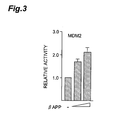
- Fig. 3 is a graph showing the activity of the MDM2 promoter when ⁇ APP is forcibly expressed in p53-expressing cells.
- Fig. 4 is a graph showing the activity of the Bax promoter when ⁇ APP is forcibly expressed in p53-expressing cells.
- the luciferase assay is used for the test as in the case described above.
- ⁇ APP expression vector, p53 expression vector, and reporter vector containing a promoter which reacts to p53 are introduced into U2OS cells expressing wild-type p53. After 48 hours, the cells are collected and the luciferase activity is measured. The luciferase activity measurement results thus obtained for the promoters are shown in Figs. 5-7.
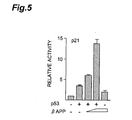
- Fig. 5 is a graph showing the activity of the p21 promoter when ⁇ APP and p53 are forcibly expressed in p53-expressing cells.
- Fig. 6 is a graph showing the activity of the MDM2 promoter when ⁇ APP and p53 are forcibly expressed in p53-expressing cells.
- Fig. 7 is a graph showing the activity of the Bax promoter when ⁇ APP and p53 are forcibly expressed in p53-expressing cells.
- ⁇ APP expression vector, and reporter vector containing a promoter which reacts to p53 are introduced into H1299 cells lacking wild-type p53. After 48 hours, the cells are collected and the luciferase activity is measured. The luciferase activity measurement results thus obtained for the promoters are shown in Figs. 8-10.
- Fig. 8 is a graph showing the activity of the p21 promoter when ⁇ APP is forcibly expressed in non-p53-expressing cells.
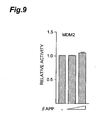
- Fig. 9 is a graph showing the activity of the MDM2 promoter when ⁇ APP is forcibly expressd in non-p53-expressing cells.
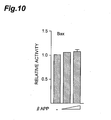
- Fig. 10 is a graph showing the activity of the Bax promoter when ⁇ APP is forcibly expressed in non-p53-expressing cells.
- p53 expression vector is introduced into U2OS cells expressing wild-type p53, and then the cells are cultured in the presence of G418. After 2 weeks, the G418-resistant colony count is measured. The obtained result is shown in Fig. 11.
- Fig. 11 is a graph showing the drug-resistant colony count when p53 is forcibly expressed in p53-expressing cells.
- ⁇ APP expression vector is introduced into U2OS cells expressing wild-type p53, and then the cells are cultured in the presence of G418. After 2 weeks, the G418-resistant colony count is measured. The obtained result is shown in Fig. 12.
- Fig. 12 is a graph showing the drug-resistant colony count when ⁇ APP is forcibly expressed in p53-expressing cells.
- Fig. 13 is a graph showing the drug-resistant colony count when ⁇ APP is forcibly expressed in non-p53-expressirig cells.
- SH-SY5Y cells which are a neuroblastoma cell line, are used as tumor cells.
- SH-SY5Y cells are treated with cisplatin, and then the cell viabilty is measured by the MTT method. The obtained result is shown in Fig. 14.
- Fig. 14 is a graph showing the relationship between the amount of cisplatin and the cell viability of SH-SY5Y cells.
- Fig. 15 is diagrams showing the result of immunoblotting analysis of products obtained by cisplatin treatment of SH-SY5Y cells.
- IP means immunoprecipitation
- IB means immunoblotting.
- the second diagram from the top in Fig. 15 is a diagram showing the result of immunoblotting analysis using anti-p53 antibody. From this diagram, the induction of endogenous p53 by cisplatin can be seen.
- the third diagram from the top in Fig. 15 is a diagram showing the result of immunoblotting analysis using anti-p21 antibody. From this diagram, it can be seen that p53 expressed during the cisplatin treatment promotes the expression of p21 downstream thereof, i.e., that it is an active form.
- the uppermost diagram in Fig. 15 is a diagram showing the result of immunoprecipitation of a cell lysate (homogenate) using anti- ⁇ APP antibody, and immunoblotting analysis of the immunoprecipitate using anti-p53 antibody.
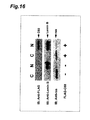
- Fig. 16 is a diagram showing the result of immunoblotting analysis of the nuclear fraction and cytosolic fraction of U2OS cells in which C60 is forcibly expressed.
- C means the cytosolic fraction
- N means the nuclear fraction.
- IB means immunoblotting.
- LaminB, which is present in the nuclear matrix, is used as a nuclear marker.
- Ras which is present in the cytoplasm, is used as a cytoplasmic marker. From Fig. 16, it can be seen that C60 is localized to the nucleus.
- Fig. 17 is diagrams corresponding to confocal scanning micrographs of U2OS cells in which C60 is forcibly expressed and which are immunostained with anti-FLAG antibody.
- FLAG-C60 is a diagram corresponding to a micrograph showing the distribution of C60
- DAPI is a diagram corresponding to a micrograph showing the distribution of the nuclear marker "DAPI”
- Merge is a diagram corresponding to a composite photograph which is obtained by combining the two micrographs. From Fig. 17, it can be seen that the distribution of C60 and the distribution of DAPI overlap, showing the nuclear localization of C60.
- FIG. 18 is diagrams showing the result of immunoblotting analysis of COS7 cells in which C58 or C60 is forcibly expressed.
- IP means immunoprecipitation
- IB means immunoblotting.
- Fig. 18 The uppermost diagram in Fig. 18 is a diagram showing the result of immunoprecipitation of a cell lysate (homogenate) using anti-p53 antibody, and immunoblotting analysis of the immunoprecipitate using anti-FLAG antibody. From Fig. 18, it can be seen that C58 and C60 are bound to p53. It is suggested that the activation of p53 by ⁇ APP is a phenomenon mediated by physical binding of the ⁇ APP-derived product C58 or C60 to p53.
- Alzheimer's disease occurs as a result of neuronal death caused by deposition of ⁇ 42 or ⁇ 40, which are cleavege products of ⁇ APP, on cell membranes.
- AICD which is produced on the C-terminal side, localizes to the nucleus, interacts with p53 in the nucleus, enhancing the stability of p53, and that this increases the transcription factor activity, and unique activities of p53 such as cell proliferation-suppressing activity and cell death-inducing activity, and thereby induces neuronal death.
- the interaction between AICD and p53 is involved in the onset of Alzheimer's disease.
- a drug which interferes with the interaction between AICD and p53 in the nucleus can be a drug for the prevention/treatment of Alzheimer's disease. If AICD does not localize to the nucleus, the interaction between AICD and p53 does not occur.
- the development of a drug which inhibits the nuclear localization of AICD is one possible approach.
- the development of a drug which decomposes AICD is another approach.
- the development of a drug which inhibits the interaction between AICD and p53 is still another approach.
- the development of drugs which suppress ⁇ - and ⁇ -secretases, which are enzymes that produce AICD from ⁇ APP is already in progress (Tomita et al, cited above).
- the candidate drugs mentioned here are, for example, nucleic acids, proteins, other high molecular weight compounds, and low molecular weight compounds (chemically synthesized or natural).
- the present invention provides an agent for the prevention and/or treatment of Alzheimer's disease containing c-Abl and/or p19 ARF as (an) active ingredient(s). It also provides an agent for the prevention and/or treatment of Alzheimer's disease containing AlcICD as an active ingredient. It further provides an agent for the prevention and/or treatment of Alzheimer's disease containing a peptide comprising the amino acid sequence set forth in SEQ ID NO: 1 or 2 of the Sequence Listing as an active ingredient.
- the peptide mentioned above may be synthesized by a method known in the art (for example, Merrifield's solid phase synthesis method).
- Dosage forms suitable for administration are a tablet, a pill, a powder, a liquid, a suspension, an emulsion, a capsule, a suppository and an injection. They may be administered orally or non-orally to Alzheimer's disease patients, or to patients having a symptom of dementia as a prodrome for the disease.
- the present invention provides a screening method wherein a candidate drug which inhibits the interaction between AICD and p53 in neurons is selected as a drug for the prevention and/or treatment of Alzheimer's disease.
- This screening method can be carried out using, for example, the two-hybrid system (e.g., Gyuris, J. Cell, 75, 791-803 (1993); Golemis, E. A., Current Protocols in Molecular Biology (John Wiley & Sons, Inc.) Ch. 20.0-20.1 (1996)).
- This screening method is preferably carried out using an immunological technique. Specifically, this screening method preferably comprises:
- an AICD molecule and a p53 molecule are expressed in neurons, and the cells are cultured together with a candidate drug for a given time, and then homogenized to obtain a cell lysate.
- the effect of the candidate drug on the interaction between the two molecules can be measured by immunoprecipitation with an antibody to one of the two molecules and detection/quantification of the other molecule contained in the precipitate using an immunological technique (immunoblotting or the like).
- a drug for the prevention and/or treatment of Alzheimer's disease can be screened for by adding a suitable agonist and the candidate drug simultaneously to the culture system, performing the assay described above and comparing the immunoprecipitate with an immunoprecipitate prepared from cells which do not contain the candidate drug.
- the present invention also provides a screening method wherein a candidate drug which inhibits the interaction between AICD and Fe65 in neurons is selected as a drug for the prevention and/or treatment of Alzheimer's disease. It further provides a screening method wherein a candidate drug which inhibits the interaction between AICD and Tip60 in neurons is selected as a drug for the prevention and/or treatment of Alzheimer's disease. Preferred embodiments of these screening methods are the same as that of the screening method described above, except that Fe65 or Tip60 is used instead of p53.
- a drug for the prevention and/or treatment of Alzheimer's disease which can be obtained by any of the screening methods of the present invention may be administered orally or non-orally to Alzheimer's disease patients, or to patients having a symptom of dementia as a prodrome for the disease.
- the obtained drug is made into a pharmaceutical composition.
- an effective amount of the drug is mixed with a pharmaceutically acceptable carrier or with diluent, and a suitable dosage form is prepared from the mixture.
- Dosage forms suitable for administration are a tablet, a pill, a powder, a liquid, a suspension, an emulsion, a capsule, a suppository and an injection.
- COS7 cells and human osteosarcoma U2OS cells were maintained in Dulbecco's modified Eagle medium (DMEM) supplemented with 10% heat-inactivated fetal bovine serum (FBS, Life Technologies, Inc.), penicillin (100 IU/ml) and streptomycin (100 ⁇ g/ml).
- DMEM Dulbecco's modified Eagle medium
- FBS heat-inactivated fetal bovine serum
- penicillin 100 IU/ml
- streptomycin 100 ⁇ g/ml
- Human lung large cell carcinoma H1299 cells and human neuroblast SH-SY5Y cells were maintained in RPMI 1640 medium supplemented with 10% heat-inactivated FBS, penicillin (100 IU/ml) and streptomycin (100 ⁇ g/ml).
- the cells were cultured in air containing water-saturated 5% carbon dioxide gas at 37°C.
- Transient transfection was performed with each expression plasmid or a predetermined combination using FuGENE6 transfection reagent (Roche Molecular Biochemicals) according to the manufacturer's instructions.
- Transient transfection of U2OS cells or H1299 cells was performed using LipofectAMINE (Life Technologies, Inc.) according to the manufacturer's instructions.
- U2OS cells were proliferated in a 12-well plate (5 x 10 4 cells/well), and the cells were transiently transfected using a given amount of expression plasmid for p53 and a p53-reactive luciferase reporter construct comprising the p21 WAF1 , MDM2 or Bax promoter, and if required, a gradually increased amount of ⁇ APP expression plasmid.
- the total amount of plasmid DNA per transfection was maintained at a constant amount (510 ng) using pcDNA3 (Invitrogen). 48 hours after the transfection, the transfected cells were collected, and washed with ice-cold 1xPBS.
- the luciferase activity was measured using Dual-Luciferase Reporter Assay System (Promega) according to the manufacturer's instructions.
- U2OS cells were transfected in the presence or absence of a gradually increased amount of p53-encoding expression plasmid. 48 hours after the transfection, the cells were maintained in medium containing G418 (400 ⁇ g/ml (final concentration)). After 2 weeks of selection, the plate was stained with Giemsa. The drug-resistant colony count was determined.
- the cell viability was determined by a modified 3-(4,5-dimethylthiazol-2-yl)-2,5-diphenylteterazolium bromide (MTT) assay. Specifically, U2OS cells were plated on 100 ⁇ l of complete medium in a 96-well micro titer plate (5 x 10 3 cells/well), and made to adhere thereto. On the next day, the medium was changed, and the cells were treated with cisplatin for 24 hours. In the MTT assay, 10 ⁇ l of MTT solution was added to each well, and incubated at 37°C for 3 hours. The absorbance of the wells at 570 nm was measured using a microplate reader (Type 450, Bio-Rad Laboratories).
- MTT 3-(4,5-dimethylthiazol-2-yl)-2,5-diphenylteterazolium bromide
- COS7 cells were transiently transfected with a suitable plasmid. 48 hours after the transfection, the cells were lysed in ice-cold phosphate buffered saline (PBS) and ice-cold EBC lysis buffer [50 mM Tris-HCl (pH 7.5), 120 mM NaCl, 0.5% (v/v) Nonidet P-40, and 1 mM phenylmethylsulfonyl fluoride (PMSF)], and the whole cell lysate was immunoprecipitated with anti-p53 monoclonal antibody (DO-1, Oncogene Research Products). The immunoprecipitate was analyzed by immunoblotting using anti-FLAG monoclonal antibody (M2, Sigma Chemical). The protein was visualized by enhanced chemiluminescence (ECL, Amersham Pharmacia Biotech) according to the manufacturer's instructions.
- EBC enhanced chemiluminescence
- Cells were divided into the cytosolic fraction and the nuclear fraction.
- transfected cells were washed twice with ice-cold 1xPBS, and the cells were lysed at 4°C for 30 minutes in cell lysis buffer containing 10 mM Tris-HCl (pH 7.5), 1 mM EDTA, 0.5% NP-40 and protease inhibitor mix (Sigma Chemical).
- the cell lysate was centrifuged at 15000 rpm for 10 minutes, and the soluble fraction was collected as a cytoplasmic extract.
- the insoluble material was washed with cell lysis buffer, and lysed in 1xSDS sample buffer, and the nuclear fraction was collected.
- the nuclear fraction and the cytosolic fraction were subjected to immunological analysis using anti-FLAG antibody, anti-LaminB monoclonal antibody (Ab-1, Oncogene Research Products) or anti-ras monoclonal antibody (RASK-3, Seikagaku Corpopration).
- U2OS cells were transiently transfected with an expression plasmid encoding FLAG-labeled C60.
- the cells which had been proliferated on a glass cover slip were fixed with 3.7% formaldehyde in 1xPBS at room temperature for 30 minutes, and the permeability was increased using 0.2% Triton X-100 at room temperature for 5 minutes. They were then blocked for 1 hour in 1xPBS containing 3% bovine serum albumin.
- the cells were washed with 1xPBS, and then incubated with anti-FLAG monoclonal antibody at room temperature for 1 hour. After the incubation with the primary antibody, the cells were washed, and incubated with secondary antibody-rhodamine conjugate (Invitrogen) at room temperature for 1 hour.
- the nucleus was stained with DAPI.
- the cells were finally washed with 1xPBS.
- the cover slip was removed from the plate, placed on a slide, and observed with a Fluoview laser scanning confocal
- a drug/agent for the prevention and/or treatment of Alzheimer's disease having a mechanism of action which is different from that of, for example, an anti-amyloid antibody or ⁇ - or ⁇ -secretase inhibitor can be developed, and new options for the prevention and/or treatment of Alzheimer's disease are therefore made available.
Landscapes
- Health & Medical Sciences (AREA)
- Life Sciences & Earth Sciences (AREA)
- Engineering & Computer Science (AREA)
- Biomedical Technology (AREA)
- Chemical & Material Sciences (AREA)
- Immunology (AREA)
- Medicinal Chemistry (AREA)
- General Health & Medical Sciences (AREA)
- Bioinformatics & Cheminformatics (AREA)
- Public Health (AREA)
- Veterinary Medicine (AREA)
- Animal Behavior & Ethology (AREA)
- Pharmacology & Pharmacy (AREA)
- Cell Biology (AREA)
- Epidemiology (AREA)
- Urology & Nephrology (AREA)
- Molecular Biology (AREA)
- Hematology (AREA)
- Gastroenterology & Hepatology (AREA)
- Proteomics, Peptides & Aminoacids (AREA)
- Pathology (AREA)
- General Physics & Mathematics (AREA)
- Biochemistry (AREA)
- Analytical Chemistry (AREA)
- Neurosurgery (AREA)
- Toxicology (AREA)
- Tropical Medicine & Parasitology (AREA)
- Biotechnology (AREA)
- Neurology (AREA)
- Microbiology (AREA)
- Physics & Mathematics (AREA)
- Food Science & Technology (AREA)
- Psychiatry (AREA)
- Hospice & Palliative Care (AREA)
- Organic Chemistry (AREA)
- Nuclear Medicine, Radiotherapy & Molecular Imaging (AREA)
- General Chemical & Material Sciences (AREA)
- Chemical Kinetics & Catalysis (AREA)
- Medicines That Contain Protein Lipid Enzymes And Other Medicines (AREA)
- Investigating Or Analysing Biological Materials (AREA)
Abstract
Description
- The present invention relates to an agent for the prevention and/or treatment of Alzheimer's disease, and to a method of screening for a drug for the prevention and/or treatment of Alzheimer's disease.
- The overall picture of Alzheimer's disease which is a major cause of dementia in elderly people and the true cause of its onset have not yet been resolved, and no fundamental method has been proposed for its prevention and treatment. As to the mechanism for its onset, an "amyloid hypothesis" has been proposed. This is now widely accepted because of pathological findings of Alzheimer's disease patients, and genetic analyses of familial Alzheimer's disease (Non-Patent Document 1).
- According to this hypothesis, an unusual accumulation of a group of proteins referred to as amyloid in the brain (cerebral cortex) is related to the onset and progression of Alzheimer's disease. To put it simply, an extracellular part of a single membrane-spanning protein referred to as βAPP (β-amyloid precursor protein) is cleaved by β-secretase (β-cleavage), the fragment on the C-terminal side is then cleaved by γ-secretase (γ-cleavage), and an N-terminal fragment (β40 or β42) and a C-terminal fragment (C60 or C58 (hereinafter collectively referred to also as AICD)) are produced. Among these fragments, the N-terminal fragment (β40 or β42) has high aggregability, and form amyloid, which accumulates as senile plaques outside the cell. The production, aggregation and accumulation of amyloid cause neuronal damage, which gives rise to neuronal death.
Non-Patent Document 1: Taisuke Tomita et al., Cell Technology, 2001, Vol. 20, No. 11, p.1489-1494 - Methods (drugs) for the prevention and/or treatment of Alzheimer's disease have been developed based on the "amyloid hypothesis." Examples of these drugs are inhibitors of β-secretase and γ-secretase, and anti-amyloid antibodies. However, it has been pointed out that Alzheimer's disease is a multifactorial disease, and that a drug design based only on the amyloid hypothesis is not sufficient to provide a method (drug) for the prevention and/or treatment of Alzheimer's disease.
- It is therefore an object of the present invention to provide a novel drug/agent for the prevention and/or treatment of Alzheimer's disease based on a different Alzheimer's disease onset mechanism from the amyloid hypothesis, and a method of screening for it.
- In order to achieve this object, the present invention provides a screening method wherein a candidate drug which inhibits the interaction between AICD and p53 in neurons is selected as a drug for the prevention and/or treatment of Alzheimer's disease. Using this screening method, a novel drug/agent for the prevention and/or treatment of Alzheimer's disease based on a different Alzheimer's disease onset mechanism from the amyloid hypothesis can be obtained.
- This screening method preferably comprises:
- a step of culturing neurons expressing AICD and p53 in which an AICD/p53 complex is formed, together with a candidate drug;
- a step of obtaining a first immune complex which is a complex of AICD or p53 with a first antibody selected from an anti-AICD antibody and an anti-p53 antibody, and a second immune complex which is a complex of the AICD/p53 complex with the first antibody, by bringing a cell lysate prepared from the cultured neurons in contact with the first antibody;
- a step of bringing the first and second immune complexes in contact with a second antibody which is selected from an anti-AICD antibody and an anti-p53 antibody, and which is different from the first antibody; and
- a step of detecting the presence of a third immune complex which is a complex of the second immune complex with the second antibody.
- A drug for the prevention and/or treatment of Alzheimer's disease which can be obtained by such a screening method can be a medicinal ingredient of an agent for the prevention and/or treatment of Alzheimer's disease.
- As such an agent, there is provided an agent for the prevention and/or treatment of Alzheimer's disease containing c-Abl and/or p19ARF as (an) active ingredient(s).
- p53 is a transcription factor present in the nucleus responsible for cell cycle regulation and DNA repair, and leads to cell differentiation, cellular senescence, angiogenesis and cell death (apoptosis). As for AICD, its behavior in the cell and its relationship to Alzheimer's disease were not well understood, but recently it was reported that AICD localizes to the nucleus to participate in transcription activation (Xinwei Cao et al., Science, 293, 115-120 (2001)).
- The present inventors considered, as a possible molecular biological mechanism for the onset of Alzheimer's disease, that AICD localizes to the nucleus where it interacts with p53 in some way, and as a result, neurons suffer apoptosis more easily, which gives rise to the onset of Alzheimer's disease. Fig. 1 is a schematic diagram describing the amyloid hypothesis, and the involvement of the interaction between AICD and p53 in the onset of Alzheimer's disease.
- The present inventors found that stabilization of p53 by the interaction between AICD and p53 increases the transcription factor activity of p53, and unique activities of p53 such as cell proliferation-suppressing activity and cell death-inducing activity, and thereby induces neuronal death. Based on this finding, they reasoned that a substance which could inhibit the interaction between AICD and p53 would be useful as a drug for the prevention and/or treatment of Alzheimer's disease.
- c-Abl and p19ARF are proteins which antagonistically regulate the binding of Mdm2 to p53 (R. V. Sionov et al., Oncogene, 18, 6145-6157 (1999)), and might therefore inhibit the interaction between AICD and p53.
- The present invention also provides a screening method wherein a candidate drug which inhibits the interaction between AICD and Fe65 in neurons is selected as a drug for the prevention and/or treatment of Alzheimer's disease. Also using this screening method, a novel drug/agent for the prevention and/or treatment of Alzheimer's disease based on a different Alzheimer's disease onset mechanism from the amyloid hypothesis can be obtained.
- This screening method preferably comprises:
- a step of culturing neurons expressing AICD and Fe65 in which an AICD/Fe65 complex is formed, together with a candidate drug;
- a step of obtaining a first immune complex which is a complex of AICD or Fe65 with a first antibody selected from an anti-AICD antibody and an anti-Fe65 antibody, and a second immune complex which is a complex of the AICD/Fe65 complex with the first antibody, by bringing a cell lysate prepared from the cultured neurons in contact with the first antibody;
- a step of bringing the first and second immune complexes in contact with a second antibody which is selected from an anti-AICD antibody and an anti-Fe65 antibody, and which is different from the first antibody; and
- a step of detecting the presence of a third immune complex which is a complex of the second immune complex with the second antibody.
- A drug for the prevention and/or treatment of Alzheimer's disease which can be obtained by such a screening method can be a medicinal ingredient of an agent for the prevention and/or treatment of Alzheimer's disease.
- As such an agent, there is provided an agent for the prevention and/or treatment of Alzheimer's disease containing AlcICD as an active ingredient. There is also provided an agent for the prevention and/or treatment of Alzheimer's disease containing a peptide which comprises the amino acid sequence set forth in SEQ ID NO: 1 or 2 of the Sequence Listing as an active ingredient.
- It is known that the nuclear receptor protein Fe65 forms a complex with AICD, and that it activates transcription mediated by a fusion protein of Gal4 and histone acetyl transferase Tip60 (Xinwei Cao et al., Science, 293, and 115-120 (2001)). Based on this knowledge, the present inventors reasoned that Fe65 is a substance which promotes the nuclear localization of AICD by interacting with AICD, and that a substance which could inhibit the interaction between AICD and Fe65 would indirectly inhibit the interaction between AICD and p53, and therefore suppress the onset of Alzheimer's disease.
- AlcICD is a substance which inhibits the interaction between AICD and Fe65 (Araki, Y. et al., J. Biol. Chem., 279, 24343-24354 (2004)). It is known that the binding site of AICD in Fe65 is the PTB2 domain, and that the amino acid sequence of the binding site of Fe65 in AICD is the NPTY sequence (Xinwei Cao et al., Science, 293, 115-120 (2001)). SEQ ID NO: 1 of the Sequence Listing is an arrangement showing the amino acid sequence of the PTB2 domain in Fe65. SEQ ID NO: 2 of the Sequence Listing is an arrangement showing the NPTY sequence. It is thought that a peptide which comprises the amino acid sequence of SEQ ID NO: 1 or 2 of the Sequence Listing inhibits the interaction between AICD and Fe65.
- The present invention also provides a screening method wherein a candidate drug which inhibits the interaction between AICD and Tip60 in neurons is selected as a drug for the prevention and/or treatment of Alzheimer's disease. Also using this screening method, a novel drug/agent for the prevention and/or treatment of Alzheimer's disease based on a different Alzheimer's disease onset mechanism from the amyloid hypothesis can be obtained.
- This screening method preferably comprises:
- a step of culturing neurons expressing AICD and Tip60 in which an AICD/Tip60 complex is formed, together with a candidate drug;
- a step of obtaining a first immune complex which is a complex of AICD or Tip60 with a first antibody selected from an anti-AICD antibody and an anti-Tip60 antibody, and a second immune complex which is a complex of the AICD/Tip60 complex with the first antibody, by bringing a cell lysate prepared from the cultured neurons in contact with the first antibody;
- a step of bringing the first and second immune complexes in contact with a second antibody which is selected from an anti-AICD antibody and an anti-Tip60 antibody, and which is different from the first antibody; and
- a step of detecting the presence of a third immune complex which is a complex of the second immune complex with the second antibody.
- A drug for the prevention and/or treatment of Alzheimer's disease which can be obtained by such a screening method can be a medicinal ingredient of an agent for the prevention and/or treatment of Alzheimer's disease.
- It is known that histone acetyl transferase Tip60 forms a complex with AICD and causes cell death (apoptosis) of glioma cells (Ayae Kinoshita et al., J. Biol. Chem., 277, 28530-28536 (2002)). Based on this knowledge, the present inventors reasoned that Tip60 is a substance which promotes the interaction between AICD and p53, and that a substance which could inhibit the interaction between AICD and Tip60 would be useful as a drug for the prevention and/or treatment of Alzheimer's disease.
- According to the present invention, it is possible to provide a novel drug/agent for the prevention and/or treatment of Alzheimer's disease based on a different Alzheimer's disease onset mechanism from the amyloid hypothesis, and a method of screening for it.
- Fig. 1 is a schematic diagram describing the amyloid hypothesis, and the involvement of the interaction between AICD and p53 in the onset of Alzheimer's disease.
- Fig. 2 is a graph showing the activity of the p21 promoter when βAPP is forcibly expressed in p53-expressing cells.
- Fig. 3 is a graph showing the activity of the MDM2 promoter when βAPP is forcibly expressed in p53-expressing cells.
- Fig. 4 is a graph showing the activity of the Bax promoter when βAPP is forcibly expressed in p53-expressing cells.
- Fig. 5 is a graph showing the activity of the p21 promoter when βAPP and p53 are forcibly expressed in p53-expressing cells.
- Fig. 6 is a graph showing the activity of the MDM2 promoter when βAPP and p53 are forcibly expressed in p53-expressing cells.
- Fig. 7 is a graph showing the activity of the Bax promoter when βAPP and p53 are forcibly expressed in p53-expressing cells.
- Fig. 8 is a graph showing the activity of the p21 promoter when βAPP is forcibly expressed in non-p53-expressing cells.
- Fig. 9 is a graph showing the activity of the MDM2 promoter when βAPP is forcibly expressd in non-p53-expressing cells.
- Fig. 10 is a graph showing the activity of the Bax promoter when βAPP is forcibly expressed in non-p53-expressing cells.
- Fig. 11 is a graph showing the drug-resistant colony count when p53 is forcibly expressed in p53-expressing cells.
- Fig. 12 is a graph showing the drug-resistant colony count when βAPP is forcibly expressed in p53-expressing cells.
- Fig. 13 is a graph showing the drug-resistant colony count when βAPP is forcibly expressed in non-p53-expressing cells.
- Fig. 14 is a graph showing the relationship between the amount of cisplatin and the cell viability of SH-SY5Y cells.
- Fig. 15 is diagrams showing the result of immunoblotting analysis of products obtained by cisplatin treatment of SH-SY5Y cells.
- Fig. 16 is diagrams showing the result of immunoblotting analysis of the nuclear fraction and cytosolic fraction of U2OS cells in which C60 is forcibly expressed.
- Fig. 17 is diagrams corresponding to confocal scanning micrographs of U2OS cells in which C60 is forcibly expressed and which are immunostained with anti-FLAG antibody.
- Fig. 18 is diagrams showing the result of immunoblotting analysis of COS7 cells in which C58 or C60 is forcibly expressed.
- Preferred embodiments of the present invention will now be described.
- The interaction of βAPP or AICD with p53 can be examined by performing assays regarding activities of p53 such as transcription factor activity and cell death-inducing activity (apoptosis activity) in the presence of βAPP and/or AICD.
- Effect of βAPP on the transcription factor activity of p53:
- It is known that if the p53 gene is introduced into a U2OS cell expressing p53, the activities of promoters which reacts to p53 (the p21, MDM2 and Bax promoters) will increase. Therefore, it is examined whether or not the activities of these promoters increase when the βAPP-encoding gene is introduced instead of p53. The luciferase assay (luciferase reporter assay), which is a standard technique for analyzing the function of a transcription factor, is used for the test.
- Specifically, βAPP expression vector, and reporter vector containing a promoter which reacts to p53 (the p21, MDM2 or Bax promoter) are introduced into U2OS cells expressing wild-type p53. After 48 hours, the cells are collected and the luciferase activity is measured. The luciferase activity measurement results thus obtained for the promoters are shown in Figs. 2-4.
- Fig. 2 is a graph showing the activity of the p21 promoter when βAPP is forcibly expressed in p53-expressing cells. Fig. 3 is a graph showing the activity of the MDM2 promoter when βAPP is forcibly expressed in p53-expressing cells. Fig. 4 is a graph showing the activity of the Bax promoter when βAPP is forcibly expressed in p53-expressing cells.
- From Figs. 2-4, it can be seen that for any of the p21, MDM2 and Bax-derived promoters, the activity markedly increases due to the forced expression of βAPP. It is thought that βAPP produces C60 or C58 using an endogenous secretase. Moreover, U2OS cells express wild-type p53. Therefore, the activation of p53 by C60 or C58 is suggested.
- Next, it is examined whether or not the activity of p53 increases by using p53 and βAPP together. The luciferase assay is used for the test as in the case described above.
- Specifically, βAPP expression vector, p53 expression vector, and reporter vector containing a promoter which reacts to p53 (the p21, MDM2 or Bax promoter) are introduced into U2OS cells expressing wild-type p53. After 48 hours, the cells are collected and the luciferase activity is measured. The luciferase activity measurement results thus obtained for the promoters are shown in Figs. 5-7.
- Fig. 5 is a graph showing the activity of the p21 promoter when βAPP and p53 are forcibly expressed in p53-expressing cells. Fig. 6 is a graph showing the activity of the MDM2 promoter when βAPP and p53 are forcibly expressed in p53-expressing cells. Fig. 7 is a graph showing the activity of the Bax promoter when βAPP and p53 are forcibly expressed in p53-expressing cells.
- From Figs. 5-7, it can be seen that for any of the p21, MDM2 and Bax-derived promoters, the activity markedly increases when βAPP and p53 are forcibly expressed, compared with the case where βAPP is forcibly expressed alone. Therefore, the activation of p53 by C60 or C58 is suggested as in the test described above.
- As a negative control, the same test is repeated using cells which do not express p53.
- βAPP expression vector, and reporter vector containing a promoter which reacts to p53 (the p21, MDM2 or Bax promoter) are introduced into H1299 cells lacking wild-type p53. After 48 hours, the cells are collected and the luciferase activity is measured. The luciferase activity measurement results thus obtained for the promoters are shown in Figs. 8-10.
- Fig. 8 is a graph showing the activity of the p21 promoter when βAPP is forcibly expressed in non-p53-expressing cells. Fig. 9 is a graph showing the activity of the MDM2 promoter when βAPP is forcibly expressd in non-p53-expressing cells. Fig. 10 is a graph showing the activity of the Bax promoter when βAPP is forcibly expressed in non-p53-expressing cells.
- From Figs. 8-10, it can be seen that for any of the p21, MDM2 and Bax-derived promoters, the activity does not increase even due to the forced expression of βAPP. Since H1299 cells lack wild-type p53, it is suggested that the activation of the p21, MDM2 and Bax promoters by βAPP observed in the U2OS cells mentioned above is caused by the activation of p53 by βAPP.
- Cell proliferation-suppressing activity and cell death-inducing activity of p53:
- It is examined whether or not p53 exhibits its inherent cell proliferation-suppressing activity and cell death-inducing activity in the U2OS cells used in the test described above.
- p53 expression vector is introduced into U2OS cells expressing wild-type p53, and then the cells are cultured in the presence of G418. After 2 weeks, the G418-resistant colony count is measured. The obtained result is shown in Fig. 11. Fig. 11 is a graph showing the drug-resistant colony count when p53 is forcibly expressed in p53-expressing cells.
- From Fig. 11, it can be seen that the G418-resistant colony count markedly decreases due to the forced expression of p53. Therefore, it can be seen that in U2OS cells, p53-dependent suppression of cell proliferation or p53-dependent cell death does occur.
- Effect of βAPP on the cell proliferation-suppressing activity and cell death-inducing activity of p53:
- Next, it is examined whether or not the cell proliferation-suppressing activity and cell death-inducing activity of endogenous p53 change due to the introduction of βAPP. The colony formation assay is used for the test as in the case described above.
- βAPP expression vector is introduced into U2OS cells expressing wild-type p53, and then the cells are cultured in the presence of G418. After 2 weeks, the G418-resistant colony count is measured. The obtained result is shown in Fig. 12. Fig. 12 is a graph showing the drug-resistant colony count when βAPP is forcibly expressed in p53-expressing cells.
- From Fig. 12, it can be seen that the G418-resistant colony count decreases due to the forced expression of βAPP. Therefore, it can be seen that in U2OS cells, βAPP-dependent suppression of cell proliferation or βAPP-dependent cell death does occur.
- As a negative control, the same test is repeated in H1299 cells which do not express wild-type p53. Specifically, βAPP expression vector is introduced into H1299 cells lacking wild-type p53, and then the cells are cultured in the presence of G418. After 2 weeks, the G418-resistant colony count is measured. The obtained result is shown in Fig. 13. Fig. 13 is a graph showing the drug-resistant colony count when βAPP is forcibly expressed in non-p53-expressirig cells.
- From Fig. 13, it can be seen that the drug-resistant colony count does not decrease even due to the forced expression of βAPP. It is therefore thought that the presence of wild-type p53 is required for βAPP-dependent suppression of cell proliferation or βAPP-dependent induction of cell death, which are observed in the test described above.
- Induction of cell death by cisplatin:
- It is known that if tumor cells are treated with cisplatin, which is a DNA-inhibiting drug, dose-dependent cell death occurs. It is also known that p53 is involved in this. The relationship of βAPP to the induction of cell death by p53 is investigated using cisplatin, which is known to induce endogenous p53. For this purpose, the induction of cell death by cisplatin is examined.
- SH-SY5Y cells, which are a neuroblastoma cell line, are used as tumor cells. SH-SY5Y cells are treated with cisplatin, and then the cell viabilty is measured by the MTT method. The obtained result is shown in Fig. 14. Fig. 14 is a graph showing the relationship between the amount of cisplatin and the cell viability of SH-SY5Y cells.
- From Fig. 14, it can be seen that the number of SH-SY5Y cells decreases depending on the dosage of cisplatin. It can be seen that the death of SH-SY5Y cells is induced by cisplatin.
- Next, products obtained by cisplatin treatment of SH-SY5Y cells are analyzed by immunoblotting and immunoprecipitation. Specifically, SH-SY5Y cells are treated with cisplatin, and then the expression levels of p53, p21, βAPP and actin are analyzed by immunoblotting. Moreover, an interaction between a βAPP-derived product and p53 is analyzed by immunoprecipitation and immunoblotting. The obtained result is shown in Fig. 15. Fig. 15 is diagrams showing the result of immunoblotting analysis of products obtained by cisplatin treatment of SH-SY5Y cells. In the figure, "IP" means immunoprecipitation, and "IB" means immunoblotting.
- The second diagram from the top in Fig. 15 is a diagram showing the result of immunoblotting analysis using anti-p53 antibody. From this diagram, the induction of endogenous p53 by cisplatin can be seen. The third diagram from the top in Fig. 15 is a diagram showing the result of immunoblotting analysis using anti-p21 antibody. From this diagram, it can be seen that p53 expressed during the cisplatin treatment promotes the expression of p21 downstream thereof, i.e., that it is an active form. The uppermost diagram in Fig. 15 is a diagram showing the result of immunoprecipitation of a cell lysate (homogenate) using anti-βAPP antibody, and immunoblotting analysis of the immunoprecipitate using anti-p53 antibody. From this diagram, it can be seen that p53 is present in the cisplatin treatment group, and that there is physical binding between a βAPP-derived product and p53. Since βAPP is present on the membrane and p53 is present in the nucleus, it is unlikely that there is physical binding therebetween. Therefore, this suggests that C60 or C58, which are cleavage products of βAPP, localizes to the nucleus and binds to p53. It is suggested that the induction of the death of SH-SY5Y cells by cisplatin is due to the activation of endogenous p53 accompanying the stabilization thereof, and that an interaction between a βAPP-derived product and p53 is functionally involved in that.
- Nuclear localization of the βAPP-derived product C60:
- A gene encoding C60 is artificially produced, and its expression and nuclear localization are examined. C60 is known to be very unstable, and therefore, the FLAG epitope is added to the C-terminal side.
- FLAG-labeled C60 is forcibly expressed in U2OS cells, the nuclear fraction and cytosolic fraction of the cells are prepared, and the distribution of C60 is analyzed by immunoblotting. The obtained result is shown in Fig. 16. Fig. 16 is a diagram showing the result of immunoblotting analysis of the nuclear fraction and cytosolic fraction of U2OS cells in which C60 is forcibly expressed. In the figure, "C" means the cytosolic fraction, and "N" means the nuclear fraction. "IB" means immunoblotting. LaminB, which is present in the nuclear matrix, is used as a nuclear marker. Ras, which is present in the cytoplasm, is used as a cytoplasmic marker. From Fig. 16, it can be seen that C60 is localized to the nucleus.
- Moreover, the distribution of C60 is biochemically observed by immunostaining using anti-FLAG antibody. The observation result obtained using a microscope is shown in Fig. 17. Fig. 17 is diagrams corresponding to confocal scanning micrographs of U2OS cells in which C60 is forcibly expressed and which are immunostained with anti-FLAG antibody. In the figure, "FLAG-C60" is a diagram corresponding to a micrograph showing the distribution of C60, "DAPI" is a diagram corresponding to a micrograph showing the distribution of the nuclear marker "DAPI", and "Merge" is a diagram corresponding to a composite photograph which is obtained by combining the two micrographs. From Fig. 17, it can be seen that the distribution of C60 and the distribution of DAPI overlap, showing the nuclear localization of C60.
- Interaction of the βAPP-derived product C58 or C60 with p53: The test results described above have already suggested that p53 interacts with βAPP, but it is further examined whether or not the interaction is its binding to C58 or C60.
- C58 or C60 labeled with FLAG is forcibly expressed in COS7 cells, and then the presence or absence of its interaction with p53 is studied by immunoprecipitation. The obtained result is shown in Fig. 18. Fig. 18 is diagrams showing the result of immunoblotting analysis of COS7 cells in which C58 or C60 is forcibly expressed. In the figure, "IP" means immunoprecipitation and "IB" means immunoblotting.
- The uppermost diagram in Fig. 18 is a diagram showing the result of immunoprecipitation of a cell lysate (homogenate) using anti-p53 antibody, and immunoblotting analysis of the immunoprecipitate using anti-FLAG antibody. From Fig. 18, it can be seen that C58 and C60 are bound to p53. It is suggested that the activation of p53 by βAPP is a phenomenon mediated by physical binding of the βAPP-derived product C58 or C60 to p53.
- Until now, it has generally been accepted that Alzheimer's disease occurs as a result of neuronal death caused by deposition of β42 or β40, which are cleavege products of βAPP, on cell membranes. However, from the test results described above, it can be seen that AICD, which is produced on the C-terminal side, localizes to the nucleus, interacts with p53 in the nucleus, enhancing the stability of p53, and that this increases the transcription factor activity, and unique activities of p53 such as cell proliferation-suppressing activity and cell death-inducing activity, and thereby induces neuronal death. In other words, it is suggested that the interaction between AICD and p53 is involved in the onset of Alzheimer's disease.
- The above findings show that a drug which interferes with the interaction between AICD and p53 in the nucleus can be a drug for the prevention/treatment of Alzheimer's disease. If AICD does not localize to the nucleus, the interaction between AICD and p53 does not occur. Hence, the development of a drug which inhibits the nuclear localization of AICD is one possible approach. The development of a drug which decomposes AICD is another approach. The development of a drug which inhibits the interaction between AICD and p53 is still another approach. Incidentally, the development of drugs which suppress β- and γ-secretases, which are enzymes that produce AICD from βAPP, is already in progress (Tomita et al, cited above). The candidate drugs mentioned here are, for example, nucleic acids, proteins, other high molecular weight compounds, and low molecular weight compounds (chemically synthesized or natural).
- The present invention provides an agent for the prevention and/or treatment of Alzheimer's disease containing c-Abl and/or p19ARF as (an) active ingredient(s). It also provides an agent for the prevention and/or treatment of Alzheimer's disease containing AlcICD as an active ingredient. It further provides an agent for the prevention and/or treatment of Alzheimer's disease containing a peptide comprising the amino acid sequence set forth in SEQ ID NO: 1 or 2 of the Sequence Listing as an active ingredient. The peptide mentioned above may be synthesized by a method known in the art (for example, Merrifield's solid phase synthesis method).
- These agents are obtained by mixing an effective amount of the active ingredient with a pharmaceutically acceptable carrier or with diluent and preparing a suitable dosage form from the mixture. Dosage forms suitable for administration are a tablet, a pill, a powder, a liquid, a suspension, an emulsion, a capsule, a suppository and an injection. They may be administered orally or non-orally to Alzheimer's disease patients, or to patients having a symptom of dementia as a prodrome for the disease.
- The present invention provides a screening method wherein a candidate drug which inhibits the interaction between AICD and p53 in neurons is selected as a drug for the prevention and/or treatment of Alzheimer's disease. This screening method can be carried out using, for example, the two-hybrid system (e.g., Gyuris, J. Cell, 75, 791-803 (1993); Golemis, E. A., Current Protocols in Molecular Biology (John Wiley & Sons, Inc.) Ch. 20.0-20.1 (1996)).
- This screening method is preferably carried out using an immunological technique. Specifically, this screening method preferably comprises:
- a step of culturing neurons expressing AICD and p53 in which an AICD/p53 complex is formed, together with a candidate drug;
- a step of obtaining a first immune complex which is a complex of AICD or p53 with a first antibody selected from an anti-AICD antibody and an anti-p53 antibody, and a second immune complex which is a complex of the AICD/p53 complex with the first antibody, by bringing a cell lysate prepared from the cultured neurons in contact with the first antibody;
- a step of bringing the first and second immune complexes in contact with a second antibody which is selected from an anti-AICD antibody and an anti-p53 antibody, and which is different from the first antibody; and
- a step of detecting the presence of a third immune complex which is a complex of the second immune complex with the second antibody.
- Specifically, an AICD molecule and a p53 molecule are expressed in neurons, and the cells are cultured together with a candidate drug for a given time, and then homogenized to obtain a cell lysate. The effect of the candidate drug on the interaction between the two molecules can be measured by immunoprecipitation with an antibody to one of the two molecules and detection/quantification of the other molecule contained in the precipitate using an immunological technique (immunoblotting or the like). Here, a drug for the prevention and/or treatment of Alzheimer's disease can be screened for by adding a suitable agonist and the candidate drug simultaneously to the culture system, performing the assay described above and comparing the immunoprecipitate with an immunoprecipitate prepared from cells which do not contain the candidate drug.
- The present invention also provides a screening method wherein a candidate drug which inhibits the interaction between AICD and Fe65 in neurons is selected as a drug for the prevention and/or treatment of Alzheimer's disease. It further provides a screening method wherein a candidate drug which inhibits the interaction between AICD and Tip60 in neurons is selected as a drug for the prevention and/or treatment of Alzheimer's disease. Preferred embodiments of these screening methods are the same as that of the screening method described above, except that Fe65 or Tip60 is used instead of p53.
- A drug for the prevention and/or treatment of Alzheimer's disease which can be obtained by any of the screening methods of the present invention may be administered orally or non-orally to Alzheimer's disease patients, or to patients having a symptom of dementia as a prodrome for the disease. The obtained drug is made into a pharmaceutical composition. Specifically, an effective amount of the drug is mixed with a pharmaceutically acceptable carrier or with diluent, and a suitable dosage form is prepared from the mixture. Dosage forms suitable for administration are a tablet, a pill, a powder, a liquid, a suspension, an emulsion, a capsule, a suppository and an injection.
- Examples of the present invention will now be described, with the understanding that these examples are in no way limitative on the present invention.
- COS7 cells and human osteosarcoma U2OS cells were maintained in Dulbecco's modified Eagle medium (DMEM) supplemented with 10% heat-inactivated fetal bovine serum (FBS, Life Technologies, Inc.), penicillin (100 IU/ml) and streptomycin (100 µg/ml). Human lung large cell carcinoma H1299 cells and human neuroblast SH-SY5Y cells were maintained in RPMI 1640 medium supplemented with 10% heat-inactivated FBS, penicillin (100 IU/ml) and streptomycin (100 µg/ml). The cells were cultured in air containing water-saturated 5% carbon dioxide gas at 37°C. Transient transfection was performed with each expression plasmid or a predetermined combination using FuGENE6 transfection reagent (Roche Molecular Biochemicals) according to the manufacturer's instructions. Transient transfection of U2OS cells or H1299 cells was performed using LipofectAMINE (Life Technologies, Inc.) according to the manufacturer's instructions.
- U2OS cells were proliferated in a 12-well plate (5 x 10⁴ cells/well), and the cells were transiently transfected using a given amount of expression plasmid for p53 and a p53-reactive luciferase reporter construct comprising the p21WAF1, MDM2 or Bax promoter, and if required, a gradually increased amount of βAPP expression plasmid. The total amount of plasmid DNA per transfection was maintained at a constant amount (510 ng) using pcDNA3 (Invitrogen). 48 hours after the transfection, the transfected cells were collected, and washed with ice-cold 1xPBS. The luciferase activity was measured using Dual-Luciferase Reporter Assay System (Promega) according to the manufacturer's instructions.
- U2OS cells were transfected in the presence or absence of a gradually increased amount of p53-encoding expression plasmid. 48 hours after the transfection, the cells were maintained in medium containing G418 (400 µg/ml (final concentration)). After 2 weeks of selection, the plate was stained with Giemsa. The drug-resistant colony count was determined.
- The cell viability was determined by a modified 3-(4,5-dimethylthiazol-2-yl)-2,5-diphenylteterazolium bromide (MTT) assay. Specifically, U2OS cells were plated on 100 µl of complete medium in a 96-well micro titer plate (5 x 10³ cells/well), and made to adhere thereto. On the next day, the medium was changed, and the cells were treated with cisplatin for 24 hours. In the MTT assay, 10 µl of MTT solution was added to each well, and incubated at 37°C for 3 hours. The absorbance of the wells at 570 nm was measured using a microplate reader (Type 450, Bio-Rad Laboratories).
- In the immunoprecipitation experiment, COS7 cells were transiently transfected with a suitable plasmid. 48 hours after the transfection, the cells were lysed in ice-cold phosphate buffered saline (PBS) and ice-cold EBC lysis buffer [50 mM Tris-HCl (pH 7.5), 120 mM NaCl, 0.5% (v/v) Nonidet P-40, and 1 mM phenylmethylsulfonyl fluoride (PMSF)], and the whole cell lysate was immunoprecipitated with anti-p53 monoclonal antibody (DO-1, Oncogene Research Products). The immunoprecipitate was analyzed by immunoblotting using anti-FLAG monoclonal antibody (M2, Sigma Chemical). The protein was visualized by enhanced chemiluminescence (ECL, Amersham Pharmacia Biotech) according to the manufacturer's instructions.
- Cells were divided into the cytosolic fraction and the nuclear fraction. First, transfected cells were washed twice with ice-cold 1xPBS, and the cells were lysed at 4°C for 30 minutes in cell lysis buffer containing 10 mM Tris-HCl (pH 7.5), 1 mM EDTA, 0.5% NP-40 and protease inhibitor mix (Sigma Chemical). The cell lysate was centrifuged at 15000 rpm for 10 minutes, and the soluble fraction was collected as a cytoplasmic extract. The insoluble material was washed with cell lysis buffer, and lysed in 1xSDS sample buffer, and the nuclear fraction was collected. The nuclear fraction and the cytosolic fraction were subjected to immunological analysis using anti-FLAG antibody, anti-LaminB monoclonal antibody (Ab-1, Oncogene Research Products) or anti-ras monoclonal antibody (RASK-3, Seikagaku Corpopration).
- U2OS cells were transiently transfected with an expression plasmid encoding FLAG-labeled C60. The cells which had been proliferated on a glass cover slip were fixed with 3.7% formaldehyde in 1xPBS at room temperature for 30 minutes, and the permeability was increased using 0.2% Triton X-100 at room temperature for 5 minutes. They were then blocked for 1 hour in 1xPBS containing 3% bovine serum albumin. The cells were washed with 1xPBS, and then incubated with anti-FLAG monoclonal antibody at room temperature for 1 hour. After the incubation with the primary antibody, the cells were washed, and incubated with secondary antibody-rhodamine conjugate (Invitrogen) at room temperature for 1 hour. The nucleus was stained with DAPI. The cells were finally washed with 1xPBS. The cover slip was removed from the plate, placed on a slide, and observed with a Fluoview laser scanning confocal microscope (Olympus).
- As described above, according to the present invention, a drug/agent for the prevention and/or treatment of Alzheimer's disease having a mechanism of action which is different from that of, for example, an anti-amyloid antibody or β- or γ-secretase inhibitor can be developed, and new options for the prevention and/or treatment of Alzheimer's disease are therefore made available.


Claims (10)
- An agent for the prevention and/or treatment of Alzheimer's disease containing c-Abl and/or p19ARF as (an) active ingredient(s).
- A screening method wherein a candidate drug which inhibits the interaction between AICD and p53 in neurons is selected as a drug for the prevention and/or treatment of Alzheimer's disease.
- A screening method wherein a candidate drug which inhibits the interaction between AICD and p53 in neurons is selected as a drug for the prevention and/or treatment of Alzheimer's disease, said screening method comprising:a step of culturing neurons expressing AICD and p53 in which an AICD/p53 complex is formed, together with a candidate drug;a step of obtaining a first immune complex which is a complex of AICD or p53 with a first antibody selected from an anti-AICD antibody and an anti-p53 antibody, and a second immune complex which is a complex of the AICD/p53 complex with the first antibody, by bringing a cell lysate prepared from the cultured neurons in contact with the first antibody;a step of bringing the first and second immune complexes in contact with a second antibody which is selected from an anti-AICD antibody and an anti-p53 antibody, and which is different from the first antibody; anda step of detecting the presence of a third immune complex which is a complex of the second immune complex with the second antibody.
- An agent for the prevention and/or treatment of Alzheimer's disease containing AlcICD as an active ingredient.
- An agent for the prevention and/or treatment of Alzheimer's disease containing a peptide which comprises the amino acid sequence set forth in SEQ ID NO: 1 or 2 of the Sequence Listing as an active ingredient.
- A screening method wherein a candidate drug which inhibits the interaction between AICD and Fe65 in neurons is selected as a drug for the prevention and/or treatment of Alzheimer's disease.
- A screening method wherein a candidate drug which inhibits the interaction between AICD and Fe65 in neurons is selected as a drug for the prevention and/or treatment of Alzheimer's disease, said screening method comprising:a step of culturing neurons expressing AICD and Fe65 in which an AICD/Fe65 complex is formed, together with a candidate drug;a step of obtaining a first immune complex which is a complex of AICD or Fe65 with a first antibody selected from an anti-AICD antibody and an anti-Fe65 antibody, and a second immune complex which is a complex of the AICD/Fe65 complex with the first antibody, by bringing a cell lysate prepared from the cultured neurons in contact with the first antibody;a step of bringing the first and second immune complexes in contact with a second antibody which is selected from an anti-AICD antibody and an anti-Fe65 antibody, and which is different from the first antibody; anda step of detecting the presence of a third immune complex which is a complex of the second immune complex with the second antibody.
- A screening method wherein a candidate drug which inhibits the interaction between AICD and Tip60 in neurons is selected as a drug for the prevention and/or treatment of Alzheimer's disease.
- A screening method wherein a candidate drug which inhibits the interaction between AICD and Tip60 in neurons is selected as a drug for the prevention and/or treatment of Alzheimer's disease, said screening method comprising:a step of culturing neurons expressing AICD and Tip60 in which an AICD/Tip60 complex is formed, together with a candidate drug;a step of obtaining a first immune complex which is a complex of AICD or Tip60 with a first antibody selected from an anti-AICD antibody and an anti-Tip60 antibody, and a second immune complex which is a complex of the AICD/Tip60 complex with the first antibody, by bringing a cell lysate prepared from the cultured neurons in contact with the first antibody;a step of bringing the first and second immune complexes in contact with a second antibody which is selected from an anti-AICD antibody and an anti-Tip60 antibody, and which is different from the first antibody; anda step of detecting the presence of a third immune complex which is a complex of the second immune complex with the second antibody.
- A drug for the prevention and/or treatment of Alzheimer's disease which can be obtained by the screening method according to claim 3, 7 or 9.
Applications Claiming Priority (2)
| Application Number | Priority Date | Filing Date | Title |
|---|---|---|---|
| JP2003314345 | 2003-09-05 | ||
| PCT/JP2004/012955 WO2005023286A1 (en) | 2003-09-05 | 2004-09-06 | Medical agent for prevention and/or treatment of alzheimer disease |
Publications (3)
| Publication Number | Publication Date |
|---|---|
| EP1669085A1 true EP1669085A1 (en) | 2006-06-14 |
| EP1669085A4 EP1669085A4 (en) | 2009-07-22 |
| EP1669085B1 EP1669085B1 (en) | 2015-01-07 |
Family
ID=34269798
Family Applications (1)
| Application Number | Title | Priority Date | Filing Date |
|---|---|---|---|
| EP04787659.4A Expired - Lifetime EP1669085B1 (en) | 2003-09-05 | 2004-09-06 | Medical agent for prevention and/or treatment of alzheimer disease |
Country Status (4)
| Country | Link |
|---|---|
| US (1) | US7625711B2 (en) |
| EP (1) | EP1669085B1 (en) |
| JP (1) | JPWO2005023286A1 (en) |
| WO (1) | WO2005023286A1 (en) |
Cited By (2)
| Publication number | Priority date | Publication date | Assignee | Title |
|---|---|---|---|---|
| WO2009095239A1 (en) * | 2008-01-30 | 2009-08-06 | Universität Heidelberg | Three-dimensional structure of the amyloid precursor protein intracellular domain (aicd) in complex with human fe65-ptb2 |
| WO2012130785A1 (en) * | 2011-03-25 | 2012-10-04 | Vib Vzw | Methods for screening inhibitors of tumour associated protein aggregation |
Families Citing this family (3)
| Publication number | Priority date | Publication date | Assignee | Title |
|---|---|---|---|---|
| EP3658172A4 (en) | 2017-07-25 | 2021-05-05 | TrueBinding, Inc. | CANCER TREATMENT BY BLOCKING THE INTERACTION OF TIM-3 AND ITS LIGAND |
| CN113711036B (en) | 2019-01-30 | 2025-03-18 | 真和制药有限公司 | Anti-GAL3 antibodies and uses thereof |
| CN116157151A (en) | 2020-05-26 | 2023-05-23 | 真和制药有限公司 | Methods of treating inflammatory diseases by blocking galectin-3 |
Family Cites Families (3)
| Publication number | Priority date | Publication date | Assignee | Title |
|---|---|---|---|---|
| WO1998021327A1 (en) * | 1996-11-08 | 1998-05-22 | Rhone-Poulenc Rorer S.A. | Peptides capable of inhibiting the endocytosis of the app and corresponding nucleotide sequences |
| US6649346B2 (en) * | 2001-03-30 | 2003-11-18 | Board Of Regents, The University Of Texas | Methods of identifying agents that affect cleavage of amyloid-β precursor protein |
| US6927236B2 (en) * | 2001-09-22 | 2005-08-09 | Aventis Pharma Deutschland Gmbh. | Coniosulfides and their derivatives, processes for preparing them, and their use as pharmaceuticals |
-
2004
- 2004-09-06 JP JP2005513698A patent/JPWO2005023286A1/en active Pending
- 2004-09-06 WO PCT/JP2004/012955 patent/WO2005023286A1/en not_active Ceased
- 2004-09-06 US US10/570,346 patent/US7625711B2/en not_active Expired - Fee Related
- 2004-09-06 EP EP04787659.4A patent/EP1669085B1/en not_active Expired - Lifetime
Non-Patent Citations (7)
| Title |
|---|
| ALVAREZ A R ET AL: "Activation of the neuronal c-Abl tyrosine kinase by amyloid-beta-peptide and reactive oxygen species" NEUROBIOLOGY OF DISEASE, vol. 17, no. 2, November 2004 (2004-11), pages 326-336, XP002530717 ISSN: 0969-9961 * |
| ARAKI Y ET AL: "P4-299 Presenilin-dependent gamma-secretase cleavage of alcadein and amyloid precursor protein: their coordinative metabolism and cooperative regulation on FE65-dependent gene transactivation" NEUROBIOLOGY OF AGING, TARRYTOWN, NY, US, vol. 25, 1 July 2004 (2004-07-01), page S560, XP004626471 ISSN: 0197-4580 * |
| KINOSHITA A ET AL: "The intracellular domain of the low density lipoprotein receptor-related protein modulates transactivation mediated by amyloid precursor protein and Fe65" JOURNAL OF BIOLOGICAL CHEMISTRY, AMERICAN SOCIETY OF BIOLOCHEMICAL BIOLOGISTS, BIRMINGHAM, US, vol. 278, no. 42, 29 July 2003 (2003-07-29), pages 41182-41188, XP002480007 ISSN: 0021-9258 [retrieved on 2003-07-29] * |
| PERKINTON M S ET AL: "The c-Abl tyrosine kinase phosphorylates the Fe65 adaptor protein to stimulate Fe65/amyloid precursor protein nuclear signaling" JOURNAL OF BIOLOGICAL CHEMISTRY, vol. 279, no. 21, 18 April 2004 (2004-04-18), pages 22084-22091, XP002530715 ISSN: 0021-9258 * |
| See also references of WO2005023286A1 * |
| ZAMBRANO N ET AL: "The beta-amyloid precursor protein APP is tyrosine-phosphorylated in cells expressing a constitutively active form of the Abl protoncogene" JOURNAL OF BIOLOGICAL CHEMISTRY, vol. 276, no. 23, 8 June 2001 (2001-06-08), pages 19787-19792, XP002530714 ISSN: 0021-9258 * |
| ZHAO Q ET AL: "The transcriptional activity of the APP intracellular domain-Fe65 complex is inhibited by activation of the NF-kappaB pathway." BIOCHEMISTRY, vol. 42, no. 12, 3 August 2003 (2003-08-03), pages 3627-3634, XP002530716 ISSN: 0006-2960 * |
Cited By (3)
| Publication number | Priority date | Publication date | Assignee | Title |
|---|---|---|---|---|
| WO2009095239A1 (en) * | 2008-01-30 | 2009-08-06 | Universität Heidelberg | Three-dimensional structure of the amyloid precursor protein intracellular domain (aicd) in complex with human fe65-ptb2 |
| US8841415B2 (en) | 2008-01-30 | 2014-09-23 | Universität Heidelberg | Crystal form of the amyloid precursor protein intracellular domain (AICD) in complex with human FE65-PTB2 |
| WO2012130785A1 (en) * | 2011-03-25 | 2012-10-04 | Vib Vzw | Methods for screening inhibitors of tumour associated protein aggregation |
Also Published As
| Publication number | Publication date |
|---|---|
| WO2005023286A1 (en) | 2005-03-17 |
| JPWO2005023286A1 (en) | 2007-11-01 |
| US20070218031A1 (en) | 2007-09-20 |
| EP1669085A4 (en) | 2009-07-22 |
| EP1669085B1 (en) | 2015-01-07 |
| US7625711B2 (en) | 2009-12-01 |
Similar Documents
| Publication | Publication Date | Title |
|---|---|---|
| Lu et al. | Formaldehyde induces hyperphosphorylation and polymerization of Tau protein both in vitro and in vivo | |
| Jung et al. | Alzheimer's beta‐amyloid precursor protein is expressed on the surface of immediately ex vivo brain cells: A flow cytometric study | |
| Dráberová et al. | Differential expression of human γ‐tubulin isotypes during neuronal development and oxidative stress points to a γ‐tubulin‐2 prosurvival function | |
| Wong et al. | TDP-43 proteinopathy impairs mRNP granule mediated postsynaptic translation and mRNA metabolism | |
| Weiss et al. | Survivin inhibition by an interacting recombinant peptide, derived from the human ferritin heavy chain, impedes tumor cell growth | |
| Tembe et al. | BARD1 translocation to mitochondria correlates with Bax oligomerization, loss of mitochondrial membrane potential, and apoptosis | |
| Wan et al. | Allosteric regulation of protein 14-3-3ζ scaffold by small-molecule editing modulates histone H3 post-translational modifications | |
| Mercer et al. | Chemico-genetic identification of drebrin as a regulator of calcium responses | |
| EP1669085B1 (en) | Medical agent for prevention and/or treatment of alzheimer disease | |
| Li et al. | Cholesterol sensing by the SCAP–FAM134B complex regulates ER-phagy and STING innate immunity | |
| KR102049199B1 (en) | Screening methods of drug candidates for treating neurodegenerative disease | |
| TW202327606A (en) | Screening method for senolytic agents and senolytic agents | |
| JP2006524491A (en) | Regulation of cell surface proteins | |
| Takano et al. | Nuclear localization of bradykinin B2 receptors reflects binding to the nuclear envelope protein lamin C | |
| KR101888785B1 (en) | Screening method of therapeutic agent for degenerative brain disease and kit for the same | |
| Bryan III et al. | Synergistic MAPT mutations as a platform to uncover modifiers of tau pathogenesis | |
| Sakudo et al. | Prion protein gene‐deficient cell lines: powerful tools for prion biology | |
| WO2009155026A1 (en) | Method and composition for a protein transduction technology and its applications | |
| KR101749670B1 (en) | Method for screening anti-cancer agents comprising detecting interactions of IkBα and RPS6KA2 | |
| Dagan et al. | A hyperthermophilic protein G variant engineered via directed evolution prevents the formation of toxic SOD1 oligomers | |
| US20080064036A1 (en) | P75ntr Screening Assay | |
| US7618787B2 (en) | Method of screening compound capable of accelerating or inhibiting apoptosis, apoptosis accelarator and apoptosis inhibitor | |
| US20240350586A1 (en) | Chaperones as an autophagy receptors for clearances of protein aggregates and/or aggregation-prone proteins | |
| Vallet | Modulation of Survivin's cancer-promoting functions with supramolecular ligands | |
| Wong et al. | TDP-43 proteinopathy impairs neuronal mRNP granule mediated postsynaptic local translation and mRNA metabolism |
Legal Events
| Date | Code | Title | Description |
|---|---|---|---|
| PUAI | Public reference made under article 153(3) epc to a published international application that has entered the european phase |
Free format text: ORIGINAL CODE: 0009012 |
|
| 17P | Request for examination filed |
Effective date: 20060331 |
|
| AK | Designated contracting states |
Kind code of ref document: A1 Designated state(s): AT BE BG CH CY CZ DE DK EE ES FI FR GB GR HU IE IT LI LU MC NL PL PT RO SE SI SK TR |
|
| DAX | Request for extension of the european patent (deleted) | ||
| A4 | Supplementary search report drawn up and despatched |
Effective date: 20090618 |
|
| 17Q | First examination report despatched |
Effective date: 20101029 |
|
| GRAP | Despatch of communication of intention to grant a patent |
Free format text: ORIGINAL CODE: EPIDOSNIGR1 |
|
| INTG | Intention to grant announced |
Effective date: 20140725 |
|
| RIN1 | Information on inventor provided before grant (corrected) |
Inventor name: OZAKI, TOSHINORI. Inventor name: NAKAGAWARA, AKIRA |
|
| GRAS | Grant fee paid |
Free format text: ORIGINAL CODE: EPIDOSNIGR3 |
|
| GRAA | (expected) grant |
Free format text: ORIGINAL CODE: 0009210 |
|
| AK | Designated contracting states |
Kind code of ref document: B1 Designated state(s): AT BE BG CH CY CZ DE DK EE ES FI FR GB GR HU IE IT LI LU MC NL PL PT RO SE SI SK TR |
|
| RAP1 | Party data changed (applicant data changed or rights of an application transferred) |
Owner name: HISAMITSU PHARMACEUTICAL CO., INC. Owner name: CHIBA-PREFECTURE |
|
| REG | Reference to a national code |
Ref country code: GB Ref legal event code: FG4D |
|
| REG | Reference to a national code |
Ref country code: CH Ref legal event code: EP |
|
| REG | Reference to a national code |
Ref country code: IE Ref legal event code: FG4D |
|
| REG | Reference to a national code |
Ref country code: AT Ref legal event code: REF Ref document number: 705222 Country of ref document: AT Kind code of ref document: T Effective date: 20150215 |
|
| REG | Reference to a national code |
Ref country code: DE Ref legal event code: R096 Ref document number: 602004046470 Country of ref document: DE Effective date: 20150305 |
|
| REG | Reference to a national code |
Ref country code: NL Ref legal event code: VDEP Effective date: 20150107 |
|
| REG | Reference to a national code |
Ref country code: AT Ref legal event code: MK05 Ref document number: 705222 Country of ref document: AT Kind code of ref document: T Effective date: 20150107 |
|
| PG25 | Lapsed in a contracting state [announced via postgrant information from national office to epo] |
Ref country code: SE Free format text: LAPSE BECAUSE OF FAILURE TO SUBMIT A TRANSLATION OF THE DESCRIPTION OR TO PAY THE FEE WITHIN THE PRESCRIBED TIME-LIMIT Effective date: 20150107 Ref country code: FI Free format text: LAPSE BECAUSE OF FAILURE TO SUBMIT A TRANSLATION OF THE DESCRIPTION OR TO PAY THE FEE WITHIN THE PRESCRIBED TIME-LIMIT Effective date: 20150107 Ref country code: ES Free format text: LAPSE BECAUSE OF FAILURE TO SUBMIT A TRANSLATION OF THE DESCRIPTION OR TO PAY THE FEE WITHIN THE PRESCRIBED TIME-LIMIT Effective date: 20150107 Ref country code: BG Free format text: LAPSE BECAUSE OF FAILURE TO SUBMIT A TRANSLATION OF THE DESCRIPTION OR TO PAY THE FEE WITHIN THE PRESCRIBED TIME-LIMIT Effective date: 20150407 |
|
| PG25 | Lapsed in a contracting state [announced via postgrant information from national office to epo] |
Ref country code: GR Free format text: LAPSE BECAUSE OF FAILURE TO SUBMIT A TRANSLATION OF THE DESCRIPTION OR TO PAY THE FEE WITHIN THE PRESCRIBED TIME-LIMIT Effective date: 20150408 Ref country code: AT Free format text: LAPSE BECAUSE OF FAILURE TO SUBMIT A TRANSLATION OF THE DESCRIPTION OR TO PAY THE FEE WITHIN THE PRESCRIBED TIME-LIMIT Effective date: 20150107 Ref country code: PL Free format text: LAPSE BECAUSE OF FAILURE TO SUBMIT A TRANSLATION OF THE DESCRIPTION OR TO PAY THE FEE WITHIN THE PRESCRIBED TIME-LIMIT Effective date: 20150107 Ref country code: NL Free format text: LAPSE BECAUSE OF FAILURE TO SUBMIT A TRANSLATION OF THE DESCRIPTION OR TO PAY THE FEE WITHIN THE PRESCRIBED TIME-LIMIT Effective date: 20150107 |
|
| REG | Reference to a national code |
Ref country code: DE Ref legal event code: R097 Ref document number: 602004046470 Country of ref document: DE |
|
| PG25 | Lapsed in a contracting state [announced via postgrant information from national office to epo] |
Ref country code: RO Free format text: LAPSE BECAUSE OF FAILURE TO SUBMIT A TRANSLATION OF THE DESCRIPTION OR TO PAY THE FEE WITHIN THE PRESCRIBED TIME-LIMIT Effective date: 20150107 Ref country code: CZ Free format text: LAPSE BECAUSE OF FAILURE TO SUBMIT A TRANSLATION OF THE DESCRIPTION OR TO PAY THE FEE WITHIN THE PRESCRIBED TIME-LIMIT Effective date: 20150107 Ref country code: DK Free format text: LAPSE BECAUSE OF FAILURE TO SUBMIT A TRANSLATION OF THE DESCRIPTION OR TO PAY THE FEE WITHIN THE PRESCRIBED TIME-LIMIT Effective date: 20150107 Ref country code: SK Free format text: LAPSE BECAUSE OF FAILURE TO SUBMIT A TRANSLATION OF THE DESCRIPTION OR TO PAY THE FEE WITHIN THE PRESCRIBED TIME-LIMIT Effective date: 20150107 Ref country code: EE Free format text: LAPSE BECAUSE OF FAILURE TO SUBMIT A TRANSLATION OF THE DESCRIPTION OR TO PAY THE FEE WITHIN THE PRESCRIBED TIME-LIMIT Effective date: 20150107 |
|
| PLBE | No opposition filed within time limit |
Free format text: ORIGINAL CODE: 0009261 |
|
| STAA | Information on the status of an ep patent application or granted ep patent |
Free format text: STATUS: NO OPPOSITION FILED WITHIN TIME LIMIT |
|
| 26N | No opposition filed |
Effective date: 20151008 |
|
| PG25 | Lapsed in a contracting state [announced via postgrant information from national office to epo] |
Ref country code: SI Free format text: LAPSE BECAUSE OF FAILURE TO SUBMIT A TRANSLATION OF THE DESCRIPTION OR TO PAY THE FEE WITHIN THE PRESCRIBED TIME-LIMIT Effective date: 20150107 |
|
| PG25 | Lapsed in a contracting state [announced via postgrant information from national office to epo] |
Ref country code: LU Free format text: LAPSE BECAUSE OF FAILURE TO SUBMIT A TRANSLATION OF THE DESCRIPTION OR TO PAY THE FEE WITHIN THE PRESCRIBED TIME-LIMIT Effective date: 20150906 Ref country code: MC Free format text: LAPSE BECAUSE OF FAILURE TO SUBMIT A TRANSLATION OF THE DESCRIPTION OR TO PAY THE FEE WITHIN THE PRESCRIBED TIME-LIMIT Effective date: 20150107 |
|
| REG | Reference to a national code |
Ref country code: CH Ref legal event code: PL |
|
| PG25 | Lapsed in a contracting state [announced via postgrant information from national office to epo] |
Ref country code: BE Free format text: LAPSE BECAUSE OF FAILURE TO SUBMIT A TRANSLATION OF THE DESCRIPTION OR TO PAY THE FEE WITHIN THE PRESCRIBED TIME-LIMIT Effective date: 20150107 |
|
| REG | Reference to a national code |
Ref country code: IE Ref legal event code: MM4A |
|
| PG25 | Lapsed in a contracting state [announced via postgrant information from national office to epo] |
Ref country code: IE Free format text: LAPSE BECAUSE OF NON-PAYMENT OF DUE FEES Effective date: 20150906 Ref country code: CH Free format text: LAPSE BECAUSE OF NON-PAYMENT OF DUE FEES Effective date: 20150930 Ref country code: LI Free format text: LAPSE BECAUSE OF NON-PAYMENT OF DUE FEES Effective date: 20150930 |
|
| REG | Reference to a national code |
Ref country code: FR Ref legal event code: PLFP Year of fee payment: 13 |
|
| PG25 | Lapsed in a contracting state [announced via postgrant information from national office to epo] |
Ref country code: HU Free format text: LAPSE BECAUSE OF FAILURE TO SUBMIT A TRANSLATION OF THE DESCRIPTION OR TO PAY THE FEE WITHIN THE PRESCRIBED TIME-LIMIT; INVALID AB INITIO Effective date: 20040906 |
|
| PG25 | Lapsed in a contracting state [announced via postgrant information from national office to epo] |
Ref country code: CY Free format text: LAPSE BECAUSE OF FAILURE TO SUBMIT A TRANSLATION OF THE DESCRIPTION OR TO PAY THE FEE WITHIN THE PRESCRIBED TIME-LIMIT Effective date: 20150107 |
|
| REG | Reference to a national code |
Ref country code: FR Ref legal event code: PLFP Year of fee payment: 14 |
|
| PG25 | Lapsed in a contracting state [announced via postgrant information from national office to epo] |
Ref country code: TR Free format text: LAPSE BECAUSE OF FAILURE TO SUBMIT A TRANSLATION OF THE DESCRIPTION OR TO PAY THE FEE WITHIN THE PRESCRIBED TIME-LIMIT Effective date: 20150107 |
|
| PGFP | Annual fee paid to national office [announced via postgrant information from national office to epo] |
Ref country code: DE Payment date: 20170830 Year of fee payment: 14 Ref country code: FR Payment date: 20170810 Year of fee payment: 14 Ref country code: IT Payment date: 20170925 Year of fee payment: 14 Ref country code: GB Payment date: 20170906 Year of fee payment: 14 |
|
| PG25 | Lapsed in a contracting state [announced via postgrant information from national office to epo] |
Ref country code: PT Free format text: LAPSE BECAUSE OF FAILURE TO SUBMIT A TRANSLATION OF THE DESCRIPTION OR TO PAY THE FEE WITHIN THE PRESCRIBED TIME-LIMIT Effective date: 20150107 |
|
| REG | Reference to a national code |
Ref country code: DE Ref legal event code: R119 Ref document number: 602004046470 Country of ref document: DE |
|
| GBPC | Gb: european patent ceased through non-payment of renewal fee |
Effective date: 20180906 |
|
| PG25 | Lapsed in a contracting state [announced via postgrant information from national office to epo] |
Ref country code: DE Free format text: LAPSE BECAUSE OF NON-PAYMENT OF DUE FEES Effective date: 20190402 Ref country code: IT Free format text: LAPSE BECAUSE OF NON-PAYMENT OF DUE FEES Effective date: 20180906 |
|
| PG25 | Lapsed in a contracting state [announced via postgrant information from national office to epo] |
Ref country code: FR Free format text: LAPSE BECAUSE OF NON-PAYMENT OF DUE FEES Effective date: 20180930 |
|
| PG25 | Lapsed in a contracting state [announced via postgrant information from national office to epo] |
Ref country code: GB Free format text: LAPSE BECAUSE OF NON-PAYMENT OF DUE FEES Effective date: 20180906 |