EP1666463A1 - Crystal of sulfonamide-containing indole compound and process for producing the same - Google Patents
Crystal of sulfonamide-containing indole compound and process for producing the same Download PDFInfo
- Publication number
- EP1666463A1 EP1666463A1 EP04772605A EP04772605A EP1666463A1 EP 1666463 A1 EP1666463 A1 EP 1666463A1 EP 04772605 A EP04772605 A EP 04772605A EP 04772605 A EP04772605 A EP 04772605A EP 1666463 A1 EP1666463 A1 EP 1666463A1
- Authority
- EP
- European Patent Office
- Prior art keywords
- crystals
- methyl
- cyano
- indol
- cyanobenzenesulfonamide
- Prior art date
- Legal status (The legal status is an assumption and is not a legal conclusion. Google has not performed a legal analysis and makes no representation as to the accuracy of the status listed.)
- Granted
Links
- SHVBJIBHAKCNMY-UHFFFAOYSA-N Cc(c1c2[nH]cc1C#N)ccc2N Chemical compound Cc(c1c2[nH]cc1C#N)ccc2N SHVBJIBHAKCNMY-UHFFFAOYSA-N 0.000 description 1
- XDNBPEYPQDBCIK-UHFFFAOYSA-N Cc(c1c2[nH]cc1C#N)ccc2[N+]([O-])=O Chemical compound Cc(c1c2[nH]cc1C#N)ccc2[N+]([O-])=O XDNBPEYPQDBCIK-UHFFFAOYSA-N 0.000 description 1
Images



Classifications
-
- C—CHEMISTRY; METALLURGY
- C07—ORGANIC CHEMISTRY
- C07D—HETEROCYCLIC COMPOUNDS
- C07D209/00—Heterocyclic compounds containing five-membered rings, condensed with other rings, with one nitrogen atom as the only ring hetero atom
- C07D209/02—Heterocyclic compounds containing five-membered rings, condensed with other rings, with one nitrogen atom as the only ring hetero atom condensed with one carbocyclic ring
- C07D209/04—Indoles; Hydrogenated indoles
- C07D209/30—Indoles; Hydrogenated indoles with hetero atoms or with carbon atoms having three bonds to hetero atoms with at the most one bond to halogen, directly attached to carbon atoms of the hetero ring
- C07D209/42—Carbon atoms having three bonds to hetero atoms with at the most one bond to halogen, e.g. ester or nitrile radicals
-
- A—HUMAN NECESSITIES
- A61—MEDICAL OR VETERINARY SCIENCE; HYGIENE
- A61K—PREPARATIONS FOR MEDICAL, DENTAL OR TOILETRY PURPOSES
- A61K31/00—Medicinal preparations containing organic active ingredients
- A61K31/16—Amides, e.g. hydroxamic acids
- A61K31/18—Sulfonamides
-
- A—HUMAN NECESSITIES
- A61—MEDICAL OR VETERINARY SCIENCE; HYGIENE
- A61K—PREPARATIONS FOR MEDICAL, DENTAL OR TOILETRY PURPOSES
- A61K31/00—Medicinal preparations containing organic active ingredients
- A61K31/33—Heterocyclic compounds
- A61K31/395—Heterocyclic compounds having nitrogen as a ring hetero atom, e.g. guanethidine or rifamycins
- A61K31/40—Heterocyclic compounds having nitrogen as a ring hetero atom, e.g. guanethidine or rifamycins having five-membered rings with one nitrogen as the only ring hetero atom, e.g. sulpiride, succinimide, tolmetin, buflomedil
- A61K31/403—Heterocyclic compounds having nitrogen as a ring hetero atom, e.g. guanethidine or rifamycins having five-membered rings with one nitrogen as the only ring hetero atom, e.g. sulpiride, succinimide, tolmetin, buflomedil condensed with carbocyclic rings, e.g. carbazole
- A61K31/404—Indoles, e.g. pindolol
-
- A—HUMAN NECESSITIES
- A61—MEDICAL OR VETERINARY SCIENCE; HYGIENE
- A61P—SPECIFIC THERAPEUTIC ACTIVITY OF CHEMICAL COMPOUNDS OR MEDICINAL PREPARATIONS
- A61P35/00—Antineoplastic agents
-
- C—CHEMISTRY; METALLURGY
- C07—ORGANIC CHEMISTRY
- C07B—GENERAL METHODS OF ORGANIC CHEMISTRY; APPARATUS THEREFOR
- C07B2200/00—Indexing scheme relating to specific properties of organic compounds
- C07B2200/13—Crystalline forms, e.g. polymorphs
Definitions
- the present invention relates to crystalline sulfonamide-containing indole compound which are useful as antitumor agents with angiogenesis inhibitory action, and to a process for preparing the same.
- Sulfonamide-containing indole compounds are useful as antitumor agents with angiogenesis inhibitory action, and among them, an especially notable antitumor effect is exhibited by N-(3-cyano-4-methyl-1 H -indol-7-yl)-3-cyanobenzenesulfonamide (hereinafter referred to as "compound (5b)”) (see Patent document 1).
- a process for preparing the compound (5b) is disclosed in Example 1 of Patent document 1.
- Example 1 of Patent document 1 Upon several test runs of Example 1 of Patent document 1, the present inventors have found that it is not always possible to obtain consistent crystals.
- the active ingredient of a drug must be stably supplied as a product of consistent quality. Therefore, when the active ingredient of a drug is obtained as a crystalline substance, it preferably consists of a single crystal form and has satisfactory physical properties such as stability against light and other influences. It is also desirable to develop a process for stable production of such crystals on an industrial scale. It is therefore an object of the present invention to provide crystals of the compound (5b) which consist of a single crystal form, and a process for preparing the same.
- the present invention provides the following [1] to [30].
- crystals (Form C) consisting of a single crystal form of the compound (5b) on an industrial scale.
- the respective crystals (Form A and Form C) of the invention can be prepared as a single crystal form by crystallization or the like and have satisfactory properties including stability to light, rendering them suitable for use as the active ingredient of an antitumor agent.
- the crystals, Form A are also useful as an intermediate for preparing the crystals, Form C by a thermal transition method.
- the crystals of the invention are crystals (Form A and Form C) of the compound (5b) having the features described below.
- the measurement conditions for powder X-ray diffraction, infrared absorption spectrum (KBr) and 13 C solid state NMR spectrum are not particularly restricted, but measurement is preferably carried out under the conditions herein described.
- the crystals (Form C) of the invention are anhydrate crystals consisting of a single crystal form of the compound (5b), and they are crystals characterized by having a diffraction peak at a diffraction angle (20 ⁇ 0.2°) of 11.4° or crystals characterized by having diffraction peaks at diffraction angles (2 ⁇ ⁇ 0.2°) of 11.4° and 19.1°, in a powder X-ray diffraction. These characteristic peaks in a powder X-ray diffraction are not observed with the crystal obtained by the production process disclosed in Patent document 1 (see Example 1B, Table 6 and Fig. 2 below).
- the crystals (Form C) of the invention are also crystals characterized by having an absorption peak at a wavenumber of 1410 ⁇ 1 cm -1 or crystals having absorption peaks at a wavenumber of 1410 ⁇ 1 cm -1 and a wavenumber of 1443 ⁇ 1 cm -1 , in an infrared absorption spectrum (KBr). Furthermore, the crystals (Form C) of the invention are crystals characterized by having a peak at a chemical shift of approximately 143.4 ppm or crystals characterized by having peaks at chemical shifts of approximately 143.4 ppm and approximately 131.1 ppm, in a 13 C solid-state NMR spectrum.
- the present invention encompasses not only crystals whose peak diffraction angle in a powder X-ray diffraction matches exactly, but also crystals whose peak diffraction angle matches with an error of ⁇ 0.2°.
- having a diffraction peak at a diffraction angle (2 ⁇ ⁇ 0.2°) of 11.4° means “having a diffraction peak at a diffraction angle (2 ⁇ ) in the range of 11.2°-11.6°”
- having a diffraction peak at a diffraction angle (2 ⁇ ⁇ 0.2°) of 19.1° means “having a diffraction peak at a diffraction angle (2 ⁇ ) in the range of 18.9°-19.3°”.
- having an absorption peak at a wavenumber of 1410 ⁇ 1 cm -1 means “having an absorption peak at a wavenumber in the range of 1409-1411 cm -1 "
- having an absorption peak at a wavenumber of 1443 ⁇ 1 cm -1 means “having an absorption peak at a wavenumber in the range of 1442-1443 cm -1 ".
- having a peak at a chemical shift of approximately 143.4 ppm means “having a peak substantially equivalent to a chemical shift of 143.4 ppm, when a 13 C solid state NMR spectrum is measured under ordinary measuring conditions".
- having a peak at a chemical shift of approximately 131.1 ppm as used throughout the present specification likewise means “having a peak substantially equivalent to a chemical shift of 131.1 ppm, when a 13 C solid state NMR spectrum is measured under ordinary measuring conditions”.
- the crystals (Form A) of the invention are hydrate crystals composed of a single crystal form of the compound (5b), and they are crystals characterized by having a diffraction peak at a diffraction angle (2 ⁇ ⁇ 0.2°) of 8.5° or crystals characterized by having diffraction peaks at diffraction angles (2 ⁇ ⁇ 0.2°) of 8.5° and 25.8°, in a powder X-ray diffraction.
- the crystals (Form A) of the invention are also crystals characterized by having an absorption peak at a wavenumber of 616 ⁇ 1 cm -1 or crystals having absorption peaks at a wavenumber of 616 ⁇ 1 cm -1 and a wavenumber of 802 ⁇ 1 cm -1 , in an infrared absorption spectrum (KBr). Furthermore, the crystals (Form A) of the invention are crystals characterized by having a peak at a chemical shift of approximately 134.7 ppm or crystals characterized by having peaks at chemical shifts of approximately 134.7 ppm and approximately 126.3 ppm, in a 13 C solid state NMR spectrum.
- the present invention encompasses not only crystals whose peak diffraction angle in a powder X-ray diffraction matches exactly, but also crystals whose peak diffraction angle matches with an error of ⁇ 0.2°.
- having a diffraction peak at a diffraction angle (2 ⁇ ⁇ 0.2°) of 8.5° means “having a diffraction peak at a diffraction angle (2 ⁇ ) in the range of 8.3°-8.7°”
- having a diffraction peak at a diffraction angle (2 ⁇ ⁇ 0.2°) of 25.8° means “having a diffraction peak at a diffraction angle (2 ⁇ ) in the range of 25.6°-26.0°”.
- having an absorption peak at a wavenumber of 616 ⁇ 1 cm -1 means “having an absorption peak at a wavenumber in the range of 615-617 cm -1 "
- having an absorption peak at a wavenumber of 802 ⁇ 1 cm -1 means “having an absorption peak at a wavenumber in the range of 801-803 cm -1 ".
- having a peak at a chemical shift of approximately 134.7 ppm means “having a peak substantially equivalent to a chemical shift of 134.7 ppm, when a 13 C solid state NMR spectrum is measured under ordinary measuring conditions”.
- having a peak at a chemical shift of approximately 126.3 ppm as used throughout the present specification means “having a peak substantially equivalent to a chemical shift of 126.3 ppm, when a 13 C solid state NMR spectrum is measured under ordinary measuring conditions”.
- the crystals (Form A) of the invention may be obtained, for example, by recrystallization of the crystals (Form C) of the invention from a mixed solvent of ethanol and water.
- the crystals (Form C) of the invention may be stably produced on an industrial scale by producing the compound (5b) according to Example 1 of Patent document 1 or Production Example 3A of the present specification, and then crystallizing the compound (5b) from a specific solvent.
- the compound (5b) used for crystallization may be in any form. That is, it may be a hydrate or anhydrate, amorphous or crystalline (including combinations of multiple crystal forms) compound, or a mixture thereof.
- the solvent used for crystallization is a simple solvent selected from the group consisting of n-propyl alcohol, isopropyl alcohol, n-butyl alcohol, s-butyl alcohol, t-butyl alcohol and water, or a mixed solvent thereof.
- a mixed solvent is preferably a mixture of two different solvents selected from the group listed above.
- Preferred solvents are a simple solvent of isopropyl alcohol or s-butyl alcohol, a mixed solvent of s-butyl alcohol and water or a mixed solvent of isopropyl alcohol and water, more preferred solvents are a mixed solvent of s-butyl alcohol and water or a mixed solvent of isopropyl alcohol and water, and even more preferred solvent is a mixed solvent of s-butyl alcohol and water.
- the mixing ratio (volume ratio) when using a mixed solvent of s-butyl alcohol and water is preferably 3:1-5:1, more preferably 3.9:1-4.1:1 and even more preferably 4:1.
- the mixing ratio (volume ratio) when using a mixed solvent of isopropyl alcohol and water is preferably 5:1-100:1, more preferably 9:1-100:1, even more preferably 9.9:1-10.1:1 and most preferably 10:1.
- the amount of solvent used may be appropriately selected between the minimum amount in which the compound (5b) will dissolve by heating and the maximum amount at which the yield of the crystals is not significantly reduced, and it is preferably a 3-40 fold amount (v/w), more preferably a 10-20 fold amount (v/w), even more preferably a 15-17 fold amount (v/w) and most preferably a 15.7-16.3 fold amount (v/w), in terms of the volume ratio with respect to the weight of the compound (5b).
- the temperature for dissolution of the compound (5b) may be appropriately selected as the temperature at which the compound (5b) will dissolve in the solvent, but it is preferably from 75°C to heating reflux temperature.
- the cooling during crystallization is preferably carried out while suitably adjusting the cooling rate in consideration of the effect on quality and grade of the crystals, and gradual cooling (cooling at a rate of 40°C/hr or slower) is preferred. More preferably, the cooling rate is 5-20°C/hr and even more preferably it is about 10°C/hr.
- the final crystallization temperature may be appropriately selected in view of the yield and quality of the crystals, but it is preferably from room temperature to 0°C, more preferably 9-5°C and even more preferably 6.5-7.5°C.
- the precipitated crystals may be separated by an ordinary filtration procedure, washed with an appropriate solvent if necessary, and then dried to afford the desired crystals.
- the solvent used for washing of the crystals is the same as the crystallization solvent, and is preferably s-butyl alcohol.
- drying may be accomplished by merely standing in air, but in the case of mass production this is not efficient, and therefore drying by heating is preferred.
- the drying temperature may be appropriately selected depending on the production volume, but it is preferably 40-130°C, more preferably 65-75°C and even more preferably 70°C.
- the drying time may be appropriately selected as a time up to which the residual solvent falls below a prescribed volume, depending on the production volume, drying apparatus and drying temperature.
- the drying may be carried out under an airflow or under reduced pressure, but it is preferably carried out under reduced pressure.
- the degree of pressure reduction may be appropriately selected depending on the production volume, drying apparatus and drying temperature.
- the crystals (Form C) may also be produced by thermal transition of the compound (5b).
- the compound (5b) used for thermal transition may be in any form. That is, it may be a hydrate or anhydrate, amorphous or crystalline (including combinations of multiple crystal forms) compound, or a mixture thereof.
- a particularly preferred form is hydrate crystals of the compound (5b), or a mixture of anhydrate crystals of the compound (5b) and hydrate crystals of the compound (5b).
- the mixture may be, for example, a mixture obtained by rapid cooling during recrystallization of the compound (5b) (see Examples 2B and 1D of the present specification).
- Heat drying of the compound (5b) with a heat drying apparatus can afford a crystalline form (Form C) of N-(3-cyano-4-methyl-1 H -indol-7-yl)-3-cyanobenzenesulfonamide anhydrate.
- the heating temperature may be appropriately selected depending on the production volume, but is preferably 80-130°C, more preferably 119-121°C and even more preferably 120°C.
- the drying time may be appropriately selected as a time up to which the residual solvent falls below a prescribed volume, depending on the production volume, drying apparatus and drying temperature, but it is preferably between 10 minutes and 12 hours and more preferably between 30 minutes and 3 hours.
- the drying may be carried out under an airflow or under reduced pressure, but it is preferably carried out under reduced pressure.
- the degree of pressure reduction may be appropriately selected depending on the production volume, drying apparatus and drying temperature.
- the compound (5b) may also be suspended in water, stirred while heating and then filtered to afford the crystals (Form C).
- the amount of water used is not particularly restricted, but is preferably a 5-30 fold amount (v/w), more preferably an 18-22 fold amount (v/w) and even more preferably a 20-fold amount (v/w) with respect to the hydrate-containing crystals to be suspended.
- the temperature for heated stirring may be 60-90°C, preferably 75-85°C and more preferably 80°C.
- the time for heated stirring may be 1-24 hours, preferably 3-18 hours and more preferably 16-18 hours.
- the obtained anhydrate crystals may be subjected to additional drying with the same method and conditions as the drying method and conditions described for the crystallization method.
- the crystals (Form C) obtained by the process described above consist of a single crystal form which is stable, does not readily convert to other crystal forms or an amorphous form and has satisfactory physical properties such as lack of hygroscopicity, and they are therefore suitable for formulation.
- composition comprising crystals of the invention
- the use of the compound (5b) as an antitumor agent is disclosed in detail in Patent document 1, and the crystals of the invention may be used in a similar fashion as the active ingredient of an antitumor agent.
- the entirety of the disclosure of Patent document 1 is incorporated by reference into the disclosure of the present specification.
- the crystals (Form C) of the invention have satisfactory stability and physical properties and are hence the most suitable form for use of the compound (5b) as the active ingredient of an antitumor agent.
- the crystals of the invention may be formulated by an ordinary method into tablets, powder, fine powder, granules, coated tablets, capsules, syrup, lozenges, an inhalant, suppository, injection, ointment, eye ointment, eye drop, nose drop, ear drop, pap; lotion or the like.
- an inhalant suppository
- injection ointment, eye ointment, eye drop, nose drop, ear drop, pap
- lotion or the like for formulation there may be employed commonly used excipients, binders, lubricants, coloring agents, taste correctives and, if necessary, stabilizers, emulsifiers, absorption accelerators, surfactants, pH adjustors, antiseptics, antioxidants and the like, while other components ordinarily used as starting materials for drug formulation may also be added according to common procedures.
- animal or vegetable oils such as soybean oil, beef tallow and synthetic glycerides
- hydrocarbons such as liquid paraffin, squalene and solid paraffin
- ester oils such as octyldodecyl myristate and isopropyl myristate
- higher alcohols such as cetostearyl alcohol and behenyl alcohol
- silicone resins such as cetostearyl alcohol and behenyl alcohol
- silicone oils such as polyoxyethylene fatty acid ester, sorbitan fatty acid ester, glycerin fatty acid ester, polyoxyethylenesorbitan fatty acid ester, polyoxyethylene hydrogenated castor oil and polyoxyethylene-polyoxypropylene block copolymer
- water-soluble polymers such as hydroxyethylcellulose, polyacrylic acid, carboxyvinyl polymer, polyethylene glycol, polyvinylpyrrolidone and methylcellulose
- lower alcohols such as ethanol and isopropyl alcohol
- polyhydric alcohols
- excipients there may be mentioned lactose, corn starch, white soft sugar, glucose, mannitol, sorbit, crystalline cellulose, silicon dioxide and the like
- binders there may be mentioned polyvinyl alcohol, polyvinyl ether, methylcellulose, ethylcellulose, gum Arabic, tragacanth gum, gelatin, shellac, hydroxypropylmethylcellulose, hydroxypropylcellulose, polyvinylpyrrolidone, polypropylene glycol-polyoxyethylene block polymer, meglumine and the like
- disintegrators there may be mentioned starch, agar, gelatin powder, crystalline cellulose, calcium carbonate, sodium hydrogencarbonate, calcium citrate, dextrin, pectin, carboxymethylcellulose calcium and the like
- lubricants there may be mentioned magnesium stearate, talc, polyethylene glycol, silica, hydrogenated vegetable oils and the like, as examples of coloring agents there may be mentioned those approved for addition to
- the compound of the invention or its pharmacologically acceptable salt may be combined with an excipient and, if necessary, a binder, disintegrator, lubricant, coloring agent, taste corrective or the like and then made into a powder, fine powder, granules, tablets, coated tablets or capsules.
- the compound of the invention or its pharmacologically acceptable salt may be combined with a pH adjustor, solubilizer, isotonizing agent or the like, and if necessary, with a dissolving aid, stabilizers or the like, and formulated by an ordinary method.
- the method of producing an external preparation is not particularly restricted, and may be according to an ordinary method.
- base materials for pharmaceutical preparation there may be used various materials ordinarily employed for pharmaceuticals, quasi drugs, cosmetics and the like.
- specific base materials to be used there may be mentioned materials such as animal and vegetable oils, mineral oils, ester oils, waxes, higher alcohols, fatty acids, silicone oils, surfactants, phospholipids, alcohols, polyhydric alcohols, water-soluble polymers, clay minerals, purified water and the like, and if necessary there may also be added pH adjustors, antioxidants, chelating agents, antiseptic/mildew resistant agents, coloring agents, aromatics and the like, although base materials for an external preparation of the invention are not limited to these.
- components such as circulation promoters, bactericidal agents, antiflash agents, cell activators, vitamins, amino acids, humectants, keratolytic agents and the like.
- the amounts of such base materials are the amounts which give concentrations indicated for production of ordinary external preparations.
- the form of administration of the crystals of the invention is not particularly restricted, and may be oral administration or parenteral administration by an ordinarily employed method.
- the crystals may be administered after formulation into tablets, powder, granules, capsules, syrup, lozenges, an inhalant, suppository, injection, ointment, eye ointment, eye drop, nose drop, ear drop, pap, lotion or the like.
- the dosage of a pharmaceutical according to the invention may be appropriately selected depending on patient age, gender, body weight, severity of symptoms, particular type of condition, and on the type of dosage form or salt.
- compositions comprising a crystalline form (Form C) of N-(3-cyano-4-methyl-1 H -indol-7-yl)-3-cyanobenzenesulfonamide anhydrate (compound (5b), crystals Form C), to be used for treatment or prevention in humans.
- compositions listed above may be obtained by ordinary pharmaceutical protocols.
- Example 3A Production of N-(3-cyano-4-methyl-1 H- indol-7-yl)-3-cyanobenzenesulfonamide (anhydrate crystals (Form C))
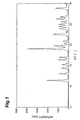
- a powder X-ray diffraction pattern for the obtained crystals is shown in Fig. 1, and the diffraction angle (2 ⁇ ) peak and peak intensity are shown in Table 5.
- Example 1B Production of N-(3-cyano-4-methyl-1 H- indol-7-yl)-3-cyanobenzenesulfonamide (mixture consisting mainly of anhydrate crystals (Form B))
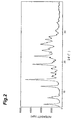
- a powder X-ray diffraction pattern for the obtained crystals is shown in Fig. 2, and the diffraction angle (2 ⁇ ) peak and peak intensity are shown in Table 6.
- Example 1B It was attempted to produce identical crystals by the same process as Example 1B, but the powder X-ray diffraction pattern did not match. In other words, the crystals obtained in Example 1B were presumably not of a single crystal form but were a mixture of multiple crystal forms. Moreover, it is believed that a single crystal form cannot be produced by the process of Example 1B.
- Example 2B Production of N-(3-cyano-4-methyl-1 H- indol-7-yl)-3-cyanobenzenesulfonamide (anhydrate crystals (Form C)) (Alternative method 1)
- N-(3-cyano-4-methyl-1 H -indol-7-yl)-3-cyanobenzenesulfonamide (mixture consisting mainly of hydrate crystals) (1.00 g) obtained by the same process as Example 1B in isopropyl alcohol (5.0ml)
- the mixture was heated to reflux.
- Isopropyl alcohol (16.0 ml) was gradually added thereto, for complete dissolution of the crystals.
- the solution was heated to reflux for 30 minutes, and then heating of the oil bath was stopped and stirring was performed for 12 hours.
- the precipitated crystals were collected by filtration, and the crystals were washed with isopropyl alcohol (2 ml x 3) and suction-dried at room temperature for 10 minutes.
- Example 1C Production of N-(3-cyano-4-methyl-1 H- indol-7-yl)-3-cyanobenzenesulfonamide (anhydrate crystals (Form C)) (Alternative method 2)
- the moisture content of the obtained white crystalline powder was measured by the Karl Fischer method to be 0.1%, confirming that the obtained crystals were anhydrate crystals. HPLC analysis also confirmed that the obtained crystals were N-(3-cyano-4-methyl-1 H -indol-7-yl)-3-cyanobenzenesulfonamide.
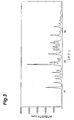
- a powder X-ray diffraction pattern for the obtained crystals is shown in Fig. 3, and the diffraction angle (2 ⁇ ) peak and peak intensity are shown in Table 7.
- Example 1D Production of N-(3-cyano-4-methyl-1 H- indol-7-yl)-3-cyanobenzenesulfonamide (hydrate crystals (Form A))
- N-(3-Cyano-4-methyl-1 H -indol-7-yl)-3-cyanobenzenesulfonamide (31.8 g) was dissolved in isopropyl alcohol (954 ml) and water (9.5 ml) at an external temperature of 80°C.
- Anhydrate seed crystals (95.4 mg) were added, and rapid ice-cooling was carried out. After stirring for 30 minutes, the crystals were collected by filtration, washed twice with isopropyl alcohol (60 ml), and dried at 19°C for 3.5 hours under reduced pressure to give white crystals of the title compound (28.1 g).
- a powder X-ray diffraction pattern of the obtained crystals was measured, and it matched the diffraction pattern of the crystals obtained in Example 1F, confirming that the crystals obtained in this example were of the same type as the crystals obtained in Example 1F.
- Example 2D Production of N-(3-cyano-4-methyl-1 H- indol-7-yl)-3-cyanobenzenesulfonamide (anhydrate crystals (Form C)) (Alternative method 3)
- a powder X-ray diffraction pattern of the obtained crystals was measured, and it matched the diffraction pattern of the crystals obtained in Example 1C, confirming that the obtained crystals were identical crystals to the crystals obtained in Example 1C (anhydrate crystals (Form C)).
- Example 1E Production of N-(3-cyano-4-methyl-1 H indol-7-yl)-3-cyanobenzenesulfonamide (anhydrate crystals (Form B))
- N-(3-cyano-4-methyl-1 H -indol-7-yl)-3-cyanobenzenesulfonamide anhydrate crystals (Form C)
- 1.0 g in a mixed solution of dehydrated ethanol (36 mL) and water (6 mL) in a water bath at 70°C, the solution was allowed to stand in ice water. The precipitated crystals were filtered, and the obtained crystals were dried at 200°C to give N-(3-cyano-4-methyl-1 H -indol-7-yl)-3-cyanobenzenesulfonamide (anhydrate crystals (Form B)).
- Example 1F Production of N-(3-cyano-4-methyl-1 H- indol-7-yl)-3-cyanobenzenesulfonamide (hydrate crystals (Form A))
- N-(3-cyano-4-methyl-1 H -indol-7-yl)-3-cyanobenzenesulfonamide anhydrate crystals (Form C)
- 1.0 g in a mixed solution of dehydrated ethanol (36 mL) and water (6 mL) in a water bath at 70°C, the solution was allowed to stand in an ice water bath.
- the precipitated crystals were filtered to give N-(3-cyano-4-methyl-1 H -indol-7-yl)-3-cyanobenzenesulfonamide (hydrate crystals (Form A)).
- a powder X-ray diffraction pattern for the obtained crystals is shown in Fig. 4, and the diffraction angle (2 ⁇ ) peak and peak intensity are shown in Table 10.
- Powder X-ray diffraction measurements for the crystals obtained in each of the examples was carried out under the following measuring conditions.
- Example 3A The crystals obtained in Example 3A were measured under measuring conditions A above, and the crystals obtained in Examples 1B, 1C, 1E and 1F were measured under measuring conditions B above.
- Test Example 1 Purity of crystals obtained in Example 1B
- the impurity content in the crystals obtained in Example 1B was measured by HPLC.
- Example 1C, Example 1E and Example 1F were stored for 1 month and 3 months at 25°C/1000 Lx (LT-120D3J Light Stability Tester by Nagano Science, Japan), and then the impurity contents were measured by HPLC.
- HPLC HPLC was conducted under the same conditions as in Test Example 1, except that elution was performed with the gradient program shown in Table 14.
- the impurity content of the crystals was determined by the same method as described for Test Example 1.
- the impurity contents of the crystals obtained in different examples before and after storage are listed in Table 15. As shown in Table 15, no change in impurity content before and after storage was seen for Example 1F and Example 1C, but the impurity content increased before and after storage for Example 1E. That is, the crystals obtained in Examples 1F and 1C (Form A and Form C) clearly had higher stability against light.
- the present invention provides crystalline N-(3-cyano-4-methyl-1 H -indol-7-yl)-3-cyanobenzenesulfonamide having a single crystal form and excellent stability against light, as well as a process for preparing the same.
- the crystals may be used as the active ingredient of a pharmaceutical composition, and especially are suitable for use as the active ingredient of an angiogenesis inhibitor, antitumor agent, pancreatic cancer therapeutic agent, colorectal cancer therapeutic agent, gastric cancer therapeutic agent, breast cancer therapeutic agent, prostate cancer therapeutic agent, lung cancer therapeutic agent, ovarian cancer therapeutic agent, cancer metastasis inhibitor, diabetic retinopathy therapeutic agent, rheumatoid arthritis therapeutic agent or angioma therapeutic agent.
Landscapes
- Chemical & Material Sciences (AREA)
- Organic Chemistry (AREA)
- Health & Medical Sciences (AREA)
- Life Sciences & Earth Sciences (AREA)
- General Health & Medical Sciences (AREA)
- Veterinary Medicine (AREA)
- Public Health (AREA)
- Pharmacology & Pharmacy (AREA)
- Medicinal Chemistry (AREA)
- Animal Behavior & Ethology (AREA)
- Epidemiology (AREA)
- Chemical Kinetics & Catalysis (AREA)
- General Chemical & Material Sciences (AREA)
- Nuclear Medicine, Radiotherapy & Molecular Imaging (AREA)
- Pharmaceuticals Containing Other Organic And Inorganic Compounds (AREA)
- Indole Compounds (AREA)
- Medicinal Preparation (AREA)
- Organic Low-Molecular-Weight Compounds And Preparation Thereof (AREA)
Abstract
Description
- The present invention relates to crystalline sulfonamide-containing indole compound which are useful as antitumor agents with angiogenesis inhibitory action, and to a process for preparing the same.
- Sulfonamide-containing indole compounds are useful as antitumor agents with angiogenesis inhibitory action, and among them, an especially notable antitumor effect is exhibited by N-(3-cyano-4-methyl-1H-indol-7-yl)-3-cyanobenzenesulfonamide (hereinafter referred to as "compound (5b)") (see Patent document 1). A process for preparing the compound (5b) is disclosed in Example 1 of
Patent document 1. - [Patent document 1] WO00/50395
- Upon several test runs of Example 1 of
Patent document 1, the present inventors have found that it is not always possible to obtain consistent crystals. The active ingredient of a drug must be stably supplied as a product of consistent quality. Therefore, when the active ingredient of a drug is obtained as a crystalline substance, it preferably consists of a single crystal form and has satisfactory physical properties such as stability against light and other influences. It is also desirable to develop a process for stable production of such crystals on an industrial scale. It is therefore an object of the present invention to provide crystals of the compound (5b) which consist of a single crystal form, and a process for preparing the same. - As a result of much avid research, the present inventors have discovered that a single crystal form of the compound (5b) can be obtained by using a specific solvent during crystallization of the compound (5b), and have succeeded in completing this invention.
- Specifically, the present invention provides the following [1] to [30].
- [1] A crystalline form (Form C) of N-(3-cyano-4-methyl-1H-indol-7-yl)-3-cyanobenzenesulfonamide having a diffraction peak at a diffraction angle (2θ ± 0.2°) of 11.4° in a powder X-ray diffraction.
- [2] A crystalline form (Form C) according to [1] further having a diffraction peak at a diffraction angle (2θ ± 0.2°) of 19.1° in a powder X-ray diffraction.
- [3] A crystalline form (Form C) of N-(3-cyano-4-methyl-1H-indol-7-yl)-3-cyanobenzenesulfonamide having an absorption peak at a wavenumber of 1410 ± 1 cm-1 in an infrared absorption spectrum (KBr).
- [4] A crystalline form (Form C) according to [3] further having an absorption peak at a wavenumber of 1443 ± 1 cm-1 in an infrared absorption spectrum (KBr).
- [4-2] A crystalline form (Form C) according to [1] or [2] having an absorption peak at a wavenumber of 1410 ± 1 cm-1 in an infrared absorption spectrum (KBr).
- [4-3] A crystalline form (Form C) according to [4-2] further having an absorption peak at a wavenumber of 1443 ± 1 cm-1 in an infrared absorption spectrum (KBr).
- [5] A crystalline form (Form C) of N-(3-cyano-4-methyl-1H-indol-7-yl)-3-cyanobenzenesulfonamide having a peak at a chemical shift of approximately 143.4 ppm in a 13C solid state NMR spectrum.
- [6] A crystalline form (Form C) according to [5] further having a peak at a chemical shift of approximately 131.1 ppm in a 13C solid state NMR spectrum.
- [6-2] A crystalline form (Form C) according to any one of [1] to [4-3] having a peak at a chemical shift of approximately 143.4 ppm in a 13C solid state NMR spectrum.
- [6-3] A crystalline form (Form C) according to [6-2] further having a peak at a chemical shift of approximately 131.1 ppm in a 13C solid state NMR spectrum.
- [7] A process for preparing a crystalline form (Form C) of N-(3-cyano-4-methyl-1H-indol-7-yl)-3-cyanobenzenesulfonamide according to any one of [1] to [6-3], characterized in that N-(3-cyano-4-methyl-1H-indol-7-yl)-3-cyanobenzenesulfonamide is crystallized using a simple solvent selected from the group consisting of n-propyl alcohol, isopropyl alcohol, n-butyl alcohol, s-butyl alcohol, t-butyl alcohol and water, or a mixed solvent thereof as a crystallization solvent.
- [8] A process according to [7], wherein the crystallization solvent is a simple solvent of isopropyl alcohol or s-butyl alcohol, or a mixed solvent of s-butyl alcohol and water or a mixed solvent of isopropyl alcohol and water.
- [9] A process according to [7], wherein the crystallization solvent is a mixed solvent of s-butyl alcohol and water (volume ratio = 3:1-5:1) or a mixed solvent of isopropyl alcohol and water (volume ratio=9:1-10:1).
- [10] A process according to [7], wherein the crystallization solvent is a mixed solvent of s-butyl alcohol and water (volume ratio = 3.9:1-4.1:1).
- [11] A process according to [7], wherein N-(3-cyano-4-methyl-1H-indol-7-yl)-3-cyanobenzenesulfonamide is heated and dissolved in a solvent and then crystallized.
- [12] A process according to [7], wherein N-(3-cyano-4-methyl-1H-indol-7-yl)-3-cyanobenzenesulfonamide is heated and dissolved in a solvent and then crystallized by gradual cooling.
- [13] A process for preparing a crystalline form (Form C) of N-(3-cyano-4-methyl-1H-indol-7-yl)-3-cyanobenzenesulfonamide according to any one of [1] to [6-3], characterized in that N-(3-cyano-4-methyl-1H-indol-7-yl)-3-cyanobenzenesulfonamide is heated at 80-130°C.
- [14] A process for preparing a crystalline form (Form C) of N-(3-cyano-4-methyl-1H-indol-7-yl)-3-cyanobenzenesulfonamide according to any one of [1] to [6-3], characterized in that N-(3-cyano-4-methyl-1H-indol-7-yl)-3-cyanobenzenesulfonamide is heated and stirred in water at 60-90°C.
- [15] A process for preparing a crystalline form (Form C) of N-(3-cyano-4-methyl-1H-indol-7-yl)-3-cyanobenzenesulfonamide according to any one of [1] to [6-3], characterized in that a crystalline form of N-(3-cyano-4-methyl-1H-indol-7-yl)-3-cyanobenzenesulfonamide hydrate are heated at 80-130°C.
- [16] A process for preparing a crystalline form (Form C) of N-(3-cyano-4-methyl-1H indol-7-yl)-3-cyanobenzenesulfonamide according to any one of [1] to [6-3], characterized in that a crystalline form of N-(3-cyano-4-methyl-1H-indol-7-yl)-3-cyanobenzenesulfonamide hydrate are heated and stirred in water at 60-90°C.
- [17] A process for preparing a crystalline form (Form C) of N-(3-cyano-4-methyl-1H-indol-7-yl)-3-cyanobenzenesulfonamide according to any one of [1] to [6-3], characterized in that a mixture comprising a crystalline form of N-(3-cyano-4-methyl-1H indol-7-yl)-3-cyanobenzenesulfonamide anhydrate and a crystalline form of N-(3-cyano-4-methyl-1H-indol-7-yl)-3-cyanobenzenesulfonamide hydrate are heated at 80-130°C.
- [18] A process for preparing a crystalline form (Form C) of N-(3-cyano-4-methyl-1H-indol-7-yl)-3-cyanobenzenesulfonamide according to any one of [1] to [6-3], characterized in that a mixture comprising a crystalline form of N-(3-cyano-4-methyl-1H-indol-7-yl)-3-cyanobenzenesulfonamide anhydrate and a crystalline form of N-(3-cyano-4-methyl-1H-indol-7-yl)-3-cyanobenzenesulfonamide hydrate are heated and stirred in water at 60-90°C.
- [19] A crystalline form (Form A) of N-(3-cyano-4-methyl-1H-indol-7-yl)-3-cyanobenzenesulfonamide hydrate having a diffraction peak at a diffraction angle (2θ ± 0.2°) of 8.5° in a powder X-ray diffraction.
- [20] A crystalline form (Form A) according to [19] further having a diffraction peak at a diffraction angle (2θ ± 0.2°) of 25.8° in a powder X-ray diffraction.
- [21] A crystalline form (Form A) of N-(3-cyano-4-methyl-1H-indol-7-yl)-3-cyanobenzenesulfonamide hydrate having an absorption peak at a wavenumber of 616 ± 1 cm-1 in an infrared absorption spectrum (KBr).
- [22] A crystalline form (Form A) according to [21] further having an absorption peak at a wavenumber of 802 ± 1 cm-1 in an infrared absorption spectrum (KBr).
- [22-2] A crystalline form (Form A) according to [19] or [20] having an absorption peak at a wavenumber of 616 ± 1 cm-1 in an infrared absorption spectrum (KBr).
- [22-3] A crystalline form (Form A) according to [22-2] further having an absorption peak at a wavenumber of 802 ± 1 cm-1 in an infrared absorption spectrum (KBr).
- [23] A crystalline form (Form A) of N-(3-cyano-4-methyl-1H-indol-7-yl)-3-cyanobenzenesulfonamide hydrate having a peak at a chemical shift of approximately 134.7 ppm in a 13C solid state NMR spectrum.
- [24] A crystalline form (Form A) according to claim 23 further having a peak at a chemical shift of approximately 126.3 ppm in a 13C solid state NMR spectrum.
- [24-2] A crystalline form (Form A) according to [19] to [22-3] having a peak at a chemical shift of approximately 134.7 ppm in a 13C solid state NMR spectrum.
- [24-3] A crystalline form (Form A) according to [24-2] further having a peak at a chemical shift of approximately 126.3 ppm in a 13C solid state NMR spectrum.
- [25] A pharmaceutical composition comprising a crystalline form according to any one of [1] to [6-3].
- [26] An angiogenesis inhibitor comprising a crystalline form according to any one of [1] to [6-3].
- [27] An antitumor agent, pancreatic cancer therapeutic agent, colorectal cancer therapeutic agent, gastric cancer therapeutic agent, breast cancer therapeutic agent, prostate cancer therapeutic agent, lung cancer therapeutic agent, ovarian cancer therapeutic agent, cancer metastasis inhibitor, diabetic retinopathy therapeutic agent, rheumatoid arthritis therapeutic agent or angioma therapeutic agent, comprising a crystalline form according to any one of [1] to [6-3].
- [28] A method of preventing or treating a disease for which angiogenesis inhibition is effective, comprising administering to a patient, a pharmacologically effective amount of a crystalline form according to any one of [1] to [6-3].
- [29] A method of preventing or treating antitumor, pancreatic cancer, colorectal cancer, gastric cancer, breast cancer, prostate cancer, lung cancer, ovarian cancer, cancer metastasis, diabetic retinopathy, rheumatoid arthritis or angioma, comprising administering to a patient, a pharmacologically effective amount of a crystalline form according to any one of [1] to [6-3].
- [30] Use of a crystalline form according to any one of [1] to [6-3] for the manufacture of an antitumor agent, pancreatic cancer therapeutic agent, colorectal cancer therapeutic agent, gastric cancer therapeutic agent, breast cancer therapeutic agent, prostate cancer therapeutic agent, lung cancer therapeutic agent, ovarian cancer therapeutic agent, cancer metastasis inhibitor, diabetic retinopathy therapeutic agent, rheumatoid arthritis therapeutic agent or angioma therapeutic agent.
- According to the preparing process of the invention, it is possible to easily prepare crystals (Form C) consisting of a single crystal form of the compound (5b) on an industrial scale. The respective crystals (Form A and Form C) of the invention can be prepared as a single crystal form by crystallization or the like and have satisfactory properties including stability to light, rendering them suitable for use as the active ingredient of an antitumor agent. The crystals, Form A are also useful as an intermediate for preparing the crystals, Form C by a thermal transition method.
-
- Fig. 1 is a drawing representing a powder X-ray diffraction pattern of the crystals obtained in Example 3A.
- Fig. 2 is a drawing representing a powder X-ray diffraction pattern of the crystals obtained in Example 1B.
- Fig. 3 is a drawing representing a powder X-ray diffraction pattern of the crystals obtained in Example 1C.
- Fig. 4 is a drawing representing a powder X-ray diffraction pattern of the crystals obtained in Example 1F.
- Fig. 5 is a drawing representing a 13C solid state NMR spectrum of the crystals obtained in Example 1C.
- Fig. 6 is a drawing representing a 13C solid state NMR spectrum of the crystals obtained in Example 1F.
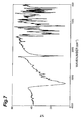
- Fig. 7 is a drawing representing an infrared absorption spectrum (KBr) of the crystals obtained in Example 1C.
- Fig. 8 is a drawing representing an infrared absorption spectrum (KBr) of the crystals obtained in Example 1F.
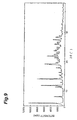
- Fig. 9 is a drawing representing a powder X-ray diffraction pattern of the crystals obtained in Example 1E.
- The present invention will now be explained in greater detail. The crystals of the invention are crystals (Form A and Form C) of the compound (5b) having the features described below. The measurement conditions for powder X-ray diffraction, infrared absorption spectrum (KBr) and 13C solid state NMR spectrum are not particularly restricted, but measurement is preferably carried out under the conditions herein described.
- The crystals (Form C) of the invention are anhydrate crystals consisting of a single crystal form of the compound (5b), and they are crystals characterized by having a diffraction peak at a diffraction angle (20 ± 0.2°) of 11.4° or crystals characterized by having diffraction peaks at diffraction angles (2θ ± 0.2°) of 11.4° and 19.1°, in a powder X-ray diffraction. These characteristic peaks in a powder X-ray diffraction are not observed with the crystal obtained by the production process disclosed in Patent document 1 (see Example 1B, Table 6 and Fig. 2 below). The crystals (Form C) of the invention are also crystals characterized by having an absorption peak at a wavenumber of 1410 ± 1 cm-1 or crystals having absorption peaks at a wavenumber of 1410 ± 1 cm-1 and a wavenumber of 1443 ± 1 cm-1, in an infrared absorption spectrum (KBr). Furthermore, the crystals (Form C) of the invention are crystals characterized by having a peak at a chemical shift of approximately 143.4 ppm or crystals characterized by having peaks at chemical shifts of approximately 143.4 ppm and approximately 131.1 ppm, in a 13C solid-state NMR spectrum.
- Since the diffraction angle (2θ) in a powder X-ray diffraction generally has a diffraction angle error in the range of ± 0.2°, the aforementioned values for the diffraction angle must be interpreted as including values within a range of ± 0.2°. Thus, the present invention encompasses not only crystals whose peak diffraction angle in a powder X-ray diffraction matches exactly, but also crystals whose peak diffraction angle matches with an error of ± 0.2°.
- Specifically, throughout the present specification, "having a diffraction peak at a diffraction angle (2θ ± 0.2°) of 11.4°" means "having a diffraction peak at a diffraction angle (2θ) in the range of 11.2°-11.6°", and "having a diffraction peak at a diffraction angle (2θ ± 0.2°) of 19.1°" means "having a diffraction peak at a diffraction angle (2θ) in the range of 18.9°-19.3°".
- Likewise, throughout the present specification, "having an absorption peak at a wavenumber of 1410 ± 1 cm-1" means "having an absorption peak at a wavenumber in the range of 1409-1411 cm-1", and "having an absorption peak at a wavenumber of 1443 ± 1 cm-1" means "having an absorption peak at a wavenumber in the range of 1442-1443 cm-1".
- Throughout the present specification, "having a peak at a chemical shift of approximately 143.4 ppm" means "having a peak substantially equivalent to a chemical shift of 143.4 ppm, when a 13C solid state NMR spectrum is measured under ordinary measuring conditions". Also, "having a peak at a chemical shift of approximately 131.1 ppm" as used throughout the present specification likewise means "having a peak substantially equivalent to a chemical shift of 131.1 ppm, when a 13C solid state NMR spectrum is measured under ordinary measuring conditions".
- The crystals (Form A) of the invention are hydrate crystals composed of a single crystal form of the compound (5b), and they are crystals characterized by having a diffraction peak at a diffraction angle (2θ ± 0.2°) of 8.5° or crystals characterized by having diffraction peaks at diffraction angles (2θ ± 0.2°) of 8.5° and 25.8°, in a powder X-ray diffraction. The crystals (Form A) of the invention are also crystals characterized by having an absorption peak at a wavenumber of 616 ± 1 cm-1 or crystals having absorption peaks at a wavenumber of 616 ± 1 cm-1 and a wavenumber of 802 ± 1 cm-1, in an infrared absorption spectrum (KBr). Furthermore, the crystals (Form A) of the invention are crystals characterized by having a peak at a chemical shift of approximately 134.7 ppm or crystals characterized by having peaks at chemical shifts of approximately 134.7 ppm and approximately 126.3 ppm, in a 13C solid state NMR spectrum.
- Since the diffraction angle (2θ) in a powder X-ray diffraction generally has a diffraction angle error in the range of ± 0.2°, the aforementioned values for the diffraction angle must be interpreted as including values within a range of ± 0.2°. Thus, the present invention encompasses not only crystals whose peak diffraction angle in a powder X-ray diffraction matches exactly, but also crystals whose peak diffraction angle matches with an error of ± 0.2°.
- Throughout the present specification, "having a diffraction peak at a diffraction angle (2θ ± 0.2°) of 8.5°" means "having a diffraction peak at a diffraction angle (2θ) in the range of 8.3°-8.7°", and "having a diffraction peak at a diffraction angle (2θ ± 0.2°) of 25.8°" means "having a diffraction peak at a diffraction angle (2θ) in the range of 25.6°-26.0°".
- Likewise, throughout the present specification, "having an absorption peak at a wavenumber of 616 ± 1 cm-1" means "having an absorption peak at a wavenumber in the range of 615-617 cm-1", and "having an absorption peak at a wavenumber of 802 ± 1 cm-1" means "having an absorption peak at a wavenumber in the range of 801-803 cm-1".
- Throughout the present specification, "having a peak at a chemical shift of approximately 134.7 ppm" means "having a peak substantially equivalent to a chemical shift of 134.7 ppm, when a 13C solid state NMR spectrum is measured under ordinary measuring conditions". Also, "having a peak at a chemical shift of approximately 126.3 ppm" as used throughout the present specification means "having a peak substantially equivalent to a chemical shift of 126.3 ppm, when a 13C solid state NMR spectrum is measured under ordinary measuring conditions".
- The crystals (Form A) of the invention may be obtained, for example, by recrystallization of the crystals (Form C) of the invention from a mixed solvent of ethanol and water.
- The crystals (Form C) of the invention may be stably produced on an industrial scale by producing the compound (5b) according to Example 1 of
Patent document 1 or Production Example 3A of the present specification, and then crystallizing the compound (5b) from a specific solvent. The compound (5b) used for crystallization may be in any form. That is, it may be a hydrate or anhydrate, amorphous or crystalline (including combinations of multiple crystal forms) compound, or a mixture thereof. - The solvent used for crystallization is a simple solvent selected from the group consisting of n-propyl alcohol, isopropyl alcohol, n-butyl alcohol, s-butyl alcohol, t-butyl alcohol and water, or a mixed solvent thereof. A mixed solvent is preferably a mixture of two different solvents selected from the group listed above. Preferred solvents are a simple solvent of isopropyl alcohol or s-butyl alcohol, a mixed solvent of s-butyl alcohol and water or a mixed solvent of isopropyl alcohol and water, more preferred solvents are a mixed solvent of s-butyl alcohol and water or a mixed solvent of isopropyl alcohol and water, and even more preferred solvent is a mixed solvent of s-butyl alcohol and water.
- The mixing ratio (volume ratio) when using a mixed solvent of s-butyl alcohol and water is preferably 3:1-5:1, more preferably 3.9:1-4.1:1 and even more preferably 4:1.
- The mixing ratio (volume ratio) when using a mixed solvent of isopropyl alcohol and water is preferably 5:1-100:1, more preferably 9:1-100:1, even more preferably 9.9:1-10.1:1 and most preferably 10:1.
- The amount of solvent used may be appropriately selected between the minimum amount in which the compound (5b) will dissolve by heating and the maximum amount at which the yield of the crystals is not significantly reduced, and it is preferably a 3-40 fold amount (v/w), more preferably a 10-20 fold amount (v/w), even more preferably a 15-17 fold amount (v/w) and most preferably a 15.7-16.3 fold amount (v/w), in terms of the volume ratio with respect to the weight of the compound (5b).
- The temperature for dissolution of the compound (5b) may be appropriately selected as the temperature at which the compound (5b) will dissolve in the solvent, but it is preferably from 75°C to heating reflux temperature. The cooling during crystallization is preferably carried out while suitably adjusting the cooling rate in consideration of the effect on quality and grade of the crystals, and gradual cooling (cooling at a rate of 40°C/hr or slower) is preferred. More preferably, the cooling rate is 5-20°C/hr and even more preferably it is about 10°C/hr. The final crystallization temperature may be appropriately selected in view of the yield and quality of the crystals, but it is preferably from room temperature to 0°C, more preferably 9-5°C and even more preferably 6.5-7.5°C.
- The precipitated crystals may be separated by an ordinary filtration procedure, washed with an appropriate solvent if necessary, and then dried to afford the desired crystals. The solvent used for washing of the crystals is the same as the crystallization solvent, and is preferably s-butyl alcohol.
- When the crystals separated by the filtration procedure consist (mainly) of anhydrate crystals (Form C), drying may be accomplished by merely standing in air, but in the case of mass production this is not efficient, and therefore drying by heating is preferred. The drying temperature may be appropriately selected depending on the production volume, but it is preferably 40-130°C, more preferably 65-75°C and even more preferably 70°C. The drying time may be appropriately selected as a time up to which the residual solvent falls below a prescribed volume, depending on the production volume, drying apparatus and drying temperature. The drying may be carried out under an airflow or under reduced pressure, but it is preferably carried out under reduced pressure. The degree of pressure reduction may be appropriately selected depending on the production volume, drying apparatus and drying temperature.
- The crystals (Form C) may also be produced by thermal transition of the compound (5b). The compound (5b) used for thermal transition may be in any form. That is, it may be a hydrate or anhydrate, amorphous or crystalline (including combinations of multiple crystal forms) compound, or a mixture thereof. A particularly preferred form is hydrate crystals of the compound (5b), or a mixture of anhydrate crystals of the compound (5b) and hydrate crystals of the compound (5b). The mixture may be, for example, a mixture obtained by rapid cooling during recrystallization of the compound (5b) (see Examples 2B and 1D of the present specification).
- Heat drying of the compound (5b) with a heat drying apparatus can afford a crystalline form (Form C) of N-(3-cyano-4-methyl-1H-indol-7-yl)-3-cyanobenzenesulfonamide anhydrate.
- The heating temperature may be appropriately selected depending on the production volume, but is preferably 80-130°C, more preferably 119-121°C and even more preferably 120°C. The drying time may be appropriately selected as a time up to which the residual solvent falls below a prescribed volume, depending on the production volume, drying apparatus and drying temperature, but it is preferably between 10 minutes and 12 hours and more preferably between 30 minutes and 3 hours. The drying may be carried out under an airflow or under reduced pressure, but it is preferably carried out under reduced pressure. The degree of pressure reduction may be appropriately selected depending on the production volume, drying apparatus and drying temperature.
- The compound (5b) may also be suspended in water, stirred while heating and then filtered to afford the crystals (Form C). The amount of water used is not particularly restricted, but is preferably a 5-30 fold amount (v/w), more preferably an 18-22 fold amount (v/w) and even more preferably a 20-fold amount (v/w) with respect to the hydrate-containing crystals to be suspended. The temperature for heated stirring may be 60-90°C, preferably 75-85°C and more preferably 80°C. The time for heated stirring may be 1-24 hours, preferably 3-18 hours and more preferably 16-18 hours.
- The obtained anhydrate crystals may be subjected to additional drying with the same method and conditions as the drying method and conditions described for the crystallization method.
- The crystals (Form C) obtained by the process described above consist of a single crystal form which is stable, does not readily convert to other crystal forms or an amorphous form and has satisfactory physical properties such as lack of hygroscopicity, and they are therefore suitable for formulation.
- The use of the compound (5b) as an antitumor agent is disclosed in detail in
Patent document 1, and the crystals of the invention may be used in a similar fashion as the active ingredient of an antitumor agent. The entirety of the disclosure ofPatent document 1 is incorporated by reference into the disclosure of the present specification. Moreover, the crystals (Form C) of the invention have satisfactory stability and physical properties and are hence the most suitable form for use of the compound (5b) as the active ingredient of an antitumor agent. - The crystals of the invention may be formulated by an ordinary method into tablets, powder, fine powder, granules, coated tablets, capsules, syrup, lozenges, an inhalant, suppository, injection, ointment, eye ointment, eye drop, nose drop, ear drop, pap; lotion or the like. For formulation there may be employed commonly used excipients, binders, lubricants, coloring agents, taste correctives and, if necessary, stabilizers, emulsifiers, absorption accelerators, surfactants, pH adjustors, antiseptics, antioxidants and the like, while other components ordinarily used as starting materials for drug formulation may also be added according to common procedures.
- As examples of such components there may be mentioned animal or vegetable oils such as soybean oil, beef tallow and synthetic glycerides; hydrocarbons such as liquid paraffin, squalene and solid paraffin; ester oils such as octyldodecyl myristate and isopropyl myristate; higher alcohols such as cetostearyl alcohol and behenyl alcohol; silicone resins; silicone oils; surfactants such as polyoxyethylene fatty acid ester, sorbitan fatty acid ester, glycerin fatty acid ester, polyoxyethylenesorbitan fatty acid ester, polyoxyethylene hydrogenated castor oil and polyoxyethylene-polyoxypropylene block copolymer; water-soluble polymers such as hydroxyethylcellulose, polyacrylic acid, carboxyvinyl polymer, polyethylene glycol, polyvinylpyrrolidone and methylcellulose; lower alcohols such as ethanol and isopropyl alcohol; polyhydric alcohols such as glycerin, propylene glycol, dipropylene glycol and sorbitol; sugars such as glucose and sucrose; inorganic powders such as silicic anhydride, magnesium aluminum silicate and aluminum silicate, purified water, and the like.
- As examples of excipients there may be mentioned lactose, corn starch, white soft sugar, glucose, mannitol, sorbit, crystalline cellulose, silicon dioxide and the like, as examples of binders there may be mentioned polyvinyl alcohol, polyvinyl ether, methylcellulose, ethylcellulose, gum Arabic, tragacanth gum, gelatin, shellac, hydroxypropylmethylcellulose, hydroxypropylcellulose, polyvinylpyrrolidone, polypropylene glycol-polyoxyethylene block polymer, meglumine and the like, as examples of disintegrators there may be mentioned starch, agar, gelatin powder, crystalline cellulose, calcium carbonate, sodium hydrogencarbonate, calcium citrate, dextrin, pectin, carboxymethylcellulose calcium and the like, as examples of lubricants there may be mentioned magnesium stearate, talc, polyethylene glycol, silica, hydrogenated vegetable oils and the like, as examples of coloring agents there may be mentioned those approved for addition to pharmaceuticals, and as examples of taste correctives there may be mentioned cocoa powder, menthol, aromatic powder, peppermint oil, camphor, cinnamon powder and the like.
- For production of an oral preparation, the compound of the invention or its pharmacologically acceptable salt may be combined with an excipient and, if necessary, a binder, disintegrator, lubricant, coloring agent, taste corrective or the like and then made into a powder, fine powder, granules, tablets, coated tablets or capsules.
- Also, there is no restriction against sugar-coating and, if necessary, other appropriate coating of the tablets or granules.
- For production of a liquid preparation such as a syrup or pharmaceutical preparation for injection, the compound of the invention or its pharmacologically acceptable salt may be combined with a pH adjustor, solubilizer, isotonizing agent or the like, and if necessary, with a dissolving aid, stabilizers or the like, and formulated by an ordinary method.
- The method of producing an external preparation is not particularly restricted, and may be according to an ordinary method. Specifically, as base materials for pharmaceutical preparation there may be used various materials ordinarily employed for pharmaceuticals, quasi drugs, cosmetics and the like. As examples of specific base materials to be used there may be mentioned materials such as animal and vegetable oils, mineral oils, ester oils, waxes, higher alcohols, fatty acids, silicone oils, surfactants, phospholipids, alcohols, polyhydric alcohols, water-soluble polymers, clay minerals, purified water and the like, and if necessary there may also be added pH adjustors, antioxidants, chelating agents, antiseptic/mildew resistant agents, coloring agents, aromatics and the like, although base materials for an external preparation of the invention are not limited to these. If necessary there may also be included components such as circulation promoters, bactericidal agents, antiflash agents, cell activators, vitamins, amino acids, humectants, keratolytic agents and the like. The amounts of such base materials are the amounts which give concentrations indicated for production of ordinary external preparations.
- The form of administration of the crystals of the invention is not particularly restricted, and may be oral administration or parenteral administration by an ordinarily employed method. For example, the crystals may be administered after formulation into tablets, powder, granules, capsules, syrup, lozenges, an inhalant, suppository, injection, ointment, eye ointment, eye drop, nose drop, ear drop, pap, lotion or the like. The dosage of a pharmaceutical according to the invention may be appropriately selected depending on patient age, gender, body weight, severity of symptoms, particular type of condition, and on the type of dosage form or salt.
- The following are examples of pharmaceutical formulations comprising a crystalline form (Form C) of N-(3-cyano-4-methyl-1H-indol-7-yl)-3-cyanobenzenesulfonamide anhydrate (compound (5b), crystals Form C), to be used for treatment or prevention in humans.
- Whole formulation for 100 mg preparation (content per tablet)
-
[Table 1] Ingredient Purpose of use Content (mg) Compound (5b), crystals Form C principal agent 100.0 Mannitol excipient 123.8 Corn starch excipient 36.0 Low substituted hydroxypropylcellulose disintegrator 48.0 Hydroxypropylcellulose binder 9.6 Magnesium stearate lubricant 2.6 Hydroxypropylmethylcellulose coating agent 5.7 Macrogol coating agent 1.2 Talc coating agent 2.6 Titanium oxide coating agent 0.45 Yellow iron oxide coloring agent 0.05 Total 330 mg - Whole formulation for 50 mg preparation (content per tablet)
-
[Table 2] Ingredient Purpose of use Content (mg) Compound (5b), crystals Form C principal agent 50.0 Mannitol excipient 61.9 Corn starch excipient 18.0 Low substituted hydroxypropylcellulose disintegrator 24.0 Hydroxypropylcellulose binder 4.8 Magnesium stearate lubricant 1.3 Hydroxypropylmethylcellulose coating agent 3.4 Macrogol coating agent 0.7 Talc coating agent 1.6 Titanium oxide coating agent 0.27 Yellow iron oxide coloring agent 0.03 Total 166 mg - Whole formulation for 10 mg preparation (content per tablet)
-
[Table 3] Ingredient Purpose of use Content (mg) Compound (5b), crystals Form C principal agent 10.0 Mannitol excipient 89.9 Corn starch excipient 38.0 Low substituted hydroxypropylcellulose disintegrator 16.0 Hydroxypropylcellulose binder 4.8 Magnesium stearate lubricant 1.3 Hydroxypropylmethylcellulose coating agent 3.4 Macrogol coating agent 0.7 Talc coating agent 1.6 Titanium oxide coating agent 0.27 Yellow iron oxide coloring agent 0.03 Total 166 mg - Whole formulation for 2 mg preparation (content per tablet)
-
[Table 4] Ingredient Purpose of use Content (mg) Compound (5b), crystals Form C principal agent 2.0 Mannitol excipient 95.9 Corn starch excipient 40.0 Low substituted hydroxypropylcellulose disintegrator 16.0 Hydroxypropylcellulose binder 4.8 Magnesium stearate lubricant 1.3 Hydroxypropylmethylcellulose coating agent 3.4 Macrogol coating agent 0.7 Talc coating agent 1.6 Titanium oxide coating agent 0.27 Yellow iron oxide coloring agent 0.03 Total 166 mg - The pharmaceutical preparations having the formulations listed above may be obtained by ordinary pharmaceutical protocols.
- The present invention will now be explained in greater detail and specifically by the following examples, with the understanding that the invention is in no way limited to the examples.
-

- To 740 mL of dimethylformamide was added 235 mL (2.52 mol) of phosphorous oxychloride at 0°C, followed by stirring at 0°C for 0.5 hour. To the reaction mixture was then added a solution of 370 g (2.10 mol) of 4-methyl-7-nitro-1H-indole (WO00/50395) in dimethylformamide (1110 mL) at 0°C, followed by heating and stirring at 60°C for 2 hours.
- To the reaction mixture was then added dropwise a solution of 292 g (4.20 mol) of hydroxylamine hydrochloride in dimethylformamide (1850 mL) with keeping the internal temperature below 80°C, followed by heating and stirring at 60°C for 40 minutes. After adding 11.1 L of ice water to the reaction mixture while cooling in an ice bath, the mixture was further stirred overnight. The precipitated crystals were collected by filtration and washed with water. The crystals were suspended in 11.1 L of water, 1N solution of sodium hydroxide was added to the suspension for adjustment to pH 7, and then the crystals were collected by filtration and washed with water to give 412 g of the title compound (yield: 97.6%).
- HPLC analysis confirmed that the obtained compound was identical to the 3-cyano-4-methyl-7-nitro-1H-indole described in WO00/50395.
-
- Mobile phase: CH3CN/H2O/70% HClO4 = 500/500/1 (v/v/v)
- Flow rate: 1.0 mL/min
- Detection: UV (254 nm)
- Column: YMC-Pack Pro C18 250 x 4.6 mm
-

- After suspending 400 g (1.99 mol) of the 3-cyano-4-methyl-7-nitro-1H-indole obtained in Example 1A in a mixture of 6 L of ethyl acetate and 6 L of methanol, the suspension was subjected to hydrogenation in the presence of 40 g of 10% palladium-carbon at ordinary temperature, 4 atmospheres. After removing the catalyst by filtration, the filtrate was treated with activated carbon and concentrated to give crude crystals. The crude crystals were dissolved in 6 L of 1,2-dimethoxyethane at an external temperature of 60°C, and then 12 L of water was added dropwise. Upon confirming precipitation of crystals, the mixture was stirred for 1.5 hours while cooling in an ice bath and filtered, and the crystals were washed twice with water (1 L). The crystals were air-dried at 50°C for 16 hours to give 289 g of the title compound (yield: 84.8%).
- HPLC analysis confirmed that the obtained compound was identical to the 7-amino-3-cyano-4-methyl-1H-indole described in WO00/50395.
-
- Mobile phase: CH3CN/H2O/70% HClO4 = 400/600/1 (v/v/v)
- Flow rate: 1.0 mL/min
- Detection: UV (282 nm)
- Column: YMC-Pack Pro C18 250 x 4.6 mm
-

- To a suspension of 5.0 g (29 mmol) of the 7-amino-3-cyano-4-methyl-1H-indole obtained in Example 2A and 6.48 g (32 mmol) of 3-cyanobenzenesulfonyl chloride [CAS No. 56542-67-7] in 150 mL of methyl acetate, were added 75 mL of water and 2.83 mL (35 mmol) of pyridine, followed by stirring for 2 hours and 40 minutes. After adding 0.73 mL (9 mmol) of concentrated hydrochloric acid to the reaction mixture, liquid-liquid separation was performed and the organic layer was washed with a mixture of 75 mL of water and 17.5 mL of ethanol. Activated carbon was added to the organic layer and the mixture was stirred at 45-50°C for 30 minutes, and then filtered and concentrated. To thus obtained crude crystals were added 96 mL of 2-butanol and 24 mL of water for dissolution at 75°C, and the solution was cooled to 7°C at approximately 10°C/hr and stirred overnight. The precipitated crystals were collected by filtration and washed twice with 10 mL of 2-butanol to give 8.17 g (wet weight) of crystals of the title compound. The crystals were dried under reduced pressure at 70°C for 2 hours to give 7.54 g of crystals of the title compound.
- HPLC analysis confirmed that the obtained compound was identical to the N-(3-cyano-4-methyl-1H-indol-7-yl)-3-cyanobenzenesulfonamide described in WO00/50395.
-
- Mobile phase: CH3CN/H2O/70% HClO4 = 500/500/1 (v/v/v)
- Flow rate: 1.0 mL/min
- Detection: UV (282 nm)
- Column: YMC-Pack Pro C18 250 x 4.6 mm
- A powder X-ray diffraction pattern for the obtained crystals is shown in Fig. 1, and the diffraction angle (2θ) peak and peak intensity are shown in Table 5.
-
[Table 5] PEAK No. 2 θ INTERPLANAR SPACING INTENSITY HALF WIDTH I/ Io 1 11.420 7.74203 2122 0.210 55 2 13.040 6.78363 913 0.210 24 3 14. 380 6.15437 778 0.300 20 4 15.200 5.824I5 717 0.210 19 5 15. 540 5.69748 220 0.210 6 6 16.380 5.40714 1013 0.210 26 7 17.000 5. 21131 960 0.210 25 8 19.080 4.64763 3925 0.240 100 9 19.440 4.56237 505 0.150 13 10 19.780 4.48471 1512 0.240 39 11 20.360 4. 35824 470 0.210 12 12 20.900 4.24684 543 0.210 14 13 22.500 3. 94833 1295 0.150 33 14 22.620 3.92765 1437 0.270 37 15 23.160 3.83728 295 0.124 8 16 23.960 3.71094 920 0.330 24 17 24.400 3.64501 890 0.180 23 18 24.520 3.62744 952 0.150 25 19 24.980 3.56168 917 0.240 24 20 25.560 3.48216 693 0.210 18 21 26.260 3.39090 1230 0.270 32 22 26.760 3.32867 823 0.240 21 23 28.840 3.09315 1277 0.210 33 24 29.620 3.01345 270 0.180 7 - Crystals of the title compound were synthesized using the same reaction conditions and recrystallization conditions as for the N-(3-cyano-4-methyl-1H-indol-7-yl)-3-cyanobenzenesulfonamide described in WO00/50359.
- To a solution of 7-amino-3-cyano-4-methyl-1H-indole (10 g, 58.4 mmol) in tetrahydrofuran (200 ml) were added pyridine (20 ml) and 3-cyanobenzenesulfonyl chloride (12.5 g), followed by stirring at room temperature for 3.5 hours. After further adding 2N hydrochloric acid (100 ml), extraction was performed with ethyl acetate. The organic layer was washed with water (twice) and brine in that order, dried over anhydrous magnesium sulfate, and then concentrated under reduced pressure. The residue was purified by silica gel column chromatography (hexane:ethyl acetate = 2:1-3:2). A mixed solvent of ethanol-hexane (1:2) was added thereto, and after sonication, the precipitate was collected by filtration and washed with a mixed solvent of ethanol-hexane (1:3). The mixture was dried overnight under reduced pressure to give the title compound (9.33 g, 27.7 mmol, 47% yield).
- 1H-NMR spectrum (DMSO-d6) δ (ppm): 2.58 (3H, s), 6.52 (1H, d, J=7.6Hz), 6.80 (1H, d, J=7.6Hz), 7.74 (1H, m), 7.92 (1H, d, J=8.0Hz), 8.12 (2H, m), 8.19 (1H, d, J=3.2Hz), 10.13 (1H, s), 12.03 (1H, s).
- A powder X-ray diffraction pattern for the obtained crystals is shown in Fig. 2, and the diffraction angle (2θ) peak and peak intensity are shown in Table 6.
-
[Table 6] PEAK No. 2 θ HALF WIDTH d-VALUE INTENSITY RELATIVE INTENSITY 1 5.960 0.235 14.8167 3492 49 2 8.100 0.212 10.9063 2820 40 3 8.440 0.188 10.4677 1968 28 4 11.920. 0.259 7.4184 4067 57 5 14.120 0.282 6.2671 7103 100 6 15.120 0.259 5.8548 2142 30 7 16.400 0.165 5.4006 2330 33 8 17.660 0.141 5.0180 1905 27 9 17.960 0.212 4.9349 1998 28 10 19.240 0.306 4.6093 5707 80 11 21.380 0.235 4.1526 2443 34 12 21.940 0.282 4.0478 5502 77 13 23.020 0.212 3.8603 2602 37 14 23.580 0.165 3.7699 3172 45 15 23.900 0.400 3.7201 3958 56 16 24.540 0.282 3.6245 2812 40 17 25.840 0.165 3.4451 4302 61 18 26.520 0.212 3.3582 3045 43 19 27.540 0.376 3.2361 3265 46 20 28.380 0.118 3.1422 2655 37 21 28.520 0.188 3.1271 2435 34 - It was attempted to produce identical crystals by the same process as Example 1B, but the powder X-ray diffraction pattern did not match. In other words, the crystals obtained in Example 1B were presumably not of a single crystal form but were a mixture of multiple crystal forms. Moreover, it is believed that a single crystal form cannot be produced by the process of Example 1B.
- After suspending N-(3-cyano-4-methyl-1H-indol-7-yl)-3-cyanobenzenesulfonamide (mixture consisting mainly of hydrate crystals) (1.00 g) obtained by the same process as Example 1B in isopropyl alcohol (5.0ml), the mixture was heated to reflux. Isopropyl alcohol (16.0 ml) was gradually added thereto, for complete dissolution of the crystals. The solution was heated to reflux for 30 minutes, and then heating of the oil bath was stopped and stirring was performed for 12 hours. The precipitated crystals were collected by filtration, and the crystals were washed with isopropyl alcohol (2 ml x 3) and suction-dried at room temperature for 10 minutes. Thus obtained crystals were dried at 50°C for 13.5 hours, and then pounded in a mortar. This was dried at 50°C for 13 hours to give a mixture (744 mg) of hydrate crystals and anhydrate crystals (Form C) of N-(3-cyano-4-methyl-1H-indol-7-yl)-3-cyanobenzenesulfonamide, as light yellow to light brown crystals.
- A 200 mg portion thereof was dried at 120°C for 30 minutes to give crystals of N-(3-cyano-4-methyl-1H-indol-7-yl)-3-cyanobenzenesulfonamide (194 mg).
- When a powder X-ray diffraction pattern of the obtained crystals was measured, it matched the diffraction pattern of the crystals obtained in Example 1C, confirming that the obtained crystals were identical crystals to the crystals obtained in Example 1C (anhydrate crystals (Form C)).
- After suspending 2.50 kg (14.6 mol) of 7-amino-3-cyano-4-methyl-1H-indole and 3.24 kg (16.06 mol) of 3-cyanobenzenesulfonyl chloride [CAS No.56542-67-7] in 25 L of methyl acetate, 87.5 L of methyl acetate and 37.5 L of water were added thereto. Next, 1.39 kg (17.52 mol) of pyridine was added dropwise and the mixture was stirred for 2 hours.
- After adding 0.36 L (4.38 mol) of concentrated hydrochloric acid to the reaction mixture, it was subjected to liquid-liquid separation and the organic layer was washed with a mixture of 37.5 L of water and 8.8 L of ethanol. After adding activated carbon to the organic layer and stirring at 50°C for 30 minutes, the mixture was filtered and concentrated. To this was added 30 L of isopropyl alcohol, and after re-concentration, 91 L of isopropyl alcohol and 9.1 L of water were added and the mixture was heated to 70°C. Dissolution was confirmed after 2 hours, and then clarifying filtration was performed and 11.4 L of isopropyl alcohol and 1.1 L of water were added. The solution was slowly cooled to 7°C at 10°C/hr (with introduction of seed crystals at 64°C), and after stirring overnight at 7°C, the crystals were collected by filtration. The crystals were dried at 70°C under reduced pressure to give 3.6 kg of the title compound as a white crystalline powder (yield: 73%).
- The moisture content of the obtained white crystalline powder was measured by the Karl Fischer method to be 0.1%, confirming that the obtained crystals were anhydrate crystals. HPLC analysis also confirmed that the obtained crystals were N-(3-cyano-4-methyl-1H-indol-7-yl)-3-cyanobenzenesulfonamide.
-
- Mobile phase: CH3CN/H2O/70% HClO4 = 500/500/1 (v/v/v)
- Flow rate: 1.0 ml/min
- Detection: UV (282 nm)
- Column: YMC-Pack Pro C 18 250 x 4.6 mm
- Column temperature: 25°C
- Retention time: 8.3 min
- A powder X-ray diffraction pattern for the obtained crystals is shown in Fig. 3, and the diffraction angle (2θ) peak and peak intensity are shown in Table 7.
-
[Table 7] 2 theta (degree) Relative Intensity 11.4 47 13.0 24 14.4 20 15.2 21 16.4 30 17.0 16 19.1 100 19.8 36 20.4 12 20.9 15 22.6 37 24.0 25 24.5 28 25.0 27 25.6 19 26.3 35 26.8 23 28.8 35 31.6 24 32.7 10 - A 13C solid-state NMR spectrum for the obtained crystals is shown in Fig. 5, and the chemical shifts are listed in Table 8.
-
[Table 8] Chemical Shift (ppm) 143.4 137.7 136.9 134.2 131.1 128.5 126.4 125.8 124.3 120.0 118.8 115.8 111.0 84.5 19.4 - An infrared spectrum (KBr) for the obtained crystals is shown in Fig. 7, and the wavenumbers (cm-1) and transmittances (%T) of the absorption peak are shown in Table 9.
-
[Table 9] Wavenumber (cm-1) %T Wavenumber (cm-1) %T 3212 5 1087 23 2954 26 1060 38 2872 26 984 25 2242 22 939 41 2223 7 905 25 1715 47 839 45 1617 49 819 38 1519 29 795 32 1472 42 754 33 1443 12 690 19 1410 20 676 16 1337 12 652 26 1316 17 625 24 1260 32 607 28 1207 33 588 20 1178 32 559 17 1158 6 518 14 1102 32 420 45 - N-(3-Cyano-4-methyl-1H-indol-7-yl)-3-cyanobenzenesulfonamide (31.8 g) was dissolved in isopropyl alcohol (954 ml) and water (9.5 ml) at an external temperature of 80°C. Anhydrate seed crystals (95.4 mg) were added, and rapid ice-cooling was carried out. After stirring for 30 minutes, the crystals were collected by filtration, washed twice with isopropyl alcohol (60 ml), and dried at 19°C for 3.5 hours under reduced pressure to give white crystals of the title compound (28.1 g). A powder X-ray diffraction pattern of the obtained crystals was measured, and it matched the diffraction pattern of the crystals obtained in Example 1F, confirming that the crystals obtained in this example were of the same type as the crystals obtained in Example 1F.
- After suspending the N-(3-cyano-4-methyl-1H-indol-7-yl)-cyanobenzenesulfonamide (5 g) obtained in Example 1D in water (100 ml), the mixture was heated and stirred at 80°C for 17 hours. It was then allowed to cool down to room temperature, and then the crystals were collected by filtration, washed with water (20 ml) and dried under reduced pressure at 70°C for 22 hours to give crystals of the title compound (4.20 g) (yield: 97.7%).
- A powder X-ray diffraction pattern of the obtained crystals was measured, and it matched the diffraction pattern of the crystals obtained in Example 1C, confirming that the obtained crystals were identical crystals to the crystals obtained in Example 1C (anhydrate crystals (Form C)).
- After dissolving N-(3-cyano-4-methyl-1H-indol-7-yl)-3-cyanobenzenesulfonamide (anhydrate crystals (Form C), 1.0 g) in a mixed solution of dehydrated ethanol (36 mL) and water (6 mL) in a water bath at 70°C, the solution was allowed to stand in ice water. The precipitated crystals were filtered, and the obtained crystals were dried at 200°C to give N-(3-cyano-4-methyl-1H-indol-7-yl)-3-cyanobenzenesulfonamide (anhydrate crystals (Form B)).
- A powder X-ray diffraction pattern for the obtained crystals is shown in Fig. 9.
- After dissolving N-(3-cyano-4-methyl-1H-indol-7-yl)-3-cyanobenzenesulfonamide (anhydrate crystals (Form C), 1.0 g) in a mixed solution of dehydrated ethanol (36 mL) and water (6 mL) in a water bath at 70°C, the solution was allowed to stand in an ice water bath. The precipitated crystals were filtered to give N-(3-cyano-4-methyl-1H-indol-7-yl)-3-cyanobenzenesulfonamide (hydrate crystals (Form A)).
- A powder X-ray diffraction pattern for the obtained crystals is shown in Fig. 4, and the diffraction angle (2θ) peak and peak intensity are shown in Table 10.
-
[Table 10] 2 theta (degree) Relative Intensity 8.5 100 11.8 8 13.9 14 15.1 20 16.5 61 17.0 17 17.7 11 19.9 16 20.3 16 21.8 8 22.2 8 23.9 23 24.5 13 25.8 41 26.3 39 28.6 13 30.2 9 34.4 7 - A 13C solid-state NMR spectrum for the obtained crystals is shown in Fig. 6, and the chemical shifts are listed in Table 11.
-
[Table 11] Chemical Shift (ppm) 139.9 136.5 134.7 131.7 130.5 129.9 128.2 126.3 122.4 119.9 118.4 116.9 114.1 111.7 82.1 16.1 - An infrared spectrum (KBr) for the obtained crystals is shown in Fig. 8, and the wavenumbers (cm-1) and transmittances (%T) of the absorption peak are shown in Table 12.
-
[Table 12] Wavenumber (cm-1) %T Wavenumber (cm-1) %T 3749 48 1139 17 3650 35 1108 29 3400 12 1091 32 3131 23 1060 50 3071 28 982 47 2916 42 964 54 2233 32 928 51 2217 17 907 47 1846 60 850 52 1734 58 813 42 1621 47 802 36 1517 25 702 26 1472 37 682 22 1422 13 635 28 1389 40 616 24 1347 13 597 32 1320 23 572 26 1244 46 556 29 1206 34 526 42 1179 38 508 28 1160 11 420 51 - Powder X-ray diffraction measurements for the crystals obtained in each of the examples was carried out under the following measuring conditions.
-
- X-rays: CuKα rays
- Tube voltage: 40 kV
- Tube current: 20 mA
- Divergence slit: 1°
- Receiving slit: 0.15 mm
- Scattering slit: 1°
- Scan speed: 2°/min
-
- X-rays: CuKα rays
- Tube voltage: 40 kV
- Tube current: 200 mA
- Divergence slit: 1/2°
- Receiving slit: 0.3 mm
- Scattering slit: 1/2°
- Scan speed: 2°/min
- The crystals obtained in Example 3A were measured under measuring conditions A above, and the crystals obtained in Examples 1B, 1C, 1E and 1F were measured under measuring conditions B above.
- 13C solid state NMR spectrum measurements of the crystals obtained in Examples 1C and 1F were conducted under the following conditions.
- Measuring temperature: Room temperature (~22°C)
- Standard substance: Silicone rubber (internal standard: 1.56 ppm)
- Measuring nucleus: 13C (75.188829 MHz)
- Pulse repeat time: 70 sec (Form A: Example 1F), 150 sec (Form C: Example 1C)
- Pulse mode: CP/MAS measurement (VACPX-pm)
- Infrared spectrum measurements of the crystals obtained in Examples 1C and 1F were conducted by the potassium bromide disk method.
- The impurity content in the crystals obtained in Example 1B was measured by HPLC.
-
- Column: ODS column (inner diameter = 4.6 mm, column length = 250 mm, particle size = 5 µm)
- Column temperature: 30°C
- Detection wavenumber: 282 nm
- Flow rate: 1.0 mL/min
-
- Solution A: CH3CN/H2O/70% HClO4 = 100/900/1 (v/v/v)
- Solution B: CH3CN/H2O/70% HClO4 = 900/100/1 (v/v/v)
- The gradient program is shown in Table 13.
- All of the peaks and peak areas were calculated from the chromatogram, and the impurity amount for each peak (except for the peak of N-(3-cyano-4-methyl-1H-indol-7-yl)-3-cyanobenzenesulfonamide) was calculated according to the following formula.

Peaks with impurity contents of 0.05% or greater were recorded as impurity peaks, and their total was recorded as the impurity content of the crystals.
- The results of HPLC analysis demonstrated that the crystals obtained in Example 1B contained 2.17% impurities.
- The crystals obtained in Example 1C, Example 1E and Example 1F were stored for 1 month and 3 months at 25°C/1000 Lx (LT-120D3J Light Stability Tester by Nagano Science, Japan), and then the impurity contents were measured by HPLC.
- HPLC was conducted under the same conditions as in Test Example 1, except that elution was performed with the gradient program shown in Table 14.
-
[Table 14] Time (min) Solution B (%) Initial 35 25 35 40 100 50 100 - The impurity content of the crystals was determined by the same method as described for Test Example 1. The impurity contents of the crystals obtained in different examples before and after storage are listed in Table 15. As shown in Table 15, no change in impurity content before and after storage was seen for Example 1F and Example 1C, but the impurity content increased before and after storage for Example 1E. That is, the crystals obtained in Examples 1F and 1C (Form A and Form C) clearly had higher stability against light.
-
[Table 15] Storage conditions Impurity content (%) Example 1F Example 1E Example 1C Before storage 0.42 0.50 0.51 25°C/1000 Lx/1 month 0.41 0.83 0.51 25°C/1000 Lx/3 months 0.51 4.44 0.51 - These results demonstrated that highly pure crystals can be obtained by the process for preparing a crystalline form of N-(3-cyano-4-methyl-1H-indol-7-yl)-3-cyanobenzenesulfonamide (Form C) according to the invention, and that the obtained crystals (Form C) have high stability against light and properties suitable for pharmaceutical formulation.
- The present invention provides crystalline N-(3-cyano-4-methyl-1H-indol-7-yl)-3-cyanobenzenesulfonamide having a single crystal form and excellent stability against light, as well as a process for preparing the same. The crystals may be used as the active ingredient of a pharmaceutical composition, and especially are suitable for use as the active ingredient of an angiogenesis inhibitor, antitumor agent, pancreatic cancer therapeutic agent, colorectal cancer therapeutic agent, gastric cancer therapeutic agent, breast cancer therapeutic agent, prostate cancer therapeutic agent, lung cancer therapeutic agent, ovarian cancer therapeutic agent, cancer metastasis inhibitor, diabetic retinopathy therapeutic agent, rheumatoid arthritis therapeutic agent or angioma therapeutic agent.
| Time (min) | Solution B (%) |
| Initial | 35 |
| 40 | 100 |
| 50 | 100 |
Claims (22)
- A crystalline form (Form C) of N-(3-cyano-4-methyl-1H-indol-7-yl)-3-cyanobenzenesulfonamide having a diffraction peak at a diffraction angle (2θ ± 0.2°) of 11.4° in a powder X-ray diffraction.
- A crystalline form (Form C) according to claim 1 further having a diffraction peak at a diffraction angle (2θ ± 0.2°) of 19.1° in a powder X-ray diffraction.
- A crystalline form (Form C) of N-(3-cyano-4-methyl-1H indol-7-yl)-3-cyanobenzenesulfonamide having an absorption peak at a wavenumber of 1410 ± 1 cm-1 in an infrared absorption spectrum (KBr).
- A crystalline form (Form C) according to claim 3 further having an absorption peak at a wavenumber of 1443 ± 1 cm-1 in an infrared absorption spectrum (KBr).
- A crystalline form (Form C) of N-(3-cyano-4-methyl-1H-indol-7-yl)-3-cyanobenzenesulfonamide having a peak at a chemical shift of approximately 143.4 ppm in a 13C solid state NMR spectrum.
- A crystalline form (Form C) according to claim 5 further having a peak at a chemical shift of approximately 131.1 ppm in a 13C solid state NMR spectrum.
- A process for preparing a crystalline form (Form C) of N-(3-cyano-4-methyl-1H-indol-7-yl)-3-cyanobenzenesulfonamide according to any one of claims 1 to 6, characterized in that N-(3-cyano-4-methyl-1H-indol-7-yl)-3-cyanobenzenesulfonamide is crystallized using a simple solvent selected from the group consisting of n-propyl alcohol, isopropyl alcohol, n-butyl alcohol, s-butyl alcohol, t-butyl alcohol and water, or a mixed solvent thereof as a crystallization solvent.
- A process according to claim 7, wherein the crystallization solvent is a simple solvent of isopropyl alcohol or s-butyl alcohol, or a mixed solvent of s-butyl alcohol and water or a mixed solvent of isopropyl alcohol and water.
- A process according to claim 7, wherein the crystallization solvent is a mixed solvent of s-butyl alcohol and water (volume ratio = 3:1-5:1) or a mixed solvent of isopropyl alcohol and water (volume ratio = 9:1-10:1).
- A process according to claim 7, wherein the crystallization solvent is a mixed solvent of s-butyl alcohol and water (volume ratio = 3.9:1-4.1:1).
- A process according to claim 7, wherein N-(3-cyano-4-methyl-1H-indol-7-yl)-3-cyanobenzenesulfonamide is heated and dissolved in a solvent and then crystallized.
- A process according to claim 7, wherein N-(3-cyano-4-methyl-1H-indol-7-yl)-3-cyanobenzenesulfonamide is heated and dissolved in a solvent and then crystallized by gradual cooling.
- A process for preparing a crystalline form (Form C) of N-(3-cyano-4-methyl-1H-indol-7-yl)-3-cyanobenzenesulfonamide according to any one of claims 1 to 6, characterized in that N-(3-cyano-4-methyl-1H-indol-7-yl)-3-cyanobenzenesulfonamide is heated at 80-130°C.
- A process for preparing a crystalline form (Form C) of N-(3-cyano-4-methyl-1H-indol-7-yl)-3-cyanobenzenesulfonamide according to any one of claims 1 to 6, characterized in that N-(3-cyano-4-methyl-1H-indol-7-yl)-3-cyanobenzenesulfonamide is heated and stirred in water at 60-90°C.
- A process for preparing a crystalline form (Form C) of N-(3-cyano-4-methyl-1H-indol-7-yl)-3-cyanobenzenesulfonamide according to any one of claims 1 to 6, characterized in that a crystalline form of N-(3-cyano-4-methyl-1H-indol-7-yl)-3-cyanobenzenesulfonamide hydrate are heated at 80-130°C.
- A process for preparing a crystalline form (Form C) of N-(3-cyano-4-methyl-1H-indol-7-yl)-3-cyanobenzenesulfonamide according to any one of claims 1 to 6, characterized in that a crystalline form of N-(3-cyano-4-methyl-1H-indol-7-yl)-3-cyanobenzenesulfonamide hydrate are heated and stirred in water at 60-90°C.
- A crystalline form (Form A) of N-(3-cyano-4-methyl-1H-indol-7-yl)-3-cyanobenzenesulfonamide hydrate having a diffraction peak at a diffraction angle (2θ ± 0.2°) of 8.5° in a powder X-ray diffraction.
- A crystalline form (Form A) according to claim 17 further having a diffraction peak at a diffraction angle (2θ ± 0.2°) of 25.8° in a powder X-ray diffraction.
- A crystalline form (Form A) of N-(3-cyano-4-methyl-1H-indol-7-yl)-3-cyanobenzenesulfonamide hydrate having an absorption peak at a wavenumber of 616 ± 1 cm-1 in an infrared absorption spectrum (KBr).
- A crystalline form (Form A) according to claim 19 further having an absorption peak at a wavenumber of 802 ± 1 cm-1 in an infrared absorption spectrum (KBr).
- A crystalline form (Form A) of N-(3-cyano-4-methyl-1H-indol-7-yl)-3-cyanobenzenesulfonamide hydrate having a peak at a chemical shift of approximately 134.7 ppm in a 13C solid state NMR spectrum.
- A crystalline form (Form A) according to claim 21 further having a peak at a chemical shift of approximately 126.3 ppm in a 13C solid state NMR spectrum.
Priority Applications (3)
| Application Number | Priority Date | Filing Date | Title |
|---|---|---|---|
| SI200431578T SI1666463T1 (en) | 2003-09-10 | 2004-09-01 | Crystal of sulfonamide-containing indole compound and process for producing the same |
| PL04772605T PL1666463T3 (en) | 2003-09-10 | 2004-09-01 | Crystal of sulfonamide-containing indole compound and process for producing the same |
| CY20101101136T CY1110975T1 (en) | 2003-09-10 | 2010-12-10 | CRYSTALL UNITED INDUSTRY SULFONAMIDE CONTENT AND METHOD OF PRODUCTION |
Applications Claiming Priority (2)
| Application Number | Priority Date | Filing Date | Title |
|---|---|---|---|
| JP2003318953 | 2003-09-10 | ||
| PCT/JP2004/012649 WO2005026118A1 (en) | 2003-09-10 | 2004-09-01 | Crystal of sulfonamide-containing indole compound and process for producing the same |
Publications (3)
| Publication Number | Publication Date |
|---|---|
| EP1666463A1 true EP1666463A1 (en) | 2006-06-07 |
| EP1666463A4 EP1666463A4 (en) | 2007-12-12 |
| EP1666463B1 EP1666463B1 (en) | 2010-11-03 |
Family
ID=34308544
Family Applications (1)
| Application Number | Title | Priority Date | Filing Date |
|---|---|---|---|
| EP04772605A Expired - Lifetime EP1666463B1 (en) | 2003-09-10 | 2004-09-01 | Crystal of sulfonamide-containing indole compound and process for producing the same |
Country Status (24)
| Country | Link |
|---|---|
| US (2) | US7754894B2 (en) |
| EP (1) | EP1666463B1 (en) |
| JP (1) | JP4435090B2 (en) |
| KR (1) | KR20060120644A (en) |
| CN (2) | CN101165049A (en) |
| AT (1) | ATE486849T1 (en) |
| AU (1) | AU2004272400B2 (en) |
| BR (1) | BRPI0414314A (en) |
| CA (1) | CA2536995C (en) |
| CY (1) | CY1110975T1 (en) |
| DE (1) | DE602004029907D1 (en) |
| DK (1) | DK1666463T3 (en) |
| ES (1) | ES2354286T3 (en) |
| HR (1) | HRP20100631T1 (en) |
| IL (2) | IL174059A0 (en) |
| MX (1) | MXPA06002732A (en) |
| NO (1) | NO335256B1 (en) |
| NZ (1) | NZ546111A (en) |
| PL (1) | PL1666463T3 (en) |
| PT (1) | PT1666463E (en) |
| RU (1) | RU2336269C2 (en) |
| SI (1) | SI1666463T1 (en) |
| TW (1) | TW200514770A (en) |
| WO (1) | WO2005026118A1 (en) |
Families Citing this family (1)
| Publication number | Priority date | Publication date | Assignee | Title |
|---|---|---|---|---|
| RU2336269C2 (en) * | 2003-09-10 | 2008-10-20 | Эйсай Ар Энд Ди Менеджмент Ко., Лтд. | Crystalline indolesulfonamide compound and method of its obtaining |
Family Cites Families (5)
| Publication number | Priority date | Publication date | Assignee | Title |
|---|---|---|---|---|
| JP3868534B2 (en) * | 1996-05-24 | 2007-01-17 | エーザイ・アール・アンド・ディー・マネジメント株式会社 | Process for producing sulfonamide derivatives and intermediates |
| JP2000247949A (en) | 1999-02-26 | 2000-09-12 | Eisai Co Ltd | Indole compound containing sulfonamide |
| KR100767000B1 (en) * | 2000-02-03 | 2007-10-15 | 에자이 알앤드디 매니지먼트 가부시키가이샤 | Integrin Expression Inhibitors |
| TWI283575B (en) | 2000-10-31 | 2007-07-11 | Eisai Co Ltd | Medicinal compositions for concomitant use as anticancer agent |
| RU2336269C2 (en) * | 2003-09-10 | 2008-10-20 | Эйсай Ар Энд Ди Менеджмент Ко., Лтд. | Crystalline indolesulfonamide compound and method of its obtaining |
-
2004
- 2004-09-01 RU RU2006111454/04A patent/RU2336269C2/en not_active IP Right Cessation
- 2004-09-01 SI SI200431578T patent/SI1666463T1/en unknown
- 2004-09-01 NZ NZ546111A patent/NZ546111A/en not_active IP Right Cessation
- 2004-09-01 KR KR1020067004877A patent/KR20060120644A/en not_active Ceased
- 2004-09-01 US US10/571,279 patent/US7754894B2/en not_active Expired - Lifetime
- 2004-09-01 DK DK04772605.4T patent/DK1666463T3/en active
- 2004-09-01 BR BRPI0414314-0A patent/BRPI0414314A/en not_active IP Right Cessation
- 2004-09-01 EP EP04772605A patent/EP1666463B1/en not_active Expired - Lifetime
- 2004-09-01 CN CNA2007101667949A patent/CN101165049A/en active Pending
- 2004-09-01 MX MXPA06002732A patent/MXPA06002732A/en active IP Right Grant
- 2004-09-01 PT PT04772605T patent/PT1666463E/en unknown
- 2004-09-01 CN CNB2004800260696A patent/CN100406440C/en not_active Expired - Fee Related
- 2004-09-01 CA CA2536995A patent/CA2536995C/en not_active Expired - Fee Related
- 2004-09-01 WO PCT/JP2004/012649 patent/WO2005026118A1/en not_active Ceased
- 2004-09-01 AT AT04772605T patent/ATE486849T1/en active
- 2004-09-01 ES ES04772605T patent/ES2354286T3/en not_active Expired - Lifetime
- 2004-09-01 PL PL04772605T patent/PL1666463T3/en unknown
- 2004-09-01 JP JP2005513843A patent/JP4435090B2/en not_active Expired - Fee Related
- 2004-09-01 DE DE602004029907T patent/DE602004029907D1/en not_active Expired - Lifetime
- 2004-09-01 AU AU2004272400A patent/AU2004272400B2/en not_active Ceased
- 2004-09-01 HR HR20100631T patent/HRP20100631T1/en unknown
- 2004-09-06 TW TW093126889A patent/TW200514770A/en not_active IP Right Cessation
-
2006
- 2006-03-02 IL IL174059A patent/IL174059A0/en not_active IP Right Cessation
- 2006-04-05 NO NO20061545A patent/NO335256B1/en not_active IP Right Cessation
-
2009
- 2009-01-18 IL IL196569A patent/IL196569A0/en unknown
- 2009-06-09 US US12/480,959 patent/US20090247768A1/en not_active Abandoned
-
2010
- 2010-12-10 CY CY20101101136T patent/CY1110975T1/en unknown
Also Published As
Similar Documents
| Publication | Publication Date | Title |
|---|---|---|
| EP4058151B1 (en) | Novel salt of terphenyl compound | |
| AU2016240841C1 (en) | Crystal of 3,5-disubstituted benzene alkynyl compound | |
| WO2024248083A1 (en) | Crystal of quinoline-substituted compound | |
| WO2022188889A1 (en) | Compound as parp7 inhibitor | |
| CN109843300B (en) | Crystalline polymorphic forms of a compound | |
| EP1666463B1 (en) | Crystal of sulfonamide-containing indole compound and process for producing the same | |
| EP1840128A1 (en) | Crystal of 5-[2-amino-4-(2-furyl)pyrimidin-5-yl]-1- methylpyridin-2(1h)-one and process for producing the same | |
| WO2006121104A1 (en) | Crystal of indole derivative having piperidine ring and process for production thereof | |
| HK1092796B (en) | Crystal of sulfonamide-containing indole compound and process for producing the same | |
| EP4183788A1 (en) | Crystal of pyrimidine compound | |
| HU204271B (en) | Process for producing cristalline 1-carba-dethia-cepheme-solvates | |
| JP2018002644A (en) | (S)-N-(4-AMINO-5-(QUINOLINE-3-YL)-6,7,8,9-TETRAHYDROPYRIMIDO[5,4-b]INDOLIZINE-8-YL)ACRYLAMIDE CRYSTAL | |
| EP2345649A1 (en) | Benzimidazole compound in crystal form and salt thereof | |
| JP7169695B2 (en) | Crystal of pyrazino[2,1-c][1,2,4]triazine compound (1) | |
| JP7282787B2 (en) | Crystals of pyrazolo[3,4-d]pyrimidine | |
| US20060235225A1 (en) | Crystals of 5-[2-amino-4-(2-furyl) pyrimidin-5-yl]-1-methylpyridin-2(1H)-one and processes for preparing the same | |
| WO2026095022A1 (en) | Crystal of quinoline-substituted compound | |
| CN101175751B (en) | Crystal of indole derivative having piperidine ring and process for producing the same | |
| US20100179321A1 (en) | Salt of 5-[2-amino-4-(2-furyl)pyrimidin-5-yl]-1-methylpyridin-2(1h)-one and crystal thereof | |
| HK1167644A1 (en) | 2-[[[2-[(hydroxyacetyl)amino]-4-pyridinyl]methyl]thio]-n-[4-(trifluoromethoxy)phenyl]-3-pyridinecarboxamide benzene- sulfonate, crystals of same, polymorphs thereof, and processes for production thereof |
Legal Events
| Date | Code | Title | Description |
|---|---|---|---|
| PUAI | Public reference made under article 153(3) epc to a published international application that has entered the european phase |
Free format text: ORIGINAL CODE: 0009012 |
|
| 17P | Request for examination filed |
Effective date: 20060317 |
|
| AK | Designated contracting states |
Kind code of ref document: A1 Designated state(s): AT BE BG CH CY CZ DE DK EE ES FI FR GB GR HU IE IT LI LU MC NL PL PT RO SE SI SK TR |
|
| AX | Request for extension of the european patent |
Extension state: AL HR LT LV MK |
|
| REG | Reference to a national code |
Ref country code: HK Ref legal event code: DE Ref document number: 1092796 Country of ref document: HK |
|
| RAP1 | Party data changed (applicant data changed or rights of an application transferred) |
Owner name: EISAI R&D MANAGEMENT CO., LTD. |
|
| A4 | Supplementary search report drawn up and despatched |
Effective date: 20071109 |
|
| 17Q | First examination report despatched |
Effective date: 20091208 |
|
| GRAP | Despatch of communication of intention to grant a patent |
Free format text: ORIGINAL CODE: EPIDOSNIGR1 |
|
| GRAS | Grant fee paid |
Free format text: ORIGINAL CODE: EPIDOSNIGR3 |
|
| GRAA | (expected) grant |
Free format text: ORIGINAL CODE: 0009210 |
|
| AK | Designated contracting states |
Kind code of ref document: B1 Designated state(s): AT BE BG CH CY CZ DE DK EE ES FI FR GB GR HU IE IT LI LU MC NL PL PT RO SE SI SK TR |
|
| AX | Request for extension of the european patent |
Extension state: AL HR LT LV MK |
|
| REG | Reference to a national code |
Ref country code: GB Ref legal event code: FG4D |
|
| REG | Reference to a national code |
Ref country code: CH Ref legal event code: EP |
|
| REG | Reference to a national code |
Ref country code: HR Ref legal event code: TUEP Ref document number: P20100631 Country of ref document: HR |
|
| REG | Reference to a national code |
Ref country code: IE Ref legal event code: FG4D |
|
| REG | Reference to a national code |
Ref country code: CH Ref legal event code: NV Representative=s name: NOVAGRAAF INTERNATIONAL SA |
|
| REF | Corresponds to: |
Ref document number: 602004029907 Country of ref document: DE Date of ref document: 20101216 Kind code of ref document: P |
|
| REG | Reference to a national code |
Ref country code: HK Ref legal event code: GR Ref document number: 1092796 Country of ref document: HK |
|
| REG | Reference to a national code |
Ref country code: DK Ref legal event code: T3 |
|
| REG | Reference to a national code |
Ref country code: NL Ref legal event code: T3 |
|
| REG | Reference to a national code |
Ref country code: HR Ref legal event code: T1PR Ref document number: P20100631 Country of ref document: HR |
|
| REG | Reference to a national code |
Ref country code: PT Ref legal event code: SC4A Free format text: AVAILABILITY OF NATIONAL TRANSLATION Effective date: 20110110 |
|
| REG | Reference to a national code |
Ref country code: RO Ref legal event code: EPE |
|
| REG | Reference to a national code |
Ref country code: SE Ref legal event code: TRGR |
|
| REG | Reference to a national code |
Ref country code: ES Ref legal event code: FG2A Effective date: 20110301 |
|
| REG | Reference to a national code |
Ref country code: SK Ref legal event code: T3 Ref document number: E 8571 Country of ref document: SK |
|
| REG | Reference to a national code |
Ref country code: HU Ref legal event code: AG4A Ref document number: E009923 Country of ref document: HU |
|
| REG | Reference to a national code |
Ref country code: PL Ref legal event code: T3 |
|
| REG | Reference to a national code |
Ref country code: CH Ref legal event code: PFA Owner name: EISAI R&D MANAGEMENT CO., LTD. Free format text: EISAI R&D MANAGEMENT CO., LTD.#6-10, KOISHIKAWA 4-CHOME BUNKYO-KU#TOKYO 112-8088 (JP) -TRANSFER TO- EISAI R&D MANAGEMENT CO., LTD.#6-10, KOISHIKAWA 4-CHOME BUNKYO-KU#TOKYO 112-8088 (JP) |
|
| PLBE | No opposition filed within time limit |
Free format text: ORIGINAL CODE: 0009261 |
|
| STAA | Information on the status of an ep patent application or granted ep patent |
Free format text: STATUS: NO OPPOSITION FILED WITHIN TIME LIMIT |
|
| 26N | No opposition filed |
Effective date: 20110804 |
|
| REG | Reference to a national code |
Ref country code: DE Ref legal event code: R097 Ref document number: 602004029907 Country of ref document: DE Effective date: 20110804 |
|
| REG | Reference to a national code |
Ref country code: FR Ref legal event code: PLFP Year of fee payment: 12 |
|
| REG | Reference to a national code |
Ref country code: GR Ref legal event code: EP Ref document number: 20100402854 Country of ref document: GR Effective date: 20110119 |
|
| REG | Reference to a national code |
Ref country code: HR Ref legal event code: ODRP Ref document number: P20100631 Country of ref document: HR Payment date: 20160823 Year of fee payment: 13 |
|
| REG | Reference to a national code |
Ref country code: FR Ref legal event code: PLFP Year of fee payment: 13 |
|
| PGFP | Annual fee paid to national office [announced via postgrant information from national office to epo] |
Ref country code: EE Payment date: 20160914 Year of fee payment: 13 Ref country code: NL Payment date: 20160920 Year of fee payment: 13 Ref country code: MC Payment date: 20160914 Year of fee payment: 13 Ref country code: CH Payment date: 20160920 Year of fee payment: 13 Ref country code: FI Payment date: 20160913 Year of fee payment: 13 Ref country code: DK Payment date: 20160920 Year of fee payment: 13 Ref country code: IE Payment date: 20160923 Year of fee payment: 13 Ref country code: GB Payment date: 20160920 Year of fee payment: 13 Ref country code: DE Payment date: 20160921 Year of fee payment: 13 Ref country code: BG Payment date: 20160928 Year of fee payment: 13 |
|
| PGFP | Annual fee paid to national office [announced via postgrant information from national office to epo] |
Ref country code: PL Payment date: 20160823 Year of fee payment: 13 Ref country code: SK Payment date: 20160826 Year of fee payment: 13 Ref country code: GR Payment date: 20160921 Year of fee payment: 13 Ref country code: PT Payment date: 20160901 Year of fee payment: 13 Ref country code: SE Payment date: 20160920 Year of fee payment: 13 Ref country code: SI Payment date: 20160826 Year of fee payment: 13 Ref country code: FR Payment date: 20160921 Year of fee payment: 13 Ref country code: CZ Payment date: 20160831 Year of fee payment: 13 Ref country code: RO Payment date: 20160824 Year of fee payment: 13 Ref country code: CY Payment date: 20160817 Year of fee payment: 13 Ref country code: HU Payment date: 20160915 Year of fee payment: 13 Ref country code: AT Payment date: 20160921 Year of fee payment: 13 |
|
| PGFP | Annual fee paid to national office [announced via postgrant information from national office to epo] |
Ref country code: LU Payment date: 20161005 Year of fee payment: 13 Ref country code: ES Payment date: 20160916 Year of fee payment: 13 Ref country code: TR Payment date: 20160823 Year of fee payment: 13 Ref country code: BE Payment date: 20160920 Year of fee payment: 13 |
|
| PGFP | Annual fee paid to national office [announced via postgrant information from national office to epo] |
Ref country code: IT Payment date: 20160922 Year of fee payment: 13 |
|
| REG | Reference to a national code |
Ref country code: HR Ref legal event code: PBON Ref document number: P20100631 Country of ref document: HR Effective date: 20170901 |
|
| REG | Reference to a national code |
Ref country code: LT Ref legal event code: MM9D Effective date: 20170901 |
|
| REG | Reference to a national code |
Ref country code: DE Ref legal event code: R119 Ref document number: 602004029907 Country of ref document: DE |
|
| REG | Reference to a national code |
Ref country code: EE Ref legal event code: MM4A Ref document number: E005085 Country of ref document: EE Effective date: 20170930 |
|
| REG | Reference to a national code |
Ref country code: DK Ref legal event code: EBP Effective date: 20170930 |
|
| PG25 | Lapsed in a contracting state [announced via postgrant information from national office to epo] |
Ref country code: CZ Free format text: LAPSE BECAUSE OF NON-PAYMENT OF DUE FEES Effective date: 20170901 Ref country code: RO Free format text: LAPSE BECAUSE OF NON-PAYMENT OF DUE FEES Effective date: 20170901 Ref country code: CY Free format text: LAPSE BECAUSE OF NON-PAYMENT OF DUE FEES Effective date: 20170901 Ref country code: FI Free format text: LAPSE BECAUSE OF NON-PAYMENT OF DUE FEES Effective date: 20170901 |
|
| REG | Reference to a national code |
Ref country code: CH Ref legal event code: PL |
|
| REG | Reference to a national code |
Ref country code: SE Ref legal event code: EUG |
|
| REG | Reference to a national code |
Ref country code: NL Ref legal event code: MM Effective date: 20171001 |
|
| REG | Reference to a national code |
Ref country code: AT Ref legal event code: MM01 Ref document number: 486849 Country of ref document: AT Kind code of ref document: T Effective date: 20170901 |
|
| GBPC | Gb: european patent ceased through non-payment of renewal fee |
Effective date: 20170901 |
|
| PG25 | Lapsed in a contracting state [announced via postgrant information from national office to epo] |
Ref country code: PT Free format text: LAPSE BECAUSE OF NON-PAYMENT OF DUE FEES Effective date: 20180301 Ref country code: MC Free format text: LAPSE BECAUSE OF NON-PAYMENT OF DUE FEES Effective date: 20171002 Ref country code: SI Free format text: LAPSE BECAUSE OF NON-PAYMENT OF DUE FEES Effective date: 20170902 |
|
| REG | Reference to a national code |
Ref country code: SI Ref legal event code: KO00 Effective date: 20180410 |
|
| REG | Reference to a national code |
Ref country code: SK Ref legal event code: MM4A Ref document number: E 8571 Country of ref document: SK Effective date: 20170901 |
|
| REG | Reference to a national code |
Ref country code: IE Ref legal event code: MM4A |
|
| REG | Reference to a national code |
Ref country code: BE Ref legal event code: MM Effective date: 20170930 |
|
| PG25 | Lapsed in a contracting state [announced via postgrant information from national office to epo] |
Ref country code: NL Free format text: LAPSE BECAUSE OF NON-PAYMENT OF DUE FEES Effective date: 20171001 Ref country code: LU Free format text: LAPSE BECAUSE OF NON-PAYMENT OF DUE FEES Effective date: 20170901 |
|
| REG | Reference to a national code |
Ref country code: FR Ref legal event code: ST Effective date: 20180531 |
|
| PG25 | Lapsed in a contracting state [announced via postgrant information from national office to epo] |
Ref country code: LI Free format text: LAPSE BECAUSE OF NON-PAYMENT OF DUE FEES Effective date: 20170930 Ref country code: SK Free format text: LAPSE BECAUSE OF NON-PAYMENT OF DUE FEES Effective date: 20170901 Ref country code: EE Free format text: LAPSE BECAUSE OF NON-PAYMENT OF DUE FEES Effective date: 20170930 Ref country code: DE Free format text: LAPSE BECAUSE OF NON-PAYMENT OF DUE FEES Effective date: 20180404 Ref country code: GB Free format text: LAPSE BECAUSE OF NON-PAYMENT OF DUE FEES Effective date: 20170901 Ref country code: IE Free format text: LAPSE BECAUSE OF NON-PAYMENT OF DUE FEES Effective date: 20170901 Ref country code: CH Free format text: LAPSE BECAUSE OF NON-PAYMENT OF DUE FEES Effective date: 20170930 |
|
| PG25 | Lapsed in a contracting state [announced via postgrant information from national office to epo] |
Ref country code: GR Free format text: LAPSE BECAUSE OF NON-PAYMENT OF DUE FEES Effective date: 20180403 Ref country code: IT Free format text: LAPSE BECAUSE OF NON-PAYMENT OF DUE FEES Effective date: 20170901 Ref country code: AT Free format text: LAPSE BECAUSE OF NON-PAYMENT OF DUE FEES Effective date: 20170901 Ref country code: FR Free format text: LAPSE BECAUSE OF NON-PAYMENT OF DUE FEES Effective date: 20171002 Ref country code: HU Free format text: LAPSE BECAUSE OF NON-PAYMENT OF DUE FEES Effective date: 20170902 Ref country code: BE Free format text: LAPSE BECAUSE OF NON-PAYMENT OF DUE FEES Effective date: 20170930 |
|
| REG | Reference to a national code |
Ref country code: ES Ref legal event code: FD2A Effective date: 20181025 |
|
| PG25 | Lapsed in a contracting state [announced via postgrant information from national office to epo] |
Ref country code: DK Free format text: LAPSE BECAUSE OF NON-PAYMENT OF DUE FEES Effective date: 20170930 |
|
| PG25 | Lapsed in a contracting state [announced via postgrant information from national office to epo] |
Ref country code: BG Free format text: LAPSE BECAUSE OF NON-PAYMENT OF DUE FEES Effective date: 20180405 |
|
| PG25 | Lapsed in a contracting state [announced via postgrant information from national office to epo] |
Ref country code: ES Free format text: LAPSE BECAUSE OF NON-PAYMENT OF DUE FEES Effective date: 20170902 |
|
| PG25 | Lapsed in a contracting state [announced via postgrant information from national office to epo] |
Ref country code: PL Free format text: LAPSE BECAUSE OF NON-PAYMENT OF DUE FEES Effective date: 20170901 |
|
| PG25 | Lapsed in a contracting state [announced via postgrant information from national office to epo] |
Ref country code: SE Free format text: LAPSE BECAUSE OF NON-PAYMENT OF DUE FEES Effective date: 20170902 |
|
| PG25 | Lapsed in a contracting state [announced via postgrant information from national office to epo] |
Ref country code: TR Free format text: LAPSE BECAUSE OF NON-PAYMENT OF DUE FEES Effective date: 20170901 |