EP1659754A1 - System and method for remotely controlling a debugging unit - Google Patents
System and method for remotely controlling a debugging unit Download PDFInfo
- Publication number
- EP1659754A1 EP1659754A1 EP05025472A EP05025472A EP1659754A1 EP 1659754 A1 EP1659754 A1 EP 1659754A1 EP 05025472 A EP05025472 A EP 05025472A EP 05025472 A EP05025472 A EP 05025472A EP 1659754 A1 EP1659754 A1 EP 1659754A1
- Authority
- EP
- European Patent Office
- Prior art keywords
- data
- debugging
- udp
- tcp
- protocol
- Prior art date
- Legal status (The legal status is an assumption and is not a legal conclusion. Google has not performed a legal analysis and makes no representation as to the accuracy of the status listed.)
- Withdrawn
Links
Images


Classifications
-
- H—ELECTRICITY
- H04—ELECTRIC COMMUNICATION TECHNIQUE
- H04L—TRANSMISSION OF DIGITAL INFORMATION, e.g. TELEGRAPHIC COMMUNICATION
- H04L12/00—Data switching networks
- H04L12/28—Data switching networks characterised by path configuration, e.g. LAN [Local Area Networks] or WAN [Wide Area Networks]
-
- G—PHYSICS
- G06—COMPUTING OR CALCULATING; COUNTING
- G06F—ELECTRIC DIGITAL DATA PROCESSING
- G06F11/00—Error detection; Error correction; Monitoring
- G06F11/36—Prevention of errors by analysis, debugging or testing of software
- G06F11/362—Debugging of software
- G06F11/3648—Debugging of software using additional hardware
- G06F11/3656—Debugging of software using additional hardware using a specific debug interface
-
- H—ELECTRICITY
- H04—ELECTRIC COMMUNICATION TECHNIQUE
- H04B—TRANSMISSION
- H04B17/00—Monitoring; Testing
-
- H—ELECTRICITY
- H04—ELECTRIC COMMUNICATION TECHNIQUE
- H04L—TRANSMISSION OF DIGITAL INFORMATION, e.g. TELEGRAPHIC COMMUNICATION
- H04L69/00—Network arrangements, protocols or services independent of the application payload and not provided for in the other groups of this subclass
- H04L69/08—Protocols for interworking; Protocol conversion
-
- H—ELECTRICITY
- H04—ELECTRIC COMMUNICATION TECHNIQUE
- H04L—TRANSMISSION OF DIGITAL INFORMATION, e.g. TELEGRAPHIC COMMUNICATION
- H04L69/00—Network arrangements, protocols or services independent of the application payload and not provided for in the other groups of this subclass
- H04L69/16—Implementation or adaptation of Internet protocol [IP], of transmission control protocol [TCP] or of user datagram protocol [UDP]
-
- H—ELECTRICITY
- H04—ELECTRIC COMMUNICATION TECHNIQUE
- H04L—TRANSMISSION OF DIGITAL INFORMATION, e.g. TELEGRAPHIC COMMUNICATION
- H04L69/00—Network arrangements, protocols or services independent of the application payload and not provided for in the other groups of this subclass
- H04L69/16—Implementation or adaptation of Internet protocol [IP], of transmission control protocol [TCP] or of user datagram protocol [UDP]
- H04L69/163—In-band adaptation of TCP data exchange; In-band control procedures
-
- H—ELECTRICITY
- H04—ELECTRIC COMMUNICATION TECHNIQUE
- H04L—TRANSMISSION OF DIGITAL INFORMATION, e.g. TELEGRAPHIC COMMUNICATION
- H04L69/00—Network arrangements, protocols or services independent of the application payload and not provided for in the other groups of this subclass
- H04L69/16—Implementation or adaptation of Internet protocol [IP], of transmission control protocol [TCP] or of user datagram protocol [UDP]
- H04L69/164—Adaptation or special uses of UDP protocol
-
- H—ELECTRICITY
- H04—ELECTRIC COMMUNICATION TECHNIQUE
- H04L—TRANSMISSION OF DIGITAL INFORMATION, e.g. TELEGRAPHIC COMMUNICATION
- H04L67/00—Network arrangements or protocols for supporting network services or applications
- H04L67/01—Protocols
- H04L67/04—Protocols specially adapted for terminals or networks with limited capabilities; specially adapted for terminal portability
-
- H—ELECTRICITY
- H04—ELECTRIC COMMUNICATION TECHNIQUE
- H04L—TRANSMISSION OF DIGITAL INFORMATION, e.g. TELEGRAPHIC COMMUNICATION
- H04L67/00—Network arrangements or protocols for supporting network services or applications
- H04L67/01—Protocols
- H04L67/12—Protocols specially adapted for proprietary or special-purpose networking environments, e.g. medical networks, sensor networks, networks in vehicles or remote metering networks
- H04L67/125—Protocols specially adapted for proprietary or special-purpose networking environments, e.g. medical networks, sensor networks, networks in vehicles or remote metering networks involving control of end-device applications over a network
Definitions
- the present invention relates to a debugging unit for a mobile terminal, and more particularly, to a system and method for remotely controlling a debugging unit.
- a mobile terminal designer stabilizes the operation of a mobile terminal by debugging the operation of the mobile terminal by using a debugging unit.
- the debugging unit debugs the operational status of a mobile terminal (e.g., programs of the mobile terminal) by checking the program and data flow of the mobile terminal by use of the JTAG (joint test action group) Technologies.
- the mobile terminal designer accesses the debugging unit by using a host (e.g., personal computer) and then transmits a debugging command to the debugging unit.
- a host e.g., personal computer
- the host and the debugging unit are interconnected through a UDP (user datagram protocol) of a LAN (local area network), and the host delivers a UDP data containing the debugging command to the debugging unit.
- UDP user datagram protocol
- LAN local area network
- the debugging unit debugs the mobile terminal according to the debugging command within the UDP data, and then delivers the UDP data containing data representing a debugging result to the host.
- the mobile terminal designer has to be located in the same position or same area as the mobile terminal when debugging the mobile terminal on a local network because the host and the debugging unit utilize UDP.
- the characteristic of the UDP is that though it is fast in protocol processing, it has no functions such as error correction or retransmission unlike a TCP (transmission control protocol). Thus, the UDP is used in multimedia applications requiring a high speed rather than reliability.
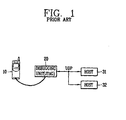
- FIG.1 is an exemplary view showing the configuration of a debugging unit for debugging a mobile terminal and of a host (e.g., personal computer) for controlling the debugging unit in accordance with the prior art.
- a host e.g., personal computer
- a mobile terminal 10 is physically connected to a debugging unit 20 via a dedicated debugging line.
- the debugging unit 20 is connected to each host 31 and 32 through a UDP, receives a UDP data containing a debugging command from the host (e.g., host 31) through the UDP, and debugs the mobile terminal 10 by checking the program and data flow of the mobile terminal 10 by use of the JTAG Technologies according to the debugging command contained in the UDP data. Moreover, the debugging unit 20 transmits a UDP data containing a debugging result data to the host 31 after debugging the mobile terminal 10.
- the host 31 is able to transmit the UDP data containing the debugging command to the debugging unit 20 through the UDP because it is connected to the debugging unit 20 through a LAN (local area network). Moreover, the host 31 receives the UDP data containing the debugging result data transmitted from the debugging unit 20, and displays the debugging result data within the received UDP data on a screen.
- a LAN local area network
- the debugging unit 20 and each host 31 and 32 are connected by a LAN cable, and thus are located in the same area.
- Each of the hosts 31 and 32 is placed in different positions on a local network, connected to one debugging unit 20, transmits a debugging command to the debugging unit 20 through the UDP, and displays the debugging result data transmitted from the debugging unit 20 on the screen. Accordingly, although each of the hosts 31 and 32 located on the local network can access the debugging unit 20 connected to the local network to thus control the debugging unit 20, they cannot remotely control the debugging unit connected to another local network since they cannot access the debugging unit connected to the another local network. For instance, there is a problem that a plurality of hosts and debugging u nits has to be located in the same area, and the debugging units have to be controlled only through a local network.
- an object of the present invention is to provide a system and method for remotely controlling a debugging unit which can debug a mobile terminal in real time from a remote location regardless of the location of the mobile terminal without being restricted to one area by interconnecting the debugging unit and a host via the internet (TCP/IP protocol).
- a system for remotely controlling a debugging unit comprising: a first protocol converter converting a first TCP (transmission control protocol) data, transmitted via the internet and containing a debugging command for controlling the debugging unit, into a first UDP (user datagram protocol) data; and a second protocol converter converting a second TCP data, transmitted from the first protocol converter via the internet and containing a debugging result data, into a second UDP data.
- TCP transmission control protocol
- UDP user datagram protocol
- a first protocol converter being connected to the debugging unit for debugging a mobile terminal, converting a first TCP (transmission control protocol) data transmitted via the internet into a first UDP (user datagram protocol) data and converting the second UDP data transmitted from the debugging unit into a second TCP data; and a host being connected to the first protocol converter via the internet, converting the second TCP data transmitted from the first protocol converter into the second UDP data, generating the first UDP data and converting the generated first UDP data into the first TCP data.
- TCP transmission control protocol
- UDP user datagram protocol
- a method for remotely controlling a debugging unit comprising the steps of: converting a first UDP (user datagram protocol) data, generated from a host and containing a debugging command for controlling the debugging unit, into a first TCP (transmission control protocol) data and transmitting the first TCP data to the debugging unit through a TCP/IP protocol; and converting the first TCP data transmitted to the debugging unit into the first UDP data and debugging a mobile terminal connected to the debugging unit according to the debugging command within the converted first UDP data.
- UDP user datagram protocol
- TCP transmission control protocol
- a debugging unit in accordance with the present invention, comprising a protocol converter converting a first TCP (transmission control protocol) data, transmitted through a TCP/IP protocol and containing a debugging command for debugging a mobile terminal, into a first UDP (user datagram protocol) data.
- TCP transmission control protocol
- UDP user datagram protocol
- a host in accordance with the present invention, comprising a protocol converter converting a first UDP (user datagram protocol) data, connected to a debugging unit for debugging a mobile terminal via the internet and containing a debugging command for controlling the mobile terminal, into a first TCP (transmission control protocol) data.
- UDP user datagram protocol
- TCP transmission control protocol
- FIG.2 is a block diagram showing the configuration of a system for remotely controlling a debugging unit in accordance with an embodiment of the present invention.
- the system for remotely controlling a debugging unit in accordance with the present invention comprises: a first protocol converter 52 being connected to the debugging unit 50 physically connected to a mobile terminal 40 via a dedicated debugging line, converting a first TCP data transmitted via the internet (TCP/IP protocol) 60 into a first UDP data and converting a second UDP data transmitted from the debugging unit 50 into a second TCP data; and a host 70 being connected to the first protocol converter 52 via the internet (TCP/IP protocol) 60, converting the first UDP data containing a debugging command for controlling the debugging unit 50 into the second UDP data, converting the second TCP data into the second UDP data and remotely controlling the debugging unit 50 through the first protocol converter 52.
- a first protocol converter 52 being connected to the debugging unit 50 physically connected to a mobile terminal 40 via a dedicated debugging line, converting a first TCP data transmitted via the internet (TCP/IP protocol) 60 into a first UDP data and converting a
- the mobile terminal 40 is physically connected to the debugging unit 50 via the dedicated debugging line, the debugging u nit 50 is connected to the internet 60 through the TCP/IP protocol, and the host 70 is connected to the internet 60 through the TCP/IP protocol 60.
- the host 70 includes: a control module 72 generating the first UDP data containing the debugging command through the UDP and displaying a debugging result data contained in the second UDP data on the screen of the host 70; and a second protocol converter 71 converting the first UDP data containing the debugging command into the first TCP data and then transmitting the first TCP data to the first protocol converter 52 via the internet 60, or converting the second TCP data containing the debugging result data, transmitted from the first protocol converter 52 via the internet 60, into the second UDP data and then transmitting the converted second UDP data to the control module 72.
- the debugging unit 50 includes: a debugging module 51 debugging the mobile terminal 40 by checking the program and data flow of the mobile terminal 40 by use of the JTAG (joint test action group) Technologies according to the debugging command contained in the first UDP data and generating the second UDP data containing the debugging result data after debugging the mobile terminal; and a first protocol converter 52 converting the second UDP data generated from the debugging module 51 into the second TCP data and then transmitting the converted second TCP data to the host 70 via the internet 60, or converting the first TCP data transmitted from the host 70 via the internet 60 into the first UDP data and then transmitting the converted first UDP data to the debugging module 51.
- JTAG joint test action group
- the mobile terminal 40 is physically connected to the debugging unit 50 via a dedicated debugging line.
- the host 70 is connected to the debugging unit 50 via the internet 60, converts a first UDP data containing a debugging command into a first TCP data, and transmits the first TCP data to the debugging unit 50 via the internet 60.
- the control module 72 within the host 70 generates a debugging command through a UDP according to a user's instruction, and transmits a first UDP data containing the generated debugging command to the second protocol converter 71.
- the second protocol converter 71 within the host 70 converts the first UDP data transmitted from the control module 72 into a first TCP data, and transmits the first TCP data to the first protocol converter 52 of the debugging unit 50 via the internet 60.
- the debugging unit 50 is connected to the host 70 via the internet 60, converts the first TCP data containing the debugging command into the first UDP data, and debugs the mobile terminal 40 according to the debugging command within the converted first UDP data.
- the first protocol converter 52 receives the first TCP data containing the debugging command from the second protocol converter 71 of the host 70, which is a client, via the internet 60, and converts the received first TCP data into the first UDP data, and transmits the converted first UDP data to the debugging module 51.
- the debugging module 51 debugs the mobile terminal 40 by checking the program and data flow of the mobile terminal 40 by use of the JTAG (joint test action group) Technologies according to the debugging command contained in the first UDP data.
- JTAG joint test action group
- the debugging module 51 generates a second UDP data containing data representing a debugging result after debugging the mobile terminal 40 according to the debugging command, and outputs the second UDP data to the first protocol converter 52.
- the first protocol converter 52 converts the second UDP data transmitted from the debugging module 51 into a second TCP data, and transmits the converted second TCP data to the second protocol converter 71 of the host 71 via the internet 60.
- the internet 60 is a worldwide computer network, which prevents the phenomenon of information loss due to destruction of parts of the network by transmitting information in more than one direction or in another path by using a TCP/IP protocol.
- the second protocol converter 71 within the host 70 converts the second TCP data transmitted from the first protocol converter 52 into the second UDP data via the internet 60, and transmits the converted second UDP data to the control module 72.
- the control module 72 receives the second UDP data transmitted from the second protocol converter 71, and displays the debugging result data contained in the second UDP data on the screen of the host 70.
- the debugging unit 50 can be controlled from a remote location regardless of the location of the mobile terminal 40 without a data loss and without being restricted to one area, and the mobile terminal 40 connected to the debugging unit 50 can be accurately and easily debugged from a remote location.
- FIG.3 is an exemplary view showing the protocol connection configuration of a mobile terminal, a debugging unit, the internet and a host of FIG.2.
- a debugging protocol sends/receives a debugging command and a debugging result data from the mobile terminal 40, the debugging unit 50 and the host 70
- a UDP protocol sends/receives a debugging command and a debugging result data from the debugging unit 50 and the host 70
- a TCP/IP protocol sends/receives a debugging command and a debugging result data from the debugging unit 50, the internet 60 and the host 70.
- a debugging protocol layer within the host 70 transmits the debugging command of the host 70 to a UDP protocol layer.
- the UDP protocol layer transmits the debugging command of the debugging protocol to a TCP/IP protocol layer, and transmits the debugging result data of the debugging unit 50 to the debugging protocol layer.
- the TCP/IP protocol layer transmits the debugging command of the UDP protocol layer to the debugging unit 50 through the TCP/IP protocol layer of the internet, and transmits the debugging result data of the TCP/IP protocol layer to the UDP protocol layer.
- the TCP/IP protocol layer within the debugging unit 50 sends/receives the debugging command of the host and the debugging result data of the debugging unit 50 by data communication with the TCP/IP protocol layer of the internet.
- the UDP protocol layer within the debugging unit 50 transmits the debugging command of the TCP/IP protocol layer to the debugging protocol layer, and transmits the debugging result data of the debugging protocol layer to the TCP/IP protocol layer.
- the debugging protocol layer transmits the debugging result data, obtained by transmitting the debugging command of the UDP protocol layer to the mobile terminal 40, to the UDP protocol layer.
- FIG.4 is a operational flow chart showing a method for remotely controlling a debugging unit in accordance with the embodiment of the present invention.
- the method for remotely controlling a debugging unit in accordance with the embodiment comprises the steps of: setting up a network connection between a debugging unit 50 and a host 70 through a TCP/IP protocol by entering the IP of the debugging unit 50 through the host 70; generating a first UDP data containing a debugging command for controlling the operation of the debugging unit 50 through the host 70 (S44), converting the generated first UDP data into a first TCP data (S45) and transmitting the converted first TCP data to the debugging unit 50 via the internet 60; converting the transmitted first TCP data into the first UDP data (S40) and debugging a mobile terminal 40 according to a debugging command contained in the converted first UDP data through the debugging unit 50 (S41); generating a second UDP data containing a debugging result data after debugging the mobile terminal 40 according to the debugging command received through the debugging unit 50 (S42), converting the generated second UDP data into the second
- the host 70 sets up a network connection by entering the IP of the debugging unit 50 and attempting a TCP/IP connection with the debugging unit 50.
- the host 70 generates a first UDP data containing a debugging command for controlling the operation of the debugging unit 50 in order to debug the mobile terminal 40 according to the user's debugging request (S44), and converts the generated first UDP data into a first TCP data (S45).
- the host 70 transmits the first TCP data to the debugging unit 50 via the internet 60.
- the debugging unit 50 receives the first TCP data via the internet 60 and converts the first TCP data into the first UDP data (S40), debugs the mobile terminal 40 according to the debugging command contained in the first UDP data (S41), and then generates a second UDP data containing a debugging result data (S42).
- the debugging unit 50 converts the second UDP data containing the debugging result data into a second TCP data (S43), and transmits the converted second TCP data to the host 70 via the internet 60.
- the debugging result data is converted into the second UDP data, and then converted into the second TCP data.
- the host 70 receives the second TCP data via the internet 60 and converts the received second TCP data into the second UDP data (S46), and receives the debugging result data within the second UDP data and displays the received debugging result data on the screen (S47).
- the system and method for controlling a debugging unit in accordance with the present invention have the effect of controlling the debugging unit 50 from a remote location regardless of the location of the mobile terminal 40 without a data loss and without being restricted to one area by connecting the host 70 to the debugging unit 50 through a TCP/IP protocol. Accordingly, the mobile terminal 40 connected to the debugging unit 50 can be easily and accurately debugged in real time from a remote location.
Landscapes
- Engineering & Computer Science (AREA)
- Computer Networks & Wireless Communication (AREA)
- Signal Processing (AREA)
- Computer Security & Cryptography (AREA)
- Theoretical Computer Science (AREA)
- Computer Hardware Design (AREA)
- Physics & Mathematics (AREA)
- Quality & Reliability (AREA)
- General Engineering & Computer Science (AREA)
- General Physics & Mathematics (AREA)
- Electromagnetism (AREA)
- Debugging And Monitoring (AREA)
- Computer And Data Communications (AREA)
Abstract
Description
- The present invention relates to a debugging unit for a mobile terminal, and more particularly, to a system and method for remotely controlling a debugging unit.
- Recently, as the types of services for mobile terminals are varied, the size of a program code supporting a plurality of services is increased. Moreover, as the operation of a mobile terminal becomes gradually complicated, interaction between many operations of the mobile terminal does not operate smoothly, thus making the mobile terminal unstable.
- A mobile terminal designer stabilizes the operation of a mobile terminal by debugging the operation of the mobile terminal by using a debugging unit. The debugging unit debugs the operational status of a mobile terminal (e.g., programs of the mobile terminal) by checking the program and data flow of the mobile terminal by use of the JTAG (joint test action group) Technologies.
- The mobile terminal designer accesses the debugging unit by using a host (e.g., personal computer) and then transmits a debugging command to the debugging unit. The host and the debugging unit are interconnected through a UDP (user datagram protocol) of a LAN (local area network), and the host delivers a UDP data containing the debugging command to the debugging unit.
- The debugging unit debugs the mobile terminal according to the debugging command within the UDP data, and then delivers the UDP data containing data representing a debugging result to the host. Here, there is the inconvenience that the mobile terminal designer has to be located in the same position or same area as the mobile terminal when debugging the mobile terminal on a local network because the host and the debugging unit utilize UDP. The characteristic of the UDP is that though it is fast in protocol processing, it has no functions such as error correction or retransmission unlike a TCP (transmission control protocol). Thus, the UDP is used in multimedia applications requiring a high speed rather than reliability.
- FIG.1 is an exemplary view showing the configuration of a debugging unit for debugging a mobile terminal and of a host (e.g., personal computer) for controlling the debugging unit in accordance with the prior art.
- As shown in FIG.1, a
mobile terminal 10 is physically connected to adebugging unit 20 via a dedicated debugging line. - The
debugging unit 20 is connected to eachhost mobile terminal 10 by checking the program and data flow of themobile terminal 10 by use of the JTAG Technologies according to the debugging command contained in the UDP data. Moreover, thedebugging unit 20 transmits a UDP data containing a debugging result data to thehost 31 after debugging themobile terminal 10. - The
host 31 is able to transmit the UDP data containing the debugging command to thedebugging unit 20 through the UDP because it is connected to thedebugging unit 20 through a LAN (local area network). Moreover, thehost 31 receives the UDP data containing the debugging result data transmitted from thedebugging unit 20, and displays the debugging result data within the received UDP data on a screen. - Meanwhile, the
debugging unit 20 and eachhost - Each of the
hosts debugging unit 20, transmits a debugging command to thedebugging unit 20 through the UDP, and displays the debugging result data transmitted from thedebugging unit 20 on the screen. Accordingly, although each of thehosts debugging unit 20 connected to the local network to thus control thedebugging unit 20, they cannot remotely control the debugging unit connected to another local network since they cannot access the debugging unit connected to the another local network. For instance, there is a problem that a plurality of hosts and debugging u nits has to be located in the same area, and the debugging units have to be controlled only through a local network. - Besides, there is another problem that control information and data sent and received between the hosts and the debugging units are lost due to the characteristic of the UDP, thus generating an error when debugging a mobile terminal.
- Therefore, an object of the present invention is to provide a system and method for remotely controlling a debugging unit which can debug a mobile terminal in real time from a remote location regardless of the location of the mobile terminal without being restricted to one area by interconnecting the debugging unit and a host via the internet (TCP/IP protocol).
- It is another object of the present invention to provide a system and method for remotely controlling a debugging unit which can reduce the loss of control information and data sent and received between the host and the debugging unit by interconnecting the debugging unit and a host via the internet (TCP/IP protocol).
- To accomplish the above objects, there is provided a system for remotely controlling a debugging unit in accordance with the present invention, comprising: a first protocol converter converting a first TCP (transmission control protocol) data, transmitted via the internet and containing a debugging command for controlling the debugging unit, into a first UDP (user datagram protocol) data; and a second protocol converter converting a second TCP data, transmitted from the first protocol converter via the internet and containing a debugging result data, into a second UDP data.
- To accomplish the above objects, there is provided another system for remotely controlling a debugging unit in accordance with the present invention, comprising: a first protocol converter being connected to the debugging unit for debugging a mobile terminal, converting a first TCP (transmission control protocol) data transmitted via the internet into a first UDP (user datagram protocol) data and converting the second UDP data transmitted from the debugging unit into a second TCP data; and a host being connected to the first protocol converter via the internet, converting the second TCP data transmitted from the first protocol converter into the second UDP data, generating the first UDP data and converting the generated first UDP data into the first TCP data.
- To accomplish the above objects, there is provided a method for remotely controlling a debugging unit in accordance with the present invention, comprising the steps of: converting a first UDP (user datagram protocol) data, generated from a host and containing a debugging command for controlling the debugging unit, into a first TCP (transmission control protocol) data and transmitting the first TCP data to the debugging unit through a TCP/IP protocol; and converting the first TCP data transmitted to the debugging unit into the first UDP data and debugging a mobile terminal connected to the debugging unit according to the debugging command within the converted first UDP data.
- To accomplish the above objects, there is provided a debugging unit in accordance with the present invention, comprising a protocol converter converting a first TCP (transmission control protocol) data, transmitted through a TCP/IP protocol and containing a debugging command for debugging a mobile terminal, into a first UDP (user datagram protocol) data.
- To accomplish the above objects, there is provided a host in accordance with the present invention, comprising a protocol converter converting a first UDP (user datagram protocol) data, connected to a debugging unit for debugging a mobile terminal via the internet and containing a debugging command for controlling the mobile terminal, into a first TCP (transmission control protocol) data.
- The accompanying drawings, which are included to provide a further understanding of the invention and are incorporated in and constitute a part of this specification, illustrate embodiments of the invention and together with the description serve to explain the principles of the invention.
- In the drawings:
- FIG.1 is an exemplary view showing the configuration of a debugging unit for debugging a mobile terminal and of a host for controlling the debugging unit in accordance with the prior art;
- FIG.2 is a block diagram showing the configuration of a system for remotely controlling a debugging unit in accordance with an embodiment of the present invention;
- FIG.3 is an exemplary view showing the protocol connection configuration of a mobile terminal, a debugging unit, the internet and a host of FIG.2; and
- FIG.4 is an operational flow chart showing a method for remotely controlling a debugging unit in accordance with the embodiment of the present invention.
- Hereinafter, a description will be made in detail with reference to FIGs.2 to 4 with respect to a preferred embodiment of a system and method for remotely controlling a debugging unit which can easily and accurately control the
debugging unit 50 in real time from a remote location regardless of the location of amobile terminal 40 without a data loss and without being restricted to one area by further configuring a protocol converter in a host and the debugging unit and interconnecting the host and the debugging unit via the internet (TCP/IP protocol). - FIG.2 is a block diagram showing the configuration of a system for remotely controlling a debugging unit in accordance with an embodiment of the present invention.
- As shown in FIG.2, the system for remotely controlling a debugging unit in accordance with the present invention comprises: a
first protocol converter 52 being connected to thedebugging unit 50 physically connected to amobile terminal 40 via a dedicated debugging line, converting a first TCP data transmitted via the internet (TCP/IP protocol) 60 into a first UDP data and converting a second UDP data transmitted from thedebugging unit 50 into a second TCP data; and ahost 70 being connected to thefirst protocol converter 52 via the internet (TCP/IP protocol) 60, converting the first UDP data containing a debugging command for controlling thedebugging unit 50 into the second UDP data, converting the second TCP data into the second UDP data and remotely controlling thedebugging unit 50 through thefirst protocol converter 52. - The
mobile terminal 40 is physically connected to thedebugging unit 50 via the dedicated debugging line, thedebugging u nit 50 is connected to theinternet 60 through the TCP/IP protocol, and thehost 70 is connected to theinternet 60 through the TCP/IP protocol 60. - The
host 70 includes: acontrol module 72 generating the first UDP data containing the debugging command through the UDP and displaying a debugging result data contained in the second UDP data on the screen of thehost 70; and asecond protocol converter 71 converting the first UDP data containing the debugging command into the first TCP data and then transmitting the first TCP data to thefirst protocol converter 52 via theinternet 60, or converting the second TCP data containing the debugging result data, transmitted from thefirst protocol converter 52 via theinternet 60, into the second UDP data and then transmitting the converted second UDP data to thecontrol module 72. - The
debugging unit 50 includes: adebugging module 51 debugging themobile terminal 40 by checking the program and data flow of themobile terminal 40 by use of the JTAG (joint test action group) Technologies according to the debugging command contained in the first UDP data and generating the second UDP data containing the debugging result data after debugging the mobile terminal; and afirst protocol converter 52 converting the second UDP data generated from thedebugging module 51 into the second TCP data and then transmitting the converted second TCP data to thehost 70 via theinternet 60, or converting the first TCP data transmitted from thehost 70 via theinternet 60 into the first UDP data and then transmitting the converted first UDP data to thedebugging module 51. - Hereinafter, the operation of the system for remotely controlling a debugging unit will be described in detail.
- First, the
mobile terminal 40 is physically connected to thedebugging unit 50 via a dedicated debugging line. - The
host 70 is connected to thedebugging unit 50 via theinternet 60, converts a first UDP data containing a debugging command into a first TCP data, and transmits the first TCP data to thedebugging unit 50 via theinternet 60. For example, thecontrol module 72 within thehost 70 generates a debugging command through a UDP according to a user's instruction, and transmits a first UDP data containing the generated debugging command to thesecond protocol converter 71. - The
second protocol converter 71 within thehost 70 converts the first UDP data transmitted from thecontrol module 72 into a first TCP data, and transmits the first TCP data to thefirst protocol converter 52 of thedebugging unit 50 via theinternet 60. - The
debugging unit 50 is connected to thehost 70 via theinternet 60, converts the first TCP data containing the debugging command into the first UDP data, and debugs themobile terminal 40 according to the debugging command within the converted first UDP data. For example, thefirst protocol converter 52 receives the first TCP data containing the debugging command from thesecond protocol converter 71 of thehost 70, which is a client, via theinternet 60, and converts the received first TCP data into the first UDP data, and transmits the converted first UDP data to thedebugging module 51. - The
debugging module 51 debugs themobile terminal 40 by checking the program and data flow of themobile terminal 40 by use of the JTAG (joint test action group) Technologies according to the debugging command contained in the first UDP data. - Afterwards, the
debugging module 51 generates a second UDP data containing data representing a debugging result after debugging themobile terminal 40 according to the debugging command, and outputs the second UDP data to thefirst protocol converter 52. - The
first protocol converter 52 converts the second UDP data transmitted from thedebugging module 51 into a second TCP data, and transmits the converted second TCP data to thesecond protocol converter 71 of thehost 71 via theinternet 60. Theinternet 60 is a worldwide computer network, which prevents the phenomenon of information loss due to destruction of parts of the network by transmitting information in more than one direction or in another path by using a TCP/IP protocol. - Hereinafter, the
second protocol converter 71 within thehost 70 converts the second TCP data transmitted from thefirst protocol converter 52 into the second UDP data via theinternet 60, and transmits the converted second UDP data to thecontrol module 72. - The
control module 72 receives the second UDP data transmitted from thesecond protocol converter 71, and displays the debugging result data contained in the second UDP data on the screen of thehost 70. - Consequently, in the present invention, as the
host 70 is connected to thedebugging unit 50 through the TCP/IP protocol, thedebugging unit 50 can be controlled from a remote location regardless of the location of themobile terminal 40 without a data loss and without being restricted to one area, and themobile terminal 40 connected to thedebugging unit 50 can be accurately and easily debugged from a remote location. - FIG.3 is an exemplary view showing the protocol connection configuration of a mobile terminal, a debugging unit, the internet and a host of FIG.2.
- A debugging protocol sends/receives a debugging command and a debugging result data from the
mobile terminal 40, thedebugging unit 50 and thehost 70, a UDP protocol sends/receives a debugging command and a debugging result data from thedebugging unit 50 and thehost 70, and a TCP/IP protocol sends/receives a debugging command and a debugging result data from thedebugging unit 50, theinternet 60 and thehost 70. - A debugging protocol layer within the
host 70 transmits the debugging command of thehost 70 to a UDP protocol layer. The UDP protocol layer transmits the debugging command of the debugging protocol to a TCP/IP protocol layer, and transmits the debugging result data of thedebugging unit 50 to the debugging protocol layer. The TCP/IP protocol layer transmits the debugging command of the UDP protocol layer to thedebugging unit 50 through the TCP/IP protocol layer of the internet, and transmits the debugging result data of the TCP/IP protocol layer to the UDP protocol layer. - The TCP/IP protocol layer within the
debugging unit 50 sends/receives the debugging command of the host and the debugging result data of thedebugging unit 50 by data communication with the TCP/IP protocol layer of the internet. The UDP protocol layer within thedebugging unit 50 transmits the debugging command of the TCP/IP protocol layer to the debugging protocol layer, and transmits the debugging result data of the debugging protocol layer to the TCP/IP protocol layer. The debugging protocol layer transmits the debugging result data, obtained by transmitting the debugging command of the UDP protocol layer to themobile terminal 40, to the UDP protocol layer. - FIG.4 is a operational flow chart showing a method for remotely controlling a debugging unit in accordance with the embodiment of the present invention.
- As shown in FIG.4, the method for remotely controlling a debugging unit in accordance with the embodiment comprises the steps of: setting up a network connection between a debugging unit 50 and a host 70 through a TCP/IP protocol by entering the IP of the debugging unit 50 through the host 70; generating a first UDP data containing a debugging command for controlling the operation of the debugging unit 50 through the host 70 (S44), converting the generated first UDP data into a first TCP data (S45) and transmitting the converted first TCP data to the debugging unit 50 via the internet 60; converting the transmitted first TCP data into the first UDP data (S40) and debugging a mobile terminal 40 according to a debugging command contained in the converted first UDP data through the debugging unit 50 (S41); generating a second UDP data containing a debugging result data after debugging the mobile terminal 40 according to the debugging command received through the debugging unit 50 (S42), converting the generated second UDP data into the second TCP data (S43) and transmitting the converted second TCP data to the host 70 via the internet; and converting the second TCP data received via the internet 60 to the second UDP data (S46) and displaying the debugging result data contained in the converted second UDP data on the screen of the host 70 (S47).
- Hereinafter, the method for remotely controlling a debugging unit in accordance with the embodiment of the present invention will be described with reference to FIG.4.
- Hereinafter, a description will be made under the assumption that the
host 70 is located at a far distance from themobile terminal 40 and thedebugging unit 50, and the user debugs themobile terminal 40 through thedebugging unit 50 by using thehost 70. - First, the
host 70 sets up a network connection by entering the IP of thedebugging unit 50 and attempting a TCP/IP connection with thedebugging unit 50. - The
host 70 generates a first UDP data containing a debugging command for controlling the operation of thedebugging unit 50 in order to debug themobile terminal 40 according to the user's debugging request (S44), and converts the generated first UDP data into a first TCP data (S45). Thehost 70 transmits the first TCP data to thedebugging unit 50 via theinternet 60. - The
debugging unit 50 receives the first TCP data via theinternet 60 and converts the first TCP data into the first UDP data (S40), debugs themobile terminal 40 according to the debugging command contained in the first UDP data (S41), and then generates a second UDP data containing a debugging result data (S42). - The
debugging unit 50 converts the second UDP data containing the debugging result data into a second TCP data (S43), and transmits the converted second TCP data to thehost 70 via theinternet 60. Here, the debugging result data is converted into the second UDP data, and then converted into the second TCP data. - The
host 70 receives the second TCP data via theinternet 60 and converts the received second TCP data into the second UDP data (S46), and receives the debugging result data within the second UDP data and displays the received debugging result data on the screen (S47). - As described above in detail, the system and method for controlling a debugging unit in accordance with the present invention have the effect of controlling the
debugging unit 50 from a remote location regardless of the location of themobile terminal 40 without a data loss and without being restricted to one area by connecting thehost 70 to thedebugging unit 50 through a TCP/IP protocol. Accordingly, themobile terminal 40 connected to thedebugging unit 50 can be easily and accurately debugged in real time from a remote location.
Claims (20)
- A system for remotely controlling a debugging unit, comprising:a first protocol converter converting a first TCP (transmission control protocol) data, transmitted via the internet and containing a debugging command for controlling the debugging unit, into a first UDP (user datagram protocol) data; anda second protocol converter converting a second TCP data, transmitted from the first protocol converter via the internet and containing a debugging result data, into a second UDP data.
- The system of claim 1, wherein the first protocol converter is installed on the debugging unit for debugging a mobile terminal.
- The system of claim 2, wherein the debugging unit debugs the mobile terminal according to the debugging command contained in the first UDP data.
- The system of claim 1, wherein the second protocol converter is installed on a host for remotely controlling the debugging unit through a TCP/IP protocol.
- The system of claim 4, wherein the host displays the debugging result data contained in the second UDP data on the screen of the host.
- A system for remotely controlling a debugging unit, comprising:a first protocol converter being connected to the debugging unit for debugging a mobile terminal, converting a first TCP (transmission control protocol) data transmitted via the internet into a first UDP (user datagram protocol) data andconverting a second UDP data transmitted from the debugging unit into a second TCP data; anda host being connected to the first protocol converter via the internet, converting the second TCP data transmitted from the first protocol converter into the second UDP data, generating the first UDP data and converting the generated first UDP data into the first TCP data.
- The system of claim 6, wherein the host transmits the first TCP data containing a debugging command for controlling the debugging unit to the first protocol converter via the internet.
- The system of claim 7, wherein the first protocol converter converts the first TCP data received from the host via the internet into the first UDP data, and transmits the converted first UDP data to the debugging unit.
- The system of claim 8, wherein the debugging unit debugs the mobile terminal according to the debugging command within the first UDP data transmitted from the first protocol converter.
- The system of claim 6, wherein the debugging unit transmits the second UDP data containing a debugging result data to the first protocol converter after debugging the mobile terminal.
- The system of claim 10, wherein the first protocol converter converts the second UDP data containing the debugging result data into the second TCP data, and transmits the second TCP data to the host via the internet.
- The system of claim 11, wherein the host converts the second TCP data transmitted from the first protocol converter via the internet into the second UDP data, and displays the debugging result data contained in the converted second UDP data on the screen of the host.
- The system of claim 6, wherein the debugging unit includes a debugging module generating the second UDP data containing a debugging result data after debugging the mobile terminal by checking the program and data flow of the mobile terminal by use of the JTAG (joint test action group) Technologies according to a debugging command contained in the first UDP data transmitted from the first protocol converter,
wherein the first protocol converter converts the first TCP data containing the debugging command transmitted from the host into the first UDP data, and then converts the second UDP data containing the debugging result data into the second TCP data. - The system of claim 13, wherein the host includes:a control module generating the first UDP data containing the debugging command according to a user's instruction; anda second protocol converter converting the first UDP data containing the debugging command into the first TCP data, transmitting the converted first TCP data to the first protocol converter via the internet, converting the second TCP data, transmitted from the first protocol converter via the internet, into the second UDP data and transmitting the second UDP data to the control module,wherein the control module displays the debugging result data contained in the second UDP data transmitted from the second protocol converter on the screen of the host.
- A method for remotely controlling a debugging unit, comprising the steps of:converting a first UDP (user datagram protocol) data, generated from a host and containing a debugging command for controlling the debugging unit, into a first TCP (transmission control protocol) data and transmitting the first TCP data to the debugging unit through a TCP/IP protocol; andconverting the first TCP data transmitted to the debugging unit into the first UDP data and debugging a mobile terminal connected to the debugging unit according to the debugging command within the converted first UDP data.
- The method of claim 15, further comprising the steps of:converting the second UDP data, generated after debugging the mobile terminal and containing a debugging result data, into a second TCP data andtransmitting the converted second TCP data to the host through the TCP/IP protocol; andconverting the second TCP data transmitted to the host into the second UDP data and displaying the debugging result data contained in the converted second UDP data on the screen of the host.
- A debugging unit, comprising a protocol converter converting a first TCP (transmission control protocol) data, transmitted through a TCP/IP protocol and containing a debugging command for debugging a mobile terminal, into a first UDP (user datagram protocol) data.
- The debugging unit of claim 17, wherein the protocol converter converts a second UDP data, generated from a debugging unit and containing a debugging result data, into a second TCP data.
- A host, comprising a protocol converter converting a first UDP (user datagram protocol) data, connected to a debugging unit for debugging a mobile terminal via the internet and containing a debugging command for controlling the mobile terminal, into a first TCP (transmission control protocol) data.
- The host of claim 19, wherein the protocol converter converts a second TCP data, generated from a debugging unit and containing a debugging result data, into a second UDP data.
Applications Claiming Priority (1)
| Application Number | Priority Date | Filing Date | Title |
|---|---|---|---|
| KR1020040095934A KR100619960B1 (en) | 2004-11-22 | 2004-11-22 | Remote control device and method of debugging device via the Internet |
Publications (1)
| Publication Number | Publication Date |
|---|---|
| EP1659754A1 true EP1659754A1 (en) | 2006-05-24 |
Family
ID=35708584
Family Applications (1)
| Application Number | Title | Priority Date | Filing Date |
|---|---|---|---|
| EP05025472A Withdrawn EP1659754A1 (en) | 2004-11-22 | 2005-11-22 | System and method for remotely controlling a debugging unit |
Country Status (7)
| Country | Link |
|---|---|
| US (1) | US7475287B2 (en) |
| EP (1) | EP1659754A1 (en) |
| JP (1) | JP2006172441A (en) |
| KR (1) | KR100619960B1 (en) |
| CN (1) | CN1780299A (en) |
| BR (1) | BRPI0505323A (en) |
| RU (1) | RU2005136209A (en) |
Cited By (3)
| Publication number | Priority date | Publication date | Assignee | Title |
|---|---|---|---|---|
| FR2915650A1 (en) * | 2007-04-24 | 2008-10-31 | France Telecom | METHOD AND DEVICE FOR INTERFACE BETWEEN UDP OR TCP PROTOCOLS AND SCTP |
| US8782468B2 (en) | 2010-12-22 | 2014-07-15 | Intel Corporation | Methods and tools to debug complex multi-core, multi-socket QPI based system |
| CN104717041A (en) * | 2015-04-01 | 2015-06-17 | 北京百度网讯科技有限公司 | Method and device for transmitting data |
Families Citing this family (10)
| Publication number | Priority date | Publication date | Assignee | Title |
|---|---|---|---|---|
| US7555676B2 (en) * | 2005-07-18 | 2009-06-30 | Dell Products L.P. | Systems and methods for providing remotely accessible in-system emulation and/or debugging |
| TWI346867B (en) * | 2005-11-25 | 2011-08-11 | Hon Hai Prec Ind Co Ltd | Mistakes tracing device and method for optical disc drive |
| CN101753375B (en) * | 2009-12-11 | 2012-07-04 | 中国航空无线电电子研究所 | Device for debugging UDP network packet in avionics simulation environment and method therefor |
| JP5549733B2 (en) * | 2010-08-18 | 2014-07-16 | 富士通株式会社 | Computer management apparatus, computer management system, and computer system |
| US8966319B2 (en) * | 2011-02-22 | 2015-02-24 | Apple Inc. | Obtaining debug information from a flash memory device |
| WO2013164663A1 (en) * | 2012-05-02 | 2013-11-07 | Freescale Semiconductor, Inc. | System-on-chip, method of manufacture thereof and method of communicating diagnostic data |
| CN105306536B (en) * | 2015-09-22 | 2019-07-05 | 上海斐讯数据通信技术有限公司 | The method that intelligent terminal based on WiFi remotely executes service command |
| CN106936550B (en) * | 2015-12-30 | 2019-09-06 | 国基电子(上海)有限公司 | Device and method for debugging modem |
| CN108628683B (en) * | 2017-03-20 | 2021-04-09 | 腾讯科技(深圳)有限公司 | Data transmission method and device |
| CN109842550A (en) * | 2017-11-28 | 2019-06-04 | 中国电信股份有限公司 | Remote debugging system, method, apparatus and computer readable storage medium |
Citations (3)
| Publication number | Priority date | Publication date | Assignee | Title |
|---|---|---|---|---|
| WO2000025210A1 (en) * | 1998-10-26 | 2000-05-04 | Algorex, Inc. | Integrated software development and debug environment |
| US20030041166A1 (en) * | 2001-08-20 | 2003-02-27 | Richard Williamson | Method for transmitting data over a physical medium |
| US20030101042A1 (en) * | 2001-11-08 | 2003-05-29 | Schneider Automation | System for remotely loading and remotely maintaining an electronic card |
Family Cites Families (5)
| Publication number | Priority date | Publication date | Assignee | Title |
|---|---|---|---|---|
| US6075796A (en) | 1997-03-17 | 2000-06-13 | At&T | Methods and apparatus for providing improved quality of packet transmission in applications such as internet telephony |
| US8601566B2 (en) | 2001-10-23 | 2013-12-03 | Intel Corporation | Mechanism supporting wired and wireless methods for client and server side authentication |
| US20050071243A1 (en) * | 2003-09-30 | 2005-03-31 | Anandhi Somasekaran | Non-disruptive business process debugging and analysis |
| US7500225B2 (en) * | 2004-02-10 | 2009-03-03 | Microsoft Corporation | SQL server debugging in a distributed database environment |
| US7406625B2 (en) * | 2004-08-17 | 2008-07-29 | International Business Machines Corporation | Protecting a code range in a program from breakpoints |
-
2004
- 2004-11-22 KR KR1020040095934A patent/KR100619960B1/en not_active Expired - Fee Related
-
2005
- 2005-11-21 BR BRPI0505323-4A patent/BRPI0505323A/en not_active IP Right Cessation
- 2005-11-21 RU RU2005136209/09A patent/RU2005136209A/en not_active Application Discontinuation
- 2005-11-22 US US11/286,968 patent/US7475287B2/en not_active Expired - Fee Related
- 2005-11-22 CN CNA2005101271213A patent/CN1780299A/en active Pending
- 2005-11-22 JP JP2005336618A patent/JP2006172441A/en not_active Withdrawn
- 2005-11-22 EP EP05025472A patent/EP1659754A1/en not_active Withdrawn
Patent Citations (3)
| Publication number | Priority date | Publication date | Assignee | Title |
|---|---|---|---|---|
| WO2000025210A1 (en) * | 1998-10-26 | 2000-05-04 | Algorex, Inc. | Integrated software development and debug environment |
| US20030041166A1 (en) * | 2001-08-20 | 2003-02-27 | Richard Williamson | Method for transmitting data over a physical medium |
| US20030101042A1 (en) * | 2001-11-08 | 2003-05-29 | Schneider Automation | System for remotely loading and remotely maintaining an electronic card |
Non-Patent Citations (2)
| Title |
|---|
| BROWN C ET AL: "Remote service methods for cellular communication systems", VEHICULAR TECHNOLOGY CONFERENCE, 1995 IEEE 45TH CHICAGO, IL, USA 25-28 JULY 1995, NEW YORK, NY, USA,IEEE, US, vol. 1, 25 July 1995 (1995-07-25), pages 170 - 174, XP010166917, ISBN: 0-7803-2742-X * |
| JANDER M: "WELCOME TO THE REVOLUTION", DATA COMMUNICATIONS, MCGRAW HILL. NEW YORK, US, vol. 25, no. 16, 21 November 1996 (1996-11-21), XP000633488, ISSN: 0363-6399 * |
Cited By (4)
| Publication number | Priority date | Publication date | Assignee | Title |
|---|---|---|---|---|
| FR2915650A1 (en) * | 2007-04-24 | 2008-10-31 | France Telecom | METHOD AND DEVICE FOR INTERFACE BETWEEN UDP OR TCP PROTOCOLS AND SCTP |
| WO2008145901A1 (en) * | 2007-04-24 | 2008-12-04 | France Telecom | Method and device for interfacing between the udp or tcp and sctp protocols |
| US8782468B2 (en) | 2010-12-22 | 2014-07-15 | Intel Corporation | Methods and tools to debug complex multi-core, multi-socket QPI based system |
| CN104717041A (en) * | 2015-04-01 | 2015-06-17 | 北京百度网讯科技有限公司 | Method and device for transmitting data |
Also Published As
| Publication number | Publication date |
|---|---|
| RU2005136209A (en) | 2007-06-10 |
| KR100619960B1 (en) | 2006-09-08 |
| US20060129895A1 (en) | 2006-06-15 |
| JP2006172441A (en) | 2006-06-29 |
| US7475287B2 (en) | 2009-01-06 |
| BRPI0505323A (en) | 2006-07-11 |
| CN1780299A (en) | 2006-05-31 |
| KR20060056746A (en) | 2006-05-25 |
Similar Documents
| Publication | Publication Date | Title |
|---|---|---|
| EP1659754A1 (en) | System and method for remotely controlling a debugging unit | |
| WO2001039042A2 (en) | Self-contained network browser with diagnostic abilities | |
| CN108804313B (en) | Method and device for remotely debugging program and server | |
| JP2012529686A (en) | Implementation method, operation method, and system for data card driver without installation | |
| CN107026764A (en) | A remote debugging method, device, server and system | |
| JP2008210115A (en) | System for operating usb device of local terminal on remote computer, method therefor and program therefor | |
| CN111726706A (en) | Mobile phone group control system with software combined with hardware equipment | |
| US7907556B2 (en) | Apparatus and method for controlling mobile terminal in data communication system | |
| CN108737337B (en) | Device processing method, device, server and system | |
| JP2001344189A (en) | Computer changeover device | |
| CN117215937A (en) | Application remote debugging method, device, equipment and storage medium | |
| JP4611584B2 (en) | Image data display method, image data display server, image data display program, and recording medium | |
| KR100366824B1 (en) | Method for Real Time Distant Control in communications net | |
| KR100436350B1 (en) | Method for testing user interface of mobile phone | |
| KR100716767B1 (en) | Ubiquitous based open machine remote control and monitoring system | |
| KR100301111B1 (en) | Remote digital camera control system and its control method on the Internet | |
| US20020157087A1 (en) | Print engine simulator | |
| JP4900576B2 (en) | Program, storage medium, and image processing method | |
| KR20040076097A (en) | Emulating system for developing a home network | |
| KR20020090268A (en) | System and method of Computer remote control using a mobile phone | |
| JP7673833B2 (en) | COMMUNICATION SYSTEM, COMMUNICATION METHOD, AND COMMUNICATION PROGRAM | |
| CN100397385C (en) | Method and system for remotely controlling computer | |
| KR100406031B1 (en) | The exchange simulation method using the oms and thereof system | |
| EP2107466A1 (en) | Electronic device for emulating other electronic devices and method for operating an electronic device | |
| JP2006020170A (en) | Communication test device |
Legal Events
| Date | Code | Title | Description |
|---|---|---|---|
| PUAI | Public reference made under article 153(3) epc to a published international application that has entered the european phase |
Free format text: ORIGINAL CODE: 0009012 |
|
| AK | Designated contracting states |
Kind code of ref document: A1 Designated state(s): AT BE BG CH CY CZ DE DK EE ES FI FR GB GR HU IE IS IT LI LT LU LV MC NL PL PT RO SE SI SK TR |
|
| AX | Request for extension of the european patent |
Extension state: AL BA HR MK YU |
|
| 17P | Request for examination filed |
Effective date: 20060621 |
|
| 17Q | First examination report despatched |
Effective date: 20060720 |
|
| AKX | Designation fees paid |
Designated state(s): AT BE BG CH CY CZ DE DK EE ES FI FR GB GR HU IE IS IT LI LT LU LV MC NL PL PT RO SE SI SK TR |
|
| 17Q | First examination report despatched |
Effective date: 20060720 |
|
| STAA | Information on the status of an ep patent application or granted ep patent |
Free format text: STATUS: THE APPLICATION IS DEEMED TO BE WITHDRAWN |
|
| 18D | Application deemed to be withdrawn |
Effective date: 20070724 |