EP1659725A1 - Method for securely adding redundancy to an electronic message - Google Patents
Method for securely adding redundancy to an electronic message Download PDFInfo
- Publication number
- EP1659725A1 EP1659725A1 EP04105983A EP04105983A EP1659725A1 EP 1659725 A1 EP1659725 A1 EP 1659725A1 EP 04105983 A EP04105983 A EP 04105983A EP 04105983 A EP04105983 A EP 04105983A EP 1659725 A1 EP1659725 A1 EP 1659725A1
- Authority
- EP
- European Patent Office
- Prior art keywords
- message
- value
- blocks
- redundancy
- locating
- Prior art date
- Legal status (The legal status is an assumption and is not a legal conclusion. Google has not performed a legal analysis and makes no representation as to the accuracy of the status listed.)
- Granted
Links
- 238000000034 method Methods 0.000 title claims description 33
- 238000004891 communication Methods 0.000 claims abstract description 65
- 239000000284 extract Substances 0.000 abstract description 2
- 238000010586 diagram Methods 0.000 description 6
- 238000000605 extraction Methods 0.000 description 2
- 238000012986 modification Methods 0.000 description 2
- 230000004048 modification Effects 0.000 description 2
- 230000004075 alteration Effects 0.000 description 1
- 230000005540 biological transmission Effects 0.000 description 1
- 230000002596 correlated effect Effects 0.000 description 1
- 125000004122 cyclic group Chemical class 0.000 description 1
- 238000013479 data entry Methods 0.000 description 1
- 230000001419 dependent effect Effects 0.000 description 1
- 238000011156 evaluation Methods 0.000 description 1
- 239000000203 mixture Substances 0.000 description 1
- 238000010295 mobile communication Methods 0.000 description 1
- 230000003068 static effect Effects 0.000 description 1
Images


Classifications
-
- H—ELECTRICITY
- H04—ELECTRIC COMMUNICATION TECHNIQUE
- H04L—TRANSMISSION OF DIGITAL INFORMATION, e.g. TELEGRAPHIC COMMUNICATION
- H04L1/00—Arrangements for detecting or preventing errors in the information received
- H04L1/0078—Avoidance of errors by organising the transmitted data in a format specifically designed to deal with errors, e.g. location
- H04L1/0083—Formatting with frames or packets; Protocol or part of protocol for error control
Definitions
- This invention relates generally to electronic messaging, and more specifically to a method for detecting tampering with an electronic message.
- redundancy techniques for guarding against malicious alterations of electronic message files such as electronic mail.
- a common method employed to determine whether a message has been altered in transit between the sender and recipient is to add message redundancy to the message file.
- Such redundancy may take the form of a cyclic redundancy check (CRC) or a hash of the message.
- CRC cyclic redundancy check
- an encoder prior to transmission of the message from the sender's communication device, an encoder calculates a CRC or hash value based on the content of the message, and appends this value to the end of the message file.
- the message, together with the hash value is then encrypted.
- the encrypted message with the appended CRC or hash value is then transmitted via a wireless or fixed-link network to the recipient's communication device.
- the message When the message is received by the recipient's communication device, the message is decrypted.
- the CRC or hash value may then be found by the recipient's communication device at the end of the message.
- the recipient's communication device is able to calculate a CRC or hash value from the received message content, and then compares the calculated value with the redundancy value that was transmitted with the message. If the values match, then the message file is presumed to have been unaltered before receipt by the recipient's communication device. If the values do not match, then the message is determined to have been deliberately or accidentally altered.
- redundancy measures such as those described above append the CRC or hash value at the end of the message file. It is therefore possible for a party intercepting an electronic message before it is received by the message recipient to locate the redundancy value at the end of the intercepted message content. Once the redundancy value is located, an intercepting party may maliciously alter the content of the message while preserving the redundancy value. Alternatively, an intercepting party may alter the content of the message, recalculate the redundancy value, and replace the old hash value with the newly recalculated value. In such a case, the redundancy technique is rendered ineffective as the recipient is therefore unable to determine from the redundancy value comparison that the message has been tampered with when it is finally received by the recipient's communication device.
- a method for a sending communication device to provide redundancy to an electronic message to be sent to a recipient communication device, the method comprising the steps of determining a redundancy value for the electronic message to be sent, determining a locating value, the locating value being defined such that the value varies for different electronic messages and being defined such that the locating value may be determined by the recipient communication device for each electronic message sent to it, placing the redundancy value in the electronic message at one or more locations determined by the locating value, and encrypting the electronic message including the redundancy value.
- the electronic message prior to the step of placing the redundancy value in the electronic message at one or more locations determined by the locating value, is formatted as a series of message blocks, and formatting the redundancy value as one or more redundancy value blocks.
- the step of determining a locating value comprises the step of determining the value of a characteristic of the electronic message.
- the step of encrypting the electronic message including the redundancy value comprises the step of assigning a session key to the electronic message.
- the step of determining the value of a characteristic of the electronic message may comprise the step of determining the number of bits of a predetermined value in the session key, or the step of determining the value of a characteristic of the electronic message further comprises the step of determining the parity of the number of bits.
- the step of placing the redundancy value in the electronic message at one or more locations determined by the locating value comprises the steps of selecting a message block from the series of message blocks based on the locating value, and inserting at least one of the one or more redundancy value blocks in a location defined in relation to the selected message block, and optionally that the step of determining a locating value comprises the step of determining the value of a characteristic of one or more predetermined message blocks.
- Yet another aspect of the invention provides a communication device for sending a message to a recipient communication device, comprising program code operative to define a message; program code operative to determine a redundancy value for the message; program code operative to determine a locating value, the locating value being defined such that the value varies for different messages and being defined such that the locating value may be determined by the recipient communication device for each message sent to it; program code operative to place the redundancy value in the message at one or more locations determined by the locating value; and program code operative to encrypt the message including the redundancy value.
- the locating value is the value of a selected characteristic of the message.
- the program code is also operative to encrypt the message using a session key, and the selected characteristic of the message may be the number of bits of a predetermined value in the session key or the parity of the number of bits of a predetermined value in the session key.
- the communication device further comprises program code operative to format the message as a series of message blocks and program code operative to format the redundancy value as one or more redundancy value blocks, such that the program code operative to place the redundancy value in the message at one or more locations determined by the locating value is operative to identify one of the series of message blocks, and then insert at least one of the one or more redundancy value blocks in a location defined in relation to the identified one of the series of message blocks.
- the program code is also operative to encrypt the message using a session key, or operative to derive a value from a characteristic of a specified block in the series of message blocks as the locating value, locate an identified message block based on the locating value, and insert at least one of the one or more redundancy value blocks in a location defined in relation to the identified message block.
- Yet another aspect of the invention provides a communication device for decrypting an encrypted message, the message comprising a plurality of message blocks and one or more redundancy value blocks placed among the plurality of message blocks according to a locating value, the locating value being defined such that the locating value varies for different messages, the communication device comprising program code operative to decrypt the encrypted message, program code operative to locate the one or more redundancy value blocks in the message based on the locating value, program code operative to obtain a received redundancy value from the one or more redundancy value blocks, program code operative to determine a calculated redundancy value from the plurality of message blocks, and program code operative to compare the received redundancy value with the calculated redundancy value.
- the communication device is provided with program code operative to locate the one or more redundancy value blocks in the message based on the locating value comprising code to determine or receive the locating value, identify one of the plurality of message blocks using the locating value, and identify the location of at least one of the one or more redundancy value blocks in relation to the location of the identified one of the plurality of message blocks within the message.
- a method for determining the reliability of a received encrypted message, the message comprising a plurality of message blocks and one or more redundancy value blocks placed among the plurality of message blocks according to a locating value, the locating value being defined such that the locating value varies for different messages, the method comprising the steps of decrypting the encrypted message to obtain a message; locating the one or more redundancy value blocks in the message based on the locating value; obtaining a received redundancy value from the one or more redundancy value blocks; determining a calculated redundancy value from the plurality of message blocks; comparing the received redundancy value with the calculated redundancy value; and determining that the message is not reliable if the received redundancy value and the calculated redundancy check value are not equal.
- method further comprises the steps of identifying one of the plurality of message blocks using the locating value; and identifying the location of at least one of the one or more redundancy value blocks in relation to the location of the identified one of the plurality of message blocks within the message.
- a communication device 10 is provided.
- the communication device 10 is provided with a processor 20, memory 30, an e-mail module 40, and an input device 50.
- the communication device 10 may be a personal computer, personal digital assistant, wireless mobile communication device or the like.
- the communication device 10 is provided with an operating system and other elements known in the art used for the operation and control of the communication device, which are used in conjunction with the processor 20 and the memory 30.
- the memory 30 may include random-access memory for temporary storage of messages composed by the user of the communication device 10.
- the input device 50 may be a keyboard, touch-sensitive screen, or other suitable data entry device for the user of the communication device 10 for providing commands and entering data into the device 10.
- the communication device 10 is connected to a wide-area network 100 via a connection that may comprise a wireless gateway or a fixed link.
- the e-mail module 40 is preferably provided as application software that is executable on the operating system of the communication device 10.
- E-mail module 40 receives instructions and data from the user via the input device 50.
- the data may include the content of an e-mail message to be sent, as well as the e-mail address of the intended recipient.
- Instructions may include the command to "send" the e-mail to the intended recipient, or another command by which the user indicates to the module 40 that composition of the message content is complete.
- e-mail module 40 includes program code executable on communications device defining a formatting/encoding layer 42 and program code defining an encryption/decryption layer 44.
- the program code in the formatting/encoding layer 42 executes to format and encode the e-mail message.
- the encoding results in the defined e-mail message being placed in a commonly recognized format for electronic mail correspondence.
- the formatted and encoded message 200 comprises a number of blocks.
- Block 210 comprises header information, which may include data such as the recipient's address, a subject line, a date and timestamp, and an encryption or session key K assigned to the message by the e-mail module 40, in accordance with techniques known in the art.
- Blocks 220a...h contain the content of the message. It will be understood by those skilled in the art that the format of the e-mail message is not required to be defined by blocks or to include the information set out in the example of the preferred embodiment. However, to permit e-mail messages to be widely used, the general format set out is typically used.
- message 200 is then passed to executing program code in the encryption/decryption layer 44.
- the formatted and encoded message 200 is stored in the memory 30 of the communication device 10, and the formatting/encoding layer 42 passes a pointer to the memory location of the formatted and encoded message 200 to the encryption/decryption layer 44.
- the encryption/decryption layer 44 accesses the formatted and encoded message 200, and calculates a redundancy check value based on the content of the message blocks 220a...h, such as a hash or CRC value, in accordance with techniques known in the art.
- the encryption/decryption layer 44 encodes the redundancy check value into one or more blocks, and inserts these blocks into blocks of the formatted and encoded message, according to the method described below. After the redundancy check value is inserted into the message 200, the encryption/decryption layer 44 encrypts the message 200, including the blocks having the value of the redundancy check (using session key K).
- the encrypted message is then made available to be transmitted to the network 100 by the e-mail module 40 for receipt by the recipient communication device.
- the encryption/decryption layer 44 carries out a calculation to specify the location or locations in the message where the redundancy value blocks will be inserted.
- the location of the redundancy values is not uniformly defined to be at the end of the message content blocks. Rather, the location is specified by variable values. In the example relating to Figure 2b, the location or locations are specified based on the content of the message 200, itself. For example, the encryption/decryption layer 44 inspects the first block of the message 220a to determine the number of 1s or 0s contained therein.
- the encryption/decryption layer 44 inserts a single block 230 containing the redundancy value between the fifth and sixth blocks 220e and 220f of the message 200, as shown in Figure 2b.
- the redundancy value is split into a plurality of blocks to further obfuscate the location of the redundancy within the message 200. If the redundancy value is to be split between two blocks 230a and 230b, the encryption/decryption layer 44 inspects a plurality of blocks of the message, for example the first and second blocks 220a and 220b. If, in the example of Figure 2a, the second block 220b contains three 1s, the encryption/decryption layer 44 inserts the first redundancy value block 230a between the fifth and sixth blocks 220e and 220f of the message 200, and the second redundancy block 230b between the third and fourth blocks 220c and 220d, as shown in Figure 2c.
- the location of the blocks containing the redundancy value is determined by the value of the session key K.
- the encryption/decryption layer 44 counts the number of 0s appearing in the binary representation of the value of session key K. If this number is even, then the first redundancy value block 230a is placed between first and second blocks 220a and 220b of the message 200. If this number is odd, then the first redundancy value 230a is placed between the second and third blocks 220b and 220c of the message 200.
- the encryption/decryption layer 44 places the second redundancy value block 230b between the fifth and sixth blocks 220e and 220f of the message 200; otherwise, the second redundancy value block 230b is placed between the sixth and seventh blocks 220f and 220g of the message 200.
- the resultant arrangement of blocks in the message 200 in this embodiment is shown in Figure 2d in an example where the number of 0s in K is 6, and K is an even number that is not a multiple of 4.
- This method of determining the locations of the redundancy value blocks 230a, b is most preferred as the total message length of the message 200 may be short; if the locations of the redundancy blocks were determined principally based on a high number of 1s or 0s appearing in the session key or a message block 220, for example, the encryption/decryption layer 44 might attempt to place a redundancy value block 230 between two message blocks 220 that did not actually exist, resulting in an error condition.
- the encrypted message is passed to the encryption/decryption layer 44, which first decrypts the message 200.
- the encryption/decryption layer 44 operates to extract the redundancy blocks 230a,b from the message 200 to determine the redundancy check value.
- the extraction of redundancy blocks by recipient's communication device is defined in a way that matches the way that sender's communication device 10 inserts such blocks.
- the recipient's communication device is therefore provided with sufficient information to determine the locations of the redundancy value blocks 230a,b.
- the sender's communication device 10 is configured to evaluate the number of 1s in the first block 220a of the message in order to determine the location of a redundancy block 230a
- the receiver's communication device 10 is likewise configured to evaluate the number of 1s in the first block 220a of the received message.
- the necessary information may be transmitted from the sender to the recipient separately from the encrypted message; however, if the information used to determine the locations of the redundancy value blocks 230a,b is the session key K, a portion of the information necessary to locate the redundancy value blocks 230a,b is thus transmitted along with the encrypted message.
- the encryption/decryption layer 44 in the receiving device 10 first decrypts the message to arrive at the message 200 shown in Figure 2d.
- the encryption/decryption layer 44 next examines the session key K and determines that there were six 0s contained in the session key K. As six is an even number, the first redundancy value block 230a is extracted from the message 200 from between the first and second blocks 220a, 220b, as shown in Figure 2e.
- the message 200 is then temporarily stored in the memory 30 of the receiver's communication device 10.
- the encryption/decryption layer 44 determines that the number of 0s in the session key, six, is not divisible by four, and therefore extracts the second redundancy block 230b from between the sixth and seventh blocks 220f, g. The contents of the redundancy blocks 230a,b are then assembled to generate an extracted redundancy value R E .
- the encryption/decryption layer 44 in the receiving device 10 then computes its own redundancy value R C based on the content of the message blocks 220a...h, and compares this R C to R E . If the values match, then the receiving device 10 determines the message to be unaltered. If the values do not match, then the message is determined to have been altered, and preferably a warning is provided to the recipient.
- the means of determining the location of the n redundancy value blocks 230a...h is not restricted to an evaluation of the content of the first n blocks of the message 200 or the session key K.
- Other suitable and variable characteristics of message content for example message length, may be used to establish the location of the redundancy value blocks 230a...h.
- another parameter that is not dependent on the message content may be used to determine the location of the redundancy block or blocks 230a...h.
- the communication devices 10 of each of the sender and the intended recipient of the message are provided with the same means for determining the locations of the redundancy blocks 230a...h of the message 200, such other means may be used, although most preferably the locations generated by these means can potentially vary from message to message.
- a look-up table or database which may be populated with values determined using a pseudo-random number generator, can reside on a mail server on the network 100, accessible to both the sender's and recipient's communication devices.
- the sender's device 10 queries the database for a value to be used in determining the locations of the redundancy blocks 230a...h.
- This value may be transmitted to the recipient's communication device 10 together with the message, or alternatively pointer information may be transmitted to the recipient's communication device 10.
- This pointer information may comprise the timestamp of the message, which is correlated with the value stored in the database once the message is transmitted.
- the recipient's communication device 10 receives the message 200, the recipient's device 10 can then retrieve the pseudo-random number from the database.
- a method of securely adding message redundancy to an electronic message is shown according to a preferred embodiment.
- a message composed by a user is received by the e-mail module 40 of a communication device 10.
- the message is then formatted and encoded by the formatting/encoding layer 42 at step 310, then passed to the encryption/decryption layer 44 of the module 40 at step 320.
- the encryption/decryption layer 44 calculates a redundancy value and encodes it into one or more blocks.
- the encryption/decryption layer 44 determines one or more locations for placing the blocks containing the redundancy value.
- the redundancy value blocks are inserted within the message, then the message is encrypted at step 360.
- the message is dispatched to the recipient.
- a message is received by a communication device 10 over a network 100.
- the message is passed to the encryption/decryption layer 44 of the e-mail module 40 within the device 10 at step 410.
- the encryption/decryption layer 44 decrypts the message at step 420, then determines the locations of the redundancy value blocks at step 430.
- the redundancy value blocks are extracted from the message and assembled to produce the extracted redundancy value R E .
- a calculated redundancy value, R C is then determined from the content of the message at step 450, and the values R C and R E are compared at step 460. If the values match, then the message is determined to be unaltered, 470; otherwise, it is determined to have been altered, and preferably a warning is issued to the recipient at 480.
Landscapes
- Engineering & Computer Science (AREA)
- Computer Networks & Wireless Communication (AREA)
- Signal Processing (AREA)
- Mobile Radio Communication Systems (AREA)
- Information Transfer Between Computers (AREA)
- Storage Device Security (AREA)
- Detection And Prevention Of Errors In Transmission (AREA)
- Hardware Redundancy (AREA)
- Circuits Of Receivers In General (AREA)
- Data Exchanges In Wide-Area Networks (AREA)
- Communication Control (AREA)
Abstract
Description
- This invention relates generally to electronic messaging, and more specifically to a method for detecting tampering with an electronic message.
- There are known redundancy techniques for guarding against malicious alterations of electronic message files such as electronic mail. A common method employed to determine whether a message has been altered in transit between the sender and recipient is to add message redundancy to the message file. Such redundancy may take the form of a cyclic redundancy check (CRC) or a hash of the message. In such systems, prior to transmission of the message from the sender's communication device, an encoder calculates a CRC or hash value based on the content of the message, and appends this value to the end of the message file. The message, together with the hash value, is then encrypted. The encrypted message with the appended CRC or hash value is then transmitted via a wireless or fixed-link network to the recipient's communication device.
- When the message is received by the recipient's communication device, the message is decrypted. The CRC or hash value may then be found by the recipient's communication device at the end of the message. The recipient's communication device is able to calculate a CRC or hash value from the received message content, and then compares the calculated value with the redundancy value that was transmitted with the message. If the values match, then the message file is presumed to have been unaltered before receipt by the recipient's communication device. If the values do not match, then the message is determined to have been deliberately or accidentally altered.
- The structure of such electronic message files is static; in other words, it is generally known that redundancy measures such as those described above append the CRC or hash value at the end of the message file. It is therefore possible for a party intercepting an electronic message before it is received by the message recipient to locate the redundancy value at the end of the intercepted message content. Once the redundancy value is located, an intercepting party may maliciously alter the content of the message while preserving the redundancy value. Alternatively, an intercepting party may alter the content of the message, recalculate the redundancy value, and replace the old hash value with the newly recalculated value. In such a case, the redundancy technique is rendered ineffective as the recipient is therefore unable to determine from the redundancy value comparison that the message has been tampered with when it is finally received by the recipient's communication device.
- Accordingly, it is desirable to provide a method for adding redundancy checks to an electronic message such that deliberate tampering is discouraged, and is easier to detect.
- According to one aspect of the invention, a method is provided for a sending communication device to provide redundancy to an electronic message to be sent to a recipient communication device, the method comprising the steps of determining a redundancy value for the electronic message to be sent, determining a locating value, the locating value being defined such that the value varies for different electronic messages and being defined such that the locating value may be determined by the recipient communication device for each electronic message sent to it, placing the redundancy value in the electronic message at one or more locations determined by the locating value, and encrypting the electronic message including the redundancy value. In a further aspect of the invention, prior to the step of placing the redundancy value in the electronic message at one or more locations determined by the locating value, the electronic message is formatted as a series of message blocks, and formatting the redundancy value as one or more redundancy value blocks. A further aspect is that the step of determining a locating value comprises the step of determining the value of a characteristic of the electronic message. Yet another aspect is that the step of encrypting the electronic message including the redundancy value comprises the step of assigning a session key to the electronic message. In various embodiments of the invention, the step of determining the value of a characteristic of the electronic message may comprise the step of determining the number of bits of a predetermined value in the session key, or the step of determining the value of a characteristic of the electronic message further comprises the step of determining the parity of the number of bits.
- In another aspect of the invention, the step of placing the redundancy value in the electronic message at one or more locations determined by the locating value comprises the steps of selecting a message block from the series of message blocks based on the locating value, and inserting at least one of the one or more redundancy value blocks in a location defined in relation to the selected message block, and optionally that the step of determining a locating value comprises the step of determining the value of a characteristic of one or more predetermined message blocks.
- Yet another aspect of the invention provides a communication device for sending a message to a recipient communication device, comprising program code operative to define a message; program code operative to determine a redundancy value for the message; program code operative to determine a locating value, the locating value being defined such that the value varies for different messages and being defined such that the locating value may be determined by the recipient communication device for each message sent to it; program code operative to place the redundancy value in the message at one or more locations determined by the locating value; and program code operative to encrypt the message including the redundancy value. In further aspects, the locating value is the value of a selected characteristic of the message. In another aspect, the program code is also operative to encrypt the message using a session key, and the selected characteristic of the message may be the number of bits of a predetermined value in the session key or the parity of the number of bits of a predetermined value in the session key.
- In a further aspect, the communication device further comprises program code operative to format the message as a series of message blocks and program code operative to format the redundancy value as one or more redundancy value blocks, such that the program code operative to place the redundancy value in the message at one or more locations determined by the locating value is operative to identify one of the series of message blocks, and then insert at least one of the one or more redundancy value blocks in a location defined in relation to the identified one of the series of message blocks. In another aspect, the program code is also operative to encrypt the message using a session key, or operative to derive a value from a characteristic of a specified block in the series of message blocks as the locating value, locate an identified message block based on the locating value, and insert at least one of the one or more redundancy value blocks in a location defined in relation to the identified message block.
- Yet another aspect of the invention provides a communication device for decrypting an encrypted message, the message comprising a plurality of message blocks and one or more redundancy value blocks placed among the plurality of message blocks according to a locating value, the locating value being defined such that the locating value varies for different messages, the communication device comprising program code operative to decrypt the encrypted message, program code operative to locate the one or more redundancy value blocks in the message based on the locating value, program code operative to obtain a received redundancy value from the one or more redundancy value blocks, program code operative to determine a calculated redundancy value from the plurality of message blocks, and program code operative to compare the received redundancy value with the calculated redundancy value.
- In a further aspect of the invention, the communication device is provided with program code operative to locate the one or more redundancy value blocks in the message based on the locating value comprising code to determine or receive the locating value, identify one of the plurality of message blocks using the locating value, and identify the location of at least one of the one or more redundancy value blocks in relation to the location of the identified one of the plurality of message blocks within the message.
- In a still further aspect of the invention, a method is provided for determining the reliability of a received encrypted message, the message comprising a plurality of message blocks and one or more redundancy value blocks placed among the plurality of message blocks according to a locating value, the locating value being defined such that the locating value varies for different messages, the method comprising the steps of decrypting the encrypted message to obtain a message; locating the one or more redundancy value blocks in the message based on the locating value; obtaining a received redundancy value from the one or more redundancy value blocks; determining a calculated redundancy value from the plurality of message blocks; comparing the received redundancy value with the calculated redundancy value; and determining that the message is not reliable if the received redundancy value and the calculated redundancy check value are not equal.
- In a further aspect, method further comprises the steps of identifying one of the plurality of message blocks using the locating value; and identifying the location of at least one of the one or more redundancy value blocks in relation to the location of the identified one of the plurality of message blocks within the message.
- In drawings which illustrate by way of example only a preferred embodiment of the invention,
- Figure 1 is a block diagram of a system for securely adding redundancy to an electronic message.
- Figure 2a is a block diagram of a message created by the system of Figure 1 prior to the secure addition of redundancy.
- Figures 2b, 2c, and 2d are block diagrams of messages created by the system of Figure 1 after the secure addition of redundancy.
- Figure 2e is a block diagram of the message of Figure 2d after the extraction of a redundancy block.
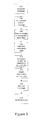
- Figure 3 is a flow diagram showing a method for securely adding redundancy to an electronic message.
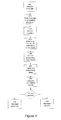
- Figure 4 is a flow diagram showing a method for performing a redundancy check upon receipt of an electronic message.
- Referring to Figure 1, a
communication device 10 is provided. Thecommunication device 10 is provided with aprocessor 20,memory 30, ane-mail module 40, and aninput device 50. Thecommunication device 10 may be a personal computer, personal digital assistant, wireless mobile communication device or the like. - The
communication device 10 is provided with an operating system and other elements known in the art used for the operation and control of the communication device, which are used in conjunction with theprocessor 20 and thememory 30. Thememory 30 may include random-access memory for temporary storage of messages composed by the user of thecommunication device 10. Theinput device 50 may be a keyboard, touch-sensitive screen, or other suitable data entry device for the user of thecommunication device 10 for providing commands and entering data into thedevice 10. Thecommunication device 10 is connected to a wide-area network 100 via a connection that may comprise a wireless gateway or a fixed link. - The e-mail
module 40 is preferably provided as application software that is executable on the operating system of thecommunication device 10.E-mail module 40 receives instructions and data from the user via theinput device 50. The data may include the content of an e-mail message to be sent, as well as the e-mail address of the intended recipient. Instructions may include the command to "send" the e-mail to the intended recipient, or another command by which the user indicates to themodule 40 that composition of the message content is complete. - In the preferred embodiment, as shown in Figure 1,
e-mail module 40 includes program code executable on communications device defining a formatting/encoding layer 42 and program code defining an encryption/decryption layer 44. When a user has defined an e-mail message and issues the send command, the program code in the formatting/encoding layer 42 executes to format and encode the e-mail message. In the preferred embodiment the encoding results in the defined e-mail message being placed in a commonly recognized format for electronic mail correspondence. - According to the preferred embodiment, shown in Figure 2a, the formatted and encoded
message 200 comprises a number of blocks.Block 210 comprises header information, which may include data such as the recipient's address, a subject line, a date and timestamp, and an encryption or session key K assigned to the message by thee-mail module 40, in accordance with techniques known in the art.Blocks 220a...h contain the content of the message. It will be understood by those skilled in the art that the format of the e-mail message is not required to be defined by blocks or to include the information set out in the example of the preferred embodiment. However, to permit e-mail messages to be widely used, the general format set out is typically used. - After formatting and encoding have taken place,
message 200 is then passed to executing program code in the encryption/decryption layer 44. Preferably, the formatted and encodedmessage 200 is stored in thememory 30 of thecommunication device 10, and the formatting/encoding layer 42 passes a pointer to the memory location of the formatted and encodedmessage 200 to the encryption/decryption layer 44. - The encryption/
decryption layer 44 accesses the formatted and encodedmessage 200, and calculates a redundancy check value based on the content of themessage blocks 220a...h, such as a hash or CRC value, in accordance with techniques known in the art. The encryption/decryption layer 44 encodes the redundancy check value into one or more blocks, and inserts these blocks into blocks of the formatted and encoded message, according to the method described below. After the redundancy check value is inserted into themessage 200, the encryption/decryption layer 44 encrypts themessage 200, including the blocks having the value of the redundancy check (using session key K). The encrypted message is then made available to be transmitted to thenetwork 100 by thee-mail module 40 for receipt by the recipient communication device. - Referring to Figure 2b, in a preferred embodiment, the encryption/
decryption layer 44 carries out a calculation to specify the location or locations in the message where the redundancy value blocks will be inserted. In accordance with the preferred embodiment, the location of the redundancy values is not uniformly defined to be at the end of the message content blocks. Rather, the location is specified by variable values. In the example relating to Figure 2b, the location or locations are specified based on the content of themessage 200, itself. For example, the encryption/decryption layer 44 inspects the first block of themessage 220a to determine the number of 1s or 0s contained therein. If, in the example of Figure 2a, theblock 220a contains five 1s, the encryption/decryption layer 44 inserts asingle block 230 containing the redundancy value between the fifth andsixth blocks message 200, as shown in Figure 2b. - More preferably, the redundancy value is split into a plurality of blocks to further obfuscate the location of the redundancy within the
message 200. If the redundancy value is to be split between twoblocks decryption layer 44 inspects a plurality of blocks of the message, for example the first andsecond blocks second block 220b contains three 1s, the encryption/decryption layer 44 inserts the firstredundancy value block 230a between the fifth andsixth blocks message 200, and thesecond redundancy block 230b between the third andfourth blocks - In a most preferred embodiment, the location of the blocks containing the redundancy value is determined by the value of the session key K. The encryption/
decryption layer 44 counts the number of 0s appearing in the binary representation of the value of session key K. If this number is even, then the firstredundancy value block 230a is placed between first andsecond blocks message 200. If this number is odd, then thefirst redundancy value 230a is placed between the second andthird blocks message 200. - Further, if the key value is divisible by four, then the encryption/
decryption layer 44 places the secondredundancy value block 230b between the fifth andsixth blocks message 200; otherwise, the secondredundancy value block 230b is placed between the sixth andseventh blocks message 200. The resultant arrangement of blocks in themessage 200 in this embodiment is shown in Figure 2d in an example where the number of 0s in K is 6, and K is an even number that is not a multiple of 4. This method of determining the locations of theredundancy value blocks 230a, b is most preferred as the total message length of themessage 200 may be short; if the locations of the redundancy blocks were determined principally based on a high number of 1s or 0s appearing in the session key or a message block 220, for example, the encryption/decryption layer 44 might attempt to place aredundancy value block 230 between two message blocks 220 that did not actually exist, resulting in an error condition. - When an encrypted message with redundancy thus added is received from a sender over the
network 100 by thee-mail module 40 of the recipient'scommunication device 10, the encrypted message is passed to the encryption/decryption layer 44, which first decrypts themessage 200. The encryption/decryption layer 44 operates to extract theredundancy blocks 230a,b from themessage 200 to determine the redundancy check value. - As a person skilled in the art will understand, the extraction of redundancy blocks by recipient's communication device is defined in a way that matches the way that sender's
communication device 10 inserts such blocks. The recipient's communication device is therefore provided with sufficient information to determine the locations of theredundancy value blocks 230a,b. Thus, for example, if the sender'scommunication device 10 is configured to evaluate the number of 1s in thefirst block 220a of the message in order to determine the location of aredundancy block 230a, then the receiver'scommunication device 10 is likewise configured to evaluate the number of 1s in thefirst block 220a of the received message. The necessary information may be transmitted from the sender to the recipient separately from the encrypted message; however, if the information used to determine the locations of theredundancy value blocks 230a,b is the session key K, a portion of the information necessary to locate theredundancy value blocks 230a,b is thus transmitted along with the encrypted message. - For example, where the receiver's
communication device 10 receives the encrypted version of themessage 200 depicted in Figure 2d and is configured to use the session key K to determine the location of theredundancy value blocks 230a,b, the encryption/decryption layer 44 in the receivingdevice 10 first decrypts the message to arrive at themessage 200 shown in Figure 2d. The encryption/decryption layer 44 next examines the session key K and determines that there were six 0s contained in the session key K. As six is an even number, the firstredundancy value block 230a is extracted from themessage 200 from between the first andsecond blocks message 200 is then temporarily stored in thememory 30 of the receiver'scommunication device 10. Next, the encryption/decryption layer 44 determines that the number of 0s in the session key, six, is not divisible by four, and therefore extracts thesecond redundancy block 230b from between the sixth andseventh blocks 220f, g. The contents of theredundancy blocks 230a,b are then assembled to generate an extracted redundancy value RE. - The encryption/
decryption layer 44 in the receivingdevice 10 then computes its own redundancy value RC based on the content of the message blocks 220a...h, and compares this RC to RE. If the values match, then the receivingdevice 10 determines the message to be unaltered. If the values do not match, then the message is determined to have been altered, and preferably a warning is provided to the recipient. - As a person skilled in the art will appreciate, the means of determining the location of the n
redundancy value blocks 230a...h is not restricted to an evaluation of the content of the first n blocks of themessage 200 or the session key K. Other suitable and variable characteristics of message content, for example message length, may be used to establish the location of theredundancy value blocks 230a...h. Alternatively, another parameter that is not dependent on the message content may be used to determine the location of the redundancy block orblocks 230a...h. Provided that thecommunication devices 10 of each of the sender and the intended recipient of the message are provided with the same means for determining the locations of theredundancy blocks 230a...h of themessage 200, such other means may be used, although most preferably the locations generated by these means can potentially vary from message to message. - Thus, for example, a look-up table or database, which may be populated with values determined using a pseudo-random number generator, can reside on a mail server on the
network 100, accessible to both the sender's and recipient's communication devices. When a message is passed to the encryption/decryption layer 44 of the sender'scommunication device 10, the sender'sdevice 10 then queries the database for a value to be used in determining the locations of theredundancy blocks 230a...h. This value may be transmitted to the recipient'scommunication device 10 together with the message, or alternatively pointer information may be transmitted to the recipient'scommunication device 10. This pointer information may comprise the timestamp of the message, which is correlated with the value stored in the database once the message is transmitted. When the recipient'scommunication device 10 receives themessage 200, the recipient'sdevice 10 can then retrieve the pseudo-random number from the database. - Referring to Figure 3, a method of securely adding message redundancy to an electronic message is shown according to a preferred embodiment. At
step 300, a message composed by a user is received by thee-mail module 40 of acommunication device 10. The message is then formatted and encoded by the formatting/encoding layer 42 atstep 310, then passed to the encryption/decryption layer 44 of themodule 40 atstep 320. - At
step 330, the encryption/decryption layer 44 calculates a redundancy value and encodes it into one or more blocks. Atstep 340, the encryption/decryption layer 44 determines one or more locations for placing the blocks containing the redundancy value. Atstep 350, the redundancy value blocks are inserted within the message, then the message is encrypted atstep 360. Finally, atstep 370, the message is dispatched to the recipient. - The method of decrypting a received message and determining whether the message has been altered before reception by the intended recipient is shown in Figure 4. At
step 400, a message is received by acommunication device 10 over anetwork 100. The message is passed to the encryption/decryption layer 44 of thee-mail module 40 within thedevice 10 atstep 410. The encryption/decryption layer 44 decrypts the message atstep 420, then determines the locations of the redundancy value blocks atstep 430. Atstep 440, the redundancy value blocks are extracted from the message and assembled to produce the extracted redundancy value RE. A calculated redundancy value, RC, is then determined from the content of the message atstep 450, and the values RC and RE are compared atstep 460. If the values match, then the message is determined to be unaltered, 470; otherwise, it is determined to have been altered, and preferably a warning is issued to the recipient at 480. - Various embodiments of the present invention having been thus described in detail by way of example, it will be apparent to those skilled in the art that variations and modifications may be made without departing from the invention. The invention includes all such variations and modifications as fall within the scope of the appended claims.
Claims (24)
- A method for a sending communication device to provide redundancy to an electronic message to be sent to a recipient communication device, the method comprising the steps of
determining a redundancy value for the electronic message to be sent, determining a locating value, the locating value being defined such that the value varies for different electronic messages and being defined such that the locating value may be determined by the recipient communication device for each electronic message sent to it,
placing the redundancy value in the electronic message at one or more locations determined by the locating value,
encrypting the electronic message including the redundancy value. - The method of claim 1 further comprising, prior to the step of placing the redundancy value in the electronic message at one or more locations determined by the locating value, the step of:formatting the electronic message as a series of message blocks, and formatting the redundancy value as one or more redundancy value blocks.
- The method of claim 1 or claim 2 wherein the step of determining a locating value comprises the step of determining the value of a characteristic of the electronic message.
- The method of any one of claims 1 to 3 wherein the step of encrypting the electronic message including the redundancy value comprises the step of assigning a session key to the electronic message.
- The method of claim 4 wherein the step of determining the value of a characteristic of the electronic message comprises the step of determining the number of bits of a predetermined value in the session key.
- The method of claim 5 wherein the step of determining the value of a characteristic of the electronic message further comprises the step of determining the parity of the number of bits.
- The method of any one of claims 2 to 6 wherein the step of placing the redundancy value in the electronic message at one or more locations determined by the locating value comprises the steps of selecting a message block from the series of message blocks based on the locating value, and inserting at least one of the one or more redundancy value blocks in a location defined in relation to the selected message block.
- The method of any one of claims 2 to 7 wherein the step of determining a locating value comprises the step of determining the value of a characteristic of one or more predetermined message blocks.
- A communication device for sending a message to a recipient communication device, comprising:program code means operative to define a message;program code means operative to determine a redundancy value for the message;program code means operative to determine a locating value, the locating value being defined such that the value varies for different messages and being defined such that the locating value may be determined by the recipient communication device for each message sent to it;program code means operative to place the redundancy value in the message at one or more locations determined by the locating value; andprogram code means operative to encrypt the message including the redundancy value.
- The communication device of claim 9 wherein the locating value is the value of a selected characteristic of the message.
- The communication device of claim 9 or claim 10 wherein the program code means operative to encrypt the message including the redundancy value is operative to encrypt the message using a session key.
- The communication device of claim 11 wherein the selected characteristic of the message is the number of bits of a predetermined value in the session key.
- The communication device of claim 11 wherein the selected characteristic of the message is the parity of the number of bits of a predetermined value in the session key.
- The communication device of any one of claims 9 to 13 further comprising:program code means operative to format the message as a series of message blocks; andprogram code means operative to format the redundancy value as one or more redundancy value blocks,
such that the program code means operative to place the redundancy value in the message at one or more locations determined by the locating value is operative to identify one of the series of message blocks, and then insert at least one of the one or more redundancy value blocks in a location defined in relation to the identified one of the series of message blocks. - The communication device of claim 14, further comprising:program code means operative to derive a value from a characteristic of a specified block in the series of message blocks as the locating value;program code means operative to locate an identified message block based on the locating value; andprogram code means operative to insert at least one of the one or more redundancy value blocks in a location defined in relation to the identified message block.
- The communication device of claim 15 wherein the characteristic of a specified block is the number of bits of a predetermined value in the specified block.
- The communication device of claim 15 wherein the characteristic of a specified block is the parity of the number of bits of a predetermined value in the specified block.
- A communication device for decrypting an encrypted message, the message comprising a plurality of message blocks and one or more redundancy value blocks placed among the plurality of message blocks according to a locating value, the locating value being defined such that the locating value varies for different messages, the communication device comprising:program code means operative to decrypt the encrypted message;program code means operative to locate the one or more redundancy value blocks in the message based on the locating value;program code means operative to obtain a received redundancy value from the one or more redundancy value blocks;program code means operative to determine a calculated redundancy value from the plurality of message blocks;program code means operative to compare the received redundancy value with the calculated redundancy value.
- The communication device of claim 18 wherein the program code means operative to locate the one or more redundancy value blocks in the message based on the locating value comprises:program code means operative to determine or receive the locating value;program code means operative to identify one of the plurality of message blocks using the locating value; andprogram code means operative to identify the location of at least one of the one or more redundancy value blocks in relation to the location of the identified one of the plurality of message blocks within the message.
- The communication device of claim 18 or claim 19 wherein the locating value is a session key provided with the encrypted message.
- A method for determining the reliability of a received encrypted message, the message comprising a plurality of message blocks and one or more redundancy value blocks placed among the plurality of message blocks according to a locating value, the locating value being defined such that the locating value varies for different messages, the method comprising the steps of:decrypting the encrypted message to obtain a message;locating the one or more redundancy value blocks in the message based on the locating value;obtaining a received redundancy value from the one or more redundancy value blocks;determining a calculated redundancy value from the plurality of message blocks;comparing the received redundancy value with the calculated redundancy value; anddetermining that the message is not reliable if the received redundancy value and the calculated redundancy check value are not equal.
- The method of claim 21 further comprising the steps of:identifying one of the plurality of message blocks using the locating value; andidentifying the location of at least one of the one or more redundancy value blocks in relation to the location of the identified one of the plurality of message blocks within the message.
- A computer readable medium comprising code means executable in a processor of the device of any of claims 9 to 17 for implementing the method of any of claims 1 to 8.
- A computer readable medium comprising code means executable in a processor of the device of any of claims 18 to 20 for implementing the method of claim 21 or claim 22.
Priority Applications (9)
| Application Number | Priority Date | Filing Date | Title |
|---|---|---|---|
| AT04105983T ATE405051T1 (en) | 2004-11-22 | 2004-11-22 | METHOD FOR SECURE REDUNDANCY ADDITION OF AN ELECTRONIC MESSAGE |
| DE602004015804T DE602004015804D1 (en) | 2004-11-22 | 2004-11-22 | Method for the secure redundancy addition of an electronic message |
| EP04105983A EP1659725B1 (en) | 2004-11-22 | 2004-11-22 | Method for securely adding redundancy to an electronic message |
| US11/059,676 US7533331B2 (en) | 2004-11-22 | 2005-02-17 | System and method for securely adding redundancy to an electronic message |
| CA2522310A CA2522310C (en) | 2004-11-22 | 2005-10-04 | System and method for securely adding redundancy to an electronic message |
| SG200506618A SG122880A1 (en) | 2004-11-22 | 2005-10-07 | System and method for securely adding redundancy to an electronic message |
| CNB2005101248984A CN100571126C (en) | 2004-11-22 | 2005-11-22 | System and method for securely adding redundancy to electronic messages |
| HK06111296.2A HK1090765B (en) | 2006-10-14 | Method for securely adding redundancy to an electronic message | |
| US12/463,878 US8375282B2 (en) | 2004-11-22 | 2009-05-11 | System and method for securely adding redundancy to an electronic message |
Applications Claiming Priority (1)
| Application Number | Priority Date | Filing Date | Title |
|---|---|---|---|
| EP04105983A EP1659725B1 (en) | 2004-11-22 | 2004-11-22 | Method for securely adding redundancy to an electronic message |
Publications (2)
| Publication Number | Publication Date |
|---|---|
| EP1659725A1 true EP1659725A1 (en) | 2006-05-24 |
| EP1659725B1 EP1659725B1 (en) | 2008-08-13 |
Family
ID=34929909
Family Applications (1)
| Application Number | Title | Priority Date | Filing Date |
|---|---|---|---|
| EP04105983A Expired - Lifetime EP1659725B1 (en) | 2004-11-22 | 2004-11-22 | Method for securely adding redundancy to an electronic message |
Country Status (7)
| Country | Link |
|---|---|
| US (2) | US7533331B2 (en) |
| EP (1) | EP1659725B1 (en) |
| CN (1) | CN100571126C (en) |
| AT (1) | ATE405051T1 (en) |
| CA (1) | CA2522310C (en) |
| DE (1) | DE602004015804D1 (en) |
| SG (1) | SG122880A1 (en) |
Families Citing this family (17)
| Publication number | Priority date | Publication date | Assignee | Title |
|---|---|---|---|---|
| US7840537B2 (en) | 2006-12-22 | 2010-11-23 | Commvault Systems, Inc. | System and method for storing redundant information |
| US7971136B2 (en) * | 2007-03-21 | 2011-06-28 | Endless Spaces Ltd. | System and method for dynamic message placement |
| US8219524B2 (en) * | 2008-06-24 | 2012-07-10 | Commvault Systems, Inc. | Application-aware and remote single instance data management |
| US9015181B2 (en) | 2008-09-26 | 2015-04-21 | Commvault Systems, Inc. | Systems and methods for managing single instancing data |
| EP2329378A4 (en) | 2008-09-26 | 2015-11-25 | Commvault Systems Inc | SYSTEMS AND METHODS FOR MANAGING SINGLE-INSTANCE DATA |
| US8412677B2 (en) | 2008-11-26 | 2013-04-02 | Commvault Systems, Inc. | Systems and methods for byte-level or quasi byte-level single instancing |
| US8401996B2 (en) | 2009-03-30 | 2013-03-19 | Commvault Systems, Inc. | Storing a variable number of instances of data objects |
| US8578120B2 (en) * | 2009-05-22 | 2013-11-05 | Commvault Systems, Inc. | Block-level single instancing |
| WO2012045023A2 (en) | 2010-09-30 | 2012-04-05 | Commvault Systems, Inc. | Archiving data objects using secondary copies |
| US9020890B2 (en) | 2012-03-30 | 2015-04-28 | Commvault Systems, Inc. | Smart archiving and data previewing for mobile devices |
| US9633022B2 (en) | 2012-12-28 | 2017-04-25 | Commvault Systems, Inc. | Backup and restoration for a deduplicated file system |
| US10324897B2 (en) | 2014-01-27 | 2019-06-18 | Commvault Systems, Inc. | Techniques for serving archived electronic mail |
| US9864864B2 (en) * | 2014-09-23 | 2018-01-09 | Accenture Global Services Limited | Industrial security agent platform |
| US10324914B2 (en) | 2015-05-20 | 2019-06-18 | Commvalut Systems, Inc. | Handling user queries against production and archive storage systems, such as for enterprise customers having large and/or numerous files |
| CN106790038A (en) * | 2016-12-16 | 2017-05-31 | 湖南国科微电子股份有限公司 | The safe transmission method of Big Dipper chip data, device and terminal |
| US10484350B2 (en) * | 2017-04-26 | 2019-11-19 | At&T Intellectual Property I, L.P. | Privacy-preserving location corroborations |
| CN108390860B (en) * | 2018-01-24 | 2021-09-14 | 北京奇艺世纪科技有限公司 | Data packet encryption and decryption method and device |
Citations (1)
| Publication number | Priority date | Publication date | Assignee | Title |
|---|---|---|---|---|
| US20030056118A1 (en) * | 2001-09-04 | 2003-03-20 | Vidius Inc. | Method for encryption in an un-trusted environment |
Family Cites Families (10)
| Publication number | Priority date | Publication date | Assignee | Title |
|---|---|---|---|---|
| US4227253A (en) * | 1977-12-05 | 1980-10-07 | International Business Machines Corporation | Cryptographic communication security for multiple domain networks |
| US5319710A (en) * | 1986-08-22 | 1994-06-07 | Tandem Computers Incorporated | Method and means for combining and managing personal verification and message authentication encrytions for network transmission |
| WO1996042155A1 (en) * | 1995-06-08 | 1996-12-27 | Motorola Inc. | Method of encrypting data packets and detecting decryption errors |
| US7080257B1 (en) * | 2000-03-27 | 2006-07-18 | Microsoft Corporation | Protecting digital goods using oblivious checking |
| US7573942B2 (en) | 2001-11-16 | 2009-08-11 | Alcatel-Lucent Usa Inc. | Method for encoding and decoding control information in a wireless communications system |
| US7243226B2 (en) * | 2001-12-12 | 2007-07-10 | Valve Corporation | Method and system for enabling content security in a distributed system |
| US6880149B2 (en) * | 2002-04-01 | 2005-04-12 | Pace Anti-Piracy | Method for runtime code integrity validation using code block checksums |
| CN1836398A (en) * | 2003-05-07 | 2006-09-20 | 松下电器产业株式会社 | Transmission/reception system |
| TWI224257B (en) * | 2003-08-28 | 2004-11-21 | Sunplus Technology Co Ltd | Apparatus and method of using checking bits to conduct encrypting protection |
| US7349537B2 (en) * | 2004-03-11 | 2008-03-25 | Teknovus, Inc. | Method for data encryption in an ethernet passive optical network |
-
2004
- 2004-11-22 AT AT04105983T patent/ATE405051T1/en not_active IP Right Cessation
- 2004-11-22 EP EP04105983A patent/EP1659725B1/en not_active Expired - Lifetime
- 2004-11-22 DE DE602004015804T patent/DE602004015804D1/en not_active Expired - Lifetime
-
2005
- 2005-02-17 US US11/059,676 patent/US7533331B2/en active Active
- 2005-10-04 CA CA2522310A patent/CA2522310C/en not_active Expired - Lifetime
- 2005-10-07 SG SG200506618A patent/SG122880A1/en unknown
- 2005-11-22 CN CNB2005101248984A patent/CN100571126C/en not_active Expired - Lifetime
-
2009
- 2009-05-11 US US12/463,878 patent/US8375282B2/en active Active
Patent Citations (1)
| Publication number | Priority date | Publication date | Assignee | Title |
|---|---|---|---|---|
| US20030056118A1 (en) * | 2001-09-04 | 2003-03-20 | Vidius Inc. | Method for encryption in an un-trusted environment |
Non-Patent Citations (2)
| Title |
|---|
| APPLIED CRYPTOGRAPHY AND NETWORK SECURITY. SECOND INTERNATIONAL CONFERENCE, ACNS 2004. PROCEEDINGS 8-11 JUNE 2004 YELLO MOUNTAIN, CHINA, 8 June 2004 (2004-06-08), APPLIED CRYPTOGRAPHY AND NETWORK SECURITY. SECOND INTERNATIONAL CONFERENCE, ACNS 2004. PROCEEDINGS (LECTURE NOTES IN COMPUT. SCI. VOL.3089) SPRINGER-VERLAG BERLIN, GERMANY, pages 263 - 277, ISBN: 3-540-22217-0 * |
| DATABASE INSPEC [online] THE INSTITUTION OF ELECTRICAL ENGINEERS, STEVENAGE, GB; 2004, WRIGHT A K ET AL: "Low-latency cryptographic protection for SCADA communications", XP002326460, Database accession no. 8001859 * |
Also Published As
| Publication number | Publication date |
|---|---|
| SG122880A1 (en) | 2006-06-29 |
| EP1659725B1 (en) | 2008-08-13 |
| CA2522310C (en) | 2010-11-16 |
| CN100571126C (en) | 2009-12-16 |
| DE602004015804D1 (en) | 2008-09-25 |
| HK1090765A1 (en) | 2006-12-29 |
| US8375282B2 (en) | 2013-02-12 |
| US7533331B2 (en) | 2009-05-12 |
| ATE405051T1 (en) | 2008-08-15 |
| CN1780203A (en) | 2006-05-31 |
| CA2522310A1 (en) | 2006-05-22 |
| US20060123313A1 (en) | 2006-06-08 |
| US20090228699A1 (en) | 2009-09-10 |
Similar Documents
| Publication | Publication Date | Title |
|---|---|---|
| US8375282B2 (en) | System and method for securely adding redundancy to an electronic message | |
| US6408392B2 (en) | Method and apparatus for providing configuration information in a network | |
| US6289105B1 (en) | Method and apparatus for encrypting and transferring electronic mails | |
| US7571327B2 (en) | Exclusive encryption | |
| US7296156B2 (en) | System and method for SMS authentication | |
| US20030078058A1 (en) | Method for transmission of secure messages in a telecommunications network | |
| US20090031135A1 (en) | Tamper Proof Seal For An Electronic Document | |
| WO2008007984A2 (en) | Text encoding system and method | |
| CN115695051B (en) | A data center transmission management system based on remote network platform architecture | |
| US11128588B2 (en) | Apparatus, method and computer-readable recording medium storing computer program for restricting electronic file viewing utilizing antivirus software | |
| CN104935783B (en) | A kind of safe active distorted image detection method and device | |
| CN111193750A (en) | Mailbox encryption method, mailbox decryption method and mailbox processing method based on block chain | |
| CN114697119B (en) | Data inspection methods, devices, computer-readable storage media and electronic equipment | |
| EP1777651A1 (en) | Electronic data delivery method | |
| Galvin et al. | SNMP Security Protocols | |
| US6968498B1 (en) | System and method for verifying validity of transmission data based on a numerical identifier for the data | |
| HK1090765B (en) | Method for securely adding redundancy to an electronic message | |
| Moon et al. | Mutexion: Mutually exclusive compression system for mitigating compression side-channel attacks | |
| JP2008079302A (en) | Time stamp adding apparatus, time stamp adding method, e-mail relay server, and computer program | |
| JP5102880B2 (en) | Time stamp adding apparatus, time stamp adding method, e-mail relay server, and computer program | |
| CN111212050A (en) | Method and system for encrypting and transmitting data based on digital certificate | |
| CN113407971B (en) | Cross-Internet file secure sharing method and system based on HTML5 technology | |
| CN118300880A (en) | A cloud platform data encryption transmission system and method | |
| CN119182578A (en) | Password retrieving method, device and equipment of Internet of things equipment and storage medium | |
| CN121462233A (en) | Encryption operation method and system based on cryptographic algorithm |
Legal Events
| Date | Code | Title | Description |
|---|---|---|---|
| PUAI | Public reference made under article 153(3) epc to a published international application that has entered the european phase |
Free format text: ORIGINAL CODE: 0009012 |
|
| 17P | Request for examination filed |
Effective date: 20041214 |
|
| AK | Designated contracting states |
Kind code of ref document: A1 Designated state(s): AT BE BG CH CY CZ DE DK EE ES FI FR GB GR HU IE IS IT LI LU MC NL PL PT RO SE SI SK TR |
|
| AX | Request for extension of the european patent |
Extension state: AL HR LT LV MK YU |
|
| REG | Reference to a national code |
Ref country code: HK Ref legal event code: DE Ref document number: 1090765 Country of ref document: HK |
|
| AKX | Designation fees paid |
Designated state(s): AT BE BG CH CY CZ DE DK EE ES FI FR GB GR HU IE IS IT LI LU MC NL PL PT RO SE SI SK TR |
|
| AXX | Extension fees paid |
Extension state: MK Payment date: 20041214 Extension state: AL Payment date: 20041214 Extension state: LV Payment date: 20041214 Extension state: LT Payment date: 20041214 Extension state: HR Payment date: 20041214 |
|
| 17Q | First examination report despatched |
Effective date: 20060602 |
|
| GRAP | Despatch of communication of intention to grant a patent |
Free format text: ORIGINAL CODE: EPIDOSNIGR1 |
|
| GRAS | Grant fee paid |
Free format text: ORIGINAL CODE: EPIDOSNIGR3 |
|
| GRAA | (expected) grant |
Free format text: ORIGINAL CODE: 0009210 |
|
| AK | Designated contracting states |
Kind code of ref document: B1 Designated state(s): AT BE BG CH CY CZ DE DK EE ES FI FR GB GR HU IE IS IT LI LU MC NL PL PT RO SE SI SK TR |
|
| AX | Request for extension of the european patent |
Extension state: AL HR LT LV MK |
|
| REG | Reference to a national code |
Ref country code: GB Ref legal event code: FG4D |
|
| REG | Reference to a national code |
Ref country code: CH Ref legal event code: EP |
|
| REG | Reference to a national code |
Ref country code: IE Ref legal event code: FG4D |
|
| REF | Corresponds to: |
Ref document number: 602004015804 Country of ref document: DE Date of ref document: 20080925 Kind code of ref document: P |
|
| REG | Reference to a national code |
Ref country code: HK Ref legal event code: GR Ref document number: 1090765 Country of ref document: HK |
|
| LTIE | Lt: invalidation of european patent or patent extension |
Effective date: 20080813 |
|
| PG25 | Lapsed in a contracting state [announced via postgrant information from national office to epo] |
Ref country code: ES Free format text: LAPSE BECAUSE OF FAILURE TO SUBMIT A TRANSLATION OF THE DESCRIPTION OR TO PAY THE FEE WITHIN THE PRESCRIBED TIME-LIMIT Effective date: 20081124 Ref country code: NL Free format text: LAPSE BECAUSE OF FAILURE TO SUBMIT A TRANSLATION OF THE DESCRIPTION OR TO PAY THE FEE WITHIN THE PRESCRIBED TIME-LIMIT Effective date: 20080813 Ref country code: IS Free format text: LAPSE BECAUSE OF FAILURE TO SUBMIT A TRANSLATION OF THE DESCRIPTION OR TO PAY THE FEE WITHIN THE PRESCRIBED TIME-LIMIT Effective date: 20081213 |
|
| PG25 | Lapsed in a contracting state [announced via postgrant information from national office to epo] |
Ref country code: AT Free format text: LAPSE BECAUSE OF FAILURE TO SUBMIT A TRANSLATION OF THE DESCRIPTION OR TO PAY THE FEE WITHIN THE PRESCRIBED TIME-LIMIT Effective date: 20080813 Ref country code: SI Free format text: LAPSE BECAUSE OF FAILURE TO SUBMIT A TRANSLATION OF THE DESCRIPTION OR TO PAY THE FEE WITHIN THE PRESCRIBED TIME-LIMIT Effective date: 20080813 Ref country code: FI Free format text: LAPSE BECAUSE OF FAILURE TO SUBMIT A TRANSLATION OF THE DESCRIPTION OR TO PAY THE FEE WITHIN THE PRESCRIBED TIME-LIMIT Effective date: 20080813 |
|
| PG25 | Lapsed in a contracting state [announced via postgrant information from national office to epo] |
Ref country code: BE Free format text: LAPSE BECAUSE OF FAILURE TO SUBMIT A TRANSLATION OF THE DESCRIPTION OR TO PAY THE FEE WITHIN THE PRESCRIBED TIME-LIMIT Effective date: 20080813 |
|
| PG25 | Lapsed in a contracting state [announced via postgrant information from national office to epo] |
Ref country code: BG Free format text: LAPSE BECAUSE OF FAILURE TO SUBMIT A TRANSLATION OF THE DESCRIPTION OR TO PAY THE FEE WITHIN THE PRESCRIBED TIME-LIMIT Effective date: 20081113 Ref country code: DK Free format text: LAPSE BECAUSE OF FAILURE TO SUBMIT A TRANSLATION OF THE DESCRIPTION OR TO PAY THE FEE WITHIN THE PRESCRIBED TIME-LIMIT Effective date: 20080813 |
|
| PG25 | Lapsed in a contracting state [announced via postgrant information from national office to epo] |
Ref country code: CZ Free format text: LAPSE BECAUSE OF FAILURE TO SUBMIT A TRANSLATION OF THE DESCRIPTION OR TO PAY THE FEE WITHIN THE PRESCRIBED TIME-LIMIT Effective date: 20080813 Ref country code: PT Free format text: LAPSE BECAUSE OF FAILURE TO SUBMIT A TRANSLATION OF THE DESCRIPTION OR TO PAY THE FEE WITHIN THE PRESCRIBED TIME-LIMIT Effective date: 20090113 Ref country code: SK Free format text: LAPSE BECAUSE OF FAILURE TO SUBMIT A TRANSLATION OF THE DESCRIPTION OR TO PAY THE FEE WITHIN THE PRESCRIBED TIME-LIMIT Effective date: 20080813 Ref country code: RO Free format text: LAPSE BECAUSE OF FAILURE TO SUBMIT A TRANSLATION OF THE DESCRIPTION OR TO PAY THE FEE WITHIN THE PRESCRIBED TIME-LIMIT Effective date: 20080813 |
|
| PLBE | No opposition filed within time limit |
Free format text: ORIGINAL CODE: 0009261 |
|
| STAA | Information on the status of an ep patent application or granted ep patent |
Free format text: STATUS: NO OPPOSITION FILED WITHIN TIME LIMIT |
|
| PG25 | Lapsed in a contracting state [announced via postgrant information from national office to epo] |
Ref country code: MC Free format text: LAPSE BECAUSE OF NON-PAYMENT OF DUE FEES Effective date: 20081130 |
|
| REG | Reference to a national code |
Ref country code: CH Ref legal event code: PL |
|
| 26N | No opposition filed |
Effective date: 20090514 |
|
| PG25 | Lapsed in a contracting state [announced via postgrant information from national office to epo] |
Ref country code: EE Free format text: LAPSE BECAUSE OF FAILURE TO SUBMIT A TRANSLATION OF THE DESCRIPTION OR TO PAY THE FEE WITHIN THE PRESCRIBED TIME-LIMIT Effective date: 20080813 |
|
| PG25 | Lapsed in a contracting state [announced via postgrant information from national office to epo] |
Ref country code: IT Free format text: LAPSE BECAUSE OF FAILURE TO SUBMIT A TRANSLATION OF THE DESCRIPTION OR TO PAY THE FEE WITHIN THE PRESCRIBED TIME-LIMIT Effective date: 20080813 |
|
| PG25 | Lapsed in a contracting state [announced via postgrant information from national office to epo] |
Ref country code: LI Free format text: LAPSE BECAUSE OF NON-PAYMENT OF DUE FEES Effective date: 20081130 Ref country code: CH Free format text: LAPSE BECAUSE OF NON-PAYMENT OF DUE FEES Effective date: 20081130 Ref country code: IE Free format text: LAPSE BECAUSE OF NON-PAYMENT OF DUE FEES Effective date: 20081122 |
|
| PG25 | Lapsed in a contracting state [announced via postgrant information from national office to epo] |
Ref country code: SE Free format text: LAPSE BECAUSE OF FAILURE TO SUBMIT A TRANSLATION OF THE DESCRIPTION OR TO PAY THE FEE WITHIN THE PRESCRIBED TIME-LIMIT Effective date: 20081113 |
|
| PG25 | Lapsed in a contracting state [announced via postgrant information from national office to epo] |
Ref country code: PL Free format text: LAPSE BECAUSE OF FAILURE TO SUBMIT A TRANSLATION OF THE DESCRIPTION OR TO PAY THE FEE WITHIN THE PRESCRIBED TIME-LIMIT Effective date: 20080813 |
|
| PG25 | Lapsed in a contracting state [announced via postgrant information from national office to epo] |
Ref country code: HU Free format text: LAPSE BECAUSE OF FAILURE TO SUBMIT A TRANSLATION OF THE DESCRIPTION OR TO PAY THE FEE WITHIN THE PRESCRIBED TIME-LIMIT Effective date: 20090214 Ref country code: CY Free format text: LAPSE BECAUSE OF FAILURE TO SUBMIT A TRANSLATION OF THE DESCRIPTION OR TO PAY THE FEE WITHIN THE PRESCRIBED TIME-LIMIT Effective date: 20080813 Ref country code: LU Free format text: LAPSE BECAUSE OF NON-PAYMENT OF DUE FEES Effective date: 20081122 |
|
| PG25 | Lapsed in a contracting state [announced via postgrant information from national office to epo] |
Ref country code: TR Free format text: LAPSE BECAUSE OF FAILURE TO SUBMIT A TRANSLATION OF THE DESCRIPTION OR TO PAY THE FEE WITHIN THE PRESCRIBED TIME-LIMIT Effective date: 20080813 |
|
| PG25 | Lapsed in a contracting state [announced via postgrant information from national office to epo] |
Ref country code: GR Free format text: LAPSE BECAUSE OF FAILURE TO SUBMIT A TRANSLATION OF THE DESCRIPTION OR TO PAY THE FEE WITHIN THE PRESCRIBED TIME-LIMIT Effective date: 20081114 |
|
| REG | Reference to a national code |
Ref country code: DE Ref legal event code: R082 Ref document number: 602004015804 Country of ref document: DE Representative=s name: MERH-IP MATIAS ERNY REICHL HOFFMANN, DE |
|
| REG | Reference to a national code |
Ref country code: DE Ref legal event code: R082 Ref document number: 602004015804 Country of ref document: DE Representative=s name: MERH-IP MATIAS ERNY REICHL HOFFMANN, DE Effective date: 20140925 Ref country code: DE Ref legal event code: R081 Ref document number: 602004015804 Country of ref document: DE Owner name: BLACKBERRY LIMITED, WATERLOO, CA Free format text: FORMER OWNER: RESEARCH IN MOTION LTD., WATERLOO, ONTARIO, CA Effective date: 20140925 Ref country code: DE Ref legal event code: R082 Ref document number: 602004015804 Country of ref document: DE Representative=s name: MERH-IP MATIAS ERNY REICHL HOFFMANN PATENTANWA, DE Effective date: 20140925 |
|
| REG | Reference to a national code |
Ref country code: FR Ref legal event code: PLFP Year of fee payment: 12 |
|
| REG | Reference to a national code |
Ref country code: FR Ref legal event code: PLFP Year of fee payment: 13 |
|
| REG | Reference to a national code |
Ref country code: FR Ref legal event code: PLFP Year of fee payment: 14 |
|
| PGFP | Annual fee paid to national office [announced via postgrant information from national office to epo] |
Ref country code: GB Payment date: 20231127 Year of fee payment: 20 |
|
| PGFP | Annual fee paid to national office [announced via postgrant information from national office to epo] |
Ref country code: FR Payment date: 20231127 Year of fee payment: 20 Ref country code: DE Payment date: 20231129 Year of fee payment: 20 |
|
| REG | Reference to a national code |
Ref country code: DE Ref legal event code: R082 Ref document number: 602004015804 Country of ref document: DE Ref country code: DE Ref legal event code: R081 Ref document number: 602004015804 Country of ref document: DE Owner name: MALIKIE INNOVATIONS LTD., IE Free format text: FORMER OWNER: BLACKBERRY LIMITED, WATERLOO, ONTARIO, CA |
|
| REG | Reference to a national code |
Ref country code: DE Ref legal event code: R071 Ref document number: 602004015804 Country of ref document: DE |
|
| REG | Reference to a national code |
Ref country code: GB Ref legal event code: PE20 Expiry date: 20241121 |
|
| PG25 | Lapsed in a contracting state [announced via postgrant information from national office to epo] |
Ref country code: GB Free format text: LAPSE BECAUSE OF EXPIRATION OF PROTECTION Effective date: 20241121 |
|
| PG25 | Lapsed in a contracting state [announced via postgrant information from national office to epo] |
Ref country code: GB Free format text: LAPSE BECAUSE OF EXPIRATION OF PROTECTION Effective date: 20241121 |