EP1658814A2 - Methods for evaluating pathologies or therapeutics in a rat carotid artery - Google Patents
Methods for evaluating pathologies or therapeutics in a rat carotid artery Download PDFInfo
- Publication number
- EP1658814A2 EP1658814A2 EP05257060A EP05257060A EP1658814A2 EP 1658814 A2 EP1658814 A2 EP 1658814A2 EP 05257060 A EP05257060 A EP 05257060A EP 05257060 A EP05257060 A EP 05257060A EP 1658814 A2 EP1658814 A2 EP 1658814A2
- Authority
- EP
- European Patent Office
- Prior art keywords
- carotid artery
- injury
- rat
- evaluating
- injured
- Prior art date
- Legal status (The legal status is an assumption and is not a legal conclusion. Google has not performed a legal analysis and makes no representation as to the accuracy of the status listed.)
- Withdrawn
Links
- 210000001715 carotid artery Anatomy 0.000 title claims abstract description 34
- 238000000034 method Methods 0.000 title claims abstract description 31
- 239000003814 drug Substances 0.000 title claims abstract description 29
- 230000007170 pathology Effects 0.000 title claims abstract description 10
- 208000027418 Wounds and injury Diseases 0.000 claims abstract description 25
- 208000014674 injury Diseases 0.000 claims abstract description 24
- 230000006378 damage Effects 0.000 claims abstract description 22
- 238000011282 treatment Methods 0.000 claims abstract description 6
- 210000001367 artery Anatomy 0.000 claims description 11
- 229940124597 therapeutic agent Drugs 0.000 abstract description 16
- 230000022131 cell cycle Effects 0.000 abstract description 11
- 230000001028 anti-proliverative effect Effects 0.000 abstract description 8
- 206010020718 hyperplasia Diseases 0.000 abstract description 8
- 210000005167 vascular cell Anatomy 0.000 abstract description 6
- 230000002055 immunohistochemical effect Effects 0.000 abstract description 3
- 241000700159 Rattus Species 0.000 description 31
- 229920001983 poloxamer Polymers 0.000 description 17
- ZAHRKKWIAAJSAO-UHFFFAOYSA-N rapamycin Natural products COCC(O)C(=C/C(C)C(=O)CC(OC(=O)C1CCCCN1C(=O)C(=O)C2(O)OC(CC(OC)C(=CC=CC=CC(C)CC(C)C(=O)C)C)CCC2C)C(C)CC3CCC(O)C(C3)OC)C ZAHRKKWIAAJSAO-UHFFFAOYSA-N 0.000 description 16
- 229960002930 sirolimus Drugs 0.000 description 16
- QFJCIRLUMZQUOT-HPLJOQBZSA-N sirolimus Chemical compound C1C[C@@H](O)[C@H](OC)C[C@@H]1C[C@@H](C)[C@H]1OC(=O)[C@@H]2CCCCN2C(=O)C(=O)[C@](O)(O2)[C@H](C)CC[C@H]2C[C@H](OC)/C(C)=C/C=C/C=C/[C@@H](C)C[C@@H](C)C(=O)[C@H](OC)[C@H](O)/C(C)=C/[C@@H](C)C(=O)C1 QFJCIRLUMZQUOT-HPLJOQBZSA-N 0.000 description 16
- 229930012538 Paclitaxel Natural products 0.000 description 15
- 239000000499 gel Substances 0.000 description 15
- 229960001592 paclitaxel Drugs 0.000 description 15
- RCINICONZNJXQF-MZXODVADSA-N taxol Chemical compound O([C@@H]1[C@@]2(C[C@@H](C(C)=C(C2(C)C)[C@H](C([C@]2(C)[C@@H](O)C[C@H]3OC[C@]3([C@H]21)OC(C)=O)=O)OC(=O)C)OC(=O)[C@H](O)[C@@H](NC(=O)C=1C=CC=CC=1)C=1C=CC=CC=1)O)C(=O)C1=CC=CC=C1 RCINICONZNJXQF-MZXODVADSA-N 0.000 description 15
- 239000003795 chemical substances by application Substances 0.000 description 13
- 229920000260 silastic Polymers 0.000 description 12
- 210000004027 cell Anatomy 0.000 description 10
- 230000000694 effects Effects 0.000 description 10
- 229920001992 poloxamer 407 Polymers 0.000 description 9
- 239000000725 suspension Substances 0.000 description 9
- 239000000243 solution Substances 0.000 description 8
- 210000001168 carotid artery common Anatomy 0.000 description 7
- 229940079593 drug Drugs 0.000 description 7
- 238000011156 evaluation Methods 0.000 description 7
- XLYOFNOQVPJJNP-UHFFFAOYSA-N water Chemical compound O XLYOFNOQVPJJNP-UHFFFAOYSA-N 0.000 description 7
- 238000004458 analytical method Methods 0.000 description 6
- 230000014509 gene expression Effects 0.000 description 6
- 210000004940 nucleus Anatomy 0.000 description 6
- 230000002792 vascular Effects 0.000 description 6
- 108050006400 Cyclin Proteins 0.000 description 5
- 230000006907 apoptotic process Effects 0.000 description 5
- 230000008692 neointimal formation Effects 0.000 description 5
- 230000008569 process Effects 0.000 description 5
- 108090000623 proteins and genes Proteins 0.000 description 5
- 208000037803 restenosis Diseases 0.000 description 5
- LFQSCWFLJHTTHZ-UHFFFAOYSA-N Ethanol Chemical compound CCO LFQSCWFLJHTTHZ-UHFFFAOYSA-N 0.000 description 4
- WSFSSNUMVMOOMR-UHFFFAOYSA-N Formaldehyde Chemical compound O=C WSFSSNUMVMOOMR-UHFFFAOYSA-N 0.000 description 4
- 208000034827 Neointima Diseases 0.000 description 4
- 102100036691 Proliferating cell nuclear antigen Human genes 0.000 description 4
- 208000024248 Vascular System injury Diseases 0.000 description 4
- 208000012339 Vascular injury Diseases 0.000 description 4
- RJURFGZVJUQBHK-UHFFFAOYSA-N actinomycin D Natural products CC1OC(=O)C(C(C)C)N(C)C(=O)CN(C)C(=O)C2CCCN2C(=O)C(C(C)C)NC(=O)C1NC(=O)C1=C(N)C(=O)C(C)=C2OC(C(C)=CC=C3C(=O)NC4C(=O)NC(C(N5CCCC5C(=O)N(C)CC(=O)N(C)C(C(C)C)C(=O)OC4C)=O)C(C)C)=C3N=C21 RJURFGZVJUQBHK-UHFFFAOYSA-N 0.000 description 4
- 230000004663 cell proliferation Effects 0.000 description 4
- 239000003112 inhibitor Substances 0.000 description 4
- 229920000642 polymer Polymers 0.000 description 4
- 230000035755 proliferation Effects 0.000 description 4
- IAZDPXIOMUYVGZ-UHFFFAOYSA-N Dimethylsulphoxide Chemical compound CS(C)=O IAZDPXIOMUYVGZ-UHFFFAOYSA-N 0.000 description 3
- 206010061218 Inflammation Diseases 0.000 description 3
- DCXYFEDJOCDNAF-REOHCLBHSA-N L-asparagine Chemical compound OC(=O)[C@@H](N)CC(N)=O DCXYFEDJOCDNAF-REOHCLBHSA-N 0.000 description 3
- FAPWRFPIFSIZLT-UHFFFAOYSA-M Sodium chloride Chemical compound [Na+].[Cl-] FAPWRFPIFSIZLT-UHFFFAOYSA-M 0.000 description 3
- 230000001640 apoptogenic effect Effects 0.000 description 3
- 210000004204 blood vessel Anatomy 0.000 description 3
- 210000000269 carotid artery external Anatomy 0.000 description 3
- 238000012377 drug delivery Methods 0.000 description 3
- 238000003364 immunohistochemistry Methods 0.000 description 3
- 230000004054 inflammatory process Effects 0.000 description 3
- 239000000203 mixture Substances 0.000 description 3
- 238000002360 preparation method Methods 0.000 description 3
- 102000004169 proteins and genes Human genes 0.000 description 3
- 238000012360 testing method Methods 0.000 description 3
- 238000002560 therapeutic procedure Methods 0.000 description 3
- CPKVUHPKYQGHMW-UHFFFAOYSA-N 1-ethenylpyrrolidin-2-one;molecular iodine Chemical compound II.C=CN1CCCC1=O CPKVUHPKYQGHMW-UHFFFAOYSA-N 0.000 description 2
- RZVAJINKPMORJF-UHFFFAOYSA-N Acetaminophen Chemical compound CC(=O)NC1=CC=C(O)C=C1 RZVAJINKPMORJF-UHFFFAOYSA-N 0.000 description 2
- 206010003162 Arterial injury Diseases 0.000 description 2
- BSYNRYMUTXBXSQ-UHFFFAOYSA-N Aspirin Chemical compound CC(=O)OC1=CC=CC=C1C(O)=O BSYNRYMUTXBXSQ-UHFFFAOYSA-N 0.000 description 2
- 201000001320 Atherosclerosis Diseases 0.000 description 2
- IJGRMHOSHXDMSA-UHFFFAOYSA-N Atomic nitrogen Chemical compound N#N IJGRMHOSHXDMSA-UHFFFAOYSA-N 0.000 description 2
- CURLTUGMZLYLDI-UHFFFAOYSA-N Carbon dioxide Chemical compound O=C=O CURLTUGMZLYLDI-UHFFFAOYSA-N 0.000 description 2
- DLGOEMSEDOSKAD-UHFFFAOYSA-N Carmustine Chemical compound ClCCNC(=O)N(N=O)CCCl DLGOEMSEDOSKAD-UHFFFAOYSA-N 0.000 description 2
- PTOAARAWEBMLNO-KVQBGUIXSA-N Cladribine Chemical compound C1=NC=2C(N)=NC(Cl)=NC=2N1[C@H]1C[C@H](O)[C@@H](CO)O1 PTOAARAWEBMLNO-KVQBGUIXSA-N 0.000 description 2
- 108020004414 DNA Proteins 0.000 description 2
- 108010092160 Dactinomycin Proteins 0.000 description 2
- AOJJSUZBOXZQNB-TZSSRYMLSA-N Doxorubicin Chemical compound O([C@H]1C[C@@](O)(CC=2C(O)=C3C(=O)C=4C=CC=C(C=4C(=O)C3=C(O)C=21)OC)C(=O)CO)[C@H]1C[C@H](N)[C@H](O)[C@H](C)O1 AOJJSUZBOXZQNB-TZSSRYMLSA-N 0.000 description 2
- 108050007372 Fibroblast Growth Factor Proteins 0.000 description 2
- 102000018233 Fibroblast Growth Factor Human genes 0.000 description 2
- 230000035519 G0 Phase Effects 0.000 description 2
- 230000010190 G1 phase Effects 0.000 description 2
- 230000004668 G2/M phase Effects 0.000 description 2
- WZUVPPKBWHMQCE-UHFFFAOYSA-N Haematoxylin Chemical compound C12=CC(O)=C(O)C=C2CC2(O)C1C1=CC=C(O)C(O)=C1OC2 WZUVPPKBWHMQCE-UHFFFAOYSA-N 0.000 description 2
- HTTJABKRGRZYRN-UHFFFAOYSA-N Heparin Chemical compound OC1C(NC(=O)C)C(O)OC(COS(O)(=O)=O)C1OC1C(OS(O)(=O)=O)C(O)C(OC2C(C(OS(O)(=O)=O)C(OC3C(C(O)C(O)C(O3)C(O)=O)OS(O)(=O)=O)C(CO)O2)NS(O)(=O)=O)C(C(O)=O)O1 HTTJABKRGRZYRN-UHFFFAOYSA-N 0.000 description 2
- SIKJAQJRHWYJAI-UHFFFAOYSA-N Indole Chemical compound C1=CC=C2NC=CC2=C1 SIKJAQJRHWYJAI-UHFFFAOYSA-N 0.000 description 2
- KFZMGEQAYNKOFK-UHFFFAOYSA-N Isopropanol Chemical compound CC(C)O KFZMGEQAYNKOFK-UHFFFAOYSA-N 0.000 description 2
- 229920000153 Povidone-iodine Polymers 0.000 description 2
- 230000018199 S phase Effects 0.000 description 2
- 108010073929 Vascular Endothelial Growth Factor A Proteins 0.000 description 2
- 102000005789 Vascular Endothelial Growth Factors Human genes 0.000 description 2
- 108010019530 Vascular Endothelial Growth Factors Proteins 0.000 description 2
- 229960001138 acetylsalicylic acid Drugs 0.000 description 2
- 239000002253 acid Substances 0.000 description 2
- 150000007513 acids Chemical class 0.000 description 2
- RJURFGZVJUQBHK-IIXSONLDSA-N actinomycin D Chemical compound C[C@H]1OC(=O)[C@H](C(C)C)N(C)C(=O)CN(C)C(=O)[C@@H]2CCCN2C(=O)[C@@H](C(C)C)NC(=O)[C@H]1NC(=O)C1=C(N)C(=O)C(C)=C2OC(C(C)=CC=C3C(=O)N[C@@H]4C(=O)N[C@@H](C(N5CCC[C@H]5C(=O)N(C)CC(=O)N(C)[C@@H](C(C)C)C(=O)O[C@@H]4C)=O)C(C)C)=C3N=C21 RJURFGZVJUQBHK-IIXSONLDSA-N 0.000 description 2
- 238000010171 animal model Methods 0.000 description 2
- 230000002927 anti-mitotic effect Effects 0.000 description 2
- 229960001230 asparagine Drugs 0.000 description 2
- 238000000376 autoradiography Methods 0.000 description 2
- 230000015572 biosynthetic process Effects 0.000 description 2
- 230000017531 blood circulation Effects 0.000 description 2
- 230000018486 cell cycle phase Effects 0.000 description 2
- 230000001413 cellular effect Effects 0.000 description 2
- HVYWMOMLDIMFJA-DPAQBDIFSA-N cholesterol Chemical compound C1C=C2C[C@@H](O)CC[C@]2(C)[C@@H]2[C@@H]1[C@@H]1CC[C@H]([C@H](C)CCCC(C)C)[C@@]1(C)CC2 HVYWMOMLDIMFJA-DPAQBDIFSA-N 0.000 description 2
- 210000002808 connective tissue Anatomy 0.000 description 2
- 229960000640 dactinomycin Drugs 0.000 description 2
- 239000008367 deionised water Substances 0.000 description 2
- 229910021641 deionized water Inorganic materials 0.000 description 2
- 206010012601 diabetes mellitus Diseases 0.000 description 2
- 235000005911 diet Nutrition 0.000 description 2
- 230000037213 diet Effects 0.000 description 2
- 201000010099 disease Diseases 0.000 description 2
- 208000037265 diseases, disorders, signs and symptoms Diseases 0.000 description 2
- 229940088598 enzyme Drugs 0.000 description 2
- 229940126864 fibroblast growth factor Drugs 0.000 description 2
- 238000000684 flow cytometry Methods 0.000 description 2
- 230000002962 histologic effect Effects 0.000 description 2
- JYGXADMDTFJGBT-VWUMJDOOSA-N hydrocortisone Chemical compound O=C1CC[C@]2(C)[C@H]3[C@@H](O)C[C@](C)([C@@](CC4)(O)C(=O)CO)[C@@H]4[C@@H]3CCC2=C1 JYGXADMDTFJGBT-VWUMJDOOSA-N 0.000 description 2
- CGIGDMFJXJATDK-UHFFFAOYSA-N indomethacin Chemical compound CC1=C(CC(O)=O)C2=CC(OC)=CC=C2N1C(=O)C1=CC=C(Cl)C=C1 CGIGDMFJXJATDK-UHFFFAOYSA-N 0.000 description 2
- 230000000977 initiatory effect Effects 0.000 description 2
- 238000002347 injection Methods 0.000 description 2
- 239000007924 injection Substances 0.000 description 2
- -1 interins Proteins 0.000 description 2
- 238000002372 labelling Methods 0.000 description 2
- 230000003902 lesion Effects 0.000 description 2
- CFCUWKMKBJTWLW-BKHRDMLASA-N mithramycin Chemical compound O([C@@H]1C[C@@H](O[C@H](C)[C@H]1O)OC=1C=C2C=C3C[C@H]([C@@H](C(=O)C3=C(O)C2=C(O)C=1C)O[C@@H]1O[C@H](C)[C@@H](O)[C@H](O[C@@H]2O[C@H](C)[C@H](O)[C@H](O[C@@H]3O[C@H](C)[C@@H](O)[C@@](C)(O)C3)C2)C1)[C@H](OC)C(=O)[C@@H](O)[C@@H](C)O)[C@H]1C[C@@H](O)[C@H](O)[C@@H](C)O1 CFCUWKMKBJTWLW-BKHRDMLASA-N 0.000 description 2
- 238000002156 mixing Methods 0.000 description 2
- 230000007935 neutral effect Effects 0.000 description 2
- 230000001991 pathophysiological effect Effects 0.000 description 2
- BASFCYQUMIYNBI-UHFFFAOYSA-N platinum Chemical compound [Pt] BASFCYQUMIYNBI-UHFFFAOYSA-N 0.000 description 2
- 229960003171 plicamycin Drugs 0.000 description 2
- 229960001621 povidone-iodine Drugs 0.000 description 2
- XJMOSONTPMZWPB-UHFFFAOYSA-M propidium iodide Chemical compound [I-].[I-].C12=CC(N)=CC=C2C2=CC=C(N)C=C2[N+](CCC[N+](C)(CC)CC)=C1C1=CC=CC=C1 XJMOSONTPMZWPB-UHFFFAOYSA-M 0.000 description 2
- 235000018102 proteins Nutrition 0.000 description 2
- 239000011780 sodium chloride Substances 0.000 description 2
- 230000002269 spontaneous effect Effects 0.000 description 2
- 238000003756 stirring Methods 0.000 description 2
- 238000011477 surgical intervention Methods 0.000 description 2
- 238000001356 surgical procedure Methods 0.000 description 2
- 230000009885 systemic effect Effects 0.000 description 2
- WYWHKKSPHMUBEB-UHFFFAOYSA-N tioguanine Chemical compound N1C(N)=NC(=S)C2=C1N=CN2 WYWHKKSPHMUBEB-UHFFFAOYSA-N 0.000 description 2
- 230000009261 transgenic effect Effects 0.000 description 2
- FPVKHBSQESCIEP-UHFFFAOYSA-N (8S)-3-(2-deoxy-beta-D-erythro-pentofuranosyl)-3,6,7,8-tetrahydroimidazo[4,5-d][1,3]diazepin-8-ol Natural products C1C(O)C(CO)OC1N1C(NC=NCC2O)=C2N=C1 FPVKHBSQESCIEP-UHFFFAOYSA-N 0.000 description 1
- FDKXTQMXEQVLRF-ZHACJKMWSA-N (E)-dacarbazine Chemical compound CN(C)\N=N\c1[nH]cnc1C(N)=O FDKXTQMXEQVLRF-ZHACJKMWSA-N 0.000 description 1
- 108091032973 (ribonucleotides)n+m Proteins 0.000 description 1
- 102100025573 1-alkyl-2-acetylglycerophosphocholine esterase Human genes 0.000 description 1
- VSNHCAURESNICA-NJFSPNSNSA-N 1-oxidanylurea Chemical compound N[14C](=O)NO VSNHCAURESNICA-NJFSPNSNSA-N 0.000 description 1
- VHRSUDSXCMQTMA-UHFFFAOYSA-N 11,17-dihydroxy-17-(2-hydroxyacetyl)-6,10,13-trimethyl-7,8,9,11,12,14,15,16-octahydro-6h-cyclopenta[a]phenanthren-3-one Chemical compound CC12C=CC(=O)C=C1C(C)CC1C2C(O)CC2(C)C(O)(C(=O)CO)CCC21 VHRSUDSXCMQTMA-UHFFFAOYSA-N 0.000 description 1
- FUFLCEKSBBHCMO-UHFFFAOYSA-N 11-dehydrocorticosterone Natural products O=C1CCC2(C)C3C(=O)CC(C)(C(CC4)C(=O)CO)C4C3CCC2=C1 FUFLCEKSBBHCMO-UHFFFAOYSA-N 0.000 description 1
- CTRPRMNBTVRDFH-UHFFFAOYSA-N 2-n-methyl-1,3,5-triazine-2,4,6-triamine Chemical class CNC1=NC(N)=NC(N)=N1 CTRPRMNBTVRDFH-UHFFFAOYSA-N 0.000 description 1
- PLIKAWJENQZMHA-UHFFFAOYSA-N 4-aminophenol Chemical class NC1=CC=C(O)C=C1 PLIKAWJENQZMHA-UHFFFAOYSA-N 0.000 description 1
- WOVKYSAHUYNSMH-RRKCRQDMSA-N 5-bromodeoxyuridine Chemical compound C1[C@H](O)[C@@H](CO)O[C@H]1N1C(=O)NC(=O)C(Br)=C1 WOVKYSAHUYNSMH-RRKCRQDMSA-N 0.000 description 1
- STQGQHZAVUOBTE-UHFFFAOYSA-N 7-Cyan-hept-2t-en-4,6-diinsaeure Natural products C1=2C(O)=C3C(=O)C=4C(OC)=CC=CC=4C(=O)C3=C(O)C=2CC(O)(C(C)=O)CC1OC1CC(N)C(O)C(C)O1 STQGQHZAVUOBTE-UHFFFAOYSA-N 0.000 description 1
- 108010085238 Actins Proteins 0.000 description 1
- 102000007469 Actins Human genes 0.000 description 1
- 108010024976 Asparaginase Proteins 0.000 description 1
- DCXYFEDJOCDNAF-UHFFFAOYSA-N Asparagine Natural products OC(=O)C(N)CC(N)=O DCXYFEDJOCDNAF-UHFFFAOYSA-N 0.000 description 1
- XHVAWZZCDCWGBK-WYRLRVFGSA-M Aurothioglucose Chemical compound OC[C@H]1O[C@H](S[Au])[C@H](O)[C@@H](O)[C@@H]1O XHVAWZZCDCWGBK-WYRLRVFGSA-M 0.000 description 1
- NOWKCMXCCJGMRR-UHFFFAOYSA-N Aziridine Chemical class C1CN1 NOWKCMXCCJGMRR-UHFFFAOYSA-N 0.000 description 1
- 239000005552 B01AC04 - Clopidogrel Substances 0.000 description 1
- 239000005528 B01AC05 - Ticlopidine Substances 0.000 description 1
- 108010006654 Bleomycin Proteins 0.000 description 1
- 101100289995 Caenorhabditis elegans mac-1 gene Proteins 0.000 description 1
- 208000010867 Carotid Artery injury Diseases 0.000 description 1
- 102000000844 Cell Surface Receptors Human genes 0.000 description 1
- 108010001857 Cell Surface Receptors Proteins 0.000 description 1
- 229940123587 Cell cycle inhibitor Drugs 0.000 description 1
- JWBOIMRXGHLCPP-UHFFFAOYSA-N Chloditan Chemical compound C=1C=CC=C(Cl)C=1C(C(Cl)Cl)C1=CC=C(Cl)C=C1 JWBOIMRXGHLCPP-UHFFFAOYSA-N 0.000 description 1
- KRKNYBCHXYNGOX-UHFFFAOYSA-K Citrate Chemical compound [O-]C(=O)CC(O)(CC([O-])=O)C([O-])=O KRKNYBCHXYNGOX-UHFFFAOYSA-K 0.000 description 1
- MFYSYFVPBJMHGN-UHFFFAOYSA-N Cortisone Natural products O=C1CCC2(C)C3C(=O)CC(C)(C(CC4)(O)C(=O)CO)C4C3CCC2=C1 MFYSYFVPBJMHGN-UHFFFAOYSA-N 0.000 description 1
- MFYSYFVPBJMHGN-ZPOLXVRWSA-N Cortisone Chemical compound O=C1CC[C@]2(C)[C@H]3C(=O)C[C@](C)([C@@](CC4)(O)C(=O)CO)[C@@H]4[C@@H]3CCC2=C1 MFYSYFVPBJMHGN-ZPOLXVRWSA-N 0.000 description 1
- 102000016736 Cyclin Human genes 0.000 description 1
- CMSMOCZEIVJLDB-UHFFFAOYSA-N Cyclophosphamide Chemical compound ClCCN(CCCl)P1(=O)NCCCO1 CMSMOCZEIVJLDB-UHFFFAOYSA-N 0.000 description 1
- PMATZTZNYRCHOR-CGLBZJNRSA-N Cyclosporin A Chemical compound CC[C@@H]1NC(=O)[C@H]([C@H](O)[C@H](C)C\C=C\C)N(C)C(=O)[C@H](C(C)C)N(C)C(=O)[C@H](CC(C)C)N(C)C(=O)[C@H](CC(C)C)N(C)C(=O)[C@@H](C)NC(=O)[C@H](C)NC(=O)[C@H](CC(C)C)N(C)C(=O)[C@H](C(C)C)NC(=O)[C@H](CC(C)C)N(C)C(=O)CN(C)C1=O PMATZTZNYRCHOR-CGLBZJNRSA-N 0.000 description 1
- 108010036949 Cyclosporine Proteins 0.000 description 1
- UHDGCWIWMRVCDJ-CCXZUQQUSA-N Cytarabine Chemical compound O=C1N=C(N)C=CN1[C@H]1[C@@H](O)[C@H](O)[C@@H](CO)O1 UHDGCWIWMRVCDJ-CCXZUQQUSA-N 0.000 description 1
- AHCYMLUZIRLXAA-SHYZEUOFSA-N Deoxyuridine 5'-triphosphate Chemical compound O1[C@H](COP(O)(=O)OP(O)(=O)OP(O)(O)=O)[C@@H](O)C[C@@H]1N1C(=O)NC(=O)C=C1 AHCYMLUZIRLXAA-SHYZEUOFSA-N 0.000 description 1
- 208000032928 Dyslipidaemia Diseases 0.000 description 1
- 238000002965 ELISA Methods 0.000 description 1
- 102000004190 Enzymes Human genes 0.000 description 1
- 108090000790 Enzymes Proteins 0.000 description 1
- GHASVSINZRGABV-UHFFFAOYSA-N Fluorouracil Chemical compound FC1=CNC(=O)NC1=O GHASVSINZRGABV-UHFFFAOYSA-N 0.000 description 1
- 102000009465 Growth Factor Receptors Human genes 0.000 description 1
- 108010009202 Growth Factor Receptors Proteins 0.000 description 1
- 229940121710 HMGCoA reductase inhibitor Drugs 0.000 description 1
- HEFNNWSXXWATRW-UHFFFAOYSA-N Ibuprofen Chemical compound CC(C)CC1=CC=C(C(C)C(O)=O)C=C1 HEFNNWSXXWATRW-UHFFFAOYSA-N 0.000 description 1
- XDXDZDZNSLXDNA-UHFFFAOYSA-N Idarubicin Natural products C1C(N)C(O)C(C)OC1OC1C2=C(O)C(C(=O)C3=CC=CC=C3C3=O)=C3C(O)=C2CC(O)(C(C)=O)C1 XDXDZDZNSLXDNA-UHFFFAOYSA-N 0.000 description 1
- XDXDZDZNSLXDNA-TZNDIEGXSA-N Idarubicin Chemical compound C1[C@H](N)[C@H](O)[C@H](C)O[C@H]1O[C@@H]1C2=C(O)C(C(=O)C3=CC=CC=C3C3=O)=C3C(O)=C2C[C@@](O)(C(C)=O)C1 XDXDZDZNSLXDNA-TZNDIEGXSA-N 0.000 description 1
- 102100022337 Integrin alpha-V Human genes 0.000 description 1
- YQEZLKZALYSWHR-UHFFFAOYSA-N Ketamine Chemical compound C=1C=CC=C(Cl)C=1C1(NC)CCCCC1=O YQEZLKZALYSWHR-UHFFFAOYSA-N 0.000 description 1
- FBOZXECLQNJBKD-ZDUSSCGKSA-N L-methotrexate Chemical compound C=1N=C2N=C(N)N=C(N)C2=NC=1CN(C)C1=CC=C(C(=O)N[C@@H](CCC(O)=O)C(O)=O)C=C1 FBOZXECLQNJBKD-ZDUSSCGKSA-N 0.000 description 1
- 208000017170 Lipid metabolism disease Diseases 0.000 description 1
- SBDNJUWAMKYJOX-UHFFFAOYSA-N Meclofenamic Acid Chemical compound CC1=CC=C(Cl)C(NC=2C(=CC=CC=2)C(O)=O)=C1Cl SBDNJUWAMKYJOX-UHFFFAOYSA-N 0.000 description 1
- 241001465754 Metazoa Species 0.000 description 1
- 229930192392 Mitomycin Natural products 0.000 description 1
- NWIBSHFKIJFRCO-WUDYKRTCSA-N Mytomycin Chemical compound C1N2C(C(C(C)=C(N)C3=O)=O)=C3[C@@H](COC(N)=O)[C@@]2(OC)[C@@H]2[C@H]1N2 NWIBSHFKIJFRCO-WUDYKRTCSA-N 0.000 description 1
- BLXXJMDCKKHMKV-UHFFFAOYSA-N Nabumetone Chemical compound C1=C(CCC(C)=O)C=CC2=CC(OC)=CC=C21 BLXXJMDCKKHMKV-UHFFFAOYSA-N 0.000 description 1
- 206010028980 Neoplasm Diseases 0.000 description 1
- MWUXSHHQAYIFBG-UHFFFAOYSA-N Nitric oxide Chemical class O=[N] MWUXSHHQAYIFBG-UHFFFAOYSA-N 0.000 description 1
- 108010051791 Nuclear Antigens Proteins 0.000 description 1
- 102000019040 Nuclear Antigens Human genes 0.000 description 1
- 108091093105 Nuclear DNA Proteins 0.000 description 1
- RVGRUAULSDPKGF-UHFFFAOYSA-N Poloxamer Chemical compound C1CO1.CC1CO1 RVGRUAULSDPKGF-UHFFFAOYSA-N 0.000 description 1
- 206010072170 Skin wound Diseases 0.000 description 1
- 108010023197 Streptokinase Proteins 0.000 description 1
- 229930006000 Sucrose Natural products 0.000 description 1
- CZMRCDWAGMRECN-UGDNZRGBSA-N Sucrose Chemical compound O[C@H]1[C@H](O)[C@@H](CO)O[C@@]1(CO)O[C@@H]1[C@H](O)[C@@H](O)[C@H](O)[C@@H](CO)O1 CZMRCDWAGMRECN-UGDNZRGBSA-N 0.000 description 1
- 210000001744 T-lymphocyte Anatomy 0.000 description 1
- QJJXYPPXXYFBGM-LFZNUXCKSA-N Tacrolimus Chemical compound C1C[C@@H](O)[C@H](OC)C[C@@H]1\C=C(/C)[C@@H]1[C@H](C)[C@@H](O)CC(=O)[C@H](CC=C)/C=C(C)/C[C@H](C)C[C@H](OC)[C@H]([C@H](C[C@H]2C)OC)O[C@@]2(O)C(=O)C(=O)N2CCCC[C@H]2C(=O)O1 QJJXYPPXXYFBGM-LFZNUXCKSA-N 0.000 description 1
- FOCVUCIESVLUNU-UHFFFAOYSA-N Thiotepa Chemical compound C1CN1P(N1CC1)(=S)N1CC1 FOCVUCIESVLUNU-UHFFFAOYSA-N 0.000 description 1
- 108090000190 Thrombin Proteins 0.000 description 1
- 108090000373 Tissue Plasminogen Activator Proteins 0.000 description 1
- 102000003978 Tissue Plasminogen Activator Human genes 0.000 description 1
- 102000004357 Transferases Human genes 0.000 description 1
- 108090000992 Transferases Proteins 0.000 description 1
- 108090000631 Trypsin Proteins 0.000 description 1
- 102000004142 Trypsin Human genes 0.000 description 1
- 208000025865 Ulcer Diseases 0.000 description 1
- 108090000435 Urokinase-type plasminogen activator Proteins 0.000 description 1
- 102000003990 Urokinase-type plasminogen activator Human genes 0.000 description 1
- JXLYSJRDGCGARV-WWYNWVTFSA-N Vinblastine Natural products O=C(O[C@H]1[C@](O)(C(=O)OC)[C@@H]2N(C)c3c(cc(c(OC)c3)[C@]3(C(=O)OC)c4[nH]c5c(c4CCN4C[C@](O)(CC)C[C@H](C3)C4)cccc5)[C@@]32[C@H]2[C@@]1(CC)C=CCN2CC3)C JXLYSJRDGCGARV-WWYNWVTFSA-N 0.000 description 1
- 229940122803 Vinca alkaloid Drugs 0.000 description 1
- 108010048673 Vitronectin Receptors Proteins 0.000 description 1
- 229960000446 abciximab Drugs 0.000 description 1
- NOSIYYJFMPDDSA-UHFFFAOYSA-N acepromazine Chemical compound C1=C(C(C)=O)C=C2N(CCCN(C)C)C3=CC=CC=C3SC2=C1 NOSIYYJFMPDDSA-UHFFFAOYSA-N 0.000 description 1
- 229960005054 acepromazine Drugs 0.000 description 1
- 235000011054 acetic acid Nutrition 0.000 description 1
- PDODBKYPSUYQGT-UHFFFAOYSA-N acetic acid;1h-indene Chemical class CC(O)=O.C1=CC=C2CC=CC2=C1 PDODBKYPSUYQGT-UHFFFAOYSA-N 0.000 description 1
- 230000009471 action Effects 0.000 description 1
- 230000001780 adrenocortical effect Effects 0.000 description 1
- 125000000217 alkyl group Chemical group 0.000 description 1
- 229940100198 alkylating agent Drugs 0.000 description 1
- 239000002168 alkylating agent Substances 0.000 description 1
- 229960000473 altretamine Drugs 0.000 description 1
- 229960003437 aminoglutethimide Drugs 0.000 description 1
- ROBVIMPUHSLWNV-UHFFFAOYSA-N aminoglutethimide Chemical compound C=1C=C(N)C=CC=1C1(CC)CCC(=O)NC1=O ROBVIMPUHSLWNV-UHFFFAOYSA-N 0.000 description 1
- 230000002491 angiogenic effect Effects 0.000 description 1
- 238000002583 angiography Methods 0.000 description 1
- 239000002333 angiotensin II receptor antagonist Substances 0.000 description 1
- 229940125364 angiotensin receptor blocker Drugs 0.000 description 1
- 229940045799 anthracyclines and related substance Drugs 0.000 description 1
- RWZYAGGXGHYGMB-UHFFFAOYSA-N anthranilic acid Chemical class NC1=CC=CC=C1C(O)=O RWZYAGGXGHYGMB-UHFFFAOYSA-N 0.000 description 1
- 239000003242 anti bacterial agent Substances 0.000 description 1
- 230000003110 anti-inflammatory effect Effects 0.000 description 1
- 230000000340 anti-metabolite Effects 0.000 description 1
- 230000002095 anti-migrative effect Effects 0.000 description 1
- 230000002769 anti-restenotic effect Effects 0.000 description 1
- 230000001262 anti-secretory effect Effects 0.000 description 1
- 229940088710 antibiotic agent Drugs 0.000 description 1
- 239000003146 anticoagulant agent Substances 0.000 description 1
- 229940127219 anticoagulant drug Drugs 0.000 description 1
- 229940100197 antimetabolite Drugs 0.000 description 1
- 239000002256 antimetabolite Substances 0.000 description 1
- 229940045687 antimetabolites folic acid analogs Drugs 0.000 description 1
- 239000003080 antimitotic agent Substances 0.000 description 1
- 229940045719 antineoplastic alkylating agent nitrosoureas Drugs 0.000 description 1
- 229940127218 antiplatelet drug Drugs 0.000 description 1
- 210000000709 aorta Anatomy 0.000 description 1
- 238000013459 approach Methods 0.000 description 1
- 235000009582 asparagine Nutrition 0.000 description 1
- 238000003556 assay Methods 0.000 description 1
- 230000003143 atherosclerotic effect Effects 0.000 description 1
- AUJRCFUBUPVWSZ-XTZHGVARSA-M auranofin Chemical compound CCP(CC)(CC)=[Au]S[C@@H]1O[C@H](COC(C)=O)[C@@H](OC(C)=O)[C@H](OC(C)=O)[C@H]1OC(C)=O AUJRCFUBUPVWSZ-XTZHGVARSA-M 0.000 description 1
- 229960005207 auranofin Drugs 0.000 description 1
- 229960001799 aurothioglucose Drugs 0.000 description 1
- VSRXQHXAPYXROS-UHFFFAOYSA-N azanide;cyclobutane-1,1-dicarboxylic acid;platinum(2+) Chemical compound [NH2-].[NH2-].[Pt+2].OC(=O)C1(C(O)=O)CCC1 VSRXQHXAPYXROS-UHFFFAOYSA-N 0.000 description 1
- 229960002170 azathioprine Drugs 0.000 description 1
- LMEKQMALGUDUQG-UHFFFAOYSA-N azathioprine Chemical compound CN1C=NC([N+]([O-])=O)=C1SC1=NC=NC2=C1NC=N2 LMEKQMALGUDUQG-UHFFFAOYSA-N 0.000 description 1
- 229960002537 betamethasone Drugs 0.000 description 1
- UREBDLICKHMUKA-DVTGEIKXSA-N betamethasone Chemical compound C1CC2=CC(=O)C=C[C@]2(C)[C@]2(F)[C@@H]1[C@@H]1C[C@H](C)[C@@](C(=O)CO)(O)[C@@]1(C)C[C@@H]2O UREBDLICKHMUKA-DVTGEIKXSA-N 0.000 description 1
- 230000000740 bleeding effect Effects 0.000 description 1
- OYVAGSVQBOHSSS-UAPAGMARSA-O bleomycin A2 Chemical class N([C@H](C(=O)N[C@H](C)[C@@H](O)[C@H](C)C(=O)N[C@@H]([C@H](O)C)C(=O)NCCC=1SC=C(N=1)C=1SC=C(N=1)C(=O)NCCC[S+](C)C)[C@@H](O[C@H]1[C@H]([C@@H](O)[C@H](O)[C@H](CO)O1)O[C@@H]1[C@H]([C@@H](OC(N)=O)[C@H](O)[C@@H](CO)O1)O)C=1N=CNC=1)C(=O)C1=NC([C@H](CC(N)=O)NC[C@H](N)C(N)=O)=NC(N)=C1C OYVAGSVQBOHSSS-UAPAGMARSA-O 0.000 description 1
- 230000036760 body temperature Effects 0.000 description 1
- 229960002092 busulfan Drugs 0.000 description 1
- 229910002092 carbon dioxide Inorganic materials 0.000 description 1
- 239000001569 carbon dioxide Substances 0.000 description 1
- 229960004562 carboplatin Drugs 0.000 description 1
- 229960005243 carmustine Drugs 0.000 description 1
- 210000004004 carotid artery internal Anatomy 0.000 description 1
- 210000003855 cell nucleus Anatomy 0.000 description 1
- 229960004630 chlorambucil Drugs 0.000 description 1
- JCKYGMPEJWAADB-UHFFFAOYSA-N chlorambucil Chemical compound OC(=O)CCCC1=CC=C(N(CCCl)CCCl)C=C1 JCKYGMPEJWAADB-UHFFFAOYSA-N 0.000 description 1
- 235000012000 cholesterol Nutrition 0.000 description 1
- 229960001265 ciclosporin Drugs 0.000 description 1
- 229960004316 cisplatin Drugs 0.000 description 1
- DQLATGHUWYMOKM-UHFFFAOYSA-L cisplatin Chemical compound N[Pt](N)(Cl)Cl DQLATGHUWYMOKM-UHFFFAOYSA-L 0.000 description 1
- 229960002436 cladribine Drugs 0.000 description 1
- 229960003009 clopidogrel Drugs 0.000 description 1
- GKTWGGQPFAXNFI-HNNXBMFYSA-N clopidogrel Chemical compound C1([C@H](N2CC=3C=CSC=3CC2)C(=O)OC)=CC=CC=C1Cl GKTWGGQPFAXNFI-HNNXBMFYSA-N 0.000 description 1
- 238000012790 confirmation Methods 0.000 description 1
- 238000010276 construction Methods 0.000 description 1
- 210000004351 coronary vessel Anatomy 0.000 description 1
- 229960004544 cortisone Drugs 0.000 description 1
- 229940043378 cyclin-dependent kinase inhibitor Drugs 0.000 description 1
- 229960004397 cyclophosphamide Drugs 0.000 description 1
- 229930182912 cyclosporin Natural products 0.000 description 1
- 229960000684 cytarabine Drugs 0.000 description 1
- 229960000975 daunorubicin Drugs 0.000 description 1
- STQGQHZAVUOBTE-VGBVRHCVSA-N daunorubicin Chemical compound O([C@H]1C[C@@](O)(CC=2C(O)=C3C(=O)C=4C=CC=C(C=4C(=O)C3=C(O)C=21)OC)C(C)=O)[C@H]1C[C@H](N)[C@H](O)[C@H](C)O1 STQGQHZAVUOBTE-VGBVRHCVSA-N 0.000 description 1
- 230000003247 decreasing effect Effects 0.000 description 1
- CFCUWKMKBJTWLW-UHFFFAOYSA-N deoliosyl-3C-alpha-L-digitoxosyl-MTM Natural products CC=1C(O)=C2C(O)=C3C(=O)C(OC4OC(C)C(O)C(OC5OC(C)C(O)C(OC6OC(C)C(O)C(C)(O)C6)C5)C4)C(C(OC)C(=O)C(O)C(C)O)CC3=CC2=CC=1OC(OC(C)C1O)CC1OC1CC(O)C(O)C(C)O1 CFCUWKMKBJTWLW-UHFFFAOYSA-N 0.000 description 1
- 239000003599 detergent Substances 0.000 description 1
- 229960003957 dexamethasone Drugs 0.000 description 1
- UREBDLICKHMUKA-CXSFZGCWSA-N dexamethasone Chemical compound C1CC2=CC(=O)C=C[C@]2(C)[C@]2(F)[C@@H]1[C@@H]1C[C@@H](C)[C@@](C(=O)CO)(O)[C@@]1(C)C[C@@H]2O UREBDLICKHMUKA-CXSFZGCWSA-N 0.000 description 1
- 229960001259 diclofenac Drugs 0.000 description 1
- DCOPUUMXTXDBNB-UHFFFAOYSA-N diclofenac Chemical compound OC(=O)CC1=CC=CC=C1NC1=C(Cl)C=CC=C1Cl DCOPUUMXTXDBNB-UHFFFAOYSA-N 0.000 description 1
- 230000029087 digestion Effects 0.000 description 1
- 229960002768 dipyridamole Drugs 0.000 description 1
- IZEKFCXSFNUWAM-UHFFFAOYSA-N dipyridamole Chemical compound C=12N=C(N(CCO)CCO)N=C(N3CCCCC3)C2=NC(N(CCO)CCO)=NC=1N1CCCCC1 IZEKFCXSFNUWAM-UHFFFAOYSA-N 0.000 description 1
- 229940042399 direct acting antivirals protease inhibitors Drugs 0.000 description 1
- 229960004679 doxorubicin Drugs 0.000 description 1
- 230000000857 drug effect Effects 0.000 description 1
- 238000013156 embolectomy Methods 0.000 description 1
- 239000000839 emulsion Substances 0.000 description 1
- YQGOJNYOYNNSMM-UHFFFAOYSA-N eosin Chemical compound [Na+].OC(=O)C1=CC=CC=C1C1=C2C=C(Br)C(=O)C(Br)=C2OC2=C(Br)C(O)=C(Br)C=C21 YQGOJNYOYNNSMM-UHFFFAOYSA-N 0.000 description 1
- 230000003628 erosive effect Effects 0.000 description 1
- 229940011871 estrogen Drugs 0.000 description 1
- 239000000262 estrogen Substances 0.000 description 1
- VJJPUSNTGOMMGY-MRVIYFEKSA-N etoposide Chemical compound COC1=C(O)C(OC)=CC([C@@H]2C3=CC=4OCOC=4C=C3[C@@H](O[C@H]3[C@@H]([C@@H](O)[C@@H]4O[C@H](C)OC[C@H]4O3)O)[C@@H]3[C@@H]2C(OC3)=O)=C1 VJJPUSNTGOMMGY-MRVIYFEKSA-N 0.000 description 1
- 229960005420 etoposide Drugs 0.000 description 1
- 230000005713 exacerbation Effects 0.000 description 1
- 239000000284 extract Substances 0.000 description 1
- 238000000605 extraction Methods 0.000 description 1
- 239000003527 fibrinolytic agent Substances 0.000 description 1
- 229960000961 floxuridine Drugs 0.000 description 1
- ODKNJVUHOIMIIZ-RRKCRQDMSA-N floxuridine Chemical compound C1[C@H](O)[C@@H](CO)O[C@H]1N1C(=O)NC(=O)C(F)=C1 ODKNJVUHOIMIIZ-RRKCRQDMSA-N 0.000 description 1
- 229960002011 fludrocortisone Drugs 0.000 description 1
- AAXVEMMRQDVLJB-BULBTXNYSA-N fludrocortisone Chemical compound O=C1CC[C@]2(C)[C@@]3(F)[C@@H](O)C[C@](C)([C@@](CC4)(O)C(=O)CO)[C@@H]4[C@@H]3CCC2=C1 AAXVEMMRQDVLJB-BULBTXNYSA-N 0.000 description 1
- 238000002637 fluid replacement therapy Methods 0.000 description 1
- 229960002949 fluorouracil Drugs 0.000 description 1
- 210000000497 foam cell Anatomy 0.000 description 1
- 150000002224 folic acids Chemical class 0.000 description 1
- 238000009472 formulation Methods 0.000 description 1
- 210000004907 gland Anatomy 0.000 description 1
- 239000011521 glass Substances 0.000 description 1
- 150000002344 gold compounds Chemical class 0.000 description 1
- 229940015045 gold sodium thiomalate Drugs 0.000 description 1
- 229960002897 heparin Drugs 0.000 description 1
- 229920000669 heparin Polymers 0.000 description 1
- UUVWYPNAQBNQJQ-UHFFFAOYSA-N hexamethylmelamine Chemical compound CN(C)C1=NC(N(C)C)=NC(N(C)C)=N1 UUVWYPNAQBNQJQ-UHFFFAOYSA-N 0.000 description 1
- 229940088597 hormone Drugs 0.000 description 1
- 239000005556 hormone Substances 0.000 description 1
- 229960000890 hydrocortisone Drugs 0.000 description 1
- 239000002471 hydroxymethylglutaryl coenzyme A reductase inhibitor Substances 0.000 description 1
- 229960001680 ibuprofen Drugs 0.000 description 1
- 229960000908 idarubicin Drugs 0.000 description 1
- 210000003090 iliac artery Anatomy 0.000 description 1
- 238000003384 imaging method Methods 0.000 description 1
- 229940125721 immunosuppressive agent Drugs 0.000 description 1
- 238000002513 implantation Methods 0.000 description 1
- 238000007901 in situ hybridization Methods 0.000 description 1
- 238000011065 in-situ storage Methods 0.000 description 1
- PZOUSPYUWWUPPK-UHFFFAOYSA-N indole Natural products CC1=CC=CC2=C1C=CN2 PZOUSPYUWWUPPK-UHFFFAOYSA-N 0.000 description 1
- RKJUIXBNRJVNHR-UHFFFAOYSA-N indolenine Natural products C1=CC=C2CC=NC2=C1 RKJUIXBNRJVNHR-UHFFFAOYSA-N 0.000 description 1
- 229960000905 indomethacin Drugs 0.000 description 1
- 230000006698 induction Effects 0.000 description 1
- 238000002608 intravascular ultrasound Methods 0.000 description 1
- 238000012771 intravital microscopy Methods 0.000 description 1
- 229960003299 ketamine Drugs 0.000 description 1
- 229960004752 ketorolac Drugs 0.000 description 1
- OZWKMVRBQXNZKK-UHFFFAOYSA-N ketorolac Chemical compound OC(=O)C1CCN2C1=CC=C2C(=O)C1=CC=CC=C1 OZWKMVRBQXNZKK-UHFFFAOYSA-N 0.000 description 1
- 229940043355 kinase inhibitor Drugs 0.000 description 1
- 210000005246 left atrium Anatomy 0.000 description 1
- 150000002632 lipids Chemical class 0.000 description 1
- 239000007788 liquid Substances 0.000 description 1
- 229940124302 mTOR inhibitor Drugs 0.000 description 1
- 210000002540 macrophage Anatomy 0.000 description 1
- 239000003628 mammalian target of rapamycin inhibitor Substances 0.000 description 1
- 239000003550 marker Substances 0.000 description 1
- 238000005259 measurement Methods 0.000 description 1
- 229960004961 mechlorethamine Drugs 0.000 description 1
- HAWPXGHAZFHHAD-UHFFFAOYSA-N mechlorethamine Chemical compound ClCCN(C)CCCl HAWPXGHAZFHHAD-UHFFFAOYSA-N 0.000 description 1
- 229960003803 meclofenamic acid Drugs 0.000 description 1
- 230000001404 mediated effect Effects 0.000 description 1
- 229960003464 mefenamic acid Drugs 0.000 description 1
- HYYBABOKPJLUIN-UHFFFAOYSA-N mefenamic acid Chemical compound CC1=CC=CC(NC=2C(=CC=CC=2)C(O)=O)=C1C HYYBABOKPJLUIN-UHFFFAOYSA-N 0.000 description 1
- 229960001924 melphalan Drugs 0.000 description 1
- SGDBTWWWUNNDEQ-LBPRGKRZSA-N melphalan Chemical compound OC(=O)[C@@H](N)CC1=CC=C(N(CCCl)CCCl)C=C1 SGDBTWWWUNNDEQ-LBPRGKRZSA-N 0.000 description 1
- GLVAUDGFNGKCSF-UHFFFAOYSA-N mercaptopurine Chemical compound S=C1NC=NC2=C1NC=N2 GLVAUDGFNGKCSF-UHFFFAOYSA-N 0.000 description 1
- 229960001428 mercaptopurine Drugs 0.000 description 1
- 108020004999 messenger RNA Proteins 0.000 description 1
- 229960000485 methotrexate Drugs 0.000 description 1
- 229960004857 mitomycin Drugs 0.000 description 1
- 229960000350 mitotane Drugs 0.000 description 1
- 230000000394 mitotic effect Effects 0.000 description 1
- 229960001156 mitoxantrone Drugs 0.000 description 1
- KKZJGLLVHKMTCM-UHFFFAOYSA-N mitoxantrone Chemical compound O=C1C2=C(O)C=CC(O)=C2C(=O)C2=C1C(NCCNCCO)=CC=C2NCCNCCO KKZJGLLVHKMTCM-UHFFFAOYSA-N 0.000 description 1
- 238000012986 modification Methods 0.000 description 1
- 230000004048 modification Effects 0.000 description 1
- 238000007491 morphometric analysis Methods 0.000 description 1
- 230000003387 muscular Effects 0.000 description 1
- 229960004866 mycophenolate mofetil Drugs 0.000 description 1
- RTGDFNSFWBGLEC-SYZQJQIISA-N mycophenolate mofetil Chemical compound COC1=C(C)C=2COC(=O)C=2C(O)=C1C\C=C(/C)CCC(=O)OCCN1CCOCC1 RTGDFNSFWBGLEC-SYZQJQIISA-N 0.000 description 1
- 229960004270 nabumetone Drugs 0.000 description 1
- 229930014626 natural product Natural products 0.000 description 1
- 230000001338 necrotic effect Effects 0.000 description 1
- 210000000944 nerve tissue Anatomy 0.000 description 1
- 239000002840 nitric oxide donor Substances 0.000 description 1
- 229910052757 nitrogen Inorganic materials 0.000 description 1
- 229960005489 paracetamol Drugs 0.000 description 1
- 239000012188 paraffin wax Substances 0.000 description 1
- 229960002340 pentostatin Drugs 0.000 description 1
- FPVKHBSQESCIEP-JQCXWYLXSA-N pentostatin Chemical compound C1[C@H](O)[C@@H](CO)O[C@H]1N1C(N=CNC[C@H]2O)=C2N=C1 FPVKHBSQESCIEP-JQCXWYLXSA-N 0.000 description 1
- 239000000137 peptide hydrolase inhibitor Substances 0.000 description 1
- 230000010412 perfusion Effects 0.000 description 1
- 239000008177 pharmaceutical agent Substances 0.000 description 1
- 229960002895 phenylbutazone Drugs 0.000 description 1
- VYMDGNCVAMGZFE-UHFFFAOYSA-N phenylbutazonum Chemical compound O=C1C(CCCC)C(=O)N(C=2C=CC=CC=2)N1C1=CC=CC=C1 VYMDGNCVAMGZFE-UHFFFAOYSA-N 0.000 description 1
- 239000003757 phosphotransferase inhibitor Substances 0.000 description 1
- 229960002702 piroxicam Drugs 0.000 description 1
- QYSPLQLAKJAUJT-UHFFFAOYSA-N piroxicam Chemical compound OC=1C2=CC=CC=C2S(=O)(=O)N(C)C=1C(=O)NC1=CC=CC=N1 QYSPLQLAKJAUJT-UHFFFAOYSA-N 0.000 description 1
- 229920003023 plastic Polymers 0.000 description 1
- 239000000106 platelet aggregation inhibitor Substances 0.000 description 1
- 229910052697 platinum Inorganic materials 0.000 description 1
- 229960000502 poloxamer Drugs 0.000 description 1
- 230000004978 positive regulation of smooth muscle cell proliferation Effects 0.000 description 1
- 229960005205 prednisolone Drugs 0.000 description 1
- OIGNJSKKLXVSLS-VWUMJDOOSA-N prednisolone Chemical compound O=C1C=C[C@]2(C)[C@H]3[C@@H](O)C[C@](C)([C@@](CC4)(O)C(=O)CO)[C@@H]4[C@@H]3CCC2=C1 OIGNJSKKLXVSLS-VWUMJDOOSA-N 0.000 description 1
- 229960004618 prednisone Drugs 0.000 description 1
- XOFYZVNMUHMLCC-ZPOLXVRWSA-N prednisone Chemical compound O=C1C=C[C@]2(C)[C@H]3C(=O)C[C@](C)([C@@](CC4)(O)C(=O)CO)[C@@H]4[C@@H]3CCC2=C1 XOFYZVNMUHMLCC-ZPOLXVRWSA-N 0.000 description 1
- 229960000624 procarbazine Drugs 0.000 description 1
- CPTBDICYNRMXFX-UHFFFAOYSA-N procarbazine Chemical compound CNNCC1=CC=C(C(=O)NC(C)C)C=C1 CPTBDICYNRMXFX-UHFFFAOYSA-N 0.000 description 1
- 230000000770 proinflammatory effect Effects 0.000 description 1
- 230000010349 pulsation Effects 0.000 description 1
- 150000003212 purines Chemical class 0.000 description 1
- 150000003230 pyrimidines Chemical class 0.000 description 1
- 239000002464 receptor antagonist Substances 0.000 description 1
- 229940044551 receptor antagonist Drugs 0.000 description 1
- 230000009467 reduction Effects 0.000 description 1
- 230000029058 respiratory gaseous exchange Effects 0.000 description 1
- 230000004044 response Effects 0.000 description 1
- 238000003757 reverse transcription PCR Methods 0.000 description 1
- 210000005245 right atrium Anatomy 0.000 description 1
- 229940058287 salicylic acid derivative anticestodals Drugs 0.000 description 1
- 150000003872 salicylic acid derivatives Chemical class 0.000 description 1
- 230000019491 signal transduction Effects 0.000 description 1
- 210000002460 smooth muscle Anatomy 0.000 description 1
- 210000000329 smooth muscle myocyte Anatomy 0.000 description 1
- AGHLUVOCTHWMJV-UHFFFAOYSA-J sodium;gold(3+);2-sulfanylbutanedioate Chemical compound [Na+].[Au+3].[O-]C(=O)CC(S)C([O-])=O.[O-]C(=O)CC(S)C([O-])=O AGHLUVOCTHWMJV-UHFFFAOYSA-J 0.000 description 1
- 239000002904 solvent Substances 0.000 description 1
- 229910001220 stainless steel Inorganic materials 0.000 description 1
- 239000010935 stainless steel Substances 0.000 description 1
- 239000008223 sterile water Substances 0.000 description 1
- 230000003637 steroidlike Effects 0.000 description 1
- 150000003431 steroids Chemical class 0.000 description 1
- 229960005202 streptokinase Drugs 0.000 description 1
- 229960001052 streptozocin Drugs 0.000 description 1
- ZSJLQEPLLKMAKR-GKHCUFPYSA-N streptozocin Chemical compound O=NN(C)C(=O)N[C@H]1[C@@H](O)O[C@H](CO)[C@@H](O)[C@@H]1O ZSJLQEPLLKMAKR-GKHCUFPYSA-N 0.000 description 1
- 239000005720 sucrose Substances 0.000 description 1
- 229960000894 sulindac Drugs 0.000 description 1
- MLKXDPUZXIRXEP-MFOYZWKCSA-N sulindac Chemical compound CC1=C(CC(O)=O)C2=CC(F)=CC=C2\C1=C/C1=CC=C(S(C)=O)C=C1 MLKXDPUZXIRXEP-MFOYZWKCSA-N 0.000 description 1
- NRUKOCRGYNPUPR-QBPJDGROSA-N teniposide Chemical compound COC1=C(O)C(OC)=CC([C@@H]2C3=CC=4OCOC=4C=C3[C@@H](O[C@H]3[C@@H]([C@@H](O)[C@@H]4O[C@@H](OC[C@H]4O3)C=3SC=CC=3)O)[C@@H]3[C@@H]2C(OC3)=O)=C1 NRUKOCRGYNPUPR-QBPJDGROSA-N 0.000 description 1
- 229960001278 teniposide Drugs 0.000 description 1
- 229960002871 tenoxicam Drugs 0.000 description 1
- WZWYJBNHTWCXIM-UHFFFAOYSA-N tenoxicam Chemical compound O=C1C=2SC=CC=2S(=O)(=O)N(C)C1=C(O)NC1=CC=CC=N1 WZWYJBNHTWCXIM-UHFFFAOYSA-N 0.000 description 1
- 229940126585 therapeutic drug Drugs 0.000 description 1
- 230000001225 therapeutic effect Effects 0.000 description 1
- 229960001196 thiotepa Drugs 0.000 description 1
- 229960004072 thrombin Drugs 0.000 description 1
- 229960005001 ticlopidine Drugs 0.000 description 1
- PHWBOXQYWZNQIN-UHFFFAOYSA-N ticlopidine Chemical compound ClC1=CC=CC=C1CN1CC(C=CS2)=C2CC1 PHWBOXQYWZNQIN-UHFFFAOYSA-N 0.000 description 1
- 229960003087 tioguanine Drugs 0.000 description 1
- 210000001519 tissue Anatomy 0.000 description 1
- 229960000187 tissue plasminogen activator Drugs 0.000 description 1
- 229960001017 tolmetin Drugs 0.000 description 1
- UPSPUYADGBWSHF-UHFFFAOYSA-N tolmetin Chemical compound C1=CC(C)=CC=C1C(=O)C1=CC=C(CC(O)=O)N1C UPSPUYADGBWSHF-UHFFFAOYSA-N 0.000 description 1
- UCFGDBYHRUNTLO-QHCPKHFHSA-N topotecan Chemical compound C1=C(O)C(CN(C)C)=C2C=C(CN3C4=CC5=C(C3=O)COC(=O)[C@]5(O)CC)C4=NC2=C1 UCFGDBYHRUNTLO-QHCPKHFHSA-N 0.000 description 1
- 229960000303 topotecan Drugs 0.000 description 1
- 229960005294 triamcinolone Drugs 0.000 description 1
- GFNANZIMVAIWHM-OBYCQNJPSA-N triamcinolone Chemical compound O=C1C=C[C@]2(C)[C@@]3(F)[C@@H](O)C[C@](C)([C@@]([C@H](O)C4)(O)C(=O)CO)[C@@H]4[C@@H]3CCC2=C1 GFNANZIMVAIWHM-OBYCQNJPSA-N 0.000 description 1
- 150000004654 triazenes Chemical class 0.000 description 1
- 239000012588 trypsin Substances 0.000 description 1
- 230000036269 ulceration Effects 0.000 description 1
- 229960005356 urokinase Drugs 0.000 description 1
- 208000019553 vascular disease Diseases 0.000 description 1
- 229960003048 vinblastine Drugs 0.000 description 1
- JXLYSJRDGCGARV-XQKSVPLYSA-N vincaleukoblastine Chemical compound C([C@@H](C[C@]1(C(=O)OC)C=2C(=CC3=C([C@]45[C@H]([C@@]([C@H](OC(C)=O)[C@]6(CC)C=CCN([C@H]56)CC4)(O)C(=O)OC)N3C)C=2)OC)C[C@@](C2)(O)CC)N2CCC2=C1NC1=CC=CC=C21 JXLYSJRDGCGARV-XQKSVPLYSA-N 0.000 description 1
- 229960004528 vincristine Drugs 0.000 description 1
- OGWKCGZFUXNPDA-UHFFFAOYSA-N vincristine Natural products C1C(CC)(O)CC(CC2(C(=O)OC)C=3C(=CC4=C(C56C(C(C(OC(C)=O)C7(CC)C=CCN(C67)CC5)(O)C(=O)OC)N4C=O)C=3)OC)CN1CCC1=C2NC2=CC=CC=C12 OGWKCGZFUXNPDA-UHFFFAOYSA-N 0.000 description 1
- OGWKCGZFUXNPDA-XQKSVPLYSA-N vincristine Chemical compound C([N@]1C[C@@H](C[C@]2(C(=O)OC)C=3C(=CC4=C([C@]56[C@H]([C@@]([C@H](OC(C)=O)[C@]7(CC)C=CCN([C@H]67)CC5)(O)C(=O)OC)N4C=O)C=3)OC)C[C@@](C1)(O)CC)CC1=C2NC2=CC=CC=C12 OGWKCGZFUXNPDA-XQKSVPLYSA-N 0.000 description 1
- GBABOYUKABKIAF-GHYRFKGUSA-N vinorelbine Chemical compound C1N(CC=2C3=CC=CC=C3NC=22)CC(CC)=C[C@H]1C[C@]2(C(=O)OC)C1=CC([C@]23[C@H]([C@]([C@H](OC(C)=O)[C@]4(CC)C=CCN([C@H]34)CC2)(O)C(=O)OC)N2C)=C2C=C1OC GBABOYUKABKIAF-GHYRFKGUSA-N 0.000 description 1
- 229960002066 vinorelbine Drugs 0.000 description 1
- 238000010792 warming Methods 0.000 description 1
- 238000005303 weighing Methods 0.000 description 1
- BPICBUSOMSTKRF-UHFFFAOYSA-N xylazine Chemical compound CC1=CC=CC(C)=C1NC1=NCCCS1 BPICBUSOMSTKRF-UHFFFAOYSA-N 0.000 description 1
- 229960001600 xylazine Drugs 0.000 description 1
Images




Classifications
-
- A—HUMAN NECESSITIES
- A61—MEDICAL OR VETERINARY SCIENCE; HYGIENE
- A61K—PREPARATIONS FOR MEDICAL, DENTAL OR TOILETRY PURPOSES
- A61K49/00—Preparations for testing in vivo
- A61K49/0004—Screening or testing of compounds for diagnosis of disorders, assessment of conditions, e.g. renal clearance, gastric emptying, testing for diabetes, allergy, rheuma, pancreas functions
- A61K49/0008—Screening agents using (non-human) animal models or transgenic animal models or chimeric hosts, e.g. Alzheimer disease animal model, transgenic model for heart failure
Definitions
- the present invention relates to methods and systems for evaluating mammalian arteries, and more particularly to methods and systems for evaluating pathologies and therapeutics in rat carotid arteries.
- Muscular arteries e.g. coronary arteries
- Conduit arteries of various animals for example, the carotid artery, the iliac arteries and the aorta, have been commonly utilized in the assessment of potential anti-restenosis therapies.
- the typical animal model is utilized to determine the safety and efficacy of therapeutic agents as well as the means of delivery.
- the models are designed to evaluate a predetermined set of parameters that are limited in scope. Accordingly, there is needed a model having a broader scope.
- a methodology of evaluating perivascular delivery of therapeutic agents as well as devices for perivascular delivery is provided.
- the present invention overcomes the limitations associated with currently utilized animal models as briefly described above.
- the present embodiment includes the use of an elastic artery model system, the rat carotid artery injury model, which may be optimized to study the pathophysiologic processes related to arterial injury and to evaluate the effects of locally or systemically applied therapies that impact those pathophysiologic processes.
- the present invention is directed to a method for evaluating pathologies in a rat carotid artery.
- the method comprises the steps of creating an endovascular injury in at least one location within the carotid artery of a rat and evaluating the pathologies associated with the injury.
- the present invention is directed to a method for evaluating therapeutics in a rat carotid artery.
- the method comprises endovascularly creating an injury in at least one location within the carotid artery of a rat, treating the injured artery, and evaluating the pathologies associated with the treated injured artery and the efficacy of the treatment (local or systemic).
- the present invention is directed to a methodology or model for evaluating the efficacy of locally applied antiproliferatives and/or other therapeutic agents on neointimal hyperplasia, as well as immunohistochemical and vascular cell cycle changes in balloon-injured rat carotid arteries.
- a number of models have been developed to evaluate the efficacy of therapeutic agents in reducing restenosis following vascular injury.
- the present invention is directed to a model system for the evaluation of locally applied or locally delivered agents for their ability to reduce neointimal hyperplasia and affect vascular cell cycle phases following balloon-injury in the rat carotid artery.
- the present invention extends to multiple, potential rat disease models, induced and spontaneous, that exist, including diabetes mellitus (Types I and II), atherosclerosis, immunologically altered, transgenics and knock-outs.
- diabetes mellitus Types I and II
- atherosclerosis e.g., atherosclerosis
- immunologically altered e.g., transgenics and knock-outs.
- agents locally to influence lesion phenotypes e.g. exacerbation of inflammation, upregulation of smooth muscle cell proliferation, application of genes affecting these processes
- One embodiment is to influence the nature of the carotid artery lesion by a combination of injury, dyslipidemia (e.g.
- the present invention is directed to a methodology or model for the evaluation of the effects of perivascularly-applied medical devices around rat carotid arteries either exposed or not exposed to endovascular injury.
- This methodology or model may serve as a means for the evaluation of therapeutic agents for the treatment of vascular diseases, including restenosis and vulnerable plaque, and may also serve to model safety and efficacy testing of any number of endovascularly applied therapeutic agents in the context of normal or atherosclerotic arteries.
- the present invention makes use of a balloon catheter to produce an endovascular injury.
- the endovascular injury may be induced via other means, including diet, perivascular injection/administration of proinflammatory agents and/or systemic drug delivery.
- the application of standard endpoint evaluation, intravital microscopy, including angiography, intravascular ultrasound imaging, histological, molecular and cellular endpoints may be utilized in conjunction with the approaches described herein.
- the methodology of the present invention comprises a number of procedures or steps.
- the methodology should be understood not to be limited to the particular devices and therapeutic agents and/or other drugs described herein.
- the present invention is directed to a methodology or model for evaluating the efficacy of locally applied antiproliferatives and/or other therapeutic agents on neointimal hyperplasia, as well as immunohistochemical and vascular cell cycle changes in balloon-injured rat carotid arteries.
- a number of models have been developed to evaluate the efficacy of therapeutic agents in reducing restenosis following vascular injury.
- the present invention is directed to a model system for the evaluation of locally applied or locally delivered agents for their ability to reduce neointimal hyperplasia and affect vascular cell cycle phases following balloon-injury in the rat carotid artery.
- the present invention extends to multiple, potential rat disease models, induced and spontaneous, that exist, including diabetes mellitus (Types I and II), atherosclerosis, immunologically altered, transgenics and knock-outs.
- the model or methodology comprises essentially three aspects; namely, therapeutic agent delivery vehicle preparation, surgical intervention, including injury induction and vehicle introduction, and evaluation.
- therapeutic agent delivery vehicle preparation e.g., a wide variety of means for introducing the therapeutic agent or agents
- the agents are delivered utilizing pluronic gels.
- pluronic gels are thermally sensitive polymers that are liquids at certain temperatures, for example, low temperatures, and form highly viscous polymers at warmer temperatures, for example, body temperature. These polymers have been utilized as local delivery depots for antiproliferative drugs upon direct injection into tumors (Amiji et al., Pharm Dev Technol. 2002 May; 7(2):195-202).
- the present invention embodies the use of such gels, with or without encasement, for the local delivery of drugs or agents to the external or adventitial surface of injured blood vessels to evaluate the drug's effect on neointimal formation and other cellular/molecular end points.
- the present invention also combines the use of a local drug delivery system with methodologies to evaluate the effects of locally applied drugs on vascular morphology, for example, the formation of neointimal, vascular wall cell cycle changes, changed in cell types in the vessel wall, and gene expression (mRNA and protein) following vascular-injury.
- pluronic gels may be formulated.
- the procedures for formulating Pluronic F127 for the suspension of therapeutic agents or drugs, including sirolimus and paclitaxel, for local application around a blood vessel are detailed.
- the pluronic gel is formulated at twenty-five percent by weight in sterile water.
- the concentration of the pluronic gel and composition of the solvent may be modified to affect the delivery characteristics of a particular drug or agent to the vessel wall.
- the polymer may be substituted to accommodate desired delivery specifications.
- Pluronic F-127 may be obtained from a number of sources, including from Sigma (P-2443, 250 g, Lot121K0070, BASF). Once the Pluronic F-127 is obtained, sterile deionized water is prepared and chilled, for example, on ice. Ten grams of the Pluronic F-127 is then mixed with the sterile, deionized water for a final concentration of 10 g/40 mL. It should be noted that upon initiation of mixing, the poloxamer and water are inherently poorly miscible. However, constant stirring utilizing a sterile plastic pipette, for example, a 1 ml tissue culture pipette, allows for good mixing.
- the Pluronic F-127 slowly dissolves in the chilled water with constant stirring to yield a clear but foamy solution.
- the Pluronic F-127 solution is then refrigerated for a period ranging from about 6 to 12 hours to allow for defoaming.
- the defoamed solution is now ready for perivascular implantation.
- the delivery vehicle may comprise any suitable device.
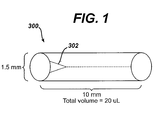
- the delivery vehicle comprises silastic tubing as illustrated in Figure 1.
- the silastic tubing 300 is about 10 mm long with an outside diameter of about 1.5 mm.
- the total luminal volume, based upon empirical measurement, is about 20 ⁇ L.
- the silastic tubing 300 may comprise any suitable length.
- the length of the tubing is determined by the amount of artery resected.
- the silastic tubing may comprise a notch 302 on one end to facilitate placement thereof over the carotid artery.
- the silastic tubing is then autoclaved prior to surgery.
- the silastic tubing is filled with about 20 ⁇ L of the pluronic gel comprising a suspension, solution or combination suspension and solution of test agent.
- the pluronic gel formulation to be encased within the silastic tubing is dispersed into the silastic tubing utilizing a 20 ⁇ L adjustable pipette with a sterile tip.
- the pluronic vehicle or pluronic drug solution remains on ice until immediately before pipetting and dispensing into the silastic tubing.
- the next step in the process comprises the surgical procedure.
- the rat is anesthetized prior to surgical intervention.
- the rat may be anesthetized utilizing any number of anesthetizing agents, both inhalational and/or injectable.
- the rat typically weighing between 250 and 450 mg, is anesthetized with a mixture of ketamine/xylazine/acepromazine (50/10/1 mg/kg).
- the central neck region is shaved. The neck is then disinfected by swabbing first with 70 percent ethanol or isopropanol, then with povidone iodine and then with 70 percent ethanol.
- the rat is then wrapped from the chest with a sterile drape and then placed on a warming pad set to a temperature of about 37 degrees C.
- a midline incision is then made to expose the underlying glands and musculature.
- the salivary complex and musculature overlying the external carotid artery is bluntly dissected away to expose the left external carotid artery.
- Blood flow in the external carotid is controlled by proximal (a removable loop) and distal (permanent) ligature. Upon control of blood flow, an arteriotomy is created through which a 2 F Fogarty embolectomy catheter is introduced.
- the catheter is advanced proximally through the external carotid into the common carotid artery to the first mark (approximately 3 cm) on the catheter shaft.
- the balloon is inflated using a saline-filled threaded gas-tight syringe, available under the trade name Hamilton, and then gently pulled distally through the common carotid artery using a slight twisting motion.
- the balloon is deflated and the balloon injury procedure is repeated for a total of three times.
- the catheter is withdrawn through the arteriotomy and bleeding is controlled by permanently ligating the proximal external carotid artery ligature. Confirmation of common and internal carotid artery pulsation is made.
- a silastic tube as described above, is then filled with either Pluronic F-127 or a suspension of test agent in Pluronic F-127.
- the silastic tube with a slit along its longitudinal axis, is then gently introduced around the adventitial side of the exposed common carotid artery, thereby initiating perivascular drug or Pluronic F-127 delivery.
- the overlying musculature and connective tissue is then repaired with sutures and the skin wound closed using stainless steel surgical sutures.
- the closed wound is re-swabbed with povidone iodine and 5 mL of sterile saline is given subcutaneously for fluid replacement. Rats are allowed to recover for up to twenty-one days depending upon the desired endpoint.
- rats are euthanized according to AVMA 2000 recommendations by overexposure to carbon dioxide.
- AVMA 2000 recommendations by overexposure to carbon dioxide.
- the chest of the rat is opened to expose the heart.
- the right atrium is cut and the left atrium is perfused with normal saline to exsanguinate, which is then followed by perfusion with neutral buffered formalin for in situ fixation.
- the treated region of the injured common carotid artery is then harvested and the perivascular deployed silastic tube is removed.
- the vessel is then stored in neutral buffered formalin for subsequent histologic preparation and histomorphometric analysis.
- vessels are preferably harvested between one to ten days (more preferably three or seven days) from euthanized, non-perfused rats (see above). Vessles are then thoroughly minced using crossed scalpels and placed in a DMSO/citrate/sucrose cryoprotection solution. The mincate is then snap-frozen and stored at 80 degrees C for subsequent anaylsis. Upon analysis, mincates are treated with a trypsin/detergent solution which effectively extrudes cell nuclei from the mincate. The digestion is terminated, the suspension centrifuged, and the resulting nuclear suspension is treated with propidium iodide, forming a fluorescent complex with nuclear DNA.
- the propidium iodide-stained nuclear suspension is then drawn into a flow cytometer gated to eliminate debris and doublet nuclei for quantitation of fluorescence intensity.
- the resulting fluorescence is proportional to the amount of DNA in each nucleus.
- Approximately 12,000-20,000 events are obtained for subsequent analysis of cell cycle histograms.
- Cell cycle analysis is perfomed following acquisition of the DNA histogram using the MODFIT cell cycle analysis algorithm.
- other cell markers may be analyzed using flow cytometry from whole cell preparations of minced vessels. This may include, but are not limited to, smooth muscle ⁇ -actin, PCNA, BrdU, Mac-1, interins, cell surface receptors, etc.
- Mincates from treated and injured or non-injured vessel walls may be subjected to extraction of RNA and subsequent gene expression using quantitative RT-PCR and/or gene chip analysis.
- Gene expression may also be evaluated in cryo-sections of snap-frozen treated/injured or non-injured blood vessels using in situ hybridization followed by film autoradiography, emulsion autoradiography fluorescence (FISH).
- FISH emulsion autoradiography fluorescence
- Protein expression may be evaluated by histologic (immunohistochemistry) or from protein extracts of minced treated/injured or non-injured carotids using ELISA's or other assays.
- Figure 2 illustrates the effects of perivascular application of sirolimus and paclitaxel on neointimal hyperplasia in the injured rat carotid artery.
- perivascularly applied sirolimus and paclitaxel significantly reduced neointimal fomation in the injured rat carotid artery.
- Data in Figure 2 are presented as mean +/- SEM.
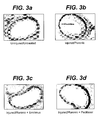
- Figure 3 contains slide images of rat carotid arteries. In the first slide, there is shown an uninjured and untreated carotid artery.
- an injured carotid artery exposed to just the pluronic gel. As may be seen from this slide, the injury caused the formation of a substantial neointima.
- an injured carotid artery treated with sirolimus in combination with the pluronic gel In the next slide, there is shown an injured carotid artery treated with sirolimus in combination with the pluronic gel. In the exemplary embodiment 200 ⁇ g of sirolimus was added to the pluronic gel. The result of the perivascular administration of sirolimus was a substantial reduction in neointima formation.
- an injured carotid artery treated with paclitaxel in combination with the pluronic gel. In the exemplary embodiment 200 ⁇ g of paclitaxel was added to the pluronic gel.
- FIGS. 4 and 5 are graphical representations of Cell Count and TUNEL Pos. Cell Count for vascular treatment protocols. Essentially, these two figures illustrate the effects of local sirolimus and paclitaxel delivery on all proliferation (upper panel PCNA immunohistochemistry) and apoptosis (lower panel TUNELimmunohistochemistry) within the injured rat carotid artery seven days post injury. Note that proliferation (PCNA labeling) increases in the neointima seven days after injury.
- Sirolimus and paclitaxel in concentrations of 200 ⁇ g in pluronic gel suspension, significantly reduce neointimal proliferation.
- Topotecan delivered at a 200 ⁇ g perivascular dose has substantially no effect on neointimal proliferation.
- Data are presented as mean +/- SEM.
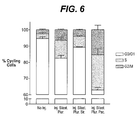
- Figures 6 and 7 are graphical representations of the effects of perivascular application of sirolimus and paclitaxel (200 ⁇ g in pluronic gel suspension) on vascular wall cell cycle (upper panel) and the number of apoptotic nuclei (lower panel) within the injured rat carotid artery as assessed by flow cytometry seven days post injury.
- paclitaxel increases the percentage of cells in G0/G1. In the lower panel, paclitaxel is shown to increase the total percentage of apoptotic cells in the injured vessel wall. Data are presented as mean +/- SEM.
- a partial list of therapeutic and pharmaceutical agents that may be utilized alone or in conjunction with implantable medical devices include antiproliferative/antimitotic agents including natural products such as vinca alkaloids (i.e. vinblastine, vincristine, and vinorelbine), paclitaxel, epidipodophyllotoxins (i.e.
- antibiotics dactinomycin (actinomycin D) daunorubicin, doxorubicin and idarubicin
- anthracyclines mitoxantrone, bleomycins, plicamycin (mithramycin) and mitomycin
- enzymes L-asparaginase which systemically metabolizes L-asparagine and deprives cells which do not have the capacity to synthesize their own asparagine
- antiplatelet agents such as G(GP) 11 b /111 a inhibitors and vitronectin receptor antagonists
- antiproliferative/antimitotic alkylating agents such as nitrogen mustards (mechlorethamine, cyclophosphamide and analogs, melphalan, chlorambucil), ethylenimines and methylmelamines (hexamethylmelamine and thiotepa), alkyl sulfonates-busulfan,
- anticoagulants heparin, synthetic heparin salts and other inhibitors of thrombin
- fibrinolytic agents such as tissue plasminogen activator, streptokinase and urokinase), aspirin, dipyridamole, ticlopidine, clopidogrel, abciximab
- antimigratory antisecretory (breveldin)
- anti-inflammatory such as adrenocortical steroids (cortisol, cortisone, fludrocortisone, prednisone, prednisolone, 6a-methylprednisolone, triamcinolone, betamethasone, and dexamethasone), non-steroidal agents (salicylic acid derivatives i.e.
Landscapes
- Health & Medical Sciences (AREA)
- Life Sciences & Earth Sciences (AREA)
- Toxicology (AREA)
- Urology & Nephrology (AREA)
- Biomedical Technology (AREA)
- Diabetes (AREA)
- Endocrinology (AREA)
- Gastroenterology & Hepatology (AREA)
- Pathology (AREA)
- Rheumatology (AREA)
- Zoology (AREA)
- Engineering & Computer Science (AREA)
- Epidemiology (AREA)
- Animal Behavior & Ethology (AREA)
- General Health & Medical Sciences (AREA)
- Public Health (AREA)
- Veterinary Medicine (AREA)
- Medicines That Contain Protein Lipid Enzymes And Other Medicines (AREA)
- Pharmaceuticals Containing Other Organic And Inorganic Compounds (AREA)
- Investigating Or Analysing Biological Materials (AREA)
- Measuring Pulse, Heart Rate, Blood Pressure Or Blood Flow (AREA)
Abstract


Description
- The present invention relates to methods and systems for evaluating mammalian arteries, and more particularly to methods and systems for evaluating pathologies and therapeutics in rat carotid arteries.
- A number of model systems have been developed to evaluate the safety and efficacy of therapeutic agents in reducing restenosis following vascular injury. Evaluation of antirestenotic therapies and processes involved in arterial injury may be conducted in a variety of arteries with different morphologies. Muscular arteries (e.g. coronary arteries) have layers of smooth muscle cells that are defined by internal and external elastic lamina. Conduit arteries of various animals, for example, the carotid artery, the iliac arteries and the aorta, have been commonly utilized in the assessment of potential anti-restenosis therapies.
- The typical animal model is utilized to determine the safety and efficacy of therapeutic agents as well as the means of delivery. The models are designed to evaluate a predetermined set of parameters that are limited in scope. Accordingly, there is needed a model having a broader scope. In addition, there exists a need for a methodology of evaluating perivascular delivery of therapeutic agents as well as devices for perivascular delivery.
- The present invention overcomes the limitations associated with currently utilized animal models as briefly described above.
- The present embodiment includes the use of an elastic artery model system, the rat carotid artery injury model, which may be optimized to study the pathophysiologic processes related to arterial injury and to evaluate the effects of locally or systemically applied therapies that impact those pathophysiologic processes.
- In accordance with one aspect, the present invention is directed to a method for evaluating pathologies in a rat carotid artery. The method comprises the steps of creating an endovascular injury in at least one location within the carotid artery of a rat and evaluating the pathologies associated with the injury.
- In accordance with another aspect, the present invention is directed to a method for evaluating therapeutics in a rat carotid artery. The method comprises endovascularly creating an injury in at least one location within the carotid artery of a rat, treating the injured artery, and evaluating the pathologies associated with the treated injured artery and the efficacy of the treatment (local or systemic).
- The present invention is directed to a methodology or model for evaluating the efficacy of locally applied antiproliferatives and/or other therapeutic agents on neointimal hyperplasia, as well as immunohistochemical and vascular cell cycle changes in balloon-injured rat carotid arteries. As described herein, a number of models have been developed to evaluate the efficacy of therapeutic agents in reducing restenosis following vascular injury. The present invention, however, is directed to a model system for the evaluation of locally applied or locally delivered agents for their ability to reduce neointimal hyperplasia and affect vascular cell cycle phases following balloon-injury in the rat carotid artery. In addition, the present invention extends to multiple, potential rat disease models, induced and spontaneous, that exist, including diabetes mellitus (Types I and II), atherosclerosis, immunologically altered, transgenics and knock-outs. Further, the application of agents locally to influence lesion phenotypes (e.g. exacerbation of inflammation, upregulation of smooth muscle cell proliferation, application of genes affecting these processes) may enhance the study of vascular wall responses to injury and inflammation. One embodiment is to influence the nature of the carotid artery lesion by a combination of injury, dyslipidemia (e.g. high fat/cholesterol diet) and local inflammation in such a way that a vulnerable plaque phenotype (thin fibrous cap, lipid rich necrotic core, presence of foam cells and macrophages, presence of T cells and potential for ulceration/erosion) is formed.
Embodiments of the invention will now be described by way of example with reference to the accompanying drawings, in which: - Figure 1 is a diagrammatic representation of a perivascular therapeutic agent delivery vehicle in accordance with the present invention.
- Figure 2 is a graphical representation of the effects of perivascular application of sirolimus and paclitaxel on neointimal hyperplasia in an injured rat carotid artery in accordance with the present invention.
- Figure 3 is a series of slides illustrating neointimal formation in rat carotid arteries undergoing treatment in accordance with the present invention.
- Figures 4 and 5 are graphical representations of the effects of local sirolimus and paclitaxel application on cell proliferation and apoptosis within the injured rat carotid artery in accordance with the present invention.
- Figures 6 and 7 are graphical representations of the effects of perivascular applications of sirolimus and paclitaxel on vascular wall cell cycle and the number of apoptotic nuclei within the injured rat carotid artery in accordance with the present invention.
- The present invention is directed to a methodology or model for the evaluation of the effects of perivascularly-applied medical devices around rat carotid arteries either exposed or not exposed to endovascular injury. This methodology or model may serve as a means for the evaluation of therapeutic agents for the treatment of vascular diseases, including restenosis and vulnerable plaque, and may also serve to model safety and efficacy testing of any number of endovascularly applied therapeutic agents in the context of normal or atherosclerotic arteries. Essentially, the present invention makes use of a balloon catheter to produce an endovascular injury. The endovascular injury may be induced via other means, including diet, perivascular injection/administration of proinflammatory agents and/or systemic drug delivery. In addition, the application of standard endpoint evaluation, intravital microscopy, including angiography, intravascular ultrasound imaging, histological, molecular and cellular endpoints, may be utilized in conjunction with the approaches described herein.
- The methodology of the present invention comprises a number of procedures or steps. The methodology should be understood not to be limited to the particular devices and therapeutic agents and/or other drugs described herein.
- In accordance with one exemplary embodiment, the present invention is directed to a methodology or model for evaluating the efficacy of locally applied antiproliferatives and/or other therapeutic agents on neointimal hyperplasia, as well as immunohistochemical and vascular cell cycle changes in balloon-injured rat carotid arteries. As described herein, a number of models have been developed to evaluate the efficacy of therapeutic agents in reducing restenosis following vascular injury. The present invention, however, is directed to a model system for the evaluation of locally applied or locally delivered agents for their ability to reduce neointimal hyperplasia and affect vascular cell cycle phases following balloon-injury in the rat carotid artery. In addition, the present invention extends to multiple, potential rat disease models, induced and spontaneous, that exist, including diabetes mellitus (Types I and II), atherosclerosis, immunologically altered, transgenics and knock-outs.
- The model or methodology comprises essentially three aspects; namely, therapeutic agent delivery vehicle preparation, surgical intervention, including injury induction and vehicle introduction, and evaluation. Although there are a wide variety of means for introducing the therapeutic agent or agents, in the exemplary embodiment described herein, the agents are delivered utilizing pluronic gels. Many pluronic gels are thermally sensitive polymers that are liquids at certain temperatures, for example, low temperatures, and form highly viscous polymers at warmer temperatures, for example, body temperature. These polymers have been utilized as local delivery depots for antiproliferative drugs upon direct injection into tumors (Amiji et al., Pharm Dev Technol. 2002 May; 7(2):195-202).
- The present invention embodies the use of such gels, with or without encasement, for the local delivery of drugs or agents to the external or adventitial surface of injured blood vessels to evaluate the drug's effect on neointimal formation and other cellular/molecular end points. The present invention also combines the use of a local drug delivery system with methodologies to evaluate the effects of locally applied drugs on vascular morphology, for example, the formation of neointimal, vascular wall cell cycle changes, changed in cell types in the vessel wall, and gene expression (mRNA and protein) following vascular-injury.
- It is important to note that any number of pluronic gels may be formulated. In the exemplary embodiment set forth below, the procedures for formulating Pluronic F127 for the suspension of therapeutic agents or drugs, including sirolimus and paclitaxel, for local application around a blood vessel are detailed. In the exemplary embodiment, the pluronic gel is formulated at twenty-five percent by weight in sterile water. The concentration of the pluronic gel and composition of the solvent may be modified to affect the delivery characteristics of a particular drug or agent to the vessel wall. In addition, the polymer may be substituted to accommodate desired delivery specifications.
- Pluronic F-127 may be obtained from a number of sources, including from Sigma (P-2443, 250 g, Lot121K0070, BASF). Once the Pluronic F-127 is obtained, sterile deionized water is prepared and chilled, for example, on ice. Ten grams of the Pluronic F-127 is then mixed with the sterile, deionized water for a final concentration of 10 g/40 mL. It should be noted that upon initiation of mixing, the poloxamer and water are inherently poorly miscible. However, constant stirring utilizing a sterile plastic pipette, for example, a 1 ml tissue culture pipette, allows for good mixing. The Pluronic F-127 slowly dissolves in the chilled water with constant stirring to yield a clear but foamy solution. The Pluronic F-127 solution is then refrigerated for a period ranging from about 6 to 12 hours to allow for defoaming. The defoamed solution is now ready for perivascular implantation.
- The delivery vehicle may comprise any suitable device. In the exemplary embodiment, the delivery vehicle comprises silastic tubing as illustrated in Figure 1. The
silastic tubing 300 is about 10 mm long with an outside diameter of about 1.5 mm. The total luminal volume, based upon empirical measurement, is about 20 µL. It is important to note that thesilastic tubing 300 may comprise any suitable length. The length of the tubing is determined by the amount of artery resected. The silastic tubing may comprise anotch 302 on one end to facilitate placement thereof over the carotid artery. The silastic tubing is then autoclaved prior to surgery. The silastic tubing is filled with about 20 µL of the pluronic gel comprising a suspension, solution or combination suspension and solution of test agent. The pluronic gel formulation to be encased within the silastic tubing is dispersed into the silastic tubing utilizing a 20 µL adjustable pipette with a sterile tip. The pluronic vehicle or pluronic drug solution remains on ice until immediately before pipetting and dispensing into the silastic tubing. - The next step in the process comprises the surgical procedure. The rat is anesthetized prior to surgical intervention. The rat may be anesthetized utilizing any number of anesthetizing agents, both inhalational and/or injectable. In the exemplary embodiment, the rat, typically weighing between 250 and 450 mg, is anesthetized with a mixture of ketamine/xylazine/acepromazine (50/10/1 mg/kg). Once the rat is aneshetized, the central neck region is shaved. The neck is then disinfected by swabbing first with 70 percent ethanol or isopropanol, then with povidone iodine and then with 70 percent ethanol. The rat is then wrapped from the chest with a sterile drape and then placed on a warming pad set to a temperature of about 37 degrees C. A midline incision is then made to expose the underlying glands and musculature. The salivary complex and musculature overlying the external carotid artery is bluntly dissected away to expose the left external carotid artery. Blood flow in the external carotid is controlled by proximal (a removable loop) and distal (permanent) ligature. Upon control of blood flow, an arteriotomy is created through which a 2 F Fogarty embolectomy catheter is introduced. The catheter is advanced proximally through the external carotid into the common carotid artery to the first mark (approximately 3 cm) on the catheter shaft. The balloon is inflated using a saline-filled threaded gas-tight syringe, available under the trade name Hamilton, and then gently pulled distally through the common carotid artery using a slight twisting motion. Once the common carotid artery is balloon-injured, the balloon is deflated and the balloon injury procedure is repeated for a total of three times. Following balloon injury, the catheter is withdrawn through the arteriotomy and bleeding is controlled by permanently ligating the proximal external carotid artery ligature. Confirmation of common and internal carotid artery pulsation is made.
- Following balloon injury, the left common carotid artery within the neck region is then gently dissected away from connective and nerve tissue. A silastic tube, as described above, is then filled with either Pluronic F-127 or a suspension of test agent in Pluronic F-127. The silastic tube, with a slit along its longitudinal axis, is then gently introduced around the adventitial side of the exposed common carotid artery, thereby initiating perivascular drug or Pluronic F-127 delivery. The overlying musculature and connective tissue is then repaired with sutures and the skin wound closed using stainless steel surgical sutures. The closed wound is re-swabbed with povidone iodine and 5 mL of sterile saline is given subcutaneously for fluid replacement. Rats are allowed to recover for up to twenty-one days depending upon the desired endpoint.
- For assessment of neointimal hyperplasia (fourteen to twenty-one days, depending upon desired time point) or immunohistochemisry (one to twenty-one days, depending on desired marker expression), rats are euthanized according to AVMA 2000 recommendations by overexposure to carbon dioxide. Upon cessation of breathing, the chest of the rat is opened to expose the heart. The right atrium is cut and the left atrium is perfused with normal saline to exsanguinate, which is then followed by perfusion with neutral buffered formalin for in situ fixation. The treated region of the injured common carotid artery is then harvested and the perivascular deployed silastic tube is removed. The vessel is then stored in neutral buffered formalin for subsequent histologic preparation and histomorphometric analysis.
- Fixed vessels are then embedded in paraffin and sectioned at three levels. Vessel sections are mounted on coated glass slides and stained with either hematoxylin/eosin or Verhoff van Geisson elastic stain. Lumenal, neointimal and medial areas are then assessed using computerized morphometric analysis programs calibrated using a stage micrometer. Cell proliferation, apoptosis or expression of other cell markers is obtainable using this method. In this exemplary embodiment, cell proliferation and apoptosis are evaluated using anti-Proliferating cell Nuclear Antigen (PCNA) and Terminal deoxynucleotide transferase-mediated dUTP nick-End labeling (TUNEL) immunohistochemistry.
- For assessment of vascular cell cycle, vessels are preferably harvested between one to ten days (more preferably three or seven days) from euthanized, non-perfused rats (see above). Vessles are then thoroughly minced using crossed scalpels and placed in a DMSO/citrate/sucrose cryoprotection solution. The mincate is then snap-frozen and stored at 80 degrees C for subsequent anaylsis. Upon analysis, mincates are treated with a trypsin/detergent solution which effectively extrudes cell nuclei from the mincate. The digestion is terminated, the suspension centrifuged, and the resulting nuclear suspension is treated with propidium iodide, forming a fluorescent complex with nuclear DNA. The propidium iodide-stained nuclear suspension is then drawn into a flow cytometer gated to eliminate debris and doublet nuclei for quantitation of fluorescence intensity. The resulting fluorescence is proportional to the amount of DNA in each nucleus. Approximately 12,000-20,000 events are obtained for subsequent analysis of cell cycle histograms. Cell cycle analysis is perfomed following acquisition of the DNA histogram using the MODFIT cell cycle analysis algorithm. Alternately, other cell markers may be analyzed using flow cytometry from whole cell preparations of minced vessels. This may include, but are not limited to, smooth muscle α-actin, PCNA, BrdU, Mac-1, interins, cell surface receptors, etc.
- Mincates from treated and injured or non-injured vessel walls may be subjected to extraction of RNA and subsequent gene expression using quantitative RT-PCR and/or gene chip analysis.
- Gene expression may also be evaluated in cryo-sections of snap-frozen treated/injured or non-injured blood vessels using in situ hybridization followed by film autoradiography, emulsion autoradiography fluorescence (FISH).
- Protein expression may be evaluated by histologic (immunohistochemistry) or from protein extracts of minced treated/injured or non-injured carotids using ELISA's or other assays.
- Relevant data utilizing the drug delivery system in the context of neointimal formation, cell proliferation, apoptosis and call cycle changes are illustrated in Figures 2-7. Figure 2 illustrates the effects of perivascular application of sirolimus and paclitaxel on neointimal hyperplasia in the injured rat carotid artery. As is shown in Figure 2, perivascularly applied sirolimus and paclitaxel significantly reduced neointimal fomation in the injured rat carotid artery. Data in Figure 2 are presented as mean +/- SEM. Figure 3 contains slide images of rat carotid arteries. In the first slide, there is shown an uninjured and untreated carotid artery. In the next slide, there is shown an injured carotid artery exposed to just the pluronic gel. As may be seen from this slide, the injury caused the formation of a substantial neointima. In the next slide, there is shown an injured carotid artery treated with sirolimus in combination with the pluronic gel. In the exemplary embodiment 200 µg of sirolimus was added to the pluronic gel. The result of the perivascular administration of sirolimus was a substantial reduction in neointima formation. In the final slide, there is shown an injured carotid artery treated with paclitaxel in combination with the pluronic gel. In the exemplary embodiment 200 µg of paclitaxel was added to the pluronic gel. As was the case with sirolimus, paclitaxel administered perivascularly resulted in a substantial-reduction of neointima formation. Figures 4 and 5 are graphical representations of Cell Count and TUNEL Pos. Cell Count for vascular treatment protocols. Essentially, these two figures illustrate the effects of local sirolimus and paclitaxel delivery on all proliferation (upper panel PCNA immunohistochemistry) and apoptosis (lower panel TUNELimmunohistochemistry) within the injured rat carotid artery seven days post injury. Note that proliferation (PCNA labeling) increases in the neointima seven days after injury. Sirolimus and paclitaxel, in concentrations of 200 µg in pluronic gel suspension, significantly reduce neointimal proliferation. Topotecan delivered at a 200 µg perivascular dose has substantially no effect on neointimal proliferation. Data are presented as mean +/- SEM. Figures 6 and 7 are graphical representations of the effects of perivascular application of sirolimus and paclitaxel (200 µg in pluronic gel suspension) on vascular wall cell cycle (upper panel) and the number of apoptotic nuclei (lower panel) within the injured rat carotid artery as assessed by flow cytometry seven days post injury. It is important to note that injury increases the percentage of nuclei in the S and G2/M phases of the cell cycle while decreasing those in the G0/G1 phase. Consistant with its proported mechanisim of action, sirolimus restores the percentage nuclei in the G0/G1 phases while reducing those in the S and G2/M phases. The mitotic arresting agent paclitaxel increases the percentage of cells in G0/G1. In the lower panel, paclitaxel is shown to increase the total percentage of apoptotic cells in the injured vessel wall. Data are presented as mean +/- SEM.
- A partial list of therapeutic and pharmaceutical agents that may be utilized alone or in conjunction with implantable medical devices include antiproliferative/antimitotic agents including natural products such as vinca alkaloids (i.e. vinblastine, vincristine, and vinorelbine), paclitaxel, epidipodophyllotoxins (i.e. etoposide, teniposide), antibiotics (dactinomycin (actinomycin D) daunorubicin, doxorubicin and idarubicin), anthracyclines, mitoxantrone, bleomycins, plicamycin (mithramycin) and mitomycin, enzymes (L-asparaginase which systemically metabolizes L-asparagine and deprives cells which do not have the capacity to synthesize their own asparagine); antiplatelet agents such as G(GP) 11b/111a inhibitors and vitronectin receptor antagonists; antiproliferative/antimitotic alkylating agents such as nitrogen mustards (mechlorethamine, cyclophosphamide and analogs, melphalan, chlorambucil), ethylenimines and methylmelamines (hexamethylmelamine and thiotepa), alkyl sulfonates-busulfan, nitrosoureas (carmustine (BCNU) and analogs, streptozocin), triazenes - dacarbazinine (DTIC); antiproliferative/antimitotic antimetabolites such as folic acid analogs (methotrexate), pyrimidine analogs (fluorouracil, floxuridine, and cytarabine), purine analogs and related inhibitors (mercaptopurine, thioguanine, pentostatin and 2-chlorodeoxyadenosine {cladribine}); platinum coordination complexes (cisplatin, carboplatin), procarbazine, hydroxyurea, mitotane, aminoglutethimide; hormones (i.e. estrogen); anticoagulants (heparin, synthetic heparin salts and other inhibitors of thrombin); fibrinolytic agents (such as tissue plasminogen activator, streptokinase and urokinase), aspirin, dipyridamole, ticlopidine, clopidogrel, abciximab; antimigratory; antisecretory (breveldin); anti-inflammatory: such as adrenocortical steroids (cortisol, cortisone, fludrocortisone, prednisone, prednisolone, 6a-methylprednisolone, triamcinolone, betamethasone, and dexamethasone), non-steroidal agents (salicylic acid derivatives i.e. aspirin; para-aminophenol derivatives i.e. acetaminophen; indole and indene acetic acids (indomethacin, sulindac, and etodalac), heteroaryl acetic acids (tolmetin, diclofenac, and ketorolac), arylpropionic acids (ibuprofen and derivatives), anthranilic acids (mefenamic acid, and meclofenamic acid), enolic acids (piroxicam, tenoxicam, phenylbutazone, and oxyphenthatrazone), nabumetone, gold compounds (auranofin, aurothioglucose, gold sodium thiomalate); immunosuppressives: (cyclosporine, tacrolimus (FK-506), sirolimus (rapamycin), azathioprine, mycophenolate mofetil); angiogenic agents: vascular endothelial growth factor (VEGF), fibroblast growth factor (FGF); angiotensin receptor blockers; nitric oxide donors; oligionucleotides and combinations thereof; cell cycle inhibitors, mTOR inhibitors, and growth factor receptor signal transduction kinase inhibitors; retenoids; cyclin/CDK inhibitors; HMG co-enzyme reductase inhibitors (statins); and protease inhibitors.
- Although shown and described is what is believed to be the most practical and preferred embodiments, it is apparent that departures from specific designs and methods described and shown will suggest themselves to those skilled in the art and may be used without departing from the scope of the invention. The present invention is not restricted to the particular constructions described and illustrated, but should be constructed to cohere with all modifications that may fall within the scope of the appended claims.
Claims (2)
- A method for evaluating pathologies in a rat carotid artery comprising:endovascularly creating an injury in at least one location within the carotid artery of a rat; andevaluating the pathologies associated with the injury.
- A method for evaluating therapeutics in a rat carotid artery comprising:endovascularly creating an injury in at least one location within the carotid artery of a rat;treating the injured artery; andevaluating the pathologies associated with the treated injured artery and the efficacy of the treatment.
Applications Claiming Priority (1)
| Application Number | Priority Date | Filing Date | Title |
|---|---|---|---|
| US10/991,188 US20060104903A1 (en) | 2004-11-17 | 2004-11-17 | Model for evaluating the efficacy of locally applied antiproliferatives or other agents on neointimal hyperplasia, immunohistochemical and vascular cell cycle changes in balloon-injured rat carotid arteries |
Publications (2)
| Publication Number | Publication Date |
|---|---|
| EP1658814A2 true EP1658814A2 (en) | 2006-05-24 |
| EP1658814A3 EP1658814A3 (en) | 2008-10-22 |
Family
ID=35870990
Family Applications (1)
| Application Number | Title | Priority Date | Filing Date |
|---|---|---|---|
| EP05257060A Withdrawn EP1658814A3 (en) | 2004-11-17 | 2005-11-16 | Methods for evaluating pathologies or therapeutics in a rat carotid artery |
Country Status (4)
| Country | Link |
|---|---|
| US (1) | US20060104903A1 (en) |
| EP (1) | EP1658814A3 (en) |
| JP (1) | JP2006142025A (en) |
| CA (1) | CA2527363A1 (en) |
-
2004
- 2004-11-17 US US10/991,188 patent/US20060104903A1/en not_active Abandoned
-
2005
- 2005-11-16 JP JP2005331789A patent/JP2006142025A/en not_active Withdrawn
- 2005-11-16 CA CA002527363A patent/CA2527363A1/en not_active Abandoned
- 2005-11-16 EP EP05257060A patent/EP1658814A3/en not_active Withdrawn
Non-Patent Citations (1)
| Title |
|---|
| AMIJI, PHARM DEV TECHNOL., vol. 7, no. 2, May 2002 (2002-05-01), pages 195 - 202 |
Also Published As
| Publication number | Publication date |
|---|---|
| EP1658814A3 (en) | 2008-10-22 |
| CA2527363A1 (en) | 2006-05-17 |
| US20060104903A1 (en) | 2006-05-18 |
| JP2006142025A (en) | 2006-06-08 |
Similar Documents
| Publication | Publication Date | Title |
|---|---|---|
| Huang et al. | Targeted gene delivery to the mouse brain by MRI-guided focused ultrasound-induced blood–brain barrier disruption | |
| TWI233361B (en) | Methods of preventing UVB-induced skin damage | |
| JP2021167335A (en) | How to reduce or prevent intimal damage caused by mechanical stimulation of endothelial cells | |
| Ren et al. | Low-dose S-ketamine exerts antidepressant-like effects via enhanced hippocampal synaptic plasticity in postpartum depression rats | |
| ES2436035T3 (en) | Kv1.3 channel blocking substances for the treatment of diseases associated with intimal hyperplasia | |
| JP2015526471A (en) | Compositions and methods for treating or preventing anthracycline-induced cardiotoxicity | |
| KR102954589B1 (en) | Estradiol benzoate as an infertility agent | |
| US20060104903A1 (en) | Model for evaluating the efficacy of locally applied antiproliferatives or other agents on neointimal hyperplasia, immunohistochemical and vascular cell cycle changes in balloon-injured rat carotid arteries | |
| Lehr et al. | Intravital fluorescence microscopy for the study of leukocyte interaction with platelets and endothelial cells | |
| Zhang et al. | Concentration rather than dose defines the local brain toxicity of agents that are effectively distributed by convection-enhanced delivery | |
| US20060019691A1 (en) | Method and system for evaluating the efficacy of locally-applied anti-proliferative or other agents on neointimal hyperplasia, immunohistochemical and vascular cell cycle changes in injured or atherosclerotic rabbit central ear arteries | |
| de Garnica García et al. | Angiographic and histopathological characteristics of a novel polyacrylate liquid embolic agent compared with ethylene-vinyl alcohol copolymer in a large animal model | |
| JP4779122B2 (en) | Creation of arterial occlusive disease model animals | |
| Ramakumar et al. | Novel delivery of oligonucleotides using a topical hydrogel tissue sealant in a murine partial nephrectomy model | |
| CN110384712B (en) | Application of nucleic acid aptamers in the preparation of drugs for treating Alzheimer's disease | |
| MACQUEEN et al. | Vascularisation in adipose depots surrounding immune-stimulated lymph nodes | |
| WO2007086587A1 (en) | Agent for targeting drug to cerebral neuron | |
| EP0989825A2 (en) | Method and apparatus for administration of substances by ultrasound | |
| Bai et al. | Effect of Ropivacaine Hydrochloride Nanoliposomes on Delayed Cerebral Vasospasm After Subarachnoid Hemorrhage in Rabbits | |
| Rastogi et al. | Evaluation of a perforated drug delivery system in mice for prolonged and constant release of a hydrophilic drug | |
| Dranski et al. | STUDY OF THE EFFECTS OF NANOPARTICLES CONTAINING Α-HUMULENE ON MEMORY ANALYSIS THROUGH BEHAVIORAL TESTS IN A Β-AMYLOID 1-42 NEUROINFLAMMATION MODEL | |
| US20260130848A1 (en) | Methods and compositions for central nervous system (cns) drug delivery and treatment | |
| Manning et al. | Multispectral molecular imaging of capillary endothelium to facilitate preoperative endovascular brain mapping | |
| Ganjiani et al. | Successful surgical treatment of a penile fibropapilloma in a ram | |
| CN121622890A (en) | A method for constructing a zebrafish caudal fin ischemia injury model with both inflammatory response and regenerative capabilities and its application. |
Legal Events
| Date | Code | Title | Description |
|---|---|---|---|
| PUAI | Public reference made under article 153(3) epc to a published international application that has entered the european phase |
Free format text: ORIGINAL CODE: 0009012 |
|
| AK | Designated contracting states |
Kind code of ref document: A2 Designated state(s): AT BE BG CH CY CZ DE DK EE ES FI FR GB GR HU IE IS IT LI LT LU LV MC NL PL PT RO SE SI SK TR |
|
| AX | Request for extension of the european patent |
Extension state: AL BA HR MK YU |
|
| PUAL | Search report despatched |
Free format text: ORIGINAL CODE: 0009013 |
|
| RIC1 | Information provided on ipc code assigned before grant |
Ipc: A61K 49/00 20060101ALI20080911BHEP Ipc: A61B 10/00 20060101AFI20080911BHEP |
|
| AK | Designated contracting states |
Kind code of ref document: A3 Designated state(s): AT BE BG CH CY CZ DE DK EE ES FI FR GB GR HU IE IS IT LI LT LU LV MC NL PL PT RO SE SI SK TR |
|
| AX | Request for extension of the european patent |
Extension state: AL BA HR MK YU |
|
| AKX | Designation fees paid | ||
| REG | Reference to a national code |
Ref country code: DE Ref legal event code: 8566 |
|
| STAA | Information on the status of an ep patent application or granted ep patent |
Free format text: STATUS: THE APPLICATION IS DEEMED TO BE WITHDRAWN |
|
| 18D | Application deemed to be withdrawn |
Effective date: 20090423 |