EP1657887A1 - Access multiplexer for stateless auto-configuration process - Google Patents
Access multiplexer for stateless auto-configuration process Download PDFInfo
- Publication number
- EP1657887A1 EP1657887A1 EP04292691A EP04292691A EP1657887A1 EP 1657887 A1 EP1657887 A1 EP 1657887A1 EP 04292691 A EP04292691 A EP 04292691A EP 04292691 A EP04292691 A EP 04292691A EP 1657887 A1 EP1657887 A1 EP 1657887A1
- Authority
- EP
- European Patent Office
- Prior art keywords
- destinations
- network
- discovery message
- destination address
- access multiplexer
- Prior art date
- Legal status (The legal status is an assumption and is not a legal conclusion. Google has not performed a legal analysis and makes no representation as to the accuracy of the status listed.)
- Granted
Links
- 238000000034 method Methods 0.000 title claims abstract description 28
- 230000008569 process Effects 0.000 title claims abstract description 22
- 230000004044 response Effects 0.000 claims description 14
- 238000001514 detection method Methods 0.000 claims description 2
- 230000006870 function Effects 0.000 description 6
- 230000008878 coupling Effects 0.000 description 3
- 238000010168 coupling process Methods 0.000 description 3
- 238000005859 coupling reaction Methods 0.000 description 3
- 230000014509 gene expression Effects 0.000 description 3
- 230000008901 benefit Effects 0.000 description 1
Images
Classifications
-
- H—ELECTRICITY
- H04—ELECTRIC COMMUNICATION TECHNIQUE
- H04L—TRANSMISSION OF DIGITAL INFORMATION, e.g. TELEGRAPHIC COMMUNICATION
- H04L12/00—Data switching networks
- H04L12/02—Details
- H04L12/16—Arrangements for providing special services to substations
- H04L12/18—Arrangements for providing special services to substations for broadcast or conference, e.g. multicast
- H04L12/185—Arrangements for providing special services to substations for broadcast or conference, e.g. multicast with management of multicast group membership
-
- H—ELECTRICITY
- H04—ELECTRIC COMMUNICATION TECHNIQUE
- H04L—TRANSMISSION OF DIGITAL INFORMATION, e.g. TELEGRAPHIC COMMUNICATION
- H04L51/00—User-to-user messaging in packet-switching networks, transmitted according to store-and-forward or real-time protocols, e.g. e-mail
- H04L51/21—Monitoring or handling of messages
- H04L51/214—Monitoring or handling of messages using selective forwarding
-
- H—ELECTRICITY
- H04—ELECTRIC COMMUNICATION TECHNIQUE
- H04L—TRANSMISSION OF DIGITAL INFORMATION, e.g. TELEGRAPHIC COMMUNICATION
- H04L61/00—Network arrangements, protocols or services for addressing or naming
- H04L61/50—Address allocation
- H04L61/5092—Address allocation by self-assignment, e.g. picking addresses at random and testing if they are already in use
-
- H—ELECTRICITY
- H04—ELECTRIC COMMUNICATION TECHNIQUE
- H04L—TRANSMISSION OF DIGITAL INFORMATION, e.g. TELEGRAPHIC COMMUNICATION
- H04L63/00—Network architectures or network communication protocols for network security
- H04L63/08—Network architectures or network communication protocols for network security for authentication of entities
Definitions
- the invention relates to an access multiplexer system for performing a stateless auto-configuration process for use in a network and comprising an access multiplexer for receiving a discovery message from a source, which discovery message comprises a multicast destination address defining a number of destinations.
- a prior art access multiplexer system is of common general knowledge.
- a discovery message is for example defined in RFC 2461 and 2462 and is used for requesting or allocating Internet Protocol addresses.
- the discovery message originates from a source, such as a customer premises equipment or a node respectively, and is destined for a number of destinations, such as nodes or customer premises equipments respectively. This number of destinations is defined by a multicast destination address forming part of a header of the discovery message.
- the access multiplexer system for performing a stateless auto-configuration process forms part of a network.
- states of sources and destinations are not kept, contrary to a network in which a stateful auto-configuration process is performed (such as for example an other Internet Protocol Version 6 network or an Internet Protocol Version 4 network). Owing to the fact that the states are not kept in this kind of network, each discovery message must be sent to a relatively large number of destinations.
- the known access multiplexer system is disadvantageous, inter alia, owing to the fact that the stateless auto-configuration process is relatively insecure in a shared and/or non-trusted network.
- a source must send each discovery message to a relatively large number of destinations, with only one destination being interested in this discovery message but with all the other destinations also receiving this discovery message.
- the access multiplexer system is characterized in that the access multiplexer system further comprises an agent for replacing the multicast destination address in the discovery message by a further destination address defining a further number of destinations, which further number of destinations is smaller than the number of destinations.
- the discovery message is no longer sent to the relatively large number of destinations (a relatively large group), but is sent to a relatively small number of destinations (a relatively small group being a sub-group of the relatively large group).
- the stateless auto-configuration process has become relatively secure.
- a further advantage is that less bandwidth is consumed.
- An embodiment of the access multiplexer system according to the invention is characterized in that the access multiplexer system comprises detecting means for detecting at least a part of the discovery message and comprises replacing means for, in response to a detection, performing said replacing.
- the detecting means form part of the access multiplexer or form part of the agent.
- the replacing means form part of the access multiplexer or form part of the agent.
- An embodiment of the access multiplexer system according to the invention is characterized in that the discovery message comprises a solicitation message, with the source comprising a host and with the destinations comprising network-units.
- the solicitation message is well defined in RFC 2461 and 2462 and originates from the host.
- This host for example comprises a customer premises equipment, such as a personal computer or a modem.
- the network-units for example comprise Internet Protocol EDGE nodes.
- An embodiment of the access multiplexer system according to the invention is characterized in that the agent comprises interfacing means for contacting information means for authenticating and/or billing a host and for in response providing the agent with information defining the further number of destinations.
- the agent By contacting the information means, such as a network management which authenticates and bills hosts, the agent is provided with the further number of destinations.
- This further number of destinations for example comprises one destination in the form of one network-unit.
- An embodiment of the access multiplexer system according to the invention is characterized in that the discovery message comprises an advertisement message, with the source comprising a network-unit and with the destinations comprising hosts.
- the advertisement message is well defined in RFC 2461 and 2462 and originates from the network-unit in reply to the solicitation message.
- This network-units for example comprises an Internet Protocol EDGE unit.
- the hosts for example comprise customer premises equipments, such as personal computers or modems.
- An embodiment of the access multiplexer system according to the invention is characterized in that the agent comprises interfacing means for contacting information means for linking a network-unit to a host and for in response providing the agent with information defining the further number of destinations.
- the agent By contacting the information means, such as a network management which links a network-unit to one or more hosts, for example by checking which hosts have communicated with this network-unit before or by checking which hosts are subscribed to one or more services serviced by the network-unit, the agent is provided with the further number of destinations.
- This further number of destinations for example comprises a relatively small number of destinations in the form of a relatively small number of hosts such as a few hosts.
- the invention also relates to an agent for use in an access multiplexer system for performing a stateless auto-configuration process in a network and comprising an access multiplexer for receiving a discovery message from a source, which discovery message comprises a multicast destination address defining a number of destinations, which agent according to the invention is characterized in that the agent is arranged to replace the multicast destination address in the discovery message by a further destination address defining a further number of destinations, which further number of destinations is smaller than the number of destinations.
- the invention yet also relates to a network comprising an access multiplexer system for performing a stateless auto-configuration process and comprising an access multiplexer for receiving a discovery message from a source, which discovery message comprises a multicast destination address defining a number of destinations, which network according to the invention is characterized in that the network further comprises an agent for replacing the multicast destination address in the discovery message by a further destination address defining a further number of destinations, which further number of destinations is smaller than the number of destinations.
- the invention further relates to a method for access multiplexing for performing a stateless auto-configuration process in a network and comprising a receiving step of receiving a discovery message from a source, which discovery message comprises a multicast destination address defining a number of destinations, which method according to the invention is characterized in that the method further comprises a replacing step of replacing the multicast destination address in the discovery message by a further destination address defining a further number of destinations, which further number of destinations is smaller than the number of destinations.
- the invention yet further relates to a processor program product for access multiplexing for performing a stateless auto-configuration process in a network and comprising a receiving function of receiving a discovery message from a source, which discovery message comprises a multicast destination address defining a number of destinations, which processor program product according to the invention is characterized in that the processor program product further comprises a replacing function of replacing the multicast destination address in the discovery message by a further destination address defining a further number of destinations, which further number of destinations is smaller than the number of destinations.
- Embodiments of the agent according to the invention and of the network according to the invention and of the method according to the invention and of the processor program product according to the invention correspond with the embodiments of the access multiplexer system according to the invention.
- the invention is based upon an insight, inter alia, that, when a discovery message intended for only one destination is sent to many destinations, the security risk is increased, and is based upon a basic idea, inter alia, that an agent is to be used for limiting a number of destinations that receive the same discovery message.
- the invention solves the problem, inter alia, to provide an access multiplexer system for performing a stateless auto-configuration process which is relatively secure, and is further advantageous, inter alia, in that that less bandwidth is consumed.
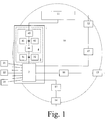
- Fig. 1 shows diagrammatically a network according to the invention comprising an access multiplexer system according to the invention for performing a stateless auto-configuration process and an agent according to the invention.
- the access multiplexer system 1 comprises an access multiplexer 2,3 comprising a coupler 2 and a controller 3.
- the controller 3 comprises an agent 4 according to the invention.
- the controller 3 further comprises a processor 31 and a memory 32 coupled to a link between the coupler 2 and the agent 4.
- the agent comprises detecting means 41 and replacing means 42 and interfacing means 43 and further interfacing means 44.
- the further interfacing means 44 are coupled to the link and are further coupled via a bus to the other means 41-43.
- the interfacing means 43 are further coupled to information means 11.
- the network 10 further comprises respective network-units 12-14 coupled via respective switches 15-17 to the coupler 2.
- the coupler 2 is further coupled to hosts 21-23.
- the network-units 12-14 for example comprise Internet Protocol EDGE nodes, the hosts for example comprise customer premises equipments, such as personal computers or modems, and the information means for example comprise a network management or a local database.
- a host 21 In a prior art situation, to get (a part of) an Internet Protocol address, a host 21 generates a solicitation message as defined in RFC 2461 and 2462 in a way common in the art.
- This solicitation message comprises a multicast destination address defining the hosts 22,23 and the network-units 12-14 in the network 10.
- the access multiplexer system 1 detects this multicast destination address in a way common in the art, for example via a detector forming part of the processor 31, and in response copies the solicitation message and sends three solicitation messages to the network-units 12-14.
- the network-unit 12 responds to the solicitation message by generating an advertisement message as defined in RFC 2461 and 2462 in a way common in the art.
- This advertisement message comprises a multicast destination address defining the hosts 21-23 (all hosts in the layer-2 segment) and is supplied via the switch 15 to the access multiplexer system 1.
- the access multiplexer system 1 detects this multicast address in a way common in the art, for example via a detector forming part of the processor 31, and in response copies the advertisement message and sends three advertisement messages to the hosts 21-23. Owing to the fact that only the host 21 is interested in this response to its solicitation message, only the host 21 reacts to the advertisement message in a way common in the art, both other hosts 22,23 do not react.
- the security of the stateless auto-configuration process is increased by introducing the agent 4.
- the agent 4 comprises the detecting means 41 for detecting a solicitation message originating from for example the host 21 by for example detecting a solicitation code in this message.
- the agent 4 further comprises the replacing means 42 for, in response to a detected solicitation message, replacing the multicast destination address in this solicitation message by a further destination address defining the network-unit 12.
- the agent 4 contacts the information means 11 via the interfacing means 43. These information means 11 authenticate and bill the hosts 21-23 and provide the agent 4 with the further destination address defining the network-unit 12.
- the information means 11 for example either have knowledge or can estimate which network-unit 12 (or limited group of network-units 12,13) is to be reached by this host 21 (for example by checking which hosts have communicated with this network-unit before or by checking which hosts are subscribed to one or more services serviced by the network-unit).
- the solicitation message is no longer multicasted to all network-units 12-14, but is only sent to the network-unit 12 (or the limited group of network-units 12,13).
- the network-unit 12 reacts by supplying an advertisement message via the switch 15 to the access multiplexer system 1.
- the agent comprises the detecting means 41 for detecting the advertisement message originating from the network-unit 12 by for example detecting an advertisement code in this message.
- the agent 4 further comprises the replacing means 42 for, in response to a detected advertisement message, replacing the multicast destination address in this advertisement message by a further destination address (a unicast destination address) defining the host 21.
- the agent 4 contacts the information means 11 via the interfacing means 43.
- These information means 1 1 can link a network-unit to a host and provide the agent 4 with the further destination address defining the host 21.
- the information means 11 for example either have knowledge or can estimate which host 21 (or limited group of hosts 21,22) is to be reached by this network-unit 12 (for example by checking which hosts have communicated with this network-unit before or by checking which hosts are subscribed to one or more services serviced by the network-unit).
- the advertisement message is no longer multicasted to all hosts 21-23, but is only sent to the host 21 (or the limited group of hosts 21,22).
- the access multiplexer system 1 for performing a stateless auto-configuration process for use in a network 10 comprises an access multiplexer 2,3 for receiving a discovery message from a source, which discovery message comprises a multicast destination address defining a number of destinations, and further comprises an agent 4 for replacing the multicast destination address in the discovery message by a further destination address defining a further number of destinations, which further number of destinations is smaller than the number of destinations.
- the discovery messages are firstly used for requesting (soliciting) an Internet Protocol version 6 address comprising 128 bytes. Of these 128 bytes, the first 64 bytes also known as prefix are supplied by the network 10 (more precisely: by the network-units 12-14) and the last 64 bytes for example correspond with the MAC address (Medium Access Control) of the host 21-23. Before this MAC address may be used, the network 10 will check its uniqueness by checking all the hosts 21-23 coupled to this network 10. The discovery messages are secondly used for allocating (advertising) the prefix, by supplying this prefix from the network-units 12-14 to the hosts 21-23 in response to the request (solicitation).
- the agent 4 shown in Fig. 1 is just an embodiment, many alternatives are possible without departing from the scope of this invention.
- one or more parts (41-44) of the agent 4 may be shifted into the access multiplexer 2,3.
- the detecting and replacing means 41,42 may be shifted and/or integrated into the processor 31.
- the information means 11 or a part of the information means may be shifted and/or integrated into the memory 32.
- the further interfacing means 44 form an interface between the link and the bus and can be avoided in case the link and the bus are combined and/or integrated. Alternatively, in that case the link and the bus represent the further interfacing means 44.
- the interfacing means 43 form an interface between the bus and the information means 11 and can be avoided in case the information means 11 are (partly) shifted and/or integrated into the memory 32 or in case the information means 11 are to be reached via the coupler 2. Alternatively, in that case the link and the bus or the coupler 2 represent the interfacing means 43.
- the agent 4 may further be located outside the access multiplexer system 1 etc.
- the advertisement messages may be sent in response to a reception of a solicitation message and may alternatively be sent regularly for information purposes and without being a response to a solicitation message.
- the information means 11 may be coupled directly to the network-units 12-14 and/or to the switches 15-17, and further network-units, further switches and further access multiplexer systems may be present, and further couplings and links may be present.
- steps/functions of receiving and replacing do not exclude further steps/functions, like for example, inter alia, the steps/functions as described for the Fig.
Landscapes
- Engineering & Computer Science (AREA)
- Computer Networks & Wireless Communication (AREA)
- Signal Processing (AREA)
- Data Exchanges In Wide-Area Networks (AREA)
- Electronic Switches (AREA)
- Studio Circuits (AREA)
Abstract
Description
- The invention relates to an access multiplexer system for performing a stateless auto-configuration process for use in a network and comprising an access multiplexer for receiving a discovery message from a source, which discovery message comprises a multicast destination address defining a number of destinations.
- A prior art access multiplexer system is of common general knowledge. A discovery message is for example defined in RFC 2461 and 2462 and is used for requesting or allocating Internet Protocol addresses. The discovery message originates from a source, such as a customer premises equipment or a node respectively, and is destined for a number of destinations, such as nodes or customer premises equipments respectively. This number of destinations is defined by a multicast destination address forming part of a header of the discovery message. The access multiplexer system for performing a stateless auto-configuration process forms part of a network. In this network (such as for example an Internet Protocol Version 6 network), states of sources and destinations are not kept, contrary to a network in which a stateful auto-configuration process is performed (such as for example an other Internet Protocol Version 6 network or an
Internet Protocol Version 4 network). Owing to the fact that the states are not kept in this kind of network, each discovery message must be sent to a relatively large number of destinations. - The known access multiplexer system is disadvantageous, inter alia, owing to the fact that the stateless auto-configuration process is relatively insecure in a shared and/or non-trusted network. A source must send each discovery message to a relatively large number of destinations, with only one destination being interested in this discovery message but with all the other destinations also receiving this discovery message.
- It is an object of the invention, inter alia, to provide an access multiplexer system for performing a stateless auto-configuration process which is relatively secure.
- The access multiplexer system according to the invention is characterized in that the access multiplexer system further comprises an agent for replacing the multicast destination address in the discovery message by a further destination address defining a further number of destinations, which further number of destinations is smaller than the number of destinations.
- By introducing the agent, the discovery message is no longer sent to the relatively large number of destinations (a relatively large group), but is sent to a relatively small number of destinations (a relatively small group being a sub-group of the relatively large group). As a result, the stateless auto-configuration process has become relatively secure. A further advantage is that less bandwidth is consumed.
- An embodiment of the access multiplexer system according to the invention is characterized in that the access multiplexer system comprises detecting means for detecting at least a part of the discovery message and comprises replacing means for, in response to a detection, performing said replacing.
- The detecting means form part of the access multiplexer or form part of the agent. The replacing means form part of the access multiplexer or form part of the agent.
- An embodiment of the access multiplexer system according to the invention is characterized in that the discovery message comprises a solicitation message, with the source comprising a host and with the destinations comprising network-units.
- The solicitation message is well defined in RFC 2461 and 2462 and originates from the host. This host for example comprises a customer premises equipment, such as a personal computer or a modem. The network-units for example comprise Internet Protocol EDGE nodes.
- An embodiment of the access multiplexer system according to the invention is characterized in that the agent comprises interfacing means for contacting information means for authenticating and/or billing a host and for in response providing the agent with information defining the further number of destinations.
- By contacting the information means, such as a network management which authenticates and bills hosts, the agent is provided with the further number of destinations. This further number of destinations for example comprises one destination in the form of one network-unit.
- An embodiment of the access multiplexer system according to the invention is characterized in that the discovery message comprises an advertisement message, with the source comprising a network-unit and with the destinations comprising hosts.
- The advertisement message is well defined in RFC 2461 and 2462 and originates from the network-unit in reply to the solicitation message. This network-units for example comprises an Internet Protocol EDGE unit. The hosts for example comprise customer premises equipments, such as personal computers or modems.
- An embodiment of the access multiplexer system according to the invention is characterized in that the agent comprises interfacing means for contacting information means for linking a network-unit to a host and for in response providing the agent with information defining the further number of destinations.
- By contacting the information means, such as a network management which links a network-unit to one or more hosts, for example by checking which hosts have communicated with this network-unit before or by checking which hosts are subscribed to one or more services serviced by the network-unit, the agent is provided with the further number of destinations. This further number of destinations for example comprises a relatively small number of destinations in the form of a relatively small number of hosts such as a few hosts.
- The invention also relates to an agent for use in an access multiplexer system for performing a stateless auto-configuration process in a network and comprising an access multiplexer for receiving a discovery message from a source, which discovery message comprises a multicast destination address defining a number of destinations, which agent according to the invention is characterized in that the agent is arranged to replace the multicast destination address in the discovery message by a further destination address defining a further number of destinations, which further number of destinations is smaller than the number of destinations.
- The invention yet also relates to a network comprising an access multiplexer system for performing a stateless auto-configuration process and comprising an access multiplexer for receiving a discovery message from a source, which discovery message comprises a multicast destination address defining a number of destinations, which network according to the invention is characterized in that the network further comprises an agent for replacing the multicast destination address in the discovery message by a further destination address defining a further number of destinations, which further number of destinations is smaller than the number of destinations.
- The invention further relates to a method for access multiplexing for performing a stateless auto-configuration process in a network and comprising a receiving step of receiving a discovery message from a source, which discovery message comprises a multicast destination address defining a number of destinations, which method according to the invention is characterized in that the method further comprises a replacing step of replacing the multicast destination address in the discovery message by a further destination address defining a further number of destinations, which further number of destinations is smaller than the number of destinations.
- The invention yet further relates to a processor program product for access multiplexing for performing a stateless auto-configuration process in a network and comprising a receiving function of receiving a discovery message from a source, which discovery message comprises a multicast destination address defining a number of destinations, which processor program product according to the invention is characterized in that the processor program product further comprises a replacing function of replacing the multicast destination address in the discovery message by a further destination address defining a further number of destinations, which further number of destinations is smaller than the number of destinations.
- Embodiments of the agent according to the invention and of the network according to the invention and of the method according to the invention and of the processor program product according to the invention correspond with the embodiments of the access multiplexer system according to the invention.
- The invention is based upon an insight, inter alia, that, when a discovery message intended for only one destination is sent to many destinations, the security risk is increased, and is based upon a basic idea, inter alia, that an agent is to be used for limiting a number of destinations that receive the same discovery message.
- The invention solves the problem, inter alia, to provide an access multiplexer system for performing a stateless auto-configuration process which is relatively secure, and is further advantageous, inter alia, in that that less bandwidth is consumed.
- These and other aspects of the invention will be apparent from and elucidated with reference to the embodiments(s) described hereinafter.
- Fig. 1 shows diagrammatically a network according to the invention comprising an access multiplexer system according to the invention for performing a stateless auto-configuration process and an agent according to the invention.
- The
network 10 according to the invention shown in Fig. 1 such as for example an access network comprises anaccess multiplexer system 1 according to the invention for performing a stateless auto-configuration process. Theaccess multiplexer system 1 comprises anaccess multiplexer coupler 2 and acontroller 3. Thecontroller 3 comprises anagent 4 according to the invention. Thecontroller 3 further comprises aprocessor 31 and amemory 32 coupled to a link between thecoupler 2 and theagent 4. The agent comprises detecting means 41 and replacing means 42 and interfacing means 43 and further interfacing means 44. Thefurther interfacing means 44 are coupled to the link and are further coupled via a bus to the other means 41-43. The interfacing means 43 are further coupled to information means 11. - The
network 10 further comprises respective network-units 12-14 coupled via respective switches 15-17 to thecoupler 2. Thecoupler 2 is further coupled to hosts 21-23. The network-units 12-14 for example comprise Internet Protocol EDGE nodes, the hosts for example comprise customer premises equipments, such as personal computers or modems, and the information means for example comprise a network management or a local database. - In a prior art situation, to get (a part of) an Internet Protocol address, a
host 21 generates a solicitation message as defined in RFC 2461 and 2462 in a way common in the art. This solicitation message comprises a multicast destination address defining thehosts network 10. In case of an other access multiplexer not shown being present in the same layer-2 segment, its hosts not shown will also be reached by this solicitation message. Theaccess multiplexer system 1 detects this multicast destination address in a way common in the art, for example via a detector forming part of theprocessor 31, and in response copies the solicitation message and sends three solicitation messages to the network-units 12-14. For example owing to the fact that thehost 21 prefers the network-unit 12 to serve thishost 21 where both other network-units are not preferred to serve thishost 21, only the network-unit 12 responds to the solicitation message by generating an advertisement message as defined in RFC 2461 and 2462 in a way common in the art. This advertisement message comprises a multicast destination address defining the hosts 21-23 (all hosts in the layer-2 segment) and is supplied via theswitch 15 to theaccess multiplexer system 1. Theaccess multiplexer system 1 detects this multicast address in a way common in the art, for example via a detector forming part of theprocessor 31, and in response copies the advertisement message and sends three advertisement messages to the hosts 21-23. Owing to the fact that only thehost 21 is interested in this response to its solicitation message, only thehost 21 reacts to the advertisement message in a way common in the art, bothother hosts - Owing to the fact that one original solicitation message is copied and then sent to the
hosts - According to the invention, the security of the stateless auto-configuration process is increased by introducing the
agent 4. Theagent 4 comprises the detecting means 41 for detecting a solicitation message originating from for example thehost 21 by for example detecting a solicitation code in this message. Theagent 4 further comprises the replacing means 42 for, in response to a detected solicitation message, replacing the multicast destination address in this solicitation message by a further destination address defining the network-unit 12. Thereto, theagent 4 contacts the information means 11 via the interfacing means 43. These information means 11 authenticate and bill the hosts 21-23 and provide theagent 4 with the further destination address defining the network-unit 12. This is possible because the information means 11 for example either have knowledge or can estimate which network-unit 12 (or limited group of network-units 12,13) is to be reached by this host 21 (for example by checking which hosts have communicated with this network-unit before or by checking which hosts are subscribed to one or more services serviced by the network-unit). As a result, the solicitation message is no longer multicasted to all network-units 12-14, but is only sent to the network-unit 12 (or the limited group of network-units 12,13). - The network-
unit 12 reacts by supplying an advertisement message via theswitch 15 to theaccess multiplexer system 1. The agent comprises the detectingmeans 41 for detecting the advertisement message originating from the network-unit 12 by for example detecting an advertisement code in this message. Theagent 4 further comprises the replacingmeans 42 for, in response to a detected advertisement message, replacing the multicast destination address in this advertisement message by a further destination address (a unicast destination address) defining thehost 21. Thereto, theagent 4 contacts the information means 11 via the interfacing means 43. These information means 1 1 can link a network-unit to a host and provide theagent 4 with the further destination address defining thehost 21. This is possible because the information means 11 for example either have knowledge or can estimate which host 21 (or limited group ofhosts 21,22) is to be reached by this network-unit 12 (for example by checking which hosts have communicated with this network-unit before or by checking which hosts are subscribed to one or more services serviced by the network-unit). As a result, the advertisement message is no longer multicasted to all hosts 21-23, but is only sent to the host 21 (or the limited group ofhosts 21,22). - So, generally, the
access multiplexer system 1 for performing a stateless auto-configuration process for use in anetwork 10 comprises anaccess multiplexer agent 4 for replacing the multicast destination address in the discovery message by a further destination address defining a further number of destinations, which further number of destinations is smaller than the number of destinations. - The discovery messages are firstly used for requesting (soliciting) an Internet Protocol version 6 address comprising 128 bytes. Of these 128 bytes, the first 64 bytes also known as prefix are supplied by the network 10 (more precisely: by the network-units 12-14) and the last 64 bytes for example correspond with the MAC address (Medium Access Control) of the host 21-23. Before this MAC address may be used, the
network 10 will check its uniqueness by checking all the hosts 21-23 coupled to thisnetwork 10. The discovery messages are secondly used for allocating (advertising) the prefix, by supplying this prefix from the network-units 12-14 to the hosts 21-23 in response to the request (solicitation). - The
agent 4 shown in Fig. 1 is just an embodiment, many alternatives are possible without departing from the scope of this invention. For example, one or more parts (41-44) of theagent 4 may be shifted into theaccess multiplexer means processor 31. The information means 11 or a part of the information means may be shifted and/or integrated into thememory 32. The further interfacing means 44 form an interface between the link and the bus and can be avoided in case the link and the bus are combined and/or integrated. Alternatively, in that case the link and the bus represent the further interfacing means 44. The interfacing means 43 form an interface between the bus and the information means 11 and can be avoided in case the information means 11 are (partly) shifted and/or integrated into thememory 32 or in case the information means 11 are to be reached via thecoupler 2. Alternatively, in that case the link and the bus or thecoupler 2 represent the interfacing means 43. Theagent 4 may further be located outside theaccess multiplexer system 1 etc. The advertisement messages may be sent in response to a reception of a solicitation message and may alternatively be sent regularly for information purposes and without being a response to a solicitation message. The information means 11 may be coupled directly to the network-units 12-14 and/or to the switches 15-17, and further network-units, further switches and further access multiplexer systems may be present, and further couplings and links may be present. - The expression "for" in for example "for receiving" and "for replacing" etc. does not exclude that other functions are performed as well, simultaneously or not. The expressions "X coupled to Y" and "a coupling between X and Y" and "coupling/couples X and Y" etc. do not exclude that an element Z is in between X and Y. The expressions "P comprises Q" and "P comprising Q" etc. do not exclude that an element R is comprised/included as well. The terms "a" and "an" do not exclude the possible presence of one or more pluralities.
- The steps/functions of receiving and replacing do not exclude further steps/functions, like for example, inter alia, the steps/functions as described for the Fig.
Claims (10)
- Access multiplexer system (1) for performing a stateless auto-configuration process for use in a network (10) and comprising an access multiplexer (2,3) for receiving a discovery message from a source, which discovery message comprises a multicast destination address defining a number of destinations, characterized in that the access multiplexer system (1) further comprises an agent (4) for replacing the multicast destination address in the discovery message by a further destination address defining a further number of destinations, which further number of destinations is smaller than the number of destinations.
- Access multiplexer system (1) as defined in claim 1, characterized in that the access multiplexer system (1) comprises detecting means (41) for detecting at least a part of the discovery message and comprises replacing means (42) for, in response to a detection, performing said replacing.
- Access multiplexer system (1) as defined in claim 2, characterized in that the discovery message comprises a solicitation message, with the source comprising a host (21-23) and with the destinations comprising network-units (12-14).
- Access multiplexer system (1) as defined in claim 3, characterized in that the agent (4) comprises interfacing means (43) for contacting information means (11) for authenticating and/or billing a host (21-23) and for in response providing the agent (4) with information defining the further number of destinations.
- Access multiplexer system (1) as defined in claim 2, characterized in that the discovery message comprises an advertisement message, with the source comprising a network-unit (12-14) and with the destinations comprising hosts (21-23).
- Access multiplexer system (1) as defined in claim 5, characterized in that the agent (4) comprises interfacing means (43) for contacting information means (11) for linking a network-unit (12-14) to a host (21-23) and for in response providing the agent (4) with information defining the further number of destinations.
- Agent (4) for use in an access multiplexer system (1) for performing a stateless auto-configuration process in a network (10) and comprising an access multiplexer (2,3) for receiving a discovery message from a source, which discovery message comprises a multicast destination address defining a number of destinations, characterized in that the agent (4) is arranged to replace the multicast destination address in the discovery message by a further destination address defining a further number of destinations, which further number of destinations is smaller than the number of destinations.
- Network (10) comprising an access multiplexer system (1) for performing a stateless auto-configuration process and comprising an access multiplexer (2,3) for receiving a discovery message from a source, which discovery message comprises a multicast destination address defining a number of destinations, characterized in that the network (10) further comprises an agent (4) for replacing the multicast destination address in the discovery message by a further destination address defining a further number of destinations, which further number of destinations is smaller than the number of destinations.
- Method for access multiplexing for performing a stateless auto-configuration process in a network (10) and comprising a receiving step of receiving a discovery message from a source, which discovery message comprises a multicast destination address defining a number of destinations, characterized in that the method further comprises a replacing step of replacing the multicast destination address in the discovery message by a further destination address defining a further number of destinations, which further number of destinations is smaller than the number of destinations.
- Processor program product for access multiplexing for performing a stateless auto-configuration process in a network (10) and comprising a receiving function of receiving a discovery message from a source, which discovery message comprises a multicast destination address defining a number of destinations, characterized in that the processor program product further comprises a replacing function of replacing the multicast destination address in the discovery message by a further destination address defining a further number of destinations, which further number of destinations is smaller than the number of destinations.
Priority Applications (6)
| Application Number | Priority Date | Filing Date | Title |
|---|---|---|---|
| EP04292691A EP1657887B1 (en) | 2004-11-10 | 2004-11-10 | Access multiplexer for stateless auto-configuration process |
| AT04292691T ATE408303T1 (en) | 2004-11-10 | 2004-11-10 | ACCESS MULTIPLEXER FOR STATELESS SELF-CONFIGURATION METHOD |
| DE602004016529T DE602004016529D1 (en) | 2004-11-10 | 2004-11-10 | Access multiplexer for stateless self-configuration method |
| CNB2005101175606A CN100477648C (en) | 2004-11-10 | 2005-11-04 | Access multiplexer system for performing stateless auto-configuration process |
| JP2005321803A JP4685596B2 (en) | 2004-11-10 | 2005-11-07 | Access multiplexer system for performing stateless autoconfiguration process |
| US11/269,574 US7911972B2 (en) | 2004-11-10 | 2005-11-09 | Access multiplexer system for performing a stateless auto-configuration process |
Applications Claiming Priority (1)
| Application Number | Priority Date | Filing Date | Title |
|---|---|---|---|
| EP04292691A EP1657887B1 (en) | 2004-11-10 | 2004-11-10 | Access multiplexer for stateless auto-configuration process |
Publications (2)
| Publication Number | Publication Date |
|---|---|
| EP1657887A1 true EP1657887A1 (en) | 2006-05-17 |
| EP1657887B1 EP1657887B1 (en) | 2008-09-10 |
Family
ID=34931521
Family Applications (1)
| Application Number | Title | Priority Date | Filing Date |
|---|---|---|---|
| EP04292691A Expired - Lifetime EP1657887B1 (en) | 2004-11-10 | 2004-11-10 | Access multiplexer for stateless auto-configuration process |
Country Status (6)
| Country | Link |
|---|---|
| US (1) | US7911972B2 (en) |
| EP (1) | EP1657887B1 (en) |
| JP (1) | JP4685596B2 (en) |
| CN (1) | CN100477648C (en) |
| AT (1) | ATE408303T1 (en) |
| DE (1) | DE602004016529D1 (en) |
Citations (1)
| Publication number | Priority date | Publication date | Assignee | Title |
|---|---|---|---|---|
| US20030026230A1 (en) * | 2001-08-02 | 2003-02-06 | Juan-Antonio Ibanez | Proxy duplicate address detection for dynamic address allocation |
Family Cites Families (8)
| Publication number | Priority date | Publication date | Assignee | Title |
|---|---|---|---|---|
| US6229806B1 (en) * | 1997-12-30 | 2001-05-08 | Motorola, Inc. | Authentication in a packet data system |
| JP2001177523A (en) * | 1999-12-16 | 2001-06-29 | Mitsubishi Electric Corp | Multicast communication method |
| US7133922B1 (en) * | 2000-08-07 | 2006-11-07 | The Hong Kong University Of Science And Technology | Method and apparatus for streaming of data |
| US6914887B2 (en) * | 2001-01-04 | 2005-07-05 | Intel Corporation | Managing links between processor-based systems |
| US7107342B1 (en) * | 2001-01-26 | 2006-09-12 | Cisco Technology, Inc. | Method and system for providing service trigger management in a wireless network |
| US7193974B2 (en) * | 2001-08-10 | 2007-03-20 | Intel Corporation | Method and apparatus for dynamically discovering alias domains |
| US7570585B2 (en) * | 2002-12-16 | 2009-08-04 | Alcatel Lucent | Facilitating DSLAM-hosted traffic management functionality |
| US7631100B2 (en) * | 2003-10-07 | 2009-12-08 | Microsoft Corporation | Supporting point-to-point intracluster communications between replicated cluster nodes |
-
2004
- 2004-11-10 DE DE602004016529T patent/DE602004016529D1/en not_active Expired - Lifetime
- 2004-11-10 EP EP04292691A patent/EP1657887B1/en not_active Expired - Lifetime
- 2004-11-10 AT AT04292691T patent/ATE408303T1/en not_active IP Right Cessation
-
2005
- 2005-11-04 CN CNB2005101175606A patent/CN100477648C/en not_active Expired - Fee Related
- 2005-11-07 JP JP2005321803A patent/JP4685596B2/en not_active Expired - Fee Related
- 2005-11-09 US US11/269,574 patent/US7911972B2/en not_active Expired - Fee Related
Patent Citations (1)
| Publication number | Priority date | Publication date | Assignee | Title |
|---|---|---|---|---|
| US20030026230A1 (en) * | 2001-08-02 | 2003-02-06 | Juan-Antonio Ibanez | Proxy duplicate address detection for dynamic address allocation |
Non-Patent Citations (2)
| Title |
|---|
| S. THOMSON; BELLCORE; T. NARTEN; IBM: "RFC 2462 - IPv6 Stateless Address Autoconfiguration", REQUEST FOR COMMENTS, NETWORK WORKING GROUP, INTERNET ENGINEERING TASK FORCE - INTERNET SOCIETY, 1 December 1998 (1998-12-01), 4, RUE DES FALAISES CH- 1205 GENEVA, SWITZERLAND, pages 1 - 25, XP015008246 * |
| T. NARTEN; IBM; E. NORDMARK; SUN MICROSYSTEMS; W. SIMPSON; DAYDREAMER: "RFC 2461 - Neighbor Discovery for IP Version 6 (IPv6)", REQUEST FOR COMMENTS, NETWORK WORKING GROUP, INTERNET ENGINEERING TASK FORCE - INTERNET SOCIETY, 1 December 1998 (1998-12-01), 4, RUE DES FALAISES CH- 1205 GENEVA, SWITZERLAND, pages 1 - 93, XP015008245 * |
Also Published As
| Publication number | Publication date |
|---|---|
| US20060098656A1 (en) | 2006-05-11 |
| JP4685596B2 (en) | 2011-05-18 |
| US7911972B2 (en) | 2011-03-22 |
| JP2006141008A (en) | 2006-06-01 |
| EP1657887B1 (en) | 2008-09-10 |
| CN1773964A (en) | 2006-05-17 |
| ATE408303T1 (en) | 2008-09-15 |
| DE602004016529D1 (en) | 2008-10-23 |
| CN100477648C (en) | 2009-04-08 |
Similar Documents
| Publication | Publication Date | Title |
|---|---|---|
| US8135028B2 (en) | Neighbor discovery in cable networks | |
| US7379458B2 (en) | Server load sharing system | |
| JP4664143B2 (en) | Packet transfer apparatus, communication network, and packet transfer method | |
| CN101207604B (en) | Virtual machine system and communication processing method thereof | |
| US7751394B2 (en) | Multicast packet relay device adapted for virtual router | |
| US20090016345A1 (en) | Multicast routing method and apparatus for routing multicast packet | |
| KR100693320B1 (en) | Source address selection system, router device, computer readable recording medium recording program for functioning computer as router device, communication node and source address selection method | |
| CN111246453B (en) | A data transmission method, user plane network element and control plane network element | |
| JP2015532053A (en) | Layer-2 address management at an access point that can accommodate only three addresses in a network having a relay device | |
| CN118590470B (en) | Non-invasive multicast forwarding method and system of cloud platform | |
| JP2008504776A (en) | Method and system for dynamic device address management | |
| JP4054719B2 (en) | Specific address use restriction device | |
| JPH11284664A (en) | Virtual exclusive network buildup system | |
| CN113497752B (en) | A message sending method, first network device and network system | |
| JP2001256045A (en) | Computer virus check method and device | |
| EP2680511B1 (en) | Router device, packet control method based on prefix management, and program | |
| EP1657887B1 (en) | Access multiplexer for stateless auto-configuration process | |
| WO2015098029A1 (en) | Wireless communication device, wireless communication network, and identification-number setting method | |
| US8036218B2 (en) | Technique for achieving connectivity between telecommunication stations | |
| US20030225910A1 (en) | Host resolution for IP networks with NAT | |
| JP2019009637A (en) | Network monitoring device | |
| US20050249208A1 (en) | Network system in which public IP addresses are unnecessary, and the system setting method | |
| CN121728022A (en) | Data transmission methods, network access systems, equipment, media and software products | |
| CN112291378A (en) | Address management device and address management method | |
| CN101268675A (en) | Method, communication arrangement and communication device for establishing a communication relationship |
Legal Events
| Date | Code | Title | Description |
|---|---|---|---|
| PUAI | Public reference made under article 153(3) epc to a published international application that has entered the european phase |
Free format text: ORIGINAL CODE: 0009012 |
|
| AK | Designated contracting states |
Kind code of ref document: A1 Designated state(s): AT BE BG CH CY CZ DE DK EE ES FI FR GB GR HU IE IS IT LI LU MC NL PL PT RO SE SI SK TR |
|
| AX | Request for extension of the european patent |
Extension state: AL HR LT LV MK YU |
|
| 17P | Request for examination filed |
Effective date: 20061117 |
|
| AKX | Designation fees paid |
Designated state(s): AT BE BG CH CY CZ DE DK EE ES FI FR GB GR HU IE IS IT LI LU MC NL PL PT RO SE SI SK TR |
|
| RAP1 | Party data changed (applicant data changed or rights of an application transferred) |
Owner name: ALCATEL LUCENT |
|
| 17Q | First examination report despatched |
Effective date: 20070618 |
|
| GRAP | Despatch of communication of intention to grant a patent |
Free format text: ORIGINAL CODE: EPIDOSNIGR1 |
|
| GRAS | Grant fee paid |
Free format text: ORIGINAL CODE: EPIDOSNIGR3 |
|
| GRAA | (expected) grant |
Free format text: ORIGINAL CODE: 0009210 |
|
| AK | Designated contracting states |
Kind code of ref document: B1 Designated state(s): AT BE BG CH CY CZ DE DK EE ES FI FR GB GR HU IE IS IT LI LU MC NL PL PT RO SE SI SK TR |
|
| REG | Reference to a national code |
Ref country code: GB Ref legal event code: FG4D |
|
| REG | Reference to a national code |
Ref country code: CH Ref legal event code: EP |
|
| REG | Reference to a national code |
Ref country code: IE Ref legal event code: FG4D |
|
| REF | Corresponds to: |
Ref document number: 602004016529 Country of ref document: DE Date of ref document: 20081023 Kind code of ref document: P |
|
| PG25 | Lapsed in a contracting state [announced via postgrant information from national office to epo] |
Ref country code: AT Free format text: LAPSE BECAUSE OF FAILURE TO SUBMIT A TRANSLATION OF THE DESCRIPTION OR TO PAY THE FEE WITHIN THE PRESCRIBED TIME-LIMIT Effective date: 20080910 Ref country code: FI Free format text: LAPSE BECAUSE OF FAILURE TO SUBMIT A TRANSLATION OF THE DESCRIPTION OR TO PAY THE FEE WITHIN THE PRESCRIBED TIME-LIMIT Effective date: 20080910 Ref country code: SI Free format text: LAPSE BECAUSE OF FAILURE TO SUBMIT A TRANSLATION OF THE DESCRIPTION OR TO PAY THE FEE WITHIN THE PRESCRIBED TIME-LIMIT Effective date: 20080910 |
|
| NLV1 | Nl: lapsed or annulled due to failure to fulfill the requirements of art. 29p and 29m of the patents act | ||
| REG | Reference to a national code |
Ref country code: HU Ref legal event code: AG4A Ref document number: E004414 Country of ref document: HU |
|
| PG25 | Lapsed in a contracting state [announced via postgrant information from national office to epo] |
Ref country code: BE Free format text: LAPSE BECAUSE OF FAILURE TO SUBMIT A TRANSLATION OF THE DESCRIPTION OR TO PAY THE FEE WITHIN THE PRESCRIBED TIME-LIMIT Effective date: 20080910 |
|
| PG25 | Lapsed in a contracting state [announced via postgrant information from national office to epo] |
Ref country code: ES Free format text: LAPSE BECAUSE OF FAILURE TO SUBMIT A TRANSLATION OF THE DESCRIPTION OR TO PAY THE FEE WITHIN THE PRESCRIBED TIME-LIMIT Effective date: 20081221 Ref country code: BG Free format text: LAPSE BECAUSE OF FAILURE TO SUBMIT A TRANSLATION OF THE DESCRIPTION OR TO PAY THE FEE WITHIN THE PRESCRIBED TIME-LIMIT Effective date: 20081210 |
|
| PG25 | Lapsed in a contracting state [announced via postgrant information from national office to epo] |
Ref country code: PT Free format text: LAPSE BECAUSE OF FAILURE TO SUBMIT A TRANSLATION OF THE DESCRIPTION OR TO PAY THE FEE WITHIN THE PRESCRIBED TIME-LIMIT Effective date: 20090210 Ref country code: RO Free format text: LAPSE BECAUSE OF FAILURE TO SUBMIT A TRANSLATION OF THE DESCRIPTION OR TO PAY THE FEE WITHIN THE PRESCRIBED TIME-LIMIT Effective date: 20080910 Ref country code: SK Free format text: LAPSE BECAUSE OF FAILURE TO SUBMIT A TRANSLATION OF THE DESCRIPTION OR TO PAY THE FEE WITHIN THE PRESCRIBED TIME-LIMIT Effective date: 20080910 Ref country code: CZ Free format text: LAPSE BECAUSE OF FAILURE TO SUBMIT A TRANSLATION OF THE DESCRIPTION OR TO PAY THE FEE WITHIN THE PRESCRIBED TIME-LIMIT Effective date: 20080910 Ref country code: IS Free format text: LAPSE BECAUSE OF FAILURE TO SUBMIT A TRANSLATION OF THE DESCRIPTION OR TO PAY THE FEE WITHIN THE PRESCRIBED TIME-LIMIT Effective date: 20090110 Ref country code: NL Free format text: LAPSE BECAUSE OF FAILURE TO SUBMIT A TRANSLATION OF THE DESCRIPTION OR TO PAY THE FEE WITHIN THE PRESCRIBED TIME-LIMIT Effective date: 20080910 |
|
| PG25 | Lapsed in a contracting state [announced via postgrant information from national office to epo] |
Ref country code: MC Free format text: LAPSE BECAUSE OF NON-PAYMENT OF DUE FEES Effective date: 20081130 |
|
| REG | Reference to a national code |
Ref country code: CH Ref legal event code: PL |
|
| PLBE | No opposition filed within time limit |
Free format text: ORIGINAL CODE: 0009261 |
|
| STAA | Information on the status of an ep patent application or granted ep patent |
Free format text: STATUS: NO OPPOSITION FILED WITHIN TIME LIMIT |
|
| PG25 | Lapsed in a contracting state [announced via postgrant information from national office to epo] |
Ref country code: DK Free format text: LAPSE BECAUSE OF FAILURE TO SUBMIT A TRANSLATION OF THE DESCRIPTION OR TO PAY THE FEE WITHIN THE PRESCRIBED TIME-LIMIT Effective date: 20080910 Ref country code: EE Free format text: LAPSE BECAUSE OF FAILURE TO SUBMIT A TRANSLATION OF THE DESCRIPTION OR TO PAY THE FEE WITHIN THE PRESCRIBED TIME-LIMIT Effective date: 20080910 |
|
| 26N | No opposition filed |
Effective date: 20090611 |
|
| PG25 | Lapsed in a contracting state [announced via postgrant information from national office to epo] |
Ref country code: IE Free format text: LAPSE BECAUSE OF NON-PAYMENT OF DUE FEES Effective date: 20081110 Ref country code: CH Free format text: LAPSE BECAUSE OF NON-PAYMENT OF DUE FEES Effective date: 20081130 Ref country code: LI Free format text: LAPSE BECAUSE OF NON-PAYMENT OF DUE FEES Effective date: 20081130 |
|
| PG25 | Lapsed in a contracting state [announced via postgrant information from national office to epo] |
Ref country code: SE Free format text: LAPSE BECAUSE OF FAILURE TO SUBMIT A TRANSLATION OF THE DESCRIPTION OR TO PAY THE FEE WITHIN THE PRESCRIBED TIME-LIMIT Effective date: 20081210 |
|
| PG25 | Lapsed in a contracting state [announced via postgrant information from national office to epo] |
Ref country code: PL Free format text: LAPSE BECAUSE OF FAILURE TO SUBMIT A TRANSLATION OF THE DESCRIPTION OR TO PAY THE FEE WITHIN THE PRESCRIBED TIME-LIMIT Effective date: 20080910 |
|
| PG25 | Lapsed in a contracting state [announced via postgrant information from national office to epo] |
Ref country code: LU Free format text: LAPSE BECAUSE OF NON-PAYMENT OF DUE FEES Effective date: 20081110 Ref country code: CY Free format text: LAPSE BECAUSE OF FAILURE TO SUBMIT A TRANSLATION OF THE DESCRIPTION OR TO PAY THE FEE WITHIN THE PRESCRIBED TIME-LIMIT Effective date: 20080910 |
|
| PG25 | Lapsed in a contracting state [announced via postgrant information from national office to epo] |
Ref country code: TR Free format text: LAPSE BECAUSE OF FAILURE TO SUBMIT A TRANSLATION OF THE DESCRIPTION OR TO PAY THE FEE WITHIN THE PRESCRIBED TIME-LIMIT Effective date: 20080910 |
|
| PG25 | Lapsed in a contracting state [announced via postgrant information from national office to epo] |
Ref country code: GR Free format text: LAPSE BECAUSE OF FAILURE TO SUBMIT A TRANSLATION OF THE DESCRIPTION OR TO PAY THE FEE WITHIN THE PRESCRIBED TIME-LIMIT Effective date: 20081211 |
|
| REG | Reference to a national code |
Ref country code: GB Ref legal event code: 732E Free format text: REGISTERED BETWEEN 20130926 AND 20131002 |
|
| REG | Reference to a national code |
Ref country code: FR Ref legal event code: GC Effective date: 20131018 |
|
| REG | Reference to a national code |
Ref country code: FR Ref legal event code: RG Effective date: 20141016 |
|
| REG | Reference to a national code |
Ref country code: FR Ref legal event code: CA Effective date: 20150521 |
|
| REG | Reference to a national code |
Ref country code: FR Ref legal event code: CA Effective date: 20150521 |
|
| REG | Reference to a national code |
Ref country code: FR Ref legal event code: PLFP Year of fee payment: 12 |
|
| REG | Reference to a national code |
Ref country code: FR Ref legal event code: PLFP Year of fee payment: 13 |
|
| REG | Reference to a national code |
Ref country code: FR Ref legal event code: PLFP Year of fee payment: 14 |
|
| REG | Reference to a national code |
Ref country code: FR Ref legal event code: PLFP Year of fee payment: 15 |
|
| PGFP | Annual fee paid to national office [announced via postgrant information from national office to epo] |
Ref country code: HU Payment date: 20181025 Year of fee payment: 15 Ref country code: DE Payment date: 20181030 Year of fee payment: 15 |
|
| PGFP | Annual fee paid to national office [announced via postgrant information from national office to epo] |
Ref country code: IT Payment date: 20181122 Year of fee payment: 15 Ref country code: FR Payment date: 20181011 Year of fee payment: 15 Ref country code: GB Payment date: 20181107 Year of fee payment: 15 |
|
| REG | Reference to a national code |
Ref country code: DE Ref legal event code: R119 Ref document number: 602004016529 Country of ref document: DE |
|
| PG25 | Lapsed in a contracting state [announced via postgrant information from national office to epo] |
Ref country code: HU Free format text: LAPSE BECAUSE OF NON-PAYMENT OF DUE FEES Effective date: 20191111 |
|
| GBPC | Gb: european patent ceased through non-payment of renewal fee |
Effective date: 20191110 |
|
| PG25 | Lapsed in a contracting state [announced via postgrant information from national office to epo] |
Ref country code: DE Free format text: LAPSE BECAUSE OF NON-PAYMENT OF DUE FEES Effective date: 20200603 Ref country code: IT Free format text: LAPSE BECAUSE OF NON-PAYMENT OF DUE FEES Effective date: 20191110 Ref country code: FR Free format text: LAPSE BECAUSE OF NON-PAYMENT OF DUE FEES Effective date: 20191130 Ref country code: GB Free format text: LAPSE BECAUSE OF NON-PAYMENT OF DUE FEES Effective date: 20191110 |