EP1657548A1 - Method of confirming hydrogen/deuterium exchange in constructions of biological samples and determining the percentage of deuterium in biological samples - Google Patents
Method of confirming hydrogen/deuterium exchange in constructions of biological samples and determining the percentage of deuterium in biological samples Download PDFInfo
- Publication number
- EP1657548A1 EP1657548A1 EP04762075A EP04762075A EP1657548A1 EP 1657548 A1 EP1657548 A1 EP 1657548A1 EP 04762075 A EP04762075 A EP 04762075A EP 04762075 A EP04762075 A EP 04762075A EP 1657548 A1 EP1657548 A1 EP 1657548A1
- Authority
- EP
- European Patent Office
- Prior art keywords
- biological sample
- sample
- deuterium
- smow
- hydrogen
- Prior art date
- Legal status (The legal status is an assumption and is not a legal conclusion. Google has not performed a legal analysis and makes no representation as to the accuracy of the status listed.)
- Granted
Links
Images

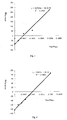

Classifications
-
- G—PHYSICS
- G01—MEASURING; TESTING
- G01N—INVESTIGATING OR ANALYSING MATERIALS BY DETERMINING THEIR CHEMICAL OR PHYSICAL PROPERTIES
- G01N31/00—Investigating or analysing non-biological materials by the use of the chemical methods specified in the subgroup; Apparatus specially adapted for such methods
- G01N31/12—Investigating or analysing non-biological materials by the use of the chemical methods specified in the subgroup; Apparatus specially adapted for such methods using combustion
-
- C—CHEMISTRY; METALLURGY
- C01—INORGANIC CHEMISTRY
- C01B—NON-METALLIC ELEMENTS; COMPOUNDS THEREOF; METALLOIDS OR COMPOUNDS THEREOF NOT COVERED BY SUBCLASS C01C
- C01B4/00—Hydrogen isotopes; Inorganic compounds thereof prepared by isotope exchange, e.g. NH3 + D2 → NH2D + HD
-
- G—PHYSICS
- G01—MEASURING; TESTING
- G01N—INVESTIGATING OR ANALYSING MATERIALS BY DETERMINING THEIR CHEMICAL OR PHYSICAL PROPERTIES
- G01N33/00—Investigating or analysing materials by specific methods not covered by groups G01N1/00 - G01N31/00
- G01N33/48—Biological material, e.g. blood, urine; Haemocytometers
-
- B—PERFORMING OPERATIONS; TRANSPORTING
- B01—PHYSICAL OR CHEMICAL PROCESSES OR APPARATUS IN GENERAL
- B01D—SEPARATION
- B01D59/00—Separation of different isotopes of the same chemical element
- B01D59/44—Separation by mass spectrography
Definitions
- the invention relates to a method for analyzing hydrogen isotopes, especially a method for confirming hydrogen/deuterium exchange in the structure of a biological sample and determining the percent content of deuterium in the biological sample.
- Stable isotope deuterium tracer mass spectrometry is an analysis method that is widely used in the area of biomedical research, and is extensively used for the determination and identification of metabolic products, the studies about the mechanism of metabolic pathway, and the determination of the concentration of medicaments and metabolic products in organisms.
- man can determine the molecular composition of the substance to be tested and thereby know the property of the substance to be tested, as well as determine the content of the substance to be tested, by measuring the intensity of molecular ions or few characteristic fragment ions.
- This method does not require an intact mass spectrogram, i.e., it is only required to separate the interested compound, and then obtain a part of mass spectrogram using ion monitoring technique and determine the ratio between labeled and unlabeled components.
- the accuracy of the ratio determined by this method is very low, and generally 1 ⁇ 10%, whereas the method has specificity and high sensitivity.
- Separation techniques that were developed in the recent twenty years, such as capillary separation technique, greatly improve the accuracy, sensitivity, selectivity and exclusivity of stable isotope deuterium tracer mass spectrometry, and thus gradually become the most important analysis methods in the area of biomedical research.
- test instruments used in these methods are mainly gas chromatograph-mass spectrometer (GC-MS) and liquid chromatograph-mass spectrometer (LC-MS), which are expensive; (2) highly pure medicaments labeled with stable isotope deuterium are obtained hardly, their amount is small and the cost of synthesis is high; and (3) the treatment of sample and the manipulation of testing and analyzing techniques are complex and time consuming.
- GC-MS gas chromatograph-mass spectrometer
- LC-MS liquid chromatograph-mass spectrometer
- 2 H-NMR method is widely used in biochemistry and clinical medicine due to its advantages such as going deep into the interior of substance, not destroying the sample, and providing parameters, e.g. the molecular weight and structure of biological molecules (Armellin S, Brenna E, Fronza G, et al. Analyst. 2004 Feb, 129(2):130-3; and Roger O, Lavigne R, Mahmoud M, et al. J Biol Chem. 2004 Jun 11, 279(24):24923-8).
- the abundance of deuterium in nature is as low as about 150 ⁇ 10 -6 , and its sensitivity is about 150 ⁇ 10 -6 of that of hydrogen.
- the nuclear magnetic moment of deuteron is smaller,its spin quantum number is 1, the gyro-magnetic ratio of deuteron is lower, and thus the resonance frequency of deuteron and the dispersity of spectral line are low. Therefore, the sensitivity of 2 H-NMR method is very low. Accordingly, in order to achieve satisfactorily a signal-to-noise ratio and an accuracy of determination, larger amount of sample and longer analysis time are required, and it is needed to purify the sample prior to determination.
- deuterium-rich biological samples can only be provided at a level of microgram. If it is required to confirm whether hydrogen/deuterium exchange has occurred in the whole viral particle and to determine the percent content of deuterium in the viral particle, all the existing analysis method for hydrogen isotopes cannot be directly used for the analysis of hydrogen isotopes in these biological samples.
- the aim of present invention is to provide a novel analysis method for hydrogen isotopes in order to demonstrate whether hydrogen/deuterium exchange has occurred in a biological sample of interest and to calculate the percent content of deuterium in the biological sample. Further studies can ascertain the optimal percent content of deuterium in biological samples and the optimal deuteration conditions of biological samples, and thus improve the stability of biological samples, such as polypeptide.
- the percent content of deuterium in a deuterated biological sample is determined by the method, and the result shows that its percent content of deuterium is increased. By other experiments, it is proved that the biological characters of this deuterated biological sample are markedly changed, and mainly, the heat resistance is markedly changed.
- the present invention provides a method for confirming hydrogen/deuterium exchange in the structure of a biological sample, comprising the following steps:
- said known natural protein is bovine serum albumin (BSA), egg albumin or lysozyme.
- said biological sample is a microorganism sample or a biomacromolecule sample.
- said biomacromolecule is a ribonucleic acid (RNA), a protein or a polypeptide.
- the present invention provides use of the above-mentioned method for confirming hydrogen/deuterium exchange in the structure of a biological sample in confirming the close correlation between the stability and heat resistance of microorganisms or biomacromolecules and the deuterium/hydrogen ratio thereof.
- the present invention provides a method for determining the percent content of deuterium in the structure of a biological sample, comprising the following steps:
- step (3) is carried out as follows:
- said known natural protein is bovine serum albumin (BSA), egg albumin or lysozyme.
- said biological sample is a microorganism sample or a biomacromolecule sample.
- said biomacromolecule is a ribonucleic acid (RNA), a protein or a polypeptide.
- the present invention provides use of the above-mentioned determination method in ascertaining the deuterium content of a biological sample having the optimal heat stability or ascertaining the optimal deuteration conditions of a biological sample.
- the present invention provides use of the above-mentioned determination method in confirming the close correlation between the stability and heat resistance of a microorganism or a biomacromolecule and the deuterium content thereof.
- a confirmation and determination method comprises the following steps: selecting a matrix, mixing homogeneously a prepared biological sample with a suitable amount of the matrix followed by lyophilization to form a lyophilized mixed sample, sufficiently oxidizing the lyophilized mixed sample with oxidants through burning in order to oxidize the hydrogen in the mixed sample to water, reacting the resulting water after separation with zinc to generate hydrogen gas.
- the 2 H/ 1 H ratio of the generated hydrogen gas is determined with a gas isotope mass spectrometer, wherein the 2 H/ 1 H ratio of the sample is expressed with ⁇ D SA-SMOW , i.e.
- a specific method according to the present invention comprises selecting a known natural protein as matrix and subjecting each of purified biological samples to the following manipulations: diluting the sample with phosphate-buffered saline (PBS) to form a sample solution having a desired concentration, taking 0.1 ml of the sample solution and adding it to 0.5 ml of a matrix solution containing 5 mg known natural protein to form a mixed sample, placing then the mixed sample into a lyophil apparatus of Type GEL-1 for lyophilization to such an extent that the water content of the mixed sample is ⁇ 3% after lyophilization (determined by Karl Fischer Titrator method), removing adsorbed water in the lyophilized mixed sample and CuO (500 mg) and V 2 O 5 (50 mg) as oxidants at a temperature of 100°C for 15-30 minutes, and oxidizing the lyophilized mixed sample with the oxidants by burning at 800-950°C for 15-30 minutes so that the sample is fully oxidized to CO 2 , H 2 O, NO 2 and so on
- a specific determination method according to the present invention comprises the following steps:
- R SA represents the 2 H/ 1 H ratio of mixed sample consisting of matrix protein and biological sample, wherein each of the parameters is showed in Table 1.
- the gas isotope mass spectrometry assisted by matrix has obvious advantages that: firstly, the result of determination is precise and has a good repeatability; secondly, the amount of sample used in this method is extremely small; thirdly, the determination method is simple and easy to manipulate, and has low cost; fourthly, there is a linear correlation between the value of ⁇ D SA-SMOW of sample and the amount of biological sample added, and thus the value of C bio D , i.e. the percent content of deuterium in biological sample, can be calculated from the slope k of straight line or directly via Formula (3).
- CECs The primary chick embryo cells (CECs) were used to reproduce JEV. Firstly, CECs were allowed to grow in a culture medium without heavy water (D 2 O) for 24h, and then were cultured in a maintenance medium containing 36% D 2 O at 37°C for 2 days. The maintenance medium containing heavy water was discarded, and JEV was added into the cells and adsorbed for 2h. After adsorption, the adsorption solution was discarded, the cells were washed twice with PBS, and then a fresh maintenance medium containing D 2 O was added, and the resulting deuterated JEV (represented with V D ) was harvested after 3 days.
- D 2 O culture medium without heavy water
- a maintenance medium containing heavy water was discarded
- JEV was added into the cells and adsorbed for 2h. After adsorption, the adsorption solution was discarded, the cells were washed twice with PBS, and then a fresh maintenance medium containing D 2 O was added, and the resulting deuterated J
- BSA was selected as matrix.
- the deuterated JEV, the non-deuterated JEV and the deuterated cell control without virus were subjected respectively to the following manipulations: it was diluted with PBS to form a diluted sample solution having a desired concentration, 0.1 ml of the diluted sample solution was taken and added into 0.5 ml of a PBS solution containing 5 mg BSA. Then, the resulting mixed sample was placed into a lyophil apparatus of Type GEL-1 for lyophilization to the extent that the water content of the mixed sample was ⁇ 3% after lyophilization. The resulting samples were represented with V D , V H and C D , respectively.
- Adsorbed water in the lyophilized mixed sample and the oxidants CuO (500 mg) and V 2 O 5 (50 mg) was removed at a temperature of 100°C for 20 minutes, and then the oxidation reaction of the lyophilized mixed sample with the oxidants was carried out by burning at 850°C for 30 minutes so that after complete reaction the sample was fully oxidized to carbon dioxide (CO 2 ), water (H 2 O), nitrogen dioxide (NO 2 ) and so on.
- the water in the product was separated and transferred into a reaction tube for water sample, and then the water was reacted with zinc at 420°C for 2 hours and thereby converted into hydrogen gas, the 2 H/ 1 H ratio of which was determined with a gas isotope mass spectrometer MAT-251.
- the values of ⁇ D SA-SMOW of the mixed samples reflected the levels of 2 H/ 1 H ratio of the added biological samples, and reflected the added amounts thereof.
- a larger value of ⁇ D SA-SMOW of the mixed sample indicated a higher 2 H/ 1 H ratio of the biological sample; when the added biological samples were from the same source, a larger value of ⁇ D SA-SMOW of the mixed sample indicated a larger added amount of the biological sample.
- the vaccine strain of hepatitis A virus (Strain H2) was reproduced in and obtained from the diploid cells of human lung.
- the obtained supernatant was extracted three times with chloroform, and then the virus or the cell control was harvested by ultracentrifugation.
- the deuteration of sample was carried out as follows: the sample was resuspended in a minimum essential medium (MEM) containing 87% heavy water, and incubated at 36°C for one week.
- MEM minimum essential medium
- the deuterated sample was subjected to ultracentrifugation, the MEM containing heavy water was discarded, and the precipitate was washed well with distilled water and then ultracentrifugated again to harvest the deuterated sample. The washing process was repeated three times to ensure that the deuterated sample almost did not contain free heavy water.
- the CCID 50 titer of viral sample was determined by a cell culture method.
- BSA was selected as matrix.
- the deuterated HAV, the non-deuterated HAV and the deuterated cell control were subjected respectively to the following manipulations: it was diluted with PBS to form a diluted sample solution having a desired concentration, 0.1 ml of the diluted sample solution was taken and added into 0.5 ml of PBS solution containing 5 mg BSA. Then, the mixed sample was placed into a lyophil apparatus of Type GEL-1 for lyophilization to such an extent that the water content of the mixed sample was ⁇ 3% after lyophilization. The resulting samples were represented with V D , V H and C D , respectively.
- Adsorbed water in the lyophilized mixed sample and the oxidants CuO (500 mg) and V 2 O 5 (50 mg) was removed at a temperature of 100°C for 20 minutes, and then the oxidation reaction of the lyophilized mixed sample with the oxidants was carried out by burning at 850°C for 30 minutes so that after complete reaction the sample was fully oxidized to carbon dioxide (CO 2 ), water (H 2 O), nitrogen dioxide (NO 2 ) and so on.
- the water in the product was separated and transferred into a reaction tube for water sample, and then the water was reacted with zinc at 420°C for 2 hours and thereby converted into hydrogen gas, the 2 H/ 1 H ratio of which was determined with a gas isotope mass spectrometer MAT-251.
- the ⁇ D SA-SMOW values of sample V D prepared from the deuterated HAV were determined.
- the significant increase in ⁇ D SA-SMOW value of sample V D cannot be resulted from the free water in the deuterated HAV particle, because the ⁇ D SA-SMOW value of the last wash solution (SV) was consistent with that of distilled water; and this cannot be resulted from the possible contaminating deuterated cellular components during the preparation of viral sample neither, because the ⁇ D SA-SMOW value of sample C D was at the background level.
- ⁇ D SA-SMOW value of sample V D indicated that the 2 H/ 1 H ratio of HAV was increased after incubation in D 2 O, and the hydrogen/deuterium exchange occurred in the HAV particles and deuterium was enriched in them. Furthermore, the ⁇ D SA-SMOW value of sample V D increased linearly with the increase in the added amount of deuterated HAV, i.e., the ⁇ D SA-SMOW value of sample V D was directly proportional to the added amount of deuterated HAV within a defined range. The relation between the ⁇ D SA-SMOW value of sample V D and the added amount of deuterated HAV was shown in Table 3. Table 3.
- the ⁇ D SA-SMOW was plotted against m bio /m BSA (see Fig. 3).
- RNA sample was quantified by spectrophotometry, and the OD 260 /OD 280 ratio was calculated to characterize the purity of RNA.
- RNA-V D RNA-V H and RNA-C D , respectively.
- Adsorbed water in the lyophilized mixed sample and the oxidants CuO (500 mg) and V 2 O 5 (50 mg) was removed at a temperature of 100°C for 20 minutes, and then the oxidation reaction of the lyophilized mixed sample with the oxidants was carried out by burning at 850°C for 30 minutes, after complete reaction the sample was fully oxidized to carbon dioxide (CO 2 ), water (H 2 O), nitrogen dioxide (NO 2 ) and so on.
- the water in the product was separated and transferred into a reaction tube for water sample, and then the water was reacted with zinc at 420°C for 2 hours and thereby converted into hydrogen gas, the 2 H/ 1 H ratio of which was determined with a gas isotope mass spectrometer MAT-251.
- the deuterium content of the non-deuterated viral sample RNA-V H or the deuterated cell control sample RNA-C D was extremely low, and this indicated that the increase in ⁇ D SA-SMOW value of sample RNA-V D was due to the high 2 H/ 1 H ratio in the added RNA of deuterated HAV, and the increase in 2 H/ 1 H ratio in the RNA of deuterated HAV was due to the exchange of hydrogen by deuterium.
- the ⁇ D SA-SMOW was plotted aganist m bio /m BSA (see Fig. 4).
- the deuteration of BSA was carried out as follows: 500 mg of BSA was diluted in 10 ml of phosphate-buffered saline (PBS) containing 90% heavy water, and thereto the protease inhibitor phenylmethylsulfonyl fluoride (PMSF) was added to a final concentration of 1 mM, and the bacteriostat sodium azide was added to a final concentration of 0.2 mg/ml, and then the resulting mixture was incubated at 20°C for one week.
- the deuterated BSA was dialyzed against 1000 ml of PBS, and the solution was changed four times in order to completely remove the free heavy water.
- the deuterated BSA sample obtained after the last dialysis was determined for its protein concentration by spectrophotometry.
- BSA was selected as matrix.
- the deuterated BSA was diluted with PBS to form a diluted sample solution having a desired concentration, 0.1 ml of the diluted sample solution was taken and added into 0.5 ml of PBS solution containing 5 mg BSA. Then, the mixed sample was placed into a lyophil apparatus of Type GEL-1 for lyophilization to such an extent that the water content of the mixed sample was ⁇ 3% after lyophilization, and thereby the deuterated BSA sample to be tested was obtained.
- Adsorbed water in the lyophilized mixed sample and the oxidants CuO (500 mg) and V 2 O 5 (50 mg) was removed at a temperature of 100°C for 20 minutes, and then the oxidation reaction of the lyophilized mixed sample with the oxidants was carried out by burning at 850°C for 30 minutes so that after complete reaction the sample was fully oxidized to carbon dioxide (CO 2 ), water (H 2 O), nitrogen dioxide (NO 2 ) and so on.
- the water in the product was separated and transferred into a reaction tube for water sample, and then the water was reacted with zinc at 420°C for 2 hours and thereby converted into hydrogen gas, the 2 H/ 1 H ratio of which was determined with a gas isotope mass spectrometer MAT-251.
- the ⁇ D SA-SMOW value of the deuterated BSA sample was determined. The results showed that the deuterated BSA had an increased content of deuterium (see Table 5). Table 5.
- the relation between the ⁇ D SA-SMOW of the deuterated BSA sample and the added amount of the deuterated BSA Amount of the deuterated BSA(m bio , ⁇ g) 0 30 50 70 90 Amount of the matrix BSA (m BSA , ⁇ g) 5000 m bio /m BSA 0 6 ⁇ 10 -3 10 ⁇ 10 -3 14 ⁇ 10 -3 18 ⁇ 10 -3 ⁇ D SA-SMOW -116 -92 -70 -52 -39
- the ⁇ D SA-SMOW was plotted against m bio /m BSA (see Fig. 5).
Landscapes
- Chemical & Material Sciences (AREA)
- Health & Medical Sciences (AREA)
- Life Sciences & Earth Sciences (AREA)
- Engineering & Computer Science (AREA)
- General Health & Medical Sciences (AREA)
- Organic Chemistry (AREA)
- General Physics & Mathematics (AREA)
- Molecular Biology (AREA)
- Pathology (AREA)
- Immunology (AREA)
- Physics & Mathematics (AREA)
- Analytical Chemistry (AREA)
- Biochemistry (AREA)
- Hematology (AREA)
- Urology & Nephrology (AREA)
- Medicinal Chemistry (AREA)
- Food Science & Technology (AREA)
- Inorganic Chemistry (AREA)
- Biomedical Technology (AREA)
- Combustion & Propulsion (AREA)
- Other Investigation Or Analysis Of Materials By Electrical Means (AREA)
- Treatment Of Liquids With Adsorbents In General (AREA)
- Investigating Or Analysing Biological Materials (AREA)
- Investigating Or Analyzing Non-Biological Materials By The Use Of Chemical Means (AREA)
Abstract
Description
- The invention relates to a method for analyzing hydrogen isotopes, especially a method for confirming hydrogen/deuterium exchange in the structure of a biological sample and determining the percent content of deuterium in the biological sample.
- Since Urey et al. found deuterium, one of the hydrogen isotopes, in 1932, deuterium has been widely used in the biomedical field. The effect of heavy water on organisms, such as the effect of heavy water on the growth and development of bacteria, fungi, plants, mammal and the like, has been widely studied. In 1965, Mao Jiangsen, Huang Zhenxiang et al. found that Japanese encephalitis virus (JEV) which is extremely sensitive to heat has an increased heat stability when reproducing in cells treated with heavy water (Mao CS, Huang CH. Sci. Sin. 1965, 14(6): 885~890). In recent years, studies showed that poliomyelitis virus, influenza virus and hepatitis A virus (HAV) have a similar result when treated with heavy water (Wu R, Georgescu MM, Delpeyroux F. Vaccine, 1995, 13:1058~1063; and Ikizler MR, Wright PF. Vaccine, 2002, 20:1393~1399). However, the real mechanism about the effect of heavy water on these viruses is still unclear. Although exchange of hydrogen for deuterium in viral structures may be the rational explanation, hitherto, there are no direct methods capable of confirming hydrogen/deuterium exchange in viral particles and determining deuterium content thereof. Thus, deuteration conditions of biological samples cannot be optimized, and processes of deuteration cannot be normalized.
- Studies about the analysis methods of hydrogen isotopes have been carried out for a long time, and hitherto, there are many analysis methods, such as cryoscopic method, refractive index method, resistivity method, thermal electric conductivity method, infra-red spectrometry, neutron thermal energy spectrometry, gas chromatography, nuclear magnetic resonance (NMR) and chemical ionization mass spectrometry and the like (Abrams, S. A., Wong, W. W. (Book) New York CABI Publishing, 2003; and Platzner IT, Habfast K, Walder AJ. et al. (Book) New York John Wiley & Sons Ltd., 1997). Stable isotope deuterium tracer mass spectrometry is an analysis method that is widely used in the area of biomedical research, and is extensively used for the determination and identification of metabolic products, the studies about the mechanism of metabolic pathway, and the determination of the concentration of medicaments and metabolic products in organisms. In this method, man can determine the molecular composition of the substance to be tested and thereby know the property of the substance to be tested, as well as determine the content of the substance to be tested, by measuring the intensity of molecular ions or few characteristic fragment ions. This method does not require an intact mass spectrogram, i.e., it is only required to separate the interested compound, and then obtain a part of mass spectrogram using ion monitoring technique and determine the ratio between labeled and unlabeled components. The accuracy of the ratio determined by this method is very low, and generally 1~10%, whereas the method has specificity and high sensitivity. Separation techniques that were developed in the recent twenty years, such as capillary separation technique, greatly improve the accuracy, sensitivity, selectivity and exclusivity of stable isotope deuterium tracer mass spectrometry, and thus gradually become the most important analysis methods in the area of biomedical research. However, these methods also have some limitations: (1) the test instruments used in these methods are mainly gas chromatograph-mass spectrometer (GC-MS) and liquid chromatograph-mass spectrometer (LC-MS), which are expensive; (2) highly pure medicaments labeled with stable isotope deuterium are obtained hardly, their amount is small and the cost of synthesis is high; and (3) the treatment of sample and the manipulation of testing and analyzing techniques are complex and time consuming.
- 2H-NMR method is widely used in biochemistry and clinical medicine due to its advantages such as going deep into the interior of substance, not destroying the sample, and providing parameters, e.g. the molecular weight and structure of biological molecules (Armellin S, Brenna E, Fronza G, et al. Analyst. 2004 Feb, 129(2):130-3; and Roger O, Lavigne R, Mahmoud M, et al. J Biol Chem. 2004 Jun 11, 279(24):24923-8). The abundance of deuterium in nature is as low as about 150×10-6, and its sensitivity is about 150×10-6 of that of hydrogen. The nuclear magnetic moment of deuteron is smaller,its spin quantum number is 1, the gyro-magnetic ratio of deuteron is lower, and thus the resonance frequency of deuteron and the dispersity of spectral line are low. Therefore, the sensitivity of 2H-NMR method is very low. Accordingly, in order to achieve satisfactorily a signal-to-noise ratio and an accuracy of determination, larger amount of sample and longer analysis time are required, and it is needed to purify the sample prior to determination.
- In recent years, the rapidly developing life science raised a need to determine the content of deuterium in a biological sample. In some areas of life science, such as the research on JEV and HAV, in general, deuterium-rich biological samples can only be provided at a level of microgram. If it is required to confirm whether hydrogen/deuterium exchange has occurred in the whole viral particle and to determine the percent content of deuterium in the viral particle, all the existing analysis method for hydrogen isotopes cannot be directly used for the analysis of hydrogen isotopes in these biological samples.
- The aim of present invention is to provide a novel analysis method for hydrogen isotopes in order to demonstrate whether hydrogen/deuterium exchange has occurred in a biological sample of interest and to calculate the percent content of deuterium in the biological sample. Further studies can ascertain the optimal percent content of deuterium in biological samples and the optimal deuteration conditions of biological samples, and thus improve the stability of biological samples, such as polypeptide. The percent content of deuterium in a deuterated biological sample is determined by the method, and the result shows that its percent content of deuterium is increased. By other experiments, it is proved that the biological characters of this deuterated biological sample are markedly changed, and mainly, the heat resistance is markedly changed.
- In first aspect, the present invention provides a method for confirming hydrogen/deuterium exchange in the structure of a biological sample, comprising the following steps:
- (1) selecting a known natural protein as matrix, and formulating it with PBS to form a matrix solution having an appropriate concentration;
- (2) subjecting a deuterated biological sample to be confirmed and a corresponding natural biological sample respectively to the following manipulations: diluting the sample obtained after purification with PBS to form a diluted sample having a desired concentration, mixing homogeneously the diluted sample with a suitable amount of the matrix solution followed by lyophilization to form a lyophilized mixed sample, sufficiently oxidizing the lyophilized mixed sample with oxidants through burning in order to oxidize the hydrogen in the mixed sample to water, reacting the resulting water after separation with zinc to generate hydrogen gas, and determining the 2H/1H ratio of the generated hydrogen gas with a gas isotope mass spectrometer;
- (3) comparing the determined 2H/1H ratio of the generated hydrogen gas of the deuterated biological sample to be confirmed with that of the corresponding natural biological sample, wherein if the 2H/1H ratio of the generated hydrogen gas of the deuterated biological sample to be confirmed is significantly higher than that of the corresponding natural biological sample, it is confirmed that hydrogen/deuterium exchange has occurred in the structure of the deuterated biological sample to be confirmed.
- In one embodiment of the confirming method according to the present invention, said known natural protein is bovine serum albumin (BSA), egg albumin or lysozyme.
- In one embodiment of the confirming method according to the present invention, said biological sample is a microorganism sample or a biomacromolecule sample. In its preferred embodiments, said biomacromolecule is a ribonucleic acid (RNA), a protein or a polypeptide.
- In second aspect, the present invention provides use of the above-mentioned method for confirming hydrogen/deuterium exchange in the structure of a biological sample in confirming the close correlation between the stability and heat resistance of microorganisms or biomacromolecules and the deuterium/hydrogen ratio thereof.
- In third aspect, the present invention provides a method for determining the percent content of deuterium in the structure of a biological sample, comprising the following steps:
- (1) selecting a known natural protein as matrix, and formulating it with PBS to form a matrix solution having an appropriate concentration;
- (2) diluting a biological sample obtained after purification with PBS to various concentrations, subjecting multiple sample solutions that have different concentrations but the same volume respectively to the following manipulations: mixing homogeneously the sample solution with a suitable amount of the matrix solution followed by lyophilization to form a lyophilized mixed sample, sufficiently oxidizing the lyophilized mixed sample with oxidants through burning in order to oxidize the hydrogen in the mixed sample to water, reacting the resulting water after separation with zinc to generate hydrogen gas, and determining the 2H/1H ratio of the generated hydrogen gas with a gas isotope mass spectrometer; and
- (3) according to a formula, calculating the percent content of deuterium in the biological sample by utilizing the above 2H/1H ratios of hydrogen gas determined for the multiple samples.
- In one embodiment of the above-mentioned determination method, said step (3) is carried out as follows:
- (a) plotting the determined 2H/1H ratios of the multiple samples (expressed with δDSA-SMOW) against the amount of biological sample/amount of matrix protein (expressed with mbio/mMAT), and thus obtaining a straight line having a good linear correlation,


- (b) calculating the theoretical percent content of 1H in the matrix protein,

- (c) according to the slope k, calculating the percent content of deuterium in the biological sample as
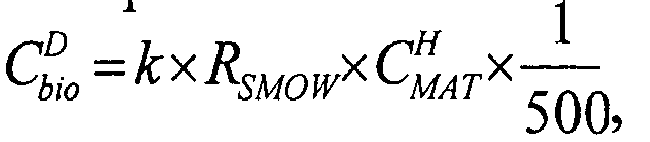
- In one embodiment of the determination method according to the present invention, said known natural protein is bovine serum albumin (BSA), egg albumin or lysozyme.
- In one embodiment of the determination method according to the present invention, said biological sample is a microorganism sample or a biomacromolecule sample. In its preferred embodiments, said biomacromolecule is a ribonucleic acid (RNA), a protein or a polypeptide.
- In fourth aspect, the present invention provides use of the above-mentioned determination method in ascertaining the deuterium content of a biological sample having the optimal heat stability or ascertaining the optimal deuteration conditions of a biological sample.
- In fifth aspect, the present invention provides use of the above-mentioned determination method in confirming the close correlation between the stability and heat resistance of a microorganism or a biomacromolecule and the deuterium content thereof.
- A confirmation and determination method according to the present invention comprises the following steps: selecting a matrix, mixing homogeneously a prepared biological sample with a suitable amount of the matrix followed by lyophilization to form a lyophilized mixed sample, sufficiently oxidizing the lyophilized mixed sample with oxidants through burning in order to oxidize the hydrogen in the mixed sample to water, reacting the resulting water after separation with zinc to generate hydrogen gas. The 2H/1H ratio of the generated hydrogen gas is determined with a gas isotope mass spectrometer, wherein the 2H/1H ratio of the sample is expressed with δDSA-SMOW, i.e. the change value of deuterium/hydrogen ratio of the sample relative to deuterium/hydrogen ratio of the international standard - Standard Mean Ocean Water (SMOW). Comparison between the results determined from samples prepared from a deuterated biological sample and those of a corresponding natural biological sample is made so as to confirm whether hydrogen/deuterium exchange has occurred in the microorganism and biomacromolecule, and the percent content of deuterium in the biological sample is calculated using corresponding formula. Further studies can ascertain the optimal deuterium content of a biological sample or the optimal deuteration conditions, and confirm that the stability and heat resistance of a microorganism or biological molecule are closely correlative with the deuterium content thereof.
- A specific method according to the present invention comprises selecting a known natural protein as matrix and subjecting each of purified biological samples to the following manipulations: diluting the sample with phosphate-buffered saline (PBS) to form a sample solution having a desired concentration, taking 0.1 ml of the sample solution and adding it to 0.5 ml of a matrix solution containing 5 mg known natural protein to form a mixed sample, placing then the mixed sample into a lyophil apparatus of Type GEL-1 for lyophilization to such an extent that the water content of the mixed sample is <3% after lyophilization (determined by Karl Fischer Titrator method), removing adsorbed water in the lyophilized mixed sample and CuO (500 mg) and V2O5 (50 mg) as oxidants at a temperature of 100°C for 15-30 minutes, and oxidizing the lyophilized mixed sample with the oxidants by burning at 800-950°C for 15-30 minutes so that the sample is fully oxidized to CO2, H2O, NO2 and so on after complete reaction, separating the water in the product and transferred it into a reaction tube for water sample, and then reacting the water with zinc at 400-450°C for 1.5-2.5 hours and thereby converting into hydrogen gas, determining the 2H/1H ratio of the hydrogen gas with a gas isotope mass spectrometer MAT-251.
- The δDSA-SMOW value of the hydrogen isotope in sample is represented with the change of the deuterium/hydrogen ratio of sample relative to the deuterium/hydrogen ratio of SMOW, and is defined as follows:

wherein RSA represents the 2H/1H ratio of sample; RSMOW represents the 2H/1H ratio of SMOW (which value is 155.76×10⁻⁶); only the integral value of δDSA-SMOW is generally adopted. From the δDSA-SMOW value of sample, the percent content of deuterium in the biological sample can be calculated. - A specific determination method according to the present invention comprises the following steps:
- 1. selecting a known natural protein as matrix, and formulated it with PBS to form a matrix solution having a concentration of 10 mg/ml.
- 2. after purification, diluting each of biological samples with PBS to form a diluted sample solution having a desired concentration.
- 3. taking 0.1 ml of the diluted solution of biological sample and added it into 0.5 ml of the matrix solution having a concentration of 10 mg/ml, and then placing the mixed sample into a lyophil apparatus of Type GEL-1 for lyophilization.
- 4. removing adsorbed water in the lyophilized mixed sample and the oxidants CuO (500 mg) and V205 (50 mg) at a temperature of 100°C for 15-30 minutes, and then oxidizing the lyophilized mixed sample with the oxidants by burning at 800-950°C for 15-30 minutes so that after complete reaction the sample is fully oxidized to CO2, H2O, NO2 and so on, separating the water in the product and transferred it into a reaction tube for water sample, and then reacting the water with zinc at 400 °C-450°C for 1.5-2.5 hours and thereby converting into hydrogen gas, determining the 2H/1H ratio of hydrogen gas with a gas isotope mass spectrometer MAT-251.
- 5. According to the δDSA-SMOW of sample, calculating the percent content of deuterium in the biological sample, wherein the specific calculation formulae are described as follows.
Step I,
- Step II, RSA represents the 2H/1H ratio of mixed sample consisting of matrix protein and biological sample, wherein each of the parameters is showed in Table 1.
Table 1. The parameters of matrix protein and biological sample Substance Symbol Amount Of substance (µg) Percent Content of Hydrogen (%) Percent Content of Deuterium (%) matrix protein MAT mMAT 

biological sample bio mbio 


Step III,
wherein RSMOW is 155.76×10⁻⁶, δDMAT-SMOW can be determined,

- Step IV, if k is defined as



- The gas isotope mass spectrometry assisted by matrix has obvious advantages that: firstly, the result of determination is precise and has a good repeatability; secondly, the amount of sample used in this method is extremely small; thirdly, the determination method is simple and easy to manipulate, and has low cost; fourthly, there is a linear correlation between the value of δDSA-SMOW of sample and the amount of biological sample added, and thus the value of

-
- Fig. 1 shows the results of comparison experiments about the heat stability of JEVs cultured in different environments.
The deuterated JEV (cultured with 36% D2O) and the non-deuterated JEV (cultured without D2O) are inactivated by heat at 50°C, and the decrease in Plaque Forming Unit (PFU) titer is plotted against time. When the inactivation times are the same, the decrease in PFU titer of the deuterated JEV is smaller than that of the non-deuterated JEV. In Fig. 1, VD represents the deuterated JEV, and VH represents the non-deuterated JEV. - Fig. 2 shows the results of comparison experiments about the stability of HAVs cultured in different environments.
The deuterated HAV (HAV particle resuspended in 87% D2O) and the non-deuterated HAV (HAV particle resuspended in H2O) are stayed at 10°C, and the decrease in Medial Cell Culture Infectious Dose (CCID50) titer is plotted against time. When the standing times are the same, the decrease in CCID50 titer of the deuterated HAV is smaller than that of the non-deuterated HAV. In Fig. 2, VD represents the deuterated HAV, and VH represents the non-deuterated HAV. - Fig. 3 shows the δDSA-SMOW - mbio/mBSA graph of VD sample prepared from the deuterated HAV.
- Fig. 4 shows the δDSA-SMOW - mbio/mBSA graph of RNA-VD sample prepared from ribonucleic acid (RNA) of the deuterated HAV.
- Fig. 5 shows the δDSA-SMOW - mbio/mBSA graph of the deuterated bovine serum albumin (BSA) sample.
- The following non-limiting examples are intended to explain the present invention in more detail, but not to limit the scope of the present invention in any way.
- The primary chick embryo cells (CECs) were used to reproduce JEV. Firstly, CECs were allowed to grow in a culture medium without heavy water (D2O) for 24h, and then were cultured in a maintenance medium containing 36% D2O at 37°C for 2 days. The maintenance medium containing heavy water was discarded, and JEV was added into the cells and adsorbed for 2h. After adsorption, the adsorption solution was discarded, the cells were washed twice with PBS, and then a fresh maintenance medium containing D2O was added, and the resulting deuterated JEV (represented with VD) was harvested after 3 days. In above-mentioned culture process, when CECs were cultured with a culture medium without D2O and infected with JEV, a non-deuterated JEV (represented with VH) was obtained. In above-mentioned culture process, when CECs were cultured with a culture medium containing D2O but were not infected with JEV, a deuterated cell control without virus (represented with CD) was obtained. All samples of virus and the corresponding cell control without virus were purified by precipitation with polyethylene glycol (PEG), filtration with 0.45 µm filter, ultracentrifugation with 40% sucrose underlaid, and the like. The virus samples were inactivated with formaldehyde, and then their titers were determined by hemagglutination method and expressed with Hemagglutination Unit (HAU).
- It was found that the decrease in PFU titer of the deuterated JEV and that of the non-deuterated JEV varied with the inactivation time at 50°C, and the decrease in PFU titer of the non-deuterated JEV was greater than that of the deuterated JEV under the same inactivation time (see Fig. 1). This indicated that JEV reproduced in the presence of D2O had an increased heat resistance.
- BSA was selected as matrix. After purification, the deuterated JEV, the non-deuterated JEV and the deuterated cell control without virus were subjected respectively to the following manipulations: it was diluted with PBS to form a diluted sample solution having a desired concentration, 0.1 ml of the diluted sample solution was taken and added into 0.5 ml of a PBS solution containing 5 mg BSA. Then, the resulting mixed sample was placed into a lyophil apparatus of Type GEL-1 for lyophilization to the extent that the water content of the mixed sample was <3% after lyophilization. The resulting samples were represented with VD, VH and CD, respectively. Adsorbed water in the lyophilized mixed sample and the oxidants CuO (500 mg) and V2O5 (50 mg) was removed at a temperature of 100°C for 20 minutes, and then the oxidation reaction of the lyophilized mixed sample with the oxidants was carried out by burning at 850°C for 30 minutes so that after complete reaction the sample was fully oxidized to carbon dioxide (CO2), water (H2O), nitrogen dioxide (NO2) and so on. The water in the product was separated and transferred into a reaction tube for water sample, and then the water was reacted with zinc at 420°C for 2 hours and thereby converted into hydrogen gas, the 2H/1H ratio of which was determined with a gas isotope mass spectrometer MAT-251. The determined values of δDSA-SMOW of samples VD, VH and CD were shown in Table 2.
Table 2. The values of δDSA-SMOW of samples VD, VH and CD Sample δDSA-SMOW Sample (µg) 0 5 10 20 VD -76±3 -35±3 -8±4 42±3 VH -72±2 -54±0 -60±0 CD -75±3 -65±0 -70±7 - Because the value of δDSA-SMOW of the matrix BSA was a constant value, the values of δDSA-SMOW of the mixed samples reflected the levels of 2H/1H ratio of the added biological samples, and reflected the added amounts thereof. When the added amounts were the same, a larger value of δDSA-SMOW of the mixed sample indicated a higher 2H/1H ratio of the biological sample; when the added biological samples were from the same source, a larger value of δDSA-SMOW of the mixed sample indicated a larger added amount of the biological sample.
- In Table 2, it can be seen that the value of δDSA-SMOW of sample VD was larger than that of sample VH when the added amounts of JEV were the same; and the value of δDSA-SMOW of sample VD increased with the increase in the added amount of virus. The increase in δDSA-SMOW of sample VD was unlikely to be obtained from the possible contaminating cellular components during the preparation of viral sample, because the values of δDSA-SMOW of sample CD, the cellular components control without virus, were similar at different dosages, and ranged from -65 to -75, there was no positive correlation with the dosage, and the δDSA-SMOW of sample CD was relatively close to that of the matrix BSA. This indicated that the deuterium in sample CD, the cellular components control, was under the natural state. Therefore, compared with JEV obtained in the culture medium without D2O, the 2H/1H ratio of the JEV reproduced in the presence of D2O was increased significantly, i.e., the 2H/1H ratio of the deuterated JEV was higher than that of the non-deuterated JEV. This indicated that deuterium was enriched in the JEV reproduced in the presence of D2O, i.e. the deuterium content thereof was increased, and that deuterium atoms replaced some hydrogen atoms in the JEV particle.
- The vaccine strain of hepatitis A virus (Strain H2) was reproduced in and obtained from the diploid cells of human lung. The cells infected with Strain H2 and the non-infected cells, the control, were harvested, and then resuspended with PBS, and were treated three times with freeze-thaw and ultrasonication, and then centrifugated at 8000 g for 30 minutes to remove the cell debris. The obtained supernatant was extracted three times with chloroform, and then the virus or the cell control was harvested by ultracentrifugation. The deuteration of sample was carried out as follows: the sample was resuspended in a minimum essential medium (MEM) containing 87% heavy water, and incubated at 36°C for one week. The deuterated sample was subjected to ultracentrifugation, the MEM containing heavy water was discarded, and the precipitate was washed well with distilled water and then ultracentrifugated again to harvest the deuterated sample. The washing process was repeated three times to ensure that the deuterated sample almost did not contain free heavy water. The CCID50 titer of viral sample was determined by a cell culture method.
- It was found that the decrease in CCID50 titer of the deuterated HAV and that of the non-deuterated HAV varied with the standing time at 10°C, and the decrease in CCID50 titer of the non-deuterated HAV was greater than that of the deuterated HAV under the same standing time (see Fig. 2). This indicated that HAV incubated in the presence of D2O had an increased stability.
- BSA was selected as matrix. The deuterated HAV, the non-deuterated HAV and the deuterated cell control were subjected respectively to the following manipulations: it was diluted with PBS to form a diluted sample solution having a desired concentration, 0.1 ml of the diluted sample solution was taken and added into 0.5 ml of PBS solution containing 5 mg BSA. Then, the mixed sample was placed into a lyophil apparatus of Type GEL-1 for lyophilization to such an extent that the water content of the mixed sample was <3% after lyophilization. The resulting samples were represented with VD, VH and CD, respectively. Adsorbed water in the lyophilized mixed sample and the oxidants CuO (500 mg) and V2O5 (50 mg) was removed at a temperature of 100°C for 20 minutes, and then the oxidation reaction of the lyophilized mixed sample with the oxidants was carried out by burning at 850°C for 30 minutes so that after complete reaction the sample was fully oxidized to carbon dioxide (CO2), water (H2O), nitrogen dioxide (NO2) and so on. The water in the product was separated and transferred into a reaction tube for water sample, and then the water was reacted with zinc at 420°C for 2 hours and thereby converted into hydrogen gas, the 2H/1H ratio of which was determined with a gas isotope mass spectrometer MAT-251.
- The δDSA-SMOW values of sample VD prepared from the deuterated HAV were determined. The significant increase in δDSA-SMOW value of sample VD cannot be resulted from the free water in the deuterated HAV particle, because the δDSA-SMOW value of the last wash solution (SV) was consistent with that of distilled water; and this cannot be resulted from the possible contaminating deuterated cellular components during the preparation of viral sample neither, because the ΔDSA-SMOW value of sample CD was at the background level. Therefore, the significant increase in δDSA-SMOW value of sample VD indicated that the 2H/1H ratio of HAV was increased after incubation in D2O, and the hydrogen/deuterium exchange occurred in the HAV particles and deuterium was enriched in them. Furthermore, the δDSA-SMOW value of sample VD increased linearly with the increase in the added amount of deuterated HAV, i.e., the δDSA-SMOW value of sample VD was directly proportional to the added amount of deuterated HAV within a defined range. The relation between the δDSA-SMOW value of sample VD and the added amount of deuterated HAV was shown in Table 3.
Table 3. The relation between the δDSA-SMOW of sample VD prepared from deuterated HAV and the added amount of deuterated HAV Amount of the deuterated HAV (mbio, µg) Amount of the matrix BSA (MBSA, µg) mbio/mBSA δDSA-SMOW 0 5000 0 -88 0.2 0.04×10⁻³ -51 0.5 0.10×10⁻³ 22 1 0.20×10⁻³ 55 2 0.40×10⁻³ 291 - The δDSA-SMOW was plotted against mbio/mBSA (see Fig. 3).
- It can be known from Fig. 3 that R2 of the straight line was 0.9762, and thus there was a good linear correlation. The slope of the straight line was

-
- (a) The amino acid composition of BSA was known from literatures, and the total number of hydrogen atoms was calculated as 4614 and was then divided by 66408.77, the theoretical molecular weight of BSA, and thereby the theoretical percent content of 1H was obtained as

- (b) According to the slope of the straight line, the percent content of deuterium in the deuterated HAV was calculated as

- The well-washed deuterated HAV or cell control was used to prepare the deuterated RNA, and the method referred to one-step extraction method with guanidine isothiocyanate-phenol. RNA sample was quantified by spectrophotometry, and the OD260/OD280 ratio was calculated to characterize the purity of RNA.
- BSA was selected as matrix. The RNAs extracted from the deuterated HAV, the non-deuterated HAV and the deuterated cell control were subjected respectively to the following manipulations: the RNA was diluted with PBS to form a diluted sample solution having a desired concentration, 0.1 ml of the diluted sample solution was taken and added into 0.5 ml of PBS solution containing 5 mg BSA. Then, the mixed sample was placed into a lyophil apparatus of Type GEL-1 for lyophilization to such an extent that the water content of the mixed sample was <3% after lyophilization. The resulting samples are represented with RNA-VD, RNA-VH and RNA-CD, respectively. Adsorbed water in the lyophilized mixed sample and the oxidants CuO (500 mg) and V2O5 (50 mg) was removed at a temperature of 100°C for 20 minutes, and then the oxidation reaction of the lyophilized mixed sample with the oxidants was carried out by burning at 850°C for 30 minutes, after complete reaction the sample was fully oxidized to carbon dioxide (CO2), water (H2O), nitrogen dioxide (NO2) and so on. The water in the product was separated and transferred into a reaction tube for water sample, and then the water was reacted with zinc at 420°C for 2 hours and thereby converted into hydrogen gas, the 2H/1H ratio of which was determined with a gas isotope mass spectrometer MAT-251.
- The values of δDSA-SMOW of samples RNA-VD and RNA-VH were determined. The results showed that the RNA of deuterated HAV has a relatively high deuterium content, and the value of δDSA-SMOW of RNA-VD increased with the increase in the amount of RNA added (see Table 4). Whereas, the deuterium content of the non-deuterated viral sample RNA-VH or the deuterated cell control sample RNA-CD was extremely low, and this indicated that the increase in δDSA-SMOW value of sample RNA-VD was due to the high 2H/1H ratio in the added RNA of deuterated HAV, and the increase in 2H/1H ratio in the RNA of deuterated HAV was due to the exchange of hydrogen by deuterium.
Table 4. The relation between the δDSA-SMOW of sample RNA-VD and the added amount of deuterated RNA Amount of the deuterated RNA (mbio, µg) Amount of the matrix BSA (mBSA, µg) mbio/mBSA δDSA-SMOW 0 5000 0 -85 1 0.2×10⁻³ -60 2 0.4×10⁻³ -52 3 0.6×10⁻³ -36 4 0.8×10⁻³ -17 10 2×10⁻³ 86 - The δDSA-SMOW was plotted aganist mbio/mBSA (see Fig. 4).
- It can be known from Fig. 4 that R2of the straight line is 0.9965, and thus there was a good linear correlation. The slope of the straight line was

-
- (a) The amino acid composition of BSA was known from literatures, and the total number of hydrogen atoms was calculated as 4614 and then divided by 66408.77, the theoretical molecular weight of BSA, and thereby the theoretical percent content of 1H was obtained as

- (b) According to the slope of the straight line, the percent content of deuterium in the RNA of deuterated HAV was calculated as

- The deuteration of BSA was carried out as follows: 500 mg of BSA was diluted in 10 ml of phosphate-buffered saline (PBS) containing 90% heavy water, and thereto the protease inhibitor phenylmethylsulfonyl fluoride (PMSF) was added to a final concentration of 1 mM, and the bacteriostat sodium azide was added to a final concentration of 0.2 mg/ml, and then the resulting mixture was incubated at 20°C for one week. The deuterated BSA was dialyzed against 1000 ml of PBS, and the solution was changed four times in order to completely remove the free heavy water. The deuterated BSA sample obtained after the last dialysis was determined for its protein concentration by spectrophotometry.
- BSA was selected as matrix. The deuterated BSA was diluted with PBS to form a diluted sample solution having a desired concentration, 0.1 ml of the diluted sample solution was taken and added into 0.5 ml of PBS solution containing 5 mg BSA. Then, the mixed sample was placed into a lyophil apparatus of Type GEL-1 for lyophilization to such an extent that the water content of the mixed sample was <3% after lyophilization, and thereby the deuterated BSA sample to be tested was obtained. Adsorbed water in the lyophilized mixed sample and the oxidants CuO (500 mg) and V2O5 (50 mg) was removed at a temperature of 100°C for 20 minutes, and then the oxidation reaction of the lyophilized mixed sample with the oxidants was carried out by burning at 850°C for 30 minutes so that after complete reaction the sample was fully oxidized to carbon dioxide (CO2), water (H2O), nitrogen dioxide (NO2) and so on. The water in the product was separated and transferred into a reaction tube for water sample, and then the water was reacted with zinc at 420°C for 2 hours and thereby converted into hydrogen gas, the 2H/1H ratio of which was determined with a gas isotope mass spectrometer MAT-251.
- The δDSA-SMOW value of the deuterated BSA sample was determined. The results showed that the deuterated BSA had an increased content of deuterium (see Table 5).
Table 5. The relation between the δDSA-SMOW of the deuterated BSA sample and the added amount of the deuterated BSA Amount of the deuterated BSA(mbio, µg) 0 30 50 70 90 Amount of the matrix BSA (mBSA, µg) 5000 mbio/ m BSA0 6×10⁻³ 10×10-3 14×10-3 18×10-3 δDSA-SMOW -116 -92 -70 -52 -39 - The δDSA-SMOW was plotted against mbio/mBSA (see Fig. 5).
- It can be known from Fig. 5 that R2 of the straight line was 0.9947, and thus there was a good linear correlation. The slope of the straight line was

-
- (a) The amino acid composition of BSA was known from literatures, and the total number of hydrogen atoms was calculated as 4614 and then divided by 66408.77, the theoretical molecular weight of BSA, and thereby the theoretical percent content of 1H was obtained as

- (b) According to the slope of the straight line, the percent content of deuterium in the deuterated BSA was calculated as

Claims (12)
- A method for confirming hydrogen/deuterium exchange in the structure of a biological sample, comprising the following steps:(1) selecting a known natural protein as matrix, and formulating it with PBS to form a matrix solution having an appropriate concentration;(2) subjecting a deuterated biological sample to be confirmed and a corresponding natural biological sample respectively to the following manipulations: diluting the sample obtained after purification with PBS to form a diluted sample having a desired concentration, mixing homogeneously the diluted sample with a suitable amount of the matrix solution followed by lyophilization to form a lyophilized mixed sample, sufficiently oxidizing the lyophilized mixed sample with oxidants through burning in order to oxidize the hydrogen in the mixed sample to water, reacting the resulting water after separation with zinc to generate hydrogen gas, and determining the 2H/1H ratio of the generated hydrogen gas with a gas isotope mass spectrometer;(3) comparing the determined 2H/1H ratio of the generated hydrogen gas of the deuterated biological sample to be confirmed with that of the corresponding natural biological sample, wherein if the 2H/1H ratio of the generated hydrogen gas of the deuterated biological sample to be confirmed is significantly higher than that of the corresponding natural biological sample, it is confirmed that hydrogen/deuterium exchange has occurred in the structure of the deuterated biological sample to be confirmed.
- The method for confirming hydrogen/deuterium exchange in the structure of a biological sample according to claim 1, characterized in that said known natural protein is bovine serum albumin (BSA), egg albumin or lysozyme.
- The method for confirming hydrogen/deuterium exchange in the structure of a biological sample according to claim 1, characterized in that said biological sample is a microorganism sample or a biomacromolecule sample.
- The method for confirming hydrogen/deuterium exchange in the structure of a biological sample according to claim 3, characterized in that said biomacromolecule is a ribonucleic acid (RNA), a protein or a polypeptide.
- Use of the method for confirming hydrogen/deuterium exchange in the structure of a biological sample according to claim 1 in confirming the close correlation between the stability and heat resistance of microorganisms or biomacromolecules and the deuterium/hydrogen ratio thereof.
- A method for determining the percent content of deuterium in the structure of a biological sample, comprising the following steps:(1) selecting a known natural protein as matrix, and formulating it with PBS to form a matrix solution having an appropriate concentration;(2) diluting a biological sample obtained after purification with PBS to various concentrations, subjecting multiple sample solutions that have different concentrations but the same volume respectively to the following manipulations: mixing homogeneously the sample solution with a suitable amount of the matrix solution followed by lyophilization to form a lyophilized mixed sample, sufficiently oxidizing the lyophilized mixed sample with oxidants through burning in order to oxidize the hydrogen in the mixed sample to water, reacting the resulting water after separation with zinc to generate hydrogen gas, and determining the 2H/1H ratio of the generated hydrogen gas with a gas isotope mass spectrometer; and(3) according to a formula, calculating the percent content of deuterium in the biological sample by utilizing the above 2H/1H ratios of hydrogen gas determined for the multiple samples.
- The method for determining the percent content of deuterium in the structure of a biological sample according to claim 6, characterized in that said step (3) is carried out as follows:(a) plotting the determined 2H/1H ratios of the multiple samples (expressed with δDSA-SMOW) against the amount of biological sample/amount of matrix protein (expressed with mbio/mMAT), and thus obtaining a straight line having a good linear correlation,

 (b) calculating the theoretical percent content of 1H in the matrix protein,
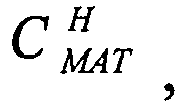 (c) according to the slope k, calculating the percent content of deuterium in the biological sample aswherein RSMOW represents the 2H/1H ratio of SMOW and its value is 155.76×10⁻⁶.
- The method for determining the percent content of deuterium in the structure of a biological sample according to claim 6, characterized in that said known natural protein is bovine serum albumin (BSA), egg albumin or lysozyme.
- The method for determining the percent content of deuterium in the structure of a biological sample according to claim 6, characterized in that said biological sample is a microorganism sample or a biomacromolecule sample.
- The method for determining the percent content of deuterium in the structure of a biological sample according to claim 9, characterized in that said biomacromolecule is a ribonucleic acid (RNA), a protein or a polypeptide.
- Use of the method for determining the percent content of deuterium in the structure of a biological sample according to claim 6 or 7 in ascertaining the deuterium content of a biological sample having the optimal heat stability or ascertaining the optimal deuteration conditions of a biological sample.
- Use of the method for determining the percent content of deuterium in the structure of a biological sample according to claim 6 or 7 in confirming the close correlation between the stability and heat resistance of a microorganism or a biomacromolecule and the deuterium content thereof.
Applications Claiming Priority (2)
| Application Number | Priority Date | Filing Date | Title |
|---|---|---|---|
| CN03142290.XA CN1276258C (en) | 2003-08-13 | 2003-08-13 | Biological sample structure hydrogen-deuterium substitution verification and deuterium percentage content determining method |
| PCT/CN2004/000939 WO2005050196A1 (en) | 2003-08-13 | 2004-08-12 | Method of confirming hydrogen/deuterium exchange in constructions of biological samples and determining the percentage of deuterium in biological samples |
Publications (3)
| Publication Number | Publication Date |
|---|---|
| EP1657548A1 true EP1657548A1 (en) | 2006-05-17 |
| EP1657548A4 EP1657548A4 (en) | 2007-09-19 |
| EP1657548B1 EP1657548B1 (en) | 2010-07-21 |
Family
ID=34579458
Family Applications (1)
| Application Number | Title | Priority Date | Filing Date |
|---|---|---|---|
| EP04762075A Expired - Lifetime EP1657548B1 (en) | 2003-08-13 | 2004-08-12 | Method of confirming hydrogen/deuterium exchange in constructions of biological samples and determining the percentage of deuterium in biological samples |
Country Status (5)
| Country | Link |
|---|---|
| EP (1) | EP1657548B1 (en) |
| CN (1) | CN1276258C (en) |
| AT (1) | ATE475091T1 (en) |
| DE (1) | DE602004028253D1 (en) |
| WO (1) | WO2005050196A1 (en) |
Families Citing this family (5)
| Publication number | Priority date | Publication date | Assignee | Title |
|---|---|---|---|---|
| CN105866228A (en) * | 2016-01-13 | 2016-08-17 | 浙江海洋学院 | Method for quantitative determination of hydrogen gas and deuterium gas in mixed gas |
| CN109663456B (en) * | 2019-01-09 | 2021-07-13 | 中国工程物理研究院材料研究所 | Method and system for enriching trace heavy nuclear hydrogen isotopes in hydrogen isotopes by hydrogen replacement adsorption method |
| CN111307921B (en) * | 2019-11-26 | 2022-11-25 | 中国工程物理研究院材料研究所 | Absolute measurement quadrupole mass spectrum hydrogen isotope gas abundance analysis method and device |
| CN118348136A (en) * | 2024-03-07 | 2024-07-16 | 常州制药厂有限公司 | Method for analyzing content of isotope impurities of deuterium-celecoxib |
| CN119534064B (en) * | 2024-11-06 | 2025-10-17 | 中国科学院合肥物质科学研究院 | Simulated lunar soil preparation system with low water content and known H isotopes |
Family Cites Families (1)
| Publication number | Priority date | Publication date | Assignee | Title |
|---|---|---|---|---|
| US5272054A (en) * | 1992-03-26 | 1993-12-21 | Syntex (U.S.A.) Inc. | Assay by enzyme-catalyzed isotopic exchange |
-
2003
- 2003-08-13 CN CN03142290.XA patent/CN1276258C/en not_active Expired - Fee Related
-
2004
- 2004-08-12 WO PCT/CN2004/000939 patent/WO2005050196A1/en not_active Ceased
- 2004-08-12 DE DE602004028253T patent/DE602004028253D1/en not_active Expired - Lifetime
- 2004-08-12 AT AT04762075T patent/ATE475091T1/en not_active IP Right Cessation
- 2004-08-12 EP EP04762075A patent/EP1657548B1/en not_active Expired - Lifetime
Non-Patent Citations (5)
| Title |
|---|
| JIANGSEN M. ET AL CHINESE SCIENCE BULLETIN vol. 49, no. 3, February 2004, pages 253 - 257 * |
| See also references of WO2005050196A1 * |
| WONG W W ET AL: "DEUTERIUM AND OXYGEN-18 MEASUREMENTS ON MICROLITER SAMPLES OF URINE PLASMA SALIVA AND HUMAN MILK" AMERICAN JOURNAL OF CLINICAL NUTRITION, vol. 45, no. 5, 1987, pages 905-913, XP002446377 ISSN: 0002-9165 * |
| WONG W W ET AL: "MEASUREMENT OF IN-VIVO CHOLESTEROL SYNTHESIS FROM HEAVY WATER A RAPID PROCEDURE FOR THE ISOLATION COMBUSTION AND ISOTOPIC ASSAY OF ERYTHROCYTE CHOLESTEROL" JOURNAL OF LIPID RESEARCH, vol. 32, no. 6, 1991, pages 1049-1056, XP002446378 ISSN: 0022-2275 * |
| YIHUI HE ET AL: "A method for quantitative determination of deuterium content in biological material" RAPID COMMUNICATIONS IN MASS SPECTROMETRY WILEY UK, vol. 19, no. 6, 2005, pages 838-842, XP002446379 ISSN: 0951-4198 * |
Also Published As
| Publication number | Publication date |
|---|---|
| EP1657548A4 (en) | 2007-09-19 |
| EP1657548B1 (en) | 2010-07-21 |
| CN1276258C (en) | 2006-09-20 |
| DE602004028253D1 (en) | 2010-09-02 |
| WO2005050196A1 (en) | 2005-06-02 |
| ATE475091T1 (en) | 2010-08-15 |
| CN1580779A (en) | 2005-02-16 |
Similar Documents
| Publication | Publication Date | Title |
|---|---|---|
| Dizdaroglu et al. | Characterization of free radical-induced base damage in DNA at biologically relevant levels | |
| Kim et al. | Structure and transport properties of a novel, heavily fluorinated carbohydrate analogue | |
| Davidson et al. | Mitochondrial malate dehydrogenase: A new genetic polymorphism in man | |
| Burnett et al. | A dimer of diphosphopyridine nucleotide | |
| Norman et al. | Molecular interactions in irradiated solids | |
| Read et al. | A resin-based method for the preparation of molecular nitrogen for 15N analysis from urinary and plasma components | |
| Schuler et al. | Resonance Raman and molecular orbital studies of the effects of deuteration on the vibrational structure of the p-benzosemiquinone radical anion | |
| EP1657548B1 (en) | Method of confirming hydrogen/deuterium exchange in constructions of biological samples and determining the percentage of deuterium in biological samples | |
| Aisen et al. | Physical and chemical studies on ceruloplasmin | |
| Gyenes et al. | Isolation of Antibodies on Antigen–Polystyrene Conjugates | |
| Powell et al. | The effect of monochromatic ultraviolet radiation on the interfering property of influenza virus | |
| Hunt et al. | Radiation damage and free radical production in irradiated ribonuclease | |
| CN113024595B (en) | 1,3,5, 7-tetramethyl-ring tetrasiloxane-based ciprofloxacin fluorescent probe and application thereof in iron ion detection | |
| Michaels et al. | Interaction of the radiosensitizer paranitroacetophenone with radiation-induced radicals on nucleic acid components | |
| CN118791510A (en) | A probe for detecting bacteria in the air and its preparation method and application | |
| Nissim et al. | Rapid gas chromatographic-mass spectrometric analysis of [15N] urea: application to human metabolic studies | |
| Barlow et al. | Preparation and characterization of tritiated heparin | |
| CN112269021B (en) | IgM quality control product and preparation method thereof | |
| Garrison et al. | Radiation-chemical oxidation of peptides in the solid state | |
| CN109444287A (en) | A kind of LC-MS/MS quantitative detecting method of alpha-fetoprotein | |
| CN109613255A (en) | For detecting the magnetic microparticle separating chemiluminescence immunoassay of heat shock protein 70 (HSP70) | |
| CA1070670A (en) | Labelled derivatives of digoxin and digitoxin | |
| CN114235766A (en) | Method for detecting vitexin | |
| Kuzin et al. | Effect of α-particle microbeam irradiation on the synthesis of deoxyribonucleic acid in tissue culture | |
| Stevens et al. | Inactivation of Alkaline Phosphatase by O21 Δ g |
Legal Events
| Date | Code | Title | Description |
|---|---|---|---|
| PUAI | Public reference made under article 153(3) epc to a published international application that has entered the european phase |
Free format text: ORIGINAL CODE: 0009012 |
|
| 17P | Request for examination filed |
Effective date: 20060313 |
|
| AK | Designated contracting states |
Kind code of ref document: A1 Designated state(s): AT BE BG CH CY CZ DE DK EE ES FI FR GB GR HU IE IT LI LU MC NL PL PT RO SE SI SK TR |
|
| DAX | Request for extension of the european patent (deleted) | ||
| A4 | Supplementary search report drawn up and despatched |
Effective date: 20070822 |
|
| 17Q | First examination report despatched |
Effective date: 20080425 |
|
| GRAP | Despatch of communication of intention to grant a patent |
Free format text: ORIGINAL CODE: EPIDOSNIGR1 |
|
| GRAS | Grant fee paid |
Free format text: ORIGINAL CODE: EPIDOSNIGR3 |
|
| GRAA | (expected) grant |
Free format text: ORIGINAL CODE: 0009210 |
|
| AK | Designated contracting states |
Kind code of ref document: B1 Designated state(s): AT BE BG CH CY CZ DE DK EE ES FI FR GB GR HU IE IT LI LU MC NL PL PT RO SE SI SK TR |
|
| REG | Reference to a national code |
Ref country code: GB Ref legal event code: FG4D |
|
| REG | Reference to a national code |
Ref country code: CH Ref legal event code: EP |
|
| REG | Reference to a national code |
Ref country code: IE Ref legal event code: FG4D |
|
| REF | Corresponds to: |
Ref document number: 602004028253 Country of ref document: DE Date of ref document: 20100902 Kind code of ref document: P |
|
| REG | Reference to a national code |
Ref country code: NL Ref legal event code: VDEP Effective date: 20100721 |
|
| PG25 | Lapsed in a contracting state [announced via postgrant information from national office to epo] |
Ref country code: NL Free format text: LAPSE BECAUSE OF FAILURE TO SUBMIT A TRANSLATION OF THE DESCRIPTION OR TO PAY THE FEE WITHIN THE PRESCRIBED TIME-LIMIT Effective date: 20100721 Ref country code: FI Free format text: LAPSE BECAUSE OF FAILURE TO SUBMIT A TRANSLATION OF THE DESCRIPTION OR TO PAY THE FEE WITHIN THE PRESCRIBED TIME-LIMIT Effective date: 20100721 Ref country code: AT Free format text: LAPSE BECAUSE OF FAILURE TO SUBMIT A TRANSLATION OF THE DESCRIPTION OR TO PAY THE FEE WITHIN THE PRESCRIBED TIME-LIMIT Effective date: 20100721 |
|
| PG25 | Lapsed in a contracting state [announced via postgrant information from national office to epo] |
Ref country code: BG Free format text: LAPSE BECAUSE OF FAILURE TO SUBMIT A TRANSLATION OF THE DESCRIPTION OR TO PAY THE FEE WITHIN THE PRESCRIBED TIME-LIMIT Effective date: 20101021 Ref country code: CY Free format text: LAPSE BECAUSE OF FAILURE TO SUBMIT A TRANSLATION OF THE DESCRIPTION OR TO PAY THE FEE WITHIN THE PRESCRIBED TIME-LIMIT Effective date: 20100721 Ref country code: PL Free format text: LAPSE BECAUSE OF FAILURE TO SUBMIT A TRANSLATION OF THE DESCRIPTION OR TO PAY THE FEE WITHIN THE PRESCRIBED TIME-LIMIT Effective date: 20100721 Ref country code: PT Free format text: LAPSE BECAUSE OF FAILURE TO SUBMIT A TRANSLATION OF THE DESCRIPTION OR TO PAY THE FEE WITHIN THE PRESCRIBED TIME-LIMIT Effective date: 20101122 Ref country code: SI Free format text: LAPSE BECAUSE OF FAILURE TO SUBMIT A TRANSLATION OF THE DESCRIPTION OR TO PAY THE FEE WITHIN THE PRESCRIBED TIME-LIMIT Effective date: 20100721 |
|
| PG25 | Lapsed in a contracting state [announced via postgrant information from national office to epo] |
Ref country code: GR Free format text: LAPSE BECAUSE OF FAILURE TO SUBMIT A TRANSLATION OF THE DESCRIPTION OR TO PAY THE FEE WITHIN THE PRESCRIBED TIME-LIMIT Effective date: 20101022 Ref country code: SE Free format text: LAPSE BECAUSE OF FAILURE TO SUBMIT A TRANSLATION OF THE DESCRIPTION OR TO PAY THE FEE WITHIN THE PRESCRIBED TIME-LIMIT Effective date: 20100721 Ref country code: BE Free format text: LAPSE BECAUSE OF FAILURE TO SUBMIT A TRANSLATION OF THE DESCRIPTION OR TO PAY THE FEE WITHIN THE PRESCRIBED TIME-LIMIT Effective date: 20100721 Ref country code: MC Free format text: LAPSE BECAUSE OF NON-PAYMENT OF DUE FEES Effective date: 20100831 |
|
| PG25 | Lapsed in a contracting state [announced via postgrant information from national office to epo] |
Ref country code: DK Free format text: LAPSE BECAUSE OF FAILURE TO SUBMIT A TRANSLATION OF THE DESCRIPTION OR TO PAY THE FEE WITHIN THE PRESCRIBED TIME-LIMIT Effective date: 20100721 |
|
| PLBE | No opposition filed within time limit |
Free format text: ORIGINAL CODE: 0009261 |
|
| STAA | Information on the status of an ep patent application or granted ep patent |
Free format text: STATUS: NO OPPOSITION FILED WITHIN TIME LIMIT |
|
| PG25 | Lapsed in a contracting state [announced via postgrant information from national office to epo] |
Ref country code: EE Free format text: LAPSE BECAUSE OF FAILURE TO SUBMIT A TRANSLATION OF THE DESCRIPTION OR TO PAY THE FEE WITHIN THE PRESCRIBED TIME-LIMIT Effective date: 20100721 Ref country code: RO Free format text: LAPSE BECAUSE OF FAILURE TO SUBMIT A TRANSLATION OF THE DESCRIPTION OR TO PAY THE FEE WITHIN THE PRESCRIBED TIME-LIMIT Effective date: 20100721 Ref country code: SK Free format text: LAPSE BECAUSE OF FAILURE TO SUBMIT A TRANSLATION OF THE DESCRIPTION OR TO PAY THE FEE WITHIN THE PRESCRIBED TIME-LIMIT Effective date: 20100721 Ref country code: IT Free format text: LAPSE BECAUSE OF FAILURE TO SUBMIT A TRANSLATION OF THE DESCRIPTION OR TO PAY THE FEE WITHIN THE PRESCRIBED TIME-LIMIT Effective date: 20100721 Ref country code: CZ Free format text: LAPSE BECAUSE OF FAILURE TO SUBMIT A TRANSLATION OF THE DESCRIPTION OR TO PAY THE FEE WITHIN THE PRESCRIBED TIME-LIMIT Effective date: 20100721 |
|
| 26N | No opposition filed |
Effective date: 20110426 |
|
| PG25 | Lapsed in a contracting state [announced via postgrant information from national office to epo] |
Ref country code: ES Free format text: LAPSE BECAUSE OF FAILURE TO SUBMIT A TRANSLATION OF THE DESCRIPTION OR TO PAY THE FEE WITHIN THE PRESCRIBED TIME-LIMIT Effective date: 20101101 |
|
| PG25 | Lapsed in a contracting state [announced via postgrant information from national office to epo] |
Ref country code: IE Free format text: LAPSE BECAUSE OF NON-PAYMENT OF DUE FEES Effective date: 20100812 |
|
| REG | Reference to a national code |
Ref country code: DE Ref legal event code: R097 Ref document number: 602004028253 Country of ref document: DE Effective date: 20110426 |
|
| PG25 | Lapsed in a contracting state [announced via postgrant information from national office to epo] |
Ref country code: LU Free format text: LAPSE BECAUSE OF NON-PAYMENT OF DUE FEES Effective date: 20100812 Ref country code: HU Free format text: LAPSE BECAUSE OF FAILURE TO SUBMIT A TRANSLATION OF THE DESCRIPTION OR TO PAY THE FEE WITHIN THE PRESCRIBED TIME-LIMIT Effective date: 20110122 |
|
| PG25 | Lapsed in a contracting state [announced via postgrant information from national office to epo] |
Ref country code: TR Free format text: LAPSE BECAUSE OF FAILURE TO SUBMIT A TRANSLATION OF THE DESCRIPTION OR TO PAY THE FEE WITHIN THE PRESCRIBED TIME-LIMIT Effective date: 20100721 |
|
| REG | Reference to a national code |
Ref country code: FR Ref legal event code: PLFP Year of fee payment: 12 |
|
| PGFP | Annual fee paid to national office [announced via postgrant information from national office to epo] |
Ref country code: CH Payment date: 20150811 Year of fee payment: 12 Ref country code: GB Payment date: 20150812 Year of fee payment: 12 Ref country code: DE Payment date: 20150804 Year of fee payment: 12 |
|
| PGFP | Annual fee paid to national office [announced via postgrant information from national office to epo] |
Ref country code: FR Payment date: 20150723 Year of fee payment: 12 |
|
| REG | Reference to a national code |
Ref country code: DE Ref legal event code: R119 Ref document number: 602004028253 Country of ref document: DE |
|
| REG | Reference to a national code |
Ref country code: CH Ref legal event code: PL |
|
| GBPC | Gb: european patent ceased through non-payment of renewal fee |
Effective date: 20160812 |
|
| PG25 | Lapsed in a contracting state [announced via postgrant information from national office to epo] |
Ref country code: LI Free format text: LAPSE BECAUSE OF NON-PAYMENT OF DUE FEES Effective date: 20160831 Ref country code: CH Free format text: LAPSE BECAUSE OF NON-PAYMENT OF DUE FEES Effective date: 20160831 |
|
| REG | Reference to a national code |
Ref country code: FR Ref legal event code: ST Effective date: 20170428 |
|
| PG25 | Lapsed in a contracting state [announced via postgrant information from national office to epo] |
Ref country code: GB Free format text: LAPSE BECAUSE OF NON-PAYMENT OF DUE FEES Effective date: 20160812 Ref country code: FR Free format text: LAPSE BECAUSE OF NON-PAYMENT OF DUE FEES Effective date: 20160831 Ref country code: DE Free format text: LAPSE BECAUSE OF NON-PAYMENT OF DUE FEES Effective date: 20170301 |