EP1657274A1 - Polybenzazole block copolymer - Google Patents
Polybenzazole block copolymer Download PDFInfo
- Publication number
- EP1657274A1 EP1657274A1 EP04105666A EP04105666A EP1657274A1 EP 1657274 A1 EP1657274 A1 EP 1657274A1 EP 04105666 A EP04105666 A EP 04105666A EP 04105666 A EP04105666 A EP 04105666A EP 1657274 A1 EP1657274 A1 EP 1657274A1
- Authority
- EP
- European Patent Office
- Prior art keywords
- group
- recurring units
- polybenzazole
- block
- block copolymer
- Prior art date
- Legal status (The legal status is an assumption and is not a legal conclusion. Google has not performed a legal analysis and makes no representation as to the accuracy of the status listed.)
- Withdrawn
Links
- 229920001400 block copolymer Polymers 0.000 title claims abstract description 49
- 239000012528 membrane Substances 0.000 claims abstract description 37
- 239000000203 mixture Substances 0.000 claims abstract description 37
- 125000000542 sulfonic acid group Chemical group 0.000 claims abstract description 36
- 239000000446 fuel Substances 0.000 claims abstract description 33
- 229920000642 polymer Polymers 0.000 claims abstract description 32
- 239000005518 polymer electrolyte Substances 0.000 claims abstract description 23
- 239000007787 solid Substances 0.000 claims abstract description 21
- SIKJAQJRHWYJAI-UHFFFAOYSA-N Indole Chemical group C1=CC=C2NC=CC2=C1 SIKJAQJRHWYJAI-UHFFFAOYSA-N 0.000 claims abstract description 16
- 125000004432 carbon atom Chemical group C* 0.000 claims abstract description 11
- IOJUPLGTWVMSFF-UHFFFAOYSA-N benzothiazole Chemical group C1=CC=C2SC=NC2=C1 IOJUPLGTWVMSFF-UHFFFAOYSA-N 0.000 claims abstract description 10
- 229910052799 carbon Inorganic materials 0.000 claims abstract description 7
- 125000004435 hydrogen atom Chemical group [H]* 0.000 claims abstract description 7
- 229910052757 nitrogen Inorganic materials 0.000 claims abstract description 7
- 125000004433 nitrogen atom Chemical group N* 0.000 claims abstract description 6
- 125000003785 benzimidazolyl group Chemical group N1=C(NC2=C1C=CC=C2)* 0.000 claims abstract description 5
- 125000000355 1,3-benzoxazolyl group Chemical group O1C(=NC2=C1C=CC=C2)* 0.000 claims abstract description 4
- 239000000178 monomer Substances 0.000 claims description 104
- 239000002253 acid Substances 0.000 claims description 45
- 229920001730 Moisture cure polyurethane Polymers 0.000 claims description 28
- 238000006116 polymerization reaction Methods 0.000 claims description 28
- 229910052500 inorganic mineral Inorganic materials 0.000 claims description 9
- 239000011707 mineral Substances 0.000 claims description 9
- 238000000034 method Methods 0.000 claims description 8
- 229910052760 oxygen Inorganic materials 0.000 claims description 7
- 239000001301 oxygen Substances 0.000 claims description 7
- 230000008569 process Effects 0.000 claims description 7
- 125000003118 aryl group Chemical group 0.000 claims description 6
- 229910052717 sulfur Chemical group 0.000 claims description 5
- 125000000217 alkyl group Chemical group 0.000 claims description 4
- 125000004430 oxygen atom Chemical group O* 0.000 claims description 4
- 125000004434 sulfur atom Chemical group 0.000 claims description 4
- 239000004215 Carbon black (E152) Substances 0.000 claims description 2
- 125000002877 alkyl aryl group Chemical group 0.000 claims description 2
- 229910052731 fluorine Inorganic materials 0.000 claims description 2
- 125000001153 fluoro group Chemical group F* 0.000 claims description 2
- NBVXSUQYWXRMNV-UHFFFAOYSA-N fluoromethane Chemical compound FC NBVXSUQYWXRMNV-UHFFFAOYSA-N 0.000 claims description 2
- 229930195733 hydrocarbon Natural products 0.000 claims description 2
- 150000002430 hydrocarbons Chemical class 0.000 claims description 2
- 125000000449 nitro group Chemical group [O-][N+](*)=O 0.000 claims description 2
- 125000001997 phenyl group Chemical group [H]C1=C([H])C([H])=C(*)C([H])=C1[H] 0.000 claims description 2
- 238000004519 manufacturing process Methods 0.000 claims 1
- OKKJLVBELUTLKV-UHFFFAOYSA-N Methanol Chemical compound OC OKKJLVBELUTLKV-UHFFFAOYSA-N 0.000 description 39
- NBIIXXVUZAFLBC-UHFFFAOYSA-N Phosphoric acid Chemical compound OP(O)(O)=O NBIIXXVUZAFLBC-UHFFFAOYSA-N 0.000 description 33
- 229920000137 polyphosphoric acid Polymers 0.000 description 27
- QAOWNCQODCNURD-UHFFFAOYSA-N Sulfuric acid Chemical compound OS(O)(=O)=O QAOWNCQODCNURD-UHFFFAOYSA-N 0.000 description 23
- 150000003839 salts Chemical class 0.000 description 19
- VEXZGXHMUGYJMC-UHFFFAOYSA-N Hydrochloric acid Chemical compound Cl VEXZGXHMUGYJMC-UHFFFAOYSA-N 0.000 description 17
- 229910000147 aluminium phosphate Inorganic materials 0.000 description 15
- 125000002843 carboxylic acid group Chemical group 0.000 description 13
- XLYOFNOQVPJJNP-UHFFFAOYSA-N water Substances O XLYOFNOQVPJJNP-UHFFFAOYSA-N 0.000 description 13
- IAZDPXIOMUYVGZ-UHFFFAOYSA-N Dimethylsulphoxide Chemical compound CS(C)=O IAZDPXIOMUYVGZ-UHFFFAOYSA-N 0.000 description 12
- OFOBLEOULBTSOW-UHFFFAOYSA-N Malonic acid Chemical compound OC(=O)CC(O)=O OFOBLEOULBTSOW-UHFFFAOYSA-N 0.000 description 12
- 238000006068 polycondensation reaction Methods 0.000 description 11
- KSSJBGNOJJETTC-UHFFFAOYSA-N COC1=C(C=CC=C1)N(C1=CC=2C3(C4=CC(=CC=C4C=2C=C1)N(C1=CC=C(C=C1)OC)C1=C(C=CC=C1)OC)C1=CC(=CC=C1C=1C=CC(=CC=13)N(C1=CC=C(C=C1)OC)C1=C(C=CC=C1)OC)N(C1=CC=C(C=C1)OC)C1=C(C=CC=C1)OC)C1=CC=C(C=C1)OC Chemical compound COC1=C(C=CC=C1)N(C1=CC=2C3(C4=CC(=CC=C4C=2C=C1)N(C1=CC=C(C=C1)OC)C1=C(C=CC=C1)OC)C1=CC(=CC=C1C=1C=CC(=CC=13)N(C1=CC=C(C=C1)OC)C1=C(C=CC=C1)OC)N(C1=CC=C(C=C1)OC)C1=C(C=CC=C1)OC)C1=CC=C(C=C1)OC KSSJBGNOJJETTC-UHFFFAOYSA-N 0.000 description 10
- 150000007513 acids Chemical class 0.000 description 9
- 238000010438 heat treatment Methods 0.000 description 9
- RAXXELZNTBOGNW-UHFFFAOYSA-N imidazole Natural products C1=CNC=N1 RAXXELZNTBOGNW-UHFFFAOYSA-N 0.000 description 9
- 238000002360 preparation method Methods 0.000 description 9
- IVHKZGYFKJRXBD-UHFFFAOYSA-N amino carbamate Chemical compound NOC(N)=O IVHKZGYFKJRXBD-UHFFFAOYSA-N 0.000 description 8
- -1 aromatic dicarboxylic acids Chemical class 0.000 description 8
- 150000001491 aromatic compounds Chemical class 0.000 description 7
- 150000002576 ketones Chemical class 0.000 description 7
- 230000002829 reductive effect Effects 0.000 description 7
- 150000002500 ions Chemical class 0.000 description 6
- VNWKTOKETHGBQD-UHFFFAOYSA-N methane Chemical compound C VNWKTOKETHGBQD-UHFFFAOYSA-N 0.000 description 6
- UFHFLCQGNIYNRP-UHFFFAOYSA-N Hydrogen Chemical compound [H][H] UFHFLCQGNIYNRP-UHFFFAOYSA-N 0.000 description 5
- 238000005266 casting Methods 0.000 description 5
- 150000002148 esters Chemical class 0.000 description 5
- 150000004820 halides Chemical group 0.000 description 5
- 239000001257 hydrogen Substances 0.000 description 5
- 229910052739 hydrogen Inorganic materials 0.000 description 5
- 229920002480 polybenzimidazole Polymers 0.000 description 5
- UHOVQNZJYSORNB-UHFFFAOYSA-N Benzene Chemical compound C1=CC=CC=C1 UHOVQNZJYSORNB-UHFFFAOYSA-N 0.000 description 4
- 239000004693 Polybenzimidazole Substances 0.000 description 4
- KKEYFWRCBNTPAC-UHFFFAOYSA-N Terephthalic acid Chemical compound OC(=O)C1=CC=C(C(O)=O)C=C1 KKEYFWRCBNTPAC-UHFFFAOYSA-N 0.000 description 4
- 238000007033 dehydrochlorination reaction Methods 0.000 description 4
- 229910052751 metal Inorganic materials 0.000 description 4
- 239000002184 metal Substances 0.000 description 4
- 229920000447 polyanionic polymer Polymers 0.000 description 4
- 239000002904 solvent Substances 0.000 description 4
- BCMCBBGGLRIHSE-UHFFFAOYSA-N 1,3-benzoxazole Chemical class C1=CC=C2OC=NC2=C1 BCMCBBGGLRIHSE-UHFFFAOYSA-N 0.000 description 3
- KEQGZUUPPQEDPF-UHFFFAOYSA-N 1,3-dichloro-5,5-dimethylimidazolidine-2,4-dione Chemical compound CC1(C)N(Cl)C(=O)N(Cl)C1=O KEQGZUUPPQEDPF-UHFFFAOYSA-N 0.000 description 3
- MHAJPDPJQMAIIY-UHFFFAOYSA-N Hydrogen peroxide Chemical compound OO MHAJPDPJQMAIIY-UHFFFAOYSA-N 0.000 description 3
- FZWLAAWBMGSTSO-UHFFFAOYSA-N Thiazole Chemical compound C1=CSC=N1 FZWLAAWBMGSTSO-UHFFFAOYSA-N 0.000 description 3
- QVGXLLKOCUKJST-UHFFFAOYSA-N atomic oxygen Chemical compound [O] QVGXLLKOCUKJST-UHFFFAOYSA-N 0.000 description 3
- 238000006243 chemical reaction Methods 0.000 description 3
- XTHPWXDJESJLNJ-UHFFFAOYSA-N chlorosulfonic acid Substances OS(Cl)(=O)=O XTHPWXDJESJLNJ-UHFFFAOYSA-N 0.000 description 3
- 229920001577 copolymer Polymers 0.000 description 3
- 238000000354 decomposition reaction Methods 0.000 description 3
- 230000000694 effects Effects 0.000 description 3
- 239000007800 oxidant agent Substances 0.000 description 3
- 230000001590 oxidative effect Effects 0.000 description 3
- 230000035699 permeability Effects 0.000 description 3
- 238000006277 sulfonation reaction Methods 0.000 description 3
- 230000008961 swelling Effects 0.000 description 3
- JKETWUADWJKEKN-UHFFFAOYSA-N 4-(3,4-diaminophenyl)sulfonylbenzene-1,2-diamine Chemical compound C1=C(N)C(N)=CC=C1S(=O)(=O)C1=CC=C(N)C(N)=C1 JKETWUADWJKEKN-UHFFFAOYSA-N 0.000 description 2
- KLSJWNVTNUYHDU-UHFFFAOYSA-N Amitrole Chemical group NC1=NC=NN1 KLSJWNVTNUYHDU-UHFFFAOYSA-N 0.000 description 2
- QGZKDVFQNNGYKY-UHFFFAOYSA-O Ammonium Chemical class [NH4+] QGZKDVFQNNGYKY-UHFFFAOYSA-O 0.000 description 2
- IJGRMHOSHXDMSA-UHFFFAOYSA-N Atomic nitrogen Chemical compound N#N IJGRMHOSHXDMSA-UHFFFAOYSA-N 0.000 description 2
- 0 CC(*c1c(C)c(C)c2C)=Sc3c1c2c(C)c(C)c3C Chemical compound CC(*c1c(C)c(C)c2C)=Sc3c1c2c(C)c(C)c3C 0.000 description 2
- DGAQECJNVWCQMB-PUAWFVPOSA-M Ilexoside XXIX Chemical class C[C@@H]1CC[C@@]2(CC[C@@]3(C(=CC[C@H]4[C@]3(CC[C@@H]5[C@@]4(CC[C@@H](C5(C)C)OS(=O)(=O)[O-])C)C)[C@@H]2[C@]1(C)O)C)C(=O)O[C@H]6[C@@H]([C@H]([C@@H]([C@H](O6)CO)O)O)O.[Na+] DGAQECJNVWCQMB-PUAWFVPOSA-M 0.000 description 2
- AFVFQIVMOAPDHO-UHFFFAOYSA-N Methanesulfonic acid Chemical compound CS(O)(=O)=O AFVFQIVMOAPDHO-UHFFFAOYSA-N 0.000 description 2
- 229920000557 Nafion® Polymers 0.000 description 2
- ZCQWOFVYLHDMMC-UHFFFAOYSA-N Oxazole Chemical compound C1=COC=N1 ZCQWOFVYLHDMMC-UHFFFAOYSA-N 0.000 description 2
- ZLMJMSJWJFRBEC-UHFFFAOYSA-N Potassium Chemical class [K] ZLMJMSJWJFRBEC-UHFFFAOYSA-N 0.000 description 2
- KAESVJOAVNADME-UHFFFAOYSA-N Pyrrole Chemical group C=1C=CNC=1 KAESVJOAVNADME-UHFFFAOYSA-N 0.000 description 2
- KEAYESYHFKHZAL-UHFFFAOYSA-N Sodium Chemical compound [Na] KEAYESYHFKHZAL-UHFFFAOYSA-N 0.000 description 2
- DTQVDTLACAAQTR-UHFFFAOYSA-N Trifluoroacetic acid Chemical compound OC(=O)C(F)(F)F DTQVDTLACAAQTR-UHFFFAOYSA-N 0.000 description 2
- 239000000010 aprotic solvent Substances 0.000 description 2
- 150000001556 benzimidazoles Chemical class 0.000 description 2
- 239000003054 catalyst Substances 0.000 description 2
- 238000010276 construction Methods 0.000 description 2
- 238000001816 cooling Methods 0.000 description 2
- 239000012024 dehydrating agents Substances 0.000 description 2
- 238000004090 dissolution Methods 0.000 description 2
- 239000003792 electrolyte Substances 0.000 description 2
- 238000005516 engineering process Methods 0.000 description 2
- 239000007789 gas Substances 0.000 description 2
- 150000004678 hydrides Chemical class 0.000 description 2
- IXCSERBJSXMMFS-UHFFFAOYSA-N hydrogen chloride Substances Cl.Cl IXCSERBJSXMMFS-UHFFFAOYSA-N 0.000 description 2
- 229910000041 hydrogen chloride Inorganic materials 0.000 description 2
- 125000003010 ionic group Chemical group 0.000 description 2
- QQVIHTHCMHWDBS-UHFFFAOYSA-N isophthalic acid Chemical compound OC(=O)C1=CC=CC(C(O)=O)=C1 QQVIHTHCMHWDBS-UHFFFAOYSA-N 0.000 description 2
- 238000002156 mixing Methods 0.000 description 2
- ABLZXFCXXLZCGV-UHFFFAOYSA-N phosphonic acid group Chemical group P(O)(O)=O ABLZXFCXXLZCGV-UHFFFAOYSA-N 0.000 description 2
- 239000003880 polar aprotic solvent Substances 0.000 description 2
- 230000000379 polymerizing effect Effects 0.000 description 2
- 239000011591 potassium Chemical class 0.000 description 2
- 229910052700 potassium Inorganic materials 0.000 description 2
- 239000002243 precursor Substances 0.000 description 2
- 239000011541 reaction mixture Substances 0.000 description 2
- 229920005989 resin Polymers 0.000 description 2
- 239000011347 resin Substances 0.000 description 2
- 239000011734 sodium Substances 0.000 description 2
- 229910052708 sodium Inorganic materials 0.000 description 2
- 229910000104 sodium hydride Inorganic materials 0.000 description 2
- 239000012312 sodium hydride Substances 0.000 description 2
- 238000003860 storage Methods 0.000 description 2
- 239000000126 substance Substances 0.000 description 2
- DLYUQMMRRRQYAE-UHFFFAOYSA-N tetraphosphorus decaoxide Chemical compound O1P(O2)(=O)OP3(=O)OP1(=O)OP2(=O)O3 DLYUQMMRRRQYAE-UHFFFAOYSA-N 0.000 description 2
- ITMCEJHCFYSIIV-UHFFFAOYSA-N triflic acid Chemical compound OS(=O)(=O)C(F)(F)F ITMCEJHCFYSIIV-UHFFFAOYSA-N 0.000 description 2
- FSSPGSAQUIYDCN-UHFFFAOYSA-N 1,3-Propane sultone Chemical compound O=S1(=O)CCCO1 FSSPGSAQUIYDCN-UHFFFAOYSA-N 0.000 description 1
- HYZJCKYKOHLVJF-UHFFFAOYSA-N 1H-benzimidazole Chemical compound C1=CC=C2NC=NC2=C1 HYZJCKYKOHLVJF-UHFFFAOYSA-N 0.000 description 1
- ZHRUIQZSNKZDGY-UHFFFAOYSA-N 2,5-diamino-3,6-dimethylbenzene-1,4-dithiol Chemical compound CC1=C(N)C(S)=C(C)C(N)=C1S ZHRUIQZSNKZDGY-UHFFFAOYSA-N 0.000 description 1
- RLXBOUUYEFOFSW-UHFFFAOYSA-N 2,5-diaminobenzene-1,4-diol Chemical compound NC1=CC(O)=C(N)C=C1O RLXBOUUYEFOFSW-UHFFFAOYSA-N 0.000 description 1
- YLYNKCXTUZRNJZ-UHFFFAOYSA-N 2,5-disulfoterephthalic acid Chemical compound OC(=O)C1=CC(S(O)(=O)=O)=C(C(O)=O)C=C1S(O)(=O)=O YLYNKCXTUZRNJZ-UHFFFAOYSA-N 0.000 description 1
- UTYHQSKRFPHMQQ-UHFFFAOYSA-N 2-amino-4-(3-amino-4-hydroxyphenoxy)phenol Chemical compound C1=C(O)C(N)=CC(OC=2C=C(N)C(O)=CC=2)=C1 UTYHQSKRFPHMQQ-UHFFFAOYSA-N 0.000 description 1
- PZSYWQSQWUHYRT-UHFFFAOYSA-N 2-amino-4-(3-amino-4-hydroxyphenyl)sulfanylphenol Chemical compound C1=C(O)C(N)=CC(SC=2C=C(N)C(O)=CC=2)=C1 PZSYWQSQWUHYRT-UHFFFAOYSA-N 0.000 description 1
- KECOIASOKMSRFT-UHFFFAOYSA-N 2-amino-4-(3-amino-4-hydroxyphenyl)sulfonylphenol Chemical compound C1=C(O)C(N)=CC(S(=O)(=O)C=2C=C(N)C(O)=CC=2)=C1 KECOIASOKMSRFT-UHFFFAOYSA-N 0.000 description 1
- CYRJJVDYOIETKC-UHFFFAOYSA-N 2-amino-4-(3-amino-4-sulfanylphenoxy)benzenethiol Chemical compound C1=C(S)C(N)=CC(OC=2C=C(N)C(S)=CC=2)=C1 CYRJJVDYOIETKC-UHFFFAOYSA-N 0.000 description 1
- IGUIWGRNNAZPOC-UHFFFAOYSA-N 2-amino-4-(3-amino-4-sulfanylphenyl)sulfanylbenzenethiol Chemical compound C1=C(S)C(N)=CC(SC=2C=C(N)C(S)=CC=2)=C1 IGUIWGRNNAZPOC-UHFFFAOYSA-N 0.000 description 1
- RXCLUJPZIAEXMV-UHFFFAOYSA-N 2-amino-4-(3-amino-4-sulfanylphenyl)sulfonylbenzenethiol Chemical compound C1=C(S)C(N)=CC(S(=O)(=O)C=2C=C(N)C(S)=CC=2)=C1 RXCLUJPZIAEXMV-UHFFFAOYSA-N 0.000 description 1
- KCFVSHSJPIVGCG-UHFFFAOYSA-N 2-amino-4-[(3-amino-4-hydroxyphenyl)methyl]phenol Chemical compound C1=C(O)C(N)=CC(CC=2C=C(N)C(O)=CC=2)=C1 KCFVSHSJPIVGCG-UHFFFAOYSA-N 0.000 description 1
- QIIJKTLDQNOFJF-UHFFFAOYSA-N 2-amino-4-[(3-amino-4-sulfanylphenyl)methyl]benzenethiol Chemical compound C1=C(S)C(N)=CC(CC=2C=C(N)C(S)=CC=2)=C1 QIIJKTLDQNOFJF-UHFFFAOYSA-N 0.000 description 1
- IAPKOOXHTALVLP-UHFFFAOYSA-N 2-amino-4-[2-(3-amino-4-hydroxyphenoxy)phenoxy]phenol Chemical compound C1=C(O)C(N)=CC(OC=2C(=CC=CC=2)OC=2C=C(N)C(O)=CC=2)=C1 IAPKOOXHTALVLP-UHFFFAOYSA-N 0.000 description 1
- MSTZGVRUOMBULC-UHFFFAOYSA-N 2-amino-4-[2-(3-amino-4-hydroxyphenyl)-1,1,1,3,3,3-hexafluoropropan-2-yl]phenol Chemical compound C1=C(O)C(N)=CC(C(C=2C=C(N)C(O)=CC=2)(C(F)(F)F)C(F)(F)F)=C1 MSTZGVRUOMBULC-UHFFFAOYSA-N 0.000 description 1
- UHIDYCYNRPVZCK-UHFFFAOYSA-N 2-amino-4-[2-(3-amino-4-hydroxyphenyl)propan-2-yl]phenol Chemical compound C=1C=C(O)C(N)=CC=1C(C)(C)C1=CC=C(O)C(N)=C1 UHIDYCYNRPVZCK-UHFFFAOYSA-N 0.000 description 1
- XVBBDWDHMRFEMO-UHFFFAOYSA-N 2-amino-4-[2-(3-amino-4-sulfanylphenoxy)phenoxy]benzenethiol Chemical compound C1=C(S)C(N)=CC(OC=2C(=CC=CC=2)OC=2C=C(N)C(S)=CC=2)=C1 XVBBDWDHMRFEMO-UHFFFAOYSA-N 0.000 description 1
- IXXWHNGEOPEEIT-UHFFFAOYSA-N 2-amino-4-[2-(3-amino-4-sulfanylphenyl)-1,1,1,3,3,3-hexafluoropropan-2-yl]benzenethiol Chemical compound C1=C(S)C(N)=CC(C(C=2C=C(N)C(S)=CC=2)(C(F)(F)F)C(F)(F)F)=C1 IXXWHNGEOPEEIT-UHFFFAOYSA-N 0.000 description 1
- PYRFYFIQFZBZKA-UHFFFAOYSA-N 2-amino-4-[2-(3-amino-4-sulfanylphenyl)propan-2-yl]benzenethiol Chemical compound C=1C=C(S)C(N)=CC=1C(C)(C)C1=CC=C(S)C(N)=C1 PYRFYFIQFZBZKA-UHFFFAOYSA-N 0.000 description 1
- FFXSDAGPJYALFE-UHFFFAOYSA-N 2-amino-5-(4-amino-3-hydroxyphenoxy)phenol Chemical compound C1=C(O)C(N)=CC=C1OC1=CC=C(N)C(O)=C1 FFXSDAGPJYALFE-UHFFFAOYSA-N 0.000 description 1
- ZGDMDBHLKNQPSD-UHFFFAOYSA-N 2-amino-5-(4-amino-3-hydroxyphenyl)phenol Chemical compound C1=C(O)C(N)=CC=C1C1=CC=C(N)C(O)=C1 ZGDMDBHLKNQPSD-UHFFFAOYSA-N 0.000 description 1
- JDRKTIDOTUOGBD-UHFFFAOYSA-N 2-amino-5-(4-amino-3-hydroxyphenyl)sulfanylphenol Chemical compound C1=C(O)C(N)=CC=C1SC1=CC=C(N)C(O)=C1 JDRKTIDOTUOGBD-UHFFFAOYSA-N 0.000 description 1
- KHAFBBNQUOEYHB-UHFFFAOYSA-N 2-amino-5-(4-amino-3-hydroxyphenyl)sulfonylphenol Chemical compound C1=C(O)C(N)=CC=C1S(=O)(=O)C1=CC=C(N)C(O)=C1 KHAFBBNQUOEYHB-UHFFFAOYSA-N 0.000 description 1
- AQFWIZKIYOMJED-UHFFFAOYSA-N 2-amino-5-(4-amino-3-sulfanylphenoxy)benzenethiol Chemical compound C1=C(S)C(N)=CC=C1OC1=CC=C(N)C(S)=C1 AQFWIZKIYOMJED-UHFFFAOYSA-N 0.000 description 1
- VIZZYYXBVQTVQS-UHFFFAOYSA-N 2-amino-5-(4-amino-3-sulfanylphenyl)benzenethiol Chemical compound C1=C(S)C(N)=CC=C1C1=CC=C(N)C(S)=C1 VIZZYYXBVQTVQS-UHFFFAOYSA-N 0.000 description 1
- UKSXSFVFFRFRSY-UHFFFAOYSA-N 2-amino-5-(4-amino-3-sulfanylphenyl)sulfanylbenzenethiol Chemical compound C1=C(S)C(N)=CC=C1SC1=CC=C(N)C(S)=C1 UKSXSFVFFRFRSY-UHFFFAOYSA-N 0.000 description 1
- BNKCJRQSBPXHKB-UHFFFAOYSA-N 2-amino-5-(4-amino-3-sulfanylphenyl)sulfonylbenzenethiol Chemical compound C1=C(S)C(N)=CC=C1S(=O)(=O)C1=CC=C(N)C(S)=C1 BNKCJRQSBPXHKB-UHFFFAOYSA-N 0.000 description 1
- RCYNJDVUURMJOZ-UHFFFAOYSA-N 2-amino-5-[(4-amino-3-hydroxyphenyl)methyl]phenol Chemical compound C1=C(O)C(N)=CC=C1CC1=CC=C(N)C(O)=C1 RCYNJDVUURMJOZ-UHFFFAOYSA-N 0.000 description 1
- WKYLBQYSDVGURN-UHFFFAOYSA-N 2-amino-5-[(4-amino-3-sulfanylphenyl)methyl]benzenethiol Chemical compound C1=C(S)C(N)=CC=C1CC1=CC=C(N)C(S)=C1 WKYLBQYSDVGURN-UHFFFAOYSA-N 0.000 description 1
- FKZJGSZUHJKHSP-UHFFFAOYSA-N 2-amino-5-[2-(4-amino-3-hydroxyphenoxy)phenoxy]phenol Chemical compound C1=C(O)C(N)=CC=C1OC1=CC=CC=C1OC1=CC=C(N)C(O)=C1 FKZJGSZUHJKHSP-UHFFFAOYSA-N 0.000 description 1
- ZDRNVPNSQJRIRN-UHFFFAOYSA-N 2-amino-5-[2-(4-amino-3-hydroxyphenyl)-1,1,1,3,3,3-hexafluoropropan-2-yl]phenol Chemical compound C1=C(O)C(N)=CC=C1C(C(F)(F)F)(C(F)(F)F)C1=CC=C(N)C(O)=C1 ZDRNVPNSQJRIRN-UHFFFAOYSA-N 0.000 description 1
- JDFAWEKPFLGRAK-UHFFFAOYSA-N 2-amino-5-[2-(4-amino-3-hydroxyphenyl)propan-2-yl]phenol Chemical compound C=1C=C(N)C(O)=CC=1C(C)(C)C1=CC=C(N)C(O)=C1 JDFAWEKPFLGRAK-UHFFFAOYSA-N 0.000 description 1
- BLNIEDILLYUSDJ-UHFFFAOYSA-N 2-amino-5-[2-(4-amino-3-sulfanylphenoxy)phenoxy]benzenethiol Chemical compound C1=C(S)C(N)=CC=C1OC1=CC=CC=C1OC1=CC=C(N)C(S)=C1 BLNIEDILLYUSDJ-UHFFFAOYSA-N 0.000 description 1
- PMWVWDUHBSNHGS-UHFFFAOYSA-N 2-amino-5-[2-(4-amino-3-sulfanylphenyl)-1,1,1,3,3,3-hexafluoropropan-2-yl]benzenethiol Chemical compound C1=C(S)C(N)=CC=C1C(C(F)(F)F)(C(F)(F)F)C1=CC=C(N)C(S)=C1 PMWVWDUHBSNHGS-UHFFFAOYSA-N 0.000 description 1
- SDZHXFFTDCZPFW-UHFFFAOYSA-N 2-amino-5-[2-(4-amino-3-sulfanylphenyl)propan-2-yl]benzenethiol Chemical compound C=1C=C(N)C(S)=CC=1C(C)(C)C1=CC=C(N)C(S)=C1 SDZHXFFTDCZPFW-UHFFFAOYSA-N 0.000 description 1
- RAADBCJYJHQQBI-UHFFFAOYSA-N 2-sulfoterephthalic acid Chemical compound OC(=O)C1=CC=C(C(O)=O)C(S(O)(=O)=O)=C1 RAADBCJYJHQQBI-UHFFFAOYSA-N 0.000 description 1
- NRSBEUZIEWSRKT-UHFFFAOYSA-N 3,4,4-trifluoro-3-(trifluoromethyl)oxathietane 2,2-dioxide Chemical compound FC(F)(F)C1(F)C(F)(F)OS1(=O)=O NRSBEUZIEWSRKT-UHFFFAOYSA-N 0.000 description 1
- RBQRPOWGQURLEU-UHFFFAOYSA-N 3-[(3-carboxyphenyl)methyl]benzoic acid Chemical compound OC(=O)C1=CC=CC(CC=2C=C(C=CC=2)C(O)=O)=C1 RBQRPOWGQURLEU-UHFFFAOYSA-N 0.000 description 1
- LJPXCZADJYRIMX-UHFFFAOYSA-N 3-[2-(3-carboxyphenoxy)phenoxy]benzoic acid Chemical compound OC(=O)C1=CC=CC(OC=2C(=CC=CC=2)OC=2C=C(C=CC=2)C(O)=O)=C1 LJPXCZADJYRIMX-UHFFFAOYSA-N 0.000 description 1
- CVPWXYQTHJVBDP-UHFFFAOYSA-N 3-[2-(3-carboxyphenyl)-1,1,1,3,3,3-hexafluoropropan-2-yl]benzoic acid Chemical compound OC(=O)C1=CC=CC(C(C=2C=C(C=CC=2)C(O)=O)(C(F)(F)F)C(F)(F)F)=C1 CVPWXYQTHJVBDP-UHFFFAOYSA-N 0.000 description 1
- BZVMGPSXJDFUPI-UHFFFAOYSA-N 3-[2-(3-carboxyphenyl)propan-2-yl]benzoic acid Chemical compound C=1C=CC(C(O)=O)=CC=1C(C)(C)C1=CC=CC(C(O)=O)=C1 BZVMGPSXJDFUPI-UHFFFAOYSA-N 0.000 description 1
- XTYZKVGSYFKJAR-UHFFFAOYSA-N 3-amino-4-sulfanylbenzoic acid Chemical compound NC1=CC(C(O)=O)=CC=C1S XTYZKVGSYFKJAR-UHFFFAOYSA-N 0.000 description 1
- DWUUPAUTLKFPLO-UHFFFAOYSA-N 4,6-diaminobenzene-1,3-dithiol Chemical compound NC1=CC(N)=C(S)C=C1S DWUUPAUTLKFPLO-UHFFFAOYSA-N 0.000 description 1
- QZVPBBKGFDYOJB-UHFFFAOYSA-N 4,6-disulfobenzene-1,3-dicarboxylic acid Chemical compound OC(=O)C1=CC(C(O)=O)=C(S(O)(=O)=O)C=C1S(O)(=O)=O QZVPBBKGFDYOJB-UHFFFAOYSA-N 0.000 description 1
- RQBIGPMJQUKYAH-UHFFFAOYSA-N 4-(3,4-diaminophenoxy)benzene-1,2-diamine Chemical compound C1=C(N)C(N)=CC=C1OC1=CC=C(N)C(N)=C1 RQBIGPMJQUKYAH-UHFFFAOYSA-N 0.000 description 1
- VTDMBRAUHKUOON-UHFFFAOYSA-N 4-[(4-carboxyphenyl)methyl]benzoic acid Chemical compound C1=CC(C(=O)O)=CC=C1CC1=CC=C(C(O)=O)C=C1 VTDMBRAUHKUOON-UHFFFAOYSA-N 0.000 description 1
- CPFKVVLZVUUQGV-UHFFFAOYSA-N 4-[2-(3,4-diaminophenyl)-1,1,1,3,3,3-hexafluoropropan-2-yl]benzene-1,2-diamine Chemical compound C1=C(N)C(N)=CC=C1C(C(F)(F)F)(C(F)(F)F)C1=CC=C(N)C(N)=C1 CPFKVVLZVUUQGV-UHFFFAOYSA-N 0.000 description 1
- BCHSTYJVRPEVKP-UHFFFAOYSA-N 4-[2-(3,4-diaminophenyl)propan-2-yl]benzene-1,2-diamine Chemical compound C=1C=C(N)C(N)=CC=1C(C)(C)C1=CC=C(N)C(N)=C1 BCHSTYJVRPEVKP-UHFFFAOYSA-N 0.000 description 1
- PHQYMDAUTAXXFZ-UHFFFAOYSA-N 4-[2-(4-carboxyphenyl)-1,1,1,3,3,3-hexafluoropropan-2-yl]benzoic acid Chemical compound C1=CC(C(=O)O)=CC=C1C(C(F)(F)F)(C(F)(F)F)C1=CC=C(C(O)=O)C=C1 PHQYMDAUTAXXFZ-UHFFFAOYSA-N 0.000 description 1
- XKACUVXWRVMXOE-UHFFFAOYSA-N 4-[2-(4-carboxyphenyl)propan-2-yl]benzoic acid Chemical compound C=1C=C(C(O)=O)C=CC=1C(C)(C)C1=CC=C(C(O)=O)C=C1 XKACUVXWRVMXOE-UHFFFAOYSA-N 0.000 description 1
- NFPYJDZQOKCYIE-UHFFFAOYSA-N 4-amino-3-hydroxybenzoic acid Chemical compound NC1=CC=C(C(O)=O)C=C1O NFPYJDZQOKCYIE-UHFFFAOYSA-N 0.000 description 1
- MHIJDDIBBUUVMD-UHFFFAOYSA-N 4-amino-3-sulfanylbenzoic acid Chemical compound NC1=CC=C(C(O)=O)C=C1S MHIJDDIBBUUVMD-UHFFFAOYSA-N 0.000 description 1
- CARJPEPCULYFFP-UHFFFAOYSA-N 5-Sulfo-1,3-benzenedicarboxylic acid Chemical compound OC(=O)C1=CC(C(O)=O)=CC(S(O)(=O)=O)=C1 CARJPEPCULYFFP-UHFFFAOYSA-N 0.000 description 1
- AHUNLCWALDZRQE-UHFFFAOYSA-N 5-amino-2-azaniumyl-4-sulfanylbenzenethiolate Chemical compound NC1=CC(S)=C(N)C=C1S AHUNLCWALDZRQE-UHFFFAOYSA-N 0.000 description 1
- BWKDAAFSXYPQOS-UHFFFAOYSA-N Benzaldehyde glyceryl acetal Chemical compound O1CC(O)COC1C1=CC=CC=C1 BWKDAAFSXYPQOS-UHFFFAOYSA-N 0.000 description 1
- LSNNMFCWUKXFEE-UHFFFAOYSA-M Bisulfite Chemical compound OS([O-])=O LSNNMFCWUKXFEE-UHFFFAOYSA-M 0.000 description 1
- 229920013683 Celanese Polymers 0.000 description 1
- DRAJWRKLRBNJRQ-UHFFFAOYSA-N Hydroxycarbamic acid Chemical compound ONC(O)=O DRAJWRKLRBNJRQ-UHFFFAOYSA-N 0.000 description 1
- 229910019093 NaOCl Inorganic materials 0.000 description 1
- 229910018828 PO3H2 Inorganic materials 0.000 description 1
- 229910006069 SO3H Inorganic materials 0.000 description 1
- NINIDFKCEFEMDL-UHFFFAOYSA-N Sulfur Chemical compound [S] NINIDFKCEFEMDL-UHFFFAOYSA-N 0.000 description 1
- 230000004888 barrier function Effects 0.000 description 1
- ANUAIBBBDSEVKN-UHFFFAOYSA-N benzene-1,2,4,5-tetramine Chemical compound NC1=CC(N)=C(N)C=C1N ANUAIBBBDSEVKN-UHFFFAOYSA-N 0.000 description 1
- 230000003197 catalytic effect Effects 0.000 description 1
- 230000015271 coagulation Effects 0.000 description 1
- 238000005345 coagulation Methods 0.000 description 1
- 150000001875 compounds Chemical class 0.000 description 1
- 238000003795 desorption Methods 0.000 description 1
- MPFLRYZEEAQMLQ-UHFFFAOYSA-N dinicotinic acid Chemical compound OC(=O)C1=CN=CC(C(O)=O)=C1 MPFLRYZEEAQMLQ-UHFFFAOYSA-N 0.000 description 1
- 238000009826 distribution Methods 0.000 description 1
- 238000001035 drying Methods 0.000 description 1
- 230000005611 electricity Effects 0.000 description 1
- 238000007306 functionalization reaction Methods 0.000 description 1
- 125000001072 heteroaryl group Chemical group 0.000 description 1
- 238000005342 ion exchange Methods 0.000 description 1
- LVPMIMZXDYBCDF-UHFFFAOYSA-N isocinchomeronic acid Chemical compound OC(=O)C1=CC=C(C(O)=O)N=C1 LVPMIMZXDYBCDF-UHFFFAOYSA-N 0.000 description 1
- 239000012263 liquid product Substances 0.000 description 1
- 230000007774 longterm Effects 0.000 description 1
- MJIVRKPEXXHNJT-UHFFFAOYSA-N lutidinic acid Chemical compound OC(=O)C1=CC=NC(C(O)=O)=C1 MJIVRKPEXXHNJT-UHFFFAOYSA-N 0.000 description 1
- 229910052987 metal hydride Inorganic materials 0.000 description 1
- 150000004681 metal hydrides Chemical class 0.000 description 1
- 125000002971 oxazolyl group Chemical group 0.000 description 1
- 239000012286 potassium permanganate Substances 0.000 description 1
- 239000010970 precious metal Substances 0.000 description 1
- 239000000047 product Substances 0.000 description 1
- 229920005604 random copolymer Polymers 0.000 description 1
- 238000011084 recovery Methods 0.000 description 1
- 230000009467 reduction Effects 0.000 description 1
- 238000002407 reforming Methods 0.000 description 1
- SUKJFIGYRHOWBL-UHFFFAOYSA-N sodium hypochlorite Chemical compound [Na+].Cl[O-] SUKJFIGYRHOWBL-UHFFFAOYSA-N 0.000 description 1
- VUIRTEIRZXTTPR-UHFFFAOYSA-M sodium;4-(bromomethyl)benzenesulfonate Chemical compound [Na+].[O-]S(=O)(=O)C1=CC=C(CBr)C=C1 VUIRTEIRZXTTPR-UHFFFAOYSA-M 0.000 description 1
- JARIJYUQOKFVAJ-UHFFFAOYSA-M sodium;4-carboxy-2-sulfobenzoate Chemical compound [Na+].OC(=O)C1=CC=C(C([O-])=O)C(S(O)(=O)=O)=C1 JARIJYUQOKFVAJ-UHFFFAOYSA-M 0.000 description 1
- 150000003457 sulfones Chemical class 0.000 description 1
- 150000003460 sulfonic acids Chemical class 0.000 description 1
- 239000011593 sulfur Substances 0.000 description 1
Classifications
-
- C—CHEMISTRY; METALLURGY
- C08—ORGANIC MACROMOLECULAR COMPOUNDS; THEIR PREPARATION OR CHEMICAL WORKING-UP; COMPOSITIONS BASED THEREON
- C08G—MACROMOLECULAR COMPOUNDS OBTAINED OTHERWISE THAN BY REACTIONS ONLY INVOLVING UNSATURATED CARBON-TO-CARBON BONDS
- C08G73/00—Macromolecular compounds obtained by reactions forming a linkage containing nitrogen with or without oxygen or carbon in the main chain of the macromolecule, not provided for in groups C08G12/00 - C08G71/00
- C08G73/06—Polycondensates having nitrogen-containing heterocyclic rings in the main chain of the macromolecule
- C08G73/22—Polybenzoxazoles
-
- B—PERFORMING OPERATIONS; TRANSPORTING
- B01—PHYSICAL OR CHEMICAL PROCESSES OR APPARATUS IN GENERAL
- B01D—SEPARATION
- B01D71/00—Semi-permeable membranes for separation processes or apparatus characterised by the material; Manufacturing processes specially adapted therefor
- B01D71/06—Organic material
- B01D71/58—Other polymers having nitrogen in the main chain, with or without oxygen or carbon only
- B01D71/62—Polycondensates having nitrogen-containing heterocyclic rings in the main chain
-
- B—PERFORMING OPERATIONS; TRANSPORTING
- B01—PHYSICAL OR CHEMICAL PROCESSES OR APPARATUS IN GENERAL
- B01D—SEPARATION
- B01D71/00—Semi-permeable membranes for separation processes or apparatus characterised by the material; Manufacturing processes specially adapted therefor
- B01D71/06—Organic material
- B01D71/76—Macromolecular material not specifically provided for in a single one of groups B01D71/08 - B01D71/74
- B01D71/80—Block polymers
-
- C—CHEMISTRY; METALLURGY
- C08—ORGANIC MACROMOLECULAR COMPOUNDS; THEIR PREPARATION OR CHEMICAL WORKING-UP; COMPOSITIONS BASED THEREON
- C08G—MACROMOLECULAR COMPOUNDS OBTAINED OTHERWISE THAN BY REACTIONS ONLY INVOLVING UNSATURATED CARBON-TO-CARBON BONDS
- C08G73/00—Macromolecular compounds obtained by reactions forming a linkage containing nitrogen with or without oxygen or carbon in the main chain of the macromolecule, not provided for in groups C08G12/00 - C08G71/00
- C08G73/06—Polycondensates having nitrogen-containing heterocyclic rings in the main chain of the macromolecule
- C08G73/18—Polybenzimidazoles
-
- H—ELECTRICITY
- H01—ELECTRIC ELEMENTS
- H01M—PROCESSES OR MEANS, e.g. BATTERIES, FOR THE DIRECT CONVERSION OF CHEMICAL ENERGY INTO ELECTRICAL ENERGY
- H01M8/00—Fuel cells; Manufacture thereof
- H01M8/10—Fuel cells with solid electrolytes
-
- H—ELECTRICITY
- H01—ELECTRIC ELEMENTS
- H01M—PROCESSES OR MEANS, e.g. BATTERIES, FOR THE DIRECT CONVERSION OF CHEMICAL ENERGY INTO ELECTRICAL ENERGY
- H01M8/00—Fuel cells; Manufacture thereof
- H01M8/10—Fuel cells with solid electrolytes
- H01M8/1016—Fuel cells with solid electrolytes characterised by the electrolyte material
- H01M8/1018—Polymeric electrolyte materials
- H01M8/102—Polymeric electrolyte materials characterised by the chemical structure of the main chain of the ion-conducting polymer
- H01M8/1027—Polymeric electrolyte materials characterised by the chemical structure of the main chain of the ion-conducting polymer having carbon, oxygen and other atoms, e.g. sulfonated polyethersulfones [S-PES]
-
- H—ELECTRICITY
- H01—ELECTRIC ELEMENTS
- H01M—PROCESSES OR MEANS, e.g. BATTERIES, FOR THE DIRECT CONVERSION OF CHEMICAL ENERGY INTO ELECTRICAL ENERGY
- H01M8/00—Fuel cells; Manufacture thereof
- H01M8/10—Fuel cells with solid electrolytes
- H01M8/1016—Fuel cells with solid electrolytes characterised by the electrolyte material
- H01M8/1018—Polymeric electrolyte materials
- H01M8/102—Polymeric electrolyte materials characterised by the chemical structure of the main chain of the ion-conducting polymer
- H01M8/103—Polymeric electrolyte materials characterised by the chemical structure of the main chain of the ion-conducting polymer having nitrogen, e.g. sulfonated polybenzimidazoles [S-PBI], polybenzimidazoles with phosphoric acid, sulfonated polyamides [S-PA] or sulfonated polyphosphazenes [S-PPh]
-
- H—ELECTRICITY
- H01—ELECTRIC ELEMENTS
- H01M—PROCESSES OR MEANS, e.g. BATTERIES, FOR THE DIRECT CONVERSION OF CHEMICAL ENERGY INTO ELECTRICAL ENERGY
- H01M8/00—Fuel cells; Manufacture thereof
- H01M8/10—Fuel cells with solid electrolytes
- H01M8/1016—Fuel cells with solid electrolytes characterised by the electrolyte material
- H01M8/1018—Polymeric electrolyte materials
- H01M8/1041—Polymer electrolyte composites, mixtures or blends
- H01M8/1046—Mixtures of at least one polymer and at least one additive
- H01M8/1048—Ion-conducting additives, e.g. ion-conducting particles, heteropolyacids, metal phosphate or polybenzimidazole with phosphoric acid
-
- H—ELECTRICITY
- H01—ELECTRIC ELEMENTS
- H01M—PROCESSES OR MEANS, e.g. BATTERIES, FOR THE DIRECT CONVERSION OF CHEMICAL ENERGY INTO ELECTRICAL ENERGY
- H01M8/00—Fuel cells; Manufacture thereof
- H01M8/10—Fuel cells with solid electrolytes
- H01M8/1016—Fuel cells with solid electrolytes characterised by the electrolyte material
- H01M8/1018—Polymeric electrolyte materials
- H01M8/1069—Polymeric electrolyte materials characterised by the manufacturing processes
- H01M8/1081—Polymeric electrolyte materials characterised by the manufacturing processes starting from solutions, dispersions or slurries exclusively of polymers
-
- B—PERFORMING OPERATIONS; TRANSPORTING
- B01—PHYSICAL OR CHEMICAL PROCESSES OR APPARATUS IN GENERAL
- B01D—SEPARATION
- B01D71/00—Semi-permeable membranes for separation processes or apparatus characterised by the material; Manufacturing processes specially adapted therefor
- B01D71/06—Organic material
- B01D71/66—Polymers having sulfur in the main chain, with or without nitrogen, oxygen or carbon only
- B01D71/68—Polysulfones; Polyethersulfones
-
- H—ELECTRICITY
- H01—ELECTRIC ELEMENTS
- H01M—PROCESSES OR MEANS, e.g. BATTERIES, FOR THE DIRECT CONVERSION OF CHEMICAL ENERGY INTO ELECTRICAL ENERGY
- H01M2300/00—Electrolytes
- H01M2300/0017—Non-aqueous electrolytes
- H01M2300/0065—Solid electrolytes
- H01M2300/0082—Organic polymers
-
- Y—GENERAL TAGGING OF NEW TECHNOLOGICAL DEVELOPMENTS; GENERAL TAGGING OF CROSS-SECTIONAL TECHNOLOGIES SPANNING OVER SEVERAL SECTIONS OF THE IPC; TECHNICAL SUBJECTS COVERED BY FORMER USPC CROSS-REFERENCE ART COLLECTIONS [XRACs] AND DIGESTS
- Y02—TECHNOLOGIES OR APPLICATIONS FOR MITIGATION OR ADAPTATION AGAINST CLIMATE CHANGE
- Y02E—REDUCTION OF GREENHOUSE GAS [GHG] EMISSIONS, RELATED TO ENERGY GENERATION, TRANSMISSION OR DISTRIBUTION
- Y02E60/00—Enabling technologies; Technologies with a potential or indirect contribution to GHG emissions mitigation
- Y02E60/30—Hydrogen technology
- Y02E60/50—Fuel cells
-
- Y—GENERAL TAGGING OF NEW TECHNOLOGICAL DEVELOPMENTS; GENERAL TAGGING OF CROSS-SECTIONAL TECHNOLOGIES SPANNING OVER SEVERAL SECTIONS OF THE IPC; TECHNICAL SUBJECTS COVERED BY FORMER USPC CROSS-REFERENCE ART COLLECTIONS [XRACs] AND DIGESTS
- Y02—TECHNOLOGIES OR APPLICATIONS FOR MITIGATION OR ADAPTATION AGAINST CLIMATE CHANGE
- Y02P—CLIMATE CHANGE MITIGATION TECHNOLOGIES IN THE PRODUCTION OR PROCESSING OF GOODS
- Y02P70/00—Climate change mitigation technologies in the production process for final industrial or consumer products
- Y02P70/50—Manufacturing or production processes characterised by the final manufactured product
Definitions
- the present invention relates to a polybenzazole block copolymer of sulfonated benzimidazole and non sulfonated benzoxazole or benzothiazole, suitable for solid polymer electrolyte membranes application, a solid polymer electrolyte membrane therefrom, a solid polymer electrolyte doped membrane therefrom, and the fuel cell therefrom.
- Fuel cells are emerging as practical and versatile power sources, which can be more efficient and less environmentally damaging than rival technologies. From mobile phones and electrical vehicles to spacecraft and multi-megawatt power station, the application potential for fuel cells is growing rapidly. Fuel cells have much in common with batteries, which also convert energy that is stored in chemical form into electricity. In contrast to batteries, however, they oxidize externally supplied fuel and therefore do not have to be recharged.
- Fuel cells can be configured in numerous ways with a variety of electrolytes, fuels and operating temperatures.
- fuels such as hydrogen or methanol can be provided directly to the fuel cell electrode or fuels such as methane or methanol can be converted to a hydrogen rich gas mixture external to the cell itself (fuel reforming) and subsequently provided to the fuel cell.
- Air is the source of oxygen in most fuel cells, although in some applications, the oxygen is obtained by hydrogen peroxide decomposition or from a cryogenic storage system.
- PEMFC proton exchange membrane fuel cell
- the polymer electrolyte membrane forming the heart of the PEMFC acts as a proton-exchange membrane, and must have excellent ion conductivity, physical strength, gas barrier properties, chemical stability, electrochemical stability and thermal stability at the operating conditions of the fuel cell.
- PFSA perfluorinated sulfonic acid
- polybenzazoles (PBZ) polymers have no significant intrinsic ionic conductivity, they have been modified by a protogenic group, generally a sulfonic acid group, to provide sulfonated polybenzazoles (sPBZ), especially sulfonated polybenzimidazoles (sPBI), which have been used at low or zero doping level.
- sPBZ sulfonated polybenzazoles
- PBI polybenzimidazoles
- US 2004/0062929 discloses benzazole homo- and copolymers bearing sulfonic or phosphonic acid groups, for fuel cells polymer electrolyte membranes, wherein the ionic group is attached to the residues of the dicarboxylic acid.
- Example 5 describes the preparation of a polymer obtained by polymerisation of 3,3',4,4'-tetraminodiphenylsulfone (TAS, hereinafter) and of terephtalic acid (TPA, hereinafter), followed by further addition of TAS and 2,5-dicarboxybenzenesulfonic acid monosodium salt (STA, hereinafter), providing for a block copolymer, comprising recurring unit of sulfonated and non-sulfonated polybenzimidazole.
- Ion conductivity of the membrane obtained from this block copolymer was one order of magnitude less than the ion conductivity of the corresponding random copolymer prepared by polymerizing TAS with a mixture of STA and TPA (see scheme 1).
- Polybenzazole copolymers bearing ionic group (-SO 3 H and -PO 3 H 2 ) responding to general formula (A) here below are also described in JP 2002/201269 (to Toyobo Co. Ltd.) : wherein Z is a sulfonic or phosphonic acid group, m is an integer from 1 to 3, n is comprised between 0 and 1 and X1 and X2 are the same or different and each independently -S-, -O-, -NH- or a group selected from the structures here below :
- WO 2004/034499 discloses sulfonic-acid containing polyazoles (co)polymer, obtained polymerizing one or several aromatic or heteroaromatic tetramino or bis(orthoaminohydroxy) or bis(orthoaminothiol) compounds (XX-monomers) with one or several aromatic dicarboxylic acids (YY-monomers), wherein at least a part of the XX- or YY-monomers comprises at least one sulfonic acid group.
- control of the location, number, and distribution of the acid functions along the polybenzazole block copolymer advantageously provides more stable structures and allows tuning of concomitant salient properties such as conductivity and solubility.
- Another object of the invention is a polybenzazole polymer composition comprising said polybenzazole block copolymer.
- Another object of the invention is a solid polymer electrolyte membrane comprising said polybenzazole block copolymer.
- Another object of the invention is a doped solid polymer electrolyte membrane comprising said polybenzazole block copolymer.
- an object of the invention is a fuel cell comprising said polybenzazole block copolymer.
- the polybenzazole block copolymer of the invention advantageously enables increasing fuel cell operating temperature window, thus allowing for increased catalytic activity, fastening electrode kinetics, giving improved fuel cell efficiency and reduction of precious metal load, simplifying thermal management, enabling easier and more effective cooling efficiency; and increased value in heat recovery, comprising heat supply to internal steam reformer (for methanol or methane indirect fuel cells) or hydrogen desorption from metal hydride storage systems, all the above without the drawbacks of the polymer of the prior art.
- the polybenzazole block copolymer of the invention would be easily casted into shaped articles and films.
- the solid polymer electrolyte membrane and/or doped membrane comprising the block copolymer of the invention possesses outstanding conductivity, solvent and temperature resistance, mechanical properties and reduced permeability to water and/or methanol, without the drawbacks of the membranes of the prior art.
- a first object is to provide a polybenzazole block copolymer comprising :
- the recurring units (R1) are advantageously chosen among recurring units (R1-a), recurring units (R1-b), recurring units (R1-c), recurring units (R1-d) and mixture thereof : wherein :
- Block B 1 More than 50 % wt of the recurring units of block B 1 (R) are recurring units (R1). Preferably more than 75 % wt of recurring units (R) are recurring units (R1). Still more preferably, block B 1 does not comprise recurring units other than recurring units (R1).
- the block B 1 comprises advantageously at least 3, preferably at least 7, more preferably at least 15 recurring units (R).
- the block B1 advantageously comprises at most 150, preferably at most 100, more preferably at most 50 recurring units (R).
- the block B 1 is advantageously amorphous.
- the block B 1 has a sulfur to nitrogen molar ratio (S/N) of advantageously at least 0.25, preferably of at least 0.5.
- the block B 1 has an ion exchange capacity of advantageously at least 2.0 meq/g, preferably at least 2.5 meq/g, more preferably at least 3.0 meq/g.
- Pre-polymer comprising at least one block B 1 can be notably prepared by a polymerization process comprising either :
- pre-polymer comprising at least one block B 1 can be notably prepared by a polymerization process comprising either :
- dicarboxylic acid monomer is intended to denote an aromatic compound comprising at least two carboxylic acid groups as such or in their salt, ester, or acid halide form.
- Aromatic dicarboxylic acid and derivative thereof employed as dicarboxylic acid monomers are not particularly restricted.
- aromatic dicarboxylic acids such as terephtalic acid, 1,3-benzenedicarboxylic acid, 2,5-pyridinedicarboxylic acid, 2,4-pyridinedicarboxylic acid, 3,5-pyridinedicarboxylic acid, 2,2-bis(4-carboxyphenyl)propane, bis(4-carboxyphenyl)methane, 2,2-bis(4-carboxyphenyl)hexafluoropropane, 2,2-bis(4-carboxyphenyl)ketone, 4,4'-bis(4-carboxyphenyl)sulfone, 2,2-bis(3-carboxyphenyl)propane, bis(3-carboxyphenyl)methane, 2,2-bis(3-carboxyphenyl)hexafluoropropane, 2,2-bis(3-carboxyphenyl)ket
- dicarboxylic acid monomers comprising at least one sulfonic acid group are 2,5-dicarboxybenzenesulfonic acid, 3,5-dicarboxybenzenesulfonic acid, 2,5-dicarboxy-1,4-benzenedisulfonic acid, 4,6-dicarboxy-1,3-benzene-disulfonic acid, 4,4'-dicarboxy-3,3'-(biphenylsulfone) disulfonic acid, as well as and derivatives thereof such as alkaline metal salts of sodium, potassium, ammonium and the like.
- tetraamine monomer is intended to denote an aromatic compound comprising at least two ortho-diamine groups as such and/or as salts with acids such as hydrochloric acid, sulfuric acid and phosphoric acid.
- aromatic tetraamine and derivatives thereof employable as tetraamine monomers are not particularly restricted, 1,2,4,5-tetraaminobenzene, 3,3',4,4'-tetraaminodiphenyl ether, 3,3',4,4'-tetraaminodiphenyl thioether, 3,3',4,4'-tetraaminodiphenylsulfone, 2,2-bis(3,4-diaminophenyl)propane, bis(3,4-diamonophenyl)methane, 2,2-bis(3,4-diaminophenyl)hexafluoropropane, 2,2-bis(3,4-diaminophenyl)ketone, bis(3,4,-diaminophenoxy)benzene and derivatives thereof, such as salts with acids such as hydrochloric acid, sulfuric acid and phosphoric acid can be listed as examples.
- diamino-carboxylic acid monomer is intended to denote an aromatic compound comprising at least one carboxylic acid group as such or in its salt, ester, or acid halide, and at least one ortho-diamine group as such and/or as salts with acids such as hydrochloric acid, sulfuric acid and phosphoric acid.
- pre-polymer comprising at least one block B1 is intended to denote a polymer comprising at least one block B1, as above defined, which can be used as precursor for preparing the polybenzazole block copolymer of the invention.
- block B1' denotes a block comprising recurring units (R"), more than 50 % of said recurring units comprising at least one benzimidazole group (formula 5a and 5b), free from sulfonic acid group (formula 2) [recurring units (R3)] : wherein E''' in formula 5a can be a substituted or non-substituted carbon atom or nitrogen atom.
- the recurring units (R3) are advantageously chosen among recurring units (R3-a), recurring units (R3-b), and mixture thereof : wherein :
- PPA polyphosphoric acid
- PPA generally acts as solvent, catalyst and dehydrating agent.
- PPA is intended to denote a mixture of condensed phosphoric acid oligomers of general formula : H n+2 P n O 3n+1 wherein the average value of n depends on the ratio of water to phosphorus pentoxide (P 2 O 5 ).
- composition of PPA will be described hereinafter by the P 2 O 5 weight content, expressed as percent of the weight of the P 2 O 5 divided by the total weight of PPA.
- tetraamine monomers or diamino carboxylic acid monomer(s) be available as hydrochloric acid salts
- substantially stoichiometric amounts of the AA- and BB-type monomers and/or the required amount of AB-type monomer(s) are advantageously first heated at 40-80°C in PPA (50 to 80 %wt P 2 O 5 ) to advantageously effect dehydrochlorination. This step is advantageously carried out under reduced pressure to facilitate removal of the hydrogen chloride.
- an additional quantity of P 2 O 5 and/or PPA may be added as required to provide a stirrable mixture and to increase the concentration of PPA within the range of 80-86 % wt P 2 O 5 .
- additional amount of PPA may be added for maintaining the concentration of PPA advantageously between 80-86 % wt, preferably between 82-84 % wt P 2 O 5 . It is preferred to carry out the polymerization in stages, i.e. a step-wise heating schedule is employed.
- Such a schedule is preferred because immediately exposing the reaction mixture to relatively high polymerization temperature may cause decomposition of one or more monomers.
- the selection of a particular step-wise heating schedule is obvious to one of ordinary skill in the art. While an optimum polymerization temperature is not unconditionally definable, because this optimum depends on the combination of monomers, temperature exceeds, at least in one step of the polymerization, advantageously 100°C, preferably 120°C, more preferably 140°C.
- An exemplary heating schedule is for instance 60°C for 4 hours, 100°C for 2 hours, 160°C for 24 hours and 190°C for 4 hours.
- the monomer(s) be AA and BB monomers
- an equimolecular mount of AA- and BB-type monomers generally enables preparation of a pre-polymer terminated carboxylic acid group from one side and with a ortho-diamine group from the other side
- a slight excess of AA-type monomer(s) typically less than 10 % mol, preferably less than 5 % mol
- a slight excess of BB-type monomer typically less than 10 % mol, preferably less than 5 % mol
- BB-type monomer typically less than 10 % mol, preferably less than 5 % mol
- the monomer(s) be AB monomer, a pre-polymer terminated with a carboxylic acid group from one side and with a ortho-diamine group from the other side is generally obtained.
- azole-forming group is intended to denote a group able to react with another suitable azole-forming group to form an azole ring, i.e. an imidazole, thiazole or oxazole ring.
- azole-forming groups include carboxylic acid groups, in their acid, acid halide, ester or salt form, ortho-diamine groups (formula 6), ortho-aminohydroxy groups (formula 7), ortho-aminothiol groups (formula 8).
- Functionalization of block B1' by introducing sulfonic acid groups may be notably carried out by any method well-known to those skilled in the art, such as sulfonation of the aromatic ring, sulfmation, sulfoalkylation and the like.
- Sulfonation of the block B1' can be advantageously achieved by treating the block B 1'with a mixture of sulfuric acid or chlorosulfonic acid to obtain the sulfonated block B 1.
- Sulfmation of the block B1' can be advantageously achieved by treating the block B1' with a strong base, preferably with an hydride, such as sodium hydride or a metal alkyl, such as nButyllithium in anhydrous aprotic solvent, such as DMSO, to form a polyanion of block B1' and treating the resulting polyanion with SO 2 at low temperature (typically -30 to ⁇ 80°C), followed by a treatment with an oxidizing agent such as H 2 O 2 , NaOCl, KMnO 4 and the like to obtain the corresponding sulfonated block B1.
- a strong base preferably with an hydride, such as sodium hydride or a metal alkyl, such as nButyllithium in anhydrous aprotic solvent, such as DMSO
- SO 2 at low temperature (typically -30 to ⁇ 80°C)
- an oxidizing agent such as H 2 O 2 , NaOCl, KMnO 4
- Sulfoalkylation of the block B1' can be advantageously achieved by treating the block B1' with a strong base, preferably with an hydride, such as sodium hydride or a metal alkyl, such as nButyllithium in anhydrous aprotic solvent, such as DMSO, to form a polyanion of block B1' and treating the resulting polyanion with a suitable sultone compound, such as 1,3-propanesultone, 1,2,2-trifluoro-2-hydroxy-1-trifluoromethylethane sulfonic acid sultone and the like, or with a halomethyl-benzenesulfonate salt, such as sodium 4-(bromomethyl)benzenesulfonate at a temperature between 25 and 150°C to obtain the corresponding sulfonated block B1.
- a suitable sultone compound such as 1,3-propanesultone, 1,2,2-trifluoro-2-hydroxy-1-trifluoromethylethan
- block B2 substantially free from sulfonic acid groups is understood to mean that block B2 is prepared from monomers free from sulfonic acid groups.
- the block B2 is totally free from sulfonic acid groups.
- the recurring units (R2) are advantageously chosen among recurring units (R2-a), recurring units (R2-b) and mixture thereof : wherein :
- recurring units (R2) are chosen among the group consisting of : and mixtures thereof, wherein, in formulae r 2 -j to r 2 -jv here above :
- Block B2 More than 50 % wt of the recurring units of block B2 (R') are recurring units (R2). Preferably more than 75 % wt of recurring units (R') are recurring units (R2). Still more preferably, block B2 does not comprise recurring units other than recurring units (R2).
- the block B2 comprises advantageously at least 3, preferably at least 7, more preferably at least 20 recurring units (R').
- the block B2 advantageously comprises at most 150, preferably at most 100, more preferably at most 75 recurring units (R').
- Pre-polymer comprising at least one block B2 can be notably prepared by a polymerization process comprising either :
- dicarboxylic acid monomer has the meaning as above defined.
- diaminediol monomer is intended to denote an aromatic compound carrying at least two ortho-aminohydroxy groups as such and/or as salts with acids such as hydrochloric acid, sulfuric acid and phosphoric acid.
- diaminediol monomers mention may be notably made of 2,5-dihydroxyparaphenylenediamine, 4,6-dihydroxymethaphenylenediamine, 3,3'-dihydroxybenzidine, 3,3'-diamino-4,4'-diphenylbenzenediol, bis(4-amino-3-hydroxyphenyl) ether, bis(3-amino-4-hydroxyphenyl) ether, bis(4-amino-3-hydroxyphenyl) thioether, bis(3-amino-4-hydroxyphenyl) thioether, bis(4-amino-3-hydroxyphenyl) sulfone, bis(3-amino-4-hydroxyphenyl) sulfone, 2,2-bis(4-amino-3-hydroxyphenyl) propane, 2,2-bis(3-amino-4-hydroxyphenyl) propane, bis(4-amino-3-hydroxyphenyl) methane, bis(3-amino
- diaminedithiol-monomer is intended to denote an aromatic compound carrying at least two ortho-aminothiol groups as such and/or as salts with acids such as hydrochloric acid, sulfuric acid and phosphoric acid.
- diaminedithiol monomers mention may be notably made of 2,5 -diamino-1,4-benzenedithiol, 4,6-diamino-1,3 -benzenedithiol, 2,5-diamino-3,6-dimethyl-1,4-benzenedithiol, 3,3'-dimercaptobenzidine, 3,3'-diamino-4,4'-diphenylbenzenedithiol, bis(4-amino-3-mercaptophenyl) ether, bis(3-amino-4-mercaptophenyl) ether, bis(4-amino-3-mercaptophenyl) thioether, bis(3-amino-4-mercaptophenyl) thioether, bis(4-amino-3-mercaptophenyl) sulfone, bis(3-amino-4-mercaptophenyl) sulfone, 2,2-bis(4-amino-1,
- hydroxyamino-carboxylic acid-monomer is intended to denote an aromatic compound carrying at least one carboxylic acid group as such or in its salt, ester, or acid halide, and at least one ortho-hydroxyamine group as such and/or as salts with acids such as hydrochloric acid, sulfuric acid and phosphoric acid.
- hydroxyamino-carboxylic acid monomers mention may be notably made of 3-amino-4-hydroxybenzoic acid, 4-amino-3-hydroxybenzoic acid and of their corresponding derivatives such as salts with hydrochloridric acid, suforic acid and phosphoric acid.
- thioamino-carboxylic acid monomer is intended to denote an aromatic compound comprising at least one carboxylic acid group as such or in its salt, ester, or acid halide, and at least one ortho-thioamine group as such and/or as salts with acids such as hydrochloric acid, sulfuric acid and phosphoric acid.
- thioamino-carboxylic acid monomers mention may be notably made of 3-mercapto-4-aminobenzoic acid, of 4-mercapto-3-aminobenzoic acid and of their corresponding derivatives such as salts with hydrochloridric acid, suforic acid and phosphoric acid.
- pre-polymer comprising at least one block B2 is intended to denote a polymer comprising at least one block B2, as above defined, which can be used as precursor for preparing the polybenzazole block copolymer of the invention.
- PPA polyphosphoric acid
- diaminedithiol-, diaminediol-, thioamino-carboxylic acid-, hydroxyamino-carboxylic acid-monomer(s) be available as hydrochloridric acid salts, substantially stoichiometric amounts of the aa- and bb-type monomers or the required amount of ab-type monomer(s) are advantageously first heated at 40-80°C in PPA (50 to 80 %wt P 2 O 5 ) to typically effect dehydrochlorination. This step is advantageously carried out under reduced pressure to facilitate removal of the hydrogen chloride.
- an additional quantity of P 2 O 5 and/or PPA may be added as required to provide a stirrable mixture and to increase the concentration of PPA to about 80-85 % wt P 2 O 5 .
- additional amount of PPA may be added for maintaining the concentration of PPA advantageously between 80-86 % wt, preferably between 82-84 % wt P 2 O 5 .
- a step-wise heating schedule is employed. Such a schedule is preferred because immediately exposing the reaction mixture to relatively high polymerization temperature may cause decomposition of one or more monomers.
- the selection of a particular step-wise heating schedule is obvious to one of ordinary skill in the art. While an optimum polymerization temperature is not unconditionally definable, because this optimum depends on the combination of monomers, temperature exceeds, at least in one step of the polymerization, advantageously 100°C, preferably 120°C, more preferably 140°C.
- An exemplary heating schedule is for instance 60°C for 4 hours, 100°C for 2 hours, 160°C for 24 hours and 190°C for 4 hours.
- the monomer(s) be aa and bb monomers
- an equimolecular mount of aa- and bb-type monomers generally enables preparation of a pre-polymer terminated with a carboxylic acid group from one side and with a ortho-hydroxyamine or ortho-aminethiol group from the other side
- a slight excess of aa-type monomer(s) typically less than 10 % mol, preferably less than 5 % mol
- a slight excess of bb-type monomer typically less than 10 % mol, preferably less than 5 % mol
- bb-type monomer typically less than 10 % mol, preferably less than 5 % mol
- the polybenzazole block copolymer of the invention has an overall mean degree of polymerization of advantageously at least 70, preferably at least 100.
- the polybenzazole block copolymer of the invention has an intrinsic viscosity of advantageously at least 0.5 dl/g, preferably at least 1.0 dl/g, most preferably at least 3.0 dl/g, when measured in H 2 SO 4 97 % at 30°C.
- the polybenzazole block copolymer is advantageously soluble in polar aprotic solvents like NMP, DMSO, DMF, DMA and advantageously soluble in strong acids as methansulfonic acid, triflic acid, chlorosulfonic acid, sulfuric acid, polyphosphoric acid (PPA).
- polar aprotic solvents like NMP, DMSO, DMF, DMA
- strong acids as methansulfonic acid, triflic acid, chlorosulfonic acid, sulfuric acid, polyphosphoric acid (PPA).
- the polybenzazole block copolymer of the invention is preferably synthesized by a polymerization process comprising at least one of steps (c) and (d).
- Polymerization conditions in anyone of steps (a) to (d) hereinabove preferably require PPA to be used as mineral acid and temperature being between 100 and 240°C.
- the concentration of PPA is advantageously from 80 to 86 % wt P 2 O 5 , preferably from 82 to 85 % wt P 2 O 5 .
- temperature exceeds, at least in one step of the polymerization, advantageously 100°C, preferably 120°C, more preferably 140°C.
- step-wise heating schedule it is preferred to carry out the polymerization using a step-wise heating schedule; the selection of a particular step-wise heating schedule is obvious to one of ordinary skill in the art. Similar temperature schedules are those used for the preparation of pre-polymer comprising at least one block B2 can be advantageously applied for the preparation of the polybenzazole block copolymer.
- An ortho-diamine, ortho-hydroxyamine and ortho-aminethiol group advantageously reacts with a carboxylic acid group to yield an imidazole, oxazole or thiazole ring, respectively.
- a carboxylic acid group advantageously reacts with a group chosen among ortho-diamine, ortho-hydroxyamine and ortho-aminethiol group to yield an imidazole, oxazole or thiazole ring, respectively.
- Monomer(s) appropriate to form a B 1 block are AA-, BB- and/or AB-type monomers, as above specified.
- Monomer(s) appropriate to form a B2 block are aa-, bb- and/or ab-type monomers, as above specified.
- the polybenzazole block copolymer can be recovered notably by coagulation in water.
- Another object of the invention is a polybenzazole polymer composition comprising the polybenzazole block copolymer as above described.
- the polybenzazole polymer composition advantageously comprises at least one polybenzazole polymer different from said polybenzazole block copolymer.
- polybenzazole polymer is intended to denote a polymer comprising recurring units (R"'), at least 50 % by moles of said recurring units comprising at least one benzazole group chosen among the group consisting of benzimidazole, benzothiazole, benzoxazole.
- the polybenzazole polymer composition comprises advantageously at most 95 % wt, preferably at most 80 % wt, more preferably at most 75 % wt of the benzazole block copolymer as above described.
- the polybenzazole polymer composition comprises at least one polybenzazole polymer comprising sulfonic acid groups and at least one polybenzazole polymer free from sulfonic acid group.
- the Applicant thinks, without nevertheless this interpretation limiting the scope of the present invention that the benzazole block copolymer as above described can act as compatibilizer between the sulfonated polymer and the non sulfonated polymer.
- the polybenzazole polymer composition of the preferred embodiment comprises advantageously at least 0.5 % wt, preferably at least 2.5 % wt, more preferably at least 5 % wt of the benzazole block copolymer as above described.
- the polybenzazole polymer composition of the preferred embodiment comprises advantageously at most 35 % wt, preferably at most 30 % wt, more preferably at most 25 % wt of the benzazole block copolymer as above described.
- Another object of the invention is a solid polymer electrolyte membrane comprising the polybenzazole block copolymer as above described or comprising the polybenzazole polymer composition as above described.
- the solid polymer electrolyte membrane according to the invention can be advantageously prepared by a process comprising casting the membrane from a casting solution comprising the polybenzazole block copolymer or the polybenzazole polymer composition as above described to obtain a casted film.
- the process advantageously further comprises a drying step, comprising heating the casted film at a temperature of at least 100°C, preferably of at least 120°C, more preferably of at least 140°C to obtain the membrane.
- Suitable solvents useful for casting are polar aprotic solvents like NMP, DMSO, DMF, DMA or strong acids as trifluoroacetic acid, methansulfonic acid, triflic acid, chlorosulfonic acid, sulfuric acid, phosphoric acid, polyphosphoric acid (PPA).
- polar aprotic solvents like NMP, DMSO, DMF, DMA or strong acids as trifluoroacetic acid, methansulfonic acid, triflic acid, chlorosulfonic acid, sulfuric acid, phosphoric acid, polyphosphoric acid (PPA).
- an object of the invention is a solid polymer electrolyte doped membrane comprising the polybenzazole block copolymer as above specified or comprising the polybenzazole polymer composition as above described.
- solid polymer electrolyte doped membrane is intended to denote a membrane comprising the polybenzazole block copolymer or the polybenzazole polymer composition as above described, further comprising at least one strong acid.
- a solid polymer electrolyte doped membrane can be obtained either
- the strong acid is phosphoric acid (H 3 PO 4 ) and/or sulfuric acid, more preferably is phosphoric acid.
- the ratio between the number of moles of strong acid and the sum of the number of moles of azole groups in recurring units (R) and recurring units (R') in the doped membrane is advantageously at least 10 % mol, preferably at least 25 % mol, more preferably at least 100 % and advantageously at most 1 500 % mol, preferably at most 1 000 % mol, more preferably 400 % mol.
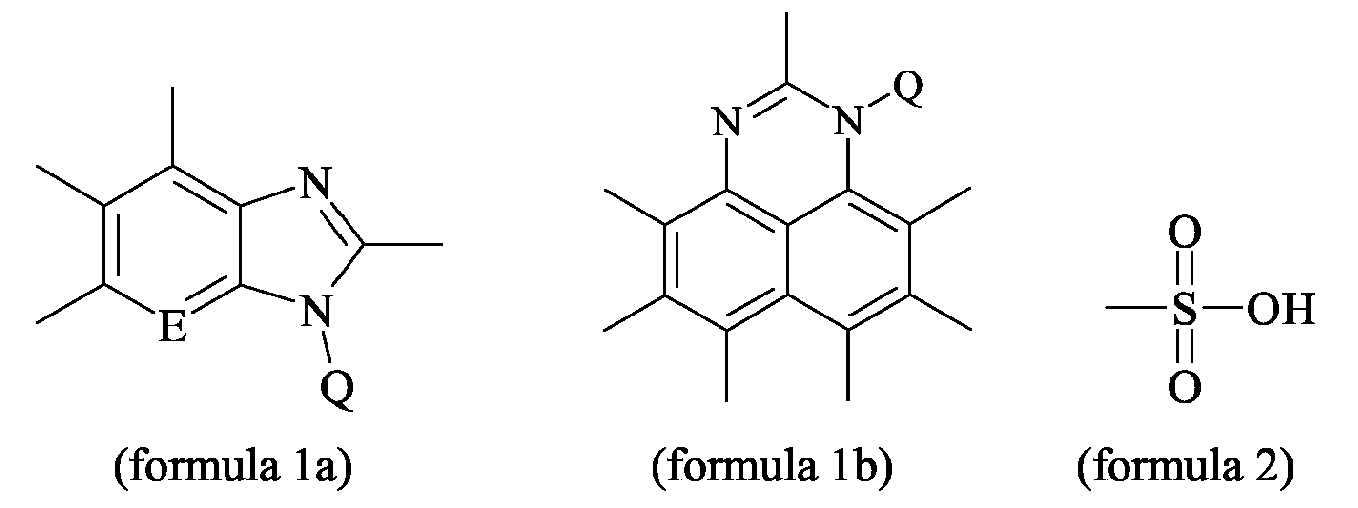
- azole group is intended to denote the benzimidazole group (formula 1a and 1b herein above), the benzothiazole group (formula 3a and 3b herein above) and the benzoxazole group (formula 4a and 4b herein above).
- an object of the invention is a fuel cell comprising the polybenzazole block copolymer as above described or comprising the polybenzazole polymer composition as above described.
- the fuel cell of the invention is a hydrogen or methanol fuel cell.
- the fuel cell comprises a solid polymer electrolyte membrane or a solid polymer electrolyte doped membrane as above described.
- the polybenzazole block copolymer as above described it is possible to maximize ion conductivity without causing unacceptable degree of swelling or even complete dissolution in water or in methanol, while maintaining good mechanical properties and thermal resistance of the solid polymer electrolyte membrane, thus enabling high operating temperature of the fuel cell.
Landscapes
- Chemical & Material Sciences (AREA)
- Chemical Kinetics & Catalysis (AREA)
- Engineering & Computer Science (AREA)
- Manufacturing & Machinery (AREA)
- Life Sciences & Earth Sciences (AREA)
- Sustainable Development (AREA)
- Sustainable Energy (AREA)
- Electrochemistry (AREA)
- General Chemical & Material Sciences (AREA)
- Organic Chemistry (AREA)
- Medicinal Chemistry (AREA)
- Polymers & Plastics (AREA)
- Health & Medical Sciences (AREA)
- Crystallography & Structural Chemistry (AREA)
- Dispersion Chemistry (AREA)
- Composite Materials (AREA)
- Macromolecular Compounds Obtained By Forming Nitrogen-Containing Linkages In General (AREA)
- Conductive Materials (AREA)
- Fuel Cell (AREA)
- Compositions Of Macromolecular Compounds (AREA)
- Manufacture Of Macromolecular Shaped Articles (AREA)
- Food Preservation Except Freezing, Refrigeration, And Drying (AREA)
- Wrappers (AREA)
- Pharmaceuticals Containing Other Organic And Inorganic Compounds (AREA)
Abstract
The invention concerns a polybenzazole block copolymer suitable for solid polymer electrolyte membranes application comprising :
- at least one block (B1) comprising recurring units (R), more than 50 % of said recurring units comprising at least one benzimidazole group (formula 1a and 1b) and at least one sulfonic acid group (formula 2) [recurring units (R1)];
and - at least one block (B2) comprising recurring units (R'), more than 50 % by moles of said recurring units comprising at least one benzazole group chosen among benzothiazole group (formula 3 a and 3b) and benzoxazole group (formula 4a and 4b) [recurring units (R2)],
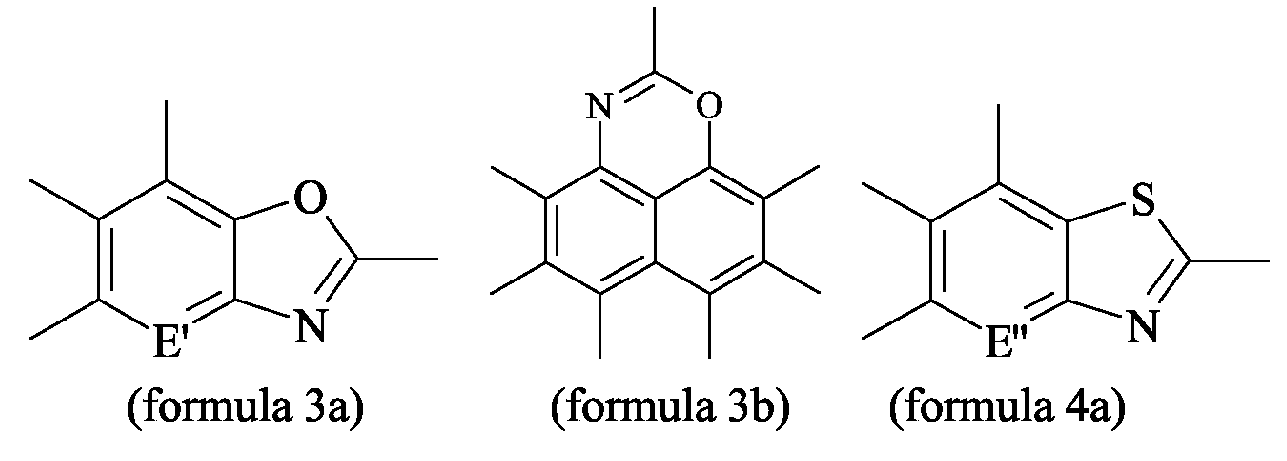

The invention also relates to a polybenzazole polymer composition thereof, a solid polymer electrolyte membrane therefrom, a solid polymer electrolyte doped membrane therefrom, and the fuel cell therefrom.
Description
- The present invention relates to a polybenzazole block copolymer of sulfonated benzimidazole and non sulfonated benzoxazole or benzothiazole, suitable for solid polymer electrolyte membranes application, a solid polymer electrolyte membrane therefrom, a solid polymer electrolyte doped membrane therefrom, and the fuel cell therefrom.
- Fuel cells are emerging as practical and versatile power sources, which can be more efficient and less environmentally damaging than rival technologies. From mobile phones and electrical vehicles to spacecraft and multi-megawatt power station, the application potential for fuel cells is growing rapidly. Fuel cells have much in common with batteries, which also convert energy that is stored in chemical form into electricity. In contrast to batteries, however, they oxidize externally supplied fuel and therefore do not have to be recharged.
- Fuel cells can be configured in numerous ways with a variety of electrolytes, fuels and operating temperatures. For example, fuels such as hydrogen or methanol can be provided directly to the fuel cell electrode or fuels such as methane or methanol can be converted to a hydrogen rich gas mixture external to the cell itself (fuel reforming) and subsequently provided to the fuel cell. Air is the source of oxygen in most fuel cells, although in some applications, the oxygen is obtained by hydrogen peroxide decomposition or from a cryogenic storage system.
- Although there are theoretically a limitless number of combinations of electrolyte, fuel, oxidant, temperatures and so on, practical systems are in many cases based on proton exchange membrane fuel cell (PEMFC) technology, characterized by solid polymer electrolyte systems using hydrogen or methanol as the fuel source and oxygen or air as the oxidant. Further, the PEMFC can be miniaturized as compared with other types of fuel cells and is suitable as mobile power source or as small capacity power source.
- The polymer electrolyte membrane forming the heart of the PEMFC acts as a proton-exchange membrane, and must have excellent ion conductivity, physical strength, gas barrier properties, chemical stability, electrochemical stability and thermal stability at the operating conditions of the fuel cell.
- Membranes currently used in PEMFC are perfluorinated sulfonic acid (PFSA) polymers such as NAFION resins from DuPont. Even if such membranes have demonstrated good performances, appreciable long-term stability in both oxidative and reductive environments and valuable protonic conductivity under fully hydrated conditions (80-100 % relative humidity, RH hereafter), they are limited to low temperatures (up to 80°C), require a sophisticated water management (system complexity), and due to methanol crossover, are unpractical for DMFC (direct methanol fuel cell).
- Great efforts have been made in academic and industrial laboratories to develop proton exchange membranes for operation at temperatures above 100°C.
- By far the most promising approach is the polybenzimidazole (PBI)/H3PO4 acid doped membrane, which does not require any external humidification, possesses high proton conductivity (at temperature exceeding 150°C), with little effect of product water, have a near zero electro-osmotic water drag and an at least ten times lower methanol permeability as compared to NAFION® resins.
- However, current PBI/H3PO4 doped membrane suffers from important drawbacks. Because of the high acid doping levels required to attain sufficient conductivity, the mechanical strength is limited due to plasticizing. Also, acid gets depleted over time, particularly during start-up and shut down when it is washed by liquid product water.
- While polybenzazoles (PBZ) polymers have no significant intrinsic ionic conductivity, they have been modified by a protogenic group, generally a sulfonic acid group, to provide sulfonated polybenzazoles (sPBZ), especially sulfonated polybenzimidazoles (sPBI), which have been used at low or zero doping level.
- Thus US 2004/0062929 (to Toyo Boseki) discloses benzazole homo- and copolymers bearing sulfonic or phosphonic acid groups, for fuel cells polymer electrolyte membranes, wherein the ionic group is attached to the residues of the dicarboxylic acid.
- Example 5 describes the preparation of a polymer obtained by polymerisation of 3,3',4,4'-tetraminodiphenylsulfone (TAS, hereinafter) and of terephtalic acid (TPA, hereinafter), followed by further addition of TAS and 2,5-dicarboxybenzenesulfonic acid monosodium salt (STA, hereinafter), providing for a block copolymer, comprising recurring unit of sulfonated and non-sulfonated polybenzimidazole. Ion conductivity of the membrane obtained from this block copolymer was one order of magnitude less than the ion conductivity of the corresponding random copolymer prepared by polymerizing TAS with a mixture of STA and TPA (see scheme 1).

- Polybenzazole copolymers bearing ionic group (-SO3H and -PO3H2) responding to general formula (A) here below are also described in JP 2002/201269 (to Toyobo Co. Ltd.) :


- WO 2004/034499 (to Celanese Ventures) discloses sulfonic-acid containing polyazoles (co)polymer, obtained polymerizing one or several aromatic or heteroaromatic tetramino or bis(orthoaminohydroxy) or bis(orthoaminothiol) compounds (XX-monomers) with one or several aromatic dicarboxylic acids (YY-monomers), wherein at least a part of the XX- or YY-monomers comprises at least one sulfonic acid group.
- However, in sulfonated polybenzazole of the prior art, while attempt is made to increase sulfonation to maximize ion conductivity, at the same time the presence of protogenic group causes unacceptable degree of swelling or even complete dissolution in water or in methanol and unsatisfactory mechanical properties of the membrane.
- According to the present invention, the above-mentioned difficulties are remarkably overcome by a polybenzazole block copolymer of sulfonated benzimidazole and non sulfonated benzoxazole or benzothiazole.
- The control of the location, number, and distribution of the acid functions along the polybenzazole block copolymer advantageously provides more stable structures and allows tuning of concomitant salient properties such as conductivity and solubility.
- Another object of the invention is a polybenzazole polymer composition comprising said polybenzazole block copolymer.
- Another object of the invention is a solid polymer electrolyte membrane comprising said polybenzazole block copolymer.
- Another object of the invention is a doped solid polymer electrolyte membrane comprising said polybenzazole block copolymer.
- Still an object of the invention is a fuel cell comprising said polybenzazole block copolymer.
- Thanks to its outstanding thermal resistance, high ion conductivity even at reduced relative humidity, insolubility, low permeability, low swelling both in water, water/methanol and methanol, the polybenzazole block copolymer of the invention advantageously enables increasing fuel cell operating temperature window, thus allowing for increased catalytic activity, fastening electrode kinetics, giving improved fuel cell efficiency and reduction of precious metal load, simplifying thermal management, enabling easier and more effective cooling efficiency; and increased value in heat recovery, comprising heat supply to internal steam reformer (for methanol or methane indirect fuel cells) or hydrogen desorption from metal hydride storage systems, all the above without the drawbacks of the polymer of the prior art.
- Thanks to good solubility properties, the polybenzazole block copolymer of the invention would be easily casted into shaped articles and films.
- The solid polymer electrolyte membrane and/or doped membrane comprising the block copolymer of the invention possesses outstanding conductivity, solvent and temperature resistance, mechanical properties and reduced permeability to water and/or methanol, without the drawbacks of the membranes of the prior art.
- As a consequence of the high operating temperature, operations of fuel cells comprising the block copolymer of the invention could be carried out at reduced humidification degree and/or limited doping level, with no need of complex water management systems, owing to a self-regulation of the internal degree of humidification, thus enabling simplified stack construction and improved reliability.
- According to the present invention, a first object is to provide a polybenzazole block copolymer comprising :
- at least one block (B1) comprising recurring units (R), more than 50 % by moles of said recurring units comprising at least one benzimidazole group (formula 1a and 1b) and at least one sulfonic acid group (formula 2) [recurring units (R1)];

- at least one block (B2) comprising recurring units (R'), more than 50 % by moles of said recurring units comprising at least one benzazole group chosen among benzothiazole group (formula 3 a and 3b) and benzoxazole group (formula 4a and 4b) [recurring units (R2)],


- The recurring units (R1) are advantageously chosen among recurring units (R1-a), recurring units (R1-b), recurring units (R1-c), recurring units (R1-d) and mixture thereof :


- the → denotes isomerism so that in any recurring unit within the aromatic benzimidazole structure, the groups to which the arrows point may exist as shown or in an interchanged position;
- the

- a is an integer from 0 to 2;
- b is an integer from 1 to 2;
- d is an integer from 0 to 2
- e is an integer from 1 to 2;
- f is an integer from 0 to 2
- Ar1 is typically :


- Ar2 is typically :


- Ar3 is typically :


- each of the Q', Q", Q"' moiety can be independently either a hydrogen atom or a group comprising a sulfonic acid group chosen among the following :

with the further requirement that if d and f are zero, at least one of Q', Q" and Q"' moieties comprises at least one sulfonic acid group.
The Q', Q" and/or Q"' moiety comprising at least one sulfonic acid group is preferably chosen among :
Preferably recurring units (R1) are chosen among the group consisting of:


- the → denotes isomerism so that in any recurring unit within the aromatic benzimidazole structure, the groups to which the arrows point may exist as shown or in an interchanged position;
- a is an integer from 0 to 2;
- Ar1 has the same meaning as above described;
- the

- More than 50 % wt of the recurring units of block B 1 (R) are recurring units (R1). Preferably more than 75 % wt of recurring units (R) are recurring units (R1). Still more preferably, block B 1 does not comprise recurring units other than recurring units (R1).
- The block B 1 comprises advantageously at least 3, preferably at least 7, more preferably at least 15 recurring units (R).
- The block B1 advantageously comprises at most 150, preferably at most 100, more preferably at most 50 recurring units (R).
- The block B 1 is advantageously amorphous.
- The block B 1 has a sulfur to nitrogen molar ratio (S/N) of advantageously at least 0.25, preferably of at least 0.5.
- The block B 1 has an ion exchange capacity of advantageously at least 2.0 meq/g, preferably at least 2.5 meq/g, more preferably at least 3.0 meq/g.
- Pre-polymer comprising at least one block B 1 can be notably prepared by a polymerization process comprising either :
- reacting in polycondensation conditions at least one dicarboxylic acid monomer (AA-type monomer) with at least one tetraamine monomer (BB-type monomer), wherein at least one of the monomer comprises at least one sulfonic acid group; or
- reacting in polycondensation conditions at least one diamino-carboxylic acid monomer (AB-type monomer) bearing at least one sulfonic acid group; or
- reacting in polycondensation conditions a mixture of at least one dicarboxylic acid monomer (AA-type monomer) with at least one tetraamine monomer (BB-type monomer) and of at least one diamino-carboxylic acid monomer (AB-type monomer), wherein at least one of the monomer comprises at least one sulfonic acid group.
- As an alternative, pre-polymer comprising at least one block B 1 can be notably prepared by a polymerization process comprising either :
- reacting in polycondensation conditions at least one dicarboxylic acid monomer (AA-type monomers) with at least one tetraamine monomer (BB-type monomers), wherein none of the monomer(s) comprises a sulfonic acid group; or
- reacting in polycondensation conditions at least one diamino-carboxylic acid monomer (AB-type monomer) free from sulfonic acid group; or
- reacting in polycondensation conditions a mixture of at least one dicarboxylic acid monomer (AA-type monomer) with at least one tetraamine monomer (BB-type monomer) and of at least one diamino-carboxylic acid monomer (AB-type monomer), wherein none of the monomers comprises a sulfonic acid group,
- To the purposes of the invention, the term "dicarboxylic acid monomer" is intended to denote an aromatic compound comprising at least two carboxylic acid groups as such or in their salt, ester, or acid halide form.
- Aromatic dicarboxylic acid and derivative thereof employed as dicarboxylic acid monomers are not particularly restricted. As specific examples, aromatic dicarboxylic acids such as terephtalic acid, 1,3-benzenedicarboxylic acid, 2,5-pyridinedicarboxylic acid, 2,4-pyridinedicarboxylic acid, 3,5-pyridinedicarboxylic acid, 2,2-bis(4-carboxyphenyl)propane, bis(4-carboxyphenyl)methane, 2,2-bis(4-carboxyphenyl)hexafluoropropane, 2,2-bis(4-carboxyphenyl)ketone, 4,4'-bis(4-carboxyphenyl)sulfone, 2,2-bis(3-carboxyphenyl)propane, bis(3-carboxyphenyl)methane, 2,2-bis(3-carboxyphenyl)hexafluoropropane, 2,2-bis(3-carboxyphenyl)ketone, bis(3-carboxyphenoxy)benzene and derivatives thereof such as alkaline metal salts of sodium, potassium, ammonium and the like can be listed.
- Specific examples of dicarboxylic acid monomers comprising at least one sulfonic acid group are 2,5-dicarboxybenzenesulfonic acid, 3,5-dicarboxybenzenesulfonic acid, 2,5-dicarboxy-1,4-benzenedisulfonic acid, 4,6-dicarboxy-1,3-benzene-disulfonic acid, 4,4'-dicarboxy-3,3'-(biphenylsulfone) disulfonic acid, as well as and derivatives thereof such as alkaline metal salts of sodium, potassium, ammonium and the like.
- To the purposes of the invention, the term "tetraamine monomer" is intended to denote an aromatic compound comprising at least two ortho-diamine groups as such and/or as salts with acids such as hydrochloric acid, sulfuric acid and phosphoric acid.
- While aromatic tetraamine and derivatives thereof employable as tetraamine monomers are not particularly restricted, 1,2,4,5-tetraaminobenzene, 3,3',4,4'-tetraaminodiphenyl ether, 3,3',4,4'-tetraaminodiphenyl thioether, 3,3',4,4'-tetraaminodiphenylsulfone, 2,2-bis(3,4-diaminophenyl)propane, bis(3,4-diamonophenyl)methane, 2,2-bis(3,4-diaminophenyl)hexafluoropropane, 2,2-bis(3,4-diaminophenyl)ketone, bis(3,4,-diaminophenoxy)benzene and derivatives thereof, such as salts with acids such as hydrochloric acid, sulfuric acid and phosphoric acid can be listed as examples.
- To the purpose of the invention, the term "diamino-carboxylic acid monomer" is intended to denote an aromatic compound comprising at least one carboxylic acid group as such or in its salt, ester, or acid halide, and at least one ortho-diamine group as such and/or as salts with acids such as hydrochloric acid, sulfuric acid and phosphoric acid.
- To the purpose of the invention, the term "pre-polymer comprising at least one block B1" is intended to denote a polymer comprising at least one block B1, as above defined, which can be used as precursor for preparing the polybenzazole block copolymer of the invention.
- To the purpose of the invention, the term " block B1' " denotes a block comprising recurring units (R"), more than 50 % of said recurring units comprising at least one benzimidazole group (formula 5a and 5b), free from sulfonic acid group (formula 2) [recurring units (R3)] :

- The recurring units (R3) are advantageously chosen among recurring units (R3-a), recurring units (R3-b), and mixture thereof :

- the → denotes isomerism so that in any recurring unit within the aromatic benzimidazole structure, the groups to which the arrows point may exist as shown or in an interchanged position;
- Ar1, Ar2 or Ar3 have the same meaning as above indicated.
- The reaction between AA- and BB-type monomers or of AB-type monomer(s) can be advantageously carried out in polyphosphoric acid (PPA) at a temperature between 100 and 240°C. PPA generally acts as solvent, catalyst and dehydrating agent. The term PPA is intended to denote a mixture of condensed phosphoric acid oligomers of general formula :
Hn+2PnO3n+1
wherein the average value of n depends on the ratio of water to phosphorus pentoxide (P2O5). - The composition of PPA will be described hereinafter by the P2O5 weight content, expressed as percent of the weight of the P2O5 divided by the total weight of PPA.
- In carrying out the process, shall the tetraamine monomers or diamino carboxylic acid monomer(s) be available as hydrochloric acid salts, substantially stoichiometric amounts of the AA- and BB-type monomers and/or the required amount of AB-type monomer(s) are advantageously first heated at 40-80°C in PPA (50 to 80 %wt P2O5) to advantageously effect dehydrochlorination. This step is advantageously carried out under reduced pressure to facilitate removal of the hydrogen chloride. After complete dehydrochlorination, or after mixing the monomer(s) in PPA in case tetraamine monomers and/or diamino carboxylic acid monomer(s) are available as such, an additional quantity of P2O5 and/or PPA may be added as required to provide a stirrable mixture and to increase the concentration of PPA within the range of 80-86 % wt P2O5. During the polycondensation reaction, additional amount of PPA may be added for maintaining the concentration of PPA advantageously between 80-86 % wt, preferably between 82-84 % wt P2O5. It is preferred to carry out the polymerization in stages, i.e. a step-wise heating schedule is employed. Such a schedule is preferred because immediately exposing the reaction mixture to relatively high polymerization temperature may cause decomposition of one or more monomers. The selection of a particular step-wise heating schedule is obvious to one of ordinary skill in the art. While an optimum polymerization temperature is not unconditionally definable, because this optimum depends on the combination of monomers, temperature exceeds, at least in one step of the polymerization, advantageously 100°C, preferably 120°C, more preferably 140°C. An exemplary heating schedule is for instance 60°C for 4 hours, 100°C for 2 hours, 160°C for 24 hours and 190°C for 4 hours.
- Shall the monomer(s) be AA and BB monomers, an equimolecular mount of AA- and BB-type monomers generally enables preparation of a pre-polymer terminated carboxylic acid group from one side and with a ortho-diamine group from the other side, a slight excess of AA-type monomer(s) (typically less than 10 % mol, preferably less than 5 % mol) with respect to stoichiometric, generally enables preparation of a pre-polymer terminated with carboxylic acid groups, and a slight excess of BB-type monomer (typically less than 10 % mol, preferably less than 5 % mol) generally enables preparation of a pre-polymer terminated with ortho-diamine group.
- Shall the monomer(s) be AB monomer, a pre-polymer terminated with a carboxylic acid group from one side and with a ortho-diamine group from the other side is generally obtained.
- Thus, by means of the polymerization process as above described, it is advantageously possible to prepare a pre-polymer comprising at least one B1 or B1' block terminated by an azole-forming group.
- For the purpose of the invention, the term "azole-forming group" is intended to denote a group able to react with another suitable azole-forming group to form an azole ring, i.e. an imidazole, thiazole or oxazole ring.
- Examples of "azole-forming groups" include carboxylic acid groups, in their acid, acid halide, ester or salt form, ortho-diamine groups (formula 6), ortho-aminohydroxy groups (formula 7), ortho-aminothiol groups (formula 8).

- Functionalization of block B1' by introducing sulfonic acid groups may be notably carried out by any method well-known to those skilled in the art, such as sulfonation of the aromatic ring, sulfmation, sulfoalkylation and the like.
- Sulfonation of the block B1' can be advantageously achieved by treating the block B 1'with a mixture of sulfuric acid or chlorosulfonic acid to obtain the sulfonated block B 1.
- Sulfmation of the block B1' can be advantageously achieved by treating the block B1' with a strong base, preferably with an hydride, such as sodium hydride or a metal alkyl, such as nButyllithium in anhydrous aprotic solvent, such as DMSO, to form a polyanion of block B1' and treating the resulting polyanion with SO2 at low temperature (typically -30 to ― 80°C), followed by a treatment with an oxidizing agent such as H2O2, NaOCl, KMnO4 and the like to obtain the corresponding sulfonated block B1.
- Sulfoalkylation of the block B1' can be advantageously achieved by treating the block B1' with a strong base, preferably with an hydride, such as sodium hydride or a metal alkyl, such as nButyllithium in anhydrous aprotic solvent, such as DMSO, to form a polyanion of block B1' and treating the resulting polyanion with a suitable sultone compound, such as 1,3-propanesultone, 1,2,2-trifluoro-2-hydroxy-1-trifluoromethylethane sulfonic acid sultone and the like, or with a halomethyl-benzenesulfonate salt, such as sodium 4-(bromomethyl)benzenesulfonate at a temperature between 25 and 150°C to obtain the corresponding sulfonated block B1.
- To the purpose of the invention, the term "block B2 substantially free from sulfonic acid groups" is understood to mean that block B2 is prepared from monomers free from sulfonic acid groups.
- Preferably the block B2 is totally free from sulfonic acid groups.
- The recurring units (R2) are advantageously chosen among recurring units (R2-a), recurring units (R2-b) and mixture thereof :

- the → denotes isomerism so that in any recurring unit within the aromatic benzimidazole structure, the groups to which the arrows point may exist as shown or in an interchanged position;
- X is an oxygen or sulfur atom;
- Ar4 is typically :

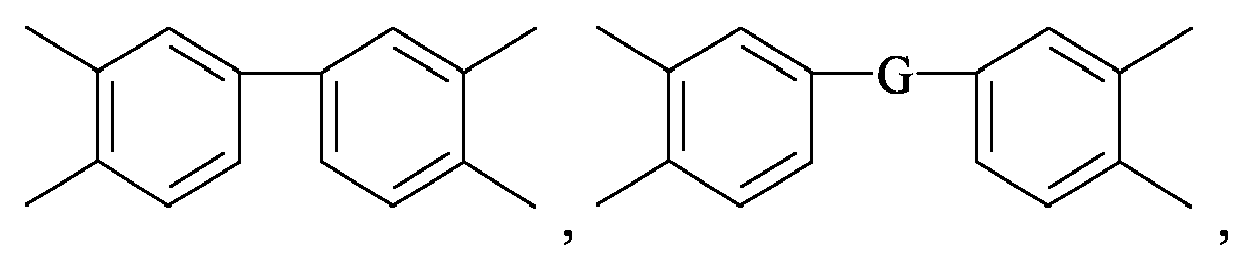


- Ar5 is typically :


- Ar6 is typically :


- Preferably recurring units (R2) are chosen among the group consisting of :


wherein, in formulae r2-j to r2-jv here above : - the → denotes isomerism so that in any recurring unit within the aromatic benzazole structure, the groups to which the arrows point may exist as shown or in an interchanged position;
- X is an oxygen or sulfur atom;
- G has the same meaning as above described.
- More than 50 % wt of the recurring units of block B2 (R') are recurring units (R2). Preferably more than 75 % wt of recurring units (R') are recurring units (R2). Still more preferably, block B2 does not comprise recurring units other than recurring units (R2).
- The block B2 comprises advantageously at least 3, preferably at least 7, more preferably at least 20 recurring units (R').
- The block B2 advantageously comprises at most 150, preferably at most 100, more preferably at most 75 recurring units (R').
- Pre-polymer comprising at least one block B2 can be notably prepared by a polymerization process comprising either :
- reacting in polycondensation conditions at least one dicarboxylic acid monomer (aa-type monomers) with at least one diaminediol- or diaminedithiol-monomer (bb-type monomers), wherein the monomers are free from sulfonic acid group; or
- reacting in polycondensation conditions at least one hydroxyamino-carboxylic acid- or thioamino-carboxylic acid- monomer (ab-type monomer) free from sulfonic acid group; or
- reacting in polycondensation conditions a mixture of at least one dicarboxylic acid monomer (aa-type monomer) with at least one tetraamine monomer (bb-type monomer) and of at least one diamino-carboxylic acid monomer (ab-type monomer), wherein the monomers are free from sulfonic acid group.
- The term "dicarboxylic acid monomer" has the meaning as above defined.
- To the purpose of the invention, the term "diaminediol monomer" is intended to denote an aromatic compound carrying at least two ortho-aminohydroxy groups as such and/or as salts with acids such as hydrochloric acid, sulfuric acid and phosphoric acid.
- As examples of diaminediol monomers, mention may be notably made of 2,5-dihydroxyparaphenylenediamine, 4,6-dihydroxymethaphenylenediamine, 3,3'-dihydroxybenzidine, 3,3'-diamino-4,4'-diphenylbenzenediol, bis(4-amino-3-hydroxyphenyl) ether, bis(3-amino-4-hydroxyphenyl) ether, bis(4-amino-3-hydroxyphenyl) thioether, bis(3-amino-4-hydroxyphenyl) thioether, bis(4-amino-3-hydroxyphenyl) sulfone, bis(3-amino-4-hydroxyphenyl) sulfone, 2,2-bis(4-amino-3-hydroxyphenyl) propane, 2,2-bis(3-amino-4-hydroxyphenyl) propane, bis(4-amino-3-hydroxyphenyl) methane, bis(3-amino-4-hydroxyphenyl) methane, 2,2-bis(4-amino-3-hydroxyphenyl) hexafluoropropane, 2,2-bis(3-amino-4-hydroxyphenyl) hexafluoropropane, 2,2-bis(4-amino-3-hydroxyphenyl) ketone, 2,2-bis(3-amino-4-hydroxyphenyl) ketone, bis(4-amino-3-hydroxyphenoxy) benzene, bis(3-amino-4-hydroxyphenoxy) benzene, and of their corresponding derivatives such as salts with hydrochloridric acid, suforic acid and phosphoric acid.
- To the purpose of the invention, the term "diaminedithiol-monomer" is intended to denote an aromatic compound carrying at least two ortho-aminothiol groups as such and/or as salts with acids such as hydrochloric acid, sulfuric acid and phosphoric acid.
- As examples of diaminedithiol monomers, mention may be notably made of 2,5 -diamino-1,4-benzenedithiol, 4,6-diamino-1,3 -benzenedithiol, 2,5-diamino-3,6-dimethyl-1,4-benzenedithiol, 3,3'-dimercaptobenzidine, 3,3'-diamino-4,4'-diphenylbenzenedithiol, bis(4-amino-3-mercaptophenyl) ether, bis(3-amino-4-mercaptophenyl) ether, bis(4-amino-3-mercaptophenyl) thioether, bis(3-amino-4-mercaptophenyl) thioether, bis(4-amino-3-mercaptophenyl) sulfone, bis(3-amino-4-mercaptophenyl) sulfone, 2,2-bis(4-amino-3-mercaptophenyl) propane, 2,2-bis(3-amino-4-mercaptophenyl) propane, bis(4-amino-3-mercaptophenyl) methane, bis(3-amino-4-mercaptophenyl) methane, 2,2-bis(4-amino-3-mercaptophenyl) hexafluoropropane, 2,2-bis(3-amino-4-mercaptophenyl) hexafluoropropane, 2,2-bis(4-amino-3-mercaptophenyl) ketone, 2,2-bis(3-amino-4-mercaptophenyl) ketone, bis(4-amino-3-mercaptophenoxy) benzene, bis(3-amino-4-mercaptophenoxy) benzene and of their corresponding derivatives such as salts with hydrochloridric acid, suforic acid and phosphoric acid.
- To the purpose of the invention, the term "hydroxyamino-carboxylic acid-monomer" is intended to denote an aromatic compound carrying at least one carboxylic acid group as such or in its salt, ester, or acid halide, and at least one ortho-hydroxyamine group as such and/or as salts with acids such as hydrochloric acid, sulfuric acid and phosphoric acid.
- As examples of hydroxyamino-carboxylic acid monomers, mention may be notably made of 3-amino-4-hydroxybenzoic acid, 4-amino-3-hydroxybenzoic acid and of their corresponding derivatives such as salts with hydrochloridric acid, suforic acid and phosphoric acid.
- To the purpose of the invention, the term "thioamino-carboxylic acid monomer" is intended to denote an aromatic compound comprising at least one carboxylic acid group as such or in its salt, ester, or acid halide, and at least one ortho-thioamine group as such and/or as salts with acids such as hydrochloric acid, sulfuric acid and phosphoric acid.
- As examples of thioamino-carboxylic acid monomers, mention may be notably made of 3-mercapto-4-aminobenzoic acid, of 4-mercapto-3-aminobenzoic acid and of their corresponding derivatives such as salts with hydrochloridric acid, suforic acid and phosphoric acid.
- To the purpose of the invention, the term "pre-polymer comprising at least one block B2" is intended to denote a polymer comprising at least one block B2, as above defined, which can be used as precursor for preparing the polybenzazole block copolymer of the invention.
- The reaction between aa- and bb-type monomers and/or of ab-type monomer(s) can be advantageously carried out in polyphosphoric acid (PPA) at a temperature between 100 and 240°C. PPA generally acts as solvent, catalyst and dehydrating agent.
- In carrying out the process, shall the diaminedithiol-, diaminediol-, thioamino-carboxylic acid-, hydroxyamino-carboxylic acid-monomer(s) be available as hydrochloridric acid salts, substantially stoichiometric amounts of the aa- and bb-type monomers or the required amount of ab-type monomer(s) are advantageously first heated at 40-80°C in PPA (50 to 80 %wt P2O5) to typically effect dehydrochlorination. This step is advantageously carried out under reduced pressure to facilitate removal of the hydrogen chloride. After complete dehydrochlorination, or after mixing the monomer(s) in PPA in case diaminedithiol-, diaminediol-, thioamino-carboxylic acid-, hydroxyamino-carboxylic acid-monomer(s) are available as such, an additional quantity of P2O5 and/or PPA may be added as required to provide a stirrable mixture and to increase the concentration of PPA to about 80-85 % wt P2O5. During the polycondensation reaction, additional amount of PPA may be added for maintaining the concentration of PPA advantageously between 80-86 % wt, preferably between 82-84 % wt P2O5. It is preferred to carry out the polymerization in stages, i.e. a step-wise heating schedule is employed. Such a schedule is preferred because immediately exposing the reaction mixture to relatively high polymerization temperature may cause decomposition of one or more monomers. The selection of a particular step-wise heating schedule is obvious to one of ordinary skill in the art. While an optimum polymerization temperature is not unconditionally definable, because this optimum depends on the combination of monomers, temperature exceeds, at least in one step of the polymerization, advantageously 100°C, preferably 120°C, more preferably 140°C. An exemplary heating schedule is for instance 60°C for 4 hours, 100°C for 2 hours, 160°C for 24 hours and 190°C for 4 hours.
- Shall the monomer(s) be aa and bb monomers, an equimolecular mount of aa- and bb-type monomers generally enables preparation of a pre-polymer terminated with a carboxylic acid group from one side and with a ortho-hydroxyamine or ortho-aminethiol group from the other side, a slight excess of aa-type monomer(s) (typically less than 10 % mol, preferably less than 5 % mol) with respect to stoichiometric, generally enables preparation of a pre-polymer terminated with carboxylic acid groups, and a slight excess of bb-type monomer (typically less than 10 % mol, preferably less than 5 % mol) generally enables preparation of a pre-polymer terminated with ortho-hydroxyamine or ortho-aminethiol groups.
- Shall the monomer(s) be ab monomer, a pre-polymer terminated with a carboxylic acid group from one side and with a ortho-hydroxyamine or ortho-aminethiol group from the other side is generally obtained.
- Thus, by means of the polymerization process as above described, it is advantageously possible to prepare a pre-polymer comprising at least one B2 terminated by an azole-forming group.
- The polybenzazole block copolymer of the invention has an overall mean degree of polymerization of advantageously at least 70, preferably at least 100.
- The polybenzazole block copolymer of the invention has an intrinsic viscosity of advantageously at least 0.5 dl/g, preferably at least 1.0 dl/g, most preferably at least 3.0 dl/g, when measured in H2SO4 97 % at 30°C.
- The polybenzazole block copolymer is advantageously soluble in polar aprotic solvents like NMP, DMSO, DMF, DMA and advantageously soluble in strong acids as methansulfonic acid, triflic acid, chlorosulfonic acid, sulfuric acid, polyphosphoric acid (PPA).
- The polybenzazole block copolymer according to the invention can be advantageously synthesized by a polymerization process comprising at least one of the following steps :
- (a) contacting in a mineral acid under polymerization conditions a pre-polymer comprising at least one B1 block terminated by a first azole-forming group with a second pre-polymer comprising at least one B2 group terminated by a second azole-forming group capable of reacting with the first azole-forming group;
- (b) contacting in a mineral acid under polymerization conditions a pre-polymer comprising at least one B2 block terminated by a first azole-forming group with a second pre-polymer comprising at least one B 1 block terminated by a second azole-forming group capable of reacting with the first azole-forming group;
- (c) contacting in a mineral acid under polymerization conditions a first pre-polymer comprising at least one B 1 block terminated by an azole-forming group with monomer(s) appropriate to form a B2 block;
- (d) contacting in a mineral acid under polymerization conditions a first pre-polymer comprising at least one B2 block terminated by an azole-forming group with monomer(s) appropriate to form a B 1 block.
- The polybenzazole block copolymer of the invention is preferably synthesized by a polymerization process comprising at least one of steps (c) and (d).
- Polymerization conditions in anyone of steps (a) to (d) hereinabove preferably require PPA to be used as mineral acid and temperature being between 100 and 240°C.
- The concentration of PPA is advantageously from 80 to 86 % wt P2O5, preferably from 82 to 85 % wt P2O5.
- While an optimum polymerization temperature is not unconditionally defmable, because this optimum depends on the combination of monomer(s) and/or pre-polymer(s), temperature exceeds, at least in one step of the polymerization, advantageously 100°C, preferably 120°C, more preferably 140°C.
- It is preferred to carry out the polymerization using a step-wise heating schedule; the selection of a particular step-wise heating schedule is obvious to one of ordinary skill in the art. Similar temperature schedules are those used for the preparation of pre-polymer comprising at least one block B2 can be advantageously applied for the preparation of the polybenzazole block copolymer.
- An ortho-diamine, ortho-hydroxyamine and ortho-aminethiol group advantageously reacts with a carboxylic acid group to yield an imidazole, oxazole or thiazole ring, respectively.
- A carboxylic acid group advantageously reacts with a group chosen among ortho-diamine, ortho-hydroxyamine and ortho-aminethiol group to yield an imidazole, oxazole or thiazole ring, respectively.
- Monomer(s) appropriate to form a B 1 block are AA-, BB- and/or AB-type monomers, as above specified.
- Monomer(s) appropriate to form a B2 block are aa-, bb- and/or ab-type monomers, as above specified.
- At the end of the reaction period, after cooling, the polybenzazole block copolymer can be recovered notably by coagulation in water.
- Another object of the invention is a polybenzazole polymer composition comprising the polybenzazole block copolymer as above described.
- The polybenzazole polymer composition advantageously comprises at least one polybenzazole polymer different from said polybenzazole block copolymer.
- To the purposes of the invention, the term "polybenzazole polymer" is intended to denote a polymer comprising recurring units (R"'), at least 50 % by moles of said recurring units comprising at least one benzazole group chosen among the group consisting of benzimidazole, benzothiazole, benzoxazole.
- The polybenzazole polymer composition comprises advantageously at most 95 % wt, preferably at most 80 % wt, more preferably at most 75 % wt of the benzazole block copolymer as above described.
- According to a preferred embodiment of the invention, in addition to the benzazole block copolymer as above described, the polybenzazole polymer composition comprises at least one polybenzazole polymer comprising sulfonic acid groups and at least one polybenzazole polymer free from sulfonic acid group.
- The Applicant thinks, without nevertheless this interpretation limiting the scope of the present invention that the benzazole block copolymer as above described can act as compatibilizer between the sulfonated polymer and the non sulfonated polymer.
- The polybenzazole polymer composition of the preferred embodiment comprises advantageously at least 0.5 % wt, preferably at least 2.5 % wt, more preferably at least 5 % wt of the benzazole block copolymer as above described.
- The polybenzazole polymer composition of the preferred embodiment comprises advantageously at most 35 % wt, preferably at most 30 % wt, more preferably at most 25 % wt of the benzazole block copolymer as above described.
- Another object of the invention is a solid polymer electrolyte membrane comprising the polybenzazole block copolymer as above described or comprising the polybenzazole polymer composition as above described.
- The solid polymer electrolyte membrane according to the invention can be advantageously prepared by a process comprising casting the membrane from a casting solution comprising the polybenzazole block copolymer or the polybenzazole polymer composition as above described to obtain a casted film.
- The process advantageously further comprises a drying step, comprising heating the casted film at a temperature of at least 100°C, preferably of at least 120°C, more preferably of at least 140°C to obtain the membrane.
- Suitable solvents useful for casting are polar aprotic solvents like NMP, DMSO, DMF, DMA or strong acids as trifluoroacetic acid, methansulfonic acid, triflic acid, chlorosulfonic acid, sulfuric acid, phosphoric acid, polyphosphoric acid (PPA).
- Still an object of the invention is a solid polymer electrolyte doped membrane comprising the polybenzazole block copolymer as above specified or comprising the polybenzazole polymer composition as above described.
- To the purpose of the invention, the term "solid polymer electrolyte doped membrane" is intended to denote a membrane comprising the polybenzazole block copolymer or the polybenzazole polymer composition as above described, further comprising at least one strong acid.
- A solid polymer electrolyte doped membrane can be obtained either
- by a process comprising casting from a casting solution as above described further comprising at least one strong acid; or
- by a process comprising treating a solid polymer electrolyte membrane as above specified with at least one strong acid.
- Preferably the strong acid is phosphoric acid (H3PO4) and/or sulfuric acid, more preferably is phosphoric acid.
- The ratio between the number of moles of strong acid and the sum of the number of moles of azole groups in recurring units (R) and recurring units (R') in the doped membrane is advantageously at least 10 % mol, preferably at least 25 % mol, more preferably at least 100 % and advantageously at most 1 500 % mol, preferably at most 1 000 % mol, more preferably 400 % mol.
- To the purpose of the invention, the term "azole group" is intended to denote the benzimidazole group (formula 1a and 1b herein above), the benzothiazole group (formula 3a and 3b herein above) and the benzoxazole group (formula 4a and 4b herein above).
- It is generally accepted that, without nevertheless this interpretation limiting the scope of the present invention, that the proton hopping between basic sites on the polybenzazole block copolymer and the imbibed strong acid provides enhanced ionic conductivity.
- Still an object of the invention is a fuel cell comprising the polybenzazole block copolymer as above described or comprising the polybenzazole polymer composition as above described.
- Preferably the fuel cell of the invention is a hydrogen or methanol fuel cell.
- Advantageously, the fuel cell comprises a solid polymer electrolyte membrane or a solid polymer electrolyte doped membrane as above described.
- Thanks to the polybenzazole block copolymer as above described, it is possible to maximize ion conductivity without causing unacceptable degree of swelling or even complete dissolution in water or in methanol, while maintaining good mechanical properties and thermal resistance of the solid polymer electrolyte membrane, thus enabling high operating temperature of the fuel cell.
- Operations of the fuel cell as above described could be carried out at reduced relative humidity, with no need of complex water management systems, owing to a self-regulation of the internal degree of humidification, thus enabling simplified stack construction and improved reliability.
Claims (10)
- A polybenzazole block copolymer comprising :- at least one block (B1) comprising recurring units (R), more than 50 % by moles of said recurring units comprising at least one benzimidazole group (formula 1a and 1b) and at least one sulfonic acid group (formula 2) [recurring units (R1)];wherein E in formula 1a can be a substituted or non-substituted carbon atom or nitrogen atom, and Q in formula 1a and 1b can be a hydrogen atom or a group comprising a sulfonic acid group;
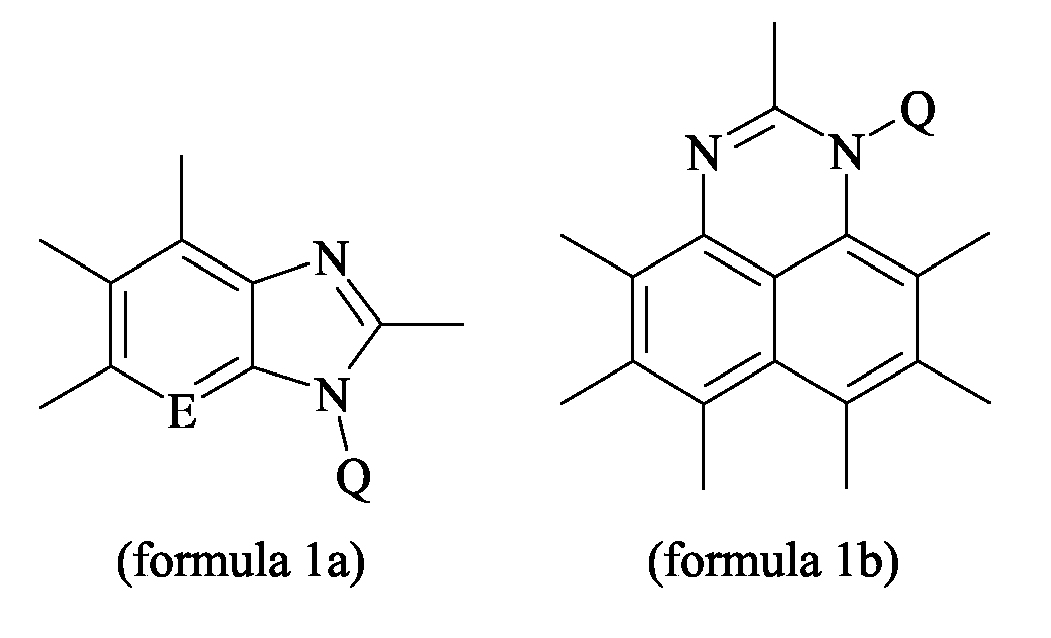

and- at least one block (B2) comprising recurring units (R'), more than 50 % by moles of said recurring units comprising at least one benzazole group chosen among benzothiazole group (formula 3 a and 3 b) and benzoxazole group (formula 4a and 4b) [recurring units (R2)],wherein E' and E" in formula 3a and 4a, respectively, can be independently a substituted or non-substituted carbon atom, and the block (B2) is substantially free from sulfonic acid groups.

- The polybenzazole block copolymer of Claim 1, wherein the recurring units (R1) are chosen among recurring units (R1-a), recurring units (R1-b), recurring units (R1-c), recurring units (R1-d) and mixture thereof:

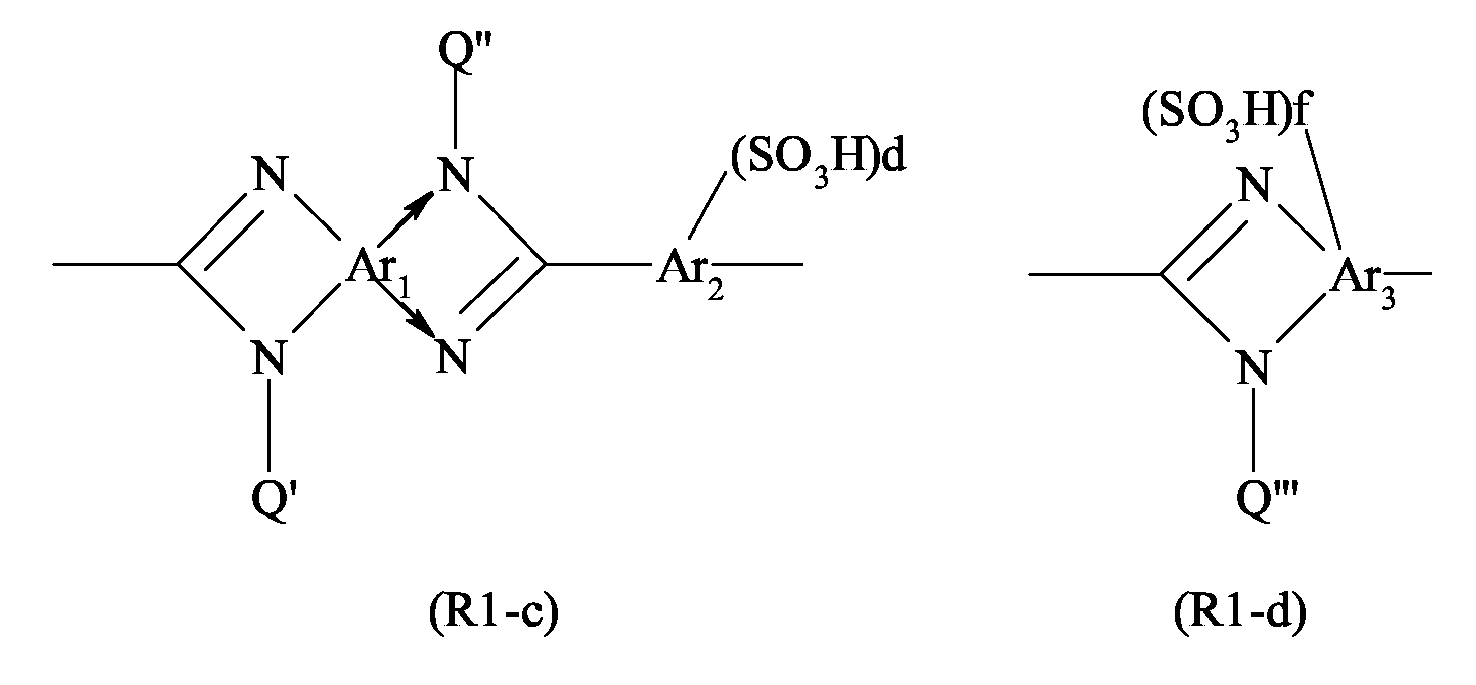 - the → denotes isomerism so that in any recurring unit within the aromatic benzimidazole structure, the groups to which the arrows point may exist as shown or in an interchanged position;- the
 - a is an integer from 0 to 2;- b is an integer from 1 to 2;- d is an integer from 0 to 2- e is an integer from 1 to 2;- f is an integer from 0 to 2- Ar1 is :


 - Ar2 is:
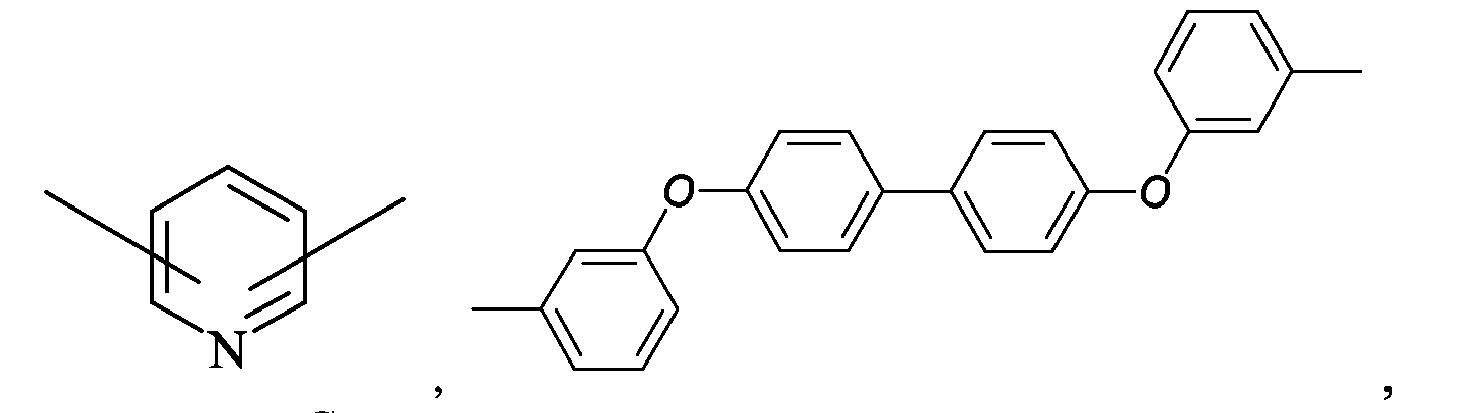
 - Ar3 is :
 - each of the Q', Q", Q"' moiety can be independently either a hydrogen atom or a group comprising a sulfonic acid group chosen among the following :with the further requirement that if d and f are zero, at least one of Q', Q" and Q"' moieties comprises at least one sulfonic acid group.
- The polybenzazole block copolymer of Claim 2, wherein recurring units (R1) are chosen among the group consisting of :


wherein, in formulae r1-i to r1-v here above :- the → denotes isomerism so that in any recurring unit within the aromatic benzimidazole structure, the groups to which the arrows point may exist as shown or in an interchanged position;- a is an integer from 0 to 2;- Ar1 is :


 - the
- the
- The polybenzazole block copolymer of Claim 1, wherein recurring units (R2) are chosen among recurring units (R2-a), recurring units (R2-b) and mixture thereof :
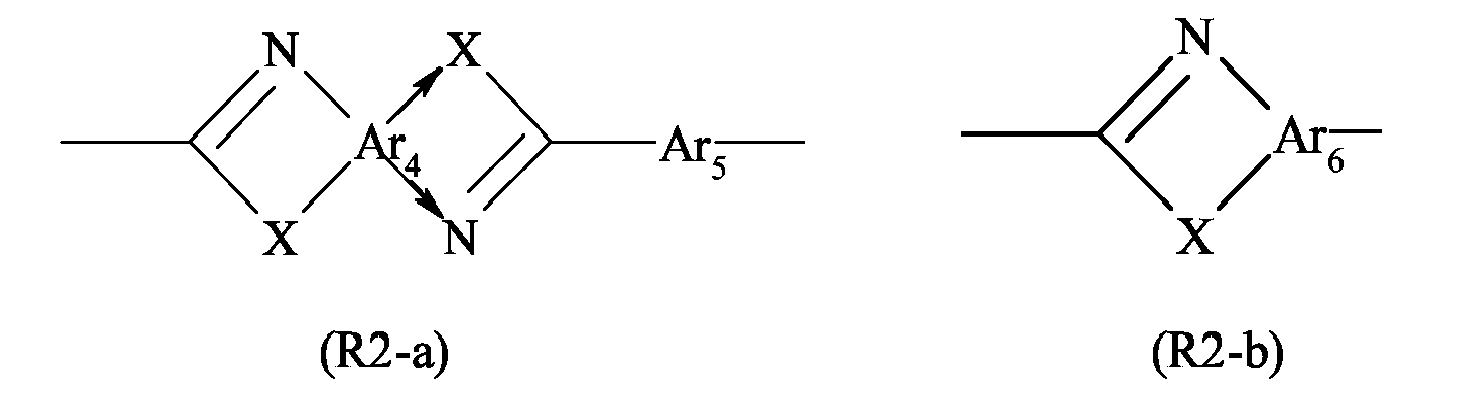 - the → denotes isomerism so that in any recurring unit within the aromatic benzimidazole structure the groups to which the arrows point may exist as shown or in an interchanged position;- X is an oxygen or sulfur atom;- Ar4 is :


 - Ar5 is :

 - Ar6 is :
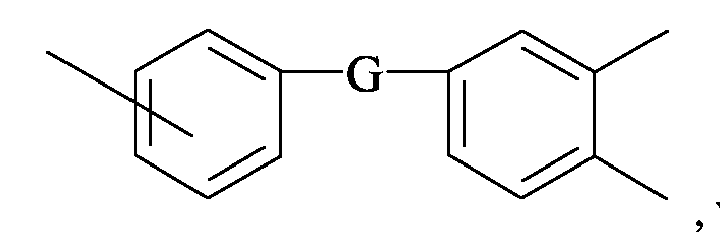
- The polybenzazole block copolymer of Claim 2, wherein recurring units (R2) are chosen among the group consisting of :


wherein, in formulae r2-j to r2-jv here above :- the → denotes isomerism so that in any recurring unit within the aromatic benzazole structure, the groups to which the arrows point may exist as shown or in an interchanged position;- X is an oxygen or sulfur atom;- G=
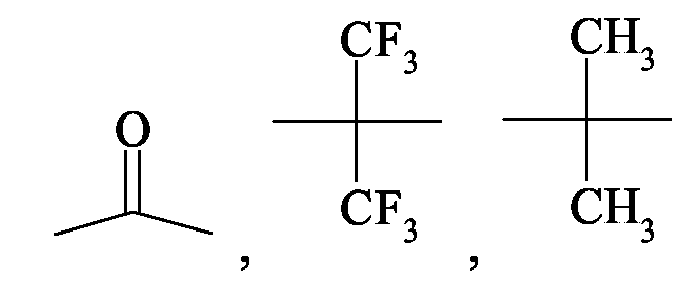
- A process for manufacturing the polybenzazole block copolymer according to anyone of Claims 1 to 5, comprising at least one of the following steps :(a) contacting in a mineral acid under polymerization conditions a pre-polymer comprising at least one B 1 block terminated by a first azole-forming group with a second pre-polymer comprising at least one B2 group terminated by a second azole-forming group capable of reacting with the first azole-forming group;(b) contacting in a mineral acid under polymerization conditions a pre-polymer comprising at least one B2 block terminated by a first azole-forming group with a second pre-polymer comprising at least one B 1 block terminated by a second azole-forming group capable of reacting with the first azole-forming group;(c) contacting in a mineral acid under polymerization conditions a first pre-polymer comprising at least one B 1 block terminated by an azole-forming group with monomer(s) appropriate to form a B2 block;(d) contacting in a mineral acid under polymerization conditions a first pre-polymer comprising at least one B2 block terminated by an azole-forming group with monomer(s) appropriate to form a B 1 block.
- A polybenzazole polymer composition comprising the polybenzazole block copolymer according to anyone of Claims 1 to 5.
- A solid polymer electrolyte membrane comprising the polybenzazole block copolymer according to anyone of Claims 1 to 5 or comprising the polybenzazole polymer composition according to Claim 7.
- A solid polymer electrolyte doped membrane comprising the polybenzazole block copolymer according to anyone of Claims 1 to 5 or the polybenzazole polymer composition according to Claim 7 and at least one strong acid.
- A fuel cell comprising the polybenzazole block copolymer according to anyone of Claims 1 to 5 or comprising the polybenzazole polymer composition according to Claim 7.
Priority Applications (13)
| Application Number | Priority Date | Filing Date | Title |
|---|---|---|---|
| EP04105666A EP1657274A1 (en) | 2004-11-10 | 2004-11-10 | Polybenzazole block copolymer |
| TW094138618A TW200630414A (en) | 2004-11-10 | 2005-11-03 | Polybenzazole block copolymer |
| CN2005800462438A CN101098910B (en) | 2004-11-10 | 2005-11-07 | Polybenzazole block copolymer |
| AT05801329T ATE434013T1 (en) | 2004-11-10 | 2005-11-07 | POLYBENZAZOLE BLOCK COPOLYMER |
| KR1020077010660A KR20070084164A (en) | 2004-11-10 | 2005-11-07 | Polybenzazole Block Copolymer |
| DK05801329T DK1812497T3 (en) | 2004-11-10 | 2005-11-07 | Polybenzazole block copolymer |
| JP2007540635A JP2008519877A (en) | 2004-11-10 | 2005-11-07 | Polybenzazole block copolymer |
| PCT/EP2005/055778 WO2006051064A1 (en) | 2004-11-10 | 2005-11-07 | Polybenzazole block copolymer |
| DE602005015015T DE602005015015D1 (en) | 2004-11-10 | 2005-11-07 | POLYBENZAZOLES BLOCK COPOLYMER |
| ES05801329T ES2328267T3 (en) | 2004-11-10 | 2005-11-07 | COPOLIMERO POLIBENZAZOLICO IN BLOCK. |
| EP05801329A EP1812497B1 (en) | 2004-11-10 | 2005-11-07 | Polybenzazole block copolymer |
| US11/718,932 US7799893B2 (en) | 2004-11-10 | 2005-11-07 | Polybenzazole block copolymer |
| JP2012028840A JP2012092352A (en) | 2004-11-10 | 2012-02-13 | Polybenzazole block copolymer |
Applications Claiming Priority (1)
| Application Number | Priority Date | Filing Date | Title |
|---|---|---|---|
| EP04105666A EP1657274A1 (en) | 2004-11-10 | 2004-11-10 | Polybenzazole block copolymer |
Publications (1)
| Publication Number | Publication Date |
|---|---|
| EP1657274A1 true EP1657274A1 (en) | 2006-05-17 |
Family
ID=34929834
Family Applications (2)
| Application Number | Title | Priority Date | Filing Date |
|---|---|---|---|
| EP04105666A Withdrawn EP1657274A1 (en) | 2004-11-10 | 2004-11-10 | Polybenzazole block copolymer |
| EP05801329A Expired - Lifetime EP1812497B1 (en) | 2004-11-10 | 2005-11-07 | Polybenzazole block copolymer |
Family Applications After (1)
| Application Number | Title | Priority Date | Filing Date |
|---|---|---|---|
| EP05801329A Expired - Lifetime EP1812497B1 (en) | 2004-11-10 | 2005-11-07 | Polybenzazole block copolymer |
Country Status (11)
| Country | Link |
|---|---|
| US (1) | US7799893B2 (en) |
| EP (2) | EP1657274A1 (en) |
| JP (2) | JP2008519877A (en) |
| KR (1) | KR20070084164A (en) |
| CN (1) | CN101098910B (en) |
| AT (1) | ATE434013T1 (en) |
| DE (1) | DE602005015015D1 (en) |
| DK (1) | DK1812497T3 (en) |
| ES (1) | ES2328267T3 (en) |
| TW (1) | TW200630414A (en) |
| WO (1) | WO2006051064A1 (en) |
Cited By (4)
| Publication number | Priority date | Publication date | Assignee | Title |
|---|---|---|---|---|
| WO2008031554A1 (en) * | 2006-09-12 | 2008-03-20 | Basf Fuel Cell Gmbh | Process for producing a proton-conducting, polyazole-containing membrane |
| CN100430430C (en) * | 2006-09-15 | 2008-11-05 | 华东理工大学 | Benzoxazole-based block copolymer |
| KR101082672B1 (en) | 2007-07-27 | 2011-11-15 | 재단법인서울대학교산학협력재단 | Polybenzimidazole copolymer containing arylene ether group and electrolyte membrane comprising the same |
| CN112275146A (en) * | 2020-09-01 | 2021-01-29 | 中国科学院山西煤炭化学研究所 | Tr star gers Base polymer gas separation membrane treated by phosphoric acid and preparation method and application thereof |
Families Citing this family (13)
| Publication number | Priority date | Publication date | Assignee | Title |
|---|---|---|---|---|
| EP1657274A1 (en) * | 2004-11-10 | 2006-05-17 | SOLVAY (Société Anonyme) | Polybenzazole block copolymer |
| EP2355218B1 (en) * | 2005-03-04 | 2012-10-03 | Ube Industries, Ltd. | Novel polymer electrolyte, polymer electrolyte composition, electrolyte membrane, and production method and use thereof |
| KR100902411B1 (en) * | 2006-12-22 | 2009-06-11 | 한국과학기술연구원 | Polybenziimidazole partially introduced with sulfonic acid, method for preparing the same, fuel cell membrane electrode assembly using the polybenzimidazole, and method for preparing same |
| US9178237B2 (en) * | 2010-12-14 | 2015-11-03 | Samsung Electronics Co., Ltd. | Conductive composition and method of preparation, polymer thereof, and electrode, electrolyte membrane and fuel cell including the composition or polymer |
| KR20130020000A (en) | 2011-08-18 | 2013-02-27 | 삼성전자주식회사 | Porous membrane, electrolyte membrane comprising the same, manufacturing method thereof, fuel cell employing the same |
| KR101350858B1 (en) | 2012-02-20 | 2014-01-16 | 한국과학기술연구원 | Poly(benzimidazole-co-benzoxazole) and method for preparing the same |
| US9130208B2 (en) | 2012-05-08 | 2015-09-08 | Basf Se | Membrane electrode assemblies and fuel cells with long lifetime |
| EP2847253A4 (en) * | 2012-05-08 | 2016-01-13 | Basf Se | Improved membrane electrode assemblies and fuel cells with long lifetime |
| WO2014047488A1 (en) | 2012-09-20 | 2014-03-27 | Polaris Industries Inc. | Utiliy vehicle |
| CN109119662B (en) * | 2018-07-16 | 2022-01-04 | 大连理工大学 | Long-chain branched double-comb-shaped polyaryl indole anion exchange membrane and preparation method thereof |
| JP6836210B2 (en) * | 2018-12-26 | 2021-02-24 | 株式会社デンソー | How to cool vehicle heat management systems, heat transport media, and batteries for vehicle travel |
| CN116266640A (en) * | 2021-12-16 | 2023-06-20 | 中国科学院大连化学物理研究所 | A kind of preparation method and application of indolyl-based solid electrolyte |
| JP7662575B2 (en) * | 2022-05-31 | 2025-04-15 | 花王株式会社 | Benzoxazole Copolymer |
Citations (4)
| Publication number | Priority date | Publication date | Assignee | Title |
|---|---|---|---|---|
| US5312876A (en) * | 1993-03-12 | 1994-05-17 | The United States Of America As Represented By The Secretary Of The Air Force | Water soluble rigid-rod polymer |
| JP2002201269A (en) * | 2001-01-09 | 2002-07-19 | Toyobo Co Ltd | Novel polybenzazole having ionic group and membrane containing it as main component |
| US20040062969A1 (en) * | 2000-11-13 | 2004-04-01 | Yoshimitsu Sakaguchi | Polybenzazole compound having sulfo group and/or phosphono group, resin composition containing the same, molded resin, slid polymer electrolyte film, solid electrolyte film/electrode catalyst layer composite, and process for producing the composite |
| US20040149965A1 (en) * | 2003-02-04 | 2004-08-05 | Honda Motor Co., Ltd. | Polymer electrolyte, proton conductive membrane and membrane-electrode assembly |
Family Cites Families (8)
| Publication number | Priority date | Publication date | Assignee | Title |
|---|---|---|---|---|
| JPS63256622A (en) * | 1987-04-14 | 1988-10-24 | Agency Of Ind Science & Technol | Production of aromatic-heterocyclic ring-containing block copolymer |
| US5030706A (en) * | 1988-10-11 | 1991-07-09 | The Dow Chemical Company | Copolymers containing polybenzoxazole, polybenzothiazole and polybenzimidazole moieties |
| US6726962B1 (en) | 1998-12-18 | 2004-04-27 | Messier-Bugatti Inc. | Method for forming composite articles |
| JP4228040B2 (en) * | 2002-05-08 | 2009-02-25 | 東洋紡績株式会社 | POLYBENZAZOLE COMPOUND HAVING SULFONIC ACID GROUP AND / OR PHOSPHONIC GROUP, RESIN COMPOSITION CONTAINING THE SAME, RESIN MOLDED ARTICLE, SOLID POLYMER ELECTROLYTE MEMBRANE, SOLID ELECTROLYTE MEMBRANE / ELECTRODE CATALYST LAYER COMPLEX, AND METHOD FOR PRODUCING THE SAME |
| DE10246373A1 (en) | 2002-10-04 | 2004-04-15 | Celanese Ventures Gmbh | Polymer electrolyte membrane for use, e.g. in fuel cells, manufactured by heating a mixture of sulfonated aromatic polyazole monomers in polyphosphoric acid and then processing to form a self-supporting membrane |
| JP2004216227A (en) * | 2003-01-10 | 2004-08-05 | Toyobo Co Ltd | Composite ion exchange membrane |
| EP1657274A1 (en) * | 2004-11-10 | 2006-05-17 | SOLVAY (Société Anonyme) | Polybenzazole block copolymer |
| JP2008248254A (en) * | 2008-04-28 | 2008-10-16 | Toyobo Co Ltd | Solid polymer electrolytic membrane/electrode catalyst layer assembly, and production method therefor |
-
2004
- 2004-11-10 EP EP04105666A patent/EP1657274A1/en not_active Withdrawn
-
2005
- 2005-11-03 TW TW094138618A patent/TW200630414A/en unknown
- 2005-11-07 KR KR1020077010660A patent/KR20070084164A/en not_active Ceased
- 2005-11-07 WO PCT/EP2005/055778 patent/WO2006051064A1/en not_active Ceased
- 2005-11-07 DK DK05801329T patent/DK1812497T3/en active
- 2005-11-07 AT AT05801329T patent/ATE434013T1/en active
- 2005-11-07 DE DE602005015015T patent/DE602005015015D1/en not_active Expired - Lifetime
- 2005-11-07 CN CN2005800462438A patent/CN101098910B/en not_active Expired - Fee Related
- 2005-11-07 ES ES05801329T patent/ES2328267T3/en not_active Expired - Lifetime
- 2005-11-07 JP JP2007540635A patent/JP2008519877A/en active Pending
- 2005-11-07 EP EP05801329A patent/EP1812497B1/en not_active Expired - Lifetime
- 2005-11-07 US US11/718,932 patent/US7799893B2/en not_active Expired - Fee Related
-
2012
- 2012-02-13 JP JP2012028840A patent/JP2012092352A/en active Pending
Patent Citations (4)
| Publication number | Priority date | Publication date | Assignee | Title |
|---|---|---|---|---|
| US5312876A (en) * | 1993-03-12 | 1994-05-17 | The United States Of America As Represented By The Secretary Of The Air Force | Water soluble rigid-rod polymer |
| US20040062969A1 (en) * | 2000-11-13 | 2004-04-01 | Yoshimitsu Sakaguchi | Polybenzazole compound having sulfo group and/or phosphono group, resin composition containing the same, molded resin, slid polymer electrolyte film, solid electrolyte film/electrode catalyst layer composite, and process for producing the composite |
| JP2002201269A (en) * | 2001-01-09 | 2002-07-19 | Toyobo Co Ltd | Novel polybenzazole having ionic group and membrane containing it as main component |
| US20040149965A1 (en) * | 2003-02-04 | 2004-08-05 | Honda Motor Co., Ltd. | Polymer electrolyte, proton conductive membrane and membrane-electrode assembly |
Non-Patent Citations (1)
| Title |
|---|
| PATENT ABSTRACTS OF JAPAN vol. 2002, no. 11 6 November 2002 (2002-11-06) * |
Cited By (5)
| Publication number | Priority date | Publication date | Assignee | Title |
|---|---|---|---|---|
| WO2008031554A1 (en) * | 2006-09-12 | 2008-03-20 | Basf Fuel Cell Gmbh | Process for producing a proton-conducting, polyazole-containing membrane |
| US8273277B2 (en) | 2006-09-12 | 2012-09-25 | Basf Fuel Cell Gmbh | Process for producing a proton-conducting, polyazole-containing membrane |
| CN100430430C (en) * | 2006-09-15 | 2008-11-05 | 华东理工大学 | Benzoxazole-based block copolymer |
| KR101082672B1 (en) | 2007-07-27 | 2011-11-15 | 재단법인서울대학교산학협력재단 | Polybenzimidazole copolymer containing arylene ether group and electrolyte membrane comprising the same |
| CN112275146A (en) * | 2020-09-01 | 2021-01-29 | 中国科学院山西煤炭化学研究所 | Tr star gers Base polymer gas separation membrane treated by phosphoric acid and preparation method and application thereof |
Also Published As
| Publication number | Publication date |
|---|---|
| US20080003480A1 (en) | 2008-01-03 |
| DK1812497T3 (en) | 2009-10-12 |
| EP1812497B1 (en) | 2009-06-17 |
| JP2008519877A (en) | 2008-06-12 |
| WO2006051064A1 (en) | 2006-05-18 |
| US7799893B2 (en) | 2010-09-21 |
| KR20070084164A (en) | 2007-08-24 |
| CN101098910A (en) | 2008-01-02 |
| TW200630414A (en) | 2006-09-01 |
| ATE434013T1 (en) | 2009-07-15 |
| DE602005015015D1 (en) | 2009-07-30 |
| JP2012092352A (en) | 2012-05-17 |
| ES2328267T3 (en) | 2009-11-11 |
| CN101098910B (en) | 2011-04-13 |
| EP1812497A1 (en) | 2007-08-01 |
Similar Documents
| Publication | Publication Date | Title |
|---|---|---|
| JP2012092352A (en) | Polybenzazole block copolymer | |
| CN100380722C (en) | Proton-conducting polymer membranes containing polypyrrole blends and their use in fuel cells | |
| CN100435401C (en) | Proton-conducting polymer membranes containing polypyrrole with sulfonic acid groups and their use in fuel cells | |
| JP4450734B2 (en) | A proton conducting polymer membrane comprising a phosphonic acid group-containing polyazole and its use in a fuel cell. | |
| Asensio et al. | Proton-conducting membranes based on benzimidazole polymers for high-temperature PEM fuel cells. A chemical quest | |
| JP4537199B2 (en) | Proton conducting membrane and use thereof | |
| EP1354907A1 (en) | Polybenzazole compound having sulfo group and/or phosphono group, resin composition containing the same, molded resin, solid polymer electrolyte film, solid electrolyte film/electrode catalyst layer composite, and process for producing the composite | |
| JP4875489B2 (en) | Proton conducting membrane and use thereof | |
| US20080318109A1 (en) | Method for the production of a sulfonated poly (1, 3, 4-oxadiazole) polymer | |
| US20110003234A1 (en) | Polymer Composition, Polymer Membrane Comprising the Polymer Composition, Process for Preparing it and Fuel Cell Comprising the Membrane | |
| US8557472B2 (en) | Proton conducting polymer membrane, method for production thereof and fuel cell therewith | |
| CA2602240A1 (en) | Crosslinked polymer electrolyte and method for producing same | |
| WO2006053808A1 (en) | Colour-recognition device | |
| US20100068594A1 (en) | Polymer electrolyte membrane, method of preparing the same, and fuel cell including the polymer electrolyte membrane | |
| KR20080042123A (en) | Method for controlling membrane-electrode-units for fuel cells | |
| KR101093281B1 (en) | Polybenzimidazole-based polymer and electrolyte membrane comprising same | |
| Kundu et al. | Polybenzimidazole as membranes in direct methanol fuel cells | |
| Potrekar | Novel polybenzimidazoles as polymer electrolytes for fuel cell |
Legal Events
| Date | Code | Title | Description |
|---|---|---|---|
| PUAI | Public reference made under article 153(3) epc to a published international application that has entered the european phase |
Free format text: ORIGINAL CODE: 0009012 |
|
| AK | Designated contracting states |
Kind code of ref document: A1 Designated state(s): AT BE BG CH CY CZ DE DK EE ES FI FR GB GR HU IE IS IT LI LU MC NL PL PT RO SE SI SK TR |
|
| AX | Request for extension of the european patent |
Extension state: AL HR LT LV MK YU |
|
| AKX | Designation fees paid | ||
| REG | Reference to a national code |
Ref country code: DE Ref legal event code: 8566 |
|
| STAA | Information on the status of an ep patent application or granted ep patent |
Free format text: STATUS: THE APPLICATION IS DEEMED TO BE WITHDRAWN |
|
| 18D | Application deemed to be withdrawn |
Effective date: 20061120 |