EP1657236A1 - Method for preparing diastereoisomers of 4-hydroxy isoleucine - Google Patents
Method for preparing diastereoisomers of 4-hydroxy isoleucine Download PDFInfo
- Publication number
- EP1657236A1 EP1657236A1 EP04292666A EP04292666A EP1657236A1 EP 1657236 A1 EP1657236 A1 EP 1657236A1 EP 04292666 A EP04292666 A EP 04292666A EP 04292666 A EP04292666 A EP 04292666A EP 1657236 A1 EP1657236 A1 EP 1657236A1
- Authority
- EP
- European Patent Office
- Prior art keywords
- formula
- protected amine
- lactone
- amine
- substituents
- Prior art date
- Legal status (The legal status is an assumption and is not a legal conclusion. Google has not performed a legal analysis and makes no representation as to the accuracy of the status listed.)
- Withdrawn
Links
- ZBOSBEXHBMFTQO-UHFFFAOYSA-N CC(C(C)[O](C)C1=O)C1N Chemical compound CC(C(C)[O](C)C1=O)C1N ZBOSBEXHBMFTQO-UHFFFAOYSA-N 0.000 description 1
- DXLUNIWVHZZSPK-WDCZJNDASA-N C[C@H]([C@@H](C)OC1=O)[C@@H]1N Chemical compound C[C@H]([C@@H](C)OC1=O)[C@@H]1N DXLUNIWVHZZSPK-WDCZJNDASA-N 0.000 description 1
- JIHHKJXAPJGZKO-OEXCPVAWSA-N C[C@H]([C@@H]([C@@H]1N)[IH]C)OC1O Chemical compound C[C@H]([C@@H]([C@@H]1N)[IH]C)OC1O JIHHKJXAPJGZKO-OEXCPVAWSA-N 0.000 description 1
- DXLUNIWVHZZSPK-MROZADKFSA-N C[C@H]([C@H](C)OC1=O)[C@H]1N Chemical compound C[C@H]([C@H](C)OC1=O)[C@H]1N DXLUNIWVHZZSPK-MROZADKFSA-N 0.000 description 1
Images






Classifications
-
- C—CHEMISTRY; METALLURGY
- C07—ORGANIC CHEMISTRY
- C07C—ACYCLIC OR CARBOCYCLIC COMPOUNDS
- C07C229/00—Compounds containing amino and carboxyl groups bound to the same carbon skeleton
- C07C229/02—Compounds containing amino and carboxyl groups bound to the same carbon skeleton having amino and carboxyl groups bound to acyclic carbon atoms of the same carbon skeleton
- C07C229/04—Compounds containing amino and carboxyl groups bound to the same carbon skeleton having amino and carboxyl groups bound to acyclic carbon atoms of the same carbon skeleton the carbon skeleton being acyclic and saturated
- C07C229/22—Compounds containing amino and carboxyl groups bound to the same carbon skeleton having amino and carboxyl groups bound to acyclic carbon atoms of the same carbon skeleton the carbon skeleton being acyclic and saturated the carbon skeleton being further substituted by oxygen atoms
-
- C—CHEMISTRY; METALLURGY
- C07—ORGANIC CHEMISTRY
- C07C—ACYCLIC OR CARBOCYCLIC COMPOUNDS
- C07C227/00—Preparation of compounds containing amino and carboxyl groups bound to the same carbon skeleton
- C07C227/14—Preparation of compounds containing amino and carboxyl groups bound to the same carbon skeleton from compounds containing already amino and carboxyl groups or derivatives thereof
- C07C227/18—Preparation of compounds containing amino and carboxyl groups bound to the same carbon skeleton from compounds containing already amino and carboxyl groups or derivatives thereof by reactions involving amino or carboxyl groups, e.g. hydrolysis of esters or amides, by formation of halides, salts or esters
Definitions
- the invention relates to a method for preparing diastereoisomers of 4-hydroxy isoleucine.
- 4-hydroxy isoleucine has the following structure COOH- C(NH 2 )- CH(CH 3 ) -CH(OH)-CH 3 (A)
- the inventors have developed a method to obtain any one of said isomers, as desired, using the same general reaction scheme, but changing specific condition reactions.
- the invention particularly relates to a method, wherein according to a first embodiment said lactone is obtained in one pot, by oxidative deprotection (step 1) and borohydride reduction (step 2).
- said lactone is obtained in two pots by deprotecting the amine with an oxidising agent resulting in an intermediate of formula C which is isolated. said intermediate derivative C being then submitted to a borohydride reduction to give the desired isomers.
- said oxidizing agent is a mild oxidative agent.
- Said first embodiment comprises the use of protected amine of formula B, having S, R substituents, respectively at positions 2 and 3, or having S, S substituents, respectively at positions 2 and 3.
- Said second embodiment comprises the use of protected amine formula B having R, S substituents, respectively at positions 2 and 3, or R, R substituents, respectively at positions 2 and 3.
- Said protected amine R, S or S, R of formula B is more preferably obtained by epimerisation of protected amine S, S or R, R, respectively.
- the protected amines (R, S, or S, R; S, S or R, R) of formula B are obtained by condensing a derivative of formula E wherein P is an amino-protecting group, such as para-phenylmethoxy group, with 2-butanone in the presence of proline.
- said derivative of formula E is obtained by condensing an amino derivative of formula F P-NH 2 wherein P is such as above defined, with ethylglyoxalate of formula G
- a particularly preferred method for preparing diastereoisomers of 4-hydroxy isoleucine comprises:
- Step a) is advantageously carried out in an organic solvent such as toluene and all aromatic hydrocarbons, chlorosolvents such as chloroform, dichloromethane, polar protic and aprotic solvents such as DMF, DMSO, acetonitrile, dioxane, ether, THF.
- organic solvent such as toluene and all aromatic hydrocarbons, chlorosolvents such as chloroform, dichloromethane, polar protic and aprotic solvents such as DMF, DMSO, acetonitrile, dioxane, ether, THF.
- ethylglyoxalate of formula II is added to a solution of the p-anisidine derivative of formula I in said solvent, advantageously containing dehydrating agents, such as Na2SO 4 , MgSO 4 , K2SO 4 , CaCl 2 molecular sieves and azeotropic distillation using aromatic hydrocarbon solvents like toluene, xylene, benzene.
- dehydrating agents such as Na2SO 4 , MgSO 4 , K2SO 4 , CaCl 2 molecular sieves and azeotropic distillation using aromatic hydrocarbon solvents like toluene, xylene, benzene.
- step b) The condensation of imine of formula III with 2-butanone according to step b) is advantageously carried out in presence of an organo catalyst with both antipodes of pyrrolidine 2 carboxylic acid and its derivatives, preferably proline in an organic solvent or mixture of organic solvents, such as DMF, alcohols C1-C7, toluene or aromatic hydrocarbons, chloro solvents such as chloroform, dichloromethane, polar protic and aprotic solvents such as DMSO, acetonitrile, dioxane, ether, THF.
- an organo catalyst with both antipodes of pyrrolidine 2 carboxylic acid and its derivatives preferably proline in an organic solvent or mixture of organic solvents, such as DMF, alcohols C1-C7, toluene or aromatic hydrocarbons, chloro solvents such as chloroform, dichloromethane, polar protic and aprotic solvents such as DMSO, acetonitrile, dio
- step c) epimerisation of the N-protected amine of formula Va or Vb is performed, by adding catalytic amounts of DBN, DBU, DABCO, DEIPA, TEA, Alkyl amines, alkali and alkaline, earth metal alkoxides, aryl amines, and substituted aryl amines, in solvents such as ethers, substituted ethers C1-C7 aromatic hydrocarbons and alcohols C1-C6, to a solution of the N-protected amine in a solvent such as t-BuOMe.
- solvents such as ethers, substituted ethers C1-C7 aromatic hydrocarbons and alcohols C1-C6
- Step d) comprises the obtention of the lactones from the protected amines (VIa or VIb, Va or Vb).
- step d) is carried out in one pot by reacting protected amine VIa in solution in an organic solvent, with an oxidising reagent at low temperature of-4°C to + 4°C, preferably of about 0°C, neutralizing the reaction mixture at pH 7, adding a borohydride, reducing agent and adding a hydrolysing, to give resulting lactone a reaction mixture.
- an oxidising reagent at low temperature of-4°C to + 4°C, preferably of about 0°C, neutralizing the reaction mixture at pH 7, adding a borohydride, reducing agent and adding a hydrolysing, to give resulting lactone a reaction mixture.
- Said oxidizing agent is advantageously selected in the group comprising Ceric Ammonium Nitrate (CAN), ammonium persulphate, sodium persulphate, potasium persulphate, transition metal oxides and other mild oxidising agents such as lithium perchlorate, sodium hypochlorate.
- CAN Ceric Ammonium Nitrate
- ammonium persulphate sodium persulphate
- potasium persulphate transition metal oxides
- transition metal oxides transition metal oxides
- other mild oxidising agents such as lithium perchlorate, sodium hypochlorate.
- the oxidizing agent does not comprise Cerium, said element is further added prior to the reduction.
- Said borohydride reducing agent is preferably a metal borohydride of formula M(BH4)n, wherein M is selected in the group comprising sodium, lithium, magnesium, calcium, aluminium, tin, titanium, and said hydrolysing agent is preferably a metal hydroxide such as lithium hydroxide or sodium hydroxide.
- step d) is carried out in two pots by reacting protected amine VIa with an oxidising agent such as above defined, neutralizing the reaction mixture at about pH 8, and recovering pure amine of formula VII.
- Said amine is then treated with a borohydride reducing agent such as above defined and an hydrolysing agent such as above defined, is added to the resulting lactone b reaction mixture.
- step d) is carried out in one pot, as above defined with respect to step c) except that protected amine Va is used instead of protected amine VIa.
- (2S, 3S, 4S) 4-hydroxy isoleucine isomer (MSK-3) is recovered after acidification of the reaction mixture, evaporation of the solvents and crystallization.
- step d) is carried out in two pots, as above defined with respect to the obtention of MSK-2, except that protected amine Va is used instead of protected amine VIa.
- the aqueous phase was neutralised with saturated sodium carbonate and pH adjusted to 7. After neutralisation of the reaction mixture, the reaction flask was cooled to -15°C with proper stirring and maintained for 30 min. Potassium borohydride (3.2g 60mmol 1.5eq) was then added to the reaction mixture.
- the lactone mixture (6) was dissolved in 96 ml of water (0.3 M) and 1.1g (43.3 mmol 1.5eq) of LiOH was added and stirred at room temperature for 2 hrs.
- the reaction mixture was carefully acidified with AcOH (43.3mmol 2.4 ml).
- the aqueous phase in the reaction mixture was evaporated in vacuum and ethanol was added and evaporated till all the water was evaporated.
- the gummy material obtained was crystallised from absolute ethanol. 1.56 g of Isomer (2S 3R 4S) 4-hydroxy Isoleucine was obtained (purity: 98%) (HPLC).
- the isomer was further purified by preparative HPLC to get white shine powder.
- the above-obtained amine (7) was dissolved in 15 ml of methanol and cooled to 0° C and 2.58 g (47.8 mmol) of potassium borohydride solid was added in one time. The reaction mixture is stirred at 0° C for 45 min. and gradually brought to room temperature. Methanol is removed from the reaction mixture in vacuum.
- the lactone crude (8) was taken up for further reaction without any further purification.
- the lactone mixture was dissolved in 100 ml of water and 805mg (33.7 mmol) of LiOH added.
- the reaction is maintained at room temperature for 1 hr and acidified with AcOH (1.91 ml, 33.72 mmol).
- the water in the reaction mixture was removed under reduced pressure and the crude gummy mass was dissolved in absolute ethanoland again ethyl alcohol was removed .
- the crude gummy mass thus obtained was dissolved in 90% ethanol and cooled.
- the separated solid was filtered and washed with ethanol.
- the grey coloured solid was crystallized with 90% ethanol and yielded 1.4 g (75:25).
- the sample was further purified with preparative HPLC to get pure white shine material.
- the Mannich condensation product (2) was purified by column chromatography to remove regio isomer and p-anisidine using Hex: EtOAc (85:15) as eluent.
- 5.6g (20mmol) of N-pmp protected amine ( 2) was taken in 250 ml round bottomed flask and was dissolved in 10 ml of acetonitrile.
- Ammonium nitrate (CAN) (33g, 3eq) in 60 ml of water was added with stirring and maintained the reaction temperature inside the flask at 0°C.
- the reaction mixture was initially blue in colour and gradually changed to green after complete addition of CAN.
- reaction mixture was stirred for 45 mts and checked TLC (hex: EtOAc 7:3) for the presence of starting material.
- the reaction mixture was extracted with ethylacetate (4x150ml).
- the aqueous phase was neutralised with saturated sodium carbonate and adjusted pH to 7.
- the reaction flask was cooled to -15°C with proper stirring.
- 1.6g of potassium borohydride (30 mmol, 1.5eq) was added to the reaction mixture.
- the reaction was allowed to come to 0°C for about 45min.
- the reaction mixture was basified further with 2N sodium carbonate to the ph around 8-9 and extracted with methylene dichloride (5x400ml).
- the combined organic phases were washed with water, dried over sodiumsulfate and evaporated under reduced pressure 1.42 g of lactone mixture.was obtained.
- the crude lactone mixture (7) was dissolved in 35 ml of water and 395mg (16.5, mmol 1.5eq) of LiOH was added and stirred at room temperature for two hrs. Tthe reaction mixture is carefully acidified with AcOH (16.5 mmol, 0.9 ml). The aqueous phase in the reaction mixture was evaporated in vacuum and ethanol was added and evaporated till all the water was evaporated. The gummy material obtained was dissolved in 90% ethanol and left overnight. The separated white solid flakes were filtered and washed several times with ethanol to remove lithium acetate impurities. The crude solid was recrystallized with 90% ethanol to give white crystals of (2S, 3S, 4S)-4- hydroxy Isoleucine (MSK- 3), 500 mg. The sample is further purified by preparative HPLC to get white shine powder.
- the above-obtained amine ( 8 ) was dissolved in 15 ml of methanol and cooled to 0° C and 962 mg (1.1 eq, 25. 43 mmol) of sodium borohydride solid was added in one time.
- the reaction mixture is stirred well at 0°C for 45 min. and gradually brought to room temperature.
- Methanol was removed from the reaction mixture and diluted with water.
- the aqueous phase was extracted with 4x 150 ml of dichloromethane.
- the combined organic phases were washed with brine, dried and evaporated to give 2g of complex mixture lactones.
- the lactone crude (15.5 mmol) ( 9 ) was taken up for further reaction without any further purification
- the lactone mixture was dissolved in 40 ml of water and to this 556.9 mg (18.6 mmol) of LiOH added .
- the reaction is maintained at room temperature for 1 hr and is acidified with AcOH (1.31 ml).
- the water in the reaction mixture was removed under reduced pressure and the crude gummy mass was dissolved in absolute ethanol and said ethanol was further removed .
- the crude gummy mass thus obtained was dissolved in minimum amount of water and the compound was loaded on a column packed with dowex50wx8 (H+) resine (50 gm).
- the column was first eluted with water 4x50 ml and then fractions were collected by eluting with 2M ammoniumhydroxide. The ninhydrine positive fractions were combined and evoparated in vaccum to get crude solid free from lithium acetate. The crude solid was dissolved in 90% ethyl alcohol and kept over night. The separated solid (250 mg) was filtered and washed with cold ethyl alcohol and recrystallized from 90% ethanol.
- This diastereomer mixture was purified by preparative HPLC to get pure isomer ( MSK-4 ) as a white shine powder.
Landscapes
- Chemical & Material Sciences (AREA)
- Organic Chemistry (AREA)
- Chemical Kinetics & Catalysis (AREA)
- Pharmaceuticals Containing Other Organic And Inorganic Compounds (AREA)
- Organic Low-Molecular-Weight Compounds And Preparation Thereof (AREA)
- Steroid Compounds (AREA)
Abstract
The invention relates to a method for preparing diastereoisomers of 4-hydroxy isoleucine of formula A
CO 2 H- CH(NH 2 )- CH(CH 3 )-CH(OH)-CH 3 (A)
which comprises the following steps: deprotection of amine of Formula B reduction and subsequent lactonisation of an intermediate amine derivative of formula C
whose substituents at positions 2 and 3 are either R, S or S, S ; or S, R or R, R, hydrolysis of the resulting lactone of formula D
where in substituents at positions 2, 3 and 4 are S,R,S or S,R,R when using a protected amine S,R S,S,S or S,S,R when using a protected amine S,S R,S,R or R,S,S, when using a protected amine R,S R,R,R or R,R,S when using a protected amine R,R
under conditions to obtain the desired isomer of 4-hydroxy isoleucine. Application for preparing the 8 isomeric forms of 4-hydroxy isoleucine.
Description
- The invention relates to a method for preparing diastereoisomers of 4-hydroxy isoleucine. 4-hydroxy isoleucine has the following structure
COOH- C(NH2)- CH(CH3) -CH(OH)-CH3 (A)
- Due to the presence of 3 chiral carbons, 4-hydroxy isoleucine will exist under eight isomeric forms, i.e.


- The inventors have developed a method to obtain any one of said isomers, as desired, using the same general reaction scheme, but changing specific condition reactions.
- The method of the invention for preparing diastereoisomers, of 4-hydroxy isoleucine, of general formula A
CO2H- CH(NH2)- CH(CH3)-CH(OH)-CH3 (A)
comprising - deprotection of amine of Formula B

- reduction and subsequent lactonisation of an intermediate amine derivative of formula C

positions 2 and 3 are either R, S or S, S ; or S, R or R, R, - hydrolysis of the resulting lactone of formula D

positions 2, 3 and 4 are- S,R,S or S,R,R when using a protected amine S,R
- S,S,S or S,S,R when using a protected amine S,S
- R,S,R or R,S,S, when using a protected amine R,S
- R,R,R or R,R,S when using a protected amine R,R
- The invention particularly relates to a method, wherein according to a first embodiment said lactone is obtained in one pot, by oxidative deprotection (step 1) and borohydride reduction (step 2).
- In another embodiment, resulting in the obtention of other isomers, said lactone is obtained in two pots by deprotecting the amine with an oxidising agent resulting in an intermediate of formula C which is isolated.

Advantageously, said oxidizing agent is a mild oxidative agent. - Said first embodiment comprises the use of protected amine of formula B, having S, R substituents, respectively at
positions 2 and 3, or having S, S substituents, respectively atpositions 2 and 3. - Said second embodiment comprises the use of protected amine formula B having R, S substituents, respectively at
positions 2 and 3, or R, R substituents, respectively atpositions 2 and 3. - Said protected amine R, S or S, R of formula B is more preferably obtained by epimerisation of protected amine S, S or R, R, respectively.
- Said epimerisation is advantageously carried out with DBN/t-BuOMe
- Preferably, the protected amines (R, S, or S, R; S, S or R, R) of formula B are obtained by condensing a derivative of formula E

with 2-butanone
- In order to obtain said protected amines S, R, or S, S, L- proline is added to the reaction mixture.
- In order to obtain said protected amines R, S, or R, R, D- proline is used instead of L-proline.
- In a preferred embodiment of the invention said derivative of formula E is obtained by condensing an amino derivative of formula F
P-NH2
wherein P is such as above defined,
with ethylglyoxalate of formula G
- A particularly preferred method for preparing diastereoisomers of 4-hydroxy isoleucine comprises:
- a) condensing an anisidine derivative of formula I

with ethylglyoxalate of formula II

- b) condensing imine of formula III with 2-butanone IV


- c) epimerisation of the resulting condensation derivative of formula Va or Vb to give N-protected amine of formula VIa or VIb, respectively,

- d) reacting said N-protected amine Va or Vb, or Vla or VIb, under conditions to give -
- lactone a

- lactone b

- lactone c

- lactone d

- lactone e

- lactone f

- lactone g

- lactone h

- lactone a
- e) hydrolysing said lactones to obtain the desired stereoisomer..
- Step a) is advantageously carried out in an organic solvent such as toluene and all aromatic hydrocarbons, chlorosolvents such as chloroform, dichloromethane, polar protic and aprotic solvents such as DMF, DMSO, acetonitrile, dioxane, ether, THF. In a preferred embodiment, ethylglyoxalate of formula II is added to a solution of the p-anisidine derivative of formula I in said solvent, advantageously containing dehydrating agents, such as Na2SO4, MgSO4, K2SO4, CaCl2 molecular sieves and azeotropic distillation using aromatic hydrocarbon solvents like toluene, xylene, benzene.
- The condensation of imine of formula III with 2-butanone according to step b) is advantageously carried out in presence of an organo catalyst with both antipodes of pyrrolidine 2 carboxylic acid and its derivatives, preferably proline in an organic solvent or mixture of organic solvents, such as DMF, alcohols C1-C7, toluene or aromatic hydrocarbons, chloro solvents such as chloroform, dichloromethane, polar protic and aprotic solvents such as DMSO, acetonitrile, dioxane, ether, THF.
- Both antipodes of pyrrolidine -2-carboxylic acid and its derivatives means, for example,


- According to step c), epimerisation of the N-protected amine of formula Va or Vb is performed, by adding catalytic amounts of DBN, DBU, DABCO, DEIPA, TEA, Alkyl amines, alkali and alkaline, earth metal alkoxides, aryl amines, and substituted aryl amines, in solvents such as ethers, substituted ethers C1-C7 aromatic hydrocarbons and alcohols C1-C6, to a solution of the N-protected amine in a solvent such as t-BuOMe.
- Step d) comprises the obtention of the lactones from the protected amines (VIa or VIb, Va or Vb).
- According to a first embodiment, in order to prepare (2S 3R 4S) 4-hydroxy isoleucine isomer (hereinafter MSK-1), step d) is carried out in one pot by reacting protected amine VIa in solution in an organic solvent, with an oxidising reagent at low temperature of-4°C to + 4°C, preferably of about 0°C, neutralizing the reaction mixture at pH 7, adding a borohydride, reducing agent and adding a hydrolysing, to give resulting lactone a reaction mixture.
- (2S 3R 4S) 4-hydroxy isoleucine isomer (MSK-1) is recovered after acidification of the reaction mixture, evaporation of the solvents and crystallization.
- Said oxidizing agent is advantageously selected in the group comprising Ceric Ammonium Nitrate (CAN), ammonium persulphate, sodium persulphate, potasium persulphate, transition metal oxides and other mild oxidising agents such as lithium perchlorate, sodium hypochlorate.
- When the oxidizing agent does not comprise Cerium, said element is further added prior to the reduction.
- Said borohydride reducing agent is preferably a metal borohydride of formula M(BH4)n, wherein M is selected in the group comprising sodium, lithium, magnesium, calcium, aluminium, tin, titanium, and said hydrolysing agent is preferably a metal hydroxide such as lithium hydroxide or sodium hydroxide.
- According to a second embodiment, in order to prepare (2S, 3R, 4R), 4-hydroxy isoleucine isomer (hereinafter MSK2), step d) is carried out in two pots by reacting protected amine VIa with an oxidising agent such as above defined, neutralizing the reaction mixture at about pH 8, and recovering pure amine of formula VII.

- Said amine is then treated with a borohydride reducing agent such as above defined and an hydrolysing agent such as above defined, is added to the resulting lactone b reaction mixture.
- (2S 3R 4S) 4-hydroxy isoleucine isomer (MSK-2) is recovered after acidification of the reaction mixture, evaporation of the solvents and crystallization.
- According to a third embodiment, in order to prepare (2S, 3S, 4S), 4-hydroxy isoleucine isomer (hereinafter MSK-3), step d) is carried out in one pot, as above defined with respect to step c) except that protected amine Va is used instead of protected amine VIa.
(2S, 3S, 4S) 4-hydroxy isoleucine isomer (MSK-3) is recovered after acidification of the reaction mixture, evaporation of the solvents and crystallization. - According to a fourth embodiment, in order to prepare (2S, 3S, 4R), 4-hydroxy isoleucine isomer (MSK-4), step d) is carried out in two pots, as above defined with respect to the obtention of MSK-2, except that protected amine Va is used instead of protected amine VIa.
- (2S, 3S, 4R) 4-hydroxy isoleucine isomer is recovered after acidification of the reaction mixture, evaporation of the solvents and crystallization.
- By using the same protocols as above defined with respect to the obtention of MSK-1, MSK-2, MSK-3 and MSK-4, but using protected amines VIb or Vb, respectively, the following isomers are obtained:
- (2R, 3S, 4R), 4-hydroxy isoleucine isomer (hereinafter MSK-5),
- (2R, 3S, 4S), 4-hydroxy isoleucine isomer (hereinafter MSK-6),
- (2R, 3R, 4R), 4-hydroxy isoleucine isomer (hereinafter MSK-7, and
- (2R, 3R, 4S), 4-hydroxy isoleucine isomer (hereinafter MSK-8).
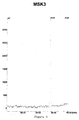
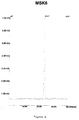
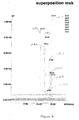
- Other characteristics and advantages of the invention will be given hereinafter with reference to figures 1 to 8,which represent, the HPLC of the 8 stereo isomers MSK1-8. The analysis was performed on a Chirobiotic column with 0.5 ml / ml flow, using CH3CN/H2O 75/25 at 25° C. DEDL detector was used at 50° C / gain 7/P 3.4 bars Helium, and figure 9 which shows superposition of HPLC curves of MSK1-8.
-

- 50 g of p-anisidine (1) (406mmol) was dissolved in 400 ml of toluene and 200 g of sodium sulfate (aprox. 2.5 eq) was added and stirred. 82ml of ethyl glyoxalate (2) (50% in toluene 1 eq) was added slowly and proper stirring was maintained. The reaction was completed in 30 min. Sodium sulfate was filtered off using Celite® and toluene was removed under vacuum. 80g (95% yield) of crude product (3) was recovered. The next condensation reaction was carried out on the crude reaction product.
- 2-butanone (800ml, 22 eq), dry DMF(600 ml) and L- Proline (15.8 gm, 0.35 eq) were added and stirred at room temperature under nitrogen.
- Imine (3) obtained in the above reaction was dissolved in 200 ml of dry DMF along with Et3N (0.40 eq 22.4 ml) and added slowly to the reaction mixture (L-Proline + butanone + DMF) under nitrogen and maintained under stirring during about 8h,
L-Proline, butanone and DMF were then successively removed. After complete removal of DMF, the crude mas s (4) (red colored gum) was dissolved in 15 ml of t-BuOMe and 1 ml of DBN (catalytic 0.04 eq) was added and stirred under nitrogen for 2 hrs. The t-BuOMe was allowed to evaporate in overnight at room temperature. After the isomerisation, a solid cake was obtained, dissolved in hot ethanol and crystallized. 48 gms of pure isomerised product (5) were recovered (Total yield: 43%) -

- 11.6g (40 mmol) of N-pmp protected amine (5) was dissolved in 20 ml of acetonitrile. CAN (65.6g, 3eq) in 120ml of water was added with stirring and the reaction temperature inside the flask maintained at 0°C. The initially blue reaction mixture gradually changed to green after complete addition of CAN. The reaction mixture was stirred for 2h30 then extracted with ethylacetate (4x150m1) and the aqueous phase is preserved for the next reduction reaction.
- The aqueous phase was neutralised with saturated sodium carbonate and pH adjusted to 7. After neutralisation of the reaction mixture, the reaction flask was cooled to -15°C with proper stirring and maintained for 30 min. Potassium borohydride (3.2g 60mmol 1.5eq) was then added to the reaction mixture.
- The reaction was allowed to come to 0°C for about 45min and then basified with 2N Sodium carbonate to pH around 8-9 and extracted with methylene dichloride (5x400ml). The combined organic phases were washed with water, dried over sodium sulfate and evaporated under reduced pressure. 3.73g (62.6% yield) of the resulting lactone mixture (6)) was recovered.
- The lactone mixture (6) was dissolved in 96 ml of water (0.3 M) and 1.1g (43.3 mmol 1.5eq) of LiOH was added and stirred at room temperature for 2 hrs. The reaction mixture was carefully acidified with AcOH (43.3mmol 2.4 ml). The aqueous phase in the reaction mixture was evaporated in vacuum and ethanol was added and evaporated till all the water was evaporated. The gummy material obtained was crystallised from absolute ethanol.
1.56 g of Isomer (2S 3R 4S) 4-hydroxy Isoleucine was obtained (purity: 98%) (HPLC).
The isomer was further purified by preparative HPLC to get white shine powder. - 1 H NMR (200 MHz, D2O) δ 3.90 (m, 1H), 3.84 (m, 1H), 1.91(m, 1H), 1.23 (d, J=5.6 Hz, 3H) 0.95 (d, J=6.6 Hz,3H)
13 C NMR (75 MHz, D2O): δ 174.32, 70.46, 57.54, 41.90, 21.30, 12.70. -

- The same procedure as defined in example 2 is applied except that the reaction mixture with CAN is stirred 45 min. instead of 30 min. and the aqueous phase obtained after extraction with ethylacetate is neutralized with saturated sodium bicarbonate solution and made slightly basic (pH is maintained around 8). The aqueous phase is then extracted with 4x 150 ml of dichloromethane. The combined organic extracts were washed with brine, dried over anhydrous sodium sulfate and concentrated under vacuum to yield 5.52g (79.7%) of pure amine (7) as brown coloured oil.
- The above-obtained amine (7) was dissolved in 15 ml of methanol and cooled to 0° C and 2.58 g (47.8 mmol) of potassium borohydride solid was added in one time. The reaction mixture is stirred at 0° C for 45 min. and gradually brought to room temperature. Methanol is removed from the reaction mixture in vacuum.
- The aqueous phase was extracted with 4x150 ml of dichloromethane. The combined organic phases were washed with brine, dried and evaporated in vacuum to give 2.9g (70.2%) of lactone mixture (8) (75:25).
- The lactone crude (8) was taken up for further reaction without any further purification. The lactone mixture was dissolved in 100 ml of water and 805mg (33.7 mmol) of LiOH added. The reaction is maintained at room temperature for 1 hr and acidified with AcOH (1.91 ml, 33.72 mmol). The water in the reaction mixture was removed under reduced pressure and the crude gummy mass was dissolved in absolute ethanoland again ethyl alcohol was removed .The crude gummy mass thus obtained was dissolved in 90% ethanol and cooled. The separated solid was filtered and washed with ethanol. The grey coloured solid was crystallized with 90% ethanol and yielded 1.4 g (75:25). The sample was further purified with preparative HPLC to get pure white shine material.
- 1 H NMR (300 MHz, D2O): δ4.05 (m, 1H), 3.80 (d, J= 4.2 Hz1H), 2.13 (m, 1H) 1.20 (d, J=6.3 Hz, 3H), 1.05 (d, J=7.2 Hz,3H)
13 C NMR (75 MHz, D2O): δ174.49, 69.13, 59.97, 39.12, 20.71, 9.38 -

- The Mannich condensation product (2) was purified by column chromatography to remove regio isomer and p-anisidine using Hex: EtOAc (85:15) as eluent.
5.6g (20mmol) of N-pmp protected amine( 2) was taken in 250 ml round bottomed flask and was dissolved in 10 ml of acetonitrile. Ammonium nitrate (CAN) (33g, 3eq) in 60 ml of water was added with stirring and maintained the reaction temperature inside the flask at 0°C. The reaction mixture was initially blue in colour and gradually changed to green after complete addition of CAN. The reaction mixture was stirred for 45 mts and checked TLC (hex: EtOAc 7:3) for the presence of starting material. The reaction mixture was extracted with ethylacetate (4x150ml). The aqueous phase was neutralised with saturated sodium carbonate and adjusted pH to 7. After neutralisation of the reaction mixture, the reaction flask was cooled to -15°C with proper stirring. After cooling was maintained for 30 min., 1.6g of potassium borohydride (30 mmol, 1.5eq) was added to the reaction mixture. The reaction was allowed to come to 0°C for about 45min. The reaction mixture was basified further with 2N sodium carbonate to the ph around 8-9 and extracted with methylene dichloride (5x400ml). The combined organic phases were washed with water, dried over sodiumsulfate and evaporated under reduced pressure 1.42 g of lactone mixture.was obtained. - The crude lactone mixture (7) was dissolved in 35 ml of water and 395mg (16.5, mmol 1.5eq) of LiOH was added and stirred at room temperature for two hrs. Tthe reaction mixture is carefully acidified with AcOH (16.5 mmol, 0.9 ml). The aqueous phase in the reaction mixture was evaporated in vacuum and ethanol was added and evaporated till all the water was evaporated. The gummy material obtained was dissolved in 90% ethanol and left overnight. The separated white solid flakes were filtered and washed several times with ethanol to remove lithium acetate impurities. The crude solid was recrystallized with 90% ethanol to give white crystals of (2S, 3S, 4S)-4- hydroxy Isoleucine (MSK- 3), 500 mg.
The sample is further purified by preparative HPLC to get white shine powder. - 1 H NMR (300 MHz, D2O): δ 4.11 (m, 1H), 3.87 (d, J=2.7 Hz 1H), 2.21 (m, 1H), 1.23 (d, J=6.3 Hz, 3H), 0.92 (d, J=7.5 Hz,3H)
13 C NMR (75 MHz, D2O): δ174.64, 71.39, 60.39, 38.97, 21.11, 6.19
Example 5: Synthesis of (2S,3S,4R) -4-hydroxy IsoleucineMSK-4)
-

- Said reaction is carried out as above mentioned with respect to MSK-2 resulting in pure amine (10) as brown coloured oil.
- The above-obtained amine (8) was dissolved in 15 ml of methanol and cooled to 0° C and 962 mg (1.1 eq, 25. 43 mmol) of sodium borohydride solid was added in one time. The reaction mixture is stirred well at 0°C for 45 min. and gradually brought to room temperature. Methanol was removed from the reaction mixture and diluted with water. The aqueous phase was extracted with 4x 150 ml of dichloromethane. The combined organic phases were washed with brine, dried and evaporated to give 2g of complex mixture lactones.
- The lactone crude (15.5 mmol) (9) was taken up for further reaction without any further purification The lactone mixture was dissolved in 40 ml of water and to this 556.9 mg (18.6 mmol) of LiOH added .The reaction is maintained at room temperature for 1 hr and is acidified with AcOH (1.31 ml). The water in the reaction mixture was removed under reduced pressure and the crude gummy mass was dissolved in absolute ethanol and said ethanol was further removed .The crude gummy mass thus obtained was dissolved in minimum amount of water and the compound was loaded on a column packed with dowex50wx8 (H+) resine (50 gm). The column was first eluted with water 4x50 ml and then fractions were collected by eluting with 2M ammoniumhydroxide. The ninhydrine positive fractions were combined and evoparated in vaccum to get crude solid free from lithium acetate. The crude solid was dissolved in 90% ethyl alcohol and kept over night. The separated solid (250 mg) was filtered and washed with cold ethyl alcohol and recrystallized from 90% ethanol.
- This diastereomer mixture was purified by preparative HPLC to get pure isomer (MSK-4) as a white shine powder.
- 1 H NMR (300 MHz, D2O): δ4.02 (d, J=3Hz, 1H), 3.81 (m, 1H), 2.12 (m, 1H) 1.28 (d, J=6.6 Hz, 3H), 0.97 (d, J=7.2 Hz, 3H)
13 C NMR (75MHz, D2O): δ174.93, 70.18, 56.34, 40.46, 21.24, 12.15 - Examples 6: Synthesis of enantiomers: The same strategy was employed for the synthesis enantiomers of above described molecules, except that D-Proline was used instead of L-proline in Mannich condensation proline to obtaine the enantiomer.
- 1 H NMR (200 MHz, D2O): δ3.89 (m, 1H), 3.84 (m, 1H),1.90 (m, 1H) 1.23 (d, J=6.4 Hz, 3H) 0.95 (d, J=7 Hz,3H)
13 C NMR (50 MHz, D2O): δ174.36, 70.43, 57.51, 41.91, 21.30, 12.6 - 1 H NMR (200 MHz, D2O): δ4.04 (m, 1H), 3.80 (m, 1H), 2.12 (m, 1H), 1.19 (d, J=6.2 Hz, 3H) 1.05 (d, J=7.2 Hz,3H)
13 C NMR (50 MHz, D2O): δ 174.55, 69.12, 59.97, 39.12, 20.73, 9.40 - 1 H NMR (200 MHz, D2O): δ 4.10 (m, 1H), 3.87 (d, J= 2.6 Hz 1H), 2.23 (m, 1H) 1.23 (d, J=6.6 Hz, 3H), 0.92 (d, J=7.2 Hz,3H)
13 CNMR (50MHz, D2O): δ 174.64, 71.29, 60.35, 38.96, 21.12, 6.22 - 1 H NMR (300 MHz, D2O): δ 4.01 (d, J=2.7 Hz, 1H), 3.80 (m, 1H), 2.11 (m, 1H) 1.27 (d, J=6.3 Hz, 3H), 0.97 (d, J=7.2 Hz, 3H)
13 C NMR (75 MHz, D2O): δ 174.96, 70.18, 56.35, 40.44, 21.23, 12.10Isomer [α] 21 D in H 2 O m.p MSK-1 (+) 30.7 c, 1 215-22 ° C (subl.) MSK-2 (-) 21.6 c, 0.5 202-04 ° C (subl.) MSK-3 (+) 28.0 c, 0.25 253-55 ° C (dec.) MSK-4 (+) 6.0 c, 0.25 173-75 ° C MSK-5 (-) 31.0 c, 1 217-25 ° C (subl.) MSK-6 (+) 22.0 c, 0.5 200-04 ° C (subl.) MSK-7 (-) 30.0 c, 0.25 250-54 ° C MSK-8 (-) 5.6 c, 0.25 173 ° C
Claims (14)
- A method for preparing diastereoisomers of 4-hydroxy isoleucine of formula A
CO2H- CH(NH2)- CH(CH3)-CH(OH)-CH3 (A)
comprising- deprotection of amine of Formula B - reduction and subsequent lactonisation of an intermediate amine derivative of formula C
 - hydrolysis of the resulting lactone of formula D
 - S,R,S or S,R,R when using a protected amine S,R- S,S,S or S,S,R when using a protected amine S,S- R,S,R or R,S,S, when using a protected amine R,S- R,R,R or R,R,S when using a protected amine R,Runder conditions to obtain the desired isomer of 4-hydroxy isoleucine.
 - The method of claim 1, wherein said lactone is obtained in one pot, by oxidative deprotection and borohydride reduction.
- The method of claim 1, wherein said lactone is obtained in two pots by deprotecting the amine with an oxidising agent resulting in an intermediate of formula C which is isolated

- The method of anyone of the preceding claims, comprising using said protected amine of formula B, having R, S substituents, respectively at positions 2 and 3.
- The method of anyone of claims 1 to 3, comprising using said protected amine of formula B, having S, S substituents, respectively at positions 2 and 3.
- The method of anyone of claims 1 to 3, comprising using said protected amine of formula B, having R, R substituents, respectively at positions 2 and 3.
- The method of anyone of claims 1 to 3, comprising using said protected amine of formula B, having S,R substituents, respectively at positions 2 and 3.
- The method of any one of claims 1 to 4, wherein said protected amine R, S or S, R of formula B is obtained by epimerisation of the corresponding protected amine S, S or R, R.
- The method of claim 8, wherein said epimerisation is carried out with DBN/t-BuOMe.
- The method of anyone of claims 1 to 9, wherein the protected amines of formula B are obtained by condensing a derivative of formula E

with 2-butanone
- The method of claim 10, wherein the proline is L- proline.
- The method of claim 10, wherein the proline is D- proline.
- The method of anyone of the preceding claims, wherein the derivative of formula E is obtained by condensing an amino derivative of formula F
P-NH2
with ethylglyoxalate of formula G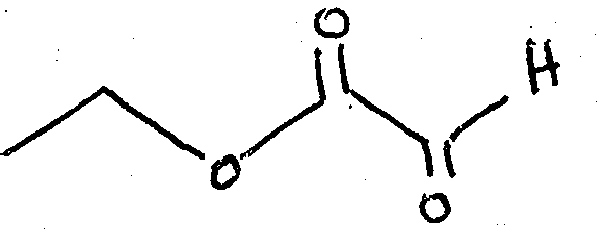
- The method of anyone of the preceding claims for preparing diastereoisomers of 4-hydroxy isoleucine comprises:- a) condensing an anisidine derivative of formula I

with ethylglyoxalate of formula II
 - b) condensing imine of formula III with 2-butanone IV
 - c) epimerisation of the resulting condensation derivative of formula Va or Vb to give N-protected amine of formula VIa or VIb, respectively,
 - d) reacting said N-protected amine Va or Vb, or VIa or VIb, under conditions to give• lactone a
 • lactone b
 • lactone c
 • lactone d
 • lactone e
 • lactone f
 • lactone g
 • lactone h
 - e) said lactones to obtain the desired stereoisomer.
Priority Applications (5)
| Application Number | Priority Date | Filing Date | Title |
|---|---|---|---|
| EP04292666A EP1657236A1 (en) | 2004-11-10 | 2004-11-10 | Method for preparing diastereoisomers of 4-hydroxy isoleucine |
| EP05850345A EP1817273B1 (en) | 2004-11-10 | 2005-11-10 | Method for preparing diastereoisomers of 4-hydroxy isoleucine |
| DE602005019193T DE602005019193D1 (en) | 2004-11-10 | 2005-11-10 | PROCESS FOR THE PREPARATION OF DIASTEREOISOMERS OF 4-HYDROXYISOLEUCIN |
| PCT/EP2005/013975 WO2006051000A2 (en) | 2004-11-10 | 2005-11-10 | Method for preparing diastereoisomers of 4-hydroxy isoleucine |
| AT05850345T ATE456551T1 (en) | 2004-11-10 | 2005-11-10 | METHOD FOR PRODUCING DIASTEREOISOMERS OF 4-HYDROXYISOLEUCINE |
Applications Claiming Priority (1)
| Application Number | Priority Date | Filing Date | Title |
|---|---|---|---|
| EP04292666A EP1657236A1 (en) | 2004-11-10 | 2004-11-10 | Method for preparing diastereoisomers of 4-hydroxy isoleucine |
Publications (1)
| Publication Number | Publication Date |
|---|---|
| EP1657236A1 true EP1657236A1 (en) | 2006-05-17 |
Family
ID=34931513
Family Applications (2)
| Application Number | Title | Priority Date | Filing Date |
|---|---|---|---|
| EP04292666A Withdrawn EP1657236A1 (en) | 2004-11-10 | 2004-11-10 | Method for preparing diastereoisomers of 4-hydroxy isoleucine |
| EP05850345A Expired - Lifetime EP1817273B1 (en) | 2004-11-10 | 2005-11-10 | Method for preparing diastereoisomers of 4-hydroxy isoleucine |
Family Applications After (1)
| Application Number | Title | Priority Date | Filing Date |
|---|---|---|---|
| EP05850345A Expired - Lifetime EP1817273B1 (en) | 2004-11-10 | 2005-11-10 | Method for preparing diastereoisomers of 4-hydroxy isoleucine |
Country Status (4)
| Country | Link |
|---|---|
| EP (2) | EP1657236A1 (en) |
| AT (1) | ATE456551T1 (en) |
| DE (1) | DE602005019193D1 (en) |
| WO (1) | WO2006051000A2 (en) |
Cited By (1)
| Publication number | Priority date | Publication date | Assignee | Title |
|---|---|---|---|---|
| WO2006117696A3 (en) * | 2005-02-18 | 2007-01-25 | Innodia Inc | Diastereoisomers of 4-hydroxyisoleucine and uses thereof |
Families Citing this family (1)
| Publication number | Priority date | Publication date | Assignee | Title |
|---|---|---|---|---|
| EP2123629A1 (en) | 2007-02-22 | 2009-11-25 | Ajinomoto Co., Inc. | Method for purifying 4-hydroxyisoleucine |
Citations (2)
| Publication number | Priority date | Publication date | Assignee | Title |
|---|---|---|---|---|
| WO1997032577A1 (en) * | 1996-03-08 | 1997-09-12 | Societe Civile De Gestion Jouvenet | Antidiabetic composition containing (2s, 3r, 4s)4-hydroxyisoleucine |
| WO2001072688A2 (en) * | 2000-03-27 | 2001-10-04 | Centre National De La Recherche Scientifique (Cnrs) | Method for preparing (2s,3r,4s)-4-hydroxyisoleucine and analogues thereof |
-
2004
- 2004-11-10 EP EP04292666A patent/EP1657236A1/en not_active Withdrawn
-
2005
- 2005-11-10 DE DE602005019193T patent/DE602005019193D1/en not_active Expired - Lifetime
- 2005-11-10 WO PCT/EP2005/013975 patent/WO2006051000A2/en not_active Ceased
- 2005-11-10 EP EP05850345A patent/EP1817273B1/en not_active Expired - Lifetime
- 2005-11-10 AT AT05850345T patent/ATE456551T1/en not_active IP Right Cessation
Patent Citations (2)
| Publication number | Priority date | Publication date | Assignee | Title |
|---|---|---|---|---|
| WO1997032577A1 (en) * | 1996-03-08 | 1997-09-12 | Societe Civile De Gestion Jouvenet | Antidiabetic composition containing (2s, 3r, 4s)4-hydroxyisoleucine |
| WO2001072688A2 (en) * | 2000-03-27 | 2001-10-04 | Centre National De La Recherche Scientifique (Cnrs) | Method for preparing (2s,3r,4s)-4-hydroxyisoleucine and analogues thereof |
Non-Patent Citations (1)
| Title |
|---|
| A. CORDOVA ET AL: "A Highly Enantioselective Amino Acid-Catalyzed Route to Functionalized alpha-Amino Acids", J. AM. CHEM. ASOC., vol. 124, no. 9, 2002, pages 1842 - 1843, XP002329293 * |
Cited By (1)
| Publication number | Priority date | Publication date | Assignee | Title |
|---|---|---|---|---|
| WO2006117696A3 (en) * | 2005-02-18 | 2007-01-25 | Innodia Inc | Diastereoisomers of 4-hydroxyisoleucine and uses thereof |
Also Published As
| Publication number | Publication date |
|---|---|
| DE602005019193D1 (en) | 2010-03-18 |
| EP1817273A2 (en) | 2007-08-15 |
| EP1817273B1 (en) | 2010-01-27 |
| WO2006051000A3 (en) | 2006-09-08 |
| WO2006051000A2 (en) | 2006-05-18 |
| ATE456551T1 (en) | 2010-02-15 |
| WO2006051000A9 (en) | 2006-10-26 |
Similar Documents
| Publication | Publication Date | Title |
|---|---|---|
| US8394970B2 (en) | Process for manufacturing a glutamic acid derivative and a pyroglutamic acid derivative and a novel intermediate in the manufacture thereof | |
| CN111170855B (en) | Compound and method for synthesizing 8-hydroxy-2,2,14,14-tetramethylpentadecanedioic acid by using same | |
| EP1384707B1 (en) | 4-Nitroxybutylester of naproxene | |
| KR101540435B1 (en) | Stereoselective synthesis of valiolamine | |
| EP1657236A1 (en) | Method for preparing diastereoisomers of 4-hydroxy isoleucine | |
| CA2008940C (en) | Method for the preparation of 4-(cyclic-amino)-2h-1-benzopyrans and 4-amino-3-hydroxy-2h-1-benzopyrans | |
| KR19990028531A (en) | Process for preparing enantiomerically pure azetidine-2-carboxylic acid | |
| US6414180B1 (en) | Synthesis of chiral β-amino acids | |
| GB2036744A (en) | Eburnane derivatives | |
| DK150490B (en) | METHOD FOR PREPARING 2-AMINOOCTAHYDRO-OXAZOLO- (3,2-A) PYRROLO (2,1-C) PYRAZINE DERIVATIVES | |
| WO1988000941A1 (en) | ASYMETRIC SYNTHESIS OF ENANTIOMERICALLY PURE MONOCLYCLIC beta-LACTAM INTERMEDIATES | |
| Szakonyi et al. | Preparation of cycloalkane-fused dihydropyrimidin-4 (3H)-one enantiomers | |
| US5202443A (en) | Process for preparing 1-(2s)-3-mercapto-methyl-1-oxopropyl)-l-proline | |
| KR960008243B1 (en) | Hetero cyclic compound | |
| CN114790161B (en) | Synthesis method of 4-methoxycarbonylethyl-3-methyl-2-pyrrole aldehyde and its intermediates | |
| RU2304583C1 (en) | Method for synthesis di- and triaminochlorines | |
| US20040220417A1 (en) | Processes for preparation of n-protected-beta-amino alcohols and n-protected-beta-amino epoxides | |
| US5959141A (en) | 1-amino-2-hydroxycycloalkanecarboxylic acid derivatives | |
| SU351369A1 (en) | METHOD OF OBTAINING ALKALOIDS | |
| KR910002154B1 (en) | 3-pyrroline derivatives and preparation method thereof | |
| CN115197115A (en) | Preparation method and application of chiral 5-oxopyrrolidine-3-formic acid | |
| WO2026037241A1 (en) | Preparation method for isoindoline compound, intermediate thereof, and preparation method for intermediate | |
| CN120365245A (en) | Preparation method of Rayleigh Malun intermediate | |
| CN117720540A (en) | Sitagliptin intermediates and preparation methods of sitagliptin | |
| CA2149988A1 (en) | Synthesis of benzoquinolinones |
Legal Events
| Date | Code | Title | Description |
|---|---|---|---|
| PUAI | Public reference made under article 153(3) epc to a published international application that has entered the european phase |
Free format text: ORIGINAL CODE: 0009012 |
|
| AK | Designated contracting states |
Kind code of ref document: A1 Designated state(s): AT BE BG CH CY CZ DE DK EE ES FI FR GB GR HU IE IS IT LI LU MC NL PL PT RO SE SI SK TR |
|
| AX | Request for extension of the european patent |
Extension state: AL HR LT LV MK YU |
|
| AKX | Designation fees paid |
Designated state(s): FR |
|
| REG | Reference to a national code |
Ref country code: DE Ref legal event code: 8566 |
|
| STAA | Information on the status of an ep patent application or granted ep patent |
Free format text: STATUS: THE APPLICATION IS DEEMED TO BE WITHDRAWN |
|
| 18D | Application deemed to be withdrawn |
Effective date: 20061118 |