EP1654267B1 - Method for tagging of carbohydrates with active methylene compound - Google Patents
Method for tagging of carbohydrates with active methylene compound Download PDFInfo
- Publication number
- EP1654267B1 EP1654267B1 EP03818122A EP03818122A EP1654267B1 EP 1654267 B1 EP1654267 B1 EP 1654267B1 EP 03818122 A EP03818122 A EP 03818122A EP 03818122 A EP03818122 A EP 03818122A EP 1654267 B1 EP1654267 B1 EP 1654267B1
- Authority
- EP
- European Patent Office
- Prior art keywords
- active methylene
- methylene compound
- tagging
- carbohydrate
- oligosaccharide
- Prior art date
- Legal status (The legal status is an assumption and is not a legal conclusion. Google has not performed a legal analysis and makes no representation as to the accuracy of the status listed.)
- Expired - Lifetime
Links
- 238000000034 method Methods 0.000 title claims abstract description 48
- 150000001720 carbohydrates Chemical class 0.000 title claims abstract description 45
- 235000014633 carbohydrates Nutrition 0.000 title claims abstract description 40
- -1 methylene compound Chemical class 0.000 title claims abstract description 39
- 150000002482 oligosaccharides Chemical class 0.000 claims abstract description 53
- 229920001542 oligosaccharide Polymers 0.000 claims abstract description 52
- 239000003054 catalyst Substances 0.000 claims abstract description 19
- 150000001412 amines Chemical class 0.000 claims abstract description 12
- 239000003880 polar aprotic solvent Substances 0.000 claims abstract description 9
- ZMXDDKWLCZADIW-UHFFFAOYSA-N N,N-Dimethylformamide Chemical compound CN(C)C=O ZMXDDKWLCZADIW-UHFFFAOYSA-N 0.000 claims description 19
- 235000000346 sugar Nutrition 0.000 claims description 19
- NQRYJNQNLNOLGT-UHFFFAOYSA-N Piperidine Chemical compound C1CCNCC1 NQRYJNQNLNOLGT-UHFFFAOYSA-N 0.000 claims description 17
- CUONGYYJJVDODC-UHFFFAOYSA-N malononitrile Chemical compound N#CCC#N CUONGYYJJVDODC-UHFFFAOYSA-N 0.000 claims description 13
- 125000002887 hydroxy group Chemical group [H]O* 0.000 claims description 10
- IAZDPXIOMUYVGZ-UHFFFAOYSA-N Dimethylsulphoxide Chemical compound CS(C)=O IAZDPXIOMUYVGZ-UHFFFAOYSA-N 0.000 claims description 7
- SECXISVLQFMRJM-UHFFFAOYSA-N N-Methylpyrrolidone Chemical compound CN1CCCC1=O SECXISVLQFMRJM-UHFFFAOYSA-N 0.000 claims description 6
- JUJWROOIHBZHMG-UHFFFAOYSA-N Pyridine Chemical compound C1=CC=NC=C1 JUJWROOIHBZHMG-UHFFFAOYSA-N 0.000 claims description 6
- RWRDLPDLKQPQOW-UHFFFAOYSA-N Pyrrolidine Chemical compound C1CCNC1 RWRDLPDLKQPQOW-UHFFFAOYSA-N 0.000 claims description 6
- 239000000126 substance Substances 0.000 claims description 5
- OVRNDRQMDRJTHS-UHFFFAOYSA-N N-acelyl-D-glucosamine Natural products CC(=O)NC1C(O)OC(CO)C(O)C1O OVRNDRQMDRJTHS-UHFFFAOYSA-N 0.000 claims description 4
- OVRNDRQMDRJTHS-FMDGEEDCSA-N N-acetyl-beta-D-glucosamine Chemical compound CC(=O)N[C@H]1[C@H](O)O[C@H](CO)[C@@H](O)[C@@H]1O OVRNDRQMDRJTHS-FMDGEEDCSA-N 0.000 claims description 4
- MBLBDJOUHNCFQT-LXGUWJNJSA-N N-acetylglucosamine Natural products CC(=O)N[C@@H](C=O)[C@@H](O)[C@H](O)[C@H](O)CO MBLBDJOUHNCFQT-LXGUWJNJSA-N 0.000 claims description 4
- 229950006780 n-acetylglucosamine Drugs 0.000 claims description 4
- FSYKKLYZXJSNPZ-UHFFFAOYSA-N sarcosine Chemical compound C[NH2+]CC([O-])=O FSYKKLYZXJSNPZ-UHFFFAOYSA-N 0.000 claims description 4
- 239000007787 solid Substances 0.000 claims description 4
- SNVLJLYUUXKWOJ-UHFFFAOYSA-N methylidenecarbene Chemical compound C=[C] SNVLJLYUUXKWOJ-UHFFFAOYSA-N 0.000 claims description 3
- UMJSCPRVCHMLSP-UHFFFAOYSA-N pyridine Natural products COC1=CC=CN=C1 UMJSCPRVCHMLSP-UHFFFAOYSA-N 0.000 claims description 3
- GGYVTHJIUNGKFZ-UHFFFAOYSA-N 1-methylpiperidin-2-one Chemical compound CN1CCCCC1=O GGYVTHJIUNGKFZ-UHFFFAOYSA-N 0.000 claims description 2
- 238000010485 C−C bond formation reaction Methods 0.000 claims description 2
- XTHFKEDIFFGKHM-UHFFFAOYSA-N Dimethoxyethane Chemical compound COCCOC XTHFKEDIFFGKHM-UHFFFAOYSA-N 0.000 claims description 2
- 108010077895 Sarcosine Proteins 0.000 claims description 2
- MLIREBYILWEBDM-UHFFFAOYSA-N cyanoacetic acid Chemical compound OC(=O)CC#N MLIREBYILWEBDM-UHFFFAOYSA-N 0.000 claims description 2
- 229940043230 sarcosine Drugs 0.000 claims description 2
- 150000004798 β-ketoamides Chemical class 0.000 claims description 2
- DGJMPUGMZIKDRO-UHFFFAOYSA-N cyanoacetamide Chemical compound NC(=O)CC#N DGJMPUGMZIKDRO-UHFFFAOYSA-N 0.000 claims 1
- 125000003386 piperidinyl group Chemical group 0.000 claims 1
- 238000006243 chemical reaction Methods 0.000 abstract description 29
- 239000000203 mixture Substances 0.000 abstract description 10
- 239000003153 chemical reaction reagent Substances 0.000 abstract description 9
- 238000004458 analytical method Methods 0.000 abstract description 8
- 239000012535 impurity Substances 0.000 abstract description 4
- 238000002156 mixing Methods 0.000 abstract description 3
- XLYOFNOQVPJJNP-UHFFFAOYSA-N water Substances O XLYOFNOQVPJJNP-UHFFFAOYSA-N 0.000 description 10
- 125000000325 methylidene group Chemical group [H]C([H])=* 0.000 description 9
- 239000002585 base Substances 0.000 description 8
- 150000001875 compounds Chemical class 0.000 description 8
- 238000000746 purification Methods 0.000 description 8
- 239000012038 nucleophile Substances 0.000 description 7
- 239000002904 solvent Substances 0.000 description 7
- QTBSBXVTEAMEQO-UHFFFAOYSA-N Acetic acid Chemical compound CC(O)=O QTBSBXVTEAMEQO-UHFFFAOYSA-N 0.000 description 6
- WEVYAHXRMPXWCK-UHFFFAOYSA-N Acetonitrile Chemical compound CC#N WEVYAHXRMPXWCK-UHFFFAOYSA-N 0.000 description 6
- OKTJSMMVPCPJKN-UHFFFAOYSA-N Carbon Chemical compound [C] OKTJSMMVPCPJKN-UHFFFAOYSA-N 0.000 description 6
- 238000006000 Knoevenagel condensation reaction Methods 0.000 description 6
- YXFVVABEGXRONW-UHFFFAOYSA-N Toluene Chemical compound CC1=CC=CC=C1 YXFVVABEGXRONW-UHFFFAOYSA-N 0.000 description 6
- 229910052799 carbon Inorganic materials 0.000 description 6
- 239000011159 matrix material Substances 0.000 description 6
- 239000000523 sample Substances 0.000 description 6
- 102000003886 Glycoproteins Human genes 0.000 description 5
- 108090000288 Glycoproteins Proteins 0.000 description 5
- HSJKGGMUJITCBW-UHFFFAOYSA-N 3-hydroxybutanal Chemical compound CC(O)CC=O HSJKGGMUJITCBW-UHFFFAOYSA-N 0.000 description 4
- SRBFZHDQGSBBOR-UHFFFAOYSA-N beta-D-Pyranose-Lyxose Natural products OC1COC(O)C(O)C1O SRBFZHDQGSBBOR-UHFFFAOYSA-N 0.000 description 4
- 238000001212 derivatisation Methods 0.000 description 4
- WFDIJRYMOXRFFG-UHFFFAOYSA-N Acetic anhydride Chemical compound CC(=O)OC(C)=O WFDIJRYMOXRFFG-UHFFFAOYSA-N 0.000 description 3
- LFQSCWFLJHTTHZ-UHFFFAOYSA-N Ethanol Chemical compound CCO LFQSCWFLJHTTHZ-UHFFFAOYSA-N 0.000 description 3
- 230000005526 G1 to G0 transition Effects 0.000 description 3
- OKKJLVBELUTLKV-UHFFFAOYSA-N Methanol Chemical compound OC OKKJLVBELUTLKV-UHFFFAOYSA-N 0.000 description 3
- PYMYPHUHKUWMLA-LMVFSUKVSA-N Ribose Natural products OC[C@@H](O)[C@@H](O)[C@@H](O)C=O PYMYPHUHKUWMLA-LMVFSUKVSA-N 0.000 description 3
- 238000007259 addition reaction Methods 0.000 description 3
- 150000001299 aldehydes Chemical group 0.000 description 3
- PYMYPHUHKUWMLA-UHFFFAOYSA-N arabinose Natural products OCC(O)C(O)C(O)C=O PYMYPHUHKUWMLA-UHFFFAOYSA-N 0.000 description 3
- 230000015572 biosynthetic process Effects 0.000 description 3
- 229920002678 cellulose Polymers 0.000 description 3
- 239000001913 cellulose Substances 0.000 description 3
- 238000004587 chromatography analysis Methods 0.000 description 3
- 238000003379 elimination reaction Methods 0.000 description 3
- 102000004169 proteins and genes Human genes 0.000 description 3
- 108090000623 proteins and genes Proteins 0.000 description 3
- 238000000926 separation method Methods 0.000 description 3
- 150000008163 sugars Chemical class 0.000 description 3
- GLDQAMYCGOIJDV-UHFFFAOYSA-N 2,3-dihydroxybenzoic acid Chemical compound OC(=O)C1=CC=CC(O)=C1O GLDQAMYCGOIJDV-UHFFFAOYSA-N 0.000 description 2
- FKNQFGJONOIPTF-UHFFFAOYSA-N Sodium cation Chemical class [Na+] FKNQFGJONOIPTF-UHFFFAOYSA-N 0.000 description 2
- YRKCREAYFQTBPV-UHFFFAOYSA-N acetylacetone Chemical compound CC(=O)CC(C)=O YRKCREAYFQTBPV-UHFFFAOYSA-N 0.000 description 2
- 125000002915 carbonyl group Chemical group [*:2]C([*:1])=O 0.000 description 2
- 238000012512 characterization method Methods 0.000 description 2
- 238000003795 desorption Methods 0.000 description 2
- 239000012153 distilled water Substances 0.000 description 2
- 238000000132 electrospray ionisation Methods 0.000 description 2
- 238000001254 matrix assisted laser desorption--ionisation time-of-flight mass spectrum Methods 0.000 description 2
- 125000002560 nitrile group Chemical group 0.000 description 2
- 239000003960 organic solvent Substances 0.000 description 2
- 229920000642 polymer Polymers 0.000 description 2
- 230000009257 reactivity Effects 0.000 description 2
- 238000006268 reductive amination reaction Methods 0.000 description 2
- 238000011896 sensitive detection Methods 0.000 description 2
- 230000035945 sensitivity Effects 0.000 description 2
- 238000005406 washing Methods 0.000 description 2
- NWUYHJFMYQTDRP-UHFFFAOYSA-N 1,2-bis(ethenyl)benzene;1-ethenyl-2-ethylbenzene;styrene Chemical compound C=CC1=CC=CC=C1.CCC1=CC=CC=C1C=C.C=CC1=CC=CC=C1C=C NWUYHJFMYQTDRP-UHFFFAOYSA-N 0.000 description 1
- WXTMDXOMEHJXQO-UHFFFAOYSA-N 2,5-dihydroxybenzoic acid Chemical compound OC(=O)C1=CC(O)=CC=C1O WXTMDXOMEHJXQO-UHFFFAOYSA-N 0.000 description 1
- HELKFYIVNMKWJJ-UHFFFAOYSA-N 2-cyanopropanedioic acid Chemical compound OC(=O)C(C#N)C(O)=O HELKFYIVNMKWJJ-UHFFFAOYSA-N 0.000 description 1
- YTBSYETUWUMLBZ-UHFFFAOYSA-N D-Erythrose Natural products OCC(O)C(O)C=O YTBSYETUWUMLBZ-UHFFFAOYSA-N 0.000 description 1
- YTBSYETUWUMLBZ-IUYQGCFVSA-N D-erythrose Chemical compound OC[C@@H](O)[C@@H](O)C=O YTBSYETUWUMLBZ-IUYQGCFVSA-N 0.000 description 1
- HMFHBZSHGGEWLO-SOOFDHNKSA-N D-ribofuranose Chemical compound OC[C@H]1OC(O)[C@H](O)[C@@H]1O HMFHBZSHGGEWLO-SOOFDHNKSA-N 0.000 description 1
- SRBFZHDQGSBBOR-IOVATXLUSA-N D-xylopyranose Chemical compound O[C@@H]1COC(O)[C@H](O)[C@H]1O SRBFZHDQGSBBOR-IOVATXLUSA-N 0.000 description 1
- SRBFZHDQGSBBOR-OWMBCFKOSA-N L-ribopyranose Chemical compound O[C@H]1COC(O)[C@@H](O)[C@H]1O SRBFZHDQGSBBOR-OWMBCFKOSA-N 0.000 description 1
- 238000005684 Liebig rearrangement reaction Methods 0.000 description 1
- 239000002262 Schiff base Substances 0.000 description 1
- 150000004753 Schiff bases Chemical class 0.000 description 1
- 229910003074 TiCl4 Inorganic materials 0.000 description 1
- 238000003450 affinity purification method Methods 0.000 description 1
- 150000001298 alcohols Chemical class 0.000 description 1
- 238000005882 aldol condensation reaction Methods 0.000 description 1
- HMFHBZSHGGEWLO-UHFFFAOYSA-N alpha-D-Furanose-Ribose Natural products OCC1OC(O)C(O)C1O HMFHBZSHGGEWLO-UHFFFAOYSA-N 0.000 description 1
- 125000004103 aminoalkyl group Chemical group 0.000 description 1
- PYMYPHUHKUWMLA-WDCZJNDASA-N arabinose Chemical compound OC[C@@H](O)[C@@H](O)[C@H](O)C=O PYMYPHUHKUWMLA-WDCZJNDASA-N 0.000 description 1
- 230000008827 biological function Effects 0.000 description 1
- 239000012472 biological sample Substances 0.000 description 1
- 159000000007 calcium salts Chemical class 0.000 description 1
- 239000011203 carbon fibre reinforced carbon Substances 0.000 description 1
- 150000001793 charged compounds Chemical class 0.000 description 1
- 239000003795 chemical substances by application Substances 0.000 description 1
- 229940125904 compound 1 Drugs 0.000 description 1
- 238000009833 condensation Methods 0.000 description 1
- 230000005494 condensation Effects 0.000 description 1
- 239000000470 constituent Substances 0.000 description 1
- 238000006297 dehydration reaction Methods 0.000 description 1
- 238000001514 detection method Methods 0.000 description 1
- HPNMFZURTQLUMO-UHFFFAOYSA-N diethylamine Chemical compound CCNCC HPNMFZURTQLUMO-UHFFFAOYSA-N 0.000 description 1
- BEPAFCGSDWSTEL-UHFFFAOYSA-N dimethyl malonate Chemical compound COC(=O)CC(=O)OC BEPAFCGSDWSTEL-UHFFFAOYSA-N 0.000 description 1
- 230000008030 elimination Effects 0.000 description 1
- 238000002474 experimental method Methods 0.000 description 1
- 230000004907 flux Effects 0.000 description 1
- 235000011389 fruit/vegetable juice Nutrition 0.000 description 1
- 150000002240 furans Chemical class 0.000 description 1
- 238000002523 gelfiltration Methods 0.000 description 1
- 125000002791 glucosyl group Chemical group C1([C@H](O)[C@@H](O)[C@H](O)[C@H](O1)CO)* 0.000 description 1
- 125000001976 hemiacetal group Chemical group 0.000 description 1
- 150000007529 inorganic bases Chemical class 0.000 description 1
- 239000003456 ion exchange resin Substances 0.000 description 1
- 229920003303 ion-exchange polymer Polymers 0.000 description 1
- 239000003446 ligand Substances 0.000 description 1
- 239000007788 liquid Substances 0.000 description 1
- 238000004949 mass spectrometry Methods 0.000 description 1
- 238000001906 matrix-assisted laser desorption--ionisation mass spectrometry Methods 0.000 description 1
- 238000001840 matrix-assisted laser desorption--ionisation time-of-flight mass spectrometry Methods 0.000 description 1
- 239000012528 membrane Substances 0.000 description 1
- 229910052757 nitrogen Inorganic materials 0.000 description 1
- 125000004433 nitrogen atom Chemical group N* 0.000 description 1
- 150000007530 organic bases Chemical class 0.000 description 1
- 239000013110 organic ligand Substances 0.000 description 1
- 239000011368 organic material Substances 0.000 description 1
- 238000006798 ring closing metathesis reaction Methods 0.000 description 1
- BEOOHQFXGBMRKU-UHFFFAOYSA-N sodium cyanoborohydride Chemical compound [Na+].[B-]C#N BEOOHQFXGBMRKU-UHFFFAOYSA-N 0.000 description 1
- 229910001415 sodium ion Inorganic materials 0.000 description 1
- 238000001179 sorption measurement Methods 0.000 description 1
- 230000003595 spectral effect Effects 0.000 description 1
- 238000012916 structural analysis Methods 0.000 description 1
- 150000005846 sugar alcohols Polymers 0.000 description 1
- 238000003786 synthesis reaction Methods 0.000 description 1
- 238000010189 synthetic method Methods 0.000 description 1
- XJDNKRIXUMDJCW-UHFFFAOYSA-J titanium tetrachloride Chemical compound Cl[Ti](Cl)(Cl)Cl XJDNKRIXUMDJCW-UHFFFAOYSA-J 0.000 description 1
- 239000011592 zinc chloride Substances 0.000 description 1
- JIAARYAFYJHUJI-UHFFFAOYSA-L zinc dichloride Chemical compound [Cl-].[Cl-].[Zn+2] JIAARYAFYJHUJI-UHFFFAOYSA-L 0.000 description 1
Images


Classifications
-
- C—CHEMISTRY; METALLURGY
- C07—ORGANIC CHEMISTRY
- C07H—SUGARS; DERIVATIVES THEREOF; NUCLEOSIDES; NUCLEOTIDES; NUCLEIC ACIDS
- C07H1/00—Processes for the preparation of sugar derivatives
Definitions
- the present invention relates to a method for tagging of carbohydrates with active methylene compound. Particularly, it relates to the method for tagging of carbohydrates with active methylene compound comprising the step of preparing carbohydrate conjugate in which carbohydrate and methylene compound are combined by mixing carbohydrate mixture and methylene compound under aqueous polar aprotic solvent containing amine base catalyst.
- oligosaccharides have a variety of biologically important roles either as free carbohydrates or as constituents of glycoconjugates. In plants free oligosaccharides play important roles in carbon fluxes within the cells and as a regulator. Oligosaccharides bonded to proteins also influence protein stability, folding, and biological functions of glycoproteins. Intercellular recognition by proteins may be affected by the structure and nature of oligosaccharides. Thus the characterization of complex oligosaccharides obtained from a variety of biological media has become of increased importance, involving many kinds of analytical techniques.
- Helmut Zinner et al Chemische Berichte, vol. 92, 1959, pages 1614-1617 , discloses the reaction of protected arabinose with various methylene active compounds. The reaction is conducted at 0°C in toluene and diethylamine is used as a catalyst. The reaction yields the expected unsaturated Knoevenagel products II - VII.
- Kurt Eger et al Liebigs Annalen Der Chemie, 1989, pages 1049 , discloses the reaction of unprotected ribose with malononitrile in methanol at room temperature using ZnCl 2 as a catalyst. Under the reaction conditions the thus formed unsaturated compound undergoes a cyclisation reaction to yield furane derivative 1.
- Ahn Y.H. et. al. Analytical Sciences, 2001, 17, pp 893-895 discloses a method of derivatising unprotected oligosaccharides having free hydroxyl groups on the sugar backbone with active methylene in an aqueous aprotic solvent containing a base.
- the present invention provides a method for tagging of carbohydrates with an active methylene compound comprising the step of preparing a carbohydrate conjugate in which the carbohydrate is reacted with an active methylene compound in an aqueous polar aprotic solvent containing an amine base catalyst, wherein the carbohydrate is unprotected oligosaccharide having free hydroxy group at the sugar backbone, and has N-acetylglucosamine as a reducing sugar moiety, and wherein the carbohydrate conjugate is produced by the carbon-carbon bond formation between a reducing end of the carbohydrate and an active methylene carbon of the active methylene compound.
- aldol adduct is formed by the addition reaction between hemicaetal (aldehyde) group of carbohydrate moiety and carbon nucleophile (enolate) of active methylene compound, following elimination of water from the resulting aldol adduct to form ⁇ , ⁇ -unsaturated carbohydrate-tagged conjugates.
- the resulting ⁇ , ⁇ -unsaturated carbohydrate-tagged conjugate is converted to its ring closure form wherein sugar ring is formed by the conjugate addition of hydroxyl group in the carbohydrate chain under the basic conditions.
- tagging reaction can be taken under the conditions, wherein many hydroxyl groups present in the carbohydrate chain of oligosaccharides are not protected.
- Active methylene compound playing as a carbon nucleophile can be malononitrile, alkyl malonate, ⁇ -cyanomalonate, ⁇ -ketoester etc. or the counterparts thereof bound to marcromolecule.
- the tagging reaction can be carried under aqueous basic condition using inorganic base or under polar aprotic solvent, such as DMF, NMP, DMSO etc., containing a portion of water and an amine base as a mild organic base catalyst.
- polar aprotic solvent such as DMF, NMP, DMSO etc.
- the present invention relates to the method for tagging of carbobydrates with active methylene compound comprising the step of preparing carbohydrate conjugate in which carbohydrate and methylene compound are combined by mixing carbohydrate mixture and methylene compound under aqueous polar aprotic solvent containing amine base catalyst.
- active methylene compound has the characteristics having two carbanion-stabilizing groups composed of carbonyl and/or nitrile group which can stabilize ⁇ -carbanion functioning as a nucleophile such as malononitrile, alkyl malonate, ⁇ -cyanoacetate, ⁇ -ketoester, ⁇ -ketoamide etc, and is preferred to have the structure of Chemical Formula 1.
- ⁇ -carbanion functioning as a nucleophile
- alkyl malonate ⁇ -cyanoacetate, ⁇ -ketoester, ⁇ -ketoamide etc
- active methylene compound in the preferred embodiment of the present invention, malononitrile was used as an active methylene compound.
- active methylene compound can be selected from counterparts of polymers wherein each of them is bound to the solid support.
- amine base catalyst can preferably be selected from a group consisting of piperidine, pyridine, pyrrolidine, sarcosine and simple amineacid. Among them, piperidine is more preferable.
- polar aprotic solvent can preferably be selected from a group consisting of dimethylformamide, dimethylsulfoxide, N-methylpyrrolidinone, N-methylpiperidone and dimethoxyethane. Among them, dimethylformamide is more preferable.
- carbohydrate can be selected from a group consisting of N-linked oligosaccharide and O-linked oligosaccharide of glycoprotein, and unprotected oligosaccharide having free hydroxy group at the sugar backbone is more preferable.
- Carbohydrate conjugate tagged with active methylene compound prepared by the tagging method of the present invention can be purified by various purifying and analyzing methods known to the persons skilled in the art without any limitations.
- Said various purifying and analyzing methods can be selected from a group consisting of the method using ion exchange resin, the gel filtration method, the method using carbohydrate affinity matrix, the method using various kinds of chemically bound stationary phase and the method using adsorption medium, and the method using carbohydrate affinity matrix is more preferable for the rapid separation.
- aminoalkyl is preferable as a stationary phase in the chemically bound stationary phase chromatography.
- the present invention relates to a mild and efficient tagging method of oligosaccharide, mainly O-linked or N-linked, obtained from biological medium (see Fig. 1 ).
- Oligosaccharide obtained from biological medium is generally having many free hydroxyl groups on sugar backbone and restrict in the amount. Therefore, it is necessary to develop an efficient and simple tagging method without protection of many hydroxyl groups of oligosaccharide for separation and structural analysis of biologically active oligosaccharide for the use of diagnostic and industrial application.
- the hemiacetal group at the reducing end of oligosaccharide is a synthetic equivalent of aldehyde.
- This group can react with an active methylene donor, such as malononitrile, to afford the conjugated derivative of the oligosaccharide through an addition and elimination reaction.
- an addition and elimination reaction of an simple aldehyde with an active methylene donor in anhydrous condition is known as the aldol condensation and dehydration reaction, and is a well known synthetic method in the field of organic chemistry.
- the chemical reactivity at the reducing end of oligosaccharide can be greatly different with respect to the kind of sugar moieties present in the reducing end.
- maltooligosaccharides having glucose unit at the reducing end of sugar chain can readily react with carbon nucleophile in aqueous basic condition.
- N-acetylglucosamine terminal moiety often observed in oligosaccharides released from glycoprotein of biological media shows much less reactivity for carbon nucleophile used in the case of maltooligosaccharides, making tagging reaction to be hardly proceeded.
- a tagging method of free oligosaccharides, having N-acetylglucosamine as a reducing sugar moiety and unprotected many hydroxyl groups on sugar backbone, with active methylene compound as a carbon nucleophile, is described in the present invention.
- Man 5 NAcGlu 2 is mixed with the DMF solution of malononitrile, as a representative tagging agent.
- DMF solution of malononitrile as a representative tagging agent.
- To this reaction solution was added excess neat piperidine as a base and an amine catalyst.
- the solvent composition can be varied, but exceedingly increased portion of water can retard the progress of tagging reaction.
- piperidine can be preferably selected.
- the reaction tube was shaken for several seconds then incubated at temperature ranging from 4°C to 40°C. The reaction rate is affected from the kind of reducing end moiety of oligosaccharide and reaction conditions such as the composition of solvent, concentration of the samples, aliquot of the catalyst and temperature, etc.
- the reaction can be analyzed by matrix assisted laser desorption/ionization mass spectrometry (MALDI-MS), which is one of the powerful analytical tools for carbohydrate oligomer, having a high sensitive detectability to even impure sample.
- MALDI-MS matrix assisted laser desorption/ionization mass spectrometry
- DHBA as a matrix compound can be used for the sensitive detection of the oligosaccharide-malononitrile derivative and free oligosaccharide.
- All signals of molecular ions obtained in this invention can be recorded as sodium ion adducts. Although several peaks due to minor impurities could also be detected, the present inventors could assign the peaks due to interesting components in the derivatization mixture (See Fig. 2 and Fig. 3 ).
- the malononitrile tagging method can also be applied to the tagging for multi-component oligosaccharides. Oligosaccharide mixture, released from a glycoprotein is nicely tagged following the method of the present invention (See Fig. 3 ). The progression of the tagging reaction can be detected easily using MALDI-TOF MS. For analysis of oligosaccharides obtained from biological media, more flexible tagging condition is normally need since the purity and concentration of these sample can be variable drastically.
- the method of the present invention is tolerable from impurities present in sample in a wide range.
- the method of the present invention is also tolerable in a wide range of usage of tagging reagents from 10 2 equivalent to 10 4 equivalent, and give reproducible results in the range.
- the malononitrile derivative of an oligosaccharide has a highly ionizable proton at the ⁇ -position to the carbonyl or nitrile group. It has been reported that the derivatives of oligosaccharide with an active methylene compound show a high sensitivity in negative electrospray ionization (ESI) mode mass analysis.
- ESI negative electrospray ionization
- the present invention provides the method for the purification of oligosaccharides tagged by active methylene compound.
- excess reagent is generally used for completion of reaction or for convenience of experiment.
- effective purification process is very important in applying the tagging method to a variety of purpose.
- tagged oligosaccharide derivatives of the present invention have a tag moiety less polar than native oligosaccharides, they are still highly hydrophilic by virtue of oligosaccharide moiety of the tagged derivative having many hydroxy group on sugar chain.
- all reagents used for the tagging reaction of oligosaccharide are non-ionic organic materials except water used as a solvent. Any kind of inorganic reagent is not required for the tagging reaction of oligosaccharide in the present invention.
- affinity purification method exploiting the hydrophilic property due to sugar moiety of tagged samples is plausible.
- cellulose filter kit can be used for simple purification of tagged sugar.
- a portion of reaction solution is loaded on filter and equilibrated for a few minutes.
- Chemical reagents to be removed such as polar aprotic organic solvents, tagging reagent and organic amine base catalysts, are washed off by a water miscible organic solvent or aqueous mixture thereof.
- Tagged oligosaccharide purified can be eluted with water.
- active methylene compound bound to polymer or solid support is used as a tagging compound, the purification process of solid-bound tagged sugar can also be conducted simply by washing techniques with an appropriate solvent.
- N-linked oligosaccharide mixture obtained from glycoproteins present in the biological media by a known biological or chemical method of the prior art was dissolved in 2 ⁇ l distilled water.
- Malononitrile 1.0 ⁇ mol, 66 ⁇ g
- dimethylformamide 10 ⁇ l
- piperidine 1.0 ⁇ mol, 0.1 ⁇ l
- a cellulose filter was activated through washing with 5 ml of water and subsequent 30% aqueous acetic acid solution.
- a portion of the tagging solution of oligosaccharides prepared by the method of Example 1 was loaded onto the filter. After standing for about 10 min, the filter was washed with 5 ml of anhydrous acetonitrile.
- the tagged oligosaccharides was eluted from the filter with water (0.5 ml x 2) and was dried under vacuum. After dissolving lyophilized tagged oligosaccharide into distilled water, some of them were taken for MALDI MS (matrix assisted laser desorption/ionization mass spectrosmatry) analysis.
- DHBA dihydroxybenzoic acid
- the tagging method of the present invention does not need many kinds of chemical reagent and the reactions can be taken even in the presence of certain amount of impurities. So, it can be used for the analysis of oligosaccharide present in the various kinds of samples.
Landscapes
- Chemical & Material Sciences (AREA)
- Organic Chemistry (AREA)
- Health & Medical Sciences (AREA)
- Life Sciences & Earth Sciences (AREA)
- Engineering & Computer Science (AREA)
- Biochemistry (AREA)
- Biotechnology (AREA)
- General Health & Medical Sciences (AREA)
- Genetics & Genomics (AREA)
- Molecular Biology (AREA)
- Saccharide Compounds (AREA)
- Steroid Compounds (AREA)
Abstract
Description
- The present invention relates to a method for tagging of carbohydrates with active methylene compound. Particularly, it relates to the method for tagging of carbohydrates with active methylene compound comprising the step of preparing carbohydrate conjugate in which carbohydrate and methylene compound are combined by mixing carbohydrate mixture and methylene compound under aqueous polar aprotic solvent containing amine base catalyst.
- It is well recognized that oligosaccharides have a variety of biologically important roles either as free carbohydrates or as constituents of glycoconjugates. In plants free oligosaccharides play important roles in carbon fluxes within the cells and as a regulator. Oligosaccharides bonded to proteins also influence protein stability, folding, and biological functions of glycoproteins. Intercellular recognition by proteins may be affected by the structure and nature of oligosaccharides. Thus the characterization of complex oligosaccharides obtained from a variety of biological media has become of increased importance, involving many kinds of analytical techniques.
- Unfortunately, due to the restricted amount and complexity of samples obtained from biological media and the low proton affinity of oligosaccharides, there are many problems to be solved for the effective purification and the sensitive detection of oligosaccharides. In order to improve the sensitivity and the detectable mass range of oligosaccharides, derivatization methods such as reductive amination, designed to form a covalent bond with a variety of ligands containing nitrogen atoms, were introduced.
- By the reductive amination method, the detection limit of derivatized oligosaccharides was improved greatly to fmol levels. But prior to analysis of the sample derivatized by this method, a purification procedure for the removal of excess reagents, such as sodium cyanoborohydride and the non-volatile organic ligand used, is necessary. This procedure sometimes is tedious and can be problematic especially in cases where restricted amounts of sample are available.
- A number of documents disclose the reaction of carbohydrates at their reducing end with methylene active compounds (Knoevenagel reaction)under various reaction conditions.
- Helmut Zinner et al: Chemische Berichte, vol. 92, 1959, pages 1614-1617, discloses the reaction of protected arabinose with various methylene active compounds. The reaction is conducted at 0°C in toluene and diethylamine is used as a catalyst. The reaction yields the expected unsaturated Knoevenagel products II - VII.
- Kurt Eger et al: Liebigs Annalen Der Chemie, 1989, pages 1049, discloses the reaction of unprotected ribose with malononitrile in methanol at room temperature using ZnCl2 as a catalyst. Under the reaction conditions the thus formed unsaturated compound undergoes a cyclisation reaction to yield furane derivative 1.
-
US-A-4 785 794 (Jo et al) 22 November 1988 , describes the reaction of a methylene active compound with "aldehyde-function saccharides" in juices. The reaction is conducted at 40°C using alcohols as co-solvents and adding calcium salts. The unprotected saccharides undergo a Knoevenagel reaction followed by a condensation to give furanic polyalcohols (see column3, second paragraph). - Kin-Ichi Tadano et al: Journal of Organic Chemistry, vol. 52, 1987, pages 1946-1956, discloses the Knoevenagel reaction of protected D-ribose, D-xylose, D-arabinose, D-erythrose and dimethyl malonate to yield the corresponding unsaturated sugars (see for example Scheme 1, reaction 6 ->7). Pyridine is used as a catalyst and acetic anhydride is used as the solvent.
- F. J. Lopez Aparicio: Carbohydrate Research, vol. 69, 1979, pages 55-70, describes the Knoevenagel reaction of compound 1 with methylene active compounds. Piperidine is used as a catalyst and toluene is used as the solvent.
- F. J. Lopez Aparicio et al: Carbohydrate Research, vol. 135, 1985, pages 303-311, describes the Knoevenagel reaction of protected aldehydo sugars with acetylacetone in ethanol using piperidine as catalyst.
- Eli Breuer et al: Journal of Medicinal Chemistry, vol. 26, 1983, pages 30-34, describes a Knoevenagel reaction of aldehydo sugars and methylene compounds in THF using TiCl4 as a catalyst.
- Lamari F N et al: "Derivatization of carbohydrates for chromatographic, electrophoretic and mass spectrometric structure analysis", Journal of Chromatography B: Biomedical Sciences & Applications, Elsevier, Amsterdam, NL, vol. 793, no. 1, 5 August 2003, pages 15-36, gives an overview of derivatization methods of carbohydrates for their liquid chromatographic and electrophoretic separation, as well as the mass spectrometric characterisation.
- Ahn Y.H. et. al. Analytical Sciences, 2001, 17, pp 893-895 discloses a method of derivatising unprotected oligosaccharides having free hydroxyl groups on the sugar backbone with active methylene in an aqueous aprotic solvent containing a base.
- Tietze L.F. et. al in Comprehensive Organic Synthesis, 1991, 2, pp 341-394 discloses the use of a dipolar aprotic solvent for Knoevenagel reactions.
- Therefore, for more convenient and low-level detection of oligosaccharides without pre-treatment of sample, the development of new derivatization methods for oligosaccharides is desirable.
- The present invention provides a method for tagging of carbohydrates with an active methylene compound comprising the step of preparing a carbohydrate conjugate in which the carbohydrate is reacted with an active methylene compound in an aqueous polar aprotic solvent containing an amine base catalyst, wherein the carbohydrate is unprotected oligosaccharide having free hydroxy group at the sugar backbone, and has N-acetylglucosamine as a reducing sugar moiety, and wherein the carbohydrate conjugate is produced by the carbon-carbon bond formation between a reducing end of the carbohydrate and an active methylene carbon of the active methylene compound.
- In the above method, aldol adduct is formed by the addition reaction between hemicaetal (aldehyde) group of carbohydrate moiety and carbon nucleophile (enolate) of active methylene compound, following elimination of water from the resulting aldol adduct to form α,β-unsaturated carbohydrate-tagged conjugates. The resulting α,β-unsaturated carbohydrate-tagged conjugate is converted to its ring closure form wherein sugar ring is formed by the conjugate addition of hydroxyl group in the carbohydrate chain under the basic conditions. In the method of the present invention, tagging reaction can be taken under the conditions, wherein many hydroxyl groups present in the carbohydrate chain of oligosaccharides are not protected. Active methylene compound playing as a carbon nucleophile can be malononitrile, alkyl malonate, α-cyanomalonate, β-ketoester etc. or the counterparts thereof bound to marcromolecule. The tagging reaction can be carried under aqueous basic condition using inorganic base or under polar aprotic solvent, such as DMF, NMP, DMSO etc., containing a portion of water and an amine base as a mild organic base catalyst. In the preferred embodiment of the present invention, method for the tagging of carbohydrates with active methylene compound and for the purification of the tagged oligosaccharides using such as carbohydrate affinity membrane or chromatographic techniques are disclosed.
-
-
Fig. 1 is a schematic representation of the oligosaccharide derivatives tagged with active methylene compound of the present invention. -
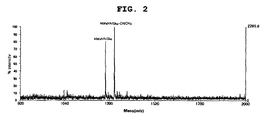
Fig. 2 is a Positive-ion MALDI-TOF MS spectrum obtained from the partially tagged oligosaccharide (Man5NAcGlu2) with one of the active methylene moiety, malononitrile. -
Fig. 3 is Positive-ion MALDI-TOF MS spectrum obtained from the N-linked oligosaccharide mixture tagged fully with one of the active methylene moiety, malononitrile. - The present invention relates to the method for tagging of carbobydrates with active methylene compound comprising the step of preparing carbohydrate conjugate in which carbohydrate and methylene compound are combined by mixing carbohydrate mixture and methylene compound under aqueous polar aprotic solvent containing amine base catalyst.
- In the present invention, active methylene compound has the characteristics having two carbanion-stabilizing groups composed of carbonyl and/or nitrile group which can stabilize α-carbanion functioning as a nucleophile such as malononitrile, alkyl malonate, α-cyanoacetate, β-ketoester, β-ketoamide etc, and is preferred to have the structure of Chemical Formula 1. (F. Carey and R. Sundberg, "Advanced Organic Chemistry, Part B: Reactions and Synthesis, 3rd ed., Plenum Press, p.83-85).
- <Chemical Formula 1>

- In the preferred embodiment of the present invention, malononitrile was used as an active methylene compound. In addition, active methylene compound can be selected from counterparts of polymers wherein each of them is bound to the solid support.
- In the tagging method of the present invention, amine base catalyst can preferably be selected from a group consisting of piperidine, pyridine, pyrrolidine, sarcosine and simple amineacid. Among them, piperidine is more preferable.
- In addition, polar aprotic solvent can preferably be selected from a group consisting of dimethylformamide, dimethylsulfoxide, N-methylpyrrolidinone, N-methylpiperidone and dimethoxyethane. Among them, dimethylformamide is more preferable.
- In addition, carbohydrate can be selected from a group consisting of N-linked oligosaccharide and O-linked oligosaccharide of glycoprotein, and unprotected oligosaccharide having free hydroxy group at the sugar backbone is more preferable.
- Carbohydrate conjugate tagged with active methylene compound prepared by the tagging method of the present invention can be purified by various purifying and analyzing methods known to the persons skilled in the art without any limitations. Said various purifying and analyzing methods can be selected from a group consisting of the method using ion exchange resin, the gel filtration method, the method using carbohydrate affinity matrix, the method using various kinds of chemically bound stationary phase and the method using adsorption medium, and the method using carbohydrate affinity matrix is more preferable for the rapid separation. In addition, aminoalkyl is preferable as a stationary phase in the chemically bound stationary phase chromatography.
- By the above method, conjugate in which carbon-carbon bond is formed between reducing end of carbohydrate and active methylene carbon moiety of the active methylene compound is produced.
- The present invention relates to a mild and efficient tagging method of oligosaccharide, mainly O-linked or N-linked, obtained from biological medium (see
Fig. 1 ). Oligosaccharide obtained from biological medium is generally having many free hydroxyl groups on sugar backbone and restrict in the amount. Therefore, it is necessary to develop an efficient and simple tagging method without protection of many hydroxyl groups of oligosaccharide for separation and structural analysis of biologically active oligosaccharide for the use of diagnostic and industrial application. - The hemiacetal group at the reducing end of oligosaccharide is a synthetic equivalent of aldehyde. This group can react with an active methylene donor, such as malononitrile, to afford the conjugated derivative of the oligosaccharide through an addition and elimination reaction. Such an addition and elimination reaction of an simple aldehyde with an active methylene donor in anhydrous condition is known as the aldol condensation and dehydration reaction, and is a well known synthetic method in the field of organic chemistry. For efficient tagging of oligosaccharides having many free hydroxyl groups with an active methylene compound, however, aqueous conditions are inevitably necessary because of solubility of sugar. Moreover, the chemical reactivity at the reducing end of oligosaccharide can be greatly different with respect to the kind of sugar moieties present in the reducing end. For example, maltooligosaccharides having glucose unit at the reducing end of sugar chain can readily react with carbon nucleophile in aqueous basic condition. But N-acetylglucosamine terminal moiety often observed in oligosaccharides released from glycoprotein of biological media shows much less reactivity for carbon nucleophile used in the case of maltooligosaccharides, making tagging reaction to be hardly proceeded. A tagging method of free oligosaccharides, having N-acetylglucosamine as a reducing sugar moiety and unprotected many hydroxyl groups on sugar backbone, with active methylene compound as a carbon nucleophile, is described in the present invention.
- In the preferred embodiment of the present invention, Man5NAcGlu2, as a typical oligosaccharide, is mixed with the DMF solution of malononitrile, as a representative tagging agent. To this reaction solution was added excess neat piperidine as a base and an amine catalyst. The solvent composition can be varied, but exceedingly increased portion of water can retard the progress of tagging reaction. Among several amines being exploitable as a catalyst for easy formation of Schiff base and/or as a base for inauguration of enolate formation of nucleophile, piperidine can be preferably selected. In the preferred embodiment of the present invention, the reaction tube was shaken for several seconds then incubated at temperature ranging from 4°C to 40°C. The reaction rate is affected from the kind of reducing end moiety of oligosaccharide and reaction conditions such as the composition of solvent, concentration of the samples, aliquot of the catalyst and temperature, etc.
- The reaction can be analyzed by matrix assisted laser desorption/ionization mass spectrometry (MALDI-MS), which is one of the powerful analytical tools for carbohydrate oligomer, having a high sensitive detectability to even impure sample. DHBA as a matrix compound can be used for the sensitive detection of the oligosaccharide-malononitrile derivative and free oligosaccharide. All signals of molecular ions obtained in this invention can be recorded as sodium ion adducts. Although several peaks due to minor impurities could also be detected, the present inventors could assign the peaks due to interesting components in the derivatization mixture (See
Fig. 2 andFig. 3 ). - The malononitrile tagging method can also be applied to the tagging for multi-component oligosaccharides. Oligosaccharide mixture, released from a glycoprotein is nicely tagged following the method of the present invention (See
Fig. 3 ). The progression of the tagging reaction can be detected easily using MALDI-TOF MS. For analysis of oligosaccharides obtained from biological media, more flexible tagging condition is normally need since the purity and concentration of these sample can be variable drastically. The method of the present invention is tolerable from impurities present in sample in a wide range. The method of the present invention is also tolerable in a wide range of usage of tagging reagents from 102 equivalent to 104 equivalent, and give reproducible results in the range. Additionally, the malononitrile derivative of an oligosaccharide has a highly ionizable proton at the α-position to the carbonyl or nitrile group. It has been reported that the derivatives of oligosaccharide with an active methylene compound show a high sensitivity in negative electrospray ionization (ESI) mode mass analysis. - In the second point of the present invention, the present invention provides the method for the purification of oligosaccharides tagged by active methylene compound. For tagging of a restricted amount of biological samples, excess reagent is generally used for completion of reaction or for convenience of experiment. Thus effective purification process is very important in applying the tagging method to a variety of purpose.
- Although tagged oligosaccharide derivatives of the present invention have a tag moiety less polar than native oligosaccharides, they are still highly hydrophilic by virtue of oligosaccharide moiety of the tagged derivative having many hydroxy group on sugar chain. In contrast, all reagents used for the tagging reaction of oligosaccharide are non-ionic organic materials except water used as a solvent. Any kind of inorganic reagent is not required for the tagging reaction of oligosaccharide in the present invention. Thus affinity purification method exploiting the hydrophilic property due to sugar moiety of tagged samples is plausible. As an example representative, cellulose filter kit can be used for simple purification of tagged sugar. After the cellulose filter kit activated by aqueous acetic acid solution is equilibrated with acetonitrile, a portion of reaction solution is loaded on filter and equilibrated for a few minutes. Chemical reagents to be removed, such as polar aprotic organic solvents, tagging reagent and organic amine base catalysts, are washed off by a water miscible organic solvent or aqueous mixture thereof. Tagged oligosaccharide purified can be eluted with water. When active methylene compound bound to polymer or solid support is used as a tagging compound, the purification process of solid-bound tagged sugar can also be conducted simply by washing techniques with an appropriate solvent.
- Practical and presently preferred embodiments of the present invention are.illustrated as shown in the following Examples.
- N-linked oligosaccharide mixture obtained from glycoproteins present in the biological media by a known biological or chemical method of the prior art was dissolved in 2 µl distilled water. Malononitrile (1.0 µmol, 66 µg) was dissolved in dimethylformamide (10 µl) and was mixed with aqueous oligosaccharide solution prepared above. After piperidine (1.0 µmol, 0.1 µl) was added to the above tagging solution, the reaction tube was incubated at low temperature (10°C - 15°C) for about 3 days. A portion of tagging, solution was taken and purified.
- A cellulose filter was activated through washing with 5 ml of water and subsequent 30% aqueous acetic acid solution. A portion of the tagging solution of oligosaccharides prepared by the method of Example 1 was loaded onto the filter. After standing for about 10 min, the filter was washed with 5 ml of anhydrous acetonitrile. The tagged oligosaccharides was eluted from the filter with water (0.5 ml x 2) and was dried under vacuum. After dissolving lyophilized tagged oligosaccharide into distilled water, some of them were taken for MALDI MS (matrix assisted laser desorption/ionization mass spectrosmatry) analysis. DHBA (dihydroxybenzoic acid) was uses as a matrix.
- As a result, all the mass spectral signals of sample compound were recorded as a sodium ion adduct (
Fig. 2 andFig. 3 ). - As described hereinbefore, the tagging method of the present invention does not need many kinds of chemical reagent and the reactions can be taken even in the presence of certain amount of impurities. So, it can be used for the analysis of oligosaccharide present in the various kinds of samples.
Claims (8)
- Method for tagging of carbohydrates with an active methylene compound comprising the step of preparing a carbohydrate conjugate in which the carbohydrate is reacted with an active methylene compound in an aqueous polar aprotic solvent containing an amine base catalyst, wherein the carbohydrate is unprotected oligosaccharide having free hydroxy group at the sugar backbone, and has N-acetylglucosamine as a reducing sugar moiety, and wherein the carbohydrate conjugate is produced by the carbon-carbon bond formation between a reducing end of the carbohydrate and an active methylene carbon of the active methylene compound.
- The method according to claim 1, wherein the amine base catalyst is selected from the group consisting of piperidine, pyridine, pyrrolidine and sarcosine.
- The method according to claim 2, wherein the amine base catalyst is piperidine.
- The method according to claim 1, wherein the polar aprotic solvent is selected from the group consisting of dimethylformamide, dimethylsulfoxide, N-methylpyrrolidinone, N-methylpiperidone and dimethoxyethane.
- The method according to claim 4, wherein the polar aprotic solvent is dimethylformamide.
- The method according to claim 1, wherein the active methylene compound has the structure of Chemical Formula 1

- The method according to claim 1, wherein the active methylene compound is selected from the group consisting of malononitrile, alkyl malonate, α-cyanoacetate, α-cyanoacetamide, β-ketoester, β-ketoamide and counterparts thereof wherein each of them is bound to a solid support.
- The method according to claim 7, wherein the active methylene compound is malononitrile.
Applications Claiming Priority (1)
| Application Number | Priority Date | Filing Date | Title |
|---|---|---|---|
| PCT/KR2003/001654 WO2005016948A1 (en) | 2003-08-14 | 2003-08-14 | Method for tagging of carbohydrates with active methylene compound |
Publications (3)
| Publication Number | Publication Date |
|---|---|
| EP1654267A1 EP1654267A1 (en) | 2006-05-10 |
| EP1654267A4 EP1654267A4 (en) | 2006-10-18 |
| EP1654267B1 true EP1654267B1 (en) | 2010-04-21 |
Family
ID=34191958
Family Applications (1)
| Application Number | Title | Priority Date | Filing Date |
|---|---|---|---|
| EP03818122A Expired - Lifetime EP1654267B1 (en) | 2003-08-14 | 2003-08-14 | Method for tagging of carbohydrates with active methylene compound |
Country Status (5)
| Country | Link |
|---|---|
| EP (1) | EP1654267B1 (en) |
| AT (1) | ATE465167T1 (en) |
| AU (1) | AU2003251203A1 (en) |
| DE (1) | DE60332289D1 (en) |
| WO (1) | WO2005016948A1 (en) |
Family Cites Families (1)
| Publication number | Priority date | Publication date | Assignee | Title |
|---|---|---|---|---|
| FR2593182B1 (en) * | 1986-01-17 | 1990-03-16 | Toulouse Inst Nat Polytech | PROCESS FOR TREATING AQUEOUS SUGAR JUICE FOR SEPARATING AND SELECTING KETONIC SACCHARIDES |
-
2003
- 2003-08-14 AT AT03818122T patent/ATE465167T1/en not_active IP Right Cessation
- 2003-08-14 AU AU2003251203A patent/AU2003251203A1/en not_active Abandoned
- 2003-08-14 DE DE60332289T patent/DE60332289D1/en not_active Expired - Lifetime
- 2003-08-14 WO PCT/KR2003/001654 patent/WO2005016948A1/en not_active Ceased
- 2003-08-14 EP EP03818122A patent/EP1654267B1/en not_active Expired - Lifetime
Non-Patent Citations (3)
| Title |
|---|
| L. F. TIETZE, U. BEIFUSS, COMPREHENSIVE ORGAINC CHEMISTRY, vol. 2, 1991, pages 341 - 394 * |
| LUBERT STRYER: "Biochemistry", 1998, W.H. FREEMAN & COMPANY, NEW YORK * |
| YEONG HEE AHN, JONG SHIN YOO, ANALYTICAL SCIENCES, vol. 17, 2001, pages 893 - 895 * |
Also Published As
| Publication number | Publication date |
|---|---|
| DE60332289D1 (en) | 2010-06-02 |
| EP1654267A4 (en) | 2006-10-18 |
| AU2003251203A1 (en) | 2005-03-07 |
| WO2005016948A1 (en) | 2005-02-24 |
| EP1654267A1 (en) | 2006-05-10 |
| ATE465167T1 (en) | 2010-05-15 |
Similar Documents
| Publication | Publication Date | Title |
|---|---|---|
| US8530660B2 (en) | Carboxamide-substituted dyes for analytical applications | |
| Ruhaak et al. | Glycan labeling strategies and their use in identification and quantification | |
| Lamari et al. | Derivatization of carbohydrates for chromatographic, electrophoretic and mass spectrometric structure analysis | |
| Dalpathado et al. | Reductive amination of carbohydrates using NaBH (OAc) 3 | |
| Gallas et al. | The Amadori rearrangement as glycoconjugation method: synthesis of non-natural C-glycosyl type glycoconjugates | |
| Cai et al. | 2-Pyridylfuran: a new fluorescent tag for the analysis of carbohydrates | |
| You et al. | Detection of carbohydrates using new labeling reagent 1-(2-naphthyl)-3-methyl-5-pyrazolone by capillary zone electrophoresis with absorbance (UV) | |
| CN112492882A (en) | Reagent for mass spectrometry | |
| TWI547486B (en) | Compounds and methods for analysis and synthesis of saccharide compounds | |
| JP3453382B2 (en) | Compounds and methods for monosaccharide analysis | |
| Hsu et al. | MALDI-TOF and ESI-MS analysis of oligosaccharides labeled with a new multifunctional oligosaccharide tag | |
| US5747347A (en) | Labelled carbohydrates and their use in assays | |
| US7579460B2 (en) | Method for tagging of carbohydrates with active methylene compound | |
| ZHANG et al. | A sensitive derivatization method for the determination of the sugar composition after pre‐column reductive amination with 3‐amino‐9‐ethylcarbazole (AEC) by high‐performance liquid chromatography | |
| US6916920B2 (en) | Process for producing hydrazinomonosaccharide derivatives and use thereof | |
| Duong et al. | Synthesis of chimera oligopeptide including furanoid β-sugar amino acid derivatives with free OHs: mild but successful removal of the 1, 2-O-isopropylidene from the building block | |
| KR100741761B1 (en) | How to label carbohydrates with active methylene compounds | |
| EP1654267A1 (en) | Method for tagging of carbohydrates with active methylene compound | |
| US6410700B1 (en) | Glycan derivatives | |
| Smolkova et al. | Utilizing novel cationic phenylpyridine labeling in glycan profiling by capillary electrophoresis coupled to mass spectrometry | |
| Ding et al. | LC-DAD-ESI-MS characterization of carbohydrates using a new labeling reagent | |
| Woods et al. | The derivatization of proquinoidal analytes with 1, 2-Diphenylethane-1, 2-diamine (DPE) and benzylamine (BA): an investigation of products, yields, kinetics and reagent selectivity | |
| Geurtsen et al. | Regioselective glycosylations in solution and on soluble and insoluble polymeric supports | |
| Xiong et al. | Development of a simple and sensitive pre-column derivatization HPLC method for the quantitative analysis of miglitol intermediates | |
| CN114621182B (en) | Derivatization reagent, synthesis method thereof and MALDI-MS-based method for in-situ analysis of monoamine neurotransmitters |
Legal Events
| Date | Code | Title | Description |
|---|---|---|---|
| PUAI | Public reference made under article 153(3) epc to a published international application that has entered the european phase |
Free format text: ORIGINAL CODE: 0009012 |
|
| 17P | Request for examination filed |
Effective date: 20060220 |
|
| AK | Designated contracting states |
Kind code of ref document: A1 Designated state(s): AT BE BG CH CY CZ DE DK EE ES FI FR GB GR HU IE IT LI LU MC NL PT RO SE SI SK TR |
|
| A4 | Supplementary search report drawn up and despatched |
Effective date: 20060915 |
|
| DAX | Request for extension of the european patent (deleted) | ||
| 17Q | First examination report despatched |
Effective date: 20070323 |
|
| GRAP | Despatch of communication of intention to grant a patent |
Free format text: ORIGINAL CODE: EPIDOSNIGR1 |
|
| GRAS | Grant fee paid |
Free format text: ORIGINAL CODE: EPIDOSNIGR3 |
|
| GRAA | (expected) grant |
Free format text: ORIGINAL CODE: 0009210 |
|
| AK | Designated contracting states |
Kind code of ref document: B1 Designated state(s): AT BE BG CH CY CZ DE DK EE ES FI FR GB GR HU IE IT LI LU MC NL PT RO SE SI SK TR |
|
| REG | Reference to a national code |
Ref country code: GB Ref legal event code: FG4D |
|
| REG | Reference to a national code |
Ref country code: CH Ref legal event code: EP |
|
| REG | Reference to a national code |
Ref country code: CH Ref legal event code: NV Representative=s name: KATZAROV S.A. |
|
| REG | Reference to a national code |
Ref country code: IE Ref legal event code: FG4D |
|
| REF | Corresponds to: |
Ref document number: 60332289 Country of ref document: DE Date of ref document: 20100602 Kind code of ref document: P |
|
| REG | Reference to a national code |
Ref country code: NL Ref legal event code: VDEP Effective date: 20100421 |
|
| PG25 | Lapsed in a contracting state [announced via postgrant information from national office to epo] |
Ref country code: ES Free format text: LAPSE BECAUSE OF FAILURE TO SUBMIT A TRANSLATION OF THE DESCRIPTION OR TO PAY THE FEE WITHIN THE PRESCRIBED TIME-LIMIT Effective date: 20100801 Ref country code: NL Free format text: LAPSE BECAUSE OF FAILURE TO SUBMIT A TRANSLATION OF THE DESCRIPTION OR TO PAY THE FEE WITHIN THE PRESCRIBED TIME-LIMIT Effective date: 20100421 Ref country code: SE Free format text: LAPSE BECAUSE OF FAILURE TO SUBMIT A TRANSLATION OF THE DESCRIPTION OR TO PAY THE FEE WITHIN THE PRESCRIBED TIME-LIMIT Effective date: 20100421 |
|
| PG25 | Lapsed in a contracting state [announced via postgrant information from national office to epo] |
Ref country code: AT Free format text: LAPSE BECAUSE OF FAILURE TO SUBMIT A TRANSLATION OF THE DESCRIPTION OR TO PAY THE FEE WITHIN THE PRESCRIBED TIME-LIMIT Effective date: 20100421 Ref country code: SI Free format text: LAPSE BECAUSE OF FAILURE TO SUBMIT A TRANSLATION OF THE DESCRIPTION OR TO PAY THE FEE WITHIN THE PRESCRIBED TIME-LIMIT Effective date: 20100421 Ref country code: FI Free format text: LAPSE BECAUSE OF FAILURE TO SUBMIT A TRANSLATION OF THE DESCRIPTION OR TO PAY THE FEE WITHIN THE PRESCRIBED TIME-LIMIT Effective date: 20100421 |
|
| PG25 | Lapsed in a contracting state [announced via postgrant information from national office to epo] |
Ref country code: CY Free format text: LAPSE BECAUSE OF FAILURE TO SUBMIT A TRANSLATION OF THE DESCRIPTION OR TO PAY THE FEE WITHIN THE PRESCRIBED TIME-LIMIT Effective date: 20100428 Ref country code: GR Free format text: LAPSE BECAUSE OF FAILURE TO SUBMIT A TRANSLATION OF THE DESCRIPTION OR TO PAY THE FEE WITHIN THE PRESCRIBED TIME-LIMIT Effective date: 20100722 |
|
| PG25 | Lapsed in a contracting state [announced via postgrant information from national office to epo] |
Ref country code: EE Free format text: LAPSE BECAUSE OF FAILURE TO SUBMIT A TRANSLATION OF THE DESCRIPTION OR TO PAY THE FEE WITHIN THE PRESCRIBED TIME-LIMIT Effective date: 20100421 Ref country code: PT Free format text: LAPSE BECAUSE OF FAILURE TO SUBMIT A TRANSLATION OF THE DESCRIPTION OR TO PAY THE FEE WITHIN THE PRESCRIBED TIME-LIMIT Effective date: 20100823 Ref country code: DK Free format text: LAPSE BECAUSE OF FAILURE TO SUBMIT A TRANSLATION OF THE DESCRIPTION OR TO PAY THE FEE WITHIN THE PRESCRIBED TIME-LIMIT Effective date: 20100421 |
|
| PLBE | No opposition filed within time limit |
Free format text: ORIGINAL CODE: 0009261 |
|
| STAA | Information on the status of an ep patent application or granted ep patent |
Free format text: STATUS: NO OPPOSITION FILED WITHIN TIME LIMIT |
|
| PG25 | Lapsed in a contracting state [announced via postgrant information from national office to epo] |
Ref country code: BE Free format text: LAPSE BECAUSE OF FAILURE TO SUBMIT A TRANSLATION OF THE DESCRIPTION OR TO PAY THE FEE WITHIN THE PRESCRIBED TIME-LIMIT Effective date: 20100421 Ref country code: SK Free format text: LAPSE BECAUSE OF FAILURE TO SUBMIT A TRANSLATION OF THE DESCRIPTION OR TO PAY THE FEE WITHIN THE PRESCRIBED TIME-LIMIT Effective date: 20100421 Ref country code: RO Free format text: LAPSE BECAUSE OF FAILURE TO SUBMIT A TRANSLATION OF THE DESCRIPTION OR TO PAY THE FEE WITHIN THE PRESCRIBED TIME-LIMIT Effective date: 20100421 Ref country code: CZ Free format text: LAPSE BECAUSE OF FAILURE TO SUBMIT A TRANSLATION OF THE DESCRIPTION OR TO PAY THE FEE WITHIN THE PRESCRIBED TIME-LIMIT Effective date: 20100421 |
|
| 26N | No opposition filed |
Effective date: 20110124 |
|
| PG25 | Lapsed in a contracting state [announced via postgrant information from national office to epo] |
Ref country code: MC Free format text: LAPSE BECAUSE OF NON-PAYMENT OF DUE FEES Effective date: 20100831 Ref country code: IT Free format text: LAPSE BECAUSE OF FAILURE TO SUBMIT A TRANSLATION OF THE DESCRIPTION OR TO PAY THE FEE WITHIN THE PRESCRIBED TIME-LIMIT Effective date: 20100421 |
|
| PG25 | Lapsed in a contracting state [announced via postgrant information from national office to epo] |
Ref country code: IE Free format text: LAPSE BECAUSE OF NON-PAYMENT OF DUE FEES Effective date: 20100814 |
|
| PGFP | Annual fee paid to national office [announced via postgrant information from national office to epo] |
Ref country code: CH Payment date: 20110812 Year of fee payment: 9 |
|
| PG25 | Lapsed in a contracting state [announced via postgrant information from national office to epo] |
Ref country code: LU Free format text: LAPSE BECAUSE OF NON-PAYMENT OF DUE FEES Effective date: 20100814 Ref country code: HU Free format text: LAPSE BECAUSE OF FAILURE TO SUBMIT A TRANSLATION OF THE DESCRIPTION OR TO PAY THE FEE WITHIN THE PRESCRIBED TIME-LIMIT Effective date: 20101022 Ref country code: BG Free format text: LAPSE BECAUSE OF FAILURE TO SUBMIT A TRANSLATION OF THE DESCRIPTION OR TO PAY THE FEE WITHIN THE PRESCRIBED TIME-LIMIT Effective date: 20100421 |
|
| PG25 | Lapsed in a contracting state [announced via postgrant information from national office to epo] |
Ref country code: TR Free format text: LAPSE BECAUSE OF FAILURE TO SUBMIT A TRANSLATION OF THE DESCRIPTION OR TO PAY THE FEE WITHIN THE PRESCRIBED TIME-LIMIT Effective date: 20100421 |
|
| PGFP | Annual fee paid to national office [announced via postgrant information from national office to epo] |
Ref country code: GB Payment date: 20120808 Year of fee payment: 10 |
|
| PGFP | Annual fee paid to national office [announced via postgrant information from national office to epo] |
Ref country code: DE Payment date: 20120808 Year of fee payment: 10 Ref country code: FR Payment date: 20120823 Year of fee payment: 10 |
|
| PG25 | Lapsed in a contracting state [announced via postgrant information from national office to epo] |
Ref country code: BG Free format text: LAPSE BECAUSE OF FAILURE TO SUBMIT A TRANSLATION OF THE DESCRIPTION OR TO PAY THE FEE WITHIN THE PRESCRIBED TIME-LIMIT Effective date: 20100721 |
|
| REG | Reference to a national code |
Ref country code: CH Ref legal event code: PL |
|
| GBPC | Gb: european patent ceased through non-payment of renewal fee |
Effective date: 20130814 |
|
| PG25 | Lapsed in a contracting state [announced via postgrant information from national office to epo] |
Ref country code: CH Free format text: LAPSE BECAUSE OF NON-PAYMENT OF DUE FEES Effective date: 20130831 Ref country code: DE Free format text: LAPSE BECAUSE OF NON-PAYMENT OF DUE FEES Effective date: 20140301 Ref country code: LI Free format text: LAPSE BECAUSE OF NON-PAYMENT OF DUE FEES Effective date: 20130831 |
|
| REG | Reference to a national code |
Ref country code: DE Ref legal event code: R119 Ref document number: 60332289 Country of ref document: DE Effective date: 20140301 |
|
| REG | Reference to a national code |
Ref country code: FR Ref legal event code: ST Effective date: 20140430 |
|
| PG25 | Lapsed in a contracting state [announced via postgrant information from national office to epo] |
Ref country code: GB Free format text: LAPSE BECAUSE OF NON-PAYMENT OF DUE FEES Effective date: 20130814 |
|
| PG25 | Lapsed in a contracting state [announced via postgrant information from national office to epo] |
Ref country code: FR Free format text: LAPSE BECAUSE OF NON-PAYMENT OF DUE FEES Effective date: 20130902 |