EP1652937A2 - Diagnostic test fo collie eye anomaly - Google Patents
Diagnostic test fo collie eye anomaly Download PDFInfo
- Publication number
- EP1652937A2 EP1652937A2 EP05256463A EP05256463A EP1652937A2 EP 1652937 A2 EP1652937 A2 EP 1652937A2 EP 05256463 A EP05256463 A EP 05256463A EP 05256463 A EP05256463 A EP 05256463A EP 1652937 A2 EP1652937 A2 EP 1652937A2
- Authority
- EP
- European Patent Office
- Prior art keywords
- deletion
- amplification
- primer
- seq
- primers
- Prior art date
- Legal status (The legal status is an assumption and is not a legal conclusion. Google has not performed a legal analysis and makes no representation as to the accuracy of the status listed.)
- Granted
Links
Images





Classifications
-
- C—CHEMISTRY; METALLURGY
- C12—BIOCHEMISTRY; BEER; SPIRITS; WINE; VINEGAR; MICROBIOLOGY; ENZYMOLOGY; MUTATION OR GENETIC ENGINEERING
- C12Q—MEASURING OR TESTING PROCESSES INVOLVING ENZYMES, NUCLEIC ACIDS OR MICROORGANISMS; COMPOSITIONS OR TEST PAPERS THEREFOR; PROCESSES OF PREPARING SUCH COMPOSITIONS; CONDITION-RESPONSIVE CONTROL IN MICROBIOLOGICAL OR ENZYMOLOGICAL PROCESSES
- C12Q1/00—Measuring or testing processes involving enzymes, nucleic acids or microorganisms; Compositions therefor; Processes of preparing such compositions
- C12Q1/68—Measuring or testing processes involving enzymes, nucleic acids or microorganisms; Compositions therefor; Processes of preparing such compositions involving nucleic acids
- C12Q1/6876—Nucleic acid products used in the analysis of nucleic acids, e.g. primers or probes
- C12Q1/6888—Nucleic acid products used in the analysis of nucleic acids, e.g. primers or probes for detection or identification of organisms
-
- C—CHEMISTRY; METALLURGY
- C12—BIOCHEMISTRY; BEER; SPIRITS; WINE; VINEGAR; MICROBIOLOGY; ENZYMOLOGY; MUTATION OR GENETIC ENGINEERING
- C12Q—MEASURING OR TESTING PROCESSES INVOLVING ENZYMES, NUCLEIC ACIDS OR MICROORGANISMS; COMPOSITIONS OR TEST PAPERS THEREFOR; PROCESSES OF PREPARING SUCH COMPOSITIONS; CONDITION-RESPONSIVE CONTROL IN MICROBIOLOGICAL OR ENZYMOLOGICAL PROCESSES
- C12Q1/00—Measuring or testing processes involving enzymes, nucleic acids or microorganisms; Compositions therefor; Processes of preparing such compositions
- C12Q1/68—Measuring or testing processes involving enzymes, nucleic acids or microorganisms; Compositions therefor; Processes of preparing such compositions involving nucleic acids
- C12Q1/6876—Nucleic acid products used in the analysis of nucleic acids, e.g. primers or probes
- C12Q1/6883—Nucleic acid products used in the analysis of nucleic acids, e.g. primers or probes for diseases caused by alterations of genetic material
-
- C—CHEMISTRY; METALLURGY
- C12—BIOCHEMISTRY; BEER; SPIRITS; WINE; VINEGAR; MICROBIOLOGY; ENZYMOLOGY; MUTATION OR GENETIC ENGINEERING
- C12Q—MEASURING OR TESTING PROCESSES INVOLVING ENZYMES, NUCLEIC ACIDS OR MICROORGANISMS; COMPOSITIONS OR TEST PAPERS THEREFOR; PROCESSES OF PREPARING SUCH COMPOSITIONS; CONDITION-RESPONSIVE CONTROL IN MICROBIOLOGICAL OR ENZYMOLOGICAL PROCESSES
- C12Q2600/00—Oligonucleotides characterized by their use
- C12Q2600/156—Polymorphic or mutational markers
-
- C—CHEMISTRY; METALLURGY
- C12—BIOCHEMISTRY; BEER; SPIRITS; WINE; VINEGAR; MICROBIOLOGY; ENZYMOLOGY; MUTATION OR GENETIC ENGINEERING
- C12Q—MEASURING OR TESTING PROCESSES INVOLVING ENZYMES, NUCLEIC ACIDS OR MICROORGANISMS; COMPOSITIONS OR TEST PAPERS THEREFOR; PROCESSES OF PREPARING SUCH COMPOSITIONS; CONDITION-RESPONSIVE CONTROL IN MICROBIOLOGICAL OR ENZYMOLOGICAL PROCESSES
- C12Q2600/00—Oligonucleotides characterized by their use
- C12Q2600/16—Primer sets for multiplex assays
Definitions
- the present invention relates generally to a hereditary ocular disorder, Collie Eye Anomaly (CEA), which affects development of the choroid and sclera in canines. More particularly, the invention relates to a method for identifying dogs as genetically normal, heterozygous for or homozygous for the CEA disease allele.
- CEA Collie Eye Anomaly
- Collie Eye Anomaly is a canine hereditary ocular disorder affecting development of the choroid and sclera.
- the disease segregates in several dog breeds including Rough and Smooth Collies, Border Collies, Australian Shepherds, Lancashire Heelers, and Shetland Sheepdogs.
- the clinical phenotype varies significantly among affected dogs of all breeds.
- the primary CEA phenotype, choroidal hypoplasia (CH) is characterized by regional hypoplasia (underdevelopment) of the choroid, which is the highly vascularized bed of the eye that underlies the retina. This lesion usually results in an ophthalmoscopically detectable window defect in the ocular fundus located temporal to the optic nerve.
- the present invention provides a method for identifying dogs which are genetically normal, heterozygous for or homozygous for the CEA disease allele.
- the method comprises the steps of obtaining a biological sample comprising genomic DNA from the dog and testing the biological sample for the presence or absence of a deletion of nucleotides corresponding to nucleotides from position 9,302 to position 17,101 of SEQ ID NO:1 within chromosome 37.
- the presence of the deletion in both alleles is indicative of a dog that is homozygous for the CEA disease allele.
- the presence of the deletion in only one allele is indicative of a dog that is heterozygous for the CEA disease allele, and the absence of the deletion in both alleles is indicative of a dog that is normal for CEA.
- the presence or absence of the deletion may be tested by amplification of the DNA followed by analysis of the amplification products.
- the present invention also provides kits for diagnosis of a dog as normal, heterozygous for, or homozygous for the CEA disease allele.
- Such tools and/or kits assist breeders to identify normal dogs, carriers and homozygous mutant dogs.
- the dogs that are determined to be heterozygous for or homozygous for the disease allele can be eliminated from a breeding stock or bred with genetically normal dogs.
- the present invention is based on identification of the mutation associated with the CEA disease.
- a 7.8 kilobase (“kb") deletion associated with dogs that are heterozygous for the deletion (carriers), or are homozygous for the deletion (likely to be affected with CEA) was identified.
- This 7.8 kb region is referred to herein as the "the CEA deletion.”
- the CEA deletion results in removal or disruption of a putative enhancer element related to the expression of the CEA gene.
- SEQ ID NO:1 which was assembled from data retrieved from The Institue for Genomic Research (TIGR) database of the preassembled 1.5x survey sequence database of the canine genome, together with sequences amplified and sequenced in the laboratory of Elaine Ostrander, by Dayna Akey. The contig created from this data formed the consensus sequence for SEQ: ID NO:1.
- TIGR Institue for Genomic Research
- SEQ ID NO:1 was assembled as a continuous 5' to 3' sequence in the direction of transcription of the putative gene FLJ12610 as part of an effort to identify the entire genomic sequence of this gene.
- the portion of FLJ12610 represented by SEQ ID NO:1 is presented in Table 1, with introns and exons also identified.
- the gene FLJ12610 is transcribed from the reverse strand of canine chromosome 37, as it also is on the homologous human chromosome (HSA2).
- SEQ ID NO:1 runs forward in the same direction as the gene FLJ12610 is transcribed, but backwards in the canine genome assembly.
- Table 2 shows the genomic positions of the Collie Eye Anomaly Linkage Disequilibrium Area, SEQ ID NO:1, and the Collie Eye Anomaly deletion.
- Nucleotide number 1 in SEQ ID NO:1 is the reverse complement of nucleotide 28,694,530 in the canine genome sequence, and the last nucleotide of SEQ ID NO:1 corresponds to the reverse complement of nucleotide 28,676,370 in the canine genome sequence. That is, SEQ ID NO:1 is the reverse complement of the interval 28,694,530 to 28,676,370 in the canine genome sequence.
- the breakpoints of the CEA deletion have also been identified.
- the CEA deleted region begins at nucleotide 9,302 of SEQ ID NO:1 which corresponds to nucleotide 28,677,428 of canine chromosome 37 of the public domain assembled canine genome sequence, July 2004 Assembly. Therefore the start breakpoint of the deletion (also referred to herein as the 5' breakpoint) is between nucleotides 9,301 and 9,302 of SEQ ID NO:1.
- the deleted region ends at nucleotide 17,101 of SEQ ID NO:1 and therefore the end breakpoint of the deletion (also referred to herein as the 3' breakpoint) is between nucleotides 17,101 and 17,102 of SEQ ID NO:1.
- nucleotide 9,301 (G) is followed by nucleotide 17,102 (T).
- tests for detecting the presence or absence of the CEA deletion are provided. Dogs without the CEA deletion in either allele are referred to as normal for CEA. Dogs with the CEA deletion on only one allele are referred to as carriers of CEA. Dogs homozygous for the CEA deletions are referred to as affected with CEA.
- Testing for the CEA deletion can be carried out in any sample which contains genomic DNA.
- a sample of blood, hair, spleen, mucosal scrapings, semen, tissue biopsy, saliva or the like can be obtained.
- the biological sample is blood.
- the presence or absence of the CEA deletion may be determined using a variety of techniques that are well known in the art.
- genomic DNA may be amplified for use in testing enzymatically through use of PCR (Saiki et al. Science 239:487-491 (1988)) or other in vitro amplification methods such as the ligase chain reaction (LCR) (Wu and Wallace Genomics 4:560-569 (1989)), strand displacement amplification (SDA) (Walker et al. PNAS USA 89:392-396 (1992)), self-sustained sequence replication (3SR) (Fahy et al. PCR Methods Appl. 1:25-33 (1992)), prior to CEA deletion analysis.
- LCR ligase chain reaction
- SDA strand displacement amplification
- 3SR self-sustained sequence replication
- Detecting the presence or absence of the CEA deletion in DNA can be accomplished by a variety of methods including, but not limited to, polymerase chain reaction (PCR), fluorescent in situ hybridization (FISH), hybridization with allele-specific oligonucleotide probes (Wallace et al. Nucl Acids Res 6:3543-3557 (1978)), including immobilized oligonucleotides (Saiki et al. PNAS USA 86:6230-6234 (1989)) or oligonucleotide arrays (Maskos and Southern Nucl Acids Res 21:2269-2270 (1993)), allele-specific PCR (Newton et al.
- PCR polymerase chain reaction
- FISH fluorescent in situ hybridization
- amplification of genomic DNA for testing for the CEA deletion is performed by PCR.
- PCR primers and a method of using the primers in amplification reactions are provided such that different combinations of amplification products are observed when DNA is amplified from affected, carrier or normal dogs.
- testing for the deletion is performed by PCR using a set of four primers.
- the primers are designed such that when the first and the second primers are used to amplify DNA from a normal chromosome 37 allele, a first amplification product is produced spanning the start breakpoint (5' breakpoint) of the CEA deletion.
- the third and fourth primers are designed such that when they are used to amplify DNA from a normal chromosome 37 allele, a second amplification product is produced spanning the end breakpoint (3' breakpoint) of the CEA deletion.
- the first and fourth primers are designed to bind to sites present adjacent to the area deleted in the disease chromosome.
- the second and third primers are designed to bind to sites present within the area deleted in the disease chromosome.
- Neither the set of the first and second primers, nor the set of the third and fourth primers, will amplify a product from a chromosome 37 which has the CEA deletion because there is no binding site present for the second or third primers. Amplification using the first primer and the fourth primer will not produce an amplification product from a normal chromosome 37 because it is beyond the technical limitations of the amplification reactions employed herein to amplify and detect the 7.8 kb (undeleted) sequence present on the normal chromosome.
- the binding sites for the first and fourth primers are placed in sufficient proximity with each other on the chromosome(s) with the CEA deletion such that a third amplification product is produced.
- the third amplification product does not contain any portion of the CEA deletion.
- An example of a set of primers is provided wherein the first primer is upstream or 5' of the start breakpoint of the CEA deletion and the second primer is within the CEA deletion but in sufficient proximity to the first primer site so that an amplification product can be produced spanning the start breakpoint of the CEA deletion.
- the third primer is within the CEA deletion and the fourth primer is downstream or 3' of the end breakpoint of the CEA deletion. The third and the fourth primer are in sufficient proximity such that an amplification product is produced spanning the end breakpoint of the CEA deletion.
- the first and the fourth primer sites are sufficiently apart so that when the CEA region is not deleted, these two primers will not produce any amplification product.
- primer designations as first, second, third and fourth is arbitrary and is used herein for clarity in reference to the amplification products generated using the particular primer pairs. It will also be recognized that, while particular sequences of PCR primers are provided herein, other PCR primer sequences can be designed by those skilled in the art to detect the presence or absence of the CEA deletion. Further, the primers may be designed to amplify either strand of of chromosome 37 in the region of the CEA deletion.
- Amplification reactions can be carried out using all four primers in the same reaction or amplification of each set can be carried out separately.
- simultaneous or sequential amplifications of the genomic DNA in separate reactions using the first and second primers, the third and fourth primers, and the first and fourth primers can also be performed. Regardless of whether the amplifications are performed separately or in combination, the combined results of the amplifications using the three aforementioned primer pairs are interpreted as follows:
- the PCR amplification product profile obtained from a biological sample indicates the CEA status of the dog as normal, a carrier or affected.
- the amplification products can be analyzed by standard methods such as electrophoretic separation and detection using ethidium bromide and ultraviolet light, or any other suitable detection method.
- the PCR products can be isolated and sequenced.
- the method of the present invention can be carried out for any breed of dog.
- dogs known to be inflicted by CEA include Rough and Smooth Collies, Border Collies, Australian Shepherds, Lancashire Heelers, and Shetland Sheepdogs.
- kits for detecting the presence of the CEA deletion in a biological sample from a dog or a nucleic acid sample extracted from the biological sample comprise reagents for nucleic acid based detection of the presence of the CEA deletion.
- the kits comprise reagents for extraction/preparation of nucleic acid samples, pairs of primers for amplification of regions spanning the start breakpoint and end breakpoint of the CEA deletion and pairs of primers for amplification of a region spanning the region generated by deletion of the CEA region.
- dogs which are genetically normal, heterozygous for (deletion in one allele), or homozygous for (deletion in both alleles) the mutation primarily responsible for Collie eye anomaly (CEA) can be identified. Upon identification, such dogs can be eliminated from a breeding stock. Alternatively, dogs which are heterozygous for the CEA allele can be mated with genetically normal dogs to ensure the absence in the litter of dogs affected with CEA.
- Figure 3A provides the nucleotide sequence (SEQ ID NO:10) corresponding to one strand of the amplification product obtained using primer CEAF21a and primer CEAR17d.
- Figure 3B provides the nucleotide sequence (SEQ ID NO:11) of the reverse complement of SEQ ID NO:10. In the reverse complement, the boxed pair of nucleotides "GC" flank the start breakpoint of the CEA deletion. That is, on the reverse strand of CFA (Canis familias) chromosome 37 the G is not deleted, but the C is the first deleted nucleotide in the mutant allele.
- Table 3 provides additional information about the relative binding positions of primers CEAF21 a and CEAR17d.
- Figure 4A provides the nucleotide sequence (SEQ ID NO:12) corresponding to one strand of an amplification product obtained using primers CEAF22a and primer CEAR22c.
- Figure 4B (SEQ ID NO:13) provides the reverse complement of SEQ ID NO:12. In the reverse complement, the boxed pair of nucleotides "GT" flank the end breakpoint of the CEA deletion. That is, on the reverse strand of CFA 37, the G is the last deleted nucleotide and the T is not deleted in the mutant allele.
- Table 4 provides additional information about the relative binding sites of primers CEAF22a and CEAR22c.
- CEAF21 a is a forward primer and designated herein as a first primer
- CEAR17d is a reverse primer and is designated herein as a second primer
- CEAF22a is a forward primer and is designated herein as a third primer
- CEAR22c is a reverse primer and is designated herein as a fourth primer.
- Three sets of primers for PCR tests as depicted in Table 6 (“PCR Test #” and "Primers” columns) were performed. These sets of primers were used to amplify genomic DNA extracted from canine blood samples by the phenol-chloroform method (Sambrook et al. 1989).
- CEA test 1 (primers CEAF22a and CEAR22c) no product is amplified from affected (A), but a 704 bp product is amplified from both Normal (N) and Carrier (C).
- N Normal
- C Carrier
- the CEAF22a binding site lies within the region of DNA that is deleted from both alleles in the affected animals, thus there is no binding site for CEAF22a present on the mutant chromosome and no amplification product can be detected.
- the sequences of each strand of the 704 bp product generated by PCR using primers CEAF22a and CEAR22c is disclosed in Figures 4A and 4B.
- CEA test 4 all primers for tests 1 through 3 are multiplexed, with each of the attendant PCR products produced as when the tests are performed with the single sets 1-3. As can be seen from test 4, only one product (430 bp) is amplified from affected (A), while a 283 bp and a 704 bp product are amplified from Normal (N); and all 3 products (283, 430, and 704 bp) are amplified from the Carrier (C) sample when all four primers are used.
- this Example demonstrates that, by using the method of the present invention, dogs that are normal at the CEA locus, or are heterozygous for, or are homozygous for CEA mutation can be identified.
Landscapes
- Chemical & Material Sciences (AREA)
- Life Sciences & Earth Sciences (AREA)
- Proteomics, Peptides & Aminoacids (AREA)
- Organic Chemistry (AREA)
- Health & Medical Sciences (AREA)
- Analytical Chemistry (AREA)
- Zoology (AREA)
- Wood Science & Technology (AREA)
- Engineering & Computer Science (AREA)
- Genetics & Genomics (AREA)
- General Engineering & Computer Science (AREA)
- Biotechnology (AREA)
- Biophysics (AREA)
- Microbiology (AREA)
- Physics & Mathematics (AREA)
- Biochemistry (AREA)
- Bioinformatics & Cheminformatics (AREA)
- Immunology (AREA)
- General Health & Medical Sciences (AREA)
- Molecular Biology (AREA)
- Pathology (AREA)
- Measuring Or Testing Involving Enzymes Or Micro-Organisms (AREA)
- Eye Examination Apparatus (AREA)
- Dc Digital Transmission (AREA)
- Testing, Inspecting, Measuring Of Stereoscopic Televisions And Televisions (AREA)
- Radar Systems Or Details Thereof (AREA)
- Peptides Or Proteins (AREA)
- Telephone Function (AREA)
Abstract
Description
- This application claims priority to U.S. provisional application serial no. 60/620,547, filed October 20, 2004, the disclosure of which is incorporated herein by reference.
- This work was supported by grant numbers EY-06855 from the National Eye Institute/ National Institutes of Health and R21 MH069688-01 from the National Institute of Mental Health/ National Institutes of Health. The Government has certain rights in the invention.
- The present invention relates generally to a hereditary ocular disorder, Collie Eye Anomaly (CEA), which affects development of the choroid and sclera in canines. More particularly, the invention relates to a method for identifying dogs as genetically normal, heterozygous for or homozygous for the CEA disease allele.
- Collie Eye Anomaly (CEA) is a canine hereditary ocular disorder affecting development of the choroid and sclera. The disease segregates in several dog breeds including Rough and Smooth Collies, Border Collies, Australian Shepherds, Lancashire Heelers, and Shetland Sheepdogs. The clinical phenotype varies significantly among affected dogs of all breeds. The primary CEA phenotype, choroidal hypoplasia (CH), is characterized by regional hypoplasia (underdevelopment) of the choroid, which is the highly vascularized bed of the eye that underlies the retina. This lesion usually results in an ophthalmoscopically detectable window defect in the ocular fundus located temporal to the optic nerve.
- In the most mildly affected dogs, CH is the only lesion apparent, and many such dogs will exhibit no obvious clinical consequences and retain apparently normal vision throughout life. In severely affected dogs, there may also be colobomatous lesions of the optic nerve head and or adjacent tissues. Colobomas are outpouchings of the eye wall, where there is localized thinness of the sclera. In the most severe cases, localized or complete retinal detachments, and/or intraocular neovascularization and hemmorrhage can develop, all of which can lead to blindness. These severe manifestations of CEA are only seen in dogs also affected with the primary choroidal hypoplastic lesion.
- It has been previously established (Lowe JK, et al. Genomics 2003 Jul;82(1):86-95) that the primary CEA phenotype is inherited via a gene that maps to a 3.9-cM region of canine chromosome 37, and segregates as an autosomal recessive trait with nearly 100% penetrance. However, because there has been no identification of an alteration of the gene associated with CEA, screening for the disease has not been possible. Thus, there has been an ongoing need in the canine breeding industry for a genetic test that permits direct identification of dogs that are normal, carriers or affected with CEA.
- The present invention provides a method for identifying dogs which are genetically normal, heterozygous for or homozygous for the CEA disease allele. The method comprises the steps of obtaining a biological sample comprising genomic DNA from the dog and testing the biological sample for the presence or absence of a deletion of nucleotides corresponding to nucleotides from position 9,302 to position 17,101 of SEQ ID NO:1 within chromosome 37. The presence of the deletion in both alleles is indicative of a dog that is homozygous for the CEA disease allele. The presence of the deletion in only one allele is indicative of a dog that is heterozygous for the CEA disease allele, and the absence of the deletion in both alleles is indicative of a dog that is normal for CEA. The presence or absence of the deletion may be tested by amplification of the DNA followed by analysis of the amplification products.
- The present invention also provides kits for diagnosis of a dog as normal, heterozygous for, or homozygous for the CEA disease allele. Such tools and/or kits assist breeders to identify normal dogs, carriers and homozygous mutant dogs. The dogs that are determined to be heterozygous for or homozygous for the disease allele can be eliminated from a breeding stock or bred with genetically normal dogs.
-
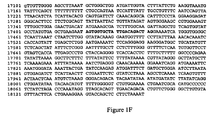
- Figure 1 provides the sequence of SEQ ID NO:1 which corresponds to a region of chromosome 37 in dogs. SEQ ID NO:1 is a contig (a consensus sequence derived from multiple overlapping sequences) from nonaffected dogs. The area deleted in affected dogs and on one chromosome in dogs that are heterozygous for the CEA allele corresponds to nucleotides 9,302 to 17,101 of SEQ ID NO:1, which are indicated in lowercase. SEQ ID NO:1 corresponds to nucleotides 28,676,370 to 28,694,530, (inclusive, size 18,161 bp) of the public domain assembled canine genome sequence, July, 2004 Assembly, which can be accessed through GenBank or at the UCSC Genome Bioinformatics Site at http://genome.ucsc.edu/. SEQ ID NO:1 corresponds to nucleotides 72,769-90,929 of the Defined Collie Eye Anomaly Linkage Disequilibrium Interval. The Defined Collie Eye Anomaly Linkage Disequilibrium Interval corresponds to nucleotides 28,603,601 to 28,716,392 (inclusive, size 112,792 bp) of the public domain assembled canine genome sequence, July, 2004 Assembly. PCR primer binding sites are bolded and correspond to the primer names and positions listed in Tables 3-5. Sequences in lower case identify nucleotides deleted in the mutant allele; upper case identifies bases present in both normal and mutant.
- Figure 2 is a graphical representation of relative positions of the CEA deletion, SEQ ID NO:1, and primers used to test for the CEA deletion, in relationship to the CEA LD Interval, and in relation to positions in the assembled canine genome sequence (July, 2004 asssembly). Relative to the coordinates of the canine genome sequence, both the sequence of the CEA deletion and of SEQ ID NO:1 are reversed.
- Figure 3A provides the nucleotide sequence (SEQ ID NO:10) corresponding to one strand of the amplification product obtained using primer CEAF21a and primer CEAR17d. The sequence corresponding to CEAF21a is bolded; the sequence corresponding to primer CEAR17d is underlined.
- Figure 3B provides the nucleotide sequence (SEQ ID NO:11) of the reverse complement of SEQ ID NO:10. The sequence corresponding to primer CEAF21 a is bolded; the sequence corresponding to primer CEAR17d is underlined. The boxed pair of nucleotides "GC" flank the start breakpoint of the CEA deletion.
- Figure 4A provides the nucleotide sequence (SEQ ID NO:12) corresponding one strand of the amplification product obtained using primers CEAF22a and primer CEAR22c. The nucleotide sequence corresponding to primer CEAF22a is bolded; the sequence corresponding to primer CEAR22c is underlined.
- Figure 4B provides the nucleotide sequence (SEQ ID NO:13) of the reverse complement of SEQ ID NO:12. The nucleotide sequence corresponding to primer CEAF22a is bolded; the nucleotide sequence corresponding to primer CEAR22c is underlined. The boxed pair of nucleotides "GT" flank the end breakpoint of the CEA deletion.
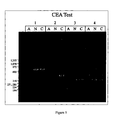
- Figure 5 is a representation of an electrophoretic separation of PCR amplification products obtained using sets of the four PCR primers disclosed in Table 6. The first, leftmost, lane contains a size ladder. The remaining lanes are divided into four sets of PCR amplifications (1-4) of genomic DNA from normal (N), carrier (C) and affected (A) dogs.
Set 1 was performed using primers CEAF22a and CEAR22c.Set 2 was performed using primers CEAF21a and CEAR22c.Set 3 was performed using primers CEAF21a and CEAR17d.Set 4 was performed using a combination of all four primers. - Figure 6 provides the nucleotide sequence (SEQ ID NO:14) of one strand of the 430 bp product generated by PCR using primers CEAF21a and CEAR22c. The sequence corresponding to primer CEAF21a is bolded. The sequence corresponding to primer CEAT22c is underlined. The boxed nucleotides "GT" flank the deletion site.
- The present invention is based on identification of the mutation associated with the CEA disease. We have reduced the critical region in which the CEA gene is located to an approximately 100 kb interval on chromosome 37 by using linkage disequilibrium mapping. Within this interval, a 7.8 kilobase ("kb") deletion associated with dogs that are heterozygous for the deletion (carriers), or are homozygous for the deletion (likely to be affected with CEA), was identified. This 7.8 kb region is referred to herein as the "the CEA deletion." Without intending to be bound by any particular theory, it is believed the CEA deletion results in removal or disruption of a putative enhancer element related to the expression of the CEA gene.
- Disclosed in Figure 1 is SEQ ID NO:1 which was assembled from data retrieved from The Institue for Genomic Research (TIGR) database of the preassembled 1.5x survey sequence database of the canine genome, together with sequences amplified and sequenced in the laboratory of Elaine Ostrander, by Dayna Akey. The contig created from this data formed the consensus sequence for SEQ: ID NO:1.
- In more detail, SEQ ID NO:1 was assembled as a continuous 5' to 3' sequence in the direction of transcription of the putative gene FLJ12610 as part of an effort to identify the entire genomic sequence of this gene. The portion of FLJ12610 represented by SEQ ID NO:1 is presented in Table 1, with introns and exons also identified.
Table 1 1-519 End of Intron 1 of FLJ12610520-732 Exon 2 of FLJ12610733-8,053 Intron 3 of FLJ126108,054-8,191 Exon 3 of FLJ126108,192-8,781 Intron 3 of FLJ126108,782-8,840 Exon 4 of FLJ126108,841-18,160 Beginning of Intron 4 of FLJ126109,302-17,101 sequence deleted in CEA mutant allele - The gene FLJ12610 is transcribed from the reverse strand of canine chromosome 37, as it also is on the homologous human chromosome (HSA2). Thus, SEQ ID NO:1 runs forward in the same direction as the gene FLJ12610 is transcribed, but backwards in the canine genome assembly.
- Table 2 shows the genomic positions of the Collie Eye Anomaly Linkage Disequilibrium Area, SEQ ID NO:1, and the Collie Eye Anomaly deletion.
Nucleotide number 1 in SEQ ID NO:1 is the reverse complement of nucleotide 28,694,530 in the canine genome sequence, and the last nucleotide of SEQ ID NO:1 corresponds to the reverse complement of nucleotide 28,676,370 in the canine genome sequence. That is, SEQ ID NO:1 is the reverse complement of the interval 28,694,530 to 28,676,370 in the canine genome sequence.Table 2 Feature Position on Canine Chromosome 37 Start LD 28,603,601 End SEQ ID NO:1 28,676,370 End CEA Del 28,677,428 Start CEA Del 28,685,226 Start SEQ ID NO:1 28,694,530 End LD 28,716,392 - The breakpoints of the CEA deletion have also been identified. The CEA deleted region begins at nucleotide 9,302 of SEQ ID NO:1 which corresponds to nucleotide 28,677,428 of canine chromosome 37 of the public domain assembled canine genome sequence, July 2004 Assembly. Therefore the start breakpoint of the deletion (also referred to herein as the 5' breakpoint) is between nucleotides 9,301 and 9,302 of SEQ ID NO:1. The deleted region ends at nucleotide 17,101 of SEQ ID NO:1 and therefore the end breakpoint of the deletion (also referred to herein as the 3' breakpoint) is between nucleotides 17,101 and 17,102 of SEQ ID NO:1. When the CEA region is deleted, in a 5' to 3' sequence of the region corresponding to SEQ ID NO:1, nucleotide 9,301 (G) is followed by nucleotide 17,102 (T).
- Based on the above observations, tests for detecting the presence or absence of the CEA deletion are provided. Dogs without the CEA deletion in either allele are referred to as normal for CEA. Dogs with the CEA deletion on only one allele are referred to as carriers of CEA. Dogs homozygous for the CEA deletions are referred to as affected with CEA.
- Testing for the CEA deletion can be carried out in any sample which contains genomic DNA. For example, a sample of blood, hair, spleen, mucosal scrapings, semen, tissue biopsy, saliva or the like can be obtained. In one embodiment, the biological sample is blood.
- The presence or absence of the CEA deletion may be determined using a variety of techniques that are well known in the art. For example, genomic DNA may be amplified for use in testing enzymatically through use of PCR (Saiki et al. Science 239:487-491 (1988)) or other in vitro amplification methods such as the ligase chain reaction (LCR) (Wu and Wallace Genomics 4:560-569 (1989)), strand displacement amplification (SDA) (Walker et al. PNAS USA 89:392-396 (1992)), self-sustained sequence replication (3SR) (Fahy et al. PCR Methods Appl. 1:25-33 (1992)), prior to CEA deletion analysis. Techniques for preparing nucleic acids in a form that is suitable for testing for the CEA deletion are well known in the art.
- Detecting the presence or absence of the CEA deletion in DNA can be accomplished by a variety of methods including, but not limited to, polymerase chain reaction (PCR), fluorescent in situ hybridization (FISH), hybridization with allele-specific oligonucleotide probes (Wallace et al. Nucl Acids Res 6:3543-3557 (1978)), including immobilized oligonucleotides (Saiki et al. PNAS USA 86:6230-6234 (1989)) or oligonucleotide arrays (Maskos and Southern Nucl Acids Res 21:2269-2270 (1993)), allele-specific PCR (Newton et al. Nucl Acids Res 17:2503-25 16 (1989)), mismatch-repair detection (MRD) (Faham and Cox Genome Res 5:474-482 (1995)), denaturing-gradient gel electrophoresis (DGGE) (Fisher and Lerman et al. PNAS USA 80:1579-1583 (1983)), single-strand-conformation-polymorphism detection (Orita et al. Genomics 5:874-879 (1983)), chemical (Cotton et al. PNAS USA 85:4397-4401 (1988)) or enzymatic (Youil et al. PNAS USA 92:87-91 (1995)) cleavage ofheteroduplex DNA, methods based on allele specific primer extension (Syvanen et al. Genomics 8:684-692 (1990)), genetic bit analysis (GBA) (Nikiforov et al. Nuci Acids Res 22:4167-4175 (1994)), the oligonucleotide-ligation assay (OLA) (Landegren et al. Science 241:1077 (1988)), the allele-specific ligation chain reaction (LCR) (Barrany PNAS USA 88:189-193 (1991)), gap-LCR (Abravaya et al. Nucl Acids Res 23:675-682 (1995)), and radioactive and/or fluorescent DNA sequencing using standard procedures well known in the art.
- In one embodiment, amplification of genomic DNA for testing for the CEA deletion is performed by PCR. For this embodiment, PCR primers and a method of using the primers in amplification reactions are provided such that different combinations of amplification products are observed when DNA is amplified from affected, carrier or normal dogs.
- In one embodiment, testing for the deletion is performed by PCR using a set of four primers. The primers are designed such that when the first and the second primers are used to amplify DNA from a normal chromosome 37 allele, a first amplification product is produced spanning the start breakpoint (5' breakpoint) of the CEA deletion. The third and fourth primers are designed such that when they are used to amplify DNA from a normal chromosome 37 allele, a second amplification product is produced spanning the end breakpoint (3' breakpoint) of the CEA deletion. The first and fourth primers are designed to bind to sites present adjacent to the area deleted in the disease chromosome. The second and third primers are designed to bind to sites present within the area deleted in the disease chromosome.
- Neither the set of the first and second primers, nor the set of the third and fourth primers, will amplify a product from a chromosome 37 which has the CEA deletion because there is no binding site present for the second or third primers. Amplification using the first primer and the fourth primer will not produce an amplification product from a normal chromosome 37 because it is beyond the technical limitations of the amplification reactions employed herein to amplify and detect the 7.8 kb (undeleted) sequence present on the normal chromosome. However, when the CEA deletion is present, the binding sites for the first and fourth primers are placed in sufficient proximity with each other on the chromosome(s) with the CEA deletion such that a third amplification product is produced. Thus, the third amplification product does not contain any portion of the CEA deletion.
- An example of a set of primers is provided wherein the first primer is upstream or 5' of the start breakpoint of the CEA deletion and the second primer is within the CEA deletion but in sufficient proximity to the first primer site so that an amplification product can be produced spanning the start breakpoint of the CEA deletion. The third primer is within the CEA deletion and the fourth primer is downstream or 3' of the end breakpoint of the CEA deletion. The third and the fourth primer are in sufficient proximity such that an amplification product is produced spanning the end breakpoint of the CEA deletion. The first and the fourth primer sites are sufficiently apart so that when the CEA region is not deleted, these two primers will not produce any amplification product.
- It will be recognized by those skilled in the art that the primer designations as first, second, third and fourth is arbitrary and is used herein for clarity in reference to the amplification products generated using the particular primer pairs. It will also be recognized that, while particular sequences of PCR primers are provided herein, other PCR primer sequences can be designed by those skilled in the art to detect the presence or absence of the CEA deletion. Further, the primers may be designed to amplify either strand of of chromosome 37 in the region of the CEA deletion.
- Amplification reactions can be carried out using all four primers in the same reaction or amplification of each set can be carried out separately. Thus, simultaneous or sequential amplifications of the genomic DNA in separate reactions using the first and second primers, the third and fourth primers, and the first and fourth primers can also be performed. Regardless of whether the amplifications are performed separately or in combination, the combined results of the amplifications using the three aforementioned primer pairs are interpreted as follows:
- 1) The presence of only the first and second amplification products is indicative of a normal dog.
- 2) The presence of the first, second and third amplification products is indicative of a carrier dog.
- 3) The presence of only the third amplification product is indicative of an affected dog.
- Thus, by using the combination of primer pairs described herein, the PCR amplification product profile obtained from a biological sample indicates the CEA status of the dog as normal, a carrier or affected.
- When PCR primers are used such that the amplification products are of distinct sizes, the amplification products can be analyzed by standard methods such as electrophoretic separation and detection using ethidium bromide and ultraviolet light, or any other suitable detection method. Alternatively, the PCR products can be isolated and sequenced.
- The method of the present invention can be carried out for any breed of dog. In general, dogs known to be inflicted by CEA include Rough and Smooth Collies, Border Collies, Australian Shepherds, Lancashire Heelers, and Shetland Sheepdogs.
- Also provided in the present invention are kits for detecting the presence of the CEA deletion in a biological sample from a dog or a nucleic acid sample extracted from the biological sample. The kits of the present invention comprise reagents for nucleic acid based detection of the presence of the CEA deletion. In one embodiment, the kits comprise reagents for extraction/preparation of nucleic acid samples, pairs of primers for amplification of regions spanning the start breakpoint and end breakpoint of the CEA deletion and pairs of primers for amplification of a region spanning the region generated by deletion of the CEA region.
- By using the tools and method described herein, dogs which are genetically normal, heterozygous for (deletion in one allele), or homozygous for (deletion in both alleles) the mutation primarily responsible for Collie eye anomaly (CEA) can be identified. Upon identification, such dogs can be eliminated from a breeding stock. Alternatively, dogs which are heterozygous for the CEA allele can be mated with genetically normal dogs to ensure the absence in the litter of dogs affected with CEA.
- The invention will be further understood by the following examples, which are intended to be illustrative and not restrictive in any way.
- This example demonstrates that dogs which are genetically normal, heterozygous for, or homozygous for the mutation primarily responsible for CEA can be distinguished using the method of the present invention. In particular, combinations of four primers are used in PCR reactions to produce amplification products characteristic of dogs that are genetically normal, heterozygous for, or homozygous for the mutation primarily responsible for CEA. The binding positions of the primers relative to SEQ ID NO:1, the CEA deletion and the CEA linkage disequilibrium interval (LD) are provided in Figure 2.
- Figure 3A provides the nucleotide sequence (SEQ ID NO:10) corresponding to one strand of the amplification product obtained using primer CEAF21a and primer CEAR17d. Figure 3B provides the nucleotide sequence (SEQ ID NO:11) of the reverse complement of SEQ ID NO:10. In the reverse complement, the boxed pair of nucleotides "GC" flank the start breakpoint of the CEA deletion. That is, on the reverse strand of CFA (Canis familias) chromosome 37 the G is not deleted, but the C is the first deleted nucleotide in the mutant allele. Table 3 provides additional information about the relative binding positions of primers CEAF21 a and CEAR17d.

- Figure 4A provides the nucleotide sequence (SEQ ID NO:12) corresponding to one strand of an amplification product obtained using primers CEAF22a and primer CEAR22c. Figure 4B (SEQ ID NO:13) provides the reverse complement of SEQ ID NO:12. In the reverse complement, the boxed pair of nucleotides "GT" flank the end breakpoint of the CEA deletion. That is, on the reverse strand of CFA 37, the G is the last deleted nucleotide and the T is not deleted in the mutant allele. Table 4 provides additional information about the relative binding sites of primers CEAF22a and CEAR22c.

- To distinguish CEA affected, carrier and normal dogs, the primers disclosed in Table 3 and 4 (and which are summarized in Table 5) were used as follows.

- CEAF21 a is a forward primer and designated herein as a first primer, CEAR17d is a reverse primer and is designated herein as a second primer. CEAF22a is a forward primer and is designated herein as a third primer and CEAR22c is a reverse primer and is designated herein as a fourth primer. Three sets of primers for PCR tests as depicted in Table 6 ("PCR Test #" and "Primers" columns) were performed. These sets of primers were used to amplify genomic DNA extracted from canine blood samples by the phenol-chloroform method (Sambrook et al. 1989). In initial studies, DNA was used from 3 selected dogs whose CEA genetic status (affected, normal or carrier; "CEA Status" column) had been previously determined by experimental breeding studies. In subsequent studies, DNA was used on a larger set of samples representing more than 20 dogs of each genotype (affected, normal or carrier), for which the genotype that had been previously established by experimental breeding studies. All amplifications used the same PCR program: 96°C for 2 minutes; 30 cycles of 96°C (20 seconds), 58°C (20 seconds), and 72°C (40 seconds); and a final extension at 72°C for 5 minutes. PCR products were analyzed by eletrophoresis through a 1.5% agarose gel (Figure 5). The assignment of phenotypes was based on the presence or absence of particular size PCR products as listed in the "Expected PCR Product" column.
PCR test number 4 used all four primers simultaneously.Table 6 PCR Test # Primers CEA Status Expected Product 1 CEAF22a Affected None CEAR22c Normal 704 bp Carrier 704 bp 2 Affected 430 bp CEAF21a Normal None CEAR22c Carrier 430 bp 3 CEAF21a Affected None CEAR17d Normal 283 bp Carrier 283 bp 4 CEAF22a Affected 430 bp CEAR17d Normal 283 bp CEAF21a 704 bp CEAR22c Carrier 283 bp 430 bp 704 bp - As shown in Table 6 and Figure 5, for CEA test 1 (primers CEAF22a and CEAR22c) no product is amplified from affected (A), but a 704 bp product is amplified from both Normal (N) and Carrier (C). This result is obtained because, in the N and C samples, there is at least one copy of the normal CEA allele on which the CEAF22a and CEAR22c primer binding sites are separated by 704 base pairs (bp). However, the CEAF22a binding site lies within the region of DNA that is deleted from both alleles in the affected animals, thus there is no binding site for CEAF22a present on the mutant chromosome and no amplification product can be detected. The sequences of each strand of the 704 bp product generated by PCR using primers CEAF22a and CEAR22c is disclosed in Figures 4A and 4B.
- As shown in Figure 5, for CEA test 2 (primers CEAF21 a and CEAR22c) a 430 bp product is amplified from both affected (A) and carrier (C), but no product is amplified from Normal (N). This result is obtained because, in both affected and carrier dogs, there is at least one allele with the CEA deletion. The deletion juxtaposes the CEAF21a and CEAR22c primer binding sites such that they are separated by 430 bp on the mutant allele. However, in the normal allele (no PCR product observed), the CEAF21 a and CEAR22c primer binding sites are over 7,800 bases apart. Thus, the theoretical product from normal DNA is too large to be amplified and/or observed under the described testing conditions using the CEAF21 a and CEAR22c primers. The sequence of one strand of the 430 bp product (SEQ ID NO:14) generated by PCR using primers CEAF21a and CEAR22c is provided in Figure 6 wherein the boxed nucleotides "GT" are juxtaposed due to the deletion.
- As shown in Figure 5, for CEA test 3 (primers CEAF21a and CEAR17d), no product is amplified from affected (A), but a 283 bp product is amplified from both Normal (N) and Carrier (C). This result is obtained because, in the N and C samples, there is at least one copy of the normal CEA allele, and the CEAF21a and CEAR17d primer binding sites are separated on the normal allele by 283 bp. However, the CEAR17d binding site lies within the region of DNA that is deleted from both alleles in the affected phenotype, thus there is no binding site for CEAR17d and no amplification product can be detected. The sequence of both strands of the 283 bp product generated by PCR using primers CEAF21a and CEAR17d is disclosed in Figures 3A and 3B. Subsequent tests have confirmed that the indicated length of the 283 bp product is correct despite its apparent migration as a longer product in Figure 5.
- In
CEA test 4, all primers fortests 1 through 3 are multiplexed, with each of the attendant PCR products produced as when the tests are performed with the single sets 1-3. As can be seen fromtest 4, only one product (430 bp) is amplified from affected (A), while a 283 bp and a 704 bp product are amplified from Normal (N); and all 3 products (283, 430, and 704 bp) are amplified from the Carrier (C) sample when all four primers are used. - Thus, this Example demonstrates that, by using the method of the present invention, dogs that are normal at the CEA locus, or are heterozygous for, or are homozygous for CEA mutation can be identified.
- While this invention has been illustrated by specific embodiments, routine modifications will be apparent to those skilled in the art and such modifications are intended to be within the scope of the invention and the following claims.


Claims (16)
- A method for identifying a dog as normal, heterozygous for, or homozygous for the collie eye anomaly (CEA) mutation comprising the steps of:a) obtaining a biological sample comprising DNA from the dog; andb) testing the biological sample for a mutation in a region of chromosome 37, wherein the mutation is a deletion of nucleotides corresponding to position 9,302 to position 17,101 of SEQ ID NO:1,wherein identification of the deletion in only one allele is indicative of a dog that is heterozygous for the CEA mutation, identification of the deletion in both alleles is indicative of a dog that is homozygous for the CEA mutation and the absence of the deletion in both alleles is indicative of a normal dog.
- The method of claim 1, wherein the presence or absence of the deletion is tested by amplification of the DNA followed by analysis of the amplification products.
- The method of claim 2, wherein the amplification is carried out by using a set of four primers,
wherein, in the absence of the deletion, amplification using the first and the second primers produces a first amplification product spanning the start breakpoint of the deletion, amplification using the third and fourth primers produces a second amplification product spanning the end breakpoint of the deletion, and amplification using the first and the fourth primer does not produce any detectable amplification product; and
wherein, in the presence of the deletion, amplification using the first and the fourth primer produces a third amplification product which does not contain the deleted region. - The method of claim 3, wherein first, second and third amplification products are of different sizes.
- The method of claim 2, wherein the first primer corresponds to a sequence upstream of the start breakpoint of the deletion, the fourth primer corresponds to a sequence downstream of the end breakpoint of the deletion and the second and the third primers correspond to sequences within the deleted region.
- The method of claim 3, wherein the amplification using the first and second primers, the amplification using the third and fourth primers, and the amplification using the first and fourth primers are each performed in separate reactions.
- The method of claim 3, wherein the amplification using the first and second primers, the amplification using the third and fourth primers, and the amplification using the first and fourth primers are performed in the same reaction.
- The method of claim 3, wherein the first primer has the sequence of SEQ ID NO:2, the second primer has the sequence of SEQ ID NO:4, the third primer has the sequence of SEQ ID NO:6, and the fourth primer has the sequence of SEQ ID NO:8.
- The method of claim 3, wherein the first amplification product comprises the sequence of SEQ ID NO:10.
- The method of claim 3, wherein the the second amplification product comprises the sequence of SEQ ID NO:12.
- The method of claim 3, wherein the third amplification product comprises the sequence of SEQ ID NO:14.
- The method of claim 1, wherein the biological sample is selected from the group consisting of blood, hair, mucosal scrapings, semen, tissue biopsy and saliva.
- The method of claim 12, wherein the biological sample is blood.
- The method of claim 1, wherein the dog is selected from the group consisting of Rough and Smooth Collies, Border Collies, Australian Shepherds, Lancashire Heelers, and Shetland Sheepdogs.
- A kit for identifying a dog as normal, heterozygous for, or homozygous for a Collie Eye Anomaly mutation in a region of chromosome 37, wherein the mutation is a deletion of nucleotides corresponding to position 9,302 to position 17,101 of SEQ ID NO:1, comprising:a set of primers comprising a first primer, a second primer, a third primer and a fourth primer, wherein the first primer corresponds to a sequence upstream of position 9,301 of SEQ ID NO:1, the fourth primer corresponds to a sequence downstream of position 17,102 of SEQ ID NO:1 and second and third primers correspond to a sequence between nucleotides 9,302 and 17,101 of SEQ ID NO:1, wherein amplification of a normal allele with the first and the second primers produces a first amplification product spanning the start breakpoint of the deletion, amplification of a normal allele using the third and fourth primers produces a second amplification product spanning the end breakpoint of the deletion, and amplification using the first and the fourth primer produces a third amplification product only for an allele having the deletion.
- The kit of claim 15, wherein the first primer has the sequence of SEQ ID NO:2, the second primer has the sequence of SEQ ID NO:4, the third primer has the sequence of SEQ ID NO:6.and the fourth primer has the sequence of SEQ ID NO:8.
Priority Applications (1)
| Application Number | Priority Date | Filing Date | Title |
|---|---|---|---|
| PL05256463T PL1652937T3 (en) | 2004-10-20 | 2005-10-18 | Diagnostic test fo collie eye anomaly |
Applications Claiming Priority (1)
| Application Number | Priority Date | Filing Date | Title |
|---|---|---|---|
| US62054704P | 2004-10-20 | 2004-10-20 |
Publications (3)
| Publication Number | Publication Date |
|---|---|
| EP1652937A2 true EP1652937A2 (en) | 2006-05-03 |
| EP1652937A3 EP1652937A3 (en) | 2009-09-09 |
| EP1652937B1 EP1652937B1 (en) | 2010-11-03 |
Family
ID=35735274
Family Applications (1)
| Application Number | Title | Priority Date | Filing Date |
|---|---|---|---|
| EP05256463A Expired - Lifetime EP1652937B1 (en) | 2004-10-20 | 2005-10-18 | Diagnostic test fo collie eye anomaly |
Country Status (10)
| Country | Link |
|---|---|
| US (2) | US7462455B2 (en) |
| EP (1) | EP1652937B1 (en) |
| AT (1) | ATE486959T1 (en) |
| AU (1) | AU2005225033B2 (en) |
| CA (1) | CA2525799C (en) |
| DE (1) | DE602005024498D1 (en) |
| DK (1) | DK1652937T3 (en) |
| ES (1) | ES2355731T3 (en) |
| PL (1) | PL1652937T3 (en) |
| PT (1) | PT1652937E (en) |
Family Cites Families (2)
| Publication number | Priority date | Publication date | Assignee | Title |
|---|---|---|---|---|
| US6582908B2 (en) * | 1990-12-06 | 2003-06-24 | Affymetrix, Inc. | Oligonucleotides |
| US6555349B1 (en) * | 1993-01-22 | 2003-04-29 | Cornell Research Foundation, Inc. | Methods for amplifying and sequencing nucleic acid molecules using a three component polymerase |
-
2005
- 2005-10-17 CA CA2525799A patent/CA2525799C/en not_active Expired - Lifetime
- 2005-10-18 DK DK05256463.0T patent/DK1652937T3/en active
- 2005-10-18 PL PL05256463T patent/PL1652937T3/en unknown
- 2005-10-18 DE DE602005024498T patent/DE602005024498D1/en not_active Expired - Lifetime
- 2005-10-18 PT PT05256463T patent/PT1652937E/en unknown
- 2005-10-18 AU AU2005225033A patent/AU2005225033B2/en not_active Expired
- 2005-10-18 AT AT05256463T patent/ATE486959T1/en active
- 2005-10-18 ES ES05256463T patent/ES2355731T3/en not_active Expired - Lifetime
- 2005-10-18 EP EP05256463A patent/EP1652937B1/en not_active Expired - Lifetime
- 2005-10-20 US US11/255,019 patent/US7462455B2/en not_active Expired - Lifetime
-
2008
- 2008-09-22 US US12/234,803 patent/US7723507B2/en not_active Expired - Lifetime
Non-Patent Citations (19)
| Title |
|---|
| ABRAVAYA, NUCL ACIDS RES, vol. 23, 1995, pages 675 - 682 |
| BARRANY, PNAS USA, vol. 88, 1991, pages 189 - 193 |
| COTTON, PNAS USA, vol. 85, 1988, pages 4397 - 4401 |
| FAHAM; COX, GENOME RES, vol. 5, 1995, pages 474 - 482 |
| FAHY, PCR METHODS APPL., vol. 1, 1992, pages 25 - 33 |
| FISHER; LERMAN, PNAS USA, vol. 80, 1983, pages 1579 - 1583 |
| LANDEGREN, SCIENCE, vol. 241, 1988, pages 1077 |
| LOWE JK, GENOMICS, vol. 82, no. 1, July 2003 (2003-07-01), pages 86 - 95 |
| MASKOS; SOUTHERN, NUCL ACIDS RES, vol. 21, 1993, pages 2269 - 2270 |
| NEWTON, NUCL ACIDS RES, vol. 17, 1989, pages 2503 - 2516 |
| NIKIFOROV, NUCI ACIDS RES, vol. 22, 1994, pages 4167 - 4175 |
| ORITA, GENOMICS, vol. 5, 1983, pages 874 - 879 |
| SAIKI, PNAS USA, vol. 86, 1989, pages 6230 - 6234 |
| SAIKI, SCIENCE, vol. 239, 1988, pages 487 - 491 |
| SYVANEN, GENOMICS, vol. 8, 1990, pages 684 - 692 |
| WALKER, PNAS USA, vol. 89, 1992, pages 392 - 396 |
| WALLACE, NUCL ACIDS RES, vol. 6, 1978, pages 3543 - 3557 |
| WU; WALLACE, GENOMICS, vol. 4, 1989, pages 560 - 569 |
| YOUIL, PNAS USA, vol. 92, 1995, pages 87 - 91 |
Also Published As
| Publication number | Publication date |
|---|---|
| ATE486959T1 (en) | 2010-11-15 |
| ES2355731T3 (en) | 2011-03-30 |
| CA2525799C (en) | 2014-12-09 |
| AU2005225033B2 (en) | 2010-07-08 |
| PL1652937T3 (en) | 2011-04-29 |
| US7723507B2 (en) | 2010-05-25 |
| DE602005024498D1 (en) | 2010-12-16 |
| DK1652937T3 (en) | 2011-02-14 |
| AU2005225033A1 (en) | 2006-05-04 |
| US20060115843A1 (en) | 2006-06-01 |
| EP1652937A3 (en) | 2009-09-09 |
| PT1652937E (en) | 2011-01-27 |
| US7462455B2 (en) | 2008-12-09 |
| US20090176225A1 (en) | 2009-07-09 |
| EP1652937B1 (en) | 2010-11-03 |
| CA2525799A1 (en) | 2006-04-20 |
Similar Documents
| Publication | Publication Date | Title |
|---|---|---|
| EP0672172B1 (en) | Detecting digeorge syndrome mutations | |
| US8206911B2 (en) | Identification of the gene and mutation responsible for progressive rod-cone degeneration in dog and a method for testing same | |
| EP1891235B1 (en) | Mutations associated with the long qt syndrome and diagnostic use thereof | |
| WO2014043558A1 (en) | Methods of predicting the development of amd based on chromosome 1 and chromosome 10 | |
| EP1652937B1 (en) | Diagnostic test fo collie eye anomaly | |
| JP6053681B2 (en) | Method and kit for diagnosing glaucoma in dogs | |
| JP4691491B2 (en) | Methods for diagnosis and prognosis of Alzheimer's disease | |
| Giliberto et al. | Direct deletion analysis in two Duchenne muscular dystrophy symptomatic females using polymorphic dinucleotide (CA) n loci within the dystrophin gene | |
| Van Camp et al. | Identification of chromosome 21 DNA polymorphisms for genetic studies in Alzheimer's disease and Down syndrome | |
| JP2000201677A (en) | Type 8 spinocerebellar ataxia and test method | |
| EP2182076A2 (en) | Analysis of the genetic disposition for epidermolysis bullosa in sheep | |
| JP5203202B2 (en) | Method for the identification of the merle gene | |
| AU2008293550B2 (en) | Method for identifying oculoskeletal dysplasia in dogs | |
| JP2021073993A (en) | Canine cataract testing method, canine cataract testing reagent, and canine cataract testing kit | |
| Müller et al. | Investigation of the canine α-crystallin genes CRYAA and CRYAB and scan of canine chromosome 31 for associations with hereditary cataracts in Dachshunds | |
| Mömke | Molecular genetic analysis of bilateral convergent strabismus with exophthalmus in German Brown cattle | |
| GEORGE-HYSLOP | 14: Analysis of Candidate Genes | |
| Smith et al. | Mapping of D4S98/S114/S113 confines the Huntington's defect to a reduced physical region at the telomere of chromosome 4 | |
| AU2379399A (en) | Identification of animals resistant to nematode parasite infection |
Legal Events
| Date | Code | Title | Description |
|---|---|---|---|
| PUAI | Public reference made under article 153(3) epc to a published international application that has entered the european phase |
Free format text: ORIGINAL CODE: 0009012 |
|
| AK | Designated contracting states |
Kind code of ref document: A2 Designated state(s): AT BE BG CH CY CZ DE DK EE ES FI FR GB GR HU IE IS IT LI LT LU LV MC NL PL PT RO SE SI SK TR |
|
| AX | Request for extension of the european patent |
Extension state: AL BA HR MK YU |
|
| RIN1 | Information on inventor provided before grant (corrected) |
Inventor name: GOLDSTEIN, ORLY Inventor name: AGUIRRE, GUSTAVO D. Inventor name: OSTRANDER, ELAINE Inventor name: KUKEKOVA, ANNA V. Inventor name: ACLAND, GREGORY M. Inventor name: AKEY, DAYNA |
|
| RAP1 | Party data changed (applicant data changed or rights of an application transferred) |
Owner name: CORNELL RESEARCH FOUNDATION, INC. |
|
| PUAL | Search report despatched |
Free format text: ORIGINAL CODE: 0009013 |
|
| AK | Designated contracting states |
Kind code of ref document: A3 Designated state(s): AT BE BG CH CY CZ DE DK EE ES FI FR GB GR HU IE IS IT LI LT LU LV MC NL PL PT RO SE SI SK TR |
|
| AX | Request for extension of the european patent |
Extension state: AL BA HR MK YU |
|
| 17P | Request for examination filed |
Effective date: 20100203 |
|
| AKX | Designation fees paid |
Designated state(s): AT BE BG CH CY CZ DE DK EE ES FI FR GB GR HU IE IS IT LI LT LU LV MC NL PL PT RO SE SI SK TR |
|
| GRAP | Despatch of communication of intention to grant a patent |
Free format text: ORIGINAL CODE: EPIDOSNIGR1 |
|
| GRAS | Grant fee paid |
Free format text: ORIGINAL CODE: EPIDOSNIGR3 |
|
| GRAA | (expected) grant |
Free format text: ORIGINAL CODE: 0009210 |
|
| AK | Designated contracting states |
Kind code of ref document: B1 Designated state(s): AT BE BG CH CY CZ DE DK EE ES FI FR GB GR HU IE IS IT LI LT LU LV MC NL PL PT RO SE SI SK TR |
|
| REG | Reference to a national code |
Ref country code: GB Ref legal event code: FG4D |
|
| REG | Reference to a national code |
Ref country code: CH Ref legal event code: EP |
|
| REG | Reference to a national code |
Ref country code: IE Ref legal event code: FG4D |
|
| REF | Corresponds to: |
Ref document number: 602005024498 Country of ref document: DE Date of ref document: 20101216 Kind code of ref document: P |
|
| REG | Reference to a national code |
Ref country code: PT Ref legal event code: SC4A Free format text: AVAILABILITY OF NATIONAL TRANSLATION Effective date: 20110120 |
|
| REG | Reference to a national code |
Ref country code: NL Ref legal event code: T3 |
|
| REG | Reference to a national code |
Ref country code: DK Ref legal event code: T3 |
|
| REG | Reference to a national code |
Ref country code: SE Ref legal event code: TRGR |
|
| REG | Reference to a national code |
Ref country code: ES Ref legal event code: FG2A Ref document number: 2355731 Country of ref document: ES Kind code of ref document: T3 Effective date: 20110330 |
|
| LTIE | Lt: invalidation of european patent or patent extension |
Effective date: 20101103 |
|
| PG25 | Lapsed in a contracting state [announced via postgrant information from national office to epo] |
Ref country code: LT Free format text: LAPSE BECAUSE OF FAILURE TO SUBMIT A TRANSLATION OF THE DESCRIPTION OR TO PAY THE FEE WITHIN THE PRESCRIBED TIME-LIMIT Effective date: 20101103 |
|
| REG | Reference to a national code |
Ref country code: PL Ref legal event code: T3 |
|
| REG | Reference to a national code |
Ref country code: HU Ref legal event code: AG4A Ref document number: E010095 Country of ref document: HU |
|
| PG25 | Lapsed in a contracting state [announced via postgrant information from national office to epo] |
Ref country code: SI Free format text: LAPSE BECAUSE OF FAILURE TO SUBMIT A TRANSLATION OF THE DESCRIPTION OR TO PAY THE FEE WITHIN THE PRESCRIBED TIME-LIMIT Effective date: 20101103 Ref country code: LV Free format text: LAPSE BECAUSE OF FAILURE TO SUBMIT A TRANSLATION OF THE DESCRIPTION OR TO PAY THE FEE WITHIN THE PRESCRIBED TIME-LIMIT Effective date: 20101103 Ref country code: BG Free format text: LAPSE BECAUSE OF FAILURE TO SUBMIT A TRANSLATION OF THE DESCRIPTION OR TO PAY THE FEE WITHIN THE PRESCRIBED TIME-LIMIT Effective date: 20110203 Ref country code: IS Free format text: LAPSE BECAUSE OF FAILURE TO SUBMIT A TRANSLATION OF THE DESCRIPTION OR TO PAY THE FEE WITHIN THE PRESCRIBED TIME-LIMIT Effective date: 20110303 |
|
| REG | Reference to a national code |
Ref country code: SK Ref legal event code: T3 Ref document number: E 8870 Country of ref document: SK |
|
| PG25 | Lapsed in a contracting state [announced via postgrant information from national office to epo] |
Ref country code: GR Free format text: LAPSE BECAUSE OF FAILURE TO SUBMIT A TRANSLATION OF THE DESCRIPTION OR TO PAY THE FEE WITHIN THE PRESCRIBED TIME-LIMIT Effective date: 20110204 |
|
| PG25 | Lapsed in a contracting state [announced via postgrant information from national office to epo] |
Ref country code: RO Free format text: LAPSE BECAUSE OF FAILURE TO SUBMIT A TRANSLATION OF THE DESCRIPTION OR TO PAY THE FEE WITHIN THE PRESCRIBED TIME-LIMIT Effective date: 20101103 |
|
| PLBE | No opposition filed within time limit |
Free format text: ORIGINAL CODE: 0009261 |
|
| STAA | Information on the status of an ep patent application or granted ep patent |
Free format text: STATUS: NO OPPOSITION FILED WITHIN TIME LIMIT |
|
| 26N | No opposition filed |
Effective date: 20110804 |
|
| REG | Reference to a national code |
Ref country code: DE Ref legal event code: R097 Ref document number: 602005024498 Country of ref document: DE Effective date: 20110804 |
|
| PG25 | Lapsed in a contracting state [announced via postgrant information from national office to epo] |
Ref country code: MC Free format text: LAPSE BECAUSE OF NON-PAYMENT OF DUE FEES Effective date: 20111031 |
|
| PG25 | Lapsed in a contracting state [announced via postgrant information from national office to epo] |
Ref country code: LU Free format text: LAPSE BECAUSE OF NON-PAYMENT OF DUE FEES Effective date: 20111018 Ref country code: CY Free format text: LAPSE BECAUSE OF EXPIRATION OF PROTECTION Effective date: 20101103 |
|
| PG25 | Lapsed in a contracting state [announced via postgrant information from national office to epo] |
Ref country code: TR Free format text: LAPSE BECAUSE OF FAILURE TO SUBMIT A TRANSLATION OF THE DESCRIPTION OR TO PAY THE FEE WITHIN THE PRESCRIBED TIME-LIMIT Effective date: 20101103 |
|
| REG | Reference to a national code |
Ref country code: FR Ref legal event code: PLFP Year of fee payment: 11 |
|
| REG | Reference to a national code |
Ref country code: FR Ref legal event code: PLFP Year of fee payment: 12 |
|
| REG | Reference to a national code |
Ref country code: FR Ref legal event code: PLFP Year of fee payment: 13 |
|
| REG | Reference to a national code |
Ref country code: FR Ref legal event code: PLFP Year of fee payment: 14 |
|
| P01 | Opt-out of the competence of the unified patent court (upc) registered |
Effective date: 20230519 |
|
| REG | Reference to a national code |
Ref country code: EE Ref legal event code: HC1A Ref document number: E005146 Country of ref document: EE |
|
| PGFP | Annual fee paid to national office [announced via postgrant information from national office to epo] |
Ref country code: NL Payment date: 20241026 Year of fee payment: 20 |
|
| PGFP | Annual fee paid to national office [announced via postgrant information from national office to epo] |
Ref country code: HU Payment date: 20241003 Year of fee payment: 20 |
|
| PGFP | Annual fee paid to national office [announced via postgrant information from national office to epo] |
Ref country code: PT Payment date: 20241001 Year of fee payment: 20 |
|
| PGFP | Annual fee paid to national office [announced via postgrant information from national office to epo] |
Ref country code: DE Payment date: 20241029 Year of fee payment: 20 |
|
| PGFP | Annual fee paid to national office [announced via postgrant information from national office to epo] |
Ref country code: DK Payment date: 20241025 Year of fee payment: 20 |
|
| PGFP | Annual fee paid to national office [announced via postgrant information from national office to epo] |
Ref country code: BE Payment date: 20241028 Year of fee payment: 20 Ref country code: FI Payment date: 20241025 Year of fee payment: 20 Ref country code: PL Payment date: 20241002 Year of fee payment: 20 |
|
| PGFP | Annual fee paid to national office [announced via postgrant information from national office to epo] |
Ref country code: GB Payment date: 20241028 Year of fee payment: 20 |
|
| PGFP | Annual fee paid to national office [announced via postgrant information from national office to epo] |
Ref country code: EE Payment date: 20241001 Year of fee payment: 20 |
|
| PGFP | Annual fee paid to national office [announced via postgrant information from national office to epo] |
Ref country code: FR Payment date: 20241025 Year of fee payment: 20 Ref country code: AT Payment date: 20241002 Year of fee payment: 20 |
|
| PGFP | Annual fee paid to national office [announced via postgrant information from national office to epo] |
Ref country code: IE Payment date: 20241028 Year of fee payment: 20 Ref country code: CZ Payment date: 20241004 Year of fee payment: 20 |
|
| PGFP | Annual fee paid to national office [announced via postgrant information from national office to epo] |
Ref country code: SK Payment date: 20241001 Year of fee payment: 20 |
|
| PGFP | Annual fee paid to national office [announced via postgrant information from national office to epo] |
Ref country code: IT Payment date: 20241021 Year of fee payment: 20 Ref country code: ES Payment date: 20241104 Year of fee payment: 20 |
|
| PGFP | Annual fee paid to national office [announced via postgrant information from national office to epo] |
Ref country code: SE Payment date: 20241027 Year of fee payment: 20 |
|
| PGFP | Annual fee paid to national office [announced via postgrant information from national office to epo] |
Ref country code: CH Payment date: 20241101 Year of fee payment: 20 |
|
| REG | Reference to a national code |
Ref country code: CH Ref legal event code: H14 Free format text: ST27 STATUS EVENT CODE: U-0-0-H10-H14 (AS PROVIDED BY THE NATIONAL OFFICE) Effective date: 20251018 Ref country code: DE Ref legal event code: R071 Ref document number: 602005024498 Country of ref document: DE |
|
| REG | Reference to a national code |
Ref country code: DK Ref legal event code: EUP Expiry date: 20251018 |
|
| REG | Reference to a national code |
Ref country code: NL Ref legal event code: MK Effective date: 20251017 |
|
| REG | Reference to a national code |
Ref country code: ES Ref legal event code: FD2A Effective date: 20251027 |
|
| REG | Reference to a national code |
Ref country code: SK Ref legal event code: MK4A Ref document number: E 8870 Country of ref document: SK Expiry date: 20251018 Ref country code: GB Ref legal event code: PE20 Expiry date: 20251017 |
|
| REG | Reference to a national code |
Ref country code: SE Ref legal event code: EUG |
|
| PG25 | Lapsed in a contracting state [announced via postgrant information from national office to epo] |
Ref country code: PT Free format text: LAPSE BECAUSE OF EXPIRATION OF PROTECTION Effective date: 20251029 |
|
| REG | Reference to a national code |
Ref country code: BE Ref legal event code: MK Effective date: 20251018 |
|
| REG | Reference to a national code |
Ref country code: AT Ref legal event code: MK07 Ref document number: 486959 Country of ref document: AT Kind code of ref document: T Effective date: 20251018 |
|
| REG | Reference to a national code |
Ref country code: IE Ref legal event code: MK9A |
|
| PG25 | Lapsed in a contracting state [announced via postgrant information from national office to epo] |
Ref country code: CZ Free format text: LAPSE BECAUSE OF EXPIRATION OF PROTECTION Effective date: 20251018 Ref country code: IE Free format text: LAPSE BECAUSE OF EXPIRATION OF PROTECTION Effective date: 20251018 |
|
| PG25 | Lapsed in a contracting state [announced via postgrant information from national office to epo] |
Ref country code: SK Free format text: LAPSE BECAUSE OF EXPIRATION OF PROTECTION Effective date: 20251018 |
|
| PG25 | Lapsed in a contracting state [announced via postgrant information from national office to epo] |
Ref country code: ES Free format text: LAPSE BECAUSE OF EXPIRATION OF PROTECTION Effective date: 20251019 |