EP1650895B1 - The method of providing reliable quality of service in the communication network - Google Patents
The method of providing reliable quality of service in the communication network Download PDFInfo
- Publication number
- EP1650895B1 EP1650895B1 EP04738444A EP04738444A EP1650895B1 EP 1650895 B1 EP1650895 B1 EP 1650895B1 EP 04738444 A EP04738444 A EP 04738444A EP 04738444 A EP04738444 A EP 04738444A EP 1650895 B1 EP1650895 B1 EP 1650895B1
- Authority
- EP
- European Patent Office
- Prior art keywords
- bearer network
- network resource
- qos
- resource manager
- connection
- Prior art date
- Legal status (The legal status is an assumption and is not a legal conclusion. Google has not performed a legal analysis and makes no representation as to the accuracy of the status listed.)
- Expired - Lifetime
Links
Images


Classifications
-
- H—ELECTRICITY
- H04—ELECTRIC COMMUNICATION TECHNIQUE
- H04L—TRANSMISSION OF DIGITAL INFORMATION, e.g. TELEGRAPHIC COMMUNICATION
- H04L47/00—Traffic control in data switching networks
- H04L47/70—Admission control; Resource allocation
- H04L47/76—Admission control; Resource allocation using dynamic resource allocation, e.g. in-call renegotiation requested by the user or requested by the network in response to changing network conditions
- H04L47/762—Admission control; Resource allocation using dynamic resource allocation, e.g. in-call renegotiation requested by the user or requested by the network in response to changing network conditions triggered by the network
-
- H—ELECTRICITY
- H04—ELECTRIC COMMUNICATION TECHNIQUE
- H04L—TRANSMISSION OF DIGITAL INFORMATION, e.g. TELEGRAPHIC COMMUNICATION
- H04L45/00—Routing or path finding of packets in data switching networks
- H04L45/02—Topology update or discovery
- H04L45/04—Interdomain routing, e.g. hierarchical routing
-
- H—ELECTRICITY
- H04—ELECTRIC COMMUNICATION TECHNIQUE
- H04L—TRANSMISSION OF DIGITAL INFORMATION, e.g. TELEGRAPHIC COMMUNICATION
- H04L45/00—Routing or path finding of packets in data switching networks
- H04L45/302—Route determination based on requested QoS
-
- H—ELECTRICITY
- H04—ELECTRIC COMMUNICATION TECHNIQUE
- H04L—TRANSMISSION OF DIGITAL INFORMATION, e.g. TELEGRAPHIC COMMUNICATION
- H04L47/00—Traffic control in data switching networks
- H04L47/10—Flow control; Congestion control
- H04L47/15—Flow control; Congestion control in relation to multipoint traffic
-
- H—ELECTRICITY
- H04—ELECTRIC COMMUNICATION TECHNIQUE
- H04L—TRANSMISSION OF DIGITAL INFORMATION, e.g. TELEGRAPHIC COMMUNICATION
- H04L47/00—Traffic control in data switching networks
- H04L47/70—Admission control; Resource allocation
-
- H—ELECTRICITY
- H04—ELECTRIC COMMUNICATION TECHNIQUE
- H04L—TRANSMISSION OF DIGITAL INFORMATION, e.g. TELEGRAPHIC COMMUNICATION
- H04L47/00—Traffic control in data switching networks
- H04L47/70—Admission control; Resource allocation
- H04L47/78—Architectures of resource allocation
- H04L47/783—Distributed allocation of resources, e.g. bandwidth brokers
-
- H—ELECTRICITY
- H04—ELECTRIC COMMUNICATION TECHNIQUE
- H04L—TRANSMISSION OF DIGITAL INFORMATION, e.g. TELEGRAPHIC COMMUNICATION
- H04L47/00—Traffic control in data switching networks
- H04L47/70—Admission control; Resource allocation
- H04L47/80—Actions related to the user profile or the type of traffic
- H04L47/805—QOS or priority aware
-
- H—ELECTRICITY
- H04—ELECTRIC COMMUNICATION TECHNIQUE
- H04L—TRANSMISSION OF DIGITAL INFORMATION, e.g. TELEGRAPHIC COMMUNICATION
- H04L65/00—Network arrangements, protocols or services for supporting real-time applications in data packet communication
- H04L65/10—Architectures or entities
- H04L65/102—Gateways
- H04L65/1043—Gateway controllers, e.g. media gateway control protocol [MGCP] controllers
-
- H—ELECTRICITY
- H04—ELECTRIC COMMUNICATION TECHNIQUE
- H04L—TRANSMISSION OF DIGITAL INFORMATION, e.g. TELEGRAPHIC COMMUNICATION
- H04L65/00—Network arrangements, protocols or services for supporting real-time applications in data packet communication
- H04L65/80—Responding to QoS
Definitions
- the present invention relates to network communication technique field, more particularly to a method for providing reliable transmission quality of service in communication network.
- Diff-Serv model adopts the measure of setting priority levels to guarantee transmission QoS, although this measure can increase utility rate of bandwidth resource, specific application effect is hard to predict due to lack of corresponding maintenance and management message interaction.
- an independent bearer control layer is introduced into backbone network Diff-Serv model to manage resources of the bearer network.
- Diff-Serv model to prompt application of Diff-Serv model, in the QoS Backbone (Qbone) experimental networks driven by IETF and some manufacturers as well as research organizations, bearer network resource managers are used to implement resource and topology management in bearer network, namely to manage topology resources and coordinate QoS capabilities of Diff-Serve model areas.
- This kind of Diff-Serve manner that implements said resource management is right the Diff-Serve model with independent bearer control layer.
- resource management rules and network topology structure of bearer network connection nodes are configured inside bearer network resource manager, and bearer network resource manager takes charge of allocating bandwidth resources on the user's request of service bandwidth application. Request of service bandwidth application and result of the user as well as path information allocated by bearer network resource managers for the service are transferred through signaling between each bearer network resource manager.
- bearer control layer determines path of the user service, and bearer network resource manager notifies edge routers, namely connection nodes of the bearer network, to transfer the service stream according to the specified path.
- Internet2 specifically defines corresponding Bandwidth Broker (BB), Call Agent (CA) or Connection Management (CM) for each Diff-Serve model management domain as bearer network resource managers; therein said bandwidth broker takes charges in processing the requests of bandwidth application from user hosts or service servers or network maintainers, wherein the bandwidth broker determines whether to permit the user's bandwidth application according to resource reservation status of current network and configuration policy as well as Service Level Agreement (SLA); said call agent acts as a service server which is used to access the user's call to the communication network; said connection manager is used for service layer controlling bearer network layer according to service requirements.
- BB Bandwidth Broker
- CA Call Agent
- CM Connection Management
- SIBBS Simple Inter-domain Bandwidth Broker Signaling
- a paper having a title "Authenticated Traversal" written by Alwyn Goodloe et al. in January 2002 introduces a way to preserve end-to-end confidentiality while authenticating traversal of network elements with as many intervening review points as needed.
- the technique associates the public-key-based authorization of a TCP connection request to a TLS connection.
- an object of the present invention is to provide a method for providing reliable transmission Quality of Service (QoS) in the communication network, so as to guarantee that effective management upon the whole network resource can be implemented in bearer network and guarantee reliable transmission of important services in the network.
- QoS Quality of Service
- the invention is defined by the subject-matter of claim 1.
- a method for providing QoS in the communication network includes:
- the local bearer network resource manager and the peer bearer network resource manager both comprise functions performed on the control layer of the bearer network.
- the process of authenticating the local bearer network resource manager includes;
- the method may further include:
- the handshake message carries a connection ID and connection resource state information.
- the exchanging the QoS with the local bearer network resource manager through the QoS connection comprises:
- the method may further include:
- the exchanging the QoS with the local bearer network resource manager through the QoS connection includes:
- the QoS resource control message may be a QoS resource request, which carries a connection ID, stream information, QoS parameters and a stream descriptor.
- the QoS resource control message may be a QoS resource release request, which carries a connection ID and a reason code.
- the QoS resource control message may be a QoS resource modify request, which carries a connection ID and the modified parameters corresponding to the QoS connection.
- the QoS resource control message may be a connection status inquiry request, and the process of sending the QoS resource control response to the local bearer network resource manager may include:
- connection status inquiry response carries at least one of a connection ID, stream information, QoS parameters, a stream descriptor, label stack information, path maximum transmission unit, and bearer network resource manager stack information.
- the messages may further carry data consistency information.
- the data consistency information may include: parameter global path maximum transmission unit, global label stack depth, intra-domain label stack depth and stream description.
- connection node may be a router.
- the bearer network resource manager may be a bandwidth broker, or a call agent, or a connection manager.
- QoS connections are established between bearer network resource managers in control layer of the bearer network, and the established QoS connections are maintained and managed, wherein online QoS connections can bear various QoS resource control messages and transfer the messages among bearer network resource managers of bearer network control layer, so as to transfer bandwidth request and result of the service as well as path information allocated for the service request and so on.
- the method for establishing QoS connections between bearer network resource managers provided by the present invention are easy to implement, and said QoS connections are easy to maintain and control.
- the present invention also implements resource synchronization mechanism and operation maintenance mechanism between bearer network resource managers, overcoming the disadvantage of utilizing SIBBS signaling to implement resource request in the prior art that resource synchronization mechanism cannot be implemented between bandwidth brokers.
- the present invention also implements resource requests transfer and status report transfer between local bearer network resource manager and peer bearer network resource manager, so that performance of the established QoS connections are improved. Therefore, the present invention makes it convenient to uniformly manage resources of bearer network and provides technical support to guarantee reliable transmission of important services in the network.
- QoS Quality of Service
- the present invention realizes QoS resource control message transfer between entities including BB, CA and CM, and the transfer procedure comprises the whole processing procedures such as establishing the connection and maintaining the connection, it can be deemed that the present invention is implemented based on Connection Initialization Protocol (RCIP), and the specific processing procedure of implementing the present invention based on RCIP will be described in detail hereinafter with reference to the following description.
- RCIP Connection Initialization Protocol
- the procedure of establishing QoS connections between bearer network resource manages comprises the following steps:
- Step 21 when it is determined that resources of the bearer network need to be controlled and managed through bearer network resource managers located in the bearer network layer, initial local bearer network resource manager will send an QoS connection establishing request to initial peer bearer network resource manager, for instance, an "OPEN" message can be sent as an QoS connection establishing request requesting to create a QoS connection between local bearer network resource manager and peer bearer network resource manager.
- an "OPEN" message can be sent as an QoS connection establishing request requesting to create a QoS connection between local bearer network resource manager and peer bearer network resource manager.
- Said QoS connection establishing request carries information like: identifier and authentication information of the bearer network resource manager requesting to establish the connection, so that peer bearer network resource manager can authenticate whether to establish the connection according to said authentication information.
- said QoS connection establishing request also optionally comprises data consistency information
- said data consistency information is used to guarantee that the message is not distorted during the transmission and to avoid invasion of illegal messages
- data consistency message is generally including 32bits KEY_ID, 32bits serial number and 96bits abstract, therein, the KEY_ID is used to identify key value and algorithms shared by both parties, serial number is initialized when "OPEN" message is transmitted, added up orderly when subsequent messages are transmitted and restarted from 0 when overflowed to avoid invasion by illegal messages.
- Said local bearer network resource manager is generally configured with management rules required for managing bearer network resources and network topology information of bearer network, which can implement corresponding resource control management functions, like completing resource allocation of corresponding bandwidth request, allocating corresponding path information for service requests in the network and so on.
- Bearer network control layer generally comprises multiple bearer network resource manager, like local bearer network resource manager, multiple intermediate bearer network resource managers and peer bearer network resource manager shown in figure 1b , said local, intermediate and peer are all in allusion to a specific QoS connection, wherein the initial point of a QoS connection is local bearer network resource manager, the terminal point is peer bearer network resource manager, while those bearer network resource managers through which the messages are transmitted from local bearer network resource manager to peer bearer network resource manager are called intermediate bearer network resource managers.
- said local bearer network resource manager generally needs to transmit the corresponding message to peer bearer network resource manager through multiple bearer network resource managers, namely that a QoS resource control message has to pass a path from local bearer network resource manager through multiple bearer network resource managers before arriving at peer bearer network resource manager, and finally resource control management at corresponding connection nodes is implemented by peer bearer network resource manager, wherein said connection nodes are usually routers.
- Step 22 after receiving the "OPEN" message from local bearer network resource manager, according to the received authentication information and identity identifier, peer bearer network resource manager checks validity of identity of local bearer network resource manager that has sent the connection request, if identity of local bearer network resource manager is valid, peer bearer network resource manager will send an Establish Connection Response to local bearer network resource manager, wherein this Establish Connection Response carries relevant information for establishing the QoS connection, for example, peer bearer network resource manager can send an "ACCEPT" message to local bearer network resource manager as the Establish Connection Response and the "ACCEPT" message carries time-over time span of local Keep Active (KA) timer; if identity of local bearer network resource manager is invalid, peer bearer network resource manager will send a message indicating inability of establishing corresponding connection to local bearer network resource manager, wherein this message carries corresponding reason code that is used to indicate the reason why this connection cannot be established.
- KA local Keep Active
- peer bearer network resource manager While sending the "ACCEPT" message, peer bearer network resource manager also need to initiate the peer KA timer and be in Online state, namely the QoS connection between peer bearer network resource manager and local bearer network resource manager is established.
- local bearer network resource manager After receiving the "ACCEPT" message sent by peer bearer network resource manager, local bearer network resource manager will initiate local LA timer and enters Online state, namely the QoS connection between peer bearer network resource manager and local bearer network resource manager is established; if receiving a message of unable to establish corresponding connection sent by peer bearer network resource manager, local bearer network resource manager can resend an QoS connection establishing request to peer bearer network resource manager according to specific requirements.
- step 23 and step 24 represent the control procedure of maintaining the established QoS connection.
- Step 23 the timer of local KA will be restarted when time-over, and local bearer network resource manager increases one to expiration times of the local KA timer so as to calculate overtime times of local KA timer, and meanwhile needs to send a KA message, i.e. a handshake message, to peer bearer network resource manager in order to monitor whether peer bearer network resource manager is in normal connection state.
- a KA message i.e. a handshake message
- Step 24 if in normal connection state, after receiving the KA message, peer bearer network resource manager will send a KA message to local bearer network resource manager as the handshake response sent by local bearer network resource manager, restart peer KA timer and maintain the Online state of QoS connection. After receiving the KA message sent by peer bearer network resource manager, local bearer network resource manager will clear overtime times of local KA timer as zero and maintain the Online state of QoS connection.
- specific QoS resource control messages can be transferred between local bearer network resource manager and peer bearer network resource manager in bearer network layer of network communication network, so as to control and manage resources of the connection nodes that belong to bearer network resource manager.
- a QoS connection in Online state is established after the processing procedure of step 21 to step 24, wherein this QoS connection can bear various kinds of QoS resource control messages, while the said QoS resource control messages bear the QoS information for transmitting a certain service in the communication network, and the required QoS information includes the requested bandwidth for a certain service, allowed stream and so on, the specific embodiment of the method of the present invention will be further illustrated hereinafter with reference to figure 3 :
- Step 31 the requested QoS information for control management upon the resources between two connection nodes in the bearer network, namely QoS parameters and other information, is determined, local bearer network resource manager sends a QoS resource control message to peer bearer network resource manager, wherein this resource control message bears the determined QoS information for peer bearer network resource manager to perform resource control management upon corresponding connection nodes.
- local bearer network resource manager also transmits the determined QoS information to the connection nodes managed by local bearer network resource manager, wherein the connection nodes perform resource control management in terms of this service according to the said QoS information.
- QoS information of the communication network is generally transmitted to bearer network resource manager of bearer control layer by the service control layer in the network, and then is transferred among the bearer network resource managers.
- Step 32 after receiving the QoS resource control message sent by local bearer network resource manager, peer bearer network resource manager will send the QoS control policy, which is determined according to the QoS resource control message, to the connection node, including QoS policy install command and relevant information.
- Step 33 after receiving the said QoS control policy, the connection nodes of peer bearer network resource manager will perform corresponding resource control and management operation, and send a QoS control policy response to the said peer bearer network resource manager.
- Step 34 after receiving the QoS control policy response sent by underlying connection node and relevant information, peer bearer network resource manager will send a QoS resource control response to local bearer network resource manager, so that local bearer network resource manager can accurately get to know whether the corresponding QoS resource control message is reliably received, and whether corresponding resource control management operation is performed at corresponding connection node.
- QoS resource In order to transfer QoS resource control messages between local bearer network resource manager and peer bearer network resource manager, QoS resource must be requested to allocate, as shown in figure 4 , the procedure of processing QoS resource request is as follows:
- Step 41 when receiving the to-be-transmitted QoS information sent by service control layer, local bearer network resource manager needs to initiate a QoS resource request to peer bearer network resource manager at first, namely to send a QoS resource request to peer bearer network resource manager, and then step 42 is executed.
- Information carried by the said QoS resource request includes:
- Step 42 after receiving the QoS resource request sent by local bearer network resource manager, peer bearer network resource manager will perform service routing and resource allocation, and send QoS resource request to the connection nodes that belong to peer bearer network resource manager, namely sending QoS policy install command to the connection node.
- local bearer network resource manager sends the QoS resource request to the next hop intermediate bearer network resource manager first of all, the said intermediate bearer network resource manager performs routing and resource allocation, returns a QoS resource request response to the previous hop intermediate bearer network resource manager or local bearer network resource manager after the resource request is successful and continues to forward the said QoS resource request, until the peer bearer network resource manager receives this QoS resource request, and then the said operation in step 42 is executed.
- Step 43 after receiving the QoS policy install command, the connection node will perform corresponding stream mapping install process, and send a QoS policy install command response to peer bearer network resource manager.
- Step 44 after receiving the QoS policy install command response sent by connection node, peer bearer network resource manager will send a response of accepting the QoS resource request or rejecting the QoS resource request to the local bearer network resource manager.
- Information carried by the said QoS resource response includes:
- the said QoS resource release request carries information including:
- Step 52 after receiving the QoS resource release request sent by local bearer network resource manager, peer bearer network resource manager finishes releasing the QoS resource and meanwhile sends delete QoS control policy command, i.e. stream mapping delete command, to the connection nodes connected to and managed by peer bearer network resource manager, and then step 53 is executed.
- delete QoS control policy command i.e. stream mapping delete command
- Step 53 the connection nodes receive the steam mapping delete command set by peer bearer network resource manager, and send stream mapping delete command response to peer bearer network resource manager after finishing corresponding stream mapping delete operation.
- Step 54 after receiving the stream mapping delete command response sent by affiliated connection nodes, peer bearer network resource manager sends a QoS resource release response to local bearer network resource manager.
- the allocated QoS resources may needs modifying according to practical demand of message transfer procedure, like adjusting the allocated bandwidth resources and allowed maximum stream and so on, wherein specific processing procedure of modifying the QoS resources is shown in figure 6 , comprising the following steps:
- Step 61 when it is needed to modify the allocated QoS resources, local bearer network resource manager sends a QoS resource modify request to peer bearer network resource manager, wherein the QoS resource modify request carries the to-be-modified QoS resource identifier and the modified QoS resource information and so on, meanwhile local bearer network resource manager needs to send QoS resource modify message, namely stream mapping update message, to the connection nodes under its control and management, wherein the said connection nodes performs corresponding stream mapping update operations according to the received stream mapping update command, so that the QoS resource are modified.
- the QoS resource modify request carries the to-be-modified QoS resource identifier and the modified QoS resource information and so on
- local bearer network resource manager needs to send QoS resource modify message, namely stream mapping update message, to the connection nodes under its control and management, wherein the said connection nodes performs corresponding stream mapping update operations according to the received stream mapping update command, so that the QoS resource are modified.
- Step 62 after receiving the QoS resource modify request sent by local bearer network resource manager, peer bearer network resource manager sends stream mapping update command to the connection nodes under its control and management according to the information carried in the QoS resource modify request.
- each intermediate bearer network resource manager receiving the QoS resource modify request will forward the QoS resource modify request to the next intermediate bearer network resource manager, until peer bearer network resource manager receives this QoS resource modify request, and then step 62 will be executed.
- the said QoS resource modify request carries information including: parameter global Path Maximum Transmission Unit (PATH MTU), global label stack depth, intra-domain label stack depth, stream descriptor and so on.
- PATH MTU parameter global Path Maximum Transmission Unit
- global label stack depth global label stack depth
- intra-domain label stack depth intra-domain label stack depth
- stream descriptor stream descriptor
- Step 63 after receiving the stream mapping command sent by peer bearer network resource manager and performing corresponding steam mapping update operation, the connection nodes will send stream mapping update command response to peer bearer network resource manager.
- Step 64 after receiving the stream mapping update command response sent by the connection node, peer bearer network resource manager learns that QoS resource modification is successful and will send a QoS resource modify response to local bearer network resource manager.
- the said method of the present invention further comprises a processing procedure of checking the status of the QoS connection established between local bearer network resource manager and peer bearer network resource manager, wherein the specific procedure of checking the QoS connection status is shown in figure 7 , comprising the following steps:
- Step 71 local bearer network resource manager sends a connection status inquiry request to peer bearer network resource manager periodically or according to settled condition, wherein the connection status inquiry request carries connection status information of local bearer network resource manager, meanwhile, local bearer network resource manager sends connection status inquiry request to the connection nodes under its control and management, and corresponding connection node will return QOS connection resource status to local bearer network resource manager after receiving the connection status inquiry request, and then local bearer network resource manager checks QoS resource consistency according to the connection resource status sent by the connection node.
- Step 72 after receiving the connection status inquiry request sent by local bearer network resource manager, peer bearer network resource manager will initiate connection status inquiry to the connection node under its control and management, namely that peer bearer network resource manager will send connection status inquiry request to the connection node.
- Step 73 after receiving the connection status inquiry request, the said connection node will send a connection status inquiry response to peer bearer network resource manager, namely that the connection node will return QoS connection resource status of the connection node to peer bearer network resource manager.
- Step 74 peer bearer network resource manager checks the QoS resource consistency according to the QoS connection resource status returned by the connection node, and returns a connection status inquiry request to local bearer network resource manager, namely that peer bearer network resource manager returns a connection status inquiry report to local bearer network resource manager.
- the intermediate bearer network resource manager need to return a connection status inquiry report to the previous bearer network resource manager after receiving the connection status inquiry request.
- the said connection status inquiry report carries information including:
- the said intermediate bearer network resource managers only play the message transfer role, without needing to send corresponding messages to the connection nodes under its control and management just as local bearer network resource manager and peer bearer network resource manager do.
Landscapes
- Engineering & Computer Science (AREA)
- Computer Networks & Wireless Communication (AREA)
- Signal Processing (AREA)
- Multimedia (AREA)
- Data Exchanges In Wide-Area Networks (AREA)
- Small-Scale Networks (AREA)
Abstract
Description
- The present invention relates to network communication technique field, more particularly to a method for providing reliable transmission quality of service in communication network.
- With the development of Internet technology, the networks are of ever increasing scales, various network services emerge and so do advanced multimedia systems. Because real-time services like multimedia service are generally sensitive to network transmission delay, delay jitter and other characteristics, when there is File Transfer Protocol (FTP) service with high burst possibility or Hyper Text Transfer Protocol (HTTP) service with image files, transmission performance of real-time services will be greatly affected; for another, multimedia services in communication networks can occupy large amount of bandwidths, so that key services asking the network for transmission quality may not be transmitted reliably.
- Based on the above-mentioned requirement, various techniques providing Quality of Service (QoS) guarantee for service transmission emerge as the times require. To meet the Qos demand of transmission, Internet Engineering Task Force (IETF) has put forward some service models and mechanisms. At present, utilizing Diff-Serv model in core of the network is widely accepted by the prior art thereof. Diff-Serv model adopts the measure of setting priority levels to guarantee transmission QoS, although this measure can increase utility rate of bandwidth resource, specific application effect is hard to predict due to lack of corresponding maintenance and management message interaction.
- Therefore, an independent bearer control layer is introduced into backbone network Diff-Serv model to manage resources of the bearer network. For instance, to prompt application of Diff-Serv model, in the QoS Backbone (Qbone) experimental networks driven by IETF and some manufacturers as well as research organizations, bearer network resource managers are used to implement resource and topology management in bearer network, namely to manage topology resources and coordinate QoS capabilities of Diff-Serve model areas. This kind of Diff-Serve manner that implements said resource management is right the Diff-Serve model with independent bearer control layer.
- In a Diff-Serve model with independent bearer control layer, resource management rules and network topology structure of bearer network connection nodes are configured inside bearer network resource manager, and bearer network resource manager takes charge of allocating bandwidth resources on the user's request of service bandwidth application. Request of service bandwidth application and result of the user as well as path information allocated by bearer network resource managers for the service are transferred through signaling between each bearer network resource manager.
- When processing the user's request of service bandwidth application, bearer control layer determines path of the user service, and bearer network resource manager notifies edge routers, namely connection nodes of the bearer network, to transfer the service stream according to the specified path.
- To meet the message transmission requirements between bearer network resource managers, Internet2 specifically defines corresponding Bandwidth Broker (BB), Call Agent (CA) or Connection Management (CM) for each Diff-Serve model management domain as bearer network resource managers; therein said bandwidth broker takes charges in processing the requests of bandwidth application from user hosts or service servers or network maintainers, wherein the bandwidth broker determines whether to permit the user's bandwidth application according to resource reservation status of current network and configuration policy as well as Service Level Agreement (SLA); said call agent acts as a service server which is used to access the user's call to the communication network; said connection manager is used for service layer controlling bearer network layer according to service requirements.
- But there are some problems in the above-described Diff-Serv model that is based on bandwidth broker and with independent bearer control layer, for example, Simple Inter-domain Bandwidth Broker Signaling (SIBBS) is adopted between bandwidth brokers to implement the resource request, wherein this signaling is only used between bandwidth brokers and there is no resource synchronization mechanism between bandwidth brokers, namely that resource requests are transmitted through SIBBS directly without the procedure of session establishment or maintenance either without message interaction mechanism used for maintenance and management.
- At present, there is no mature technical solution in the prior art to transfer request of service bandwidth application and result of the user as well as path information allocated for service request by bearer network resource manager, etc.
- More details about the inter-domain protocol can be fund in Chimento P ET AL:"Final Report" QBONE SIGNALING DESIGN TEAM,[Online]9 July 2002 (2002-07-09),pages 1-44. This document discloses a method for transmitting signals between brokers. In this solution, the bandwidth brokers communicate with one another using bug running TCP sessions. This document discloses also a keep-alive mechanism to make sure that peer bandwidth brokers are still able to communicate. The responsability for keep-alive messages lies with the sender and the receiver is purely in this mechanism.
- A paper having a title "Authenticated Traversal" written by Alwyn Goodloe et al. in January 2002 introduces a way to preserve end-to-end confidentiality while authenticating traversal of network elements with as many intervening review points as needed. The technique associates the public-key-based authorization of a TCP connection request to a TLS connection.
- Therefore, an object of the present invention is to provide a method for providing reliable transmission Quality of Service (QoS) in the communication network, so as to guarantee that effective management upon the whole network resource can be implemented in bearer network and guarantee reliable transmission of important services in the network.
The invention is defined by the subject-matter of claim 1.
A method for providing QoS in the communication network includes: - receiving, by a peer bearer network resource manager, a QoS connection establishing request from a local bearer network resource manager;
- authenticating the local bearer network resource manager;
- creating, by the peer bearer network resource manager, a QoS connection with the local bearer network resource manager if the local bearer network resource manager is valid;
- sending, by the local bearer network resource manager, handshake messages to the peer bearer network resource manager, and determining QoS connection status according to handshake responses returned by the peer bearer network resource manager; and
- exchanging, by the peer bearer network resource manager, a QoS, which the communication network should provide during the data transmission procedure, with the local bearer network resource manager through the QoS connection;
- providing, by a connection node connected to the peer bearer network resource manager, resource according to the QoS;
wherein sending handshake messages and determining the QoS connection status comprises:- creating, by the local bearer network resource manager, a local Keep Active (KA) timer at the local bearer network resource manager,
- creating, by the peer bearer network resource manager, a peer Keep Active (KA) timer at the peer bearer network resource manager;
- when the local KA timer is expired, the local bearer network resource manager increasing one to expiration times of the local KA timer and sending a handshake message to the peer bearer network resource manager;
- after receiving the handshake message, the peer bearer network resource manager restarting the peer KA timer and returning a handshake response to the local bearer network resource manager;
- the local bearer network resource manager determining the created QoS connection status according to the timeout times of the local KA timer, and/or the peer bearer network resource manager determining the QoS connection status according to whether the peer KA timer is expired.
- The local bearer network resource manager and the peer bearer network resource manager both comprise functions performed on the control layer of the bearer network.
- The process of authenticating the local bearer network resource manager includes;
- determining whether identity of the local bearer network resource manager is valid.
- The method may further include:
- sending to the local bearer network resource manager a message indicating that the QoS connection is unable to be established.
The QoS connection establishing request carries identification and authentication information of the local bearer network resource manager. - The handshake message carries a connection ID and connection resource state information.
- The exchanging the QoS with the local bearer network resource manager through the QoS connection comprises:
- exchanging the QoS with the local bearer network resource manager through a plurality of intermediate bearer network resource managers.
- The method may further include:
- managing, by the local bearer network resource manager, resources of the connection node connected with the local bearer network resource manager according to the QoS, and
- managing, by the peer bearer network resource manager, resources of a connection node connected with the peer bearer network resource manager according to the QoS.
- The exchanging the QoS with the local bearer network resource manager through the QoS connection includes:
- sending, by the local bearer network resource manager, QoS resource control messages that carry the QoS to the peer bearer network resource manager and the connection nodes connected with the bearer network resource manager;
- sending, by the peer bearer network resource manager, a QoS resource control policy to a connection node connected with the peer bearer network resource manager according to the QoS resource control message;
- receiving, by the peer bearer network resource manager, a QoS resource control policy response from the connection node connected with the peer bearer network resource manager;
- sending, by the peer bearer network resource manager, a QoS resource control response message to the local bearer network resource manager.
- The QoS resource control message may be a QoS resource request, which carries a connection ID, stream information, QoS parameters and a stream descriptor.
- The QoS resource control message may be a QoS resource release request, which carries a connection ID and a reason code.
- The QoS resource control message may be a QoS resource modify request, which carries a connection ID and the modified parameters corresponding to the QoS connection.
- The QoS resource control message may be a connection status inquiry request, and the process of sending the QoS resource control response to the local bearer network resource manager may include:
- after receiving QoS resource control policy response from the connection node connected with the peer bearer network resource manager, checking, by the peer bearer network resource manager, resource consistency of the QoS connection; and returning a connection status inquiry response to the local bearer network resource manager according to the check result.
- The connection status inquiry response carries at least one of a connection ID, stream information, QoS parameters, a stream descriptor, label stack information, path maximum transmission unit, and bearer network resource manager stack information.
- The messages may further carry data consistency information.
- The data consistency information may include: parameter global path maximum transmission unit, global label stack depth, intra-domain label stack depth and stream description.
- The connection node may be a router.
- The bearer network resource manager may be a bandwidth broker, or a call agent, or a connection manager.
- It can be seen from above-described technical scheme that, QoS connections are established between bearer network resource managers in control layer of the bearer network, and the established QoS connections are maintained and managed, wherein online QoS connections can bear various QoS resource control messages and transfer the messages among bearer network resource managers of bearer network control layer, so as to transfer bandwidth request and result of the service as well as path information allocated for the service request and so on. The method for establishing QoS connections between bearer network resource managers provided by the present invention are easy to implement, and said QoS connections are easy to maintain and control.
- The present invention also implements resource synchronization mechanism and operation maintenance mechanism between bearer network resource managers, overcoming the disadvantage of utilizing SIBBS signaling to implement resource request in the prior art that resource synchronization mechanism cannot be implemented between bandwidth brokers. In addition, the present invention also implements resource requests transfer and status report transfer between local bearer network resource manager and peer bearer network resource manager, so that performance of the established QoS connections are improved. Therefore, the present invention makes it convenient to uniformly manage resources of bearer network and provides technical support to guarantee reliable transmission of important services in the network.
-
-
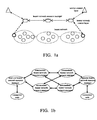
Figure 1 a is a schematic diagram illustrating network structure of communication network according to an embodiment of the present invention; -
Figure 1b is a schematic diagram illustrating network structure of bearer network resource manager of communication network according to an embodiment of the present invention; -
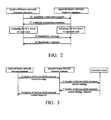
Figure 2 is flowchart illustrating the procedure of establishing connections according to an embodiment of the present invention; -
Figure 3 is a flowchart illustrating the procedure of transferring Quality of Service (QoS) resource control messages according to an embodiment of the present invention; -
Figure 4 is a flowchart illustrating the procedure of allocating QoS resources according to an embodiment of the present invention; -
Figure 5 is a flowchart illustrating the procedure of releasing QoS resources according to an embodiment of the present invention; -
Figure 6 is a flowchart illustrating the procedure of modifying QoS resources according to an embodiment of the present invention; -
Figure 7 is a flowchart illustrating the procedure of inquiring QoS connection status according to an embodiment of the present invention. - The present invention will be illustrated hereinafter with reference to the embodiment and the accompanying drawings.
- Two problems are resolved in the present invention, one problem is Quality of Service (QoS) connections cannot be established between CM or between CA and CM through signaling, and the other problem is that there is no resource synchronization mechanism between Bandwidth Brokers (BB) because SIBBS is adopted to implement resource requests in the prior art.
- Key point of the said method of the present invention for providing reliable transmission QoS in communication networks is: reliable transmission of QoS resource control messages between bearer network resource managers is implemented in communication networks, and each bearer network resource manager provides requested QoS for corresponding services by taking use of the QoS resource control messages, so that corresponding transmission QoS can be reliably provided according to transmission request of the service. First of all, QoS connections between bearer network resource managers should be created in the present invention, and said QoS connections are used to transfer QoS resource control messages. In addition, resource request and status report between bearer network resource managers are also implemented in the present invention, which further enhances the reliability of providing corresponding transmission QoS in communication networks.
- In this way, the present invention realizes QoS resource control message transfer between entities including BB, CA and CM, and the transfer procedure comprises the whole processing procedures such as establishing the connection and maintaining the connection, it can be deemed that the present invention is implemented based on Connection Initialization Protocol (RCIP), and the specific processing procedure of implementing the present invention based on RCIP will be described in detail hereinafter with reference to the following description.
- Now specific embodiment of the present invention will be further illustrated hereinafter with reference to the accompanying drawings, as shown in
figure 1a, figure 1b andfigure 2 , the procedure of establishing QoS connections between bearer network resource manages (CM) comprises the following steps: - Step 21: when it is determined that resources of the bearer network need to be controlled and managed through bearer network resource managers located in the bearer network layer, initial local bearer network resource manager will send an QoS connection establishing request to initial peer bearer network resource manager, for instance, an "OPEN" message can be sent as an QoS connection establishing request requesting to create a QoS connection between local bearer network resource manager and peer bearer network resource manager.
- Said QoS connection establishing request carries information like: identifier and authentication information of the bearer network resource manager requesting to establish the connection, so that peer bearer network resource manager can authenticate whether to establish the connection according to said authentication information.
- Besides, said QoS connection establishing request also optionally comprises data consistency information, and said data consistency information is used to guarantee that the message is not distorted during the transmission and to avoid invasion of illegal messages, thereby data consistency message is generally including 32bits KEY_ID, 32bits serial number and 96bits abstract, therein, the KEY_ID is used to identify key value and algorithms shared by both parties, serial number is initialized when "OPEN" message is transmitted, added up orderly when subsequent messages are transmitted and restarted from 0 when overflowed to avoid invasion by illegal messages.
- Said local bearer network resource manager is generally configured with management rules required for managing bearer network resources and network topology information of bearer network, which can implement corresponding resource control management functions, like completing resource allocation of corresponding bandwidth request, allocating corresponding path information for service requests in the network and so on.
- Bearer network control layer generally comprises multiple bearer network resource manager, like local bearer network resource manager, multiple intermediate bearer network resource managers and peer bearer network resource manager shown in
figure 1b , said local, intermediate and peer are all in allusion to a specific QoS connection, wherein the initial point of a QoS connection is local bearer network resource manager, the terminal point is peer bearer network resource manager, while those bearer network resource managers through which the messages are transmitted from local bearer network resource manager to peer bearer network resource manager are called intermediate bearer network resource managers. In communication networks, said local bearer network resource manager generally needs to transmit the corresponding message to peer bearer network resource manager through multiple bearer network resource managers, namely that a QoS resource control message has to pass a path from local bearer network resource manager through multiple bearer network resource managers before arriving at peer bearer network resource manager, and finally resource control management at corresponding connection nodes is implemented by peer bearer network resource manager, wherein said connection nodes are usually routers. - Step 22: after receiving the "OPEN" message from local bearer network resource manager, according to the received authentication information and identity identifier, peer bearer network resource manager checks validity of identity of local bearer network resource manager that has sent the connection request, if identity of local bearer network resource manager is valid, peer bearer network resource manager will send an Establish Connection Response to local bearer network resource manager, wherein this Establish Connection Response carries relevant information for establishing the QoS connection, for example, peer bearer network resource manager can send an "ACCEPT" message to local bearer network resource manager as the Establish Connection Response and the "ACCEPT" message carries time-over time span of local Keep Active (KA) timer; if identity of local bearer network resource manager is invalid, peer bearer network resource manager will send a message indicating inability of establishing corresponding connection to local bearer network resource manager, wherein this message carries corresponding reason code that is used to indicate the reason why this connection cannot be established.
- While sending the "ACCEPT" message, peer bearer network resource manager also need to initiate the peer KA timer and be in Online state, namely the QoS connection between peer bearer network resource manager and local bearer network resource manager is established.
- After receiving the "ACCEPT" message sent by peer bearer network resource manager, local bearer network resource manager will initiate local LA timer and enters Online state, namely the QoS connection between peer bearer network resource manager and local bearer network resource manager is established; if receiving a message of unable to establish corresponding connection sent by peer bearer network resource manager, local bearer network resource manager can resend an QoS connection establishing request to peer bearer network resource manager according to specific requirements.
- So far, the QoS connection between local bearer network resource manager and peer bearer network resource manager in the bearer network control layer, while
step 23 and step 24 represent the control procedure of maintaining the established QoS connection. - Step 23: the timer of local KA will be restarted when time-over, and local bearer network resource manager increases one to expiration times of the local KA timer so as to calculate overtime times of local KA timer, and meanwhile needs to send a KA message, i.e. a handshake message, to peer bearer network resource manager in order to monitor whether peer bearer network resource manager is in normal connection state.
- Step 24: if in normal connection state, after receiving the KA message, peer bearer network resource manager will send a KA message to local bearer network resource manager as the handshake response sent by local bearer network resource manager, restart peer KA timer and maintain the Online state of QoS connection. After receiving the KA message sent by peer bearer network resource manager, local bearer network resource manager will clear overtime times of local KA timer as zero and maintain the Online state of QoS connection.
- If local bearer network resource manager does not receive the KA message returned by peer bearer network resource manager all along, overtime times of local KA timer will exceed the settled allowable value, and then local bearer network resource manager will release the established QoS connection; in the same way, if peer bearer network resource manager des not receive the KA message returned by local bearer network resource manager all along, peer KA timer is time-out, and then peer bearer network resource manager will release the established QoS connection; this added QoS connection maintenance mechanism can effectively guarantee that network resource is reasonably occupied by the established QoS connection.
- After the QoS connection is established, specific QoS resource control messages can be transferred between local bearer network resource manager and peer bearer network resource manager in bearer network layer of network communication network, so as to control and manage resources of the connection nodes that belong to bearer network resource manager.
- A QoS connection in Online state is established after the processing procedure of
step 21 to step 24, wherein this QoS connection can bear various kinds of QoS resource control messages, while the said QoS resource control messages bear the QoS information for transmitting a certain service in the communication network, and the required QoS information includes the requested bandwidth for a certain service, allowed stream and so on, the specific embodiment of the method of the present invention will be further illustrated hereinafter with reference tofigure 3 : - Step 31: the requested QoS information for control management upon the resources between two connection nodes in the bearer network, namely QoS parameters and other information, is determined, local bearer network resource manager sends a QoS resource control message to peer bearer network resource manager, wherein this resource control message bears the determined QoS information for peer bearer network resource manager to perform resource control management upon corresponding connection nodes.
- Meanwhile, local bearer network resource manager also transmits the determined QoS information to the connection nodes managed by local bearer network resource manager, wherein the connection nodes perform resource control management in terms of this service according to the said QoS information.
- In the communication network, some important services usually request for the transmission services with high priorities or transmitting some services according to specified bandwidth, etc, therefore, resources of corresponding connection nodes in the bearer network need to be controlled and managed according to specific demands, so as to meet the transmission requirement of corresponding service, namely to control and manage the resources between the start connection node and terminal connection node of the said service.
- QoS information of the communication network is generally transmitted to bearer network resource manager of bearer control layer by the service control layer in the network, and then is transferred among the bearer network resource managers.
- Step 32: after receiving the QoS resource control message sent by local bearer network resource manager, peer bearer network resource manager will send the QoS control policy, which is determined according to the QoS resource control message, to the connection node, including QoS policy install command and relevant information.
- Step 33: after receiving the said QoS control policy, the connection nodes of peer bearer network resource manager will perform corresponding resource control and management operation, and send a QoS control policy response to the said peer bearer network resource manager.
- Step 34: after receiving the QoS control policy response sent by underlying connection node and relevant information, peer bearer network resource manager will send a QoS resource control response to local bearer network resource manager, so that local bearer network resource manager can accurately get to know whether the corresponding QoS resource control message is reliably received, and whether corresponding resource control management operation is performed at corresponding connection node.
- After the processing procedure of
step 31 to step 34, necessary QoS resource control messages can be transferred between two connection nodes concerned with a certain specific transmission service in the bearer network. - In order to transfer QoS resource control messages between local bearer network resource manager and peer bearer network resource manager, QoS resource must be requested to allocate, as shown in
figure 4 , the procedure of processing QoS resource request is as follows: - Step 41: when receiving the to-be-transmitted QoS information sent by service control layer, local bearer network resource manager needs to initiate a QoS resource request to peer bearer network resource manager at first, namely to send a QoS resource request to peer bearer network resource manager, and then step 42 is executed.
- Information carried by the said QoS resource request includes:
- If the QoS resource request is sent to CM by CA, it comprises: connection Identifier (ID), stream information, QoS parameter, flow descriptor, and it can comprise data consistency information optionally;
- If the QoS resource request is bilateral and transferred between CM, it comprises: connection ID, stream information, QoS parameter, flow descriptor, Label Switching Path (LSP) connection information, and it can further comprise data consistency information optionally;
- If the QoS resource request is unilateral and transferred between CM, it comprises: connection ID, stream information, QoS parameter, flow descriptor, LSP connection information, and it can further comprise data consistency information optionally.
- Step 42: after receiving the QoS resource request sent by local bearer network resource manager, peer bearer network resource manager will perform service routing and resource allocation, and send QoS resource request to the connection nodes that belong to peer bearer network resource manager, namely sending QoS policy install command to the connection node.
- If the messages need to be transferred from local bearer network resource manager to peer bearer network resource manager through multiple intermediate bearer network resource managers, local bearer network resource manager sends the QoS resource request to the next hop intermediate bearer network resource manager first of all, the said intermediate bearer network resource manager performs routing and resource allocation, returns a QoS resource request response to the previous hop intermediate bearer network resource manager or local bearer network resource manager after the resource request is successful and continues to forward the said QoS resource request, until the peer bearer network resource manager receives this QoS resource request, and then the said operation in
step 42 is executed. - Step 43: after receiving the QoS policy install command, the connection node will perform corresponding stream mapping install process, and send a QoS policy install command response to peer bearer network resource manager.
- Step 44: after receiving the QoS policy install command response sent by connection node, peer bearer network resource manager will send a response of accepting the QoS resource request or rejecting the QoS resource request to the local bearer network resource manager.
- Information carried by the said QoS resource response includes:
- If the response of accepting the QoS resource request is sent to CM by CA, it comprises: connection Identifier (ID), stream information, QoS parameter, flow descriptor, and it can further comprise data consistency information optionally;
- If the response of rejecting the QoS resource request is sent to CM by CA, it comprises: connection Identifier (ID) and reason code and it can further comprise data consistency information optionally;
- If the response of accepting the QoS resource request is bilateral and sent to CM by CM, it comprises: connection Identifier (ID), stream information, QoS parameter, flow descriptor, LSP information, and it can further comprise data consistency information optionally;
- If the response of accepting the QoS resource request is unilateral and sent to CM by CM, it comprises: connection Identifier (ID), stream information, QoS parameter, flow descriptor, LSP information, and it can further comprise data consistency information optionally;
- If the response of rejecting the QoS resource request is sent to CM by CM, it comprises: connection Identifier (ID), reason code, and data consistency information optionally.
- After the said QoS resources are bored and allocated between local bearer network resource manager and peer bearer network resource manager, when the message transfer procedure is ended or the message transfer cannot be normally performed and the procedure has to be ended due to exceptions in the communication network, the process of releasing the QoS resources has to be performed, and the specific processing procedure is shown in
figure 5 , comprising the following steps: - Step 51: when a service communication procedure is ended or the communication cannot be normally performed due to exceptions, local bearer network resource manager needs to send a QoS resource release request to peer bearer network resource manager so as to release the QoS resource allocated for it, meanwhile, local bearer network resource manager also has to send stream mapping delete command to the connection nodes connected to and managed by local bearer network resource manager, and the connection nodes perform corresponding stream mapping delete operation according to the received stream mapping delete demand.
- The said QoS resource release request carries information including:
- If the QoS resource request is transferred between CA and CM, it comprises: connection Identifier (ID) and reason code, and data consistency information optionally;
- If the QoS resource request is transferred between CM and CM, it comprises: connection Identifier (ID) and reason code, and data consistency information optionally.
- Step 52: after receiving the QoS resource release request sent by local bearer network resource manager, peer bearer network resource manager finishes releasing the QoS resource and meanwhile sends delete QoS control policy command, i.e. stream mapping delete command, to the connection nodes connected to and managed by peer bearer network resource manager, and then step 53 is executed.
- Step 53: the connection nodes receive the steam mapping delete command set by peer bearer network resource manager, and send stream mapping delete command response to peer bearer network resource manager after finishing corresponding stream mapping delete operation.
- Step 54: after receiving the stream mapping delete command response sent by affiliated connection nodes, peer bearer network resource manager sends a QoS resource release response to local bearer network resource manager.
- After the said QoS resources are bored and allocated between local bearer network resource manager and peer bearer network resource manager, the allocated QoS resources may needs modifying according to practical demand of message transfer procedure, like adjusting the allocated bandwidth resources and allowed maximum stream and so on, wherein specific processing procedure of modifying the QoS resources is shown in
figure 6 , comprising the following steps: - Step 61: when it is needed to modify the allocated QoS resources, local bearer network resource manager sends a QoS resource modify request to peer bearer network resource manager, wherein the QoS resource modify request carries the to-be-modified QoS resource identifier and the modified QoS resource information and so on, meanwhile local bearer network resource manager needs to send QoS resource modify message, namely stream mapping update message, to the connection nodes under its control and management, wherein the said connection nodes performs corresponding stream mapping update operations according to the received stream mapping update command, so that the QoS resource are modified.
- Step 62: after receiving the QoS resource modify request sent by local bearer network resource manager, peer bearer network resource manager sends stream mapping update command to the connection nodes under its control and management according to the information carried in the QoS resource modify request.
- If the QoS resource modify request of local bearer network resource manager has to pass multiple intermediate bearer network resource managers before arriving at the peer bearer network resource manager, each intermediate bearer network resource manager receiving the QoS resource modify request will forward the QoS resource modify request to the next intermediate bearer network resource manager, until peer bearer network resource manager receives this QoS resource modify request, and then step 62 will be executed.
- The said QoS resource modify request carries information including: parameter global Path Maximum Transmission Unit (PATH MTU), global label stack depth, intra-domain label stack depth, stream descriptor and so on.
- Step 63: after receiving the stream mapping command sent by peer bearer network resource manager and performing corresponding steam mapping update operation, the connection nodes will send stream mapping update command response to peer bearer network resource manager.
- Step 64: after receiving the stream mapping update command response sent by the connection node, peer bearer network resource manager learns that QoS resource modification is successful and will send a QoS resource modify response to local bearer network resource manager.
- To guarantee connection status consistency of both ends of the established QoS connection, namely to guarantee synchronization of resources on both ends of the QoS connection, thereby to implement reliable transfer of QoS resource control messages, the said method of the present invention further comprises a processing procedure of checking the status of the QoS connection established between local bearer network resource manager and peer bearer network resource manager, wherein the specific procedure of checking the QoS connection status is shown in
figure 7 , comprising the following steps: - Step 71: local bearer network resource manager sends a connection status inquiry request to peer bearer network resource manager periodically or according to settled condition, wherein the connection status inquiry request carries connection status information of local bearer network resource manager, meanwhile, local bearer network resource manager sends connection status inquiry request to the connection nodes under its control and management, and corresponding connection node will return QOS connection resource status to local bearer network resource manager after receiving the connection status inquiry request, and then local bearer network resource manager checks QoS resource consistency according to the connection resource status sent by the connection node.
- Step 72: after receiving the connection status inquiry request sent by local bearer network resource manager, peer bearer network resource manager will initiate connection status inquiry to the connection node under its control and management, namely that peer bearer network resource manager will send connection status inquiry request to the connection node.
- Step 73: after receiving the connection status inquiry request, the said connection node will send a connection status inquiry response to peer bearer network resource manager, namely that the connection node will return QoS connection resource status of the connection node to peer bearer network resource manager.
- Step 74: peer bearer network resource manager checks the QoS resource consistency according to the QoS connection resource status returned by the connection node, and returns a connection status inquiry request to local bearer network resource manager, namely that peer bearer network resource manager returns a connection status inquiry report to local bearer network resource manager.
- If the interaction between peer bearer network resource manager and local bearer network resource manager has to pass multiple intermediate bearer network resource managers, the intermediate bearer network resource manager need to return a connection status inquiry report to the previous bearer network resource manager after receiving the connection status inquiry request.
- The said connection status inquiry report carries information including:
- If CM sends the connection status inquiry report to CA, the connection status inquiry report comprises: connection ID, connection resource status, and it can further comprise data consistency information optionally;
- If CM sends the connection status inquiry report to CM, the connection status inquiry report comprises: connection ID, connection resource status, and it can further comprise data consistency information optionally.
- In the present invention, when the messages need to be transferred from local bearer network resource manager to peer bearer network resource manager through multiple intermediate bearer network resource managers, the said intermediate bearer network resource managers only play the message transfer role, without needing to send corresponding messages to the connection nodes under its control and management just as local bearer network resource manager and peer bearer network resource manager do.
- In a word, the above-description is just a preferable embodiment of the present invention, not used to confine the protection scope of the present invention.
Claims (18)
- A method for providing Quality of Service, QoS, in communication network, comprising:receiving (21), by a peer bearer network resource manager, a QoS connection establishing request from a local bearer network resource manager;authenticating the local bearer network resource manager;creating, by the peer bearer network resource manager, a QoS connection with the local bearer network resource manager if the local bearer network resource manager is valid;sending (23), by the local bearer network resource manager, handshake messages to the peer bearer network resource manager, and determining QoS connection status according to handshake responses returned (24) by the peer bearer network resource manager; andexchanging (31, 34), by the peer bearer network resource manager, a QoS for data transmission with the local bearer network resource manager through the QoS connection;providing (32, 33), by a connection node connected to the peer bearer network resource manager, resource according to the QoS;
wherein the process of sending handshake messages and determining the QoS connection status comprises:creating, by the local bearer network resource manager, a local Keep Active, KA, timer at the local bearer network resource manager,creating, by the peer bearer network resource manager, a peer Keep Active, KA, timer at the peer bearer network resource manager;when the local KA timer is expired, the local bearer network resource manager increasing one to expiration times of the local KA timer and sending a handshake message to the peer bearer network resource manager;after receiving the handshake message, the peer bearer network resource manager restarting the peer KA timer and returning a handshake response to the local bearer network resource manager;the local bearer network resource manager determining the QoS connection status according to the timeout times of the local KA timer, and/or the peer bearer network resource manager determining the QoS connection status according to whether the peer KA timer is expired. - The method according to claim 1, wherein, the local bearer network resource manager and the peer bearer network resource manager both comprise functions performed on the control layer of the bearer network.
- The method according to claim 1, wherein the process of authenticating the local bearer network resource manager comprises;determining whether identity of the local bearer network resource manager is valid.
- The method according to claim 1, further comprising:sending to the local bearer network resource manager a message indicating that the QoS connection is unable to be established if the local bearer network resource manager is invalid.
- The method according to claim 1, wherein, the QoS connection establishing request carries identification and authentication information of the local bearer network resource manager.
- The method according to claim 1, wherein the handshake message carries: a connection ID and connection resource state information.
- The method according to claim 1 wherein the process of exchanging the QoS with the local bearer network resource manager through the QoS connection comprises:exchanging the QoS with the local bearer network resource manager through a plurality of intermediate bearer network resource managers.
- The method according to claim 1, further comprising:managing, by the local bearer network resource manager, resources of a connection node connected with the local bearer network resource manager according to the QoS, andmanaging, by the peer bearer network resource manager, resources of a connection node connected with the peer bearer network resource manager according to the QoS.
- The method according to claim 1, wherein the process of exchanging the QoS with the local bearer network resource manager through the QoS connection comprises:sending (31), by the local bearer network resource manager, QoS resource control messages that carry the QoS to the peer bearer network resource manager and the connection node connected with the bearer network resource manager;sending(32), by the peer bearer network resource manager, a QoS resource control policy to the connection node connected with the peer bearer network resource manager according to the QoS resource control message;receiving (33), by the peer bearer network resource manager, a QoS resource control policy response from the connection node connected with the peer bearer network resource manager;sending(34), by the peer bearer network resource manager, a QoS resource control response to the local bearer network resource manager.
- The method according to claim 9, wherein, the QoS resource control message comprises a QoS resource request (41) which carries a connection ID, stream information, QoS parameters and a stream descriptor.
- The method according to claim 9, wherein, the QoS resource control message comprises a QoS resource release request (51) which carries a connection ID and a reason code.
- The method according to claim 9, wherein, the QoS resource control message comprises a QoS resource modify request (61) which carries a connection ID and modified parameters corresponding to the QoS connection.
- The method according to claim 9, wherein, the QoS resource control message comprises a connection status inquiry request (71), and the process of sending the QoS resource control response to the local bearer network resource manager comprises:after receiving the QoS resource control policy response from the connection node connected with the peer bearer network resource manager, checking, by the peer bearer network resource manager, resource consistency of the QoS connection, and returning (74) a connection status inquiry response to the local bearer network resource manager according to the check result.
- The method according to claim 13, wherein the connection status inquiry response carries at least one of a connection ID, stream information, QoS parameters, a stream descriptor, label stack information, information of a transmission unit with maximum transmission path, and bearer network resource manager stack information.
- The method according to claim 5 or claim 6 or claim 10 or claim 11 or claim 12 or claim 14, wherein, said message further carrying information like: data consistency information.
- The method according to claim 15, wherein the data consistency information comprises parameter global path maximum transmission unit, global label stack depth, intra-domain label stack depth and stream description.
- The method according to any of the claims 1 to 16, wherein the connection node is a router.
- The method according any of the claims 1 to 17, wherein the local bearer network resource manager comprises a bandwidth broker, or a call agent, or a connection manager; and the peer bearer network resource manager comprises a bandwidth broker, or a call agent, or a connection manager.
Applications Claiming Priority (2)
| Application Number | Priority Date | Filing Date | Title |
|---|---|---|---|
| CN031437702A CN1581791B (en) | 2003-08-01 | 2003-08-01 | Method for providing reliable transmission service quality in communication network |
| PCT/CN2004/000870 WO2005013553A1 (en) | 2003-08-01 | 2004-07-27 | The method of providing reliable quality of service in the communication network |
Publications (3)
| Publication Number | Publication Date |
|---|---|
| EP1650895A1 EP1650895A1 (en) | 2006-04-26 |
| EP1650895A4 EP1650895A4 (en) | 2007-02-07 |
| EP1650895B1 true EP1650895B1 (en) | 2010-06-02 |
Family
ID=34109565
Family Applications (1)
| Application Number | Title | Priority Date | Filing Date |
|---|---|---|---|
| EP04738444A Expired - Lifetime EP1650895B1 (en) | 2003-08-01 | 2004-07-27 | The method of providing reliable quality of service in the communication network |
Country Status (6)
| Country | Link |
|---|---|
| US (1) | US7746843B2 (en) |
| EP (1) | EP1650895B1 (en) |
| CN (1) | CN1581791B (en) |
| AT (1) | ATE470293T1 (en) |
| DE (1) | DE602004027499D1 (en) |
| WO (1) | WO2005013553A1 (en) |
Families Citing this family (21)
| Publication number | Priority date | Publication date | Assignee | Title |
|---|---|---|---|---|
| CN100358321C (en) * | 2005-03-08 | 2007-12-26 | 华为技术有限公司 | Method for Realizing Resource Reservation in User Request Mode in Next Generation Network |
| CN100440861C (en) * | 2005-06-13 | 2008-12-03 | 中兴通讯股份有限公司 | A resource application method for quality of service in IP network |
| CN100413254C (en) * | 2005-09-02 | 2008-08-20 | 华为技术有限公司 | Method for Realizing Resource State Synchronization in Network with Independent Bearer Control Layer |
| CN100396005C (en) | 2005-10-24 | 2008-06-18 | 华为技术有限公司 | Method for synchronizing flows between bearer control layer and bearer layer equipment |
| CN100396016C (en) * | 2006-03-01 | 2008-06-18 | 华为技术有限公司 | System and method for assuring service levels in a content delivery network |
| CN1983912B (en) * | 2006-04-20 | 2010-11-10 | 华为技术有限公司 | A data transmission method adopting sliding window backward mode |
| US7764963B2 (en) * | 2007-04-11 | 2010-07-27 | Cisco Technology, Inc. | GW coupled SIP proxy |
| EP2667534B1 (en) * | 2008-01-08 | 2018-07-04 | Unwired Planet International Limited | Method and arrangement in a wireless communication network |
| CN101635984B (en) * | 2008-07-25 | 2012-05-16 | 中兴通讯股份有限公司 | A Method for Time Division Multiplexing Resource State Synchronization |
| US8929878B2 (en) * | 2009-05-20 | 2015-01-06 | Qualcomm Incorporated | Transaction management |
| US8582450B1 (en) * | 2009-09-30 | 2013-11-12 | Shoretel, Inc. | Status reporting system |
| US8724472B2 (en) * | 2010-03-25 | 2014-05-13 | Qualcomm Incorporated | Data radio bearer mapping in a telecommunication network with relays |
| CN102571473B (en) * | 2010-12-29 | 2015-12-16 | 中兴通讯股份有限公司 | Path failure detection method and device |
| US10218756B2 (en) | 2012-01-06 | 2019-02-26 | Comcast Cable Communications, Llc | Streamlined delivery of video content |
| CN103297461B (en) * | 2012-02-28 | 2016-05-25 | 中国移动通信集团公司 | NAT session keepalive duration method to set up and client and server |
| US9258174B1 (en) * | 2013-03-13 | 2016-02-09 | Cisco Technology, Inc. | Server-layer path negotiation between client and server network layers |
| US9201889B1 (en) | 2013-03-15 | 2015-12-01 | Emc Corporation | Integrated search for shared storage |
| US9239874B1 (en) * | 2013-03-15 | 2016-01-19 | Emc Corporation | Integrated search for shared storage using index throttling to maintain quality of service |
| US9374401B2 (en) * | 2013-05-20 | 2016-06-21 | International Business Machines Corporation | Communication traffic management |
| DE102014221956A1 (en) * | 2014-10-28 | 2016-05-12 | Bayerische Motoren Werke Aktiengesellschaft | Apparatus, vehicle, method and computer program for a relay transceiver and a network component |
| US11252613B2 (en) * | 2018-04-17 | 2022-02-15 | Telefonaktiebolaget Lm Ericsson (Publ) | Dynamic bearer validity |
Family Cites Families (12)
| Publication number | Priority date | Publication date | Assignee | Title |
|---|---|---|---|---|
| US5461611A (en) * | 1994-06-07 | 1995-10-24 | International Business Machines Corporation | Quality of service management for source routing multimedia packet networks |
| US6145006A (en) * | 1997-06-25 | 2000-11-07 | Emc Corporation | Method and apparatus for coordinating locking operations of heterogeneous host computers accessing a storage subsystem |
| FI107772B (en) | 1998-12-16 | 2001-09-28 | Nokia Networks Oy | Procedure and system for limiting service quality in data transmission |
| JP2000270022A (en) * | 1999-03-17 | 2000-09-29 | Nec Corp | Service quality management system |
| FI108593B (en) | 1999-12-31 | 2002-02-15 | Nokia Oyj | Routing of packets in a multi-service network |
| US7106718B2 (en) * | 2001-02-09 | 2006-09-12 | Telefonaktiebolaget Lm Ericsson (Publ) | Signaling quality of service class for use in multimedia communicatations |
| EP1250021A1 (en) * | 2001-04-09 | 2002-10-16 | Lucent Technologies Inc. | Providing quality of service in telecommunications systems such as UMTS or other third generation systems |
| EP1250022A1 (en) * | 2001-04-09 | 2002-10-16 | Lucent Technologies Inc. | Providing quality of service in a telecommunications system such as a UMTS or other third generation system |
| US20030093526A1 (en) * | 2001-11-13 | 2003-05-15 | Koninklijke Philips Electronics N. V. | Apparatus and method for providing quality of service signaling for wireless mac layer |
| CN1283079C (en) * | 2003-02-20 | 2006-11-01 | 华为技术有限公司 | IP network service quality assurance method and system |
| US7193979B2 (en) * | 2003-07-11 | 2007-03-20 | Nokia Corporation | Method and apparatus for use by a GPRS device in responding to change in SAPI connection |
| US7801857B2 (en) * | 2003-12-19 | 2010-09-21 | Solace Systems, Inc. | Implicit routing in content based networks |
-
2003
- 2003-08-01 CN CN031437702A patent/CN1581791B/en not_active Expired - Fee Related
-
2004
- 2004-07-27 EP EP04738444A patent/EP1650895B1/en not_active Expired - Lifetime
- 2004-07-27 WO PCT/CN2004/000870 patent/WO2005013553A1/en not_active Ceased
- 2004-07-27 AT AT04738444T patent/ATE470293T1/en not_active IP Right Cessation
- 2004-07-27 US US10/566,739 patent/US7746843B2/en active Active
- 2004-07-27 DE DE602004027499T patent/DE602004027499D1/en not_active Expired - Lifetime
Also Published As
| Publication number | Publication date |
|---|---|
| HK1073745A1 (en) | 2005-10-14 |
| US20070053363A1 (en) | 2007-03-08 |
| CN1581791B (en) | 2011-06-15 |
| EP1650895A1 (en) | 2006-04-26 |
| ATE470293T1 (en) | 2010-06-15 |
| DE602004027499D1 (en) | 2010-07-15 |
| CN1581791A (en) | 2005-02-16 |
| WO2005013553A1 (en) | 2005-02-10 |
| EP1650895A4 (en) | 2007-02-07 |
| US7746843B2 (en) | 2010-06-29 |
Similar Documents
| Publication | Publication Date | Title |
|---|---|---|
| US7746843B2 (en) | Method of providing reliable transmission quality of service in a communication network | |
| US7561586B2 (en) | Method and apparatus for providing network VPN services on demand | |
| US20060075042A1 (en) | Extensible resource messaging between user applications and network elements in a communication network | |
| EP1623536B9 (en) | Method for the distribution of a network traffic according to sla and qos parameters | |
| WO2006026920A1 (en) | A METHOD AND SYSTEM FOR DYNAMIC CONSULTING QoS IN NGN | |
| JP2004529550A (en) | Pool-based resource management in data networks | |
| JP2004530340A (en) | Edge-based per-flow QoS admission control in data networks | |
| CA2604234C (en) | Method for managing service bindings over an access domain and nodes therefor | |
| CA2295970C (en) | Resource reservation | |
| US8077619B2 (en) | Method for aggregating data traffic over an access domain and nodes therefor | |
| US7181532B1 (en) | Scalable policy server | |
| EP2023540A1 (en) | A method, a system and devices for selecting an edge path between different administration region networks | |
| US20070147243A1 (en) | Method and system for guaranteeing end-to-end quality of service | |
| CN1643858B (en) | Quality of Service Request Correlation | |
| US8005090B2 (en) | QoS information notification method, communication apparatus and inter-domain signaling apparatus for transmitting QoS information over a multi-domain network | |
| US20070286203A1 (en) | Method and System for Forwarding Traffic in Bearer Network | |
| JP2002158656A (en) | Network access charging system and method | |
| KR100453324B1 (en) | Routing Apparatus and Method for Internet Quality of Service | |
| CN116094979A (en) | Policy route management method | |
| EP1357698A1 (en) | State-based policy management method for a communications transport network, network element and policy server for its implementation | |
| US20050273606A1 (en) | Communication system, communication apparatus, operation control method, and program | |
| CN101252457A (en) | Method for providing reliable transmission quality of service in a communication network | |
| EP2068508A1 (en) | Method, device and system for synchronizing user data in next generation network | |
| HK1073745B (en) | Method for providing reliable quality of transmission service in a communication network | |
| Granville et al. | Management of networks with end-to-end differentiated service QoS capabilities |
Legal Events
| Date | Code | Title | Description |
|---|---|---|---|
| PUAI | Public reference made under article 153(3) epc to a published international application that has entered the european phase |
Free format text: ORIGINAL CODE: 0009012 |
|
| 17P | Request for examination filed |
Effective date: 20060131 |
|
| AK | Designated contracting states |
Kind code of ref document: A1 Designated state(s): AT BE BG CH CY CZ DE DK EE ES FI FR GB GR HU IE IT LI LU MC NL PL PT RO SE SI SK TR |
|
| RIC1 | Information provided on ipc code assigned before grant |
Ipc: H04L 12/56 20060101AFI20060828BHEP Ipc: H04L 12/24 20060101ALI20060828BHEP |
|
| DAX | Request for extension of the european patent (deleted) | ||
| A4 | Supplementary search report drawn up and despatched |
Effective date: 20070104 |
|
| 17Q | First examination report despatched |
Effective date: 20070316 |
|
| GRAP | Despatch of communication of intention to grant a patent |
Free format text: ORIGINAL CODE: EPIDOSNIGR1 |
|
| RTI1 | Title (correction) |
Free format text: THE METHOD OF PROVIDING RELIABLE QUALITY OF SERVICE IN THE COMMUNICATION NETWORK |
|
| GRAS | Grant fee paid |
Free format text: ORIGINAL CODE: EPIDOSNIGR3 |
|
| GRAA | (expected) grant |
Free format text: ORIGINAL CODE: 0009210 |
|
| AK | Designated contracting states |
Kind code of ref document: B1 Designated state(s): AT BE BG CH CY CZ DE DK EE ES FI FR GB GR HU IE IT LI LU MC NL PL PT RO SE SI SK TR |
|
| REG | Reference to a national code |
Ref country code: GB Ref legal event code: FG4D |
|
| REG | Reference to a national code |
Ref country code: CH Ref legal event code: EP |
|
| REG | Reference to a national code |
Ref country code: IE Ref legal event code: FG4D |
|
| REF | Corresponds to: |
Ref document number: 602004027499 Country of ref document: DE Date of ref document: 20100715 Kind code of ref document: P |
|
| REG | Reference to a national code |
Ref country code: NL Ref legal event code: VDEP Effective date: 20100602 |
|
| PG25 | Lapsed in a contracting state [announced via postgrant information from national office to epo] |
Ref country code: SE Free format text: LAPSE BECAUSE OF FAILURE TO SUBMIT A TRANSLATION OF THE DESCRIPTION OR TO PAY THE FEE WITHIN THE PRESCRIBED TIME-LIMIT Effective date: 20100602 |
|
| PG25 | Lapsed in a contracting state [announced via postgrant information from national office to epo] |
Ref country code: FI Free format text: LAPSE BECAUSE OF FAILURE TO SUBMIT A TRANSLATION OF THE DESCRIPTION OR TO PAY THE FEE WITHIN THE PRESCRIBED TIME-LIMIT Effective date: 20100602 Ref country code: AT Free format text: LAPSE BECAUSE OF FAILURE TO SUBMIT A TRANSLATION OF THE DESCRIPTION OR TO PAY THE FEE WITHIN THE PRESCRIBED TIME-LIMIT Effective date: 20100602 Ref country code: SI Free format text: LAPSE BECAUSE OF FAILURE TO SUBMIT A TRANSLATION OF THE DESCRIPTION OR TO PAY THE FEE WITHIN THE PRESCRIBED TIME-LIMIT Effective date: 20100602 |
|
| PG25 | Lapsed in a contracting state [announced via postgrant information from national office to epo] |
Ref country code: CY Free format text: LAPSE BECAUSE OF FAILURE TO SUBMIT A TRANSLATION OF THE DESCRIPTION OR TO PAY THE FEE WITHIN THE PRESCRIBED TIME-LIMIT Effective date: 20100602 Ref country code: GR Free format text: LAPSE BECAUSE OF FAILURE TO SUBMIT A TRANSLATION OF THE DESCRIPTION OR TO PAY THE FEE WITHIN THE PRESCRIBED TIME-LIMIT Effective date: 20100903 Ref country code: PL Free format text: LAPSE BECAUSE OF FAILURE TO SUBMIT A TRANSLATION OF THE DESCRIPTION OR TO PAY THE FEE WITHIN THE PRESCRIBED TIME-LIMIT Effective date: 20100602 |
|
| PG25 | Lapsed in a contracting state [announced via postgrant information from national office to epo] |
Ref country code: NL Free format text: LAPSE BECAUSE OF FAILURE TO SUBMIT A TRANSLATION OF THE DESCRIPTION OR TO PAY THE FEE WITHIN THE PRESCRIBED TIME-LIMIT Effective date: 20100602 Ref country code: EE Free format text: LAPSE BECAUSE OF FAILURE TO SUBMIT A TRANSLATION OF THE DESCRIPTION OR TO PAY THE FEE WITHIN THE PRESCRIBED TIME-LIMIT Effective date: 20100602 |
|
| PG25 | Lapsed in a contracting state [announced via postgrant information from national office to epo] |
Ref country code: CZ Free format text: LAPSE BECAUSE OF FAILURE TO SUBMIT A TRANSLATION OF THE DESCRIPTION OR TO PAY THE FEE WITHIN THE PRESCRIBED TIME-LIMIT Effective date: 20100602 Ref country code: MC Free format text: LAPSE BECAUSE OF NON-PAYMENT OF DUE FEES Effective date: 20100731 Ref country code: RO Free format text: LAPSE BECAUSE OF FAILURE TO SUBMIT A TRANSLATION OF THE DESCRIPTION OR TO PAY THE FEE WITHIN THE PRESCRIBED TIME-LIMIT Effective date: 20100602 Ref country code: PT Free format text: LAPSE BECAUSE OF FAILURE TO SUBMIT A TRANSLATION OF THE DESCRIPTION OR TO PAY THE FEE WITHIN THE PRESCRIBED TIME-LIMIT Effective date: 20101004 Ref country code: BE Free format text: LAPSE BECAUSE OF FAILURE TO SUBMIT A TRANSLATION OF THE DESCRIPTION OR TO PAY THE FEE WITHIN THE PRESCRIBED TIME-LIMIT Effective date: 20100602 Ref country code: SK Free format text: LAPSE BECAUSE OF FAILURE TO SUBMIT A TRANSLATION OF THE DESCRIPTION OR TO PAY THE FEE WITHIN THE PRESCRIBED TIME-LIMIT Effective date: 20100602 |
|
| REG | Reference to a national code |
Ref country code: CH Ref legal event code: PL |
|
| PG25 | Lapsed in a contracting state [announced via postgrant information from national office to epo] |
Ref country code: IT Free format text: LAPSE BECAUSE OF FAILURE TO SUBMIT A TRANSLATION OF THE DESCRIPTION OR TO PAY THE FEE WITHIN THE PRESCRIBED TIME-LIMIT Effective date: 20100602 |
|
| PLBE | No opposition filed within time limit |
Free format text: ORIGINAL CODE: 0009261 |
|
| STAA | Information on the status of an ep patent application or granted ep patent |
Free format text: STATUS: NO OPPOSITION FILED WITHIN TIME LIMIT |
|
| PG25 | Lapsed in a contracting state [announced via postgrant information from national office to epo] |
Ref country code: LI Free format text: LAPSE BECAUSE OF NON-PAYMENT OF DUE FEES Effective date: 20100731 Ref country code: DK Free format text: LAPSE BECAUSE OF FAILURE TO SUBMIT A TRANSLATION OF THE DESCRIPTION OR TO PAY THE FEE WITHIN THE PRESCRIBED TIME-LIMIT Effective date: 20100602 Ref country code: CH Free format text: LAPSE BECAUSE OF NON-PAYMENT OF DUE FEES Effective date: 20100731 |
|
| 26N | No opposition filed |
Effective date: 20110303 |
|
| REG | Reference to a national code |
Ref country code: DE Ref legal event code: R097 Ref document number: 602004027499 Country of ref document: DE Effective date: 20110302 |
|
| PG25 | Lapsed in a contracting state [announced via postgrant information from national office to epo] |
Ref country code: IE Free format text: LAPSE BECAUSE OF NON-PAYMENT OF DUE FEES Effective date: 20100727 |
|
| PG25 | Lapsed in a contracting state [announced via postgrant information from national office to epo] |
Ref country code: LU Free format text: LAPSE BECAUSE OF NON-PAYMENT OF DUE FEES Effective date: 20100727 Ref country code: BG Free format text: LAPSE BECAUSE OF FAILURE TO SUBMIT A TRANSLATION OF THE DESCRIPTION OR TO PAY THE FEE WITHIN THE PRESCRIBED TIME-LIMIT Effective date: 20100602 Ref country code: HU Free format text: LAPSE BECAUSE OF FAILURE TO SUBMIT A TRANSLATION OF THE DESCRIPTION OR TO PAY THE FEE WITHIN THE PRESCRIBED TIME-LIMIT Effective date: 20101203 |
|
| PG25 | Lapsed in a contracting state [announced via postgrant information from national office to epo] |
Ref country code: TR Free format text: LAPSE BECAUSE OF FAILURE TO SUBMIT A TRANSLATION OF THE DESCRIPTION OR TO PAY THE FEE WITHIN THE PRESCRIBED TIME-LIMIT Effective date: 20100602 |
|
| PG25 | Lapsed in a contracting state [announced via postgrant information from national office to epo] |
Ref country code: BG Free format text: LAPSE BECAUSE OF FAILURE TO SUBMIT A TRANSLATION OF THE DESCRIPTION OR TO PAY THE FEE WITHIN THE PRESCRIBED TIME-LIMIT Effective date: 20100902 |
|
| PG25 | Lapsed in a contracting state [announced via postgrant information from national office to epo] |
Ref country code: ES Free format text: LAPSE BECAUSE OF FAILURE TO SUBMIT A TRANSLATION OF THE DESCRIPTION OR TO PAY THE FEE WITHIN THE PRESCRIBED TIME-LIMIT Effective date: 20100913 |
|
| REG | Reference to a national code |
Ref country code: FR Ref legal event code: PLFP Year of fee payment: 13 |
|
| REG | Reference to a national code |
Ref country code: FR Ref legal event code: PLFP Year of fee payment: 14 |
|
| REG | Reference to a national code |
Ref country code: FR Ref legal event code: PLFP Year of fee payment: 15 |
|
| PGFP | Annual fee paid to national office [announced via postgrant information from national office to epo] |
Ref country code: FR Payment date: 20210611 Year of fee payment: 18 |
|
| PGFP | Annual fee paid to national office [announced via postgrant information from national office to epo] |
Ref country code: GB Payment date: 20210630 Year of fee payment: 18 |
|
| PGFP | Annual fee paid to national office [announced via postgrant information from national office to epo] |
Ref country code: DE Payment date: 20210629 Year of fee payment: 18 |
|
| REG | Reference to a national code |
Ref country code: DE Ref legal event code: R119 Ref document number: 602004027499 Country of ref document: DE |
|
| GBPC | Gb: european patent ceased through non-payment of renewal fee |
Effective date: 20220727 |
|
| PG25 | Lapsed in a contracting state [announced via postgrant information from national office to epo] |
Ref country code: FR Free format text: LAPSE BECAUSE OF NON-PAYMENT OF DUE FEES Effective date: 20220731 |
|
| PG25 | Lapsed in a contracting state [announced via postgrant information from national office to epo] |
Ref country code: GB Free format text: LAPSE BECAUSE OF NON-PAYMENT OF DUE FEES Effective date: 20220727 Ref country code: DE Free format text: LAPSE BECAUSE OF NON-PAYMENT OF DUE FEES Effective date: 20230201 |