EP1646258A2 - Portable terminal set and control method thereof - Google Patents
Portable terminal set and control method thereof Download PDFInfo
- Publication number
- EP1646258A2 EP1646258A2 EP05019906A EP05019906A EP1646258A2 EP 1646258 A2 EP1646258 A2 EP 1646258A2 EP 05019906 A EP05019906 A EP 05019906A EP 05019906 A EP05019906 A EP 05019906A EP 1646258 A2 EP1646258 A2 EP 1646258A2
- Authority
- EP
- European Patent Office
- Prior art keywords
- data
- combining
- counting
- decoding
- defect
- Prior art date
- Legal status (The legal status is an assumption and is not a legal conclusion. Google has not performed a legal analysis and makes no representation as to the accuracy of the status listed.)
- Granted
Links
Images


Classifications
-
- H—ELECTRICITY
- H04—ELECTRIC COMMUNICATION TECHNIQUE
- H04B—TRANSMISSION
- H04B1/00—Details of transmission systems, not covered by a single one of groups H04B3/00 - H04B13/00; Details of transmission systems not characterised by the medium used for transmission
- H04B1/69—Spread spectrum techniques
- H04B1/707—Spread spectrum techniques using direct sequence modulation
- H04B1/7097—Interference-related aspects
- H04B1/711—Interference-related aspects the interference being multi-path interference
- H04B1/7115—Constructive combining of multi-path signals, i.e. RAKE receivers
-
- H—ELECTRICITY
- H04—ELECTRIC COMMUNICATION TECHNIQUE
- H04W—WIRELESS COMMUNICATION NETWORKS
- H04W36/00—Hand-off or reselection arrangements
- H04W36/16—Performing reselection for specific purposes
- H04W36/18—Performing reselection for specific purposes for allowing seamless reselection, e.g. soft reselection
-
- H—ELECTRICITY
- H04—ELECTRIC COMMUNICATION TECHNIQUE
- H04W—WIRELESS COMMUNICATION NETWORKS
- H04W88/00—Devices specially adapted for wireless communication networks, e.g. terminals, base stations or access point devices
- H04W88/02—Terminal devices
-
- Y—GENERAL TAGGING OF NEW TECHNOLOGICAL DEVELOPMENTS; GENERAL TAGGING OF CROSS-SECTIONAL TECHNOLOGIES SPANNING OVER SEVERAL SECTIONS OF THE IPC; TECHNICAL SUBJECTS COVERED BY FORMER USPC CROSS-REFERENCE ART COLLECTIONS [XRACs] AND DIGESTS
- Y02—TECHNOLOGIES OR APPLICATIONS FOR MITIGATION OR ADAPTATION AGAINST CLIMATE CHANGE
- Y02D—CLIMATE CHANGE MITIGATION TECHNOLOGIES IN INFORMATION AND COMMUNICATION TECHNOLOGIES [ICT], I.E. INFORMATION AND COMMUNICATION TECHNOLOGIES AIMING AT THE REDUCTION OF THEIR OWN ENERGY USE
- Y02D30/00—Reducing energy consumption in communication networks
- Y02D30/70—Reducing energy consumption in communication networks in wireless communication networks
Definitions
- the present invention relates to portable terminal set and portable terminal control method capable of suitably receiving data of a service for broadcasting data of a large volume of contents including video and images to a plurality of portable terminal sets.
- MBMS Multimedia Broadcast Multicast System
- a number of portable terminals receive a common channel (hereinafter referred to a common channel). Therefore, it is impossible to control power of the common channel based on the receiving quality of each portable terminal. This means that it is impossible to control the receiving operation for each data broadcast via the common channel.
- the portable terminal receives the same data from a plurality of base stations at different timings spaced apart by a predetermined time interval, decodes the signal from each base station, and selects data of good or better quality (this method being hereinafter referred to as selective combining method).
- Literate 1 Japanese Patent Laid-open 2000-115070 proposes a one-time broadcast system, in which at the time of one-time broadcast one-time broadcast discrimination data for discriminating the one-time broadcast is transmitted to and stored in the receiving set side, at the time of one-time broadcast start the receiving set receives one-time broadcast data discrimination data from a relay means, compares the received data with already stored one-time broadcast discrimination data and, when the two data are identical, limits the reception. The system thus can present reception of the same one-time data in the receiving set a plurality of times.
- Patent Laid-open 2001-103527 proposes a communication terminal set, in which at the time of soft hand-over for communication with a plurality of base stations the quality of down line signals from the plurality of base stations is checked, and a base station of good down line signal quality is selected to be the next transmitting station in selective synthesis unit. It is thus possible to obtain high quality reception.
- Literature 3 Japanese Patent Laid-open Hei 11-284635 proposes an ATM cell transfer control method and transfer control system, which is effective in the case of burst cell defect generation during data transfer with AAL5 due to failure in a re-transfer process in a layer upper than a CPCS layer of the AAL 5 as a result of transfer quality deterioration or reception level deterioration caused by fading in a wireless transmission section.
- introduction of unnecessary traffic in a subsequent stage ATM backbone network can be prevented by stopping the transmission of cell data subsequent to the defect cell providing cell number data of cells before the defect cell to cell data.
- the unnecessary traffic part can be made charge-free in the ATM backbone network to improve the efficiency in use of the ATM backbone network.
- the selective combining method for data broadcast by MBMS even when earlier data transmitted from a certain base station has been suitably received and decoded, the same data later transmitted from a different base station is received and decoded, and RLC (Radio Link Control) as an upper rank layer checks whether the same data is already present and discards data determined to be the same. Therefore, consequently data receiving/decoding process on the same data is executed a plurality of times.
- RLC Radio Link Control
- the one-time broadcast discrimination data is received from the relay means and compared with the already stored one-time broadcast discrimination data, and when the two compared data are identical, the reception is limited, thereby preventing the reception of the same one-time broadcast by the receiving set a plurality of times.
- the reception of the data transmitted later is rejected. Therefore, data quality reduction is liable.
- the quality of the down-line signals from the plurality of base stations is checked, and a base station with good down-line signal quality is selected to be the next transmitting station in the selective synthesis unit. It is thus possible to receive good quality line signals.
- receiving/decoding process is executed on the same data a plurality of times.
- the present invention has an object of providing portable terminal set and portable terminal control method, in which at the time of normal reception of certain data, receiving/decoding process on the same data broadcast later from a different base station is stopped, thus reducing power consumed in the data receiving/decoding process.
- a portable terminal set comprising a receiving means for receiving data from a plurality of base stations, an de-spreading means for de-spreading the data received by the receiving means, a combining means for combining the same data from the base stations de-spread in the de-spreading means, a decoding means for decoding the data combined in the combining means, a selectively combining means for selectively combining the decoded data from the decoding means, a detecting means for detecting any defect in the selectively combined data from the selectively combining means, and a control means for controlling the operation of the entire portable terminal set, wherein: the portable terminal set further comprises: a first counting means for counting a time required for the processes in the de-spreading means, the combining means, the decoding means, the selectively combining means and the detecting means; an off-set time counting means for counting an off-set time from the start of data reception from a base station till the start of data reception from a different
- the portable terminal set further comprises a second counting means for counting a time required for the processes in the combining means, the decoding means, the detecting means and the selectively combining means; and when the detecting means detects no defect in the data and also when the time counted in the second counting means is shorter than the off-set time, the control means interrupts the processes in the combining means and the decoding means.
- the portable terminal set further comprises a third counting means for counting a time required for the processes in the decoding means, the detecting means and the selectively combining means; and when the detecting means detects no defect in the data and also when the time counted in the third counting means is shorter than the off-set time, the control means interrupts the process in the decoding means.
- the data incorporate sequence numbers indicative of their sequence and the detecting means detects a defect based on the sequence numbers.
- the control means resumes the processes in all the means.
- the detecting means monitors for any defect for a predetermined period of time.
- a control method of a portable terminal set including a receiving means for receiving data from a plurality of base stations, an de-spreading means for de-spreading the data received by the receiving means, a combining means for combining the same data from the base stations de-spread in the de-spreading means, a decoding means for decoding the data combined in the combining means, a selectively combining means for selectively combining the decoded data from the decoding means, a detecting means for detecting any defect in the selectively combined data from the selectively combining means, and a control means for controlling the operation of the entire portable terminal set, the method comprising steps of: a first counting step for counting a time required for the processes in the de-spreading means, the combining means, the decoding means, the selectively combining means and the detecting means; an off-set time counting step for counting an off-set time from the start of data reception from a base station till the start of data reception from a
- the method further comprises a second counting step for counting a time required for the processes in the combining means, the decoding means, the detecting means and the selectively combining means; and interrupting step for interrupting the processes in the combining means and the decoding means when the detecting means detects no defect in the data and also when the time counted in the second counting means is shorter than the off-set time,
- the method further comprises a third counting step for counting a time required for the processes in the decoding means, the detecting means and the selectively combining means; and an interrupting step for interrupting the process in the decoding means when the detecting means detects no defect in the data and also when the time counted in the third counting means is shorter than the off-set time.
- the data incorporate sequence numbers indicative of their sequence and the detecting means detects a defect based on the sequence numbers.
- the control means resumes the processes in all the means.
- the detecting means monitors for any defect for a predetermined period of time.
- a control method of a portable terminal set which receives data from a plurality of base stations, de-spreading the data received, combining the same data from the base stations de-spread in the de-spreading means, decoding the combined data, selectively combining the decoded data, detecting any defect in the selectively combined data, the method comprising steps of counting a first time required for the processes in the de-spreading, the combining, the decoding, the selectively combining and the detecting; counting an off-set time from the start of data reception from a base station till the start of data reception from a different base station; and interrupting the process in the de-spreading, the combining and the decoding on the data from the different base station when any defect is not detected in the data and also when the first time is shorter than the off-set time.
- monitoring is made as to whether header numbers incorporated in the data transmitted to the RLC after the a decoding process are continuous to detect presence of no header number defect as a result of monitoring for a predetermined period of time.
- a correlation between the detected result and spread codes of received signals and a pilot signal is taken to detect a multi-path timing. From the detected multi-path timing, a base station is determined, in which data are received in fingers.
- the de-spread, RAKE reception and decoding on data transmitted from any different base station can be interrupted, thus reducing power required for the processes.
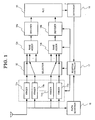
- Fig. 1 is a block diagram showing the circuit arrangement of an embodiment of the portable terminal set capable of receiving data from a broadcast service system according to the present invention.
- a portable telephone set according to the present invention comprises a plurality of fingers 11a to 11n (collectively referred to as 11), a selector 12, RAKE adders 13a and 13b, decoders 14a and 14b, an RCL 15, a detector 16, a reception controller 17 and a path searcher 18.
- the fingers 11 are circuits for multiplying signals received from base stations 21 and 22 by spread code at a timing designated by the reception controller 17, thereby obtaining a de-spread of the received signals (i.e., multi-path wave).
- the selector 12 is a circuit for transmitting the inversely dispersed received signals obtained in the fingers 11 to the RAKE adders 13a and 13b with spread code designated by the reception controller 17 and at a timing detected by the path searcher 18.
- the RAKE adders 13a and 13b synthesizes a plurality of inversely dispersed received signals (i.e., multi-path wave) relevant to the multi-path phenomenon.
- the RAKE adders 13a and 13b are circuits for adding together the same data from the base stations as received from the individual fingers 11 via the selector 12, such that the data are added together by in-phase addition at a matched timing.
- the RAKE adders 13a and 13b can restore the initial intensity with other delayed waves of higher intensities. Thus, it is possible to reduce the adverse effects of the fading.
- the decoders 14a and 14b are circuits for decoding the in-phase addition data from the RAKE adders 13a and 13d.
- the RLC 15 holds the decoded data from the decoders 14a and 14b for a predetermined period of time, and executes a selective combining process on the data on the basis of header data incorporated in the data. For example, when a defect is present in the data received from the decoder 14a, it is made up for with a corresponding part of the data received from the decoder 14b. When the defect cannot be made up for with the data received from the decoder 14b, the RLC 15 inputs the data to the detector 16 without making up for the defect. When no defect is present in the data from the two decoders, the RLC 15 discards data from one of the decoders only.
- the detector 16 is a circuit for detecting the no defect in the data subjected to the selective combining process in the RLC 15 for a predetermined period of time or detecting the presence of a defect in the data subjected to the selective combining process in the RLC 15 and reporting the detected content to the reception controller 17.
- the reception controller 17 controls the operation of the finger for receiving the data from the base station.
- the reception controller 17 also detects the difference between the timings of data reception from the base stations 21 and 22, respectively (hereinafter referred to as base station off-set), and controls, with the base station off-set, the interruption and resumption of the data processes in the fingers, the RAKE adder 13b, the decoder 14b and the RLC 15.
- the reception controller further controls the selector 12' such as to transmit the data from the fingers de-spreading data from the base station 21 to the RAKE adder 13a and transmit the data from the fingers de-spreadng data from the base station 22 to the RAKE adder 13b.
- the path searcher 18 is a circuit for detecting the timing of the multiplying of the received signals (i.e., multi-path wave) and the spread code by one another by taking the correlation of the spread codes of the received signals and a pilot signal.
- a portable terminal set 23 receives signals from the base stations 21 and 22 at a time in the neighborhood of the boundary between the base stations 22 and 23.
- Fig. 3 shows the reception of data from a plurality of base stations when the portable terminal set 23 is in base station boundary neighborhood.
- the portable terminal set 23 is receiving the same data from the base stations 21 and 22.
- the data from the base station 22 is transmitted and received later than the data from the base station 22.
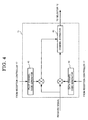
- Fig. 4 is a block diagram showing the arrangement of each finger 11 shown in Fig. 1.
- the finger 11 includes a pilot channel code generator 41, a data channel code generator and a channel estimator 43.
- the pilot channel code generator 41 causes de-spread of the pilot signal by multiplying the pilot signal and the spread signal by each other at the timing of reception of the spread code from the reception controller 17.
- the data channel code generator 42 causes de-spread of the received signals by multiplying the received signals and the spread code by one another at the timing of reception of the spread code from the reception controller 17.
- the channel estimator 43 executes, by using the inversely dispersed pilot signal, a process of canceling the adverse effects of fading or the like on the received signals (hereinafter referred to channel estimation).
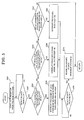
- the portable terminal set 23 When the portable terminal set 23 comes to the boundary between the coverage areas of the base stations 23 and 21 (as shown in Fig. 2) during its data reception in the coverage area of the base station 21 with common channel MBMS, for evading the quality deterioration of the received signals, it starts reception of the received signals of the same data from the base stations 21 and 22 (step S501).
- the received signal of the data from the base station 21 is inputted via the fingers 11, the selector 12, the RAKE adder 13a and the decoder 14a to the RCL 15.
- the RLC 15 executes the selective data combining process on the data and outputs the resultant data to the detector 16.
- the detector 16 makes a check as to whether data obtained in the selective data combining process in the RLC 5 has any defect (step S502) .
- the data defect check is made by confirming the content of the header added to the data. To the header, continuous numbers are assigned. When no data defect is present, the header content is constituted by continuous numbers.
- the detector 16 transmits, to the reception controller 17, data indicative of the fact that no defect is present in the data from the base station 21.
- the reception controller 17 receiving the data confirms the base station off-set with respect to the base station 22 from the base station 21, and determines the circuit for interrupting the process (steps S503, S505 and S507). This is done so because if the reception of data from the base station 22 is interrupted irrespective of the base station off-set, depending on the base station off-set it is no longer in time to receive defective data by resuming the reception of the data from the base station 22 after detection of a defect in the data from the base station 21.
- the reception controller 17 interrupts the de-spread of the data from the base station 22 in the fingers and the processes in the RAKE adder 13b, the decoder 14b and the RLC 15 (step S504).
- the reception controller 17 interrupts only the processes in the RAKE adder 13b, the decoder 14b and the RLC 15 (step S506) .
- the reception controller 17 interrupts the processes in the decoder 114b and RLC 15.
- the reception controller 17 does not interrupt the processes in the individual circuits.
- the detector 16 monitors for any defect present in the data inputted from the decoder 14a to the RLC 15 (step S509) .
- the detector 16 detects a defect in the data (step S509/"YES"), it transmits this data to the reception controller 17.
- the reception controller 17 receiving the data resumes the de-spread in the fingers and processes in the RAKE 13b and the decoder 14b concerning the data from the base station 22, of which data the de-spread and processes have been interrupted according to the base station off-set (step S510) .
Landscapes
- Engineering & Computer Science (AREA)
- Computer Networks & Wireless Communication (AREA)
- Signal Processing (AREA)
- Mobile Radio Communication Systems (AREA)
Abstract
Description
- This application claims benefit of Japanese Patent Application No. 2004-267556 filed on September 14, 2004, the contents of which are incorporated by the reference.
- The present invention relates to portable terminal set and portable terminal control method capable of suitably receiving data of a service for broadcasting data of a large volume of contents including video and images to a plurality of portable terminal sets.
- As a mobile communication system, a service is provided, which broadcasts data of a large volume of the same contents including voice and images to a plurality of portable terminal sets. This system is called MBMS (Multimedia Broadcast Multicast System).
- In MBMS of broadcast type, a number of portable terminals receive a common channel (hereinafter referred to a common channel). Therefore, it is impossible to control power of the common channel based on the receiving quality of each portable terminal. This means that it is impossible to control the receiving operation for each data broadcast via the common channel. For example, in the neighborhood of the boundary between the coverage areas of base stations, in which the received signal quality is subject to deterioration, the portable terminal receives the same data from a plurality of base stations at different timings spaced apart by a predetermined time interval, decodes the signal from each base station, and selects data of good or better quality (this method being hereinafter referred to as selective combining method).
- For example, even in the case of failure of normal reception and decoding of data transmitted from one base station, if data transmitted from a different base station later could be normally received and decoded, it is possible to select the defect-free data. It is thus possible to improve the received signal quality in the base station coverage area boundary neighborhood.
- Literate 1 (Japanese Patent Laid-open 2000-115070) proposes a one-time broadcast system, in which at the time of one-time broadcast one-time broadcast discrimination data for discriminating the one-time broadcast is transmitted to and stored in the receiving set side, at the time of one-time broadcast start the receiving set receives one-time broadcast data discrimination data from a relay means, compares the received data with already stored one-time broadcast discrimination data and, when the two data are identical, limits the reception. The system thus can present reception of the same one-time data in the receiving set a plurality of times.
- Literature 2 (Japanese Patent Laid-open 2001-103527) proposes a communication terminal set, in which at the time of soft hand-over for communication with a plurality of base stations the quality of down line signals from the plurality of base stations is checked, and a base station of good down line signal quality is selected to be the next transmitting station in selective synthesis unit. It is thus possible to obtain high quality reception.
- Literature 3 (Japanese Patent Laid-open Hei 11-284635) proposes an ATM cell transfer control method and transfer control system, which is effective in the case of burst cell defect generation during data transfer with AAL5 due to failure in a re-transfer process in a layer upper than a CPCS layer of the
AAL 5 as a result of transfer quality deterioration or reception level deterioration caused by fading in a wireless transmission section. In such case, introduction of unnecessary traffic in a subsequent stage ATM backbone network can be prevented by stopping the transmission of cell data subsequent to the defect cell providing cell number data of cells before the defect cell to cell data. Besides, the unnecessary traffic part can be made charge-free in the ATM backbone network to improve the efficiency in use of the ATM backbone network. - The above prior art inventions, however, have the following problems.
- The selective combining method for data broadcast by MBMS, even when earlier data transmitted from a certain base station has been suitably received and decoded, the same data later transmitted from a different base station is received and decoded, and RLC (Radio Link Control) as an upper rank layer checks whether the same data is already present and discards data determined to be the same. Therefore, consequently data receiving/decoding process on the same data is executed a plurality of times.
- According to the invention disclosed in
Literature 1, at the time of the one-time broadcast start the one-time broadcast discrimination data is received from the relay means and compared with the already stored one-time broadcast discrimination data, and when the two compared data are identical, the reception is limited, thereby preventing the reception of the same one-time broadcast by the receiving set a plurality of times. However, irrespective of whether the data transmitted earlier has been normally received, the reception of the data transmitted later is rejected. Therefore, data quality reduction is liable. - According to the invention disclosed in
Literature 2, at the time of soft hand-over for communication with a plurality of base stations, the quality of the down-line signals from the plurality of base stations is checked, and a base station with good down-line signal quality is selected to be the next transmitting station in the selective synthesis unit. It is thus possible to receive good quality line signals. However, receiving/decoding process is executed on the same data a plurality of times. - According to the invention disclosed in
Literature 3, in the case of detection of a defect in the received data, the reception of data subsequent to the defect detection is stopped, thus preventing unnecessary data reception and improving the network use efficiency. However, it is impossible to receive normal data. - The present invention has an object of providing portable terminal set and portable terminal control method, in which at the time of normal reception of certain data, receiving/decoding process on the same data broadcast later from a different base station is stopped, thus reducing power consumed in the data receiving/decoding process.
- According to an aspect of the present invention, there is provided a portable terminal set comprising a receiving means for receiving data from a plurality of base stations, an de-spreading means for de-spreading the data received by the receiving means, a combining means for combining the same data from the base stations de-spread in the de-spreading means, a decoding means for decoding the data combined in the combining means, a selectively combining means for selectively combining the decoded data from the decoding means, a detecting means for detecting any defect in the selectively combined data from the selectively combining means, and a control means for controlling the operation of the entire portable terminal set, wherein: the portable terminal set further comprises: a first counting means for counting a time required for the processes in the de-spreading means, the combining means, the decoding means, the selectively combining means and the detecting means; an off-set time counting means for counting an off-set time from the start of data reception from a base station till the start of data reception from a different base station; and when the detecting means detects no defect in the data and also when the time counted in the first counting means is shorter than the off-set time, the control means interrupts the process in the de-spreading means, the combining means and the decoding means on the data from the different base station.
- The portable terminal set further comprises a second counting means for counting a time required for the processes in the combining means, the decoding means, the detecting means and the selectively combining means; and when the detecting means detects no defect in the data and also when the time counted in the second counting means is shorter than the off-set time, the control means interrupts the processes in the combining means and the decoding means.
- The portable terminal set further comprises a third counting means for counting a time required for the processes in the decoding means, the detecting means and the selectively combining means; and when the detecting means detects no defect in the data and also when the time counted in the third counting means is shorter than the off-set time, the control means interrupts the process in the decoding means.
- The data incorporate sequence numbers indicative of their sequence and the detecting means detects a defect based on the sequence numbers. When the detecting means detects a defect in the data, the control means resumes the processes in all the means. The detecting means monitors for any defect for a predetermined period of time.
- According to another aspect of the present invention, there is provided a control method of a portable terminal set including a receiving means for receiving data from a plurality of base stations, an de-spreading means for de-spreading the data received by the receiving means, a combining means for combining the same data from the base stations de-spread in the de-spreading means, a decoding means for decoding the data combined in the combining means, a selectively combining means for selectively combining the decoded data from the decoding means, a detecting means for detecting any defect in the selectively combined data from the selectively combining means, and a control means for controlling the operation of the entire portable terminal set, the method comprising steps of: a first counting step for counting a time required for the processes in the de-spreading means, the combining means, the decoding means, the selectively combining means and the detecting means; an off-set time counting step for counting an off-set time from the start of data reception from a base station till the start of data reception from a different base station; and interrupting step for interrupting the process in the de-spreading means, the combining means and the decoding means on the data from the different base station when the detecting means detects no defect in the data and also when the time counted in the first counting means is shorter than the off-set time.
- The method further comprises a second counting step for counting a time required for the processes in the combining means, the decoding means, the detecting means and the selectively combining means; and interrupting step for interrupting the processes in the combining means and the decoding means when the detecting means detects no defect in the data and also when the time counted in the second counting means is shorter than the off-set time,
- The method further comprises a third counting step for counting a time required for the processes in the decoding means, the detecting means and the selectively combining means; and an interrupting step for interrupting the process in the decoding means when the detecting means detects no defect in the data and also when the time counted in the third counting means is shorter than the off-set time. The data incorporate sequence numbers indicative of their sequence and the detecting means detects a defect based on the sequence numbers. When the detecting means detects a defect in the data, the control means resumes the processes in all the means. The detecting means monitors for any defect for a predetermined period of time.
- According to further aspect of the present invention, there is provided a control method of a portable terminal set which receives data from a plurality of base stations, de-spreading the data received, combining the same data from the base stations de-spread in the de-spreading means, decoding the combined data, selectively combining the decoded data, detecting any defect in the selectively combined data, the method comprising steps of counting a first time required for the processes in the de-spreading, the combining, the decoding, the selectively combining and the detecting; counting an off-set time from the start of data reception from a base station till the start of data reception from a different base station; and interrupting the process in the de-spreading, the combining and the decoding on the data from the different base station when any defect is not detected in the data and also when the first time is shorter than the off-set time.
- According to the present invention, monitoring is made as to whether header numbers incorporated in the data transmitted to the RLC after the a decoding process are continuous to detect presence of no header number defect as a result of monitoring for a predetermined period of time. A correlation between the detected result and spread codes of received signals and a pilot signal is taken to detect a multi-path timing. From the detected multi-path timing, a base station is determined, in which data are received in fingers. With this means, when the signals transmitted from a certain base station and in selective combining reception is good and are free from any data defect, de-spread, RAKE reception and decoding on data transmitted from any different base station can be interrupted, thus reducing power required for the processes.
- With this means, the de-spread, RAKE reception and decoding on data transmitted from any different base station can be interrupted, thus reducing power required for the processes.
- Other objects and features will be clarified from the following description with reference to attached drawings.
-
- Fig. 1 is a block diagram showing the circuit arrangement of an embodiment of the portable terminal set according to the present invention;
- Fig. 2 is a view showing a state that a portable terminal set is located in the neighborhood of the boundary between two base stations;
- Fig. 3 is a view showing the state of reception of data from a plurality of base stations when the portable terminal set I located in the neighborhood of the base station boundary;
- Fig. 4 is a block diagram showing the circuit arrangement of a finger; and
- Fig. 5 is a flow chart illustrating the data receiving operation in the embodiment of the present invention.
- Preferred embodiments of the present invention will now be described with reference to the drawings.
- Fig. 1 is a block diagram showing the circuit arrangement of an embodiment of the portable terminal set capable of receiving data from a broadcast service system according to the present invention.
- A portable telephone set according to the present invention comprises a plurality of
fingers 11a to 11n (collectively referred to as 11), aselector 12,RAKE adders decoders detector 16, areception controller 17 and apath searcher 18. - The
fingers 11 are circuits for multiplying signals received frombase stations reception controller 17, thereby obtaining a de-spread of the received signals (i.e., multi-path wave). - The
selector 12 is a circuit for transmitting the inversely dispersed received signals obtained in thefingers 11 to theRAKE adders reception controller 17 and at a timing detected by thepath searcher 18. - In the wireless communication, a phenomenon of delayed reaching of radio waves reflected by buildings or the like on the earth occurs in addition to radio wave directly reaching from the transmitting side to the receiving side. Interference of the delayed waves causes communication quality reduction. For improving the communication quality, the
RAKE adders RAKE adders individual fingers 11 via theselector 12, such that the data are added together by in-phase addition at a matched timing. When the intensity of a certain received signal is reduced by the fading, theRAKE adders - The
decoders RAKE adders 13a and 13d. - The
RLC 15 holds the decoded data from thedecoders decoder 14a, it is made up for with a corresponding part of the data received from thedecoder 14b. When the defect cannot be made up for with the data received from thedecoder 14b, theRLC 15 inputs the data to thedetector 16 without making up for the defect. When no defect is present in the data from the two decoders, theRLC 15 discards data from one of the decoders only. - The
detector 16 is a circuit for detecting the no defect in the data subjected to the selective combining process in theRLC 15 for a predetermined period of time or detecting the presence of a defect in the data subjected to the selective combining process in theRLC 15 and reporting the detected content to thereception controller 17. - According to the result of detection in the
detector 16 and also from the multi-path timing detected in thepath searcher 18, thereception controller 17 controls the operation of the finger for receiving the data from the base station. Thereception controller 17 also detects the difference between the timings of data reception from thebase stations RAKE adder 13b, thedecoder 14b and theRLC 15. The reception controller further controls the selector 12' such as to transmit the data from the fingers de-spreading data from thebase station 21 to theRAKE adder 13a and transmit the data from the fingers de-spreadng data from thebase station 22 to theRAKE adder 13b. - The path searcher 18 is a circuit for detecting the timing of the multiplying of the received signals (i.e., multi-path wave) and the spread code by one another by taking the correlation of the spread codes of the received signals and a pilot signal.
- In this embodiment of the portable terminal set, as shown in Fig. 2, a portable terminal set 23 receives signals from the
base stations base stations - Fig. 3 shows the reception of data from a plurality of base stations when the portable terminal set 23 is in base station boundary neighborhood. In the example shown in Fig. 3, the portable terminal set 23 is receiving the same data from the
base stations base station 22 is transmitted and received later than the data from thebase station 22. - Fig. 4 is a block diagram showing the arrangement of each
finger 11 shown in Fig. 1. Thefinger 11 includes a pilotchannel code generator 41, a data channel code generator and achannel estimator 43. - The pilot
channel code generator 41 causes de-spread of the pilot signal by multiplying the pilot signal and the spread signal by each other at the timing of reception of the spread code from thereception controller 17. The datachannel code generator 42 causes de-spread of the received signals by multiplying the received signals and the spread code by one another at the timing of reception of the spread code from thereception controller 17. Thechannel estimator 43 executes, by using the inversely dispersed pilot signal, a process of canceling the adverse effects of fading or the like on the received signals (hereinafter referred to channel estimation). - Now, the data receiving process in the embodiment of the portable terminal set will be described with reference to Fig. 5.
- When the portable terminal set 23 comes to the boundary between the coverage areas of the
base stations 23 and 21 (as shown in Fig. 2) during its data reception in the coverage area of thebase station 21 with common channel MBMS, for evading the quality deterioration of the received signals, it starts reception of the received signals of the same data from thebase stations 21 and 22 (step S501). The received signal of the data from thebase station 21 is inputted via thefingers 11, theselector 12, theRAKE adder 13a and thedecoder 14a to theRCL 15. When the data from thebase station 21 has been inputted to theRLC 15 for a predetermined period of time, theRLC 15 executes the selective data combining process on the data and outputs the resultant data to thedetector 16. Thedetector 16 makes a check as to whether data obtained in the selective data combining process in theRLC 5 has any defect (step S502) . The data defect check is made by confirming the content of the header added to the data. To the header, continuous numbers are assigned. When no data defect is present, the header content is constituted by continuous numbers. - When no data defect is found in the data from the base station 21 (step S502/"YES"), the
detector 16 transmits, to thereception controller 17, data indicative of the fact that no defect is present in the data from thebase station 21. Thereception controller 17 receiving the data confirms the base station off-set with respect to thebase station 22 from thebase station 21, and determines the circuit for interrupting the process (steps S503, S505 and S507). This is done so because if the reception of data from thebase station 22 is interrupted irrespective of the base station off-set, depending on the base station off-set it is no longer in time to receive defective data by resuming the reception of the data from thebase station 22 after detection of a defect in the data from thebase station 21. Specifically, when the base station off-set is longer than the sum of the times taken in the processes in thefingers 11 for receiving data from thebase station 22, theRAKE adder 13b, thedecoder 14b and the RLC 15 (step S503/"YES"), thereception controller 17 interrupts the de-spread of the data from thebase station 22 in the fingers and the processes in theRAKE adder 13b, thedecoder 14b and the RLC 15 (step S504). When the base station off-set is shorter than the above sum of times but longer than the sum of the times required for the processes in theRAKE adder 13b, thecoder 14b and the RLC 15 (step S502/"NO", step S505/"YES"), thereception controller 17 interrupts only the processes in theRAKE adder 13b, thedecoder 14b and the RLC 15 (step S506) . When the base station off-set is shorter than the above time sum but longer than the sum of the times required for the processes in the decoder 14 and the RLC 15 (step S505/"NO" and step 507/"YES"), thereception controller 17 interrupts the processes in the decoder 114b andRLC 15. When the base station off-set is shorter than any of the above time sums (step S507/"NO") , thereception controller 17 does not interrupt the processes in the individual circuits. - As shown above, when the processes of the data received from the
base station 22 are partly interrupted according to the value of the base station off-set, only the decoding result from thedecoder 14a as data from thebase station 21 is inputted to the RLC 15 (this state being referred to as selective combining reception waiting state). In the selective combining reception waiting state, thedetector 16 monitors for any defect present in the data inputted from thedecoder 14a to the RLC 15 (step S509) . When thedetector 16 detects a defect in the data (step S509/"YES"), it transmits this data to thereception controller 17. Thereception controller 17 receiving the data resumes the de-spread in the fingers and processes in theRAKE 13b and thedecoder 14b concerning the data from thebase station 22, of which data the de-spread and processes have been interrupted according to the base station off-set (step S510) . - Changes in construction will occur to those skilled in the art and various apparently different modifications and embodiments may be made without departing from the scope of the present invention. The matter set forth in the foregoing description and accompanying drawings is offered by way of illustration only. It is therefore intended that the foregoing description be regarded as illustrative rather than limiting.
Claims (13)
- A portable terminal set comprising a receiving means for receiving data from a plurality of base stations, an de-spreading means for de-spreading the data received by the receiving means, a combining means for combining the same data from the base stations de-spread in the de-spreading means, a decoding means for decoding the data combined in the combining means, a selectively combining means for selectively combining the decoded data from the decoding means, a detecting means for detecting any defect in the selectively combined data from the selectively combining means, and a control means for controlling the operation of the entire portable terminal set, wherein:the portable terminal set further comprises:a first counting means for counting a time required for the processes in the de-spreading means, the combining means, the decoding means, the selectively combining means and the detecting means;an off-set time counting means for counting an off-set time from the start of data reception from a base station till the start of data reception from a different base station; andwhen the detecting means detects no defect in the data and also when the time counted in the first counting means is shorter than the off-set time, the control means interrupts the process in the de-spreading means, the combining means and the decoding means on the data from the different base station.
- A portable terminal set comprising a receiving means for receiving data from a plurality of base stations, an de-spreading means for de-spreading the data received by the receiving means, a combining means for combining the same data from the base stations de-spread in the de-spreading means, a decoding means for decoding the data combined in the combining means, a selectively combining means for selectively combining the decoded data from the decoding means, a detecting means for detecting any defect in the selectively combined data from the selectively combining means, and a control means for controlling the operation of the entire portable terminal set, wherein:the portable terminal set further comprises:a first counting means for counting a time required for the processes in the de-spreading means, the combining means, the decoding means, the selectively combining means and the detecting means;an off-set time counting means for counting an off-set time from the start of data reception from a base station till the start of data reception from a different base station;when the detecting means detects no defect in the data and also when the time counted in the first counting means is shorter than the off-set time, the control means interrupts the process in the de-spreading means, the combining means and the decoding means on the data from the different base station.a second counting means for counting a time required for the processes in the combining means, the decoding means, the detecting means and the selectively combining means; andwhen the detecting means detects no defect in the data and also when the time counted in the second counting means is shorter than the off-set time, the control means interrupts the processes in the combining means and the decoding means.
- The portable terminal set according to claim 1 or 2, wherein:the portable terminal set further comprises a third counting means for counting a time required for the processes in the decoding means, the detecting means and the selectively combining means; andwhen the detecting means detects no defect in the data and also when the time counted in the third counting means is shorter than the off-set time, the control means interrupts the process in the decoding means.
- The portable terminal set according to claim 1 or 2, wherein:the data incorporate sequence numbers indicative of their sequence and the detecting means detects a defect based on the sequence numbers.
- The portable terminal set according to claim 1 or 2, wherein when the detecting means detects a defect in the data, the control means resumes the processes in all the means.
- The portable terminal set according to claim 1 or 2, wherein the detecting means monitors for any defect for a predetermined period of time.
- A control method of a portable terminal set including a receiving means for receiving data from a plurality of base stations, an de-spreading means for de-spreading the data received by the receiving means, a combining means for combining the same data from the base stations de-spread in the de-spreading means, a decoding means for decoding the data combined in the combining means, a selectively combining means for selectively combining the decoded data from the decoding means, a detecting means for detecting any defect in the selectively combined data from the selectively combining means, and a control means for controlling the operation of the entire portable terminal set, the method comprising steps of:a first counting step for counting a time required for the processes in the de-spreading means, the combining means, the decoding means, the selectively combining means and the detecting means;an off-set time counting step for counting an off-set time from the start of data reception from a base station till the start of data reception from a different base station; andinterrupting step for interrupting the process in the de-spreading means, the combining means and the decoding means on the data from the different base station when the detecting means detects no defect in the data and also when the time counted in the first counting means is shorter than the off-set time.
- A control method of a portable terminal set including a receiving means for receiving data from a plurality of base stations, an de-spreading means for de-spreading the data received by the receiving means, a combining means for combining the same data from the base stations de-spread in the de-spreading means, a decoding means for decoding the data combined in the combining means, a selectively combining means for selectively combining the decoded data from the decoding means, a detecting means for detecting any defect in the selectively combined data from the selectively combining means, and a control means for controlling the operation of the entire portable terminal set, the method comprising steps of:a first counting step for counting a time required for the processes in the de-spreading means, the combining means, the decoding means, the selectively combining means and the detecting means;an off-set time counting step for counting an off-set time from the start of data reception from a base station till the start of data reception from a different base station;interrupting step for interrupting the process in the de-spreading means, the combining means and the decoding means on the data from the different base station when the detecting means detects no defect in the data and also when the time counted in the first counting means is shorter than the off-set time.a second counting step for counting a time required for the processes in the combining means, the decoding means, the detecting means and the selectively combining means; andinterrupting step for interrupting the processes in the combining means and the decoding means when the detecting means detects no defect in the data and also when the time counted in the second counting means is shorter than the off-set time, .
- The method according to claim 7 or 8, further comprising a third counting step for counting a time required for the processes in the decoding means, the detecting means and the selectively combining means; and an interrupting step for interrupting the process in the decoding means when the detecting means detects no defect in the data and also when the time counted in the third counting means is shorter than the off-set time,.
- The method according to claim 7 or 8, wherein the data incorporate sequence numbers indicative of their sequence and the detecting means detects a defect based on the sequence numbers.
- The method according to claim 7 or 8, wherein when the detecting means detects a defect in the data, the control means resumes the processes in all the means.
- The method according to claim 7 or 8, wherein the detecting means monitors for any defect for a predetermined period of time.
- A control method of a portable terminal set which receives data from a plurality of base stations, de-spreading the data received, combining the same data from the base stations de-spread in the de-spreading means, decoding the combined data, selectively combining the decoded data, detecting any defect in the selectively combined data, the method comprising steps of:counting a first time required for the processes in the de-spreading, the combining, the decoding, the selectively combining and the detecting;counting an off-set time from the start of data reception from a base station till the start of data reception from a different base station; andinterrupting the process in the de-spreading, the combining and the decoding on the data from the different base station when any defect is not detected in the data and also when the first time is shorter than the off-set time.
Applications Claiming Priority (1)
| Application Number | Priority Date | Filing Date | Title |
|---|---|---|---|
| JP2004267556A JP4556581B2 (en) | 2004-09-14 | 2004-09-14 | Portable terminal device, portable terminal control method, and program |
Publications (3)
| Publication Number | Publication Date |
|---|---|
| EP1646258A2 true EP1646258A2 (en) | 2006-04-12 |
| EP1646258A3 EP1646258A3 (en) | 2013-07-03 |
| EP1646258B1 EP1646258B1 (en) | 2015-01-14 |
Family
ID=35566179
Family Applications (1)
| Application Number | Title | Priority Date | Filing Date |
|---|---|---|---|
| EP20050019906 Expired - Lifetime EP1646258B1 (en) | 2004-09-14 | 2005-09-13 | Portable terminal set and control method thereof |
Country Status (4)
| Country | Link |
|---|---|
| US (1) | US7515628B2 (en) |
| EP (1) | EP1646258B1 (en) |
| JP (1) | JP4556581B2 (en) |
| CN (1) | CN100433573C (en) |
Families Citing this family (1)
| Publication number | Priority date | Publication date | Assignee | Title |
|---|---|---|---|---|
| US9385787B2 (en) * | 2014-01-29 | 2016-07-05 | Nokia Technologies Oy | Communications via wireless charging |
Family Cites Families (15)
| Publication number | Priority date | Publication date | Assignee | Title |
|---|---|---|---|---|
| US5745484A (en) * | 1995-06-05 | 1998-04-28 | Omnipoint Corporation | Efficient communication system using time division multiplexing and timing adjustment control |
| JPH09261153A (en) * | 1996-03-27 | 1997-10-03 | Aiwa Co Ltd | Portable terminal equipment |
| US5926503A (en) * | 1997-08-27 | 1999-07-20 | Motorola, Inc. | DS-CDMA receiver and forward link diversity method |
| JP3019057B2 (en) * | 1998-03-27 | 2000-03-13 | 日本電気株式会社 | ATM cell transfer control method and transfer control method |
| CN100420314C (en) * | 1998-07-24 | 2008-09-17 | 株式会社东芝 | CDMA mobile terminal device |
| JP2000115070A (en) * | 1998-09-30 | 2000-04-21 | Japan Radio Co Ltd | Broadcasting system by TDMA digital wireless communication |
| JP2001103529A (en) * | 1999-09-30 | 2001-04-13 | Matsushita Electric Ind Co Ltd | Communication terminal device and transmission station selection method |
| DE60131120T2 (en) * | 2000-02-02 | 2008-08-07 | Ntt Docomo Inc. | Radio base station, radio base station selection method, multicast signal transmission method and radio terminal |
| US6507619B1 (en) * | 2000-03-24 | 2003-01-14 | Atheros Communications, Inc. | Decoding system and method for digital communications |
| JP4371339B2 (en) * | 2000-03-30 | 2009-11-25 | 株式会社日立国際電気 | Reception area monitoring / control method and broadcasting system |
| JP2002238068A (en) * | 2001-02-08 | 2002-08-23 | Matsushita Electric Ind Co Ltd | Portable wireless devices |
| US6665283B2 (en) * | 2001-08-10 | 2003-12-16 | Motorola, Inc. | Method and apparatus for transmitting data in a packet data communication system |
| JP3877991B2 (en) * | 2001-10-01 | 2007-02-07 | パイオニア株式会社 | Receiver |
| JP4162401B2 (en) * | 2001-12-18 | 2008-10-08 | 富士通株式会社 | Portable terminal device and intermittent reception method |
| KR100876765B1 (en) * | 2002-05-10 | 2009-01-07 | 삼성전자주식회사 | Apparatus and method for retransmitting data in mobile communication system |
-
2004
- 2004-09-14 JP JP2004267556A patent/JP4556581B2/en not_active Expired - Fee Related
-
2005
- 2005-09-13 US US11/224,085 patent/US7515628B2/en not_active Expired - Fee Related
- 2005-09-13 EP EP20050019906 patent/EP1646258B1/en not_active Expired - Lifetime
- 2005-09-14 CN CNB2005101199121A patent/CN100433573C/en not_active Expired - Fee Related
Also Published As
| Publication number | Publication date |
|---|---|
| JP2006086658A (en) | 2006-03-30 |
| CN100433573C (en) | 2008-11-12 |
| US20060056495A1 (en) | 2006-03-16 |
| EP1646258B1 (en) | 2015-01-14 |
| EP1646258A3 (en) | 2013-07-03 |
| JP4556581B2 (en) | 2010-10-06 |
| US7515628B2 (en) | 2009-04-07 |
| CN1758559A (en) | 2006-04-12 |
Similar Documents
| Publication | Publication Date | Title |
|---|---|---|
| US6625138B2 (en) | Data transmission method and a radio system | |
| US6205129B1 (en) | Method and apparatus for variable and fixed forward link rate control in a mobile radio communications system | |
| US7058400B2 (en) | Forward and reverse link channels dynamic processing gain | |
| EP1468506B1 (en) | Selective combining of multiple non-synchronous transmissions in a wireless communication system | |
| US7266102B2 (en) | Mobile communication system, base station, method of controlling packet transmission timing used for the same mobile communication system and base station, and recording medium recording program thereof | |
| US20070025326A1 (en) | Adaptive transmission timing control method, wireless communication system and wireless communication device | |
| US20030214937A1 (en) | Method and apparatus for minimizing time of reception during paging | |
| WO2004056008A1 (en) | Method and apparatus for transmission power control | |
| WO2002001887A2 (en) | Method for synchronizing a mobile station to umts while operating in gsm dedicated mode | |
| AU734503B2 (en) | Apparatus and method for radio communications | |
| JP3035497B2 (en) | Mobile station mode switching method | |
| US20080049816A1 (en) | Mobile communication system using receiving apparatus and power supply control method | |
| US7372926B2 (en) | Radio receiver apparatus | |
| EP1646258B1 (en) | Portable terminal set and control method thereof | |
| AU6473300A (en) | Mobile communication terminal and method of detecting received signal strength | |
| US6904080B1 (en) | Receiving circuit, mobile terminal with receiving circuit, and method of receiving data | |
| US20050159127A1 (en) | Antenna selection system and method, and radio communication apparatus using the same | |
| US20090117894A1 (en) | Wireless Diversity Reception Apparatus and Reception Method | |
| JP3386976B2 (en) | Packet communication method | |
| EP1784041B1 (en) | Cellular communication system with common channel soft handoff and associated method | |
| US20060153143A1 (en) | System for receiving access request signal in a wireless communication system | |
| JP2003273780A (en) | CDM receiving apparatus and method for improving reception quality thereof | |
| JP4364661B2 (en) | Cell selection method and mobile communication device | |
| JP2001359136A (en) | Mobile station for cdma system and hand-off control method | |
| JP2006186519A (en) | Cell search processing device, mobile station equipped with cell search processing device, and cell search processing method |
Legal Events
| Date | Code | Title | Description |
|---|---|---|---|
| PUAI | Public reference made under article 153(3) epc to a published international application that has entered the european phase |
Free format text: ORIGINAL CODE: 0009012 |
|
| AK | Designated contracting states |
Kind code of ref document: A2 Designated state(s): AT BE BG CH CY CZ DE DK EE ES FI FR GB GR HU IE IS IT LI LT LU LV MC NL PL PT RO SE SI SK TR |
|
| AX | Request for extension of the european patent |
Extension state: AL BA HR MK YU |
|
| PUAL | Search report despatched |
Free format text: ORIGINAL CODE: 0009013 |
|
| AK | Designated contracting states |
Kind code of ref document: A3 Designated state(s): AT BE BG CH CY CZ DE DK EE ES FI FR GB GR HU IE IS IT LI LT LU LV MC NL PL PT RO SE SI SK TR |
|
| AX | Request for extension of the european patent |
Extension state: AL BA HR MK YU |
|
| RIC1 | Information provided on ipc code assigned before grant |
Ipc: H04B 1/7115 20110101ALI20130524BHEP Ipc: H04W 36/30 20090101ALI20130524BHEP Ipc: H04H 20/10 20080101AFI20130524BHEP Ipc: H04W 48/20 20090101ALI20130524BHEP Ipc: H04W 52/02 20090101ALI20130524BHEP |
|
| 17P | Request for examination filed |
Effective date: 20131021 |
|
| RBV | Designated contracting states (corrected) |
Designated state(s): AT BE BG CH CY CZ DE DK EE ES FI FR GB GR HU IE IS IT LI LT LU LV MC NL PL PT RO SE SI SK TR |
|
| AKX | Designation fees paid |
Designated state(s): DE FR GB IT |
|
| REG | Reference to a national code |
Ref country code: DE Ref legal event code: R079 Ref document number: 602005045665 Country of ref document: DE Free format text: PREVIOUS MAIN CLASS: H04Q0007380000 Ipc: H04B0001711500 |
|
| GRAP | Despatch of communication of intention to grant a patent |
Free format text: ORIGINAL CODE: EPIDOSNIGR1 |
|
| RIC1 | Information provided on ipc code assigned before grant |
Ipc: H04W 36/18 20090101ALN20140715BHEP Ipc: H04W 88/02 20090101ALN20140715BHEP Ipc: H04B 1/7115 20110101AFI20140715BHEP |
|
| RIC1 | Information provided on ipc code assigned before grant |
Ipc: H04W 36/18 20090101ALN20140722BHEP Ipc: H04W 88/02 20090101ALN20140722BHEP Ipc: H04B 1/7115 20110101AFI20140722BHEP |
|
| INTG | Intention to grant announced |
Effective date: 20140806 |
|
| GRAS | Grant fee paid |
Free format text: ORIGINAL CODE: EPIDOSNIGR3 |
|
| GRAA | (expected) grant |
Free format text: ORIGINAL CODE: 0009210 |
|
| AK | Designated contracting states |
Kind code of ref document: B1 Designated state(s): DE FR GB IT |
|
| REG | Reference to a national code |
Ref country code: GB Ref legal event code: FG4D |
|
| REG | Reference to a national code |
Ref country code: DE Ref legal event code: R096 Ref document number: 602005045665 Country of ref document: DE Effective date: 20150226 |
|
| REG | Reference to a national code |
Ref country code: DE Ref legal event code: R097 Ref document number: 602005045665 Country of ref document: DE |
|
| PLBE | No opposition filed within time limit |
Free format text: ORIGINAL CODE: 0009261 |
|
| STAA | Information on the status of an ep patent application or granted ep patent |
Free format text: STATUS: NO OPPOSITION FILED WITHIN TIME LIMIT |
|
| 26N | No opposition filed |
Effective date: 20151015 |
|
| PG25 | Lapsed in a contracting state [announced via postgrant information from national office to epo] |
Ref country code: IT Free format text: LAPSE BECAUSE OF FAILURE TO SUBMIT A TRANSLATION OF THE DESCRIPTION OR TO PAY THE FEE WITHIN THE PRESCRIBED TIME-LIMIT Effective date: 20150114 |
|
| REG | Reference to a national code |
Ref country code: DE Ref legal event code: R119 Ref document number: 602005045665 Country of ref document: DE |
|
| GBPC | Gb: european patent ceased through non-payment of renewal fee |
Effective date: 20150913 |
|
| REG | Reference to a national code |
Ref country code: FR Ref legal event code: ST Effective date: 20160531 |
|
| PG25 | Lapsed in a contracting state [announced via postgrant information from national office to epo] |
Ref country code: DE Free format text: LAPSE BECAUSE OF NON-PAYMENT OF DUE FEES Effective date: 20160401 Ref country code: GB Free format text: LAPSE BECAUSE OF NON-PAYMENT OF DUE FEES Effective date: 20150913 |
|
| PG25 | Lapsed in a contracting state [announced via postgrant information from national office to epo] |
Ref country code: FR Free format text: LAPSE BECAUSE OF NON-PAYMENT OF DUE FEES Effective date: 20150930 |