EP1642829A1 - Methods and systems for rain removal and DE-icing of monolithic windshields - Google Patents
Methods and systems for rain removal and DE-icing of monolithic windshields Download PDFInfo
- Publication number
- EP1642829A1 EP1642829A1 EP05077257A EP05077257A EP1642829A1 EP 1642829 A1 EP1642829 A1 EP 1642829A1 EP 05077257 A EP05077257 A EP 05077257A EP 05077257 A EP05077257 A EP 05077257A EP 1642829 A1 EP1642829 A1 EP 1642829A1
- Authority
- EP
- European Patent Office
- Prior art keywords
- windshields
- fluid
- air
- windshield
- onto
- Prior art date
- Legal status (The legal status is an assumption and is not a legal conclusion. Google has not performed a legal analysis and makes no representation as to the accuracy of the status listed.)
- Granted
Links
Images

Classifications
-
- B—PERFORMING OPERATIONS; TRANSPORTING
- B64—AIRCRAFT; AVIATION; COSMONAUTICS
- B64C—AEROPLANES; HELICOPTERS
- B64C1/00—Fuselages; Constructional features common to fuselages, wings, stabilising surfaces or the like
- B64C1/14—Windows; Doors; Hatch covers or access panels; Surrounding frame structures; Canopies; Windscreens accessories therefor, e.g. pressure sensors, water deflectors, hinges, seals, handles, latches, windscreen wipers
- B64C1/1476—Canopies; Windscreens or similar transparent elements
-
- B—PERFORMING OPERATIONS; TRANSPORTING
- B60—VEHICLES IN GENERAL
- B60S—SERVICING, CLEANING, REPAIRING, SUPPORTING, LIFTING, OR MANOEUVRING OF VEHICLES, NOT OTHERWISE PROVIDED FOR
- B60S1/00—Cleaning of vehicles
- B60S1/02—Cleaning windscreens, windows or optical devices
- B60S1/54—Cleaning windscreens, windows or optical devices using gas, e.g. hot air
-
- B—PERFORMING OPERATIONS; TRANSPORTING
- B64—AIRCRAFT; AVIATION; COSMONAUTICS
- B64D—EQUIPMENT FOR FITTING IN OR TO AIRCRAFT; FLIGHT SUITS; PARACHUTES; ARRANGEMENT OR MOUNTING OF POWER PLANTS OR PROPULSION TRANSMISSIONS IN AIRCRAFT
- B64D15/00—De-icing or preventing icing on exterior surfaces of aircraft
- B64D15/02—De-icing or preventing icing on exterior surfaces of aircraft by ducted hot gas or liquid
Definitions
- This invention relates to aircraft design, and, more specifically, to rain removal and de-icing methods and systems for aircraft windshields.
- a limiting factor in producing an aerodynamic forward fuselage is the planar cockpit windshield.
- the current window technology includes laminated windows that cannot be shaped with optimal aerodynamic curvature.
- the current glass ply laminates are planar and include windshield wipers for rain removal and integral heating plies for ice removal. The windshield wipers further reduce the aerodynamic efficiency of the forward fuselage.
- Injection molded polycarbonate windshields can be shaped to enable the aerodynamic reshaping of the forward fuselage. This reshaping results in drag reduction unachievable with current glass-laminated flat windows.
- Injection molded aerodynamically shaped windshields include double curved surfaces that are not ideally shaped to accommodate typical windshield wipers that rely on a planar surface for intimate contact. Additionally, the very nature of reshaping the forward fuselage is to reduce drag. Windshield wipers disrupt clean airflow over the nose and induce drag and noise.
- the injection-molded windshields are monolithic and do not include built-in laminated heating plies, therefore, they do not have ice removal capability that the current laminated glass windshields possess.
- a system includes one or more injection molded windshields and a frame coupled to the one or more injection-molded windshields and to the vehicle.
- the frame includes a channel that directs at least one of air or fluid onto an exterior surface of the one or more windshields.
- the frame includes one or more one-way check valves.
- a fluid pump is provided for pumping fluid through the channel and onto the one or more windshields.
- a reservoir is provided for storing de-icing fluid that is retrieved by the fluid pump.
- air sources are provided for pumping air through the channel and onto the one or more windshields.
- a controlling device for controlling one or more of the fluid pump or the one or more air sources.
- FIGURE I illustrates a front view of the fuselage of an aircraft that includes rain removal and de-icing components formed in accordance with an embodiment of the present invention
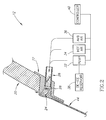
- FIGURE 2 illustrates a cut-away view of the fuselage section shown in FIGURE 1 including components of the system for performing rain and de-ice removal;
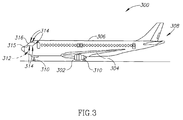
- FIGURE 3 is a side elevational view of an aircraft having a system in accordance with an alternate embodiment of the present invention.
- the present invention relates to advanced forward fuselage construction. Many specific details of certain embodiments of the invention are set forth in the following description and in FIGURES 1-3 to provide a thorough understanding of such embodiments. One skilled in the art, however, will understand that the present invention may have additional embodiments, or that the present invention may be practiced without several of the details described in the following description.
- an aircraft 10 includes a monolithic windshield system 12.
- the monolithic windshield system 12 includes one or more injection-molded windshields and rain removal and de-icing components.
- the rain removal and de-icing components are shown in more detail below in FIGURE 2.
- FIGURE 2 illustrates a cross-sectional view of a portion of the monolithic windshield system 12.
- the monolithic windshield system 12 includes monolithic windshield 20, a frame 22, a plenum 24, a flow device 26, and a check valve 28. Although only one plenum 24, flow device 26, and check valve 28 are shown in FIGURE 2, it will be appreciated that a plurality of these components will typically be used and may be distributed along selected portions of the perimeter of the windshield 20.
- the system 12 also includes a supply pump 32, a heated air source 34, an ambient air source 36, a de-ice fluid reservoir 38, and a controller 40.
- the windshield 20 is attached to the frame 22 by fasteners and/or adhesives.
- the frame 22 is attached to one or more support members 44 of the aircraft.
- the frame 22 receives one or more flow devices 26 at an interior surface of the frame 22.
- the plenum 24 is formed within the frame 22 and is positioned to receive fluid flow from one or more of the flow devices 26. Included within the one or more plenums 24 or the flow devices 26 are one-way check valves 28 that allow fluid or air to flow in the direction from the interior or the aircraft to the exterior of the aircraft.
- the supply pump 32, heated air source 34, and ambient air source 36 are all coupled to the one or more of the flow devices 26.
- the pump 32 retrieves de-icing fluid stored in the de-ice fluid reservoir 38 and pumps it through the flow devices 26, the check valves 28, and the plenums 24 and onto the windshield 20.
- the heated air source 34 transmits high pressure heated air through the flow devices 26, the check valves 28, the plenums 24 and onto the windshield 20.
- the ambient air source 36 transmits unheated, high pressure air through the flow devices 26, the check valves 28, the plenums 24 and onto the windshield 20.
- Hot air generation can be from various sources, such as passive Vortex tubes, ducted engine bleed air, or active in-line electric heating elements, such as HOTWATT Air Process Heaters. In one embodiment, air flow velocity may be approx 40,000 feet per minute (FPM).
- the flow passage through the plenum 24 is representative of a generally converging flow duct that turns the flow and exhausts the flow through the plenum 24 approximately tangentially over the surface of the windshield 20 or commercial air handlers can by employed such as ARTXTM Air Curtain, ARTXTM High-Thrust Wedge Jet, WindJet® Air Knife, or Vortron's Air PowerTM to introduce the airflow over the windshield 20.
- the flow passage through the plenum 24 may be designed to provide the desired degree of acceleration of the flow emanating from the pump 32 (or the heated air source 34 and ambient air source 36) to provide a suitable flow velocity onto the windshield 20.
- the duct or plenum 24 is bumped upward to alleviate any direct impingement of hot air on the windshield edge while at the same time create a "thermal blanket" for the localized deicing.
- the frame 22 receives a single flow device 26.
- the single flow device 26 supplies received high pressure air from the sources 34 or 36 or de-icing fluid from the pump 32 onto the windshield 20 through a single plenum 24.
- the single plenum 24 runs along the frame 22 below most or all of the bottom edge of the windshield 20.
- the controller 40 is in signal communication with the supply pump 32, the heated air source 34, and the ambient air source 36 for controlling operation of each of those devices.
- the controller 40 might include a de-icing switch or a rain removal switch in the cockpit.
- the controller 40 may also include sensors for sensing when a condition exists that would require rain or ice removal, and a switch component for automatically controlling the supply pump 32, the heated air source 34, and the ambient air source 36 based on output of the sensors.
- FIGURE 3 a side elevation view of an aircraft 300 having one or more of the disclosed embodiments of the present invention is shown.
- the aircraft 300 includes components and subsystems generally known in the pertinent art, and in the interest of brevity, will not be described in detail.
- the aircraft 300 generally includes one or more propulsion units 302 that are coupled to wing assemblies 304, or alternately, to a fuselage 306 or even other portions of the aircraft 300. Additionally, the aircraft 300 also includes a tail assembly 308 and a landing assembly 310 coupled to the fuselage 306.
- the aircraft 300 further includes other systems and subsystems generally required for the proper operation of the aircraft 300.
- the aircraft 300 includes a flight control system 312 (not shown in FIGURE 3), as well as a plurality of other electrical, mechanical and electromechanical systems that cooperatively perform a variety of tasks necessary for the operation of the aircraft 300.
- the aircraft 300 further includes one or more of the embodiments of windshield de-icing systems 314 according to the present invention, which may be incorporated into various portions of the frame 315 disposed about the windshield 316 of the aircraft 300.
- the aircraft 300 shown in FIGURE 3 is generally representative of a commercial passenger aircraft, which may include, for example, the 737, 747, 757, 767 and 777 commercial passenger aircraft available from The Boeing Company of Chicago, IL.
- the various embodiments of the present invention may also be incorporated into flight vehicles of other types. Examples of such flight vehicles may include manned or even unmanned military aircraft, rotary wing aircraft, or even ballistic flight vehicles, as illustrated more fully in various descriptive volumes, such as Jane's All The World's Aircraft, available from Jane's Information Group, Ltd. of Coulsdon, Surrey, UK.
- the plenum 24 may be located around the windshield 20 along any of the edges of the frame 22 in order to supply high pressure air or de-icing fluid onto the surface of the windshield 20.
- a single flow device 26 may be used to provide flow to a plurality of plenums 24, or a plurality of flow devices 26 may be used to provide flow to a single plenum 24. Accordingly, the scope of the invention is not limited by the disclosure of these preferred and alternate embodiments. Instead, the invention should be determined entirely by reference to the claims that follow.
Landscapes
- Engineering & Computer Science (AREA)
- Aviation & Aerospace Engineering (AREA)
- Mechanical Engineering (AREA)
- Air-Conditioning For Vehicles (AREA)
Abstract
Description
- This invention relates to aircraft design, and, more specifically, to rain removal and de-icing methods and systems for aircraft windshields.
- A limiting factor in producing an aerodynamic forward fuselage is the planar cockpit windshield. The current window technology includes laminated windows that cannot be shaped with optimal aerodynamic curvature. The current glass ply laminates are planar and include windshield wipers for rain removal and integral heating plies for ice removal. The windshield wipers further reduce the aerodynamic efficiency of the forward fuselage.
- Injection molded polycarbonate windshields can be shaped to enable the aerodynamic reshaping of the forward fuselage. This reshaping results in drag reduction unachievable with current glass-laminated flat windows. Injection molded aerodynamically shaped windshields include double curved surfaces that are not ideally shaped to accommodate typical windshield wipers that rely on a planar surface for intimate contact. Additionally, the very nature of reshaping the forward fuselage is to reduce drag. Windshield wipers disrupt clean airflow over the nose and induce drag and noise. Also, the injection-molded windshields are monolithic and do not include built-in laminated heating plies, therefore, they do not have ice removal capability that the current laminated glass windshields possess.
- Therefore, there exists a need for aerodynamically-shaped fuselages with rain removal and de-icing capabilities that don't hinder aerodynamic properties.
- The present invention provides systems and methods for providing rain and ice removal on a windshield. The system may be implemented on a vehicle, such as an aircraft. In one embodiment, a system includes one or more injection molded windshields and a frame coupled to the one or more injection-molded windshields and to the vehicle. The frame includes a channel that directs at least one of air or fluid onto an exterior surface of the one or more windshields.
- In accordance with further aspects of the invention, the frame includes one or more one-way check valves.
- In accordance with other aspects of the invention, a fluid pump is provided for pumping fluid through the channel and onto the one or more windshields.
- In accordance with still further aspects of the invention, a reservoir is provided for storing de-icing fluid that is retrieved by the fluid pump.
- In accordance with yet other aspects of the invention, air sources are provided for pumping air through the channel and onto the one or more windshields.
- In accordance with still another aspect of the invention, a controlling device is provided for controlling one or more of the fluid pump or the one or more air sources.
- Preferred and alternate embodiments of the present invention are described in detail below with reference to the following drawings.
- FIGURE I illustrates a front view of the fuselage of an aircraft that includes rain removal and de-icing components formed in accordance with an embodiment of the present invention;
- FIGURE 2 illustrates a cut-away view of the fuselage section shown in FIGURE 1 including components of the system for performing rain and de-ice removal; and
- FIGURE 3 is a side elevational view of an aircraft having a system in accordance with an alternate embodiment of the present invention.
- The present invention relates to advanced forward fuselage construction. Many specific details of certain embodiments of the invention are set forth in the following description and in FIGURES 1-3 to provide a thorough understanding of such embodiments. One skilled in the art, however, will understand that the present invention may have additional embodiments, or that the present invention may be practiced without several of the details described in the following description.
- As shown in FIGURE 1, an
aircraft 10 includes amonolithic windshield system 12. Themonolithic windshield system 12 includes one or more injection-molded windshields and rain removal and de-icing components. The rain removal and de-icing components are shown in more detail below in FIGURE 2. - FIGURE 2 illustrates a cross-sectional view of a portion of the
monolithic windshield system 12. Themonolithic windshield system 12 includesmonolithic windshield 20, aframe 22, aplenum 24, aflow device 26, and acheck valve 28. Although only oneplenum 24,flow device 26, andcheck valve 28 are shown in FIGURE 2, it will be appreciated that a plurality of these components will typically be used and may be distributed along selected portions of the perimeter of thewindshield 20. - As further shown in FIGURE 2, the
system 12 also includes asupply pump 32, aheated air source 34, anambient air source 36, ade-ice fluid reservoir 38, and acontroller 40. Thewindshield 20 is attached to theframe 22 by fasteners and/or adhesives. Theframe 22 is attached to one ormore support members 44 of the aircraft. Theframe 22 receives one ormore flow devices 26 at an interior surface of theframe 22. Theplenum 24 is formed within theframe 22 and is positioned to receive fluid flow from one or more of theflow devices 26. Included within the one ormore plenums 24 or theflow devices 26 are one-way check valves 28 that allow fluid or air to flow in the direction from the interior or the aircraft to the exterior of the aircraft. Thesupply pump 32, heatedair source 34, andambient air source 36 are all coupled to the one or more of theflow devices 26. - The
pump 32 retrieves de-icing fluid stored in thede-ice fluid reservoir 38 and pumps it through theflow devices 26, thecheck valves 28, and theplenums 24 and onto thewindshield 20. Theheated air source 34 transmits high pressure heated air through theflow devices 26, thecheck valves 28, theplenums 24 and onto thewindshield 20. Theambient air source 36 transmits unheated, high pressure air through theflow devices 26, thecheck valves 28, theplenums 24 and onto thewindshield 20. Hot air generation can be from various sources, such as passive Vortex tubes, ducted engine bleed air, or active in-line electric heating elements, such as HOTWATT Air Process Heaters. In one embodiment, air flow velocity may be approx 40,000 feet per minute (FPM). - As shown in FIGURE 2, in this embodiment, the flow passage through the
plenum 24 is representative of a generally converging flow duct that turns the flow and exhausts the flow through theplenum 24 approximately tangentially over the surface of thewindshield 20 or commercial air handlers can by employed such as ARTX™ Air Curtain, ARTX™ High-Thrust Wedge Jet, WindJet® Air Knife, or Vortron's AirPower™ to introduce the airflow over thewindshield 20. The flow passage through theplenum 24 may be designed to provide the desired degree of acceleration of the flow emanating from the pump 32 (or theheated air source 34 and ambient air source 36) to provide a suitable flow velocity onto thewindshield 20. The duct orplenum 24 is bumped upward to alleviate any direct impingement of hot air on the windshield edge while at the same time create a "thermal blanket" for the localized deicing. - In another embodiment, the
frame 22 receives asingle flow device 26. Thesingle flow device 26 supplies received high pressure air from thesources pump 32 onto thewindshield 20 through asingle plenum 24. Thesingle plenum 24 runs along theframe 22 below most or all of the bottom edge of thewindshield 20. - The
controller 40 is in signal communication with thesupply pump 32, theheated air source 34, and theambient air source 36 for controlling operation of each of those devices. Thecontroller 40 might include a de-icing switch or a rain removal switch in the cockpit. Thecontroller 40 may also include sensors for sensing when a condition exists that would require rain or ice removal, and a switch component for automatically controlling thesupply pump 32, theheated air source 34, and theambient air source 36 based on output of the sensors. - Those skilled in the art will also readily recognize that the foregoing embodiments may be incorporated into a wide variety of different systems. Referring now in particular to FIGURE 3, a side elevation view of an
aircraft 300 having one or more of the disclosed embodiments of the present invention is shown. With the exception of the embodiments ofwindshield de-icing systems 314 according to the present invention, theaircraft 300 includes components and subsystems generally known in the pertinent art, and in the interest of brevity, will not be described in detail. - As shown in FIGURE 3, the
aircraft 300 generally includes one ormore propulsion units 302 that are coupled towing assemblies 304, or alternately, to afuselage 306 or even other portions of theaircraft 300. Additionally, theaircraft 300 also includes atail assembly 308 and alanding assembly 310 coupled to thefuselage 306. Theaircraft 300 further includes other systems and subsystems generally required for the proper operation of theaircraft 300. For example, theaircraft 300 includes a flight control system 312 (not shown in FIGURE 3), as well as a plurality of other electrical, mechanical and electromechanical systems that cooperatively perform a variety of tasks necessary for the operation of theaircraft 300. Theaircraft 300 further includes one or more of the embodiments of windshieldde-icing systems 314 according to the present invention, which may be incorporated into various portions of theframe 315 disposed about thewindshield 316 of theaircraft 300. - The
aircraft 300 shown in FIGURE 3 is generally representative of a commercial passenger aircraft, which may include, for example, the 737, 747, 757, 767 and 777 commercial passenger aircraft available from The Boeing Company of Chicago, IL. In alternate embodiments, however, the various embodiments of the present invention may also be incorporated into flight vehicles of other types. Examples of such flight vehicles may include manned or even unmanned military aircraft, rotary wing aircraft, or even ballistic flight vehicles, as illustrated more fully in various descriptive volumes, such as Jane's All The World's Aircraft, available from Jane's Information Group, Ltd. of Coulsdon, Surrey, UK. - While preferred and alternate embodiments of the invention have been illustrated and described, as noted above, many changes can be made without departing from the spirit and scope of the invention. For example, the
plenum 24 may be located around thewindshield 20 along any of the edges of theframe 22 in order to supply high pressure air or de-icing fluid onto the surface of thewindshield 20. Furthermore, asingle flow device 26 may be used to provide flow to a plurality ofplenums 24, or a plurality offlow devices 26 may be used to provide flow to asingle plenum 24. Accordingly, the scope of the invention is not limited by the disclosure of these preferred and alternate embodiments. Instead, the invention should be determined entirely by reference to the claims that follow.
Claims (12)
- A windshield system comprising:one or more windshields preferably injection molded;a frame coupled to the one or more windshields and coupleable to a vehicle, the frame comprising:a channel for directing at least one of air or fluid onto an exterior surface of the one or more windshields.
- The system of Claim 1, wherein the frame includes one or more one-way check valves.
- The system of Claim 1 or 2, further comprising:a fluid pump for pumping fluid through the channel and onto the one or more windshields.
- The system of Claim 1, 2 or 3, further comprising:a reservoir for storing fluid that is retrieved by the fluid pump.
- The system of any of Claims 1-4, wherein the fluid stored in the reservoir is de-icing fluid.
- The system of any of Claims 1-5, further comprising:one or more air sources for pumping air through the channel and onto the one or more windshields.
- The system of any of Claims 1-6, further comprising:a controlling device for controlling one or more of the fluid pump or the one or more air sources.
- The system of Claim 6 or 7, wherein the one or more air sources includes a heated air source of directing heated air through the channel onto the one or more windshields.
- The system of Claim 6, 7 or 8, wherein the one or more air sources includes an ambient air source of directing ambient air through the channel onto the one or more windshields.
- An aircraft comprising:a fuselage;wing assemblies and an empennage operatively coupled to the fuselage;at least one propulsion unit operatively coupled to the fuselage; anda windshield system according to any of claims 1-9.
- A method of making a windshield system, the method comprising:providing one or more windshields; andcoupling a frame to the one or more windshields, wherein the frame includes a channel for directing at least one of air or fluid onto an exterior surface of the one or more windshields.
- The method of claim 11, using the system of any of claims 1-9.
Applications Claiming Priority (1)
| Application Number | Priority Date | Filing Date | Title |
|---|---|---|---|
| US10/958,240 US20060097111A1 (en) | 2004-10-04 | 2004-10-04 | Methods and systems for rain removal and de-icing of monolithic windshields |
Publications (2)
| Publication Number | Publication Date |
|---|---|
| EP1642829A1 true EP1642829A1 (en) | 2006-04-05 |
| EP1642829B1 EP1642829B1 (en) | 2012-12-05 |
Family
ID=35355184
Family Applications (1)
| Application Number | Title | Priority Date | Filing Date |
|---|---|---|---|
| EP05077257A Expired - Lifetime EP1642829B1 (en) | 2004-10-04 | 2005-10-04 | Methods and systems for rain removal and de-icing of monolithic windshields |
Country Status (3)
| Country | Link |
|---|---|
| US (1) | US20060097111A1 (en) |
| EP (1) | EP1642829B1 (en) |
| ES (1) | ES2396551T3 (en) |
Cited By (2)
| Publication number | Priority date | Publication date | Assignee | Title |
|---|---|---|---|---|
| US20160068272A1 (en) * | 2014-02-26 | 2016-03-10 | Airbus Helicopters | Method and a system for treating ice for an aircraft windshield |
| CN112977835A (en) * | 2021-05-11 | 2021-06-18 | 中国空气动力研究与发展中心低速空气动力研究所 | Anti-overflow device |
Families Citing this family (13)
| Publication number | Priority date | Publication date | Assignee | Title |
|---|---|---|---|---|
| CA2432599A1 (en) * | 2003-06-17 | 2004-12-17 | Pierre Bourgault | Method and apparatus for melting snow and ice |
| CA2487890C (en) * | 2004-11-19 | 2010-02-09 | Pierre Bourgault | Method and apparatus for de-icing aircraft and other snow or ice covered surfaces |
| DE102008019146A1 (en) * | 2008-04-16 | 2009-11-05 | Airbus Deutschland Gmbh | Deicing system for an aircraft |
| CA2672388C (en) * | 2009-07-28 | 2017-02-21 | Craig Mcconnell | Method and apparatus for preventing a build up of snow or dust |
| WO2012100323A1 (en) * | 2011-01-27 | 2012-08-02 | Craig Mcconnell | Method and apparatus for preventing a build up of snow or dust |
| US9384668B2 (en) | 2012-05-09 | 2016-07-05 | Singularity University | Transportation using network of unmanned aerial vehicles |
| US8757551B2 (en) * | 2012-06-04 | 2014-06-24 | Zamir Margalit | Foreign object damage protection device and system for aircraft |
| EP4001111A3 (en) | 2015-11-10 | 2022-08-17 | Matternet, Inc. | Methods and system for transportation using unmanned aerial vehicles |
| US10737792B2 (en) * | 2016-09-22 | 2020-08-11 | The Boeing Company | Turbofan engine fluid ice protection delivery system |
| US11548612B2 (en) * | 2021-03-26 | 2023-01-10 | Rosemount Aerospace Inc. | Windshield wiper fluid dispensing system |
| CN113232627A (en) * | 2021-06-11 | 2021-08-10 | 江西洪都航空工业集团有限责任公司 | Aircraft windshield jet flow demisting system and demisting method |
| US12097963B2 (en) * | 2021-10-06 | 2024-09-24 | Goodrich Corporation | Control of electric pump-driven deicer |
| US12145753B2 (en) * | 2022-08-09 | 2024-11-19 | Pete Bitar | Compact and lightweight drone delivery device called an ArcSpear electric jet drone system having an electric ducted air propulsion system and being relatively difficult to track in flight |
Citations (5)
| Publication number | Priority date | Publication date | Assignee | Title |
|---|---|---|---|---|
| GB754301A (en) * | 1954-04-19 | 1956-08-08 | North American Aviation Inc | Improvements in or relating to a method and apparatus for preventing moisture formation on the exterior surface of a panel |
| US5014606A (en) * | 1987-11-23 | 1991-05-14 | Steiner Norman F | Windshield defroster system for the Bell Helicopter Textron, Inc., model 206 helicopter and military derivatives |
| WO1998058826A1 (en) * | 1997-06-24 | 1998-12-30 | Micro-Heat, Inc. | Windshield de-icing |
| GB2341787A (en) * | 1998-09-24 | 2000-03-29 | Mohamad Alame | Air jet windscreen cleaners |
| US20040134995A1 (en) * | 2003-01-15 | 2004-07-15 | Keeler Russell M. | Vehicle windshield ice and snow melt system |
Family Cites Families (4)
| Publication number | Priority date | Publication date | Assignee | Title |
|---|---|---|---|---|
| JPH069850Y2 (en) * | 1987-06-15 | 1994-03-16 | 日本板硝子株式会社 | Vehicle window glass |
| US5419005A (en) * | 1993-12-14 | 1995-05-30 | Mori; Tokuo | Air wiper mechanism for vehicle |
| US6077361A (en) * | 1998-06-30 | 2000-06-20 | Glenn; Kenneth R. | Method and apparatus to remove at least one substance from a surface using a pressurized fluid |
| US6382712B1 (en) * | 2001-06-19 | 2002-05-07 | Deere & Company | Windshield defrosting air duct for a work vehicle |
-
2004
- 2004-10-04 US US10/958,240 patent/US20060097111A1/en not_active Abandoned
-
2005
- 2005-10-04 ES ES05077257T patent/ES2396551T3/en not_active Expired - Lifetime
- 2005-10-04 EP EP05077257A patent/EP1642829B1/en not_active Expired - Lifetime
Patent Citations (5)
| Publication number | Priority date | Publication date | Assignee | Title |
|---|---|---|---|---|
| GB754301A (en) * | 1954-04-19 | 1956-08-08 | North American Aviation Inc | Improvements in or relating to a method and apparatus for preventing moisture formation on the exterior surface of a panel |
| US5014606A (en) * | 1987-11-23 | 1991-05-14 | Steiner Norman F | Windshield defroster system for the Bell Helicopter Textron, Inc., model 206 helicopter and military derivatives |
| WO1998058826A1 (en) * | 1997-06-24 | 1998-12-30 | Micro-Heat, Inc. | Windshield de-icing |
| GB2341787A (en) * | 1998-09-24 | 2000-03-29 | Mohamad Alame | Air jet windscreen cleaners |
| US20040134995A1 (en) * | 2003-01-15 | 2004-07-15 | Keeler Russell M. | Vehicle windshield ice and snow melt system |
Cited By (4)
| Publication number | Priority date | Publication date | Assignee | Title |
|---|---|---|---|---|
| US20160068272A1 (en) * | 2014-02-26 | 2016-03-10 | Airbus Helicopters | Method and a system for treating ice for an aircraft windshield |
| US9868535B2 (en) * | 2014-02-26 | 2018-01-16 | Airbus Helicopters | Method and a system for treating ice for an aircraft windshield |
| CN112977835A (en) * | 2021-05-11 | 2021-06-18 | 中国空气动力研究与发展中心低速空气动力研究所 | Anti-overflow device |
| CN112977835B (en) * | 2021-05-11 | 2021-08-03 | 中国空气动力研究与发展中心低速空气动力研究所 | Anti-overflow device |
Also Published As
| Publication number | Publication date |
|---|---|
| US20060097111A1 (en) | 2006-05-11 |
| EP1642829B1 (en) | 2012-12-05 |
| ES2396551T3 (en) | 2013-02-22 |
Similar Documents
| Publication | Publication Date | Title |
|---|---|---|
| EP1642829B1 (en) | Methods and systems for rain removal and de-icing of monolithic windshields | |
| US10577091B2 (en) | Vertical take-off and landing aircraft | |
| EP3461743B1 (en) | Combined fluid ice protection and electronics cooling system | |
| US6207940B1 (en) | Microwave de-icing system for aircrafts | |
| EP3251948B1 (en) | Distributed compressor for improved integration and performance of an active fluid flow control system | |
| EP3656674B1 (en) | Leading-edge slat for an aircraft | |
| EP2979975A1 (en) | An aircraft with a framework structure that comprises at least one hollow frame. | |
| US20200247548A1 (en) | Apparatus and methods for providing air to pneumatic loads onboard aircraft | |
| WO2006022833A2 (en) | High performance airfoil with co-flow jet flow control | |
| US8052089B2 (en) | Anti-icing apparatus for honeycomb structures | |
| KR101710691B1 (en) | Air generator for an aircraft | |
| EP1699686B1 (en) | Method and device for suctioning the boundary layer | |
| CN112977836A (en) | Anti-icing device | |
| CA2433496A1 (en) | Blower assisted heating and defogging system for small aircraft | |
| EP4021808B1 (en) | Flow body for an aircraft having an integrated de-icing system | |
| CN112173125B (en) | Manned airship cabin ventilation and heating device and method | |
| US12202602B2 (en) | Fluid systems having a variable configuration | |
| CN204821482U (en) | Anti -icing defogging system of hybrid aircraft windscreen | |
| CN107416211A (en) | Air flow system and gyroplane inside gyroplane | |
| CN206954516U (en) | Air flow system and gyroplane inside gyroplane | |
| US12434817B2 (en) | Winglet trailing edge venting | |
| US10647304B2 (en) | Anti-fogging system for single engine aircraft | |
| CN120379898A (en) | Method for combining modular components of aircraft and aircraft |
Legal Events
| Date | Code | Title | Description |
|---|---|---|---|
| PUAI | Public reference made under article 153(3) epc to a published international application that has entered the european phase |
Free format text: ORIGINAL CODE: 0009012 |
|
| AK | Designated contracting states |
Kind code of ref document: A1 Designated state(s): AT BE BG CH CY CZ DE DK EE ES FI FR GB GR HU IE IS IT LI LT LU LV MC NL PL PT RO SE SI SK TR |
|
| AX | Request for extension of the european patent |
Extension state: AL BA HR MK YU |
|
| 17P | Request for examination filed |
Effective date: 20060412 |
|
| AKX | Designation fees paid |
Designated state(s): AT BE BG CH CY CZ DE DK EE ES FI FR GB GR HU IE IS IT LI LT LU LV MC NL PL PT RO SE SI SK TR |
|
| GRAP | Despatch of communication of intention to grant a patent |
Free format text: ORIGINAL CODE: EPIDOSNIGR1 |
|
| GRAS | Grant fee paid |
Free format text: ORIGINAL CODE: EPIDOSNIGR3 |
|
| GRAA | (expected) grant |
Free format text: ORIGINAL CODE: 0009210 |
|
| AK | Designated contracting states |
Kind code of ref document: B1 Designated state(s): AT BE BG CH CY CZ DE DK EE ES FI FR GB GR HU IE IS IT LI LT LU LV MC NL PL PT RO SE SI SK TR |
|
| REG | Reference to a national code |
Ref country code: GB Ref legal event code: FG4D |
|
| REG | Reference to a national code |
Ref country code: CH Ref legal event code: EP |
|
| REG | Reference to a national code |
Ref country code: AT Ref legal event code: REF Ref document number: 587119 Country of ref document: AT Kind code of ref document: T Effective date: 20121215 |
|
| REG | Reference to a national code |
Ref country code: IE Ref legal event code: FG4D |
|
| REG | Reference to a national code |
Ref country code: DE Ref legal event code: R096 Ref document number: 602005037259 Country of ref document: DE Effective date: 20130131 |
|
| REG | Reference to a national code |
Ref country code: ES Ref legal event code: FG2A Ref document number: 2396551 Country of ref document: ES Kind code of ref document: T3 Effective date: 20130222 |
|
| REG | Reference to a national code |
Ref country code: AT Ref legal event code: MK05 Ref document number: 587119 Country of ref document: AT Kind code of ref document: T Effective date: 20121205 |
|
| PG25 | Lapsed in a contracting state [announced via postgrant information from national office to epo] |
Ref country code: FI Free format text: LAPSE BECAUSE OF FAILURE TO SUBMIT A TRANSLATION OF THE DESCRIPTION OR TO PAY THE FEE WITHIN THE PRESCRIBED TIME-LIMIT Effective date: 20121205 Ref country code: SE Free format text: LAPSE BECAUSE OF FAILURE TO SUBMIT A TRANSLATION OF THE DESCRIPTION OR TO PAY THE FEE WITHIN THE PRESCRIBED TIME-LIMIT Effective date: 20121205 Ref country code: LT Free format text: LAPSE BECAUSE OF FAILURE TO SUBMIT A TRANSLATION OF THE DESCRIPTION OR TO PAY THE FEE WITHIN THE PRESCRIBED TIME-LIMIT Effective date: 20121205 |
|
| REG | Reference to a national code |
Ref country code: NL Ref legal event code: VDEP Effective date: 20121205 |
|
| REG | Reference to a national code |
Ref country code: LT Ref legal event code: MG4D |
|
| PG25 | Lapsed in a contracting state [announced via postgrant information from national office to epo] |
Ref country code: GR Free format text: LAPSE BECAUSE OF FAILURE TO SUBMIT A TRANSLATION OF THE DESCRIPTION OR TO PAY THE FEE WITHIN THE PRESCRIBED TIME-LIMIT Effective date: 20130306 Ref country code: SI Free format text: LAPSE BECAUSE OF FAILURE TO SUBMIT A TRANSLATION OF THE DESCRIPTION OR TO PAY THE FEE WITHIN THE PRESCRIBED TIME-LIMIT Effective date: 20121205 Ref country code: LV Free format text: LAPSE BECAUSE OF FAILURE TO SUBMIT A TRANSLATION OF THE DESCRIPTION OR TO PAY THE FEE WITHIN THE PRESCRIBED TIME-LIMIT Effective date: 20121205 Ref country code: PL Free format text: LAPSE BECAUSE OF FAILURE TO SUBMIT A TRANSLATION OF THE DESCRIPTION OR TO PAY THE FEE WITHIN THE PRESCRIBED TIME-LIMIT Effective date: 20121205 Ref country code: CY Free format text: LAPSE BECAUSE OF FAILURE TO SUBMIT A TRANSLATION OF THE DESCRIPTION OR TO PAY THE FEE WITHIN THE PRESCRIBED TIME-LIMIT Effective date: 20121205 |
|
| PG25 | Lapsed in a contracting state [announced via postgrant information from national office to epo] |
Ref country code: AT Free format text: LAPSE BECAUSE OF FAILURE TO SUBMIT A TRANSLATION OF THE DESCRIPTION OR TO PAY THE FEE WITHIN THE PRESCRIBED TIME-LIMIT Effective date: 20121205 |
|
| PG25 | Lapsed in a contracting state [announced via postgrant information from national office to epo] |
Ref country code: IS Free format text: LAPSE BECAUSE OF FAILURE TO SUBMIT A TRANSLATION OF THE DESCRIPTION OR TO PAY THE FEE WITHIN THE PRESCRIBED TIME-LIMIT Effective date: 20130405 Ref country code: SK Free format text: LAPSE BECAUSE OF FAILURE TO SUBMIT A TRANSLATION OF THE DESCRIPTION OR TO PAY THE FEE WITHIN THE PRESCRIBED TIME-LIMIT Effective date: 20121205 Ref country code: CZ Free format text: LAPSE BECAUSE OF FAILURE TO SUBMIT A TRANSLATION OF THE DESCRIPTION OR TO PAY THE FEE WITHIN THE PRESCRIBED TIME-LIMIT Effective date: 20121205 Ref country code: BE Free format text: LAPSE BECAUSE OF FAILURE TO SUBMIT A TRANSLATION OF THE DESCRIPTION OR TO PAY THE FEE WITHIN THE PRESCRIBED TIME-LIMIT Effective date: 20121205 Ref country code: EE Free format text: LAPSE BECAUSE OF FAILURE TO SUBMIT A TRANSLATION OF THE DESCRIPTION OR TO PAY THE FEE WITHIN THE PRESCRIBED TIME-LIMIT Effective date: 20121205 Ref country code: BG Free format text: LAPSE BECAUSE OF FAILURE TO SUBMIT A TRANSLATION OF THE DESCRIPTION OR TO PAY THE FEE WITHIN THE PRESCRIBED TIME-LIMIT Effective date: 20130305 |
|
| PG25 | Lapsed in a contracting state [announced via postgrant information from national office to epo] |
Ref country code: PT Free format text: LAPSE BECAUSE OF FAILURE TO SUBMIT A TRANSLATION OF THE DESCRIPTION OR TO PAY THE FEE WITHIN THE PRESCRIBED TIME-LIMIT Effective date: 20130405 Ref country code: NL Free format text: LAPSE BECAUSE OF FAILURE TO SUBMIT A TRANSLATION OF THE DESCRIPTION OR TO PAY THE FEE WITHIN THE PRESCRIBED TIME-LIMIT Effective date: 20121205 Ref country code: RO Free format text: LAPSE BECAUSE OF FAILURE TO SUBMIT A TRANSLATION OF THE DESCRIPTION OR TO PAY THE FEE WITHIN THE PRESCRIBED TIME-LIMIT Effective date: 20121205 |
|
| PLBE | No opposition filed within time limit |
Free format text: ORIGINAL CODE: 0009261 |
|
| STAA | Information on the status of an ep patent application or granted ep patent |
Free format text: STATUS: NO OPPOSITION FILED WITHIN TIME LIMIT |
|
| PG25 | Lapsed in a contracting state [announced via postgrant information from national office to epo] |
Ref country code: DK Free format text: LAPSE BECAUSE OF FAILURE TO SUBMIT A TRANSLATION OF THE DESCRIPTION OR TO PAY THE FEE WITHIN THE PRESCRIBED TIME-LIMIT Effective date: 20121205 |
|
| 26N | No opposition filed |
Effective date: 20130906 |
|
| REG | Reference to a national code |
Ref country code: DE Ref legal event code: R097 Ref document number: 602005037259 Country of ref document: DE Effective date: 20130906 |
|
| PG25 | Lapsed in a contracting state [announced via postgrant information from national office to epo] |
Ref country code: MC Free format text: LAPSE BECAUSE OF FAILURE TO SUBMIT A TRANSLATION OF THE DESCRIPTION OR TO PAY THE FEE WITHIN THE PRESCRIBED TIME-LIMIT Effective date: 20121205 |
|
| REG | Reference to a national code |
Ref country code: CH Ref legal event code: PL |
|
| REG | Reference to a national code |
Ref country code: IE Ref legal event code: MM4A |
|
| PG25 | Lapsed in a contracting state [announced via postgrant information from national office to epo] |
Ref country code: CH Free format text: LAPSE BECAUSE OF NON-PAYMENT OF DUE FEES Effective date: 20131031 Ref country code: LI Free format text: LAPSE BECAUSE OF NON-PAYMENT OF DUE FEES Effective date: 20131031 |
|
| PG25 | Lapsed in a contracting state [announced via postgrant information from national office to epo] |
Ref country code: IE Free format text: LAPSE BECAUSE OF NON-PAYMENT OF DUE FEES Effective date: 20131004 |
|
| PG25 | Lapsed in a contracting state [announced via postgrant information from national office to epo] |
Ref country code: TR Free format text: LAPSE BECAUSE OF FAILURE TO SUBMIT A TRANSLATION OF THE DESCRIPTION OR TO PAY THE FEE WITHIN THE PRESCRIBED TIME-LIMIT Effective date: 20121205 |
|
| PG25 | Lapsed in a contracting state [announced via postgrant information from national office to epo] |
Ref country code: HU Free format text: LAPSE BECAUSE OF FAILURE TO SUBMIT A TRANSLATION OF THE DESCRIPTION OR TO PAY THE FEE WITHIN THE PRESCRIBED TIME-LIMIT; INVALID AB INITIO Effective date: 20051004 Ref country code: LU Free format text: LAPSE BECAUSE OF NON-PAYMENT OF DUE FEES Effective date: 20131004 |
|
| REG | Reference to a national code |
Ref country code: FR Ref legal event code: PLFP Year of fee payment: 11 |
|
| REG | Reference to a national code |
Ref country code: FR Ref legal event code: PLFP Year of fee payment: 12 |
|
| REG | Reference to a national code |
Ref country code: FR Ref legal event code: PLFP Year of fee payment: 13 |
|
| REG | Reference to a national code |
Ref country code: FR Ref legal event code: PLFP Year of fee payment: 14 |
|
| P01 | Opt-out of the competence of the unified patent court (upc) registered |
Effective date: 20230503 |
|
| PGFP | Annual fee paid to national office [announced via postgrant information from national office to epo] |
Ref country code: DE Payment date: 20241029 Year of fee payment: 20 |
|
| PGFP | Annual fee paid to national office [announced via postgrant information from national office to epo] |
Ref country code: GB Payment date: 20241028 Year of fee payment: 20 |
|
| PGFP | Annual fee paid to national office [announced via postgrant information from national office to epo] |
Ref country code: FR Payment date: 20241025 Year of fee payment: 20 |
|
| PGFP | Annual fee paid to national office [announced via postgrant information from national office to epo] |
Ref country code: IT Payment date: 20241021 Year of fee payment: 20 Ref country code: ES Payment date: 20241104 Year of fee payment: 20 |
|
| REG | Reference to a national code |
Ref country code: DE Ref legal event code: R071 Ref document number: 602005037259 Country of ref document: DE |
|
| REG | Reference to a national code |
Ref country code: GB Ref legal event code: PE20 Expiry date: 20251003 |
|
| REG | Reference to a national code |
Ref country code: ES Ref legal event code: FD2A Effective date: 20251030 |
|
| PG25 | Lapsed in a contracting state [announced via postgrant information from national office to epo] |
Ref country code: ES Free format text: LAPSE BECAUSE OF EXPIRATION OF PROTECTION Effective date: 20251005 |