EP1640017A1 - Remedies for diseases with hypermyotonia - Google Patents
Remedies for diseases with hypermyotonia Download PDFInfo
- Publication number
- EP1640017A1 EP1640017A1 EP04746432A EP04746432A EP1640017A1 EP 1640017 A1 EP1640017 A1 EP 1640017A1 EP 04746432 A EP04746432 A EP 04746432A EP 04746432 A EP04746432 A EP 04746432A EP 1640017 A1 EP1640017 A1 EP 1640017A1
- Authority
- EP
- European Patent Office
- Prior art keywords
- toxin
- type
- botulinum
- solution
- botulinum toxin
- Prior art date
- Legal status (The legal status is an assumption and is not a legal conclusion. Google has not performed a legal analysis and makes no representation as to the accuracy of the status listed.)
- Withdrawn
Links
- 208000037265 diseases, disorders, signs and symptoms Diseases 0.000 title claims abstract description 32
- 201000010099 disease Diseases 0.000 title claims abstract description 25
- 208000002038 Muscle Hypertonia Diseases 0.000 title claims abstract description 13
- 239000003053 toxin Substances 0.000 claims abstract description 169
- 231100000765 toxin Toxicity 0.000 claims abstract description 168
- 108030001720 Bontoxilysin Proteins 0.000 claims abstract description 52
- 229940053031 botulinum toxin Drugs 0.000 claims abstract description 50
- 239000003814 drug Substances 0.000 claims abstract description 22
- 239000000126 substance Substances 0.000 claims abstract description 20
- 230000037303 wrinkles Effects 0.000 claims abstract description 19
- 230000005540 biological transmission Effects 0.000 claims abstract description 17
- 229940124597 therapeutic agent Drugs 0.000 claims abstract description 15
- 230000002232 neuromuscular Effects 0.000 claims abstract description 14
- 230000002490 cerebral effect Effects 0.000 claims abstract description 13
- 206010033799 Paralysis Diseases 0.000 claims abstract description 12
- 208000005392 Spasm Diseases 0.000 claims abstract description 12
- 230000003387 muscular Effects 0.000 claims abstract description 12
- 208000008035 Back Pain Diseases 0.000 claims abstract description 10
- 208000004350 Strabismus Diseases 0.000 claims abstract description 10
- 206010005159 blepharospasm Diseases 0.000 claims abstract description 10
- 230000000744 blepharospasm Effects 0.000 claims abstract description 10
- 206010002153 Anal fissure Diseases 0.000 claims abstract description 8
- 206010008190 Cerebrovascular accident Diseases 0.000 claims abstract description 7
- 206010019233 Headaches Diseases 0.000 claims abstract description 7
- 208000008930 Low Back Pain Diseases 0.000 claims abstract description 7
- 208000030858 Myofascial Pain Syndromes Diseases 0.000 claims abstract description 7
- 208000018737 Parkinson disease Diseases 0.000 claims abstract description 7
- 208000006011 Stroke Diseases 0.000 claims abstract description 7
- 206010044074 Torticollis Diseases 0.000 claims abstract description 7
- 208000035475 disorder Diseases 0.000 claims abstract description 7
- 208000014337 facial nerve disease Diseases 0.000 claims abstract description 7
- 231100000869 headache Toxicity 0.000 claims abstract description 7
- 201000006417 multiple sclerosis Diseases 0.000 claims abstract description 7
- 208000014094 Dystonic disease Diseases 0.000 claims abstract description 6
- 208000010118 dystonia Diseases 0.000 claims abstract description 6
- 238000000227 grinding Methods 0.000 claims abstract description 6
- 230000000699 topical effect Effects 0.000 claims abstract description 6
- 230000002485 urinary effect Effects 0.000 claims abstract description 6
- 238000002360 preparation method Methods 0.000 claims description 21
- 241000193155 Clostridium botulinum Species 0.000 claims description 9
- 239000004480 active ingredient Substances 0.000 claims description 6
- 239000007924 injection Substances 0.000 claims description 6
- 238000002347 injection Methods 0.000 claims description 6
- 206010028836 Neck pain Diseases 0.000 claims description 3
- 208000004095 Hemifacial Spasm Diseases 0.000 claims description 2
- 239000002552 dosage form Substances 0.000 claims description 2
- 239000003112 inhibitor Substances 0.000 claims description 2
- 239000000203 mixture Substances 0.000 abstract description 35
- 230000002401 inhibitory effect Effects 0.000 abstract description 16
- 231100001274 therapeutic index Toxicity 0.000 abstract description 15
- 208000002193 Pain Diseases 0.000 abstract description 6
- 208000000094 Chronic Pain Diseases 0.000 abstract description 5
- 206010063006 Facial spasm Diseases 0.000 abstract description 5
- 208000019695 Migraine disease Diseases 0.000 abstract description 5
- 206010027599 migraine Diseases 0.000 abstract description 5
- 230000009467 reduction Effects 0.000 abstract description 2
- 108700012359 toxins Proteins 0.000 description 157
- 239000000243 solution Substances 0.000 description 63
- 230000000052 comparative effect Effects 0.000 description 55
- 239000012085 test solution Substances 0.000 description 42
- 231100000111 LD50 Toxicity 0.000 description 27
- 238000007912 intraperitoneal administration Methods 0.000 description 26
- 238000012360 testing method Methods 0.000 description 26
- 101710117542 Botulinum neurotoxin type A Proteins 0.000 description 24
- 229940089093 botox Drugs 0.000 description 24
- 230000000694 effects Effects 0.000 description 24
- 241000699670 Mus sp. Species 0.000 description 21
- 238000004519 manufacturing process Methods 0.000 description 19
- 210000003205 muscle Anatomy 0.000 description 18
- 206010040954 Skin wrinkling Diseases 0.000 description 17
- 108091006905 Human Serum Albumin Proteins 0.000 description 16
- 102000008100 Human Serum Albumin Human genes 0.000 description 16
- FAPWRFPIFSIZLT-UHFFFAOYSA-M Sodium chloride Chemical compound [Na+].[Cl-] FAPWRFPIFSIZLT-UHFFFAOYSA-M 0.000 description 16
- 210000000548 hind-foot Anatomy 0.000 description 16
- 239000002504 physiological saline solution Substances 0.000 description 16
- 238000000034 method Methods 0.000 description 11
- 210000003105 phrenic nerve Anatomy 0.000 description 10
- 210000005036 nerve Anatomy 0.000 description 8
- 230000003252 repetitive effect Effects 0.000 description 8
- 239000011780 sodium chloride Substances 0.000 description 8
- 231100000419 toxicity Toxicity 0.000 description 8
- 230000001988 toxicity Effects 0.000 description 8
- 229940079593 drug Drugs 0.000 description 7
- 238000005259 measurement Methods 0.000 description 7
- 230000000144 pharmacologic effect Effects 0.000 description 7
- 239000002904 solvent Substances 0.000 description 7
- 241001465754 Metazoa Species 0.000 description 6
- 239000007788 liquid Substances 0.000 description 6
- 239000008351 acetate buffer Substances 0.000 description 5
- 230000004520 agglutination Effects 0.000 description 5
- 231100000252 nontoxic Toxicity 0.000 description 5
- 230000003000 nontoxic effect Effects 0.000 description 5
- 230000004526 pharmaceutical effect Effects 0.000 description 5
- XQFRJNBWHJMXHO-RRKCRQDMSA-N IDUR Chemical compound C1[C@H](O)[C@@H](CO)O[C@H]1N1C(=O)NC(=O)C(I)=C1 XQFRJNBWHJMXHO-RRKCRQDMSA-N 0.000 description 4
- 230000004071 biological effect Effects 0.000 description 4
- 230000008602 contraction Effects 0.000 description 4
- 230000003067 hemagglutinative effect Effects 0.000 description 4
- 229960004716 idoxuridine Drugs 0.000 description 4
- BASFCYQUMIYNBI-UHFFFAOYSA-N platinum Chemical compound [Pt] BASFCYQUMIYNBI-UHFFFAOYSA-N 0.000 description 4
- 239000006228 supernatant Substances 0.000 description 4
- 206010050031 Muscle strain Diseases 0.000 description 3
- 206010052904 Musculoskeletal stiffness Diseases 0.000 description 3
- 101710138657 Neurotoxin Proteins 0.000 description 3
- 230000002238 attenuated effect Effects 0.000 description 3
- 239000000872 buffer Substances 0.000 description 3
- 230000016784 immunoglobulin production Effects 0.000 description 3
- 239000002609 medium Substances 0.000 description 3
- 239000002581 neurotoxin Substances 0.000 description 3
- 231100000618 neurotoxin Toxicity 0.000 description 3
- 239000000825 pharmaceutical preparation Substances 0.000 description 3
- 239000002244 precipitate Substances 0.000 description 3
- 102000004169 proteins and genes Human genes 0.000 description 3
- 210000001519 tissue Anatomy 0.000 description 3
- QKNYBSVHEMOAJP-UHFFFAOYSA-N 2-amino-2-(hydroxymethyl)propane-1,3-diol;hydron;chloride Chemical compound Cl.OCC(N)(CO)CO QKNYBSVHEMOAJP-UHFFFAOYSA-N 0.000 description 2
- 108091003079 Bovine Serum Albumin Proteins 0.000 description 2
- 208000012661 Dyskinesia Diseases 0.000 description 2
- 241000699666 Mus <mouse, genus> Species 0.000 description 2
- 208000007101 Muscle Cramp Diseases 0.000 description 2
- 230000009471 action Effects 0.000 description 2
- 229940098773 bovine serum albumin Drugs 0.000 description 2
- 210000001097 facial muscle Anatomy 0.000 description 2
- 238000002523 gelfiltration Methods 0.000 description 2
- 238000005342 ion exchange Methods 0.000 description 2
- 230000001665 lethal effect Effects 0.000 description 2
- 206010025482 malaise Diseases 0.000 description 2
- 230000000116 mitigating effect Effects 0.000 description 2
- 230000017311 musculoskeletal movement, spinal reflex action Effects 0.000 description 2
- 230000003204 osmotic effect Effects 0.000 description 2
- WEXRUCMBJFQVBZ-UHFFFAOYSA-N pentobarbital Chemical compound CCCC(C)C1(CC)C(=O)NC(=O)NC1=O WEXRUCMBJFQVBZ-UHFFFAOYSA-N 0.000 description 2
- 239000008363 phosphate buffer Substances 0.000 description 2
- 229910052697 platinum Inorganic materials 0.000 description 2
- 238000011533 pre-incubation Methods 0.000 description 2
- 108090000623 proteins and genes Proteins 0.000 description 2
- 238000000926 separation method Methods 0.000 description 2
- 210000005070 sphincter Anatomy 0.000 description 2
- 208000026843 stiff neck Diseases 0.000 description 2
- 230000002459 sustained effect Effects 0.000 description 2
- 208000024891 symptom Diseases 0.000 description 2
- 230000009885 systemic effect Effects 0.000 description 2
- 231100000816 toxic dose Toxicity 0.000 description 2
- 238000000108 ultra-filtration Methods 0.000 description 2
- 206010002176 Anal stenosis Diseases 0.000 description 1
- 208000016583 Anus disease Diseases 0.000 description 1
- 241000193830 Bacillus <bacterium> Species 0.000 description 1
- 208000003508 Botulism Diseases 0.000 description 1
- 241001509415 Clostridium botulinum A Species 0.000 description 1
- 206010011469 Crying Diseases 0.000 description 1
- 238000002965 ELISA Methods 0.000 description 1
- 208000009531 Fissure in Ano Diseases 0.000 description 1
- 101710154606 Hemagglutinin Proteins 0.000 description 1
- 206010021118 Hypotonia Diseases 0.000 description 1
- 206010022998 Irritability Diseases 0.000 description 1
- GUBGYTABKSRVRQ-QKKXKWKRSA-N Lactose Natural products OC[C@H]1O[C@@H](O[C@H]2[C@H](O)[C@@H](O)C(O)O[C@@H]2CO)[C@H](O)[C@@H](O)[C@H]1O GUBGYTABKSRVRQ-QKKXKWKRSA-N 0.000 description 1
- 101710093908 Outer capsid protein VP4 Proteins 0.000 description 1
- 101710135467 Outer capsid protein sigma-1 Proteins 0.000 description 1
- 208000033952 Paralysis flaccid Diseases 0.000 description 1
- 102000007327 Protamines Human genes 0.000 description 1
- 108010007568 Protamines Proteins 0.000 description 1
- 101710176177 Protein A56 Proteins 0.000 description 1
- 229920005654 Sephadex Polymers 0.000 description 1
- 239000012507 Sephadex™ Substances 0.000 description 1
- 229920002684 Sepharose Polymers 0.000 description 1
- QAOWNCQODCNURD-UHFFFAOYSA-L Sulfate Chemical compound [O-]S([O-])(=O)=O QAOWNCQODCNURD-UHFFFAOYSA-L 0.000 description 1
- QAOWNCQODCNURD-UHFFFAOYSA-N Sulfuric acid Chemical compound OS(O)(=O)=O QAOWNCQODCNURD-UHFFFAOYSA-N 0.000 description 1
- 208000000323 Tourette Syndrome Diseases 0.000 description 1
- 208000016620 Tourette disease Diseases 0.000 description 1
- 206010046543 Urinary incontinence Diseases 0.000 description 1
- 230000003187 abdominal effect Effects 0.000 description 1
- 230000002159 abnormal effect Effects 0.000 description 1
- 230000005856 abnormality Effects 0.000 description 1
- 238000002835 absorbance Methods 0.000 description 1
- 230000001944 accentuation Effects 0.000 description 1
- 239000002253 acid Substances 0.000 description 1
- 230000001154 acute effect Effects 0.000 description 1
- 239000000654 additive Substances 0.000 description 1
- BFNBIHQBYMNNAN-UHFFFAOYSA-N ammonium sulfate Chemical class N.N.OS(O)(=O)=O BFNBIHQBYMNNAN-UHFFFAOYSA-N 0.000 description 1
- 239000000427 antigen Substances 0.000 description 1
- 108091007433 antigens Proteins 0.000 description 1
- 102000036639 antigens Human genes 0.000 description 1
- 210000000436 anus Anatomy 0.000 description 1
- 206010006514 bruxism Diseases 0.000 description 1
- 230000015556 catabolic process Effects 0.000 description 1
- 206010008129 cerebral palsy Diseases 0.000 description 1
- 239000003795 chemical substances by application Substances 0.000 description 1
- 210000000038 chest Anatomy 0.000 description 1
- 239000012141 concentrate Substances 0.000 description 1
- 210000002808 connective tissue Anatomy 0.000 description 1
- 238000005520 cutting process Methods 0.000 description 1
- 230000001419 dependent effect Effects 0.000 description 1
- 238000000502 dialysis Methods 0.000 description 1
- 238000002474 experimental method Methods 0.000 description 1
- 210000000256 facial nerve Anatomy 0.000 description 1
- 208000028331 flaccid paralysis Diseases 0.000 description 1
- 210000002683 foot Anatomy 0.000 description 1
- 238000009472 formulation Methods 0.000 description 1
- 230000008014 freezing Effects 0.000 description 1
- 238000007710 freezing Methods 0.000 description 1
- 239000006481 glucose medium Substances 0.000 description 1
- 239000000185 hemagglutinin Substances 0.000 description 1
- 239000012535 impurity Substances 0.000 description 1
- 238000011534 incubation Methods 0.000 description 1
- 238000010255 intramuscular injection Methods 0.000 description 1
- 239000007927 intramuscular injection Substances 0.000 description 1
- 239000008101 lactose Substances 0.000 description 1
- 231100000636 lethal dose Toxicity 0.000 description 1
- 235000013372 meat Nutrition 0.000 description 1
- 210000004379 membrane Anatomy 0.000 description 1
- 239000012528 membrane Substances 0.000 description 1
- 230000027939 micturition Effects 0.000 description 1
- 238000012986 modification Methods 0.000 description 1
- 230000004048 modification Effects 0.000 description 1
- 210000004400 mucous membrane Anatomy 0.000 description 1
- 230000036640 muscle relaxation Effects 0.000 description 1
- 229960001412 pentobarbital Drugs 0.000 description 1
- 210000000578 peripheral nerve Anatomy 0.000 description 1
- 238000001556 precipitation Methods 0.000 description 1
- 239000000047 product Substances 0.000 description 1
- 229940048914 protamine Drugs 0.000 description 1
- 239000007671 pyg medium Substances 0.000 description 1
- 230000004044 response Effects 0.000 description 1
- 238000005185 salting out Methods 0.000 description 1
- 210000002027 skeletal muscle Anatomy 0.000 description 1
- 208000019116 sleep disease Diseases 0.000 description 1
- 208000020685 sleep-wake disease Diseases 0.000 description 1
- 229910000162 sodium phosphate Inorganic materials 0.000 description 1
- 239000001488 sodium phosphate Substances 0.000 description 1
- 230000000638 stimulation Effects 0.000 description 1
- 230000008961 swelling Effects 0.000 description 1
- 210000002435 tendon Anatomy 0.000 description 1
- 230000001225 therapeutic effect Effects 0.000 description 1
- 238000002560 therapeutic procedure Methods 0.000 description 1
- 210000001541 thymus gland Anatomy 0.000 description 1
- RYFMWSXOAZQYPI-UHFFFAOYSA-K trisodium phosphate Chemical compound [Na+].[Na+].[Na+].[O-]P([O-])([O-])=O RYFMWSXOAZQYPI-UHFFFAOYSA-K 0.000 description 1
- 210000003462 vein Anatomy 0.000 description 1
- 210000001260 vocal cord Anatomy 0.000 description 1
- XLYOFNOQVPJJNP-UHFFFAOYSA-N water Substances O XLYOFNOQVPJJNP-UHFFFAOYSA-N 0.000 description 1
Images
Classifications
-
- A—HUMAN NECESSITIES
- A61—MEDICAL OR VETERINARY SCIENCE; HYGIENE
- A61K—PREPARATIONS FOR MEDICAL, DENTAL OR TOILETRY PURPOSES
- A61K38/00—Medicinal preparations containing peptides
- A61K38/16—Peptides having more than 20 amino acids; Gastrins; Somatostatins; Melanotropins; Derivatives thereof
- A61K38/43—Enzymes; Proenzymes; Derivatives thereof
- A61K38/46—Hydrolases (3)
- A61K38/48—Hydrolases (3) acting on peptide bonds (3.4)
- A61K38/4886—Metalloendopeptidases (3.4.24), e.g. collagenase
- A61K38/4893—Botulinum neurotoxin (3.4.24.69)
-
- A—HUMAN NECESSITIES
- A61—MEDICAL OR VETERINARY SCIENCE; HYGIENE
- A61P—SPECIFIC THERAPEUTIC ACTIVITY OF CHEMICAL COMPOUNDS OR MEDICINAL PREPARATIONS
- A61P25/00—Drugs for disorders of the nervous system
-
- Y—GENERAL TAGGING OF NEW TECHNOLOGICAL DEVELOPMENTS; GENERAL TAGGING OF CROSS-SECTIONAL TECHNOLOGIES SPANNING OVER SEVERAL SECTIONS OF THE IPC; TECHNICAL SUBJECTS COVERED BY FORMER USPC CROSS-REFERENCE ART COLLECTIONS [XRACs] AND DIGESTS
- Y02—TECHNOLOGIES OR APPLICATIONS FOR MITIGATION OR ADAPTATION AGAINST CLIMATE CHANGE
- Y02A—TECHNOLOGIES FOR ADAPTATION TO CLIMATE CHANGE
- Y02A50/00—TECHNOLOGIES FOR ADAPTATION TO CLIMATE CHANGE in human health protection, e.g. against extreme weather
- Y02A50/30—Against vector-borne diseases, e.g. mosquito-borne, fly-borne, tick-borne or waterborne diseases whose impact is exacerbated by climate change
Definitions
- the present invention relates to therapeutic agents for diseases caused by hypermyotonia where an M toxin of type A botulinum toxin as an active ingredient and, more particularly, it relates to therapeutic agents for strabismus, blepharospasm, hemifacial spasms, spasmodic torticollis, paralysis after cerebral apoplexy, infantile cerebral paralysis, spasmodic phoropathy, headache, lumbago,neck pain, back pain, stiff shoulder, muscular relaxation disorder accompanied by Parkinson's disease or multiple sclerosis, myofascial pain syndrome, masticatory spasm, chronic anal fissure, urinary inconsistency, grinding teeth, facial myokymia, tic, topical dystonia, wrinkles, etc.
- Clostridium botulinum is an obligate anaerobic Gram-positive bacillus and it has been known that toxin produced by Clostridium botulinum has a high affinity to terminal area of peripheral nerve and causes botulism, where a main symptom is flaccid paralysis of whole-body skeletal muscle.
- Toxin produced by Clostridium botulinum is classified into seven, A to G, according to the difference in antigenicity and may be further divided into M-, L- and LL toxins according to the difference in the structure of non-toxic protein bonding to neurotoxin.
- JP-A-2003-9897 there is a description that, when a botulinum toxin solution containing M-, L- and LL toxins is passed through a lactose column, it is able to be separated into an M toxin (hemagglutinin-negative substance or HA-negative substance) showing no hemagglutinating activity and L- and LL toxins (hemagglutinin-positive substances or HA-positive substances) showing a hemagglutinating activity.
- M toxin hemagglutinin-negative substance or HA-negative substance
- L- and LL toxins hemagglutinin-positive substances or HA-positive substances
- type A botulinum toxin there are three types, i.e. an M toxin (HA-negative substance) having molecular weight of about 300, 000 to which non-toxic component having no hemagglutinating activity to neurotoxin is bonded, an L toxin (HA-positive substance) having molecular weight of about 500,000 to which non-toxic component having hemagglutinating activity to an M toxin and an LL toxin (HA-positive substance) having molecular weight of about 900,000 where two L toxins are associated with each other.
- M toxin HA-negative substance
- L toxin HA-positive substance
- LL toxin HA-positive substance
- strabismus is caused by a breakdown of a balance in strain among sphincter muscles and blepharospasm is a disease where opening of eye becomes difficult by involuntary contraction of orbicular muscles of the eye.
- Facial spasms is a disease where facial muscle involuntarily shrinks due to irritability accentuation of facial nerves while spasmodic torticollis is a disease where abnormality is caused in head due to abnormal tension of muscle of neck.
- Masticatory spasm is a disease where involuntary movement happens in the lower jaw and movement of pulling up the lower jaw in both sides (closing the mouth) happens involuntarily.
- Spasmodic phonopathy is a disease where involuntary contraction happens in motor muscle of vocal cord whereby normal utterance is unable to be done.
- spasm of muscular fillets happens in a part of muscle bundle of the face in groups and, in the skin or the surface of mucous membrane, swaying or swelling sustained involuntary movement is observed.
- Tic is sometimes called Tourette's syndrome and is a disease where spasmodic, dramatic and sudden muscle spasm happens. Its examples are nictiation, wry face, head shaking and crying.
- Chronic anal fissure is accompanied by over-tension of anal sphincter caused by repetitive anal fissure and is a disease resulting in anal stenosis due to loss of elasticity of anus.
- a part of muscles of bladder strains excessively in an involuntary manner whereby a strong urination feeling is apt to be noted and it is a disease to urinate regardless of one's will.
- Myofascial pain syndrome is a disease where, as a result of acute disorder or repetitive overloaded stress (too much use) of muscle, hard stiffness-like part (strain belt) is formed in muscle and strong pain occurs and it has been known that muscle strain of hand and foot is excessively promoted after cerebral apoplexy or as a result of onset of infantile cerebral palsy, Parkinson's disease or multiple sclerosis. It has been also known that headache such as migraine occurs chronically when strain of muscles of neck or shoulder is excessively promoted and that strain of muscle is abnormally promoted by too much use of muscle or a sustained poor posture and, as a result, chronic pain or stiff neck such as lumbago, neck pain and back pain is induced.
- Wrinkles are generated by shrinking of muscle and examples of wrinkles on the face are wrinkles between the brow, wrinkles at corner of the eye and wrinkles at nose root.
- all of those strabismus, blepharospasm, facial spasms, spasmodic torticollis, paralysis after cerebral apoplexy, infantile cerebral paralysis, spasmodic phonopathy, headache such as migraine, chronic pain such as lumbago, stiff neck, muscular relaxation disorder accompanied with onset of Parkinson's disease or multiple sclerosis, myofascial pain syndrome, masticatory spasm, chronic anal fissure, urinary inconsistency, grinding of teeth, facial myokymia, tic, topical dystonia and wrinkles are caused by hypermyotonic action.
- botulinum toxin for treatment of diseases caused by hypermyotonia
- its examples are that botulinum toxin is used for treatment of strabismus in Ophthalmology, 87, 1044-1049 (1980) and that, in J . Fr. Ophthalmol. 13, 259-264 (1990), it is used for treatment of blepharospasm.
- JP-A-8-511536 there is disclosed a method where botulinum toxin is administered until a decrease in clinical response is caused and, after that, other botulinum toxin is administered to treat the disease of nerve muscle.
- JP-A-8-511537 there is disclosed a method where at least two of botulinum toxins of type A to type G are jointly administered whereby the disease of nerve muscle is treated.
- botulinum toxin is effective for treatment of wrinkles between brow.
- botulinum toxin effective for the treatment of blepharospasm, one-side face spasm, spasmodic strabismus, wrinkles, etc.
- BOTOX registered trademark
- Allergan BOTOX (registered trademark) (manufactured by Allergan) where an LL toxin of botulinum toxin is an active ingredient has been sold in the market.
- botulinum toxin has been known as a drug for mitigation of muscle strain
- the toxin itself is a drug having strong toxicity. Therefore, as a result of its side effect, botulinum toxin may cause systemic malaise by mitigation of muscle strain. Particularly when there is a mistake for its dose, severe side effect happens whereby it is desirable that dose of botulinum toxin is made as little as possible.
- a problem that, when botulinum toxin is repeatedly administered, its efficacy is attenuated has been pointed out and the phenomenon as such is thought to be dependent upon production of antibody to the toxin. Accordingly, a therapeutic agent which does not induce antibody production and does not lower its effect even when administered repeatedly has been demanded.
- BOTOX registered trademark
- M toxin constituting components
- L toxin and LL toxin constituting components
- an M toxin HA-negative substance
- an L toxin having molecular weight of about 500, 000 being bonded to non-toxic component showing agglutination activity to an M toxin and an LL toxin having molecular weight of about 900,000
- BOTOX registered trademark
- an M toxin of type A botulinum toxin is particularly effective as a therapeutic agent for various diseases caused by hypermyotonia whereby the present invention has been
- the present invention relates to an inhibitor for neuromuscular transmission or a therapeutic agent for the treatment of diseases caused by hypermyotonia comprising an M toxin (HA-negative substance) of type A botulinum toxin as an active ingredient.
- M toxin HA-negative substance
- the M toxin of type A botulinum toxin according to the present invention has an excellent inhibiting activity for neuromuscular transmission and a high therapeutic index, rarely induces the antibody production and shows little attenuation of the effect even upon repetitive administration whereby it is useful as a therapeutic agent for diseases caused by hypermyotonia such as strabismus, blepharospasm, facial spasms, spasmodic torticollis, paralysis after cerebral apoplexy, infantile cerebral paralysis, spasmodic phonopathy, headache such as migraine, chronic pain such as lumbago, stiff shoulder, muscular relaxation disorder accompanied with onset of Parkinson's disease or multiple sclerosis, myofascial pain syndrome, masticatory spasm, chronic anal fissure, urinary inconsistency, grinding of teeth, facial myokymia, tic, topical dystonia and wrinkles.
- wrinkles are those on the face such as wrinkles between the brow caused by shrinking of facial muscle, wrinkles at corner of the eye, wrinkle
- an inhibitive activity for nerve transmission of an M toxin (HA-negative substance) of type A botulinum toxin was evaluated by conducting a test on muscular tension.
- the muscular tension test specimens of diaphragm and phrenic nerve of mice were used and, as a comparative control drug, a mixture of L- and LL toxins of type A botulinum toxin was used.
- therapeutic index (TD 20 /ED 50 ) of an M toxin (HA-negative substance) of type A botulinum toxin was evaluated (here, ED 50 is a 50% effective dose while TD 20 is a 20% toxic dose) .
- mice were used and, as comparative control drugs, a mixture of L- and LL-toxins of type A botulinum toxin and a commercially available BOTOX (registered trademark) were used.
- BOTOX registered trademark
- those tests using comparative control drugs as such are standard in conducting in the same molar ratio
- biological activity (titer) of the toxin is used as a standard because it is difficult to specify the molecular weight of a mixture of L- and LL toxins.
- titer of the toxin is able to be expressed by an i.p. LD 50 value (50% lethal dose by intraperitoneal administration) and the test was conducted at the dose where the i.p. LD 50 values were the same.
- an M toxin of type A botulinum toxin when incubation is carried out using a strain which does not produce an HA-positive toxin such as 7I03-H, 7I05-H, Chiba-H, Kyoto-F and 804-1H among the type A Clostridium botulinum, it is possible to produce only M toxin of type A botulinum toxin whereby an operation for the separation of L- and LL toxins can be omitted.
- An M toxin of type A botulinum toxin does not have agglutination activity (HA-negative) and its molecular weight is within a range of 200,000 to 400,000.
- Land LL toxins of type A botulinum toxin have agglutination activity (HA-positive) and their molecular weights are 500,000 or higher. Accordingly, an M toxin of type A botulinum toxin is able to be clearly distinguished from L- and LL toxin thereof.
- Dose of an M toxin of type A botulinum toxin according to the present invention is able to be appropriately determined depending upon the object diseases and there is no particular limitation therefor.
- the therapeutic agent for diseases caused by hypermyotonia in accordance with the present invention is administered to muscle which is an acting site of the botulinum toxin.
- the dosage form thereof is mostly injection preparation and is able to be made into pharmaceutical preparation using a widely used art.
- the injection preparation of the present invention is able to be prepared by addition of additives such as an osmotic pressure adjusting agent (e.g., sodium chloride) and a buffer (e.g., sodium phosphate).
- an osmotic pressure adjusting agent e.g., sodium chloride
- a buffer e.g., sodium phosphate
- pH of the injection preparation of the present invention is adjusted at 4.0 to 7.5 and it is preferred that an osmotic pressure ratio is adjusted at near 1.0.
- the therapeutic agent for diseases caused by hypermyotonia according to the present invention can be injected by a commonly conducted intramuscular injection.
- the toxin for the test of type A botulinum toxin was produced by a method of Sakaguchi (Sakaguchi, G. (1983): Clostridium botulinum toxins. Pharmac. Ther., 19, 165-94) with partial modifications.
- Spore cell solution of type A 7I03 strain (a strain which produces "M toxin") of Clostridium botulinum stored by freezing was inoculated to a pre-incubation medium (cooked meat medium) and incubated at 30°C for 2 days.
- the pre-incubation medium was planted to a peptone-yeast extract-glucose medium (PYG medium) and incubated at 30°C for 3 days.
- 3N H 2 SO 4 solution was added to the culture solution to conduct a precipitation with an acid, the culture solution was adjusted to pH 3.5 and allowed to stand at room temperature for one night. On the next day, it was centrifuged (9200 ⁇ g, 20 minutes, 4°C) and the resulting precipitate was dissolved in 0.2M phosphate buffer (pH 6.0).
- the dissolved solution was adjusted to pH 6. 0 and stirred at 37°C for 1 hour to extract the toxin.
- the extract was centrifuged (9,200 ⁇ g, 20 minutes, 4°C), its supernatant liquid was collected and 0.2M phosphate buffer (pH 6.0) containing 2% of protamine was added to give a precipitate. This was centrifuged (9,200 ⁇ g, 15 minutes, 4°C) to give a supernatant liquid.
- a saturated ammonium sulfate solution (390 g/L) so as to make the sulfate 60% (w/v) and the mixture was allowed to stand for one night at 4°C to conduct a salting-out.
- a toxin fraction was collected with a fraction collector and the portion which is to be collected as "M toxin" was determined on the basis of toxicity measurement, OD value and electrophoretic images.
- the collected fraction was concentrated by ultrafiltration (Amicon YM 30) and, in order to raise its purity, the concentrate was passed through a gel filtration column [Sephadex G-200 (Pharmacia)] equilibrated with 0.05M acetate buffer (pH 6.0, 0.2M NaCl) and the collected toxin fraction was concentrated by ultrafiltration (Amicon YM 30) to obtain an original liquid (protein concentration: 1.78 mg/ml; biological activity: 2.0 ⁇ 10 7 i.p.
- LD 50 /ml of "M toxin” which is a type A botulinum toxin for a pharmacological test.
- M toxin a type A botulinum toxin for a pharmacological test.
- a 50% lethal dose (i.p. LD 50 ) after intraperitoneal administration to mice was used as an index.
- mice In order to compare the pharmacological activities of "M toxin” and "a mixture of L toxin and LL toxin", a muscular tension test was carried out using diaphragm and phrenic nerve specimens of mice (strain: ddY; sex: male).
- the M toxin of Production Example 1 was diluted with 20 mM Tris hydrochloride buffer containing 0.02% bovine serum albumin (pH 7.4; 150 mM NaCl) to prepare a test solution (3.4 ⁇ 10 5 i.p. LD 50 /ml).
- a mixture of L toxin and LL toxin of Production Example 2 was diluted with 20 mM Tris hydrochloride buffer containing 0.02% bovine serum albumin (pH 7.4; 150 mM NaCl) to prepare a test solution (5.5 ⁇ 10 5 i. p. LD 50 /ml).
- Pentobarbital 50 mg/kg was intraperitoneally administered to mice to euthanize them, the thorax was opened and right and left phrenic nerves were ligated at the height of thymus. Right and left phrenic nerves were carefully exfoliated from the surrounding connective tissue until diaphragm and then cutting was also done for abdominal side whereupon diaphragm and the twelfth rib were excised in a united manner where phrenic nerve was attached thereto.
- the excised diaphragm and phrenic nerve specimen was cut into one half in a water tank kept at 37°C and each half diaphragm piece was fixed to a tissue-supporting apparatus using a silk yarn being passed through the twelfth rib.
- the phrenic nerve was passed through a platinum electrode loop and transferred to a tissue bath where the diaphragm specimen was kept at 37°C.
- An end of silk yarn where another end thereof was ligated to diaphragm central tendon was connected to an isometric tension transducer and the diaphragm-phrenic nerve specimen was suspended in a Krebs solution.
- Rectangular wave where connecting time was 10 msec and voltage was 1 V was applied from a platinum electrode loop to phrenic nerve with a frequency of 0.25 Hz and shrinking tension of diaphragm induced by electric stimulation to the nerve was amplified with a tension amplifier and recorded with a pen recorder with a lapse of time.
- each of the test solution and the comparative solution was added to the Krebs solution in the tissue bath and attenuation of the tension induced by the toxin was recorded. After completion of the experiment, tension was analyzed for each of diaphragm and phrenic nerve specimens.
- each plot for the test solution in Fig. 1 is a mean value of 4 to 5 cases and each plot for the comparative solution therein is a mean value of 2 to 3 cases.
- Table 1 Inhibitory Activity for Neuromuscular Transmission Test Solution 1.00 Comparative Solution 0.10
- an inhibitory activity for neuromuscular transmission of the M toxin is about 10-fold that of a mixture of L toxin and LL toxin.
- the M toxin of Production Example 1 was diluted with a physiological saline containing 0.1% of human serum albumin to prepare five test solutions having different concentrations (1.2, 4, 12, 40 and 120 i.p. LD 50 /ml).
- a mixture of the L toxin and LL toxin of Production Example 2 was diluted with a physiological saline containing 0.1% of human serum albumin to prepare five "comparative solution A"s having different concentrations (1.2, 4, 12, 40 and 120 i.p. LD 50 /ml) in the same manner as in the test solutions.
- BOTOX registered trademark
- a physiological saline containing 0.1% of human serum albumin to prepare five "comparative solution B"s having different concentrations (1.2, 4, 12, 40 and 120 i.p. LD 50 /ml) in the same manner as in the test solution.
- the M toxin of Production Example 1 was diluted with a physiological saline containing 0.1% of human serum albumin to prepare four test solutions having different concentrations (20, 50, 100 and 150 i.p. LD 50 /ml).
- a mixture of the L toxin and LL toxin of Production Example 2 was diluted with a physiological saline containing 0.1% of human serum albumin to prepare four test solutions having different concentrations (20, 50, 100 and 150 i.p. LD 50 /ml) in the same manner as in the test solutions.
- BOTOX (registered trademark) was diluted with a physiological saline containing 0.1% of human serum albumin to prepare four test solutions having different concentrations (20, 50, 100 and 150 i.p. LD 50 /ml) in the same manner as in the test solutions.
- the therapeutic index is expressed as TD 20 /ED 50 .
- the ED 50 value of the M toxin is less than that of a mixture of L toxin and LL toxin and that of BOTOX (registered trademark) whereby the M toxin has higher pharmaceutical effect than the mixture of L toxin and LL toxin and BOTOX (registered trademark) and that the TD 20 value of the M toxin is twice as bigger than those of a mixture of L toxin and LL toxin and BOTOX (registered trademark) whereby the M toxin has far lower toxicity than the mixture of L toxin and LL toxin and BOTOX (registered trademark).
- the therapeutic index of the M toxin (test solution) is 3.4-fold that of a mixture of L toxin and LL toxin (comparative solution A) and is 5.1-fold that of BOTOX (registered trademark) (comparative solution B).
- the M toxin of Production Example 1 was diluted with a physiological saline containing 0.1% of human serum albumin to prepare a test solution (100 i.p. LD 50 /ml).
- a mixture of the L toxin and LL toxin of Production Example 2 was diluted with a physiological saline containing 0.1% of human serum albumin to prepare a comparative solution A (100 i.p. LD 50 /ml) in the same manner as in the test solution.
- BOTOX (registered trademark) was diluted with a physiological saline containing 0.1% of human serum albumin to prepare a comparative solution B (100 i.p. LD 50 /ml) in the same manner as in the test solution.
- Antibody was considered to be produced in the mouse where the absorbance ratio of the plasma collected after administration of toxin to that collected before the administration was 10 or more and the rate of the mice producing the antibody was calculated (Table 3). Table 3 Rate of Mice wherein Antibody was Produced (%) Test Solution 16 Comparative Solution A 29 Comparative Solution B 31
- the rate of mice wherein antibody was produced in the group to which the M toxin was administered was about one half of the rate in the group to which a mixture of L toxin and LL toxin was administered or in the group to which BOTOX (registered trademark) was administered. Accordingly, antigenicity of the M toxin was lower than that of L toxin, LL toxin or toxin contained in BOTOX (registered trademark).
- the M toxin of Production Example 1 was diluted with a physiological saline containing 0.1% of human serum albumin to prepare a test solution (2 i.p. LD 50 /ml).
- a mixture of the L toxin and the LL toxin of Production Example 2 was diluted with a physiological saline containing 0.1% of human serum albumin to prepare a comparative solution A (2 i.p. LD 50 /ml) in the same manner as in the test solution.
- BOTOX (registered trademark) was diluted with a physiological saline containing 0.1% of human serum albumin to prepare a comparative solution B (2 i.p. LD 50 /ml) in the same manner as in the test solution.
- Gastrocnemius of right hind paw of mice was administered each of solvent (a physiological saline containing 0.1% of human serum albumin), test solution, comparative solution A and comparative solution B at the dose of 7.5 ⁇ l (dose in terms of toxin for test solution, comparative solution A and comparative solution B each was 0.015 i.p. LD 50 ) .
- solvent a physiological saline containing 0.1% of human serum albumin
- test solution a physiological saline containing 0.1% of human serum albumin
- comparative solution A and comparative solution B each was 0.015 i.p. LD 50
- a common example, of pharmaceutical preparation of an injection preparation according to the present invention is as follows.
- Formulation 1 (in 100 mL) M toxin of type A botulinum toxin 1,000 units Human serum albumin 75 mg Physiological saline q. s.
- an M toxin of type A botulinum toxin has higher inhibitory action for neuromuscular transmission than a mixture of L toxin and LL toxin (HA-positive substance) and also has a therapeutic index of 3- to 5-fold that of a mixture of L toxin and LL toxin (HA-positive substance) or a commercially available BOTOX (registered trademark).
Landscapes
- Health & Medical Sciences (AREA)
- Life Sciences & Earth Sciences (AREA)
- Animal Behavior & Ethology (AREA)
- Veterinary Medicine (AREA)
- Chemical & Material Sciences (AREA)
- Engineering & Computer Science (AREA)
- Bioinformatics & Cheminformatics (AREA)
- Medicinal Chemistry (AREA)
- Pharmacology & Pharmacy (AREA)
- Public Health (AREA)
- General Health & Medical Sciences (AREA)
- Immunology (AREA)
- Epidemiology (AREA)
- Proteomics, Peptides & Aminoacids (AREA)
- Gastroenterology & Hepatology (AREA)
- Biomedical Technology (AREA)
- Neurology (AREA)
- Neurosurgery (AREA)
- Chemical Kinetics & Catalysis (AREA)
- General Chemical & Material Sciences (AREA)
- Nuclear Medicine, Radiotherapy & Molecular Imaging (AREA)
- Organic Chemistry (AREA)
- Medicines That Contain Protein Lipid Enzymes And Other Medicines (AREA)
- Medicines Containing Material From Animals Or Micro-Organisms (AREA)
Abstract
An M toxin of type A botulinum toxin (HA-negative substance) and a mixture of L toxin and LL toxin (HA-positive substance) are compared and examined in inhibitory action for neuromuscular transmission and therapeutic index. As a result, it is found that M toxin of type A botulinum toxin has characteristics of: 1) having an excellent inhibitory action for neuromuscular transmission; 2) showing a high therapeutic index; 3) showing a low antigenicity and 4) suffering from little reduction in efficacy even after repeatedly administered, compared with the
mixture of L toxin and LL toxin. Owing to these characterics, the M toxin of type A botulinum toxin is particularly useful as a therapeutic agent for diseases caused by hypermyotonia such as strabismus, blepharospasm, facial spasms, spasmodic torticollis, paralysis after cerebral apoplexy, infantile cerebral paralysis, spasmodic phonopathy, headache such as migraine, chronic pain such as lumbago, stiff shoulder, muscular relaxation disorder accompanied with onset of Parkinson's disease or multiple sclerosis, myofascial pain syndrome, masticatory spasm, chronic anal fissure, urinary inconsistency, grinding of teeth, facial myokymia, tic, topical dystonia and wrinkles.
mixture of L toxin and LL toxin. Owing to these characterics, the M toxin of type A botulinum toxin is particularly useful as a therapeutic agent for diseases caused by hypermyotonia such as strabismus, blepharospasm, facial spasms, spasmodic torticollis, paralysis after cerebral apoplexy, infantile cerebral paralysis, spasmodic phonopathy, headache such as migraine, chronic pain such as lumbago, stiff shoulder, muscular relaxation disorder accompanied with onset of Parkinson's disease or multiple sclerosis, myofascial pain syndrome, masticatory spasm, chronic anal fissure, urinary inconsistency, grinding of teeth, facial myokymia, tic, topical dystonia and wrinkles.
Description
- The present invention relates to therapeutic agents for diseases caused by hypermyotonia where an M toxin of type A botulinum toxin as an active ingredient and, more particularly, it relates to therapeutic agents for strabismus, blepharospasm, hemifacial spasms, spasmodic torticollis, paralysis after cerebral apoplexy, infantile cerebral paralysis, spasmodic phoropathy, headache, lumbago,neck pain, back pain, stiff shoulder, muscular relaxation disorder accompanied by Parkinson's disease or multiple sclerosis, myofascial pain syndrome, masticatory spasm, chronic anal fissure, urinary inconsistency, grinding teeth, facial myokymia, tic, topical dystonia, wrinkles, etc.
- Clostridium botulinum is an obligate anaerobic Gram-positive bacillus and it has been known that toxin produced by Clostridium botulinum has a high affinity to terminal area of peripheral nerve and causes botulism, where a main symptom is flaccid paralysis of whole-body skeletal muscle.
- Toxin produced by Clostridium botulinum is classified into seven, A to G, according to the difference in antigenicity and may be further divided into M-, L- and LL toxins according to the difference in the structure of non-toxic protein bonding to neurotoxin. In JP-A-2003-9897, there is a description that, when a botulinum toxin solution containing M-, L- and LL toxins is passed through a lactose column, it is able to be separated into an M toxin (hemagglutinin-negative substance or HA-negative substance) showing no hemagglutinating activity and L- and LL toxins (hemagglutinin-positive substances or HA-positive substances) showing a hemagglutinating activity.
- It has been known that, in type A botulinum toxin, there are three types, i.e. an M toxin (HA-negative substance) having molecular weight of about 300, 000 to which non-toxic component having no hemagglutinating activity to neurotoxin is bonded, an L toxin (HA-positive substance) having molecular weight of about 500,000 to which non-toxic component having hemagglutinating activity to an M toxin and an LL toxin (HA-positive substance) having molecular weight of about 900,000 where two L toxins are associated with each other.
- Incidentally, strabismus is caused by a breakdown of a balance in strain among sphincter muscles and blepharospasm is a disease where opening of eye becomes difficult by involuntary contraction of orbicular muscles of the eye. Facial spasms is a disease where facial muscle involuntarily shrinks due to irritability accentuation of facial nerves while spasmodic torticollis is a disease where abnormality is caused in head due to abnormal tension of muscle of neck. Masticatory spasm is a disease where involuntary movement happens in the lower jaw and movement of pulling up the lower jaw in both sides (closing the mouth) happens involuntarily. Grinding of the teeth is a symptom like masticatory spasm and is a phenomenon during sleeping being thought to be a kind of sleep disorder. Spasmodic phonopathy is a disease where involuntary contraction happens in motor muscle of vocal cord whereby normal utterance is unable to be done. In facial myokymia, spasm of muscular fillets happens in a part of muscle bundle of the face in groups and, in the skin or the surface of mucous membrane, swaying or swelling sustained involuntary movement is observed. Tic is sometimes called Tourette's syndrome and is a disease where spasmodic, dramatic and sudden muscle spasm happens. Its examples are nictiation, wry face, head shaking and crying. Chronic anal fissure is accompanied by over-tension of anal sphincter caused by repetitive anal fissure and is a disease resulting in anal stenosis due to loss of elasticity of anus. In imminent urinary incontinence, a part of muscles of bladder strains excessively in an involuntary manner whereby a strong urination feeling is apt to be noted and it is a disease to urinate regardless of one's will. Myofascial pain syndrome is a disease where, as a result of acute disorder or repetitive overloaded stress (too much use) of muscle, hard stiffness-like part (strain belt) is formed in muscle and strong pain occurs and it has been known that muscle strain of hand and foot is excessively promoted after cerebral apoplexy or as a result of onset of infantile cerebral palsy, Parkinson's disease or multiple sclerosis. It has been also known that headache such as migraine occurs chronically when strain of muscles of neck or shoulder is excessively promoted and that strain of muscle is abnormally promoted by too much use of muscle or a sustained poor posture and, as a result, chronic pain or stiff neck such as lumbago, neck pain and back pain is induced. Wrinkles are generated by shrinking of muscle and examples of wrinkles on the face are wrinkles between the brow, wrinkles at corner of the eye and wrinkles at nose root. As such, all of those strabismus, blepharospasm, facial spasms, spasmodic torticollis, paralysis after cerebral apoplexy, infantile cerebral paralysis, spasmodic phonopathy, headache such as migraine, chronic pain such as lumbago, stiff neck, muscular relaxation disorder accompanied with onset of Parkinson's disease or multiple sclerosis, myofascial pain syndrome, masticatory spasm, chronic anal fissure, urinary inconsistency, grinding of teeth, facial myokymia, tic, topical dystonia and wrinkles are caused by hypermyotonic action.
- With regard to utilization of botulinum toxin for treatment of diseases caused by hypermyotonia, its examples are that botulinum toxin is used for treatment of strabismus in Ophthalmology, 87, 1044-1049 (1980) and that, in J. Fr. Ophthalmol. 13, 259-264 (1990), it is used for treatment of blepharospasm. In JP-A-8-511536, there is disclosed a method where botulinum toxin is administered until a decrease in clinical response is caused and, after that, other botulinum toxin is administered to treat the disease of nerve muscle. In JP-A-8-511537, there is disclosed a method where at least two of botulinum toxins of type A to type G are jointly administered whereby the disease of nerve muscle is treated. In "Therapy with Botulinum Toxin", Marcel Dekker, New York, 1994, pages 577-595, it is reported that botulinum toxin is effective for treatment of wrinkles between brow.
- Actually, as a botulinum toxin effective for the treatment of blepharospasm, one-side face spasm, spasmodic strabismus, wrinkles, etc., BOTOX (registered trademark) (manufactured by Allergan) where an LL toxin of botulinum toxin is an active ingredient has been sold in the market.
- However, in any of the aforementioned literatures, there is neither description nor suggestion at all for application of an M toxin of type A botulinum toxin (HA-negative substance) for the treatment of diseases caused by hypermyotonia such as strabismus, blepharospasm and wrinkles.
- Although botulinum toxin has been known as a drug for mitigation of muscle strain, the toxin itself is a drug having strong toxicity. Therefore, as a result of its side effect, botulinum toxin may cause systemic malaise by mitigation of muscle strain. Particularly when there is a mistake for its dose, severe side effect happens whereby it is desirable that dose of botulinum toxin is made as little as possible. In addition, a problem that, when botulinum toxin is repeatedly administered, its efficacy is attenuated has been pointed out and the phenomenon as such is thought to be dependent upon production of antibody to the toxin. Accordingly, a therapeutic agent which does not induce antibody production and does not lower its effect even when administered repeatedly has been demanded. Although BOTOX (registered trademark) where an LL toxin of botulinum toxin is an active ingredient has been sold in the market already, there has been a demand for far better products in view of pharmaceutical effect and side effect.
- The present inventors have carried out intensive studies paying their attention to the constituting components (M toxin, L toxin and LL toxin) of type A botulinum toxin and, as a result, they have found that an M toxin (HA-negative substance) having molecular weight of about 300,000 being bonded to non-toxic component showing no agglutination activity to neurotoxin has a better inhibiting activity to nerve muscle transmission than a mixture of an L toxin having molecular weight of about 500, 000 being bonded to non-toxic component showing agglutination activity to an M toxin and an LL toxin having molecular weight of about 900,000 (HA-positive substance), has a therapeutic index of five times higher than commercially available BOTOX (registered trademark), rarely produces an antibody and is able to maintain its effect even upon repetitive administration whereby an M toxin of type A botulinum toxin is particularly effective as a therapeutic agent for various diseases caused by hypermyotonia whereby the present invention has been achieved.
- The present invention relates to an inhibitor for neuromuscular transmission or a therapeutic agent for the treatment of diseases caused by hypermyotonia comprising an M toxin (HA-negative substance) of type A botulinum toxin as an active ingredient.
- The M toxin of type A botulinum toxin according to the present invention has an excellent inhibiting activity for neuromuscular transmission and a high therapeutic index, rarely induces the antibody production and shows little attenuation of the effect even upon repetitive administration whereby it is useful as a therapeutic agent for diseases caused by hypermyotonia such as strabismus, blepharospasm, facial spasms, spasmodic torticollis, paralysis after cerebral apoplexy, infantile cerebral paralysis, spasmodic phonopathy, headache such as migraine, chronic pain such as lumbago, stiff shoulder, muscular relaxation disorder accompanied with onset of Parkinson's disease or multiple sclerosis, myofascial pain syndrome, masticatory spasm, chronic anal fissure, urinary inconsistency, grinding of teeth, facial myokymia, tic, topical dystonia and wrinkles. Examples of wrinkles are those on the face such as wrinkles between the brow caused by shrinking of facial muscle, wrinkles at corner of the eye, wrinkles at nose root and wrinkles at the chin.
- Although details thereof will be mentioned under the item of pharmacological tests, an inhibitive activity for nerve transmission of an M toxin (HA-negative substance) of type A botulinum toxin was evaluated by conducting a test on muscular tension. In the muscular tension test, specimens of diaphragm and phrenic nerve of mice were used and, as a comparative control drug, a mixture of L- and LL toxins of type A botulinum toxin was used. By conducting a test on grip of hind paw of mice, therapeutic index (TD20/ED50) of an M toxin (HA-negative substance) of type A botulinum toxin was evaluated (here, ED50 is a 50% effective dose while TD20 is a 20% toxic dose) . Further, antigenicity of an M toxin of type A botulinum toxin was evaluated by a test for the measurement of antibody value. In the grip test of hind paw and measurement test for antibody value as such, mice were used and, as comparative control drugs, a mixture of L- and LL-toxins of type A botulinum toxin and a commercially available BOTOX (registered trademark) were used. Although those tests using comparative control drugs as such are standard in conducting in the same molar ratio, biological activity (titer) of the toxin is used as a standard because it is difficult to specify the molecular weight of a mixture of L- and LL toxins. Thus, titer of the toxin is able to be expressed by an i.p. LD50 value (50% lethal dose by intraperitoneal administration) and the test was conducted at the dose where the i.p. LD50 values were the same.
- Although an M toxin having the same titer as that of a mixture of L- and LL toxins was used, it has been found as a result of muscular tension test that the M toxin achieves an inhibitory activity for nerve transmission about 10 times as high as that of a mixture of L- and LL toxins. It is usual to predict that toxins having the same titer achieve the same effect but the aforementioned finding is entirely contrary to such a prediction. As a result of a grip test of hind paw, it has been also found that the therapeutic index (TD20/ED50) of an M toxin of type A botulinum toxin is about five-fold that of the commercially available BOTOX (registered trademark). As a result of the test for measurement of antibody value, it has been further found that antigenicity of an M toxin of type A botulinum toxin is lower than that of BOTOX (registered trademark) and that an M toxin of type A botulinum toxin has less reduction in the effect even upon repeated administration as compared with BOTOX (registered trademark). From those results, it is likely that, when an M toxin of type A botulinum toxin is used, far higher therapeutic effect is achieved and occurrence of side effects such as systemic malaise is able to be effectively suppressed.
- With regard to an M toxin of type A botulinum toxin according to the present invention, when incubation is carried out using a strain which does not produce an HA-positive toxin such as 7I03-H, 7I05-H, Chiba-H, Kyoto-F and 804-1H among the type A Clostridium botulinum, it is possible to produce only M toxin of type A botulinum toxin whereby an operation for the separation of L- and LL toxins can be omitted. It is also possible that, when a botulinum toxin solution containing M-, L- and LL toxins is passed through an ion-exchange column or a gel filtration column, only M toxin having no agglutination activity is separated from the mixture.
- An M toxin of type A botulinum toxin does not have agglutination activity (HA-negative) and its molecular weight is within a range of 200,000 to 400,000. On the contrary, Land LL toxins of type A botulinum toxin have agglutination activity (HA-positive) and their molecular weights are 500,000 or higher. Accordingly, an M toxin of type A botulinum toxin is able to be clearly distinguished from L- and LL toxin thereof.
- Dose of an M toxin of type A botulinum toxin according to the present invention is able to be appropriately determined depending upon the object diseases and there is no particular limitation therefor. When, however, side effect by toxin is taken into consideration, it is preferred to be 0.01 to 500 unit(s)/site per treatment and, more preferably, it is 0.5 to 300 unit(s)/site.
- It is preferred that the therapeutic agent for diseases caused by hypermyotonia in accordance with the present invention is administered to muscle which is an acting site of the botulinum toxin. The dosage form thereof is mostly injection preparation and is able to be made into pharmaceutical preparation using a widely used art.
- The injection preparation of the present invention is able to be prepared by addition of additives such as an osmotic pressure adjusting agent (e.g., sodium chloride) and a buffer (e.g., sodium phosphate).
- It is preferred that pH of the injection preparation of the present invention is adjusted at 4.0 to 7.5 and it is preferred that an osmotic pressure ratio is adjusted at near 1.0.
- The therapeutic agent for diseases caused by hypermyotonia according to the present invention can be injected by a commonly conducted intramuscular injection.
-
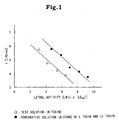
- Fig. 1 is a graph which shows the relation between lethal activity and inhibitive activity for neuromuscular transmission in mice when a test solution and a comparative solution were used.
- Production examples, pharmacological tests and preparation examples are described as hereunder and those examples are intended for better understanding of the present invention and do not limit the scope of the present invention.
- The toxin for the test of type A botulinum toxin was produced by a method of Sakaguchi (Sakaguchi, G. (1983): Clostridium botulinum toxins. Pharmac. Ther., 19, 165-94) with partial modifications.
- Spore cell solution of type A 7I03 strain (a strain which produces "M toxin") of Clostridium botulinum stored by freezing was inoculated to a pre-incubation medium (cooked meat medium) and incubated at 30°C for 2 days. The pre-incubation medium was planted to a peptone-yeast extract-glucose medium (PYG medium) and incubated at 30°C for 3 days.
- Next, 3N H2SO4 solution was added to the culture solution to conduct a precipitation with an acid, the culture solution was adjusted to pH 3.5 and allowed to stand at room temperature for one night. On the next day, it was centrifuged (9200 × g, 20 minutes, 4°C) and the resulting precipitate was dissolved in 0.2M phosphate buffer (pH 6.0).
- The dissolved solution was adjusted to
pH 6. 0 and stirred at 37°C for 1 hour to extract the toxin. The extract was centrifuged (9,200 × g, 20 minutes, 4°C), its supernatant liquid was collected and 0.2M phosphate buffer (pH 6.0) containing 2% of protamine was added to give a precipitate. This was centrifuged (9,200 × g, 15 minutes, 4°C) to give a supernatant liquid. To this supernatant liquid was added a saturated ammonium sulfate solution (390 g/L) so as to make the sulfate 60% (w/v) and the mixture was allowed to stand for one night at 4°C to conduct a salting-out. On the next day, centrifugal separation (9,200 × g, 15 minutes, 4°C) was conducted, the obtained precipitate was dissolved in 0. 05M acetate buffer (pH 4.2, 0.2M NaCl) and the obtained solution was dialyzed with a permeable membrane against 0.05M acetate buffer (pH 4.2, 0. 2M NaCl) for one night. After completion of the dialysis, it was centrifuged (13,700 × g, 15 minutes, 4°C) and the obtained supernatant liquid was subjected to ion-exchange using a column [SP-Sepharose Fast Flow (Amersham)] equilibrated with 0.05M acetate buffer (pH 4.2, 0.2M NaCl). This was subjected to a linear gradient so as to give 0.05M acetate buffer (pH 4.2, 0.7M NaCl) finally and, as a result, impurities and toxin were eluted. - A toxin fraction was collected with a fraction collector and the portion which is to be collected as "M toxin" was determined on the basis of toxicity measurement, OD value and electrophoretic images. The collected fraction was concentrated by ultrafiltration (Amicon YM 30) and, in order to raise its purity, the concentrate was passed through a gel filtration column [Sephadex G-200 (Pharmacia)] equilibrated with 0.05M acetate buffer (pH 6.0, 0.2M NaCl) and the collected toxin fraction was concentrated by ultrafiltration (Amicon YM 30) to obtain an original liquid (protein concentration: 1.78 mg/ml; biological activity: 2.0 × 10⁷ i.p. LD50/ml) of "M toxin" which is a type A botulinum toxin for a pharmacological test. Incidentally, with regard to the biological activity (titer), a 50% lethal dose (i.p. LD50) after intraperitoneal administration to mice was used as an index.
- The same operation as in Production Example 1 was carried out using Clostridium botulinum type A 62A strain (strain which produces "a mixture of M toxin, L toxin and LL toxin") instead of Clostridium botulinum A 7I03H strain to give an original liquid (protein concentration: 1.99 mg/ml; biological activity: 1.3 × 10⁷ i.p. LD50/ml) of "a mixture of L toxin and LL toxin" which is a type A botulinum toxin for a pharmacological test. A toxin fraction was collected with a fraction collector and the portion which is to be collected as "a mixture of L toxin and LL toxin" was determined on the basis of toxicity measurement, OD value and electrophoretic images.
- In order to compare the pharmacological activities of "M toxin" and "a mixture of L toxin and LL toxin", a muscular tension test was carried out using diaphragm and phrenic nerve specimens of mice (strain: ddY; sex: male).
- The M toxin of Production Example 1 was diluted with 20 mM Tris hydrochloride buffer containing 0.02% bovine serum albumin (pH 7.4; 150 mM NaCl) to prepare a test solution (3.4 × 10⁵ i.p. LD50/ml).
- A mixture of L toxin and LL toxin of Production Example 2 was diluted with 20 mM Tris hydrochloride buffer containing 0.02% bovine serum albumin (pH 7.4; 150 mM NaCl) to prepare a test solution (5.5 × 10⁵ i. p. LD50/ml).
- Pentobarbital (50 mg/kg) was intraperitoneally administered to mice to euthanize them, the thorax was opened and right and left phrenic nerves were ligated at the height of thymus. Right and left phrenic nerves were carefully exfoliated from the surrounding connective tissue until diaphragm and then cutting was also done for abdominal side whereupon diaphragm and the twelfth rib were excised in a united manner where phrenic nerve was attached thereto. The excised diaphragm and phrenic nerve specimen was cut into one half in a water tank kept at 37°C and each half diaphragm piece was fixed to a tissue-supporting apparatus using a silk yarn being passed through the twelfth rib.
- Next, the phrenic nerve was passed through a platinum electrode loop and transferred to a tissue bath where the diaphragm specimen was kept at 37°C. An end of silk yarn where another end thereof was ligated to diaphragm central tendon was connected to an isometric tension transducer and the diaphragm-phrenic nerve specimen was suspended in a Krebs solution. Rectangular wave where connecting time was 10 msec and voltage was 1 V was applied from a platinum electrode loop to phrenic nerve with a frequency of 0.25 Hz and shrinking tension of diaphragm induced by electric stimulation to the nerve was amplified with a tension amplifier and recorded with a pen recorder with a lapse of time. Load at a rest stage of about 4 g was applied to the diaphragm-phrenic nerve specimen and an observation was conducted every 15 to 20 minutes while exchanging the Krebs solution in the tissue bath for 1 to 2 hour(s) until induced tension and base line became stable without any treatment.
- After confirming that base line and tension were stable, each of the test solution and the comparative solution was added to the Krebs solution in the tissue bath and attenuation of the tension induced by the toxin was recorded. After completion of the experiment, tension was analyzed for each of diaphragm and phrenic nerve specimens. As an index for attenuation of tension due to the action of the toxin, time from addition of the toxin until attenuation of the induced tension to an extent of 1/e of that immediately before the treatment with the toxin or, in other words, contraction tension which was recoded with elapse of time was plotted and an approximate line was determined whereby time (τ) for treating with toxin required for attenuation to an extent of 1/e of the contraction tension before treatment with toxin was determined and used as an index for inhibitive activity for neuromuscular transmission (incidentally, the smaller the τ value, the higher the neuromuscular transmission inhibiting activity). From those results, Fig. 1 shows the relation between lethal action, to mice and inhibitory activity of neuromuscular transmission when the test solution and the comparative solution were used and Table 1 shows the inhibitory activity of the comparative solution when the inhibitory activity for neuromuscular transmission of the test solution in the same lethal dose for mice was 1. Incidentally, each plot for the test solution in Fig. 1 is a mean value of 4 to 5 cases and each plot for the comparative solution therein is a mean value of 2 to 3 cases.
Table 1 Inhibitory Activity for Neuromuscular Transmission Test Solution 1.00 Comparative Solution 0.10 - From Fig. 1 and Table 1, an inhibitory activity for neuromuscular transmission of the M toxin is about 10-fold that of a mixture of L toxin and LL toxin.
- In order to compare the pharmaceutical effect (ED50: 50% effective dose) and the toxicity (TD20: 20% toxic dose) for "M toxin", "a mixture of L toxin and LL toxin" and "BOTOX (registered trademark) (manufactured by Allergan)", a grip test by hind paw of mice (strain: ddY; sex: male) was carried out.
- The M toxin of Production Example 1 was diluted with a physiological saline containing 0.1% of human serum albumin to prepare five test solutions having different concentrations (1.2, 4, 12, 40 and 120 i.p. LD50/ml).
- A mixture of the L toxin and LL toxin of Production Example 2 was diluted with a physiological saline containing 0.1% of human serum albumin to prepare five "comparative solution A"s having different concentrations (1.2, 4, 12, 40 and 120 i.p. LD50/ml) in the same manner as in the test solutions.
- BOTOX (registered trademark) was diluted with a physiological saline containing 0.1% of human serum albumin to prepare five "comparative solution B"s having different concentrations (1.2, 4, 12, 40 and 120 i.p. LD50/ml) in the same manner as in the test solution.
- To gastrocnemius of right hind paw of mice was administered each of solvent (a physiological saline containing 0.1% of human serum albumin), test solution, comparative solution A and comparative solution B at the dose of 250 µl/kg (dose in terms of toxin for test solution, comparative solution A and comparative solution B each was 0. 3, 1, 3, 10 and 30 i.p. LD50/kg) . After 6 hours and 1, 2, 3, 7, 14 and 21 day(s) from the administration, grip of right hind paw was measured using a grip strength meter for small animals (ten animals per group). When the grip of the solvent administration group at each measuring time was defined 100, the grip after the administration of each toxin was determined. Using the value at the stage where lowering in the grip in each administration group was maximum, ED50 values of test solution, comparative solution A and comparative solution B were calculated (Table 2).
- The M toxin of Production Example 1 was diluted with a physiological saline containing 0.1% of human serum albumin to prepare four test solutions having different concentrations (20, 50, 100 and 150 i.p. LD50/ml).
- A mixture of the L toxin and LL toxin of Production Example 2 was diluted with a physiological saline containing 0.1% of human serum albumin to prepare four test solutions having different concentrations (20, 50, 100 and 150 i.p. LD50/ml) in the same manner as in the test solutions.
- BOTOX (registered trademark) was diluted with a physiological saline containing 0.1% of human serum albumin to prepare four test solutions having different concentrations (20, 50, 100 and 150 i.p. LD50/ml) in the same manner as in the test solutions.
- To quadriceps of right hind paw of mice was administered each of solvent, test solution, comparative solution A and comparative solution B at the dose of 500 µl/kg (dose in terms of toxin for test solution, comparative solution A and comparative solution B each was 10, 25, 50 and 75 i.p. LD50/kg) . After 1, 2, 3, 7 and 14 day(s) from the administration, grip of left hind paw was measured using a grip strength meter (six to ten animals per group). This method measures the degree of muscle relaxation of the toxin in muscle of left hind paw which is another muscle whereto the toxin was leaked from quadriceps of right hind paw which is the administration site. When the grip of the solvent administration group at each measuring time was defined 100, the grip after the administration of each toxin was determined. Using the value at the stage where lowering in the grip in each administration group was maximum, TD20 values of test solution, comparative solution A and comparative solution B were calculated (Table 2) .
- Ratio of the ED50 value for expression of pharmaceutical effect to the TD20 value for expression of toxicity for each of test solution, comparative solution A and comparative solution B was calculated and the resulting ratio was defined as a therapeutic index. The therapeutic index is expressed as TD20/ED50. When the therapeutic index is higher, the deviating width between the dose showing the efficacy and the dose showing the toxicity is bigger. As a result, it means that a drug having high therapeutic index has a high usefulness as a drug. The results are shown in Table 2.
Table 2 ED50 (i.p. LD50/kg) TD20 (i.p. LD50/kg) Therapeutic Index Test Solution 0.57 37.3 65.4 Comparative Solution A 0.88 17.0 19.3 Comparative Solution B 1.27 16.2 12.8 - It is apparent from Table 2 that the ED50 value of the M toxin is less than that of a mixture of L toxin and LL toxin and that of BOTOX (registered trademark) whereby the M toxin has higher pharmaceutical effect than the mixture of L toxin and LL toxin and BOTOX (registered trademark) and that the TD20 value of the M toxin is twice as bigger than those of a mixture of L toxin and LL toxin and BOTOX (registered trademark) whereby the M toxin has far lower toxicity than the mixture of L toxin and LL toxin and BOTOX (registered trademark). The therapeutic index of the M toxin (test solution) is 3.4-fold that of a mixture of L toxin and LL toxin (comparative solution A) and is 5.1-fold that of BOTOX (registered trademark) (comparative solution B).
- Comparison and study were carried out to check whether the antibody production was observed after repetitive administration of "M toxin", "a mixture of L toxin and LL toxin" and "BOTOX (registered trademark) (manufactured by Allergan)".
- The M toxin of Production Example 1 was diluted with a physiological saline containing 0.1% of human serum albumin to prepare a test solution (100 i.p. LD50/ml).
- A mixture of the L toxin and LL toxin of Production Example 2 was diluted with a physiological saline containing 0.1% of human serum albumin to prepare a comparative solution A (100 i.p. LD50/ml) in the same manner as in the test solution.
- BOTOX (registered trademark) was diluted with a physiological saline containing 0.1% of human serum albumin to prepare a comparative solution B (100 i.p. LD50/ml) in the same manner as in the test solution.
- To quadriceps of right hind paw of mice was administered each of solvent (physiological saline containing 0.1% of human serum albumin), test solution, comparative solution A and comparative solution B at the dose of 500 µl/kg (dose in terms of toxin for test solution, comparative solution A and comparative solution B each was 25 i.p. LD50/kg) at the rate of every three weeks and three times in total. After 14 days or 15 days from the third administration, plasma was collected from the mice (13 to 19 animals per group) and combined with the plasma collected from orbital vein before administration of the toxin and the obtained mixture was subjected to a measurement of antibody value by an ELISA method. Antibody was considered to be produced in the mouse where the absorbance ratio of the plasma collected after administration of toxin to that collected before the administration was 10 or more and the rate of the mice producing the antibody was calculated (Table 3).
Table 3 Rate of Mice wherein Antibody was Produced (%) Test Solution 16 Comparative Solution A 29 Comparative Solution B 31 - As shown in Table 3, the rate of mice wherein antibody was produced in the group to which the M toxin was administered was about one half of the rate in the group to which a mixture of L toxin and LL toxin was administered or in the group to which BOTOX (registered trademark) was administered. Accordingly, antigenicity of the M toxin was lower than that of L toxin, LL toxin or toxin contained in BOTOX (registered trademark).
- In a grip test by hind paw of mice, it was studied whether the effect was attenuated by repetitive administration of "M toxin", "a mixture of L toxin and LL toxin" and "BOTOX (registered trademark) (manufactured by Allergan)".
- The M toxin of Production Example 1 was diluted with a physiological saline containing 0.1% of human serum albumin to prepare a test solution (2 i.p. LD50/ml).
- A mixture of the L toxin and the LL toxin of Production Example 2 was diluted with a physiological saline containing 0.1% of human serum albumin to prepare a comparative solution A (2 i.p. LD50/ml) in the same manner as in the test solution.
- BOTOX (registered trademark) was diluted with a physiological saline containing 0.1% of human serum albumin to prepare a comparative solution B (2 i.p. LD50/ml) in the same manner as in the test solution.
- Gastrocnemius of right hind paw of mice was administered each of solvent (a physiological saline containing 0.1% of human serum albumin), test solution, comparative solution A and comparative solution B at the dose of 7.5 µl (dose in terms of toxin for test solution, comparative solution A and comparative solution B each was 0.015 i.p. LD50) . After 1, 2 and 3 day(s) from the administration, grip of right hind paw was measured using a grip strength meter for small animals. After 28 days from the first administration, the second administration was carried out (administration method and dose were the same as those in the first time) and grip of right hind paw was measured after 1, 2 and 3 day(s) from the administration in the same manner as in the first administration (11 or 12 animals per group). When the grip of the solvent administration group at each measuring time was defined 100, the grip after the administration of each toxin was determined. With regard to each of them at the first and the second administrations, total (1 + 2 + 3 day(s) after administration) of the three measured day for each mouse was calculated. After that, mean value of the difference between the value at the first administration and that at the second administration was calculated for each total value whereupon an attenuating rate for the effect was calculated (Table 4). Incidentally, when the value was bigger, the effect at the second administration was more attenuated.
Table 4 Attenuating Rate (%) of Effect Test Solution 5 Comparative Solution A 48 Comparative Solution B 26 - As will be apparent from Table 4, as compared with the attenuating rate of effect at the second administration of the M toxin, the attenuating rate of effect of a mixture of L toxin and LL toxin was about 10-fold and that of BOTOX (registered trademark) was about 5-fold. From those results, it is apparent that the M toxin hardly causes attenuation of the effect upon repetitive administration as compared with L toxin, LL toxin and BOTOX (registered trademark).
- A common example, of pharmaceutical preparation of an injection preparation according to the present invention is as follows.
Formulation 1 (in 100 mL) M toxin of type A botulinum toxin 1,000 units Human serum albumin 75 mg Physiological saline q. s. - As apparent from the result of the pharmacological test, an M toxin of type A botulinum toxin (HA-negative substance) has higher inhibitory action for neuromuscular transmission than a mixture of L toxin and LL toxin (HA-positive substance) and also has a therapeutic index of 3- to 5-fold that of a mixture of L toxin and LL toxin (HA-positive substance) or a commercially available BOTOX (registered trademark). Moreover, it hardly induces antigen production and, even when administered repeatedly, its attenuation in the effect is small and, accordingly, it is particularly useful as a therapeutic agent for diseases caused by hypermyotonia such as strabismus, blepharospasm, facial spasms, spasmodic torticollis, paralysis after cerebral apoplexy, infantile cerebral paralysis, spasmodic phonopathy, headache such as migraine, chronic pain such as lumbago, stiff shoulder, muscular relaxation disorder accompanied with onset of Parkinson's disease or multiple sclerosis, myofascial pain syndrome, masticatory spasm, chronic anal fissure, urinary inconsistency, grinding of teeth, facial myokymia, tic, topical dystonia and wrinkles.
Claims (6)
- An inhibitor for neuromuscular transmission comprising an M toxin (HA-negative substance) of type A botulinum toxin as an active ingredient.
- A therapeutic agent for a disease caused by hypermyotonia comprising an M toxin (HA-negative substance) of type A botulinum toxin as an active ingredient.
- The therapeutic agent according to claim 2, wherein the disease caused by hypermyotonia is strabismus, blepharospasm, hemifacial spasms, spasmodic torticollis, paralysis after cerebral apoplexy, infantile cerebral paralysis, spasmodic phonopathy, headache, lumbago, neck pain, back pain, stiff shoulder, muscular relaxation disorder accompanied by Parkinson's disease or multiple sclerosis, myofascial pain syndrome, masticatory spasm, chronic anal fissure, urinary inconsistency, grinding of teeth, facial myokymia, tic, topical dystonia or wrinkles.
- The therapeutic agent according to claim 2, wherein molecular weight of the M toxin of type A botulinum toxin is 200,000 to 400,000.
- The therapeutic agent according to claim 2, wherein the M toxin of type A botulinum toxin is produced by a strain of Clostridium botulinum type A 7103-H, Clostridium botulinum type A Chiba or Clostridium botulinum type A Kyoto-F.
- The therapeutic agent according to any of claims 2 to 5, wherein the dosage form is an injection preparation.
Applications Claiming Priority (3)
| Application Number | Priority Date | Filing Date | Title |
|---|---|---|---|
| JP2003175722 | 2003-06-20 | ||
| JP2003377101 | 2003-11-06 | ||
| PCT/JP2004/008963 WO2004112821A1 (en) | 2003-06-20 | 2004-06-18 | Remedies for diseases with hypermyotonia |
Publications (1)
| Publication Number | Publication Date |
|---|---|
| EP1640017A1 true EP1640017A1 (en) | 2006-03-29 |
Family
ID=33543483
Family Applications (1)
| Application Number | Title | Priority Date | Filing Date |
|---|---|---|---|
| EP04746432A Withdrawn EP1640017A1 (en) | 2003-06-20 | 2004-06-18 | Remedies for diseases with hypermyotonia |
Country Status (3)
| Country | Link |
|---|---|
| US (1) | US20060153877A1 (en) |
| EP (1) | EP1640017A1 (en) |
| WO (1) | WO2004112821A1 (en) |
Cited By (3)
| Publication number | Priority date | Publication date | Assignee | Title |
|---|---|---|---|---|
| WO2008050866A1 (en) | 2006-10-27 | 2008-05-02 | Juridical Foundation The Chemo-Sero-Therapeutic Research Institute | Preparation containing highly purified botulinum toxin type a derived from infant botulism pathogen |
| WO2008030638A3 (en) * | 2006-05-16 | 2008-05-22 | Mayo Foundation | Use of dmso and botulinum toxin therapy for urinary incontinence and related disorders |
| EP2283849A4 (en) * | 2008-03-31 | 2013-04-10 | Chemo Sero Therapeut Res Inst | PREPARATION OF A TYPE A2 BOTULINUM NEUROTOXIN |
Families Citing this family (10)
| Publication number | Priority date | Publication date | Assignee | Title |
|---|---|---|---|---|
| US7763663B2 (en) * | 2001-12-19 | 2010-07-27 | University Of Massachusetts | Polysaccharide-containing block copolymer particles and uses thereof |
| KR20130079645A (en) | 2005-07-18 | 2013-07-10 | 유니버시티 오브 메사츄세츠 로웰 | Compositions and methods for making and using nanoemulsions |
| US9486408B2 (en) | 2005-12-01 | 2016-11-08 | University Of Massachusetts Lowell | Botulinum nanoemulsions |
| CN101374498A (en) | 2005-12-01 | 2009-02-25 | 麻萨诸塞州洛厄尔大学 | Botulinum nanoemulsion |
| WO2008070538A2 (en) | 2006-12-01 | 2008-06-12 | Anterios, Inc. | Micellar nanoparticles comprising botulinum toxin |
| SG10201607909WA (en) * | 2006-12-01 | 2016-11-29 | Anterios Inc | Peptide nanoparticles and uses therefor |
| CN101765423B (en) | 2007-05-31 | 2014-08-06 | 安特里奥公司 | Nucleic acid nanoparticles and uses thereof |
| KR102080429B1 (en) * | 2008-06-26 | 2020-02-21 | 안테리오스, 인코퍼레이티드 | Dermal delivery |
| EP3541358A1 (en) | 2016-11-21 | 2019-09-25 | Eirion Therapeutics, Inc. | Transdermal delivery of large agents |
| CN115530755A (en) * | 2022-08-30 | 2022-12-30 | 中国人民解放军海军特色医学中心 | Tetrodotoxin poisoning degree quantitative evaluation method based on muscle strength measurement |
Family Cites Families (2)
| Publication number | Priority date | Publication date | Assignee | Title |
|---|---|---|---|---|
| US5512547A (en) * | 1994-10-13 | 1996-04-30 | Wisconsin Alumni Research Foundation | Pharmaceutical composition of botulinum neurotoxin and method of preparation |
| DE19925739A1 (en) * | 1999-06-07 | 2000-12-21 | Biotecon Ges Fuer Biotechnologische Entwicklung & Consulting Mbh | Therapeutic with a botulinum neurotoxin |
-
2004
- 2004-06-18 EP EP04746432A patent/EP1640017A1/en not_active Withdrawn
- 2004-06-18 WO PCT/JP2004/008963 patent/WO2004112821A1/en not_active Ceased
- 2004-06-18 US US10/560,789 patent/US20060153877A1/en not_active Abandoned
Non-Patent Citations (1)
| Title |
|---|
| See references of WO2004112821A1 * |
Cited By (6)
| Publication number | Priority date | Publication date | Assignee | Title |
|---|---|---|---|---|
| WO2008030638A3 (en) * | 2006-05-16 | 2008-05-22 | Mayo Foundation | Use of dmso and botulinum toxin therapy for urinary incontinence and related disorders |
| WO2008050866A1 (en) | 2006-10-27 | 2008-05-02 | Juridical Foundation The Chemo-Sero-Therapeutic Research Institute | Preparation containing highly purified botulinum toxin type a derived from infant botulism pathogen |
| EP2085093A4 (en) * | 2006-10-27 | 2012-01-18 | Chemo Sero Therapeut Res Inst | PREPARATION CONTAINING HIGHLY PURIFIED BOTULINUM TOXIN FROM BOTULISM PATHOGEN IN CHILDREN |
| US9278133B2 (en) | 2006-10-27 | 2016-03-08 | The Chemo-Sero-Therapeutic Research Institute | Highly purified type A botulinum toxin preparation from infant botulism pathogen |
| EP2283849A4 (en) * | 2008-03-31 | 2013-04-10 | Chemo Sero Therapeut Res Inst | PREPARATION OF A TYPE A2 BOTULINUM NEUROTOXIN |
| US9623075B2 (en) | 2008-03-31 | 2017-04-18 | The Chemo-Sero Therapeutic Research Institute | Type A2 botulinum toxin preparation |
Also Published As
| Publication number | Publication date |
|---|---|
| US20060153877A1 (en) | 2006-07-13 |
| WO2004112821A1 (en) | 2004-12-29 |
Similar Documents
| Publication | Publication Date | Title |
|---|---|---|
| DE69429619T2 (en) | TREATMENT OF NEUROMUSCULAR DISORDERS AND CONDITIONS WITH BOTULISM SEROTYPE E | |
| US20060153877A1 (en) | Remedies for dissease with hypermyotonia | |
| US7981432B2 (en) | Proteins within the type E botulinum neurotoxin complex | |
| DE69434511T2 (en) | Botulinum toxin for the treatment of dystonia | |
| DE69936877T2 (en) | STREPTOCOCCAL C5a PEPTIDASE VACCINE | |
| TWI233806B (en) | Pharmaceutical composition for treating diabetes by local administration | |
| DE60128899T2 (en) | USE OF A BOTULINUM TOXIN FOR THE MANUFACTURE OF A MEDICAMENT FOR PERIPHERAL TREATMENT OF PAIN NOT RELATED TO MUSCLE SPAS OR HEADACHE | |
| US20230016041A1 (en) | Botulinum neurotoxins production methods | |
| CN103415531B (en) | For treating the peptide of skin disorder | |
| JP5047782B2 (en) | Phycotoxin and use thereof | |
| MXPA02003289A (en) | Intraspinal compositions containing botulinum toxin for treating pain. | |
| JP2006052227A (en) | Combination of botulinum toxins for treatment of neuromuscular disorder and symptom | |
| KR102835193B1 (en) | Botulinum toxin type A complex, preparations thereof and methods of use thereof | |
| US20040001865A1 (en) | Methods for treating priapism | |
| EP1776137B1 (en) | Pharmaceutical composition containing botulinum neurotoxin a2 | |
| EP2724725B1 (en) | Pharmaceutical composition for use in treating scars on the skin | |
| EP3727429B1 (en) | Treatment of autonomic disorders with botulinum toxin | |
| US20050163809A1 (en) | Remedy for hypermyotonia | |
| Marin et al. | Muscle activity changes in spasmodic torticollis after botulinum toxin treatment | |
| JP2005154407A (en) | Treatment for hypertonic diseases | |
| EP0845267A1 (en) | Neurotoxin for cutaneous disorders in mammals | |
| Posters | 2020 ASIPP Abstract and Poster Winners | |
| CN120617091A (en) | Scalp repair emulsion based on recombinant collagen peptide and preparation method thereof | |
| HK40129551A (en) | Treatment of autonomic disorders | |
| Gybels et al. | Intrathecal programmed infusion of Baclofen in spasticity |
Legal Events
| Date | Code | Title | Description |
|---|---|---|---|
| PUAI | Public reference made under article 153(3) epc to a published international application that has entered the european phase |
Free format text: ORIGINAL CODE: 0009012 |
|
| 17P | Request for examination filed |
Effective date: 20051229 |
|
| AK | Designated contracting states |
Kind code of ref document: A1 Designated state(s): AT BE BG CH CY CZ DE DK EE ES FI FR GB GR HU IE IT LI LU MC NL PL PT RO SE SI SK TR |
|
| DAX | Request for extension of the european patent (deleted) | ||
| STAA | Information on the status of an ep patent application or granted ep patent |
Free format text: STATUS: THE APPLICATION IS DEEMED TO BE WITHDRAWN |
|
| 18D | Application deemed to be withdrawn |
Effective date: 20081231 |