EP1635177A1 - Quantitation of enzyme activity using planar waveguides - Google Patents
Quantitation of enzyme activity using planar waveguides Download PDFInfo
- Publication number
- EP1635177A1 EP1635177A1 EP05255444A EP05255444A EP1635177A1 EP 1635177 A1 EP1635177 A1 EP 1635177A1 EP 05255444 A EP05255444 A EP 05255444A EP 05255444 A EP05255444 A EP 05255444A EP 1635177 A1 EP1635177 A1 EP 1635177A1
- Authority
- EP
- European Patent Office
- Prior art keywords
- enzyme
- enzyme activity
- substrate
- label
- detectable label
- Prior art date
- Legal status (The legal status is an assumption and is not a legal conclusion. Google has not performed a legal analysis and makes no representation as to the accuracy of the status listed.)
- Granted
Links
- 102000004190 Enzymes Human genes 0.000 title claims abstract description 98
- 108090000790 Enzymes Proteins 0.000 title claims abstract description 98
- 230000000694 effects Effects 0.000 title claims abstract description 57
- 239000000758 substrate Substances 0.000 claims description 57
- 238000000034 method Methods 0.000 claims description 28
- 239000012530 fluid Substances 0.000 claims description 15
- 238000001514 detection method Methods 0.000 claims description 11
- 125000006850 spacer group Chemical group 0.000 claims description 8
- 108090000854 Oxidoreductases Proteins 0.000 claims description 5
- 102000004316 Oxidoreductases Human genes 0.000 claims description 5
- 210000004369 blood Anatomy 0.000 claims description 4
- 239000008280 blood Substances 0.000 claims description 4
- 239000002609 medium Substances 0.000 claims description 4
- 108091005804 Peptidases Proteins 0.000 claims description 3
- 102000004357 Transferases Human genes 0.000 claims description 3
- 108090000992 Transferases Proteins 0.000 claims description 3
- 239000007850 fluorescent dye Substances 0.000 claims description 3
- 206010003445 Ascites Diseases 0.000 claims description 2
- 108090000371 Esterases Proteins 0.000 claims description 2
- 102000003960 Ligases Human genes 0.000 claims description 2
- 108090000364 Ligases Proteins 0.000 claims description 2
- 239000004365 Protease Substances 0.000 claims description 2
- 210000001742 aqueous humor Anatomy 0.000 claims description 2
- 210000001175 cerebrospinal fluid Anatomy 0.000 claims description 2
- 210000001268 chyle Anatomy 0.000 claims description 2
- 210000003060 endolymph Anatomy 0.000 claims description 2
- 210000003374 extravascular lung water Anatomy 0.000 claims description 2
- 238000000855 fermentation Methods 0.000 claims description 2
- 230000004151 fermentation Effects 0.000 claims description 2
- 210000001733 follicular fluid Anatomy 0.000 claims description 2
- 210000000850 labyrinthine fluid Anatomy 0.000 claims description 2
- 210000002751 lymph Anatomy 0.000 claims description 2
- 210000004049 perilymph Anatomy 0.000 claims description 2
- 210000002381 plasma Anatomy 0.000 claims description 2
- 108091008146 restriction endonucleases Proteins 0.000 claims description 2
- 210000003296 saliva Anatomy 0.000 claims description 2
- 210000001179 synovial fluid Anatomy 0.000 claims description 2
- 210000002700 urine Anatomy 0.000 claims description 2
- 108700023418 Amidases Proteins 0.000 claims 1
- 102100037486 Reverse transcriptase/ribonuclease H Human genes 0.000 claims 1
- 102000005922 amidase Human genes 0.000 claims 1
- 239000006143 cell culture medium Substances 0.000 claims 1
- 230000001678 irradiating effect Effects 0.000 claims 1
- 238000005259 measurement Methods 0.000 abstract description 5
- 230000005180 public health Effects 0.000 abstract description 2
- 229940088598 enzyme Drugs 0.000 description 67
- 239000010410 layer Substances 0.000 description 13
- 210000004027 cell Anatomy 0.000 description 9
- 238000005516 engineering process Methods 0.000 description 7
- 230000001413 cellular effect Effects 0.000 description 5
- 239000000975 dye Substances 0.000 description 4
- 230000003993 interaction Effects 0.000 description 4
- 238000002955 isolation Methods 0.000 description 4
- 239000000523 sample Substances 0.000 description 4
- 238000000576 coating method Methods 0.000 description 3
- -1 distyryl biphenyls Chemical class 0.000 description 3
- 238000004020 luminiscence type Methods 0.000 description 3
- 229920000642 polymer Polymers 0.000 description 3
- 230000035945 sensitivity Effects 0.000 description 3
- 210000002966 serum Anatomy 0.000 description 3
- YBJHBAHKTGYVGT-ZKWXMUAHSA-N (+)-Biotin Chemical group N1C(=O)N[C@@H]2[C@H](CCCCC(=O)O)SC[C@@H]21 YBJHBAHKTGYVGT-ZKWXMUAHSA-N 0.000 description 2
- 108010003415 Aspartate Aminotransferases Proteins 0.000 description 2
- 102000004625 Aspartate Aminotransferases Human genes 0.000 description 2
- 108090001008 Avidin Proteins 0.000 description 2
- 108010054218 Factor VIII Proteins 0.000 description 2
- 102000001690 Factor VIII Human genes 0.000 description 2
- 208000015872 Gaucher disease Diseases 0.000 description 2
- 102000003855 L-lactate dehydrogenase Human genes 0.000 description 2
- 108700023483 L-lactate dehydrogenases Proteins 0.000 description 2
- 108090001060 Lipase Proteins 0.000 description 2
- 239000004367 Lipase Substances 0.000 description 2
- 102000004882 Lipase Human genes 0.000 description 2
- 102000035195 Peptidases Human genes 0.000 description 2
- 102000001253 Protein Kinase Human genes 0.000 description 2
- VYPSYNLAJGMNEJ-UHFFFAOYSA-N Silicium dioxide Chemical compound O=[Si]=O VYPSYNLAJGMNEJ-UHFFFAOYSA-N 0.000 description 2
- GWEVSGVZZGPLCZ-UHFFFAOYSA-N Titan oxide Chemical compound O=[Ti]=O GWEVSGVZZGPLCZ-UHFFFAOYSA-N 0.000 description 2
- 238000010521 absorption reaction Methods 0.000 description 2
- 238000003491 array Methods 0.000 description 2
- 230000008901 benefit Effects 0.000 description 2
- 238000006243 chemical reaction Methods 0.000 description 2
- 238000003776 cleavage reaction Methods 0.000 description 2
- 239000011248 coating agent Substances 0.000 description 2
- 230000021615 conjugation Effects 0.000 description 2
- DDRJAANPRJIHGJ-UHFFFAOYSA-N creatinine Chemical compound CN1CC(=O)NC1=N DDRJAANPRJIHGJ-UHFFFAOYSA-N 0.000 description 2
- 230000003247 decreasing effect Effects 0.000 description 2
- 230000007717 exclusion Effects 0.000 description 2
- 229960000301 factor viii Drugs 0.000 description 2
- GNBHRKFJIUUOQI-UHFFFAOYSA-N fluorescein Chemical class O1C(=O)C2=CC=CC=C2C21C1=CC=C(O)C=C1OC1=CC(O)=CC=C21 GNBHRKFJIUUOQI-UHFFFAOYSA-N 0.000 description 2
- 230000003301 hydrolyzing effect Effects 0.000 description 2
- 230000002209 hydrophobic effect Effects 0.000 description 2
- 238000011065 in-situ storage Methods 0.000 description 2
- 235000019421 lipase Nutrition 0.000 description 2
- 239000007788 liquid Substances 0.000 description 2
- 208000019423 liver disease Diseases 0.000 description 2
- 239000000463 material Substances 0.000 description 2
- 230000007246 mechanism Effects 0.000 description 2
- 108060006633 protein kinase Proteins 0.000 description 2
- 238000000746 purification Methods 0.000 description 2
- 230000007017 scission Effects 0.000 description 2
- 230000009466 transformation Effects 0.000 description 2
- UUUHXMGGBIUAPW-UHFFFAOYSA-N 1-[1-[2-[[5-amino-2-[[1-[5-(diaminomethylideneamino)-2-[[1-[3-(1h-indol-3-yl)-2-[(5-oxopyrrolidine-2-carbonyl)amino]propanoyl]pyrrolidine-2-carbonyl]amino]pentanoyl]pyrrolidine-2-carbonyl]amino]-5-oxopentanoyl]amino]-3-methylpentanoyl]pyrrolidine-2-carbon Chemical compound C1CCC(C(=O)N2C(CCC2)C(O)=O)N1C(=O)C(C(C)CC)NC(=O)C(CCC(N)=O)NC(=O)C1CCCN1C(=O)C(CCCN=C(N)N)NC(=O)C1CCCN1C(=O)C(CC=1C2=CC=CC=C2NC=1)NC(=O)C1CCC(=O)N1 UUUHXMGGBIUAPW-UHFFFAOYSA-N 0.000 description 1
- 108010050201 2-hydroxybutyrate dehydrogenase Proteins 0.000 description 1
- SIDCPPUYOKZTEY-UHFFFAOYSA-K 2-pyridin-2-ylpyridine;ruthenium(3+);trichloride Chemical compound [Cl-].[Cl-].[Cl-].[Ru+3].N1=CC=CC=C1C1=CC=CC=N1.N1=CC=CC=C1C1=CC=CC=N1.N1=CC=CC=C1C1=CC=CC=N1 SIDCPPUYOKZTEY-UHFFFAOYSA-K 0.000 description 1
- BCNPOXJWLYPAGO-UHFFFAOYSA-K 4,7-diphenyl-1,10-phenanthroline;ruthenium(3+);trichloride Chemical compound [Cl-].[Cl-].[Cl-].[Ru+3].C1=CC=CC=C1C1=CC=NC2=C1C=CC1=C(C=3C=CC=CC=3)C=CN=C21.C1=CC=CC=C1C1=CC=NC2=C1C=CC1=C(C=3C=CC=CC=3)C=CN=C21.C1=CC=CC=C1C1=CC=NC2=C1C=CC1=C(C=3C=CC=CC=3)C=CN=C21 BCNPOXJWLYPAGO-UHFFFAOYSA-K 0.000 description 1
- 108091006112 ATPases Proteins 0.000 description 1
- 102000057290 Adenosine Triphosphatases Human genes 0.000 description 1
- 102100036475 Alanine aminotransferase 1 Human genes 0.000 description 1
- 108010082126 Alanine transaminase Proteins 0.000 description 1
- 108020004774 Alkaline Phosphatase Proteins 0.000 description 1
- 102000002260 Alkaline Phosphatase Human genes 0.000 description 1
- 108090000531 Amidohydrolases Proteins 0.000 description 1
- 102000004092 Amidohydrolases Human genes 0.000 description 1
- 239000004382 Amylase Substances 0.000 description 1
- 108010065511 Amylases Proteins 0.000 description 1
- 102000013142 Amylases Human genes 0.000 description 1
- 208000008439 Biliary Liver Cirrhosis Diseases 0.000 description 1
- 208000033222 Biliary cirrhosis primary Diseases 0.000 description 1
- 108010039206 Biotinidase Proteins 0.000 description 1
- 102100026044 Biotinidase Human genes 0.000 description 1
- 108010084185 Cellulases Proteins 0.000 description 1
- 102000005575 Cellulases Human genes 0.000 description 1
- 102000004420 Creatine Kinase Human genes 0.000 description 1
- 108010042126 Creatine kinase Proteins 0.000 description 1
- 108020005199 Dehydrogenases Proteins 0.000 description 1
- 229910052693 Europium Inorganic materials 0.000 description 1
- 241000233866 Fungi Species 0.000 description 1
- 208000027472 Galactosemias Diseases 0.000 description 1
- 102000004547 Glucosylceramidase Human genes 0.000 description 1
- 108010017544 Glucosylceramidase Proteins 0.000 description 1
- 102000006485 Glutamyl Aminopeptidase Human genes 0.000 description 1
- 108010058940 Glutamyl Aminopeptidase Proteins 0.000 description 1
- 108010031186 Glycoside Hydrolases Proteins 0.000 description 1
- 102000005744 Glycoside Hydrolases Human genes 0.000 description 1
- 208000031220 Hemophilia Diseases 0.000 description 1
- 208000009292 Hemophilia A Diseases 0.000 description 1
- 102000004157 Hydrolases Human genes 0.000 description 1
- 108090000604 Hydrolases Proteins 0.000 description 1
- 102000004195 Isomerases Human genes 0.000 description 1
- 108090000769 Isomerases Proteins 0.000 description 1
- 206010024229 Leprosy Diseases 0.000 description 1
- 102000005741 Metalloproteases Human genes 0.000 description 1
- 108010006035 Metalloproteases Proteins 0.000 description 1
- 108010014251 Muramidase Proteins 0.000 description 1
- 102000016943 Muramidase Human genes 0.000 description 1
- 208000029578 Muscle disease Diseases 0.000 description 1
- 108010062010 N-Acetylmuramoyl-L-alanine Amidase Proteins 0.000 description 1
- 101710163270 Nuclease Proteins 0.000 description 1
- 208000016222 Pancreatic disease Diseases 0.000 description 1
- 108090000284 Pepsin A Proteins 0.000 description 1
- 102000057297 Pepsin A Human genes 0.000 description 1
- 102000004270 Peptidyl-Dipeptidase A Human genes 0.000 description 1
- 108090000882 Peptidyl-Dipeptidase A Proteins 0.000 description 1
- 108700019535 Phosphoprotein Phosphatases Proteins 0.000 description 1
- 102000045595 Phosphoprotein Phosphatases Human genes 0.000 description 1
- 239000002202 Polyethylene glycol Substances 0.000 description 1
- 208000012654 Primary biliary cholangitis Diseases 0.000 description 1
- 108091007187 Reductases Proteins 0.000 description 1
- 108090000783 Renin Proteins 0.000 description 1
- 102100028255 Renin Human genes 0.000 description 1
- 201000003099 Renovascular Hypertension Diseases 0.000 description 1
- 208000006011 Stroke Diseases 0.000 description 1
- 150000001217 Terbium Chemical class 0.000 description 1
- 108090000190 Thrombin Proteins 0.000 description 1
- 108090000631 Trypsin Proteins 0.000 description 1
- 102000004142 Trypsin Human genes 0.000 description 1
- 108010058532 UTP-hexose-1-phosphate uridylyltransferase Proteins 0.000 description 1
- 102000006321 UTP-hexose-1-phosphate uridylyltransferase Human genes 0.000 description 1
- 241000700605 Viruses Species 0.000 description 1
- NPRDEIDCAUHOJU-UHFFFAOYSA-N [Pt].N1C(C=C2N=C(C=C3NC(=C4)C=C3)C=C2)=CC=C1C=C1C=CC4=N1 Chemical class [Pt].N1C(C=C2N=C(C=C3NC(=C4)C=C3)C=C2)=CC=C1C=C1C=CC4=N1 NPRDEIDCAUHOJU-UHFFFAOYSA-N 0.000 description 1
- CSUNYJDUAUTOOT-UHFFFAOYSA-K [Ru](Cl)(Cl)Cl.N1=CC=CC2=CC=C3C=CC=NC3=C12.N1=CC=CC2=CC=C3C=CC=NC3=C12.N1=CC=CC2=CC=C3C=CC=NC3=C12 Chemical compound [Ru](Cl)(Cl)Cl.N1=CC=CC2=CC=C3C=CC=NC3=C12.N1=CC=CC2=CC=C3C=CC=NC3=C12.N1=CC=CC2=CC=C3C=CC=NC3=C12 CSUNYJDUAUTOOT-UHFFFAOYSA-K 0.000 description 1
- 230000002411 adverse Effects 0.000 description 1
- 235000019418 amylase Nutrition 0.000 description 1
- 238000004458 analytical method Methods 0.000 description 1
- 238000003556 assay Methods 0.000 description 1
- 239000012911 assay medium Substances 0.000 description 1
- 244000052616 bacterial pathogen Species 0.000 description 1
- 230000001588 bifunctional effect Effects 0.000 description 1
- 229960002685 biotin Drugs 0.000 description 1
- 235000020958 biotin Nutrition 0.000 description 1
- 239000011616 biotin Substances 0.000 description 1
- 206010071434 biotinidase deficiency Diseases 0.000 description 1
- 235000010290 biphenyl Nutrition 0.000 description 1
- 108010089934 carbohydrase Proteins 0.000 description 1
- 238000004113 cell culture Methods 0.000 description 1
- 238000007385 chemical modification Methods 0.000 description 1
- 239000007795 chemical reaction product Substances 0.000 description 1
- 229910052681 coesite Inorganic materials 0.000 description 1
- 150000001893 coumarin derivatives Chemical class 0.000 description 1
- 229940109239 creatinine Drugs 0.000 description 1
- 229910052906 cristobalite Inorganic materials 0.000 description 1
- 125000000151 cysteine group Chemical group N[C@@H](CS)C(=O)* 0.000 description 1
- 238000003618 dip coating Methods 0.000 description 1
- 239000003814 drug Substances 0.000 description 1
- 230000008030 elimination Effects 0.000 description 1
- 238000003379 elimination reaction Methods 0.000 description 1
- 238000000572 ellipsometry Methods 0.000 description 1
- 230000002708 enhancing effect Effects 0.000 description 1
- 238000006911 enzymatic reaction Methods 0.000 description 1
- 238000001952 enzyme assay Methods 0.000 description 1
- 125000003916 ethylene diamine group Chemical group 0.000 description 1
- OGPBJKLSAFTDLK-UHFFFAOYSA-N europium atom Chemical compound [Eu] OGPBJKLSAFTDLK-UHFFFAOYSA-N 0.000 description 1
- 230000005284 excitation Effects 0.000 description 1
- 239000010408 film Substances 0.000 description 1
- MHMNJMPURVTYEJ-UHFFFAOYSA-N fluorescein-5-isothiocyanate Chemical compound O1C(=O)C2=CC(N=C=S)=CC=C2C21C1=CC=C(O)C=C1OC1=CC(O)=CC=C21 MHMNJMPURVTYEJ-UHFFFAOYSA-N 0.000 description 1
- 125000000524 functional group Chemical group 0.000 description 1
- 239000011521 glass Substances 0.000 description 1
- 150000004676 glycans Chemical class 0.000 description 1
- 239000000383 hazardous chemical Substances 0.000 description 1
- 231100000206 health hazard Toxicity 0.000 description 1
- 238000012188 high-throughput screening assay Methods 0.000 description 1
- 239000000017 hydrogel Substances 0.000 description 1
- 229910052739 hydrogen Inorganic materials 0.000 description 1
- 239000001257 hydrogen Substances 0.000 description 1
- 229920001477 hydrophilic polymer Polymers 0.000 description 1
- 230000003100 immobilizing effect Effects 0.000 description 1
- 230000006872 improvement Effects 0.000 description 1
- 238000005305 interferometry Methods 0.000 description 1
- 239000011229 interlayer Substances 0.000 description 1
- 208000017169 kidney disease Diseases 0.000 description 1
- 210000004185 liver Anatomy 0.000 description 1
- 229960000274 lysozyme Drugs 0.000 description 1
- 239000004325 lysozyme Substances 0.000 description 1
- 235000010335 lysozyme Nutrition 0.000 description 1
- 238000004519 manufacturing process Methods 0.000 description 1
- 150000002734 metacrylic acid derivatives Polymers 0.000 description 1
- 238000000386 microscopy Methods 0.000 description 1
- 238000012544 monitoring process Methods 0.000 description 1
- 208000010125 myocardial infarction Diseases 0.000 description 1
- 230000003287 optical effect Effects 0.000 description 1
- 229940111202 pepsin Drugs 0.000 description 1
- 230000004962 physiological condition Effects 0.000 description 1
- 229920001223 polyethylene glycol Polymers 0.000 description 1
- 229920001184 polypeptide Polymers 0.000 description 1
- 229920001282 polysaccharide Polymers 0.000 description 1
- 239000005017 polysaccharide Substances 0.000 description 1
- 238000002360 preparation method Methods 0.000 description 1
- 230000008569 process Effects 0.000 description 1
- 108090000765 processed proteins & peptides Proteins 0.000 description 1
- 102000004196 processed proteins & peptides Human genes 0.000 description 1
- 235000018102 proteins Nutrition 0.000 description 1
- 102000004169 proteins and genes Human genes 0.000 description 1
- 108090000623 proteins and genes Proteins 0.000 description 1
- 229940024999 proteolytic enzymes for treatment of wounds and ulcers Drugs 0.000 description 1
- 238000012205 qualitative assay Methods 0.000 description 1
- 238000003908 quality control method Methods 0.000 description 1
- 238000012207 quantitative assay Methods 0.000 description 1
- 238000011160 research Methods 0.000 description 1
- 239000012488 sample solution Substances 0.000 description 1
- 201000000306 sarcoidosis Diseases 0.000 description 1
- 238000002444 silanisation Methods 0.000 description 1
- 239000000377 silicon dioxide Substances 0.000 description 1
- 238000004528 spin coating Methods 0.000 description 1
- 238000005507 spraying Methods 0.000 description 1
- 230000003068 static effect Effects 0.000 description 1
- PJANXHGTPQOBST-UHFFFAOYSA-N stilbene Chemical class C=1C=CC=CC=1C=CC1=CC=CC=C1 PJANXHGTPQOBST-UHFFFAOYSA-N 0.000 description 1
- 229910052682 stishovite Inorganic materials 0.000 description 1
- PBCFLUZVCVVTBY-UHFFFAOYSA-N tantalum pentoxide Inorganic materials O=[Ta](=O)O[Ta](=O)=O PBCFLUZVCVVTBY-UHFFFAOYSA-N 0.000 description 1
- 238000010345 tape casting Methods 0.000 description 1
- 229940124597 therapeutic agent Drugs 0.000 description 1
- 239000010409 thin film Substances 0.000 description 1
- 125000003396 thiol group Chemical group [H]S* 0.000 description 1
- ANRHNWWPFJCPAZ-UHFFFAOYSA-M thionine Chemical compound [Cl-].C1=CC(N)=CC2=[S+]C3=CC(N)=CC=C3N=C21 ANRHNWWPFJCPAZ-UHFFFAOYSA-M 0.000 description 1
- 229960004072 thrombin Drugs 0.000 description 1
- 231100000331 toxic Toxicity 0.000 description 1
- 230000002588 toxic effect Effects 0.000 description 1
- 229910052905 tridymite Inorganic materials 0.000 description 1
- 239000012588 trypsin Substances 0.000 description 1
- 229960001322 trypsin Drugs 0.000 description 1
Images



Classifications
-
- C—CHEMISTRY; METALLURGY
- C12—BIOCHEMISTRY; BEER; SPIRITS; WINE; VINEGAR; MICROBIOLOGY; ENZYMOLOGY; MUTATION OR GENETIC ENGINEERING
- C12Q—MEASURING OR TESTING PROCESSES INVOLVING ENZYMES, NUCLEIC ACIDS OR MICROORGANISMS; COMPOSITIONS OR TEST PAPERS THEREFOR; PROCESSES OF PREPARING SUCH COMPOSITIONS; CONDITION-RESPONSIVE CONTROL IN MICROBIOLOGICAL OR ENZYMOLOGICAL PROCESSES
- C12Q1/00—Measuring or testing processes involving enzymes, nucleic acids or microorganisms; Compositions therefor; Processes of preparing such compositions
- C12Q1/001—Enzyme electrodes
-
- G—PHYSICS
- G01—MEASURING; TESTING
- G01N—INVESTIGATING OR ANALYSING MATERIALS BY DETERMINING THEIR CHEMICAL OR PHYSICAL PROPERTIES
- G01N33/00—Investigating or analysing materials by specific methods not covered by groups G01N1/00 - G01N31/00
- G01N33/48—Biological material, e.g. blood, urine; Haemocytometers
- G01N33/50—Chemical analysis of biological material, e.g. blood, urine; Testing involving biospecific ligand binding methods; Immunological testing
- G01N33/53—Immunoassay; Biospecific binding assay; Materials therefor
- G01N33/543—Immunoassay; Biospecific binding assay; Materials therefor with an insoluble carrier for immobilising immunochemicals
- G01N33/54366—Apparatus specially adapted for solid-phase testing
- G01N33/54373—Apparatus specially adapted for solid-phase testing involving physiochemical end-point determination, e.g. wave-guides, FETS, gratings
-
- G—PHYSICS
- G01—MEASURING; TESTING
- G01N—INVESTIGATING OR ANALYSING MATERIALS BY DETERMINING THEIR CHEMICAL OR PHYSICAL PROPERTIES
- G01N33/00—Investigating or analysing materials by specific methods not covered by groups G01N1/00 - G01N31/00
- G01N33/48—Biological material, e.g. blood, urine; Haemocytometers
- G01N33/50—Chemical analysis of biological material, e.g. blood, urine; Testing involving biospecific ligand binding methods; Immunological testing
- G01N33/53—Immunoassay; Biospecific binding assay; Materials therefor
- G01N33/573—Immunoassay; Biospecific binding assay; Materials therefor for enzymes or isoenzymes
Definitions
- the invention relates to methods of quantitating enzyme activity.
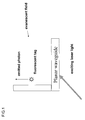
- FIG. 1 Illustration of planar waveguide technology using a fluorescent tag.
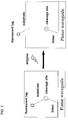
- FIG. 2 Illustration of planar waveguide technology used in the "hydrolytic cleavage mode" with a fluorescent enzyme substrate.
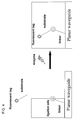
- FIG. 3 Illustration of planar waveguide technology used in the "reactive transformation mode” using a fluorogenic enzyme substrate.
- FIG. 4 Illustration of planar waveguide technology used in the "conjugation mode" using a fluorescent tag.
- FIG. 5 Illustration of planar waveguide technology used in the "steric exclusion mode" using a fluorogenic enzyme substrate.
- FIG. 6 Illustration of planar waveguide technology used in the "cellular isolation mode” using a fluorogenic enzyme substrate.
- the present invention provides enzyme activity sensors which employ planar waveguide technology for sensitive and quantitative measurement of enzyme activity.
- Enzyme activity sensors of the invention provide many advantages, including small scale of operation, speed, sensitivity, specificity, and ease of production.
- the sensors can be used in any environment in which measurement of enzyme activity is desired and can detect enzyme activity in complex fluid systems without sample purification. If desired, multiple enzyme assays can be conducted in parallel.
- Planar waveguides
- Enzyme activity sensors of the invention comprise a planar waveguide which comprises one or more substrates for one or more enzymes.
- Planar waveguides typically contain a thin film of a material with a high refractive index (e.g. , Ta 2 O 5 or TiO 2 ) deposited on a transparent support with lower refractive index (e.g. , glass or a polymer).
- Methods of making planar waveguide layers are well known in the art and any of the known methods can be used. See, e.g. , U.S. Patent 5,959,292; U.S. Patent 6,078,705; U.S. Patent 5,846,842; Rowe-Taitt et al. , Biosensors & Bioelectronics 14 , 785-94, 2000.
- a substrate for the enzyme to be assayed is immobilized on the planar waveguide.
- Methods for immobilizing proteins are well known in the art and any such methods can be used to affix an enzyme substrate to a detection area. See, e.g., Scouten et al. , Trends in Biotechnology 13, 178-85, 1995; Shriver-Lake et al. , Biosensors and Bioelectronics 12 , 1101-06, 1997; Rowe-Taitt et al., 2000.
- the method selected will depend to some extent on the nature of the particular enzyme substrate and is well within the skill of those in the art.
- substrates are immobilized by covalent bonding directly on the planar waveguide layer or after chemical modification of the planar waveguide surface, for example by silanization or applying a polymer layer.
- a thin interlayer e.g., SiO 2
- SiO 2 can be applied directly to the planar waveguide layer to serve as an adhesion-promoting layer to facilitate the immobilization of an enzyme substrate on the waveguide.
- the planar waveguide layer is coated with avidin, and the enzyme substrates can be conjugated to a biotin moiety which has a very strong affinity for avidin. See Rowe-Taitt et al. , 2000.
- the waveguide is coated with a hydrogel film formed of polymethacryloylhydrazide which is treated to produce free maleimido groups; some enzyme substrates can be oxidized to produce reactive thiol groups which can then be reacted with the maleimido groups.
- a silanized waveguide surface is coated with polyethylene glycol derivatized with ethylenediamine groups. These groups also can react with oxidized enzyme substrates.
- Non-covalent interactions also can be used to affix a substrate to a planar waveguide.
- Such interactions include, but are not limited to, hydrophobic absorption, van der Waals interactions, hydrogen bonding, and electrostatic forces.
- a coating is used, it preferably is applied to the planar waveguide to achieve a reproducible, constant layer thickness.
- Typical examples methods which can be used to coat planar waveguides include spraying, knife-coating, spin-coating, or dip-coating.
- Quality control of the coatings can be carried out by any appropriate method, including microscopy, interferometry, ellipsometry, and measurements of contact angles.
- Different enzyme substrates can be localized in different and mutually exclusive regions on the planar waveguide.
- the substrates preferably are arranged in a spatially addressable array.
- multiple wells or channels can be provided on the surface of the waveguide to permit simultaneous comparison of detectable labels from control and sample solutions.
- a substantial portion of the surrounding edge of the waveguide can be coated with a reflective coating to prevent light from escaping through the edge, which increases the intensity of the evanescent field.
- Spatially addressable arrays can also be prepared as regions or spots to allow the sensing of multiple enzyme activities within a single fluid sample.
- the enzyme substrates comprises a detectable label.
- activity of the enzyme modifies the substrate to comprise a detectable label.
- Detectable labels for use in the invention typically are photoreactive labels, such as fluorescent labels, phosphorescent labels, and UV absorptive labels. Fluorescent labels are especially useful because excitation of the fluorophore by the field does not require trans-irradiation of the bulk fluid and thereby limits background signal, enhancing sensitivity. Methods of attaching detectable labels to polypeptides and other enzyme substrates are well known in the art.
- Suitable labels include rhodamines, fluorescein derivatives, coumarin derivatives, distyryl biphenyls, stilbene derivatives, phthalocyanines, naphthalocyanines, polypyridyl-ruthenium complexes such as tris(2,2'-bipyridyl)-ruthenium chloride, tris(1,10-phenanthroline) ruthenium chloride, tris(4,7-diphenyl-1,10-phenanthroline) ruthenium chloride and polypyridyl-phenazine-ruthenium complexes, platinum-porphyrin complexes such as octaethyl-platinum-porphyrin, long-life europium and terbium complexes or cyanine dyes. Dyes having absorption and emission wavelengths in the range from 600-900 nm are particularly suitable for analyses using blood or serum.
- detectable labels are dyes such as fluorescein derivatives which contain functional groups with which they can be covalently bound to a substrate, for example fluorescein isothiocyanate. Also very suitable are the functional fluorescent dyes available from Biological Detection Systems Inc., for example the mono- and bifunctional CY5.5TM dyes. Clinical Chemistry 40 , 1819-22, 1994. If desired, substrates for different enzymes can comprise different detectable labels.
- Enzyme activity sensors of the invention can be used in several different “modes.” Depending on which mode is used, the enzyme substrate may or may not comprise a detectable label as described above. Also depending on which mode is used, detection of enzyme activity can involve detecting either a decrease or an increase in the amount of detectable label.
- an enzyme activity sensor which comprises a detectably labeled substrate can be used in "hydrolytic cleavage mode.” In this mode, the enzyme cleaves the substrate from the planar waveguide surface, and a decreased signal reflects enzyme activity. See FIG. 2.
- enzyme substrates comprises a moiety which an enzyme will modify into a detectable label or into a label which is no longer detectable ("reactive transformation mode"). If the enzyme modifies the moiety so that it generates a detectable label, enzyme activity will be reflected in an increased signal. On the other hand, if the enzyme modifies the moiety so that it no longer is detectable, a decreased signal reflects enzyme activity. See FIG. 3.
- the enzyme will conjugate a detectable label to the enzyme substrate ("conjugation mode"). See FIG. 4. In these embodiments an increased signal reflects enzyme activity.
- substrate linkage or spacer structures can be used to increase selectivity for target enzyme activity by separating different enzyme substrates spatially, for example through steric, ionic, or hydrophobic interaction mechanisms ("steric exclusion mode"). See FIG. 5. These mechanisms are particularly useful in enzyme activity sensors of the invention, because the ability to spatially locate the labeled moiety of the detected molecules allows for controllable sensitivity of the detection process due to the exponential decay of the evanescent field intensity with distance from the planar waveguide sensor surface.
- steric exclusion mode steric exclusion mode
- the use of different length spacers can permit balancing of fluorescent signals for different spots in a multiplexed assay.
- site of enzymatic reaction can also be controlled by the same factors, the enhancement or elimination of certain specific reactions can be achieved in the presence of multiple potentially reactive molecules.
- any of the embodiments described above can be used in situ in a cell culture, to assay medium into which cells may excrete an enzyme ("cellular isolation mode"). See FIG. 6.
- the enzyme activity sensor can be separated from the cells, or from a single cell, by a macroporous polymer layer, such as a hydrophilic polymer (e.g. , a polyhydroxylated methacrylate or a polysaccharide).
- the cellular isolation mode permits detection of enzymes secreted by living cells, under physiological conditions, without allowing contact between the cells and the substrate, or potential reaction products.
- Many enzyme activity detection systems are not compatible with living cells. This embodiment, therefore, is an improvement over prior art in that reaction systems can be used for detection that would be toxic or otherwise adversely affect the cells.
- the cellular isolation also allows measurement without potentially altering the cellular biology by irradiation.
- the enzyme sensors disclosed herein can be used in any setting in which qualitative or quantitative assay of enzyme activity is desired.
- the activity of any type of enzyme can be detected, including, but not limited to, proteolytic enzymes (e.g. , amino peptidase, aspartyl proteases, serine proteases, metallo proteases, cysteinyl proteases, pepsin, trypsin, thrombin, lysozyme, Factor VIII:C), glycosidases, esterases, hydrolases, nucleases, syntheases, isomerases, polymerases, kinases, phosphatases, reductases, including oxido-reductases, transferases, ligases, restriction enzymes, amidases, ATPases, carbohydrases, lipases, cellulases, dehydrogenases, and oxidases. Substrates for these enzymes are well known in the art and are widely available from commercial suppliers.
- Enzyme activity sensors of the invention are particularly useful as diagnostic tools because they permit in situ, highly multiplexed real-time studies of complex biological enzyme systems.
- these sensors permit real-time monitoring of enzyme activity even in turbid fluids such as serum or blood without any sample preparation.
- the sensors can therefore easily be used as rapid diagnostic tools in a point of care environment.
- the fluid which contacts the planar waveguide is of biological origin and includes, but is not limited to, blood, plasma, urine, cerebrospinal fluid, saliva, bronchial lavage fluid, aqueous humor, ascites fluid, extravascular lung water, follicular fluid, labyrinthine fluids, endolymph, perilymph, lymph, chyle, nasal lavage fluid, and synovial fluid.
- the fluid also can be medium in which cells of patient origin have been cultured.
- Enzymes which are of clinical interest include, for example, amylase and lipase (pancreatic disease); creatinine kinase, lactate dehydrogenase, ⁇ -hydroxybutyrate dehydrogenase, serum glutamic oxaloacetic transaminase, and creatine phosphokinase (heart attacks, muscle disease, and strokes); amino alanine transferase, serum glutamic oxaloacetic transaminase, serum glutamic pyruvic transaminase, and lactate dehydrogenase (liver disease); alkaline phosphatase (liver or kidney disease); angiotensin converting enzyme (active sarcoidosis, atypical mycobacteria, primary biliary cirrhosis, Gaucher's disease, or leprosy); Factor VIII:C (hemophilia); renin (renovascular hypertension); galactose-1-phosphate uridyl
- Enzyme activity sensors of the invention also can be used in a commercial or research setting, to monitor enzyme activity during large- or small-scale purification of an enzyme. They can be used to monitor enzyme activity in a fermentation medium. They can be used to detect public health hazards, for example to detect enzymes diagnostic of pathogenic bacteria, viruses, and fungi. Enzyme activity sensors of the invention also are useful in high throughput screening assays for therapeutic agents which can reduce a particular enzyme activity. Generation and detection of the detectable label
- Enzyme activity sensors of the invention can sample a very small layer of a liquid for the detectable tag using the evanescent field generated by reflection of a beam of laser light inside the planar waveguide.
- the evanescent field extends about 100 nm into the liquid with an intensity that decays exponentially; thus, detectable tags which are outside the field are not detected. See FIG. 1.
- a fluid which may comprise the enzyme to be assayed is placed in contact with the planar waveguide.
- the contact can be static or the fluid can be passed over the planar waveguide.
- Polarized light most commonly from a laser source such as a small diode laser, is conducted by total reflectance to the interfaces of the waveguiding layer.
- An evanescent wave or field is generated by the internal reflectance of the light at the interface between materials of different refractive indices at the boundaries of the waveguide. The strength of the evanescent field depends on the thickness of the waveguiding layer itself as well as on the ratio of the refractive indices of the waveguiding layer and of the surrounding media. In the case of thin waveguides, i.e., layer thicknesses of the same or lesser thickness than of the wavelength to be guided, it is possible to distinguish discrete modes of the conducted light.
- the evanescent field excites luminescence in the optically thinner medium of the planar waveguide, but only directly adjacent to the guided light wave.
- Methods and apparatus for detecting the evanescently excited luminescence are well known in the art and are described, for example, in U.S. Patent 4,582,809; U.S. Patent 5,081,012; WO 90/06503; and Biosensors & Bioelectronics 6 (1991), 595-607.
- Photodiodes, photocells, photomultipliers, CCD cameras and detector arrays, for example CCD cells can be used.
- the luminescence can be imaged with optical elements such as mirrors, prisms, lenses, Fresnel lenses, and gradient index lenses.
- Known elements such as filters, prisms, monochromatic filters, dichromatic mirrors, and diffraction gratings can be used to select the appropriate emission wavelength.
Landscapes
- Health & Medical Sciences (AREA)
- Life Sciences & Earth Sciences (AREA)
- Immunology (AREA)
- Chemical & Material Sciences (AREA)
- Engineering & Computer Science (AREA)
- Molecular Biology (AREA)
- Biomedical Technology (AREA)
- Hematology (AREA)
- Urology & Nephrology (AREA)
- Biotechnology (AREA)
- Microbiology (AREA)
- General Health & Medical Sciences (AREA)
- Organic Chemistry (AREA)
- Physics & Mathematics (AREA)
- Analytical Chemistry (AREA)
- Biochemistry (AREA)
- Food Science & Technology (AREA)
- Medicinal Chemistry (AREA)
- Pathology (AREA)
- General Physics & Mathematics (AREA)
- Zoology (AREA)
- Cell Biology (AREA)
- Wood Science & Technology (AREA)
- Proteomics, Peptides & Aminoacids (AREA)
- Biophysics (AREA)
- General Engineering & Computer Science (AREA)
- Genetics & Genomics (AREA)
- Bioinformatics & Cheminformatics (AREA)
- Apparatus Associated With Microorganisms And Enzymes (AREA)
- Measuring Or Testing Involving Enzymes Or Micro-Organisms (AREA)
- Investigating Or Analysing Materials By The Use Of Chemical Reactions (AREA)
- Investigating, Analyzing Materials By Fluorescence Or Luminescence (AREA)
- Orthopedics, Nursing, And Contraception (AREA)
- Immobilizing And Processing Of Enzymes And Microorganisms (AREA)
- Absorbent Articles And Supports Therefor (AREA)
Abstract
Description
- This application claims the benefit of and incorporates by reference co-pending provisional application Serial No. 60/608,043 filed September 8, 2004.
- The invention relates to methods of quantitating enzyme activity.
- FIG. 1. Illustration of planar waveguide technology using a fluorescent tag.
- FIG. 2. Illustration of planar waveguide technology used in the "hydrolytic cleavage mode" with a fluorescent enzyme substrate.
- FIG. 3. Illustration of planar waveguide technology used in the "reactive transformation mode" using a fluorogenic enzyme substrate.
- FIG. 4. Illustration of planar waveguide technology used in the "conjugation mode" using a fluorescent tag.
- FIG. 5. Illustration of planar waveguide technology used in the "steric exclusion mode" using a fluorogenic enzyme substrate.
- FIG. 6. Illustration of planar waveguide technology used in the "cellular isolation mode" using a fluorogenic enzyme substrate.
- The present invention provides enzyme activity sensors which employ planar waveguide technology for sensitive and quantitative measurement of enzyme activity. Enzyme activity sensors of the invention provide many advantages, including small scale of operation, speed, sensitivity, specificity, and ease of production. The sensors can be used in any environment in which measurement of enzyme activity is desired and can detect enzyme activity in complex fluid systems without sample purification. If desired, multiple enzyme assays can be conducted in parallel. Planar waveguides
- Enzyme activity sensors of the invention comprise a planar waveguide which comprises one or more substrates for one or more enzymes. Planar waveguides typically contain a thin film of a material with a high refractive index (e.g., Ta2O5 or TiO2) deposited on a transparent support with lower refractive index (e.g., glass or a polymer). Methods of making planar waveguide layers are well known in the art and any of the known methods can be used. See, e.g., U.S. Patent 5,959,292; U.S. Patent 6,078,705; U.S. Patent 5,846,842; Rowe-Taitt et al., Biosensors & Bioelectronics 14, 785-94, 2000.
- A substrate for the enzyme to be assayed is immobilized on the planar waveguide. Methods for immobilizing proteins are well known in the art and any such methods can be used to affix an enzyme substrate to a detection area. See, e.g., Scouten et al., Trends in Biotechnology 13, 178-85, 1995; Shriver-Lake et al., Biosensors and Bioelectronics 12, 1101-06, 1997; Rowe-Taitt et al., 2000. The method selected will depend to some extent on the nature of the particular enzyme substrate and is well within the skill of those in the art. Typically, substrates are immobilized by covalent bonding directly on the planar waveguide layer or after chemical modification of the planar waveguide surface, for example by silanization or applying a polymer layer. If desired, a thin interlayer (e.g., SiO2) can be applied directly to the planar waveguide layer to serve as an adhesion-promoting layer to facilitate the immobilization of an enzyme substrate on the waveguide.
- In other embodiments, the planar waveguide layer is coated with avidin, and the enzyme substrates can be conjugated to a biotin moiety which has a very strong affinity for avidin. See Rowe-Taitt et al., 2000. In other embodiments, the waveguide is coated with a hydrogel film formed of polymethacryloylhydrazide which is treated to produce free maleimido groups; some enzyme substrates can be oxidized to produce reactive thiol groups which can then be reacted with the maleimido groups. In yet other embodiments, a silanized waveguide surface is coated with polyethylene glycol derivatized with ethylenediamine groups. These groups also can react with oxidized enzyme substrates.
- Non-covalent interactions also can be used to affix a substrate to a planar waveguide. Such interactions include, but are not limited to, hydrophobic absorption, van der Waals interactions, hydrogen bonding, and electrostatic forces.
- If a coating is used, it preferably is applied to the planar waveguide to achieve a reproducible, constant layer thickness. Typical examples methods which can be used to coat planar waveguides include spraying, knife-coating, spin-coating, or dip-coating. Quality control of the coatings can be carried out by any appropriate method, including microscopy, interferometry, ellipsometry, and measurements of contact angles.
- Different enzyme substrates can be localized in different and mutually exclusive regions on the planar waveguide. The substrates preferably are arranged in a spatially addressable array. For example, multiple wells or channels can be provided on the surface of the waveguide to permit simultaneous comparison of detectable labels from control and sample solutions. Optionally, a substantial portion of the surrounding edge of the waveguide can be coated with a reflective coating to prevent light from escaping through the edge, which increases the intensity of the evanescent field. Spatially addressable arrays can also be prepared as regions or spots to allow the sensing of multiple enzyme activities within a single fluid sample.
- In some of the embodiments described below the enzyme substrates comprises a detectable label. In other embodiments activity of the enzyme modifies the substrate to comprise a detectable label. Detectable labels for use in the invention typically are photoreactive labels, such as fluorescent labels, phosphorescent labels, and UV absorptive labels. Fluorescent labels are especially useful because excitation of the fluorophore by the field does not require trans-irradiation of the bulk fluid and thereby limits background signal, enhancing sensitivity. Methods of attaching detectable labels to polypeptides and other enzyme substrates are well known in the art.
- Suitable labels include rhodamines, fluorescein derivatives, coumarin derivatives, distyryl biphenyls, stilbene derivatives, phthalocyanines, naphthalocyanines, polypyridyl-ruthenium complexes such as tris(2,2'-bipyridyl)-ruthenium chloride, tris(1,10-phenanthroline) ruthenium chloride, tris(4,7-diphenyl-1,10-phenanthroline) ruthenium chloride and polypyridyl-phenazine-ruthenium complexes, platinum-porphyrin complexes such as octaethyl-platinum-porphyrin, long-life europium and terbium complexes or cyanine dyes. Dyes having absorption and emission wavelengths in the range from 600-900 nm are particularly suitable for analyses using blood or serum.
- Particularly suitable detectable labels are dyes such as fluorescein derivatives which contain functional groups with which they can be covalently bound to a substrate, for example fluorescein isothiocyanate. Also very suitable are the functional fluorescent dyes available from Biological Detection Systems Inc., for example the mono- and bifunctional CY5.5™ dyes. Clinical Chemistry 40, 1819-22, 1994. If desired, substrates for different enzymes can comprise different detectable labels.
- Enzyme activity sensors of the invention can be used in several different "modes." Depending on which mode is used, the enzyme substrate may or may not comprise a detectable label as described above. Also depending on which mode is used, detection of enzyme activity can involve detecting either a decrease or an increase in the amount of detectable label.
- For example, an enzyme activity sensor which comprises a detectably labeled substrate can be used in "hydrolytic cleavage mode." In this mode, the enzyme cleaves the substrate from the planar waveguide surface, and a decreased signal reflects enzyme activity. See FIG. 2.
- Other enzyme substrates comprises a moiety which an enzyme will modify into a detectable label or into a label which is no longer detectable ("reactive transformation mode"). If the enzyme modifies the moiety so that it generates a detectable label, enzyme activity will be reflected in an increased signal. On the other hand, if the enzyme modifies the moiety so that it no longer is detectable, a decreased signal reflects enzyme activity. See FIG. 3.
- In still other embodiments the enzyme will conjugate a detectable label to the enzyme substrate ("conjugation mode"). See FIG. 4. In these embodiments an increased signal reflects enzyme activity.
- In some embodiments, substrate linkage or spacer structures can be used to increase selectivity for target enzyme activity by separating different enzyme substrates spatially, for example through steric, ionic, or hydrophobic interaction mechanisms ("steric exclusion mode"). See FIG. 5. These mechanisms are particularly useful in enzyme activity sensors of the invention, because the ability to spatially locate the labeled moiety of the detected molecules allows for controllable sensitivity of the detection process due to the exponential decay of the evanescent field intensity with distance from the planar waveguide sensor surface. Shriver-Lake et al., 1997.
- For example, the use of different length spacers can permit balancing of fluorescent signals for different spots in a multiplexed assay. Similarly, since the site of enzymatic reaction can also be controlled by the same factors, the enhancement or elimination of certain specific reactions can be achieved in the presence of multiple potentially reactive molecules.
- Any of the embodiments described above can be used in situ in a cell culture, to assay medium into which cells may excrete an enzyme ("cellular isolation mode"). See FIG. 6. In this case, the enzyme activity sensor can be separated from the cells, or from a single cell, by a macroporous polymer layer, such as a hydrophilic polymer (e.g., a polyhydroxylated methacrylate or a polysaccharide). The cellular isolation mode permits detection of enzymes secreted by living cells, under physiological conditions, without allowing contact between the cells and the substrate, or potential reaction products. Many enzyme activity detection systems are not compatible with living cells. This embodiment, therefore, is an improvement over prior art in that reaction systems can be used for detection that would be toxic or otherwise adversely affect the cells. The cellular isolation also allows measurement without potentially altering the cellular biology by irradiation.
- The enzyme sensors disclosed herein can be used in any setting in which qualitative or quantitative assay of enzyme activity is desired. The activity of any type of enzyme can be detected, including, but not limited to, proteolytic enzymes (e.g., amino peptidase, aspartyl proteases, serine proteases, metallo proteases, cysteinyl proteases, pepsin, trypsin, thrombin, lysozyme, Factor VIII:C), glycosidases, esterases, hydrolases, nucleases, syntheases, isomerases, polymerases, kinases, phosphatases, reductases, including oxido-reductases, transferases, ligases, restriction enzymes, amidases, ATPases, carbohydrases, lipases, cellulases, dehydrogenases, and oxidases. Substrates for these enzymes are well known in the art and are widely available from commercial suppliers.
- Enzyme activity sensors of the invention are particularly useful as diagnostic tools because they permit in situ, highly multiplexed real-time studies of complex biological enzyme systems. In particular, these sensors permit real-time monitoring of enzyme activity even in turbid fluids such as serum or blood without any sample preparation. The sensors can therefore easily be used as rapid diagnostic tools in a point of care environment.
- In a clinical setting, the fluid which contacts the planar waveguide is of biological origin and includes, but is not limited to, blood, plasma, urine, cerebrospinal fluid, saliva, bronchial lavage fluid, aqueous humor, ascites fluid, extravascular lung water, follicular fluid, labyrinthine fluids, endolymph, perilymph, lymph, chyle, nasal lavage fluid, and synovial fluid. The fluid also can be medium in which cells of patient origin have been cultured.
- Enzymes which are of clinical interest include, for example, amylase and lipase (pancreatic disease); creatinine kinase, lactate dehydrogenase, α-hydroxybutyrate dehydrogenase, serum glutamic oxaloacetic transaminase, and creatine phosphokinase (heart attacks, muscle disease, and strokes); amino alanine transferase, serum glutamic oxaloacetic transaminase, serum glutamic pyruvic transaminase, and lactate dehydrogenase (liver disease); alkaline phosphatase (liver or kidney disease); angiotensin converting enzyme (active sarcoidosis, atypical mycobacteria, primary biliary cirrhosis, Gaucher's disease, or leprosy); Factor VIII:C (hemophilia); renin (renovascular hypertension); galactose-1-phosphate uridyltransferase (galactosemia); glucocerebrosi-dase (Gaucher's disease); and biotinidase (biotinidase deficiency).
- Enzyme activity sensors of the invention also can be used in a commercial or research setting, to monitor enzyme activity during large- or small-scale purification of an enzyme. They can be used to monitor enzyme activity in a fermentation medium. They can be used to detect public health hazards, for example to detect enzymes diagnostic of pathogenic bacteria, viruses, and fungi. Enzyme activity sensors of the invention also are useful in high throughput screening assays for therapeutic agents which can reduce a particular enzyme activity. Generation and detection of the detectable label
- Enzyme activity sensors of the invention can sample a very small layer of a liquid for the detectable tag using the evanescent field generated by reflection of a beam of laser light inside the planar waveguide. The evanescent field extends about 100 nm into the liquid with an intensity that decays exponentially; thus, detectable tags which are outside the field are not detected. See FIG. 1.
- A fluid which may comprise the enzyme to be assayed is placed in contact with the planar waveguide. The contact can be static or the fluid can be passed over the planar waveguide. Polarized light, most commonly from a laser source such as a small diode laser, is conducted by total reflectance to the interfaces of the waveguiding layer. An evanescent wave or field is generated by the internal reflectance of the light at the interface between materials of different refractive indices at the boundaries of the waveguide. The strength of the evanescent field depends on the thickness of the waveguiding layer itself as well as on the ratio of the refractive indices of the waveguiding layer and of the surrounding media. In the case of thin waveguides, i.e., layer thicknesses of the same or lesser thickness than of the wavelength to be guided, it is possible to distinguish discrete modes of the conducted light.
- The evanescent field excites luminescence in the optically thinner medium of the planar waveguide, but only directly adjacent to the guided light wave. Methods and apparatus for detecting the evanescently excited luminescence are well known in the art and are described, for example, in U.S. Patent 4,582,809; U.S. Patent 5,081,012; WO 90/06503; and Biosensors & Bioelectronics 6 (1991), 595-607. Photodiodes, photocells, photomultipliers, CCD cameras and detector arrays, for example CCD cells, can be used. The luminescence can be imaged with optical elements such as mirrors, prisms, lenses, Fresnel lenses, and gradient index lenses. Known elements such as filters, prisms, monochromatic filters, dichromatic mirrors, and diffraction gratings can be used to select the appropriate emission wavelength.
- All patents, patent applications, and references cited in this disclosure are expressly incorporated herein by reference in their entireties.
Claims (30)
- An enzyme activity sensor comprising a planar waveguide which comprises a substrate for an enzyme, wherein either:(1) the substrate comprises a detectable label, or(2) activity of the enzyme modifies substrate to comprise the detectable label.
- The enzyme activity sensor of claim 1 further comprising a detection element.
- The enzyme activity sensor of claim 1 wherein the substrate comprises the detectable label.
- The enzyme activity sensor of claim 1 wherein the activity of the enzyme modifies the substrate to comprise the detectable label.
- The enzyme activity sensor of claim 1 wherein the detectable label is a photoreactive label.
- The enzyme activity sensor of claim 5 wherein the photoreactive label is selected from the group consisting of a fluorescent label, a phosphorescent label, and a UV absorptive label.
- The enzyme activity sensor of claim 1 wherein the detectable label is a fluorogenic moiety.
- The enzyme activity sensor of claim 1 wherein the substrate comprises a spacer structure.
- The enzyme activity sensor of claim 1 wherein the enzyme is selected from the group consisting of an amidase, an esterase, an oxidase, a reductase, a polymerase, a transferase, a ligase, a restriction enzyme, and a protease.
- The enzyme activity sensor of claim 1 comprises a plurality of substrates.
- The enzyme activity sensor of claim 10 wherein at least two of the substrates are substrates for different enzymes.
- The enzyme activity sensor of claim 11 wherein a first substrate comprises a first spacer structure and wherein a second substrate comprises a second spacer structure which spatially separates the first and second substrates.
- The enzyme activity sensor of claim 10 wherein the substrates are arranged in a spatially addressable array.
- A method of detecting enzyme activity, comprising steps of:(a) exposing the planar waveguide of the enzyme activity sensor of claim 1 to a test sample under conditions which permit the enzyme to act upon the substrate;(b) irradiating the planar waveguide to generate an evanescent field;(c) inspecting the evanescent field for the presence of the detectable label.
- The method of claim 14 wherein the substrate comprises the detectable label.
- The method of claim 15 wherein activity of the enzyme releases the detectable label from the substrate.
- The method of claim 15 wherein activity of the enzyme reduces detectability of the detectable label.
- The method of claim 14 wherein activity of the enzyme modifies the substrate to comprise the detectable label.
- The method of claim 18 wherein the enzyme conjugates the detectable label to the substrate.
- The method of claim 14 wherein the detectable label is a fluorogenic moiety.
- The method of claim 14 wherein the substrate further comprises a spacer structure.
- The method of claim 14 wherein the detectable label is a photoreactive label.
- The method of claim 22 wherein the photoreactive label is selected from the group consisting of a fluorescent label, a phosphorescent label, and a UV absorptive label.
- The method of claim 14 wherein the enzyme activity sensor comprises a plurality of substrates.
- The method of claim 23 wherein at least two substrates are substrates for two different enzymes.
- The method of claim 24 wherein a first substrate comprises a first spacer structure and wherein a second substrate comprises a second spacer structure which spatially separates the first and second substrates.
- The method of claim 24 wherein the substrates are arranged in a spatially addressable array.
- The method of claim 14 wherein the test sample comprises a fluid selected from the group consisting of blood, plasma, urine, cerebrospinal fluid, saliva, bronchial lavage fluid, aqueous humor, ascites fluid, extravascular lung water, follicular fluid, labyrinthine fluids, endolymph, perilymph, lymph, chyle, nasal lavage fluid, synovial fluid, fermentation medium, and cell culture medium.
- The method of claim 14 wherein step (c) comprises quantitative detection.
- The method of claim 14 wherein step (c) comprises qualitative detection.
Applications Claiming Priority (2)
| Application Number | Priority Date | Filing Date | Title |
|---|---|---|---|
| US60804304P | 2004-09-08 | 2004-09-08 | |
| US11/099,462 US7410784B2 (en) | 2004-09-08 | 2005-04-06 | Quantitation of enzyme activity using planar waveguides |
Publications (2)
| Publication Number | Publication Date |
|---|---|
| EP1635177A1 true EP1635177A1 (en) | 2006-03-15 |
| EP1635177B1 EP1635177B1 (en) | 2008-07-23 |
Family
ID=35456970
Family Applications (1)
| Application Number | Title | Priority Date | Filing Date |
|---|---|---|---|
| EP05255444A Expired - Lifetime EP1635177B1 (en) | 2004-09-08 | 2005-09-06 | Quantitation of enzyme activity using planar waveguides |
Country Status (8)
| Country | Link |
|---|---|
| US (1) | US7410784B2 (en) |
| EP (1) | EP1635177B1 (en) |
| JP (2) | JP2006075163A (en) |
| AT (1) | ATE402415T1 (en) |
| AU (1) | AU2005209594B2 (en) |
| CA (1) | CA2518189A1 (en) |
| DE (1) | DE602005008325D1 (en) |
| ES (1) | ES2311198T3 (en) |
Families Citing this family (11)
| Publication number | Priority date | Publication date | Assignee | Title |
|---|---|---|---|---|
| GB0510352D0 (en) * | 2005-05-20 | 2005-06-29 | Optomed As | Methods of prostate cancer diagnosis and prostrate tumour analysis |
| US9976192B2 (en) | 2006-03-10 | 2018-05-22 | Ldip, Llc | Waveguide-based detection system with scanning light source |
| US8288157B2 (en) | 2007-09-12 | 2012-10-16 | Plc Diagnostics, Inc. | Waveguide-based optical scanning systems |
| US9528939B2 (en) | 2006-03-10 | 2016-12-27 | Indx Lifecare, Inc. | Waveguide-based optical scanning systems |
| US9423397B2 (en) | 2006-03-10 | 2016-08-23 | Indx Lifecare, Inc. | Waveguide-based detection system with scanning light source |
| US8675199B2 (en) | 2006-03-10 | 2014-03-18 | Plc Diagnostics, Inc. | Waveguide-based detection system with scanning light source |
| GB2461026B (en) | 2008-06-16 | 2011-03-09 | Plc Diagnostics Inc | System and method for nucleic acids sequencing by phased synthesis |
| CN102353713B (en) * | 2011-07-06 | 2014-08-27 | 中国科学院长春应用化学研究所 | Detection methods for activity and substrate concentration of oxidase |
| US10018566B2 (en) | 2014-02-28 | 2018-07-10 | Ldip, Llc | Partially encapsulated waveguide based sensing chips, systems and methods of use |
| EP2916125A1 (en) * | 2014-03-07 | 2015-09-09 | One Drop Diagnostics Sàrl | Fluorescence-detected assays on microfluidic chips |
| WO2016138427A1 (en) | 2015-02-27 | 2016-09-01 | Indx Lifecare, Inc. | Waveguide-based detection system with scanning light source |
Citations (1)
| Publication number | Priority date | Publication date | Assignee | Title |
|---|---|---|---|---|
| DE10251893A1 (en) * | 2002-11-07 | 2004-05-19 | C-Cit Ag | Optical sensor, for quantitative measurement of enzyme activities, has a transparent layer on a carrier with a grid between them to switch electromagnetic waves on/off as a disposable chip |
Family Cites Families (2)
| Publication number | Priority date | Publication date | Assignee | Title |
|---|---|---|---|---|
| GB9111912D0 (en) * | 1991-06-04 | 1991-07-24 | Fisons Plc | Analytical methods |
| US6771376B2 (en) * | 1999-07-05 | 2004-08-03 | Novartis Ag | Sensor platform, apparatus incorporating the platform, and process using the platform |
-
2005
- 2005-04-06 US US11/099,462 patent/US7410784B2/en not_active Expired - Fee Related
- 2005-09-06 ES ES05255444T patent/ES2311198T3/en not_active Expired - Lifetime
- 2005-09-06 DE DE602005008325T patent/DE602005008325D1/en not_active Expired - Lifetime
- 2005-09-06 CA CA002518189A patent/CA2518189A1/en not_active Abandoned
- 2005-09-06 AT AT05255444T patent/ATE402415T1/en not_active IP Right Cessation
- 2005-09-06 EP EP05255444A patent/EP1635177B1/en not_active Expired - Lifetime
- 2005-09-07 AU AU2005209594A patent/AU2005209594B2/en not_active Ceased
- 2005-09-07 JP JP2005259715A patent/JP2006075163A/en active Pending
-
2011
- 2011-12-14 JP JP2011273652A patent/JP2012070756A/en active Pending
Patent Citations (1)
| Publication number | Priority date | Publication date | Assignee | Title |
|---|---|---|---|---|
| DE10251893A1 (en) * | 2002-11-07 | 2004-05-19 | C-Cit Ag | Optical sensor, for quantitative measurement of enzyme activities, has a transparent layer on a carrier with a grid between them to switch electromagnetic waves on/off as a disposable chip |
Non-Patent Citations (2)
| Title |
|---|
| WEINBERGER S R ET AL: "RECENT TRENDS IN PROTEIN BIOCHIP TECHNOLOGY", PHARMACOGENOMICS, ASHLEY PUBLICATIONS, GB, vol. 1, no. 3, November 2000 (2000-11-01), pages 395 - 416, XP009009627, ISSN: 1462-2416 * |
| ZHYLYAK G ET AL: "Planar integrated optical waveguide used as a transducer to yield chemical information: detection of the activity of proteolytic enzymes e.g. serine-proteases", OPTICS AND LASERS IN ENGINEERING, ELSEVIER, vol. 43, no. 3-5, 20 July 2004 (2004-07-20), pages 603 - 617, XP004629274, ISSN: 0143-8166 * |
Also Published As
| Publication number | Publication date |
|---|---|
| AU2005209594A1 (en) | 2006-03-23 |
| US20060051830A1 (en) | 2006-03-09 |
| EP1635177B1 (en) | 2008-07-23 |
| HK1094589A1 (en) | 2007-04-04 |
| JP2006075163A (en) | 2006-03-23 |
| CA2518189A1 (en) | 2006-03-08 |
| US7410784B2 (en) | 2008-08-12 |
| JP2012070756A (en) | 2012-04-12 |
| AU2005209594B2 (en) | 2011-03-10 |
| ATE402415T1 (en) | 2008-08-15 |
| DE602005008325D1 (en) | 2008-09-04 |
| ES2311198T3 (en) | 2009-02-01 |
Similar Documents
| Publication | Publication Date | Title |
|---|---|---|
| JP2012070756A (en) | Quantitation of enzyme activity using planar waveguide | |
| Monk et al. | Optical fiber-based biosensors | |
| US10598656B2 (en) | Method of selecting analyte to samples using a lateral flow device | |
| Marazuela et al. | Fiber-optic biosensors–an overview | |
| US5994091A (en) | Optical sensor for enzyme and enzyme substrates | |
| US7759129B2 (en) | Optical sensor for detecting chemical reaction activity | |
| US5356780A (en) | Determination of substrate of coenzyme requiring enzyme | |
| EP2224241B1 (en) | Carrier for use in measurement of analyte, and method for production thereof | |
| US12553890B2 (en) | Selective optical detection of organic analytes in liquids | |
| CN100432235C (en) | Quantitation of enzyme activity using planar waveguide | |
| Vo-Dinh | Biosensors and biochips | |
| HK1094589B (en) | Quantitation of enzyme activity using planar waveguides |
Legal Events
| Date | Code | Title | Description |
|---|---|---|---|
| PUAI | Public reference made under article 153(3) epc to a published international application that has entered the european phase |
Free format text: ORIGINAL CODE: 0009012 |
|
| AK | Designated contracting states |
Kind code of ref document: A1 Designated state(s): AT BE BG CH CY CZ DE DK EE ES FI FR GB GR HU IE IS IT LI LT LU LV MC NL PL PT RO SE SI SK TR |
|
| AX | Request for extension of the european patent |
Extension state: AL BA HR MK YU |
|
| 17P | Request for examination filed |
Effective date: 20060825 |
|
| 17Q | First examination report despatched |
Effective date: 20061004 |
|
| AKX | Designation fees paid |
Designated state(s): AT BE BG CH CY CZ DE DK EE ES FI FR GB GR HU IE IS IT LI LT LU LV MC NL PL PT RO SE SI SK TR |
|
| 17Q | First examination report despatched |
Effective date: 20061004 |
|
| GRAP | Despatch of communication of intention to grant a patent |
Free format text: ORIGINAL CODE: EPIDOSNIGR1 |
|
| GRAS | Grant fee paid |
Free format text: ORIGINAL CODE: EPIDOSNIGR3 |
|
| GRAA | (expected) grant |
Free format text: ORIGINAL CODE: 0009210 |
|
| AK | Designated contracting states |
Kind code of ref document: B1 Designated state(s): AT BE BG CH CY CZ DE DK EE ES FI FR GB GR HU IE IS IT LI LT LU LV MC NL PL PT RO SE SI SK TR |
|
| REG | Reference to a national code |
Ref country code: GB Ref legal event code: FG4D |
|
| REG | Reference to a national code |
Ref country code: CH Ref legal event code: EP |
|
| REG | Reference to a national code |
Ref country code: IE Ref legal event code: FG4D |
|
| REF | Corresponds to: |
Ref document number: 602005008325 Country of ref document: DE Date of ref document: 20080904 Kind code of ref document: P |
|
| NLV1 | Nl: lapsed or annulled due to failure to fulfill the requirements of art. 29p and 29m of the patents act | ||
| PG25 | Lapsed in a contracting state [announced via postgrant information from national office to epo] |
Ref country code: LT Free format text: LAPSE BECAUSE OF FAILURE TO SUBMIT A TRANSLATION OF THE DESCRIPTION OR TO PAY THE FEE WITHIN THE PRESCRIBED TIME-LIMIT Effective date: 20080723 Ref country code: IS Free format text: LAPSE BECAUSE OF FAILURE TO SUBMIT A TRANSLATION OF THE DESCRIPTION OR TO PAY THE FEE WITHIN THE PRESCRIBED TIME-LIMIT Effective date: 20081123 Ref country code: NL Free format text: LAPSE BECAUSE OF FAILURE TO SUBMIT A TRANSLATION OF THE DESCRIPTION OR TO PAY THE FEE WITHIN THE PRESCRIBED TIME-LIMIT Effective date: 20080723 |
|
| REG | Reference to a national code |
Ref country code: ES Ref legal event code: FG2A Ref document number: 2311198 Country of ref document: ES Kind code of ref document: T3 |
|
| PG25 | Lapsed in a contracting state [announced via postgrant information from national office to epo] |
Ref country code: LV Free format text: LAPSE BECAUSE OF FAILURE TO SUBMIT A TRANSLATION OF THE DESCRIPTION OR TO PAY THE FEE WITHIN THE PRESCRIBED TIME-LIMIT Effective date: 20080723 Ref country code: BG Free format text: LAPSE BECAUSE OF FAILURE TO SUBMIT A TRANSLATION OF THE DESCRIPTION OR TO PAY THE FEE WITHIN THE PRESCRIBED TIME-LIMIT Effective date: 20081023 Ref country code: FI Free format text: LAPSE BECAUSE OF FAILURE TO SUBMIT A TRANSLATION OF THE DESCRIPTION OR TO PAY THE FEE WITHIN THE PRESCRIBED TIME-LIMIT Effective date: 20080723 Ref country code: AT Free format text: LAPSE BECAUSE OF FAILURE TO SUBMIT A TRANSLATION OF THE DESCRIPTION OR TO PAY THE FEE WITHIN THE PRESCRIBED TIME-LIMIT Effective date: 20080723 Ref country code: SI Free format text: LAPSE BECAUSE OF FAILURE TO SUBMIT A TRANSLATION OF THE DESCRIPTION OR TO PAY THE FEE WITHIN THE PRESCRIBED TIME-LIMIT Effective date: 20080723 Ref country code: PT Free format text: LAPSE BECAUSE OF FAILURE TO SUBMIT A TRANSLATION OF THE DESCRIPTION OR TO PAY THE FEE WITHIN THE PRESCRIBED TIME-LIMIT Effective date: 20081223 |
|
| PG25 | Lapsed in a contracting state [announced via postgrant information from national office to epo] |
Ref country code: BE Free format text: LAPSE BECAUSE OF FAILURE TO SUBMIT A TRANSLATION OF THE DESCRIPTION OR TO PAY THE FEE WITHIN THE PRESCRIBED TIME-LIMIT Effective date: 20080723 |
|
| PG25 | Lapsed in a contracting state [announced via postgrant information from national office to epo] |
Ref country code: DK Free format text: LAPSE BECAUSE OF FAILURE TO SUBMIT A TRANSLATION OF THE DESCRIPTION OR TO PAY THE FEE WITHIN THE PRESCRIBED TIME-LIMIT Effective date: 20080723 Ref country code: MC Free format text: LAPSE BECAUSE OF NON-PAYMENT OF DUE FEES Effective date: 20080930 Ref country code: EE Free format text: LAPSE BECAUSE OF FAILURE TO SUBMIT A TRANSLATION OF THE DESCRIPTION OR TO PAY THE FEE WITHIN THE PRESCRIBED TIME-LIMIT Effective date: 20080723 |
|
| PG25 | Lapsed in a contracting state [announced via postgrant information from national office to epo] |
Ref country code: SK Free format text: LAPSE BECAUSE OF FAILURE TO SUBMIT A TRANSLATION OF THE DESCRIPTION OR TO PAY THE FEE WITHIN THE PRESCRIBED TIME-LIMIT Effective date: 20080723 Ref country code: CZ Free format text: LAPSE BECAUSE OF FAILURE TO SUBMIT A TRANSLATION OF THE DESCRIPTION OR TO PAY THE FEE WITHIN THE PRESCRIBED TIME-LIMIT Effective date: 20080723 Ref country code: RO Free format text: LAPSE BECAUSE OF FAILURE TO SUBMIT A TRANSLATION OF THE DESCRIPTION OR TO PAY THE FEE WITHIN THE PRESCRIBED TIME-LIMIT Effective date: 20080723 |
|
| PLBE | No opposition filed within time limit |
Free format text: ORIGINAL CODE: 0009261 |
|
| STAA | Information on the status of an ep patent application or granted ep patent |
Free format text: STATUS: NO OPPOSITION FILED WITHIN TIME LIMIT |
|
| 26N | No opposition filed |
Effective date: 20090424 |
|
| PG25 | Lapsed in a contracting state [announced via postgrant information from national office to epo] |
Ref country code: IE Free format text: LAPSE BECAUSE OF NON-PAYMENT OF DUE FEES Effective date: 20080906 |
|
| PG25 | Lapsed in a contracting state [announced via postgrant information from national office to epo] |
Ref country code: SE Free format text: LAPSE BECAUSE OF FAILURE TO SUBMIT A TRANSLATION OF THE DESCRIPTION OR TO PAY THE FEE WITHIN THE PRESCRIBED TIME-LIMIT Effective date: 20081023 |
|
| REG | Reference to a national code |
Ref country code: CH Ref legal event code: PL |
|
| PG25 | Lapsed in a contracting state [announced via postgrant information from national office to epo] |
Ref country code: PL Free format text: LAPSE BECAUSE OF FAILURE TO SUBMIT A TRANSLATION OF THE DESCRIPTION OR TO PAY THE FEE WITHIN THE PRESCRIBED TIME-LIMIT Effective date: 20080723 |
|
| PG25 | Lapsed in a contracting state [announced via postgrant information from national office to epo] |
Ref country code: LU Free format text: LAPSE BECAUSE OF NON-PAYMENT OF DUE FEES Effective date: 20080906 Ref country code: HU Free format text: LAPSE BECAUSE OF FAILURE TO SUBMIT A TRANSLATION OF THE DESCRIPTION OR TO PAY THE FEE WITHIN THE PRESCRIBED TIME-LIMIT Effective date: 20090124 Ref country code: CY Free format text: LAPSE BECAUSE OF FAILURE TO SUBMIT A TRANSLATION OF THE DESCRIPTION OR TO PAY THE FEE WITHIN THE PRESCRIBED TIME-LIMIT Effective date: 20080723 |
|
| PG25 | Lapsed in a contracting state [announced via postgrant information from national office to epo] |
Ref country code: TR Free format text: LAPSE BECAUSE OF FAILURE TO SUBMIT A TRANSLATION OF THE DESCRIPTION OR TO PAY THE FEE WITHIN THE PRESCRIBED TIME-LIMIT Effective date: 20080723 |
|
| PG25 | Lapsed in a contracting state [announced via postgrant information from national office to epo] |
Ref country code: LI Free format text: LAPSE BECAUSE OF NON-PAYMENT OF DUE FEES Effective date: 20090930 Ref country code: CH Free format text: LAPSE BECAUSE OF NON-PAYMENT OF DUE FEES Effective date: 20090930 Ref country code: GR Free format text: LAPSE BECAUSE OF FAILURE TO SUBMIT A TRANSLATION OF THE DESCRIPTION OR TO PAY THE FEE WITHIN THE PRESCRIBED TIME-LIMIT Effective date: 20081024 |
|
| PGFP | Annual fee paid to national office [announced via postgrant information from national office to epo] |
Ref country code: DE Payment date: 20100929 Year of fee payment: 6 |
|
| PGFP | Annual fee paid to national office [announced via postgrant information from national office to epo] |
Ref country code: ES Payment date: 20110926 Year of fee payment: 7 Ref country code: GB Payment date: 20110926 Year of fee payment: 7 Ref country code: FR Payment date: 20111005 Year of fee payment: 7 |
|
| PGFP | Annual fee paid to national office [announced via postgrant information from national office to epo] |
Ref country code: IT Payment date: 20110926 Year of fee payment: 7 |
|
| GBPC | Gb: european patent ceased through non-payment of renewal fee |
Effective date: 20120906 |
|
| REG | Reference to a national code |
Ref country code: FR Ref legal event code: ST Effective date: 20130531 |
|
| PG25 | Lapsed in a contracting state [announced via postgrant information from national office to epo] |
Ref country code: GB Free format text: LAPSE BECAUSE OF NON-PAYMENT OF DUE FEES Effective date: 20120906 Ref country code: DE Free format text: LAPSE BECAUSE OF NON-PAYMENT OF DUE FEES Effective date: 20130403 |
|
| PG25 | Lapsed in a contracting state [announced via postgrant information from national office to epo] |
Ref country code: FR Free format text: LAPSE BECAUSE OF NON-PAYMENT OF DUE FEES Effective date: 20121001 Ref country code: IT Free format text: LAPSE BECAUSE OF NON-PAYMENT OF DUE FEES Effective date: 20120906 |
|
| REG | Reference to a national code |
Ref country code: DE Ref legal event code: R119 Ref document number: 602005008325 Country of ref document: DE Effective date: 20130403 |
|
| REG | Reference to a national code |
Ref country code: ES Ref legal event code: FD2A Effective date: 20131022 |
|
| PG25 | Lapsed in a contracting state [announced via postgrant information from national office to epo] |
Ref country code: ES Free format text: LAPSE BECAUSE OF NON-PAYMENT OF DUE FEES Effective date: 20120907 |