EP1627636A1 - Tetrahydropyranyl cyclopentyl tetrahydropyridopyridine modulators of chemokine receptor activity - Google Patents
Tetrahydropyranyl cyclopentyl tetrahydropyridopyridine modulators of chemokine receptor activity Download PDFInfo
- Publication number
- EP1627636A1 EP1627636A1 EP05270011A EP05270011A EP1627636A1 EP 1627636 A1 EP1627636 A1 EP 1627636A1 EP 05270011 A EP05270011 A EP 05270011A EP 05270011 A EP05270011 A EP 05270011A EP 1627636 A1 EP1627636 A1 EP 1627636A1
- Authority
- EP
- European Patent Office
- Prior art keywords
- alkyl
- substituted
- substituents
- unsubstituted
- fluoro
- Prior art date
- Legal status (The legal status is an assumption and is not a legal conclusion. Google has not performed a legal analysis and makes no representation as to the accuracy of the status listed.)
- Withdrawn
Links
Classifications
-
- A—HUMAN NECESSITIES
- A61—MEDICAL OR VETERINARY SCIENCE; HYGIENE
- A61K—PREPARATIONS FOR MEDICAL, DENTAL OR TOILETRY PURPOSES
- A61K31/00—Medicinal preparations containing organic active ingredients
- A61K31/33—Heterocyclic compounds
- A61K31/395—Heterocyclic compounds having nitrogen as a ring hetero atom, e.g. guanethidine or rifamycins
- A61K31/435—Heterocyclic compounds having nitrogen as a ring hetero atom, e.g. guanethidine or rifamycins having six-membered rings with one nitrogen as the only ring hetero atom
- A61K31/47—Quinolines; Isoquinolines
- A61K31/4738—Quinolines; Isoquinolines ortho- or peri-condensed with heterocyclic ring systems
- A61K31/4745—Quinolines; Isoquinolines ortho- or peri-condensed with heterocyclic ring systems condensed with ring systems having nitrogen as a ring hetero atom, e.g. phenantrolines
-
- A—HUMAN NECESSITIES
- A61—MEDICAL OR VETERINARY SCIENCE; HYGIENE
- A61K—PREPARATIONS FOR MEDICAL, DENTAL OR TOILETRY PURPOSES
- A61K31/00—Medicinal preparations containing organic active ingredients
- A61K31/33—Heterocyclic compounds
- A61K31/395—Heterocyclic compounds having nitrogen as a ring hetero atom, e.g. guanethidine or rifamycins
- A61K31/495—Heterocyclic compounds having nitrogen as a ring hetero atom, e.g. guanethidine or rifamycins having six-membered rings with two or more nitrogen atoms as the only ring heteroatoms, e.g. piperazine or tetrazines
-
- A—HUMAN NECESSITIES
- A61—MEDICAL OR VETERINARY SCIENCE; HYGIENE
- A61K—PREPARATIONS FOR MEDICAL, DENTAL OR TOILETRY PURPOSES
- A61K31/00—Medicinal preparations containing organic active ingredients
- A61K31/33—Heterocyclic compounds
- A61K31/395—Heterocyclic compounds having nitrogen as a ring hetero atom, e.g. guanethidine or rifamycins
- A61K31/55—Heterocyclic compounds having nitrogen as a ring hetero atom, e.g. guanethidine or rifamycins having seven-membered rings, e.g. azelastine, pentylenetetrazole
-
- A—HUMAN NECESSITIES
- A61—MEDICAL OR VETERINARY SCIENCE; HYGIENE
- A61P—SPECIFIC THERAPEUTIC ACTIVITY OF CHEMICAL COMPOUNDS OR MEDICINAL PREPARATIONS
- A61P19/00—Drugs for skeletal disorders
- A61P19/02—Drugs for skeletal disorders for joint disorders, e.g. arthritis, arthrosis
-
- A—HUMAN NECESSITIES
- A61—MEDICAL OR VETERINARY SCIENCE; HYGIENE
- A61P—SPECIFIC THERAPEUTIC ACTIVITY OF CHEMICAL COMPOUNDS OR MEDICINAL PREPARATIONS
- A61P25/00—Drugs for disorders of the nervous system
- A61P25/28—Drugs for disorders of the nervous system for treating neurodegenerative disorders of the central nervous system, e.g. nootropic agents, cognition enhancers, drugs for treating Alzheimer's disease or other forms of dementia
-
- A—HUMAN NECESSITIES
- A61—MEDICAL OR VETERINARY SCIENCE; HYGIENE
- A61P—SPECIFIC THERAPEUTIC ACTIVITY OF CHEMICAL COMPOUNDS OR MEDICINAL PREPARATIONS
- A61P3/00—Drugs for disorders of the metabolism
-
- A—HUMAN NECESSITIES
- A61—MEDICAL OR VETERINARY SCIENCE; HYGIENE
- A61P—SPECIFIC THERAPEUTIC ACTIVITY OF CHEMICAL COMPOUNDS OR MEDICINAL PREPARATIONS
- A61P9/00—Drugs for disorders of the cardiovascular system
- A61P9/10—Drugs for disorders of the cardiovascular system for treating ischaemic or atherosclerotic diseases, e.g. antianginal drugs, coronary vasodilators, drugs for myocardial infarction, retinopathy, cerebrovascula insufficiency, renal arteriosclerosis
Definitions
- the chemokines are a family of small (70-120 amino acids), proinflammatory cytokines, with potent chemotactic activities. Chemokines are chemotactic cytokines that are released by a wide variety of cells to attract various cells, such as monocytes, macrophages, T cells, eosinophils, basophils and neutrophils to sites of inflammation (reviewed in Schall, Cytokine , 3, 165-183 (1991) and Murphy, Rev. Immun. , 12, 593-633 (1994)). These molecules were originally defined by four conserved cysteines and divided into two subfamilies based on the arrangement of the first cysteine pair.
- CXC-chemokine family which includes IL-8, GRO ⁇ , NAP-2 and IP-10
- these two cysteines are separated by a single amino acid
- CC-chemokine family which includes RANTES, MCP-1, MCP-2, MCP-3, MIP-1 ⁇ , MIP-1 ⁇ and eotaxin, these two residues are adjacent.
- ⁇ -chemokines such as interleukin-8 (IL-8), neutrophil-activating protein-2 (NAP-2) and melanoma growth stimulatory activity protein (MGSA) are chemotactic primarily for neutrophils, whereas ⁇ -chemokines, such as RANTES, MIP-1 ⁇ , MIP-1 ⁇ , monocyte chemotactic protein-1 (MCP-1), MCP-2, MCP-3 and eotaxin are chemotactic for macrophages, monocytes, T-cells, eosinophils and basophils (Deng, et al., Nature , 381, 661-666 (1996)).
- IL-8 interleukin-8
- NAP-2 neutrophil-activating protein-2
- MGSA melanoma growth stimulatory activity protein
- the chemokines are secreted by a wide variety of cell types and bind to specific G-protein coupled receptors (GPCRs) (reviewed in Horuk, Trends Pharm. Sci. , 15, 159-165 (1994)) present on leukocytes and other cells. These chemokine receptors form a sub-family of GPCRs, which, at present, consists of fifteen characterized members and a number of orphans. Unlike receptors for promiscuous chemoattractants such as C5a, fMLP, PAF, and LTB4, chemokine receptors are more selectively expressed on subsets of leukocytes. Thus, generation of specific chemokines provides a mechanism for recruitment of particular leukocyte subsets.
- GPCRs G-protein coupled receptors
- chemokine receptors On binding their cognate ligands, chemokine receptors transduce an intracellular signal though the associated trimeric G protein, resulting in a rapid increase in intracellular calcium concentration.
- CCR-1 or "CKR-1” or "CC-CKR-1”
- MIP-1 ⁇ , MIP-1 ⁇ , MCP-3, RANTES [MIP-1 ⁇ , MIP-1 ⁇ , MCP-3, RANTES]
- the ⁇ -chemokines include eotaxin, MIP ("macrophage inflammatory protein"), MCP ("monocyte chemoattractant protein”) and RANTES ("regulation-upon-activation, normal T expressed and secreted”) among other chemokines.
- Chemokine receptors such as CCR-1, CCR-2, CCR-2A, CCR-2B, CCR-3, CCR-4, CCR-5, CXCR-3, CXCR-4, have been implicated as being important mediators of inflammatory and immunoregulatory disorders and diseases, including asthma, rhinitis and allergic diseases, as well as autoimmune pathologies such as rheumatoid arthritis and atherosclerosis.
- Humans who are homozygous for the 32-basepair deletion in the CCR-5 gene appear to have less susceptibility to rheumatoid arthritis (Gomez, et al., Arthritis & Rheumatism , 42, 989-992 (1999)).
- chemokines are potent chemoattractants for monocytes and macrophages.
- MCP-1 monocyte chemoattractant protein-1
- CCR2 primary receptor for monocytes and macrophages.
- MCP-1 is produced in a variety of cell types in response to inflammatory stimuli in various species, including rodents and humans, and stimulates chemotaxis in monocytes and a subset of lymphocytes. In particular, MCP-1 production correlates with monocyte and macrophage infiltration at inflammatory sites.
- agents which modulate chemokine receptors such as the CCR-2 receptor would be useful in such disorders and diseases.
- MCP-1 is produced and secreted by endothelial cells and intimal smooth muscle cells after injury to the vascular wall in hypercholesterolemic conditions.
- Monocytes recruited to the site of injury infiltrate the vascular wall and differentiate to foam cells in response to the released MCP-1.
- CCR2 antagonists may inhibit atherosclerotic lesion formation and pathological progression by impairing monocyte recruitment and differentiation in the arterial wall.
- the present invention relates to compounds which are modulators of chemokine receptor activity and are useful in the prevention or treatment of certain inflammatory and immunoregulatory disorders and diseases, allergic diseases, atopic conditions including allergic rhinitis, dermatitis, conjunctivitis, and asthma, as well as autoimmune pathologies such as rheumatoid arthritis and atherosclerosis. These compounds, and methods of making them, are disclosed in US Patent No. 6,812,234 (Jiao et al .).
- the present invention also relates to pharmaceutical compositions comprising these compounds and the use of these compounds and compositions in the prevention or treatment of such diseases in which chemokine receptors are involved.
- the present invention is directed to compounds of the formula I: wherein:
- Preferred compounds of the present invention include those of formula Ia: wherein R 1 , R 2 , R 3 , R 5 , R 7 , R 8 , R 10 and X are defined herein, and pharmaceutically acceptable salts and individual diastereomers thereof.
- More preferred compounds of the present invention also include those of formula Ib: wherein R 1 , R 2 , R 3 , R 5 , R 8 and R 10 are defined herein, and pharmaceutically acceptable salts and individual diastereomers thereof.
- Still more preferred compounds of the present invention also include those of formula Id: wherein R 3 and R 8 are defined herein and pharmaceutically acceptable salts and individual diastereomers thereof.
- X is selected from the group consisting of: -O-, -CH 2 -, -S-, -SO-, and -SO 2 -.
- X is selected from the group consisting of: -O-, and -CH 2 -.
- X is -O-.
- R 1 is selected from:
- R 1 is C 1-6 alkyl which is unsubstituted or substituted with 1-5 substituents where the substituents are independently selected from:
- R 1 is selected from:
- R 1 is isopropyl
- R 2 is selected from:
- R 2 is selected from:
- R 2 is hydrogen
- R 4 is selected from:
- R 4 is hydrogen
- R 5 is selected from:
- R 5 is selected from:
- R 5 is trifluoromethyl
- R 6 is hydrogen
- R 7 is hydrogen or methyl.
- R 8 is selected from:
- R 8 is selected from:
- R 9 is hydrogen
- R 10 is selected from:
- R 10 is hydrogen
- R 8 and R 10 are joined together by a -CH2CH2- chain or a -CH 2 CH 2 CH 2 - chain to form a cyclopentyl ring or a cyclohexyl ring.
- n 1
- Representative compounds of the present invention include those presented in the Examples and pharmaceutically acceptable salts and individual diastereomers thereof.
- the compounds of the instant invention have at least two asymmetric centers at the 1- and 3-positions of the cyclopentyl ring and one asymmetric center at the 4-position of the ring bearing X. Additional asymmetric centers may be present depending upon the nature of the various substituents on the molecule. Each such asymmetric center will independently produce two optical isomers and it is intended that all of the possible optical isomers and diastereomers in mixtures and as pure or partially purified compounds are included within the ambit of this invention.
- the absolute configurations of the most preferred compounds of this invention are those of the orientation as depicted: wherein the carbon bearing the amine substituent is designated as being of the (R) absolute configuration and the carbon bearing the amide subunit can be designated as being of either the ( S ) or ( R ) absolute configuration depending on the priority for R 1 .
- R is isopropyl
- the absolute stereochemistry at the carbon bearing the amide subunit would be ( S ) since the amide and amine units are preferred to have the cis arrangement on the cyclopentyl ring.
- halo or halogen as used herein are intended to include chloro, fluoro, bromo and iodo.
- C 1-8 as in C 1-8 alkyl is defined to identify the group as having 1, 2, 3, 4, 5, 6, 7 or 8 carbons in a linear or branched arrangement, such that C 1-8 alkyl specifically includes methyl, ethyl, n-propyl, iso-propyl, n-butyl, iso-butyl, tert-butyl, pentyl, hexyl, heptyl and octyl.
- C 0 as in C 0 alkyl is defined to identify the presence of a direct covalent bond.
- the term "heterocycle” as used herein is intended to include the following groups: benzoimidazolyl, benzofuranyl, benzofurazanyl, benzopyrazolyl, benzotriazolyl, benzothiophenyl, benzoxazolyl, carbazolyl, carbolinyl, cinnolinyl, furanyl, imidazolyl, indolinyl, indolyl, indolazinyl, indazolyl, isobenzofuranyl, isoindolyl, isoquinolyl, isothiazolyl, isoxazolyl, naphthpyridinyl, oxadiazolyl, oxazolyl, oxetanyl, pyranyl, pyrazinyl, pyrazolyl, pyridazinyl, pyrido
- phrases "pharmaceutically acceptable” is employed herein to refer to those compounds, materials, compositions, and/or dosage forms which are, within the scope of sound medical judgment, suitable for use in contact with the tissues of human beings and animals without excessive toxicity, irritation, allergic response, or other problem or complication, commensurate with a reasonable benefit/risk ratio.
- pharmaceutically acceptable salts refer to derivatives wherein the parent compound is modified by making acid or base salts thereof.
- pharmaceutically acceptable salts include, but are not limited to, mineral or organic acid salts of basic residues such as amines; alkali or organic salts of acidic residues such as carboxylic acids; and the like.
- the pharmaceutically acceptable salts include the conventional non-toxic salts or the quaternary ammonium salts of the parent compound formed, for example, from non-toxic inorganic or organic acids.
- such conventional non-toxic salts include those derived from inorganic acids such as hydrochloric, hydrobromic, sulfuric, sulfamic, phosphoric, nitric and the like; and the salts prepared from organic acids such as acetic, propionic, succinic, glycolic, stearic, lactic, malic, tartaric, citric, ascorbic, pamoic, maleic, hydroxymaleic, phenylacetic, glutamic, benzoic, salicylic, sulfanilic, 2-acetoxybenzoic, fumaric, toluenesulfonic, methanesulfonic, ethane disulfonic, oxalic, isethionic, and the like.
- inorganic acids such as hydrochloric, hydrobromic, sulfuric, sulfamic, phosphoric, nitric and the like
- organic acids such as acetic, propionic, succinic, glycolic, stearic, lactic,
- the pharmaceutically acceptable salts of the present invention can be prepared from the parent compound which contains a basic or acidic moiety by conventional chemical methods.
- such salts can be prepared by reacting the free acid or base forms of these compounds with a stoichiometric amount of the appropriate base or acid in water or in an organic solvent, or in a mixture of the two; generally, nonaqueous media such as ether, ethyl acetate, ethanol, isopropanol, or acetonitrile are preferred.
- Suitable salts are found, e.g. in Remington's Pharmaceutical Sciences, 17th ed., Mack Publishing Company, Easton, PA, 1985, p. 1418.
- Specific compounds within the present invention include a compound which selected from the group consisting of: the title compounds of the Examples; and pharmaceutically acceptable salts thereof and individual diastereomers thereof.
- the subject compounds are useful in a method of modulating chemokine receptor activity in a patient in need of such modulation comprising the administration of an effective amount of the compound.
- the present invention is directed to the use of the foregoing compounds as modulators of chemokine receptor activity.
- these compounds are useful as modulators of the chemokine receptors, in particular CCR-2.
- Receptor affinity in a CCR-2 binding assay was determined by measuring inhibition of 125 I-MCP-1 to the endogenous CCR-2 receptor on various cell types including monocytes, THP-1 cells, or after heterologous expression of the cloned receptor in eukaryotic cells.
- the cells were suspended in binding buffer (50 mM HEPES, pH 7.2, 5 mM MgCl 2 , 1 mM CaCl 2 , and 0.50% BSA or 0.5% human serum) and added to test compound or DMSO and 125 I-MCP-1 at room temperature for 1 h to allow binding.
- the cells were then collected on GFB filters, washed with 25 mM HEPES buffer containing 500 mM NaCl and cell bound 125 I-MCP-1 was quantified.
- chemotaxis assay was performed using T cell depleted PBMC isolated from venous whole or leukophoresed blood and purified by Ficoll-Hypaque centrifugation followed by rosetting with neuraminidase-treated sheep erythrocytes. Once isolated, the cells were washed with HBSS containing 0.1 mg/ml BSA and suspended at 1x10 7 cells/ml. Cells were fluorescently labeled in the dark with 2 ⁇ M Calcien-AM (Molecular Probes), for 30 min at 37° C.
- the compounds of the following examples had activity in binding to the CCR-2 receptor in the aforementioned assays, generally with an IC 50 of less than about 1 ⁇ M. Such a result is indicative of the intrinsic activity of the compounds in use as modulators of chemokine receptor activity.
- Mammalian chemokine receptors provide a target for interfering with or promoting eosinophil and/or leukocyte function in a mammal, such as a human.
- Compounds which inhibit or promote chemokine receptor function, are particularly useful for modulating eosinophil and/or leukocyte function for therapeutic purposes.
- compounds which inhibit or promote chemokine receptor function would be useful in treating, preventing, ameliorating, controlling or reducing the risk of a wide variety of inflammatory and immunoregulatory disorders and diseases, allergic diseases, atopic conditions including allergic rhinitis, dermatitis, conjunctivitis, and asthma, as well as autoimmune pathologies such as rheumatoid arthritis and atherosclerosis, and further, chronic obstructive pulmonary disease, and multiple sclerosis.
- an instant compound which inhibits one or more functions of a mammalian chemokine receptor may be administered to inhibit (i.e., reduce or prevent) inflammation.
- a mammalian chemokine receptor e.g., a human chemokine receptor
- one or more inflammatory processes such as leukocyte emigration, chemotaxis, exocytosis (e.g., of enzymes, histamine) or inflammatory mediator release, is inhibited.
- mammals including, but not limited to, cows, sheep, goats, horses, dogs, cats, guinea pigs, rats or other bovine, ovine, equine, canine, feline, rodent or murine species can be treated.
- the method can also be practiced in other species, such as avian species (e.g., chickens).
- the disease or condition is one in which the actions of leukocytes are to be inhibited or promoted, in order to modulate the inflammatory response.
- Diseases or conditions of humans or other species which can be treated with inhibitors of chemokine receptor function include, but are not limited to: inflammatory or allergic diseases and conditions, including respiratory allergic diseases such as asthma, particularly bronchial asthma, allergic rhinitis, hypersensitivity lung diseases, hypersensitivity pneumonitis, eosinophilic pneumonias (e.g., Loeffler's syndrome, chronic eosinophilic pneumonia), delayed-type hypersentitivity, interstitial lung diseases (ILD) (e.g., idiopathic pulmonary fibrosis, or ILD associated with rheumatoid arthritis, systemic lupus erythematosus, ankylosing spondylitis, systemic sclerosis, Sjogren's syndrome, polymyositis or dermatomyositis); systemic anaphylaxis or hypersensitivity responses, drug allergies (e.g., to penicillin, cephalosporins), insect sting allergies; autoimmune diseases, such as r
- Inhibitors of chemokine receptor function may also be useful in the treatment and prevention of stroke (Hughes et al., Journal of Cerebral Blood Flow & Metabolism, 22: 308-317, 2002, and Takami et al., Journal of Cerebral Blood Flow & Metabolism, 22: 780-784, 2002), neurodegenerative conditions including but not limited to Alzheimer's disease, amyotrophic lateral sclerosis (ALS) and Parkinson's disease, neuropathic and inflammatory pain, and Guillain Barre syndrome.
- ALS amyotrophic lateral sclerosis
- Parkinson's disease neuropathic and inflammatory pain
- Guillain Barre syndrome Guillain Barre syndrome
- Other diseases or conditions in which undesirable inflammatory responses are to be inhibited can be treated, including, but not limited to, reperfusion injury, atherosclerosis, certain hematologic malignancies, cytokine-induced toxicity (e.g., septic shock, endotoxic shock), polymyositis, dermatomyositis and chronic obstructive pulmonary disease.
- reperfusion injury e.g., atherosclerosis
- certain hematologic malignancies e.g., cytokine-induced toxicity (e.g., septic shock, endotoxic shock), polymyositis, dermatomyositis and chronic obstructive pulmonary disease.
- cytokine-induced toxicity e.g., septic shock, endotoxic shock
- polymyositis e.g., septic shock, endotoxic shock
- dermatomyositis e.g., chronic obstructive pulmonary disease.
- CCR2 the major ligand for CCR2
- MCP-1 the major ligand for CCR2
- CCR2 antagonists such as those disclosed herein are thus useful to inhibit the interaction and functional activation of CCR2 by MCP-1 and other ligands, thereby attenuating CCR2 and MCP-1 mediated events, including but not limited to macrophage accumulation in adipose tissue and MCP-1 mediated signaling in adipocytes.
- Diseases or conditions of humans or other species, which can be treated with modulators of chemokine receptor function include or involve but are not limited to: immunosuppression, such as that in individuals with immunodeficiency syndromes such as AIDS or other viral infections, individuals undergoing radiation therapy, chemotherapy, therapy for autoimmune disease or drug therapy (e.g., corticosteroid therapy), which causes immunosuppression; immunosuppression due to congenital deficiency in receptor function or other causes; and infections diseases, such as parasitic diseases, including, but not limited to helminth infections, such as nematodes (round worms), (Trichuriasis, Enterobiasis, Ascariasis, Hookworm, Strongyloidiasis, Trichinosis, filariasis), trematodes (flukes) (Schistosomiasis, Clonorchiasis), cestodes (tape worms) (Echinococcosis, Taeniasis saginata, Cysticercos
- treatment of the aforementioned inflammatory, allergic, infectious and autoimmune diseases can also be contemplated for agonists of chemokine receptor function if one contemplates the delivery of sufficient compound to cause the loss of receptor expression on cells through the induction of chemokine receptor internalization or delivery of compound in a manner that results in the misdirection of the migration of cells.
- the compounds of the present invention are accordingly useful in treating, preventing, ameliorating, controlling or reducing the risk of a wide variety of inflammatory and immunoregulatory disorders and diseases, allergic conditions, atopic conditions, as well as autoimmune pathologies.
- the present invention is directed to the use of the subject compounds for treating, preventing, ameliorating, controlling or reducing the risk of autoimmune diseases, such as rheumatoid arthritis, psoriatic arthritis and multiple sclerosis.
- the instant invention may be used to evaluate putative specific agonists or antagonists of chemokine receptors, including CCR-2. Accordingly, the present invention is directed to the use of these compounds in the preparation and execution of screening assays for compounds that modulate the activity of chemokine receptors.
- the compounds of this invention are useful for isolating receptor mutants, which are excellent screening tools for more potent compounds.
- the compounds of this invention are useful in establishing or determining the binding site of other compounds to chemokine receptors, e.g., by competitive inhibition.
- the compounds of the instant invention are also useful for the evaluation of putative specific modulators of the chemokine receptors, including CCR-2.
- the present invention is further directed to a method for the manufacture of a medicament for modulating chemokine receptor activity in humans and animals comprising combining a compound of the present invention with a pharmaceutical carrier or diluent.
- the present invention is further directed to the use of the present compounds in treating, preventing, ameliorating, controlling or reducing the risk of infection by a retrovirus, in particular, herpes virus or the human immunodeficiency virus (HIV) and the treatment of, and delaying of the onset of consequent pathological conditions such as AIDS.
- Treating AIDS or preventing or treating infection by HIV is defined as including, but not limited to, treating a wide range of states of HIV infection: AIDS, ARC (AIDS related complex), both symptomatic and asymptomatic, and actual or potential exposure to HIV.
- the compounds of this invention are useful in treating infection by HIV after suspected past exposure to HIV by, e.g., blood transfusion, organ transplant, exchange of body fluids, bites, accidental needle stick, or exposure to patient blood during surgery.
- a subject compound may be used in a method of inhibiting the binding of a chemokine to a chemokine receptor, such as CCR-2, of a target cell, which comprises contacting the target cell with an amount of the compound which is effective at inhibiting the binding of the chemokine to the chemokine receptor.
- a chemokine receptor such as CCR-2
- modulation refers to antagonism of chemokine receptor activity.
- therapeutically effective amount means the amount of the subject compound that will elicit the biological or medical response of a tissue, system, animal or human that is being sought by the researcher, veterinarian, medical doctor or other clinician.
- composition as used herein is intended to encompass a product comprising the specified ingredients in the specified amounts, as well as any product which results, directly or indirectly, from combination of the specified ingredients in the specified amounts.
- pharmaceutically acceptable it is meant the carrier, diluent or excipient must be compatible with the other ingredients of the formulation and not deleterious to the recipient thereof.
- administering should be understood to mean providing a compound of the invention to the individual in need of treatment.
- treatment refers both to the treatment and to the prevention or prophylactic therapy of the aforementioned conditions.
- Combined therapy to modulate chemokine receptor activity for thereby treating, preventing, ameliorating, controlling or reducing the risk of inflammatory and immunoregulatory disorders and diseases, including asthma and allergic diseases, as well as autoimmune pathologies such as rheumatoid arthritis and multiple sclerosis, and those pathologies noted above is illustrated by the combination of the compounds of this invention and other compounds which are known for such utilities.
- the present compounds may be used in conjunction with an antiinflammatory or analgesic agent such as an opiate agonist, a lipoxygenase inhibitor, such as an inhibitor of 5-lipoxygenase, a cyclooxygenase inhibitor, such as a cyclooxygenase-2 inhibitor, an interleukin inhibitor, such as an interleukin-1 inhibitor, an NMDA antagonist, an inhibitor of nitric oxide or an inhibitor of the synthesis of nitric oxide, a non-steroidal antiinflammatory agent, or a cytokine-suppressing antiinflammatory agent, for example with a compound such as acetaminophen, aspirin, codeine, biological TNF sequestrants, fentanyl, ibuprofen, indomethacin, ketorolac, morphine, naproxen, phenacetin, piroxicam, a steroidal analgesic, su
- an antiinflammatory or analgesic agent such as an opiate agonist,
- the instant compounds may be administered with a pain reliever; a potentiator such as caffeine, an H2-antagonist, simethicone, aluminum or magnesium hydroxide; a decongestant such as phenylephrine, phenylpropanolamine, pseudophedrine, oxymetazoline, ephinephrine, naphazoline, xylometazoline, propylhexedrine, or levo-desoxy-ephedrine; an antiitussive such as codeine, hydrocodone, caramiphen, carbetapentane, or dextramethorphan; a diuretic; and a sedating or non-sedating antihistamine.
- a pain reliever such as caffeine, an H2-antagonist, simethicone, aluminum or magnesium hydroxide
- a decongestant such as phenylephrine, phenylpropanolamine, pseudophedrine, oxymetazoline, ephinep
- compounds of the present invention may be used in combination with other drugs that are used in the treatment/prevention/suppression or amelioration of the diseases or conditions for which compounds of the present invention are useful.
- Such other drugs may be administered, by a route and in an amount commonly used therefor, contemporaneously or sequentially with a compound of the present invention.
- a pharmaceutical composition containing such other drugs in addition to the compound of the present invention may be used.
- the pharmaceutical compositions of the present invention include those that also contain one or more other active ingredients, in addition to a compound of the present invention.
- Examples of other active ingredients that may be combined with CCR2 antagonists, such as the CCR2 antagonists compounds of the present invention, either administered separately or in the same pharmaceutical compositions include, but are not limited to: (a) VLA-4 antagonists such as those described in US 5,510,332, WO95/15973, WO96/01644, WO96/06108, WO96/20216, WO96/22966, WO96/31206, WO96/40781, WO97/03094, WO97/02289, WO 98/42656, WO98/53814, WO98/53817, WO98/53818, WO98/54207, and WO98/58902; (b) steroids such as beclomethasone, methylprednisolone, betamethasone, prednisone, dexamethasone, and hydrocortisone; (c) immunosuppressants such as cyclosporin, tacrolimus, rapamycin, EDG receptor agonists including FTY
- the weight ratio of the compound of the present invention to the second active ingredient may be varied and will depend upon the effective dose of each ingredient. Generally, an effective dose of each will be used. Thus, for example, when a compound of the present invention is combined with an NSAID the weight ratio of the compound of the present invention to the NSAID will generally range from about 1000:1 to about 1:1000, or from about 200:1 to about 1:200. Combinations of a compound of the present invention and other active ingredients will generally also be within the aforementioned range, but in each case, an effective dose of each active ingredient should be used.
- the compound of the present invention and other active agents may be administered separately or in conjunction.
- the administration of one element may be prior to, concurrent to, or subsequent to the administration of other agent(s).
- the compounds of the present invention may be administered by oral, parenteral (e.g., intramuscular, intraperitoneal, intravenous, ICV, intracisternal injection or infusion, subcutaneous injection, or implant), by inhalation spray, nasal, vaginal, rectal, sublingual, or topical routes of administration and may be formulated, alone or together, in suitable dosage unit formulations containing conventional non-toxic pharmaceutically acceptable carriers, adjuvants and vehicles appropriate for each route of administration.
- parenteral e.g., intramuscular, intraperitoneal, intravenous, ICV, intracisternal injection or infusion, subcutaneous injection, or implant
- inhalation spray nasal, vaginal, rectal, sublingual, or topical routes of administration
- nasal, vaginal, rectal, sublingual, or topical routes of administration may be formulated, alone or together, in suitable dosage unit formulations containing conventional non-toxic pharmaceutically acceptable carriers, adjuvants and vehicles appropriate for each route of administration.
- the compounds of the invention are effective for
- compositions for the administration of the compounds of this invention may conveniently be presented in dosage unit form and may be prepared by any of the methods well known in the art of pharmacy. All methods include the step of bringing the active ingredient into association with the carrier which constitutes one or more accessory ingredients.
- the pharmaceutical compositions are prepared by uniformly and intimately bringing the active ingredient into association with a liquid carrier or a finely divided solid carrier or both, and then, if necessary, shaping the product into the desired formulation.
- the active object compound is included in an amount sufficient to produce the desired effect upon the process or condition of diseases.
- composition is intended to encompass a product comprising the specified ingredients in the specified amounts, as well as any product which results, directly or indirectly, from combination of the specified ingredients in the specified amounts.
- compositions containing the active ingredient may be in a form suitable for oral use, for example, as tablets, troches, lozenges, aqueous or oily suspensions, dispersible powders or granules, emulsions, hard or soft capsules, or syrups or elixirs.
- Compositions intended for oral use may be prepared according to any method known to the art for the manufacture of pharmaceutical compositions and such compositions may contain one or more agents selected from the group consisting of sweetening agents, flavoring agents, coloring agents and preserving agents in order to provide pharmaceutically elegant and palatable preparations. Tablets contain the active ingredient in admixture with non-toxic pharmaceutically acceptable excipients which are suitable for the manufacture of tablets.
- excipients may be for example, inert diluents, such as calcium carbonate, sodium carbonate, lactose, calcium phosphate or sodium phosphate; granulating and disintegrating agents, for example, corn starch, or alginic acid; binding agents, for example starch, gelatin or acacia, and lubricating agents, for example magnesium stearate, stearic acid or talc.
- the tablets may be uncoated or they may be coated by known techniques to delay disintegration and absorption in the gastrointestinal tract and thereby provide a sustained action over a longer period.
- a time delay material such as glyceryl monostearate or glyceryl distearate may be employed. They may also be coated by the techniques described in the U.S. Patents 4,256,108; 4,166,452; and 4,265,874 to form osmotic therapeutic tablets for control release.
- Formulations for oral use may also be presented as hard gelatin capsules wherein the active ingredient is mixed with an inert solid diluent, for example, calcium carbonate, calcium phosphate or kaolin, or as soft gelatin capsules wherein the active ingredient is mixed with water or an oil medium, for example peanut oil, liquid paraffin, or olive oil.
- an inert solid diluent for example, calcium carbonate, calcium phosphate or kaolin
- water or an oil medium for example peanut oil, liquid paraffin, or olive oil.
- Aqueous suspensions contain the active materials in admixture with excipients suitable for the manufacture of aqueous suspensions.
- excipients are suspending agents, for example sodium carboxymethylcellulose, methylcellulose, hydroxy- propylmethylcellulose, sodium alginate, polyvinyl-pyrrolidone, gum tragacanth and gum acacia; dispersing or wetting agents may be a naturally-occurring phosphatide, for example lecithin, or condensation products of an alkylene oxide with fatty acids, for example polyoxyethylene stearate, or condensation products of ethylene oxide with long chain aliphatic alcohols, for example heptadecaethylene-oxycetanol, or condensation products of ethylene oxide with partial esters derived from fatty acids and a hexitol such as polyoxyethylene sorbitol monooleate, or condensation products of ethylene oxide with partial esters derived from fatty acids and hexitol anhydrides, for example polyethylene sorbitan mono
- the aqueous suspensions may also contain one or more preservatives, for example ethyl, or n-propyl, p-hydroxybenzoate, one or more coloring agents, one or more flavoring agents, and one or more sweetening agents, such as sucrose or saccharin.
- preservatives for example ethyl, or n-propyl, p-hydroxybenzoate
- coloring agents for example ethyl, or n-propyl, p-hydroxybenzoate
- coloring agents for example ethyl, or n-propyl, p-hydroxybenzoate
- flavoring agents for example ethyl, or n-propyl, p-hydroxybenzoate
- sweetening agents such as sucrose or saccharin.
- Oily suspensions may be formulated by suspending the active ingredient in a vegetable oil, for example arachis oil, olive oil, sesame oil or coconut oil, or in a mineral oil such as liquid paraffin.
- the oily suspensions may contain a thickening agent, for example beeswax, hard paraffin or cetyl alcohol. Sweetening agents such as those set forth above, and flavoring agents may be added to provide a palatable oral preparation. These compositions may be preserved by the addition of an anti-oxidant such as ascorbic acid.
- Dispersible powders and granules suitable for preparation of an aqueous suspension by the addition of water provide the active ingredient in admixture with a dispersing or wetting agent, suspending agent and one or more preservatives.
- a dispersing or wetting agent e.g., glycerol, glycerol, glycerol, glycerol, glycerol, glycerol, glycerin, glycerin, glycerin, glycerin, glycerin, sorbitol, sorbitol, sorbitol, sorbitol, sorbitol, sorbitol, sorbitol, sorbitol, sorbitol, sorbitol, glycerol, glycerol, glycerol, glycerol, glycerol, glycerol, glycerol, glycerol, glycerol
- the pharmaceutical compositions of the invention may also be in the form of oil-in-water emulsions.
- the oily phase may be a vegetable oil, for example olive oil or arachis oil, or a mineral oil, for example liquid paraffin or mixtures of these.
- Suitable emulsifying agents may be naturally- occurring gums, for example gum acacia or gum tragacanth, naturally-occurring phosphatides, for example soy bean, lecithin, and esters or partial esters derived from fatty acids and hexitol anhydrides, for example sorbitan monooleate, and condensation products of the said partial esters with ethylene oxide, for example polyoxyethylene sorbitan monooleate.
- the emulsions may also contain sweetening and flavoring agents.
- Syrups and elixirs may be formulated with sweetening agents, for example glycerol, propylene glycol, sorbitol or sucrose. Such formulations may also contain a demulcent, a preservative and flavoring and coloring agents.
- sweetening agents for example glycerol, propylene glycol, sorbitol or sucrose.
- Such formulations may also contain a demulcent, a preservative and flavoring and coloring agents.
- the pharmaceutical compositions may be in the form of a sterile injectable aqueous or oleagenous suspension.
- This suspension may be formulated according to the known art using those suitable dispersing or wetting agents and suspending agents which have been mentioned above.
- the sterile injectable preparation may also be a sterile injectable solution or suspension in a non-toxic parenterally-acceptable diluent or solvent, for example as a solution in 1,3-butane diol.
- the acceptable vehicles and solvents that may be employed are water, Ringer's solution and isotonic sodium chloride solution.
- sterile, fixed oils are conventionally employed as a solvent or suspending medium.
- any bland fixed oil may be employed including synthetic mono- or diglycerides.
- fatty acids such as oleic acid find use in the preparation of injectables.
- the compounds of the present invention may also be administered in the form of suppositories for rectal administration of the drug.
- These compositions can be prepared by mixing the drug with a suitable non-irritating excipient which is solid at ordinary temperatures but liquid at the rectal temperature and will therefore melt in the rectum to release the drug.
- suitable non-irritating excipient which is solid at ordinary temperatures but liquid at the rectal temperature and will therefore melt in the rectum to release the drug.
- Such materials are cocoa butter and polyethylene glycols.
- creams, ointments, jellies, solutions or suspensions, etc., containing the compounds of the present invention are employed.
- topical application shall include mouthwashes and gargles.
- compositions and method of the present invention may further comprise other therapeutically active compounds as noted herein which are usually applied in the treatment of the above mentioned pathological conditions.
- an appropriate dosage level will generally be about 0.0001 to 500 mg per kg patient body weight per day which can be administered in single or multiple doses.
- the dosage level will be about 0.0005 to about 400 mg/kg per day; or from about 0.005 to about 300 mg/kg per day; or from about 0.01 to about 250 mg/kg per day, or from about 0.05 to about 100 mg/kg per day, or from about 0.5 to about 50 mg/kg per day.
- the dosage may be 0.0001 to 0.005, 0.005 to 0.05, 0.05 to 0.5, 0.5 to 5 or 5 to 50 mg/kg per day.
- compositions may be provided in the form of tablets containing 0.01 to 1000 milligrams of the active ingredient, or 0.1 to 500, 1.0 to 400, or 2.0 to 300, or 3.0 to 200, particularly 0.01, 0.05, 0.1, 1, 4, 5, 10, 15, 20, 25, 30, 50, 75, 100, 125, 150, 175, 200, 250, 300, 400, 500, 600, 750, 800, 900, and 1000 milligrams of the active ingredient for the symptomatic adjustment of the dosage to the patient to be treated.
- the compounds may be administered on a regimen of 1 to 4 times per day, or once or twice per day.
Landscapes
- Health & Medical Sciences (AREA)
- Pharmacology & Pharmacy (AREA)
- Veterinary Medicine (AREA)
- Public Health (AREA)
- General Health & Medical Sciences (AREA)
- Chemical & Material Sciences (AREA)
- Animal Behavior & Ethology (AREA)
- Medicinal Chemistry (AREA)
- Life Sciences & Earth Sciences (AREA)
- Engineering & Computer Science (AREA)
- Bioinformatics & Cheminformatics (AREA)
- Epidemiology (AREA)
- Chemical Kinetics & Catalysis (AREA)
- Nuclear Medicine, Radiotherapy & Molecular Imaging (AREA)
- General Chemical & Material Sciences (AREA)
- Organic Chemistry (AREA)
- Biomedical Technology (AREA)
- Neurosurgery (AREA)
- Neurology (AREA)
- Hospice & Palliative Care (AREA)
- Psychiatry (AREA)
- Obesity (AREA)
- Diabetes (AREA)
- Vascular Medicine (AREA)
- Cardiology (AREA)
- Heart & Thoracic Surgery (AREA)
- Hematology (AREA)
- Urology & Nephrology (AREA)
- Immunology (AREA)
- Orthopedic Medicine & Surgery (AREA)
- Rheumatology (AREA)
- Physical Education & Sports Medicine (AREA)
- Pharmaceuticals Containing Other Organic And Inorganic Compounds (AREA)
Abstract

Description
- The chemokines are a family of small (70-120 amino acids), proinflammatory cytokines, with potent chemotactic activities. Chemokines are chemotactic cytokines that are released by a wide variety of cells to attract various cells, such as monocytes, macrophages, T cells, eosinophils, basophils and neutrophils to sites of inflammation (reviewed in Schall, Cytokine, 3, 165-183 (1991) and Murphy, Rev. Immun., 12, 593-633 (1994)). These molecules were originally defined by four conserved cysteines and divided into two subfamilies based on the arrangement of the first cysteine pair. In the CXC-chemokine family, which includes IL-8, GROα, NAP-2 and IP-10, these two cysteines are separated by a single amino acid, while in the CC-chemokine family, which includes RANTES, MCP-1, MCP-2, MCP-3, MIP-1α, MIP-1β and eotaxin, these two residues are adjacent.
- The α-chemokines, such as interleukin-8 (IL-8), neutrophil-activating protein-2 (NAP-2) and melanoma growth stimulatory activity protein (MGSA) are chemotactic primarily for neutrophils, whereas β-chemokines, such as RANTES, MIP-1α, MIP-1β, monocyte chemotactic protein-1 (MCP-1), MCP-2, MCP-3 and eotaxin are chemotactic for macrophages, monocytes, T-cells, eosinophils and basophils (Deng, et al., Nature, 381, 661-666 (1996)).
- The chemokines are secreted by a wide variety of cell types and bind to specific G-protein coupled receptors (GPCRs) (reviewed in Horuk, Trends Pharm. Sci., 15, 159-165 (1994)) present on leukocytes and other cells. These chemokine receptors form a sub-family of GPCRs, which, at present, consists of fifteen characterized members and a number of orphans. Unlike receptors for promiscuous chemoattractants such as C5a, fMLP, PAF, and LTB4, chemokine receptors are more selectively expressed on subsets of leukocytes. Thus, generation of specific chemokines provides a mechanism for recruitment of particular leukocyte subsets.
- On binding their cognate ligands, chemokine receptors transduce an intracellular signal though the associated trimeric G protein, resulting in a rapid increase in intracellular calcium concentration. There are at least seven human chemokine receptors that bind or respond to β-chemokines with the following characteristic pattern: CCR-1 (or "CKR-1" or "CC-CKR-1") [MIP-1α, MIP-1β, MCP-3, RANTES] (Ben-Barruch, et al., J. Biol. Chem., 270, 22123-22128 (1995); Beote, et al, Cell, 72, 415-425 (1993)); CCR-2A and CCR-2B (or "CKR-2A"/"CKR-2A" or "CC-CKR-2A"/"CC-CKR-2A") [MCP-1, MCP-2, MCP-3, MCP-4]; CCR-3 (or "CKR-3" or "CC-CKR-3") [Eotaxin, Eotaxin 2, RANTES, MCP-2, MCP-3] (Rollins, et al., Blood, 90, 908-928 (1997)); CCR-4 (or "CKR-4" or "CC-CKR-4") [MIP-1α, RANTES, MCP-1] (Rollins, et al., Blood, 90, 908-928 (1997)); CCR-5 (or "CKR-5" or "CC-CKR-5") [MIP-1α, RANTES, MIP-1β] (Sanson, et al., Biochemistry, 35, 3362-3367 (1996)); and the Duffy blood-group antigen [RANTES, MCP-1] (Chaudhun, et al., J. Biol. Chem., 269, 7835-7838 (1994)). The β-chemokines include eotaxin, MIP ("macrophage inflammatory protein"), MCP ("monocyte chemoattractant protein") and RANTES ("regulation-upon-activation, normal T expressed and secreted") among other chemokines.
- Chemokine receptors, such as CCR-1, CCR-2, CCR-2A, CCR-2B, CCR-3, CCR-4, CCR-5, CXCR-3, CXCR-4, have been implicated as being important mediators of inflammatory and immunoregulatory disorders and diseases, including asthma, rhinitis and allergic diseases, as well as autoimmune pathologies such as rheumatoid arthritis and atherosclerosis. Humans who are homozygous for the 32-basepair deletion in the CCR-5 gene appear to have less susceptibility to rheumatoid arthritis (Gomez, et al., Arthritis & Rheumatism, 42, 989-992 (1999)). A review of the role of eosinophils in allergic inflammation is provided by Kita, H., et al., J. Exp. Med. 183, 2421-2426 (1996). A general review of the role of chemokines in allergic inflammation is provided by Lustger, A.D., New England J. Med., 338(7), 426-445 (1998).
- A subset of chemokines are potent chemoattractants for monocytes and macrophages. The best characterized of these is MCP-1 (monocyte chemoattractant protein-1), whose primary receptor is CCR2. MCP-1 is produced in a variety of cell types in response to inflammatory stimuli in various species, including rodents and humans, and stimulates chemotaxis in monocytes and a subset of lymphocytes. In particular, MCP-1 production correlates with monocyte and macrophage infiltration at inflammatory sites. Deletion of either MCP-1 or CCR2 by homologous recombination in mice results in marked attenuation of monocyte recruitment in response to thioglycollate injection and Listeria monocytogenes infection (Lu et al., J. Exp. Med., 187, 601-608 (1998); Kurihara et al. J. Exp. Med., 186, 1757-1762 (1997); Boring et al. J. Clin. Invest., 100, 2552-2561 (1997); Kuziel et al. Proc. Natl. Acad. Sci., 94, 12053-12058 (1997)). Furthermore, these animals show reduced monocyte infiltration into granulomatous lesions induced by the injection of schistosomal or mycobacterial antigens (Boring et al. J. Clin. Invest., 100, 2552-2561 (1997); Warmington et al. Am J. Path., 154, 1407-1416 (1999)). These data suggest that MCP-1-induced CCR2 activation plays a major role in monocyte recruitment to inflammatory sites, and that antagonism of this activity will produce a sufficient suppression of the immune response to produce therapeutic benefits in immunoinflammatory and autoimmune diseases.
- Accordingly, agents which modulate chemokine receptors such as the CCR-2 receptor would be useful in such disorders and diseases.
- In addition, the recruitment of monocytes to inflammatory lesions in the vascular wall is a major component of the pathogenesis of atherogenic plaque formation. MCP-1 is produced and secreted by endothelial cells and intimal smooth muscle cells after injury to the vascular wall in hypercholesterolemic conditions. Monocytes recruited to the site of injury infiltrate the vascular wall and differentiate to foam cells in response to the released MCP-1. Several groups have now demonstrated that aortic lesion size, macrophage content and necrosis are attenuated in MCP-1 -/- or CCR2 -/- mice backcrossed to APO-E -/-, LDL-R -/- or Apo B transgenic mice maintained on high fat diets (Boring et al. Nature, 394, 894-897 (1998); Gosling et al. J. Clin. Invest., 103, 773-778 (1999)). Thus, CCR2 antagonists may inhibit atherosclerotic lesion formation and pathological progression by impairing monocyte recruitment and differentiation in the arterial wall.
- The present invention relates to compounds which are modulators of chemokine receptor activity and are useful in the prevention or treatment of certain inflammatory and immunoregulatory disorders and diseases, allergic diseases, atopic conditions including allergic rhinitis, dermatitis, conjunctivitis, and asthma, as well as autoimmune pathologies such as rheumatoid arthritis and atherosclerosis. These compounds, and methods of making them, are disclosed in US Patent No. 6,812,234 (Jiao et al.). The present invention also relates to pharmaceutical compositions comprising these compounds and the use of these compounds and compositions in the prevention or treatment of such diseases in which chemokine receptors are involved.
- The present invention is directed to compounds of the formula I:

wherein: - X is selected from the group consisting of:
-O-, -NR20-, -S-, -SO-, -SO2-, and -CR21R22-, -NSO2R20-, -NCOR20-, -NCO2R20-, -CR21CO2R20-, -CR21OCOR20-, -CO-, where R20 is selected from: hydrogen, C1-6alkyl, benzyl, phenyl, C3-6cycloalkyl where the alkyl, phenyl, benzyl, and cycloalkyl groups can be unsubstituted or substituted with 1-3 substituents where the substituents are independently selected from: halo, hydroxy, C1-3alkyl, C1-3alkoxy, -CO2H, -CO2-C1-6 alkyl, and trifluoromethyl,
where R21 and R22 are independently selected from: hydrogen, hydroxy, C1-6alkyl, -O-C1-6alkyl, benzyl, phenyl, C3-6cycloalkyl where the alkyl, phenyl, benzyl, and cycloalkyl groups can be unsubstituted or substituted with 1-3 substituents where the substituents are independently selected from: halo, hydroxy, C1-3alkyl, C1-3alkoxy, -CO2H, -CO2-C1-6alkyl, and trifluoromethyl;R1 is selected from:
-C1-6alkyl, -C0-6alkyl-O-C1-6alkyl-, -C0-6alkyl-S-C1-6alkyl-, -(C0-6alkyl)-(C3-7cycloalkyl)-(C0-6alkyl), hydroxy, -heterocycle, -CN, -NR20R26, -NHSO2R20, -NHCOR20, -NHCO2R20, -CO2R20, -CR21CO2R20, -CR21OCOR20 and phenyl,
where R26 is selected from: hydrogen, C1-6 alkyl, benzyl, phenyl, C3-6cycloalkyl where the alkyl, phenyl, benzyl, and cycloalkyl groups can be unsubstituted or substituted with 1-3 substituents where the substituents are independently selected from: halo, hydroxy, C1-3alkyl, C1-3alkoxy, -CO2H, -CO2-C1-6 alkyl, and trifluoromethyl,
where the alkyl and the cycloalkyl are unsubstituted or substituted with 1-7 substituents where the substituents are independently selected from:- (a) halo,
- (b) hydroxy,
- (c) -O-C1-3alkyl,
- (d) trifluoromethyl,
- (f) C1-3alkyl,
- (g) -O-C1-3alkyl,
- (h) -CO2R20,
- (i) -SO2R20,
- (j) -NHCOCH3,
- (k) -NHSO2CH3,
- (l) -heterocycle,
- (m) =O,
- (n) -CN,
and where the phenyl and pyridyl are unsubstituted or substituted with 1-3 substituents where the substituents are independently selected from: halo, hydroxy, C1-3alkyl, C1-3alkoxy and trifluoromethyl; - R2 is selected from:
- (a) hydrogen,
- (b) hydroxy,
- (c) halo,
- (d) C1-3alkyl, where the alkyl is unsubstituted or substituted with 1-6 substituents independently selected from: fluoro, and hydroxy,
- (e) -NR20R26,
- (f) -CO2R20,
- (g) -CONR20R26,
- (h) -NR20COR21,
- (i) -OCONR20R26,
- (j) -NR20CONR20R26,
- (k) -heterocycle,
- (l) -CN,
- (m) -NR20-SO2-NR20R26,
- (n) -NR20-SO2-R26,
- (o) -SO2-NR20R26, and
- (p) =O, where R2 is connected to the ring via a double bond;
- R3 is oxygen or is absent;
- R4 is selected from:
- (a) hydrogen,
- (b) C1-6alkyl,
- (c) trifluoromethyl,
- (d) trifluoromethoxy,
- (e) chloro,
- (f) fluoro,
- (g) bromo, and
- (h) phenyl;
- R5 is selected from:
- (a) C1-6alkyl, where alkyl may be unsubstituted or substituted with 1-6 fluoro and optionally substituted with hydroxyl,
- (b) -O-C1-6alkyl, where alkyl may be unsubstituted or substituted with 1-6 fluoro,
- (c) -CO-C1-6alkyl, where alkyl may be unsubstituted or substituted with 1-6 fluoro,
- (d) -S-C1-6alkyl, where alkyl may be unsubstituted or substituted with 1-6 fluoro,
- (e) -pyridyl, which may be unsubstituted or substituted with one or more substituents selected from the group consisting of: halo, trifluoromethyl, C1-4alkyl, and CO2R20,
- (f) fluoro,
- (g) chloro,
- (h) bromo,
- (i) -C4-6cycloalkyl,
- (j) -O-C4-6cycloalkyl,
- (k) phenyl, which may be unsubstituted or substituted with one or more substituents selected from the group consisting of : halo, trifluoromethyl, C1-4alkyl, and CO2R20,
- (l) -O-phenyl, which may be unsubstituted or substituted with one or more substituents selected from the group consisting of: halo, trifluoromethyl, C1-4alkyl, and CO2R20,
- (m) -C3-6cycloalkyl, where alkyl may be unsubstituted or substituted with 1-6 fluoro,
- (n) -O-C3-6cycloalkyl, where alkyl may be unsubstituted or substituted with 1-6 fluoro,
- (o) -heterocycle,
- (p) -CN, and
- (q) -CO2R20;
- R6 is selected from:
- (a) hydrogen,
- (b) C1-6alkyl, and
- (c) trifluoromethyl
- (d) fluoro
- (e) chloro, and
- (f) bromo;
- R7 is selected from:
- (a) hydrogen, and
- (b) C1-6alkyl, which is unsubstituted or substituted with 1-3 substituents where the substituents are independently selected from: halo, hydroxy, -CO2H, -CO2C1-6alkyl, and -O-C1-3alkyl;
- R8 is selected from:
- (a) hydrogen,
- (b) C1-6alkyl, where alkyl may be unsubstituted or substituted with 1-6 substituents where the substituents are chosen from the group: fluoro, C1-3alkoxy, hydroxy, -CO2R20,
- (c) fluoro,
- (d) -O-C1-3alkyl, where alkyl may be unsubstituted or substituted with 1-3 fluoro, and
- (e) C3-6 cycloalkyl,
- (f) -O-C3-6cycloalkyl,
- (g) hydroxy,
- (h) -CO2R20,
- (i) -OCOR20,
or R7 and R8 may be joined together via a C2-4alkyl or a C0-2alkyl-O-C1-3alkyl chain to form a 5-7 membered ring;
- R9 is selected from:
- (a) hydrogen,
- (b) C1-6alkyl, where alkyl may be unsubstituted or substituted with 1-6 substituents where the substituents are chosen from the group: fluoro, C1-3alkoxy, hydroxy, -CO2R20,
- (c) CO2R20,
- (d) hydroxy, and
- (e) -O-C1-6alkyl, where alkyl may be unsubstituted or substituted with 1-6 substituents where the substituents are chosen from the group: fluoro, C1-3alkoxy, hydroxy, -CO2R20,
or R8 and R9 may be joined together by a C1-4alkyl chain or a C0-3alkyl-O-C0-3alkyl chain to form a 3-6 membered ring;
- R10 is selected from:
- (a) hydrogen, and
- (b) C1-6alkyl, where alkyl may be unsubstituted or substituted with 1-6 fluoro,
- (c) fluoro,
- (d) -O-C3-6cycloalkyl, and
- (e) -O-C1-3alkyl, where alkyl may be unsubstituted or substituted with 1-6 fluoro,
or R8 and R10 may be joined together by a C2-3alkyl chain to form a 5-6 membered ring, where the alkyl are unsubstituted or substituted with 1-3 substituents where the substiuents are independently selected from: halo, hydroxy, -CO2R20, C1-3alkyl, and C1-3alkoxy,
or R8 and R10 may be joined together by a C1-2alkyl-O-C1-2alkyl chain to form a 6-8 membered ring, where the alkyl are unsubstituted or substituted with 1-3 substituents where the substiuents are independently selected from: halo, hydroxy, -CO2R20, C1-3alkyl, and C1-3alkoxy, or R8 and R10 may be joined together by a -O-C1-2alkyl-O-chain to form a 6-7 membered ring, where the alkyl are unsubstituted or substituted with 1-3 substituents where the substiuents are independently selected from: halo, hydroxy, -CO2R20, C1-3alkyl, and C1-3alkoxy;
- n is selected from 0, 1 and 2;
- Preferred compounds of the present invention include those of formula Ia:

and pharmaceutically acceptable salts and individual diastereomers thereof. - More preferred compounds of the present invention also include those of formula Ib:

- Even more preferred compounds of the present invention also include those of formula Ic:

- Still more preferred compounds of the present invention also include those of formula Id:

- In the present invention it is preferred that X is selected from the group consisting of: -O-, -CH2-, -S-, -SO-, and -SO2-.
- In the present invention it is more preferred that X is selected from the group consisting of: -O-, and -CH2-.
- In the present invention it is even more preferred that X is -O-.
- In the present invention it is preferred that R1 is selected from:
- (1) -C1-6alkyl, which is unsubstituted or substituted with 1-6 substituents where the substituents are independently selected from:
- (a) halo,
- (b) hydroxy,
- (c) -O-C1-3alkyl, and
- (d) trifluoromethyl,
- (2) -C0-6alkyl-O-C1-6alkyl-, which is unsubstituted or substituted with 1-6 substituents where the substituents are independently selected from:
- (a) halo, and
- (b) trifluoromethyl,
- (3) -C0-6alkyl-S-C1-6alkyl-, which is unsubstituted or substituted with 1-6 substituents where the substituents are independently selected from:
- (a) halo, and
- (b) trifluoromethyl,
- (4) -(C3-5cycloalkyl)-(C0-6alkyl), which is unsubstituted or substituted with 1-7 substituents where the substituents are independently selected from:
- (a) halo,
- (b) hydroxy,
- (c) -O-C1-3alkyl, and
- (d) trifluoromethyl.
- In the present invention it is more preferred that R1 is C1-6alkyl which is unsubstituted or substituted with 1-5 substituents where the substituents are independently selected from:
- (a) hydroxy, and
- (b) fluoro.
- In the present invention it is even more preferred that R1 is selected from:
- (a) isopropyl,
- (b) -CH(OH)CH3, and
- (c) -CH2CF3.
- In the present invention it is still more preferred that R1 is isopropyl.
- In the present invention it is preferred that R2 is selected from:
- (a) hydrogen,
- (b) hydroxy,
- (c) -NH2,
- (d) -CO2H,
- (e) -triazolyl,
- (f) -tetrazolyl,
- (g) -CO2-C1-6alkyl,
- (h) -CONH2,
- (i) -CONH-C1-6alkyl,
- (j) -NHCO-C1-6alkyl,
- (k) -NHCONH2,
- (l) -NHCONH-C1-6alkyl
- (m) -OCONH-C1-6alkyl,
- (n) -NH-SO2-C1-6alkyl, and
- (o) -SO2-NH-C1-6alkyl.
- In the present invention it is more preferred that R2 is selected from:
- (a) hydrogen,
- (b) hydroxy,
- (c) -NH2,
- (d) -CO2H,
- (e) -triazolyl,
- (f) -tetrazolyl,
- (g) -NHCOCH3,
- (h) -NHCONH2,
- (i) -CONH2,
- (j) -NH-SO2-CH3, and
- (k) -SO2-NH-CH3.
- In the present invention it is even more preferred that R2 is hydrogen.
- In the present invention it is preferred that R4 is selected from:
- (a) hydrogen, and
- (b) trifluoromethyl.
- In the present invention it is more preferred that R4 is hydrogen.
- In the present invention it is preferred that R5 is selected from:
- (a) C1-3alkyl substituted with 1-6 fluoro,
- (b) chloro,
- (c) bromo,
- (d) -O-phenyl, which may be unsubstituted or substituted with one or more substituents selected from the group consisting of: halo and trifluoromethyl,
- (e) phenyl, which may be unsubstituted or substituted with one or more substituents selected from the group consisting of : halo and trifluoromethyl, and
- (f) -O-C1-3alkyl substituted with 1-6 fluoro.
- In the present invention it is more preferred that R5 is selected from:
- (a) trifluoromethyl,
- (b) trifluoromethoxy,
- (c) bromo, and
- (d) chloro.
- In the present invention it is most preferred that R5 is trifluoromethyl.
- In the present invention it is preferred that R6 is hydrogen.
- In the present invention it is preferred that R7 is hydrogen or methyl.
- In the present invention it is preferred that R8 is selected from:
- (a) hydrogen,
- (b) C1-3alkyl, which is unsubstituted or substituted with 1-6 fluoro,
- (c) -O-C1-3alkyl,
- (d) fluoro, and
- (e) hydroxy.
- In the present invention it is more preferred that R8 is selected from:
- (a) hydrogen,
- (b) trifluoromethyl,
- (c) methyl,
- (d) methoxy,
- (e) ethoxy,
- (f) ethyl,
- (g) fluoro, and
- (h) hydroxy.
- In the present invention it is preferred that R9 is hydrogen.
- In the present invention it is preferred that R10 is selected from:
- (a) hydrogen,
- (b) methyl, and
- (c) methoxy.
- In the present invention it is preferred that R10 is hydrogen.
- In the present invention it is also preferred that R8 and R10 are joined together by a -CH2CH2- chain or a -CH2CH2CH2- chain to form a cyclopentyl ring or a cyclohexyl ring.
- In the present invention it is preferred that n is 1.
- Representative compounds of the present invention include those presented in the Examples and pharmaceutically acceptable salts and individual diastereomers thereof.
- The compounds of the instant invention have at least two asymmetric centers at the 1- and 3-positions of the cyclopentyl ring and one asymmetric center at the 4-position of the ring bearing X. Additional asymmetric centers may be present depending upon the nature of the various substituents on the molecule. Each such asymmetric center will independently produce two optical isomers and it is intended that all of the possible optical isomers and diastereomers in mixtures and as pure or partially purified compounds are included within the ambit of this invention. The absolute configurations of the more preferred compounds of this orientation, where the substituents on the cyclopentyl ring (amide and amine units) are cis, as depicted:

- The absolute configurations of the most preferred compounds of this invention are those of the orientation as depicted:

- The independent syntheses of diastereomers and enantiomers or their chromatographic separations may be achieved as known in the art by appropriate modification of the methodology disclosed herein. Their absolute stereochemistry may be determined by the x-ray crystallography of crystalline products or crystalline intermediates which are derivatized, if necessary, with a reagent containing an asymmetric center of known absolute configuration.
- As appreciated by those of skill in the art, halo or halogen as used herein are intended to include chloro, fluoro, bromo and iodo. Similarly, C1-8, as in C1-8alkyl is defined to identify the group as having 1, 2, 3, 4, 5, 6, 7 or 8 carbons in a linear or branched arrangement, such that C1-8alkyl specifically includes methyl, ethyl, n-propyl, iso-propyl, n-butyl, iso-butyl, tert-butyl, pentyl, hexyl, heptyl and octyl. Likewise, C0, as in C0alkyl is defined to identify the presence of a direct covalent bond. The term "heterocycle" as used herein is intended to include the following groups: benzoimidazolyl, benzofuranyl, benzofurazanyl, benzopyrazolyl, benzotriazolyl, benzothiophenyl, benzoxazolyl, carbazolyl, carbolinyl, cinnolinyl, furanyl, imidazolyl, indolinyl, indolyl, indolazinyl, indazolyl, isobenzofuranyl, isoindolyl, isoquinolyl, isothiazolyl, isoxazolyl, naphthpyridinyl, oxadiazolyl, oxazolyl, oxetanyl, pyranyl, pyrazinyl, pyrazolyl, pyridazinyl, pyridopyridinyl, pyridazinyl, pyridyl, pyrimidyl, pyrrolyl, quinazolinyl, quinolyl, quinoxalinyl, tetrahydropyranyl, tetrazolyl, tetrazolopyridyl, thiadiazolyl, thiazolyl, thienyl, triazolyl, azetidinyl, 1,4-dioxanyl, hexahydroazepinyl, piperazinyl, piperidinyl, pyrrolidinyl, morpholinyl, thiomorpholinyl, dihydrobenzoimidazolyl, dihydrobenzofuranyl, dihydrobenzothiophenyl, dihydrobenzoxazolyl, dihydrofuranyl, dihydroimidazolyl, dihydroindolyl, dihydroisooxazolyl, dihydroisothiazolyl, dihydrooxadiazolyl, dihydrooxazolyl, dihydropyrazinyl, dihydropyrazolyl, dihydropyridinyl, dihydropyrimidinyl, dihydropyrrolyl, dihydroquinolinyl, dihydrotetrazolyl, dihydrothiadiazolyl, dihydrothiazolyl, dihydrothienyl, dihydrotriazolyl, dihydroazetidinyl, methylenedioxybenzoyl, tetrahydrofuranyl, and tetrahydrothienyl, and N-oxides thereof.
- The phrase "pharmaceutically acceptable" is employed herein to refer to those compounds, materials, compositions, and/or dosage forms which are, within the scope of sound medical judgment, suitable for use in contact with the tissues of human beings and animals without excessive toxicity, irritation, allergic response, or other problem or complication, commensurate with a reasonable benefit/risk ratio.
- As used herein, "pharmaceutically acceptable salts" refer to derivatives wherein the parent compound is modified by making acid or base salts thereof. Examples of pharmaceutically acceptable salts include, but are not limited to, mineral or organic acid salts of basic residues such as amines; alkali or organic salts of acidic residues such as carboxylic acids; and the like. The pharmaceutically acceptable salts include the conventional non-toxic salts or the quaternary ammonium salts of the parent compound formed, for example, from non-toxic inorganic or organic acids. For example, such conventional non-toxic salts include those derived from inorganic acids such as hydrochloric, hydrobromic, sulfuric, sulfamic, phosphoric, nitric and the like; and the salts prepared from organic acids such as acetic, propionic, succinic, glycolic, stearic, lactic, malic, tartaric, citric, ascorbic, pamoic, maleic, hydroxymaleic, phenylacetic, glutamic, benzoic, salicylic, sulfanilic, 2-acetoxybenzoic, fumaric, toluenesulfonic, methanesulfonic, ethane disulfonic, oxalic, isethionic, and the like.
- The pharmaceutically acceptable salts of the present invention can be prepared from the parent compound which contains a basic or acidic moiety by conventional chemical methods. Generally, such salts can be prepared by reacting the free acid or base forms of these compounds with a stoichiometric amount of the appropriate base or acid in water or in an organic solvent, or in a mixture of the two; generally, nonaqueous media such as ether, ethyl acetate, ethanol, isopropanol, or acetonitrile are preferred. Suitable salts are found, e.g. in Remington's Pharmaceutical Sciences, 17th ed., Mack Publishing Company, Easton, PA, 1985, p. 1418.
- Exemplifying the invention is the use of the compounds disclosed in the Examples and herein.
- Specific compounds within the present invention include a compound which selected from the group consisting of: the title compounds of the Examples; and pharmaceutically acceptable salts thereof and individual diastereomers thereof.
- The subject compounds are useful in a method of modulating chemokine receptor activity in a patient in need of such modulation comprising the administration of an effective amount of the compound.
- The present invention is directed to the use of the foregoing compounds as modulators of chemokine receptor activity. In particular, these compounds are useful as modulators of the chemokine receptors, in particular CCR-2.
- The utility of the compounds in accordance with the present invention as modulators of chemokine receptor activity may be demonstrated by methodology known in the art, such as the assay for chemokine binding as disclosed by Van Riper, et al., J. Exp. Med., 177, 851-856 (1993) which may be readily adapted for measurement of CCR-2 binding.
- Receptor affinity in a CCR-2 binding assay was determined by measuring inhibition of 125I-MCP-1 to the endogenous CCR-2 receptor on various cell types including monocytes, THP-1 cells, or after heterologous expression of the cloned receptor in eukaryotic cells. The cells were suspended in binding buffer (50 mM HEPES, pH 7.2, 5 mM MgCl2, 1 mM CaCl2, and 0.50% BSA or 0.5% human serum) and added to test compound or DMSO and 125I-MCP-1 at room temperature for 1 h to allow binding. The cells were then collected on GFB filters, washed with 25 mM HEPES buffer containing 500 mM NaCl and cell bound 125I-MCP-1 was quantified.
- In a chemotaxis assay chemotaxis was performed using T cell depleted PBMC isolated from venous whole or leukophoresed blood and purified by Ficoll-Hypaque centrifugation followed by rosetting with neuraminidase-treated sheep erythrocytes. Once isolated, the cells were washed with HBSS containing 0.1 mg/ml BSA and suspended at 1x10⁷ cells/ml. Cells were fluorescently labeled in the dark with 2 µM Calcien-AM (Molecular Probes), for 30 min at 37° C. Labeled cells were washed twice and suspended at 5x10⁶ cells/ml in RPMI 1640 with L-glutamine (without phenol red) containing 0.1 mg/ml BSA. MCP-1 (Peprotech) at 10 ng/ml diluted in same medium or medium alone were added to the bottom wells (27 µl). Monocytes (150,000 cells) were added to the topside of the filter (30 µl) following a 15 min preincubation with DMSO or with various concentrations of test compound. An equal concentration of test compound or DMSO was added to the bottom well to prevent dilution by diffusion. Following a 60 min incubation at 37° C, 5 % CO2, the filter was removed and the topside was washed with HBSS containing 0.1 mg/ml BSA to remove cells that had not migrated into the filter. Spontaneous migration (chemokinesis) was determined in the absence of chemoattractant.
- In particular, the compounds of the following examples had activity in binding to the CCR-2 receptor in the aforementioned assays, generally with an IC50 of less than about 1 µM. Such a result is indicative of the intrinsic activity of the compounds in use as modulators of chemokine receptor activity.
- Mammalian chemokine receptors provide a target for interfering with or promoting eosinophil and/or leukocyte function in a mammal, such as a human. Compounds which inhibit or promote chemokine receptor function, are particularly useful for modulating eosinophil and/or leukocyte function for therapeutic purposes. Accordingly, compounds which inhibit or promote chemokine receptor function would be useful in treating, preventing, ameliorating, controlling or reducing the risk of a wide variety of inflammatory and immunoregulatory disorders and diseases, allergic diseases, atopic conditions including allergic rhinitis, dermatitis, conjunctivitis, and asthma, as well as autoimmune pathologies such as rheumatoid arthritis and atherosclerosis, and further, chronic obstructive pulmonary disease, and multiple sclerosis.
- For example, an instant compound which inhibits one or more functions of a mammalian chemokine receptor (e.g., a human chemokine receptor) may be administered to inhibit (i.e., reduce or prevent) inflammation. As a result, one or more inflammatory processes, such as leukocyte emigration, chemotaxis, exocytosis (e.g., of enzymes, histamine) or inflammatory mediator release, is inhibited.
- In addition to primates, such as humans, a variety of other mammals can be treated according to the method of the present invention. For instance, mammals including, but not limited to, cows, sheep, goats, horses, dogs, cats, guinea pigs, rats or other bovine, ovine, equine, canine, feline, rodent or murine species can be treated. However, the method can also be practiced in other species, such as avian species (e.g., chickens).
- Diseases and conditions associated with inflammation and infection can be treated using the compounds of the present invention. In a certain embodiment, the disease or condition is one in which the actions of leukocytes are to be inhibited or promoted, in order to modulate the inflammatory response.
- Diseases or conditions of humans or other species which can be treated with inhibitors of chemokine receptor function, include, but are not limited to: inflammatory or allergic diseases and conditions, including respiratory allergic diseases such as asthma, particularly bronchial asthma, allergic rhinitis, hypersensitivity lung diseases, hypersensitivity pneumonitis, eosinophilic pneumonias (e.g., Loeffler's syndrome, chronic eosinophilic pneumonia), delayed-type hypersentitivity, interstitial lung diseases (ILD) (e.g., idiopathic pulmonary fibrosis, or ILD associated with rheumatoid arthritis, systemic lupus erythematosus, ankylosing spondylitis, systemic sclerosis, Sjogren's syndrome, polymyositis or dermatomyositis); systemic anaphylaxis or hypersensitivity responses, drug allergies (e.g., to penicillin, cephalosporins), insect sting allergies; autoimmune diseases, such as rheumatoid arthritis, psoriatic arthritis, multiple sclerosis, systemic lupus erythematosus, myasthenia gravis, juvenile onset diabetes; glomerulonephritis, autoimmune thyroiditis, Behcet's disease; graft rejection (e.g., in transplantation), including allograft rejection or graft-versus-host disease; inflammatory bowel diseases, such as Crohn's disease and ulcerative colitis; spondyloarthropathies; scleroderma; psoriasis (including T-cell mediated psoriasis) and inflammatory dermatoses such an dermatitis, eczema, atopic dermatitis, allergic contact dermatitis, urticaria; vasculitis (e.g., necrotizing, cutaneous, and hypersensitivity vasculitis); eosinphilic myositis, eosinophilic fasciitis; and cancers, including cancers with leukocyte infiltration of the skin or organs and other cancers. Inhibitors of chemokine receptor function may also be useful in the treatment and prevention of stroke (Hughes et al., Journal of Cerebral Blood Flow & Metabolism, 22:308-317, 2002, and Takami et al., Journal of Cerebral Blood Flow & Metabolism, 22:780-784, 2002), neurodegenerative conditions including but not limited to Alzheimer's disease, amyotrophic lateral sclerosis (ALS) and Parkinson's disease, neuropathic and inflammatory pain, and Guillain Barre syndrome. Other diseases or conditions in which undesirable inflammatory responses are to be inhibited can be treated, including, but not limited to, reperfusion injury, atherosclerosis, certain hematologic malignancies, cytokine-induced toxicity (e.g., septic shock, endotoxic shock), polymyositis, dermatomyositis and chronic obstructive pulmonary disease.
- Moreover, increasing evidence suggests a role for chronic low-grade inflammation and macrophage accumulation in adipose tissue in obesity, insulin resistance in type II diabetes, and metabolic syndrome (see, e.g., Gerhardt. C. C. et al., Molecular and Cellular Endocrinology 175, 81-92, 2001; Sartipy, P. and Loskutoff, D. J., PNAS 100, 7265-7270, 2003; The Journal of Biological Chemistry 278, 46654-46660, 2003; Weisberg, S. P. et al., JCI 112, 1796-1808, 2003; and JCI, 1821-1830, 2003.) In particular MCP-1, the major ligand for CCR2, has been shown in pre-clinically models to be up-regulated in obesity and in a diabetic/insulin resistant state. CCR2 antagonists such as those disclosed herein are thus useful to inhibit the interaction and functional activation of CCR2 by MCP-1 and other ligands, thereby attenuating CCR2 and MCP-1 mediated events, including but not limited to macrophage accumulation in adipose tissue and MCP-1 mediated signaling in adipocytes.
- Diseases or conditions of humans or other species, which can be treated with modulators of chemokine receptor function, include or involve but are not limited to: immunosuppression, such as that in individuals with immunodeficiency syndromes such as AIDS or other viral infections, individuals undergoing radiation therapy, chemotherapy, therapy for autoimmune disease or drug therapy (e.g., corticosteroid therapy), which causes immunosuppression; immunosuppression due to congenital deficiency in receptor function or other causes; and infections diseases, such as parasitic diseases, including, but not limited to helminth infections, such as nematodes (round worms), (Trichuriasis, Enterobiasis, Ascariasis, Hookworm, Strongyloidiasis, Trichinosis, filariasis), trematodes (flukes) (Schistosomiasis, Clonorchiasis), cestodes (tape worms) (Echinococcosis, Taeniasis saginata, Cysticercosis), visceral worms, visceral larva migraines (e.g., Toxocara), eosinophilic gastroenteritis (e.g., Anisaki sp., Phocanema sp.), and cutaneous larva migraines (Ancylostona braziliense, Ancylostoma caninum).
- In addition, treatment of the aforementioned inflammatory, allergic, infectious and autoimmune diseases can also be contemplated for agonists of chemokine receptor function if one contemplates the delivery of sufficient compound to cause the loss of receptor expression on cells through the induction of chemokine receptor internalization or delivery of compound in a manner that results in the misdirection of the migration of cells.
- The compounds of the present invention are accordingly useful in treating, preventing, ameliorating, controlling or reducing the risk of a wide variety of inflammatory and immunoregulatory disorders and diseases, allergic conditions, atopic conditions, as well as autoimmune pathologies. In a specific embodiment, the present invention is directed to the use of the subject compounds for treating, preventing, ameliorating, controlling or reducing the risk of autoimmune diseases, such as rheumatoid arthritis, psoriatic arthritis and multiple sclerosis.
- In another aspect, the instant invention may be used to evaluate putative specific agonists or antagonists of chemokine receptors, including CCR-2. Accordingly, the present invention is directed to the use of these compounds in the preparation and execution of screening assays for compounds that modulate the activity of chemokine receptors. For example, the compounds of this invention are useful for isolating receptor mutants, which are excellent screening tools for more potent compounds. Furthermore, the compounds of this invention are useful in establishing or determining the binding site of other compounds to chemokine receptors, e.g., by competitive inhibition. The compounds of the instant invention are also useful for the evaluation of putative specific modulators of the chemokine receptors, including CCR-2. As appreciated in the art, thorough evaluation of specific agonists and antagonists of the above chemokine receptors has been hampered by the lack of availability of non-peptidyl (metabolically resistant) compounds with high binding affinity for these receptors. Thus the compounds of this invention are commercial products to be sold for these purposes.
- The present invention is further directed to a method for the manufacture of a medicament for modulating chemokine receptor activity in humans and animals comprising combining a compound of the present invention with a pharmaceutical carrier or diluent.
- The present invention is further directed to the use of the present compounds in treating, preventing, ameliorating, controlling or reducing the risk of infection by a retrovirus, in particular, herpes virus or the human immunodeficiency virus (HIV) and the treatment of, and delaying of the onset of consequent pathological conditions such as AIDS. Treating AIDS or preventing or treating infection by HIV is defined as including, but not limited to, treating a wide range of states of HIV infection: AIDS, ARC (AIDS related complex), both symptomatic and asymptomatic, and actual or potential exposure to HIV. For example, the compounds of this invention are useful in treating infection by HIV after suspected past exposure to HIV by, e.g., blood transfusion, organ transplant, exchange of body fluids, bites, accidental needle stick, or exposure to patient blood during surgery.
- In a further aspect of the present invention, a subject compound may be used in a method of inhibiting the binding of a chemokine to a chemokine receptor, such as CCR-2, of a target cell, which comprises contacting the target cell with an amount of the compound which is effective at inhibiting the binding of the chemokine to the chemokine receptor.
- The subject treated in the methods above is a mammal, for instance a human being, male or female, in whom modulation of chemokine receptor activity is desired. "Modulation" as used herein is intended to encompass antagonism, agonism, partial antagonism, inverse agonism and/or partial agonism. In an aspect of the present invention, modulation refers to antagonism of chemokine receptor activity. The term "therapeutically effective amount" means the amount of the subject compound that will elicit the biological or medical response of a tissue, system, animal or human that is being sought by the researcher, veterinarian, medical doctor or other clinician.
- The term "composition" as used herein is intended to encompass a product comprising the specified ingredients in the specified amounts, as well as any product which results, directly or indirectly, from combination of the specified ingredients in the specified amounts. By "pharmaceutically acceptable" it is meant the carrier, diluent or excipient must be compatible with the other ingredients of the formulation and not deleterious to the recipient thereof.
- The terms "administration of" and or "administering a" compound should be understood to mean providing a compound of the invention to the individual in need of treatment.
- As used herein, the term "treatment" refers both to the treatment and to the prevention or prophylactic therapy of the aforementioned conditions.
- Combined therapy to modulate chemokine receptor activity for thereby treating, preventing, ameliorating, controlling or reducing the risk of inflammatory and immunoregulatory disorders and diseases, including asthma and allergic diseases, as well as autoimmune pathologies such as rheumatoid arthritis and multiple sclerosis, and those pathologies noted above is illustrated by the combination of the compounds of this invention and other compounds which are known for such utilities.
- For example, in treating, preventing, ameliorating, controlling or reducing the risk of inflammation, the present compounds may be used in conjunction with an antiinflammatory or analgesic agent such as an opiate agonist, a lipoxygenase inhibitor, such as an inhibitor of 5-lipoxygenase, a cyclooxygenase inhibitor, such as a cyclooxygenase-2 inhibitor, an interleukin inhibitor, such as an interleukin-1 inhibitor, an NMDA antagonist, an inhibitor of nitric oxide or an inhibitor of the synthesis of nitric oxide, a non-steroidal antiinflammatory agent, or a cytokine-suppressing antiinflammatory agent, for example with a compound such as acetaminophen, aspirin, codeine, biological TNF sequestrants, fentanyl, ibuprofen, indomethacin, ketorolac, morphine, naproxen, phenacetin, piroxicam, a steroidal analgesic, sufentanyl, sunlindac, tenidap, and the like. Similarly, the instant compounds may be administered with a pain reliever; a potentiator such as caffeine, an H2-antagonist, simethicone, aluminum or magnesium hydroxide; a decongestant such as phenylephrine, phenylpropanolamine, pseudophedrine, oxymetazoline, ephinephrine, naphazoline, xylometazoline, propylhexedrine, or levo-desoxy-ephedrine; an antiitussive such as codeine, hydrocodone, caramiphen, carbetapentane, or dextramethorphan; a diuretic; and a sedating or non-sedating antihistamine.
- Likewise, compounds of the present invention may be used in combination with other drugs that are used in the treatment/prevention/suppression or amelioration of the diseases or conditions for which compounds of the present invention are useful. Such other drugs may be administered, by a route and in an amount commonly used therefor, contemporaneously or sequentially with a compound of the present invention. When a compound of the present invention is used contemporaneously with one or more other drugs, a pharmaceutical composition containing such other drugs in addition to the compound of the present invention may be used. Accordingly, the pharmaceutical compositions of the present invention include those that also contain one or more other active ingredients, in addition to a compound of the present invention.
- Examples of other active ingredients that may be combined with CCR2 antagonists, such as the CCR2 antagonists compounds of the present invention, either administered separately or in the same pharmaceutical compositions, include, but are not limited to: (a) VLA-4 antagonists such as those described in US 5,510,332, WO95/15973, WO96/01644, WO96/06108, WO96/20216, WO96/22966, WO96/31206, WO96/40781, WO97/03094, WO97/02289, WO 98/42656, WO98/53814, WO98/53817, WO98/53818, WO98/54207, and WO98/58902; (b) steroids such as beclomethasone, methylprednisolone, betamethasone, prednisone, dexamethasone, and hydrocortisone; (c) immunosuppressants such as cyclosporin, tacrolimus, rapamycin, EDG receptor agonists including FTY-720, and other FK-506 type immunosuppressants; (d) antihistamines (H1-histamine antagonists) such as bromopheniramine, chlorpheniramine, dexchlorpheniramine, triprolidine, clemastine, diphenhydramine, diphenylpyraline, tripelennamine, hydroxyzine, methdilazine, promethazine, trimeprazine, azatadine, cyproheptadine, antazoline, pheniramine pyrilamine, astemizole, terfenadine, loratadine, desloratadine, cetirizine, fexofenadine, descarboethoxyloratadine, and the like; (e) non-steroidal anti-asthmatics such as β2-agonists (terbutaline, metaproterenol, fenoterol, isoetharine, albuterol, bitolterol, and pirbuterol), theophylline, cromolyn sodium, atropine, ipratropium bromide, leukotriene antagonists (zafirlukast, montelukast, pranlukast, iralukast, pobilukast, SKB-106,203), leukotriene biosynthesis inhibitors (zileuton, BAY-1005); (f) non-steroidal antiinflammatory agents (NSAIDs) such as propionic acid derivatives (alminoprofen, benoxaprofen, bucloxic acid, carprofen, fenbufen, fenoprofen, fluprofen, flurbiprofen, ibuprofen, indoprofen, ketoprofen, miroprofen, naproxen, oxaprozin, pirprofen, pranoprofen, suprofen, tiaprofenic acid, and tioxaprofen), acetic acid derivatives (indomethacin, acemetacin, alclofenac, clidanac, diclofenac, fenclofenac, fenclozic acid, fentiazac, furofenac, ibufenac, isoxepac, oxpinac, sulindac, tiopinac, tolmetin, zidometacin, and zomepirac), fenamic acid derivatives (flufenamic acid, meclofenamic acid, mefenamic acid, niflumic acid and tolfenamic acid), biphenylcarboxylic acid derivatives (diflunisal and flufenisal), oxicams (isoxicam, piroxicam, sudoxicam and tenoxican), salicylates (acetyl salicylic acid, sulfasalazine) and the pyrazolones (apazone, bezpiperylon, feprazone, mofebutazone, oxyphenbutazone, phenylbutazone); (g) cyclooxygenase-2 (COX-2) inhibitors; (h) inhibitors of phosphodiesterase type IV (PDE-IV); (i) other antagonists of the chemokine receptors, especially CCR-1, CCR-2, CCR-3, CXCR-3, CXCR-4 and CCR-5; (j) cholesterol lowering agents such as HMG-CoA reductase inhibitors (lovastatin, simvastatin and pravastatin, fluvastatin, atorvastatin, rosuvastatin, and other statins), sequestrants (cholestyramine and colestipol), cholesterol absorption inhibitors (ezetimibe), nicotinic acid, fenofibric acid derivatives (gemfibrozil, clofibrat, fenofibrate and benzafibrate), and probucol; (k) antidiabetic agents such as insulin, sulfonylureas, biguanides (metformin), α-glucosidase inhibitors (acarbose) and glitazones (troglitazone and pioglitazone); (1) preparations of interferon beta (interferon beta-1α, interferon beta-1β); (m) preparations of glatiramer acetate; (n) preparations of CTLA4Ig; (o) preparations of hydroxychloroquine, (p) Copaxone® and (q) other compounds such as 5-aminosalicylic acid and prodrugs thereof, antimetabolites such as azathioprine, 6-mercaptopurine and methotrexate, leflunomide, teriflunomide, and cytotoxic and other cancer chemotherapeutic agents.
- The weight ratio of the compound of the present invention to the second active ingredient may be varied and will depend upon the effective dose of each ingredient. Generally, an effective dose of each will be used. Thus, for example, when a compound of the present invention is combined with an NSAID the weight ratio of the compound of the present invention to the NSAID will generally range from about 1000:1 to about 1:1000, or from about 200:1 to about 1:200. Combinations of a compound of the present invention and other active ingredients will generally also be within the aforementioned range, but in each case, an effective dose of each active ingredient should be used.
- In such combinations the compound of the present invention and other active agents may be administered separately or in conjunction. In addition, the administration of one element may be prior to, concurrent to, or subsequent to the administration of other agent(s).
- The compounds of the present invention may be administered by oral, parenteral (e.g., intramuscular, intraperitoneal, intravenous, ICV, intracisternal injection or infusion, subcutaneous injection, or implant), by inhalation spray, nasal, vaginal, rectal, sublingual, or topical routes of administration and may be formulated, alone or together, in suitable dosage unit formulations containing conventional non-toxic pharmaceutically acceptable carriers, adjuvants and vehicles appropriate for each route of administration. In addition to the treatment of warm-blooded animals such as mice, rats, horses, cattle, sheep, dogs, cats, monkeys, etc., the compounds of the invention are effective for use in humans.
- The pharmaceutical compositions for the administration of the compounds of this invention may conveniently be presented in dosage unit form and may be prepared by any of the methods well known in the art of pharmacy. All methods include the step of bringing the active ingredient into association with the carrier which constitutes one or more accessory ingredients. In general, the pharmaceutical compositions are prepared by uniformly and intimately bringing the active ingredient into association with a liquid carrier or a finely divided solid carrier or both, and then, if necessary, shaping the product into the desired formulation. In the pharmaceutical composition the active object compound is included in an amount sufficient to produce the desired effect upon the process or condition of diseases. As used herein, the term "composition" is intended to encompass a product comprising the specified ingredients in the specified amounts, as well as any product which results, directly or indirectly, from combination of the specified ingredients in the specified amounts.
- The pharmaceutical compositions containing the active ingredient may be in a form suitable for oral use, for example, as tablets, troches, lozenges, aqueous or oily suspensions, dispersible powders or granules, emulsions, hard or soft capsules, or syrups or elixirs. Compositions intended for oral use may be prepared according to any method known to the art for the manufacture of pharmaceutical compositions and such compositions may contain one or more agents selected from the group consisting of sweetening agents, flavoring agents, coloring agents and preserving agents in order to provide pharmaceutically elegant and palatable preparations. Tablets contain the active ingredient in admixture with non-toxic pharmaceutically acceptable excipients which are suitable for the manufacture of tablets. These excipients may be for example, inert diluents, such as calcium carbonate, sodium carbonate, lactose, calcium phosphate or sodium phosphate; granulating and disintegrating agents, for example, corn starch, or alginic acid; binding agents, for example starch, gelatin or acacia, and lubricating agents, for example magnesium stearate, stearic acid or talc. The tablets may be uncoated or they may be coated by known techniques to delay disintegration and absorption in the gastrointestinal tract and thereby provide a sustained action over a longer period. For example, a time delay material such as glyceryl monostearate or glyceryl distearate may be employed. They may also be coated by the techniques described in the U.S. Patents 4,256,108; 4,166,452; and 4,265,874 to form osmotic therapeutic tablets for control release.
- Formulations for oral use may also be presented as hard gelatin capsules wherein the active ingredient is mixed with an inert solid diluent, for example, calcium carbonate, calcium phosphate or kaolin, or as soft gelatin capsules wherein the active ingredient is mixed with water or an oil medium, for example peanut oil, liquid paraffin, or olive oil.
- Aqueous suspensions contain the active materials in admixture with excipients suitable for the manufacture of aqueous suspensions. Such excipients are suspending agents, for example sodium carboxymethylcellulose, methylcellulose, hydroxy- propylmethylcellulose, sodium alginate, polyvinyl-pyrrolidone, gum tragacanth and gum acacia; dispersing or wetting agents may be a naturally-occurring phosphatide, for example lecithin, or condensation products of an alkylene oxide with fatty acids, for example polyoxyethylene stearate, or condensation products of ethylene oxide with long chain aliphatic alcohols, for example heptadecaethylene-oxycetanol, or condensation products of ethylene oxide with partial esters derived from fatty acids and a hexitol such as polyoxyethylene sorbitol monooleate, or condensation products of ethylene oxide with partial esters derived from fatty acids and hexitol anhydrides, for example polyethylene sorbitan monooleate. The aqueous suspensions may also contain one or more preservatives, for example ethyl, or n-propyl, p-hydroxybenzoate, one or more coloring agents, one or more flavoring agents, and one or more sweetening agents, such as sucrose or saccharin.
- Oily suspensions may be formulated by suspending the active ingredient in a vegetable oil, for example arachis oil, olive oil, sesame oil or coconut oil, or in a mineral oil such as liquid paraffin. The oily suspensions may contain a thickening agent, for example beeswax, hard paraffin or cetyl alcohol. Sweetening agents such as those set forth above, and flavoring agents may be added to provide a palatable oral preparation. These compositions may be preserved by the addition of an anti-oxidant such as ascorbic acid.
- Dispersible powders and granules suitable for preparation of an aqueous suspension by the addition of water provide the active ingredient in admixture with a dispersing or wetting agent, suspending agent and one or more preservatives. Suitable dispersing or wetting agents and suspending agents are exemplified by those already mentioned above. Additional excipients, for example sweetening, flavoring and coloring agents, may also be present.
- The pharmaceutical compositions of the invention may also be in the form of oil-in-water emulsions. The oily phase may be a vegetable oil, for example olive oil or arachis oil, or a mineral oil, for example liquid paraffin or mixtures of these. Suitable emulsifying agents may be naturally- occurring gums, for example gum acacia or gum tragacanth, naturally-occurring phosphatides, for example soy bean, lecithin, and esters or partial esters derived from fatty acids and hexitol anhydrides, for example sorbitan monooleate, and condensation products of the said partial esters with ethylene oxide, for example polyoxyethylene sorbitan monooleate. The emulsions may also contain sweetening and flavoring agents.
- Syrups and elixirs may be formulated with sweetening agents, for example glycerol, propylene glycol, sorbitol or sucrose. Such formulations may also contain a demulcent, a preservative and flavoring and coloring agents.
- The pharmaceutical compositions may be in the form of a sterile injectable aqueous or oleagenous suspension. This suspension may be formulated according to the known art using those suitable dispersing or wetting agents and suspending agents which have been mentioned above. The sterile injectable preparation may also be a sterile injectable solution or suspension in a non-toxic parenterally-acceptable diluent or solvent, for example as a solution in 1,3-butane diol. Among the acceptable vehicles and solvents that may be employed are water, Ringer's solution and isotonic sodium chloride solution. In addition, sterile, fixed oils are conventionally employed as a solvent or suspending medium. For this purpose any bland fixed oil may be employed including synthetic mono- or diglycerides. In addition, fatty acids such as oleic acid find use in the preparation of injectables.
- The compounds of the present invention may also be administered in the form of suppositories for rectal administration of the drug. These compositions can be prepared by mixing the drug with a suitable non-irritating excipient which is solid at ordinary temperatures but liquid at the rectal temperature and will therefore melt in the rectum to release the drug. Such materials are cocoa butter and polyethylene glycols.
- For topical use, creams, ointments, jellies, solutions or suspensions, etc., containing the compounds of the present invention are employed. (For purposes of this application, topical application shall include mouthwashes and gargles.)
- The pharmaceutical composition and method of the present invention may further comprise other therapeutically active compounds as noted herein which are usually applied in the treatment of the above mentioned pathological conditions.
- In treating, preventing, ameliorating, controlling or reducing the risk of conditions which require chemokine receptor modulation an appropriate dosage level will generally be about 0.0001 to 500 mg per kg patient body weight per day which can be administered in single or multiple doses. In certain embodiments the dosage level will be about 0.0005 to about 400 mg/kg per day; or from about 0.005 to about 300 mg/kg per day; or from about 0.01 to about 250 mg/kg per day, or from about 0.05 to about 100 mg/kg per day, or from about 0.5 to about 50 mg/kg per day. Within this range the dosage may be 0.0001 to 0.005, 0.005 to 0.05, 0.05 to 0.5, 0.5 to 5 or 5 to 50 mg/kg per day. For oral administration, the compositions may be provided in the form of tablets containing 0.01 to 1000 milligrams of the active ingredient, or 0.1 to 500, 1.0 to 400, or 2.0 to 300, or 3.0 to 200, particularly 0.01, 0.05, 0.1, 1, 4, 5, 10, 15, 20, 25, 30, 50, 75, 100, 125, 150, 175, 200, 250, 300, 400, 500, 600, 750, 800, 900, and 1000 milligrams of the active ingredient for the symptomatic adjustment of the dosage to the patient to be treated. The compounds may be administered on a regimen of 1 to 4 times per day, or once or twice per day.
- It will be understood, however, that the specific dose level and frequency of dosage for any particular patient may be varied and will depend upon a variety of factors including the activity of the specific compound employed, the metabolic stability and length of action of that compound, the age, body weight, general health, sex, diet, mode and time of administration, rate of excretion, drug combination, the severity of the particular condition, and the host undergoing therapy.
- Several methods for preparing the compounds of this invention are illustrated in US Patent No. 6,812,234.
- The following Examples illustrate compounds that are useful in the present invention.


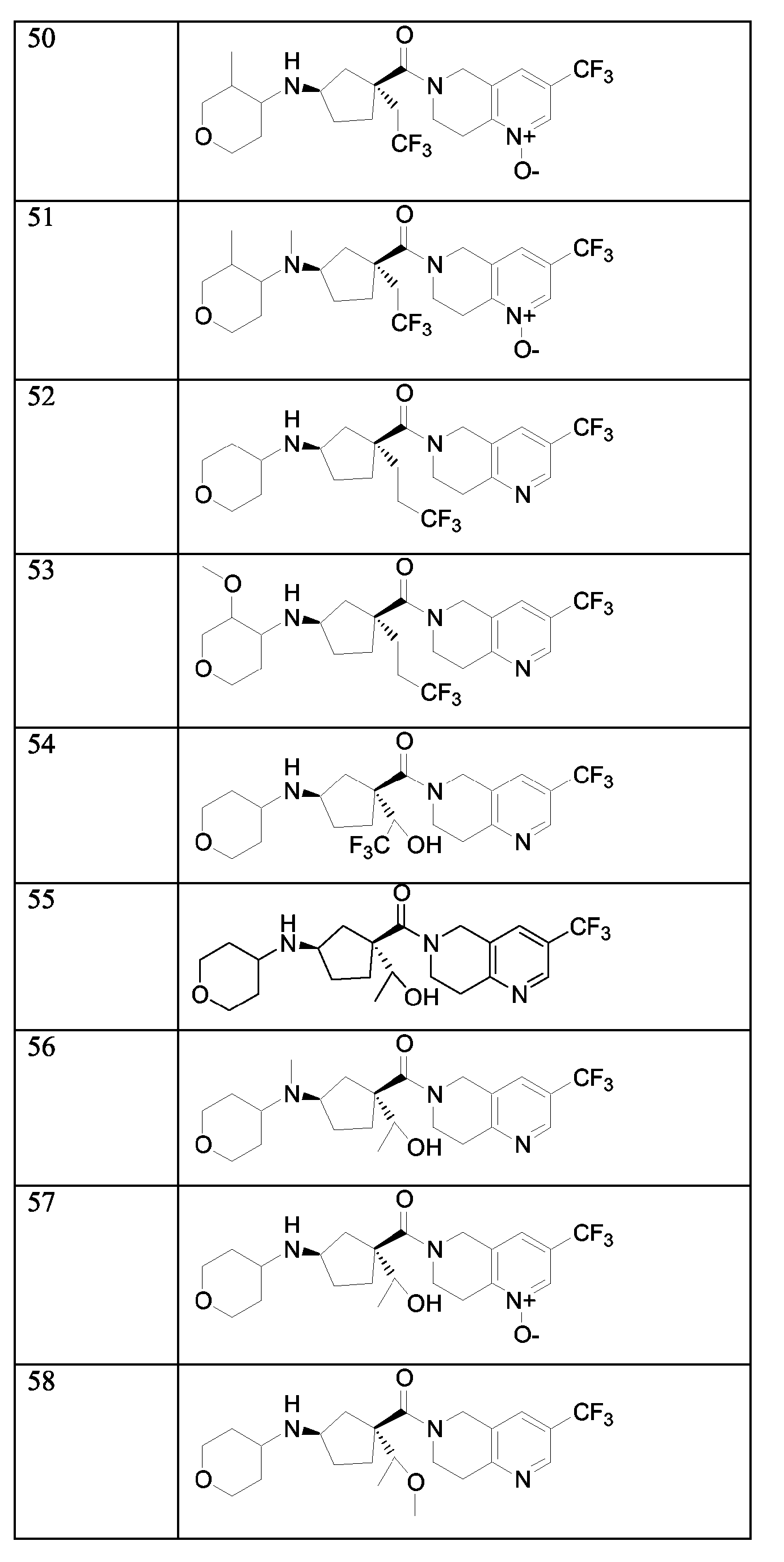
-

- The other three isomers synthesized in a similar fashion to Example 59 are listed in the table below.

Table 4 Example label Molecular Formula Calculated [M] Found [M+H] + 60 Isomer 2 2nd fastest eluting isomer C23H32F3N3O3 455.27 456.3 61 Isomer 3 3rd fastest eluting isomer C23H32F3N3O3 455.27 456.3 62 Isomer 4 Last eluting isomer C23H32F3N3O3 455.27 456.3 
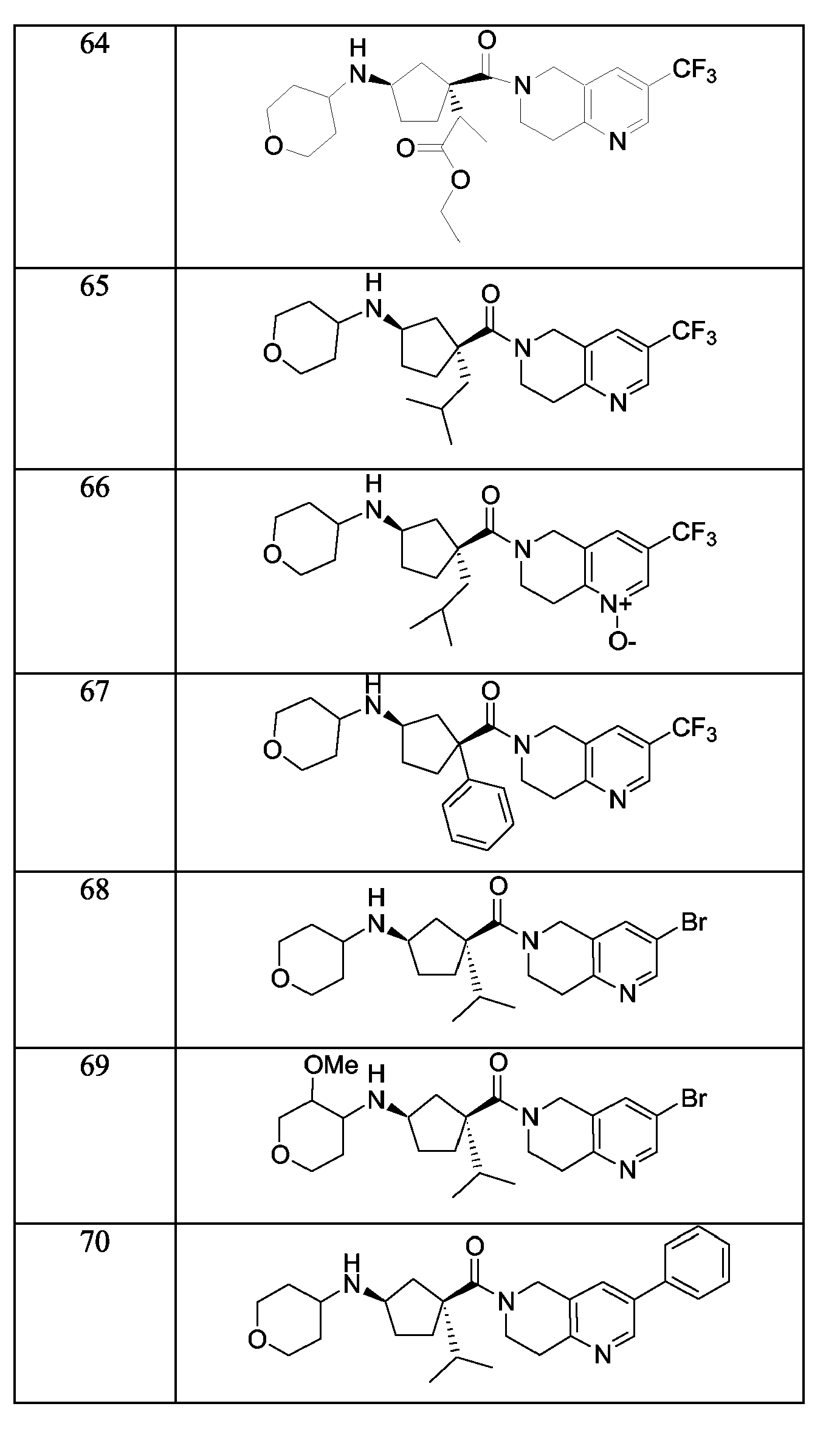


- While the invention has been described and illustrated with reference to certain particular embodiments thereof, those skilled in the art will appreciate that various adaptations, changes, modifications, substitutions, deletions, or additions of procedures and protocols may be made without departing from the spirit and scope of the invention. For example, effective dosages other than the particular dosages as set forth herein above may be applicable as a consequence of variations in the responsiveness of the mammal being treated for any of the indications with the compounds of the invention indicated above. Likewise, the specific pharmacological responses observed may vary according to and depending upon the particular active compounds selected or whether there are present pharmaceutical carriers, as well as the type of formulation and mode of administration employed, and such expected variations or differences in the results are contemplated in accordance with the objects and practices of the present invention. It is intended, therefore, that the invention be defined by the scope of the claims which follow and that such claims be interpreted as broadly as is reasonable.
the dashed line represents a single or a double bond;
and pharmaceutically acceptable salts thereof and individual diastereomers thereof,
and their use in the manufacture of a medicament for treating, preventing, ameliorating, controlling and reducing the risk of a disorder or disease, wherein the disorder or disease is multiple sclerosis, rheumatoid arthritis, atherosclerosis, chronic obstructive pulmonary disease, obesity, type II diabetes or metabolic syndrome.
Claims (7)
- Use of the compound of formula I:
 X is selected from the group consisting of:
-O-, -NR20-, -S-, -SO-, -SO2-, and -CR21R22-, -NSO2R20-,-NCOR20-, -NCO2R20-, -CR21CO2R20-, -CR21OCOR20-, -CO-, where R20 is selected from: hydrogen, C1-6 alkyl, benzyl, phenyl, C3-6cycloalkyl where the alkyl, phenyl, benzyl, and cycloalkyl groups can be unsubstituted or substituted with 1-3 substituents where the substituents are independently selected from: halo, hydroxy, C1-3alkyl, C1-3alkoxy, -CO2H, -CO2-C1-6 alkyl, and trifluoromethyl,
where R21 and R22 are independently selected from: hydrogen, hydroxy, C1-6alkyl, -O-C1-6alkyl, benzyl, phenyl, C3-6 cycloalkyl where the alkyl, phenyl, benzyl, and cycloalkyl groups can be unsubstituted or substituted with 1-3 substituents where the substituents are independently selected from: halo, hydroxy, C1-3alkyl, C1-3alkoxy, -CO2H, -CO2-C1-6 alkyl, and trifluoromethyl;R1 is selected from:
-C1-6alkyl, -C0-6alkyl-O-C1-6alkyl-, -C0-6alkyl-S-C1-6alkyl-, -(C0-6alkyl)-(C3-7cycloalkyl)-(C0-6alkyl), hydroxy, -heterocycle, -CN, -NR20R26, -NHSO2R20, -NHCOR20, -NHCO2R20, -CO2R20, -CR21CO2R20, -CR21OCOR20 and phenyl,
where R26 is selected from: hydrogen, C1-6alkyl, benzyl, phenyl, C3-6cycloalkyl where the alkyl, phenyl, benzyl, and cycloalkyl groups can be unsubstituted or substituted with 1-3 substituents where the substituents are independently selected from: halo, hydroxy, C1-3alkyl, C1-3alkoxy, -CO2H, -CO2-C1-6 alkyl, and trifluoromethyl
where the alkyl and the cycloalkyl are unsubstituted or substituted with 1-7 substituents where the substituents are independently selected from:(a) halo,(b) hydroxy,(c) -O-C1-3alkyl,(d) trifluoromethyl,(f) C1-3alkyl,(g) -O-C1-3alkyl,(h) -CO2R20,(i) -SO2R 20,(j) -NHCOCH3,(k) -NHSO2CH3,(l) -heterocycle,(m) =O,(n) -CN,
and where the phenyl and pyridyl are unsubstituted or substituted with 1-3 substituents where the substituents are independently selected from: halo, hydroxy, C1-3alkyl, C1-3alkoxy and trifluoromethyl;R2 is selected from:(a) hydrogen,(b) hydroxy,(c) halo,(d) C1-3alkyl, where the alkyl is unsubstituted or substituted with 1-6 substituents independently selected from: fluoro, and hydroxy,(e) -NR20R26,(f) -CO2R20,(g) -CONR20R26,(h) -NR20COR21,(i) -OCONR20R26,(j) -NR20CONR20R26,(k) -heterocycle,(l) -CN,(m) -NR20-SO2-NR20R26,(n) -NR20-SO2-R26,(o) -SO2-NR20R26, and(p) =O, where R2 is connected to the ring via a double bond;R3 is oxygen or is absent;R4 is selected from:(a) hydrogen,(b) C1-6alkyl,(c) trifluoromethyl,(d) trifluoromethoxy,(e) chloro,(f) fluoro,(g) bromo, and(h) phenyl;R5 is selected from:(a) C1-6alkyl, where alkyl may be unsubstituted or substituted with 1-6 fluoro and optionally substituted with hydroxyl,(b) -O-C 1-6alkyl, where alkyl may be unsubstituted or substituted with 1-6 fluoro,(c) -CO-C1-6alkyl, where alkyl may be unsubstituted or substituted with 1-6 fluoro,(d) -S-C1-6alkyl, where alkyl may be unsubstituted or substituted with 1-6 fluoro,(e) -pyridyl, which may be unsubstituted or substituted with one or more substituents selected from the group consisting of: halo, trifluoromethyl, C1-4alkyl, and CO2R20,(f) fluoro,(g) chloro,(h) bromo,(i) -C4-6cycloalkyl,(j) -O-C4-6cycloalkyl,(k) phenyl, which may be unsubstituted or substituted with one or more substituents selected from the group consisting of : halo, trifluoromethyl, C1-4alkyl, and CO2R20,(l) -O-phenyl, which may be unsubstituted or substituted with one or more substituents selected from the group consisting of: halo, trifluoromethyl, C1-4alkyl, and CO2R20,(m) -C3-6cycloalkyl, where alkyl may be unsubstituted or substituted with 1-6 fluoro,(n) -O-C3-6cycloalkyl, where alkyl may be unsubstituted or substituted with 1-6 fluoro,(o) -heterocycle,(p) -CN, and(q) -CO2R20;R6 is selected from:(a) hydrogen,(b) C1-6alkyl, and(c) trifluoromethyl(d) fluoro(e) chloro, and(f) bromo;R7 is selected from:(a) hydrogen, and(b) C1-6alkyl, which is unsubstituted or substituted with 1-3 substituents where the substituents are independently selected from: halo, hydroxy, -CO2H, -CO2C1-6alkyl, and -O-C1-3alkyl;R8 is selected from:(a) hydrogen,(b) C1-6alkyl, where alkyl may be unsubstituted or substituted with 1-6 substituents where the substituents are chosen from the group: fluoro, C1-3alkoxy, hydroxy, -CO2R20,(c) fluoro,(d) -O-C1-3alkyl, where alkyl may be unsubstituted or substituted with 1-3 fluoro, and(e) C3-6cycloalkyl,(f) -O-C3-6cycloalkyl,(g) hydroxy,(h) -CO2R20,(i) -OCOR20,
or R7 and R8 may be joined together via a C2-4alkyl or a
C0-2alkyl-O-C1-3alkyl chain to form a 5-7 membered ring;R9 is selected from:(a) hydrogen,(b) C1-6alkyl, where alkyl may be unsubstituted or substituted with 1-6 substituents where the substituents are chosen from the group: fluoro, C1-3alkoxy, hydroxy, -CO2R20,(c) CO2R20,(d) hydroxy, and(e) -O-C1-6alkyl, where alkyl may be unsubstituted or substituted with 1-6 substituents where the substituents are chosen from the group: fluoro, C1-3alkoxy, hydroxy, -CO2R20,
or R8 and R9 may be joined together by a C1-4alkyl chain or a C0-3alkyl-O-C0-3alkyl chain to form a 3-6 membered ring;R10 is selected from:(a) hydrogen, and(b) C1-6alkyl, where alkyl may be unsubstituted or substituted with 1-6 fluoro,(c) fluoro,(d) -O-C3-6cycloalkyl, and(e) -O-C1-3alkyl, where alkyl may be unsubstituted or substituted with 1-6 fluoro,
or R8 and R10 may be joined together by a C2-3alkyl chain to form a 5-6 membered ring, where the alkyl are unsubstituted or substituted with 1-3 substituents where the substiuents are independently selected from: halo, hydroxy, -CO2R20, C1-3alkyl, and C1-3alkoxy,
or R8 and R10 may be joined together by a C1-2alkyl-O-C1-2alkyl chain to form a 6-8 membered ring, where the alkyl are unsubstituted or substituted with 1-3 substituents where the substiuents are independently selected from: halo, hydroxy, -CO2R20, C1-3alkyl, and C1-3alkoxy, or R8 and R10 may be joined together by a -O-C1-2alkyl-O-chain to form a 6-7 membered ring, where the alkyl are unsubstituted or substituted with 1-3 substituents where the substiuents are independently selected from: halo, hydroxy, -CO2R20, C1-3alkyl, and C1-3alkoxy;n is selected from 0, 1 and 2; andthe dashed line represents a single or a double bond,
for the manufacture of a medicament for treating, preventing, ameliorating, controlling or reducing the risk of a disorder or disease, wherein said disorder or disease is multiple sclerosis, rheumatoid arthritis, atherosclerosis, chronic obstructive pulmonary disease, obesity, type II diabetes or metabolic syndrome. - Use as claimed in claim 1, wherein said compound is of formula Ia:

- Use as claimed in claim 1, wherein said compound is of formula Ib:

- Use as claimed in claim 1, wherein said compound is of formula Ic:

- Use as claimed in claim 1, wherein said compound is of formula Id:

- Use as claimed in claim 1, wherein said compound is:

- Use as claimed in claim 1, wherein said compound is:

Applications Claiming Priority (2)
| Application Number | Priority Date | Filing Date | Title |
|---|---|---|---|
| US10/923,594 US7230008B2 (en) | 2002-04-29 | 2004-08-20 | Tetrahydropyranyl cyclopentyl tetrahydropyridopyridine modulators of chemokine receptor activity |
| US11/102,417 US20060030582A1 (en) | 2002-04-29 | 2005-04-08 | Tetrahydropyranyl cyclopentyl tetrahydropyridopyridine modulators of chemokine receptor activity |
Publications (1)
| Publication Number | Publication Date |
|---|---|
| EP1627636A1 true EP1627636A1 (en) | 2006-02-22 |
Family
ID=35448040
Family Applications (1)
| Application Number | Title | Priority Date | Filing Date |
|---|---|---|---|
| EP05270011A Withdrawn EP1627636A1 (en) | 2004-08-20 | 2005-04-18 | Tetrahydropyranyl cyclopentyl tetrahydropyridopyridine modulators of chemokine receptor activity |
Country Status (2)
| Country | Link |
|---|---|
| US (1) | US20060030582A1 (en) |
| EP (1) | EP1627636A1 (en) |
Families Citing this family (7)
| Publication number | Priority date | Publication date | Assignee | Title |
|---|---|---|---|---|
| US20080076120A1 (en) * | 2006-09-14 | 2008-03-27 | Millennium Pharmaceuticals, Inc. | Methods for the identification, evaluation and treatment of patients having CC-Chemokine receptor 2 (CCR-2) mediated disorders |
| ITMI20062254A1 (en) * | 2006-11-24 | 2008-05-25 | Acraf | USE OF A METHOXY-ALCANOIC ACID OF THE INZOL TO PREPARE A PHARMACEUTICAL COMPOSITION |
| EA201001329A1 (en) * | 2008-02-22 | 2011-04-29 | Айрм Ллк | COMPOUNDS AND COMPOSITIONS AS GPR119 ACTIVITY MODULATORS |
| PT3297438T (en) | 2015-05-21 | 2022-01-25 | Chemocentryx Inc | Ccr2 modulators |
| MA50665A (en) | 2017-09-25 | 2020-08-05 | Chemocentryx Inc | POLYTHERAPY USING A CHEMIOKIN RECEPTOR 2 (CCR2) ANTAGONIST AND A PD-1 / PD-L1 INHIBITOR |
| IL275898B2 (en) | 2018-01-08 | 2025-05-01 | Chemocentryx Inc | Methods of treating solid tumors with ccr2 antagonists |
| US20190269664A1 (en) | 2018-01-08 | 2019-09-05 | Chemocentryx, Inc. | Methods of treating solid tumors with ccr2 antagonists |
Citations (6)
| Publication number | Priority date | Publication date | Assignee | Title |
|---|---|---|---|---|
| WO2003092586A2 (en) * | 2002-04-29 | 2003-11-13 | Merck & Co., Inc. | Tetrahydropyranyl cyclopentyl tetrahydropyridopyridine modulators of chemokine receptor activity |
| WO2003093266A1 (en) * | 2002-04-29 | 2003-11-13 | Merck & Co., Inc. | Tetrahydropyranyl cyclopentyl tetrahydropyridopyridine modulators of chemokine receptor activity |
| WO2003093231A2 (en) * | 2002-04-29 | 2003-11-13 | Merck & Co., Inc. | Tetrahydropyranyl cyclopentyl tetrahydroisoquinoline modulators of chemokine receptor activity |
| WO2004041161A2 (en) * | 2002-10-30 | 2004-05-21 | Merck & Co., Inc. | Tetrahydropyranyl cyclopentyl benzylamide modulators of chemokine receptor activity |
| WO2005044264A1 (en) * | 2003-10-27 | 2005-05-19 | Merck & Co., Inc. | Ccr-2 antagonist salt |
| WO2005105092A2 (en) * | 2004-04-28 | 2005-11-10 | Merck & Co., Inc. | 3,3-disubstituted tetrahydropyranyl cyclopentyl amide modulators of chemokine receptor activity |
Family Cites Families (3)
| Publication number | Priority date | Publication date | Assignee | Title |
|---|---|---|---|---|
| US3647804A (en) * | 1970-02-27 | 1972-03-07 | Upjohn Co | Cycloalkanecarboxamides |
| US3772308A (en) * | 1972-06-02 | 1973-11-13 | Lilly Co Eli | Cyclopentanecetamides and cyclopentaneacetonitriles |
| US6312689B1 (en) * | 1998-07-23 | 2001-11-06 | Millennium Pharmaceuticals, Inc. | Anti-CCR2 antibodies and methods of use therefor |
-
2005
- 2005-04-08 US US11/102,417 patent/US20060030582A1/en not_active Abandoned
- 2005-04-18 EP EP05270011A patent/EP1627636A1/en not_active Withdrawn
Patent Citations (6)
| Publication number | Priority date | Publication date | Assignee | Title |
|---|---|---|---|---|
| WO2003092586A2 (en) * | 2002-04-29 | 2003-11-13 | Merck & Co., Inc. | Tetrahydropyranyl cyclopentyl tetrahydropyridopyridine modulators of chemokine receptor activity |
| WO2003093266A1 (en) * | 2002-04-29 | 2003-11-13 | Merck & Co., Inc. | Tetrahydropyranyl cyclopentyl tetrahydropyridopyridine modulators of chemokine receptor activity |
| WO2003093231A2 (en) * | 2002-04-29 | 2003-11-13 | Merck & Co., Inc. | Tetrahydropyranyl cyclopentyl tetrahydroisoquinoline modulators of chemokine receptor activity |
| WO2004041161A2 (en) * | 2002-10-30 | 2004-05-21 | Merck & Co., Inc. | Tetrahydropyranyl cyclopentyl benzylamide modulators of chemokine receptor activity |
| WO2005044264A1 (en) * | 2003-10-27 | 2005-05-19 | Merck & Co., Inc. | Ccr-2 antagonist salt |
| WO2005105092A2 (en) * | 2004-04-28 | 2005-11-10 | Merck & Co., Inc. | 3,3-disubstituted tetrahydropyranyl cyclopentyl amide modulators of chemokine receptor activity |
Also Published As
| Publication number | Publication date |
|---|---|
| US20060030582A1 (en) | 2006-02-09 |
Similar Documents
| Publication | Publication Date | Title |
|---|---|---|
| US20100234409A1 (en) | Amino cyclopentyl heterocyclic and carbocyclic modulators of chemokine receptor activity | |
| US7491737B2 (en) | Heterarylpiperidine modulators of chemokine receptor activity | |
| ZA200407940B (en) | Tetrahydropyranyl cyclopentyl tetrahydropyridopyridine modulators of chemokine receptor activity | |
| MXPA04010702A (en) | Tetrahydropyranyl cyclopentyl tetrahydropyridopyridine modulators of chemokine receptor activity. | |
| WO2004042351A2 (en) | Piperidinyl-alpha-aminoamide modulators of chemokine receptor activity | |
| US7566726B2 (en) | 3,3-disubstituted tetrahydropyranyl cyclopentyl amide modulators of chemokine receptor activity | |
| US7700772B2 (en) | Amino heterocyclic modulators of chemokine receptor activity | |
| US7410961B2 (en) | 2,6-disubstituted piperiddines as modulators | |
| US7557124B2 (en) | Tetrahydropyranyl cyclopentyl tetrahydropyridopyridine modulators of chemokine receptor activity | |
| US20060183731A1 (en) | 7 and 8 membered heterocyclic cyclopentyl benzylamide modulators of chemokine receptor activity | |
| US7230008B2 (en) | Tetrahydropyranyl cyclopentyl tetrahydropyridopyridine modulators of chemokine receptor activity | |
| US7589085B2 (en) | Tetrahydropyran heterocyclic cyclopentyl heteroaryl modulators of chemokine receptor activity | |
| US20070299104A1 (en) | Tetrahydropyranyl Cyclopentyl 1-Substituted and 1,1-Disubstituted Tetrahydroisoquinoline Modulators of Chemokine Receptor Activity | |
| IE20060891A1 (en) | Spironolactone and analogues as modulators of chemokine receptor activity |
Legal Events
| Date | Code | Title | Description |
|---|---|---|---|
| PUAI | Public reference made under article 153(3) epc to a published international application that has entered the european phase |
Free format text: ORIGINAL CODE: 0009012 |
|
| AK | Designated contracting states |
Kind code of ref document: A1 Designated state(s): AT BE BG CH CY CZ DE DK EE ES FI FR GB GR HU IE IS IT LI LT LU MC NL PL PT RO SE SI SK TR |
|
| AX | Request for extension of the european patent |
Extension state: AL BA HR LV MK YU |
|
| 17P | Request for examination filed |
Effective date: 20060822 |
|
| AKX | Designation fees paid |
Designated state(s): AT BE BG CH CY CZ DE DK EE ES FI FR GB GR HU IE IS IT LI LT LU MC NL PL PT RO SE SI SK TR |
|
| 17Q | First examination report despatched |
Effective date: 20061205 |
|
| STAA | Information on the status of an ep patent application or granted ep patent |
Free format text: STATUS: THE APPLICATION IS DEEMED TO BE WITHDRAWN |
|
| 18D | Application deemed to be withdrawn |
Effective date: 20070616 |