EP1626739B1 - Compositions comprising florfenicol or a structurally related compound for treating infection in cattle and swine - Google Patents
Compositions comprising florfenicol or a structurally related compound for treating infection in cattle and swine Download PDFInfo
- Publication number
- EP1626739B1 EP1626739B1 EP04753639.6A EP04753639A EP1626739B1 EP 1626739 B1 EP1626739 B1 EP 1626739B1 EP 04753639 A EP04753639 A EP 04753639A EP 1626739 B1 EP1626739 B1 EP 1626739B1
- Authority
- EP
- European Patent Office
- Prior art keywords
- composition
- florfenicol
- group
- methyl
- present
- Prior art date
- Legal status (The legal status is an assumption and is not a legal conclusion. Google has not performed a legal analysis and makes no representation as to the accuracy of the status listed.)
- Expired - Lifetime
Links
Images


Classifications
-
- A—HUMAN NECESSITIES
- A61—MEDICAL OR VETERINARY SCIENCE; HYGIENE
- A61K—PREPARATIONS FOR MEDICAL, DENTAL OR TOILETRY PURPOSES
- A61K9/00—Medicinal preparations characterised by special physical form
- A61K9/0012—Galenical forms characterised by the site of application
- A61K9/0019—Injectable compositions; Intramuscular, intravenous, arterial, subcutaneous administration; Compositions to be administered through the skin in an invasive manner
-
- A—HUMAN NECESSITIES
- A61—MEDICAL OR VETERINARY SCIENCE; HYGIENE
- A61K—PREPARATIONS FOR MEDICAL, DENTAL OR TOILETRY PURPOSES
- A61K31/00—Medicinal preparations containing organic active ingredients
- A61K31/095—Sulfur, selenium, or tellurium compounds, e.g. thiols
- A61K31/10—Sulfides; Sulfoxides; Sulfones
-
- A—HUMAN NECESSITIES
- A61—MEDICAL OR VETERINARY SCIENCE; HYGIENE
- A61K—PREPARATIONS FOR MEDICAL, DENTAL OR TOILETRY PURPOSES
- A61K31/00—Medicinal preparations containing organic active ingredients
- A61K31/16—Amides, e.g. hydroxamic acids
-
- A—HUMAN NECESSITIES
- A61—MEDICAL OR VETERINARY SCIENCE; HYGIENE
- A61K—PREPARATIONS FOR MEDICAL, DENTAL OR TOILETRY PURPOSES
- A61K31/00—Medicinal preparations containing organic active ingredients
- A61K31/16—Amides, e.g. hydroxamic acids
- A61K31/165—Amides, e.g. hydroxamic acids having aromatic rings, e.g. colchicine, atenolol, progabide
-
- A—HUMAN NECESSITIES
- A61—MEDICAL OR VETERINARY SCIENCE; HYGIENE
- A61K—PREPARATIONS FOR MEDICAL, DENTAL OR TOILETRY PURPOSES
- A61K31/00—Medicinal preparations containing organic active ingredients
- A61K31/185—Acids; Anhydrides, halides or salts thereof, e.g. sulfur acids, imidic, hydrazonic or hydroximic acids
- A61K31/19—Carboxylic acids, e.g. valproic acid
- A61K31/195—Carboxylic acids, e.g. valproic acid having an amino group
-
- A—HUMAN NECESSITIES
- A61—MEDICAL OR VETERINARY SCIENCE; HYGIENE
- A61K—PREPARATIONS FOR MEDICAL, DENTAL OR TOILETRY PURPOSES
- A61K31/00—Medicinal preparations containing organic active ingredients
- A61K31/21—Esters, e.g. nitroglycerine, selenocyanates
-
- A—HUMAN NECESSITIES
- A61—MEDICAL OR VETERINARY SCIENCE; HYGIENE
- A61K—PREPARATIONS FOR MEDICAL, DENTAL OR TOILETRY PURPOSES
- A61K31/00—Medicinal preparations containing organic active ingredients
- A61K31/33—Heterocyclic compounds
- A61K31/395—Heterocyclic compounds having nitrogen as a ring hetero atom, e.g. guanethidine or rifamycins
- A61K31/40—Heterocyclic compounds having nitrogen as a ring hetero atom, e.g. guanethidine or rifamycins having five-membered rings with one nitrogen as the only ring hetero atom, e.g. sulpiride, succinimide, tolmetin, buflomedil
- A61K31/4015—Heterocyclic compounds having nitrogen as a ring hetero atom, e.g. guanethidine or rifamycins having five-membered rings with one nitrogen as the only ring hetero atom, e.g. sulpiride, succinimide, tolmetin, buflomedil having oxo groups directly attached to the heterocyclic ring, e.g. piracetam, ethosuximide
-
- A—HUMAN NECESSITIES
- A61—MEDICAL OR VETERINARY SCIENCE; HYGIENE
- A61K—PREPARATIONS FOR MEDICAL, DENTAL OR TOILETRY PURPOSES
- A61K31/00—Medicinal preparations containing organic active ingredients
- A61K31/655—Azo (—N=N—), diazo (=N2), azoxy (>N—O—N< or N(=O)—N<), azido (—N3) or diazoamino (—N=N—N<) compounds
-
- A—HUMAN NECESSITIES
- A61—MEDICAL OR VETERINARY SCIENCE; HYGIENE
- A61K—PREPARATIONS FOR MEDICAL, DENTAL OR TOILETRY PURPOSES
- A61K31/00—Medicinal preparations containing organic active ingredients
- A61K31/66—Phosphorus compounds
-
- A—HUMAN NECESSITIES
- A61—MEDICAL OR VETERINARY SCIENCE; HYGIENE
- A61K—PREPARATIONS FOR MEDICAL, DENTAL OR TOILETRY PURPOSES
- A61K47/00—Medicinal preparations characterised by the non-active ingredients used, e.g. carriers or inert additives; Targeting or modifying agents chemically bound to the active ingredient
- A61K47/06—Organic compounds, e.g. natural or synthetic hydrocarbons, polyolefins, mineral oil, petrolatum or ozokerite
- A61K47/08—Organic compounds, e.g. natural or synthetic hydrocarbons, polyolefins, mineral oil, petrolatum or ozokerite containing oxygen, e.g. ethers, acetals, ketones, quinones, aldehydes, peroxides
- A61K47/14—Esters of carboxylic acids, e.g. fatty acid monoglycerides, medium-chain triglycerides, parabens or PEG fatty acid esters
-
- A—HUMAN NECESSITIES
- A61—MEDICAL OR VETERINARY SCIENCE; HYGIENE
- A61K—PREPARATIONS FOR MEDICAL, DENTAL OR TOILETRY PURPOSES
- A61K47/00—Medicinal preparations characterised by the non-active ingredients used, e.g. carriers or inert additives; Targeting or modifying agents chemically bound to the active ingredient
- A61K47/06—Organic compounds, e.g. natural or synthetic hydrocarbons, polyolefins, mineral oil, petrolatum or ozokerite
- A61K47/16—Organic compounds, e.g. natural or synthetic hydrocarbons, polyolefins, mineral oil, petrolatum or ozokerite containing nitrogen, e.g. nitro-, nitroso-, azo-compounds, nitriles, cyanates
- A61K47/18—Amines; Amides; Ureas; Quaternary ammonium compounds; Amino acids; Oligopeptides having up to five amino acids
-
- A—HUMAN NECESSITIES
- A61—MEDICAL OR VETERINARY SCIENCE; HYGIENE
- A61K—PREPARATIONS FOR MEDICAL, DENTAL OR TOILETRY PURPOSES
- A61K47/00—Medicinal preparations characterised by the non-active ingredients used, e.g. carriers or inert additives; Targeting or modifying agents chemically bound to the active ingredient
- A61K47/30—Macromolecular organic or inorganic compounds, e.g. inorganic polyphosphates
- A61K47/32—Macromolecular compounds obtained by reactions only involving carbon-to-carbon unsaturated bonds, e.g. carbomers, poly(meth)acrylates, or polyvinyl pyrrolidone
-
- A—HUMAN NECESSITIES
- A61—MEDICAL OR VETERINARY SCIENCE; HYGIENE
- A61P—SPECIFIC THERAPEUTIC ACTIVITY OF CHEMICAL COMPOUNDS OR MEDICINAL PREPARATIONS
- A61P1/00—Drugs for disorders of the alimentary tract or the digestive system
-
- A—HUMAN NECESSITIES
- A61—MEDICAL OR VETERINARY SCIENCE; HYGIENE
- A61P—SPECIFIC THERAPEUTIC ACTIVITY OF CHEMICAL COMPOUNDS OR MEDICINAL PREPARATIONS
- A61P11/00—Drugs for disorders of the respiratory system
-
- A—HUMAN NECESSITIES
- A61—MEDICAL OR VETERINARY SCIENCE; HYGIENE
- A61P—SPECIFIC THERAPEUTIC ACTIVITY OF CHEMICAL COMPOUNDS OR MEDICINAL PREPARATIONS
- A61P15/00—Drugs for genital or sexual disorders; Contraceptives
-
- A—HUMAN NECESSITIES
- A61—MEDICAL OR VETERINARY SCIENCE; HYGIENE
- A61P—SPECIFIC THERAPEUTIC ACTIVITY OF CHEMICAL COMPOUNDS OR MEDICINAL PREPARATIONS
- A61P15/00—Drugs for genital or sexual disorders; Contraceptives
- A61P15/14—Drugs for genital or sexual disorders; Contraceptives for lactation disorders, e.g. galactorrhoea
-
- A—HUMAN NECESSITIES
- A61—MEDICAL OR VETERINARY SCIENCE; HYGIENE
- A61P—SPECIFIC THERAPEUTIC ACTIVITY OF CHEMICAL COMPOUNDS OR MEDICINAL PREPARATIONS
- A61P27/00—Drugs for disorders of the senses
- A61P27/02—Ophthalmic agents
-
- A—HUMAN NECESSITIES
- A61—MEDICAL OR VETERINARY SCIENCE; HYGIENE
- A61P—SPECIFIC THERAPEUTIC ACTIVITY OF CHEMICAL COMPOUNDS OR MEDICINAL PREPARATIONS
- A61P29/00—Non-central analgesic, antipyretic or antiinflammatory agents, e.g. antirheumatic agents; Non-steroidal antiinflammatory drugs [NSAID]
-
- A—HUMAN NECESSITIES
- A61—MEDICAL OR VETERINARY SCIENCE; HYGIENE
- A61P—SPECIFIC THERAPEUTIC ACTIVITY OF CHEMICAL COMPOUNDS OR MEDICINAL PREPARATIONS
- A61P31/00—Antiinfectives, i.e. antibiotics, antiseptics, chemotherapeutics
-
- A—HUMAN NECESSITIES
- A61—MEDICAL OR VETERINARY SCIENCE; HYGIENE
- A61P—SPECIFIC THERAPEUTIC ACTIVITY OF CHEMICAL COMPOUNDS OR MEDICINAL PREPARATIONS
- A61P31/00—Antiinfectives, i.e. antibiotics, antiseptics, chemotherapeutics
- A61P31/04—Antibacterial agents
-
- A—HUMAN NECESSITIES
- A61—MEDICAL OR VETERINARY SCIENCE; HYGIENE
- A61P—SPECIFIC THERAPEUTIC ACTIVITY OF CHEMICAL COMPOUNDS OR MEDICINAL PREPARATIONS
- A61P31/00—Antiinfectives, i.e. antibiotics, antiseptics, chemotherapeutics
- A61P31/10—Antimycotics
-
- A—HUMAN NECESSITIES
- A61—MEDICAL OR VETERINARY SCIENCE; HYGIENE
- A61P—SPECIFIC THERAPEUTIC ACTIVITY OF CHEMICAL COMPOUNDS OR MEDICINAL PREPARATIONS
- A61P31/00—Antiinfectives, i.e. antibiotics, antiseptics, chemotherapeutics
- A61P31/12—Antivirals
-
- A—HUMAN NECESSITIES
- A61—MEDICAL OR VETERINARY SCIENCE; HYGIENE
- A61P—SPECIFIC THERAPEUTIC ACTIVITY OF CHEMICAL COMPOUNDS OR MEDICINAL PREPARATIONS
- A61P33/00—Antiparasitic agents
Definitions
- the invention relates to compositions for the treatment of bacterial infections in animals. More particularly, the invention relates to a composition containing an antibiotic for use in the treatment of bacterial infections in animals such as cattle, sheep and swine.
- bovine respiratory disease often referred to as the "bovine respiratory diseases complex" due to the multifactorial etiology has been one of the leading causes of economic loss to both the dairy and beef industries throughout the world. Excessive mortality, reduced weight gains, and the cost of treatment and prevention have placed a heavy burden on the industry.
- BRD The pathogenesis of BRD is thought to be due to the interaction of environmental and physiological stresses coupled with infectious agents, such as Mannheimia (Pasteurella) haemolytica, Pasteurella multocida and Haemophilus somnus that are considered part of the normal flora of the bovine upper respiratory tract.
- infectious agents such as Mannheimia (Pasteurella) haemolytica, Pasteurella multocida and Haemophilus somnus that are considered part of the normal flora of the bovine upper respiratory tract.
- infectious agents such as Mannheimia (Pasteurella) haemolytica, Pasteurella multocida and Haemophilus somnus that are considered part of the normal flora of the bovine upper respiratory tract.
- IBRV infectious bovine rhinotracheitis virus
- BVDV bovine viral diarrhea virus
- BRSV bovine respiratory syncytial virus
- PI-3 parainfluenza 3 virus
- swine respiratory disease also has a multifactional etiology.
- Bacterial infections caused by P. multocida, H. parasuis, Bordetella bronchiseptica, Actinobacillus pleuropneumoniae, Streptococcus suis, Salmonella cholerasuis and Mycoplasma sp. may result in respiratory disease in swine, resulting in significant economic losses. Stresses such as crowding, mixing and moving of pigs and transient viral infections may contribute to the intensification of the disease.
- any of the pathogens listed as possibly implicated in BRD or SRD may stimulate an excessive inflammatory process in the lungs by producing various toxins that stimulate the release of various cytokines, which up-regulate the inflammatory process, resulting in death or morbidity.
- M. haemolytica considered the most virulent of these various organisms, also produces a leukotoxin that inhibits phagocytosis by leukocytes, thus further enhancing its ability to colonize the lower respiratory tract. This process often results in a bacterial bronchopneumonia.
- Oxidative Damage to host tissues caused by invading pathogens occur as neutrophils, pulmonary alveolar macrophages and natural killer cells destroy infected cells. As cell membranes are damaged, arachidonic acid is released. Arachidonic acid is the substrate for the formation of various prostaglandins and other eicosanoids. The release of these biological active substances is critical to driving the inflammatory response that results in pulmonary lesions. Mosier D.A., Vet. Clin. North Am. Food Animal Prac., 13:483-493 (1997 ).
- therapy for BRD should be directed at achieving the following goals:
- NUFLOR® an injectable formulation of the broad-spectrum antibiotic florfenicol, has emerged as one of the leading antibiotics on a global basis. NUFLOR® may be administered subcutaneously as well as intramuscularly. It is indicated for the treatment and control of BRD associated with M. haemolytica, P. multocida and H. somnus as well as for the prevention of respiratory disease in cattle at high risk of developing BRD associated with these bacteria.
- NUFLOR® is also indicated for the treatment of bovine interdigital phlegmon (footrot, acute interdigital necrobacillosis, infectious pododermatitis) associated with Fusobacterium necrophorum and Bacteroides melaninogenicus .
- US-A-5 082 863 deals with compositions containing florfenicol and a solvent system consisting of a pyrrolidone, polyethylene glycol and a viscosity reducing agent for veterinary use.”
- the present invention fulfills this need for a conveniently-administered, stable antibacterial product by providing improved compositions for the treatment of respiratory disease, bacterial infection and other infections of cattle and other animals.
- the present invention is also directed to a composition for the treatment of microbial infection in an animal comprising
- Also disclosed is a method of treating bovine respiratory disease in an animal comprising the step of subcutaneously administering to an animal in need of souch treatment a therapeutically-effective amount of the composition defined above wherein the plasma concentration of florfenicol over time after subcutaneous administration of a florfenicol solution at a dose of 40 mg/kg of body weight, is about 5000 to about 7000 ng/mL, and wherein the mean time to peak concentration is about 3 to about 6 hrs.
- a method of treating bovine respiratory disease in an animal comprising the step of subcutaneously administering to an animal in need of such treatment a therapeutically-effective amount of the composition defined above, wherein the plasma concentration of florfenicol over time after subcutaneous administration of a florfenicol solution at a dose of 40 mg/kg of body weight, is about 3400 to about 5000 ng/mL, and the mean time to peak concentration is about 1 to about 9 hrs.
- compositions for the treatment of infectious diseases such as bovine respiratory disease in livestock.
- compositions are formulations comprising certain antibacterial drugs, such as florfenicol, thiamphenicol, chloramphenicol in combination with unique and novel carriers and carrier systems.
- acyl means an H-C(O)-, alkyl-C(O)-, alkenyl-C(O)-, alkynyl-C(O)-, cycloalkyl-C(O)-, cycloalkenyl-C(O)-, or cycloalkynyl-C(O)- group in which the various groups are as subsequently described.
- the bond to the parent moiety is through the carbonyl group.
- Preferred acyls contain a lower alkyl.
- suitable acyl groups include formyl, acetyl, propanoyl, 2-methylpropanoyl, butanoyl and cyclohexanoyl.
- Alkyl means an aliphatic hydrocarbon group, which may be straight or branched, comprising from 1 to about 20 carbon atoms in the chain. Preferred alkyl groups contain from 1 to about 12 carbon atoms in the chain. More preferred alkyl groups contain from 1 to about 6 carbon atoms in the chain. Branched means that one or more lower alkyl groups, such as methyl, ethyl or propyl, are attached to a linear alkyl chain. "Lower alkyl” means a group having from 1 to about 6 carbon atoms in the chain, which may be straight or branched. The term “substituted alkyl” means that the alkyl group may be substituted by one or more substituents which may be the same or different.
- Aryl means an aromatic monocyclic or multicyclic ring system comprising about 6 to about 14 carbon atoms, preferably about 6 to about 10 carbon atoms.
- the aryl group may be optionally substituted with one or more "ring system substituents,” which may be the same or different, and are as defined herein.
- Alkoxy means an alkyl-O- group in which the alkyl group is as previously described.
- suitable alkoxy groups include methoxy, ethoxy, isopropoxy, and n-butoxy.
- the bond to the parent moiety is through the ether oxygen.
- Halo and halogeno mean fluoro, chloro, bromo, or iodo groups. Preferred are fluoro, chloro or bromo, and more preferred are fluoro and chloro.
- Halogen means fluorine, chlorine, bromine, or iodine. Preferred are fluorine, chlorine or bromine, and more preferred are fluorine and chlorine.
- Haloalkyl and halogenoalkyl mean an alkyl group as defined above wherein one or more hydrogen atoms on the alkyl is replaced by a halo group defined above.
- Ring system substituent means a substituent attached to an aromatic or non-aromatic ring system which, for example, replaces an available hydrogen on the ring system. Ring system substituents may be the same or different.
- composition is intended to encompass a product comprising the specified ingredients in the specified amounts, as well as any product which results, directly or indirectly, from combination of the specified ingredients in the specified amounts.
- an “effective amount” is the dose required to alleviate a particular symptom of an infection, infestation or disease or to protect an animal against infections, infestations or diseases and the term "bovine” refers to animals of the genus Bos, such as cattle.
- Bovid refers to animals in the family Bovidae, which includes hoofed, hollow-horned ruminants such as cattle, sheep, goats, buffaloes, oxen, etc.
- the term “swine” refers to animals of the family Suidae, which includes pigs, boars, warthogs, etc.
- Fluorine-containing analogs of antibiotics chloramphenicol and thiamphenicol have been shown to have antibiotic activity, both against organisms sensitive to and resistant to chloramphenicol and thiamphenicol. See Schafer, T.W. et al., "Novel Fluorine-Containing Analogs of Chloramphenicol and Thiamphenicol: Antibacterial and Biological Properties," in CURRENT CHEMOTHERAPY AND INFECTIOUS DISEASE PROCEEDINGS OF THE 11TH ICC AND THE 19TH ICAAC AMERICAN SOCIETY OF MICROBIOLOGY 1980, 444-446 . Examples of such compounds, and methods for their manufacture, are described and claimed in U.S. Patent No.
- compositions of the present invention comprise at least one antibiotic of Formula I as the only active compound:
- halogenated groups contemplated for the moiety R in Formula I are the mono-, di- and tri-fluoro, the mono-, di- and tri-chloro-, the mono-and di-bromo-, and the iodo-methyl groups, as well as the mono- and di-fluoro-, the mono- and di-chloro-, the mono- and di-bromo-, and the iodo-ethyl groups wherein the halogen substituents are preferably on the carbon alpha to the carbonyl function.
- mixed dihalogenoalkyl groups in which both halogens are preferably bonded to the carbon alpha to the carbonyl groups, e.g., groups such as fluorochloro-, fluorobromo-, and chlorobromo-methyl and -ethyl, as well as trihalogen-methyl groups, such as dichlorofluoro- and difluorochloromethyl.
- ester derivatives e.g., 1-hydrocarboncarboxylates of Formula I, wherein Z is an acyl group of a hydrocarboncarboxylic acid having up to 16 carbon atoms that may be saturated, unsaturated, straight-chain or branched-chain, aliphatic, cyclic, cyclic-aliphatic, aromatic, aryl-aliphatic, or alkyl-aromatic, and may be substituted by hydroxy, alkoxy containing from 1 to 5 carbon atoms, carboxyl, NO 2 , NHR 1 , NR 1 R 2 , SR 1 , SOR 1 , or halogen, wherein R 1 and R 2 are as defined above.
- Z is an acyl group of a hydrocarboncarboxylic acid having up to 16 carbon atoms that may be saturated, unsaturated, straight-chain or branched-chain, aliphatic, cyclic, cyclic-aliphatic, aromatic, aryl-aliphatic, or alkyl-ar
- Solvate means a physical association of a compound of this invention with one or more solvent molecules. This physical association involves varying degrees of ionic and covalent bonding, including hydrogen bonding. In certain instances the solvate will be capable of isolation, for example when one or more solvent molecules are incorporated in the crystal lattice of the crystalline solid.
- Solvate encompasses both solution-phase and isolatable solvates. Non-limiting examples of suitable solvates include ethanolates, methanolates, and the like.
- “Hydrate” is a solvate wherein the solvent molecule is H 2 O.
- antibacterially-active ester derivatives of Formula I are those wherein Z is an acyl group of an amino acid containing up to 12 carbon atoms which may be saturated, unsaturated, straight chain, branched chain or cyclic, which may contain aromatic groups and that may be substituted by hydroxyl groups.
- ester derivatives include those derived from dibasic hydrocarboncarboxylates, e.g ., the 1-succinate and 1-palmitate esters, which provide water soluble, pharmaceutically- acceptable cationic salts, e.g ., the sodium or potassium salts as well as salts with amine, e.g ., trimethylamine. Also preferred are ester derivatives of amino acids that provide water soluble, pharmaceutically-acceptable acid addition salts with mineral or organic acids, e.g ., the hydrochloric, or sulfuric acid, or succinic acid addition salts.
- salts thus includes salts wherein the acidic hydrogen in the dibasic hydrocarboncarboxylate esters of this invention is replaced with a cation (e.g ., sodium D-(threo)-1-p-nitrophenyl-2-dichloroacetamido-3-fluoro-1-propyl hemisuccinate) as well as salts wherein the acidic hydrogen forms an acid addition salt with an amine (e.g ., D-(threo)-1-p-nitrophenyl-2-dichloroacetamido-3-fluoro-1-propyl hemisuccinate N-trimethylamine salt).
- a cation e.g ., sodium D-(threo)-1-p-nitrophenyl-2-dichloroacetamido-3-fluoro-1-propyl hemisuccinate
- an amine e.g ., D-(threo)-1-p-nitrophenyl-2-dichloroacetamid
- acid addition salts formed between mineral or organic acids and the amine in the amino acid esters of the compounds of Formula I e.g ., D-(threo)-1-p-nitrophenyl-2-dichloroacetamido-3-fluoro-1-propyl glycinate hydrochloride).
- salts of alkali and alkaline earth metals e.g ., sodium, potassium, calcium, aluminum
- salts with an amine such as trialkylamines, procaine, dibenzylamine, N-benzyl-beta-phenethylamine, N,N'-dibenzylethylenediamine, N-(lower)alkylpiperidines ( e.g ., N-ethylpiperidine), and N-methyl glucamine.
- R is a halogenated derivative of methyl or ethyl
- Z is a hydrogen
- X is phenyl
- R 1 is methyl
- X' is hydrogen.
- R is CHCl 2 or CHF 2 .
- a preferred antibiotic compound is florfenicol (D-(threo)-1-p-methylsulfonyl phenyl-2-dichloroacetamido-3-fluoro-1-propanol).
- Another preferred antibiotic compound is D-(threo)-1-p-methylsulfonyl phenyl-2-difluoroacetamido-3-fluoro-1-propanol.
- Another preferred antibiotic is thiamphenicol.
- the concentration of florfenicol or other antibiotic typically is from about 10% to about 50% w/v, with the preferred level between about 30% and about 40% w/v, even more preferred being at least about 30% w/v or 40% w/v.
- Triacetin is also known as 1,2,3 propanetriol triacetate, glyceryl triacetate and acetic, 1,2,3,-propanetriyl ester. Triacetin is available from, for example, Eastman Chemical. When triacetin is the vehicle, it may be present in a concentration of about 25% to about 90%, preferably at least about 30%. Alternatively, one could use triethylcitrate. It is believed that about 0% to about 5% of the florfenicol dissolves in triacetin. Triacetin is used in combination with 2-pyrrolidone as a co-vehicle or solvent. 2-pyrrolidone may be present in a concentration of about 30% w/v.
- the remaining portion of the formulations of the present invention may be a pharmaceutically-acceptable carrier comprising at least one solvent, carrier or vehicle.
- the pharmaceutically-acceptable carrier comprises from about 0% to about 80% of the formulation, preferably about 10% to about 30%, more preferably about 30%.
- such vehicles (or a combination of such vehicles) is preferred for use in formulations of the present invention that contain florfenicol or similar antibiotics.
- a solvent is present at up to about 75% by weight of the formulation. More preferably such a solvent is present at about 10% to about 35% of the formulation.
- Suitable alternate solvents include, for example, glyceryl formal, dimethylformamide, N-Methyl -2-pyrrolidone, propylene glycol, polyethylene glycol (PEG), diethylisosorbide, water, ethanol, isopropanol, 1,2-propanediol, glycerin, benzyl alcohol, dimethylisosorbide, glycol ethers and the like.
- solvents particularly useful for adjusting the viscosity of the formulations of the present invention include water, ethanol, isopropanol, propylene glycol, dimethylisosorbide, ethyl lactate and combinations thereof.
- ingredients may be added to the present composition, as desired.
- Such ingredients include preservatives, chelating agents, antioxidants and stabilizers.
- Exemplary preservatives include methyl p-hydroxybenzoate (methylparaben) and propyl p-hydroxybenzoate (propylparaben).
- Exemplary chelating agents include edetate sodium.
- Exemplary antioxidants include butylated hydroxyanisole and sodium monothioglycerol.
- Preferred stabilizers for use in the present invention include, for example, citric acid in a concentration of about 5% or less and monothioglycerol in a concentration of about 0.1 % to 2% w/v.
- Suitable stabilizers include, for example, triethyl citrate, USP, NF, acetic acid, glacial acetic acid, fumaric acid, hydrochloric acid, diluted hydrochloric acid, malic acid, nitric acid phosphoric acid, diluted phosphoric acid, sulfuric acid and tartaric acid. It will be appreciated that the formulations will preferable have an acidic pH. It will also be appreciated that the formulations of the present invention are self preserving.
- the vehicle(s) or a portion of the vehicle(s) are added to the compounding vessel, followed by the remaining excipients and the active. The mixture is mixed until all solids are dissolved or in suspension. Additional solvent(s) to bring the composition to final volume may be added if needed. Additives, such as those listed above, may also be included in the vessel and mixed into the formulation (the order of addition is not critical).
- compositions according to the present invention will generally be administered to cattle at from about 1 mg to about 100 mg of the antibacterial agent(s) per kilogram of body weight.
- the compositions of the present invention will be administered to bovines at from about 20 mg to about 50 mg of the antibacterial agent(s) per kilogram of body weight. More preferably the dose will be about 40 mg/kg of the antibacterial agent administered once subcutaneously. Also preferable is the administration of two doses of 20 mg/kg administered at time 0 and 48 hours post initial administration.
- the compositions according to the present invention will generally be administered to swine at a dose of from 15 mg to about 100 mg of the antibacterial agent per kilogram of body weight.
- the compositions of the present invention will be administered to swine at from about 20 mg to about 50 mg of the antibacterial agent per kilogram of body weight.
- compositions may be administered once daily or divided into multiple doses. Often only one dose will be sufficient to treat the infection. In some circumstances, one dose followed by a second dose 48 hours later will be required to treat the animal. The precise dose will depend on the stage and severity of the infection, the susceptibility of the infecting organism to the composition, and the individual characteristics of the animal species being treated, as will be appreciated by one of ordinary skill in the art.
- compositions according to the present invention are particularly useful for cattle and other bovids, swine, and other large mammals.
- the compositions of this invention are also suitable for the treatment of infectious diseases such as swine respiratory disease, footrot, acute mastitis, pinkeye (infectious keratoconjunctivitis), acute pneumonia, metritis and enteritis.
- infectious diseases such as swine respiratory disease, footrot, acute mastitis, pinkeye (infectious keratoconjunctivitis), acute pneumonia, metritis and enteritis.
- infectious diseases such as swine respiratory disease, footrot, acute mastitis, pinkeye (infectious keratoconjunctivitis), acute pneumonia, metritis and enteritis.
- the dosage regimen for treatment of such diseases would be as described above.
- Mastitis is a complex disease that occurs in lactating females, and is of particular economic importance in dairy cows and goats.
- pathogenic agents including Staphylococcus aureus, E. coli, and streptococci.
- the acute form of mastitis has a sudden onset, the udder is enlarged, hot to the touch and tender; usually the affected animal will have a fever. If not treated promptly, the udder may be permanently damaged and milk production decreased or lost.
- Pinkeye is an acute infectious disease of cattle, sheep and other animals that is characterized by inflammation of the tissues of the eye, accompanied by nasal discharge, lacrimation and copious ocular discharge. Affected animals may display extreme discomfort, resulting in a drop in milk production among dairy cattle; in extreme cases permanent blindness occurs.
- the disease, which is caused by Moraxella bovis in cattle, is widespread, especially among range and feedlot cattle, and is of great economic importance to the cattle industry.
- Footrot is an acute infection of the interdigital space that occurs throughout the world in both beef and dairy cattle. Fusobacterium necrophorum is the major cause of footrot, although other organisms, including Bacteroides melaninogenicus , may be involved. The major symptoms include pain, severe lameness, fever, anorexia, and reduced milk production.
- compositions of the present invention are also useful for the prevention of these diseases in animals at high risk of developing those diseases.
- the presently-claimed compositions may be administered to cattle at high risk of developing bovine respiratory disease at the same dosages recommended for treatment of bovine respiratory disease.
- the formulations of the present invention have many significant advantages.
- the formulations of the present invention have a viscosity of less than about 125 cps.
- the ingredients may be mixed in a single or multiple steps.
- the florfenicol was mixed with 2-pyrrolidone and then triacetin was added to the mixture.
- the ingredients may be mixed in a single or multiple steps.
- the florfenicol was mixed with dimethylacetamide and then triacetin was added to the mixture.
- the injection site was assessed daily for the length, width and depth of the lesion and findings were recorded on the Lesion Evaluation Form.
- Baseline data was collected prior to initiating the study. Daily observations for clinical signs began on the first day of acclimation and continued until the study was terminated. All of the animals were weighed and physical examined, and health evaluation was conducted by a veterinarian on Day-7 (if acclimation is necessary) and on Day-1 if the cattle were already acclimated.
- Plasma Levels of florfenicol were taken as follows: Approximately 10 mL of blood was collected from each calf by jugular venipuncture into a Vacutainer® tube containing sodium EDTA and processed for plasma.
- Plasma concentrations of florfenicol was reported in the appropriate units (i.e. ⁇ g/ml or ng/mL). Plasma florfenicol concentration versus time data was graphically presented for each individual animal, and as mean concentrations for the overall sample population.
- Disclosed in Figure 1 is the plasma concentration of florfenicol vs. time in six cattle after subcutaneous administration of a florfenicol solution at a dose of 40 mg per kg of body weight.
- Mean peak concentration (Cmax) was 6366 ng/mL, preferably in a range of 5076-6995 ng/mL.
- Mean time to peak concentration (Tmax) was 5.5 hrs, preferably in a range of 3-6 hrs.
- Disclosed in Figure 2 as a comparative example is the plasma concentration of florfenicol vs. time in six cattle after subcutaneous administration of a florfenicol solution at a dose of 40 mg per kg of body weight.
- Mean peak concentration (Cmax) was 4248 ng/mL, preferably in range of 3457-4996 ng/mL.
- Mean time to peak concentration (Tmax) was 3.67 hrs, preferably in a range of 1-9 hrs.
Landscapes
- Health & Medical Sciences (AREA)
- Chemical & Material Sciences (AREA)
- Life Sciences & Earth Sciences (AREA)
- Veterinary Medicine (AREA)
- Medicinal Chemistry (AREA)
- Pharmacology & Pharmacy (AREA)
- Animal Behavior & Ethology (AREA)
- General Health & Medical Sciences (AREA)
- Public Health (AREA)
- Epidemiology (AREA)
- General Chemical & Material Sciences (AREA)
- Chemical Kinetics & Catalysis (AREA)
- Nuclear Medicine, Radiotherapy & Molecular Imaging (AREA)
- Organic Chemistry (AREA)
- Engineering & Computer Science (AREA)
- Bioinformatics & Cheminformatics (AREA)
- Oil, Petroleum & Natural Gas (AREA)
- Oncology (AREA)
- Communicable Diseases (AREA)
- Emergency Medicine (AREA)
- Inorganic Chemistry (AREA)
- Dermatology (AREA)
- Reproductive Health (AREA)
- Endocrinology (AREA)
- Pain & Pain Management (AREA)
- Tropical Medicine & Parasitology (AREA)
- Pregnancy & Childbirth (AREA)
- Pulmonology (AREA)
- Rheumatology (AREA)
- Virology (AREA)
- Ophthalmology & Optometry (AREA)
- Gynecology & Obstetrics (AREA)
- Proteomics, Peptides & Aminoacids (AREA)
- Pharmaceuticals Containing Other Organic And Inorganic Compounds (AREA)
- Acyclic And Carbocyclic Compounds In Medicinal Compositions (AREA)
- Medicines That Contain Protein Lipid Enzymes And Other Medicines (AREA)
- Medicinal Preparation (AREA)
- Medicines Containing Antibodies Or Antigens For Use As Internal Diagnostic Agents (AREA)
Description
- The invention relates to compositions for the treatment of bacterial infections in animals. More particularly, the invention relates to a composition containing an antibiotic for use in the treatment of bacterial infections in animals such as cattle, sheep and swine.
- Widespread infection of cattle or other animals in a feedlot, the commingling of calves or other livestock from different sources causes the calves and other animals to be exposed to pathogens for which immunity has not developed. The stresses of shipping and change in diet reduces the calves' and other animals' immune defenses. Additionally, the poor weather of autumn, when calves or other livestock are usually moved from pastures to feedlots, further increases the risk of illness. Together, these circumstances result in a high incidence of respiratory disease in the cattle or other animals when they first arrive at the feedlot and soon thereafter. It has become common to administer antimicrobial drugs to calves and other feedlot animals at the time of arrival into a feedlot, in order to reduce the incidence and severity of respiratory illness in the feedlot cattle and other stock.
- Without the use of antimicrobial agents, bovine respiratory disease (BRD), often referred to as the "bovine respiratory diseases complex" due to the multifactorial etiology has been one of the leading causes of economic loss to both the dairy and beef industries throughout the world. Excessive mortality, reduced weight gains, and the cost of treatment and prevention have placed a heavy burden on the industry.
- The cost of death losses due to respiratory diseases vary around the world. Death losses in the U.S. are estimated to approach $1 billion annually. Losses in various European countries range from $75 to $120 million. Cattle with clinical or sub-clinical BRD do not gain weight or produce milk as well as healthy animals. Beef cattle with BRD gain less weight, have reduced feed efficiency and often produce a lower grade carcass at slaughter. Perino L.J. and Apley M., Bovine Respiratory Disease, in CURRENT VETERINARY THERAPY 4 (FOOD ANIMAL PRACTICE), 4TH ED., 446-455 (Howard J.L., Smith R.A., eds., 1999). A direct correlation between pulmonary lesions observed at slaughter and reduced weight gains has been established in cattle with sub-clinical infections. Whittem T.E. et al., J. Am. Vet. Med. Assoc., 209:814-818 (1996).
- In addition to the production losses associated with mortality and morbidity, significant costs are associated with the treatment of BRD due to the costs of various therapeutic agents and the labor required to administer these agents, along with the extra labor to isolate and observe these animals.
- The pathogenesis of BRD is thought to be due to the interaction of environmental and physiological stresses coupled with infectious agents, such as Mannheimia (Pasteurella) haemolytica, Pasteurella multocida and Haemophilus somnus that are considered part of the normal flora of the bovine upper respiratory tract. When environmental and physiological stress factors reduce the natural resistance, and inhibit the pulmonary defense mechanisms, these above organisms proliferate and colonize the lower respiratory tract. In addition, various bovine viruses such as infectious bovine rhinotracheitis virus (IBRV), bovine viral diarrhea virus (BVDV), bovine respiratory syncytial virus (BRSV), and
parainfluenza 3 virus (PI-3) are known to have immunosuppressive effects in the lung. - Similarly, swine respiratory disease (SRD) also has a multifactional etiology. Bacterial infections caused by P. multocida, H. parasuis, Bordetella bronchiseptica, Actinobacillus pleuropneumoniae, Streptococcus suis, Salmonella cholerasuis and Mycoplasma sp. may result in respiratory disease in swine, resulting in significant economic losses. Stresses such as crowding, mixing and moving of pigs and transient viral infections may contribute to the intensification of the disease.
- Any of the pathogens listed as possibly implicated in BRD or SRD may stimulate an excessive inflammatory process in the lungs by producing various toxins that stimulate the release of various cytokines, which up-regulate the inflammatory process, resulting in death or morbidity. M. haemolytica, considered the most virulent of these various organisms, also produces a leukotoxin that inhibits phagocytosis by leukocytes, thus further enhancing its ability to colonize the lower respiratory tract. This process often results in a bacterial bronchopneumonia.
- Damage to host tissues caused by invading pathogens occur as neutrophils, pulmonary alveolar macrophages and natural killer cells destroy infected cells. As cell membranes are damaged, arachidonic acid is released. Arachidonic acid is the substrate for the formation of various prostaglandins and other eicosanoids. The release of these biological active substances is critical to driving the inflammatory response that results in pulmonary lesions. Mosier D.A., Vet. Clin. North Am. Food Animal Prac., 13:483-493 (1997).
- In general, therapy for BRD should be directed at achieving the following goals:
- 1. Controlling the infection - In animals where the infectious process is halted early, the need for repeat treatment is significantly reduced (see Apley M.D. & Fajt V.R., Vet. Clin. North Am. Food Anim. Prac., 14:291-313 (1998)). The selection of the appropriate antimicrobial compound should be based on the antimicrobial sensitivity of the organism involved, the levels of the antimicrobial agent in the respiratory tract, the ease of administration, the potential for injection site tissue damage, and a dosing regime that minimizes the pain and stress associated with treatment.
- 2. Minimize the pulmonary damage - As the level of inflammation and subsequent pulmonary damage increases, the probability of repeat therapy increases and the rate of weight gain decreases. Lekeux P., Bovine Practitioner, 29:71-75 (1995); Scott P.R., J. Dairy Sci., 76(2):414-420 (1993).
- 3. Reduce pyrexia (fever) - Controlling the infection and reducing the inflammation will reduce the pyrexia, thus increasing the potential for recovery. The feeling of well-being that accompanies the reduction of pyrexia may also improve the intake of nutrients by suppressing inappetenoe associated with disease and pyrexia.
- For years, antimicrobial therapy has been the mainstay of BRD therapy. There are many effective antimicrobial agents currently available for the treatment of BRD. NUFLOR®, an injectable formulation of the broad-spectrum antibiotic florfenicol, has emerged as one of the leading antibiotics on a global basis. NUFLOR® may be administered subcutaneously as well as intramuscularly. It is indicated for the treatment and control of BRD associated with M. haemolytica, P. multocida and H. somnus as well as for the prevention of respiratory disease in cattle at high risk of developing BRD associated with these bacteria. NUFLOR® is also indicated for the treatment of bovine interdigital phlegmon (footrot, acute interdigital necrobacillosis, infectious pododermatitis) associated with Fusobacterium necrophorum and Bacteroides melaninogenicus.
-
US-A-5 082 863 deals with compositions containing florfenicol and a solvent system consisting of a pyrrolidone, polyethylene glycol and a viscosity reducing agent for veterinary use." - There Is a need for conveniently administered, stable compositions that may control and prevent the infections associated with bovine respiratory disease and other infectious diseases.
-
-
Figure 1 is the plasma concentration of florfenicol vs. time in six cattle after subcutaneous administration of a florfenicol solution at a dose of 40 mg per kg of body weight. -
Figure 2 is the plasma concentration of florfenicol vs. time in six cattle after subcutaneous administration of a florfenicol solution at a dose of 40 mg per kg of body weight. - The present invention fulfills this need for a conveniently-administered, stable antibacterial product by providing improved compositions for the treatment of respiratory disease, bacterial infection and other infections of cattle and other animals.
- The present invention is also directed to a composition for the treatment of microbial infection in an animal comprising
- a) only one active compound, constituted by the antibiotic of Formula I:
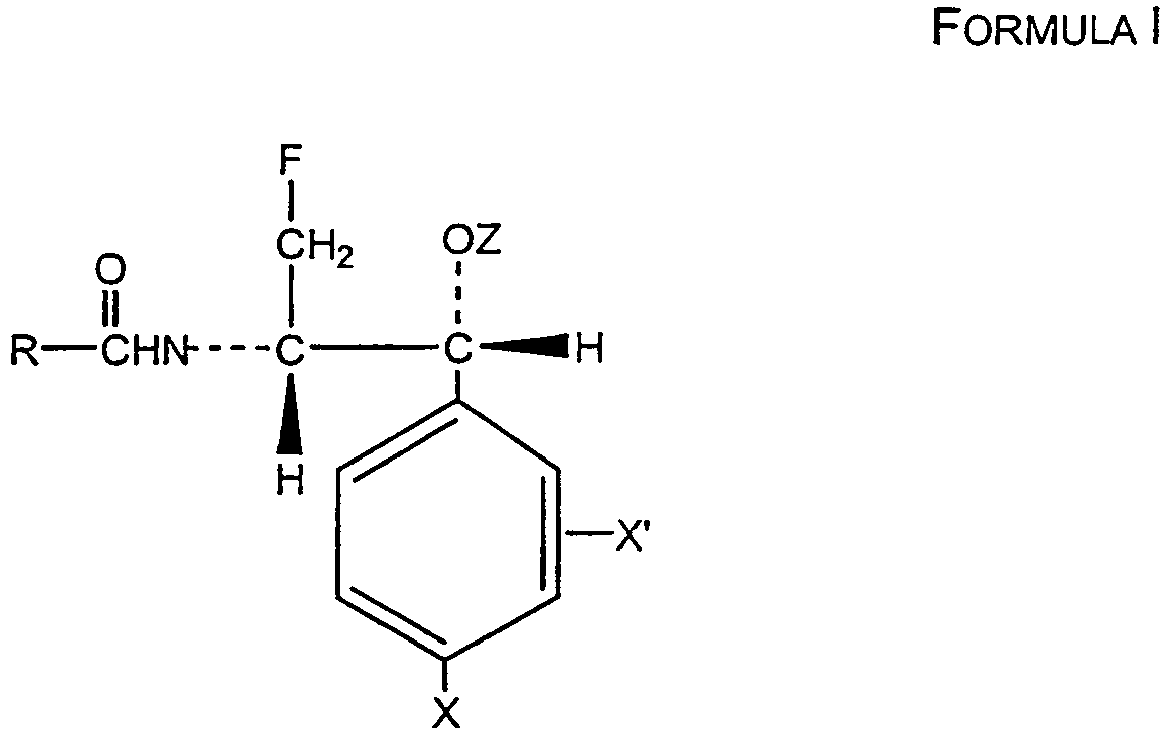
- wherein R is a member selected from the group consisting of methyl or ethyl, or a halogenated derivative of either methyl or ethyl, dihalogenodeuteriomethyl, 1-halogeno-1-deuterioethyl, 1,2-dihalogeno-1-deuterioethyl, azidomethyl and methylsulfonylmethyl;
- each of X and X' is a member independently selected from the group consisting of NO2, SO2R1, SOR1, SR1, SONH2, SO2NH2, SONHR1, SO2NHR1, COR1, OR1, R1, CN, halogen, hydrogen, phenyl, and phenyl mono-, di- or trisubstituted by halogen, NO2, R1, PO2R1, CONHR1, NHR1, NR1R2, CONR1R2, OCOR1, or OR1, wherein each of R1 and R2 is independently selected from the group consisting of methyl, ethyl, n-propyl, isopropyl butyl, t-butyl, isobutyl and phenyl;
- and Z is hydrogen or an acyl group of a hydrocarboncarboxylic acid having up to 16 carbon atoms or an acyl group of an aminohydrocarboncarboxylic acid having up to 12 carbon atoms; and the pharmaceutically-acceptable salts of said acyl groups; and b) the carrier triacetin, and
- c) 2-pyrrolidone.
- Also disclosed is a method of treating bovine respiratory disease in an animal comprising the step of subcutaneously administering to an animal in need of souch treatment a therapeutically-effective amount of the composition defined above wherein the plasma concentration of florfenicol over time after subcutaneous administration of a florfenicol solution at a dose of 40 mg/kg of body weight, is about 5000 to about 7000 ng/mL, and wherein the mean time to peak concentration is about 3 to about 6 hrs.
- Also disclosed in a comparative example is a method of treating bovine respiratory disease in an animal comprising the step of subcutaneously administering to an animal in need of such treatment a therapeutically-effective amount of the composition defined above, wherein the plasma concentration of florfenicol over time after subcutaneous administration of a florfenicol solution at a dose of 40 mg/kg of body weight, is about 3400 to about 5000 ng/mL, and the mean time to peak concentration is about 1 to about 9 hrs.
- The invention provides novel compositions for the treatment of infectious diseases such as bovine respiratory disease in livestock. These compositions are formulations comprising certain antibacterial drugs, such as florfenicol, thiamphenicol, chloramphenicol in combination with unique and novel carriers and carrier systems.
- The following terms will be defined as is known to one of skill in the art.
- "Acyl" means an H-C(O)-, alkyl-C(O)-, alkenyl-C(O)-, alkynyl-C(O)-, cycloalkyl-C(O)-, cycloalkenyl-C(O)-, or cycloalkynyl-C(O)- group in which the various groups are as subsequently described. The bond to the parent moiety is through the carbonyl group. Preferred acyls contain a lower alkyl. Non-limiting examples of suitable acyl groups include formyl, acetyl, propanoyl, 2-methylpropanoyl, butanoyl and cyclohexanoyl.
- "Alkyl" means an aliphatic hydrocarbon group, which may be straight or branched, comprising from 1 to about 20 carbon atoms in the chain. Preferred alkyl groups contain from 1 to about 12 carbon atoms in the chain. More preferred alkyl groups contain from 1 to about 6 carbon atoms in the chain. Branched means that one or more lower alkyl groups, such as methyl, ethyl or propyl, are attached to a linear alkyl chain. "Lower alkyl" means a group having from 1 to about 6 carbon atoms in the chain, which may be straight or branched. The term "substituted alkyl" means that the alkyl group may be substituted by one or more substituents which may be the same or different.
- "Aryl" means an aromatic monocyclic or multicyclic ring system comprising about 6 to about 14 carbon atoms, preferably about 6 to about 10 carbon atoms. The aryl group may be optionally substituted with one or more "ring system substituents," which may be the same or different, and are as defined herein.
- "Alkoxy" means an alkyl-O- group in which the alkyl group is as previously described. Non-limiting examples of suitable alkoxy groups include methoxy, ethoxy, isopropoxy, and n-butoxy. The bond to the parent moiety is through the ether oxygen.
- "Azido" refers to an -N3 group.
- "Halo" and "halogeno" mean fluoro, chloro, bromo, or iodo groups. Preferred are fluoro, chloro or bromo, and more preferred are fluoro and chloro.
- "Halogen" means fluorine, chlorine, bromine, or iodine. Preferred are fluorine, chlorine or bromine, and more preferred are fluorine and chlorine.
- "Haloalkyl" and "halogenoalkyl" mean an alkyl group as defined above wherein one or more hydrogen atoms on the alkyl is replaced by a halo group defined above.
- "Ring system substituent" means a substituent attached to an aromatic or non-aromatic ring system which, for example, replaces an available hydrogen on the ring system. Ring system substituents may be the same or different.
- The term "optionally substituted" means optional substitution with the specified groups, radicals or moieties.
- The term "composition" is intended to encompass a product comprising the specified ingredients in the specified amounts, as well as any product which results, directly or indirectly, from combination of the specified ingredients in the specified amounts.
- An "effective amount" is the dose required to alleviate a particular symptom of an infection, infestation or disease or to protect an animal against infections, infestations or diseases and the term "bovine" refers to animals of the genus Bos, such as cattle. The term "bovid" refers to animals in the family Bovidae, which includes hoofed, hollow-horned ruminants such as cattle, sheep, goats, buffaloes, oxen, etc. As used herein, the term "swine" refers to animals of the family Suidae, which includes pigs, boars, warthogs, etc.
- Fluorine-containing analogs of antibiotics chloramphenicol and thiamphenicol have been shown to have antibiotic activity, both against organisms sensitive to and resistant to chloramphenicol and thiamphenicol. See Schafer, T.W. et al., "Novel Fluorine-Containing Analogs of Chloramphenicol and Thiamphenicol: Antibacterial and Biological Properties," in CURRENT CHEMOTHERAPY AND INFECTIOUS DISEASE PROCEEDINGS OF THE 11TH ICC AND THE 19TH ICAAC AMERICAN SOCIETY OF MICROBIOLOGY 1980, 444-446. Examples of such compounds, and methods for their manufacture, are described and claimed in
U.S. Patent No. 4,235,892 . The medical profession has become increasingly concerned about the transference of bacterial resistance to humans when antibiotics useful in treating humans are administered to livestock. Because the chloramphenicol group of antibiotics is infrequently used now to treat humans, its derivatives are particularly appropriate for veterinary use. Of particular interest are the 3-fluoro, 3-deoxy derivatives. - The compositions of the present invention comprise at least one antibiotic of Formula I as the only active compound:

- wherein R is a member selected from the group consisting of methyl, ethyl, or a halogenated derivative of methyl or ethyl, dihalogenodeuteriomethyl, 1-halogeno-1-deuterioethyl, 1,2-dihalogeno-1-deuterioethyl, azidomethyl and methylsulfonylmethyl;
- each of X and X' is a member independently selected from the group consisting of NO2, SO2R1, SOR1, SR1, SONH2, SO2NH2, SONHR1, SO2NHR1, COR1, OR1, R1, CN, halogen, hydrogen, phenyl, and phenyl mono-, di- or trisubstituted by halogen, NO2, R1. OR1, PO2R1, CONHR1, NHR1, NR1R2, CONR1R2 or OCOR1, wherein each of R1 and R2 is a member independently selected from the group consisting of methyl, ethyl, n-propyl, isopropyl, butyl, t-butyl, isobutyl and phenyl;
- and Z is hydrogen or an acyl group of a hydrocarboncarboxylic acid (preferably a hydrocarbondicarboxylic acid) having up to 16 carbon atoms or an acyl group of an amino- hydrocarboncarboxylic acid having up to 12 carbon atoms; and pharmaceutically-acceptable salts of said acyl groups.
- Included among the halogenated groups contemplated for the moiety R in Formula I are the mono-, di- and tri-fluoro, the mono-, di- and tri-chloro-, the mono-and di-bromo-, and the iodo-methyl groups, as well as the mono- and di-fluoro-, the mono- and di-chloro-, the mono- and di-bromo-, and the iodo-ethyl groups wherein the halogen substituents are preferably on the carbon alpha to the carbonyl function. Also included are mixed dihalogenoalkyl groups, in which both halogens are preferably bonded to the carbon alpha to the carbonyl groups, e.g., groups such as fluorochloro-, fluorobromo-, and chlorobromo-methyl and -ethyl, as well as trihalogen-methyl groups, such as dichlorofluoro- and difluorochloromethyl.
- Also included among the compounds of Formula I are the ester derivatives, e.g., 1-hydrocarboncarboxylates of Formula I, wherein Z is an acyl group of a hydrocarboncarboxylic acid having up to 16 carbon atoms that may be saturated, unsaturated, straight-chain or branched-chain, aliphatic, cyclic, cyclic-aliphatic, aromatic, aryl-aliphatic, or alkyl-aromatic, and may be substituted by hydroxy, alkoxy containing from 1 to 5 carbon atoms, carboxyl, NO2, NHR1, NR1R2, SR1, SOR1, or halogen, wherein R1 and R2 are as defined above.
- Solvates of the compounds of the invention are also contemplated herein.
- "Solvate" means a physical association of a compound of this invention with one or more solvent molecules. This physical association involves varying degrees of ionic and covalent bonding, including hydrogen bonding. In certain instances the solvate will be capable of isolation, for example when one or more solvent molecules are incorporated in the crystal lattice of the crystalline solid. "Solvate" encompasses both solution-phase and isolatable solvates. Non-limiting examples of suitable solvates include ethanolates, methanolates, and the like. "Hydrate" is a solvate wherein the solvent molecule is H2O.
- Other antibacterially-active ester derivatives of Formula I are those wherein Z is an acyl group of an amino acid containing up to 12 carbon atoms which may be saturated, unsaturated, straight chain, branched chain or cyclic, which may contain aromatic groups and that may be substituted by hydroxyl groups.
- Preferred ester derivatives include those derived from dibasic hydrocarboncarboxylates, e.g., the 1-succinate and 1-palmitate esters, which provide water soluble, pharmaceutically- acceptable cationic salts, e.g., the sodium or potassium salts as well as salts with amine, e.g., trimethylamine. Also preferred are ester derivatives of amino acids that provide water soluble, pharmaceutically-acceptable acid addition salts with mineral or organic acids, e.g., the hydrochloric, or sulfuric acid, or succinic acid addition salts.
- The term "pharmaceutically-acceptable salts" thus includes salts wherein the acidic hydrogen in the dibasic hydrocarboncarboxylate esters of this invention is replaced with a cation (e.g., sodium D-(threo)-1-p-nitrophenyl-2-dichloroacetamido-3-fluoro-1-propyl hemisuccinate) as well as salts wherein the acidic hydrogen forms an acid addition salt with an amine (e.g., D-(threo)-1-p-nitrophenyl-2-dichloroacetamido-3-fluoro-1-propyl hemisuccinate N-trimethylamine salt). Also included are the acid addition salts formed between mineral or organic acids and the amine in the amino acid esters of the compounds of Formula I (e.g., D-(threo)-1-p-nitrophenyl-2-dichloroacetamido-3-fluoro-1-propyl glycinate hydrochloride).
- Among the pharmaceutically-acceptable cationic salts of the dibasic hydrocarboncarboxylate esters included in Formula I are salts of alkali and alkaline earth metals (e.g., sodium, potassium, calcium, aluminum) and salts with an amine, such as trialkylamines, procaine, dibenzylamine, N-benzyl-beta-phenethylamine, N,N'-dibenzylethylenediamine, N-(lower)alkylpiperidines (e.g., N-ethylpiperidine), and N-methyl glucamine.
- Preferably R is a halogenated derivative of methyl or ethyl, Z is a hydrogen, X is phenyl, COR1 or SO2R1, R1 is methyl, and X' is hydrogen. Most preferably R is CHCl2 or CHF2.
- A preferred antibiotic compound is florfenicol (D-(threo)-1-p-methylsulfonyl phenyl-2-dichloroacetamido-3-fluoro-1-propanol). Another preferred antibiotic compound is D-(threo)-1-p-methylsulfonyl phenyl-2-difluoroacetamido-3-fluoro-1-propanol. Processes for the manufacture of these preferred antibiotic compounds, and intermediates useful in such processes, are described in
U.S. Patent Nos. 4,311,857 ;4,582,918 ;4,973,750 ;4,876,352 ;5,227,494 ;4,743,700 ;5,567,844 ;5,105,009 ;5,382,673 ;5,352,832 ; and5,663,361 . Another preferred antibiotic is thiamphenicol. The concentration of florfenicol or other antibiotic typically is from about 10% to about 50% w/v, with the preferred level between about 30% and about 40% w/v, even more preferred being at least about 30% w/v or 40% w/v. - The vehicle for use in the present invention is triacetin. Triacetin is also known as 1,2,3 propanetriol triacetate, glyceryl triacetate and acetic, 1,2,3,-propanetriyl ester. Triacetin is available from, for example, Eastman Chemical. When triacetin is the vehicle, it may be present in a concentration of about 25% to about 90%, preferably at least about 30%. Alternatively, one could use triethylcitrate. It is believed that about 0% to about 5% of the florfenicol dissolves in triacetin. Triacetin is used in combination with 2-pyrrolidone as a co-vehicle or solvent. 2-pyrrolidone may be present in a concentration of about 30% w/v.
- The remaining portion of the formulations of the present invention may be a pharmaceutically-acceptable carrier comprising at least one solvent, carrier or vehicle. The pharmaceutically-acceptable carrier comprises from about 0% to about 80% of the formulation, preferably about 10% to about 30%, more preferably about 30%.
- Accordingly, such vehicles (or a combination of such vehicles) is preferred for use in formulations of the present invention that contain florfenicol or similar antibiotics. Preferably such a solvent is present at up to about 75% by weight of the formulation. More preferably such a solvent is present at about 10% to about 35% of the formulation.
- Other pharmaceutically-acceptable solvents may be present in the formulations of the present invention. Suitable alternate solvents include, for example, glyceryl formal, dimethylformamide, N-Methyl -2-pyrrolidone, propylene glycol, polyethylene glycol (PEG), diethylisosorbide, water, ethanol, isopropanol, 1,2-propanediol, glycerin, benzyl alcohol, dimethylisosorbide, glycol ethers and the like.
- The addition of one or more of such additional solvents or carriers may be desirable to reduce the viscosity of the formulation in order to provide a product with workable syringeability. Examples of solvents particularly useful for adjusting the viscosity of the formulations of the present invention include water, ethanol, isopropanol, propylene glycol, dimethylisosorbide, ethyl lactate and combinations thereof.
- Other optional inert ingredients may be added to the present composition, as desired. Such ingredients include preservatives, chelating agents, antioxidants and stabilizers. Exemplary preservatives include methyl p-hydroxybenzoate (methylparaben) and propyl p-hydroxybenzoate (propylparaben). Exemplary chelating agents include edetate sodium. Exemplary antioxidants include butylated hydroxyanisole and sodium monothioglycerol. Preferred stabilizers for use in the present invention include, for example, citric acid in a concentration of about 5% or less and monothioglycerol in a concentration of about 0.1 % to 2% w/v. Other suitable stabilizers include, for example, triethyl citrate, USP, NF, acetic acid, glacial acetic acid, fumaric acid, hydrochloric acid, diluted hydrochloric acid, malic acid, nitric acid phosphoric acid, diluted phosphoric acid, sulfuric acid and tartaric acid. It will be appreciated that the formulations will preferable have an acidic pH. It will also be appreciated that the formulations of the present invention are self preserving.
- In order to prepare the composition of the present invention, the vehicle(s) or a portion of the vehicle(s), are added to the compounding vessel, followed by the remaining excipients and the active. The mixture is mixed until all solids are dissolved or in suspension. Additional solvent(s) to bring the composition to final volume may be added if needed. Additives, such as those listed above, may also be included in the vessel and mixed into the formulation (the order of addition is not critical).
- The compositions according to the present invention will generally be administered to cattle at from about 1 mg to about 100 mg of the antibacterial agent(s) per kilogram of body weight. Preferably the compositions of the present invention will be administered to bovines at from about 20 mg to about 50 mg of the antibacterial agent(s) per kilogram of body weight. More preferably the dose will be about 40 mg/kg of the antibacterial agent administered once subcutaneously. Also preferable is the administration of two doses of 20 mg/kg administered at
time - The compositions may be administered once daily or divided into multiple doses. Often only one dose will be sufficient to treat the infection. In some circumstances, one dose followed by a
second dose 48 hours later will be required to treat the animal. The precise dose will depend on the stage and severity of the infection, the susceptibility of the infecting organism to the composition, and the individual characteristics of the animal species being treated, as will be appreciated by one of ordinary skill in the art. - The compositions according to the present invention are particularly useful for cattle and other bovids, swine, and other large mammals. In addition to the treatment of bovine respiratory disease, the compositions of this invention are also suitable for the treatment of infectious diseases such as swine respiratory disease, footrot, acute mastitis, pinkeye (infectious keratoconjunctivitis), acute pneumonia, metritis and enteritis. The dosage regimen for treatment of such diseases would be as described above.
- Mastitis is a complex disease that occurs in lactating females, and is of particular economic importance in dairy cows and goats. Several pathogenic agents may be involved, including Staphylococcus aureus, E. coli, and streptococci. The acute form of mastitis has a sudden onset, the udder is enlarged, hot to the touch and tender; usually the affected animal will have a fever. If not treated promptly, the udder may be permanently damaged and milk production decreased or lost.
- Pinkeye is an acute infectious disease of cattle, sheep and other animals that is characterized by inflammation of the tissues of the eye, accompanied by nasal discharge, lacrimation and copious ocular discharge. Affected animals may display extreme discomfort, resulting in a drop in milk production among dairy cattle; in extreme cases permanent blindness occurs. The disease, which is caused by Moraxella bovis in cattle, is widespread, especially among range and feedlot cattle, and is of great economic importance to the cattle industry.
- Footrot (interdigital phlegmon) is an acute infection of the interdigital space that occurs throughout the world in both beef and dairy cattle. Fusobacterium necrophorum is the major cause of footrot, although other organisms, including Bacteroides melaninogenicus, may be involved. The major symptoms include pain, severe lameness, fever, anorexia, and reduced milk production.
- Currently, footrot is treated by antibiotic therapy; recommended therapy may involve treatment for up to five days. The use of the formulations of the present invention for the treatment of footrot would be an improvement over presently known treatments because it would provide the proven efficacy of florfenicol, with fewer administrations. The compositions of the present invention are also useful for the prevention of these diseases in animals at high risk of developing those diseases. For example, the presently-claimed compositions may be administered to cattle at high risk of developing bovine respiratory disease at the same dosages recommended for treatment of bovine respiratory disease.
- The formulations of the present invention have many significant advantages. Preferably, the formulations of the present invention have a viscosity of less than about 125 cps.
- The present invention will be further described by the following non-limiting examples.
-
Ingredient Concentration Percent by weight of formulation Florfenicol 300 mg/ml 30%w/v 2-Pyrollidone 300 mg/ml 30%w/v Triacetin QS v/v QS to 1 mL - The ingredients may be mixed in a single or multiple steps. The florfenicol was mixed with 2-pyrrolidone and then triacetin was added to the mixture.
-
Ingredient Concentration Percent by weight of formulation Florfenicol 400 mg/ml 40%w/v Dimethylacetamide 300 mg/ml 30%w/v Triacetin QS v/v QS to 1 mL - The ingredients may be mixed in a single or multiple steps. The florfenicol was mixed with dimethylacetamide and then triacetin was added to the mixture.
- Twenty-four head of cattle were used in the study as described below and were administered the formulations of the present invention. Serial blood samples were drawn at
time 0 prior to dosing, then at 0.5, 1, 3, 6, 9, 12, 24, 36, 48, 60 and 72 hours post injection. The animals received one of the following treatment regimens.Table 1 Formulation Description Dose1 number 300 mg/mL in 2-pyrol and triacetin 40 mg/kg SQ once in the side of the neck 6 400 mg/mL in DMA and triacetin 40 mg/kg SQ once in the side of the neck 6 1no more than 10 ml per injection site - The injection site was assessed daily for the length, width and depth of the lesion and findings were recorded on the Lesion Evaluation Form.
- The study was carried out in bovines of approximately 6 months of age or more that weigh about 125 kg or more. Selection was based on health status appearance, tractability and body weight. Animals exhibiting abnormal clinical signs prior to the start of the study were not included in the study. Animals that had received medication or have participated in another study in the previous 14 days were excluded from this study.
- Baseline data was collected prior to initiating the study. Daily observations for clinical signs began on the first day of acclimation and continued until the study was terminated. All of the animals were weighed and physical examined, and health evaluation was conducted by a veterinarian on Day-7 (if acclimation is necessary) and on Day-1 if the cattle were already acclimated.
- Plasma Levels of florfenicol were taken as follows: Approximately 10 mL of blood was collected from each calf by jugular venipuncture into a Vacutainer® tube containing sodium EDTA and processed for plasma.
- Pharmacokinetic Analysis was carried out as follows: Plasma concentrations of florfenicol was reported in the appropriate units (i.e. µg/ml or ng/mL). Plasma florfenicol concentration versus time data was graphically presented for each individual animal, and as mean concentrations for the overall sample population.
- Disclosed in
Figure 1 is the plasma concentration of florfenicol vs. time in six cattle after subcutaneous administration of a florfenicol solution at a dose of 40 mg per kg of body weight. Mean peak concentration (Cmax) was 6366 ng/mL, preferably in a range of 5076-6995 ng/mL. Mean time to peak concentration (Tmax) was 5.5 hrs, preferably in a range of 3-6 hrs. - Disclosed in
Figure 2 as a comparative example is the plasma concentration of florfenicol vs. time in six cattle after subcutaneous administration of a florfenicol solution at a dose of 40 mg per kg of body weight. Mean peak concentration (Cmax) was 4248 ng/mL, preferably in range of 3457-4996 ng/mL. Mean time to peak concentration (Tmax) was 3.67 hrs, preferably in a range of 1-9 hrs. - This data displays that the formulations of the present invention have a number of substantial benefits. There is decreased tissue swelling at the site of injection. There is also a decrease in the volume of the injection that is administered. Also, there was low variation amongst subjects in the blood levels achieved.
- Although certain presently preferred embodiments of the invention have been described herein, it will be apparent to those skilled in the art to which the invention pertains that variations and modifications of the described embodiments may be made without departing from the scope of the invention. Accordingly, it is intended that the invention be limited only to the extent required by the appended claims and the applicable rules of law.
Claims (19)
- A composition for the treatment of microbial infection in an animal comprisinga) only one active compound, constituted by the antibiotic of Formula I:
 wherein R is a member selected from the group consisting of methyl, ethyl or a halogenated derivative of methyl or ethyl, dihalogenodeuteriomethyl, 1-halogeno-1-deuterioethyl, 1,2-dihalogeno-1-deuterioethyl, azidomethyl and methylsulfonylmethyl;X and X' are a member independently selected from the group consisting of NO2, SO2R1, SOR1, SR1, SONH2, SO2NH2, SONHR1, SO2NHR1, COR1, OR1, R1, CN, halogen, hydrogen, phenyl, and phenyl mono, di or tri substituted by halogen, NO2, R1, PO2R1, CONHR1, NHR1, NR1R2, CONR1R2, OCOR1, or OR1, wherein R1 and R2 are a member independently selected from the group consisting of methyl, ethyl, n-propyl, isopropyl butyl, t-butyl, isobutyl and phenyl;and Z is hydrogen or an acyl group of a hydrocarboncarboxylic acid having up to 16 carbon atoms or an acyl group of an aminohydrocarboncarboxylic acid having up to 12 carbon atoms; and the pharmaceutically-acceptable salts of said acyl groups; andb) the carrier triacetin.c) the 2-pyrrolidone
 - The composition of Claim 1, wherein R is a halogenated derivative of methyl or ethyl.
- The composition of Claim 2, wherein R is CHCl2 or CHF2.
- The composition of Claim 3, wherein Z is hydrogen, X is SO2R1 or phenyl, and X' is hydrogen.
- The composition of Claim 4, wherein R1 is methyl.
- The composition of Claim 1, wherein the compound is florfenicol.
- The composition of Claim 6, wherein the florfenicol is present in an amount of about 10% to about 50% w/v.
- The composition of Claim 7, wherein the florfenicol is present in an amount of about 30% to about 40% w/v.
- The composition of Claim 1, wherein the triacetin is present in an amount of about 15% to about 60% w/v.
- The composition of Claim 9, wherein the triacetin is present in an amount of about 30% w/v.
- The composition of Claim 1, wherein the 2-pyrrolidone is present in an amount of about 30% w/v.
- The composition of Claim 1 further comprising a stabilizer.
- The composition of Claim 12, wherein the stabilizer is citric acid.
- The composition of Claim 1, wherein the composition has a viscosity of less than about 125 cps.
- Composition of claim 1 for its use to treat by subcutaneous administration , a bovine respiratory disease in an animal.
- Composition of claim 1 for its use to treat a microbial infection selected from the group consisting of swine respiratory disease, footrot, acute mastitis, pink eye, metritis and enteritis in an animal.
- Composition of claim 6 for its use to treat a bovine respiratory disease in an animal, wherein the plasma concentration of florfenicol over time after subcutaneous administration of a florfenicol solution at a dose of 40 mg/kg of body weight is about 5000 to about 7000 ng/mL, and wherein the mean time to peak concentration is about 3 to about 6 hrs.
- Composition according to claim 17, wherein the florfenicol is administered in a single dose.
- Composition according to claim 17, wherein the florfenicol is administered in two doses of 20 mg/kg over a 48 hour period of time.
Priority Applications (1)
| Application Number | Priority Date | Filing Date | Title |
|---|---|---|---|
| PL04753639T PL1626739T3 (en) | 2003-05-29 | 2004-05-28 | Compositions comprising florfenicol or a structurally related compound for treating infection in cattle and swine |
Applications Claiming Priority (2)
| Application Number | Priority Date | Filing Date | Title |
|---|---|---|---|
| US47429403P | 2003-05-29 | 2003-05-29 | |
| PCT/US2004/016841 WO2004110494A1 (en) | 2003-05-29 | 2004-05-28 | Compositions for treating infection in cattle and swine |
Publications (2)
| Publication Number | Publication Date |
|---|---|
| EP1626739A1 EP1626739A1 (en) | 2006-02-22 |
| EP1626739B1 true EP1626739B1 (en) | 2014-05-21 |
Family
ID=33551488
Family Applications (1)
| Application Number | Title | Priority Date | Filing Date |
|---|---|---|---|
| EP04753639.6A Expired - Lifetime EP1626739B1 (en) | 2003-05-29 | 2004-05-28 | Compositions comprising florfenicol or a structurally related compound for treating infection in cattle and swine |
Country Status (24)
| Country | Link |
|---|---|
| US (2) | US8034845B2 (en) |
| EP (1) | EP1626739B1 (en) |
| JP (2) | JP4728244B2 (en) |
| KR (1) | KR101132079B1 (en) |
| CN (2) | CN1795013A (en) |
| AR (2) | AR044437A1 (en) |
| AU (2) | AU2004247053B2 (en) |
| BR (1) | BRPI0410795B1 (en) |
| CA (1) | CA2526202C (en) |
| CL (1) | CL2004001293A1 (en) |
| EC (1) | ECSP056189A (en) |
| ES (1) | ES2492537T3 (en) |
| IL (1) | IL172224A0 (en) |
| MX (1) | MXPA05012827A (en) |
| MY (1) | MY146351A (en) |
| NO (1) | NO20056223L (en) |
| NZ (1) | NZ543594A (en) |
| PE (1) | PE20050386A1 (en) |
| PL (2) | PL1626739T3 (en) |
| RU (1) | RU2359659C2 (en) |
| TW (1) | TW200505425A (en) |
| UA (1) | UA81676C2 (en) |
| WO (1) | WO2004110494A1 (en) |
| ZA (1) | ZA200509544B (en) |
Cited By (1)
| Publication number | Priority date | Publication date | Assignee | Title |
|---|---|---|---|---|
| EP3545970A1 (en) * | 2012-11-29 | 2019-10-02 | Cornell University | Vaccine for intrauterine disease |
Families Citing this family (36)
| Publication number | Priority date | Publication date | Assignee | Title |
|---|---|---|---|---|
| US10709850B2 (en) | 2018-06-15 | 2020-07-14 | James T. Doubet | Syringe adapter for medication |
| US11090444B2 (en) | 2018-06-15 | 2021-08-17 | James T. Doubet | Syringe adapter for medication |
| US11097058B2 (en) | 2018-06-15 | 2021-08-24 | James T. Doubet | Syringe adapter for medication |
| US11337894B2 (en) | 2018-06-15 | 2022-05-24 | James T. Doubet | Syringe adapter for animal medication |
| US20020035107A1 (en) * | 2000-06-20 | 2002-03-21 | Stefan Henke | Highly concentrated stable meloxicam solutions |
| DE10161077A1 (en) | 2001-12-12 | 2003-06-18 | Boehringer Ingelheim Vetmed | Highly concentrated stable meloxicam solutions for needleless injection |
| US6790867B2 (en) * | 2002-05-20 | 2004-09-14 | Schering-Plough Animal Health Corporation | Compositions and method for treating infection in cattle and swine |
| US8992980B2 (en) | 2002-10-25 | 2015-03-31 | Boehringer Ingelheim Vetmedica Gmbh | Water-soluble meloxicam granules |
| UA82359C2 (en) * | 2003-04-03 | 2008-04-10 | Schering Plough Ltd | Composition (variants) and method for treatment of microbial diseases and parasitic infection in cattle and other animals |
| PE20050386A1 (en) | 2003-05-29 | 2005-06-23 | Schering Plough Ltd | PHARMACEUTICAL COMPOSITIONS OF FLORPHENICOL |
| EP1568369A1 (en) * | 2004-02-23 | 2005-08-31 | Boehringer Ingelheim Vetmedica Gmbh | Use of meloxicam for the treatment of respiratory diseases in pigs |
| DK1830885T3 (en) * | 2004-12-21 | 2009-01-05 | Intervet Int Bv | Injectable veterinary composition comprising florfenicol |
| GB0501220D0 (en) * | 2005-01-21 | 2005-03-02 | Norbrook Lab Ltd | Anthelmintic composition |
| CN101631757A (en) * | 2006-11-01 | 2010-01-20 | 普罗诺瓦生物医药挪威公司 | Omega-3 lipid compounds |
| JP5552313B2 (en) * | 2006-11-01 | 2014-07-16 | プロノヴァ・バイオファーマ・ノルゲ・アーエス | Lipid compounds |
| CN101600686A (en) * | 2006-12-13 | 2009-12-09 | 先灵-普劳有限公司 | Water-soluble prodrugs of chloramphenicol, thiamphenicol and their analogs |
| RU2009127496A (en) * | 2006-12-19 | 2011-01-27 | Шеринг-Плоу Лтд. (CH) | BURNING DRUGS OF FLORPHENICOL FOR ADDING TO DRINKING WATER SYSTEMS |
| PE20091171A1 (en) * | 2007-12-14 | 2009-08-03 | Schering Plough Ltd | PROCESS TO RECOVER FLORPHENICOL AND FLORPHENICOL ANALOGS |
| FR2925334A1 (en) * | 2007-12-21 | 2009-06-26 | Ceva Sante Animale Sa | NEW ANTIBACTERIAL COMPOSITIONS |
| JP2011529895A (en) * | 2008-07-30 | 2011-12-15 | インターベツト・インターナシヨナル・ベー・ベー | Process for preparing oxazoline-protected aminodiol compounds useful as florfenicol intermediates |
| MX2012004177A (en) | 2009-10-12 | 2012-05-08 | Boehringer Ingelheim Vetmed | Containers for compositions comprising meloxicam. |
| KR101140167B1 (en) * | 2009-11-04 | 2012-04-24 | 최기동 | medicinal compositions of animal and medicine of animal containing the same |
| BRPI1002021A2 (en) | 2010-01-21 | 2012-05-22 | Nanocore Biotecnologia S A | pharmaceutical compositions for treating bacterial infections |
| BRPI1002023A2 (en) | 2010-03-01 | 2011-10-25 | Nanocore Biotecnologia S A | fast dissolving solid dosage form for treating bacterial infections |
| US9149480B2 (en) | 2010-03-03 | 2015-10-06 | Boehringer Ingeleheim Vetmedica GmbH | Use of meloxicam for the long-term treatment of musculoskeletal disorders in cats |
| US9795568B2 (en) | 2010-05-05 | 2017-10-24 | Boehringer Ingelheim Vetmedica Gmbh | Low concentration meloxicam tablets |
| DK2654785T3 (en) * | 2010-12-22 | 2019-06-24 | Bayer Ip Gmbh | Increased immune response in cattle breeds |
| EA028412B9 (en) * | 2014-08-08 | 2018-03-30 | Александр Петрович Мерабишвили | Pharmaceutical preparation for veterinary purpose |
| EA028381B1 (en) * | 2014-08-08 | 2017-11-30 | Александр Петрович Мерабишвили | Pharmaceutical preparation for veterinary purposes |
| RU2563826C1 (en) * | 2014-08-21 | 2015-09-20 | Общество с ограниченной ответственностью "Научно-внедренческий центр Агроветзащита" | Injection antibacterial pharmaceutical composition |
| US20190233825A1 (en) * | 2015-06-26 | 2019-08-01 | Bayer Animal Health Gmbh | Methods of modulating cytosolic dna surveillance molecules |
| US20180187263A1 (en) * | 2017-01-05 | 2018-07-05 | Iowa State University Research Foundation, Inc. | Kits for diagnostic detection and prevention of feedlot bovine respiratory disease |
| US20190388625A1 (en) | 2018-06-15 | 2019-12-26 | James T. Doubet | Syringe adapter for medication |
| USD1126398S1 (en) | 2018-06-15 | 2026-05-12 | James T. Doubet | Syringe adapter for medication |
| USD890925S1 (en) | 2018-06-15 | 2020-07-21 | James T. Doubet | Syringe adapter for medication |
| CA3102914A1 (en) * | 2018-06-25 | 2020-01-02 | Intervet International B.V. | Compounds useful for the treatment of infection with mannheimia haemolytica or histophilus somni |
Family Cites Families (38)
| Publication number | Priority date | Publication date | Assignee | Title |
|---|---|---|---|---|
| US2671748A (en) * | 1950-05-18 | 1954-03-09 | Parke Davis & Co | Composition of matter |
| ES8104203A1 (en) * | 1979-02-05 | 1981-04-16 | Schering Corp | 1-Aryl-2-acylamido-3-fluoro-1-propanol acylates, methods for their manufacture and intermediates useful therein, methods for their use as antibacterial agents and compositions useful therefor |
| US4235892A (en) * | 1979-02-05 | 1980-11-25 | Schering Corporation, Patent Dept. | 1-Aryl-2-acylamido-3-fluoro-1-propanols, methods for their use as antibacterial agents and compositions useful therefor |
| US5105009A (en) * | 1983-06-02 | 1992-04-14 | Zambon S.P.A. | Intermediates for the preparation of 1-(phenyl)-1-hydroxy-2-amino-3-fluoropropane derivatives |
| NZ234802A (en) * | 1989-08-14 | 1992-11-25 | Merck & Co Inc | Long acting injectable formulations comprising an avermectin compound and triacetin. treatment for internal and external parasites of animals |
| US5082863A (en) * | 1990-08-29 | 1992-01-21 | Schering Corporation | Pharmaceutical composition of florfenicol |
| US5663361A (en) * | 1996-08-19 | 1997-09-02 | Schering Corporation | Process for preparing intermediates to florfenicol |
| JP2002512597A (en) * | 1996-12-20 | 2002-04-23 | アルザ コーポレイション | Injectable reservoir gel composition and method of making the composition |
| ES2163147T3 (en) | 1997-05-06 | 2002-01-16 | Norbrook Lab Ltd | PERFECTION OF ANTIMICROBIAL AGENTS OF PROLONGED ACTION OR RELATED TO THEMSELVES. |
| CA2211949A1 (en) * | 1997-07-21 | 1999-01-29 | David Farley Johnson | Nonaqueous compositions for parenteral administration |
| JP2003512290A (en) * | 1997-09-10 | 2003-04-02 | メルク エンド カムパニー インコーポレーテッド | 8a-azalide as a livestock antibacterial agent |
| KR100499438B1 (en) * | 1997-12-03 | 2005-07-07 | 머크 앤드 캄파니 인코포레이티드 | Long acting injectable formulations containing hydrogenated castor oil |
| US6136838A (en) * | 1998-03-19 | 2000-10-24 | Merck & Co., Inc. | Sulfurpentafluorophenylpyrazoles for controlling ectoparasitic infestations |
| ES2359973T3 (en) * | 1998-03-19 | 2011-05-30 | MERCK SHARP & DOHME CORP. | LIQUID POLYMER COMPOSITIONS FOR THE CONTROLLED RELEASE OF BIOACTIVE SUBSTANCES. |
| US6174540B1 (en) * | 1998-09-14 | 2001-01-16 | Merck & Co., Inc. | Long acting injectable formulations containing hydrogenated caster oil |
| JP2001226257A (en) * | 2000-02-17 | 2001-08-21 | Material Eng Tech Lab Inc | Solution preparation |
| US6787568B1 (en) | 2000-11-27 | 2004-09-07 | Phoenix Scientific, Inc. | Antibiotic/analgesic formulation and a method of making this formulation |
| JP2004514690A (en) * | 2000-11-29 | 2004-05-20 | リオトロピック セラピュティックス アイエヌシー. | Drug solvent system |
| JP2005538937A (en) * | 2002-03-08 | 2005-12-22 | シェーリング−プラウ, リミテッド | New florfenicol antibiotics |
| US6790867B2 (en) * | 2002-05-20 | 2004-09-14 | Schering-Plough Animal Health Corporation | Compositions and method for treating infection in cattle and swine |
| CN1507858A (en) | 2002-12-19 | 2004-06-30 | 王玉万 | Flrorinated chloromycetin containing liquid preparation for animal |
| UA82359C2 (en) | 2003-04-03 | 2008-04-10 | Schering Plough Ltd | Composition (variants) and method for treatment of microbial diseases and parasitic infection in cattle and other animals |
| PE20050386A1 (en) | 2003-05-29 | 2005-06-23 | Schering Plough Ltd | PHARMACEUTICAL COMPOSITIONS OF FLORPHENICOL |
| CA2527019A1 (en) * | 2003-05-29 | 2005-01-06 | Washington University | Neuroactive 13,24-cyclo-18,21-dinorcholanes and structurally-related pentacyclic steroids |
| CN100579532C (en) * | 2003-12-23 | 2010-01-13 | 先灵-普劳有限公司 | Florfenicol prodrug having improved water solubility |
| WO2005066119A2 (en) * | 2003-12-31 | 2005-07-21 | Schering-Plough Ltd. | Antibacterial 1-(4-mono-and di-halomethylsulphonylphenyl)-2-acylamino-3-fluoropropanols and preparation thereof |
| DK1830885T3 (en) * | 2004-12-21 | 2009-01-05 | Intervet Int Bv | Injectable veterinary composition comprising florfenicol |
| KR101408596B1 (en) * | 2005-09-07 | 2014-06-17 | 엠에스디 인터내셔널 홀딩즈 게엠베하 | Process for the production of ester oxazoline compounds and their conversion to fluorfenicol |
| US8119667B2 (en) * | 2005-12-29 | 2012-02-21 | Schering-Plough Animal Health Corporation | Carbonates of fenicol antibiotics |
| US20080153906A1 (en) * | 2006-12-13 | 2008-06-26 | Celly Chander S | Water-Soluble Phenicol Prodrugs in a Lipophilic Vehicle System |
| EP2091909A1 (en) * | 2006-12-13 | 2009-08-26 | Schering-Plough Ltd. | Water-soluble prodrugs of florfenicol and its analogs |
| CN101600686A (en) * | 2006-12-13 | 2009-12-09 | 先灵-普劳有限公司 | Water-soluble prodrugs of chloramphenicol, thiamphenicol and their analogs |
| RU2009127496A (en) * | 2006-12-19 | 2011-01-27 | Шеринг-Плоу Лтд. (CH) | BURNING DRUGS OF FLORPHENICOL FOR ADDING TO DRINKING WATER SYSTEMS |
| US20090062397A1 (en) * | 2007-04-27 | 2009-03-05 | Schering-Plough Animal Health Corporation | Compounds and methods for enhancing solubility of florfenicol and structurally-related antibiotics using cyclodextrins |
| AU2008260595A1 (en) * | 2007-05-30 | 2008-12-11 | Schering-Plough Ltd. | A process for preparing oxazoline-protected aminodiol compounds useful as intermediates to Florfenicol |
| RU2010106607A (en) * | 2007-07-25 | 2011-08-27 | Интервет Интернэшнл Б.В. (Nl) | METHOD FOR PRODUCING OXAZOLIDIN AND OXAZOLIDININAMINODINOLES |
| NZ585219A (en) * | 2007-11-09 | 2012-11-30 | Intervet Int Bv | Fast release solid formulation, preparation and use thereof |
| PE20091171A1 (en) * | 2007-12-14 | 2009-08-03 | Schering Plough Ltd | PROCESS TO RECOVER FLORPHENICOL AND FLORPHENICOL ANALOGS |
-
2004
- 2004-05-27 PE PE2004000537A patent/PE20050386A1/en active IP Right Grant
- 2004-05-27 MY MYPI20042043A patent/MY146351A/en unknown
- 2004-05-27 AR ARP040101824A patent/AR044437A1/en not_active Application Discontinuation
- 2004-05-27 TW TW093115129A patent/TW200505425A/en unknown
- 2004-05-27 CL CL200401293A patent/CL2004001293A1/en unknown
- 2004-05-28 BR BRPI0410795-0A patent/BRPI0410795B1/en active IP Right Grant
- 2004-05-28 KR KR1020057022452A patent/KR101132079B1/en not_active Expired - Fee Related
- 2004-05-28 AU AU2004247053A patent/AU2004247053B2/en not_active Expired
- 2004-05-28 EP EP04753639.6A patent/EP1626739B1/en not_active Expired - Lifetime
- 2004-05-28 CN CNA2004800145293A patent/CN1795013A/en active Pending
- 2004-05-28 CA CA2526202A patent/CA2526202C/en not_active Expired - Lifetime
- 2004-05-28 JP JP2006533475A patent/JP4728244B2/en not_active Expired - Lifetime
- 2004-05-28 PL PL04753639T patent/PL1626739T3/en unknown
- 2004-05-28 RU RU2005141127/15A patent/RU2359659C2/en active
- 2004-05-28 ES ES04753639.6T patent/ES2492537T3/en not_active Expired - Lifetime
- 2004-05-28 CN CN2011102107601A patent/CN102342925A/en active Pending
- 2004-05-28 NZ NZ543594A patent/NZ543594A/en not_active IP Right Cessation
- 2004-05-28 MX MXPA05012827A patent/MXPA05012827A/en active IP Right Grant
- 2004-05-28 US US10/857,695 patent/US8034845B2/en active Active
- 2004-05-28 WO PCT/US2004/016841 patent/WO2004110494A1/en not_active Ceased
- 2004-05-28 PL PL380481A patent/PL380481A1/en not_active Application Discontinuation
- 2004-05-28 UA UAA200512427A patent/UA81676C2/en unknown
-
2005
- 2005-11-24 ZA ZA200509544A patent/ZA200509544B/en unknown
- 2005-11-28 IL IL172224A patent/IL172224A0/en unknown
- 2005-11-28 EC EC2005006189A patent/ECSP056189A/en unknown
- 2005-12-29 NO NO20056223A patent/NO20056223L/en not_active Application Discontinuation
-
2007
- 2007-05-24 JP JP2007138359A patent/JP2007269801A/en active Pending
-
2010
- 2010-10-18 AU AU2010235885A patent/AU2010235885A1/en not_active Abandoned
-
2011
- 2011-09-02 US US13/224,739 patent/US9084719B2/en active Active
-
2015
- 2015-07-30 AR ARP150102442A patent/AR101380A2/en not_active Application Discontinuation
Cited By (1)
| Publication number | Priority date | Publication date | Assignee | Title |
|---|---|---|---|---|
| EP3545970A1 (en) * | 2012-11-29 | 2019-10-02 | Cornell University | Vaccine for intrauterine disease |
Also Published As
Similar Documents
| Publication | Publication Date | Title |
|---|---|---|
| US9084719B2 (en) | Compositions and method for treating infection in cattle and swine | |
| EP1505975B1 (en) | Compositions and method for treating infection in cattle and swine | |
| JP2006528705A5 (en) | ||
| NZ548689A (en) | Antiparasitic composition containing an organic amine salt of closantel | |
| EP1875913A1 (en) | Compositions and method for treating infection in cattle and swine | |
| AU2013200147A1 (en) | Compositions for treating infection in cattle and swine | |
| HK1112720A (en) | Compositions and method for treating infection in cattle and swine | |
| HK1072547B (en) | Compositions and method for treating infection in cattle and swine | |
| AU2006233264A1 (en) | Compositions and method for treating infection in cattle and swine |
Legal Events
| Date | Code | Title | Description |
|---|---|---|---|
| PUAI | Public reference made under article 153(3) epc to a published international application that has entered the european phase |
Free format text: ORIGINAL CODE: 0009012 |
|
| 17P | Request for examination filed |
Effective date: 20051123 |
|
| AK | Designated contracting states |
Kind code of ref document: A1 Designated state(s): AT BE BG CH CY CZ DE DK EE ES FI FR GB GR HU IE IT LI LU MC NL PL PT RO SE SI SK TR |
|
| AX | Request for extension of the european patent |
Extension state: AL HR LT LV MK |
|
| REG | Reference to a national code |
Ref country code: HK Ref legal event code: DE Ref document number: 1082908 Country of ref document: HK |
|
| 17Q | First examination report despatched |
Effective date: 20080728 |
|
| REG | Reference to a national code |
Ref country code: DE Ref legal event code: R079 Ref document number: 602004045159 Country of ref document: DE Free format text: PREVIOUS MAIN CLASS: A61K0047140000 Ipc: A61K0009000000 |
|
| RIC1 | Information provided on ipc code assigned before grant |
Ipc: A61K 9/00 20060101AFI20131127BHEP Ipc: A61K 31/165 20060101ALI20131127BHEP Ipc: A61K 47/32 20060101ALI20131127BHEP Ipc: A61K 47/14 20060101ALI20131127BHEP |
|
| GRAP | Despatch of communication of intention to grant a patent |
Free format text: ORIGINAL CODE: EPIDOSNIGR1 |
|
| INTG | Intention to grant announced |
Effective date: 20140107 |
|
| RAP1 | Party data changed (applicant data changed or rights of an application transferred) |
Owner name: INTERVET INTERNATIONAL BV |
|
| GRAS | Grant fee paid |
Free format text: ORIGINAL CODE: EPIDOSNIGR3 |
|
| GRAA | (expected) grant |
Free format text: ORIGINAL CODE: 0009210 |
|
| AK | Designated contracting states |
Kind code of ref document: B1 Designated state(s): AT BE BG CH CY CZ DE DK EE ES FI FR GB GR HU IE IT LI LU MC NL PL PT RO SE SI SK TR |
|
| AX | Request for extension of the european patent |
Extension state: AL HR LT LV MK |
|
| REG | Reference to a national code |
Ref country code: GB Ref legal event code: FG4D |
|
| REG | Reference to a national code |
Ref country code: CH Ref legal event code: EP |
|
| REG | Reference to a national code |
Ref country code: AT Ref legal event code: REF Ref document number: 669222 Country of ref document: AT Kind code of ref document: T Effective date: 20140615 |
|
| REG | Reference to a national code |
Ref country code: IE Ref legal event code: FG4D |
|
| REG | Reference to a national code |
Ref country code: DE Ref legal event code: R096 Ref document number: 602004045159 Country of ref document: DE Effective date: 20140703 |
|
| REG | Reference to a national code |
Ref country code: NL Ref legal event code: T3 |
|
| REG | Reference to a national code |
Ref country code: ES Ref legal event code: FG2A Ref document number: 2492537 Country of ref document: ES Kind code of ref document: T3 Effective date: 20140909 |
|
| REG | Reference to a national code |
Ref country code: AT Ref legal event code: MK05 Ref document number: 669222 Country of ref document: AT Kind code of ref document: T Effective date: 20140521 |
|
| REG | Reference to a national code |
Ref country code: LT Ref legal event code: MG9D |
|
| PG25 | Lapsed in a contracting state [announced via postgrant information from national office to epo] |
Ref country code: FI Free format text: LAPSE BECAUSE OF FAILURE TO SUBMIT A TRANSLATION OF THE DESCRIPTION OR TO PAY THE FEE WITHIN THE PRESCRIBED TIME-LIMIT Effective date: 20140521 Ref country code: GR Free format text: LAPSE BECAUSE OF FAILURE TO SUBMIT A TRANSLATION OF THE DESCRIPTION OR TO PAY THE FEE WITHIN THE PRESCRIBED TIME-LIMIT Effective date: 20140822 |
|
| REG | Reference to a national code |
Ref country code: PL Ref legal event code: T3 |
|
| PG25 | Lapsed in a contracting state [announced via postgrant information from national office to epo] |
Ref country code: SE Free format text: LAPSE BECAUSE OF FAILURE TO SUBMIT A TRANSLATION OF THE DESCRIPTION OR TO PAY THE FEE WITHIN THE PRESCRIBED TIME-LIMIT Effective date: 20140521 Ref country code: AT Free format text: LAPSE BECAUSE OF FAILURE TO SUBMIT A TRANSLATION OF THE DESCRIPTION OR TO PAY THE FEE WITHIN THE PRESCRIBED TIME-LIMIT Effective date: 20140521 |
|
| REG | Reference to a national code |
Ref country code: HK Ref legal event code: WD Ref document number: 1082908 Country of ref document: HK |
|
| PG25 | Lapsed in a contracting state [announced via postgrant information from national office to epo] |
Ref country code: PT Free format text: LAPSE BECAUSE OF FAILURE TO SUBMIT A TRANSLATION OF THE DESCRIPTION OR TO PAY THE FEE WITHIN THE PRESCRIBED TIME-LIMIT Effective date: 20140922 |
|
| REG | Reference to a national code |
Ref country code: CH Ref legal event code: PL |
|
| PG25 | Lapsed in a contracting state [announced via postgrant information from national office to epo] |
Ref country code: CH Free format text: LAPSE BECAUSE OF NON-PAYMENT OF DUE FEES Effective date: 20140531 Ref country code: DK Free format text: LAPSE BECAUSE OF FAILURE TO SUBMIT A TRANSLATION OF THE DESCRIPTION OR TO PAY THE FEE WITHIN THE PRESCRIBED TIME-LIMIT Effective date: 20140521 Ref country code: BE Free format text: LAPSE BECAUSE OF FAILURE TO SUBMIT A TRANSLATION OF THE DESCRIPTION OR TO PAY THE FEE WITHIN THE PRESCRIBED TIME-LIMIT Effective date: 20140521 Ref country code: SK Free format text: LAPSE BECAUSE OF FAILURE TO SUBMIT A TRANSLATION OF THE DESCRIPTION OR TO PAY THE FEE WITHIN THE PRESCRIBED TIME-LIMIT Effective date: 20140521 Ref country code: RO Free format text: LAPSE BECAUSE OF FAILURE TO SUBMIT A TRANSLATION OF THE DESCRIPTION OR TO PAY THE FEE WITHIN THE PRESCRIBED TIME-LIMIT Effective date: 20140521 Ref country code: CZ Free format text: LAPSE BECAUSE OF FAILURE TO SUBMIT A TRANSLATION OF THE DESCRIPTION OR TO PAY THE FEE WITHIN THE PRESCRIBED TIME-LIMIT Effective date: 20140521 Ref country code: EE Free format text: LAPSE BECAUSE OF FAILURE TO SUBMIT A TRANSLATION OF THE DESCRIPTION OR TO PAY THE FEE WITHIN THE PRESCRIBED TIME-LIMIT Effective date: 20140521 Ref country code: LI Free format text: LAPSE BECAUSE OF NON-PAYMENT OF DUE FEES Effective date: 20140531 |
|
| REG | Reference to a national code |
Ref country code: DE Ref legal event code: R097 Ref document number: 602004045159 Country of ref document: DE |
|
| REG | Reference to a national code |
Ref country code: IE Ref legal event code: MM4A |
|
| PLBE | No opposition filed within time limit |
Free format text: ORIGINAL CODE: 0009261 |
|
| STAA | Information on the status of an ep patent application or granted ep patent |
Free format text: STATUS: NO OPPOSITION FILED WITHIN TIME LIMIT |
|
| 26N | No opposition filed |
Effective date: 20150224 |
|
| PG25 | Lapsed in a contracting state [announced via postgrant information from national office to epo] |
Ref country code: IE Free format text: LAPSE BECAUSE OF NON-PAYMENT OF DUE FEES Effective date: 20140528 |
|
| REG | Reference to a national code |
Ref country code: DE Ref legal event code: R097 Ref document number: 602004045159 Country of ref document: DE Effective date: 20150224 |
|
| PG25 | Lapsed in a contracting state [announced via postgrant information from national office to epo] |
Ref country code: SI Free format text: LAPSE BECAUSE OF FAILURE TO SUBMIT A TRANSLATION OF THE DESCRIPTION OR TO PAY THE FEE WITHIN THE PRESCRIBED TIME-LIMIT Effective date: 20140521 |
|
| REG | Reference to a national code |
Ref country code: FR Ref legal event code: PLFP Year of fee payment: 13 |
|
| PG25 | Lapsed in a contracting state [announced via postgrant information from national office to epo] |
Ref country code: MC Free format text: LAPSE BECAUSE OF FAILURE TO SUBMIT A TRANSLATION OF THE DESCRIPTION OR TO PAY THE FEE WITHIN THE PRESCRIBED TIME-LIMIT Effective date: 20140521 |
|
| PG25 | Lapsed in a contracting state [announced via postgrant information from national office to epo] |
Ref country code: BG Free format text: LAPSE BECAUSE OF FAILURE TO SUBMIT A TRANSLATION OF THE DESCRIPTION OR TO PAY THE FEE WITHIN THE PRESCRIBED TIME-LIMIT Effective date: 20140521 |
|
| PG25 | Lapsed in a contracting state [announced via postgrant information from national office to epo] |
Ref country code: CY Free format text: LAPSE BECAUSE OF FAILURE TO SUBMIT A TRANSLATION OF THE DESCRIPTION OR TO PAY THE FEE WITHIN THE PRESCRIBED TIME-LIMIT Effective date: 20140521 |
|
| PG25 | Lapsed in a contracting state [announced via postgrant information from national office to epo] |
Ref country code: LU Free format text: LAPSE BECAUSE OF NON-PAYMENT OF DUE FEES Effective date: 20140528 Ref country code: HU Free format text: LAPSE BECAUSE OF FAILURE TO SUBMIT A TRANSLATION OF THE DESCRIPTION OR TO PAY THE FEE WITHIN THE PRESCRIBED TIME-LIMIT; INVALID AB INITIO Effective date: 20040528 Ref country code: TR Free format text: LAPSE BECAUSE OF FAILURE TO SUBMIT A TRANSLATION OF THE DESCRIPTION OR TO PAY THE FEE WITHIN THE PRESCRIBED TIME-LIMIT Effective date: 20140521 |
|
| REG | Reference to a national code |
Ref country code: FR Ref legal event code: PLFP Year of fee payment: 14 |
|
| REG | Reference to a national code |
Ref country code: FR Ref legal event code: PLFP Year of fee payment: 15 |
|
| REG | Reference to a national code |
Ref country code: FR Ref legal event code: PLFP Year of fee payment: 20 |
|
| PGFP | Annual fee paid to national office [announced via postgrant information from national office to epo] |
Ref country code: PL Payment date: 20230321 Year of fee payment: 20 |
|
| PGFP | Annual fee paid to national office [announced via postgrant information from national office to epo] |
Ref country code: NL Payment date: 20230417 Year of fee payment: 20 |
|
| PGFP | Annual fee paid to national office [announced via postgrant information from national office to epo] |
Ref country code: IT Payment date: 20230510 Year of fee payment: 20 Ref country code: FR Payment date: 20230412 Year of fee payment: 20 Ref country code: ES Payment date: 20230607 Year of fee payment: 20 Ref country code: DE Payment date: 20230412 Year of fee payment: 20 |
|
| PGFP | Annual fee paid to national office [announced via postgrant information from national office to epo] |
Ref country code: GB Payment date: 20230412 Year of fee payment: 20 |
|
| REG | Reference to a national code |
Ref country code: DE Ref legal event code: R071 Ref document number: 602004045159 Country of ref document: DE |
|
| REG | Reference to a national code |
Ref country code: NL Ref legal event code: MK Effective date: 20240527 |
|
| REG | Reference to a national code |
Ref country code: ES Ref legal event code: FD2A Effective date: 20240604 |
|
| REG | Reference to a national code |
Ref country code: GB Ref legal event code: PE20 Expiry date: 20240527 |
|
| PG25 | Lapsed in a contracting state [announced via postgrant information from national office to epo] |
Ref country code: GB Free format text: LAPSE BECAUSE OF EXPIRATION OF PROTECTION Effective date: 20240527 |
|
| PG25 | Lapsed in a contracting state [announced via postgrant information from national office to epo] |
Ref country code: ES Free format text: LAPSE BECAUSE OF EXPIRATION OF PROTECTION Effective date: 20240529 |
|
| PG25 | Lapsed in a contracting state [announced via postgrant information from national office to epo] |
Ref country code: GB Free format text: LAPSE BECAUSE OF EXPIRATION OF PROTECTION Effective date: 20240527 Ref country code: ES Free format text: LAPSE BECAUSE OF EXPIRATION OF PROTECTION Effective date: 20240529 |