EP1625154B1 - Hepatitis c virus ns5b polymerase inhibitor binding pocket - Google Patents
Hepatitis c virus ns5b polymerase inhibitor binding pocket Download PDFInfo
- Publication number
- EP1625154B1 EP1625154B1 EP04731118.8A EP04731118A EP1625154B1 EP 1625154 B1 EP1625154 B1 EP 1625154B1 EP 04731118 A EP04731118 A EP 04731118A EP 1625154 B1 EP1625154 B1 EP 1625154B1
- Authority
- EP
- European Patent Office
- Prior art keywords
- ns5b
- binding pocket
- hcv
- compound
- amino acid
- Prior art date
- Legal status (The legal status is an assumption and is not a legal conclusion. Google has not performed a legal analysis and makes no representation as to the accuracy of the status listed.)
- Expired - Lifetime
Links
- 108700008776 hepatitis C virus NS-5 Proteins 0.000 title claims description 56
- 229940123066 Polymerase inhibitor Drugs 0.000 title description 2
- 150000001875 compounds Chemical class 0.000 claims description 48
- 125000000539 amino acid group Chemical group 0.000 claims description 26
- 238000000034 method Methods 0.000 claims description 16
- 238000012216 screening Methods 0.000 claims description 5
- 238000000302 molecular modelling Methods 0.000 claims description 2
- 101800001554 RNA-directed RNA polymerase Proteins 0.000 description 53
- 241000711549 Hepacivirus C Species 0.000 description 39
- 239000003112 inhibitor Substances 0.000 description 32
- 235000001014 amino acid Nutrition 0.000 description 20
- PEDCQBHIVMGVHV-UHFFFAOYSA-N Glycerine Chemical compound OCC(O)CO PEDCQBHIVMGVHV-UHFFFAOYSA-N 0.000 description 18
- FAPWRFPIFSIZLT-UHFFFAOYSA-M Sodium chloride Chemical compound [Na+].[Cl-] FAPWRFPIFSIZLT-UHFFFAOYSA-M 0.000 description 18
- 150000001413 amino acids Chemical class 0.000 description 18
- 229920001184 polypeptide Polymers 0.000 description 17
- 108090000765 processed proteins & peptides Proteins 0.000 description 17
- 102000004196 processed proteins & peptides Human genes 0.000 description 17
- 239000013078 crystal Substances 0.000 description 16
- 102000004190 Enzymes Human genes 0.000 description 15
- 108090000790 Enzymes Proteins 0.000 description 15
- 229940088598 enzyme Drugs 0.000 description 15
- 235000018102 proteins Nutrition 0.000 description 15
- 102000004169 proteins and genes Human genes 0.000 description 15
- 108090000623 proteins and genes Proteins 0.000 description 15
- LVTJOONKWUXEFR-FZRMHRINSA-N protoneodioscin Natural products O(C[C@@H](CC[C@]1(O)[C@H](C)[C@@H]2[C@]3(C)[C@H]([C@H]4[C@@H]([C@]5(C)C(=CC4)C[C@@H](O[C@@H]4[C@H](O[C@H]6[C@@H](O)[C@@H](O)[C@@H](O)[C@H](C)O6)[C@@H](O)[C@H](O[C@H]6[C@@H](O)[C@@H](O)[C@@H](O)[C@H](C)O6)[C@H](CO)O4)CC5)CC3)C[C@@H]2O1)C)[C@H]1[C@H](O)[C@H](O)[C@H](O)[C@@H](CO)O1 LVTJOONKWUXEFR-FZRMHRINSA-N 0.000 description 13
- 229940126062 Compound A Drugs 0.000 description 11
- 238000005481 NMR spectroscopy Methods 0.000 description 11
- 210000003811 finger Anatomy 0.000 description 11
- 229910052739 hydrogen Inorganic materials 0.000 description 10
- 108060004795 Methyltransferase Proteins 0.000 description 9
- 230000000694 effects Effects 0.000 description 9
- 229910052757 nitrogen Inorganic materials 0.000 description 9
- 239000011780 sodium chloride Substances 0.000 description 9
- IAZDPXIOMUYVGZ-UHFFFAOYSA-N Dimethylsulphoxide Chemical compound CS(C)=O IAZDPXIOMUYVGZ-UHFFFAOYSA-N 0.000 description 8
- NLDMNSXOCDLTTB-UHFFFAOYSA-N Heterophylliin A Natural products O1C2COC(=O)C3=CC(O)=C(O)C(O)=C3C3=C(O)C(O)=C(O)C=C3C(=O)OC2C(OC(=O)C=2C=C(O)C(O)=C(O)C=2)C(O)C1OC(=O)C1=CC(O)=C(O)C(O)=C1 NLDMNSXOCDLTTB-UHFFFAOYSA-N 0.000 description 8
- 125000003275 alpha amino acid group Chemical group 0.000 description 8
- 101710144111 Non-structural protein 3 Proteins 0.000 description 7
- 230000004071 biological effect Effects 0.000 description 7
- 230000003993 interaction Effects 0.000 description 7
- 229910052700 potassium Inorganic materials 0.000 description 7
- 230000010076 replication Effects 0.000 description 7
- 108091032973 (ribonucleotides)n+m Proteins 0.000 description 6
- 239000000243 solution Substances 0.000 description 6
- 238000006467 substitution reaction Methods 0.000 description 6
- 108010076039 Polyproteins Proteins 0.000 description 5
- 239000000872 buffer Substances 0.000 description 5
- 238000006073 displacement reaction Methods 0.000 description 5
- 230000006870 function Effects 0.000 description 5
- 230000035772 mutation Effects 0.000 description 5
- 108020003175 receptors Proteins 0.000 description 5
- 102000005962 receptors Human genes 0.000 description 5
- 238000001228 spectrum Methods 0.000 description 5
- 210000003813 thumb Anatomy 0.000 description 5
- LENZDBCJOHFCAS-UHFFFAOYSA-N tris Chemical compound OCC(N)(CO)CO LENZDBCJOHFCAS-UHFFFAOYSA-N 0.000 description 5
- 102000040650 (ribonucleotides)n+m Human genes 0.000 description 4
- SIKJAQJRHWYJAI-UHFFFAOYSA-N Indole Chemical compound C1=CC=C2NC=CC2=C1 SIKJAQJRHWYJAI-UHFFFAOYSA-N 0.000 description 4
- 108091005804 Peptidases Proteins 0.000 description 4
- 239000004365 Protease Substances 0.000 description 4
- 101710172711 Structural protein Proteins 0.000 description 4
- 239000007983 Tris buffer Substances 0.000 description 4
- 210000004899 c-terminal region Anatomy 0.000 description 4
- 210000004027 cell Anatomy 0.000 description 4
- 208000019423 liver disease Diseases 0.000 description 4
- 229920001223 polyethylene glycol Polymers 0.000 description 4
- 239000002904 solvent Substances 0.000 description 4
- SVTBMSDMJJWYQN-UHFFFAOYSA-N 2-methylpentane-2,4-diol Chemical compound CC(O)CC(C)(C)O SVTBMSDMJJWYQN-UHFFFAOYSA-N 0.000 description 3
- KCXVZYZYPLLWCC-UHFFFAOYSA-N EDTA Chemical compound OC(=O)CN(CC(O)=O)CCN(CC(O)=O)CC(O)=O KCXVZYZYPLLWCC-UHFFFAOYSA-N 0.000 description 3
- 101710144128 Non-structural protein 2 Proteins 0.000 description 3
- 101800001020 Non-structural protein 4A Proteins 0.000 description 3
- 101800001019 Non-structural protein 4B Proteins 0.000 description 3
- 101800001014 Non-structural protein 5A Proteins 0.000 description 3
- 101710199667 Nuclear export protein Proteins 0.000 description 3
- 108700026244 Open Reading Frames Proteins 0.000 description 3
- 239000002202 Polyethylene glycol Substances 0.000 description 3
- -1 Q T S A Inorganic materials 0.000 description 3
- 241000700605 Viruses Species 0.000 description 3
- BFNBIHQBYMNNAN-UHFFFAOYSA-N ammonium sulfate Chemical compound N.N.OS(O)(=O)=O BFNBIHQBYMNNAN-UHFFFAOYSA-N 0.000 description 3
- 229910052921 ammonium sulfate Inorganic materials 0.000 description 3
- 235000011130 ammonium sulphate Nutrition 0.000 description 3
- 238000004458 analytical method Methods 0.000 description 3
- 150000005829 chemical entities Chemical class 0.000 description 3
- 239000003814 drug Substances 0.000 description 3
- 238000009510 drug design Methods 0.000 description 3
- 229910052731 fluorine Inorganic materials 0.000 description 3
- 239000001257 hydrogen Substances 0.000 description 3
- RAXXELZNTBOGNW-UHFFFAOYSA-N imidazole Natural products C1=CNC=N1 RAXXELZNTBOGNW-UHFFFAOYSA-N 0.000 description 3
- 208000015181 infectious disease Diseases 0.000 description 3
- 230000002401 inhibitory effect Effects 0.000 description 3
- BPHPUYQFMNQIOC-NXRLNHOXSA-N isopropyl beta-D-thiogalactopyranoside Chemical compound CC(C)S[C@@H]1O[C@H](CO)[C@H](O)[C@H](O)[C@H]1O BPHPUYQFMNQIOC-NXRLNHOXSA-N 0.000 description 3
- 238000003032 molecular docking Methods 0.000 description 3
- 239000002773 nucleotide Substances 0.000 description 3
- 125000003729 nucleotide group Chemical group 0.000 description 3
- JKMHFZQWWAIEOD-UHFFFAOYSA-N 2-[4-(2-hydroxyethyl)piperazin-1-yl]ethanesulfonic acid Chemical compound OCC[NH+]1CCN(CCS([O-])(=O)=O)CC1 JKMHFZQWWAIEOD-UHFFFAOYSA-N 0.000 description 2
- KCXVZYZYPLLWCC-LBTWDOQPSA-N 2-[[2-[bis[carboxy(dideuterio)methyl]amino]-1,1,2,2-tetradeuterioethyl]-[carboxy(dideuterio)methyl]amino]-2,2-dideuterioacetic acid Chemical compound OC(=O)C([2H])([2H])N(C([2H])([2H])C(O)=O)C([2H])([2H])C([2H])([2H])N(C([2H])([2H])C(O)=O)C([2H])([2H])C(O)=O KCXVZYZYPLLWCC-LBTWDOQPSA-N 0.000 description 2
- IJGRMHOSHXDMSA-UHFFFAOYSA-N Atomic nitrogen Chemical compound N#N IJGRMHOSHXDMSA-UHFFFAOYSA-N 0.000 description 2
- LCGLNKUTAGEVQW-UHFFFAOYSA-N Dimethyl ether Chemical compound COC LCGLNKUTAGEVQW-UHFFFAOYSA-N 0.000 description 2
- DHMQDGOQFOQNFH-UHFFFAOYSA-N Glycine Chemical compound NCC(O)=O DHMQDGOQFOQNFH-UHFFFAOYSA-N 0.000 description 2
- 108020004684 Internal Ribosome Entry Sites Proteins 0.000 description 2
- 102000035195 Peptidases Human genes 0.000 description 2
- 102100037486 Reverse transcriptase/ribonuclease H Human genes 0.000 description 2
- 101800001838 Serine protease/helicase NS3 Proteins 0.000 description 2
- 235000008206 alpha-amino acids Nutrition 0.000 description 2
- 125000003118 aryl group Chemical group 0.000 description 2
- 239000008366 buffered solution Substances 0.000 description 2
- 238000004422 calculation algorithm Methods 0.000 description 2
- 238000004364 calculation method Methods 0.000 description 2
- 230000001413 cellular effect Effects 0.000 description 2
- 239000003795 chemical substances by application Substances 0.000 description 2
- 238000004587 chromatography analysis Methods 0.000 description 2
- 238000003776 cleavage reaction Methods 0.000 description 2
- 238000002447 crystallographic data Methods 0.000 description 2
- 238000012217 deletion Methods 0.000 description 2
- 230000037430 deletion Effects 0.000 description 2
- 229940079593 drug Drugs 0.000 description 2
- PCHJSUWPFVWCPO-UHFFFAOYSA-N gold Chemical compound [Au] PCHJSUWPFVWCPO-UHFFFAOYSA-N 0.000 description 2
- 239000010931 gold Substances 0.000 description 2
- 229910052737 gold Inorganic materials 0.000 description 2
- PZOUSPYUWWUPPK-UHFFFAOYSA-N indole Natural products CC1=CC=CC2=C1C=CN2 PZOUSPYUWWUPPK-UHFFFAOYSA-N 0.000 description 2
- RKJUIXBNRJVNHR-UHFFFAOYSA-N indolenine Natural products C1=CC=C2CC=NC2=C1 RKJUIXBNRJVNHR-UHFFFAOYSA-N 0.000 description 2
- 238000003780 insertion Methods 0.000 description 2
- 230000037431 insertion Effects 0.000 description 2
- 239000003446 ligand Substances 0.000 description 2
- 239000012528 membrane Substances 0.000 description 2
- 229910052698 phosphorus Inorganic materials 0.000 description 2
- 238000002360 preparation method Methods 0.000 description 2
- 238000000746 purification Methods 0.000 description 2
- 238000011160 research Methods 0.000 description 2
- 230000007017 scission Effects 0.000 description 2
- 238000002922 simulated annealing Methods 0.000 description 2
- 238000002791 soaking Methods 0.000 description 2
- 229910052721 tungsten Inorganic materials 0.000 description 2
- 230000003612 virological effect Effects 0.000 description 2
- 229910052727 yttrium Inorganic materials 0.000 description 2
- DGVVWUTYPXICAM-UHFFFAOYSA-N β‐Mercaptoethanol Chemical compound OCCS DGVVWUTYPXICAM-UHFFFAOYSA-N 0.000 description 2
- PEDCQBHIVMGVHV-YHPVEMKJSA-N 1,1,2,3,3-pentadeuterio-1,2,3-trideuteriooxypropane Chemical compound [2H]OC([2H])([2H])C([2H])(O[2H])C([2H])([2H])O[2H] PEDCQBHIVMGVHV-YHPVEMKJSA-N 0.000 description 1
- HYZJCKYKOHLVJF-UHFFFAOYSA-N 1H-benzimidazole Chemical compound C1=CC=C2NC=NC2=C1 HYZJCKYKOHLVJF-UHFFFAOYSA-N 0.000 description 1
- SXGZJKUKBWWHRA-UHFFFAOYSA-N 2-(N-morpholiniumyl)ethanesulfonate Chemical compound [O-]S(=O)(=O)CC[NH+]1CCOCC1 SXGZJKUKBWWHRA-UHFFFAOYSA-N 0.000 description 1
- QKNYBSVHEMOAJP-UHFFFAOYSA-N 2-amino-2-(hydroxymethyl)propane-1,3-diol;hydron;chloride Chemical compound Cl.OCC(N)(CO)CO QKNYBSVHEMOAJP-UHFFFAOYSA-N 0.000 description 1
- 108010006591 Apoenzymes Proteins 0.000 description 1
- 208000006154 Chronic hepatitis C Diseases 0.000 description 1
- 108020004394 Complementary RNA Proteins 0.000 description 1
- 229920002271 DEAE-Sepharose Polymers 0.000 description 1
- 101710118188 DNA-binding protein HU-alpha Proteins 0.000 description 1
- 241000588724 Escherichia coli Species 0.000 description 1
- 241000710781 Flaviviridae Species 0.000 description 1
- 239000004471 Glycine Substances 0.000 description 1
- 239000007995 HEPES buffer Substances 0.000 description 1
- HTTJABKRGRZYRN-UHFFFAOYSA-N Heparin Chemical compound OC1C(NC(=O)C)C(O)OC(COS(O)(=O)=O)C1OC1C(OS(O)(=O)=O)C(O)C(OC2C(C(OS(O)(=O)=O)C(OC3C(C(O)C(O)C(O3)C(O)=O)OS(O)(=O)=O)C(CO)O2)NS(O)(=O)=O)C(C(O)=O)O1 HTTJABKRGRZYRN-UHFFFAOYSA-N 0.000 description 1
- 208000005176 Hepatitis C Diseases 0.000 description 1
- 206010019786 Hepatitis non-A non-B Diseases 0.000 description 1
- 108010093488 His-His-His-His-His-His Proteins 0.000 description 1
- 102000014150 Interferons Human genes 0.000 description 1
- 108010050904 Interferons Proteins 0.000 description 1
- QNAYBMKLOCPYGJ-REOHCLBHSA-N L-alanine Chemical compound C[C@H](N)C(O)=O QNAYBMKLOCPYGJ-REOHCLBHSA-N 0.000 description 1
- KZSNJWFQEVHDMF-BYPYZUCNSA-N L-valine Chemical compound CC(C)[C@H](N)C(O)=O KZSNJWFQEVHDMF-BYPYZUCNSA-N 0.000 description 1
- 241000124008 Mammalia Species 0.000 description 1
- 108010006035 Metalloproteases Proteins 0.000 description 1
- 102000005741 Metalloproteases Human genes 0.000 description 1
- 102000016943 Muramidase Human genes 0.000 description 1
- 108010014251 Muramidase Proteins 0.000 description 1
- 108010062010 N-Acetylmuramoyl-L-alanine Amidase Proteins 0.000 description 1
- 102000008021 Nucleoside-Triphosphatase Human genes 0.000 description 1
- 108010075285 Nucleoside-Triphosphatase Proteins 0.000 description 1
- 108090000944 RNA Helicases Proteins 0.000 description 1
- 102000004409 RNA Helicases Human genes 0.000 description 1
- 229920002684 Sepharose Polymers 0.000 description 1
- 108010022999 Serine Proteases Proteins 0.000 description 1
- 102000012479 Serine Proteases Human genes 0.000 description 1
- 239000012505 Superdex™ Substances 0.000 description 1
- 230000024932 T cell mediated immunity Effects 0.000 description 1
- KZSNJWFQEVHDMF-UHFFFAOYSA-N Valine Natural products CC(C)C(N)C(O)=O KZSNJWFQEVHDMF-UHFFFAOYSA-N 0.000 description 1
- 238000005411 Van der Waals force Methods 0.000 description 1
- 108700022715 Viral Proteases Proteins 0.000 description 1
- 108020000999 Viral RNA Proteins 0.000 description 1
- HCHKCACWOHOZIP-UHFFFAOYSA-N Zinc Chemical compound [Zn] HCHKCACWOHOZIP-UHFFFAOYSA-N 0.000 description 1
- 230000009471 action Effects 0.000 description 1
- 238000007792 addition Methods 0.000 description 1
- 235000004279 alanine Nutrition 0.000 description 1
- 230000003281 allosteric effect Effects 0.000 description 1
- 150000001370 alpha-amino acid derivatives Chemical class 0.000 description 1
- 150000001371 alpha-amino acids Chemical class 0.000 description 1
- 230000004075 alteration Effects 0.000 description 1
- 230000000840 anti-viral effect Effects 0.000 description 1
- 238000013459 approach Methods 0.000 description 1
- 239000012062 aqueous buffer Substances 0.000 description 1
- 125000003785 benzimidazolyl group Chemical group N1=C(NC2=C1C=CC=C2)* 0.000 description 1
- 230000007321 biological mechanism Effects 0.000 description 1
- 230000015572 biosynthetic process Effects 0.000 description 1
- 229910052799 carbon Inorganic materials 0.000 description 1
- 239000000969 carrier Substances 0.000 description 1
- 238000004113 cell culture Methods 0.000 description 1
- 238000005119 centrifugation Methods 0.000 description 1
- 238000011210 chromatographic step Methods 0.000 description 1
- 208000019425 cirrhosis of liver Diseases 0.000 description 1
- 239000003184 complementary RNA Substances 0.000 description 1
- 229940125507 complex inhibitor Drugs 0.000 description 1
- 230000000536 complexating effect Effects 0.000 description 1
- 238000005094 computer simulation Methods 0.000 description 1
- 238000001816 cooling Methods 0.000 description 1
- 238000002425 crystallisation Methods 0.000 description 1
- 230000008025 crystallization Effects 0.000 description 1
- 238000013480 data collection Methods 0.000 description 1
- 230000001419 dependent effect Effects 0.000 description 1
- 238000013461 design Methods 0.000 description 1
- 238000001514 detection method Methods 0.000 description 1
- 238000009792 diffusion process Methods 0.000 description 1
- 229940042399 direct acting antivirals protease inhibitors Drugs 0.000 description 1
- 201000010099 disease Diseases 0.000 description 1
- 208000037265 diseases, disorders, signs and symptoms Diseases 0.000 description 1
- VHJLVAABSRFDPM-QWWZWVQMSA-N dithiothreitol Chemical compound SC[C@@H](O)[C@H](O)CS VHJLVAABSRFDPM-QWWZWVQMSA-N 0.000 description 1
- 238000009509 drug development Methods 0.000 description 1
- 241001493065 dsRNA viruses Species 0.000 description 1
- 230000009881 electrostatic interaction Effects 0.000 description 1
- 238000010828 elution Methods 0.000 description 1
- 238000011156 evaluation Methods 0.000 description 1
- 230000002349 favourable effect Effects 0.000 description 1
- 238000002124 flame ionisation detection Methods 0.000 description 1
- 229960002897 heparin Drugs 0.000 description 1
- 229920000669 heparin Polymers 0.000 description 1
- 208000010710 hepatitis C virus infection Diseases 0.000 description 1
- 206010073071 hepatocellular carcinoma Diseases 0.000 description 1
- 231100000844 hepatocellular carcinoma Toxicity 0.000 description 1
- 230000028996 humoral immune response Effects 0.000 description 1
- 150000002431 hydrogen Chemical group 0.000 description 1
- 230000002209 hydrophobic effect Effects 0.000 description 1
- 210000000987 immune system Anatomy 0.000 description 1
- 238000011534 incubation Methods 0.000 description 1
- 230000006698 induction Effects 0.000 description 1
- 229940079322 interferon Drugs 0.000 description 1
- 125000001449 isopropyl group Chemical group [H]C([H])([H])C([H])(*)C([H])([H])[H] 0.000 description 1
- 239000007788 liquid Substances 0.000 description 1
- 230000004807 localization Effects 0.000 description 1
- 239000006166 lysate Substances 0.000 description 1
- 229960000274 lysozyme Drugs 0.000 description 1
- 239000004325 lysozyme Substances 0.000 description 1
- 235000010335 lysozyme Nutrition 0.000 description 1
- 230000007246 mechanism Effects 0.000 description 1
- 230000001404 mediated effect Effects 0.000 description 1
- 229910052751 metal Inorganic materials 0.000 description 1
- 239000002184 metal Substances 0.000 description 1
- 125000002496 methyl group Chemical group [H]C([H])([H])* 0.000 description 1
- 238000002156 mixing Methods 0.000 description 1
- 238000012986 modification Methods 0.000 description 1
- 230000004048 modification Effects 0.000 description 1
- 238000010369 molecular cloning Methods 0.000 description 1
- 238000012900 molecular simulation Methods 0.000 description 1
- 238000005016 nuclear Overhauser enhanced spectroscopy Methods 0.000 description 1
- 238000000655 nuclear magnetic resonance spectrum Methods 0.000 description 1
- 238000012585 nuclear overhauser effect spectroscopy experiment Methods 0.000 description 1
- 108020004707 nucleic acids Proteins 0.000 description 1
- 102000039446 nucleic acids Human genes 0.000 description 1
- 150000007523 nucleic acids Chemical class 0.000 description 1
- 229940127073 nucleoside analogue Drugs 0.000 description 1
- 238000005457 optimization Methods 0.000 description 1
- 230000008520 organization Effects 0.000 description 1
- 230000036961 partial effect Effects 0.000 description 1
- 239000002245 particle Substances 0.000 description 1
- 239000000137 peptide hydrolase inhibitor Substances 0.000 description 1
- 108091005981 phosphorylated proteins Proteins 0.000 description 1
- 238000000079 presaturation Methods 0.000 description 1
- 230000008569 process Effects 0.000 description 1
- 238000012545 processing Methods 0.000 description 1
- 238000000159 protein binding assay Methods 0.000 description 1
- NGVDGCNFYWLIFO-UHFFFAOYSA-N pyridoxal 5'-phosphate Chemical compound CC1=NC=C(COP(O)(O)=O)C(C=O)=C1O NGVDGCNFYWLIFO-UHFFFAOYSA-N 0.000 description 1
- 238000011158 quantitative evaluation Methods 0.000 description 1
- 239000011347 resin Substances 0.000 description 1
- 229920005989 resin Polymers 0.000 description 1
- 238000004904 shortening Methods 0.000 description 1
- 238000004088 simulation Methods 0.000 description 1
- OIIWPAYIXDCDNL-HGFPCDIYSA-M sodium;2,2,3,3-tetradeuterio-3-trimethylsilylpropanoate Chemical compound [Na+].[O-]C(=O)C([2H])([2H])C([2H])([2H])[Si](C)(C)C OIIWPAYIXDCDNL-HGFPCDIYSA-M 0.000 description 1
- 238000007614 solvation Methods 0.000 description 1
- 241000894007 species Species 0.000 description 1
- 238000010561 standard procedure Methods 0.000 description 1
- 239000011550 stock solution Substances 0.000 description 1
- 239000000126 substance Substances 0.000 description 1
- 239000000758 substrate Substances 0.000 description 1
- 229910052717 sulfur Inorganic materials 0.000 description 1
- 230000001629 suppression Effects 0.000 description 1
- 238000002560 therapeutic procedure Methods 0.000 description 1
- 230000009466 transformation Effects 0.000 description 1
- 238000013519 translation Methods 0.000 description 1
- 238000011282 treatment Methods 0.000 description 1
- 239000004474 valine Substances 0.000 description 1
- 229910052720 vanadium Inorganic materials 0.000 description 1
- 230000029812 viral genome replication Effects 0.000 description 1
- 230000008957 viral persistence Effects 0.000 description 1
- 238000011179 visual inspection Methods 0.000 description 1
- 238000012800 visualization Methods 0.000 description 1
- 238000001363 water suppression through gradient tailored excitation Methods 0.000 description 1
- 229910052725 zinc Inorganic materials 0.000 description 1
- 239000011701 zinc Substances 0.000 description 1
Images





























































































































Classifications
-
- C—CHEMISTRY; METALLURGY
- C07—ORGANIC CHEMISTRY
- C07K—PEPTIDES
- C07K14/00—Peptides having more than 20 amino acids; Gastrins; Somatostatins; Melanotropins; Derivatives thereof
- C07K14/005—Peptides having more than 20 amino acids; Gastrins; Somatostatins; Melanotropins; Derivatives thereof from viruses
- C07K14/08—RNA viruses
- C07K14/18—Togaviridae; Flaviviridae
-
- C—CHEMISTRY; METALLURGY
- C07—ORGANIC CHEMISTRY
- C07K—PEPTIDES
- C07K14/00—Peptides having more than 20 amino acids; Gastrins; Somatostatins; Melanotropins; Derivatives thereof
- C07K14/005—Peptides having more than 20 amino acids; Gastrins; Somatostatins; Melanotropins; Derivatives thereof from viruses
-
- A—HUMAN NECESSITIES
- A61—MEDICAL OR VETERINARY SCIENCE; HYGIENE
- A61P—SPECIFIC THERAPEUTIC ACTIVITY OF CHEMICAL COMPOUNDS OR MEDICINAL PREPARATIONS
- A61P1/00—Drugs for disorders of the alimentary tract or the digestive system
- A61P1/16—Drugs for disorders of the alimentary tract or the digestive system for liver or gallbladder disorders, e.g. hepatoprotective agents, cholagogues, litholytics
-
- A—HUMAN NECESSITIES
- A61—MEDICAL OR VETERINARY SCIENCE; HYGIENE
- A61P—SPECIFIC THERAPEUTIC ACTIVITY OF CHEMICAL COMPOUNDS OR MEDICINAL PREPARATIONS
- A61P31/00—Antiinfectives, i.e. antibiotics, antiseptics, chemotherapeutics
- A61P31/12—Antivirals
-
- A—HUMAN NECESSITIES
- A61—MEDICAL OR VETERINARY SCIENCE; HYGIENE
- A61P—SPECIFIC THERAPEUTIC ACTIVITY OF CHEMICAL COMPOUNDS OR MEDICINAL PREPARATIONS
- A61P43/00—Drugs for specific purposes, not provided for in groups A61P1/00-A61P41/00
-
- C—CHEMISTRY; METALLURGY
- C12—BIOCHEMISTRY; BEER; SPIRITS; WINE; VINEGAR; MICROBIOLOGY; ENZYMOLOGY; MUTATION OR GENETIC ENGINEERING
- C12N—MICROORGANISMS OR ENZYMES; COMPOSITIONS THEREOF; PROPAGATING, PRESERVING, OR MAINTAINING MICROORGANISMS; MUTATION OR GENETIC ENGINEERING; CULTURE MEDIA
- C12N9/00—Enzymes; Proenzymes; Compositions thereof; Processes for preparing, activating, inhibiting, separating or purifying enzymes
- C12N9/10—Transferases (2.)
- C12N9/12—Transferases (2.) transferring phosphorus containing groups, e.g. kinases (2.7)
-
- C—CHEMISTRY; METALLURGY
- C12—BIOCHEMISTRY; BEER; SPIRITS; WINE; VINEGAR; MICROBIOLOGY; ENZYMOLOGY; MUTATION OR GENETIC ENGINEERING
- C12N—MICROORGANISMS OR ENZYMES; COMPOSITIONS THEREOF; PROPAGATING, PRESERVING, OR MAINTAINING MICROORGANISMS; MUTATION OR GENETIC ENGINEERING; CULTURE MEDIA
- C12N9/00—Enzymes; Proenzymes; Compositions thereof; Processes for preparing, activating, inhibiting, separating or purifying enzymes
- C12N9/10—Transferases (2.)
- C12N9/12—Transferases (2.) transferring phosphorus containing groups, e.g. kinases (2.7)
- C12N9/1241—Nucleotidyltransferases (2.7.7)
- C12N9/127—RNA-directed RNA polymerase (2.7.7.48), i.e. RNA replicase
-
- C—CHEMISTRY; METALLURGY
- C07—ORGANIC CHEMISTRY
- C07K—PEPTIDES
- C07K2299/00—Coordinates from 3D structures of peptides, e.g. proteins or enzymes
-
- C—CHEMISTRY; METALLURGY
- C12—BIOCHEMISTRY; BEER; SPIRITS; WINE; VINEGAR; MICROBIOLOGY; ENZYMOLOGY; MUTATION OR GENETIC ENGINEERING
- C12N—MICROORGANISMS OR ENZYMES; COMPOSITIONS THEREOF; PROPAGATING, PRESERVING, OR MAINTAINING MICROORGANISMS; MUTATION OR GENETIC ENGINEERING; CULTURE MEDIA
- C12N2770/00—MICROORGANISMS OR ENZYMES; COMPOSITIONS THEREOF; PROPAGATING, PRESERVING, OR MAINTAINING MICROORGANISMS; MUTATION OR GENETIC ENGINEERING; CULTURE MEDIA ssRNA viruses positive-sense
- C12N2770/00011—Details
- C12N2770/24011—Flaviviridae
- C12N2770/24211—Hepacivirus, e.g. hepatitis C virus, hepatitis G virus
- C12N2770/24222—New viral proteins or individual genes, new structural or functional aspects of known viral proteins or genes
Definitions
- the present invention relates to Hepatitis C Virus NS5B polymerase (HCV NS5B), and in particular, to a novel HCV NS5B inhibitor binding pocket.
- HCV NS5B Hepatitis C Virus NS5B polymerase
- the crystal structure of HCV NS5B is provided including the coordinates that define the novel inhibitor-binding pocket and 3-dimensional models for use in inhibitor screening.
- Methods of designing and screening NS5B inhibitors are also provided utilizing the crystal structure and inhibitor-binding information.
- Hepatitis C virus is the major etiological agent of post-transfusion and community-acquired non-A non-B hepatitis worldwide. It is estimated that over 200 million people worldwide are infected by the virus. A high percentage of carriers become chronically infected and many progress to chronic liver disease, so called chronic hepatitis C. This group is in turn at high risk for serious liver disease such as liver cirrhosis, hepatocellular carcinoma and terminal liver disease leading to death.
- HCV The mechanism by which HCV establishes viral persistence and causes a high rate of chronic liver disease has not been thoroughly elucidated. It is not known how HCV interacts with and evades the host immune system. In addition, the roles of cellular and humoral immune responses in protecting against HCV infection and disease have yet to be established.
- HCV is an enveloped positive strand RNA virus in the Flaviviridae family.
- the single strand HCV RNA genome is of positive polarity and comprises one open reading frame (ORF) of approximately 9600 nucleotides in length, which encodes a linear polyprotein of approx. 3010 amino acids. In infected cells, this polyprotein is cleaved at multiple sites by cellular and viral proteases to produce structural and non-structural (NS) proteins.
- the structural proteins (C, E1, E2 and E2-p7) comprise polypeptides that constitute the virus particle.
- the non-structural proteins encode for enzymes or accessory factors that catalyze and regulate the replication of the HCV RNA genome. Processing of the structural proteins is catalyzed by host cell proteases. The generation of the mature non-structural proteins is catalyzed by two virally encoded proteases. The first is the NS2/3 zinc-dependent metalloprotease which auto-catalyzes the release of the NS3 protein from the polyprotein. The released NS3 protein contains an N-terminal serine protease domain and catalyzes the remaining cleavages from the polyprotein. The released NS4A protein has at least two roles.
- the first role is forming a stable complex with NS3 protein and assisting in the membrane localization of the NS3/NS4A complex; the second is acting as a cofactor for NS3 protease activity.
- This membrane-associated complex catalyzes the cleavage of the remaining sites on the polyprotein, thus effecting the release of NS4B, NS5A and NS5B.
- the C-terminal segment of the NS3 protein also harbors nucleoside triphosphatase and RNA helicase activity.
- the function of the protein NS4B is unknown.
- NS5A is a highly phosphorylated protein that appears to be responsible for the interferon resistance of various HCV genotypes.
- NS5B is an RNA-dependent RNA polymerase (RdRp) that is involved in the replication of HCV.
- the open reading frame of the HCV RNA genome is flanked on its 5' end by a non-translated region (NTR) of approx. 340 nucleotides that functions as the internal ribosome entry site (IRES), and on its 3' end by an NTR of approximately 230 nucleotides. Both the 5' and 3' NTRs are important for RNA genome replication.
- NTR non-translated region
- IRS internal ribosome entry site
- the cloned and characterized partial and complete sequences of the HCV genome have been analyzed with regard to appropriate targets for a prospective antiviral therapy.
- the following four viral enzyme activities provide possible targets: (1) the NS2/3 protease; (2) the NS3/4A protease complex, (3) the NS3 helicase and (4) the NS5B RNA-dependent RNA polymerase (NS5B RdRp).
- the NS5B RNA dependent RNA polymerase has also been crystallized to reveal a structure reminiscent of other nucleic acid polymerases (Ago et al. 1999; Bressanelli et al. 1999; Lesburg et al. 1999 ) with an enclosed active site.
- Virus-specific functions essential for replication are the most attractive targets for drug development.
- the initial step of viral RNA replication is recognition of the 3'-end of RNA template by NS5B (RdRp), which may occur directly or indirectly with the help of cellular proteins (Lai, 1998; Strauss et al. , 1999 ). HCV polymerase then proceeds to elongate this template and form a complementary RNA product.
- HCV NS5B polymerase Several groups have described the crystal structure of HCV NS5B polymerase (Ago et al. 1999 supra; Bressanelli et al. 1999 supra; Lesburg et al. 1999 supra ) . It resembles a flattened sphere with the approximate dimensions 70 ⁇ x 60 ⁇ x 40 ⁇ . The polypeptide chain encircles the active site, forming a cavity at the center of the molecule, and resulting in an appearance that is very different from other U-shaped polymerases.
- the domain organization of NS5B is consistent with other polymerases in that it is subdivided into finger, palm and thumb domains in which the palm domain, i.e. residues 188-225 and 287-370, is conserved.
- the enzyme was determined to undergo only minor conformational changes in the enzyme/inhibitor complex. At least two NTP binding sites have been characterized on NS5B, one in the active site palm and a second potential allosteric site on the thumb (O'Farrell et al. 2003; Bressanelli et al. 2002 ).
- the HCV polymerase when complexed with certain inhibitors, adopts a conformation in which the finger loop region defined by amino acid residues 18 to 35 is displaced to expose a binding pocket defined generally by amino acid residues 392, 393, 395, 396, 399, 424, 425, 428, 429, 492, 493, 494, 495, 500 and 503.
- This is in contrast to NS5B crystal structures disclosed in the prior art in which the finger loop defined by amino acid residues 18 to 35 conceals this binding pocket in its native state.
- This newly "exposed" binding pocket defines a novel target in the search of further chemical entities which are capable of binding to HCV NS5B and modulating, or preferably inhibiting, the polymerase activity of HCV NS5B.
- the present invention provides the method of claim 1.
- HCV NS5B refers to the RNA-dependent RNA polymerase (RdRp) of a Hepatitis C virus (HCV) that is involved in the replication of HCV.
- RdRp RNA-dependent RNA polymerase
- HCV encompasses a viral family including many different strains, isolates and subtypes.
- the NS5B polymerase of each member of this family although functionally equivalent and highly homologous structurally, will vary somewhat in amino acid sequence.
- the amino acid sequence of one HCV NS5B polymerase, NS5B from HCV genotype 1b is shown in SEQ ID No: 1.
- the sequences of other isolated HCV NS5B polymerases may be accessed in publicly available sequence databases.
- binding pocket refers to a region of a molecule or molecular complex, that, as a result of its configuration, favorably associates with or is occupied by an entity or region of the same molecule or molecular complex, or an entity or region of a different molecule, molecular complex, chemical compound or other compound.
- the NS5B binding pocket defined herein becomes exposed by displacement of the finger loop domain of residues 18-35 thereby allowing binding of a compound that is capable of affecting NS5B activity, for example, inhibiting NS5B activity.
- a binding pocket, or at least a portion thereof comprises a cavity which is the site of interaction with an entity of the same or different molecule.
- the nature of the cavity within a binding pocket will vary from molecule to molecule.
- isolated and purified refers to a polypeptide that is substantially free from other components.
- native HCV NS5B refers to the natural amino acid sequence of the binding pocket in a given HCV NS5B.
- binding pocket of the present invention refers to the natural arrangement, including spatial arrangement, of amino acids that form a pocket that can associate with or be occupied by certain compounds/entities.
- complex refers to the combination of two or more entities, at least one of which is a protein or enzyme.
- complexes in accordance with the present invention are formed between an NS5B protein, including analogs thereof which may include amino acid substitutions, truncations or insertions, and another compound.
- the combination or "complexing" of a compound or chemical entity with a protein refers to the nature of the association/binding between the compound or chemical entity and the protein.
- the association between the components of the complex is the condition of proximity therebetween and may be non-covalent in nature, wherein the juxtaposition is energetically favored by hydrogen bonding, van der Waals forces or electrostatic interactions, or it may be covalent.
- analog denotes, with respect to a molecular compound, a sequence of amino acids modified from the native or natural sequence of amino acids that retains the biological activity (either functional or structural) of the native sequence of amino acids.
- This analog may be from the same or different species and may be a natural analog or may be prepared synthetically.
- Such analogs include amino acid sequences having substitutions, deletions, or additions of one or more amino acids, provided that the biological activity of the protein is conserved.
- conserved the term “conservative analog” denotes an analog having amino acid modifications that retain biological activity.
- Analogs including amino acid substitutions may include substitutions having either strong or weak similarity (see, for example, Dayhoff, M.O., (1978), Atlas of Protein Sequence and Structure, 5, suppl. 3, National Biomedical Research Foundation, Washington, D.C .) as defined according to the following "Table of Amino Acid Similarity": Amino acid Strong Weak A G, S C, T, V C A, S D E G, H, K, N, Q, R, S E D H, K, N, Q, R, F, K, N, Q, R I L, M, V F K R D, E, H, N, Q, S, T L I, M, V F M I, L, V F N Q D, E, G, H, K, R, S, T P S, T Q N D, E, H, K, R, S R K D, E, H, N, Q S A, T C, D, E,
- side chain with reference to an amino acid or amino acid residue means a group attached to the ⁇ -carbon atom of the ⁇ -amino acid.
- R-group side chain for glycine is hydrogen, for alanine it is methyl, for valine it is isopropyl.
- specific R-groups or side chains of the ⁇ -amino acids reference is made to A.L. Lehninger's text on Biochemistry (see chapter 4 ).
- Truncation refers to any shortened or abbreviated segment of a molecule which, for the purposes of the present invention, retains its biological activity. Truncation may refer to the shortening of a native protein molecule, or to an analog thereof.
- root mean square deviation or "rms deviation” or “rmsd” means the square root of the arithmetic mean of the square of the deviations from the mean.
- the numbers are given in angstroms ( ⁇ ). It is a way to express the deviation or variation from a trend or object.
- the present invention provides a method of identifying compounds that can bind to HCV NS5B, comprising the steps of:
- the binding pocket may be defined additionally by one or more of amino acid residues 36, 426, 498 and 499, or by one or more of the amino acid clusters defined by amino acid residues 36-37, 392-399, 424-429 and 492-503.
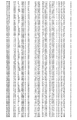
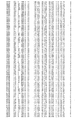
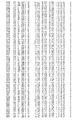
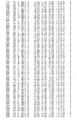
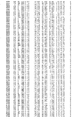
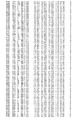
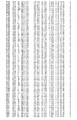
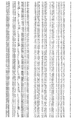
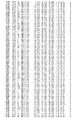
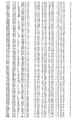
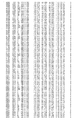
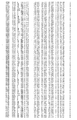
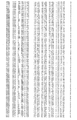
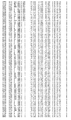
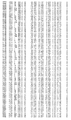
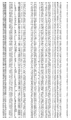
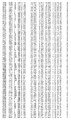
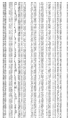
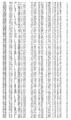
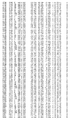
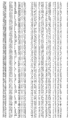
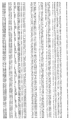
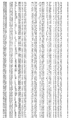
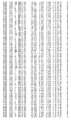
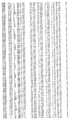
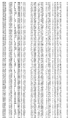
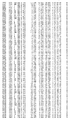
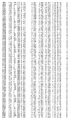
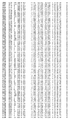
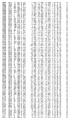
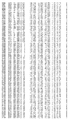
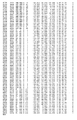
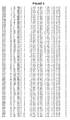
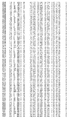
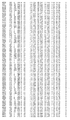
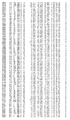
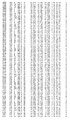
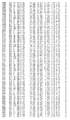
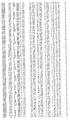
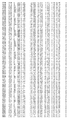
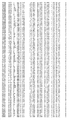
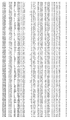
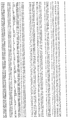
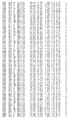
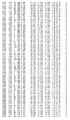
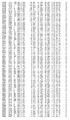
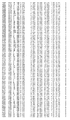
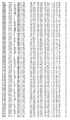
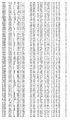
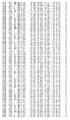
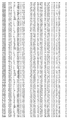
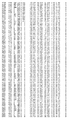
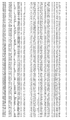
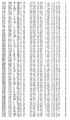
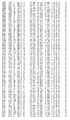
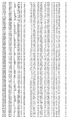
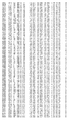
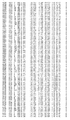
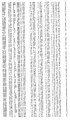
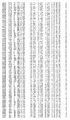
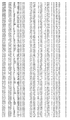
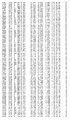
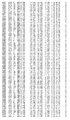
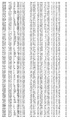
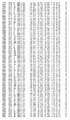
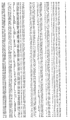
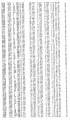
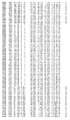
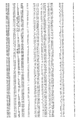
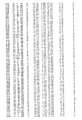
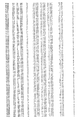
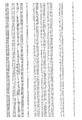
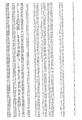
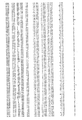
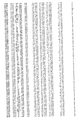
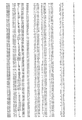
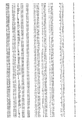
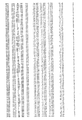
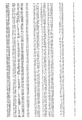
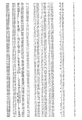
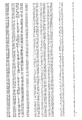
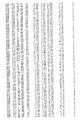
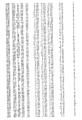
- the structural coordinates of the binding pocket are those set out in any one of Figures 4 or 5 .
- any given compound may be computationally evaluated for its ability to associate with the HCV NS5B binding pocket defined herein, and thus, its potential as an NS5B inhibitor determined.
- a computer model of a polypeptide consisting of an HCV NS5B binding pocket as defined herein is constructed using well-known software such as QUANTA [Molecular Simulations Inc, San Diego, Calif.], Sybyl [Tripos Associates, St. Louis, Mo.], InsightII [Accelrys], MOE [Chemical Computing Group Inc., Montreal, Quebec, Canada]. Selected compounds to be evaluated may then be positioned in a variety of orientations, or docked, within the binding pocket.
- Docking may be accomplished using software such as GRID, DOCK, AUTODOCK, FlexX, and GOLD.
- computational means may be further employed to generate quantitative and qualitative maps of the complex, including for example, pharmacophore maps, surface property maps (which map Conolly, Gaussian and van der Waals surfaces) and maps of Probabilistic Receptor Potentials using software such as QUANTA, Sybyl, InsightII, and MOE.
- the efficiency with which a selected compound binds to the present HCV NS5B binding pocket may be tested and optimized by computational evaluation.
- the quality of the fit of a given compound within the NS5B binding pocket may be evaluated, for example, by shape, size and electrostatic complementarity as determined qualitatively by visual inspection or as determined quantitatively by the use of scoring functions such as LUDI, PLP, PMF, SCORE, GOLD and FlexX. These methods of qualitative and quantitative evaluation may be employed individually or in combination, for example, as in a consensus scoring manner.
- binding efficiency can be determined based on the interaction energy of a complex formed by the binding or association of a compound with the HCV NS5B.
- a compound determined to form a "low energy, stable complex" with NS5B in the manner described herein, warrants further analysis as a potential NS5B inhibitor.
- the term "low energy, stable complex” as used herein is defined as an NS5B complex in which the van der Waals interaction energy value, i.e. the van der Waals energy of interaction between the compound and NS5B, is less than about 8000 kcal/mol. Van der Waals interaction energy value can be determined using the software MOE, and is based on the MMFF94 force field.
- a compound determined to form a complex having a van der Waals interaction energy value of less than about 8000 kcal/mol is a potential NS5B inhibitor.
- a low energy, stable complex in accordance with the present invention will have a van der Waals interaction energy value of less than about 6000 kcal/mol, and more preferably, a value of less than about 4000 kcal/mol.
- compounds determined to be potential HCV inhibitors can be further evaluated to determine the actual propensity of each to interact with the binding pocket of the present invention and to inhibit HCV.
- Binding of the candidate compound within the defined HCV NS5B binding pocket can be determined using methods well-established in the art. For example, binding assays may be used in which the candidate compound is exposed to a polypeptide containing the NS5B binding pocket of the invention under conditions suitable for association or binding to occur. Binding is then assessed, for example using NMR or other known detection techniques.
- association of natural ligands or substrates with the binding pocket of their corresponding receptors or enzymes is the basis of many biological mechanisms of action.
- many drugs exert their biological effects through association with the binding cavities of receptors and enzymes.
- Such associations may occur with all or any part of the binding pocket.
- An understanding of such associations will help lead to the design of drugs having more favorable associations with their target receptor or enzyme, and thus, improved biological effects. Therefore, this information is valuable in designing potential ligands or inhibitors of receptors or enzymes, such as inhibitors of HCV NS5B-like polypeptides, and more importantly, HCV NS5B.
- crystals of a series of protein/compound complexes are obtained and then the three-dimensional structure of each complex is solved.
- Such an approach provides insight into the association between the proteins and compounds of each complex. This is accomplished by selecting compounds with inhibitory activity, obtaining crystals of this new protein/compound complex, solving the three-dimensional structure of the complex, and comparing the associations between the new protein/compound complex and previously solved protein/compound complexes. By observing how changes in the compound affected the protein/compound associations, these associations may be optimized.
- the recombinant HCV genotype 1 b (J4 strain) NS5B polymerase (the amino acid sequence of which is shown in SEQ ID NO: 1 ) was produced in soluble form by expression of a variant that lacks the C-terminal 21 amino acids normally found on the mature NS5B.
- this NS5B ⁇ 21 was expressed with a C-terminal hexa-histidine sequence.
- Expression of the NS5B from a pET vector in E. coli strain JM109 (DE3) was induced with 0.4 mM IPTG for 3 hours at 24°C.
- Cells were harvested (in 25 mM Tris pH 7.5, 10 % glycerol, 1 mM EDTA, 500 mM NaCl, 2 mM 2-mercaptoethanol and cocktail of protease inhibitors (standard cocktail that can be purchased from Roche Biochemicals Inc.) and lysed in a microfluidizer.
- Eluted fractions, enriched with the NS5B protein were concentrated on a Resource S column, and then applied to a Superdex 200 column in 20 mM Tris-HCl pH 7.5, 10 % glycerol, 5 mM DTT, 300 mM NaCl. Peak fractions containing highly pure His-tag NS5B were stored at -80°C until use.
- HCV polymerase NS5B strain 1b/J4 (SEQ. ID NO: 1 ), obtained as described in detail in Example 1, was crystallized in its apo form using monomethyl ether polyethylene glycol 5000 (PEG5Kmme) as a precipitant agent. Large single crystals were obtained by the hanging drop vapor diffusion technique (McPherson, supra).
- NS5B (7.66 mg/mL in purification buffer containing 20 mM Tris, pH 7.3, 300 mM NaCl, 10% glycerol) was added to 1 ⁇ L of a solution made of 21% PEG5Kmme, 0.1 M MES, pH 5.4, 10% glycerol and 0.4 M ammonium sulfate.
- the resulting 2 ⁇ L drop was suspended above a 1 mL reservoir solution of 21 % PEG5Kmme, 0.1 M MES, pH 5.4, 20% glycerol and 0.4 M ammonium sulfate.
- the crystals were shown to diffract to a resolution of up to 2 ⁇ using X-rays from a regular rotating anode source.
- Inhibitor compound A was made as described in detail in co-pending application US 10/755,256 filed January 12, 2004 .
- Inhibitor compound B was made as described in detail in co-pending application US 10/755,256 filed January 12, 2004 .
- Inhibitor compound C was made as described in detail in WO 03/007945 published January 22, 2003 .
- Crystals were transferred in a 5 ⁇ L drop of a soaking solution made of 14% PEG5Kmme, 14 mM Tris, pH 7.5, 70 mM MES, pH 7.0, 14% glycerol, 210 mM NaCl, 10 mg/mL lysozyme and 280 mM ammonium sulfate.
- the inhibitor molecule was dissolved in DMSO to a concentration of 25 mM.
- Inhibitor solution (0.2 ⁇ L) was added to the 5 ⁇ L NS5B crystal drop and incubated for 5-6 hours at 11°C.
- NS5B-inhibitor complex was transferred from the solution with a cryoloop (Hampton Research, California, USA) and cryo-cooled in liquid nitrogen.
- NS5B complexes were prepared using Compounds A and B.
- Diffraction data were collected on a MicroMax-007 rotating anode x-ray generator equipped with an Raxis-IV++ Image plate detector (Rigaku/MSC, Texas, USA). Data to a resolution of 2.8 ⁇ was collected on a single crystal cryo-cooled at -180°C for NS5B complexes prepared with Compound A and Compound B.
- the diffraction data were phased by Molecular Replacement (MR) using the publicly available structure of HCV NS5B (pdb code : 1 C2J). Rotation and translation search were done using the program CNX (Accelrys). Model building was carried out with the software O (Alwyn Jones, Upsala University, Sweden) and model refinement was performed with the CNX software (Accelrys). The model was improved by repetition of the procedure of model building and refinement until a desirable result was obtained. The final model in each case included two molecules of NS5B, identified as NS5B A and NS5B B, (i.e.
- the binding site of Compound C on HCV polymerase was determined by several steps which are described herein in detail. Initially, NMR spectroscopic methods (transferred NOESY) were applied to determine the structure of Compound C when bound to HCV polymerase. Another NMR technique, differential line-broadening (DLB), helped to identify the segments of Compound C which come into contact with the polymerase versus those that are solvent exposed in the bound state. The bound structure was then docked onto the X-ray-derived structure of the NS5B-Compound A complex. The docking procedure began by overlaying the common feature of the 5/6 aromatic rings of the indole and benzimidazole of Compound A and Compound C. All the differential line-broadening data were then accounted for and the complex was energy minimized using MOE.
- DLB differential line-broadening
- the transferred NOESY and DLB data were acquired as follows.
- a sample tube (5 mm) containing Compound C was prepared by adding 15 ⁇ L of concentrated solution in DMSO- d 6 (containing 0.31 mg of Compound C ) to an aqueous buffer composed of 20 mM Tris-d 11 , 2 mM DTT-d 10 , 1 mM EDTA-d 12 , 300 mM NaCl, and 10% (v/v) D 2 O spiked with TSP-2,2,3,3-d 4 . Buffer was added to a final volume of 600 ⁇ L, and the pH was adjusted to 6.0. Spectra of free Compound C were taken. A concentrated stock solution of HCV polymerase was added twice to the NMR tube and spectra were acquired.
- the concentrated stock contained 21.7 mg/mL of HCV polymerase (NS5B ⁇ 21C-His 6 ) in buffer consisting of 20 mM Tris-d 11 , 2 mM DTT-d 10 , 1 mM EDTA-d 12 , 300 mM NaCl, and 10% (v/v) glycerol-d 8 .
- NMR spectra were acquired on Bruker AVANCE 600 and 800 MHz NMR spectrometers at 22 and 27 °C. Suppression of the solvent signal was achieved by the use of pre-saturation or by inserting a 3-9-19 WATERGATE module prior to data acquisition.
- One-dimensional spectra were collected on both sample tubes for DLB comparisons, and 128 scans were collected for each spectrum. NOESY experiments on a sample tube containing no polymerase resulted in the observation of no significant cross-peaks, as expected. On the other hand, NOESY spectra on a sample tube containing polymerase resulted in the observation of many cross-peaks which contained the valuable inter-hydrogen distance information of the inhibitor C when bound to HCV polymerase.
- NOESY mixing times including 75, 100, 150, 200 and 300 msec (at 600 and 800 MHz fields) was recorded.
- Two-dimensional data sets were typically acquired with 2048 points in t 2 and 512 points in t 1 . 128 scans were averaged for NOESY FIDs.
- the data were processed and analyzed using Bruker's XWinNMR and WinNMR software (Bruker Canada, 555 Steeles Ave. East, Milton, Ontario). Data sets were zero-filled to yield 2048 by 2048 real points after transformation using a phase-shifted sinebell window function.
- the structure of Compound C was calculated by a custom simulated annealing protocol that was implemented in the MOE molecular modeling program (CCG, Montreal, Qc, Canada). All calculations were performed using the mmff94 forcefield as implemented in MOE version 2202.03. NMR-derived flat-bottomed restraints were generated from the series of NOESY data. The relative intensity of NOESY cross-peaks was classified into three categories which were then used as restraints, strong (1.8-2.7 A), medium (1.8-3.5 A) or weak (1.8-5.0 ⁇ ). The force constants in the NMR-derived flat-bottomed restraints were gradually increased during the cooling stages.
- a single, high temperature unrestrained dynamics run was performed at 1000 K, with 100 structures collected at 10 psec intervals to generate a starting set of conformations. Each structure was cooled and minimized using the following simulated annealing protocol. During the simulations the temperature and restraint weights were changed from 1000K to 50K, and from 1/1000000 to 20, respectively. The final structures were energy minimized, the total energies were calculated, the restraint energies were calculated, and the restraint violations were determined. NMR-consistent structures were isolated, and two families of structures were identified.
Landscapes
- Health & Medical Sciences (AREA)
- Life Sciences & Earth Sciences (AREA)
- Chemical & Material Sciences (AREA)
- Organic Chemistry (AREA)
- Genetics & Genomics (AREA)
- Medicinal Chemistry (AREA)
- General Health & Medical Sciences (AREA)
- Engineering & Computer Science (AREA)
- Molecular Biology (AREA)
- Bioinformatics & Cheminformatics (AREA)
- Biochemistry (AREA)
- Zoology (AREA)
- Wood Science & Technology (AREA)
- Virology (AREA)
- Gastroenterology & Hepatology (AREA)
- Nuclear Medicine, Radiotherapy & Molecular Imaging (AREA)
- Public Health (AREA)
- Animal Behavior & Ethology (AREA)
- Pharmacology & Pharmacy (AREA)
- Biomedical Technology (AREA)
- Biotechnology (AREA)
- Biophysics (AREA)
- Microbiology (AREA)
- General Chemical & Material Sciences (AREA)
- Chemical Kinetics & Catalysis (AREA)
- Veterinary Medicine (AREA)
- General Engineering & Computer Science (AREA)
- Proteomics, Peptides & Aminoacids (AREA)
- Oncology (AREA)
- Communicable Diseases (AREA)
- Medicines That Contain Protein Lipid Enzymes And Other Medicines (AREA)
- Peptides Or Proteins (AREA)
- Investigating Or Analysing Biological Materials (AREA)
- Enzymes And Modification Thereof (AREA)
- Measuring Or Testing Involving Enzymes Or Micro-Organisms (AREA)
- Pharmaceuticals Containing Other Organic And Inorganic Compounds (AREA)
- Micro-Organisms Or Cultivation Processes Thereof (AREA)
Description
- The present invention relates to Hepatitis C Virus NS5B polymerase (HCV NS5B), and in particular, to a novel HCV NS5B inhibitor binding pocket. The crystal structure of HCV NS5B is provided including the coordinates that define the novel inhibitor-binding pocket and 3-dimensional models for use in inhibitor screening. Methods of designing and screening NS5B inhibitors are also provided utilizing the crystal structure and inhibitor-binding information.
- Hepatitis C virus (HCV) is the major etiological agent of post-transfusion and community-acquired non-A non-B hepatitis worldwide. It is estimated that over 200 million people worldwide are infected by the virus. A high percentage of carriers become chronically infected and many progress to chronic liver disease, so called chronic hepatitis C. This group is in turn at high risk for serious liver disease such as liver cirrhosis, hepatocellular carcinoma and terminal liver disease leading to death.
- The mechanism by which HCV establishes viral persistence and causes a high rate of chronic liver disease has not been thoroughly elucidated. It is not known how HCV interacts with and evades the host immune system. In addition, the roles of cellular and humoral immune responses in protecting against HCV infection and disease have yet to be established.
- HCV is an enveloped positive strand RNA virus in the Flaviviridae family. The single strand HCV RNA genome is of positive polarity and comprises one open reading frame (ORF) of approximately 9600 nucleotides in length, which encodes a linear polyprotein of approx. 3010 amino acids. In infected cells, this polyprotein is cleaved at multiple sites by cellular and viral proteases to produce structural and non-structural (NS) proteins. The structural proteins (C, E1, E2 and E2-p7) comprise polypeptides that constitute the virus particle. The non-structural proteins (NS2, NS3, NS4A, NS4B, NS5A, NS5B) encode for enzymes or accessory factors that catalyze and regulate the replication of the HCV RNA genome. Processing of the structural proteins is catalyzed by host cell proteases. The generation of the mature non-structural proteins is catalyzed by two virally encoded proteases. The first is the NS2/3 zinc-dependent metalloprotease which auto-catalyzes the release of the NS3 protein from the polyprotein. The released NS3 protein contains an N-terminal serine protease domain and catalyzes the remaining cleavages from the polyprotein. The released NS4A protein has at least two roles. The first role is forming a stable complex with NS3 protein and assisting in the membrane localization of the NS3/NS4A complex; the second is acting as a cofactor for NS3 protease activity. This membrane-associated complex, in turn catalyzes the cleavage of the remaining sites on the polyprotein, thus effecting the release of NS4B, NS5A and NS5B. The C-terminal segment of the NS3 protein also harbors nucleoside triphosphatase and RNA helicase activity. The function of the protein NS4B is unknown. NS5A is a highly phosphorylated protein that appears to be responsible for the interferon resistance of various HCV genotypes. NS5B is an RNA-dependent RNA polymerase (RdRp) that is involved in the replication of HCV.
- The open reading frame of the HCV RNA genome is flanked on its 5' end by a non-translated region (NTR) of approx. 340 nucleotides that functions as the internal ribosome entry site (IRES), and on its 3' end by an NTR of approximately 230 nucleotides. Both the 5' and 3' NTRs are important for RNA genome replication. The genomic sequence variance is not evenly distributed over the genome and the 5'NTR and parts of the 3'NTR are the most highly conserved portions.
- The cloned and characterized partial and complete sequences of the HCV genome have been analyzed with regard to appropriate targets for a prospective antiviral therapy. The following four viral enzyme activities provide possible targets: (1) the NS2/3 protease; (2) the NS3/4A protease complex, (3) the NS3 helicase and (4) the NS5B RNA-dependent RNA polymerase (NS5B RdRp). The NS5B RNA dependent RNA polymerase has also been crystallized to reveal a structure reminiscent of other nucleic acid polymerases (Ago et al. 1999; Bressanelli et al. 1999; Lesburg et al. 1999) with an enclosed active site.
- Virus-specific functions essential for replication are the most attractive targets for drug development. The absence of RNA dependent RNA polymerases in mammals, and the fact that this enzyme appears to be essential to viral replication, would suggest that the HCV NS5B polymerase is an ideal target for anti-HCV therapeutics. It has recently been demonstrated that mutations destroying NS5B activity abolish infectivity of HCV RNA in a chimp model (Kolykhalov, A.A. et al. 2000). The initial step of viral RNA replication is recognition of the 3'-end of RNA template by NS5B (RdRp), which may occur directly or indirectly with the help of cellular proteins (Lai, 1998; Strauss et al., 1999). HCV polymerase then proceeds to elongate this template and form a complementary RNA product.
- Several groups have described the crystal structure of HCV NS5B polymerase (Ago et al. 1999 supra; Bressanelli et al. 1999 supra; Lesburg et al. 1999 supra). It resembles a flattened sphere with the approximate dimensions 70Å x 60Å x 40Å. The polypeptide chain encircles the active site, forming a cavity at the center of the molecule, and resulting in an appearance that is very different from other U-shaped polymerases. The domain organization of NS5B is consistent with other polymerases in that it is subdivided into finger, palm and thumb domains in which the palm domain, i.e. residues 188-225 and 287-370, is conserved. In contrast to other polymerases, extensive thumb and finger domain contacts result in a globular-shaped HCV polymerase. These contacts are mediated, in part, by loops that extend from the finger to the thumb domain. Knowledge of the crystal structure of NS5B is useful for structure-based drug design and, indeed, structures of NS5B polymerase/inhibitor complexes have been reported recently (Wang et al. 2003; Love et al, 2003;
EP 1 256 628 - Interestingly, Labonté et al. 2002 have reported that a mutation of Leu30 in the N-terminal finger loop of the NS5B affects its polymerase activity and speculate that a local alteration in the structure of the Leu30 mutant is responsible for this decrease in activity. However, the authors are silent on the presence of a binding pocket that is "masked" by the finger loop in its native state and becomes exposed by a mutation or displacement of the Leu30 residue. The discovery of this peculiar binding pocket is the subject-matter of the present invention. Accordingly, the effort to develop effective treatments to HCV infection can be facilitated by increased knowledge of the structure of enzymes critical to HCV replication, most notably, the NS5B polymerase. An increased knowledge of enzyme structure, particularly when complexed with specific inhibitors, will lead to a means of identifying binding sites in the enzyme, as well as the conformation of enzyme/inhibitor complexes and susceptible residues in the enzyme, knowledge of each of which is critical to the process of drug design and optimization.
- It has now been found that the HCV polymerase, when complexed with certain inhibitors, adopts a conformation in which the finger loop region defined by
amino acid residues 18 to 35 is displaced to expose a binding pocket defined generally byamino acid residues amino acid residues 18 to 35 conceals this binding pocket in its native state. This newly "exposed" binding pocket defines a novel target in the search of further chemical entities which are capable of binding to HCV NS5B and modulating, or preferably inhibiting, the polymerase activity of HCV NS5B. - The present invention provides the method of
claim 1. - Aspects and embodiments of the present invention are described in more detail herein by reference to the accompanying drawings in which:
-
-
Figure 1A depicts the NS5B apo-enzyme structure without compound; -
Figure 1 B depicts compound A bound to the NS5B where amino acids 18-35 are displaced and not seen in the structure; -
Figure 1C depicts compound A bound within a solvent accessible surface representation of the binding pocket of the present invention; -
Figure 2 depicts compound B bound within a solvent accessible surface representation of the binding pocket of the present invention; -
Figure 3 depicts a docked model of the NMR derived bound conformation of compound C bound within the accessible representation of the binding pocket of the present invention; -
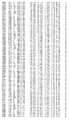
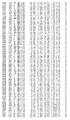
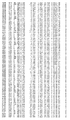
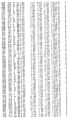
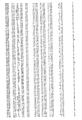
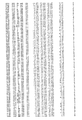
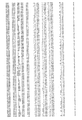
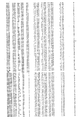
Figure 4 shows the atomic structure coordinates of the HCV NS5B of SEQ ID No. 1 complexed with the compound A ; -
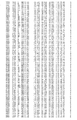
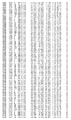
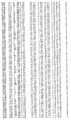
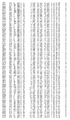
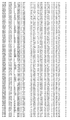
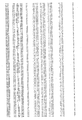
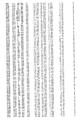
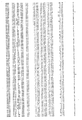
Figure 5 shows the atomic structure coordinates of the HCV NS5B of SEQ ID No.1 complexed with the compound B -
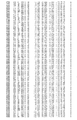
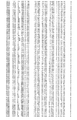
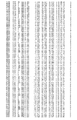
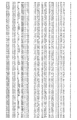
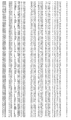
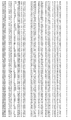
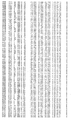
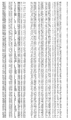
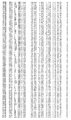
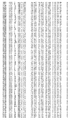
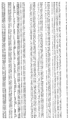
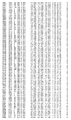
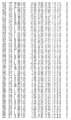
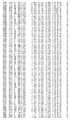
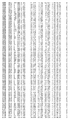
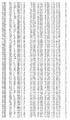
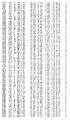
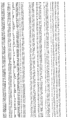
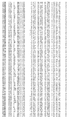
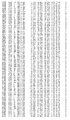
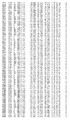
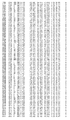
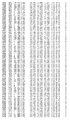
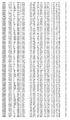
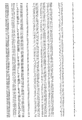
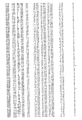
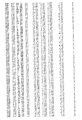
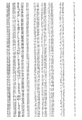
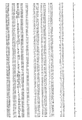
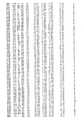
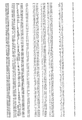
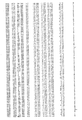
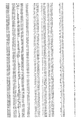
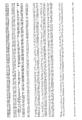
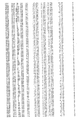
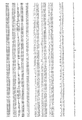
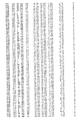
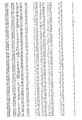
Figure 6 shows the atomic structure coordinates of the HCV NS5B of SEQ ID No.1 complexed with the compound C - Unless defined otherwise, the scientific and technological terms and nomenclature used herein have the same meaning as commonly understood by a person of ordinary skill to which this invention pertains. Generally, the procedures for cell culture, infection, molecular biology methods and the like are well-known to those of skill in the art. Such standard techniques can be found in reference manuals such as for example Sambrook et al. (1989) and Ausubel et al. (1994).
- The term "HCV NS5B" refers to the RNA-dependent RNA polymerase (RdRp) of a Hepatitis C virus (HCV) that is involved in the replication of HCV. As one of skill in the art is well aware, the term HCV encompasses a viral family including many different strains, isolates and subtypes. Moreover, the NS5B polymerase of each member of this family, although functionally equivalent and highly homologous structurally, will vary somewhat in amino acid sequence. The amino acid sequence of one HCV NS5B polymerase, NS5B from HCV genotype 1b, is shown in SEQ ID No: 1. The sequences of other isolated HCV NS5B polymerases may be accessed in publicly available sequence databases.
- The term "binding pocket", as used herein, refers to a region of a molecule or molecular complex, that, as a result of its configuration, favorably associates with or is occupied by an entity or region of the same molecule or molecular complex, or an entity or region of a different molecule, molecular complex, chemical compound or other compound. In accordance with the present invention, the NS5B binding pocket defined herein becomes exposed by displacement of the finger loop domain of residues 18-35 thereby allowing binding of a compound that is capable of affecting NS5B activity, for example, inhibiting NS5B activity. Typically, a binding pocket, or at least a portion thereof, comprises a cavity which is the site of interaction with an entity of the same or different molecule. As will be appreciated by those of skill in the art, the nature of the cavity within a binding pocket will vary from molecule to molecule.
- The term "isolated and purified" as it is used with respect to polypeptides according to the present invention refers to a polypeptide that is substantially free from other components.
- The term "native HCV NS5B", as it is used herein with respect to the amino acid sequence of the binding pocket of the present invention, refers to the natural amino acid sequence of the binding pocket in a given HCV NS5B.
- The term "native functional configuration" as it is used with respect to the binding pocket of the present invention refers to the natural arrangement, including spatial arrangement, of amino acids that form a pocket that can associate with or be occupied by certain compounds/entities.
- As used herein the term "complex" refers to the combination of two or more entities, at least one of which is a protein or enzyme. In particular, complexes in accordance with the present invention are formed between an NS5B protein, including analogs thereof which may include amino acid substitutions, truncations or insertions, and another compound. The combination or "complexing" of a compound or chemical entity with a protein refers to the nature of the association/binding between the compound or chemical entity and the protein. The association between the components of the complex is the condition of proximity therebetween and may be non-covalent in nature, wherein the juxtaposition is energetically favored by hydrogen bonding, van der Waals forces or electrostatic interactions, or it may be covalent.
- The term "analog" as used herein denotes, with respect to a molecular compound, a sequence of amino acids modified from the native or natural sequence of amino acids that retains the biological activity (either functional or structural) of the native sequence of amino acids. This analog may be from the same or different species and may be a natural analog or may be prepared synthetically. Such analogs include amino acid sequences having substitutions, deletions, or additions of one or more amino acids, provided that the biological activity of the protein is conserved. In particular, the term "conservative analog" denotes an analog having amino acid modifications that retain biological activity. Analogs including amino acid substitutions may include substitutions having either strong or weak similarity (see, for example, Dayhoff, M.O., (1978), Atlas of Protein Sequence and Structure, 5, suppl. 3, National Biomedical Research Foundation, Washington, D.C.) as defined according to the following "Table of Amino Acid Similarity":
Amino acid Strong Weak A G, S C, T, V C A, S D E G, H, K, N, Q, R, S E D H, K, N, Q, R, S F W, Y H, I, L, M G A D, N, S H Y D, E, F, K, N, Q, R I L, M, V F K R D, E, H, N, Q, S, T L I, M, V F M I, L, V F N Q D, E, G, H, K, R, S, T P S, T Q N D, E, H, K, R, S R K D, E, H, N, Q S A, T C, D, E, G, K, N, P, Q T S A, K, N, P, V V I, L, M A, T W F, Y Y F, H, W - The meaning of the term "functionally equivalent analog" as it is used herein with respect to the binding pocket polypeptide of the invention refers to substitutions, deletions or insertions of one or more of the amino acids of the binding pocket. Substitutions may be made as set out above, for example, with an appropriate conservative amino acid or conservative synthetic amino acid analog. In essence, the term "analog" corresponds with the foregoing definition. The phrase "functionally equivalent" indicates that the analog retains the biological activity of the native molecule.
- The term "side chain" with reference to an amino acid or amino acid residue means a group attached to the α-carbon atom of the α-amino acid. For example, the R-group side chain for glycine is hydrogen, for alanine it is methyl, for valine it is isopropyl. For the specific R-groups or side chains of the α-amino acids reference is made to A.L. Lehninger's text on Biochemistry (see chapter 4).
- The term "truncation" refers to any shortened or abbreviated segment of a molecule which, for the purposes of the present invention, retains its biological activity. Truncation may refer to the shortening of a native protein molecule, or to an analog thereof.
- The term "root mean square deviation" or "rms deviation" or "rmsd" means the square root of the arithmetic mean of the square of the deviations from the mean. In the context of atomic objects, the numbers are given in angstroms (Å). It is a way to express the deviation or variation from a trend or object.
- The following abbreviations are used herein:
- DLB: differential line broadening;
- DMSO: dimethyl sulfoxide;
- DTT: dithiothreitol;
- EDTA: ethylenediaminetetraacetic acid;
- FID: free induction decay
- IPTG: isopropyl-beta-D-thiogalactopyranoside
- HEPES: 4-(2-hydroxyethyl)-1-piperazineethanesulfonic acid
- MES: 2-(N-morpholino)ethanesulfonic acid,
- MPD: 2-methyl-2,4-pentanediol
- NMR: nuclear magnetic resonance;
- NOESY: Nuclear Overhauser Effect Spectroscopy
- PEG: polyethylene glycol;
- PEG5k mme: monomethyl
ether polyethylene glycol 5000; - Tris: tris(hydroxymethyl)aminomethane;
- TSP: sodium 3-trimethylsilyltetradeuteriopropionate.
- The present invention provides a method of identifying compounds that can bind to HCV NS5B, comprising the steps of:
- a) applying a 3-dimensional molecular modeling algorithm to the structural coordinates of an HCV NS5B binding pocket defined by at least
amino acid residues amino acid residues 37 and 496) of a native HCV NS5B (SEQ ID NO. 1) to determine the spatial coordinates of the binding pocket of HCV NS5B; and - b) electronically screening stored spatial coordinates of candidate compounds against the spatial coordinates of the HCV NS5B binding pocket to identify compounds that can bind within the HCV NS5B binding pocket.
- In preferred embodiments of this aspect of the invention, the binding pocket may be defined additionally by one or more of
amino acid residues - The structural coordinates of the binding pocket are those set out in any one of
Figures 4 or5 . - According to this aspect of the invention, any given compound may be computationally evaluated for its ability to associate with the HCV NS5B binding pocket defined herein, and thus, its potential as an NS5B inhibitor determined. As alluded to above, a computer model of a polypeptide consisting of an HCV NS5B binding pocket as defined herein is constructed using well-known software such as QUANTA [Molecular Simulations Inc, San Diego, Calif.], Sybyl [Tripos Associates, St. Louis, Mo.], InsightII [Accelrys], MOE [Chemical Computing Group Inc., Montreal, Quebec, Canada]. Selected compounds to be evaluated may then be positioned in a variety of orientations, or docked, within the binding pocket. Docking may be accomplished using software such as GRID, DOCK, AUTODOCK, FlexX, and GOLD. When a compound is docked within the binding pocket to form a "virtual" representation of an NS5B complex, computational means may be further employed to generate quantitative and qualitative maps of the complex, including for example, pharmacophore maps, surface property maps (which map Conolly, Gaussian and van der Waals surfaces) and maps of Probabilistic Receptor Potentials using software such as QUANTA, Sybyl, InsightII, and MOE.
- The efficiency with which a selected compound binds to the present HCV NS5B binding pocket may be tested and optimized by computational evaluation. The quality of the fit of a given compound within the NS5B binding pocket may be evaluated, for example, by shape, size and electrostatic complementarity as determined qualitatively by visual inspection or as determined quantitatively by the use of scoring functions such as LUDI, PLP, PMF, SCORE, GOLD and FlexX. These methods of qualitative and quantitative evaluation may be employed individually or in combination, for example, as in a consensus scoring manner.
- Alternatively, binding efficiency can be determined based on the interaction energy of a complex formed by the binding or association of a compound with the HCV NS5B. For example, a compound determined to form a "low energy, stable complex" with NS5B, in the manner described herein, warrants further analysis as a potential NS5B inhibitor. The term "low energy, stable complex" as used herein is defined as an NS5B complex in which the van der Waals interaction energy value, i.e. the van der Waals energy of interaction between the compound and NS5B, is less than about 8000 kcal/mol. Van der Waals interaction energy value can be determined using the software MOE, and is based on the MMFF94 force field. Accordingly, a compound determined to form a complex having a van der Waals interaction energy value of less than about 8000 kcal/mol is a potential NS5B inhibitor. Preferably, a low energy, stable complex in accordance with the present invention will have a van der Waals interaction energy value of less than about 6000 kcal/mol, and more preferably, a value of less than about 4000 kcal/mol.
- Once a series of compounds has been screened using virtual methods such as those described above, compounds determined to be potential HCV inhibitors can be further evaluated to determine the actual propensity of each to interact with the binding pocket of the present invention and to inhibit HCV.
- Thus, a method of screening candidate HCV NS5B inhibitor compounds is described comprising the steps of:
- a) incubating a candidate inhibitor compound under conditions suitable for binding with a polypeptide selected from the group consisting of:
- i) an isolated and purified polypeptide comprising a functional HCV NS5B binding pocket defined by at least
amino acid residues amino acid residues 37 and 496) of a native HCV NS5B, or defined by a functionally equivalent analog thereof, wherein said binding pocket is exposed by displacement of a finger loop chain defined by at leastamino acid residues 18 to 35 and wherein said binding pocket retains its native functional configuration; - ii) an isolated and purified HCV NS5B polypeptide consisting of an HCV NS5B binding pocket defined by at least
amino acid residues amino acid residues 37 and 496) of a native HCV NS5B, or defined by a functionally equivalent analog thereof, wherein said binding pocket retains its native functional configuration; - iii) an isolated and purified HCV NS5B polypeptide analog comprising an HCV NS5B binding pocket defined by at least
amino acid residues amino acid residues 37 and 496) of a native HCV NS5B, or defined by a functionally equivalent analog thereof, wherein said binding pocket retains its native functional configuration and wherein said binding pocket is exposable; - iv) an HCV NS5B polypeptide variant comprising at least one amino acid mutation within a finger loop defined by
amino acid residues 18 to 35, wherein said mutation provokes a displacement of said finger loop to expose a binding pocket essentially defined byamino acid residues amino acid residues 37 and 496) of native HCV NS5B, or defined by a functionally equivalent analog thereof, wherein said binding pocket retains its native functional configuration; - v) an HCV NS5B polypeptide, or a functionally equivalent analog thereof, characterized by displacement of
amino acid residues 18 to 35; and - vi) an HCV NS5B polypeptide, or a functionally equivalent analog thereof, in which at least
amino acid residues 18 to 35 have been deleted;. and
- i) an isolated and purified polypeptide comprising a functional HCV NS5B binding pocket defined by at least
- b) determining whether or not the candidate inhibitor compound binds to the polypeptide, wherein a compound that binds to the polypeptide is a potential HCV NS5B inhibitor.
- Binding of the candidate compound within the defined HCV NS5B binding pocket can be determined using methods well-established in the art. For example, binding assays may be used in which the candidate compound is exposed to a polypeptide containing the NS5B binding pocket of the invention under conditions suitable for association or binding to occur. Binding is then assessed, for example using NMR or other known detection techniques.
- Those of skill in the art will realize that association of natural ligands or substrates with the binding pocket of their corresponding receptors or enzymes is the basis of many biological mechanisms of action. Similarly, many drugs exert their biological effects through association with the binding cavities of receptors and enzymes. Such associations may occur with all or any part of the binding pocket. An understanding of such associations will help lead to the design of drugs having more favorable associations with their target receptor or enzyme, and thus, improved biological effects. Therefore, this information is valuable in designing potential ligands or inhibitors of receptors or enzymes, such as inhibitors of HCV NS5B-like polypeptides, and more importantly, HCV NS5B.
- In iterative drug design, crystals of a series of protein/compound complexes are obtained and then the three-dimensional structure of each complex is solved. Such an approach provides insight into the association between the proteins and compounds of each complex. This is accomplished by selecting compounds with inhibitory activity, obtaining crystals of this new protein/compound complex, solving the three-dimensional structure of the complex, and comparing the associations between the new protein/compound complex and previously solved protein/compound complexes. By observing how changes in the compound affected the protein/compound associations, these associations may be optimized.
- The following specific examples are not to be construed as limiting.
- The recombinant HCV genotype 1 b (J4 strain) NS5B polymerase (the amino acid sequence of which is shown in SEQ ID NO: 1) was produced in soluble form by expression of a variant that lacks the C-
terminal 21 amino acids normally found on the mature NS5B. For the purposes of the present invention, this NS5BΔ21 was expressed with a C-terminal hexa-histidine sequence. Expression of the NS5B from a pET vector in E. coli strain JM109 (DE3) was induced with 0.4 mM IPTG for 3 hours at 24°C. Cells were harvested (in 25 mM Tris pH 7.5, 10 % glycerol, 1 mM EDTA, 500 mM NaCl, 2 mM 2-mercaptoethanol and cocktail of protease inhibitors (standard cocktail that can be purchased from Roche Biochemicals Inc.) and lysed in a microfluidizer. The lysate, after centrifugation (30,000X), was purified according to the following sequential chromatographic steps that are known to one skilled in the art: (i) metal affinity using Ni-NTA resin (Qiagen) and elution with a buffer containing increasing concentration of imidazole (from 10 mM to 500 mM); (ii) DEAE-Sepharose chromatography wherein the NS5B flowed through the column in a buffered solution containing 300 mM NaCl; (iii) Heparin Sepharose chromatography wherein the NS5B was in a buffered solution with 200 mM NaCl, and then bound NS5B was then eluted with a buffer containing a gradient up to 1 M NaCl. Eluted fractions, enriched with the NS5B protein were concentrated on a Resource S column, and then applied to aSuperdex 200 column in 20 mM Tris-HCl pH 7.5, 10 % glycerol, 5 mM DTT, 300 mM NaCl. Peak fractions containing highly pure His-tag NS5B were stored at -80°C until use. - HCV polymerase NS5B strain 1b/J4 (SEQ. ID NO: 1), obtained as described in detail in Example 1, was crystallized in its apo form using monomethyl ether polyethylene glycol 5000 (PEG5Kmme) as a precipitant agent. Large single crystals were obtained by the hanging drop vapor diffusion technique (McPherson, supra). In particular, 1 µl of NS5B (7.66 mg/mL in purification buffer containing 20 mM Tris, pH 7.3, 300 mM NaCl, 10% glycerol) was added to 1 µL of a solution made of 21% PEG5Kmme, 0.1 M MES, pH 5.4, 10% glycerol and 0.4 M ammonium sulfate. The resulting 2 µL drop was suspended above a 1 mL reservoir solution of 21 % PEG5Kmme, 0.1 M MES, pH 5.4, 20% glycerol and 0.4 M ammonium sulfate. The crystals of the NS5B complex obtained belong to space group P2(1)2(1)2(1) with unit cell dimension of a= 105.1, b=106.5 and c=133.5 and contain two molecules per asymmetric unit. The crystals were shown to diffract to a resolution of up to 2 Å using X-rays from a regular rotating anode source.
- Inhibitor compound A was made as described in detail in
co-pending application US 10/755,256 filed January 12, 2004 - Inhibitor compound B was made as described in detail in
co-pending application US 10/755,256 filed January 12, 2004 - Inhibitor compound C was made as described in detail in
WO 03/007945 published January 22, 2003 - Crystals were transferred in a 5 µL drop of a soaking solution made of 14% PEG5Kmme, 14 mM Tris, pH 7.5, 70 mM MES, pH 7.0, 14% glycerol, 210 mM NaCl, 10 mg/mL lysozyme and 280 mM ammonium sulfate. The inhibitor molecule was dissolved in DMSO to a concentration of 25 mM. Inhibitor solution (0.2 µL) was added to the 5 µL NS5B crystal drop and incubated for 5-6 hours at 11°C. Following incubation, the crystals of the NS5B-inhibitor complex were transferred from the solution with a cryoloop (Hampton Research, California, USA) and cryo-cooled in liquid nitrogen. NS5B complexes were prepared using Compounds A and B.
- Diffraction data were collected on a MicroMax-007 rotating anode x-ray generator equipped with an Raxis-IV++ Image plate detector (Rigaku/MSC, Texas, USA). Data to a resolution of 2.8 Å was collected on a single crystal cryo-cooled at -180°C for NS5B complexes prepared with Compound A and Compound B.
- The diffraction data were phased by Molecular Replacement (MR) using the publicly available structure of HCV NS5B (pdb code : 1 C2J). Rotation and translation search were done using the program CNX (Accelrys). Model building was carried out with the software O (Alwyn Jones, Upsala University, Sweden) and model refinement was performed with the CNX software (Accelrys). The model was improved by repetition of the procedure of model building and refinement until a desirable result was obtained. The final model in each case included two molecules of NS5B, identified as NS5B A and NS5B B, (i.e. residue A1 to A149, A154 to A563, B1 to B17, B36 to B148 and B153 to B563) and one molecule of compound A or B associated with NS5B molecule B. The resulting atomic structure coordinates of the compound A and compound B NS5B complexes are shown in
Fig. 4 andFig. 5 , respectively. The final crystallographic R factor the NS5B-Compound A complex was 21.9% and Rfree factor was 28.0% to a resolution of 2.8A. For the NS5B-Compound B complex, the final crystallographic R factor was 21.9% and Rfree factor was 25.7% to a resolution of 2.7 Å. - The binding site of Compound C on HCV polymerase was determined by several steps which are described herein in detail. Initially, NMR spectroscopic methods (transferred NOESY) were applied to determine the structure of Compound C when bound to HCV polymerase. Another NMR technique, differential line-broadening (DLB), helped to identify the segments of Compound C which come into contact with the polymerase versus those that are solvent exposed in the bound state. The bound structure was then docked onto the X-ray-derived structure of the NS5B-Compound A complex. The docking procedure began by overlaying the common feature of the 5/6 aromatic rings of the indole and benzimidazole of Compound A and Compound C. All the differential line-broadening data were then accounted for and the complex was energy minimized using MOE.
- The transferred NOESY and DLB data were acquired as follows. A sample tube (5 mm) containing Compound C was prepared by adding 15 µL of concentrated solution in DMSO-d 6 (containing 0.31 mg of Compound C) to an aqueous buffer composed of 20 mM Tris-d11, 2 mM DTT-d10, 1 mM EDTA-d12, 300 mM NaCl, and 10% (v/v) D2O spiked with TSP-2,2,3,3-d4. Buffer was added to a final volume of 600 µL, and the pH was adjusted to 6.0. Spectra of free Compound C were taken. A concentrated stock solution of HCV polymerase was added twice to the NMR tube and spectra were acquired. The concentrated stock contained 21.7 mg/mL of HCV polymerase (NS5BΔ21C-His6) in buffer consisting of 20 mM Tris-d11, 2 mM DTT-d10, 1 mM EDTA-d12, 300 mM NaCl, and 10% (v/v) glycerol-d8.
- NMR spectra were acquired on
Bruker AVANCE - The structure of Compound C was calculated by a custom simulated annealing protocol that was implemented in the MOE molecular modeling program (CCG, Montreal, Qc, Canada). All calculations were performed using the mmff94 forcefield as implemented in MOE version 2202.03. NMR-derived flat-bottomed restraints were generated from the series of NOESY data. The relative intensity of NOESY cross-peaks was classified into three categories which were then used as restraints, strong (1.8-2.7 A), medium (1.8-3.5 A) or weak (1.8-5.0 Å). The force constants in the NMR-derived flat-bottomed restraints were gradually increased during the cooling stages. A single, high temperature unrestrained dynamics run was performed at 1000 K, with 100 structures collected at 10 psec intervals to generate a starting set of conformations. Each structure was cooled and minimized using the following simulated annealing protocol. During the simulations the temperature and restraint weights were changed from 1000K to 50K, and from 1/1000000 to 20, respectively. The final structures were energy minimized, the total energies were calculated, the restraint energies were calculated, and the restraint violations were determined. NMR-consistent structures were isolated, and two families of structures were identified.
- One representative from each family of NMR-derived structures was then docked onto the X-ray-derived structure of the NS5B-Compound A complex. The docking procedure began by overlaying the common 5/6 aromatic rings of the indole and benzimidazole scaffolds of Compounds A and C. Only one structure of Compound C simultaneously matched the DLB data and the shape of the binding pocket. In this complex, the right-hand side of Compound C lies over or in the vicinity of
Pro 495 andPro 496. Using the MOE molecular modeling program, the side-chain orientations of amino acids atpositions - The structural coordinates of the NS5B-Compound C complex were generated from the final minimization and are shown in
Figure 6 . -
- Ago et al. 1999, Structure 7(11): 1417-1426
- Ausubel et al., 1994, Current Protocols in Molecular Biology, Wiley, New York.
- Bressanelli et al. 1999, Proc. Natl. Acad. Sci, USA 96(23): 13034-13039.
- Bressanelli et al., 2002, J. Virol. 76: 3482-3492.
- Dayhoff, M.O., 1978, Atlas of Protein Sequence and Structure, 5, suppl. 3, National Biomedical Research Foundation, Washington, D.C.
- Kolykhalov, A.A. et al., 2000; J. Virol. 74: 2046-2051.
- Labonté et al., 2002, J. Biol. Chem. 277(41): 38838-38846.
- Lai, M.M.C., 1998, .
- Lehninger, A. L., et al., 1993, Principles of Biochemistry (2nd edn.) Worth, New York.
- Lesburg et al. 1999, Nat. Struct. Biol. 6: 937-943.
- Love et al., 2003, J. Virol. 77: 7575-7581.
- McPherson et al., 1989, Preparation and Analysis of Protein Crystals, Krieger Pub.
- O'Farrell et al., 2003, J. Mol. Biol. 326: 1025-1035.
- Pickworth-Glusker J., Trueblood K.N., Crystal Structure Analysis, 2nd Ed. Oxford University Press, 1985, New York.
- Sambrook et al., 1989, Molecular Cloning - A Laboratory Manual, Cold Spring Harbor Labs.
- Schulz G. E. and Schirmer R. H., 1985, Principles of Protein Structure, Springer-Verlag, New York
- Strauss, J.H., and Strauss, E.G. 1999, .
- Wang et al., 2003, J. Biol. Chem. 278(11): 9485-9495.
-
WO 01/047883 -
WO 02/004425 -
WO 03/000254 -
WO 03/007945 -
WO 03/010140 -
WO 03/010141 -
WO 03/026587 -
EP 1 256 628 -
US 10/755256 -
US 10/755544 -
US 60/546213 -
- <110> BOEHRINGER INGELHEIM INTERNATIONAL GmbH
- <120> HEPATITIS C VIRUS NS5B POLYMERASE
INHIBITOR BINDING POCKET - <130> 13/123
- <140>
60/469,604
<141> 2003-05-09 - <160> 6
- <170> FastSEQ for Windows Version 4.0
- <210> 1
<211> 576
<212> PRT
<213> HCV - <400> 1


- <210> 2
<211> 4
<212> PRT
<213> HCV - <400> 2

- <210> 3
<211> 4
<212> PRT
<213> HCV - <400> 3

- <210> 4
<211> 8
<212> PRT
<213> HCV - <400> 4

- <210> 5
<211> 6
<212> PRT
<213> HCV - <400> 5

- <210> 6
<211> 12
<212> PRT
<213> HCV - <400> 6

Claims (1)
- A method of identifying a compound that bind to HCV NS5B, comprising the steps ofa) applying a 3-dimensional molecular modeling algorithim to the structural coordinates of an HCV NS5B binding pocket defined by the structural coordinates of at least amino acid residues 392, 393, 395, 396, 399, 424, 425, 428, 429, 492, 493, 494, 495, 500 and 503, and optionally one of amino acid residues 37 and 496, of native HCV NS5B (SEQ ID NO:1) to determine the spatial coordinates of the binding pocket of HCV NS5B, wherein the structural coordinates of an HCV NS5B binding pocket are the structural coordinates of(iii) Figure 4 for the HCV NS5B binding pocket formed by at least amino acid residues 392, 393, 395, 396, 399, 424, 425, 428, 429, 492, 493, 494, 495, 500 and 503 of SEQ ID NO:1, and wherein this step involves using structural coordinates corresponding to every atom of the amino acid residues 392, 393, 395, 396, 399, 424, 425, 428, 429, 492, 493, 494, 495, 500 and 503 of SEQ ID NO:1 within 5 Å of the complex provided in Figure 4 or(iv) Figure 5 for the HCV NS5B binding pocket formed by at least amino acid residues 392, 393, 395, 396, 399, 424, 425, 428, 429, 492, 493, 494, 495, 500 and 503 of SEQ ID NO:1, and wherein this step involves using structural coordinates corresponding to every atom of the amino acid residues 392, 393, 395, 396, 399, 424, 425, 428, 429, 492, 493, 494, 495, 500 and 503 of SEQ ID NO:1 within 5 Å of the complex provided in Figure 5;b) electronically screening stored spatial coordinates of the compound against the spatial coordinates of the HCV NS5B binding pocket to determine if the compound binds with the HCV NS5B binding pocket.
Applications Claiming Priority (2)
| Application Number | Priority Date | Filing Date | Title |
|---|---|---|---|
| US46960403P | 2003-05-09 | 2003-05-09 | |
| PCT/CA2004/000676 WO2004099241A1 (en) | 2003-05-09 | 2004-05-05 | Hepatitis c virus ns5b polymerase inhibitor binding pocket |
Publications (2)
| Publication Number | Publication Date |
|---|---|
| EP1625154A1 EP1625154A1 (en) | 2006-02-15 |
| EP1625154B1 true EP1625154B1 (en) | 2014-01-08 |
Family
ID=33435247
Family Applications (1)
| Application Number | Title | Priority Date | Filing Date |
|---|---|---|---|
| EP04731118.8A Expired - Lifetime EP1625154B1 (en) | 2003-05-09 | 2004-05-05 | Hepatitis c virus ns5b polymerase inhibitor binding pocket |
Country Status (12)
| Country | Link |
|---|---|
| US (1) | US7386398B2 (en) |
| EP (1) | EP1625154B1 (en) |
| JP (1) | JP4584909B2 (en) |
| KR (1) | KR101164070B1 (en) |
| CN (1) | CN100457776C (en) |
| AU (1) | AU2004235848B2 (en) |
| CA (1) | CA2522574C (en) |
| DK (1) | DK1625154T3 (en) |
| ES (1) | ES2456702T3 (en) |
| IL (1) | IL171800A (en) |
| MX (1) | MXPA05012101A (en) |
| WO (1) | WO2004099241A1 (en) |
Families Citing this family (44)
| Publication number | Priority date | Publication date | Assignee | Title |
|---|---|---|---|---|
| CA2534649A1 (en) | 2003-08-01 | 2005-02-10 | Genelabs Technologies, Inc. | Bicyclic imidazol derivatives against flaviviridae |
| US7153848B2 (en) | 2004-08-09 | 2006-12-26 | Bristol-Myers Squibb Company | Inhibitors of HCV replication |
| US7816348B2 (en) | 2006-02-03 | 2010-10-19 | Boehringer Ingelheim International Gmbh | Viral polymerase inhibitors |
| US8535334B2 (en) * | 2007-04-17 | 2013-09-17 | Lazarus Effect, Inc. | Complex wire formed devices |
| JP2010535155A (en) * | 2007-08-03 | 2010-11-18 | ベーリンガー インゲルハイム インターナショナル ゲゼルシャフト ミット ベシュレンクテル ハフツング | Viral polymerase inhibitor |
| EP2188274A4 (en) | 2007-08-03 | 2011-05-25 | Boehringer Ingelheim Int | Viral polymerase inhibitors |
| WO2009033183A2 (en) * | 2007-09-08 | 2009-03-12 | University Of Florida Research Foundation | Compounds and methods for treatment of hcv and conditions associated with cd81 binding |
| BRPI0703586B1 (en) * | 2007-10-19 | 2018-02-06 | Braskem S.A | SUPPORTED METALOCENE CATALYST, AND HIGH AND ULTRA HIGH MOLECULAR ALPHA ETHYLENE COPOLYMERS |
| WO2009076747A1 (en) | 2007-12-19 | 2009-06-25 | Boehringer Ingelheim International Gmbh | Viral polymerase inhibitors |
| EP2774927A1 (en) * | 2008-12-03 | 2014-09-10 | Presidio Pharmaceuticals, Inc. | Inhibitors of HCV NS5A |
| TW201039826A (en) * | 2009-01-12 | 2010-11-16 | Glaxosmithkline Llc | Anti-viral compounds, compositions, and methods of use |
| WO2010096777A1 (en) * | 2009-02-23 | 2010-08-26 | Presidio Pharmaceuticals, Inc. | Inhibitors of hcv ns5a |
| KR20120049852A (en) * | 2009-06-30 | 2012-05-17 | 시가 테크놀로지스, 인크. | Treatment and prevention of dengue virus infections |
| US8993604B2 (en) | 2009-06-30 | 2015-03-31 | Siga Technologies, Inc. | Treatment and prevention of dengue virus infections |
| WO2011026024A2 (en) * | 2009-08-31 | 2011-03-03 | Glaxosmithkline Llc | Imidazo [4,5-d] pyridazine compounds for treating viral infections |
| US20110065782A1 (en) * | 2009-09-15 | 2011-03-17 | Malliavin Therese | Methods of identifying compounds that inhibit the activation of a biomolecule and methods of treatment using the compounds |
| TW201138786A (en) * | 2010-02-19 | 2011-11-16 | Glaxo Group Ltd | Therapeutic compounds |
| WO2011150243A1 (en) * | 2010-05-28 | 2011-12-01 | Presidio Pharmaceuticals, Inc. | Inhibitors of hcv ns5a |
| WO2012040389A2 (en) | 2010-09-22 | 2012-03-29 | Presidio Pharmaceuticals, Inc. | Substituted bicyclic hcv inhibitors |
| WO2012050918A2 (en) | 2010-09-29 | 2012-04-19 | Presidio Pharmaceutical, Inc. | Tricyclic fused ring inhibitors of hepatitis c |
| CN103269586B (en) | 2010-10-26 | 2015-07-15 | 普雷西迪奥制药公司 | Inhibitors of hepatitis c virus |
| JP6026425B2 (en) * | 2010-11-02 | 2016-11-16 | プロビオドルグ エージー | Crystal structure of isoglutaminyl cyclase |
| WO2012068234A2 (en) | 2010-11-17 | 2012-05-24 | Gilead Sciences, Inc. | Antiviral compounds |
| US20150232455A1 (en) * | 2010-12-15 | 2015-08-20 | Allan C. Krueger | Anti-viral compounds |
| MX374835B (en) * | 2011-08-12 | 2025-03-06 | Southern Res Inst | QUINAZOLINONE ANALOGUES AND USES OF QUINAZOLINONE ANALOGUES TO TREAT OR PREVENT CERTAIN VIRAL INFECTIONS. |
| PT2907816T (en) | 2011-11-16 | 2018-10-18 | Gilead Pharmasset Llc | Condensed imidazolylimidazoles as antiviral compounds |
| US9708357B2 (en) | 2011-12-20 | 2017-07-18 | Riboscience, LLC | 4′-azido, 3′-fluoro substituted nucleoside derivatives as inhibitors of HCV RNA replication |
| WO2013106639A1 (en) * | 2012-01-13 | 2013-07-18 | Gilead Pharmasset Llc | Crysral structure of hcv polymerase complexes and methods of use |
| US20130309196A1 (en) * | 2012-05-16 | 2013-11-21 | Gilead Sciences, Inc. | Antiviral compounds |
| US10034893B2 (en) * | 2013-02-01 | 2018-07-31 | Enanta Pharmaceuticals, Inc. | 5, 6-D2 uridine nucleoside/tide derivatives |
| US9167288B2 (en) | 2013-03-15 | 2015-10-20 | Universal Electronics Inc. | System and method for optimizing memory usage in a universal controlling device |
| MA46490A1 (en) | 2013-05-16 | 2021-04-30 | Riboscience Llc | Substituted 4'- fluoro-2 '- methyl nucleoside derivatives |
| US20180200280A1 (en) | 2013-05-16 | 2018-07-19 | Riboscience Llc | 4'-Fluoro-2'-Methyl Substituted Nucleoside Derivatives as Inhibitors of HCV RNA Replication |
| HK1219901A1 (en) | 2013-05-16 | 2017-04-21 | Riboscience Llc | 4'-azido, 3'-deoxy-3'-fluoro substituted nucleoside derivatives |
| SG11201601274QA (en) * | 2013-08-26 | 2016-03-30 | Enanta Pharm Inc | Cyclosporin analogues for preventing or treating hepatitis c |
| JP2016529293A (en) | 2013-08-27 | 2016-09-23 | ギリアド ファーマセット エルエルシー | Combination preparation of two antiviral compounds |
| TWI721947B (en) | 2014-06-11 | 2021-03-21 | 美商基利法瑪席特有限責任公司 | Solid forms of an antiviral compound |
| US9675632B2 (en) | 2014-08-26 | 2017-06-13 | Enanta Pharmaceuticals, Inc. | Nucleoside and nucleotide derivatives |
| WO2016073480A1 (en) | 2014-11-03 | 2016-05-12 | Enanta Pharmaceuticals, Inc. | Novel cyclosporin analogues for preventing or treating hepatitis c infection |
| US9718851B2 (en) | 2014-11-06 | 2017-08-01 | Enanta Pharmaceuticals, Inc. | Deuterated nucleoside/tide derivatives |
| US9732110B2 (en) | 2014-12-05 | 2017-08-15 | Enanta Pharmaceuticals, Inc. | Nucleoside and nucleotide derivatives |
| CN104530189B (en) * | 2014-12-16 | 2017-11-14 | 郑州大学第一附属医院 | Hepatitis c virus NS 5 B RNA polymerase suppresses peptide sequence and application thereof |
| AU2018335411B2 (en) | 2017-09-21 | 2024-06-27 | Riboscience Llc | 4'-fluoro-2'-methyl substituted nucleoside derivatives as inhibitors of HCV RNA replication |
| US20250237642A1 (en) * | 2022-03-08 | 2025-07-24 | Emory University | Predictive model for variants associated with drug resistance and theranostic applications thereof |
Family Cites Families (8)
| Publication number | Priority date | Publication date | Assignee | Title |
|---|---|---|---|---|
| US5528559A (en) * | 1995-06-23 | 1996-06-18 | Motorola, Inc. | Multiple display timepiece |
| WO1999057253A2 (en) * | 1998-05-04 | 1999-11-11 | Vertex Pharmaceuticals Incorporated | Crystallizable jnk complexes |
| US6434489B1 (en) * | 2000-04-03 | 2002-08-13 | Schering Corporation | Compositions of hepatitis C virus NS5B polymerase and methods for crystallizing same |
| US6448281B1 (en) * | 2000-07-06 | 2002-09-10 | Boehringer Ingelheim (Canada) Ltd. | Viral polymerase inhibitors |
| EP1256628A3 (en) * | 2001-05-10 | 2003-03-19 | Agouron Pharmaceuticals, Inc. | Hepatitis c virus (hcv) ns5b rna polymerase and mutants thereof |
| WO2003007945A1 (en) * | 2001-07-20 | 2003-01-30 | Boehringer Ingelheim (Canada) Ltd. | Viral polymerase inhibitors |
| AU2002339901A2 (en) * | 2001-09-06 | 2003-03-24 | Biogen Idec Ma Inc. | Crystal structure of baff, and use thereof in drug design |
| US7223785B2 (en) * | 2003-01-22 | 2007-05-29 | Boehringer Ingelheim International Gmbh | Viral polymerase inhibitors |
-
2004
- 2004-05-05 ES ES04731118.8T patent/ES2456702T3/en not_active Expired - Lifetime
- 2004-05-05 EP EP04731118.8A patent/EP1625154B1/en not_active Expired - Lifetime
- 2004-05-05 KR KR1020057021262A patent/KR101164070B1/en not_active Expired - Fee Related
- 2004-05-05 MX MXPA05012101A patent/MXPA05012101A/en active IP Right Grant
- 2004-05-05 CN CNB2004800194730A patent/CN100457776C/en not_active Expired - Fee Related
- 2004-05-05 DK DK04731118.8T patent/DK1625154T3/en active
- 2004-05-05 AU AU2004235848A patent/AU2004235848B2/en not_active Ceased
- 2004-05-05 JP JP2006500449A patent/JP4584909B2/en not_active Expired - Fee Related
- 2004-05-05 CA CA2522574A patent/CA2522574C/en not_active Expired - Fee Related
- 2004-05-05 WO PCT/CA2004/000676 patent/WO2004099241A1/en not_active Ceased
- 2004-05-07 US US10/842,046 patent/US7386398B2/en not_active Expired - Lifetime
-
2005
- 2005-11-07 IL IL171800A patent/IL171800A/en not_active IP Right Cessation
Also Published As
| Publication number | Publication date |
|---|---|
| MXPA05012101A (en) | 2006-02-08 |
| WO2004099241A1 (en) | 2004-11-18 |
| US20050003348A1 (en) | 2005-01-06 |
| CA2522574A1 (en) | 2004-11-18 |
| DK1625154T3 (en) | 2014-02-24 |
| JP2007534292A (en) | 2007-11-29 |
| US7386398B2 (en) | 2008-06-10 |
| IL171800A (en) | 2013-06-27 |
| EP1625154A1 (en) | 2006-02-15 |
| CN100457776C (en) | 2009-02-04 |
| ES2456702T3 (en) | 2014-04-23 |
| JP4584909B2 (en) | 2010-11-24 |
| CN1820022A (en) | 2006-08-16 |
| CA2522574C (en) | 2015-07-07 |
| AU2004235848B2 (en) | 2011-08-04 |
| KR101164070B1 (en) | 2012-07-12 |
| AU2004235848A1 (en) | 2004-11-18 |
| KR20060011861A (en) | 2006-02-03 |
Similar Documents
| Publication | Publication Date | Title |
|---|---|---|
| CA2522574C (en) | Hepatitis c virus ns5b polymerase inhibitor binding pocket | |
| Biswal et al. | Crystal structures of the RNA-dependent RNA polymerase genotype 2a of hepatitis C virus reveal two conformations and suggest mechanisms of inhibition by non-nucleoside inhibitors | |
| EP0935609B1 (en) | Crystallizable compositions comprising a hepatitis c virus ns3 protease domain/ns4a complex and crystals thereby obtained | |
| Biswal et al. | Non-nucleoside inhibitors binding to hepatitis C virus NS5B polymerase reveal a novel mechanism of inhibition | |
| US7894996B2 (en) | Structure of the hepatitis C NS5A protein | |
| Balavignesh et al. | Molecular docking study ON NS5B polymerase of hepatitis c virus by screening of volatile compounds from Acacia concinna and ADMET prediction | |
| US20050009877A1 (en) | Methods of identifying HCV NS5B polymerase inhibitors and their uses | |
| US20070042353A1 (en) | HCV polymerase suitable for crystal structure analysis and method for using the enzyme | |
| Praveen | Characterizing the West Nile Virus's polyprotein from nucleotide sequence to protein structure–Computational tools | |
| US20020042046A1 (en) | Crystallizable compositions comprising a hepatitis C virus NS3 protease domain/NS4A complex | |
| Shah et al. | Bioinformatic analysis of antiviral medicinal compounds against Sars Cov-2 proteases | |
| Yao et al. | Application of structural biology tools in the study of viral hepatitis and the design of antiviral therapy | |
| EP1364961B1 (en) | Crystallizable compositions comprising a hepatitis c virus ns3 protease domain/ns4a complex and crystals thereby obtained | |
| EP1118619B1 (en) | Method to identify agents active against HCV by using the structure coordinates of hepatitis C virus protease | |
| US20060269562A1 (en) | Polypeptides f' of the hepatitis c virus, t epitopeo, and the diagnostic and therapeutic applications thereof | |
| GOYAL | Structural and binding characterization of the antiviral host Proteins, VIPERIN and VAPC | |
| Spiga et al. | Structurally driven selection of human hepatitis C virus mimotopes | |
| Lambert | Towards a structural understanding of the mechanism of action of dimeric HCV inhibitors | |
| HK1022700B (en) | Crystallizable compositions comprising a hepatitis c virus ns3 protease domain/ns4a complex and crystals thereby obtained | |
| HK1038573B (en) | Method to identify agents active against hcv by using the structure coordinates of hepatitis c virus protease | |
| HK1059792A (en) | Crystallizable compositions comprising a hepatitis c virus ns3 protease domain/ns4a complex and crystals thereby obtained |
Legal Events
| Date | Code | Title | Description |
|---|---|---|---|
| PUAI | Public reference made under article 153(3) epc to a published international application that has entered the european phase |
Free format text: ORIGINAL CODE: 0009012 |
|
| 17P | Request for examination filed |
Effective date: 20051209 |
|
| AK | Designated contracting states |
Kind code of ref document: A1 Designated state(s): AT BE BG CH CY CZ DE DK EE ES FI FR GB GR HU IE IT LI LU MC NL PL PT RO SE SI SK TR |
|
| RAP1 | Party data changed (applicant data changed or rights of an application transferred) |
Owner name: BOEHRINGER INGELHEIM PHARMA GMBH & CO.KG Owner name: BOEHRINGER INGELHEIM INTERNATIONAL GMBH |
|
| DAX | Request for extension of the european patent (deleted) | ||
| 17Q | First examination report despatched |
Effective date: 20090519 |
|
| GRAP | Despatch of communication of intention to grant a patent |
Free format text: ORIGINAL CODE: EPIDOSNIGR1 |
|
| INTG | Intention to grant announced |
Effective date: 20130829 |
|
| GRAS | Grant fee paid |
Free format text: ORIGINAL CODE: EPIDOSNIGR3 |
|
| GRAA | (expected) grant |
Free format text: ORIGINAL CODE: 0009210 |
|
| AK | Designated contracting states |
Kind code of ref document: B1 Designated state(s): AT BE BG CH CY CZ DE DK EE ES FI FR GB GR HU IE IT LI LU MC NL PL PT RO SE SI SK TR |
|
| REG | Reference to a national code |
Ref country code: GB Ref legal event code: FG4D |
|
| REG | Reference to a national code |
Ref country code: CH Ref legal event code: EP |
|
| REG | Reference to a national code |
Ref country code: IE Ref legal event code: FG4D |
|
| REG | Reference to a national code |
Ref country code: AT Ref legal event code: REF Ref document number: 648691 Country of ref document: AT Kind code of ref document: T Effective date: 20140215 |
|
| REG | Reference to a national code |
Ref country code: DE Ref legal event code: R096 Ref document number: 602004044184 Country of ref document: DE Effective date: 20140220 |
|
| REG | Reference to a national code |
Ref country code: DK Ref legal event code: T3 Effective date: 20140221 |
|
| REG | Reference to a national code |
Ref country code: NL Ref legal event code: T3 |
|
| REG | Reference to a national code |
Ref country code: SE Ref legal event code: TRGR |
|
| REG | Reference to a national code |
Ref country code: ES Ref legal event code: FG2A Ref document number: 2456702 Country of ref document: ES Kind code of ref document: T3 Effective date: 20140423 |
|
| PG25 | Lapsed in a contracting state [announced via postgrant information from national office to epo] |
Ref country code: CY Free format text: LAPSE BECAUSE OF FAILURE TO SUBMIT A TRANSLATION OF THE DESCRIPTION OR TO PAY THE FEE WITHIN THE PRESCRIBED TIME-LIMIT Effective date: 20140108 Ref country code: PT Free format text: LAPSE BECAUSE OF FAILURE TO SUBMIT A TRANSLATION OF THE DESCRIPTION OR TO PAY THE FEE WITHIN THE PRESCRIBED TIME-LIMIT Effective date: 20140508 Ref country code: FI Free format text: LAPSE BECAUSE OF FAILURE TO SUBMIT A TRANSLATION OF THE DESCRIPTION OR TO PAY THE FEE WITHIN THE PRESCRIBED TIME-LIMIT Effective date: 20140108 |
|
| REG | Reference to a national code |
Ref country code: DE Ref legal event code: R097 Ref document number: 602004044184 Country of ref document: DE |
|
| PG25 | Lapsed in a contracting state [announced via postgrant information from national office to epo] |
Ref country code: EE Free format text: LAPSE BECAUSE OF FAILURE TO SUBMIT A TRANSLATION OF THE DESCRIPTION OR TO PAY THE FEE WITHIN THE PRESCRIBED TIME-LIMIT Effective date: 20140108 Ref country code: CZ Free format text: LAPSE BECAUSE OF FAILURE TO SUBMIT A TRANSLATION OF THE DESCRIPTION OR TO PAY THE FEE WITHIN THE PRESCRIBED TIME-LIMIT Effective date: 20140108 Ref country code: RO Free format text: LAPSE BECAUSE OF FAILURE TO SUBMIT A TRANSLATION OF THE DESCRIPTION OR TO PAY THE FEE WITHIN THE PRESCRIBED TIME-LIMIT Effective date: 20140108 |
|
| PLBE | No opposition filed within time limit |
Free format text: ORIGINAL CODE: 0009261 |
|
| STAA | Information on the status of an ep patent application or granted ep patent |
Free format text: STATUS: NO OPPOSITION FILED WITHIN TIME LIMIT |
|
| PG25 | Lapsed in a contracting state [announced via postgrant information from national office to epo] |
Ref country code: PL Free format text: LAPSE BECAUSE OF FAILURE TO SUBMIT A TRANSLATION OF THE DESCRIPTION OR TO PAY THE FEE WITHIN THE PRESCRIBED TIME-LIMIT Effective date: 20140108 Ref country code: SK Free format text: LAPSE BECAUSE OF FAILURE TO SUBMIT A TRANSLATION OF THE DESCRIPTION OR TO PAY THE FEE WITHIN THE PRESCRIBED TIME-LIMIT Effective date: 20140108 |
|
| 26N | No opposition filed |
Effective date: 20141009 |
|
| PG25 | Lapsed in a contracting state [announced via postgrant information from national office to epo] |
Ref country code: LU Free format text: LAPSE BECAUSE OF FAILURE TO SUBMIT A TRANSLATION OF THE DESCRIPTION OR TO PAY THE FEE WITHIN THE PRESCRIBED TIME-LIMIT Effective date: 20140505 |
|
| REG | Reference to a national code |
Ref country code: DE Ref legal event code: R097 Ref document number: 602004044184 Country of ref document: DE Effective date: 20141009 |
|
| PG25 | Lapsed in a contracting state [announced via postgrant information from national office to epo] |
Ref country code: MC Free format text: LAPSE BECAUSE OF FAILURE TO SUBMIT A TRANSLATION OF THE DESCRIPTION OR TO PAY THE FEE WITHIN THE PRESCRIBED TIME-LIMIT Effective date: 20140108 |
|
| PG25 | Lapsed in a contracting state [announced via postgrant information from national office to epo] |
Ref country code: SI Free format text: LAPSE BECAUSE OF FAILURE TO SUBMIT A TRANSLATION OF THE DESCRIPTION OR TO PAY THE FEE WITHIN THE PRESCRIBED TIME-LIMIT Effective date: 20140108 |
|
| REG | Reference to a national code |
Ref country code: FR Ref legal event code: PLFP Year of fee payment: 13 |
|
| PG25 | Lapsed in a contracting state [announced via postgrant information from national office to epo] |
Ref country code: BG Free format text: LAPSE BECAUSE OF FAILURE TO SUBMIT A TRANSLATION OF THE DESCRIPTION OR TO PAY THE FEE WITHIN THE PRESCRIBED TIME-LIMIT Effective date: 20140108 |
|
| PG25 | Lapsed in a contracting state [announced via postgrant information from national office to epo] |
Ref country code: GR Free format text: LAPSE BECAUSE OF FAILURE TO SUBMIT A TRANSLATION OF THE DESCRIPTION OR TO PAY THE FEE WITHIN THE PRESCRIBED TIME-LIMIT Effective date: 20140409 |
|
| PGFP | Annual fee paid to national office [announced via postgrant information from national office to epo] |
Ref country code: NL Payment date: 20160519 Year of fee payment: 13 |
|
| PG25 | Lapsed in a contracting state [announced via postgrant information from national office to epo] |
Ref country code: TR Free format text: LAPSE BECAUSE OF FAILURE TO SUBMIT A TRANSLATION OF THE DESCRIPTION OR TO PAY THE FEE WITHIN THE PRESCRIBED TIME-LIMIT Effective date: 20140108 Ref country code: HU Free format text: LAPSE BECAUSE OF FAILURE TO SUBMIT A TRANSLATION OF THE DESCRIPTION OR TO PAY THE FEE WITHIN THE PRESCRIBED TIME-LIMIT; INVALID AB INITIO Effective date: 20040505 |
|
| PGFP | Annual fee paid to national office [announced via postgrant information from national office to epo] |
Ref country code: IE Payment date: 20160523 Year of fee payment: 13 Ref country code: DE Payment date: 20160520 Year of fee payment: 13 Ref country code: CH Payment date: 20160519 Year of fee payment: 13 Ref country code: GB Payment date: 20160520 Year of fee payment: 13 Ref country code: ES Payment date: 20160512 Year of fee payment: 13 |
|
| PGFP | Annual fee paid to national office [announced via postgrant information from national office to epo] |
Ref country code: DK Payment date: 20160519 Year of fee payment: 13 Ref country code: AT Payment date: 20160520 Year of fee payment: 13 Ref country code: IT Payment date: 20160524 Year of fee payment: 13 Ref country code: FR Payment date: 20160520 Year of fee payment: 13 Ref country code: SE Payment date: 20160519 Year of fee payment: 13 Ref country code: BE Payment date: 20160519 Year of fee payment: 13 |
|
| REG | Reference to a national code |
Ref country code: DE Ref legal event code: R119 Ref document number: 602004044184 Country of ref document: DE |
|
| REG | Reference to a national code |
Ref country code: CH Ref legal event code: PL |
|
| REG | Reference to a national code |
Ref country code: SE Ref legal event code: EUG Ref country code: DK Ref legal event code: EBP Effective date: 20170531 |
|
| REG | Reference to a national code |
Ref country code: NL Ref legal event code: MM Effective date: 20170601 |
|
| REG | Reference to a national code |
Ref country code: AT Ref legal event code: MM01 Ref document number: 648691 Country of ref document: AT Kind code of ref document: T Effective date: 20170505 |
|
| GBPC | Gb: european patent ceased through non-payment of renewal fee |
Effective date: 20170505 |
|
| PG25 | Lapsed in a contracting state [announced via postgrant information from national office to epo] |
Ref country code: AT Free format text: LAPSE BECAUSE OF NON-PAYMENT OF DUE FEES Effective date: 20170505 |
|
| REG | Reference to a national code |
Ref country code: IE Ref legal event code: MM4A |
|
| PG25 | Lapsed in a contracting state [announced via postgrant information from national office to epo] |
Ref country code: SE Free format text: LAPSE BECAUSE OF NON-PAYMENT OF DUE FEES Effective date: 20170506 Ref country code: LI Free format text: LAPSE BECAUSE OF NON-PAYMENT OF DUE FEES Effective date: 20170531 Ref country code: CH Free format text: LAPSE BECAUSE OF NON-PAYMENT OF DUE FEES Effective date: 20170531 |
|
| REG | Reference to a national code |
Ref country code: FR Ref legal event code: ST Effective date: 20180131 |
|
| PG25 | Lapsed in a contracting state [announced via postgrant information from national office to epo] |
Ref country code: NL Free format text: LAPSE BECAUSE OF NON-PAYMENT OF DUE FEES Effective date: 20170601 |
|
| REG | Reference to a national code |
Ref country code: BE Ref legal event code: MM Effective date: 20170531 |
|
| PG25 | Lapsed in a contracting state [announced via postgrant information from national office to epo] |
Ref country code: GB Free format text: LAPSE BECAUSE OF NON-PAYMENT OF DUE FEES Effective date: 20170505 Ref country code: DE Free format text: LAPSE BECAUSE OF NON-PAYMENT OF DUE FEES Effective date: 20171201 Ref country code: IE Free format text: LAPSE BECAUSE OF NON-PAYMENT OF DUE FEES Effective date: 20170505 Ref country code: DK Free format text: LAPSE BECAUSE OF NON-PAYMENT OF DUE FEES Effective date: 20170531 |
|
| PG25 | Lapsed in a contracting state [announced via postgrant information from national office to epo] |
Ref country code: FR Free format text: LAPSE BECAUSE OF NON-PAYMENT OF DUE FEES Effective date: 20170531 Ref country code: IT Free format text: LAPSE BECAUSE OF NON-PAYMENT OF DUE FEES Effective date: 20170505 |
|
| REG | Reference to a national code |
Ref country code: ES Ref legal event code: FD2A Effective date: 20180705 |
|
| PG25 | Lapsed in a contracting state [announced via postgrant information from national office to epo] |
Ref country code: ES Free format text: LAPSE BECAUSE OF NON-PAYMENT OF DUE FEES Effective date: 20170506 |
|
| PG25 | Lapsed in a contracting state [announced via postgrant information from national office to epo] |
Ref country code: BE Free format text: LAPSE BECAUSE OF NON-PAYMENT OF DUE FEES Effective date: 20170531 |