EP1625133B1 - Nitrogen-containing monodentate phosphines and their use in catalysis - Google Patents
Nitrogen-containing monodentate phosphines and their use in catalysis Download PDFInfo
- Publication number
- EP1625133B1 EP1625133B1 EP04730867.1A EP04730867A EP1625133B1 EP 1625133 B1 EP1625133 B1 EP 1625133B1 EP 04730867 A EP04730867 A EP 04730867A EP 1625133 B1 EP1625133 B1 EP 1625133B1
- Authority
- EP
- European Patent Office
- Prior art keywords
- alkyl
- aryl
- group
- mmol
- ligands
- Prior art date
- Legal status (The legal status is an assumption and is not a legal conclusion. Google has not performed a legal analysis and makes no representation as to the accuracy of the status listed.)
- Expired - Lifetime
Links
- YRGAYAGBVIXNAQ-UHFFFAOYSA-N COc(cc1)ccc1Cl Chemical compound COc(cc1)ccc1Cl YRGAYAGBVIXNAQ-UHFFFAOYSA-N 0.000 description 1
- 0 COc(cccc1)c1-[n]1c(*)ccc1 Chemical compound COc(cccc1)c1-[n]1c(*)ccc1 0.000 description 1
- QULYNCCPRWKEMF-UHFFFAOYSA-N FC(c(cc1)ccc1Cl)(F)F Chemical compound FC(c(cc1)ccc1Cl)(F)F QULYNCCPRWKEMF-UHFFFAOYSA-N 0.000 description 1
Classifications
-
- C—CHEMISTRY; METALLURGY
- C07—ORGANIC CHEMISTRY
- C07F—ACYCLIC, CARBOCYCLIC OR HETEROCYCLIC COMPOUNDS CONTAINING ELEMENTS OTHER THAN CARBON, HYDROGEN, HALOGEN, OXYGEN, NITROGEN, SULFUR, SELENIUM OR TELLURIUM
- C07F9/00—Compounds containing elements of Groups 5 or 15 of the Periodic Table
- C07F9/02—Phosphorus compounds
- C07F9/547—Heterocyclic compounds, e.g. containing phosphorus as a ring hetero atom
-
- C—CHEMISTRY; METALLURGY
- C07—ORGANIC CHEMISTRY
- C07D—HETEROCYCLIC COMPOUNDS
- C07D295/00—Heterocyclic compounds containing polymethylene-imine rings with at least five ring members, 3-azabicyclo [3.2.2] nonane, piperazine, morpholine or thiomorpholine rings, having only hydrogen atoms directly attached to the ring carbon atoms
- C07D295/02—Heterocyclic compounds containing polymethylene-imine rings with at least five ring members, 3-azabicyclo [3.2.2] nonane, piperazine, morpholine or thiomorpholine rings, having only hydrogen atoms directly attached to the ring carbon atoms containing only hydrogen and carbon atoms in addition to the ring hetero elements
- C07D295/023—Preparation; Separation; Stabilisation; Use of additives
-
- B—PERFORMING OPERATIONS; TRANSPORTING
- B01—PHYSICAL OR CHEMICAL PROCESSES OR APPARATUS IN GENERAL
- B01J—CHEMICAL OR PHYSICAL PROCESSES, e.g. CATALYSIS OR COLLOID CHEMISTRY; THEIR RELEVANT APPARATUS
- B01J31/00—Catalysts comprising hydrides, coordination complexes or organic compounds
- B01J31/16—Catalysts comprising hydrides, coordination complexes or organic compounds containing coordination complexes
- B01J31/24—Phosphines, i.e. phosphorus bonded to only carbon atoms, or to both carbon and hydrogen atoms, including e.g. sp2-hybridised phosphorus compounds such as phosphabenzene, phosphole or anionic phospholide ligands
-
- B—PERFORMING OPERATIONS; TRANSPORTING
- B01—PHYSICAL OR CHEMICAL PROCESSES OR APPARATUS IN GENERAL
- B01J—CHEMICAL OR PHYSICAL PROCESSES, e.g. CATALYSIS OR COLLOID CHEMISTRY; THEIR RELEVANT APPARATUS
- B01J31/00—Catalysts comprising hydrides, coordination complexes or organic compounds
- B01J31/16—Catalysts comprising hydrides, coordination complexes or organic compounds containing coordination complexes
- B01J31/24—Phosphines, i.e. phosphorus bonded to only carbon atoms, or to both carbon and hydrogen atoms, including e.g. sp2-hybridised phosphorus compounds such as phosphabenzene, phosphole or anionic phospholide ligands
- B01J31/2404—Cyclic ligands, including e.g. non-condensed polycyclic ligands, the phosphine-P atom being a ring member or a substituent on the ring
- B01J31/2442—Cyclic ligands, including e.g. non-condensed polycyclic ligands, the phosphine-P atom being a ring member or a substituent on the ring comprising condensed ring systems
- B01J31/2447—Cyclic ligands, including e.g. non-condensed polycyclic ligands, the phosphine-P atom being a ring member or a substituent on the ring comprising condensed ring systems and phosphine-P atoms as substituents on a ring of the condensed system or on a further attached ring
-
- C—CHEMISTRY; METALLURGY
- C07—ORGANIC CHEMISTRY
- C07C—ACYCLIC OR CARBOCYCLIC COMPOUNDS
- C07C209/00—Preparation of compounds containing amino groups bound to a carbon skeleton
- C07C209/04—Preparation of compounds containing amino groups bound to a carbon skeleton by substitution of functional groups by amino groups
- C07C209/06—Preparation of compounds containing amino groups bound to a carbon skeleton by substitution of functional groups by amino groups by substitution of halogen atoms
- C07C209/10—Preparation of compounds containing amino groups bound to a carbon skeleton by substitution of functional groups by amino groups by substitution of halogen atoms with formation of amino groups bound to carbon atoms of six-membered aromatic rings or from amines having nitrogen atoms bound to carbon atoms of six-membered aromatic rings
-
- C—CHEMISTRY; METALLURGY
- C07—ORGANIC CHEMISTRY
- C07C—ACYCLIC OR CARBOCYCLIC COMPOUNDS
- C07C213/00—Preparation of compounds containing amino and hydroxy, amino and etherified hydroxy or amino and esterified hydroxy groups bound to the same carbon skeleton
- C07C213/08—Preparation of compounds containing amino and hydroxy, amino and etherified hydroxy or amino and esterified hydroxy groups bound to the same carbon skeleton by reactions not involving the formation of amino groups, hydroxy groups or etherified or esterified hydroxy groups
-
- C—CHEMISTRY; METALLURGY
- C07—ORGANIC CHEMISTRY
- C07D—HETEROCYCLIC COMPOUNDS
- C07D295/00—Heterocyclic compounds containing polymethylene-imine rings with at least five ring members, 3-azabicyclo [3.2.2] nonane, piperazine, morpholine or thiomorpholine rings, having only hydrogen atoms directly attached to the ring carbon atoms
- C07D295/04—Heterocyclic compounds containing polymethylene-imine rings with at least five ring members, 3-azabicyclo [3.2.2] nonane, piperazine, morpholine or thiomorpholine rings, having only hydrogen atoms directly attached to the ring carbon atoms with substituted hydrocarbon radicals attached to ring nitrogen atoms
- C07D295/14—Heterocyclic compounds containing polymethylene-imine rings with at least five ring members, 3-azabicyclo [3.2.2] nonane, piperazine, morpholine or thiomorpholine rings, having only hydrogen atoms directly attached to the ring carbon atoms with substituted hydrocarbon radicals attached to ring nitrogen atoms substituted by carbon atoms having three bonds to hetero atoms with at the most one bond to halogen, e.g. ester or nitrile radicals
- C07D295/155—Heterocyclic compounds containing polymethylene-imine rings with at least five ring members, 3-azabicyclo [3.2.2] nonane, piperazine, morpholine or thiomorpholine rings, having only hydrogen atoms directly attached to the ring carbon atoms with substituted hydrocarbon radicals attached to ring nitrogen atoms substituted by carbon atoms having three bonds to hetero atoms with at the most one bond to halogen, e.g. ester or nitrile radicals with the ring nitrogen atoms and the carbon atoms with three bonds to hetero atoms separated by carbocyclic rings or by carbon chains interrupted by carbocyclic rings
-
- C—CHEMISTRY; METALLURGY
- C07—ORGANIC CHEMISTRY
- C07F—ACYCLIC, CARBOCYCLIC OR HETEROCYCLIC COMPOUNDS CONTAINING ELEMENTS OTHER THAN CARBON, HYDROGEN, HALOGEN, OXYGEN, NITROGEN, SULFUR, SELENIUM OR TELLURIUM
- C07F9/00—Compounds containing elements of Groups 5 or 15 of the Periodic Table
- C07F9/02—Phosphorus compounds
- C07F9/547—Heterocyclic compounds, e.g. containing phosphorus as a ring hetero atom
- C07F9/553—Heterocyclic compounds, e.g. containing phosphorus as a ring hetero atom having one nitrogen atom as the only ring hetero atom
- C07F9/572—Five-membered rings
-
- C—CHEMISTRY; METALLURGY
- C07—ORGANIC CHEMISTRY
- C07F—ACYCLIC, CARBOCYCLIC OR HETEROCYCLIC COMPOUNDS CONTAINING ELEMENTS OTHER THAN CARBON, HYDROGEN, HALOGEN, OXYGEN, NITROGEN, SULFUR, SELENIUM OR TELLURIUM
- C07F9/00—Compounds containing elements of Groups 5 or 15 of the Periodic Table
- C07F9/02—Phosphorus compounds
- C07F9/547—Heterocyclic compounds, e.g. containing phosphorus as a ring hetero atom
- C07F9/553—Heterocyclic compounds, e.g. containing phosphorus as a ring hetero atom having one nitrogen atom as the only ring hetero atom
- C07F9/572—Five-membered rings
- C07F9/5728—Five-membered rings condensed with carbocyclic rings or carbocyclic ring systems
-
- C—CHEMISTRY; METALLURGY
- C07—ORGANIC CHEMISTRY
- C07F—ACYCLIC, CARBOCYCLIC OR HETEROCYCLIC COMPOUNDS CONTAINING ELEMENTS OTHER THAN CARBON, HYDROGEN, HALOGEN, OXYGEN, NITROGEN, SULFUR, SELENIUM OR TELLURIUM
- C07F9/00—Compounds containing elements of Groups 5 or 15 of the Periodic Table
- C07F9/02—Phosphorus compounds
- C07F9/547—Heterocyclic compounds, e.g. containing phosphorus as a ring hetero atom
- C07F9/645—Heterocyclic compounds, e.g. containing phosphorus as a ring hetero atom having two nitrogen atoms as the only ring hetero atoms
- C07F9/6503—Five-membered rings
- C07F9/6506—Five-membered rings having the nitrogen atoms in positions 1 and 3
-
- B—PERFORMING OPERATIONS; TRANSPORTING
- B01—PHYSICAL OR CHEMICAL PROCESSES OR APPARATUS IN GENERAL
- B01J—CHEMICAL OR PHYSICAL PROCESSES, e.g. CATALYSIS OR COLLOID CHEMISTRY; THEIR RELEVANT APPARATUS
- B01J2231/00—Catalytic reactions performed with catalysts classified in B01J31/00
- B01J2231/40—Substitution reactions at carbon centres, e.g. C-C or C-X, i.e. carbon-hetero atom, cross-coupling, C-H activation or ring-opening reactions
-
- B—PERFORMING OPERATIONS; TRANSPORTING
- B01—PHYSICAL OR CHEMICAL PROCESSES OR APPARATUS IN GENERAL
- B01J—CHEMICAL OR PHYSICAL PROCESSES, e.g. CATALYSIS OR COLLOID CHEMISTRY; THEIR RELEVANT APPARATUS
- B01J2531/00—Additional information regarding catalytic systems classified in B01J31/00
- B01J2531/80—Complexes comprising metals of Group VIII as the central metal
- B01J2531/82—Metals of the platinum group
- B01J2531/824—Palladium
-
- B—PERFORMING OPERATIONS; TRANSPORTING
- B01—PHYSICAL OR CHEMICAL PROCESSES OR APPARATUS IN GENERAL
- B01J—CHEMICAL OR PHYSICAL PROCESSES, e.g. CATALYSIS OR COLLOID CHEMISTRY; THEIR RELEVANT APPARATUS
- B01J2531/00—Additional information regarding catalytic systems classified in B01J31/00
- B01J2531/80—Complexes comprising metals of Group VIII as the central metal
- B01J2531/82—Metals of the platinum group
- B01J2531/828—Platinum
Definitions
- the present invention relates to novel ligands for transition metals, to their preparation and to their use in catalytic reactions, especially for the improvement of haloaromatic compounds.
- Haloaromatic compounds including especially chloroaromatic compounds, are intermediates which can be used variously in the chemical industry and which serve as preliminary products for the production of agricultural intermediates, pharmaceuticals, colourings, materials, etc.. Vinyl halides are also important intermediates which are used as starting materials for polymers and in the production of the above-mentioned products.
- Catalysts which are frequently employed for the functionalisation of haloaromatic compounds or vinyl halides to aromatic olefins or dienes are palladium catalysts and nickel catalysts.
- Palladium catalysts are generally advantageous, owing to the wide applicability of coupling substrates with in some cases good catalytic activities, while nickel catalysts have advantages in the field of the reaction of chloroaromatic compounds and vinyl chlorides. Moreover, nickel is more readily available than palladium.
- Palladium and nickel catalysts used within the scope of the activation and further improvement of haloaromatic compounds are both palladium(II) and/or nickel(II) complexes as well as palladium(0) and/or nickel(0) complexes, although it is known that palladium(0) and nickel (0) compounds are the actual catalysts of the reaction.
- palladium(0) and nickel (0) compounds are the actual catalysts of the reaction.
- coordinatively unsaturated 14- and 16-electron palladium(0) and nickel (0) complexes stabilised with donor ligands such as phosphanes are formulated as the active species.
- iodides When iodides are used as starting materials in coupling reactions it is also possible to dispense with phosphane ligands.
- aryl iodides and vinyl iodides are starting materials which are scarcely available and therefore very expensive, and their reaction additionally yields stoichiometric amounts of iodine salt waste products.
- other starting materials are used in the Heck reaction, such as aryl bromides or aryl chlorides, the addition of stabilising and activating ligands is necessary if catalytically effective reaction of the starting materials is to be possible.
- chloroaromatic compounds can generally not be activated in an industrially satisfactory manner even using these catalysts. Accordingly, in order to achieve high yields, comparatively large amounts of catalyst must be used. Therefore, despite all the further developments which have been made to catalysts in recent years, only a small number of industrial reactions of the arylation, carbonylation, olefination, etc. of chloroaromatic compounds have hitherto become known.
- the object underlying the present invention was to provide novel ligands and catalysts which are suitable for large-scale applications, are readily accessible and convert chloro- and bromoaromatic compounds as well as corresponding vinyl compounds to the respective coupling products in high yield and with high purity, with high catalyst productivity.
- radicals R 1 may themselves each be mono- or poly-substituted. These substituents, independently of one another, may be hydrogen, C 1 -C 20 -alkyl, C 2 -C 20 -alkenyl, C 3 -C 8 -cycloalkyl, C 2 -C 9 -heteroalkyl, C 5 -C 10 -aryl, C 2 -C 9 -heteroaryl, wherein the number of hetero atoms, especially from the group N, O, S, may be from 1 to 4, C 1 -C 20 -alkoxy, preferably C 1 -C 10 -alkoxy, particularly preferably OMe, C 1 -C 10 -haloalkyl, preferably trifluoromethyl, hydroxy, secondary, tertiary amino groups of the forms NH-(C 1 -C 20 -alkyl), NH - (C 5 -C 10 -aryl), N(C 1 -C 20
- the mentioned alkyl radicals have preferably from 1 to 10 carbon atoms, particularly preferably from 1 to 5.
- the alkenyl radicals have preferably from 2 to 10 carbon atoms, particularly preferably from 2 to 5.
- the cycloalkyl radicals have preferably from 3 to 8 carbon atoms.
- the aryl radicals have preferably from 6 to 10 carbon atoms, the heteroaryl radicals from 4 to 9.
- Preferred ligands of formula (I) or (II) carry at least one radical R 1 selected from the group consisting of C 1 -C 10 -alkyl, cyclopentyl, cyclohexyl, cycloheptyl, 1-adamantyl, 2-adamantyl, 9-phospha-bicyclo[3.3.1]nonanyl, 9-phosphabicyclo[4.2.1]nonanyl radicals.
- Examples of preferred C 1 -C 10 -alkyl radicals are methyl, ethyl, n-propyl, 1-methylethyl, n-butyl, 1-methylpropyl, 1,1-dimethylethyl, n-pentyl, 1-methylbutyl, 2-methylbutyl, 3-methylbutyl, 2,2-dimethylpropyl, 1-ethylpropyl, n-hexyl, 1,1-dimethylpropyl, 1,2-dimethylpropyl, 1-methylpentyl, 2-methylpentyl, 3-methylpentyl, 4-methyl-pentyl, 1,1-dimethylbutyl, 1,2-dimethylbutyl, 1,3-dimethylbutyl, 2,2-dimethylbutyl, 2,3-dimethylbutyl, 3,3-dimethylbutyl, 1-ethylbutyl, 2-ethylbutyl, 1,1,2-trimethylpropyl, 1,2,2-trimethyl
- Preferred radicals R 2 to R 9 are selected from the group hydrogen, C 1 -C 10 -alkyl, C 2 -C 10 -alkenyl, C 1 -C 10 -haloalkyl, C 3 -C 8 -cycloalkyl , C 6 -C 10 -aryl, which includes especially also phenyl, naphthyl, fluorenyl, and C 2 -C 6 -heteroaryl, wherein from 1 to 3 nitrogen atoms or an oxygen or sulfur atom may be present as hetero atom, and wherein two adjacent radicals R 2 to R 9 may be bridged with one another, there preferably being formed a 4- to 8-membered, preferably aromatic ring.
- the ligands according to the invention can be prepared by reacting the corresponding phenylpyrrole derivative in the presence of a strong base, such as, for example, an alkyl-lithium compound, and subsequently adding a halophosphane, in accordance with the following reaction scheme, which is given by way of example
- the novel phosphane ligands are used as catalysts in combination with transition metal complexes or transition metal salts of sub-group VIII of the periodic system of the elements, such as, for example, palladium, nickel, platinum, rhodium, iridium, ruthenium, cobalt.
- the ligands according to the invention can generally be added in situ to corresponding transition metal precursor compounds and accordingly used for catalytic applications. However, it may occasionally be advantageous for specific mono-, di-, tri- or tetra-phosphane complexes of the mentioned transition metals to be prepared first and subsequently used for catalysis reactions. The catalytic activity can thereby be increased further in some catalyst systems.
- transition metal compounds there are preferably used palladium or nickel compounds and particularly preferably palladium compounds.
- the ligands according to the invention are generally added in situ preferably to nickel(II) or palladium(II) salts or to nickel(II), palladium(II) or nickel(0) or palladium(0) complexes.
- Preferred palladium complexes are, for example, palladium(II) acetate, palladium(II) chloride, palladium(II) bromide, lithium tetrachloropalladate(II), palladium(II) acetylacetonate, palladium(0)-dibenzylideneacetone complexes, palladium(0) tetrakis(triphenyl-phosphane), palladium(0) bis(tri-o-tolylphosphane), palladium(II) propionate, palladium(II) bis(triphenyl-phosphane) dichloride, palladium (0) diallyl ether complexes, palladium(II) nitrate, pal
- the phosphane ligand is generally used in excess relative to the transition metal.
- the ratio of transition metal to ligand is preferably from 1:1 to 1:1000. Ratios of transition metal to ligand of from 1:1 to 1:100 are particularly preferred.
- the exact transition metal/ligand ratio to be used depends on the concrete application, but also on the amount of catalyst used. Accordingly, it is generally customary to use low transition metal/ligand ratios at very low transition metal concentrations ( ⁇ 0.01 mol.%) than at transition metal concentrations of from 0.5 to 0.01 mol.% transition metal.
- the catalysts are preferably used at temperatures of from 20 to 200°C; in many cases, it has proved advantageous to work at temperatures of from 30 to 180°C, preferably from 40 to 160°C.
- the ligands can also be used without any loss of activity in reactions under pressure, reactions usually being carried out only up to a pressure of 100 bar, but preferably in the range of from normal pressure to 60 bar.
- TON turnover rates
- the transition metal is preferably used in a ratio of from 5 mol.% to 0.001 mol.%, particularly preferably from 0.5 mol.% to 0.01 mol.%, relative to the substrate.
- phosphane ligands prepared in accordance with the invention have proved suitable especially as the ligand component for the catalytic preparation of arylated olefins (Heck reactions), biaryls (Suzuki reactions), ⁇ -aryl ketones and amines from aryl halides or vinyl halides.
- novel catalyst systems can also be used to catalyse other transition-metal-catalysed reactions, such as metathesis or hydrogenations of double bonds or carbonyl compounds, but especially palladium- and nickel-catalysed carbonylations of aryl halides, alkynylations using alkynes (Sonogashira couplings), cross-couplings using organometallic reagents, such as, for example, zinc reagents or tin reagents.
- a particular advantage of the ligands according to the invention is the high degree of activity induced by the ligands in the activation of readily available but inert chloroaromatic compounds.
- the described catalyst and ligand systems can accordingly be used for large-scale purposes.
- the phosphanes prepared in accordance with the invention can be used in the preparation of aryl olefins, dienes, diaryls, benzoic acid derivatives, acrylic acid derivatives, arylalkanes, alkynes, amines.
- the compounds so prepared are used, for example, as UV absorbers, as intermediates for pharmaceuticals and agrochemicals, as ligand precursors for metallocene catalysts, as perfumes, as active ingredients having biological activity and as structural units for polymers.
- the hexane fractions are likewise transferred to the separating funnel.
- the combined organic phases are washed with 15 ml of degassed water and dried over degassed sodium sulfate.
- the solvents are distilled off and the viscous residue is dissolved in methanol with heating. After one day at room temperature, the mixture is cooled for four hours at 0°C.
- the resulting white solid is filtered off and dried in vacuo (purity 90-95 %).
- Ligand Metal precursor M-L-1 5.0 ml L-1 7.5 ml M-1 M-L-2 5.0 ml L-1 7.5 ml M-2 M-L-3 10.5 ml L-2 16.0 ml M-1 M-L-4 10.5 ml L-2 16.0 ml M-2
- the Vantage vials so filled are heated for 4.0 hours at 110°C (Vantage setting) with shaking (1000 rpm) (heating phase 0.5 h/internal temperature about 120°C).
- the reaction is carried out as a one-pot reaction under protecting gas.
- Working-up is carried out with 10 ml of each of methylene chloride and 1N sodium hydroxide solution.
- the reaction is monitored by means of GC, internal GC standard: hexadecane.
- Refluxing is carried out for a further one hour.
- the colour of the solution lightens to orange, and a white precipitate forms.
- 30 ml of water are added to the mixture.
- the orange organic phase is extracted 3 times using 20 ml of hexane each time.
- the combined organic phases are washed with 10 ml of water and filtered over Na 2 SO 4 .
- the solvent is removed in vacuo (45°C).
- the viscous orange residue is refluxed for 30 minutes in 30 ml of MeOH.
- the product precipitates and is filtered off (1.1 g, 30 %).
- N -arylpyrrole or N-arylindole or N-arylimidazole
- TMEDA 15 mmol
- n-BuLi 10 mmol, 1.6 M in hexane
- the reaction mixture was refluxed for 3 h.
- a solution of the corresponding chlorophosphine (10 mmol in 5 ml hexane) was slowly added via syringe. The mixture was further refluxed for 1h.
- a 30 mL pressure tube was loaded with Pd(OAc) 2 (0.025 mmol), the ligand (0.050 mmol), NaO t Bu (6.0 mmol) and was purged by argon for 30 minutes. Then, were successively added under argon, toluene (5 mL), the aryl chloride (5 mmol) and the amine (6 mmol). The mixture was stirred under argon at 120 °C for 20 hours. After reaction, it was diluted with diethylether (15 mL) and washed with water (10 mL).
Landscapes
- Chemical & Material Sciences (AREA)
- Organic Chemistry (AREA)
- Health & Medical Sciences (AREA)
- Life Sciences & Earth Sciences (AREA)
- Biochemistry (AREA)
- General Health & Medical Sciences (AREA)
- Molecular Biology (AREA)
- Chemical Kinetics & Catalysis (AREA)
- Inorganic Chemistry (AREA)
- Engineering & Computer Science (AREA)
- Materials Engineering (AREA)
- Organic Low-Molecular-Weight Compounds And Preparation Thereof (AREA)
- Catalysts (AREA)
- Quinoline Compounds (AREA)
- Pyridine Compounds (AREA)
- Low-Molecular Organic Synthesis Reactions Using Catalysts (AREA)
Description
- The present invention relates to novel ligands for transition metals, to their preparation and to their use in catalytic reactions, especially for the improvement of haloaromatic compounds.
- Haloaromatic compounds, including especially chloroaromatic compounds, are intermediates which can be used variously in the chemical industry and which serve as preliminary products for the production of agricultural intermediates, pharmaceuticals, colourings, materials, etc.. Vinyl halides are also important intermediates which are used as starting materials for polymers and in the production of the above-mentioned products.
- Catalysts which are frequently employed for the functionalisation of haloaromatic compounds or vinyl halides to aromatic olefins or dienes (Heck reaction, Stille reaction), biaryls (Suzuki reaction), alkynes (Sonogashira reaction), carboxylic acid derivatives (Heck carbonylation), amines (Buchwald-Hartwig reaction) are palladium catalysts and nickel catalysts. Palladium catalysts are generally advantageous, owing to the wide applicability of coupling substrates with in some cases good catalytic activities, while nickel catalysts have advantages in the field of the reaction of chloroaromatic compounds and vinyl chlorides. Moreover, nickel is more readily available than palladium.
- Palladium and nickel catalysts used within the scope of the activation and further improvement of haloaromatic compounds are both palladium(II) and/or nickel(II) complexes as well as palladium(0) and/or nickel(0) complexes, although it is known that palladium(0) and nickel (0) compounds are the actual catalysts of the reaction. In particular, according to information in the literature, coordinatively unsaturated 14- and 16-electron palladium(0) and nickel (0) complexes stabilised with donor ligands such as phosphanes are formulated as the active species.
- When iodides are used as starting materials in coupling reactions it is also possible to dispense with phosphane ligands. However, aryl iodides and vinyl iodides are starting materials which are scarcely available and therefore very expensive, and their reaction additionally yields stoichiometric amounts of iodine salt waste products. If other starting materials are used in the Heck reaction, such as aryl bromides or aryl chlorides, the addition of stabilising and activating ligands is necessary if catalytically effective reaction of the starting materials is to be possible.
- The catalyst systems described for olefinations, alkynylations, carbonylations, arylations, aminations and similar reactions frequently have satisfactory catalytic turnover numbers (TON) only with uneconomical starting materials such as iodoaromatic compounds and activated bromoaromatic compounds. Otherwise, in the case of deactivated bromoaromatic compounds and, especially, in the case of chloroaromatic compounds, large amounts of catalyst - usually more than 1 mol.% - must generally be added in order to achieve industrially usable yields (> 90 %). Moreover, owing to the complexity of the reaction mixtures, simple recycling of the catalyst is not possible, so that recovery of the catalyst also gives rise to high costs, which generally stand in the way of industrial implementation. Furthermore, it is undesirable to work with large amounts of catalyst, especially when preparing active ingredients or preliminary products for active ingredients, because catalyst residues otherwise remain in the product in this case.
More recent active catalyst systems are based on cyclopalladated phosphanes (W. A. Herrmann, C. Broßmer, K. Öfele, C.-P. Reisinger, T. Priermeier, M. Beller, H. Fischer, Angew. Chem. 1995, 107, 1989; Angew. Chem. Int. Ed. Engl. 1995, 34, 1844) or mixtures of sterically demanding arylphosphanes (J. P. Wolfe, S. L. Buchwald, Angew. Chem. 1999, 111, 2570; Angew. Chem. Int. Ed. Engl. 1999, 38, 2413) or tri-tert.-butylphosphane (A. F. Littke, G. C. Fu, Angew. Chem. 1998, 110, 3586; Angew. Chem. Int. Ed. Engl. 1998, 37, 3387) with palladium salts or palladium complexes. - Russian Chemical Bulletin, Int. Ed. 52(1),78-84, 2003 describes triarylphosphines for the preparation of transition metal complexes used in homogeneous catalysis and
WO02055528 - However, chloroaromatic compounds can generally not be activated in an industrially satisfactory manner even using these catalysts. Accordingly, in order to achieve high yields, comparatively large amounts of catalyst must be used. Therefore, despite all the further developments which have been made to catalysts in recent years, only a small number of industrial reactions of the arylation, carbonylation, olefination, etc. of chloroaromatic compounds have hitherto become known.
- For the mentioned reasons, the object underlying the present invention was to provide novel ligands and catalysts which are suitable for large-scale applications, are readily accessible and convert chloro- and bromoaromatic compounds as well as corresponding vinyl compounds to the respective coupling products in high yield and with high purity, with high catalyst productivity.
- This object is achieved according to the invention by novel phosphane ligands of formula (I)

- X
- independently of Y represents a nitrogen atom or a C-R2 group and
- Y
- independently of X represents a nitrogen atom or a C-R9 group,
- R1
- for each of the two R1 groups independently of the other represents a radical selected from the group C1-C24-alkyl, C3-C20-cycloalkyl, which includes especially both monocyclic and also bi- and tri-cyclic cycloalkyl radicals, C2-C13-heteroaryl, wherein the number of hetero atoms, selected from the group N, O, S, may be from 1 to 2, wherein the two radicals R1 may also be linked to one another, there preferably being formed a 4- to 8-membered saturated, unsaturated or aromatic ring.
- The above-mentioned radicals R1 may themselves each be mono- or poly-substituted. These substituents, independently of one another, may be hydrogen, C1-C20-alkyl, C2-C20-alkenyl, C3-C8-cycloalkyl, C2-C9-heteroalkyl, C5-C10-aryl, C2-C9-heteroaryl, wherein the number of hetero atoms, especially from the group N, O, S, may be from 1 to 4, C1-C20-alkoxy, preferably C1-C10-alkoxy, particularly preferably OMe, C1-C10-haloalkyl, preferably trifluoromethyl, hydroxy, secondary, tertiary amino groups of the forms NH-(C1-C20-alkyl), NH-(C5-C10-aryl), N(C1-C20-alkyl)2, N(C1-C20-alkyl) (C5-C10-aryl), N(C5-C10-aryl)2, N(C1-C20-alkyl/C5-C10-aryl3)3 +, NH-CO-C1-C20-alkyl , NH-CO-C5-C10-aryl, carboxylato of the forms COOH and COOQ (wherein Q represents either a monovalent cation or C1-C8-alkyl), C1-C6-acyloxy, sulfinato, sulfonato of the forms SO3H and SO3Q (wherein Q represents either a monovalent cation, C1-C20-alkyl or C5-C10-aryl), tri-C1-C6-alkylsilyl, especially SiMe3,
wherein two of the mentioned substituents may also be bridged with one another, there preferably being formed a 4- to 8-membered ring which can be further substituted preferably by linear or branched C1-C10-alkyl, C6-aryl, benzyl, C1-C10-alkoxy, hydroxy or benzyloxy groups. - R2-R9
- represent a hydrogen, alkyl, alkenyl, cycloalkyl, aromatic or heteroaromatic aryl, O-alkyl, NH-alkyl, N-(alkyl)2, O-(aryl), NH-(aryl), N-(alkyl)(aryl), O-CO-alkyl, O-CO-aryl, F, Si(alkyl)3, CF3, CN, CO2H, COH, SO3H, CONH2, CONH(alkyl), CON(alkyl)2, SO2(alkyl), SO(alkyl), SO(aryl), SO2(aryl), SO3(alkyl), SO3(aryl), S-alkyl, S-aryl, NH-CO(alkyl), CO2(alkyl), CONH2, CO(alkyl), NHCOH, NHCO2(alkyl), CO(aryl), CO2(aryl) radical,
- wherein in R2 to R9
- alkyl represents a hydrocarbon radical having from 1 to 20 carbon atoms which may in each case be linear or branched, alkenyl represents a mono- or polyunsaturated hydrocarbon radical having from 2 to 20 carbon atoms which may in each case be linear or branched, and cycloalkyl represents a hydrocarbon having from 3 to 20 carbon atoms, wherein the alkyl, alkenyl and cycloalkyl groups may also carry further substituents as defined for R1. Preferred substituents in this connection are selected from the group Br, Cl, F, (C1-C12)-alkyl, O- (C1-C12) -alkyl, phenyl, O-phenyl, NH((C1-C12)-alkyl), N((C1-C12)-alkyl)2, and
- aryl represents a 5- to 14-membered aromatic radical in which from one to four carbon atoms may also be replaced by hetero atoms from the group nitrogen, oxygen and sulfur so that a 5- to 14-membered heteroaromatic radical is present and wherein the aryl or heteroaryl radical may carry further substituents as defined for R1, preferred substituents being selected from the group Br, Cl, F, (C1-C12)-alkyl, O-(C1-C12)-alkyl, phenyl, O-phenyl, NH2, NH((C1-C12)-alkyl), N((C1-C12) -alkyl)2.
- The mentioned alkyl radicals have preferably from 1 to 10 carbon atoms, particularly preferably from 1 to 5. The alkenyl radicals have preferably from 2 to 10 carbon atoms, particularly preferably from 2 to 5. The cycloalkyl radicals have preferably from 3 to 8 carbon atoms. The aryl radicals have preferably from 6 to 10 carbon atoms, the heteroaryl radicals from 4 to 9.
- Preference is given to ligands wherein X is CR2 and Y is CR9, yielding compounds of formula (II)

- Preferred ligands of formula (I) or (II) carry at least one radical R1 selected from the group consisting of C1-C10-alkyl, cyclopentyl, cyclohexyl, cycloheptyl, 1-adamantyl, 2-adamantyl, 9-phospha-bicyclo[3.3.1]nonanyl, 9-phosphabicyclo[4.2.1]nonanyl radicals. Examples of preferred C1-C10-alkyl radicals are methyl, ethyl, n-propyl, 1-methylethyl, n-butyl, 1-methylpropyl, 1,1-dimethylethyl, n-pentyl, 1-methylbutyl, 2-methylbutyl, 3-methylbutyl, 2,2-dimethylpropyl, 1-ethylpropyl, n-hexyl, 1,1-dimethylpropyl, 1,2-dimethylpropyl, 1-methylpentyl, 2-methylpentyl, 3-methylpentyl, 4-methyl-pentyl, 1,1-dimethylbutyl, 1,2-dimethylbutyl, 1,3-dimethylbutyl, 2,2-dimethylbutyl, 2,3-dimethylbutyl, 3,3-dimethylbutyl, 1-ethylbutyl, 2-ethylbutyl, 1,1,2-trimethylpropyl, 1,2,2-trimethylpropyl, 1-ethyl-1-methylpropyl, n-heptyl, n-octyl, n-nonyl, n-decyl, particular preference being given especially to the isopropyl radical and the tert.-butyl radical.
- Preferred radicals R2 to R9 are selected from the group hydrogen, C1-C10-alkyl, C2-C10-alkenyl, C1-C10-haloalkyl, C3-C8-cycloalkyl , C6-C10-aryl, which includes especially also phenyl, naphthyl, fluorenyl, and C2-C6-heteroaryl, wherein from 1 to 3 nitrogen atoms or an oxygen or sulfur atom may be present as hetero atom,
and wherein two adjacent radicals R2 to R9 may be bridged with one another, there preferably being formed a 4- to 8-membered, preferably aromatic ring. - The ligands according to the invention can be prepared by reacting the corresponding phenylpyrrole derivative in the presence of a strong base, such as, for example, an alkyl-lithium compound, and subsequently adding a halophosphane, in accordance with the following reaction scheme, which is given by way of example

- According to the invention, the novel phosphane ligands are used as catalysts in combination with transition metal complexes or transition metal salts of sub-group VIII of the periodic system of the elements, such as, for example, palladium, nickel, platinum, rhodium, iridium, ruthenium, cobalt. The ligands according to the invention can generally be added in situ to corresponding transition metal precursor compounds and accordingly used for catalytic applications. However, it may occasionally be advantageous for specific mono-, di-, tri- or tetra-phosphane complexes of the mentioned transition metals to be prepared first and subsequently used for catalysis reactions. The catalytic activity can thereby be increased further in some catalyst systems.
- As transition metal compounds there are preferably used palladium or nickel compounds and particularly preferably palladium compounds.
- The ligands according to the invention are generally added in situ preferably to nickel(II) or palladium(II) salts or to nickel(II), palladium(II) or nickel(0) or palladium(0) complexes. Preferred palladium complexes are, for example, palladium(II) acetate, palladium(II) chloride, palladium(II) bromide, lithium tetrachloropalladate(II), palladium(II) acetylacetonate, palladium(0)-dibenzylideneacetone complexes, palladium(0) tetrakis(triphenyl-phosphane), palladium(0) bis(tri-o-tolylphosphane), palladium(II) propionate, palladium(II) bis(triphenyl-phosphane) dichloride, palladium (0) diallyl ether complexes, palladium(II) nitrate, palladium(II) chloride bis(acetonitrile), palladium(II) chloride bis(benzonitrile).
- In catalytic applications, the phosphane ligand is generally used in excess relative to the transition metal. The ratio of transition metal to ligand is preferably from 1:1 to 1:1000. Ratios of transition metal to ligand of from 1:1 to 1:100 are particularly preferred. The exact transition metal/ligand ratio to be used depends on the concrete application, but also on the amount of catalyst used. Accordingly, it is generally customary to use low transition metal/ligand ratios at very low transition metal concentrations (< 0.01 mol.%) than at transition metal concentrations of from 0.5 to 0.01 mol.% transition metal.
- The catalysts are preferably used at temperatures of from 20 to 200°C; in many cases, it has proved advantageous to work at temperatures of from 30 to 180°C, preferably from 40 to 160°C. The ligands can also be used without any loss of activity in reactions under pressure, reactions usually being carried out only up to a pressure of 100 bar, but preferably in the range of from normal pressure to 60 bar.
- When carrying out catalytic reactions using ligands of formula (I), high turnover rates (TON) can be achieved with a low catalyst concentration. The transition metal is preferably used in a ratio of from 5 mol.% to 0.001 mol.%, particularly preferably from 0.5 mol.% to 0.01 mol.%, relative to the substrate.
- The phosphane ligands prepared in accordance with the invention have proved suitable especially as the ligand component for the catalytic preparation of arylated olefins (Heck reactions), biaryls (Suzuki reactions), α-aryl ketones and amines from aryl halides or vinyl halides. However, it is obvious to the person skilled in the art that the novel catalyst systems can also be used to catalyse other transition-metal-catalysed reactions, such as metathesis or hydrogenations of double bonds or carbonyl compounds, but especially palladium- and nickel-catalysed carbonylations of aryl halides, alkynylations using alkynes (Sonogashira couplings), cross-couplings using organometallic reagents, such as, for example, zinc reagents or tin reagents.
- A particular advantage of the ligands according to the invention is the high degree of activity induced by the ligands in the activation of readily available but inert chloroaromatic compounds. The described catalyst and ligand systems can accordingly be used for large-scale purposes.
- The phosphanes prepared in accordance with the invention can be used in the preparation of aryl olefins, dienes, diaryls, benzoic acid derivatives, acrylic acid derivatives, arylalkanes, alkynes, amines. The compounds so prepared are used, for example, as UV absorbers, as intermediates for pharmaceuticals and agrochemicals, as ligand precursors for metallocene catalysts, as perfumes, as active ingredients having biological activity and as structural units for polymers.
- Reactions of compounds sensitive to air were carried out in an argon-filled glove-box or in standard Schlenk tubes. The solvents tetrahydrofuran (THF), diethyl ether and dichloromethane were degassed and rendered absolute by means of a solvent-drying installation (Innovative Technologies) by filtration through a column packed with activated aluminium oxide. Toluene and pentane were additionally freed of oxygen using a column packed with a copper catalyst.
- The Examples which follow serve to explain the invention without limiting it thereto.
- 10 mmol. of phenylpyrrole are dissolved under argon in 20 ml of absolute hexane. 10 mmol. of TMEDA and 10 mmol. of n-BuLi (1.6 M in hexane) are added at room temperature. After three hours' heating under reflux, a yellow suspension is obtained. It is cooled to room temperature, and 10 mmol. of Cl-PR1 2 are slowly added thereto. After reacting for one hour under reflux, hydrolysis is carried out at room temperature using 15 ml of degassed water. The organic phase is transferred to a separating funnel, under argon, with the aid of a cannula. The aqueous phase is extracted twice using 15 ml of hexane each time. The hexane fractions are likewise transferred to the separating funnel. The combined organic phases are washed with 15 ml of degassed water and dried over degassed sodium sulfate. The solvents are distilled off and the viscous residue is dissolved in methanol with heating. After one day at room temperature, the mixture is cooled for four hours at 0°C. The resulting white solid is filtered off and dried in vacuo (purity 90-95 %).
-
- PR1 2 = PCy2 72 % (31P-NMR: -28.0 ppm) (L1; N-PHOS-Cy)
- PR1 2 = PPh2 64 % (31P-NMR: -29.8 ppm) (L2; N-PHOS-Ph)
- PR1 2 = P t Bu2 40 % (31P-NMR: 3.6 ppm) (L3; N-PHOS-tBu)
- 1.25 mmol. of phenylboronic acid and 2.00 mmol. of base are weighed into 2.5 ml glass bottles. These bottles are purged with argon and sealed. All further stock solutions are prepared under argon.
- Solution S-1: 147 mmol. of 2-chlorotoluene, 58 mmol. of tetradecane, 155 ml of abs. toluene
- Solution S-2: 150 mmol. of 4-chloroanisole, 57 mmol. of tetradecane, 154 ml of abs. toluene
- Solution M-1: 0.073 mmol.pd of palladium(II) acetate, 49 ml of abs. toluene
- Solution M-2: 0.065 mmol.pd of tris-(dibenzylideneacetone)-dipalladium(0), 49 ml of abs. toluene
- Solution L-1: 0.04 mmol. of N-PHOS-Cy (L1), 10 abs. toluene
- Solution L-2: 0.08 mmol. of N-PHOS-tBu (L3), 21 abs. toluene
- The following solutions are mixed under Ar and stirred for about 1 hour at room temperature (reaction metal precursor with ligand):
Ligand Metal precursor M-L-1 5.0 ml L-1 7.5 ml M-1 M-L-2 5.0 ml L-1 7.5 ml M-2 M-L-3 10.5 ml L-2 16.0 ml M-1 M-L-4 10.5 ml L-2 16.0 ml M-2 - A Vantage synthesizer is used to pipette the following amounts of the resulting solutions into the Vantage vials:
- 1.
- 1.25 ml of S-1 (No. 1-8), (No. 17-24)
- 1.25 ml of S-2 (No. 9-16), (No. 25-32)
- 2. 1.25 ml of M-L-1 (No. 1-16) or 1.25 ml of M-L-2 (No. 17-32).
- 1.
- Using the Vantage mixing/heating unit, the Vantage vials so filled are heated for 4.0 hours at 110°C (Vantage setting) with shaking (1000 rpm) (heating phase 0.5 h/internal temperature about 120°C).
- After the reaction, 1.0 ml of each reaction solution is filtered over silica gel. The solution so obtained is analysed by means of GC. The yields of the individual conversions are summarised in Table 1.
Table 1: Summary of the results of Catalysis Examples 1 to 32 No. Starting material [mmol.] Lig. Metal precursor Ligand eq. to Pd Base Eq. to starting Yield [%] Name mol.%Pd Name material 1 1.0 L-1 Pd(OAc)2 0.1 2 K3PO4 2 83.8/89.1 2 1.0 L-1 Pd(OAc)2 0.1 2 K2CO3 2 78.4/85.0 3 1.0 L-1 Pd(OAc)2 0.1 2 NaOAc 2 9.1/7.8 4 1.0 L-1 Pd(OAc)2 0.1 2 Cs2CO3 2 51.0/60.8 5 1.0 L-1 Pd2(dba)3 0.1 2 K3PO4 2 94.0/89.8 6 1.0 L-1 Pd2(dba)3 0.1 2 K2CO3 2 94.8/93.0 7 1.0 L-1 Pd2(dba)3 0.1 2 NaOAc 2 34.4/35.2 8 1.0 L-1 Pd2(dba)3 0.1 2 Cs2CO3 2 57.7/53.7 9 1.0 L-1 Pd(OAc)2 0.1 2 K3PO4 2 60.3/64.8 10 1.0 L-1 Pd(OAc)2 0.1 2 K2CO3 2 28.0/40.5 11 1.0 L-1 Pd(OAc)2 0.1 2 NaOAc 2 3.6/3.7 12 1.0 L-1 Pd(OAc)2 0.1 2 Cs2CO3 2 36.3/10.0. 13 1.0 L-1 Pd2(dba)3 0.1 2 K3PO4 2 84.8/95.8 14 1.0 L-1 Pd2(dba)3 0.1 2 K2CO3 2 65.5/68.2 15 1.0 L-1 Pd2(dba)3 0.1 2 NaOAc 2 23.5/24.0 16 1.0 L-1 Pd2(dba)3 0.1 2 Cs2CO3 2 34.7/27.2 17 1.0 L-2 Pd(OAc)2 0.1 2 K3PO4 2 61.4/84.5 18 1.0 L-2 Pd(OAc)2 0.1 2 K2CO3 2 52.5/50.1 19 1.0 L-2 Pd(OAc)2 0.1 2 NaOAc 2 19.4/16.5 20 1.0 L-2 Pd(OAc)2 0.1 2 Cs2CO3 2 18.1/12.8 21 1.0 L-2 Pd2(dba)3 0.1 2 K3PO4 2 98.9/96.1 22 1.0 L-2 Pd2(dba)3 0.1 2 K2CO3 2 93.4/91.3 23 1.0 L-2 Pd2(dba)3 0.1 2 NaOAc 2 17.4/6.1 24 1.0 L-2 Pd2(dba)3 0.1 2 Cs2CO3 2 36.5/31.7 25 1.0 L-2 Pd(OAc)2 0.1 2 K3PO4 2 83.5/97.3 26 1.0 L-2 Pd(OAc)2 0.1 2 K2CO3 2 74.1/60.1 27 1.0 L-2 Pd(OAC)2 0.1 2 NaOAc 2 33.2/39.4 28 1.0 L-2 Pd(OAc)2 0.1 2 Cs2CO3 2 69.6/66.4 29 1.0 L-2 Pd2(dba)3 0.1 2 K3PO4 2 91.5/99.6 30 1.0 L-2 Pd2(dba)3 0.1 2 K2CO3 2 81.7 31 1.0 L-2 Pd2(dba)3 0.1 2 NaOAc 2 26.6/24.5 32 1.0 L-2 Pd2(dba)3 0.1 2 Cs2CO3 2 71.5/56.7 - Suzuki reaction of aryl chlorides with phenylboronic acid/- pyrrolylphosphanes
R-Ar-Cl + PhB(OH)2 → R-Ar-Ph
- Reagents: 3 mmol. of ArCl, 4.5 mmol. of PhB(OH)2, 6 mmol. of K3PO4, Pd(OAc)2, Pd/L = 1:2, 6 ml of toluene, 20 hours. The reaction is carried out as a one-pot reaction under protecting gas. Working-up is carried out with 10 ml of each of methylene chloride and 1N sodium hydroxide solution. The reaction is monitored by means of GC, internal GC standard: hexadecane.
- The starting materials used and the results of the conversions are summarised in Table 2.
Table 2: Summary of the results of Catalysis Examples 33 to 59 No. R Ligand Conc. [mmol.%] T [°C] C [%] Yield (averaged) [%] TON Aromatic compounds 33 4-CF3 PtBu2 0.01 60 71-84 74 7400 34 4-COMe PtBu2 0.01 60 100 100 10,000 35 4-CN PtBu2 0.01 60 100 100 10,000 36 H PtBu2 0.01 60 83-98 96 9600 37 4-Me PtBu2 0.01 60 98-100 99 9900 38 4-Ome PtBu2 0.01 60 73-89 80 8000 39 2-CF3 PtBu2 0.05 60 91 40 2-CF3 PCy2 0.05 60 99 95 41 2-CF3 PAd2 0.05 60 75 42 2-COMe PtBu2 0.05 60 78-84 85 43 2-COMe PCy2 0.05 60 55 44 2-COMe PAd2 0.05 60 70 45 2-CN PtBu2 0.05 60 100 100 2000 46 2-CN PCy2 0.05 60 100 100 2000 47 2-CN PAd2 0.05 60 100 99 1980 48 2-Me PtBu2 0.01 60 80-87 81 8100 49 2-Ome PtBu2 0.01 60 97-100 97 9700 50 2-F PtBu2 0.01 60 100 97 9700 51 2, 6-M2 PtBu2 0.05 60 20-22 16 320 52 2,6-M2 PCy2 0.05 60 76 72 1440 53 2,6-Me2 PAd2 0.05 60 18 15 300 Heterocycles 54 3-chloropyridine PtBu2 0.01 60 99-100 99 9900 55 2-chloroquinoline PtBu2 0.05 60 100 87 1740 56 5-chloroindole PtBu2 0.05 100 97-100 90 57 2-chlorobenzoxazole PtBu2 0.05 100 99 0a) 0 58 3-chlorothiophene PtBu2 0.05 100 11 5 100 59 5-chlorofurfural PtBu2 0.05 100 100 99 1980 a) unknown (not visible in the GC) decomposition products. Both starting material and product withstand the basic working-up undamaged. Decomposition (> 60 %) but scarcely any product (< 10 %) is observed even at a reaction temperature of 60°C. -

31P NMR (161 MHz, CDCl3): δ = -4.5.
1H NMR (400 MHz, CDCl3): δ = 1.7 (bs, 16H), 1.7-2.0 (m, 22H), 6.4 (dd, J1 = 8.6, 12.8, J2 = 3.5, 1H), 6.75 (dd, J1 = 3.5, J2 = 1, 1H), 6.9-7.0 (m, 1H), 7.25-7.3 (m, 2H), 7.35-7.45 (m, 3H).
13C NMR (100.6 MHz, CDCl3): δ = 28.6 (d, JPC = 11.5), 37, 37.5 (d, JPC = 17.2), 41.6 (d, JPC = 11.5), 108.2, 119.5 (d, JPC = 4.7), 125.8, 126 (d, JPC = 10.8), 127.3, 128.2, 128.3 3 (d, JPC = 3.8), 141.6 (d, JPC = 1.9).
MS: m/z (%) : 443 (68), 308 (13), 172 (14), 135 (100), 107 (7), 93 (19), 79 (17).
HRMS: C30H38NP: calc. 443.2742; found 443.26775. -

- 1.6 ml of TMEDA (15 mmol.) are added to a suspension of 1.86 g (10 mmol.) of N-mesitylimidazole in 30 ml of hexane. 6.25 ml of 1.6 molar n-butyllithium solution (10 mmol.) are added at room temperature. The mixture is then heated for 2.5 hours at reflux temperature (solution 1). In another flask, 2.2 ml (10 mmol.) of dicyclohexylchlorophosphane are mixed with 20 ml of hexane and heated to 60°C (solution 2). The boiling solution 1 is then slowly transferred into solution 2, which is at 60°C, by means of a cannula. The mixture is then boiled for a further 1 hour at reflux, the solution is cooled, and 20 ml of degassed water are added thereto. The organic phase is filtered off over magnesium sulfate. The solution is concentrated in vacuo; 30 ml of pentane are added thereto, and the mixture is boiled for 1 hour at reflux. The product precipitates in crystalline form at -30°C and is filtered off while cold. Yield: 2.48 g (65 %).
31P NMR (161 MHz, CDCl3): δ = -18.9.
1H NMR (400 MHz, CDCl3): δ = 0.9-1.2 (m, 11H), 1.5-1.7 (m, 11H), 1.9 (s, 6H), 1.9-2.0 (m, 2H), 2.2 (s, 3H), 6.8-6.9 (m, 3H), 7.3 (s, 1H).
13C NMR (100.6 MHz, CDCl3): δ = 18.5, 20.9, 26.9, 27.5, 27.7 (d, J = 9.5), 30.4 (d, J = 14.3), 30.9 (d, J = 10.5), 34.6 (d, J = 9.5), 122.7, 129.2, 131.5, 134.9, 135.5, 138.2, 147.5 (d, J = 16.2).
MS: m/z (%): 382 (11), 299 (100), 217 (24), 202 (7), 185 (27), 83 (7), 55 (21). -

- 10.95 g (83 mmol.) of 1 and 4.7 g (38 mmol.) of 2 are refluxed for 2 hours in 10 ml of glacial acetic acid. The colour of the solution changes from yellow through red to black. The mixture is then diluted with 75 ml of distilled water and extracted twice with 100 ml of CH2Cl2. Na2CO3 is added to the black organic solutions. After filtration and concentration (20 mbar, 50°C), a black oil is obtained and is distilled in vacuo. Yield: 4.45 g (25.7 mmol.; 75 %).
1H NMR (25°C, CDCl3) : δ (ppm) = 3.8 (s, 3H), 6.3 (t, J = 2.2 Hz, 2H), 7.0 (m, 4H), 7.3 (m, 2H). -

- 3.14 ml (15 mmol.) of N, N, N', N',N"-pentamethyldiethylene-triamine (PMDTA) are added to a solution of 1.73 g (10 mmol.) of 1 in 30 ml of hexane. A solution (1.6 M in hexane) of n-BuLi (6.25 ml, 10 mmol.) is added dropwise. After 3 hours under reflux (75°C), the colour of the solution has changed from yellow to black. Without cooling this mixture, 2.2 ml (10 mmol.) of chlorodicyclohexylphosphane dissolved in 20 ml of hexane are added dropwise. Refluxing is carried out for a further one hour. The colour of the solution lightens to orange, and a white precipitate forms. After cooling to room temperature, 30 ml of water are added to the mixture. The orange organic phase is extracted 3 times using 20 ml of hexane each time. The combined organic phases are washed with 10 ml of water and filtered over Na2SO4. The solvent is removed in vacuo (45°C). The viscous orange residue is refluxed for 30 minutes in 30 ml of MeOH. On cooling to RT, the product precipitates and is filtered off (1.1 g, 30 %).
1H NMR (25°C, C6D6) : δ (ppm) = 1.1-1.9 (m, 22H), 3.2 (s, 3H), 7.0 (m, 4H), 6.5-7.2 (m, 3H).
13C NMR (25°C, C6D6) : δ (ppm) = 27.2, 27.7, 27.8, 29.6, 30.9, 34.9, 55.1, 109.8, 111.8, 116.5, 116.6, 120.2, 123.6, 129.3, 130.9, 136.3, 156.0.
31P NMR (25°C, C6D6) : δ (ppm) = -26.8. -

- 0.19 g (0.1 mmol.) of CuI, 2.34 g (20 mmol.) of 1, 8.82 g (42 mmol.) of K3PO4, 0.48 ml (4 mmol.) of 1,2-diaminocyclohexane and 3.16 ml (30 mmol.) of 2 are stirred for 24 hours at 110°C in 20 ml of dry dioxane. The mixture is then diluted with 50 ml of ethyl acetate. The violet precipitate is filtered off over silica gel, yielding a yellow solution, which is concentrated in vacuo (20 mbar, 50°C). The orange oil that remains is purified by column chromatography (silica gel, hexane/ethyl acetate 98/2). Yield: 3.0 g (15.5 mmol.; 75 %).
1H NMR (25°C, CDCl3) : δ (ppm) = 6.45 (m, 1H), 6.9-7.5 (m, 10H).
13C NMR (25°C, CDCl3) : δ (ppm) = 104.1, 111.1, 120.9, 121.7, 122.9, 124.9, 126.9, 128.5, 129.9, 130.1, 130.6, 132.1, 136.4, 140.3. -

-
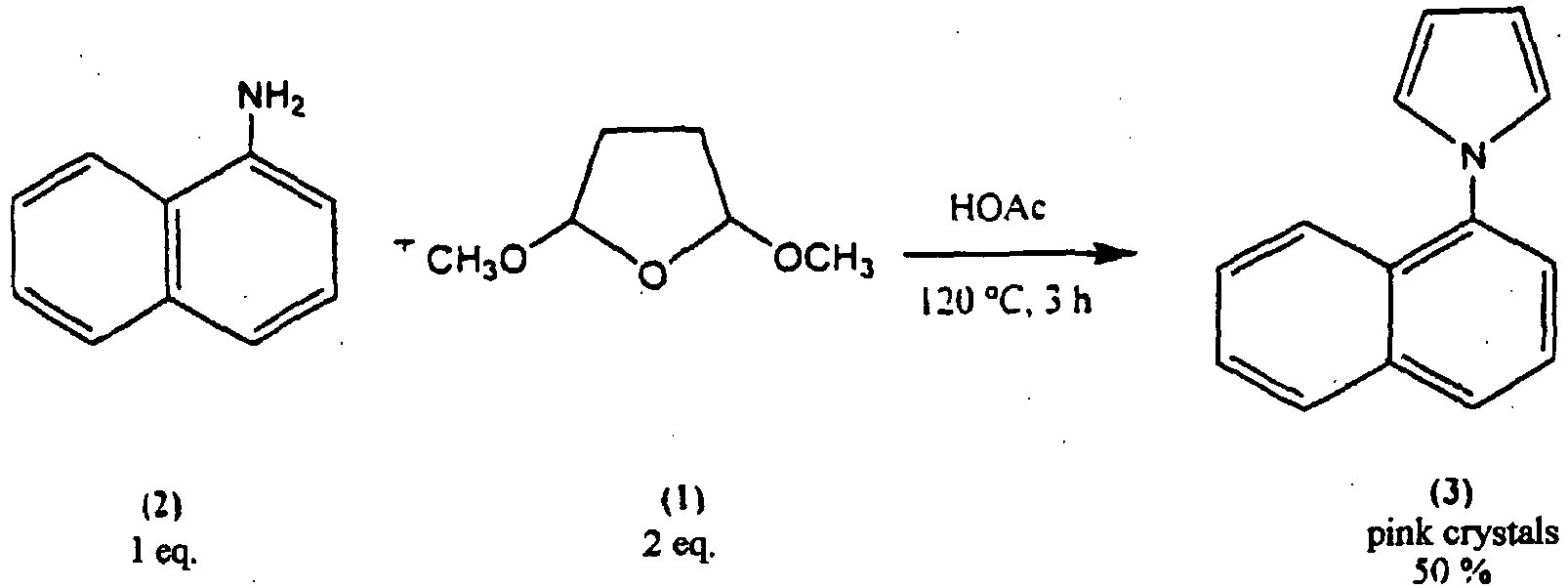
1H NMR (25°C, CDCl3): δ (ppm) = 6.3 (t, J = 2.2 Hz, 2H), 6.7 (t, J = 2.2 Hz, 2H), 6.9-7.2 (m, 4H), 7.3 (d, 8.1 Hz, 1H), 7.4 (d, 8.1 Hz, 1H), 7.7 (d, 8.1 Hz, 1H).
13C NMR (25°C, CDCl3) : δ (ppm) = 110.0, 123.6, 123.8, 123.9, 125.7, 126.9, 127.4, 128.2, 130.7, 134.9, 139.0.
Elemental analysis: found (%) C 86.7 (th: 87.0), H 5.89 (5.70), N 7.29 (7.30). -

- 1.6 ml (15 mmol.) of TMEDA are added to a solution of 1.93 g (10 mmol.) of 1 in 30 ml of hexane. A solution (1.6 M in hexane) of n-BuLi (6.25 ml, 10 mmol.) is added dropwise. After 3 hours' reflux (75°C), the colour has changed from orange through green to black. Without cooling, a solution of 2.2 ml (10 mmol.) of chlorodicyclohexylphosphane in 20 ml of hexane is added dropwise and refluxing is carried out for a further one hour. The colour of the solution changes to yellow, and a white precipitate forms. After cooling to RT, 30 ml of water are added to the mixture. The aqueous phase is extracted 3 times using 20 ml of hexane each time. The combined organic phases are washed with 10 ml of water, dried over Na2SO4 and concentrated in vacuo (45°C). The orange oil that remains is refluxed for 30 minutes in 30 ml of MeOH (60°C). On cooling to -25°C, the product precipitates in the form of a yellow solid and is filtered off (0.9 g, 24 %).
31P NMR (25°C, C6D6) : δ (ppm) = -23.3. -

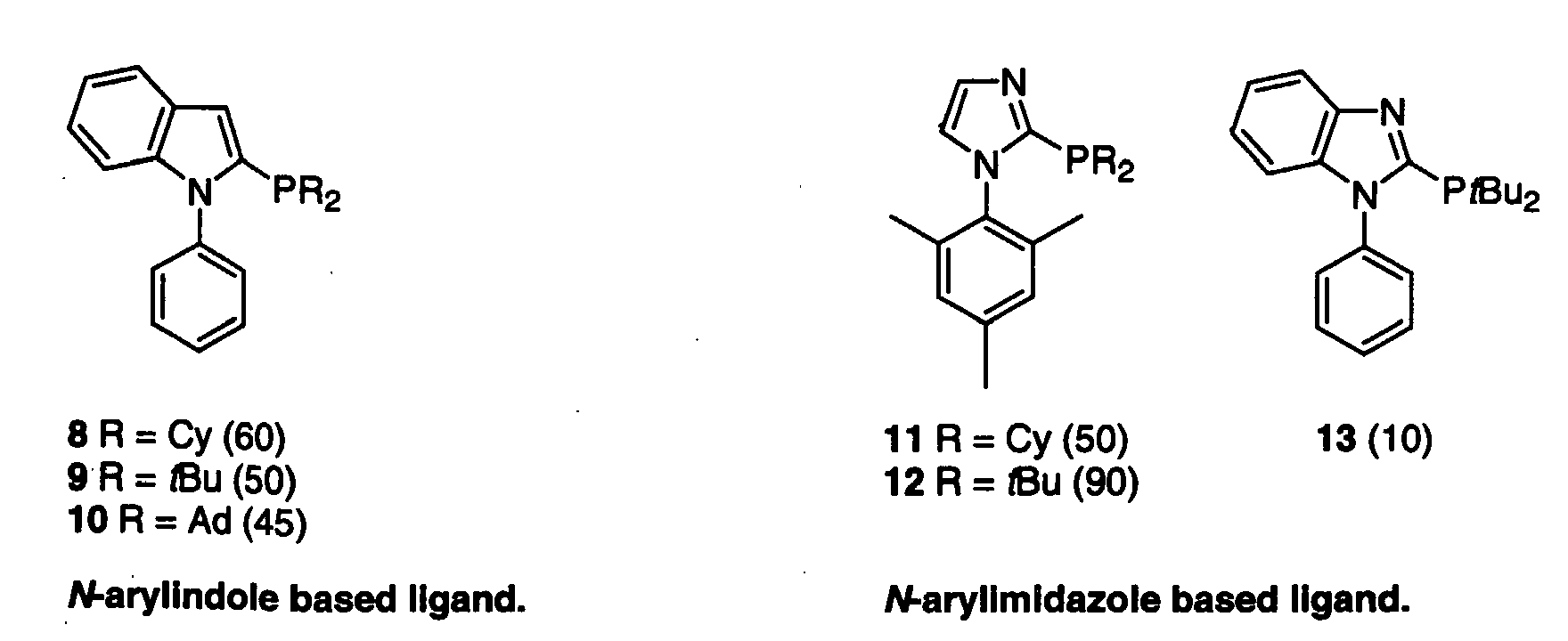
- In a three nacked 100 ml round bottom flask with reflux condenser, N-arylpyrrole (or N-arylindole or N-arylimidazole) (10 mmol) was dissolved in 20 ml of freshly distilled n-hexane under argon. TMEDA (15 mmol) was added followed by n-BuLi (10 mmol, 1.6 M in hexane) at room temperature. The reaction mixture was refluxed for 3 h. A solution of the corresponding chlorophosphine (10 mmol in 5 ml hexane) was slowly added via syringe. The mixture was further refluxed for 1h. After cooling to room temperature, degassed water (15 ml) was added and the mixture was stirred to get a clear solution. The aqueous layer was extracted with hexane (2x 15 ml) and the combined organic layers were washed with degassed water (15 ml). The solution was dried over Na2SO4 and concentrated at 45 °C to get a viscous liquid which was recrystallized from methanol or toluene.
- A 30 mL pressure tube was loaded with Pd(OAc)2 (0.025 mmol), the ligand (0.050 mmol), NaOtBu (6.0 mmol) and was purged by argon for 30 minutes. Then, were successively added under argon, toluene (5 mL), the aryl chloride (5 mmol) and the amine (6 mmol). The mixture was stirred under argon at 120 °C for 20 hours. After reaction, it was diluted with diethylether (15 mL) and washed with water (10 mL). After extraction, the organic phase was dried over MgSO4, concentrated under vacuum and the final product was isolated by column chromatography (silicagel, hexane/ethyl acetate 90/10). Alternatively, diethyleneglycol-di-n-butylether or hexadecane was added as internal standard, and quantitative analysis was done by gas chromatography.
Table 1: Amination of chloro-benzene with aniline using ligands 1 to 10: comparison of the activity. Entry Ligand Conv. [%][a] Yield [%][a] T.O.N. 1 
2 1 2 2 
11 9 18 3 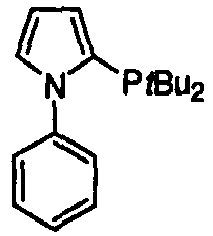
97 68 136 4 
77 76 152 5 
91 87 174 6 
69 68 136 7 
62 62 124 8 
13 9 18 9 
94 87 174 10 
49 46 92 Table 2: Various aminations of chloro-benzene using ligand 9. Entry Aryl chloride Amine Product Conv. [%] [a] Yield [%] [a] 1 


94 87 2[b] 


81 57 3 


100 97 4 


100 91 5 


100 94 6[c] 

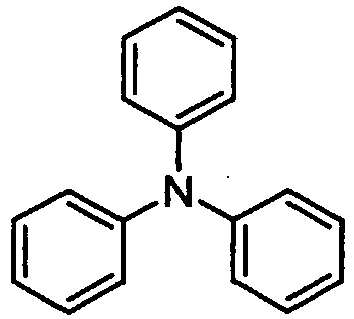
100 99 7 


100 95 Table 3: Various aminations of functionalized aryl-chlorides and chloro-pyridines using ligand 9. Entry Aryl-chloride Amine Product Conv. [%][a] Yield [%][a] 1 

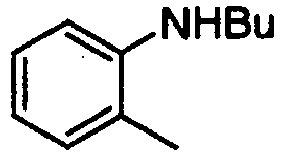
100 99 2 


100 88 3 


100 95 4 
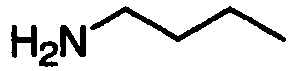

100 95 5 


100 92 6 


100 95 7 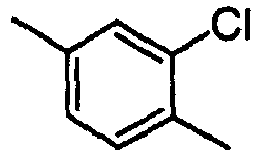


100 91 8[b] 


100 75 9 


100 88 10 

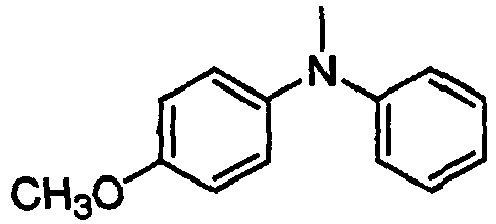
100 90 11 

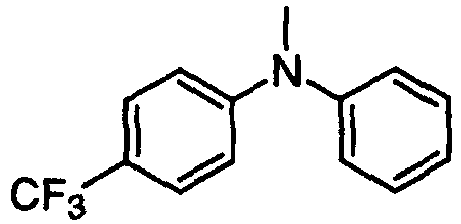
100 97 12 

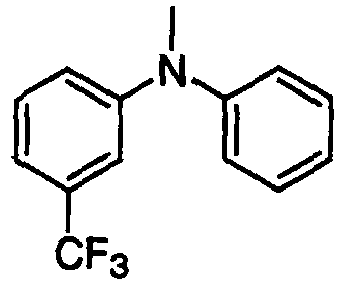
100 98 13 


100 98 14 
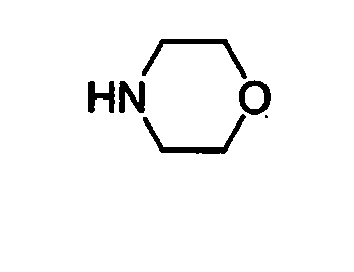

100 60/Lig.9 99/Lig.8 15[b] 


100 92 16 


100 77/Lig.9 99/Lig.8 17 

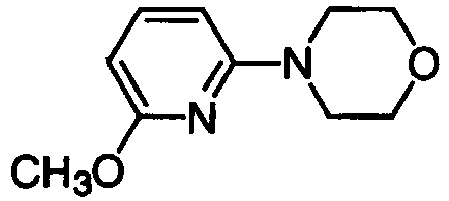
100 99/Lig.8 18 


100 90 19[b] 

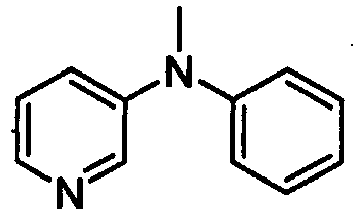
100 99 Table 4: Amination of 3-chloro-toluene with N-methylaniline: variations of temperature and catalyst loading Entry mol% Pd L/Pd Temp. [°C] Conv. [%] [a] Yield [%][a] TON 1 0.5 2 120 100 95 190 2 0.5 2 100 100 92 184 3 0.5 2 80 100 90 180 4 0.5 2 60 100 89 178 5 0.5 2 40 100 90 180 6 0.25 2 120 100 91 364 7 0.1 2 120 98 86 860 8 0.05 2 120 83 73 1460 9 0.025 2 120 70 62 2480 10 0.025 10 120 78 67 2680 11 0.01 2 120 24 23 2300 12 0.01 25 120 39 33 3300 13 0.01 50 120 45 37 3700 Table 5: Various aminations of aryl-chlorides at low temperature using ligand 9. Entry Aryl-chloride Amine Product Temp. [°C] Yield [%][a] 1[b] 


25 97 2[b] 


25 98 3 


60 91 4 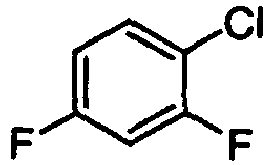


60 98 5 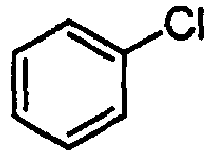


60 97 6 


60 91
Claims (16)
- Phosphane ligands of formula (I)
 X independently of Y represents a nitrogen atom or a C-R2 group andY independently of X represents a nitrogen atom or a C-R9 group,R1 for each of the two R1 groups independently of the other represents a radical selected from the group C1-C24-alkyl, C3-C20-cycloalkyl, which includes especially both monocyclic and also bi- and tri-cyclic cycloalkyl radicals, C2-C13-heteroaryl, wherein the number of hetero atoms, selected from the group N, O, S, may be from 1 to 2, wherein the two radicals R1 may also be linked to one another, and wherein the above-mentioned radicals R1 may themselves each be mono- or poly-substituted independently of one another by substituents selected from the group hydrogen, C1-C20-alkyl, C2-C20-alkenyl, C3-C8-cycloalkyl, C2-C9-heteroalkyl, C5-C10-aryl, C2-C9-heteroaryl, wherein the number of hetero atoms from the group N, O, S may be from 1 to 4, C1-C20-alkoxy, C1-C10-haloalkyl, hydroxy, amino of the forms NH-(C1-C20-alkyl), NH-(C5-C10-aryl), N (C1-C20-alkyl)2, N(C1-C20-alkyl) (C5-C10-aryl), N(C5-C10-aryl)2, N(C1-C20-alkyl/C5-C10-aryl3)3 +, NH-CO-C1-C20-alkyl, NH-CO-C5-C10-aryl, carboxylato of the forms COOH and COOQ (wherein Q represents either a monovalent cation or C1-C8-alkyl), C1-C6-acyloxy, sulfinato, sulfonato of the forms SO3H and SO3Q (wherein Q represents either a monovalent cation, C1-C20-alkyl or C5-C10-aryl), tri-C1-C6-alkylsilyl, wherein two of the mentioned substituents may also be bridged with one another,R2-R9 represent a hydrogen, alkyl, alkenyl, cycloalkyl, aromatic or heteroaromatic aryl, O-alkyl, NH-alkyl, N-(alkyl)2, O-(aryl), NH-(aryl), N-(alkyl)(aryl), O-CO-alkyl, O-CO-aryl, F, Si(alkyl)3, CF3, CN, CO2H COH, SO3H, CONH2, CONH(alkyl), CON(alkyl)2, SO2(alkyl), SO(alkyl), SO(aryl), SO2(aryl), SO3(alkyl), SO3(aryl), S-alkyl, S-aryl, NH-CO(alkyl), CO2(alkyl), CONH2, CO(alkyl), NHCOH, NHCO2(alkyl), CO(aryl), CO2(aryl) radical, wherein two or more adjacent radicals, each independently of the other(s), may also be linked to one another so that a condensed ring system is present andwherein in R2 to R9
alkyl represents a hydrocarbon radical having from 1 to 20 carbon atoms which may in each case be linear or branched, alkenyl represents a mono- or polyunsaturated hydrocarbon radical having from 2 to 20 carbon atoms which may in each case be linear or branched, cycloalkyl represents a hydrocarbon having from 3 to 20 carbon atoms, aryl represents a 5- to 14-membered aromatic radical, wherein from one to four carbon atoms in the aryl radical may also be replaced by hetero atoms from the group nitrogen, oxygen and sulfur so that a 5- to 14-membered heteroaromatic radical is present, wherein the radicals R2 to R9 may also carry further substituents as defined for R1. - Ligands according to claim 1, characterised in that X represents a CR2 group and Y represents a CR9 group.
- Ligands according to claim 1, characterised in that X is nitrogen and Y represents a CR9 group.
- Ligands according to any one of claims 1 to 3, characterised in that the ligands carry at least one radical R1 selected from the group consisting of C1-C10-alkyl, cyclopentyl, cyclohexyl, cycloheptyl, 1-adamantyl, 2-adamantyl, 5H-dibenzophospholyl, 9-phosphabicyclo[3.3.1]nonanyl, 9-phospha-bicyclo[4.2.1]nonanyl radicals.
- Ligands according to any one of claims 1 to 4, characterised in that the ligand radicals R2 to R9 are selected from the group hydrogen, C1-C10-alkyl, C2-C10-alkenyl, C1-C10-haloalkyl, C3-C8-cycloalkyl, C6-C10-aryl, C2-C6-heteroaryl, wherein from 1 to 3 nitrogen atoms or an oxygen or sulfur atom may be present as hetero atom and wherein two adjacent radicals R2 to R9 may be bridged with one another.
- Catalysts containing at least one metal of sub-group VIII and at least one phosphane ligand according to any one of the preceding claims 1 to 5.
- Catalyst according to claim 6, characterised in that it contains at least one palladium, nickel, platinum, rhodium, iridium, ruthenium and cobalt atom or ion as transition metal.
- Catalyst according to either claim 6 or claim 7, characterised in that the catalyst is a mono-, di-, tri- or tetra-phosphane complex of the transition metal.
- Use of ligands according to any one of claims 1 to 5 or of catalysts according to any one of claims 6 to 8 in the catalytic preparation of dienes or arylated olefins (Heck reactions), biaryls (Suzuki reactions), α-aryl ketones or amines from aryl halides or vinyl halides.
- Use of ligands according to any one of claims 1 to 5 or of catalysts according to any one of claims 6 to 8 in the catalytic carbonylation of aryl halides, alkynylations using alkynes (Sonogashira couplings) and cross-couplings using organometallic reagents.
- Use of ligands according to any one of claims 1 to 5 or of catalysts according to any one of claims 6 to 8 in the catalytic preparation of aryl olefins, dienes, diaryls, benzoic acid derivatives, acrylic acid derivatives, arylalkanes, alkynes or amines.
- Process for the catalytic preparation of aryl olefins, dienes, diaryls, benzoic acid derivatives, acrylic acid derivatives, arylalkanes, alkynes, aryl ketones, carbonyl compounds or amines from aryl halides or vinyl halides, characterised in that catalysts according to claims 6 to 8 are used, wherein the catalyst is either fed in the form of a complex compound to the reaction mixture or is produced in situ by mixing at least one ligand according to claims 1 to 5 and at least one transition metal salt or transition metal complex of a metal of sub-group VIII.
- Process according to claim 12, characterised in that the reaction is carried out at temperatures of from 20 to 200°C.
- Process according to either claim 12 or claim 13, characterised in that the phosphane ligand is used in excess relative to the transition metal in a ratio of transition metal to ligand of from 1:1 to 1:1000.
- Process according to claim 14, characterised in that the ratio of transition metal to ligand is from 1:1 to 1:100.
- Process according to any one of claims 12 to 15 the transition metal is used in a ratio of from 5 mol.% to 0.001 mol.% relative to the substrate.
Applications Claiming Priority (2)
| Application Number | Priority Date | Filing Date | Title |
|---|---|---|---|
| DE10322408A DE10322408A1 (en) | 2003-05-16 | 2003-05-16 | Nitrogenous monodentate phosphines and their use in catalysis |
| PCT/EP2004/004644 WO2004101581A2 (en) | 2003-05-16 | 2004-05-03 | Nitrogen-containing monodentate phosphines and their use in catalysis |
Publications (2)
| Publication Number | Publication Date |
|---|---|
| EP1625133A2 EP1625133A2 (en) | 2006-02-15 |
| EP1625133B1 true EP1625133B1 (en) | 2016-06-29 |
Family
ID=33394752
Family Applications (1)
| Application Number | Title | Priority Date | Filing Date |
|---|---|---|---|
| EP04730867.1A Expired - Lifetime EP1625133B1 (en) | 2003-05-16 | 2004-05-03 | Nitrogen-containing monodentate phosphines and their use in catalysis |
Country Status (11)
| Country | Link |
|---|---|
| US (1) | US7589081B2 (en) |
| EP (1) | EP1625133B1 (en) |
| JP (1) | JP4589329B2 (en) |
| KR (1) | KR20060013540A (en) |
| CN (1) | CN100486980C (en) |
| BR (1) | BRPI0410379A (en) |
| CA (1) | CA2525890A1 (en) |
| DE (1) | DE10322408A1 (en) |
| IL (1) | IL171943A0 (en) |
| RU (1) | RU2005139155A (en) |
| WO (1) | WO2004101581A2 (en) |
Families Citing this family (43)
| Publication number | Priority date | Publication date | Assignee | Title |
|---|---|---|---|---|
| EP1799667B1 (en) | 2004-09-20 | 2013-03-20 | Xenon Pharmaceuticals Inc. | Heterocyclic derivatives and their use as therapeutic agents |
| MX2007003319A (en) | 2004-09-20 | 2007-06-05 | Xenon Pharmaceuticals Inc | Pyridazine derivatives for inhibiting human stearoyl-coa- desaturase. |
| MX2007003332A (en) | 2004-09-20 | 2007-06-05 | Xenon Pharmaceuticals Inc | Heterocyclic derivatives and their use as stearoyl-coa desaturase inhibitors. |
| JP4958786B2 (en) | 2004-09-20 | 2012-06-20 | ゼノン・ファーマシューティカルズ・インコーポレイテッド | Heterocyclic derivatives and their use as therapeutic agents |
| MX2007003327A (en) | 2004-09-20 | 2007-06-05 | Xenon Pharmaceuticals Inc | Heterocyclic derivatives and their use as mediators of stearoyl-coa desaturase. |
| EP2289510A1 (en) | 2004-09-20 | 2011-03-02 | Xenon Pharmaceuticals Inc. | Heterocyclic derivatives for the treatment of diseases mediated by stearoyl-coa desaturase enzymes |
| EP2269610A3 (en) | 2004-09-20 | 2011-03-09 | Xenon Pharmaceuticals Inc. | Heterocyclic derivatives and their use as stearoyl-coa desaturase inhibitors |
| BRPI0611187A2 (en) | 2005-06-03 | 2010-08-24 | Xenon Pharmaceuticals Inc | amino thiazide derivatives as inhibitors of human stearoyl coa desaturase |
| DE102006042439A1 (en) | 2006-09-09 | 2008-03-27 | Saltigo Gmbh | Process for the catalytic preparation of aromatic or heteroaromatic nitriles |
| WO2010136353A1 (en) | 2009-05-27 | 2010-12-02 | Basf Se | Diketopyrrolopyrrole polymers for use in organic semiconductor devices |
| US8835579B2 (en) * | 2009-05-27 | 2014-09-16 | Basf Se | Process for polymerising (hetero)aromatic compounds |
| DE102009029050A1 (en) | 2009-08-31 | 2011-03-03 | Evonik Oxeno Gmbh | Organophosphorus compounds based on tetraphenol (TP) -substituted structures |
| DE102010001364B4 (en) | 2010-01-29 | 2014-10-16 | Technische Universität Chemnitz | New P, O-ferrocenes, their preparation and use in catalytic reactions |
| EP2571919B1 (en) | 2010-05-19 | 2018-07-11 | Basf Se | Diketopyrrolopyrrole polymers for use in organic semiconductor devices |
| WO2012017005A2 (en) | 2010-08-05 | 2012-02-09 | Basf Se | Polymers based on benzodiones |
| DE102010041821A1 (en) | 2010-09-30 | 2012-04-05 | Evonik Oxeno Gmbh | Use of Supported Ionic Liquid Phase (SILP) catalyst systems in the hydroformylation of olefin-containing mixtures to aldehyde mixtures with a high proportion of 2-unbranched aldehydes |
| DE102010043558A1 (en) | 2010-11-08 | 2012-05-10 | Evonik Oxeno Gmbh | Process for the hydroformylation of unsaturated compounds |
| KR20140043761A (en) | 2011-05-30 | 2014-04-10 | 바스프 에스이 | Process for the production of polymers by using coupling reactions |
| CN103906786B (en) | 2011-10-04 | 2017-06-09 | 巴斯夫欧洲公司 | Polymer based on benzo diketone |
| DE102011089008B4 (en) | 2011-12-19 | 2017-08-24 | Evonik Degussa Gmbh | Process for the preparation of esters of formates and olefinically unsaturated compounds |
| WO2013149897A1 (en) | 2012-04-02 | 2013-10-10 | Basf Se | Phenanthro[9,10-b]furan polymers and small molecules for electronic applications |
| CN104334610A (en) | 2012-04-04 | 2015-02-04 | 巴斯夫欧洲公司 | Diketopyrrolopyrrole polymers and small molecules |
| WO2014016219A1 (en) | 2012-07-23 | 2014-01-30 | Basf Se | Dithienobenzofuran polymers and small molecules for electronic application |
| CN104781367B (en) | 2012-11-07 | 2017-04-26 | 巴斯夫欧洲公司 | Naphthedione-based polymers |
| US9550791B2 (en) | 2012-12-04 | 2017-01-24 | Basf Se | Functionnalized benzodithiophene polymers for electronic application |
| DE102013201665A1 (en) * | 2013-02-01 | 2014-08-07 | Evonik Industries Ag | Phosphorus ligands and processes for the selective ruthenium-catalyzed hydroaminomethylation of olefins |
| EP3013906B1 (en) | 2013-06-24 | 2020-03-25 | Basf Se | Polymers based on fused diketopyrrolopyrroles |
| EP2818493A1 (en) | 2013-06-25 | 2014-12-31 | Basf Se | Near infrared absorbing polymers for electronic applications |
| CN103418438B (en) | 2013-08-22 | 2015-08-19 | 上海化工研究院 | A kind of azepine Cabbeen class palladium catalyst and its preparation method and application |
| WO2015039606A1 (en) * | 2013-09-18 | 2015-03-26 | The Hong Kong Polytechnic University | Novel phosphines, synthesis thereof and their use in catalysis |
| CN103755579A (en) * | 2014-02-25 | 2014-04-30 | 徐州宇家化工科技有限公司 | Preparation method of high-steric-hindrance tertiary amine |
| CN104610355B (en) * | 2015-01-27 | 2017-01-11 | 华东师范大学 | Indole framework based center chirality sulfonamides monophosphine ligand and preparation method |
| EP3272732B1 (en) | 2016-07-19 | 2019-09-18 | Evonik Degussa GmbH | Method for the alcoxy carbonylation of ethylenically unsaturated compounds with monophosphin ligands |
| CN106967443A (en) * | 2017-04-28 | 2017-07-21 | 烟台德润液晶材料有限公司 | The preparation method of alkyl cyclohexyl biphenyl nitrile liquid-crystal compounds |
| WO2019163732A1 (en) * | 2018-02-26 | 2019-08-29 | 住友化学株式会社 | Compound and coloring resin composition |
| JP7132017B2 (en) * | 2018-02-26 | 2022-09-06 | 住友化学株式会社 | Compound and colored resin composition |
| WO2019177944A1 (en) | 2018-03-12 | 2019-09-19 | Yandrasits Michael A | Anion exchange membranes based on polymerization of long chain alpha olefins |
| CN111868108B (en) | 2018-03-12 | 2023-05-09 | 3M创新有限公司 | Nitrogen-containing multi-block copolymer and preparation method thereof |
| EP3765552B1 (en) | 2018-03-12 | 2022-05-04 | 3M Innovative Properties Company | Cationic polymers for use as anion exchange polyelectrolytes |
| EP3765532B1 (en) | 2018-03-12 | 2023-09-06 | 3M Innovative Properties Co. | Hydrocarbon polymers containing ammonium functionality |
| CN110317132B (en) * | 2019-07-26 | 2021-09-10 | 南京工业大学 | Preparation method of sodium phenylbutyrate |
| CN110330427B (en) * | 2019-07-26 | 2021-09-10 | 南京工业大学 | Synthesis method of fenbufen |
| CN113801161A (en) * | 2020-06-15 | 2021-12-17 | 华东师范大学 | Imidazole Ligand Derivatives and Their Preparation and Application in Butadiene Telomerization |
Family Cites Families (1)
| Publication number | Priority date | Publication date | Assignee | Title |
|---|---|---|---|---|
| DE10100708A1 (en) * | 2001-01-10 | 2002-07-11 | Oxeno Olefinchemie Gmbh | New N-phenylpyrrolbisphosphine compounds and their metal complexes |
-
2003
- 2003-05-16 DE DE10322408A patent/DE10322408A1/en not_active Withdrawn
-
2004
- 2004-05-03 CN CNB2004800133987A patent/CN100486980C/en not_active Expired - Lifetime
- 2004-05-03 US US10/554,603 patent/US7589081B2/en not_active Expired - Lifetime
- 2004-05-03 JP JP2006529728A patent/JP4589329B2/en not_active Expired - Lifetime
- 2004-05-03 RU RU2005139155/04A patent/RU2005139155A/en unknown
- 2004-05-03 BR BRPI0410379-3A patent/BRPI0410379A/en not_active IP Right Cessation
- 2004-05-03 KR KR1020057021756A patent/KR20060013540A/en not_active Withdrawn
- 2004-05-03 CA CA002525890A patent/CA2525890A1/en not_active Abandoned
- 2004-05-03 EP EP04730867.1A patent/EP1625133B1/en not_active Expired - Lifetime
- 2004-05-03 WO PCT/EP2004/004644 patent/WO2004101581A2/en not_active Ceased
-
2005
- 2005-11-14 IL IL171943A patent/IL171943A0/en unknown
Also Published As
| Publication number | Publication date |
|---|---|
| RU2005139155A (en) | 2007-06-27 |
| KR20060013540A (en) | 2006-02-10 |
| WO2004101581A2 (en) | 2004-11-25 |
| WO2004101581A3 (en) | 2005-03-03 |
| JP2007505945A (en) | 2007-03-15 |
| EP1625133A2 (en) | 2006-02-15 |
| CN1791606A (en) | 2006-06-21 |
| BRPI0410379A (en) | 2006-06-13 |
| JP4589329B2 (en) | 2010-12-01 |
| IL171943A0 (en) | 2006-04-10 |
| CN100486980C (en) | 2009-05-13 |
| US7589081B2 (en) | 2009-09-15 |
| CA2525890A1 (en) | 2004-11-25 |
| DE10322408A1 (en) | 2004-12-02 |
| US20070123707A1 (en) | 2007-05-31 |
Similar Documents
| Publication | Publication Date | Title |
|---|---|---|
| US7589081B2 (en) | Nitrogen-containing monodentate phosphines and their use in catalysis | |
| JP5376743B2 (en) | Phosphan ligands with adamantyl groups, their preparation and their use in catalytic reactions | |
| Sadighi et al. | A highly active palladium catalyst system for the arylation of anilines | |
| US7250510B2 (en) | Transition metal complexes of N-heterocyclic carbenes, method of preparation and use in transition metal catalyzed organic transformations | |
| WO2000008032A1 (en) | Catalyst ligands useful for cross-coupling reactions | |
| JP2002521359A (en) | Improved arylamine synthesis | |
| EP1581467A2 (en) | Ligands for metals and improved metal-catalyzed processes based thereon | |
| JP4475688B2 (en) | Synthesis of aromatic amines from aromatic chlorides. | |
| WO2000064841A2 (en) | Phosphine ligands, metal complexes and compositions thereof for cross-coupling reactions | |
| EP1592698B1 (en) | Phosphine compound, intermediate, palladium-complex, and use thereof | |
| US6124462A (en) | Catalysis using phosphine oxide compounds | |
| WO2001066248A2 (en) | C-c and c-n coupling catalyst comprising transition metal and carbene | |
| Jung et al. | Application of tautomerism of ferrocenyl secondary phosphine oxides in Suzuki− Miyaura cross-coupling reactions | |
| Aydemir et al. | Synthesis and characterization of transition metal complexes of thiophene‐2‐methylamine: X‐ray crystal structure of palladium (II) and platinum (II) complexes and use of palladium (II) complexes as pre‐catalyst in Heck and Suzuki cross‐coupling reactions | |
| WO2008138540A1 (en) | Ruthenium complexes with (p-p)-coordinated ferrocenyldiphosphine ligands, process for preparing them and their use in homogeneous catalysis | |
| JP2002193845A (en) | Method for producing monofunctional, bifunctional or polyfunctional biaryl | |
| CA2556850A1 (en) | Transition metal complexes of n-heterocyclic carbenes, method of preparation and use in transition metal catalyzed organic transformations | |
| CA2385960C (en) | Catalysis using phosphine oxide compounds | |
| EP2183259B1 (en) | Paracyclophane-based ligands, their preparation and use in catalysis | |
| CA2645101A1 (en) | Ligands for metals and metal-catalyzed processes | |
| US20020165411A1 (en) | Sterically hindered phosphine ligands and uses thereof | |
| Adjabeng | Phospha-adamantanes as ligands for palladium-catalyzed cross-coupling reactions | |
| US20040147392A1 (en) | Catalysis using halophosphine compounds | |
| HK1088012A (en) | Nitrogen-containing monodentate phosphines and their use in catalysis | |
| Ward | Triaryl-like kitphos phosphines in gold and palladium catalysis |
Legal Events
| Date | Code | Title | Description |
|---|---|---|---|
| PUAI | Public reference made under article 153(3) epc to a published international application that has entered the european phase |
Free format text: ORIGINAL CODE: 0009012 |
|
| 17P | Request for examination filed |
Effective date: 20050928 |
|
| AK | Designated contracting states |
Kind code of ref document: A2 Designated state(s): AT BE BG CH CY CZ DE DK EE ES FI FR GB GR HU IE IT LI LU MC NL PL PT RO SE SI SK TR |
|
| DAX | Request for extension of the european patent (deleted) | ||
| RAP1 | Party data changed (applicant data changed or rights of an application transferred) |
Owner name: DEGUSSA GMBH |
|
| RAP1 | Party data changed (applicant data changed or rights of an application transferred) |
Owner name: EVONIK DEGUSSA GMBH |
|
| RAP1 | Party data changed (applicant data changed or rights of an application transferred) |
Owner name: EVONIK DEGUSSA GMBH |
|
| 17Q | First examination report despatched |
Effective date: 20100720 |
|
| GRAP | Despatch of communication of intention to grant a patent |
Free format text: ORIGINAL CODE: EPIDOSNIGR1 |
|
| INTG | Intention to grant announced |
Effective date: 20151130 |
|
| GRAS | Grant fee paid |
Free format text: ORIGINAL CODE: EPIDOSNIGR3 |
|
| GRAA | (expected) grant |
Free format text: ORIGINAL CODE: 0009210 |
|
| AK | Designated contracting states |
Kind code of ref document: B1 Designated state(s): AT BE BG CH CY CZ DE DK EE ES FI FR GB GR HU IE IT LI LU MC NL PL PT RO SE SI SK TR |
|
| REG | Reference to a national code |
Ref country code: GB Ref legal event code: FG4D |
|
| REG | Reference to a national code |
Ref country code: DE Ref legal event code: R081 Ref document number: 602004049510 Country of ref document: DE Owner name: UMICORE AG & CO. KG, DE Free format text: FORMER OWNER: DEGUSSA AG, 40474 DUESSELDORF, DE Ref country code: CH Ref legal event code: EP |
|
| REG | Reference to a national code |
Ref country code: AT Ref legal event code: REF Ref document number: 809021 Country of ref document: AT Kind code of ref document: T Effective date: 20160715 |
|
| REG | Reference to a national code |
Ref country code: IE Ref legal event code: FG4D |
|
| REG | Reference to a national code |
Ref country code: DE Ref legal event code: R096 Ref document number: 602004049510 Country of ref document: DE |
|
| PG25 | Lapsed in a contracting state [announced via postgrant information from national office to epo] |
Ref country code: FI Free format text: LAPSE BECAUSE OF FAILURE TO SUBMIT A TRANSLATION OF THE DESCRIPTION OR TO PAY THE FEE WITHIN THE PRESCRIBED TIME-LIMIT Effective date: 20160629 |
|
| REG | Reference to a national code |
Ref country code: NL Ref legal event code: MP Effective date: 20160629 |
|
| PG25 | Lapsed in a contracting state [announced via postgrant information from national office to epo] |
Ref country code: SE Free format text: LAPSE BECAUSE OF FAILURE TO SUBMIT A TRANSLATION OF THE DESCRIPTION OR TO PAY THE FEE WITHIN THE PRESCRIBED TIME-LIMIT Effective date: 20160629 Ref country code: NL Free format text: LAPSE BECAUSE OF FAILURE TO SUBMIT A TRANSLATION OF THE DESCRIPTION OR TO PAY THE FEE WITHIN THE PRESCRIBED TIME-LIMIT Effective date: 20160629 Ref country code: GR Free format text: LAPSE BECAUSE OF FAILURE TO SUBMIT A TRANSLATION OF THE DESCRIPTION OR TO PAY THE FEE WITHIN THE PRESCRIBED TIME-LIMIT Effective date: 20160930 |
|
| REG | Reference to a national code |
Ref country code: AT Ref legal event code: MK05 Ref document number: 809021 Country of ref document: AT Kind code of ref document: T Effective date: 20160629 |
|
| PG25 | Lapsed in a contracting state [announced via postgrant information from national office to epo] |
Ref country code: CZ Free format text: LAPSE BECAUSE OF FAILURE TO SUBMIT A TRANSLATION OF THE DESCRIPTION OR TO PAY THE FEE WITHIN THE PRESCRIBED TIME-LIMIT Effective date: 20160629 Ref country code: SK Free format text: LAPSE BECAUSE OF FAILURE TO SUBMIT A TRANSLATION OF THE DESCRIPTION OR TO PAY THE FEE WITHIN THE PRESCRIBED TIME-LIMIT Effective date: 20160629 Ref country code: EE Free format text: LAPSE BECAUSE OF FAILURE TO SUBMIT A TRANSLATION OF THE DESCRIPTION OR TO PAY THE FEE WITHIN THE PRESCRIBED TIME-LIMIT Effective date: 20160629 Ref country code: RO Free format text: LAPSE BECAUSE OF FAILURE TO SUBMIT A TRANSLATION OF THE DESCRIPTION OR TO PAY THE FEE WITHIN THE PRESCRIBED TIME-LIMIT Effective date: 20160629 |
|
| PG25 | Lapsed in a contracting state [announced via postgrant information from national office to epo] |
Ref country code: PL Free format text: LAPSE BECAUSE OF FAILURE TO SUBMIT A TRANSLATION OF THE DESCRIPTION OR TO PAY THE FEE WITHIN THE PRESCRIBED TIME-LIMIT Effective date: 20160629 Ref country code: ES Free format text: LAPSE BECAUSE OF FAILURE TO SUBMIT A TRANSLATION OF THE DESCRIPTION OR TO PAY THE FEE WITHIN THE PRESCRIBED TIME-LIMIT Effective date: 20160629 Ref country code: BE Free format text: LAPSE BECAUSE OF FAILURE TO SUBMIT A TRANSLATION OF THE DESCRIPTION OR TO PAY THE FEE WITHIN THE PRESCRIBED TIME-LIMIT Effective date: 20160629 Ref country code: AT Free format text: LAPSE BECAUSE OF FAILURE TO SUBMIT A TRANSLATION OF THE DESCRIPTION OR TO PAY THE FEE WITHIN THE PRESCRIBED TIME-LIMIT Effective date: 20160629 Ref country code: PT Free format text: LAPSE BECAUSE OF FAILURE TO SUBMIT A TRANSLATION OF THE DESCRIPTION OR TO PAY THE FEE WITHIN THE PRESCRIBED TIME-LIMIT Effective date: 20161031 |
|
| REG | Reference to a national code |
Ref country code: DE Ref legal event code: R097 Ref document number: 602004049510 Country of ref document: DE |
|
| PLBE | No opposition filed within time limit |
Free format text: ORIGINAL CODE: 0009261 |
|
| STAA | Information on the status of an ep patent application or granted ep patent |
Free format text: STATUS: NO OPPOSITION FILED WITHIN TIME LIMIT |
|
| REG | Reference to a national code |
Ref country code: FR Ref legal event code: PLFP Year of fee payment: 14 |
|
| PG25 | Lapsed in a contracting state [announced via postgrant information from national office to epo] |
Ref country code: DK Free format text: LAPSE BECAUSE OF FAILURE TO SUBMIT A TRANSLATION OF THE DESCRIPTION OR TO PAY THE FEE WITHIN THE PRESCRIBED TIME-LIMIT Effective date: 20160629 |
|
| 26N | No opposition filed |
Effective date: 20170330 |
|
| PG25 | Lapsed in a contracting state [announced via postgrant information from national office to epo] |
Ref country code: SI Free format text: LAPSE BECAUSE OF FAILURE TO SUBMIT A TRANSLATION OF THE DESCRIPTION OR TO PAY THE FEE WITHIN THE PRESCRIBED TIME-LIMIT Effective date: 20160629 Ref country code: BG Free format text: LAPSE BECAUSE OF FAILURE TO SUBMIT A TRANSLATION OF THE DESCRIPTION OR TO PAY THE FEE WITHIN THE PRESCRIBED TIME-LIMIT Effective date: 20160929 Ref country code: LU Free format text: LAPSE BECAUSE OF NON-PAYMENT OF DUE FEES Effective date: 20170531 |
|
| PG25 | Lapsed in a contracting state [announced via postgrant information from national office to epo] |
Ref country code: MC Free format text: LAPSE BECAUSE OF FAILURE TO SUBMIT A TRANSLATION OF THE DESCRIPTION OR TO PAY THE FEE WITHIN THE PRESCRIBED TIME-LIMIT Effective date: 20160629 |
|
| PG25 | Lapsed in a contracting state [announced via postgrant information from national office to epo] |
Ref country code: LU Free format text: LAPSE BECAUSE OF NON-PAYMENT OF DUE FEES Effective date: 20170503 |
|
| REG | Reference to a national code |
Ref country code: FR Ref legal event code: PLFP Year of fee payment: 15 |
|
| PG25 | Lapsed in a contracting state [announced via postgrant information from national office to epo] |
Ref country code: HU Free format text: LAPSE BECAUSE OF FAILURE TO SUBMIT A TRANSLATION OF THE DESCRIPTION OR TO PAY THE FEE WITHIN THE PRESCRIBED TIME-LIMIT; INVALID AB INITIO Effective date: 20040503 |
|
| PG25 | Lapsed in a contracting state [announced via postgrant information from national office to epo] |
Ref country code: CY Free format text: LAPSE BECAUSE OF NON-PAYMENT OF DUE FEES Effective date: 20160629 |
|
| PG25 | Lapsed in a contracting state [announced via postgrant information from national office to epo] |
Ref country code: TR Free format text: LAPSE BECAUSE OF FAILURE TO SUBMIT A TRANSLATION OF THE DESCRIPTION OR TO PAY THE FEE WITHIN THE PRESCRIBED TIME-LIMIT Effective date: 20160629 |
|
| REG | Reference to a national code |
Ref country code: DE Ref legal event code: R081 Ref document number: 602004049510 Country of ref document: DE Owner name: UMICORE AG & CO. KG, DE Free format text: FORMER OWNER: EVONIK DEGUSSA GMBH, 45128 ESSEN, DE |
|
| REG | Reference to a national code |
Ref country code: CH Ref legal event code: PK Free format text: BERICHTIGUNGEN |
|
| REG | Reference to a national code |
Ref country code: GB Ref legal event code: 732E Free format text: REGISTERED BETWEEN 20230316 AND 20230322 |
|
| PGFP | Annual fee paid to national office [announced via postgrant information from national office to epo] |
Ref country code: IE Payment date: 20230310 Year of fee payment: 20 Ref country code: FR Payment date: 20230309 Year of fee payment: 20 |
|
| PGFP | Annual fee paid to national office [announced via postgrant information from national office to epo] |
Ref country code: GB Payment date: 20230309 Year of fee payment: 20 |
|
| P01 | Opt-out of the competence of the unified patent court (upc) registered |
Effective date: 20230602 |
|
| PGFP | Annual fee paid to national office [announced via postgrant information from national office to epo] |
Ref country code: IT Payment date: 20230412 Year of fee payment: 20 Ref country code: DE Payment date: 20230307 Year of fee payment: 20 Ref country code: CH Payment date: 20230602 Year of fee payment: 20 |
|
| REG | Reference to a national code |
Ref country code: DE Ref legal event code: R071 Ref document number: 602004049510 Country of ref document: DE |
|
| REG | Reference to a national code |
Ref country code: CH Ref legal event code: PL |
|
| REG | Reference to a national code |
Ref country code: GB Ref legal event code: PE20 Expiry date: 20240502 |
|
| REG | Reference to a national code |
Ref country code: IE Ref legal event code: MK9A |
|
| PG25 | Lapsed in a contracting state [announced via postgrant information from national office to epo] |
Ref country code: IE Free format text: LAPSE BECAUSE OF EXPIRATION OF PROTECTION Effective date: 20240503 |
|
| PG25 | Lapsed in a contracting state [announced via postgrant information from national office to epo] |
Ref country code: GB Free format text: LAPSE BECAUSE OF EXPIRATION OF PROTECTION Effective date: 20240502 |
|
| PG25 | Lapsed in a contracting state [announced via postgrant information from national office to epo] |
Ref country code: IE Free format text: LAPSE BECAUSE OF EXPIRATION OF PROTECTION Effective date: 20240503 Ref country code: GB Free format text: LAPSE BECAUSE OF EXPIRATION OF PROTECTION Effective date: 20240502 |