EP1624603A1 - Channel estimation circuit and channel estimation method - Google Patents
Channel estimation circuit and channel estimation method Download PDFInfo
- Publication number
- EP1624603A1 EP1624603A1 EP04729523A EP04729523A EP1624603A1 EP 1624603 A1 EP1624603 A1 EP 1624603A1 EP 04729523 A EP04729523 A EP 04729523A EP 04729523 A EP04729523 A EP 04729523A EP 1624603 A1 EP1624603 A1 EP 1624603A1
- Authority
- EP
- European Patent Office
- Prior art keywords
- signal
- channel estimation
- noise
- estimation
- threshold
- Prior art date
- Legal status (The legal status is an assumption and is not a legal conclusion. Google has not performed a legal analysis and makes no representation as to the accuracy of the status listed.)
- Withdrawn
Links
Images


Classifications
-
- H—ELECTRICITY
- H04—ELECTRIC COMMUNICATION TECHNIQUE
- H04B—TRANSMISSION
- H04B1/00—Details of transmission systems, not covered by a single one of groups H04B3/00 - H04B13/00; Details of transmission systems not characterised by the medium used for transmission
- H04B1/69—Spread spectrum techniques
- H04B1/707—Spread spectrum techniques using direct sequence modulation
- H04B1/7073—Synchronisation aspects
- H04B1/7085—Synchronisation aspects using a code tracking loop, e.g. a delay-locked loop
-
- H—ELECTRICITY
- H04—ELECTRIC COMMUNICATION TECHNIQUE
- H04L—TRANSMISSION OF DIGITAL INFORMATION, e.g. TELEGRAPHIC COMMUNICATION
- H04L25/00—Baseband systems
- H04L25/02—Details ; arrangements for supplying electrical power along data transmission lines
- H04L25/0202—Channel estimation
- H04L25/0224—Channel estimation using sounding signals
-
- H—ELECTRICITY
- H04—ELECTRIC COMMUNICATION TECHNIQUE
- H04B—TRANSMISSION
- H04B1/00—Details of transmission systems, not covered by a single one of groups H04B3/00 - H04B13/00; Details of transmission systems not characterised by the medium used for transmission
- H04B1/69—Spread spectrum techniques
- H04B1/707—Spread spectrum techniques using direct sequence modulation
- H04B1/7097—Interference-related aspects
Definitions
- the present invention relates to a channel estimation circuit and a channel estimation method for implementing channel estimation adaptively in accordance with noise and interference power levels.
- FIG. 1 shows an example of construction of a conventional channel estimation circuit.
- channel estimation circuit 401 of this conventional example includes, tentative channel estimation unit 102, threshold decision unit 404, and effective path detection unit 105.
- Tentative channel estimation unit 102 is supplied with received signal S r and performs channel estimation by making use of a pilot signal contained in received signal S r and outputs the result of estimation as tentative channel estimation signal S tcest .
- Threshold decision unit 404 establishes and outputs threshold signal S th .
- Effective path detection unit 105 is supplied with tentative channel estimation signal S tcest and threshold signal S th and, after removing noise paths having powers smaller than threshold signal S th among paths of the tentative channel estimation signal S tcest , outputs the remaining signal as channel estimation signal S cest .
- the conventional channel estimation circuit shown in FIG. 1 suffers from a problem that the advantage of the removal of noise paths by making use of a threshold cannot be sufficiently obtained in a transmission environment in which noise and interference power levels greatly vary.
- a channel estimation circuit of the present invention includes: a tentative channel estimation means for being input with a received signal and performing channel estimation by making use of the received signal and outputting the result of estimation as a tentative channel estimation signal; a noise/interference power estimation means for being input with signals, including at least, the received signal, among the received signal, the tentative channel estimation signal and a channel estimation signal, and performing estimation of noise and interference power by making use of the input signals, to output the result of estimation as a noise/interference power estimation signal; a threshold decision means for being input with signals, including at least, the noise/interference power estimation signal, among the noise/interference power estimation signal and the tentative channel estimation signal, and establishing and outputting a threshold signal by making use of the input signals; and an effective path detection means for being input with the tentative channel estimation signal and the threshold signal and, after removing noise paths having powers smaller than threshold signal among paths of the tentative channel estimation signal, and outputting the remaining signal as the channel estimation signal.
- a channel estimation method of the present invention includes: a step at which a tentative channel estimation means being input with a received signal and performs channel estimation by making use of the received signal and outputs the result of estimation as a tentative channel estimation signal; a step at which a noise/interference power estimation means being input with signals, including at least, the received signal, among the received signal, the tentative channel estimation signal and a channel estimation signal, and performs estimation of noise and interference power by making use of the input signals, to output the result of estimation as a noise/interference power estimation signal; a step at which a threshold decision means being input with signals, including at least, the noise/interference power estimation signal, among the noise/interference power estimation signal and the tentative channel estimation signal, to establish and output a threshold signal by making use of the input signals; and a step at which an effective path detection means being input with the tentative channel estimation signal and the threshold signal and, after removing noise paths having powers smaller than threshold signal among paths of the tentative channel estimation signal, outputs the remaining signal as the channel estimation signal.
- the present invention enables high-precision channel estimation even in a transmission environment in which noise and interference power levels vary greatly.
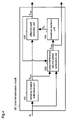
- FIG. 2 shows a configuration of a channel estimation circuit in accordance with the first embodiment of the present invention.
- the same components as in FIG. 1 are assigned the same reference numerals.
- channel estimation circuit 101 includes tentative channel estimation unit 102, noise/interference power estimation unit 103, threshold decision unit 104 and effective path detection unit 105.
- Tentative channel estimation unit 102 is supplied with received signal S r and performs channel estimation by making use of a pilot signal contained in received signal S r and outputs the result of estimation as tentative channel estimation signal S tcest .
- Noise/interference power estimation unit 103 is supplied with received signal S r , estimates noise and interference power by making use of received signal S r , and then output the result of estimation as noise/interference power estimation signal S niest .
- Threshold decision unit 104 is supplied with noise/interference power estimation signal S niest and, after having multiplied the noise/interference power estimation signal S niest by an arbitrary constant, outputs the signal as threshold signal S th .
- Effective path detection unit 105 is supplied with tentative channel estimation signal S tcest and threshold signal S th and, after removing noise paths having powers smaller than threshold signal S th among paths of the tentative channel estimation signal S tcest , outputs the remaining signal as channel estimation signal S cest .
- estimation unit 103 can employ a method of despreading received signal S r by making use of a spread code that is not used for wireless transmission so as to cancel out the signal component, to thereby extract noise and interference components alone.
- the threshold for removal of noise paths is determined adaptively in accordance with noise and interference power levels. This makes it possible to attain high-precision channel estimation even in a transmission environment in which noise and interference power levels vary greatly.
- FIG. 3 shows a configuration of a channel estimation circuit in accordance with the second embodiment of the present invention.
- the same components as in FIG. 2 are assigned with the same reference numerals.
- channel estimation circuit 201 includes tentative channel estimation unit 102, noise/interference power estimation unit 203, threshold decision unit 104 and effective path detection unit 105.
- Tentative channel estimation unit 102 is supplied with received signal S r and performs channel estimation by making use of a pilot signal contained in received signal S r and outputs the result of estimation as tentative channel estimation signal S tcest .
- Noise/interference power estimation unit 203 is supplied with received signal S r and tentative channel estimation signal S tcest , and estimates noise and interference power by making use of received signal S r and tentative channel estimation signal S tcest , and then output the result of estimation as noise/interference power estimation signal S niest .
- Threshold decision unit 104 is supplied with noise/interference power estimation signal S niest and, after having multiplied the noise/interference power estimation signal S niest by an arbitrary constant, outputs the signal as threshold signal S th .
- Effective path detection unit 105 is supplied with tentative channel estimation signal S tcest and threshold signal S th and, after removing noise paths having powers smaller than threshold signal S th among paths of the tentative channel estimation signal S tcest , outputs the remaining signal as channel estimation signal S cest .
- noise/interference power estimation unit 203 can employ a method of determining the variance of received signal S r relative to tentative channel estimation signal S tcest , as a method of estimating noise and interference power.
- the threshold for removal of noise paths is determined adaptively in accordance with noise and interference power levels. This makes it possible to attain high-precision channel estimation even in a transmission environment in which noise and interference power levels vary greatly.
- noise and interference power are estimated by a method such as determining the variance of received signal S r relative to tentative channel estimation signal S tcest .
- This enables more accurate estimation of noise and interference power.
- the degradation in the accuracy of estimation of tentative channel estimation signal S tcest also results in the degradation in the accuracy of estimation of noise and interference power.
- FIG. 4 shows a configuration of a channel estimation circuit in accordance with the third embodiment of the present invention.
- the same components as in FIG. 2 are assigned with the same reference numerals.
- channel estimation circuit 301 includes tentative channel estimation unit 102, noise/interference power estimation unit 303, threshold decision unit 104 and effective path detection unit 105.
- Tentative channel estimation unit 102 is supplied with received signal S r and performs channel estimation by making use of a pilot signal contained in received signal S r and outputs the result of estimation as tentative channel estimation signal S tcest .
- Noise/interference power estimation unit 303 is supplied with received signal S r , tentative channel estimation signal S tcest and channel estimation signal S cest , estimates noise and interference power, and then output the result of estimation as noise/interference power estimation signal S niest .
- Threshold decision unit 104 is supplied with noise/interference power estimation signal S niest and, after having multiplied the noise/interference power estimation signal S niest by an arbitrary constant, outputs the signal as threshold signal S th .
- Effective path detection unit 105 is supplied with tentative channel estimation signal S tcest and threshold signal S th and, after removing noise paths having powers smaller than threshold signal S th among paths of the tentative channel estimation signal S tcest , outputs the remaining signal as channel estimation signal S cest .
- noise/interference power estimation unit 303 implements estimation of noise and interference power, by making use of received signal S r and tentative channel estimation signal S tcest .
- noise/interference power estimation unit 303 can employ, for example a method of determining the variance of received signal S r relative to tentative channel estimation signal S tcest , as a method of estimating of noise and interference power.
- noise/interference power estimation unit 303 performs estimation of noise and interference power by making use of received signal S r and channel estimation signal S cest .
- noise/interference power estimation unit 303 can employ, for example a method of determining the variance of received signal S r relative to channel estimation signal S cest , as a method of estimating of noise and interference power.
- the threshold for removal of noise paths is determined adaptively in accordance with noise and interference power levels. This makes it possible to attain high-precision channel estimation even in a transmission environment in which noise and interference power levels vary greatly.
- noise and interference power are estimated by a method such as determining the variance of received signal S r relative to tentative channel estimation signal S tcest , whereas, after channel estimation signal S cest has been determined for the channel estimation values that have been obtained by removal of noise paths by making use of the threshold established based on the first estimation values of noise and interference power, noise and interference power are re-estimated by a method such as determining the variance of received signal S r relative to channel estimation signal S cest .
- This enables a more accurate estimation of noise and interference power.
- the procedure to remove noise paths repeatedly by making use of more accurate estimation values of noise and interference power is also possible.
- threshold decision unit 104 is supplied with noise/interference power estimation signal S niest and establishes threshold signal S th by making use of noise/interference power estimation signal S niest
- the present invention should not be limited to thereto.
- Threshold decision unit 104 may be constructed such that it will input not only noise/interference power estimation signal S niest but also tentative channel estimation signal S tcest and establish threshold signal S th by making use of noise/interference power estimation signal S niest and tentative channel estimation signal S tcest .
- threshold decision unit 104 may employ, for example, the following first and second methods as a method of establishing of threshold signal S th .
- threshold decision unit 104 initially sets the signal as threshold signal S th after having multiplied the noise/interference power estimation signal S niest by an arbitrary constant, at first.
- threshold decision unit 104 subtracts x, x being an arbitrary real number, from the maximum path power, which is the power of the path having the maximum power among the paths of tentative channel estimation signal S tcest .
- threshold decision unit 104 outputs the initially set threshold signal S th , and when the maximum path power minus x is equal to or smaller than the initially set threshold signal S th , threshold decision unit 104 outputs the maximum path power minus x as threshold signal S th .
- threshold decision unit 104 initially sets the signal as threshold signal S th after having multiplied the noise/interference power estimation signal S niest by an arbitrary constant, at first.
- threshold decision unit 104 calculates, as a total effective power, the sum of the powers of the paths having powers which are equal to or greater than threshold signal S th among paths of tentative channel estimation signal S tcest .
- threshold decision unit 104 outputs the initially set threshold signal S th , and when the total effective power is smaller than y, threshold decision unit 104 lowers threshold signal S th until the total effective power becomes equal to greater than y, and then outputs that threshold signal S th .
Landscapes
- Engineering & Computer Science (AREA)
- Computer Networks & Wireless Communication (AREA)
- Signal Processing (AREA)
- Power Engineering (AREA)
- Noise Elimination (AREA)
- Mobile Radio Communication Systems (AREA)
Abstract
Description
- The present invention relates to a channel estimation circuit and a channel estimation method for implementing channel estimation adaptively in accordance with noise and interference power levels.
- In conventional channel estimation circuits, improvements of the S/N ratio in channel estimation have been often contemplated wherein a threshold is set and noise paths having a level equal to or lower than the threshold are removed (see Japanese Patent Application Laid-open 2000-261412, for example).
- FIG. 1 shows an example of construction of a conventional channel estimation circuit.
- As shown in FIG. 1,
channel estimation circuit 401 of this conventional example includes, tentativechannel estimation unit 102,threshold decision unit 404, and effectivepath detection unit 105. - Tentative
channel estimation unit 102 is supplied with received signal Sr and performs channel estimation by making use of a pilot signal contained in received signal Sr and outputs the result of estimation as tentative channel estimation signal Stcest. -
Threshold decision unit 404 establishes and outputs threshold signal Sth. - Effective
path detection unit 105 is supplied with tentative channel estimation signal Stcest and threshold signal Sth and, after removing noise paths having powers smaller than threshold signal Sth among paths of the tentative channel estimation signal Stcest, outputs the remaining signal as channel estimation signal Scest. - However, the conventional channel estimation circuit shown in FIG. 1 suffers from a problem that the advantage of the removal of noise paths by making use of a threshold cannot be sufficiently obtained in a transmission environment in which noise and interference power levels greatly vary.
- It is therefore an object of the present invention to provide a channel estimation circuit and a channel estimation method that adaptively remove noise paths in accordance with noise and interference power levels, to thereby achieve high-precision channel estimation in a transmission environment in which noise and interference power levels greatly vary,.
- A channel estimation circuit of the present invention includes: a tentative channel estimation means for being input with a received signal and performing channel estimation by making use of the received signal and outputting the result of estimation as a tentative channel estimation signal;a noise/interference power estimation means for being input with signals, including at least, the received signal, among the received signal, the tentative channel estimation signal and a channel estimation signal, and performing estimation of noise and interference power by making use of the input signals, to output the result of estimation as a noise/interference power estimation signal; a threshold decision means for being input with signals, including at least, the noise/interference power estimation signal, among the noise/interference power estimation signal and the tentative channel estimation signal, and establishing and outputting a threshold signal by making use of the input signals; and an effective path detection means for being input with the tentative channel estimation signal and the threshold signal and, after removing noise paths having powers smaller than threshold signal among paths of the tentative channel estimation signal, and outputting the remaining signal as the channel estimation signal.
- A channel estimation method of the present invention includes: a step at which a tentative channel estimation means being input with a received signal and performs channel estimation by making use of the received signal and outputs the result of estimation as a tentative channel estimation signal; a step at which a noise/interference power estimation means being input with signals, including at least, the received signal, among the received signal, the tentative channel estimation signal and a channel estimation signal, and performs estimation of noise and interference power by making use of the input signals, to output the result of estimation as a noise/interference power estimation signal; a step at which a threshold decision means being input with signals, including at least, the noise/interference power estimation signal, among the noise/interference power estimation signal and the tentative channel estimation signal, to establish and output a threshold signal by making use of the input signals; and a step at which an effective path detection means being input with the tentative channel estimation signal and the threshold signal and, after removing noise paths having powers smaller than threshold signal among paths of the tentative channel estimation signal, outputs the remaining signal as the channel estimation signal.
- As described above, since a threshold is determined based on the estimation values of noise and interference power and removal of noise paths is performed based on that threshold, the present invention enables high-precision channel estimation even in a transmission environment in which noise and interference power levels vary greatly.
-
- FIG. 1 is a block diagram showing an example of construction of a conventional channel estimation circuit.
- FIG. 2 is a block diagram showing a configuration of a channel estimation circuit in accordance with the first embodiment of the present invention.
- FIG. 3 is a block diagram showing a configuration of a channel estimation circuit in accordance with the second embodiment of the present invention.
- FIG. 4 is a block diagram showing a configuration of a channel estimation circuit in accordance with the third embodiment of the present invention.
- Preferred embodiments of the present invention will be described hereinbelow in detail with reference to the drawings.
- FIG. 2 shows a configuration of a channel estimation circuit in accordance with the first embodiment of the present invention. In FIG. 2, the same components as in FIG. 1 are assigned the same reference numerals.
- As shown in FIG. 2,
channel estimation circuit 101 according to the first embodiment of the present invention includes tentativechannel estimation unit 102, noise/interferencepower estimation unit 103,threshold decision unit 104 and effectivepath detection unit 105. - Tentative
channel estimation unit 102 is supplied with received signal Sr and performs channel estimation by making use of a pilot signal contained in received signal Sr and outputs the result of estimation as tentative channel estimation signal Stcest. - Noise/interference
power estimation unit 103 is supplied with received signal Sr, estimates noise and interference power by making use of received signal Sr, and then output the result of estimation as noise/interference power estimation signal Sniest. -
Threshold decision unit 104 is supplied with noise/interference power estimation signal Sniest and, after having multiplied the noise/interference power estimation signal Sniest by an arbitrary constant, outputs the signal as threshold signal Sth. - Effective
path detection unit 105 is supplied with tentative channel estimation signal Stcest and threshold signal Sth and, after removing noise paths having powers smaller than threshold signal Sth among paths of the tentative channel estimation signal Stcest, outputs the remaining signal as channel estimation signal Scest. - It is to be noted that, for instance, when CDMA (Code Division Multiple Access) is used for wireless transmission, as a method of estimating noise and interference power in noise/interference power,
estimation unit 103 can employ a method of despreading received signal Sr by making use of a spread code that is not used for wireless transmission so as to cancel out the signal component, to thereby extract noise and interference components alone. - As described above, in the present embodiment, the threshold for removal of noise paths is determined adaptively in accordance with noise and interference power levels. This makes it possible to attain high-precision channel estimation even in a transmission environment in which noise and interference power levels vary greatly.
- FIG. 3 shows a configuration of a channel estimation circuit in accordance with the second embodiment of the present invention. In FIG. 3, the same components as in FIG. 2 are assigned with the same reference numerals.
- As shown in FIG. 3,
channel estimation circuit 201 according to the second embodiment of the present invention includes tentativechannel estimation unit 102, noise/interferencepower estimation unit 203,threshold decision unit 104 and effectivepath detection unit 105. - Tentative
channel estimation unit 102 is supplied with received signal Sr and performs channel estimation by making use of a pilot signal contained in received signal Sr and outputs the result of estimation as tentative channel estimation signal Stcest. - Noise/interference
power estimation unit 203 is supplied with received signal Sr and tentative channel estimation signal Stcest, and estimates noise and interference power by making use of received signal Sr and tentative channel estimation signal Stcest, and then output the result of estimation as noise/interference power estimation signal Sniest. -
Threshold decision unit 104 is supplied with noise/interference power estimation signal Sniest and, after having multiplied the noise/interference power estimation signal Sniest by an arbitrary constant, outputs the signal as threshold signal Sth. - Effective
path detection unit 105 is supplied with tentative channel estimation signal Stcest and threshold signal Sth and, after removing noise paths having powers smaller than threshold signal Sth among paths of the tentative channel estimation signal Stcest, outputs the remaining signal as channel estimation signal Scest. - It is to be noted that, for instance, when CDMA is used for wireless transmission, noise/interference
power estimation unit 203 can employ a method of determining the variance of received signal Sr relative to tentative channel estimation signal Stcest, as a method of estimating noise and interference power. - As described above, in the present embodiment, the threshold for removal of noise paths is determined adaptively in accordance with noise and interference power levels. This makes it possible to attain high-precision channel estimation even in a transmission environment in which noise and interference power levels vary greatly.
- Further, in the present embodiment, noise and interference power are estimated by a method such as determining the variance of received signal Sr relative to tentative channel estimation signal Stcest. This enables more accurate estimation of noise and interference power. In this case, however, the degradation in the accuracy of estimation of tentative channel estimation signal Stcest also results in the degradation in the accuracy of estimation of noise and interference power.
- FIG. 4 shows a configuration of a channel estimation circuit in accordance with the third embodiment of the present invention. In FIG. 4, the same components as in FIG. 2 are assigned with the same reference numerals.
- As shown in FIG. 3,
channel estimation circuit 301 according to the third embodiment of the present invention includes tentativechannel estimation unit 102, noise/interferencepower estimation unit 303,threshold decision unit 104 and effectivepath detection unit 105. - Tentative
channel estimation unit 102 is supplied with received signal Sr and performs channel estimation by making use of a pilot signal contained in received signal Sr and outputs the result of estimation as tentative channel estimation signal Stcest. - Noise/interference
power estimation unit 303 is supplied with received signal Sr, tentative channel estimation signal Stcest and channel estimation signal Scest, estimates noise and interference power, and then output the result of estimation as noise/interference power estimation signal Sniest. -
Threshold decision unit 104 is supplied with noise/interference power estimation signal Sniest and, after having multiplied the noise/interference power estimation signal Sniest by an arbitrary constant, outputs the signal as threshold signal Sth. - Effective
path detection unit 105 is supplied with tentative channel estimation signal Stcest and threshold signal Sth and, after removing noise paths having powers smaller than threshold signal Sth among paths of the tentative channel estimation signal Stcest, outputs the remaining signal as channel estimation signal Scest. - It is to be noted that, upon the first estimation of noise and interference power, i.e., prior to the input of channel estimation signal Scest, noise/interference
power estimation unit 303 implements estimation of noise and interference power, by making use of received signal Sr and tentative channel estimation signal Stcest. In this case, noise/interferencepower estimation unit 303 can employ, for example a method of determining the variance of received signal Sr relative to tentative channel estimation signal Stcest, as a method of estimating of noise and interference power. - On the other hand, after the channel estimation values, that have been obtained by removal of noise paths by making use of the threshold established based on the first estimation values of noise and interference power, are input as channel estimation signal Scest, noise/interference
power estimation unit 303 performs estimation of noise and interference power by making use of received signal Sr and channel estimation signal Scest. In this case, noise/interferencepower estimation unit 303 can employ, for example a method of determining the variance of received signal Sr relative to channel estimation signal Scest, as a method of estimating of noise and interference power. - As described above, in the present embodiment, the threshold for removal of noise paths is determined adaptively in accordance with noise and interference power levels. This makes it possible to attain high-precision channel estimation even in a transmission environment in which noise and interference power levels vary greatly.
- Further, in the present embodiment, at the first estimation of noise and interference power, noise and interference power are estimated by a method such as determining the variance of received signal Sr relative to tentative channel estimation signal Stcest, whereas, after channel estimation signal Scest has been determined for the channel estimation values that have been obtained by removal of noise paths by making use of the threshold established based on the first estimation values of noise and interference power, noise and interference power are re-estimated by a method such as determining the variance of received signal Sr relative to channel estimation signal Scest. This enables a more accurate estimation of noise and interference power. The procedure to remove noise paths repeatedly by making use of more accurate estimation values of noise and interference power is also possible.
- Although, in the above first to third embodiments,
threshold decision unit 104 is supplied with noise/interference power estimation signal Sniest and establishes threshold signal Sth by making use of noise/interference power estimation signal Sniest, the present invention should not be limited to thereto.Threshold decision unit 104 may be constructed such that it will input not only noise/interference power estimation signal Sniest but also tentative channel estimation signal Stcest and establish threshold signal Sth by making use of noise/interference power estimation signal Sniest and tentative channel estimation signal Stcest. - With this configuration,
threshold decision unit 104 may employ, for example, the following first and second methods as a method of establishing of threshold signal Sth. - In the first method,
threshold decision unit 104 initially sets the signal as threshold signal Sth after having multiplied the noise/interference power estimation signal Sniest by an arbitrary constant, at first. Next,threshold decision unit 104 subtracts x, x being an arbitrary real number, from the maximum path power, which is the power of the path having the maximum power among the paths of tentative channel estimation signal Stcest. Then, when the value, that is, the maximum path power minus x, is greater than the initially set threshold signal Sth,threshold decision unit 104 outputs the initially set threshold signal Sth, and when the maximum path power minus x is equal to or smaller than the initially set threshold signal Sth,threshold decision unit 104 outputs the maximum path power minus x as threshold signal Sth. - In the second method,
threshold decision unit 104 initially sets the signal as threshold signal Sth after having multiplied the noise/interference power estimation signal Sniest by an arbitrary constant, at first. Next,threshold decision unit 104 calculates, as a total effective power, the sum of the powers of the paths having powers which are equal to or greater than threshold signal Sth among paths of tentative channel estimation signal Stcest. Then, when the total effective power is equal to or greater than y, y being an arbitrary real number,threshold decision unit 104 outputs the initially set threshold signal Sth, and when the total effective power is smaller than y,threshold decision unit 104 lowers threshold signal Sth until the total effective power becomes equal to greater than y, and then outputs that threshold signal Sth.
Claims (6)
- A channel estimation circuit comprising:a tentative channel estimation means for being input with a received signal and performing channel estimation by making use of the received signal and outputting the result of estimation as a tentative channel estimation signal;a noise/interference power estimation means for being input with signals, including at least, the received signal, among the received signal, the tentative channel estimation signal and a channel estimation signal, and performing estimation of noise and interference power by making use of the input signals, to output the result of estimation as a noise/interference power estimation signal;a threshold decision means for being input with signals, including at least, the noise/interference power estimation signal, among the noise/interference power estimation signal and the tentative channel estimation signal, and establishing and outputting a threshold signal by making use of the input signals; andan effective path detection means for being input with the tentative channel estimation signal and the threshold signal and, after removing noise paths having powers smaller than threshold signal among paths of the tentative channel estimation signal, and outputting the remaining signal as the channel estimation signal.
- The channel estimation circuit according to Claim 1, wherein the threshold decision means outputs the signal as the threshold signal, after having multiplied the noise/interference power estimation signal by an arbitrary constant.
- The channel estimation circuit according to Claim 1, wherein the noise/interference power estimation means performs estimation of noise and interference power, by making use of the received signal and the tentative channel estimation signal before the channel estimation signal is input, and performs estimation of noise and interference power, by making use of the received signal and the channel estimation signal after the channel estimation signal has been input.
- The channel estimation circuit according to Claim 1, wherein the threshold decision means initially sets the signal as the threshold signal after having multiplied the noise/interference power estimation signal by an arbitrary constant, subtracts x, x being an arbitrary real number, from the maximum path power, which is the power of the path having the maximum power among the paths of the tentative channel estimation signal, outputs the initially established threshold signal when the maximum path power minus x is greater than the initially established threshold signal, and outputs the maximum path power minus x as the threshold signal when the maximum path power minus x is equal to or smaller than the initially established threshold signal.
- The channel estimation circuit according to Claim 1, wherein the threshold decision means initially sets the signal as the threshold signal after having multiplied the noise/interference power estimation signal by an arbitrary constant, calculates the sum of the powers of the paths having powers which are equal to or greater than the initially established threshold signal among paths of the tentative channel estimation signal as a total effective power, outputs the initially established threshold signal when the total effective power becomes equal to or greater than y, y being an arbitrary real number, and lowers the threshold signal until the total effective power is equal to greater than y when the total effective power is smaller than y and then outputs that threshold signal.
- A channel estimation method comprising:a step at which a tentative channel estimation means being input with a received signal and performs channel estimation by making use of the received signal and outputs the result of estimation as a tentative channel estimation signal;a step at which a noise/interference power estimation means being input with signals, including at least, the received signal, among the received signal, the tentative channel estimation signal and a channel estimation signal, and performs estimation of noise and interference power by making use of the input signals, to output the result of estimation as a noise/interference power estimation signal;a step at which a threshold decision means being input with signals, including at least, the noise/interference power estimation signal, among the noise/interference power estimation signal and the tentative channel estimation signal, to establish and output a threshold signal by making use of the input signals; anda step at which an effective path detection means being input with the tentative channel estimation signal and the threshold signal and, after removing noise paths having powers smaller than threshold signal among paths of the tentative channel estimation signal, outputs the remaining signal as the channel estimation signal.
Applications Claiming Priority (2)
| Application Number | Priority Date | Filing Date | Title |
|---|---|---|---|
| JP2003119777 | 2003-04-24 | ||
| PCT/JP2004/006011 WO2004095750A1 (en) | 2003-04-24 | 2004-04-26 | Channel estimation circuit and channel estimation method |
Publications (2)
| Publication Number | Publication Date |
|---|---|
| EP1624603A1 true EP1624603A1 (en) | 2006-02-08 |
| EP1624603A4 EP1624603A4 (en) | 2011-08-10 |
Family
ID=33308108
Family Applications (1)
| Application Number | Title | Priority Date | Filing Date |
|---|---|---|---|
| EP04729523A Withdrawn EP1624603A4 (en) | 2003-04-24 | 2004-04-26 | WAY ESTIMATING CIRCUIT AND WAY ESTIMATING METHOD |
Country Status (6)
| Country | Link |
|---|---|
| US (1) | US7526041B2 (en) |
| EP (1) | EP1624603A4 (en) |
| JP (1) | JP4404852B2 (en) |
| KR (1) | KR100719976B1 (en) |
| CN (1) | CN100550709C (en) |
| WO (1) | WO2004095750A1 (en) |
Families Citing this family (7)
| Publication number | Priority date | Publication date | Assignee | Title |
|---|---|---|---|---|
| KR100841936B1 (en) * | 2006-12-29 | 2008-06-27 | 포스데이타 주식회사 | Apparatus and method for receiving signal combining considering antenna interference |
| CN101026389B (en) * | 2007-01-24 | 2010-12-08 | 北京天碁科技有限公司 | Mobile terminal and its processing method |
| CN101351012B (en) * | 2007-07-20 | 2011-05-25 | 中兴通讯股份有限公司 | Method for estimating channel impulse response |
| US8311483B2 (en) * | 2010-03-09 | 2012-11-13 | Telefonaktiebolaget L M Ericsson (Publ) | Radio white space sensing |
| US8225252B2 (en) * | 2010-06-25 | 2012-07-17 | Intel Corporation | Systems, methods, apparatus and computer readable mediums for use in association with systems having interference |
| TWI607633B (en) * | 2016-01-19 | 2017-12-01 | 瑞昱半導體股份有限公司 | Noise variance estimation circuit and method for wireless communication |
| KR102282868B1 (en) * | 2017-04-25 | 2021-07-28 | 삼성전자주식회사 | Method and apparatus for channel estimation in wireless communication system |
Family Cites Families (19)
| Publication number | Priority date | Publication date | Assignee | Title |
|---|---|---|---|---|
| JP3331049B2 (en) * | 1994-06-30 | 2002-10-07 | 富士写真フイルム株式会社 | Image forming solvent coating method and image forming solvent coating apparatus |
| KR960015842B1 (en) | 1994-07-14 | 1996-11-22 | 삼성전자 주식회사 | Pn code synchronization device |
| JP3476987B2 (en) * | 1996-01-12 | 2003-12-10 | 株式会社日立国際電気 | Multi-user demodulation method and apparatus |
| JPH1051424A (en) | 1996-08-05 | 1998-02-20 | N T T Ido Tsushinmo Kk | CDMA demodulator |
| JP3228405B2 (en) | 1996-12-25 | 2001-11-12 | 株式会社エヌ・ティ・ティ・ドコモ | Receiver of direct spread CDMA transmission system |
| JP2911117B1 (en) | 1998-02-09 | 1999-06-23 | 株式会社ワイ・アール・ピー移動通信基盤技術研究所 | RAKE receiver |
| US6229842B1 (en) * | 1998-07-16 | 2001-05-08 | Telefonaktiebolaget Lm Ericsson (Publ) | Adaptive path selection threshold setting for DS-CDMA receivers |
| JP2000078110A (en) * | 1998-08-31 | 2000-03-14 | Mitsubishi Electric Corp | RAKE receiver, wireless receiving apparatus, and path detecting method of RAKE receiver |
| JP2000261412A (en) * | 1999-03-06 | 2000-09-22 | Matsushita Electric Ind Co Ltd | Interference signal canceller |
| EP1065801B1 (en) * | 1999-07-01 | 2003-03-26 | Alcatel | Adaptive path searcher in a CDMA receiver |
| JP2001028160A (en) * | 1999-07-13 | 2001-01-30 | Hitachi Ltd | Disk unit |
| JP2001043357A (en) * | 1999-07-30 | 2001-02-16 | Ricoh Co Ltd | Image processing method, image processing apparatus, and recording medium |
| KR100346227B1 (en) | 1999-09-18 | 2002-08-01 | 삼성전자 주식회사 | Apparatus and method for noise power estimation in cdma mobile communication system |
| JP3322253B2 (en) * | 1999-10-27 | 2002-09-09 | 日本電気株式会社 | CDMA receiving apparatus, path detecting method used therefor, and recording medium recording control program therefor |
| US7072381B2 (en) * | 1999-12-28 | 2006-07-04 | Ntt Docomo, Inc. | Path search method, channel estimation method and communication device |
| JP2002094412A (en) | 2000-09-14 | 2002-03-29 | Matsushita Electric Ind Co Ltd | CDMA receiver and reception processing method |
| JP3522678B2 (en) * | 2000-09-27 | 2004-04-26 | 松下電器産業株式会社 | Communication terminal device and demodulation method |
| US7260056B2 (en) * | 2002-05-29 | 2007-08-21 | Interdigital Technology Corporation | Channel estimation in a wireless communication system |
| US7027496B2 (en) * | 2003-04-04 | 2006-04-11 | Nokia Corporation | Method and apparatus providing unbiased signal-to-noise ratio estimation and its application to discontinuous transmission detection |
-
2004
- 2004-04-26 WO PCT/JP2004/006011 patent/WO2004095750A1/en not_active Ceased
- 2004-04-26 JP JP2005505814A patent/JP4404852B2/en not_active Expired - Fee Related
- 2004-04-26 EP EP04729523A patent/EP1624603A4/en not_active Withdrawn
- 2004-04-26 CN CNB2004800108684A patent/CN100550709C/en not_active Expired - Fee Related
- 2004-04-26 KR KR20057019902A patent/KR100719976B1/en not_active Expired - Fee Related
- 2004-04-26 US US10/554,097 patent/US7526041B2/en not_active Expired - Fee Related
Also Published As
| Publication number | Publication date |
|---|---|
| KR20060013508A (en) | 2006-02-10 |
| JPWO2004095750A1 (en) | 2006-07-13 |
| WO2004095750A1 (en) | 2004-11-04 |
| US7526041B2 (en) | 2009-04-28 |
| US20060222119A1 (en) | 2006-10-05 |
| CN100550709C (en) | 2009-10-14 |
| JP4404852B2 (en) | 2010-01-27 |
| EP1624603A4 (en) | 2011-08-10 |
| CN1778061A (en) | 2006-05-24 |
| KR100719976B1 (en) | 2007-05-18 |
Similar Documents
| Publication | Publication Date | Title |
|---|---|---|
| KR100305740B1 (en) | The spread spectrum signal demodulating device | |
| EP1235360B1 (en) | Communication terminal apparatus and demodulation method | |
| KR100406615B1 (en) | Interference signal eliminator | |
| EP2232717B1 (en) | Speed-based, hybrid parametric/non-parametric equalization | |
| JPH118606A (en) | Adaptive rake reception method | |
| KR20070104496A (en) | Code Division Multiple Access User Equipment for Estimating Interfering Signal Code Power and Noise Dispersion | |
| US7526041B2 (en) | Channel estimation circuit and channel estimation method | |
| US7609785B2 (en) | Mitigation of interference in cell search by wireless transmit and receive units | |
| KR20050104422A (en) | Optimizing multi-user detection | |
| EP1844561B1 (en) | Interference estimation in the presence of frequency errors | |
| JP2000312199A (en) | Multi-stage interference canceller | |
| KR101643952B1 (en) | Apparatus and method for estimating the channel in mobile communication system | |
| KR100942736B1 (en) | Method and apparatus for computing sir of time varying signals in a wireless communication system | |
| JP4917547B2 (en) | Scaling in the receiver for coded digital data symbols | |
| EP2068453B1 (en) | First significant path detection | |
| JP3853790B2 (en) | Method and apparatus for estimating interference signal code power and noise variance | |
| WO2000077946A1 (en) | Method and apparatus for performing interference estimation | |
| KR100321994B1 (en) | Apparatus for estimating channel and method thereof in code division multiple access system | |
| JP2005318089A (en) | Spread spectrum receiver | |
| Krishnamurthy et al. | Adaptive forgetting factor recursive least squares for blind interference suppression in DS/CDMA systems | |
| JP2003347947A (en) | Interference removal apparatus and interference removal method | |
| JP2001024623A (en) | Signal to interference ratio estimator | |
| KR20030085745A (en) | Interference power estimation method in mobile telecommunication system |
Legal Events
| Date | Code | Title | Description |
|---|---|---|---|
| PUAI | Public reference made under article 153(3) epc to a published international application that has entered the european phase |
Free format text: ORIGINAL CODE: 0009012 |
|
| 17P | Request for examination filed |
Effective date: 20051121 |
|
| AK | Designated contracting states |
Kind code of ref document: A1 Designated state(s): DE GB IT |
|
| DAX | Request for extension of the european patent (deleted) | ||
| RBV | Designated contracting states (corrected) |
Designated state(s): DE GB IT |
|
| A4 | Supplementary search report drawn up and despatched |
Effective date: 20110708 |
|
| RIC1 | Information provided on ipc code assigned before grant |
Ipc: H04L 25/02 20060101AFI20110711BHEP |
|
| 17Q | First examination report despatched |
Effective date: 20120315 |
|
| STAA | Information on the status of an ep patent application or granted ep patent |
Free format text: STATUS: THE APPLICATION IS DEEMED TO BE WITHDRAWN |
|
| 18D | Application deemed to be withdrawn |
Effective date: 20151103 |