EP1621551A1 - Use of LLT1 and/or CD161 for modulating the activity of cells of the immune system - Google Patents
Use of LLT1 and/or CD161 for modulating the activity of cells of the immune system Download PDFInfo
- Publication number
- EP1621551A1 EP1621551A1 EP04291913A EP04291913A EP1621551A1 EP 1621551 A1 EP1621551 A1 EP 1621551A1 EP 04291913 A EP04291913 A EP 04291913A EP 04291913 A EP04291913 A EP 04291913A EP 1621551 A1 EP1621551 A1 EP 1621551A1
- Authority
- EP
- European Patent Office
- Prior art keywords
- llt1
- cells
- fragments
- seq
- human
- Prior art date
- Legal status (The legal status is an assumption and is not a legal conclusion. Google has not performed a legal analysis and makes no representation as to the accuracy of the status listed.)
- Withdrawn
Links
- 101000912615 Homo sapiens C-type lectin domain family 2 member D Proteins 0.000 title claims abstract description 147
- 102100026197 C-type lectin domain family 2 member D Human genes 0.000 title claims abstract description 133
- 101001049181 Homo sapiens Killer cell lectin-like receptor subfamily B member 1 Proteins 0.000 title claims abstract description 111
- 102100023678 Killer cell lectin-like receptor subfamily B member 1 Human genes 0.000 title claims abstract description 101
- 230000000694 effects Effects 0.000 title claims abstract description 15
- 210000000987 immune system Anatomy 0.000 title description 4
- 239000012634 fragment Substances 0.000 claims abstract description 84
- 238000000034 method Methods 0.000 claims abstract description 45
- 238000000338 in vitro Methods 0.000 claims abstract description 6
- 238000001727 in vivo Methods 0.000 claims abstract description 6
- 210000004027 cell Anatomy 0.000 claims description 113
- 150000001875 compounds Chemical class 0.000 claims description 51
- 210000000822 natural killer cell Anatomy 0.000 claims description 40
- 210000001744 T-lymphocyte Anatomy 0.000 claims description 31
- 108020004707 nucleic acids Proteins 0.000 claims description 20
- 102000039446 nucleic acids Human genes 0.000 claims description 20
- 150000007523 nucleic acids Chemical class 0.000 claims description 20
- 239000008194 pharmaceutical composition Substances 0.000 claims description 17
- 239000013543 active substance Substances 0.000 claims description 16
- 102000050142 human CLEC2D Human genes 0.000 claims description 14
- 102000043737 human KLRB1 Human genes 0.000 claims description 13
- 239000003937 drug carrier Substances 0.000 claims description 10
- 238000004519 manufacturing process Methods 0.000 claims description 10
- FWMNVWWHGCHHJJ-SKKKGAJSSA-N 4-amino-1-[(2r)-6-amino-2-[[(2r)-2-[[(2r)-2-[[(2r)-2-amino-3-phenylpropanoyl]amino]-3-phenylpropanoyl]amino]-4-methylpentanoyl]amino]hexanoyl]piperidine-4-carboxylic acid Chemical compound C([C@H](C(=O)N[C@H](CC(C)C)C(=O)N[C@H](CCCCN)C(=O)N1CCC(N)(CC1)C(O)=O)NC(=O)[C@H](N)CC=1C=CC=CC=1)C1=CC=CC=C1 FWMNVWWHGCHHJJ-SKKKGAJSSA-N 0.000 claims description 9
- 206010028980 Neoplasm Diseases 0.000 claims description 9
- 108090000623 proteins and genes Proteins 0.000 claims description 9
- 208000023275 Autoimmune disease Diseases 0.000 claims description 8
- 208000035143 Bacterial infection Diseases 0.000 claims description 8
- 208000035473 Communicable disease Diseases 0.000 claims description 8
- 206010020751 Hypersensitivity Diseases 0.000 claims description 8
- 208000030852 Parasitic disease Diseases 0.000 claims description 8
- 230000004913 activation Effects 0.000 claims description 8
- 230000001580 bacterial effect Effects 0.000 claims description 8
- 238000010322 bone marrow transplantation Methods 0.000 claims description 8
- 230000000295 complement effect Effects 0.000 claims description 8
- 239000013604 expression vector Substances 0.000 claims description 8
- 208000027866 inflammatory disease Diseases 0.000 claims description 8
- 210000000056 organ Anatomy 0.000 claims description 8
- 102000004169 proteins and genes Human genes 0.000 claims description 8
- 230000003612 virological effect Effects 0.000 claims description 8
- 229960002685 biotin Drugs 0.000 claims description 7
- 239000011616 biotin Substances 0.000 claims description 7
- 239000012528 membrane Substances 0.000 claims description 7
- 210000000581 natural killer T-cell Anatomy 0.000 claims description 7
- 239000003814 drug Substances 0.000 claims description 6
- 239000003550 marker Substances 0.000 claims description 6
- 230000002265 prevention Effects 0.000 claims description 6
- 238000004873 anchoring Methods 0.000 claims description 5
- 230000005764 inhibitory process Effects 0.000 claims description 5
- YBJHBAHKTGYVGT-ZKWXMUAHSA-N (+)-Biotin Chemical compound N1C(=O)N[C@@H]2[C@H](CCCCC(=O)O)SC[C@@H]21 YBJHBAHKTGYVGT-ZKWXMUAHSA-N 0.000 claims description 4
- 210000003719 b-lymphocyte Anatomy 0.000 claims description 4
- 239000011324 bead Substances 0.000 claims description 3
- 230000001461 cytolytic effect Effects 0.000 claims description 3
- 230000000415 inactivating effect Effects 0.000 claims description 3
- 230000002401 inhibitory effect Effects 0.000 claims description 3
- 210000001616 monocyte Anatomy 0.000 claims description 3
- 238000012216 screening Methods 0.000 claims description 3
- 231100000331 toxic Toxicity 0.000 claims description 3
- 230000002588 toxic effect Effects 0.000 claims description 3
- 108090001008 Avidin Proteins 0.000 claims description 2
- 235000020958 biotin Nutrition 0.000 claims description 2
- 210000004443 dendritic cell Anatomy 0.000 claims description 2
- 210000002540 macrophage Anatomy 0.000 claims description 2
- 230000007170 pathology Effects 0.000 claims description 2
- 230000002285 radioactive effect Effects 0.000 claims description 2
- 239000000126 substance Substances 0.000 claims description 2
- 239000003053 toxin Substances 0.000 claims description 2
- 231100000765 toxin Toxicity 0.000 claims description 2
- 108700012359 toxins Proteins 0.000 claims description 2
- 108020003175 receptors Proteins 0.000 description 15
- 102000005962 receptors Human genes 0.000 description 15
- 230000003993 interaction Effects 0.000 description 8
- 230000003828 downregulation Effects 0.000 description 7
- 239000013598 vector Substances 0.000 description 6
- 102000000588 Interleukin-2 Human genes 0.000 description 5
- 108010002350 Interleukin-2 Proteins 0.000 description 5
- 102000043129 MHC class I family Human genes 0.000 description 5
- 108091054437 MHC class I family Proteins 0.000 description 5
- 230000009089 cytolysis Effects 0.000 description 5
- 230000000903 blocking effect Effects 0.000 description 4
- 229910052804 chromium Inorganic materials 0.000 description 4
- 239000011651 chromium Substances 0.000 description 4
- 230000000139 costimulatory effect Effects 0.000 description 4
- 108020001507 fusion proteins Proteins 0.000 description 4
- 102000037865 fusion proteins Human genes 0.000 description 4
- 239000003446 ligand Substances 0.000 description 4
- 101710131918 Killer cell lectin-like receptor subfamily B member 1A Proteins 0.000 description 3
- 241001465754 Metazoa Species 0.000 description 3
- 102000000447 Peptide-N4-(N-acetyl-beta-glucosaminyl) Asparagine Amidase Human genes 0.000 description 3
- 108010055817 Peptide-N4-(N-acetyl-beta-glucosaminyl) Asparagine Amidase Proteins 0.000 description 3
- 102000016266 T-Cell Antigen Receptors Human genes 0.000 description 3
- 108010092262 T-Cell Antigen Receptors Proteins 0.000 description 3
- 231100000135 cytotoxicity Toxicity 0.000 description 3
- 230000003013 cytotoxicity Effects 0.000 description 3
- 239000000539 dimer Substances 0.000 description 3
- 238000010839 reverse transcription Methods 0.000 description 3
- 108010090665 Mannosyl-Glycoprotein Endo-beta-N-Acetylglucosaminidase Proteins 0.000 description 2
- 108091008877 NK cell receptors Proteins 0.000 description 2
- 102000010648 Natural Killer Cell Receptors Human genes 0.000 description 2
- 229920002684 Sepharose Polymers 0.000 description 2
- 230000003213 activating effect Effects 0.000 description 2
- 125000000539 amino acid group Chemical group 0.000 description 2
- 239000000427 antigen Substances 0.000 description 2
- 108091007433 antigens Proteins 0.000 description 2
- 102000036639 antigens Human genes 0.000 description 2
- 239000003153 chemical reaction reagent Substances 0.000 description 2
- 239000002299 complementary DNA Substances 0.000 description 2
- 230000016396 cytokine production Effects 0.000 description 2
- 238000000684 flow cytometry Methods 0.000 description 2
- 230000004927 fusion Effects 0.000 description 2
- 239000000710 homodimer Substances 0.000 description 2
- 210000004408 hybridoma Anatomy 0.000 description 2
- 239000000463 material Substances 0.000 description 2
- 238000013508 migration Methods 0.000 description 2
- 230000005012 migration Effects 0.000 description 2
- 230000031942 natural killer cell mediated cytotoxicity Effects 0.000 description 2
- 210000003819 peripheral blood mononuclear cell Anatomy 0.000 description 2
- 239000000047 product Substances 0.000 description 2
- 230000035755 proliferation Effects 0.000 description 2
- 238000009738 saturating Methods 0.000 description 2
- 238000002415 sodium dodecyl sulfate polyacrylamide gel electrophoresis Methods 0.000 description 2
- 238000010186 staining Methods 0.000 description 2
- 239000006228 supernatant Substances 0.000 description 2
- 230000001960 triggered effect Effects 0.000 description 2
- 108091032973 (ribonucleotides)n+m Proteins 0.000 description 1
- 101710144734 48 kDa protein Proteins 0.000 description 1
- 108090000342 C-Type Lectins Proteins 0.000 description 1
- 102000003930 C-Type Lectins Human genes 0.000 description 1
- 102000002086 C-type lectin-like Human genes 0.000 description 1
- 108050009406 C-type lectin-like Proteins 0.000 description 1
- 102000000844 Cell Surface Receptors Human genes 0.000 description 1
- 108010001857 Cell Surface Receptors Proteins 0.000 description 1
- 108020004705 Codon Proteins 0.000 description 1
- 108090000695 Cytokines Proteins 0.000 description 1
- 102000004127 Cytokines Human genes 0.000 description 1
- 102100025137 Early activation antigen CD69 Human genes 0.000 description 1
- 102100028970 HLA class I histocompatibility antigen, alpha chain E Human genes 0.000 description 1
- 101100273730 Homo sapiens CD5 gene Proteins 0.000 description 1
- 101000934374 Homo sapiens Early activation antigen CD69 Proteins 0.000 description 1
- 101000986085 Homo sapiens HLA class I histocompatibility antigen, alpha chain E Proteins 0.000 description 1
- 101000935043 Homo sapiens Integrin beta-1 Proteins 0.000 description 1
- 101001109501 Homo sapiens NKG2-D type II integral membrane protein Proteins 0.000 description 1
- 101000971513 Homo sapiens Natural killer cells antigen CD94 Proteins 0.000 description 1
- 101000581981 Homo sapiens Neural cell adhesion molecule 1 Proteins 0.000 description 1
- 101000687323 Homo sapiens Rabenosyn-5 Proteins 0.000 description 1
- 102000009490 IgG Receptors Human genes 0.000 description 1
- 108010073807 IgG Receptors Proteins 0.000 description 1
- 102000018071 Immunoglobulin Fc Fragments Human genes 0.000 description 1
- 108010091135 Immunoglobulin Fc Fragments Proteins 0.000 description 1
- 102100025304 Integrin beta-1 Human genes 0.000 description 1
- 102100037850 Interferon gamma Human genes 0.000 description 1
- 108010074328 Interferon-gamma Proteins 0.000 description 1
- 101150069255 KLRC1 gene Proteins 0.000 description 1
- ZDXPYRJPNDTMRX-VKHMYHEASA-N L-glutamine Chemical compound OC(=O)[C@@H](N)CCC(N)=O ZDXPYRJPNDTMRX-VKHMYHEASA-N 0.000 description 1
- 229930182816 L-glutamine Natural products 0.000 description 1
- 102000043131 MHC class II family Human genes 0.000 description 1
- 108091054438 MHC class II family Proteins 0.000 description 1
- 101100404845 Macaca mulatta NKG2A gene Proteins 0.000 description 1
- 241000699666 Mus <mouse, genus> Species 0.000 description 1
- 101100341510 Mus musculus Itgal gene Proteins 0.000 description 1
- 241000699670 Mus sp. Species 0.000 description 1
- 230000006051 NK cell activation Effects 0.000 description 1
- 108091008043 NK cell inhibitory receptors Proteins 0.000 description 1
- 102100022682 NKG2-A/NKG2-B type II integral membrane protein Human genes 0.000 description 1
- 102100022680 NKG2-D type II integral membrane protein Human genes 0.000 description 1
- 102100021462 Natural killer cells antigen CD94 Human genes 0.000 description 1
- 102100027347 Neural cell adhesion molecule 1 Human genes 0.000 description 1
- 241000283973 Oryctolagus cuniculus Species 0.000 description 1
- 241000276498 Pollachius virens Species 0.000 description 1
- 108010076504 Protein Sorting Signals Proteins 0.000 description 1
- 102100024910 Rabenosyn-5 Human genes 0.000 description 1
- 102100022135 S-arrestin Human genes 0.000 description 1
- 101710117586 S-arrestin Proteins 0.000 description 1
- 206010070834 Sensitisation Diseases 0.000 description 1
- 108020004459 Small interfering RNA Proteins 0.000 description 1
- 150000001413 amino acids Chemical class 0.000 description 1
- 210000000776 antibody secreting cell Anatomy 0.000 description 1
- 210000000628 antibody-producing cell Anatomy 0.000 description 1
- 210000000612 antigen-presenting cell Anatomy 0.000 description 1
- 230000004071 biological effect Effects 0.000 description 1
- 230000033228 biological regulation Effects 0.000 description 1
- 150000001720 carbohydrates Chemical class 0.000 description 1
- 235000014633 carbohydrates Nutrition 0.000 description 1
- 230000005859 cell recognition Effects 0.000 description 1
- 238000010276 construction Methods 0.000 description 1
- 108091008034 costimulatory receptors Proteins 0.000 description 1
- 230000007423 decrease Effects 0.000 description 1
- 230000002950 deficient Effects 0.000 description 1
- 238000012217 deletion Methods 0.000 description 1
- 230000037430 deletion Effects 0.000 description 1
- 239000013578 denaturing buffer Substances 0.000 description 1
- 239000012636 effector Substances 0.000 description 1
- 238000001962 electrophoresis Methods 0.000 description 1
- 210000003527 eukaryotic cell Anatomy 0.000 description 1
- 230000006870 function Effects 0.000 description 1
- 150000002327 glycerophospholipids Chemical class 0.000 description 1
- 210000005260 human cell Anatomy 0.000 description 1
- 210000003917 human chromosome Anatomy 0.000 description 1
- 230000028993 immune response Effects 0.000 description 1
- 230000002998 immunogenetic effect Effects 0.000 description 1
- 238000011534 incubation Methods 0.000 description 1
- 238000003780 insertion Methods 0.000 description 1
- 230000037431 insertion Effects 0.000 description 1
- 102000006495 integrins Human genes 0.000 description 1
- 108010044426 integrins Proteins 0.000 description 1
- 230000002147 killing effect Effects 0.000 description 1
- 150000002632 lipids Chemical class 0.000 description 1
- 239000000696 magnetic material Substances 0.000 description 1
- 230000001404 mediated effect Effects 0.000 description 1
- 239000011325 microbead Substances 0.000 description 1
- 230000003278 mimic effect Effects 0.000 description 1
- 238000012986 modification Methods 0.000 description 1
- 230000004048 modification Effects 0.000 description 1
- 210000005087 mononuclear cell Anatomy 0.000 description 1
- 210000005259 peripheral blood Anatomy 0.000 description 1
- 239000011886 peripheral blood Substances 0.000 description 1
- 230000002093 peripheral effect Effects 0.000 description 1
- 108010086652 phytohemagglutinin-P Proteins 0.000 description 1
- 230000008569 process Effects 0.000 description 1
- 230000001105 regulatory effect Effects 0.000 description 1
- 230000000284 resting effect Effects 0.000 description 1
- 230000028327 secretion Effects 0.000 description 1
- 230000008313 sensitization Effects 0.000 description 1
- -1 siRNA Chemical class 0.000 description 1
- 229910052710 silicon Inorganic materials 0.000 description 1
- 239000010703 silicon Substances 0.000 description 1
- 229910000162 sodium phosphate Inorganic materials 0.000 description 1
- 239000001488 sodium phosphate Substances 0.000 description 1
- 239000007787 solid Substances 0.000 description 1
- 239000011343 solid material Substances 0.000 description 1
- 229960005322 streptomycin Drugs 0.000 description 1
- 238000006467 substitution reaction Methods 0.000 description 1
- 238000012360 testing method Methods 0.000 description 1
- 230000009261 transgenic effect Effects 0.000 description 1
- RYFMWSXOAZQYPI-UHFFFAOYSA-K trisodium phosphate Chemical compound [Na+].[Na+].[Na+].[O-]P([O-])([O-])=O RYFMWSXOAZQYPI-UHFFFAOYSA-K 0.000 description 1
- DGVVWUTYPXICAM-UHFFFAOYSA-N β‐Mercaptoethanol Chemical compound OCCS DGVVWUTYPXICAM-UHFFFAOYSA-N 0.000 description 1
Images




Classifications
-
- A—HUMAN NECESSITIES
- A61—MEDICAL OR VETERINARY SCIENCE; HYGIENE
- A61K—PREPARATIONS FOR MEDICAL, DENTAL OR TOILETRY PURPOSES
- A61K38/00—Medicinal preparations containing peptides
- A61K38/16—Peptides having more than 20 amino acids; Gastrins; Somatostatins; Melanotropins; Derivatives thereof
- A61K38/17—Peptides having more than 20 amino acids; Gastrins; Somatostatins; Melanotropins; Derivatives thereof from animals; from humans
- A61K38/177—Receptors; Cell surface antigens; Cell surface determinants
-
- A—HUMAN NECESSITIES
- A61—MEDICAL OR VETERINARY SCIENCE; HYGIENE
- A61K—PREPARATIONS FOR MEDICAL, DENTAL OR TOILETRY PURPOSES
- A61K38/00—Medicinal preparations containing peptides
- A61K38/16—Peptides having more than 20 amino acids; Gastrins; Somatostatins; Melanotropins; Derivatives thereof
- A61K38/17—Peptides having more than 20 amino acids; Gastrins; Somatostatins; Melanotropins; Derivatives thereof from animals; from humans
- A61K38/177—Receptors; Cell surface antigens; Cell surface determinants
- A61K38/178—Lectin superfamily, e.g. selectins
-
- A—HUMAN NECESSITIES
- A61—MEDICAL OR VETERINARY SCIENCE; HYGIENE
- A61P—SPECIFIC THERAPEUTIC ACTIVITY OF CHEMICAL COMPOUNDS OR MEDICINAL PREPARATIONS
- A61P35/00—Antineoplastic agents
-
- A—HUMAN NECESSITIES
- A61—MEDICAL OR VETERINARY SCIENCE; HYGIENE
- A61P—SPECIFIC THERAPEUTIC ACTIVITY OF CHEMICAL COMPOUNDS OR MEDICINAL PREPARATIONS
- A61P37/00—Drugs for immunological or allergic disorders
-
- A—HUMAN NECESSITIES
- A61—MEDICAL OR VETERINARY SCIENCE; HYGIENE
- A61P—SPECIFIC THERAPEUTIC ACTIVITY OF CHEMICAL COMPOUNDS OR MEDICINAL PREPARATIONS
- A61P43/00—Drugs for specific purposes, not provided for in groups A61P1/00-A61P41/00
-
- G—PHYSICS
- G01—MEASURING; TESTING
- G01N—INVESTIGATING OR ANALYSING MATERIALS BY DETERMINING THEIR CHEMICAL OR PHYSICAL PROPERTIES
- G01N33/00—Investigating or analysing materials by specific methods not covered by groups G01N1/00 - G01N31/00
- G01N33/48—Biological material, e.g. blood, urine; Haemocytometers
- G01N33/50—Chemical analysis of biological material, e.g. blood, urine; Testing involving biospecific ligand binding methods; Immunological testing
- G01N33/53—Immunoassay; Biospecific binding assay; Materials therefor
- G01N33/569—Immunoassay; Biospecific binding assay; Materials therefor for microorganisms, e.g. protozoa, bacteria, viruses
- G01N33/56966—Animal cells
- G01N33/56972—White blood cells
-
- G—PHYSICS
- G01—MEASURING; TESTING
- G01N—INVESTIGATING OR ANALYSING MATERIALS BY DETERMINING THEIR CHEMICAL OR PHYSICAL PROPERTIES
- G01N2500/00—Screening for compounds of potential therapeutic value
- G01N2500/02—Screening involving studying the effect of compounds C on the interaction between interacting molecules A and B (e.g. A = enzyme and B = substrate for A, or A = receptor and B = ligand for the receptor)
Definitions
- the present invention relates to a method for modulating the activity of cells of the immune system.
- T-cells become activated by engagement of their clonotypic T-cell antigen receptor (TCR)-CD3 complexes by specific MHC class I or II-peptide complexes and by engagement of costimulatory receptors by their ligands expressed on professional antigen-presenting cells.
- TCR clonotypic T-cell antigen receptor
- the antigen activation threshold can be modulated by NK receptors expressed on their cell surface.
- NK cell recognition of targets is not antigen specific and NK cells are capable of killing target cells without prior sensitization.
- NK cell activity is regulated by a balance between activating and inhibitory signals triggered by engagement of NK cell receptors with their ligands.
- NK cells generally bind and kill target cells which are deficient in the expression of MHC class I proteins ("missing self' hypothesis) (Llunggren et al, Immunol. Today. 11:237-244, 1990). This is because NK cells express NK cell inhibitory receptors that recognizes MHC class I molecules.
- Killer cell Ig-like Receptors KIR
- KIR Killer cell Ig-like Receptors
- CD94/NKG2A recognizing non classical HLA-E molecule
- Ig-like transcript 2 Ig-like transcript 2
- Activation and lysis of target cells is triggered mainly by Natural Cytotoxicity Receptors (NCR) and NKG2D.
- NCR Natural Cytotoxicity Receptors
- costimulatory molecules also modulate NK cell activation. Only when all receptors and costimulatory molecules and their respective ligands are identified, will it be possible to fully understand the regulation of NK cell activity and their function.
- LLT1 Human Lectin-like transcript 1
- CD161 also named NKR-P1A
- LLT1 was cloned in 1999 (Genebank accession number AF133299) and is localized to the NK gene complex on human chromosome 12 in between NKR-P1A and CD69 (Boles et al, Immunogenetics. 50:1-7, 1999).
- L9.7 a monoclonal antibody L9.7 (mAb) has been described to specifically recognize LLT1 and to induce IFN- ⁇ cytokine production but not cytotoxicity in YT cells, a human NK cell line but also in resting NK cells freshly isolated from peripheral blood and IL-2 activated NK cells (Mathew PA et al, Mol. Immunol. 40:1157, 2004).
- L9.7 mAb recognizes most cells from peripheral blood mononuclear cells including NK cells (4-10%), T cells (5-14%), B cells (64-73%) and monocytes (100%). LLT1 is expressed on the cell surface as a homodimer.
- CD161 (also named NKR-P1A) is also a C-type lectin expressed by natural killer cells and subsets of T cells, including TCR ⁇ and ⁇ T cells, invariant CDld-restricted V ⁇ 24 + NKT and CD2 - CD3/TCR - thymocytes (Lanier et al, J. Immunol. 153:2417-2428,1994; Poggi et al, Eur. J. Immunol. 26:1266-1272,1996; Exley et al, J. Exp. Med. 188:867-876,1998).
- CD161 is a disulfide-bond homodimer.
- CD161 Anti-CD161 mAbs have been reported to inhibit the NK cell-mediated lysis of some Fc ⁇ receptor + tumour target cells (Lanier et al, J. Immunol. 153:2417-2428,1994; Poggi et al, Eur. J. Immunol. 28:1611-1616, 1998).
- CD161 was also shown to act as a costimulatory molecule on CD1d-restricted V ⁇ 24 + NKT cells, mediating both proliferation and cytokine secretion (Exley et al, J. Exp. Med., 188:867-876,1998). So far, no ligand has been identified for CD161. It was reported that CD161 binds carbohydrates but the authors later retracted the article.
- CD161 On the cell surface is upregulated by IL-12 cytokine (Poggi et al, Eur. J. Immunol. 28:1611-1616, 1998). CD161 has also been reported to be involved in transendothelial migration (Poggi et al, Eur. J. Immuol. 27:2345-2350, 1997). It may upregulate LFA1 Mg 2+ binding site and ⁇ 1 and ⁇ 2 (CD29) integrin at the cell surface.
- the present invention arises from the unexpected finding made by the Inventors, that CD161 expressing cells could be specifically linked to LLT1.
- an object of the present invention is to provide a new interaction between two surface receptors of cells of the immune system, namely CD161 and LLT1.
- Another object of the invention is to use this interaction to modulate the activity of cells of the immune system.
- a further object of the invention is to provide pharmaceutical compositions comprising compounds liable to mimic and/or to block the above-defined interaction.
- the present invention relates to a method for modulating in vivo or in vitro the activity of cells expressing CD161 and/or LLT1, characterized in that said cells are contacted respectively with LLT1 or fragments thereof, and/or with CD161 or fragments thereof.
- modulating the activity of cells relates to the activation or to the inhibition of the activity of said cells.
- the activity of given cells can be measured according to methods well known to the man skilled in the art. Such methods notably involve measuring the migration, the proliferation, the cytokine production, or the cytotoxicity of said cells.
- the CD 161 expressing cells are NK cells, CD1d restricted V ⁇ 24 + NKT cells, or T cells, such as ⁇ ⁇ T cells or ⁇ T cells.
- the contacting of said cells with LLT1 or fragments thereof leads to the inhibition of said cells.
- the contacting of CD161 expressing NK cells with LLT1 or fragments thereof also leads to the activation of said cells.
- the contacting of said cells with LLT1 or fragments thereof leads to the activation of said cells.
- the contacting of CD161 expressing T cells or V ⁇ 24 + NKT cells with LLT1 or fragments thereof also leads to the inhibition of said cells.
- the CD161 expressing cells are contacted with:
- extracellular domains of LLT1 are soluble by themselves.
- LLT1 is presented at the surface of biological membranes, and in particular at the surface of cells, are used as soluble molecules, or are immobilized on a support.
- biological membrane any membrane constituted of amphiphatic lipids, such as glycerophospholipids.
- support any solid material onto which proteins can be attached, either directly or by means of a suitable linker molecule, according to methods well-known to the man skilled in the art.
- the LLT1 fragment is part of a compound comprising one or more LLT1 fragments.
- Such LLT1 comprising compounds are defined hereafter.
- the presence of more than one LLT1 fragments in said compounds increases the potency of said compounds to modulate the activity of CD161 expressing cells.
- CD161 expressing cells express the human CD161 receptor, in particular as represented by SEQ ID NO: 6.
- the present invention also relates to a method as defined above, characterized in that the LLT1 expressing cells are NK cells, T cells, dendritic cells, macrophages, monocytes or B cells.
- the contacting of LLT1 expressing cells with CD161 or fragments thereof leads to the activation of said cells.
- the LLT1 expressing cells are contacted with:
- CD161 are presented at the surface of biological membranes, and in particular at the surface of cells, are used as soluble molecules, or are immobilized on a support.
- the CD161 fragment is part of a compound comprising one or more CD161 fragments.
- the presence of more than one CD161 fragments in said compound increases the potency of said compound to modulate the activity of LLT1 expressing cells.
- LLT1 expressing cells express the human LLT1 receptor, in particular as represented by SEQ ID NO: 2.
- LLT1 or fragments thereof, or CD161 or fragments thereof may be modified by the insertion, the deletion or the substitution of at least one amino acid, provided that said modifications result in an improved CD161-LLT1 interaction, such as an enhanced binding capability or an improved stability.
- modified LLT1 or CD161 having an improved interaction stability at elevated temperatures such as temperatures over 4°C, preferably over 20°C, and more preferably at approximately 37°C, are particularly preferred in the frame of the present invention.
- the present invention also relates to a method for identifying, purifying, inactivating or destroying CD161 and/or LLT1 expressing cells, characterized in that said cells are contacted respectively with LLT1 or fragments thereof, and/or with CD161 or fragments thereof
- LLT1 or CD 161 will be advantageously linked to marker moieties such as fluorophores or haptens.
- LLT1 or fragments thereof, or CD161 or fragments thereof will be advantageously linked to a solid support or to marker moieties, so that the respective association of CD161 or LLT1 expressing cells leads to a complex which can be easily retrieved from a medium containing unpurified CD161 or LLT1 expressing cells.
- LLT1 or fragments thereof, or CD161 or fragments thereof will be advantageously linked to antibodies, or to toxic or cytolytic moieties.
- LLT1 or fragments thereof, or CD161 or fragments thereof will be advantageously linked to marker moieties such as fluorophores to visualize the cells and then destroy them by use of a laser.
- the present invention also relates to a method for screening compounds liable to be used for the treatment of cancers, infectious diseases, such as viral, bacterial, or parasitic diseases, autoimmune diseases, inflammatory diseases, allergic reactions or organ and bone marrow transplantation rejection, characterized in that the compounds liable to be used for the treatment of the above mentioned pathologies are selected on their properties of inhibiting the binding between CD161 or fragments thereof, and LLT1 or fragments thereof.
- infectious diseases such as viral, bacterial, or parasitic diseases, autoimmune diseases, inflammatory diseases, allergic reactions or organ and bone marrow transplantation rejection
- a method for screening compounds with biological activity comprises providing cells expressing CD161 and/or LLT1 receptors at their cell surface, contacting the cells respectively with LLT1 or fragments thereof, and/or with CD161 or fragments thereof in the presence of the test compound, and determining whether the presence of the compound affects the binding of LLT1 or fragments thereof, and/or with CD161 or fragments thereof to CD161 and/or LLT1 expressing cells respectively.
- the cells expressing CD161 and/or LLT1 receptors in the method according to this aspect of the invention do not naturally express the receptors, and most preferably they are non-human cells.
- the cells are preferably stable transfectants, that is to say they contain nucleic acid material expressing CD161 and/or LLT1 stably integrated into their genome.
- the present invention also relates to an isolated compound comprising at least two LLT1 molecules or fragments thereof.
- isolated relates to a compound comprising at least two LLT1 molecules or fragments thereof which is not part of a biological membrane.
- the isolated compound according to the invention is soluble.
- the LLT1 molecules or fragments thereof are linked together, either directly or indirectly, via linker molecules, through covalent or non-covalent bonds.
- said compound comprises LLT1 fragments as represented by SEQ ID NO: 4.
- the LLT1 fragments are linked to anchoring moieties, such as a ⁇ -immunoglobulin Fc domain or biotin, and associated together via a linker molecule which binds to said anchoring molecules, such as protein A or an avidin protein.
- anchoring moieties such as a ⁇ -immunoglobulin Fc domain or biotin
- Anchoring molecules may also be made of, or covered with a magnetic material or a biologically inert material, such as silicon, and be in the form of beads.
- said compound also comprises:
- the present invention also relates to a pharmaceutical composition
- a pharmaceutical composition comprising as active substance, a compound liable to bind to CD161 or a compound liable to bind to LLT1, in association with a pharmaceutically acceptable carrier.
- the above-defined pharmaceutical composition comprises as active substance, a mammalian LLT1 or fragments thereof, as compounds liable to bind to CD161, or a mammalian CD161 or fragments thereof, as compounds liable to bind to LLT1, in association with a pharmaceutically acceptable carrier.
- the above-defined pharmaceutical composition comprises as active substance,
- the above-defined pharmaceutical composition comprises as active substance an above-defined LLT1 comprising compound.
- the present invention relates to an above-defined pharmaceutical composition
- an above-defined pharmaceutical composition comprising as active substance:
- the present invention relates to an above-defined pharmaceutical composition, comprising as active substance an anti-CD161 or anti-LLT1 antibody, in particular a humanized anti-CD161 or anti-LLT1 antibody.
- Such antibodies may be monoclonal or polyclonal antibodies, which can be easily obtained according to methods well-known to the man skilled in the art.
- monoclonal antibodies can be produced from hybridomas.
- hybridomas can be obtained by fusion of an antibody secreting cell, such as a B cell, with an immortalized cell, according to Kohler and Milstein. Nature. 256:495-497, 1975 or to Buttin et al. Curr. Top. Microbiol. Immun. 81:27-36,1978, for example.
- fragments of such antibodies are also considered as antibodies.
- Humanized antibodies can be for example chimeric antibodies, in which, if appropriate, constant parts of animal antibodies, such as mouse or rabbit antibodies, are replaced by the corresponding parts of human antibodies, such as the Fc fragment for instance (Sharon et al, Nature. 309:364-367, 1984; Neuberger et al, Nature. 314:268-271, 1985).
- the complex determining region (CDR) of the animal antibodies can be grafted onto human antibodies, such as described for instance in US patent number 5,824,307, a process called "antibody reshaping" (Jones et al. Nature, 321:522-525, 1986).
- Another alternative technique is to produce human antibodies in mice using transgenic and transomic animals (Bruggemann et al, PNAS. 86:6709-6713, 1989; Richa et al, Science. 245:175-177, 1989; Capecchi, Trends in Genetics. 5:70-76, 1989).
- the present invention also relates to a pharmaceutical composition
- a pharmaceutical composition comprising as active substance, single or multiple stranded nucleic acids encoding mammalian, in particular human, LLT1 or fragments thereof, or their complementary strands in the case of single stranded nucleic acids, in particular as represented respectively by SEQ ID NO: 1 and SEQ ID NO: 3, optionally comprised in a mammalian expression vector, in association with a pharmaceutically acceptable carrier.
- the present invention also relates to a pharmaceutical composition
- a pharmaceutical composition comprising as active substance, single or multiple stranded nucleic acids encoding mammalian, in particular human, CD 161 or fragments thereof, or their complementary strands in the case of single stranded nucleic acids, in particular as represented respectively by SEQ ID NO: 5 and SEQ ID NO: 7, optionally comprised in a mammalian expression vector, in association with a pharmaceutically acceptable carrier.
- nucleic acids or vectors are useful for various purposes, such as:
- the present invention relates to the above-defined use, of a LLT1 comprising compound as defined above.
- the present invention relates to the above-defined use, of:
- the invention also relates to the above-defined use, of an anti-CD161 or anti-LLT1 antibody, in particular a humanized anti-CD161 or anti-LLT1 antibody.
- the present invention also relates to the use of single or multiple stranded nucleic acids encoding mammalian, in particular human, LLT1 or fragments thereof, or their complementary strands in the case of single stranded nucleic acids, in particular as represented respectively by SEQ ID NO: 1 and SEQ ID NO: 3, optionally comprised in a mammalian expression vector, for the manufacture of a medicament intended for the prevention or the treatment of cancers, infectious diseases, such as viral, bacterial, or parasitic diseases, autoimmune diseases, inflammatory diseases, allergic reactions or organ and bone marrow transplantation rejection.
- infectious diseases such as viral, bacterial, or parasitic diseases, autoimmune diseases, inflammatory diseases, allergic reactions or organ and bone marrow transplantation rejection.
- the present invention also relates to the use of single or multiple stranded nucleic acids encoding mammalian, in particular human, CD161 or fragments thereof, or their complementary strands in the case of single stranded nucleic acids, in particular as represented respectively by SEQ ID NO: 5 and SEQ ID NO: 7, optionally comprised in a mammalian expression vector, in association with a pharmaceutically acceptable carrier, for the manufacture of a medicament intended for the prevention or the treatment of cancers, infectious diseases, such as viral, bacterial, or parasitic diseases, autoimmune diseases, inflammatory diseases, allergic reactions or organ and bone marrow transplantation rejection.
- infectious diseases such as viral, bacterial, or parasitic diseases, autoimmune diseases, inflammatory diseases, allergic reactions or organ and bone marrow transplantation rejection.
- FIG. 1A Purified LLT1-Fc fusion protein was visualized on a 10% SDS-PAGE gel using reducing and nonreducing conditions yielding a ⁇ 55kDa and ⁇ 110 kDa protein respectively.
- Figure 1B Treatment of purified LLT1-Fc with peptide N-glycosidase F (PNGase F) yielded a ⁇ 48kDa protein.
- PNGase F peptide N-glycosidase F
- LLT1 interacts with CD161 receptor
- LLT1 multimer were generated using LLT1-Fc dimer conjugated to protein A-biotin and streptavidin-APC. Saturating amount of purified human IgG were added to block the remaining free protein A sites. A multimer control was generated by incubating ProteinA-biotin with saturing amount of purified human IgG.
- LLT1 and Ctrl multimers were used to stain HEK293T cell untransfected or transfected with CD161-pIRES2-EGFP or LLT1-pIRES2-EGFP vectors.
- LLT1 multimer bound to HEK293T cells transfected with CD161 but not to HEK293T expressing LLT1 or untransfected cells. Control multimer did not bind to any of these cells.
- LLT1 multimer staining to CD161+ cells is inhibited by anti-CD161 antibodies
- FIG. 3A LLT1 multimer was used to stain HEK293T cells transfected with CD161-pIRES2-EGFP or LLT1-pIRES2-EGFP vectors in the absence or presence of 3 ⁇ g of irrelevant isotype IgG control (DX22) or anti-CD161 antibody (DX12). Similar blocking was seen using 191B8 anti-CD161 antibody.
- FIG. 3B LLT1 multimer was used to stain HEK293T cells transfected with CD161-pIRES2-EGFP (squares) or LLT1-pIRES2-EGFP (circles) vectors in the presence of increasing concentration of irrelevant isotype IgG control (DX22) (open symbols) or anti-CD161 antibody (DX12) (closed symbols).
- DX22 irrelevant isotype IgG control
- DX12 anti-CD161 antibody
- HEK293T cells and Hela cells transfected or not with LLT1 were incubated with a polyclonal human NK and T cell population for 2 and 4 hours in complete medium at 37°C (ratio 1:1).
- Cells were fixed and stained with anti-CD161 antibodies to monitor CD161 level of expression at the cell surface of NK and T cells.
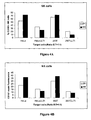
- Figure 4A % of CD161 + NK cells incubated with the indicated targets for 2 and 4 hours.
- Figure 4B level of CD161 expression (mean fluorescence) on NK cells incubated with the indicated targets for 2 and 4 hours.
- Hela cells transfected or not with LLT1 were incubated with a polyclonal human NK and T cell population for 2 hours in complete medium at 37°C (ratio 1:1) in the presence of anti-CD161 (DX12) mAb or isotype IgG control (5 ⁇ g/ml).
- Cells were fixed and stained with anti-CD161 antibody 191B8 (which recognizes a different epitope to DX12) to monitor CD161 level of expression at the cell surface of NK and T cells.
- % of CD161+ NK cells is shown and similar blocking is observed on T cells (data not shown).
- Identical blocking of LLT1-induced downregulation of CD161 is detected when anti-CD161 mAb 191B8 is used to block and anti-CD161 mAb DX12 is used to stain cells (data not shown).
- HEK293T cells transfected or not with LLT1 were incubated either in normal wells or transwells with a polyclonal human NK and T cell population for 4 hours in complete medium at 37°C (ratio 1:1).
- CD161 level of expression on NK and T cells was monitored using anti-CD 161 mAb.
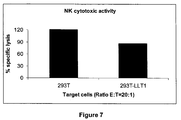
- LLT1 expressed in HEK293T cells partially inhibits polyclonal IL-2 activated NK cell-mediated cytotoxicity.
- 293T cells transfected or not with LLT1 were labelled with 51 chromium and incubated with polyclonal IL-2 activated NK cells for 18 hours at an E:T ratio of 20:1. Release of 51 chromium was measured in the supernatant and % of specific lysis of the targets calculated.
- Extracellular domains (residues 60-191) (SEQ ID NO: 4) of LLT1 (AF133299, Q9UHP7) (SEQ ID NO: 2) were fused to the human IgG1 FC portion and the chimeric protein produced in transfected eukaryotic cells.
- the soluble fusion LLT1-Fc protein secreted in the media by the transfected cells was purified on protein-A-Sepharose column and conjugated to proteinA-biotin to generate a multimer. This multimer was labelled with a fluorescent marker using Streptavidin-APC.
- This multimer can then be used to visualise interactions between LLT1 and cell surface receptors.
- LLT1 AA sequence (191 amino acid residues) (AF133299, Q9UHP7):
- LLT1 cDNA was amplified by reverse transcription (RT)-PCR from polyclonal NK total RNA extracted with TRIzol Reagent (15596-26, Invitrogen) using an oligo(dT) primer for the RT and the primers LLT1-F (5'-ATGCATGACAGTAACAATGTGG-3') (SEQ ID NO: 9) and LLT1-R (5'-TAGTTGGGGCTTTGCTGTAA-3') (SEQ ID NO: 10) for the PCR (95°C for 2min, 35 cycles with 95°C for 45 sec, 60°C for 45 sec, 72°C for 1 min and a final elongation at 72°C for 10 min). The PCR product was cloned into pGEMT-easy vector (A1360, Promega).
- Codons corresponding to the extracellular domains (60-191) of LLT1 were amplified by PCR using full length LLT1 cDNA as a template and the following primers:
- the PCR product was subcloned into pcDNA3 vector in frame with the signal sequence of human CD5 and the Fc portion of human IgGl. The final construct was sequenced.
- LLT1-Fc dimers were generated by transiently transfecting eukaryotic HEK293T cells.
- the chimeric protein was released in the media and purified onto a ProteinA-Sepharose column. Purity was assessed by SDS-PAGE electrophoresis ( Figure 1A ).
- PNGase F Peptide N-glycosidase F
- Figure 1B Peptide N-glycosidase F
- a multimeric complex was generated by incubating the dimers with ProteinA-biotin (Pierce) at a ratio of 10:1 for 30 minutes at room temperature. Saturating amount of purified human IgG were added to block the remaining free protein A sites. These complexes were conjugated with Streptavidin-APC to generate a fluorescent reagent that can be used in flow cytometry analysis.
- a multimer control was generated by incubating ProteinA-biotin with saturing amount of purified human IgG.
- LLT1-multimer stained HEK293T cells stably transfected with human CD161 (U11276, Q12918) cloned into pIRES2-EGFP (clontech) while it did not stain untransfected HEK293T or HEK293T stably transfected with LLT1-pIRES2-EGFP ( Figure 2 ) .
- a control multimer did not stain any of the cells.
- the specificity of the binding of LLT1-multimer to CD161 was further confirmed by addition of anti-CD161 antibodies which abolished the staining while irrelevant isotype control antibodies did not ( Figures 3A and 3B ).
- NK cells Human polyclonal NK cells were isolated from peripheral mononuclear cells of healthy donors by positive selection using CD56 MicroBeads (Miltenyi Biotec). NK cells were then stimulated with PHA-P (1 ug/ml, SIGMA), irradiated PBMC and B-EBV feeder cells in Iscove's Modification-ATL medium (biowest) supplemented with L-glutamine (2mM, Gibco), Penicillin-Streptomycin (Gibco) and rIL-2 (500 U/ml).
- HEK293T cells and Hela cells transfected or not with LLT1 were incubated with a polyclonal human NK and T cell population for 10 minutes up to 4 hours in complete medium at 37°C.
- Cells were fixed and stained with anti-CD161 antibodies to monitor CD161 level of expression at the cell surface of NK and T cells.
- a specific and significant loss of CD161 + cells is observed when NK and T cells are incubated with cells expressing LLT1 and not with untransfected cells ( Figures 4A and 4B ). This loss is observed as early as 10 minutes and is abolished by addition of anti-CD161 mAbs ( Figure 5 ).
- 293T cells transfected or not with LLT1 were labelled with 51 chromium and incubated with polyclonal IL-2 activated NK cells for 18 hours at an E:T ratio of 20:1. Release of 51 chromium was measured in the supernatant and specific lysis of the targets calculated ( Figure 7 ). A 28.3 % lysis decrease was observed for LLT1 expressing cells with respect to control cells.
Landscapes
- Health & Medical Sciences (AREA)
- Life Sciences & Earth Sciences (AREA)
- Engineering & Computer Science (AREA)
- Immunology (AREA)
- Chemical & Material Sciences (AREA)
- Cell Biology (AREA)
- General Health & Medical Sciences (AREA)
- Medicinal Chemistry (AREA)
- Public Health (AREA)
- Pharmacology & Pharmacy (AREA)
- Veterinary Medicine (AREA)
- Animal Behavior & Ethology (AREA)
- Bioinformatics & Cheminformatics (AREA)
- Zoology (AREA)
- Hematology (AREA)
- Epidemiology (AREA)
- Urology & Nephrology (AREA)
- Molecular Biology (AREA)
- Gastroenterology & Hepatology (AREA)
- Biomedical Technology (AREA)
- Proteomics, Peptides & Aminoacids (AREA)
- Organic Chemistry (AREA)
- General Chemical & Material Sciences (AREA)
- Nuclear Medicine, Radiotherapy & Molecular Imaging (AREA)
- Chemical Kinetics & Catalysis (AREA)
- Analytical Chemistry (AREA)
- General Physics & Mathematics (AREA)
- Biochemistry (AREA)
- Pathology (AREA)
- Physics & Mathematics (AREA)
- Food Science & Technology (AREA)
- Microbiology (AREA)
- Biotechnology (AREA)
- Virology (AREA)
- Tropical Medicine & Parasitology (AREA)
- Medicines That Contain Protein Lipid Enzymes And Other Medicines (AREA)
- Micro-Organisms Or Cultivation Processes Thereof (AREA)
Abstract
The present invention relates to a method for modulating in vivo or in vitro the activity of cells expressing CD161 and/or LLT1, characterized in that said cells are contacted respectively with LLT1 or fragments thereof, and/or with CD161 or fragments thereof.
Description
- The present invention relates to a method for modulating the activity of cells of the immune system.
- Natural killer cells and T cells are key effectors of immune responses. A panel of receptors and costimulatory molecules modulates their activity. T-cells become activated by engagement of their clonotypic T-cell antigen receptor (TCR)-CD3 complexes by specific MHC class I or II-peptide complexes and by engagement of costimulatory receptors by their ligands expressed on professional antigen-presenting cells. The antigen activation threshold can be modulated by NK receptors expressed on their cell surface.
- As opposed to T cells, NK cell recognition of targets is not antigen specific and NK cells are capable of killing target cells without prior sensitization. NK cell activity is regulated by a balance between activating and inhibitory signals triggered by engagement of NK cell receptors with their ligands. NK cells generally bind and kill target cells which are deficient in the expression of MHC class I proteins ("missing self' hypothesis) (Llunggren et al, Immunol. Today. 11:237-244, 1990). This is because NK cells express NK cell inhibitory receptors that recognizes MHC class I molecules. They include Killer cell Ig-like Receptors (KIR) interacting with groups of classical MHC class I molecules, CD94/NKG2A recognizing non classical HLA-E molecule and Ig-like transcript 2 (ILT-2) interacting with most if not all MHC class I proteins (Moretta et al, Annu. Rev. Immunol. 19:197-223, 2001). Activation and lysis of target cells is triggered mainly by Natural Cytotoxicity Receptors (NCR) and NKG2D. But a number of other activating receptors or costimulatory molecules also modulate NK cell activation. Only when all receptors and costimulatory molecules and their respective ligands are identified, will it be possible to fully understand the regulation of NK cell activity and their function.
- Human Lectin-like transcript 1 (LLT1) has an extracellular domain with similarity to the C-type lectin like domains shared with other NK cell receptors including CD161 (also named NKR-P1A). LLT1 was cloned in 1999 (Genebank accession number AF133299) and is localized to the NK gene complex on
human chromosome 12 in between NKR-P1A and CD69 (Boles et al, Immunogenetics. 50:1-7, 1999). Recently, a monoclonal antibody L9.7 (mAb) has been described to specifically recognize LLT1 and to induce IFN-γ cytokine production but not cytotoxicity in YT cells, a human NK cell line but also in resting NK cells freshly isolated from peripheral blood and IL-2 activated NK cells (Mathew PA et al, Mol. Immunol. 40:1157, 2004). L9.7 mAb recognizes most cells from peripheral blood mononuclear cells including NK cells (4-10%), T cells (5-14%), B cells (64-73%) and monocytes (100%). LLT1 is expressed on the cell surface as a homodimer. - CD161 (also named NKR-P1A) is also a C-type lectin expressed by natural killer cells and subsets of T cells, including TCR αβ and γδ T cells, invariant CDld-restricted Vα24+ NKT and CD2-CD3/TCR-thymocytes (Lanier et al, J. Immunol. 153:2417-2428,1994; Poggi et al, Eur. J. Immunol. 26:1266-1272,1996; Exley et al, J. Exp. Med. 188:867-876,1998). CD161 is a disulfide-bond homodimer. Anti-CD161 mAbs have been reported to inhibit the NK cell-mediated lysis of some Fcγ receptor+ tumour target cells (Lanier et al, J. Immunol. 153:2417-2428,1994; Poggi et al, Eur. J. Immunol. 28:1611-1616, 1998). CD161 was also shown to act as a costimulatory molecule on CD1d-restricted Vα24+ NKT cells, mediating both proliferation and cytokine secretion (Exley et al, J. Exp. Med., 188:867-876,1998). So far, no ligand has been identified for CD161. It was reported that CD161 binds carbohydrates but the authors later retracted the article. Expression of CD161 on the cell surface is upregulated by IL-12 cytokine (Poggi et al, Eur. J. Immunol. 28:1611-1616, 1998). CD161 has also been reported to be involved in transendothelial migration (Poggi et al, Eur. J. Immuol. 27:2345-2350, 1997). It may upregulate LFA1 Mg2+ binding site and β1 and β2 (CD29) integrin at the cell surface.
- The present invention arises from the unexpected finding made by the Inventors, that CD161 expressing cells could be specifically linked to LLT1.
- Thus, an object of the present invention is to provide a new interaction between two surface receptors of cells of the immune system, namely CD161 and LLT1.
- Another object of the invention is to use this interaction to modulate the activity of cells of the immune system.
- A further object of the invention is to provide pharmaceutical compositions comprising compounds liable to mimic and/or to block the above-defined interaction.
- The present invention relates to a method for modulating in vivo or in vitro the activity of cells expressing CD161 and/or LLT1, characterized in that said cells are contacted respectively with LLT1 or fragments thereof, and/or with CD161 or fragments thereof.
- As intended herein "modulating the activity of cells" relates to the activation or to the inhibition of the activity of said cells.
- The activity of given cells can be measured according to methods well known to the man skilled in the art. Such methods notably involve measuring the migration, the proliferation, the cytokine production, or the cytotoxicity of said cells.
- According to a preferred embodiment of the above-defined method, the CD 161 expressing cells are NK cells, CD1d restricted Vα24+ NKT cells, or T cells, such as αβ T cells or γδ T cells.
- According to another preferred embodiment of the above-defined method, when the CD161 expressing cells are NK cells, the contacting of said cells with LLT1 or fragments thereof leads to the inhibition of said cells.
- Under certain conditions, the contacting of CD161 expressing NK cells with LLT1 or fragments thereof also leads to the activation of said cells.
- In another preferred embodiment of the above-defined method, when the CD161 expressing cells are T cells or CD1d restricted Vα24+ NKT cells, the contacting of said cells with LLT1 or fragments thereof leads to the activation of said cells.
- Under certain conditions, the contacting of CD161 expressing T cells or Vα24+ NKT cells with LLT1 or fragments thereof also leads to the inhibition of said cells.
- In yet another preferred embodiment of the above-defined method, the CD161 expressing cells are contacted with:
- a human LLT1, in particular as represented by SEQ ID NO: 2, or
- a fragment of said human LLT1 corresponding to the extracellular domains of LLT1, in particular as represented by SEQ ID NO: 4.
- Advantageously, extracellular domains of LLT1 are soluble by themselves.
- According to a particular embodiment of the above-defined method, LLT1, or fragments thereof, are presented at the surface of biological membranes, and in particular at the surface of cells, are used as soluble molecules, or are immobilized on a support.
- By "biological membrane" is meant any membrane constituted of amphiphatic lipids, such as glycerophospholipids.
- By "support", is meant any solid material onto which proteins can be attached, either directly or by means of a suitable linker molecule, according to methods well-known to the man skilled in the art.
- According to another particular embodiment of the above-defined method, the LLT1 fragment is part of a compound comprising one or more LLT1 fragments.
- Such LLT1 comprising compounds are defined hereafter. Advantageously, the presence of more than one LLT1 fragments in said compounds increases the potency of said compounds to modulate the activity of CD161 expressing cells.
- In a particularly preferred embodiment of the above-defined method, CD161 expressing cells express the human CD161 receptor, in particular as represented by SEQ ID NO: 6.
- The present invention also relates to a method as defined above, characterized in that the LLT1 expressing cells are NK cells, T cells, dendritic cells, macrophages, monocytes or B cells.
- According to a preferred embodiment of the above-defined method the contacting of LLT1 expressing cells with CD161 or fragments thereof leads to the activation of said cells.
- Under certain conditions the contacting of LLT1 expressing cells with CD161 or fragments thereof also leads to the inhibition of said cells.
- According to another preferred embodiment of the above-defined method the LLT1 expressing cells are contacted with:
- a human CD161, in particular as represented by SEQ ID NO: 6, or
- a fragment of said human CD161 corresponding to the extracellular domains of CD161, in particular as represented by SEQ ID NO: 8.
- According to another preferred embodiment of the above-defined method CD161, or fragments thereof, are presented at the surface of biological membranes, and in particular at the surface of cells, are used as soluble molecules, or are immobilized on a support.
- In another preferred embodiment of the above-defined method the CD161 fragment is part of a compound comprising one or more CD161 fragments.
- Advantageously, the presence of more than one CD161 fragments in said compound increases the potency of said compound to modulate the activity of LLT1 expressing cells.
- In yet another preferred embodiment of the above-defined method, LLT1 expressing cells express the human LLT1 receptor, in particular as represented by SEQ ID NO: 2.
- According to a particularly preferred embodiment of the above-defined method, LLT1 or fragments thereof, or CD161 or fragments thereof, may be modified by the insertion, the deletion or the substitution of at least one amino acid, provided that said modifications result in an improved CD161-LLT1 interaction, such as an enhanced binding capability or an improved stability. In particular, modified LLT1 or CD161 having an improved interaction stability at elevated temperatures, such as temperatures over 4°C, preferably over 20°C, and more preferably at approximately 37°C, are particularly preferred in the frame of the present invention.
- The present invention also relates to a method for identifying, purifying, inactivating or destroying CD161 and/or LLT1 expressing cells, characterized in that said cells are contacted respectively with LLT1 or fragments thereof, and/or with CD161 or fragments thereof
- Accordingly, for identifying CD161 and/or LLT1 expressing cells, respectively LLT1 or CD 161 will be advantageously linked to marker moieties such as fluorophores or haptens.
- For purifying methods, LLT1 or fragments thereof, or CD161 or fragments thereof will be advantageously linked to a solid support or to marker moieties, so that the respective association of CD161 or LLT1 expressing cells leads to a complex which can be easily retrieved from a medium containing unpurified CD161 or LLT1 expressing cells.
- For inactivating or destroying CD161 and/or LLT1 expressing cells, LLT1 or fragments thereof, or CD161 or fragments thereof will be advantageously linked to antibodies, or to toxic or cytolytic moieties. For destroying CD161 and/or LLT1 expressing cells, LLT1 or fragments thereof, or CD161 or fragments thereof will be advantageously linked to marker moieties such as fluorophores to visualize the cells and then destroy them by use of a laser.
- The present invention also relates to a method for screening compounds liable to be used for the treatment of cancers, infectious diseases, such as viral, bacterial, or parasitic diseases, autoimmune diseases, inflammatory diseases, allergic reactions or organ and bone marrow transplantation rejection, characterized in that the compounds liable to be used for the treatment of the above mentioned pathologies are selected on their properties of inhibiting the binding between CD161 or fragments thereof, and LLT1 or fragments thereof.
- Accordingly, a method for screening compounds with biological activity comprises providing cells expressing CD161 and/or LLT1 receptors at their cell surface, contacting the cells respectively with LLT1 or fragments thereof, and/or with CD161 or fragments thereof in the presence of the test compound, and determining whether the presence of the compound affects the binding of LLT1 or fragments thereof, and/or with CD161 or fragments thereof to CD161 and/or LLT1 expressing cells respectively. Preferably the cells expressing CD161 and/or LLT1 receptors in the method according to this aspect of the invention do not naturally express the receptors, and most preferably they are non-human cells. The cells are preferably stable transfectants, that is to say they contain nucleic acid material expressing CD161 and/or LLT1 stably integrated into their genome.
- The present invention also relates to an isolated compound comprising at least two LLT1 molecules or fragments thereof.
- The expression "isolated" relates to a compound comprising at least two LLT1 molecules or fragments thereof which is not part of a biological membrane. In particular, the isolated compound according to the invention is soluble.
- In such a compound, the LLT1 molecules or fragments thereof are linked together, either directly or indirectly, via linker molecules, through covalent or non-covalent bonds.
- According to a preferred embodiment of the isolated LLT1 comprising compound, said compound comprises LLT1 fragments as represented by SEQ ID NO: 4.
- According to a another preferred embodiment of the isolated LLT1 comprising compound, the LLT1 fragments are linked to anchoring moieties, such as a γ-immunoglobulin Fc domain or biotin, and associated together via a linker molecule which binds to said anchoring molecules, such as protein A or an avidin protein.
- Anchoring molecules may also be made of, or covered with a magnetic material or a biologically inert material, such as silicon, and be in the form of beads.
- According to yet another preferred embodiment of the isolated LLT1 comprising compound, said compound also comprises:
- toxic or cytolytic moieties, such as toxins, radioactive molecules, recombinant active molecules or chemicals,
- marker moieties, such as fluorophores, magnetic beads, or haptens.
- The present invention also relates to a pharmaceutical composition comprising as active substance, a compound liable to bind to CD161 or a compound liable to bind to LLT1, in association with a pharmaceutically acceptable carrier.
- According to a preferred embodiment of the invention, the above-defined pharmaceutical composition comprises as active substance, a mammalian LLT1 or fragments thereof, as compounds liable to bind to CD161, or a mammalian CD161 or fragments thereof, as compounds liable to bind to LLT1, in association with a pharmaceutically acceptable carrier.
- According to another preferred embodiment of the invention, the above-defined pharmaceutical composition comprises as active substance,
- a human LLT1, in particular as represented by SEQ ID NO: 2, or
- a fragment of said human LLT1 corresponding to the extracellular domain of LLT1, in particular as represented by SEQ ID NO: 4
- According to another preferred embodiment of the invention, the above-defined pharmaceutical composition comprises as active substance an above-defined LLT1 comprising compound.
- In another preferred embodiment, the present invention relates to an above-defined pharmaceutical composition comprising as active substance:
- a human CD161, in particular as represented by SEQ ID NO: 6, or
- a fragment of said human CD161 corresponding to the extracellular domain of CD161, in particular as represented by SEQ ID NO: 8.
- In a particularly preferred embodiment, the present invention relates to an above-defined pharmaceutical composition, comprising as active substance an anti-CD161 or anti-LLT1 antibody, in particular a humanized anti-CD161 or anti-LLT1 antibody.
- Such antibodies may be monoclonal or polyclonal antibodies, which can be easily obtained according to methods well-known to the man skilled in the art. In particular, monoclonal antibodies can be produced from hybridomas. Such hybridomas can be obtained by fusion of an antibody secreting cell, such as a B cell, with an immortalized cell, according to Kohler and Milstein. Nature. 256:495-497, 1975 or to Buttin et al. Curr. Top. Microbiol. Immun. 81:27-36,1978, for example.
- As intended herein, the fragments of such antibodies, such as Fab, F(ab)'2 or scFv fragments, are also considered as antibodies.
- Humanized antibodies can be for example chimeric antibodies, in which, if appropriate, constant parts of animal antibodies, such as mouse or rabbit antibodies, are replaced by the corresponding parts of human antibodies, such as the Fc fragment for instance (Sharon et al, Nature. 309:364-367, 1984; Neuberger et al, Nature. 314:268-271, 1985). Alternatively, the complex determining region (CDR) of the animal antibodies can be grafted onto human antibodies, such as described for instance in US patent number 5,824,307, a process called "antibody reshaping" (Jones et al. Nature, 321:522-525, 1986). Another alternative technique is to produce human antibodies in mice using transgenic and transomic animals (Bruggemann et al, PNAS. 86:6709-6713, 1989; Richa et al, Science. 245:175-177, 1989; Capecchi, Trends in Genetics. 5:70-76, 1989).
- The present invention also relates to a pharmaceutical composition comprising as active substance, single or multiple stranded nucleic acids encoding mammalian, in particular human, LLT1 or fragments thereof, or their complementary strands in the case of single stranded nucleic acids, in particular as represented respectively by SEQ ID NO: 1 and SEQ ID NO: 3, optionally comprised in a mammalian expression vector, in association with a pharmaceutically acceptable carrier.
- The present invention also relates to a pharmaceutical composition comprising as active substance, single or multiple stranded nucleic acids encoding mammalian, in particular human, CD 161 or fragments thereof, or their complementary strands in the case of single stranded nucleic acids, in particular as represented respectively by SEQ ID NO: 5 and SEQ ID NO: 7, optionally comprised in a mammalian expression vector, in association with a pharmaceutically acceptable carrier.
- Such nucleic acids or vectors are useful for various purposes, such as:
- the in vivo, ex vivo or in vitro production of the proteins they encode, i.e. LLT1 or fragments thereof and CD 161 or fragments thereof;
- the in vivo, ex vivo or in vitro production or delivery of antisens nucleic acids, which are liable to inhibit the expression of CD161 or LLT1;
- the in vivo, ex vivo or in vitro production or delivery of interference nucleic acids, such as siRNA, which are liable to inhibit the expression of CD161 or LLT1.
The present invention also relates to the use of a compound liable to bind to CD161 or a compound liable to bind to LLT1, for the manufacture of a medicament intended for the prevention or the treatment of cancers, infectious diseases, such as viral, bacterial, or parasitic diseases, autoimmune diseases, inflammatory diseases, allergic reactions or organ and bone marrow transplantation rejection.
In a preferred embodiment, the present invention relates to the above-defined use of a mammalian LLT1 or fragments thereof, as compounds liable to bind to CD161, or of a mammalian CD161 or fragments thereof, as compounds liable to bind to LLT1.
In another preferred embodiment, the invention relates to the above-defined use, of - a human LLT1, in particular as represented by SEQ ID NO: 2, or
- a fragment of said human LLT1 corresponding to the extracellular domain of LLT1, in particular as represented by SEQ ID NO: 4.
- In a particularly preferred embodiment the present invention relates to the above-defined use, of a LLT1 comprising compound as defined above.
- In another embodiment, the present invention relates to the above-defined use, of:
- a human CD161, in particular as represented by SEQ ID NO: 6, or
- a fragment of said human CD161 corresponding to the extracellular domain of CD161, in particular as represented by SEQ ID NO: 8.
- In a preferred embodiment, the invention also relates to the above-defined use, of an anti-CD161 or anti-LLT1 antibody, in particular a humanized anti-CD161 or anti-LLT1 antibody.
- The present invention also relates to the use of single or multiple stranded nucleic acids encoding mammalian, in particular human, LLT1 or fragments thereof, or their complementary strands in the case of single stranded nucleic acids, in particular as represented respectively by SEQ ID NO: 1 and SEQ ID NO: 3, optionally comprised in a mammalian expression vector, for the manufacture of a medicament intended for the prevention or the treatment of cancers, infectious diseases, such as viral, bacterial, or parasitic diseases, autoimmune diseases, inflammatory diseases, allergic reactions or organ and bone marrow transplantation rejection.
- The present invention also relates to the use of single or multiple stranded nucleic acids encoding mammalian, in particular human, CD161 or fragments thereof, or their complementary strands in the case of single stranded nucleic acids, in particular as represented respectively by SEQ ID NO: 5 and SEQ ID NO: 7, optionally comprised in a mammalian expression vector, in association with a pharmaceutically acceptable carrier, for the manufacture of a medicament intended for the prevention or the treatment of cancers, infectious diseases, such as viral, bacterial, or parasitic diseases, autoimmune diseases, inflammatory diseases, allergic reactions or organ and bone marrow transplantation rejection.
- Figure 1A: Purified LLT1-Fc fusion protein was visualized on a 10% SDS-PAGE gel using reducing and nonreducing conditions yielding a ~55kDa and ~110 kDa protein respectively.
- Figure 1B: Treatment of purified LLT1-Fc with peptide N-glycosidase F (PNGase F) yielded a ~48kDa protein.
- LLT1 multimer were generated using LLT1-Fc dimer conjugated to protein A-biotin and streptavidin-APC. Saturating amount of purified human IgG were added to block the remaining free protein A sites. A multimer control was generated by incubating ProteinA-biotin with saturing amount of purified human IgG.
- LLT1 and Ctrl multimers were used to stain HEK293T cell untransfected or transfected with CD161-pIRES2-EGFP or LLT1-pIRES2-EGFP vectors.
- LLT1 multimer bound to HEK293T cells transfected with CD161 but not to HEK293T expressing LLT1 or untransfected cells. Control multimer did not bind to any of these cells.
- Figure 3A: LLT1 multimer was used to stain HEK293T cells transfected with CD161-pIRES2-EGFP or LLT1-pIRES2-EGFP vectors in the absence or presence of 3µg of irrelevant isotype IgG control (DX22) or anti-CD161 antibody (DX12). Similar blocking was seen using 191B8 anti-CD161 antibody.
- Figure 3B: LLT1 multimer was used to stain HEK293T cells transfected with CD161-pIRES2-EGFP (squares) or LLT1-pIRES2-EGFP (circles) vectors in the presence of increasing concentration of irrelevant isotype IgG control (DX22) (open symbols) or anti-CD161 antibody (DX12) (closed symbols).
- HEK293T cells and Hela cells transfected or not with LLT1 were incubated with a polyclonal human NK and T cell population for 2 and 4 hours in complete medium at 37°C (ratio 1:1).
- Cells were fixed and stained with anti-CD161 antibodies to monitor CD161 level of expression at the cell surface of NK and T cells.
- Figure 4A: % of CD161+ NK cells incubated with the indicated targets for 2 and 4 hours.
- Figure 4B: level of CD161 expression (mean fluorescence) on NK cells incubated with the indicated targets for 2 and 4 hours.
- Similar downregulation of CD161 on T cells is observed.
- Hela cells transfected or not with LLT1 were incubated with a polyclonal human NK and T cell population for 2 hours in complete medium at 37°C (ratio 1:1) in the presence of anti-CD161 (DX12) mAb or isotype IgG control (5µg/ml). Cells were fixed and stained with anti-CD161 antibody 191B8 (which recognizes a different epitope to DX12) to monitor CD161 level of expression at the cell surface of NK and T cells. % of CD161+ NK cells is shown and similar blocking is observed on T cells (data not shown). Identical blocking of LLT1-induced downregulation of CD161 is detected when anti-CD161 mAb 191B8 is used to block and anti-CD161 mAb DX12 is used to stain cells (data not shown).
- HEK293T cells transfected or not with LLT1 were incubated either in normal wells or transwells with a polyclonal human NK and T cell population for 4 hours in complete medium at 37°C (ratio 1:1). CD161 level of expression on NK and T cells was monitored using anti-CD 161 mAb.
- 293T cells transfected or not with LLT1 were labelled with 51chromium and incubated with polyclonal IL-2 activated NK cells for 18 hours at an E:T ratio of 20:1. Release of 51chromium was measured in the supernatant and % of specific lysis of the targets calculated.
- Extracellular domains (residues 60-191) (SEQ ID NO: 4) of LLT1 (AF133299, Q9UHP7) (SEQ ID NO: 2) were fused to the human IgG1 FC portion and the chimeric protein produced in transfected eukaryotic cells. The soluble fusion LLT1-Fc protein secreted in the media by the transfected cells was purified on protein-A-Sepharose column and conjugated to proteinA-biotin to generate a multimer. This multimer was labelled with a fluorescent marker using Streptavidin-APC.
- This multimer can then be used to visualise interactions between LLT1 and cell surface receptors.
- LLT1 AA sequence (191 amino acid residues) (AF133299, Q9UHP7):

- Amino acid residues underlined were removed in the LLT1-Fc chimeric molecule.
- Full length LLT1 cDNA was amplified by reverse transcription (RT)-PCR from polyclonal NK total RNA extracted with TRIzol Reagent (15596-26, Invitrogen) using an oligo(dT) primer for the RT and the primers LLT1-F (5'-ATGCATGACAGTAACAATGTGG-3') (SEQ ID NO: 9) and LLT1-R (5'-TAGTTGGGGCTTTGCTGTAA-3') (SEQ ID NO: 10) for the PCR (95°C for 2min, 35 cycles with 95°C for 45 sec, 60°C for 45 sec, 72°C for 1 min and a final elongation at 72°C for 10 min). The PCR product was cloned into pGEMT-easy vector (A1360, Promega).
- Codons corresponding to the extracellular domains (60-191) of LLT1 were amplified by PCR using full length LLT1 cDNA as a template and the following primers:


- The PCR product was subcloned into pcDNA3 vector in frame with the signal sequence of human CD5 and the Fc portion of human IgGl. The final construct was sequenced.
- LLT1-Fc dimers were generated by transiently transfecting eukaryotic HEK293T cells. The chimeric protein was released in the media and purified onto a ProteinA-Sepharose column. Purity was assessed by SDS-PAGE electrophoresis ( Figure 1A ). Peptide N-glycosidase F (PNGase F) treatment was performed according to the manufactor instruction (New England Biolabs) ( Figure 1B ). Briefly, 5 µg of purified LLT1-Fc was denatured in 0.5 % SDS, 1% β-mercaptoethanol denaturing buffer at 100°C for 10 minutes, and digested with 2000 Unit of PNGase F in 1 % NP40, 50 mM sodium phosphate pH 7.5 for 1 hour at 37°C.
- A multimeric complex was generated by incubating the dimers with ProteinA-biotin (Pierce) at a ratio of 10:1 for 30 minutes at room temperature. Saturating amount of purified human IgG were added to block the remaining free protein A sites. These complexes were conjugated with Streptavidin-APC to generate a fluorescent reagent that can be used in flow cytometry analysis.
- A multimer control was generated by incubating ProteinA-biotin with saturing amount of purified human IgG.
- Flow cytometry using the LLT1-Fc-ProteinA-biotin-Streptavidin-APC multimer (LLT1-multimer) was performed to identify the receptor of LLT1. LLT1-multimer stained HEK293T cells stably transfected with human CD161 (U11276, Q12918) cloned into pIRES2-EGFP (clontech) while it did not stain untransfected HEK293T or HEK293T stably transfected with LLT1-pIRES2-EGFP (Figure 2). A control multimer did not stain any of the cells. The specificity of the binding of LLT1-multimer to CD161 was further confirmed by addition of anti-CD161 antibodies which abolished the staining while irrelevant isotype control antibodies did not ( Figures 3A and 3B ).
- Human polyclonal NK cells were isolated from peripheral mononuclear cells of healthy donors by positive selection using CD56 MicroBeads (Miltenyi Biotec). NK cells were then stimulated with PHA-P (1 ug/ml, SIGMA), irradiated PBMC and B-EBV feeder cells in Iscove's Modification-ATL medium (biowest) supplemented with L-glutamine (2mM, Gibco), Penicillin-Streptomycin (Gibco) and rIL-2 (500 U/ml).
- HEK293T cells and Hela cells transfected or not with LLT1 were incubated with a polyclonal human NK and T cell population for 10 minutes up to 4 hours in complete medium at 37°C. Cells were fixed and stained with anti-CD161 antibodies to monitor CD161 level of expression at the cell surface of NK and T cells. A specific and significant loss of CD161+ cells is observed when NK and T cells are incubated with cells expressing LLT1 and not with untransfected cells ( Figures 4A and 4B ). This loss is observed as early as 10 minutes and is abolished by addition of anti-CD161 mAbs ( Figure 5 ). This loss of CD161+ NK and T cells is not due to release of soluble form of LLT1 blocking binding of anti-CD161 antibodies as no effect on CD161 expression was observed when the incubation was performed using transwells ( Figure 6 ). This later result therefore demonstrates that LLT1 induces a downregulation of the CD161 receptor.
- 293T cells transfected or not with LLT1 were labelled with 51chromium and incubated with polyclonal IL-2 activated NK cells for 18 hours at an E:T ratio of 20:1. Release of 51chromium was measured in the supernatant and specific lysis of the targets calculated ( Figure 7 ). A 28.3 % lysis decrease was observed for LLT1 expressing cells with respect to control cells.


Claims (36)
- A method for modulating in vivo or in vitro the activity of cells expressing CD161 and/or LLT1, characterized in that said cells are contacted respectively with LLT1 or fragments thereof, and/or with CD 161 or fragments thereof.
- A method according to claim 1, characterized in that the CD161 expressing cells are NK cells, CD1d restricted Vα24+ NKT cells, or T cells, such as αβ T cells or γδ T cells.
- A method according to claim 1 or 2, characterized in that when the CD161 expressing cells are NK cells, the contacting of said cells with LLT1 or fragments thereof leads to the inhibition of said cells.
- A method according to claim 1 or 2, characterized in that when the CD161 expressing cells are T cells or CD1d restricted Vα24+ NKT cells, the contacting of said cells with LLT1 or fragments thereof leads to the activation of said cells.
- A method according to any of claims 1 to 4, characterized in that the CD161 expressing cells are contacted with:- a human LLT1, in particular as represented by SEQ ID NO: 2, or- a fragment of said human LLT1 corresponding to the extracellular domains of LLT1, in particular as represented by SEQ ID NO: 4.
- A method according to any of claims 1 to 5, characterized in that LLT1, or fragments thereof, are presented at the surface of biological membranes, and in particular at the surface of cells, are used as soluble molecules, or are immobilized on a support.
- A method according to any of claims 1 to 5, characterized in that the LLT1 fragment is part of a compound comprising one or more LLT1 fragments.
- A method according to any of claims 1 to 7, characterized in that CD161 expressing cells express the human CD 161 receptor, in particular as represented by SEQ ID NO: 6.
- A method according to claim 1, characterized in that the LLT1 expressing cells are NK cells, T cells, dendritic cells, macrophages, monocytes or B cells.
- A method according to claim 9, characterized in that the contacting of LLT1 expressing cells with CD 161 or fragments thereof leads to the activation of said cells.
- A method according to any of claims 9 to 10, characterized in that the LLT1 expressing cells are contacted with:- a human CD 161, in particular as represented by SEQ ID NO: 6, or- a fragment of said human CD161 corresponding to the extracellular domains of CD161, in particular as represented by SEQ ID NO: 8.
- A method according to any of claims 9 to 11, characterized in that CD161, or fragments thereof, are presented at the surface of biological membranes, and in particular at the surface of cells, are used as soluble molecules, or are immobilized on a support.
- A method according to any of claims 9 to 12, characterized in that the CD161 fragment is part of a compound comprising one or more CD161 fragments.
- A method according to any of claims 9 to 13, characterized in that LLT1 expressing cells express the human LLT1 receptor, in particular as represented by SEQ ID NO: 2.
- A method for identifying, purifying, inactivating or destroying CD161 and/or LLT1 expressing cells, characterized in that said cells are contacted respectively with LLT1 or fragments thereof, and/or with CD161 or fragments thereof.
- A method for screening compounds liable to be used for the treatment of cancers, infectious diseases, such as viral, bacterial, or parasitic diseases, autoimmune diseases, inflammatory diseases, allergic reactions or organ and bone marrow transplantation rejection, characterized in that the compounds liable to be used for the treatment of the above mentioned pathologies are selected on their properties of inhibiting the binding between CD161 or fragments thereof, and LLT1 or fragments thereof.
- An isolated compound comprising at least two LLT1 molecules or fragments thereof.
- An isolated compound according to claim 17, comprising LLT1 fragments as represented by SEQ ID NO: 4.
- An isolated compound according to claim 17 or 18, wherein the LLT1 fragments are linked to anchoring moieties, such as a γ-immunoglobulin Fc domain or biotin, and associated together via a linker molecule which binds to said anchoring molecules, such as protein A or an avidin protein.
- An isolated compound according to any of claims 17 to 19, wherein said compound also comprises:- toxic or cytolytic moieties, such as toxins, radioactive molecules, recombinant active molecules or chemicals,- marker moieties, such as fluorophores, magnetic beads, or haptens.
- A pharmaceutical composition comprising as active substance, a compound liable to bind to CD161 or a compound liable to bind to LLT1, in association with a pharmaceutically acceptable carrier.
- A pharmaceutical composition according to claim 21 comprising as active substance, a mammalian LLT1 or fragments thereof, as compounds liable to bind to CD161, or a mammalian CD161 or fragments thereof, as compounds liable to bind to LLT1, in association with a pharmaceutically acceptable carrier.
- A pharmaceutical composition according to claim 21 or 22, comprising as active substance,- a human LLT1, in particular as represented by SEQ ID NO: 2, or- a fragment of said human LLT1 corresponding to the extracellular domain of LLT1, in particular as represented by SEQ ID NO: 4
- A pharmaceutical composition according to any of claims 21 to 23, comprising as active substance a compound according to any of claims 17 to 20.
- A pharmaceutical composition according to claim 21 or 22, comprising as active substance:- a human CD161, in particular as represented by SEQ ID NO: 6, or- a fragment of said human CD161 corresponding to the extracellular domain of CD161, in particular as represented by SEQ ID NO: 8.
- A pharmaceutical composition according to claim 21, comprising as active substance an anti-CD161 or anti-LLT1 antibody, in particular a humanized anti-CD161 or anti-LLT1 antibody.
- A pharmaceutical composition comprising as active substance, single or multiple stranded nucleic acids encoding mammalian, in particular human, LLT1 or fragments thereof, or their complementary strands in the case of single stranded nucleic acids, in particular as represented respectively by SEQ ID NO: 1 and SEQ ID NO: 3, optionally comprised in a mammalian expression vector, in association with a pharmaceutically acceptable carrier.
- A pharmaceutical composition comprising as active substance, single or multiple stranded nucleic acids encoding mammalian, in particular human, CD161 or fragments thereof, or their complementary strands in the case of single stranded nucleic acids, in particular as represented respectively by SEQ ID NO: 5 and SEQ ID NO: 7, optionally comprised in a mammalian expression vector, in association with a pharmaceutically acceptable carrier.
- The use of a compound liable to bind to CD161 or a compound liable to bind to LLT1, for the manufacture of a medicament intended for the prevention or the treatment of cancers, infectious diseases, such as viral, bacterial, or parasitic diseases, autoimmune diseases, inflammatory diseases, allergic reactions or organ and bone marrow transplantation rejection.
- The use according to claim 29, of a mammalian LLT1 or fragments thereof, as compounds liable to bind to CD161, or of a mammalian CD161 or fragments thereof, as compounds liable to bind to LLT 1.
- The use according to claim 29 or 30, of- a human LLT1, in particular as represented by SEQ ID NO: 2, or- a fragment of said human LLT1 corresponding to the extracellular domain of LLT1, in particular as represented by SEQ ID NO: 4.
- The use according to any of claims 29 to 31, of a compound according to any of claims 17 to 20.
- The use according to claim 29 or 30, of:- a human CD161, in particular as represented by SEQ ID NO: 6, or- a fragment of said human CD161 corresponding to the extracellular domain of CD161, in particular as represented by SEQ ID NO: 8.
- The use according to claim 29, of an anti-CD161 or anti-LLT1 antibody, in particular a humanized anti-CD161 or anti-LLT1 antibody.
- The use of single or multiple stranded nucleic acids encoding mammalian, in particular human, LLT1 or fragments thereof, or their complementary strands in the case of single stranded nucleic acids, in particular as represented respectively by SEQ ID NO: 1 and SEQ ID NO: 3, optionally comprised in a mammalian expression vector, for the manufacture of a medicament intended for the prevention or the treatment of cancers, infectious diseases, such as viral, bacterial, or parasitic diseases, autoimmune diseases, inflammatory diseases, allergic reactions or organ and bone marrow transplantation rejection.
- The use of single or multiple stranded nucleic acids encoding mammalian, in particular human, CD 161 or fragments thereof, or their complementary strands in the case of single stranded nucleic acids, in particular as represented respectively by SEQ ID NO: 5 and SEQ ID NO: 7, optionally comprised in a mammalian expression vector, in association with a pharmaceutically acceptable carrier, for the manufacture of a medicament intended for the prevention or the treatment of cancers, infectious diseases, such as viral, bacterial, or parasitic diseases, autoimmune diseases, inflammatory diseases, allergic reactions or organ and bone marrow transplantation rejection.
Priority Applications (5)
| Application Number | Priority Date | Filing Date | Title |
|---|---|---|---|
| EP04291913A EP1621551A1 (en) | 2004-07-27 | 2004-07-27 | Use of LLT1 and/or CD161 for modulating the activity of cells of the immune system |
| PCT/EP2005/008146 WO2006010603A1 (en) | 2004-07-27 | 2005-07-27 | Use of llt1 and/or cd161 for modulating the activity of cells of the immune system |
| EP05771673A EP1771469A1 (en) | 2004-07-27 | 2005-07-27 | Use of llt1 and/or cd161 for modulating the activity of cells of the immune system |
| CA002575356A CA2575356A1 (en) | 2004-07-27 | 2005-07-27 | Use of llt1 and/or cd161 for modulating the activity of cells of the immune system |
| US11/658,663 US20090074756A1 (en) | 2004-07-27 | 2005-07-27 | Use of llt1 and/or cd161 for modulatting the activity of cells of the immune system |
Applications Claiming Priority (1)
| Application Number | Priority Date | Filing Date | Title |
|---|---|---|---|
| EP04291913A EP1621551A1 (en) | 2004-07-27 | 2004-07-27 | Use of LLT1 and/or CD161 for modulating the activity of cells of the immune system |
Publications (1)
| Publication Number | Publication Date |
|---|---|
| EP1621551A1 true EP1621551A1 (en) | 2006-02-01 |
Family
ID=34931293
Family Applications (2)
| Application Number | Title | Priority Date | Filing Date |
|---|---|---|---|
| EP04291913A Withdrawn EP1621551A1 (en) | 2004-07-27 | 2004-07-27 | Use of LLT1 and/or CD161 for modulating the activity of cells of the immune system |
| EP05771673A Withdrawn EP1771469A1 (en) | 2004-07-27 | 2005-07-27 | Use of llt1 and/or cd161 for modulating the activity of cells of the immune system |
Family Applications After (1)
| Application Number | Title | Priority Date | Filing Date |
|---|---|---|---|
| EP05771673A Withdrawn EP1771469A1 (en) | 2004-07-27 | 2005-07-27 | Use of llt1 and/or cd161 for modulating the activity of cells of the immune system |
Country Status (4)
| Country | Link |
|---|---|
| US (1) | US20090074756A1 (en) |
| EP (2) | EP1621551A1 (en) |
| CA (1) | CA2575356A1 (en) |
| WO (1) | WO2006010603A1 (en) |
Cited By (2)
| Publication number | Priority date | Publication date | Assignee | Title |
|---|---|---|---|---|
| CN108586612A (en) * | 2018-03-27 | 2018-09-28 | 深圳联合医学科技有限公司 | A kind of preparation method for the monoclonal antibody being suitable for detecting human peripheral expression CD161 molecule subgroup lymphocytes |
| EP3443981A1 (en) * | 2010-06-29 | 2019-02-20 | Centre National de la Recherche Scientifique (CNRS) | Llt-1 antibodies with new functional properties |
Families Citing this family (5)
| Publication number | Priority date | Publication date | Assignee | Title |
|---|---|---|---|---|
| WO2009097119A2 (en) | 2008-01-29 | 2009-08-06 | Fred Hutchinson Cancer Research Center | Identification of cd8+ t cells that are cd161hi and/or il18r(alpha)hi and have rapid drug efflux capacity |
| EP3710039A4 (en) * | 2017-11-13 | 2021-08-04 | The Broad Institute, Inc. | METHODS AND COMPOSITIONS FOR CANCER TREATMENT BY TARGETING THE CLEC2D-KLRB1 PATH |
| US20220387493A1 (en) * | 2019-11-06 | 2022-12-08 | Baylor College Of Medicine | Method for producing cytotoxic effector memory t-cells for car t-cell treatment of cancer |
| WO2025106557A1 (en) * | 2023-11-13 | 2025-05-22 | Bluerock Therapeutics Lp | Genetically modified cells for enhanced immune evasion in allogeneic cellular therapies |
| WO2025190375A1 (en) * | 2024-03-15 | 2025-09-18 | 深圳众格生物科技有限公司 | Anti-cd161 antibody and use thereof |
Citations (3)
| Publication number | Priority date | Publication date | Assignee | Title |
|---|---|---|---|---|
| WO1995002611A1 (en) * | 1993-07-16 | 1995-01-26 | Schering Corporation | Cell surface protein present on nk (natural killer cells) named dx1 |
| US6455683B1 (en) * | 1999-03-25 | 2002-09-24 | Bristol-Myers Squibb Company | DNA molecules encoding human CLAX proteins and their soluble fusion proteins |
| US20040001804A1 (en) * | 1999-12-30 | 2004-01-01 | Mathew Porunelloor A. | LLT uses thereof in immune system modulation |
-
2004
- 2004-07-27 EP EP04291913A patent/EP1621551A1/en not_active Withdrawn
-
2005
- 2005-07-27 US US11/658,663 patent/US20090074756A1/en not_active Abandoned
- 2005-07-27 CA CA002575356A patent/CA2575356A1/en not_active Abandoned
- 2005-07-27 EP EP05771673A patent/EP1771469A1/en not_active Withdrawn
- 2005-07-27 WO PCT/EP2005/008146 patent/WO2006010603A1/en not_active Ceased
Patent Citations (4)
| Publication number | Priority date | Publication date | Assignee | Title |
|---|---|---|---|---|
| WO1995002611A1 (en) * | 1993-07-16 | 1995-01-26 | Schering Corporation | Cell surface protein present on nk (natural killer cells) named dx1 |
| US5965401A (en) * | 1993-07-16 | 1999-10-12 | Schering Corporation | Purified mammalian NK antigens and related reagents |
| US6455683B1 (en) * | 1999-03-25 | 2002-09-24 | Bristol-Myers Squibb Company | DNA molecules encoding human CLAX proteins and their soluble fusion proteins |
| US20040001804A1 (en) * | 1999-12-30 | 2004-01-01 | Mathew Porunelloor A. | LLT uses thereof in immune system modulation |
Cited By (2)
| Publication number | Priority date | Publication date | Assignee | Title |
|---|---|---|---|---|
| EP3443981A1 (en) * | 2010-06-29 | 2019-02-20 | Centre National de la Recherche Scientifique (CNRS) | Llt-1 antibodies with new functional properties |
| CN108586612A (en) * | 2018-03-27 | 2018-09-28 | 深圳联合医学科技有限公司 | A kind of preparation method for the monoclonal antibody being suitable for detecting human peripheral expression CD161 molecule subgroup lymphocytes |
Also Published As
| Publication number | Publication date |
|---|---|
| WO2006010603A1 (en) | 2006-02-02 |
| CA2575356A1 (en) | 2006-02-02 |
| EP1771469A1 (en) | 2007-04-11 |
| US20090074756A1 (en) | 2009-03-19 |
Similar Documents
| Publication | Publication Date | Title |
|---|---|---|
| Shibuya et al. | Fcα/μ receptor mediates endocytosis of IgM-coated microbes | |
| Oliveira et al. | CD6 attenuates early and late signaling events, setting thresholds for T‐cell activation | |
| US11793894B2 (en) | Modulation of immunity and CEACAM1 activity | |
| Markel et al. | Pivotal role of CEACAM1 protein in the inhibition of activated decidual lymphocyte functions | |
| Marshall et al. | Human MICL (CLEC12A) is differentially glycosylated and is down‐regulated following cellular activation | |
| JP5560301B2 (en) | Therapeutic and diagnostic methods and compositions targeting 4IG-B7-H3 and its corresponding NK cell receptor | |
| Poirier et al. | Preclinical efficacy and immunological safety of FR104, an antagonist anti-CD28 monovalent Fab′ antibody | |
| EP1174440A1 (en) | A selectively-expressed epitope on the human CD38 molecule detected by a phage display library-derived human scFv antibody fragment | |
| Howard et al. | The CD3 zeta cytoplasmic domain mediates CD2-induced T cell activation. | |
| JP2012031172A (en) | T cell inhibitory receptor composition and uses thereof | |
| KR20240012352A (en) | How to Diagnose and Treat T-Cell Lymphoma | |
| KR20230022964A (en) | Cell-Based Assay for Determining In Vitro Tumor Killing Activity of Chimeric Antigen Expressing Immune Cells | |
| Salih et al. | The role of leukemia-derived B7-H1 (PD-L1) in tumor–T-cell interactions in humans | |
| Zhang et al. | Characterization and application of two novel monoclonal antibodies against 2IgB7‐H3: expression analysis of 2IgB7‐H3 on dendritic cells and tumor cells | |
| Vire et al. | Harnessing the fcμ receptor for potent and selective cytotoxic therapy of chronic lymphocytic leukemia | |
| Takatsu et al. | CD300 antigen like family member G: A novel Ig receptor like protein exclusively expressed on capillary endothelium | |
| EP1621551A1 (en) | Use of LLT1 and/or CD161 for modulating the activity of cells of the immune system | |
| Lieto et al. | The human CD94 gene encodes multiple, expressible transcripts including a new partner of NKG2A/B | |
| Marmor et al. | Immobilization of glycosylphosphatidylinositol-anchored proteins inhibits T cell growth but not function | |
| Wagner et al. | Ligation of MHC class I and class II molecules can lead to heterologous desensitization of signal transduction pathways that regulate homotypic adhesion in human lymphocytes. | |
| KR20210111745A (en) | How to Assess CAR Functionality | |
| Kiso et al. | Immunohistochemical analysis of β1-integrin receptors displayed by murine uterine natural killer cells over the course of successful pregnancy | |
| RU2845938C1 (en) | Cell-based assay for determining killing activity of tumour cells expressing chimeric immune cell antigens in vitro | |
| CN121978342A (en) | Cell-based assays for determining in vitro tumor killing activity of immune cells expressing chimeric antigens | |
| Fukao et al. | Exploiting HLA-II Promiscuity via Peptide Terminal Overhang Recognition for Pan-Allelic and Tumor-Selective AML Immunotherapy |
Legal Events
| Date | Code | Title | Description |
|---|---|---|---|
| PUAI | Public reference made under article 153(3) epc to a published international application that has entered the european phase |
Free format text: ORIGINAL CODE: 0009012 |
|
| AK | Designated contracting states |
Kind code of ref document: A1 Designated state(s): AT BE BG CH CY CZ DE DK EE ES FI FR GB GR HU IE IT LI LU MC NL PL PT RO SE SI SK TR |
|
| AX | Request for extension of the european patent |
Extension state: AL HR LT LV MK |
|
| AKX | Designation fees paid |
Designated state(s): FR |
|
| REG | Reference to a national code |
Ref country code: DE Ref legal event code: 8566 |
|
| STAA | Information on the status of an ep patent application or granted ep patent |
Free format text: STATUS: THE APPLICATION IS DEEMED TO BE WITHDRAWN |
|
| 18D | Application deemed to be withdrawn |
Effective date: 20060802 |