EP1621181B1 - Antiperspirant or deodorant emulsion comprising a nonionic emulsifier and fumed silica - Google Patents
Antiperspirant or deodorant emulsion comprising a nonionic emulsifier and fumed silica Download PDFInfo
- Publication number
- EP1621181B1 EP1621181B1 EP05254275A EP05254275A EP1621181B1 EP 1621181 B1 EP1621181 B1 EP 1621181B1 EP 05254275 A EP05254275 A EP 05254275A EP 05254275 A EP05254275 A EP 05254275A EP 1621181 B1 EP1621181 B1 EP 1621181B1
- Authority
- EP
- European Patent Office
- Prior art keywords
- composition according
- emulsifier
- oil
- weight
- mixture
- Prior art date
- Legal status (The legal status is an assumption and is not a legal conclusion. Google has not performed a legal analysis and makes no representation as to the accuracy of the status listed.)
- Expired - Lifetime
Links
Images
Classifications
-
- A—HUMAN NECESSITIES
- A61—MEDICAL OR VETERINARY SCIENCE; HYGIENE
- A61K—PREPARATIONS FOR MEDICAL, DENTAL OR TOILETRY PURPOSES
- A61K8/00—Cosmetics or similar toiletry preparations
- A61K8/02—Cosmetics or similar toiletry preparations characterised by special physical form
- A61K8/04—Dispersions; Emulsions
- A61K8/06—Emulsions
-
- A—HUMAN NECESSITIES
- A61—MEDICAL OR VETERINARY SCIENCE; HYGIENE
- A61K—PREPARATIONS FOR MEDICAL, DENTAL OR TOILETRY PURPOSES
- A61K8/00—Cosmetics or similar toiletry preparations
- A61K8/18—Cosmetics or similar toiletry preparations characterised by the composition
- A61K8/19—Cosmetics or similar toiletry preparations characterised by the composition containing inorganic ingredients
- A61K8/25—Silicon; Compounds thereof
-
- A—HUMAN NECESSITIES
- A61—MEDICAL OR VETERINARY SCIENCE; HYGIENE
- A61K—PREPARATIONS FOR MEDICAL, DENTAL OR TOILETRY PURPOSES
- A61K8/00—Cosmetics or similar toiletry preparations
- A61K8/18—Cosmetics or similar toiletry preparations characterised by the composition
- A61K8/30—Cosmetics or similar toiletry preparations characterised by the composition containing organic compounds
- A61K8/33—Cosmetics or similar toiletry preparations characterised by the composition containing organic compounds containing oxygen
- A61K8/39—Derivatives containing from 2 to 10 oxyalkylene groups
-
- A—HUMAN NECESSITIES
- A61—MEDICAL OR VETERINARY SCIENCE; HYGIENE
- A61K—PREPARATIONS FOR MEDICAL, DENTAL OR TOILETRY PURPOSES
- A61K8/00—Cosmetics or similar toiletry preparations
- A61K8/18—Cosmetics or similar toiletry preparations characterised by the composition
- A61K8/72—Cosmetics or similar toiletry preparations characterised by the composition containing organic macromolecular compounds
- A61K8/84—Cosmetics or similar toiletry preparations characterised by the composition containing organic macromolecular compounds obtained by reactions otherwise than those involving only carbon-carbon unsaturated bonds
- A61K8/86—Polyethers
-
- A—HUMAN NECESSITIES
- A61—MEDICAL OR VETERINARY SCIENCE; HYGIENE
- A61K—PREPARATIONS FOR MEDICAL, DENTAL OR TOILETRY PURPOSES
- A61K8/00—Cosmetics or similar toiletry preparations
- A61K8/18—Cosmetics or similar toiletry preparations characterised by the composition
- A61K8/92—Oils, fats or waxes; Derivatives thereof, e.g. hydrogenation products thereof
- A61K8/922—Oils, fats or waxes; Derivatives thereof, e.g. hydrogenation products thereof of vegetable origin
-
- A—HUMAN NECESSITIES
- A61—MEDICAL OR VETERINARY SCIENCE; HYGIENE
- A61Q—SPECIFIC USE OF COSMETICS OR SIMILAR TOILETRY PREPARATIONS
- A61Q15/00—Anti-perspirants or body deodorants
-
- A—HUMAN NECESSITIES
- A45—HAND OR TRAVELLING ARTICLES
- A45D—HAIRDRESSING OR SHAVING EQUIPMENT; EQUIPMENT FOR COSMETICS OR COSMETIC TREATMENTS, e.g. FOR MANICURING OR PEDICURING
- A45D34/00—Containers or accessories specially adapted for handling liquid toiletry or cosmetic substances, e.g. perfumes
- A45D2034/007—Containers or accessories specially adapted for handling liquid toiletry or cosmetic substances, e.g. perfumes with special decorative arrangements or form
-
- A—HUMAN NECESSITIES
- A61—MEDICAL OR VETERINARY SCIENCE; HYGIENE
- A61K—PREPARATIONS FOR MEDICAL, DENTAL OR TOILETRY PURPOSES
- A61K2800/00—Properties of cosmetic compositions or active ingredients thereof or formulation aids used therein and process related aspects
- A61K2800/80—Process related aspects concerning the preparation of the cosmetic composition or the storage or application thereof
- A61K2800/87—Application Devices; Containers; Packaging
- A61K2800/874—Roll-on
Definitions
- the present invention relates to a cosmetic composition, and in particular to antiperspirant or deodorant formulations suitable for controlling body odour or perspiration from localised areas of the body, such as in the underarm.
- Sweating is a natural bodily function of humans which results in the formation of visible wet patches on human skin or in clothing which comes into contact with wet or damp skin.
- the appearance of such wet patches is considered undesirable in a number of societies in many circumstances and accordingly an industry has become established to produce materials, commonly called antiperspirants, which control sweating, especially in those skin regions where the density of sweat glands is particularly high, such as in the underarm.
- Antiperspirant or deodorant dispensers commonly fall into one or other of two categories, namely contact or noncontact dispensers. Choice between those two categories tends to be a matter of personal preference since safe and effective formulations are available in either category.
- contact dispensers there is a range of alternative classes of dispenser depending on the physical characteristics of the composition, including sticks in which the composition forms a solid mass which can retain its integrity unsupported by a container, and soft solids or creams which are either very viscous or thixotropic which can be retained within a dispensing container but dispensed therefrom through apertures or slits by mild pressure.
- a third class of dispensers and compositions comprises liquids with a relatively low viscosity that commonly are dispensed via a roller that sits loosely enough within a housing forming an outlet from the dispenser to allow it to rotate when rolled across the skin, often called roll-ons.
- the instant invention relates to compositions that can be dispensed by roll-ons.
- Many roll-on deodorant or antiperspirant compositions have been based on a low molecular weight alcohol such as ethanol as the principal carrier and/or active ingredient in the composition, by which herein we mean the ingredient providing the largest single weight fraction. It has bactericidal properties and is a good solvent to common antiperspirant actives. However, it has a number of characteristics which are disliked by or repugnant to a significant fraction of prospective deodorant or antiperspirant users. These characteristics include stinging, especially if the skin is broken or abraded, and a significant cooling effect.
- compositions for consumers who wish to avoid ethanol-based compositions are aqueous emulsions but they can suffer from one or more unfavourable characteristics such as at least a perception of drying too slowly and/or greasiness.
- WO03/041674 discloses a roll-on formulation of the water-in-oil type.
- Water-in oil formulations are known to the skilled man to present different problems from oil in water cosmetic formulations; for example, they act differently because the external phase is different. Not surprisingly, therefore, it is silent about the problems of drying indicated above.
- US 2003/0108580 is directed to a process for the preparation of granulates of pyrogenically-produced silicon dioxide and to the use of such granulates in cosmetic compositions, exemplifying creams and powders. It is silent about the problems of drying oil-in-water emulsions.
- US5849276 discloses the use of silica as a nucleating agent in anhydrous antiperspirant compositions.
- Silica has previously been incorporated into anhydrous antiperspirant stick formulations ( JP55004355 ) and anhydrous deodorant compositions ( JP01143820 ). Each of these three specifications is silent about the problems of drying emulsions indicated above.
- DEOS 195 14 269 there are disclosed oil in water emulsions with a droplet size of 100 to 300 nm, comprising an astringent antiperspirant salt, an oil component and a combination of a non-ionic emulsifier having an HLB value of 10-15 and a co-emulsifier being a C 16-22 saturated fatty alcohol or a partial ester of C 3-6 polyol with a saturated fatty acid of C 14-22 .
- two phase antiperspirant or deodorant compositions comprising a non-polar phase comprising a silicone, 0-25% of a hydrocarbon polymer, 0-15% of low viscosity lipophilic emollientsd selected from hydrocarbons, benzoic acid esters, and propoxylated fatty alcohols, and optionally one or more ingredients selected from silicone surfactants, hydrophobically treated colloidal fumed silica, fragrance, vitamins and coloring agent and a polar phase comprising the antiperspirant active, an aqueous alcoholic component, a thickening agent and one or more optional ingredients selected from mica, a suspending agent, a masking agent, an ethylene oxide polymer,and an emulsifier with HLB ⁇ 10, in which the ratio of oil phase to water phase is in a specified range and the compositioncan form a temporarily stabilized emulsion after shaking for a period not exceeding 24 hours.
- a non-polar phase comprising a silicone, 0-25% of a hydrocarbon polymer,
- aqueous alcoholic antiperspirant compositions which in include a thickener, claiming the use in combination with hydroxyalkyl cellulose of 3.5 of 4.5% colloidal silica.
- compositions that are suitable for employment in a roll-on dispenser and which at least ameliorates one or more unfavourable or disliked characteristics of such compositions, such as one or more mentioned hereinbefore.
- hydrophobic particulate silica into such an emulsion, it is possible to improve or ameliorate one or more unfavourable characteristics of corresponding silica-free emulsions.
- the instant invention employs an effective concentration of an antiperspirant or deodorant active, which is say that is sufficient to reduce or control sweating or reduce or eliminate body malodour.
- the composition contains at least 1% antiperspirant active, and preferably a least 5% and often is at least 10%.
- concentration of the antiperspirant active is not higher than 30%, and in many practical embodiments is not higher than 25.5%, %s herein being by weight based on the composition unless otherwise stated.
- a preferred concentration range for the antiperspirant active is from 10 to 20%.
- the antiperspirant active is conveniently an astringent aluminium and/or zirconium salt, including astringent inorganic salts, astringent salts with organic anions and complexes of such salts.
- Preferred astringent salts include aluminium, zirconium and aluminium/zirconium halides and halohydrate salts, such as especially chlorohydrates.
- Activated chlorohydrates can be incorporated, if desired.
- Zirconium actives can usually be represented by the empirical general formula: ZrO(OH) 2n-nz B z .wH 2 0 in which z is a variable in the range of from 0.9 to 2.0 so that the value 2n-nz is zero or positive, n is the valency of B, and B is selected from the group consisting of chlorine (to form a chlorohydrate), other halide, sulphamate, sulphate and mixtures thereof. Possible hydration to a variable extent is represented by wH 2 0.
- B represents chlorine and the variable z lies in the range from 1.5 to 1.87.
- zirconium salts are usually not employed by themselves, but as a component of a combined aluminium and zirconium-based antiperspirant.
- the above aluminium and zirconium salts may have coordinated and/or bound water in various quantities and/or may be present as polymeric species, mixtures or complexes.
- zirconium hydroxy salts often represent a range of salts having various amounts of the hydroxy group.
- Zirconium aluminium chlorohydrate may be particularly preferred.
- Antiperspirant complexes based on the above-mentioned astringent aluminium and/or zirconium salts can be employed.
- the complex often employs a compound with a carboxylate group, and advantageously this is an amino acid.
- suitable amino acids include dl-tryptophan, dl- ⁇ -phenylalanine, dl-valine, dl-methionine and ⁇ -alanine, and preferably glycine which has the formula CH 2 (NH 2 )COOH.
- ZAG actives generally contain aluminium, zirconium and chloride with an Al/Zr ratio in a range from 2 to 10, especially 2 to 6, an Al/Cl ratio from 2.1 to 0.9 and a variable amount of glycine. Actives of this preferred type are available from Westwood, from Summit and from Reheis.
- compositions can comprise, if desired, a deodorant active other than an antiperspirant active described hereinbefore.
- a deodorant active can be selected conveniently from any deodorant active known in the cosmetic art such as antimicrobial actives such as polyhexamethylene biguanides, e.g. those available under the trade name CosmocilTM or chlorinated aromatics, eg triclosan available under the trade name IrgasanTM, non-microbiocidal deodorant actives such as triethylcitrate, bactericides and bacteriostatis.
- deodorant actives can include bactericidal zinc salts such as zinc ricinoleate.
- concentration of such alternative deodorant active is desirably from 0.01 to 5% and in many instances is from 0.1 to 1% by weight of the composition.
- an antiperspirant active is present, either without or supplemented by the alternative deodorant active.
- compositions of the present invention is a non-ionic emulsifier or mixture of emulsifiers forming an emulsifier system.
- Such an emulsifier system conveniently has a mean HLB value in the region of from about 5 to about 12 and particularly from 6 to about 10.
- An especially desired mean HLB value is from 7m to 9.
- Such a mean HLB value can be provided by selecting an emulsifier having such an HLB value, or more preferably by employing a combination of at least two emulsifiers, a first (lower) HLB emulsifier having an HLB value in the range of from 2 to 6.5, such as in particular from 4 to 6 and a second (higher) HLB emulsifier having an HLB value in the range of from about 6.5 to 18 and especially from about 12 to about 18.
- the average HLB value can be obtained by a weight average of the HLB values of the constituent emulsifiers.
- An especially desirable range of emulsifiers comprise a hydrophilic moiety provided by a polyalkylene oxide (polyglycol), and a hydrophobic moiety provided by an aliphatic hydrocarbon, preferably containing at least 10 carbons and commonly linear.
- the hydrophobic and hydrophilic moieties can be linked via an ester or ether linkage, possibly via an intermediate polyol such as glycerol.
- the hydrophobic aliphatic substituent contains at least 12 carbons, and is derivable from lauryl, palmityl, cetyl, stearyl, olearyl and behenyl alcohol, and especially cetyl, stearyl or a mixture of cetyl and stearyl alcohols or from the corresponding carboxylic acids. It is particularly convenient to employ an emulsifier comprising a polyalkylene oxide ether.
- the polyalkylene oxide is often selected from polyethylene oxide and polypropylene oxide or a copolymer of ethylene oxide and comprises a polyethylene oxide.
- the number of alkylene oxide and especially of ethoxylate units within suitable emulsifiers is often selected within the range of from 2 to 100.
- Emulsifiers with a mean number of ethoxylate units in the region of 2 can provide a lower HLB value of below 6.5 and those having at least 4 such units a higher HLB value of above 6.5 and especially those containing at least 10 ethoxylate units.
- a preferred combination comprises a mixture of an ethoxylate containing 2 units and one containing from 10 to 40 units.
- the combination of emulsifiers comprises steareth-2 and a selection from steareth-15 to steareth-30.
- the total proportion of emulsifiers in the composition is usually at least 1.5% and particularly at least 2% by weight. Commonly the emulsifiers are not present at above 6%, often not more than 5% by weight and in many preferred embodiments up to 4% by weight. An especially desirable concentration range for the emulsifiers is from 2.5 to 4% by weight.
- An other essential constituent of the present invention compositions is an oil.
- the oil is advantageously a plant oil and particularly is a triglyceride oil.
- Such oils are often obtainable by extraction from the plant's seeds.
- Suitable plant oils include sunflower seed oil, maize corn oil, evening primrose oil, coriander seed oil, safflower oil, olive oil, rape seed oil, castor oil and borage seed oil.
- Other suitable oils which come into consideration include jojoba oil.
- the proportion of oil in the composition (excluding any contribution from water-insoluble constituents of fragrance oils which may be present) is often at least 1% and commonly a least 1.5% by weight. In many instances the proportion of oil is not more than 10% by weight and notably is not more than 5% by weight.
- a further essential constituent of the composition comprises a particulate silica in the form of a fumed silica. It is particularly desirable to employ such a fumed (sometimes called pyrogenic) silica which has been hydrophobically treated. Such materials are commercially available under the name hydrophobic silica. Hydrophobic silicas are obtained by chemically bonding a hydrophbic substituent such as especially a siloxane group onto the surface of the silica, possibly following an intermediate treatment in which the surface of the silica has been rendered hydrophilic. Suitable reactants to generate a hydrophobic substituent include halosilanes and in particular chlorosilanes and methylated silazanes such as hexamethyldisilazane. It is particularly desirable to employ a silica that is capable of thickening an oil such as a plant oil.
- the silica such as the fumed silica, and especially the hydrophobic silica has a BET specific surface area of at least 100 m 2 /g and particularly from 150 to 400 m 2 /g.
- the silica comprises very fine particles, fumed silica commonly having a diameter for individual particles of below 40 nm and in many instances at least 99% by weight of below 40 nm.
- fumed silica as supplied some aggregation can occur so that in many embodiments, the supplied silica has an average particle size (diameter) of less than or equal to 1000 nm, preferably less than or equal to 500 nm, i.e. the diameter of the silica particle of average weight.
- at least 99% by weight of the silica particles, as supplied are in the range of 10 to 500 nm..
- the weight proportion of silica in the formulation is often selected taking into account the desired viscosity of the eventual formulation, together with other attributes such as its effect on the speed of drying of the formulation, its perceived greasiness and/or its perceived stickiness.
- the weight concentration of silica in the composition is desirably at least 0.2%, often at least 0.3% and in many desirable embodiments is at least 0.5% by weight. Its concentration is commonly not greater than 2%, often not greater than 1.5% and in a number of very desirable formulations is not higher than 1.0%.
- a preferred weight range of silica concentrations is from 0.6 to 0.8%.
- the water content of the composition is commonly selected in the range of from 65 to 93% by weight and often from 70 or 75 to 85% by weight.
- the weight ratio of silica to water in the invention emulsions is commonly selected in the range of at least 1:400 up to 1:40, often at least 1:275 and in many instances preferably at least 1:200. It is often convenient to employ a weight ratio of up to 1:75.
- a fragrance for example in a proportion of from 0.1 to 3% by weight, and particularly from 0.3 to 2% by weight.
- compositions comprise, by weight,:-
- emulsions having a viscosity which fall within a preferred range of from 1000 to 7000 mPa.s and particularly within 2500 to 5500 mPa.s. Viscosities herein are measured in a Brookfield RVT viscometer equipped with a stirrer TA and Hellipath, rotating at 20 rpm at 25°C unless otherwise stated.
- Viscosities herein are measured in a Brookfield RVT viscometer equipped with a stirrer TA and Hellipath, rotating at 20 rpm at 25°C unless otherwise stated.
- Such emulsions demonstrate a particularly desirable combination of product attributes such as improved speed of drying, superior greasiness and avoidance of excessive stickiness on application.
- the emulsion is made by first preparing separate aqueous and oil mixtures which are brought together before shearing.
- the aqueous phase commonly contains the antiperspirant active.
- a mixed emulsifier system it is desirable to incorporate any emulsifier having a low HLB value, particularly of ⁇ 6.5 into the oil phase and an emulsifier having a high HLB value, particularly of >6.5 into the aqueous phase.
- the temperature of the respective phases can be raised, where necessary, to accelerate dissolution of the emulsifier, for example to above 50°C.
- hydrophobic silica with the aqueous phase. It is preferable to incorporate any fragrance last of all and shortly before the entire mixture is sheared, especially when either or both phases have been heated so as to accelerate emulsifier dissolution.
- the invention formulations are very suitable for dispensing via a roll-on dispenser, for example any dispenser such as described in EP12175165 or an invert dispenser such as described in USP6511243 .
- the instant invention provides an antiperspirant or deodorant composition which may be used in a dispenser comprising a reservoir containing an oil in water fluid emulsion composition as claimed said reservoir having an outlet for the composition defining a housing for a roller a roller retained by the housing and partially proud of the outlet a means for releasably sealing the outlet and a cap for the outlet having an exterior profile that permits the dispenser to stand stably in an invert orientation.
- the sealing means conveniently comprises a screw threaded connection between the interior of the cap and the exterior of the housing so as to urge the roller into fluid-tight contact with the housing.
- the roller most conveniently comprises a sphere and the housing most conveniently has a radiuses inner surface dimensioned so as to allow a small gap between the roller and the housing when the outlet is not sealed.
- the invention formulation are particularly suited to being dispensed from a dispenser comprising one or more perturbators to regulate fluid flow and particularly gaseous flow within the housing for the ball and/or a means to control the depth of liquid adhering to the ball.
- aqueous phase was prepared by mixing together in a vessel a 50% aqueous solution of an astringent antiperspirant active, water and any emulsifier having a high HLB value, (>6.5) and heating the mixture until the emulsifier dissolved, typically in the region of 55 to 65°C. Any silica was incorporated into this aqueous mixture.
- an oil phase was prepared by mixing the selected oil with any emulsifier having a low HLB value ( ⁇ 6.5) and heating the mixture until the emulsifier dissolved, conveniently also in the region of 55 to 65°C. The oil phase was then slowly introduced with continuous stirring into the first vessel.
- Example 4 was made by a variation of the general method in which the hydrophobic silica was added in the oil phase.
- composition of products Ex 1 to 4 and Comp A are summarised in Table 1 below.
- Table 1 Ex 1 Ex 2 Ex 3 Ex 4 CompA ComB Ingredient % by weight Aluminum Chlorohydrate (50% w/w solution)* 1 30.0 30.0 30.0 30.0 30.0 30.0 Steareth-2* 2 2.3 2.3 2.0 2.0 2.3 2.6 Helianthus Annuus* 3 2.0 2.0 4.0 4.0 2.0 4.0 Steareth-20* 4 0.9 0.9 0.5 0.5 0.9 0.6 Hydrophobic Silica* 5 0.7 0.3 0.7 Hydrophobic Silica* 6 0.7 PVM/MA copolymer 0.31 0.31 solution* 7 fragrance 0.8 0.8 0.8 0.8 0.8 0.8 Water balance to 100% * 1 ChlorhydrolTM sol - Reheis * 2 Tego Alkanol S2TM - Degussa * 3 high oleic - Henry Lamotte * 4 Brij 78TM - Uniquema * 5 HDK H30TM - Wacker Chemie * 6 Aerosil R8200TM - Degu
- Comparison A and Examples 1 and 2 were then compared in a head to head test.
- 15 expert and experienced panellists assessed inter alia the greasiness of the formulations by stroking the roll-on across the underarm in a standardised way to deposit a dose of approximately 0.3g product, determined by weighing the dispenser before and after dose application. Products were blind coded, the order of test presentation fully randomised, and products were tested in duplicate, in order to increase data reliability.
- the panellists assessed greasiness on a scale of 1 to 100 on application and at minute intervals for a short while thereafter. The data was then analysed using a commercial statistical programme and the results on application and after 1 minute are summarised in Table 2 below, in which SD indicates that the improvement was statistically significant at the 95% confidence limit.
- Table 2 shows that the formulations incorporating the hydrophobised silica particles were less greasy than the comparison product Comp A which did not contain any silica particles, but otherwise contained the same proportions of the other active ingredients, water being considered not to be active. The improvement was at least directional on application and statistically significant after only 1 minute.
- Example 1 The actual and perceived speed of drying of the invention formulation of Example 1 dispensed from an applicator, as described herein with respect to Figures 1 to 4 , was compared with a comparison formulation Comp B dispensed from a dispenser according to the example of WO 00/64302 .
- the formulations were applied employing the same procedure as described previously herein for assessing their greasiness.
- Panellists determined the time of actual drying by touching the underarm and recording when the skin was dry to the touch of their fingers, and the perceived time of drying was recorded when panellists' skin sensation indicated to them that the underarm was dry, without touching it with their fingers. The recorded times were averaged and rounded to the nearest minute.
- the comparison product Comp B achieved an actual speed of drying of 8 minutes and a perceived speed of drying of 9 minutes, whereas the invention product Ex 1 had an actual speed of drying of 6 minutes and a perceived speed of drying of 7 minutes. This shows that the invention product dried significantly more quickly than the comparison product, whether it was measured by touch or by skin sensation.
- the roll-on dispenser comprised a bottle (1), a spherical ball (2), a housing (3) for the ball (2) integrally moulded with a spider (4) and a cap (5), each of which are moulded from a thermoplastic polymer.
- the bottle (1) at its open end has an exterior annular lip (6) and annular groove (7) which snap fit with co-operating annular recess (8) and bead (9) moulding on the inward-face of an annular channel (10) formed by a bifurcated side-wall of the housing (3) dimensioned for a fluid tight fit with the bottle.
- the housing (3) comprises an annular side-wall (11) of circular lateral cross section extending between an inward end (12) and an outward end (13).
- the side wall (11) comprises an upper wall of tapering cross section (14) adjacent to the outward end (13) which has a concave interior face (15) having two lateral shallow beads (20) and screw threads (16) on an exterior face.
- Shallow annular beads (20) act as baffles which perturbs air as it flows into the bottle across the interior face of the housing during use and thereby smooth the application of liquid.
- the housing (3) has a thickened middle wall section having an inward facing annular sealing ring (17) into the outward (upper) edge of which are cut a multiplicity of short notches (18) equidistantly spaced around the ring extending down about 30% of the axial height of the sealing ring (17), which disrupt the flow of air across the interior face of the housing.
- the notches (18) are of about the same depth as and in fluid communication with a lateral annular v-shaped groove (19) is defined by an inward face of the upper wall (11) and an outward face of the ring (17), which also provides a small intermediate reservoir for liquid when the dispenser is in an upright orientation.
- the housing side-wall is bifurcated, providing an inner annular skirt (21) extends into the bottle (1) from the middle section of the housing (3) on which a spider (4) is mounted at three equidistant points (22) around the skirt (21), which spider (4) extends across the inward end (12) of the housing.
- the spider (4) comprises three fixed arms (23) extending from the housing skirt (21) to a hub (24) from which radiates three free spokes (25) that each are equidistant from the adjacent fixed spokes (23) and extend about 90% of the distance from the hub to the interior face of the skirt.
- Each respective spoke (23), (25) has respective concave faces (26) and (27) that face the ball (2) in the housing which has a similar radius of curvature to that of the ball, and is of T-shaped cross section having a strengthening base flanges (28) from which a tapering wall (29) extends upwardly.
- Each free spoke has at it free end a pimple (30) proud of the concave face (27) which spaces that face (27) from the ball (2) and the pimples (30), being symmetrically arranged, centre the ball.
- the spokes (23, 25) act as wiper blades regulating the depth of film adhering to the surface of the ball (2) as the ball rotates.
- the bottle (1) comprises a head section (36) of circular cross section having an axis inclined at an angle of about 22° to a front wall (37) of a body (38) of oval transverse cross section, which front wall is almost perpendicular to flat base (39) that permits the dispenser to stand upright.
- head (35) has a more sharply inclined base wall (40) that extends approximately to beneath the axis of the head (36) and intersects with a sloping rear wall of the body (38) which is approximately aligned with the head axis.
- the head base wall (40) forms with body rear side-wall (41) a shelf to support the index finger of the hand that grasps the dispenser in a handshake, rear side-wall (41) being pressed into the palm of the hand.
- the cap (5) has a top-wall (31) having a flat outer surface enabling the dispenser to be stood in an invert orientation and a centrally located annular dependent wall (32) which can contact the ball (2) to urge it against the sealing ring (17) and a side-wall (33) having on its interior face an inward-facing annular shoulder (34) which can contact the upper wall (14 of the housing (3) and urge it against the ball (2) and on its exterior face a screw thread (35) for co-operation with a corresponding thread (16) on the bottle head (36).
Landscapes
- Health & Medical Sciences (AREA)
- Life Sciences & Earth Sciences (AREA)
- General Health & Medical Sciences (AREA)
- Veterinary Medicine (AREA)
- Public Health (AREA)
- Animal Behavior & Ethology (AREA)
- Birds (AREA)
- Epidemiology (AREA)
- Chemical & Material Sciences (AREA)
- Emergency Medicine (AREA)
- Inorganic Chemistry (AREA)
- Oil, Petroleum & Natural Gas (AREA)
- Dispersion Chemistry (AREA)
- Cosmetics (AREA)
Description
- The present invention relates to a cosmetic composition, and in particular to antiperspirant or deodorant formulations suitable for controlling body odour or perspiration from localised areas of the body, such as in the underarm.
- Sweating is a natural bodily function of humans which results in the formation of visible wet patches on human skin or in clothing which comes into contact with wet or damp skin. The appearance of such wet patches is considered undesirable in a number of societies in many circumstances and accordingly an industry has become established to produce materials, commonly called antiperspirants, which control sweating, especially in those skin regions where the density of sweat glands is particularly high, such as in the underarm.
- Moreover, even though freshly secreted sweat tends to have little odour, the resident skin population of microorganisms and particularly certain stains of bacteria act on the secretions to transform at least a fraction of them into malodorous compounds, and especially in occluded sites in the body such as in the underarm. Accordingly, a parallel industry has become established in which compositions, commonly called deodorants, are contacted with the skin so as to mask such malodours or to prevent or retard their formation. By virtue of the suppression of sweating, antiperspirants usually additionally provide localised deodorancy.
- Antiperspirant or deodorant dispensers commonly fall into one or other of two categories, namely contact or noncontact dispensers. Choice between those two categories tends to be a matter of personal preference since safe and effective formulations are available in either category. Within the category of contact dispensers, there is a range of alternative classes of dispenser depending on the physical characteristics of the composition, including sticks in which the composition forms a solid mass which can retain its integrity unsupported by a container, and soft solids or creams which are either very viscous or thixotropic which can be retained within a dispensing container but dispensed therefrom through apertures or slits by mild pressure. A third class of dispensers and compositions comprises liquids with a relatively low viscosity that commonly are dispensed via a roller that sits loosely enough within a housing forming an outlet from the dispenser to allow it to rotate when rolled across the skin, often called roll-ons.
- The instant invention relates to compositions that can be dispensed by roll-ons. Many roll-on deodorant or antiperspirant compositions have been based on a low molecular weight alcohol such as ethanol as the principal carrier and/or active ingredient in the composition, by which herein we mean the ingredient providing the largest single weight fraction. It has bactericidal properties and is a good solvent to common antiperspirant actives. However, it has a number of characteristics which are disliked by or repugnant to a significant fraction of prospective deodorant or antiperspirant users. These characteristics include stinging, especially if the skin is broken or abraded, and a significant cooling effect. For that reason, since the perception by consumers of cosmetic compositions can influence to a considerable extent whether or not they purchase the same brand again, it is desirable to devise compositions for consumers who wish to avoid ethanol-based compositions. Some alternative formulations are aqueous emulsions but they can suffer from one or more unfavourable characteristics such as at least a perception of drying too slowly and/or greasiness.
-
WO03/041674 -
US 2003/0108580 is directed to a process for the preparation of granulates of pyrogenically-produced silicon dioxide and to the use of such granulates in cosmetic compositions, exemplifying creams and powders. It is silent about the problems of drying oil-in-water emulsions. -
US5849276 discloses the use of silica as a nucleating agent in anhydrous antiperspirant compositions. Silica has previously been incorporated into anhydrous antiperspirant stick formulations (JP55004355 JP01143820 - In DEOS 1101 40 586 and
WO 03/015722 - In, DEOS 195 14 269, there are disclosed oil in water emulsions with a droplet size of 100 to 300 nm, comprising an astringent antiperspirant salt, an oil component and a combination of a non-ionic emulsifier having an HLB value of 10-15 and a co-emulsifier being a C16-22 saturated fatty alcohol or a partial ester of C3-6 polyol with a saturated fatty acid of C14-22.
- In
WO 2004/064792, published on 5th August 2004 , there are disclosed two phase antiperspirant or deodorant compositions comprising a non-polar phase comprising a silicone, 0-25% of a hydrocarbon polymer, 0-15% of low viscosity lipophilic emollientsd selected from hydrocarbons, benzoic acid esters, and propoxylated fatty alcohols, and optionally one or more ingredients selected from silicone surfactants, hydrophobically treated colloidal fumed silica, fragrance, vitamins and coloring agent and a polar phase comprising the antiperspirant active, an aqueous alcoholic component, a thickening agent and one or more optional ingredients selected from mica, a suspending agent, a masking agent, an ethylene oxide polymer,and an emulsifier with HLB ≥ 10, in which the ratio of oil phase to water phase is in a specified range and the compositioncan form a temporarily stabilized emulsion after shaking for a period not exceeding 24 hours. - In
US 5486473 , there are disclosed aqueous alcoholic antiperspirant compositions which in include a thickener, claiming the use in combination with hydroxyalkyl cellulose of 3.5 of 4.5% colloidal silica. - In a paper by S. Hasenzahl et al in the Internationales Journal für angewandte Wissenschaft (Sonderdruck aus 8-2003) entitled Fumed silica for personal care and cosmetics: versatile and effective, there are disclosedwater in oil compositions containing hydrophobic fumed silica on page 5 and antiperspirant composition containing hydrophobic fumed silica on page 8 that do not specify the nature of carrier materials for the antiperspirant.
- In a paper by John F Hardy et al in Cosmetic Technology, March 1980, pp35-39, entitled "The use of fumed silica in cosmetics", the use of fumed silica as a thickener is disclosed.
- In
US 4777035 , there are disclosed antiperspirant compositions in which a relatively large amount of water is encapsulated onto a specific kind of hydrophobic silica. - It is an objective to obtain a composition that is suitable for employment in a roll-on dispenser and which at least ameliorates one or more unfavourable or disliked characteristics of such compositions, such as one or more mentioned hereinbefore.
- According to the present invention there is provided a cosmetic composition in accordance with
claim 1 herein. - By the incorporation of hydrophobic particulate silica into such an emulsion, it is possible to improve or ameliorate one or more unfavourable characteristics of corresponding silica-free emulsions.
- The instant invention employs an effective concentration of an antiperspirant or deodorant active, which is say that is sufficient to reduce or control sweating or reduce or eliminate body malodour. In many desirable embodiments, the composition contains at least 1% antiperspirant active, and preferably a least 5% and often is at least 10%. Commonly, the concentration of the antiperspirant active is not higher than 30%, and in many practical embodiments is not higher than 25.5%, %s herein being by weight based on the composition unless otherwise stated. A preferred concentration range for the antiperspirant active is from 10 to 20%.
- The antiperspirant active is conveniently an astringent aluminium and/or zirconium salt, including astringent inorganic salts, astringent salts with organic anions and complexes of such salts. Preferred astringent salts include aluminium, zirconium and aluminium/zirconium halides and halohydrate salts, such as especially chlorohydrates. Activated chlorohydrates can be incorporated, if desired. Some literature employs alternative terminology for chlorohydrates, such as basic aluminium chloride, and aluminium chlorhydrex.
- Aluminium halohydrates are usually defined by the general formula Al2(OH)xQy·wH20 in which Q represents respectively chlorine, bromine or iodine, (and especially chlorine to form a chlorohydrate) x is variable from 2 to 5 and x + y = 6 while wH2O represents a variable amount of hydration.
- Zirconium actives can usually be represented by the empirical general formula: ZrO(OH)2n-nzBz.wH20 in which z is a variable in the range of from 0.9 to 2.0 so that the value 2n-nz is zero or positive, n is the valency of B, and B is selected from the group consisting of chlorine (to form a chlorohydrate), other halide, sulphamate, sulphate and mixtures thereof. Possible hydration to a variable extent is represented by wH20. Preferably, B represents chlorine and the variable z lies in the range from 1.5 to 1.87. In practice, such zirconium salts are usually not employed by themselves, but as a component of a combined aluminium and zirconium-based antiperspirant.
- The above aluminium and zirconium salts may have coordinated and/or bound water in various quantities and/or may be present as polymeric species, mixtures or complexes.
- In particular, zirconium hydroxy salts often represent a range of salts having various amounts of the hydroxy group. Zirconium aluminium chlorohydrate may be particularly preferred.
- Antiperspirant complexes based on the above-mentioned astringent aluminium and/or zirconium salts can be employed. The complex often employs a compound with a carboxylate group, and advantageously this is an amino acid. Examples of suitable amino acids include dl-tryptophan, dl-β-phenylalanine, dl-valine, dl-methionine and β-alanine, and preferably glycine which has the formula CH2(NH2)COOH.
- In some compositions, it is highly desirable to employ complexes of a combination of aluminium chlorohydrates and zirconium chlorohydrates together with amino acids such as glycine, which are disclosed in
US-A-3792068 (Luedders et al ). Certain of those Al/Zr complexes are commonly called ZAG in the literature. ZAG actives generally contain aluminium, zirconium and chloride with an Al/Zr ratio in a range from 2 to 10, especially 2 to 6, an Al/Cl ratio from 2.1 to 0.9 and a variable amount of glycine. Actives of this preferred type are available from Westwood, from Summit and from Reheis. - The invention compositions can comprise, if desired, a deodorant active other than an antiperspirant active described hereinbefore. Such an alternative deodorant active can be selected conveniently from any deodorant active known in the cosmetic art such as antimicrobial actives such as polyhexamethylene biguanides, e.g. those available under the trade name Cosmocil™ or chlorinated aromatics, eg triclosan available under the trade name Irgasan™, non-microbiocidal deodorant actives such as triethylcitrate, bactericides and bacteriostatis. Yet other deodorant actives can include bactericidal zinc salts such as zinc ricinoleate. The concentration of such alternative deodorant active is desirably from 0.01 to 5% and in many instances is from 0.1 to 1% by weight of the composition.
- In many highly desirable invention compositions, an antiperspirant active is present, either without or supplemented by the alternative deodorant active.
- An essential constituent of compositions of the present invention is a non-ionic emulsifier or mixture of emulsifiers forming an emulsifier system. Such an emulsifier system conveniently has a mean HLB value in the region of from about 5 to about 12 and particularly from 6 to about 10. An especially desired mean HLB value is from 7m to 9. Such a mean HLB value can be provided by selecting an emulsifier having such an HLB value, or more preferably by employing a combination of at least two emulsifiers, a first (lower) HLB emulsifier having an HLB value in the range of from 2 to 6.5, such as in particular from 4 to 6 and a second (higher) HLB emulsifier having an HLB value in the range of from about 6.5 to 18 and especially from about 12 to about 18. When a combination of emulsifiers is employed, the average HLB value can be obtained by a weight average of the HLB values of the constituent emulsifiers.
- An especially desirable range of emulsifiers comprise a hydrophilic moiety provided by a polyalkylene oxide (polyglycol), and a hydrophobic moiety provided by an aliphatic hydrocarbon, preferably containing at least 10 carbons and commonly linear. The hydrophobic and hydrophilic moieties can be linked via an ester or ether linkage, possibly via an intermediate polyol such as glycerol.
- Preferably the hydrophobic aliphatic substituent contains at least 12 carbons, and is derivable from lauryl, palmityl, cetyl, stearyl, olearyl and behenyl alcohol, and especially cetyl, stearyl or a mixture of cetyl and stearyl alcohols or from the corresponding carboxylic acids. It is particularly convenient to employ an emulsifier comprising a polyalkylene oxide ether.
- The polyalkylene oxide is often selected from polyethylene oxide and polypropylene oxide or a copolymer of ethylene oxide and comprises a polyethylene oxide. The number of alkylene oxide and especially of ethoxylate units within suitable emulsifiers is often selected within the range of from 2 to 100. Emulsifiers with a mean number of ethoxylate units in the region of 2 can provide a lower HLB value of below 6.5 and those having at least 4 such units a higher HLB value of above 6.5 and especially those containing at least 10 ethoxylate units. A preferred combination comprises a mixture of an ethoxylate containing 2 units and one containing from 10 to 40 units. Particularly conveniently, the combination of emulsifiers comprises steareth-2 and a selection from steareth-15 to steareth-30.
- It is desirable to employ a mixture of ethoxylated alcohol emulsifiers in a weight ratio of emulsifier having a lower HLB value of <6.5 to emulsifier having a higher HLB value of >8 of from 1.5:1 to 6:1 and particularly from 2:1 to 5:1.
- The total proportion of emulsifiers in the composition is usually at least 1.5% and particularly at least 2% by weight. Commonly the emulsifiers are not present at above 6%, often not more than 5% by weight and in many preferred embodiments up to 4% by weight. An especially desirable concentration range for the emulsifiers is from 2.5 to 4% by weight.
- An other essential constituent of the present invention compositions is an oil. The oil is advantageously a plant oil and particularly is a triglyceride oil. Such oils are often obtainable by extraction from the plant's seeds. Suitable plant oils include sunflower seed oil, maize corn oil, evening primrose oil, coriander seed oil, safflower oil, olive oil, rape seed oil, castor oil and borage seed oil. It is particularly desirable to employ an oil which comprises mono or polyunsaturated long chain aliphatic carboxylate substituents, such as notably C18 carboxylates containing 1, 2 or 3 degrees of unsaturation, 2 or more or which may be conjugated. Other suitable oils which come into consideration include jojoba oil. The proportion of oil in the composition (excluding any contribution from water-insoluble constituents of fragrance oils which may be present) is often at least 1% and commonly a least 1.5% by weight. In many instances the proportion of oil is not more than 10% by weight and notably is not more than 5% by weight.
- A further essential constituent of the composition comprises a particulate silica in the form of a fumed silica. It is particularly desirable to employ such a fumed (sometimes called pyrogenic) silica which has been hydrophobically treated. Such materials are commercially available under the name hydrophobic silica. Hydrophobic silicas are obtained by chemically bonding a hydrophbic substituent such as especially a siloxane group onto the surface of the silica, possibly following an intermediate treatment in which the surface of the silica has been rendered hydrophilic. Suitable reactants to generate a hydrophobic substituent include halosilanes and in particular chlorosilanes and methylated silazanes such as hexamethyldisilazane. It is particularly desirable to employ a silica that is capable of thickening an oil such as a plant oil.
- Desirably, the silica, such as the fumed silica, and especially the hydrophobic silica has a BET specific surface area of at least 100 m2/g and particularly from 150 to 400 m2/g. The silica comprises very fine particles, fumed silica commonly having a diameter for individual particles of below 40 nm and in many instances at least 99% by weight of below 40 nm. In fumed silica as supplied, some aggregation can occur so that in many embodiments, the supplied silica has an average particle size (diameter) of less than or equal to 1000 nm, preferably less than or equal to 500 nm, i.e. the diameter of the silica particle of average weight. In at least some desirable embodiments, at least 99% by weight of the silica particles, as supplied, are in the range of 10 to 500 nm..
- The weight proportion of silica in the formulation is often selected taking into account the desired viscosity of the eventual formulation, together with other attributes such as its effect on the speed of drying of the formulation, its perceived greasiness and/or its perceived stickiness. The weight concentration of silica in the composition is desirably at least 0.2%, often at least 0.3% and in many desirable embodiments is at least 0.5% by weight. Its concentration is commonly not greater than 2%, often not greater than 1.5% and in a number of very desirable formulations is not higher than 1.0%. A preferred weight range of silica concentrations is from 0.6 to 0.8%.
- The water content of the composition is commonly selected in the range of from 65 to 93% by weight and often from 70 or 75 to 85% by weight.
- The weight ratio of silica to water in the invention emulsions is commonly selected in the range of at least 1:400 up to 1:40, often at least 1:275 and in many instances preferably at least 1:200. It is often convenient to employ a weight ratio of up to 1:75.
- In addition to the foregoing essential constituents it is preferable to include a fragrance, for example in a proportion of from 0.1 to 3% by weight, and particularly from 0.3 to 2% by weight.
- In a number of highly desirable embodiments, the invention compositions comprise, by weight,:-
- from 70 to 85% of water;
- from 10 to 20% of an antiperspirant active, such as actives described hereinbefore;
- from 2.5 to 4.0% of an ethoxylated ether emulsifier or mixture of emulsifiers, preferably having an HLB value of from 7 to 9;
- from 1.5 to 4% by weight of a plant oil, such as an unsaturated fatty acid triglyceride;
- from 0.5 to 1.0% of a hydrophobic fumed silica and from 3.3 to 2% of a fragrance.
- By the selection of the proportions of the above identified constituents within the foregoing disclosed ranges of proportions, it is possible to obtain emulsions having a viscosity which fall within a preferred range of from 1000 to 7000 mPa.s and particularly within 2500 to 5500 mPa.s. Viscosities herein are measured in a Brookfield RVT viscometer equipped with a stirrer TA and Hellipath, rotating at 20 rpm at 25°C unless otherwise stated. Such emulsions demonstrate a particularly desirable combination of product attributes such as improved speed of drying, superior greasiness and avoidance of excessive stickiness on application.
- According to a second aspect of the instant invention there is provided a process for making an emulsion in accordance with
claim 27 herein. The steps of mixing and shearing can be carried out using the relevant conventional equipment. - Preferably, the emulsion is made by first preparing separate aqueous and oil mixtures which are brought together before shearing. The aqueous phase commonly contains the antiperspirant active. Where a mixed emulsifier system is employed, it is desirable to incorporate any emulsifier having a low HLB value, particularly of <6.5 into the oil phase and an emulsifier having a high HLB value, particularly of >6.5 into the aqueous phase. The temperature of the respective phases can be raised, where necessary, to accelerate dissolution of the emulsifier, for example to above 50°C.
- It is highly desirable to incorporate the hydrophobic silica, with the aqueous phase.
It is preferable to incorporate any fragrance last of all and shortly before the entire mixture is sheared, especially when either or both phases have been heated so as to accelerate emulsifier dissolution. - The invention formulations are very suitable for dispensing via a roll-on dispenser, for example any dispenser such as described in
EP12175165 USP6511243 . - The instant invention provides an antiperspirant or deodorant composition which may be used in a dispenser comprising a reservoir containing an oil in water fluid emulsion composition as claimed
said reservoir having an outlet for the composition defining a housing for a roller
a roller retained by the housing and partially proud of the outlet
a means for releasably sealing the outlet and
a cap for the outlet having an exterior profile that permits the dispenser to stand stably in an invert orientation. - Upright herein indicates that when the dispenser is standing on a surface, the reservoir is below the housing for the roller, which in turn is below the cap, whereas Invert indicates the opposite.
- The sealing means conveniently comprises a screw threaded connection between the interior of the cap and the exterior of the housing so as to urge the roller into fluid-tight contact with the housing. The roller most conveniently comprises a sphere and the housing most conveniently has a radiuses inner surface dimensioned so as to allow a small gap between the roller and the housing when the outlet is not sealed. When the roller is urged inwardly towards the housing, for example by suitably rotating the cap about the exterior of the housing, the screw threads engage, the cap urges the roller inwardly and the gap is sealed.
- The invention formulation are particularly suited to being dispensed from a dispenser comprising one or more perturbators to regulate fluid flow and particularly gaseous flow within the housing for the ball and/or a means to control the depth of liquid adhering to the ball.
- Having described the invention in general terms, specific embodiments will now be described in more detail by way of example only.
- The Examples and comparison compositions were made by the following general method:-
An aqueous phase was prepared by mixing together in a vessel a 50% aqueous solution of an astringent antiperspirant active, water and any emulsifier having a high HLB value, (>6.5) and heating the mixture until the emulsifier dissolved, typically in the region of 55 to 65°C. Any silica was incorporated into this aqueous mixture. In a second vessel, an oil phase was prepared by mixing the selected oil with any emulsifier having a low HLB value (< 6.5) and heating the mixture until the emulsifier dissolved, conveniently also in the region of 55 to 65°C. The oil phase was then slowly introduced with continuous stirring into the first vessel. The resultant mixture was allowed to cool to below 40°C and any fragrance was added. The resultant mixture was then passed through a high shear mixer to form an emulsion and charged into roll-on dispensers as described inEP 1175165 . Example 4 was made by a variation of the general method in which the hydrophobic silica was added in the oil phase. - The composition of
products Ex 1 to 4 and Comp A are summarised in Table 1 below.Table 1 Ex 1Ex 2Ex 3Ex 4CompA ComB Ingredient % by weight Aluminum Chlorohydrate (50% w/w solution)*1 30.0 30.0 30.0 30.0 30.0 30.0 Steareth-2*2 2.3 2.3 2.0 2.0 2.3 2.6 Helianthus Annuus*3 2.0 2.0 4.0 4.0 2.0 4.0 Steareth-20*4 0.9 0.9 0.5 0.5 0.9 0.6 Hydrophobic Silica*5 0.7 0.3 0.7 Hydrophobic Silica*6 0.7 PVM/MA copolymer 0.31 0.31 solution*7 fragrance 0.8 0.8 0.8 0.8 0.8 0.8 Water balance to 100% *1 Chlorhydrol™ sol - Reheis
*2 Tego Alkanol S2™ - Degussa
*3 high oleic - Henry Lamotte
*4 Brij 78™ - Uniquema
*5 HDK H30™ - Wacker Chemie
*6 Aerosil R8200™ - Degussa
*7 Gantrez S95™ sol - ISP - All the Examples and comparison formulations had a viscosity in the range of 1500 to 5500 mPa.s at 25°C.
- The sensory properties of Comparison A and Examples 1 and 2 were then compared in a head to head test.
- In the sensory test, 15 expert and experienced panellists assessed inter alia the greasiness of the formulations by stroking the roll-on across the underarm in a standardised way to deposit a dose of approximately 0.3g product, determined by weighing the dispenser before and after dose application. Products were blind coded, the order of test presentation fully randomised, and products were tested in duplicate, in order to increase data reliability. The panellists assessed greasiness on a scale of 1 to 100 on application and at minute intervals for a short while thereafter. The data was then analysed using a commercial statistical programme and the results on application and after 1 minute are summarised in Table 2 below, in which SD indicates that the improvement was statistically significant at the 95% confidence limit.
Table 2 Formulation Comp A Ex 1 Ex 2Mean Std dev Mean Std dev Mean Std dev Initial (t=0) 29.33 8.38 27.00 6.45 25.13SD 5.64 After 1 min 28.27 7.56 23.80SD 7.49 23.87SD 6.63 - Table 2 shows that the formulations incorporating the hydrophobised silica particles were less greasy than the comparison product Comp A which did not contain any silica particles, but otherwise contained the same proportions of the other active ingredients, water being considered not to be active. The improvement was at least directional on application and statistically significant after only 1 minute.
- Similar sensory were carried out for Examples 3 and 4 compositions, and it was found that they again showed at least a directional improvement in greasiness, though tending to take longer to reach an improvement that was statistically significant than the formulations of Examples 1 or 2.
- The actual and perceived speed of drying of the invention formulation of Example 1 dispensed from an applicator, as described herein with respect to
Figures 1 to 4 , was compared with a comparison formulation Comp B dispensed from a dispenser according to the example ofWO 00/64302 - The comparison product Comp B achieved an actual speed of drying of 8 minutes and a perceived speed of drying of 9 minutes, whereas the
invention product Ex 1 had an actual speed of drying of 6 minutes and a perceived speed of drying of 7 minutes. This shows that the invention product dried significantly more quickly than the comparison product, whether it was measured by touch or by skin sensation. - In the drawings for the dispenser of the invention composition employed in the drying test:-
-
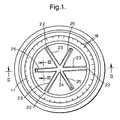
Figure 1 is a plan view of a housing for a roll ball suitable for mounting on a cosmetic bottle, without the ball in place; -
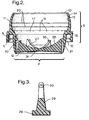
Figure 2 is a cross section view of the housing ofFigure 1 ; -
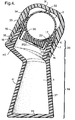
Figure 3 shows a transverse cross section through a free spoke shown inFigure 1 ; -
Figure 4 is a cross section view of a dispenser showing the housing ofFigures 1 and2 with ball in place, mounted on a bottle and having a cap screwed tight. - As illustrated in the Figures, the roll-on dispenser comprised a bottle (1), a spherical ball (2), a housing (3) for the ball (2) integrally moulded with a spider (4) and a cap (5), each of which are moulded from a thermoplastic polymer.
- The bottle (1) at its open end has an exterior annular lip (6) and annular groove (7) which snap fit with co-operating annular recess (8) and bead (9) moulding on the inward-face of an annular channel (10) formed by a bifurcated side-wall of the housing (3) dimensioned for a fluid tight fit with the bottle.
- The housing (3) comprises an annular side-wall (11) of circular lateral cross section extending between an inward end (12) and an outward end (13). The side wall (11) comprises an upper wall of tapering cross section (14) adjacent to the outward end (13) which has a concave interior face (15) having two lateral shallow beads (20) and screw threads (16) on an exterior face. Shallow annular beads (20) act as baffles which perturbs air as it flows into the bottle across the interior face of the housing during use and thereby smooth the application of liquid. The housing (3) has a thickened middle wall section having an inward facing annular sealing ring (17) into the outward (upper) edge of which are cut a multiplicity of short notches (18) equidistantly spaced around the ring extending down about 30% of the axial height of the sealing ring (17), which disrupt the flow of air across the interior face of the housing. The notches (18) are of about the same depth as and in fluid communication with a lateral annular v-shaped groove (19) is defined by an inward face of the upper wall (11) and an outward face of the ring (17), which also provides a small intermediate reservoir for liquid when the dispenser is in an upright orientation. The housing side-wall is bifurcated, providing an inner annular skirt (21) extends into the bottle (1) from the middle section of the housing (3) on which a spider (4) is mounted at three equidistant points (22) around the skirt (21), which spider (4) extends across the inward end (12) of the housing.
- The spider (4) comprises three fixed arms (23) extending from the housing skirt (21) to a hub (24) from which radiates three free spokes (25) that each are equidistant from the adjacent fixed spokes (23) and extend about 90% of the distance from the hub to the interior face of the skirt. Each respective spoke (23), (25) has respective concave faces (26) and (27) that face the ball (2) in the housing which has a similar radius of curvature to that of the ball, and is of T-shaped cross section having a strengthening base flanges (28) from which a tapering wall (29) extends upwardly. Each free spoke has at it free end a pimple (30) proud of the concave face (27) which spaces that face (27) from the ball (2) and the pimples (30), being symmetrically arranged, centre the ball. The spokes (23, 25) act as wiper blades regulating the depth of film adhering to the surface of the ball (2) as the ball rotates.
- The bottle (1) comprises a head section (36) of circular cross section having an axis inclined at an angle of about 22° to a front wall (37) of a body (38) of oval transverse cross section, which front wall is almost perpendicular to flat base (39) that permits the dispenser to stand upright. To its rearward side, head (35) has a more sharply inclined base wall (40) that extends approximately to beneath the axis of the head (36) and intersects with a sloping rear wall of the body (38) which is approximately aligned with the head axis. The head base wall (40) forms with body rear side-wall (41) a shelf to support the index finger of the hand that grasps the dispenser in a handshake, rear side-wall (41) being pressed into the palm of the hand.
- The cap (5) has a top-wall (31) having a flat outer surface enabling the dispenser to be stood in an invert orientation and a centrally located annular dependent wall (32) which can contact the ball (2) to urge it against the sealing ring (17) and a side-wall (33) having on its interior face an inward-facing annular shoulder (34) which can contact the upper wall (14 of the housing (3) and urge it against the ball (2) and on its exterior face a screw thread (35) for co-operation with a corresponding thread (16) on the bottle head (36). When the cap (5) is being fitted to the bottle (1) over housing (3), the cap rotation around the housing is converted by the co-operating screw threads (16, 35) into relative axial movement, so that the ball (2) is urged by annular wall (32) towards the bottle (1) and likewise shoulder (34) acting against upper wall (15) of the housing (3) in turn acts on ball (2). In turn, the ball (2) being in contact with the pimples (30) on the free spokes (25) flexes the spider (4) and in particular the free spokes (25) towards the interior of the bottle (1). When the cap is removed, the spider (4) and in particular the free spokes (25) return to their rest positions due to their resilient character. In that rest position, the concave face (26, 27) of the spokes (23) and (25) create with the ball outer surface an annular gap (36) of reasonably constant depth defined by the height of the pimples (30). When the dispenser is in its upright orientation and as the ball(2) rotates) it encounters the leading edges of the spokes (23) and (25) and excess liquid is wiped away leaving a film of desired thickness on the ball, the remainder falling back into the bottle (1).
Claims (30)
- An antiperspirant or deodorant composition in the form of an oil-in-water emulsion comprising:-
a continuous aqueous phase in which is dissolved or dispersed an antiperspirant or deodorant active;
a dispersed oil phase;
a nonionic emulsifier or mixture of emulsifiers; and
as an essential constituent a dispersed particulate fumed silica, in an amount of not greater than 2% by weight of the composition, wherein the fumed silica comprises hydrophobic silica. - A composition according to claim 1 in which the emulsifier or mixture comprises an alkoxylated aliphatic alcohol.
- A composition according to claim 2 in which the emulsifier or mixture comprises a ceteth, steareth or ceteareth emulsifier.
- A composition according to any preceding claim in which the emulsifier or mixture has an average degree of ethoxylation of from 5 to 12.
- A composition according to claim 4 in which the emulsifier or mixture has an average degree of ethoxylation of from 7 to 9.
- A composition according to any of claims 1 to 3 in which the emulsifier or mixture of emulsifiers has a mean HLB value of from 5 to 12.
- A composition according to claim 6 in which the emulsifier or mixture of emulsifiers has a mean HLB value of from 7 to 9.
- A composition according to any of claims 3 to 7 in which the mixture of emulsifiers comprises a mixture of a tower HLB emulsifier having a degree of ethoxylation of from 2 or 3 and a higher HLB emulsifier having a degree of ethoxylation of from 10 to 40.
- A composition according to claim 8 in which the first and second emulsifiers are present in a weight ratio of from 2:1 to 5:1.
- A composition according to any preceding claim in which the proportion of the emulsifier is from 2 to 4% by weight.
- A composition according to any preceding claim in which the oil phase comprises a plant oil.
- A composition according to claim 10 in which the plant oil is a triglyceride oil.
- A composition according to any preceding claim containing from 1 to 5% by weigh of the oil.
- A composition according to claim 12 containing from 1.5 to 4% by weight of the oil.
- A composition according to any preceding claim which contains at least 0.1% by weight of the silica.
- A composition according to claim 15 which contains at least 0.2% by weight of the silica.
- A composition according to claim 16 which contains from 0.3% by weight of the silica.
- A composition according to claim 17 which contains from 0.3 to 1.5% by weight of the silica.
- A composition according to claim 18 containing from 0.5 to 1.0% by weight of the silica.
- A composition according to any preceding claim in which the silica has an average particle size of up to 500 nm.
- A composition according to any preceding claim in which the silica is present in a weight ratio to water of from 1:275 to 1:75.
- A composition according to any preceding claim which contains from 0.3 to 1.5% by weight of a fragrance.
- A composition according to any preceding claim in which the total weight proportion of emulsifiers and oils is not greater than 7.5%.
- A composition according to claim 23 in which said weight proportion is from 5.5 to 7.0%.
- A composition according to claim 23 or 24 which contains at least one higher HLB emulsifier of >8 in a weight proportion of from 0.5 to 1.0%.
- A composition according to any preceding claim having a viscosity of from 1800 to 5500 mPA.s at 25°C.
- A process for making an antiperspirant or deodorant oil-in-water emulsion comprising as ingredients water, an antiperspirant or deodorant active, a nonionic oil-in-water emulsifier or mixture of emulsifiers, an oil and a particulate hydrophic fumed silica, which process comprises the step of mixing together the ingredients and shearing the mixture to disperse the oil as droplets within the water, characterised in that the resultant composition contains not greater than 2% by weight of a particulate hydrophobic fumed silica and is in accordance with any one preceding claim.
- A process according to claim 27 in which the mixture of ingredients is obtained by preparing an aqueous phase and an oil phase separately and mixing the two phases prior to shearing the mixture of phases.
- A process according to claim 28 employing the mixture of emulsifiers in which one having an HLB value of <6.5 is incorporated with the oil phase and a second having an HLB of >6.5 is incorporated with the aqueous phase.
- A process according to claim 28 or 29 in which the silica is incorporated with the aqueous phase.
Applications Claiming Priority (1)
| Application Number | Priority Date | Filing Date | Title |
|---|---|---|---|
| GBGB0416252.5A GB0416252D0 (en) | 2004-07-20 | 2004-07-20 | Cosmetic method and composition |
Publications (2)
| Publication Number | Publication Date |
|---|---|
| EP1621181A1 EP1621181A1 (en) | 2006-02-01 |
| EP1621181B1 true EP1621181B1 (en) | 2010-09-08 |
Family
ID=32922539
Family Applications (1)
| Application Number | Title | Priority Date | Filing Date |
|---|---|---|---|
| EP05254275A Expired - Lifetime EP1621181B1 (en) | 2004-07-20 | 2005-07-07 | Antiperspirant or deodorant emulsion comprising a nonionic emulsifier and fumed silica |
Country Status (15)
| Country | Link |
|---|---|
| US (1) | US20060018855A1 (en) |
| EP (1) | EP1621181B1 (en) |
| CN (1) | CN101022778B (en) |
| AR (1) | AR050259A1 (en) |
| AT (1) | ATE480221T1 (en) |
| AU (1) | AU2005263448B2 (en) |
| BR (1) | BRPI0502863A (en) |
| CA (1) | CA2573387A1 (en) |
| DE (1) | DE602005023386D1 (en) |
| ES (1) | ES2349787T3 (en) |
| GB (1) | GB0416252D0 (en) |
| MX (1) | MXPA05007735A (en) |
| RU (1) | RU2377972C2 (en) |
| WO (1) | WO2006007989A1 (en) |
| ZA (1) | ZA200700572B (en) |
Cited By (1)
| Publication number | Priority date | Publication date | Assignee | Title |
|---|---|---|---|---|
| US10376901B2 (en) | 2014-09-18 | 2019-08-13 | Akzo Nobel Chemicals International B.V. | Use of branched alcohols and alkoxylates thereof as secondary collectors |
Families Citing this family (17)
| Publication number | Priority date | Publication date | Assignee | Title |
|---|---|---|---|---|
| DE202004002906U1 (en) | 2004-02-25 | 2005-06-30 | Weener Plastik Gmbh & Co Kg | Packaging system and ball receiving device for a packaging system for fluids |
| US9789038B2 (en) * | 2007-02-02 | 2017-10-17 | Colgate-Palmolive Company | Antiperspirant/deodorant compositions |
| US20080187562A1 (en) * | 2007-02-02 | 2008-08-07 | Aixing Fan | Antiperspirant/Deodorant Compositions |
| US7976828B2 (en) * | 2007-02-02 | 2011-07-12 | Colgate-Palmolive Company | Antiperspirant/deodorant composition |
| EP2269565A1 (en) * | 2009-06-26 | 2011-01-05 | Unilever PLC | Antiperspirant compositions containing a fragrance oil |
| US20130221027A1 (en) * | 2010-11-03 | 2013-08-29 | Carma Laboratories, Inc. | Hand sanitizer and dispenser |
| RU2524886C1 (en) * | 2010-12-21 | 2014-08-10 | Колгейт-Палмолив Компани | Package for consumer care and hygiene agent |
| BR112017011682B1 (en) | 2014-12-29 | 2021-01-12 | Kimberly-Clark Worldwide, Inc. | cosmetic emulsion |
| US10111824B2 (en) | 2014-12-29 | 2018-10-30 | Kimberly-Clark Worldwide, Inc. | Cosmetic emulsions |
| DE102016205332A1 (en) * | 2016-03-31 | 2017-10-05 | Henkel Ag & Co. Kgaa | Antiperspirant and / or deodorant cosmetic products with low emulsifier content |
| EP3538058B1 (en) * | 2016-11-10 | 2022-01-05 | Givaudan SA | Deodorizing agent comprising zinc neodecanoate |
| MX386084B (en) | 2016-11-10 | 2025-03-18 | Givaudan Sa | DEODORANT COMPRISING ZINC CARBOXYLATE SALT AND ALUMINUM HYDROCHLORIDE. |
| US11793735B2 (en) | 2016-12-14 | 2023-10-24 | Colgate-Palmolive Company | Aluminum-free antiperspirant / deodorant compositions |
| US11191716B1 (en) * | 2018-09-20 | 2021-12-07 | Phisao | Process for preparing potent plant based cosmetic actives and application to an antiperspirant active |
| WO2021054971A1 (en) * | 2019-09-20 | 2021-03-25 | Menetrier David Benoit Camille | Process for preparing potent plant based cosmetic actives and application to an antiperspirant active |
| FR3110423B1 (en) | 2020-05-20 | 2022-11-11 | Laboratoires Lea | Sprayable body cosmetic composition with deodorant activity |
| EP4624530A1 (en) | 2024-03-28 | 2025-10-01 | Evonik Operations GmbH | High viscosity multi-modality polyamide composition |
Family Cites Families (25)
| Publication number | Priority date | Publication date | Assignee | Title |
|---|---|---|---|---|
| US108580A (en) | 1870-10-25 | Improvement in cotton-planters | ||
| US3792068A (en) | 1971-04-02 | 1974-02-12 | Procter & Gamble | Dry powder aerosol antiperspirant composition incorporating dry powder antiperspirant active complex and process for its preparation |
| JPS52155606A (en) | 1976-06-22 | 1977-12-24 | Agency Of Ind Science & Technol | Fuel composition |
| US4268499A (en) * | 1979-06-07 | 1981-05-19 | Dow Corning Corporation | Antiperspirant emulsion compositions |
| US4777035A (en) * | 1985-11-15 | 1988-10-11 | Bristol-Myers Company | Antiperspirant composition and process |
| JPH01143820A (en) | 1987-11-27 | 1989-06-06 | Shiseido Co Ltd | Deodorant |
| US5468473A (en) * | 1994-02-09 | 1995-11-21 | Innova Products, Inc. | Antiperspirant for hands and feet |
| US5534245A (en) * | 1994-02-22 | 1996-07-09 | Helene Curtis, Inc. | Antiperspirant deodorant compositions |
| US5618522A (en) * | 1995-01-20 | 1997-04-08 | The Procter & Gamble Company | Emulsion compositions |
| DE19514269A1 (en) * | 1995-04-15 | 1996-10-17 | Henkel Kgaa | Antiperspirants |
| FR2740333B1 (en) * | 1995-10-26 | 1997-12-05 | Oreal | USE OF A SUBSTANCE P ANTAGONIST IN A TOPICAL COMPOSITION AS AN ANTITRANSPIRANT AGENT |
| EP0858317A1 (en) * | 1995-10-31 | 1998-08-19 | The Procter & Gamble Company | Deodorant cosmetic stick composition |
| US5849276A (en) * | 1996-12-20 | 1998-12-15 | Procter & Gamble | Antiperspirant gel-solid stick compositions containing select nucleating agents |
| GB9724802D0 (en) * | 1997-11-24 | 1998-01-21 | Unilever Plc | Antiperspirant or deodorant compoistions |
| GB9909440D0 (en) | 1999-04-23 | 1999-06-23 | Unilever Plc | Package for dispensing a flowable cosmetic composition and product |
| DE10021056A1 (en) * | 2000-04-28 | 2001-10-31 | Henkel Kgaa | Anhydrous antiperspirants, used for application to the skin, comprises a combination of particulate polysaccharides and/or derivatives, an astringent and a lipid component all contained in a liquid carrier |
| GB0019055D0 (en) * | 2000-08-03 | 2000-09-27 | Unilever Plc | Antiperspirant and deodorant products and methods for their use |
| BR8002322U (en) | 2000-10-16 | 2002-05-28 | Filtrona Brasileira Ind E Com | Liquid deodorant storage and applicator container |
| US6511657B2 (en) * | 2001-04-20 | 2003-01-28 | Colgate-Palmolive Company | Two-phase roll-on cosmetic product |
| DE10136483A1 (en) * | 2001-07-27 | 2003-02-13 | Cognis Deutschland Gmbh | Emulsifier mixtures for use in pharmaceuticals and cosmetics, e.g. as roll-on antiperspirants, comprising fatty alcohols, ethoxylated fatty alcohols and dialkyl- or dialkenyl-ethers and/or -carbonates |
| DE10140586A1 (en) * | 2001-08-18 | 2003-03-06 | Beiersdorf Ag | O/W emulsions especially used in production of antiperspirants are stabilized by presence in the aqueous phase of ethoxylated emulsifiers and an optionally propoxylated fatty alcohol stabilizer |
| DE10140637A1 (en) * | 2001-08-18 | 2003-03-06 | Beiersdorf Ag | Emulsions with high levels of antiperspirants |
| US20030108580A1 (en) * | 2001-10-30 | 2003-06-12 | Steffen Hasenzahl | Use of granulates based on pyrogenically - produced silicon dioxide in cosmetic compositions |
| DE10156666A1 (en) | 2001-11-17 | 2003-05-28 | Cognis Deutschland Gmbh | Cosmetic antiperspirant roll-on formulations based on W / O emulsions |
| US20040141934A1 (en) * | 2003-01-17 | 2004-07-22 | Colgate-Palmolive Company | Two-phase roll-on cosmetic product |
-
2004
- 2004-07-20 GB GBGB0416252.5A patent/GB0416252D0/en not_active Ceased
-
2005
- 2005-07-07 AT AT05254275T patent/ATE480221T1/en not_active IP Right Cessation
- 2005-07-07 ZA ZA200700572A patent/ZA200700572B/en unknown
- 2005-07-07 EP EP05254275A patent/EP1621181B1/en not_active Expired - Lifetime
- 2005-07-07 ES ES05254275T patent/ES2349787T3/en not_active Expired - Lifetime
- 2005-07-07 RU RU2007106055/15A patent/RU2377972C2/en active
- 2005-07-07 DE DE602005023386T patent/DE602005023386D1/en not_active Expired - Lifetime
- 2005-07-07 CN CN2005800313128A patent/CN101022778B/en not_active Expired - Fee Related
- 2005-07-07 AU AU2005263448A patent/AU2005263448B2/en not_active Ceased
- 2005-07-07 CA CA002573387A patent/CA2573387A1/en not_active Abandoned
- 2005-07-07 WO PCT/EP2005/007375 patent/WO2006007989A1/en not_active Ceased
- 2005-07-19 US US11/184,656 patent/US20060018855A1/en not_active Abandoned
- 2005-07-20 MX MXPA05007735A patent/MXPA05007735A/en active IP Right Grant
- 2005-07-20 AR ARP050102991A patent/AR050259A1/en active IP Right Grant
- 2005-07-20 BR BRPI0502863-9A patent/BRPI0502863A/en active IP Right Grant
Cited By (1)
| Publication number | Priority date | Publication date | Assignee | Title |
|---|---|---|---|---|
| US10376901B2 (en) | 2014-09-18 | 2019-08-13 | Akzo Nobel Chemicals International B.V. | Use of branched alcohols and alkoxylates thereof as secondary collectors |
Also Published As
| Publication number | Publication date |
|---|---|
| CA2573387A1 (en) | 2006-01-26 |
| DE602005023386D1 (en) | 2010-10-21 |
| AU2005263448B2 (en) | 2009-08-13 |
| WO2006007989A1 (en) | 2006-01-26 |
| ATE480221T1 (en) | 2010-09-15 |
| RU2377972C2 (en) | 2010-01-10 |
| ES2349787T3 (en) | 2011-01-11 |
| GB0416252D0 (en) | 2004-08-25 |
| EP1621181A1 (en) | 2006-02-01 |
| AR050259A1 (en) | 2006-10-11 |
| BRPI0502863A (en) | 2006-03-07 |
| US20060018855A1 (en) | 2006-01-26 |
| MXPA05007735A (en) | 2006-02-28 |
| RU2007106055A (en) | 2008-08-27 |
| CN101022778B (en) | 2012-08-08 |
| CN101022778A (en) | 2007-08-22 |
| AU2005263448A1 (en) | 2006-01-26 |
| ZA200700572B (en) | 2008-07-30 |
Similar Documents
| Publication | Publication Date | Title |
|---|---|---|
| AU2005263448B2 (en) | Antiperspirant or deodorant emulsion comprising a nonionic emulsifier and fumed silica | |
| CA2235955C (en) | Antiperspirant or deodorant composition with silicone latex | |
| AU684130B2 (en) | Antiperspirant deodorant compositions | |
| AU760372B2 (en) | Antiperspirant formulation for porous applicator | |
| AU627435B2 (en) | Antiperspirant creams | |
| US20100104613A1 (en) | Antiperspirant or deodorant compositions | |
| EP2189149B1 (en) | Antiperspirant compositions | |
| AU2009331687B2 (en) | Antiperspirant compositions and products | |
| EP2949313A1 (en) | Deodorant antiperspirant compositions | |
| CA2444118A1 (en) | Two-phase roll-on cosmetic product | |
| WO1994024993A1 (en) | Antiperspirant compositions | |
| CA2476082A1 (en) | Antiperspirant or deodorant composition | |
| CN114302704A (en) | Cosmetic composition | |
| US20160296453A1 (en) | Deodorant antiperspirant compositions | |
| AU739446B2 (en) | Antiperspirant or deodorant composition with silicone latex | |
| JP2021080208A (en) | Cosmetic composition | |
| BRPI0502863B1 (en) | ANTIPERSPIRANT OR DEODORANT COMPOSITION, PROCESS FOR PREPARING AN ANTIPERSPIRANT OR DEODORANT WATER OIL AND METHOD FOR IMPROVING THE DRYING CHARACTERISTICS OF AN OIL IN WATER | |
| MXPA98003128A (en) | Antiperspirant or deodorant composition with silicone latex |
Legal Events
| Date | Code | Title | Description |
|---|---|---|---|
| PUAI | Public reference made under article 153(3) epc to a published international application that has entered the european phase |
Free format text: ORIGINAL CODE: 0009012 |
|
| AK | Designated contracting states |
Kind code of ref document: A1 Designated state(s): AT BE BG CH CY CZ DE DK EE ES FI FR GB GR HU IE IS IT LI LT LU LV MC NL PL PT RO SE SI SK TR |
|
| AX | Request for extension of the european patent |
Extension state: AL BA HR MK YU |
|
| 17P | Request for examination filed |
Effective date: 20060220 |
|
| RAP1 | Party data changed (applicant data changed or rights of an application transferred) |
Owner name: UNILEVER N.V. Owner name: UNILEVER PLC |
|
| AKX | Designation fees paid |
Designated state(s): AT BE BG CH CY CZ DE DK EE ES FI FR GB GR HU IE IS IT LI LT LU LV MC NL PL PT RO SE SI SK TR |
|
| RAP1 | Party data changed (applicant data changed or rights of an application transferred) |
Owner name: UNILEVER N.V. Owner name: UNILEVER PLC |
|
| GRAP | Despatch of communication of intention to grant a patent |
Free format text: ORIGINAL CODE: EPIDOSNIGR1 |
|
| GRAS | Grant fee paid |
Free format text: ORIGINAL CODE: EPIDOSNIGR3 |
|
| GRAA | (expected) grant |
Free format text: ORIGINAL CODE: 0009210 |
|
| AK | Designated contracting states |
Kind code of ref document: B1 Designated state(s): AT BE BG CH CY CZ DE DK EE ES FI FR GB GR HU IE IS IT LI LT LU LV MC NL PL PT RO SE SI SK TR |
|
| REG | Reference to a national code |
Ref country code: GB Ref legal event code: FG4D |
|
| REG | Reference to a national code |
Ref country code: CH Ref legal event code: EP |
|
| REG | Reference to a national code |
Ref country code: IE Ref legal event code: FG4D |
|
| REF | Corresponds to: |
Ref document number: 602005023386 Country of ref document: DE Date of ref document: 20101021 Kind code of ref document: P |
|
| REG | Reference to a national code |
Ref country code: SE Ref legal event code: TRGR |
|
| REG | Reference to a national code |
Ref country code: NL Ref legal event code: VDEP Effective date: 20100908 |
|
| REG | Reference to a national code |
Ref country code: ES Ref legal event code: FG2A Effective date: 20101228 |
|
| PG25 | Lapsed in a contracting state [announced via postgrant information from national office to epo] |
Ref country code: LT Free format text: LAPSE BECAUSE OF FAILURE TO SUBMIT A TRANSLATION OF THE DESCRIPTION OR TO PAY THE FEE WITHIN THE PRESCRIBED TIME-LIMIT Effective date: 20100908 Ref country code: FI Free format text: LAPSE BECAUSE OF FAILURE TO SUBMIT A TRANSLATION OF THE DESCRIPTION OR TO PAY THE FEE WITHIN THE PRESCRIBED TIME-LIMIT Effective date: 20100908 Ref country code: AT Free format text: LAPSE BECAUSE OF FAILURE TO SUBMIT A TRANSLATION OF THE DESCRIPTION OR TO PAY THE FEE WITHIN THE PRESCRIBED TIME-LIMIT Effective date: 20100908 |
|
| LTIE | Lt: invalidation of european patent or patent extension |
Effective date: 20100908 |
|
| PG25 | Lapsed in a contracting state [announced via postgrant information from national office to epo] |
Ref country code: SI Free format text: LAPSE BECAUSE OF FAILURE TO SUBMIT A TRANSLATION OF THE DESCRIPTION OR TO PAY THE FEE WITHIN THE PRESCRIBED TIME-LIMIT Effective date: 20100908 Ref country code: PL Free format text: LAPSE BECAUSE OF FAILURE TO SUBMIT A TRANSLATION OF THE DESCRIPTION OR TO PAY THE FEE WITHIN THE PRESCRIBED TIME-LIMIT Effective date: 20100908 Ref country code: CY Free format text: LAPSE BECAUSE OF FAILURE TO SUBMIT A TRANSLATION OF THE DESCRIPTION OR TO PAY THE FEE WITHIN THE PRESCRIBED TIME-LIMIT Effective date: 20100908 |
|
| PG25 | Lapsed in a contracting state [announced via postgrant information from national office to epo] |
Ref country code: GR Free format text: LAPSE BECAUSE OF FAILURE TO SUBMIT A TRANSLATION OF THE DESCRIPTION OR TO PAY THE FEE WITHIN THE PRESCRIBED TIME-LIMIT Effective date: 20101209 Ref country code: LV Free format text: LAPSE BECAUSE OF FAILURE TO SUBMIT A TRANSLATION OF THE DESCRIPTION OR TO PAY THE FEE WITHIN THE PRESCRIBED TIME-LIMIT Effective date: 20100908 Ref country code: NL Free format text: LAPSE BECAUSE OF FAILURE TO SUBMIT A TRANSLATION OF THE DESCRIPTION OR TO PAY THE FEE WITHIN THE PRESCRIBED TIME-LIMIT Effective date: 20100908 |
|
| PG25 | Lapsed in a contracting state [announced via postgrant information from national office to epo] |
Ref country code: SK Free format text: LAPSE BECAUSE OF FAILURE TO SUBMIT A TRANSLATION OF THE DESCRIPTION OR TO PAY THE FEE WITHIN THE PRESCRIBED TIME-LIMIT Effective date: 20100908 Ref country code: CZ Free format text: LAPSE BECAUSE OF FAILURE TO SUBMIT A TRANSLATION OF THE DESCRIPTION OR TO PAY THE FEE WITHIN THE PRESCRIBED TIME-LIMIT Effective date: 20100908 Ref country code: EE Free format text: LAPSE BECAUSE OF FAILURE TO SUBMIT A TRANSLATION OF THE DESCRIPTION OR TO PAY THE FEE WITHIN THE PRESCRIBED TIME-LIMIT Effective date: 20100908 Ref country code: IS Free format text: LAPSE BECAUSE OF FAILURE TO SUBMIT A TRANSLATION OF THE DESCRIPTION OR TO PAY THE FEE WITHIN THE PRESCRIBED TIME-LIMIT Effective date: 20110108 Ref country code: RO Free format text: LAPSE BECAUSE OF FAILURE TO SUBMIT A TRANSLATION OF THE DESCRIPTION OR TO PAY THE FEE WITHIN THE PRESCRIBED TIME-LIMIT Effective date: 20100908 Ref country code: PT Free format text: LAPSE BECAUSE OF FAILURE TO SUBMIT A TRANSLATION OF THE DESCRIPTION OR TO PAY THE FEE WITHIN THE PRESCRIBED TIME-LIMIT Effective date: 20110110 Ref country code: IT Free format text: LAPSE BECAUSE OF FAILURE TO SUBMIT A TRANSLATION OF THE DESCRIPTION OR TO PAY THE FEE WITHIN THE PRESCRIBED TIME-LIMIT Effective date: 20100908 |
|
| PG25 | Lapsed in a contracting state [announced via postgrant information from national office to epo] |
Ref country code: BE Free format text: LAPSE BECAUSE OF FAILURE TO SUBMIT A TRANSLATION OF THE DESCRIPTION OR TO PAY THE FEE WITHIN THE PRESCRIBED TIME-LIMIT Effective date: 20100908 |
|
| PLBE | No opposition filed within time limit |
Free format text: ORIGINAL CODE: 0009261 |
|
| STAA | Information on the status of an ep patent application or granted ep patent |
Free format text: STATUS: NO OPPOSITION FILED WITHIN TIME LIMIT |
|
| 26N | No opposition filed |
Effective date: 20110609 |
|
| PG25 | Lapsed in a contracting state [announced via postgrant information from national office to epo] |
Ref country code: DK Free format text: LAPSE BECAUSE OF FAILURE TO SUBMIT A TRANSLATION OF THE DESCRIPTION OR TO PAY THE FEE WITHIN THE PRESCRIBED TIME-LIMIT Effective date: 20100908 |
|
| REG | Reference to a national code |
Ref country code: DE Ref legal event code: R097 Ref document number: 602005023386 Country of ref document: DE Effective date: 20110609 |
|
| PG25 | Lapsed in a contracting state [announced via postgrant information from national office to epo] |
Ref country code: MC Free format text: LAPSE BECAUSE OF NON-PAYMENT OF DUE FEES Effective date: 20110731 |
|
| REG | Reference to a national code |
Ref country code: CH Ref legal event code: PL |
|
| REG | Reference to a national code |
Ref country code: IE Ref legal event code: MM4A |
|
| PG25 | Lapsed in a contracting state [announced via postgrant information from national office to epo] |
Ref country code: LI Free format text: LAPSE BECAUSE OF NON-PAYMENT OF DUE FEES Effective date: 20110731 Ref country code: CH Free format text: LAPSE BECAUSE OF NON-PAYMENT OF DUE FEES Effective date: 20110731 |
|
| PG25 | Lapsed in a contracting state [announced via postgrant information from national office to epo] |
Ref country code: IE Free format text: LAPSE BECAUSE OF NON-PAYMENT OF DUE FEES Effective date: 20110707 |
|
| PG25 | Lapsed in a contracting state [announced via postgrant information from national office to epo] |
Ref country code: LU Free format text: LAPSE BECAUSE OF NON-PAYMENT OF DUE FEES Effective date: 20110707 |
|
| PG25 | Lapsed in a contracting state [announced via postgrant information from national office to epo] |
Ref country code: TR Free format text: LAPSE BECAUSE OF FAILURE TO SUBMIT A TRANSLATION OF THE DESCRIPTION OR TO PAY THE FEE WITHIN THE PRESCRIBED TIME-LIMIT Effective date: 20100908 Ref country code: BG Free format text: LAPSE BECAUSE OF FAILURE TO SUBMIT A TRANSLATION OF THE DESCRIPTION OR TO PAY THE FEE WITHIN THE PRESCRIBED TIME-LIMIT Effective date: 20101208 |
|
| PG25 | Lapsed in a contracting state [announced via postgrant information from national office to epo] |
Ref country code: HU Free format text: LAPSE BECAUSE OF FAILURE TO SUBMIT A TRANSLATION OF THE DESCRIPTION OR TO PAY THE FEE WITHIN THE PRESCRIBED TIME-LIMIT Effective date: 20100908 |
|
| REG | Reference to a national code |
Ref country code: FR Ref legal event code: PLFP Year of fee payment: 12 |
|
| PGFP | Annual fee paid to national office [announced via postgrant information from national office to epo] |
Ref country code: ES Payment date: 20160715 Year of fee payment: 12 |
|
| REG | Reference to a national code |
Ref country code: FR Ref legal event code: PLFP Year of fee payment: 13 |
|
| REG | Reference to a national code |
Ref country code: FR Ref legal event code: PLFP Year of fee payment: 14 |
|
| REG | Reference to a national code |
Ref country code: ES Ref legal event code: FD2A Effective date: 20181106 |
|
| PG25 | Lapsed in a contracting state [announced via postgrant information from national office to epo] |
Ref country code: ES Free format text: LAPSE BECAUSE OF NON-PAYMENT OF DUE FEES Effective date: 20170708 |
|
| PGFP | Annual fee paid to national office [announced via postgrant information from national office to epo] |
Ref country code: FR Payment date: 20200721 Year of fee payment: 16 |
|
| PGFP | Annual fee paid to national office [announced via postgrant information from national office to epo] |
Ref country code: SE Payment date: 20200727 Year of fee payment: 16 |
|
| REG | Reference to a national code |
Ref country code: DE Ref legal event code: R081 Ref document number: 602005023386 Country of ref document: DE Owner name: UNILEVER GLOBAL IP LIMITED, WIRRAL, GB Free format text: FORMER OWNER: UNILEVER N.V., ROTTERDAM, NL |
|
| REG | Reference to a national code |
Ref country code: GB Ref legal event code: 732E Free format text: REGISTERED BETWEEN 20220203 AND 20220209 |
|
| PG25 | Lapsed in a contracting state [announced via postgrant information from national office to epo] |
Ref country code: SE Free format text: LAPSE BECAUSE OF NON-PAYMENT OF DUE FEES Effective date: 20210708 Ref country code: FR Free format text: LAPSE BECAUSE OF NON-PAYMENT OF DUE FEES Effective date: 20210731 |
|
| P01 | Opt-out of the competence of the unified patent court (upc) registered |
Effective date: 20230426 |
|
| PGFP | Annual fee paid to national office [announced via postgrant information from national office to epo] |
Ref country code: GB Payment date: 20230719 Year of fee payment: 19 |
|
| PGFP | Annual fee paid to national office [announced via postgrant information from national office to epo] |
Ref country code: DE Payment date: 20230719 Year of fee payment: 19 |
|
| REG | Reference to a national code |
Ref country code: DE Ref legal event code: R119 Ref document number: 602005023386 Country of ref document: DE |
|
| GBPC | Gb: european patent ceased through non-payment of renewal fee |
Effective date: 20240707 |
|
| PG25 | Lapsed in a contracting state [announced via postgrant information from national office to epo] |
Ref country code: DE Free format text: LAPSE BECAUSE OF NON-PAYMENT OF DUE FEES Effective date: 20250201 |
|
| PG25 | Lapsed in a contracting state [announced via postgrant information from national office to epo] |
Ref country code: GB Free format text: LAPSE BECAUSE OF NON-PAYMENT OF DUE FEES Effective date: 20240707 |