EP1619816A2 - Apparatus and method for measuring round trip delay time of variable bit rate multimedia data - Google Patents
Apparatus and method for measuring round trip delay time of variable bit rate multimedia data Download PDFInfo
- Publication number
- EP1619816A2 EP1619816A2 EP20050015475 EP05015475A EP1619816A2 EP 1619816 A2 EP1619816 A2 EP 1619816A2 EP 20050015475 EP20050015475 EP 20050015475 EP 05015475 A EP05015475 A EP 05015475A EP 1619816 A2 EP1619816 A2 EP 1619816A2
- Authority
- EP
- European Patent Office
- Prior art keywords
- round trip
- delay time
- trip delay
- rtt
- packet
- Prior art date
- Legal status (The legal status is an assumption and is not a legal conclusion. Google has not performed a legal analysis and makes no representation as to the accuracy of the status listed.)
- Withdrawn
Links
- 238000000034 method Methods 0.000 title claims abstract description 28
- 230000005540 biological transmission Effects 0.000 claims abstract description 73
- 230000003139 buffering effect Effects 0.000 claims description 6
- 230000006978 adaptation Effects 0.000 claims description 3
- 230000006866 deterioration Effects 0.000 abstract description 2
- 238000010276 construction Methods 0.000 description 2
- 230000001186 cumulative effect Effects 0.000 description 1
- 238000012986 modification Methods 0.000 description 1
- 230000004048 modification Effects 0.000 description 1
Images


Classifications
-
- H—ELECTRICITY
- H04—ELECTRIC COMMUNICATION TECHNIQUE
- H04L—TRANSMISSION OF DIGITAL INFORMATION, e.g. TELEGRAPHIC COMMUNICATION
- H04L1/00—Arrangements for detecting or preventing errors in the information received
- H04L1/0001—Systems modifying transmission characteristics according to link quality, e.g. power backoff
- H04L1/0002—Systems modifying transmission characteristics according to link quality, e.g. power backoff by adapting the transmission rate
-
- H—ELECTRICITY
- H04—ELECTRIC COMMUNICATION TECHNIQUE
- H04B—TRANSMISSION
- H04B17/00—Monitoring; Testing
-
- H—ELECTRICITY
- H04—ELECTRIC COMMUNICATION TECHNIQUE
- H04L—TRANSMISSION OF DIGITAL INFORMATION, e.g. TELEGRAPHIC COMMUNICATION
- H04L25/00—Baseband systems
- H04L25/02—Details ; arrangements for supplying electrical power along data transmission lines
- H04L25/0262—Arrangements for detecting the data rate of an incoming signal
-
- H—ELECTRICITY
- H04—ELECTRIC COMMUNICATION TECHNIQUE
- H04L—TRANSMISSION OF DIGITAL INFORMATION, e.g. TELEGRAPHIC COMMUNICATION
- H04L43/00—Arrangements for monitoring or testing data switching networks
- H04L43/08—Monitoring or testing based on specific metrics, e.g. QoS, energy consumption or environmental parameters
- H04L43/0852—Delays
- H04L43/0864—Round trip delays
-
- H—ELECTRICITY
- H04—ELECTRIC COMMUNICATION TECHNIQUE
- H04L—TRANSMISSION OF DIGITAL INFORMATION, e.g. TELEGRAPHIC COMMUNICATION
- H04L47/00—Traffic control in data switching networks
- H04L47/10—Flow control; Congestion control
- H04L47/26—Flow control; Congestion control using explicit feedback to the source, e.g. choke packets
- H04L47/263—Rate modification at the source after receiving feedback
-
- H—ELECTRICITY
- H04—ELECTRIC COMMUNICATION TECHNIQUE
- H04L—TRANSMISSION OF DIGITAL INFORMATION, e.g. TELEGRAPHIC COMMUNICATION
- H04L47/00—Traffic control in data switching networks
- H04L47/10—Flow control; Congestion control
- H04L47/28—Flow control; Congestion control in relation to timing considerations
- H04L47/283—Flow control; Congestion control in relation to timing considerations in response to processing delays, e.g. caused by jitter or round trip time [RTT]
-
- H—ELECTRICITY
- H04—ELECTRIC COMMUNICATION TECHNIQUE
- H04L—TRANSMISSION OF DIGITAL INFORMATION, e.g. TELEGRAPHIC COMMUNICATION
- H04L65/00—Network arrangements, protocols or services for supporting real-time applications in data packet communication
- H04L65/1066—Session management
- H04L65/1101—Session protocols
-
- H—ELECTRICITY
- H04—ELECTRIC COMMUNICATION TECHNIQUE
- H04L—TRANSMISSION OF DIGITAL INFORMATION, e.g. TELEGRAPHIC COMMUNICATION
- H04L65/00—Network arrangements, protocols or services for supporting real-time applications in data packet communication
- H04L65/60—Network streaming of media packets
- H04L65/65—Network streaming protocols, e.g. real-time transport protocol [RTP] or real-time control protocol [RTCP]
-
- H—ELECTRICITY
- H04—ELECTRIC COMMUNICATION TECHNIQUE
- H04L—TRANSMISSION OF DIGITAL INFORMATION, e.g. TELEGRAPHIC COMMUNICATION
- H04L65/00—Network arrangements, protocols or services for supporting real-time applications in data packet communication
- H04L65/60—Network streaming of media packets
- H04L65/75—Media network packet handling
- H04L65/752—Media network packet handling adapting media to network capabilities
-
- H—ELECTRICITY
- H04—ELECTRIC COMMUNICATION TECHNIQUE
- H04L—TRANSMISSION OF DIGITAL INFORMATION, e.g. TELEGRAPHIC COMMUNICATION
- H04L65/00—Network arrangements, protocols or services for supporting real-time applications in data packet communication
- H04L65/80—Responding to QoS
-
- H—ELECTRICITY
- H04—ELECTRIC COMMUNICATION TECHNIQUE
- H04N—PICTORIAL COMMUNICATION, e.g. TELEVISION
- H04N21/00—Selective content distribution, e.g. interactive television or video on demand [VOD]
- H04N21/20—Servers specifically adapted for the distribution of content, e.g. VOD servers; Operations thereof
- H04N21/23—Processing of content or additional data; Elementary server operations; Server middleware
- H04N21/24—Monitoring of processes or resources, e.g. monitoring of server load, available bandwidth, upstream requests
- H04N21/2402—Monitoring of the downstream path of the transmission network, e.g. bandwidth available
-
- H—ELECTRICITY
- H04—ELECTRIC COMMUNICATION TECHNIQUE
- H04N—PICTORIAL COMMUNICATION, e.g. TELEVISION
- H04N21/00—Selective content distribution, e.g. interactive television or video on demand [VOD]
- H04N21/20—Servers specifically adapted for the distribution of content, e.g. VOD servers; Operations thereof
- H04N21/23—Processing of content or additional data; Elementary server operations; Server middleware
- H04N21/24—Monitoring of processes or resources, e.g. monitoring of server load, available bandwidth, upstream requests
- H04N21/2408—Monitoring of the upstream path of the transmission network, e.g. client requests
-
- H—ELECTRICITY
- H04—ELECTRIC COMMUNICATION TECHNIQUE
- H04N—PICTORIAL COMMUNICATION, e.g. TELEVISION
- H04N21/00—Selective content distribution, e.g. interactive television or video on demand [VOD]
- H04N21/60—Network structure or processes for video distribution between server and client or between remote clients; Control signalling between clients, server and network components; Transmission of management data between server and client, e.g. sending from server to client commands for recording incoming content stream; Communication details between server and client
- H04N21/63—Control signaling related to video distribution between client, server and network components; Network processes for video distribution between server and clients or between remote clients, e.g. transmitting basic layer and enhancement layers over different transmission paths, setting up a peer-to-peer communication via Internet between remote STB's; Communication protocols; Addressing
- H04N21/637—Control signals issued by the client directed to the server or network components
- H04N21/6377—Control signals issued by the client directed to the server or network components directed to server
-
- H—ELECTRICITY
- H04—ELECTRIC COMMUNICATION TECHNIQUE
- H04N—PICTORIAL COMMUNICATION, e.g. TELEVISION
- H04N21/00—Selective content distribution, e.g. interactive television or video on demand [VOD]
- H04N21/60—Network structure or processes for video distribution between server and client or between remote clients; Control signalling between clients, server and network components; Transmission of management data between server and client, e.g. sending from server to client commands for recording incoming content stream; Communication details between server and client
- H04N21/65—Transmission of management data between client and server
- H04N21/658—Transmission by the client directed to the server
-
- H—ELECTRICITY
- H04—ELECTRIC COMMUNICATION TECHNIQUE
- H04W—WIRELESS COMMUNICATION NETWORKS
- H04W24/00—Supervisory, monitoring or testing arrangements
- H04W24/02—Arrangements for optimising operational condition
-
- H—ELECTRICITY
- H04—ELECTRIC COMMUNICATION TECHNIQUE
- H04L—TRANSMISSION OF DIGITAL INFORMATION, e.g. TELEGRAPHIC COMMUNICATION
- H04L1/00—Arrangements for detecting or preventing errors in the information received
- H04L1/0001—Systems modifying transmission characteristics according to link quality, e.g. power backoff
- H04L1/0015—Systems modifying transmission characteristics according to link quality, e.g. power backoff characterised by the adaptation strategy
- H04L1/0017—Systems modifying transmission characteristics according to link quality, e.g. power backoff characterised by the adaptation strategy where the mode-switching is based on Quality of Service requirement
Definitions
- the present invention relates to an apparatus and method for measuring a round trip delay time (RTT) used for effectively calculating an effective transmission rate at the time of sending a variable bit rate (VBR) multimedia data through a radio (wireless) network or an Internet network.
- RTT round trip delay time
- VBR variable bit rate
- IP Internet protocol
- a network layer on current wired/wireless IP networks does not provide appropriate functions for satisfying quality of services (QoS) which are required for a video transmission. Therefore, the QoS must be ensured by a higher layer of the network layer.
- QoS quality of services
- RTP real-time transport protocol
- RTCP real-time transport control protocol
- the RTCP provides to a sender (sending point) information of a current network condition and a reception QoS, the information provided can be used such that the sender automatically adapts to the network condition and the reception QoS to regulate a transmission rate, or a network manager measures a multicast performance.
- Fig. 1 shows a structure of a sender report (SR) packet of the RTCP
- Fig. 2 shows a structure of a receiver report (RR) packet of the RTCP.
- the SR packet is sent from the sender (sending point) to the receiver (receiving point) when multimedia data is sent.
- the SR packet can be used when the sender performs sending and receiving at the same time or only sending.
- the RR packet is sent from the receiver to the sender when the multimedia data is received.
- the SR packet and the RR packet include reception report blocks, respectively, each of which includes statistical information of RTP packets sent by one sender and feedbacks the statistical information from the receiver to the one sender.
- the SR packet further includes a packet length, sender (sending point) information, sending time information, sender's packet count, and sender's octet count.
- Each of the reception report blocks further includes information of such fraction lost, a last SR timestamp (LSR) and a delay since last SR (DLSR).
- the fraction lost denotes a packet loss rate
- the LSR denotes 32 bits which are parts of 64 bits of a network time protocol (NTP) timestamp of a currently-received RTCP SR packet
- the DLSR denotes a delay time since the last SR packet. That is, the DLSR denotes, by 1/2 32 (1/65536) second unit, the delay time until the reception report block of the RR is sent after the last SR packet of the sender is received.
- the time information associated with the packet sending such as the LSR, the DLSR may be an important clue to estimate a transmission rate of the multimedia data to be transmitted later by the sender.
- the RTT is used, and the RTT is measured by the SR and RR of the RTCP.
- the sender sends the SR which includes the NTP timestamp value when it is sent.
- the receiver remembers the time of having received the SR.
- the receiver records the time interval from the time of having received the SR and to the time of sending the RR in a DLSR field of the RR packet.
- the receiver records information of partial bits of the NTP timestamp value of the received SR in an LSR field of the RR packet, and thereafter sends the RR packet to the sender.
- the sender checks its reception time of the RR packet. Thus, the sender subtracts the received DLSR field value and LSR field value from its reception time of the RR packet so as to measure the RTT.
- the RTT is an instant RTT obtained from the RTCP SR packet information or the RTCP RR packet information, it is sensitive to an instantaneous change of a channel circumstance. Therefore, when the effective transmission rate is estimated by adopting the RTT which is drastically changed according to the instantaneous change of the channel circumstance, the effective transmission rate also has severe fluctuation.
- the VBR multimedia sending system such as a VBR video sending system
- the drastic fluctuation of the effective transmission rate causes a severe variation of image quality or sound quality. As a result, a great load is generated in controlling a buffer for a network transmission, and a multimedia quality that a user feels is lowered.
- an object of the present invention is to provide an apparatus for measuring a round trip delay time (RTT) of variable bit rate (VBR) multimedia data capable of obtaining an effective transmission rate gradually reflecting a drastic change of a channel circumstance and preventing a multimedia reception quality from being lowered due to estimation of the effective transmission rate which is gradually fluctuated, by measuring round trip delay time information using a moving average calculation and estimating the effective transmission rate using the measured moving average round trip delay time information, and a method thereof.
- RTT round trip delay time
- VBR variable bit rate
- an apparatus for measuring a round trip delay time of variable bit rate (VBR) multimedia data comprising: a video encoder for encoding multimedia data; a transmission rate controller for controlling the transmission rate of the encoded multimedia data according to an effective transmission rate; a first sending/receiving unit for sending the multimedia data through a channel allocated; a round trip delay time (RTT) measuring unit for measuring an instant round trip delay time using a receiver report (RR) packet received through the first sending/receiving unit; a moving average calculating unit for calculating a moving average round trip delay time using the measured instant round trip delay time; and a transmission rate estimating unit for estimating the effective transmission rate using the calculated moving average round trip delay time and providing the estimated effective transmission rate to the transmission rate controller.
- VBR variable bit rate
- VBR variable bit rate
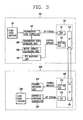
- Fig. 3 shows a construction of an apparatus for measuring a round trip delay time of variable bit rate (VBR) multimedia data according to the present invention.
- the apparatus for measuring the round trip delay time of the VBR multimedia data according to the present invention includes a real-time video sender 100 and a real-time video receiver 200.
- the real-time video sender 100 and the real-time video receiver 200 can be connected to each other through a radio (wireless) network and through a wired network.
- the real-time video sender 100 includes: a video encoder 110 for encoding multimedia data; a transmission rate controller 120 for controlling the encoded multimedia data according to an effective transmission rate; a sending/receiving unit 130 for sending the multimedia data to the real-time video receiver 200 via a channel allocated; a round trip delay time measuring unit 140 for measuring an instant round trip delay time using a real-time transport control protocol (RTCP) receiver report (RR) packet received through the sending/receiving unit 130; a moving average calculating unit 150 for calculating a moving average round trip delay time using the measured instant round trip delay time; and a transmission rate estimating unit 160 for estimating the effective transmission rate of multimedia data to be next sent using the calculated moving average round trip delay time and providing the estimated effective transmission rate to the transmission rate controller 120.
- RTCP real-time transport control protocol
- RR real-time transport control protocol
- the real-time video receiver 200 includes: a sending/receiving unit 210 for receiving the multimedia data sent by the real-time video sender 100 via the allocated channel; a channel reporting unit 240 for checking a state of the allocated channel using an RTCP (Real-time Transport Control Protocol) SR (Sender Report) packet having received by the sending/receiving unit 210 to generate an RTCP RR (Receiver Report) packet, and sending the RTCP RR packet to the real-time vide sender 100 by the sending/receiving unit 210; a buffer/buffering controller 220 for buffering the multimedia data received by the sending/receiving unit 210; and a decoder 230 for decoding the multimedia data having passed through the buffer/buffering controller 220.
- RTCP Real-time Transport Control Protocol
- SR Send Report
- the sending/receiving units 130 and 210 include an Internet protocol (IP), a transmission control protocol (TCP), and a user datagram protocol (UDP), respectively.
- IP Internet protocol
- TCP transmission control protocol
- UDP user datagram protocol
- Fig. 4 is a flow chart showing sequential steps of a method for measuring a round trip delay time of VBR multimedia data according to the present invention.
- the real-time video sender 100 sends the multimedia data at the measured effective transmission rate (S13).
- the real-time video sender 100 then generates sender report (SR) information and sends the information (S15).
- SR sender report
- the real-time video receiver 200 receives the multimedia data sent by the real-time video sender 100 via a channel allocated.
- the channel reporting unit 240 of the real-time video receiver 200 generates the RTCP RR packet to report information of the channel status and sends the RTCP RR packet to the real-time video sender 100 via the channel.
- the RTCP RR packet includes characteristic information like an RTCP packet length, a sender (sending point), a fraction lost, a cumulative number of packets lost, an extended highest sequence number received, a last SR (LSR), a delay since last SR (DLSR), and so on.
- characteristic information like an RTCP packet length, a sender (sending point), a fraction lost, a cumulative number of packets lost, an extended highest sequence number received, a last SR (LSR), a delay since last SR (DLSR), and so on.
- the round trip delay time (RTT) measuring unit 140 of the real-time video sender 100 measures an instant RTT by analyzing the RTCP RR packet (S19). Afterwards, the moving average calculating unit 150 of the real-time video sender 100 calculates a current moving average RTT using the instant RTT and a previous moving average RTT (refer to Equation 1 which will be explained later) (S21). The transmission rate estimating unit 160 of the real-time video sender 100 estimates the effective transmission rate using the measured moving average RTT and information such as a packet loss rate and the packet length (refer to Equation 2 which will be explained later) (S23).
- RTT round trip delay time
- the transmission rate estimating unit 160 provides the estimated effective transmission rate to the transmission rate controller 120. If multimedia data to be sent further exists (S25), the transmission rate controller 120 controls the transmission rate of the multimedia data according to the effective transmission rate provided by the transmission rate estimating unit 160 (S13).
- RTT ( t ) ( 1 - j ) ⁇ RTT ( t - 1 ) + j ⁇ RTT new
- the RTT new denotes a new instant RTT
- the RTT(t) denotes an RTT value obtained by calculating the RTT new and thereafter calculating the moving average for the RTT new at time t.
- the j denotes a weight for determining an adaptation speed with respect to the network state.
- the effective transmission rate can rapidly be adapted to a new network state, which may cause a drastic fluctuation of the effective transmission rate.
- the effective transmission rate is tolerant to the variation of the network state. Establishing the j value must be performed by considering a relationship between an adaptability according to the fluctuation of the effective transmission rate of the network and a drastic variation of multimedia quality.
- the moving average RTT RTT(t) at the current time t is obtained by calculating the new instant RTT RTT new , and thereafter calculating the measured instant RTT and the moving average RTT RTT(t-1) of the previous time t-1.
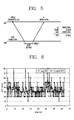
- Fig. 5 shows the method for measuring the instant RTT by the RTT measuring unit 140.
- the real-time video sender 100 records a sending time at the time of sending the SR packet, namely, an NTP (Network Time Protocol) timestamp value (e.g., 302992016.125) in the SR packet and then sends the SR packet.
- the sending time of the SR packet is indicated with a real number portion and a decimal portion on the basis of a decimal point.
- Upper 32 bits an NTP timestamp (upper 32-bit) field in Fig. 1) are allocated to the real number portion and lower 32 bits (an NTP timestamp (lower 32-bit) field) are allocated to the decimal portion.
- the channel reporting unit 240 of the real-time video receiver 200 receives the SR packet, stores the reception time thereof, and records the time interval from the reception time up to sending the RR packet in the DLSR field of the RR packet.
- the channel reporting unit 240 records information of partial bits of the NTP timestamp value of the received SR packet in the LSR field of the RR packet and then sends the RR packet to the real-time video sender 100. That is, the channel reporting unit 240 records time information, which is indicated by 16 bits of the upper 32 bits of the NTP timestamp and 16 bits of the lower 32 bits of the NTP timestamp, in the LSR field of the RR packet.
- the NTP timestamp value for instance, is 302991016.125, the value of the LSR field is 46853.125 seconds.
- the RTT measuring unit 140 of the real-time video sender 100 checks the reception time A of the RR packet. The RRT measuring unit 140 then calculates the instant RRT by subtracting the DLSR field value and the LSR field value of the RR packet from the reception time A. If the reception time A, for instance, is 46864.500 seconds, the instant RTT, as shown in Fig. 5, is 6.125 seconds.
- the RTT measuring unit 140 provides the calculated instant RTT to the moving average calculating unit 150.
- the transmission rate estimating unit 160 estimates the effective transmission rate using a method such as Equation 2.
- R ( t ) 1.22 ⁇ s RTT ( t ) ⁇ p ( t )
- the R(t) denotes the effective transmission rate
- the p(t) denotes the packet loss rate, which is obtained by a fraction lost field of the RR packet.
- the RRT(t) as a value measured by the same method as Equation 1 by the moving average calculating unit 150, denotes the moving average RTT.
- the 's' denotes a packet size.
- Fig. 6 is a graph showing a fluctuation range, respectively, of the instant RTT and the moving average RTT.
- the instant RTT obtained by a typical RTT measuring method is updated whenever the RTCP packet is received, regardless of the previous value, so as to be very fluctuant.
- the moving average RTT according to the present invention is operated as a moving average value so as to be gradually fluctuated.
- an average value of network state information is used to estimate the effective transmission rate so that the transmission rate can gradually react to the instantaneous change of the network state.
- the effective transmission rate which gradually reflects a drastic change of the channel circumstance can be obtained.
- the effective transmission rate which is gradually fluctuated is estimated, the transmission rate of the multimedia data would not severely be fluctuated. As a result, deterioration of the multimedia reception quality caused by the drastic change of image quality and sound quality can be reduced.
Landscapes
- Engineering & Computer Science (AREA)
- Signal Processing (AREA)
- Multimedia (AREA)
- Computer Networks & Wireless Communication (AREA)
- Quality & Reliability (AREA)
- Power Engineering (AREA)
- Environmental & Geological Engineering (AREA)
- General Business, Economics & Management (AREA)
- Business, Economics & Management (AREA)
- Physics & Mathematics (AREA)
- Electromagnetism (AREA)
- Data Exchanges In Wide-Area Networks (AREA)
- Two-Way Televisions, Distribution Of Moving Picture Or The Like (AREA)
- Mobile Radio Communication Systems (AREA)
Abstract
Description
- The present invention relates to an apparatus and method for measuring a round trip delay time (RTT) used for effectively calculating an effective transmission rate at the time of sending a variable bit rate (VBR) multimedia data through a radio (wireless) network or an Internet network.
- In general, in order to send real-time video (or multimedia data) through wired/wireless Internet protocol (IP) networks, conditions such as a sufficient bandwidth of a channel, a less delay, a less packet loss, and the like must be satisfied. However, a network layer on current wired/wireless IP networks does not provide appropriate functions for satisfying quality of services (QoS) which are required for a video transmission. Therefore, the QoS must be ensured by a higher layer of the network layer. For this, a real-time transport protocol (RTP) and a real-time transport control protocol (RTCP) which are operated on a transport layer have been proposed. By using the RTP and RTCP, characteristics according to time limit can be considered, and it is possible to adaptively deal with a loss occurring within a network. Especially, because the RTCP provides to a sender (sending point) information of a current network condition and a reception QoS, the information provided can be used such that the sender automatically adapts to the network condition and the reception QoS to regulate a transmission rate, or a network manager measures a multicast performance.
- Fig. 1 shows a structure of a sender report (SR) packet of the RTCP, and Fig. 2 shows a structure of a receiver report (RR) packet of the RTCP. The SR packet is sent from the sender (sending point) to the receiver (receiving point) when multimedia data is sent. The SR packet can be used when the sender performs sending and receiving at the same time or only sending. The RR packet is sent from the receiver to the sender when the multimedia data is received.
- The SR packet and the RR packet include reception report blocks, respectively, each of which includes statistical information of RTP packets sent by one sender and feedbacks the statistical information from the receiver to the one sender. The SR packet further includes a packet length, sender (sending point) information, sending time information, sender's packet count, and sender's octet count.
- Each of the reception report blocks further includes information of such fraction lost, a last SR timestamp (LSR) and a delay since last SR (DLSR). The fraction lost denotes a packet loss rate, the LSR denotes 32 bits which are parts of 64 bits of a network time protocol (NTP) timestamp of a currently-received RTCP SR packet, and the DLSR denotes a delay time since the last SR packet. That is, the DLSR denotes, by 1/232 (1/65536) second unit, the delay time until the reception report block of the RR is sent after the last SR packet of the sender is received. The time information associated with the packet sending such as the LSR, the DLSR may be an important clue to estimate a transmission rate of the multimedia data to be transmitted later by the sender.
- That is, in a typical method for estimating an effective transmission rate using status information of a network, the RTT is used, and the RTT is measured by the SR and RR of the RTCP.
- A typical method for measuring the RTT will now be explained. The sender sends the SR which includes the NTP timestamp value when it is sent. The receiver remembers the time of having received the SR. As a result, when the receiver sends the RR to the sender, the receiver records the time interval from the time of having received the SR and to the time of sending the RR in a DLSR field of the RR packet. The receiver records information of partial bits of the NTP timestamp value of the received SR in an LSR field of the RR packet, and thereafter sends the RR packet to the sender. The sender checks its reception time of the RR packet. Thus, the sender subtracts the received DLSR field value and LSR field value from its reception time of the RR packet so as to measure the RTT.
- According to the method aforementioned, because the RTT is an instant RTT obtained from the RTCP SR packet information or the RTCP RR packet information, it is sensitive to an instantaneous change of a channel circumstance. Therefore, when the effective transmission rate is estimated by adopting the RTT which is drastically changed according to the instantaneous change of the channel circumstance, the effective transmission rate also has severe fluctuation. In the VBR multimedia sending system such as a VBR video sending system, the drastic fluctuation of the effective transmission rate causes a severe variation of image quality or sound quality. As a result, a great load is generated in controlling a buffer for a network transmission, and a multimedia quality that a user feels is lowered.
- Therefore, in order to solve those problems, an object of the present invention is to provide an apparatus for measuring a round trip delay time (RTT) of variable bit rate (VBR) multimedia data capable of obtaining an effective transmission rate gradually reflecting a drastic change of a channel circumstance and preventing a multimedia reception quality from being lowered due to estimation of the effective transmission rate which is gradually fluctuated, by measuring round trip delay time information using a moving average calculation and estimating the effective transmission rate using the measured moving average round trip delay time information, and a method thereof.
- To achieve these and other advantages and in accordance with the purpose of the present invention, as embodied and broadly described herein, there is provided an apparatus for measuring a round trip delay time of variable bit rate (VBR) multimedia data comprising: a video encoder for encoding multimedia data; a transmission rate controller for controlling the transmission rate of the encoded multimedia data according to an effective transmission rate; a first sending/receiving unit for sending the multimedia data through a channel allocated; a round trip delay time (RTT) measuring unit for measuring an instant round trip delay time using a receiver report (RR) packet received through the first sending/receiving unit; a moving average calculating unit for calculating a moving average round trip delay time using the measured instant round trip delay time; and a transmission rate estimating unit for estimating the effective transmission rate using the calculated moving average round trip delay time and providing the estimated effective transmission rate to the transmission rate controller.
- To achieve these and other advantages and in accordance with the purpose of the present invention, as embodied and broadly described herein, there is provided a method for measuring a round trip delay time of variable bit rate (VBR) multimedia data comprising: receiving a receiver report (RR) packet of a real-time transport control protocol (RTCP) from a receiving side; measuring a moving average round trip delay time using the RR packet; and estimating an effective transmission rate using the measured moving average round trip delay time.
- The foregoing and other objects, features, aspects and advantages of the present invention will become more apparent from the following detailed description of the present invention when taken in conjunction with the accompanying drawings.
- The accompanying drawings, which are included to provide a further understanding of the invention and are incorporated in and constitute a part of this specification, illustrate embodiments of the invention and together with the description serve to explain the principles of the invention.
- In the drawings:
- Fig. 1 shows a structure of a typical RTCP sender report (SR) packet;
- Fig. 2 shows a structure of a typical RTCP receiver report (RR) packet;
- Fig. 3 shows a construction of an apparatus for measuring a round trip delay time of variable bit rate (VBR) multimedia data according to the present invention;
- Fig. 4 is a flow chart showing sequential steps of a method for measuring a round trip delay time of variable bit rate (VBR) multimedia data according to the present invention;
- Fig. 5 shows a method for measuring an instant round trip delay time by a round trip delay time measuring unit; and
- Fig. 6 is a graph showing a fluctuation range, respectively, of an instant round trip delay time and a moving average round trip delay time.
- Reference will now be made in detail to the preferred embodiments of the present invention, examples of which are illustrated in the accompanying drawings.
- Fig. 3 shows a construction of an apparatus for measuring a round trip delay time of variable bit rate (VBR) multimedia data according to the present invention. As shown in the drawing, the apparatus for measuring the round trip delay time of the VBR multimedia data according to the present invention includes a real-
time video sender 100 and a real-time video receiver 200. The real-time video sender 100 and the real-time video receiver 200 can be connected to each other through a radio (wireless) network and through a wired network. - The real-
time video sender 100 includes: avideo encoder 110 for encoding multimedia data; atransmission rate controller 120 for controlling the encoded multimedia data according to an effective transmission rate; a sending/receivingunit 130 for sending the multimedia data to the real-time video receiver 200 via a channel allocated; a round trip delaytime measuring unit 140 for measuring an instant round trip delay time using a real-time transport control protocol (RTCP) receiver report (RR) packet received through the sending/receiving unit 130; a moving average calculatingunit 150 for calculating a moving average round trip delay time using the measured instant round trip delay time; and a transmissionrate estimating unit 160 for estimating the effective transmission rate of multimedia data to be next sent using the calculated moving average round trip delay time and providing the estimated effective transmission rate to thetransmission rate controller 120. - The real-
time video receiver 200 includes: a sending/receivingunit 210 for receiving the multimedia data sent by the real-time video sender 100 via the allocated channel; achannel reporting unit 240 for checking a state of the allocated channel using an RTCP (Real-time Transport Control Protocol) SR (Sender Report) packet having received by the sending/receivingunit 210 to generate an RTCP RR (Receiver Report) packet, and sending the RTCP RR packet to the real-time vide sender 100 by the sending/receivingunit 210; a buffer/buffering controller 220 for buffering the multimedia data received by the sending/receivingunit 210; and adecoder 230 for decoding the multimedia data having passed through the buffer/buffering controller 220. - The sending/
receiving units - An operation of such configured apparatus for measuring the round trip delay time of the VBR multimedia data according to the present invention will now be explained.
- Fig. 4 is a flow chart showing sequential steps of a method for measuring a round trip delay time of VBR multimedia data according to the present invention.
- When multimedia data to be sent exists (S11), the real-
time video sender 100 sends the multimedia data at the measured effective transmission rate (S13). The real-time video sender 100 then generates sender report (SR) information and sends the information (S15). - The real-
time video receiver 200 receives the multimedia data sent by the real-time video sender 100 via a channel allocated. The channel reportingunit 240 of the real-time video receiver 200 generates the RTCP RR packet to report information of the channel status and sends the RTCP RR packet to the real-time video sender 100 via the channel. - The RTCP RR packet includes characteristic information like an RTCP packet length, a sender (sending point), a fraction lost, a cumulative number of packets lost, an extended highest sequence number received, a last SR (LSR), a delay since last SR (DLSR), and so on.
- Once receiving the RTCP RR packet from the real-time video receiver 200 (S17), the round trip delay time (RTT) measuring
unit 140 of the real-time video sender 100 measures an instant RTT by analyzing the RTCP RR packet (S19). Afterwards, the movingaverage calculating unit 150 of the real-time video sender 100 calculates a current moving average RTT using the instant RTT and a previous moving average RTT (refer toEquation 1 which will be explained later) (S21). The transmissionrate estimating unit 160 of the real-time video sender 100 estimates the effective transmission rate using the measured moving average RTT and information such as a packet loss rate and the packet length (refer toEquation 2 which will be explained later) (S23). - The transmission
rate estimating unit 160 provides the estimated effective transmission rate to thetransmission rate controller 120. If multimedia data to be sent further exists (S25), thetransmission rate controller 120 controls the transmission rate of the multimedia data according to the effective transmission rate provided by the transmission rate estimating unit 160 (S13). - An explanation will now be provided for a method for measuring the moving average RTT in order for the real-
time video sender 100 to estimate the effective transmission rate which is gradually fluctuated even by an instantaneous change of a network state. - The method for measuring the moving average RTT according to the present invention may be the same as shown in
Equation 1.
- The RTTnew denotes a new instant RTT, and the RTT(t) denotes an RTT value obtained by calculating the RTTnew and thereafter calculating the moving average for the RTTnew at time t. The j denotes a weight for determining an adaptation speed with respect to the network state. When the j value is great, the effective transmission rate can rapidly be adapted to a new network state, which may cause a drastic fluctuation of the effective transmission rate. Conversely, when the j value is small, the effective transmission rate is tolerant to the variation of the network state. Establishing the j value must be performed by considering a relationship between an adaptability according to the fluctuation of the effective transmission rate of the network and a drastic variation of multimedia quality. As a result of an experiment, when the j value, for instance, is 0.1 ~ 0.2, functions of the moving
average calculating unit 150 and the transmissionrate estimating unit 160 are excellent. That is, the new instant RTT RTTnew has greater weight than the moving average RTT RTT(t-1) of the previous time t-1 does, the transmission rate can gradually react even to a great instantaneous change of the network. - The moving average RTT RTT(t) at the current time t is obtained by calculating the new instant RTT RTTnew, and thereafter calculating the measured instant RTT and the moving average RTT RTT(t-1) of the previous time t-1.
- The method for calculating the instant RTT RTTnew will now be explained.
- Fig. 5 shows the method for measuring the instant RTT by the
RTT measuring unit 140. - The real-
time video sender 100 records a sending time at the time of sending the SR packet, namely, an NTP (Network Time Protocol) timestamp value (e.g., 302992016.125) in the SR packet and then sends the SR packet. The sending time of the SR packet is indicated with a real number portion and a decimal portion on the basis of a decimal point. Upper 32 bits (an NTP timestamp (upper 32-bit) field in Fig. 1) are allocated to the real number portion and lower 32 bits (an NTP timestamp (lower 32-bit) field) are allocated to the decimal portion. - The
channel reporting unit 240 of the real-time video receiver 200 receives the SR packet, stores the reception time thereof, and records the time interval from the reception time up to sending the RR packet in the DLSR field of the RR packet. Thechannel reporting unit 240 records information of partial bits of the NTP timestamp value of the received SR packet in the LSR field of the RR packet and then sends the RR packet to the real-time video sender 100. That is, thechannel reporting unit 240 records time information, which is indicated by 16 bits of the upper 32 bits of the NTP timestamp and 16 bits of the lower 32 bits of the NTP timestamp, in the LSR field of the RR packet. When the NTP timestamp value, for instance, is 302991016.125, the value of the LSR field is 46853.125 seconds. - When the RR packet is received from the real-
time video receiver 200, theRTT measuring unit 140 of the real-time video sender 100 checks the reception time A of the RR packet. TheRRT measuring unit 140 then calculates the instant RRT by subtracting the DLSR field value and the LSR field value of the RR packet from the reception time A. If the reception time A, for instance, is 46864.500 seconds, the instant RTT, as shown in Fig. 5, is 6.125 seconds. - The
RTT measuring unit 140 provides the calculated instant RTT to the movingaverage calculating unit 150. - When the moving average RTT is measured according to
Equation 1, the transmissionrate estimating unit 160 estimates the effective transmission rate using a method such asEquation 2.
the R(t) denotes the effective transmission rate, the p(t) denotes the packet loss rate, which is obtained by a fraction lost field of the RR packet. The RRT(t), as a value measured by the same method asEquation 1 by the movingaverage calculating unit 150, denotes the moving average RTT. The 's' denotes a packet size. - Fig. 6 is a graph showing a fluctuation range, respectively, of the instant RTT and the moving average RTT. The instant RTT obtained by a typical RTT measuring method is updated whenever the RTCP packet is received, regardless of the previous value, so as to be very fluctuant. However, the moving average RTT according to the present invention is operated as a moving average value so as to be gradually fluctuated.
- Thus, in the apparatus for measuring the RTT of the VBR multimedia data according to the present invention, an average value of network state information is used to estimate the effective transmission rate so that the transmission rate can gradually react to the instantaneous change of the network state.
- As aforementioned, in the present invention, as the RTT information is measured by the moving average calculation and the effective transmission rate can be estimated by using the measured moving average RTT information, the effective transmission rate which gradually reflects a drastic change of the channel circumstance can be obtained. In addition, as the effective transmission rate which is gradually fluctuated is estimated, the transmission rate of the multimedia data would not severely be fluctuated. As a result, deterioration of the multimedia reception quality caused by the drastic change of image quality and sound quality can be reduced.
- As the present invention may be embodied in several forms without departing from the spirit or essential characteristics thereof, it should also be understood that the above-described embodiments are not limited by any of the details of the foregoing description, unless otherwise specified, but rather should be construed broadly within its spirit and scope as defined in the appended claims, and therefore all changes and modifications that fall within the metes and bounds of the claims, or equivalence of such metes and bounds are therefore intended to be embraced by the appended claims.
Claims (16)
- An apparatus for measuring a round trip delay time of variable bit rate multimedia data in a variable bit rate multimedia data transmission system, comprising:a video encoder for encoding multimedia data;a transmission rate controller for controlling the transmission rate of the encoded multimedia data according to an effective transmission rate;a first sending/receiving unit for sending the multimedia data via a channel allocated;a round trip delay time (RTT) measuring unit for measuring an instant round trip delay time using a receiver report (RR) packet received by the first sending/receiving unit;a moving average calculating unit for calculating a moving average round trip delay time using the measured instant round trip delay time; anda transmission rate estimating unit for estimating the effective transmission rate using the calculated moving average round trip delay time and providing the estimated effective transmission rate to the transmission rate controller.
- The apparatus of claim 1, further comprising:a second sending/receiving unit for receiving the multimedia data via the allocated channel; anda channel reporting unit for checking a state of the allocated channel using the sender report (SR) packet having received by the second sending/receiving unit to generate the receiver report (RR) packet, and sending the RR packet by the second sending/receiving unit.
- The apparatus of claim 2, further comprising:a buffer/buffering controller for buffering the multimedia data received by the second sending/receiving unit; anda video decoder for decoding the multimedia data having passed through the buffer/buffering controller.
- The apparatus of claim 1, wherein the moving average calculating unit measures the moving average round trip delay time by Equation as below,

wherein, the RTTnew denotes a new instant round trip delay time, the RTT(t) denotes a round trip delay time value obtained by calculating the RTTnew and thereafter calculating the moving average of the RTTnew at time t, and the j denotes a weight for determining an adaptation speed with respect to the network state. - The apparatus of claim 4, wherein the weight is established such that the moving average round trip delay time of the previous time has a greater weight than the new instant round trip delay time does.
- The apparatus of claim 1, wherein the round trip delay time measuring unit measures the instant round trip delay time by calculating a reception time of the receiver report packet, and a last SR field value and a delay since last SR (DLSR) field value of the receiver report packet.
- The apparatus of claim 1, wherein the transmission rate estimating unit estimates the effective transmission rate according to Equation as below,

wherein the R(t) denotes the effective transmission rate, the p(t) denotes a packet loss rate, the RTT(t) denotes the moving average round trip delay time, and s denotes a packet size. - A method for measuring a round trip delay time of variable bit rate multimedia data in a variable bit rate multimedia data transmission system, comprising:receiving a receiver report packet of a real-time transport control protocol (RTCP) from a receiving side;measuring a moving average round trip delay time using the receiver report packet; andestimating an effective transmission rate using the measured moving average round trip delay time.
- The method of claim 8, wherein the measuring step includes:measuring a new instant round trip delay time using the receiver report packet; andmeasuring a current moving average round trip delay time by calculating the new instant round trip delay time and a previous moving average round trip delay time.
- The method of claim 9, wherein the current moving average round trip delay time is measured according to Equation as below,

wherein the RTTnew denotes the new instant round trip delay time, the RTT(t) denotes a moving average round trip delay time calculated at time t, the RTT(t-1) denotes a moving average round trip delay time calculated at time t-1, and the j denotes a weight for determining an adaptation speed with respect to the network state. - The method of claim 10, wherein the weight is established such that the previous moving average round trip delay time (RTT(t-1)) has a greater weight than the new instant round trip delay time (RTTnew) does.
- The method of claim 9, wherein in the method for measuring the instant round trip delay time, the instant round trip delay time is measured by calculating the reception time of the receiver report packet, and the a last SR (LSR) field value and a delay since last SR (DLSR) field value of the receiver report packet.
- The method of claim 12, wherein the DLSR field value denotes the time interval from a time when the receiving side receives the RTCP sender report (SR) packet up to a time for sending the receiver report (RR) packet.
- The method of claim 13, wherein the LSR field value, which is a value on the basis of a network time protocol (NTP) timestamp of the sender report packet, denotes a sending time of the sender report packet
- The method of claim 8, further comprising controlling the transmission rate of multimedia data to be next transmitted according to the estimated effective transmission rate.
- The method of claim 8, wherein the effective transmission rate is estimated according to Equation as below,

Applications Claiming Priority (1)
| Application Number | Priority Date | Filing Date | Title |
|---|---|---|---|
| KR20040057272A KR100608821B1 (en) | 2004-07-22 | 2004-07-22 | Apparatus and method for measuring round-trip delay time of a mobile terminal |
Publications (2)
| Publication Number | Publication Date |
|---|---|
| EP1619816A2 true EP1619816A2 (en) | 2006-01-25 |
| EP1619816A3 EP1619816A3 (en) | 2007-09-19 |
Family
ID=36091730
Family Applications (1)
| Application Number | Title | Priority Date | Filing Date |
|---|---|---|---|
| EP20050015475 Withdrawn EP1619816A3 (en) | 2004-07-22 | 2005-07-15 | Apparatus and method for measuring round trip delay time of variable bit rate multimedia data |
Country Status (7)
| Country | Link |
|---|---|
| US (1) | US7496040B2 (en) |
| EP (1) | EP1619816A3 (en) |
| JP (1) | JP2006042334A (en) |
| KR (1) | KR100608821B1 (en) |
| CN (1) | CN1725760A (en) |
| BR (1) | BRPI0502914A (en) |
| RU (1) | RU2304364C2 (en) |
Cited By (5)
| Publication number | Priority date | Publication date | Assignee | Title |
|---|---|---|---|---|
| GB2441809A (en) * | 2006-09-15 | 2008-03-19 | Iti Scotland Ltd | Setting a data rate in a data transmission link |
| WO2010052572A1 (en) * | 2008-11-10 | 2010-05-14 | Nokia Corporation | Method and apparatus for remote camera control indications in video conferencing |
| WO2010142312A1 (en) * | 2009-06-12 | 2010-12-16 | Telefonaktiebolaget L M Ericsson (Publ) | Monitoring of delay in packet-switched networks |
| EP2255535A4 (en) * | 2008-03-12 | 2012-03-14 | Ericsson Telefon Ab L M | DEVICE AND METHOD FOR ADAPTING TARGET RATE OF VIDEO SIGNALS |
| CN109495326A (en) * | 2018-12-28 | 2019-03-19 | 北京东土科技股份有限公司 | Internet wide band distribution and system |
Families Citing this family (88)
| Publication number | Priority date | Publication date | Assignee | Title |
|---|---|---|---|---|
| US20150341812A1 (en) | 2003-08-29 | 2015-11-26 | Ineoquest Technologies, Inc. | Video quality monitoring |
| KR100706399B1 (en) * | 2006-02-13 | 2007-04-10 | 주식회사 팬택앤큐리텔 | Apparatus and method for controlling content download in a mobile communication terminal |
| US20080049635A1 (en) * | 2006-08-25 | 2008-02-28 | Sbc Knowledge Ventures, Lp | Method and system for determining one-way packet travel time using RTCP |
| JP2008099261A (en) * | 2006-09-12 | 2008-04-24 | Yamaha Corp | Communication device and program |
| US7978617B2 (en) * | 2006-09-15 | 2011-07-12 | Citrix Systems, Inc. | Methods for providing performance improvement recommendations |
| US8078972B2 (en) | 2006-09-15 | 2011-12-13 | Citrix Systems, Inc. | Methods and interfaces for displaying performance data related to a current remote access session |
| KR100846344B1 (en) * | 2007-01-05 | 2008-07-15 | 삼성전자주식회사 | Apparatus and method for reducing transmission delay of transmission control protocol in mobile communication system |
| US20080175275A1 (en) * | 2007-01-22 | 2008-07-24 | Samsung Electronics Co., Ltd. | Time synchronization method between nodes in network and apparatus for implementing the same |
| CN100488133C (en) * | 2007-05-11 | 2009-05-13 | 中兴通讯股份有限公司 | Method for detecting multimedia terminal audio frequency service quality performance |
| US8254260B1 (en) | 2007-06-15 | 2012-08-28 | At&T Intellectual Property Ii, L.P. | Method and apparatus for managing packet congestion |
| KR101430605B1 (en) * | 2007-07-31 | 2014-08-19 | 삼성전자주식회사 | Apparatus and method for setting timers and counters in a mobile communication system |
| FR2922391B1 (en) * | 2007-10-15 | 2009-12-04 | Canon Kk | METHOD AND DEVICE FOR DATA TRANSMISSION |
| US7957295B2 (en) * | 2007-11-02 | 2011-06-07 | Cisco Technology, Inc. | Ethernet performance monitoring |
| KR100912297B1 (en) * | 2007-11-20 | 2009-08-17 | 한국전자통신연구원 | Method and apparatus for measuring call quality of VoIP terminal |
| DE102008011346B4 (en) * | 2008-02-27 | 2010-10-21 | Phoenix Contact Gmbh & Co. Kg | Self-diagnostic communication device |
| US8538256B2 (en) * | 2008-03-17 | 2013-09-17 | Telefonaktiebolaget L M Ericsson (Publ) | Fast protection scheme for passive optical network |
| CA2723628C (en) * | 2008-07-28 | 2015-12-22 | Vantrix Corporation | Flow-rate adaptation for a connection of time-varying capacity |
| US8474001B2 (en) * | 2009-02-10 | 2013-06-25 | Cisco Technology, Inc. | Near real time delivery of variable bit rate media streams |
| EP2396086B1 (en) * | 2009-02-12 | 2017-03-08 | Orange | Communication method |
| JP5326908B2 (en) * | 2009-07-29 | 2013-10-30 | ソニー株式会社 | Transmission rate control method and communication apparatus |
| US8019896B2 (en) | 2009-07-30 | 2011-09-13 | Ineoquest Technologies, Inc. | System and method of collecting video content information |
| JP5506362B2 (en) * | 2009-12-15 | 2014-05-28 | キヤノン株式会社 | Transmission device and transmission method |
| EP2388947A1 (en) * | 2010-05-20 | 2011-11-23 | Thomson Licensing | Method of determination of transmission quality of a communication link and corresponding apparatus |
| US20120057481A1 (en) * | 2010-09-07 | 2012-03-08 | Electronics And Telecommunications Research Institute | System and method for measuring round trip time based on wireless local area network |
| CN102006136A (en) * | 2010-12-17 | 2011-04-06 | 武汉邮电科学研究院 | Method and device for improving clock synchronization precision in EPON |
| US9514664B2 (en) * | 2012-09-25 | 2016-12-06 | The Boeing Company | Measuring latency in a test system using captured images |
| US10313905B2 (en) | 2012-10-29 | 2019-06-04 | T-Mobile Usa, Inc. | Contextual quality of user experience analysis using equipment dynamics |
| US9237474B2 (en) * | 2012-10-29 | 2016-01-12 | T-Mobile Usa, Inc. | Network device trace correlation |
| US10412550B2 (en) | 2012-10-29 | 2019-09-10 | T-Mobile Usa, Inc. | Remote driving of mobile device diagnostic applications |
| US10952091B2 (en) | 2012-10-29 | 2021-03-16 | T-Mobile Usa, Inc. | Quality of user experience analysis |
| US9538409B2 (en) | 2012-10-29 | 2017-01-03 | T-Mobile Usa, Inc. | Quality of user experience analysis |
| US10237144B2 (en) | 2012-10-29 | 2019-03-19 | T-Mobile Usa, Inc. | Quality of user experience analysis |
| US9258234B1 (en) | 2012-12-28 | 2016-02-09 | Juniper Networks, Inc. | Dynamically adjusting liveliness detection intervals for periodic network communications |
| US8953460B1 (en) | 2012-12-31 | 2015-02-10 | Juniper Networks, Inc. | Network liveliness detection using session-external communications |
| CN103944834B (en) * | 2013-01-22 | 2017-03-22 | 随锐科技股份有限公司 | Audio and video transmission control method and system |
| US9286047B1 (en) | 2013-02-13 | 2016-03-15 | Cisco Technology, Inc. | Deployment and upgrade of network devices in a network environment |
| US8957972B2 (en) | 2013-05-21 | 2015-02-17 | Avaya Inc. | Automatic glass-to-glass video and A/V sync test tool |
| KR101468624B1 (en) * | 2013-05-30 | 2014-12-04 | 삼성에스디에스 주식회사 | Terminal, system and method for measuring network state using the same |
| GB201310665D0 (en) | 2013-06-14 | 2013-07-31 | Microsoft Corp | Rate Control |
| CN103401792A (en) * | 2013-07-04 | 2013-11-20 | 中国科学院声学研究所 | Adaptive upload acceleration apparatus for mobile terminal |
| ES2889761T3 (en) * | 2013-07-31 | 2022-01-13 | Assia Spe Llc | Method and apparatus for continuous access network monitoring and packet loss estimation |
| KR20150071621A (en) * | 2013-12-18 | 2015-06-26 | 삼성전자주식회사 | A method for round trip time in content centric networks |
| RU2589887C2 (en) * | 2014-07-15 | 2016-07-10 | Федеральное государственное казенное военное образовательное учреждение высшего образования "Академия Федеральной службы охраны Российской Федерации" (Академия ФСО России) | Method of measuring delay time on bilateral distribution for traffic data with variable bitrate and device therefor |
| JP6203416B2 (en) * | 2014-09-16 | 2017-09-27 | 三菱電機株式会社 | Delay measurement device, measurement target device, and communication system |
| US9769017B1 (en) | 2014-09-26 | 2017-09-19 | Juniper Networks, Inc. | Impending control plane disruption indication using forwarding plane liveliness detection protocols |
| WO2016080280A1 (en) | 2014-11-19 | 2016-05-26 | 日本電気株式会社 | Round-trip delay time measurement system, round-trip delay time measurement method, return method, communication device, program, and data structure |
| JP2015092826A (en) * | 2015-02-12 | 2015-05-14 | 京セラ株式会社 | COMMUNICATION METHOD, ELECTRIC DEVICE, CONTROL DEVICE, AND SYSTEM |
| US10374904B2 (en) | 2015-05-15 | 2019-08-06 | Cisco Technology, Inc. | Diagnostic network visualization |
| CN106303503A (en) * | 2015-05-25 | 2017-01-04 | 德科仕通信(上海)有限公司 | A kind of method judging MPEG2-TS VBR code stream quality |
| US9800497B2 (en) | 2015-05-27 | 2017-10-24 | Cisco Technology, Inc. | Operations, administration and management (OAM) in overlay data center environments |
| US10142353B2 (en) | 2015-06-05 | 2018-11-27 | Cisco Technology, Inc. | System for monitoring and managing datacenters |
| US10089099B2 (en) | 2015-06-05 | 2018-10-02 | Cisco Technology, Inc. | Automatic software upgrade |
| US9967158B2 (en) | 2015-06-05 | 2018-05-08 | Cisco Technology, Inc. | Interactive hierarchical network chord diagram for application dependency mapping |
| US10536357B2 (en) | 2015-06-05 | 2020-01-14 | Cisco Technology, Inc. | Late data detection in data center |
| US10033766B2 (en) | 2015-06-05 | 2018-07-24 | Cisco Technology, Inc. | Policy-driven compliance |
| CN105119842B (en) * | 2015-07-15 | 2018-06-26 | 中国电子科技集团公司第十研究所 | The method that RTT parameters are set in tolerant network is interrupted |
| US10374936B2 (en) | 2015-12-30 | 2019-08-06 | Juniper Networks, Inc. | Reducing false alarms when using network keep-alive messages |
| CN105721333B (en) * | 2016-01-21 | 2019-02-15 | 全时云商务服务股份有限公司 | A kind of data transmission device and method |
| US10171357B2 (en) | 2016-05-27 | 2019-01-01 | Cisco Technology, Inc. | Techniques for managing software defined networking controller in-band communications in a data center network |
| US10931629B2 (en) | 2016-05-27 | 2021-02-23 | Cisco Technology, Inc. | Techniques for managing software defined networking controller in-band communications in a data center network |
| US10289438B2 (en) | 2016-06-16 | 2019-05-14 | Cisco Technology, Inc. | Techniques for coordination of application components deployed on distributed virtual machines |
| US10397085B1 (en) | 2016-06-30 | 2019-08-27 | Juniper Networks, Inc. | Offloading heartbeat responses message processing to a kernel of a network device |
| US10708183B2 (en) | 2016-07-21 | 2020-07-07 | Cisco Technology, Inc. | System and method of providing segment routing as a service |
| US10972388B2 (en) | 2016-11-22 | 2021-04-06 | Cisco Technology, Inc. | Federated microburst detection |
| US10708152B2 (en) | 2017-03-23 | 2020-07-07 | Cisco Technology, Inc. | Predicting application and network performance |
| US10523512B2 (en) | 2017-03-24 | 2019-12-31 | Cisco Technology, Inc. | Network agent for generating platform specific network policies |
| US10764141B2 (en) | 2017-03-27 | 2020-09-01 | Cisco Technology, Inc. | Network agent for reporting to a network policy system |
| US10250446B2 (en) | 2017-03-27 | 2019-04-02 | Cisco Technology, Inc. | Distributed policy store |
| US10594560B2 (en) | 2017-03-27 | 2020-03-17 | Cisco Technology, Inc. | Intent driven network policy platform |
| US10873794B2 (en) | 2017-03-28 | 2020-12-22 | Cisco Technology, Inc. | Flowlet resolution for application performance monitoring and management |
| RU2663704C1 (en) * | 2017-05-22 | 2018-08-08 | Федеральное государственное казенное военное образовательное учреждение высшего образования "Академия Федеральной службы охраны Российской Федерации" (Академия ФСО России) | Method of measuring indicators of quality of communication functioning with packet switching and device for its implementation |
| US10680887B2 (en) | 2017-07-21 | 2020-06-09 | Cisco Technology, Inc. | Remote device status audit and recovery |
| US10554501B2 (en) | 2017-10-23 | 2020-02-04 | Cisco Technology, Inc. | Network migration assistant |
| US10523541B2 (en) | 2017-10-25 | 2019-12-31 | Cisco Technology, Inc. | Federated network and application data analytics platform |
| US10594542B2 (en) | 2017-10-27 | 2020-03-17 | Cisco Technology, Inc. | System and method for network root cause analysis |
| US10462078B2 (en) * | 2017-11-17 | 2019-10-29 | Whatsapp Inc. | Using signals extracted from a VOIP data stream to distinguish between network congestion and link losses |
| US11233821B2 (en) | 2018-01-04 | 2022-01-25 | Cisco Technology, Inc. | Network intrusion counter-intelligence |
| US11765046B1 (en) | 2018-01-11 | 2023-09-19 | Cisco Technology, Inc. | Endpoint cluster assignment and query generation |
| US10999149B2 (en) | 2018-01-25 | 2021-05-04 | Cisco Technology, Inc. | Automatic configuration discovery based on traffic flow data |
| US10826803B2 (en) | 2018-01-25 | 2020-11-03 | Cisco Technology, Inc. | Mechanism for facilitating efficient policy updates |
| US10798015B2 (en) | 2018-01-25 | 2020-10-06 | Cisco Technology, Inc. | Discovery of middleboxes using traffic flow stitching |
| US10574575B2 (en) | 2018-01-25 | 2020-02-25 | Cisco Technology, Inc. | Network flow stitching using middle box flow stitching |
| US10873593B2 (en) | 2018-01-25 | 2020-12-22 | Cisco Technology, Inc. | Mechanism for identifying differences between network snapshots |
| US10917438B2 (en) | 2018-01-25 | 2021-02-09 | Cisco Technology, Inc. | Secure publishing for policy updates |
| US11128700B2 (en) | 2018-01-26 | 2021-09-21 | Cisco Technology, Inc. | Load balancing configuration based on traffic flow telemetry |
| US11750441B1 (en) | 2018-09-07 | 2023-09-05 | Juniper Networks, Inc. | Propagating node failure errors to TCP sockets |
| US10972402B1 (en) * | 2019-09-27 | 2021-04-06 | Juniper Networks, Inc. | Dynamic management of inline entries in hardware across protocols in a scaled environment |
| CN119135824B (en) * | 2024-08-02 | 2025-08-01 | 万利来(集团)有限公司 | Low-delay video call remote interaction method and device |
Citations (2)
| Publication number | Priority date | Publication date | Assignee | Title |
|---|---|---|---|---|
| US6643496B1 (en) | 1998-03-31 | 2003-11-04 | Canon Kabushiki Kaisha | System, method, and apparatus for adjusting packet transmission rates based on dynamic evaluation of network characteristics |
| US7362707B2 (en) | 2001-07-23 | 2008-04-22 | Acme Packet, Inc. | System and method for determining flow quality statistics for real-time transport protocol data flows |
Family Cites Families (32)
| Publication number | Priority date | Publication date | Assignee | Title |
|---|---|---|---|---|
| GB2301977B (en) * | 1995-06-05 | 1999-10-27 | Fujitsu Ltd | ABR traffic management in ATM networks |
| US5812528A (en) * | 1995-11-17 | 1998-09-22 | Telecommunications Techniques Corporation | Measuring round trip time in ATM network virtual connections |
| JP3658094B2 (en) * | 1996-07-26 | 2005-06-08 | キヤノン株式会社 | Electric interpolation device and position information detection device using the same |
| KR100227336B1 (en) | 1997-02-20 | 1999-11-01 | 서평원 | Transmission rate control method for fixed rate MPEG video transmitter and apparatus thereof |
| US5918002A (en) * | 1997-03-14 | 1999-06-29 | Microsoft Corporation | Selective retransmission for efficient and reliable streaming of multimedia packets in a computer network |
| JPH11308271A (en) * | 1998-04-21 | 1999-11-05 | Canon Inc | Data communication device, receiving device, control method, storage medium, and data communication system |
| US6701372B2 (en) * | 1997-08-22 | 2004-03-02 | Canon Kabushiki Kaisha | Data communication apparatus and method |
| US6307849B1 (en) * | 1997-09-08 | 2001-10-23 | Qualcomm Incorporated | Method and system for changing forward traffic channel power allocation during soft handoff |
| US6097697A (en) * | 1998-07-17 | 2000-08-01 | Sitara Networks, Inc. | Congestion control |
| JP3602972B2 (en) | 1998-07-28 | 2004-12-15 | 富士通株式会社 | Communication performance measuring device and its measuring method |
| US6490250B1 (en) * | 1999-03-09 | 2002-12-03 | Conexant Systems, Inc. | Elementary stream multiplexer |
| JP3482931B2 (en) | 1999-12-08 | 2004-01-06 | 日本電気株式会社 | Radio communication apparatus and searcher control method for DS / CDMA mobile communication system |
| JP2001257715A (en) * | 2000-03-09 | 2001-09-21 | Nippon Hoso Kyokai <Nhk> | Store and send terminal |
| US7260826B2 (en) * | 2000-05-31 | 2007-08-21 | Microsoft Corporation | Resource allocation in multi-stream IP network for optimized quality of service |
| JP2002084338A (en) | 2000-07-07 | 2002-03-22 | Matsushita Electric Ind Co Ltd | Data transmitting device, data receiving device, and data communication system |
| US20020194361A1 (en) * | 2000-09-22 | 2002-12-19 | Tomoaki Itoh | Data transmitting/receiving method, transmitting device, receiving device, transmiting/receiving system, and program |
| US7304951B2 (en) * | 2000-11-21 | 2007-12-04 | North Carolina State University | Methods and systems for rate-based flow control between a sender and a receiver |
| US6643612B1 (en) * | 2001-06-28 | 2003-11-04 | Atrica Ireland Limited | Mechanism and protocol for per connection based service level agreement measurement |
| JP2005503722A (en) | 2001-09-21 | 2005-02-03 | ブリティッシュ・テレコミュニケーションズ・パブリック・リミテッド・カンパニー | Data communication method and system using reception of buffer size to calculate transmission rate for congestion control |
| US6941416B2 (en) * | 2001-10-04 | 2005-09-06 | Zilog, Inc. | Apparatus and methods for dedicated command port in memory controllers |
| US7133365B2 (en) * | 2001-11-02 | 2006-11-07 | Internap Network Services Corporation | System and method to provide routing control of information over networks |
| JP2003169090A (en) * | 2001-11-30 | 2003-06-13 | Fujitsu Ltd | Transmission system |
| KR100829427B1 (en) * | 2002-02-07 | 2008-05-15 | 엘지전자 주식회사 | How to Send and Receive Multimedia Streams |
| US20030214908A1 (en) * | 2002-03-19 | 2003-11-20 | Anurag Kumar | Methods and apparatus for quality of service control for TCP aggregates at a bottleneck link in the internet |
| EP1376945B1 (en) | 2002-06-18 | 2006-06-07 | Matsushita Electric Industrial Co., Ltd. | Receiver-based RTT measurement in TCP |
| US7257087B2 (en) * | 2002-10-04 | 2007-08-14 | Agilent Technologies, Inc. | System and method to calculate round trip delay for real time protocol packet streams |
| JP2004135065A (en) * | 2002-10-10 | 2004-04-30 | Matsushita Electric Ind Co Ltd | Transmission terminal, reception terminal and data transmission system |
| JP2004140596A (en) | 2002-10-17 | 2004-05-13 | Nippon Telegr & Teleph Corp <Ntt> | Method and system for estimating quality in data transfer over TCP |
| JP3927486B2 (en) | 2002-11-29 | 2007-06-06 | 株式会社エヌ・ティ・ティ・ドコモ | Streaming distribution apparatus, streaming distribution system, and streaming distribution method |
| WO2004057817A2 (en) | 2002-12-19 | 2004-07-08 | Koninklijke Philips Electronics N.V. | Protecting real-time data in wireless networks |
| JP3769752B2 (en) * | 2002-12-24 | 2006-04-26 | ソニー株式会社 | Information processing apparatus and information processing method, data communication system, and program |
| KR100547621B1 (en) * | 2002-12-26 | 2006-01-31 | 한국과학기술정보연구원 | File transfer management system and method and recording medium recording the program |
-
2004
- 2004-07-22 KR KR20040057272A patent/KR100608821B1/en not_active Expired - Fee Related
-
2005
- 2005-07-15 JP JP2005207875A patent/JP2006042334A/en active Pending
- 2005-07-15 EP EP20050015475 patent/EP1619816A3/en not_active Withdrawn
- 2005-07-20 US US11/186,453 patent/US7496040B2/en not_active Expired - Fee Related
- 2005-07-21 RU RU2005123288A patent/RU2304364C2/en not_active IP Right Cessation
- 2005-07-21 BR BRPI0502914 patent/BRPI0502914A/en not_active IP Right Cessation
- 2005-07-22 CN CNA2005100882031A patent/CN1725760A/en active Pending
Patent Citations (2)
| Publication number | Priority date | Publication date | Assignee | Title |
|---|---|---|---|---|
| US6643496B1 (en) | 1998-03-31 | 2003-11-04 | Canon Kabushiki Kaisha | System, method, and apparatus for adjusting packet transmission rates based on dynamic evaluation of network characteristics |
| US7362707B2 (en) | 2001-07-23 | 2008-04-22 | Acme Packet, Inc. | System and method for determining flow quality statistics for real-time transport protocol data flows |
Cited By (8)
| Publication number | Priority date | Publication date | Assignee | Title |
|---|---|---|---|---|
| GB2441809A (en) * | 2006-09-15 | 2008-03-19 | Iti Scotland Ltd | Setting a data rate in a data transmission link |
| EP2255535A4 (en) * | 2008-03-12 | 2012-03-14 | Ericsson Telefon Ab L M | DEVICE AND METHOD FOR ADAPTING TARGET RATE OF VIDEO SIGNALS |
| US8588071B2 (en) | 2008-03-12 | 2013-11-19 | Telefonaktiebolaget L M Ericsson (Publ) | Device and method for adaptation of target rate of video signals |
| WO2010052572A1 (en) * | 2008-11-10 | 2010-05-14 | Nokia Corporation | Method and apparatus for remote camera control indications in video conferencing |
| WO2010142312A1 (en) * | 2009-06-12 | 2010-12-16 | Telefonaktiebolaget L M Ericsson (Publ) | Monitoring of delay in packet-switched networks |
| US8737223B2 (en) | 2009-06-12 | 2014-05-27 | Telefonaktiebolaget L M Ericsson (Publ) | Monitoring of delay in packet-switched networks |
| CN109495326A (en) * | 2018-12-28 | 2019-03-19 | 北京东土科技股份有限公司 | Internet wide band distribution and system |
| CN109495326B (en) * | 2018-12-28 | 2021-12-14 | 北京东土科技股份有限公司 | Network bandwidth allocation method and system |
Also Published As
| Publication number | Publication date |
|---|---|
| US20060018266A1 (en) | 2006-01-26 |
| EP1619816A3 (en) | 2007-09-19 |
| BRPI0502914A (en) | 2006-03-07 |
| RU2005123288A (en) | 2007-01-27 |
| CN1725760A (en) | 2006-01-25 |
| JP2006042334A (en) | 2006-02-09 |
| US7496040B2 (en) | 2009-02-24 |
| KR20060007869A (en) | 2006-01-26 |
| KR100608821B1 (en) | 2006-08-08 |
| RU2304364C2 (en) | 2007-08-10 |
Similar Documents
| Publication | Publication Date | Title |
|---|---|---|
| EP1619816A2 (en) | Apparatus and method for measuring round trip delay time of variable bit rate multimedia data | |
| EP1619840B1 (en) | Adaptive estimation method of multimedia data transmission rate | |
| EP2532170B1 (en) | Data flow control method and apparatus | |
| US7987285B2 (en) | Adaptive bitrate management for streaming media over packet networks | |
| US8588071B2 (en) | Device and method for adaptation of target rate of video signals | |
| US7894367B2 (en) | Methods and systems for bandwidth protection | |
| US7944908B2 (en) | Method for setting output bit rate for video data transmission in a WiBro system | |
| KR20040041170A (en) | Data communications method and system using receiving buffer size to calculate transmission rate for congestion control | |
| US20070097987A1 (en) | Feedback provision using general nack report blocks and loss rle report blocks | |
| EP1687955B1 (en) | Feedback provision using general nack report blocks and loss rle report blocks | |
| CN113612649B (en) | round trip estimate | |
| JP5820238B2 (en) | Data transmitting apparatus and data receiving apparatus | |
| KR101587547B1 (en) | Method for Measuring Variation of Transmission Delay Time of Network for Rate Adaptation and Realtime Video Service System Using the Same | |
| KR100698174B1 (en) | Effective transmission rate estimation method and data transmission system of data on network | |
| Huszák et al. | TFRC-Based Selective Retransmission for Multimedia Applications. | |
| Masugi et al. | QoS assessment of video streams over IP networks based on monitoring transport and application layer processes at user clients | |
| Huszák | New methods for improving multimedia quality in IP networks |
Legal Events
| Date | Code | Title | Description |
|---|---|---|---|
| PUAI | Public reference made under article 153(3) epc to a published international application that has entered the european phase |
Free format text: ORIGINAL CODE: 0009012 |
|
| AK | Designated contracting states |
Kind code of ref document: A2 Designated state(s): AT BE BG CH CY CZ DE DK EE ES FI FR GB GR HU IE IS IT LI LT LU LV MC NL PL PT RO SE SI SK TR |
|
| AX | Request for extension of the european patent |
Extension state: AL BA HR MK YU |
|
| PUAL | Search report despatched |
Free format text: ORIGINAL CODE: 0009013 |
|
| AK | Designated contracting states |
Kind code of ref document: A3 Designated state(s): AT BE BG CH CY CZ DE DK EE ES FI FR GB GR HU IE IS IT LI LT LU LV MC NL PL PT RO SE SI SK TR |
|
| AX | Request for extension of the european patent |
Extension state: AL BA HR MK YU |
|
| 17P | Request for examination filed |
Effective date: 20080109 |
|
| 17Q | First examination report despatched |
Effective date: 20080206 |
|
| AKX | Designation fees paid |
Designated state(s): DE FR GB IT |
|
| STAA | Information on the status of an ep patent application or granted ep patent |
Free format text: STATUS: THE APPLICATION IS DEEMED TO BE WITHDRAWN |
|
| 18D | Application deemed to be withdrawn |
Effective date: 20111123 |