EP1611901A1 - Preventive or remedy for teeth grinding - Google Patents
Preventive or remedy for teeth grinding Download PDFInfo
- Publication number
- EP1611901A1 EP1611901A1 EP04706869A EP04706869A EP1611901A1 EP 1611901 A1 EP1611901 A1 EP 1611901A1 EP 04706869 A EP04706869 A EP 04706869A EP 04706869 A EP04706869 A EP 04706869A EP 1611901 A1 EP1611901 A1 EP 1611901A1
- Authority
- EP
- European Patent Office
- Prior art keywords
- preventive
- therapeutic agent
- bruxism
- proton pump
- inhibitor
- Prior art date
- Legal status (The legal status is an assumption and is not a legal conclusion. Google has not performed a legal analysis and makes no representation as to the accuracy of the status listed.)
- Granted
Links
- 0 CC*(C)c(cc1)cc2c1[n]c(*(c1c(*(C)C)c(OC)c(C)cn1)O)n2 Chemical compound CC*(C)c(cc1)cc2c1[n]c(*(c1c(*(C)C)c(OC)c(C)cn1)O)n2 0.000 description 1
- REHLDFRJCMIGFN-UHFFFAOYSA-N Cc(c(CS(c1nc2ccccc2[nH]1)O)ncc1)c1OCC(F)(F)F Chemical compound Cc(c(CS(c1nc2ccccc2[nH]1)O)ncc1)c1OCC(F)(F)F REHLDFRJCMIGFN-UHFFFAOYSA-N 0.000 description 1
Images


Classifications
-
- C—CHEMISTRY; METALLURGY
- C07—ORGANIC CHEMISTRY
- C07D—HETEROCYCLIC COMPOUNDS
- C07D401/00—Heterocyclic compounds containing two or more hetero rings, having nitrogen atoms as the only ring hetero atoms, at least one ring being a six-membered ring with only one nitrogen atom
- C07D401/02—Heterocyclic compounds containing two or more hetero rings, having nitrogen atoms as the only ring hetero atoms, at least one ring being a six-membered ring with only one nitrogen atom containing two hetero rings
- C07D401/12—Heterocyclic compounds containing two or more hetero rings, having nitrogen atoms as the only ring hetero atoms, at least one ring being a six-membered ring with only one nitrogen atom containing two hetero rings linked by a chain containing hetero atoms as chain links
-
- A—HUMAN NECESSITIES
- A61—MEDICAL OR VETERINARY SCIENCE; HYGIENE
- A61K—PREPARATIONS FOR MEDICAL, DENTAL OR TOILETRY PURPOSES
- A61K31/00—Medicinal preparations containing organic active ingredients
- A61K31/33—Heterocyclic compounds
- A61K31/335—Heterocyclic compounds having oxygen as the only ring hetero atom, e.g. fungichromin
- A61K31/34—Heterocyclic compounds having oxygen as the only ring hetero atom, e.g. fungichromin having five-membered rings with one oxygen as the only ring hetero atom, e.g. isosorbide
- A61K31/341—Heterocyclic compounds having oxygen as the only ring hetero atom, e.g. fungichromin having five-membered rings with one oxygen as the only ring hetero atom, e.g. isosorbide not condensed with another ring, e.g. ranitidine, furosemide, bufetolol, muscarine
-
- A—HUMAN NECESSITIES
- A61—MEDICAL OR VETERINARY SCIENCE; HYGIENE
- A61K—PREPARATIONS FOR MEDICAL, DENTAL OR TOILETRY PURPOSES
- A61K31/00—Medicinal preparations containing organic active ingredients
- A61K31/33—Heterocyclic compounds
- A61K31/395—Heterocyclic compounds having nitrogen as a ring hetero atom, e.g. guanethidine or rifamycins
- A61K31/41—Heterocyclic compounds having nitrogen as a ring hetero atom, e.g. guanethidine or rifamycins having five-membered rings with two or more ring hetero atoms, at least one of which being nitrogen, e.g. tetrazole
- A61K31/4164—1,3-Diazoles
-
- A—HUMAN NECESSITIES
- A61—MEDICAL OR VETERINARY SCIENCE; HYGIENE
- A61K—PREPARATIONS FOR MEDICAL, DENTAL OR TOILETRY PURPOSES
- A61K31/00—Medicinal preparations containing organic active ingredients
- A61K31/33—Heterocyclic compounds
- A61K31/395—Heterocyclic compounds having nitrogen as a ring hetero atom, e.g. guanethidine or rifamycins
- A61K31/41—Heterocyclic compounds having nitrogen as a ring hetero atom, e.g. guanethidine or rifamycins having five-membered rings with two or more ring hetero atoms, at least one of which being nitrogen, e.g. tetrazole
- A61K31/425—Thiazoles
- A61K31/426—1,3-Thiazoles
-
- A—HUMAN NECESSITIES
- A61—MEDICAL OR VETERINARY SCIENCE; HYGIENE
- A61K—PREPARATIONS FOR MEDICAL, DENTAL OR TOILETRY PURPOSES
- A61K31/00—Medicinal preparations containing organic active ingredients
- A61K31/33—Heterocyclic compounds
- A61K31/395—Heterocyclic compounds having nitrogen as a ring hetero atom, e.g. guanethidine or rifamycins
- A61K31/435—Heterocyclic compounds having nitrogen as a ring hetero atom, e.g. guanethidine or rifamycins having six-membered rings with one nitrogen as the only ring hetero atom
- A61K31/44—Non condensed pyridines; Hydrogenated derivatives thereof
- A61K31/4427—Non condensed pyridines; Hydrogenated derivatives thereof containing further heterocyclic ring systems
- A61K31/4439—Non condensed pyridines; Hydrogenated derivatives thereof containing further heterocyclic ring systems containing a five-membered ring with nitrogen as a ring hetero atom, e.g. omeprazole
-
- A—HUMAN NECESSITIES
- A61—MEDICAL OR VETERINARY SCIENCE; HYGIENE
- A61K—PREPARATIONS FOR MEDICAL, DENTAL OR TOILETRY PURPOSES
- A61K31/00—Medicinal preparations containing organic active ingredients
- A61K31/33—Heterocyclic compounds
- A61K31/395—Heterocyclic compounds having nitrogen as a ring hetero atom, e.g. guanethidine or rifamycins
- A61K31/435—Heterocyclic compounds having nitrogen as a ring hetero atom, e.g. guanethidine or rifamycins having six-membered rings with one nitrogen as the only ring hetero atom
- A61K31/44—Non condensed pyridines; Hydrogenated derivatives thereof
- A61K31/4427—Non condensed pyridines; Hydrogenated derivatives thereof containing further heterocyclic ring systems
- A61K31/444—Non condensed pyridines; Hydrogenated derivatives thereof containing further heterocyclic ring systems containing a six-membered ring with nitrogen as a ring heteroatom, e.g. amrinone
-
- A—HUMAN NECESSITIES
- A61—MEDICAL OR VETERINARY SCIENCE; HYGIENE
- A61K—PREPARATIONS FOR MEDICAL, DENTAL OR TOILETRY PURPOSES
- A61K31/00—Medicinal preparations containing organic active ingredients
- A61K31/33—Heterocyclic compounds
- A61K31/395—Heterocyclic compounds having nitrogen as a ring hetero atom, e.g. guanethidine or rifamycins
- A61K31/435—Heterocyclic compounds having nitrogen as a ring hetero atom, e.g. guanethidine or rifamycins having six-membered rings with one nitrogen as the only ring hetero atom
- A61K31/44—Non condensed pyridines; Hydrogenated derivatives thereof
- A61K31/445—Non condensed piperidines, e.g. piperocaine
- A61K31/4453—Non condensed piperidines, e.g. piperocaine only substituted in position 1, e.g. propipocaine, diperodon
-
- A—HUMAN NECESSITIES
- A61—MEDICAL OR VETERINARY SCIENCE; HYGIENE
- A61K—PREPARATIONS FOR MEDICAL, DENTAL OR TOILETRY PURPOSES
- A61K31/00—Medicinal preparations containing organic active ingredients
- A61K31/33—Heterocyclic compounds
- A61K31/395—Heterocyclic compounds having nitrogen as a ring hetero atom, e.g. guanethidine or rifamycins
- A61K31/435—Heterocyclic compounds having nitrogen as a ring hetero atom, e.g. guanethidine or rifamycins having six-membered rings with one nitrogen as the only ring hetero atom
- A61K31/44—Non condensed pyridines; Hydrogenated derivatives thereof
- A61K31/445—Non condensed piperidines, e.g. piperocaine
- A61K31/4523—Non condensed piperidines, e.g. piperocaine containing further heterocyclic ring systems
- A61K31/4545—Non condensed piperidines, e.g. piperocaine containing further heterocyclic ring systems containing a six-membered ring with nitrogen as a ring hetero atom, e.g. pipamperone, anabasine
-
- A—HUMAN NECESSITIES
- A61—MEDICAL OR VETERINARY SCIENCE; HYGIENE
- A61P—SPECIFIC THERAPEUTIC ACTIVITY OF CHEMICAL COMPOUNDS OR MEDICINAL PREPARATIONS
- A61P1/00—Drugs for disorders of the alimentary tract or the digestive system
- A61P1/02—Stomatological preparations, e.g. drugs for caries, aphtae, periodontitis
-
- A—HUMAN NECESSITIES
- A61—MEDICAL OR VETERINARY SCIENCE; HYGIENE
- A61P—SPECIFIC THERAPEUTIC ACTIVITY OF CHEMICAL COMPOUNDS OR MEDICINAL PREPARATIONS
- A61P1/00—Drugs for disorders of the alimentary tract or the digestive system
- A61P1/04—Drugs for disorders of the alimentary tract or the digestive system for ulcers, gastritis or reflux esophagitis, e.g. antacids, inhibitors of acid secretion, mucosal protectants
-
- A—HUMAN NECESSITIES
- A61—MEDICAL OR VETERINARY SCIENCE; HYGIENE
- A61P—SPECIFIC THERAPEUTIC ACTIVITY OF CHEMICAL COMPOUNDS OR MEDICINAL PREPARATIONS
- A61P19/00—Drugs for skeletal disorders
- A61P19/02—Drugs for skeletal disorders for joint disorders, e.g. arthritis, arthrosis
-
- A—HUMAN NECESSITIES
- A61—MEDICAL OR VETERINARY SCIENCE; HYGIENE
- A61P—SPECIFIC THERAPEUTIC ACTIVITY OF CHEMICAL COMPOUNDS OR MEDICINAL PREPARATIONS
- A61P19/00—Drugs for skeletal disorders
- A61P19/08—Drugs for skeletal disorders for bone diseases, e.g. rachitism, Paget's disease
-
- A—HUMAN NECESSITIES
- A61—MEDICAL OR VETERINARY SCIENCE; HYGIENE
- A61P—SPECIFIC THERAPEUTIC ACTIVITY OF CHEMICAL COMPOUNDS OR MEDICINAL PREPARATIONS
- A61P21/00—Drugs for disorders of the muscular or neuromuscular system
-
- A—HUMAN NECESSITIES
- A61—MEDICAL OR VETERINARY SCIENCE; HYGIENE
- A61P—SPECIFIC THERAPEUTIC ACTIVITY OF CHEMICAL COMPOUNDS OR MEDICINAL PREPARATIONS
- A61P25/00—Drugs for disorders of the nervous system
- A61P25/04—Centrally acting analgesics, e.g. opioids
-
- A—HUMAN NECESSITIES
- A61—MEDICAL OR VETERINARY SCIENCE; HYGIENE
- A61P—SPECIFIC THERAPEUTIC ACTIVITY OF CHEMICAL COMPOUNDS OR MEDICINAL PREPARATIONS
- A61P29/00—Non-central analgesic, antipyretic or antiinflammatory agents, e.g. antirheumatic agents; Non-steroidal antiinflammatory drugs [NSAID]
-
- A—HUMAN NECESSITIES
- A61—MEDICAL OR VETERINARY SCIENCE; HYGIENE
- A61P—SPECIFIC THERAPEUTIC ACTIVITY OF CHEMICAL COMPOUNDS OR MEDICINAL PREPARATIONS
- A61P43/00—Drugs for specific purposes, not provided for in groups A61P1/00-A61P41/00
Definitions
- the present invention relates to a preventive or therapeutic agent for bruxism, and more particularly to a preventive or therapeutic agent for bruxism and bruxism-related diseases that contains a drug that suppresses gastroesophageal reflux as an active ingredient.
- Bruxism is thought to involve parafunction, abnormal oral habit or parasomnia. Bruxism can have a serious effect on health, as it causes such conditions as dental attrition and tooth fracture, pain and discomfort in masticatory muscle, and temporomandibular disorders.
- An object of the present invention is to provide an effective and fundamental preventive or therapeutic agent for bruxism and bruxism-related diseases.
- the present inventors focused attention on that gastroesophageal reflux causes sleep bruxism, and have hypothesized that bruxism may be prevented or treated if gastroesophageal reflux can be prevented.
- the present inventors therefore focused their research on the prevention or treatment of bruxism, and have discovered for the first time that an agent that inhibits gastric acid secretion, as typified by a proton pump inhibitor, is useful in the prevention or treatment of bruxism and bruxism-related diseases, and completed the present invention through further research.
- the present invention provides:
- prevention or therapeutic agent used herein is defined as including single agent and multiple agents. Multiple agents are defined as agents that are obtained either by formulating single agent separately or by formulating single agent simultaneously and are administered simultaneously or at fixed intervals useful for prevention or treatment.
- inhibitor of gastric acid secretion used herein is defined as a drug that inhibits the secretion of gastric acid.
- examples of inhibitors of gastric acid secretion include, but are not limited to, a proton pump inhibitor, a histamine H 2 receptor antagonist, an acid pump antagonist, an anticholinergic agent, a cholinesterase inhibitor, a gastrin antagonist, an antacid, traditional Chinese medicines such as a scopolia extract or a herbal medicine extract, or the like.
- proton pump inhibitor used herein is defined as a drug that modifies the SH group of the proton pump (H + , K + -ATPase) to inhibit the enzyme activity and suppress acid secretion.
- Proton pump inhibitors are usually defined as compounds with a benzimidazole or an imidazopyridine skeleton.
- Examples of proton pump inhibitors include, but are not limited to, rabeprazole (I), omeprazole (II), esomeprazole (III), lansoprazole (IV), pantoprazole (V), or tenatoprazole (VI), the chemical structures of which are shown below, or salts thereof or hydrates thereof.
- the preferable proton pump inhibitors include rabeprazole (I) or a sodium salt thereof, omeprazole (II) or a sodium salt thereof, esomeprazole (III) or a magnesium salt thereof, lansoprazole (IV), or pantoprazole (V) or a sodium salt thereof. It is more preferably to use the sodium salt of rabeprazole (I).
- Rabeprazole can be prepared according to the method described in the specification of U.S. Patent No. 5045552
- omeprazole can be prepared according to the method described in the specification of U.S. Patent No. 4255431
- esomeprazole can be prepared according to the method described in the specification of U.S. Patent No. 5948789
- lansoprazole can be prepared according to the method described in the specification of U.S. Patent No. 4628098
- pantoprazole can be prepared according to the method described in the specification of U.S. Patent No. 4758579
- tenatoprazole can be prepared according to the method described in the specification of U.S. Patent No. 4808596.
- histamine H 2 receptor antagonist used herein is defined as a drug that selectively blocks the histamine H 2 receptor in the parietal cells of the gastric mucosa so as to suppress gastric acid secretion.
- histamine H 2 receptor antagonists include, but are not limited to, cimetidine, ranitidine, famotidine, roxatidine, nizatidine, or lafutidine, or salts thereof.
- ranitidine is used as ranitidine hydrochloride
- roxatidine is used as roxatidine acetate hydrochloride.
- acid pump antagonist used herein is defined as a drug that suppresses acid secretion by reversibly blocking the proton pump.
- acid pump antagonists include, but are not limited to, the compound described in the specification of U.S. Patent No. 6,063,782 or the like.
- salt used herein can include, for example, a salt of an inorganic acid, a salt of an organic acid, a salt of an inorganic base, a salt of an organic base, or a salt of an acidic or basic amino acid. It is more preferably to use pharmacologically acceptable salt.
- Examples of the salts of inorganic acids include hydrochloride, hydrobromide, sulfate, nitrate, and phosphate
- examples of the salts of organic acids include acetate, succinate, fumarate, maleate, tartrate, citrate, lactate, stearate, benzoate, methanesulfonate, ethanesulfonate, and p-toluene sulfonate.
- Examples of the salts of inorganic bases include an alkali metal salt such as sodium salt and potassium salt, an alkali earth metal salt such as calcium salt and magnesium salt, aluminum salt, and ammonium salt.
- Examples of the salts of organic bases include diethylamine, diethanolamine, meglumine, and N,N'-dibenzylethylenediamine.
- bruxism-related diseases used herein is defined as a disease caused by bruxism.
- bruxism-related diseases include, but are not limited to, temporomandibular disorders, tooth hypersensitivity, occlusal trauma, dental attrition, wedge-shaped defects of tooth, gingival recession, tooth fracture, tooth mobility, root resorption, alveolar bone resorption, masseter muscle hypertrophy, masticatory muscle pain, breakage of tooth crown restoration, falling of tooth crown restoration, or headache.
- temporomandibular disorders can be described as a good example.
- temporomandibular disorders refers to a group of chronic disorders with the main symptom of pain in the temporomandibular joint (TMJ) or masticatory muscle, TMJ sounds such as clicking and crepitus, difficulty of jaw-opening, or abnormal jaw movements.
- TMJ temporomandibular joint
- the clinical condition of temporomandibular disorders includes masticatory muscle disorder, capsular ligament disorder, TMJ disk disorder, and osteoarthritis.
- the administration route and dose when the proton pump inhibitor is administered to the patients as the preventive or therapeutic agent for bruxism or bruxism-related diseases vary depending on such factors as the patient's symptoms, type and degree of severity of the ulcer or gastritis, age, and heart, liver, and kidney function, and there are no restrictions thereon.
- the proton pump inhibitor is orally administered at a dose of 0.01 - 100 mg per day for an adult patient.
- the daily adult dose of rabeprazole is preferably 0.1 - 10 mg if the sodium salt of rabeprazole is administered.
- the daily adult dose for omeprazole is preferably 0.1 - 20 mg.
- the daily adult dose for esomeprazole is preferably 0.1 - 20 mg if the magnesium salt of esomeprazole is administered.
- the daily adult dose of lansoprazole is preferably 0.1 - 30 mg.
- the daily adult dose for pantoprazole is preferably 0.1 - 40 mg if the sodium salt of pantoprazole is administered.
- the administration route, dose, and number of doses when the histamine H 2 receptor antagonist is administered for the patient as the preventive or therapeutic agent for bruxism or bruxism-related diseases vary depending on such factors as the patient's symptoms, type and degree of severity of the ulcer or gastritis, age, and heart, liver, and kidney function, and there are no restrictions thereon.
- the histamine H 2 receptor antagonist is orally administered at a dose of 1 - 800 mg per day for an adult patient.
- the daily adult dose of cimetidine is preferably 1 - 800 mg or more preferably 50 - 400 mg.
- the daily adult dose for ranitidine is preferably 5 - 300 mg if ranitidine hydrochloride is administered, or more preferably 30 - 150 mg.
- the daily adult dose for famotidine is preferably 1 - 40 mg or more preferably 5 - 20 mg.
- the daily adult dose of roxatidine is preferably 5 - 150 mg if roxatidine acetate hydrochloride is administered, or more preferably 25 - 75 mg.
- the daily adult dose for nizatidine is preferably 30 - 300 mg or more preferably 50 - 150 mg.
- the daily adult dose of lafutidine is preferably 0.5 - 20 mg or more preferably 2.5 - 10 mg.
- Examples of dosage form can include a powder, a fine granule, a granule, a tablet, and a capsule.
- a common carrier for formulating the drug, it is possible to manufacture by the conventional method using a common carrier.
- the proton pump inhibitor is particularly unstable, a more stable preparation can be achieved using the methods described in Japanese Patent Laid-open Publication No. H1-290628 and Japanese Patent Laid-open Publication No. H2-22225.
- an excipient is added to the active ingredient, if necessary, after a binder, a disintegrant, a lubricant, a colorant, and other agents are further added to the active ingredient, the drug is prepared using the conventional method into the powder, the fine granule, the granule, the tablet, the capsule, or other dosage form.
- excipient examples include lactose, cornstarch, sucrose, glucose, mannitol, sorbit, crystalline cellulose, silicon dioxide and the like.
- binder examples include polyvinyl alcohol, polyvinyl ether, ethylcellulose, methylcellulose, gum arabic, hydroxypropylcellulose, hydroxypropylmethylcellulose, polyvinylpyrrolidone and the like.
- disintegrant examples include starch, crystalline cellulose, calcium carbonate, sodium bicarbonate, calcium citrate, dextrin, pectin, calcium carboxymethylcellulose and the like.
- lubricant examples include magnesium stearate, talc,silica and the like.
- colorant examples include substances approved as additives to pharmaceuticals. Of course, a sugar coating or other suitable coating for other purposes can be applied to the tablet and the granule.
- a combination of the proton pump inhibitor and the histamine H 2 receptor antagonist can be administered to the patient as the preventive or therapeutic agent for bruxism and bruxism-related diseases.
- the proton pump inhibitor and the histamine H 2 receptor antagonist may be combined at the time of administration.
- This type of combination can include, for example, 1) administration of a preparation obtained by simultaneously formulating the proton pump inhibitor and the histamine H 2 receptor antagonist, 2) simultaneous administration of two types of preparation obtained by separately formulating the proton pump inhibitor and the histamine H 2 receptor antagonist, or 3) the administration at certain intervals effective for the prevention or treatment of bruxism and bruxism-related diseases of two types of preparation obtained by separately formulating the proton pump inhibitor and the histamine H 2 receptor antagonist (for example, administration of the proton pump inhibitor followed by the histamine H 2 receptor antagonist, or administration in the reverse order).
- the dose percentage of each drug type can be appropriately selected in accordance with various factors, including the patient's age, body weight, sex, degree of symptom severity, administration mode, and the specific disease type.
- the dose percentage of the proton pump inhibitor and the histamine H 2 receptor antagonists is usually 10:1 - 1:400 by weight, or preferably within the range 2:1 -1:200.
- FIG. 1 shows the results. In this Figure, when stable pH levels in the esophagus declined sharply, this was defined as an "decreased esophageal pH episode".
- jaw motion accompanying rhythmic masticatory muscle activity (bruxism episode) was observed at high frequency during a period corresponding to "decreased esophageal pH episode”.
- test subjects were assigned to either medication with placebo or the proton pump inhibitor [sodium salt of rabeprazole (10 mg; brand name: Pariet (registered trademark), Eisai Co., Ltd.)] and, according to the method used in experiment 1, the amount of muscle activity during sleep in the front of the temporal muscle on one side was measured for a 4-hour period between 1 and 5 hours after falling asleep. Video and sound recordings were made at the same time that confirmed bruxism during sleep. The results are shown in Figure 2 (A).
- a paired t test was used to test for significance, with P ⁇ 0.05 defined as indicating a statistically significant difference.
- test subjects were medicated with (1) placebo, (2) the proton pump inhibitor [sodium salt of rabeprazole (10 mg; brand name: Pariet (registered trademark), Eisai Co., Ltd.)], (3) the histamine H 2 receptor antagonist [famotidine (10 mg; brand name: Gaster (registered trademark), Yamanouchi Pharmaceutical Co., Ltd.)], and (4) the combination of the proton pump inhibitor [sodium salt of rabeprazole (10 mg)] and the histamine H 2 receptor antagonist [famotidine (10 mg)], with both drugs administered simultaneously in the case of group (4).
- the proton pump inhibitor [sodium salt of rabeprazole (10 mg)] and the histamine H 2 receptor antagonist [famotidine (10 mg)] with both drugs administered simultaneously in the case of group (4).
- the amount of muscle activity during sleep in the front of the temporal muscle on one side was measured for a 4-hour period between 1 and 5 hours after falling asleep. Video and sound recordings were made at the same time and confirmed bru
- a paired t test was used to test for significance, with P ⁇ 0.05 defined as indicating a statistically significant difference.
- An agent that inhibits gastric acid secretion according to the present invention acts to suppress gastroesophageal reflux that induces bruxism and are extremely useful in the effective and fundamental prevention or treatment of bruxism and bruxism-related diseases.
- the cost of treating bruxism and bruxism-related diseases can be substantially reduced.
Landscapes
- Health & Medical Sciences (AREA)
- Chemical & Material Sciences (AREA)
- General Health & Medical Sciences (AREA)
- Veterinary Medicine (AREA)
- Animal Behavior & Ethology (AREA)
- Life Sciences & Earth Sciences (AREA)
- Medicinal Chemistry (AREA)
- Pharmacology & Pharmacy (AREA)
- Public Health (AREA)
- Epidemiology (AREA)
- Organic Chemistry (AREA)
- Nuclear Medicine, Radiotherapy & Molecular Imaging (AREA)
- General Chemical & Material Sciences (AREA)
- Chemical Kinetics & Catalysis (AREA)
- Engineering & Computer Science (AREA)
- Bioinformatics & Cheminformatics (AREA)
- Physical Education & Sports Medicine (AREA)
- Rheumatology (AREA)
- Orthopedic Medicine & Surgery (AREA)
- Pain & Pain Management (AREA)
- Neurology (AREA)
- Biomedical Technology (AREA)
- Neurosurgery (AREA)
- Immunology (AREA)
- Pharmaceuticals Containing Other Organic And Inorganic Compounds (AREA)
- Medicines That Contain Protein Lipid Enzymes And Other Medicines (AREA)
Abstract
Description
- The present invention relates to a preventive or therapeutic agent for bruxism, and more particularly to a preventive or therapeutic agent for bruxism and bruxism-related diseases that contains a drug that suppresses gastroesophageal reflux as an active ingredient.
- Bruxism is thought to involve parafunction, abnormal oral habit or parasomnia. Bruxism can have a serious effect on health, as it causes such conditions as dental attrition and tooth fracture, pain and discomfort in masticatory muscle, and temporomandibular disorders.
- Although occlusion was previously thought to be involved in the onset of bruxism, it has recently become clear that occlusion is hardly involved at all in the onset of this condition (for example, see the non-patent reference 1).
- To date, treatment for bruxism has only involved such splint (Nightguard) therapy as insertion of a splint similar to a boxing mouthpiece that prevents the upper and lower teeth from touching, cognitive behavioral therapy to train the individual to consciously prevent the involuntary movements, biofeedback therapies, and pharmacotherapies. Of these, the splint therapy is extremely expensive and questionable in terms of its effectiveness. With pharmacotherapies, there have been reports that an anxiolytic agent such as diazepam, a tricylic antidepressant, a muscle relaxant, and L-dopa are effective as a preventive or therapeutic agent for bruxism (for example, see non-patent reference 2). However, none of these methods provide a fundamental therapy for bruxism. Therefore, there is a strong need for an effective and fundamental therapy for bruxism.
- Lavigne G. J, Manzini C. Bruxism. In: Kryger MH, Roth T, and Dement W, eds. Principles and practice of sleep medicine. Philadelphia: WB Saunders, 2000: 773-85.
- Lobbezoo F, Lavigne GJ, Tanguay R, and Montplaisir JY Mov Disord 12: 73-78, 1997.
- An object of the present invention is to provide an effective and fundamental preventive or therapeutic agent for bruxism and bruxism-related diseases.
- The present inventors focused attention on that gastroesophageal reflux causes sleep bruxism, and have hypothesized that bruxism may be prevented or treated if gastroesophageal reflux can be prevented. In light of the above circumstances, the present inventors therefore focused their research on the prevention or treatment of bruxism, and have discovered for the first time that an agent that inhibits gastric acid secretion, as typified by a proton pump inhibitor, is useful in the prevention or treatment of bruxism and bruxism-related diseases, and completed the present invention through further research.
- Thus, the present invention provides:
- (1) a preventive or therapeutic agent for bruxism comprising an inhibitor of gastric acid secretion as an active ingredient;
- (2) a preventive or therapeutic agent for bruxism comprising at least one selected from the group consisting of a proton pump inhibitor, a histamine H2 receptor antagonist, or an acid pump antagonist as an active ingredient;
- (3) a preventive or therapeutic agent for bruxism comprising a proton pump inhibitor and a histamine H2 receptor antagonist as an active ingredient;
- (4) a preventive or therapeutic agent for bruxism comprising a proton pump inhibitor as an active ingredient;
- (5) the preventive or therapeutic agent according to any one of (2) to (4), wherein the proton pump inhibitor is rabeprazole, omeprazole, esomeprazole, lansoprazole, pantoprazole or tenatoprazole, or a salt of the foregoing, or hydrate of the foregoing;
- (6) the preventive or therapeutic agent according to any one of (2) to (4), wherein the proton pump inhibitor is rabeprazole or a salt thereof;
- (7) the preventive or therapeutic agent according to any one of (2) to (4), wherein the proton pump inhibitor is a sodium salt of rabeprazole;
- (7-1) the preventive or therapeutic agent according to any one of (2) to (4), wherein the proton pump inhibitor is omeprazole or a salt thereof;
- (7-2) the preventive or therapeutic agent according to any one of (2) to (4), wherein the proton pump inhibitor is esomeprazole or a salt thereof;
- (7-3) the preventive or therapeutic agent according to one of (2) to (4), wherein the proton pump inhibitor is lansoprazole;
- (7-4) the preventive or therapeutic agent according to any one of (2) to (4), wherein the proton pump inhibitor is pantoprazole or a salt thereof;
- (8) the preventive or therapeutic agent according to (2) or (3) wherein the histamine H2 receptor antagonist is cimetidine, ranitidine, famotidine, roxatidine, nizatidine or lafutidine, or a salt of the foregoing;
- (9) a preventive or therapeutic agent for bruxism-related diseases comprising an inhibitor of gastric acid secretion as an active ingredient;
- (10) a preventive or therapeutic agent for bruxism-related diseases comprising at least one selected from the group consisting of a proton pump inhibitor, a histamine H2 receptor antagonist, or an acid pump antagonist as an active ingredient;
- (11) a preventive or therapeutic agent for bruxism-related diseases comprising a proton pump inhibitor and a histamine H2 receptor antagonist as an active ingredient;
- (12) a preventive or therapeutic agent for bruxism-related diseases comprising a proton pump inhibitor as an active ingredient;
- (13) the preventive or therapeutic agent according to any one of (10) to (12), wherein the proton pump inhibitor is rabeprazole, omeprazole, esomeprazole, lansoprazole, pantoprazole or tenatoprazole, or a salt of the foregoing, or hydrate of the foregoing;
- (14) the preventive or therapeutic agent according to any one of (10) to (12), wherein the proton pump inhibitor is rabeprazole or a salt thereof;
- (15) The preventive or therapeutic agent according to any one of (10) to (12), wherein the proton pump inhibitor is a sodium salt of rabeprazole;
- (15-1) the preventive or therapeutic agent according to any one of (10) to (12), wherein the proton pump inhibitor is omeprazole or a salt thereof;
- (15-2) the preventive or therapeutic agent according to any one of (10) to (12), wherein the proton pump inhibitor is esomeprazole or a salt thereof;
- (15-3) the preventive or therapeutic agent according to any one of (10) to (12), wherein the proton pump inhibitor is lansoprazole;
- (15-4) the preventive or therapeutic agent according to any one of (10) to (12), wherein the proton pump inhibitor is pantoprazole or a salt thereof;
- (16) the preventive or therapeutic agent according to (10) or (11), wherein the histamine H2 receptor antagonist is cimetidine, ranitidine, famotidine, roxatidine, nizatidine or lafutidine, or a salt of the foregoing;
- (17) the preventive or therapeutic agent according to any one of (9) to (16), wherein the bruxism-related disease is temporomandibular disorders, tooth hypersensitivity, occlusal trauma, dental attrition, wedge-shaped defects of tooth, gingival recession, tooth fracture, tooth mobility, root resorption, alveolar bone resorption, masseter muscle hypertrophy, masticatory muscle pain, breakage of tooth crown restoration, falling of tooth crown restoration, or headache; and
- (18) the preventive or therapeutic agent according to any one of (9) to (16), wherein the bruxism-related disease is temporomandibular arthrosis.
Further, the present invention provides: - (19) a method for preventing or treating bruxism comprising administering an inhibitor of gastric acid secretion in an effective amount;
- (20) a method for preventing or treating bruxism-related diseases comprising administering an inhibitor of gastric acid secretion in an effective amount;
- (21) a method for preventing or treating temporomandibular disorders comprising administering an inhibitor of gastric acid secretion in an effective amount;
- (22) a use for an inhibitor of gastric acid secretion for the manufacture of a preventive or therapeutic agent for bruxism;
- (23) a use for an inhibitor of gastric acid secretion for the manufacture of a preventive or therapeutic agent for bruxism-related diseases; and
- (24) a use for an inhibitor of gastric acid secretion for the manufacture of a preventive or therapeutic agent for temporomandibular arthrosis.
-
- FIG. 1 shows (A) intraesophageal pH changes and (B) temporal muscle activity, during sleep (40 minutes) in a bruxism patient.
- FIG. 2 (A) shows temporal muscle activity during sleep (4 hours) in a bruxism patient, after placebo medication (left drawings) and a proton pump inhibitor ("PPI") medication (right drawings).
- FIG. 2 (B) shows the frequency of bruxism episodes (****P<0.0001) (left drawing) and duration of bruxism episodes (***P<0.001) (right drawing) per hour of sleep in groups of the bruxism patients (n=8) after placebo and a proton pump inhibitor medications.
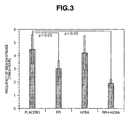
- FIG. 3 shows the frequency of bruxism episodes per hour of sleep in groups of the bruxsim patients (n=9), (1) after placebo medication, (2) after PPI medication, (3) after a histamine H2 receptor antagonist (H2RA) medication, and (4) after PPI in combination with H2RA medication.
- Below, the present invention is described in detail through the definitions of symbols and terminology used in this specification and the mode for carrying out the invention.
- The term "preventive or therapeutic agent" used herein is defined as including single agent and multiple agents. Multiple agents are defined as agents that are obtained either by formulating single agent separately or by formulating single agent simultaneously and are administered simultaneously or at fixed intervals useful for prevention or treatment.
- The term "inhibitor of gastric acid secretion" used herein is defined as a drug that inhibits the secretion of gastric acid. Examples of inhibitors of gastric acid secretion include, but are not limited to, a proton pump inhibitor, a histamine H2 receptor antagonist, an acid pump antagonist, an anticholinergic agent, a cholinesterase inhibitor, a gastrin antagonist, an antacid, traditional Chinese medicines such as a scopolia extract or a herbal medicine extract, or the like.
- The term "proton pump inhibitor" used herein is defined as a drug that modifies the SH group of the proton pump (H+, K+-ATPase) to inhibit the enzyme activity and suppress acid secretion. Proton pump inhibitors are usually defined as compounds with a benzimidazole or an imidazopyridine skeleton. Examples of proton pump inhibitors include, but are not limited to, rabeprazole (I), omeprazole (II), esomeprazole (III), lansoprazole (IV), pantoprazole (V), or tenatoprazole (VI), the chemical structures of which are shown below, or salts thereof or hydrates thereof. Of these, the preferable proton pump inhibitors include rabeprazole (I) or a sodium salt thereof, omeprazole (II) or a sodium salt thereof, esomeprazole (III) or a magnesium salt thereof, lansoprazole (IV), or pantoprazole (V) or a sodium salt thereof. It is more preferably to use the sodium salt of rabeprazole (I).


- Rabeprazole can be prepared according to the method described in the specification of U.S. Patent No. 5045552, omeprazole can be prepared according to the method described in the specification of U.S. Patent No. 4255431, esomeprazole can be prepared according to the method described in the specification of U.S. Patent No. 5948789, lansoprazole can be prepared according to the method described in the specification of U.S. Patent No. 4628098, pantoprazole can be prepared according to the method described in the specification of U.S. Patent No. 4758579, and tenatoprazole can be prepared according to the method described in the specification of U.S. Patent No. 4808596.
- The term "histamine H2 receptor antagonist" used herein is defined as a drug that selectively blocks the histamine H2 receptor in the parietal cells of the gastric mucosa so as to suppress gastric acid secretion. Examples of histamine H2 receptor antagonists include, but are not limited to, cimetidine, ranitidine, famotidine, roxatidine, nizatidine, or lafutidine, or salts thereof. In general, ranitidine is used as ranitidine hydrochloride, while roxatidine is used as roxatidine acetate hydrochloride.
- The term "acid pump antagonist" used herein is defined as a drug that suppresses acid secretion by reversibly blocking the proton pump. Examples of acid pump antagonists include, but are not limited to, the compound described in the specification of U.S. Patent No. 6,063,782 or the like.
- The term "salt" used herein can include, for example, a salt of an inorganic acid, a salt of an organic acid, a salt of an inorganic base, a salt of an organic base, or a salt of an acidic or basic amino acid. It is more preferably to use pharmacologically acceptable salt.
- Examples of the salts of inorganic acids include hydrochloride, hydrobromide, sulfate, nitrate, and phosphate, and examples of the salts of organic acids include acetate, succinate, fumarate, maleate, tartrate, citrate, lactate, stearate, benzoate, methanesulfonate, ethanesulfonate, and p-toluene sulfonate.
- Examples of the salts of inorganic bases include an alkali metal salt such as sodium salt and potassium salt, an alkali earth metal salt such as calcium salt and magnesium salt, aluminum salt, and ammonium salt. Examples of the salts of organic bases include diethylamine, diethanolamine, meglumine, and N,N'-dibenzylethylenediamine.
- The term "bruxism-related diseases" used herein is defined as a disease caused by bruxism. Examples of bruxism-related diseases include, but are not limited to, temporomandibular disorders, tooth hypersensitivity, occlusal trauma, dental attrition, wedge-shaped defects of tooth, gingival recession, tooth fracture, tooth mobility, root resorption, alveolar bone resorption, masseter muscle hypertrophy, masticatory muscle pain, breakage of tooth crown restoration, falling of tooth crown restoration, or headache. Of these, temporomandibular disorders can be described as a good example.
- The term "temporomandibular disorders" used herein refers to a group of chronic disorders with the main symptom of pain in the temporomandibular joint (TMJ) or masticatory muscle, TMJ sounds such as clicking and crepitus, difficulty of jaw-opening, or abnormal jaw movements. The clinical condition of temporomandibular disorders includes masticatory muscle disorder, capsular ligament disorder, TMJ disk disorder, and osteoarthritis.
- The administration route and dose when the proton pump inhibitor is administered to the patients as the preventive or therapeutic agent for bruxism or bruxism-related diseases vary depending on such factors as the patient's symptoms, type and degree of severity of the ulcer or gastritis, age, and heart, liver, and kidney function, and there are no restrictions thereon.
In general, the proton pump inhibitor is orally administered at a dose of 0.01 - 100 mg per day for an adult patient. - More specifically, the daily adult dose of rabeprazole is preferably 0.1 - 10 mg if the sodium salt of rabeprazole is administered. The daily adult dose for omeprazole is preferably 0.1 - 20 mg. The daily adult dose for esomeprazole is preferably 0.1 - 20 mg if the magnesium salt of esomeprazole is administered. The daily adult dose of lansoprazole is preferably 0.1 - 30 mg. The daily adult dose for pantoprazole is preferably 0.1 - 40 mg if the sodium salt of pantoprazole is administered.
- The administration route, dose, and number of doses when the histamine H2 receptor antagonist is administered for the patient as the preventive or therapeutic agent for bruxism or bruxism-related diseases vary depending on such factors as the patient's symptoms, type and degree of severity of the ulcer or gastritis, age, and heart, liver, and kidney function, and there are no restrictions thereon.
- In general, the histamine H2 receptor antagonist is orally administered at a dose of 1 - 800 mg per day for an adult patient.
- More specifically, the daily adult dose of cimetidine is preferably 1 - 800 mg or more preferably 50 - 400 mg. The daily adult dose for ranitidine is preferably 5 - 300 mg if ranitidine hydrochloride is administered, or more preferably 30 - 150 mg. The daily adult dose for famotidine is preferably 1 - 40 mg or more preferably 5 - 20 mg. The daily adult dose of roxatidine is preferably 5 - 150 mg if roxatidine acetate hydrochloride is administered, or more preferably 25 - 75 mg. The daily adult dose for nizatidine is preferably 30 - 300 mg or more preferably 50 - 150 mg. The daily adult dose of lafutidine is preferably 0.5 - 20 mg or more preferably 2.5 - 10 mg.
- Examples of dosage form can include a powder, a fine granule, a granule, a tablet, and a capsule. When formulating the drug, it is possible to manufacture by the conventional method using a common carrier. However, since as the proton pump inhibitor is particularly unstable, a more stable preparation can be achieved using the methods described in Japanese Patent Laid-open Publication No. H1-290628 and Japanese Patent Laid-open Publication No. H2-22225.
- When preparing a solid formulation for oral use by the conventional method, an excipient is added to the active ingredient, if necessary, after a binder, a disintegrant, a lubricant, a colorant, and other agents are further added to the active ingredient, the drug is prepared using the conventional method into the powder, the fine granule, the granule, the tablet, the capsule, or other dosage form.
- Examples of the excipient include lactose, cornstarch, sucrose, glucose, mannitol, sorbit, crystalline cellulose, silicon dioxide and the like. Examples of the binder include polyvinyl alcohol, polyvinyl ether, ethylcellulose, methylcellulose, gum arabic, hydroxypropylcellulose, hydroxypropylmethylcellulose, polyvinylpyrrolidone and the like. Examples of the disintegrant include starch, crystalline cellulose, calcium carbonate, sodium bicarbonate, calcium citrate, dextrin, pectin, calcium carboxymethylcellulose and the like. Examples of the lubricant include magnesium stearate, talc,silica and the like. Examples of the colorant include substances approved as additives to pharmaceuticals. Of course, a sugar coating or other suitable coating for other purposes can be applied to the tablet and the granule.
- Furthermore, according to the present invention, a combination of the proton pump inhibitor and the histamine H2 receptor antagonist can be administered to the patient as the preventive or therapeutic agent for bruxism and bruxism-related diseases.
- There are no particular restrictions on the combination of the proton pump inhibitor and the histamine H2 receptor antagonist that can be administered, but the proton pump inhibitor and histamine H2 receptor antagonist may be combined at the time of administration. This type of combination can include, for example, 1) administration of a preparation obtained by simultaneously formulating the proton pump inhibitor and the histamine H2 receptor antagonist, 2) simultaneous administration of two types of preparation obtained by separately formulating the proton pump inhibitor and the histamine H2 receptor antagonist, or 3) the administration at certain intervals effective for the prevention or treatment of bruxism and bruxism-related diseases of two types of preparation obtained by separately formulating the proton pump inhibitor and the histamine H2 receptor antagonist (for example, administration of the proton pump inhibitor followed by the histamine H2 receptor antagonist, or administration in the reverse order).
- When the proton pump inhibitor and the histamine H2 receptor antagonist are administered in combination, the dose percentage of each drug type can be appropriately selected in accordance with various factors, including the patient's age, body weight, sex, degree of symptom severity, administration mode, and the specific disease type. For example, the dose percentage of the proton pump inhibitor and the histamine H2 receptor antagonists is usually 10:1 - 1:400 by weight, or preferably within the range 2:1 -1:200.
- Examples and experiments are shown below in order to demonstrate the advantageous effects of the present invention, but these are only examples and the present invention is not limited to these particular examples. Those skilled in the art can execute the present invention by appropriately modifying the conditions described in the examples below and any such changes are included within the scope of the claims in the present patent application.
- A catheter with a pH electrode was inserted into the test subject's esophagus 5cm above the upper portion of the lower esophageal sphincter and pH was measured while the subject was asleep, while a disposable (bipolar) electrode was affixed to the skin at the front of the temporal muscle on one side. An amount of muscle activity during sleep was measured from 2.5 hours after falling asleep for a 40-minute period. At the same time, video and sound recordings were made that confirmed bruxism during sleep. FIG. 1 shows the results. In this Figure, when stable pH levels in the esophagus declined sharply, this was defined as an "decreased esophageal pH episode".
- According to the results shown in FIG. 1, jaw motion accompanying rhythmic masticatory muscle activity (bruxism episode) was observed at high frequency during a period corresponding to "decreased esophageal pH episode".
- In a double-blind trial, test subjects were assigned to either medication with placebo or the proton pump inhibitor [sodium salt of rabeprazole (10 mg; brand name: Pariet (registered trademark), Eisai Co., Ltd.)] and, according to the method used in
experiment 1, the amount of muscle activity during sleep in the front of the temporal muscle on one side was measured for a 4-hour period between 1 and 5 hours after falling asleep. Video and sound recordings were made at the same time that confirmed bruxism during sleep. The results are shown in Figure 2 (A). - The results in Figure 2 (A) demonstrate that, as compared to placebo, the medication with the proton pump inhibitor generated a substantial decline in the frequency of jaw motion accompanying rhythmical temporal muscle activity (bruxism episode).
- Further, Figure 2 (B) shows the frequency and duration of bruxism episodes per hour in groups of the bruxism patients (n = 8) after medication with placebo or the proton pump inhibitor. A paired t test was used to test for significance, with P<0.05 defined as indicating a statistically significant difference.
- The results in Figure 2 (B) demonstrate that medication with the proton pump inhibitor significantly reduces the frequency and duration of bruxism episodes.
- Measurement of the frequency of jaw movement accompanying rhythmic masticatory muscle activity (bruxism episode) during sleep in the bruxism patient medicated with (1) placebo, (2) the proton pump inhibitor, (3) the histamine H2 receptor antagonist, and (4) a combination of the proton pump inhibitor and the histamine H2 receptor antagonist
- In a double-blind trial, the test subjects were medicated with (1) placebo, (2) the proton pump inhibitor [sodium salt of rabeprazole (10 mg; brand name: Pariet (registered trademark), Eisai Co., Ltd.)], (3) the histamine H2 receptor antagonist [famotidine (10 mg; brand name: Gaster (registered trademark), Yamanouchi Pharmaceutical Co., Ltd.)], and (4) the combination of the proton pump inhibitor [sodium salt of rabeprazole (10 mg)] and the histamine H2 receptor antagonist [famotidine (10 mg)], with both drugs administered simultaneously in the case of group (4). According to the methods used in
experiment 1, the amount of muscle activity during sleep in the front of the temporal muscle on one side was measured for a 4-hour period between 1 and 5 hours after falling asleep. Video and sound recordings were made at the same time and confirmed bruxism during sleep. - Figure 3 shows the frequency of bruxism episodes per hour in groups of the bruxism patients (n = 9) after medication with (1) placebo, (2) the proton pump inhibitor, (3) the histamine H2 receptor antagonist, and (4) the combination of the proton pump inhibitor and the histamine H2 receptor antagonist. A paired t test was used to test for significance, with P<0.05 defined as indicating a statistically significant difference.
- The largest reduction in the frequency of bruxism episodes was observed in the group medicated with the combination of the proton pump inhibitor and the histamine H2 receptor antagonist, followed in order by the group medicated with the proton pump inhibitor and the group medicated with the histamine H2 receptor antagonist.
- Furthermore, as compared to the placebo group, there was a significant reduction in bruxism episodes in the group medicated with the combination of the proton pump inhibitor and the histamine H2 receptor antagonist and in the group medicated with the proton pump inhibitor.
- An agent that inhibits gastric acid secretion according to the present invention, as exemplified by the proton pump inhibitor, acts to suppress gastroesophageal reflux that induces bruxism and are extremely useful in the effective and fundamental prevention or treatment of bruxism and bruxism-related diseases.
- In addition, according to the present invention, the cost of treating bruxism and bruxism-related diseases (especially the cost involved in splint therapy) can be substantially reduced.
Claims (24)
- A preventive or therapeutic agent for bruxism comprising an inhibitor of gastric acid secretion as an active ingredient.
- A preventive or therapeutic agent for bruxism comprising at least one selected from the group consisting of a proton pump inhibitor, a histamine H2 receptor antagonist, or an acid pump antagonist as an active ingredient.
- A preventive or therapeutic agent for bruxism comprising a proton pump inhibitor and a histamine H2 receptor antagonist as an active ingredient.
- A preventive or therapeutic agent for bruxism comprising a proton pump inhibitor as an active ingredient.
- The preventive or therapeutic agent according to any one of Claims 2 to 4, wherein the proton pump inhibitor is rabeprazole, omeprazole, esomeprazole, lansoprazole, pantoprazole or tenatoprazole, or a salt of the foregoing, or hydrate of the foregoing.
- The preventive or therapeutic agent according to any one of Claims 2 to 4, wherein the proton pump inhibitor is rabeprazole or a salt thereof.
- The preventive or therapeutic agent according to any one of Claims 2 to 4, wherein the proton pump inhibitor is a sodium salt of rabeprazole.
- The preventive or therapeutic agent according to Claims 2 or 3, wherein the histamine H2 receptor antagonist is cimetidine, ranitidine, famotidine, roxatidine, nizatidine or lafutidine, or a salt of the foregoing.
- A preventive or therapeutic agent for bruxism-related diseases comprising an inhibitor of gastric acid secretion as an active ingredient.
- A preventive or therapeutic agent for bruxism-related diseases comprising at least one selected from the group consisting of a proton pump inhibitor, a histamine H2 receptor antagonist, or an acid pump antagonist as an active ingredient.
- A preventive or therapeutic agent for bruxism-related diseases comprising a proton pump inhibitor and a histamine H2 receptor antagonist as an active ingredient.
- A preventive or therapeutic agent for bruxism-related diseases comprising a proton pump inhibitor as an active ingredient.
- The preventive or therapeutic agent according to any one of Claims 10 to 12, wherein the proton pump inhibitor is rabeprazole, omeprazole, esomeprazole, lansoprazole, pantoprazole or tenatoprazole, or a salt of the foregoing, or hydrate of the foregoing.
- The preventive or therapeutic agent according to any one of Claims 10 to 12, wherein the proton pump inhibitor is rabeprazole or a salt thereof.
- The preventive or therapeutic agent according to any one of Claims 10 to 12, wherein the proton pump inhibitor is a sodium salt of rabeprazole.
- The preventive or therapeutic agent according to Claim 10 or 11, wherein the histamine H2 receptor antagonist is cimetidine, ranitidine, famotidine, roxatidine, nizatidine or lafutidine, or a salt of the foregoing.
- The preventive or therapeutic agent according to any one of Claims 9 to 16, wherein the bruxism-related disease is temporomandibular disorders, tooth hypersensitivity, occlusal trauma, dental attrition, wedge-shaped defects of tooth, gingival recession, tooth fracture, tooth mobility, root resorption, alveolar bone resorption, masseter muscle hypertrophy, masticatory muscle pain, breakage of tooth crown restoration, falling of tooth crown restoration, or headache.
- The preventive or therapeutic agent according to any one of Claims 9 to 16, wherein the bruxism-related disease is temporomandibular disorders.
- A method for preventing or treating bruxism comprising administering an inhibitor of gastric acid secretion in an effective amount.
- A method for preventing or treating bruxism-related diseases comprising administering an inhibitor of gastric acid secretion in an effective amount.
- A method for preventing or treating temporomandibular disorders comprising administering an inhibitor of gastric acid secretion in an effective amount.
- A use for an inhibitor of gastric acid secretion for the manufacture of a preventive or therapeutic agent for bruxism.
- A use for an inhibitor of gastric acid secretion for the manufacture of a preventive or therapeutic agent for bruxism-related diseases.
- A use for an inhibitor of gastric acid secretion for the manufacture of a preventive or therapeutic agent for temporomandibular disorders.
Applications Claiming Priority (2)
| Application Number | Priority Date | Filing Date | Title |
|---|---|---|---|
| JP2003068755 | 2003-03-13 | ||
| PCT/JP2004/000939 WO2004080487A1 (en) | 2003-03-13 | 2004-01-30 | Preventive or remedy for teeth grinding |
Publications (3)
| Publication Number | Publication Date |
|---|---|
| EP1611901A1 true EP1611901A1 (en) | 2006-01-04 |
| EP1611901A4 EP1611901A4 (en) | 2010-01-20 |
| EP1611901B1 EP1611901B1 (en) | 2013-07-10 |
Family
ID=32984596
Family Applications (1)
| Application Number | Title | Priority Date | Filing Date |
|---|---|---|---|
| EP04706869.7A Expired - Lifetime EP1611901B1 (en) | 2003-03-13 | 2004-01-30 | Preventive or remedy for teeth grinding |
Country Status (4)
| Country | Link |
|---|---|
| US (1) | US7608625B2 (en) |
| EP (1) | EP1611901B1 (en) |
| JP (1) | JP4355703B2 (en) |
| WO (1) | WO2004080487A1 (en) |
Families Citing this family (2)
| Publication number | Priority date | Publication date | Assignee | Title |
|---|---|---|---|---|
| AU2007317561A1 (en) | 2006-10-27 | 2008-05-15 | The Curators Of The University Of Missouri | Compositions comprising at least one acid labile proton pump inhibiting agents, optionally other pharmaceutically active agents and methods of using same |
| CN101980700A (en) | 2008-02-20 | 2011-02-23 | 密苏里大学董事会 | Composition comprising a combination of omeprazole and lansoprazole, and a buffering agent, and methods of using same |
Family Cites Families (12)
| Publication number | Priority date | Publication date | Assignee | Title |
|---|---|---|---|---|
| SE7804231L (en) * | 1978-04-14 | 1979-10-15 | Haessle Ab | Gastric acid secretion |
| IL75400A (en) * | 1984-06-16 | 1988-10-31 | Byk Gulden Lomberg Chem Fab | Dialkoxypyridine methyl(sulfinyl or sulfonyl)benzimidazoles,processes for the preparation thereof and pharmaceutical compositions containing the same |
| JPS6150978A (en) * | 1984-08-16 | 1986-03-13 | Takeda Chem Ind Ltd | Pyridine derivative and preparation thereof |
| JPH0643426B2 (en) * | 1986-07-25 | 1994-06-08 | 東京田辺製薬株式会社 | Imidazo [4,5-b] pyridine derivative, method for producing the same, and antiulcer agent containing the same |
| FI90544C (en) * | 1986-11-13 | 1994-02-25 | Eisai Co Ltd | Process for Preparation as Drug Useful 2-Pyridin-2-yl-methylthio- and sulfinyl-1H-benzimidazole derivatives |
| EP0585722B1 (en) * | 1992-08-21 | 1996-05-15 | Eisai Co., Ltd. | Benzimidazole derivatives as antimicrobal agent against Campylobacter pylon |
| JP4249802B2 (en) * | 1993-06-10 | 2009-04-08 | アラーガン、インコーポレイテッド | Botulinum toxin combination for treating neuromuscular diseases and symptoms |
| DE69529056T2 (en) * | 1994-01-19 | 2003-11-13 | Sankyo Co., Ltd. | Pyrrolopyridazine DERIVATIVES |
| SE504459C2 (en) * | 1994-07-15 | 1997-02-17 | Astra Ab | Process for the preparation of substituted sulfoxides |
| US6426369B1 (en) * | 1997-09-17 | 2002-07-30 | Eisai Co., Ltd. | Oxethazaine as antimicrobial agent |
| CA2400708A1 (en) * | 2000-02-22 | 2001-08-30 | Cellegy Canada Inc. | Methods and compositions for improving sleep |
| WO2005074536A2 (en) * | 2004-01-30 | 2005-08-18 | Eisai Co., Ltd. | Compositions and methods using proton pump inhibitors |
-
2004
- 2004-01-30 US US10/547,796 patent/US7608625B2/en not_active Expired - Fee Related
- 2004-01-30 JP JP2005503460A patent/JP4355703B2/en not_active Expired - Fee Related
- 2004-01-30 WO PCT/JP2004/000939 patent/WO2004080487A1/en not_active Ceased
- 2004-01-30 EP EP04706869.7A patent/EP1611901B1/en not_active Expired - Lifetime
Also Published As
| Publication number | Publication date |
|---|---|
| US7608625B2 (en) | 2009-10-27 |
| EP1611901A4 (en) | 2010-01-20 |
| JP4355703B2 (en) | 2009-11-04 |
| EP1611901B1 (en) | 2013-07-10 |
| WO2004080487A1 (en) | 2004-09-23 |
| US20060173045A1 (en) | 2006-08-03 |
| JPWO2004080487A1 (en) | 2006-06-08 |
Similar Documents
| Publication | Publication Date | Title |
|---|---|---|
| AU701911B2 (en) | Method of treating and diagnosing sleep disordered breathing and means for carrying out the method | |
| ES2890481T3 (en) | Benzimidazole Derivative Uses for Nocturnal Heartburn | |
| HUP0102203A2 (en) | Use of optically pure(+)-norcisapride for producing pharmaceutical compositions suitable for treating apnea, bulimia and other disorders | |
| RU2004131214A (en) | METHODS FOR TREATING COGNITIVE DISORDERS | |
| US7608625B2 (en) | Method for treating bruxism and bruxism-related diseases | |
| WO1998024411A2 (en) | Method for oral administration of buspirone | |
| JP2009515877A (en) | Compositions and methods for treating CNS disorders | |
| KR20140044816A (en) | Combinations of solifenacin and salivary stimulants for the treatment of overactive bladder | |
| JP2005097277A (en) | Preventing or treating agent of bruxism | |
| JP2012072061A (en) | New composition | |
| MXPA06006685A (en) | Use of gaboxadol for treating insomnia. | |
| US20100247584A1 (en) | Compositions useful for treating gastroesophageal reflux disease | |
| JP5303093B2 (en) | Pharmaceutical composition combining tenatoprazole and histamine H2 receptor antagonist | |
| CN102670597B (en) | Application of 5-(4-hydroxyl-3-methoxybenzylidene)rhodanine to preparation of medicament for treating Parkinson's disease | |
| AU2006211205A1 (en) | Organic compounds | |
| TWI676477B (en) | Use of benzimidazole derivatives for nocturnal acid breakthrough | |
| JP2023052054A (en) | Treatment of gastroparesis with triazaspiro[4.5]decanone | |
| KR20250165616A (en) | High-potency single-dose unit formulation and method of use thereof | |
| TWI298022B (en) | Pharmaceutical compositions for the prophylaxis or treatment of atrial remodeling or atrial fibrillation | |
| AU2006215444A1 (en) | Use of rimonabant for the preparation of medicaments that can be used in the prevention and treatment of type 2 diabetes | |
| UA146303U (en) | METHOD OF SYMPTOMATIC TREATMENT OF PAIN | |
| RU2672555C2 (en) | Combination of pi3 kinase inhibitor with paclitaxel for use in treatment or prevention of head and neck cancer | |
| JPH0827029A (en) | New medicine use of 5ht1 agonist | |
| CN101171008A (en) | Proton pump inhibitors in the treatment of sleep disturbance due to asymptomatic gastroesophageal reflux | |
| JP2008303146A (en) | Sleep disorder-preventing or treating agengt |
Legal Events
| Date | Code | Title | Description |
|---|---|---|---|
| PUAI | Public reference made under article 153(3) epc to a published international application that has entered the european phase |
Free format text: ORIGINAL CODE: 0009012 |
|
| 17P | Request for examination filed |
Effective date: 20050824 |
|
| AK | Designated contracting states |
Kind code of ref document: A1 Designated state(s): AT BE BG CH CY CZ DE DK EE ES FI FR GB GR HU IE IT LI LU MC NL PT RO SE SI SK TR |
|
| AX | Request for extension of the european patent |
Extension state: AL LT LV MK |
|
| RAP1 | Party data changed (applicant data changed or rights of an application transferred) |
Owner name: EISAI R&D MANAGEMENT CO., LTD. Owner name: YAMAMOTO, TERUKO Owner name: MIYAWAKI, SHOUICHI |
|
| A4 | Supplementary search report drawn up and despatched |
Effective date: 20091222 |
|
| RIC1 | Information provided on ipc code assigned before grant |
Ipc: A61K 31/4545 20060101ALI20091214BHEP Ipc: A61K 31/341 20060101ALI20091214BHEP Ipc: A61K 31/444 20060101ALI20091214BHEP Ipc: A61K 31/426 20060101ALI20091214BHEP Ipc: A61K 31/4453 20060101ALI20091214BHEP Ipc: A61P 43/00 20060101ALI20091214BHEP Ipc: A61K 45/00 20060101AFI20040928BHEP Ipc: A61K 31/4164 20060101ALI20091214BHEP Ipc: A61P 19/02 20060101ALI20091214BHEP Ipc: C07D 401/12 20060101ALI20091214BHEP Ipc: A61P 19/08 20060101ALI20091214BHEP Ipc: A61P 21/00 20060101ALI20091214BHEP Ipc: A61K 31/4439 20060101ALI20091214BHEP Ipc: A61P 1/04 20060101ALI20091214BHEP Ipc: A61P 1/02 20060101ALI20091214BHEP |
|
| 17Q | First examination report despatched |
Effective date: 20100712 |
|
| GRAP | Despatch of communication of intention to grant a patent |
Free format text: ORIGINAL CODE: EPIDOSNIGR1 |
|
| RIN1 | Information on inventor provided before grant (corrected) |
Inventor name: MIYAWAKI, SHOUICHI Inventor name: YAMAMOTO, TERUKO |
|
| GRAS | Grant fee paid |
Free format text: ORIGINAL CODE: EPIDOSNIGR3 |
|
| GRAA | (expected) grant |
Free format text: ORIGINAL CODE: 0009210 |
|
| RIN1 | Information on inventor provided before grant (corrected) |
Inventor name: YAMAMOTO, TERUKO Inventor name: MIYAWAKI, SHOUICHI |
|
| AK | Designated contracting states |
Kind code of ref document: B1 Designated state(s): AT BE BG CH CY CZ DE DK EE ES FI FR GB GR HU IE IT LI LU MC NL PT RO SE SI SK TR |
|
| AX | Request for extension of the european patent |
Extension state: AL LT LV MK |
|
| REG | Reference to a national code |
Ref country code: GB Ref legal event code: FG4D |
|
| REG | Reference to a national code |
Ref country code: CH Ref legal event code: EP Ref country code: AT Ref legal event code: REF Ref document number: 620550 Country of ref document: AT Kind code of ref document: T Effective date: 20130715 |
|
| REG | Reference to a national code |
Ref country code: IE Ref legal event code: FG4D |
|
| REG | Reference to a national code |
Ref country code: DE Ref legal event code: R096 Ref document number: 602004042663 Country of ref document: DE Effective date: 20130905 |
|
| PG25 | Lapsed in a contracting state [announced via postgrant information from national office to epo] |
Ref country code: SI Free format text: LAPSE BECAUSE OF FAILURE TO SUBMIT A TRANSLATION OF THE DESCRIPTION OR TO PAY THE FEE WITHIN THE PRESCRIBED TIME-LIMIT Effective date: 20130710 |
|
| REG | Reference to a national code |
Ref country code: AT Ref legal event code: MK05 Ref document number: 620550 Country of ref document: AT Kind code of ref document: T Effective date: 20130710 |
|
| REG | Reference to a national code |
Ref country code: NL Ref legal event code: VDEP Effective date: 20130710 |
|
| REG | Reference to a national code |
Ref country code: LT Ref legal event code: MG9D |
|
| PG25 | Lapsed in a contracting state [announced via postgrant information from national office to epo] |
Ref country code: BE Free format text: LAPSE BECAUSE OF FAILURE TO SUBMIT A TRANSLATION OF THE DESCRIPTION OR TO PAY THE FEE WITHIN THE PRESCRIBED TIME-LIMIT Effective date: 20130710 Ref country code: PT Free format text: LAPSE BECAUSE OF FAILURE TO SUBMIT A TRANSLATION OF THE DESCRIPTION OR TO PAY THE FEE WITHIN THE PRESCRIBED TIME-LIMIT Effective date: 20131111 Ref country code: SE Free format text: LAPSE BECAUSE OF FAILURE TO SUBMIT A TRANSLATION OF THE DESCRIPTION OR TO PAY THE FEE WITHIN THE PRESCRIBED TIME-LIMIT Effective date: 20130710 Ref country code: CY Free format text: LAPSE BECAUSE OF FAILURE TO SUBMIT A TRANSLATION OF THE DESCRIPTION OR TO PAY THE FEE WITHIN THE PRESCRIBED TIME-LIMIT Effective date: 20130703 Ref country code: AT Free format text: LAPSE BECAUSE OF FAILURE TO SUBMIT A TRANSLATION OF THE DESCRIPTION OR TO PAY THE FEE WITHIN THE PRESCRIBED TIME-LIMIT Effective date: 20130710 |
|
| PG25 | Lapsed in a contracting state [announced via postgrant information from national office to epo] |
Ref country code: GR Free format text: LAPSE BECAUSE OF FAILURE TO SUBMIT A TRANSLATION OF THE DESCRIPTION OR TO PAY THE FEE WITHIN THE PRESCRIBED TIME-LIMIT Effective date: 20131011 Ref country code: FI Free format text: LAPSE BECAUSE OF FAILURE TO SUBMIT A TRANSLATION OF THE DESCRIPTION OR TO PAY THE FEE WITHIN THE PRESCRIBED TIME-LIMIT Effective date: 20130710 Ref country code: NL Free format text: LAPSE BECAUSE OF FAILURE TO SUBMIT A TRANSLATION OF THE DESCRIPTION OR TO PAY THE FEE WITHIN THE PRESCRIBED TIME-LIMIT Effective date: 20130710 Ref country code: ES Free format text: LAPSE BECAUSE OF FAILURE TO SUBMIT A TRANSLATION OF THE DESCRIPTION OR TO PAY THE FEE WITHIN THE PRESCRIBED TIME-LIMIT Effective date: 20131021 |
|
| PG25 | Lapsed in a contracting state [announced via postgrant information from national office to epo] |
Ref country code: CY Free format text: LAPSE BECAUSE OF FAILURE TO SUBMIT A TRANSLATION OF THE DESCRIPTION OR TO PAY THE FEE WITHIN THE PRESCRIBED TIME-LIMIT Effective date: 20130710 |
|
| PG25 | Lapsed in a contracting state [announced via postgrant information from national office to epo] |
Ref country code: SK Free format text: LAPSE BECAUSE OF FAILURE TO SUBMIT A TRANSLATION OF THE DESCRIPTION OR TO PAY THE FEE WITHIN THE PRESCRIBED TIME-LIMIT Effective date: 20130710 Ref country code: DK Free format text: LAPSE BECAUSE OF FAILURE TO SUBMIT A TRANSLATION OF THE DESCRIPTION OR TO PAY THE FEE WITHIN THE PRESCRIBED TIME-LIMIT Effective date: 20130710 Ref country code: CZ Free format text: LAPSE BECAUSE OF FAILURE TO SUBMIT A TRANSLATION OF THE DESCRIPTION OR TO PAY THE FEE WITHIN THE PRESCRIBED TIME-LIMIT Effective date: 20130710 Ref country code: RO Free format text: LAPSE BECAUSE OF FAILURE TO SUBMIT A TRANSLATION OF THE DESCRIPTION OR TO PAY THE FEE WITHIN THE PRESCRIBED TIME-LIMIT Effective date: 20130710 Ref country code: EE Free format text: LAPSE BECAUSE OF FAILURE TO SUBMIT A TRANSLATION OF THE DESCRIPTION OR TO PAY THE FEE WITHIN THE PRESCRIBED TIME-LIMIT Effective date: 20130710 |
|
| PLBE | No opposition filed within time limit |
Free format text: ORIGINAL CODE: 0009261 |
|
| STAA | Information on the status of an ep patent application or granted ep patent |
Free format text: STATUS: NO OPPOSITION FILED WITHIN TIME LIMIT |
|
| PG25 | Lapsed in a contracting state [announced via postgrant information from national office to epo] |
Ref country code: IT Free format text: LAPSE BECAUSE OF FAILURE TO SUBMIT A TRANSLATION OF THE DESCRIPTION OR TO PAY THE FEE WITHIN THE PRESCRIBED TIME-LIMIT Effective date: 20130710 |
|
| 26N | No opposition filed |
Effective date: 20140411 |
|
| REG | Reference to a national code |
Ref country code: DE Ref legal event code: R097 Ref document number: 602004042663 Country of ref document: DE Effective date: 20140411 |
|
| REG | Reference to a national code |
Ref country code: DE Ref legal event code: R119 Ref document number: 602004042663 Country of ref document: DE |
|
| PG25 | Lapsed in a contracting state [announced via postgrant information from national office to epo] |
Ref country code: MC Free format text: LAPSE BECAUSE OF FAILURE TO SUBMIT A TRANSLATION OF THE DESCRIPTION OR TO PAY THE FEE WITHIN THE PRESCRIBED TIME-LIMIT Effective date: 20130710 Ref country code: LU Free format text: LAPSE BECAUSE OF FAILURE TO SUBMIT A TRANSLATION OF THE DESCRIPTION OR TO PAY THE FEE WITHIN THE PRESCRIBED TIME-LIMIT Effective date: 20140130 |
|
| REG | Reference to a national code |
Ref country code: CH Ref legal event code: PL |
|
| PG25 | Lapsed in a contracting state [announced via postgrant information from national office to epo] |
Ref country code: CH Free format text: LAPSE BECAUSE OF NON-PAYMENT OF DUE FEES Effective date: 20140131 Ref country code: DE Free format text: LAPSE BECAUSE OF NON-PAYMENT OF DUE FEES Effective date: 20140801 Ref country code: LI Free format text: LAPSE BECAUSE OF NON-PAYMENT OF DUE FEES Effective date: 20140131 |
|
| REG | Reference to a national code |
Ref country code: FR Ref legal event code: ST Effective date: 20140930 |
|
| REG | Reference to a national code |
Ref country code: IE Ref legal event code: MM4A |
|
| REG | Reference to a national code |
Ref country code: DE Ref legal event code: R119 Ref document number: 602004042663 Country of ref document: DE Effective date: 20140801 |
|
| PG25 | Lapsed in a contracting state [announced via postgrant information from national office to epo] |
Ref country code: FR Free format text: LAPSE BECAUSE OF NON-PAYMENT OF DUE FEES Effective date: 20140131 |
|
| PG25 | Lapsed in a contracting state [announced via postgrant information from national office to epo] |
Ref country code: IE Free format text: LAPSE BECAUSE OF NON-PAYMENT OF DUE FEES Effective date: 20140130 |
|
| PG25 | Lapsed in a contracting state [announced via postgrant information from national office to epo] |
Ref country code: BG Free format text: LAPSE BECAUSE OF FAILURE TO SUBMIT A TRANSLATION OF THE DESCRIPTION OR TO PAY THE FEE WITHIN THE PRESCRIBED TIME-LIMIT Effective date: 20130710 |
|
| PG25 | Lapsed in a contracting state [announced via postgrant information from national office to epo] |
Ref country code: HU Free format text: LAPSE BECAUSE OF FAILURE TO SUBMIT A TRANSLATION OF THE DESCRIPTION OR TO PAY THE FEE WITHIN THE PRESCRIBED TIME-LIMIT; INVALID AB INITIO Effective date: 20040130 Ref country code: TR Free format text: LAPSE BECAUSE OF FAILURE TO SUBMIT A TRANSLATION OF THE DESCRIPTION OR TO PAY THE FEE WITHIN THE PRESCRIBED TIME-LIMIT Effective date: 20130710 |
|
| PGFP | Annual fee paid to national office [announced via postgrant information from national office to epo] |
Ref country code: GB Payment date: 20180119 Year of fee payment: 15 |
|
| GBPC | Gb: european patent ceased through non-payment of renewal fee |
Effective date: 20190130 |
|
| PG25 | Lapsed in a contracting state [announced via postgrant information from national office to epo] |
Ref country code: GB Free format text: LAPSE BECAUSE OF NON-PAYMENT OF DUE FEES Effective date: 20190130 |