EP1609778A1 - Process for production of 2-cyano-3-hydroxy-n-(4-tri- fluoromethylphenyl)hept-2-en-6-ynamide and process for production of polymorphs thereof - Google Patents
Process for production of 2-cyano-3-hydroxy-n-(4-tri- fluoromethylphenyl)hept-2-en-6-ynamide and process for production of polymorphs thereof Download PDFInfo
- Publication number
- EP1609778A1 EP1609778A1 EP04722662A EP04722662A EP1609778A1 EP 1609778 A1 EP1609778 A1 EP 1609778A1 EP 04722662 A EP04722662 A EP 04722662A EP 04722662 A EP04722662 A EP 04722662A EP 1609778 A1 EP1609778 A1 EP 1609778A1
- Authority
- EP
- European Patent Office
- Prior art keywords
- compound
- crystals
- form crystals
- solvent
- stirring
- Prior art date
- Legal status (The legal status is an assumption and is not a legal conclusion. Google has not performed a legal analysis and makes no representation as to the accuracy of the status listed.)
- Withdrawn
Links
- ODGIMMLDVSWADK-UHFFFAOYSA-N Nc1ccc(C(F)(F)F)cc1 Chemical compound Nc1ccc(C(F)(F)F)cc1 ODGIMMLDVSWADK-UHFFFAOYSA-N 0.000 description 1
Classifications
-
- C—CHEMISTRY; METALLURGY
- C07—ORGANIC CHEMISTRY
- C07C—ACYCLIC OR CARBOCYCLIC COMPOUNDS
- C07C253/00—Preparation of carboxylic acid nitriles
- C07C253/30—Preparation of carboxylic acid nitriles by reactions not involving the formation of cyano groups
Definitions
- the present invention relates to a novel method for production of 2-cyano-3-hydroxy-N-(4-trifluoromethylphenyl)hept-2-en-6-ynamide having immunosuppressive activity (hereinafter referred to as "compound (I)”) represented by the formula (I): and a method for production of polymorphs thereof.
- the present invention relates to a novel method for preparing the compound (I) having immunosuppressive activity, and a method for selectively obtaining anyone of polymorphs comprising A-form crystals, B-form crystals and C-form crystals of the compound (I).
- the compound (I) is useful for treatment of rheumatoid arthritis, immune or nonimmune chroic inflammatory diseases such as graft versus host disease, reactions by transplantation and uveitis, as well as cancer.
- a preparation method thereof has been described in Japanese Unexamined Patent Publication No. HEI 5-310672 (Patent Document 1).
- the compound (I) is specifically described in Preparation Example 14 of the above Patent Document 1, in which polymorphs of the compound and a method for selectively obtaining anyone of the same have not been reported.
- n-butyl lithium which is highly flammable, is used in an amount as large as 3 equivalent weight with respect to a material compound and a reaction temperature needs to be controlled at -78°C. It has been a problem since the method is not suitable for manufacture on an industrial scale.
- homogeneity in physical property of the drug is essential. Even the same compounds may have different physical properties if their crystal forms are different. If the crystal form is not controlled, i.e., a single crystal form cannot be formed constantly, the resulting drug may irregularly vary in quality batch by batch. Therefore, manufacture of a substance having uniform physical properties, that is, control of the crystal form, is an extremely important subject for quality control of the drug.
- the present invention has been achieved to solve the above-described problem and subject and based on the finding that there exist polymorphs of the compound (I). Accordingly, the present invention provides a method for preparing the compound (I) suitable for manufacture on an industrial scale and a method for selectively obtaining anyone of the polymorphs of the compound (I).
- A-form crystals, B-form crystals and C-form crystals of the compound (I) are selectively obtained by controlling the temperature for recrystallizing the compound (I), thereby completing the present invention.
- a method for preparing a compound (I) represented by the formula: by reacting a compound (II) represented by the formula: with a carboxylic acid (III) represented by the formula: or a reactive derivative at the carboxyl group thereof to give a compound (IV) represented by the formula: and reacting the resultant compound with a mixed acid anhydride of a compound (V) represented by the formula: to give the compound (I).
- a reaction in the first step is conducted by reacting a compound (II) with a compound (III) or a reactive derivative at the carboxyl group thereof.
- the reactive derivative at the carboxyl group of the compound (III) may be the acid halide, acid azide, acid anhydride, mixed acid anhydride, active amide, active ester and the like.
- the reactive derivative include: acid halide; acid azide; symmetric acid anhydride; asymmetric acid anhydride with acid such as substituted phosphoric acid (for example, dialkyl phosphite, phenyl phosphate, diphenyl phosphate, dibenzyl phosphate or halogenated phosphate), dialkyl phosphate, sulfurous acid, thiosulfuric acid, sulfuric acid, sulfonic acid (for example, methansulfonic acid), aliphatic carboxylic acid (for example, acetate, propionic acid, butyric acid, isobutyric acid, pivalic acid, pentanoic acid, isopentanoic acid, 2-ethylbutyric acid or trichloroacetic acid) or aromatic carboxylic acid (for example, benzoic acid); mixed acid anhydride prepared from chloro(lower)alkyl carbonate or cycloalkyl chlorocarbonate; active amide with imidazole,
- the reaction of the first step is usually carried out in a solvent with cooling or heating.
- Examples of the solvent used in this reaction include esters such as ethyl acetate, ethers such as tetrahydrofuran, diethyl ether and dioxane, aprotic polar solvents such as acetone, acetonitrile, N,N-dimethylformamide and pyridine, halogenated hydrocarbons such as 1,2-dichloroethane, chloroform and chlorobenzene, saturated or unsaturated hydrocarbons such as hexane, benzene and toluene or a mixture of these solvents.
- esters such as ethyl acetate, ethers such as tetrahydrofuran, diethyl ether and dioxane
- aprotic polar solvents such as acetone, acetonitrile, N,N-dimethylformamide and pyridine
- halogenated hydrocarbons such as 1,2-dichloroethane, chloroform and chlorobenzen
- the compound (III) is used in the form of free acid in the reaction of the first step, it is preferable to carry out the reaction in the presence of a normal condensing agent, for example, N,N'-dicyclohexylcarbodiimide, N-cyclohexyl-N'-morpholinoethylcarbodiimide, N-cyclohexyl-N'-(4-diethylaminocyclohexyl)carbodiimide, N,N'-diethylcarbodiimide, N,N'-diisopropylcarbodiimide, N-ethyl-N'-(3-dimethylaminopropyl)carbodiimide, N,N'-carbonyl bis-(2-methylimidazole), pentamethyleneketene-N-cyclohexylimine, diphenylketene-N-cyclohexylimine, ethoxyacetylene, 1-alkoxy-1-
- the reaction may be carried out in the presence of an acid such as inorganic acid, organic acid and Lewis acid.
- Examples of the inorganic acid include sulfuric acid, hydrochloric acid and the like.
- Examples of the organic acid include p-toluenesulfonic acid, benzenesulfonic acid, methansulfonic acid, ethansulfonic acid, sulfosalicylic acid and the like.
- Examples of the Lewis acid include aluminum chloride, diethyl ether boron trifluoride complex, tin tetrachloride, titanium tetrachloride, yttrium triflate, scantium triflate and the like. Particularly preferable is p-toluenesulfonic acid.
- the reaction in the presence of acid is preferably conducted in a nonpolar solvent which is not mixed with water, e.g., benzene, toluene, xylene, chlorobenzene or the like, with heating, while removing water generated with the progress of the reaction out of the reaction system, or in the presence of a dehydrating agent such as a molecular sieve.
- a nonpolar solvent which is not mixed with water, e.g., benzene, toluene, xylene, chlorobenzene or the like.
- this reaction may be carried out in the presence of an inorganic base such as alkali metal hydrogen carbonates, alkali metal carbonates and alkali metal hydroxides or in the presence of an organic base such as tri(lower)alkylamine, pyridine, N-(lower)alkylmorpholine, N,N-di(lower)alkylaminopyridine, N,N-di(lower)alkylaniline and N,N-di(lower)alkylbenzylamine.
- an inorganic base such as alkali metal hydrogen carbonates, alkali metal carbonates and alkali metal hydroxides
- organic base such as tri(lower)alkylamine, pyridine, N-(lower)alkylmorpholine, N,N-di(lower)alkylaminopyridine, N,N-di(lower)alkylaniline and N,N-di(lower)alkylbenzylamine.
- the compound (IV) obtained in the above-described manner may be isolated and purified by a usual method. However, it may be used in a reaction of the following second step without particular isolation or purification.
- a reaction in the second step is carried out by reacting the compound (IV) obtained as described above with a mixed acid anhydride of a compound (V) in a solvent.
- the mixed acid anhydride of the compound (V) preferably is a mixed acid anhydride with chloro(lower)alkyl carbonate or cycloalkyl chlorocarbonate.
- chloro(lower)alkyl carbonate include methyl chlorocarbonate, ethyl chlorocarbonate, n-propyl chlorocarbonate, isopropyl chlorocarbonate, n-butyl chlorocarbonate, s-butyl chlorocarbonate, t-butyl chlorocarbonate, isoamyl chlorocarbonate and the like.
- the cycloalkyl chlorocarbonate include cyclopentyl chlorocarbonate, cyclohexyl chlorocarbonate and the like. Further, bromides, fluorides and iodides converted from these chlorides may also be used.
- Preparation of the mixed acid anhydride of the compound (V) is generally carried out in an organic solvent with cooling or heating in the presence of an inorganic base or an organic base.
- the inorganic base, organic base and organic solvent may be those shown in the above first step.
- the thus obtained mixed acid anhydride of the compound (V) may be isolated and purified by a usual method. However, it may also be used as it is in a reaction with a compound (IV) without being isolated and purified.
- reaction of the second step is generally conducted with cooling or heating in a solvent.
- the thus obtained compound (I) may be isolated and purified by a usual method, but preferably, it is purified by recrystallization.
- Examples of a solvent for the recrystallization include alcohols such as methanol, ethanol, n-propyl alcohol, isopropyl alcohol, n-butyl alcohol, t-butyl alcohol and the like, ketones such as acetone, methyl ethyl ketone and the like, esters such as methyl acetate, ethyl acetate, isopropyl acetate and the like, nitriles such as acetonitrile and the like, ethers such as tetrahydrofuran, dioxane and the like, as well as a mixed solvent of the above-listed solvents capable of being mixed with water and water as a poor solvent, and a mixed solvent of the above-listed solvent and a poor solvent, which may be an aliphatic hydrocarbon such as n-pentane, cyclopentane, n-hexane, cyclohexane, n-heptane or cycloheptane,
- the present invention allows to selectively obtain A-form crystals, B-form crystals and C-form crystals of the compound (I) by controlling the temperature for recrystallization and/ or time for crystal precipitation during the recrystallization of the compound (I).
- the A-form crystals of the compound (I), characterized by having an IR (KBr) spectrum of Fig. 1, a DSC endothermic curve of Fig. 4 and an X-ray diffraction pattern of Fig. 7 and having characteristic peaks at about 6.7, about 13.4 and about 21.5° at 2 ⁇ of the X-ray diffraction, are obtained by dissolving crystals of the compound (I) in a solvent, maintaining the solvent at about 55°C to 95°C with stirring, adding a poor solvent if necessary, and then filtering precipitated crystals out.
- the B-form crystals of the compound (I) characterized by having an IR (KBr) spectrum of Fig. 2, a DSC endothermic curve of Fig. 5 and an X-ray diffraction pattern of Fig. 8 and having characteristic peaks at about 6.2, about 12.5 and about 20.8° at 2 ⁇ of the X-ray diffraction, are obtained by dissolving crystals of the compound (I) in a solvent, maintaining the solvent at about 20°C to about 45°C, preferably at about 30°C to about 40°C with stirring, adding a poor solvent if necessary, and then filtering precipitated crystals out.
- the C-form crystals of the compound (I) characterized by having an IR (KBr) spectrum of Fig. 3, a DSC endothermic curve of Fig. 6 and an X-ray diffraction pattern of Fig. 9 and having characteristic peaks at about 6.2, about 12.4 and about 20.2° at 2 0 of the X-ray diffraction, are obtained by dissolving crystals of the compound (I) in a solvent, maintaining the solvent at about 0°C to about 15°C with stirring, adding a poor solvent if necessary, and then filtering precipitated crystals out.
- the poor solvent is added when the crystals are hard to be precipitated or the crystallization needs to be accelerated.
- the intended crystal form is selectively obtained preferably by dissolving the compound (I) in a solvent, maintaining the solvent at any one of the above-described temperatures and adding the poor solvent, rather than by usual recrystallization.
- the solvent used for preparing the above-described A-form crystals, B-form crystals and C-form crystals the solvent for the recrystallization of the compound (I) described above may be used.
- particularly preferable are alcohols such as methanol and isopropyl alcohol, or an acetone, a combination of these solvents and water as a poor solvent, or a combination of a solvent such as ethyl acetate and a poor solvent such as n-heptane.
- A-form crystals are produced by recrystallization performed in the temperature range of about 55°C to about 95°C.
- methanol may be used as the recrystallization solvent to obtain the A-form crystals from crude crystals of the compound (I)
- methanol may be used in an amount of 0.8 to 80-fold (w/w) of the compound (I) and water as the poor solvent may be used in an amount of 0.5 to 50-fold (v/v) of methanol.
- acetone may be used in an amount of 0.6 to 40-fold (w/w) of the compound (I) and water as the poor solvent may be used in an amount of 0.7 to 10-fold (v/v) of acetone.
- ethyl acetate may be used as the recrystallization solvent, ethyl acetate may be used in an amount of 2.5 to 10-fold (w/w) of the compound (I) and n-heptane as the poor solvent may be used in an amount of 2 to 50-fold (v/v) of ethyl acetate.
- the above-described B-form crystals are produced by recrystallization performed in the temperature range of about 20°C to about 45°C, preferably about 30°C to about 40°C.
- methanol may be used as the recrystallization solvent to obtain the B-form crystals from crude crystals of the compound (I)
- methanol may be used in an amount of 40 to 160-fold (w/w) of the compound (I) and water as the poor solvent may be used in an amount of 0.2 to 10-fold (v/v) of methanol.
- acetone may be used in an amount of 3.5 to 60-fold (w/w) of the compound (I) and water as the poor solvent may be used in an amount of 0.2 to 5-fold (v/v) of acetone.
- ethyl acetate may be used in an amount of 4.5 to 18-fold (w/w) of the compound (I) and n-heptane as the poor solvent may be used in an amount of 3 to 20-fold (v/v) of ethyl acetate.
- the above-described C-form crystals are produced by recrystallization performed in the temperature range of about 0°C to about 15°C.
- methanol may be used as the recrystallization solvent to obtain the C-form crystals from crude crystals of the compound (I)
- methanol may be used in an amount of 80 to 400-fold (w/w) of the compound (I) and water as the poor solvent may be used in an amount of 0.1 to 5-fold (v/v) of methanol.
- acetone may be used in an amount of 7 to 80-fold (w/w) of the compound (I) and water as the poor solvent may be used in an amount of 0.1 to 5-fold (v/v) of acetone.
- ethyl acetate may be used as the recrystallization solvent, ethyl acetate may be used in an amount of 10 to 45-fold (w/w) of the compound (I) and n-heptane as the poor solvent may be used in an amount of 0.1 to 5-fold (v/v) of ethyl acetate.
- A-form crystals, B-form crystals or C-form crystals of the compound (I) are suspended in a solvent and stirred with heating while controlling the heating temperature, the A-form crystals, B-form crystals and C-form crystals of the compound (I) can selectively be converted to different crystal forms, respectively.
- the A-form crystals of the compound (I) can be obtained by suspending the B-form crystals or C-form crystals of the compound (I) or a mixture thereof in a solvent, maintaining the suspension at about 55°C to 95°C with stirring, and then filtering the crystals out of the suspension.
- the B-form crystals of the compound (I) can be obtained by suspending the A-form crystals of the compound (I) in a solvent, maintaining the suspension at about 20°C to 45°C with stirring, and then filtering the crystals out of the suspension.
- the solvents for the recrystallization of the compound (I) described above may be used.
- particularly preferable are alcohols such as methanol and isopropyl alcohol, or an acetone, a combination of these solvents and water as a poor solvent, or a combination of a solvent such as ethyl acetate and a poor solvent such as n-heptane.
- Time for stirring at a predetermined temperature required for the mutual conversion between the above-described crystal forms is not particularly limited. However, sufficient time is about 5 hours to about 72 hours in general.
- methanol or ethyl acetate may be used in order to convert the B-form crystals or the C-form crystals of the compound (I) or a mixture thereof into the A-form crystals. That is, if methanol is used as the solvent, methanol may be used in an amount of 8 to 80-fold (w/w) of the B-form crystals or the C-form crystals of the compound (I) or the mixture thereof and water as the poor solvent may be used in an amount of 0.5 to 50-fold (v/v) of methanol.
- ethyl acetate may be used in an amount of 2.5 to 10-fold (w/w) of the B-form crystals or the C-form crystals of the compound (I) or the mixture thereof and n-heptane as the poor solvent may be used in an amount of 2 to 50-fold (v/v) of methanol.
- methanol or ethyl acetate may be used. That is, if methanol is used as the solvent, methanol may be used in an amount of 40 to 160-fold (w/w) of the A-form crystals of the compound (I) and water as the poor solvent may be used in an amount of 0.2 to 10-fold (v/v) of methanol.
- ethyl acetate may be used in an amount of 4.5 to 18-fold (w/w) of the A-form crystals of the compound (I) and n-heptane as the poor solvent may be used in an amount of 3 to 20-fold (v/v) of methanol.
- (lower)alkyl used in the present specification means (C 1 -C 5 ) alkyl.
- a 17.5 % hydrochloric acid solution (mixture of 45 L of water and 45 L of concentrated hydrochloric acid) was added dropwise with stirring at the same temperature in an hour, which was heated to 35 to 45°C and kept stirred for about an hour at the same temperature. The mixture was cooled to 20 to 30°C and maintained at same temperature for about two hours. To this mixture, a 17.5 % hydrochloric acid solution (mixture of 45 L of water and 45 L of concentrated hydrochloric acid) was further added dropwise at 20 to 35°C in an hour, which was heated to 35 to 45°C and stirred at the same temperature for about an hour, and then maintained at 20 to 30°C for about two hours.
- a mixture of 207.1 kg of hydrochloric acid and 783 L of water was added dropwise to this reaction mixture with stirring, while maintaining the temperature of the reaction mixture not higher than 25°C. After the dropping was finished, the mixture was further stirred for 5 minutes, and then the stirring was stopped to leave the mixture to stand. After the mixture was separated into two layers, an upper layer was isolated, to which 435 L of 16.7 % brine was added and stirred at room temperature for 5 minutes. The stirring was stopped and the resulting mixture was allowed to stand. After the mixture was separated into two layers, an upper layer was isolated and concentrated under reduced pressure to obtain a concentrate of 435 L. To the concentrate, 376.3 kg of toluene was added, which was concentrated again under reduced pressure to obtain a concentrate of 435 L.
- Precipitated crystals were collected by filtration and washed sequentially with 180 L of a 70 % aqueous acetone solution and 300 L of a 30 % aqueous acetone solution. Thereby, 126 kg of crude wet crystals of the compound (I) were obtained.
- the A-form crystals showed endothermic reaction at 175°C in a DSC endothermic test and indicated characteristic peaks at 6.7, 13.4 and 21.5° at 2 ⁇ of the X-ray diffraction.
- Figs. 1, 4 and 7 show the IR (KBr) spectrum, DSC endothermic curve and X-ray diffraction pattern of the crystals, respectively.
- the B-form crystals showed endothermic reaction at 92 and 175°C in a DSC endothermic test and indicated characteristic peaks at 6.2, 12.5 and 20.8° at 2 ⁇ of the X-ray diffraction.
- Figs. 2, 5 and 8 show the IR (KBr) spectrum, DSC endothermic curve and X-ray diffraction pattern of the crystals, respectively.
- the C-form crystals showed endothermic reaction at 88 and 174.5 °C in a DSC endothermic test and indicated characteristic peaks at 6.2, 12.4 and 20.2° at 2 ⁇ of the X-ray diffraction.
- Figs. 3, 6 and 9 show the IR (KBr) spectrum, X-ray diffraction pattern and DSC endothermic curve of the crystals, respectively.
- Example 6 In 400 mL of a 50% aqueous acetone solution, 20 g of the B-form crystals of the compound (I) obtained in Example 6 were suspended. The suspension was heated to 65°C with stirring, and the stirring was continued for 5 hours at the same temperature. The suspension was filtered at the same temperature to take out crystals, which were dried at 40°C under vacuum to give 15.96 g of A-form crystals of the compound (I) in a yield of 79.8 %.
- Example 7 In 200 mL of a 50% aqueous acetone solution, 10 g of the C-form crystals of the compound (I) obtained in Example 7 were suspended. This suspension was heated to 65°C with stirring, and the stirring was continued at the same temperature for 5 hours. The suspension was filtered at the same temperature to take out crystals, which were dried at 40°C under vacuum to give 7.98 g of A-form crystals of the compound (I) in a yield of 79.8%.
- Example 7 In 100 mL of a 50% aqueous methanol solution, 5 g of the C-form crystals of the compound (I) obtained in Example 7 were suspended. This suspension was heated to 60°C with stirring, and the stirring was continued for 15 hours at the same temperature. The suspension was filtered at the same temperature to take out crystals, which were dried at 40°C under vacuum to give 3.91 g of A-form crystals of the compound (I) in a yield of 78.2%.
- Example 5 In 100 mL of a 50% aqueous acetone solution, 10 g of the A-form crystals of the compound (I) obtained in Example 5 were suspended. The suspension was maintained at 31°C with stirring, and the stirring was continued at the same temperature for 15 hours. The suspension was filtered at the same temperature to take out crystals, which were dried at 40°C under vacuum to give 9.38 g of B-form crystals of the compound (I) in a yield of 93.8%.
- Example 5 In 100 mL of isopropyl alcohol, 3 g of the A-form crystals of the compound (I) obtained in Example 5 were suspended. The suspension was maintained at 31°C with stirring, and the stirring was continued for 15 hours at the same temperature. The suspension was filtered at the same temperature to take out crystals, which were dried at 40°C under vacuum to give 2.78 g of B-form crystals of the compound (I) in a yield of 92.7%.
- Example 5 In a mixture of 30 mL of ethyl acetate and 120 mL of n-heptane, 3 g of the A-form crystals of the compound (I) obtained in Example 5 were suspended. The suspension was maintained at 30°C with stirring, and the stirring was continued for 15 hours at the same temperature. The suspension was filtered at the same temperature to take out crystals, which were dried at 40°C under vacuum to give 1.80 g of B-form crystals of the compound (I) in a yield of 60.0 %.
- Example 7 In 100 mL of a 50% aqueous acetone solution, 5 g of the C-form crystals of the compound (I) obtained in Example 7 were suspended. The suspension was heated to 65°C with stirring, and the stirring was continued for 5 hours at the same temperature. Then, the suspension was cooled to 30°C and stirred at the same temperature for about 15 hours. The suspension was filtered to take out crystals, which were dried at 40°C under vacuum to give 4.69 g of B-form crystals of the compound (I) in a yield of 93.8%.
- the present invention is characterized in that chlorocarbonic esters used as an activating reagent in the preparation method of the compound (I) are decomposed into alcohols and carbon dioxide after the reaction, thereby so-called industrial waste is hardly generated. Further, since the preparation method of the compound (I) according to the present invention does not require severe reaction conditions, general-purpose facilities can be used. Accordingly, the preparation method is more suitable for the production of the compound (I) on an industrial scale than a conventional method for preparing the compound (I).
- A-form crystals, B-form crystals and C-form crystals of the compound (I) may selectively be produced with efficiency by controlling temperature for the recrystallization and/or time for the crystal precipitation during the recrystallization of the compound (I).
Landscapes
- Chemical & Material Sciences (AREA)
- Organic Chemistry (AREA)
- Chemical Kinetics & Catalysis (AREA)
- Organic Low-Molecular-Weight Compounds And Preparation Thereof (AREA)
Abstract
A compound (II) is reacted with a compound (III) or a reactive derivative at the carboxyl group thereof to obtain a compound (IV), which is reacted with a mixed acid anhydride of a compound (V) to prepare a compound (I). In recrystallization of the compound (I), temperature for the recrystallization and/or time for the crystal precipitation is controlled to selectively produce A-form crystals, B-form crystals and C-form crystals of the compound (I). ÄChemical formula 1Ü <CHEM> <CHEM> <CHEM>
Description
The present invention relates to a novel method for production of
2-cyano-3-hydroxy-N-(4-trifluoromethylphenyl)hept-2-en-6-ynamide
having immunosuppressive activity (hereinafter referred to as "compound
(I)") represented by the formula (I):
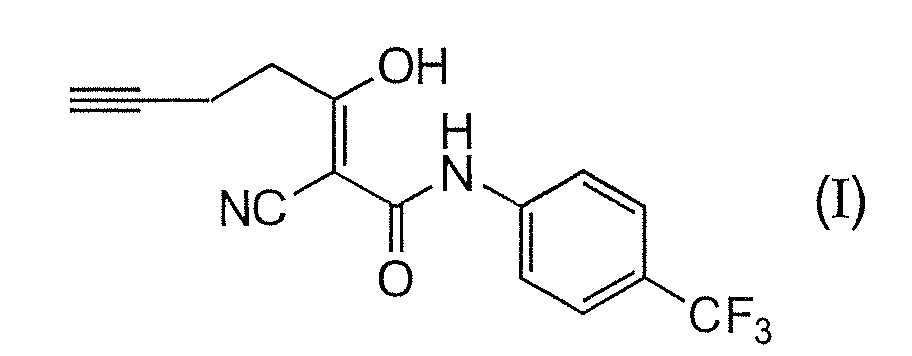 and a method for production of polymorphs thereof.
More specifically, the present invention relates to a novel method
for preparing the compound (I) having immunosuppressive activity, and a
method for selectively obtaining anyone of polymorphs comprising A-form
crystals, B-form crystals and C-form crystals of the compound (I).
The compound (I) is useful for treatment of rheumatoid arthritis,
immune or nonimmune chroic inflammatory diseases such as graft
versus host disease, reactions by transplantation and uveitis, as well as
cancer. A preparation method thereof has been described in Japanese
Unexamined Patent Publication No. HEI 5-310672 (Patent Document 1).
The compound (I) is specifically described in Preparation Example
14 of the above Patent Document 1, in which polymorphs of the
compound and a method for selectively obtaining anyone of the same
have not been reported.
In the preparation method of the compound (I) described in Patent
Document 1, n-butyl lithium, which is highly flammable, is used in an
amount as large as 3 equivalent weight with respect to a material
compound and a reaction temperature needs to be controlled at -78°C.
It has been a problem since the method is not suitable for manufacture
on an industrial scale.
Further, for preparing a safe and effective drug, homogeneity in
physical property of the drug is essential. Even the same compounds
may have different physical properties if their crystal forms are different.
If the crystal form is not controlled, i.e., a single crystal form cannot be
formed constantly, the resulting drug may irregularly vary in quality
batch by batch. Therefore, manufacture of a substance having uniform
physical properties, that is, control of the crystal form, is an extremely
important subject for quality control of the drug.
The present invention has been achieved to solve the above-described
problem and subject and based on the finding that there exist
polymorphs of the compound (I). Accordingly, the present invention
provides a method for preparing the compound (I) suitable for
manufacture on an industrial scale and a method for selectively
obtaining anyone of the polymorphs of the compound (I).
With the intention of establishing a method for preparing the
compound (I) free from the above-described problem, the inventors of the
present invention have carried out eager study and found that the above-described
problem is solved by reacting a compound (IV) represented by
the formula (IV):
 with a mixed acid anhydride of a compound (V) represented by the
formula (V):
with a mixed acid anhydride of a compound (V) represented by the
formula (V):
 thereby completing the present invention.
Further, in the course of study on a purification method of the
compound (I), the inventors of the present invention have also found that
A-form crystals, B-form crystals and C-form crystals of the compound (I)
are selectively obtained by controlling the temperature for recrystallizing
the compound (I), thereby completing the present invention.
According to the present invention, provided is a method for
preparing a compound (I) represented by the formula:
 by reacting a compound (II) represented by the formula:
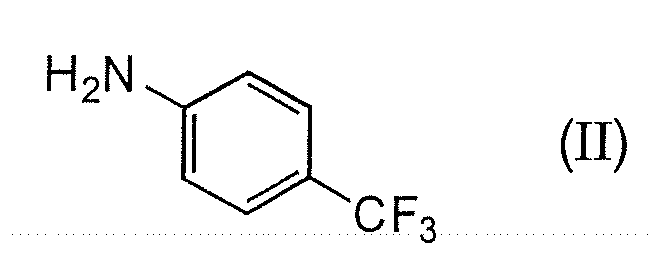 with a carboxylic acid (III) represented by the formula:
 or a reactive derivative at the carboxyl group thereof to give a compound
(IV) represented by the formula:
or a reactive derivative at the carboxyl group thereof to give a compound
(IV) represented by the formula:
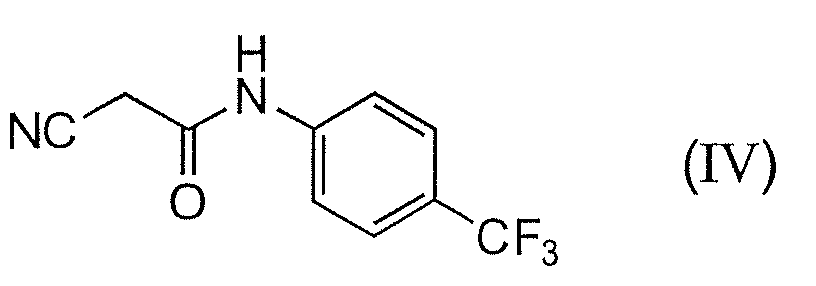 and reacting the resultant compound with a mixed acid anhydride of a
compound (V) represented by the formula:
and reacting the resultant compound with a mixed acid anhydride of a
compound (V) represented by the formula:
 to give the compound (I).
Further, according to the present invention, provided is a method
for selectively obtaining A-form crystals, B-form crystals or C-form
crystals of the compound (I) by controlling the temperature for
recrystallizing the compound (I) during the recrystallization of the
compound (I).
The above-described preparation method is represented by the
following equation.

The above preparation method is explained below.
A reaction in the first step is conducted by reacting a compound
(II) with a compound (III) or a reactive derivative at the carboxyl group
thereof.
The reactive derivative at the carboxyl group of the compound (III)
may be the acid halide, acid azide, acid anhydride, mixed acid anhydride,
active amide, active ester and the like.
Concrete examples of the reactive derivative include: acid halide;
acid azide; symmetric acid anhydride; asymmetric acid anhydride with
acid such as substituted phosphoric acid (for example, dialkyl phosphite,
phenyl phosphate, diphenyl phosphate, dibenzyl phosphate or
halogenated phosphate), dialkyl phosphate, sulfurous acid, thiosulfuric
acid, sulfuric acid, sulfonic acid (for example, methansulfonic acid),
aliphatic carboxylic acid (for example, acetate, propionic acid, butyric
acid, isobutyric acid, pivalic acid, pentanoic acid, isopentanoic acid, 2-ethylbutyric
acid or trichloroacetic acid) or aromatic carboxylic acid (for
example, benzoic acid); mixed acid anhydride prepared from
chloro(lower)alkyl carbonate or cycloalkyl chlorocarbonate; active amide
with imidazole, 4-substituted imidazole, dimethylpyrazole, triazole or
tetrazole; active ester (for example, cyanomethyl ester, methoxymethyl
ester, dimethyliminomethyl ((CH3)2N+=CH-) ester, vinyl ester, propargyl
ester, p-nitrophenyl ester, 2,4-dinitrophenyl ester, trichloropllenyl ester,
pentachlorophenyl ester, mesylphenyl ester, phenylazophenyl ester,
phenyl thioester, p-nitrophenyl thioester, p-cresyl thioester,
carboxymethyl thioester, pyranyl ester, pyridyl ester, piperidyl ester or 8-quinolyl
thioester); or ester with N-hydroxy compounds (for example,
N,N-dimethylhydroxylamine, 1-hydroxy-2-(1H)-pyridone, N-hydroxysuccinimide,
N-hydroxyphthalimide or 1-hydroxy-1H-benzotriazole).
Each of the above-described reactive derivatives may be obtained
by a usual method.
The reaction of the first step is usually carried out in a solvent
with cooling or heating.
Examples of the solvent used in this reaction include esters such
as ethyl acetate, ethers such as tetrahydrofuran, diethyl ether and
dioxane, aprotic polar solvents such as acetone, acetonitrile, N,N-dimethylformamide
and pyridine, halogenated hydrocarbons such as 1,2-dichloroethane,
chloroform and chlorobenzene, saturated or unsaturated
hydrocarbons such as hexane, benzene and toluene or a mixture of these
solvents.
If the compound (III) is used in the form of free acid in the
reaction of the first step, it is preferable to carry out the reaction in the
presence of a normal condensing agent, for example, N,N'-dicyclohexylcarbodiimide,
N-cyclohexyl-N'-morpholinoethylcarbodiimide,
N-cyclohexyl-N'-(4-diethylaminocyclohexyl)carbodiimide, N,N'-diethylcarbodiimide,
N,N'-diisopropylcarbodiimide, N-ethyl-N'-(3-dimethylaminopropyl)carbodiimide,
N,N'-carbonyl bis-(2-methylimidazole),
pentamethyleneketene-N-cyclohexylimine,
diphenylketene-N-cyclohexylimine, ethoxyacetylene, 1-alkoxy-1-chloroethylene,
trialkylphosphite, ethylpolyphosphate,
isopropylpolyphosphate, phosphorus oxychloride (phosphoryl chloride),
phosphorus trichloride, diphenylphosphorylazide, thionyl chloride, oxalyl
chloride, lower alkyl haloformate (for example, ethylchloroformate,
isopropylchloroformate and the like), triphenylphosphine, 2-ethyl-7-hydroxybenzisoxazolium
salt, 2-ethyl-5-(m-sulfophenyl)-isoxazolium
hydroxide inner salt, benzotriazol-1-yloxy-tris(dimethylamino)phosphonium
hexafluorophosphate, 1-(p-chlorobenzenesulfonyloxy)-6-chloro-1H-benzotriazole,
or in the presence
of a so-called Vilsmeier reagent obtained by a reaction between N,N-dimethylformamide
and thionyl chloride, phosgene,
trichloromethylchloroformate, phosphorus oxychloride or the like.
If the compound (III) is used in the form of free acid, the reaction
may be carried out in the presence of an acid such as inorganic acid,
organic acid and Lewis acid.
Examples of the inorganic acid include sulfuric acid, hydrochloric
acid and the like. Examples of the organic acid include p-toluenesulfonic
acid, benzenesulfonic acid, methansulfonic acid,
ethansulfonic acid, sulfosalicylic acid and the like. Examples of the
Lewis acid include aluminum chloride, diethyl ether boron trifluoride
complex, tin tetrachloride, titanium tetrachloride, yttrium triflate,
scantium triflate and the like. Particularly preferable is p-toluenesulfonic
acid.
In general, the reaction in the presence of acid is preferably
conducted in a nonpolar solvent which is not mixed with water, e.g.,
benzene, toluene, xylene, chlorobenzene or the like, with heating, while
removing water generated with the progress of the reaction out of the
reaction system, or in the presence of a dehydrating agent such as a
molecular sieve.
Further, this reaction may be carried out in the presence of an
inorganic base such as alkali metal hydrogen carbonates, alkali metal
carbonates and alkali metal hydroxides or in the presence of an organic
base such as tri(lower)alkylamine, pyridine, N-(lower)alkylmorpholine,
N,N-di(lower)alkylaminopyridine, N,N-di(lower)alkylaniline and N,N-di(lower)alkylbenzylamine.
The compound (IV) obtained in the above-described manner may
be isolated and purified by a usual method. However, it may be used in
a reaction of the following second step without particular isolation or
purification.
A reaction in the second step is carried out by reacting the
compound (IV) obtained as described above with a mixed acid anhydride
of a compound (V) in a solvent.
As the mixed acid anhydride of the compound (V), preferably is a
mixed acid anhydride with chloro(lower)alkyl carbonate or cycloalkyl
chlorocarbonate. Examples of the chloro(lower)alkyl carbonate include
methyl chlorocarbonate, ethyl chlorocarbonate, n-propyl
chlorocarbonate, isopropyl chlorocarbonate, n-butyl chlorocarbonate, s-butyl
chlorocarbonate, t-butyl chlorocarbonate, isoamyl chlorocarbonate
and the like. Examples of the cycloalkyl chlorocarbonate include
cyclopentyl chlorocarbonate, cyclohexyl chlorocarbonate and the like.
Further, bromides, fluorides and iodides converted from these chlorides
may also be used.
Preparation of the mixed acid anhydride of the compound (V) is
generally carried out in an organic solvent with cooling or heating in the
presence of an inorganic base or an organic base. The inorganic base,
organic base and organic solvent may be those shown in the above first
step.
The thus obtained mixed acid anhydride of the compound (V) may
be isolated and purified by a usual method. However, it may also be
used as it is in a reaction with a compound (IV) without being isolated
and purified.
In the same manner as the above first step, the reaction of the
second step is generally conducted with cooling or heating in a solvent.
The thus obtained compound (I) may be isolated and purified by a
usual method, but preferably, it is purified by recrystallization.
Examples of a solvent for the recrystallization include alcohols
such as methanol, ethanol, n-propyl alcohol, isopropyl alcohol, n-butyl
alcohol, t-butyl alcohol and the like, ketones such as acetone, methyl
ethyl ketone and the like, esters such as methyl acetate, ethyl acetate,
isopropyl acetate and the like, nitriles such as acetonitrile and the like,
ethers such as tetrahydrofuran, dioxane and the like, as well as a mixed
solvent of the above-listed solvents capable of being mixed with water
and water as a poor solvent, and a mixed solvent of the above-listed
solvent and a poor solvent, which may be an aliphatic hydrocarbon such
as n-pentane, cyclopentane, n-hexane, cyclohexane, n-heptane or
cycloheptane, an aromatic hydrocarbon such as benzene, toluene, xylene
or the like, or disopropyl ether.
Further, as described below, the present invention allows to
selectively obtain A-form crystals, B-form crystals and C-form crystals of
the compound (I) by controlling the temperature for recrystallization
and/ or time for crystal precipitation during the recrystallization of the
compound (I).
In other words, the A-form crystals of the compound (I),
characterized by having an IR (KBr) spectrum of Fig. 1, a DSC
endothermic curve of Fig. 4 and an X-ray diffraction pattern of Fig. 7 and
having characteristic peaks at about 6.7, about 13.4 and about 21.5° at
2 of the X-ray diffraction, are obtained by dissolving crystals of the
compound (I) in a solvent, maintaining the solvent at about 55°C to 95°C
with stirring, adding a poor solvent if necessary, and then filtering
precipitated crystals out.
Further, the B-form crystals of the compound (I), characterized by
having an IR (KBr) spectrum of Fig. 2, a DSC endothermic curve of Fig. 5
and an X-ray diffraction pattern of Fig. 8 and having characteristic peaks
at about 6.2, about 12.5 and about 20.8° at 2 of the X-ray diffraction,
are obtained by dissolving crystals of the compound (I) in a solvent,
maintaining the solvent at about 20°C to about 45°C, preferably at about
30°C to about 40°C with stirring, adding a poor solvent if necessary, and
then filtering precipitated crystals out.
Still further, the C-form crystals of the compound (I),
characterized by having an IR (KBr) spectrum of Fig. 3, a DSC
endothermic curve of Fig. 6 and an X-ray diffraction pattern of Fig. 9 and
having characteristic peaks at about 6.2, about 12.4 and about 20.2° at
2 0 of the X-ray diffraction, are obtained by dissolving crystals of the
compound (I) in a solvent, maintaining the solvent at about 0°C to about
15°C with stirring, adding a poor solvent if necessary, and then filtering
precipitated crystals out.
In the above steps, the poor solvent is added when the crystals
are hard to be precipitated or the crystallization needs to be accelerated.
However, in the method for selectively obtaining the polymorphs
according to the present invention, temperature control during the
crystallization is of consequence. Accordingly, the intended crystal form
is selectively obtained preferably by dissolving the compound (I) in a
solvent, maintaining the solvent at any one of the above-described
temperatures and adding the poor solvent, rather than by usual
recrystallization.
As the solvent used for preparing the above-described A-form
crystals, B-form crystals and C-form crystals, the solvent for the
recrystallization of the compound (I) described above may be used.
However, in view of yield and the like, particularly preferable are alcohols
such as methanol and isopropyl alcohol, or an acetone, a combination of
these solvents and water as a poor solvent, or a combination of a solvent
such as ethyl acetate and a poor solvent such as n-heptane.
The above-described A-form crystals are produced by
recrystallization performed in the temperature range of about 55°C to
about 95°C.
More specifically, if methanol is used as the recrystallization
solvent to obtain the A-form crystals from crude crystals of the
compound (I), for example, methanol may be used in an amount of 0.8 to
80-fold (w/w) of the compound (I) and water as the poor solvent may be
used in an amount of 0.5 to 50-fold (v/v) of methanol.
If acetone is used as the recrystallization solvent, acetone may be
used in an amount of 0.6 to 40-fold (w/w) of the compound (I) and water
as the poor solvent may be used in an amount of 0.7 to 10-fold (v/v) of
acetone.
If ethyl acetate is used as the recrystallization solvent, ethyl
acetate may be used in an amount of 2.5 to 10-fold (w/w) of the
compound (I) and n-heptane as the poor solvent may be used in an
amount of 2 to 50-fold (v/v) of ethyl acetate.
The above-described B-form crystals are produced by
recrystallization performed in the temperature range of about 20°C to
about 45°C, preferably about 30°C to about 40°C.
More specifically, if methanol is used as the recrystallization
solvent to obtain the B-form crystals from crude crystals of the
compound (I), for example, methanol may be used in an amount of 40 to
160-fold (w/w) of the compound (I) and water as the poor solvent may be
used in an amount of 0.2 to 10-fold (v/v) of methanol.
If acetone is used as the recrystallization solvent, acetone may be
used in an amount of 3.5 to 60-fold (w/w) of the compound (I) and water
as the poor solvent may be used in an amount of 0.2 to 5-fold (v/v) of
acetone.
If ethyl acetate is used as the recrystallization solvent, ethyl
acetate may be used in an amount of 4.5 to 18-fold (w/w) of the
compound (I) and n-heptane as the poor solvent may be used in an
amount of 3 to 20-fold (v/v) of ethyl acetate.
The above-described C-form crystals are produced by
recrystallization performed in the temperature range of about 0°C to
about 15°C.
More specifically, if methanol is used as the recrystallization
solvent to obtain the C-form crystals from crude crystals of the
compound (I), for example, methanol may be used in an amount of 80 to
400-fold (w/w) of the compound (I) and water as the poor solvent may be
used in an amount of 0.1 to 5-fold (v/v) of methanol.
If acetone is used as the recrystallization solvent, acetone may be
used in an amount of 7 to 80-fold (w/w) of the compound (I) and water as
the poor solvent may be used in an amount of 0.1 to 5-fold (v/v) of
acetone.
If ethyl acetate is used as the recrystallization solvent, ethyl
acetate may be used in an amount of 10 to 45-fold (w/w) of the
compound (I) and n-heptane as the poor solvent may be used in an
amount of 0.1 to 5-fold (v/v) of ethyl acetate.
If the thus obtained A-form crystals, B-form crystals or C-form
crystals of the compound (I) are suspended in a solvent and stirred with
heating while controlling the heating temperature, the A-form crystals,
B-form crystals and C-form crystals of the compound (I) can selectively
be converted to different crystal forms, respectively.
That is, the A-form crystals of the compound (I) can be obtained
by suspending the B-form crystals or C-form crystals of the compound (I)
or a mixture thereof in a solvent, maintaining the suspension at about
55°C to 95°C with stirring, and then filtering the crystals out of the
suspension.
Alternatively, the B-form crystals of the compound (I) can be
obtained by suspending the A-form crystals of the compound (I) in a
solvent, maintaining the suspension at about 20°C to 45°C with stirring,
and then filtering the crystals out of the suspension.
As The solvent used for the mutual conversion between the above-described
crystal forms, the solvents for the recrystallization of the
compound (I) described above may be used. However, in view of yield
and the like, particularly preferable are alcohols such as methanol and
isopropyl alcohol, or an acetone, a combination of these solvents and
water as a poor solvent, or a combination of a solvent such as ethyl
acetate and a poor solvent such as n-heptane.
Time for stirring at a predetermined temperature required for the
mutual conversion between the above-described crystal forms is not
particularly limited. However, sufficient time is about 5 hours to about
72 hours in general.
More specifically, in order to convert the B-form crystals or the C-form
crystals of the compound (I) or a mixture thereof into the A-form
crystals, for example, methanol or ethyl acetate may be used. That is, if
methanol is used as the solvent, methanol may be used in an amount of
8 to 80-fold (w/w) of the B-form crystals or the C-form crystals of the
compound (I) or the mixture thereof and water as the poor solvent may
be used in an amount of 0.5 to 50-fold (v/v) of methanol.
If ethyl acetate is used, ethyl acetate may be used in an amount of
2.5 to 10-fold (w/w) of the B-form crystals or the C-form crystals of the
compound (I) or the mixture thereof and n-heptane as the poor solvent
may be used in an amount of 2 to 50-fold (v/v) of methanol.
Next, in order to obtain the B-form crystals from the A-form
crystals of the compound (I), for example, methanol or ethyl acetate may
be used. That is, if methanol is used as the solvent, methanol may be
used in an amount of 40 to 160-fold (w/w) of the A-form crystals of the
compound (I) and water as the poor solvent may be used in an amount of
0.2 to 10-fold (v/v) of methanol.
If ethyl acetate is used, ethyl acetate may be used in an amount of
4.5 to 18-fold (w/w) of the A-form crystals of the compound (I) and n-heptane
as the poor solvent may be used in an amount of 3 to 20-fold
(v/v) of methanol.
The term "about" used in connection with temperature in the
present specification indicates that the indicated temperature may vary
by ±2°C.
The term "(lower)alkyl" used in the present specification means
(C1-C5) alkyl.
As a result of analysis on stability of the crystal forms of the
compound (I) based on the measurement results of a DSC endothermic
test, it was ascertained that the crystal forms are stable in the order of
B-form crystals > C-form crystals > A-form crystals.
The following Examples are incorporated herein to explain the
present invention in further detail, to which the scope of the present
invention is not limited.
In 700 L of tetrahydrofuran, 63.4 kg of cyanoacetic acid was
dissolved with stirring in nitrogen atmosphere at room temperature.
This solution was cooled to 0 to 10°C, and then N-methylmorpholine was
added dropwise with stirring at the same temperature in about an hour.
Then, 100.0 kg of 4-trifluoromethylaniline was added dropwise. To this
reaction mixture, 91.3kg of isopropyl chlorocarbonate was added
dropwise with stirring at the same temperature in about an hour.
Further, the stirring was continued for 1 to 2 hours.
After the reaction was finished, 200 L of water was added to the
reaction mixture, which was stirred and then allowed to stand for
separation. An organic layer (upper layer) was washed with 16.7 %
brine, and then 400 L of isopropyl alcohol was added thereto, which was
concentrated under reduced pressure until the liquid amount became
400 L. To the condensed solution, 400 L of isopropyl alcohol was added,
which was concentrated again under reduced pressure until the liquid
amount became 400 L.
To the condensed solution, 100 L of isopropyl alcohol was added
at 20 to 30°C with stirring, and then 500 L of water was added dropwise
in about an hour. Then, the stirring was further continued for an hour
at the same temperature. This mixture was cooled to 0 to 10°C with
stirring, and then stirred at the same temperature for an hour.
Precipitated crystals were collected by filtration and dried, to give 134.5
kg of the title compound (IV) in a yield of 95.0 %.
In 420 L of acetone, 61.9 kg of 4-pentynoic acid was dissolved
with stirring in nitrogen atmosphere at room temperature. This solution
was cooled to 10 to 15°C, to which 174.4 kg of potassium carbonate was
added with stirring. This mixture was heated to 40 to 45°C and a
solution of 120 kg of the compound (IV) obtained in Example 1 in
acetone (540 L) was added thereto at the same temperature with heating,
and then 64.5 kg of isopropyl chlorocarbonate was added dropwise in
about an hour. After the dropping was finished, the solution was
further stirred for 30 minutes at the same temperature.
To the reaction solution, 840 L of water was added at 10 to 45°C
with stirring, and then a 17.5 % hydrochloric acid solution (mixture of 90
L of water and 90 L of concentrated hydrochloric acid) was added
dropwise at 20 to 35°C for 30 minutes. After the precipitate was
dissolved, the solution was further stirred for 30 minutes.
Then, to this solution, a 17.5 % hydrochloric acid solution
(mixture of 45 L of water and 45 L of concentrated hydrochloric acid) was
added dropwise with stirring at the same temperature in an hour, which
was heated to 35 to 45°C and kept stirred for about an hour at the same
temperature. The mixture was cooled to 20 to 30°C and maintained at
same temperature for about two hours. To this mixture, a 17.5 %
hydrochloric acid solution (mixture of 45 L of water and 45 L of
concentrated hydrochloric acid) was further added dropwise at 20 to 35°C
in an hour, which was heated to 35 to 45°C and stirred at the same
temperature for about an hour, and then maintained at 20 to 30°C for
about two hours. Precipitated crystals were collected by filtration to give
136.2 kg of the title compound (I) in a yield of 84.0 %.
1H NMR (CDCl*3, 200MHz) δ: 2.07 (t, J=2.7Hz, 1H), 2.64 (dt, J=2.7 and 7.0Hz, 2H), 2.88 (t, J=7.0Hz, 2H), 7.65 (s, 4H), 7.77 (br.s, 1H), 15.59 (br.s, 1H).
IR (ATR method) (cm-1); 3311, 2217, 1627, 1626, 1589, 1554, 1415, 1321, 1263, 1243, 1160, 1113, 1072, 841, 658.
1H NMR (CDCl*3, 200MHz) δ: 2.07 (t, J=2.7Hz, 1H), 2.64 (dt, J=2.7 and 7.0Hz, 2H), 2.88 (t, J=7.0Hz, 2H), 7.65 (s, 4H), 7.77 (br.s, 1H), 15.59 (br.s, 1H).
IR (ATR method) (cm-1); 3311, 2217, 1627, 1626, 1589, 1554, 1415, 1321, 1263, 1243, 1160, 1113, 1072, 841, 658.
In 618.7 kg of tetrahydrofuran, 87.0 kg of the compound (IV)
obtained in Example 1 and 56.1 kg of 4-pentynoic acid were dissolved
with stirring in nitrogen atmosphere at 25 to 30°C. To this solution,
158.1 kg of pulverized potassium carbonate was added with stirring at
the same temperature. While stirring the mixture at 35 to 50°C, a
mixture of 93.5 kg of isopropyl chlorocarbonate and 77.3 kg of
tetrahydrofuran was added dropwise in 2 hours. After the dropping was
finished, the reaction mixture was stirred at the same temperature for
another 2 hours. After the reaction was completed, 677.3 kg of toluene
was added to the reaction mixture, which was cooled to 10 to 15°C.
A mixture of 207.1 kg of hydrochloric acid and 783 L of water was
added dropwise to this reaction mixture with stirring, while maintaining
the temperature of the reaction mixture not higher than 25°C. After the
dropping was finished, the mixture was further stirred for 5 minutes,
and then the stirring was stopped to leave the mixture to stand. After
the mixture was separated into two layers, an upper layer was isolated,
to which 435 L of 16.7 % brine was added and stirred at room
temperature for 5 minutes. The stirring was stopped and the resulting
mixture was allowed to stand. After the mixture was separated into two
layers, an upper layer was isolated and concentrated under reduced
pressure to obtain a concentrate of 435 L. To the concentrate, 376.3 kg
of toluene was added, which was concentrated again under reduced
pressure to obtain a concentrate of 435 L. While maintaining the
solution temperature not higher than 40°C, 376.3 kg of toluene was
added to this concentrate, followed by stirring at 20 to 30°C for an hour
and another stirring at 0 to 10°C for an hour. Then, the resulting
mixture was allowed to stand for 2 hours at the same temperature.
Precipitated crystals were collected by filtration and washed sequentially
with 150.5 kg of toluene, 174 L of an aqueous solution of 50 % isopropyl
alcohol and 174 L of water, followed by drying at 40°C under vacuum.
Thereby, 98.7 kg of crude crystals of the title compound (I) were obtained
in a yield of 84.0 %.
The 1HNMR spectrum and IR spectrum of the compound were
measured, which were in perfect agreement with those of the compound
obtained in Example 2.
In 420 L of acetone, 33.3kg of cyanoacetic acid was dissolved with
stirring in nitrogen atmosphere at room temperature. To this solution,
39.6 kg of N-methylmorpholine was added dropwise with stirring at 0 to
10°C in about an hour, to which 60.0 kg of 4-trifluoromethylaniline was
added dropwise. Further, 52.5 kg of isopropyl chlorocarbonate was
added dropwise to the solution with stirring at the same temperature in
an hour, which was then stirred at the same temperature for 1 to 2
hours to give a reaction product containing the compound (IV).
In nitrogen atmosphere at 25 to 30°C, 43.8 kg of 4-pentynoic acid
was dissolved in 780 L of acetone with stirring. To this solution, 221.3
kg of pulverized potassium carbonate, the reaction product containing
the compound (IV) obtained in the above and 68.5 kg of isopropyl
chlorocarbonate were added with stirring at the same temperature.
Then, the mixture was stirred for 1 to 2 hours while maintaining the
temperature at 40°C to 55°C.
After the reaction was completed, 1200 L of water was added to
the reaction mixture with stirring and the mixture was cooled to 20 to 35
°C. To the mixture, a mixture of 214.2 kg of hydrochloric acid and 180 L
of water was added dropwise with stirring while maintaining the
temperature of the reaction mixture at 20 to 30°C. After the dropping
was finished, a mixture of 107.1 kg of hydrochloric acid and 90 L of
water was further added dropwise with stirring while maintaining the
temperature at 20 to 35°C. Then, the reaction mixture was stirred for an
hour while maintaining the temperature thereof at 35 to 45°C, followed
by stirring at 20 to 30°C for an hour. Precipitated crystals were
collected by filtration and washed sequentially with 180 L of a 70 %
aqueous acetone solution and 300 L of a 30 % aqueous acetone solution.
Thereby, 126 kg of crude wet crystals of the compound (I) were obtained.
Part of the wet crystals was dried to measure the 1HNMR and IR
spectra, which were in perfect agreement with those of the compound (I)
obtained in Example 2.
In 50 mL of acetone, 5 g of crude crystals of the compound (I)
obtained in Example 2 were dissolved. This solution was heated to 55°C
with stirring, to which 50 mL of water was added dropwise at the same
temperature in about an hour. After the dropping was completed, the
mixture was further stirred at the same temperature for an hour.
Precipitated crystals were collected by filtration and dried at 40°C under
vacuum to give 4.35 g of A-form crystals of the compound (I) in a yield of
87.0 %.
The A-form crystals showed endothermic reaction at 175°C in a
DSC endothermic test and indicated characteristic peaks at 6.7, 13.4
and 21.5° at 2 of the X-ray diffraction. Figs. 1, 4 and 7 show the IR
(KBr) spectrum, DSC endothermic curve and X-ray diffraction pattern of
the crystals, respectively.
IRKBr (cm-1); 3310, 2220, 1634, 1592, 1556, 1417, 1329, 1159, 1118, 1071, 958, 844, 658, 648.
IRKBr (cm-1); 3310, 2220, 1634, 1592, 1556, 1417, 1329, 1159, 1118, 1071, 958, 844, 658, 648.
In 50 mL of acetone, 5 g of crude crystals of the compound (I)
obtained in Example 2 were dissolved. This solution was refluxed with
heating to 57°C with stirring. Then, the resulting mixture was heated to
60°C while adding 50 mL of water dropwise at the same temperature in
about an hour. After the dropping was finished, the mixture was further
stirred at the same temperature for an hour. Precipitated crystals were
collected by filtration and dried at 40°C under vacuum to give 4.12 g of
A-form crystals of the compound (I) in a yield of 82.4 %.
The IR (KBr) spectrum, DSC endothermic curve and X-ray
diffraction pattern of the crystals were in perfect agreement with those of
the A-form crystals of the compound (I) obtained in the above Example 5-1.
In 50 mL of acetone, 5 g of crude crystals of the compound (I)
obtained in Example 2 were dissolved. This solution was refluxed with
heating to 57°C with stirring. Then, the resulting mixture was heated to
65°C while adding 50 mL of water dropwise at the same temperature in
about an hour. After the dropping was finished, the mixture was further
stirred at the same temperature for an hour. Precipitated crystals were
collected by filtration and dried at 40°C under vacuum to give 3.99 g of
A-form crystals of the compound (I) in a yield of 79.8 %.
The IR (KBr) spectrum, DSC endothermic curve and X-ray
diffraction pattern of the crystals were in perfect agreement with those of
the A-form crystals of the compound (I) obtained in the above Example 5-1.
In 320 mL of cyclohexane, 16 g of crude crystals of the compound
(I) obtained in Example 2 were suspended. The suspension was stirred
with heating at a temperature between 75°C and a boiling point thereof
for 2 hours. Crystals were collected by filtration, washed with 32 ml of
cyclohexane and dried under reduced pressure to give 15.2 g of A-form
crystals of the compound (I) in a yield of 95.0 %.
The IR (KBr) spectrum, DSC endothermic curve and X-ray
diffraction pattern of the crystals were in perfect agreement with those of
the A-form crystals of the compound (I) obtained in the above Example 5-1.
In 20 mL of ethyl acetate, 3 g of crude crystals of the compound (I)
obtained in Example 2 were dissolved with heating to 40°C. This
solution was heated to 60°C with stirring, to which 200 mL of n-heptane
was added dropwise at the same temperature in about an hour. After
the dropping was finished, the mixture was further stirred at the same
temperature for an hour. Precipitated crystals were collected by
filtration and dried at 40°C under vacuum to give 1.20 g of A-form
crystals of the compound (I) in a yield of 40 %.
The IR (KBr) spectrum, DSC endothermic curve and X-ray
diffraction pattern of the crystals were in perfect agreement with those of
the A-form crystals of the compound (I) obtained in the above Example 5-1.
In 500 mL of methanol, 5 g of crude crystals of the compound (I)
obtained in Example 2 were dissolved. This solution was heated to 60°C
with stirring, to which 500 mL of water was added dropwise at the same
temperature in about an hour. After the dropping was finished, the
mixture was further stirred at the same temperature for an hour.
Precipitated crystals were collected by filtration and dried at 40°C under
vacuum to give 2.79 g of A-form crystals of the compound (I) in a yield of
55.8 %.
The IR (KBr) spectrum, DSC endothermic curve and X-ray
diffraction pattern of the crystals were in perfect agreement with those of
the A-form crystals of the compound (I) obtained in the above Example 5-1.
To 300 mL of isopropyl alcohol, 10.0 g of crude crystals of the
compound (I) obtained in Example 2 were added and dissolved by
heating to 78°C. This solution was cooled to 25°C with stirring, and then
the stirring was continued for 19 hours at the same temperature (22~25
°C). Precipitated crystals were collected by filtration at the same
temperature, washed with 120 mL of isopropyl alcohol and then dried
under reduced pressure to give 8.87 g of B-form crystals of the
compound (I) in a yield of 88.7 %.
The B-form crystals showed endothermic reaction at 92 and 175°C
in a DSC endothermic test and indicated characteristic peaks at 6.2,
12.5 and 20.8° at 2 of the X-ray diffraction. Figs. 2, 5 and 8 show the
IR (KBr) spectrum, DSC endothermic curve and X-ray diffraction pattern
of the crystals, respectively.
IR KBr (cm-1); 3311, 2217, 1635, 1614, 1594, 1418, 1399, 1322, 1269, 1163, 1125, 1116, 1073, 1020, 970, 843, 666, 659, 592, 525.
IR KBr (cm-1); 3311, 2217, 1635, 1614, 1594, 1418, 1399, 1322, 1269, 1163, 1125, 1116, 1073, 1020, 970, 843, 666, 659, 592, 525.
In 50 mL of acetone, 5 g of crude crystals of the compound (I)
obtained in Example 2 were dissolved. This solution was maintained at
25°C with stirring, to which 50 mL of water was added dropwise at the
same temperature in about an hour. After the dropping was finished,
the mixture was further stirred at the same temperature for an hour.
Precipitated crystals were collected by filtration and dried at 40°C under
vacuum to give 4.71 g of B-form crystals of the compound (I) in a yield of
94.2 %.
The IR (KBr) spectrum, DSC endothermic curve and X-ray
diffraction pattern of the crystals were in perfect agreement with those of
the B-form crystals of the compound (I) obtained in the above Example 6-1.
In 50 mL of acetone, 5 g of crude crystals of the compound (I)
obtained in Example 2 were dissolved. This solution was maintained at
30°C with stirring, to which 50 mL of water was added dropwise at the
same temperature in about an hour. After the dropping was finished,
the mixture was further stirred at the same temperature for an hour.
Precipitated crystals were collected by filtration and dried at 40°C under
vacuum to give 4.69 g of B-form crystals of the compound (I) in a yield of
93.8 %.
The IR (KBr) spectrum, DSC endothermic curve and X-ray
diffraction pattern of the crystals were in perfect agreement with those of
the B-form crystals of the compound (I) obtained in the above Example 6-1.
In 50 mL of acetone, 5 g of crude crystals of the compound (I)
obtained in Example 2 were dissolved. This solution was maintained at
35°C with stirring, to which 50 mL of water was added dropwise at the
same temperature in about an hour. After the dropping was finished,
the mixture was further stirred at the same temperature for an hour.
Precipitated crystals were collected by filtration and dried at 40°C under
vacuum to give 4.64 g of B-form crystals of the compound (I) in a yield of
92.8 %.
The IR (KBr) spectrum, DSC endothermic curve and X-ray
diffraction pattern of the crystals were in perfect agreement with those of
the B-form crystals of the compound (I) obtained in the above Example 6-1.
To 900 L of acetone, 126 kg of crude wet crystals of the compound
(I) obtained in Example 4 were added and dissolved with stirring at room
temperature. To this solution, 900 L of water was added dropwise at 30
to 40°C with stirring in an hour. The mixture was stirred at the same
temperature for an hour and then cooled to 20 to 30°C. Precipitated
crystals were collected by filtration and washed with 120 L of a 50%
aqueous acetone solution and then dried at 40°C under vacuum to give
86.1 kg of B-form crystals of the compound (I) in a yield of 75.0 %.
The IR (KBr) spectrum, DSC endothermic curve and X-ray
diffraction pattern of the crystals were in perfect agreement with those of
the B-form crystals of the compound (I) obtained in the above Example 6.
1H NMR (CDCl3, 200MHz) δ: 2.07 (t, J=2.7Hz, 1H), 2.64 (dt, J=2.7 and
7.0Hz, 2H), 2.88 (t, J=7.0Hz, 2H), 7.65 (s,4H), 7.77 (br.s,1H), 15.59
(br.s,1H).
IR (ATR method) (cm-1); 3311, 2217, 1627, 1626, 1589, 1554, 1415, 1321, 1263, 1243, 1160, 1113, 1072, 841, 658.
IR (ATR method) (cm-1); 3311, 2217, 1627, 1626, 1589, 1554, 1415, 1321, 1263, 1243, 1160, 1113, 1072, 841, 658.
In 1084 L of acetone, 135.5 kg of crude crystals of the compound
(I) obtained in Example 3 were dissolved at room temperature with
stirring. The solution was filtered, the residue was washed with 271 L of
acetone and the filtrate and the washings were combined. To this
solution, 1355 L of water was added dropwise at 30 to 40°C with stirring
in about an hour. Then, the mixture was stirred at the same
temperature for an hour and cooled to 20 to 30°C. Precipitated crystals
were collected by filtration, washed with 270 L of a 50% aqueous acetone
solution and then dried at 40°C under vacuum to give 125.4 kg of B-form
crystals of the compound (I) in a yield of 92.5%.
The IR (KBr) spectrum, DSC endothermic curve and X-ray
diffraction pattern of the crystals were in perfect agreement with those of
the B-form crystals of the compound (I) obtained in the above Example 6.
In 30 mL of ethyl acetate, 3 g of crude crystals of the compound (I)
obtained in Example 2 were dissolved. This solution was maintained at
30°C with stirring, to which 120 mL of n-heptane was added dropwise at
the same temperature in about an hour. After the dropping was
finished, the mixture was further stirred at the same temperature for an
hour. Precipitated crystals were collected by filtration and dried at 40°C
under vacuum to give 1.88 g of B-form crystals of the compound (I) in a
yield of 62.7%.
The IR (KBr) spectrum, DSC endothermic curve and X-ray
diffraction pattern of the crystals were in perfect agreement with those of
the B-form crystals of the compound (I) obtained in the above Example 6-1.
In 500 mL of methanol, 5 g of crude crystals of the compound (I)
obtained in Example 2 were dissolved. This solution was maintained at
30°C with stirring, to which 500 mL of water was added dropwise at the
same temperature in about an hour. After the dropping was finished,
the mixture was further stirred at the same temperature for an hour.
Precipitated crystals were collected by filtration and dried at 40°C under
vacuum to give 4.23 g of B-form crystals of the compound (I) in a yield of
84.6 %.
The IR (KBr) spectrum, DSC endothermic curve and X-ray
diffraction pattern of the crystals were in perfect agreement with those of
the B-form crystals of the compound (I) obtained in the above Example 6-1.
In 100 mL of acetone, 10 g of crude crystals obtained in Example
2 were dissolved with stirring at room temperature. To this solution,
100 mL of water was added dropwise at 14 to 15°C with stirring and the
stirring was continued for 2 hours at the same temperature (15°C).
Precipitated crystals were collected by filtration at the same temperature,
washed with 20 ml of a mixture of acetone and water and then dried
under reduced pressure to give 9.35 g of C-form crystals of the
compound (I) in a yield of 93.5%.
The C-form crystals showed endothermic reaction at 88 and 174.5
°C in a DSC endothermic test and indicated characteristic peaks at 6.2,
12.4 and 20.2° at 2 of the X-ray diffraction. Figs. 3, 6 and 9 show the
IR (KBr) spectrum, X-ray diffraction pattern and DSC endothermic curve
of the crystals, respectively.
IR KBr (cm-1); 3309, 2221, 1590, 1554, 1417, 1388, 1328, 1162, 1118, 1072, 1018, 847, 664, 647.
IR KBr (cm-1); 3309, 2221, 1590, 1554, 1417, 1388, 1328, 1162, 1118, 1072, 1018, 847, 664, 647.
In 60 mL of acetone, 5 g of crude crystals of the compound (I)
obtained in Example 2 were dissolved. This solution was maintained at
5°C with stirring, to which 60 mL of water was added dropwise at the
same temperature in about an hour. After the dropping was finished,
the mixture was further stirred at the same temperature for an hour.
Precipitated crystals were collected by filtration and dried at 40°C under
vacuum to give 4.86 g of C-form crystals of the compound (I) in a yield of
97.2 %.
The IR (KBr) spectrum, DSC endothermic curve and X-ray
diffraction pattern of the crystals were in perfect agreement with those of
the C-form crystals of the compound (I) obtained in the above Example 7-1.
In 50 ml of acetone, 5 g of crude crystals of the compound (I)
obtained in Example 2 were dissolved. This solution was maintained at
10°C with stirring, to which 50 mL of water was added dropwise at the
same temperature in about an hour. After the dropping was finished,
the mixture was further stirred at the same temperature for an hour.
Precipitated crystals were collected by filtration and dried at 40°C under
vacuum to give 4.84 g of C-form crystals of the compound (I) in a yield of
96.8 %.
The IR (KBr) spectrum, DSC endothermic curve and X-ray
diffraction pattern of the crystals were in perfect agreement with those of
the C-form crystals of the compound (I) obtained in the above Example 7-1.
In 50 mL of ethyl acetate, 3 g of crude crystals of the compound (I)
obtained in Example 2 were dissolved. This solution was maintained at
5°C with stirring, to which 200 mL of n-heptane was added dropwise at
the same temperature in about an hour. After the dropping was
finished, the mixture was further stirred at the same temperature for an
hour. Precipitated crystals were collected by filtration and dried at 40°C
under vacuum to give 2.10 g of C-form crystals of the compound (I) in a
yield of 70.0 %.
The IR (KBr) spectrum, DSC endothermic curve and X-ray
diffraction pattern of the crystals were in perfect agreement with those of
the C-form crystals of the compound (I) obtained in the above Example 7-1.
In 1000 mL of methanol, 4 g of crude crystals of the compound (I)
obtained in Example 2 were dissolved. This solution was maintained at
5°C with stirring, to which 1000 mL of water was added dropwise at the
same temperature in about an hour. After the dropping was finished,
the mixture was further stirred at the same temperature for an hour.
Precipitated crystals were collected by filtration and dried at 40°C under
vacuum to give 3.23 g of C-form crystals of the compound (I) in a yield of
80.8 %.
The IR (KBr) spectrum, DSC endothermic curve and X-ray
diffraction pattern of the crystals were in perfect agreement with those of
the C-form crystals of the compound (I) obtained in the above Example 7-1.
In 600 mL of n-heptane, 50 g of the B-form crystals of the
compound (I) obtained in Example 6 were suspended, heated to 88°C and
kept stirred at the same temperature for about 5 hours. Then, the
mixture was cooled to 45°C with stirring, which was stirred at the same
temperature for about 3 hours. Precipitated crystals were collected by
filtration at the same temperature, washed with 50 mL of n-heptane and
then dried at 40°C under vacuum to give 48.7g of A-form crystals of the
compound (I) in a yield of 97.4 %.
The IR (KBr) spectrum, DSC endothermic curve and X-ray
diffraction pattern of the crystals were in perfect agreement with those of
the A-form crystals of the compound (I) obtained in Example 5.
In 400 mL of a 50% aqueous acetone solution, 20 g of the B-form
crystals of the compound (I) obtained in Example 6 were suspended.
The suspension was heated to 65°C with stirring, and the stirring was
continued for 5 hours at the same temperature. The suspension was
filtered at the same temperature to take out crystals, which were dried at
40°C under vacuum to give 15.96 g of A-form crystals of the compound
(I) in a yield of 79.8 %.
The IR (KBr) spectrum, DSC endothermic curve and X-ray
diffraction pattern of the crystals were in perfect agreement with those of
the A-form crystals of the compound (I) obtained in Example 5.
In 600 mL of cyclohexane, 30 g of the B-form crystals of the
compound (I) obtained in Example 6 were suspended. The suspension
was heated to 72°C with stirring, and the stirring was continued for 5
hours at the same temperature. The suspension was filtered at the
same temperature to take out crystals, which were washed with 150 mL
of cyclohexane and dried at 40°C under vacuum to give 27.52 g of A-form
crystals of the compound (I) in a yield of 91.7 %.
The IR (KBr) spectrum, DSC endothermic curve and X-ray
diffraction pattern of the crystals were in perfect agreement with those of
the A-form crystals of the compound (I) obtained in Example 5.
In a mixture of 20 mL of ethyl acetate and 200 mL of n-heptane, 3
g of the B-form crystals of the compound (I) obtained in Example 6 were
suspended. The suspension was heated to 60°C and stirred at the same
temperature for about 5 hours. Then, precipitated crystals were
collected by filtration at the same temperature and dried at 40°C under
vacuum to give 1.18 g of A-form crystals of the compound (I) in a yield of
39.3 %.
The IR (KBr) spectrum, DSC endothermic curve and X-ray
diffraction pattern of the crystals were in perfect agreement with those of
the A-form crystals of the compound (I) obtained in Example 5.
In 200 mL of a 50% aqueous acetone solution, 10 g of the C-form
crystals of the compound (I) obtained in Example 7 were suspended.
This suspension was heated to 65°C with stirring, and the stirring was
continued at the same temperature for 5 hours. The suspension was
filtered at the same temperature to take out crystals, which were dried at
40°C under vacuum to give 7.98 g of A-form crystals of the compound (I)
in a yield of 79.8%.
The IR (KBr) spectrum, DSC endothermic curve and X-ray
diffraction pattern of the crystals were in perfect agreement with those of
the A-form crystals of the compound (I) obtained in Example 5.
In 100 mL of a 50% aqueous methanol solution, 5 g of the C-form
crystals of the compound (I) obtained in Example 7 were suspended.
This suspension was heated to 60°C with stirring, and the stirring was
continued for 15 hours at the same temperature. The suspension was
filtered at the same temperature to take out crystals, which were dried at
40°C under vacuum to give 3.91 g of A-form crystals of the compound (I)
in a yield of 78.2%.
The IR (KBr) spectrum, DSC endothermic curve and X-ray
diffraction pattern of the crystals were in perfect agreement with those of
the A-form crystals of the compound (I) obtained in Example 5.
In 100 mL of a 50% aqueous acetone solution, 10 g of the A-form
crystals of the compound (I) obtained in Example 5 were suspended.
The suspension was maintained at 31°C with stirring, and the stirring
was continued at the same temperature for 15 hours. The suspension
was filtered at the same temperature to take out crystals, which were
dried at 40°C under vacuum to give 9.38 g of B-form crystals of the
compound (I) in a yield of 93.8%.
The IR (KBr) spectrum, DSC endothermic curve and X-ray
diffraction pattern of the crystals were in perfect agreement with those of
the B-form crystals of the compound (I) obtained in Example 6.
In 100 mL of isopropyl alcohol, 3 g of the A-form crystals of the
compound (I) obtained in Example 5 were suspended. The suspension
was maintained at 31°C with stirring, and the stirring was continued for
15 hours at the same temperature. The suspension was filtered at the
same temperature to take out crystals, which were dried at 40°C under
vacuum to give 2.78 g of B-form crystals of the compound (I) in a yield of
92.7%.
The IR (KBr) spectrum, DSC endothermic curve and X-ray
diffraction pattern of the crystals were in perfect agreement with those of
the B-form crystals of the compound (I) obtained in Example 6.
In a mixture of 30 mL of ethyl acetate and 120 mL of n-heptane, 3
g of the A-form crystals of the compound (I) obtained in Example 5 were
suspended. The suspension was maintained at 30°C with stirring, and
the stirring was continued for 15 hours at the same temperature. The
suspension was filtered at the same temperature to take out crystals,
which were dried at 40°C under vacuum to give 1.80 g of B-form crystals
of the compound (I) in a yield of 60.0 %.
The IR (KBr) spectrum, DSC endothermic curve and X-ray
diffraction pattern of the crystals were in perfect agreement with those of
the B-form crystals of the compound (I) obtained in Example 6.
In 100 mL of a 50% aqueous acetone solution, 5 g of the C-form
crystals of the compound (I) obtained in Example 7 were suspended.
The suspension was heated to 65°C with stirring, and the stirring was
continued for 5 hours at the same temperature. Then, the suspension
was cooled to 30°C and stirred at the same temperature for about 15
hours. The suspension was filtered to take out crystals, which were
dried at 40°C under vacuum to give 4.69 g of B-form crystals of the
compound (I) in a yield of 93.8%.
The IR (KBr) spectrum, DSC endothermic curve and X-ray
diffraction pattern of the crystals were in perfect agreement with those of
the B-form crystals of the compound (I) obtained in Example 6.
In a mixture of 20 mL of ethyl acetate and 200 mL of n-heptane, 3
g of the C-form crystals of the compound (I) obtained in Example 7 were
suspended. The suspension was heated to 60°C with stirring, and the
stirring was continued for about 5 hours at the same temperature.
Then, the suspension was cooled to 30°C and kept stirred at the same
temperature for about 5 hours. The suspension was filtered to take out
crystals, which were dried at 40°C under vacuum to give 2.18 g of B-form
crystals of the compound (I) in a yield of 72.6%.
The IR (KBr) spectrum, DSC endothermic curve and X-ray
diffraction pattern of the crystals were in perfect agreement with those of
the B-form crystals of the compound (I) obtained in Example 6.
The present invention is characterized in that chlorocarbonic
esters used as an activating reagent in the preparation method of the
compound (I) are decomposed into alcohols and carbon dioxide after the
reaction, thereby so-called industrial waste is hardly generated.
Further, since the preparation method of the compound (I) according to
the present invention does not require severe reaction conditions,
general-purpose facilities can be used. Accordingly, the preparation
method is more suitable for the production of the compound (I) on an
industrial scale than a conventional method for preparing the compound
(I).
Still further, according to the present invention, A-form crystals,
B-form crystals and C-form crystals of the compound (I) may selectively
be produced with efficiency by controlling temperature for the
recrystallization and/or time for the crystal precipitation during the
recrystallization of the compound (I).
Claims (16)
- A method for preparing a compound (I) represented by the formula:which is characterized by reacting a compound (IV) represented by the formula:
 with a mixed acid anhydride of a compound (V) represented by the formula:
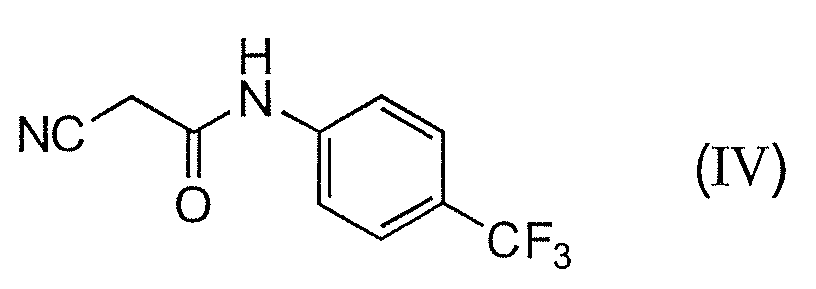 to give the compound (I).
- A method for preparing a compound (I) represented by the formula:which is characterized by reacting a compound (II) represented by the formula:
 with a carboxylic acid (III) represented by the formula:
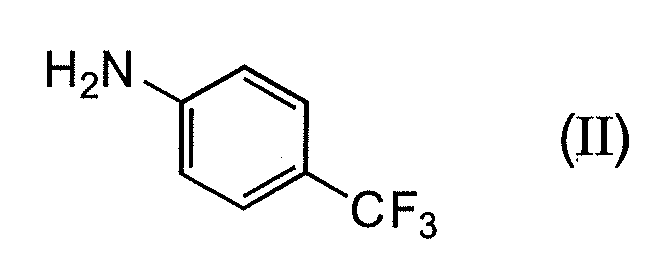 or a reactive derivative at the carboxyl group thereof to give a compound (IV) represented by the formula:
 and reacting the resultant compound with a mixed acid anhydride of a compound (V) represented by the formula:
 to give the compound (I).
- The preparation method according to Claim 1 or 2, wherein the mixed acid anhydride of the compound (V) is a mixed acid anhydride with chloro(lower)alkyl carbonate.
- A method for preparing A-form crystals of the compound (I) described in Claim 1 or 2, which is characterized by dissolving the compound (I) in a solvent, maintaining the resultant solution at a temperature from about 55°C to about 95°C while stirring, adding with a poor solvent, if necessary, and then isolating the precipitated crystals.
- A method for preparing B-form crystals of the compound (I) described in Claim 1 or 2, which is characterized by dissolving the compound (I) in a solvent, maintaining the resultant solution at a temperature from about 20°C to about 45°C while stirring, adding with a poor solvent, if necessary, and then isolating the precipitated crystals.
- A method for preparing C-form crystals of the compound (I) described in Claim 1 or 2, which is characterized by dissolving the compound (I) in a solvent, maintaining the resultant solution at a temperature from about 0°C to about 15°C while stirring, adding with a poor solvent, if necessary, and then isolating the precipitated crystals.
- The method according to any one of Claims 4 to 6, wherein the poor solvent is selected from an aliphatic hydrocarbon such as n-pentane, cyclopentane, n-hexane, cyclohexane, n-heptane or cycloheptane; an aromatic hydrocarbon such as benzene, toluene or xylene; an ethers such as diisopropyl ether; and water.
- The method according to claim 5, which is characterized in that the solution is maintained at a temperature from about 30°C to about 40 °C.
- The method according to any one of Claims 4 to 6 and 8, wherein the solvent is acetone, and water is added as the poor solvent.
- The method according to any one of Claims 4 to 6 and 8, wherein the solvent is methanol, and water is added as the poor solvent.
- The method according to any one of Claims 4 to 6 and 8, wherein the solvent is ethyl acetate, and n-heptane is added as the poor solvent.
- The method according to Claim 5, wherein the solvent is isopropyl alcohol and no poor solvent is added.
- A method for converting of B-form crystals or C-form crystals of the compound (I) described in Claims 5 or 6 respectively, or mixture thereof into A-form crystals of the compound (I), which is characterized by suspending B-form crystals or C-form crystals of the compound (I) or mixture thereof in a solvent and stirring the resultant suspension at a temperature from about 55°C to about 95°C.
- A method for converting of A-form crystals of the compound (I) described in Claim 4 into B-form crystals of the compound (I), which is characterized by suspending B-form crystals in a solvent and stirring the resultant suspension at a temperature from about 20°C to about 45°C.
- The method according to Claim 13 or 14, wherein the solvent is an aqueous acetone, aqueous methanol, isopropyl alcohol, cyclohexane, n-heptane or a mixture of ethyl acetate and n-heptane.
- The method according to Claim 15, wherein the stirring is continued for about 5 hours to about 72 hours.
Applications Claiming Priority (5)
| Application Number | Priority Date | Filing Date | Title |
|---|---|---|---|
| JP2003081335 | 2003-03-24 | ||
| JP2003081335 | 2003-03-24 | ||
| JP2003176706 | 2003-06-20 | ||
| JP2003176706 | 2003-06-20 | ||
| PCT/JP2004/003904 WO2004085383A1 (en) | 2003-03-24 | 2004-03-23 | Process for production of 2-cyano-3-hydroxy-n-(4-tri- fluoromethylphenyl)hept-2-en-6-ynamide and process for production of polymorphs thereof |
Publications (1)
| Publication Number | Publication Date |
|---|---|
| EP1609778A1 true EP1609778A1 (en) | 2005-12-28 |
Family
ID=33100355
Family Applications (1)
| Application Number | Title | Priority Date | Filing Date |
|---|---|---|---|
| EP04722662A Withdrawn EP1609778A1 (en) | 2003-03-24 | 2004-03-23 | Process for production of 2-cyano-3-hydroxy-n-(4-tri- fluoromethylphenyl)hept-2-en-6-ynamide and process for production of polymorphs thereof |
Country Status (4)
| Country | Link |
|---|---|
| US (1) | US20060217440A1 (en) |
| EP (1) | EP1609778A1 (en) |
| JP (1) | JPWO2004085383A1 (en) |
| WO (1) | WO2004085383A1 (en) |
Families Citing this family (2)
| Publication number | Priority date | Publication date | Assignee | Title |
|---|---|---|---|---|
| CN116924937B (en) * | 2022-04-02 | 2026-05-05 | 江苏康缘药业股份有限公司 | Preparation method of 2-cyano-3-hydroxy-2-butene-(4-trifluoromethyl-phenyl)amide |
| CN115838340A (en) * | 2022-12-31 | 2023-03-24 | 辰欣药业股份有限公司 | A kind of preparation method of teriflunomide |
Family Cites Families (2)
| Publication number | Priority date | Publication date | Assignee | Title |
|---|---|---|---|---|
| GB9200275D0 (en) * | 1992-01-08 | 1992-02-26 | Roussel Lab Ltd | Chemical compounds |
| DE19636974A1 (en) * | 1996-09-12 | 1998-03-19 | Hoechst Ag | 2-cyano-3,5-dihydroxy-hex-2-ene carboxamide derivatives |
-
2004
- 2004-03-23 US US10/550,099 patent/US20060217440A1/en not_active Abandoned
- 2004-03-23 JP JP2005504050A patent/JPWO2004085383A1/en active Pending
- 2004-03-23 EP EP04722662A patent/EP1609778A1/en not_active Withdrawn
- 2004-03-23 WO PCT/JP2004/003904 patent/WO2004085383A1/en not_active Ceased
Non-Patent Citations (1)
| Title |
|---|
| See references of WO2004085383A1 * |
Also Published As
| Publication number | Publication date |
|---|---|
| US20060217440A1 (en) | 2006-09-28 |
| JPWO2004085383A1 (en) | 2006-06-29 |
| WO2004085383A1 (en) | 2004-10-07 |
Similar Documents
| Publication | Publication Date | Title |
|---|---|---|
| US8329724B2 (en) | Process for the manufacture of pharmaceutically active compounds | |
| US8884016B2 (en) | Apixaban preparation process | |
| EP1740593B1 (en) | Processes for the preparation of clopidogrel hydrogen sulfate polymorphic form i | |
| JP6699979B2 (en) | Synthetic method and crystalline form of silodosin and its intermediates | |
| WO1997045425A1 (en) | New indolyl and benzofuranyl carboxamides as inhibitors of nitric oxide production | |
| CN107531677A (en) | Method for preparing topicastat and intermediates thereof | |
| KR20090013794A (en) | Method for preparing polymorphs of clopidogrel hydrogen sulfate | |
| WO2004014879A1 (en) | New process | |
| WO2003076374A1 (en) | PROCESS FOR PRODUCING trans-4-AMINO-1-CYCLOHEXANECARBOXYLIC ACID DERIVATIVE | |
| NZ245328A (en) | Thiazolyl-substituted quinolylmethoxyphenylacetic acid derivatives, preparation and pharmaceutical compositions thereof | |
| US20060217440A1 (en) | Porcess for production of 2-cyano-3-hydroxy-n-(4-trifluoromethylphenyl)hept-2-en-6-ynamide and process for production of polymorphs thereof | |
| EP2582690B1 (en) | Process for preparation of 2, 3-diaryl-5-substituted pyridines and their intermediates | |
| SI21850A (en) | Salts of olanzapin and their transformation into free base of olanzapin | |
| CA3038381C (en) | Method for preparing the phenylalanine compound 2-[(2-(4-fluorobenzoyl)phenyl)amino]-3-[4-(2-carbazolylethoxy)-phenyl]propionic acid | |
| KR20010053455A (en) | Novel Salts of N-tert-Butylhydroxylamine | |
| JPH0231075B2 (en) | ||
| US8193386B2 (en) | Crystalline form of (S)-1-phenylethylammonium (R)-diphenylmethanesulphinyl-acetate | |
| NZ245327A (en) | Quinolylmethoxyphenyl-acetamides, preparation and pharmaceutical compositions thereof | |
| US5952512A (en) | Production of optically active benzothiepin salts | |
| EP2094661A2 (en) | Process for the preparation of atazanavir | |
| CA2480096A1 (en) | Process for producing triterpene derivatives | |
| WO2002042261A2 (en) | PROCESS FOR PREPARING α-(3-ARYLTHIO)-ACETOPHENONES | |
| NO802345L (en) | PROCEDURE FOR PREPARING NEW, HALOGENATED 15-HYDROXY-E-HOMOEBURNAND DERIVATIVES | |
| CN122036752A (en) | Ballon Sha Wei intermediate and preparation method thereof | |
| JP3163393B2 (en) | Process for producing optically active benzothiepine salts |
Legal Events
| Date | Code | Title | Description |
|---|---|---|---|
| PUAI | Public reference made under article 153(3) epc to a published international application that has entered the european phase |
Free format text: ORIGINAL CODE: 0009012 |
|
| 17P | Request for examination filed |
Effective date: 20051020 |
|
| AK | Designated contracting states |
Kind code of ref document: A1 Designated state(s): AT BE BG CH CY CZ DE DK EE ES FI FR GB GR HU IE IT LI LU MC NL PL PT RO SE SI SK TR |
|
| AX | Request for extension of the european patent |
Extension state: AL LT LV MK |
|
| DAX | Request for extension of the european patent (deleted) | ||
| STAA | Information on the status of an ep patent application or granted ep patent |
Free format text: STATUS: THE APPLICATION HAS BEEN WITHDRAWN |
|
| 18W | Application withdrawn |
Effective date: 20070207 |