EP1609492A1 - Molded elastin article and process for producing the same - Google Patents
Molded elastin article and process for producing the same Download PDFInfo
- Publication number
- EP1609492A1 EP1609492A1 EP04724354A EP04724354A EP1609492A1 EP 1609492 A1 EP1609492 A1 EP 1609492A1 EP 04724354 A EP04724354 A EP 04724354A EP 04724354 A EP04724354 A EP 04724354A EP 1609492 A1 EP1609492 A1 EP 1609492A1
- Authority
- EP
- European Patent Office
- Prior art keywords
- elastin
- molded article
- growth factor
- fiber
- acid
- Prior art date
- Legal status (The legal status is an assumption and is not a legal conclusion. Google has not performed a legal analysis and makes no representation as to the accuracy of the status listed.)
- Granted
Links
Images

Classifications
-
- A—HUMAN NECESSITIES
- A61—MEDICAL OR VETERINARY SCIENCE; HYGIENE
- A61L—METHODS OR APPARATUS FOR STERILISING MATERIALS OR OBJECTS IN GENERAL; DISINFECTION, STERILISATION OR DEODORISATION OF AIR; CHEMICAL ASPECTS OF BANDAGES, DRESSINGS, ABSORBENT PADS OR SURGICAL ARTICLES; MATERIALS FOR BANDAGES, DRESSINGS, ABSORBENT PADS OR SURGICAL ARTICLES
- A61L27/00—Materials for grafts or prostheses or for coating grafts or prostheses
- A61L27/50—Materials characterised by their function or physical properties, e.g. injectable or lubricating compositions, shape-memory materials, surface modified materials
- A61L27/58—Materials at least partially resorbable by the body
-
- A—HUMAN NECESSITIES
- A61—MEDICAL OR VETERINARY SCIENCE; HYGIENE
- A61L—METHODS OR APPARATUS FOR STERILISING MATERIALS OR OBJECTS IN GENERAL; DISINFECTION, STERILISATION OR DEODORISATION OF AIR; CHEMICAL ASPECTS OF BANDAGES, DRESSINGS, ABSORBENT PADS OR SURGICAL ARTICLES; MATERIALS FOR BANDAGES, DRESSINGS, ABSORBENT PADS OR SURGICAL ARTICLES
- A61L27/00—Materials for grafts or prostheses or for coating grafts or prostheses
- A61L27/14—Macromolecular materials
- A61L27/22—Polypeptides or derivatives thereof, e.g. degradation products
- A61L27/227—Other specific proteins or polypeptides not covered by A61L27/222, A61L27/225 or A61L27/24
-
- A—HUMAN NECESSITIES
- A61—MEDICAL OR VETERINARY SCIENCE; HYGIENE
- A61L—METHODS OR APPARATUS FOR STERILISING MATERIALS OR OBJECTS IN GENERAL; DISINFECTION, STERILISATION OR DEODORISATION OF AIR; CHEMICAL ASPECTS OF BANDAGES, DRESSINGS, ABSORBENT PADS OR SURGICAL ARTICLES; MATERIALS FOR BANDAGES, DRESSINGS, ABSORBENT PADS OR SURGICAL ARTICLES
- A61L27/00—Materials for grafts or prostheses or for coating grafts or prostheses
- A61L27/40—Composite materials, i.e. containing one material dispersed in a matrix of the same or different material
- A61L27/44—Composite materials, i.e. containing one material dispersed in a matrix of the same or different material having a macromolecular matrix
- A61L27/48—Composite materials, i.e. containing one material dispersed in a matrix of the same or different material having a macromolecular matrix with macromolecular fillers
-
- A—HUMAN NECESSITIES
- A61—MEDICAL OR VETERINARY SCIENCE; HYGIENE
- A61L—METHODS OR APPARATUS FOR STERILISING MATERIALS OR OBJECTS IN GENERAL; DISINFECTION, STERILISATION OR DEODORISATION OF AIR; CHEMICAL ASPECTS OF BANDAGES, DRESSINGS, ABSORBENT PADS OR SURGICAL ARTICLES; MATERIALS FOR BANDAGES, DRESSINGS, ABSORBENT PADS OR SURGICAL ARTICLES
- A61L27/00—Materials for grafts or prostheses or for coating grafts or prostheses
- A61L27/50—Materials characterised by their function or physical properties, e.g. injectable or lubricating compositions, shape-memory materials, surface modified materials
- A61L27/507—Materials characterised by their function or physical properties, e.g. injectable or lubricating compositions, shape-memory materials, surface modified materials for artificial blood vessels
-
- Y—GENERAL TAGGING OF NEW TECHNOLOGICAL DEVELOPMENTS; GENERAL TAGGING OF CROSS-SECTIONAL TECHNOLOGIES SPANNING OVER SEVERAL SECTIONS OF THE IPC; TECHNICAL SUBJECTS COVERED BY FORMER USPC CROSS-REFERENCE ART COLLECTIONS [XRACs] AND DIGESTS
- Y10—TECHNICAL SUBJECTS COVERED BY FORMER USPC
- Y10T—TECHNICAL SUBJECTS COVERED BY FORMER US CLASSIFICATION
- Y10T428/00—Stock material or miscellaneous articles
- Y10T428/249921—Web or sheet containing structurally defined element or component
- Y10T428/249953—Composite having voids in a component [e.g., porous, cellular, etc.]
- Y10T428/249971—Preformed hollow element-containing
Definitions
- the present invention relates to an elastin molded article reinforced by use of a fiber structure comprising aliphatic polyester fibers having an average fiber diameter of 0.05 to 50 ⁇ m as a supporting base material.
- a regenerative medical technique for restoring the severely damaged or lost living tissues and internal organs to their original conditions by taking advantage of differentiation and proliferation capabilities of cells has been vigorously studied.
- Neurotization is an example of the technique, and it has been studied that a tube made of artificial material is applied to a nerve damaged portion of a patient whose nervous tissue has been severed to bridge the open ends of the severed portion so as to guide the nervous tissue.
- a tube which is made of silicon, polyurethane, polylactic acid, polyglycolic acid, polycaprolactone, a copolymer thereof or a mixture thereof and is internally coated with collagen or laminin is used.
- an artificial material tube which is made of polyurethane, polytetrafluoroethylene, polyester, polylactic acid, polyglycolic acid, polycaprolactone, a copolymer thereof or a mixture thereof and is internally coated with gelatin, albumin, collagen or laminin is used.
- JP-A 8-33661 (the term "JP-A” as used herein means an "unexamined published Japanese patent application”) describes an artificial blood vessel prepared by coacervating water-soluble elastin on the surface of the lumen of an artificial blood vessel material made of synthetic resin and fixing it by a crosslinking agent either directly or after gelatin or collagen is applied to the surface of the lumen and fixed by a crosslinking agent.
- JP-A 9-173361 describes an artificial blood vessel prepared by coacervating water-soluble elastin on an albumin layer formed by applying albumin on the surface of the lumen of an artificial blood vessel material made of synthetic resin, heating it and optionally crosslinking it by a crosslinking agent, and fixing the elastin by a crosslinking agent.
- the above silicon, polyurethane, polytetrafluoroethylene and polyester have a problem of long-term stability due to lack of biological absorption property and a problem of pressing or harming regenerated nerves or blood vessels.
- a copolymer or mixture of a polylactic acid, polyglycolic acid or polycaprolactone has a biological absorption property but has a problem in compressive strength and also has a problem of pressing regenerated nerves or blood vessels.
- a Young's modulus required for a tube or artificial blood vessel to be implanted inside a body is 1 ⁇ 10 4 to 2 ⁇ 10 6 Pa.
- Tear strength required for suture at the time of operation is 0.3 MPa or higher.
- a primary object of the present invention is to provide an elastin molded article used as a raw material for a tube or artificial blood vessel to be implanted in a body that has a biological absorption property and has tear strength and flexibility which allow the tube or artificial blood vessel to endure suture at the time of operation or the like.
- Another object of the present invention is to provide a method for producing the above molded article of the present invention.
- an elastin molded article which comprises a fiber structure comprising aliphatic polyester fibers having an average fiber diameter of 0.05 to 50 ⁇ m as a supporting base material and crosslinked elastin.
- a method for producing an elastin molded article characterized in that crosslinked elastin is formed by impregnating a fiber structure comprising aliphatic polyester fibers having an average fiber diameter of 0.05 to 50 ⁇ m with water-soluble elastin and at least one crosslinking agent and by causing a crosslinking reaction.
- an elastin molded article having flexibility, a biological absorption property and tear strength which is practically suturable by using a fiber structure comprising aliphatic polyester fibers having an average fiber diameter of 0.05 to 50 ⁇ m as a supporting base material.
- An example of a fiber structure used in the present invention is a structure having form retainability which comprises an aggregation of one or more fibers.
- the fiber may be a surface smooth fiber, a porous fiber or a hollow fiber, for example.
- Illustrative examples of the form of the structure include a nonwoven fabric, a mesh and a tube which comprise fibers aggregated by lamination or accumulation, for example.
- the structure is preferably a three-dimensional structure such as a tube.
- a polymer compound constituting the fiber structure is an aliphatic polyester.
- Illustrative examples of the aliphatic polyester include a polylactic acid, a polyglycolic acid, a lactic acid-glycolic acid copolymer, a polycaprolactone, a polybutylene succinate, a polyethylene succinate, and copolymers thereof.
- the polylactic acid, polyglycolic acid, lactic acid-glycolic acid copolymer and polycaprolactone are preferred, and the polylactic acid and polycaprolactone are particularly preferred.
- the fiber structure in the present invention is formed by fibers having an average fiber diameter of 0.05 to 50 ⁇ m.
- the average fiber diameter is smaller than 0.05 ⁇ m, biodegradability is high, so that time required for degradation is too short disadvantageously. Meanwhile, when the average fiber diameter is larger than 50 ⁇ m, the fibers show low stretchability when formed into a tube or the like, and the expression of elasticity unique to elastin is apt to be inhibited disadvantageously.
- the average fiber diameter is more preferably 0.2 to 25 ⁇ m, much more preferably 0.2 to 20 ⁇ m, particularly preferably 0.3 to 10 ⁇ m.
- the fiber diameter is a circle equivalent diameter of a fiber cross section defined by a circumference.
- a method for producing the fiber structure in the present invention include an electrospinning method, a spunbonding method, a melt-blowing method and a flash spinning method. Of these, the electrospinning method is preferred.
- the electrospinning method can be implemented in accordance with the method disclosed in U.S. Patent No. 1,975,504.
- the electrospinning method is conducted in the following manner, for example.
- the fiber structure can be obtained by discharging a solution having an aliphatic polyester dissolved in a volatile solvent into an electrostatic field formed between electrodes from a nozzle, drawing the discharged solution thinly toward the electrodes, and collecting the formed fibrous materials.
- the fibrous materials refer to not only a fiber structure from which the solvent of the solution has already been removed by distillation but also a fiber structure which still contains the solvent of the solution.
- the electrodes used in the present invention may be formed of any metal, inorganic material or organic material as long as the resulting electrodes show electrical conductivity. Further, the electrodes may be electrodes having a thin film of a metal, inorganic material or organic material showing electrical conductivity on an insulating material.
- the electrostatic field in the present invention is formed between a pair or plurality of electrodes, and a high voltage may be applied to any of the electrodes.
- a high voltage may be applied to any of the electrodes. This includes, for example, a case where a total of three electrodes, i.e., two high-voltage electrodes having different voltage values, e.g., electrodes of 15 kV and 10 kV, and an earthed electrode, and a case where four or more electrodes are used.
- the concentration of aliphatic polyester in the aliphatic polyester solution used in electrospinning is preferably 1 to 30 wt%.
- concentration of the aliphatic polyester is lower than 1 wt%, the concentration is so low that the fiber structure is difficult to form disadvantageously. Meanwhile, when the concentration is higher than 30 wt%, the fiber diameter of the fiber structure to be obtained becomes large disadvantageously.
- concentration of the aliphatic polyester is more preferably 2 to 20 wt%.
- the volatile solvent forming the aliphatic polyester solution used in electrospinning in the present invention is a substance which dissolves an aliphatic polyester and preferably has a boiling point at normal pressures of not higher than 200°C and is liquid at 27° C.
- volatile solvent examples include methylene chloride, chloroform, acetone, methanol, ethanol, propanol, isopropanol, toluene, tetrahydrofuran, 1,1,1,3,3,3-hexafluoroisopropanol, water, 1,4-dioxane, carbon tetrachloride, cyclohexane, cyclohexanone, N,N-dimethylformamide, and acetonitrile.
- methylene chloride, chloroform and acetone are particularly preferred in view of solubility of the aliphatic polyester.
- solvents may be used alone or in combination of two or more. Further, other solvents may be used in combination with the above solvents as long as the object of the present invention is not impaired.
- any method can be used.
- An example of the method will be described hereinafter by use of Fig. 1.
- a solution 2 of an aliphatic polyester in a volatile solvent is fed to a nozzle 1 to allocate the solution at an appropriate position in an electrostatic field, and the solution is drawn thinly from the nozzle by an electric field to form a fiber.
- Appropriate equipment can be used to form the fiber.
- a solution container 3 which has a cylindrical shape resembling a syringe body, appropriate means, e.g., an injection-needle-like solution discharge nozzle 1 to which a voltage has been applied by a high-voltage generator 6, is attached, and the solution is lead to the tip thereof.
- the tip of the discharge nozzle 1 is placed at a proper distance from an earthed fibrous material collecting electrode 5, and when the solution 2 is discharged from the tip of the discharge nozzle 1, a volatile solvent is evaporated between the tip thereof and the fibrous material collecting electrode 5 so as to form a fibrous material.
- Fig. 2 An example thereof will be described hereinafter by use of Fig. 2.
- the only requirement therefor is that the solution is placed in the electrostatic field and kept away from the fibrous material collecting electrode 5 at a distance which may cause formation of the fiber.
- an electrode 4 which opposes the fibrous material collecting electrode may be inserted into the solution 2 in the solution container 3 which has the nozzle 1 directly, for example.
- the production rate of the fibrous material can be increased by use of a plurality of nozzles.
- the distance between the electrodes although it depends on a charging level, the size of the nozzle, the flow rate of the spinning solution and the concentration of the spinning solution, a distance of 5 to 20 cm is appropriate for about 10 kV.
- an electrostatic potential to be applied is 3 to 100 kV, preferably 5 to 50 kV, more preferably 5 to 30 kV, for example.
- a desired potential can be generated by any appropriate method.
- the electrode also serves as both a collector and electrode.
- a collector independent of the electrodes may be disposed between the electrodes.
- a sheet, a tube or the like can be obtained by selecting the shape of the collector. Further, continuous production becomes possible by disposing a belt-like material between the electrodes as a collector.
- the solvent is evaporated according to the condition to form the fibrous material.
- the solvent is evaporated completely until the fibrous material is collected on the collector.
- the solution may be drawn under reduced pressure conditions to fully evaporate the solvent.
- the drawing temperature depends on the evaporation behavior of the solvent and the viscosity of the spinning solution. For example, the drawing temperature is 0 to 50°C. Thereby, the fibrous material is collected on the collector to produce the fiber structure.
- the fiber structure obtained in the present invention may be used alone or used in combination with other members according to ease of handling and other requirements.
- a composite member which is a combination of a supporting base material and the fibrous material can be prepared by using a nonwoven fabric, a woven fabric, a film or the like which can be the supporting base material as the collector and forming the fiber structure thereon.
- Water-soluble elastin used in the present invention is not particularly limited.
- the water-soluble elastin is obtained by hydrolysis of elastin. More specifically, at least one elastin, e.g., ⁇ -elastin or ⁇ -elastin obtained by subjecting the ligament of the neck of an animal or the like to a thermal oxalic acid treatment, ⁇ -elastin obtained by subjecting ⁇ -elastin or elastin to an alkali ethanol treatment, water-soluble elastin enzyme-treated with elastase, and tropoelastin which is a precursor in an elastin biosynthetic pathway, can be used.
- the tropoelastin is not particularly limited. An extract from an animal call or at least one tropoelastin gene product obtained by gene recombination can be used.
- Crosslinked elastin in the present invention can be obtained by crosslinking at least one water-soluble elastin by a water-soluble crosslinking agent.
- the water-soluble elastin is a hydrophobic protein in which a hydrophobic amino acid constitutes about 94% of the total weight and an amino acid having an amino group in a side chain, e.g., lysine, arginine or hystidine, constitutes about 1% of the total weight.
- the water-soluble crosslinking agent used in the present invention may be any water-soluble crosslinking agent which reacts with the amino acid in the side chain of the water-soluble elastin and causes a crosslinking reaction.
- Illustrative examples of the water-soluble crosslinking agent include glutaraldehyde, ethylene glycidyl ether, and a compound represented by the following formula which has a hydrophobic portion in the central region of the molecule and has an active ester group at both ends of the molecule.
- a molded article having elasticity suitable for a living body and good moldability can be preferably obtained.
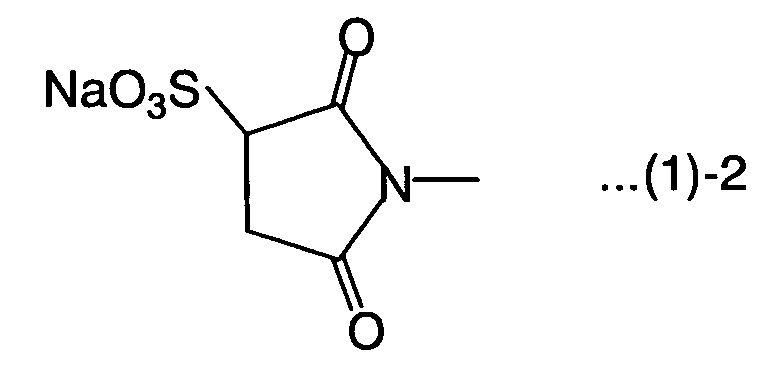
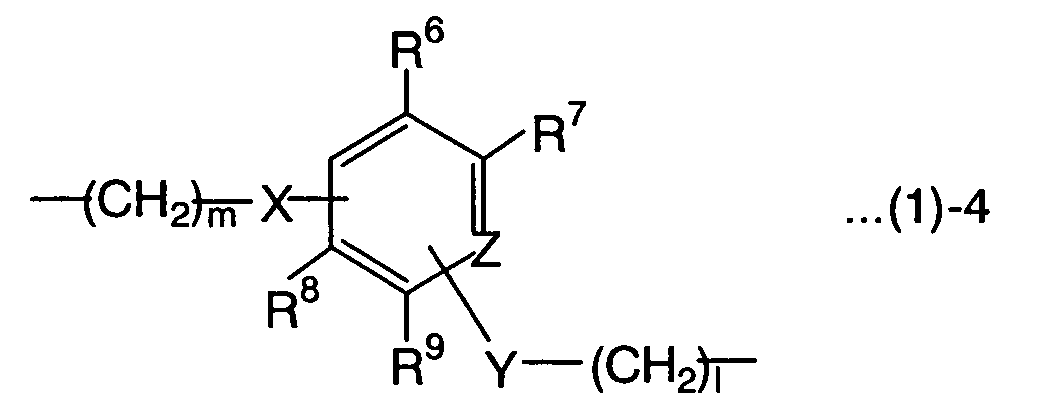
- R 1 and R 3 each independently represent a structure represented by the following formula (1)-1: wherein R 4 and R 5 each independently represent H, CH 3 or C 2 H 5 , or a structure represented by the following formula (1)-2: and, R 2 represents a structure represented by the following formula (1)-3: wherein n is 1 to 20, or a structure represented by the following formula (1)-4: wherein m and 1 each independently represent an integer of 0 to 15, X and Y each independently represent CH 2 or O, Z represents C or N, and R 6 , R 7 , R 8 and R 9 each independently represent H, CH 3 or C 2 H 5 .
- the compound having a hydrophobic portion in the central region of the molecule forms a strong and stable structure by hydrophobic interaction.
- the water-soluble crosslinking agent can be produced by, for example, active-esterifying both ends of a corresponding dicarboxylic acid compound by use of 4-hydroxyphenyldimethyl-sulfonium methyl sulfate (hereinafter referred to as "DSP").
- DSP 4-hydroxyphenyldimethyl-sulfonium methyl sulfate
- the water-soluble crosslinking agent achieves crosslinking through peptide bonds between the active ester groups at both ends of the chemical formula of the water-soluble crosslinking agent and the amino acids in the water-soluble elastin.
- Conditions for the crosslinking reaction are not particularly limited.
- the reaction temperature preferably ranges from 4° C to 150° C at normal pressures or under pressure applied by an autoclave.
- the reaction temperature particularly preferably ranges from 10°C to 120°C in view of operability in crosslinking.
- the crosslinked elastin may contain a third component, in addition to the water-soluble elastin and the crosslinking agent.
- Illustrative examples of the third component include proteins such as collagen, gelatin, fibronectin, fibrin, laminin, casein, keratin, sericin and thrombin, polyamino acids such as a polyasparatic acid, a polyglutamic acid and a polylysine, sugars such as a polygalacturonic acid, heparin, chondroitin sulfuric acid, hyaluronic acid, dermatan sulfuric acid, chondroitin, dextran sulfuric acid, sulfated cellulose, alginic acid, dextran, carboxymethyl chitin, galactomannan, gum acacia, tragacanth gum, gelin gum, sulfated gelin, karaya gum, carrageenan, agar, xanthan gum, curdlan, pullulan, cellulose, starch, carboxymethyl cellulose, methyl cellulose, glucomannan, chitin, chitosan, xy
- extracellular matrix components such as gelatin, collagen, fibronectin, laminin, heparin and chondroitin sulfuric acid and cell growth factors
- FGF fibroblast growth factor
- EGF epidermal growth factor
- VEGF vascular endothelial growth factor
- NGF nerve growth factor
- HGF hepatocellular growth factor
- the proportion of the water-soluble elastin is preferably 0.5 to 99.5 wt% based on the crosslinked elastin.
- the proportion is more preferably 1 to 95 wt%. With the proportion thereof within this range, a molded article having elasticity suitable for a living body and good moldability can be obtained.
- a method for producing an elastin molded article reinforced by the fiber structure is not particularly limited, and a general method using a mold used to mold a synthetic resin can be used.
- a mold used to mold a synthetic resin can be used.
- a fiber structure is placed in a mold in advance and a water-soluble elastin solution is obtained by mixing water-soluble elastin and a water-soluble crosslinking agent together, poured into the mold and heated by an autoclave or the like to cause a crosslinking reaction, a film-, stick-, pellet- or tube-shaped elastin molded article reflecting the shape of the mold can be obtained.
- the crosslinked elastin obtained by crosslinking by the water-soluble crosslinking agent has a characteristic that it is susceptible to biodegradation in a living body. Since the speed of the biodegradation relates to the degree of crosslinking of the crosslinked elastin, it can be controlled by changing the degree of crosslinking by changing conditions for crosslinking.
- the crosslinked elastin in the present invention is a crosslinked protein having excellent elasticity.
- the crosslinked elastin preferably has a Young's modulus of 1 ⁇ 10 2 to 1 ⁇ 10 7 Pa, particularly preferably 1 x 10 3 to 2 ⁇ 10 6 Pa.
- the elasticity and flexibility of elastin can be retained and tear strength which allows suture can be imparted to crosslinked elastin by use of a fiber structure comprising various aliphatic polyester fibers such as hollow fibers or porous fibers having an average particle diameter of 0.05 to 50 ⁇ m as a supporting base material.
- a fiber structure comprising various aliphatic polyester fibers such as hollow fibers or porous fibers having an average particle diameter of 0.05 to 50 ⁇ m as a supporting base material.
- Such an elastin molded article is useful as an artificial material in revascularization and neurotization.
- a dope 1 g of polylactic acid and 8 g of methylene chloride were mixed together at room temperature (25°C) to prepare a dope.
- the dope was discharged to a fibrous material collecting electrode 5 (diameter: 2 mm, length: 200 mm) which spun at 60 rpm, for 5 minutes by use of the apparatus shown in Fig. 2.
- the internal diameter of a discharge nozzle 1 was 0.8 mm, the voltage was 12 kV, and the distance from the discharge nozzle 1 to the fibrous material collecting electrode 5 was 10 cm.
- the obtained polylactic acid tube had an internal diameter of 2 mm and a length of 20 mm.
- the coating amount was controlled by varying the discharge time, and two types of samples one of which had a coating amount of 20 g/m 2 and the other of which had a coating amount of 40 g/m 2 were prepared.
- elastin product of ELASTIN PRODUCTS CO., LTD.
- elastin product of ELASTIN PRODUCTS CO., LTD.
- the mixture was centrifuged (3,000 rpm, 30 minutes), the supernatant liquid was collected and charged into a cellulosic dialysis tube, and oxalic acid was removed by performing dialysis with deionized water for 48 hours. Then, the resulting product was freeze-dried to give water-soluble elastin.
- the mixture was poured into a cylindrical template having a diameter of 2.2 mm and a length of 30 mm on which the polylactic acid tube (coating amount: 20 g/m 2 ) was mounted and then left to stand for two days to be gelled.
- the obtained gel was fully rinsed with deionized water to obtain a milky-white cylindrical elastin molded article having excellent elasticity.
- the obtained elastin molded article was treated with an autoclave at 110°C for 10 minutes to obtain a sterilized elastin molded article whose shape remained unchanged.
- the Young's modulus of the obtained elastin molded article was 1 x 10 5 Pa.
- the tear strength of the obtained molded article was measured by use of TENSILON (INSTRON) with reference to DIN53507 and DIN53504. The result is shown in Table 1.
- Example 1 The procedure of Example 1 was repeated except that the coating amount of the polylactic acid tube was 40 g/m 2 .
- the Young's modulus of the obtained elastin molded article was 1 ⁇ 10 6 Pa.
- the tear strength of elastin prepared with reference to Example 1 was measured.
Landscapes
- Health & Medical Sciences (AREA)
- Chemical & Material Sciences (AREA)
- Dermatology (AREA)
- Medicinal Chemistry (AREA)
- Oral & Maxillofacial Surgery (AREA)
- Transplantation (AREA)
- Epidemiology (AREA)
- Life Sciences & Earth Sciences (AREA)
- Animal Behavior & Ethology (AREA)
- General Health & Medical Sciences (AREA)
- Public Health (AREA)
- Veterinary Medicine (AREA)
- Engineering & Computer Science (AREA)
- Composite Materials (AREA)
- Materials Engineering (AREA)
- Vascular Medicine (AREA)
- Materials For Medical Uses (AREA)
- Treatments For Attaching Organic Compounds To Fibrous Goods (AREA)
- Prostheses (AREA)
- Peptides Or Proteins (AREA)
Abstract
Description

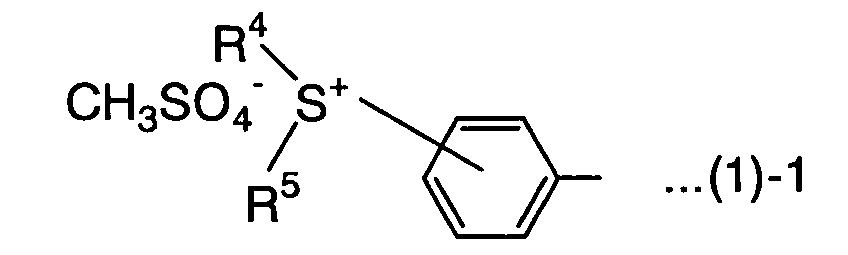
or a structure represented by the following formula (1)-2:

or a structure represented by the following formula (1)-4:

Claims (12)
- An elastin molded article which comprises a fiber structure comprising aliphatic polyester fibers having an average fiber diameter of 0.05 to 50 µm as a supporting base material and crosslinked elastin.
- The elastin molded article according to claim 1, wherein the aliphatic polyester is a polylactic acid, a polyglycolic acid, a polycaprolactone or a copolymer thereof.
- The elastin molded article according to claim 1, wherein the fiber is a surface smooth fiber, a porous fiber or a hollow fiber.
- The elastin molded article according to claim 1, wherein the crosslinked elastin comprises a product resulting from a reaction of water-soluble elastin with at least one crosslinking agent.
- The elastin molded article according to claim 4, wherein the crosslinking agent is a water-soluble compound represented by the following formula (1):wherein R1 and R3 each independently represent a structure represented by the following formula (1)-1:
 wherein R4 and R5 each independently represent H, CH3 or C2H5,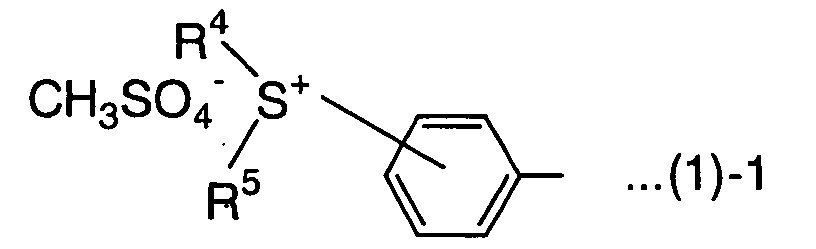
or a structure represented by the following formula (1)-2:and, R2 represents a structure represented by the following formula (1)-3: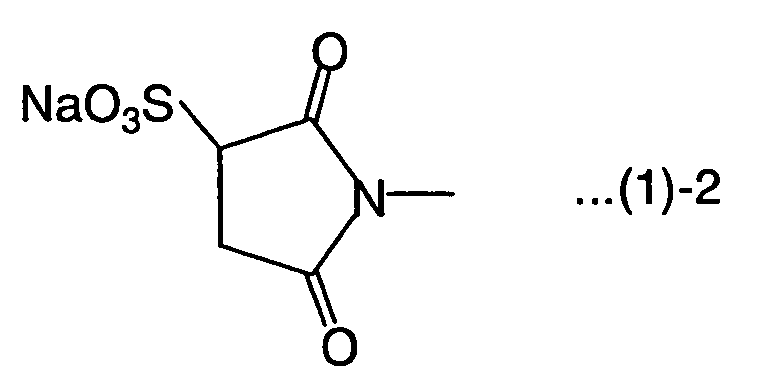 wherein n is 1 to 20,
or a structure represented by the following formula (1)-4:wherein m and 1 each independently represent an integer of 0 to 15, X and Y each independently represent CH2 or O, Z represents C or N, and R6, R7, R8 and R9 each independently represent H, CH3 or C2H5.
- The elastin molded article according to claim 1, wherein the crosslinked elastin further contains at least one selected from the group consisting of a protein, a polyamino acid, sugar and a cell growth factor.
- The elastin molded article according to claim 6, wherein the protein is collagen, gelatin, fibronectin, fibrin, thrombin or laminin.
- The elastin molded article according to claim 6, wherein the polyamino acid is a polylysine or a polyglutamic acid.
- The elastin molded article according to claim 6, wherein the sugar is hyaluronic acid, chondroitin sulfuric acid, heparin, alginic acid, chitin, chitosan, cellulose or starch.
- The elastin molded article according to claim 6, wherein the cell growth factor is FGF (fibroblast growth factor), EGF (epidermal growth factor), PDGF (platelet-derived growth factor), IGF (insulin-like growth factor), VEGF (vascular endothelial growth factor), TGF-β (β-type transforming growth factor), NGF (nerve growth factor), HGF (hepatocellular growth factor) or BMP (bone morphogenetic factor).
- A method for producing an elastin molded article characterized in that crosslinked elastin is formed by impregnating a fiber structure comprising aliphatic polyester fibers having an average fiber diameter of 0.05 to 50 µm with water-soluble elastin and at least one crosslinking agent and by causing a crosslinking reaction.
- The method according to claim 11, wherein the fiber is a surface smooth fiber, a porous fiber or a hollow fiber.
Applications Claiming Priority (3)
| Application Number | Priority Date | Filing Date | Title |
|---|---|---|---|
| JP2003094398 | 2003-03-31 | ||
| JP2003094398 | 2003-03-31 | ||
| PCT/JP2004/004494 WO2004087232A1 (en) | 2003-03-31 | 2004-03-30 | Molded elastin article and process for producing the same |
Publications (3)
| Publication Number | Publication Date |
|---|---|
| EP1609492A1 true EP1609492A1 (en) | 2005-12-28 |
| EP1609492A4 EP1609492A4 (en) | 2007-12-26 |
| EP1609492B1 EP1609492B1 (en) | 2010-12-08 |
Family
ID=33127389
Family Applications (1)
| Application Number | Title | Priority Date | Filing Date |
|---|---|---|---|
| EP20040724354 Expired - Lifetime EP1609492B1 (en) | 2003-03-31 | 2004-03-30 | Molded elastin article and process for producing the same |
Country Status (10)
| Country | Link |
|---|---|
| US (1) | US20060194036A1 (en) |
| EP (1) | EP1609492B1 (en) |
| JP (1) | JP4417909B2 (en) |
| KR (1) | KR101088656B1 (en) |
| CN (1) | CN100358588C (en) |
| AT (1) | ATE490792T1 (en) |
| AU (1) | AU2004226551A1 (en) |
| CA (1) | CA2520704C (en) |
| DE (1) | DE602004030429D1 (en) |
| WO (1) | WO2004087232A1 (en) |
Cited By (1)
| Publication number | Priority date | Publication date | Assignee | Title |
|---|---|---|---|---|
| WO2009004544A3 (en) * | 2007-06-29 | 2010-07-15 | Tian, Ye | Artificial vessels, kits and methods |
Families Citing this family (10)
| Publication number | Priority date | Publication date | Assignee | Title |
|---|---|---|---|---|
| US20070141333A1 (en) * | 2004-03-25 | 2007-06-21 | Shastri Venkatram P | Emulsion-based control of electrospun fiber morphology |
| KR100751733B1 (en) | 2005-07-07 | 2007-08-24 | 한국과학기술연구원 | Method of preparing porous polymer scaffold for tissue engineering using gel spinning technique |
| JP5002805B2 (en) * | 2005-10-14 | 2012-08-15 | 財団法人ヒューマンサイエンス振興財団 | Production method of biological scaffold |
| EP1964582B1 (en) * | 2005-12-02 | 2020-03-25 | Sunstar Suisse SA | Biocompatible material having biocompatible non-woven nano- or micro-fiber fabric produced by electrospinning method |
| BRPI0718615B8 (en) * | 2006-11-13 | 2021-06-22 | Allergan Australia Pty Ltd | process for producing an elastic material from tropoelastin and elastic material |
| NL1036038C (en) * | 2008-10-09 | 2010-04-14 | Univ Eindhoven Tech | Multilayer preform obtained by electro-spinning, method for producing a preform as well as use thereof. |
| AU2010319039A1 (en) * | 2009-11-11 | 2012-05-17 | Teijin Limited | Molded fiber article |
| EP2532373A4 (en) * | 2010-02-03 | 2014-09-03 | Nat Inst For Materials Science | BIOCOMPATIBLE DEVICE |
| MY196309A (en) * | 2016-04-13 | 2023-03-24 | Neutromedics Ag | Non-Uniformly Stiff Polymeric Scaffolds and Methods for Producing Thereof |
| GB201711360D0 (en) * | 2017-07-14 | 2017-08-30 | Raft Entpr Ltd | Tissue scaffold |
Family Cites Families (10)
| Publication number | Priority date | Publication date | Assignee | Title |
|---|---|---|---|---|
| DE2960875D1 (en) * | 1978-04-19 | 1981-12-10 | Ici Plc | A method of preparing a tubular product by electrostatic spinning |
| US5500013A (en) * | 1991-10-04 | 1996-03-19 | Scimed Life Systems, Inc. | Biodegradable drug delivery vascular stent |
| JP3141653B2 (en) * | 1993-11-12 | 2001-03-05 | 宇部興産株式会社 | Artificial blood vessel |
| JPH09273080A (en) * | 1996-04-08 | 1997-10-21 | Showa Denko Kk | Treatment of fiber with water-soluble protein |
| GB9717433D0 (en) * | 1997-08-19 | 1997-10-22 | Univ Nottingham | Biodegradable composites |
| AU2479800A (en) * | 1998-12-16 | 2000-07-03 | Vasomatrix, Inc. | Multiple matrices for engineered tissues |
| US6689161B2 (en) * | 2000-04-28 | 2004-02-10 | Baylor College Of Medicine | Decellularized vascular prostheses resistant to thrombus occlusion and immunologic rejection |
| CA2365376C (en) * | 2000-12-21 | 2006-03-28 | Ethicon, Inc. | Use of reinforced foam implants with enhanced integrity for soft tissue repair and regeneration |
| JP4879404B2 (en) * | 2001-03-21 | 2012-02-22 | エシコン・インコーポレイテッド | Porous tissue skeleton-forming material for tissue repair or regeneration |
| DE60228573D1 (en) * | 2001-05-30 | 2008-10-09 | Chisso Corp | NETWORKED ELASTIN AND METHOD FOR THE PRODUCTION THEREOF |
-
2004
- 2004-03-30 WO PCT/JP2004/004494 patent/WO2004087232A1/en not_active Ceased
- 2004-03-30 JP JP2005504235A patent/JP4417909B2/en not_active Expired - Fee Related
- 2004-03-30 EP EP20040724354 patent/EP1609492B1/en not_active Expired - Lifetime
- 2004-03-30 AT AT04724354T patent/ATE490792T1/en not_active IP Right Cessation
- 2004-03-30 CN CNB2004800086806A patent/CN100358588C/en not_active Expired - Fee Related
- 2004-03-30 CA CA 2520704 patent/CA2520704C/en not_active Expired - Fee Related
- 2004-03-30 US US10/551,545 patent/US20060194036A1/en not_active Abandoned
- 2004-03-30 KR KR1020057016230A patent/KR101088656B1/en not_active Expired - Fee Related
- 2004-03-30 DE DE200460030429 patent/DE602004030429D1/en not_active Expired - Lifetime
- 2004-03-30 AU AU2004226551A patent/AU2004226551A1/en not_active Abandoned
Cited By (1)
| Publication number | Priority date | Publication date | Assignee | Title |
|---|---|---|---|---|
| WO2009004544A3 (en) * | 2007-06-29 | 2010-07-15 | Tian, Ye | Artificial vessels, kits and methods |
Also Published As
| Publication number | Publication date |
|---|---|
| AU2004226551A1 (en) | 2004-10-14 |
| US20060194036A1 (en) | 2006-08-31 |
| CN1767864A (en) | 2006-05-03 |
| JPWO2004087232A1 (en) | 2006-06-29 |
| KR101088656B1 (en) | 2011-12-01 |
| CA2520704C (en) | 2011-12-20 |
| KR20050112091A (en) | 2005-11-29 |
| DE602004030429D1 (en) | 2011-01-20 |
| EP1609492A4 (en) | 2007-12-26 |
| ATE490792T1 (en) | 2010-12-15 |
| EP1609492B1 (en) | 2010-12-08 |
| JP4417909B2 (en) | 2010-02-17 |
| CA2520704A1 (en) | 2004-10-14 |
| CN100358588C (en) | 2008-01-02 |
| WO2004087232A1 (en) | 2004-10-14 |
Similar Documents
| Publication | Publication Date | Title |
|---|---|---|
| Murugan et al. | Design strategies of tissue engineering scaffolds with controlled fiber orientation | |
| EP3351376B1 (en) | Silk biomaterials and methods of use thereof | |
| JP4619789B2 (en) | Sealant for skin and other tissues | |
| US20050161857A1 (en) | Polymeric fibre and method for making same | |
| EP1618856A1 (en) | Composite of support substrate and collagen, and process for producing support substrate and composite | |
| CN102277737A (en) | Preparation method and application of polycaprolactone/natural high-molecular composite porous scaffold | |
| CN105536055B (en) | A kind of shape memory type high resiliency active nano fibrous framework and its application | |
| EP1609492B1 (en) | Molded elastin article and process for producing the same | |
| Ghobeira et al. | Plasma surface functionalization of biodegradable electrospun scaffolds for tissue engineering applications | |
| Kurokawa et al. | Electrospinning and surface modification methods for functionalized cell scaffolds | |
| JP2017115280A (en) | Composite fiber and manufacturing method therefor | |
| Xu et al. | Electrostatic self-assemble modified electrospun poly-L-lactic acid/poly-vinylpyrrolidone composite polymer and its potential applications in small-diameter artificial blood vessels | |
| KR100571672B1 (en) | Poly-Gamma-Glutamic Acid-Containing Nanofibers and Manufacturing Method Thereof | |
| Bossard et al. | Biomaterials from chitosan processed by electrospinning | |
| Said et al. | Biomedical applications of composite resorbable fibers | |
| Yucel et al. | Nanotechnology in biomaterials: nanofibers in tissue engineering | |
| Sallach et al. | Electrospun elastin and collagen nanofibers and their application as biomaterials | |
| KR101547603B1 (en) | Composition for electrospinning and application thereof | |
| Lim | Biofunctionalised Electrospun Scaffolds for Cartilage Tissue Engineering | |
| HK1167629A (en) | Silk biomaterials and methods of use thereof | |
| HK1167629B (en) | Silk biomaterials and methods of use thereof |
Legal Events
| Date | Code | Title | Description |
|---|---|---|---|
| PUAI | Public reference made under article 153(3) epc to a published international application that has entered the european phase |
Free format text: ORIGINAL CODE: 0009012 |
|
| 17P | Request for examination filed |
Effective date: 20051011 |
|
| AK | Designated contracting states |
Kind code of ref document: A1 Designated state(s): AT BE BG CH CY CZ DE DK EE ES FI FR GB GR HU IE IT LI LU MC NL PL PT RO SE SI SK TR |
|
| AX | Request for extension of the european patent |
Extension state: AL LT LV MK |
|
| DAX | Request for extension of the european patent (deleted) | ||
| A4 | Supplementary search report drawn up and despatched |
Effective date: 20071127 |
|
| RIC1 | Information provided on ipc code assigned before grant |
Ipc: A61L 27/40 20060101AFI20041021BHEP Ipc: A61L 27/50 20060101ALI20071122BHEP Ipc: A61L 27/48 20060101ALI20071122BHEP Ipc: A61L 27/54 20060101ALI20071122BHEP |
|
| 17Q | First examination report despatched |
Effective date: 20080528 |
|
| GRAP | Despatch of communication of intention to grant a patent |
Free format text: ORIGINAL CODE: EPIDOSNIGR1 |
|
| GRAS | Grant fee paid |
Free format text: ORIGINAL CODE: EPIDOSNIGR3 |
|
| GRAA | (expected) grant |
Free format text: ORIGINAL CODE: 0009210 |
|
| AK | Designated contracting states |
Kind code of ref document: B1 Designated state(s): AT BE BG CH CY CZ DE DK EE ES FI FR GB GR HU IE IT LI LU MC NL PL PT RO SE SI SK TR |
|
| REG | Reference to a national code |
Ref country code: GB Ref legal event code: FG4D |
|
| REG | Reference to a national code |
Ref country code: CH Ref legal event code: EP |
|
| REG | Reference to a national code |
Ref country code: IE Ref legal event code: FG4D |
|
| REF | Corresponds to: |
Ref document number: 602004030429 Country of ref document: DE Date of ref document: 20110120 Kind code of ref document: P |
|
| REG | Reference to a national code |
Ref country code: NL Ref legal event code: VDEP Effective date: 20101208 |
|
| PG25 | Lapsed in a contracting state [announced via postgrant information from national office to epo] |
Ref country code: BG Free format text: LAPSE BECAUSE OF FAILURE TO SUBMIT A TRANSLATION OF THE DESCRIPTION OR TO PAY THE FEE WITHIN THE PRESCRIBED TIME-LIMIT Effective date: 20110308 Ref country code: CY Free format text: LAPSE BECAUSE OF FAILURE TO SUBMIT A TRANSLATION OF THE DESCRIPTION OR TO PAY THE FEE WITHIN THE PRESCRIBED TIME-LIMIT Effective date: 20101208 Ref country code: FI Free format text: LAPSE BECAUSE OF FAILURE TO SUBMIT A TRANSLATION OF THE DESCRIPTION OR TO PAY THE FEE WITHIN THE PRESCRIBED TIME-LIMIT Effective date: 20101208 Ref country code: NL Free format text: LAPSE BECAUSE OF FAILURE TO SUBMIT A TRANSLATION OF THE DESCRIPTION OR TO PAY THE FEE WITHIN THE PRESCRIBED TIME-LIMIT Effective date: 20101208 Ref country code: SE Free format text: LAPSE BECAUSE OF FAILURE TO SUBMIT A TRANSLATION OF THE DESCRIPTION OR TO PAY THE FEE WITHIN THE PRESCRIBED TIME-LIMIT Effective date: 20101208 Ref country code: SI Free format text: LAPSE BECAUSE OF FAILURE TO SUBMIT A TRANSLATION OF THE DESCRIPTION OR TO PAY THE FEE WITHIN THE PRESCRIBED TIME-LIMIT Effective date: 20101208 Ref country code: AT Free format text: LAPSE BECAUSE OF FAILURE TO SUBMIT A TRANSLATION OF THE DESCRIPTION OR TO PAY THE FEE WITHIN THE PRESCRIBED TIME-LIMIT Effective date: 20101208 |
|
| PG25 | Lapsed in a contracting state [announced via postgrant information from national office to epo] |
Ref country code: CZ Free format text: LAPSE BECAUSE OF FAILURE TO SUBMIT A TRANSLATION OF THE DESCRIPTION OR TO PAY THE FEE WITHIN THE PRESCRIBED TIME-LIMIT Effective date: 20101208 Ref country code: BE Free format text: LAPSE BECAUSE OF FAILURE TO SUBMIT A TRANSLATION OF THE DESCRIPTION OR TO PAY THE FEE WITHIN THE PRESCRIBED TIME-LIMIT Effective date: 20101208 Ref country code: PT Free format text: LAPSE BECAUSE OF FAILURE TO SUBMIT A TRANSLATION OF THE DESCRIPTION OR TO PAY THE FEE WITHIN THE PRESCRIBED TIME-LIMIT Effective date: 20110408 Ref country code: EE Free format text: LAPSE BECAUSE OF FAILURE TO SUBMIT A TRANSLATION OF THE DESCRIPTION OR TO PAY THE FEE WITHIN THE PRESCRIBED TIME-LIMIT Effective date: 20101208 Ref country code: ES Free format text: LAPSE BECAUSE OF FAILURE TO SUBMIT A TRANSLATION OF THE DESCRIPTION OR TO PAY THE FEE WITHIN THE PRESCRIBED TIME-LIMIT Effective date: 20110319 Ref country code: GR Free format text: LAPSE BECAUSE OF FAILURE TO SUBMIT A TRANSLATION OF THE DESCRIPTION OR TO PAY THE FEE WITHIN THE PRESCRIBED TIME-LIMIT Effective date: 20110309 |
|
| PG25 | Lapsed in a contracting state [announced via postgrant information from national office to epo] |
Ref country code: SK Free format text: LAPSE BECAUSE OF FAILURE TO SUBMIT A TRANSLATION OF THE DESCRIPTION OR TO PAY THE FEE WITHIN THE PRESCRIBED TIME-LIMIT Effective date: 20101208 Ref country code: RO Free format text: LAPSE BECAUSE OF FAILURE TO SUBMIT A TRANSLATION OF THE DESCRIPTION OR TO PAY THE FEE WITHIN THE PRESCRIBED TIME-LIMIT Effective date: 20101208 Ref country code: PL Free format text: LAPSE BECAUSE OF FAILURE TO SUBMIT A TRANSLATION OF THE DESCRIPTION OR TO PAY THE FEE WITHIN THE PRESCRIBED TIME-LIMIT Effective date: 20101208 |
|
| PLBE | No opposition filed within time limit |
Free format text: ORIGINAL CODE: 0009261 |
|
| STAA | Information on the status of an ep patent application or granted ep patent |
Free format text: STATUS: NO OPPOSITION FILED WITHIN TIME LIMIT |
|
| PG25 | Lapsed in a contracting state [announced via postgrant information from national office to epo] |
Ref country code: DK Free format text: LAPSE BECAUSE OF FAILURE TO SUBMIT A TRANSLATION OF THE DESCRIPTION OR TO PAY THE FEE WITHIN THE PRESCRIBED TIME-LIMIT Effective date: 20101208 Ref country code: MC Free format text: LAPSE BECAUSE OF NON-PAYMENT OF DUE FEES Effective date: 20110331 |
|
| REG | Reference to a national code |
Ref country code: CH Ref legal event code: PL |
|
| 26N | No opposition filed |
Effective date: 20110909 |
|
| PG25 | Lapsed in a contracting state [announced via postgrant information from national office to epo] |
Ref country code: IT Free format text: LAPSE BECAUSE OF FAILURE TO SUBMIT A TRANSLATION OF THE DESCRIPTION OR TO PAY THE FEE WITHIN THE PRESCRIBED TIME-LIMIT Effective date: 20101208 |
|
| REG | Reference to a national code |
Ref country code: IE Ref legal event code: MM4A |
|
| REG | Reference to a national code |
Ref country code: DE Ref legal event code: R097 Ref document number: 602004030429 Country of ref document: DE Effective date: 20110909 |
|
| PG25 | Lapsed in a contracting state [announced via postgrant information from national office to epo] |
Ref country code: CH Free format text: LAPSE BECAUSE OF NON-PAYMENT OF DUE FEES Effective date: 20110331 Ref country code: LI Free format text: LAPSE BECAUSE OF NON-PAYMENT OF DUE FEES Effective date: 20110331 Ref country code: IE Free format text: LAPSE BECAUSE OF NON-PAYMENT OF DUE FEES Effective date: 20110330 |
|
| PG25 | Lapsed in a contracting state [announced via postgrant information from national office to epo] |
Ref country code: LU Free format text: LAPSE BECAUSE OF NON-PAYMENT OF DUE FEES Effective date: 20110330 |
|
| PG25 | Lapsed in a contracting state [announced via postgrant information from national office to epo] |
Ref country code: TR Free format text: LAPSE BECAUSE OF FAILURE TO SUBMIT A TRANSLATION OF THE DESCRIPTION OR TO PAY THE FEE WITHIN THE PRESCRIBED TIME-LIMIT Effective date: 20101208 |
|
| PG25 | Lapsed in a contracting state [announced via postgrant information from national office to epo] |
Ref country code: HU Free format text: LAPSE BECAUSE OF FAILURE TO SUBMIT A TRANSLATION OF THE DESCRIPTION OR TO PAY THE FEE WITHIN THE PRESCRIBED TIME-LIMIT Effective date: 20101208 |
|
| REG | Reference to a national code |
Ref country code: FR Ref legal event code: PLFP Year of fee payment: 13 |
|
| REG | Reference to a national code |
Ref country code: FR Ref legal event code: PLFP Year of fee payment: 14 |
|
| REG | Reference to a national code |
Ref country code: FR Ref legal event code: PLFP Year of fee payment: 15 |
|
| PGFP | Annual fee paid to national office [announced via postgrant information from national office to epo] |
Ref country code: FR Payment date: 20210210 Year of fee payment: 18 |
|
| PGFP | Annual fee paid to national office [announced via postgrant information from national office to epo] |
Ref country code: DE Payment date: 20210316 Year of fee payment: 18 Ref country code: GB Payment date: 20210317 Year of fee payment: 18 |
|
| REG | Reference to a national code |
Ref country code: DE Ref legal event code: R119 Ref document number: 602004030429 Country of ref document: DE |
|
| GBPC | Gb: european patent ceased through non-payment of renewal fee |
Effective date: 20220330 |
|
| PG25 | Lapsed in a contracting state [announced via postgrant information from national office to epo] |
Ref country code: GB Free format text: LAPSE BECAUSE OF NON-PAYMENT OF DUE FEES Effective date: 20220330 Ref country code: FR Free format text: LAPSE BECAUSE OF NON-PAYMENT OF DUE FEES Effective date: 20220331 Ref country code: DE Free format text: LAPSE BECAUSE OF NON-PAYMENT OF DUE FEES Effective date: 20221001 |