EP1609479A1 - Tumorigenesis inhibitor - Google Patents
Tumorigenesis inhibitor Download PDFInfo
- Publication number
- EP1609479A1 EP1609479A1 EP04720182A EP04720182A EP1609479A1 EP 1609479 A1 EP1609479 A1 EP 1609479A1 EP 04720182 A EP04720182 A EP 04720182A EP 04720182 A EP04720182 A EP 04720182A EP 1609479 A1 EP1609479 A1 EP 1609479A1
- Authority
- EP
- European Patent Office
- Prior art keywords
- agent
- cyano
- carboxylic acid
- compound
- inhibitory activity
- Prior art date
- Legal status (The legal status is an assumption and is not a legal conclusion. Google has not performed a legal analysis and makes no representation as to the accuracy of the status listed.)
- Withdrawn
Links
Classifications
-
- A—HUMAN NECESSITIES
- A61—MEDICAL OR VETERINARY SCIENCE; HYGIENE
- A61K—PREPARATIONS FOR MEDICAL, DENTAL OR TOILETRY PURPOSES
- A61K31/00—Medicinal preparations containing organic active ingredients
- A61K31/33—Heterocyclic compounds
- A61K31/395—Heterocyclic compounds having nitrogen as a ring hetero atom, e.g. guanethidine or rifamycins
- A61K31/495—Heterocyclic compounds having nitrogen as a ring hetero atom, e.g. guanethidine or rifamycins having six-membered rings with two or more nitrogen atoms as the only ring heteroatoms, e.g. piperazine or tetrazines
- A61K31/505—Pyrimidines; Hydrogenated pyrimidines, e.g. trimethoprim
- A61K31/519—Pyrimidines; Hydrogenated pyrimidines, e.g. trimethoprim ortho- or peri-condensed with heterocyclic rings
-
- A—HUMAN NECESSITIES
- A61—MEDICAL OR VETERINARY SCIENCE; HYGIENE
- A61K—PREPARATIONS FOR MEDICAL, DENTAL OR TOILETRY PURPOSES
- A61K31/00—Medicinal preparations containing organic active ingredients
- A61K31/33—Heterocyclic compounds
- A61K31/395—Heterocyclic compounds having nitrogen as a ring hetero atom, e.g. guanethidine or rifamycins
- A61K31/41—Heterocyclic compounds having nitrogen as a ring hetero atom, e.g. guanethidine or rifamycins having five-membered rings with two or more ring hetero atoms, at least one of which being nitrogen, e.g. tetrazole
- A61K31/415—1,2-Diazoles
-
- A—HUMAN NECESSITIES
- A61—MEDICAL OR VETERINARY SCIENCE; HYGIENE
- A61P—SPECIFIC THERAPEUTIC ACTIVITY OF CHEMICAL COMPOUNDS OR MEDICINAL PREPARATIONS
- A61P35/00—Antineoplastic agents
-
- A—HUMAN NECESSITIES
- A61—MEDICAL OR VETERINARY SCIENCE; HYGIENE
- A61P—SPECIFIC THERAPEUTIC ACTIVITY OF CHEMICAL COMPOUNDS OR MEDICINAL PREPARATIONS
- A61P43/00—Drugs for specific purposes, not provided for in groups A61P1/00-A61P41/00
-
- C—CHEMISTRY; METALLURGY
- C07—ORGANIC CHEMISTRY
- C07D—HETEROCYCLIC COMPOUNDS
- C07D231/00—Heterocyclic compounds containing 1,2-diazole or hydrogenated 1,2-diazole rings
- C07D231/02—Heterocyclic compounds containing 1,2-diazole or hydrogenated 1,2-diazole rings not condensed with other rings
- C07D231/10—Heterocyclic compounds containing 1,2-diazole or hydrogenated 1,2-diazole rings not condensed with other rings having two or three double bonds between ring members or between ring members and non-ring members
- C07D231/14—Heterocyclic compounds containing 1,2-diazole or hydrogenated 1,2-diazole rings not condensed with other rings having two or three double bonds between ring members or between ring members and non-ring members with hetero atoms or with carbon atoms having three bonds to hetero atoms with at the most one bond to halogen, e.g. ester or nitrile radicals, directly attached to ring carbon atoms
Definitions
- the present invention relates to a novel agent for suppressing tumorigenesis.
- ROS reactive oxygen species
- allopurinol is known as an XO inhibitor, involvement of XO in the above-mentioned diseases has been conventionally studied using this compound.
- allopurinol itself shows a radical removing (scavenging) effect (Moorhouse PC, Grootveld M, Halliwell B, Quinlan JG, Gutteridge JM: Allopurinol and oxipurinol are hydroxyl radical acavengers, FEBS Lett., 213, 23 - 28 (1987)), study of the relationship between XO and active oxygen has been difficult.
- Y-700 1-(3-cyano-4-neopentyloxyphenyl)pyrazole-4-carboxylic acid
- the present inventors have set a working hypothesis that an increase in the production of ROS derived from XO is suppressed by an XO inhibitory activity and then tumorigenesis is suppressed, and conducted intensive studies and found that a compound having an XO inhibitory activity suppresses tumorigenesis, namely, suppresses formation of colon cancer, which resulted in the completion of the present invention.
- the present invention provides a pharmaceutical agent that suppresses tumorigenesis, particularly, manifestation of colon cancer.
- the present invention provides the following.
- the halogen for R 1 is fluorine, chlorine, bromine or iodine.
- the C 1-4 alkoxycarbonyl for R 2 is alkoxycarbonyl wherein the alkoxy moiety has 1 to 4 carbon atoms, such as methoxycarbonyl, ethoxycarbonyl, propoxycarbonyl, isopropoxycarbonyl, butoxycarbonyl, isobutoxycarbonyl, tertiary butoxycarbonyl and the like.
- the C 3-6 alkyl for R 5 is a linear or branched alkyl having 3 to 6 carbon atoms, such as propyl, isopropyl, 2-ethylpropyl, butyl, isobutyl, secondary butyl, tertiary butyl, pentyl, 1-methylbutyl, 2-methylbutyl, 3-methylbutyl, neopentyl, hexyl, 2-ethylbutyl and the like.
- the C 3-6 cycloalkyl is cycloalkyl having 3 to 6 carbon atoms, such as cyclopropyl, cyclopentyl, cyclohexyl and the like.
- C 3-6 cycloalkyl moiety of C 3-6 cycloalkyl-C 1-4 alkyl is exemplified by the same groups as mentioned above, and the C 1-4 alkyl moiety may be linear or branched and is exemplified by alkyl having 1 to 4 carbon atoms such as methyl, ethyl, propyl, butyl, isobutyl, secondary butyl, tertiary butyl and the like.
- C 3-6 cycloalkyl-C 1-4 alkyl include cyclopropylmethyl, cyclopentylmethyl, cyclohexylmethyl, 2-cyclohexylethyl, 3-cyclohexylpropyl, 4-cyclohexylbutyl and the like.
- the C 1-4 alkoxy is alkoxy having 1 to 4 carbon atoms, such as methoxy, ethoxy, propoxy, isopropoxy, butoxy, isobutoxy, secondary butoxy, tertiary butoxy and the like.
- the C 1-4 alkoxycarbonyl is alkoxycarbonyl wherein the alkoxy moiety has 1 to 4 carbon atoms, such as methoxycarbonyl, ethoxycarbonyl, propoxycarbonyl, isopropoxycarbonyl, butoxycarbonyl, isobutoxycarbonyl, tertiary butoxycarbonyl and the like.
- acyloxy As the acyloxy, acetoxy, propionyloxy, butyryloxy, isobutyryloxy, valeryloxy, isovaleryloxy, hexanoyloxy, octanoyloxy, benzoyloxy and the like can be mentioned.
- C 4-6 alkyl optionally substituted by 1 or 2 substituents selected from halogen, hydroxy, C 1-4 alkoxy, carboxy, C 1-4 alkoxycarbonyl and acyloxy, for example, 3-fluoro-3-fluoromethylpropyl, 3-fluoro-2,2-dimethylpropyl, 2,2-dimethyl-3-hydroxypropyl, 2,2-dimethyl-3-methoxypropyl, 2-carboxy-2-methylpropyl, 3-acetyloxy-2,2-dimethylpropyl, 3-benzoyloxy-2,2-dimethylpropyl and the like can be mentioned.
- C 1-4 alkyl for R 3 is alkyl having 1 to 4 carbon atoms, such as methyl, ethyl, propyl, isopropyl, butyl, isobutyl, tertiary butyl and the like and haloalkyl is a haloalkyl having 1 to 4 carbon atoms, such as trifluoromethyl, 2,2,2-trifluoroethyl, 2-fluoroethyl, 3-fluoropropyl, 1,3-difluoro-2-propyl, 4-fluorobutyl and the like.
- the symbols R 1 , R 2 and R 5 are as defined above.
- R 1 hydrogen is particularly preferable.
- R 2 carboxy is particularly preferable.
- R 5 C 4-6 alkyl is particularly preferable.
- the present invention encompasses the following compounds.
- salts with metals sodium, potassium, calcium, lithium, magnesium, aluminum, zinc and the like
- salts with organic base diethanolamine, ethylenediamine and the like
- the compounds of the formulas (I) and (II) and pharmaceutically acceptable salts thereof may be present in the form of hydrate or solvate, and these hydrates (1/2 hydrate, 1 hydrate, 2 hydrate and the like) and solvates are encompassed in the present invention.
- these hydrates 1/2 hydrate, 1 hydrate, 2 hydrate and the like
- solvates are encompassed in the present invention.
- the compounds of the formulas (I) and (II) have asymmetric atom(s)
- at least two kinds of optical isomers are present. These optical isomers and racemates thereof are also encompassed in the present invention.
- the above-mentioned compounds (1)-(12) can be synthesized by the method described in WO98/18765, the compounds (13)-(32) can be synthesized by the method described in JP-A-10-310578 and compound (33) can be synthesized by the method described in WO92/09279. Allopurinol (34) is commercially available and can be obtained easily.
- a compound having a xanthine oxidase inhibitory activity of not more than 1 ⁇ M (IC 50 value) has a tumor suppressive effect, or suppresses tumorigenesis, and can be used for the prophylaxis or treatment of cancer, particularly colon cancer.
- IC 50 value a tumor suppressive effect, or suppresses tumorigenesis
- 1-(3-cyano-4-neopentyloxyphenyl)pyrazole-4-carboxylic acid can be used as an agent for the prophylaxis or treatment of colon cancer.
- a compound having an XO inhibitory activity which is included in the present invention, can be administered orally and parenterally.
- dosage form for administration tablet, capsule, granule, powder, injection and the like can be mentioned. These can be formulated into preparations by techniques generally used therefor.
- an oral agent such as tablet, capsule, granule, powder and the like can be prepared using extenders such as lactose, crystalline cellulose, starch, vegetable oil and the like, lubricants such as magnesium stearate, talc and the like, binders such as hydroxypropylcellulose, polyvinylpyrrolidone and the like, disintegrants such as carboxymethylcellulose calcium, low substituted hydroxypropylmethylcellulose and the like, coating agents such as hydroxypropylmethylcellulose, macrogol, silicone resin and the like, film coating agents such as gelatin film and the like, and the like as necessary.
- extenders such as lactose, crystalline cellulose, starch, vegetable oil and the like
- lubricants such as magnesium stearate, talc and the like
- binders such as hydroxypropylcellulose, polyvinylpyrrolidone and the like
- disintegrants such as carboxymethylcellulose calcium, low substituted hydroxypropylmethylcellulose and the like
- coating agents such
- an oral agent can be administered generally at a dose of 0.01 - 150 mg, preferably 0.1 - 100 mg, to an adult one to several times a day.
- a compound having an XO inhibitory activity has a tumorigenesis suppressive effect and is useful for the prophylaxis or treatment of cancer.
- Y-700 chemical name: 1-(3-cyano-4-neopentyloxyphenyl)pyrazole-4-carboxylic acid
- This compound can be synthesized by the method described in WO98/18765.
- Y-700 was administered by feeding male ICR mice (5-week-old, 6 to 8 mice per group) for 5 weeks in a mixed diet.
- Azoxymethane (5 mg/kg), which is a carcinogen causing colon tumor, was subcutaneously injected once a week for 3 weeks from the start of the Y-700 administration. After the completion of the Y-700 administration, body weight, feed intake, number of colon aberrant crypt foci (ACF) and serum uric acid concentration were measured.
- Y-700 0.5-20 ⁇ g/ml
- thiobarbituric acid 7 mg/ml
- the production amount of lipid peroxide in the Y-700 addition group is shown in Table 2.
- the production amount of lipid peroxide is expressed in a relative percentage (%) when the absorbance of the Y-700 no addition sample was 100. No change was observed in the production amount of lipid peroxide considered to be attributable to the addition of Y-700. Therefore, Y-700 was considered to have no antioxidative effect.
- xanthine oxidase was at least partially involved in the manifestation of colon cancer, and inhibition thereof enabled prevention of manifestation of colon cancer. Since xanthine oxidase is the source of ROS, as the mechanism of suppressive effect of Y-700 on the increase in the number of colonic ACF, suppression of oxidative stress, which is based on the xanthine oxidase inhibitory activity of Y-700, is considered.
- Y-700 mixed diet was administered to male ICR mice (5-week-old, 12 to 15 mice per group) for 10 weeks.
- Dimethylhydrazine (1,2-dimethyl-hydrazine, 10 mg/kg), which is a carcinogen causing colonic cancer, was subcutaneously injected once a week for 3 weeks from the start of the Y-700 administration.
- body weight, feed intake, serum uric acid concentration, number of colonic aberrant crypt foci (ACF) and growth rate of colonic mucosal cell were measured.
- Formulation Example 1 tablet compound (Y-700) 50.0 mg lactose 98.0 mg corn starch 45.0 mg hydroxypropylcellulose 3.0 mg talc 3.0 mg magnesium stearate 1.0 mg 200.0 mg
- Y-700 was sufficiently kneaded with lactose, corn starch and hydroxypropylcellulose in a kneader.
- the kneaded product was passed through a 200 mesh sieve, dried at 50°C, and further passed through a 24 mesh sieve.
- the resulting product was mixed with talc and magnesium stearate and a 200 mg tablet was obtained using a 9 mm diameter punch. This tablet can be subjected to a sugar coating or film coating treatment as necessary.
- the pharmaceutical agent of the present invention can be used as an antitumor agent or an agent for the prophylaxis or treatment of cancer, particularly colon cancer.
Landscapes
- Health & Medical Sciences (AREA)
- Chemical & Material Sciences (AREA)
- Organic Chemistry (AREA)
- General Health & Medical Sciences (AREA)
- Veterinary Medicine (AREA)
- Pharmacology & Pharmacy (AREA)
- Life Sciences & Earth Sciences (AREA)
- Animal Behavior & Ethology (AREA)
- Medicinal Chemistry (AREA)
- Public Health (AREA)
- Epidemiology (AREA)
- Chemical Kinetics & Catalysis (AREA)
- General Chemical & Material Sciences (AREA)
- Nuclear Medicine, Radiotherapy & Molecular Imaging (AREA)
- Engineering & Computer Science (AREA)
- Bioinformatics & Cheminformatics (AREA)
- Pharmaceuticals Containing Other Organic And Inorganic Compounds (AREA)
- Thiazole And Isothizaole Compounds (AREA)
- Medicines That Contain Protein Lipid Enzymes And Other Medicines (AREA)
Abstract
Description

R2 is a carboxy or a C1-4 alkoxycarbonyl; and
R5 is a C3-6 alkyl, a C3-6 cycloalkyl or a C3-6 cycloalkyl-C1-4 alkyl, each of which is optionally substituted by 1 or 2 substituents selected from a halogen, a hydroxy, a C1-4 alkoxy, a carboxy, a C1-4 alkoxycarbonyl and an acyloxy,
an optical isomer thereof or a pharmaceutically acceptable salt thereof.

R2 is a carboxy or a C1-4 alkoxycarbonyl;
R3 is a hydrogen, a C1-4 alkyl or a haloalkyl;
R4 is a cyano or a nitro; and
R5 is a C3-6 alkyl, a C3-6 cycloalkyl or a C3-6 cycloalkyl-C1-4 alkyl, each of which is optionally substituted by 1 or 2 substituents selected from a halogen, a hydroxy, a C1-4 alkoxy, a carboxy, a C1-4 alkoxycarbonyl and an acyloxy,
an optical isomer thereof or a pharmaceutically acceptable salt thereof.
| dose of Y-700 (mg/kg diet) | body weight (g) mean±standard error | serum uric acid concentration (mg/100 ml) mean±standard error | number of colonic ACF (n/mice) mean±standard error |
| 0 | 41.1±1.2 | 2.19±0.27 | 10.3±1.7 |
| 5 | 40.4±1.2 | 1.00±0.17 | 7.0±1.3 |
| 10 | 39.9±1.4 | 0.73±0.11 | 7.0±0.7 |
| 15 | 40.3±0.9 | 0.84±0.14 | 6.5±0.6 |
| 20 | 39.9±1.0 | 0.59±0.15 | 5.5±0.7 |
| Y-700 addition group (µg/ml) | relative percentage (%) when absorbance of Y-700 no addition sample is 100 (mean±standard error, 3 tests) |
| 0.5 | 104±7 |
| 2 | 98±1 |
| 10 | 107±7 |
| 20 | 96±5 |
Dimethylhydrazine (1,2-dimethyl-hydrazine, 10 mg/kg), which is a carcinogen causing colonic cancer, was subcutaneously injected once a week for 3 weeks from the start of the Y-700 administration. After the completion of the Y-700 administration, body weight, feed intake, serum uric acid concentration, number of colonic aberrant crypt foci (ACF) and growth rate of colonic mucosal cell were measured.
| dose of Y-700 (mg/kg diet) | serum uric acid concentration (mg/100 ml) | number of colonic ACF (n/mouse) | colonic mucosal membrane cell growth rate (% labeling index of PCNA) |
| 0 | 1.91±0.08 | 30. 7±3.3 | 7.8±1.4 |
| 10 | 1.08±0.06 | 20.7±2.0 | 4.0±0.8 |
| 20 | 1.14±0.07 | 22.9±1.4 | 3.6±1.1 |
| mean±standard error |
| Formulation Example 1: tablet | |
| compound (Y-700) | 50.0 mg |
| lactose | 98.0 mg |
| corn starch | 45.0 mg |
| hydroxypropylcellulose | 3.0 mg |
| talc | 3.0 mg |
| magnesium stearate | 1.0 mg |
| 200.0 mg |
Claims (8)
- An agent for suppressing tumorigenesis, which comprises a compound having a xanthine oxidase inhibitory activity.
- An agent for suppressing tumorigenesis, which comprises a compound having a xanthine oxidase inhibitory activity of not more than 1 µM in an IC50 value.
- The agent for suppressing tumorigenesis of claim 1, wherein the compound having a xanthine oxidase inhibitory activity is a 1-phenylpyrazole compound represented by the formula (I)wherein R1 is a hydrogen, a halogen or an amino;

R2 is a carboxy or a C1-4 alkoxycarbonyl; and
R5 is a C3-6 alkyl, a C3-6 cycloalkyl or a C3-6 cycloalkyl-C1-4 alkyl, each of which is optionally substituted by 1 or 2 substituents selected from a halogen, a hydroxy, a C1-4 alkoxy, a carboxy, a C1-4 alkoxycarbonyl and an acyloxy,
an optical isomer thereof or a pharmaceutically acceptable salt thereof. - The agent for suppressing tumorigenesis of claim 1, wherein the compound having a xanthine oxidase inhibitory activity is a 3-phenylpyrazole compound represented by the formula (II)wherein R1 is a hydrogen, a halogen or an amino;
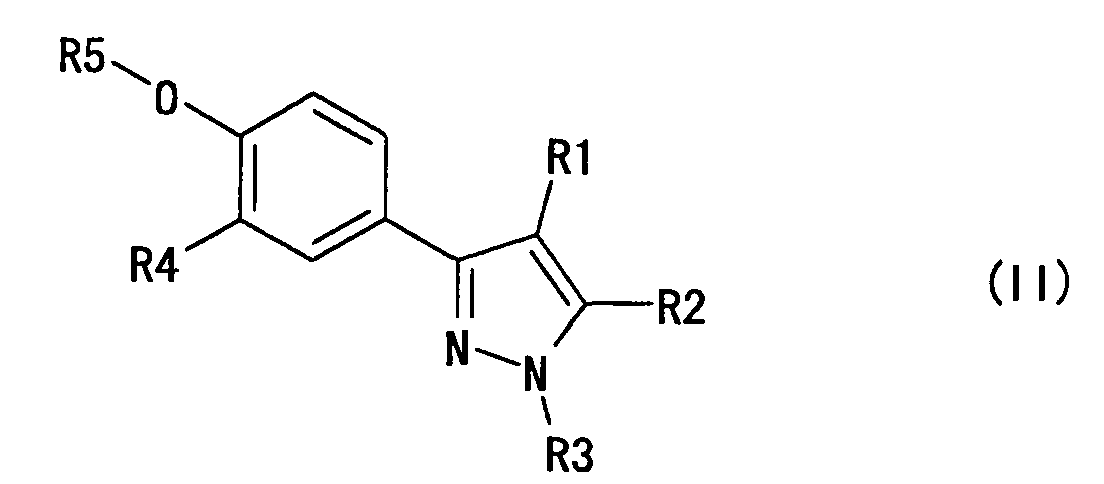
R2 is a carboxy or a C1-4 alkoxycarbonyl;
R3 is a hydrogen, a C1-4 alkyl or a haloalkyl;
R4 is a cyano or a nitro; and
R5 is a C3-6 alkyl, a C3-6 cycloalkyl or a C3-6 cycloalkyl-C1-4 alkyl, each of which is optionally substituted by 1 or 2 substituents selected from a halogen, a hydroxy, a C1-4 alkoxy, a carboxy, a C1-4 alkoxycarbonyl and an acyloxy,
an optical isomer thereof or a pharmaceutically acceptable salt thereof. - An agent for suppressing tumorigenesis, which comprises, as an active ingredient, 1-(3-cyano-4-neopentyloxyphenyl)pyrazole-4-carboxylic acid, an optical isomer thereof or a pharmaceutically acceptable salt thereof.
- The agent for suppressing tumorigenesis of claim 1, wherein the compound having a xanthine oxidase inhibitory activity is 2-(3-cyano-4-isobutoxyphenyl)-4-methylthiazole-5-carboxylic acid or allopurinol.
- The agent for suppressing tumorigenesis of claims 1-6, wherein the tumor is colon cancer.
- An agent for the prophylaxis or treatment of colon cancer, which comprises, as an active ingredient, 1-(3-cyano-4-neopentyloxyphenyl)pyrazole-4-carboxylic acid, an optical isomer thereof or a pharmaceutically acceptable salt thereof.
Applications Claiming Priority (3)
| Application Number | Priority Date | Filing Date | Title |
|---|---|---|---|
| JP2003067919 | 2003-03-13 | ||
| JP2003067919 | 2003-03-13 | ||
| PCT/JP2004/003315 WO2004080486A1 (en) | 2003-03-13 | 2004-03-12 | Tumorigenesis inhibitor |
Publications (2)
| Publication Number | Publication Date |
|---|---|
| EP1609479A1 true EP1609479A1 (en) | 2005-12-28 |
| EP1609479A4 EP1609479A4 (en) | 2010-01-20 |
Family
ID=32984577
Family Applications (1)
| Application Number | Title | Priority Date | Filing Date |
|---|---|---|---|
| EP04720182A Withdrawn EP1609479A4 (en) | 2003-03-13 | 2004-03-12 | ONCOGENESIS INHIBITOR |
Country Status (4)
| Country | Link |
|---|---|
| US (1) | US7208514B2 (en) |
| EP (1) | EP1609479A4 (en) |
| JP (1) | JP4532408B2 (en) |
| WO (1) | WO2004080486A1 (en) |
Cited By (5)
| Publication number | Priority date | Publication date | Assignee | Title |
|---|---|---|---|---|
| EP2050467A4 (en) * | 2006-07-19 | 2010-09-15 | Nippon Medical School Foundati | THERAPEUTIC AGENT FOR AMYOTROPHIC LATERAL SCLEROSIS |
| US7820640B2 (en) | 2002-01-04 | 2010-10-26 | Sound Pharmaceuticals Incorporated | Methods for treating hearing loss |
| CN102429907A (en) * | 2006-06-22 | 2012-05-02 | 日本化学医药株式会社 | Agent for overcoming resistance to anticancer drug |
| US8309560B2 (en) | 2001-11-29 | 2012-11-13 | Sound Pharmaceuticals Incorporated | Methods and compositions for ameliorating the undesirable effects of chemotherapy |
| US12102663B2 (en) | 2015-05-22 | 2024-10-01 | The Board Of Trustees Of The Leland Stanford Junior University | Treatment of post-bariatric hypoglycemia with exendin (9-39) |
Families Citing this family (2)
| Publication number | Priority date | Publication date | Assignee | Title |
|---|---|---|---|---|
| JP2008533021A (en) * | 2005-03-08 | 2008-08-21 | サウンド ファーマシューティカルズ インコーポレイテッド | Methods and compositions for treating cancer |
| WO2020048363A1 (en) * | 2018-09-03 | 2020-03-12 | 广州君赫生物科技有限公司 | Application of allopurinol in preparation of drugs for treating paics gene highly-expressed cancers |
Family Cites Families (4)
| Publication number | Priority date | Publication date | Assignee | Title |
|---|---|---|---|---|
| JPS59219229A (en) | 1984-04-26 | 1984-12-10 | Nippon Shinyaku Co Ltd | Xanthine oxidase inhibitor |
| DE122008000051I1 (en) | 1990-11-30 | 2009-02-05 | Teijin Ltd | 2-ARYLTHIAZOL DERIVATIVE AND MEDICAMENT CONTAINING THEREOF |
| ID21775A (en) | 1996-10-25 | 1999-07-22 | Yoshitomi Pharmaceutical | COMPOUND 1-PHENILPIRAZOL COMPOUNDS AND THE USE OF PHARMACIES |
| JPH10310578A (en) | 1996-11-13 | 1998-11-24 | Yoshitomi Pharmaceut Ind Ltd | 3-phenylpyrazole compound |
-
2004
- 2004-03-12 US US10/548,827 patent/US7208514B2/en not_active Expired - Fee Related
- 2004-03-12 EP EP04720182A patent/EP1609479A4/en not_active Withdrawn
- 2004-03-12 WO PCT/JP2004/003315 patent/WO2004080486A1/en not_active Ceased
- 2004-03-12 JP JP2005503606A patent/JP4532408B2/en not_active Expired - Fee Related
Cited By (9)
| Publication number | Priority date | Publication date | Assignee | Title |
|---|---|---|---|---|
| US8309560B2 (en) | 2001-11-29 | 2012-11-13 | Sound Pharmaceuticals Incorporated | Methods and compositions for ameliorating the undesirable effects of chemotherapy |
| US7820640B2 (en) | 2002-01-04 | 2010-10-26 | Sound Pharmaceuticals Incorporated | Methods for treating hearing loss |
| CN102429907A (en) * | 2006-06-22 | 2012-05-02 | 日本化学医药株式会社 | Agent for overcoming resistance to anticancer drug |
| CN102429907B (en) * | 2006-06-22 | 2013-08-21 | 日本化学医药株式会社 | Agent for overcoming resistance to anti-cancer agent |
| CN103494815A (en) * | 2006-06-22 | 2014-01-08 | 日本化学医药株式会社 | Agent for overcoming resistance to anti-cancer agent |
| EP2050467A4 (en) * | 2006-07-19 | 2010-09-15 | Nippon Medical School Foundati | THERAPEUTIC AGENT FOR AMYOTROPHIC LATERAL SCLEROSIS |
| US8318792B2 (en) | 2006-07-19 | 2012-11-27 | Nippon Medical School Foundation | Therapeutic agent for amyotrophic lateral sclerosis |
| US12102663B2 (en) | 2015-05-22 | 2024-10-01 | The Board Of Trustees Of The Leland Stanford Junior University | Treatment of post-bariatric hypoglycemia with exendin (9-39) |
| US12220444B2 (en) | 2015-05-22 | 2025-02-11 | The Board Of Trustees Of The Leland Stanford Junior University | Treatment of hyperinsulinemic hypoglycemia with GLP-1 antagonist exendin(9-39) |
Also Published As
| Publication number | Publication date |
|---|---|
| US20060106036A1 (en) | 2006-05-18 |
| EP1609479A4 (en) | 2010-01-20 |
| JP4532408B2 (en) | 2010-08-25 |
| US7208514B2 (en) | 2007-04-24 |
| JPWO2004080486A1 (en) | 2006-06-08 |
| WO2004080486A1 (en) | 2004-09-23 |
Similar Documents
| Publication | Publication Date | Title |
|---|---|---|
| US7425569B2 (en) | 1H-pyrazoles useful in therapy | |
| JP2004359676A (en) | Substituted thiazolidinedione derivatives | |
| KR20000052738A (en) | 1-Phenylpyrazole Compounds and Pharmaceutical Use Thereof | |
| CZ283229B6 (en) | Application of thiazolidine derivatives for preparing medicaments intended for therapy or prevention of osteoporosis | |
| US7208514B2 (en) | Tumorigenesis inhibitor | |
| WO2005082866A2 (en) | Substituted 1, 2, 4- triazole derivatives as oxytocin antagonists | |
| EP4592287A1 (en) | 2h-benzotriazole derivative, preparation method therefor, and pharmaceutical composition containing same | |
| EA019689B1 (en) | 2-[[[2-[(hydroxyacetyl)amino]-4-pyridinyl]methyl]thio]-n-[4-(trifluoromethoxy)phenyl]-3-pyridinecarboxamide benzenesulfonate, crystals and polymorphs thereof, and processes for production thereof | |
| JPS6112676A (en) | Aromatase inhibitor | |
| AU716332B2 (en) | Agent for prophylaxis and treatment of diabetic complications | |
| EP0051193B1 (en) | The use of n-halogenophenyl-benzisothiazoles | |
| CN114007602A (en) | Novel compounds and methods of use for treating fructose-related disorders or diseases | |
| CA2047879A1 (en) | 1-diphenylmethylpiperazine derivatives, their preparation and pharmacological applications | |
| EP3893892A1 (en) | Organic compounds | |
| JPS62135423A (en) | Improver for hypoxia | |
| JP2007210978A (en) | Glucose intolerance, type II diabetes, hyperlipidemia, metabolic syndrome, visceral fat obesity, fatty liver or non-alcoholic steatohepatitis | |
| BG107219A (en) | Therapeutically useful new salts of cck inhibitors, process for the preparation thereof and pharmaceutical preparations containing them | |
| JP2003252760A (en) | Retinal disease therapeutic and / or prophylactic agent | |
| CA2602198C (en) | Substituted triazole derivatives as oxytocin antagonists | |
| JPS62108869A (en) | Dopamine-beta-hydroxylase inhibitor | |
| US20060135588A1 (en) | Preventive and/or therapeutic drugs for inflammatory intestinal diseases | |
| US20150353471A1 (en) | Xanthine oxidase inhibitors and methods of use | |
| US7312239B2 (en) | Medicament for prevention and/or therapy of arterial wall disorder | |
| CN117658885A (en) | Benzyloxyaryl compounds and preparation methods, pharmaceutical compositions and uses thereof | |
| HK1124837A (en) | Pyrazole derivatives and their medical use |
Legal Events
| Date | Code | Title | Description |
|---|---|---|---|
| PUAI | Public reference made under article 153(3) epc to a published international application that has entered the european phase |
Free format text: ORIGINAL CODE: 0009012 |
|
| 17P | Request for examination filed |
Effective date: 20050928 |
|
| AK | Designated contracting states |
Kind code of ref document: A1 Designated state(s): AT BE BG CH CY CZ DE DK EE ES FI FR GB GR HU IE IT LI LU MC NL PL PT RO SE SI SK TR |
|
| AX | Request for extension of the european patent |
Extension state: AL LT LV MK |
|
| RAP1 | Party data changed (applicant data changed or rights of an application transferred) |
Owner name: MITSUBISHI TANABE PHARMA CORPORATION |
|
| RIC1 | Information provided on ipc code assigned before grant |
Ipc: A61K 31/519 20060101ALI20091208BHEP Ipc: A61P 35/00 20060101ALI20091208BHEP Ipc: A61K 31/415 20060101ALI20091208BHEP Ipc: A61K 45/00 20060101AFI20040928BHEP |
|
| A4 | Supplementary search report drawn up and despatched |
Effective date: 20091222 |
|
| 17Q | First examination report despatched |
Effective date: 20100317 |
|
| STAA | Information on the status of an ep patent application or granted ep patent |
Free format text: STATUS: THE APPLICATION IS DEEMED TO BE WITHDRAWN |
|
| 18D | Application deemed to be withdrawn |
Effective date: 20141202 |