EP1609475A1 - Remedy or preventive for low turnover bone diseases - Google Patents
Remedy or preventive for low turnover bone diseases Download PDFInfo
- Publication number
- EP1609475A1 EP1609475A1 EP04725517A EP04725517A EP1609475A1 EP 1609475 A1 EP1609475 A1 EP 1609475A1 EP 04725517 A EP04725517 A EP 04725517A EP 04725517 A EP04725517 A EP 04725517A EP 1609475 A1 EP1609475 A1 EP 1609475A1
- Authority
- EP
- European Patent Office
- Prior art keywords
- activated carbon
- bone disease
- spherical activated
- low
- turnover
- Prior art date
- Legal status (The legal status is an assumption and is not a legal conclusion. Google has not performed a legal analysis and makes no representation as to the accuracy of the status listed.)
- Withdrawn
Links
Images
Classifications
-
- A—HUMAN NECESSITIES
- A61—MEDICAL OR VETERINARY SCIENCE; HYGIENE
- A61K—PREPARATIONS FOR MEDICAL, DENTAL OR TOILETRY PURPOSES
- A61K33/00—Medicinal preparations containing inorganic active ingredients
- A61K33/44—Elemental carbon, e.g. charcoal, carbon black
-
- A—HUMAN NECESSITIES
- A61—MEDICAL OR VETERINARY SCIENCE; HYGIENE
- A61P—SPECIFIC THERAPEUTIC ACTIVITY OF CHEMICAL COMPOUNDS OR MEDICINAL PREPARATIONS
- A61P13/00—Drugs for disorders of the urinary system
- A61P13/12—Drugs for disorders of the urinary system of the kidneys
-
- A—HUMAN NECESSITIES
- A61—MEDICAL OR VETERINARY SCIENCE; HYGIENE
- A61P—SPECIFIC THERAPEUTIC ACTIVITY OF CHEMICAL COMPOUNDS OR MEDICINAL PREPARATIONS
- A61P19/00—Drugs for skeletal disorders
-
- A—HUMAN NECESSITIES
- A61—MEDICAL OR VETERINARY SCIENCE; HYGIENE
- A61P—SPECIFIC THERAPEUTIC ACTIVITY OF CHEMICAL COMPOUNDS OR MEDICINAL PREPARATIONS
- A61P19/00—Drugs for skeletal disorders
- A61P19/08—Drugs for skeletal disorders for bone diseases, e.g. rachitism, Paget's disease
Definitions
- This invention relates to an agent for treating or preventing diseases caused by a low-turnover bone (i.e., low-turnover bone diseases) containing a spherical activated carbon as an active ingredient.
- a low-turnover bone i.e., low-turnover bone diseases
- Chronic kidney disease particularly bone abnormalities involved in a hemodialysis, is known as renal osteodystrophy (ROD).
- ROD renal osteodystrophy
- Chronic kidney disease is recognized as a pathosis caused by a high bone turnover in which osteogenesis and bone resorption are active, such as osteitis fibrosa caused by secondary hyperparathyroidism (2HPT) or osteomalacia caused by an accumulation of aluminum, and therapeutic agents, treatments and preventions therefor have been developed.
- 2HPT secondary hyperparathyroidism
- osteomalacia caused by an accumulation of aluminum
- renal osteodystrophy includes various diseases caused by different mechanisms, such as renal osteodystrophy caused by a low-turnover bone or renal osteodystrophy caused by a high bone turnover.
- the adynamic bone disease and renal osteodystrophy caused by a low-turnover bone are pathophysiologically unknown, and therapeutic agents, treatments and preventions therefor are desired.
- the present inventor has engaged in pathophysiological research on various diseases caused by a low-turnover bone and in development of treatments therefor and, as described below, completed the expression of a pathosis of low-turnover bone diseases in an animal.
- the invention was filed as Japanese patent application No. 2002-311101.
- An object of the present invention is to provide an agent for treating or preventing diseases caused by a low-turnover bone, i.e., low-turnover bone diseases.
- the present inventor has conducted intensive studies and, as a result, found that symptoms of low-turnover bone diseases can be expressed in an animal, by parathyroidectomy (or destroying the functions thereof) to reduce the blood level of a parathyroid hormone to a physiological level or less, and causing chronic kidney disease while avoiding secondary hyperparathyroidism. Further, on the basis of this finding, the present inventor prepared animal models of low-turnover bone diseases, i.e., animal models characterized in that the parathyroid gland is removed (or the functions thereof destroyed), an amount of a parathyroid hormone is maintained at a physiological level or less by administration thereof, and the kidneys are partially removed (or partial renal artery ligation is carried out).
- the present inventor used the animal models to carry out a screening of substances having an anti-low-bone-turnover activity, and found that a spherical activated carbon has such a pharmacological activity, to attain the above object.
- the present invention is based on the above findings.
- the present invention relates to an agent for treating or preventing a low-turnover bone disease, comprising as an active ingredient a spherical activated carbon.
- the present invention relates to a pharmaceutical composition for treating or preventing a low-turnover bone disease, comprising a spherical activated carbon and a pharmaceutically or veterinarily acceptable carrier or diluent.
- a pharmaceutical composition for treating or preventing a low-turnover bone disease comprising a spherical activated carbon and a pharmaceutically or veterinarily acceptable carrier or diluent.
- the agent of the present invention for treating or preventing a low-turnover bone disease and the pharmaceutical composition of the present invention for treating or preventing a low-turnover bone disease are collectively referred to as the medicament of the present invention.
- the low-turnover bone disease is renal osteodystrophy (particularly renal osteodystrophy caused by a low-turnover bone) or adynamic bone disease (more preferably adynamic bone disease in conservative chronic kidney disease, or renal osteodystrophy in a patient under treatment with dialysis).
- a particle size of the spherical activated carbon is 0.01 to 2 mm.
- the present invention relates to a method for treating or preventing a low-turnover bone disease, comprising administering to a subject in need thereof a spherical activated carbon in an amount effective thereof.
- the low-turnover bone disease is renal osteodystrophy (particularly renal osteodystrophy caused by a low-turnover bone) or adynamic bone disease (more preferably adynamic bone disease in conservative chronic kidney disease, or renal osteodystrophy in a patient under treatment with dialysis).
- a particle size of the spherical activated carbon is 0.01 to 2 mm.
- the present invention relates to the use of a spherical activated carbon in the manufacture of an agent for treating or preventing a low-turnover bone disease or a pharmaceutical composition for treating or preventing a low-turnover bone disease.
- the low-turnover bone disease is renal osteodystrophy (particularly renal osteodystrophy caused by a low-turnover bone) or adynamic bone disease (more preferably adynamic bone disease in conservative chronic kidney disease, or renal osteodystrophy in a patient under treatment with dialysis).
- a particle size of the spherical activated carbon is 0.01 to 2 mm.
- the spherical activated carbon which may be used as the active ingredient of the medicament according to the present invention is not particularly limited, so long as it is a medical spherical activated carbon.
- a spherical activated carbon for an oral administration i.e., a spherical activated carbon which can be used for medical and internal use is preferable.
- the particle size of the spherical activated carbon is preferably 0.01 to 2 mm, more preferably 0.05 to 2 mm, most preferably 0.05 to 1 mm.
- spherical activated carbon for example, spherical activated carbons disclosed in Japanese Unexamined Patent Publication (Kokai) No. 11-292770 or Japanese Unexamined Patent Publication (Kokai) No. 2002-308785 may be used.
- the spherical activated carbon disclosed in JP 11-292770 will be first explained, and then the spherical activated carbon disclosed in JP 2002-308785 explained.
- the spherical activated carbon disclosed in JP 11-292770 is a spherical activated carbon having a diameter of preferably 0.05 to 2 mm, more preferably 0.1 to 1 mm.
- a specific surface area thereof is preferably 500 to 2000 m 2 /g, more preferably 700 to 1500 m 2 /g.
- a volume of voids having a pore radius of 100 to 75000 angstrom is preferably 0.01 to 1 mL/g, more preferably 0.05 to 0.8 mL/g.
- the specific surface area is measured by a methanol adsorption method using an automatic adsorption measuring apparatus.
- the void volume is measured by a mercury press-injection porosimeter.
- the spherical activated carbon has advantages in that it can be used as a dose without scattering, and that constipation is not caused by a multiple administration, in comparison with a powdery activated carbon.
- the shape of the spherical activated carbon is an important factor, and a substantially spherical shape is important.
- a spherical activated carbon obtained from a petroleum pitch, as described below, is most preferable, because it is close to a completely spherical shape.
- any active carbon materials such as sawdust, coal, coconut shell, petroleum or coal pitches, or organic synthetic polymers, may be used.
- the spherical activated carbon may be produced, for example, by carbonizing the material and activating the carbonized substance.
- the activation may be performed by, for example, a steam-activation method, a chemical activation method, an air-activation method, or a CO 2 activation method, so long as a medically acceptable purity is maintained.
- spherical activated carbon disclosed in JP 11-292770, there may be mentioned, for example, a granulated active carbon obtained from carbonaceous powder, a spherical activated carbon prepared from an organic polymer, or a spherical activated carbon obtained from a petroleum hydrocarbon (a petroleum pitch).
- the granulated active carbon obtained from carbonaceous powder can be prepared, for example, by the following procedure.
- a binder such as tar or pitch is used to granulate a carbonaceous powdery material.
- the resulting microspherical shaped substance is carbonized (or calcinated) by heat-treatment at 600 to 1000°C in an inert atmosphere to be carbonized. Further, the carbonized substance is activated to obtain the granulated active carbon.
- the activation may be performed by, for example, a steam-activation method, a chemical activation method, an air-activation method, or a CO 2 activation method.
- the steam-activation can be performed at 800 to 1100°C in an atmosphere of steam.
- the spherical activated carbon prepared from an organic polymer is disclosed in, for example, Japanese Examined Patent Publication (Kokoku) No. 61-1366, and may be prepared by the following procedure.
- a condensation-type or polyaddition-type thermosetting prepolymer is mixed with a curing agent, a curing catalyst, and an emulsifying agent.
- the mixture is emulsified in water with stirring, and reacted at room temperature or at a higher temperature with stirring.
- the reaction system becomes a suspension, and then a spherical thermosetting polymer is generated with stirring.
- the product is collected, and heated at 500°C or more in an inert atmosphere to be carbonized.
- the carbonized substance is activated by the above-mentioned method to obtain the spherical activated carbon.
- the spherical activated carbon obtained from a petroleum pitch has a diameter of preferably 0.05 to 2 mm, more preferably 0.1 to 1 mm, a specific surface area of preferably 500 to 2000 m 2 /g, more preferably 700 to 1500 m 2 /g, and a volume of voids having a pore radius of 100 to 75000 angstrom of preferably 0.01 to 1 mL/g.
- the spherical activated carbon obtained from a petroleum pitch may be prepared, for example, by the following two methods.
- the first method is disclosed in, for example, Japanese Examined Patent Publication (Kokoku) No. 51-76 (United States Patent No. 3917806) or Japanese Unexamined Patent Publication (Kokai) No. 54-89010 (United States Patent No. 4761284).
- a pitch is granulated under a melted condition, and treated with oxygen.
- the resulting infusible substance is heated at 600 to 1000°C in an inert atmosphere to be carbonized. Further, the carbonized substance is activated at 850 to 1000°C in an atmosphere of steam.
- the second method is disclosed in, for example, Japanese Examined Patent Publication (Kokoku) No. 59-10930 (United States Patent No. 4420433).
- a pitch is formed into string-like shaped products under a melted condition.
- the string-like shaped products are broken and added to hot water to be spheroidized.
- An oxygen treatment is performed to obtain an infusible substance, and the carbonization and activation are carried out by the same methods as described in the first method.
- the spherical activated carbon which may be used as the active ingredient in the present invention, (1) a spherical activated carbon treated with ammonia, or (2) a spherical activated carbon treated with an oxidation treatment and/or a reduction treatment, may be used.
- the treatments can be applied to, for example, the spherical activated carbon obtained from a petroleum pitch, the granulated active carbon obtained from carbonaceous powder, or the spherical activated carbon prepared from an organic polymer, as described above.
- a spherical activated carbon obtained by treating a spherical activated carbon derived from a petroleum pitch with ammonia is disclosed in, for example, Japanese Unexamined Patent Publication (Kokai) No. 56-5313 (United States Patent No. 4761284).
- spherical activated carbon treated with ammonia there may be mentioned, for example, a spherical activated carbon having a diameter of 0.05 to 2 mm, preferably 0.1 to 1 mm, a specific surface area of 500 to 2000 m 2 /g, preferably 700 to 1500 m 2 /g, a volume of voids having a pore radius of 100 to 75000 angstrom of 0.01 to 1 mL/g, and a pH of 6 to 8.
- the above-mentioned oxidation treatment means a heat treatment at a high temperature in an oxidative atmosphere containing oxygen.
- oxygen source for example, pure oxygen, nitrogen oxide, or air can be used.
- the above-mentioned reduction treatment means a heat treatment at a high temperature in an inert atmosphere with respect to carbon.
- the inert atmosphere with respect to carbon can be formed by using nitrogen gas, argon gas, or helium gas, or a mixed gas thereof.
- the oxidation treatment is carried out in an atmosphere containing preferably 0.5 to 25% by volume, more preferably 3 to 10% by volume of oxygen at preferably 300 to 700°C, more preferably 400 to 600°C.
- the reduction treatment is carried out in an inert atmosphere at preferably 700 to 1100°C, more preferably 800 to 1000°C.
- a spherical activated carbon obtained by treating a spherical activated carbon derived from a petroleum pitch with the oxidative treatment and/or the reduction treatment is disclosed in, for example, Japanese Examined Patent Publication (Kokoku) No. 62-11611 (United States Patent No. 4681764).
- a spherical activated carbon having a diameter of 0.05 to 2 mm, preferably 0.1 to 1 mm, a specific surface area of 500 to 2000 m 2 /g, preferably 700 to 1500 m 2 /g, and a volume of voids having a pore radius of 100 to 75000 angstrom of 0.01 to 1 mL/g is preferable.
- the spherical activated carbon disclosed in JP 2002-308785 is a spherical activated carbon having a diameter of 0.01 to 1 mm, a specific surface area determined by a BET method of 700 m 2 /g or more, a volume of pores having a pore diameter of 20 to 15000 nm ranges from not less than 0.04 mL/g to less than 0.10 mL/g, a total amount of acidic groups of 0.30 to 1.20 meq/g, and a total amount of basic groups of 0.20 to 0.70 meq/g.
- the spherical activated carbon disclosed in JP 2002-308785 has a specific range of pore volume, namely, a volume of pores having a pore diameter of 20 to 15000 nm is from not less than 0.04 mL/g to less than 0.10 mL/g. Further, a spherical activated carbon having a total amount of basic groups of 0.20 to 1.00 meq/g (see Japanese Patent Application No. 2002-293906 or Japanese Patent Application No. 2002-293907) may be used in the present invention.
- a volume of voids having a pore radius of 100 to 75000 angstrom i.e., a volume of pores having a pore diameter of 20 to 15000 nm, is 0.1 to 1 mL/g.
- a smaller volume of pores having a pore diameter of 20 to 15000 nm is preferable from a viewpoint that an adsorption of useful substances is reduced.
- the volume of pores having such a pore diameter becomes too small, the adsorption of harmful substances is lowered. Therefore, in the adsorbent for an oral administration, a ratio (T/U) of an adsorption amount (T) of toxic substances to an adsorption amount (U) of useful substances, that is, a selective adsorption rate, is important.
- the spherical activated carbon disclosed in JP 2002-308785 exhibits an excellent selective adsorption rate when the volume of pores having a pore diameter of 20 to 15000 nm ranges from not less than 0.04 mL/g to less than 0.10 mL/g, and a more excellent selective adsorption rate when the volume of pores having a pore diameter of 20 to 15000 nm ranges from not less than 0.05 mL/g to less than 0.10 mL/g.
- the spherical activated carbon disclosed in JP 2002-308785 has a diameter of 0.01 to 1 mm, preferably 0.02 to 0.8 mm.
- a diameter is Dl to Du means that a screen passing percentage (%) in a range of a screen opening Dl to Du is 90% or more in a particle-sizes accumulating standard curve prepared in accordance with JIS K 1474 as mentioned below in relation to a method for determining an average particle diameter.
- the spherical activated carbon disclosed in JP 2002-308785 has a specific surface area (referred to as "SSA" hereinafter) determined by a BET method of 700 m 2 /g or more.
- SSA specific surface area
- the SSA is preferably 800 m 2 /g or more.
- the upper limit of the SSA is not particularly limited, but the SSA is preferably 2500 m 2 /g or less in view of a bulk density and strength.
- the spherical activated carbon disclosed in JP 2002-308785 has a special constitution of functional groups, that is, a total amount of acidic groups is 0.30 to 1.20 meq/g, and a total amount of basic groups is 0.20 to 0.70 meq/g.
- a total amount of acidic groups is 0.30 to 1.20 meq/g
- a total amount of basic groups is 0.20 to 0.70 meq/g.
- the total amount of acidic groups is preferably 0.30 to 1.00 meq/g and the total amount of basic groups is preferably 0.30 to 0.60 meq/g.
- a preferable functional-groups constitution is that the total amount of acidic groups is 0.30 to 1.20 meq/g, the total amount of basic groups is 0.20 to 0.70 meq/g, a phenolic hydroxyl group is 0.20 to 0.70 meq/g, and a carboxyl group is 0.15 meq/g or less, and a ratio (a/b) of the total amount of acidic groups (a) to the total amount of basic groups (b) is 0.40 to 2.5, and a relation [(b+c)-d] between the total amount of basic groups (b), the phenolic hydroxyl group (c), and the carboxyl group (d) is 0.60 or more.
- the spherical activated carbon disclosed in JP 2002-308785 may be prepared by, for example, the following methods.
- a dicyclic or tricyclic aromatic compound or a mixture thereof having a boiling point of 200°C or more is added as an additive to a pitch such as a petroleum pitch or a coal pitch.
- a pitch such as a petroleum pitch or a coal pitch.
- the whole is heated and mixed, and then shaped to obtain a shaped pitch.
- the spherical activated carbon is for oral administration, and the raw material must have a sufficient purity from a safety standpoint, and have stable properties.
- the shaped pitch is dispersed and granulated in hot water at 70 to 180°C, with stirring, to obtain a microspherical shaped pitch.
- the additive is extracted and removed from the shaped pitch by a solvent having a low solubility to the pitch but a high solubility to the additive.
- the resulting porous pitch is oxidized by an oxidizing agent to obtain a porous pitch having an infusibility to a heat.
- the resulting infusible porous pitch is treated at 800 to 1000°C in a gas flow such as steam or carbon dioxide gas reactive with carbon to obtain a porous carbonaceous substance.
- the resulting porous carbonaceous substance is oxidized in a temperature range of 300 to 800°C, preferably 320 to 600°C in an atmosphere containing 0.1 to 50% by volume, preferably 1 to 30% by volume, particularly preferably 3 to 20% by volume of oxygen, and thereafter reduced in a temperature range of 800 to 1200°C, preferably 800 to 1000°C, in an atmosphere of a non-oxidizable gas to obtain the spherical activated carbon disclosed in JP 2002-308785.
- the atmosphere containing oxygen in the particular amount may be pure oxygen, or nitrogen oxides or air as the oxygen source.
- the atmosphere inert against carbon for example, nitrogen, argon or helium may be used alone or in the form of a mixture thereof.
- the purposes of the addition of the aromatic compound to the raw pitch are that a flowability of the raw pitch is enhanced by lowering a softening point of the raw pitch whereby the granulation thereof is made easier, and the porous pitch is produced by extracting and removing the additive from the shaped pitch, whereby a structure control and a calcination of the carbonaceous material by oxidization in the subsequent steps is made easier.
- the additive for example, naphthalene, methylnaphthalene, phenyl-naphthalene, benzyl-naphthalene, methylanthracene, phenanthrene, or biphenyl may be used alone or in a mixture thereof.
- An amount of the additive added to the pitch is preferably 10 to 50 parts by weight of the aromatic compound with respect to 100 parts by weight of the pitch.
- the pitch and the additive are mixed under a melted condition with heating, to achieve a homogeneous mixing. Further, it is preferable that the mixture of the pitch and the additive is shaped to form particles having a particle size of about 0.01 to 1 mm, to control the particle size (diameter) of the resulting porous spherical carbonaceous substance.
- the shaping may be conducted during the melted condition, or by grinding the mixture after it has cooled.
- a preferable solvent used to extract and remove the additive from the mixture of the pitch and the additive may be, for example, an aliphatic hydrocarbon, such as butane, pentane, hexane, or heptane, a mixture comprising an aliphatic hydrocarbon as a main component, such as naphtha or kerosene, or an aliphatic alcohol, such as methanol, ethanol, propanol, or butanol.
- an aliphatic hydrocarbon such as butane, pentane, hexane, or heptane
- a mixture comprising an aliphatic hydrocarbon as a main component such as naphtha or kerosene
- an aliphatic alcohol such as methanol, ethanol, propanol, or butanol.
- the additive may be removed from the shaped mixture by extracting the additive with the solvent from the shaped mixture of the pitch and the additive, while maintaining the shape. It is assumed that, upon the extraction, through-holes of the additive are formed in the shaped product, and a shaped pitch having a uniform porosity can be obtained.
- the size of through-holes of the additive may be controlled by a conventional method, for example, by controlling an amount of the additive, or a precipitating temperature (cooling temperature) of the additive in the granulating step of the shaped pitch.
- a precipitating temperature cooling temperature
- the pore volume generated by extracting the additive is affected by a condition of the treatment. For example, if it is strongly crosslinked by oxidation, a heat contraction caused by a heat treatment is small, and thus the pores obtained by extracting the additive tend to be maintained.
- the resulting porous shaped pitch is crosslinked by oxidation, that is, the resulting porous shaped pitch is oxidized by an oxidizing agent, preferably at room temperature to 300°C to obtain the porous infusible shaped pitch having a non-fusibility to heat.
- an oxidizing agent for example, oxygen gas (O 2 ), or a gas mixture prepared by diluting oxygen gas (O 2 ) with air or nitrogen may be used.
- Properties of the spherical activated carbon disclosed in JP 2002-308785 namely, the average particle diameter, the specific surface area, the pore volume, the total amount of acidic groups, and the total amount of basic groups are measured by the following methods.
- a particle-sizes accumulating standard curve is prepared in accordance with JIS K 1474 for the spherical activated carbon.
- the average particle diameter is determined from a screen opening (mm) at an intersection point with a line that is horizontal to an abscissa axis and starts from an intersection point in the particle-sizes accumulating standard curve with a perpendicular line from a 50% point of the abscissa axis.
- An amount of gas adsorbed is measured by a specific surface area measuring apparatus (for example, Flow Sorb II 2300 manufactured by MICROMERITICS) in accordance with a gas adsorbing method of a continuous flow for the spherical activated carbon sample, and a specific surface area can be calculated by a BET equation. More particularly, the spherical activated carbon is charged as a sample in a sample tube. A helium gas stream containing 30% by volume of nitrogen is passed through the sample tube, and an amount of nitrogen adsorbed to the spherical activated carbon sample is measured by the following procedures.
- a specific surface area measuring apparatus for example, Flow Sorb II 2300 manufactured by MICROMERITICS
- the sample tube is cooled to -196°C, whereby nitrogen is adsorbed to the spherical activated carbon sample, and then the temperature of the sample tube is raised to room temperature. During the raising of the temperature, nitrogen is emitted from the spherical activated carbon sample. The amount of emitted nitrogen is measured by a heat conductivity type detector as an amount (v) of gas adsorbed.
- v m is an adsorption amount (cm 3 /g) necessary to form a monomolecular layer on a surface of the sample
- v is an adsorption amount (cm 3 /g) actually found
- x is a relative pressure.
- the pore volume can be measured by a mercury press-injection porosimeter (for example, AUTOPORE 9200 manufactured by MICROMERITICS).
- a pore volume distribution of the spherical activated carbon sample is measured from a relationship between the pressure and an amount of forced mercury by equations as mentioned below.
- a volume of mercury inserted into the spherical activated carbon sample while a pressure is applied is increased from a pressure (0.07 MPa) corresponding to a pore diameter of 15 ⁇ m to the maximum pressure (414 Mpa) corresponding to a pore diameter of 3 nm.
- the volume of pores having a pore diameter of 20 to 15000 nm in the present invention corresponds to a volume of mercury inserted by applying a pressure increasing from 0.07 Mpa to 63.5 Mpa.
- the total amount of acidic groups is an amount of NaOH consumed, which may be determined by adding 1 g of the spherical activated carbon sample, after being crushed to form particles having a size of less than 200 mesh, to 50 mL of a 0.05N NaOH solution; shaking the mixture for 48 hours; then filtering out the spherical activated carbon sample; and titrating until neutralization.
- the total amount of basic groups is an amount of HCl consumed, which may be determined by adding 1 g of the spherical activated carbon sample after being crushed to form particles having a less than 200 mesh size, to 50 mL of a 0.05N HCl solution; shaking the mixture for 24 hours; then filtering out the spherical activated carbon sample; and titrating until neutralization.
- the medicament of the present invention is useful in treating or preventing low-turnover bone diseases, i.e., various diseases caused by a low-turnover bone, such as renal osteodystrophy (particularly renal osteodystrophy caused by a low-turnover bone) or adynamic bone disease.
- low-turnover bone diseases i.e., various diseases caused by a low-turnover bone, such as renal osteodystrophy (particularly renal osteodystrophy caused by a low-turnover bone) or adynamic bone disease.
- the adynamic bone disease includes adynamic bone disease in conservative chronic kidney disease, and renal osteodystrophy in a patient under treatment with dialysis.
- a metabolism in bone is performed as the whole of bone tissues, in the balance of osteogenesis and bone resorption.
- low-turnover bone as used herein means conditions in which osteogenesis is lowered in comparison with the normal level, and thus, bone resorption is also lowered in comparison with the normal level.
- adynamic bone disease means conditions in which chronic kidney disease progresses, and as a result, the metabolism in bone (bone turnover) is inhibited, and osteogenesis is extremely inhibited, dependent on the progress of chronic kidney disease.
- the “adynamic bone disease” includes conditions in which no osteogenesis occurs, and conditions in which osteogenesis is extremely inhibited.
- the spherical activated carbon (preferably having a particle size of 0.01 to 2 mm) which may be used as the active ingredient of the medicament of the present invention may be administered alone or, optionally together with a pharmaceutically or veterinarily acceptable ordinary carrier or diluent, to a subject (an animal, preferably a mammal, particularly a human) in need of a treatment or prevention of various diseases caused by a low-turnover bone, in an amount effective thereof.
- the medicament of the present invention may be orally administered.
- the dose depends on, for example, the kind of subject (a mammal, particularly a human), the age, individual differences, and/or symptoms of the subject.
- the dose when the subject is a human, the dose is normally 0.2 to 20 g of spherical activated carbon per day.
- the dose may be appropriately changed in accordance with the symptoms. Further, the dose may be administered as a single dose or a multiple dose.
- the spherical activated carbon per se may be administered, or it may be administered as a pharmaceutical composition containing the spherical activated carbon. In the former, the spherical activated carbon may be administered as a slurry prepared by suspending it in drinking water.
- the formulation may be administered in any form, such as granules, tablets, sugar-coated tablets, capsules, sticks, divided packages, or suspensions.
- capsules the usual gelatin capsules, or if necessary, enteric capsules may be used.
- enteric capsules In the case of granules, tablets, or sugar-coated tablets, the formulations must be broken into the original fine particles inside the body.
- the content of the spherical activated carbon in the medicament is normally 1 to 100%.
- the preferred medicaments are capsules, sticks, or divided packages, and the spherical activated carbon per se may be packed into a package.
- the pharmacological activities in the medicament of the present invention may be confirmed by, for example, animal models prepared in Examples.
- animal models which may be used in evaluating the medicament of the present invention, may be prepared by, for example, the following procedure.
- the animal model is not particularly limited, so long as it may be used in analyzing a mechanism or factors in low-turnover bone diseases (such as adynamic bone disease, or renal osteodystrophy caused by a low-turnover bone) and confirming pharmacological activities to low-turnover bone.
- low-turnover bone diseases such as adynamic bone disease, or renal osteodystrophy caused by a low-turnover bone
- a rat there may be mentioned, for example, a rat, a mouse, a guinea pig, a hamster, a rabbit, a dog, or a miniature pig, and a rat is most preferable.
- a rat is used, a 3 to 20-week-old, particularly 8 to 12-week-old rat is preferable.
- the thyroidectomy and parathyroidectomy in the preparation of the animal model can be performed by, for example, cutting the center line in an area including the submandibular gland in the neck of the animal, and removing the thyroid gland on the trachea.
- the parathyroid gland exists on the thyroid gland, and is integrated into the thyroid gland.
- the thyroid and parathyroid glands may be burned by an electric knife or a laser, or the functions thereof may be lost by a denaturation of protein using alcohol or formalin. If possible, it is preferable to maintain the thyroid gland and to remove (or cause a loss of functions) only the parathyroid gland.
- TPTx an animal in which the thyroid and parathyroid glands are removed
- a rat in which the thyroid and parathyroid glands are removed is represented as a TPTx rat.
- Normal physiological amounts of thyroid hormones (such as T3 or T4) in blood of the animal model (rat) are 0.1 to 1 ng/mL (T3) and 1 to 100 ng/dL (T4) [preferably 0.3 to 0.8 ng/mL (T3) and 10 to 30 ng/dL (T4)], and that of a parathyroid hormone is 0 to 1000 pg/mL, preferably 0 to 150 pg/mL (by an ELISA method).
- Thyroid and parathyroid hormones may be administered in the form of an aqueous solution such as a buffer or a physiological saline.
- an aqueous solution such as a buffer or a physiological saline.
- concentrations of the thyroid and parathyroid hormones in the blood of the animal model are maintained so that T3 is 0.1 to 1 ng/mL and T4 is 1 to 100 ng/dL (preferably T3 is 0.3 to 0.8 ng/mL and T4 is 10 to 30 ng/dL), and the parathyroid hormone is a physiological amount or less (0 to 1000 pg/mL), preferably 0 to 150 pg/mL (by an ELISA method).
- the partial removal of kidneys may be performed, for example, by the following procedure.
- a rat is retained in a supine position, and an anesthetic such as sodium pentobarbital (Nembutal; Dainippon Pharmaceutical Co., Ltd.) is administered to the right lower quadrant of the abdomen (50 mg/Kg.BW). Under anesthesia, hair on both the left and right sides of the abdomen is shaved.
- the rat is retained so that the right side thereof faces to the operator. After an area to be incised is sterilized, the abdominal wall approximately 10 mm apart from the edges of ribs is incised approximately 15 mm along the ribs.
- the right kidney is separated from fat therearound and the adrenal gland.
- the right kidney is removed.
- the wet weight of the right kidney is measured to determine a standard weight when the left kidney is removed.
- the incised abdominal wall and skin are sutured.
- the rat is retained so that the left side thereof faces to the operator.
- the abdominal wall approximately 10 mm apart from the edges of ribs is incised approximately 15 mm along the ribs.
- the left kidney is separated from fat therearound and the adrenal gland.
- the renal arteries and renal veins are clamped using a 5-0 suture.
- the left kidney is placed in a mold for severing kidney, and severed. Assuming that the weight of the right kidney is equal to that of the left kidney, a proportion of the severance is calculated on the basis of the weight of the removed right kidney.
- 2500 Unit/mL of thrombin SIGMA
- GIBCO penicillin
- BUN urea nitrogen in serum
- animal models are evenly divided into groups, on the basis of the weight, Cr, BUN, an amount of Cr to be excreted, Ccr (creatinine clearance), an amount of proteins to be excreted, blood pressure, and the proportion of severance.
- the procedure of the left renal partial artery ligation is, for example, as follows.
- a rat is retained in a supine position, and sodium pentobarbital (Nembutal; Dainippon Pharmaceutical Co., Ltd.) is administered to the right lower quadrant of the abdomen (50 mg/Kg.BW).
- sodium pentobarbital Nembutal; Dainippon Pharmaceutical Co., Ltd.
- hair on the side of the left kidney is shaved by hair clippers.
- the rat is retained so that the left side thereof faces to the operator.
- the abdominal wall approximately 10 mm apart from the edges of ribs is incised approximately 15 mm along the ribs.
- the abdominal muscle layer at the right side of the incised area is lifted with forceps with rings, and the left kidney is produced from the body while pressing the kidney gently with the left hand. Fat around the kidney is removed with small scissors.
- Microsurgery forceps are used to stop the blood flow, and renal arterial branches to be maintained are determined.
- Microsurgery forceps are inserted into the boundary between the renal arteries and renal veins to be separated. Renal arteries other than those to be maintained are ligated with a 7-0 suture. Fat tissues around the separated kidney are removed, and the kidney is replaced in the abdomen. After one or two drops of penicillin (GIBCO) is added, and the abdominal wall and skin are sutured. Dilute iodine tincture (Yoshida Pharmaceutical) is applied to the left sutured surface for sterilization.
- GIC penicillin
- the procedure of total ligation of right renal artery is, for example, as follows. Renal artery ligation is carried out after 1 week from the left branch artery ligation. A rat is retained in a supine position, and sodium pentobarbital (Nembutal; Dainippon Pharmaceutical Co., Ltd.) is administered to the right lower quadrant of the abdomen (50 mg/Kg.BW). Under anesthesia, hair on the side of the right kidney is shaved by hair clippers. The rat is retained so that the right side thereof faces to the operator. After an area to be incised is sterilized, the abdominal wall approximately 10 mm apart from the edges of ribs is incised approximately 15 mm along the ribs.
- the abdominal muscle layer at the right side of the incised area is lifted with forceps with rings, and the right kidney is produced from the body while pressing the kidney gently with the left hand.
- the right forefinger and thumb are used to break a portion of capsule, and the kidney is produced from the capsule.
- the hilum renalis is clamped with forceps, and the portion therebelow is ligated with a 1-0 suture.
- the right kidney is replaced in the abdomen, one or two drops of penicillin (GIBCO) are added, and the abdominal wall and skin are sutured. Dilute iodine tincture (Yoshida Pharmaceutical) is applied to the right sutured surface for sterilization.
- the weight, Cr, and BUN are measured to exclude inadequate animal models.
- animal models are evenly divided into groups, on the basis of the weight, Cr, BUN, an amount of Cr to be excreted, Ccr, an amount of proteins to be excreted, and blood pressure.
- the proportion of kidney to be removed may be appropriately determined.
- the pharmacological activities in the medicament of the present invention may be evaluated by, for example, the following procedure.
- the obtained animal models are bred until the bone formation rate is significantly lowered.
- a rat is used as the animal model, it is preferable to start the evaluation after 2 to 8 weeks (particularly 4 to 6 weeks) from the partial removal of kidneys or partial renal artery ligation.
- an animal in which the kidneys are maintained but only the parathyroidectomy is carried out an animal in which the kidneys are maintained but the thyroidectomy and parathyroidectomy are carried out (TPTx), or an animal in which the kidneys are maintained and the thyroidectomy and parathyroidectomy are not carried out, may be used.
- TPTx-sham A TPTx in which only the incision treatment in the above procedure of kidney removal is carried out (TPTx-sham) is preferable.
- a high-calcium diet is fed to the control group and the animal models.
- the diet generally contains 0.4 to 2% (preferably 1 to 2%) of calcium.
- naphthalene in pitch was extracted and removed with n-hexane at an amount about 6 times that of the spherical shaped products of pitch.
- the resulting porous spherical pitch was heated to 235°C by passing a heated air in a fluidized bed, and allowed to stand at 235°C for 1 hour to be oxidized, and a porous spherical oxidized pitch was obtained, which is nonfusible to heat.
- the resulting porous spherical oxidized pitch was activated in a fluidized bed at 900°C for 170 minutes by a nitrogen gas atmosphere containing 50% by volume of steam to obtain a porous spherical activated carbon.
- the resulting spherical activated carbon was oxidized in a fluidized bed at 470°C for 3 hours and 15 minutes by a nitrogen-oxygen atmosphere containing 18.5% by volume of oxygen, and reduced in a fluidized bed at 900°C for 17 minutes by a nitrogen gas atmosphere, to obtain a spherical activated carbon.
- the pore volume was determined by a mercury injection method and corresponds to a volume of pores having a diameter of 20 to 15000 nm.
- TPTx thyroidectomy and parathyroidectomy
- T4 thyroidectomy and parathyroidectomy
- T4 physiological amount of a thyroid hormone
- T4 physiological amount of a parathyroid hormone
- 0.1 ⁇ g/kg/hr continuous subcutaneous administration by an osmotic mini-pump
- the parathyroid hormone (PTH) was administered with a constant flow rate per hour by an infusion pump method.
- the infusion pump method a small-sized osmotic mini-pump was subcutaneously implanted, and a liquid was infused from the pump when the pump was soaked with body fluid. Therefore, the PTH dose per day was calculated on the basis of an amount of infused liquid per day, and a concentration of PTH contained in the liquid was determined.
- kidneys were removed from the rats to prepare animal models of chronic kidney disease as follows:
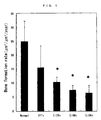
- osteogenesis in normal rats the TPTx rats (only thyroidectomy and parathyroidectomy), the 5/6Nx rats, the 3/4Nx rats, and the 1/2Nx rats were examined.
- Each group was composed of ten rats.
- Calcein a fluorescent reagent for labeling a calcified portion of bone, was administered to the rats subcutaneously or intraperitoneally at a dose of 8 to 15 mg/kg twice with an interval of one week.
- undecalcified specimens (or sections) of tibia were prepared and bone histomorphometric analysis was performed by image processing and calculate a bone formation rate.
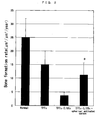
- the animal model of adynamic bone disease described in Reference Example 1 was used to examine therapeutic effects of the parathyroid hormone.
- the TPTx-5/6Nx rat prepared in Referential Example 1 was used as the animal model. After 6 weeks (a bone formation rate was significantly lowered) from the removal of kidneys, a normal feed was changed to a mixed feed prepared by mixing the spherical activated carbon prepared in Preparative Example 1 with the normal feed, and the spherical activated carbon was administered at a dose of 4 g/kg. Each group was composed of ten rats. After the administration for 4 weeks, osteogenesis was evaluated and examined in accordance with the procedure described in Referential Example 1.
- various diseases caused by a low-turnover bone such as renal osteodystrophy (particularly renal osteodystrophy caused by a low-turnover bone) or adynamic bone disease (preferably adynamic bone disease in conservative chronic kidney disease, or renal osteodystrophy in a patient under treatment with dialysis), can be treated or prevented.
- a low-turnover bone such as renal osteodystrophy (particularly renal osteodystrophy caused by a low-turnover bone) or adynamic bone disease (preferably adynamic bone disease in conservative chronic kidney disease, or renal osteodystrophy in a patient under treatment with dialysis)
Landscapes
- Health & Medical Sciences (AREA)
- Public Health (AREA)
- Chemical & Material Sciences (AREA)
- Veterinary Medicine (AREA)
- Medicinal Chemistry (AREA)
- Pharmacology & Pharmacy (AREA)
- Life Sciences & Earth Sciences (AREA)
- Animal Behavior & Ethology (AREA)
- General Health & Medical Sciences (AREA)
- Epidemiology (AREA)
- Inorganic Chemistry (AREA)
- Physical Education & Sports Medicine (AREA)
- Engineering & Computer Science (AREA)
- Bioinformatics & Cheminformatics (AREA)
- Chemical Kinetics & Catalysis (AREA)
- General Chemical & Material Sciences (AREA)
- Nuclear Medicine, Radiotherapy & Molecular Imaging (AREA)
- Organic Chemistry (AREA)
- Orthopedic Medicine & Surgery (AREA)
- Rheumatology (AREA)
- Urology & Nephrology (AREA)
- Pharmaceuticals Containing Other Organic And Inorganic Compounds (AREA)
Abstract
An agent for treating or preventing low-turnover bone
diseases, comprising as an active ingredient a spherical
activated carbon, is disclosed. The low-turnover bone
diseases include renal osteodystrophy and adynamic bone
disease, caused by a low-turnover bone. The adynamic bone
disease includes adynamic bone disease in conservative
chronic kidney disease, and renal osteodystrophy in a patient
under treatment with dialysis.
Description
This invention relates to an agent for treating or
preventing diseases caused by a low-turnover bone (i.e., low-turnover
bone diseases) containing a spherical activated
carbon as an active ingredient.
Chronic kidney disease, particularly bone abnormalities
involved in a hemodialysis, is known as renal osteodystrophy
(ROD). Chronic kidney disease is recognized as a pathosis
caused by a high bone turnover in which osteogenesis and bone
resorption are active, such as osteitis fibrosa caused by
secondary hyperparathyroidism (2HPT) or osteomalacia caused
by an accumulation of aluminum, and therapeutic agents,
treatments and preventions therefor have been developed.
However, it was recently reported that cases of chronic
kidney disease caused by a low-turnover bone were increasing,
particularly renal osteodystrophy involved in a hemodialysis,
and it is known that when such a pathosis progresses,
adynamic bone disease will develop (non-patent references 1
and 2). It has been revealed that renal osteodystrophy
includes various diseases caused by different mechanisms,
such as renal osteodystrophy caused by a low-turnover bone or
renal osteodystrophy caused by a high bone turnover.
The adynamic bone disease and renal osteodystrophy
caused by a low-turnover bone are pathophysiologically
unknown, and therapeutic agents, treatments and preventions
therefor are desired.
The present inventor has engaged in pathophysiological
research on various diseases caused by a low-turnover bone
and in development of treatments therefor and, as described
below, completed the expression of a pathosis of low-turnover
bone diseases in an animal. The invention was filed as
Japanese patent application No. 2002-311101.
An object of the present invention is to provide an
agent for treating or preventing diseases caused by a low-turnover
bone, i.e., low-turnover bone diseases.
To this end, the present inventor has conducted
intensive studies and, as a result, found that symptoms of
low-turnover bone diseases can be expressed in an animal, by
parathyroidectomy (or destroying the functions thereof) to
reduce the blood level of a parathyroid hormone to a
physiological level or less, and causing chronic kidney
disease while avoiding secondary hyperparathyroidism. Further,
on the basis of this finding, the present inventor prepared
animal models of low-turnover bone diseases, i.e., animal
models characterized in that the parathyroid gland is removed
(or the functions thereof destroyed), an amount of a
parathyroid hormone is maintained at a physiological level or
less by administration thereof, and the kidneys are partially
removed (or partial renal artery ligation is carried out).
The present inventor used the animal models to carry out a
screening of substances having an anti-low-bone-turnover
activity, and found that a spherical activated carbon has
such a pharmacological activity, to attain the above object.
The present invention is based on the above findings.
The present invention relates to an agent for treating
or preventing a low-turnover bone disease, comprising as an
active ingredient a spherical activated carbon.
The present invention relates to a pharmaceutical
composition for treating or preventing a low-turnover bone
disease, comprising a spherical activated carbon and a
pharmaceutically or veterinarily acceptable carrier or
diluent. Hereinafter, the agent of the present invention for
treating or preventing a low-turnover bone disease, and the
pharmaceutical composition of the present invention for
treating or preventing a low-turnover bone disease are
collectively referred to as the medicament of the present
invention.
According to a preferred embodiment of the medicament of
the present invention, the low-turnover bone disease is renal
osteodystrophy (particularly renal osteodystrophy caused by a
low-turnover bone) or adynamic bone disease (more preferably
adynamic bone disease in conservative chronic kidney disease,
or renal osteodystrophy in a patient under treatment with
dialysis).
According to another preferred embodiment of the
medicament of the present invention, a particle size of the
spherical activated carbon is 0.01 to 2 mm.
The present invention relates to a method for treating
or preventing a low-turnover bone disease, comprising
administering to a subject in need thereof a spherical
activated carbon in an amount effective thereof.
According to a preferred embodiment of the method of the
present invention, the low-turnover bone disease is renal
osteodystrophy (particularly renal osteodystrophy caused by a
low-turnover bone) or adynamic bone disease (more preferably
adynamic bone disease in conservative chronic kidney disease,
or renal osteodystrophy in a patient under treatment with
dialysis).
According to another preferred embodiment of the method
of the present invention, a particle size of the spherical
activated carbon is 0.01 to 2 mm.
The present invention relates to the use of a spherical
activated carbon in the manufacture of an agent for treating
or preventing a low-turnover bone disease or a pharmaceutical
composition for treating or preventing a low-turnover bone
disease.
According to a preferred embodiment of the use of the
present invention, the low-turnover bone disease is renal
osteodystrophy (particularly renal osteodystrophy caused by a
low-turnover bone) or adynamic bone disease (more preferably
adynamic bone disease in conservative chronic kidney disease,
or renal osteodystrophy in a patient under treatment with
dialysis).
According to another preferred embodiment of the use of
the present invention, a particle size of the spherical
activated carbon is 0.01 to 2 mm.
Hereinafter, the medicament, of the present invention,
the method of treatment or prevention of the present
invention, and the use of the present invention will be
explained with reference to the medicament of the present
invention, but the following descriptions may be applied to
the medicament of the present invention, the method of
treatment or prevention of the present invention, and the use
of the present invention.
The spherical activated carbon which may be used as the
active ingredient of the medicament according to the present
invention is not particularly limited, so long as it is a
medical spherical activated carbon. As the spherical
activated carbon, a spherical activated carbon for an oral
administration, i.e., a spherical activated carbon which can
be used for medical and internal use is preferable. The
particle size of the spherical activated carbon is preferably
0.01 to 2 mm, more preferably 0.05 to 2 mm, most preferably
0.05 to 1 mm.
As the spherical activated carbon, for example,
spherical activated carbons disclosed in Japanese Unexamined
Patent Publication (Kokai) No. 11-292770 or Japanese
Unexamined Patent Publication (Kokai) No. 2002-308785 may be
used. Hereinafter, the spherical activated carbon disclosed
in JP 11-292770 will be first explained, and then the
spherical activated carbon disclosed in JP 2002-308785
explained.
The spherical activated carbon disclosed in JP 11-292770
is a spherical activated carbon having a diameter of
preferably 0.05 to 2 mm, more preferably 0.1 to 1 mm. A
specific surface area thereof is preferably 500 to 2000 m2/g,
more preferably 700 to 1500 m2/g. Further, a volume of voids
having a pore radius of 100 to 75000 angstrom is preferably
0.01 to 1 mL/g, more preferably 0.05 to 0.8 mL/g. In this
connection, the specific surface area is measured by a
methanol adsorption method using an automatic adsorption
measuring apparatus. The void volume is measured by a mercury
press-injection porosimeter. The spherical activated carbon
has advantages in that it can be used as a dose without
scattering, and that constipation is not caused by a multiple
administration, in comparison with a powdery activated carbon.
The shape of the spherical activated carbon is an
important factor, and a substantially spherical shape is
important. Among known spherical activated carbons, a
spherical activated carbon obtained from a petroleum pitch,
as described below, is most preferable, because it is close
to a completely spherical shape.
In the manufacture of the spherical activated carbon
disclosed in JP 11-292770, any active carbon materials, such
as sawdust, coal, coconut shell, petroleum or coal pitches,
or organic synthetic polymers, may be used. The spherical
activated carbon may be produced, for example, by carbonizing
the material and activating the carbonized substance. The
activation may be performed by, for example, a steam-activation
method, a chemical activation method, an air-activation
method, or a CO2 activation method, so long as a
medically acceptable purity is maintained.
As the spherical activated carbon disclosed in JP 11-292770,
there may be mentioned, for example, a granulated
active carbon obtained from carbonaceous powder, a spherical
activated carbon prepared from an organic polymer, or a
spherical activated carbon obtained from a petroleum
hydrocarbon (a petroleum pitch).
The granulated active carbon obtained from carbonaceous
powder can be prepared, for example, by the following
procedure. A binder such as tar or pitch is used to granulate
a carbonaceous powdery material. The resulting microspherical
shaped substance is carbonized (or calcinated) by heat-treatment
at 600 to 1000°C in an inert atmosphere to be
carbonized. Further, the carbonized substance is activated to
obtain the granulated active carbon. The activation may be
performed by, for example, a steam-activation method, a
chemical activation method, an air-activation method, or a CO2
activation method. The steam-activation can be performed at
800 to 1100°C in an atmosphere of steam.
The spherical activated carbon prepared from an organic
polymer is disclosed in, for example, Japanese Examined
Patent Publication (Kokoku) No. 61-1366, and may be prepared
by the following procedure. A condensation-type or
polyaddition-type thermosetting prepolymer is mixed with a
curing agent, a curing catalyst, and an emulsifying agent.
The mixture is emulsified in water with stirring, and reacted
at room temperature or at a higher temperature with stirring.
The reaction system becomes a suspension, and then a
spherical thermosetting polymer is generated with stirring.
The product is collected, and heated at 500°C or more in an
inert atmosphere to be carbonized. The carbonized substance
is activated by the above-mentioned method to obtain the
spherical activated carbon.
The spherical activated carbon obtained from a petroleum
pitch has a diameter of preferably 0.05 to 2 mm, more
preferably 0.1 to 1 mm, a specific surface area of preferably
500 to 2000 m2/g, more preferably 700 to 1500 m2/g, and a
volume of voids having a pore radius of 100 to 75000 angstrom
of preferably 0.01 to 1 mL/g. The spherical activated carbon
obtained from a petroleum pitch may be prepared, for example,
by the following two methods.
The first method is disclosed in, for example, Japanese
Examined Patent Publication (Kokoku) No. 51-76 (United States
Patent No. 3917806) or Japanese Unexamined Patent Publication
(Kokai) No. 54-89010 (United States Patent No. 4761284). In
the first method, a pitch is granulated under a melted
condition, and treated with oxygen. The resulting infusible
substance is heated at 600 to 1000°C in an inert atmosphere
to be carbonized. Further, the carbonized substance is
activated at 850 to 1000°C in an atmosphere of steam. The
second method is disclosed in, for example, Japanese Examined
Patent Publication (Kokoku) No. 59-10930 (United States
Patent No. 4420433). In the second method, a pitch is formed
into string-like shaped products under a melted condition.
The string-like shaped products are broken and added to hot
water to be spheroidized. An oxygen treatment is performed to
obtain an infusible substance, and the carbonization and
activation are carried out by the same methods as described
in the first method.
As the spherical activated carbon which may be used as
the active ingredient in the present invention, (1) a
spherical activated carbon treated with ammonia, or (2) a
spherical activated carbon treated with an oxidation
treatment and/or a reduction treatment, may be used. The
treatments can be applied to, for example, the spherical
activated carbon obtained from a petroleum pitch, the
granulated active carbon obtained from carbonaceous powder,
or the spherical activated carbon prepared from an organic
polymer, as described above.
In the ammonia treatment, for example, a spherical
activated carbon is treated in an aqueous ammonia solution (1
to 1000 ppm; a volume ratio of the aqueous ammonia solution
to the spherical activated carbon = 2 to 10) at 10 to 50°C
for 0.5 to 5 hours. A spherical activated carbon obtained by
treating a spherical activated carbon derived from a
petroleum pitch with ammonia is disclosed in, for example,
Japanese Unexamined Patent Publication (Kokai) No. 56-5313
(United States Patent No. 4761284). As the spherical
activated carbon treated with ammonia, there may be mentioned,
for example, a spherical activated carbon having a diameter
of 0.05 to 2 mm, preferably 0.1 to 1 mm, a specific surface
area of 500 to 2000 m2/g, preferably 700 to 1500 m2/g, a
volume of voids having a pore radius of 100 to 75000 angstrom
of 0.01 to 1 mL/g, and a pH of 6 to 8.
The above-mentioned oxidation treatment means a heat
treatment at a high temperature in an oxidative atmosphere
containing oxygen. As an oxygen source, for example, pure
oxygen, nitrogen oxide, or air can be used. The above-mentioned
reduction treatment means a heat treatment at a
high temperature in an inert atmosphere with respect to
carbon. The inert atmosphere with respect to carbon can be
formed by using nitrogen gas, argon gas, or helium gas, or a
mixed gas thereof.
The oxidation treatment is carried out in an atmosphere
containing preferably 0.5 to 25% by volume, more preferably 3
to 10% by volume of oxygen at preferably 300 to 700°C, more
preferably 400 to 600°C. The reduction treatment is carried
out in an inert atmosphere at preferably 700 to 1100°C, more
preferably 800 to 1000°C.
A spherical activated carbon obtained by treating a
spherical activated carbon derived from a petroleum pitch
with the oxidative treatment and/or the reduction treatment
is disclosed in, for example, Japanese Examined Patent
Publication (Kokoku) No. 62-11611 (United States Patent No.
4681764).
As the spherical activated carbon treated with the
oxidative treatment and/or the reduction treatment, a
spherical activated carbon having a diameter of 0.05 to 2 mm,
preferably 0.1 to 1 mm, a specific surface area of 500 to
2000 m2/g, preferably 700 to 1500 m2/g, and a volume of voids
having a pore radius of 100 to 75000 angstrom of 0.01 to 1
mL/g is preferable.
The spherical activated carbon disclosed in JP 2002-308785
is a spherical activated carbon having a diameter of
0.01 to 1 mm, a specific surface area determined by a BET
method of 700 m2/g or more, a volume of pores having a pore
diameter of 20 to 15000 nm ranges from not less than 0.04
mL/g to less than 0.10 mL/g, a total amount of acidic groups
of 0.30 to 1.20 meq/g, and a total amount of basic groups of
0.20 to 0.70 meq/g. The spherical activated carbon disclosed
in JP 2002-308785 has a specific range of pore volume, namely,
a volume of pores having a pore diameter of 20 to 15000 nm is
from not less than 0.04 mL/g to less than 0.10 mL/g. Further,
a spherical activated carbon having a total amount of basic
groups of 0.20 to 1.00 meq/g (see Japanese Patent Application
No. 2002-293906 or Japanese Patent Application No. 2002-293907)
may be used in the present invention.
In the spherical activated carbon disclosed in JP 11-292770,
a volume of voids having a pore radius of 100 to
75000 angstrom, i.e., a volume of pores having a pore
diameter of 20 to 15000 nm, is 0.1 to 1 mL/g. According to
the disclosures in JP 2002-308785, when the volume of pores
having a pore diameter of 20 to 15000 nm is adjusted to a
range of from not less than 0.04 mL/g to less than 0.10 mL/g,
an adsorbability of α-amylase that is a useful substance, is
significantly lowered, while maintaining a high adsorbability
of β-aminoisobutyric acid, that is a toxic substance. When
the volume of pores having a pore diameter of 20 to 15000 nm
is increased, the useful substances such as digestive enzymes
are more easily adsorbed. Therefore, a smaller volume of
pores having a pore diameter of 20 to 15000 nm is preferable
from a viewpoint that an adsorption of useful substances is
reduced. On the other hand, if the volume of pores having
such a pore diameter becomes too small, the adsorption of
harmful substances is lowered. Therefore, in the adsorbent
for an oral administration, a ratio (T/U) of an adsorption
amount (T) of toxic substances to an adsorption amount (U) of
useful substances, that is, a selective adsorption rate, is
important. For example, the selective adsorption rate of the
spherical activated carbon can be evaluated by the ratio
(Tb/Ua) of an adsorption amount (Tb) of DL-β-aminoisobutyric
acid (toxic substance) to an adsorption amount (Ua) of α-amylase
(useful substance). More particularly, the selective
adsorption rate can be evaluated by, for example, an
equation:
A = Tb/Ua
wherein A denotes a selective adsorption rate, Tb denotes an
adsorption amount of DL-β-aminoisobutyric acid, and Ua
denotes an adsorption amount of α-amylase.
The spherical activated carbon disclosed in JP 2002-308785
exhibits an excellent selective adsorption rate when
the volume of pores having a pore diameter of 20 to 15000 nm
ranges from not less than 0.04 mL/g to less than 0.10 mL/g,
and a more excellent selective adsorption rate when the
volume of pores having a pore diameter of 20 to 15000 nm
ranges from not less than 0.05 mL/g to less than 0.10 mL/g.
The spherical activated carbon disclosed in JP 2002-308785
has a diameter of 0.01 to 1 mm, preferably 0.02 to 0.8
mm. In this connection, the expression that "a diameter is Dl
to Du" as used herein means that a screen passing percentage
(%) in a range of a screen opening Dl to Du is 90% or more in
a particle-sizes accumulating standard curve prepared in
accordance with JIS K 1474 as mentioned below in relation to
a method for determining an average particle diameter.
The spherical activated carbon disclosed in JP 2002-308785
has a specific surface area (referred to as "SSA"
hereinafter) determined by a BET method of 700 m2/g or more.
When the spherical activated carbon has an SSA of less than
700 m2/g, an adsorbability of toxic substances is lowered.
The SSA is preferably 800 m2/g or more. The upper limit of the
SSA is not particularly limited, but the SSA is preferably
2500 m2/g or less in view of a bulk density and strength.
The spherical activated carbon disclosed in JP 2002-308785
has a special constitution of functional groups, that
is, a total amount of acidic groups is 0.30 to 1.20 meq/g,
and a total amount of basic groups is 0.20 to 0.70 meq/g.
When the spherical activated carbon does not satisfy the
functional-groups requirement, i.e., the total amount of
acidic groups is 0.30 to 1.20 meq/g and the total amount of
basic groups is 0.20 to 0.70 meq/g, the adsorbability of the
harmful substances is lowered. In the functional-groups
requirement, the total amount of acidic groups is preferably
0.30 to 1.00 meq/g and the total amount of basic groups is
preferably 0.30 to 0.60 meq/g. A preferable functional-groups
constitution is that the total amount of acidic groups is
0.30 to 1.20 meq/g, the total amount of basic groups is 0.20
to 0.70 meq/g, a phenolic hydroxyl group is 0.20 to 0.70
meq/g, and a carboxyl group is 0.15 meq/g or less, and a
ratio (a/b) of the total amount of acidic groups (a) to the
total amount of basic groups (b) is 0.40 to 2.5, and a
relation [(b+c)-d] between the total amount of basic groups
(b), the phenolic hydroxyl group (c), and the carboxyl group
(d) is 0.60 or more.
The spherical activated carbon disclosed in JP 2002-308785
may be prepared by, for example, the following methods.
First, a dicyclic or tricyclic aromatic compound or a
mixture thereof having a boiling point of 200°C or more is
added as an additive to a pitch such as a petroleum pitch or
a coal pitch. The whole is heated and mixed, and then shaped
to obtain a shaped pitch. The spherical activated carbon is
for oral administration, and the raw material must have a
sufficient purity from a safety standpoint, and have stable
properties.
Thereafter, the shaped pitch is dispersed and granulated
in hot water at 70 to 180°C, with stirring, to obtain a
microspherical shaped pitch. Further, the additive is
extracted and removed from the shaped pitch by a solvent
having a low solubility to the pitch but a high solubility to
the additive. The resulting porous pitch is oxidized by an
oxidizing agent to obtain a porous pitch having an
infusibility to a heat. The resulting infusible porous pitch
is treated at 800 to 1000°C in a gas flow such as steam or
carbon dioxide gas reactive with carbon to obtain a porous
carbonaceous substance.
Then, the resulting porous carbonaceous substance is
oxidized in a temperature range of 300 to 800°C, preferably
320 to 600°C in an atmosphere containing 0.1 to 50% by volume,
preferably 1 to 30% by volume, particularly preferably 3 to
20% by volume of oxygen, and thereafter reduced in a
temperature range of 800 to 1200°C, preferably 800 to 1000°C,
in an atmosphere of a non-oxidizable gas to obtain the
spherical activated carbon disclosed in JP 2002-308785.
In the above method, the atmosphere containing oxygen in
the particular amount may be pure oxygen, or nitrogen oxides
or air as the oxygen source. As the atmosphere inert against
carbon, for example, nitrogen, argon or helium may be used
alone or in the form of a mixture thereof.
The purposes of the addition of the aromatic compound to
the raw pitch are that a flowability of the raw pitch is
enhanced by lowering a softening point of the raw pitch
whereby the granulation thereof is made easier, and the
porous pitch is produced by extracting and removing the
additive from the shaped pitch, whereby a structure control
and a calcination of the carbonaceous material by oxidization
in the subsequent steps is made easier. As the additive, for
example, naphthalene, methylnaphthalene, phenyl-naphthalene,
benzyl-naphthalene, methylanthracene, phenanthrene, or
biphenyl may be used alone or in a mixture thereof. An amount
of the additive added to the pitch is preferably 10 to 50
parts by weight of the aromatic compound with respect to 100
parts by weight of the pitch.
It is preferable that the pitch and the additive are
mixed under a melted condition with heating, to achieve a
homogeneous mixing. Further, it is preferable that the
mixture of the pitch and the additive is shaped to form
particles having a particle size of about 0.01 to 1 mm, to
control the particle size (diameter) of the resulting porous
spherical carbonaceous substance. The shaping may be
conducted during the melted condition, or by grinding the
mixture after it has cooled.
A preferable solvent used to extract and remove the
additive from the mixture of the pitch and the additive may
be, for example, an aliphatic hydrocarbon, such as butane,
pentane, hexane, or heptane, a mixture comprising an
aliphatic hydrocarbon as a main component, such as naphtha or
kerosene, or an aliphatic alcohol, such as methanol, ethanol,
propanol, or butanol.
The additive may be removed from the shaped mixture by
extracting the additive with the solvent from the shaped
mixture of the pitch and the additive, while maintaining the
shape. It is assumed that, upon the extraction, through-holes
of the additive are formed in the shaped product, and a
shaped pitch having a uniform porosity can be obtained.
In this connection, the size of through-holes of the
additive (i.e., pore volume) may be controlled by a
conventional method, for example, by controlling an amount of
the additive, or a precipitating temperature (cooling
temperature) of the additive in the granulating step of the
shaped pitch. Further, when the resulting shaped pitch is
crosslinked by oxidation, the pore volume generated by
extracting the additive is affected by a condition of the
treatment. For example, if it is strongly crosslinked by
oxidation, a heat contraction caused by a heat treatment is
small, and thus the pores obtained by extracting the additive
tend to be maintained.
Then, the resulting porous shaped pitch is crosslinked
by oxidation, that is, the resulting porous shaped pitch is
oxidized by an oxidizing agent, preferably at room
temperature to 300°C to obtain the porous infusible shaped
pitch having a non-fusibility to heat. As the oxidizing agent,
for example, oxygen gas (O2), or a gas mixture prepared by
diluting oxygen gas (O2) with air or nitrogen may be used.
Properties of the spherical activated carbon disclosed
in JP 2002-308785, namely, the average particle diameter, the
specific surface area, the pore volume, the total amount of
acidic groups, and the total amount of basic groups are
measured by the following methods.
A particle-sizes accumulating standard curve is prepared
in accordance with JIS K 1474 for the spherical activated
carbon. The average particle diameter is determined from a
screen opening (mm) at an intersection point with a line that
is horizontal to an abscissa axis and starts from an
intersection point in the particle-sizes accumulating
standard curve with a perpendicular line from a 50% point of
the abscissa axis.
An amount of gas adsorbed is measured by a specific
surface area measuring apparatus (for example, Flow Sorb II
2300 manufactured by MICROMERITICS) in accordance with a gas
adsorbing method of a continuous flow for the spherical
activated carbon sample, and a specific surface area can be
calculated by a BET equation. More particularly, the
spherical activated carbon is charged as a sample in a sample
tube. A helium gas stream containing 30% by volume of
nitrogen is passed through the sample tube, and an amount of
nitrogen adsorbed to the spherical activated carbon sample is
measured by the following procedures. Specifically, the
sample tube is cooled to -196°C, whereby nitrogen is adsorbed
to the spherical activated carbon sample, and then the
temperature of the sample tube is raised to room temperature.
During the raising of the temperature, nitrogen is emitted
from the spherical activated carbon sample. The amount of
emitted nitrogen is measured by a heat conductivity type
detector as an amount (v) of gas adsorbed.
A value vm is calculated in accordance with a one-point
method (relative pressure x = 0.3) by a nitrogen adsorption
at a temperature of liquid nitrogen, using an approximate
equation:
vm = 1/(v· (1-x) )
derived from the BET equation. Then, a specific surface area
of the sample is calculated by an equation:
specific surface area = 4.35 × vm (m2 /g).
In the above equations, vm is an adsorption amount (cm3/g)
necessary to form a monomolecular layer on a surface of the
sample, v is an adsorption amount (cm3/g) actually found, and
x is a relative pressure.
The pore volume can be measured by a mercury press-injection
porosimeter (for example, AUTOPORE 9200
manufactured by MICROMERITICS). The spherical activated
carbon is charged as a sample in a sample vessel, and
degassed under a pressure of 2.67Pa or less for 30 minutes.
Then, mercury is introduced into the sample vessel, and a
pressure applied is gradually increased (maximum pressure =
414 MPa) to force the mercury into the micropores in the
spherical activated carbon sample. A pore volume distribution
of the spherical activated carbon sample is measured from a
relationship between the pressure and an amount of forced
mercury by equations as mentioned below. Specifically, a
volume of mercury inserted into the spherical activated
carbon sample while a pressure is applied is increased from a
pressure (0.07 MPa) corresponding to a pore diameter of 15 µm
to the maximum pressure (414 Mpa) corresponding to a pore
diameter of 3 nm. A pore diameter can be calculated as
follows. When mercury is forced into a cylindrical micropore
having a diameter (D) by applying a pressure (P), a surface
tension (γ) of mercury is balanced with a pressure acting on a
section of the micropore, and thus, the following equation is
held:
-πDγcos = π(D/2)2 ·P
wherein is a contact angle of mercury and a wall of the
micropore. Therefore, the following equation:
D = (-4γcos)/P
is held.
In the present specification, the relationship between
the pressure (P) and the pore diameter (D) is calculated by
an equation:
D = 1.27/P
given that a surface tension of mercury is 484 dyne/cm, a
contact angle of mercury and carbon is 130°, a unit of the
pressure P is Mpa, and a unit of the pore diameter D is µm.
The volume of pores having a pore diameter of 20 to 15000 nm
in the present invention corresponds to a volume of mercury
inserted by applying a pressure increasing from 0.07 Mpa to
63.5 Mpa.
The total amount of acidic groups is an amount of NaOH
consumed, which may be determined by adding 1 g of the
spherical activated carbon sample, after being crushed to
form particles having a size of less than 200 mesh, to 50 mL
of a 0.05N NaOH solution; shaking the mixture for 48 hours;
then filtering out the spherical activated carbon sample; and
titrating until neutralization.
The total amount of basic groups is an amount of HCl
consumed, which may be determined by adding 1 g of the
spherical activated carbon sample after being crushed to form
particles having a less than 200 mesh size, to 50 mL of a
0.05N HCl solution; shaking the mixture for 24 hours; then
filtering out the spherical activated carbon sample; and
titrating until neutralization.
The medicament of the present invention is useful in
treating or preventing low-turnover bone diseases, i.e.,
various diseases caused by a low-turnover bone, such as renal
osteodystrophy (particularly renal osteodystrophy caused by a
low-turnover bone) or adynamic bone disease. The adynamic
bone disease includes adynamic bone disease in conservative
chronic kidney disease, and renal osteodystrophy in a patient
under treatment with dialysis.
A metabolism in bone is performed as the whole of bone
tissues, in the balance of osteogenesis and bone resorption.
The term "low-turnover bone" as used herein means conditions
in which osteogenesis is lowered in comparison with the
normal level, and thus, bone resorption is also lowered in
comparison with the normal level.
The term "adynamic bone disease" as used herein means
conditions in which chronic kidney disease progresses, and as
a result, the metabolism in bone (bone turnover) is inhibited,
and osteogenesis is extremely inhibited, dependent on the
progress of chronic kidney disease. The "adynamic bone
disease" includes conditions in which no osteogenesis occurs,
and conditions in which osteogenesis is extremely inhibited.
The spherical activated carbon (preferably having a
particle size of 0.01 to 2 mm) which may be used as the
active ingredient of the medicament of the present invention
may be administered alone or, optionally together with a
pharmaceutically or veterinarily acceptable ordinary carrier
or diluent, to a subject (an animal, preferably a mammal,
particularly a human) in need of a treatment or prevention of
various diseases caused by a low-turnover bone, in an amount
effective thereof. Preferably, the medicament of the present
invention may be orally administered. The dose depends on,
for example, the kind of subject (a mammal, particularly a
human), the age, individual differences, and/or symptoms of
the subject. For example, when the subject is a human, the
dose is normally 0.2 to 20 g of spherical activated carbon
per day. The dose may be appropriately changed in accordance
with the symptoms. Further, the dose may be administered as a
single dose or a multiple dose. The spherical activated
carbon per se may be administered, or it may be administered
as a pharmaceutical composition containing the spherical
activated carbon. In the former, the spherical activated
carbon may be administered as a slurry prepared by suspending
it in drinking water.
The formulation may be administered in any form, such as
granules, tablets, sugar-coated tablets, capsules, sticks,
divided packages, or suspensions. In the case of capsules,
the usual gelatin capsules, or if necessary, enteric capsules
may be used. In the case of granules, tablets, or sugar-coated
tablets, the formulations must be broken into the
original fine particles inside the body. The content of the
spherical activated carbon in the medicament is normally 1 to
100%. The preferred medicaments are capsules, sticks, or
divided packages, and the spherical activated carbon per se
may be packed into a package.
The pharmacological activities in the medicament of the
present invention may be confirmed by, for example, animal
models prepared in Examples. Such an animal model, which may
be used in evaluating the medicament of the present invention,
may be prepared by, for example, the following procedure.
The animal model is not particularly limited, so long as
it may be used in analyzing a mechanism or factors in low-turnover
bone diseases (such as adynamic bone disease, or
renal osteodystrophy caused by a low-turnover bone) and
confirming pharmacological activities to low-turnover bone.
As the animal model, there may be mentioned, for example, a
rat, a mouse, a guinea pig, a hamster, a rabbit, a dog, or a
miniature pig, and a rat is most preferable. When a rat is
used, a 3 to 20-week-old, particularly 8 to 12-week-old rat
is preferable.
The thyroidectomy and parathyroidectomy in the
preparation of the animal model can be performed by, for
example, cutting the center line in an area including the
submandibular gland in the neck of the animal, and removing
the thyroid gland on the trachea. In this connection, the
parathyroid gland exists on the thyroid gland, and is
integrated into the thyroid gland. Instead of the removal,
the thyroid and parathyroid glands may be burned by an
electric knife or a laser, or the functions thereof may be
lost by a denaturation of protein using alcohol or formalin.
If possible, it is preferable to maintain the thyroid gland
and to remove (or cause a loss of functions) only the
parathyroid gland. Hereinafter, an animal in which the
thyroid and parathyroid glands are removed is represented as
"TPTx". For example, a rat in which the thyroid and
parathyroid glands are removed is represented as a TPTx rat.
Normal physiological amounts of thyroid hormones (such
as T3 or T4) in blood of the animal model (rat) are 0.1 to 1
ng/mL (T3) and 1 to 100 ng/dL (T4) [preferably 0.3 to 0.8
ng/mL (T3) and 10 to 30 ng/dL (T4)], and that of a
parathyroid hormone is 0 to 1000 pg/mL, preferably 0 to 150
pg/mL (by an ELISA method).
Thyroid and parathyroid hormones may be administered in
the form of an aqueous solution such as a buffer or a
physiological saline. After preparing the animal model, the
concentrations of the thyroid and parathyroid hormones in the
blood of the animal model are maintained so that T3 is 0.1 to
1 ng/mL and T4 is 1 to 100 ng/dL (preferably T3 is 0.3 to 0.8
ng/mL and T4 is 10 to 30 ng/dL), and the parathyroid hormone
is a physiological amount or less (0 to 1000 pg/mL),
preferably 0 to 150 pg/mL (by an ELISA method).
The partial removal of kidneys may be performed, for
example, by the following procedure. A rat is retained in a
supine position, and an anesthetic such as sodium
pentobarbital (Nembutal; Dainippon Pharmaceutical Co., Ltd.)
is administered to the right lower quadrant of the abdomen
(50 mg/Kg.BW). Under anesthesia, hair on both the left and
right sides of the abdomen is shaved. To remove the right
kidney, the rat is retained so that the right side thereof
faces to the operator. After an area to be incised is
sterilized, the abdominal wall approximately 10 mm apart from
the edges of ribs is incised approximately 15 mm along the
ribs. The right kidney is separated from fat therearound and
the adrenal gland. After renal blood vessels and the ureter
are ligated towards the kidney side and artery side to avoid
a change in weight of the kidney caused by bleeding, the
right kidney is removed. The wet weight of the right kidney
is measured to determine a standard weight when the left
kidney is removed. The incised abdominal wall and skin are
sutured.
The rat is retained so that the left side thereof faces
to the operator. After an area to be incised is sterilized,
the abdominal wall approximately 10 mm apart from the edges
of ribs is incised approximately 15 mm along the ribs. The
left kidney is separated from fat therearound and the adrenal
gland. For hemostasis, the renal arteries and renal veins are
clamped using a 5-0 suture. The left kidney is placed in a
mold for severing kidney, and severed. Assuming that the
weight of the right kidney is equal to that of the left
kidney, a proportion of the severance is calculated on the
basis of the weight of the removed right kidney. After the
kidney is severed, 2500 Unit/mL of thrombin (SIGMA) is added
to the severed surface for hemostasis.
After the left kidney is replaced in the abdomen, one or
two drops of penicillin (GIBCO) are added, and the abdominal
wall and skin are sutured. Dilute iodine tincture (Yoshida
Pharmaceutical) is applied to the right and left sutured
surfaces for sterilization. After 2 days from the preparation
of the animal models, Cr (creatinine in serum) and BUN (urea
nitrogen in serum) are measured to exclude inadequate animal
models. After 2 to 6 weeks from the preparation, animal
models are evenly divided into groups, on the basis of the
weight, Cr, BUN, an amount of Cr to be excreted, Ccr
(creatinine clearance), an amount of proteins to be excreted,
blood pressure, and the proportion of severance.
Next, the renal artery ligation method will be explained.
The procedure of the left renal partial artery ligation is,
for example, as follows. A rat is retained in a supine
position, and sodium pentobarbital (Nembutal; Dainippon
Pharmaceutical Co., Ltd.) is administered to the right lower
quadrant of the abdomen (50 mg/Kg.BW). Under anesthesia, hair
on the side of the left kidney is shaved by hair clippers.
The rat is retained so that the left side thereof faces to
the operator. After an area to be incised is sterilized, the
abdominal wall approximately 10 mm apart from the edges of
ribs is incised approximately 15 mm along the ribs. The
abdominal muscle layer at the right side of the incised area
is lifted with forceps with rings, and the left kidney is
produced from the body while pressing the kidney gently with
the left hand. Fat around the kidney is removed with small
scissors. Microsurgery forceps are used to stop the blood
flow, and renal arterial branches to be maintained are
determined. Microsurgery forceps are inserted into the
boundary between the renal arteries and renal veins to be
separated. Renal arteries other than those to be maintained
are ligated with a 7-0 suture. Fat tissues around the
separated kidney are removed, and the kidney is replaced in
the abdomen. After one or two drops of penicillin (GIBCO) is
added, and the abdominal wall and skin are sutured. Dilute
iodine tincture (Yoshida Pharmaceutical) is applied to the
left sutured surface for sterilization.
The procedure of total ligation of right renal artery is,
for example, as follows. Renal artery ligation is carried out
after 1 week from the left branch artery ligation. A rat is
retained in a supine position, and sodium pentobarbital
(Nembutal; Dainippon Pharmaceutical Co., Ltd.) is
administered to the right lower quadrant of the abdomen (50
mg/Kg.BW). Under anesthesia, hair on the side of the right
kidney is shaved by hair clippers. The rat is retained so
that the right side thereof faces to the operator. After an
area to be incised is sterilized, the abdominal wall
approximately 10 mm apart from the edges of ribs is incised
approximately 15 mm along the ribs. The abdominal muscle
layer at the right side of the incised area is lifted with
forceps with rings, and the right kidney is produced from the
body while pressing the kidney gently with the left hand. The
right forefinger and thumb are used to break a portion of
capsule, and the kidney is produced from the capsule. The
hilum renalis is clamped with forceps, and the portion
therebelow is ligated with a 1-0 suture. After the forceps
are released, the right kidney is replaced in the abdomen,
one or two drops of penicillin (GIBCO) are added, and the
abdominal wall and skin are sutured. Dilute iodine tincture
(Yoshida Pharmaceutical) is applied to the right sutured
surface for sterilization.
After 2 days from the preparation of the animal models,
the weight, Cr, and BUN are measured to exclude inadequate
animal models. After 2 to 6 weeks from the preparation,
animal models are evenly divided into groups, on the basis of
the weight, Cr, BUN, an amount of Cr to be excreted, Ccr, an
amount of proteins to be excreted, and blood pressure.
In this connection, the proportion of kidney to be
removed may be appropriately determined. When a rat is used,
it is preferable to remove, for example, two-thirds of the
left kidney and the whole of the right kidney (hereinafter
referred to as 5/6Nx), a half of the left kidney and the
whole of the right kidney (3/4Nx), or the whole of the right
kidney (1/2Nx).
The pharmacological activities in the medicament of the
present invention may be evaluated by, for example, the
following procedure.
The obtained animal models are bred until the bone
formation rate is significantly lowered. When a rat is used
as the animal model, it is preferable to start the evaluation
after 2 to 8 weeks (particularly 4 to 6 weeks) from the
partial removal of kidneys or partial renal artery ligation.
In this connection, as a control group, an animal in which
the kidneys are maintained but only the parathyroidectomy is
carried out, an animal in which the kidneys are maintained
but the thyroidectomy and parathyroidectomy are carried out
(TPTx), or an animal in which the kidneys are maintained and
the thyroidectomy and parathyroidectomy are not carried out,
may be used. A TPTx in which only the incision treatment in
the above procedure of kidney removal is carried out (TPTx-sham)
is preferable.
In the above evaluation procedure, a high-calcium diet
is fed to the control group and the animal models. The diet
generally contains 0.4 to 2% (preferably 1 to 2%) of calcium.
The present invention now will be further illustrated by,
but is by no means limited to, the following Examples.
Petroleum pitch (68 kg) (softening point = 210°C;
quinoline insoluble contents = 1% or less by weight; ratio of
hydrogen atoms/carbon atoms = 0.63) and naphthalene (32 kg)
were charged into an autoclave (internal volume = 300 L)
equipped with stirring fans, melted at 180°C, and mixed. The
mixture was extruded at 80 to 90°C to form string-like shaped
products. Then, the string-like shaped products were broken
so that a ratio of a diameter to a length became about 1 to 2.
The resulting broken products were added to an aqueous
solution containing 0.23% by weight of polyvinyl alcohol
(saponification value = 88%) and heated to 93°C, and
dispersed with stirring to be spheroidized. Then, the whole
was cooled by replacing the polyvinyl alcohol aqueous
solution with water, at 20°C for 3 hours, whereby the pitch
was solidified and naphthalene crystals were precipitated,
and a slurry of spherical shaped products of pitch was
obtained.
After most of the water was removed by filtration,
naphthalene in pitch was extracted and removed with n-hexane
at an amount about 6 times that of the spherical shaped
products of pitch. The resulting porous spherical pitch was
heated to 235°C by passing a heated air in a fluidized bed,
and allowed to stand at 235°C for 1 hour to be oxidized, and
a porous spherical oxidized pitch was obtained, which is nonfusible
to heat.
Thereafter, the resulting porous spherical oxidized
pitch was activated in a fluidized bed at 900°C for 170
minutes by a nitrogen gas atmosphere containing 50% by volume
of steam to obtain a porous spherical activated carbon.
Further, the resulting spherical activated carbon was
oxidized in a fluidized bed at 470°C for 3 hours and 15
minutes by a nitrogen-oxygen atmosphere containing 18.5% by
volume of oxygen, and reduced in a fluidized bed at 900°C for
17 minutes by a nitrogen gas atmosphere, to obtain a
spherical activated carbon.
The properties of the resulting spherical activated
carbon are as follows:
In this connection, the pore volume was determined by a
mercury injection method and corresponds to a volume of pores
having a diameter of 20 to 15000 nm.
Male SD rats (10 weeks old) were used to carry out
thyroidectomy and parathyroidectomy (TPTx), and a
physiological amount of a thyroid hormone (T4; 1 to 10 µg/Kg;
three times per week; subcutaneous administration) and a
physiological amount of a parathyroid hormone (0.1 µg/kg/hr;
continuous subcutaneous administration by an osmotic mini-pump)
were administered to the rats so that the
concentrations thereof in blood were maintained within normal
levels.
In this connection, the parathyroid hormone (PTH) was
administered with a constant flow rate per hour by an
infusion pump method. In the infusion pump method, a small-sized
osmotic mini-pump was subcutaneously implanted, and a
liquid was infused from the pump when the pump was soaked
with body fluid. Therefore, the PTH dose per day was
calculated on the basis of an amount of infused liquid per
day, and a concentration of PTH contained in the liquid was
determined.
Thereafter, kidneys were removed from the rats to
prepare animal models of chronic kidney disease as follows:
In this referential example, osteogenesis in normal rats,
the TPTx rats (only thyroidectomy and parathyroidectomy), the
5/6Nx rats, the 3/4Nx rats, and the 1/2Nx rats were examined.
Each group was composed of ten rats. After the rats were bred
for 6 weeks from the removal of kidneys, a change in
osteogenesis was evaluated in accordance with the following
procedure. Calcein, a fluorescent reagent for labeling a
calcified portion of bone, was administered to the rats
subcutaneously or intraperitoneally at a dose of 8 to 15
mg/kg twice with an interval of one week. After the rats were
sacrificed, undecalcified specimens (or sections) of tibia
were prepared and bone histomorphometric analysis was
performed by image processing and calculate a bone formation
rate.
As apparent from serum biochemical tests shown in Table
1, the 5/6Nx rat exhibited the severest pathosis, the 3/4Nx
rat exhibited the second severest pathosis, and the 1/2Nx rat
exhibited the lightest pathosis,,with respect to renal
functions in the rat models after 6 weeks from the removal of
kidneys.
| Normal | TPTx | TPTx-1/2Nx | TPTx-3/4Nx | TPTx-5/6Nx | |
| Cre(mg/dL) | 0.60±0.00 | 0.69±0.17 | 0.70±0.10 | 1.04±0.15 | 1.32±0.34# |
| BUN(mg/dL) | 21.8±5.4 | 22.0±5.8 | 26.3±5.0 | 54.8±10.8 | 69.0±25.9# |
Next, osteogenesis in the tibia of each rat after 6
weeks from the removal of kidneys was compared. The result is
shown in Figure 1. The symbol "*" in Figure 1 means p<0.05
with respect to the normal rat.
As shown in Figure 1, it was found that as animal models
exhibited a more severe chronic kidney disease, the bone
formation rate became significantly lower. As apparent from
the result, when chronic kidney disease progresses, the bone
turnover is inhibited and lowered, and adynamic bone disease
develops. In this reference example, it was found that an
animal model of low-turnover bone diseases (particularly
adynamic bone disease, or renal osteodystrophy caused by a
low-turnover bone) can be prepared.
The animal model of adynamic bone disease described in
Reference Example 1 was used to examine therapeutic effects
of the parathyroid hormone.
As the animal model, the TPTx-5/6Nx rat prepared in
Referential Example 1 was used. After 6 weeks (a bone
formation rate was significantly lowered) from the removal of
kidneys, a normal feed was changed to a mixed feed prepared
by mixing the spherical activated carbon prepared in
Preparative Example 1 with the normal feed, and the spherical
activated carbon was administered at a dose of 4 g/kg. Each
group was composed of ten rats. After the administration for
4 weeks, osteogenesis was evaluated and examined in
accordance with the procedure described in Referential
Example 1.
The result is shown in Figure 2. The symbol "*" in
Figure 2 means p<0.05 with respect to the TPTx-5/6Nx rat. As
shown in Figure 2, the bone formation rate in the
administered group was improved in comparison with the
control group, and the symptoms were alleviated.
According to the medicament of the present invention,
various diseases caused by a low-turnover bone, such as renal
osteodystrophy (particularly renal osteodystrophy caused by a
low-turnover bone) or adynamic bone disease (preferably
adynamic bone disease in conservative chronic kidney disease,
or renal osteodystrophy in a patient under treatment with
dialysis), can be treated or prevented.
Although the present invention has been described with
reference to specific embodiments, various changes and
modifications obvious to those skilled in the art are
possible without departing from the scope of the appended
claims.
Claims (16)
- An agent for treating or preventing a low-turnover bone disease, comprising as an active ingredient a spherical activated carbon.
- The agent according to claim 1, wherein the low-turnover bone disease is renal osteodystrophy or adynamic bone disease.
- The agent according to claim 2, wherein the adynamic bone disease is adynamic bone disease in conservative chronic kidney disease or adynamic bone disease in renal osteodystrophy in a patient under treatment with dialysis.
- The agent according to any one of claims 1 to 3, wherein a particle size of the spherical activated carbon is 0.01 to 2 mm.
- A pharmaceutical composition for treating or preventing a low-turnover bone disease, comprising a spherical activated carbon and a pharmaceutically or veterinarily acceptable carrier or diluent.
- The pharmaceutical composition according to claim 5, wherein the low-turnover bone disease is renal osteodystrophy or adynamic bone disease.
- The pharmaceutical composition according to claim 6, wherein the adynamic bone disease is adynamic bone disease in conservative chronic kidney disease, or adynamic bone disease in renal osteodystrophy in a patient under treatment with dialysis.
- The pharmaceutical composition according to any one of claims 5 to 6, wherein a particle size of the spherical activated carbon is 0.01 to 2 mm.
- A method for treating or preventing a low-turnover bone disease, comprising administering to a subject in need thereof a spherical activated carbon in an amount effective thereof.
- The method according to claim 9, wherein the low-turnover bone disease is renal osteodystrophy or adynamic bone disease.
- The method according to claim 10, wherein the adynamic bone disease is adynamic bone disease in conservative chronic kidney disease, or adynamic bone disease in renal osteodystrophy in a patient under treatment with dialysis.
- The method according to any one of claims 9 to 11, wherein a particle size of the spherical activated carbon is 0.01 to 2 mm.
- Use of a spherical activated carbon in the manufacture of an agent for treating or preventing a low-turnover bone disease or a pharmaceutical composition for treating or preventing a low-turnover bone disease.
- Use according to claim 13, wherein the low-turnover bone disease is renal osteodystrophy or adynamic bone disease.
- Use according to claim 14, wherein the adynamic bone disease is adynamic bone disease in conservative chronic kidney disease, or adynamic bone disease in renal osteodystrophy in a patient under treatment with dialysis.
- Use according to any one of claims 13 to 15, wherein a particle size of the spherical activated carbon is 0.01 to 2 mm.
Applications Claiming Priority (3)
| Application Number | Priority Date | Filing Date | Title |
|---|---|---|---|
| JP2003100272 | 2003-04-03 | ||
| JP2003100272 | 2003-04-03 | ||
| PCT/JP2004/004839 WO2004089384A1 (en) | 2003-04-03 | 2004-04-02 | Remedy or preventive for low turnover bone diseases |
Publications (2)
| Publication Number | Publication Date |
|---|---|
| EP1609475A1 true EP1609475A1 (en) | 2005-12-28 |
| EP1609475A4 EP1609475A4 (en) | 2008-06-04 |
Family
ID=33156719
Family Applications (1)
| Application Number | Title | Priority Date | Filing Date |
|---|---|---|---|
| EP04725517A Withdrawn EP1609475A4 (en) | 2003-04-03 | 2004-04-02 | Remedy or preventive for low turnover bone diseases |
Country Status (9)
| Country | Link |
|---|---|
| US (1) | US20060257392A1 (en) |
| EP (1) | EP1609475A4 (en) |
| JP (1) | JPWO2004089384A1 (en) |
| KR (1) | KR20050119146A (en) |
| CN (1) | CN1764465A (en) |
| CA (1) | CA2520770A1 (en) |
| RU (1) | RU2005130403A (en) |
| TW (1) | TW200427454A (en) |
| WO (1) | WO2004089384A1 (en) |
Cited By (2)
| Publication number | Priority date | Publication date | Assignee | Title |
|---|---|---|---|---|
| EP1886689A4 (en) * | 2005-05-16 | 2009-07-22 | Kureha Corp | Oxidative stress inhibitor |
| GB2486713A (en) * | 2010-12-23 | 2012-06-27 | Univ Feng Chia | Pharmaceutical composition for treating urinary system disorders |
Families Citing this family (2)
| Publication number | Priority date | Publication date | Assignee | Title |
|---|---|---|---|---|
| CN1787797A (en) * | 2003-05-14 | 2006-06-14 | 株式会社吴羽 | Housing body for deglutition of solid molding for oral ingestion, container for the housing body, and deglutition method |
| JP2010208969A (en) * | 2009-03-09 | 2010-09-24 | Kureha Corp | Lifespan-extending agent |
Family Cites Families (4)
| Publication number | Priority date | Publication date | Assignee | Title |
|---|---|---|---|---|
| EP0688566B1 (en) * | 1994-05-27 | 2000-12-13 | Kureha Kagaku Kogyo Kabushiki Kaisha | Use of spherical activated carbon for the treatment of hemorrhoidal diseases |
| JP4230005B2 (en) * | 1998-04-10 | 2009-02-25 | 株式会社クレハ | Active vitamin D metabolism improver |
| US6830753B2 (en) * | 2001-04-11 | 2004-12-14 | Kureha Chemical Industry Co., Ltd. | Adsorbent for oral administration |
| JP3522708B2 (en) * | 2001-04-11 | 2004-04-26 | 呉羽化学工業株式会社 | Adsorbent for oral administration |
-
2004
- 2004-04-02 US US10/551,376 patent/US20060257392A1/en not_active Abandoned
- 2004-04-02 CN CNA200480008034XA patent/CN1764465A/en active Pending
- 2004-04-02 KR KR1020057018066A patent/KR20050119146A/en not_active Withdrawn
- 2004-04-02 WO PCT/JP2004/004839 patent/WO2004089384A1/en not_active Ceased
- 2004-04-02 RU RU2005130403/15A patent/RU2005130403A/en unknown
- 2004-04-02 CA CA002520770A patent/CA2520770A1/en not_active Abandoned
- 2004-04-02 JP JP2005505265A patent/JPWO2004089384A1/en active Pending
- 2004-04-02 EP EP04725517A patent/EP1609475A4/en not_active Withdrawn
- 2004-04-02 TW TW093109218A patent/TW200427454A/en unknown
Cited By (3)
| Publication number | Priority date | Publication date | Assignee | Title |
|---|---|---|---|---|
| EP1886689A4 (en) * | 2005-05-16 | 2009-07-22 | Kureha Corp | Oxidative stress inhibitor |
| GB2486713A (en) * | 2010-12-23 | 2012-06-27 | Univ Feng Chia | Pharmaceutical composition for treating urinary system disorders |
| GB2486713B (en) * | 2010-12-23 | 2016-06-29 | Univ Feng Chia | Pharmaceutical composition for treating urinary system disorders |
Also Published As
| Publication number | Publication date |
|---|---|
| RU2005130403A (en) | 2006-03-10 |
| KR20050119146A (en) | 2005-12-20 |
| US20060257392A1 (en) | 2006-11-16 |
| JPWO2004089384A1 (en) | 2006-07-06 |
| CA2520770A1 (en) | 2004-10-21 |
| WO2004089384A1 (en) | 2004-10-21 |
| CN1764465A (en) | 2006-04-26 |
| TW200427454A (en) | 2004-12-16 |
| EP1609475A4 (en) | 2008-06-04 |
Similar Documents
| Publication | Publication Date | Title |
|---|---|---|
| US4681764A (en) | Porous and spherical carbonaceous product | |
| EP1249241B9 (en) | Adsorbent for oral administration | |
| RU2396964C2 (en) | Oral adsorbent and agent for treatment or prevention of renal or hepatic disease | |
| US6830753B2 (en) | Adsorbent for oral administration | |
| KR910004018B1 (en) | Compound Phosphate Adsorbent | |
| EP0711561B1 (en) | Agent for reducing nephrotoxicity due to medicine containing an activated spherical carbon | |
| AU658338B2 (en) | Antidiabetic agent | |
| EP0688566B1 (en) | Use of spherical activated carbon for the treatment of hemorrhoidal diseases | |
| US20090181095A1 (en) | Oxidative stress inhibitor | |
| US20060257392A1 (en) | Remedy or preventive for low turnover bone diseases | |
| JPH11292770A (en) | Matrix formation sthenia inhibitor | |
| JP4230005B2 (en) | Active vitamin D metabolism improver | |
| JP2010208969A (en) | Lifespan-extending agent | |
| JPH10316578A (en) | Medicine for improving blood lipoprotein lipase activity-lowering disease | |
| EP1757300A1 (en) | Agent for removing factor causing circulatory dysfunction | |
| JP3600901B2 (en) | Oral renal disease treatment or prevention agent | |
| EP1407772A1 (en) | Pharmaceutical composition comprising porous spherical carbonaceous substance and its use for the treatment of renal and liver diseases | |
| HK1099634A (en) | Agent for removing factor causing circulatory dysfunction | |
| US20070264347A1 (en) | Agent for Treating or Preventing Diabetic Neuropathy | |
| JP2011111414A (en) | Anti-anemia agent | |
| KR840001449B1 (en) | A novel poroces and carbonaceous product | |
| JPH06199689A (en) | Agent for promoting antianemic action of erythropoietin | |
| JP2005162683A (en) | Therapeutic or prophylactic agent for hyperuricemia | |
| WO2011059085A1 (en) | Prophylactic or therapeutic agent for dyslipidemia-related arteriosclerosis | |
| JPH10273443A (en) | Parathyroid hormone reductive drug |
Legal Events
| Date | Code | Title | Description |
|---|---|---|---|
| PUAI | Public reference made under article 153(3) epc to a published international application that has entered the european phase |
Free format text: ORIGINAL CODE: 0009012 |
|
| 17P | Request for examination filed |
Effective date: 20050927 |
|
| AK | Designated contracting states |
Kind code of ref document: A1 Designated state(s): AT BE BG CH CY CZ DE DK EE ES FI FR GB GR HU IE IT LI LU MC NL PL PT RO SE SI SK TR |
|
| AX | Request for extension of the european patent |
Extension state: AL HR LT LV MK |
|
| RAP1 | Party data changed (applicant data changed or rights of an application transferred) |
Owner name: KUREHA CORPORATION |
|
| DAX | Request for extension of the european patent (deleted) | ||
| A4 | Supplementary search report drawn up and despatched |
Effective date: 20080506 |
|
| STAA | Information on the status of an ep patent application or granted ep patent |
Free format text: STATUS: THE APPLICATION HAS BEEN WITHDRAWN |
|
| 18W | Application withdrawn |
Effective date: 20090317 |