EP1607833A2 - A temperature-based steering mechanism - Google Patents
A temperature-based steering mechanism Download PDFInfo
- Publication number
- EP1607833A2 EP1607833A2 EP05253360A EP05253360A EP1607833A2 EP 1607833 A2 EP1607833 A2 EP 1607833A2 EP 05253360 A EP05253360 A EP 05253360A EP 05253360 A EP05253360 A EP 05253360A EP 1607833 A2 EP1607833 A2 EP 1607833A2
- Authority
- EP
- European Patent Office
- Prior art keywords
- cluster
- temperature
- clusters
- cpu
- dispatch unit
- Prior art date
- Legal status (The legal status is an assumption and is not a legal conclusion. Google has not performed a legal analysis and makes no representation as to the accuracy of the status listed.)
- Withdrawn
Links
Images


Classifications
-
- G—PHYSICS
- G06—COMPUTING OR CALCULATING; COUNTING
- G06F—ELECTRIC DIGITAL DATA PROCESSING
- G06F1/00—Details not covered by groups G06F3/00 - G06F13/00 and G06F21/00
- G06F1/16—Constructional details or arrangements
- G06F1/20—Cooling means
- G06F1/206—Cooling means comprising thermal management
-
- G—PHYSICS
- G06—COMPUTING OR CALCULATING; COUNTING
- G06F—ELECTRIC DIGITAL DATA PROCESSING
- G06F1/00—Details not covered by groups G06F3/00 - G06F13/00 and G06F21/00
- G06F1/16—Constructional details or arrangements
- G06F1/20—Cooling means
-
- G—PHYSICS
- G06—COMPUTING OR CALCULATING; COUNTING
- G06F—ELECTRIC DIGITAL DATA PROCESSING
- G06F1/00—Details not covered by groups G06F3/00 - G06F13/00 and G06F21/00
- G06F1/26—Power supply means, e.g. regulation thereof
- G06F1/32—Means for saving power
- G06F1/3203—Power management, i.e. event-based initiation of a power-saving mode
- G06F1/3234—Power saving characterised by the action undertaken
- G06F1/329—Power saving characterised by the action undertaken by task scheduling
-
- G—PHYSICS
- G06—COMPUTING OR CALCULATING; COUNTING
- G06F—ELECTRIC DIGITAL DATA PROCESSING
- G06F9/00—Arrangements for program control, e.g. control units
- G06F9/06—Arrangements for program control, e.g. control units using stored programs, i.e. using an internal store of processing equipment to receive or retain programs
- G06F9/30—Arrangements for executing machine instructions, e.g. instruction decode
- G06F9/38—Concurrent instruction execution, e.g. pipeline or look ahead
- G06F9/3836—Instruction issuing, e.g. dynamic instruction scheduling or out of order instruction execution
-
- G—PHYSICS
- G06—COMPUTING OR CALCULATING; COUNTING
- G06F—ELECTRIC DIGITAL DATA PROCESSING
- G06F9/00—Arrangements for program control, e.g. control units
- G06F9/06—Arrangements for program control, e.g. control units using stored programs, i.e. using an internal store of processing equipment to receive or retain programs
- G06F9/30—Arrangements for executing machine instructions, e.g. instruction decode
- G06F9/38—Concurrent instruction execution, e.g. pipeline or look ahead
- G06F9/3836—Instruction issuing, e.g. dynamic instruction scheduling or out of order instruction execution
- G06F9/3838—Dependency mechanisms, e.g. register scoreboarding
- G06F9/384—Register renaming
-
- G—PHYSICS
- G06—COMPUTING OR CALCULATING; COUNTING
- G06F—ELECTRIC DIGITAL DATA PROCESSING
- G06F9/00—Arrangements for program control, e.g. control units
- G06F9/06—Arrangements for program control, e.g. control units using stored programs, i.e. using an internal store of processing equipment to receive or retain programs
- G06F9/30—Arrangements for executing machine instructions, e.g. instruction decode
- G06F9/38—Concurrent instruction execution, e.g. pipeline or look ahead
- G06F9/3867—Concurrent instruction execution, e.g. pipeline or look ahead using instruction pipelines
- G06F9/3869—Implementation aspects, e.g. pipeline latches; pipeline synchronisation and clocking
-
- G—PHYSICS
- G06—COMPUTING OR CALCULATING; COUNTING
- G06F—ELECTRIC DIGITAL DATA PROCESSING
- G06F9/00—Arrangements for program control, e.g. control units
- G06F9/06—Arrangements for program control, e.g. control units using stored programs, i.e. using an internal store of processing equipment to receive or retain programs
- G06F9/30—Arrangements for executing machine instructions, e.g. instruction decode
- G06F9/38—Concurrent instruction execution, e.g. pipeline or look ahead
- G06F9/3885—Concurrent instruction execution, e.g. pipeline or look ahead using a plurality of independent parallel functional units
-
- G—PHYSICS
- G06—COMPUTING OR CALCULATING; COUNTING
- G06F—ELECTRIC DIGITAL DATA PROCESSING
- G06F9/00—Arrangements for program control, e.g. control units
- G06F9/06—Arrangements for program control, e.g. control units using stored programs, i.e. using an internal store of processing equipment to receive or retain programs
- G06F9/30—Arrangements for executing machine instructions, e.g. instruction decode
- G06F9/38—Concurrent instruction execution, e.g. pipeline or look ahead
- G06F9/3885—Concurrent instruction execution, e.g. pipeline or look ahead using a plurality of independent parallel functional units
- G06F9/3889—Concurrent instruction execution, e.g. pipeline or look ahead using a plurality of independent parallel functional units controlled by multiple instructions, e.g. MIMD, decoupled access or execute
- G06F9/3891—Concurrent instruction execution, e.g. pipeline or look ahead using a plurality of independent parallel functional units controlled by multiple instructions, e.g. MIMD, decoupled access or execute organised in groups of units sharing resources, e.g. clusters
-
- G—PHYSICS
- G06—COMPUTING OR CALCULATING; COUNTING
- G06F—ELECTRIC DIGITAL DATA PROCESSING
- G06F9/00—Arrangements for program control, e.g. control units
- G06F9/06—Arrangements for program control, e.g. control units using stored programs, i.e. using an internal store of processing equipment to receive or retain programs
- G06F9/46—Multiprogramming arrangements
- G06F9/50—Allocation of resources, e.g. of the central processing unit [CPU]
- G06F9/5005—Allocation of resources, e.g. of the central processing unit [CPU] to service a request
- G06F9/5027—Allocation of resources, e.g. of the central processing unit [CPU] to service a request the resource being a machine, e.g. CPUs, Servers, Terminals
-
- G—PHYSICS
- G06—COMPUTING OR CALCULATING; COUNTING
- G06F—ELECTRIC DIGITAL DATA PROCESSING
- G06F9/00—Arrangements for program control, e.g. control units
- G06F9/06—Arrangements for program control, e.g. control units using stored programs, i.e. using an internal store of processing equipment to receive or retain programs
- G06F9/46—Multiprogramming arrangements
- G06F9/50—Allocation of resources, e.g. of the central processing unit [CPU]
- G06F9/5094—Allocation of resources, e.g. of the central processing unit [CPU] where the allocation takes into account power or heat criteria
-
- Y—GENERAL TAGGING OF NEW TECHNOLOGICAL DEVELOPMENTS; GENERAL TAGGING OF CROSS-SECTIONAL TECHNOLOGIES SPANNING OVER SEVERAL SECTIONS OF THE IPC; TECHNICAL SUBJECTS COVERED BY FORMER USPC CROSS-REFERENCE ART COLLECTIONS [XRACs] AND DIGESTS
- Y02—TECHNOLOGIES OR APPLICATIONS FOR MITIGATION OR ADAPTATION AGAINST CLIMATE CHANGE
- Y02D—CLIMATE CHANGE MITIGATION TECHNOLOGIES IN INFORMATION AND COMMUNICATION TECHNOLOGIES [ICT], I.E. INFORMATION AND COMMUNICATION TECHNOLOGIES AIMING AT THE REDUCTION OF THEIR OWN ENERGY USE
- Y02D10/00—Energy efficient computing, e.g. low power processors, power management or thermal management
Definitions
- the present invention relates to microprocessors; more particularly, the present invention relates to clustered micro-architectures.
- Power dissipation is becoming one of the major hurdles in the design of next-generation processors. Power density is increasing in each generation. Such power density is translated into heat generation. The cost of removing this heat increases at the same rate as power density. Meanwhile, in order to reduce dynamic power consumption, supply voltage is also reduced. To counteract its negative effect on transistor switching delay, the threshold voltage is scaled accordingly. However, lowering threshold voltage has a significant impact on leakage power, which is highly dependent on temperature.
- Clustered micro-architectures are thermal-effective. This is because distributing processor resources also helps distributing power dissipation and temperature. Nevertheless, maximum temperatures that occur at clustered micro-architectures may still result in significant cooling costs. Further, maximum temperatures at clustered micro-architectures may result in increased average temperatures.
- a temperature steering mechanism for a clustered micro-architecture is described.
- Reference in the specification to "one embodiment” or “an embodiment” means that a particular feature, structure, or characteristic described in connection with the embodiment is included in at least one embodiment of the invention.
- the appearances of the phrase “in one embodiment” in various places in the specification are not necessarily all referring to the same embodiment.
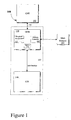
- FIG. 1 is a block diagram of one embodiment of a computer system 100.
- Computer system 100 includes a central processing unit (CPU) 102 coupled to bus 105.
- CPU 102 is a processor in the Pentium® family of processors including the Pentium® II processor family, Pentium® III processors, and Pentium® IV processors available from Intel Corporation of Santa Clara, California. Alternatively, other CPUs may be used.
- a chipset 107 is also coupled to bus 105.
- Chipset 107 includes a memory control hub (MCH) 110.
- MCH 110 is coupled to an input/output control hub (ICH) 140 via a hub interface.
- ICH 140 provides an interface to input/output (I/O) devices within computer system 100.
- ICH 140 may be coupled to a Peripheral Component Interconnect bus adhering to a Specification Revision 2.1 bus developed by the PCI Special Interest Group of Portland, Oregon.
- MCH 110 includes a memory controller 112 that is coupled to a main system memory 115.
- Main system memory 115 stores data and sequences of instructions and code represented by data signals that may be executed by CPU 102 or any other device included in system 100.
- main system memory 115 includes dynamic random access memory (DRAM); however, main system memory 115 may be implemented using other memory types.
- DRAM dynamic random access memory
- MCH 110 also includes a graphics accelerator 113 to compute graphical transformations.
- graphics accelerator 113 includes a 2D/3D instruction processing unit to control 2D and 3D graphics engines.
- the 2D and 3D graphics engines transmit data to and receives data from main memory 115 via memory controller 112.
- MCH 110 includes a queue 114 to facilitate the interaction between memory 115 and memory controller 112.
- Queue 114 stores information (e.g., data, command information) from graphics accelerator 114 prior to the information being presented to memory 115.
- information e.g., data, command information
- queue 114 may be implemented for other interfaces.
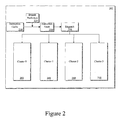
- FIG. 2 illustrates one embodiment of CPU 102.
- CPU 102 includes instruction cache 210, branch prediction unit 220, instruction fetch unit 230, dispatch unit 250 and clusters 260.
- Instruction cache 210 is implemented to store instructions that are to be fetched and executed.
- Branch prediction unit 220 is coupled to instruction cache 210, and is used to predict instructions to be executed that are dependent from instructions that are currently executed. For example, a predicted instruction may be a conditional branch of an instruction being executed.
- Instruction fetch unit 230 retrieves instructions from instruction cache 210 and forwards the instructions to dispatch unit 250.
- Dispatch unit 250 decodes, renames and steers fetched instructions to a cluster 260, which produces operands.
- Clusters 260 are implemented to execute instructions steered by dispatch unit 250.
- CPU 102 includes cluster 0 - cluster 3.
- dispatch unit 250 steers instructions to clusters 260 based upon thermal information that is used to make steering decisions.
- schemes to decide the destination cluster 260 of each instruction e.g., steering scheme
- the steering schemes can be applied alone or in combination with cluster hopping schemes to further increase efficiency.
- Cluster hopping refers to an architectural feature that disables one or more of the clusters during a time interval in order to not dissipate power and to reduce temperature.
- the designated V dd -gated clusters are rotated in order to alternate the active and disabled clusters.
- the steering schemes and cluster hopping schemes are described in greater detail below.
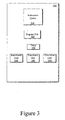
- Figure 3 illustrates one embodiment of a cluster 260 used to execute instructions steered by dispatch unit 250 to cluster 260 based on thermal information.
- Cluster 260 includes one or more instruction queues 310, register files 320 and functional units 240. Instruction queue 310 temporarily stores instructions before they are forwarded to functional units 240 for execution.
- Register file 320 stores the results of instructions executed at functional units 340. In addition, register file 320 may provide such results back to functional units 340 for the execution of subsequent instructions.
- Functional units 340 are implemented to execute instructions. For example, functional units 340 may include ALU's and FP execution units to execute instructions.
- a temperature sensor 350 is included within each cluster 260. Temperature sensor 350 measures the temperature of a cluster 260 to determine the magnitude of heat being generated. In a further embodiment, the values measured by a temperature sensor 350 is transmitted to dispatch unit 250 for use in determining which cluster 260 to forward impending instructions.
- FIG. 4 illustrates another embodiment of a cluster 260.
- a temperature sensor 350 is included within each of the functional block.
- more accurate temperature readings are provided to dispatch unit 250. For instance, since dispatch unit 250 receives the actual temperature of each functional block within a cluster 260, dispatch unit 250 may better determine the temperature of cluster 360.
- Such a decision may be based upon the averaging of the received temperature values by dispatch unit 250 to determine the cluster with the highest temperature.
- dispatch unit 250 may base the decision on the highest temperature value received from a functional unit 340 within any particular cluster 260.
- FIG. 5 is a flow diagram illustrating one embodiment of operating CPU 102 via a cold scheme.
- dispatch unit 250 monitors every temperature sensor 350 within each cluster 260.
- the clusters 260 are ordered in a priority list indicating the clusters 260 having the coolest temperatures.
- dispatch unit 260 selects the cluster 260 having the coolest temperature measurement(s).
- dispatch unit 250 orders the priority of clusters 260 based upon their respective temperatures.
- Table 1 below is used to illustrate an example of the operation of the cold scheme.
- Table 1 includes a temperature for each cluster 260 and how many of the two inputs are held in the particular cluster 260. In such an example, an instruction I having two inputs. Note that a register value may be replicated in two or more clusters 260.
- cluster 1 is the coolest cluster 260. As a result, the instruction is forwarded to cluster. If however, cluster 1 does not have sufficient resources, cluster 3 is selected as the cluster 260 to process the instruction.
- FIG. 6 is a flow diagram illustrating one embodiment of operating CPU 102 via a thermal scheme.
- dispatch unit 250 monitors every temperature sensor 350 within each cluster 260.
- the clusters 260 are ordered in a priority list indicating the clusters 260 having the coolest temperatures.
- dispatch unit 260 determines which cluster 260 has the coolest temperature measurement(s).
- the temperature difference between each cluster 260 is determined.
- the threshold is 3°C. However, one of ordinary skill in the art will appreciate that other thresholds may be implemented.
- processing block 650 If the temperature between any two clusters 260 exceeds the threshold, no swapping between the clusters 260 is performed and control is returned to processing block 630 where the temperature difference between other clusters 260 is determined. If the difference between any two clusters is lower than the threshold, other conditions are checked in order to decide which cluster 260 has a higher priority, processing block 650. For example, the cluster 260 holding the most of the inputs has a higher priority. If the clusters 260 are holding the same number of inputs, the cluster 260 with more free slots in a scheduler (not shown) has a higher priority.
- clusters 260 are probed after creating the priority list in order to hold the instruction being steered.
- the steering mechanisms may be combined with a cluster hopping scheme to further increase efficiency.
- the cluster hopping technique is based on dynamically disabling (e.g., V dd -gating) some of the clusters, so that the clusters do not dissipate either dynamic or leakage power.
- Cluster hopping benefits temperature control in different ways. For instance, maximum temperature may be reduced since each cluster is disabled during a period of time. In addition, average temperature is also reduced since the energy savings of the disabled cluster(s) is greater than the increase in energy consumption experienced by the rest of active clusters despite, of the slight increase in their activity.
- the cluster does not provide any register value and, therefore, before putting a cluster to sleep, the relevant content of the cluster's register file is copied to other active clusters.
- a set of copy micro-operations is generated and dispatched to the cluster in order to copy the value of the logical registers whose latest mapping is not present in any other cluster.
- Each register value is sent to the nearest cluster.
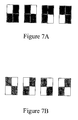
- Figures 7A and 7B illustrate the different phases of the clock-wise hopping schemes where gray squares represent active clusters and white squares represent the gated ones.
- Other options such as disabling three clusters, disabling two neighbor clusters or disabling either both the two left clusters or the two right clusters are also possible, but do not provide any additional benefit to the schemes presented here.
Landscapes
- Engineering & Computer Science (AREA)
- Theoretical Computer Science (AREA)
- Software Systems (AREA)
- General Engineering & Computer Science (AREA)
- General Physics & Mathematics (AREA)
- Physics & Mathematics (AREA)
- Human Computer Interaction (AREA)
- Power Sources (AREA)
- Steering Controls (AREA)
- Steering Control In Accordance With Driving Conditions (AREA)
- Memory System Of A Hierarchy Structure (AREA)
- Cooling Or The Like Of Semiconductors Or Solid State Devices (AREA)
- Power Steering Mechanism (AREA)
Abstract
Description
- The present invention relates to microprocessors; more particularly, the present invention relates to clustered micro-architectures.
- Power dissipation is becoming one of the major hurdles in the design of next-generation processors. Power density is increasing in each generation. Such power density is translated into heat generation. The cost of removing this heat increases at the same rate as power density. Meanwhile, in order to reduce dynamic power consumption, supply voltage is also reduced. To counteract its negative effect on transistor switching delay, the threshold voltage is scaled accordingly. However, lowering threshold voltage has a significant impact on leakage power, which is highly dependent on temperature.
- Clustered micro-architectures are thermal-effective. This is because distributing processor resources also helps distributing power dissipation and temperature. Nevertheless, maximum temperatures that occur at clustered micro-architectures may still result in significant cooling costs. Further, maximum temperatures at clustered micro-architectures may result in increased average temperatures.
- According to the first aspect of this invention there is provided a central processing unit as claimed in claim 1 herein.
- According to a second aspect of this invention there is provided a method as claimed in claim 13 herein.
- According to a third aspect of this invention there is provided a computer system as claimed in claim 17 or 24 herein.
- The present invention will be understood more fully from the detailed description given below and from the accompanying drawings of various embodiments of the invention. The drawings, however, should not be taken to limit the invention to the specific embodiments, but are for explanation and understanding only.
- Figure 1 illustrates one embodiment of a computer system;
- Figure 2 illustrates one embodiment of a CPU;
- Figure 3 illustrates one embodiment of a cluster;
- Figure 4 illustrates another embodiment of a cluster;
- Figure 5 is a flow diagram illustrating one embodiment of operating a clustered CPU via a cold scheme;
- Figure 6 is a flow diagram illustrating one embodiment of operating a clustered CPU via a thermal scheme;
- Figure 7A illustrates one embodiment of a cluster hopping scheme; and
- Figure 7B illustrates another embodiment of a cluster hopping scheme.
-
- A temperature steering mechanism for a clustered micro-architecture is described. Reference in the specification to "one embodiment" or "an embodiment" means that a particular feature, structure, or characteristic described in connection with the embodiment is included in at least one embodiment of the invention. The appearances of the phrase "in one embodiment" in various places in the specification are not necessarily all referring to the same embodiment.
- In the following description, numerous details are set forth. It will be apparent, however, to one skilled in the art, that the present invention may be practiced without these specific details. In other instances, well-known structures and devices are shown in block diagram form, rather than in detail, in order to avoid obscuring the present invention
- Figure 1 is a block diagram of one embodiment of a
computer system 100.Computer system 100 includes a central processing unit (CPU) 102 coupled tobus 105. In one embodiment,CPU 102 is a processor in the Pentium® family of processors including the Pentium® II processor family, Pentium® III processors, and Pentium® IV processors available from Intel Corporation of Santa Clara, California. Alternatively, other CPUs may be used. - A
chipset 107 is also coupled tobus 105.Chipset 107 includes a memory control hub (MCH) 110. In one embodiment,MCH 110 is coupled to an input/output control hub (ICH) 140 via a hub interface. ICH 140 provides an interface to input/output (I/O) devices withincomputer system 100. For instance, ICH 140 may be coupled to a Peripheral Component Interconnect bus adhering to a Specification Revision 2.1 bus developed by the PCI Special Interest Group of Portland, Oregon. - In one embodiment, MCH 110 includes a
memory controller 112 that is coupled to amain system memory 115.Main system memory 115 stores data and sequences of instructions and code represented by data signals that may be executed byCPU 102 or any other device included insystem 100. In one embodiment,main system memory 115 includes dynamic random access memory (DRAM); however,main system memory 115 may be implemented using other memory types. - MCH 110 also includes a
graphics accelerator 113 to compute graphical transformations. In one embodiment,graphics accelerator 113 includes a 2D/3D instruction processing unit to control 2D and 3D graphics engines. The 2D and 3D graphics engines transmit data to and receives data frommain memory 115 viamemory controller 112. - In addition,
MCH 110 includes aqueue 114 to facilitate the interaction betweenmemory 115 andmemory controller 112. Queue 114 stores information (e.g., data, command information) fromgraphics accelerator 114 prior to the information being presented tomemory 115. Although described herein with reference to a graphics accelerator/ memory interface, one of ordinary skill in the art will appreciate thatqueue 114 may be implemented for other interfaces. - Figure 2 illustrates one embodiment of
CPU 102.CPU 102 includesinstruction cache 210,branch prediction unit 220,instruction fetch unit 230,dispatch unit 250 andclusters 260.Instruction cache 210 is implemented to store instructions that are to be fetched and executed.Branch prediction unit 220 is coupled toinstruction cache 210, and is used to predict instructions to be executed that are dependent from instructions that are currently executed. For example, a predicted instruction may be a conditional branch of an instruction being executed. -
Instruction fetch unit 230 retrieves instructions frominstruction cache 210 and forwards the instructions to dispatchunit 250.Dispatch unit 250 decodes, renames and steers fetched instructions to acluster 260, which produces operands.Clusters 260 are implemented to execute instructions steered bydispatch unit 250. In one embodiment,CPU 102 includes cluster 0 - cluster 3. - In conventional dispatch units for clustered microarchitectures, instructions are steered to a
cluster 260 based upon register dependencies and workload balance. However according to one embodiment of the invention,dispatch unit 250 steers instructions to clusters 260 based upon thermal information that is used to make steering decisions. In such an embodiment, schemes to decide thedestination cluster 260 of each instruction (e.g., steering scheme) takes into account the temperature of eachcluster 260. The steering schemes can be applied alone or in combination with cluster hopping schemes to further increase efficiency. Cluster hopping refers to an architectural feature that disables one or more of the clusters during a time interval in order to not dissipate power and to reduce temperature. The designated Vdd -gated clusters are rotated in order to alternate the active and disabled clusters. The steering schemes and cluster hopping schemes are described in greater detail below. - Figure 3 illustrates one embodiment of a
cluster 260 used to execute instructions steered bydispatch unit 250 to cluster 260 based on thermal information.Cluster 260 includes one ormore instruction queues 310, registerfiles 320 and functional units 240.Instruction queue 310 temporarily stores instructions before they are forwarded to functional units 240 for execution. -
Register file 320 stores the results of instructions executed atfunctional units 340. In addition,register file 320 may provide such results back tofunctional units 340 for the execution of subsequent instructions.Functional units 340 are implemented to execute instructions. For example,functional units 340 may include ALU's and FP execution units to execute instructions. - According to one embodiment, a
temperature sensor 350 is included within eachcluster 260.Temperature sensor 350 measures the temperature of acluster 260 to determine the magnitude of heat being generated. In a further embodiment, the values measured by atemperature sensor 350 is transmitted to dispatchunit 250 for use in determining whichcluster 260 to forward impending instructions. - Figure 4 illustrates another embodiment of a
cluster 260. In this embodiment, atemperature sensor 350 is included within each of the functional block. In such an embodiment, more accurate temperature readings are provided to dispatchunit 250. For instance, sincedispatch unit 250 receives the actual temperature of each functional block within acluster 260,dispatch unit 250 may better determine the temperature of cluster 360. - Such a decision may be based upon the averaging of the received temperature values by
dispatch unit 250 to determine the cluster with the highest temperature. However, in other embodiment,dispatch unit 250 may base the decision on the highest temperature value received from afunctional unit 340 within anyparticular cluster 260. - Figure 5 is a flow diagram illustrating one embodiment of operating
CPU 102 via a cold scheme. Atprocessing block 510,dispatch unit 250 monitors everytemperature sensor 350 within eachcluster 260. In one embodiment, theclusters 260 are ordered in a priority list indicating theclusters 260 having the coolest temperatures. Atprocessing block 520,dispatch unit 260 selects thecluster 260 having the coolest temperature measurement(s). In the cold scheme,dispatch unit 250 orders the priority ofclusters 260 based upon their respective temperatures. However, one of ordinary skill in the art will appreciate that other orderings may be implemented without departing from the true scope of the invention. - At
decision block 530, it is determined whether thecluster 260 with the coolest temperature measurements has sufficient resources to process the instructions to be forwarded. If thecluster 260 does not have sufficient resources, control is forwarded back to processing block 520 where thecluster 260 having the next coolest temperature is determined. If thecluster 260 does have sufficient resources, the instructions are steered to the selectedcluster 260. - Table 1 below is used to illustrate an example of the operation of the cold scheme. Table 1 includes a temperature for each
cluster 260 and how many of the two inputs are held in theparticular cluster 260. In such an example, an instruction I having two inputs. Note that a register value may be replicated in two ormore clusters 260.Cluster Temperature Input Operands 0 82°C 1 1 80°C 2 2 88°C 2 3 81°C 0 - For the cold scheme, it is determined that cluster 1 is the
coolest cluster 260. As a result, the instruction is forwarded to cluster. If however, cluster 1 does not have sufficient resources, cluster 3 is selected as thecluster 260 to process the instruction. - Figure 6 is a flow diagram illustrating one embodiment of operating
CPU 102 via a thermal scheme. Atprocessing block 610,dispatch unit 250 monitors everytemperature sensor 350 within eachcluster 260. In one embodiment, theclusters 260 are ordered in a priority list indicating theclusters 260 having the coolest temperatures. Atprocessing block 620,dispatch unit 260 determines whichcluster 260 has the coolest temperature measurement(s). - At
processing block 630, the temperature difference between eachcluster 260 is determined. Atdecision block 640, it is determined whether the temperature difference between eachcluster 260 exceeds a predetermined threshold. In one embodiment, the threshold is 3°C. However, one of ordinary skill in the art will appreciate that other thresholds may be implemented. - If the temperature between any two
clusters 260 exceeds the threshold, no swapping between theclusters 260 is performed and control is returned to processing block 630 where the temperature difference betweenother clusters 260 is determined. If the difference between any two clusters is lower than the threshold, other conditions are checked in order to decide whichcluster 260 has a higher priority, processing block 650. For example, thecluster 260 holding the most of the inputs has a higher priority. If theclusters 260 are holding the same number of inputs, thecluster 260 with more free slots in a scheduler (not shown) has a higher priority. - Using Table 1 above to illustrate an example of the operation of the thermal scheme, the
clusters 260 are initially ordered as A1 = (cluster 1, cluster 3, cluster 0, cluster 2). So, in the example, using a threshold of 3°C, the difference between cluster 1 and cluster 3 is lower than the threshold. Since cluster 1 holds more inputs, cluster 1 has a higher priority than cluster 3. Thus, the clusters are ordered A2 = (cluster 1, cluster 3, cluster 0, cluster 2). - The difference between cluster 3 and cluster 0 is also lower than the threshold. Since cluster 0 holds more inputs, cluster 0 has a higher priority than cluster 3. Consequently, the clusters are ordered A3 = (cluster 1, cluster 0, cluster 3, cluster 2). The difference between cluster 3 and cluster 2 is higher than the threshold, so cluster 3 has a higher priority than cluster 2. Accordingly, the clusters are ordered A4 = (cluster 1, cluster 0, cluster 3, cluster 2), which is the
final cluster 260 priority list. According to one embodiment,clusters 260 are probed after creating the priority list in order to hold the instruction being steered. - As discussed above, the steering mechanisms (e.g., cold scheme or thermal scheme) may be combined with a cluster hopping scheme to further increase efficiency. The cluster hopping technique is based on dynamically disabling (e.g., Vdd-gating) some of the clusters, so that the clusters do not dissipate either dynamic or leakage power.
- Cluster hopping benefits temperature control in different ways. For instance, maximum temperature may be reduced since each cluster is disabled during a period of time. In addition, average temperature is also reduced since the energy savings of the disabled cluster(s) is greater than the increase in energy consumption experienced by the rest of active clusters despite, of the slight increase in their activity.
- During the period of time that a particular cluster remains disabled, the cluster does not provide any register value and, therefore, before putting a cluster to sleep, the relevant content of the cluster's register file is copied to other active clusters. In particular, a set of copy micro-operations is generated and dispatched to the cluster in order to copy the value of the logical registers whose latest mapping is not present in any other cluster. Each register value is sent to the nearest cluster.
- The performance impact of these copies is negligible since clusters are disabled at relatively large intervals. Another important effect of switching off clusters is related to memory. Since Vdd is gated, the contents of a local data cache and data TLB are lost and all lines are invalid when the cluster is enabled again (e.g., data caches are write-through, so next level memory always has an up-to-date copy).
- Figures 7A and 7B illustrate the different phases of the clock-wise hopping schemes where gray squares represent active clusters and white squares represent the gated ones. Other options such as disabling three clusters, disabling two neighbor clusters or disabling either both the two left clusters or the two right clusters are also possible, but do not provide any additional benefit to the schemes presented here.
- The above-described steering techniques in combination with cluster hopping resulting in up to a 30% reduction in the leakage of the backend of a clustered CPU and a 5% reduction in peak temperature. Moreover the steering techniques and cluster hopping assists in dealing with two of the main problems that will arise in future processors, the increasing power consumption, especially due to the growing impact of leakage power, and the heat generation derived from this power dissipation.
- Whereas many alterations and modifications of the present invention will no doubt become apparent to a person of ordinary skill in the art after having read the foregoing description, it is to be understood that any particular embodiment shown and described by way of illustration is in no way intended to be considered limiting. Therefore, references to details of various embodiments are not intended to limit the scope of the claims which in themselves recite only those features regarded as the invention.
Claims (31)
- A central processing unit (CPU) comprising:two or more clusters; anda dispatch unit, coupled to the two or more clusters, to steer instructions to the two or more clusters based upon the temperature of each of the clusters.
- The CPU of claim 1 wherein the dispatch unit steers instructions to the cluster having the coolest temperature.
- The CPU of claim 1 wherein the clusters operate according to a cluster hopping scheme wherein at least one of the clusters is disabled at any time.
- The CPU of claim 3 wherein the clusters rotate on an interval basis to alternate between active and disabled clusters.
- The CPU of claim 2 wherein each cluster includes temperature sensors to measure the temperature at the clusters.
- The CPU of claim 2 wherein each temperature sensor is coupled to the dispatch unit to provide a temperature value of the cluster to the dispatch unit.
- The CPU of claim 6 wherein the dispatch unit compares the received temperature values to determine which cluster has the coolest temperature.
- The CPU of claim 5 wherein each cluster further comprises:one or more instruction queues;one or more register files; andone or more functional units.
- The CPU of claim 2 wherein each cluster includes, for some or all functional blocks, a temperature sensor to measure the temperature at the functional block.
- The CPU of claim 2 wherein each temperature sensor is coupled to the dispatch unit to provide a temperature value of the functional block to the dispatch unit.
- The CPU of claim 10 wherein the dispatch unit calculates the highest temperature value for each cluster based on the temperature values received from each functional unit temperature sensor associated with each cluster.
- The CPU of claim 11 wherein the dispatch unit compares the average temperature values to determine which cluster has the coolest temperature.
- A method comprising:monitoring, at a dispatch unit, a temperature value associated with each of two or more clusters;selecting a cluster that has a temperature value indicating the coolest temperature; andforwarding instructions to the cluster that has a temperature value indicating the coolest temperature.
- The method of claim 13 further comprising ordering each of the two or more clusters according to a priority based upon the clusters having the coolest temperature.
- The method of claim 14 further comprising:determining whether the selected cluster has sufficient resources to process the instructions;selecting a cluster that has a temperature value indicating the second coolest temperature if the selected cluster does not have sufficient resources to process the instructions; andforwarding instructions to the cluster that has a temperature value indicating the second coolest temperature.
- The method of claim 14 further comprising:determining whether the temperature difference between the cluster that has a temperature value indicating the coolest temperature and a cluster that has a temperature value indicating the second coolest temperature exceeds a predetermined threshold;selecting the cluster that has a temperature value indicating the second coolest temperature if the temperature difference does not exceed the predetermined threshold and the cluster that has a temperature value indicating the second coolest temperature holds more inputs; andforwarding instructions to the cluster that has a temperature value indicating the second coolest temperature.
- A computer system comprising:a central processing unit (CPU) having a clustered micro-architecture having:a first cluster;a second cluster; anda dispatch unit, coupled to the first cluster and the second cluster, to steer instructions to either the first cluster and the second cluster based upon the temperature of each of the clusters.
- The computer system of claim 17 wherein the dispatch unit steers instructions to the cluster having the coolest temperature.
- The computer system of claim 17 wherein the first and second clusters operate according to a cluster hopping scheme wherein at least one of the clusters is disabled at any time.
- The computer system of claim 19 wherein the clusters rotate on an interval basis to alternate between active and disabled clusters.
- The computer system of claim 18 wherein the first and second clusters each includes a temperature sensor to measure temperature.
- The computer system of claim 17 wherein the dispatch unit compares the received temperature values to determine which cluster has the coolest temperature.
- The computer system of claim 17 wherein CPU further comprises:an instruction cache;a branch prediction unit coupled to the instruction cache; and an instruction fetch unit coupled to the instruction cache and the dispatch unit.
- A computer system comprising:a central processing unit (CPU) having a clustered micro-architecture having:a first cluster;a second cluster; anda dispatch unit, coupled to the first cluster and the second cluster, to steer instructions to either the first cluster and the second cluster based upon the temperature of each of the clusters;a chipset coupled to the CPU; anda main memory device coupled to the chipset.
- The computer system of claim 24 wherein the dispatch unit steers instructions to the cluster having the coolest temperature.
- The computer system of claim 25 wherein the first and second clusters each include one or more functional units, each comprising a temperature sensor to measure the temperature at the functional unit.
- The computer system of claim 25 wherein each temperature sensor is coupled to the dispatch unit to provide a temperature value of the functional unit to the dispatch unit.
- The computer system of claim 27 wherein the dispatch unit calculates an average temperature value for each cluster based on the temperature values received from each functional unit temperature sensor associated with each cluster.
- The computer system of claim 28 wherein the dispatch unit compares the average temperature values to determine which cluster has the coolest temperature.
- A computer program comprising computer program code means adapted to perform all the steps of any of claims 13 -16 when the program is run on a computer.
- A computer program as claimed in claim 30 when embodied on a computer readable medium.
Priority Applications (1)
| Application Number | Priority Date | Filing Date | Title |
|---|---|---|---|
| EP13192451.6A EP2711802A2 (en) | 2004-06-14 | 2005-06-01 | Temperature-based steering mechanism |
Applications Claiming Priority (2)
| Application Number | Priority Date | Filing Date | Title |
|---|---|---|---|
| US867453 | 2004-06-14 | ||
| US10/867,453 US7330983B2 (en) | 2004-06-14 | 2004-06-14 | Temperature-aware steering mechanism |
Related Child Applications (1)
| Application Number | Title | Priority Date | Filing Date |
|---|---|---|---|
| EP13192451.6A Division EP2711802A2 (en) | 2004-06-14 | 2005-06-01 | Temperature-based steering mechanism |
Publications (2)
| Publication Number | Publication Date |
|---|---|
| EP1607833A2 true EP1607833A2 (en) | 2005-12-21 |
| EP1607833A3 EP1607833A3 (en) | 2007-10-24 |
Family
ID=34941530
Family Applications (2)
| Application Number | Title | Priority Date | Filing Date |
|---|---|---|---|
| EP13192451.6A Withdrawn EP2711802A2 (en) | 2004-06-14 | 2005-06-01 | Temperature-based steering mechanism |
| EP05253360A Withdrawn EP1607833A3 (en) | 2004-06-14 | 2005-06-01 | A temperature-based steering mechanism |
Family Applications Before (1)
| Application Number | Title | Priority Date | Filing Date |
|---|---|---|---|
| EP13192451.6A Withdrawn EP2711802A2 (en) | 2004-06-14 | 2005-06-01 | Temperature-based steering mechanism |
Country Status (5)
| Country | Link |
|---|---|
| US (1) | US7330983B2 (en) |
| EP (2) | EP2711802A2 (en) |
| KR (1) | KR100634931B1 (en) |
| CN (1) | CN100388166C (en) |
| TW (1) | TWI285306B (en) |
Cited By (1)
| Publication number | Priority date | Publication date | Assignee | Title |
|---|---|---|---|---|
| US9141427B2 (en) | 2012-04-12 | 2015-09-22 | Telefonaktiebolaget L M Ericsson (Publ) | Allocating tasks to peripheral processing units in a hierarchical tree topology based on temperature status of branches |
Families Citing this family (38)
| Publication number | Priority date | Publication date | Assignee | Title |
|---|---|---|---|---|
| KR20070072848A (en) * | 2004-06-08 | 2007-07-06 | 유니버시티 오브 로체스터 | How to dynamically manage communication-parallel tradeoffs in dense clusters |
| US7347621B2 (en) * | 2004-07-16 | 2008-03-25 | International Business Machines Corporation | Method and system for real-time estimation and prediction of the thermal state of a microprocessor unit |
| US20070001694A1 (en) * | 2005-06-30 | 2007-01-04 | Sanjeev Jahagirdar | On-die real time leakage energy meter |
| US20070260417A1 (en) * | 2006-03-22 | 2007-11-08 | Cisco Technology, Inc. | System and method for selectively affecting a computing environment based on sensed data |
| US20080005591A1 (en) | 2006-06-28 | 2008-01-03 | Trautman Mark A | Method, system, and apparatus for dynamic thermal management |
| US8615767B2 (en) * | 2007-02-06 | 2013-12-24 | International Business Machines Corporation | Using IR drop data for instruction thread direction |
| US7895454B2 (en) * | 2007-02-06 | 2011-02-22 | International Business Machines Corporation | Instruction dependent dynamic voltage compensation |
| US8022685B2 (en) * | 2007-02-06 | 2011-09-20 | International Business Machines Corporation | Temperature dependent voltage source compensation |
| US7714635B2 (en) | 2007-02-06 | 2010-05-11 | International Business Machines Corporation | Digital adaptive voltage supply |
| US7779235B2 (en) * | 2007-02-06 | 2010-08-17 | International Business Machines Corporation | Using performance data for instruction thread direction |
| US7971035B2 (en) * | 2007-02-06 | 2011-06-28 | International Business Machines Corporation | Using temperature data for instruction thread direction |
| US7936153B2 (en) * | 2007-02-06 | 2011-05-03 | International Business Machines Corporation | On-chip adaptive voltage compensation |
| US7865750B2 (en) | 2007-02-06 | 2011-01-04 | International Business Machines Corporation | Fan speed control from adaptive voltage supply |
| JP5045159B2 (en) * | 2007-03-12 | 2012-10-10 | 三菱電機株式会社 | Control subunit and control main unit |
| US8185572B2 (en) * | 2007-08-24 | 2012-05-22 | International Business Machines Corporation | Data correction circuit |
| US7797131B2 (en) * | 2007-08-24 | 2010-09-14 | International Business Machines Corporation | On-chip frequency response measurement |
| US8005880B2 (en) * | 2007-08-24 | 2011-08-23 | International Business Machines Corporation | Half width counting leading zero circuit |
| US7953957B2 (en) * | 2008-02-11 | 2011-05-31 | International Business Machines Corporation | Mapping and distributing parallel algorithms to compute nodes in a parallel computer based on temperatures of the compute nodes in a hardware profile and a hardware independent application profile describing thermal characteristics of each parallel algorithm |
| BRPI0822590A2 (en) | 2008-04-21 | 2015-06-23 | Adaptive Computing Entpr Inc | Computer system for managing power consumption in a computer environment |
| US9405348B2 (en) | 2008-04-21 | 2016-08-02 | Adaptive Computing Enterprises, Inc | System and method for managing energy consumption in a compute environment |
| US20090300399A1 (en) * | 2008-05-29 | 2009-12-03 | International Business Machines Corporation | Profiling power consumption of a plurality of compute nodes while processing an application |
| US8195967B2 (en) * | 2008-05-29 | 2012-06-05 | International Business Machines Corporation | Reducing power consumption during execution of an application on a plurality of compute nodes |
| US8458722B2 (en) * | 2008-06-09 | 2013-06-04 | International Business Machines Corporation | Thread selection according to predefined power characteristics during context switching on compute nodes |
| US8291427B2 (en) * | 2008-06-09 | 2012-10-16 | International Business Machines Corporation | Scheduling applications for execution on a plurality of compute nodes of a parallel computer to manage temperature of the nodes during execution |
| US8296590B2 (en) * | 2008-06-09 | 2012-10-23 | International Business Machines Corporation | Budget-based power consumption for application execution on a plurality of compute nodes |
| US8250389B2 (en) * | 2008-07-03 | 2012-08-21 | International Business Machines Corporation | Profiling an application for power consumption during execution on a plurality of compute nodes |
| US8311683B2 (en) * | 2009-04-29 | 2012-11-13 | International Business Machines Corporation | Processor cooling management |
| US8397088B1 (en) | 2009-07-21 | 2013-03-12 | The Research Foundation Of State University Of New York | Apparatus and method for efficient estimation of the energy dissipation of processor based systems |
| JP5035708B2 (en) * | 2010-04-21 | 2012-09-26 | 日本電気株式会社 | Parallel computer system, job server, job scheduling method, and job scheduling program |
| US8436720B2 (en) | 2010-04-29 | 2013-05-07 | International Business Machines Corporation | Monitoring operating parameters in a distributed computing system with active messages |
| JP6138376B2 (en) * | 2014-12-03 | 2017-05-31 | 三菱電機株式会社 | Central processing unit of programmable logic controller system |
| US9874917B2 (en) | 2016-01-04 | 2018-01-23 | International Business Machines Corporation | Adaptive power capping in a chip |
| US9817697B2 (en) | 2016-03-25 | 2017-11-14 | International Business Machines Corporation | Thermal-and spatial-aware task scheduling |
| CN107704358A (en) * | 2017-08-30 | 2018-02-16 | 安徽天达网络科技有限公司 | A kind of temperature monitoring and control system based on computer CPU |
| US12585564B2 (en) * | 2020-12-10 | 2026-03-24 | Advanced Micro Devices, Inc. | Methods for configuring span of control under varying temperature |
| US12411474B2 (en) * | 2021-12-13 | 2025-09-09 | Mediatek Inc. | Integrated circuit configurable to perform adaptive thermal ceiling control in per-functional-block manner, associated main circuit, associated electronic device and associated thermal control method |
| US11874754B1 (en) * | 2023-06-01 | 2024-01-16 | International Business Machines Corporation | Mitigating temperature induced performance variation |
| US20260050493A1 (en) * | 2024-08-14 | 2026-02-19 | International Business Machines Corporation | Altering processing characteristics based on thermal data |
Citations (3)
| Publication number | Priority date | Publication date | Assignee | Title |
|---|---|---|---|---|
| US5798918A (en) | 1996-04-29 | 1998-08-25 | International Business Machines Corporation | Performance-temperature optimization by modulating the switching factor of a circuit |
| US6000036A (en) | 1996-07-17 | 1999-12-07 | International Business Machines Corp. | Logical steering to avoid hot spots on integrated circuits |
| WO2003083693A1 (en) | 2002-04-03 | 2003-10-09 | Fujitsu Limited | Task scheduler in distributed processing system |
Family Cites Families (9)
| Publication number | Priority date | Publication date | Assignee | Title |
|---|---|---|---|---|
| US7216064B1 (en) * | 1993-09-21 | 2007-05-08 | Intel Corporation | Method and apparatus for programmable thermal sensor for an integrated circuit |
| US5502838A (en) * | 1994-04-28 | 1996-03-26 | Consilium Overseas Limited | Temperature management for integrated circuits |
| US6049883A (en) * | 1998-04-01 | 2000-04-11 | Tjandrasuwita; Ignatius B. | Data path clock skew management in a dynamic power management environment |
| US20020087903A1 (en) * | 2000-12-29 | 2002-07-04 | James Hermerding | Mechanism for managing power generated in a computer system |
| US6542835B2 (en) * | 2001-03-22 | 2003-04-01 | Onwafer Technologies, Inc. | Data collection methods and apparatus |
| US6804632B2 (en) | 2001-12-06 | 2004-10-12 | Intel Corporation | Distribution of processing activity across processing hardware based on power consumption considerations |
| US7100060B2 (en) * | 2002-06-26 | 2006-08-29 | Intel Corporation | Techniques for utilization of asymmetric secondary processing resources |
| JP2004126968A (en) | 2002-10-03 | 2004-04-22 | Fujitsu Ltd | Job scheduling device for parallel computers |
| US7478198B2 (en) * | 2004-05-24 | 2009-01-13 | Intel Corporation | Multithreaded clustered microarchitecture with dynamic back-end assignment |
-
2004
- 2004-06-14 US US10/867,453 patent/US7330983B2/en not_active Expired - Fee Related
-
2005
- 2005-05-17 TW TW094115984A patent/TWI285306B/en not_active IP Right Cessation
- 2005-06-01 EP EP13192451.6A patent/EP2711802A2/en not_active Withdrawn
- 2005-06-01 EP EP05253360A patent/EP1607833A3/en not_active Withdrawn
- 2005-06-14 CN CNB200510078948XA patent/CN100388166C/en not_active Expired - Fee Related
- 2005-06-14 KR KR1020050050933A patent/KR100634931B1/en not_active Expired - Fee Related
Patent Citations (3)
| Publication number | Priority date | Publication date | Assignee | Title |
|---|---|---|---|---|
| US5798918A (en) | 1996-04-29 | 1998-08-25 | International Business Machines Corporation | Performance-temperature optimization by modulating the switching factor of a circuit |
| US6000036A (en) | 1996-07-17 | 1999-12-07 | International Business Machines Corp. | Logical steering to avoid hot spots on integrated circuits |
| WO2003083693A1 (en) | 2002-04-03 | 2003-10-09 | Fujitsu Limited | Task scheduler in distributed processing system |
Non-Patent Citations (1)
| Title |
|---|
| SEOUL, KOREA, 2003 INTERNATIONAL SYMPOSIUM ON LOW POWER ELECTRONICS AND DESIGN, 25 August 2003 (2003-08-25), pages 217 - 222 |
Cited By (1)
| Publication number | Priority date | Publication date | Assignee | Title |
|---|---|---|---|---|
| US9141427B2 (en) | 2012-04-12 | 2015-09-22 | Telefonaktiebolaget L M Ericsson (Publ) | Allocating tasks to peripheral processing units in a hierarchical tree topology based on temperature status of branches |
Also Published As
| Publication number | Publication date |
|---|---|
| US20050278555A1 (en) | 2005-12-15 |
| CN1716161A (en) | 2006-01-04 |
| TWI285306B (en) | 2007-08-11 |
| EP1607833A3 (en) | 2007-10-24 |
| KR100634931B1 (en) | 2006-10-17 |
| EP2711802A2 (en) | 2014-03-26 |
| CN100388166C (en) | 2008-05-14 |
| US7330983B2 (en) | 2008-02-12 |
| KR20060048356A (en) | 2006-05-18 |
| TW200601024A (en) | 2006-01-01 |
Similar Documents
| Publication | Publication Date | Title |
|---|---|---|
| US7330983B2 (en) | Temperature-aware steering mechanism | |
| TWI499970B (en) | Method and apparatus for increasing turbo mode residency of a processor and the processor thereof | |
| EP3889787B1 (en) | Apparatuses and methods for a processor architecture | |
| CN103229122B (en) | Provides per-core voltage and frequency control | |
| US7051221B2 (en) | Performance throttling for temperature reduction in a microprocessor | |
| JP5460565B2 (en) | A mechanism that avoids inefficient core hopping and provides hardware (auxiliary) low power state selection | |
| US7558939B2 (en) | Three-tiered translation lookaside buffer hierarchy in a multithreading microprocessor | |
| US20180165199A1 (en) | Apparatuses and methods for a processor architecture | |
| TWI556161B (en) | Processor, system and method to implement an instruction that monitors for writes to an address | |
| US20130212585A1 (en) | Data processing system operable in single and multi-thread modes and having multiple caches and method of operation | |
| US20090182986A1 (en) | Processing Unit Incorporating Issue Rate-Based Predictive Thermal Management | |
| US8261276B2 (en) | Power-efficient thread priority enablement | |
| EP2207092A2 (en) | Software-based thead remappig for power savings | |
| CN107038125A (en) | Processor cache with the independent streamline for accelerating to prefetch request | |
| US5987587A (en) | Single chip multiprocessor with shared execution units | |
| US6704876B1 (en) | Microprocessor speed control mechanism using power dissipation estimation based on the instruction data path | |
| US20240111679A1 (en) | Hardware processor having multiple memory prefetchers and multiple prefetch filters | |
| JP2009505279A (en) | System and method for mutual exclusion activation of microprocessor resources to control maximum power | |
| US9424190B2 (en) | Data processing system operable in single and multi-thread modes and having multiple caches and method of operation | |
| GB2507396A (en) | Configurable distribution of message signalled interrupts in amultiprocessor system | |
| JP2022549333A (en) | Throttling while managing upstream resources | |
| Burgess et al. | Bobcat: AMD's low-power x86 processor | |
| US11755331B2 (en) | Writeback hazard elimination using a plurality of temporary result-storage elements | |
| US7650483B2 (en) | Execution of instructions within a data processing apparatus having a plurality of processing units | |
| EP4625182A1 (en) | Coherent cache fabric with reduced power mode |
Legal Events
| Date | Code | Title | Description |
|---|---|---|---|
| PUAI | Public reference made under article 153(3) epc to a published international application that has entered the european phase |
Free format text: ORIGINAL CODE: 0009012 |
|
| 17P | Request for examination filed |
Effective date: 20050620 |
|
| AK | Designated contracting states |
Kind code of ref document: A2 Designated state(s): AT BE BG CH CY CZ DE DK EE ES FI FR GB GR HU IE IS IT LI LT LU MC NL PL PT RO SE SI SK TR |
|
| AX | Request for extension of the european patent |
Extension state: AL BA HR LV MK YU |
|
| PUAL | Search report despatched |
Free format text: ORIGINAL CODE: 0009013 |
|
| AK | Designated contracting states |
Kind code of ref document: A3 Designated state(s): AT BE BG CH CY CZ DE DK EE ES FI FR GB GR HU IE IS IT LI LT LU MC NL PL PT RO SE SI SK TR |
|
| AX | Request for extension of the european patent |
Extension state: AL BA HR LV MK YU |
|
| AKX | Designation fees paid |
Designated state(s): AT BE BG CH CY CZ DE DK EE ES FI FR GB GR HU IE IS IT LI LT LU MC NL PL PT RO SE SI SK TR |
|
| 17Q | First examination report despatched |
Effective date: 20081126 |
|
| APBK | Appeal reference recorded |
Free format text: ORIGINAL CODE: EPIDOSNREFNE |
|
| APBN | Date of receipt of notice of appeal recorded |
Free format text: ORIGINAL CODE: EPIDOSNNOA2E |
|
| APBR | Date of receipt of statement of grounds of appeal recorded |
Free format text: ORIGINAL CODE: EPIDOSNNOA3E |
|
| APAF | Appeal reference modified |
Free format text: ORIGINAL CODE: EPIDOSCREFNE |
|
| APBT | Appeal procedure closed |
Free format text: ORIGINAL CODE: EPIDOSNNOA9E |
|
| STAA | Information on the status of an ep patent application or granted ep patent |
Free format text: STATUS: THE APPLICATION IS DEEMED TO BE WITHDRAWN |
|
| 18D | Application deemed to be withdrawn |
Effective date: 20190103 |