EP1607103A1 - Concomitant drug as therapeutic agent for inflammatory bowel disease - Google Patents
Concomitant drug as therapeutic agent for inflammatory bowel disease Download PDFInfo
- Publication number
- EP1607103A1 EP1607103A1 EP04721714A EP04721714A EP1607103A1 EP 1607103 A1 EP1607103 A1 EP 1607103A1 EP 04721714 A EP04721714 A EP 04721714A EP 04721714 A EP04721714 A EP 04721714A EP 1607103 A1 EP1607103 A1 EP 1607103A1
- Authority
- EP
- European Patent Office
- Prior art keywords
- phenyl
- compound
- acid
- isopropoxypropanoic
- agent
- Prior art date
- Legal status (The legal status is an assumption and is not a legal conclusion. Google has not performed a legal analysis and makes no representation as to the accuracy of the status listed.)
- Withdrawn
Links
Classifications
-
- C—CHEMISTRY; METALLURGY
- C07—ORGANIC CHEMISTRY
- C07K—PEPTIDES
- C07K16/00—Immunoglobulins [IG], e.g. monoclonal or polyclonal antibodies
- C07K16/18—Immunoglobulins [IG], e.g. monoclonal or polyclonal antibodies against material from animals or humans
- C07K16/24—Immunoglobulins [IG], e.g. monoclonal or polyclonal antibodies against material from animals or humans against cytokines, lymphokines or interferons
- C07K16/241—Tumor Necrosis Factors
-
- A—HUMAN NECESSITIES
- A61—MEDICAL OR VETERINARY SCIENCE; HYGIENE
- A61K—PREPARATIONS FOR MEDICAL, DENTAL OR TOILETRY PURPOSES
- A61K31/00—Medicinal preparations containing organic active ingredients
-
- A—HUMAN NECESSITIES
- A61—MEDICAL OR VETERINARY SCIENCE; HYGIENE
- A61K—PREPARATIONS FOR MEDICAL, DENTAL OR TOILETRY PURPOSES
- A61K38/00—Medicinal preparations containing peptides
- A61K38/04—Peptides having up to 20 amino acids in a fully defined sequence; Derivatives thereof
- A61K38/12—Cyclic peptides, e.g. bacitracins; Polymyxins; Gramicidins S, C; Tyrocidins A, B or C
- A61K38/13—Cyclosporins
-
- A—HUMAN NECESSITIES
- A61—MEDICAL OR VETERINARY SCIENCE; HYGIENE
- A61K—PREPARATIONS FOR MEDICAL, DENTAL OR TOILETRY PURPOSES
- A61K45/00—Medicinal preparations containing active ingredients not provided for in groups A61K31/00 - A61K41/00
- A61K45/06—Mixtures of active ingredients without chemical characterisation, e.g. antiphlogistics and cardiaca
-
- A—HUMAN NECESSITIES
- A61—MEDICAL OR VETERINARY SCIENCE; HYGIENE
- A61P—SPECIFIC THERAPEUTIC ACTIVITY OF CHEMICAL COMPOUNDS OR MEDICINAL PREPARATIONS
- A61P1/00—Drugs for disorders of the alimentary tract or the digestive system
- A61P1/04—Drugs for disorders of the alimentary tract or the digestive system for ulcers, gastritis or reflux esophagitis, e.g. antacids, inhibitors of acid secretion, mucosal protectants
-
- A—HUMAN NECESSITIES
- A61—MEDICAL OR VETERINARY SCIENCE; HYGIENE
- A61P—SPECIFIC THERAPEUTIC ACTIVITY OF CHEMICAL COMPOUNDS OR MEDICINAL PREPARATIONS
- A61P29/00—Non-central analgesic, antipyretic or antiinflammatory agents, e.g. antirheumatic agents; Non-steroidal antiinflammatory drugs [NSAID]
-
- A—HUMAN NECESSITIES
- A61—MEDICAL OR VETERINARY SCIENCE; HYGIENE
- A61P—SPECIFIC THERAPEUTIC ACTIVITY OF CHEMICAL COMPOUNDS OR MEDICINAL PREPARATIONS
- A61P31/00—Antiinfectives, i.e. antibiotics, antiseptics, chemotherapeutics
- A61P31/04—Antibacterial agents
Definitions
- the present invention relates to an agent for treating an inflammatory bowel disease which is useful for treating an inflammatory bowel disease and includes a compound having an agonistic action on PPAR ⁇ and another compound having an anti-inflammatory action, such as an aminosalicylic acid derivative, an anti-inflammatory glucocorticoid, a compound having an immunosuppressive action, an anti-TNF ⁇ antibody, a pituitary hormone or a compound having an anti-infective action.
- a compound having an agonistic action on PPAR ⁇ and another compound having an anti-inflammatory action, such as an aminosalicylic acid derivative, an anti-inflammatory glucocorticoid, a compound having an immunosuppressive action, an anti-TNF ⁇ antibody, a pituitary hormone or a compound having an anti-infective action.
- An inflammatory bowel disease such as ulcerative colitis or Crohn's disease is fundamentally treated by a symptomatic treatment with an aminosalicylic acid derivative or an anti-inflammatory glucocorticoid.
- Novel treatments using an immunosuppressive drug or a preparation containing an anti-TNF- ⁇ antibody have received attention in recent years (Nippon Rinsho (in Japanese; Japanese Journal of Clinical Medicine), 2002; 60(3): 480-486).
- an object of the present invention is to provide a medicament that is more efficacious on an inflammatory bowel disease such as ulcerative colitis or Crohn's disease.
- the present inventors have found a medicament having satisfactory effects on an inflammatory bowel disease such as ulcerative colitis or Crohn's disease by using a combination of a compound having an agonistic action on PPAR ⁇ and another compound having an anti-inflammatory action such as an aminosalicylic acid derivative, an anti-inflammatory glucocorticoid, a compound having an immunosuppressive action, an anti-TNF ⁇ antibody, a pituitary hormone and/or a compound having an anti-infective action.
- the present invention has been achieved based on these findings.
- the present invention relates to:
- the present invention provides an agent for treating an inflammatory bowel disease comprising the combination of the compound (a) and the compound (b) described in the above-mentioned (1).
- the present invention also provides use of the combination of the compound (a) and the compound (b) described in the above-mentioned (1), for producing an agent for treating an inflammatory bowel disease.
- the present invention also provides a method for treating an inflammatory bowel disease, which comprises administering a pharmacologically effective amount of the combination of the compound (a) and the compound (b) described in the above-mentioned (1) to a patient.
- administering the compound (a) and the compound (b) simultaneously, separately or every scheduled time is preferred.
- each compound comprised in the agent for treating an inflammatory bowel disease can be independently and appropriately selected and employed depending typically on the age, body weight, sex, degree of symptom of the patient, and the type and dose of the other agent used.
- the "agent for treating an inflammatory bowel disease comprising a combination of (a) at least one compound having an anti-inflammatory action and being selected from the group consisting of an aminosalicylic acid derivative, an anti-inflammatory glucocorticoid, a compound having an immunosuppressive action and an anti-TNF ⁇ antibody as an active ingredient and (b) at least one compound having a PPAR ⁇ agonistic action as an active ingredient, wherein the agent is so configured that the compound (a) and the compound (b) are used simultaneously, separately or every scheduled time" in the present description is preferably an "agent for treating an inflammatory bowel disease comprising a combination of (a) a compound having an anti-inflammatory action and being selected from the group consisting of an aminosalicylic acid derivative, an anti-inflammatory glucocorticoid, a compound having an immunosuppressive action and an anti-TNF ⁇ antibody as an active ingredient and (b) a compound having a PPAR ⁇ agonistic action as an active ingredient, wherein the agent
- the "agent for treating an inflammatory bowel disease comprising a combination of (a) at least one compound having an anti-inflammatory action and being selected from the group consisting of an aminosalicylic acid derivative and a compound having an immunosuppressive action as an active ingredient and (b) at least one compound having a PPAR ⁇ agonistic action as an active ingredient, wherein the agent is so configured that the compound (a) and the compound (b) are used simultaneously, separately or every scheduled time" in the present description is preferably an "agent for treating an inflammatory bowel disease comprising a combination of (a) a compound having an anti-inflammatory action and being selected from the group consisting of an aminosalicylic acid derivative and a compound having an immunosuppressive action as an active ingredient and (b) a compound having a PPAR ⁇ agonistic action as an active ingredient, wherein the agent is so configured that the compound (a) and the compound (b) are used simultaneously, separately or every scheduled time".
- Optimum dosage forms of the respective compounds in the compounds (a) and (b), can be independently and appropriately selected from, for example, tablets; powders; granules; capsules; syrups; troches; inhalants; suppositories; clysters; injections such as intravascular injections, subcutaneous injections, intramuscular injections and drip infusions; ointments; ophthalmic ointments; eye drops; nasal drops; ear drops; cataplasms; and lotions.
- Optimum administration modes of the respective compounds in the compounds (a) and (b) can be independently and appropriately selected from dosage forms such as oral administration; injections such as intravascular injections, subcutaneous injections, intramuscular injections and drip infusions; integumentary administration; local administration using, for example, suppositories, enema solutions or enema agents; and inhalation administration.
- dosage forms such as oral administration; injections such as intravascular injections, subcutaneous injections, intramuscular injections and drip infusions; integumentary administration; local administration using, for example, suppositories, enema solutions or enema agents; and inhalation administration.
- the respective compounds in the compounds (a) and (b) can be administered (used) at any timings. For example, they can be administered (used) simultaneously, separately (at some time interval) or every scheduled time.
- the optimum administration timings (e.g., daily dosage frequency and dose) of the respective compounds can be independently and appropriately set.
- each compound in the compounds (a) and (b) significantly vary depending typically on the type of target disease, degree of symptom, age, sex and drug sensibility of the patient.
- each compound may be administered to an adult in one to several divided doses at a daily dose of about 0.03 to 6000 mg, preferably 0.1 to 500 mg and more preferably 0.1 to 100 mg.
- the dose is generally preferably about 1 ⁇ g/kg to 3000 ⁇ g/kg, and more preferably about 3 ⁇ g/kg to 1000 ⁇ g/kg.
- the administration route of the agent for treating an inflammatory bowel disease of the present invention is not specifically limited, as long as the compound (a) and the compound (b) are in combination in administration. Examples of such administration modes are:
- fillers In the formulation, generally used fillers, binders, disintegrators, lubricants, coloring agents and flavoring agents, as well as stabilizers, emulsifiers, absorbefacients, surfactants, pH adjusting agents, antiseptics and antioxidants according to necessity can be used. They can be formulated according to a conventional procedure using components generally used as raw materials for pharmaceutical preparations.
- Such components include (1) animal or vegetable oils such as soybean oil, beef tallow or synthetic glycerides; (2) hydrocarbons such as liquid paraffins, squalane or solid paraffins; (3) ester oils such as octyldodecyl myristate or isopropyl myristate; (4) higher alcohols such as cetostearyl alcohol or behenyl alcohol; (5) silicone resins; (6) silicone oils; (7) surfactants such as polyoxyethylene fatty acid esters, sorbitan fatty acid esters, glycerin fatty acid esters, polyoxyethylene sorbitan fatty acid esters, polyoxyethylene hydrogenated castor oils or polyoxyethylene-polyoxypropylene block copolymers; (8) water-soluble polymers such as hydroxyethyl cellulose, polyacrylic acid, carboxyvinyl polymers, polyethylene glycol, polyvinylpyrrolidone or methylcellulose; (9) lower alcohols such as ethanol or isopropanol; (9)
- Examples of the fillers are lactose, corn starch, sucrose, glucose, mannitol, sorbitol, crystalline cellulose and silicon dioxide;
- examples of the binders are polyvinyl alcohol, polyvinyl ether, methylcellulose, ethylcellulose, gum arabic, gum tragacanth, gelatin, shellac, hydroxypropyl cellulose, hydroxypropylmethyl cellulose, polyvinylpyrrolidone, polypropylene glycol-polyoxyethylene block polymers, meglumine, calcium citrate, dextrin and pectin;
- examples of the disintegrators are starch, agar, gelatin powder, crystalline cellulose, calcium carbonate, sodium hydrogencarbonate, calcium citrate, dextrin, pectin and carboxymethylcellulose calcium;
- examples of the lubricants are magnesium stearate, talc, polyethylene glycol, silica and hydrogenated vegetable oils;
- the coloring agents can be any coloring agents which are approved to add
- the active ingredients are compounded with a filler, and if necessary, a binder, disintegrator, lubricant, coloring agent, flavoring agent and other components, and the resulting mixture is formulated according to a conventional procedure into, for example, a powder, fine granules, granules, tablets, coated tablets or capsules.
- the tablets and granules can be appropriately coated with, for example, sugar or gelatin, or other according to necessity.
- Liquid formulations such as syrups or injection preparations can be prepared according to a conventional procedure, by adding a pH adjusting agent, solubilizer and isotonizing agent, and if necessary, a solubilizing agent, stabilizer, buffer, suspending agent, antioxidant and other components.
- the liquid formulations can also be formed into freeze-dried products.
- Preferred examples of the suspending agents are methylcellulose, polysorbate 80, hydroxyethyl cellulose, gum arabic, powdered tragacanth, carboxymethylcellulose sodium and polyoxyethylene sorbitan monolaurate;
- preferred examples of the solubilizers are polyoxyethylene hydrogenated caster oil, polysorbate 80, nicotinamide and polyoxyethylene sorbitan monolaurate;
- preferred examples of the stabilizers are sodium sulfite, sodium metasulfite and ether;
- preferred examples of the preservatives are methyl p-hydroxybenzoate, ethyl p-hydroxybenzoate, sorbic acid, phenol, cresol and chlorocresol.
- Base materials for use herein can be any raw materials generally used in, for example, pharmaceutical preparations, quasi drugs and cosmetics.
- Such raw materials include, for example, animal or vegetable oils, mineral oils, ester oils, waxes, higher alcohols, fatty acids, silicone oils, surfactants, phospholipids, alcohols, polyhydric alcohols, water-soluble polymers, clay minerals and purified water.
- any of pH adjusting agents, antioxidants, chelating agents, antiseptics and antimolds, coloring agents and flavors can be added.
- components having a differentiation-inducing action, blood-flow accelerators, bactericides, anti-inflammatory agents, cell activators, vitamins, amino acids, humectants, keratolytic agents and other components can be added according to necessity.
- inflammatory bowel disease means an inflammatory bowel disease such as ulcerative colitis, Crohn's disease, infective colitis, drug-induced colitis, ischaemic colitis, radiation colitis, intestinal tuberculosis or enteric syphilis.
- aminosalicylic acid derivative as used in the present description means, for example:
- anti-inflammatory glucocorticoid means a hormone relating to carbohydrate metabolism among steroid hormones secreted from the adrenal cortex, as well as synthetic substances having a similar action, such as an adrenal corticosteroid or a synthetic adrenal corticosteroid.
- the anti-inflammatory glucocorticoid means, for example:
- the “compound having an immunosuppressive action” as used in the present description means, for example:
- anti-TNF- ⁇ antibody as used in the present description means an antibody contained in:
- the "pituitary hormone preparation" as used in the present description means a therapeutic agent comprising a pituitary hormone such as Tetracosactide acetate.
- the "compound having an anti-infective action" as used in the present description means, for example:
- the "leukocytapheresis treatment” as used in the present description means a membranous leukocytapheresis treatment, in which leukocytes in the blood exteriorized from a patient are brought into contact with a leukopheretic device filled with ultrafine polyester fibers (Cellsorba, Asahi Medical Co., Ltd.) to thereby remove leukocytes in a manner nonspecific to fractions (Nippon Rinsho (in Japanese; Japanese Journal of Clinical Medicine), 1999; 57(11): 2496-2502).
- the "granulocytapheresis treatment” as used in the present description means a method for selectively adsorbing and removing granulocytes by allowing the blood exteriorized from a patient to pass through a column (G-1 Column) filled with cellulose acetate beads (Nippon Rinsho (in Japanese; Japanese Journal of Clinical Medicine), 1999; 57(11): 2496-2502).
- Sulfasalazine as used in the present description means 2-hydroxy-5-[[4-[(2-pyridinylamino)sulfonyl]phenyl]-azo]benzoic acid, i.e., the compound represented by: (The Japanese Pharmacopoeia Fourteenth Edition, C-1374) (The Merck Index, 13th Edition, No. 9028), a salt thereof or a hydrate of them.
- the dose, administration frequency, administration route, dosage form and administration timing of sulfasalazine and other parameters can be selected according typically to the age, body weight, sex and degree of symptom of the patient, as well as the type and dose of another therapeutic agent used. Specifically, it can be administered, for example, by:
- Cyclosporine as used in the present description means cyclosporin A described in The Japanese Pharmacopoeia Fourteenth Edition, C-1445, a salt thereof or a hydrate of them (The Merck Index 13th Edition, No. 2781).
- the dose, administration frequency, administration rout, dosage form and administration timing of cyclosporin can be appropriately selected according typically to the age, body weight, sex and degree of symptom of the patient, as well as the type and dose of another therapeutic agent used. Specifically, it can be administered, for example, by:
- the "compound having an agonistic action on PPAR ⁇ ” as used in the present description is not specifically limited, as long as it is a compound having an agonistic action on PPAR ⁇ , such as a compound represented by the formula (I) in WO 02/100812.
- a preferred example of the compound having a PPAR ⁇ agonistic action means a compound selected from the group consisting of:
- 3- ⁇ 3-[3-(4-chloro-2-cyanophenoxy)-2(S)-fluoropropoxy]phenyl ⁇ -2(S)-isopropoxypropanoic acid, a salt thereof or a hydrate of them may be proposed.
- Pioglitazone means a compound represented by the formula: (Artneim. Forsch/Drug Res. 40 (I) p. 37 (1990)).
- Netoglitazone means a compound represented by the formula: (EP-A1 604983 and JP-A 6-247945).
- Tesaglitazar means a compound represented by the formula: (WO 9962871).
- 5-(2,4-Dioxothiazolidin-5-ylmethyl)-2-methoxy-N-(4-trifluoromethylbenzyl)benzamide means a compound represented by the formula: (J. Med. Chem. (37) 3977-3985 (1994)).
- 5-[4-(6-Methoxy-1H-benzimidazol-2-ylmethoxy)benzyl]-thiazolidine-2,4-dione means a compound represented by the formula: (EP-A1 0745600 and JP-A 2000-001487).
- salts with inorganic acids for example, salts with inorganic acids; salts with organic acids; salts with inorganic bases; salts with organic bases; and salts with acidic or basic amino acids, of which pharmacologically acceptable salts are preferred.
- the acid or base may form a salt in an appropriate ratio of 0.1 to 5 molecules to one molecule of the compound in question.
- Preferred examples of the salts with inorganic acids are salts with hydrochloric acid, hydrobromic acid, sulfuric acid, nitric acid or phosphoric acid.
- Preferred examples of the salts with organic acids are salts with acetic acid, succinic acid, fumaric acid, maleic acid, tartaric acid, citric acid, lactic acid, stearic acid, benzoic acid, methanesulfonic acid or p-toluenesulfonic acid.
- Preferred examples of the salts with inorganic bases are alkali metal salts such as sodium salts and potassium salts; alkaline earth metal salts such as calcium salts and magnesium salts; aluminum salts; and ammonium salts.
- Preferred examples of the salts with organic bases are diethylamine salts, diethanolamine salts, meglumine salts and N,N'-dibenzylethylenediamine salts.
- Preferred examples of the salts with acidic amino acids are aspartates and glutamates.
- Preferred examples of the salts with basic amino acids are arginine salts, lysine salts and ornithine salts.
- the agent for treating an inflammatory bowel disease of the present invention containing a compound having a PPAR ⁇ agonistic action and another compound having an anti-inflammatory action (e.g., an aminosalicylic acid derivative, an anti-inflammatory glucocorticoid, a compound having an immunosuppressive action, an anti-TNFs ⁇ antibody, a pituitary hormone or a compound having an anti-infective action) (1) exhibits excellent treatment effects superior to those of the single administration of a compound having a PPAR ⁇ agonistic action or of the single administration of another agent for treating an inflammatory bowel disease and (2) has a possibility of mitigating adverse drug actions derived from the PPAR ⁇ agonist or the other agent for treating an inflammatory bowel disease.
- the agent has been found to be a medicament having satisfactory effects on inflammatory bowel diseases such as ulcerative colitis or Crohn's disease.
- a total of 0.08 ml of a 1:1 (v/v) mixture of 10% picrylsulfonic acid (TNBS) solution and ethanol was administered to anesthetized male Balb/c mice (Charles River Japan, Inc., Yokohama, Japan) according to previous reports (J Exp Med 2001; 193: p827-38, J Exp Med 2001; 193: p25-34) to thereby induce experimental colitis.
- the colon (large intestine) was sampled two days later, and the length of a flare site accompanied with ulcer or hyperplasia near to the lumen was measured and was defined as the lesion length.
- the inhibition (%) was calculated from the average lesion length of a treated group, compared with the average lesion length of a control group.
- the test compound suspended in a 0.5% solution of methylcellulose was orally administered to the mice via sonde once a day from two days before the beginning of colitis induction.
- Compound 1 means 3-(3- ⁇ [3-trifluoromethoxybenzyloxycarbonylamino]methyl ⁇ phenyl)-2(S)-isopropoxypropanoic acid.
Landscapes
- Health & Medical Sciences (AREA)
- Chemical & Material Sciences (AREA)
- Life Sciences & Earth Sciences (AREA)
- Medicinal Chemistry (AREA)
- General Health & Medical Sciences (AREA)
- Veterinary Medicine (AREA)
- Public Health (AREA)
- Pharmacology & Pharmacy (AREA)
- Animal Behavior & Ethology (AREA)
- Organic Chemistry (AREA)
- Epidemiology (AREA)
- Immunology (AREA)
- Proteomics, Peptides & Aminoacids (AREA)
- Nuclear Medicine, Radiotherapy & Molecular Imaging (AREA)
- Engineering & Computer Science (AREA)
- General Chemical & Material Sciences (AREA)
- Bioinformatics & Cheminformatics (AREA)
- Chemical Kinetics & Catalysis (AREA)
- Gastroenterology & Hepatology (AREA)
- Biochemistry (AREA)
- Biophysics (AREA)
- Genetics & Genomics (AREA)
- Molecular Biology (AREA)
- Communicable Diseases (AREA)
- Oncology (AREA)
- Rheumatology (AREA)
- Pain & Pain Management (AREA)
- Pharmaceuticals Containing Other Organic And Inorganic Compounds (AREA)
- Medicines That Contain Protein Lipid Enzymes And Other Medicines (AREA)
- Acyclic And Carbocyclic Compounds In Medicinal Compositions (AREA)
Abstract
An object of the present invention is to provide a
medicament efficacious for an inflammatory bowel disease
such as ulcerative colitis or Crohn's disease.
Specifically, it provides a therapeutic agent for
inflammatory bowel diseases comprising active ingredient
(a) consisting of at least one compound having inflammatory
inhibiting activity selected from the group consisting of
an aminosalicylic acid derivative, an antiinflammatory
glucocorticoid, an immunosuppressive compound, an anti-TNFα
antibody, a neurohypophysial hormone and an antiinfective
compound, combined with active ingredient (b) consisting of
at least one compound having PPARγ agonistic activity,
wherein the agent is so configured that the compound (a)
and the compound (b) are used simultaneously, separately or
every scheduled time.
Description
The present invention relates to an agent for treating
an inflammatory bowel disease which is useful for treating
an inflammatory bowel disease and includes a compound
having an agonistic action on PPARγ and another compound
having an anti-inflammatory action, such as an
aminosalicylic acid derivative, an anti-inflammatory
glucocorticoid, a compound having an immunosuppressive
action, an anti-TNFα antibody, a pituitary hormone or a
compound having an anti-infective action.
Usefulness of PPARγ agonists for inflammatory bowel
diseases such as ulcerative colitis or Crohn's disease has
been reported as follows.
An inflammatory bowel disease such as ulcerative
colitis or Crohn's disease is fundamentally treated by a
symptomatic treatment with an aminosalicylic acid
derivative or an anti-inflammatory glucocorticoid. Novel
treatments using an immunosuppressive drug or a preparation
containing an anti-TNF-α antibody have received attention
in recent years (Nippon Rinsho (in Japanese; Japanese
Journal of Clinical Medicine), 2002; 60(3): 480-486).
However, no medicament for treating inflammatory bowel
diseases which is satisfactory from the viewpoints of
treatment efficacy and adverse drug actions has been found
(Nippon Rinsho (in Japanese; Japanese Journal of Clinical
Medicine), 2002; 60(3): 531-538).
A combination of Rosiglitazone, a PPARγ agonist and an
aminosalicylic acid derivative, an anti-inflammatory
glucocorticoid and/or an immunosuppressive drug has been
reported. This report, however, fails to disclose
comparison between the combination treatment and the single
administration of the PPARγ agonist and fails to describe
effects of the combination treatment (Am J Gastroenterol
2001; 96: 3323-8).
Accordingly, an object of the present invention is to
provide a medicament that is more efficacious on an
inflammatory bowel disease such as ulcerative colitis or
Crohn's disease.
Under these circumstances, the present inventors have
found a medicament having satisfactory effects on an
inflammatory bowel disease such as ulcerative colitis or
Crohn's disease by using a combination of a compound having
an agonistic action on PPARγ and another compound having an
anti-inflammatory action such as an aminosalicylic acid
derivative, an anti-inflammatory glucocorticoid, a compound
having an immunosuppressive action, an anti-TNFα antibody,
a pituitary hormone and/or a compound having an anti-infective
action. The present invention has been achieved
based on these findings.
Specifically, the present invention relates to:
The present invention provides an agent for treating
an inflammatory bowel disease comprising the combination of
the compound (a) and the compound (b) described in the
above-mentioned (1).
The present invention also provides use of the
combination of the compound (a) and the compound (b)
described in the above-mentioned (1), for producing an
agent for treating an inflammatory bowel disease.
The present invention also provides a method for
treating an inflammatory bowel disease, which comprises
administering a pharmacologically effective amount of the
combination of the compound (a) and the compound (b)
described in the above-mentioned (1) to a patient.
As the "combination of the compound (a) and the
compound (b)", administering the compound (a) and the
compound (b) simultaneously, separately or every scheduled
time is preferred.
In the present description, the "agent for treating an
inflammatory bowel disease comprising a combination of (a)
at least one compound having an anti-inflammatory action
and being selected from the group consisting of an
aminosalicylic acid derivative, an anti-inflammatory
glucocorticoid, a compound having an immunosuppressive
action, an anti-TNFα antibody, a pituitary hormone and a
compound having an anti-infective action as an active
ingredient and (b) at least one compound having a PPARγ
agonistic action as an active ingredient, wherein the agent
is so configured that the compound (a) and the compound (b)
are used simultaneously, separately or every scheduled
time" means an agent for treating an inflammatory bowel
disease, which comprises a combination of one or more of
the compounds (a) and one or more of the compounds (b).
The dose, frequency of administration, administration rout, dosage form and administration timing of each compound comprised in the agent for treating an inflammatory bowel disease can be independently and appropriately selected and employed depending typically on the age, body weight, sex, degree of symptom of the patient, and the type and dose of the other agent used.
The dose, frequency of administration, administration rout, dosage form and administration timing of each compound comprised in the agent for treating an inflammatory bowel disease can be independently and appropriately selected and employed depending typically on the age, body weight, sex, degree of symptom of the patient, and the type and dose of the other agent used.
In the present description, the "agent for treating an
inflammatory bowel disease comprising a combination of (a)
at least one compound having an anti-inflammatory action
and being selected from the group consisting of an
aminosalicylic acid derivative, an anti-inflammatory
glucocorticoid, a compound having an immunosuppressive
action, an anti-TNFα antibody, a pituitary hormone and a
compound having an anti-infective action as an active
ingredient and (b) at least one compound having a PPARγ
agonistic action as an active ingredient, wherein the agent
is so configured that the compound (a) and the compound (b)
are used simultaneously, separately or every scheduled
time" is preferably an "agent for treating an inflammatory
bowel disease comprising a combination of (a) at least one
compound having an anti-inflammatory action and being
selected from the group consisting of an aminosalicylic
acid derivative, an anti-inflammatory glucocorticoid, a
compound having an immunosuppressive action, an anti-TNFα
antibody, a pituitary hormone and a compound having an
anti-infective action as an active ingredient and (b) a
compound having a PPARγ agonistic action as an active
ingredient, wherein the agent is so configured that the
compound (a) and the compound (b) are used simultaneously,
separately or every scheduled time".
The "agent for treating an inflammatory bowel disease
comprising a combination of (a) at least one compound
having an anti-inflammatory action and being selected from
the group consisting of an aminosalicylic acid derivative,
an anti-inflammatory glucocorticoid, a compound having an
immunosuppressive action and an anti-TNFα antibody as an
active ingredient and (b) at least one compound having a
PPARγ agonistic action as an active ingredient, wherein the
agent is so configured that the compound (a) and the
compound (b) are used simultaneously, separately or every
scheduled time" in the present description is preferably an
"agent for treating an inflammatory bowel disease
comprising a combination of (a) a compound having an anti-inflammatory
action and being selected from the group
consisting of an aminosalicylic acid derivative, an anti-inflammatory
glucocorticoid, a compound having an
immunosuppressive action and an anti-TNFα antibody as an
active ingredient and (b) a compound having a PPARγ
agonistic action as an active ingredient, wherein the agent
is so configured that the compound (a) and the compound (b)
are used simultaneously, separately or every scheduled
time".
The "agent for treating an inflammatory bowel disease
comprising a combination of (a) at least one compound
having an anti-inflammatory action and being selected from
the group consisting of an aminosalicylic acid derivative
and a compound having an immunosuppressive action as an
active ingredient and (b) at least one compound having a
PPARγ agonistic action as an active ingredient, wherein the
agent is so configured that the compound (a) and the
compound (b) are used simultaneously, separately or every
scheduled time" in the present description is preferably an
"agent for treating an inflammatory bowel disease
comprising a combination of (a) a compound having an anti-inflammatory
action and being selected from the group
consisting of an aminosalicylic acid derivative and a
compound having an immunosuppressive action as an active
ingredient and (b) a compound having a PPARγ agonistic
action as an active ingredient, wherein the agent is so
configured that the compound (a) and the compound (b) are
used simultaneously, separately or every scheduled time".
Optimum dosage forms of the respective compounds in
the compounds (a) and (b), can be independently and
appropriately selected from, for example, tablets; powders;
granules; capsules; syrups; troches; inhalants;
suppositories; clysters; injections such as intravascular
injections, subcutaneous injections, intramuscular
injections and drip infusions; ointments; ophthalmic
ointments; eye drops; nasal drops; ear drops; cataplasms;
and lotions.
Optimum administration modes of the respective
compounds in the compounds (a) and (b) can be independently
and appropriately selected from dosage forms such as oral
administration; injections such as intravascular injections,
subcutaneous injections, intramuscular injections and drip
infusions; integumentary administration; local
administration using, for example, suppositories, enema
solutions or enema agents; and inhalation administration.
The respective compounds in the compounds (a) and (b)
can be administered (used) at any timings. For example,
they can be administered (used) simultaneously, separately
(at some time interval) or every scheduled time. The
optimum administration timings (e.g., daily dosage
frequency and dose) of the respective compounds can be
independently and appropriately set.
The doses of the respective compounds in the compounds
(a) and (b) significantly vary depending typically on the
type of target disease, degree of symptom, age, sex and
drug sensibility of the patient. Generally, each compound
may be administered to an adult in one to several divided
doses at a daily dose of about 0.03 to 6000 mg, preferably
0.1 to 500 mg and more preferably 0.1 to 100 mg. For
injection administration, the dose is generally preferably
about 1 µg/kg to 3000 µg/kg, and more preferably about 3
µg/kg to 1000 µg/kg.
The administration route of the agent for treating an
inflammatory bowel disease of the present invention is not
specifically limited, as long as the compound (a) and the
compound (b) are in combination in administration.
Examples of such administration modes are:
In the formulation, generally used fillers, binders,
disintegrators, lubricants, coloring agents and flavoring
agents, as well as stabilizers, emulsifiers,
absorbefacients, surfactants, pH adjusting agents,
antiseptics and antioxidants according to necessity can be
used. They can be formulated according to a conventional
procedure using components generally used as raw materials
for pharmaceutical preparations. Examples of such
components include (1) animal or vegetable oils such as
soybean oil, beef tallow or synthetic glycerides; (2)
hydrocarbons such as liquid paraffins, squalane or solid
paraffins; (3) ester oils such as octyldodecyl myristate or
isopropyl myristate; (4) higher alcohols such as
cetostearyl alcohol or behenyl alcohol; (5) silicone
resins; (6) silicone oils; (7) surfactants such as
polyoxyethylene fatty acid esters, sorbitan fatty acid
esters, glycerin fatty acid esters, polyoxyethylene
sorbitan fatty acid esters, polyoxyethylene hydrogenated
castor oils or polyoxyethylene-polyoxypropylene block
copolymers; (8) water-soluble polymers such as hydroxyethyl
cellulose, polyacrylic acid, carboxyvinyl polymers,
polyethylene glycol, polyvinylpyrrolidone or
methylcellulose; (9) lower alcohols such as ethanol or
isopropanol; (10) polyhydric alcohols such as glycerol,
propylene glycol, dipropylene glycol or sorbitol; (11)
sugars such as glucose or sucrose; (12) inorganic powders
such as silicic anhydride, magnesium aluminium silicate or
aluminium silicate; and (13) purified water.
Examples of the fillers are lactose, corn starch,
sucrose, glucose, mannitol, sorbitol, crystalline cellulose
and silicon dioxide; examples of the binders are polyvinyl
alcohol, polyvinyl ether, methylcellulose, ethylcellulose,
gum arabic, gum tragacanth, gelatin, shellac, hydroxypropyl
cellulose, hydroxypropylmethyl cellulose,
polyvinylpyrrolidone, polypropylene glycol-polyoxyethylene
block polymers, meglumine, calcium citrate, dextrin and
pectin; examples of the disintegrators are starch, agar,
gelatin powder, crystalline cellulose, calcium carbonate,
sodium hydrogencarbonate, calcium citrate, dextrin, pectin
and carboxymethylcellulose calcium; examples of the
lubricants are magnesium stearate, talc, polyethylene
glycol, silica and hydrogenated vegetable oils; the
coloring agents can be any coloring agents which are
approved to add to pharmaceutical preparations; examples of
the flavoring agents are cocoa powder, menthol, aromatic
powder, peppermint oil, borneol and cinnamon powder; the
antioxidants can be any antioxidants which are approved to
add to pharmaceutical preparations such as ascorbic acid or
α-tocopherol.
As oral preparations, the active ingredients are
compounded with a filler, and if necessary, a binder,
disintegrator, lubricant, coloring agent, flavoring agent
and other components, and the resulting mixture is
formulated according to a conventional procedure into, for
example, a powder, fine granules, granules, tablets, coated
tablets or capsules. The tablets and granules can be
appropriately coated with, for example, sugar or gelatin,
or other according to necessity. Liquid formulations such
as syrups or injection preparations can be prepared
according to a conventional procedure, by adding a pH
adjusting agent, solubilizer and isotonizing agent, and if
necessary, a solubilizing agent, stabilizer, buffer,
suspending agent, antioxidant and other components. The
liquid formulations can also be formed into freeze-dried
products. Preferred examples of the suspending agents are
methylcellulose, polysorbate 80, hydroxyethyl cellulose,
gum arabic, powdered tragacanth, carboxymethylcellulose
sodium and polyoxyethylene sorbitan monolaurate; preferred
examples of the solubilizers are polyoxyethylene
hydrogenated caster oil, polysorbate 80, nicotinamide and
polyoxyethylene sorbitan monolaurate; preferred examples of
the stabilizers are sodium sulfite, sodium metasulfite and
ether; preferred examples of the preservatives are methyl
p-hydroxybenzoate, ethyl p-hydroxybenzoate, sorbic acid,
phenol, cresol and chlorocresol. External preparations can
be produced according to a conventional procedure not
specifically limited. Base materials for use herein can be
any raw materials generally used in, for example,
pharmaceutical preparations, quasi drugs and cosmetics.
Such raw materials include, for example, animal or
vegetable oils, mineral oils, ester oils, waxes, higher
alcohols, fatty acids, silicone oils, surfactants,
phospholipids, alcohols, polyhydric alcohols, water-soluble
polymers, clay minerals and purified water. Where
necessary, any of pH adjusting agents, antioxidants,
chelating agents, antiseptics and antimolds, coloring
agents and flavors can be added. In addition, components
having a differentiation-inducing action, blood-flow
accelerators, bactericides, anti-inflammatory agents, cell
activators, vitamins, amino acids, humectants, keratolytic
agents and other components can be added according to
necessity.
The term "inflammatory bowel disease" as used in the
present description means an inflammatory bowel disease
such as ulcerative colitis, Crohn's disease, infective
colitis, drug-induced colitis, ischaemic colitis, radiation
colitis, intestinal tuberculosis or enteric syphilis.
The "aminosalicylic acid derivative" as used in the
present description means, for example:
The "anti-inflammatory glucocorticoid" as used in the
present description means a hormone relating to
carbohydrate metabolism among steroid hormones secreted
from the adrenal cortex, as well as synthetic substances
having a similar action, such as an adrenal corticosteroid
or a synthetic adrenal corticosteroid.
Specifically, the anti-inflammatory glucocorticoid
means, for example:
The "compound having an immunosuppressive action" as
used in the present description means, for example:
The "anti-TNF-α antibody" as used in the present
description means an antibody contained in:
The "pituitary hormone preparation" as used in the
present description means a therapeutic agent comprising a
pituitary hormone such as Tetracosactide acetate.
The "compound having an anti-infective action" as used
in the present description means, for example:
The "leukocytapheresis treatment" as used in the
present description means a membranous leukocytapheresis
treatment, in which leukocytes in the blood exteriorized
from a patient are brought into contact with a
leukopheretic device filled with ultrafine polyester fibers
(Cellsorba, Asahi Medical Co., Ltd.) to thereby remove
leukocytes in a manner nonspecific to fractions (Nippon
Rinsho (in Japanese; Japanese Journal of Clinical Medicine),
1999; 57(11): 2496-2502).
The "granulocytapheresis treatment" as used in the
present description means a method for selectively
adsorbing and removing granulocytes by allowing the blood
exteriorized from a patient to pass through a column (G-1
Column) filled with cellulose acetate beads (Nippon Rinsho
(in Japanese; Japanese Journal of Clinical Medicine), 1999;
57(11): 2496-2502).
Sulfasalazine as used in the present description means
2-hydroxy-5-[[4-[(2-pyridinylamino)sulfonyl]phenyl]-azo]benzoic
acid, i.e., the compound represented by:
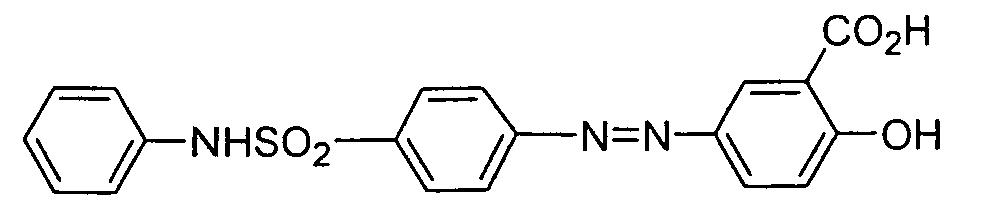 (The Japanese Pharmacopoeia Fourteenth Edition, C-1374)
(The Merck Index, 13th Edition, No. 9028), a salt thereof
or a hydrate of them.
(The Japanese Pharmacopoeia Fourteenth Edition, C-1374)
(The Merck Index, 13th Edition, No. 9028), a salt thereof
or a hydrate of them.
When sulfasalazine is used in "the agent for treating
an inflammatory bowel disease for concomitant use" in the
present description, the dose, administration frequency,
administration route, dosage form and administration timing
of sulfasalazine and other parameters can be selected
according typically to the age, body weight, sex and degree
of symptom of the patient, as well as the type and dose of
another therapeutic agent used. Specifically, it can be
administered, for example, by:
Cyclosporine as used in the present description means
cyclosporin A described in The Japanese Pharmacopoeia
Fourteenth Edition, C-1445, a salt thereof or a hydrate of
them (The Merck Index 13th Edition, No. 2781).
When cyclosporin is used in "the agent for treating an
inflammatory bowel disease for concomitant use" in the
present description, the dose, administration frequency,
administration rout, dosage form and administration timing
of cyclosporin can be appropriately selected according
typically to the age, body weight, sex and degree of
symptom of the patient, as well as the type and dose of
another therapeutic agent used. Specifically, it can be
administered, for example, by:
The "compound having an agonistic action on PPARγ" as
used in the present description is not specifically limited,
as long as it is a compound having an agonistic action on
PPARγ, such as a compound represented by the formula (I) in
WO 02/100812.
A preferred example of the compound having a PPARγ
agonistic action means a compound selected from the group
consisting of:
As the preferred examples of the "compound having a
PPARγ agonistic action", a compound selected from the group
consisting of:
As the preferred examples thereof, a compound selected
from the group consisting of:
As more preferred examples thereof, a compound
selected from the group consisting of:
As further preferred examples thereof, a compound
selected from the group consisting of:
As the most preferred example thereof, 3-{3-[3-(4-chloro-2-cyanophenoxy)-2(S)-fluoropropoxy]phenyl}-2(S)-isopropoxypropanoic
acid, a salt thereof or a hydrate of
them may be proposed.
Pioglitazone means a compound represented by the
formula:
 (Artneim. Forsch/Drug Res. 40 (I) p. 37 (1990)).
Netoglitazone means a compound represented by the
formula:
 (EP-A1 604983 and JP-A 6-247945).
Tesaglitazar means a compound represented by the
formula:
 (WO 9962871).
5-(2,4-Dioxothiazolidin-5-ylmethyl)-2-methoxy-N-(4-trifluoromethylbenzyl)benzamide
means a compound
represented by the formula:
 (J. Med. Chem. (37) 3977-3985 (1994)).
5-[4-(6-Methoxy-1H-benzimidazol-2-ylmethoxy)benzyl]-thiazolidine-2,4-dione
means a compound represented by the
formula:
 (EP-A1 0745600 and JP-A 2000-001487).
Synthetic methods of the following compounds (1) to
(21) are described in WO 02/100812.
Synthetic methods of the following compounds (22) and
(23) are described in PCT International Publication Number
WO 01/25181.
Synthetic methods of the following compounds (24) and
(25) are described in WO 02/79162.
Synthetic methods of the following compounds (26) to
(28) are described in WO 02/81428.
Synthetic methods of the following compounds (29) and
(30) are described in WO 03/16265.
As the "salt" as described in the present
specification, for example, salts with inorganic acids;
salts with organic acids; salts with inorganic bases; salts
with organic bases; and salts with acidic or basic amino
acids, of which pharmacologically acceptable salts are
preferred. The acid or base may form a salt in an
appropriate ratio of 0.1 to 5 molecules to one molecule of
the compound in question.
Preferred examples of the salts with inorganic acids
are salts with hydrochloric acid, hydrobromic acid,
sulfuric acid, nitric acid or phosphoric acid. Preferred
examples of the salts with organic acids are salts with
acetic acid, succinic acid, fumaric acid, maleic acid,
tartaric acid, citric acid, lactic acid, stearic acid,
benzoic acid, methanesulfonic acid or p-toluenesulfonic
acid.
Preferred examples of the salts with inorganic bases
are alkali metal salts such as sodium salts and potassium
salts; alkaline earth metal salts such as calcium salts and
magnesium salts; aluminum salts; and ammonium salts.
Preferred examples of the salts with organic bases are
diethylamine salts, diethanolamine salts, meglumine salts
and N,N'-dibenzylethylenediamine salts.
Preferred examples of the salts with acidic amino
acids are aspartates and glutamates. Preferred examples of
the salts with basic amino acids are arginine salts, lysine
salts and ornithine salts.
The agent for treating an inflammatory bowel disease
of the present invention containing a compound having a
PPARγ agonistic action and another compound having an anti-inflammatory
action (e.g., an aminosalicylic acid
derivative, an anti-inflammatory glucocorticoid, a compound
having an immunosuppressive action, an anti-TNFsα antibody,
a pituitary hormone or a compound having an anti-infective
action) (1) exhibits excellent treatment effects superior
to those of the single administration of a compound having
a PPARγ agonistic action or of the single administration of
another agent for treating an inflammatory bowel disease
and (2) has a possibility of mitigating adverse drug
actions derived from the PPARγ agonist or the other agent
for treating an inflammatory bowel disease. The agent has
been found to be a medicament having satisfactory effects
on inflammatory bowel diseases such as ulcerative colitis
or Crohn's disease.
A total of 0.08 ml of a 1:1 (v/v) mixture of 10%
picrylsulfonic acid (TNBS) solution and ethanol was
administered to anesthetized male Balb/c mice (Charles
River Japan, Inc., Yokohama, Japan) according to previous
reports (J Exp Med 2001; 193: p827-38, J Exp Med 2001; 193:
p25-34) to thereby induce experimental colitis. The colon
(large intestine) was sampled two days later, and the
length of a flare site accompanied with ulcer or
hyperplasia near to the lumen was measured and was defined
as the lesion length. The inhibition (%) was calculated
from the average lesion length of a treated group, compared
with the average lesion length of a control group. The
test compound suspended in a 0.5% solution of
methylcellulose was orally administered to the mice via
sonde once a day from two days before the beginning of
colitis induction.
| Rosiglitazone (mg/kg/day) |
Inhibition (%) |
| 1 | 23 |
| 10 | 37 |
| Compound 1 (mg/kg/day) |
Inhibition (%) |
| 0.3 | 8 |
| 1 | 21 |
| 3 | 38 |
| 10 | 34 |
| Sulfasalazine (mg/kg/day) |
Inhibiton (%) |
| 100 | 40 |
| 300 | 35 |
| Cyclosporin (mg/kg/day) |
Inhibiton (%) |
| 20 | 54 |
| 30 | 57 |
| Compound 1 (3 mg/kg/day) |
Sulfasalazine (100 mg/kg/day) |
Cyclosporin (20 mg/kg/day) |
Inhibiton (%) |
| (+) | (-) | (-) | 29 |
| (-) | (+) | (-) | 43 |
| (-) | (-) | (+) | 54 |
| (+) | (+) | (-) | 71 |
| (+) | (-) | (+) | 71 |
These results demonstrate the following points.
Claims (29)
- An agent for treating an inflammatory bowel disease comprising a combination of (a) at least one compound having an anti-inflammatory action and being selected from the group consisting of an aminosalicylic acid derivative, an anti-inflammatory glucocorticoid, a compound having an immunosuppressive action, an anti-TNFα antibody, a pituitary hormone and a compound having an anti-infective action as an active ingredient and (b) at least one compound having a PPARγ agonistic action as an active ingredient, wherein the agent is so configured that the compound (a) and the compound (b) are used simultaneously, separately or every scheduled time.
- An agent for treating an inflammatory bowel disease comprising a combination of (a) at least one compound having an anti-inflammatory action and being selected from the group consisting of an aminosalicylic acid derivative, an anti-inflammatory glucocorticoid, a compound having an immunosuppressive action and an anti-TNFα antibody as an active ingredient and (b) at least one compound having a PPARγ agonistic action as an active ingredient, wherein the agent is so configured that the compound (a) and the compound (b) are used simultaneously, separately or every scheduled time.
- An agent for treating an inflammatory bowel disease comprising a combination of (a) at least one compound having an anti-inflammatory action and being selected from the group consisting of an aminosalicylic acid derivative and a compound having an immunosuppressive action as an active ingredient and (b) at least one compound having a PPARγ agonistic action as an active ingredient, wherein the agent is so configured that the compound (a) and the compound (b) are used simultaneously, separately or every scheduled time.
- The agent for treating an inflammatory bowel disease according to claim 1, wherein the compound having a PPARγ agonistic action is a compound having a PPARγ agonistic action for use in leukocytapheresis treatment or granulocytapheresis treatment.
- The agent for treating an inflammatory bowel disease according to any one of claims 1 to 4, wherein the compound having a PPARγ agonistic action is a compound selected from the group consisting of:(1) 2-isopropoxy-3-[3-([4-(trifluoromethyl)benzyl]-oxyethanimidoyl)phenyl]propanoic acid,(2) 3-{3-[3-(2,4-dichlorophenoxy)-2(S)-hydroxypropoxy]phenyl}-2(S)-isopropoxypropanoic acid,(3) 3-(3-{2(R)-hydroxy-3-[4-chlorophenoxy]propoxy}phenyl)-2(S)-isopropoxypropanoic acid,(4) 3-{3-[3-(2,4-dichlorophenoxy)-2(R)-hydroxypropoxy]phenyl}-2(S)-isopropoxypropanoic acid,(5) 3-{3-[3-(2,4-dichlorophenoxy)-2(R)-fluoropropoxy]phenyl}-2(S)-isopropoxypropanoic acid,(6) 3-{3-[3-(4-chlorophenoxy)-2(S)-fluoropropoxy]phenyl}-2(S)-isopropoxypropanoic acid,(7) 3-{3-[3-(4-chloro-2-cyanophenoxy)-2(R)-fluoropropoxy]phenyl}-2(S)-isopropoxypropanoic acid,(8) 3-{3-[3-(2,4-dichlorophenoxy)-2(S)-fluoropropoxy]phenyl}-2(S)-isopropoxypropanoic acid,(9) 3-{3-[3-(9-chlorophenoxy)-2(R)-fluoropropoxy]phenyl}-2(S)-isopropoxypropanoic acid,(10) 3-{3-[3-(4-chloro-2-cyanophenoxy)-2(S)-fluoropropoxy]phenyl}-2(S)-isopropoxypropanoic acid,(11) 2(S)-isopropoxy-3-{3-[(4-trifluoromethylbenzyloxycarbonylamino)methyl]phenyl}-propanoic acid,(12) 2(S)-isopropoxy-3-{3-[(3-trifluoromethylbenzyloxycarbonylamino)methyl]phenyl}-propanoic acid,(13) 2(S)-isopropoxy-3-{3-[(4-trifluoromethoxybenzyloxycarbonylamino)methyl]phenyl}-propanoic acid,(14) 3-(3-{[3-trifluoromethoxybenzyloxycarbonylamino]-methyl}phenyl)-2(S)-isopropoxypropanoic acid,(15) 3-{[3-(2,4-dichlorophenyl)carbamoyloxymethyl-4-ethoxy]phenyl}-2-isopropoxypropanoic acid,(16) 3-({4-[5-(benzo[1,3]dioxolyl)]carbamoyloxymethyl}-phenyl)-2-isopropoxypropanoic acid,(17) 3-{3-[3-(9-chlorophenyl)-2-propynyloxy]phenyl}-2(S)-isopropoxypropanoic acid,(18) 3-{[3-(2,4-dichlorophenyl)carbamoyloxymethyl-4-ethoxy]phenyl}-2(S)-isopropoxypropanoic acid,(19) 3-(3-{2(R)-hydroxy-3-[2-bromo-4-methylphenoxy]-propoxy}phenyl)-2(S)-isopropoxypropanoic acid,(20) 3-{[9-(9-ethoxyphenyl)carbamoyloxymethyl]phenyl}-2-isopropoxypropanoic acid,(21) 2-isopropoxy-3-[4-(2-{[4-(trifluoromethyl)phenyl]-carbamoyloxy}ethyl)phenyl]propanoic acid,(22) 3-[3-([2,4-dichlorobenzoyl]aminomethyl)-4-methoxyphenyl]-2(S)-isopropoxypropanoic acid,(23) 3-[3-([2-fluoro-4-(trifluoromethyl)benzoyl]-aminomethyl)-4-methoxyphenyl]-2(S)-isopropoxypropanoic acid,(24) 2-ethoxy-3-(2-{2-[4-(trifluoromethyl)phenoxy]ethoxy}-4-pyridyl)propanoic acid,(25) 3-(2-{2-[4-(tert-butyl)phenoxy]ethoxy}-4-pyridyl)-2-ethoxypropanoic acid,(26) 3-(3-[(2-chloro-4-propoxybenzoyl)amino]methyl-2,4-dimethoxyphenyl)-2-isopropoxypropanoic acid,(27) 3-(7-[(2,4-dichlorobenzoyl)amino]methylbenzo[b]furan-5-yl)-2-isopropoxypropanoic acid,(28) 3-(7-[(2-chloro-4-propoxybenzoyl)amino]methyl-2,3-dihydrobenzo[b]furan-5-yl)-2-isopropoxypropanoic acid,(29) 2-(3-{[(2-chloro-4-propoxybenzoyl)amino]methyl}-4-ethoxybenzyl)tetrahydro-2-furancarboxylic acid,(30) 2-(3-{[(2-chloro-4-propoxybenzoyl)amino]methyl}-4-ethoxybenzyl)tetrahydro-2-furancarboxylic acid,(31) pioglitazone,(32) netoglitazone,(33) tesaglitazar,(34) 5-(2,4-dioxothiazolidin-5-ylmethyl)-2-methoxy-N-(4-trifluoromethylbenzyl)benzamide,(35) 5-[4-(6-methoxy-1H-benzimidazol-2-ylmethoxy)benzyl]-thiazolidine-2,4-dione,(36) 4-[4-(5-methyl-2-phenyloxazol-4-ylmethoxy)-benzyloxyimino]-4-phenylbutyric acid and(37) (4-methoxyphenoxycarbonyl-[4-[2-(5-methyl-2-phenyloxazol-4-yl)ethoxy]benzyl]amino)acetic acid, a salt thereof or a hydrate of them.
- The agent for treating an inflammatory bowel disease according to any one of claims 1 to 4, wherein the compound having a PPARγ agonistic action is a compound selected from the group consisting of:(1) 2-isopropoxy-3-[3-([4-(trifluoromethyl)benzyl]-oxyethanimidoyl)phenyl]propanoic acid,(2) 3-{3-[3-(2,4-dichlorophenoxy)-2(R)-fluoropropoxy]phenyl}-2(S)-isopropoxypropanoic acid,(3) 3-{3-[3-(4-chlorophenoxy)-2(R)-fluoropropoxy]phenyl}-2(S)-isopropoxypropanoic acid,(4) 3-{3-[3-(4-chloro-2-cyanophenoxy)-2(S)-fluoropropoxy] phenyl}-2(S)-isopropoxypropanoic acid,(5) 2(S)-isopropoxy-3-{3-[(4-trifluoromethoxybenzyloxycarbonylamino)methyl]phenyl}-propanoic acid,(6) 3-(3-{[3-trifluoromethoxybenzyloxycarbonylamino]-methyl}phenyl)-2(S)-isopropoxypropanoic acid,(7) pioglitazone,(8) netoglitazone,(9) tesaglitazar,(10) 5-(2,4-dioxothiazolidin-5-ylmethyl)-2-methoxy-N-(4-trifluoromethylbenzyl)benzamide,(11) 5-[4-(6-methoxy-1H-benzimidazol-2-ylmethoxy)benzyl]-thiazolidine-2,4-dione,(12) 4-[4-(5-methyl-2-phenyloxazol-4-ylmethoxy)-benzyloxyimino]-4-phenylbutyric acid and(13) (4-methoxyphenoxycarbonyl-[4-[2-(5-methyl-2-phenyloxazol-4-yl)ethoxy]benzyl]amino)acetic acid, a salt thereof or a hydrate of them.
- The agent for treating an inflammatory bowel disease according to any one of claims 1 to 4, wherein the compound having a PPARγ agonistic action is a compound selected from the group consisting of:(1) 2-isopropoxy-3-[3-([4-(trifluoromethyl)benzyl]-oxyethanimidoyl)phenyl]propanoic acid,(2) 3-{3-[3-(2,4-dichlorophenoxy)-2(S)-hydroxypropoxy]phenyl}-2(S)-isopropoxypropanoic acid,(3) 3-(3-{2(R)-hydroxy-3-[4-chlorophenoxy]propoxy}phenyl)-2(S)-isopropoxypropanoic acid,(4) 3-{3-[3-(2,4-dichlorophenoxy)-2(R)-hydroxypropoxy]phenyl}-2(S)-isopropoxypropanoic acid,(5) 3-{3-[3-(2,4-dichlorophenoxy)-2(R)-fluoropropoxy]phenyl}-2(S)-isopropoxypropanoic acid,(6) 3-{3-[3-(4-chlorophenoxy)-2(S)-fluoropropoxy]phenyl}-2(S)-isopropoxypropanoic acid,(7) 3-{3-[3-(4-chloro-2-cyanophenoxy)-2(R)-fluoropropoxy]phenyl}-2(S)-isopropoxypropanoic acid,(8) 3-{3-[3-(2,4-dichlorophenoxy)-2(S)-fluoropropoxy] phenyl}-2(S)-isopropoxypropanoic acid,(9) 3-{3-[3-(4-chlorophenoxy)-2(R)-fluoropropoxy]phenyl}-2(S)-isopropoxypropanoic acid,(10) 3-{3-[3-(4-chloro-2-cyanophenoxy)-2(S)-fluoropropoxy]-phenyl}-2(S)-isopropoxypropanoic acid,(11) 2(S)-isopropoxy-3-{3-[(4-trifluoromethylbenzyloxycarbonylamino)methyl]phenyl}-propanoic acid,(12) 2(S)-isopropoxy-3-{3-[(3-trifluoromethylbenzyloxycarbonylamino)methyl]phenyl}-propanoic acid,(13) 2(S)-isopropoxy-3-{3-[(4-trifluoromethoxybenzyloxycarbonylamino)methyl]phenyl}-propanoic acid,(14) 3-(3-{[3-trifluoromethoxybenzyloxycarbonylamino]-methyl}phenyl)-2(S)-isopropoxypropanoic acid,(15) 3-{[3-(2,4-dichlorophenyl)carbamoyloxymethyl-4-ethoxy]phenyl}-2-isopropoxypropanoic acid,(16) 3-({4-[5-(benzo[1,3]dioxolyl)]carbamoyloxymethyl}-phenyl)-2-isopropoxypropanoic acid,(17) 3-{3-[3-(4-chlorophenyl)-2-propynyloxy]phenyl}-2(S)-isopropoxypropanoic acid,(18) 3-{[3-(2,4-dichlorophenyl)carbamoyloxymethyl-4-ethoxy]phenyl}-2(S)-isopropoxypropanoic acid,(19) 3-(3-{2(R)-hydroxy-3-[2-bromo-4-methylphenoxy]propoxy}phenyl)-2(S)-isopropoxypropanoic acid,(20) 3-{[4-(4-ethoxyphenyl)carbamoyloxymethyl]phenyl}-2-isopropoxypropanoic acid,(21) 2-isopropoxy-3-[4-(2-{[4-(trifluoromethyl)phenyl]-carbamoyloxy}ethyl)phenyl]propanoic acid,(22) 3-[3-([2,4-dichlorobenzoyl]aminomethyl)-4-methoxyphenyl]-2(S)-isopropoxypropanoic acid,(23) 3-[3-([2-fluoro-4-(trifluoromethyl)benzoyl]-aminomethyl)-4-methoxyphenyl]-2(S)-isopropoxypropanoic acid,(24) 2-ethoxy-3-(2-{2-[4-(trifluoromethyl)phenoxy]ethoxy}-4-pyridyl)propanoic acid,(25) 3-(2-{2-[4-(tert-butyl)phenoxy]ethoxy}-4-pyridyl)-2-ethoxypropanoic acid,(26) 3-(3-[(2-chloro-4-propoxybenzoyl)amino]methyl-2,4-dimethoxyphenyl)-2-isopropoxypropanoic acid,(27) 3-(7-[(2,4-dichlorobenzoyl)amino]methylbenzo[b]furan-5-yl)-2-isopropoxypropanoic acid,(28) 3-(7-[(2-chloro-4-propoxybenzoyl)amino]methyl-2,3-dihydrobenzo[b]furan-5-yl)-2-isopropoxypropanoic acid,(29) 2-(3-{[(2-chloro-4-propoxybenzoyl)amino]methyl}-4-ethoxybenzyl)tetrahydro-2-furancarboxylic acid and(30) 2-(3-{[(2-chloro-4-propoxybenzoyl)amino]methyl}-4-ethoxybenzyl)tetrahydro-2-furancarboxylic acid, a salt thereof or a hydrate of them.
- The agent for treating an inflammatory bowel disease according to any one of claims 1 to 4, wherein the compound having a PPARγ gonistic action is a compound selected from the group consisting of:(1) 2-isopropoxy-3-[3-([4-(trifluoromethyl)benzyl]-oxyethanimidoyl)phenyl]propanoic acid,(2) 3-{3-[3-(2,4-dichlorophenoxy)-2(R)-fluoropropoxy]phenyl}-2(S)-isopropoxypropanoic acid,(3) 3-{3-[3-(4-chlorophenoxy)-2(R)-fluoropropoxy]phenyl}-2(S)-isopropoxypropanoic acid,(4) 3-{3-[3-(4-chloro-2-cyanophenoxy)-2(S)-fluoropropoxy]phenyl}-2(S)-isopropoxypropanoic acid,(5) 2(S)-isopropoxy-3-{3-[(4-trifluoromethoxybenzyloxycarbonylamino)methyl]phenyl}-propanoic acid and(6) 3-(3-{[3-trifluoromethoxybenzyloxycarbonylamino]-methyl}phenyl)-2(S)-isopropoxypropanoic acid, a salt thereof or a hydrate of them.
- The agent for treating an inflammatory bowel disease according to any one of claims 1 to 4, wherein the compound having a PPARγ agonistic action is 3-{3-[3-(4-chloro-2-cyanophenoxy)-2(S)-fluoropropoxy]phenyl}-2(S)-isopropoxypropanoic acid, a salt thereof or a hydrate of them.
- The agent for treating an inflammatory bowel disease according to any one of claims 1 to 3, wherein the aminosalicylic acid derivative is:(1) sulfasalazine,(2) mesalazine,(3) olsalazine or(4) balsalazide.
- The agent for treating an inflammatory bowel disease according to claim 1 or 2, wherein the anti-inflammatory glucocorticoid is:(1) prednisolone,(2) betamethasone,(3) hydrocortisone,(4) cortisone acetate,(5) methylprednisolone,(6) prednisone or(7) budesonide.
- The agent for treating an inflammatory bowel disease according to any one of claims 1 to 3, wherein the compound having an immunosuppressive action is:(1) cyclosporin,(2) azathioprine,(3) 6-mercaptopurine,(4) tacrolimus or(5) methotrexate.
- The agent for treating an inflammatory bowel disease according to claim 1 or 2, wherein the anti-TNFα antibody is an antibody contained in:(1) infliximab,(2) etanercept,(3) CDP-571,(4) adalimumab or(5) CDP-870.
- The agent for treating an inflammatory bowel disease according to claim 1, wherein the compound having an anti-infective action is:(1) metronidazole,(2) clarithromycin,(3) tobramycin,(4) ciprofloxacin hydrochloride,(5) ampicillin,(6) cefazolin,(7) ofloxacine or(8) levofloxacin.
- The agent for treating an inflammatory bowel disease according to claim 1, wherein the pituitary hormone is tetracosactide acetate.
- The agent for treating an inflammatory bowel disease according to claim 2, wherein the group consisting of an aminosalicylic acid derivative, an anti-inflammatory glucocorticoid, a compound having an immunosuppressive action and an anti-TNFα antibody is the group consisting of sulfasalazine, mesalazine, prednisolone, betamethasone, hydrocortisone, cortisone acetate, methylprednisolone, prednisone, cyclosporin and tacrolimus.
- The agent for treating an inflammatory bowel disease according to claim 3, wherein one compound having an anti-inflammatory action and being selected from the group consisting of an aminosalicylic acid derivative and a compound having an immunosuppressive action is sulfasalazine or cyclosporin.
- An agent for treating an inflammatory bowel disease, which comprises a combination of (a) a compound having an anti-inflammatory action and being selected from the group consisting of sulfasalazine and cyclosporin as an active ingredient and (b) a compound having a PPARγ agonistic action and being 3-{3-[3-(4-chloro-2-cyanophenoxy)-2(S)-fluoropropoxy]phenyl}-2(S)-isopropoxypropanoic acid, a salt thereof or a hydrate of them as an active ingredient, wherein the agent is so configured that the compound (a) and the compound (b) are used simultaneously, separately or every scheduled time.
- The agent according to any one of claims 1 to 17, wherein the inflammatory bowel disease is ulcerative colitis.
- The agent according to any one of claims 1 to 17, wherein the inflammatory bowel disease is Crohn's disease.
- An agent for treating an inflammatory bowel disease, which comprises a combination of the compound (a) and the compound (b) as descried in claim 1.
- The agent according to claim 21, wherein the combination of the compound (a) and the compound (b) is simultaneous or separate administration.
- The agent according to claim 21, wherein the combination of the compound (a) and the compound (b) is successive administration.
- Use of the combination of the compound (a) and the compound (b) as described in claim 1, for producing an agent for treating an inflammatory bowel disease.
- The use according to claim 24, wherein the combination of the compound (a) and the compound (b) is simultaneous or separate administration.
- The use according to claim 24, wherein the combination of the compound (a) and the compound (b) is administration every scheduled time.
- A method for treating an inflammatory bowel disease, which comprises administering a pharmacologically effective amount of the combination of the compound (a) and the compound (b) described in claim 1 to a patient.
- The method according to claim 27, which comprises administering the compound (a) and the compound (b) simultaneously or separately to the patient.
- The method according to claim 27, which comprises administering the compound (a) and the compound (b) every scheduled time to the patient.
Applications Claiming Priority (3)
| Application Number | Priority Date | Filing Date | Title |
|---|---|---|---|
| JP2003077467 | 2003-03-20 | ||
| JP2003077467 | 2003-03-20 | ||
| PCT/JP2004/003662 WO2004082715A1 (en) | 2003-03-20 | 2004-03-18 | Concomitant drug as therapeutic agent for inflammatory bowel disease |
Publications (1)
| Publication Number | Publication Date |
|---|---|
| EP1607103A1 true EP1607103A1 (en) | 2005-12-21 |
Family
ID=33027947
Family Applications (1)
| Application Number | Title | Priority Date | Filing Date |
|---|---|---|---|
| EP04721714A Withdrawn EP1607103A1 (en) | 2003-03-20 | 2004-03-18 | Concomitant drug as therapeutic agent for inflammatory bowel disease |
Country Status (4)
| Country | Link |
|---|---|
| US (1) | US20060177444A1 (en) |
| EP (1) | EP1607103A1 (en) |
| JP (1) | JPWO2004082715A1 (en) |
| WO (1) | WO2004082715A1 (en) |
Cited By (12)
| Publication number | Priority date | Publication date | Assignee | Title |
|---|---|---|---|---|
| WO2008108735A1 (en) | 2007-03-08 | 2008-09-12 | Albireo Ab | 2 -substituted- 3 -phenylpropionic acid derivatives and their use in the treatment of inflammatory bowel disease |
| WO2014011629A1 (en) * | 2012-07-09 | 2014-01-16 | Coherus Biosciences, Inc. | Stable aqueous formulations of etanercept |
| US9133099B2 (en) | 2005-07-22 | 2015-09-15 | Nogra Pharma Limited | Compounds and their salts specific to the PPAR receptors and the EGF receptors and their use in the medical field |
| US9511041B2 (en) | 2009-02-16 | 2016-12-06 | Nogra Pharma Limited | Alkylamido compounds and uses thereof |
| US9682923B2 (en) | 2012-02-09 | 2017-06-20 | Nogra Pharma Limited | Methods of treating fibrosis |
| US9682050B2 (en) | 2012-04-18 | 2017-06-20 | Nogra Pharma Limited | Methods of treating lactose intolerance |
| US9913817B2 (en) | 2008-12-05 | 2018-03-13 | Nogra Pharma Limited | Methods for preventing or reducing colon carcinogenesis |
| US10213508B2 (en) | 2011-10-18 | 2019-02-26 | Coherus Biosciences, Inc. | Etanercept formulations stabilized with xylitol |
| US10493151B2 (en) | 2011-10-18 | 2019-12-03 | Coherus Biosciences, Inc. | Etanercept formulations stabilized with sodium chloride |
| US10947306B2 (en) | 2012-09-11 | 2021-03-16 | Coherus Biosciences, Inc. | Correctly folded etanercept in high purity and excellent yield |
| US11905232B2 (en) | 2019-02-08 | 2024-02-20 | Nogra Pharma Limited | Process of making 3-(4′-aminophenyl)-2-methoxypropionic acid, and analogs and intermediates thereof |
| PL446976A1 (en) * | 2023-12-04 | 2025-06-09 | Politechnika Śląska | Method of producing ionic conjugates for co-delivery of drugs with antibacterial activity and their use |
Families Citing this family (15)
| Publication number | Priority date | Publication date | Assignee | Title |
|---|---|---|---|---|
| HUE029189T2 (en) | 2004-02-06 | 2017-02-28 | Pharmatel (R&D) Pty Ltd As Trustee For The Pharmatel (R & D) Trust | Use of aminosalicylates in diarrhoea-predominant irritable bowel syndrome |
| KR20130028807A (en) * | 2004-05-28 | 2013-03-19 | 샐릭스 파마슈티컬스 인코포레이티드 | Prevention, treatment, and amelioration of radiation induced enteritis |
| EP1737436B8 (en) | 2004-05-28 | 2012-09-26 | Salix Pharmaceuticals, Inc. | Prevention, treatment, and amelioration of radiation induced enteritis |
| JP2012021031A (en) * | 2004-10-26 | 2012-02-02 | Salix Pharmaceuticals Inc | Prevention, treatment, and amelioration of radiation-induced enteritis |
| FR2884422B1 (en) * | 2005-04-18 | 2008-04-11 | Roquette Freres | ANTI-INFLAMMATORY COMPOSITION OF INTESTINES COMPRISING BRANCHED MALTODEXTRINS |
| JP2007001912A (en) * | 2005-06-22 | 2007-01-11 | Univ Of Tokyo | Substituted phenylpropionic acid derivatives |
| ITRM20050390A1 (en) * | 2005-07-22 | 2007-01-23 | Giuliani Spa | COMPOUNDS AND THEIR SPECIFIC SALTS FOR PPAR RECEPTORS AND RECEPTORS FOR EGF AND THEIR USE IN MEDICAL FIELDS. |
| US8921344B2 (en) | 2006-11-03 | 2014-12-30 | Salix Pharmaceuticals, Inc. | Formulations and uses of 2-hydroxy-5-phenylazobenzoic acid derivatives |
| US7452872B2 (en) | 2005-08-24 | 2008-11-18 | Salix Pharmaceuticals, Inc. | Formulations and uses of 2-hydroxy-5-phenylazobenzoic acid derivatives |
| MX2008011870A (en) * | 2006-03-16 | 2009-02-10 | Metabolic Solutions Dev Compan | Combinationtherapies of thiazolidinedione analogues and glucocorticoid agonists. |
| NZ597381A (en) * | 2007-09-14 | 2013-03-28 | Metabolic Solutions Dev Co Llc | Thiazolidinedione analogues for the treatment of diabetes and inflammatory diseases |
| EA201290497A1 (en) * | 2009-12-15 | 2013-01-30 | Байнд Байосайенсиз, Инк. | THERAPEUTIC POLYMERIC NANOPARTICLES, INCLUDING CORTICOSTEROIDS, AND METHODS OF OBTAINING SUCH |
| EP3169348B1 (en) * | 2014-06-24 | 2019-07-31 | Institut National de la Sante et de la Recherche Medicale (INSERM) | Pharmaceutical compositions comprising agonists of orexin-1 receptor ox1r for the treatment of inflammatory bowel diseases |
| EP4461311A3 (en) * | 2015-01-20 | 2025-03-26 | Lankenau Institute for Medical Research | Methods and compositions for the treatment of diseases and disorders |
| CN117045663B (en) * | 2023-09-20 | 2025-07-18 | 复旦大学附属中山医院 | Use of combined GCs triamcinolone acetonide enemas in the treatment of immune checkpoint inhibitor-related immune enteritis |
Family Cites Families (2)
| Publication number | Priority date | Publication date | Assignee | Title |
|---|---|---|---|---|
| US5925657A (en) * | 1997-06-18 | 1999-07-20 | The General Hospital Corporation | Use of PPARγ agonists for inhibition of inflammatory cytokine production |
| TWI311133B (en) * | 2001-04-20 | 2009-06-21 | Eisai R&D Man Co Ltd | Carboxylic acid derivativeand the salt thereof |
-
2004
- 2004-03-18 EP EP04721714A patent/EP1607103A1/en not_active Withdrawn
- 2004-03-18 US US10/549,321 patent/US20060177444A1/en not_active Abandoned
- 2004-03-18 JP JP2005503744A patent/JPWO2004082715A1/en active Pending
- 2004-03-18 WO PCT/JP2004/003662 patent/WO2004082715A1/en not_active Ceased
Non-Patent Citations (1)
| Title |
|---|
| See references of WO2004082715A1 * |
Cited By (39)
| Publication number | Priority date | Publication date | Assignee | Title |
|---|---|---|---|---|
| US9133099B2 (en) | 2005-07-22 | 2015-09-15 | Nogra Pharma Limited | Compounds and their salts specific to the PPAR receptors and the EGF receptors and their use in the medical field |
| US9345680B2 (en) | 2005-07-22 | 2016-05-24 | Nogra Pharma Limited | Compounds and their salts specific to the PPAR receptors and the EGF receptors and their use in the medical field |
| US10016381B2 (en) | 2005-07-22 | 2018-07-10 | Nogra Pharma Limited | Compounds and their salts specific to the PPAR receptors and the EGF receptors and their use in the medical field |
| US9561202B2 (en) | 2005-07-22 | 2017-02-07 | Nogra Pharma Limited | Compounds and their salts specific to the PPAR receptors and the EGF receptors and their use in the medical field |
| JP2010520277A (en) * | 2007-03-08 | 2010-06-10 | アルビレオ アーベー | 2-Substituted 3-phenylpropionic acid derivatives and their use in the treatment of inflammatory bowel disease |
| CN101790512A (en) * | 2007-03-08 | 2010-07-28 | 阿尔比里奥公司 | 2 -substituted- 3 -phenylpropionic acid derivatives and their use in the treatment of inflammatory bowel |
| AU2008221673B2 (en) * | 2007-03-08 | 2013-03-28 | Albireo Ab | 2 -substituted- 3 -phenylpropionic acid derivatives and their use in the treatment of inflammatory bowel disease |
| RU2480453C2 (en) * | 2007-03-08 | 2013-04-27 | Альбирео Аб | New compounds |
| WO2008108735A1 (en) | 2007-03-08 | 2008-09-12 | Albireo Ab | 2 -substituted- 3 -phenylpropionic acid derivatives and their use in the treatment of inflammatory bowel disease |
| US8785681B2 (en) | 2007-03-08 | 2014-07-22 | Albireo Ab | 2-substituted-3-phenylpropionic acid derivatives and their use in the treatment of inflammatory bowel disease |
| US9181181B2 (en) | 2007-03-08 | 2015-11-10 | Albireo Ab | 2-substituted-3-phenylpropionic acid derivatives and their use in the treatment of inflammatory bowel disease |
| US9913817B2 (en) | 2008-12-05 | 2018-03-13 | Nogra Pharma Limited | Methods for preventing or reducing colon carcinogenesis |
| US10137101B2 (en) | 2009-02-16 | 2018-11-27 | Nogra Pharma Limited | Alkylamido compounds and uses thereof |
| US10398667B2 (en) | 2009-02-16 | 2019-09-03 | Nogra Pharma Limited | Methods of treating hair related conditions |
| US10959970B2 (en) | 2009-02-16 | 2021-03-30 | Nogra Pharma Limited | Methods of treating hair related conditions |
| US9901557B2 (en) | 2009-02-16 | 2018-02-27 | Nogra Pharma Limited | Methods of treating hair related conditions |
| US9511041B2 (en) | 2009-02-16 | 2016-12-06 | Nogra Pharma Limited | Alkylamido compounds and uses thereof |
| US10772963B2 (en) | 2011-10-18 | 2020-09-15 | Coherus Biosciences, Inc. | Etanercept formulations stabilized with xylitol |
| US11129876B2 (en) | 2011-10-18 | 2021-09-28 | Coherus Biosciences, Inc. | Etanercept formulations stabilized with amino acids |
| US10213508B2 (en) | 2011-10-18 | 2019-02-26 | Coherus Biosciences, Inc. | Etanercept formulations stabilized with xylitol |
| US10293049B2 (en) | 2011-10-18 | 2019-05-21 | Coherus Biosciences, Inc. | Etanercept formulations stabilized with amino acids |
| US11000588B2 (en) | 2011-10-18 | 2021-05-11 | Coherus Biosciences, Inc. | Etanercept formulations stabilized with sodium chloride |
| US10493151B2 (en) | 2011-10-18 | 2019-12-03 | Coherus Biosciences, Inc. | Etanercept formulations stabilized with sodium chloride |
| US11753365B2 (en) | 2012-02-09 | 2023-09-12 | Nogra Pharma Limited | Methods of treating fibrosis |
| US12291494B2 (en) | 2012-02-09 | 2025-05-06 | Nogra Pharma Limited | Methods of treating fibrosis |
| US9682923B2 (en) | 2012-02-09 | 2017-06-20 | Nogra Pharma Limited | Methods of treating fibrosis |
| US11046641B2 (en) | 2012-02-09 | 2021-06-29 | Nogra Pharma Limited | Methods of treating fibrosis |
| US9682050B2 (en) | 2012-04-18 | 2017-06-20 | Nogra Pharma Limited | Methods of treating lactose intolerance |
| WO2014011629A1 (en) * | 2012-07-09 | 2014-01-16 | Coherus Biosciences, Inc. | Stable aqueous formulations of etanercept |
| US9662396B2 (en) | 2012-07-09 | 2017-05-30 | Coherus Biosciences, Inc. | Stable aqueous formulations of etanercept |
| US10822429B2 (en) | 2012-07-09 | 2020-11-03 | Coherus Biosciences, Inc. | Etanercept formulations exhibiting marked reduction in sub-visible particles |
| US10947306B2 (en) | 2012-09-11 | 2021-03-16 | Coherus Biosciences, Inc. | Correctly folded etanercept in high purity and excellent yield |
| US11001627B2 (en) | 2012-09-11 | 2021-05-11 | Coherus Biosciences, Inc. | Correctly folded etanercept in high purity and excellent yield |
| US10954293B2 (en) | 2012-09-11 | 2021-03-23 | Coherus Biosciences, Inc. | Correctly folded etanercept in high purity and excellent yield |
| US10954294B2 (en) | 2012-09-11 | 2021-03-23 | Coherus Biosciences, Inc. | Correctly folded etanercept in high purity and excellent yield |
| US10954295B2 (en) | 2012-09-11 | 2021-03-23 | Coherus Biosciences, Inc. | Correctly folded etanercept in high purity and excellent yield |
| US11905232B2 (en) | 2019-02-08 | 2024-02-20 | Nogra Pharma Limited | Process of making 3-(4′-aminophenyl)-2-methoxypropionic acid, and analogs and intermediates thereof |
| US12509416B2 (en) | 2019-02-08 | 2025-12-30 | Nogra Pharma Limited | Process of making 3-(4′-aminophenyl)-2-methoxypropionic acid, and analogs and intermediates thereof |
| PL446976A1 (en) * | 2023-12-04 | 2025-06-09 | Politechnika Śląska | Method of producing ionic conjugates for co-delivery of drugs with antibacterial activity and their use |
Also Published As
| Publication number | Publication date |
|---|---|
| WO2004082715A8 (en) | 2005-05-12 |
| US20060177444A1 (en) | 2006-08-10 |
| WO2004082715A1 (en) | 2004-09-30 |
| JPWO2004082715A1 (en) | 2006-06-22 |
Similar Documents
| Publication | Publication Date | Title |
|---|---|---|
| US20060177444A1 (en) | Concomitant drug as therapeutic agent for inflammatory bowel disease | |
| EP1807083B1 (en) | Use of pirlindole for the treatment of diseases which are characterized by proliferation of t-lymphocytes and/or hyperproliferation of keratinocytes in particular atopic dermatitis and psoriasis | |
| JPH09505809A (en) | Inhibition of smooth muscle migration and proliferation by hydroxycarbazole compounds | |
| JP5058156B2 (en) | Inflammatory bowel disease treatment | |
| KR20210002573A (en) | Use of neutrophil elastase inhibitors in liver disease | |
| KR102175622B1 (en) | Therapeutic agent for meibomian dysfunction | |
| US10780055B2 (en) | Delayed release deferiprone tablets and methods of using the same | |
| KR101951220B1 (en) | Combination als therapy | |
| AU2022252766A1 (en) | Treatment of hand eczema | |
| WO2007147297A1 (en) | The use of derviate of pyridone for preventing and treating radioactive injury of lungs | |
| EP4494700A2 (en) | New oral pharmaceutical composition and dose regimen for the therapy of progressive fibrosing interstitial lung diseases | |
| UA129431C2 (en) | TREATMENT OF CUTANEOUS LUPUS ERYTHROSCOPY | |
| WO2023135595A1 (en) | Combinations with psilocybin for treating gastrointestinal diseases or disorders | |
| CN115038447A (en) | Combination therapy for the treatment of cancer | |
| CN114929225A (en) | Quinoline derivatives for the treatment of rheumatoid arthritis | |
| US20200170990A1 (en) | Method for treating schnitzler's syndrome | |
| WO2017136330A1 (en) | Extended release formulations of veliparib for the treatment of cancer | |
| WO2000051640A1 (en) | Itchiness-relieving agents and itchiness-relieving effect potentiators | |
| US20240122956A1 (en) | Application of Naringin Combined with Rapamycin in Preparation of Medications for Treating Hyperlipidemia | |
| WO2005055997A1 (en) | Medicinal composition for treating and preventing inflammatory disease | |
| US20250195519A1 (en) | Combination of dasatinib and lovastatin for use in methods for the treatment of cardiac fibrosis | |
| WO2025135087A1 (en) | Pharmaceutical composition for preventing/treating ocular complication in chronic graft-versus-host disease | |
| CN117442608A (en) | Application of compound U1158 in treatment of lupus erythematosus | |
| KR20260010420A (en) | Combination of PARP1 inhibitors and selective estrogen degraders for cancer treatment | |
| HK40115216A (en) | New oral pharmaceutical composition and dose regimen for the therapy of progressive fibrosing interstitial lung diseases |
Legal Events
| Date | Code | Title | Description |
|---|---|---|---|
| PUAI | Public reference made under article 153(3) epc to a published international application that has entered the european phase |
Free format text: ORIGINAL CODE: 0009012 |
|
| 17P | Request for examination filed |
Effective date: 20050915 |
|
| AK | Designated contracting states |
Kind code of ref document: A1 Designated state(s): AT BE BG CH CY CZ DE DK EE ES FI FR GB GR HU IE IT LI LU MC NL PL PT RO SE SI SK TR |
|
| AX | Request for extension of the european patent |
Extension state: AL LT LV MK |
|
| RAP1 | Party data changed (applicant data changed or rights of an application transferred) |
Owner name: EISAI R&D MANAGEMENT CO., LTD. |
|
| STAA | Information on the status of an ep patent application or granted ep patent |
Free format text: STATUS: THE APPLICATION HAS BEEN WITHDRAWN |
|
| 18W | Application withdrawn |
Effective date: 20081230 |