Technical Field
The present invention relates to a controlled release
composition showing a multistep release profile with
different release rates, which is afforded by combining
release-controlled parts in multi-layers, where the release
of an active ingredient is controlled.
Background Art
An oral preparation is a dosage form most frequently
used among pharmaceutical products. Many oral preparations
capable of maintaining drug efficacy with the administration
of once or twice a day have been developed in recent years to
improve QOL. While synthesis of compounds showing kinetics
of sustained drug efficacy with the administration of once or
twice a day has been tried in the synthetic stage of the
compound itself, the kinetics are quite often modified by
designing a long acting preparation with ingenuity in
formulation.
As the dissolution property of a long acting
preparation, which is suitable for prolonged blood
concentration of a drug, zero-order release has been
reported. This is based on an idea that, when absorbability
of a drug from the gastrointestinal tract does not show
changes depending on the absorption sites, prolonged drug
concentration in plasma can be achieved by releasing the drug
at a constant rate over the whole area in the
gastrointestinal tract (small intestine, large intestine)
after taking a preparation. However, the inside of the
gastrointestinal tract is not the same, and pH, amount of
digestive juice, mechanical force on the preparation,
effective surface area and the like vary depending on the
sites. Thus, a preparation that shows zero-order dissolution
in an in vitro dissolution test does not necessarily show
similar dissolution property and absorbability in the
gastrointestinal tract. Depending on the kind of the drug to
be an active ingredient, the blood concentration cannot be
maintained within an effective therapeutic range for a long
period of time. Therefore, a development design of a long
acting preparation, which is based on a different release-control
strategy suitable for drug property and environment
in the gastrointestinal tract, has been desired (e.g., WO
99/51209, JP-B-6-11699, JP-A-9-143073, Eur. J. Pharm. Sci.,
1: 195-201 (1994)).
Controlled release preparations containing, as an
active ingredient, a compound having a proton pump inhibitory
activity such as omeprazole and the like are generally
described in some literatures (US 2002-0051814, JP-A-2002-532425).
However, there is no report yet on the release-control
strategy that should be employed to achieve desired
sustained drug efficacy.
It is an object of the present invention to provide a
long acting preparation, wherein the release of the active
ingredient (e.g., proton pump inhibitor) is controlled in
multisteps, and the active ingredient is released in the
gastrointestinal tract over a long period of time.
Disclosure of the Invention
The present inventors considered that a desired blood
concentration could not be maintained in the large intestine
where the amount of digestive juice decreases, because
dissolution of a drug (proton pump inhibitor) from a
preparation is markedly lower than predicted in vitro. To
prevent decrease in the drug dissolution property and
absorbability in the large intestine, they tried to develop a
preparation showing a dissolution pattern where the drug
dissolution property in the last half, which corresponds to
the dissolution from the lower small intestine to near the
large intestine, is promoted (higher release rate). As a
result, by coating a core showing immediate release or
sustained release with relatively fast drug dissolution with
a composition containing a drug and a sustained-release base
material at a ratio different than that of the core, they
have succeeded in realizing a sustained release in the first
half due to the drug dissolution from the coated layer and
immediate release or sustained release with an increased
release rate in the last half due to the drug dissolution
from the core. Furthermore, by coating the controlled
release composition with a drug containing-composition
showing immediate release, they have succeeded in improving
the initial rise of the drug blood concentration after oral
administration, and conducted further studies, which resulted
in the completion of the present invention.
Accordingly, the present invention relates to
wherein the release of the active ingredient from the
release-controlled part B precedes the release of the active
ingredient from the release-controlled part A,
[2] the controlled release composition of the above-mentioned
[1], further comprising a release-controlled part C
comprising an active ingredient the same as or different from
the active ingredient contained in the release-controlled
part A and/or the release-controlled part B, which part C is
capable of controlling release of the active ingredient to
occur at a predetermined rate faster than the release rate of
the release-controlled part B;
wherein the release of the active ingredient from the
release-controlled part C precedes the release of the active
ingredient from the release-controlled part B, [3] the controlled release composition of the above-mentioned
[1] or [2], wherein the release-controlled part A is coated
with the release-controlled part B, [4] the controlled release composition of the above-mentioned
[3], wherein the release-controlled part B is coated with the
release-controlled part C, [5] the controlled release composition of the above-mentioned
[2], wherein the active ingredient contained in the release-controlled
part C is a proton pump inhibitor, [6] the controlled release composition of any of the above-mentioned
[1] to [3], wherein the proton pump inhibitor
contained in each release-controlled part is the same or
different and each is a compound represented by the following
formula (I'):
wherein ring C' is a benzene ring optionally having
substituent(s) or an aromatic monocyclic heterocycle
optionally having substituent(s), R° is a hydrogen atom, an
aralkyl group optionally having substituent(s), an acyl group
or an acyloxy group, R1, R2 and R3 are the same or different
and each is a hydrogen atom, an alkyl group optionally having
substituent(s), an alkoxy group optionally having
substituent(s) or an amino group optionally having
substituent(s), and Y is a nitrogen atom or CH,
or a salt thereof or an optically active form thereof, [7] the controlled release composition of any of the above-mentioned
[3] to [5], wherein the proton pump inhibitor
contained in each release-controlled part is lansoprazole or
a prodrug thereof or a salt thereof or an optically active
form thereof, [8] the controlled release composition of the above-mentioned
[2], wherein the active ingredient is contained in each
release-controlled part in a weight ratio of A:5-95%, B:5-95%
and C:0-40% (provided that when C:0%, the release-controlled
part C does not exist), [9] the controlled release composition of the above-mentioned
[2], wherein the active ingredient is contained in each
release-controlled part in a weight ratio of A:20-75%, B:20-75%
and C:5-30%, [10] the controlled release composition of the above-mentioned
[2], which is a solid composition for oral
administration, wherein the release of the active ingredient
contained in the release-controlled part C completes within 2
hr after administration, [11] the controlled release composition of the above-mentioned
[1] or [2], wherein the release-controlled part B
is a sustained-release matrix comprising an active ingredient
and a hydrophilic polymer, [12] the controlled release composition of the above-mentioned
[1] or [2], wherein the release-controlled part A
is a sustained-release matrix comprising an active ingredient
and a hydrophilic polymer, [13] the controlled release composition of the above-mentioned
[1] or [2], wherein the release of the active
ingredient from the release-controlled part B is maintained
for 1-18 hr, [14] the controlled release composition of the above-mentioned
[1] or [2], wherein the release of the active
ingredient from the release-controlled part A is maintained
for 30 min - 6 hr, [15] the controlled release composition of the above-mentioned
[2], wherein the release from the release-controlled
part C is immediate release, [16] the controlled release composition of the above-mentioned
[1] or [2], wherein the dosage form is selected
from the group consisting of tablet, granule, pellet and
capsule, and the like.
The controlled release composition of the present
invention shows a drug release profile characterized by a
sustained drug release in the first and middle stages or
middle stage, and a more rapid drug release in the last
stage, and when used as a proton pump inhibitor preparation
for oral administration, it provides an effect in that it
improves drug dissolution property in the lower small
intestine - near the large intestine and maintains an
effective drug blood concentration for an extended period of
time.
Brief Description of the Drawings
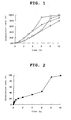
Fig. 1 shows drug dissolution profiles of the
controlled release compositions of the present invention
containing the release-controlled parts A and B [preparation
1 (O) and preparation 2 (□)] and a sustained-release
preparation having the same composition as that of the
release-controlled part B [comparative preparation 1 (•) and
comparative preparation 2 (▪)], wherein the vertical axis
shows dissolution rate (%) and the transverse axis shows time
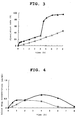
(h) after the start of the test. Fig. 2 shows a drug dissolution profile of the
controlled release composition of the present invention
containing the release-controlled parts A, B and C
[preparation 3], wherein the vertical axis shows dissolution
rate (%) and the transverse axis shows time (h) after the
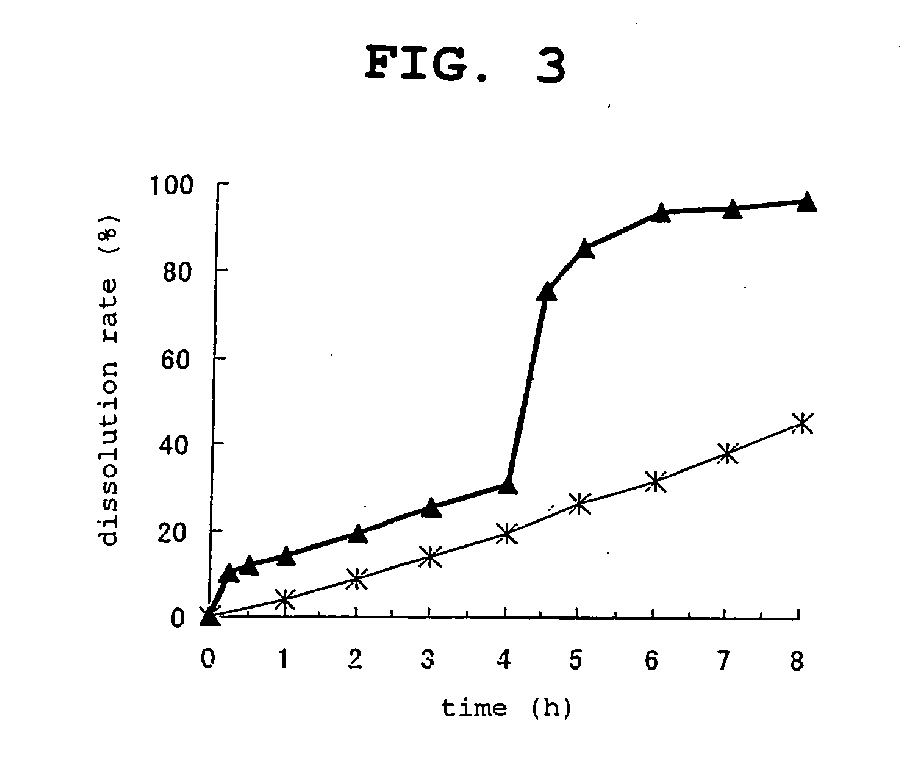
start of the test. Fig. 3 shows drug dissolution profiles of the
controlled release composition of the present invention
containing the release-controlled parts A, B and C
[preparation 14 (▴)] and a sustained-release preparation
consisting of a single release-controlled part [comparative
preparation 3 (*)], wherein the vertical axis shows
dissolution rate (%) and the transverse axis shows time (h)
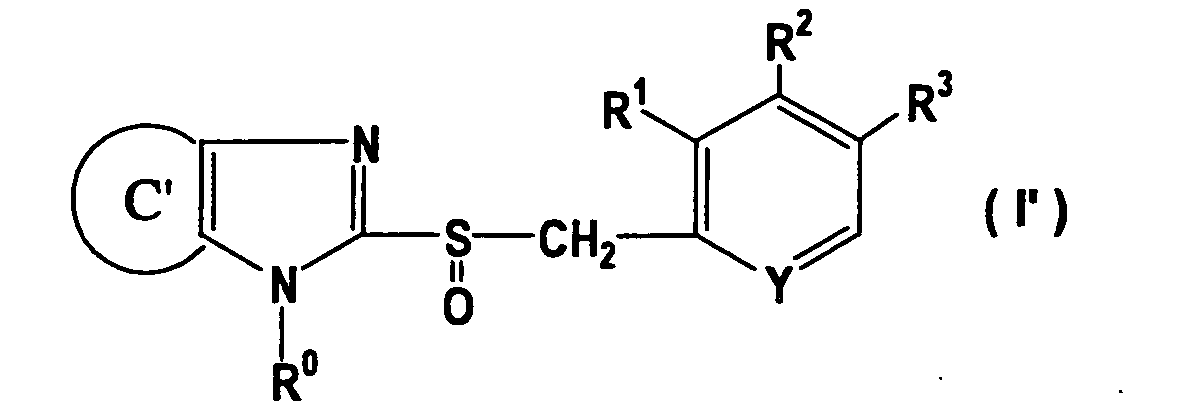
after the start of the test. Fig. 4 shows the time-course changes in the drug blood
concentration in beagle dogs after oral administration of
[preparation 14 (▴)] or [comparative preparation 3 (*)],
wherein the vertical axis shows drug blood concentration
(µg/mL) and the transverse axis shows time (h) after oral
administration.
Best Mode for Embodying the Invention
The controlled release composition of the present
invention shows release of an active ingredient, which is
controlled in two or more steps with different release rates,
and has at least two release-controlled parts (release-controlled
part A and release-controlled part B) containing
the active ingredient (the active ingredients contained in
the release-controlled part A and the release-controlled part
B may be the same or different).
As used herein, the "release-controlled part" means a
functional unit containing an active ingredient, which is
capable of controlling release of the active ingredient to
occur at a predetermined rate. When one release-controlled
part is coated with other release-controlled part, said other
part defines the start of the control of release from the
release-controlled part inside the coating, by way of
disintegration and dissolution thereof, but other than that,
it is not involved in the control of release of the active
ingredient from said one release-controlled part. For
example, when the above-mentioned release-controlled part A
is coated with the release-controlled part B, release of the
active ingredient contained in the release-controlled part A
starts upon disintegration, dissolution and the like of the
release-controlled part B to expose the release-controlled
part A, after the completion or during the release (release
of the majority of the active ingredient has been completed)
of the active ingredient from the release-controlled part B.
The release thereafter is controlled by the release-controlled
part A.
The release-controlled part A is a functional unit
responsible for the final release controlling step
(corresponding to dissolution of oral preparation in the
lower small intestine to near the large intestine) of the
controlled release composition of the present invention,
wherein the release of the active ingredient is controlled in
two or more steps, and acts as an immediate release part or a
sustained release part (second sustained release part) where
the release rate of the active ingredient is faster than in
the release-controlled part B mentioned below. In the
present specification, the "immediate release part" is a
release-controlled part showing an active ingredient release
profile characterized by immediate release, and the immediate
release means that the dissolution rate of an active
ingredient at 30 min after the start of the test is not less
than 85% when the Japanese Pharmacopoeia Dissolution Test
Method 2 (Paddle Method) is performed using a suitable test
solution (500 mL or 900 mL) at a paddle rotation of 100 rpm.
As used herein, as the test solution, for example, a test
solution is used, which shows the concentration of an active
ingredient of not more than 1/3 of the saturated solubility
of the active ingredient, when the active ingredient in a
preparation is dissolved by 100% in a test solution. As the
test solution, one conventionally employed in the preparation
technical field, such as water, buffer and the like, is used.
For a dissolution test of the active ingredient of the
release-controlled part A, the solution 2 of the Japanese
Pharmacopoeia dissolution test or water is preferably used.
On the other hand, in the present specification, the
"sustained release part" is a release-controlled part showing
an active ingredient release profile characterized by
sustained release, and the sustained release means that the
dissolution rate of an active ingredient at 30 min after the
start of the test is less than 85% when the Japanese
Pharmacopoeia Dissolution Test Method 2 (Paddle Method) is
performed using a suitable test solution (500 mL or 900 mL)
at a paddle rotation of 100 rpm. As used herein, as the test
solution, those similar to the above-mentioned are used.
When the release-controlled part A is a sustained release
part, the release rate VA of the active ingredient from the
release-controlled part is not particularly limited as long
as it satisfies the above-mentioned definition of the
sustained release and is greater than the release rate VB of
the active ingredient from the release-controlled part B, but
preferably, the dissolution rate of the active ingredient at
30 min after the start of the test in the above-mentioned
dissolution test is 15-85%, more preferably 25-85%, further
preferably 50-85%.
Alternatively, the release profile of the active
ingredient from the release-controlled part A is also
characterized in that the sustained release of the active
ingredient from the release-controlled part A preferably
occurs for about 30 min - about 6 hr, more preferably about
30 min - about 3 hr, when the controlled release composition
of the present invention is applied to the intended use
(e.g., upon oral administration in the case of an oral
preparation).
When the release-controlled part A is an immediate
release part, the release-controlled part may be an active
ingredient itself. It is preferable that it should contain,
in addition to the active ingredient, a carrier acceptable in
the field relating to the use of the composition (e.g.,
pharmacologically acceptable carrier in the case of a
pharmaceutical composition).
The active ingredient to be contained in the release-controlled
part A is not particularly limited, and various
substances effective for the prophylaxis or treatment of
diseases [for example, anti-inflammatory drugs such as
indomethacin, acetoaminophen and the like, analgesics such as
morphine and the like, cardiovascular system acting drugs
such as diazepam, diltiazem and the like, antihistamine drugs
such as chlorpheniramine maleate and the like, antitumor
drugs such as fluorouracil, aclarubicin and the like,
hypnotics such as midazolam and the like, anti-congestion
drugs such as ephedrine and the like, diuretics such as
hydrochlorothiazide, furosemide and the like, bronchodilators
such as theophylline and the like, antitussives such as
codeine and the like, antiarrhythmic drugs such as quinidine,
digoxin and the like, anti-diabetic drugs such as
tolbutamide, pioglitazone, troglidazone and the like,
vitamins such as ascorbic acid and the like, anticonvulsant
agents such as phenytoin and the like, topical anesthetics
such as lidocain and the like, adrenal cortex hormones such
as hydrocortisone and the like, drugs acting on the central
nervous system such as donepezil (trade name: aricept, Eisai
Co., Ltd.) and the like, anti-hyperlipidemic agents such as
pravastatin and the like, antibiotics such as amoxicillin,
cefalexin and the like, dipeptidylpeptidase (DPP)-IV
inhibitors useful for the prophylaxis or treatment and the
like of diabetes, steroid C17,20 lyase inhibitors useful for
the prophylaxis or treatment and the like of prostate cancer
and breast cancer, gastric motility enhancers such as
mosapride, cisapride and the like, therapeutic drugs for
gastritis, stomach esophagus reflux symptoms and stomach and
duodenal ulcer, such as H2-blockers (e.g., famotidine,
ranitidine, cimetidine etc.), benzimidazole proton pump
inhibitors (PPI) (e.g., lansoprazole, prodrugs thereof and
optically active forms thereof (R form and S form, preferably
R form), omeprazole and optically active forms thereof (S
form: esomeprazole), rabeprazole and optically active forms
thereof, pantoprazole and optically active forms thereof
etc.), imidazopyridine PPIs (e.g., tenatoprazole etc.) and
the like], detergent components, flavors, fertilizers,
deodrants, animal and disinfectants, insecticides,
herbicides, plant growth control substances and the like can
be mentioned.
Preferably, the active ingredient is PPI, steroid C17,20
lyase inhibitor or DPP-IV inhibitor, more preferably PPI.
Specific examples of these active ingredients are shown in
the following.
A. Proton pump inhibitor (PPI)
As PPI, acid-labile imidazole compounds represented by
the following formula (I'), particularly acid-labile
benzimidazole compounds represented by (I), such as
lansoprazole, an optically active form thereof and the like,
imidazole compound derivatives (prodrug type PPI) represented
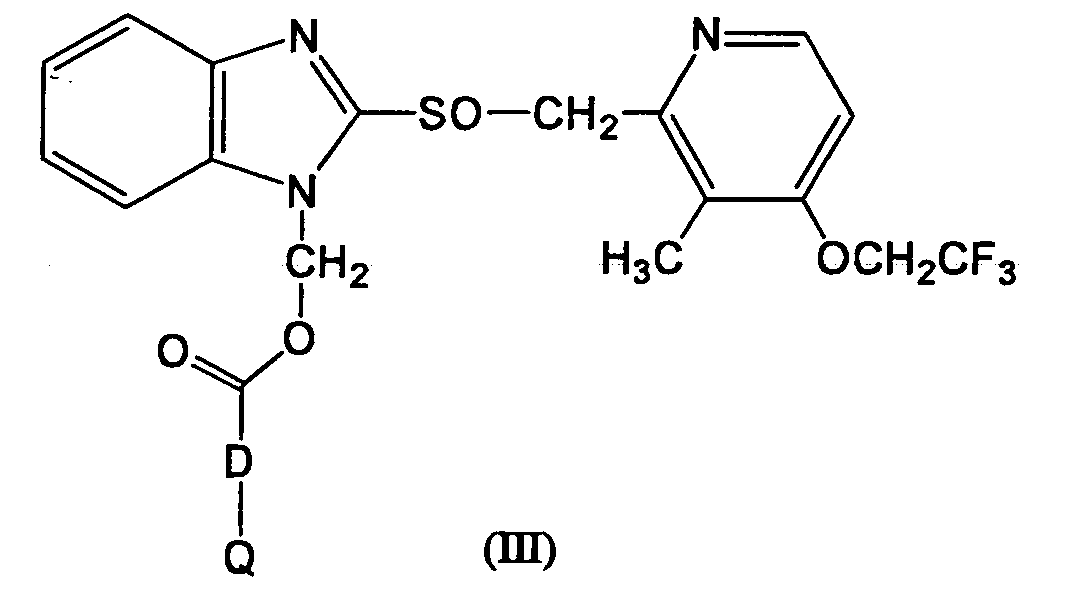
by the following formulas (II) and (III), which are
relatively stable to acid, salts thereof and optically active
forms thereof and the like can be particularly mentioned.
wherein ring C' is a benzene ring optionally having
substituent(s) or an aromatic monocyclic heterocycle
optionally having substituent(s), R° is a hydrogen atom, an
aralkyl group optionally having substituent(s), an acyl group
or an acyloxy group, R
1, R
2 and R
3 are the same or different
and each is a hydrogen atom, an alkyl group optionally having
substituent(s), an alkoxy group optionally having
substituent(s) or an amino group optionally having
substituent(s), and Y is a nitrogen atom or CH.
Of the compounds represented by the above-mentioned
formula (I'), a compound wherein ring C' is a benzene ring
optionally having substituent(s) is particularly represented
by the following formula (I).
That is, in the formula (I), ring A is a benzene ring
optionally having substituent (s), and R0, R1, R2, R3 and Y are
as defined in the above-mentioned formula (I').
In the aforementioned formula (I), a preferable
compound is a compound wherein ring A is a benzene ring
optionally having substituent(s) selected from a halogen
atom, an optionally halogenated C1-4alkyl group, an
optionally halogenated C1-4alkoxy group and a 5- or 6-membered
heterocyclic group, R°is a hydrogen atom, an
optionally substituted aralkyl group, an acyl group or an
acyloxy group, R1 is a C1-6 alkyl group, a C1-6 alkoxy group, a
C1-6 alkoxy-C1-6 alkoxy group or a di-C1-6 alkylamino group, R2
is a hydrogen atom, a C1-6 alkoxy-C1-6 alkoxy group or an
optionally halogenated C1-6 alkoxy group, R3 is a hydrogen atom
or a C1-6 alkyl group, and Y is a nitrogen atom.
Particularly preferred is a compound represented by the
formula (Ia) :
wherein R
1 is a C
1-3 alkyl group or a C
1-3 alkoxy group, R
2 is a
C
1-3 alkoxy group optionally halogenated or substituted by a
C
1-3 alkoxy group, R
3 is a hydrogen atom or a C
1-3 alkyl group,
and R
4 is a hydrogen atom, an optionally halogenated C
1-3
alkoxy group or a pyrrolyl group (e.g., 1-, 2- or 3-pyrrolyl
group).
In the formula (Ia), a compound wherein R1 is a C1-3
alkyl group, R2 is an optionally halogenated C1-3 alkoxy group,
R3 is a hydrogen atom, and R4 is a hydrogen atom or an
optionally halogenated C1-3 alkoxy group is particularly
preferable.
In the compound represented by the above-mentioned
formula (I) [hereinafter to be referred to as compound (I)],
as the "substituent" of the "benzene ring optionally having
substituent(s)" for ring A, for example, a halogen atom, a
cyano group, a nitro group, an alkyl group optionally having
substituent(s), a hydroxy group, an alkoxy group optionally
having substituent(s), an aryl group, an aryloxy group, a
carboxy group, an acyl group, an acyloxy group, a 5- to 10-membered
heterocyclic group and the like can be mentioned.
About 1 to 3 of these substituents may be substituted on the
benzene ring. When the number of the substituents is not
less than 2, the respective substituents may be the same or
different. Of these substituents, a halogen atom, an alkyl
group optionally having substituent(s), an alkoxy group
optionally having substituent(s) and the like are preferable.
As the halogen atom, fluorine, chlorine, bromine atom
and the like can be mentioned. Fluorine is particularly
preferable.
As the "alkyl group" of the "alkyl group optionally
having substituent(s)", for example, a C1-7 alkyl group (e.g.,
methyl, ethyl, propyl, isopropyl, butyl, isobutyl, sec-butyl,
tert-butyl, pentyl, hexyl, heptyl group and the like) can be
mentioned. As the "substituent" of the "alkyl group
optionally having substituent(s)", for example, a halogen
atom, a hydroxy group, a C1-6 alkoxy group (e.g., methoxy,
ethoxy, propoxy, butoxy etc.), a C1-6 alkoxy-carbonyl group
(e.g., methoxycarbonyl, ethoxycarbonyl, propoxycarbonyl group
etc.), a carbamoyl group and the like can be mentioned,
wherein the number of these substituents may be about 1 to 3.
When the number of the substituents is not less than 2, the
respective substituents may be the same or different.
As the "alkoxy group" of the "alkoxy group optionally
having substituent(s)", for example, a C1-6 alkoxy group
(e.g., methoxy, ethoxy, propoxy, isopropoxy, butoxy,
isobutoxy, pentoxy etc.) and the like can be mentioned. As
the "substituent" of the "alkoxy group optionally having
substituent(s)", those similar to the "substituent" of the
above-mentioned "alkyl group optionally having
substituent(s)" can be mentioned, and the number of the
substituents is also similar.
As the "aryl group", for example, a C6-14 aryl group
(e.g., phenyl, 1-naphthyl, 2-naphthyl, biphenyl, 2-anthryl
group etc.) and the like can be mentioned.
As the "aryloxy group", for example, a C6-14 aryloxy
group (e.g., phenyloxy, 1-naphthyloxy, 2-naphthyloxy group
etc.) and the like can be mentioned.
As the "acyl group", for example, formyl,
alkylcarbonyl, alkoxycarbonyl, carbamoyl, alkylcarbamoyl,
alkylsulfinyl, alkylsulfonyl groups and the like can be
mentioned.
As the "alkylcarbonyl group", a C1-6 alkyl-carbonyl
group (e.g., acetyl, propionyl group etc.) and the like can
be mentioned.
As the "alkoxycarbonyl group", for example, a C1-6
alkoxy-carbonyl group (e.g., methoxycarbonyl, ethoxycarbonyl,
propoxycarbonyl, butoxycarbonyl group etc.) and the like can
be mentioned.
As the "alkylcarbamoyl group", a N-C1-6 alkyl-carbamoyl
group (e.g., methylcarbamoyl, ethylcarbamoyl group etc.), a
N, N-diC1-6 alkyl-carbamoyl group (e.g., N,N-dimethylcarbamoyl,
N,N-diethylcarbamoyl group etc.) and the like can be
mentioned.
As the "alkylsulfinyl group", for example, a C1-7
alkylsulfinyl group (e.g., methylsulfinyl, ethylsulfinyl,
propylsulfinyl, isopropylsulfinyl group etc.) can be
mentioned.
As the "alkylsulfonyl group", for example, a C1-7
alkylsulfonyl group (e.g., methylsulfonyl, ethylsulfonyl,
propylsulfonyl, isopropylsulfonyl group etc.) can be
mentioned.
As the "acyloxy group", for example, an
alkylcarbonyloxy group, an alkoxycarbonyloxy group, a
carbamoyloxy group, an alkylcarbamoyloxy group, an
alkylsulfinyloxy group, an alkylsulfonyloxy group and the
like can be mentioned.
As the "alkylcarbonyloxy group", a C1-6 alkyl-carbonyloxy
group (e.g., acetyloxy, propionyloxy group etc.)
and the like can be mentioned.
As the "alkoxycarbonyloxy group", for example, a C1-6
alkoxy-carbonyloxy group (e.g., methoxycarbonyloxy,
ethoxycarbonyloxy, propoxycarbonyloxy, butoxycarbonyloxy
group etc.) and the like can be mentioned.
As the "alkylcarbamoyloxy group", a C1-6 alkylcarbamoyloxy
group (e.g., methylcarbamoyloxy,
ethylcarbamoyloxy group etc.) and the like can be mentioned.
As the "alkylsulfinyloxy group", for example, a C1-7
alkylsulfinyloxy group (e.g., methylsulfinyloxy,
ethylsulfinyloxy, propylsulfinyloxy, isopropylsulfinyloxy
group etc.) can be mentioned.
As the "alkylsulfonyloxy group", for example, a C1-7
alkylsulfonyloxy group (e.g., methylsulfonyloxy,
ethylsulfonyloxy, propylsulfonyloxy, isopropylsulfonyloxy
group etc.) can be mentioned.
As the "5- to 10-membered heterocyclic group", for
example, a 5- to 10-membered (preferably 5- or 6-membered)
heterocyclic group containing, besides carbon atoms, one or
more (e.g., 1-3) hetero atom(s) selected from a nitrogen
atom, a sulfur atom and an oxygen atom, can be mentioned, and
as specific examples, 2- or 3-thienyl group, 2-, 3- or 4-pyridyl
group, 2- or 3-furyl group, 1-, 2- or 3-pyrrolyl
group, 2-, 3-, 4-, 5- or 8-quinolyl group, 1-, 3-, 4- or 5-isoquinolyl
group, 1-, 2- or 3-indolyl group and the like can
be mentioned. Of these, preferred is a 5- or 6-membered
heterocyclic group such as 1-, 2- or 3-pyrrolyl group and the
like.
Ring A is preferably a benzene ring optionally having 1
or 2 substituents selected from a halogen atom, an optionally
halogenated C1-4 alkyl group, an optionally halogenated C1-4
alkoxy group and a 5- or 6-membered heterocyclic group.
In the above-mentioned formula (I'), as the "aromatic
monocyclic heterocycle" of the "aromatic monocyclic
heterocycle optionally having substituent(s)" for ring C',
for example, a 5- or 6-membered aromatic monocyclic
heterocycle such as furan, thiophene, pyrrole, oxazole,
isoxazole, thiazole, isothiazole, imidazole, pyrazole, 1,2,3-oxadiazole,
1,2,4-oxadiazole, 1,3,4-oxadiazole, furazan,
1,2,3-thiadiazole, 1,2,4-thiadiazole, 1,3,4-thiadiazole,
1,2,3-triazole, 1,2,4-triazole, tetraxole, pyridine,
pyridazine, pyrimidine, pyrazine, triazine etc., and the like
can be mentioned. As the "aromatic monocyclic heterocycle"
for ring C', the "benzene ring optionally having
substituent(s)" for the above-mentioned ring A and the
"pyridine ring optionally having substituent(s)" are
particularly preferable. The "pyridine ring optionally
having substituent(s)" for ring C' may have, at substitutable
position(s), 1 to 4 substituents similar to the "benzene ring
optionally having substituent(s)" for the above-mentioned
ring A.
The position where the "aromatic monocyclic
heterocycle" of the "aromatic monocyclic heterocycle
optionally having substituent(s)" is condensed with the
imidazole moiety is not particularly limited.
In the above-mentioned formula (I') or (I), as the
"aralkyl group" of the "aralkyl group optionally having
substituent(s)" for R°, for example, a C7-16 aralkyl group
(e.g., C6-10 arylC1-6 alkyl group such as benzyl, phenethyl etc.
and the like) and the like can be mentioned. As the
"substituent" of the "aralkyl group optionally having
substituent(s)", those similar to the "substituent" of the
above-mentioned "alkyl group optionally having
substituent(s)" can be mentioned, wherein the number of the
substituents is about 1 to 4. When the number of the
substituents is not less than 2, the respective substituents
may be the same or different.
As the "acyl group" for R°, for example, the "acyl
group" described as a substituent for the above-mentioned
ring A can be mentioned.
As the "acyloxy group" for R°, for example, the
"acyloxy group" described as a substituent for the above-mentioned
ring A can be mentioned.
Preferable R° is a hydrogen atom.
In the above-mentioned formula (I') or (I), as the
"alkyl group optionally having substituent(s)" for R1, R2 or
R3, the "alkyl group optionally having substituent(s)"
described as a substituent for the above-mentioned ring A can
be mentioned.
As the "alkoxy group optionally having substituent(s)"
for R1, R2 or R3, the "alkoxy group optionally having
substituent(s)" described as a substituent for the above-mentioned
ring A can be mentioned.
As the "amino group optionally having substituent(s)"
for R1, R2 or R3, for example, an amino group, a mono-C1-6
alkylamino group (e.g., methylamino, ethylamino etc.), a
mono-C6-14 arylamino group (e.g., phenylamino, 1-naphthylamino,
2-naphthylamino etc.), a di-C1-6 alkylamino group (e.g.,
dimethylamino, diethylamino etc.), a di-C6-14 arylamino group
(e.g., diphenylamino etc.) and the like can be mentioned.
Preferable R1 is a C1-6 alkyl group, a C1-6 alkoxy group,
a C1-6 alkoxy-C1-6 alkoxy group or a di-C1-6 alkylamino group.
More preferable R2 is a C1-3alkyl group or a C1-3 alkoxy group.
Preferable R2 is a hydrogen atom, a C1-6 alkoxy-C1-6
alkoxy group or an optionally halogenated C1-6 alkoxy group.
More preferable R3 is a C1-3 alkoxy group optionally
halogenated or substituted by a C1-3 alkoxy group.
Preferable R3 is a hydrogen atom or a C1-6 alkyl group.
More preferable R3 is a hydrogen atom or a C1-3alkyl group
(particularly a hydrogen atom).
Preferable Y is a nitrogen atom.
As specific examples of compound (I), the following
compounds can be mentioned.
2-[[[3-Methyl-4-(2,2,2-trifluoroethoxy)-2-pyridinyl]methyl]sulfinyl]-1H-imidazole
(lansoprazole), 2-[[(3,5-dimethyl-4-methoxy-2-pyridinyl)methyl]sulfinyl]-5-methoxy-1H-benzimidazole,
2-[[[4-(3-methoxypropoxy)-3-methyl-2-pyridinyl]methyl]sulfinyl]-1H-benzimidazole
sodium salt, 5-difluoromethoxy-2-[[(3,4-dimethoxy-2-pyridinyl)methyl]sulfinyl]-1H-benzimidazole
and the like.
Of these compounds, lansoprazole, i.e., 2-[[[3-methyl-4-(2,2,2-trifluoroethoxy)-2-pyridinyl]methyl]sulfinyl]-1H-benzimidazole
is particularly preferable.
Besides the above-mentioned PPI of benzimidazole
compound, PPI of an imidazopyridine compound can be
preferably applied to the present invention. As the PPI of
such imidazopyridine compound, for example, tenatoprazole can
be mentioned.
The compound (I') including the above-mentioned
compound (I) and imidazopyridine compounds may be racemates
and may be optically active forms such as R-form, S-form and
the like. For example, an optically active form of
lansoprazole, namely, optically active forms such as (R)-2-[[[3-methyl-4-(2,2,2-trifluoroethoxy)-2-pyridinyl]methyl]sulfinyl]-1H-benzimidazole
and (S)-2-[[[3-methyl-4-(2,2,2-trifluoroethoxy)-2-pyridinyl]methyl]sulfinyl]-1H-benzimidazole
and the like are
particularly preferable for the present invention. While
lansoprazole, lansoprazole R-form and lansoprazole S-form and
the like are generally preferable in crystal forms, since
they are stabilized by processing into preparations as
mentioned blow and more stabilized by adding a basic
inorganic salt and further forming an intermediate coating
layer, not only crystals but also amorphous forms can be
used.
As the salts of compound (I') and compound (I),
pharmaceutically acceptable salts are preferable. For
example, salts with inorganic bases, salts with organic
bases, salts with basic amino acids and the like can be
mentioned.
As preferable examples of the salts with inorganic
bases, for example, alkali metal salts such as sodium salt,
potassium salt and the like; alkaline earth metal salts such
as calcium salt, magnesium salt and the like; ammonium salt
and the like can be mentioned.
As preferable examples of the salts with organic bases,
for example, salts with alkylamines (trimethylamine,
triethylamine and the like), heterocyclic amines (pyridine,
picoline and the like), alkanolamines (ethanolamine,
diethanolamine, triethanolamine and the like),
dicyclohexylamine, N,N'-dibenzylethylenediamine and the like
can be mentioned.
As preferable examples of the salts with basic amino
acids, for example, salts with arginine, lysine, ornithine
and the like can be mentioned.
Of these salts, preferred are alkali metal salts and
alkaline earth metal salts. Sodium salt is particularly
preferable.
Compounds (I') and (I) can be manufactured by a method
known per se, and they can be manufactured by methods
described in, for example, JP-A-61-50978, USP 4,628,098, JP-A-10-195068,
WO 98/21201, JP-A-52-62275, JP-A-54-141783 and
the like or methods analogous thereto. The optically active
compound (I) can be obtained by a method using optical
resolution (fractional recrystallization, chiral column
method, diastereomer method, a method using microorganism or
enzyme and the like), asymmetric oxidation and the like. A
lansoprazole R form can be also produced by a production
methods described in, for example, WO 00-78745, WO 01/83473
and the like, and the like.
As the benzimidazole compound having an antiulcer
activity to be used in the present invention, lansoprazole,
omeprazole, rabeprazole, pantoprazole, leminoprazole,
tenatoprazole (TU-199) and the like, optically active forms
thereof and pharmaceutically acceptable salts thereof are
preferable, and lansoprazole, an optically active form
thereof, particularly R form are more preferable. While
lansoprazole, an optically active form thereof, particularly
R form are preferably crystals, they may be amorphous forms.
They are conveniently applied to prodrugs of these PPIs.
As preferable prodrugs of these, prodrugs encompassed
in compound (I) or (I'), and additionally, compounds
represented by the following formulas (II) and (III) can be
mentioned.
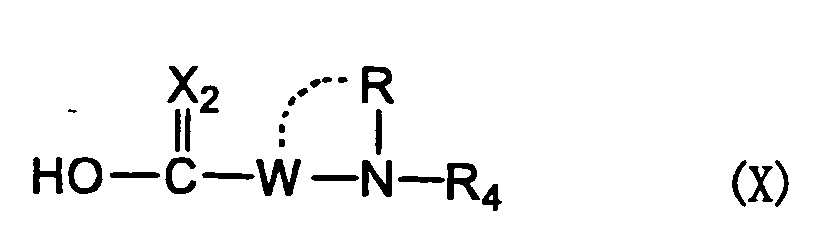
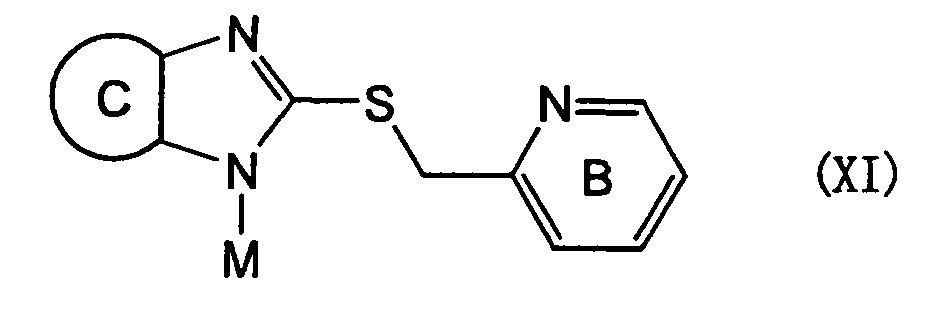
As the compound represented by the above-mentioned
formula (II) [hereinafter to be referred to as compound
(II)], for example, compounds described in WO 03/105845 can
be mentioned. Namely, in compound (II), it is a compound
wherein ring B is a "pyridine ring optionally having
substituent(s)".
The pyridine ring of the "pyridine ring optionally
having substituent(s)" for ring B optionally has 1 to 4
substituents at substitutable positions thereof. As the
substituents, for example, a halogen atom (e.g., fluorine,
chlorine, bromine, iodine etc.), a hydrocarbon group
optionally having substituent(s) (e.g., alkyl group having 1
to 6 carbon atoms such as methyl group, ethyl group, n-propyl
group etc., and the like), an amino group optionally having
substituent(s) (e.g., amino; amino group mono- or di-substituted
by alkyl group having 1 to 6 carbon atoms such as
methylamino, dimethylamino, ethylamino, diethylamino group
etc., and the like), an amido group (e.g., formamido, C1-3
acylamino group such as acetamido etc., and the like), a
lower alkoxy group optionally having substituent(s) (e.g.,
alkoxy group having 1 to 6 carbon atoms such as methoxy,
ethoxy, 2,2,2-trifluoroethoxy, 3-methoxypropoxy group etc.,
and the like), a lower alkylenedioxy group (e.g., C1-3
alkylenedioxy group such as methylenedioxy, ethylenedioxy
etc., and the like) and the like can be mentioned.
As the substituent which the substituent of the
"pyridine ring optionally having substituent(s)" for ring B
may have, for example, a halogen atom (e.g., fluorine,
chlorine, bromine, iodine etc.), a lower alkyl group (e.g.,
alkyl group having 1 to 6 carbon atoms such as methyl, ethyl,
propyl group etc., and the like), a lower alkenyl group
(e.g., alkenyl group having 2 to 6 carbon atoms such as
vinyl, allyl group etc., and the like), a lower alkynyl group
(e.g., alkynyl group having 2 to 6 carbon atoms such as
ethynyl, propargyl group etc. and the like), a cycloalkyl
group (e.g., cycloalkyl group having 3 to 8 carbon atoms such
as cyclopropyl, cyclobutyl, cyclopentyl, cyclohexyl group
etc. and the like), a lower alkoxy group (e.g., alkoxy group
having 1 to 6 carbon atoms such as methoxy, ethoxy group
etc., and the like), a nitro group, a cyano group, a hydroxy
group, a thiol group, a carboxyl group, a lower alkanoyl
group (e.g., formyl; C1-6 alkyl-carbonyl group such as acetyl,
propionyl, butyryl group etc., and the like), a lower
alkanoyloxy group (e.g., formyloxy; C1-6 alkyl-carbonyloxy
group such as an acetyloxy, propionyloxy group etc., and the
like), a lower alkoxycarbonyl group (e.g., C1-6 alkoxy-carbonyl
group such as methoxycarbonyl, ethoxycarbonyl,
propoxycarbonyl group etc., and the like), an
aralkyloxycarbonyl group (e.g., C7-11 aralkyloxy-carbonyl
group such as benzyloxycarbonyl group etc., and the like), an
aryl group (e.g., aryl group having 6 to 14 carbon atoms such
as phenyl, naphthyl group etc., and the like), an aryloxy
group (e.g., aryloxy group having 6 to 14 carbon atoms such
as phenyloxy, naphthyloxy group etc., and the like), an
arylcarbonyl group (e.g., C6-14 aryl-carbonyl group such as
benzoyl, naphthoyl group etc., and the like), an
arylcarbonyloxy group (e.g., C6-14 aryl-carbonyloxy group such
as benzoyloxy, naphthoyloxy group etc., and the like), a
carbamoyl group optionally having substituent(s) (e.g.,
carbamoyl; carbamoyl group mono- or di-substituted by alkyl
group having 1 to 6 carbon atoms, such as methylcarbamoyl,
dimethylcarbamoyl group etc., and the like), an amino group
optionally having substituent(s) (e.g., amino; amino group
mono- or di-substituted by alkyl group having 1 to 6 carbon
atoms, such as methylamino, dimethylamino, ethylamino,
diethylamino group etc., and the like) and the like can be
mentioned, with no particular limitation on the number of
substituents and substitution positions.
While the number of substituents and substitution
positions of "pyridine ring optionally having substituent(s)"
for ring B are not particularly limited, it is preferable
that 1 to 3 of the above-mentioned substituents be
substituted at any of the 3-, 4- and/or 5-position(s) on the
pyridine ring.
As the "pyridine ring optionally having substituent(s)"
for ring B, 3-methyl-4-(2,2,2-trifluoroethoxy)-2-pyridyl is
preferable.
In the present invention, ring C is a "benzene ring
optionally having substituent(s)" or an "aromatic monocyclic
heterocycle optionally having substituent(s)", which is
condensed with the imidazole moiety, with preference given to
the former.
The benzene ring of the "benzene ring optionally having
substituent(s)" for ring C optionally has 1 to 4 substituents
at substitutable positions thereof. As the substituents, for
example, a halogen atom (e.g., fluorine, chlorine, bromine,
iodine etc.), a hydrocarbon group optionally having
substituent(s) (e.g., alkyl group having 1 to 6 carbon atoms
such as methyl group, ethyl group, n-propyl group etc., and
the like), an amino group optionally having substituent(s)
(e.g., amino; amino group mono- or di-substituted by alkyl
group having 1 to 6 carbon atoms, such as methylamino,
dimethylamino, ethylamino, diethylamino group etc., and the
like), an amido group (e.g., formamido, C1-3 acylamino group
such as acetamido etc., and the like), a lower alkoxy group
optionally having substituent(s) (e.g., alkoxy group having 1
to 6 carbon atoms such as methoxy, ethoxy, difluoromethoxy
group etc., and the like), a lower alkylenedioxy group (e.g.,
C1-3 alkylenedioxy group such as methylenedioxy, ethylenedioxy
etc., and the like) and the like can be mentioned.
As the substituent which the substituent of the
"benzene ring optionally having substituent(s)" for ring C
may have, for example, a halogen atom (e.g., fluorine,
chlorine, bromine, iodine etc.), a lower alkyl group (e.g.,
alkyl group having 1 to 6 carbon atoms, such as methyl,
ethyl, propyl group etc., and the like), a lower alkenyl
group (e.g., alkenyl group having 2 to 6 carbon atoms such as
vinyl, allyl group etc., and the like), a lower alkynyl group
(e.g., alkynyl group having 2 to 6 carbon atoms such as
ethynyl, propargyl group etc., and the like), a cycloalkyl
group (e.g., cycloalkyl group having 3 to 8 carbon atoms such
as cyclopropyl, cyclobutyl, cyclopentyl, cyclohexyl group
etc., and the like), a lower alkoxy group (e.g., alkoxy group
having 1 to 6 carbon atoms such as methoxy, ethoxy group
etc., and the like), a nitro group, a cyano group, a hydroxy
group, a thiol group, a carboxyl group, a lower alkanoyl
group (e.g., formyl; C1-6 alkyl-carbonyl group such as acetyl,
propionyl, butyryl group etc., and the like), a lower
alkanoyloxy group (e.g., formyloxy; C1-6 alkyl-carbonyloxy
group such as acetyloxy, propionyloxy group etc., and the
like), a lower alkoxycarbonyl group (e.g., C1-6 alkoxy-carbonyl
group such as methoxycarbonyl, ethoxycarbonyl,
propoxycarbonyl group etc., and the like), an
aralkyloxycarbonyl group (e.g., C7-17 aralkyloxy-carbonyl
group such as benzyloxycarbonyl group etc., and the like), an
aryl group (e.g., aryl group having 6 to 14 carbon atoms such
as phenyl, naphthyl group etc., and the like), an aryloxy
group (e.g., aryloxy group having 6 to 14 carbon atoms such
as phenyloxy, naphthyloxy group etc., and the like), an
arylcarbonyl group (e.g., C6-14 aryl-carbonyl group such as
benzoyl, naphthoyl group etc., and the like), an
arylcarbonyloxy group (e.g., C6-14 aryl-carbonyloxy group such
as benzoyloxy, naphthoyloxy group etc., and the like), a
carbamoyl group optionally having substituent(s) (e.g.,
carbamoyl; carbamoyl group mono- or di-substituted by alkyl
group having 1 to 6 carbon atoms, such as methylcarbamoyl,
dimethylcarbamoyl group etc., and the like), an amino group
optionally having substituent(s) (e.g., amino; amino group
mono- or di-substituted by alkyl group having 1 to 6 carbon
atoms, such methylamino, dimethylamino, ethylamino,
diethylamino group etc., and the like) and the like can be
mentioned, with no particular limitation on the number of
substituents and substitution portions.
As the "benzene ring optionally having substituent(s)"
for C ring, benzene ring is preferable.
As the "aromatic monocyclic heterocycle" of the
"aromatic monocyclic heterocycle optionally having
substituent(s)" for ring C, for example, a 5- or 6-membered
aromatic monocyclic heterocycle such as furan, thiophene,
pyrrole, oxazole, isoxazole, thiazole, isothiazole,
imidazole, pyrazole, 1,2,3-oxadiazole, 1,2,4-oxadiazole,
1,3,4-oxadiazole, furazan, 1,2,3-thiadiazole, 1,2,4-thiadiazole,
1,3,4-thiadiazole, 1,2,3-triazole, 1,2,4-triazole,
tetrazole, pyridine, pyridazine, pyrimidine,
pyrazine, triazine and the like, and the like can be
mentioned. Of these "aromatic monocyclic heterocycles" for
ring C, pyridine ring is particularly preferable. It may
have 1 to 4 substituents similar to those of the "benzene
ring optionally having substituent(s)" for ring C at the
substitutable positions thereof.
The position where the "aromatic monocyclic
heterocycle" of the "aromatic monocyclic heterocycle
optionally having substituent(s)" is fused with an imidazole
moiety is not particularly limited.
In the present invention, X1 and X2 are each an oxygen
atom or a sulfur atom. Both X1 and X2 are preferably oxygen
atoms.
In the present invention, W is a "divalent chain
hydrocarbon group optionally having substituent(s)", or a
divalent group represented by the formula:
―W1―Z―W2―
wherein W1 and W2 are each a "divalent chain hydrocarbon
group" or a bond, and Z is a divalent hydrocarbon ring group
optionally having substituent(s)", a "divalent heterocyclic
group optionally having substituent(s)", an oxygen atom, SOn
wherein n is 0, 1 or 2, or >N-E wherein E is a hydrogen atom,
a hydrocarbon group optionally having substituent(s), a
heterocyclic group optionally having substituent(s), a lower
alkanoyl group, a lower alkoxycarbonyl group, an
aralkyloxycarbonyl group, a thiocarbamoyl group, a lower
alkylsulfinyl group, a lower alkylsulfonyl group, a sulfamoyl
group, a mono-lower alkylsulfamoyl group, a di-lower
alkylsulfamoyl group, an arylsulfamoyl group, an arylsulfinyl
group, an arylsulfonyl group, an arylcarbonyl group, or a
carbamoyl group optionally having substituent(s), when Z is
an oxygen atom, SOn or >N-E, W1 and W2 are each a "divalent
chain hydrocarbon group". Particularly, W is preferably a
"divalent chain hydrocarbon group optionally having
substituent(s)".
As the "divalent chain hydrocarbon group" of the
"divalent chain hydrocarbon group optionally having
substituent(s)" for W and the "divalent chain hydrocarbon
group" for W1 or W2, for example, a C1-6 alkylene group (e.g.,
methylene, ethylene, trimethylene etc.), a C2-6 alkenylene
group (e.g., ethenylene etc.), a C2-6 alkynylene group (e.g.,
ethynylene etc.) and the like can be mentioned. The divalent
chain hydrocarbon group for W may have 1 to 6 substituents
similar to those for the "benzene ring optionally having
substituent(s)" for ring C at substitutable positions
thereof.
As the "divalent chain hydrocarbon group" of the
"divalent chain hydrocarbon group optionally having
substituent(s)" for W and the "divalent chain hydrocarbon
group" for W1 or W2, a methylene group and an ethylene group
are preferable. As W, an ethylene group is particularly
preferable. When Z is an oxygen atom, SOn or >N-E (n and E
are as defined above), the "divalent chain hydrocarbon group"
for W1 is preferably a hydrocarbon group having 2 or more
carbon atoms.
As the "hydrocarbon ring" of the "divalent hydrocarbon
ring group optionally having substituent(s)" for Z, for
example, an alicyclic hydrocarbon ring, an aromatic
hydrocarbon ring and the like can be mentioned, with
preference given to one having 3 to 16 carbon atoms, which
may have 1 to 4 substituents similar to those for the
"benzene ring optionally having substituent(s)" for ring C at
substitutable positions thereof. As the hydrocarbon ring,
for example, a cycloalkane, a cycloalkene, an arene and the
like are used.
As the cycloalkane for the "divalent hydrocarbon ring
group optionally having substituent(s)" for Z, for example, a
lower cycloalkane and the like are preferable, and, for
example, a C3-10 cycloalkane such as cyclopropane,
cyclobutane, cyclopentane, cyclohexane, cycloheptane,
cyclooctane, bicyclo[2.2.1]heptane, adamantane etc., and the
like are generally used.
As the cycloalkene for the "divalent hydrocarbon ring
group optionally having substituent(s)" for Z, for example, a
lower cycloalkene is preferable, and, for example, C4-9
cycloalkene such as cyclopropene, cyclobutene, cyclopentene,
cyclohexene, cycloheptene, cyclooctene etc., and the like are
generally used.
As the arene for the "divalent hydrocarbon ring group
optionally having substituent(s)" for Z, for example, a C6-14
arene such as benzene, naphthalene, phenanthrene etc., and
the like are preferable, and, for example, phenylene and the
like are generally used.
As the heterocycle for the "divalent heterocyclic
group optionally having substituent(s)" for Z, a 5- to 12-membered
"aromatic heterocycle" or "saturated or unsaturated
non-aromatic heterocycle" containing, as ring-constituting
atoms (ring atoms), 1 to 3 (preferably 1 or 2) kinds of at
least 1 (preferably 1 to 4, more preferably 1 or 2) hetero
atoms selected from an oxygen atom, a sulfur atom and a
nitrogen atom etc., and the like can be mentioned, which may
have 1 to 4 substituents similar to those for the "benzene
ring optionally having substituent(s)" for ring C at
substitutable positions thereof.
As the aromatic heterocycle for the "divalent
heterocyclic group optionally having substituent(s)" for Z,
an aromatic monocyclic heterocycle, an aromatic fused
heterocycle and the like can be mentioned.
As the "aromatic monocyclic heterocycle", for example,
a 5- or 6-membered aromatic monocyclic heterocycle such as
furan, thiophene, pyrrole, oxazole, isoxazole, thiazole,
isothiazole, imidazole, pyrazole, 1,2,3-oxadiazole, 1,2,4-oxadiazole,
1,3,4-oxadiazole, furazan, 1,2,3-thiadiazole,
1,2,4-thiadiazole, 1,3,4-thiadiazole, 1,2,3-triazole, 1,2,4-triazole,
tetrazole, pyridine, pyridazine, pyrimidine,
pyrazine, triazine etc., and the like can be mentioned.
As the "aromatic fused heterocycle", for example, a 8-to
12-membered aromatic fused heterocycle such as benzofuran,
isobenzofuran, benzothiophene, isobenzothiophene, indole,
isoindole, 1H-indazole, benzimidazole, benzoxazole, 1,2-benzisoxazole,
benzothiazole, 1,2-benzisothiazole, 1H-benzotriazole,
quinoline, isoquinoline, cinnoline,
quinazoline, quinoxaline, phthalazine, naphthyridine, purine,
pteridine, carbazole, carboline, acridine, phenoxazine,
phenothiazine, phenazine, phenoxathiin, thianthrene,
phenanthridine, phenanthroline, indolizine, pyrrolo[1,2-b]pyridazine,
pyrazolo[1,5-a]pyridine, imidazo[1,2-a]pyridine,
imidazo[1,5-a]pyridine, imidazo[1,2-b]pyridazine,
imidazo[1,2-a]pyrimidine, 1,2,4-triazolo[4,3-a]pyridine,
1,2,4-triazolo[4,3-b]pyridazine etc., and the like can be
mentioned.
As the saturated or unsaturated non-aromatic
heterocycle for the "divalent heterocyclic group optionally
having substituent(s)" for Z, for example, a 3- to 8-membered
(preferably 5- or 6-membered) saturated or unsaturated
(preferably saturated) non-aromatic heterocycle (aliphatic
heterocycle) such as oxirane, azetidine, oxetane, thietane,
pyrrolidine, tetrahydrofuran, tetrahydrothiophene,
piperidine, tetrahydropyran, tetrahydrothiopyran, morpholine,
thiomorpholine, piperazine, azepane, oxepane, thiene,
oxazepane, thiazepane, azocane, oxocane, thiocane, oxazocane,
thiazocane etc., and the like can be mentioned. These may be
oxo-substituted and may be, for example, 2-oxoazetidine, 2-oxopyrrolidine,
2-oxopiperidine, 2-oxazepane, 2-oxazocane, 2-oxotetrahydrofuran,
2-oxotetrahydropyran, 2-oxotetrahydrothiophene,
2-oxothiane, 2-oxopiperazine, 2-oxooxepane,
2-oxooxazepane, 2-oxothiepane, 2-oxothiazepane,
2-oxooxocane, 2-oxothiocane, 2-oxooxazocane, 2-oxothiazocane
and the like.
The two bonds from the "hydrocarbon ring group" of the
"divalent hydrocarbon ring group optionally having
substituent(s)" or the "heterocyclic group" of the "divalent
heterocyclic group optionally having substituent(s)" for Z
may be present at any possible position.
The "hydrocarbon group optionally having
substituent(s)" and "heterocyclic group optionally having
substituent(s)" for E are as defined in the following.
As the "lower alkanoyl group" for E, for example,
formyl, a C1-6 alkyl-carbonyl group such as acetyl, propionyl,
butyryl, isobutyryl etc., and the like can be used.
As the "lower alkoxycarbonyl group" for E, for
example, a C1-6 alkoxy-carbonyl group such as methoxycarbonyl,
ethoxycarbonyl, propoxycarbonyl, butoxycarbonyl etc., and the
like are used.
As the "aralkyloxycarbonyl" for E, for example, a C7-11
aralkyloxy-carbonyl group such as benzyloxycarbonyl etc., and
the like are used.
As the "lower alkylsulfinyl group" for E, for example,
a C1-6 alkylsulfinyl group such as methylsulfinyl,
ethylsulfinyl etc., and the like are used.
As the "lower alkylsulfonyl group" for E, for example,
a C1-6 alkylsulfonyl group such as methylsulfonyl,
ethylsulfonyl etc., and the like are used.
As the "mono-lower alkylsulfamoyl group" for E, for
example, a mono-C1-6 alkylsulfamoyl group such as
methylsulfamoyl, ethylsulfamoyl etc., and the like are used.
As the "di-lower alkylsulfamoyl group" for E, for
example, a di-C1-6 alkylsulfamoyl group such as
dimethylsulfamoyl, diethylsulfamoyl etc., and the like are
used.
As the "arylsulfamoyl group" for E, for example, a C6-10
arylsulfamoyl group such as phenylsulfamoyl,
naphthylsulfamoyl etc., and the like are used.
As the "arylsulfinyl group" for E, for example, a C6-10
arylsulfinyl group such as phenylsulfinyl, naphthylsulfinyl
etc., and the like are used.
As the "arylsulfonyl group" for E, for example, a C6-10
arylsulfonyl group such as phenylsulfonyl, naphthylsulfonyl
etc., and the like are used.
As the "arylcarbonyl group" for E, for example, a C6-10
aryl-carbonyl group such as benzoyl, naphthoyl etc., and the
like are used.
The "carbamoyl group optionally having substituent(s)"
for E is, for example, a group of the formula -CONR2R3 wherein
R2 and R3 are each a hydrogen atom, a hydrocarbon group
optionally having substituent(s) or a heterocyclic group
optionally having substituent(s), and in the formula -CONR2R3,
R2 and R3 may form a ring together with the adjacent nitrogen
atom, and the like.
In the present invention, R is a "hydrocarbon group
optionally having substituent(s)" or a "heterocyclic group
optionally having substituent(s)", and R can be bonded to W.
Of these, a C1-6 hydrocarbon group optionally having
substituent(s) is preferable and a lower (C1-6) alkyl group is
particularly preferable. The "hydrocarbon group optionally
having substituent(s)" and "heterocyclic group optionally
having substituent(s)" for R are as defined in the following.
A detailed explanation of the case where R is bonded to W is
given in the following.
In the present invention, D1 and D2 are each a bond, an
oxygen atom, a sulfur atom or >NR1, and in the formula, R1 is
a hydrogen atom or a hydrocarbon group optionally having
substituent(s). However, the present invention excludes a
case where both of D1 and D2 are bonds. Among others, each of
D1 and D2 is preferably a bond or an oxygen atom, and
particularly preferably, D1 is an oxygen atom and D2 is an
oxygen atom or a bond. The "hydrocarbon group optionally
having substituent(s)" for R1 is as defined in the following.
In the present invention, G is a "hydrocarbon group
optionally having substituent(s)" or a "heterocyclic group
optionally having substituent(s)". Of these, a C1-6
hydrocarbon group optionally having substituent(s) or a
saturated heterocyclic group optionally having
substituent(s), which contains, as ring-constituting atoms, 1
to 4 hetero atoms selected from an oxygen atom, a sulfur atom
and a nitrogen atom is preferable. As G, among others, a C1-6
hydrocarbon group optionally having substituent(s) or a
saturated oxygen-containing heterocyclic group optionally
having substituent(s), which further contains, as ring-constituting
atoms, 1 to 3 hetero atoms selected from an
oxygen atom, a sulfur atom and a nitrogen atom is preferable.
The "hydrocarbon group optionally having substituent(s)" and
"heterocyclic group optionally having substituent(s)" for G
are as defined in the following.
As the "hydrocarbon group" of the "hydrocarbon group
optionally having substituent(s)" for the above-mentioned E,
R, R1 or G, for example, a saturated or unsaturated aliphatic
hydrocarbon group, a saturated or unsaturated alicyclic
hydrocarbon group, a saturated or unsaturated alicyclic-aliphatic
hydrocarbon group, an aromatic hydrocarbon group,
an aromatic-saturated or unsaturated alicyclic hydrocarbon
group and the like can be mentioned, with preference given to
those having 1 to 16, more preferably 1 to 6, carbon atoms.
As specific examples thereof, an alkyl group, an alkenyl
group, an alkynyl group, a cycloalkyl group, a cycloalkenyl
group, a cycloalkylalkyl group, a cycloalkenylalkyl group, an
aryl group and an arylalkyl group and the like are generally
used.
For example, the "alkyl group" is preferably a lower
alkyl group (C1-6 alkyl group) and the like, and, for example,
a C1-6 alkyl group such as methyl, ethyl, propyl, isopropyl,
butyl, isobutyl, sec-butyl, tert-butyl, pentyl, 1-ethylpropyl,
hexyl etc., and the like are generally used.
For R, a lower alkyl group (C1-6 alkyl group) is preferable, a
methyl group is particularly preferable.
For example, the "alkenyl group" is preferably a lower
alkenyl group and the like, and, for example, a C2-7 alkenyl
group such as vinyl, 1-propenyl, allyl, isopropenyl, butenyl,
isobutenyl, 2,2-dimethyl-pent-4-enyl etc., and the like are
generally used.
For example, the "alkynyl group" is preferably a lower
alkynyl group and the like, and, for example, a C2-6 alkynyl
group such as ethynyl, propargyl, 1-propynyl etc., and the
like are generally used.
For example, the "cycloalkyl group" is preferably a
lower cycloalkyl group and the like, and, for example, a C3-10
cycloalkyl group such as cyclopropyl, cyclobutyl,
cyclopentyl, cyclohexyl, cycloheptyl, cyclooctyl,
bicyclo[2.2.1]heptanyl, adamantyl etc., and the like are
generally used.
For example, the "cycloalkenyl group" is preferably a
lower cycloalkenyl group, and, for example, a C3-10
cycloalkenyl group such as cyclopropenyl, cyclobutenyl,
cyclopentenyl, cyclohexenyl, cycloheptenyl, cyclooctenyl,
bicyclo[2.2.1]hept-5-en-2-yl etc., and the like are generally
used.
For example, the "cycloalkylalkyl group" is preferably
a lower cycloalkylalkyl group, and, for example, a C4-9
cycloalkylalkyl group such as cyclopropylmethyl,
cyclopropylethyl, cyclobutylmethyl, cyclopentylmethyl,
cyclohexylmethyl, cyclohexylethyl etc., and the like are
generally used.
For example, the "cycloalkenylalkyl group" is
preferably a lower cycloalkenylalkyl group, and, for example,
a C4-9 cycloalkenylalkyl such as cyclopentenylmethyl,
cyclohexenylmethyl, cyclohexenylethyl, cyclohexenylpropyl,
cycloheptenylmethyl, cycloheptenylethyl, bicyclo[2.2.1]hept-5-en-2-ylmethyl
etc., and the like are generally used.
For example, the "aryl group" is preferably a C6-14 aryl
group such as phenyl, 1-naphthyl, 2-naphthyl, biphenylyl, 2-anthryl
etc., and the like, and, for example, phenyl group
and the like are generally used.
The "arylalkyl group" has, as the aryl moiety, the
"aryl group" defined above, and as the alkyl moiety, the
"alkyl group" defined above. Of these, for example, a C6-14
aryl-C1-6 alkyl group is preferable, and, for example, benzyl,
phenethyl and the like are generally used.
As the substituent that the "hydrocarbon group" of the
"hydrocarbon group optionally having substituent(s)" for the
above-mentioned E, R, R1 or G may have, for example, a
halogen atom (e.g., fluorine, chlorine, bromine, iodine
etc.), a nitro group, a cyano group, a hydroxy group, a thiol
group, a sulfo group, a sulphino group, a phosphono group, an
optionally halogenated lower alkyl group (e.g., C1-6 alkyl
such as methyl, ethyl, propyl, isopropyl, butyl, isobutyl,
sec-butyl, tert-butyl, pentyl, 1-ethylpropyl, hexyl and the
like; mono-, di- or tri-halogeno-C1-6 alkyl group such as
chloromethyl, dichloromethyl, trichloromethyl, fluoromethyl,
difluoromethyl, trifluoromethyl, 2-bromoethyl, 2,2,2-trifluoroethyl,
pentafluoroethyl, 3,3,3-trifluoropropyl,
4,4,4-trifluorobutyl, 5,5,5-trifluoropentyl, 6,6,6-trifluorohexyl
etc., and the like), an oxo group, an amidino
group, an imino group, an alkylenedioxy group (e.g., C1-3
alkylenedioxy group such as methylenedioxy, ethylenedioxy
etc., and the like), a lower alkoxy group (e.g., C1-6 alkoxy
group such as methoxy, ethoxy, propoxy, isopropoxy, butoxy,
isobutoxy, pentyloxy, hexyloxy etc., and the like), an
optionally halogenated lower alkoxy group (e.g., mono-, di-
or tri-halogeno-C1-6 alkoxy group such as chloromethyloxy,
dichloromethyloxy, trichloromethyloxy, fluoromethyloxy,
difluoromethyloxy, trifluoromethyloxy, 2-bromoethyloxy,
2,2,2-trifluoroethyloxy, pentafluoroethyloxy, 3,3,3-trifluoropropyloxy,
4,4,4-trifluorobutyloxy, 5,5,5-trifluoropentyloxy,
6,6,6-trifluorohexyloxy etc., and the
like), a lower alkylthio group (e.g., C1-6 alkylthio group
such as methylthio, ethylthio, propylthio, isopropylthio,
butylthio, isobutylthio, pentylthio, hexylthio etc., and the
like), a carboxyl group, a lower alkanoyl group (e.g.,
formyl; C1-6 alkyl-carbonyl group such as acetyl, propionyl,
butyryl, isobutyryl etc., and the like), a lower alkanoyloxy
group (e.g., formyloxy; C1-6 alkyl-carbonyloxy group such as
acetyloxy, propionyloxy, butyryloxy, isobutyryloxy etc., and
the like), a lower alkoxycarbonyl group (e.g., C1-6 alkoxy-carbonyl
group such as methoxycarbonyl, ethoxycarbonyl,
propoxycarbonyl, butoxycarbonyl etc., and the like), an
aralkyloxycarbonyl group (e.g., C7-11 aralkyloxy-carbonyl
group such as benzyloxycarbonyl etc., and the like), a
thiocarbamoyl group, a lower alkylsulfinyl group (e.g., C1-6
alkylsulfinyl group such as methylsulfinyl, ethylsulfinyl
etc., and the like), a lower alkylsulfonyl group (e.g., C1-6
alkylsulfonyl group such as methylsulfonyl, ethylsulfonyl
etc., and the like), a sulfamoyl group, a mono-lower
alkylsulfamoyl group (e.g., mono-C1-6 alkylsulfamoyl group
such as methylsulfamoyl, ethylsulfamoyl etc., and the like),
a di-lower alkylsulfamoyl group (e.g., di-C1-6 alkylsulfamoyl
group such as dimethylsulfamoyl, diethylsulfamoyl etc., and
the like), an arylsulfamoyl group (e.g., C6-10 arylsulfamoyl
group such as phenylsulfamoyl, naphthylsulfamoyl etc., and
the like), an aryl group (e.g., C6-10 aryl group such as
phenyl, naphthyl etc., and the like), an aryloxy group (e.g.,
C6-10 aryloxy group such as phenyloxy, naphthyloxy etc., and
the like), an arylthio group (e.g., C6-10 arylthio group such
as phenylthio, naphthylthio etc., and the like), an
arylsulfinyl group (e.g., C6-10 arylsulfinyl group such as
phenylsulfinyl, naphthylsulfinyl etc., and the like), an
arylsulfonyl group (e.g., C6-10 arylsulfonyl group such as
phenylsulfonyl, naphthylsulfonyl etc., and the like), an
arylcarbonyl group (e.g., C6-10 aryl-carbonyl group such as
benzoyl, naphthoyl etc., and the like), an arylcarbonyloxy
group (e.g., C6-10 aryl-carbonyloxy group such as benzoyloxy,
naphthoyloxy etc., and the like), an optionally halogenated
lower alkylcarbonylamino group (e.g., optionally halogenated
C1-6 alkyl-carbonylamino group such as acetylamino,
trifluoroacetylamino etc., and the like), a carbamoyl group
optionally having substituent(s) (e.g., a group of the
formula -CONR2R3 wherein R2 and R3 are each a hydrogen atom, a
hydrocarbon group optionally having substituent(s) or a
heterocyclic group optionally having substituent(s) and in
the formula -CONR2R3, R2 and R3 may form a ring together with
the adjacent nitrogen atom), an amino group optionally having
substituent(s) (e.g., a group of the formula -NR2R3 wherein R2
and R3 are as defined above and in the formula -NR2R3, R2 and
R3 may form a ring together with the adjacent nitrogen atom),
a ureido group optionally having substituent(s) (e.g., a
group of the formula -NHCONR2R3 wherein R2 and R3 are as
defined above and in the formula -NHCONR2R3, R2 and R3 may
form a ring together with the adjacent nitrogen atom), a
carboxamide group optionally having substituent(s) (e.g., a
group of the formula -NR2COR3 wherein R2 and R3 are as defined
above), a sulfonamide group optionally having substituent(s)
(e.g., a group of the formula -NR2SO2R3 wherein R2 and R3 are
as defined above), a heterocyclic group optionally having
substituent(s) (as defined for R2 or R3) and the like are
used.
As the "hydrocarbon group" of the "hydrocarbon group
optionally having substituent(s)" for R2 or R3, for example, a
lower alkyl group (e.g., alkyl group having 1 to 6 carbon
atoms such as methyl, ethyl, propyl group etc., and the
like), a lower alkenyl group (e.g., alkenyl group having 2 to
6 carbon atoms such as vinyl, allyl group etc., and the
like), a lower alkynyl group (e.g., alkynyl group having 2 to
6 carbon atoms such as ethynyl, propargyl group etc., and the
like), a cycloalkyl group (e.g., cycloalkyl group having 3 to
8 carbon atoms such as cyclopropyl, cyclobutyl, cyclopentyl,
cyclohexyl group etc., and the like), a cycloalkenyl group
(e.g., cycloalkenyl group having 3 to 8 carbon atoms such as
cyclobutenyl, cyclopentenyl, cyclohexenyl group etc., and the
like), a cycloalkylalkyl group (e.g., C3-C8 cycloalkyl-C1-C6
alkyl group such as cyclopropylmethyl, cyclobutylmethyl,
cyclopentylmethyl, cyclohexylmethyl group etc., and the
like), a cycloalkenylalkyl group (e.g., C3-C8 cycloalkenyl-C1-C6
alkyl group such as cyclobutenylmethyl,
cyclopentenylmethyl, cyclohexenylmethyl group etc., and the
like), an aryl group (e.g., aryl group having 6 to 14 carbon
atoms such as phenyl, naphthyl group etc., and the like), an
arylalkyl group (e.g., C6-C14 aryl-C1-C6 alkyl group, such as
benzyl, naphthylmethyl group etc., and the like) and the like
can be mentioned.
As the "heterocyclic group" of the "heterocyclic group
optionally having substituent(s)" for R2 or R3, a 5- to 12-membered
monocyclic or fused heterocyclic group containing 1
or 2 kinds of 1 to 4 hetero atoms selected from a nitrogen
atom, a sulfur atom and an oxygen atom, such as pyridyl,
pyrrolidinyl, piperazinyl, piperidinyl, 2-oxazepinyl, furyl,
decahydroisoquinolyl, quinolyl, indolyl, isoquinolyl,
thienyl, imidazolyl, morpholinyl etc.', and the like can be
mentioned. As the substituent of the "hydrocarbon group
optionally having substituent(s)" and "heterocyclic group
optionally having substituent(s)" for R2 or R3, for example, a
halogen atom (e.g., fluorine, chlorine, bromine, iodine
etc.), a lower alkyl group (e.g., alkyl group having 1 to 6
carbon atoms such as methyl, ethyl, propyl group etc., and
the like), a lower alkenyl group (e.g., alkenyl group having
2 to 6 carbon atoms such as vinyl, allyl group etc., and the
like), a lower alkynyl group (e.g., alkynyl group having 2 to
6 carbon atoms such as ethynyl, propargyl group etc., and the
like), a cycloalkyl group (e.g., cycloalkyl group having 3 to
8 carbon atoms such as cyclopropyl, cyclobutyl, cyclopentyl,
cyclohexyl group etc., and the like), a lower alkoxy group
(e.g., alkoxy group having 1 to 6 carbon atoms such as
methoxy, ethoxy group etc., and the like), a nitro group, a
cyano group, a hydroxy group, a thiol group, a carboxyl
group, a lower alkanoyl group (e.g., formyl; C1-6 alkyl-carbonyl
group such as acetyl, propionyl, butyryl group etc.,
and the like), a lower alkanoyloxy group (e.g., formyloxy; C1-6
alkyl-carbonyloxy group such as acetyloxy, propionyloxy
group etc., and the like), a lower alkoxycarbonyl group
(e.g., C1-6 alkoxy-carbonyl group such as methoxycarbonyl,
ethoxycarbonyl, propoxycarbonyl group etc., and the like), an
aralkyloxycarbonyl group (e.g., C7-17 aralkyloxy-carbonyl
group such as benzyloxycarbonyl group etc., and the like), an
aryl group (e.g., aryl group having 6 to 14 carbon atoms such
as phenyl, naphthyl group etc., and the like), an aryloxy
group (e.g., aryloxy group having 6 to 14 carbon atoms such
as phenyloxy, naphthyloxy group etc., and the like), an
arylcarbonyl group (e.g., C6-14 aryl-carbonyl group such as
benzoyl, naphthoyl group etc., and the like), an
arylcarbonyloxy group (e.g., C6-14 aryl-carbonyloxy group such
as benzoyloxy, naphthoyloxy group and the like), a carbamoyl
group optionally having substituent(s) (e.g., carbamoyl;
carbamoyl group mono- or di-substituted by alkyl group having
1 to 6 carbon atoms, such as methylcarbamoyl,
dimethylcarbamoyl group etc., and the like), an amino group
optionally having substituent(s) (e.g., amino; amino group
mono- or di-substituted by alkyl group having 1 to 6 carbon
atoms, such as methylamino, dimethylamino, ethylamino,
diethylamino group etc., and the like) and the like can be
mentioned. The number and the position of the substitutions
are not particularly limited.
As the ring formed by R2 and R3 together with the
adjacent nitrogen atom, for example, pyrrolidine, piperidine,
homopiperidine, morpholine, piperazine, tetrahydroquinoline,
tetrahydroisoquinoline and the like can be mentioned.
The "hydrocarbon group" of the "hydrocarbon group
optionally having substituent(s)" for the above-mentioned E,
R, R1 or G may have 1 to 5, preferably 1 to 3, the
aforementioned substituents at substitutable positions of the
hydrocarbon group, wherein, when the number of substituent(s)
is not less than 2, respective substituents may be the same
or different.
As the "heterocyclic group" of the "heterocyclic group
optionally having substituent(s)" for the above-mentioned E,
R or G, a 5- to 12-membered aromatic heterocyclic group and
saturated or unsaturated non-aromatic heterocyclic group
containing, as ring-constituting atoms (ring atoms), 1 to 3
(preferably 1 or 2) kinds of at least 1 (preferably 1 to 4,
more preferably 1 to 3) hetero atoms selected from an oxygen
atom, a sulfur atom and a nitrogen atom and the like can be
mentioned. As the mentioned above, as the "heterocyclic
group" of the "heterocyclic group optionally having
substituent(s)" for G, a saturated oxygen-containing
heterocyclic group containing, as ring atoms, 1 to 4, more
preferably 1 to 3, hetero atoms selected from an oxygen atom,
a sulfur atom and a nitrogen atom etc'., and the like are
preferable, particularly a 5- to 12-membered saturated
oxygen-containing heterocyclic group and the like are
preferable.
As the "aromatic heterocyclic group", an aromatic
monocyclic heterocyclic group, an aromatic fused heterocyclic
group and the like can be mentioned.
As the "aromatic monocyclic heterocyclic group", for
example, a 5- or 6-membered aromatic monocyclic heterocyclic
group such as furyl, thienyl, pyrrolyl, oxazolyl,
isooxazolyl, thiazolyl, isothiazolyl, imidazolyl, pyrazolyl,
1,2,3-oxadiazolyl, 1,2,4-oxadiazolyl, 1,3,4-oxadiazolyl,
furazanyl, 1,2,3-thiadiazolyl, 1,2,4-thiadiazolyl, 1,3,4-thiadiazolyl,
1,2,3-triazolyl, 1,2,4-triazolyl, tetrazolyl,
pyridyl, pyridazinyl, pyrimidinyl, pyrazinyl, triazinyl etc.,
and the like can be mentioned.
As the "aromatic fused heterocyclic group", for
example, a 8- to 12-membered aromatic fused heterocyclic
group (preferably a heterocycle wherein the aforementioned 5-or
6-membered aromatic monocyclic heterocycle is condensed
with a benzene ring, or a heterocycle wherein the same or
different two heterocycle of the aforementioned 5- or 6-membered
aromatic monocyclic heterocyclic group are
condensed), such as benzofuranyl, isobenzofuranyl,
benzothienyl, isobenzothienyl, indolyl, isoindolyl, 1H-indazolyl,
benzimidazolyl, benzoxazolyl, 1,2-benzisoxazolyl,
benzothiazolyl, 1,2-benzisothiazolyl, 1H-benzotriazolyl,
quinolyl, isoquinolyl, cinnolinyl, quinazolinyl,
quinoxalinyl, phthalazinyl, naphthylidinyl, purinyl,
pteridinyl, carbazolyl, α-carbolinyl, β-carbolinyl, γ-carbolinyl,
acridinyl, phenoxazinyl, phenothiazinyl,
phenazinyl, phenoxathiinyl, thianthrenyl, phenanthridinyl,
phenanthrolinyl, indolizinyl, pyrrolo[1,2-b]pyridazinyl,
pyrazolo[1,5-a]pyridyl, imidazo[1,2-a]pyridyl, imidazo[1,5-a]pyridyl,
imidazo[1,2-b]pyridazinyl, imidazo[1,2-a]pyrimidinyl,
1,2,4-triazolo[4,3-a]pyridyl, 1,2,4-triazolo[4,3-b]pyridazinyl
etc., and the like can be
mentioned.
As the "saturated or unsaturated non-aromatic
heterocyclic group", for example, a 3- to 8-membered
(preferably 5- or 6-membered) saturated or unsaturated
(preferably saturated) non-aromatic heterocyclic group
(aliphatic heterocyclic group) such as oxiranyl, azetidinyl,
oxetanyl, thietanyl, pyrrolidinyl, tetrahydrofuryl,
thiolanyl, piperidinyl, tetrahydropyranyl, thianyl,
morpholinyl, thiomorpholinyl, piperazinyl, azepanyl,
oxepanyl, thiepanyl, oxazepanyl, thiazepanyl, azocanyl,
oxocanyl, thiocanyl, oxazocanyl, thiazocanyl and the like can
be mentioned. These may be oxo-substituted and, for example,
2-oxoazetidinyl, 2-oxopyrrolidinyl, 2-oxopiperidinyl, 2-oxazepanyl,
2-oxazocanyl, 2-oxotetrahydrofuryl, 2-oxotetrahydropyranyl,
2-oxothiolanyl, 2-oxothianyl, 2-oxopiperazinyl,
2-oxooxepanyl, 2-oxooxazepanyl, 2-oxothiepanyl,
2-oxothiazepanyl, 2-oxooxocanyl, 2-oxothiocanyl,
2-oxooxazocanyl, 2-oxothiazocanyl and the like
can be mentioned. A 5-membered non-aromatic heterocyclic
group such as 2-oxopyrrolidinyl and the like is preferable.
As the substituent that the "heterocyclic group" of
the "heterocyclic group optionally having substituent(s)" for
the above-mentioned E, R or G may have, for example, those
similar to the "substituent" of the "hydrocarbon group
optionally having substituent(s)" for the aforementioned E,
R, R1 and G or the like are used.
The "heterocyclic group" of the "heterocyclic group
optionally having substituent(s)" for E, R or G may each have
1 to 5, preferably 1 to 3, substituents mentioned above at
substitutable positions of the heterocyclic group, and when
the number of substituents is two or more, respective
substituents may be the same or different.
The bond between R and W in the compound of the
present invention is explained below. When R and W are
bonded, the position of the bond between R and W is not
particularly limited as long as R and W can be bonded.
The bondable position of R is the position where the
"hydrocarbon group" and "substituent" of the "hydrocarbon
group optionally having substituent(s)" defined above for R
can be bonded, and the position where the "heterocyclic
group" and "substituent" of the "heterocyclic group
optionally having substituent(s)" defined above for R can be
bonded.
As the bondable position of W, a bondable position of
the "divalent chain hydrocarbon group" of the "divalent chain
hydrocarbon group optionally having substituent(s)" defined
above for W, a bondable position of the "divalent chain
hydrocarbon group" defined above for W1 or W2, a bondable
position of the "hydrocarbon ring" of the "hydrocarbon ring
optionally having substituents" defined above for ring Z, and
a bondable position of the "heterocycle" of the "heterocyclic
group optionally having substituents" defined above for ring
Z can be mentioned.
R and W can be bonded at the bondable position thereof
and can form a ring together with the adjacent nitrogen atom.
As such ring, for example, a saturated nitrogen-containing
ring (e.g., azetidine, pyrrolidine, piperidine,
homopiperidine etc.), an unsaturated nitrogen-containing ring
(e.g., tetrahydropyridine etc.), an aromatic nitrogen-containing
ring (e.g., pyrrole etc.), a hetero ring (e.g.,
piperazine, morpholine etc.) containing, besides the nitrogen
atom to which R and W are adjacent, at least one hetero atom
selected from the group consisting of a nitrogen, an oxygen
and a sulfur, a fused ring (e.g., indole, indoline,
isoindole, isoindoline, tetrahydroquinoline,
tetrahydroisoquinoline etc.) and the like can be mentioned.
Of these, a 4- to 7-membered ring is preferable.
The ring formed by R and W, which are bonded at each
bondable position thereof, together with the adjacent
nitrogen atom, may have 1 to 4 substituents at substitutable
positions thereof. When the number of substituents is 2 or
more, respective substituents may be the same or different.
As the substituent, the substituents of the "hydrocarbon
group optionally having substituent(s)" and "heterocyclic
group optionally having substituent(s)" defined for R, and
the substituent of the "divalent chain hydrocarbon group
optionally having substituent(s)" defined for W can be
mentioned. Specifically, a halogen atom (e.g., fluorine,
chlorine, bromine, iodine etc.), a C1-6 alkyl group such as
methyl, ethyl, propyl, isopropyl, butyl, isobutyl, sec-butyl,
tert-butyl, pentyl, 1-ethylpropyl, hexyl etc., and the like
can be mentioned.
By the bond between R and W, for example,
and the like are formed, but the ring is not limited to
these. These may have substituent(s) as defined above, and
it would be understood for those of ordinary skill in the art
that they may also have an isomer.
In the present invention, X is a leaving group such as
a halogen atom, a benzotriazolyl group, a (2,5-dioxypyrrolidin-1-yl)oxy
group and the like. Of these, a
halogen atom such as fluorine, chlorine, bromine, iodine and
the like is preferable, and chlorine is particularly
preferable.
In the present invention, M is a hydrogen atom, a
metal cation or a quaternary ammonium ion.
In the present invention, as the "metal cation", an
alkali metal ion (e.g., Na+, K+, Li+, Cs+ and the like) can be
mentioned, with preference given to Na+.
In the present invention, as the "quaternary ammonium
ion", tetramethylammonium ion, tetraethylammonium ion,
tetrapropylammonium ion, tetrabutylammonium ion and the like
can be mentioned, with preference given to tetrabutylammonium
ion.
In the compound (II), a pharmacologically acceptable
basic salt can be formed between an acidic group in a
molecule and an inorganic base or an organic base etc, and a
pharmacologically acceptable acid addition salt can be formed
between a basic group in a molecule and an inorganic acid or
an organic acid etc.
As the inorganic basic salt of compound (II), salts
with alkali metals (e.g., sodium, potassium and the like),
alkaline earth metals (e.g., calcium and the like), ammonia
etc., and the like can be mentioned, and as the organic basic
salt of compound (II), salts with dimethylamine,
triethylamine, piperazine, pyrrolidine, piperidine, 2-phenylethylamine,
benzylamine, ethanolamine, diethanolamine,
pyridine, collidine etc., and the like can be mentioned.
As the acid addition salt of compound (II), inorganic
acid salts (e.g., hydrochloride, sulfate, hydrobromide,
phosphate and the like), organic acid salts (e.g., acetate,
trifluoroacetate, succinate, maleate, fumarate, propionate,
citrate, tartrate, lactate, oxalate, methanesulfonate, p-toluenesulfonate
and the like) and the like can be mentioned.
The compound (II) of the present invention encompasses
hydrates. As the "hydrate", 0.5 hydrate - 5.0 hydrate can be
mentioned. Of these, 0.5 hydrate, 1.0 hydrate, 1.5 hydrate
and 2.0 hydrate are preferable.
The compound (II) of the present invention encompasses
racemates and optically active compounds. As the optically
active compound, such compound wherein one enantiomer is in
enantiomer excess (e.e.) of not less than 90% is preferable,
more preferably in enantiomer excess of not less than 99%.
As the optically active form, an (R)-form represented by the
formula
wherein each symbol is as defined above, is preferable.
As the preferable compounds encompassed in compound (II), for
example, the following specific compounds can be mentioned.
Of these, the following compounds and salts thereof
are preferable.
Compound (II) can be produced by, for example, the
method described in WO 03/105845. To be precise, Compound
(II) can be produced by the following Method A, B and the
like.
(Method A)
The compound (II) or a salt thereof can be obtained by
condensation of compound (IV) or a salt thereof with compound
(V) or a salt thereof in the presence or absence of a base.
As the salt of compound (IV) and the salt of compound (V),
the above-mentioned salts of compound (II) can be mentioned.
For example, acid addition salts such as inorganic acid salts
(e.g., hydrochloride, sulfate, hydrobromide, phosphate and
the like), organic acid salts (e.g., acetate,
trifluoroacetate, succinate, maleate, fumarate, propionate,
citrate, tartrate, lactate, oxalate, methanesulfonate, p-toluenesulfonate
and the like), and the like can be
mentioned.
wherein each symbol is as defined above.
The reaction of Method A is generally carried out in a
solvent, and a solvent that does not inhibit the reaction of
Method A is selected as appropriate. As such solvent, ethers
(e.g., dioxane, tetrahydrofuran, diethyl ether, tert-butyl
methyl ether, diisopropyl ether, ethylene glycol dimethyl
ether and the like), esters (e.g., ethyl formate, ethyl
acetate, butyl acetate and the like), halogenated
hydrocarbons (e.g., dichloromethane, chloroform, carbon
tetrachloride, trichlene, 1,2-dichloroethane and the like),
hydrocarbons (e.g., n-hexane, benzene, toluene and the like),
amides (e.g., formamide, N,N-dimethylformamide, N,N-dimethylacetamide
and the like), ketones (e.g., acetone,
methyl ethyl ketone, methyl isobutyl ketone and the like),
nitriles (e.g., acetonitrile, propionitrile and the like) and
the like, as well as dimethyl sulfoxide, sulfolane,
hexamethylphosphoramide, water and the like can be mentioned,
which may be used alone or as a mixed solvent. The amount of
the solvent to be used is not particularly limited as long as
the reaction mixture can be stirred, which is generally 2- to
100-fold amount by weight, preferably 5- to 50-fold amount by
weight, relative to 1 mol of compound (IV) or a salt thereof.
The amount of compound (V) or a salt thereof to be
used is generally 1 - 10 mol, preferably 1 - 3 mol, relative
to 1 mol of compound (IV) or a salt thereof.
The reaction of Method A is carried out within a
temperature range of from about 0°C to 100°C, preferably 20°C
to 80°C.
The reaction time of Method A varies depending on the
kind of compounds (IV), (V) or a salt thereof and solvent,
reaction temperature and the like, but it is generally 1 min.
- 96 hrs., preferably 1 min. - 72 hrs., more preferably 15
min. - 24 hrs.
As the base in Method A, for example, inorganic bases
(e.g., sodium carbonate, potassium carbonate, calcium
carbonate, sodium hydrogencarbonate etc.), tertiary amines
(e.g., triethylamine, tripropylamine, tributylamine,
cyclohexyldimethylamine, pyridine, lutidine, γ-collidine,
N,N-dimethylaniline, N-methylpiperidine, N-methylpyrrolidine,
N-methylmorpholine, 4-dimethylaminopyridine and the like);
alkylene oxides (e.g., propylene oxide, epichlorohydrin etc.)
and the like can be mentioned. The amount of the base to be
used is generally 1 mol - 10 mol, preferably 1 mol - 3 mol,
relative to 1 mol of compound (IV) or a salt thereof.
The compound (IV) or a salt thereof can be produced
according to the method described in JP-A-61-50978, USP
4,628,098 and the like or a method similar thereto.
The compound (V) or a salt thereof can be produced
according to a method known
per se or a method analogous
thereto. For example, when X is a chlorine atom, the
compound (V) can be obtained by reacting a compound
represented by the formula (VII):

wherein each symbol is as defined above, or a salt thereof
with phosgene, trichloromethyl chloroformate,
bis(trichloromethyl) carbonate, thiophosgene and the like in
the presence of an acid scavenger in a solvent (e.g.,
tetrahydrofuran, acetonitrile, dichloromethane etc.).
Alternatively, compound (V) can be also obtained by treating
an ethylcarbamate compound, which is obtained by reacting
compound (VII) or a salt thereof with ethyl chloroformate,
with phosphorus oxychloride according to the method described
in SGnthetic Communications, vol. 17, p. 1887 (1987) or a
method analogous thereto. As the salt of compound (VII), for
example, acid addition salts such as inorganic acid salts
(e.g., hydrochloride, sulfate, hydrobromide, phosphate etc.),
organic acid salts (e.g., acetate, trifluoroacetate,
succinate, maleate, fumarate, propionate, citrate, tartrate,
lactate, oxalate, methanesulfonate, p-toluenesulfonate etc.),
and the like can be mentioned.
As the acid scavenger used here, for example,
inorganic bases (e.g., sodium carbonate, potassium carbonate,
calcium carbonate, sodium hydrogencarbonate etc.), tertiary
amine (e.g., triethylamine, tripropylamine, tributylamine,
cyclohexyldimethylamine, pyridine, lutidine, γ-collidine,
N,N-dimethylaniline, N-methylpiperidine, N-methylpyrrolidine,
N-methylmorpholine, 4-dimethylaminopyridine etc.) and the
like can be mentioned.
The compound (VII) and a salt thereof can be produced
according to a method known per se or a method analogous
thereto. For example, when D
1 is other than a bond, compound
(VII) can be obtained by condensing a compound represented by
the formula (VIII):
wherein R
4 is a hydrogen atom or a nitrogen-protecting group,
and other symbols are as defined above, or a salt thereof
with a carboxylic acid or thionic acid represented by the
formula (IX):
wherein each symbol is as defined above, or a reactive
derivative thereof (e.g., anhydride, halide etc.), or a salt
thereof in a suitable solvent (e.g., ethyl acetate,
tetrahydrofuran, dichloromethane, N,N-dimethylformamide
etc.), followed by deprotection as necessary. As the salt of
compound (VIII), for example, acid addition salts such as
inorganic acid salts (e.g., hydrochloride, sulfate,
hydrobromide, phosphate etc.), organic acid salts (e.g.,
acetate, trifluoroacetate, succinate, maleate, fumarate,
propionate, citrate, tartrate, lactate, oxalate,
methanesulfonate, p-toluenesulfonate etc.) etc., and the like
can be mentioned.
Alternatively, when D
1 is a bond, compound (VII) can be
obtained by condensing a carboxylic acid or thionic acid
represented by the formula (X):
wherein each symbol is as defined above, or a reactive
derivative thereof (e.g., anhydride, halide etc.), or a salt
thereof with a compound represented by G-D
2-H in a suitable
solvent (e.g., ethyl acetate, tetrahydrofuran,
dichloromethane, N,N-dimethylformamide etc.), followed by
deprotection as necessary. As the salt of compound (X), for
example, acid addition salts such as inorganic acid salts
(e.g., hydrochloride, sulfate, hydrobromide, phosphate etc.),
organic acid salts (e.g., acetate, trifluoroacetate,
succinate, maleate, fumarate, propionate, citrate, tartrate,
lactate, oxalate, methanesulfonate, p-toluenesulfonate etc.)
and the like, salts with alkali metals (e.g., sodium,
potassium etc.), alkaline earth metals (e.g., calcium etc.),
ammonia etc., salts with organic bases such as dimethylamine,
triethylamine, piperazine, pyrrolidine, piperidine, 2-phenylethylamine,
benzylamine, ethanolamine, diethanolamine,
pyridine, collidine etc., and the like can be mentioned.
As the protecting group for R4 in the formula (VIII)
and the formula (X), for example, a formyl group, a C1-6
alkyl-carbonyl group (e.g., acetyl, ethylcarbonyl etc.), a
benzyl group, a tert-butyloxycarbonyl group, a
benzyloxycarbonyl group, an allyloxycarbonyl group, a C7-10
aralkyl-carbonyl group (e.g., benzylcarbonyl etc.), a trityl
group and the like are used. These groups may be substituted
by 1 to 3 halogen atoms (e.g., fluorine, chlorine, bromine
etc.), a nitro group and the like.
As a method for removing such protecting groups, a
method known per se or a method analogous thereto is used,
which is, for example, a method using an acid, a base,
reduction, UV light, palladium acetate etc., and the like are
used.
(Method B)
The compound (II) and a salt thereof can be obtained
by subjecting compound (VI) or a salt thereof to oxidative
reaction.
wherein each symbol is as defined above.
The reaction in Method B can be carried out using an
oxidant such as nitric acid, hydrogen peroxide, peroxyacid,
peroxyacid ester, ozone, dinitrogen tetraoxide,
iodosobenzene, N-halosuccinimide, 1-chlorobenzotriazole,
tert-butyl hypochlorite, diazabicyclo[2.2.2]octane-bromine
complex, sodium metaperiodate, selenium dioxide, manganese
dioxide, chromic acid, ammonium cerium nitrate, bromine,
chlorine, sulfuryl chloride, magnesium monoperoxyphthalate
and the like. The amount of the oxidant to be used is
generally 0.5 mol - 2 mol, preferably 0.8 mol - 1.2 mol,
relative to 1 mol of compound (VI) or a salt thereof. The
oxidation may be carried out using the above-mentioned
oxidant such as hydrogen peroxide and peroxyacids in the
presence of a catalyst such as vanadium acetate, vanadium
oxide acetylacetonate, titanium tetraisopropoxide and the
like.
The reaction of Method B is generally carried out in a
solvent inert to the above-mentioned oxidation reaction. As
the "inert solvent", water, alcohols (e.g., methanol,
ethanol, 1-propanol, 2-propanol etc.), ketones (e.g.,
acetone, methyl ethyl ketone etc.), nitriles (e.g.,
acetonitrile, propionitrile etc.), amides (e.g., formamide,
N,N-dimethylformamide etc.), ethers (e.g., diethyl ether,
tert-butyl methyl ether, diisopropyl ether, dioxane,
tetrahydrofuran etc.), sulfoxides (e.g., dimethyl sulfoxide
etc.) and polar solvents (e.g., sulfolane,
hexamethylphosphoramide etc.) can be mentioned, which may be
used alone or as a mixed solvent thereof. The "inert
solvent" is used in generally 1- to 100-fold amount by weight
relative to compound (VI) or a salt thereof.
The reaction temperature is generally from -80°C to
80°C, preferably from 0°C to 30°C.
The reaction time is generally 1 min. - 6 hrs.,
preferably 15 min. - 1 hr.
The compound (VI), which is a starting material in
Method B, can be obtained by, for example a reaction similar
to that in Method A, by the use of a compound represented by
the following formula (XI):
wherein each symbol is as defined above, instead of compound
(IV).
The compound (XI) can be synthesized according to the
methods described in the following references or a method
analogous thereto: JP-A-61-50978, JP-A-54-141783, JP-A-61-22079,
JP-A-1-6270, JP-A-63-146882.
As the salt of compound (VI), those similar to the
above-mentioned salts of the compound (II), which are acid
addition salts such as inorganic acid salts (e.g.,
hydrochloride, sulfate, hydrobromide, phosphate and the
like), organic acid salts (e.g., acetate, trifluoroacetate,
succinate, maleate, fumarate, propionate, citrate, tartrate,
lactate, oxalate, methanesulfonate, p-toluenesulfonate and
the like) and the like can be mentioned.
The compound (II) or a salt thereof obtained by the
above-mentioned Method A or B can be isolated and purified
from the reaction mixture by a separation means known per se
(e.g., concentration, concentration under reduced pressure,
solvent extraction, crystallization, recrystallization, phase
transfer, chromatography and the like). Since compound (II)
and a salt thereof obtained by the above-mentioned Method A
or B encompass any isomers thereof, optically pure compound
(II) and a salt thereof can be obtained by, for example,
subjecting compound (II) or a salt thereof to optical
resolution, or asymmetric oxidation of compound (VI) or a
salt thereof.
The method of optical resolution includes methods
known per se, such as a fractional recrystallization method,
a chiral column method, a diastereomer method, and so forth.
Asymmetric oxidation includes methods known per se, such as
the method described in WO96/02535 and the like.
The "fractional recrystallization method" includes a
method in which a salt is formed between a racemate and an
optically active compound [e.g., (+)-mandelic acid, (-)-mandelic
acid, (+)-tartaric acid, (-)-tartaric acid, (+)-1-phenethylamine,
(-)-1-phenethylamine, cinchonine, (-)-cinchonidine,
brucine, etc.], which salt is separated by
fractional recrystallization etc., and, if desired, subjected
to a neutralization process to give a free optical isomer.
The "chiral column method" includes a method in which
a racemate or a salt thereof is applied to a column for
optical isomer separation (chiral column). In the case of
liquid chromatography, for example, optical isomers are
separated by adding a racemate to a chiral column such as
ENANTIO-OVM (produced by Tosoh Corporation), the DAICEL
CHIRAL series (produced by Daicel Corporation) and the like,
and developing the racemate in water, a buffer (e.g.,
phosphate buffer), an organic solvent (e.g., hexane, ethanol,
methanol, isopropanol, acetonitrile, trifluoroacetic acid,
diethylamine, triethylamine, etc.), or a solvent mixture
thereof. In the case of gas chromatography, for example, a
chiral column such as CP-Chirasil-DeX CB (produced by GL
Science) and the like is used to separate optical isomers.
The "diastereomer method" includes a method in which a
racemate and an optically active reagent are reacted to give
a diastereomeric mixture, which is then subjected to ordinary
separation means (e.g., fractional recrystallization,
chromatography, etc.) to obtain either diastereomer, which is
subjected to a chemical reaction (e.g., acid hydrolysis, base
hydrolysis, hydrogenolysis, etc.) to cut off the optically
active reagent moiety, whereby the desired optical isomer is
obtained. Said "optically active reagent" includes, for
example, optically active organic acids such as MTPA [α-methoxy-α-
(trifluoromethyl) phenylacetic acid], (-)-methoxyacetic
acid and the like, optically active
alkoxymethyl halides such as (1R-endo)-2-(chloromethoxy)-1,3,3-trimethylbicyclo[2.2.1]heptane
etc., and the like.
In addition, a benzimidazole compound represented by
the following formula (III):
and a salt thereof can be mentioned as specific examples of
the above-mentioned prodrug.
In the above-mentioned formula (III), D is an oxygen
atom or a bond, and Q is a hydrocarbon group optionally
having substituent(s).
The "hydrocarbon group" of the "hydrocarbon group
optionally having substituent(s)" for Q encompasses an
aliphatic or aromatic hydrocarbon group, wherein the
aliphatic hydrocarbon group means a saturated or unsaturated,
linear, branched chain or cyclic hydrocarbon group. As the
hydrocarbon group, a hydrocarbon group having 1 to 14 carbon
atoms is preferable. For example, a C1-6 alkyl group, a C2-6
alkenyl group, a C2-6 alkynyl group, a C3-8 cycloalkyl group and
a C6-14 aryl group can be mentioned, a C1-6 alkyl group, a C3-8
cycloalkyl group and a C6-14 aryl group are preferable, and a
C1-6 alkyl group and a C3-8 cycloalkyl group are more
preferable.
The above-mentioned "alkyl group" is a linear or
branched chain alkyl group, with preference given to an alkyl
group having 1 to 6 carbon atoms ("C1-6 alkyl group"). For
example, methyl, ethyl, n-propyl, isopropyl, n-butyl,
isobutyl, sec-butyl, tert-butyl, n-pentyl, isopentyl,
neopentyl, 1-methylpropyl, n-hexyl, isohexyl, 1,1-dimethylbutyl,
2,2-dimethylbutyl, 3,3-dimethylbutyl, 3,3-dimethylpropyl,
2-ethylbutyl and the like can be mentioned,
with preference given to an alkyl group having 1 to 4 carbon
atoms. For Q, methyl, ethyl, isopropyl and tert-butyl are
especially preferable, and tert-butyl is particularly
preferable.
The above-mentioned "C2-6 alkenyl group" is a linear or
branched chain alkenyl group having 2 to 6 carbon atoms. For
example, vinyl, n-propenyl, isopropenyl, n-butenyl,
isobutenyl, sec-butenyl, tert-butenyl, n-pentenyl,
isopentenyl, neopentenyl, 1-methylpropenyl, n-hexenyl,
isohexenyl, 1,1-dimethylbutenyl, 2,2-dimethylbutenyl, 3,3-dimethylbutenyl,
3,3-dimethylpropenyl, 2-ethylbutenyl and the
like can be mentioned, with preference given to an alkenyl
group having 2 to 4 carbon atoms, and vinyl, n-propenyl and
isopropenyl are particularly preferable.
The above-mentioned "C2-6 alkynyl group" is a linear or
branched chain alkynyl group having 2 to 6 carbon atoms. For
example, ethynyl, n-propynyl (1-propynyl), isopropynyl (2-propynyl),
n-butynyl, isobutynyl, sec-butynyl, tert-butynyl,
n-pentynyl, isopentynyl, neopentynyl, 1-methylpropynyl, n-hexynyl,
isohexynyl, 1,1-dimethylbutynyl, 2,2-dimethylbutynyl,
3,3-dimethylbutynyl, 3,3-dimethylpropynyl,
2-ethylbutynyl and the like can be mentioned, with preference
given to an alkynyl group having 2 to 3 carbon atoms, and
ethynyl, 1-propynyl and 2-propynyl are particularly
preferable.
The above-mentioned "C3-8 cycloalkyl group" is a linear
or branched chain cycloalkyl group having 3 to 8 carbon
atoms. For example, cyclopropyl, cyclobutyl, cyclopentyl,
cyclohexyl, cycloheptyl, cyclooctyl and the like can be
mentioned, with preference given to a cycloalkyl group having
5 to 7 carbon atoms, and cyclopentyl, cyclohexyl, cycloheptyl
are especially preferable, and cyclohexyl is particularly
preferable.
The above-mentioned "aryl group" is a monocyclic or
fused polycyclic aromatic hydrocarbon group, with preference
given to an aromatic hydrocarbon group having 6 to 14 carbon
atoms ("C6-14 aryl group"). For example, phenyl, naphthyl,
anthryl, phenanthryl, acenaphthylenyl and acenaphthylenyl can
be mentioned, with preference given to an aromatic
hydrocarbon group having 6 to 10 carbon atoms. For Q, phenyl
is particularly preferable.
The above-mentioned "hydrocarbon group" may be
substituted and as the substituent, for example, a C6-14 aryl
group, a hydroxyl group, a halogen, a C1-6 alkoxy group
optionally substituted by halogen, a C7-12 aralkyloxy group, a
C1-5 alkoxy-carbonyl group, a C1-6 alkyl group optionally
substituted by halogen, an amino group optionally substituted
by C1-6 alkyl group and the like can be mentioned.
As the substituent of the "alkyl group optionally
having substituent(s)", for example, an aryl group, a
hydroxyl group, a halogen, an alkoxy group optionally
substituted by 1 to 5 halogens, a C7-12 aralkyloxy group, a C1-5
alkoxy-carbonyl group and the like can be mentioned. The
number of the substituents is 1-5, preferably 1-3.
As the substituent of the "aryl group optionally having
substituent(s)", for example, a halogen, an alkyl group
optionally substituted by 1 to 5 halogens, an aryl group, a
hydroxyl group, an alkoxy group optionally substituted by 1
to 5 halogens, a C7-12 aralkyloxy group, a C1-5 alkoxy-carbonyl
group and the like can be mentioned. The number of the
substituents is 1-5, preferably 1-3.
The above-mentioned "C1-6 alkyl group", "C2-6 alkenyl
group" and "C2-6 alkynyl group" may be substituted, and as the
substituent, (i) a C6-14 aryl group, (ii) a hydroxyl group,
(iii) a halogen, (iv) a C1-6 alkoxy group optionally
substituted by halogen, (v) a C7-12 aralkyloxy group, (vi) a
C1-5 alkoxy-carbonyl group, (vii) an acylamino group, (viii)
an amino group optionally substituted by C1-6 alkyl group, and
the like can be mentioned, with preference given to (i)-(vii).
The number of the substituents is 1-5, preferably 1-3.
The above-mentioned "C3-8 cycloalkyl group" and "C6-14
aryl group" may be substituted, and as the substituent, (i) a
C6-14 aryl group, (ii) a hydroxyl group, (iii) a halogen, (iv)
a C1-6 alkoxy group optionally substituted by halogen, (v) a
C7-12 aralkyloxy group, (vi) a C1-5 alkoxy-carbonyl group, (vii)
a C1-6 alkyl group optionally substituted by halogen, (viii)
an amino group optionally substituted by C1-6 alkyl group, and
the like can be mentioned, with preference given to (i)-(vii).
The number of the substituents is 1-5, preferably 1-3.
In the formula (III), Q is preferably a C
1-6 alkyl
group, a C
2-6 alkenyl group or a C
2-6 alkynyl group, each
optionally having substituent(s) selected from the group
consisting of (i) a C
6-14 aryl group, (ii) a hydroxyl group,
(iii) a halogen, (iv) a C
1-6 alkoxy group optionally
substituted by halogen, (v) a C
7-12 aralkyloxy group, (vi) a
C
1-5alkoxy-carbonyl group and (vii) an acylamino group, or a
C
3-8 cycloalkyl group or a C
6-14 aryl group, each optionally
having substituent(s) selected from the group consisting of
(i) a C
6-14 aryl group, (ii) a hydroxyl group, (iii) a halogen,
(iv) a C
1-6 alkoxy group optionally substituted by halogen,
(v) a C
7-12 aralkyloxy group, (vi) C
1-5 alkoxy-carbonyl group
and (vii) a C
1-6 alkyl group optionally substituted by
halogen, more preferably,
a C1-6 alkyl group optionally having substituent(s)
selected from the group consisting of (i) a C6-14 aryl group,
(ii) a hydroxyl group, (iii) a halogen, (iv) a C1-6 alkoxy
group optionally substituted by halogen, (v) a C7-12 aralkyloxy
group, (vi) a C1-5 alkoxy-carbonyl group and (vii) an
acylamino group, or a C3-8 cycloalkyl group or a C6-14 aryl
group, each optionally having substituent(s) selected from
the group consisting of (i) a C6-14 aryl group, (ii) a hydroxyl
group, (iii) a halogen, (iv) a C1-6 alkoxy group optionally
substituted by halogen, (v) a C7-12 aralkyloxy group, (vi) a
C1-5 alkoxy-carbonyl group and (vii) a C1-6 alkyl group
optionally substituted by halogen.
Of these, Q is preferably a C1-6 alkyl group optionally
substituted C6-14 aryl group, or a C6-14 aryl group, and
particularly preferably a phenyl group, or a methyl or tert-butyl
group.
In the compound (III), pharmacologically acceptable
basic salt can be formed between an acidic group in a
molecule and an inorganic base or an organic base and the
like, and a pharmacologically acceptable acid addition salt
can be formed between a basic group in a molecule and an
inorganic acid or an organic acid and the like.
As one of the preferable embodiments of compound (III)
of the present invention, a compound wherein D is a bond, and
Q is an alkyl group optionally having substituent(s) or an
aryl group optionally having substituent(s) can be mentioned.
As the inorganic basic salts of compound (III), for
example, salts with alkali metals (e.g., sodium, potassium
etc.), alkaline earth metals (e.g., calcium etc.), ammonia
and the like, and the like, and as the organic basic salts of
compound (III), for example, salts with dimethylamine,
triethylamine, piperazine, pyrrolidine, piperidine, 2-phenylethylamine,
benzylamine, ethanolamine, diethanolamine,
pyridine, collidine and the like, and the like can be
mentioned.
As the acid addition salts of compound (III), for
example, inorganic acid salts (e.g., hydrochloride, sulfate,
hydrobromide, phosphate etc.), organic acid salts (e.g.,
acetate, trifluoroacetate, succinate, maleate, fumarate,
propionate, citrate, tartrate, lactate, oxalate,
methanesulfonate, p-toluenesulfonate etc.) and the like can
be mentioned.
The compound (III) of the present invention encompasses
hydrates. As the "hydrate", 0.5 hydrate-5.0 hydrate can be
mentioned. Of these, 0.5 hydrate, 1.0 hydrate, 1.5 hydrate
and 2.0 hydrate are preferable.
The compound (III) of the present invention encompasses
racemate and optically active compounds. As the optically
active compound, one wherein one enantiomer shows not less
than 90% enantiomer excess (e.e.), more preferably not less
than 99% enantiomer excess, is preferable. As an optically
active form, an (R) form represented by the formula
wherein the symbols in the formula are as defined above, is
preferable.
The compound (III) can be manufactured by a method
known per se, and by methods described in, for example, JP-A-2002-187890,
WO 02/30920 and the like or methods analogous
thereto. The optically active compound (III) can be obtained
by a method using optical resolution (fractional
recrystallization, chiral column method, diastereomer method,
a method using microorganism or enzyme and the like),
asymmetric oxidation and the like. As PPI of other
benzimidazole compound derivatives, the compound described in
WO 03/27098 can be also applied to the present invention.
B. Steroid C17,20 lyase inhibitor
As specific examples of steroid C
17,20 lyase inhibitor,
in the following compounds can be mentioned.
Each symbol in each formula is defined as follows.
N is an integer of 1 to 3, with preference given to 1.
m1 is an integer of 1 to 4, with preference given to 1
or 2, particularly 1.
m2 is an integer of 0 to 3, with preference given to 0
or 1, particularly 0.
m3 is an integer of 1 to 5, with preference given to 1
to 3, particularly 1.
m4 is an integer of 0 to 4, with preference given to 0
or 1, particularly 0.
m5 is an integer of 1 to 4, with preference given to 1
or 2, particularly 1.
m6 is an integer of 0 to 3, with preference given to 0
or 1, particularly 0.
As the hydroxy group optionally having a substituent
for Ra1, Ra2, Ra3, Ra4 or Ra5, an unsubstituted hydroxyl group,
and in addition, for example, a lower alkoxy (e.g., C1-4
alkoxy group such as methoxy, ethoxy, propoxy and the like),
a lower alkanoyloxy (e.g., C1-4 alkanoyloxy such as acetyloxy,
propionyloxy and the like), a carbamoyloxy optionally having
substituent(s) (e.g., unsubstituted carbamoyloxy, and
further, for example, carbamoyloxy substituted by 1 or 2 C1-4
alkyl groups, such as methylcarbamoyloxy, ethylcarbamoyloxy,
dimethylcarbamoyloxy, diethylcarbamoyloxy,
ethylmethylcarbamoyloxy and the like) and the like can be
mentioned.
As the thiol group optionally having a substituent for
Ra1, Ra2, Ra3, Ra4 or Ra5, an unsubstituted thiol group, and in
addition, for example, a lower alkylthio (e.g., C1-4 alkylthio
group such as methylthio, ethylthio, propylthio and the
like), a lower alkanoylthio (e.g., C1-4alkanoylthio such as
acetylthio, propionylthio and the like) and the like can be
mentioned.
As the amino group optionally having substituent(s) for
Ra1, Ra2, Ra3, Ra4 or Ra5, an unsubstituted amino group, and in
addition, for example, a lower alkylamino (e.g., C1-4
alkylamino group such as methylamino, ethylamino, propylamino
and the like), a di-lower alkylamino (e.g., di-C1-4 alkylamino
such as dimethylamino, diethylamino and the like), a C1-4
alkanoylamino (e.g., acetylamino, propionylamino etc.) and
the like can be mentioned.
As the acyl group for Ra1, Ra2, Ra3, Ra4 or Ra5, for
example, an alkanoyl group (e.g., C1-6 alkanoyl such as
formyl, acetyl, propionyl and the like), an alkylsulfonyl
group (e.g., C1-4 alkylsulfonyl such as methylsulfonyl,
ethylsulfonyl and the like), an aroyl group (e.g., benzoyl,
toluoyl, naphthoyl etc.), a carbamoyl group optionally
having substituent(s) (e.g., mono- or di-C1-10 alkylcarbamoyl
group such as methylcarbamoyl, ethylcarbamoyl,
dimethylcarbamoyl, diethylcarbamoyl and the like, mono- or
di-C6-14 arylcarbamoyl group such as phenylcarbamoyl,
diphenylcarbamoyl and the like, mono- or di-C7-16
aralkylcarbamoyl group such as benzylcarbamoyl,
dibenzylcarbamoyl and the like, and the like), a sulfamoyl
group optionally having substituent(s) (e.g., mono- or di-C1-10
alkylsulfamoyl group such as methylsulfamoyl,
ethylsulfamoyl, dimethylsulfamoyl, diethylsulfamoyl and the
like, mono- or di-C6-14 arylsulfamoyl group such as
phenylsulfamoyl, diphenylsulfamoyl and the like, mono- or
di-C7-16 aralkylsulfamoyl group such as benzylsulfamoyl,
dibenzylsulfamoyl and the like, and the like) and the like
can be mentioned.
As the halogen for Ra1, Ra2, Ra3, Ra4 or Ra5, fluorine,
chlorine, bromine and iodine can be mentioned.
As the "hydrocarbon group" of the "hydrocarbon group
optionally having substituent(s)" for Ra1, Ra2, Ra3, Ra4 or
Ra5, for example, a chain hydrocarbon group, a cyclic
hydrocarbon group and the like can be mentioned.
As the chain hydrocarbon group, for example, a linear
or branched chain hydrocarbon group having carbon 1 to 10
carbon atoms and the like can be mentioned. Specifically,
for example, an alkyl group, an alkenyl group and the like
can be mentioned. Of these, an alkyl group is particularly
preferable. As the "alkyl group", for example, a C1-10 alkyl
group such as methyl, ethyl, n-propyl, isopropyl, butyl,
isobutyl, sec-butyl, tert-butyl, n-pentyl, isopentyl,
neopentyl, n-hexyl, isohexyl and the like, and the like can
be mentioned, with preference given to a C1-6 alkyl group
(e.g., methyl, ethyl, n-propyl, isopropyl, n-butyl, sec-butyl,
tert-butyl etc.). As the "alkenyl group", for
example, a C2-10 alkenyl group such as vinyl, 1-propenyl,
allyl, isopropenyl, 1-butenyl, 2-butenyl, 3-butenyl,
isobutenyl, sec-butenyl and the like, and the like can be
mentioned, with preference given to a C2-6 alkenyl group
(e.g., vinyl, 1-propenyl, allyl etc.). As the "alkynyl
group", for example, a C2-10 alkynyl group such as ethynyl, 1-propynyl,
propargyl and the like, and the like can be
mentioned, with preference given to a C2-6 alkynyl group
(e.g., ethynyl etc.).
As the cyclic hydrocarbon group, for example, a cyclic
hydrocarbon group having 3 to 18 carbon atoms can be
mentioned. Specifically, for example, an alicyclic
hydrocarbon group, an aromatic hydrocarbon group and the like
can be mentioned.
As the "alicyclic hydrocarbon group", for example, a
monocyclic or fused polycyclic group consisting of 3 to 10
carbon atoms can be mentioned. Specifically, a cycloalkyl
group, a cycloalkenyl group and a bi- or tri-cyclic fused
ring of these and a C6-14 aryl group (e.g., benzene etc.) and
the like, and the like can be mentioned. As the "cycloalkyl
group", for example, a C3-6 cycloalkyl group such as
cyclopropyl, cyclobutyl, cyclopentyl, cyclohexyl and the
like, and the like can be mentioned, and as the "cycloalkenyl
group", for example, a C3-6 cycloalkenyl group such as
cyclopropenyl, cyclobutenyl, cyclopentenyl, cyclohexenyl and
the like, and the like can be mentioned.
As the "aromatic hydrocarbon group", for example, a
monocyclic aromatic hydrocarbon group, a fused polycyclic
aromatic hydrocarbon group and the like, which consist of 6
to 18 carbon atoms, can be mentioned. Specifically, a C6-14
aryl group such as phenyl, 1-naphthyl, 2-naphthyl, 2-indenyl,
2-anthryl and the like can be mentioned, with
preference given to a C6-10 aryl group (e.g., phenyl etc.) and
the like.
The substituent that the "chain hydrocarbon group" for
the "hydrocarbon group optionally having substituent(s)" may
have is not particularly limited. For example, a halogen
atom, a hydroxyl group, an alkoxy group, an acyloxy group, an
alkylthio group, an acylamino group, a carboxyl group, an
alkoxycarbonyl group, an oxo group, an alkylcarbonyl group, a
cycloalkyl group, an aryl group, an aromatic heterocyclic
group and the like can be mentioned. These substituents are
substituted on the "chain hydrocarbon group" within the
chemically acceptable range, and the number of the
substituents is 1 to 5, preferably 1 to 3. When the number
of the substituents is not less than 2, the respective
substituents may be the same or different.
As the substituent that the "cyclic hydrocarbon group"
for the "hydrocarbon group optionally having substituent(s)"
may have is not particularly limited. For example, a halogen
atom, a hydroxyl group, an alkoxy group, an acyloxy group, an
alkylthio group, an alkylsulfonyl group, a mono- or di-alkylamino
group, an acylamino group, a carboxyl group, an
alkoxycarbonyl group, an alkynylcarbonyl group, an alkyl
group, a cycloalkyl group, an aryl group, an aromatic
heterocyclic group and the like can be mentioned. These
substituents are substituted on the "cyclic hydrocarbon
group" within the chemically acceptable range, and the number
of the substituents is 1 to 5, preferably 1 to 3. When the
number of the substituents is not less than 2, the respective
substituents may be the same or different.
As the "halogen atom", for example, fluorine, chlorine,
bromine, iodine and the like can be mentioned. As the
"alkoxy group", for example, a C1-10 alkoxy group such as
methoxy, ethoxy, propoxy, isopropoxy, butoxy, isobutoxy, sec-butoxy,
pentyloxy, hexyloxy and the like, and the like can be
mentioned. As the "acyloxy group", for example, formyloxy, a
C1-10 alkyl-carbonyloxy (e.g., acetoxy; propionyloxy etc.) and
the like can be mentioned. As the "alkylthio group", for
example, a C1-10 alkylthio group such as methylthio, ethylthio,
propylthio, isopropylthio and the like, and the like can be
mentioned. As the "alkylsulfonyl group", for example, a C1-10
alkylsulfonyl group such as methylsulfonyl, ethylsulfonyl,
propylsulfonyl and the like, and the like can be mentioned.
As the "acylamino group", for example, formylamino,
diformylamino, a mono- or di-C1-10 alkyl-carbonylamino (e.g.,
acetylamino, propionylamino, butyrylamino, diacetylamino
etc.) and the like can be mentioned. As the "mono- or di-alkylamino
group", those similar to the aforementioned lower
alkylamino and di-lower alkylamino can be exemplified. As
the "alkoxycarbonyl group", for example, a C1-10 alkoxycarbonyl
group such as methoxycarbonyl, ethoxycarbonyl,
propoxycarbonyl, isopropoxycarbonyl, butoxycarbonyl and the
like, and the like can be mentioned. As the "alkylcarbonyl
group", for example, a C1-10 alkylcarbonyl group such as
acetyl, propionyl, butyryl, valeryl and the like, and the
like can be mentioned. As the "alkynylcarbonyl group", for
example, a C3-10 alkynylcarbonyl group such as ethynylcarbonyl,
1-propynylcarbonyl, 2-propynylcarbonyl and the like, and the
like can be mentioned. As the "cycloalkyl group", for
example, a C3-10 cycloalkyl group such as cyclopropyl,
cyclobutyl, cyclopentyl, cyclohexyl and the like, and the
like can be mentioned. As the "aryl group", for example, a
C6-14aryl group such as phenyl, 1-naphthyl, 2-naphthyl and the
like, and the like can be mentioned. As the "aromatic
heterocyclic group", for example, a mono- to tri-cyclic
aromatic heterocyclic groups containing, besides carbon
atoms, 1 or 2 kinds of preferably 1 to 4 hetero atoms
selected from nitrogen, oxygen and sulfur, and the like can
be mentioned. Specifically, for example, thienyl, pyridyl,
furylpyrazinyl, pyrimidinyl, imidazolyl, pyrazolyl,
thiazolyl, isothiazolyl, oxazolyl, isoxazolyl, pyridazinyl,
tetrazolyl, quinolyl, indolyl, isoindolyl and the like can be
mentioned. As the "alkyl group", for example, a C1-10 alkyl
group such as methyl, ethyl, propyl, isopropyl, butyl, sec-butyl,
tert-butyl, pentyl and the like, and the like can be
mentioned.
The substituent that the aforementioned "hydrocarbon
group" may have may futher have 1 to 5, preferably 1 to 3,
substituents shown below within the chemically acceptable
range. As such substituent, for example, a halogen atom
(e.g., fluorine, chlorine, bromine etc.), a hydroxyl group
and a C1-6 alkoxy group (e.g., methoxy, ethoxy, propoxy,
isopropoxy etc.) can be mentioned.
As the lower alkyl group for Ra6 or Ra7, for example, a
linear, branched or cyclic alkyl group having 1 to 4 carbon
atoms can be mentioned. Specifically, methyl, ethyl, n-propyl,
isopropyl, butyl, isobutyl, sec-butyl, tert-butyl,
cyclopropyl, cyclobutyl and the like can be mentioned.
The aromatic ring optionally having substituent(s) for
Ar is, for example, a monocyclic or bicyclic fused aromatic
ring optionally having 1 or more substituents and the like.
In addition, an optionally substituted aromatic ring
consisting of 5 to 10 atoms containing 0 to 4 hetero atom(s)
as ring-constituting atom(s) (where the aromatic ring is
bonded to a condensed imidazole ring in the formula (I)-A via
a carbon atom rather than a hetero atom) can be also
preferably exemplified as Ar.
As the substituent of the aromatic ring optionally
having substituent(s) for Ar, a hydroxyl group optionally
having a substituent, a thiol group optionally having a
substituent, an amino group optionally having substituent(s),
an acyl group, a halogen atom or a hydrocarbon group
optionally having substituent(s) can be mentioned. As the
"hydroxy group optionally having a substituent", the "amino
group optionally having substituent(s)", the "acyl group",
the "halogen atom" and the "hydrocarbon group optionally
having substituent(s)", those exemplified for the above-mentioned
Ra1, Ra2, Ra3, Ra4 or Ra5, respectively, can be
mentioned.
The compound of the present invention represented by
the formula (I)-A may form a salt, and as the salt, acid
addition salts such as inorganic acid salts (e.g.,
hydrochloride, sulfate, hydrobromide, phosphate etc.),
organic acid salts (e.g., acetate, trifluoroacetate,
succinate, maleate, fumarate, propionate, citrate, tartrate,
lactate, oxalate, methanesulfonate, p-toluenesulfonate etc.)
and the like can be mentioned.
The compound of the formula (I) -A and a salt thereof
may be hydrates, which are encompassed in the present
invention. Hereinafter the compound (I)-A also includes
salts and hydrates.
The prodrug of compound (I)-A means a compound that is
converted to compound (I)-A having a steroid C17,20-lyase-inhibitory
action in the body by reaction with an enzyme,
gastric acid and the like.
As the prodrug of the compound (I)-A, a compound
wherein an imidazole nitrogen of the compound (I)-A is
acylated or alkylated [e.g., dimethylaminosulfonylated,
acetoxymethylated, (5-methyl-2-oxo-1,3-dioxolen-4-yl)methoxycarbonylmethylated,
pivaloyloxymethylated or
benzyloxymethylated compound etc.]; a compound wherein a
hydroxyl group of the compound (I)-A is acylated, alkylated,
phosphorylated, sulfated, borated [e.g., compound wherein a
hydroxyl group of the compound (I)-A is acetylated,
palmitoylated, propanoylated, pivaloylated, succinylated,
fumalylated, alanylated or dimethylaminomethylcarbonylated
etc.], and the like are preferred. These compounds can be
produced by a method known per se.
The prodrug of the compound (I)-A may be as it is or a
pharmacologically acceptable salt. As examples of such salt,
when the prodrug of the compound (I)-A has an acidic group
such as carboxyl group and the like, salts with inorganic
bases (e.g., alkali metals such as sodium, potassium and the
like, alkaline earth metals such as calcium, magnesium etc.,
transition metals such as zinc, iron, copper etc., and the
like), salts with organic bases (e.g., organic amines such as
trimethylamine, triethylamine, pyridine, picoline,
ethanolamine, diethanolamine, triethanolamine,
dicyclohexylamine, N,N'-dibenzylethylenediamine etc., basic
amino acids such as arginine, lysine, ornithine etc., etc.),
and the like can be mentioned.
When the prodrug of the compound (I)-A has a basic
group such as amino group and the like, salts with inorganic
acids and organic acids (e.g., hydrochloric acid, nitric
acid, sulfuric acid, phosphoric acid, carbonic acid,
bicarbonic acid, formic acid, acetic acid, propionic acid,
trifluoroacetic acid, fumaric acid, oxalic acid, tartaric
acid, maleic acid, citric acid, succinic acid, malic acid,
methanesulfonic acid, benzenesulfonic acid, p-toluenesulfonic
acid etc.), salts with acidic amino acids (e.g., aspartic
acid, glutamic acid etc.) and the like can be mentioned.
The prodrug of the compound (I)-A may be a hydrate or a
non-hydrate.
While the compound (I)-A has one or more asymmetric
carbons in a molecule, both an R configuration compound and
an S configuration compound due to the asymmetric carbons are
encompassed in the present invention.
As the compound (I)-A, a compound, wherein the absolute
configuration of carbon atom bonded by hydroxy group is S
configuration, is preferable.
Of the compounds represented by the formula (I)-A,
As examples of other steroid C17,20 lyase inhibitors, the
compounds described in WO92/15404, WO93/20097, EP-A288053,
EP-A413270, (1H-imidazol-1-yl)methyl-substituted
benzimidazole derivatives described in JP-A-64-85975, the
carbazole derivatives described in WO94/27989, WO96/14090 and
WO97/00257, the azole derivatives described in WO95/09157,
the 1H-benzimidazole derivatives described in US5, 491,161,
the dihydronaphthalene derivatives described in WO99/18075
and the like can be mentioned.
The compounds having a steroid C17,20 lyase inhibitory
activity, which are described in each of the above-mentioned
publications can be produced by the method disclosed in each
publication.
C.DPP-IV inhibitor
In the present specification, the DPP-IV inhibitor
means a compound that inhibits an enzyme activity of DPP-IV
[Classification by the International Union of Biochemical and
Molecular Biology (IUBMB): EC3.4.14.5]. The compound may be
peptidic or non-peptidic.
In addition, the DPP-IV inhibitor may have different
forms between before and after administration to living
organisms, as long as the DPP-IV inhibitory activity is
maintained. In other words, the DPP-IV inhibitor may be an
"active metabolite" having a DPP-IV inhibitory activity of a
structure that changed due to the metabolism in living
organisms. Furthermore, the DPP-IV inhibitor may be a
"prodrug" that changes to an active form by reaction with
enzyme, gastric acid and the like under physiological
conditions in living organisms.
As specific examples of the DPP-IV inhibitor, the
following compounds [1]-[8] can be mentioned.
As the salt of the compound represented by the formula
(I)-B, a pharmacologically acceptable salt is preferable. As
such salt, for example, salts with inorganic bases, salts
with organic bases, salts with inorganic acids, salts with
organic acids, salts with basic or acidic amino acids and the
like can be mentioned.
As preferable examples of the salts with inorganic
bases, alkali metal salts such as sodium salt, potassium salt
and the like; alkaline earth metal salts such as calcium
salt, magnesium salt and the like; aluminum salt; ammonium
salt and the like can be mentioned.
As preferable examples of the salts with organic bases,
salts with trimethylamine, triethylamine, pyridine, picoline,
ethanolamine, diethanolamine, triethanolamine,
dicyclohexylamine, N,N-dibenzylethylenediamine and the like
can be mentioned.
As preferable examples of the salts with inorganic
acids, salts with hydrochloric acid, hydrobromic acid, nitric
acid, sulfuric acid, phosphoric acid and the like can be
mentioned.
As preferable examples of the salts with organic acids,
salts with formic acid, acetic acid, trifluoroacetic acid,
fumaric acid, oxalic acid, tartaric acid, maleic acid, citric
acid, succinic acid, malic acid, methanesulfonic acid,
benzenesulfonic acid, p-toluenesulfonic acid and the like can
be mentioned.
As preferable examples of the salts with basic amino
acids, salts with arginine, lysine, ornithine and the like
can be mentioned.
As preferable examples of the salts with acidic amino
acids, salts with aspartic acid, glutamic acid and the like
can be mentioned.
The compound represented by the formula (I)-B may be a
non-hydrate or a hydrate, or a prodrug.
As preferable examples of the compound represented by
the formula (I)-B, the following compounds can be mentioned.
(Compound I-a)
A compound wherein
ring A
1 is a benzene ring optionally having 1 or 2
substituents selected from
(Compound I-b)
A compound wherein
ring A
1 is a benzene ring optionally having 1 or 2
substituents selected from
Of the compounds represented by the formula (I)-B, 2-[3-(aminomethyl)-4-butoxy-2-isobutyl-1-oxo-1,2-dihydro-6-isoquinolyl]-1,3-thiazole-4-carbonitrile;
2-[3-(aminomethyl)-4-butoxy-2-isobutyl-1-oxo-1,2-dihydro-6-isoquinolyl]-1,3-thiazole-4-carboxylic
acid;
2-[3-(aminomethyl)-4-butoxy-2-isobutyl-1-oxo-1,2-dihydro-6-isoquinolyl]-1,3-thiazole-4-carboxamide;
ethyl 2-[3-(aminomethyl)-4-butoxy-2-isobutyl-1-oxo-1,2-dihydro-6-isoquinolyl]-1,3-thiazole-4-carboxylate;
(E)-3-[3-(aminomethyl)-4-butoxy-2-isobutyl-1-oxo-1,2-dihydro-6-isoquinolyl]-2-propenamide;
(E)-3-[3-(aminomethyl)-2-isobutyl-4-phenyl-1-oxo-1,2-dihydro-6-isoquinolyl]-2-propenamide;
3-(aminomethyl)-2-isobutyl-1-oxo-4-phenyl-1,2-dihydro-6-isoquinolinecarboxamide;
2-{[3-(aminomethyl)-2-isobutyl-4-phenyl-1-oxo-1,2-dihydro-6-isoquinolyl]oxy}acetamide
and the like are particularly
preferable.
(2S)-1-{{{2-[(pyrazin-2-yl)amino]ethyl}amino}acetyl}-2-cyanopyrrolidine
(described in WO02/51836),
and the like. [3] Thiazolidine or pyrrolidine derivatives (described in
WO01/72290 and the like) such as L-threo-isoleucylthiazolidine
(P32/98) represented by the formula
L-allo-isoleucylthiazolidine, L-threo-isoleucylpyrrolidine,
L-allo-isoleucylpyrrolidine, L-valylpyrrolidine and the like. [4] N-substituted-2-cyanopyrrole and 2-cyanopyrroline
derivatives described in WO01/55105, with preference given to
(S,S)-1-(2-amino-3,3-dimethylbutyryl)-2,5-dihydro-1H-pyrrole-2-carbonitrile. [5] Heterocyclic compounds described in WO02/02560, with
preference given to 7-benzyl-8-[6-(hydroxymethyl)-1,4-diazepan-1-yl]-1,3-dimethyl-3,7-dihydropurine-2,6-dione. [6] Pyrrolidine derivatives condensed with cyclopropane
described in WO01/68603, with preference given to (1S,3S,5S)-2-[(2S)-2-amino-3,3-dimethylbutyryl]-3-cyano-2-azabicyclo[3.1.0]hexane. [7] Proline derivatives described in WO02/14271, with
preference given to (2S)-1-[(2S,4S)-4-(3-chloro-4-cyanophenyl)amino-2-pyrrolidinylcarbonyl]-2-cyanopyrrolidine. [8] Cyanopyrrolidine derivatives described in WO02/38541,
with preference given to (2S,4S)-1-[(2S,3S)-2-amino-3-methyl-pentanoyl]-2-cyano-4-fluoropyrrolidine.
The compounds having a DPP-IV inhibitory activity,
which are described in each of the above-mentioned
publications can be produced by the method disclosed in each
publication.
The content of the active ingredient relative to the
whole release-controlled part A is, for example, about 1-100
wt%, preferably about 10- about 90 wt%, more preferably about
30- about 80 wt%.
As the pharmacologically acceptable carrier contained
in the release-controlled part A, various organic or
inorganic carrier substances conventionally used as
preparation materials and, for example, excipient, lubricant,
binder, disintegrant and the like can be mentioned. Where
necessary, preparation additives such as preservative,
antioxidant, stabilizer, coloring agent, sweetening agent and
the like can be also used.
As preferable examples of the excipient, lactose,
sucrose, D-mannitol, D-sorbitol, starch, pregelatinized
starch, dextrin, crystalline cellulose, low-substituted
hydroxypropylcellulose, carboxymethylcellulose sodium, gum
arabic, dextrin, pullulan, light silicic anhydride, synthetic
aluminum silicate, magnesium aluminometasilicate and the like
can be mentioned.
As preferable examples of the lubricant, magnesium
stearate, calcium stearate, talc, colloid silica and the like
can be mentioned.
As preferable examples of the binder, pregelatinized
starch, sucrose, gelatin, gum arabic, methylcellulose,
carboxymethylcellulose, carboxymethylcellulose sodium,
crystalline cellulose, sucrose, D-mannitol, trehalose,
dextrin, pullulan, hydroxypropylcellulose,
hydroxypropylmethylcellulose, polyvinylpyrrolidone and the
like can be mentioned.
As preferable examples of the disintegrant, lactose,
sucrose, starch, carboxymethylcellulose,
carboxymethylcellulose calcium, croscarmellose sodium, sodium
carboxymethylstarch, light silicic anhydride, low-substituted
hydroxypropylcellulose (L-HPC (trade name: manufactured by
Shin-Etsu Chemical Co., Ltd.)) and the like can be mentioned.
As preferable examples of the preservative, p-oxybenzoates,
chlorobutanol, benzyl alcohol, phenethyl
alcohol, dehydroacetic acid, sorbic acid and the like can be
mentioned.
As preferable examples of the antioxidant, sulfite,
ascorbate and the like can be mentioned.
Preparations and the like wherein the active ingredient
is the above-mentioned PPI preferably contain a basic
inorganic salt as a stabilizer.
As the basic inorganic salt to be used in the present
invention, basic inorganic salts of sodium, potassium,
magnesium or calcium can be mentioned, with preference given
to basic inorganic salts of magnesium or calcium. More
preferred is a basic inorganic salt of magnesium. These may
be hydrates or solvates. In the following examples, hydrates
and solvates are also included, though not particularly
indicated.
As the basic inorganic salt of sodium, for example,
sodium carbonate, sodium hydrogencarbonate, sodium hydroxide
and the like can be mentioned.
As the basic inorganic salt of potassium, for example,
potassium carbonate, potassium hydrogencarbonate, potassium
hydroxide and the like can be mentioned.
As the basic inorganic salt of magnesium, for example,
heavy magnesium carbonate, magnesium carbonate, magnesium
oxide, magnesium hydroxide, magnesium aluminometasilicate,
magnesium silicate, magnesium aluminate, synthetic
hydrotalcite [Mg6Al2 (OH)16·CO3·4H2O] and aluminum magnesium
hydroxide [2.5MgO·Al2O3·xH2O] , preferably heavy magnesium
carbonate, magnesium carbonate, magnesium oxide, magnesium
hydroxide and the like can be mentioned.
As the basic inorganic salt of calcium, precipitated
calcium carbonate, calcium hydroxide and the like can be
mentioned.
As the basic inorganic salt, heavy magnesium carbonate,
magnesium carbonate, magnesium oxide, magnesium hydroxide and
the like can be more preferably mentioned.
The basic inorganic salt to be used in the present
invention may be any as long as its 1% aqueous solution or
suspension shows basic pH (not less than pH 7).
The basic inorganic salts may contain one or more kinds
thereof in combination, and the amount to be added is about
0.2 - about 0.6 part by weight, preferably about 0.2 - about
0.4 part by weight per 1 part by weight of PPI (benzimidazole
compound and the like). Particularly, when PPI is
lansoprazole or an optically active form thereof, a basic
inorganic salt (preferably basic inorganic salt of magnesium
or calcium, more preferably magnesium carbonate) is
preferably contained in about 0.2 - about 0.4 part by weight
per 1 part by weight of PPI.
As preferable examples of the coloring agent, water-soluble
edible tar pigments (e.g., foodcolors such as Food
Red Nos. 2 and 3, Food yellow Nos. 4 and 5, Food Blue Nos. 1
and 2 and the like), water insoluble lake pigments (e.g.,
aluminum salt of the aforementioned water-soluble edible tar
pigment), natural pigments (e.g., β-carotene, chlorophyll,
red iron oxide) and the like can be mentioned.
As preferable examples of the sweetening agent,
saccharin sodium, dipotassium glycyrrhizinate, aspartam,
stevia and the like can be mentioned.
When the release-controlled part A is a sustained
release part, the release mechanism of an active ingredient
is not particularly limited, and any of release by passive
diffusion from the inside of a base material, release caused
by erosion of a base material, release in response to changes
in the environmental pH, release utilizing the inner pressure
caused by the swelling of a base material due to the
absorption of the environmental moisture and the like may be
employed.
When release by passive diffusion is to be utilized,
the release-controlled part A further contains, in addition
to the active ingredient (preferably further containing a
pharmacologically acceptable carrier), a hydrophilic polymer,
a liposoluble base material, or other sustained-release base
materials.
In the present specification, a "hydrophilic polymer"
means a polymer capable of controlling release of an active
ingredient by becoming a hydrogel upon absorption of water
and diffusing the active ingredient contained in the
preparation, or by dissolution of itself in water.
In the controlled release composition of the present
invention, the release rate of the active ingredient from
each release-controlled part can be freely adjusted by
controlling the viscosity and amount of addition of the
hydrophilic polymer to be used as a base material.
The viscosity of the hydrophilic polymer contained in
the release-controlled part A is, for example, preferably not
less than 1 mPa·s, more preferably not less than 4 mPa·s,
based on the viscosity of a 2 wt% aqueous solution
(measurement temperature: 20°C).
Specific examples of the hydrophilic polymer include
hydroxypropylcellulose (HPC) such as HPC-SSL (trade name,
manufactured by Nippon Soda Co., Ltd.) (viscosity of 2 wt%
aqueous solution at 20°C: 2.0-2.9 mPa·s), HPC-SL (trade name,
manufactured by Nippon Soda Co., Ltd.) (viscosity of 2 wt%
aqueous solution at 20°C: 3.0-5.9 mPa·s), HPC-L (trade name,
manufactured by Nippon Soda Co., Ltd.) (viscosity of 2 wt%
aqueous solution at 20°C: 6.0-10.0 mPa·s), HPC-M (trade name,
manufactured by Nippon Soda Co., Ltd.) (viscosity of 2 wt%
aqueous solution at 20°C: 150-400 mPa·s), HPC-H (trade name,
manufactured by Nippon Soda Co., Ltd.) (viscosity of 2 wt%
aqueous solution at 20°C: 1000-4000 mPa·s) and the like;
hydroxypropylmethylcellulose such as TC-5S (trade name,
manufactured by Shin-Etsu Chemical Co., Ltd.) (viscosity of 2
wt% aqueous solution at 20°C: about 15 mPa·s), TC-5R (trade
name, manufactured by Shin-Etsu Chemical Co., Ltd.)
(viscosity of 2 wt% aqueous solution at 20°C: about 6 mPa·s),
TC-5E (trade name, manufactured by Shin-Etsu Chemical Co.,
Ltd.) (viscosity of 2 wt% aqueous solution at 20°C: about 3
mPa·s), TC-5MW (trade name, manufactured by Shin-Etsu
Chemical Co., Ltd.) (viscosity of 2 wt% aqueous solution at
20°C: about 4 mPa·s), METOLOSE 60SH-50 (trade name,
manufactured by Shin-Etsu Chemical Co., Ltd.) (viscosity of 2
wt% aqueous solution at 20°C: about 50 mPa·s), METOLOSE 65SH-50
(trade name, manufactured by Shin-Etsu Chemical Co., Ltd.)
(viscosity of 2 wt% aqueous solution at 20°C: about 50
mPa·s), METOLOSE 90SH-100 (trade name, manufactured by Shin-Etsu
Chemical Co., Ltd.) (viscosity of 2 wt% aqueous solution
at 20°C: about 100 mPa·s), METOLOSE 65SH-400 (trade name,
manufactured by Shin-Etsu Chemical Co., Ltd.) (viscosity of 2
wt% aqueous solution at 20°C: about 400 mPa·s), METOLOSE
90SH-400 (trade name, manufactured by Shin-Etsu Chemical Co.,
Ltd.) (viscosity of 2 wt% aqueous solution at 20°C: about 400
mPa·s), METOLOSE 65SH-1500 (trade name, manufactured by Shin-Etsu
Chemical Co., Ltd.) (viscosity of 2 wt% aqueous solution
at 20°C: about 1500 mPa·s), METOLOSE 60SH-4000 (trade name,
manufactured by Shin-Etsu Chemical Co., Ltd.) (viscosity of 2
wt% aqueous solution at 20°C: about 4000 mPa·s), METOLOSE
65SH-4000 (trade name, manufactured by Shin-Etsu Chemical
Co., Ltd.) (viscosity of 2 wt% aqueous solution at 20°C:
The content of the hydrophilic polymer relative to the
whole release-controlled part A is, for example, about 5 -
about 90 wt%, preferably about 10 - about 80 wt%.
As the liposoluble base material, for example, carnauba
wax, hydrogenated castor oil, hydrogenated rape seed oil,
polyglycerol esters of fatty acids and the like can be
mentioned.
As other sustained-release base material, for example,
cellulose polymers such as ethylcellulose and the like;
aminoalkyl methacrylate copolymer RS, ethyl acrylate-methyl
methacrylate copolymer suspension (acrylic acid polymers such
as Eudragit NE and the like) and the like can be mentioned.
When the release caused by erosion of a base material
is to be utilized, the release-controlled part A can further
contain, in addition to the active ingredient (preferably
further containing a pharmacologically acceptable carrier),
for example, an amphiphilic base material such as
polyglycolated glyceride (e.g., Gelucire50/13 (trade name,
manufactured by GATTEFOSSE) and the like.
When the active ingredient is released in response to
the changes in the environmental pH, the release-controlled
part A can further contain, in addition to the active
ingredient (preferably further containing a pharmacologically
acceptable carrier), for example, enteric base materials
[e.g., acrylic acid polymers such as methacrylic copolymer L
[Eudragit L (trade name, manufactured by Rohm Pharma)],
methacrylic copolymer LD [Eudragit L-30D55 (trade name,
manufactured by Rohm Pharma)], methacrylic copolymer S
[Eudragit S (trade name, manufactured by Rohm Pharma)] and
the like, hydroxypropylmethylcellulose polymers
[hydroxypropylmethylcellulose phthalate (trade name: HPMCP,
Shin-Etsu Chemical), hydroxypropylmethylcellulose acetate
succinate (trade name: HPMCAS, Shin-Etsu AQOAT, Shin-Etsu
Chemical)], carboxymethylethylcellulose (trade name: CMEC,
Freund Corporation), cellulose acetate phthalate (trade name:
CAP, Wako Pure Chemical Industries, Ltd.) and the like] and
the like.
As one that releases the active ingredient utilizing
the inner pressure caused by the swelling of the inside of
the composition due to the absorption of the environmental
moisture, for example, one utilizing an OROS system (trade
name, manufactured by ALZA) and the like can be mentioned.
When the active ingredient is weak acidic - weak
alkaline and shows relatively low water solubility, and
dissolution and absorption of the active ingredient at the
lower small intestine - near the large intestine may become
insufficient when used as an oral preparation, a pH adjusting
agent and other dissolution aids may be added to the release-controlled
part A for the purpose of controlling the
dissolution behavior from the release-controlled part A.
Variation in the drug dissolution property due to the
environmental pH can be reduced by the use of a pH adjusting
agent and the like. Suppression of the variation in the drug
dissolution property caused by environmental pH is extremely
significant in achieving constant efficacy in various
patients, because in vivo pH of respective patients may vary.
As the pH adjusting agent, for example, organic acids
such as citric acid, tartaric acid, ascorbic acid, malic
acid, fumaric acid, malonic acid, succinic acid, maleic acid,
aspartic acid, glutamic acid, edetic acid and the like,
organic acid salts such as sodium edetate, dibasic sodium
citrate, potassium hydrogentartrate and the like, inorganic
acids such as phosphoric acid, hydrochloric acid, sulfuric
acid and the like, inorganic acid salts such as potassium
dihydrogen phosphate and the like can be mentioned. Of
these, citric acid, tartaric acid, ascorbic acid and the like
are preferable. As other dissolution aids, for example,
macrogol 4000, macrogol 6000, sodium lauryl sulfate and the
like can be mentioned.
The content of the pH adjusting agent and other
dissolution aids relative to the whole release-controlled
part A varies depending on the kind and the content of the
active ingredient, the size of the preparation and the like,
it is, for example, 0.5-50 wt%, preferably 2-30 wt%.
The release-controlled part A can take, but not limited
to, the form such as tablets, granules, fine granules,
pellets, capsules, crystals, pastes, liquids and the like.
When the release-controlled part A is a pharmaceutical
composition, it can be prepared by a production method
conventionally used in the preparation technical field. For
example, when the release-controlled part A is an immediate
release part, an active ingredient and a pharmacologically
acceptable carrier are mixed and molded, and when the
release-controlled part A is a sustained release part, an
active ingredient, a pharmacologically acceptable carrier and
a hydrophilic polymer are mixed and molded. The dispersion
mode of the active ingredient in the molded product may be
uniform dispersion or nonuniform dispersion, with preference
given to uniform dispersion.
The release-controlled part A can also be prepared by,
in addition to the above-mentioned, for example, tumbling
granulation methods, in which an active ingredient or a
mixture of an active ingredient with hydrophilic polymer, an
excipient, lubricant and the like is applied in small
portions onto the surface of an inert carrier particle as a
core, while spraying a binder dissolved in a suitable solvent
such as water, lower alcohol (e.g., methanol, ethanol and the
like) and the like, pan coating methods, fluidized bed
coating methods or melt granulating methods. As the inert
carrier particle, for example, those made of sucrose,
lactose, starch, crystalline cellulose or waxes can be used,
and the average particle size thereof is preferably from
about 100 µm to about 1500 µm.
When the release-controlled part A is a tablet, it can
be prepared by, for example, adding the above-mentioned
excipient, disintegrant, binder, lubricant and the like to an
active ingredient (and a hydrophilic polymer), mixing (where
necessary, further kneading) them and compression molding the
mixture.
The release-controlled part B is a functional unit that
acts as a (first) sustained release part (corresponding to
dissolution of an oral preparation in the upper small
intestine - near the lower small intestine) in the controlled
release composition of the present invention where the
release of the active ingredient is controlled in two or more
steps.
The release rate VB of the active ingredient from the
release-controlled part B is not particularly limited as long
as it satisfies the definition of the above-mentioned
sustained-release, and lower than the release rate VA of the
active ingredient from the release-controlled part A.
Preferably, the dissolution rate of an active ingredient at 1
hr after the start of the test is about 5 - about 100%, more
preferably about 10-50%, when the Japanese Pharmacopoeia
Dissolution Test Method 2 (Paddle Method) is performed using
a suitable test solution (500 mL or 900 mL) at a paddle
rotation of 100 rpm. As the test solution here, those
similar to the above-mentioned are used.
Alternatively, the release profile of the active
ingredient from the release-controlled part B is also
characterized in that the sustained release of the active
ingredient from the release-controlled part B preferably
occurs for about 1 hr - about 118 hr, more preferably about 2
hr - about 10 hr, when the controlled release composition of
the present invention is applied to the intended use (e.g.,
upon oral administration in the case of an oral preparation).
The release-controlled part B is not particularly
limited in the release mechanism of the active ingredient as
long as it contains an active ingredient the same as or
different from the active ingredient contained in the
release-controlled part A, the release rate of the active
ingredient satisfies the above-mentioned conditions, and the
release of the active ingredient precedes the release of the
active ingredient contained in the release-controlled part A,
and any, which is similar to those mentioned above for the
release-controlled part A, can be used.
For example, as a composition wherein the active
ingredient is released from the base material by passive
diffusion, matrix compositions using the aforementioned
hydrophilic polymers (e.g., hydroxypropylcellulose,
hydroxypropylmethylcellulose, polyethylene oxide and the
like), matrix compositions using liposoluble base materials
(e.g., carnauba wax, hydrogenated castor oil, hydrogenated
rape seed oil, polyglycerol esters of fatty acids and the
like), matrix compositions using sustained-release base
material (e.g., cellulose polymers such as ethylcellulose and
the like; aminoalkyl methacrylate copolymer RS, ethyl
acrylate-methyl methacrylate copolymer suspensions [acrylic
acid polymers such as Eudragit NE and the like] and the
like), and the like can be mentioned.
As a composition where the active ingredient is
released caused by the erosion of a base material, for
example, matrix compositions using an amphiphilic base
material such as polyglycolated glyceride (e.g., Gelucire
50/13 (trade name, manufactured by GATTEFOSSE) and the like,
and the like can be mentioned.
As a composition where the active ingredient is
released in response to the changes in the environmental pH,
for example, matrix compositions using enteric base materials
[e.g., acrylic acid polymers such as methacrylic copolymer L
[Eudragit L (trade name, manufactured by Rohm Pharma)],
methacrylic copolymer LD [Eudragit L-30D55 (trade name,
manufactured by Rohm Pharma)], methacrylic copolymer S
[Eudragit S (trade name, manufactured by Rohm Pharma)] and
the like, hydroxypropylmethylcellulose polymers
[hydroxypropylmethylcellulose phthalate (trade name: HPMCP,
Shin-Etsu Chemical), hydroxypropylmethylcellulose acetate
succinate (trade name: HPMCAS, Shin-Etsu AQOAT, Shin-Etsu
Chemical)], carboxymethylethylcellulose (trade name: CMEC,
Freund Corporation), cellulose acetate phthalate (trade name:
CAP, Wako Pure Chemical Industries, Ltd.) and the like], and
the like can be mentioned.
As a composition where the active ingredient is
released utilizing the inner pressure caused by the swelling
of a base material due to the absorption of the environmental
moisture, for example, one utilizing an OROS system (trade
name, manufactured by ALZA) and the like can be mentioned.
The active ingredient contained in the release-controlled
part B is preferably the same as the one contained
in the release-controlled part A. When the active ingredient
contained in the release-controlled part B is the same as the
one contained in the release-controlled part A, those
mentioned above, preferably PPI, steroid C17,20 lyase inhibitor
and DPP-IV inhibitor, more preferably PPI, can be
exemplified. As used herein, by the "same" is meant that the
active ingredients contained in the both release-controlled
parts are functionally the same. For example, in the case of
PPI, the active ingredients contained in each release-controlled
part may be the same compound or different
compounds as long as they have a PPI activity.
On the other hand, when the active ingredient contained
in the release-controlled part B is different from the active
ingredient contained in the release-controlled part A, one
that can be a combination agent aiming at an addition or
synergistic effect of efficacy, reduction of side effects and
the like is preferable. For example, in the case of a DPP-IV
inhibitor, it can be used in combination with drugs such as a
therapeutic agent for diabetes, a therapeutic agent for
diabetic complications, an antihyperlipemia agent, an
antihypertensive agent, an antiobestic agent, a diuretic, an
antithrombotic agent and the like (hereinafter to be
abbreviated as a combination drug).
The dose of the combination drug can be determined as
appropriate based on the dose clinically employed. The
proportion of the DPP-IV inhibitor and a combination drug can
be appropriately determined depending on the administration
subject, administration route, target disease, condition,
combination and the like. When, for example, the
administration subject is a human, a combination drug is used
in an amount of 0.01-100 parts by weight per 1 part by weight
of the DPP-IV inhibitor.
Examples of the above-mentioned therapeutic agent for
diabetes include insulin preparations (e.g., animal insulin
preparations extracted from pancreas of cattle, swine; human
insulin preparations synthesized by genetic engineering
techniques using Escherichia coli or yeast; zinc insulin;
protamine zinc insulin; fragments or derivatives of insulin
(e.g., INS-1 and the like)), insulin sensitizers (e.g.,
pioglitazone hydrochloride, rosiglitazone (maleate), GI-262570,
JTT-501, MCC-555, YM-440, KRP-297, CS-011, FK-614,
NN-622, AZ-242, BMS-298585, EML-16336, compounds described in
WO99/58510 (e.g., (E)-4-[4-(5-methyl-2-phenyl-4-oxazolylmethoxy)benzyloxyimino]-4-phenylbutyric
acid)), PPARγ
agonists, PPARγ antagonists, PPARγ/α dual agonists, α-glucosidase
inhibitors (e.g., voglibose, acarbose, miglitol,
emiglitate), biguanides (e.g., phenformin, metformin,
buformin), insulin secretagogues [sulfonylureas (e.g.,
tolbutamide, glibenclamide, gliclazide, chlorpropamide,
tolazamide, acetohexamide, glyclopyramide, glimepiride,
glipizide, glybuzole and the like), repaglinide, senaglinide,
nateglinide, mitiglinide or calcium salt hydrate thereof],
GLP-1 receptor agonists [e.g., GLP-1, NN-2211, AC-2993
(exendin-4), BIM-51077, Aib(8,35)hGLP-1(7,37)NH2], amyrin
agonists (e.g., pramlintide), phosphotyrosine phosphatase
inhibitors (e.g., vanadic acid), β3 agonists (e.g., CL-316243,
SR-58611-A, UL-TG-307, SB-226552, AJ-9677, BMS-196085,
AZ40140), gluconeogenesis inhibitors (e.g., glycogen
phosphorylase inhibitors, glucose-6-phosphatase inhibitors,
glucagon antagonists, somatostatin receptor agonists), SGLT
(sodium-glucose cotransporter) inhibitors (e.g., T-1095) and
the like.
Examples of the therapeutic agent for diabetic
complications include aldose reductase inhibitors (e.g.,
Tolrestat, Epalrestat, Zenarestat, Zopolrestat, Minalrestat,
Fidarestat, SNK-860, CT-112), neurotrophic factors and
increasing drugs thereof (e.g., NGF, NT-3, BDNF, neurotrophin
production·secretion promoters described in WO01/14372 (e.g.,
4-(4-chlorophenyl)-2-(2-methyl-1-imidazolyl)-5-[3-(2-methylphenoxy)propyl]oxazole)
and the like), neuranagenesis
stimulators (e.g., Y-128), PKC inhibitors (e.g., LY-333531),
AGE inhibitors (e.g., ALT946, pimagedine, pyratoxanthine, N-phenacylthiazolium
bromide (ALT766), EXO-226), active oxygen
scavengers (e.g., thioctic acid), cerebral vasodilators
(e.g., tiapride, mexiletine), and the like.
Examples of the antihyperlipemia agent include statin
compounds which are cholesterol synthesis inhibitors (e.g.,
cerivastatin, pravastatin, simvastatin, lovastatin,
atorvastatin, fluvastatin, itavastatin and salts thereof
(e.g., sodium salt)), squalene synthase inhibitors (e.g.,
compounds described in WO97/10224, such as N-[[(3R,5S)-1-(3-acetoxy-2,2-dimethylpropyl)-7-chloro-5-(2,3-dimethoxyphenyl)-2-oxo-1,
2, 3, 5-tetrahydro-4,1-benzoxazepin-3-yl]acetyl]
piperidine-4-acetic acid and the like), fibrate compounds
(e.g., bezafibrate, clofibrate, simfibrate, clinofibrate),
ACAT inhibitors (e.g., Avasimibe, Eflucimibe), anion exchange
resins (e.g., colestyramine), probucol, nicotinic acid drugs
(e.g., nicomol, niceritrol), ethyl icosapentate, plant
sterols (e.g., soysterol, γ-oryzanol) and the like.
Examples of the antihypertensive agent include
angiotensin converting enzyme inhibitors (e.g., captopril,
enalapril, delapril), angiotensin II antagonists (e.g.,
candesartan cilexetil, losartan, eprosartan, valsartan,
telmisartan, irbesartan, tasosartan), calcium antagonists
(e.g., manidipine, nifedipine, amlodipine, efonidipine,
nicardipine), potassium channel openers (e.g., levcromakalim,
L-27152, AL 0671, NIP-121), Clonidine and the like.
Examples of the antiobestic agent include antiobestic
agents acting on the central nervous system (e.g.,
Dexfenfluramine, fenfluramine, phentermine, Sibutramine,
amfepramone, dexamphetamine, Mazindol, phenylpropanolamine,
clobenzorex), pancreatic lipase inhibitors (e.g., orlistat),
β3 agonists (e.g., CL-316243, SR-58611-A, UL-TG-307, SB-226552,
AJ-9677, BMS-196085, AZ40140), peptide anorexiants
(e.g., leptin, CNTF (Ciliary Neurotropic Factor)),
cholecystokinin agonists (e.g., lintitript, FPL-15849) and
the like.
Examples of the diuretic include xanthine derivatives
(e.g., sodium salicylate and theobromine, calcium salicylate
and theobromine), thiazide preparations (e.g., ethiazide,
cyclopenthiazide, trichloromethyazide, hydrochlorothiazide,
hydroflumethiazide, benzylhydrochlorothiazide, penflutizide,
polythiazide, methyclothiazide), antialdosterone agents
(e.g., spironolactone, triamterene), carbonate dehydratase
inhibitors (e.g., acetazolamide), chlorobenzenesulfonamide
agents (e.g., chlortalidone, mefruside, indapamide),
azosemide, isosorbide, etacrynic acid, piretanide,
bumetanide, furosemide and the like.
Examples of the antithrombotic'agent include heparin
(e.g., heparin sodium, heparin calcium, dalteparin sodium),
warfarin (e.g., warfarin potassium), anti-thrombin drugs
(e.g., aragatroban), thrombolytic agents (e.g., urokinase,
tisokinase, alteplase, nateplase, monteplase, pamiteplase),
platelet aggregation inhibitors (e.g., ticlopidine
hydrochloride, cilostazol, ethyl icosapentate, beraprost
sodium, sarpogrelate hydrochloride) and the like.
The combination drug is preferably an insulin
preparation, an insulin sensitizer, an α-glucosidase
inhibitor, a biguanide, an insulin secretagogue (preferably
sulfonylurea) or the like.
DPP-IV inhibitors and these combination drugs may be
processed to give a combination agent aiming at an addition
or synergistic effect of the efficacy, reduction of side
effects and the like, by adding one or both of them to the
release-controlled part A of the controlled release
composition of the present invention, and adding the other or
both of them to the release-controlled part B.
Alternatively, the combination drug may be administered
separately as a single preparation.
Of the controlled release compositions of the present
invention, a composition containing, as an active ingredient,
PPI such as benzimidazole compounds (e.g., lansoprazole and
an optically active form thereof) and the above-mentioned
imidazole compounds, (particularly, compounds represented by
the above-mentioned formulas (I'), (I), (II) and (III), an
optically active form thereof), is useful as a pharmaceutical
agent, since it has a superior antiulcer activity, a gastric
acid secretion-inhibiting action, a mucosa-protecting action,
an anti-Helicobacter pylori activity and the like, and shows
low toxicity. In this case, the controlled release
composition of the present invention can be orally
administered to mammals (e.g., human, monkey, sheep, horse,
dog, cat, rabbit, rat, mouse and the like) for the
prophylaxis or treatment of digestive ulcer (e.g., gastric
ulcer, duodenal ulcer, anastomotic ulcer etc.), Zollinger-Ellison
syndrome, gastritis, reflux esophagitis, Symptomatic
Gastroesophageal Reflux Disease (Symptomatic GERD), NUD (Non
Ulcer Dyspepsia), stomach cancer (including stomach cancer
caused by promoted production of interleukin-1β due to
genetic polymorphism of terleukin-1), stomach MALT lymphoma
and the like, eradication of Helicobacter pylori, suppression
of upper gastrointestinal hemorrhage caused by digestive
ulcer, acute stress ulcer and hemorrhagic gastritis,
suppression of upper gastrointestinal hemorrhage caused by
invasive stress (stress caused by major surgery requiring
intensive management after operation and cerebrovascular
disorder, head trauma, multiple organ failure and extensive
burn requiring intensive care), treatment or prophylaxis of
ulcer caused by nonsteroidal anti-inflammatory agent; or the
treatment, prophylaxis and the like of hyperacidity and ulcer
caused by postoperative stress. For eradication of
Helicobacter pylori, PPI and other active ingredients (e.g.,
1 to 3 kinds of active ingredients) may be concurrently used.
As the "other active ingredients", for example,
antibacterial agents such as an anti-Helicobacter pylori
active substance, an imidazole compound, a quinolone compound
and the like, and bismuth salt can be mentioned.
Particularly, a pharmaceutical agent comprising PPI and an
antibacterial agent in combination is preferable. Of these,
a combined use with antibacterial agents such as an anti-Helicobacter
pylori active substance, an imidazole compound
and the like is preferable.
As the "anti-Helicobacter pylori active substance", for
example, antibiotic penicillin (e.g., amoxicillin,
benzylpenicillin, piperacillin, mecillinam and the like),
antibiotic cefem (e.g., cefixime, cefaclor and the like),
antibiotic macrolide (e.g., antibiotic erythromycins such as
erythromycin, clarithromycin and the like), antibiotic
tetracycline (e.g., tetracycline, minocycline, streptomycin
and the like), aminoglycoside antibiotics (e.g., gentamicin,
amikacin and the like), imipenem and the like can be
mentioned. Of these, antibiotic penicillin, antibiotic
macrolide and the like are preferable.
As the "imidazole compound", for example,
metronidazole, miconazole and the like can be mentioned.
As the "bismuth salt", for example, bismuth acetate,
bismuth citrate and the like can be mentioned.
Antibacterial agents of the "quinolone compounds" are
also preferable and, for example, ofloxacin, ciploxacin and
the like can be mentioned.
Particularly, for eradication of Helicobacter pylori,
PPI and antibiotic penicillin (e.g., amoxicillin etc.) and/or
antibiotic erythromycin (e.g., clarithromycin etc.) are
preferably used in combination.
PPI and these combination drugs may be administered
separately, or may be processed to give a combination agent
aiming at an addition or synergistic effect of the efficacy,
reduction of side effects and the like, by adding one or both
of them to the release-controlled part A and adding the other
or both of them to the release-controlled part B.
The content of the active ingredient relative to the
whole release-controlled part B is, for example, about 1-80
wt%, preferably about 5- about 50 wt%, more preferably about
10- about 30 wt%.
The content of the active ingredient in each release-controlled
part relative to the whole active ingredient in
the controlled release composition of the present invention
is, for example, about 5 - about 95 wt% for the release-controlled
part A and about 5 - about 95 wt% for the release-controlled
part B, preferably, about 20 - about 80 wt% for
the release-controlled part A and about 20 - about 80 wt% for
the release-controlled part B, more preferably, about 30 -
about 70 wt% for the release-controlled part A and about 30 -
about 70 wt% for the release-controlled part B.
In one preferable embodiment, the release-controlled
part B contains a hydrophilic polymer as a sustained-release
base material in addition to the active ingredient. As
specific examples of the hydrophilic base material, those
mentioned above for the release-controlled part A can be
mentioned.
The viscosity of the hydrophilic polymer contained in
the release-controlled part B is, for example, preferably not
less than 1 mPa·s, more preferably not less than 4 mPa·s,
based on the viscosity of a 2 wt% aqueous solution
(measurement temperature: 20°C).
The content of the hydrophilic polymer relative to the
whole release-controlled part B is, for example, about 5 -
about 90 wt%, preferably about 10 - about 80 wt%.
When the release-controlled part A and the release-controlled
part B are both sustained-release matrices
containing a hydrophilic polymer, the release rate in each
release-controlled part can be appropriately set to a desired
rate by, for example, controlling the viscosity and the
amount of addition of the hydrophilic polymer to be
contained. Those of ordinary skill in the art can easily
modify such design. For example, using a relatively low
viscous hydrophilic polymer for the release-controlled part
A, and a relatively highly viscous hydrophilic polymer for
the release-controlled part B, the release from the release-controlled
part A can be controlled to the release rate VA,
which is faster than the release rate VB from the release-controlled
part B (e.g., Examples 1 - 4 below).
Alternatively, using a relatively low content hydrophilic
polymer for the release-controlled part A, and a relatively
high content hydrophilic polymer for the release-controlled
part B, the release from the release-controlled part A can be
controlled to the release rate VA, which is faster than the
release rate VB from the release-controlled part B.
The controlled release composition of the present
invention containing the release-controlled part A and the
release-controlled part B may take any form as long as the
release of the active ingredient contained in the release-controlled
part B precedes the release of the active
ingredient contained in the release-controlled part A and it
may take the form such as, but not limited to, for example,
tablets, granules, fine granules, pellets, capsules,
crystals, pastes and the like. As used herein, by the
"precede" is meant that the release of the active ingredient
contained in the release-controlled part B starts earlier
than the release of the active ingredient contained in the
release-controlled part A and the release of the active
ingredient contained in the release-controlled part A is
started after the completion or during the release (release
of the majority of the active ingredient has been completed)
of the active ingredient from the release-controlled part B.
The relationship in time between the completion of the
release of the active ingredients from the both release-controlled
parts is not particularly limited, and the release
from the release-controlled part B generally ends earlier.
As long as the release of the active ingredient from the
whole controlled release composition shows a two-step release
pattern in which sustained release at a predetermined release
rate (VB) changes to immediate release or sustained release
at a faster release rate (VA), the release of the active
ingredient from the release-controlled part A may finish
simultaneously with or before the completion of the release
of the active ingredient from the release-controlled part B.
Preferably, the controlled release composition of the
present invention has a structure wherein the release-controlled
part A is coated with the release-controlled part
B. As used herein, by the "coated" is meant a state where
the release-controlled part B covers substantially the entire
surface of the release-controlled part A. By the
"substantially" is meant that the release-controlled part B
covers, though not completely, the surface of the release-controlled
part A to the extent that the start of the release
of the active ingredient from the release-controlled part A
can be defined. In contrast, when a part of the release-controlled
part A is coated with the release-controlled part
B (e.g., spantab type tablet and the like), or is not coated
at all (e.g., granule mixture or capsule containing the same
and the like), the exposed surface of the release-controlled
part A (which is not in contact with the release-controlled
part B) needs to undergo a treatment to delay the start of
the release of the active ingredient by a different means
(e.g., coating of pH-dependent soluble film made of the
aforementioned enteric base material etc., known timed
release systems such as film soluble type, film withdrawal
type, film disintegration type, film permeation type and the
like.
When the controlled release composition of the present
invention is a pharmaceutical composition, it can be prepared
by mixing the active ingredient with a sustained-release base
material, preferably the above-mentioned hydrophilic polymer,
according to a method conventionally used in the preparation
technical field and, for example, coating the release-controlled
part A with the obtained mixture. A
pharmacologically acceptable carrier may be added in the
above-mentioned mixing and/or coating step. As the
pharmacologically acceptable carrier, those similar to the
above-mentioned for the release-controlled part A can be
used. The dispersion mode of the active ingredient in the
release-controlled part B of the obtained composition may be
uniform dispersion or nonuniform dispersion, with preference
given to uniform dispersion.
When the controlled release composition of the present
invention is a granule, coating with the release-controlled
part B can be performed by, for example, tumbling granulation
methods, in which the active ingredient and a base material
such as a hydrophilic polymer and the like, or a mixture
thereof with a pharmacologically acceptable carrier such as
excipient, lubricant and the like is applied in small
portions onto the surface of the release-controlled part A as
a core, which is prepared by any of the above-mentioned
methods, while spraying a binder dissolved in a suitable
solvent such as water, lower alcohol (e.g., methanol, ethanol
and the like) and the like, pan coating methods, fluidized
bed coating methods or molten granulation methods.
Furthermore, when the controlled release composition of
the present invention is a tablet, coating with the release-controlled
part B can be performed by compression molding a
mixture as an outer shell, which is obtained by adding, for
example, the above-mentioned excipient, disintegrant, binder,
lubricant and the like to the active ingredient and a
hydrophilic polymer and mixing them (further kneading where
necessary), on the release-controlled part A as a core, which
is prepared by any of the above-mentioned methods.
When the active ingredient in the release-controlled
part B is markedly inactivated under acidic conditions, the
surface of the release-controlled part may be coated with an
enteric base material such as acrylic acid polymers including
methacrylic acid copolymer L [Eudragit L (trade name,
manufactured by Rohm Pharma)], methacrylic acid copolymer LD
[Eudragit L-30D55 (trade name, manufactured by Rohm Pharma)],
methacrylic acid copolymer S [Eudragit S (trade name,
manufactured by Rohm Pharma)] and the like,
hydroxypropylmethylcellulose phthalates [HP-50, HP-55, HP-55S
(trade names, manufactured by Shin-Etsu Chemical Co., Ltd.)
and the like.
In another preferable embodiment, the controlled
release composition of the present invention futher comprises
a release-controlled part C comprising an active ingredient
the same as or different from the active ingredient contained
in the release-controlled part A and/or the release-controlled
part B, which part C is capable of controlling
release of the active ingredient to occur at a predetermined
rate (Vc) faster than the release rate (VB) of the release-controlled
part B. In the controlled release composition,
the release of the active ingredient from the release-controlled
part C precedes the release of the active
ingredient from the release-controlled part B. As used
herein, by the "precede" is meant the same as mentioned above
for the release of the active ingredients contained in the
release-controlled part A and the release-controlled part B.
Namely, the release of the active ingredient contained in the
release-controlled part B is started after the completion or
during the release (release of the majority of the active
ingredient has been completed) of the active ingredient from
the release-controlled part C. The relationship in time
between the completion of the release of the active
ingredients from the both release-controlled parts is that VC
is generally much faster than VB and the release from the
release-controlled part C generally ends earlier, because the
content of the active ingredient is generally higher in the
release-controlled part B.
Preferably, the controlled release composition of the
present invention has a structure wherein the release-controlled
part A is coated with the release-controlled part
B, and further, the release-controlled part B is coated with
the release-controlled part C. As used herein, by the
"coated" is meant the same as mentioned above for the
release-controlled part A and the release-controlled part B.
In contrast, when a part of the release-controlled part B is
coated with the release-controlled part C (e.g., spantab type
tablet and the like), or is not coated at all (e.g., granule
mixture or capsule containing the same and the like), no
particular problem occurs as long as the release of the
active ingredient from the release-controlled part C is
immediate release. However, when it is sustained release or
delayed dissolution, the exposed surface of the release-controlled
part B (which is not in contact with the release-controlled
part C) needs to undergo a treatment to delay the
start of release of the active ingredient by a different
means (e.g., coating of pH-dependent soluble film made of the
aforementioned enteric base material etc., known timed
release systems such as film soluble type, film withdrawal
type, film permeation type etc.).
The release-controlled part C is a functional unit
responsible for the first release controlling step
(corresponding to dissolution of oral preparation in the
stomach to near the upper small intestine) of the above-mentioned
controlled release composition wherein the release
of the active ingredient is controlled in three steps, and
acts as an immediate release part or a sustained release part
wherein the release rate Vc of the active ingredient is
faster than that (VB) of the release-controlled part B (in
the latter case, the release-controlled part B is a second
sustained release part and the release-controlled part A
(when it is a sustained release part) is a third sustained
release part).
Preferably, the release rate VC of the active
ingredient from the release-controlled part C is the same as
or not less than the release rate VA of the active ingredient
from the release-controlled part A, and specifically, the
dissolution rate of an active ingredient at 30 min after the
start of the test is not less than 50%, more preferably not
less than 85%, when the Japanese Pharmacopoeia Dissolution
Test Method 2 (Paddle Method) is performed using a suitable
test solution (500 mL or 900 mL) at a paddle rotation of 100
rpm.
Alternatively, the release profile of the active
ingredient from the release-controlled part C is also
characterized in that the sustained release of the active
ingredient from the release-controlled part C is completed
within about 2 hr, more preferably within about 30 min after
application (e.g., after administration) to the intended use
(e.g., upon oral administration in the case of an oral
preparation).
The active ingredient contained in the release-controlled
part C is preferably the same as that contained in
the release-controlled part A. When the active ingredient
contained in the release-controlled part C is the same as
that contained in the release-controlled part A, which is
exactly as mentioned above is preferably exemplified.
On the other hand, when the active ingredient contained
in the release-controlled part C is different from that
contained in the release-controlled part A, one that can be a
combination agent aiming at an addition or synergistic effect
of the efficacy, reduction of side effects and the like is
preferable and, for example, a combination drug similar to
that described for the release-controlled part B can be
mentioned.
The content of the active ingredient relative to the
whole release-controlled part C is, for example, about 0.1 -
100 wt%, preferably about 1 - about 95 wt%, more preferably
about 5 - about 90 wt%.
In addition, the content of the active ingredient in
each release-controlled part relative to the whole active
ingredient in the controlled release composition of the
present invention is, for example, about 5-95 wt% for the
release-controlled part A, about 5 - about 95 wt% for the
release-controlled part B and 0 - about 40 wt% for the
release-controlled part C (when it is 0%, the release-controlled
part C does not exist), preferably, about 20 -
about 75 wt% for the release-controlled part A, about 20 -
about 75 wt% for the release-controlled part B and about 5 -
about 30 wt% for the release-controlled part C, more
preferably, about 30 - about 65 wt% for the release-controlled
part A, about 30 - about 65 wt% for the release-controlled
part B and about 5 - about 20 wt% for the release-controlled
part C.
The release-controlled part C is preferably an
immediate release part. In this case, the release-controlled
part may be an active ingredient itself. It is preferable
that it contain, in addition to the active ingredient, a
carrier acceptable in the field relating to the use of the
composition (e.g., pharmacologically acceptable carrier in
the case of a pharmaceutical composition). As the
pharmacologically acceptable carrier, for example,
preparation additives such as the above-mentioned excipient,
lubricant, binder, disintegrant, preservative, antioxidant,
stabilizer, coloring agent, sweetening agent and the like for
the release-controlled part A can be used.
The controlled release composition of the present
invention comprising release-controlled part A, release-controlled
part B and release-controlled part C can take, but
not limited to, forms such as tablets, granules, fine
granules, pellets, capsules, crystals, pastes and the like.
When the controlled release composition of the present
invention is a pharmaceutical composition, it can be prepared
by mixing the active ingredient with a pharmacologically
acceptable carrier according to a method conventionally used
in the preparation technical field and, for example, coating
the above-mentioned composition, wherein the release-controlled
part A is coated with the release-controlled part
B, with the obtained mixture. The dispersion mode of the
active ingredient in the release-controlled part C of the
obtained composition may be uniform dispersion or nonuniform
dispersion, with preference given to uniform dispersion.
When the controlled release composition of the present
invention is a granule, coating with the release-controlled
part C can be performed by, for example, tumbling granulation
methods, in which the active ingredient or a mixture thereof
with a pharmacologically acceptable carrier such as
excipient, lubricant and the like is applied in small
portions onto the surface of the composition as a core,
wherein the release-controlled part A is coated with the
release-controlled part B, which is prepared by any of the
above-mentioned methods, while spraying a binder dissolved in
a suitable solvent such as water, lower alcohol (e.g.,
methanol, ethanol and the like) and the like, pan coating
methods, fluidized bed coating methods or molten granulation
methods.
Furthermore, when the controlled release composition of
the present invention is a tablet, coating with the release-controlled
part C can be performed by compression molding a
mixture as an outer shell, which is obtained by adding, for
example, the above-mentioned excipient, disintegrant, binder,
lubricant and the like to the active ingredient and mixing
them (further kneading where necessary), on the composition
as a core, wherein the release-controlled part A is coated
with the release-controlled part B, which is prepared by any
of the above-mentioned methods. In addition, a controlled
release composition having the release-controlled part C can
be prepared by spraying, using fluidized bed coating methods
and the like, an aqueous dispersion prepared by adding, for
example, the above-mentioned excipient, disintegrant, binder,
lubricant and the like to the active ingredient.
When the active ingredient in the release-controlled
part C is markedly inactivated under acidic conditions, the
surface of the release-controlled part may be coated with
enteric base materials such as acrylic acid polymers
including methacrylic acid copolymer L [Eudragit L (trade
name, manufactured by Rohm Pharma)], methacrylic acid
copolymer LD [Eudragit L-30D55 (trade name, manufactured by
Rohm Pharma)], methacrylic acid copolymer S [Eudragit S
(trade name, manufactured by Rohm Pharma)] and the like,
hydroxypropylmethylcellulose phthalates [HP-50, HP-55, HP-55S
(trade names, manufactured by Shin-Etsu Chemical Co., Ltd.)
and the like.
The controlled release composition of the present
invention is particularly useful as an oral preparation. The
composition can realize, after oral administration, sustained
drug dissolution (preferably about 1 - about 18 hr, more
preferably about 2 - about 12 hr) in the stomach - near the
lower small intestine due to the release of the active
ingredient from the release-controlled part B, and a
subsequent more rapid drug dissolution (about 30 min - about
6 hr, preferably about 30 - about 3 hr) in the lower small
intestine - near the large intestine due to the release of
the active ingredient from the release-controlled part A. As
a result, drug dissolution property and absorbability in the
lower small intestine - near the large intestine can be
improved, and the drug blood concentration can be maintained
within an effective therapeutic range for a longer period of
time.
Furthermore, the controlled release composition,
wherein the release-controlled part B is coated with a
release-controlled part C, can realize rapid drug dissolution
and absorption in the first stage (within about 2 hr,
preferably about 30 min, after oral administration) due to
the dissolution of the active ingredient contained in the
release-controlled part C, and rise of the drug blood
concentration can be accelerated.
While the present invention is explained in more detail
by referring to the following Reference Examples, Synthetic
Examples, Comparative Examples, Examples and Experimental
Examples, which are not to be construed as limitative. The
present invention may be modified within the range that does
not go beyond the scope of the present invention.
In the following Reference Examples and Synthetic
Examples, room temperature means about 15-30°C.
1H-NMR was measured using Varian Gemini-200 and
Mercury-300 and CDCl3, DMSO-d6 and CD3OD as solvents, wherein
chemical shift δ (ppm) from tetramethylsilane as the internal
standard was shown.
Other symbols mean the following.
- s:
- singlet
- d:
- doublet
- t:
- triplet
- q:
- quartet
- m:
- multiplet
- br:
- broad
- bs:
- broad singlet
- bm:
- broad multiplet
- J:
- coupling constant
Reference Example 1
tert-Butyl 2-hydroxyethyl(methyl)carbamate
To a mixture of 2-(methylamino)ethanol (30.04 g) and
ethyl acetate (90 mL) was dropwise added a mixture of di-tert-butyl
dicarbonate (87.30 g) and ethyl acetate (10 mL)
under ice-cooling. After stirring at room temperature for 2
hrs., the mixture was concentrated under reduced pressure.
The residue was dissolved in ethyl acetate (150 mL), washed
with water (100 mL) and dried over anhydrous magnesium
sulfate. Concentration under reduced pressure gave the title
compound (66.19 g) as a colorless oil.
1H-NMR (CDCl3) : 1.47 (9H,s), 2.92 (3H,s), 3.40 (2H,t,J=5.1Hz),
3.72-3.80(2H,m).
Reference Example 2
2-(Methylamino)ethyl acetate hydrochloride
To a mixture of 2-(methylamino)ethanol (1.50 g) and
ethyl acetate (20 mL) was added di-tert-butyl dicarbonate
(4.37 g) under ice-cooling. After stirring under ice-cooling
for 1.5 hrs., acetic anhydride (2.08 mL), pyridine (1.78 mL)
and 4-dimethylaminopyridine (0.12 g) were added. After
stirring at room temperature for 2 hrs., ethyl acetate (50
mL) was added to the reaction mixture, and the mixture was
washed with water (50 mL), a 5% aqueous citric acid solution
(50 mL) and saturated brine (50 mL). After drying over
anhydrous magnesium sulfate, the mixture was concentrated
under reduced pressure. To the residue was added a 4N
hydrogen chloride - ethyl acetate solution (20 mL), and the
mixture was stirred at room temperature for 2 hrs. Diethyl
ether (10 mL) was added, and the precipitated solid was
collected by filtration. The solid was dried under reduced
pressure to give the title compound (2.93 g) as a white
solid.
1H-NMR(DMSO-d6): 2.07 (3H,s), 2.53(3H, s), 3.12-3.17 (2H,m),
4.24-4.30 (2H,m), 9.29 (2H,br).
Reference Example 3
2-(Methylamino)ethyl trimethylacetate hydrochloride
To a mixture of tert-butyl 2-hydroxyethyl(methyl)carbamate
(1.75 g) obtained in Reference
Example 1 and ethyl acetate (15 mL) was added triethylamine
(1.67 mL) and a mixture of trimethylacetyl chloride (1.35
mL), and ethyl acetate (5 mL) was dropwise added. After
stirring at room temperature for 2 hrs., pyridine (1.62 mL)
was added, and the mixture was stirred overnight at room
temperature. Ethyl acetate (50 mL) was added to the reaction
mixture, and the mixture was washed with water (50 mL), a 5%
aqueous citric acid solution (50 mL) and saturated brine (50
mL), and dried over anhydrous magnesium sulfate. After
concentration under reduced pressure, a 4N hydrogen chloride
- ethyl acetate solution (10 mL) was added to the residue.
After stirring at room temperature for 2 hrs., diethyl ether
(10 mL) was added, and the precipitated solid was collected
by filtration. The solid was dried under reduced pressure to
give the title compound (1.65 g) as a white solid.
1H-NMR(DMSO-d6) : 1.18 (9H,s), 2.56 (3H,s), 3.17 (2H,t,J=10.5Hz),
4.22-4.28 (2H,m), 9.19(2H,br).
Reference Example 4
2-(Methylamino)ethyl cyclohexanecarboxylate hydrochloride
To a mixture of tert-butyl 2-hydroxyethyl(methyl)carbamate
(1.75 g) obtained in Reference
Example 1 and ethyl acetate (20 mL) were added pyridine (0.97
mL) and 4-dimethylaminopyridine (catalytic amount), and
cyclohexanecarbonyl chloride (1.60 mL) was dropwise added.
After stirring at room temperature for 2 hrs., pyridine (0.65
mL) and cyclohexanecarbonyl chloride (0.58 mL) were added,
and the mixture was stirred overnight at room temperature.
Ethyl acetate (50 mL) was added to the reaction mixture, and
the mixture was washed with water (50 mL), a 5% aqueous
citric acid solution (50 mL) and saturated brine (50 mL), and
dried over anhydrous magnesium sulfate. After concentration
under reduced pressure, a 4N hydrogen chloride - ethyl
acetate solution (10 mL) was added to the residue. After
stirring at room temperature for 2 hrs., diethyl ether (10
mL) was added, and the precipitated solid was collected by
filtration. The solid was dried under reduced pressure to
give the title compound (1.88 g) as a white solid.
1H-NMR(DMSO-d6) : 1.10-1.45 (5H,m), 1.5-1.73 (3H,m), 1.83-1.93(2H,m),
2.29-2.42 (1H,m), 2.54 (3H,s), 3.12-3.18 (2H,m),
4.23-4.29(2H,m), 9.23 (2H,br).
Reference Example 5
2-(Methylamino)ethyl benzoate hydrochloride
To a mixture of 2-(methylamino)ethanol (30.04 g) and
ethyl acetate (90 mL) was dropwise added a mixture of di-tert-butyl
dicarbonate (87.30 g) and ethyl acetate (10 mL)
under ice-cooling. After stirring at room temperature for 1
hr., benzoyl chloride (61.8 g) and pyridine (38.8 mL) were
added under ice-cooling. After stirring at room temperature
for 1 hr., a solid was filtered off. The solid was washed
with ethyl acetate (100 mL) and the filtrate and the washing
were combined, which was washed with water (100 mL) and
saturated brine (100 mL). After drying over anhydrous
magnesium sulfate, the mixture was concentrated under reduced
pressure. The residue was dissolved in ethyl acetate (100
mL), a 4N hydrogen chloride - ethyl acetate solution (200 mL)
was added, and the mixture was stirred at room temperature
for 30 min. Diethyl ether (100 mL) was added and a solid was
collected by filtration. The solid was washed twice with
ethyl acetate (100 mL) and dried under reduced pressure at
60°C to give the title compound (57.4 g) as a white solid.
1H-NMR(DMSO-d6): 2.62 (3H,s), 3.32 (2H,m), 4.53 (2H,t,J=9.9Hz),
7.51-7.57 (2H,m), 7.68 (1H,m), 8.11(2H,d,J=7.8Hz), 9.26(2H,bs).
Reference Example 6
2-(Methylamino)ethyl 4-methoxybenzoate hydrochloride
To a mixture of tert-butyl 2-hydroxyethyl(methyl)carbamate
(1.75 g) obtained in Reference
Example 1 and ethyl acetate (10 mL) were added 4-methoxybenzoyl
chloride (1.88 g) and pyridine (0.97 mL).
After stirring at room temperature for 14 hrs., 4-methoxybenzoyl
chloride (0.70 g) and pyridine (0.97 mL) were
added and the mixture was stirred at room temperature for 1
hr. Ethyl acetate (80 mL) was added to the reaction mixture,
and the mixture was washed with water (20 mL), a saturated
aqueous sodium hydrogen carbonate solution (20 mL) and water
(20 mL), and dried over anhydrous magnesium sulfate. After
concentration under reduced pressure, the residue was
dissolved in ethyl acetate (10 mL), and a 4N hydrogen
chloride - ethyl acetate solution (10 mL) was added. After
stirring at room temperature for 1 hr., diethyl ether (20 mL)
was added, and the precipitated solid was collected by
filtration. The solid was washed twice with ethyl acetate
(15 mL) and dried under reduced pressure at 60°C to give the
title compound (1.99 g) as a white solid.
1H-NMR(DMSO-d6) : 2.62 (3H,s), 3.32 (2H,m), 4.48 (2H,t,J=5.0Hz),
7.07(2H,d,J=8.7Hz), 8.06(2H,d,J=8.7Hz), 9.04(2H,bs).
Reference Example 7
2-(Methylamino)ethyl 3-chlorobenzoate hydrochloride
To a mixture of tert-butyl 2-hydroxyethyl
(methyl) carbamate (1.75 g) obtained in Reference
Example 1 and ethyl acetate (10 mL) were added 3-chlorobenzoyl
chloride (1.92 g) and pyridine (0.97 mL).
After stirring at room temperature for 1 hr., the mixture was
stirred at 60°C for 6 hrs. Ethyl acetate (80 mL) was added to
the reaction mixture, and the mixture was washed with water
(20 mL), a saturated aqueous sodium hydrogen carbonate
solution (20 mL) and water (20 mL), and dried over anhydrous
magnesium sulfate. After concentration under reduced
pressure, a 4N hydrogen chloride - ethyl acetate solution (10
mL) was added to the residue. After stirring at room
temperature for 22 hrs., diethyl ether (15 mL) was added, and
the precipitated solid was collected by filtration. The
solid was washed twice with ethyl acetate (15 mL) and dried
under reduced pressure at 60°C to give the title compound
(2.01 g) as a white solid.
1H-NMR(DMSO-d6) : 2.63(3H,s), 3.32 (2H,m), 4.53 (2H,t,J=4.9Hz),
7.60 (1H,t,J=8.0Hz), 7.78 (1H,d,J=8.0Hz), 8.05 (1H,d,J=8.0Hz),
8.15 (1H,s), 9.07 (2H,bs).
Reference Example 8
2-(Methylamino)ethyl 3,4-difluorobenzoate hydrochloride
To a mixture of tert-butyl 2-hydroxyethyl(methyl)carbamate
(1.75 g) obtained in Reference
Example 1 and ethyl acetate (10 mL) were added 3,4-difluorobenzoyl
chloride (1.77 g) and pyridine (0.97 mL).
After stirring at room temperature for 3 days, ethyl acetate
(80 mL) was added to the reaction mixture. The mixture was
washed with water (20 mL), a saturated aqueous sodium
hydrogen carbonate solution (20 mL) and water (20 mL), and
dried over anhydrous magnesium sulfate. After concentration
under reduced pressure, a 4N hydrogen chloride - ethyl
acetate solution (10 mL) was added to the residue. After
stirring at room temperature for 4 hrs, the mixture was
concentrated under reduced pressure. The residue was washed
with ethyl acetate (15 mL), and dried under reduced pressure
at 60°C to give the title compound (2.05 g) as a white solid.
1H-NMR (DMSO-d6) : 2.62 (3H,s), 3.32 (2H,m), 4.53 (2H,t,J=5.0Hz),
7.64 (1H,m), 8.00 (1H,m), 8.25 (1H,m), 9.25 (2H,bs).
Reference Example 9
2-(Methylamino)ethyl 4-trifluoromethoxybenzoate hydrochloride
To a mixture of tert-butyl 2-hydroxyethyl(methyl)carbamate
(1.30 g) obtained in Reference
Example 1 and ethyl acetate (10 mL) were added 4-trifluoromethoxybenzoyl
chloride (1.83 g) and pyridine (0.72
mL). The mixture was stirred at 60°C for 25 hrs. Ethyl
acetate (60 mL) was added to the reaction mixture, and the
mixture was washed with water (30 mL), a saturated aqueous
sodium hydrogen carbonate solution (20 mL) and water (20 mL),
and dried over anhydrous magnesium sulfate. After
concentration under reduced pressure, a 4N hydrogen chloride
- ethyl acetate solution (10 mL) was added to the residue.
After stirring at room temperature for 14.5 hrs., the mixture
was concentrated under reduced pressure. The residue was
washed twice with ethyl acetate (15 mL), and dried under
reduced pressure at 60°C to give the title compound (1.83 g)
as a white solid.
1H-NMR(DMSO-d6) : 2.63 (3H,s), 3.31 (2H,m), 4.54 (2H,t,J=4.9Hz),
7.55(2H,d,J=8.5Hz), 8.24(2H,d,J=8.5Hz), 9.02(2H,bs).
Reference Example 10
2-(Methylamino)ethyl 4-fluorobenzoate hydrochloride
To a mixture of tert-butyl 2-hydroxyethyl(methyl)carbamate
(1.75 g) obtained in Reference
Example 1 and ethyl acetate (10 mL) were added 4-fluorobenzoyl
chloride (1.74 g) and pyridine (0.97 mL). The
mixture was stirred at room temperature for 6.5 hrs. Ethyl
acetate (80 mL) was added to the reaction mixture, and the
mixture was washed with water (30 mL), a saturated aqueous
sodium hydrogen carbonate solution (30 mL), water (30 mL) and
saturated brine (30 mL), and dried over anhydrous magnesium
sulfate. After concentration under reduced pressure, a 4N
hydrogen chloride - ethyl acetate solution (10 mL) was added
to the residue. After stirring at room temperature for 1
hr., the precipitated solid was collected by filtration. The
solid was washed twice with ethyl acetate (15 mL) and dried
under reduced pressure at 60°C to give the title compound
(1.89 g) as a white solid.
1H-NMR (DMSO-d6) : 2.62 (3H,s), 3.32 (2H, m), 4.52 (2H,t,J=4.9Hz),
7.34-7.44 (2H,m), 8.16-8.24 (2H,m), 9. 18 (2H,bs).
Reference Example 11
2-(Methylamino) ethyl 3,4,5-trimethoxybenzoate hydrochloride
To a mixture of tert-butyl 2-hydroxyethyl(methyl)carbamate
(1.75 g) obtained in Reference
Example 1 and ethyl acetate (10 mL) were added 3,4,5-trimethoxybenzoyl
chloride (2.54 g) and pyridine (0.97 mL).
After stirring at 60°C for 14 hrs., 3,4,5-trimethoxybenzoyl
chloride (1.30 g), pyridine (0.97 mL) and ethyl acetate (10
mL) were added, and the mixture was stirred at 60°C for 24
hrs. The reaction mixture was filtered and ethyl acetate (50
mL) and water (30 mL) were added to the filtrate. After
partitioning, ethyl acetate layer was washed with 1N
hydrochloric acid (30 mL), water (30 mL), an aqueous copper
(II) sulfate solution (30 mL), water (30 mL) and saturated
brine (30 mL), and dried over anhydrous magnesium sulfate.
After concentration under reduced pressure, the residue was
purified by silica gel column chromatography (eluted with
ethyl acetate:hexane=1:1). A 4N hydrogen chloride - ethyl
acetate solution (10 mL) was added to the purified product.
After stirring at room temperature for 4 hrs, the mixture was
concentrated under reduced pressure. Toluene (10mL) was
added, and the mixture was concentrated under reduced
pressure. The residue was suspended in ethyl acetate, and
the solid was collected by filtration. After washing with
ethyl acetate (15 mL), the solid was dried under reduced
pressure to give the title compound (1.79 g) as a white
solid.
1H-NMR(DMSO-d6) : 2.61 (3H,s), 3.28-3.35 (2H,m), 3.74 (3H,s),
3.87 (6H,s), 4.48-4.54 (2H,m), 7.40(2H,s), 9.43(2H,br).
Reference Example 12
2-(Methylamino)ethyl 2-pyridinecarboxylate dihydrochloride
To a solution (100 mL) of tert-butyl 2-hydroxyethyl(methyl)carbamate
(1.75 g) obtained in Reference
Example 1, 2-pyridinecarbonyl chloride hydrochloride (2.67
g), pyridine (1.21 mL) and 4-dimethylaminopyridine (0.122 g)
in tetrahydrofuran was dropwise added triethylamine (2.09 mL)
under ice-cooling, and the mixture was stirred at room
temperature for 6 hrs. Water (200 mL) was added to the
reaction mixture and the mixture was extracted with ethyl
acetate (150 mL). The organic layer was washed successively
with a 5% aqueous copper (II) sulfate solution (100 mL),
water (100 mL) and saturated brine (100 mL), dried over
anhydrous sodium sulfate and evaporated under reduced
pressure. The residue was dissolved in ethyl acetate (50 mL)
and ethanol (100 mL), and a 4N hydrogen chloride - ethyl
acetate solution (15 mL) was added. The mixture was stirred
at room temperature for 1 hr. The precipitated solid was
collected by filtration, washed twice with ethyl acetate (100
mL), and dried under reduced pressure at 60°C to give the
title compound (1.08 g) as a white solid.
1H-NMR(DMSO-d6) : 2. 62 (3H,t,J=5.4Hz), 3.35 (2H,m),
4.63 (2H,t,J=5.0Hz), 5.26 (1H,bs), 7.77-7.84 (1H,m), 8.14-8.18
(1H,m), 8.36-8.40 (1H,m), 8.70-8.90 (1H,m), 9.48 (2H,br).
Reference Example 13
2-(Methylamino)ethyl methoxyacetate
To a mixture of tert-butyl 2-hydroxyethyl(methyl)carbamate
(1.75 g) obtained in Reference
Example 1 and ethyl acetate (10 mL) were added methoxyacetyl
chloride (1.20 g) and pyridine (0.97 mL). After stirring at
room temperature for 3 hrs., ethyl acetate (70 mL) was added
to the reaction mixture. The mixture was washed with water
(20 mL), a saturated aqueous sodium hydrogen carbonate
solution (20 mL) and water (20 mL), and dried over anhydrous
magnesium sulfate. After concentration under reduced
pressure, the residue was dissolved in ethyl acetate (5 mL),
and a 4N hydrogen chloride - ethyl acetate solution (10 mL)
was added. After stirring at room temperature for 1 hr., the
mixture was concentrated under reduced pressure. Water (60
mL) and diethyl ether (30 mL) were added to the residue.
After stirring, the aqueous layer was separated and taken.
The aqueous layer was basified with sodium hydrogen carbonate
and extracted twice with ethyl acetate (40 mL). The ethyl
acetate layer was dried over anhydrous magnesium sulfate and
concentrated under reduced pressure to give the title
compound (1.00 g) as a colorless oil.
1H-NMR (CDCl3) : 2.40 (1H, bs), 3.06 (3H,s), 3.44 (3H,s),
3.57(2H,t,J=5.1Hz), 3.75-3.82 (2H,m), 4.13(2H,s).
Reference Example 14
Ethyl 2-(methylamino)ethyl carbonate hydrochloride
To a mixture of tert-butyl 2-hydroxyethyl(methyl)carbamate
(1.75 g) obtained in Reference
Example 1 and ethyl acetate (20 mL) were added pyridine (0.97
mL) and 4-dimethylaminopyridine (catalytic amount), and ethyl
chlorocarbonate (1.25 mL) was dropwise added. The mixture
was stirred overnight at room temperature and ethyl acetate
(50 mL) was added. The mixture was washed with water (50
mL), a 5% aqueous citric acid solution (50 mL) and saturated
brine (50 mL), and dried over anhydrous magnesium sulfate.
After concentration under reduced pressure, a 4N hydrogen
chloride - ethyl acetate solution (10 mL) was added to the
residue. After stirring at room temperature for 2 hrs.,
diethyl ether (10 mL) was added, and the precipitated solid
was collected by filtration. The solid was dried under
reduced pressure to give the title compound (1.66 g) as a
white solid.
1H-NMR(DMSO-d6) : 1.23(3H,t,J=7.1Hz), 2.54 (3H,s), 3.16-3.22(2H,m),
4.15(2H,q,J=7.1Hz), 4.32-4.37(2H,m), 9.25 (2H,br).
Reference Example 15
Isopropyl 2-(methylamino)ethyl carbonate hydrochloride
To a mixture of tert-butyl 2-hydroxyethyl(methyl)carbamate
(3.50 g) obtained in Reference
Example 1 and ethyl acetate (20 mL) were added isopropyl
chlorocarbonate (1.35 g) and pyridine (1.94 mL) under ice-cooling.
After stirring under ice-cooling for 3.5 hrs.,
isopropyl chlorocarbonate (1.84 g) was added, and the mixture
was stirred at room temperature for 2.5 hrs. Ethyl acetate
(120 mL) was added to the reaction mixture, and the mixture
was washed with water (50 mL) and saturated brine (50 mL),
and dried over anhydrous magnesium sulfate. After
concentration under reduced pressure, a 4N hydrogen chloride
- ethyl acetate solution (10 mL) was added to the residue.
After stirring at room temperature for 2 hrs., the
precipitated solid was collected by filtration. The solid
was washed with ethyl acetate (15 mL), and dried under
reduced pressure at 60°C to give the title compound (1.38 g)
as a white solid.
1H-NMR(DMSO-d6) : 1.25 (6H,d,J=6.2Hz), 2.56 (3H,s),
3.20 (2H,t,J=5.1Hz), 4.32 (2H,t,J=5.1Hz), 4.80 (1H,m),
8.95 (2H,bs).
Reference Example 16
Benzyl 2-(methylamino)ethyl carbonate hydrochloride
To a mixture of tert-butyl 2-hydroxyethyl(methyl)carbamate
(1.75 g) obtained in Reference
Example 1 and ethyl acetate (20 mL) were added pyridine (0.97
mL) and 4-dimethylaminopyridine (catalytic amount), and
benzyl chlorocarbonate (1.57 mL) was dropwise added. After
stirring at room temperature for 2 hrs., pyridine (0.65 mL)
and benzyl chlorocarbonate (1.28 mL) were added. After
stirring at room temperature for 5 days, pyridine (0.81 mL)
was added under ice-cooling and a solution (5 mL) of benzyl
chlorocarbonate (1.43 mL) in ethyl acetate was dropwise added
slowly. After stirring at room temperature for 2 hrs., ethyl
acetate (50 mL) was added to the mixture. The mixture was
washed with water (50 mL), a 5% aqueous citric acid solution
(50 mL) and saturated brine (50 mL), and dried over anhydrous
magnesium sulfate. After concentration under reduced
pressure, a 4N hydrogen chloride - ethyl acetate solution (10
mL) was added to the residue. After stirring at room
temperature for 2 hrs., diethyl ether (10 mL) was added, and
the precipitated solid was collected by filtration. The
solid was dried under reduced pressure to give the title
compound (1.99 g) as a white solid.
1H-NMR(DMSO-d6) : 2.55 (3H,s), 3.21 (2H,t,J=5.1Hz),
4.37 (2H,t,J=5.1Hz), 5.18 (2H,s), 7.30-7.50 (5H,m), 9.07 (2H,br).
Reference Example 17
2-(Methylamino)ethyl tetrahydropyran-4-yl carbonate
hydrochloride
To a solution (40 mL) of bis(trichloromethyl)carbonate
(2.97 g) in tetrahydrofuran was dropwise added a solution (10
mL) of pyridine (2.43 mL) in tetrahydrofuran under ice-cooling.
After stirring under ice-cooling for 10 min., a
solution (20 mL) of tetrahydropyran-4-ol (1.91 g) in
tetrahydrofuran was dropwise added slowly. After stirring at
room temperature for 2 hrs., the mixture was concentrated
under reduced pressure, and ethyl acetate (50 mL) and water
(50 mL) were added to the residue. The ethyl acetate layer
was separated and taken, washed with 0.2N hydrochloric acid
(20 mL) and saturated brine (50 mL), and dried over anhydrous
magnesium sulfate. Concentration under reduced pressure gave
tetrahydropyran-4-yl chlorocarbonate (1.53 g). To a mixture
of tert-butyl 2-hydroxyethyl(methyl)carbamate (1.40 g)
obtained in Reference Example 1 and tetrahydrofuran (20 mL)
was added pyridine (0.78 mL), and a solution (10 mL) of
tetrahydropyran-4-yl chlorocarbonate (1.53 g) obtained above
in tetrahydrofuran was dropwise added, and the mixture was
stirred overnight at room temperature. After concentration
of the reaction mixture under reduced pressure, water (50 mL)
was added, and the mixture was extracted with ethyl acetate
(50 mL). The extract was washed with a 5% aqueous citric
acid solution (50 mL) and saturated brine (50 mL), and dried
over anhydrous magnesium sulfate. After concentration under
reduced pressure, the residue was purified by silica gel
column chromatography (eluted with ethyl acetate:hexane=4:1,
then 3:2). The obtained colorless oil (2.03 g) was dissolved
in diethyl ether (2 mL), and a 4N hydrogen chloride - ethyl
acetate solution (5 mL) was added. After stirring at room
temperature for 30 min., diethyl ether (10 mL) was added and
the mixture was stirred overnight. The precipitated solid
was collected by filtration and dried under reduced pressure
to give the title compound (1.20 g) as a white solid.
1H-NMR (DMSO-d6) : 1.50-1.65 (2H,m), 1.87-1.98 (2H,m), 2.54 (3H,s),
3.20(2H,m), 3.40-3.50 (2H,m), 3.74-3.83 (2H,m),
4.36 (2H,t,J=5.1Hz), 4.72-4.83 (1H,m), 9.32(2H,br).
Reference Example 18
2-Methoxyethyl 2-(methylamino)ethyl carbonate hydrochloride
To a mixture of tert-butyl 2-hydroxyethyl(methyl)carbamate
(1.75 g) obtained in Reference
Example 1 and ethyl acetate (20 mL) was added pyridine (1.62
mL) and a solution (5 mL) of 2-methoxyethyl chlorocarbonate
(2.77 g) in ethyl acetate was dropwise added slowly, and the
mixture was stirred overnight at room temperature. After
concentration of the reaction mixture under reduced pressure,
water (50 mL) was added, and the mixture was extracted with
ethyl acetate (50 mL). The extract was washed with 5%
aqueous citric acid solution (50 mL) and saturated brine (50
mL), and dried over anhydrous magnesium sulfate. After
concentration under reduced pressure, the residue was
dissolved in diethyl ether (2 mL), and a 4N hydrogen chloride
- ethyl acetate solution (5 mL) was added. After stirring at
room temperature for 30 min., diethyl ether (10 mL) was
added, and the mixture was stirred overnight. The
precipitated solid was collected by filtration, and dried
under reduced pressure to give the title compound (1.56 g) as
a white solid.
1H-NMR(DMSO-d6) : 2.54 (3H,s), 3.19 (2H,m), 3.26 (3H,s), 3.52-3.57(2H,m),
4.20-4.25 (2H,m), 4.33-4.39(2H,m), 9.26(2H,br).
Reference Example 19
tert-Butyl ethyl(2-hydroxyethyl)carbamate
To a mixture of 2-(ethylamino)ethanol (8.91 g) and
ethyl acetate (100 mL) was added di-tert-butyl dicarbonate
(21.8 g) under ice-cooling. After stirring at room
temperature for 3 days, the mixture was washed with saturated
brine (100 mL), and dried over anhydrous magnesium sulfate.
Concentration under reduced pressure gave the title compound
(19.0 g) as a colorless oil.
1H-NMR(CDCl3) : 1.11(3H,t,J=7.0Hz), 1.47(9H,s),
3.27(2H,q,J=7.0Hz), 3.37(2H,t,J=5.2Hz), 3.73(2H,q,J=5.2Hz).
Reference Example 20
2-(Ethylamino)ethyl acetate hydrochloride
To a mixture of tert-butyl ethyl(2-hydroxyethyl)carbamate
(1.89 g) obtained in Reference Example
19 and ethyl acetate (20 mL) were added acetic anhydride
(1.04 mL), pyridine (0.89 mL) and 4-dimethylaminopyridine
(0.061 g). After stirring at room temperature for 3 hrs.,
ethyl acetate (50 mL) was added, and the mixture was washed
with water (50 mL), a 5% aqueous citric acid solution (50 mL)
and saturated brine (50 mL). After drying over anhydrous
magnesium sulfate, the mixture was concentrated under reduced
pressure. A 4N hydrogen chloride - ethyl acetate solution
(10 mL) was added to the residue, and the mixture was stirred
at room temperature for 1 hr. Ethyl acetate (10 mL) and
diethyl ether (20 mL) were added, and the precipitated solid
was collected by filtration. The solid was dried under
reduced pressure to give the title compound (1.54 g) as a
white solid.
1H-NMR(DMSO-d6) : 1.22 (3H,t,J=7.3Hz), 2.07 (3H,s),
2.95(2H,q,J=7.3Hz), 3.15(2H,t,J=5.3Hz), 4.24-4.30(2H,m),
9.17 (2H,br).
Reference Example 21
tert-Butyl 2-hydroxyethyl(isopropyl)carbamate
To a solution (30 mL) of 2-(isopropylamino)ethanol
(10.0 g) in tetrahydrofuran was added di-tert-butyl
dicarbonate (22.2 g), and the mixture was stirred at room
temperature for 1 hr. The reaction mixture was concentrated
under reduced pressure and water (100'mL) was added to the
residue. The mixture was extracted with ethyl acetate (200
mL). The ethyl acetate layer was washed with saturated brine
(100 mL), dried over anhydrous sodium sulfate and
concentrated under reduced pressure to give the title
compound (21.21 g) as a colorless oil.
1H-NMR(CDCl3): 1.12 (6H,d,J=6. 6Hz), 3.30 (2H,t,J=5.0Hz),
3.71(2H,t,J=5.0Hz), 3.80-4.30(1H,m).
Reference Example 22
2-(Isopropylamino)ethyl acetate hydrochloride
To a solution (15 mL) of tert-butyl 2-hydroxyethyl(isopropyl)carbamate
(5.0 g) obtained in
Reference Example 21 in tetrahydrofuran were added pyridine
(6.0 mL) and acetic anhydride (2.79 mL) and the mixture was
stirred at room temperature for 18 hrs. The reaction mixture
was concentrated under reduced pressure, water (50 mL) was
added to the residue, and the mixture was extracted with
ethyl acetate (100 mL). The ethyl acetate layer was washed
with a 5% aqueous citric acid solution (50 mL) and saturated
brine (50 mL), dried over anhydrous sodium sulfate and
concentrated under reduced pressure. The obtained colorless
oil was dissolved in a 4N hydrogen chloride - ethyl acetate
solution (10 mL), and the mixture was stirred at room
temperature for 1 hr. The precipitated solid was collected
by filtration, and dried under reduced pressure to give the
title compound (3.14 g) as a colorless solid.
1H-NMR(DMSO-d6) : 1.25 (6H,d,J=6.6Hz), 2.08 (3H,s), 3.10-3.40(3H,m),
4.29 (2H,t,J=6.0Hz), 9.11(2H,br).
Reference Example 23
Ethyl 2-(isopropylamino)ethyl carbonate hydrochloride
To a solution (15 mL) of tert-butyl 2-hydroxyethyl(isopropyl)carbamate
(5.0 g) obtained in
Reference Example 21 in tetrahydrofuran were added pyridine
(6.0 mL) and ethyl chlorocarbonate (2.81 mL) and the mixture
was stirred at room temperature for 18 hrs. The reaction
mixture was concentrated under reduced pressure, and water
(50 mL) was added to the residue, and the mixture was
extracted with ethyl acetate (100 mL). The ethyl acetate
layer was washed with a 5% aqueous citric acid solution (50
mL) and saturated brine (50 mL), dried over anhydrous sodium
sulfate and the mixture was concentrated under reduced
pressure. The obtained colorless oil was dissolved in a 4N
hydrogen chloride - ethyl acetate solution (10 mL), and the
mixture was stirred at room temperature for 1 hr. The
precipitated solid was collected by filtration and dried
under reduced pressure to give the title compound (3.34 g) as
a colorless solid.
1H-NMR(DMSO-d6) : 1.20-1.30(9H,m), 3.10-3.40(3H,m),
4.17(2H,q,J=7.4Hz), 4.37(2H,t,J=5.6Hz), 9.13(2H,br).
Reference Example 24
tert-Butyl cyclohexyl(2-hydroxyethyl)carbamate
To a solution (200 mL) of 2-(cyclohexylamino)ethanol
(14.3 g) in ethanol was dropwise added di-tert-butyl
dicarbonate (21.8 g). After stirring at room temperature for
2 days, the mixture was concentrated under reduced pressure.
The residue was dissolved in ethyl acetate (200 mL). The
mixture was washed with water (100 mL) and saturated brine
(100 mL), and dried over anhydrous sodium sulfate.
Concentration under reduced pressure gave the title compound
(24.2 g) as a colorless oil.
1H-NMR(CDCl3) : 1.26-1.39(4H,m), 1.47(9H,s), 1.61-1.81 (6H,m),
3.30-3.40(2H,m), 3.69(2H,t,J=5.4Hz), 3.66-3.90(2H,br).
Reference Example 25
2-(Cyclohexylamino)ethyl acetate hydrochloride
To a solution (50 mL) of tert-butyl cyclohexyl(2-hydroxyethyl)carbamate
(2.43 g) obtained in Reference Example
24 in tetrahydrofuran were added pyridine (1.05 mL), acetic
anhydride (1.23 mL) and 4-dimethylaminopyridine (0.122 g)
under ice-cooling, and the mixture was stirred at room
temperature for 12 hrs. Ethyl acetate (100 mL) was added to
the reaction mixture and the mixture was washed successively
with a saturated aqueous sodium hydrogen carbonate solution
(100 mL), a 5% aqueous copper (II) sulfate solution (100 mL)
and saturated brine (100 mL), and dried over anhydrous sodium
sulfate. The mixture was concentrated under reduced
pressure. The residue was dissolved in ethyl acetate (15
mL), and a 4N hydrogen chloride - ethyl acetate solution (15
mL) was added. After stirring at room temperature for 3
hrs., diisopropyl ether (20 mL) was added, and the
precipitated solid was collected by filtration to give the
title compound (1.78 g) as a white solid.
1H-NMR(DMSO-d6) : 1.05-2.03 (10H,m), 2.07 (3H,s), 2.90-3.10(1H,m),
3.17(2H,t,J=5.2Hz), 4.29(2H,t,J=5.2Hz),
9.19(2H,br).
Reference Example 26
2-(Cyclohexylamino)ethyl ethyl carbonate hydrochloride
To a solution (50 mL) of tert-butyl cyclohexyl(2-hydroxyethyl)carbamate
(2.43 g) obtained in Reference Example
24 in tetrahydrofuran were added pyridine (1.45 mL), ethyl
chlorocarbonate (1.71 mL) and 4-dimethylaminopyridine (0.122
g) under ice-cooling, and the mixture was stirred at room
temperature for 15 hrs. Ethyl acetate (100 mL) was added to
the reaction mixture, and the mixture was washed successively
with a saturated aqueous sodium hydrogen carbonate solution
(100 mL), a 5% aqueous copper (II) sulfate solution (100 mL),
water (100 mL) and saturated brine (100 mL), and dried over
anhydrous sodium sulfate. The mixture was concentrated under
reduced pressure and the residue was dissolved in ethyl
acetate (15 mL). A 4N hydrogen chloride - ethyl acetate
solution (15 mL) was added. After stirring at room
temperature for 3 hrs., diisopropyl ether (20 mL) was added,
and the precipitated solid was collected by filtration to
give the title compound (2.12 g) as a white solid.
1H-NMR(DMSO-d6) : 1.01-2.08(10H,m), 1.23 (3H,t,J=7.0Hz), 2.90-3.10
(1H,m), 3.21 (2H,t,J=5.2Hz), 4.16 (2H,q,J=7.0Hz),
4.39 (2H,t,J=5.2Hz), 9.27(2H,br).
Reference Example 27
2-Anilinoethyl acetate hydrochloride
To a solution (700 mL) of 2-anilinoethanol (137 g) in
tetrahydrofuran were added pyridine (97.1 mL), acetic
anhydride (113.2 mL) and 4-dimethylaminopyridine (12.22 g)
under ice-cooling, and the mixture was stirred at room
temperature for 20 hrs. Ethyl acetate (1 L) was added to the
reaction mixture and the mixture was washed successively with
water (1 L), a saturated aqueous sodium hydrogen carbonate
solution (1 L), a 5% aqueous copper (II) sulfate solution (1
L) and saturated brine (1 L), dried over anhydrous sodium
sulfate, and evaporated under reduced pressure. To a
solution of the obtained residue in ethyl acetate (700 mL)
was added a 4N hydrogen chloride - ethyl acetate solution
(250 mL) under ice-cooling, and the precipitated solid was
collected by filtration to give the title compound (156 g) as
a white solid.
1H-MMR(CD3OD): 2.11 (3H,s), 3.71-3.76 (2H,m), 4.32-4.37 (2H,m),
7.49-7.64(5H,m).
Reference Example 28
tert-Butyl [2-(methylamino)-3-pyridyl]methyl carbonate
To a solution (50 mL) of [2-(methylamino)-3-pyridyl]methanol
(2 g: synthesized according to the method
described in WO 01/32652) in tetrahydrofuran were added di-tert-butyl
dicarbonate (3.48 g) and 4-dimethylaminopyridine
(0.18 g) and the mixture was refluxed for 1 hr. Water (30
mL) was added to the reaction mixture and the mixture was
extracted with ethyl acetate (50 mL). The obtained organic
layer was washed with saturated brine (50 mL), and dried over
anhydrous sodium sulfate. The residue obtained by
concentration under reduced pressure was purified by flash
silica gel column chromatography (eluted with ethyl
acetate:hexane=1:5) to give the title compound (1.51 g) as a
white solid.
1H-NMR(CDCl3) : 1.49 (9H,s), 3.02 (3H,d,J=4.8Hz), 4.99 (2H,s),
5.00 (1H,bs), 6.55 (1H,dd,J=7.0,5.0Hz),
7.37 (1H,dd,J=7.0,1.8Hz), 8.16 (1H,dd,J=5.0,1.8Hz).
Reference Example 29
2-(Methylamino)benzyl acetate
To a solution (50 mL) of [2-(methylamino)phenyl]methanol
(1.37 g: synthesized according
to the method described in WO 01/32652) in tetrahydrofuran
were added pyridine (1.05 mL), acetic anhydride (1.23 mL) and
4-dimethylaminopyridine (0.18 g), and the mixture was stirred
at room temperature for 8 hrs. Water (100 mL) was added to
the reaction mixture, and the mixture was extracted with
ethyl acetate (100 mL). The organic layer was washed
successively with a 5% aqueous copper (II) sulfate solution
(50 mL), a saturated aqueous sodium hydrogen carbonate
solution (50 mL) and saturated brine (50 mL), and dried over
anhydrous sodium sulfate. The solvent was evaporated under
reduced pressure and the obtained residue was purified by
flash silica gel column chromatography (eluted with ethyl
acetate:hexane=1:5, then 1:3) to give the title compound
(0.38 g) as a white solid.
1H-NMR(CDCl3) : 2.08 (3H,s), 2.87 (3H,s), 4.40 (1H,br),
5.08 (2H,s), 6.64-6.74(2H,m), 7.17-7.32(2H,m).
Reference Example 30
2-[(2-Acetyloxyethyl)amino]ethyl acetate hydrochloride
To a mixture of 2,2'-iminodiethanol (2.10 g) and ethyl
acetate (20 mL) was added di-tert-butyl dicarbonate (4.37 g)
under ice-cooling. After stirring for 1.5 hrs. under ice-cooling,
acetic anhydride (2.08 mL), pyridine (1.78 mL) and
4-dimethylaminopyridine (0.12 g) were added. After stirring
at room temperature for 2 hrs., ethyl'acetate (50 mL) was
added to the reaction mixture and the mixture was washed with
water (50 mL), a 5% aqueous citric acid solution (50 mL) and
saturated brine (50 mL). After drying over anhydrous
magnesium sulfate, the mixture was concentrated under reduced
pressure. A 4N hydrogen chloride - ethyl acetate solution
(20 mL) was added to the residue, and the mixture was stirred
at room temperature for 2 hrs. Diethyl ether (10 mL) was
added, and the precipitated solid was collected by
filtration. The solid was dried under reduced pressure to
give the title compound (6.18 g) as a white solid.
1H-NMR(DMSO-d6) : 2.07 (6H,s), 3.23 (4H,t,J=5.3Hz), 4.27-4.33(4H,m),
9.40 (2H,br).
Reference Example 31
(S)-2-Pyrrolidinylmethyl acetate hydrochloride
To a mixture of (S)-2-pyrrolidinylmethanol (1.01 g) and
ethyl acetate (10 mL) was added di-tert-butyl dicarbonate
(2.18 g) under ice-cooling. After stirring for 1 hr. under
ice-cooling, acetic anhydride (1.04 mL), pyridine (0.89 mL)
and 4-dimethylaminopyridine (0.061 g) were added. After
stirring at room temperature for 1 hr., ethyl acetate (50 mL)
was added to the reaction mixture, and the mixture was washed
with water (50 mL), a 5% aqueous citric acid solution (50 mL)
and saturated brine (50 mL). After drying over anhydrous
magnesium sulfate, the mixture was concentrated under reduced
pressure. A 4N hydrogen chloride - ethyl acetate solution
(10 mL) was added to the residue, and the mixture was stirred
at room temperature for 1 hr. Diethyl ether (10 mL) was
added and the precipitated solid was collected by filtration.
The solid was dried under reduced pressure to give the title
compound (1.68 g) as a pale-brown solid.
1H-NMR (DMSO-d6) : 1.56-2.10 (4H,m), 2.06 (3H,s), 3.05-3.24 (2H,m),
3.63-3.68 (1H,m), 4.15 (1H,dd,J=11.8,8.1Hz),
4.26 (1H,dd,J=11.8,4.1Hz), 9.21 (1H,br), 9.87 (1H,br).
Reference Example 32
3-(Methylamino)propyl benzoate hydrochloride
To a mixture of 3-amino-1-propanol (0.75 g) and ethyl
acetate (2.25 mL) was added a solution (0.25 mL) of di-tert-butyl
dicarbonate (2.18 g) in ethyl acetate under ice-cooling.
After stirring at room temperature for 21.5 hrs.,
benzoyl chloride (1.30 mL), pyridine (0.98 mL) and 4-dimethylaminopyridine
(0.012 g) were added. After stirring
at room temperature for 5 hrs., ethyl acetate (32.5 mL) was
added to the reaction mixture, and the mixture was washed
with water (12.5 mL) and saturated brine (12.5 mL). After
drying over anhydrous magnesium sulfate, the mixture was
concentrated under reduced pressure. The residue was
dissolved in N,N-dimethylformamide (20 mL), and methyl iodide
(5 mL) was added. 60% Sodium hydride (0.4 g) was added under
ice-cooling. After stirring at room temperature for 3 hrs.,
the reaction mixture was poured into an ice-cooled aqueous
ammonium chloride solution (60 mL). The mixture was
extracted with diethyl ether (80 mL). The extract was washed
with saturated brine (30 mL), dried over anhydrous magnesium
sulfate, and concentrated under reduced pressure. The
residue was purified by silica gel column chromatography
(ethyl acetate:hexane=2:1, then ethyl acetate, then
acetone:ethyl acetate=1:9) to give 3-[(tert-butoxycarbonyl)(methyl)amino]propyl
benzoate (2.52 g) as a
colorless oil. A 4N hydrogen chloride - ethyl acetate
solution (10 mL) was added, and the mixture was stirred at
room temperature for 1 hr. After concentration under reduced
pressure, ethyl acetate (10 mL) was added to the residue and
the precipitated solid was collected by filtration. After
washing with diethyl ether (10 mL), the solid was dried under
reduced pressure to give the title compound (1.73 g) as a
colorless solid.
1H-NMR (DMSO-d6) : 2.02-2.16 (2H,m), 2.56 (3H, s),
3.05(2H,t,J=7.3Hz), 4.35 (2H,t,J=6.1Hz), 7.51(2H,m), 7.65-7.73
(1H,m), 8.01 (2H,d,J=7.2Hz), 8.95(2H,br).
Reference Example 33
2-[(Ethoxycarbonyl)(methyl)amino]ethyl ethyl carbonate
To a solution (1000 mL) of 2-(methylamino)ethanol (100
g) in ethyl acetate was added pyridine (222 mL), ethyl
chlorocarbonate (240 mL) was dropwise added over 2 hr. under
ice-cooling. After the completion of the dropwise addition,
the reaction mixture was stirred at room temperature for 18
hrs. Water (300 mL) was added, and the ethyl acetate layer
was separated and washed with 1N hydrochloric acid (200 mL)
and saturated brine (200 mL). After drying over anhydrous
sodium sulfate, the layer was concentrated under reduced
pressure, and the residue was distilled under reduced
pressure to give the title compound (180 g) as a colorless
fraction having a boiling point of 95-100°C (pressure: 0.1-0.2
mmHg).
1H-NMR (CDCl3) : 1.20-1.40 (6H,m), 2.97(3H,s), 3.50-3.60 (2H,m),
4.05-4.35 (6H,m).
Reference Example 34
2-[(Chlorocarbonyl)(methyl)amino]ethyl ethyl carbonate
To a solution (1500 mL) of 2-[(ethoxycarbonyl)
(methyl)amino]ethyl ethyl carbonate (150 g)
obtained in Reference Example 33 in acetonitrile was added
phosphorus oxychloride (200 mL), and the mixture was refluxed
for 4 days. The reaction mixture was concentrated under
reduced pressure and the residue was added to a mixture of
water (500 mL) - ice (700 g) - ethyl acetate (300 mL) by
portions with stirring. After stirring for 1 min., saturated
brine (500 mL) was added, and the mixture was extracted with
ethyl acetate (500 mL). The ethyl acetate layer was washed
successively with saturated brine (300 mL), a saturated
aqueous sodium hydrogen carbonate solution (300 mL) and
saturated brine (300 mL), dried over anhydrous sodium sulfate
and concentrated under reduced pressure. The residue was
distilled under reduced pressure to give the title compound
(77 g) as a colorless fraction having a boiling point of 100-105°C
(pressure: 0. 1-0.2 mmHg).
1H-NMR(CDCl3) : 1.33 (3H,t,J=7.2Hz), 3.12 (3H×0.4, s),
3.22(3H×0.6,s), 3.68(2H×0.6, t, J=4.8Hz),
3.78(2H×0.4,t,J=4.8Hz), 4.23(2H,q,J=7.2Hz), 4.30-4.40(2H,m).
Reference Example 35
tert-Butyl 4-hydroxybutylcarbamate
To a mixture of 4-aminobutanol (3.57 g) and ethyl
acetate (9 mL) was dropwise added a mixture of di-tert-butyl
dicarbonate (8.73 g) and ethyl acetate (1 mL) under ice-cooling.
After stirring at room temperature for 24 hrs., the
mixture was concentrated under reduced pressure. The residue
was dissolved in ethyl acetate (200 mL), and the mixture was
washed with water (50 mL), 1N hydrochloric acid (40 mL),
water (30 mL) and saturated brine (30 mL) and dried over
anhydrous magnesium sulfate. Concentration under reduced
pressure gave the title compound (7.54 g) as a colorless oil.
1H-NMR(CDCl3) : 1.44 (9H,s), 1.47-1.61 (4H,m), 3.07-3.22 (2H,m),
3.61-3.76(2H,m), 4.62 (1H,bs).
Reference Example 36
4-[(tert-Butoxycarbonyl)amino]butyl acetate
To a mixture of tert-butyl 4-hydroxybutylcarbamate
(3.83 g) obtained in Reference Example 35 and ethyl acetate
(20 mL) were added pyridine (1.80 mL) and acetic anhydride
(2.27 g), and the mixture was stirred at room temperature for
19 hrs. Ethyl acetate (100 mL) was added to the reaction
mixture, and the mixture was washed with water (50 mL), an
aqueous copper sulfate solution (30 mL), water (30 mL) and
saturated brine (30 mL) and dried over anhydrous magnesium
sulfate. Concentration under reduced pressure gave the title
compound (4.55 g) as a colorless oil.
1H-NMR(CDCl3): 1.44 (9H,s), 1.51-1.69 (4H,m), 2.05 (3H,s),
3.15(2H,m), 4.07 (2H,t,J=6.5Hz), 4.55 (1H,bs).
Reference Example 37
4-(Methylamino)butyl acetate hydrochloride
To a solution (20 mL) of 4-[(tert-butoxycarbonyl)amino]butyl
acetate (4.50 g) obtained in
Reference Example 36 and methyl iodide (4.85 mL) in N,N-dimethylformamide
was added sodium hydride (60% in oil, 0.94
g) under ice-cooling. After stirring at room temperature for
4 hrs., the reaction mixture was poured into an ice - aqueous
ammonium chloride solution. The mixture was extracted with
diethyl ether (120 mL), and the diethyl ether layer was
washed with saturated brine (30 mL) and dried over anhydrous
magnesium sulfate. After concentration under reduced
pressure, the residue was purified by silica gel column
chromatography (eluted with ethyl acetate:hexane=1:9). To
the purified product was added a 4N hydrogen chloride - ethyl
acetate solution (20 mL), and the mixture was stirred at room
temperature for 2 hrs. Diethyl ether (40 mL) was added, and
the precipitated solid was collected by filtration. The
solid was dried under reduced pressure to give the title
compound (2.28 g) as a white solid.
1H-NMR(DMSO-d6) : 1.58-1.70 (4H,m), 2.01(3H,s), 2.50(3H,s),
2.82-2.90(2H,m), 4.00(2H,t,J=6.0Hz), 8.90(2H,br).
Reference Example 38
4-[(tert-Butoxycarbonyl)amino]butyl ethyl carbonate
To a mixture of tert-butyl 4-hydroxybutylcarbamate
(3.71 g) obtained in Reference Example 35 and ethyl acetate
(20 mL) were added pyridine (1.71 mL) and ethyl
chlorocarbonate (2.55 g) under ice-cooling, and the mixture
was stirred at room temperature for 24 hrs. Ethyl acetate
(100 mL) was added to the reaction mixture, and the mixture
was washed with water (50 mL), an aqueous copper sulfate
solution (30 mL), water (30 mL) and saturated brine (30 mL)
and dried over anhydrous magnesium sulfate. Concentration
under reduced pressure gave the title'compound (4.92 g) as a
colorless oil.
1H-NMR (CDCl3) : 1.31 (3H,t,J=7.1Hz), 1.44 (9H,s), 1.46-1.80(4H,m),
3.15 (2H,m), 4.11-4.25 (4H,m), 4.54 (1H,bs).
Reference Example 39
Ethyl 4-(methylamino)butyl carbonate hydrochloride
To a solution (20 mL) of 4-[(tert-butoxycarbonyl)amino]butyl
ethyl carbonate (4.90 g) obtained
in Reference Example 38 and methyl iodide (4.67 mL) in N,N-dimethylformamide
was added sodium hydride (60% in oil, 0.90
g) under ice-cooling. After stirring at room temperature for
6 hrs., the reaction mixture was poured into an ice - aqueous
ammonium chloride solution, and extracted with diethyl ether
(120 mL). The diethyl ether layer was washed with saturated
brine (30 mL) and dried over anhydrous magnesium sulfate.
After concentration under reduced pressure, the residue was
purified by silica gel column chromatography (eluted with
ethyl acetate:hexane=1:9). To the purified product was added
a 4N hydrogen chloride - ethyl acetate solution (20 mL), and
the mixture was stirred at room temperature for 2 hrs.
Diethyl ether (40 mL) was added, and the precipitated solid
was collected by filtration. The solid was dried under
reduced pressure to give the title compound (2.86 g) as a
white solid.
1H-NMR(DMSO-d6) : 1.21 (3H,t,J=7.1Hz), 1.51-1.73 (4H,m),
2. 50 (3H, s), 2. 82-2. 94 (2H,m), 4. 05-4. 15 (4H,m), 8. 88 (2H,br).
Reference Example 40
tert-Butyl 3-hydroxypropylcarbamate
To a mixture of 3-aminopropanol (7.51 g) and ethyl
acetate (30 mL) was dropwise added a mixture of di-tert-butyl
dicarbonate (21.8 g) and ethyl acetate (3 mL) under ice-cooling.
After stirring at room temperature for 22 hrs., the
mixture was concentrated under reduced pressure. The residue
was dissolved in ethyl acetate (200 mL), washed with water
(80 mL), 1N hydrochloric acid (60 mL), water (50 mL) and
saturated brine (50 mL), and dried over anhydrous sodium
sulfate. Concentration under reduced pressure gave the title
compound (16.01 g) as a colorless oil.
1H-NMR(CDCl3): 1.45(9H,s), 1.62-1.70 (2H,m),
3.24(2H,q,J=6.6Hz), 3.66(2H,q,J=5.1Hz), 4.73(1H,bs).
Reference Example 41
3-[(tert-Butoxycarbonyl)amino]propyl acetate
To a mixture of tert-butyl 3-hydroxypropylcarbamate
(8.00 g) obtained in Reference Example 40 and ethyl acetate
(50 mL) were added pyridine (4.06 mL) and acetic anhydride
(5.13 g), and the mixture was stirred at room temperature for
21 hrs. Ethyl acetate (200 mL) was added to the reaction
mixture, and the mixture was washed with water (100 mL), an
aqueous copper sulfate solution (40 mL), water (60 mL) and
saturated brine (60 mL), and dried over anhydrous sodium
sulfate. Concentration under reduced pressure gave the title
compound (8.34 g) as a colorless oil.
1H-NMR (CDCl3) : 1.44 (9H,s), 1.77-1.86 (2H,m), 2.06 (3H,s),
3.20(2H,q,J=6.3Hz), 4.12(2H,t,J=6.3Hz), 4.67 (1H,bs).
Reference Example 42
3-(Methylamino)propyl acetate hydrochloride
To a solution (80 mL) of 3-[(tert-butoxycarbonyl)amino]propyl
acetate (17.28 g) obtained in
Reference Example 41 and methyl iodide (19.8 mL) in N,N-dimethylformamide
was added sodium hydride (60% in oil, 3.82
g) under ice-cooling. After stirring at room temperature for
15 hrs., the reaction mixture was poured into an ice -
aqueous ammonium chloride solution and extracted with diethyl
ether (300 mL). The diethyl ether layer was washed with
saturated brine (100 mL), and dried over anhydrous sodium
sulfate. After concentration under reduced pressure, the
residue was purified by silica gel column chromatography
(eluted with ethyl acetate:hexane=1:8). To the purified
product was added a 4N hydrogen chloride - ethyl acetate
solution (40 mL), and the mixture was stirred at room
temperature for 2 hrs. Diethyl ether (100 mL) was added, and
the precipitated solid was collected by filtration. The
solid was dried under reduced pressure to give the title
compound (2.93 g) as a white solid.
1H-NMR(DMSO-d6) : 1.85-1.97 (2H,m), 2.02 (3H,s), 2.50 (3H,s),
2.87-2.96(2H,m), 4.06 (2H,t,J=6.3Hz), 8. 87 (2H,br).
Reference Example 43
3-[(tert-Butoxycarbonyl)amino]propyl ethyl carbonate
To a mixture of tert-butyl 3-hydroxypropylcarbamate
(8.00 g) obtained in Reference Example 40 and ethyl acetate
(50 mL) were added pyridine (4.06 mL) and ethyl
chlorocarbonate (5.95 g) under ice-cooling, and the mixture
was stirred at room temperature for 24 hrs. Ethyl acetate
(100 mL) was added to the reaction mixture, and the mixture
was washed with water (50 mL), an aqueous copper sulfate
solution (30 mL), water (30 mL) and saturated brine (30 mL),
and dried over anhydrous sodium sulfate. Concentration under
reduced pressure gave the title compound (9.31 g) as a
colorless oil.
1H-NMR(CDCl3) : 1.31(3H,t,J=7.1Hz), 1.44(9H,s), 1.82-1.90(2H,m),
3.22(2H,t,J=6.3Hz), 4.15-4.23(4H,m), 4.68(1H,bs).
Reference Example 44
Ethyl 3-(methylamino)propyl carbonate hydrochloride
To a solution (40 mL) of 3-[(tert-butoxycarbonyl)amino]propyl
ethyl carbonate (9.31 g) obtained
in Reference Example 43 and methyl iodide (9.00 mL) in N,N-dimethylformamide
was added sodium hydride (60% in oil, 1.82
g) under ice-cooling. After stirring at room temperature for
12 hrs., the reaction mixture was poured into an ice -
aqueous ammonium chloride solution and the mixture was
extracted with diethyl ether (200 mL). The diethyl ether
layer was washed with saturated brine (100 mL), and dried
over anhydrous sodium sulfate. After concentration under
reduced pressure, the residue was purified by silica gel
column chromatography (eluted with ethyl acetate:hexane=1:8).
To the purified product was added a 4N hydrogen chloride -
ethyl acetate solution (40 mL), and the mixture was stirred
at room temperature for 2 hrs. Diethyl ether (200 mL) was
added, and the precipitated solid was collected by
filtration. The solid was dried under reduced pressure to
give the title compound (4.98 g) as a white solid.
1H-NMR(DMSO-d6) : 1.21 (3H, t, J=7. 1Hz), 1.91-2.00 (2H, m),
2.50(3H,s), 2.88-2.98(2H,m), 4.08-4.16 (4H,m), 8.90(2H,br).
Reference Example 45
tert-Butyl (2,3-dihydroxypropyl)methylcarbamate
To a mixture of 3-(methylamino)-1,2-propanediol (24.5
g) and ethyl acetate (50 mL) was dropwise added a mixture of
di-tert-butyl dicarbonate (51.4 g) and ethyl acetate (10 mL)
under ice-cooling. After stirring at room temperature for 15
hrs., the mixture was concentrated under reduced pressure.
The residue was dissolved in ethyl acetate (150 mL), and the
solution was washed with water (80 mL), 1N hydrochloric acid
(60 mL), water (50 mL) and saturated brine (50 mL), and dried
over anhydrous sodium sulfate. Concentration under reduced
pressure gave the title compound (26.9 g) as a colorless oil.
1H-NMR (CDCl3) : 1.47(9H,s), 2.92(3H,s), 3.20-3.36(2H,m),
3.41(2H,bs), 3.50-3.62(2H,m), 3.73-3.88(1H,m).
Reference Example 46
3-(Methylamino)propane-1,2-diyl diacetate hydrochloride
To a mixture of tert-butyl (2,3-dihydroxypropyl)methylcarbamate
(10.26 g) obtained in
Reference Example 45 and ethyl acetate (50 mL) were added
pyridine (10.11 mL) and acetic anhydride (12.76 g), and the
mixture was stirred at room temperature for 24 hrs. Ethyl
acetate (300 mL) was added to the reaction mixture, and the
mixture was washed with water (150 mL), an aqueous copper
sulfate solution (100 mL), water (100 mL) and saturated brine
(100 mL), and dried over anhydrous sodium sulfate. After
concentration under reduced pressure, the residue was
purified by silica gel column chromatography (eluted with
ethyl acetate:hexane=1:8). To the purified product was added
a 4N hydrogen chloride - ethyl acetate solution (40 mL), and
the mixture was stirred at room temperature for 3 hrs.
Diethyl ether (100 mL) was added, and the precipitated solid
was collected by filtration. The solid was dried under
reduced pressure to give the title compound (2.76 g) as a
white solid.
1H-NMR (DMSO-d6) : 2.03 (3H, s), 2.07 (3H, s), 2.55 (3H, s), 3.18-3.22(2H,m),
4.09-4.28 (2H,m), 5.20-5.27 (1H,m), 9.01 (2H,br).
Reference Example 47
Diethyl 3-(methylamino)propane-1,2-diyl biscarbonate
hydrochloride
To a mixture of tert-butyl (2,3-dihydroxypropyl)methylcarbamate
(15.53 g) obtained in
Reference Example 45 and ethyl acetate (100 mL) were added
pyridine (18.35 mL) and ethyl chlorocarbonate (24.62 g) under
ice-cooling, and the mixture was stirred at room temperature
for 96 hrs. Ethyl acetate (300 mL) was added to the reaction
mixture, and the mixture was washed with water (150 mL), an
aqueous copper sulfate solution (100 mL), water (100 mL) and
saturated brine (100 mL), and dried over anhydrous sodium
sulfate. After concentration under reduced pressure, the
residue was purified by silica gel column chromatography
(eluted with ethyl acetate:hexane=1:6). To the purified
product was added a 4N hydrogen chloride - ethyl acetate
solution (80 mL), and the mixture was stirred at room
temperature for 3 hrs. Diethyl ether (200 mL) was added, and
the precipitated solid was collected by filtration. The
solid was dried under reduced pressure to give the title
compound (5.93 g) as a white solid.
1H-NMR(DMSO-d6) : 1.20-1.28 (6H,m), 2.57 (3H,s), 3.12-3.28(2H,m),
4.10-4.43 (6H,m), 5.13-5.22 (1H,m), 9.14 (2H,br).
Reference Example 48
2-Ethoxyethyl 2-(methylamino)ethyl carbonate hydrochloride
To a solution (20 mL) of bis(trichloromethyl)carbonate
(2.97 g) in tetrahydrofuran was dropwise added a solution (10
mL) of 2-ethoxyethanol (1.80 g) in tetrahydrofuran under ice-cooling.
Then a solution (10 mL) of pyridine (2.43 mL) in
tetrahydrofuran was added dropwise, and the mixture was
stirred at room temperature for 2 hrs. The reaction mixture
was concentrated under reduced pressure and water (50 mL) was
added to the residue. The mixture was extracted with ethyl
acetate (50 mL). The ethyl acetate layer was washed with
0.2N hydrochloric acid (20 mL) and saturated brine (50 mL),
dried over anhydrous magnesium sulfate, and concentrated
under reduced pressure to give 2-ethoxyethyl chlorocarbonate
(1.29 g). A solution (15 mL) of tert-butyl 2-hydroxyethyl(methyl)carbamate
(1.23 g) obtained in Reference
Example 1 in tetrahydrofuran was added pyridine (0.68 mL),
and a solution (5 mL) of 2-ethoxyethyl chlorocarbonate
obtained above in tetrahydrofuran was dropwise added to the
mixture, and the mixture was stirred at room temperature for
3 days. After concentration of the reaction mixture under
reduced pressure, water (50 mL) was added thereto and the
mixture was extracted with ethyl acetate (50 mL). The ethyl
acetate layer was washed with a 5% aqueous citric acid
solution (50 mL) and saturated brine (50 mL), dried over
anhydrous magnesium sulfate. The mixture was concentrated
under reduced pressure and the residue was purified by silica
gel column chromatography (eluted with ethyl
acetate:hexane=1:5, then 2:3). The purified product (1.60 g)
was dissolved in diethyl ether (3 mL) and a 4N hydrogen
chloride - ethyl acetate solution (3 mL) was added. The
mixture was stirred overnight at room temperature, and the
precipitated solid was collected by filtration and dried
under reduced pressure to give the title compound (0.94 g) as
a white solid.
1H-NMR(DMSO-d6) : 1.10 (3H,t,J=7.0Hz), 2.57 (3H,s), 3.18-3.25(2H,m),
3.44(2H,q,J=7.0Hz), 3.56-3.60(2H,m), 4.19-4.
24 (2H,m), 4.30-4.37 (2H,m), 8.79 (2H,br).
Reference Example 49
3-Methoxypropyl 2-(methylamino)ethyl carbonate hydrochloride
To a mixture of lithium aluminum hydride (2.85 g) and
diethyl ether (100 mL) was dropwise added slowly a solution
(50 mL) of methyl 3-methoxypropanoate (11.8 g) in
tetrahydrofuran under ice-cooling. After stirring at room
temperature for 1 hr., the mixture was again ice-cooled and
water (3 mL) and a 10% aqueous sodium hydroxide solution (3
mL) were dropwise added. The mixture was allowed to reach
room temperature, and water (9 mL) was dropwise added. The
mixture was stirred for a while. The precipitate was
filtered off and the filtrate was concentrated under reduced
pressure to give 3-methoxypropanol (7.64 g) as a colorless
oil.
1H-NMR(CDCl3) : 1. 83 (2H,quintet,J=5.8Hz), 2.43 (1H,t,J=5.3Hz),
3.36(3H,s), 3.57(2H,t,J=6.0Hz), 3.77(2H,q,J=5.5Hz).
To a solution (50 mL) of bis(trichloromethyl)carbonate
(4.45 g) in tetrahydrofuran was dropwise added N-ethyldiisopropylamine
(5.75 mL) under ice-cooling. After
stirring for a while, a solution (15 mL) of 3-methoxypropanol
(2.70 g) obtained above in tetrahydrofuran was dropwise
added. The mixture was stirred for 30 min. under ice-cooling
and at room temperature for 1 day. After concentration of
the reaction mixture under reduced pressure, diluted
hydrochloric acid (50 mL) was added to the residue, and the
mixture was extracted with ethyl acetate (80 mL). The ethyl
acetate layer was washed with 0.2N hydrochloric acid (30 mL)
and saturated brine (30 mL), dried over anhydrous magnesium
sulfate and concentrated under reduced pressure to give 3-methoxypropyl
chlorocarbonate (4.39 g). To a solution (20
mL) of tert-butyl 2-hydroxyethyl(methyl)carbamate (1.75 g)
obtained in Reference Example 1 in tetrahydrofuran was added
pyridine (0.97 mL) and a solution (5 mL) of a 3-methoxypropyl
chlorocarbonate (1.83 g) obtained above in tetrahydrofuran
was dropwise added, and the mixture was stirred at room
temperature for 2 hrs. A solution (5 mL) of pyridine (0.65
mL) and 3-methoxypropyl chlorocarbonate (1.22 g) in
tetrahydrofuran was added and the mixture was further stirred
for 1 hr. The reaction mixture was concentrated under
reduced pressure and water (50 mL) was added to the residue.
The mixture was extracted with ethyl acetate (80 mL), and the
ethyl acetate layer was washed with a 5% aqueous citric acid
solution (50 mL) and saturated brine (50 mL), dried over
anhydrous magnesium sulfate and concentrated under reduced
pressure. The residue was purified by silica gel column
chromatography (eluted with ethyl acetate:hexane=1:9, then
3:7). The purified product (3.40 g) was dissolved in diethyl
ether (5 mL) and a 4N hydrogen chloride - ethyl acetate
solution (5 mL) was added. The mixture was stirred overnight
at room temperature and the reaction mixture was concentrated
under reduced pressure. Diethyl ether was added for
crystallization to give the title compound (2.06 g) as a
colorless solid.
1H-NMR (DMSO-d6) : 1.78-1.90 (2H,m), 2.54 (3H, s), 3.15-3.25 (2H,m),
3.23(3H,s), 3.33-3.42(2H,m), 4.16(2H,t,J=6.0Hz),
4.36(2H,t,J=6.0Hz), 9.27 (2H,br).
Reference Example 50
2-(Methylamino)ethyl N,N-dimethylglycinate dihydrochloride
A mixture of tert-butyl 2-hydroxyethyl(methyl)carbamate
(3.50 g) obtained in Reference Example 1, N,N-dimethylglycine
hydrochloride (5.29 g), 1-ethyl-3-[3-(dimethylamino)propyl]carbodiimide
hydrochloride (7.67 g),
triethylamine (5.58 mL), 4-dimethylaminopyridine (1.22 g) and
N,N-dimethylformamide (50 mL) was stirred overnight at room
temperature. The reaction mixture was concentrated under
reduced pressure and a saturated aqueous sodium hydrogen
carbonate solution (50 mL) was added to the residue. The
mixture was extracted with ethyl acetate (100 mL). The ethyl
acetate layer was washed with saturated brine (50 mL), dried
over anhydrous magnesium sulfate and concentrated under
reduced pressure. The residue was purified by silica gel
column chromatography (eluted with methanol:ethyl
acetate=5:95, then 20:80). 1N Hydrochloric acid (24 mL) was
added to the purified product (2.46 g), and the mixture was
stirred overnight at room temperature. The reaction mixture
was concentrated under reduced pressure to give the title
compound (2.14 g) as a colorless solid.
1H-NMR(DMSO-d6) : 2.52 (3H,s), 2.85 (6H,s), 3.20 (2H,m),
4.30(2H,s), 4.43-4.49(2H,m), 9.60(2H,br), 10. 81 (1H,br).
Reference Example 51
S-[2-(Methylamino)ethyl] thioacetate hydrochloride
To a solution (50 mL) of tert-butyl 2-hydroxyethyl(methyl)carbamate
(3.50 g) obtained in Reference
Example 1, thioacetic acid (1.72 mL) and triphenylphosphine
(7.87 g) in tetrahydrofuran was dropwise added slowly a
solution (10 mL) of diisopropyl azodicarboxylate (5.91 mL) in
tetrahydrofuran under ice-cooling. The mixture was stirred
under ice-cooling for 1 hr. and at room temperature for 2
hrs. The reaction mixture was again ice-cooled and a
solution (10 mL) of triphenylphosphine (7.87 g) and
diisopropyl azodicarboxylate (5.91 mL) in tetrahydrofuran was
added. The mixture was stirred under ice-cooling for 30 min.
Thioacetic acid (1.14 mL) was added and the mixture was
stirred under ice-cooling for 30 min. and at room temperature
overnight. The reaction mixture was concentrated under
reduced pressure and hexane and diisopropyl ether were added
to the residue. The precipitate was filtered off and the
filtrate was concentrated under reduced pressure. This step
was repeated and a saturated aqueous sodium hydrogen
carbonate solution (50 mL) was added. The mixture was
extracted with ethyl acetate (100 mL). The ethyl acetate
layer was washed with saturated brine (50 mL), dried over
anhydrous magnesium sulfate and concentrated under reduced
pressure. The residue was purified by silica gel column
chromatography (eluted with ethyl acetate:hexane=5:95, and
then 15:85). A 4N hydrogen chloride - ethyl acetate solution
(10 mL) was added to the purified product (4.47 g) and the
mixture was stirred overnight at room temperature. The
reaction mixture was concentrated under reduced pressure and
ethyl acetate and diethyl ether were added to the residue for
crystallization to give the title compound (1.79 g) as a
pale-yellow solid.
1H-NMR (DMSO-d6) : 2.38(3H,s), 2.52 (3H, s), 2.96-3.08(2H,m),
3.12-3.20(2H,m), 9.35(2H,br).
Reference Example 52
Ethyl 2-[2-(methylamino)ethoxy]ethyl carbonate hydrochloride
To a mixture of 2-(2-aminoethoxy)ethanol (99.52 g) and
ethyl acetate (200 mL) was dropwise added a mixture of di-tert-butyl
dicarbonate (208.57 g) and ethyl acetate (50 mL)
under ice-cooling. After stirring at room temperature for 60
hrs., the mixture was concentrated under reduced pressure.
The residue was dissolved in ethyl acetate (500 mL), washed
with water (200 mL), 1N hydrochloric acid (200 mL), water
(300 mL) and saturated brine (300 mL), and dried over
anhydrous sodium sulfate. Concentration under reduced
pressure gave tert-butyl [2-(2-hydroxyethoxy)ethyl]carbamate
(169.2 g) as a colorless oil.
1H-NMR (CDCl3) : 1.45 (9H,s), 3.33 (2H,q,J=5.1Hz), 3.54-3.59(4H,m),
3.74 (2H,q,J=5.1Hz), 4.88(2H,bs).
To a mixture of tert-butyl [2-(2-hydroxyethoxy)ethyl]carbamate
(53.93 g) obtained above and
ethyl acetate (350 mL) were added pyridine (53.78 mL) and
ethyl chlorocarbonate (70.57 g) under ice-cooling, and the
mixture was stirred at room temperature for 96 hrs. Ethyl
acetate (500 mL) was added to the reaction mixture, and the
mixture was washed with water (500 mL), an aqueous copper
sulfate solution (200 mL), water (300 mL) and saturated brine
(300 mL) and dried over anhydrous sodium sulfate.
Concentration under reduced pressure gave 2-[2-[(tert-butoxycarbonyl)amino]ethoxy]ethyl
ethyl carbonate (93.19 g)
as a colorless oil.
1H-NMR (CDCl3) : 1.32 (3H,t,J=7.2Hz), 1.44 (9H,s), 3.32 (2H,t,
J=5.1Hz), 3.54 (2H,t, J=5.1Hz), 3.67-3.74(2H,m), 4.21 (2H, q,
J=7.2Hz), 4.26-4.31(2H,m), 4.91 (1H,bs).
To a solution (350 mL) of 2-[2-[(tert-butoxycarbonyl)amino]ethoxy]ethyl
ethyl carbonate (93.15 g)
obtained above and methyl iodide (83.6 mL) in N,N-dimethylformamide
was added sodium hydride (60% in oil, 16.12
g) under ice-cooling. After stirring at room temperature for
24 hrs., the reaction mixture was poured into an ice -
aqueous ammonium chloride solution, and extracted with
diethyl ether (800 mL). The diethyl ether layer was washed
with saturated brine (300 mL), and dried over anhydrous
magnesium sulfate. After concentration under reduced
pressure, the residue was purified by silica gel column
chromatography (eluted with ethyl acetate:hexane=1:8). To
the purified product was added a 4N hydrogen chloride - ethyl
acetate solution (300 mL) was added, and the mixture was
stirred at room temperature for 2 hrs. Diethyl ether (300
mL) was added, and the precipitated solid was collected by
filtration. The solid was dried under reduced pressure to
give the title compound (33.21 g) as a white solid.
1H-NMR (DMSO-d6) : 1.21 (3H,t,J=7.2Hz), 2.51 (3H,s), 3.02-3.09(2H,m),
3.65-3.72 (4H,m), 4. 12 (2H,q,J=7.2Hz),
4.22 (2H,t,J=4.5Hz), 9.06(2H,br).
Reference Example 53
Ethyl 2-[methyl[[2-(methylamino)ethoxy]carbonyl]amino]ethyl
carbonate hydrochloride
To a solution (100 mL) of bis(trichloromethyl)carbonate
(11.87 g) in tetrahydrofuran was dropwise added a solution
(20 mL) of pyridine (9.71 mL) in tetrahydrofuran under ice-cooling.
After stirring under ice-cooling for 30 min., a
solution (20 mL) of tert-butyl 2-hydroxyethyl(methyl)carbamate
(17.52 g) obtained in Reference
Example 1 in tetrahydrofuran was dropwise added and the
mixture was stirred at room temperature for 15 hrs. After
concentration under reduced pressure, water (500 mL) and
anhydrous sodium sulfate were added to the residue. After
filtration, the.filtrate was concentrated under reduced
pressure. To the obtained residue were added a solution (50
mL) of 2-(methylamino)ethanol (5.00 g) in ethyl acetate and
triethylamine (10.0 mL) under ice-cooling and the mixture was
stirred at room temperature for 15 hrs. Ethyl acetate (300
mL) was added to the reaction mixture, the mixture was washed
with water (150 mL) and saturated brine (200 mL) and dried
over anhydrous sodium sulfate. After concentration under
reduced pressure, to a mixture of the residue and ethyl
acetate (100 mL) were added pyridine (2.91 mL) and ethyl
chlorocarbonate (3.44 g) under ice-cooling, and the mixture
was stirred at room temperature for 48 hrs. Ethyl acetate
(200 mL) was added to the reaction mixture, the mixture was
washed with water (100 mL), an aqueous copper sulfate
solution (50 mL), water (50 mL) and saturated brine (50 mL),
and dried over anhydrous sodium sulfate. The mixture was
concentrated under reduced pressure and the residue was
purified by silica gel column chromatography (eluted with
ethyl acetate:hexane=1:3). To the purified product was added
a 4N hydrogen chloride - ethyl acetate solution (30 mL), and
the mixture was stirred at room temperature for 3 hrs.
Diethyl ether (100 mL) was added, and the precipitated solid
was collected by filtration. The solid was dried under
reduced pressure to give the title compound (2.90 g) as a
white solid.
1H-NMR(DMSO-d6) : 1.21 (3H,t,J=7.2Hz), 2.57 (3H,bs),
2.86(1.5H,s), 2.93(1.5H,s), 3.16(2H,bs), 3.34 (1H,bs),
3.48 (1H,t,J=5.1Hz), 3.58(1H,t,J=5.1Hz), 4.12(2H,q,J=7.2Hz),
4.16-4.24(4H,m), 8.94 (1H,br).
Reference Example 54
2-(Methylamino)ethyl 1-methylpiperidine-4-carboxylate
dihydrochloride
A mixture of ethyl piperidine-4-carboxylate (4.72 g),
methyl iodide (2.24 mL), potassium carbonate (8.29 g) and
acetonitrile (50 mL) was stirred at room temperature for 2
hrs. The reaction mixture was concentrated under reduced
pressure and water (150 mL) was added. The mixture was
extracted with ethyl acetate (150 mL). The ethyl acetate
layer was washed with saturated brine (100 mL), dried over
anhydrous magnesium sulfate, and concentrated under reduced
pressure. A 1N aqueous sodium hydroxide solution (20 mL) was
added to the residue (2.64 g), and the mixture was stirred
overnight at room temperature. The reaction mixture was
neutralized by adding 1N hydrochloric acid (20 mL) and the
mixture was concentrated under reduced pressure. Ethanol was
added to the residue, and the precipitate was filtered off.
The filtrate was concentrated under reduced pressure. This
step was repeated and ethanol and ethyl acetate were added to
the residue for crystallization to give 1-methylpiperidine-4-carboxylic
acid (1.79 g) as a colorless solid.
1H-NMR (CD3OD) : 1.80-1.98 (2H,m), 2.00-2.14 (2H,m), 2.28-2.42
(1H,m), 2.78(3H,s), 2.88-3.04(2H.m), 3.32-3.44(2H.m).
A mixture of 1-methylpiperidine-4-carboxylic acid (1.72
g) obtained above, tert-butyl 2-hydroxyethyl(methyl)carbamate
(1.75 g) obtained in Reference Example 1, 1-ethyl-3-[3-(dimethylamino)propyl]carbodiimide
hydrochloride (2.30 g), 4-dimethylaminopyridine
(0.24 g) and acetonitrile (50 mL) was
stirred at room temperature for 16 hrs. The reaction mixture
was concentrated under reduced pressure and a saturated
aqueous sodium hydrogen carbonate solution (50 mL) was added
to the residue. The mixture was extracted with ethyl acetate
(100 mL). The ethyl acetate layer was washed with saturated
brine (50 mL), dried over anhydrous magnesium sulfate and
concentrated under reduced pressure. The residue was
purified by basic silica gel column chromatography (eluted
with ethyl acetate:hexane=50:50, then 80:20). 1N
Hydrochloric acid (25 mL) was added to the purified product
(2.73 g), and the mixture was stirred overnight at room
temperature. The reaction mixture was concentrated under
reduced pressure and isopropanol was added. The mixture was
again concentrated under reduced pressure and the
precipitated solid was collected by filtration to give the
title compound (1.72 g) as a colorless solid.
1H-NMR(DMSO-d6) : 1.70-2.20 (4H,m), 2.40-3.50 (13H,m),
4.31 (2H,m), 9.25 (2H,br), 10.77 (1H,br).
Reference Example 55
2-[[4-(Aminocarbonyl)phenyl]amino]ethyl acetate
A mixture of 4-fluorobenzonitrile (6.06 g), 2-aminoethanol
(3.71 g), potassium carbonate (8.29 g) and
dimethyl sulfoxide (50 mL) was stirred at 100°C overnight.
Water (200 mL) was added to the reaction mixture and the
mixture was extracted with ethyl acetate (200 mLx4). The
ethyl acetate layer was washed with saturated brine (100 mL),
dried over anhydrous magnesium sulfate and concentrated under
reduced pressure. The residue was purified by silica gel
column chromatography (eluted with ethyl
acetate:hexane=30:70, then 50:50, then 80:20, then ethyl
acetate) to give 4-[(2-hydroxyethyl)amino]benzonitrile (5.89
g) as a yellow solid.
1H-NMR(CDCl3) : 2.04 (1H,t,J=4.8Hz), 3.33 (2H,m),
3.86(2H,q,J=4.8Hz), 4.66 (1H,br), 6.58(2H,d,J=8.7Hz),
7.39(2H,d,J=8.7Hz).
A mixture of 4-[(2-hydroxyethyl)amino]benzonitrile
(0.81 g) obtained above, potassium hydroxide (1.12 g) and
tert-butanol (20 mL) was stirred at 100°C for 1 hr. Water
(100 mL) was added to the reaction mixture, and the mixture
was extracted with ethyl acetate (100 mL). The ethyl acetate
layer was washed with saturated brine (80 mL), dried over
anhydrous magnesium sulfate and concentrated under reduced
pressure. To a solution (10 mL) of the residue (0.83 g),
pyridine (0.49 mL) and 4-dimethylaminopyridine (0.061 g) in
tetrahydrofuran was dropwise added a solution (1 mL) of
acetic anhydride (0.57 mL) in tetrahydrofuran. The mixture
was stirred at room temperature for 1 hr., water (80 mL) was
added, and the mixture was extracted with ethyl acetate (100
mL). The ethyl acetate layer was washed with saturated brine
(80 mL), dried over anhydrous magnesium sulfate and
concentrated under reduced pressure. The residue was
purified by silica gel column chromatography (eluted with
ethyl acetate:hexane=30:70, then 60:40) to give the title
compound (0.68 g) as a colorless solid.
1H-NMR(CDCl3) : 2.08 (3H,s), 3.44 (2H,q,J=5.6Hz),
4.29 (2H,t,J=5.4Hz), 4.48 (1H,br), 6.59 (2H,d,J=8.9Hz),
7.43(2H,d,J=8.9Hz).
Reference Example 56
2-(Methylamino)ethyl 1-methyl-4-piperidinyl carbonate
dihydrochloride
To a solution (40 mL) of N,N'-carbonyldiimidazole (3.36
g) in tetrahydrofuran was dropwise added slowly a solution
(10 mL) of tert-butyl 2-hydroxyethyl(methyl)carbamate (3.30
g) obtained in Reference Example 1 in'tetrahydrofuran under
ice-cooling. The mixture was stirred under ice-cooling for
40 min. and at room temperature for 2 hrs. N,N'-Carbonyldiimidazole
(0.31 g) was added and the mixture was
further stirred for 3 days. The reaction mixture was
concentrated under reduced pressure and ethyl acetate (150
mL) was added to the residue. The mixture was washed with
saturated brine (100 mL×2), water (50 mLx3) and saturated
brine (50 mL), dried over anhydrous magnesium sulfate and
concentrated under reduced pressure to give 2-[(tert-butoxycarbonyl)(methyl)amino]ethyl
1H-imidazole-1-carboxylate
(5.24 g) as a colorless oil.
1H-NMR (CDCl3) : 1.39 (9H×0.5,s), 1.42 (9H×0.5,s), 2.94 (3H,m),
3.63 (2H,m), 4.51 (2H,t,J=5.3Hz), 7.06 (1H,m), 7.42 (1H,m),
8.13 (1H,s).
A mixture of 2-[(tert-butoxycarbonyl)(methyl)amino]ethyl
1H-imidazole-1-carboxylate
(1.35 g) obtained above, 1-methyl-4-piperidinol (1.38 g) and
acetonitrile (20 mL) was stirred overnight at room
temperature. 1-Methyl-4-piperidinol (0.92 g) was added and
the mixture was stirred overnight. The reaction mixture was
concentrated under reduced pressure and a saturated aqueous
sodium hydrogen carbonate solution (50 mL) was added to the
residue. The mixture was extracted with ethyl acetate (100
mL). The ethyl acetate layer was washed with saturated brine
(50 mL), dried over anhydrous magnesium sulfate and
concentrated under reduced pressure. 1N Hydrochloric acid
(12 mL) was added to the residue (1.60 g), and the mixture
was stirred overnight at room temperature. The reaction
mixture was concentrated under reduced pressure, water,
isopropanol and ethyl acetate were added, and the
precipitated solid was collected by filtration to give the
title compound (1.09 g) as a colorless solid.
1H-NMR(DMSO-d6) : 1.85-2.20 (4H,m), 2.55 (3H,s), 2.70(3H×0.5,s),
2.73 (3H×0.5,s), 2.90-3.50 (6H,m), 4.38 (2H,m), 4.65-5.00 (1H,m),
9.21 (2H,br), 11.10(1H,br).
Synthetic Example 1
2-[Methyl[[(R)-2-[[[3-methyl-4-(2,2,2-trifluoroethoxy)-2-pyridyl]methyl]sulfinyl]-1H-benzimidazol-1-yl]carbonyl]amino]ethyl
acetate
To a solution (30 mL) of bis(trichloromethyl)carbonate
(0.50 g) in tetrahydrofuran was dropwise added a solution (1
mL) of pyridine (0.40 mL) in tetrahydrofuran under ice-cooling.
After stirring under ice-cooling for 30 min., 2-(methylamino)ethyl
acetate hydrochloride (0.77 g) obtained in
Reference Example 2 was added. A solution (1 mL) of
triethylamine (0.70 mL) in tetrahydrofuran was dropwise added
and the mixture was stirred at room temperature for 1 hr.
After concentration under reduced pressure, water (50 mL) was
added to the residue. The mixture was extracted with ethyl
acetate (50 mL). The ethyl acetate layer was washed with
saturated brine (50 mL) and dried over anhydrous magnesium
sulfate. The mixture was concentrated under reduced
pressure, and the residue was dissolved in tetrahydrofuran
(20 mL). (R)-2-[[[3-Methyl-4-(2,2,2-trifluoroethoxy)-2-pyridyl]methyl]sulfinyl]-1H-benzimidazole
(1.11 g),
triethylamine (0.84 mL) and 4-dimethylaminopyridine
(catalytic amount) were added, and the mixture was stirred at
60°C overnight. After concentration under reduced pressure,
water (50 mL) was added to the residue. The mixture was
extracted with ethyl acetate (50 mL). The ethyl acetate
layer was washed with saturated brine (50 mL) and dried over
anhydrous magnesium sulfate. After concentration under
reduced pressure, the residue was purified by basic silica
gel column chromatography (eluted with ethyl
acetate:hexane=1:1, then ethyl acetate), and further by
silica gel column chromatography (eluted with ethyl
acetate:hexane=2:1, then ethyl acetate, then acetone:ethyl
acetate=1:4, then 1:1) to give the title compound (1.13 g) as
a yellow amorphous solid.
1H-NMR(CDCl3) : 2.10(3H,s), 2.24(3H,s), 3.09(3H,bs), 3.60-4.00(2H,br),
4.25-4.50 (4H,m), 4. 89 (1H,d,J=13.3Hz),
5.05 (1H,d,J=13.3Hz), 6.65 (1H,d,J=5.5Hz), 7.35-7.51(3H,m),
7.80-7.90 (1H,m), 8.35 (1H,d,J=5.5Hz).
Synthetic Example 2
2-[Methyl[[(R)-2-[[[3-methyl-4-(2,2,2-trifluoroethoxy)-2-pyridyl]methyl]sulfinyl]-1H-benzimidazol-1-yl]carbonyl]amino]ethyl
trimethylacetate
To a solution (30 mL) of bis(trichloromethyl)carbonate
(0.50 g) in tetrahydrofuran was dropwise added a solution (1
mL) of pyridine (0.40 mL) in tetrahydrofuran under ice-cooling.
After stirring under ice-cooling for 1 hr., 2-(methylamino)ethyl
trimethylacetate hydrochloride (0.98 g)
obtained in Reference Example 3 was added. A solution (1 mL)
of triethylamine (0.70 mL) in tetrahydrofuran was dropwise
added, and the mixture was stirred overnight at room
temperature. After concentration under reduced pressure,
water (50 mL) was added to the residue. The mixture was
extracted with ethyl acetate (50 mL). The ethyl acetate
layer was washed with saturated brine (50 mL) and dried over
anhydrous magnesium sulfate. The layer was concentrated
under reduced pressure, and the residue was dissolved in
tetrahydrofuran (20 mL). (R)-2-[[[3-Methyl-4-(2,2,2-trifluoroethoxy)-2-pyridyl]methyl]sulfinyl]-1H-benzimidazole
(1.11 g), triethylamine (0.84 mL) and 4-dimethylaminopyridine
(0.037 g) were added, and the mixture was stirred overnight
at 60°C. After concentration under reduced pressure, water
(50 mL) was added to the residue. The mixture was extracted
with ethyl acetate (50 mL). The ethyl acetate layer was
washed with saturated brine (50 mL) and dried over anhydrous
magnesium sulfate. After concentration under reduced
pressure, the residue was purified by flash silica gel column
chromatography (eluted with acetone:hexane=1:3, then 3:2).
Crystallization from acetone-diisopropyl ether and
recrystallization from acetone-diisopropyl ether gave the
title compound (1.01 g) as a colorless solid.
1H-NMR (CDCl3) : 1.23 (9H,s), 2.23(3H,s), 3.08(3H,bs), 3.40-4.
30 (2H,br), 4. 30-4. 50 (4H,m), 4. 80-5. 20 (2H,br),
6.64 (1H,d,J=5.7Hz), 7.35-7.50 (3H,m), 7.78-7. 88 (1H,m),
8.35(1H,d,J=5.7Hz).
Synthetic Example 3
2-[Methyl[[(R)-2-[[[3-methyl-4-(2,2,2-trifluoroethoxy)-2-pyridyl]methyl]sulfinyl]-1H-benzimidazol-1-yl]carbonyl]amino]ethyl
cyclohexanecarboxylate
To a solution (30 mL) of bis(trichloromethyl)carbonate
(0.50 g) in tetrahydrofuran was dropwise added a solution (1
mL) of pyridine (0.40 mL) in tetrahydrofuran under ice-cooling.
After stirring under ice-cooling for 30 min., 2-(methylamino)ethyl
cyclohexanecarboxylate hydrochloride (1.11
g) obtained in Reference Example 4 was added. A solution (1
mL) of triethylamine (0.70 mL) in tetrahydrofuran was
dropwise added, and the mixture was stirred at room
temperature for 1 hr. After concentration under reduced
pressure, water (50 mL) was added to the residue. The
mixture was extracted with ethyl acetate (50 mL). The ethyl
acetate layer was washed with saturated brine (50 mL) and
dried over anhydrous magnesium sulfate. The layer was
concentrated under reduced pressure, and the residue was
dissolved in tetrahydrofuran (20 mL). (R)-2-[[[3-Methyl-4-(2,2,2-trifluoroethoxy)-2-pyridyl]methyl]sulfinyl]-1H-benzimidazole
(1.11 g), triethylamine (0.84 mL) and 4-dimethylaminopyridine
(0.037 g) were added, and the mixture
was stirred overnight at 60°C. After concentration under
reduced pressure, water (50 mL) was added to the residue.
The mixture was extracted with ethyl acetate (50 mL). The
ethyl acetate layer was washed with saturated brine (50 mL)
and dried over anhydrous magnesium sulfate. After
concentration under reduced pressure, the residue was
purified by flash silica gel column chromatography (eluted
with acetone:hexane=1:3, then 3:2). Crystallization from
acetone-diisopropyl ether and recrystallization from acetone-diisopropyl
ether gave the title compound (1.11 g) as a
colorless solid.
1H-NMR (CDCl3) : 1.10-1. 55 (5H,m), 1.55-1.82 (3H,m), 1.84-1.98(2H,m),
2.23(3H,s), 2.27-2.40(1H,m), 3.08(3H,bs), 3.40-4.30(2H,br),
4.30-4.50(4H,m), 4.80-5.15(2H,br),
6.64(1H,d,J=5.4Hz), 7.35-7.48(3H,m), 7.84(1H,d,J=6.9Hz),
8.34(1H,d,J=5.4Hz).
Synthetic Example 4
2-[Methyl[[(R)-2-[[[3-methyl-4-(2,2,2-trifluoroethoxy)-2-pyridyl]methyl]sulfinyl]-1H-benzimidazol-1-yl]carbonyl]amino]ethyl
benzoate
To a solution (30 mL) of bis(trichloromethyl)carbonate
(0.50 g) in tetrahydrofuran was dropwise added a solution (1
mL) of pyridine (0.40 mL) in tetrahydrofuran under ice-cooling.
After stirring under ice-cooling for 1 hr., 2-(methylamino)ethyl
benzoate hydrochloride (1.08 g) obtained
in Reference Example 5 was added. A solution (1 mL) of
triethylamine (0.70 mL) in tetrahydrofuran was dropwise
added, and the mixture was stirred overnight at room
temperature. After concentration under reduced pressure,
water (50 mL) was added to the residue. The mixture was
extracted with ethyl acetate (50 mL). The ethyl acetate
layer was washed with saturated brine (50 mL) and dried over
anhydrous magnesium sulfate. The layer was concentrated
under reduced pressure, and the residue was dissolved in
tetrahydrofuran (20 mL). (R)-2-[[[3-Methyl-4-(2,2,2-trifluoroethoxy)-2-pyridyl]methyl]sulfinyl]-1H-benzimidazole
(1.11 g), triethylamine (0.84 mL) and 4-dimethylaminopyridine
(0.037 g) were added, and the mixture was stirred overnight
at 60°C. After concentration under reduced pressure, water
(50 mL) was added to the residue. The mixture was extracted
with ethyl acetate (50 mL). The ethyl acetate layer was
washed with saturated brine (50 mL) and dried over anhydrous
magnesium sulfate. After concentration under reduced
pressure, the residue was purified by flash silica gel column
chromatography (eluted with acetone:hexane=1:3, then 3:2).
Crystallization from acetone-diethyl ether and
recrystallization from acetone-diethyl ether gave the title
compound (1.09 g) as a colorless solid.
1H-NMR(CDCl3): 2.22 (3H,s), 3.12 (3H,bs), 3.50-4.30 (2H,br),
4.37 (2H, q, J=7. 8Hz), 4.68 (2H,m), 4.80-5.20 (2H,br),
6.63(1H,d,J=5.7Hz), 7.26-7.48(5H,m), 7.53-7.61(1H,m),
7.82(1H,d,J=8.1Hz), 8.04(2H,d,J=7.2Hz), 8.33(1H,d,J=5.7Hz).
Synthetic Example 5
2-[Methyl[[2-[[[3-methyl-4-(2,2,2-trifluoroethoxy)-2-pyridyl]methyl]sulfinyl]-1H-benzimidazol-1-yl]carbonyl]amino]ethyl
benzoate
To a solution (30 mL) of bis(trichloromethyl)carbonate
(0.99 g) in tetrahydrofuran was dropwise added a solution (2
mL) of pyridine (0.81 mL) in tetrahydrofuran under ice-cooling.
After stirring under ice-cooling for 30 min., 2-(methylamino)ethyl
benzoate hydrochloride (2.16 g) obtained
in Reference Example 5 was added. After addition of a
solution (2 mL) of triethylamine (1.39 mL) in
tetrahydrofuran, the mixture was stirred at room temperature
for 1 hr. After concentration under reduced pressure, ethyl
acetate (100 mL) and water (100 mL) were added to the
residue, and the mixture was stirred. The ethyl acetate
layer was separated and taken, washed with saturated brine
(50 mL) and dried over anhydrous magnesium sulfate. After
concentration under reduced pressure, the residue was
dissolved in tetrahydrofuran (40 mL). 2-[[[3-Methyl-4-(2,2,2-trifluoroethoxy)-2-pyridyl]methyl]sulfinyl]-1H-benzimidazole
(2.90 g), triethylamine (2.20 mL) and 4-dimethylaminopyridine
(0.096 g) were added, and the mixture
was stirred at 60°C for 2 hr. After concentration under
reduced pressure, ethyl acetate (150 mL) and water (80 mL)
were added to the residue, and the mixture was stirred. The
ethyl acetate layer was separated and taken, washed with
saturated brine (50 mL) and dried over anhydrous magnesium
sulfate. After concentration under reduced pressure, the
residue was purified by silica gel column chromatography
(eluted with ethyl acetate:hexane=1:1, then ethyl acetate).
Recrystallization from acetone gave the title compound (2.62
g) as a colorless solid.
1H-NMR(CDCl3) : 2.22 (3H,s), 3.13 (3H,bs), 3.68-3.98 (2H,m),
4.38 (2H,q,J=7.8Hz), 4.69 (2H,m), 4.80-5.10(2H,bm),
6.64 (1H, d, J=5.7Hz), 7.27-7.48 (5H,m), 7.59 (1H,m), 7.83 (1H,m),
8.06(2H, d, J=6.0Hz), 8.35(1H, d, J=5.7Hz).
Synthetic Example 6
2-[Methyl[[(R)-2-[[[3-methyl-4-(2,2,2-trifluoroethoxy)-2-pyridyl]methyl]sulfinyl]-1H-benzimidazol-1-yl]carbonyl]amino]ethyl
4-methoxybenzoate
To a solution (18 mL) of bis(trichloromethyl)carbonate
(0.584 g) in tetrahydrofuran was dropwise added a solution (1
mL) of pyridine (0.49 mL) in tetrahydrofuran under ice-cooling.
After stirring under ice-cooling for 40 min., 2-(methylamino)ethyl
4-methoxybenzoate hydrochloride (1.48 g)
obtained in Reference Example 6 was added. A solution (1 mL)
of triethylamine (0.84 mL) in tetrahydrofuran was added and
the mixture was stirred at room temperature for 80 min.
After concentration under reduced pressure, ethyl acetate (80
mL) and water (50 mL) were added to the residue and the
mixture was stirred. The ethyl acetate layer was separated
and taken, washed with saturated brine (30 mL) and dried over
anhydrous magnesium sulfate. After concentration under
reduced pressure, the residue was dissolved in
tetrahydrofuran (25 mL). (R)-2-[[[3-Methyl-4-(2,2,2-trifluoroethoxy)-2-pyridyl]methyl]sulfinyl]-1H-benzimidazole
(1.55 g), triethylamine (1.17 mL) and 4-dimethylaminopyridine
(0.051 g) were added, and the mixture was stirred at 60°C for
3 hrs. After concentration under reduced pressure, ethyl
acetate (150 mL) and water (50 mL) were added to the residue,
and the mixture was stirred. The ethyl acetate layer was
separated and taken, washed with saturated brine (50 mL) and
dried over anhydrous magnesium sulfate. After concentration
under reduced pressure, the residue was purified by silica
gel column chromatography (eluted with ethyl
acetate:hexane=1:1, then ethyl acetate). Recrystallization
from ethyl acetate-hexane gave the title compound (1.08 g) as
a colorless solid.
1H-NMR(CDCl3): 2.22(3H,s), 3.11(3H,bs), 3.68-3.90(2H,bm),
3.85 (3H,s), 4.37(2H,q,J=7.9Hz), 4.58-4.72 (2H,m), 4.82-5.14(2H,bm),
6.63 (1H,d,J=5.7Hz), 6.91 (2H,d,J=9.0Hz), 7.27-7.40
(3H,m), 7.82 (1H,m), 7.99 (2H,d,J=9.0Hz),
8.33(1H,d,J=5.7Hz).
Synthetic Example 7
2-[Methyl[[(R)-2-[[[3-methyl-4-(2,2,2-trifluoroethoxy)-2-pyridyl]methyl]sulfinyl]-1H-benzimidazol-1-yl]carbonyl]amino]ethyl
3-chlorobenzoate
To a solution (20 mL) of bis(trichloromethyl)carbonate
(0.582 g) in tetrahydrofuran was dropwise added a solution (1
mL) of pyridine (0.49 mL) in tetrahydrofuran under ice-cooling.
After stirring under ice-cooling for 30 min., 2-(methylamino)ethyl
3-chlorobenzoate hydrochloride (1.50 g)
obtained in Reference Example 7 was added. A solution (1 mL)
of triethylamine (0.84 mL) in tetrahydrofuran was added and
the mixture was stirred at room temperature for 2 hrs. After
concentration under reduced pressure, ethyl acetate (80 mL)
and water (40 mL) were added to the residue and the mixture
was stirred. The ethyl acetate layer was separated and
taken, washed with saturated brine (25 mL) and dried over
anhydrous magnesium sulfate. The layer was concentrated
under reduced pressure, and the residue was dissolved in
tetrahydrofuran (20 mL). (R)-2-[[[3-Methyl-4-(2,2,2-trifluoroethoxy)-2-pyridyl]methyl]sulfinyl]-1H-benzimidazole
(1.44 g), triethylamine (1.09 mL) and 4-dimethylaminopyridine
(0.048 g) were added, and the mixture was stirred at 60°C for
3 hrs. After concentration under reduced pressure, ethyl
acetate (80 mL) and water (40 mL) were added to the residue
and the mixture was stirred. The ethyl acetate layer was
separated and taken, washed with saturated brine (30 mL) and
dried over anhydrous magnesium sulfate. After concentration
under reduced pressure, the residue was purified by basic
silica gel column chromatography (eluted with ethyl
acetate:hexane=1:2, then 1:1) to give the title compound
(0.84 g) as colorless syrup.
1H-NMR(CDCl3) : 2.21(3H,s), 3.12 (3H,bs), 3.78-4.08 (2H,bm),
4.38 (2H,q,J=7.8Hz), 4.64-5.08(4H,bm), 6.64 (1H,d,J=5.2Hz),
7.34-7.42 (4H,m), 7.56 (1H,m), 7.82 (1H,m), 7.94 (1H,d,J=7.6Hz),
8.02 (1H,s), 8.34 (1H,d,J=5.2Hz).
Synthetic Example 8
2-[Methyl[[(R)-2-[[[3-methyl-4-(2,2,2-trifluoroethoxy)-2-pyridyl]methyl]sulfinyl]-1H-benzimidazol-1-yl]carbonyl]amino]ethyl
3,4-difluorobenzoate
To a solution (20 mL) of bis(trichloromethyl)carbonate
(0.582 g) in tetrahydrofuran was dropwise added a solution (1
mL) of pyridine (0.49 mL) in tetrahydrofuran under ice-cooling.
After stirring under ice-cooling for 30 min., 2-(methylamino)ethyl
3,4-difluorobenzoate hydrochloride (1.51
g) obtained in Reference Example 8 was added. A solution (1
mL) of triethylamine (0.84 mL) in tetrahydrofuran was added
and the mixture was stirred at room temperature for 3 hrs.
After concentration under reduced pressure, ethyl acetate (80
mL) and water (50 mL) were added to the residue and the
mixture was stirred. The ethyl acetate layer was separated
and taken, washed with saturated brine (30 mL) and dried over
anhydrous magnesium sulfate. The layer was concentrated
under reduced pressure, and the residue was dissolved in
tetrahydrofuran (25 mL). (R)-2-[[[3-Methyl-4-(2,2,2-trifluoroethoxy)-2-pyridyl]methyl]sulfinyl]-1H-benzimidazole
(1.71 g), triethylamine (1.29 mL) and 4-dimethylaminopyridine
(0.056 g) were added, and the mixture was stirred at 60°C for
17 hrs. After concentration under reduced pressure, ethyl
acetate (100 mL) and water (50 mL) were added to the residue,
and the mixture was stirred. The ethyl acetate layer was
separated and taken, and the aqueous layer was extracted with
ethyl acetate (20 mL). Ethyl acetate layers were combined,
washed with saturated brine (30 mL) and dried over anhydrous
magnesium sulfate. After concentration under reduced
pressure, the residue was purified by silica gel column
chromatography (eluted with ethyl acetate:hexane=1:1, then
2:1), and further by basic silica gel column chromatography
(eluted with ethyl acetate:hexane=1:1). Crystallization from
acetone-diisopropyl ether and recrystallization from ethyl
acetate-hexane gave the title compound (1.37 g) as a
colorless solid.
1H-NMR (CDCl3) : 2.21 (3H, s), 3.11 (3H,bs), 3.82-4.08 (2H,bm),
4.38(2H,q,J=7.8Hz), 4.60-5.14(4H,bm), 6.63 (1H,d,J=5.7Hz),
7.20 (1H,m), 7.33-7.41 (3H,m), 7.78-7.92 (3H,m),
8.33 (1H,d,J=5.7Hz).
Synthetic Example 9
2-[Methyl[[(R)-2-[[[3-methyl-4-(2,2,2-trifluoroethoxy)-2-pyridyl]methyl]sulfinyl]-1H-benzimidazol-1-yl]carbonyl]amino]ethyl
4-trifluoromethoxybenzoate
To a solution (20 mL) of bis(trichloromethyl)carbonate
(0.582 g) in tetrahydrofuran was dropwise added a solution (1
mL) of pyridine (0.49 mL) in tetrahydrofuran under ice-cooling.
After stirring under ice-cooling for 30 min., 2-(methylamino)ethyl
4-trifluoromethoxybenzoate hydrochloride
(1.79 g) obtained in Reference Example 9 was added. A
solution (1 mL) of triethylamine (0.84 mL) in tetrahydrofuran
was added and the mixture was stirred at room temperature for
1.5 hrs. After concentration under reduced pressure, ethyl
acetate (80 mL) and water (50 mL) were added to the residue
and the mixture was stirred. The ethyl acetate layer was
separated and taken, washed with saturated brine (30 mL) and
dried over anhydrous magnesium sulfate. After concentration
under reduced pressure, the residue was dissolved in
tetrahydrofuran (25 mL). (R)-2-[[[3-Methyl-4-(2,2,2-trifluoroethoxy)-2-pyridyl]methyl]sulfinyl]-1H-benzimidazole
(1.57 g), triethylamine (1.18 mL) and 4-dimethylaminopyridine
(0.052 g) were added, and the mixture was stirred at 60°C for
4.5 hrs. After concentration under reduced pressure, ethyl
acetate (100 mL) and water (50 mL) were added to the residue,
and the mixture was stirred. The ethyl acetate layer was
separated and taken, and the aqueous layer was extracted with
ethyl acetate (30 mL). The ethyl acetate layers were
combined, washed with saturated brine (30 mL) and dried over
anhydrous magnesium sulfate. After concentration under
reduced pressure, the residue was purified by silica gel
column chromatography (eluted with ethyl acetate:hexane=1:1),
and further by basic silica gel column chromatography (eluted
with ethyl acetate:hexane=1:1) to give the title compound
(1.44 g) as colorless syrup.
1H-NMR (CDCl3) : 2.22 (3H,s), 3.11 (3H,bs), 3.85-4.05 (2H,bm),
4.38(2H,q,J=7.8Hz), 4.60-5.12 (4H,bm), 6.64 (1H,d,J=5.7Hz),
7.24 (2H,d,J=8.7Hz), 7.25-7.40 (3H,m), 7.82 (1H,d,J=7.2Hz),
8.09 (2H,d,J=8.7Hz), 8.33 (1H,d,J=5.7Hz).
Synthetic Example 10
2-[Methyl[[(R)-2-[[[3-methyl-4-(2,2,2-trifluoroethoxy)-2-pyridyl]methyl]sulfinyl]-1H-benzimidazol-1-yl]carbonyl]amino]ethyl
4-fluorobenzoate
To a solution (20 mL) of bis(trichloromethyl)carbonate
(0.582 g) in tetrahydrofuran was dropwise added a solution (1
mL) of pyridine (0.49 mL) in tetrahydrofuran under ice-cooling.
After stirring under ice-cooling for 30 min., 2-(methylamino)ethyl
4-fluorobenzoate hydrochloride (1.40 g)
obtained in Reference Example 10 was added. A solution (1
mL) of triethylamine (0.84 mL) in tetrahydrofuran was added
and the mixture was stirred at room temperature for 2 hrs.
After concentration under reduced pressure, ethyl acetate (80
mL) and water (40 mL) were added to the residue and the
mixture was stirred. The ethyl acetate layer was separated
and taken, washed with saturated brine (30 mL) and dried over
anhydrous magnesium sulfate. The layer was concentrated
under reduced pressure, and the residue was dissolved in
tetrahydrofuran (20 mL). (R)-2-[[[3-Methyl-4-(2,2,2-trifluoroethoxy)-2-pyridyl]methyl]sulfinyl]-1H-benzimidazole
(1.32 g), triethylamine (1.00 mL) and 4-dimethylaminopyridine
(0.049 g) were added, and the mixture was stirred at 60°C for
14.5 hrs. After concentration under reduced pressure, ethyl
acetate (150 mL) and water (50 mL) were added to the residue,
and the mixture was stirred. The ethyl acetate layer was
separated and taken, washed with saturated brine (30 mL) and
dried over anhydrous magnesium sulfate. After concentration
under reduced pressure, the residue was crystallized from
ethyl acetate:hexane=1:1 and the solid was collected by
filtration. Recrystallization from acetone gave the title
compound (1.39 g) as a colorless solid.
1H-NMR(CDCl3) : 2.22 (3H,s), 3.12(3H,bs), 3.78-4.20 (2H,bm),
4.38(2H,q,J=7.8Hz), 4.58-5.08(4H,bm), 6.65(1H,d,J=5.6Hz),
7.11(2H,t,J=8.4Hz), 7.28-7.44(3H,m), 7.81-7.86(1H,m), 8.03-8.11(2H,m),
8.35 (1H,d,J=5.6Hz).
Synthetic Example 11
2-[Methyl[[(R)-2-[[[3-methyl-4-(2,2,2-trifluoroethoxy)-2-pyridyl]methyl]sulfinyl]-1H-benzimidazol-1-yl]carbonyl]amino] ethyl
3,4,5-trimethoxybenzoate
To a solution (30 mL) of bis(trichloromethyl)carbonate
(0.60g) in tetrahydrofuran was dropwise added a solution (1
mL) of pyridine (0.49 mL) in tetrahydrofuran under ice-cooling.
After stirring under ice-cooling for 10 min., 2-(methylamino) ethyl
3,4,5-teimethoxybenzoate hydrochloride
(1.22 g) obtained in Reference Example 11 was added. A
solution (1 mL) of triethylamine (0.84 mL) in tetrahydrofuran
was dropwise added and the mixture was stirred at room
temperature for 1 hr. After concentration under reduced
pressure, water (50 mL) was added to the residue. The
mixture was extracted with ethyl acetate (50 mL). The ethyl
acetate layer was washed with dilute hydrochloric acid (20
mL) and saturated brine (50 mL) and dried over anhydrous
magnesium sulfate. The layer was concentrated under reduced
pressure, and the residue was dissolved in tetrahydrofuran
(20 mL). (R)-2-[[[3-Methyl-4-(2,2,2-trifluoroethoxy)-2-pyridyl]methyl]sulfinyl]-1H-benzimidazole
(1.11 g),
triethylamine (0.84 mL) and 4-dimethylaminopyridine (0.037 g)
were added, and the mixture was stirred at 60°C for 3 hrs.
and at room temperature for 2 days. After concentration
under reduced pressure, water (50 mL) was added to the
residue. The mixture was extracted with ethyl acetate (50
mL). The ethyl acetate layer was washed with saturated brine
(50 mL) and dried over anhydrous magnesium sulfate. After
concentration under reduced pressure, the residue was
purified by flash silica gel column chromatography (eluted
with acetone:hexane=1:3, then 3:2) to give the title compound
(1.56 g) as a yellow amorphous solid.
1H-NMR(CDCl3) : 2.21 (3H,s), 3.12(3H,bs), 3.50-4.30 (2H,br),
3.83(6H,s), 3.90(3H,s), 4.38(2H,q,J=7.8Hz), 4.67 (2H,m), 4.80-5.15(2H,br),
6.64(1H,d,J=5.7Hz), 7.25-7.40(5H,m), 7.78-7.86(1H,m),
8.33 (1H,d,J=5.7Hz).
Synthetic Example 12
2-[Methyl[[(R)-2-[[[3-methyl-4-(2,2,2-trifluoroethoxy)-2-pyridyl]methyl]sulfinyl]-1H-benzimidazol-1-yl]carbonyl]amino]ethyl
2-pyridinecarboxylate
To a solution (30 mL) of bis(trichloromethyl)carbonate
(0.422 g) in tetrahydrofuran was dropwise added pyridine
(0.345 mL) under ice-cooling. After stirring under ice-cooling
for 30 min., 2-(methylamino)ethyl 2-pyridinecarboxylate
dihydrochloride (1.08 g) obtained in
Reference Example 12 was added. After dropwise addition of
triethylamine (1.19 mL), the mixture was stirred at room
temperature for 2 hrs. The precipitated solid was filtered
off and the filtrate was concentrated under reduced pressure.
The residue was dissolved in tetrahydrofuran (10 mL), and
(R)-2-[[[3-methyl-4-(2,2,2-trifluoroethoxy)-2-pyridyl]methyl]sulfinyl]-1H-benzimidazole
(1.31 g),
triethylamine (0.99 mL) and 4-dimethylaminopyridine (0.043 g)
were added. The mixture was stirred at 60°C for 24 hrs.
Ethyl acetate (100 mL) was added to the reaction mixture, and
the mixture was washed with water (100 mL) and saturated
brine (100 mL), dried over anhydrous sodium sulfate, and
concentrated under reduced pressure. The residue was
purified by basic silica gel column chromatography (eluted
with ethyl acetate:hexane=4:1). Crystallization from
acetone-diethyl ether gave the title compound (0.9 g) as a
white solid.
1H-NMR(CDCl3) : 2.22 (3H,s), 3.16 (3H,s), 3.80-4.20 (2H,m),
4.38 (2H,q,J=7.8Hz), 4.60-5.10(4H,m), 6.64 (1H,d,J=5.8Hz),
7.29-7.40(2H,m), 7.47-7.52 (2H,m), 7.81-7.89(2H,m),
8.14(1H,d,J=7.8Hz), 8.34(1H,d,J=5.8Hz), 8.75-8.79(1H,m).
Synthetic Example 13
2-[Methyl[[(R)-2-[[[3-methyl-4-(2,2,2-trifluoroethoxy)-2-pyridyl]methyl]sulfinyl]-1H-benzimidazol-1-yl]carbonyl]amino]ethyl
methoxyacetate
To a solution (15 mL) of bis(trichloromethyl)carbonate
(0.652 g) in tetrahydrofuran was dropwise added a solution (1
mL) of pyridine (0.55 mL) in tetrahydrofuran under ice-cooling.
After stirring under ice-cooling for 30 min., 2-(methylamino)ethyl
methoxyacetate (0.99 g) obtained in
Reference Example 13 was added. The mixture was stirred at
room temperature for 3 hrs. After concentration under
reduced pressure, ethyl acetate (80 mL) and water (50 mL)
were added to the residue and the mixture was stirred. The
ethyl acetate layer was separated and taken, washed with
saturated brine (30 mL) and dried over anhydrous magnesium
sulfate. After concentration under reduced pressure, the
residue was dissolved in tetrahydrofuran (15 mL). (R)-2-[[[3-Methyl-4-(2,2,2-trifluoroethoxy)-2-pyridyl]methyl]sulfinyl]-1H-benzimidazole
(1.13 g),
triethylamine (0.86 mL) and 4-dimethylaminopyridine (0.037 g)
were added, and the mixture was stirred at 60°C for 4 days.
After concentration under reduced pressure, ethyl acetate (80
mL) and water (30 mL) were added to the residue, and the
mixture was stirred. The ethyl acetate layer was separated
and taken, and the ethyl acetate layer was washed with a
saturated aqueous sodium hydrogen carbonate solution (30 mL)
and water (30 mL), and dried over anhydrous magnesium
sulfate. After concentration under reduced pressure, the
residue was purified by silica gel column chromatography
(eluted with ethyl acetate, then acetone:ethyl acetate=1:3),
and further by basic silica gel column chromatography (eluted
with ethyl acetate:hexane=1:1, then 3:1) to give the title
compound (0.588 g) as colorless syrup.
1H-NMR(CDCl3) : 2.32 (3H,s), 2.68 (3H,s), 3.48 (3H,s), 3.69-4.02(4H,m),
4.38(2H,q,J=7.8Hz), 4.67 (2H,t,J=6.6Hz),
4.99 (1H,d,J=13.9Hz), 5.12 (1H,d,J=13.9Hz), 6.63 (1H,d,J=5.7Hz),
7.29-7.46 (2H,m), 7.62 (1H,m), 7.81 (1H,m), 8.25 (1H,d,J=5.7Hz).
Synthetic Example 14
Ethyl 2-[methyl[[(R)-2-[[[3-methyl-4-(2,2,2-trifluoroethoxy)-2-pyridyl]methyl]sulfinyl]-1H-benzimidazol-1-yl]carbonyl]amino]ethyl
carbonate
To a solution (40 mL) of bis(trichloromethyl)carbonate
(1.31 g) in tetrahydrofuran was dropwise added a solution (2
mL) of pyridine (1.07 mL) in tetrahydrofuran under ice-cooling.
After stirring under ice-cooling for 10 min., ethyl
2-(methylamino)ethyl carbonate hydrochloride (2.02 g)
obtained in Reference Example 14 was added. A solution (2
mL) of triethylamine (1.84 mL) in tetrahydrofuran was
dropwise added and the mixture was stirred at room
temperature for 1 hr. After concentration under reduced
pressure, water (100 mL) was added to the residue, and the
mixture was extracted with ethyl acetate (100 mL). The ethyl
acetate layer was washed with 0.2N hydrochloric acid (50 mL)
and saturated brine (100 mL) and dried over anhydrous
magnesium sulfate. After concentration under reduced
pressure, the residue was dissolved in tetrahydrofuran (50
mL). (R)-2-[[[3-Methyl-4-(2,2,2-trifluoroethoxy)-2-pyridyl]methyl]sulfinyl]-1H-benzimidazole
(3.69 g),
triethylamine (2.09 mL) and 4-dimethylaminopyridine (0.12 g)
were added, and the mixture was stirred at 60°C for 6 hrs.
and at room temperature for 8 hrs. After concentration under
reduced pressure, water (100 mL) was added to the residue,
and the mixture was extracted with ethyl acetate (100 mL).
The ethyl acetate layer was washed with saturated brine (100
mL) and dried over anhydrous magnesium sulfate. After
concentration under reduced pressure, the residue was
purified by basic silica gel column chromatography (eluted
with ethyl acetate:hexane=3:7, then ethyl acetate).
Crystallization from diethyl ether and recrystallization from
diethyl ether gave the title compound (3.84 g) as a colorless
solid.
1H-NMR(CDCl3) : 1.32(3H,t,J=7.2Hz), 2.23(3H,s), 3.10(3H,bs),
3.50-4.20 (2H,br), 4.22 (2H,q,J=7.2Hz), 4.39 (2H,q,J=7.9Hz),
4.45(2H,m), 4.80-5.15(2H,br), 6.65(1H,d,J=5.6Hz), 7.36-7.50(3H,m),
7. 84 (1H,d,J=7. 8Hz), 8.35 (1H,d,J=5.6Hz).
Synthetic Example 15
Isopropyl 2-[methyl[[(R)-2-[[[3-methyl-4-(2,2,2-trifluoroethoxy)-2-pyridyl]methyl]sulfinyl]-1H-benzimidazol-1-yl]carbonyl]amino]ethyl
carbonate
To a solution (30 mL) of bis(trichloromethyl)carbonate
(0.50 g) in tetrahydrofuran was dropwise added a solution (1
mL) of pyridine (0.40 mL) in tetrahydrofuran under ice-cooling.
After stirring under ice-cooling for 1 hr.,
isopropyl 2-(methylamino)ethyl carbonate hydrochloride (0.99
g) obtained in Reference Example 15 was added. A solution (1
mL) of triethylamine (0.70 mL) in tetrahydrofuran was
dropwise added and the mixture was stirred at room
temperature for 1 hr. Bis(trichloromethyl)carbonate (0.50
g), a solution (1 mL) of pyridine (0.40 mL) in
tetrahydrofuran and a solution (1 mL) of triethylamine (0.70
mL) in tetrahydrofuran were successively added and the
mixture was stirred at room temperature for 1 hr. After
concentration under reduced pressure, water (50 mL) was added
to the residue. The mixture was extracted with ethyl acetate
(50 mL). The ethyl acetate layer was washed with saturated
brine (50 mL) and dried over anhydrous magnesium sulfate.
The layer was concentrated under reduced pressure, and the
residue was dissolved in tetrahydrofuran (20 mL). (R)-2-[[[3-Methyl-4-(2,2,2-trifluoroethoxy)-2-pyridyl]methyl]sulfinyl]-1H-benzimidazole
(1.11 g),
triethylamine (0.84 mL) and 4-dimethylaminopyridine (0.037 g)
were added, and the mixture was stirred at 60°C for 12 hrs.
and at room temperature for 3 days. After concentration
under reduced pressure, water (50 mL) was added to the
residue. The mixture was extracted with ethyl acetate (50
mL). The ethyl acetate layer was washed with saturated brine
(50 mL) and dried over anhydrous magnesium sulfate. After
concentration under reduced pressure, the residue was
purified by flash silica gel column chromatography (eluted
with acetone:hexane=1:3, then 3:2), and further by basic
silica gel column chromatography (eluted with ethyl
acetate:hexane=3:7, then ethyl acetate). Crystallization
from diethyl ether and recrystallization from acetone-diisopropyl
ether gave the title compound (0.58 g) as a
colorless solid.
1H-NMR(CDCl3) : 1.31 (6H,d,J=6.3Hz), 2.23 (3H,s), 3.08 (3H,bs),
3.40-4.30(2H,br), 4.37(2H,q,J=7.9Hz), 4.32-4.53(2H,m), 4.80-5.20(3H,m),
6.63(1H,d,J=5.7Hz), 7.35-7.50(3H,m),
7.83(1H,d,J=7.2Hz), 8.34(1H,d,J=5.7Hz).
Synthetic Example 16
Isopropyl 2-[methyl[[2-[[[3-methyl-4-(2,2,2-trifluoroethoxy)-2-pyridyl]methyl]sulfinyl]-1H-benzimidazol-1-yl]carbonyl]amino]ethyl
carbonate
To a solution (20 mL) of bis(trichloromethyl)carbonate
(0.582 g) in tetrahydrofuran was dropwise added a solution (1
mL) of pyridine (0.49 mL) in tetrahydrofuran under ice-cooling.
After stirring under ice-cooling for 30 min.,
isopropyl 2-(methylamino)ethyl carbonate hydrochloride (1.18
g) obtained in Reference Example 15 was added. A solution (1
mL) of triethylamine (0.84 mL) in tetrahydrofuran was added
and the mixture was stirred at room temperature for 2 hrs.
After concentration under reduced pressure, ethyl acetate (80
mL) and water (30 mL) were added to the residue, and the
mixture was stirred. The ethyl acetate layer was separated
and taken, washed with saturated brine (30 mL) and dried over
anhydrous magnesium sulfate. After concentration under
reduced pressure, the residue was dissolved in
tetrahydrofuran (25 mL). 2-[[[3-Methyl-4-(2,2,2-trifluoroethoxy)-2-pyridyl]methyl]sulfinyl]-1H-benzimidazole
(1.73 g), triethylamine (1.31 mL) and 4-dimethylaminopyridine
(0.057 g) were added, and the mixture was stirred at 60°C for
5 hrs. After concentration under reduced pressure, ethyl
acetate (100 mL) and water (50 mL) were added to the residue,
and the mixture was stirred. The ethyl acetate layer was
separated and taken, washed with saturated brine (50 mL) and
dried over anhydrous magnesium sulfate. After concentration
under reduced pressure, the residue was purified by basic
silica gel column chromatography (eluted with ethyl
acetate:hexane=1:1), and further by silica gel column
chromatography (eluted with ethyl acetate:hexane=1:1, then
2:1). Crystallization from diisopropyl ether-hexane and
recrystallization from diisopropyl ether gave the title
compound (1.20 g) as a colorless solid.
1H-NMR(CDCl3) : 1.31(6H,d,J=6.6Hz), 2.23(3H,s), 3.08(3H,bs),
3.50-3.90(2H,bm), 4.38(2H,q,J=7.8Hz), 4.36-4.58(2H,bm), 4.79-5.15
(3H,m), 6.64 (1H,d,J=5.7Hz), 7.35-7.48 (3H,m),
7.83(1H,d,J=7.5Hz), 8.34(1H,d,J=5.7Hz).
Synthetic Example 17
Benzyl 2-[methyl[[(R)-2-[[[3-methyl-4-(2,2,2-trifluoroethoxy)-2-pyridyl]methyl]sulfinyl]-1H-benzimidazol-1-yl]carbonyl]amino]ethyl
carbonate
To a solution (30 mL) of bis(trichloromethyl)carbonate
(0.50 g) in tetrahydrofuran was dropwise added a solution (1
mL) of pyridine (0.40 mL) in tetrahydrofuran under ice-cooling.
After stirring under ice-cooling for 1 hr., benzyl
2-(methylamino)ethyl carbonate hydrochloride (1.08 g)
obtained in Reference Example 16 was added. A solution (1
mL) of triethylamine (0.70 mL) in tetrahydrofuran was
dropwise added, and the mixture was stirred overnight at room
temperature. After concentration under reduced pressure,
water (50 mL) was added to the residue. The mixture was
extracted with ethyl acetate (50 mL). The ethyl acetate
layer was washed with saturated brine (50 mL) and dried over
anhydrous magnesium sulfate. The layer was concentrated
under reduced pressure, and the residue was dissolved in
tetrahydrofuran (20 mL). (R)-2-[[[3-Methyl-4-(2,2,2-trifluoroethoxy)-2-pyridyl]methyl]sulfinyl]-1H-benzimidazole
(1.11 g), triethylamine (0.84 mL) and 4-dimethylaminopyridine
(0.037 g) were added, and the mixture was stirred overnight
at 60°C. After concentration under reduced pressure, water
(50 mL) was added to the residue. The mixture was extracted
with ethyl acetate (50 mL). The ethyl acetate layer was
washed with saturated brine (50 mL) and dried over anhydrous
magnesium sulfate. After concentration under reduced
pressure, the residue was purified by flash silica gel column
chromatography (eluted with acetone:hexane=1:3, then 3:2).
Crystallization from acetone-diethyl ether and
recrystallization from acetone-diethyl ether gave the title
compound (1.17 g) as a colorless solid.
1H-NMR(CDCl3) : 2.22 (3H,s), 3.05 (3H,bs), 3.50-4.20 (2H,br),
4.37(2H,q,J=7.8Hz), 4.46(2H,m), 4.80-5.10 (2H,br), 5.17(2H,s),
6.62(1H,d,J=5.6Hz), 7.26-7.48(8H,m), 7.77-7.88(1H,m),
8.33(1H,d,J=5.6Hz).
Synthetic Example 18
2-[Methyl[[(R)-2-[[[3-methyl-4-(2,2,2-trifluoroethoxy)-2-pyridyl]methyl]sulfinyl]-1H-benzimidazol-1-yl]carbonyl]amino]ethyl
tetrahydropyran-4-yl carbonate
To a solution (20 mL) of bis(trichloromethyl)carbonate
(0.48 g) in tetrahydrofuran was dropwise added a solution (1
mL) of pyridine (0.39 mL) in tetrahydrofuran under ice-cooling.
After stirring under ice-cooling for 20 min., 2-(methylamino)ethyl
tetrahydropyran-4-yl carbonate
hydrochloride (0.96 g) obtained in Reference Example 17 was
added. A solution (1 mL) of triethylamine (0.67 mL) in
tetrahydrofuran was dropwise added, and the mixture was
stirred at room temperature for 2 hrs. After concentration
under reduced pressure, water (50 mL) was added to the
residue. The mixture was extracted with ethyl acetate (50
mL). The ethyl acetate layer was washed with 0.2N
hydrochloric acid (20 mL) and saturated brine (50 mL) and
dried over anhydrous magnesium sulfate. The layer was
concentrated under reduced pressure, and the residue was
dissolved in tetrahydrofuran (20 mL). (R)-2-[[[3-Methyl-4-(2,2,2-trifluoroethoxy)-2-pyridyl]methyl]sulfinyl]-1H-benzimidazole
(1.26 g), triethylamine (0.71 mL) and 4-dimethylaminopyridine
(0.042 g) were added, and the mixture
was stirred at 60°C for 6 hrs. and at room temperature for 8
hrs. After concentration under reduced pressure, water (50
mL) was added to the residue. The mixture was extracted with
ethyl acetate (50 mL). The ethyl acetate layer was washed
with saturated brine (50 mL) and dried over anhydrous
magnesium sulfate. After concentration under reduced
pressure, the residue was purified by basic silica gel column
chromatography (eluted with ethyl acetate:hexane=3:7, then
ethyl acetate). Crystallization from diethyl ether and
recrystallization from acetone-diisopropyl ether gave the
title compound (1.45 g) as a colorless solid.
1H-NMR (CDCl3) : 1.64-1.81 (2H,m), 1.92-2.03 (2H,m), 2.23 (3H,s),
3.09(3H,bs), 3.40-4.30 (2H,br), 3.45-3.57 (2H,m), 3.87-3.97
(2H,m), 4.38 (2H,q,J=7.8Hz), 4.45(2H,m), 4.77-5.15(3H,m),
6.64 (1H,d,J=5.7Hz), 7.35-7.50(3H,m), 7.83 (1H,d,J=6.9Hz),
8.35 (1H,d,J=5.7Hz).
Synthetic Example 19
2-Methoxyethyl 2-[methyl[[(R)-2-[[[3-methyl-4-(2,2,2-trifluoroethoxy)-2-pyridyl]methyl]sulfinyl]-1H-benzimidazol-1-yl]carbonyl]amino]ethyl
carbonate
To a solution (20 mL) of bis(trichloromethyl)carbonate
(0.59 g) in tetrahydrofuran was dropwise added a solution (1
mL) of pyridine (0.49 mL) in tetrahydrofuran under ice-cooling.
After stirring under ice-cooling for 10 min., 2-methoxyethyl
2-(methylamino)ethyl carbonate hydrochloride
(1.07 g) obtained in Reference Example 18 was added. A
solution (1 mL) of triethylamine (0.84 mL) in tetrahydrofuran
was dropwise added and the mixture was stirred at room
temperature for 1 hr. After concentration under reduced
pressure, water (50 mL) was added to the residue. The
mixture was extracted with ethyl acetate (50 mL). The ethyl
acetate layer was washed with 0.2N hydrochloric acid (20 mL)
and saturated brine (50 mL) and dried over anhydrous
magnesium sulfate. The layer was concentrated under reduced
pressure, and the residue was dissolved in tetrahydrofuran
(20 mL). (R)-2-[[[3-Methyl-4-(2,2,2-trifluoroethoxy)-2-pyridyl]methyl]sulfinyl]-1H-benzimidazole
(1.85 g),
triethylamine (1.05 mL) and 4-dimethylaminopyridine (0.061 g)
were added, and the mixture was stirred at 60°C for 6 hrs.
and at room temperature for 8 hrs. After concentration under
reduced pressure, water (50 mL) was added to the residue.
The mixture was extracted with ethyl acetate (50 mL). The
ethyl acetate layer was washed with saturated brine (50 mL)
and dried over anhydrous magnesium sulfate. After
concentration under reduced pressure, the residue was
purified by basic silica gel column chromatography (eluted
with ethyl acetate:hexane=3:7, then ethyl acetate).
Crystallization from ethyl acetate-diethyl ether and
recrystallization from ethyl acetate-diisopropyl ether gave
the title compound (1.39 g) as a colorless solid.
1H-NMR(CDCl3): 2.23(3H,s), 3.09(3H,bs), 3.37 (3H,s), 3.50-4.20(2H,br),
3.59-3.65(2H,m), 4.28-4.33(2H,m),
4.38(2H,q,J=7.8Hz), 4.46 (2H,m), 4.80-5.15(2H,br),
6. 64 (1H,d,J=5. 7Hz), 7.35-7.47 (3H,m), 7. 83 (1H,d,J=7. 8Hz),
8.34(1H,d,J=5.7Hz).
Synthetic Example 20
2-[Ethyl[[(R)-2-[[[3-methyl-4-(2,2,2-trifluoroethoxy)-2-pyridyl]methyl]sulfinyl]-1H-benzimidazol-1-yl]carbonyl]amino]ethyl
acetate
To a solution (30 mL) of bis(trichloromethyl)carbonate
(0.59 g) in tetrahydrofuran was dropwise added a solution (1
mL) of pyridine (0.49 mL) in tetrahydrofuran under ice-cooling.
After stirring under ice-cooling for 10 min., 2-(ethylamino)ethyl
acetate hydrochloride (0.67 g) obtained in
Reference Example 20 was added. A solution (1 mL) of
triethylamine (0.84 mL) in tetrahydrofuran was dropwise added
and the mixture was stirred at room temperature for 1 hr.
After concentration under reduced pressure, water (50 mL) was
added to the residue. The mixture was extracted with ethyl
acetate (50 mL). The ethyl acetate layer was washed with
saturated brine (50 mL) and dried over anhydrous magnesium
sulfate. The layer was concentrated under reduced pressure,
and the residue was dissolved in tetrahydrofuran (20 mL).
(R)-2-[[[3-Methyl-4-(2,2,2-trifluoroethoxy)-2-pyridyl]methyl]sulfinyl]-1H-benzimidazole
(1.11 g),
triethylamine (0.84 mL) and 4-dimethylaminopyridine (0.037 g)
were added, and the mixture was stirred overnight at 60°C.
After concentration under reduced pressure, water (50 mL) was
added to the residue. The mixture was extracted with ethyl
acetate (50 mL). The ethyl acetate layer was washed with
saturated brine (50 mL) and dried over anhydrous magnesium
sulfate. After concentration under reduced pressure, the
residue was purified by basic silica gel column
chromatography (eluted with ethyl acetate:hexane=3:7, then
ethyl acetate) to give the title compound (1.58 g) as a
yellow amorphous solid.
1H-NMR (CDCl3) : 1.25 (3H,m), 2.08 (3H,s), 2.23 (3H,s), 3.30-4.10(4H,br),
4.23-4.45(2H,m), 4.38 (2H,q,J=7.8Hz), 4.75-5.20
(2H,br), 6.64 (1H,d,J=5.7Hz), 7.35-7.46 (3H,m),
7.84(1H,d,J=6.9Hz), 8.36(1H,d,J=5.7Hz).
Synthetic Example 21
2-[Isopropyl[[(R)-2-[[[3-methyl-4-(2,2,2-trifluoroethoxy)-2-pyridyl]methyl]sulfinyl]-1H-benzimidazol-1-yl]carbonyl]amino]ethyl
acetate
To a solution (10 mL) of bis(trichloromethyl)carbonate
(0.543 g) in tetrahydrofuran was dropwise added a solution (5
mL) of pyridine (0.445 mL) in tetrahydrofuran under ice-cooling,
and the mixture was stirred at 0°C for 30 min. 2-(Isopropylamino)ethyl
acetate hydrochloride (1.0 g) obtained
in Reference Example 22 was added to the reaction mixture. A
solution (5 mL) of triethylamine (0.805 mL) in
tetrahydrofuran was added, and the mixture was stirred at
room temperature for 30 min. The reaction mixture was
concentrated under reduced pressure, water (30 mL) was added
to the residue. The mixture was extracted with ethyl acetate
(50 mL). The ethyl acetate layer was washed with saturated
brine (30 mL), dried over anhydrous sodium sulfate, and
concentrated under reduced pressure. The obtained oil was
dissolved in tetrahydrofuran (5 mL), and added to a solution
(20 mL) of (R)-2-[[[3-methyl-4-(2,2,2-trifluoroethoxy)-2-pyridyl]methyl]sulfinyl]-1H-benzimidazole
(1.73 g),
triethylamine (1.53 mL) and 4-dimethylaminopyridine (0.134 g)
in tetrahydrofuran. The mixture was stirred at 40°C for 12
hrs. The reaction mixture was concentrated under reduced
pressure and water (30 mL) was added to the residue. The
mixture was extracted with ethyl acetate (50 mL). The ethyl
acetate layer was washed with saturated brine (30 mL), dried
over anhydrous sodium sulfate, and concentrated under reduced
pressure. The residue was purified by silica gel column
chromatography (eluted with ethyl acetate:hexane=2:1, then
ethyl acetate) to give the title compound (1.50 g) as a pale-yellow
amorphous solid.
1H-NMR(CDCl3) : 1.20-1.40 (6H,m), 2.05 (3H×0.4,s),
2.11 (3H×0.6,s), 2.18 (3H×0.6,s), 2.27 (3H×0.4,s), 3.40-3.60
(1H,m), 3.70-4.60 (6H,m), 4.70-5.25 (2H,m),
6.65 (1H,d,J=5.8Hz), 7.30-7.50(3H,m), 7.75-7.90(1H,m),
8.37 (1H,d,J=5.8Hz).
Synthetic Example 22
Ethyl 2-[isopropyl[[(R)-2-[[[3-methyl-4-(2,2,2-trifluoroethoxy)-2-pyridyl]methyl]sulfinyl]-1H-benzimidazol-1-yl]carbonyl]amino]ethyl
carbonate
To a solution (10 mL) of bis(trichloromethyl)carbonate
(0.467 g) in tetrahydrofuran was dropwise added a solution (5
mL) of pyridine (0.381 mL) in tetrahydrofuran under ice-cooling,
and the mixture was stirred at 0°C for 30 min. Ethyl
2-(isopropylamino)ethyl carbonate hydrochloride (1.0 g)
obtained in Reference Example 23 was added to the reaction
mixture. A solution (5 mL) of triethylamine (0.69 mL) in
tetrahydrofuran was dropwise added, and the mixture was
stirred at 0°C for 15 min. and at room temperature for 30
min. The reaction mixture was concentrated under reduced
pressure and water (30 mL) was added to the residue. The
mixture was extracted with ethyl acetate (50 mL). The ethyl
acetate layer was washed with saturated brine (30 mL), dried
over anhydrous sodium sulfate, and concentrated under reduced
pressure. The obtained oil was dissolved in tetrahydrofuran
(5 mL), and added to a solution (20 mL) of (R)-2-[[[3-methyl-4-(2,2,2-trifluoroethoxy)-2-pyridyl]methyl]sulfinyl]-1H-benzimidazole
(1.48 g), triethylamine (1.32 mL) and 4-dimethylaminopyridine
(0.115 g) in tetrahydrofuran, and the
mixture was stirred at 40°C for 12 hrs. The reaction mixture
was concentrated under reduced pressure and water (30 mL) was
added to the residue. The mixture was extracted with ethyl
acetate (50 mL). The ethyl acetate layer was washed with
saturated brine (30 mL), dried over anhydrous sodium sulfate,
and concentrated under reduced pressure. The residue was
purified by silica gel column chromatography (eluted with
ethyl acetate:hexane=2:1, then ethyl acetate) to give the
title compound (1.20 g) as a pale-yellow amorphous solid.
1H-NMR (CDCl3) : 1.20-1.40 (9H,m), 2.17 (3H×0. 6,s),
2.27(3H×0.4,s), 3.40-3.70(1H,m), 3.75-4.65(8H,m), 4.70-5.30(2H,m),
6.64(1H,d,J=5.8Hz), 7.35-7.55(3H,m), 7.75-7.90(1H,m),
8.38(1H,d,J=5.8Hz).
Synthetic Example 23
2-[Cyclohexyl[[(R)-2-[[[3-methyl-4-(2,2,2-trifluoroethoxy)-2-pyridyl]methyl]sulfinyl]-1H-benzimidazol-1-yl]carbonyl]amino]ethyl
acetate
To a solution (10 mL) of bis(trichloromethyl)carbonate
(0.593 g) in tetrahydrofuran was dropwise added pyridine
(0.485 mL) under ice-cooling. After stirring under ice-cooling
for 30 min., 2-(cyclohexylamino)ethyl acetate
hydrochloride (1.33 g) obtained in Reference Example 25 was
added. Triethylamine (0.84 mL) was dropwise added, and the
mixture was stirred at room temperature for 2 hrs. Ethyl
acetate (50 mL) was added to the reaction mixture and the
mixture was washed with water (50 mL) and saturated brine (50
mL), dried over anhydrous magnesium sulfate and concentrated
under reduced pressure. The residue was dissolved in
tetrahydrofuran (20 mL), and (R)-2-[[[3-methyl-4-(2,2,2-trifluoroethoxy)-2-pyridyl]methyl]sulfinyl]-1H-benzimidazole
(1.61 g), triethylamine (1.21 mL) and 4-dimethylaminopyridine
(0.053 g) were added. The mixture was stirred at 60°C for 24
hrs. Ethyl acetate (50 mL) was added to the reaction
mixture, and the mixture was washed with water (20 mL) and
saturated brine (50 mL), dried over anhydrous sodium sulfate,
and concentrated under reduced pressure. The residue was
purified by flash silica gel column chromatography (eluted
with ethyl acetate:hexane=1:4, then ethyl acetate) to give
the title compound (2.12 g) as a pale-yellow amorphous solid.
1H-NMR(CDCl3): 1.00-2.42(16H,m), 3.30-3.70 (2H,m), 3.80-4.00(1H,m),
4.27-4.42(2H,m), 4.40(2H,q,J=8.2Hz),
4.78(1H×0.5,d,J=13.2Hz), 4.97(2H×0.5,s),
5.20(1H×0.5,d,J=13.2Hz), 6.67(1H,d,J=5.8Hz), 7.36-7.46(3H,m),
7.81-7.91(1H,m), 8.39 (1H,d,J=5.8Hz).
Synthetic Example 24
2-[Cyclohexyl[[(R)-2-[[[3-methyl-4-(2,2,2-trifluoroethoxy)-2-pyridyl]methyl]sulfinyl]-1H-benzimidazol-1-yl]carbonyl]amino]ethyl
ethyl carbonate
To a solution (10 mL) of bis(trichloromethyl)carbonate
(0.238 g) in tetrahydrofuran was dropwise added pyridine
(0.20 mL) under ice-cooling. After stirring under ice-cooling
for 30 min., 2-(cyclohexylamino)ethyl ethyl carbonate
hydrochloride (0.605 g) obtained in Reference Example 26 was
added. Triethylamine (0.335 mL) was dropwise added, and the
mixture was stirred at room temperature for 2 hrs. Ethyl
acetate (50 mL) was added to the reaction mixture, and the
mixture was washed with water (50 mL) and saturated brine (50
mL), dried over anhydrous magnesium sulfate and concentrated
under reduced pressure. The residue was dissolved in
tetrahydrofuran (10 mL), and (R)-2-[[[3-methyl-4-(2,2,2-trifluoroethoxy)-2-pyridyl]methyl]sulfinyl]-1H-benzimidazole
(0.60 g), triethylamine (0.45 mL) and 4-dimethylaminopyridine
(0.02 g) were added. The mixture was stirred at 60°C for 24
hrs. Ethyl acetate (50 mL) was added to the reaction
mixture, and the mixture was washed with water (20 mL) and
saturated brine (50 mL), dried over anhydrous sodium sulfate,
and concentrated under reduced pressure. The residue was
purified by flash silica gel column chromatography (eluted
with ethyl acetate:hexane=1:4, then ethyl acetate) to give
the title compound (0.92 g) as a pale-yellow amorphous solid.
1H-NMR(CDCl3) : 1.02-2.27 (16H,m), 3.40-4.60 (9H,m),
4.78 (1H×0.5,d,J=13.2Hz), 4.97 (2H×0.5,s),
5.44 (1H×0.5,d,J=13.2Hz), 6.69 (1H,d,J=5.6Hz), 7.32-7.54(3H,m),
7.80-7.91 (1H,m), 8.38 (1H,d,J= 5.6Hz).
Synthetic Example 25
2-[[[(R)-2-[[[3-Methyl-4-(2,2,2-trifluoroethoxy)-2-pyridyl]methyl]sulfinyl]-1H-benzimidazol-1-yl]carbonyl](phenyl)amino]ethyl
acetate
To a solution (350 mL) of bis(trichloromethyl)carbonate
(13.4 g) in tetrahydrofuran was dropwise added pyridine
(10.38 mL) under ice-cooling. After stirring under ice-cooling
for 30 min., 2-anilinoethyl acetate hydrochloride
(25.9 g) obtained in Reference Example 27 was added.
Triethylamine (18.4 mL) was dropwise added, and the mixture
was stirred at room temperature for 2 hrs. After
concentration under reduced pressure, ethyl acetate (500 mL)
and water (500 mL) were added to the residue, and the mixture
was stirred. The ethyl acetate layer was separated and
taken, washed with saturated brine (500 mL), dried over
anhydrous magnesium sulfate and concentrated under reduced
pressure to give 2-[(chlorocarbonyl)(phenyl)amino]ethyl
acetate. This was dissolved in tetrahydrofuran (300 mL),
(R)-2-[[[3-methyl-4-(2,2,2-trifluoroethoxy)-2-pyridyl]methyl]sulfinyl]-1H-benzimidazole
(41.2 g),
triethylamine (15.6 mL) and 4-dimethylaminopyridine (1.363 g)
were added, and the mixture was stirred at 60°C for 3 hrs.
Ethyl acetate (800 mL) was added to the reaction mixture, and
the mixture was washed twice with water (800 mL) and with
saturated brine (800 mL), dried over anhydrous sodium
sulfate, and concentrated under reduced pressure. The
residue was purified by basic silica gel column
chromatography (eluted with ethyl acetate:hexane=3:7, then
1:1). Crystallization from diethyl ether gave the title
compound (54.1 g) as a white solid.
1H-NMR (CDCl3) : 2.00(3H,s), 2.25(3H,s), 4.15-4.48(6H,m),
4.83(1H,d,J=13.6Hz), 5.05(1H,d,J=13.6Hz), 6.67(1H,d,J=5.4Hz),
7.03-7.45(BH,m), 7.64-7.69(1H,m), 8.40(1H,d,J=5.4Hz).
Synthetic Example 26
2-[[[2-[[[3-Methyl-4-(2,2,2-trifluoroethoxy)-2-pyridyl]methyl]sulfinyl]-1H-benzimidazol-1-yl]carbonyl](phenyl)amino]ethyl
acetate
To a solution (10 mL) of 2-[(chlorocarbonyl)(phenyl)amino]ethyl
acetate (0.58 g)
prepared in the same manner as in Synthetic Example 25 in
tetrahydrofuran were added 2-[[[3-methyl-4-(2,2,2-trifluoroethoxy)-2-pyridyl]methyl]sulfinyl]-1H-benzimidazole
(0.739 g), triethylamine (0.558 mL) and 4-dimethylaminopyridine
(0.024 g), and the mixture was stirred
at 60°C for 15 hrs. Ethyl acetate (30 mL) was added to the
reaction mixture, and the mixture was washed with water (50
mL) and saturated brine (50 mL), dried over anhydrous sodium
sulfate, and concentrated under reduced pressure. The
residue was purified by flash silica gel column
chromatography (eluted with acetone:hexane=1:4, then 3:2).
Crystallization from diethyl ether gave the title compound
(0.779 g) as a white solid.
1H-NMR(CDCl3) : 1.99 (3H,s), 2.25 (3H,s), 4.20-4.48 (6H,m),
4.83(1H,d,J=13.6Hz), 5.05(1H,d,J=13.6Hz), 6.67(1H,d,J=5.8Hz),
7.03-7.45(8H,m), 7.64-7.69(1H,m), 8.40(1H,d,J=5.8Hz).
Synthetic Example 27
tert-Butyl [2-[methyl[[(R)-2-[[[3-methyl-4-(2,2,2-trifluoroethoxy)-2-pyridyl]methyl]sulfinyl]-1H-benzimidazol-1-yl]carbonyl]amino]-3-pyridyl]methyl
carbonate
To a solution (20 mL) of bis(trichloromethyl)carbonate
(0.30 g) in tetrahydrofuran was dropwise added pyridine (0.24
mL) under ice-cooling. After stirring under ice-cooling for
30 min., tert-butyl [2-(methylamino)-3-pyridyl]methyl
carbonate (0.71 g) obtained in Reference Example 28 was
added, and the mixture was stirred at room temperature for 2
hrs. The precipitated solid was filtered off and the
filtrate was concentrated under reduced pressure. The
residue was dissolved in tetrahydrofuran (20 mL), (R)-2-[[[3-methyl-4-(2,2,2-trifluoroethoxy)-2-pyridyl]methyl]sulfinyl]-1H-benzimidazole
(0.92 g), triethylamine (0.70 mL) and 4-dimethylaminopyridine
(0.031 g) were added, and the mixture
was stirred at 60°C for 1 hr. Water (50 mL) was added to the
reaction mixture and the mixture was extracted twice with
ethyl acetate (50 mL). The ethyl acetate layer was washed
with saturated brine (50 mL), dried over anhydrous sodium
sulfate, and concentrated under reduced pressure. The
residue was purified by flash silica gel column
chromatography (eluted with acetone:hexane=1:2), and further
by basic silica gel column chromatography (eluted with ethyl
acetate) to give the title compound (0.38 g) as a pale-yellow
amorphous solid.
1H-NMR(CDCl3) : 1.46(9H,s), 2.25 (3H,s), 3.54 (3H,s),
4.37(2H,q,J=8.0Hz), 4.95(2H,s), 5.15(1H,d,J=14.0Hz),
5.27(1H,d,J=14.0Hz), 6.63(1H,d,J=5.4Hz), 7.26-7.45(3H,m),
7.69-7.87(3H,m), 8.33(1H,d,J=5.4Hz), 8.44-8.46(1H,m).
Synthetic Example 28
2-[Methyl[[(R)-2-[[[3-methyl-4-(2,2,2-trifluoroethoxy)-2-pyridyl]methyl]sulfinyl]-1H-benzimidazol-1-yl]carbonyl]amino]benzyl
acetate
To a solution (30 mL) of bis(trichloromethyl)carbonate
(1.46 g) in tetrahydrofuran was dropwise added pyridine (1.16
mL) under ice-cooling. After stirring under ice-cooling for
30 min., 2-(methylamino)benzyl acetate (2.57 g) obtained in
Reference Example 29 was added. The mixture was stirred at
room temperature for 3 hrs. The precipitated solid was
filtered off and the filtrate was concentrated under reduced
pressure. The residue was dissolved in tetrahydrofuran (40
mL), (R)-2-[[[3-methyl-4-(2,2,2-trifluoroethoxy)-2-pyridyl]methyl]sulfinyl]-1H-benzimidazole
(4.41 g),
triethylamine (3.33 mL) and 4-dimethylaminopyridine (0.15 g)
were added, and the mixture was stirred at 60°C for 18 hrs.
Water (100 mL) was added to the reaction mixture, and the
mixture was extracted with ethyl acetate (100 mL). The ethyl
acetate layer was washed with saturated brine (100 mL), dried
over anhydrous sodium sulfate, and concentrated under reduced
pressure. The residue was purified by flash silica gel
column chromatography (eluted with acetone:hexane=1:4, then
1:2). Crystallization from ethyl acetate-diethyl ether-hexane
gave the title compound (2.76 g) as a white solid.
1H-NMR(CDCl3) : 2.10 (3H,s), 2.00-2.30 (3H,br), 3.20-3.50 (3H,br),
4.38(2H,q,J=7.6Hz), 4.70-5.20(2H,m), 5.20-5.50(2H,m),
6.65(1H,d,J=5.4Hz), 7.10-7.82(BH,m), 8.38(1H,d,J=5.4Hz).
Synthetic Example 29
2-[[2-(Acetyloxy)ethyl][[(R)-2-[[[3-methyl-4-(2,2,2-trifluoroethoxy)-2-pyridyl]methyl]sulfinyl]-1H-benzimidazol-1-yl]carbonyl]amino]ethyl
acetate
To a solution (30 mL) of bis(trichloromethyl)carbonate
(0.50 g) in tetrahydrofuran was dropwise added a solution (1
mL) of pyridine (0.40 mL) in tetrahydrofuran under ice-cooling.
After stirring under ice-cooling for 10 min., 2-[(2-acetyloxyethyl)amino]ethyl
acetate hydrochloride (1.13 g)
obtained in Reference Example 30 was added. A solution (1
mL) of triethylamine (0.70 mL) in tetrahydrofuran was
dropwise added, and the mixture was stirred at room
temperature for 2 hrs. The precipitated solid was filtered
off and the filtrate was concentrated under reduced pressure.
Ethyl acetate (20 mL) was added to the residue, the
precipitated solid was filtered off and the filtrate was
concentrated under reduced pressure. The residue was
dissolved in tetrahydrofuran (30 mL). (R)-2-[[[3-Methyl-4-(2,2,2-trifluoroethoxy)-2-pyridyl]methyl]sulfinyl]-1H-benzimidazole
(1.48 g), triethylamine (1.12 mL) and 4-dimethylaminopyridine
(catalytic amount) were added, and the
mixture was stirred at 60°C overnight. After concentration
under reduced pressure, water (50 mL) was added to the
residue. The mixture was extracted with ethyl acetate (50
mL). The ethyl acetate layer was washed with saturated brine
(50 mL) and dried over anhydrous magnesium sulfate. After
concentration under reduced pressure, the residue was
purified by silica gel column chromatography (eluted with
ethyl acetate:hexane=1:1, then ethyl acetate), and further by
basic silica gel column chromatography (eluted with ethyl
acetate:hexane=1:1, then ethyl acetate). The resulting
product was dissolved in ethyl acetate (20 mL), activated
carbon was added and the mixture was stirred overnight. The
activated carbon was filtered off and the filtrate was
concentrated under reduced pressure to give the title
compound (1.60 g) as a yellow amorphous solid.
1H-NMR (CDCl3) : 2.06(3H,s), 2.08(3H,s), 2.24(3H,s), 3.40-4.45(8H,m),
4.39(2H,q,J=7.9Hz), 4.88 (1H,d,J=13.2Hz),
5.05 (1H,d,J=13.2Hz), 6.66 (1H,d,J=5.6Hz), 7.38-7.50(3H,m),
7.87(1H,d,J=6.9Hz), 8.36 (1H,d,J=5.6Hz).
Synthetic Example 30
[(2S)-1-[[(R)-2-[[[3-Methyl-4-(2,2,2-trifluoroethoxy)-2-pyridyl]methyl]sulfinyl]-1H-benzimidazol-1-yl]carbonyl]-2-pyrrolidinyl]methyl
acetate
To a solution (30 mL) of bis(trichloromethyl)carbonate
(0.50 g) in tetrahydrofuran was dropwise added a solution (1
mL) of pyridine (0.40 mL) in tetrahydrofuran under ice-cooling.
After stirring under ice-cooling for 1 hr., (S)-2-pyrrolidinylmethyl
acetate hydrochloride (0.90 g) obtained in
Reference Example 31 was added. A solution (1 mL) of
triethylamine (0.70 mL) in tetrahydrofuran was dropwise
added, and the mixture was stirred at room temperature for 2
hrs. After concentration under reduced pressure, water (50
mL) was added to the residue, and the mixture was extracted
with ethyl acetate (50 mL). The extract was dried over
anhydrous magnesium sulfate and concentrated under reduced
pressure, and the residue was dissolved in tetrahydrofuran
(20 mL). (R)-2-[[[3-Methyl-4-(2,2,2-trifluoroethoxy)-2-pyridyl]methyl]sulfinyl]-1H-benzimidazole
(1.11 g),
triethylamine (0.84 mL) and 4-dimethylaminopyridine (0.037 g)
were added, and the mixture was stirred at 60°C for 1 day and
at room temperature for 2 days. After concentration under
reduced pressure, water (50 mL) was added to the residue and
the mixture was extracted with ethyl acetate (50 mL). The
ethyl acetate layer was washed with saturated brine (50 mL)
and dried over anhydrous magnesium sulfate. After
concentration under reduced pressure, the residue was
purified by basic silica gel column chromatography (eluted
with ethyl acetate:hexane=1:1, then ethyl acetate) and
further by silica gel column chromatography (eluted with
ethyl acetate:hexane=3:1, then ethyl acetate, then
acetone:ethyl acetate=1:4, then 2:3) to give the title
compound (0.80 g) as a pale-yellow amorphous solid.
1H-NMR (CDCl3) : 1.80-2.30 (4H,m), 2.09(3H,s), 2.30(3H,s),
3.39(1H,m), 3.50-3.62(1H,m), 4.20-4.45 (4H,m), 4.58(1H,m),
4.89(1H,d,J=13.5Hz), 4.96(1H,d,J=13.5Hz), 6.65(1H,d,J=5.9Hz),
7.36-7.48(3H,m), 7.89(1H,d,J=8.7Hz), 8.38(1H,d,J=5.9Hz).
Synthetic Example 31
Ethyl [methyl[[(R)-2-[[[3-methyl-4-(2,2,2-trifluoroethoxy)-2-pyridyl]methyl]sulfinyl]-1H-benzimidazol-1-yl]carbonyl]amino]acetate
To a solution (30 mL) of bis(trichloromethyl)carbonate
(0.50 g) in tetrahydrofuran was dropwise added a solution (1
mL) of pyridine (0.40 mL) in tetrahydrofuran under ice-cooling.
After stirring under ice-cooling for 30 min.,
sarcosine ethyl ester hydrochloride (0.77 g) was added. A
solution (1 mL) of triethylamine (0.70 mL) in tetrahydrofuran
was dropwise added and the mixture was stirred at room
temperature for 1 hr. The precipitated solid was filtered
off and the filtrate was concentrated under reduced pressure.
Water (50 mL) was added to the residue, and the mixture was
extracted with ethyl acetate (50 mL). The ethyl acetate
layer was washed with saturated brine (50 mL) and dried over
anhydrous magnesium sulfate. After concentration under
reduced pressure, the residue was dissolved in
tetrahydrofuran (33 mL). (R)-2-[[[3-Methyl-4-(2,2,2-trifluoroethoxy)-2-pyridyl]methyl]sulfinyl]-1H-benzimidazole
sodium salt (1.37 g) and 4-dimethylaminopyridine (catalytic
amount) were added, and the mixture was stirred at 60°C
overnight. After concentration under reduced pressure, water
(50 mL) was added to the residue and the mixture was
extracted with ethyl acetate (50 mL). The ethyl acetate
layer was washed with saturated brine (50 mL) and dried over
anhydrous magnesium sulfate. After concentration under
reduced pressure, the residue was purified by basic silica
gel column chromatography (eluted with ethyl
acetate:hexane=1:1, then ethyl acetate) to give the title
compound (0.40 g) as a yellow amorphous solid.
1H-NMR(CDCl3) : 1.33 (3H,t,J=7.1Hz), 2.24 (3H,s), 3.10 (3H,bs),
3.70-4.30(2H,br), 4.28 (2H,q,J=7.1Hz), 4.38 (2H,q,J=7.8Hz),
4.82-5.10(2H,br), 6.63 (1H,d,J=5.5Hz), 7.34-7.52(2H,m), 7.70-7.90(2H,m),
8.32 (1H,d,J=5.5Hz).
Synthetic Example 32
2-[[[5-Methoxy-2-[[(4-methoxy-3,5-dimethyl-2-pyridyl)methyl]sulfinyl]-1H-benzimidazol-1-yl]carbonyl](methyl)amino]ethyl
benzoate
To a solution (10 mL) of bis(trichloromethyl)carbonate
(0.344 g) in tetrahydrofuran was dropwise added a solution (5
mL) of pyridine (0.281 mL) in tetrahydrofuran under ice-cooling,
and the mixture was stirred at 0°C for 30 min. 2-(Methylamino)ethyl
benzoate hydrochloride (0.750 g) obtained
in Reference Example 5 was added to the reaction mixture. A
solution (5 mL) of triethylamine (0.485 mL) in
tetrahydrofuran was added, and the mixture was stirred at 0°C
for 1 hr. and at room temperature for 30 min. The reaction
mixture was concentrated under reduced pressure and water (30
mL) was added to the residue. The mixture was extracted with
ethyl acetate (50 mL). The ethyl acetate layer was washed
with saturated brine (30 mL), dried over anhydrous sodium
sulfate, and concentrated under reduced pressure. The
obtained oil was dissolved in tetrahydrofuran (5 mL), the
mixture was added to a solution (10 mL) of 5-methoxy-2-[[(4-methoxy-3,5-dimethyl-2-pyridyl)methyl]sulfinyl]-1H-benzimidazole
(1.0 g), triethylamine (0.808 mL) and 4-dimethylaminopyridine
(0.071 g) in tetrahydrofuran, and the
mixture was stirred at 40°C for 18 hrs. The reaction mixture
was concentrated under reduced pressure and water (30 mL) was
added to the residue. The mixture was extracted with ethyl
acetate (50 mL). The ethyl acetate layer was washed with
saturated brine (30 mL), dried over anhydrous sodium sulfate,
and concentrated under reduced pressure. The residue was
purified by silica gel column chromatography (eluted with
ethyl acetate:hexane=1:1, then ethyl acetate) to give a 1:1
mixture (1.50 g) of the title compound and 2-[[[6-methoxy-2-[[(4-methoxy-3,5-dimethyl-2-pyridyl)methyl]sulfinyl]-1H-benzimidazol-1-yl]carbonyl](methyl)amino]ethyl
benzoate as a
pale-yellow amorphous solid.
1H-NMR (CDCl3) : 2.05-2.35(6H,m), 3.00-3.30(3H,br), 3.60-4.40(8H,m),
4.60-5.10(4H,m), 6.80-7.00(2H,m), 7.20-7.70(4H,m),
7.95-8.25(3H,m).
Synthetic Example 33
3-[Methyl[[(R)-2-[[[3-methyl-4-(2,2,2-trifluoroethoxy)-2-pyridyl]methyl]sulfinyl]-1H-benzimidazol-1-yl]carbonyl]amino]propyl
benzoate
To a solution (20 mL) of bis(trichloromethyl)carbonate
(0.582 g) in tetrahydrofuran was dropwise added a solution (1
mL) of pyridine (0.485 mL) in tetrahydrofuran under ice-cooling.
After stirring under ice-cooling for 1 hr., 3-(methylamino)propyl
benzoate hydrochloride (1.38 g) obtained
in Reference Example 32 was added. A solution (1 mL) of
triethylamine (0.84 mL) in tetrahydrofuran was dropwise
added, and the mixture was stirred at room temperature for 2
hrs. After concentration under reduced pressure, water (40
mL) was added to the residue, and the'mixture was extracted
with ethyl acetate (80 mL). The ethyl acetate layer was
washed with saturated brine (25 mL) and dried over anhydrous
magnesium sulfate. The layer was concentrated under reduced
pressure, and the residue was dissolved in tetrahydrofuran
(20 mL). (R)-2-[[[3-Methyl-4-(2,2,2-trifluoroethoxy)-2-pyridyl]methyl]sulfinyl]-1H-benzimidazole
(1.63 g),
triethylamine (1.23 mL) and 4-dimethylaminopyridine (0.054 g)
were added, and the mixture was stirred at 60°C for 4 hrs.
After concentration under reduced pressure, water (40 mL) was
added to the residue, and the mixture was extracted with
ethyl acetate (80 mL). The ethyl acetate layer was washed
with saturated brine (30 mL) and dried over anhydrous
magnesium sulfate. After concentration under reduced
pressure, the residue was purified by basic silica gel column
chromatography (eluted with ethyl acetate:hexane=1:2, then
1:1) to give the title compound (1.26 g) as a yellow
amorphous solid.
1H-NMR(CDCl3) : 2.21(3H,s), 2.20-2.30(2H,bm), 3.06 (3H,bs),
3.60-3.75(2H,bm), 4.36(2H,q,J=7.8Hz), 4.30-4.50(2H,bm), 4.80-5.15
(2H,bm), 6.62 (1H, d, J=5.7Hz), 7.26-7.44 (5H, m), 7.54 (1H,m),
7.81(1H,m), 7.93-8.03(2H,bm), 8.35(1H,d,J=5.7Hz).
Synthetic Example 34
2-[Methyl[[2-[[[3-methyl-4-(2,2,2-trifluoroethoxy)-2-pyridyl]methyl]sulfinyl]-1H-benzimidazol-1-yl]carbonyl]amino]ethyl
tetrahydropyran-4-yl carbonate
To a solution (20 mL) of bis(trichloromethyl)carbonate
(0.582 g) in tetrahydrofuran was dropwise added a solution (1
mL) of pyridine (0.485 mL) in tetrahydrofuran under ice-cooling.
After stirring under ice-cooling for 20 min., 2-(methylamino)ethyl
tetrahydropyran-4-yl carbonate
hydrochloride (1.43 g) obtained in Reference Example 17 was
added. A solution (1 mL) of triethylamine (0.84 mL) in
tetrahydrofuran was dropwise added, and the mixture was
stirred at room temperature for 3 hrs. After concentration
under reduced pressure, water (30 mL) was added to the
residue, and the mixture was extracted with ethyl acetate (80
mL). The ethyl acetate layer was washed with saturated brine
(20 mL), dried over anhydrous magnesium sulfate and
concentrated under reduced pressure. The residue was
dissolved in tetrahydrofuran (20 mL). 2-[[[3-Methyl-4-(2,2,2-trifluoroethoxy)-2-pyridyl]methyl]sulfinyl]-1H-benzimidazole
(1.63 g), triethylamine (1.23 mL) and 4-dimethylaminopyridine
(0.027 g) were added, and the mixture
was stirred at 60°C for 17.5 hrs. After concentration under
reduced pressure, water (50 mL) was added to the residue, and
the mixture was extracted with ethyl acetate (120 mL). The
ethyl acetate layer was washed with saturated brine (30 mL)
and dried over anhydrous magnesium sulfate. After
concentration under reduced pressure, the residue was
purified by basic silica gel column chromatography (eluted
with ethyl acetate:hexane=1:2, then 1:1), then by silica gel
column chromatography (eluted with ethyl acetate:hexane=1:1,
then 2:1). Crystallization from diethyl ether gave the title
compound (1.23 g) as a colorless solid.
1H-NMR (CDCl3) : 1.64-1.81 (2H,m), 1.92-2.03 (2H,m), 2.23 (3H,s),
3.10(3H,bs), 3.40-4.30(2H,br), 3.46-3.59 (2H,m), 3.87-3.99
(2H,m), 4.39 (2H,q,J=7.9Hz), 4.45 (2H,m), 4.77-5.15 (3H,m),
6.65 (1H,d,J=5.4Hz), 7.35-7.50 (3H,m), 7.85 (1H,m),
8.36 (1H,d,J=5.4Hz).
Synthetic Example 35
Ethyl 2-[methyl[[2-[[[3-methyl-4-(2,2,2-trifluoroethoxy)-2-pyridyl]methyl]sulfinyl]-1H-benzimidazol-1-yl]carbonyl]amino]ethyl
carbonate
To a solution (20 mL) of bis(trichloromethyl)carbonate
(0.582 g) in tetrahydrofuran was dropwise added a solution (1
mL) of pyridine (0.485 mL) in tetrahydrofuran under ice-cooling.
After stirring under ice-cooling for 30 min., ethyl
2-(methylamino)ethyl carbonate hydrochloride (1.10 g)
obtained in Reference Example 14 was added. A solution (1
mL) of triethylamine (0.84 mL) in tetrahydrofuran was
dropwise added, and the mixture was stirred at room
temperature for 3 hrs. After concentration under reduced
pressure, water (30 mL) was added to the residue, and the
mixture was extracted with ethyl acetate (80 mL). The ethyl
acetate layer was washed with saturated brine (30 mL) and
dried over anhydrous magnesium sulfate. The layer was
concentrated under reduced pressure, and the residue was
dissolved in tetrahydrofuran (20 mL). 2-[[[3-Methyl-4-(2,2,2-trifluoroethoxy)-2-pyridyl]methyl]sulfinyl]-1H-benzimidazole
(1.63 g), triethylamine (1.23 mL), 4-dimethylaminopyridine
(0.054 g) was added, and the mixture
was stirred at 60°C for 14 hrs. After concentration under
reduced pressure, water (40 mL) was added to the residue, and
the mixture was extracted with ethyl acetate (100 mL). The
ethyl acetate layer was washed with saturated brine (30 mL),
and dried over anhydrous magnesium sulfate. After
concentration under reduced pressure, the residue was
purified by basic silica gel column chromatography (eluted
with ethyl acetate:hexane=1:2, then 1:1), and then by silica
gel column chromatography (eluted with ethyl
acetate:hexane=1:1, then 2:1) to give the title compound
(1.27 g) as a yellow amorphous solid.
1H-NMR(CDCl3) : 1.32(3H,t,J=7.1Hz), 2.23 (3H,s), 3.09 (3H,bs),
3.50-4.76(4H,br), 4.21(2H,q,J=7.1Hz), 4.38(2H,q,J=7.9Hz),
4.84-5.14(2H,m), 6.64(1H,d,J=5.6Hz), 7.36-7.46(3H,m),
7.83(1H,d,J=7.2Hz), 8.34(1H,d,J=5.6Hz).
Synthetic Example 36
Ethyl 2-[methyl[[(S)-2-[[[3-methyl-4-(2,2,2-trifluoroethoxy)-2-pyridyl]methyl]sulfinyl]-1H-benzimidazol-1-yl]carbonyl]amino]ethyl
carbonate
To a solution (20 mL) of bis(trichloromethyl)carbonate
(0.582 g) in tetrahydrofuran was dropwise added a solution (1
mL) of pyridine (0.485 mL) in tetrahydrofuran under ice-cooling.
After stirring under ice-cooling for 1 hr., ethyl
2-(methylamino)ethyl carbonate hydrochloride (1.10 g)
obtained in Reference Example 14 was added. A solution (1
mL) of triethylamine (0.84 mL) in tetrahydrofuran was
dropwise added, and the mixture was stirred at room
temperature for 2 hrs. After concentration under reduced
pressure, water (30 mL) was added to the residue, and the
mixture was extracted with ethyl acetate (80 mL). The ethyl
acetate layer was washed with saturated brine (30 mL), and
dried over anhydrous magnesium sulfate. The layer was
concentrated under reduced pressure, and the residue was
dissolved in tetrahydrofuran (20 mL). (S)-2-[[[3-Methyl-4-(2,2,2-trifluoroethoxy)-2-pyridyl]methyl]sulfinyl]-1H-benzimidazole
(1.15 g), triethylamine (0.87 mL) and 4-dimethylaminopyridine
(0.035 g) were added, and the mixture
was stirred at 60°C for 12 hrs. After concentration under
reduced pressure, water (30 mL) was added to the residue, and
the mixture was extracted with ethyl acetate (100 mL). The
ethyl acetate layer was washed with saturated brine (30 mL)
and dried over anhydrous magnesium sulfate. After
concentration under reduced pressure, the residue was
purified by basic silica gel column chromatography (eluted
with ethyl acetate:hexane=1:2, then 1:1). Crystallization
from diethyl ether gave the title compound (0.40 g) as a
colorless solid.
1H-NMR(CDCl3) : 1.32 (3H,t,J=7.2Hz), 2.23 (3H,s), 3.10 (3H,bs),
3.50-4.56(4H,br), 4.22(2H,q,J=7.2Hz), 4.38(2H,q,J=7.9Hz),
4.84-5.14 (2H,m), 6.65 (1H,d,J=5.6Hz), 7.34-7.50 (3H,m),
7.85 (1H,m), 8.36 (1H,d,J=5.6Hz).
Synthetic Example 37
Ethyl 2-[[[5-methoxy-2-[[(4-methoxy-3,5-dimethyl-2-pyridyl)methyl]sulfinyl]-3H-imidazo[4,5-b]pyridin-3-yl]carbonyl](methyl)amino]ethyl
carbonate
To a solution (20 mL) of bis(trichloromethyl)carbonate
(0.582 g) in tetrahydrofuran was dropwise added a solution (1
mL) of pyridine (0.485 mL) in tetrahydrofuran under ice-cooling.
After stirring under ice-cooling for 30 min., ethyl
2-(methylamino)ethyl carbonate hydrochloride (1.10 g)
obtained in Reference Example 14 was added. A solution (1
mL) of triethylamine (0.84 mL) in tetrahydrofuran was
dropwise added, and the mixture was stirred at room
temperature for 2.5 hrs. After concentration under reduced
pressure, water (30 mL) was added to the residue, and the
mixture was extracted with ethyl acetate (80 mL). The ethyl
acetate layer was washed with saturated brine (30 mL) and
dried over anhydrous magnesium sulfate. The layer was
concentrated under reduced pressure, and the residue was
dissolved in tetrahydrofuran (20 mL). 5-Methoxy-2-[[(4-methoxy-3,5-dimethyl-2-pyridyl)methyl]sulfinyl]-1H-imidazo[4,5-b]pyridine
(1.44 g) synthesized by the method
described in JP-A-63-146882, triethylamine (1.16 mL) and 4-dimethylaminopyridine
(0.049 g) were added, and the mixture
was stirred at 60°C for 6 hrs. After concentration under
reduced pressure, water (30 mL) was added to the residue, and
the mixture was extracted with ethyl acetate (100 mL). The
ethyl acetate layer was washed with saturated brine (30 mL)
and dried over anhydrous magnesium sulfate. After
concentration under reduced pressure, the residue was
purified by basic silica gel column chromatography (eluted
with ethyl acetate:hexane=1:2, then 1:1). Crystallization
from diethyl ether gave the title compound (0.721 g) as a
colorless solid.
1H-NMR (CDCl3) : 1.25-1.34 (3H,m), 2.23 (6H,s), 3.15, 3.32 (total
3H,s), 3.72(3H,s), 3.90-4.53(9H,m), 4.86 (1H,d,J=13.4Hz),
4.95(1H,d,J=13.4Hz), 6.79(1H,d,J=8.7Hz), 7.95(1H,d,J=8.7Hz),
8.22(1H,s).
Synthetic Example 38
2-[[[5-Methoxy-2-[[(4-methoxy-3,5-dimethyl-2-pyridyl)methyl]sulfinyl]-3H-imidazo[4,5-b]pyridin-3-yl]carbonyl](methyl)amino]ethyl
acetate
To a solution (20 mL) of bis(trichloromethyl)carbonate
(0.582 g) in tetrahydrofuran was dropwise added a solution (1
mL) of pyridine (0.485 mL) in tetrahydrofuran under ice-cooling.
After stirring under ice-cooling for 30 min., 2-(methylamino)ethyl
acetate hydrochloride (0.922 g) obtained
in Reference Example 2 was added. A solution (1 mL) of
triethylamine (0.84 mL) in tetrahydrofuran was dropwise
added, and the mixture was stirred at room temperature for 2
hrs. After concentration under reduced pressure, water (30
mL) was added to the residue, and the mixture was extracted
with ethyl acetate (80 mL). The ethyl acetate layer was
washed with saturated brine (30 mL) and dried over anhydrous
magnesium sulfate. After concentration under reduced
pressure, the residue was dissolved in tetrahydrofuran (10
mL). 5-Methoxy-2-[[(4-methoxy-3,5-dimethyl-2-pyridyl)methyl]sulfinyl]-1H-imidazo[4,5-b]pyridine
(0.85 g)
synthesized by the method described in JP-A-63-146882,
triethylamine (0.70 mL) and 4-dimethylaminopyridine (0.025 g)
were added, and the mixture was stirred at 60°C for 5 hrs.
After concentration under reduced pressure, water (30 mL) was
added to the residue, and the mixture was extracted with
ethyl acetate (90 mL). The ethyl acetate layer was washed
with saturated brine (30 mL) and dried over anhydrous
magnesium sulfate. After concentration under reduced
pressure, the residue was purified by basic silica gel column
chromatography (eluted with ethyl acetate:hexane=1:2, then
1:1). Crystallization from diethyl ether gave the title
compound (0.173 g) as a colorless solid.
1H-NMR(CDCl3): 2.04,2.09 (total 3H,s), 2.24 (6H,s),
3.13,3.30 (total 3H,s), 3.45-3.97 (2H,m), 3.72 (3H,s),
3.97(3H,s), 4.15-4.50 (2H,m), 4.85(1H,d,J=13.1Hz),
4.96(1H,d,J=13.1Hz), 6.80(1H,d,J=8.9Hz), 7.96(1H,d,J=8.9Hz),
8.22(1H,s).
Synthetic Example 39
2-[[[5-Methoxy-2-[[(4-methoxy-3,5-dimethyl-2-pyridyl)methyl]sulfinyl]-3H-imidazo[4,5-b]pyridin-3-yl]carbonyl](phenyl)amino]ethyl
acetate
To a solution (10 mL) of bis(trichloromethyl)carbonate
(0.291 g) in tetrahydrofuran was dropwise added a solution (1
mL) of pyridine (0.243 mL) in tetrahydrofuran under ice-cooling.
After stirring under ice-cooling for 30 min., 2-anilinoethyl
acetate hydrochloride (0.647 g) obtained in
Reference Example 27 was added. A solution (1 mL) of
triethylamine (0.419 mL) in tetrahydrofuran was dropwise
added, and the mixture was stirred at room temperature for 3
hrs. After concentration under reduced pressure, water (20
mL) was added to the residue, and the mixture was extracted
with ethyl acetate (50 mL). The ethyl acetate layer was
washed with saturated brine (15 mL) and dried over anhydrous
magnesium sulfate. After concentration under reduced
pressure, the residue was dissolved in tetrahydrofuran (10
mL). 5-Methoxy-2-[[(4-methoxy-3,5-dimethyl-2-pyridyl)methyl]sulfinyl]-1H-imidazo[4,5-b]pyridine
(0.867 g)
synthesized by the method described in JP-A-63-146882,
triethylamine (0.697 mL) and 4-dimethylaminopyridine (0.020
g) were added, and the mixture was stirred at 60°C for 10
hrs. After concentration under reduced pressure, water (20
mL) was added to the residue, and the mixture was extracted
with ethyl acetate (50 mL). The ethyl acetate layer was
washed with saturated brine (15 mL) and dried over anhydrous
magnesium sulfate. After concentration under reduced
pressure, the residue was purified by basic silica gel column
chromatography (eluted with ethyl acetate:hexane=1:1).
Crystallization from diethyl ether gave the title compound
(0.311 g) as a colorless solid.
1H-NMR (CDCl3) : 1.96(3H,s), 2.23(3H,s), 2.25(3H,s), 3.72(3H,s),
4.01(3H,s), 4.12-4.52(4H,m), 4.78-5.22(2H,m),
6.62(1H,d,J=8.7Hz), 7.02-7.18(3H,m), 7.32-7.48(2H,m),
7.73(1H,d,J=8.7Hz), 8.26 (1H,s).
Synthetic Example 40
4-[Methyl[[(R)-2-[[[3-methyl-4-(2,2,2-trifluoroethoxy)-2-pyridyl]methyl]sulfinyl]-1H-benzimidazol-1-yl]carbonyl]amino]butyl
acetate
To a solution (20 mL) of bis(trichloromethyl)carbonate
(0.59 g) in tetrahydrofuran was dropwise added a solution (1
mL) of pyridine (0.49 mL) in tetrahydrofuran under ice-cooling.
After stirring under ice-cooling for 30 min., 4-(methylamino)butyl
acetate hydrochloride (1.08 g) obtained in
Reference Example 37 was added. A solution (1 mL) of
triethylamine (0.84 mL) in tetrahydrofuran was dropwise
added, and the mixture was stirred at room temperature for 3
hrs. After concentration under reduced pressure, water (50
mL) was added to the residue and the mixture was extracted
with ethyl acetate (50 mL). The ethyl acetate layer was
washed with saturated brine (50 mL) and dried over anhydrous
magnesium sulfate. The layer was concentrated under reduced
pressure, and the residue was dissolved in tetrahydrofuran
(20 mL). (R)-2-[[[3-Methyl-4-(2,2,2-trifluoroethoxy)-2-pyridyl]methyl]sulfinyl]-1H-benzimidazole
(1.02 g),
triethylamine (0.77 mL) and 4-dimethylaminopyridine
(catalytic amount) were added, and the mixture was stirred at
60°C overnight. After concentration under reduced pressure,
water (50 mL) was added to the residue and the mixture was
extracted with ethyl acetate (50 mL). The ethyl acetate
layer was washed with saturated brine (50 mL) and dried over
anhydrous magnesium sulfate. After concentration under
reduced pressure, the residue was purified by basic silica
gel column chromatography (eluted with ethyl
acetate:hexane=1:2, then 1:1) to give the title compound
(0.93 g) as a yellow amorphous solid.
1H-NMR(CDCl3) : 1.65-1.85 (4H,m), 2.03 (3H,s), 2.23(3H,s),
3.02(3H,bs), 3.45-3.63(2H,m), 4.03-4.13(2H,m),
4.37(2H,q,J=7.8Hz), 4.85-5.13(2H,m), 6.64(1H,d,J=5.6Hz),
7.36-7.46(3H,m), 7.84(1H,d,J=8.4Hz), 8.35(1H,d,J=5.6Hz).
Synthetic Example 41
Ethyl 4-[methyl[[(R)-2-[[[3-methyl-4-(2,2,2-trifluoroethoxy)-2-pyridyl]methyl]sulfinyl]-1H-benzimidazol-1-yl]carbonyl]amino]butyl
carbonate
To a solution (20 mL) of bis(trichloromethyl)carbonate
(0.59 g) in tetrahydrofuran was dropwise added a solution (1
mL) of pyridine (0.49 mL) in tetrahydrofuran under ice-cooling.
After stirring under ice-cooling for 30 min., ethyl
4-(methylamino)butyl carbonate hydrochloride (1.27 g)
obtained in Reference Example 39 was added. A solution (1
mL) of triethylamine (0.84 mL) in tetrahydrofuran was
dropwise added, and the mixture was stirred at room
temperature for 3 hrs. After concentration under reduced
pressure, water (50 mL) was added to the residue and the
mixture was extracted with ethyl acetate (50 mL). The ethyl
acetate layer was washed with saturated brine (50 mL) and
dried over anhydrous magnesium sulfate. The layer was
concentrated under reduced pressure, and the residue was
dissolved in tetrahydrofuran (20 mL). (R)-2-[[[3-Methyl-4-(2,2,2-trifluoroethoxy)-2-pyridyl]methyl]sulfinyl]-1H-benzimidazole
(1.26 g), triethylamine (0.95 mL) and 4-dimethylaminopyridine
(catalytic amount) were added, and the
mixture was stirred at 60°C overnight. After concentration
under reduced pressure, water (50 mL) was added to the
residue and the mixture was extracted with ethyl acetate (50
mL). The ethyl acetate layer was washed with saturated brine
(50 mL) and dried over anhydrous magnesium sulfate. After
concentration under reduced pressure,' the residue was
purified by basic silica gel column chromatography (eluted
with ethyl acetate:hexane=1:2, then 1:1) to give the title
compound (1.08 g) as a yellow amorphous solid.
1H-NMR(CDCl3) : 1.31 (3H,t,J=7.2Hz), 1.73-1.91 (4H,m),
2.23 (3H,s), 3.01 (3H,bs), 3.50-3.62(2H,m), 4.15-4.22(4H,m),
4.38(2H,q,J=7.8Hz), 4.87-5.13(2H,m), 6. 64 (1H,d,J=5.4Hz),
7.35-7.46(3H,m), 7.83(1H,d,J=7.8Hz), 8.35(1H,d,J=5.4Hz).
Synthetic Example 42
Ethyl 3-[methyl[[(R)-2-[[[3-methyl-4-(2,2,2-trifluoroethoxy)-2-pyridyl]methyl]sulfinyl]-1H-benzimidazol-1-yl]carbonyl]amino]propyl
carbonate
To a solution (20 mL) of bis(trichloromethyl)carbonate
(0.59 g) in tetrahydrofuran was dropwise added a solution (1
mL) of pyridine (0.49 mL) in tetrahydrofuran under ice-cooling.
After stirring under ice-cooling for 30 min., ethyl
3-(methylamino)propyl carbonate hydrochloride (1.18 g)
obtained in Reference Example 44 was added. A solution (1
mL) of triethylamine (0.84 mL) in tetrahydrofuran was
dropwise added, and the mixture was stirred at room
temperature for 3 hrs. After concentration under reduced
pressure, water (50 mL) was added to the residue and the
mixture was extracted with ethyl acetate (50 mL). The ethyl
acetate layer was washed with saturated brine (50 mL) and
dried over anhydrous magnesium sulfate. The layer was
concentrated under reduced pressure, and the residue was
dissolved in tetrahydrofuran (20 mL). (R)-2-[[[3-Methyl-4-(2,2,2-trifluoroethoxy)-2-pyridyl]methyl]sulfinyl]-1H-benzimidazole
(1.10 g), triethylamine (0.83 mL) and 4-dimethylaminopyridine
(catalytic amount) were added, and the
mixture was stirred at 60°C overnight. After concentration
under reduced pressure, water (50 mL) was added to the
residue and the mixture was extracted with ethyl acetate (50
mL). The ethyl acetate layer was washed with saturated brine
(50 mL) and dried over anhydrous magnesium sulfate. After
concentration under reduced pressure, the residue was
purified by basic silica gel column chromatography (eluted
with ethyl acetate:hexane=1:2, then 1:1) to give the title
compound (0.88 g) as a yellow amorphous solid.
1H-NMR (CDCl3) : 1.29 (3H,t,J=7.2Hz), 2.10-2.20 (2H, m),
2.22(3H,s), 3.02(3H,bs), 3.55-3.77 (2H, m), 4.14-4.30 (4H,m),
4.37(2H,q,J=7.8Hz), 4.83-5.13 (2H,m), 6.64 (1H,d,J=5.6Hz),
7.35-7.46(3H,m), 7.82 (1H,d,J=8.1Hz), 8.35 (1H,d,J=5.6Hz).
Synthetic Example 43
3-[Methyl[[(R)-2-[[[3-methyl-4-(2,2,2-trifluoroethoxy)-2-pyridyl]methyl]sulfinyl]-1H-benzimidazol-1-yl]carbonyl]amino]propyl
acetate
To a solution (40 mL) of bis(trichloromethyl)carbonate
(1.19 g) in tetrahydrofuran was dropwise added a solution (2
mL) of pyridine (0.95 mL) in tetrahydrofuran under ice-cooling.
After stirring under ice-cooling for 30 min., 3-(methylamino)propyl
acetate hydrochloride (1.90 g) obtained
in Reference Example 42 was added. A solution (2 mL) of
triethylamine (1.68 mL) in tetrahydrofuran was dropwise
added, and the mixture was stirred at room temperature for 3
hrs. After concentration under reduced pressure, water (100
mL) was added to the residue, and the mixture was extracted
with ethyl acetate (100 mL). The ethyl acetate layer was
washed with saturated brine (100 mL) and dried over anhydrous
magnesium sulfate. After concentration under reduced
pressure, the residue was dissolved in tetrahydrofuran (40
mL). (R)-2-[[[3-Methyl-4-(2,2,2-trifluoroethoxy)-2-pyridyl]methyl]sulfinyl]-1H-benzimidazole
(1.99 g),
triethylamine (1.50 mL) and 4-dimethylaminopyridine
(catalytic amount) were added, and the mixture was stirred at
60°C overnight. After concentration under reduced pressure,
water (100 mL) was added to the residue, and the mixture was
extracted with ethyl acetate (100 mL). The ethyl acetate
layer was washed with saturated brine (100 mL) and dried over
anhydrous magnesium sulfate. After concentration under
reduced pressure, the residue was purified by basic silica
gel column chromatography (eluted with ethyl
acetate:hexane=1:2, then 1:1) to give the title compound
(1.22 g) as a yellow amorphous solid.
1H-NMR(CDCl3) : 1.97 (3H,s), 2.05-2.15 (2H,m), 2.22 (3H,s),
3.03(3H,bs), 3.42-3. 72 (2H,m), 4. 10-4.22 (2H,m),
4.37(2H,q,J=7.8Hz), 4.85-5.13(2H,m), 6.64(1H,d,J=5.6Hz),
7.24-7.44(3H,m), 7.83(1H,d,J=7.5Hz), 8.35(1H,d,J=5.6Hz).
Synthetic Example 44
3-[Methyl[[(R)-2-[[[3-methyl-4-(2,2,2-trifluoroethoxy)-2-pyridyl]methyl]sulfinyl]-1H-benzimidazol-1-yl]carbonyl]amino]propane-1,2-diyl
diacetate
To a solution (20 mL) of bis(trichloromethyl)carbonate
(0.59 g) in tetrahydrofuran was dropwise added a solution (1
mL) of pyridine (0.49 mL) in tetrahydrofuran under ice-cooling.
After stirring under ice-cooling for 30 min., 3-(methylamino)propane-1,2-diyl
diacetate hydrochloride (1.35
g) obtained in Reference Example 46 was added. A solution (1
mL) of triethylamine (0.84 mL) in tetrahydrofuran was
dropwise added, and the mixture was stirred at room
temperature for 3 hrs. After concentration under reduced
pressure, water (50 mL) was added to the residue and the
mixture was extracted with ethyl acetate (50 mL). The ethyl
acetate layer was washed with saturated brine (50 mL) and
dried over anhydrous magnesium sulfate. The layer was
concentrated under reduced pressure, and the residue was
dissolved in tetrahydrofuran (20 mL). (R)-2-[[[3-Methyl-4-(2,2,2-trifluoroethoxy)-2-pyridyl]methyl]sulfinyl]-1H-benzimidazole
(1.27 g), triethylamine (0.96 mL) and 4-dimethylaminopyridine
(catalytic amount) were added, and the
mixture was stirred at 60°C overnight. After concentration
under reduced pressure, water (50 mL) was added to the
residue and the mixture was extracted'with ethyl acetate (50
mL). The ethyl acetate layer was washed with saturated brine
(50 mL) and dried over anhydrous magnesium sulfate. After
concentration under reduced pressure, the residue was
purified by basic silica gel column chromatography (eluted
with ethyl acetate:hexane=1:2, then 1:1) to give the title
compound (0.64 g) as a yellow amorphous solid.
1H-NMR(CDCl3) : 2.05 (3H,s), 2.13 (3H,s), 2.23 (3H,s),
3.07(3H,bs), 3.42-3.95(2H,m), 4.06-4.43(2H,m),
4.38(2H,q,J=7.8Hz), 4.85-5.05(2H,m), 5.42-5.50(1H,m), 6.63-6.66
(1H,m), 7.38-7.51 (3H,m), 7.78-7.85(1H,m), 8.33-8.36
(1H,m).
Synthetic Example 45
Diethyl 3-[methyl[[(R)-2-[[[3-methyl-4-(2,2,2-trifluoroethoxy)-2-pyridyl]methyl]sulfinyl]-1H-benzimidazol-1-yl]carbonyl]amino]propane-1,2-diyl
biscarbonate
To a solution (20 mL) of bis(trichloromethyl)carbonate
(0.59 g) in tetrahydrofuran was dropwise added a solution (1
mL) of pyridine (0.49 mL) in tetrahydrofuran under ice-cooling.
After stirring under ice-cooling for 30 min.,
diethyl 3-(methylamino)propane-1,2-diyl biscarbonate
hydrochloride (1.71 g) obtained in Reference Example 47 was
added. A solution (1 mL) of triethylamine (0.84 mL) in
tetrahydrofuran was dropwise added, and the mixture was
stirred at room temperature for 3 hrs. After concentration
under reduced pressure, water (50 mL) was added to the
residue and the mixture was extracted with ethyl acetate (50
mL). The ethyl acetate layer was washed with saturated brine
(50 mL) and dried over anhydrous magnesium sulfate. The
layer was concentrated under reduced pressure, and the
residue was dissolved in tetrahydrofuran (20 mL). (R)-2-[[[3-Methyl-4-(2,2,2-trifluoroethoxy)-2-pyridyl]methyl]sulfinyl]-1H-benzimidazole
(1.53 g),
triethylamine (1.16 mL) and 4-dimethylaminopyridine
(catalytic amount) were added, and the mixture was stirred at
60°C overnight. After concentration under reduced pressure,
water (50 mL) was added to the residue and the mixture was
extracted with ethyl acetate (50 mL). The ethyl acetate
layer was washed with saturated brine (50 mL) and dried over
anhydrous magnesium sulfate. After concentration under
reduced pressure, the residue was purified by basic silica
gel column chromatography (eluted with ethyl
acetate:hexane=1:2, then 1:1) to give the title compound
(1.42 g) as a yellow amorphous solid.
1H-NMR (CDCl3) : 1.28-1.34 (6H,m), 2.22 (3H,s), 3.07 (3H,bs), 3.42-4.60(10H,m),
4.85-5.08(2H,m), 5.30-5.42 (1H,m), 6.62-6.64
(1H,m), 7.37-7.42(3H,m), 7.80-7.83 (1H,m), 8.32-8.35
(1H,m).
Synthetic Example 46
2-[[[5-Methoxy-2-[[(4-methoxy-3,5-dimethyl-2-pyridyl)methyl]sulfinyl]-3H-imidazo[4,5-b]pyridin-3-yl]carbonyl](methyl)amino]ethyl
3-chlorobenzoate
To a solution (7 mL) of bis(trichloromethyl)carbonate
(0.194 g) in tetrahydrofuran was dropwise added a solution (1
mL) of pyridine (0.162 mL) in tetrahydrofuran under ice-cooling.
After stirring under ice-cooling for 30 min., 2-(methylamino)ethyl
3-chlorobenzoate hydrochloride (0.50 g)
obtained in Reference Example 7 was added. A solution (1 mL)
of triethylamine (0.279 mL) in tetrahydrofuran was dropwise
added, and the mixture was stirred at room temperature for
2.5 hrs. After concentration under reduced pressure, water
(15 mL) was added to the residue, and the mixture was
extracted with ethyl acetate (50 mL). The ethyl acetate
layer was washed with saturated brine (15 mL) and dried over
anhydrous magnesium sulfate. After concentration under
reduced pressure, the residue was dissolved in
tetrahydrofuran (10 mL). 5-Methoxy-2-[[(4-methoxy-3,5-dimethyl-2-pyridyl)methyl]sulfinyl]-1H-imidazo[4,5-b]pyridine
(0.445 g) synthesized by the method described in JP-A-63-146882,
triethylamine (0.357 mL) and 4-dimethylaminopyridine
(0.012 g) were added, and the mixture was stirred at 60°C for
14 hrs. After concentration under reduced pressure, water
(30 mL) was added to the residue, and the mixture was
extracted with ethyl acetate (70 mL). The ethyl acetate
layer was washed with saturated brine (20 mL) and dried over
anhydrous magnesium sulfate. After concentration under
reduced pressure, the residue was purified by basic silica
gel column chromatography (eluted with ethyl
acetate:hexane=1:2, then 1:1) to give the title compound
(0.360 g) as a colorless amorphous solid.
1H-NMR(CDCl3) : 2.21 (3H,s), 2.23 (3H,s), 3.32,3.38 (total 3H,s),
3.72(3H,s), 3.81(3H,s), 3.92-4.09(2H,m), 4.50-4.73 (2H,m),
4.87 (1H,d,J=13.4Hz), 4.94 (1H,d,J=13.4Hz), 6.77 (1H,d,J=8.8Hz),
7.36 (1H,m), 7.52 (1H,m), 7.80-8.03 (3H,m), 8.20 (1H, s).
Synthetic Example 47
2-[Methyl[[2-[[[3-methyl-4-(2,2,2-trifluoroethoxy)-2-pyridyl]methyl]sulfinyl]-1H-benzimidazol-1-yl]carbonyl]amino]ethyl
acetate
To a solution (20 mL) of bis(trichloromethyl)carbonate
(0.582 g) in tetrahydrofuran was dropwise added a solution (1
mL) of pyridine (0.485 mL) in tetrahydrofuran under ice-cooling.
After stirring under ice-cooling for 1 hr., 2-(methylamino)ethyl
acetate hydrochloride (0.922 g) obtained
in Reference Example 2 was added. A solution (1 mL) of
triethylamine (0.84 mL) in tetrahydrofuran was dropwise
added, and the mixture was stirred at room temperature for
2.5 hrs. After concentration under reduced pressure, water
(40 mL) was added to the residue, and the mixture was
extracted with ethyl acetate (80 mL). The ethyl acetate
layer was washed with saturated brine (25 mL) and dried over
anhydrous magnesium sulfate. After concentration under
reduced pressure, the residue was dissolved in
tetrahydrofuran (15 mL). 2-[[[3-Methyl-4-(2,2,2-trifluoroethoxy)-2-pyridyl]methyl]sulfinyl]-1H-benzimidazole
(1.10 g), triethylamine (0.84 mL) and 4-dimethylaminopyridine
(0.036 g) were added, and the mixture was stirred at 60°C for
4.5 hrs. After concentration under reduced pressure, water
(40 mL) was added to the residue, and the mixture was
extracted with ethyl acetate (80 mL). The ethyl acetate
layer was washed with saturated brine (30 mL) and dried over
anhydrous magnesium sulfate. After concentration under
reduced pressure, the residue was purified by silica gel
column chromatography (eluted with ethyl acetate:hexane=1:1,
then 2:1) to give the title compound (1.18 g) as a colorless
solid.
1H-NMR(CDCl3) : 2.10 (3H,s), 2.24 (3H,s), 3.09 (3H,bs), 3.60-4.00(2H,br),
4.25-4.50(2H,m), 4.38(2H, q,J=7.8Hz), 4.84-5.18
(2H,m), 6.64 (1H,d,J=5.6Hz), 7.36-7.48(3H,m),
7.85 (1H,d,J=7.8Hz), 8.35 (1H,d,J=5.6Hz).
Synthetic Example 48
Ethyl 2-[methyl[[(R)-2-[[[3-methyl-4-(2,2,2-trifluoroethoxy)-2-pyridyl]methyl]sulfinyl]-1H-benzimidazol-1-yl]carbonyl]amino]ethyl
carbonate
A solution of (R)-2-[[[3-methyl-4-(2,2,2-trifluoroethoxy)-2-pyridyl]methyl]sulfinyl]-1H-benzimidazole
(130 g), triethylamine (63.8 mL), 4-dimethylaminopyridine
(0.86 g) and 2-[(chlorocarbonyl)(methyl)amino]ethyl ethyl
carbonate (84.8 g) obtained in Reference Example 34 in
tetrahydrofuran (813 mL) was stirred at 45-50°C for 18 hrs.
The reaction mixture was concentrated under reduced pressure
and water (300 mL) was added to the residue, and the mixture
was extracted with ethyl acetate (700 mL). The ethyl acetate
layer was washed 3 times with saturated brine (300 mL), and
anhydrous magnesium sulfate (130 g) and activated carbon (13
g) were added. The mixture was stirred at room temperature
for 30 min. and filtrated. The filtrate was concentrated
under reduced pressure and the residue was dissolved in
diethyl ether (600 mL) containing triethylamine (0.49 mL),
and the mixture was concentrated under reduced pressure.
This step was further repeated twice. The obtained oily
substance was dissolved in ethanol (200 mL) containing
triethylamine (2.45 mL) and water (120 mL) was dropwise added
under ice-cooling. The precipitated crystals were collected
by filtration, washed 3 times with ice-cooled ethanol-water
(volume ratio 1:1, 150 mL) and dried to give the title
compound (172.2 g) as a colorless solid. 1H-NMR(CDCl3) showed
the same chart as with the compound obtained in Synthetic
Example 14.
Synthetic Example 49
2-Ethoxyethyl 2-[methyl[[(R)-2-[[[3-methyl-4-(2,2,2-trifluoroethoxy)-2-pyridyl]methyl]sulfinyl]-1H-benzimidazol-1-yl]carbonyl]amino]ethyl
carbonate
To a solution (20 mL) of bis(trichloromethyl)carbonate
(0.43 g) in tetrahydrofuran was dropwise added a solution (1
mL) of pyridine (0.35 mL) in tetrahydrofuran under ice-cooling.
After stirring under ice-cooling for 10 min., 2-ethoxyethyl
2-(methylamino)ethyl carbonate hydrochloride
(0.82 g) obtained in Reference Example 48 was added. A
solution (1 mL) of triethylamine (0.60 mL) in tetrahydrofuran
was dropwise added, and the mixture was stirred at room
temperature for 3 days. After concentration under reduced
pressure, water (50 mL) was added to the residue and the
mixture was extracted with ethyl acetate (50 mL). The ethyl
acetate layer was washed with 0.2N hydrochloric acid (20 mL)
and saturated brine (50 mL) and dried over anhydrous
magnesium sulfate. The layer was concentrated under reduced
pressure, and the residue was dissolved in tetrahydrofuran
(20 mL). (R)-2-[[[3-Methyl-4-(2,2,2-trifluoroethoxy)-2-pyridyl]methyl]sulfinyl]-1H-benzimidazole
(1.11 g),
triethylamine (0.63 mL) and 4-dimethylaminopyridine (0.037 g)
were added, and the mixture was stirred at 60°C for 6 hrs.
and at room temperature for 11 hrs. After concentration
under reduced pressure, water (50 mL) was added to the
residue and the mixture was extracted with ethyl acetate (50
mL). The ethyl acetate layer was washed with saturated brine
(50 mL) and dried over anhydrous magnesium sulfate. After
concentration under reduced pressure, the residue was
purified by basic silica gel column chromatography (eluted
with ethyl acetate:hexane=3:7, then ethyl acetate:hexane=7:3)
to give the title compound (1.39 g) as a yellow amorphous
solid.
1H-NMR(CDCl3) : 1.19(3H,t,J=6.9Hz), 2.23 (3H,s), 3.09 (3H,bs),
3.40-4.20(2H,br), 3.53 (2H,q,J=6.9Hz), 3.63-3.69(2H,m), 4.27-4.34(2H,m),
4.39(2H,q,J=7.8Hz), 4.47(2H,m), 4.80-5.20(2H,m),
6.65 (1H,d,J=5.6Hz), 7.30-7.52 (3H,m), 7. 84 (1H,d,J=7.5Hz),
8.35(1H,d,J=5.6Hz).
Synthetic Example 50
3-Methoxypropyl 2-[methyl[[(R)-2-[[[3-methyl-4-(2,2,2-trifluoroethoxy)-2-pyridyl]methyl]sulfinyl]-1H-benzimidazol-1-yl]carbonyl]amino]ethyl
carbonate
To a solution (20 mL) of bis(trichloromethyl)carbonate
(0.53 g) in tetrahydrofuran was dropwise added a solution (1
mL) of pyridine (0.44 mL) in tetrahydrofuran under ice-cooling.
After stirring under ice-cooling for 5 min., 3-methoxypropyl
2-(methylamino)ethyl carbonate hydrochloride
(0.82 g) obtained in Reference Example 49 was added. A
solution (1 mL) of triethylamine (0.75 mL) in tetrahydrofuran
was dropwise added and the mixture was stirred at room
temperature for 1 hr. After concentration under reduced
pressure, water (50 mL) was added to the residue and the
mixture was extracted with ethyl acetate (50 mL). The ethyl
acetate layer was washed with 0.2N hydrochloric acid (20 mL)
and saturated brine (50 mL) and dried over anhydrous
magnesium sulfate. The layer was concentrated under reduced
pressure, and the residue was dissolved in tetrahydrofuran
(20 mL). (R)-2-[[[3-Methyl-4-(2,2,2-trifluoroethoxy)-2-pyridyl]methyl]sulfinyl]-1H-benzimidazole
(1.11 g),
triethylamine (0.63 mL) and 4-dimethylaminopyridine (0.037 g)
were added, and the mixture was stirred at 60°C for 6 hrs.
and at room temperature for 6 hrs. After concentration under
reduced pressure, water (50 mL) was added to the residue and
the mixture was extracted with ethyl acetate (50 mL). The
ethyl acetate layer was washed with saturated brine (50 mL)
and dried over anhydrous magnesium sulfate. After
concentration under reduced pressure, the residue was
purified by basic silica gel column chromatography (eluted
with ethyl acetate:hexane=3:7, then ethyl
acetate:hexane=7:3). Crystallization from diethyl ether gave
the title compound (0.70 g) as a colorless solid.
1H-NMR(CDCl3) : 1.94 (2H,quintet,J=6.2Hz), 2.23 (3H,s),
3.09(3H,bs), 3.31 (3H,s), 3.40-4.20 (2H,br),
3.44 (2H,t,J=6.2Hz), 4.25(2H,t,J=6.5Hz), 4.38(2H,q,J=7.8Hz),
4.44 (2H,m), 4.80-5.20 (2H,m), 6.64 (1H,d,J=5. 6Hz), 7.35-7.48(3H,m),
7.83 (1H,d,J=7.8Hz), 8.34 (1H,d,J=5.6Hz).
Synthetic Example 51
2-[Methyl[[(R)-2-[[[3-methyl-4-(2,2,2-trifluoroethoxy)-2-pyridyl]methyl]sulfinyl]-1H-benzimidazol-1-yl]carbonyl]amino]ethyl
N,N-dimethylglycinate
2-(Methylamino)ethyl N,N-dimethylglycinate
dihydrochloride (1.06 g) obtained in Reference Example 50 was
added to tetrahydrofuran (40 mL) and the mixture was stirred
for a while, to which bis(trichloromethyl)carbonate (0.77 g)
was added. After ice-cooling, a solution (5 mL) of
triethylamine (2.17 mL) in tetrahydrofuran was dropwise added
and the mixture was stirred at room temperature for 3 hrs.
The precipitated solid was filtered off and ethyl acetate (80
mL) was added. The mixture was washed with an ice-cooled
aqueous sodium hydrogen carbonate solution (50 mL) and
saturated brine (50 mL×2) and dried over anhydrous magnesium
sulfate. The layer was concentrated under reduced pressure,
and the residue was dissolved in tetrahydrofuran (20 mL).
(R)-2-[[[3-Methyl-4-(2,2,2-trifluoroethoxy)-2-pyridyl]methyl]sulfinyl]-1H-benzimidazole
(1.11 g),
triethylamine (0.63 mL) and 4-dimethylaminopyridine (0.037 g)
were added, and the mixture was stirred at 60°C for 6 hrs.
and at room temperature for 3 days. 4-Dimethylaminopyridine
(0.037 g) was added, and the mixture was further stirred at
60°C for 6 hrs. After concentration under reduced pressure,
an aqueous sodium hydrogen carbonate solution (50 mL) was
added to the residue, and the mixture was extracted with
ethyl acetate (50 mL). The ethyl acetate layer was washed
with saturated brine (50 mL) and dried over anhydrous
magnesium sulfate. After concentration under reduced
pressure, the residue was purified by basic silica gel column
chromatography (eluted with ethyl acetate:hexane=1:1, then
ethyl acetate, then methanol:ethyl acetate=1:19).
Crystallization from diethyl ether gave the title compound
(0.41 g) as a colorless solid.
1H-NMR (CDCl3) : 2.23 (3H, s), 2.35 (6H, s), 3.08 (3H,bs),
3.21(2H,s), 3.50-4.20 (2H,br), 4.38(2H,q,J=7.8Hz), 4.44(2H,m),
4.80-5.18(2H,m), 6.64 (1H,d,J=5.6Hz), 7.36-7.48(3H,m),
7.84 (1H,d,J=6.9Hz), 8.35 (1H,d,J=5.6Hz).
Synthetic Example 52
S-[2-[Methyl[[(R)-2-[[[3-methyl-4-(2,2,2-trifluoroethoxy)-2-pyridyl]methyl]sulfinyl]-1H-benzimidazol-1-yl]carbonyl]amino]ethyl]
thioacetate
S-[2-(Methylamino)ethyl] thioacetate hydrochloride
(0.75 g) obtained in Reference Example 51 was added to
tetrahydrofuran (30 mL) and the mixture was stirred for a
while, to which bis(trichloromethyl)carbonate (0.66 g) was
added. After ice-cooling, a solution (10 mL) of
triethylamine (1.85 mL) in tetrahydrofuran was dropwise added
and the mixture was stirred under ice-cooling for 30 min. and
at room temperature for 30 min. The precipitated solid was
filtered off and ethyl acetate (50 mL) was added to the
filtrate. The mixture was washed with ice-cooled 0.2N
hydrochloric acid (20 mL) and saturated brine (50 mL) and
dried over anhydrous magnesium sulfate. The layer was
concentrated under reduced pressure, and the residue was
dissolved in tetrahydrofuran (20 mL). (R)-2-[[[3-Methyl-4-(2,2,2-trifluoroethoxy)-2-pyridyl]methyl]sulfinyl]-1H-benzimidazole
(0.96 g), triethylamine (0.54 mL) and 4-dimethylaminopyridine
(0.032 g) were added, and the mixture
was stirred at 60°C for 6 hrs. and at room temperature for 8
hrs. After concentration under reduced pressure, water (50
mL) was added to the residue and the mixture was extracted
with ethyl acetate (50 mL). The ethyl acetate layer was
washed with saturated brine (50 mL) and dried over anhydrous
magnesium sulfate. After concentration under reduced
pressure, the residue was purified by silica gel column
chromatography (eluted with acetone:hexane=3:7, then
acetone:hexane=7:3) to give the title compound (1.19 g) as a
yellow amorphous solid.
1H-NMR(CDCl3) : 2.23 (3H,s), 2.34 (3H,s), 3.10 (3H,bs),
3.22(2H,t,J=6.6Hz), 3.67(2H,m), 4.38(2H,q,J=7.8Hz), 4.80-5.20
(2H,m), 6. 64 (1H,d,J=5. 7Hz), 7.35-7.50 (3H,m),
7.83(1H,d,J=6.9Hz), 8.35 (1H,d,J=5.7Hz).
Synthetic Example 53
Ethyl 2-[2-[methyl[[(R)-2-[[[3-methyl-4-(2,2,2-trifluoroethoxy)-2-pyridyl]methyl]sulfinyl]-1H-benzimidazol-1-yl]carbonyl]amino]ethoxy]ethyl
carbonate
To a solution (40 mL) of bis(trichloromethyl)carbonate
(1.19 g) in tetrahydrofuran was dropwise added a solution (2
mL) of pyridine (0.95 mL) in tetrahydrofuran under ice-cooling.
After stirring under ice-cooling for 30 min., ethyl
2-[2-(methylamino)ethoxy]ethyl carbonate hydrochloride (2.73
g) obtained in Reference Example 52 was added. A solution (2
mL) of triethylamine (1.68 mL) in tetrahydrofuran was
dropwise added, and the mixture was stirred at room
temperature for 3 hrs. After concentration under reduced
pressure, water (100 mL) was added to the residue, and the
mixture was extracted with ethyl acetate (100 mL). The ethyl
acetate layer was washed with saturated brine (100 mL) and
dried over anhydrous magnesium sulfate. After concentration
under reduced pressure, the residue was dissolved in
tetrahydrofuran (40 mL). (R)-2-[[[3-Methyl-4-(2,2,2-trifluoroethoxy)-2-pyridyl]methyl]sulfinyl]-1H-benzimidazole
(2.80 g), triethylamine (2:11 mL) and 4-dimethylaminopyridine
(catalytic amount) were added, and the mixture was stirred at
60°C overnight. After concentration under reduced pressure,
water (100 mL) was added to the residue, and the mixture was
extracted with ethyl acetate (100 mL). The ethyl acetate
layer was washed with saturated brine (100 mL) and dried over
anhydrous magnesium sulfate. After concentration under
reduced pressure, the residue was purified by basic silica
gel column chromatography (eluted with ethyl
acetate:hexane=1:2, then 1:1) to give the title compound
(2.19 g) as a yellow amorphous solid.
1H-NMR(CDCl3) : 1.28 (3H,t,J=7.2Hz), 2.24 (3H,s), 3.10 (3H,bs),
3.38-3.80 (6H,m), 4.18(2H,q,J=7.2Hz), 4.27-4.34(2H,m),
4.38(2H,q,J=8.4Hz), 4.83-5.30(2H,m), 6.65(1H,d,J=5.7Hz),
7.35-7.50(3H,m), 7.84(1H,d,J=7.8Hz), 8.36(1H,d,J=5.7Hz).
Synthetic Example 54
Ethyl 2-[methyl[[2-[methyl[[(R)-2-[[[3-methyl-4-(2,2,2-trifluoroethoxy)-2-pyridyl]methyl]sulfinyl]-1H-benzimidazol-1-yl]carbonyl]amino]ethoxy]carbonyl]amino]ethyl
carbonate
To a solution (20 mL) of bis(trichloromethyl)carbonate
(0.59 g) in tetrahydrofuran was dropwise added a solution (1
mL) of pyridine (0.49 mL) in tetrahydrofuran under ice-cooling.
After stirring under ice-cooling for 30 min., ethyl
2-[methyl[[2-(methylamino)ethoxy]carbonyl]amino]ethyl
carbonate hydrochloride (1.71 g) obtained in Reference
Example 53 was added. A solution (1 mL) of triethylamine
(0.84 mL) in tetrahydrofuran was dropwise added and the
mixture was stirred at room temperature for 3 hrs. After
concentration under reduced pressure, water (50 mL) was added
to the residue and the mixture was extracted with ethyl
acetate (50 mL). The ethyl acetate layer was washed with
saturated brine (50 mL) and dried over anhydrous magnesium
sulfate. The layer was concentrated under reduced pressure,
and the residue was dissolved in tetrahydrofuran (20 mL).
(R)-2-[[[3-Methyl-4-(2,2,2-trifluoroethoxy)-2-pyridyl]methyl]sulfinyl]-1H-benzimidazole
(1.59 g),
triethylamine (1.20 mL) and 4-dimethylaminopyridine
(catalytic amount) were added, and the mixture was stirred at
60°C overnight. After concentration under reduced pressure,
water (50 mL) was added to the residue and the mixture was
extracted with ethyl acetate (50 mL). The ethyl acetate
layer was washed with saturated brine (50 mL) and dried over
anhydrous magnesium sulfate. After concentration under
reduced pressure, the residue was purified by basic silica
gel column chromatography (eluted with ethyl
acetate:hexane=1:2, then 1:1) to give the title compound
(1.62 g) as a yellow amorphous solid.
1H-NMR(CDCl3) : 1.24-1.31 (3H,m), 2.24 (3H,bs), 2.97-2.99 (3H,m),
3.10 (3H,bs), 3.55-3.58 (2H,m), 4.09-4.50 (10H,m), 4.88-5.08(2H,m),
6.65 (1H,t,J=5.7Hz), 7.36-7.48(3H,m),
7.85 (1H,d,J=6.9Hz), 8.36 (1H,d,J=5.7Hz).
Synthetic Example 55
Ethyl 2-[[[5-methoxy-2-[[(4-methoxy-3,5-dimethyl-2-pyridyl)methyl]sulfinyl]-1H-benzimidazol-1-yl]carbonyl](methyl)amino]ethyl
carbonate
To a solution (10 mL) of bis(trichloromethyl)carbonate
(0.291 g) in tetrahydrofuran was dropwise added a solution (1
mL) of pyridine (0.243 mL) in tetrahydrofuran under ice-cooling.
After stirring under ice-cooling for 1 hr., ethyl
2-(methylamino)ethyl carbonate hydrochloride (0.551 g)
obtained in Reference Example 14 was added. A solution (1
mL) of triethylamine (0.418 mL) in tetrahydrofuran was
dropwise added, and the mixture was stirred at room
temperature for 2 hrs. After concentration under reduced
pressure, water (15 mL) was added to the residue, and the
mixture was extracted with ethyl acetate (50 mL). The ethyl
acetate layer was washed with saturated brine (15 mL) and
dried over anhydrous magnesium sulfate. After concentration
under reduced pressure, the residue was dissolved in
tetrahydrofuran (10 mL). 5-Methoxy-2-[[(4-methoxy-3,5-dimethyl-2-pyridyl)methyl]sulfinyl]-1H-benzimidazole
(0.817
g), triethylamine (0.661 mL) and 4-dimethylaminopyridine
(0.012 g) were added, and the mixture was stirred at 60°C for
12 hrs. After concentration under reduced pressure, water
(20 mL) was added to the residue, and the mixture was
extracted with ethyl acetate (50 mL). The ethyl acetate
layer was washed with saturated brine (15 mL) and dried over
anhydrous magnesium sulfate. After concentration under
reduced pressure, the residue was purified by basic silica
gel column chromatography (eluted with ethyl
acetate:hexane=1:2, then 1:1) to give a 3:2 mixture (0.92 g)
of the title compound and ethyl 2-[[[6-methoxy-2-[[(4-methoxy-3,5-dimethyl-2-pyridyl)methyl]sulfinyl]-1H-benzimidazol-1-yl]carbonyl](methyl)amino]ethyl
carbonate as a
pale-yellow amorphous solid.
1H-NMR (CDCl3) : 1.27-1.34 (3H,m), 2.10-2.30 (3H,m), 2. 23 (3H, s),
2.99-3.23(3H,m), 3.40-3.85 (2H,m), 3.69 (6/5H,s), 3.71 (9/5H,s),
3.86(6/5H,s), 3.88(9/5H,s), 4.14-4.25(2H,m), 4.38-4.60(2H,m),
4.82-5.06(2H,m), 6.92-7.08(7/5H,m), 7.33(3/5H,d,J=9.0Hz),
7.66 (1H,m), 8.21 (1H,s).
Synthetic Example 56
2-[[[5-Methoxy-2-[[(4-methoxy-3,5-dimethyl-2-pyridyl)methyl]sulfinyl]-1H-benzimidazol-1-yl]carbonyl](phenyl)amino]ethyl
acetate
To a solution (10 mL) of bis(trichloromethyl)carbonate
(0.291 g) in tetrahydrofuran was dropwise added a solution (1
mL) of pyridine (0.243 mL) in tetrahydrofuran under ice-cooling.
After stirring under ice-cooling for 30 min., 2-anilinoethyl
acetate hydrochloride (0.647 g) obtained in
Reference Example 27 was added. A solution (1 mL) of
triethylamine (0.419 mL) in tetrahydrofuran was dropwise
added, and the mixture was stirred at room temperature for 3
hrs. After concentration under reduced pressure, water (20
mL) was added to the residue, and the mixture was extracted
with ethyl acetate (50 mL). The ethyl acetate layer was
washed with saturated brine (15 mL) and dried over anhydrous
magnesium sulfate. After concentration under reduced
pressure, the residue was dissolved in tetrahydrofuran (10
mL). 5-Methoxy-2-[[(4-methoxy-3,5-dimethyl-2-pyridyl)methyl]sulfinyl]-1H-benzimidazole
(0.829 g),
triethylamine (0.669 mL) and 4-dimethylaminopyridine (0.012
g) were added, and the mixture was stirred at 60°C for 14
hrs. After concentration under reduced pressure, water (40
mL) was added to the residue, and the mixture was extracted
with ethyl acetate (80 mL). The ethyl acetate layer was
washed with saturated brine (15 mL) and dried over anhydrous
magnesium sulfate. After concentration under reduced
pressure, the residue was purified by basic silica gel column
chromatography (eluted with ethyl acetate:hexane=1:2) to give
a 1:1 mixture (1.10 g) of the title compound and 2-[[[6-methoxy-2-[[(4-methoxy-3,5-dimethyl-2-pyridyl)methyl]sulfinyl]-1H-benzimidazol-1-yl)carbonyl](phenyl)amino]ethyl
acetate as a colorless
amorphous solid.
1H-NMR (CDCl3) : 1.99 (3H,s), 2.19 (1.5H.s), 2.21 (1.5H,s),
2.25(3H,s), 3.70 (1.5H,s), 3.71 (3H,s), 3.78 (1.5H,s),
3.84 (1.5H,s), 4.15-4.56(4H,m), 4.74-4.80 (1H,m), 4.91-4.98
(1H,m), 6.83-6.91 (1.5H,m), 7.04-7.19(3.5H,m), 7.25-7.53
(2.5H,m), 7.51 (0.5H,d,J=8.7Hz), 8.25 (1H,s).
Synthetic Example 57
Ethyl 2-[[[(S)-5-methoxy-2-[[(4-methoxy-3,5-dimethyl-2-pyridyl)methyl]sulfinyl]-1H-benzimidazol-1-yl]carbonyl](methyl)amino]ethyl
carbonate
To a solution (10 mL) of (S)-5-methoxy-2-[[(4-methoxy-3,5-dimethyl-2-pyridyl)methyl]sulfinyl]-1H-benzimidazole
(1.34 g) synthesized by the method described in Synthetic
Example 1 of JP-A-10-504290 in tetrahydrofuran were added 2-[(chlorocarbonyl)(methyl)amino]ethyl
ethyl carbonate (0.9 mL)
obtained in Reference Example 34, triethylamine (1.08 mL) and
4-dimethylaminopyridine (0.010 g), and the mixture was
stirred at 60°C for 6 hrs. After concentration under reduced
pressure, water (30 mL) was added to the residue and the
mixture was extracted with ethyl acetate (50 mL). The ethyl
acetate layer was washed with saturated brine (15 mL) and
dried over anhydrous magnesium sulfate. After concentration
under reduced pressure, the residue was purified by basic
silica gel column chromatography (eluted with ethyl
acetate:hexane=1:2, then 1:1) to give a 3:2 mixture (0.92 g)
of the title compound and ethyl 2-[[[(S)-6-methoxy-2-[[(4-methoxy-3,5-dimethyl-2-pyridyl)methyl]sulfinyl]-1H-benzimidazol-1-yl]carbonyl](methyl)amino]ethyl
carbonate as a
pale-yellow amorphous solid.
1H-NMR(CDCl3) : 1.25-1.34 (3H,m), 2.10-2.30 (3H,m), 2.23(3H,s),
2.99-3.23(3H,m), 3.40-3.85(2H,m), 3.69 (6/5H,s), 3.71 (9/5H,s),
3.86 (6/5H,s), 3.88 (9/5H,s), 4.14-4.25 (2H,m), 4.38-4.60(2H,m),
4.79-5.05(2H,m), 6.92-7.08(7/5H,m), 7.33(3/5H,d,J=9.3Hz),
7.65(1H,m), 8.21 (1H, s).
Synthetic Example 58
Ethyl 2-[[[2-[[[4-(3-methoxypropoxy)-3-methyl-2-pyridyl]methyl]sulfinyl]-1H-benzimidazol-1-yl]carbonyl](methyl)amino]ethyl
carbonate
To a solution (10 mL) of bis(trichloromethyl)carbonate
(0.291 g) in tetrahydrofuran was dropwise added a solution (1
mL) of pyridine (0.243 mL) in tetrahydrofuran under ice-cooling.
After stirring under ice-cooling for 30 min., ethyl
2-(methylamino)ethyl carbonate hydrochloride (0.551 g)
obtained in Reference Example 14 was added. A solution (1
mL) of triethylamine (0.418 mL) in tetrahydrofuran was
dropwise added, and the mixture was stirred at room
temperature for 2.5 hrs. After concentration under reduced
pressure, water (15 mL) was added to the residue, and the
mixture was extracted with ethyl acetate (50 mL). The ethyl
acetate layer was washed with saturated brine (15 mL) and
dried over anhydrous magnesium sulfate. After concentration
under reduced pressure, the residue was dissolved in
tetrahydrofuran (10 mL). 2-[[[4-(3-Methoxypropoxy)-3-methyl-2-pyridyl]methyl]sulfinyl]-1H-benzimidazole
(0.723 g),
triethylamine (0.528 mL) and 4-dimethylaminopyridine (0.012
g) were added, and the mixture was stirred at 60°C for 17
hrs. After concentration under reduced pressure, water (40
mL) was added to the residue, and the mixture was extracted
with ethyl acetate (80 mL). The ethyl acetate layer was
washed with saturated brine (15 mL) and dried over anhydrous
magnesium sulfate. After concentration under reduced
pressure, the residue was purified by basic silica gel column
chromatography (eluted with ethyl acetate:hexane=1:2), then
by silica gel column chromatography (eluted with ethyl
acetate:hexane=1:1, then ethyl acetate) to give the title
compound (0.44 g) as a colorless amorphous solid.
1H-NMR(CDCl3) : 1.31(3H,t,J=7.1Hz), 2.05(2H,m), 2.18(3H,s),
3.08(3H,bs), 3.34(3H,s), 3.54 (2H,t,J=6.1Hz), 3.61-4.01(2H,m),
4.08(2H,t,J=6.3Hz), 4.21(2H,t,J=7.1Hz), 4.38-4.54(2H,m),
4.81-5.12(2H,m), 6.68(1H,d,J=5.6Hz), 7.34-7.48(3H,m),
7.83(1H,d,J=7.8Hz), 8.27(1H,d,J=5.6Hz).
Synthetic Example 59
2-[[[2-[[[4-(3-Methoxypropoxy)-3-methyl-2-pyridyl]methyl]sulfinyl]-1H-benzimidazol-1-yl]carbonyl](phenyl)amino]ethyl
acetate
To a solution (10 mL) of bis(trichloromethyl)carbonate
(0.291 g) in tetrahydrofuran was dropwise added a solution (1
mL) of pyridine (0.243 mL) in tetrahydrofuran under ice-cooling.
After stirring under ice-cooling for 30 min., 2-anilinoethyl
acetate hydrochloride (0.647 g) obtained in
Reference Example 27 was added. A solution (1 mL) of
triethylamine (0.419 mL) in tetrahydrofuran was dropwise
added, and the mixture was stirred at room temperature for 3
hrs. After concentration under reduced pressure, water (20
mL) was added to the residue, and the mixture was extracted
with ethyl acetate (50 mL). The ethyl acetate layer was
washed with saturated brine (15 mL) and dried over anhydrous
magnesium sulfate. After concentration under reduced
pressure, the residue was dissolved in tetrahydrofuran (10
mL). 2-[[[4-(3-Methoxypropoxy)-3-methyl-2-pyridyl]methyl]sulfinyl]-1H-benzimidazole
(0.877 g),
triethylamine (0.641 mL) and 4-dimethylaminopyridine (0.012
g) were added, and the mixture was stirred at 60°C for 16
hrs. After concentration under reduced pressure, water (40
mL) was added to the residue, and the mixture was extracted
with ethyl acetate (80 mL). The ethyl acetate layer was
washed with saturated brine (15 mL) and dried over anhydrous
magnesium sulfate. After concentration under reduced
pressure, the residue was purified by basic silica gel column
chromatography (eluted with ethyl acetate:hexane=1:2), then
by silica gel column chromatography (eluted with ethyl
acetate) to give the title compound (0.93 g) as a colorless
amorphous solid.
1H-NMR (CDCl3) : 1.99 (3H, s), 2.07 (3H. s), 2.19 (3H, s), 3.35(3H,s),
3.54(2H,t,J=6.2Hz), 4.09 (2H,t,J=6.2Hz), 4.14-4.40 (4H,m),
4.80(1H,d,J=13.7Hz), 5.00(1H,d,J=13.7Hz), 6.71(1H,d,J=5.7Hz),
7.03-7.34(7H,m), 7.38(1H,m), 7.65(1H,m), 8.32(1H,d,J=5.7Hz).
Synthetic Example 60
2-[[[5-(Difluoromethoxy)-2-[[(3,4-dimethoxy-2-pyridyl)methyl]sulfinyl]-1H-benzimidazol-1-yl]carbonyl](methyl)amino]ethyl
ethyl carbonate
To a solution (8 mL) of bis(trichloromethyl)carbonate
(0.174 g) in tetrahydrofuran was dropwise added a solution (1
mL) of pyridine (0.146 mL) in tetrahydrofuran under ice-cooling.
After stirring under ice-cooling for 1 hr., ethyl
2-(methylamino)ethyl carbonate hydrochloride (0.330 g)
obtained in Reference Example 14 was added. A solution (1
mL) of triethylamine (0.250 mL) in tetrahydrofuran was
dropwise added, and the mixture was stirred at room
temperature for 3 hrs. After concentration under reduced
pressure, water (10 mL) was added to the residue, and the
mixture was extracted with ethyl acetate (30 mL). The ethyl
acetate layer was washed with saturated brine (10 mL) and
dried over anhydrous magnesium sulfate. After concentration
under reduced pressure, the residue was dissolved in
tetrahydrofuran (8 mL). 5-(Difluoromethoxy)-2-[[(3,4-dimethoxy-2-pyridyl)methyl]sulfinyl]-1H-benzimidazole
(0.432
g), triethylamine (0.279 mL) and 4-dimethylaminopyridine
(0.008 g) were added, and the mixture was stirred at 60°C for
17.5 hrs. After concentration under reduced pressure, water
(20 mL) was added to the residue, and the mixture was
extracted with ethyl acetate (50 mL). The ethyl acetate
layer was washed with saturated brine (10 mL) and dried over
anhydrous magnesium sulfate. After concentration under
reduced pressure, the residue was purified by basic silica
gel column chromatography (eluted with ethyl
acetate:hexane=1:2, then 1:1), then by silica gel column
chromatography (eluted with ethyl acetate:hexane=2:1, then
ethyl acetate) to give a 1:1 mixture (0.09 g) of the title
compound and 2-[[[6-(difluoromethoxy)-2-[[(3,4-dimethoxy-2-pyridyl)methyl]sulfinyl]-1H-benzimidazol-1-yl]carbonyl]methylamino]ethyl
ethyl carbonate as a pale-yellow
amorphous solid.
1H-NMR(CDCl3) : 1.31 (3H,t,J=7.2Hz), 3.06 (3H,s), 3.42-3.98(2H,m),
3.87(3H,s), 3.90(3H,s), 4.21 (2H,q,J=7.2Hz), 4.36-4.54(2H,m),
4.90 (1H,d,J=13.2Hz), 4.98(1H,d,J=13.2Hz),
6.54(0.5H,t,J=73.5Hz), 6.61(0.5H,t,J=73.5Hz),
6.78(1H,d,J=5.3Hz), 7.15-7.25(1.5H,m), 7.44(0.5H,d,J=9.0Hz),
7.59(0.5H,s), 7.80 (0.5H,d,J=9.0Hz), 8.17 (1H,d,J=5.3Hz).
Synthetic Example 61
2-[Methyl[[(R)-2-[[[3-methyl-4-(2,2,2-trifluoroethoxy)-2-pyridyl]methyl]sulfinyl]-1H-benzimidazol-1-yl]carbonyl]amino]ethyl
1-methylpiperidine-4-carboxylate
2-(Methylamino)ethyl 1-methylpiperidine-4-carboxylate
dihydrochloride (0.98 g) obtained in Reference Example 54 was
added to tetrahydrofuran (50 mL) and the mixture was stirred
for a while, to which bis(trichloromethyl)carbonate (0.53 g)
was added. After ice-cooling, a solution (50 mL) of
triethylamine (2.01 mL) in tetrahydrofuran was dropwise added
and the mixture was stirred at room temperature for 3 hrs.
Ethyl acetate (100 mL) was added and the mixture was washed
with an aqueous sodium hydrogen carbonate solution (100 mL)
and saturated brine (80 mL) and dried over anhydrous
magnesium sulfate. The layer was concentrated under reduced
pressure, and the residue was dissolved in tetrahydrofuran
(20 mL). (R)-2-[[[3-Methyl-4-(2,2,2-trifluoroethoxy)-2-pyridyl]methyl]sulfinyl]-1H-benzimidazole
(0.74 g),
triethylamine (0.56 mL) and 4-dimethylaminopyridine (0.049 g)
were added, and the mixture was stirred at 60°C overnight.
After concentration under reduced pressure, an aqueous sodium
hydrogen carbonate solution (50 mL) was added to the residue,
and the mixture was extracted with ethyl acetate (50 mL).
The ethyl acetate layer was washed with saturated brine (50
mL) and dried over anhydrous magnesium sulfate. After
concentration under reduced pressure, the residue was
purified by basic silica gel column chromatography (eluted
with ethyl acetate:hexane=7:3, then ethyl acetate, then
methanol:ethyl acetate=1:19) to give the title compound (0.78
g) as a yellow-green amorphous solid.
1H-NMR(CDCl3): 1.65-2.05 (6H,m), 2.23 (3H,s), 2.25 (3H,s), 2.24-2.38
(1H,m), 2.75-2.85 (2H,m), 3.07 (3H,bs), 3.40-4.10 (2H,br),
4.38(2H,q,J=7.8Hz), 4.40 (2H,m), 4.80-5.10 (2H,br),
6 .64 (1H,d,J=5.6Hz), 7.36-7.47 (3H,m), 7.84 (1H,d,J=7.8Hz),
8.35 (1H,d,J=5.6Hz).
Synthetic Example 62
2-[[4-(Aminocarbonyl)phenyl][[(R)-2-[[[3-methyl-4-(2,2,2-trifluoroethoxy)-2-pyridyl]methyl]sulfinyl]-1H-benzimidazol-1-yl]carbonyl]amino]ethyl
acetate
To a solution (20 mL) of bis(trichloromethyl)carbonate
(0.45 g) in tetrahydrofuran was dropwise added a solution (10
mL) of 2-[[4-(aminocarbonyl)phenyl]amino]ethyl acetate (0.67
g) obtained in Reference Example 55 and triethylamine (0.63
mL) in tetrahydrofuran under ice-cooling, and the mixture was
stirred at room temperature for 1 hr. After concentration
under reduced pressure, water (50 mL) was added to the
residue and the mixture was extracted with ethyl acetate (50
mL). The ethyl acetate layer was washed with 0.2N
hydrochloric acid (20 mL) and saturated brine (50 mL) and
dried over anhydrous magnesium sulfate. After concentration
under reduced pressure, the residue was dissolved in
tetrahydrofuran (30 mL). (R)-2-[[[3-Methyl-4-(2,2,2-trifluoroethoxy)-2-pyridyl]methyl]sulfinyl]-1H-benzimidazole
(1.11 g), triethylamine (0.63 mL) and 4-dimethylaminopyridine
(0.037 g) were added, and the mixture was stirred at 60°C for
30 min. and at room temperature overnight. After
concentration under reduced pressure, an aqueous sodium
hydrogen carbonate solution (50 mL) was added to the residue,
and the mixture was extracted with ethyl acetate (50 mL).
The ethyl acetate layer was washed with saturated brine (50
mL) and dried over anhydrous magnesium sulfate. After
concentration under reduced pressure, the residue was
purified by basic silica gel column chromatography (eluted
with ethyl acetate:hexane=4:6, then 6:4, then 8:2) to give
the title compound (1.26 g) as a yellow amorphous solid.
1H-NMR (CDCl3) : 1.99 (3H, s), 2.26 (3H, s), 4.15-4.55 (4H,m),
4.41(2H,q,J=7.9Hz), 4.80-5.20 (2H, br), 6.69 (1H,d,J=5.7Hz),
7.26-7.38(3H,m), 7.48(2H,d,J=8.9Hz), 7.54(2H,d,J=8.9Hz),
7.66-7.73 (1H,m), 8.39 (1H,d,J=5.7Hz).
Synthetic Example 63
2-[Methyl[[(R)-2-[[[3-methyl-4-(2,2,2-trifluoroethoxy)-2-pyridyl]methyl]sulfinyl]-1H-benzimidazol-1-yl]carbonyl]amino]ethyl
1-methyl-4-piperidinyl carbonate
2-(Methylamino)ethyl 1-methyl-4-piperidinyl carbonate
dihydrochloride (1.01 g) obtained in Reference Example 56 was
added to tetrahydrofuran (30 mL). After stirring for a while,
the mixture was ice-cooled. Bis (trichloromethyl) carbonate
(0.69 g) was added and a solution (10 mL) of triethylamine
(1.95 mL) in tetrahydrofuran was dropwise added. After
stirring under ice-cooling for 1 hr. and at room temperature
for 1 hr., the precipitated solid was filtered off. After
concentration under reduced pressure, ethyl acetate (50 mL)
was added, and the mixture was washed with an ice-cooled
aqueous sodium hydrogen carbonate solution (50 mL) and
saturated brine (50 mL), and dried over anhydrous magnesium
sulfate. The layer was concentrated under reduced pressure,
and the residue was dissolved in tetrahydrofuran (20 mL).
(R)-2-[[[3-Methyl-4-(2,2,2-trifluoroethoxy)-2-pyridyl]methyl]sulfinyl]-1H-benzimidazole
(1.11 g),
triethylamine (0.63 mL) and 4-dimethylaminopyridine (0.037 g)
were added, and the mixture was stirred at 60°C overnight.
After concentration under reduced pressure, an aqueous sodium
hydrogen carbonate solution (50 mL) was added to the residue,
and the mixture was extracted with ethyl acetate (50 mL).
The ethyl acetate layer was washed with saturated brine (50
mL) and dried over anhydrous magnesium sulfate. After
concentration under reduced pressure, the residue was
purified by basic silica gel column chromatography (eluted
with ethyl acetate:hexane=1:1, then ethyl acetate, then
methanol:ethyl acetate=1:19) to give the title compound (0.70
g) as a yellow amorphous solid.
1H-NMR(CDCl3) : 1.70-1.86 (2H,m), 1.90-2.04 (2H,m), 2.23 (3H,s),
2.28(3H,s), 2.10-2.35 (2H,m), 2.60-2.72 (2H,m), 3.08(3H,bs),
3.40-4.20(2H,br), 4.39 (2H,q,J=7.9Hz), 4.44(2H,m), 4.60-4.74
(1H,m), 4.80-5.15(2H,br), 6.65 (1H,d,J=5.9Hz), 7.35-7.52(3H,m),
7.84 (1H,d,J=7.5Hz), 8.35 (1H,d,J=5.9Hz).
Synthetic Example 64
2-[[4-(Aminocarbonyl)phenyl][[2-[[[3-methyl-4-(2,2,2-trifluoroethoxy)-2-pyridyl]methyl]sulfinyl]-1H-benzimidazol-1-yl]carbonyl]amino]ethyl
acetate
To a solution (5 mL) of bis(trichloromethyl)carbonate
(0.12 g) in tetrahydrofuran was dropwise added a solution (5
mL) of 2-[[4-(aminocarbonyl)phenyl]amino]ethyl acetate (0.22
g) obtained in Reference Example 55 and triethylamine (0.17
mL) in tetrahydrofuran under ice-cooling, and the mixture was
stirred at room temperature for 30 min. Water (20 mL) was
added, and the mixture was extracted with ethyl acetate (30
mL). The ethyl acetate layer was washed with saturated brine
(20 mL) and dried over anhydrous magnesium sulfate. After
concentration under reduced pressure, the residue was
dissolved in tetrahydrofuran (10 mL). 2-[[[3-Methyl-4-(2,2,2-trifluoroethoxy)-2-pyridyl]methyl]sulfinyl]-1H-benzimidazole
(0.37 g), triethylamine (0.28 mL) and 4-dimethylaminopyridine
(0.012 g) were added, and the mixture
was stirred at 60°C for 1 hr. After concentration under
reduced pressure, an aqueous sodium hydrogen carbonate
solution (20 mL) was added to the residue, and the mixture
was extracted with ethyl acetate (30 mL). The ethyl acetate
layer was washed with saturated brine (20 mL) and dried over
anhydrous magnesium sulfate. After concentration under
reduced pressure, the residue was purified by basic silica
gel column chromatography (eluted with ethyl
acetate:hexane=3:7, then 5:5, then 8:2) to give the title
compound (0.34 g) as a pale-yellow amorphous solid.
1H-NMR (CDCl3) : 1.99(3H,s), 2.26 (3H,s), 4.15-4.55(4H,m),
4.41(2H,q,J=7.9Hz), 4.80-5.20(2H,br), 6.69(1H,d,J=5.9Hz),
7.26-7.40(3H,m), 7.47(2H,d,J=8.8Hz), 7.54(2H,d,J=8. 8Hz),
7.65-7.74(1H,m), 8.38(1H,d,J=5.9Hz).
Synthetic Example 65
(-)-Ethyl 2-[[[5-methoxy-2-[[(4-methoxy-3,5-dimethyl-2-pyridyl)methyl]sulfinyl]-3H-imidazo[4,5-b]pyridin-3-yl]carbonyl](methyl)amino]ethyl
carbonate
5-Methoxy-2-[[(4-methoxy-3,5-dimethyl-2-pyridyl)methyl]sulfinyl]-1H-imidazo[4,5-b]pyridine
synthesized according to the method described in JP-A-63-146882
was subjected to preparative HPLC for optical
resolution to give a (-) enantiomeric form (0.10 g) thereof.
To a solution (5 mL) of this form in tetrahydrofuran were
added 2-[(chlorocarbonyl)(methyl)amino]ethyl ethyl carbonate
(0.081 g) obtained in Reference Example 34, triethylamine
(0.080 mL) and 4-dimethylaminopyridine (0.007 g) and the
mixture was stirred at 50°C for 18 hrs. After concentration
under reduced pressure, water (30 mL) was added to the
residue and the mixture was extracted with ethyl acetate (50
mL). The ethyl acetate layer was washed with saturated brine
(30 mL) and dried over anhydrous sodium sulfate. After
concentration under reduced pressure, the residue was
purified by basic silica gel column chromatography (eluted
with ethyl acetate:hexane=2:1) to give the title compound
(0.053 g) as a colorless oil.
1H-NMR(CDCl3): 1.30 (3H,t,J=7.1Hz), 2.24 (6H,s), 3.15,3.32 (total
3H,s), 3.73(3H,s), 3.90-4.55(9H,m), 4.85(1H,d,J=13.2Hz),
4.97(1H,d,J=13.2Hz), 6.80(1H,d,J=8.8Hz), 7.96(1H,d,J=8.8Hz),
8. 23 (1H, s).
Synthetic Example 66
(+)-Ethyl 2-[[[5-methoxy-2-[[(4-methoxy-3,5-dimethyl-2-pyridyl)methyl]sulfinyl]-3H-imidazo[4,5-b]pyridin-3-yl]carbonyl](methyl)amino]ethyl
carbonate
5-Methoxy-2-[[(4-methoxy-3,5-dimethyl-2-pyridyl)methyl]sulfinyl]-1H-imidazo[4,5-b]pyridine
synthesized according to the method described in JP-A-63-146882
was subjected to preparative HPLC for optical
resolution to give a (+) enantiomeric form (0.10 g) thereof.
To a solution (5 mL) of this form in tetrahydrofuran were
added 2-[(chlorocarbonyl)(methyl)amino]ethyl ethyl carbonate
(0.081 g) obtained in Reference Example 34, triethylamine
(0.080 mL) and 4-dimethylaminopyridine (0.007 g) and the
mixture was stirred at 50°C for 18 hrs. After concentration
under reduced pressure, water (30 mL) was added to the
residue and the mixture was extracted with ethyl acetate (50
mL). The ethyl acetate layer was washed with saturated brine
(30 mL) and dried over anhydrous sodium sulfate. After
concentration under reduced pressure, the residue was
purified by basic silica gel column chromatography (eluted
with ethyl acetate:hexane=2:1) to give a 2:1 mixture (0.115
g) of the title compound and (+)-ethyl 2-[[[5-methoxy-2-[[(4-methoxy-3,5-dimethyl-2-pyridyl)methyl]sulfinyl]-1H-imidazo[4,5-b]pyridin-1-yl]carbonyl](methyl)amino]ethyl
carbonate as a colorless oil.
1H-NMR (CDCl3) : 1.20-1.38 (3H,m), 2.24 (6H,s),
3.08,3.15,3.33(total 3H,s), 3.73(3H,s), 3.88-4.55(9H,m),
4.78-5.05(2H,m), 6.80,6.86(1H,d,J=8.8Hz),
7.76,7.96 (1H,d,J=8.8Hz), 8.21,8.22(total 1H,s).
In the following Comparative Examples 1 and 2,
Examples 1 - 3 and Experimental Examples 1 and 2, optically
active R form of lansoprazole (hereinafter to be referred to
as Compound A) was used as an active ingredient. In
Comparative Examples and Examples, cornstarch, lactose and
hydroxypropylmethylcellulose used were the Japanese
Pharmacopoeia 14th Edition compatible products.
Comparative Example 1
Compound A (450 mg) and HPMC (trade name: Metolose
65SH-4000, manufactured by Shin-Etsu Chemical Co., Ltd.)
(1550 mg) were mixed in a mortar and 200 mg of the obtained
mixture was tableted using a hydraulic pump press
(manufactured by RIKEN SEIKI) to give a tablet (comparative
preparation 1) having a diameter of 8 mm.
Comparative Example 2
Compound A (450 mg), HPMC (trade name, Metolose 65SH-4000,
manufactured by Shin-Etsu Chemical Co., Ltd.) (1085 mg)
and methacrylic acid copolymer L (trade name: Eudragit L100,
manufactured by Rohm Pharma) (465 mg) were mixed in a mortar
and 200 mg of the obtained mixture was tableted using a
hydraulic pump press (manufactured by RIKEN SEIKI) to give a
tablet (comparative preparation 2) having a diameter of 8 mm.
Comparative Example 3
Ethyl 2-[methyl[[(R)-2-[[[3-methyl-4-(2,2,2-trifluoroethoxy)-2-pyridyl]methyl]sulfinyl]-1H-benzimidazol-1-yl]carbonyl]amino]ethyl
carbonate obtained in Synthetic
Example 14 (compound 14) (900 mg) and HPMC (trade name:
Metolose 65SH-4000, manufactured by Shin-Etsu Chemical Co.,
Ltd.) (2600 mg) were mixed in a mortar and 350 mg of the
obtained mixture was tableted using a hydraulic pump press
(manufactured by RIKEN SEIKI) to give a tablet (comparative
preparation 3) having a diameter of 9 mm.
Example 1
Compound A (113 mg), lactose (303 mg), cornstarch (50
mg) and low-substituted hydroxypropylcellulose (trade name:
L-HPC, manufactured by Shin-Etsu Chemical Co., Ltd.) (35 mg)
were mixed in a mortar and 50 mg of the obtained mixture was
tableted using a hydraulic pump press (manufactured by RIKEN
SEIKI) to give a tablet having a diameter of 5 mm. Compound
A (450 mg) and HPMC (trade name: Metolose 65SH-4000,
manufactured by Shin-Etsu Chemical Co., Ltd.) (1550 mg) were
mixed in a mortar and 150 mg of the obtained mixture was used
as an outer shell, which was tableted with the obtained
tablet as an inner core using a hydraulic pump press
(manufactured by RIKEN SEIKI) to give a dry coated tablet
(preparation 1) having a diameter of 8 mm.
Example 2
Compound A (113 mg), lactose (303 mg), cornstarch (50
mg) and low-substituted hydroxypropylcellulose (trade name:
L-HPC, manufactured by Shin-Etsu Chemical Co., Ltd.) (35 mg)
were mixed in a mortar and 50 mg of the obtained mixture was
tableted using a hydraulic pump press (manufactured by RIKEN
SEIKI) to give a tablet having a diameter of 5 mm. Compound
A (450 mg), HPMC (trade name: Metolose 65SH-4000,
manufactured by Shin-Etsu Chemical Co., Ltd.) (1085 mg) and
methacrylic acid copolymer L (trade name: Eudragit L100,
manufactured by Rohm Pharma) (465 mg) were mixed in a mortar
and 150 mg of the obtained mixture was used as an outer
shell, which was tableted with the obtained tablet as an
inner core using a hydraulic pump press (manufactured by
RIKEN SEIKI) to give a dry coated tablet (preparation 2)
having a diameter of 8 mm.
Example 3
Compound A (225 mg), lactose (125 mg), cornstarch (50
mg) and low-substituted hydroxypropylcellulose (trade name:
L-HPC, manufactured by Shin-Etsu Chemical Co., Ltd.) (10 mg)
were mixed in a mortar and 50 mg of the obtained mixture was
tableted using a hydraulic pump press (manufactured by RIKEN
SEIKI) to give a tablet having a diameter of 5 mm. Compound
A (225 mg), HPMC (trade name: TC-5R, manufactured by Shin-Etsu
Chemical Co., Ltd.) (350 mg) and HPMC (trade name: TC-5S,
manufactured by Shin-Etsu Chemical Co., Ltd.) (225 mg)
were mixed in a mortar and 150 mg of the obtained mixture was
used as a outer shell, which was tableted with the obtained
tablet as an inner core using a hydraulic pump press
(manufactured by RIKEN SEIKI) to give a dry coated tablet
having a diameter of 8 mm. Furthermore, Compound A (100 mg),
lactose (300 mg), cornstarch (50 mg) and low-substituted
hydroxypropylcellulose (trade name: L-HPC, manufactured by
Shin-Etsu Chemical Co., Ltd.) (50 mg) were mixed in a mortar
and 100 mg of the obtained mixture was used as an outer
shell, which was tableted with the obtained tablet as an
inner core using a hydraulic pump press (manufactured by
RIKEN SEIKI) to give a dry coated tablet (preparation 3)
having a diameter of 10 mm.
Example 4
2-[Methyl[[(R)-2-[[[3-methyl-4-(2,2,2-trifluoroethoxy)-2-pyridyl]methyl]sulfinyl]-1H-benzimidazol-1-yl]carbonyl]amino]ethyl
acetate obtained in Synthetic Example
1 (compound 1) (113 mg), lactose (303 mg), cornstarch (50 mg)
and low-substituted hydroxypropylcellulose (trade name: L-HPC,
manufactured by Shin-Etsu Chemical Co., Ltd.) (35 mg)
were mixed in a mortar and 50 mg of the obtained mixture was
tableted using a hydraulic pump press (manufactured by RIKEN
SEIKI) to give a tablet having a diameter of 5 mm. Compound
1 (450 mg) and HPMC (trade name: Metolose 65SH-4000,
manufactured by Shin-Etsu Chemical Co., Ltd.) (1550 mg) were
mixed in a mortar and 150 mg of the obtained mixture was used
as an outer shell, which was tableted with the obtained
tablet as an inner core using a hydraulic pump press
(manufactured by RIKEN SEIKI) to give a dry coated tablet
(preparation 4) having a diameter of 8 mm.
Example 5
2-[Methyl[[(R)-2-[[[3-methyl-4-(2,2,2-trifluoroethoxy)-2-pyridyl]methyl]sulfinyl]-1H-benzimidazol-1-yl]carbonyl]amino]ethyl
2-pyridinecarboxylate obtained in
Synthetic Example 12 (compound 12) (113 mg), lactose (303
mg), cornstarch (50 mg) and low-substituted
hydroxypropylcellulose (trade name: L-HPC, manufactured by
Shin-Etsu Chemical Co., Ltd.) (35 mg) were mixed in a mortar
and 50 mg of the obtained mixture was tableted using a
hydraulic pump press (manufactured by RIKEN SEIKI) to give a
tablet having a diameter of 5 mm. Compound 12 (450 mg) and
HPMC (trade name: Metolose 65SH-4000, manufactured by Shin-Etsu
Chemical Co., Ltd.) (1550 mg) were mixed in a mortar and
150 mg of the obtained mixture was used as an outer shell,
which was tableted with the obtained tablet as an inner core
using a hydraulic pump press (manufactured by RIKEN SEIKI) to
give a dry coated tablet (preparation 5) having a diameter of
8 mm.
Example 6
Compound 14 (113 mg), lactose (303 mg), cornstarch (50
mg) and low-substituted hydroxypropylcellulose (trade name:
L-HPC, manufactured by Shin-Etsu Chemical Co., Ltd.) (35 mg)
were mixed in a mortar and 50 mg of the obtained mixture was
tableted using a hydraulic pump press (manufactured by RIKEN
SEIKI) to give a tablet having a diameter of 5 mm. Compound
14 (450 mg) and HPMC (trade name: Metolose 65SH-4000,
manufactured by Shin-Etsu Chemical Co., Ltd.) (1550 mg) were
mixed in a mortar and 150 mg of the obtained mixture was used
as an outer shell, which was tableted with the obtained
tablet as an inner core using a hydraulic pump press
(manufactured by RIKEN SEIKI) to give a dry coated tablet
(preparation 6) having a diameter of 8 mm.
Example 7
2-[Methyl[[(R)-2-[[[3-methyl-4-(2,2,2-trifluoroethoxy)-2-pyridyl]methyl]sulfinyl]-1H-benzimidazol-1-yl]carbonyl]amino]ethyl
tetrahydropyran-4-yl carbonate
obtained in Synthetic Example 18 (compound 18) (113 mg),
lactose (303 mg), cornstarch (50 mg) and low-substituted
hydroxypropylcellulose (trade name: L-HPC, manufactured by
Shin-Etsu Chemical Co., Ltd.) (35 mg) were mixed in a mortar
and 50 mg of the obtained mixture was tableted using a
hydraulic pump press (manufactured by RIKEN SEIKI) to give a
tablet having a diameter of 5 mm. Compound 18 (450 mg) and
HPMC (trade name: Metolose 65SH-4000, manufactured by Shin-Etsu
Chemical Co., Ltd.) (1550 mg) were mixed in a mortar and
150 mg of the obtained mixture was used as an outer shell,
which was tableted with the obtained tablet as an inner core
using a hydraulic pump press (manufactured by RIKEN SEIKI) to
give a dry coated tablet (preparation 7) having a diameter of
8 mm.
Example 8
2-[Cyclohexyl[[(R)-2-[[[3-methyl-4-(2,2,2-trifluoroethoxy)-2-pyridyl]methyl]sulfinyl]-1H-benzimidazol-1-yl]carbonyl]amino]ethyl
acetate obtained in Synthetic
Example 23 (compound 23) (113 mg), lactose (303 mg),
cornstarch (50 mg) and low-substituted hydroxypropylcellulose
(trade name: L-HPC, manufactured by Shin-Etsu Chemical Co.,
Ltd.) (35 mg) were mixed in a mortar and 50 mg of the
obtained mixture was tableted using a hydraulic pump press
(manufactured by RIKEN SEIKI) to give a tablet having a
diameter of 5 mm. Compound 23 (450 mg) and HPMC (trade name:
Metolose 65SH-4000, manufactured by Shin-Etsu Chemical Co.,
Ltd.) (1550 mg) were mixed in a mortar and 150 mg of the
obtained mixture was used as an outer shell, which was
tableted with the obtained tablet as an inner core using a
hydraulic pump press (manufactured by RIKEN SEIKI) to give a
dry coated tablet (preparation 8) having a diameter of 8 mm.
Example 9
2-[[[(R)-2-[[[3-Methyl-4-(2,2,2-trifluoroethoxy)-2-pyridyl]methyl]sulfinyl]-1H-benzimidazol-1-yl]carbonyl](phenyl)amino]ethyl
acetate obtained in Synthetic
Example 25 (compound 25) (113 mg), lactose (303 mg),
cornstarch (50 mg) and low-substituted hydroxypropylcellulose
(trade name: L-HPC, manufactured by Shin-Etsu Chemical Co.,
Ltd.) (35 mg) were mixed in a mortar and 50 mg of the
obtained mixture was tableted using a hydraulic pump press
(manufactured by RIKEN SEIKI) to give a tablet having a
diameter of 5 mm. Compound 25 (450 mg) and HPMC (trade name:
Metolose 65SH-4000, manufactured by Shin-Etsu Chemical Co.,
Ltd.) (1550 mg) were mixed in a mortar and 150 mg of the
obtained mixture was used as an outer shell, which was
tableted with the obtained tablet as an inner core using a
hydraulic pump press (manufactured by RIKEN SEIKI) to give a
dry coated tablet (preparation 9) having a diameter of 8 mm.
Example 10
2-[[2-(Acetyloxy)ethyl][[(R)-2-[[[3-methyl-4-(2,2,2-trifluoroethoxy)-2-pyridyl]methyl]sulfinyl]-1H-benzimidazol-1-yl]carbonyl]amino]ethyl
acetate obtained in Synthetic
Example 29 (compound 29) (113 mg), lactose (303 mg),
cornstarch (50 mg) and low-substituted hydroxypropylcellulose
(trade name: L-HPC, manufactured by Shin-Etsu Chemical Co.,
Ltd.) (35 mg) were mixed in a mortar and 50 mg of the
obtained mixture was tableted using a hydraulic pump press
(manufactured by RIKEN SEIKI) to give a tablet having a
diameter of 5 mm. Compound 29 (450 mg) and HPMC (trade name:
Metolose 65SH-4000, manufactured by Shin-Etsu Chemical Co.,
Ltd.) (1550 mg) were mixed in a mortar and 150 mg of the
obtained mixture was used as an outer shell, which was
tableted with the obtained tablet as an inner core using a
hydraulic pump press (manufactured by RIKEN SEIKI) to give a
dry coated tablet (preparation 10) having a diameter of 8 mm.
Example 11
Ethyl 4-[methyl[[(R)-2-[[[3-methyl-4-(2,2,2-trifluoroethoxy)-2-pyridyl]methyl]sulfinyl]-1H-benzimidazol-1-yl]carbonyl]amino]butyl
carbonate obtained in Synthetic
Example 41 (compound 41) (113 mg), lactose (303 mg),
cornstarch (50 mg) and low-substituted hydroxypropylcellulose
(trade name: L-HPC, manufactured by Shin-Etsu Chemical Co.,
Ltd.) (35 mg) were mixed in a mortar and 50 mg of the
obtained mixture was tableted using a hydraulic pump press
(manufactured by RIKEN SEIKI) to give a tablet having a
diameter of 5 mm. Compound 41 (450 mg) and HPMC (trade name:
Metolose 65SH-4000, manufactured by Shin-Etsu Chemical Co.,
Ltd.) (1550 mg) were mixed in a mortar and 150 mg of the
obtained mixture was used as an outer shell, which was
tableted with the obtained tablet as an inner core using a
hydraulic pump press (manufactured by RIKEN SEIKI) to give a
dry coated tablet (preparation 11) having a diameter of 8 mm.
Example 12
2-Ethoxyethyl 2-[methyl[[(R)-2-[[[3-methyl-4-(2,2,2-trifluoroethoxy)-2-pyridyl]methyl]sulfinyl]-1H-benzimidazol-1-yl]carbonyl]amino]ethyl
carbonate obtained in Synthetic
Example 49 (compound 49) (113 mg), lactose (303 mg),
cornstarch (50 mg) and low-substituted hydroxypropylcellulose
(trade name: L-HPC, manufactured by Shin-Etsu Chemical Co.,
Ltd.) (35 mg) were mixed in a mortar and 50 mg of the
obtained mixture was tableted using a hydraulic pump press
(manufactured by RIKEN SEIKI) to give a tablet having a
diameter of 5 mm. Compound 49 (450 mg), HPMC (trade name:
Metolose 65SH-4000, manufactured by Shin-Etsu Chemical Co.,
Ltd.) (1550 mg) were mixed in a mortar and 150 mg of the
obtained mixture was used as an outer shell, which was
tableted with the obtained tablet as an inner core using a
hydraulic pump press (manufactured by RIKEN SEIKI) to give a
dry coated tablet (preparation 12) having a diameter of 8 mm.
Example 13
2-[Methyl[[(R)-2-[[[3-methyl-4-(2,2,2-trifluoroethoxy)-2-pyridyl]methyl]sulfinyl]-1H-benzimidazol-1-yl]carbonyl]amino]ethyl
N,N-dimethylglycinate obtained in
Synthetic Example 51 (compound 51) (113 mg), lactose (303
mg), cornstarch (50 mg) and low-substituted
hydroxypropylcellulose (trade name: L-HPC, manufactured by
Shin-Etsu Chemical Co., Ltd.) (35 mg) were mixed in a mortar
and 50 mg of the obtained mixture was tableted using a
hydraulic pump press (manufactured by RIKEN SEIKI) to give a
tablet having a diameter of 5 mm. Compound 51 (450 mg) and
HPMC (trade name: Metolose 65SH-4000, manufactured by Shin-Etsu
Chemical Co., Ltd.) (1550 mg) were mixed in a mortar and
150 mg of the obtained mixture was used as an outer shell,
which was tableted with the obtained tablet as an inner core
using a hydraulic pump press (manufactured by RIKEN SEIKI) to
give a dry coated tablet (preparation 13) having a diameter
of 8 mm.
Example 14
Compound 14 (400 mg), lactose (160 mg), cornstarch (80
mg) and low-substituted hydroxypropylcellulose (trade name:
L-HPC, manufactured by Shin-Etsu Chemical Co., Ltd.) (160 mg)
were mixed in a mortar and 80 mg of the obtained mixture was
tableted using a hydraulic pump press (manufactured by RIKEN
SEIKI) to give a tablet having a diameter of 6mm. Compound
14 (400 mg), HPMC (trade name: TC-5R, manufactured by Shin-Etsu
Chemical Co., Ltd.) (700 mg), HPMC (trade name: Metolose
65SH-4000, manufactured by Shin-Etsu Chemical Co., Ltd.) (700
mg) and granulated sugar (400 mg) were mixed in a mortar and
220 mg of the obtained mixture was used as an outer shell,
which was tableted with the obtained tablet as an inner core
using a hydraulic pump press (manufactured by RIKEN SEIKI) to
give a dry coated tablet having a diameter of 9 mm.
Furthermore, compound 14 (100 mg), lactose (250 mg),
cornstarch (50 mg) and low-substituted hydroxypropylcellulose
(trade name: L-HPC, manufactured by Shin-Etsu Chemical Co.,
Ltd.) (100 mg) were mixed in a mortar and 50 mg of the
obtained mixture was used as an outer shell, which was
tableted with the obtained tablet as am inner core using a
hydraulic pump press (manufactured by RIKEN SEIKI) to give a
dry coated tablet (preparation 14) having a diameter of 10
mm.
Example 15
In the same manner as in Example 14, a diameter of 9 mm
dry coated tablet comprising 40 mg of compound 14 in an inner
core having a diameter of 6 mm, and 40 mg of compound 14 in
an outer shell was obtained. The obtained dry coated tablet
was coated with a compound 14-containing suspension having
the following composition using a HI-COATER HC-LABO
(manufactured by Freund Corporation) to give a preparation 15
coated with an outermost layer containing 10 mg of compound
14 per one dry coated tablet.
| Composition of coating solution: |
| hydroxypropylcellulose (trade name: HPC-SL, manufactured by Nippon Soda Co., Ltd.) | 2.5 g |
| low-substituted hydroxypropylcellulose (trade name: L-HPC, manufactured by Shin-Etsu Chemical Co., Ltd.) | 2.5 g |
| compound 14 | 10 g |
| purified water | 105 g |
The drug dissolution property of the controlled
release composition of the present invention, which contains
release-controlled parts A and B, was evaluated by a
dissolution test.
To be specific, preparations 1 and 2 obtained in
Examples 1 and 2 were subjected to a dissolution test (Paddle
Method, 0.1% sodium dodecylsulfate-containing phosphate
buffer (pH 6.8, 500 mL, 100 rpm, using a sinker). As a
control group, comparative preparations 1 and 2 obtained in
Comparative Examples 1 and 2 were subjected to a similar
dissolution test. The results are shown in Fig. 1.
From the comparison with comparative preparations, the
controlled release composition of the present invention has
been shown to have multistep releaseability. It has been
also clarified that the releaseability of the active
ingredient from the release-controlled part B can be
controlled by changing the kind (composition) of the polymer
contained in the release-controlled part B in the composition
of the present invention.
Experimental Example 2
The drug dissolution property of the controlled
release composition of the present invention, which contains
release-controlled parts A, B and C, was evaluated by a
dissolution test.
To be specific, preparation 3 obtained in Example 3
was subjected to a dissolution test (Paddle Method, 0.1%
sodium dodecylsulfate-containing phosphate buffer (pH 6.8,
500 mL, 100 rpm, using a sinker). The results are shown in
Fig. 2.
From the comparison with comparative preparations (see
Fig. 1), the controlled release composition of the present
invention has been shown to have multistep releaseability.
It has been also clarified that the releaseability of the
active ingredient from each release-controlled part can be
controlled by changing the kind of the carrier contained in
each release-controlled part and the ratio of the active
ingredient in each release-controlled part, in the
composition of the present invention.
Experimental Example 3
The preparation of the present'invention was evaluated
by dissolution property.
To be specific, preparation 14 obtained in Example 14
was subjected to a dissolution test (Paddle Method, 0.1%
sodium dodecylsulfate-containing phosphate buffer (pH 6.8,
500 mL, 100 rpm, using a sinker). As a control example,
comparative preparation 3 obtained in Comparative Example 3
was subjected to a similar dissolution test. From the
results shown in Fig. 3, the controlled release composition
of the present invention has been shown to have multistep
releaseability of rapid release in the first stage, sustained
release in the middle stage and more rapid release than in
the middle stage in the last stage.
Experimental Example 4
The preparation of the present invention was evaluated
by the absorbability.
To be specific, one tablet of preparation 14 obtained
in Example 14 was orally administered to beagle dogs under
fasting and changes in the drug blood concentration were
evaluated. As a control example, similar evaluation was
performed using comparative preparation 3 obtained in
Comparative Example 3. From the results shown in Fig. 4, in
comparative preparation 3 showing constant sustained release,
the blood concentration decreased after 4 hr from
administration, which has indicated lower absorption in the
lower small intestine - large intestine. In contrast, the
preparation 14 of the present invention maintained high blood
concentration even after 4 hr from administration, which has
clarified that a constant effective blood concentration is
maintained for a long time.
Industrial Applicability
The controlled release composition of the present
invention shows a drug release profile characterized by a
sustained drug release in the first and middle stages or
middle stage, and a more rapid drug release in the last
stage, and therefore, when used as a preparation for oral
administration, it can maintain an effective blood
concentration for an extended period of time even for a drug
that shows lower absorbability due to the lower drug
dissolution property in the lower small intestine - near the
large intestine when used as a conventional sustained-release
preparation.