EP1605438A1 - Audio conversation device, method, and robot device - Google Patents
Audio conversation device, method, and robot device Download PDFInfo
- Publication number
- EP1605438A1 EP1605438A1 EP04721023A EP04721023A EP1605438A1 EP 1605438 A1 EP1605438 A1 EP 1605438A1 EP 04721023 A EP04721023 A EP 04721023A EP 04721023 A EP04721023 A EP 04721023A EP 1605438 A1 EP1605438 A1 EP 1605438A1
- Authority
- EP
- European Patent Office
- Prior art keywords
- utterance
- user
- sentence
- dialogue
- answering sentence
- Prior art date
- Legal status (The legal status is an assumption and is not a legal conclusion. Google has not performed a legal analysis and makes no representation as to the accuracy of the status listed.)
- Granted
Links
Images














Classifications
-
- G—PHYSICS
- G10—MUSICAL INSTRUMENTS; ACOUSTICS
- G10L—SPEECH ANALYSIS TECHNIQUES OR SPEECH SYNTHESIS; SPEECH RECOGNITION; SPEECH OR VOICE PROCESSING TECHNIQUES; SPEECH OR AUDIO CODING OR DECODING
- G10L13/00—Speech synthesis; Text to speech systems
Definitions
- the present invention relates to a system and a method of voice dialogue and a robot apparatus, and is suitable to entertainment robots, for example.
- Dialogues performed by voice dialogue systems with human beings by voice are classified into two types of methods depending on the contents. They are “dialogue having no scenario” and “dialogue having scenario”.
- the "dialogue having no scenario” method is a dialogue method called “artificial unintelligence", which is realized by a simple answering sentence generation algorithm typified by the Eliza (see non-patent document 1).
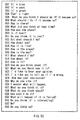
- the processing is performed by repeating a repeat of the procedure (step SP92) that if the user utters some words, the voice dialogue system performs speech recognition on it (step SP90), and generates an answering sentence according to the recognition result and emits this by sound (step SP91).
- a problem in this "dialogue having no scenario" method is that dialogue does not progress if the user does not utter. For example, if a response generated in step SP91 in Fig. 36 is the contents urging the user to the next utterance, the dialogue progresses, however, if it is not, for example, if the user becomes into the state "cannot say the next word", the voice dialogue system continues to await the user's utterance and the dialogue does not progress.
- the dialogue does not have scenario, so that also there is a problem that it is difficult to generate an answering sentence considered in a flow of dialogue at the time of generating a response in step SP91 in Fig. 36. For instance, it is difficult to perform the processing that after having heard the user's profile over, the voice dialogue system makes it reflect in the dialogue.
- the "dialogue having scenario” is a dialogue method in which the dialogue is progressed by that the voice dialogue system sequentially utters according to a predetermined scenario, and it is progressed by the combination of the turn in which the voice dialogue system one-sidedly utters, and the turn in which the voice dialogue system questions the user and further responds to the user's answer to the question.
- "turn” means an utterance that is clearly independent in a dialogue or one unit of a dialogue.
- the user is good only to answer to the question, so that the user does not lose what he/she utters.
- the user's utterance can be limited by the contents of questions, so that the design of answering sentence is comparatively easy in the turn that the voice dialogue system further responds according to the user's answer. For example, as a question from the voice dialogue system to the user in this turn, it is good to prepare only two types for "yes" and "no".
- the voice dialogue system can generate an answering sentence by using a flow of story.
- Patent Document 1 "Artificial Unintelligence Review", [on line], [searched on March 14, 2003 (Heisei 15)], Internet ⁇ URL: http://www.ycf.nanet.co.jp/ ⁇ skato/muno/review.htm>
- this dialogue method has problems. First, it is that since the voice dialogue system can only give utterance according to the scenario previously designed by assuming the contents of the user's answer, the voice dialogue system cannot respond when the user uttered unexpected words.
- the voice dialogue system cannot make any response, or even if it responds, it can be only extremely unsuitable response as a response to the user's answer. Furthermore, in such case, the possibility that after that, the story becomes unnatural is high.
- a voice dialogue system can make natural dialogue with the user, and its practicability and entertainment ability can be remarkably improved.
- the present invention has been done considering the above points, and provides a voice dialogue system, a voice dialogue method and a robot apparatus that can perform a natural dialogue with the user.
- dialogue control means for controlling a dialogue with the user according to a scenario previously given, based on a speech recognition result by speech recognition means for performing speech recognition on the user's utterance, and response generating means for generating an answering sentence corresponding to the contents of the user's utterance, responding to a request from the dialogue control means are provided.
- the dialogue control means makes a request to the response generating means to generate an answering sentence as the occasion demands, based on the contents of the user's utterance.
- a first step for performing speech recognition on the user's utterance a second step for controlling a dialogue with the user according to a scenario previously given, based on the speech recognition result, and if needed, generating an answering sentence corresponding to the contents of the user's utterance, and a third step for performing speech synthesis processing to one sentence in the reproduced scenario or the generated answering sentence are provided.
- an answering sentence corresponding to the contents of the user's utterance is generated as the occasion demands, based on the contents of the user's utterance.
- this voice dialogue method it can be prevented that a dialogue with the user becomes unnatural, and also a feeling of "making a dialogue" can be given to the above user.
- dialogue control means for controlling a dialogue with the user according to a scenario previously given, based on a speech recognition result by speech recognition means for performing speech recognition on the user's utterance, and response generating means for generating an answering sentence corresponding to the contents of the user's utterance, responding to a request from the dialogue control means are provided.
- the dialogue control means makes a request to the response generating means to generate an answering sentence as the occasion demands, based on the contents of the user's utterance.
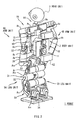
- reference numeral 1 generally shows a bipedal robot according to this embodiment.
- a head unit 3 is disposed on a body unit 2
- arm units 4A and 4B having the same structure are disposed on the upper left part and the upper right upper part of the above body unit 2 respectively
- leg units 5A and 5B having the same structure are attached to predetermined positions on the left lower part and the right lower part of the body unit 2 respectively.
- a frame 10 forming the upper part of a torso and a waist base 11 forming the lower part of the torso are connected via a waist joint mechanism 12.
- the actuators A 1 and A 2 of the waist joint mechanism 12 fixed to the waist base 11 forming the lower part of the torso are respectively driven, so that the upper part of the torso can be turned according to the respectively independent turn of a roll shaft 13 and a pitch shaft 14 that are orthogonal, shown in Fig. 3.
- the head unit 3 is attached to the top center part of a shoulder base 15 fixed to the upper ends of a frame 10 via a neck joint mechanism 16.
- the actuators A 3 and A 4 of the above neck joint mechanism 16 are respectively driven, so that the head unit 3 can be turned according to the respectively independent turn of a pitch shaft 17 and a yaw shaft 18 that are orthogonal, shown in Fig. 3.
- the arm units 4A and 4B are attached to the left end and the right end of the shoulder base 15 via a shoulder joint mechanism 19 respectively.
- the actuators A 5 and A 6 of the corresponding shoulder joint mechanism 19 are respectively driven, so that the arm units 4A and 4B can be turned respectively independently, according to the turn of a pitch shaft 20 and a roll shaft 21 that are orthogonal, shown in Fig. 3.
- an actuator A 8 forming a forearm part is connected to the output shaft of an actuator A 7 forming an upper arm part via an arm joint mechanism 22.
- a hand part 23 is attached to the end of the above forearm part.
- the forearm parts can be turned according to the turn of yaw shafts 24 shown in Fig. 3 by driving the actuator A 7
- the forearm parts can be turned according to the turn of pitch shafts 25 shown in Fig. 3 by driving the actuator A 8 .
- the leg units 5A and 5B are attached to the waist base 11 forming the lower part of the torso via a hip joint mechanism 26 respectively.
- the actuators A 9 to A 11 of the corresponding hip joint mechanism 26 are driven respectively, so that the hip joint mechanisms 26 can be turned respectively independently, according to the turn of a yaw shaft 27, a roll shaft 28 and a pitch shaft 29 that are mutually orthogonal, shown in Fig. 3.
- a frame 32 forming an underthigh part is connected to the lower end of the frame 30 forming a thigh part via a knee joint mechanism 31, and a foot part 34 is connected to the lower end of the above frame 32 via an ankle joint mechanism 33.
- the underthigh parts can be turned according to the turn of pitch shafts 35 shown in Fig. 3 by driving actuators A 12 forming the knee joint mechanisms 31.
- the foot parts 34 can be turned respectively independently, according to the turn of a pitch shaft 36 and a roll shaft 37 that are orthogonal, shown in Fig. 3, by respectively driving the actuators A 13 and A 14 of the ankle joint mechanism 33.
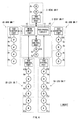
- a control unit 42 in which a main control part 40 for controlling the entire movements of the above robot 1, a peripheral circuit 41 such as a power supply circuit and a communication circuit, a battery 45 (Fig. 5), etc. are contained in a box, is disposed.
- This control unit 42 is connected to each of sub control parts 43A to 43D respectively disposed in the forming units (the body unit 2, head unit 3, arm units 4A and 4B, and leg units 5A and 5B). Thereby, a necessary power supply voltage can be supplied to these sub control parts 43A to 43D, and the control unit 42 can perform communication with these sub control parts 43A to 43D.
- Each of the sub control parts 43A to 43D is connected to the actuators A 1 to A 14 in the respectively corresponding forming unit, so that each of the actuators A 1 to A 14 in the above forming units can be driven into a state where it was specified based on various control commands given from the main control part 40, respectively.
- various external sensors such as a charge coupled device (CCD) camera 50 having a function as "eye” of this robot 1, a microphone 51 having a function as “ear”, and a speaker 52 having a function as “mouse”, are disposed on respective predetermined positions.
- Touch sensors 53 are disposed on the hand parts 23 and the foot parts 34 as external sensors.
- internal sensors such as a battery sensor 54 and an acceleration sensor 55 are contained.
- the CCD camera 50 picks up the images of surroundings, and transmits thus obtained video signal S1A to the main control part 40.
- the microphone 51 picks up various external sounds, and transmits thus obtained audio signal S1B to the main control part 40.
- each of the touch sensors 53 detects a physical touch on an external object, and transmits the detection results to the main control part 40 as a pressure detecting signal S1C.
- the battery sensor 54 detects the remaining quantity of the battery 45 in a predetermined cycle, and transmits the detection result to the main control part 40 as a remaining battery detecting signal S2A.
- the acceleration sensor 55 detects acceleration in the three axis directions (x-axis, y-axis and z-axis) in a predetermined cycle, and transmits the detection result to the main control part 40 as an acceleration detecting signal S2B.
- the main control part 40 has the configuration of a microcomputer having a central processing unit (CPU), an internal memory 40A serving as a read only memory (ROM) and a random access memory (RAM), etc.
- the main control part 40 determines the surrounding state and the internal state of the robot 1, by whether an external object touched or not, or the like, based on external sensor signals S1 such as the video signal S1A, the audio signal S1B and the pressure detecting signal S1C that are respectively supplied from each external sensor such as the CCD camera 50, the microphone 51 and the touch sensors 53, and internal sensor signals S2 such as the remaining battery detecting signal S2A and the acceleration detecting signal S2B that are respectively supplied from each internal sensor such as the battery sensor 54 and the acceleration sensor 55.
- external sensor signals S1 such as the video signal S1A, the audio signal S1B and the pressure detecting signal S1C that are respectively supplied from each external sensor such as the CCD camera 50, the microphone 51 and the touch sensors 53
- internal sensor signals S2 such as the remaining battery detecting
- the main control part 40 determines the next movement based on this determination result, a control program previously stored in the internal memory 40A, and various control parameters stored in an external memory 56 being loaded at the time, and transmits a control command based on the determination result to the corresponding sub control part 43A - 43D.
- the corresponding actuator A 1 - A 14 is driven based on this control command, under the control of that sub control part 43A - 43D.
- the main control part 40 recognizes the contents of the user's utterance by predetermined speech recognition processing to the above audio signal S1B supplied from the microphone 51, and supplies an audio signal S3 according to the above recognition to the speaker 52. Thereby, a synthetic voice to perform a dialogue with the user is emitted to the outside.
- this robot 1 can move autonomously based on the surrounding state and the internal state, and also can make a dialogue with the user.
- a speech recognition part 60 for performing voice recognition to the voice uttered by the user
- a scenario reproducing part 62 for controlling a dialogue with the user based on the recognition result by the above speech recognition part 60, according to a scenario 61 previously given
- a response generating part 63 for generating an answering sentence responding to a request from the scenario reproducing part 62
- a voice synthesis part 64 for generating a synthetic voice of one sentence of the scenario 61 reproduced by the scenario reproducing part 62 or the answering sentence generated by the response generating part 63.
- the speech recognition part 60 has the function to execute predetermined speech recognition processing based on the audio signal S1B supplied from the microphone 51 (Fig. 5) and recognize the speech included in the above audio signal S1B in word unit.
- the speech recognition part 60 supplies these recognized words to the scenario reproducing part 62 as character string data D1.
- the scenario reproducing part 62 manages speech (prompt) that has been previously given by being stored in the external memory 56 (Fig. 5), and should be uttered by the above robot 1 in the process of a series of dialogue with the user, by reading data for plural scenarios 61 provided over plural turns from the above external memory 56 to the internal memory 40A.
- the scenario reproducing part 62 selects a scenario 61 suited to the user who was recognized and identified by a face recognition part not shown based on the picture signal S1A supplied from the CCD camera 50 (Fig. 5), and becomes the other party of the dialogue, and reproduces the scenario 61.
- character string data D2 corresponding to the voice uttered by the robot 1 is sequentially supplied to the voice synthesis part 64.
- the scenario reproducing part 62 confirms that the user gave unexpected utterance as an answer to the question that the robot 1 asked, based on the character string data D1 supplied from the speech recognition part 60, the scenario reproducing part 62 supplies the above character string data D1 and an answering sentence generation request COM to the response generating part 63.
- the response generating part 63 is formed by an artificial unintelligence module for generating an answering sentence by simple answering sentence generation algorithm such as the Eliza engine. If the answering sentence generation request COM is supplied from the scenario reproducing part 62, the response generating part 63 generates an answering sentence according to the character string data D1 that was supplied together with the answering sentence generation request COM, and supplies its character string data D3 to the voice synthesis part 64 via the scenario reproducing part 62.
- the voice synthesis part 64 generates synthetic voice based on the character string data D2 supplied from the scenario reproducing part 62 or the character string data D3 supplied from the response generating part 63 via the above scenario reproducing part 62, and supplies thus obtained audio signal S3 of the above synthetic voice to the speaker 52 (Fig. 5). Therefore, the synthetic voice based on this audio signal S3 is emitted from the speaker 52.
- each scenario 61 is formed by arraying an arbitrary number of plural kinds of blocks BL (BL1 - BL8) providing an action of the robot 1 for one turn in a dialogue including one sentence that should be uttered by the robot 1, in arbitrary order.
- block BL (BL1 - BL8)
- the configuration of each of these eight types of blocks BL1 - BL8 and reproducing procedure of each of these eight types of blocks BL1 - BL8 by the scenario reproducing part 62 will be described.
- each script (program configuration) will be described according to the rule shown in Fig. 8.
- the scenario reproducing part 62 supplies character string data D2 to the voice synthesis part 64 and gives an answering sentence generation request to the response generating part 63, according to this rule.
- the one sentence scenario block BL1 is a block BL composed of only one sentence in the scenario 61, and for example it has a program configuration shown in Fig. 9.
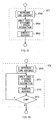
- step SP1 When in reproducing the one sentence scenario block BL1, according to a procedure for reproducing one sentence scenario block RT1 shown in Fig. 10, in step SP1, the scenario reproducing part 62 reproduces one sentence provided by the block maker, and supplies its character string data D2 to the voice synthesis part 64. Then, the scenario reproducing part 62 stops the reproducing processing of this one sentence scenario block BL1, and then proceeds to the reproducing processing of a block BL following this.
- the question block BL2 is a block BL that will be used in the case of asking the user a question or the like, and for example it has a program configuration shown in Fig. 11. In this question block BL2, it urges the user to utterance, and the robot 1 utters a prompt for positive or negative provided by the block maker, according to whether or not the user's answer to the question was positive.
- step SP10 the scenario reproducing part 62 reproduces one sentence provided by the block maker and supplies its character string data D2 to the voice synthesis part 64. And then, in the next step SP11, the scenario reproducing part 62 awaits the user's answer (utterance) to this.
- step SP12 determines whether or not the contents of that answer was positive.
- step SP12 If a positive result is obtained in this step SP12, the scenario reproducing part 62 proceeds to step SP13 to reproduce an answering sentence for positive and supplies its character string data D2 to the voice synthesis part 64, and stops the reproducing processing of this question block BL2. Then, the scenario reproducing part 62 proceeds to the reproducing processing of a block BL following this.
- step SP12 the scenario reproducing part 62 proceeds to step SP14 to determine whether or not the user's answer that was recognized in step SP11 was negative.
- step SP14 If an affirmative result is obtained in this step SP14, the scenario reproducing part 62 proceeds to step SP15 to reproduce an answering sentence for negative and supplies its character string data D2 to the voice synthesis part 64, and then stops the reproducing processing of this question block BL2. Then, the scenario reproducing part 62 proceeds to the reproducing processing of a block BL following this.
- step SP14 the scenario reproducing part 62 stops the reproducing processing of this question block BL2 as it is. Then, the scenario reproducing part 62 proceeds to the reproducing processing of a block BL following this.
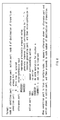
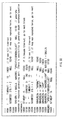
- the scenario reproducing part 62 has a semantics definition file shown in Fig. 13, for example.
- the scenario reproducing part 62 determines whether the user's answer was positive ("positive”) or negative ("negative") by referring to this semantics definition file, based on the character string data D1 supplied from the speech recognition part 60.
- the first question/answer block BL3 is a block BL that will be used in the case of asking the user a question or the like similarly to the aforementioned question block BL2, and has a program configuration shown in Fig. 14, for example.
- This first question/answer block BL3 is designed so that even if the user's answer to a question or the like was neither positive nor negative, the robot 1 can respond.
- the scenario reproducing part 62 performs processing similarly to steps SP10 - SP14 of the aforementioned procedure for reproducing question block RT2 (Fig. 12).
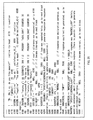
- the scenario reproducing part 62 supplies an answering sentence generation request COM and a tag denoting a kind of a rule to generate an answering sentence to be generated (SPECIFIC, GENERAL, LAST, SPECIFIC ST, GENERAL ST, LAST) for example shown in Fig. 16, to the response generating part 63 (Fig. 6), with the character string data D1 that was supplied from the speech recognition part 60 at that time.
- the tag which will be supplied to the response generating part 63 by the scenario reproducing part 62 at this time has already been determined by the block maker (for example, see the line of node number "1060" in Fig. 14).
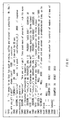
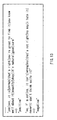
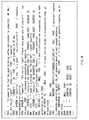
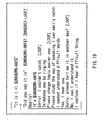
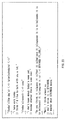
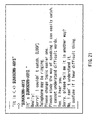
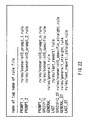
- the response generating part 63 has plural files in which the generation rule of a corresponding answering sentence has been provided, for example shown in Figs. 17 - 21, by respectively corresponding to each kind of the generation rules of an answering sentence to be generated. Furthermore, the response generating part 63 has a rule table shown in Fig. 22, in which these files have been related to the tags to be supplied from the scenario reproducing part 62.
- the response generating part 63 refers to this rule table, based on the file, the tag supplied from the scenario reproducing part 62 and the character string data D1 supplied from the speech recognition part 60 at that time, generates an answering sentence according to the corresponding generation rule of an answering sentence, and supplies its character string data D3 to the voice synthesis part 64 via the scenario reproducing part 62.
- the scenario reproducing part 62 stops the reproducing processing of this first question/answer block BL3, and proceeds to the reproducing processing of a block BL following this.
- the second question/answer block BL4 is a block BL that will be used in the case of asking the user a question or the like similarly to the question block BL2, and it has a program configuration shown in Fig. 23, for example.
- This second question/answer block BL4 will be used to prevent that a dialogue becomes unnatural, by considering the contents of an answering sentence to be generated in the response generating part 63 in the case where the user's answer to the question or the like was neither positive nor negative.
- step SP26 of the procedure for reproducing first question/answer block RT3 described above with Fig. 15 in the case where the response generating part 63 generated a request sentence such as "Try to say the same thing in different words.” or a question sentence such as "Is that true?", if the scenario reproducing part 62 proceeds to the reproducing processing of the next block BL after it finished the processing of step SP26, the user cannot answer the request or question, so that the dialogue becomes unnatural.
- this second question/answer block BL4 it is designed so that when the response generating part 63 generates an answering sentence, in the case where there is a possibility to generate a question sentence which can be responded by the user by "yes” or "no" as the above answering sentence, the user's response to this can be accepted.
- step SP36 the scenario reproducing part 62 requests the response generating part 63 to generate an answering sentence. In this manner, if receiving character string data D3 for the answering sentence generated by the response generating part 63, the scenario reproducing part 62 supplies this to the voice synthesis part 64, and also determines whether or not the answering sentence is loop type.
- the response generating part 63 is designed so that when in supplying the character string data D3 for the answering sentence generated by receiving the request from the scenario reproducing part 62 to the scenario reproducing part 62, in the case where the answering sentence is a question sentence or the like that can be answered by the user by "yes” or “no", it adds attribute information showing that the answering sentence is a first loop type to the above character string data D3, in the case where the answering sentence is a request sentence or the like that cannot be answered by the user by "yes” or "no", it adds attribute information showing that the answering sentence is a second group type to the above character string data D3, and in the case where the answering sentence is a declarative sentence that is unnecessary to be responded by the user, it adds attribute information showing that the answering sentence is a noloop type to the above character string data D3.
- step SP36 of the procedure for reproducing second question/answer block RT4 based on the attribute information on the above answering sentence supplied with the character string data D3 for the answering sentence from the response generating part 63, if the answering sentence is the first loop type, the scenario reproducing part 62 returns to step SP31, and after that, repeats the processing of steps SP31 - SP36 until an affirmative result is obtained in step SP37.
- step SP37 If an affirmative result is soon obtained in step SP37 by that the response generating part 63 generated the noloop type of answering sentence, the scenario reproducing part 62 stops the reproducing processing of this second question/answer block BL4, and then proceeds to the reproducing processing of a block BL following this.
- the third question/answer block BL5 is a block BL that will be used to prevent that a dialogue becomes unnatural, by considering the contents of an answering sentence to be generated in the response generating part 63 in the case where the user's response to a question or the like was neither positive nor negative, similarly to the second question/answer block BL4, and it has a program configuration shown in Fig. 25, for example.
- this third question/answer block BL5 it is designed so that when the response generating part 63 generates an answering sentence, in the case where as the above answering sentence, the sentence which cannot be answered by the user by "yes” or "no", for example, a request sentence such as "Try to say the same thing in different words.” or a question sentence such as "How do you think about that?" was generated, the user's response to that can be accepted and the robot 1 can respond to this.
- the scenario reproducing part 62 performs processing similarly to steps SP20 - SP26 of the aforementioned procedure for reproducing first question/answer block RT3 (Fig. 15).
- step SP47 the scenario reproducing part 62 proceeds to step SP47 to determine whether or not the answering sentence based on the character string data D3 is the aforementioned second loop type, based on the attribute information added to the character string data D3 supplied from the response generating part 63.
- the scenario reproducing part 62 returns to step SP46, and after that, repeats the processing of steps SP46 - SP48 - SP46 until a negative result is obtained in step SP47.
- step SP47 If positive result is soon obtained in step SP47 by that the response generating part 63 generated the noloop type of answering sentence, the scenario reproducing part 62 stops the reproducing processing of this third question/answer block BL5, and then proceeds to the reproducing processing of a block BL following this.
- the fourth question/answer block BL6 is a block that will be used to prevent that a dialogue becomes unnatural, by considering the contents of an answering sentence to be generated in the response generating part 63 in the case where the user's response to a question or the like was neither positive nor negative, similarly to the second and the third question/answer blocks BL4 and BL5, and it has a program configuration shown in Fig. 27, for example.
- this fourth question/answer block BL6 it is designed so that the scenario reproducing part 62 can cope with both cases that the answering sentence generated by the response generating part 63 is the aforementioned first loop type and that it is the second loop type.
- the scenario reproducing part 62 performs processing similarly to steps SP20 - SP26 of the aforementioned procedure for reproducing first question/answer block RT3 (Fig. 15).
- step SP56 the scenario reproducing part 62 proceeds to step SP57 to determine whether or not the generated answering sentence is either the aforementioned first or second loop type, based on the attribute information added to the character string data D3 supplied from the response generating part 63.
- the scenario reproducing part 62 proceeds to step SP58 to determine whether or not the above answering sentence is the first loop type.
- step SP58 If an affirmative result is obtained in this step SP58, the scenario reproducing part 62 returns to step SP51. If a negative result is obtained in step SP58, the scenario reproducing part 62 proceeds to step SP59 to await the user's response. If a response was made soon, the scenario reproducing part 62 recognizes this based on the character string data D1 from the speech recognition part 60, and then returns to step SP56. After that, the scenario reproducing part 62 repeats the processing of steps SP51 - SP59 until a negative result is obtained in step SP57.
- step SP57 If a positive result is soon obtained in step SP57 by that the response generating part 63 generated the noloop type of answering sentence, the scenario reproducing part 62 stops the reproducing processing of this fourth question/answer block BL6, and then proceeds to the reproducing processing of a block BL following this.
- the first dialogue block BL7 is a block BL that will be used to add an opportunity to make the user give utterance, and it has a program configuration shown in Figs. 29 and 30, for example.
- Fig. 29 shows an example of the program configuration in the case where there is a prompt
- Fig. 30 shows an example of the program configuration in the case where there is no prompt.
- this first dialogue block BL7 immediately after the one sentence scenario block BL1 described above with Figs. 9 and 10, the turns of dialogue can be increased: it can give the user a feeling of "making a dialogue.”
- this first dialogue block BL7 it is designed so that the scenario reproducing part 62 reproduces one sentence (prompt) shown in Fig., before awaiting the user's utterance.
- this one sentence sometimes becomes unnecessary depending upon the contents of utterance by the robot 1 in the block BL reproduced immediately before, it is designed to be omittable.
- step SP60 the scenario reproducing part 62 reproduces omittable one prompt, for example, shown in Fig., that has been provided by the block maker as the occasion demands, and then in the next step SP61, the scenario reproducing part 62 awaits the user's utterance to that.
- step SP62 If the scenario reproducing part 62 soon recognizes that the user uttered based on the character string data D1 from the speech recognition part 60, it proceeds to step SP62 to supply the answering sentence generation request COM to the response generating part 63, with the above character string data D1.
- an answering sentence is generated in the response generating part 63 based on these character string data D1 and answering sentence generation request COM, and its character string data D3 is supplied to the voice synthesis part 64 via the scenario reproducing part 62.
- the scenario reproducing part 62 stops the reproducing processing of this first dialogue block BL7, and then proceeds to the reproducing processing of a block BL following this.
- the second dialogue block BL8 is a block BL that will be used to add an opportunity to make the user give utterance same as the first dialogue block BL7, and it has a program configuration shown in Fig. 33 or 34, for example.
- Fig. 33 shows an example of the program configuration in the case where there is a prompt
- Fig. 34 shows an example of the program configuration in the case where there is no prompt.
- This second dialogue block BL8 is effective in the case where there is a possibility that in step SP62 of the procedure for reproducing first dialogue block RT7 described above with Fig. 31, the response generating part 63 generates a question sentence or a request sentence as the answering sentence.
- the scenario reproducing part 62 performs processing similarly to steps SP60 - SP62 of the aforementioned procedure for reproducing first dialogue block RT7 (Fig. 31).
- the scenario reproducing part 62 determines whether or not the answering sentence is the second loop type, based on the aforementioned attribute information added to the character string data D3 supplied from the response generating part 63.
- step SP73 If an affirmative result is obtained in this step SP73, the scenario reproducing part 62 returns to step SP71, and after that, it repeats the loop of steps SP71 - SP73 until a negative result is obtained in step SP73.
- step SP73 If a negative result is soon obtained in step SP73 by that the response generating part 63 generated the no-loop type of answering sentence, the scenario reproducing part 62 stops the reproducing processing of this second dialogue block BL8, and then proceeds to the reproducing processing of a block BL following this.
- a desired scenario 61 can be made by aligning an arbitrary number of eight kinds of various blocks BL1 - BL8 in arbitrary order in series, and respectively providing a necessary sentence in each block BL according to the preference of the person who makes the scenarios.
- a new scenario 61 can be easily made, on the existing scenario 61 composed of the aforementioned one sentence scenario block BL1 and question block BL2,
- the scenario 61 can be made by aligning an arbitrary number of plural kinds of blocks BL in which the action of the robot 1 for one turn in a dialogue including one sentence to be uttered by the robot 1 has been provided, in arbitrary order. Therefore, making it is easy, and also interesting scenarios can be easily made with less process by using the existing scenario 61.
- the present invention is not only limited to this but also the scenario 61 may be made by a block having a configuration other than these eight types, or the scenario 61 may be made by preparing another type of block in addition to these eight types.
- the present invention is not only limited to this but also for example dedicated response generating parts may be provided by respectively corresponding to the steps for requesting the response generating part 63 to generate an answering sentence in the third - the eighth blocks BL3 - BL8 (steps SP26, SP36, SP46, SP56, SP62 and SP72). Furthermore, two types of them, a response generating part "which does not generate a question sentence and a request sentence" and a response generating part "that there is a possibility to generate a question and a request sentence" may be prepared, and they may be selectively used depending on the situation.
- the steps for determining positive or negative on the user's response are provided.
- the present invention is not only limited to this but also the step for matching with another word may be provided instead of them.
- the robot 1 asks the user a question such as "what prefecture did you born?", and determines a prefecture corresponding to the speech recognition result on the user's answer to this.
- the present invention is not only limited to this but also a counter for counting the number of times of the loop may be provided to limit the number of times of the loop based on the counted number of the above counter.
- the awaiting time to await the user's utterance is set to unlimited (for example, step SP11 in the Procedure for reproducing question block RT2).
- the present invention is not only limited to this but also the above awaiting time may be limited. For instance, it may be designed so that if the user did not utter in ten seconds after the robot 1 uttered, a response for time-out previously prepared is reproduced and it proceeds to the reproducing processing of the next block BL.
- the scenario 61 is formed by aligning the blocks BL in series.
- the present invention is not only limited to this but also branches may be provided in the scenario 61 by arranging blocks BL in parallel or the like.
- the robot 1 appears only voice in a dialogue with the user.
- the present invention is not only limited to this but also a motion (action) may be appeared in addition to voice.
- the speech recognition part 60 serving as speech recognition means for performing speech recognition on the user's utterance
- the scenario reproducing part 62 serving as dialogue control means for controlling a dialogue with the user according to the scenario 61 previously given, based on the speech recognition result by the speech recognition part 60
- the response generating part 63 serving as response generating means for generating an answering sentence according to the contents of the user's utterance, responding to a request from the scenario reproducing part 62
- the voice synthesis part 64 serving as voice synthesis means for performing voice synthesis processing to one sentence of the scenario 61 reproduced by the scenario reproducing part 62 or the answering sentence generated by the response generating part 63 are combined as shown in Fig. 6.
- the present invention is not only limited to this but also for example character string data D3 supplied from the response generating part 63 may be directly supplied to the voice synthesis part 64.
- character string data D3 supplied from the response generating part 63 may be directly supplied to the voice synthesis part 64.
- various combinations other than this can be widely applied.
- dialogue control means for controlling a dialogue with the user according to a scenario previously given, based on the speech recognition result by speech recognition means for performing speech recognition on the user's utterance, and response generating means for generating an answering sentence according to the contents of the user's utterance, responding to a request from the dialogue control means are provided.
- the dialogue control means requests the response generating means to generate an answering sentence as the occasion demands, based on the contents of the user's utterance. Thereby, it can be prevented that the dialogue with the user becomes unnatural, and at the same time, a feeling of "making a dialogue" can be given to the above user.
- a voice dialogue system capable of making a natural dialogue with the user can be realized.
- a first step for performing speech recognition on the user's utterance a second step for controlling a dialogue with the user according to a scenario previously given based on the speech recognition result, and generating an answering sentence according to the contents of the user's utterance as the occasion demands, and a third step for performing voice synthesis processing to one sentence of the reproduced scenario or the generated answering sentence are provided.
- an answering sentence according to the contents of the user's utterance is generated as the occasion demands, based on the contents of the user's utterance, so that it can be prevented that the dialogue with the user becomes unnatural, and at the same time, a feeling of "making a dialogue" can be given to the above user.
- a voice dialogue method in which a natural dialogue can be performed with the user can be realized.
- dialogue control means for controlling a dialogue with the user according to a scenario previously given, based on speech recognition result by speech recognition means for performing speech recognition on the user's utterance, and response generating means for generating an answering sentence according to the contents of the user's utterance, responding to a request from the dialogue control means are provided.
- the dialogue control means requests the response generating means to generate an answering sentence as the occasion demands, based on the contents of the user's utterance. Thereby, it can be prevented that the dialogue with the user becomes unnatural, and at the same time, a feeling of "making a dialogue" can be given to the above user.
- a robot apparatus capable of making a natural dialogue with the user can be realized.
- the present invention is widely applicable to various apparatuses having a voice dialogue function such as personal computers in addition to entertainment robots.
Landscapes
- Engineering & Computer Science (AREA)
- Computational Linguistics (AREA)
- Health & Medical Sciences (AREA)
- Audiology, Speech & Language Pathology (AREA)
- Human Computer Interaction (AREA)
- Physics & Mathematics (AREA)
- Acoustics & Sound (AREA)
- Multimedia (AREA)
- Toys (AREA)
- Manipulator (AREA)
Abstract
Description
Claims (21)
- A voice dialogue system comprising:speech recognition means for performing speech recognition on the user's utterance;dialogue control means for controlling a dialogue with said user according to a scenario previously given, based on the speech recognition result by said speech recognition means;response generating means for generating an answering sentence corresponding to the contents of said user's utterance, responding to a request from said dialogue control means; andspeech synthesis means for performing speech synthesis processing to one sentence in said scenario reproduced by said dialogue control means or said answering sentence generated by said response generating means; andsaid voice dialogue system wherein,
said dialogue control means requests said response generating means to generate said answering sentence as the occasion demands, based on the contents of said user's utterance. - The voice dialogue system according to claim 1, wherein;
said dialogue control means controls said dialogue with said user based on the attribute of said answering sentence generated by said response generating means. - The voice dialogue system according to claim 1, wherein;
said scenario is made by combining an arbitrary number of plural types of blocks in a respectively predetermined format providing for one turn of a dialogue with said user, in an arbitrary order. - The voice dialogue system according to claim 3, comprising;
as one of said blocks, a first block having,a first reproducing step for reproducing said one sentence to urge said user to utterance,a first utterance await and recognition step for awaiting said user's utterance after the above first reproducing step, and when said user uttered, recognizing the contents of the above utterance, anda second reproducing step, following said first utterance await and recognition step, for reproducing corresponding one sentence previously provided, depending on whether the contents of the above utterance is positive or negative. - The voice dialogue system according to claim 4, comprising;
as one of said blocks, a second block having a first generation of answering sentence request step, when the contents of said user's utterance recognized in said first utterance await and recognition step is neither said positive nor said negative, for requesting said response generating means to generate said answering sentence corresponding to said contents of said user's utterance. - The voice dialogue system according to claim 5, comprising;
as one of said blocks, a third block having a first loop in which if the attribute of said answering sentence, that was generated by said response generating part responding to said request in said first generation of answering sentence request step, is the first loop type, it returns to said first utterance await and recognition step. - The voice dialogue system according to claim 5, comprising;
as one of said blocks, a fourth block having a second loop in which if the attribute of said answering sentence, that was generated by said response generating part responding to said request in said first generation of answering sentence request step, is the second loop type, it awaits said user's utterance, and when said user uttered, it recognizes the contents of the above utterance, and then returns to said generation of answering sentence request step. - The voice dialogue system according to claim 5, comprising;
as one of said blocks, a fifth block having,determination step for determining the attribute of said answering sentence, that was generated by said response generating part responding to said request in said first generation of answering sentence request step,a first loop in which if said attribute of said answering sentence determined in the above determination step is the first loop type, it returns to said first utterance await and recognition step, anda second loop in which if said attribute of said answering sentence determined in the above determination step is the second loop type, it awaits said user's utterance, and when said user uttered, it recognizes the contents of the above utterance, and then returns to said generation of answering sentence request step. - The voice dialogue system according to claim 3, comprising;
as one of said blocks, a sixth block having,a second reproducing step for reproducing said one sentence omittable in said scenario if needed,a second utterance await and recognition step, for awaiting said user's utterance after said second reproducing step, and when said user uttered, for recognizing the contents of the above utterance, anda second generation of answering sentence request step, following said second utterance await and recognition step, for requesting said response generating means to generate said answering sentence corresponding to said contents of said user's utterance. - The voice dialogue system according to claim 9, comprising;
as one of said blocks, a seventh block having a third loop in which if the attribute of said answering sentence, that was generated by said response generating part responding to said request in said second generation of answering sentence request step, is the third loop type, it returns to said second utterance await and recognition step. - A voice dialogue method comprising:a first step for performing speech recognition on the user's utterance;a second step for controlling a dialogue with said user according to a scenario previously given, based on the results of said speech recognition, and if needed, generating an answering sentence corresponding to the contents of said user's utterance; anda third step for performing speech synthesis processing to one sentence in said reproduced scenario or said generated answering sentence; andsaid voice dialogue method wherein,
in said second step, said answering sentence corresponding to the contents of said user's utterance is generated as the occasion demands, based on the contents of said user's utterance. - The voice dialogue method according to claim 11, wherein;
in said second step, said dialogue with said user is controlled based on the attribute of said generated answering sentence. - The voice dialogue method according to claim 11, wherein;
said scenario is made by combining an arbitrary number of plural types of blocks in a respectively predetermined format providing for one turn of a dialogue with said user, in an arbitrary order. - The voice dialogue method according to claim 13, comprising;
as one of said blocks, a first block having,a first reproducing step for reproducing said one sentence to urge said user to utterance,a first utterance await and recognition step for awaiting said user's utterance after the above first reproducing step, and when said user uttered, recognizing the contents of the above utterance, anda second reproducing step, following said first utterance await and recognition step, for reproducing corresponding one sentence previously provided, depending on whether the contents of the above utterance is positive or negative. - The voice dialogue method according to claim 14, comprising;
as one of said blocks, a second block having a first generation of answering sentence request step, when the contents of said user's utterance recognized in said first utterance await and recognition step is neither said positive nor said negative, for generating said answering sentence corresponding to said contents of said user's utterance. - The voice dialogue method according to claim 15, comprising;
as one of said blocks, a third block having a first loop in which if the attribute of said answering sentence generated in said first answering sentence generating step is the first loop type, it returns to said first utterance await and recognition step. - The voice dialogue method according to claim 15, comprising;
as one of said blocks, a fourth block having a second loop in which if the attribute of said answering sentence generated in said first answering sentence generating step is the second loop type, it awaits said user's utterance, and when said user uttered, it recognizes the contents of the above utterance, and then returns to said answering sentence generating step. - The voice dialogue method according to claim 15, comprising;
as one of said blocks, a fifth block having,determination step for determining the attribute of said answering sentence generated in said first answering sentence generating step,a first loop in which if said attribute of said answering sentence determined in the above determination step is the first loop type, it returns to said first utterance await and recognition step, anda second loop in which if said attribute of said answering sentence determined in the above determination step is the second loop type, it awaits said user's utterance, and when said user uttered, it recognizes the contents of the above utterance, and then returns to said answering sentence generating step. - The voice dialogue method according to claim 13, comprising;
as one of said blocks, a sixth block having,a second reproducing step for reproducing said one sentence omittable in said scenario if needed,a second utterance await and recognition step, for awaiting said user's utterance after said second reproducing step, and when said user uttered, for recognizing the contents of the above utterance, anda second answering sentence generating step, following said second utterance await and recognition step, for generating said answering sentence corresponding to said contents of said user's utterance. - The voice dialogue method according to claim 19, comprising;
as one of said blocks, a seventh block having a third loop in which if the attribute of said answering sentence generated in said second answering sentence generating step is the third loop type, it returns to said second utterance await and recognition step. - A robot apparatus comprising:speech recognition means for performing speech recognition on the user's utterance;dialogue control means for controlling a dialogue with said user according to a scenario previously given, based on the speech recognition result by said speech recognition means;response generating means for generating an answering sentence corresponding to the contents of said user's utterance, responding to a request from said dialogue control means; andspeech synthesis means for performing speech synthesis processing to one sentence in said scenario reproduced by said dialogue control means or said answering sentence generated by said response generating means; andsaid robot apparatus wherein,
said dialogue control means requests said response generating means to generate said answering sentence as the occasion demands, based on the contents of said user's utterance.
Applications Claiming Priority (3)
| Application Number | Priority Date | Filing Date | Title |
|---|---|---|---|
| JP2003078086 | 2003-03-20 | ||
| JP2003078086A JP2004287016A (en) | 2003-03-20 | 2003-03-20 | Voice interaction apparatus and method, and robot apparatus |
| PCT/JP2004/003502 WO2004084183A1 (en) | 2003-03-20 | 2004-03-16 | Audio conversation device, method, and robot device |
Publications (3)
| Publication Number | Publication Date |
|---|---|
| EP1605438A1 true EP1605438A1 (en) | 2005-12-14 |
| EP1605438A4 EP1605438A4 (en) | 2006-07-26 |
| EP1605438B1 EP1605438B1 (en) | 2007-10-17 |
Family
ID=33027967
Family Applications (1)
| Application Number | Title | Priority Date | Filing Date |
|---|---|---|---|
| EP04721023A Expired - Lifetime EP1605438B1 (en) | 2003-03-20 | 2004-03-16 | Audio conversation device, method, and robot device |
Country Status (6)
| Country | Link |
|---|---|
| US (1) | US20060177802A1 (en) |
| EP (1) | EP1605438B1 (en) |
| JP (1) | JP2004287016A (en) |
| CN (1) | CN1781140A (en) |
| DE (1) | DE602004009549D1 (en) |
| WO (1) | WO2004084183A1 (en) |
Cited By (1)
| Publication number | Priority date | Publication date | Assignee | Title |
|---|---|---|---|---|
| GB2454664A (en) * | 2007-11-13 | 2009-05-20 | Sandor Mihaly Veres | Voice Actuated Robot |
Families Citing this family (20)
| Publication number | Priority date | Publication date | Assignee | Title |
|---|---|---|---|---|
| JP4718163B2 (en) * | 2004-11-19 | 2011-07-06 | パイオニア株式会社 | Audio processing apparatus, audio processing method, audio processing program, and recording medium |
| KR100824317B1 (en) | 2006-12-07 | 2008-04-22 | 주식회사 유진로봇 | Robot motion control system |
| JP2009061547A (en) * | 2007-09-06 | 2009-03-26 | Olympus Corp | Robot control system, robot, program, and information storage medium |
| US20110118870A1 (en) * | 2007-09-06 | 2011-05-19 | Olympus Corporation | Robot control system, robot, program, and information storage medium |
| TW201019288A (en) * | 2008-11-13 | 2010-05-16 | Ind Tech Res Inst | System and method for conversation practice in simulated situations |
| FR2947923B1 (en) * | 2009-07-10 | 2016-02-05 | Aldebaran Robotics | SYSTEM AND METHOD FOR GENERATING CONTEXTUAL BEHAVIOR OF A MOBILE ROBOT |
| JP2012133659A (en) * | 2010-12-22 | 2012-07-12 | Fujifilm Corp | File format, server, electronic comic viewer device and electronic comic generation device |
| JP2014219467A (en) * | 2013-05-02 | 2014-11-20 | ソニー株式会社 | Sound signal processing apparatus, sound signal processing method, and program |
| CN105247609B (en) * | 2013-05-31 | 2019-04-12 | 雅马哈株式会社 | Method and apparatus for responding to speech using speech synthesis |
| FR3011375B1 (en) * | 2013-10-01 | 2017-01-27 | Aldebaran Robotics | METHOD FOR DIALOGUE BETWEEN A MACHINE, SUCH AS A HUMANOID ROBOT, AND A HUMAN INTERLOCUTOR, COMPUTER PROGRAM PRODUCT AND HUMANOID ROBOT FOR IMPLEMENTING SUCH A METHOD |
| EP2933070A1 (en) * | 2014-04-17 | 2015-10-21 | Aldebaran Robotics | Methods and systems of handling a dialog with a robot |
| JP6699010B2 (en) * | 2016-05-20 | 2020-05-27 | 日本電信電話株式会社 | Dialogue method, dialogue system, dialogue device, and program |
| JP6719747B2 (en) * | 2016-05-20 | 2020-07-08 | 日本電信電話株式会社 | Interactive method, interactive system, interactive device, and program |
| JP6886689B2 (en) * | 2016-09-06 | 2021-06-16 | 国立大学法人千葉大学 | Dialogue device and dialogue system using it |
| CN106782606A (en) * | 2017-01-17 | 2017-05-31 | 山东南工机器人科技有限公司 | For the communication and interaction systems and its method of work of Dao Jiang robots |
| JP6621776B2 (en) * | 2017-03-22 | 2019-12-18 | 株式会社東芝 | Verification system, verification method, and program |
| CN107644641B (en) * | 2017-07-28 | 2021-04-13 | 深圳前海微众银行股份有限公司 | Dialogue scene recognition method, terminal and computer-readable storage medium |
| US10621984B2 (en) | 2017-10-04 | 2020-04-14 | Google Llc | User-configured and customized interactive dialog application |
| JP6935315B2 (en) * | 2017-12-01 | 2021-09-15 | 株式会社日立ビルシステム | Guidance robot system |
| WO2021112642A1 (en) * | 2019-12-04 | 2021-06-10 | Samsung Electronics Co., Ltd. | Voice user interface |
Family Cites Families (20)
| Publication number | Priority date | Publication date | Assignee | Title |
|---|---|---|---|---|
| JPS6055985A (en) * | 1983-09-05 | 1985-04-01 | 株式会社トミー | Sound recognizing toy |
| CA2292959A1 (en) * | 1997-05-06 | 1998-11-12 | Speechworks International, Inc. | System and method for developing interactive speech applications |
| JP3231693B2 (en) * | 1998-01-22 | 2001-11-26 | 日本電気株式会社 | Voice interaction device |
| US6321198B1 (en) * | 1999-02-23 | 2001-11-20 | Unisys Corporation | Apparatus for design and simulation of dialogue |
| US6314402B1 (en) * | 1999-04-23 | 2001-11-06 | Nuance Communications | Method and apparatus for creating modifiable and combinable speech objects for acquiring information from a speaker in an interactive voice response system |
| US7143042B1 (en) * | 1999-10-04 | 2006-11-28 | Nuance Communications | Tool for graphically defining dialog flows and for establishing operational links between speech applications and hypermedia content in an interactive voice response environment |
| JP3994368B2 (en) * | 2000-01-25 | 2007-10-17 | ソニー株式会社 | Information processing apparatus, information processing method, and recording medium |
| WO2002009094A1 (en) * | 2000-07-20 | 2002-01-31 | British Telecommunications Public Limited Company | Interactive dialogues |
| US6721706B1 (en) * | 2000-10-30 | 2004-04-13 | Koninklijke Philips Electronics N.V. | Environment-responsive user interface/entertainment device that simulates personal interaction |
| JP3452257B2 (en) * | 2000-12-01 | 2003-09-29 | 株式会社ナムコ | Simulated conversation system and information storage medium |
| JP3533371B2 (en) * | 2000-12-01 | 2004-05-31 | 株式会社ナムコ | Simulated conversation system, simulated conversation method, and information storage medium |
| JP2002283261A (en) * | 2001-03-27 | 2002-10-03 | Sony Corp | Robot apparatus, control method therefor, and storage medium |
| JP2003044080A (en) * | 2001-05-02 | 2003-02-14 | Sony Corp | Robot device, character recognition device and character recognition method, control program and recording medium |
| KR100940630B1 (en) * | 2001-05-02 | 2010-02-05 | 소니 주식회사 | Robot apparatus, character recognition apparatus and character recognition method, control program and recording medium |
| JP2002333898A (en) * | 2001-05-07 | 2002-11-22 | Vivarium Inc | Sound-recognizing system for electronic pet |
| US6944594B2 (en) * | 2001-05-30 | 2005-09-13 | Bellsouth Intellectual Property Corporation | Multi-context conversational environment system and method |
| JP2002358304A (en) * | 2001-05-31 | 2002-12-13 | P To Pa:Kk | System for conversation control |
| JP2003058188A (en) * | 2001-08-13 | 2003-02-28 | Fujitsu Ten Ltd | Voice interaction system |
| US7117158B2 (en) * | 2002-04-25 | 2006-10-03 | Bilcare, Inc. | Systems, methods and computer program products for designing, deploying and managing interactive voice response (IVR) systems |
| US7359860B1 (en) * | 2003-02-27 | 2008-04-15 | Lumen Vox, Llc | Call flow object model in a speech recognition system |
-
2003
- 2003-03-20 JP JP2003078086A patent/JP2004287016A/en not_active Abandoned
-
2004
- 2004-03-16 WO PCT/JP2004/003502 patent/WO2004084183A1/en not_active Ceased
- 2004-03-16 EP EP04721023A patent/EP1605438B1/en not_active Expired - Lifetime
- 2004-03-16 CN CN200480011340.9A patent/CN1781140A/en active Pending
- 2004-03-16 US US10/549,795 patent/US20060177802A1/en not_active Abandoned
- 2004-03-16 DE DE602004009549T patent/DE602004009549D1/en not_active Expired - Lifetime
Cited By (1)
| Publication number | Priority date | Publication date | Assignee | Title |
|---|---|---|---|---|
| GB2454664A (en) * | 2007-11-13 | 2009-05-20 | Sandor Mihaly Veres | Voice Actuated Robot |
Also Published As
| Publication number | Publication date |
|---|---|
| EP1605438B1 (en) | 2007-10-17 |
| DE602004009549D1 (en) | 2007-11-29 |
| EP1605438A4 (en) | 2006-07-26 |
| JP2004287016A (en) | 2004-10-14 |
| CN1781140A (en) | 2006-05-31 |
| US20060177802A1 (en) | 2006-08-10 |
| WO2004084183A1 (en) | 2004-09-30 |
Similar Documents
| Publication | Publication Date | Title |
|---|---|---|
| EP1605438B1 (en) | Audio conversation device, method, and robot device | |
| JP7557055B2 (en) | Method, device, equipment and computer program for driving the movement of a target object | |
| US7251606B2 (en) | Robot device with changing dialogue and control method therefor and storage medium | |
| US7987091B2 (en) | Dialog control device and method, and robot device | |
| US7216082B2 (en) | Action teaching apparatus and action teaching method for robot system, and storage medium | |
| US7152050B2 (en) | Learning system capable of performing additional learning and robot apparatus | |
| TW581959B (en) | Robotic (animal) device and motion control method for robotic (animal) device | |
| US6889117B2 (en) | Robot apparatus and method and system for controlling the action of the robot apparatus | |
| JP7205148B2 (en) | ROBOT, CONTROL METHOD AND PROGRAM | |
| US20090182453A1 (en) | Robot for participating in a joint performance with a human partner | |
| US20020198717A1 (en) | Method and apparatus for voice synthesis and robot apparatus | |
| US20200282555A1 (en) | Method and device for robot interactions | |
| KR20010052699A (en) | Robot, method of robot control, and program recording medium | |
| JP2007069302A (en) | Action expression device | |
| CN116394277B (en) | A humanoid piano playing robot | |
| KR102778688B1 (en) | Talking face image synthesis system according to audio voice | |
| Mittal et al. | Biomedical requirements for human machine interface towards building a humanoid: a review | |
| JP2005202076A (en) | Utterance control device and method and robot device | |
| JP4433273B2 (en) | Robot apparatus and control method of robot apparatus | |
| WO2017051627A1 (en) | Speech production apparatus and speech production method | |
| JP2002328693A (en) | Robot system, robot apparatus and control method therefor | |
| Tosa et al. | Network Neuro-Baby with robotics hand: An automatic facial expression synthesizer that responds to expressions of feeling in the human voice and handshake | |
| JP4529091B2 (en) | Learning apparatus, learning method, and robot apparatus | |
| KR20230081935A (en) | Smart robot for psychotheraph and controlling method thereof | |
| JP4677543B2 (en) | Facial expression voice generator |
Legal Events
| Date | Code | Title | Description |
|---|---|---|---|
| PUAI | Public reference made under article 153(3) epc to a published international application that has entered the european phase |
Free format text: ORIGINAL CODE: 0009012 |
|
| 17P | Request for examination filed |
Effective date: 20050913 |
|
| AK | Designated contracting states |
Kind code of ref document: A1 Designated state(s): AT BE BG CH CY CZ DE DK EE ES FI FR GB GR HU IE IT LI LU MC NL PL PT RO SE SI SK TR |
|
| AX | Request for extension of the european patent |
Extension state: AL LT LV MK |
|
| DAX | Request for extension of the european patent (deleted) | ||
| RBV | Designated contracting states (corrected) |
Designated state(s): DE FR GB |
|
| A4 | Supplementary search report drawn up and despatched |
Effective date: 20060622 |
|
| RIC1 | Information provided on ipc code assigned before grant |
Ipc: G10L 15/26 20060101ALI20060616BHEP Ipc: G10L 15/22 20060101AFI20041004BHEP |
|
| 17Q | First examination report despatched |
Effective date: 20061109 |
|
| GRAP | Despatch of communication of intention to grant a patent |
Free format text: ORIGINAL CODE: EPIDOSNIGR1 |
|
| GRAS | Grant fee paid |
Free format text: ORIGINAL CODE: EPIDOSNIGR3 |
|
| GRAA | (expected) grant |
Free format text: ORIGINAL CODE: 0009210 |
|
| AK | Designated contracting states |
Kind code of ref document: B1 Designated state(s): DE FR GB |
|
| REG | Reference to a national code |
Ref country code: GB Ref legal event code: FG4D |
|
| REF | Corresponds to: |
Ref document number: 602004009549 Country of ref document: DE Date of ref document: 20071129 Kind code of ref document: P |
|
| EN | Fr: translation not filed | ||
| PLBE | No opposition filed within time limit |
Free format text: ORIGINAL CODE: 0009261 |
|
| STAA | Information on the status of an ep patent application or granted ep patent |
Free format text: STATUS: NO OPPOSITION FILED WITHIN TIME LIMIT |
|
| 26N | No opposition filed |
Effective date: 20080718 |
|
| PG25 | Lapsed in a contracting state [announced via postgrant information from national office to epo] |
Ref country code: FR Free format text: LAPSE BECAUSE OF FAILURE TO SUBMIT A TRANSLATION OF THE DESCRIPTION OR TO PAY THE FEE WITHIN THE PRESCRIBED TIME-LIMIT Effective date: 20080801 Ref country code: DE Free format text: LAPSE BECAUSE OF FAILURE TO SUBMIT A TRANSLATION OF THE DESCRIPTION OR TO PAY THE FEE WITHIN THE PRESCRIBED TIME-LIMIT Effective date: 20080118 |
|
| GBPC | Gb: european patent ceased through non-payment of renewal fee |
Effective date: 20080316 |
|
| PG25 | Lapsed in a contracting state [announced via postgrant information from national office to epo] |
Ref country code: GB Free format text: LAPSE BECAUSE OF NON-PAYMENT OF DUE FEES Effective date: 20080316 |