EP1605051A2 - Method for increasing transgene expression - Google Patents
Method for increasing transgene expression Download PDFInfo
- Publication number
- EP1605051A2 EP1605051A2 EP05104022A EP05104022A EP1605051A2 EP 1605051 A2 EP1605051 A2 EP 1605051A2 EP 05104022 A EP05104022 A EP 05104022A EP 05104022 A EP05104022 A EP 05104022A EP 1605051 A2 EP1605051 A2 EP 1605051A2
- Authority
- EP
- European Patent Office
- Prior art keywords
- plant
- utr
- promoter
- intron
- gene
- Prior art date
- Legal status (The legal status is an assumption and is not a legal conclusion. Google has not performed a legal analysis and makes no representation as to the accuracy of the status listed.)
- Granted
Links
Images

Classifications
-
- C—CHEMISTRY; METALLURGY
- C12—BIOCHEMISTRY; BEER; SPIRITS; WINE; VINEGAR; MICROBIOLOGY; ENZYMOLOGY; MUTATION OR GENETIC ENGINEERING
- C12N—MICROORGANISMS OR ENZYMES; COMPOSITIONS THEREOF; PROPAGATING, PRESERVING, OR MAINTAINING MICROORGANISMS; MUTATION OR GENETIC ENGINEERING; CULTURE MEDIA
- C12N15/00—Mutation or genetic engineering; DNA or RNA concerning genetic engineering, vectors, e.g. plasmids, or their isolation, preparation or purification; Use of hosts therefor
- C12N15/09—Recombinant DNA-technology
- C12N15/63—Introduction of foreign genetic material using vectors; Vectors; Use of hosts therefor; Regulation of expression
- C12N15/79—Vectors or expression systems specially adapted for eukaryotic hosts
- C12N15/82—Vectors or expression systems specially adapted for eukaryotic hosts for plant cells, e.g. plant artificial chromosomes (PACs)
- C12N15/8216—Methods for controlling, regulating or enhancing expression of transgenes in plant cells
-
- C—CHEMISTRY; METALLURGY
- C12—BIOCHEMISTRY; BEER; SPIRITS; WINE; VINEGAR; MICROBIOLOGY; ENZYMOLOGY; MUTATION OR GENETIC ENGINEERING
- C12N—MICROORGANISMS OR ENZYMES; COMPOSITIONS THEREOF; PROPAGATING, PRESERVING, OR MAINTAINING MICROORGANISMS; MUTATION OR GENETIC ENGINEERING; CULTURE MEDIA
- C12N15/00—Mutation or genetic engineering; DNA or RNA concerning genetic engineering, vectors, e.g. plasmids, or their isolation, preparation or purification; Use of hosts therefor
- C12N15/09—Recombinant DNA-technology
- C12N15/63—Introduction of foreign genetic material using vectors; Vectors; Use of hosts therefor; Regulation of expression
- C12N15/79—Vectors or expression systems specially adapted for eukaryotic hosts
- C12N15/82—Vectors or expression systems specially adapted for eukaryotic hosts for plant cells, e.g. plant artificial chromosomes (PACs)
- C12N15/8216—Methods for controlling, regulating or enhancing expression of transgenes in plant cells
- C12N15/8222—Developmentally regulated expression systems, tissue, organ specific, temporal or spatial regulation
- C12N15/823—Reproductive tissue-specific promoters
- C12N15/8234—Seed-specific, e.g. embryo, endosperm
Definitions
- the present invention relates to methods for increasing transgene expression in plants.
- the present invention relates to the use of the 5' untranslated region (5'UTR) of a GOS2 gene, particularly to the use of the first intron of a GOS2 gene for enhancing transcription.
- This invention also relates to methods for modifying the composition of seeds and in particular for increasing transcription or protein expression in plants.
- Protein levels in a cell are determined on the one hand by their rate of degradation and on the other hand by their rate of synthesis.
- the rate of protein synthesis is dependent on various processes, such as transcription, post-transcriptional RNA processing, translation and post-translational modifications.
- the first step in protein synthesis is transcription, the process of copying DNA into an RNA molecule.
- transcription the process of copying DNA into an RNA molecule.
- promoter which is the most important part of a gene controlling the level and pattern of transcription
- it is also well known that the 5' untranslated region (5'UTR) of a primary RNA transcript has influence on the level and pattern of expression of plant genes.
- Several plant genes are known to contain an intron in their 5'UTR; gene expression and regulation studies have demonstrated that these introns may have a positive impact on transcription.
- Examples include introns from Arabidopsis (Rose and Last, Plant J. 11, 455-464, 1997; Chaubet-Gigot et al., Plant Mol. Biol. 45, 17-30, 2001), castor bean ( Ricinus communis ; Tanaka et al., Nucleic Acids Res. 18, 6767-6770, 1990), oat ( Avena sativa ; Bruce and Quail, Plant Cell 2, 1081-1089, 1990), petunia ( Petunia hybrida ; Dean et al., Plant Cell 1, 201-208, 1989; Vain et al., Plant Cell Rep.
- introns could stimulate mRNA accumulation by increasing the processing capacity of RNA polymerase II via a modification of its carboxy-terminal domain, thereby promoting transcript elongation without significantly affecting transcript initiation.
- the transcription of genes containing an intron would therefore be more likely to extend the length of the gene in cases where 3' end processing would produce stable transcripts.
- Clancy and Hannah Plant Physiol. 130, 918-929, 2002 used reporter gene fusions to identify features of the Sh1 first intron required for enhancement in cultured maize cells.
- GOS2 from rice is a single copy gene which encodes the translation initiation factor elF1, which is involved in the assembly of the 43S complex with mRNA and in the correct scanning of the 5'UTR towards the ATG during initiation of translation.
- the GOS2 gene is also found in other organisms such as yeast and mammals, and for each of these, the first intron is located in the 5'UTR.
- the rice GOS2 protein is expressed under control of its strong and constitutive promoter. This promoter is widely used as an alternative for the CaMV35S promoter in the genetic engineering of monocotyledonous plants. Hensgens et al. (Plant Mol. Biol.
- Plant phenotypic properties are determined by expression of one or more genes in the plant genome.
- the appropriate expression level and pattern (temporal and spatial expression patterns) of genes may depend on many regulatory elements, including the type of promoter and the untranslated regions of the mRNA. These regulatory elements may advantageously be used in adapting expression of genes to particular needs.
- a promoter may have the desired spatial expression (such as root-specific or flower-specific expression), but may lack the strength to ensure high expression levels.
- a person skilled in the art may consider using additional regulatory elements to enhance expression levels.
- Examples of regulatory elements for modulating expression levels or patterns are known in the art and include upstream activating sequences, promoter-proximal elements, enhancers and silencers. A number of genes have been described for which the presence of introns contributed significantly to the expression level. However the mechanism of this increase is poorly understood.
- the invention concerns a method for increasing transgene expression in a transgenic plant, which method comprises
- the subject of the present invention concerns the first intron of a GOS2 gene.
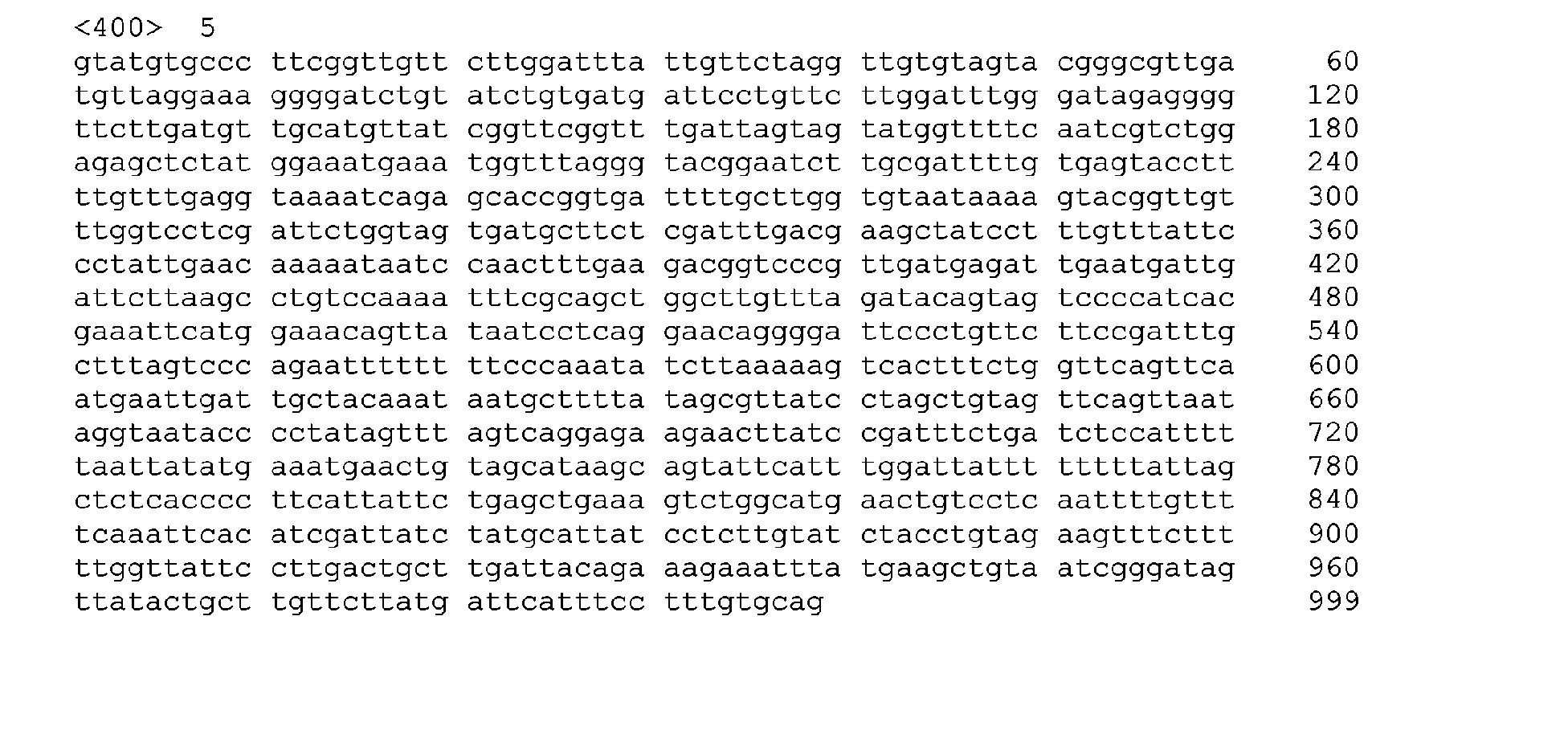
- the GOS2 gene (coding sequence given in SEQ ID NO: 3), also known as SUI1 , encodes a translation initiation factor eIF1 (SEQ ID NO: 4).
- the first intron of the rice GOS2 gene is used, but a person skilled in the art will appreciate that first introns of other GOS2 genes may also be used in the methods of the invention.
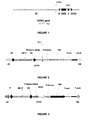
- the rice GOS2 gene contains four introns of respectively 998 bp, 94 bp, 90 bp and 105 bp (de Pater et al., Plant J. 2, 837-844, 1992). The first intron is located within the 5'UTR (Fig.
- GOS2 genes are derived from plant GOS2 genes, because in these genes, the first introns are located in the 5'UTR. More preferably, the first intron of a GOS2 gene is derived from a monocotyledonous plant, most preferably from rice or maize.
- first introns derived from any plant GOS2 / SUI1 gene may equally be useful in the methods of this invention.
- intron or "intervening sequence” as defined herein is a non-coding nucleic acid sequence frequently interrupting coding sequences of eukaryotic genes but which may also be present outside the coding sequence and which are transcribed into RNA and subsequently removed by RNA splicing to leave a functional mRNA or other RNA.
- the intron comprises splice sites at both ends and a branchpoint adenosine.
- splice sites as defined herein is taken to mean the outer ends of the sequence that are spliced out from the primary transcript and the immediate nucleotides in the primary transcript of the sequence that is spliced out.
- the branchpoint adenosine is the nucleotide that forms the lariat during the event of splicing.
- the branchpoint adenosine is part of a conserved motif with the following consensus sequence (Brown, Plant Journal 10, 771-780, 1996): Y 100 U 100 R 64 A 100 U 50 or Y 100 U 100 R 64 A 100 Y 70 , wherein Y stands for the nucleotides C or T, and R for A or G and wherein the subscript numbers denote the percentage of conservation of the respective nucleotide. This motif determines the functionality of the branchpoint adenosine.
- Functional variants of the first intron of a GOS2 gene may also be useful in increasing expression of a transgene.
- Functional variants encompass substitution, insertion and deletion variants and combinations thereof.
- “Substitution variants” are those in which at least one base in the nucleotide sequence has been removed and a different base inserted in its place.
- “Insertional variants” of a nucleic acid are those in which one or more nucleotides are introduced into a predetermined site in the sequence.
- “Deletion variants” of a nucleic acid are characterised by the removal of one or more nucleotides from the nucleic acid.
- a functional variant is at least 65 base pairs in length, comprises splice sites and a functional branchpoint adenosine, and is able to hybridise under stringent conditions to a naturally occurring first intron of a plant GOS2 gene.
- hybridisation is a process wherein substantially homologous complementary nucleotide sequences anneal to each other.
- the nucleic acid molecules are generally thermally or chemically denatured to melt a double strand into two single strands and/or to remove hairpins or other secondary structures from single stranded nucleic acids.
- the stringency of hybridisation is influenced by conditions such as temperature, salt concentration and hybridisation buffer composition.
- “Stringent hybridisation conditions” and “stringent hybridisation wash conditions” in the context of nucleic acid hybridisation experiments such as Southern and Northern hybridisations are sequence dependent and are different under different environmental parameters. For example, longer sequences hybridise specifically at higher temperatures.
- the T m is the temperature under defined ionic strength and pH, at which 50% of the target sequence hybridises to a perfectly matched probe. Specificity is typically the function of post-hybridisation washes. Critical factors of such washes include the ionic strength and temperature of the final wash solution.
- stringent conditions are selected to be about 50°C lower than the thermal melting point (T m ) for the specific sequence at a defined ionic strength and pH.
- T m is the temperature under defined ionic strength and pH, at which 50% of the target sequence hybridises to a perfectly matched probe.
- Preferred stringent conditions are when the temperature is 20°C below T m , and most preferred stringent conditions are when the temperature is 10°C below T m .
- Non-specific binding may also be controlled using any one of a number of known techniques such as blocking the membrane with protein containing solutions, additions of heterologous RNA, DNA, and SDS to the hybridisation buffer, and treatment with Rnase. Wash conditions are typically performed at or below hybridisation stringency.
- suitable stringent conditions for nucleic acid hybridisation assays or gene amplification detection procedures are as set forth above. Conditions of increased or decreased stringency compared to the above may also be selected.
- an exemplary stringent hybridisation condition is in 50% formamide, 4x SSC at 42°C.
- Still another example of stringent conditions include hybridisation at 62°C in 6x SSC, 0.05x BLOTTO and washing at 2x SSC, 0.1 % w/v SDS at 62°C.
- Plant GOS2 genes have their first intron located within the 5'UTR, therefore it is envisaged that it is not only this first intron but also the first intron with its flanking sequences up to the whole of the 5'UTR that may have a stimulating effect on gene expression. Therefore, the present invention provides in another embodiment a method for increasing transgene expression in a transgenic plant wherein substantially the complete 5'UTR of a plant GOS2 gene, or any part thereof comprising the first intron or a functional variant thereof, is used to increase expression of a transgene, provided that the rice GOS2 promoter is not used in combination with the complete 5' UTR of the rice GOS2 gene.
- the 5'UTR of a gene is to be understood as that part of a gene which is transcribed into a primary RNA transcript (pre-mRNA) and which part is located upstream of the coding sequence.
- the primary transcript is the initial RNA product, containing introns and exons, produced by transcription of DNA. Many primary transcripts must undergo RNA processing to form the physiologically active RNA species. The processing into a mature mRNA may comprise trimming of the ends, removal of introns, capping and/or cutting out of individual rRNA molecules from their precursor RNAs.
- the 5'UTR of an mRNA is thus that part of the mRNA which is not translated into protein and which is located upstream of the coding sequence.
- the 5'UTR of a GOS2 gene or a part thereof comprising the first intron is integrated in or at the 5' end of a nucleic acid of interest.
- the fusion results in the formation of a transcriptional unit, which gives rise to a single functional primary RNA transcript that can be processed to a mature mRNA in a given host cell.
- the 5'UTR of a GOS2 gene, or a part thereof comprising the first intron is present in the transcriptional unit in sense orientation and upstream of any protein encoding sequence.
- the intron useful in the methods of the present invention is usually flanked by the border sequences which comprise the splice site, but may also be functional without these border sequences.
- nucleic acid of interest is a transgene.
- nucleic acid sequence(s) refers to nucleotides, either ribonucleotides (RNA) or deoxyribonucleotides (DNA) or a combination of both, in a polymeric form of any length. These terms furthermore include double-stranded and single-stranded DNA and RNA. These terms also include nucleotide modifications known in the art, such as methylation, cyclisation, 'caps', substitution of one or more of the naturally occurring nucleotides with an analogue such as inosine, and polynucleotide backbone modifications.
- transgene refers to an isolated nucleic acid that is introduced into a plant. In a preferred embodiment of the present invention, the transgene encodes a polypeptide.
- polypeptide or "protein” is defined as a molecular chain comprising two or more amino acids covalently joined by peptide bonds.
- isolated in the present application means removed from its original environment.
- a nucleic acid present in its natural state in an organism is not isolated, whereas the same nucleic acid separated from the adjacent nucleic acids in which it is naturally present, is regarded as being “isolated”.
- the transgene may originate from the same plant species or from another, it may be isolated from any source, such as bacteria, yeast or fungi, plants (including algae) or animals (including humans).
- the transgene may be substantially modified from its native form in composition and/or genomic environment through deliberate human manipulation.
- the transgene comprises a sequence encoding a protein.
- transgene need not encode a protein, the methods may be applied for any nucleic acid to be expressed, such as tRNA, rRNA, anti-sense RNA, siRNA.
- a "coding sequence” or “open reading frame” (ORF) is defined as a nucleotide sequence that may be transcribed into mRNA and may later be translated into a polypeptide when placed under the control of appropriate regulatory sequences, i.e. when the coding sequence or ORF is present in an expressible form.
- the coding sequence or ORF is bound by a 5' translation start codon and a 3' translation stop codon.
- a coding sequence or ORF may include, but is not limited to RNA, mRNA, cDNA, recombinant nucleotide sequences, synthetically manufactured nucleotide sequences or genomic DNA.
- the coding sequence or ORF may be interrupted by introns.
- the methods of the present invention result in increased expression of the transgene.
- expression as defined herein is taken to mean the production of a protein or nucleotide sequence in a cell itself or in a cell-free system. It includes transcription into an RNA product, post-transcriptional modification and optionally also translation to a protein product or polypeptide from a DNA encoding that product, as well as possible post-translational modifications.
- a coding sequence may be transcribed in sense or antisense direction.
- any GOS2 / SUI1 gene may be a suitable source of a 5'UTR and/or a first intron for use in a method for increasing transgene expression.
- Methods for the search and identification of eIF1 homologues would be well within the realm of persons skilled in the art.
- Such methods comprise comparison of the sequences represented by SEQ ID NO 3 or 4, in a computer readable format, with sequences that are available in public databases such as MIPS (http://mips.gsf.de/), GenBank (http://www.ncbi.nlm.nih.gov/Genbank/index.html) or EMBL Nucleotide Sequence Database (http://www.ebi.ac.uk/embl/index.html), using algorithms well known in the art for the alignment or comparison of sequences, such as GAP (Needleman and Wunsch, J. Mol. Biol.
- Suitable homologues may be identified using BLAST default parameters (BLOSUM62 matrix, gap opening penalty 11 and gap extension penalty 1). Preferably, full-length sequences (from start to stop codon in case of DNA, or of the complete mature protein) are used for analysis.
- genes contain a typical CG-rich stretch of 20 to 50 nucleotides within a region of approximately 100 base pairs upstream of the start-site region, known as CpG island.
- Methods for predicting the presence of introns are also known in the art. Examples include SPL (http://www.softberry.com/berry.phtml , Softberry), NNSplice (http://www.fruitfly.org/seq_tools/splice.html, Reese MG et al. 1997. Improved Splice Site Detection in Genie. J Comp Biol 4(3), 311-23), SpliceView (http://www.itba.mi.cnr.it/webgene/, Rogozin I.B. and L.
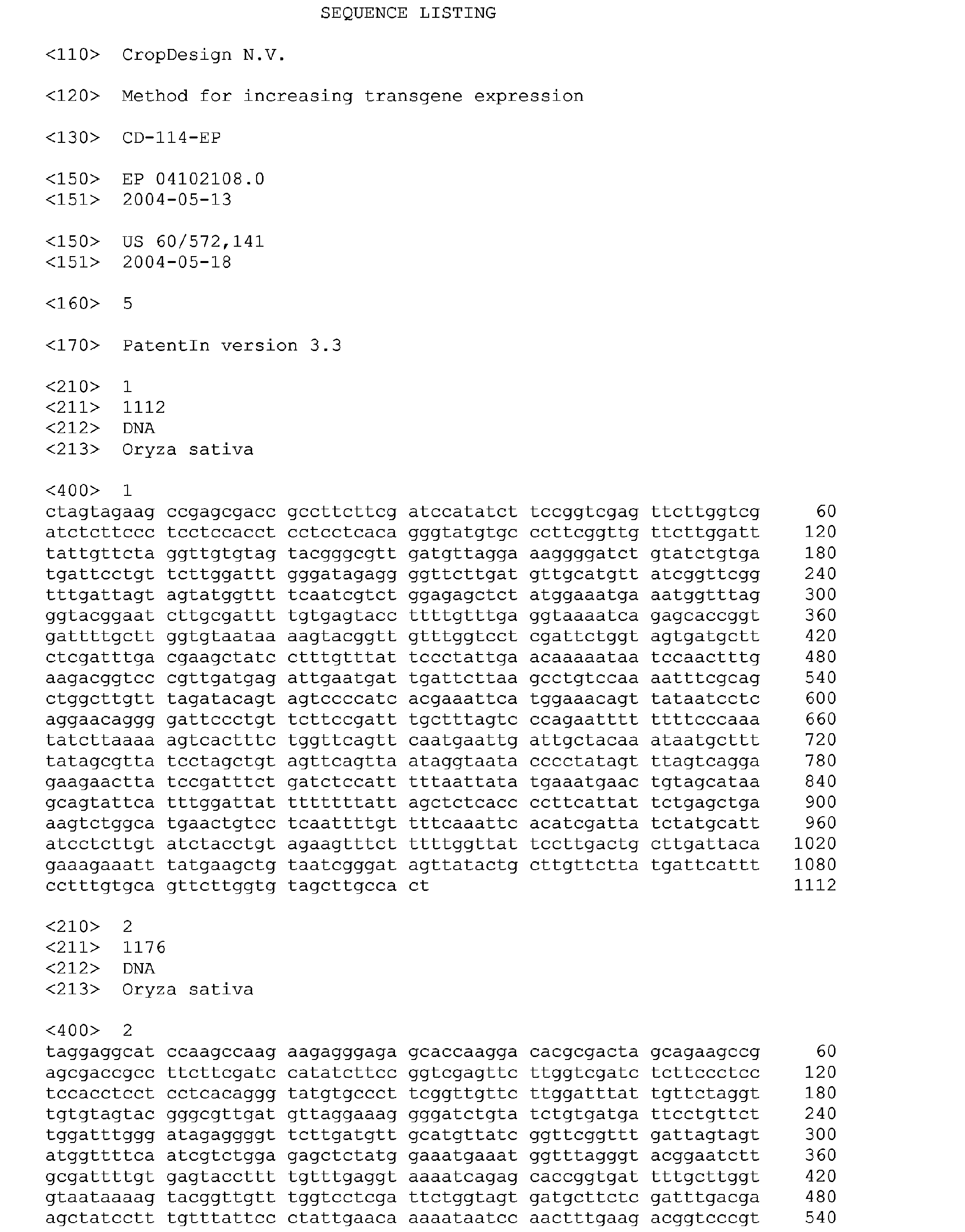
- the present invention provides a method for increasing expression of a transgene as outlined above, wherein said part of the GOS2 5'UTR is as represented by SEQ ID NO 1.
- the complete GOS2 5'UTR as represented by SEQ ID NO 2 is used.
- the methods according to the present invention always make use of a chimeric transcriptional unit comprising the nucleic acid of interest fused at its 5' end to the 3' end of the 5'UTR of a GOS2 gene, or part thereof, wherein that part of the GOS2 5'UTR comprises at least the first intron of the GOS2 gene or a functional variant of this first intron.
- the part of the GOS2 5'UTR is as presented by SEQ ID NO 1.
- a nucleic acid strand is directional, with the "5' end” having a free hydroxyl (or phosphate) on a 5' carbon and the "3' end” having a free hydroxyl (or phosphate) on a 3' carbon.
- the orientation of the sense strand establishes the direction.
- the sense strand has, by definition, the same 'sense' as the mRNA; that is, it may be translated exactly as the mRNA sequence can.
- a "promoter” means a region of DNA upstream from the transcription start and which is involved in binding RNA polymerase and other proteins to start transcription.
- Reference herein to a "promoter” is to be taken in its broadest context and includes the transcriptional regulatory sequences derived from a classical eukaryotic genomic gene, including the TATA box which is required for accurate transcription initiation, with or without a CCAAT box sequence and additional regulatory elements (i.e. upstream activating sequences, enhancers and silencers) which alter gene expression in response to developmental and/or external stimuli, or in a tissue-specific manner.
- promoter also includes the transcriptional regulatory sequences of a classical prokaryotic gene, in which case it may include a -35 box sequence and/or a -10 box transcriptional regulatory sequences.
- promoter is also used to describe a synthetic or fusion molecule, or derivative which confers, activates or enhances expression of a nucleic acid molecule in a cell, tissue or organ.
- any type of promoter may be combined with the transcriptional unit and used to drive expression of the transgene, depending on the desired outcome.
- the promoter is a plant expressible promoter.
- plant expressible promoter is meant a promoter which is capable of functioning in a plant cell.
- a meristem-specific promoter such as the rnr (ribonucleotide reductase), cdc2a promoter and the cyc07 promoter, may be used to effect expression in all growing parts of the plant, thereby increasing cell proliferation, which in turn would increase yield or biomass.
- a seed-specific promoter such as p2S2, pPROLAMIN, pOLEOSIN may be selected.
- An aleurone-specific promoter may be selected in order to increase growth at the moment of germination, thereby increasing the transport of sugars to the embryo.
- An inflorescence-specific promoter such as pLEAFY, may be utilised if the desired outcome would be to modify the number of flower organs.
- pLEAFY may be utilised if the desired outcome would be to modify the number of flower organs.
- petal size To impact on flower architecture, for example petal size, one may choose a petal-specific promoter.
- the choice of the promoter to combine with would depend on the organ to be modified.
- use of a root-specific promoter would lead to increased growth and/or increased biomass or yield of the root and/or phenotypic alteration of the root. This would be particularly important where it is the root itself that is the desired end product; such crops include sugar beet, turnip, carrot, and potato.
- a fruit-specific promoter may be used to modify, for example, the strength of the outer skin of the fruit or to increase the size of the fruit.
- a green tissue-specific promoter may be used to increase leaf size.
- a cell wall-specific promoter may be used to increase the rigidity of the cell wall, thereby increasing pathogen resistance.
- An anther-specific promoter may be used to produce male-sterile plants.
- a vascular-specific promoter may be used to increase transport from leaves to seeds.
- a nodule-specific promoter may be used to increase the nitrogen fixing capabilities of a plant, thereby increasing the nutrient levels in a plant.
- a stress-inducible promoter may also be used to drive expression of a nucleic acid to increase membrane integrity during conditions of stress.
- a stress-inducible promoter such as the water stress-inducible promoter WSI18, the drought stress-inducible Trg-31 promoter, the ABA related promoter rab21 or any other promoter which is inducible under a particular stress condition such as temperature stress (cold, freezing, heat) or osmotic stress, or drought stress or oxidative stress or biotic stress may be used to drive expression of a transgene.
- the promoter used for increasing the expression of a transgene is a constitutive promoter.
- constitutive refers to a promoter expressed predominantly in at least one tissue or organ and predominantly at any life stage of the plant.
- the promoter is expressed predominantly throughout the plant.
- the constitutive promoter is a GOS2 promoter, or a promoter of similar strength and/or a promoter with a similar expression pattern, more preferably the promoter is the GOS2 promoter from rice, provided that the rice GOS2 promoter is not used in combination with the complete 5' UTR of the rice GOS2 gene.
- an inducible promoter is used.
- an inducible promoter's rate of transcription increases in response to an inducing agent or condition, such as chemical, environmental, or physical stimuli.
- a developmentally regulated promoter is used.
- the term "developmentally regulated promoter” refers to a promoter whose activity is determined by developmental events.
- an organ-preferred promoter is used.
- An organ-preferred promoter is a promoter that is predominantly expressed in a specific organ of the plant.
- a seed-preferred promoter is used.
- seed-preferred promoter refers to a promoter that is predominantly expressed in seeds of a plant.
- a tissue-preferred promoter is used.
- tissue-preferred refers to a promoter that is expressed predominantly but not necessarily exclusively in one tissue or organ, but that may also be expressed in one specific cell.
- tissue-preferred promoter is an endosperm-preferred promoter.
- the endosperm preferred promoter is a prolamin RP6 promoter, more preferably the prolamin RP6 promoter from rice.
- a 5'UTR originating from a plant GOS2 gene or a part thereof, and which part comprises the first intron, can be used to increase expression of a transgene in plant seeds.
- operably linked refers to a juxtaposition between a regulatory and a coding sequence, wherein the components so described are in a relationship permitting them to function in their intended manner.
- a regulatory sequence "operably linked" to a coding sequence is ligated in such a way that expression of the coding sequence is achieved under conditions compatible with the control sequences.
- the regulatory sequence is a promoter, it would be known to a skilled person that a double-stranded nucleic acid is preferable.
- a vector in which the expression cassette may be ligated.
- vector or “genetic construct” is meant a DNA sequence, which may be introduced in an organism by transformation and may be transiently or stably maintained in this organism.
- one or more terminator sequences may also be used in the construct introduced into a plant.
- terminatator encompasses a control sequence which is a DNA sequence at the end of a transcriptional unit which signals 3' processing and polyadenylation of a primary transcript and termination of transcription. Additional regulatory elements may include transcriptional as well as translational enhancers.
- the vector may further include an origin of replication sequence which is required for maintenance and/or replication in a specific cell type.
- an origin of replication sequence which is required for maintenance and/or replication in a specific cell type.
- Preferred origins of replication include, but are not limited to, the f1-ori and colE1.
- the genetic construct may optionally comprise a selectable marker gene.
- selectable marker gene includes any gene which confers a phenotype to a cell in which it is expressed to facilitate the identification and/or selection of cells which are transfected or transformed with a nucleic acid construct of the invention. Suitable markers may be selected from markers that confer antibiotic or herbicide resistance, that introduce a new metabolic trait or that allow visual selection.
- selectable marker genes include genes conferring resistance to antibiotics (such as nptll that phosphorylates neomycin and kanamycin, or hpt, phosphorylating hygromycin); genes conferring resistance to herbicides (for example bar which provides resistance to Basta; aroA or gox providing resistance against glyphosate); or genes that provide a metabolic trait (such as manA that allows plants to use mannose as sole carbon source).
- Visual marker genes result in the formation of colour (for example ⁇ -glucuronidase, GUS), luminescence (such as luciferase) or fluorescence (Green Fluorescent Protein, GFP, and derivatives thereof).
- the expression cassette is introduced into a plant cell or into the plant itself (including introduction into a tissue, organ or any other part of the plant).
- the nucleic acid is preferably introduced into a plant by transformation.
- transformation encompasses the transfer of an exogenous polynucleotide into a host cell, irrespective of the method used for transfer.
- Plant tissue capable of subsequent clonal propagation, whether by organogenesis or embryogenesis, may be transformed with a genetic construct of the present invention and a whole plant regenerated therefrom.
- tissue targets include leaf disks, pollen, embryos, cotyledons, hypocotyls, megagametophytes, callus tissue, existing meristematic tissue (e.g., apical meristem, axillary buds, and root meristems), and induced meristem tissue (e.g., cotyledon meristem and hypocotyl meristem).
- the polynucleotide may be transiently or stably introduced into a host cell and may be maintained non-integrated, for example, as a plasmid. Alternatively, it may be integrated into the host genome or into the chloroplast genome. The resulting transformed plant cell may then be used to regenerate a transformed plant in a manner known to persons skilled in the art.
- Transformation of a plant species is now a fairly routine technique.
- any of several transformation methods may be used to introduce the gene of interest into a suitable ancestor cell. Transformation methods include the use of liposomes, electroporation, chemicals that increase free DNA uptake, injection of the DNA directly into the plant, particle gun bombardment, transformation using viruses or pollen and microprojection. Methods may be selected from the calcium/polyethylene glycol method for protoplasts (Krens, F.A. et al., 1982, Nature 296, 72-74; Negrutiu I. et al., 1987, Plant Mol. Biol. 8, 363-373); electroporation of protoplasts (Shillito R.D. et al., 1985, Bio/Technol.
- a preferred method for rice transformation according to the present invention is via Agrobacterium -mediated transformation using any of the well known methods for rice transformation, such as described in any of the following: published European patent application EP 1198985 A1, Aldemita and Hodges (Planta, 199, 612-617, 1996); Chan et al. (Plant Mol. Biol.
- plant cells or cell groupings are selected for the presence of one or more markers which are encoded by plant-expressible genes co-transferred with the gene of interest, following which the transformed material is regenerated into a whole plant.
- putatively transformed plants may be evaluated, for instance using Southern analysis or by PCR, for the presence of the gene of interest, copy number and/or genomic organisation.
- expression levels of the newly introduced DNA may be monitored using Northern and/or Western analysis, both techniques being well known to persons having ordinary skill in the art.
- transformed plants are evaluated for the desired expression of the transgene or for the desired phenotypes.
- Methods for measuring modulated expression are known to the person skilled in the art. Altered RNA levels may be measured with techniques like RT-PCR whereas changes in protein levels may be determined by enzymatic assays, staining of SDS-PAGE protein gels, Western blotting, or enzyme-linked immunosorbent assays.
- changes in the phenotype of the transgenic plants may be monitored. For example, changes in yield or biomass, changes in plant architecture or stress response, or changes in protein or oil content of seeds may be measured.
- transgenes in plants may differ among different independently obtained transgenic lines and progeny thereof.
- the transgenes present in different independently obtained transgenic plants may differ from each other by the chromosomal insertion locus as well as by the number of transgene copies inserted, and by the configuration of those multiple transgene copies in a locus. Therefore differences in expression levels may be expected, which may be due to influence from the chromosomal context of the transgene (the so-called position effect) or from silencing mechanisms triggered by certain transgene configurations (e.g. inwards facing tandem insertions of transgenes are prone to silencing at the transcriptional or post-transcriptional level).
- the generated transformed plants may be propagated by a variety of means, such as by clonal propagation or classical breeding techniques.
- a first generation (or T1) transformed plant may be selfed to give homozygous second generation (or T2) transformants, and the T2 plants further propagated through classical breeding techniques.
- the generated transformed organisms may take a variety of forms. For example, they may be chimeras of transformed cells and non-transformed cells; clonal transformants (e.g., all cells transformed to contain the expression cassette); grafts of transformed and untransformed tissues (e.g., in plants, a transformed rootstock grafted to an untransformed scion).
- the present invention clearly extends to any plant cell or plant produced by any of the methods described herein, and to all plant parts and propagules thereof.
- the present invention extends further to encompass the progeny of a primary transformed or transfected cell, tissue, organ or whole plant that has been produced by any of the aforementioned methods, the only requirement being that progeny exhibit the same genotypic and/or phenotypic characteristic(s) as those produced in the parent by the methods according to this invention.
- the invention also extends to harvestable parts of a plant, such as (but not limited to) seeds, leaves, fruits, flowers, stems or stem cultures, rhizomes, roots, tubers and bulbs.
- the invention further relates to products derived directly from a harvestable part of such a plant, such products including dry pellets or powders, oil, fat and fatty acids, starch or proteins.
- plant as used herein encompasses whole plants, ancestors and progeny of the plants and plant parts, including seeds, fruits, flowers, leaves, shoots, stems, roots (including tubers), and plant cells, tissues and organs.
- plant therefore also encompasses suspension cultures, embryos, meristematic regions, callus tissue, gametophytes, sporophytes, pollen, and microspores.
- Plants that are particularly useful in the methods of the invention include algae, ferns, and all plants which belong to the superfamily Viridiplantae, in particular monocotyledonous and dicotyledonous plants, including fodder or forage legumes, ornamental plants, food crops, trees, or shrubs selected from the list comprising Abelmoschus spp., Acer spp., Actinidia spp., Agropyron spp., Allium spp., Amaranthus spp., Ananas comosus, Annona spp., Apium graveolens , Arabidopsis thaliana, Arachis spp, Artocarpus spp., Asparagus officinalis , Avena sativa , Averrhoa carambola, Benincasa hispida , Bertholletia excelsea, Beta vulgaris , Brassica spp., Cadaba farinosa , Camellia sinen
- the plant is a crop plant comprising soybean, sunflower, canola, alfalfa, rapeseed or cotton.
- the plant according to the present invention is a monocotyledonous plant, including members of the Poaceae, such as sugarcane; most preferably a cereal, such as rice, maize, wheat, millet, barley, oats, sorghum.
- the present invention also relates to use of the 5'UTR of a plant GOS2 gene or part thereof comprising the first intron.
- Any use of the 5'UTR of a plant GOS2 gene or part thereof comprising the first intron, for increasing transgene expression is envisaged, provided there is no combination of a complete 5' UTR from the rice GOS2 gene with a promoter of the rice GOS2 gene.
- the 5'UTR of a plant GOS2 gene or part thereof comprising the first intron may be used for modifying the growth characteristics of a plant, such as yield, amount of produced biomass, architecture, stress tolerance.
- 5'UTR of a plant GOS2 gene or part thereof comprising the first intron examples include modification of the composition of a plant or harvestable parts thereof, such as seeds. Such use may result for example in seeds with increased protein content. Increased protein content of seeds is advantageous for increasing the nutritional value of these seeds or is furthermore advantageous in the field of molecular farming. Plants with improved growth characteristics may also be used to produce industrial proteins and/or other compounds. In this case, the goal would be to ensure high accumulation of the desired products in particular and easy-to-harvest plant tissues.
- the present invention also relates to a composition comprising the 5'UTR of a plant GOS2 gene, or part thereof, for increasing expression of a transgene in transgenic plants provided that (i) said part of the GOS2 5'UTR comprises at least the first intron of said GOS2 gene or a functional variant of said first intron and (ii) the rice GOS2 intron is not used in combination with the rice GOS2 promoter.
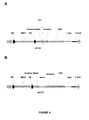
- a modified T-DNA (p5024) was created comprising within its borders the elements as shown in Figure 2.
- the first intron of the rice GOS2 gene was inserted in the restriction site Spel ( Figure 3).
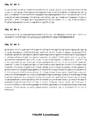
- the GW cassette was replaced by the GUS gene using a GW LR reaction, resulting in the plasmids p06192 and p06193 ( Figure 4).
- the Agrobacterium strain LBA4404 harbouring the binary vector p06192 or p06193 was used for co-cultivation.
- the Agrobacterium strain was cultured for 3 days at 28°C on AB medium with the appropriate antibiotics.
- the bacteria were then collected and suspended in liquid co-cultivation medium at an OD 600 of about 1.
- the suspension was transferred to a petri dish and the calli were immersed in the suspension for 15 minutes.
- the callus tissues were then blotted dry on a filter paper, transferred to solidified co-cultivation medium and incubated for 3 days in the dark at 25°C. Thereafter, co-cultivated callus was grown on 2,4-D-containing medium for 4 weeks in the dark at 28°C in the presence of a selective agent at a suitable concentration.
- Example 3 evaluation of the transformed plants :
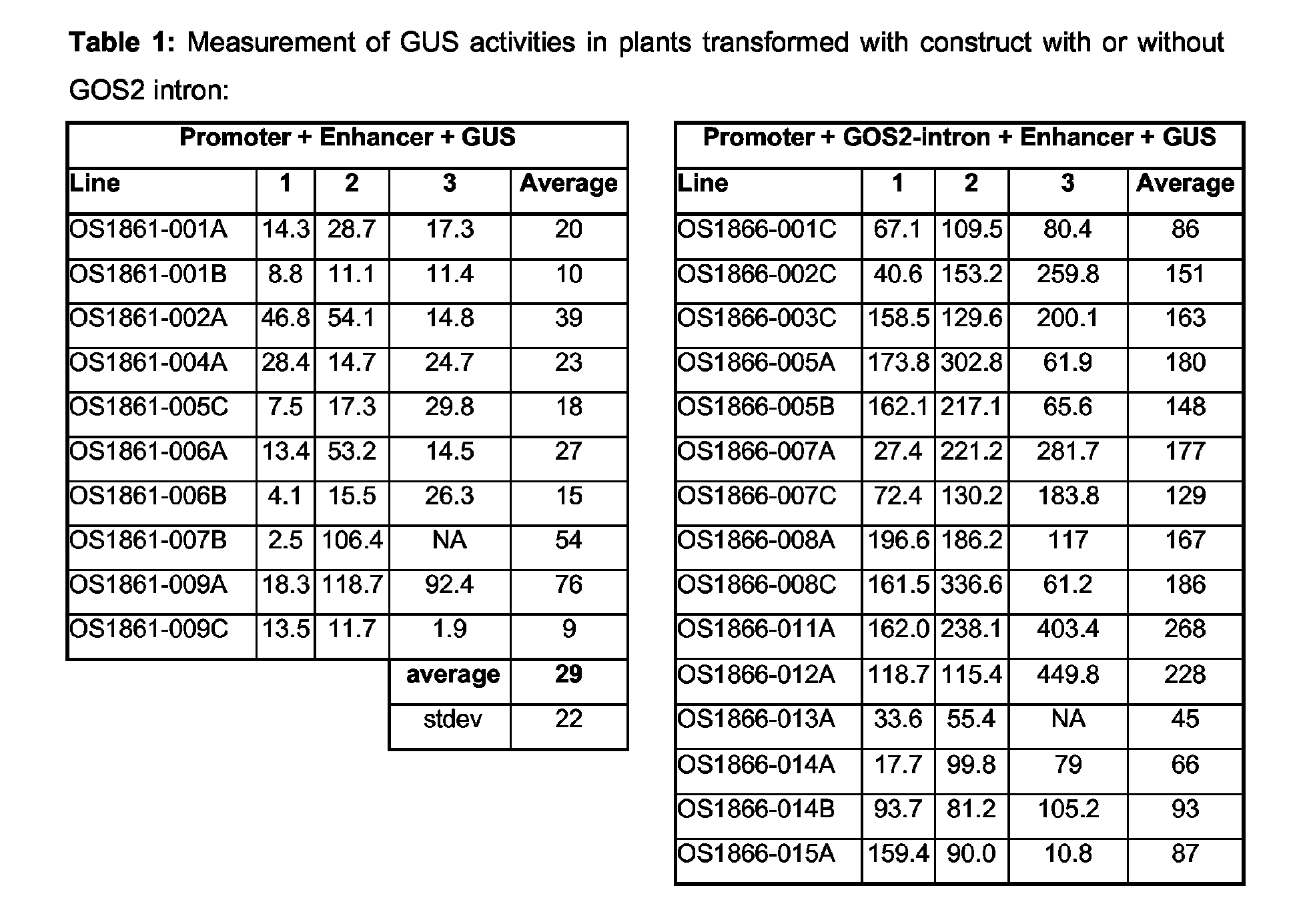
- T0 transformants Approximately 15 to 20 independent T0 transformants were generated. The primary transformants were transferred from tissue culture chambers to a greenhouse for growing and harvest of T1 seed. 10 and 15 events (respectively without and with intron) were retained. For each event, 10 T1 seeds (a 1:2:1 mix of nullizygotes, hemizygotes and homozygotes) were ground to a fine powder and assayed for GUS activity (modified from Breyne P, et al. (1993), Plant Mol. Biol. Reporter 11, 21-31) in triplicate measurements. Results are given in Table 1 below:
Landscapes
- Health & Medical Sciences (AREA)
- Genetics & Genomics (AREA)
- Life Sciences & Earth Sciences (AREA)
- Engineering & Computer Science (AREA)
- Biomedical Technology (AREA)
- Bioinformatics & Cheminformatics (AREA)
- Wood Science & Technology (AREA)
- Organic Chemistry (AREA)
- Biotechnology (AREA)
- General Engineering & Computer Science (AREA)
- Chemical & Material Sciences (AREA)
- Zoology (AREA)
- Molecular Biology (AREA)
- Microbiology (AREA)
- Cell Biology (AREA)
- Plant Pathology (AREA)
- Physics & Mathematics (AREA)
- Biochemistry (AREA)
- General Health & Medical Sciences (AREA)
- Biophysics (AREA)
- Developmental Biology & Embryology (AREA)
- Pregnancy & Childbirth (AREA)
- Reproductive Health (AREA)
- Breeding Of Plants And Reproduction By Means Of Culturing (AREA)
- Micro-Organisms Or Cultivation Processes Thereof (AREA)
Abstract
Description


Claims (19)
- Method for increasing transgene expression in a transgenic plant, which method comprisesa) integrating all or a part of a 5' UTR of a plant GOS2 gene in or at the 5' end of a nucleic acid of interest, thereby creating a chimeric transcriptional unit, wherein said part of a 5'UTR comprises at least the first intron of said GOS2 gene or a functional variant of said first intron, which functional variant is at least 65 base pairs in length, comprises splice sites and a functional branchpoint adenosine;b) operably fusing said chimeric transcriptional unit to a plant-expressible promoter so as to obtain an expression cassette, provided there is no combination of a complete 5' UTR from the rice GOS2 gene with a promoter of the rice GOS2 gene;c) introducing into and expressing in a plant cell said expression cassette of (b), to create a transgenic plant cell; andd) regenerating and/or growing a plant from said transgenic plant cell of (c) so that said transgenic cell transcribes the transgene and wherein the 5'UTR of the expressed nucleic acid of interest comprises at least the 5'UTR as defined in (a).
- Method of claim 1, wherein said functional variant is able to hybridise under stringent conditions to a naturally occurring first intron of a plant GOS2 gene.
- Method of claim 1 or 2, wherein said transgene encodes a polypeptide.
- Method according to any one of claims 1 to 3, wherein said transgenic plant is a monocotyledonous plant.
- Method of claim 4, wherein said monocotyledonous plant is a cereal, such as rice or maize.
- Method of any one of claims 1 to 5, wherein said plant GOS2 gene originates from a monocotyledonous plant, preferably from rice or maize.
- Method according to any one of claims 1 to 6, wherein said plant-expressible promoter is selected from the group consisting of:(i) a constitutive promoter;(ii) an inducible promoter;(iii) a tissue-preferred promoter;(iv) an organ-preferred promoter;(v) a developmentally regulated promoter.
- Method of claim 7, wherein said organ-preferred promoter is a seed-preferred promoter.
- Method of claim 7, wherein said tissue-preferred promoter is an endosperm-preferred promoter.
- Method according to any one of claims 1 to 9, wherein said 5' UTR of a plant GOS2 gene is as represented by SEQ ID NO: 2.
- Method according to any one of claims 1 to 10, wherein said part of a 5'UTR of a plant GOS2 gene is as represented by SEQ ID NO: 1.
- Method for increasing protein content of plant seeds, which method comprisesa) integrating all or a part of a 5' UTR of a plant GOS2 gene in or at the 5' end of a nucleic acid encoding a protein of interest, thereby creating a chimeric transcriptional unit, wherein said part of a 5'UTR comprises at least the first intron of said GOS2 gene or a functional variant of said first intron, which functional variant is at least 65 base pairs in length, comprises splice sites and a functional branchpoint adenosine;b) operably fusing said chimeric transcriptional unit to a plant-expressible promoter so as to obtain an expression cassette, provided there is no combination of a complete 5' UTR from the rice GOS2 gene with a promoter of the rice GOS2 gene;c) introducing into and expressing in a plant cell the expression cassette of (b) to create a transgenic plant cell; andd) regenerating and/or growing a plant from the transgenic plant cell of (c) so that said transgenic plant cell transcribes said nucleic acid encoding the protein of interest and wherein the 5'UTR of the expressed nucleic acid encoding said protein comprises at least the 5'UTR of (a).
- Method of claim 12, wherein said functional variant is able to hybridise under stringent conditions to a naturally occurring first intron of a plant GOS2 gene.
- Method according to any one of claims 1 to 13, wherein said chimeric transcriptional unit comprises a nucleic acid of interest fused at its 5' end to the 3' end of the 5'UTR of a GOS2 gene, or part thereof, wherein said part of a 5'UTR comprises at least the first intron of a GOS2 gene or a functional variant of said first intron.
- Method of claim 12, wherein said part of the 5'UTR of a GOS2 gene is as represented by SEQ ID NO: 1.
- Use of a nucleic acid sequence comprising the 5'UTR of a plant GOS2 gene, or part of such 5'UTR, in a method for modifying the composition of seeds of a plant, wherein said part of the GOS2 5'UTR comprises at least the first intron of said GOS2 gene or a functional variant of said first intron and provided there is no combination of a complete 5' UTR from the rice GOS2 gene with a promoter of the rice GOS2 gene.
- Use of a nucleic acid sequence comprising the 5'UTR of a plant GOS2 gene, or part of such 5'UTR, in a method for increasing protein content of plant seeds, wherein said part of the GOS2 5'UTR comprises at least the first intron of said GOS2 gene or a functional variant of said first intron and provided there is no combination of a complete 5' UTR from the rice GOS2 gene with a promoter of the rice GOS2 gene.
- Use of a nucleic acid sequence comprising the 5'UTR of a plant GOS2 gene, or part of such 5'UTR, in a method forwherein said part of the GOS2 5'UTR comprises at least the first intron of said GOS2 gene or a functional variant of said first intron and provided there is no combination of a complete 5' UTR from the rice GOS2 gene with the promoter of the rice GOS2 gene.(i) increasing the expression of a nucleic acid of interest fused thereto;(ii) modifying growth characteristics of a plant;(iii) increasing yield of a plant;(iv) increasing stress tolerance of a plant;(v) altering architecture of a plant,
- Composition comprising the 5'UTR of a plant GOS2 gene, or part of such 5'UTR, for increasing expression of a transgene in transgenic plants wherein said part of the GOS2 5'UTR comprises at least the first intron of said GOS2 gene or a functional variant of said first intron and provided there is no combination of a complete 5' UTR from the rice GOS2 gene with a promoter of the rice GOS2 gene.
Priority Applications (1)
| Application Number | Priority Date | Filing Date | Title |
|---|---|---|---|
| EP20050104022 EP1605051B1 (en) | 2004-05-13 | 2005-05-13 | Method for increasing transgene expression |
Applications Claiming Priority (5)
| Application Number | Priority Date | Filing Date | Title |
|---|---|---|---|
| EP04102108 | 2004-05-13 | ||
| EP04102108 | 2004-05-13 | ||
| US57214104P | 2004-05-18 | 2004-05-18 | |
| US572141P | 2004-05-18 | ||
| EP20050104022 EP1605051B1 (en) | 2004-05-13 | 2005-05-13 | Method for increasing transgene expression |
Publications (3)
| Publication Number | Publication Date |
|---|---|
| EP1605051A2 true EP1605051A2 (en) | 2005-12-14 |
| EP1605051A3 EP1605051A3 (en) | 2007-03-14 |
| EP1605051B1 EP1605051B1 (en) | 2014-04-02 |
Family
ID=34939830
Family Applications (1)
| Application Number | Title | Priority Date | Filing Date |
|---|---|---|---|
| EP20050104022 Expired - Lifetime EP1605051B1 (en) | 2004-05-13 | 2005-05-13 | Method for increasing transgene expression |
Country Status (1)
| Country | Link |
|---|---|
| EP (1) | EP1605051B1 (en) |
Family Cites Families (1)
| Publication number | Priority date | Publication date | Assignee | Title |
|---|---|---|---|---|
| EP1135512B1 (en) * | 1998-12-01 | 2004-10-13 | Dow AgroSciences LLC | Artificial matrix attachment region for increasing expression of genes introduced in plant cells |
-
2005
- 2005-05-13 EP EP20050104022 patent/EP1605051B1/en not_active Expired - Lifetime
Also Published As
| Publication number | Publication date |
|---|---|
| EP1605051B1 (en) | 2014-04-02 |
| EP1605051A3 (en) | 2007-03-14 |
Similar Documents
| Publication | Publication Date | Title |
|---|---|---|
| EP2228386B1 (en) | Plants having enhanced yield-related traits and a method for making the same | |
| EP2193203B1 (en) | Plants having increased yield-related traits and a method for making the same | |
| US8878006B2 (en) | Plants having enhanced yield-related traits and a method for making the same | |
| EP2441839A1 (en) | Plants with reduced expression of REVOLUTA (REV) having enhanced yield-related traits and a method for making the same | |
| US9062322B2 (en) | Plants having enhanced yield-related traits and a method for making the same | |
| EP2405011A2 (en) | Plants having enhanced yield-related traits and a method for making the same | |
| EP2166106B1 (en) | Plants having improved growth characteristics and methods for making the same | |
| EP2313508B1 (en) | Plants having enhanced yield-related traits and a method for making the same | |
| EP2599872A2 (en) | Plants having enhanced yield-related traits and a method for making the same | |
| EP2543732A1 (en) | Plants transformed with a nucleic acid encoding chloroplastic fructose-1,6-bisphosphatase having increased yield, and a method for making the same | |
| CN104232679A (en) | Plants having enhanced yield-related traits and a method for making the same | |
| CN101978064A (en) | Plants with altered growth and/or development and methods for their production | |
| WO2013037959A1 (en) | Methods and means to produce abiotic stress tolerant plants | |
| AU2014276938B2 (en) | Means and methods for yield performance in plants | |
| CA3124395A1 (en) | Native delivery of biomolecules into plant cells using ionic complexes with cell-penetrating peptides | |
| EP1807521B1 (en) | Plants having improved growth characteristics and method for making the same | |
| EP2225378B1 (en) | Plants having increased yield-related traits and a method for making the same | |
| EP2546262A1 (en) | Modifying the content of storage compounds in seeds by expression of a Class II HD-Zip transcription factor | |
| US20100050297A1 (en) | Plants having modified growth characteristics and method for making the same | |
| CN102770545A (en) | Plants having enhanced yield-related traits and a method for making the same | |
| EP1605051B1 (en) | Method for increasing transgene expression | |
| US20050262597A1 (en) | Method for increasing transgene expression | |
| US20240318194A1 (en) | Means and methods for producing drought tolerant cereals |
Legal Events
| Date | Code | Title | Description |
|---|---|---|---|
| PUAI | Public reference made under article 153(3) epc to a published international application that has entered the european phase |
Free format text: ORIGINAL CODE: 0009012 |
|
| 17P | Request for examination filed |
Effective date: 20050714 |
|
| AK | Designated contracting states |
Kind code of ref document: A2 Designated state(s): AT BE BG CH CY CZ DE DK EE ES FI FR GB GR HU IE IS IT LI LT LU MC NL PL PT RO SE SI SK TR |
|
| AX | Request for extension of the european patent |
Extension state: AL BA HR LV MK YU |
|
| PUAL | Search report despatched |
Free format text: ORIGINAL CODE: 0009013 |
|
| AK | Designated contracting states |
Kind code of ref document: A3 Designated state(s): AT BE BG CH CY CZ DE DK EE ES FI FR GB GR HU IE IS IT LI LT LU MC NL PL PT RO SE SI SK TR |
|
| AX | Request for extension of the european patent |
Extension state: AL BA HR LV MK YU |
|
| AKX | Designation fees paid |
Designated state(s): AT BE BG CH CY CZ DE DK EE ES FI FR GB GR HU IE IS IT LI LT LU MC NL PL PT RO SE SI SK TR |
|
| AXX | Extension fees paid |
Extension state: MK Payment date: 20070914 Extension state: LV Payment date: 20070914 Extension state: YU Payment date: 20070914 Extension state: HR Payment date: 20070914 Extension state: BA Payment date: 20070914 Extension state: AL Payment date: 20070914 |
|
| 17Q | First examination report despatched |
Effective date: 20090723 |
|
| RAP1 | Party data changed (applicant data changed or rights of an application transferred) |
Owner name: CROPDESIGN N.V. |
|
| GRAP | Despatch of communication of intention to grant a patent |
Free format text: ORIGINAL CODE: EPIDOSNIGR1 |
|
| INTG | Intention to grant announced |
Effective date: 20131122 |
|
| GRAS | Grant fee paid |
Free format text: ORIGINAL CODE: EPIDOSNIGR3 |
|
| GRAA | (expected) grant |
Free format text: ORIGINAL CODE: 0009210 |
|
| AK | Designated contracting states |
Kind code of ref document: B1 Designated state(s): AT BE BG CH CY CZ DE DK EE ES FI FR GB GR HU IE IS IT LI LT LU MC NL PL PT RO SE SI SK TR |
|
| AX | Request for extension of the european patent |
Extension state: AL BA HR LV MK YU |
|
| REG | Reference to a national code |
Ref country code: GB Ref legal event code: FG4D |
|
| REG | Reference to a national code |
Ref country code: CH Ref legal event code: EP Ref country code: AT Ref legal event code: REF Ref document number: 660165 Country of ref document: AT Kind code of ref document: T Effective date: 20140415 |
|
| REG | Reference to a national code |
Ref country code: IE Ref legal event code: FG4D |
|
| REG | Reference to a national code |
Ref country code: DE Ref legal event code: R096 Ref document number: 602005043146 Country of ref document: DE Effective date: 20140515 |
|
| REG | Reference to a national code |
Ref country code: ES Ref legal event code: FG2A Ref document number: 2463474 Country of ref document: ES Kind code of ref document: T3 Effective date: 20140528 |
|
| REG | Reference to a national code |
Ref country code: NL Ref legal event code: T3 |
|
| REG | Reference to a national code |
Ref country code: AT Ref legal event code: MK05 Ref document number: 660165 Country of ref document: AT Kind code of ref document: T Effective date: 20140402 |
|
| REG | Reference to a national code |
Ref country code: LT Ref legal event code: MG4D |
|
| PG25 | Lapsed in a contracting state [announced via postgrant information from national office to epo] |
Ref country code: BG Free format text: LAPSE BECAUSE OF FAILURE TO SUBMIT A TRANSLATION OF THE DESCRIPTION OR TO PAY THE FEE WITHIN THE PRESCRIBED TIME-LIMIT Effective date: 20140702 Ref country code: CZ Free format text: LAPSE BECAUSE OF FAILURE TO SUBMIT A TRANSLATION OF THE DESCRIPTION OR TO PAY THE FEE WITHIN THE PRESCRIBED TIME-LIMIT Effective date: 20140402 Ref country code: FI Free format text: LAPSE BECAUSE OF FAILURE TO SUBMIT A TRANSLATION OF THE DESCRIPTION OR TO PAY THE FEE WITHIN THE PRESCRIBED TIME-LIMIT Effective date: 20140402 Ref country code: LT Free format text: LAPSE BECAUSE OF FAILURE TO SUBMIT A TRANSLATION OF THE DESCRIPTION OR TO PAY THE FEE WITHIN THE PRESCRIBED TIME-LIMIT Effective date: 20140402 Ref country code: GR Free format text: LAPSE BECAUSE OF FAILURE TO SUBMIT A TRANSLATION OF THE DESCRIPTION OR TO PAY THE FEE WITHIN THE PRESCRIBED TIME-LIMIT Effective date: 20140703 Ref country code: CY Free format text: LAPSE BECAUSE OF FAILURE TO SUBMIT A TRANSLATION OF THE DESCRIPTION OR TO PAY THE FEE WITHIN THE PRESCRIBED TIME-LIMIT Effective date: 20140402 Ref country code: IS Free format text: LAPSE BECAUSE OF FAILURE TO SUBMIT A TRANSLATION OF THE DESCRIPTION OR TO PAY THE FEE WITHIN THE PRESCRIBED TIME-LIMIT Effective date: 20140802 |
|
| PG25 | Lapsed in a contracting state [announced via postgrant information from national office to epo] |
Ref country code: PL Free format text: LAPSE BECAUSE OF FAILURE TO SUBMIT A TRANSLATION OF THE DESCRIPTION OR TO PAY THE FEE WITHIN THE PRESCRIBED TIME-LIMIT Effective date: 20140402 Ref country code: SE Free format text: LAPSE BECAUSE OF FAILURE TO SUBMIT A TRANSLATION OF THE DESCRIPTION OR TO PAY THE FEE WITHIN THE PRESCRIBED TIME-LIMIT Effective date: 20140402 Ref country code: AT Free format text: LAPSE BECAUSE OF FAILURE TO SUBMIT A TRANSLATION OF THE DESCRIPTION OR TO PAY THE FEE WITHIN THE PRESCRIBED TIME-LIMIT Effective date: 20140402 |
|
| PG25 | Lapsed in a contracting state [announced via postgrant information from national office to epo] |
Ref country code: PT Free format text: LAPSE BECAUSE OF FAILURE TO SUBMIT A TRANSLATION OF THE DESCRIPTION OR TO PAY THE FEE WITHIN THE PRESCRIBED TIME-LIMIT Effective date: 20140804 |
|
| REG | Reference to a national code |
Ref country code: DE Ref legal event code: R097 Ref document number: 602005043146 Country of ref document: DE |
|
| PG25 | Lapsed in a contracting state [announced via postgrant information from national office to epo] |
Ref country code: EE Free format text: LAPSE BECAUSE OF FAILURE TO SUBMIT A TRANSLATION OF THE DESCRIPTION OR TO PAY THE FEE WITHIN THE PRESCRIBED TIME-LIMIT Effective date: 20140402 Ref country code: DK Free format text: LAPSE BECAUSE OF FAILURE TO SUBMIT A TRANSLATION OF THE DESCRIPTION OR TO PAY THE FEE WITHIN THE PRESCRIBED TIME-LIMIT Effective date: 20140402 Ref country code: RO Free format text: LAPSE BECAUSE OF FAILURE TO SUBMIT A TRANSLATION OF THE DESCRIPTION OR TO PAY THE FEE WITHIN THE PRESCRIBED TIME-LIMIT Effective date: 20140402 Ref country code: MC Free format text: LAPSE BECAUSE OF FAILURE TO SUBMIT A TRANSLATION OF THE DESCRIPTION OR TO PAY THE FEE WITHIN THE PRESCRIBED TIME-LIMIT Effective date: 20140402 Ref country code: SK Free format text: LAPSE BECAUSE OF FAILURE TO SUBMIT A TRANSLATION OF THE DESCRIPTION OR TO PAY THE FEE WITHIN THE PRESCRIBED TIME-LIMIT Effective date: 20140402 |
|
| PLBE | No opposition filed within time limit |
Free format text: ORIGINAL CODE: 0009261 |
|
| STAA | Information on the status of an ep patent application or granted ep patent |
Free format text: STATUS: NO OPPOSITION FILED WITHIN TIME LIMIT |
|
| REG | Reference to a national code |
Ref country code: IE Ref legal event code: MM4A |
|
| 26N | No opposition filed |
Effective date: 20150106 |
|
| PG25 | Lapsed in a contracting state [announced via postgrant information from national office to epo] |
Ref country code: IT Free format text: LAPSE BECAUSE OF FAILURE TO SUBMIT A TRANSLATION OF THE DESCRIPTION OR TO PAY THE FEE WITHIN THE PRESCRIBED TIME-LIMIT Effective date: 20140402 |
|
| REG | Reference to a national code |
Ref country code: DE Ref legal event code: R097 Ref document number: 602005043146 Country of ref document: DE Effective date: 20150106 |
|
| PG25 | Lapsed in a contracting state [announced via postgrant information from national office to epo] |
Ref country code: IE Free format text: LAPSE BECAUSE OF NON-PAYMENT OF DUE FEES Effective date: 20140513 |
|
| PG25 | Lapsed in a contracting state [announced via postgrant information from national office to epo] |
Ref country code: SI Free format text: LAPSE BECAUSE OF FAILURE TO SUBMIT A TRANSLATION OF THE DESCRIPTION OR TO PAY THE FEE WITHIN THE PRESCRIBED TIME-LIMIT Effective date: 20140402 |
|
| REG | Reference to a national code |
Ref country code: FR Ref legal event code: PLFP Year of fee payment: 12 |
|
| PGFP | Annual fee paid to national office [announced via postgrant information from national office to epo] |
Ref country code: NL Payment date: 20160525 Year of fee payment: 12 |
|
| PG25 | Lapsed in a contracting state [announced via postgrant information from national office to epo] |
Ref country code: TR Free format text: LAPSE BECAUSE OF FAILURE TO SUBMIT A TRANSLATION OF THE DESCRIPTION OR TO PAY THE FEE WITHIN THE PRESCRIBED TIME-LIMIT Effective date: 20140402 Ref country code: LU Free format text: LAPSE BECAUSE OF NON-PAYMENT OF DUE FEES Effective date: 20140513 Ref country code: HU Free format text: LAPSE BECAUSE OF FAILURE TO SUBMIT A TRANSLATION OF THE DESCRIPTION OR TO PAY THE FEE WITHIN THE PRESCRIBED TIME-LIMIT; INVALID AB INITIO Effective date: 20050513 |
|
| PGFP | Annual fee paid to national office [announced via postgrant information from national office to epo] |
Ref country code: GB Payment date: 20160531 Year of fee payment: 12 Ref country code: ES Payment date: 20160627 Year of fee payment: 12 Ref country code: CH Payment date: 20160525 Year of fee payment: 12 |
|
| PGFP | Annual fee paid to national office [announced via postgrant information from national office to epo] |
Ref country code: FR Payment date: 20160526 Year of fee payment: 12 Ref country code: BE Payment date: 20160525 Year of fee payment: 12 |
|
| PGFP | Annual fee paid to national office [announced via postgrant information from national office to epo] |
Ref country code: DE Payment date: 20160729 Year of fee payment: 12 |
|
| REG | Reference to a national code |
Ref country code: DE Ref legal event code: R119 Ref document number: 602005043146 Country of ref document: DE |
|
| REG | Reference to a national code |
Ref country code: CH Ref legal event code: PL |
|
| REG | Reference to a national code |
Ref country code: NL Ref legal event code: MM Effective date: 20170601 |
|
| GBPC | Gb: european patent ceased through non-payment of renewal fee |
Effective date: 20170513 |
|
| PG25 | Lapsed in a contracting state [announced via postgrant information from national office to epo] |
Ref country code: CH Free format text: LAPSE BECAUSE OF NON-PAYMENT OF DUE FEES Effective date: 20170531 Ref country code: LI Free format text: LAPSE BECAUSE OF NON-PAYMENT OF DUE FEES Effective date: 20170531 |
|
| REG | Reference to a national code |
Ref country code: FR Ref legal event code: ST Effective date: 20180131 |
|
| PG25 | Lapsed in a contracting state [announced via postgrant information from national office to epo] |
Ref country code: NL Free format text: LAPSE BECAUSE OF NON-PAYMENT OF DUE FEES Effective date: 20170601 |
|
| REG | Reference to a national code |
Ref country code: BE Ref legal event code: MM Effective date: 20170531 |
|
| PG25 | Lapsed in a contracting state [announced via postgrant information from national office to epo] |
Ref country code: DE Free format text: LAPSE BECAUSE OF NON-PAYMENT OF DUE FEES Effective date: 20171201 Ref country code: GB Free format text: LAPSE BECAUSE OF NON-PAYMENT OF DUE FEES Effective date: 20170513 |
|
| PG25 | Lapsed in a contracting state [announced via postgrant information from national office to epo] |
Ref country code: FR Free format text: LAPSE BECAUSE OF NON-PAYMENT OF DUE FEES Effective date: 20170531 |
|
| REG | Reference to a national code |
Ref country code: ES Ref legal event code: FD2A Effective date: 20180703 |
|
| PG25 | Lapsed in a contracting state [announced via postgrant information from national office to epo] |
Ref country code: ES Free format text: LAPSE BECAUSE OF NON-PAYMENT OF DUE FEES Effective date: 20170514 |
|
| PG25 | Lapsed in a contracting state [announced via postgrant information from national office to epo] |
Ref country code: BE Free format text: LAPSE BECAUSE OF NON-PAYMENT OF DUE FEES Effective date: 20170531 |