EP1603333A2 - Television broadcast receiving apparatus, program information processing method and program information processing program - Google Patents
Television broadcast receiving apparatus, program information processing method and program information processing program Download PDFInfo
- Publication number
- EP1603333A2 EP1603333A2 EP05253246A EP05253246A EP1603333A2 EP 1603333 A2 EP1603333 A2 EP 1603333A2 EP 05253246 A EP05253246 A EP 05253246A EP 05253246 A EP05253246 A EP 05253246A EP 1603333 A2 EP1603333 A2 EP 1603333A2
- Authority
- EP
- European Patent Office
- Prior art keywords
- program
- television broadcast
- image
- received
- data
- Prior art date
- Legal status (The legal status is an assumption and is not a legal conclusion. Google has not performed a legal analysis and makes no representation as to the accuracy of the status listed.)
- Withdrawn
Links
Images


Classifications
-
- H—ELECTRICITY
- H04—ELECTRIC COMMUNICATION TECHNIQUE
- H04N—PICTORIAL COMMUNICATION, e.g. TELEVISION
- H04N5/00—Details of television systems
- H04N5/44—Receiver circuitry for the reception of television signals according to analogue transmission standards
- H04N5/445—Receiver circuitry for the reception of television signals according to analogue transmission standards for displaying additional information
- H04N5/45—Picture in picture, e.g. displaying simultaneously another television channel in a region of the screen
-
- H—ELECTRICITY
- H04—ELECTRIC COMMUNICATION TECHNIQUE
- H04N—PICTORIAL COMMUNICATION, e.g. TELEVISION
- H04N21/00—Selective content distribution, e.g. interactive television or video on demand [VOD]
- H04N21/40—Client devices specifically adapted for the reception of or interaction with content, e.g. set-top-box [STB]; Operations thereof
-
- H—ELECTRICITY
- H04—ELECTRIC COMMUNICATION TECHNIQUE
- H04N—PICTORIAL COMMUNICATION, e.g. TELEVISION
- H04N21/00—Selective content distribution, e.g. interactive television or video on demand [VOD]
- H04N21/40—Client devices specifically adapted for the reception of or interaction with content, e.g. set-top-box [STB]; Operations thereof
- H04N21/41—Structure of client; Structure of client peripherals
- H04N21/426—Internal components of the client ; Characteristics thereof
-
- H—ELECTRICITY
- H04—ELECTRIC COMMUNICATION TECHNIQUE
- H04N—PICTORIAL COMMUNICATION, e.g. TELEVISION
- H04N21/00—Selective content distribution, e.g. interactive television or video on demand [VOD]
- H04N21/40—Client devices specifically adapted for the reception of or interaction with content, e.g. set-top-box [STB]; Operations thereof
- H04N21/41—Structure of client; Structure of client peripherals
- H04N21/426—Internal components of the client ; Characteristics thereof
- H04N21/42607—Internal components of the client ; Characteristics thereof for processing the incoming bitstream
- H04N21/4263—Internal components of the client ; Characteristics thereof for processing the incoming bitstream involving specific tuning arrangements, e.g. two tuners
-
- H—ELECTRICITY
- H04—ELECTRIC COMMUNICATION TECHNIQUE
- H04N—PICTORIAL COMMUNICATION, e.g. TELEVISION
- H04N21/00—Selective content distribution, e.g. interactive television or video on demand [VOD]
- H04N21/40—Client devices specifically adapted for the reception of or interaction with content, e.g. set-top-box [STB]; Operations thereof
- H04N21/41—Structure of client; Structure of client peripherals
- H04N21/426—Internal components of the client ; Characteristics thereof
- H04N21/42653—Internal components of the client ; Characteristics thereof for processing graphics
-
- H—ELECTRICITY
- H04—ELECTRIC COMMUNICATION TECHNIQUE
- H04N—PICTORIAL COMMUNICATION, e.g. TELEVISION
- H04N21/00—Selective content distribution, e.g. interactive television or video on demand [VOD]
- H04N21/40—Client devices specifically adapted for the reception of or interaction with content, e.g. set-top-box [STB]; Operations thereof
- H04N21/41—Structure of client; Structure of client peripherals
- H04N21/426—Internal components of the client ; Characteristics thereof
- H04N21/42692—Internal components of the client ; Characteristics thereof for reading from or writing on a volatile storage medium, e.g. Random Access Memory [RAM]
-
- H—ELECTRICITY
- H04—ELECTRIC COMMUNICATION TECHNIQUE
- H04N—PICTORIAL COMMUNICATION, e.g. TELEVISION
- H04N21/00—Selective content distribution, e.g. interactive television or video on demand [VOD]
- H04N21/40—Client devices specifically adapted for the reception of or interaction with content, e.g. set-top-box [STB]; Operations thereof
- H04N21/43—Processing of content or additional data, e.g. demultiplexing additional data from a digital video stream; Elementary client operations, e.g. monitoring of home network or synchronising decoder's clock; Client middleware
- H04N21/431—Generation of visual interfaces for content selection or interaction; Content or additional data rendering
- H04N21/4312—Generation of visual interfaces for content selection or interaction; Content or additional data rendering involving specific graphical features, e.g. screen layout, special fonts or colors, blinking icons, highlights or animations
-
- H—ELECTRICITY
- H04—ELECTRIC COMMUNICATION TECHNIQUE
- H04N—PICTORIAL COMMUNICATION, e.g. TELEVISION
- H04N21/00—Selective content distribution, e.g. interactive television or video on demand [VOD]
- H04N21/40—Client devices specifically adapted for the reception of or interaction with content, e.g. set-top-box [STB]; Operations thereof
- H04N21/43—Processing of content or additional data, e.g. demultiplexing additional data from a digital video stream; Elementary client operations, e.g. monitoring of home network or synchronising decoder's clock; Client middleware
- H04N21/434—Disassembling of a multiplex stream, e.g. demultiplexing audio and video streams, extraction of additional data from a video stream; Remultiplexing of multiplex streams; Extraction or processing of SI; Disassembling of packetised elementary stream
- H04N21/4348—Demultiplexing of additional data and video streams
-
- H—ELECTRICITY
- H04—ELECTRIC COMMUNICATION TECHNIQUE
- H04N—PICTORIAL COMMUNICATION, e.g. TELEVISION
- H04N21/00—Selective content distribution, e.g. interactive television or video on demand [VOD]
- H04N21/40—Client devices specifically adapted for the reception of or interaction with content, e.g. set-top-box [STB]; Operations thereof
- H04N21/47—End-user applications
-
- H—ELECTRICITY
- H04—ELECTRIC COMMUNICATION TECHNIQUE
- H04N—PICTORIAL COMMUNICATION, e.g. TELEVISION
- H04N21/00—Selective content distribution, e.g. interactive television or video on demand [VOD]
- H04N21/40—Client devices specifically adapted for the reception of or interaction with content, e.g. set-top-box [STB]; Operations thereof
- H04N21/47—End-user applications
- H04N21/482—End-user interface for programme selection
Definitions
- the present invention relates to a television receiving apparatus and is particularly preferably applied to a television receiving apparatus receiving a multiplexed digital television broadcast.
- a digital television receiving apparatus such as a digital television apparatus and a digital television tuner includes multiple demultiplexers.
- the digital television receiving apparatus demultiplexes a stream and extracts a program that a user desires to view (called viewed program, hereinafter) by using a main demultiplexer thereof and decodes the viewed program by using a decoder to display.
- the digital television receiving apparatus obtains program information (such as titles of programs, descriptions of programs and channel numbers) on programs on other channels by using a sub-multiplexer and displays the program information on an information display area partially provided on the screen (see Patent Document 1, for example).
- Patent Document 1 JP-A-2004-7228
- program information on programs on other channels to be displayed is text information only, and the number of letters displayable within the information display area is limited. Therefore,
- Embodiments of the present invention provide a television receiving apparatus which can provide details of a program not currently viewed clearly in a simple construction.
- a television broadcast receiving apparatus including first and second receiving means each for receiving a television broadcast separately, decoding means for decoding video data multiplexed to the television broadcast received by the first receiving means and outputting the result as a program video image, and information processing means for decoding by software which executes a part of image data included in the video data multiplexed to the television broadcast received by the second receiving means and creating and outputting a program image thereof.
- program images of programs on other channels can be obtained without requiring decoding means separately.
- the television broadcast may undergo inter-frame prediction encoding
- the information processing means may decode image data of an intra-frame encoded image of the video data and output the result as the program image.
- the processing load and/or work memory which may be necessary for decoding can be reduced by selecting and decoding an intra-frame encoded image which may be decoded independently.
- the television broadcast receiving apparatus may further include added-data demultiplexing means for demultiplexing added data multiplexed to the television broadcast received by the second receiving means from the television broadcast, and program information outputting means for adding and outputting the program image decoded by the information processing means to program information included in the added data demultiplexed by the added-data demultiplexing means.
- the second receiving means may sequentially select and receive television broadcasts on channels not received by the first receiving means, and the information processing means may create the program image for each of the television broadcasts sequentially selected and received by the second receiving means.
- a television receiving apparatus which can provide details of a program not currently viewed clearly in a simple construction.
- the invention is applicable to various television receiving apparatus.
- Fig. 1 shows a digital television apparatus 1 according to an embodiment of the invention as a whole, and a CPU 10 controls the entire apparatus.
- the digital television apparatus 1 has a main tuner 11 for receiving a currently viewed or recorded program and two sub-tuners 12A and 12B for receiving programs on other channels.
- the digital television apparatus 1 further has a main demultiplexer 13 for demultiplexing the viewed program and two sub-demultiplexers 14A and 14B for demultiplexing programs on other channels.
- the main tuner 11 serving as a first receiver and the two sub-tuners 12A and 12B serving as second receivers select and demodulate a digital broadcasting wave received through an antenna (not shown), create a transport stream and feeds the created transport stream to a switch 15.
- An IEEE (Institute of Electrical and Electronics Engineers) 1394 port 16 feeds a transport stream fed from a recorder (not shown) such as a hard disk recorder to the switch 15.
- An HDD (Hard Disk Drive) stream buffer 17 feeds a transport stream loaded from the hard disk drive 18 to the switch 15.
- the switch 15 selects one of transport streams fed from the main tuner 11, sub-tuners 12A and 12B, IEEE 1394 port 16 and HDD stream buffer 17 and feeds the selected one to the main demultiplexer 13 or sub-demultiplexers 14A and 14B.
- the main demultiplexer 13 extracts program data of a viewed program selected by a user from transport streams fed from the main tuner 11 and demultiplexes the program data into video data, audio data and added data.
- the main demultiplexer 13 feeds the demultiplexed video data to an MPEG (Motion Picture Experts Group) video decoder 19.
- the MPEG video decoder 19 serving as a decoder MPEG-decodes the demultiplexed video data and thus creates a video signal and then feeds the video signal to a subsequent display portion 20, whereby the video image of the viewed program is displayed.
- the sub-demultiplexer 14A serving as an added-data demultiplexer demultiplexes added data of a program on another channel from a transport stream fed from the sub-tuner 12A or 12B and stores the added data in a memory 21.
- the sub-demultiplexer 14B extracts a program on another channel from a transport stream fed from the sub-tuner 12A or 12B and stores program in a hard disk drive 18.
- the CPU 10 further obtains added data of programs on other channels stored in the memory 21, superimposes program information on programs on other channels (called other-channel program information, hereinafter) on the displayed viewed program based on the added data and displays it on the display portion 20.
- other-channel program information hereinafter
- the displayability of the entire video images of programs on other channels together with the program information on the programs on the other channels can provide detail descriptions of the programs on the other channels to a user.
- one more MPEG video decoder with a larger circuit may be required.
- a large capacity MPEG video capture buffer may be required for decoding a video image. This may disadvantageously complicate the construction of the digital television apparatus.
- the digital television apparatus 1 of the embodiment of the invention decodes video data of a program on another channel demultiplexed by the sub-demultiplexer 14A or 14B in software by using a program executable on the CPU 10 serving as an information processor.
- the entire moving image of the video data may require a large amount of CPU power for software decoding, which is not realistic.
- the digital television apparatus 1 is configured to decode a part of video data of a program on another channel as a still image and display the still image as a program image.
- the MPEG video decoder for programs on other channels can be omitted, and the necessity for an MPEG video capture buffer 21A and MPEG video frame buffer 21B for programs on other channels of the memory 21 shown in Fig. 3 may be eliminated.
- video data of a digital television broadcast is encoded by MPEG2 by using inter-frame prediction, and pre-decoding a referred picture may be required in order to decode the P-picture and B-picture.
- the I-picture serving as an intra-frame encoded image can be decoded independently.
- the digital television apparatus 1 selects and decodes image data of the I-picture only within video data of a program on another channel. Therefore, a processing load and/or work memory which may be necessary for decoding can be reduced.
- the digital television apparatus 1 further decodes and, at the same time, converts the I-picture into JPEG, whereby the data size of the decoded program image can be reduced. For example, converting one approximately 2 MB HD (high-definition) image of 1920 ⁇ 1080 pixels into JPEG results in about 200 kB image. Thus, the size of the image cache for programs on other channels 21C (Fig. 3) for storing program images of programs on other channels can be greatly reduced.
- the digital television apparatus 1 sequentially selects channels excluding the currently viewed channel, stores the program images and added data in the memory 21 and displays a list of the program images as an electronic program table in addition to the program information extracted from the added data or sequentially displays a display area of information on programs on other channels (which will be described later) provided on the display screen.
- the CPU 10 of the digital television apparatus 1 starts with the start step of the still image obtaining processing step routine RT1 and moves to step SP1 where the sub-tuner 12A or 12B is controlled to select a channel which is not being viewed and for which the program image and program information are attempted to obtain. Then, the CPU 10 moves to the next step SP2.
- step SP2 the CPU 10 controls the sub-demultiplexer 14A or 14B to demultiplex added data and video data from received data of the program for which the program image and program information are attempted to obtain among multiple programs multiplexed to a transport stream fed from the sub-tuner 12A or 12B, load the demultiplexed added data to the added data cache for programs on other channels 21D (Fig. 3) of the memory 21 shown in Fig. 3 and load the video data to an MPEG video code buffer for programs on other channels 21E of the memory 21.
- the digital television apparatus 1 selects and decodes the I-picture only of video data to a program image, whereby the size of the MPEG video code buffer for channels on other channels 21E can be reduced.
- decoding all pictures of video data may require approximately 1.5 MB as the MPEG video code buffer for programs on other channels 21E
- decoding the I-picture only may only require 320 kB equal to the data amount for two pictures.
- the CPU 10 determines whether the picture type of the video data being loaded to the MPEG video code buffer for programs on other channels 21E of the memory 21 is I-picture or not. If it is determined that the picture type is not I-picture in step SP3, the CPU 10 moves to step SP4 and waits for loading of the next picture. When loading the next picture is started, the CPU 10 returns to step SP3.
- step SP3 if it is determined that the picture type is I-picture in step SP3, the CPU 10 moves to step SP5 and waits the end of loading the I-picture. When the loading ends, the CPU 10 moves to step SP6.
- step SP6 the CPU 10 decodes in software and converts the I-picture to JPEG, creates a program image of the program on the other channel, loads the program image to the image cache for programs on other channels 21C and moves to the next step SP7.
- step SP7 the CPU 10 determines whether still images for all programs on selected channels have been created or not. If it is determined in step SP7 that creating the program images for all programs has not completed yet, the CPU 10 returns to step SP2 and selects the next channel and then performs steps SP2 to SP7 again. On the other hand, if it is determined in step SP7 that the program images for all programs have been created, the CPU 10 returns to step SP1 and selects the next channel and then performs steps SP1 to SP7 again.
- the digital television apparatus 1 sequentially selects a channel not having been received by the main tuner 11 currently, obtains added data and a program image of the program on the other channel and stores them in the memory 21.
- the CPU 10 serving as an information output section uses program information extracted from the still image and added data stored in the memory 21 to display the program information 30A and program image 30B of each program on an electronic program table screen 30 shown in Fig. 4 or sequentially display the program information 40A and program image 40B of each program on another channel on an other-channel information display area 40 shown in Fig. 5.
- the digital television apparatus 1 receives, decodes and displays a viewed program by using the main tuner 11, main demultiplexer 13 and MPEG video decoder 19 and, on the other hand, obtains and stores added data of programs on other channels in the added data cache for programs on other channels 21D of the memory 21 by using the sub-tuners 12A and 12B and the sub-demultiplexer 14A and 14B.
- the CPU 10 of the digital television apparatus 1 decodes in software and stores the I-picture of video data of the programs on other channels in the image cache for programs on other channels 21C as program images.
- the CPU 10 of the digital television apparatus 1 uses program information and program images extracted from added data to display program information 30A and program images 30B of programs on the electronic program table screen 30 or sequentially display the program information 40A and program images 40B of programs on other channels on the other channel program information display area 40 displayed together with the viewed program.
- the digital television apparatus 1 in this way displays text program information and program images so that the descriptions of the programs can be provided to a user in more details.
- program images are created by software-decoding by the CPU 10 so that digital television apparatus 1 can create program images of programs in a simple construction without requiring an MPEG video decoder for programs on other channels.
- the invention is applied to a digital television apparatus which receives and displays a digital television broadcast
- the invention is not limited thereto.
- the invention is applicable to various television receiving apparatus such as a cellular phone or a personal computer having a function of receiving a digital television broadcast, a digital television tuner which receives and displays a digital television broadcast on an external monitor, for example, and a video tape recorder which receives and records a television broadcast.
Landscapes
- Engineering & Computer Science (AREA)
- Multimedia (AREA)
- Signal Processing (AREA)
- Computer Graphics (AREA)
- Human Computer Interaction (AREA)
- Two-Way Televisions, Distribution Of Moving Picture Or The Like (AREA)
- Television Systems (AREA)
- Circuits Of Receivers In General (AREA)
Abstract
Description
- The present invention relates to a television receiving apparatus and is particularly preferably applied to a television receiving apparatus receiving a multiplexed digital television broadcast.
- In the past, a digital television receiving apparatus such as a digital television apparatus and a digital television tuner includes multiple demultiplexers. In this case, the digital television receiving apparatus demultiplexes a stream and extracts a program that a user desires to view (called viewed program, hereinafter) by using a main demultiplexer thereof and decodes the viewed program by using a decoder to display. Furthermore, the digital television receiving apparatus obtains program information (such as titles of programs, descriptions of programs and channel numbers) on programs on other channels by using a sub-multiplexer and displays the program information on an information display area partially provided on the screen (see
Patent Document 1, for example). - However, in the digital television receiving apparatus having such a construction, program information on programs on other channels to be displayed is text information only, and the number of letters displayable within the information display area is limited. Therefore,
- Embodiments of the present invention provide a television receiving apparatus which can provide details of a program not currently viewed clearly in a simple construction.
- According to an aspect of the present invention, there is provided a television broadcast receiving apparatus including first and second receiving means each for receiving a television broadcast separately, decoding means for decoding video data multiplexed to the television broadcast received by the first receiving means and outputting the result as a program video image, and information processing means for decoding by software which executes a part of image data included in the video data multiplexed to the television broadcast received by the second receiving means and creating and outputting a program image thereof.
- Thus, program images of programs on other channels can be obtained without requiring decoding means separately.
- In one embodiment, the television broadcast may undergo inter-frame prediction encoding, and the information processing means may decode image data of an intra-frame encoded image of the video data and output the result as the program image.
- The processing load and/or work memory which may be necessary for decoding can be reduced by selecting and decoding an intra-frame encoded image which may be decoded independently.
- The television broadcast receiving apparatus may further include added-data demultiplexing means for demultiplexing added data multiplexed to the television broadcast received by the second receiving means from the television broadcast, and program information outputting means for adding and outputting the program image decoded by the information processing means to program information included in the added data demultiplexed by the added-data demultiplexing means.
- The second receiving means may sequentially select and receive television broadcasts on channels not received by the first receiving means, and the information processing means may create the program image for each of the television broadcasts sequentially selected and received by the second receiving means.
- Since the program image of programs not received by the first receiving means is added and outputted to program information, it is possible to provide details of program not currently viewed clearly for a user.
- According to the embodiments of the invention, there is provided a television receiving apparatus which can provide details of a program not currently viewed clearly in a simple construction.
- The invention is applicable to various television receiving apparatus.
- Further particular and preferred aspects of the present invention are set out in the accompanying independent and dependent claims. Features of the dependent claims may be combined with features of the independent claims as appropriate, and in combinations other than those explicitly set out in the claims.
-
- Fig. 1 is a block diagram showing a construction of a digital television apparatus according to an embodiment of the invention;
- Fig. 2 is a flowchart of steps of processing of obtaining a program image;
- Fig. 3 is a schematic diagram illustrating a memory mapping;
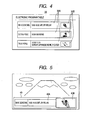
- Fig. 4 is a schematic diagram of an EPG screen; and
- Fig. 5 is a schematic diagram for explaining an information display area.
-
- An embodiment of the invention will be described below in detail with reference to drawings.
- Fig. 1 shows a
digital television apparatus 1 according to an embodiment of the invention as a whole, and aCPU 10 controls the entire apparatus. - The
digital television apparatus 1 has amain tuner 11 for receiving a currently viewed or recorded program and twosub-tuners digital television apparatus 1 further has amain demultiplexer 13 for demultiplexing the viewed program and twosub-demultiplexers - The
main tuner 11 serving as a first receiver and the twosub-tuners switch 15. - An IEEE (Institute of Electrical and Electronics Engineers) 1394
port 16 feeds a transport stream fed from a recorder (not shown) such as a hard disk recorder to theswitch 15. An HDD (Hard Disk Drive)stream buffer 17 feeds a transport stream loaded from thehard disk drive 18 to theswitch 15. - Under the control of the
CPU 10, theswitch 15 selects one of transport streams fed from themain tuner 11,sub-tuners port 16 andHDD stream buffer 17 and feeds the selected one to themain demultiplexer 13 orsub-demultiplexers - Here, in a digital television broadcast, program data of multiple programs are multiplexed to one digital broadcasting wave. The
main demultiplexer 13 extracts program data of a viewed program selected by a user from transport streams fed from themain tuner 11 and demultiplexes the program data into video data, audio data and added data. Themain demultiplexer 13 feeds the demultiplexed video data to an MPEG (Motion Picture Experts Group)video decoder 19. TheMPEG video decoder 19 serving as a decoder MPEG-decodes the demultiplexed video data and thus creates a video signal and then feeds the video signal to asubsequent display portion 20, whereby the video image of the viewed program is displayed. - On the other hand, the
sub-demultiplexer 14A serving as an added-data demultiplexer demultiplexes added data of a program on another channel from a transport stream fed from thesub-tuner memory 21. Thesub-demultiplexer 14B extracts a program on another channel from a transport stream fed from thesub-tuner hard disk drive 18. - In accordance with a user's operation, the
CPU 10 further obtains added data of programs on other channels stored in thememory 21, superimposes program information on programs on other channels (called other-channel program information, hereinafter) on the displayed viewed program based on the added data and displays it on thedisplay portion 20. - Here, the displayability of the entire video images of programs on other channels together with the program information on the programs on the other channels can provide detail descriptions of the programs on the other channels to a user. However, in order to decode video data on programs on other channels, one more MPEG video decoder with a larger circuit may be required. Furthermore, a large capacity MPEG video capture buffer may be required for decoding a video image. This may disadvantageously complicate the construction of the digital television apparatus.
- Accordingly, the
digital television apparatus 1 of the embodiment of the invention decodes video data of a program on another channel demultiplexed by thesub-demultiplexer CPU 10 serving as an information processor. However, the entire moving image of the video data may require a large amount of CPU power for software decoding, which is not realistic. - Therefore, the
digital television apparatus 1 is configured to decode a part of video data of a program on another channel as a still image and display the still image as a program image. Thus, the MPEG video decoder for programs on other channels can be omitted, and the necessity for an MPEGvideo capture buffer 21A and MPEGvideo frame buffer 21B for programs on other channels of thememory 21 shown in Fig. 3 may be eliminated. - In reality, video data of a digital television broadcast is encoded by MPEG2 by using inter-frame prediction, and pre-decoding a referred picture may be required in order to decode the P-picture and B-picture. However, the I-picture serving as an intra-frame encoded image can be decoded independently. Thus, the
digital television apparatus 1 selects and decodes image data of the I-picture only within video data of a program on another channel. Therefore, a processing load and/or work memory which may be necessary for decoding can be reduced. - The
digital television apparatus 1 further decodes and, at the same time, converts the I-picture into JPEG, whereby the data size of the decoded program image can be reduced. For example, converting one approximately 2 MB HD (high-definition) image of 1920×1080 pixels into JPEG results in about 200 kB image. Thus, the size of the image cache for programs onother channels 21C (Fig. 3) for storing program images of programs on other channels can be greatly reduced. - Then, the
digital television apparatus 1 sequentially selects channels excluding the currently viewed channel, stores the program images and added data in thememory 21 and displays a list of the program images as an electronic program table in addition to the program information extracted from the added data or sequentially displays a display area of information on programs on other channels (which will be described later) provided on the display screen. - Next, the steps of processing of decoding and storing a program image of a program on another channel to be performed by the
digital television apparatus 1 will be described in detail with reference to the flowchart shown in Fig. 2. - When the
digital television apparatus 1 is started, theCPU 10 of thedigital television apparatus 1 starts with the start step of the still image obtaining processing step routine RT1 and moves to step SP1 where the sub-tuner 12A or 12B is controlled to select a channel which is not being viewed and for which the program image and program information are attempted to obtain. Then, theCPU 10 moves to the next step SP2. - In step SP2, the
CPU 10 controls the sub-demultiplexer 14A or 14B to demultiplex added data and video data from received data of the program for which the program image and program information are attempted to obtain among multiple programs multiplexed to a transport stream fed from the sub-tuner 12A or 12B, load the demultiplexed added data to the added data cache for programs onother channels 21D (Fig. 3) of thememory 21 shown in Fig. 3 and load the video data to an MPEG video code buffer for programs onother channels 21E of thememory 21. - Here, as described above, the
digital television apparatus 1 selects and decodes the I-picture only of video data to a program image, whereby the size of the MPEG video code buffer for channels onother channels 21E can be reduced. In other words, while decoding all pictures of video data may require approximately 1.5 MB as the MPEG video code buffer for programs onother channels 21E, decoding the I-picture only may only require 320 kB equal to the data amount for two pictures. - In the next step SP3, the
CPU 10 determines whether the picture type of the video data being loaded to the MPEG video code buffer for programs onother channels 21E of thememory 21 is I-picture or not. If it is determined that the picture type is not I-picture in step SP3, theCPU 10 moves to step SP4 and waits for loading of the next picture. When loading the next picture is started, theCPU 10 returns to step SP3. - On the other hand, if it is determined that the picture type is I-picture in step SP3, the
CPU 10 moves to step SP5 and waits the end of loading the I-picture. When the loading ends, theCPU 10 moves to step SP6. - In step SP6, the
CPU 10 decodes in software and converts the I-picture to JPEG, creates a program image of the program on the other channel, loads the program image to the image cache for programs onother channels 21C and moves to the next step SP7. - In step SP7, the
CPU 10 determines whether still images for all programs on selected channels have been created or not. If it is determined in step SP7 that creating the program images for all programs has not completed yet, theCPU 10 returns to step SP2 and selects the next channel and then performs steps SP2 to SP7 again. On the other hand, if it is determined in step SP7 that the program images for all programs have been created, theCPU 10 returns to step SP1 and selects the next channel and then performs steps SP1 to SP7 again. - The
digital television apparatus 1 in this way sequentially selects a channel not having been received by themain tuner 11 currently, obtains added data and a program image of the program on the other channel and stores them in thememory 21. - Then, the
CPU 10 serving as an information output section uses program information extracted from the still image and added data stored in thememory 21 to display theprogram information 30A andprogram image 30B of each program on an electronicprogram table screen 30 shown in Fig. 4 or sequentially display theprogram information 40A andprogram image 40B of each program on another channel on an other-channelinformation display area 40 shown in Fig. 5. - Under the construction, the
digital television apparatus 1 receives, decodes and displays a viewed program by using themain tuner 11,main demultiplexer 13 andMPEG video decoder 19 and, on the other hand, obtains and stores added data of programs on other channels in the added data cache for programs onother channels 21D of thememory 21 by using the sub-tuners 12A and 12B and the sub-demultiplexer 14A and 14B. - In addition, the
CPU 10 of thedigital television apparatus 1 decodes in software and stores the I-picture of video data of the programs on other channels in the image cache for programs onother channels 21C as program images. - Then, the
CPU 10 of thedigital television apparatus 1 uses program information and program images extracted from added data to displayprogram information 30A andprogram images 30B of programs on the electronicprogram table screen 30 or sequentially display theprogram information 40A andprogram images 40B of programs on other channels on the other channel programinformation display area 40 displayed together with the viewed program. Thedigital television apparatus 1 in this way displays text program information and program images so that the descriptions of the programs can be provided to a user in more details. - Here, program images are created by software-decoding by the
CPU 10 so thatdigital television apparatus 1 can create program images of programs in a simple construction without requiring an MPEG video decoder for programs on other channels. - Under this construction, detailed descriptions of programs can be provided to a user in a simple construction by displaying the I-picture of video data of programs together with program information serving as program images through software-decoding by the
CPU 10. - While, according to the embodiment, the invention is applied to a digital television apparatus which receives and displays a digital television broadcast, the invention is not limited thereto. The invention is applicable to various television receiving apparatus such as a cellular phone or a personal computer having a function of receiving a digital television broadcast, a digital television tuner which receives and displays a digital television broadcast on an external monitor, for example, and a video tape recorder which receives and records a television broadcast.
- In so far as the embodiments of the invention described above are implemented, at least in part, using software-controlled data processing apparatus, it will be appreciated that a computer program providing such software control and a transmission, storage or other medium by which such a computer program is provided are envisaged as aspects of the present invention.
- Although particular embodiments have been described herein, it will be appreciated that the invention is not limited thereto and that many modifications and additions thereto may be made within the scope of the invention. For example, various combinations of the features of the following dependent claims can be made with the features of the independent claims without departing from the scope of the present invention.
Claims (8)
- A television broadcast receiving apparatus comprising:first and second receiving means each for receiving a television broadcast separately;decoding means for decoding video data multiplexed to the television broadcast received by the first receiving means and outputting the result as a program video image; andinformation processing means for decoding by software which executes a part of image data included in the video data multiplexed to the television broadcast received by the second receiving means and creating and outputting a program image thereof.
- The television broadcast receiving apparatus according Claim 1,
wherein the television broadcast undergoes inter-frame prediction encoding, and
the information processing means decodes image data of an intra-frame encoded image of the video data and outputs the result as the program image. - The television broadcast receiving apparatus according to Claim 1, further comprising:added-data demultiplexing means for demultiplexing added data multiplexed to the television broadcast received by the second receiving means from the television broadcast; andprogram information outputting means for adding and outputting the program image decoded by the information processing means to program information included in the added data demultiplexed by the added-data demultiplexing means.
- The television broadcast receiving apparatus according to Claim 1, comprising:the second receiving means sequentially selecting and receiving television broadcasts on channels not received by the first receiving means; andthe information processing means creating the program image for each of the television broadcasts sequentially selected and received by the second receiving means.
- The television broadcast receiving apparatus according to Claim 4, further comprising:storage means for storing the program image created for each of the television broadcasts sequentially selected and received by the second receiving means;added-data demultiplexing means for demultiplexing added data multiplexed to a television broadcast received by the second receiving means from the television broadcast; andprogram information outputting means for adding the multiple program images stored in the storage to program information included in added data demultiplexed by the added-data demultiplexing means and outputting a list of the result as an electronic program table.
- A program information processing method comprising the steps of:selecting an intra-frame encoded image of video data multiplexed to a received television broadcast;decoding image data of the intra-frame encoded image selected by the step of selecting and creating a program image; andextracting program information from added data multiplexed to the received television broadcast and adding and outputting the program image to the program information.
- A program information processing program comprising the steps of:selecting an intra-frame encoded image of video data multiplexed to a received television broadcast;decoding image data of the intra-frame encoded image selected by the step of selecting and creating a program image; andextracting program information from added data multiplexed to the received television broadcast and adding and outputting the program image to the program information.
- A television broadcast receiving apparatus comprising:first and second receivers each receiving a television broadcast separately;a decoder decoding video data multiplexed to the television broadcast received by the first receiver and outputting the result as a program video image; andan information processor decoding by software which executes a part of image data included in the video data multiplexed to the television broadcast received by the second receiver and creating and outputting a program image thereof.
Applications Claiming Priority (2)
| Application Number | Priority Date | Filing Date | Title |
|---|---|---|---|
| JP2004162321A JP2005347871A (en) | 2004-05-31 | 2004-05-31 | Television receiver |
| JP2004162321 | 2004-05-31 |
Publications (2)
| Publication Number | Publication Date |
|---|---|
| EP1603333A2 true EP1603333A2 (en) | 2005-12-07 |
| EP1603333A3 EP1603333A3 (en) | 2006-06-07 |
Family
ID=34941465
Family Applications (1)
| Application Number | Title | Priority Date | Filing Date |
|---|---|---|---|
| EP05253246A Withdrawn EP1603333A3 (en) | 2004-05-31 | 2005-05-26 | Television broadcast receiving apparatus, program information processing method and program information processing program |
Country Status (5)
| Country | Link |
|---|---|
| US (1) | US7515207B2 (en) |
| EP (1) | EP1603333A3 (en) |
| JP (1) | JP2005347871A (en) |
| KR (1) | KR20060046259A (en) |
| CN (1) | CN100399815C (en) |
Cited By (2)
| Publication number | Priority date | Publication date | Assignee | Title |
|---|---|---|---|---|
| EP2237556A1 (en) * | 2009-03-31 | 2010-10-06 | Sony United Kingdom Limited | A method of providing television program information |
| WO2013012604A1 (en) * | 2011-07-15 | 2013-01-24 | Damaka, Inc. | System and method for reliable virtual bi-directional data stream communications with single socket point-to-multipoint capability |
Families Citing this family (9)
| Publication number | Priority date | Publication date | Assignee | Title |
|---|---|---|---|---|
| JP4294933B2 (en) * | 2002-10-16 | 2009-07-15 | 富士通株式会社 | Multimedia content editing apparatus and multimedia content reproducing apparatus |
| KR100710260B1 (en) * | 2005-07-12 | 2007-04-20 | 엘지전자 주식회사 | Broadcast receiver and broadcast presentation method |
| US7805741B2 (en) * | 2005-09-13 | 2010-09-28 | Cyberlink Corp. | Systems and methods for networking digital video recorders |
| JP2007312127A (en) * | 2006-05-18 | 2007-11-29 | Toshiba Corp | Receiving apparatus and control method of receiving apparatus |
| JP5067370B2 (en) * | 2006-08-08 | 2012-11-07 | ソニー株式会社 | Reception device, display control method, and program |
| KR20080067443A (en) * | 2007-01-16 | 2008-07-21 | 삼성전자주식회사 | Digital Broadcast Receiver and Control Method |
| JP5071040B2 (en) * | 2007-10-22 | 2012-11-14 | ソニー株式会社 | Information processing apparatus, information processing method, program, and recording medium |
| EP2445208A4 (en) * | 2009-06-19 | 2013-02-13 | Shenzhen Tcl New Technology | Generation method of electronic program guide menu of television and tv set |
| EP2416565A1 (en) * | 2010-08-05 | 2012-02-08 | Thomson Licensing | Method for handling of audio/video signals and corresponding device |
Citations (1)
| Publication number | Priority date | Publication date | Assignee | Title |
|---|---|---|---|---|
| US6020930A (en) | 1997-08-28 | 2000-02-01 | Sony Corporation | Method and apparatus for generating and displaying a broadcast system program guide |
Family Cites Families (17)
| Publication number | Priority date | Publication date | Assignee | Title |
|---|---|---|---|---|
| US6418556B1 (en) * | 1993-09-09 | 2002-07-09 | United Video Properties, Inc. | Electronic television program guide schedule system and method |
| DE69528853T2 (en) * | 1994-01-31 | 2003-07-03 | Canon K.K., Tokio/Tokyo | System and method for editing moving images |
| JPH10304320A (en) | 1997-04-25 | 1998-11-13 | Kenwood Corp | Digital broadcast receiver |
| US6563515B1 (en) * | 1998-05-19 | 2003-05-13 | United Video Properties, Inc. | Program guide system with video window browsing |
| US6115080A (en) * | 1998-06-05 | 2000-09-05 | Sarnoff Corporation | Channel selection methodology in an ATSC/NTSC television receiver |
| US7676822B2 (en) * | 2001-01-11 | 2010-03-09 | Thomson Licensing | Automatic on-screen display of auxiliary information |
| JP2002320153A (en) | 2001-02-14 | 2002-10-31 | Matsushita Electric Ind Co Ltd | Tuning method and tuning device |
| JP2003219307A (en) | 2002-01-18 | 2003-07-31 | Sony Corp | Broadcast receiving device and automatic tuning method |
| JP2003298969A (en) * | 2002-03-29 | 2003-10-17 | Kenwood Corp | Digital broadcast receiver |
| GB0207791D0 (en) | 2002-04-04 | 2002-05-15 | Koninkl Philips Electronics Nv | Digital remote control device |
| JP3799288B2 (en) * | 2002-04-05 | 2006-07-19 | キヤノン株式会社 | Receiver |
| JP4552373B2 (en) | 2002-05-31 | 2010-09-29 | ソニー株式会社 | Information processing system, information processing apparatus, and information processing method |
| US8745689B2 (en) * | 2002-07-01 | 2014-06-03 | J. Carl Cooper | Channel surfing compressed television sign method and television receiver |
| KR101016912B1 (en) | 2002-12-16 | 2011-02-22 | 엔엑스피 비 브이 | How to create a mosaic program guide, device and receiver |
| US20040181813A1 (en) * | 2003-02-13 | 2004-09-16 | Takaaki Ota | Methods and systems for rapid channel change within a digital system |
| US20040194134A1 (en) * | 2003-03-25 | 2004-09-30 | Gunatilake Priyan Deveka | Method and system for rapid channel change providing stored images of current channel programs |
| KR20040101655A (en) * | 2003-05-26 | 2004-12-03 | 삼성전자주식회사 | Method and apparatus for displaying multi picture in guide information |
-
2004
- 2004-05-31 JP JP2004162321A patent/JP2005347871A/en active Pending
-
2005
- 2005-05-25 US US11/137,287 patent/US7515207B2/en not_active Expired - Fee Related
- 2005-05-26 EP EP05253246A patent/EP1603333A3/en not_active Withdrawn
- 2005-05-30 KR KR1020050045445A patent/KR20060046259A/en not_active Withdrawn
- 2005-05-31 CN CNB2005100817348A patent/CN100399815C/en not_active Expired - Fee Related
Patent Citations (1)
| Publication number | Priority date | Publication date | Assignee | Title |
|---|---|---|---|---|
| US6020930A (en) | 1997-08-28 | 2000-02-01 | Sony Corporation | Method and apparatus for generating and displaying a broadcast system program guide |
Cited By (2)
| Publication number | Priority date | Publication date | Assignee | Title |
|---|---|---|---|---|
| EP2237556A1 (en) * | 2009-03-31 | 2010-10-06 | Sony United Kingdom Limited | A method of providing television program information |
| WO2013012604A1 (en) * | 2011-07-15 | 2013-01-24 | Damaka, Inc. | System and method for reliable virtual bi-directional data stream communications with single socket point-to-multipoint capability |
Also Published As
| Publication number | Publication date |
|---|---|
| JP2005347871A (en) | 2005-12-15 |
| US20050273813A1 (en) | 2005-12-08 |
| EP1603333A3 (en) | 2006-06-07 |
| CN1705355A (en) | 2005-12-07 |
| CN100399815C (en) | 2008-07-02 |
| US7515207B2 (en) | 2009-04-07 |
| KR20060046259A (en) | 2006-05-17 |
Similar Documents
| Publication | Publication Date | Title |
|---|---|---|
| US7373022B2 (en) | Apparatus and method for reproducing image | |
| JP5209154B2 (en) | Digital video decoding system, method for sequentially displaying a plurality of video programs and method for predicting the next channel selected by a user | |
| US8275247B2 (en) | Method and apparatus for normal reverse playback | |
| KR100444536B1 (en) | Moving picture decoding apparatus and moving picture decoding method | |
| JP4270130B2 (en) | Television receiver and control program therefor | |
| EP1603333A2 (en) | Television broadcast receiving apparatus, program information processing method and program information processing program | |
| US8532459B2 (en) | Fast channel change in a digital television receiver | |
| JP2010109529A (en) | Multiplexing controller | |
| US20070201819A1 (en) | Apparatus and method for variable speed playback of digital broadcasting stream | |
| JP2005347871A5 (en) | ||
| EP1061737A1 (en) | Process and device for switching digital television programmes | |
| US7446819B2 (en) | Apparatus and method for processing video signals | |
| JP2003304476A (en) | Digital broadcast receiver | |
| US7711250B2 (en) | Apparatus for receiving transport stream to provide multi-screen and control method therefor | |
| JP2006309819A (en) | Video recording and reproducing device | |
| EP1675394A1 (en) | Personal video recorder system and method for reproducing a signal in the system | |
| US20060177199A1 (en) | Information recording medium, information reproducing apparatus, information recording method and reproducing method | |
| US7489852B2 (en) | Video reproducing apparatus | |
| KR100407837B1 (en) | A set-top box which can capture a stilled image and the stilled image capturing method using the set-top box | |
| WO2007114023A1 (en) | Information recording device and information recording method | |
| JP2003092712A (en) | Electronic program guide information processor | |
| KR200156496Y1 (en) | TV receiver displaying program information | |
| JP2005323278A (en) | Digital broadcast receiver | |
| JP2010050644A (en) | Receiving device, receiving method and program | |
| JP2005347807A (en) | Electronic device and data processing method executed by the electronic device |
Legal Events
| Date | Code | Title | Description |
|---|---|---|---|
| PUAI | Public reference made under article 153(3) epc to a published international application that has entered the european phase |
Free format text: ORIGINAL CODE: 0009012 |
|
| AK | Designated contracting states |
Kind code of ref document: A2 Designated state(s): AT BE BG CH CY CZ DE DK EE ES FI FR GB GR HU IE IS IT LI LT LU MC NL PL PT RO SE SI SK TR |
|
| AX | Request for extension of the european patent |
Extension state: AL BA HR LV MK YU |
|
| PUAL | Search report despatched |
Free format text: ORIGINAL CODE: 0009013 |
|
| AK | Designated contracting states |
Kind code of ref document: A3 Designated state(s): AT BE BG CH CY CZ DE DK EE ES FI FR GB GR HU IE IS IT LI LT LU MC NL PL PT RO SE SI SK TR |
|
| AX | Request for extension of the european patent |
Extension state: AL BA HR LV MK YU |
|
| 17P | Request for examination filed |
Effective date: 20061120 |
|
| AKX | Designation fees paid |
Designated state(s): DE FR GB |
|
| 17Q | First examination report despatched |
Effective date: 20090304 |
|
| STAA | Information on the status of an ep patent application or granted ep patent |
Free format text: STATUS: THE APPLICATION IS DEEMED TO BE WITHDRAWN |
|
| 18D | Application deemed to be withdrawn |
Effective date: 20101201 |