EP1603082A2 - Method and system to reduce feeding and weighing errors in manual feed mailing systems - Google Patents
Method and system to reduce feeding and weighing errors in manual feed mailing systems Download PDFInfo
- Publication number
- EP1603082A2 EP1603082A2 EP05011794A EP05011794A EP1603082A2 EP 1603082 A2 EP1603082 A2 EP 1603082A2 EP 05011794 A EP05011794 A EP 05011794A EP 05011794 A EP05011794 A EP 05011794A EP 1603082 A2 EP1603082 A2 EP 1603082A2
- Authority
- EP
- European Patent Office
- Prior art keywords
- mail piece
- mailing machine
- information associated
- processing
- Prior art date
- Legal status (The legal status is an assumption and is not a legal conclusion. Google has not performed a legal analysis and makes no representation as to the accuracy of the status listed.)
- Granted
Links
Images
Classifications
-
- G—PHYSICS
- G07—CHECKING-DEVICES
- G07B—TICKET-ISSUING APPARATUS; FARE-REGISTERING APPARATUS; FRANKING APPARATUS
- G07B17/00—Franking apparatus
- G07B17/00459—Details relating to mailpieces in a franking system
- G07B17/00661—Sensing or measuring mailpieces
-
- G—PHYSICS
- G07—CHECKING-DEVICES
- G07B—TICKET-ISSUING APPARATUS; FARE-REGISTERING APPARATUS; FRANKING APPARATUS
- G07B17/00—Franking apparatus
- G07B17/00459—Details relating to mailpieces in a franking system
- G07B17/00661—Sensing or measuring mailpieces
- G07B2017/00701—Measuring the weight of mailpieces
Definitions
- the invention disclosed herein relates generally to mail processing systems, and more particularly to a manually fed mailing machine incorporating systems and methods to reduce feeding and weighing errors.
- Mail processing equipment such as, for example, a mailing machine, often includes different modules that automate the process of producing mail pieces.
- the typical mailing machine includes a variety of different modules or sub-systems each of which performs a different task on the mail piece.
- the mail piece is conveyed downstream utilizing a transport mechanism, such as rollers or a belt, to each of the modules.
- modules could include, for example, a singulating module, i.e., separating a stack of mail pieces such that the mail pieces are conveyed one at a time along the transport path, a moistening/sealing module, i.e., wetting and closing the glued flap of an envelope, and a metering module, i.e., applying evidence of postage to the mail piece.
- a singulating module i.e., separating a stack of mail pieces such that the mail pieces are conveyed one at a time along the transport path
- a moistening/sealing module i.e.,
- a mail piece could be, for example, an envelope, postcard, magazine, package, etc.
- the mailing machine will be provided with the weight of the mail piece, typically from an integral scale incorporated within the mail flow path, an external scale coupled to the mailing machine, or user input. Based on the weight of the mail piece, the postage rate and operator specified service option for a selected carrier, the mailing machine will determine the cost to deliver the mail piece to the destination. The mailing machine will then conduct an accounting procedure for the cost of shipping the mail piece and print an indicium evidencing payment of the postage.
- Mailing machines have traditionally been capable of printing postage indicia either directly on mail pieces, or on pieces of tape or a label, which are then attached to mail pieces.
- an external platform scale i.e., a scale that is independent and separate from the mail flow path
- methods that can be utilized for determining the weight of an item.
- the user places each mail piece onto the platform of the external scale and the weight of the mail piece is provided by the scale to the controller of the mailing machine.
- the controller will calculate the cost for shipping the mail piece based on the weight of the mail piece provided by the scale.
- the user removes the mail piece from the scale and places it on the feed deck of the mailing machine base.
- Sensors detect the presence of the mail piece on the feed deck and the mail piece is automatically fed into the mailing machine for processing, or, alternatively, the user must press a start button for the mailing machine to transport the mail piece into the mail flow path. The user then repeats this procedure for each mail piece that the user desires to process.
- Another method for determining the weight of a mail piece is referred to as a differential weighing method as disclosed in U.S. Patent No. 5,001,648.
- a differential weighing method a plurality of mail pieces are placed on an external scale coupled to a mailing machine and the collective weight of the mail pieces is registered.
- the difference between the original collective weight of the mail pieces and the new collective weight of the mail pieces remaining on the scale is determined.
- the cost for shipping of the mail piece is calculated based on the determined differential weight.
- Sensors detect the presence of the mail piece on the feed deck and the mail piece is preferably automatically fed into the mailing machine for processing. The user then repeats this procedure for each mail piece that the user desires to process.
- the user may be inclined to restart the entire system, which is time consuming, thereby decreasing the throughput of the mailing machine, or place a service call in the belief that the mailing machine is in need of repair. In either case, this can lead to general dissatisfaction with the mailing machine by the user.
- Another feeding and weighing error that can occur is if the user forgets to place a mail piece on the scale, and instead places it directly onto the feed deck. If the controller does not have a weight for the mail piece, the mail piece will not be fed into the mailing machine. The user, not realizing that the mail piece was never weighed, and thus will not be processed, may believe that there is a problem with the sensors or feeding mechanism of the mailing machine. The user may be inclined to restart the entire system, which is time consuming, or place a service call in the belief that the mailing machine is in need of repair. In either case, this can lead to general dissatisfaction with the mailing machine by the user.
- the present invention alleviates the problems associated with the prior art and provides methods and systems that reduce feeding and weighing errors in a manually fed mailing machine thereby allowing a very fast throughput to be achieved while maintaining mail piece integrity, i.e., associating each mail piece with the proper information for that mail piece.
- a mailing machine accepts weights or postage amounts for additional subsequent mail pieces before the processing of a preceding mail piece has been completed.
- the mailing machine maintains a queue of the weights or postage amounts for a plurality of mail pieces that have been provided by an attached scale such that the mailing machine can correctly associate each weight or postage amount with the appropriate mail piece when it is fed into the mailing machine.
- the weight or postage amount from the next location in the queue is obtained and utilized to generate an indicium for the next mail piece fed into the mailing machine.
- the mailing machine therefore can form the correct processing order for multiple pieces of mail, thereby increasing the throughput of the mailing machine.
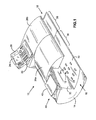
- FIG. 1 illustrates a mailing machine having systems and methods for reducing feeding and weighing errors according to embodiments of the present invention.
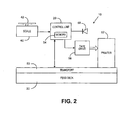
- FIG. 2 illustrates in block diagram form portions of the mailing machine of Fig. 1.
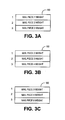
- FIGS. 3A-3C illustrate an example of a queue used to reduce feeding and weighing errors according to an embodiment of the present invention.
- Mailing machine 10 comprises a base unit, designated generally by the reference numeral 14, the base unit 14 having a mail piece input end, designated generally by the reference numeral 16, and a mail piece output end, designated generally by the reference numeral 18.
- a control unit 20 is mounted on the base unit 14, and includes one or more input/output devices, such as, for example, a keyboard 22 and a display device 24.
- Control unit 20 preferably includes one or more controller units, such as, for example, a microprocessor, general or special purpose processor or the like, to control operation of the mailing machine 10.
- One or more cover members 26a, 26b are pivotally mounted on the base 14 so as to move from the closed position shown in Fig. 1 to an open position (not shown) to expose various operating components and parts for service and/or repair as needed.
- the base unit 14 further includes a horizontal feed deck 30 which extends substantially from the input end 16 to the output end 18.
- a plurality of nudger rollers 12 are preferably mounted under the feed deck 30 and project upwardly through openings in the feed deck so that the periphery of the rollers 12 is slightly above the upper surface of the feed deck 30 and can exert a forward feeding force on a succession of mail pieces placed in the input end 16.
- One or more sensors 34 are located in the feed deck 30 to detect the presence of a mail piece on the feed deck 30.
- a registration wall 32 defines a mail piece registration surface substantially perpendicular to the feed deck 30 that extends substantially from the input end 16 to the output end 18.
- a scale 40 including a platter 42 (which may be removable), is preferably located near the input end 16, such as, for example, above and adjacent to the registration wall 32 as illustrated.
- the scale 40 may be integral with the base unit 14, it is still considered an external platform scale as it is independent and separate from the mail flow path along the feed deck 30.
- a separate external stand alone scale may be coupled to the mailing machine 10 by any suitable communication link, such as, for example, a USB or RS232 interface.
- the scale 40 can be operated by a user to weigh mail pieces utilizing either the single piece mode or differential weighing mode previously described.
- the user places the mail piece in the input end 16 where one or more of the sensors 34 detect the mail piece.
- Signals from the sensors 34 are sent to the control unit 20, which in response, will activate the nudger rollers 12 to feed the mail piece along the feed deck 30, with the top edge of the mail piece being registered against the registration wall 32.
- control unit 20 may require an input from the user, such as, for example, pressing a start button, in lieu of or in addition to the signal from sensors 34, before activating the nudger rollers 12.
- the mail pieces may be passed through one or more modules, such as, for example, a singulator module and a moistening/sealing module, as are well known. Each of these modules is located generally in the area indicated by reference numeral 36.
- the mail pieces are then passed to a metering/printing module located generally in the area indicated by reference numeral 38, where an indicium evidencing postage will be printed on the mail piece.
- the indicium may be printed on a tape or label that can be affixed to the mail piece.
- Fig. 2 illustrates in block diagram form portions of the mailing machine 10 illustrated in Fig. 1.
- a transport 50 including, for example, the nudger rollers 12 of Fig. 1, utilized to transport mail pieces along the feed deck 30 is coupled to the control unit 20 and transports mail pieces based on signals provided from the control unit 20.
- the transport 50 will transport the mail pieces through the modules of the mailing machine 10, including a printer 52, wherein printing can occur on each mail piece.
- the scale 40 is coupled to the control unit 20. Scale 40 can provide the weight of an object on the scale 40 to control unit 20, or could provide a representative signal to control unit 20 from which the control unit 20 will determine the weight of the object.
- the control unit 20 will determine the necessary postage costs for a mail piece, based at least in part on the weight of the mail piece as received from the scale 40, utilizing one or more rating tables that can be stored in the memory 54. Alternatively, if rating tables are stored within the scale 40, the scale 40 could provide the postage costs for a mail piece to the control unit 20. Control unit 20 will generate an indicium, based on the determined postage cost, for printing on the mail piece by printer 52 as the mail piece is transported past the printer 52. Alternatively, control unit 20 can activate the tape drive 56 to deliver a tape to the printer 52, and the printer 52 will print the indicium on the tape for adhering to a mail piece.
- mailing machine 10 maintains a queue of weights that have been provided by the scale 40 such that the mailing machine 10 can correctly associate each weight with the appropriate mail piece.
- mailing machine 10 maintains a queue of postage costs that have been provided by the scale 40 such that the mailing machine 10 can correctly associate each postage amount with the appropriate mail piece.
- the memory 54 can be utilized to maintain the queue of weights or postage amounts.
- the control unit 20 will obtain the weight or cost from the next location in the queue, utilize the obtained weight to calculate the postage amount based on a rating table within the memory 54, and generate an indicium for the postage amount for printing by the printer 52.
- the indicium could be printed either directly on the mail piece, or on a tape from the tape drive 56.
- Figs. 3A-3C illustrate an example of a queue 60 maintained in memory 54 during operation of mailing machine 10 according to an embodiment of the invention.
- the weight of a first mail piece (Mail Piece 1) has been determined by the scale 40 (either in the single piece mode or differential weighing mode) and the user has placed Mail Piece 1 on the feed deck 30.
- the weight for Mail Piece 1 is accepted by the control unit 20 and stored in the first location in the queue 60, where it will be retrieved by the control unit 20 to calculate the postage for Mail Piece 1.
- the weight for Mail Piece 1 need not be stored in the queue 60 and can be directly accepted by the control unit 20 for calculation of postage.
- Mail Piece 2 While Mail Piece 1 is being processed by the mailing machine 10, the user places and removes (for single piece mode) or just removes (for differential weighing mode) a second mail piece (Mail Piece 2) from the scale 40.
- the determined weight of Mail Piece 2 is accepted by the control unit 20 and stored in the second location in the queue 60 for retrieval at the appropriate time, as described below, to calculate the postage for Mail Piece 2.
- the user can place Mail Piece 2 on the input end 12 of the feed deck 30, which may have been vacated by Mail Piece 1 being drawn into the mailing machine 10.
- Mail Piece 1 has not yet vacated the input end 12 of the feed deck 30, Mail Piece 2 could be placed on top of Mail Piece 1, as a singulator (not shown) can separate the two mail pieces and feed the bottom mail piece, i.e., Mail Piece 1, into the mailing machine 10. If the user now places and removes or removes a third mail piece (Mail Piece 3) from the scale 40, the determined weight of Mail Piece 3 is accepted by the control unit 20 and stored in the third location in the queue 60 for retrieval at the appropriate time.
- Mail Piece 3 the determined weight of Mail Piece 3 is accepted by the control unit 20 and stored in the third location in the queue 60 for retrieval at the appropriate time.
- the weights for the other mail pieces (Mail Pieces 2 and 3) will shift upward thereby emptying the third location of the queue. If the weight for Mail Piece 1 is not stored in the queue 60, then the weight of Mail Piece 2 will be stored directly in the first location of queue 60, the weight of Mail Piece 3 will be stored in the second location of queue 60.
- the control unit 20 can then retrieve the weight for Mail Piece 2 stored in the queue 60.
- the weight for Mail Piece 2 is retrieved as soon as the processing for Mail Piece 1 has been completed, thereby avoiding any unnecessary delays which will decrease the throughput of mailing machine 10.
- Sensors 34 detecting the presence of Mail Piece 2 on the feed deck 30, will send a signal to the control unit 20.
- Control unit 20 will confirm that a weight for Mail Piece 2 has been retrieved and processing of Mail Piece 1 has been completed, and then activate the nudger rollers 12 to feed Mail Piece 2 into the mailing machine 10 for processing.
- Mail Piece 2 can be ingested into the mailing machine 10 as soon as the signal from sensors 34 is received, but paused downstream until the other two conditions have been satisfied.
- Mail Piece 3 can then be placed on the feed deck 30 (if Mail Piece 2 has left) or on top of Mail Piece 2 (if Mail Piece 2 has not left), and the user can retrieve the fourth mail piece (Mail Piece 4).
- the weight for Mail Piece 4 will be accepted by the control unit 20 and stored in the third location of the queue 60 as illustrated in Fig. 3B.
- the weights for the other mail pieces (Mail Piece 3 and 4) will shift upward thereby emptying the third location in the queue 60.
- the control unit 20 can then retrieve the weight for Mail Piece 3 stored in the queue 60.
- Sensors 34 detecting the presence of Mail Piece 3 on the feed deck 30, will send a signal to the control unit 20.
- Control unit 20 will confirm that a weight for Mail Piece 3 has been retrieved and processing of Mail Piece 2 has been completed, and then activate the nudger rollers 12 to feed Mail Piece 3 into the mailing machine 10 for processing.
- Mail Piece 3 can be ingested into the mailing machine 10 as soon as the signal from sensors 34 is received, but paused downstream until the other two conditions have been satisfied.
- Mail Piece 4 can then be placed on the feed deck 30 (if Mail Piece 3 has left) or on top of Mail Piece 3 (if Mail Piece 3 has not left), and the user can retrieve the fifth mail piece (Mail Piece 5).
- the weight for Mail Piece 5 will be accepted by the control unit 20 and stored in the third location of the queue 60 as illustrated in Fig. 3C. The processing continues in a similar fashion for subsequent mail pieces.
- Figs. 3A-3C illustrate a queue 60 utilized to store weights
- the queue 60 could also be used to store the postage amounts received from the scale 40 and the processing would be similar as that described above with the control unit 20 retrieving the postage amount for each mail piece.
- queue 60 is not limited to three locations as illustrated, but instead can have any number of locations depending upon the rate of speed desired.
- the queue 60 could have one, two, three or more locations. If the user is capable of manually removing the mail pieces faster than the mailing machine 10 can process them, the user may remove more pieces than queue 60 can store, thereby running the risk of the mailing machine 10 not being in synchronization with the mail pieces being processed, i.e., the wrong weight being associated with the wrong mail piece. To alleviate this risk, some embodiments will monitor the queue 60, and once the queue 60 has been filled to capacity, only those pieces for which there is a corresponding entry in the queue 60 will be processed by the mailing machine 10 and no further entries will be made in the queue 60, even as space becomes available.
- any mail pieces remaining on the feed deck 30 will not be processed by the mailing machine 10.
- a message will be provided to the user, utilizing, for example, display 24, that the processing limit was reached, i.e., mail pieces were removed too quickly, and any mail pieces that are not accepted by the mailing machine 10 (once the queue 60 has emptied) must be placed back on the platform 42 to obtain a weight.
- the size of the queue 60 could be configurable depending upon the customer's specifications. For example, experienced users, capable of operating at a faster rate than inexperienced users, may desire a larger queue.
- the size of the queue can be increased to accommodate the faster rate of speed at which the user is capable of operating.
- the owner of a mailing machine being used by less experienced users, such as may be found in a community mailroom, may desire a smaller queue to safeguard against the mailing machine 10 being out of synchronization with the mail pieces and thus wasted postage funds.
- mailing machine 10 could be provided with means to provide an audible signal to the user indicating when the next mail piece can be removed from the platter 42.
- Such an audio signal could be provided by a speaker 58 (Fig. 2) coupled to the control unit 20.
- a speaker 58 FIG. 2
- the user may place a subsequent mail piece on the platter 42 as soon as a previous one is removed.
- scale 40 may be providing the weight to control unit 20, control unit 20 will not accept the weight until a location is available in the queue 60.
- the control unit 20 In differential weighing mode, the mail pieces are already on the platter 42, but the weight for the next removed mail piece will not be accepted by the control unit 20 until a location is available in the queue 60. Thus, once a location within the queue 60 becomes available, the control unit 20 will cause the speaker 58 to emit an audible signal, thereby indicating to the user that the next mail piece can be removed from the platter 42, as the weight will be accepted by the control unit 20 and stored in the queue 60. If the queue is not full, the audible signal will be provided almost immediately after a mail piece is removed. Optionally, the control unit 20 can cause the speaker 58 to emit different audible signals based on the status.
- a first audible signal can be emitted to indicate to the user that the queue is now full and the user must wait before removing the next mail piece from the platter 42, and then a second audible signal can be emitted to indicate to the user that he may resume processing and the next mail piece can be removed from the platter 42.
- mailing machine 10 is able to accept the weights for additional mail pieces, even while preceding mail pieces are being processed by the mailing machine 10. This can significantly increase the throughput of the mailing machine 10 as compared with conventional mailing machines that required waiting for a previous mail piece to be fully processed before accepting the weight of the subsequent mail piece.
- a configurable queue size along with the use of messages to indicate to the user when processing limits were reached will help the user to optimize performance of the mailing machine 10 for each user.
- the use of the queue 60 allows the mailing machine 10 to perform a maintenance operation for the print head of printer 52 when the maintenance operation is requested, instead of having to wait until the end of a mail run.
- Such maintenance includes, for example, a wipe of the print head or a purge of the print head, and is required to ensure that all nozzles of the print head are properly operating.
- the print head is typically moved to a maintenance position, maintenance is performed, and the print head is returned to the home position for printing.
- the control unit 20 or a separate printer controller (not shown)
- Such a maintenance operation may be required asynchronously, i.e., while a mail piece is traveling through the mailing machine 10.
- the maintenance operation if possible, would be delayed until the end of a mail run, e.g., when the user has completed processing all pieces of the current batch.
- Some maintenance operations cannot be delayed until the end of the mail run, but instead would stop the mail run to perform the maintenance operation.
- the user would then be required to restart the mail run, adding additional delay to the processing of the mail run.
- Mailing machine 10 allows the transport 50 to pause when a maintenance operation is requested, thereby allowing the printer maintenance to occur when requested, without having to stop and then restart the mail run.
- the mail piece could be held on the feed deck 30 at the input end 16 of the mailing machine 10, or paused on the feed deck 30 at the entrance to the moistening/sealing module located in the area indicated by reference numeral 36.
- the control unit 20 will still associate the proper weight or postage rate (if already calculated based on the weight) with the mail piece that was paused within the mailing machine 10, thereby maintaining the integrity of the mail piece.
- the mailing machine 10 provides the highest quality, consistently printed indicia on each mail piece, without affecting the mail piece integrity and minimally impacting the throughput. If mailing machine 10 is printing the indicia on a tape from the tape drive 56, a tape will not be printed until the maintenance has been completed.
- Another type of weighing and feeding error results when the user places a mail piece on the feed deck 30 without first having the weight of the mail piece being entered into the control unit 20.
- the queue 60 does not have an entry (and the mailing machine is not performing the full queue processing routine as described above), and the sensors 34 detect a mail piece on the feed deck 30 waiting to be processed by the mailing machine 10, a message will be displayed to the user, utilizing, for example the display 24, that indicates the weight was required for the mail piece.
- the mailing machine 10 will inform the user of the error.
- the control unit 20 will cause the mailing machine to run the mail piece through the mailing machine without any processing being performed and eject the mail piece without being imprinted upon.
- a message will be displayed to the user, utilizing, for example the display 24 that indicates the weight was required for the mail piece.
- mailing machine 10 will eject the mail piece and inform the user of the error. The user, therefore, will be fully aware of the problem, and not make any assumptions with respect to the operating status of the mailing machine 10.
Landscapes
- Physics & Mathematics (AREA)
- General Physics & Mathematics (AREA)
- Devices For Checking Fares Or Tickets At Control Points (AREA)
- Sorting Of Articles (AREA)
Abstract
Description
Claims (18)
- A method for a mailing machine to process mail pieces comprising:receiving information associated with a first mail piece from a scale;processing the first mail piece utilizing the information associated with the first mail piece;receiving information associated with a second mail piece from the scale and storing the information associated with the second mail piece while the first mail piece is being processed by the mailing machine;retrieving the stored information associated with the second mail piece after the processing of the first mail piece has been completed by the mailing machine; andprocessing the second mail piece utilizing the retrieved information associated with the second mail piece.
- The method of claim 1, further comprising:receiving information associated with a third mail piece from the scale and storing the information associated with the third mail piece while the first mail piece is being processed by the mailing machine.
- The method of claim 2, further comprising:retrieving the stored information associated with the third mail piece after processing of the second mail piece is complete; andprocessing the third mail piece utilizing the retrieved information associated with the third mail piece.
- The method of claim 1, wherein the information associated with the first and second mail pieces includes a respective weight of each mail piece.
- The method of claim 1, wherein the information associated with the first and second mail pieces includes a respective postage amount for each mail piece.
- The method of claim 1, wherein the information associated with the first and second mail pieces is stored in a memory having a configurable number of storage locations.
- The method of claim 6, further comprising:determining if each storage location in the memory is full; andif each storage location is full, processing only mail pieces for which there is associated information currently stored in the memory and not storing information associated with any subsequent mail pieces.
- The method of claim 1, further comprising:providing an audible signal indicating when the information associated with the second mail piece can be stored.
- The method of claim 1, wherein processing the first and second mail pieces includes generating a respective indicium for each of the first and second mail pieces and printing the generated indicium on the respective one of the first and second mail pieces.
- The method of claim 1, further comprising:determining that a maintenance operation is required for a print head of the mailing machine;pausing the processing of the second mail piece after the second mail piece has entered the mailing machine and the information associated with the second mail piece has been retrieved;performing the maintenance operation for the print head; andresuming processing of the second mail piece.
- The method of claim 1, further comprising:ingesting the second mail piece into the mailing machine and pausing the second mail piece in the mailing machine while the first mail piece is being processed.
- A mailing machine for processing mail pieces comprising:wherein the control unit will retrieve the information stored for a subsequent mail piece after the processing of an immediately preceding mail piece has been completed and utilize the retrieved information associated with the subsequent mail piece for the processing of the subsequent mail piece.a control unit to control operation of the mailing machine during processing of a mail piece, the processing including generation of an indicium for the mail piece and printing the indicium;a transport device coupled to the control unit, the transport device transporting mail pieces through the mailing machine;a scale coupled to the control unit; anda memory device coupled to the control unit, the memory device adapted to store information associated with a plurality of mail pieces that the control unit receives from the scale, the control unit receiving from the scale and storing in the memory device information associated with at least one subsequent mail piece before processing for a preceding mail piece has been completed by the mailing machine,
- The mailing machine of claim 12, wherein the information associated with the plurality of mail pieces includes a respective weight of each mail piece.
- The mailing machine of claim 12, wherein the information associated with the plurality of mail pieces includes a respective postage amount for each mail piece.
- The mailing machine of claim 12, wherein the memory device has a configurable number of storage locations.
- The mailing machine of claim 15, wherein the control unit determines if each storage location in the memory is full, and if each storage location is full, controls the mailing machine to process only mail pieces for which there is associated information currently stored in the memory device and does not store information associated with any subsequent mail pieces.
- The mailing machine of claim 12, further comprising:means to provide an audible signal indicating when the information associated with a subsequent mail piece can be stored.
- The mailing machine of claim 12, wherein if the control unit has not received information associated with a mail piece and a mail piece is detected for transportation by the transportation device, the control unit will cause the transport device to transport the detected mail piece through the mailing machine without performing any processing of the mail piece.
Applications Claiming Priority (2)
| Application Number | Priority Date | Filing Date | Title |
|---|---|---|---|
| US10/857,992 US20050267849A1 (en) | 2004-06-01 | 2004-06-01 | Method and system to reduce feeding and weighing errors in manual feed mailing systems |
| US857992 | 2004-06-01 |
Publications (3)
| Publication Number | Publication Date |
|---|---|
| EP1603082A2 true EP1603082A2 (en) | 2005-12-07 |
| EP1603082A3 EP1603082A3 (en) | 2007-12-12 |
| EP1603082B1 EP1603082B1 (en) | 2008-12-10 |
Family
ID=34937124
Family Applications (1)
| Application Number | Title | Priority Date | Filing Date |
|---|---|---|---|
| EP05011794A Ceased EP1603082B1 (en) | 2004-06-01 | 2005-06-01 | Method and system to reduce feeding and weighing errors in manual feed mailing systems |
Country Status (3)
| Country | Link |
|---|---|
| US (1) | US20050267849A1 (en) |
| EP (1) | EP1603082B1 (en) |
| DE (1) | DE602005011527D1 (en) |
Families Citing this family (1)
| Publication number | Priority date | Publication date | Assignee | Title |
|---|---|---|---|---|
| FR2872612B1 (en) * | 2004-06-30 | 2006-11-10 | Neopost Ind Sa | SUPPLY DEVICE WITH INTEGRATED DIFFERENTIAL WEIGHTING MODULE |
Family Cites Families (8)
| Publication number | Priority date | Publication date | Assignee | Title |
|---|---|---|---|---|
| US3877531A (en) * | 1974-06-05 | 1975-04-15 | Pitney Bowes Inc | Automatic continuous mail handling system |
| US4956782A (en) * | 1986-09-19 | 1990-09-11 | Pitney Bowes Inc. | Mailing system for mixed weight mail |
| US4935078A (en) * | 1988-12-28 | 1990-06-19 | Pitney Bowes Inc. | High throughput mailing maching timing |
| US5001648A (en) * | 1989-10-18 | 1991-03-19 | M.A.I.L. Code, Inc. | Method and apparatus for a mail processing system |
| US5120043A (en) * | 1990-11-19 | 1992-06-09 | Pitney Bowes Inc. | Jam clearing and daily mail device for a document feeder |
| FR2710770B1 (en) * | 1993-09-27 | 1995-12-29 | Secap | Method for franking objects, and automated franking system for implementing this method. |
| US6510992B2 (en) * | 2000-02-02 | 2003-01-28 | Thomas R. Wells | In-line verification, reporting and tracking apparatus and method for mail pieces |
| US6861592B2 (en) * | 2002-09-20 | 2005-03-01 | Siemens Aktiengesellschaft | Method for weighing mail pieces |
-
2004
- 2004-06-01 US US10/857,992 patent/US20050267849A1/en not_active Abandoned
-
2005
- 2005-06-01 DE DE602005011527T patent/DE602005011527D1/en not_active Expired - Lifetime
- 2005-06-01 EP EP05011794A patent/EP1603082B1/en not_active Ceased
Also Published As
| Publication number | Publication date |
|---|---|
| DE602005011527D1 (en) | 2009-01-22 |
| EP1603082A3 (en) | 2007-12-12 |
| EP1603082B1 (en) | 2008-12-10 |
| US20050267849A1 (en) | 2005-12-01 |
Similar Documents
| Publication | Publication Date | Title |
|---|---|---|
| US8148650B2 (en) | Mailing machine transport system with integral scale for weighing mail pieces where the contact force on the take away rollers is reduced to eliminate oscillations of the weighing platform | |
| JP2644235B2 (en) | Mailing system | |
| US8178796B2 (en) | Mailing machine transport system including a guide to reduce the impact on the weighing device caused by the trailing edge of the mailpeice | |
| JPS63104195A (en) | Weighing module for mailing system | |
| JP2621877B2 (en) | Mailing system feeder | |
| US20020060097A1 (en) | Method and arrangement for controlling a dynamic scale | |
| US20030168798A1 (en) | Transport method and system for controlling timing of mail pieces being processed by a mailing system | |
| US6559391B2 (en) | Method for controlling a fast dynamic scale | |
| US8160974B2 (en) | Multiple carrier mailing machine | |
| US7705250B2 (en) | Postal weighing platform with integrated feeding and deskewing functions | |
| US7437332B2 (en) | Mailing machine including methods and systems to reduce weighing errors when operating in a differential weighing mode | |
| EP1622088B1 (en) | Method and system for reducing ink consumption required for printing | |
| EP1603082B1 (en) | Method and system to reduce feeding and weighing errors in manual feed mailing systems | |
| US7758037B2 (en) | Device for automatically loading envelopes | |
| US7698232B2 (en) | Method and system for controlling processing performed by a mailing machine | |
| US20040122775A1 (en) | Method and system for automatic generation of indicia labels in a mail processing system | |
| US7558761B2 (en) | Method and system for automatically associating a manually entered postage amount to a class of service | |
| US7580902B2 (en) | Printing method for a compact machine and an associated machine | |
| EP1727095B1 (en) | System and method for improving print quality on mail pieces having low reflectivity | |
| JPS5834874B2 (en) | mail receiving device | |
| US8335748B2 (en) | System and method for dimensional rating of a mailpiece | |
| US20170206488A1 (en) | Franking machine with integrated scale | |
| US7516105B2 (en) | Method and system for increasing mailing machine throughput by precomputing indicia | |
| US20060230001A1 (en) | Postage meter for optimizing the printing quality of sensitive data printed on a mail item | |
| JPH02245890A (en) | Automated mailbox |
Legal Events
| Date | Code | Title | Description |
|---|---|---|---|
| PUAI | Public reference made under article 153(3) epc to a published international application that has entered the european phase |
Free format text: ORIGINAL CODE: 0009012 |
|
| AK | Designated contracting states |
Kind code of ref document: A2 Designated state(s): AT BE BG CH CY CZ DE DK EE ES FI FR GB GR HU IE IS IT LI LT LU MC NL PL PT RO SE SI SK TR |
|
| AX | Request for extension of the european patent |
Extension state: AL BA HR LV MK YU |
|
| PUAL | Search report despatched |
Free format text: ORIGINAL CODE: 0009013 |
|
| AK | Designated contracting states |
Kind code of ref document: A3 Designated state(s): AT BE BG CH CY CZ DE DK EE ES FI FR GB GR HU IE IS IT LI LT LU MC NL PL PT RO SE SI SK TR |
|
| AX | Request for extension of the european patent |
Extension state: AL BA HR LV MK YU |
|
| 17P | Request for examination filed |
Effective date: 20080327 |
|
| GRAP | Despatch of communication of intention to grant a patent |
Free format text: ORIGINAL CODE: EPIDOSNIGR1 |
|
| AKX | Designation fees paid |
Designated state(s): DE FR GB |
|
| GRAS | Grant fee paid |
Free format text: ORIGINAL CODE: EPIDOSNIGR3 |
|
| GRAA | (expected) grant |
Free format text: ORIGINAL CODE: 0009210 |
|
| AK | Designated contracting states |
Kind code of ref document: B1 Designated state(s): DE FR GB |
|
| REG | Reference to a national code |
Ref country code: GB Ref legal event code: FG4D |
|
| REF | Corresponds to: |
Ref document number: 602005011527 Country of ref document: DE Date of ref document: 20090122 Kind code of ref document: P |
|
| PLBE | No opposition filed within time limit |
Free format text: ORIGINAL CODE: 0009261 |
|
| STAA | Information on the status of an ep patent application or granted ep patent |
Free format text: STATUS: NO OPPOSITION FILED WITHIN TIME LIMIT |
|
| 26N | No opposition filed |
Effective date: 20090911 |
|
| REG | Reference to a national code |
Ref country code: FR Ref legal event code: PLFP Year of fee payment: 12 |
|
| REG | Reference to a national code |
Ref country code: FR Ref legal event code: PLFP Year of fee payment: 13 |
|
| PGFP | Annual fee paid to national office [announced via postgrant information from national office to epo] |
Ref country code: FR Payment date: 20170627 Year of fee payment: 13 Ref country code: GB Payment date: 20170627 Year of fee payment: 13 |
|
| PGFP | Annual fee paid to national office [announced via postgrant information from national office to epo] |
Ref country code: DE Payment date: 20170628 Year of fee payment: 13 |
|
| REG | Reference to a national code |
Ref country code: DE Ref legal event code: R119 Ref document number: 602005011527 Country of ref document: DE |
|
| GBPC | Gb: european patent ceased through non-payment of renewal fee |
Effective date: 20180601 |
|
| PG25 | Lapsed in a contracting state [announced via postgrant information from national office to epo] |
Ref country code: DE Free format text: LAPSE BECAUSE OF NON-PAYMENT OF DUE FEES Effective date: 20190101 Ref country code: FR Free format text: LAPSE BECAUSE OF NON-PAYMENT OF DUE FEES Effective date: 20180630 Ref country code: GB Free format text: LAPSE BECAUSE OF NON-PAYMENT OF DUE FEES Effective date: 20180601 |