EP1602717A1 - Plant and plant cell having been modified in cell multiplication and development/differentiation - Google Patents
Plant and plant cell having been modified in cell multiplication and development/differentiation Download PDFInfo
- Publication number
- EP1602717A1 EP1602717A1 EP04719645A EP04719645A EP1602717A1 EP 1602717 A1 EP1602717 A1 EP 1602717A1 EP 04719645 A EP04719645 A EP 04719645A EP 04719645 A EP04719645 A EP 04719645A EP 1602717 A1 EP1602717 A1 EP 1602717A1
- Authority
- EP
- European Patent Office
- Prior art keywords
- dna
- plant
- amino acid
- protein
- seq
- Prior art date
- Legal status (The legal status is an assumption and is not a legal conclusion. Google has not performed a legal analysis and makes no representation as to the accuracy of the status listed.)
- Granted
Links
- 238000011161 development Methods 0.000 title claims abstract description 81
- 230000004069 differentiation Effects 0.000 title claims abstract description 30
- 108090000623 proteins and genes Proteins 0.000 claims abstract description 481
- 230000010261 cell growth Effects 0.000 claims abstract description 66
- 230000011712 cell development Effects 0.000 claims abstract description 9
- 108020004414 DNA Proteins 0.000 claims description 422
- 102000004169 proteins and genes Human genes 0.000 claims description 326
- 210000004027 cell Anatomy 0.000 claims description 245
- 125000003275 alpha amino acid group Chemical group 0.000 claims description 239
- 150000001413 amino acids Chemical class 0.000 claims description 236
- 230000014509 gene expression Effects 0.000 claims description 167
- 239000013598 vector Substances 0.000 claims description 115
- 230000035897 transcription Effects 0.000 claims description 107
- 238000013518 transcription Methods 0.000 claims description 107
- 108091032973 (ribonucleotides)n+m Proteins 0.000 claims description 72
- 239000002773 nucleotide Substances 0.000 claims description 59
- 125000003729 nucleotide group Chemical group 0.000 claims description 59
- 238000012228 RNA interference-mediated gene silencing Methods 0.000 claims description 58
- 230000009368 gene silencing by RNA Effects 0.000 claims description 58
- 230000003213 activating effect Effects 0.000 claims description 46
- 238000012217 deletion Methods 0.000 claims description 46
- 230000037430 deletion Effects 0.000 claims description 46
- 230000004568 DNA-binding Effects 0.000 claims description 45
- 108020004511 Recombinant DNA Proteins 0.000 claims description 40
- 210000004899 c-terminal region Anatomy 0.000 claims description 37
- 230000001105 regulatory effect Effects 0.000 claims description 33
- 230000001404 mediated effect Effects 0.000 claims description 28
- 230000007246 mechanism Effects 0.000 claims description 26
- 108090000994 Catalytic RNA Proteins 0.000 claims description 25
- 102000053642 Catalytic RNA Human genes 0.000 claims description 25
- 108091092562 ribozyme Proteins 0.000 claims description 25
- 238000006467 substitution reaction Methods 0.000 claims description 23
- 230000000692 anti-sense effect Effects 0.000 claims description 19
- 125000000539 amino acid group Chemical group 0.000 claims description 18
- 238000003780 insertion Methods 0.000 claims description 18
- 230000037431 insertion Effects 0.000 claims description 18
- 230000004668 G2/M phase Effects 0.000 claims description 17
- 230000000295 complement effect Effects 0.000 claims description 15
- 239000003184 complementary RNA Substances 0.000 claims description 11
- 108020005544 Antisense RNA Proteins 0.000 claims description 10
- 230000005030 transcription termination Effects 0.000 claims description 10
- 102000040945 Transcription factor Human genes 0.000 claims description 9
- 108091023040 Transcription factor Proteins 0.000 claims description 9
- 230000008488 polyadenylation Effects 0.000 claims description 9
- 230000002401 inhibitory effect Effects 0.000 claims description 8
- 230000004952 protein activity Effects 0.000 claims description 5
- 230000004777 loss-of-function mutation Effects 0.000 claims description 4
- 238000000034 method Methods 0.000 abstract description 139
- 230000018109 developmental process Effects 0.000 abstract description 53
- 230000022131 cell cycle Effects 0.000 abstract description 34
- 210000000056 organ Anatomy 0.000 abstract description 15
- 108700001094 Plant Genes Proteins 0.000 abstract description 5
- 238000009395 breeding Methods 0.000 abstract description 3
- 230000001488 breeding effect Effects 0.000 abstract description 3
- 206010021929 Infertility male Diseases 0.000 abstract description 2
- 208000007466 Male Infertility Diseases 0.000 abstract description 2
- 230000001976 improved effect Effects 0.000 abstract description 2
- 241000196324 Embryophyta Species 0.000 description 557
- 235000018102 proteins Nutrition 0.000 description 289
- 235000001014 amino acid Nutrition 0.000 description 245
- 229940024606 amino acid Drugs 0.000 description 239
- 239000013612 plasmid Substances 0.000 description 200
- 238000003752 polymerase chain reaction Methods 0.000 description 108
- 239000012634 fragment Substances 0.000 description 94
- 238000003776 cleavage reaction Methods 0.000 description 92
- 230000007017 scission Effects 0.000 description 86
- 230000009261 transgenic effect Effects 0.000 description 86
- 239000002299 complementary DNA Substances 0.000 description 69
- 244000061176 Nicotiana tabacum Species 0.000 description 61
- 235000002637 Nicotiana tabacum Nutrition 0.000 description 61
- 230000000694 effects Effects 0.000 description 55
- 230000006870 function Effects 0.000 description 55
- 239000013615 primer Substances 0.000 description 54
- 108060001084 Luciferase Proteins 0.000 description 43
- 238000006243 chemical reaction Methods 0.000 description 43
- 239000005089 Luciferase Substances 0.000 description 42
- 230000009466 transformation Effects 0.000 description 41
- 230000012010 growth Effects 0.000 description 40
- 230000027311 M phase Effects 0.000 description 36
- 239000000523 sample Substances 0.000 description 36
- 241000701489 Cauliflower mosaic virus Species 0.000 description 35
- 240000007594 Oryza sativa Species 0.000 description 34
- 230000008859 change Effects 0.000 description 34
- 235000007164 Oryza sativa Nutrition 0.000 description 33
- 230000015572 biosynthetic process Effects 0.000 description 30
- 235000009566 rice Nutrition 0.000 description 30
- 241000894007 species Species 0.000 description 28
- 239000000203 mixture Substances 0.000 description 27
- 230000001629 suppression Effects 0.000 description 27
- 241000219195 Arabidopsis thaliana Species 0.000 description 26
- 101150115826 CYM gene Proteins 0.000 description 26
- 238000010276 construction Methods 0.000 description 26
- 108020004999 messenger RNA Proteins 0.000 description 26
- 238000009396 hybridization Methods 0.000 description 25
- 230000004048 modification Effects 0.000 description 25
- 238000012986 modification Methods 0.000 description 25
- 238000002864 sequence alignment Methods 0.000 description 25
- 108010017826 DNA Polymerase I Proteins 0.000 description 24
- 102000004594 DNA Polymerase I Human genes 0.000 description 24
- 230000008635 plant growth Effects 0.000 description 24
- 239000012190 activator Substances 0.000 description 23
- 241000589158 Agrobacterium Species 0.000 description 22
- 230000003321 amplification Effects 0.000 description 22
- 239000000470 constituent Substances 0.000 description 22
- 238000003199 nucleic acid amplification method Methods 0.000 description 22
- 101100510298 Arabidopsis thaliana KIN7A gene Proteins 0.000 description 21
- 101100510300 Nicotiana tabacum NACK1 gene Proteins 0.000 description 21
- 230000003247 decreasing effect Effects 0.000 description 20
- 239000000047 product Substances 0.000 description 20
- 238000004519 manufacturing process Methods 0.000 description 19
- 230000008121 plant development Effects 0.000 description 19
- 210000001938 protoplast Anatomy 0.000 description 19
- 239000000243 solution Substances 0.000 description 19
- 238000005516 engineering process Methods 0.000 description 18
- 239000002609 medium Substances 0.000 description 18
- 238000000746 purification Methods 0.000 description 18
- 238000003786 synthesis reaction Methods 0.000 description 18
- 229930027917 kanamycin Natural products 0.000 description 17
- SBUJHOSQTJFQJX-NOAMYHISSA-N kanamycin Chemical compound O[C@@H]1[C@@H](O)[C@H](O)[C@@H](CN)O[C@@H]1O[C@H]1[C@H](O)[C@@H](O[C@@H]2[C@@H]([C@@H](N)[C@H](O)[C@@H](CO)O2)O)[C@H](N)C[C@@H]1N SBUJHOSQTJFQJX-NOAMYHISSA-N 0.000 description 17
- 229960000318 kanamycin Drugs 0.000 description 17
- 229930182823 kanamycin A Natural products 0.000 description 17
- 108090000765 processed proteins & peptides Proteins 0.000 description 15
- 108700039691 Genetic Promoter Regions Proteins 0.000 description 14
- OPTASPLRGRRNAP-UHFFFAOYSA-N cytosine Chemical compound NC=1C=CNC(=O)N=1 OPTASPLRGRRNAP-UHFFFAOYSA-N 0.000 description 14
- UYTPUPDQBNUYGX-UHFFFAOYSA-N guanine Chemical compound O=C1NC(N)=NC2=C1N=CN2 UYTPUPDQBNUYGX-UHFFFAOYSA-N 0.000 description 14
- 238000002955 isolation Methods 0.000 description 14
- 102000039446 nucleic acids Human genes 0.000 description 14
- 108020004707 nucleic acids Proteins 0.000 description 14
- 150000007523 nucleic acids Chemical class 0.000 description 14
- RWQNBRDOKXIBIV-UHFFFAOYSA-N thymine Chemical compound CC1=CNC(=O)NC1=O RWQNBRDOKXIBIV-UHFFFAOYSA-N 0.000 description 14
- 108010068150 Cyclin B Proteins 0.000 description 13
- 230000032823 cell division Effects 0.000 description 13
- 239000000126 substance Substances 0.000 description 13
- 102000040650 (ribonucleotides)n+m Human genes 0.000 description 12
- 230000010337 G2 phase Effects 0.000 description 12
- 108010087776 Proto-Oncogene Proteins c-myb Proteins 0.000 description 12
- 102000009096 Proto-Oncogene Proteins c-myb Human genes 0.000 description 12
- ISAKRJDGNUQOIC-UHFFFAOYSA-N Uracil Chemical compound O=C1C=CNC(=O)N1 ISAKRJDGNUQOIC-UHFFFAOYSA-N 0.000 description 12
- 238000004458 analytical method Methods 0.000 description 12
- 238000003556 assay Methods 0.000 description 12
- 230000027455 binding Effects 0.000 description 12
- 230000005764 inhibitory process Effects 0.000 description 12
- 108091035707 Consensus sequence Proteins 0.000 description 11
- 108010043121 Green Fluorescent Proteins Proteins 0.000 description 11
- 102000004144 Green Fluorescent Proteins Human genes 0.000 description 11
- 230000007423 decrease Effects 0.000 description 11
- 230000001965 increasing effect Effects 0.000 description 11
- 210000004940 nucleus Anatomy 0.000 description 11
- 238000003757 reverse transcription PCR Methods 0.000 description 11
- YQYJSBFKSSDGFO-UHFFFAOYSA-N Epihygromycin Natural products OC1C(O)C(C(=O)C)OC1OC(C(=C1)O)=CC=C1C=C(C)C(=O)NC1C(O)C(O)C2OCOC2C1O YQYJSBFKSSDGFO-UHFFFAOYSA-N 0.000 description 10
- 239000003153 chemical reaction reagent Substances 0.000 description 10
- 238000001514 detection method Methods 0.000 description 10
- 230000001939 inductive effect Effects 0.000 description 10
- 230000008569 process Effects 0.000 description 10
- 102000004196 processed proteins & peptides Human genes 0.000 description 10
- 241000589155 Agrobacterium tumefaciens Species 0.000 description 9
- LFQSCWFLJHTTHZ-UHFFFAOYSA-N Ethanol Chemical compound CCO LFQSCWFLJHTTHZ-UHFFFAOYSA-N 0.000 description 9
- 108091093105 Nuclear DNA Proteins 0.000 description 9
- 102000007056 Recombinant Fusion Proteins Human genes 0.000 description 9
- 108010008281 Recombinant Fusion Proteins Proteins 0.000 description 9
- 241000700605 Viruses Species 0.000 description 9
- 230000009471 action Effects 0.000 description 9
- 210000000349 chromosome Anatomy 0.000 description 9
- 238000007796 conventional method Methods 0.000 description 9
- 230000029087 digestion Effects 0.000 description 9
- 239000005090 green fluorescent protein Substances 0.000 description 9
- 238000011534 incubation Methods 0.000 description 9
- 230000009467 reduction Effects 0.000 description 9
- 230000001850 reproductive effect Effects 0.000 description 9
- 230000010473 stable expression Effects 0.000 description 9
- 238000001890 transfection Methods 0.000 description 9
- IAKHMKGGTNLKSZ-INIZCTEOSA-N (S)-colchicine Chemical compound C1([C@@H](NC(C)=O)CC2)=CC(=O)C(OC)=CC=C1C1=C2C=C(OC)C(OC)=C1OC IAKHMKGGTNLKSZ-INIZCTEOSA-N 0.000 description 8
- 229930024421 Adenine Natural products 0.000 description 8
- GFFGJBXGBJISGV-UHFFFAOYSA-N Adenine Chemical compound NC1=NC=NC2=C1N=CN2 GFFGJBXGBJISGV-UHFFFAOYSA-N 0.000 description 8
- 102000016928 DNA-directed DNA polymerase Human genes 0.000 description 8
- 108010014303 DNA-directed DNA polymerase Proteins 0.000 description 8
- 239000004698 Polyethylene Substances 0.000 description 8
- 235000007238 Secale cereale Nutrition 0.000 description 8
- 229960000643 adenine Drugs 0.000 description 8
- SUYVUBYJARFZHO-RRKCRQDMSA-N dATP Chemical compound C1=NC=2C(N)=NC=NC=2N1[C@H]1C[C@H](O)[C@@H](COP(O)(=O)OP(O)(=O)OP(O)(O)=O)O1 SUYVUBYJARFZHO-RRKCRQDMSA-N 0.000 description 8
- SUYVUBYJARFZHO-UHFFFAOYSA-N dATP Natural products C1=NC=2C(N)=NC=NC=2N1C1CC(O)C(COP(O)(=O)OP(O)(=O)OP(O)(O)=O)O1 SUYVUBYJARFZHO-UHFFFAOYSA-N 0.000 description 8
- RGWHQCVHVJXOKC-SHYZEUOFSA-J dCTP(4-) Chemical compound O=C1N=C(N)C=CN1[C@@H]1O[C@H](COP([O-])(=O)OP([O-])(=O)OP([O-])([O-])=O)[C@@H](O)C1 RGWHQCVHVJXOKC-SHYZEUOFSA-J 0.000 description 8
- HAAZLUGHYHWQIW-KVQBGUIXSA-N dGTP Chemical compound C1=NC=2C(=O)NC(N)=NC=2N1[C@H]1C[C@H](O)[C@@H](COP(O)(=O)OP(O)(=O)OP(O)(O)=O)O1 HAAZLUGHYHWQIW-KVQBGUIXSA-N 0.000 description 8
- NHVNXKFIZYSCEB-XLPZGREQSA-N dTTP Chemical compound O=C1NC(=O)C(C)=CN1[C@@H]1O[C@H](COP(O)(=O)OP(O)(=O)OP(O)(O)=O)[C@@H](O)C1 NHVNXKFIZYSCEB-XLPZGREQSA-N 0.000 description 8
- 230000001747 exhibiting effect Effects 0.000 description 8
- 230000036961 partial effect Effects 0.000 description 8
- 239000012071 phase Substances 0.000 description 8
- 239000013600 plasmid vector Substances 0.000 description 8
- 229920001184 polypeptide Polymers 0.000 description 8
- 239000011535 reaction buffer Substances 0.000 description 8
- 230000006798 recombination Effects 0.000 description 8
- 238000005215 recombination Methods 0.000 description 8
- 210000001519 tissue Anatomy 0.000 description 8
- XLYOFNOQVPJJNP-UHFFFAOYSA-N water Chemical compound O XLYOFNOQVPJJNP-UHFFFAOYSA-N 0.000 description 8
- 101100381335 Arabidopsis thaliana AVP1 gene Proteins 0.000 description 7
- DHMQDGOQFOQNFH-UHFFFAOYSA-N Glycine Chemical compound NCC(O)=O DHMQDGOQFOQNFH-UHFFFAOYSA-N 0.000 description 7
- 230000018199 S phase Effects 0.000 description 7
- 240000008042 Zea mays Species 0.000 description 7
- 238000010367 cloning Methods 0.000 description 7
- 230000001276 controlling effect Effects 0.000 description 7
- 229940104302 cytosine Drugs 0.000 description 7
- 238000010369 molecular cloning Methods 0.000 description 7
- 239000006870 ms-medium Substances 0.000 description 7
- 238000007857 nested PCR Methods 0.000 description 7
- 238000012163 sequencing technique Methods 0.000 description 7
- 238000010186 staining Methods 0.000 description 7
- 229940113082 thymine Drugs 0.000 description 7
- 238000013519 translation Methods 0.000 description 7
- 230000017260 vegetative to reproductive phase transition of meristem Effects 0.000 description 7
- 101001137958 Arabidopsis thaliana Kinesin-like protein KIN-7B Proteins 0.000 description 6
- 240000001829 Catharanthus roseus Species 0.000 description 6
- 101000636213 Homo sapiens Transcriptional activator Myb Proteins 0.000 description 6
- 240000003183 Manihot esculenta Species 0.000 description 6
- 101150007792 NACK1 gene Proteins 0.000 description 6
- 108091028043 Nucleic acid sequence Proteins 0.000 description 6
- 240000004713 Pisum sativum Species 0.000 description 6
- 244000082988 Secale cereale Species 0.000 description 6
- FAPWRFPIFSIZLT-UHFFFAOYSA-M Sodium chloride Chemical compound [Na+].[Cl-] FAPWRFPIFSIZLT-UHFFFAOYSA-M 0.000 description 6
- 240000006394 Sorghum bicolor Species 0.000 description 6
- 230000004913 activation Effects 0.000 description 6
- 238000000137 annealing Methods 0.000 description 6
- FPPNZSSZRUTDAP-UWFZAAFLSA-N carbenicillin Chemical compound N([C@H]1[C@H]2SC([C@@H](N2C1=O)C(O)=O)(C)C)C(=O)C(C(O)=O)C1=CC=CC=C1 FPPNZSSZRUTDAP-UWFZAAFLSA-N 0.000 description 6
- 229960003669 carbenicillin Drugs 0.000 description 6
- 102000037865 fusion proteins Human genes 0.000 description 6
- 108020001507 fusion proteins Proteins 0.000 description 6
- 210000004408 hybridoma Anatomy 0.000 description 6
- 238000001727 in vivo Methods 0.000 description 6
- 230000035772 mutation Effects 0.000 description 6
- 230000002829 reductive effect Effects 0.000 description 6
- 230000009758 senescence Effects 0.000 description 6
- 229940035893 uracil Drugs 0.000 description 6
- 238000005406 washing Methods 0.000 description 6
- 108020004491 Antisense DNA Proteins 0.000 description 5
- 102000002427 Cyclin B Human genes 0.000 description 5
- 230000010190 G1 phase Effects 0.000 description 5
- 101000741965 Homo sapiens Inactive tyrosine-protein kinase PRAG1 Proteins 0.000 description 5
- 240000005979 Hordeum vulgare Species 0.000 description 5
- 235000007340 Hordeum vulgare Nutrition 0.000 description 5
- 102100038659 Inactive tyrosine-protein kinase PRAG1 Human genes 0.000 description 5
- ROHFNLRQFUQHCH-YFKPBYRVSA-N L-leucine Chemical compound CC(C)C[C@H](N)C(O)=O ROHFNLRQFUQHCH-YFKPBYRVSA-N 0.000 description 5
- 108700008625 Reporter Genes Proteins 0.000 description 5
- 235000002595 Solanum tuberosum Nutrition 0.000 description 5
- 244000061456 Solanum tuberosum Species 0.000 description 5
- 235000002017 Zea mays subsp mays Nutrition 0.000 description 5
- 239000003816 antisense DNA Substances 0.000 description 5
- 238000005119 centrifugation Methods 0.000 description 5
- 230000003111 delayed effect Effects 0.000 description 5
- 239000012636 effector Substances 0.000 description 5
- 238000002474 experimental method Methods 0.000 description 5
- QWPPOHNGKGFGJK-UHFFFAOYSA-N hypochlorous acid Chemical compound ClO QWPPOHNGKGFGJK-UHFFFAOYSA-N 0.000 description 5
- 238000000338 in vitro Methods 0.000 description 5
- 238000002360 preparation method Methods 0.000 description 5
- 238000012546 transfer Methods 0.000 description 5
- MTCFGRXMJLQNBG-REOHCLBHSA-N (2S)-2-Amino-3-hydroxypropansäure Chemical compound OC[C@H](N)C(O)=O MTCFGRXMJLQNBG-REOHCLBHSA-N 0.000 description 4
- 244000247812 Amorphophallus rivieri Species 0.000 description 4
- 235000001206 Amorphophallus rivieri Nutrition 0.000 description 4
- 101100510301 Arabidopsis thaliana KIN7B gene Proteins 0.000 description 4
- 244000105624 Arachis hypogaea Species 0.000 description 4
- 244000075850 Avena orientalis Species 0.000 description 4
- 235000007319 Avena orientalis Nutrition 0.000 description 4
- 244000205754 Colocasia esculenta Species 0.000 description 4
- FBPFZTCFMRRESA-KVTDHHQDSA-N D-Mannitol Chemical compound OC[C@@H](O)[C@@H](O)[C@H](O)[C@H](O)CO FBPFZTCFMRRESA-KVTDHHQDSA-N 0.000 description 4
- 102000004190 Enzymes Human genes 0.000 description 4
- 108090000790 Enzymes Proteins 0.000 description 4
- 108010070675 Glutathione transferase Proteins 0.000 description 4
- 102000005720 Glutathione transferase Human genes 0.000 description 4
- 235000010469 Glycine max Nutrition 0.000 description 4
- 244000068988 Glycine max Species 0.000 description 4
- 206010020649 Hyperkeratosis Diseases 0.000 description 4
- XUJNEKJLAYXESH-REOHCLBHSA-N L-Cysteine Chemical compound SC[C@H](N)C(O)=O XUJNEKJLAYXESH-REOHCLBHSA-N 0.000 description 4
- QNAYBMKLOCPYGJ-REOHCLBHSA-N L-alanine Chemical compound C[C@H](N)C(O)=O QNAYBMKLOCPYGJ-REOHCLBHSA-N 0.000 description 4
- AGPKZVBTJJNPAG-WHFBIAKZSA-N L-isoleucine Chemical compound CC[C@H](C)[C@H](N)C(O)=O AGPKZVBTJJNPAG-WHFBIAKZSA-N 0.000 description 4
- ROHFNLRQFUQHCH-UHFFFAOYSA-N Leucine Natural products CC(C)CC(N)C(O)=O ROHFNLRQFUQHCH-UHFFFAOYSA-N 0.000 description 4
- 229930195725 Mannitol Natural products 0.000 description 4
- 101100510303 Nicotiana tabacum NACK2 gene Proteins 0.000 description 4
- 108091034117 Oligonucleotide Proteins 0.000 description 4
- 235000010627 Phaseolus vulgaris Nutrition 0.000 description 4
- 244000046052 Phaseolus vulgaris Species 0.000 description 4
- 235000010582 Pisum sativum Nutrition 0.000 description 4
- 208000020584 Polyploidy Diseases 0.000 description 4
- 235000011684 Sorghum saccharatum Nutrition 0.000 description 4
- 229930006000 Sucrose Natural products 0.000 description 4
- CZMRCDWAGMRECN-UGDNZRGBSA-N Sucrose Chemical compound O[C@H]1[C@H](O)[C@@H](CO)O[C@@]1(CO)O[C@@H]1[C@H](O)[C@@H](O)[C@H](O)[C@@H](CO)O1 CZMRCDWAGMRECN-UGDNZRGBSA-N 0.000 description 4
- 244000098338 Triticum aestivum Species 0.000 description 4
- KZSNJWFQEVHDMF-UHFFFAOYSA-N Valine Natural products CC(C)C(N)C(O)=O KZSNJWFQEVHDMF-UHFFFAOYSA-N 0.000 description 4
- 235000010749 Vicia faba Nutrition 0.000 description 4
- 240000006677 Vicia faba Species 0.000 description 4
- 101100020289 Xenopus laevis koza gene Proteins 0.000 description 4
- JLCPHMBAVCMARE-UHFFFAOYSA-N [3-[[3-[[3-[[3-[[3-[[3-[[3-[[3-[[3-[[3-[[3-[[5-(2-amino-6-oxo-1H-purin-9-yl)-3-[[3-[[3-[[3-[[3-[[3-[[5-(2-amino-6-oxo-1H-purin-9-yl)-3-[[5-(2-amino-6-oxo-1H-purin-9-yl)-3-hydroxyoxolan-2-yl]methoxy-hydroxyphosphoryl]oxyoxolan-2-yl]methoxy-hydroxyphosphoryl]oxy-5-(5-methyl-2,4-dioxopyrimidin-1-yl)oxolan-2-yl]methoxy-hydroxyphosphoryl]oxy-5-(6-aminopurin-9-yl)oxolan-2-yl]methoxy-hydroxyphosphoryl]oxy-5-(6-aminopurin-9-yl)oxolan-2-yl]methoxy-hydroxyphosphoryl]oxy-5-(6-aminopurin-9-yl)oxolan-2-yl]methoxy-hydroxyphosphoryl]oxy-5-(6-aminopurin-9-yl)oxolan-2-yl]methoxy-hydroxyphosphoryl]oxyoxolan-2-yl]methoxy-hydroxyphosphoryl]oxy-5-(5-methyl-2,4-dioxopyrimidin-1-yl)oxolan-2-yl]methoxy-hydroxyphosphoryl]oxy-5-(4-amino-2-oxopyrimidin-1-yl)oxolan-2-yl]methoxy-hydroxyphosphoryl]oxy-5-(5-methyl-2,4-dioxopyrimidin-1-yl)oxolan-2-yl]methoxy-hydroxyphosphoryl]oxy-5-(5-methyl-2,4-dioxopyrimidin-1-yl)oxolan-2-yl]methoxy-hydroxyphosphoryl]oxy-5-(6-aminopurin-9-yl)oxolan-2-yl]methoxy-hydroxyphosphoryl]oxy-5-(6-aminopurin-9-yl)oxolan-2-yl]methoxy-hydroxyphosphoryl]oxy-5-(4-amino-2-oxopyrimidin-1-yl)oxolan-2-yl]methoxy-hydroxyphosphoryl]oxy-5-(4-amino-2-oxopyrimidin-1-yl)oxolan-2-yl]methoxy-hydroxyphosphoryl]oxy-5-(4-amino-2-oxopyrimidin-1-yl)oxolan-2-yl]methoxy-hydroxyphosphoryl]oxy-5-(6-aminopurin-9-yl)oxolan-2-yl]methoxy-hydroxyphosphoryl]oxy-5-(4-amino-2-oxopyrimidin-1-yl)oxolan-2-yl]methyl [5-(6-aminopurin-9-yl)-2-(hydroxymethyl)oxolan-3-yl] hydrogen phosphate Polymers Cc1cn(C2CC(OP(O)(=O)OCC3OC(CC3OP(O)(=O)OCC3OC(CC3O)n3cnc4c3nc(N)[nH]c4=O)n3cnc4c3nc(N)[nH]c4=O)C(COP(O)(=O)OC3CC(OC3COP(O)(=O)OC3CC(OC3COP(O)(=O)OC3CC(OC3COP(O)(=O)OC3CC(OC3COP(O)(=O)OC3CC(OC3COP(O)(=O)OC3CC(OC3COP(O)(=O)OC3CC(OC3COP(O)(=O)OC3CC(OC3COP(O)(=O)OC3CC(OC3COP(O)(=O)OC3CC(OC3COP(O)(=O)OC3CC(OC3COP(O)(=O)OC3CC(OC3COP(O)(=O)OC3CC(OC3COP(O)(=O)OC3CC(OC3COP(O)(=O)OC3CC(OC3COP(O)(=O)OC3CC(OC3COP(O)(=O)OC3CC(OC3CO)n3cnc4c(N)ncnc34)n3ccc(N)nc3=O)n3cnc4c(N)ncnc34)n3ccc(N)nc3=O)n3ccc(N)nc3=O)n3ccc(N)nc3=O)n3cnc4c(N)ncnc34)n3cnc4c(N)ncnc34)n3cc(C)c(=O)[nH]c3=O)n3cc(C)c(=O)[nH]c3=O)n3ccc(N)nc3=O)n3cc(C)c(=O)[nH]c3=O)n3cnc4c3nc(N)[nH]c4=O)n3cnc4c(N)ncnc34)n3cnc4c(N)ncnc34)n3cnc4c(N)ncnc34)n3cnc4c(N)ncnc34)O2)c(=O)[nH]c1=O JLCPHMBAVCMARE-UHFFFAOYSA-N 0.000 description 4
- 239000002253 acid Substances 0.000 description 4
- 150000007513 acids Chemical class 0.000 description 4
- 235000004279 alanine Nutrition 0.000 description 4
- 238000013459 approach Methods 0.000 description 4
- 239000000872 buffer Substances 0.000 description 4
- 230000004663 cell proliferation Effects 0.000 description 4
- 229960001338 colchicine Drugs 0.000 description 4
- 230000021953 cytokinesis Effects 0.000 description 4
- 235000013399 edible fruits Nutrition 0.000 description 4
- 238000001962 electrophoresis Methods 0.000 description 4
- 230000000408 embryogenic effect Effects 0.000 description 4
- 229940088598 enzyme Drugs 0.000 description 4
- 239000013613 expression plasmid Substances 0.000 description 4
- 230000035558 fertility Effects 0.000 description 4
- 235000013305 food Nutrition 0.000 description 4
- HNDVDQJCIGZPNO-UHFFFAOYSA-N histidine Natural products OC(=O)C(N)CC1=CN=CN1 HNDVDQJCIGZPNO-UHFFFAOYSA-N 0.000 description 4
- 102000056573 human MYB Human genes 0.000 description 4
- 238000010348 incorporation Methods 0.000 description 4
- 239000007788 liquid Substances 0.000 description 4
- 239000000594 mannitol Substances 0.000 description 4
- 235000010355 mannitol Nutrition 0.000 description 4
- 238000002703 mutagenesis Methods 0.000 description 4
- 231100000350 mutagenesis Toxicity 0.000 description 4
- 235000014571 nuts Nutrition 0.000 description 4
- 229920001223 polyethylene glycol Polymers 0.000 description 4
- 230000035755 proliferation Effects 0.000 description 4
- 230000010076 replication Effects 0.000 description 4
- 238000002741 site-directed mutagenesis Methods 0.000 description 4
- 239000008223 sterile water Substances 0.000 description 4
- 239000005720 sucrose Substances 0.000 description 4
- 239000000725 suspension Substances 0.000 description 4
- 230000009385 viral infection Effects 0.000 description 4
- 241001453777 Adiantum raddianum Species 0.000 description 3
- UXVMQQNJUSDDNG-UHFFFAOYSA-L Calcium chloride Chemical compound [Cl-].[Cl-].[Ca+2] UXVMQQNJUSDDNG-UHFFFAOYSA-L 0.000 description 3
- 108091026890 Coding region Proteins 0.000 description 3
- 102000003903 Cyclin-dependent kinases Human genes 0.000 description 3
- 108090000266 Cyclin-dependent kinases Proteins 0.000 description 3
- 241000588724 Escherichia coli Species 0.000 description 3
- WHUUTDBJXJRKMK-UHFFFAOYSA-N Glutamic acid Natural products OC(=O)C(N)CCC(O)=O WHUUTDBJXJRKMK-UHFFFAOYSA-N 0.000 description 3
- 239000004471 Glycine Substances 0.000 description 3
- ONIBWKKTOPOVIA-BYPYZUCNSA-N L-Proline Chemical compound OC(=O)[C@@H]1CCCN1 ONIBWKKTOPOVIA-BYPYZUCNSA-N 0.000 description 3
- DCXYFEDJOCDNAF-REOHCLBHSA-N L-asparagine Chemical compound OC(=O)[C@@H](N)CC(N)=O DCXYFEDJOCDNAF-REOHCLBHSA-N 0.000 description 3
- CKLJMWTZIZZHCS-REOHCLBHSA-N L-aspartic acid Chemical compound OC(=O)[C@@H](N)CC(O)=O CKLJMWTZIZZHCS-REOHCLBHSA-N 0.000 description 3
- WHUUTDBJXJRKMK-VKHMYHEASA-N L-glutamic acid Chemical compound OC(=O)[C@@H](N)CCC(O)=O WHUUTDBJXJRKMK-VKHMYHEASA-N 0.000 description 3
- ZDXPYRJPNDTMRX-VKHMYHEASA-N L-glutamine Chemical compound OC(=O)[C@@H](N)CCC(N)=O ZDXPYRJPNDTMRX-VKHMYHEASA-N 0.000 description 3
- KDXKERNSBIXSRK-YFKPBYRVSA-N L-lysine Chemical compound NCCCC[C@H](N)C(O)=O KDXKERNSBIXSRK-YFKPBYRVSA-N 0.000 description 3
- COLNVLDHVKWLRT-QMMMGPOBSA-N L-phenylalanine Chemical compound OC(=O)[C@@H](N)CC1=CC=CC=C1 COLNVLDHVKWLRT-QMMMGPOBSA-N 0.000 description 3
- AYFVYJQAPQTCCC-GBXIJSLDSA-N L-threonine Chemical compound C[C@@H](O)[C@H](N)C(O)=O AYFVYJQAPQTCCC-GBXIJSLDSA-N 0.000 description 3
- OUYCCCASQSFEME-QMMMGPOBSA-N L-tyrosine Chemical compound OC(=O)[C@@H](N)CC1=CC=C(O)C=C1 OUYCCCASQSFEME-QMMMGPOBSA-N 0.000 description 3
- KZSNJWFQEVHDMF-BYPYZUCNSA-N L-valine Chemical compound CC(C)[C@H](N)C(O)=O KZSNJWFQEVHDMF-BYPYZUCNSA-N 0.000 description 3
- 235000007688 Lycopersicon esculentum Nutrition 0.000 description 3
- KDXKERNSBIXSRK-UHFFFAOYSA-N Lysine Natural products NCCCCC(N)C(O)=O KDXKERNSBIXSRK-UHFFFAOYSA-N 0.000 description 3
- 241001465754 Metazoa Species 0.000 description 3
- 108010052090 Renilla Luciferases Proteins 0.000 description 3
- 240000004808 Saccharomyces cerevisiae Species 0.000 description 3
- MTCFGRXMJLQNBG-UHFFFAOYSA-N Serine Natural products OCC(N)C(O)=O MTCFGRXMJLQNBG-UHFFFAOYSA-N 0.000 description 3
- 240000003768 Solanum lycopersicum Species 0.000 description 3
- 241000723613 Tomato mosaic virus Species 0.000 description 3
- 235000021307 Triticum Nutrition 0.000 description 3
- 108091023045 Untranslated Region Proteins 0.000 description 3
- 208000036142 Viral infection Diseases 0.000 description 3
- 235000005824 Zea mays ssp. parviglumis Nutrition 0.000 description 3
- 238000001042 affinity chromatography Methods 0.000 description 3
- 239000011543 agarose gel Substances 0.000 description 3
- 238000000246 agarose gel electrophoresis Methods 0.000 description 3
- 239000000427 antigen Substances 0.000 description 3
- 108091007433 antigens Proteins 0.000 description 3
- 102000036639 antigens Human genes 0.000 description 3
- 239000001110 calcium chloride Substances 0.000 description 3
- 229910001628 calcium chloride Inorganic materials 0.000 description 3
- 235000005822 corn Nutrition 0.000 description 3
- 235000018417 cysteine Nutrition 0.000 description 3
- XUJNEKJLAYXESH-UHFFFAOYSA-N cysteine Natural products SCC(N)C(O)=O XUJNEKJLAYXESH-UHFFFAOYSA-N 0.000 description 3
- 230000001086 cytosolic effect Effects 0.000 description 3
- 238000004925 denaturation Methods 0.000 description 3
- 230000036425 denaturation Effects 0.000 description 3
- 238000013461 design Methods 0.000 description 3
- 238000010586 diagram Methods 0.000 description 3
- 230000005014 ectopic expression Effects 0.000 description 3
- 238000004520 electroporation Methods 0.000 description 3
- 230000002708 enhancing effect Effects 0.000 description 3
- 230000004927 fusion Effects 0.000 description 3
- 230000030279 gene silencing Effects 0.000 description 3
- 230000016784 immunoglobulin production Effects 0.000 description 3
- 230000000977 initiatory effect Effects 0.000 description 3
- 229960000310 isoleucine Drugs 0.000 description 3
- AGPKZVBTJJNPAG-UHFFFAOYSA-N isoleucine Natural products CCC(C)C(N)C(O)=O AGPKZVBTJJNPAG-UHFFFAOYSA-N 0.000 description 3
- 239000000463 material Substances 0.000 description 3
- 238000012544 monitoring process Methods 0.000 description 3
- 230000000877 morphologic effect Effects 0.000 description 3
- 210000005088 multinucleated cell Anatomy 0.000 description 3
- 238000002887 multiple sequence alignment Methods 0.000 description 3
- 238000003499 nucleic acid array Methods 0.000 description 3
- 230000002018 overexpression Effects 0.000 description 3
- 229960002429 proline Drugs 0.000 description 3
- 238000003498 protein array Methods 0.000 description 3
- 150000003839 salts Chemical class 0.000 description 3
- 238000000926 separation method Methods 0.000 description 3
- 239000011780 sodium chloride Substances 0.000 description 3
- 238000010189 synthetic method Methods 0.000 description 3
- 230000010474 transient expression Effects 0.000 description 3
- 239000004474 valine Substances 0.000 description 3
- 230000028604 virus induced gene silencing Effects 0.000 description 3
- JLIDBLDQVAYHNE-YKALOCIXSA-N (+)-Abscisic acid Chemical compound OC(=O)/C=C(/C)\C=C\[C@@]1(O)C(C)=CC(=O)CC1(C)C JLIDBLDQVAYHNE-YKALOCIXSA-N 0.000 description 2
- YBJHBAHKTGYVGT-ZKWXMUAHSA-N (+)-Biotin Chemical compound N1C(=O)N[C@@H]2[C@H](CCCCC(=O)O)SC[C@@H]21 YBJHBAHKTGYVGT-ZKWXMUAHSA-N 0.000 description 2
- FWMNVWWHGCHHJJ-SKKKGAJSSA-N 4-amino-1-[(2r)-6-amino-2-[[(2r)-2-[[(2r)-2-[[(2r)-2-amino-3-phenylpropanoyl]amino]-3-phenylpropanoyl]amino]-4-methylpentanoyl]amino]hexanoyl]piperidine-4-carboxylic acid Chemical compound C([C@H](C(=O)N[C@H](CC(C)C)C(=O)N[C@H](CCCCN)C(=O)N1CCC(N)(CC1)C(O)=O)NC(=O)[C@H](N)CC=1C=CC=CC=1)C1=CC=CC=C1 FWMNVWWHGCHHJJ-SKKKGAJSSA-N 0.000 description 2
- 229920000936 Agarose Polymers 0.000 description 2
- 241000743339 Agrostis Species 0.000 description 2
- 235000010777 Arachis hypogaea Nutrition 0.000 description 2
- 239000004475 Arginine Substances 0.000 description 2
- DCXYFEDJOCDNAF-UHFFFAOYSA-N Asparagine Natural products OC(=O)C(N)CC(N)=O DCXYFEDJOCDNAF-UHFFFAOYSA-N 0.000 description 2
- 208000035143 Bacterial infection Diseases 0.000 description 2
- 240000002791 Brassica napus Species 0.000 description 2
- 235000011293 Brassica napus Nutrition 0.000 description 2
- -1 CDKB Proteins 0.000 description 2
- 244000025254 Cannabis sativa Species 0.000 description 2
- 108010022172 Chitinases Proteins 0.000 description 2
- HEDRZPFGACZZDS-UHFFFAOYSA-N Chloroform Chemical compound ClC(Cl)Cl HEDRZPFGACZZDS-UHFFFAOYSA-N 0.000 description 2
- 108020004705 Codon Proteins 0.000 description 2
- 241001584859 Colocasia <moth> Species 0.000 description 2
- 235000006481 Colocasia esculenta Nutrition 0.000 description 2
- 102000016736 Cyclin Human genes 0.000 description 2
- 108050006400 Cyclin Proteins 0.000 description 2
- 244000236655 Diospyros kaki Species 0.000 description 2
- 206010017533 Fungal infection Diseases 0.000 description 2
- 229920002148 Gellan gum Polymers 0.000 description 2
- 241000219146 Gossypium Species 0.000 description 2
- 235000021506 Ipomoea Nutrition 0.000 description 2
- 241000207783 Ipomoea Species 0.000 description 2
- 244000017020 Ipomoea batatas Species 0.000 description 2
- 235000002678 Ipomoea batatas Nutrition 0.000 description 2
- 229920002752 Konjac Polymers 0.000 description 2
- FFEARJCKVFRZRR-BYPYZUCNSA-N L-methionine Chemical compound CSCC[C@H](N)C(O)=O FFEARJCKVFRZRR-BYPYZUCNSA-N 0.000 description 2
- QIVBCDIJIAJPQS-VIFPVBQESA-N L-tryptophane Chemical compound C1=CC=C2C(C[C@H](N)C(O)=O)=CNC2=C1 QIVBCDIJIAJPQS-VIFPVBQESA-N 0.000 description 2
- 241000219729 Lathyrus Species 0.000 description 2
- 239000004472 Lysine Substances 0.000 description 2
- TWRXJAOTZQYOKJ-UHFFFAOYSA-L Magnesium chloride Chemical compound [Mg+2].[Cl-].[Cl-] TWRXJAOTZQYOKJ-UHFFFAOYSA-L 0.000 description 2
- 101710175625 Maltose/maltodextrin-binding periplasmic protein Proteins 0.000 description 2
- 235000016735 Manihot esculenta subsp esculenta Nutrition 0.000 description 2
- 101001130301 Mus musculus Ras-related protein Rab-24 Proteins 0.000 description 2
- 102000016538 Myb domains Human genes 0.000 description 2
- 108050006056 Myb domains Proteins 0.000 description 2
- 208000031888 Mycoses Diseases 0.000 description 2
- 241000207746 Nicotiana benthamiana Species 0.000 description 2
- 240000007817 Olea europaea Species 0.000 description 2
- 235000007846 Papaver rhoeas Nutrition 0.000 description 2
- 240000004674 Papaver rhoeas Species 0.000 description 2
- 102000007079 Peptide Fragments Human genes 0.000 description 2
- 108010033276 Peptide Fragments Proteins 0.000 description 2
- 244000062780 Petroselinum sativum Species 0.000 description 2
- ISWSIDIOOBJBQZ-UHFFFAOYSA-N Phenol Chemical compound OC1=CC=CC=C1 ISWSIDIOOBJBQZ-UHFFFAOYSA-N 0.000 description 2
- 241000195887 Physcomitrella patens Species 0.000 description 2
- 235000015622 Pisum sativum var macrocarpon Nutrition 0.000 description 2
- 241000209504 Poaceae Species 0.000 description 2
- ONIBWKKTOPOVIA-UHFFFAOYSA-N Proline Natural products OC(=O)C1CCCN1 ONIBWKKTOPOVIA-UHFFFAOYSA-N 0.000 description 2
- 239000004365 Protease Substances 0.000 description 2
- 240000001987 Pyrus communis Species 0.000 description 2
- 235000014443 Pyrus communis Nutrition 0.000 description 2
- 240000000111 Saccharum officinarum Species 0.000 description 2
- 235000007201 Saccharum officinarum Nutrition 0.000 description 2
- 241000209056 Secale Species 0.000 description 2
- 244000000231 Sesamum indicum Species 0.000 description 2
- 235000003434 Sesamum indicum Nutrition 0.000 description 2
- VMHLLURERBWHNL-UHFFFAOYSA-M Sodium acetate Chemical compound [Na+].CC([O-])=O VMHLLURERBWHNL-UHFFFAOYSA-M 0.000 description 2
- 101000611441 Solanum lycopersicum Pathogenesis-related leaf protein 6 Proteins 0.000 description 2
- 235000007230 Sorghum bicolor Nutrition 0.000 description 2
- 101001095983 Staphylococcus aureus Protein rep Proteins 0.000 description 2
- 108091081024 Start codon Proteins 0.000 description 2
- 101710137500 T7 RNA polymerase Proteins 0.000 description 2
- 108010006785 Taq Polymerase Proteins 0.000 description 2
- 102000002933 Thioredoxin Human genes 0.000 description 2
- AYFVYJQAPQTCCC-UHFFFAOYSA-N Threonine Natural products CC(O)C(N)C(O)=O AYFVYJQAPQTCCC-UHFFFAOYSA-N 0.000 description 2
- 239000004473 Threonine Substances 0.000 description 2
- 102100030780 Transcriptional activator Myb Human genes 0.000 description 2
- QIVBCDIJIAJPQS-UHFFFAOYSA-N Tryptophan Natural products C1=CC=C2C(CC(N)C(O)=O)=CNC2=C1 QIVBCDIJIAJPQS-UHFFFAOYSA-N 0.000 description 2
- 235000002098 Vicia faba var. major Nutrition 0.000 description 2
- 235000010711 Vigna angularis Nutrition 0.000 description 2
- 240000007098 Vigna angularis Species 0.000 description 2
- 235000011453 Vigna umbellata Nutrition 0.000 description 2
- 240000001417 Vigna umbellata Species 0.000 description 2
- 235000007244 Zea mays Nutrition 0.000 description 2
- 235000016383 Zea mays subsp huehuetenangensis Nutrition 0.000 description 2
- 230000004075 alteration Effects 0.000 description 2
- 230000000890 antigenic effect Effects 0.000 description 2
- ODKSFYDXXFIFQN-UHFFFAOYSA-N arginine Natural products OC(=O)C(N)CCCNC(N)=N ODKSFYDXXFIFQN-UHFFFAOYSA-N 0.000 description 2
- 235000009582 asparagine Nutrition 0.000 description 2
- 229960001230 asparagine Drugs 0.000 description 2
- 235000003704 aspartic acid Nutrition 0.000 description 2
- 230000001580 bacterial effect Effects 0.000 description 2
- 208000022362 bacterial infectious disease Diseases 0.000 description 2
- 230000008901 benefit Effects 0.000 description 2
- 235000021028 berry Nutrition 0.000 description 2
- 108010005774 beta-Galactosidase Proteins 0.000 description 2
- OQFSQFPPLPISGP-UHFFFAOYSA-N beta-carboxyaspartic acid Natural products OC(=O)C(N)C(C(O)=O)C(O)=O OQFSQFPPLPISGP-UHFFFAOYSA-N 0.000 description 2
- 230000004071 biological effect Effects 0.000 description 2
- 230000033228 biological regulation Effects 0.000 description 2
- 108091005948 blue fluorescent proteins Proteins 0.000 description 2
- ZCCIPPOKBCJFDN-UHFFFAOYSA-N calcium nitrate Chemical compound [Ca+2].[O-][N+]([O-])=O.[O-][N+]([O-])=O ZCCIPPOKBCJFDN-UHFFFAOYSA-N 0.000 description 2
- 230000024245 cell differentiation Effects 0.000 description 2
- 230000001413 cellular effect Effects 0.000 description 2
- 235000013339 cereals Nutrition 0.000 description 2
- 239000003638 chemical reducing agent Substances 0.000 description 2
- 150000001875 compounds Chemical class 0.000 description 2
- 108091036078 conserved sequence Proteins 0.000 description 2
- 210000004748 cultured cell Anatomy 0.000 description 2
- 238000005520 cutting process Methods 0.000 description 2
- 108010082025 cyan fluorescent protein Proteins 0.000 description 2
- 210000000805 cytoplasm Anatomy 0.000 description 2
- 230000003292 diminished effect Effects 0.000 description 2
- 239000012153 distilled water Substances 0.000 description 2
- 244000013123 dwarf bean Species 0.000 description 2
- 238000000132 electrospray ionisation Methods 0.000 description 2
- 230000002255 enzymatic effect Effects 0.000 description 2
- 210000001339 epidermal cell Anatomy 0.000 description 2
- 229940011871 estrogen Drugs 0.000 description 2
- 239000000262 estrogen Substances 0.000 description 2
- 238000010195 expression analysis Methods 0.000 description 2
- 239000011536 extraction buffer Substances 0.000 description 2
- 231100000502 fertility decrease Toxicity 0.000 description 2
- 239000000706 filtrate Substances 0.000 description 2
- 230000002538 fungal effect Effects 0.000 description 2
- 239000000216 gellan gum Substances 0.000 description 2
- 235000010492 gellan gum Nutrition 0.000 description 2
- 238000007429 general method Methods 0.000 description 2
- 235000013922 glutamic acid Nutrition 0.000 description 2
- 239000004220 glutamic acid Substances 0.000 description 2
- ZDXPYRJPNDTMRX-UHFFFAOYSA-N glutamine Natural products OC(=O)C(N)CCC(N)=O ZDXPYRJPNDTMRX-UHFFFAOYSA-N 0.000 description 2
- 235000021331 green beans Nutrition 0.000 description 2
- 108090001052 hairpin ribozyme Proteins 0.000 description 2
- XLYOFNOQVPJJNP-ZSJDYOACSA-N heavy water Substances [2H]O[2H] XLYOFNOQVPJJNP-ZSJDYOACSA-N 0.000 description 2
- 208000015181 infectious disease Diseases 0.000 description 2
- 238000011081 inoculation Methods 0.000 description 2
- 230000009545 invasion Effects 0.000 description 2
- 238000011835 investigation Methods 0.000 description 2
- 239000000252 konjac Substances 0.000 description 2
- 235000010485 konjac Nutrition 0.000 description 2
- 235000009973 maize Nutrition 0.000 description 2
- 235000005739 manihot Nutrition 0.000 description 2
- 239000011159 matrix material Substances 0.000 description 2
- 238000005259 measurement Methods 0.000 description 2
- 229930182817 methionine Natural products 0.000 description 2
- 230000008437 mitochondrial biogenesis Effects 0.000 description 2
- 230000035773 mitosis phase Effects 0.000 description 2
- 239000002420 orchard Substances 0.000 description 2
- 239000002245 particle Substances 0.000 description 2
- 235000020232 peanut Nutrition 0.000 description 2
- 235000011197 perejil Nutrition 0.000 description 2
- COLNVLDHVKWLRT-UHFFFAOYSA-N phenylalanine Natural products OC(=O)C(N)CC1=CC=CC=C1 COLNVLDHVKWLRT-UHFFFAOYSA-N 0.000 description 2
- 238000001556 precipitation Methods 0.000 description 2
- 125000006239 protecting group Chemical group 0.000 description 2
- 230000004850 protein–protein interaction Effects 0.000 description 2
- 230000005855 radiation Effects 0.000 description 2
- 239000011347 resin Substances 0.000 description 2
- 229920005989 resin Polymers 0.000 description 2
- YGSDEFSMJLZEOE-UHFFFAOYSA-N salicylic acid Chemical compound OC(=O)C1=CC=CC=C1O YGSDEFSMJLZEOE-UHFFFAOYSA-N 0.000 description 2
- 238000012216 screening Methods 0.000 description 2
- 239000001632 sodium acetate Substances 0.000 description 2
- 235000017281 sodium acetate Nutrition 0.000 description 2
- 239000002689 soil Substances 0.000 description 2
- 125000006850 spacer group Chemical group 0.000 description 2
- 238000003860 storage Methods 0.000 description 2
- 239000000758 substrate Substances 0.000 description 2
- 108060008226 thioredoxin Proteins 0.000 description 2
- 229940094937 thioredoxin Drugs 0.000 description 2
- 230000001960 triggered effect Effects 0.000 description 2
- OUYCCCASQSFEME-UHFFFAOYSA-N tyrosine Natural products OC(=O)C(N)CC1=CC=C(O)C=C1 OUYCCCASQSFEME-UHFFFAOYSA-N 0.000 description 2
- 230000002792 vascular Effects 0.000 description 2
- 235000013311 vegetables Nutrition 0.000 description 2
- 210000005253 yeast cell Anatomy 0.000 description 2
- 108091005957 yellow fluorescent proteins Proteins 0.000 description 2
- 239000005631 2,4-Dichlorophenoxyacetic acid Substances 0.000 description 1
- AKSYIHYKMIZNNY-UHFFFAOYSA-N 2-hydroxypropanoic acid;propanoic acid Chemical compound CCC(O)=O.CC(O)C(O)=O AKSYIHYKMIZNNY-UHFFFAOYSA-N 0.000 description 1
- 108020005345 3' Untranslated Regions Proteins 0.000 description 1
- QFIIYGZAUXVPSZ-UHFFFAOYSA-N 8-(2,4-dihydroxy-6-methylanilino)-2-(2,4-dihydroxy-6-methylphenyl)imino-7-hydroxy-1,9-dimethyldibenzofuran-3-one Chemical compound CC1=CC(=CC(=C1NC2=C(C3=C(C=C2O)OC4=CC(=O)C(=NC5=C(C=C(C=C5C)O)O)C(=C43)C)C)O)O QFIIYGZAUXVPSZ-UHFFFAOYSA-N 0.000 description 1
- 102000007469 Actins Human genes 0.000 description 1
- 108010085238 Actins Proteins 0.000 description 1
- 241000736299 Adiantum Species 0.000 description 1
- 241000243290 Aequorea Species 0.000 description 1
- 108010021809 Alcohol dehydrogenase Proteins 0.000 description 1
- 239000012099 Alexa Fluor family Substances 0.000 description 1
- 244000144730 Amygdalus persica Species 0.000 description 1
- 101100490194 Arabidopsis thaliana ACL5 gene Proteins 0.000 description 1
- 101100492778 Arabidopsis thaliana ATHB-8 gene Proteins 0.000 description 1
- 101100112869 Arabidopsis thaliana CDKA-1 gene Proteins 0.000 description 1
- 101100386233 Arabidopsis thaliana DAD1 gene Proteins 0.000 description 1
- 101001137961 Arabidopsis thaliana Kinesin-like protein KIN-7A Proteins 0.000 description 1
- 241000208837 Asterales Species 0.000 description 1
- 102100026189 Beta-galactosidase Human genes 0.000 description 1
- 235000014698 Brassica juncea var multisecta Nutrition 0.000 description 1
- 235000006008 Brassica napus var napus Nutrition 0.000 description 1
- 240000000385 Brassica napus var. napus Species 0.000 description 1
- 240000007124 Brassica oleracea Species 0.000 description 1
- 235000003899 Brassica oleracea var acephala Nutrition 0.000 description 1
- 235000011299 Brassica oleracea var botrytis Nutrition 0.000 description 1
- 235000011301 Brassica oleracea var capitata Nutrition 0.000 description 1
- 235000017647 Brassica oleracea var italica Nutrition 0.000 description 1
- 235000001169 Brassica oleracea var oleracea Nutrition 0.000 description 1
- 240000003259 Brassica oleracea var. botrytis Species 0.000 description 1
- 240000008100 Brassica rapa Species 0.000 description 1
- 235000011292 Brassica rapa Nutrition 0.000 description 1
- 235000006618 Brassica rapa subsp oleifera Nutrition 0.000 description 1
- 235000004977 Brassica sinapistrum Nutrition 0.000 description 1
- 108010004032 Bromelains Proteins 0.000 description 1
- 235000008534 Capsicum annuum var annuum Nutrition 0.000 description 1
- 240000008384 Capsicum annuum var. annuum Species 0.000 description 1
- 108010059892 Cellulase Proteins 0.000 description 1
- 108090000317 Chymotrypsin Proteins 0.000 description 1
- 235000005979 Citrus limon Nutrition 0.000 description 1
- 244000131522 Citrus pyriformis Species 0.000 description 1
- 241000675108 Citrus tangerina Species 0.000 description 1
- 108020004635 Complementary DNA Proteins 0.000 description 1
- 108020004394 Complementary RNA Proteins 0.000 description 1
- 229920000742 Cotton Polymers 0.000 description 1
- 108010051219 Cre recombinase Proteins 0.000 description 1
- 241000219112 Cucumis Species 0.000 description 1
- 235000015510 Cucumis melo subsp melo Nutrition 0.000 description 1
- 240000008067 Cucumis sativus Species 0.000 description 1
- 235000010799 Cucumis sativus var sativus Nutrition 0.000 description 1
- 101150014775 Cys gene Proteins 0.000 description 1
- 239000003155 DNA primer Substances 0.000 description 1
- 230000004543 DNA replication Effects 0.000 description 1
- 230000006820 DNA synthesis Effects 0.000 description 1
- 102000004163 DNA-directed RNA polymerases Human genes 0.000 description 1
- 108090000626 DNA-directed RNA polymerases Proteins 0.000 description 1
- QOSSAOTZNIDXMA-UHFFFAOYSA-N Dicylcohexylcarbodiimide Chemical compound C1CCCCC1N=C=NC1CCCCC1 QOSSAOTZNIDXMA-UHFFFAOYSA-N 0.000 description 1
- 235000011511 Diospyros Nutrition 0.000 description 1
- 235000008597 Diospyros kaki Nutrition 0.000 description 1
- 101100118093 Drosophila melanogaster eEF1alpha2 gene Proteins 0.000 description 1
- 238000003718 Dual-Luciferase Reporter Assay System Methods 0.000 description 1
- ZGTMUACCHSMWAC-UHFFFAOYSA-L EDTA disodium salt (anhydrous) Chemical compound [Na+].[Na+].OC(=O)CN(CC([O-])=O)CCN(CC(O)=O)CC([O-])=O ZGTMUACCHSMWAC-UHFFFAOYSA-L 0.000 description 1
- 102000005593 Endopeptidases Human genes 0.000 description 1
- 108010059378 Endopeptidases Proteins 0.000 description 1
- 241000206602 Eukaryota Species 0.000 description 1
- 102000018389 Exopeptidases Human genes 0.000 description 1
- 108010091443 Exopeptidases Proteins 0.000 description 1
- 240000009088 Fragaria x ananassa Species 0.000 description 1
- 101150066516 GST gene Proteins 0.000 description 1
- 102100039556 Galectin-4 Human genes 0.000 description 1
- 108700007698 Genetic Terminator Regions Proteins 0.000 description 1
- KOSRFJWDECSPRO-WDSKDSINSA-N Glu-Glu Chemical compound OC(=O)CC[C@H](N)C(=O)N[C@@H](CCC(O)=O)C(O)=O KOSRFJWDECSPRO-WDSKDSINSA-N 0.000 description 1
- WQZGKKKJIJFFOK-GASJEMHNSA-N Glucose Natural products OC[C@H]1OC(O)[C@H](O)[C@@H](O)[C@@H]1O WQZGKKKJIJFFOK-GASJEMHNSA-N 0.000 description 1
- 235000009438 Gossypium Nutrition 0.000 description 1
- 108091027874 Group I catalytic intron Proteins 0.000 description 1
- 108090001102 Hammerhead ribozyme Proteins 0.000 description 1
- 108010068250 Herpes Simplex Virus Protein Vmw65 Proteins 0.000 description 1
- 241000238631 Hexapoda Species 0.000 description 1
- 101000608765 Homo sapiens Galectin-4 Proteins 0.000 description 1
- 241000209219 Hordeum Species 0.000 description 1
- 108060003951 Immunoglobulin Proteins 0.000 description 1
- 102000001706 Immunoglobulin Fab Fragments Human genes 0.000 description 1
- 108010054477 Immunoglobulin Fab Fragments Proteins 0.000 description 1
- 108020005350 Initiator Codon Proteins 0.000 description 1
- 239000007836 KH2PO4 Substances 0.000 description 1
- 108050006659 Kinesin-like proteins Proteins 0.000 description 1
- 102000019293 Kinesin-like proteins Human genes 0.000 description 1
- 238000012218 Kunkel's method Methods 0.000 description 1
- ODKSFYDXXFIFQN-BYPYZUCNSA-P L-argininium(2+) Chemical compound NC(=[NH2+])NCCC[C@H]([NH3+])C(O)=O ODKSFYDXXFIFQN-BYPYZUCNSA-P 0.000 description 1
- HNDVDQJCIGZPNO-YFKPBYRVSA-N L-histidine Chemical compound OC(=O)[C@@H](N)CC1=CN=CN1 HNDVDQJCIGZPNO-YFKPBYRVSA-N 0.000 description 1
- 229930182821 L-proline Natural products 0.000 description 1
- 101710138460 Leaf protein Proteins 0.000 description 1
- 102000003960 Ligases Human genes 0.000 description 1
- 108090000364 Ligases Proteins 0.000 description 1
- 235000011430 Malus pumila Nutrition 0.000 description 1
- 244000070406 Malus silvestris Species 0.000 description 1
- 235000015103 Malus silvestris Nutrition 0.000 description 1
- 241000124008 Mammalia Species 0.000 description 1
- 108010021466 Mutant Proteins Proteins 0.000 description 1
- 102000008300 Mutant Proteins Human genes 0.000 description 1
- 102100038895 Myc proto-oncogene protein Human genes 0.000 description 1
- 101710135898 Myc proto-oncogene protein Proteins 0.000 description 1
- 241000208125 Nicotiana Species 0.000 description 1
- 108700018452 Nicotiana tabacum NPK1 Proteins 0.000 description 1
- IOVCWXUNBOPUCH-UHFFFAOYSA-N Nitrous acid Chemical compound ON=O IOVCWXUNBOPUCH-UHFFFAOYSA-N 0.000 description 1
- 235000002725 Olea europaea Nutrition 0.000 description 1
- 108700026244 Open Reading Frames Proteins 0.000 description 1
- 239000004218 Orcein Substances 0.000 description 1
- 241000283973 Oryctolagus cuniculus Species 0.000 description 1
- 108090000526 Papain Proteins 0.000 description 1
- 108010029182 Pectin lyase Proteins 0.000 description 1
- 108090000284 Pepsin A Proteins 0.000 description 1
- 102000057297 Pepsin A Human genes 0.000 description 1
- 102000035195 Peptidases Human genes 0.000 description 1
- 108091005804 Peptidases Proteins 0.000 description 1
- 240000007377 Petunia x hybrida Species 0.000 description 1
- 108020005089 Plant RNA Proteins 0.000 description 1
- 229920001030 Polyethylene Glycol 4000 Polymers 0.000 description 1
- 239000002202 Polyethylene glycol Substances 0.000 description 1
- 102000001253 Protein Kinase Human genes 0.000 description 1
- 235000006040 Prunus persica var persica Nutrition 0.000 description 1
- 241000220324 Pyrus Species 0.000 description 1
- 244000184734 Pyrus japonica Species 0.000 description 1
- 235000001630 Pyrus pyrifolia var culta Nutrition 0.000 description 1
- 240000002609 Pyrus pyrifolia var. culta Species 0.000 description 1
- 101000702105 Rattus norvegicus Sproutin Proteins 0.000 description 1
- 241000242739 Renilla Species 0.000 description 1
- 241000242743 Renilla reniformis Species 0.000 description 1
- 108090000621 Ribonuclease P Proteins 0.000 description 1
- 102000004167 Ribonuclease P Human genes 0.000 description 1
- 102000006382 Ribonucleases Human genes 0.000 description 1
- 108010083644 Ribonucleases Proteins 0.000 description 1
- 241000242583 Scyphozoa Species 0.000 description 1
- XUIMIQQOPSSXEZ-UHFFFAOYSA-N Silicon Chemical compound [Si] XUIMIQQOPSSXEZ-UHFFFAOYSA-N 0.000 description 1
- 241000251131 Sphyrna Species 0.000 description 1
- 235000009337 Spinacia oleracea Nutrition 0.000 description 1
- 244000300264 Spinacia oleracea Species 0.000 description 1
- 108010090804 Streptavidin Proteins 0.000 description 1
- LSNNMFCWUKXFEE-UHFFFAOYSA-N Sulfurous acid Chemical compound OS(O)=O LSNNMFCWUKXFEE-UHFFFAOYSA-N 0.000 description 1
- 108091036066 Three prime untranslated region Proteins 0.000 description 1
- 241001428638 Tobacco ringspot virus satellite RNA Species 0.000 description 1
- 101710150448 Transcriptional regulator Myc Proteins 0.000 description 1
- 241000209140 Triticum Species 0.000 description 1
- 108090000848 Ubiquitin Proteins 0.000 description 1
- 102000044159 Ubiquitin Human genes 0.000 description 1
- 235000003095 Vaccinium corymbosum Nutrition 0.000 description 1
- 240000000851 Vaccinium corymbosum Species 0.000 description 1
- 235000017537 Vaccinium myrtillus Nutrition 0.000 description 1
- 108020000999 Viral RNA Proteins 0.000 description 1
- 241000219094 Vitaceae Species 0.000 description 1
- FHHZHGZBHYYWTG-INFSMZHSSA-N [(2r,3s,4r,5r)-5-(2-amino-7-methyl-6-oxo-3h-purin-9-ium-9-yl)-3,4-dihydroxyoxolan-2-yl]methyl [[[(2r,3s,4r,5r)-5-(2-amino-6-oxo-3h-purin-9-yl)-3,4-dihydroxyoxolan-2-yl]methoxy-hydroxyphosphoryl]oxy-hydroxyphosphoryl] phosphate Chemical compound N1C(N)=NC(=O)C2=C1[N+]([C@H]1[C@@H]([C@H](O)[C@@H](COP([O-])(=O)OP(O)(=O)OP(O)(=O)OC[C@@H]3[C@H]([C@@H](O)[C@@H](O3)N3C4=C(C(N=C(N)N4)=O)N=C3)O)O1)O)=CN2C FHHZHGZBHYYWTG-INFSMZHSSA-N 0.000 description 1
- FJJCIZWZNKZHII-UHFFFAOYSA-N [4,6-bis(cyanoamino)-1,3,5-triazin-2-yl]cyanamide Chemical compound N#CNC1=NC(NC#N)=NC(NC#N)=N1 FJJCIZWZNKZHII-UHFFFAOYSA-N 0.000 description 1
- 230000001594 aberrant effect Effects 0.000 description 1
- 230000002378 acidificating effect Effects 0.000 description 1
- 230000006978 adaptation Effects 0.000 description 1
- 239000003463 adsorbent Substances 0.000 description 1
- 230000002776 aggregation Effects 0.000 description 1
- 238000004220 aggregation Methods 0.000 description 1
- 239000003905 agrochemical Substances 0.000 description 1
- 238000012867 alanine scanning Methods 0.000 description 1
- KOSRFJWDECSPRO-UHFFFAOYSA-N alpha-L-glutamyl-L-glutamic acid Natural products OC(=O)CCC(N)C(=O)NC(CCC(O)=O)C(O)=O KOSRFJWDECSPRO-UHFFFAOYSA-N 0.000 description 1
- 230000019552 anatomical structure morphogenesis Effects 0.000 description 1
- 210000004102 animal cell Anatomy 0.000 description 1
- 210000003719 b-lymphocyte Anatomy 0.000 description 1
- WQZGKKKJIJFFOK-FPRJBGLDSA-N beta-D-galactose Chemical compound OC[C@H]1O[C@@H](O)[C@H](O)[C@@H](O)[C@H]1O WQZGKKKJIJFFOK-FPRJBGLDSA-N 0.000 description 1
- 229960002685 biotin Drugs 0.000 description 1
- 235000020958 biotin Nutrition 0.000 description 1
- 239000011616 biotin Substances 0.000 description 1
- 235000021014 blueberries Nutrition 0.000 description 1
- 235000019835 bromelain Nutrition 0.000 description 1
- 238000010804 cDNA synthesis Methods 0.000 description 1
- 150000001718 carbodiimides Chemical class 0.000 description 1
- 238000012219 cassette mutagenesis Methods 0.000 description 1
- 238000006555 catalytic reaction Methods 0.000 description 1
- 101150102092 ccdB gene Proteins 0.000 description 1
- 230000030833 cell death Effects 0.000 description 1
- 230000007910 cell fusion Effects 0.000 description 1
- 239000006285 cell suspension Substances 0.000 description 1
- 210000002421 cell wall Anatomy 0.000 description 1
- 229940106157 cellulase Drugs 0.000 description 1
- 238000012512 characterization method Methods 0.000 description 1
- 238000001311 chemical methods and process Methods 0.000 description 1
- 239000003795 chemical substances by application Substances 0.000 description 1
- 210000003763 chloroplast Anatomy 0.000 description 1
- 238000004587 chromatography analysis Methods 0.000 description 1
- 229960002376 chymotrypsin Drugs 0.000 description 1
- 238000012761 co-transfection Methods 0.000 description 1
- 230000003081 coactivator Effects 0.000 description 1
- 238000004440 column chromatography Methods 0.000 description 1
- 238000009833 condensation Methods 0.000 description 1
- 230000005494 condensation Effects 0.000 description 1
- 238000006482 condensation reaction Methods 0.000 description 1
- 239000012228 culture supernatant Substances 0.000 description 1
- 238000012258 culturing Methods 0.000 description 1
- ATDGTVJJHBUTRL-UHFFFAOYSA-N cyanogen bromide Chemical compound BrC#N ATDGTVJJHBUTRL-UHFFFAOYSA-N 0.000 description 1
- 125000004122 cyclic group Chemical group 0.000 description 1
- 210000000172 cytosol Anatomy 0.000 description 1
- 230000002950 deficient Effects 0.000 description 1
- 239000005549 deoxyribonucleoside Substances 0.000 description 1
- 238000003795 desorption Methods 0.000 description 1
- FCRACOPGPMPSHN-UHFFFAOYSA-N desoxyabscisic acid Natural products OC(=O)C=C(C)C=CC1C(C)=CC(=O)CC1(C)C FCRACOPGPMPSHN-UHFFFAOYSA-N 0.000 description 1
- 230000010460 detection of virus Effects 0.000 description 1
- 230000009025 developmental regulation Effects 0.000 description 1
- MTHSVFCYNBDYFN-UHFFFAOYSA-N diethylene glycol Chemical compound OCCOCCO MTHSVFCYNBDYFN-UHFFFAOYSA-N 0.000 description 1
- 238000009826 distribution Methods 0.000 description 1
- 229940079593 drug Drugs 0.000 description 1
- 239000003814 drug Substances 0.000 description 1
- 241001493065 dsRNA viruses Species 0.000 description 1
- 108010030074 endodeoxyribonuclease MluI Proteins 0.000 description 1
- 108010048367 enhanced green fluorescent protein Proteins 0.000 description 1
- 239000003623 enhancer Substances 0.000 description 1
- 230000007613 environmental effect Effects 0.000 description 1
- 210000002615 epidermis Anatomy 0.000 description 1
- 239000013604 expression vector Substances 0.000 description 1
- 239000000284 extract Substances 0.000 description 1
- 108010060641 flavanone synthetase Proteins 0.000 description 1
- MHMNJMPURVTYEJ-UHFFFAOYSA-N fluorescein-5-isothiocyanate Chemical compound O1C(=O)C2=CC(N=C=S)=CC=C2C21C1=CC=C(O)C=C1OC1=CC(O)=CC=C21 MHMNJMPURVTYEJ-UHFFFAOYSA-N 0.000 description 1
- 239000007850 fluorescent dye Substances 0.000 description 1
- 238000002523 gelfiltration Methods 0.000 description 1
- 238000010353 genetic engineering Methods 0.000 description 1
- 238000012268 genome sequencing Methods 0.000 description 1
- 239000011521 glass Substances 0.000 description 1
- 239000003862 glucocorticoid Substances 0.000 description 1
- 239000008103 glucose Substances 0.000 description 1
- 108010055341 glutamyl-glutamic acid Proteins 0.000 description 1
- 235000021021 grapes Nutrition 0.000 description 1
- 101150054900 gus gene Proteins 0.000 description 1
- 229940059442 hemicellulase Drugs 0.000 description 1
- 108010002430 hemicellulase Proteins 0.000 description 1
- 239000010903 husk Substances 0.000 description 1
- 230000002209 hydrophobic effect Effects 0.000 description 1
- 230000000984 immunochemical effect Effects 0.000 description 1
- 102000018358 immunoglobulin Human genes 0.000 description 1
- 230000002458 infectious effect Effects 0.000 description 1
- 239000003999 initiator Substances 0.000 description 1
- 238000007641 inkjet printing Methods 0.000 description 1
- CDAISMWEOUEBRE-GPIVLXJGSA-N inositol Chemical compound O[C@H]1[C@H](O)[C@@H](O)[C@H](O)[C@H](O)[C@@H]1O CDAISMWEOUEBRE-GPIVLXJGSA-N 0.000 description 1
- 238000012482 interaction analysis Methods 0.000 description 1
- 238000004255 ion exchange chromatography Methods 0.000 description 1
- 238000005040 ion trap Methods 0.000 description 1
- 238000001948 isotopic labelling Methods 0.000 description 1
- 230000000670 limiting effect Effects 0.000 description 1
- 239000007791 liquid phase Substances 0.000 description 1
- 238000010841 mRNA extraction Methods 0.000 description 1
- 229910001629 magnesium chloride Inorganic materials 0.000 description 1
- 210000001161 mammalian embryo Anatomy 0.000 description 1
- 239000003550 marker Substances 0.000 description 1
- 238000001840 matrix-assisted laser desorption--ionisation time-of-flight mass spectrometry Methods 0.000 description 1
- 230000000442 meristematic effect Effects 0.000 description 1
- 244000005700 microbiome Species 0.000 description 1
- 238000000520 microinjection Methods 0.000 description 1
- 230000000394 mitotic effect Effects 0.000 description 1
- 239000003607 modifier Substances 0.000 description 1
- 229910000402 monopotassium phosphate Inorganic materials 0.000 description 1
- 210000004897 n-terminal region Anatomy 0.000 description 1
- 230000007935 neutral effect Effects 0.000 description 1
- 230000003472 neutralizing effect Effects 0.000 description 1
- 210000000633 nuclear envelope Anatomy 0.000 description 1
- 238000012758 nuclear staining Methods 0.000 description 1
- 238000011275 oncology therapy Methods 0.000 description 1
- 238000010397 one-hybrid screening Methods 0.000 description 1
- 235000019248 orcein Nutrition 0.000 description 1
- 239000003960 organic solvent Substances 0.000 description 1
- 229940043515 other immunoglobulins in atc Drugs 0.000 description 1
- FJKROLUGYXJWQN-UHFFFAOYSA-N papa-hydroxy-benzoic acid Natural products OC(=O)C1=CC=C(O)C=C1 FJKROLUGYXJWQN-UHFFFAOYSA-N 0.000 description 1
- 229940055729 papain Drugs 0.000 description 1
- 235000019834 papain Nutrition 0.000 description 1
- 229940111202 pepsin Drugs 0.000 description 1
- 230000026731 phosphorylation Effects 0.000 description 1
- 238000006366 phosphorylation reaction Methods 0.000 description 1
- 230000035479 physiological effects, processes and functions Effects 0.000 description 1
- 229930195732 phytohormone Natural products 0.000 description 1
- 238000003976 plant breeding Methods 0.000 description 1
- 238000004161 plant tissue culture Methods 0.000 description 1
- 239000004033 plastic Substances 0.000 description 1
- 229920003023 plastic Polymers 0.000 description 1
- 210000002729 polyribosome Anatomy 0.000 description 1
- GNSKLFRGEWLPPA-UHFFFAOYSA-M potassium dihydrogen phosphate Chemical compound [K+].OP(O)([O-])=O GNSKLFRGEWLPPA-UHFFFAOYSA-M 0.000 description 1
- 239000000843 powder Substances 0.000 description 1
- 238000012545 processing Methods 0.000 description 1
- 235000019833 protease Nutrition 0.000 description 1
- 230000004853 protein function Effects 0.000 description 1
- 238000000164 protein isolation Methods 0.000 description 1
- 108060006633 protein kinase Proteins 0.000 description 1
- 238000001742 protein purification Methods 0.000 description 1
- 230000017854 proteolysis Effects 0.000 description 1
- 230000035484 reaction time Effects 0.000 description 1
- 238000003259 recombinant expression Methods 0.000 description 1
- 230000022161 regulation of S phase Effects 0.000 description 1
- 230000022532 regulation of transcription, DNA-dependent Effects 0.000 description 1
- 230000003252 repetitive effect Effects 0.000 description 1
- 230000003938 response to stress Effects 0.000 description 1
- 108091008146 restriction endonucleases Proteins 0.000 description 1
- 238000010839 reverse transcription Methods 0.000 description 1
- 230000002441 reversible effect Effects 0.000 description 1
- 239000003161 ribonuclease inhibitor Substances 0.000 description 1
- 229960004889 salicylic acid Drugs 0.000 description 1
- 239000011833 salt mixture Substances 0.000 description 1
- 238000005185 salting out Methods 0.000 description 1
- 125000003607 serino group Chemical group [H]N([H])[C@]([H])(C(=O)[*])C(O[H])([H])[H] 0.000 description 1
- 230000001568 sexual effect Effects 0.000 description 1
- 238000004904 shortening Methods 0.000 description 1
- 230000003584 silencer Effects 0.000 description 1
- 229910052710 silicon Inorganic materials 0.000 description 1
- 239000010703 silicon Substances 0.000 description 1
- 229910010271 silicon carbide Inorganic materials 0.000 description 1
- 108091069025 single-strand RNA Proteins 0.000 description 1
- 239000001509 sodium citrate Substances 0.000 description 1
- NLJMYIDDQXHKNR-UHFFFAOYSA-K sodium citrate Chemical compound O.O.[Na+].[Na+].[Na+].[O-]C(=O)CC(O)(CC([O-])=O)C([O-])=O NLJMYIDDQXHKNR-UHFFFAOYSA-K 0.000 description 1
- SUKJFIGYRHOWBL-UHFFFAOYSA-N sodium hypochlorite Chemical compound [Na+].Cl[O-] SUKJFIGYRHOWBL-UHFFFAOYSA-N 0.000 description 1
- 239000001488 sodium phosphate Substances 0.000 description 1
- 229910000162 sodium phosphate Inorganic materials 0.000 description 1
- 239000007790 solid phase Substances 0.000 description 1
- 238000009331 sowing Methods 0.000 description 1
- 230000020347 spindle assembly Effects 0.000 description 1
- 230000006641 stabilisation Effects 0.000 description 1
- 238000011105 stabilization Methods 0.000 description 1
- 238000010561 standard procedure Methods 0.000 description 1
- 238000003756 stirring Methods 0.000 description 1
- 235000021012 strawberries Nutrition 0.000 description 1
- 230000035882 stress Effects 0.000 description 1
- 125000001424 substituent group Chemical group 0.000 description 1
- 208000024891 symptom Diseases 0.000 description 1
- 230000008685 targeting Effects 0.000 description 1
- 238000012360 testing method Methods 0.000 description 1
- MPLHNVLQVRSVEE-UHFFFAOYSA-N texas red Chemical compound [O-]S(=O)(=O)C1=CC(S(Cl)(=O)=O)=CC=C1C(C1=CC=2CCCN3CCCC(C=23)=C1O1)=C2C1=C(CCC1)C3=[N+]1CCCC3=C2 MPLHNVLQVRSVEE-UHFFFAOYSA-N 0.000 description 1
- 125000002088 tosyl group Chemical group [H]C1=C([H])C(=C([H])C([H])=C1C([H])([H])[H])S(*)(=O)=O 0.000 description 1
- 230000005026 transcription initiation Effects 0.000 description 1
- 230000002103 transcriptional effect Effects 0.000 description 1
- 238000011426 transformation method Methods 0.000 description 1
- 230000001131 transforming effect Effects 0.000 description 1
- 230000014621 translational initiation Effects 0.000 description 1
- 238000002054 transplantation Methods 0.000 description 1
- 238000009966 trimming Methods 0.000 description 1
- 239000001226 triphosphate Substances 0.000 description 1
- 235000011178 triphosphate Nutrition 0.000 description 1
- 125000002264 triphosphate group Chemical class [H]OP(=O)(O[H])OP(=O)(O[H])OP(=O)(O[H])O* 0.000 description 1
- RYFMWSXOAZQYPI-UHFFFAOYSA-K trisodium phosphate Chemical compound [Na+].[Na+].[Na+].[O-]P([O-])([O-])=O RYFMWSXOAZQYPI-UHFFFAOYSA-K 0.000 description 1
- 244000045561 useful plants Species 0.000 description 1
- 239000010455 vermiculite Substances 0.000 description 1
- 235000019354 vermiculite Nutrition 0.000 description 1
- 229910052902 vermiculite Inorganic materials 0.000 description 1
- 229940088594 vitamin Drugs 0.000 description 1
- 239000011782 vitamin Substances 0.000 description 1
- 235000013343 vitamin Nutrition 0.000 description 1
- 229930003231 vitamin Natural products 0.000 description 1
- 235000020138 yakult Nutrition 0.000 description 1
- 238000001086 yeast two-hybrid system Methods 0.000 description 1
Images















Classifications
-
- C—CHEMISTRY; METALLURGY
- C12—BIOCHEMISTRY; BEER; SPIRITS; WINE; VINEGAR; MICROBIOLOGY; ENZYMOLOGY; MUTATION OR GENETIC ENGINEERING
- C12N—MICROORGANISMS OR ENZYMES; COMPOSITIONS THEREOF; PROPAGATING, PRESERVING, OR MAINTAINING MICROORGANISMS; MUTATION OR GENETIC ENGINEERING; CULTURE MEDIA
- C12N15/00—Mutation or genetic engineering; DNA or RNA concerning genetic engineering, vectors, e.g. plasmids, or their isolation, preparation or purification; Use of hosts therefor
- C12N15/09—Recombinant DNA-technology
- C12N15/63—Introduction of foreign genetic material using vectors; Vectors; Use of hosts therefor; Regulation of expression
- C12N15/79—Vectors or expression systems specially adapted for eukaryotic hosts
- C12N15/82—Vectors or expression systems specially adapted for eukaryotic hosts for plant cells, e.g. plant artificial chromosomes (PACs)
- C12N15/8241—Phenotypically and genetically modified plants via recombinant DNA technology
- C12N15/8261—Phenotypically and genetically modified plants via recombinant DNA technology with agronomic (input) traits, e.g. crop yield
-
- C—CHEMISTRY; METALLURGY
- C07—ORGANIC CHEMISTRY
- C07K—PEPTIDES
- C07K14/00—Peptides having more than 20 amino acids; Gastrins; Somatostatins; Melanotropins; Derivatives thereof
- C07K14/415—Peptides having more than 20 amino acids; Gastrins; Somatostatins; Melanotropins; Derivatives thereof from plants
-
- C—CHEMISTRY; METALLURGY
- C12—BIOCHEMISTRY; BEER; SPIRITS; WINE; VINEGAR; MICROBIOLOGY; ENZYMOLOGY; MUTATION OR GENETIC ENGINEERING
- C12N—MICROORGANISMS OR ENZYMES; COMPOSITIONS THEREOF; PROPAGATING, PRESERVING, OR MAINTAINING MICROORGANISMS; MUTATION OR GENETIC ENGINEERING; CULTURE MEDIA
- C12N15/00—Mutation or genetic engineering; DNA or RNA concerning genetic engineering, vectors, e.g. plasmids, or their isolation, preparation or purification; Use of hosts therefor
- C12N15/09—Recombinant DNA-technology
- C12N15/63—Introduction of foreign genetic material using vectors; Vectors; Use of hosts therefor; Regulation of expression
- C12N15/79—Vectors or expression systems specially adapted for eukaryotic hosts
- C12N15/82—Vectors or expression systems specially adapted for eukaryotic hosts for plant cells, e.g. plant artificial chromosomes (PACs)
- C12N15/8241—Phenotypically and genetically modified plants via recombinant DNA technology
- C12N15/8261—Phenotypically and genetically modified plants via recombinant DNA technology with agronomic (input) traits, e.g. crop yield
- C12N15/8271—Phenotypically and genetically modified plants via recombinant DNA technology with agronomic (input) traits, e.g. crop yield for stress resistance, e.g. heavy metal resistance
-
- C—CHEMISTRY; METALLURGY
- C12—BIOCHEMISTRY; BEER; SPIRITS; WINE; VINEGAR; MICROBIOLOGY; ENZYMOLOGY; MUTATION OR GENETIC ENGINEERING
- C12N—MICROORGANISMS OR ENZYMES; COMPOSITIONS THEREOF; PROPAGATING, PRESERVING, OR MAINTAINING MICROORGANISMS; MUTATION OR GENETIC ENGINEERING; CULTURE MEDIA
- C12N15/00—Mutation or genetic engineering; DNA or RNA concerning genetic engineering, vectors, e.g. plasmids, or their isolation, preparation or purification; Use of hosts therefor
- C12N15/09—Recombinant DNA-technology
- C12N15/63—Introduction of foreign genetic material using vectors; Vectors; Use of hosts therefor; Regulation of expression
- C12N15/79—Vectors or expression systems specially adapted for eukaryotic hosts
- C12N15/82—Vectors or expression systems specially adapted for eukaryotic hosts for plant cells, e.g. plant artificial chromosomes (PACs)
- C12N15/8241—Phenotypically and genetically modified plants via recombinant DNA technology
- C12N15/8261—Phenotypically and genetically modified plants via recombinant DNA technology with agronomic (input) traits, e.g. crop yield
- C12N15/8287—Phenotypically and genetically modified plants via recombinant DNA technology with agronomic (input) traits, e.g. crop yield for fertility modification, e.g. apomixis
- C12N15/8289—Male sterility
-
- Y—GENERAL TAGGING OF NEW TECHNOLOGICAL DEVELOPMENTS; GENERAL TAGGING OF CROSS-SECTIONAL TECHNOLOGIES SPANNING OVER SEVERAL SECTIONS OF THE IPC; TECHNICAL SUBJECTS COVERED BY FORMER USPC CROSS-REFERENCE ART COLLECTIONS [XRACs] AND DIGESTS
- Y02—TECHNOLOGIES OR APPLICATIONS FOR MITIGATION OR ADAPTATION AGAINST CLIMATE CHANGE
- Y02A—TECHNOLOGIES FOR ADAPTATION TO CLIMATE CHANGE
- Y02A40/00—Adaptation technologies in agriculture, forestry, livestock or agroalimentary production
- Y02A40/10—Adaptation technologies in agriculture, forestry, livestock or agroalimentary production in agriculture
- Y02A40/146—Genetically Modified [GMO] plants, e.g. transgenic plants
Definitions
- the present invention relates to methods for the control of cell growth and/or regulation of development and differentiation in plants, and molecules for applications thereof. Further, the present invention relates to produced and/or created plants with genetically controlled genes involved in their cell growth, and/or, development and differentiation, and application techniques thereof.
- Plants have distinctive embryologic characteristics different from those of other eukaryotes. Since plant cells do not migrate, cell division, extension, and program cell death are thought to determine morphogenesis. Cells proliferate in meristematic tissues existing at both poles of a shoot apex and a root apex. The proliferated cells differentiate and pile up to develop into a plant. The size of a plant is determined by the number and size of constituent cells for forming the plant. Plants control cell growth (cell proliferation) by regulating the cell cycle so that the sizes of plants are adapted to changed environmental conditions. The regulation of the cell cycle is important for differentiation of plants.
- pericyclic cells of roots remain in a specific period (G2 phase) of the cell cycle, and differentiation of lateral roots is determined by whether or not the cells start to divide.
- the number of the hypocotyl cells is regulated in plants, but the cell cycle changes in the dark and the cell size changes by endoreduplication.
- a method for controlling cell division of plants in particular, a method for regulating the cell cycle is thought to be important as a new method of plant breeding which collectively treats matters such as growth, shapes, and stress response.
- a cell is divided into two daughter cells through a series of processes called a cell cycle that consists of four phases; i.e. gap 1 phase (G1 phase), DNA synthesis phase (S phase), gap 2 phase (G2 phase), and mitosis phase (M phase).
- G1 phase gap 1 phase
- S phase DNA synthesis phase
- G2 phase gap 2 phase
- M phase mitosis phase
- G1 phase gap 1 phase
- S phase DNA synthesis phase
- G2 phase gap 2 phase
- M phase mitosis phase
- M phase is a phase for equally distributing the chromosomes duplicated in the S phase into daughter cells.
- cyclins one representative is Cyclin B
- CDK cyclin-dependent kinase
- cytokinesis cytoplasmic division
- phragmoplast which is a structure specific to plant is formed and the cytoplasmic division progresses.
- the formation of phragmoplasts is regulated by kinesin-like proteins; i.e. NACK1 and NACK2.
- Cyclin B, NACK1, and NACK2 having important functions in the process from the entry into the M phase till the termination of the M phase in plant cells show gene expression patterns specific to G2/M phases. It is reported that a specific control sequence called M-specific activator (MSA) existing in a promoter region controls the phase-specific expression of these genes (Non-Patent Document 1).
- M-specific activator M-specific activator
- NtmybA1, NtmybA2, and NtmybB have been identified from tobacco as MSA binding factors.
- the amino acid sequences of Ntmyb proteins characteristically have high similarities to the myb DNA binding region having a sequence composed of imperfect three repeats existing in animal c-myb and others (such proteins containing this DNA binding region are hereinafter referred to as "3Rmyb").
- Many plants have genes carrying myb-like DNA binding regions, but most of them are constituted of two myb region repeats or non-repeated type myb regions.
- Non-Patent Document 2 Arabidopsis thaliana of which genome sequencing was completed has more than one hundred myb-like DNA binding region-containing genes, but only five genes contain the aforementioned myb-like DNA binding region composed of three imperfect myb repeats (3Rmyb). Thus, such genes are known as specific members among superfamilies constituting the plant myb-like protein group (Non-Patent Document 2).
- NtmybA1 and NtmybA2 activated transcription of the Madagascar Periwinkle ( Catharanthus roseus ) cyclin B (CYM) promoter and the NACK 1 promoter, and vice versa NtmybB suppressed these transcription, thereby indicating that Ntmyb were capable of binding to MSA, and acted as transcription-controlling factors for genes exhibiting G2/M phase-specific expression (Non-Patent Document 3).
- these reports are merely based on the results of reporter gene transcription activated by Ntmyb transiently expressed at one point in the cell cycle regulated by cyclic expression of numerous genes. Thus, there have been no reports disclosing functions of Ntmyb in the cell cycle and cell division yet.
- Non-Patent Document 4 the elongation of roots was enhanced in transformed plants which ectopically expressed cyclin B
- cytoplasmic division was incomplete to shorten plant height in plants having suppressed expression of NACK1 essential for the termination of the M phase or in transformed plants having dominant negative NACK1 constructs
- these examples are the approaches for controlling the cell growth by utilizing individual genes relating to the progress of M phase. Therefore, there have been no reports disclosing transformed plants in which expression of G2/M phase-specific genes including functionally unknown genes, regulated by MSA sequences, is collectively regulated.
- Ntmyb contains a myb DNA-binding region having high homology to c-myb. It is thought that the transcriptional function of c-myb is inactive when the EVES motif existing in said protein is binding to the myb DNA-binding domain, and is activated when phosphorylation of the EVES motif with a protein kinase leads to a change in the protein conformation, thereby allowing the binding of coactivator P100 to the myb DNA-binding region (Non-Patent Document 6).
- DNAs encoding full-length 3Rmyb have been reported in only tobacco and Arabidopsis thaliana which are dicotyledonous plants, but there have been no reports on full-length 3Rmyb from monocotyledonous plants. This means that there are no reports revealing whether or not mechanisms for regulating G2/M phase-specific gene expression, mediated by MSA sequence and 3Rmyb, are conserved in monocotyledonous plants and dicotyledonous plants.
- Colchicine treatment has been broadly used as a technology for generating polyploids. Namely, colchicine treatment is performed to plant seeds, embryo plants, or tissue culture cells of organs, and then plants are selected from regenerated plants. Colchicine inhibits spindle formation of ploidy cells after DNA duplication, and ploidy cells are generated by skipping the mitosis phase.
- investigations of organs to be treated with colchicine and of timing for drug-treatment are necessary; thus, it is not readily performed in all plants.
- an object of the present invention is to provide a novel technology for modifying the growth or proliferation of plant cells. Namely, an object of the present invention is to provide a technology for modifying the development/differentiation of plants in combination with modifying the growth or proliferation of plant cells and to provide plant genes used therefor.
- Another object of the present invention is to provide methods for dramatically modifying a function of plant 3Rmyb genes and novel 3Rmyb protein version molecules of which function is modified.
- the inventors have extensively investigated to disclose that the plant 3Rmyb gene is a factor essential for the growth (or proliferation) of plant cells and to accomplish the technology for modifying the growth of plant cells by targeting on the 3Rmyb gene and the technology for modifying the development/differentiation of plants. Furthermore, the inventors have found that these technologies can be applied to a variety of plants.
- plant cells and plants exhibiting modified plant 3Rmyb protein activities are generated.
- the cell growth (or cell proliferation) and/or cell development/differentiation can be clearly modified.
- the inventors have also succeeded in creating variants of transcription factors, plant 3Rmyb proteins, and in finding that their functions are modified.
- the inventors have successfully found that these variants can be used to modify activities owned by the plant 3Rmyb proteins in plant cells and in plants. Namely, the inventors have found control regions for regulating activities of transcribing downstream genes among the amino acid sequences of plant 3Rmyb proteins, and have successfully generated molecules having modified ability to activate gene transcription.
- the inventors have successfully created plant 3Rmyb protein variants having dramatically enhanced ability to activate transcription (having dramatically enhanced transcription activating properties) and molecules dominant-negatively acting on transcripts of plant 3Rmyb genes.
- the inventors have also succeeded in isolating a novel monocotyledonous plant rice-derived plant 3Rmyb gene, i.e., DNA encoding Os3RmybA1 protein; and in finding that Os3RmybA1 protein is functionally equivalent to that of tobacco 3Rmyb protein, NtmybA2 protein.
- the present invention relates to control techniques for regulating the cell growth of plants, and/or regulating the development and differentiation of plant individuals wherein the target gene is selected from plant 3Rmyb genes, the Os 3 RmybA1 gene involved in the cell division of plants as well as analog genes thereof, and proteins encoded by these genes.
- the score As used herein, the score, "Aligned Score” indicating the similarity between a certain amino acid or amino acid sequence and a specific one of interest, refers to the percentage of identical or similar amino acids, which has resulted from multiple amino acid sequence alignment analysis using ClustalW program (http://www.ddbj. nig.ac.jp/E-mail/clustalw-j.html). Further, the aforementioned amino acid sequence comparison is conducted under optimal alignment of amino acid sequences to be targeted. Two amino acid sequences are optimally aligned herein unless otherwise disclosed herein specifically.
- the present invention provides the following:
- the plant 3Rmyb protein is a group of proteins characterized in that the c-Myb-like Myb domain comprises an amino acid sequence including imperfect 3 repeats in the DNA binding domain.
- the desirable plant 3Rmyb proteins are those comprising an amino acid sequence with the Aligned Score of at least 60 (i.e. 60 or higher) in comparison with the human c-myb protein myb DNA binding domain amino acid sequence (i.e. the amino acid sequence with residues at amino acids 43 to 192 of SEQ ID NO: 88) wherein the Aligned Score indicates similarity when aligned amino acid sequences are compared.
- the desirable species include proteins comprising an amino acid sequence with three repeats of the c-Myb-like Myb DNA binding domain-conservative SEQ ID NO:92 amino acid sequence, i.e., W[S,T]XXE[D,E]XX[L,I,V] wherein X is any amino acid, and [] stands for one specific amino acid selected from the listed amino acids in square brackets, accompanied with intervening 42 arbitrary amino acid residues located between said repeats.
- such species include proteins comprising a sequence, with 150 amino acids, of the following formula: wherein X is any amino acid, J is one amino acid selected from I, V, and L, O is one amino acid selected from G, S, T, C, and A, X 7 is one amino acid selected from K, R, and H, U is one amino acid selected from H, W, Y, and F, and X 5 is one amino acid selected from D, and E, as shown in SEQ ID NO: 93.
- X is any amino acid
- J is one amino acid selected from I, V, and L
- O is one amino acid selected from G, S, T, C, and A
- X 7 is one amino acid selected from K, R, and H
- U is one amino acid selected from H, W, Y, and F
- X 5 is one amino acid selected from D, and E, as shown in SEQ ID NO: 93.
- the plant 3Rmyb protein species include proteins wherein said sequence with 150 amino acids is a sequence of the following formula: wherein X is any amino acid, and [] stands for one specific amino acid selected from the listed amino acids in square brackets, in [K,R] for instance, it is K or R.
- the more desirable plant 3Rmyb protein is a protein represented by an amino acid sequence selected from the group consisting of SEQ ID NO: 32, SEQ ID NO: 51, SEQ ID NO: 53, SEQ ID NO: 55, SEQ ID NO: 75, SEQ ID NO: 76, SEQ ID NO: 77 and SEQ ID NO: 78.
- Still the more desirable plant 3Rmyb protein include a protein represented by an amino acid sequence selected from the group consisting of SEQ ID NO: 32, SEQ ID NO: 51, SEQ ID NO: 53, and SEQ ID NO: 55.
- the present invention also encompasses the following:
- the present invention provides the following:
- the present inventor et al. have found that the C-terminal region of protein NtmybA2 is a portion responsible for regulating negatively transcription activator properties, and there is a transcription activator domain located at a middle site of the NtmybA2 protein. Based on these findings, the present inventor et al. have succeeded in modifying the functions of protein NtmybA2, thereby allowing the construction and production of NtmybA2 mutants having enhanced transcription activating properties, and other NtmybA2 mutants having reduced transcription activating properties. Thus, they have succeeded in manufacturing NtmybA2 mutants which function dominant-negatively.
- the present invention also provided the following:
- the present invention provides plant cells having modified cell growth (or modified cell proliferation). These plant cells allow production of plants having modified development/differentiation. Thus, provided are novel techniques for generating plants having desirable properties, such as specific organ enlargement, male sterility, and improved stress resistance.
- Gene recombination techniques enables not only acquisition, isolation, and sequencing of targeted nucleic acids, peptides and fragments thereof, but also construction and production of recombinants thereof.
- Gene recombination techniques include those known in the art, and can be carried out by the methods described in, for example, J. Sambrook, E. F. Fritsch & T. Maniatis, "Molecular Cloning: A Laboratory Manual (2nd edition)", Cold Spring Harbor Laboratory Press, Cold Spring Harbor, New York (1989); D. M. Glover et al. ed., “DNA Cloning", 2nd ed., Vol.
- the present invention provides plant cells and plants comprising said plant cell, which have modified activities of plant 3Rmyb proteins.
- the modification of plant 3Rmyb protein activities according to the present invention includes modification of plant 3Rmyb gene expression and modification of plant 3Rmyb protein functions.
- the aforementioned modification of plant 3Rmyb gene expression includes stable expression, overexpression, ectopic expression, and induced expression of said genes, and includes suppression of said expression.
- the modification is stable expression, overexpression, or suppression of said expression.
- the present invention also provides molecules capable of inhibiting or suppressing the expression (particularly including in vivo expression) of the plant 3Rmyb gene(s) in plants.
- the term "suppressing the expression” of the plant 3Rmyb gene(s) or of plant gene 3Rmyb, or “suppressed expression” or “repressed expression” of the plant 3Rmyb gene(s) includes suppression of gene transcription and suppression of translation to protein, as well as not only completely silencing of DNA expression but also reduction in DNA expression.
- Antisense nucleic acid-mediated gene expression inhibition or suppression includes plural actions as follows: namely, inhibition of transcription initiation, induced by triplex-formation; suppression of transcription, induced by hybridization to sites at which an open loop structure is locally created with RNA Polymerase; inhibition of transcription, induced by hybridization to RNA being synthesized in progress; suppression of splicing, induced by hybridization at intron-exon junctions; suppression of splicing, induced by hybridization to spliceosome-forming sites; suppression of transfer from nuclei to cytoplasms, induced by hybridization with mRNA; suppression of splicing, induced by hybridization to capping sites and polyadenylated sites; suppression of translation initiation, induced by hybridization to translation initiator-binding sites; suppression of translation, induced by hybridization to ribosome-binding sites near initiation codons; inhibition of peptide chain elongation, induced by hybridization to mRNA translation regions or polysome-binding sites; and silencing
- antisense sequences as used herein may suppress or inhibit expression of target genes relying on any of the aforementioned actions or activities.
- antisense sequences when designed to be complementary to the untranslated region (UTR) near the 5' end of target gene mRNA, antisense sequences will be effective in inhibition of gene translation.
- sequences complementary to the coding region or the 3' untranslated region (3'-UTR) are also applicable.
- DNA containing an antisense sequence on a sequence not limited to regions for translation but including untranslated regions is also encompassed by the antisense DNA utilized in the present invention.
- Antisense DNA which is used herein is ligated to the downstream site of a suitable promoter, preferably followed by ligation with a sequence containing a transcription termination signal at the 3' side.
- the DNA thus prepared can be transfected or transformed into desired plants by known techniques. It is preferable that the sequence of antisense DNA is complementary to an endogenous gene owned by plants to be transformed, or part thereof. However, it is not necessary that it is completely complementary, as long as it can inhibit effectively expression of the gene.
- Transcript RNA is preferably at least 90%, most preferably at least 95%, complementary to the transcript product of a target gene. The sequence homology can be determined by the aforementioned searching.
- the length of antisense DNA is at least 15 nucleotides, preferably at least 100 nucleotides or more, and further preferably at least 500 nucleotides or more.
- the length of antisense DNA used herein is shorter than 5kb, preferably less than 2.5kb.
- the ribozyme refers to a catalytic RNA molecule.
- ribozymes with a variety of activities. Among them, studies on ribozymes serving as enzymes which cleave RNA enable designs of ribozymes which allow site-specific cleavage of RNA.
- the ribozymes are not only those with a size of about 400 or more nucleotides, such as the group I intron and RNase P including M1 RNA, but also those having an active domain with about 40 nucleotides, denoted as the hammerhead ribozyme and the hairpin ribozyme.
- the self-cleaver domain of hammerhead ribozymes cleaves G13U14C15 at the 3' side of C15; however, it is considered that the formation of base pairs between U14 and A9 is crucial for the catalysis, and it is shown that the nucleotide at the 15 position, A or U, in addition to C, can be cleaved (M. Koizumi et al. (1988), FEBS Lett. 228: 225).
- ribozymes which cleave RNA in a restriction enzyme manner and recognize the sequence of UC, UU or UA within the target RNA (M. Koizumi et al. (1988), FEBS Lett. 239: 285, M. Koizumi et al. (1989), Nucleic Acids Res. 17: 7059).
- plural potential target sites exist within the coding region of the NtmybA2 gene (SEQ ID NO: 2).
- hairpin ribozymes are useful for the purpose of practicing the present invention.
- the hairpin ribozyme is observed, for example, within the minus chain of tobacco ringspot virus satellite RNA (J.M.Buzayan, Nature, 323: 349, 1986). It is also shown that this ribozyme can be designed to allow cleavage of target-specific RNA (Y.Kikuchi and N.Sasaki, Nucleic Acids Res., 19: 6751 (1992)).
- the ribozyme designed to allow cleavage of targets will be ligated to a promoter such as the cauliflower mosaic virus (CaMV) 35S promoter and a transcription termination sequence to provide transcription in plant cells. In such cases, however, when extra sequences are added to the 5' or 3' end of transcript RNA, the ribozyme activity will or will not vanish.
- a promoter such as the cauliflower mosaic virus (CaMV) 35S promoter
- CaMV cauliflower mosaic virus
- trimming-ribozyme for cutting a ribozyme portion out of RNA containing a transcript ribozyme with accuracy, another cis acting trimming-ribozyme can also be placed on the 5' or 3' side of the ribozyme portion to allow trimming (K.Taira et al., Protein Eng., 3: 733 (1990); A.M.Dzianott and J.J.Bujarski, Proc. Natl. Acad. Sci. USA., 86: 4823 (1989); C.A.Grosshans and R.T.Cech, Nucleic Acids Res., 19: 3875 (1991); K.Taira et al., Nucleic Acids Res., 19: 5125 (1991)).
- transcript products of genes to be targeted in the present invention can be specifically cleaved with such ribozymes, thereby leading to suppression of said gene expression.
- Suppression of endogenous gene expression can be achieved by co-suppression induced by transformation with DNA having a sequence identical or analogous to the sequence of target genes.
- co-suppression refers to a phenomenon where introduction of a gene comprising a sequence identical or similar to the sequence of a target endogenous gene into plants suppresses expression of both the incorporated foreign gene and the target endogenous gene. Details of co-suppression mechanism have been not yet apparent but the co-suppression is often observed among plants (Curr. Biol., 7: R793, 1997; Curr. Biol., 6: 810, 1996).
- plants wherein the NtmybA2 gene is co-suppressed may be obtained by transforming or transfecting target plants with vector DNA constructed to allow expression of DNA comprising the NtmybA2 gene or an analogous sequence thereof followed by selection of plants with more suppressed cell growth from the resultant plants.
- Genes used in co-suppression are not necessary to be entirely identical with the target gene, but they are at least 70% (70% or more), preferably 80% or more, and still preferably at least 90% (e.g., 95% or more) identical in sequence. The identity of sequences can be determined using the aforementioned retrieval.
- RNA interference RNA interference
- RNAi RNA interference
- RNA interference indicates a phenomenon where introduction of DNA wherein a sequence identical or analogous to a target endogenous gene is arranged in an inverted repeat manner, induced by transformation of plants, causes the expression of double-stranded RNA (dsRNA) derived from the foreign DNA, thereby suppressing the expression of the target gene.
- dsRNA double-stranded RNA
- RNA interference includes the initial step of forming a complex of targeted gene mRNA and double-stranded RNA derived from an introduced sequence followed by synthesis of complementary RNA using the associated sequences as primers, the second step of fragmenting the complex with endogenous RNase, and the third step of operating fragmented double-stranded RNAs with a length of 20 to 30 base pairs as signals for secondary RNA interference to allow redegradation of the targeted endogenous gene mRNA (Curr. Biol., 7: R793, 1997; Curr. Biol., 6: 810, 1996).
- the process for obtaining plants wherein the NtmybB gene is suppressed by RNA interference may include transformation of targeted plants with vector DNA constructed to allow expression of DNA wherein a DNA sequence having the NtmybB gene or an analogous sequence thereof is arranged in an inverted repeat manner followed by selection of transformed plants with enhanced or accelerated cell growth from the resultant transformed plants.
- genes applied to RNA interference are entirely identical to targeted genes, but they are those with at least 10 continuous nucleotides, preferably 20 to 100 continuous nucleotides, and more preferably 50 or more continuous nucleotides, identical in sequence to the targeted gene.
- the genes applied to RNA interference may be those having a sequence at least 70%, preferably at least 80%, and further preferably at least 90% (e.g., 95% or more) identical in sequence to the targeted gene of interest.
- the more preferable genes applied to RNA interference include those having a sequence which is not only at least 70%, preferably at least 80%, and further preferably at least 90% (e.g., 95% or more) identical in sequence to the targeted gene of interest but also arranged in an inverted repeat manner.
- the desirable genes applied to RNA interference are those having a sequence which has an identity in sequence to the targeted gene and arranged via a spacer sequence in an inverted repeat manner. The identity of sequences can be determined using the aforementioned retrieval.
- RNA interference For the length of the gene applied to RNA interference, they may be full-length form target genes. However, it is sufficient that they have at least 25 nucleotides, preferably 50 nucleotides, more preferably 100 nucleotides, further preferably 500 nucleotides.
- RNAi is practicable via plant virus infection.
- a plant virus having single strand RNA as a genome takes a double stranded form in the process of replication. Therefore, when the sequence of a targeted gene is inserted together with a suitable promoter into a plant virus genome, followed by transfection of plants with the resultant recombinant virus, the double stranded RNA of the targeted gene sequence will be produced in association with replication of said virus.
- RNAi effects will be achievable (Angell et al., Plant J. 20, 357-362 (1999)) .
- DNA coding for a protein having dominant negative properties refers to DNAs coding for proteins which function as silencers or reducers against the activities of proteins encoded by the inventive endogenous genes intrinsically possessed by plants when said DNAs are expressed. Whether or not the DNA of interest functions as a silencer or reducer against the activity of the endogenous gene according to the present invention can be judged, as aforementioned, depending on whether or not the DNA of interest inhibits or suppresses the amount of gene transcripts from plant cyclin B genes, NACK1 genes or ortholog genes thereof.
- Reduction induced by dominant negative molecules in the functions of endogenous 3Rmyb proteins may be transformed into plant species different from those from which the NtmybA1 proteins, the NtmybA2 proteins, or the Os3RmybA1 proteins are isolated.
- the plants having modified activities of plant 3Rmyb proteins are herein those members having altered expression of plant 3Rmyb genes or altered functions of the 3Rmyb proteins.
- the plants exhibit changes in expression amounts of said genes or in functions of expressed proteins at a level detectably different from those in wild-type plants. Examples of the change in expression amounts include stable expression, induced expression, overexpression, ectopic expression, and suppression of said expression.
- These plants exhibiting altered expression or functions may be created by traditional mutagenesis and selection techniques besides genetic engineering techniques via transformation.
- the present invention still provides recombinant DNAs and vectors (vector constructs) comprising an insert of DNA which suppresses or inhibits the aforementioned DNA of the present invention, expression of the DNA of the present invention, and the expression of proteins encoded by the DNA of the present invention.
- the recombinant DNAs and vectors (vector constructs) include, besides the aforementioned vectors (vector constructs) utilized in production of recombinant proteins, vectors or vector constructs to allow expression of DNAs in plant cells for production of transgenic plants, said DNAs which suppress or inhibit the DNA of the present invention, expression of the DNA of the present invention, and the expression of proteins encoded by the DNA of the present invention.
- Such recombinant DNAs or vectors are not limited to, but include any as long as they comprise a promoter sequence transcribable in plant cells and a terminator sequence containing a polyadenylation site required for stabilization of transcript products.
- Examples of the recombinant DNAs or vectors (vector constructs) are plasmids, "pBI121”, “pBI221”, “pBI101” (all, Clontech), "pTA7001", “pTA7002” (Aoyama et al. (1997) Plant J. 11: 605), “pPZP211” (Hajdukiewicz et al., Plant Mol. Biol. 25: 989 (1994), etc.
- the aforementioned recombinant DNA or vector (vector construct) of the present invention may comprise any of promoters designed to allow stable or inducible expression of the proteins according to the present invention.
- the promoters expressible in vivo herein are desirably those as listed herein below. Examples of promoters designed to allow stable expression are the cauliflower mosaic virus (CaMV) 35S promoter (Odell et al., Nature, 313: 810 (1985)), the rice actin promoter (Zhang et al., Plant Cell, 3: 1155 (1991)), the maize ubiquitin promoter (Cornejo et al., Plant Mol. Biol., 23: 567 (1993)), etc.
- CaMV cauliflower mosaic virus
- CaMV cauliflower mosaic virus
- rice actin promoter Zhang et al., Plant Cell, 3: 1155 (1991)
- maize ubiquitin promoter Cornejo et al., Plant Mol. Biol., 23: 567 (1993)
- Promoters designed to allow inducible expression include, for example, those known as elements which are expressible by exogenous factors including filamentous fungal, bacterial, or viral infection or invasion, low temperatures, elevated temperatures, dry conditions, UV light radiation, and applications of specific compounds.
- promoters are those for expression induced by filamentous fungal, bacterial, or viral infection or invasion, such as the rice chitinase gene promoter (Xu et al., Plant Mol. Biol., 30: 387 (1996)) and the tobacco PR protein gene promoter (Ohshima et al., Plant Cell 2: 95 (1990)); the rice "lip19" gene promoter inducible by low temperatures (Aguan et al., Mol.
- the parsley chalcone synthase gene promoter inducible by UV light radiation Schott et al., EMBO J., 8: 651 (1989)
- the maize alcohol dehydrogenase gene promoter inducible by anaerobic conditions See “Walker et al., Proc. Natl. Acad. Sci. USA, 84: 6624 (1987)); etc.
- the rice chitinase gene promoter and the tobacco PR protein gene promoter can be induced by specific compounds such as salicylic acid.
- the "rab16" can also be induced by applications of phytohormone abscisic acid.
- glucocorticoid- or estrogen-responsive systems to allow inducible expression of genes in plants.
- the glucocorticoid-responsive vectors to allow inducible expression include pTA7001, pTA7002 (Aoyama et al., Plant J., 11: 605 (1997)).
- the estrogen-responsive vectors to allow inducible expression include pER10 (Zuo et al., Plant J., 24: 265 (2000)).
- examples of the promoters to allow growing cell-specific expression of genes in plants are the tobacco NPK1 gene promoter expressible during S to M phases (Nishihama et al., Genes Dev., 15: 352(2000)), the tobacco NACK1 gene promoter as a promoter expressible at M phase (Nishihama et al., Cell, 109: 87 (2002)), the Catharanthus roseus CYM gene promoter (Ito et al., Plant J., 11: 983 (1997)), the Catharanthus roseus CYS gene promoter expressible at S phase (Ito et al., Plant J., 11: 983 (1997)), the Arabidopsis thaliana cdc2a gene promoter which is observed to be active in growing cells throughout cell cycle (Chung et al., FEBS Lett., 362: 215 (1995)), etc.
- tissue-specific promoters can be found in the following documents: US 5,459,252 and US 5,633,363(root-specific), US 5,097,025 ((i) seed, (ii) mature plant), US 5,391,725 ((i) chloroplast, (ii) cytosol), US 4,886,753 (root nodule), US 5646333 (epidermis), US 5,110,732 ((i) root, (ii) storage root), US 5,618,988 (storage organ), US 5,401,836 and US 5,792,925 (root), US 4,943,674 (fruit or nut), US 5,495,007 (phloem), US 5,824,857 (vascular tissue), the disclosures of which are incorporated herein by reference.
- the applicable promoters include the Arabidopsis thaliana AtHB8 promoter which acts as a vascular bundle procambium-specific promoter (Baima et al. Development 121: 4171 (1995)), the stem- or root-specific Arabidopsis thaliana ACL5 promoter (Hanzawa et al. The EMBO Journal, 19: 4248 (2000)), the terrestrial body-specific tomato RBCS3A promoter (Meier et al. Plant Physiol. 107: 1105 (1995)), etc.
- the promoters which are active at high gene expression levels in the male reproductive organs or cells include the Arabidopsis thaliana AtNACK2 gene promoter (PCT/JP02/12268), the Arabidopsis thaliana AVP1 gene promoter (Mitsuda et al., Plant Mol. Biol, 46: 185 (2001)), the Arabidopsis thaliana DAD 1 gene promoter (Ishiguro et al., Plant Cell, 13: 2191 (2001)), the tobacco TA20 & TA29 gene promoters (Goldberg et al., Science, 240: 1460 (1988)), the rice Osg6B gene promoter (Tuchiya et al., Plant Mol.
- the present invention provides transformed plant cells into which the aforementioned recombinant DNA or vector (or vector construct) of the present invention is incorporated.
- the plant cells into which the vector (or vector construct) of the present invention is incorporated includes those plant cells for giving transformed plant bodies (plant transformants).
- the plant cell into which the vector or vector construct of the present invention is transferred includes plant cells for producing or constructing transgenic plants or plant bodies.
- the applicable plant cell is not limited to but selected from known plants, including for example cultivated plants, useful or valuable plants and other plants. Such plants include those known as cereal crops, beans, root and tuber crops, nuts, seeds, vegetables, berries, fruits, or orchard trees, further derived from garden crops, garden trees or grasses, horticultural species, flowering trees and ornamental species.
- Examples of the plant cells are those selected from the group consisting of Solanaceous species, Cruciferous (Brassicaceous) species, Graminaceous species, Leguminous species, Liliaceous species, Umbelliferous species, Cucurbitaceous species and other species, preferably tobacco ( Nicotiana tabacum ), Arabidopsis thaliana , soybean ( Glycine max ), Aduki bean (small red bean), green beans ( Phaseolus vulgaris ), peas ( Lathyrus spp.
- snow pea Pisum sativum
- broad bean Vicia faba
- peanuts Arachis hypogaea
- sesame Sesamum indicum LINNE
- rice Oryza sativa
- wheat Triticum aestivum
- barley rye
- Secale cereale oat
- Avena sativa corn
- Zea mays sorghum
- Sorghum bicolor Sorghum vulgare
- potato Solanum tuberosum
- tomato green pepper, cabbage, broccoli, parsley, spinach
- sweet potato Ipomoea batatus
- taro Colocasia spp. including C.
- esculenta esculenta
- konjac Amorphophallus rivieri var. konjac
- cassava Manihot spp. including M. esculenta
- grapes apple, peach, pear
- persimmon Diospyros kaki
- strawberries blueberries
- plum melon
- cucumber sugar cane
- sugar cane Saccharum officinarum L.
- tangerine lemon, orange, olive ( Olea europaea )
- cotton Gossypium arboretum
- the plant cells of the present invention include not only culture cells (cell lines) but also individual cells present in plant bodies. They also include protoplasts, shoot primordia, multiple shoots, and hairy roots.
- Applicable incorporation of a vector or vector construct into a plant cell includes, for example, Agrobacterium-mediated transformation (Hood et al., Transgenic Res., 2: 218 (1993); Hiei et al., Plant J., 6: 271 (1994)), electroporation (Tada et al., Theor. Appl. Genet, 80: 475 (1990)), polyethylene glycol method (Lazzeri et al., Theor. Appl.
- Transformed plant cells can be redifferentiated to regenerate plant bodies.
- Redifferentiation varies depending on plant cell species, but includes, for example, Fujimura et al. method (Plant Tissue Culture Lett., 2: 74 (1995)) for rice; Shillito et al. method (Bio/Technology, 7: 581 (1989)) and Gorden-Kamm et al. method (Plant Cell, 2: 603 (1990)) for corn; Visser et al. method (Theor. Appl. Genet, 78: 594 (1989)) for potato; Nagata & Takebe method (Planta, 99: 12 (1971)) for tobacco; and Akama et al. method (Plant Cell Reports, 12: 7-11 (1992)) for Arabidopsis thaliana.
- transgenic plants are produced into which inhibitory or suppressive DNA is incorporated against the DNA of the present invention or expression of the inventive DNA, it is possible to obtain off-springs from the plants via sexual or asexual (vegetative) reproduction. It is possible to propagate plants in a mass scale on the basis of propagation materials (for example, seeds, nuts, fruits, cuttings, tubers, rhizomes, bulbs, shoots, roots, offsets, plant calli, protoplasts, etc.) obtained from the plant of interest, and off-springs or clones thereof.
- propagation materials for example, seeds, nuts, fruits, cuttings, tubers, rhizomes, bulbs, shoots, roots, offsets, plant calli, protoplasts, etc.
- the present invention encompasses plant cells into which suppressive DNA has been incorporated against the DNA of the present invention or expression of the inventive DNA, plants harboring the same plant cell, off-springs and clones derived from the same plant, said plants or plant bodies, their propagation materials (sources) such as off-springs and clones.
- the plants of the present invention can change their cell growth and development/differentiation by controlling the expression of inventive DNA, in comparison with normal plant individuals.
- modification of cell growth refers to, for example, events including a reduction or delay in time required for the cell cycle; a reduction or delay in time required for each of constituent G1, S, G2, and M phases for the cell cycle; inhibition or arresting of entry into each of the constituent G1, S, G2, and M phases for the cell cycle; suppression of termination of each of the constituent G1, S, G2, and M phases for the cell cycle; suppression of occurrence of each of the constituent G1, S, G2, and M phases for the cell cycle; a change in cell size; a change in phragmoplast expansion; a change in phragmoplast formation; a change in cell plate expansion; a change in cell plate formation; a change in cell division frequency; a change in the number of nuclei contained in a cell; and a change in the content level of DNA in a nucleus.
- Preferable examples thereof are events including a reduction or delay in time required for the cell cycle, a change in cell size; a change in phragmoplast formation; a change in cell plate formation; a change in cell division frequency; and a change in the content level of nuclear DNA.
- the change in the content level of nuclear DNA as used herein covers a change in polyploidy, preferably, an increase in polyploidy.
- modification of development/differentiation refers to, for example, events including an increase in the number of constituent cells for a plant due to the enhanced cell growth, a decrease in the number of constituent cells for a plant due to the suppressed cell growth, an increase in the rate of plant growth and development due to the enhanced cell growth, a decrease in the rate of plant growth and development due to the suppressed cell growth, increasing the rate of plant growth and development to shorten a period required for flowering, decreasing the rate of plant growth and development to prolong a period required for flowering, increasing the rate of plant growth and development free of altering regulatory machinery in the flowering to form floral buds in a large size plant, decreasing the rate of plant growth and development free of altering regulatory machinery in the flowering to form floral buds in a small size plant, increasing the rate of plant growth and development to shorten a period required until senescence, decreasing the rate of plant growth and development to prolong a period until senescence, increasing the rate of plant growth and
- Preferable examples thereof are events including increasing the rate of plant growth and development without changing regulatory machinery in the flowering to form floral buds in a large size plant, a decrease in the number of constituent cells for a plant due to the suppressed cell growth, decreasing the rate of plant growth and development without changing floral bud formation-regulating machinery to form floral buds in a small size plant, a change in organ size due to the enhanced or suppressed cell growth, and a change in plant size due to the enhanced or suppressed cell growth.
- a more preferable example thereof is a change in plant size due to the enhanced or suppressed cell growth.
- the change in plant size due to the enhanced or suppressed cell growth is an increase in plant size because of the enhanced cell growth or a decrease in plant size due to the suppressed cell growth.
- NtmybA1 and NtmybA2 are positively regulating factors in respect to the cell cycle and cell division, and that it is possible to generate plants having their suppressed growth and development properties.
- the creation of transgenic plants and transformed cells which allow stable expression of NtmybA2 results in production of plants or culture cells which are slowly grown. This shows that the ectopic expression of NtmybA2 allows the creation of plants having their delayed cell cycle and suppressed growth and development.
- NtmybB is a negatively regulating factor in respect to the cell cycle and cell division, and that it is possible to create plants having enhanced growth and development properties.
- NtmybB is a negatively regulating factor in respect to the cell cycle and cell division, and that it is possible to provide plants having suppressed growth and development properties.
- the present invention provides rice Os3RmybA1 genes which serve as transcription activators for cyclin B genes and NACK-related genes.
- rice Oryza sativa
- cDNA of Os3RmybA1 which is the plant 3Rmyb gene is isolated and its nucleotide sequence is successfully disclosed herein.
- the nucleotide sequence of Os3RmybA1 cDNA is shown in SEQ ID NO: 31, and the amino acid sequence of protein Os3RmybA1 encoded by this gene is also shown in SEQ ID NO: 32.
- the present invention provides Monocotyledonae plant 3Rmyb proteins which are functionally equivalent to the protein Os3RmybA1.
- the term "equivalently functional” or “functionally equivalent” indicates that a protein acts or functions as a transcription activator for the cyclin B genes and NACK-related genes. It is possible to assess whether or not proteins serve as factors for controlling the transcription of the cyclin B genes and NACK-related genes, through functional complementation assay based on the expression of such proteins in mutant strains, and activation of cyclin B gene and NACK-related gene transcription by such proteins which are transiently expressed in plant cells.
- Utilizable plants for isolation or separation of proteins functionally equivalent to the plant 3Rmyb proteins characterized in the present invention can be selected from Monocotyledonae plants. These plants can also be used as gene sources.
- the proteins of the present invention include those having an amino acid sequence containing at least one substitution, deletion (disruption), or insertion (addition) of one or plural amino acid residues in the amino acid sequence of such a naturally occurring "Os3RmybA1" protein.
- the number of altered amino acid residues in sequence is usually 50 or less per total of amino acid residues present in a protein, preferably 30 or less, still preferably 10or less and more preferably 3 or less.
- Amino acid modifications can be performed using for example "Transformer Site-directed Mutagenesis Kit” and "ExSite PCR-Based Site-directed Mutagenesis Kit” (Clontech) for mutations and substitutions, and “Quantum leap Nested Deletion Kit” (Clontech) for deletions.
- Such mutations, conversions and modifications include those described in JBS (Ed.), "Zoku-Seikagaku Jikken Koza 1, Idenshi Kenkyuhou II", p105 (Susumu Hirose), Tokyo Kagaku Dozin Co. Ltd., Japan (1986); JBS (Ed.), “Shin-Seikagaku Jikken Koza 2, Kakusan III (Recombinant DNA technique)", p233 (Susumu Hirose), Tokyo Kagaku Dozin Co. Ltd., Japan (1992); R. Wu, L. Grossman, ed., “Methods in Enzymology", Vol. 154, p. 350 & p. 367, Academic Press, New York (1987); R. Wu, L.
- site-directed mutagenesis site-specific mutagenesis
- synthetic oligonucleotides Zaoller et al., Nucl. Acids Res., 10: 6487, 1987; Carter et al., Nucl. Acids Res., 13: 4331, 1986
- cassette mutagenesis Wells et al., Gene, 34: 315, 1985
- restriction selection mutagenesis Wells et al., Philos. Trans. R. Soc.
- substitution, deletion (disruption) or insertion (addition) of amino acids may produce a desirable modification, and can cause an alteration in physiological or chemical properties of a constituent polypeptide for the protein of interest.
- a polypeptide with substitution, deletion or insertion will be considered to be substantially identical to a polypeptide without such substitution, deletion or insertion.
- Substantially identical substituents of amino acids in the amino acid sequence can be selected from other amino acids in the class to which the amino acid belongs.
- non-polar (hydrophobic) amino acids include alanine, phenylalanine, leucine, isoleucine, valine, proline, tryptophan, methionine and the like
- polar (neutral) amino acids include glycine, serine, threonine, cysteine, tyrosine, asparagine, glutamine and the like
- amino acids having a positive charge include arginine, lysine, histidine and the like
- amino acids having a negative charge include aspartic acid, glutamic acid and the like.
- cysteine may be replaced with serine; glycine with alanine or leucine; and leucine with alanine, isoleucine, valine, or others.
- amino acid residues contained therein can be modified by chemical techniques. Also, they can be modified and partially degraded with enzymes such as peptidases (e.g., pepsin, chymotrypsin, papain, bromelain, endopeptidase, exopeptidase, etc.) to make derivatives or mutants thereof
- the proteins may be expressed as fusion proteins when produced by gene recombination techniques, and may be in vivo or in vitro converted or processed into those products having substantially equivalent biological activity as compared to those which naturally occur.
- the fusion protein expression system usually used in gene engineering can be applied.
- Such fusion proteins can be purified by an affinity chromatography and the like, taking advantage of their fusion moieties.
- Such fusion proteins include those fused to a histidine tag, and those fused to the amino acid sequence of ⁇ -galactosidase ( ⁇ -gal), maltose-binding protein (MBP), glutathione S-transferase (GST), thioredoxin (TRX) or Cre Recombinase.
- the polypeptide can be united with a tag of heterogeneous epitope, and can be isolated/purified by an immunoaffinity chromatography using an antibody specifically binding to the epitope.
- the representatives include, for example, AU5, c-Myc, CruzTag 09, CruzTag 22, CruzTag 41, Glu-Glu, HA, Ha.11, KT3, FLAG (registered trademark, Sigma-Aldrich), Omni-probe, S-probe, T7, Lex A, V5, VP16, GAL4, VSV-G, and others (Field et al., Molecular and Cellular Biology, 8: pp.2159-2165 (1988); Evan et al., Molecular and Cellular Biology, 5: pp.3610-3616 (1985); Paborsky et al., Protein Engineering, 3(6): pp.547-553 (1990); Hopp et al., BioTechnology, 6: pp.1204-1210 (1988); Martin et al.
- the fusion proteins can be those tagged with a marker such that they become detectable proteins.
- the detectable markers may be Biotin-Avi Tag which is a biotin/streptavidin system, and fluorescent substances.
- the fluorescent substances include green fluorescent proteins (GFP) derived from luminescent jelly fish such as Aequorea victorea and the like, modified variants thereof (GFP variants) such as EGFP (enhanced-humanized GFP) and rsGFP (red-shift GFP), yellow fluorescent proteins (YFP), green fluorescent proteins (GFP), cyan fluorescent proteins (CFP), blue fluorescent proteins (BFP), GFP derived from Renilla reniformis , and the like (Atsushi Miyawaki ed., Jikken Igaku, suppl., Postgenome Jidai no Jikken Kouza 3. GFP and Bioimaging, Youdosha, Japan, 2000). Also, detection can be carried out using antibodies (including monoclonal antibodies
- the methods known in the peptide synthetic art for example, chemical synthetic methods such as liquid phase synthetic methods, and solid phase synthetic methods can be used for the synthesis of the proteins and peptide fragments thereof according to the present invention.
- chemical synthetic methods such as liquid phase synthetic methods, and solid phase synthetic methods can be used for the synthesis of the proteins and peptide fragments thereof according to the present invention.
- an appropriately protected amino acid is sequentially attached to the desired amino acid sequence on the resin according to various condensation methods as known in the art.
- Various activating reagents as known in the art are preferably used for the condensation reactions.
- carbodiimides such as dicyclohexylcarbodiimide can be preferably used as such reagents.
- An objective reagent can be obtained by appropriately removing a protecting group when a product has the protecting group.
- the proteins of the present invention can be produced as naturally occurring proteins (native proteins) by methods known to a person skilled in the art or alternatively as recombinant proteins which are prepared using gene recombination techniques.
- native proteins can be produced, for example, by the following steps: a small animal such as a rabbit is immunized with recombinant proteins prepared by the method disclosed herein below to raise antibodies, which are then coupled to suitable adsorbents (CNBr-activated agarose or tosyl-activated agarose), and a rice leaf protein extract is subjected to purification using a column containing the resultant immunoadsorbent to afford the native protein.
- the recombinant proteins can be prepared by conventional methods, for example by insertion of the inventive protein-coding DNA into a suitable expression vector, introduction of said vector construct into a suitable cell, and purification from the resultant transformed cell.
- Host cells employed for production of recombinant proteins include, for example, plant cells, microorganism cells such as Escherichia coli and yeast, animal cells, insect cells and others.
- Vectors (or vector constructs) for in vivo expression of recombinant proteins include, for example, plasmids "pBI121” and “pBI101” (Clontech) for plant or yeast cells; plasmids "pET Expression system” (Stratagene) and “GST gene fusion Vectors” (Pharmacia) for E. coli ; plasmid “pMAM” (Clontech) for mammal cells; plasmid "pBacPAK8.9” (Clontech); etc.
- Insertion of DNA into a vector may be carried out using conventional techniques such as methods disclosed in Molecular Cloning (Maniatis et al., Cold Spring harbor Laboratory Press).
- the vector or vector construct may be incorporated into the host cell using conventional techniques such as electroporation, microinjection, and particle bombardment.
- the introduction of vector constructs may be conducted with a suitable technique depending on a particular host cell used.
- Purification of recombinant proteins from the resultant transformed cells can be performed using salting out or precipitation with organic solvents, ion exchange chromatography, affinity chromatography, column chromatography using an immunoadsorbent column, gel filtration, SDS electrophoresis, isoelectric electrophoresis, and other purification and separation techniques alone or optionally in combination with any other method, depending on the properties of target proteins.
- a tag such as glutathione S-transferase (GST)
- GST glutathione S-transferase
- the present invention also provides DNA coding for each of the aforementioned proteins according to present invention.
- the DNA of the present invention is not limited to but includes genomic DNA, cDNA, chemically synthesized DNA, and others as long as it is capable of encoding the protein of the present invention.
- Genomic DNA can be prepared, for example by conducting a polymerase chain reaction (PCR) wherein template genome DNA prepared according to the method disclosed in the document (Rogers and Bendich, Plant Mol. Biol. 5: 69 (1985)) is used in combination with primers constructed on the basis of the DNA sequences (e.g., the nucleotide sequence of SEQ ID NO: 31) of the present invention.
- PCR polymerase chain reaction
- mRNA prepared from plants according to conventional techniques (Maniatis et al.
- genomic DNA and cDNA can be prepared by production of genomic DNA libraries or cDNA libraries according to conventional techniques, and screening for the resultant genomic DNA libraries or cDNA libraries with probes synthesized on the bases of the nucleotide sequence of the present invention (e.g., the nucleotide sequence of SEQ ID NO: 31).
- proteins functionally equivalent to the "Os3RmybA1" protein via using isolated DNA highly homologous to the nucleotide sequence of the "Os3RmybA1" gene (SEQ ID NO: 31) wherein said isolated DNA is obtained using the nucleotide sequence of the "Os3RmybA1" gene (SEQ ID NO: 31) or part thereof as a probe as well as using oligonucleotides hybridizable with part of the nucleotide sequence of the "Os3RmybA1" gene (SEQ ID NO: 31) as primers.
- the protein of the present invention also encompasses proteins which are encoded by DNA isolated according to hybridization or PCR techniques and are functionally equivalent to the "Os3RmybA1" protein.
- PCR polymerase chain reaction
- the PCR is an in vitro method for the enzymatic amplification of desired specific nucleotide sequences.
- the PCR includes repetitive series of cycles wherein a primer elongation synthesis is constructed using two oligonucleotide primers capable of preferentially hybridizing with a template nucleic acid.
- the primers used in PCR may include those which are complementary to the internal nucleotide sequence of interest in the template.
- preferable primer pairs as used herein may be those which are complementary to both ends of said nucleotide sequence to be amplified, or flanking regions adjacent to said nucleotide sequence. It is preferred to select a 5'-terminal primer such that at least an initiation codon is contained or the amplification can be performed including the initiation codon, and to select a 3'-terminal primer such that at least a stop codon is contained or the amplification can be performed including the stop codon.
- the primers include oligonucleotides made up of preferably 5 or more nucleotide bases, more preferably 10 or more nucleotide bases, and still preferably 18 to 25 nucleotide bases.
- PCR reactions can be carried out by methods known in the art or methods substantially equivalent thereto and modified methods thereof.
- the PCR can be performed according to methods described in the aforementioned documents as well as R. Saiki, et al., Science, 230: 1350, 1985; H. A. Erlich ed., PCR Technology, Stockton Press, 1989; D. M. Glover et al. ed., "DNA Cloning", 2nd ed., Vol. 1, (The Practical Approach Series), IRL Press, Oxford University Press (1995); M. A. Innis et al. ed., "PCR Protocols: a guide to methods and applications", Academic Press, New York (1990)); M. J. McPherson, P.
- PCR methods can also be performed using commercially available kits suitable therefor, and can also be carried out according to protocols disclosed by manufacturers or distributors of the kits.
- a template e.g., DNA synthesized using mRNA as a template; 1st strand DNA
- primers synthesized according to designs on said gene are mixed with a 10 ⁇ reaction buffer (attached with a Taq DNA polymerase kit), dNTPs (deoxyribonucleoside triphosphates; dATP, dGTP, dCTP and dTTP mix), Taq DNA polymerase and deionized distilled water.
- the mixture is subjected to 25 to 60 cycles of amplification using an automated thermal cycler such as GeneAmp 2400 PCR system (Perkin-Elmer/Cetus) under general PCR cycle conditions.
- the number of amplification cycles can be suitably set to an appropriate value depending on purposes.
- the PCR cycle includes, for example, denaturation at 90 to 95°C for 5 to 100 sec, annealing at 40 to 60°C for 5 to 150 sec and extension at 65 to 75°C for 30 to 300 sec, and preferably denaturation at 94°C for 15 sec, annealing at 58°C for 15 sec and extension at 72°C for 45 sec.
- an appropriate value is suitably selected by experimentation.
- an appropriate value suitably varies according to the strand length of expected PCR products.
- the time of annealing preferably varies depending on the Tm value of primer-template DNA hybrids.
- the time period of extension is usually set with the aim of getting about 1 min per 1000 bp in strand length, but it may be possible to select a shorter time period in some cases.
- the nucleotide sequence of DNA thus obtained can be readily sequenced, for example, using "Sequencer Model 310" (ABI).
- the DNA of the present invention can be used, for example in preparation of recombinant proteins as aforementioned. It is also possible that the DNA according to the present invention is expressed in vivo in plants to produce transgenic plants wherein the cell growth is altered and transgenic plants with modified development and differentiation.
- hybridization can be performed under conditions of hybridization at 55°C followed by totally 3 times washing for 10 min at 55°C in 0.1% SDS-containing 2XSSC (3M NaCl, 0.3M sodium citrate) or 2XSSPE (3.6M NaCl, 0.2M sodium phosphate solution (pH 7.7), 0.02M Na 2 -EDTA). More stringent hybridization may include preferably hybridization at 65°C followed by totally 3 times washing for 10 min at 65°C in 0.1% SDS-containing 2XSSC or 2XSSPE.
- stringent hybridization includes preferably hybridization at 65°C, then washing for 10 min at 65°C in 0.1% SDS-containing 2XSSC or 2XSSPE followed by totally 2 times washing for 10 min at 65°C in 0.1% SDS-containing 1XSSC or 1XSSPE.
- Applicable hybridization buffers may be those disclosed in "Molecular cloning (Maniatis T. et al., Cold Spring Harbor Laboratory Press)", and others.
- the related proteins, fragments thereof, and nucleic acids (including mRNA and oligonucleotides) as disclosed herein can be applicable, alone or in admixture with a variety of the other elements, to the technology of genomics & proteomics, optionally in combination with antisense techniques, antibodies including monoclonal antibodies, transgenic plants and other technologies or materials. Also, they may be applied to RNA interference (RNAi) technology using double strand RNA (dsRNA).
- RNAi RNA interference
- dsRNA double strand RNA
- gene polymorphism analysis including core "single nucleotide polymorphism (SNP)" analysis; gene expression analysis, gene function analysis, protein-protein interaction analysis, related gene analysis, and analysis of agrochemicals, using nucleic acid arrays and protein arrays.
- SNP single nucleotide polymorphism
- the arraying can be performed by immobilization of DNA at each defined site on a support plate such as a slide glass, a silicon plate, and a plastic plate, with needles or pins or using an ink jet printing technique and others.
- Data are acquired by observation of signals which have resulted from hybridization on the nucleic acid arrays.
- the signals may be those obtained from labels such as fluorescent dyes (e.g., Cy3, Cy5, BODIPY, FITC, Alexa Fluor dyes (trade name), and Texas red (trade name). Detection can be conducted with a laser scanner and the like.
- the resultant data may be processed with a computer system installed with programs according to an appropriate algorithm. Also, tagged recombinant expression protein products may be utilized in protein array technology.
- the instruments and techniques utilizable in the protein array technology may include dimensional electrophoresis (2-DE); mass analysis (MS), including techniques such as electrospray ionization (ESI), and matrix-assisted laser desorption/ionization (MALDI), wherein MALDI-TOF analyzers, ESI-triple quadrupole analyzers, ESI-ion trap analyzers and others may be employed, for protein substances including enzymatically digested fragments; staining techniques; isotope labeling and analysis; image processing techniques; and the like. Therefore, the present invention can encompass softwares, databases and others obtainable or utilizable in the preceding in connection with not only NACK1 and NACK2 but also antibodies against NACK2, and related substances thereof.
- the term "antibody” can be used in the broadest sense and may cover a single species of desirable monoclonal antibodies against any of Os3RmybA1 proteins, Os3RmybA1-constituent polypeptides and Os3RmybA1-related peptide fragments; antibody compositions (or mixtures) having a specificity to various epitopes thereof; further monovalent or polyvalent antibodies and polyclonal and monoclonal antibodies, and also those which are intact molecules or fragments and derivatives thereof, including F(ab') 2 , Fab' and Fab fragments; and also chimeric antibodies, hybrid antibodies each having at least two antigen or epitope binding sites, or bispecific recombinant antibodies (e.g., quadromes, triomes, etc.), interspecies hybrid antibodies, anti-idiotypic antibodies and those which have been chemically modified or processed and must be regarded as derivatives of these antibodies and further which may be produced either by adopting cell fusion or hybridoma techniques
- Monoclonal antibodies prepared against antigenic substances are produced by any method capable of providing production of antibody molecules by a series of cell lines in culture.
- the modifier "monoclonal” indicates the character of the antibody as being obtained from a substantially homogeneous population of antibodies, and is not to be construed as requiring production of the antibody by any particular method.
- the individual antibodies are those containing a population of identical antibodies except for possible naturally occurring mutations that may be present in minor amounts.
- Monoclonal antibodies are highly specific, being directed against a single antigenic site. In contrast to conventional (polyclonal) antibody preparations which typically include different antibodies directed against different determinants (epitopes), each monoclonal antibody is directed against a single determinant on the antigen.
- the monoclonal antibodies are advantageous in that they are synthesized by the hybridoma culture, uncontaminated by other immunoglobulins.
- the monoclonal antibodies include hybrid and recombinant antibodies. They are obtainable by substituting a constant domain of an antibody for a variable domain, or a heavy chain for a light chain, by substituting a chain from one species with a chain from another species, or by fusing to heterogeneous proteins, regardless of species of origin or immunoglobulin class or subclass designation, so long as they exhibit the desired biological activity (e.g., U.S. Pat. No. 4,816,567; Monoclonal Antibody Production Techniques and Applications, pp.79-97, Marcel Dekker, Inc., New York, 1987; etc.).
- Preferable techniques for producing monoclonal antibodies include, for example, the methods using hybridoma cells (G. Kohler and C. Milstein, Nature, 256, pp.495-497 (1975)); the methods using human B cell hybridomas (Kozbor et al., Immunology Today, 4, pp.72-79 (1983); Kozbor, J. Immunol., 133, pp.3001 (1984); Brodeur et al., Monoclonal Antibody Production Techniques and Applications, pp.51-63, Marcel Dekker, Inc., New York (1987); triome methods; EBV-hybridoma methods (Cole et al., Monoclonal Antibodies and Cancer Therapy, Alan R.
- Utilizable plants from which the plant 3Rmyb protein characterized in the present invention is isolated or separated can be selected from Dicotyledonae plants. These plants can also be used as gene sources.
- the applicable Dicotyledonae and Monocotyledonae plants characterized in the present invention are not limited to, but may be selected from any species including those widely known as cultivated plants or useful plants.
- the plants include cereal crops, beans, root and tuber crops, nuts, seeds, vegetables, berries, fruits, or orchard trees, as well as garden crops, garden trees or grasses, horticultural species, flowering trees and ornamental species.
- Exemplary plants include Solanaceous species, Cruciferous (Brassicaceous) species, Graminaceous species, Leguminous species, Liliaceous species, Umbelliferous species, Cucurbitaceous species and other species, preferably tobacco ( Nicotiana tabacum ), Arabidopsis thaliana , soybean ( Glycine max ), Aduki bean (small red bean), green beans ( Phaseolus vulgaris ), peas ( Lathyrus spp.
- snow pea Pisum sativum
- broad bean Vicia faba
- peanuts Arachis hypogaea
- rice Oryza sativa
- wheat Triticum aestivum
- barley rye ( Secale cereale )
- oat Avena sativa
- bentgrass Agrostis spp.
- corn Zea mays
- sorghum Sorghum bicolor , Sorghum vulgare
- canola Brassica napus , Brassica rapa ssp.
- rape Brassica napus
- potato Solanum tuberosum
- sweet potato Ipomoea batatus
- taro Colocasia spp. including C. esculenta
- konjac Amorphophallus rivieri var. konjac
- cassava Manihot spp. including M. esculenta ), and others.
- the present invention provides methods for constructing or producing molecules with at least an enhanced transcription-activating property as compared to that inherently owned by a member selected from the group consisting of proteins, NtmybA1, NtmybA2, Os3RmybA1, AtMYB3R1 and AtMYB3R4, which comprises modifying the function of said protein selected from NtmybA1, NtmybA2, Os3RmybA1, AtMYB3R1 and AtMYB3R4, and selecting said desirable molecule with at least such an enhanced activating property for the transcription activator function of said protein.
- the NtmybA1 protein (including modified NtmybA1 and NtmybA1-related protein) which serves as a molecule with an enhanced transcription activating property as compared to that inherently owned by protein NtmybA1 is at least one member selected from the group consisting of:
- the NtmybA2 protein (including modified NtmybA2 and NtmybA2-related protein) which serves as a molecule with an enhanced transcription activating property as compared to that inherently owned by protein NtmybA2 is at least one member selected from the group consisting of:
- the Os3RmybA1 protein (including modified Os3RmybA1 and Os3RmybA1-related protein) which serves as a molecule with an enhanced transcription activating property as compared to that inherently owned by protein Os3RmybA1 is at least one member selected from the group consisting of:
- AtMYB3R1 protein (including modified AtMYB3R1 and AtMYB3R1-related protein) which serves as a molecule with an enhanced transcription activating property as compared to that inherently owned by protein AtMYB3R1 is at least one member selected from the group consisting of:
- AtMYB3R4 protein (including modified AtMYB3R4 and AtMYB3R4-related protein) which serves as a molecule with an enhanced transcription activating property as compared to that inherently owned by protein AtMYB3R4 is at least one member selected from the group consisting of:
- the present invention provides methods for constructing or producing molecules which serve as dominant negative agents against endogenous plant 3Rmyb molecules, which comprises modifying the function of a member selected from the group consisting of proteins, NtmybA1, NtmybA2, Os3RmybA1, AtMYB3R1 and AtMYB3R4, and selecting said desirable molecule with at least a dominant negative activity on said endogenous plant 3Rmyb molecule, wherein said dominant negative molecule includes those with at least a diminished or extinguished transcription activating property as compared to the property inherently owned by said wild type protein selected from the group consisting of NtmybA1, NtmybA2, Os3RmybA1, AtMYB3R1 and AtMYB3R4.
- the NtmybA1, NtmybA2, Os3RmybA1, AtMYB3R1, or AtMYB3R4 protein (including modified NtmybA1, NtmybA2, Os3RmybA1, AtMYB3R1, or AtMYB3R4 as well as NtmybA1-, NtmybA2-, Os3RmybA1-, AtMYB3R1-, or AtMYB3R4-related protein) which serves as a dominant negative molecule against at least one of the endogenous 3Rmyb genes is at least one member selected from the group consisting of:
- the transcription activator properties exerted by the NtmybA2-related molecule having an amino acid sequence deletion with residues at amino acids 242 to 1042 or 188 to 1042 of the NtmybA2 protein was diminished as compared to that inherently owned by the wild type NtmybA2 protein; besides, when the full-length form NtmybA2 protein was co-expressed with the NtmybA2-related molecule having an amino acid sequence deletion with residues at amino acids 188 to 1042 of the NtmybA2 protein, the transcription activator property exerted by the NtmybA2 protein alone was suppressed, and further when the full-length form NtmybB was co-expressed with the molecular having an amino acid sequence deletion with residues at amino acids 188 to 1042 of the NtmybA2 protein, the transcription supressor property exerted by the NtmybB protein alone was suppressed.
- degenerated primers were designed based on amino acid sequences in each myb DNA binding domain of tobacco 3Rmyb proteins, NtmybA1, NtmybA2, and NtmybB. PCR was performed with the degenerated primers in combination with as a template cDNA prepared from rice calli. To enhance the specificity of degenerated PCR, Nested PCR was conducted. As a result, the isolation of cDNA fragments having 3 repeats in the myb DNA binding domain was a success.
- N6CI medium N6 inorganic salts and N6 vitamins (Chu et al. (1975), Sientia Sinica 18: 659) supplemented with 30g/l sucrose, 2mg/l 2,4-D and 2g/l GelriteTM, pH5.8), and incubated to induce scutellum-derived embryogenic calli.
- PCR was performed with an aliquot (2 ⁇ l) of the synthesized cDNA (50 ⁇ l).
- the reaction was done in a total volume of 50 ⁇ l, using TaKaRa Ex TaqTM (Takara, Japan), a reaction buffer attached to TaKaRa Ex TaqTM, 200 ⁇ M each of dATP, dTTP, dCTP and dGTP, and 10 ⁇ M each of DEGmybF and DEGmybR.
- the amplification was performed using GeneAmpTM PCR system 9700 (PE Applied Biosystems) set to repeat steps at 94°C for 30 sec, at 42°C for 30 sec, and at 72°C for 30 sec for a total of 35 cycles. After the reaction was finished, the products were subjected to purification with QIAquickTM PCR Purification Kit (QIAGEN).
- Nested PCR was performed with an aliquot (1 ⁇ l) of the purified PCR reaction solution as a template.
- Primers used in the second PCR were degenerated primers (designed on regions inside DEGmybF and DEGmybR), and
- the reaction was done in a total volume of 50 ⁇ l, using TaKaRa Ex TaqTM (Takara, Japan), a reaction buffer attached to TaKaRa Ex TaqTM, 200 ⁇ M each of dATP, dTTP, dCTP and dGTP, and 10 ⁇ M each of DEGmybF2 and DEGmybR2.
- the amplification was performed using GeneAmpTM PCR system 9700 (PE Applied Biosystems) set to repeat steps at 94°C for 30 sec, at 58°C for 30 sec, and at 72°C for 30 sec for a total of 35 cycles.
- the PCR reaction solution was subjected to purification with QIAquickTM PCR Purification Kit (QIAGEN).
- Nested PCR was performed with an aliquot (1 ⁇ l) of the purified second PCR reaction solution as a template.
- Primers used in the third PCR were degenerated primers (designed on regions inside DEGmybF2 and DEGmybR2), and
- the reaction was done in a total volume of 50 ⁇ l, using TaKaRa Ex TaqTM (Takara, Japan), a reaction buffer attached to TaKaRa Ex TaqTM, 200 ⁇ M each of dATP, dTTP, dCTP and dGTP, and 10 ⁇ M each of DEGmybF3 and DEGmybR3.
- the amplification was performed using GeneAmpTM PCR system 9700 (PE Applied Biosystems) set to repeat steps at 94°C for 30 sec, at 56°C for 30 sec, and at 72°C for 30 sec for a total of 30 cycles. After the reaction was finished, the PCR reaction solution was subjected to purification with QIAquickTM PCR Purification Kit (QIAGEN).
- the resultant PCR reaction solution was analyzed using agarose gels. As a result, it was verified that the amplified product was a DNA of about 300bp.
- this DNA fragment was subjected to TA cloning into pCR4-TOPOTM (Invitrogen). DNA inserts from 3 clones were sequenced at a nucleotide level with T7 primer, 5'- TAATACGACTCACTATAGGG -3' (SEQ ID NO: 7) to give SEQ ID NO: 8, SEQ ID NO: 9, and SEQ ID NO: 10.
- the reaction was done in a total volume of 50 ⁇ l, using TaKaRa Ex TaqTM (Takara, Japan).
- the amplification was performed using GeneAmpTM PCR system 9700 (PE Applied Biosystems) set to carry out an initial step at 94°C for 2 min, then to repeat steps at 94°C for 30 sec, and at 72°C for 3 min for a total of 5 cycles, next steps at 94°C for 30 sec, and at 70°C for 3 min for a total of 5 cycles, and steps at 94°C for 30 sec, at 68°C for 30 sec and at 72°C for 3 min for a total of 25 cycles, and to carry out a final step at 72°C for 10 min.
- PCR was performed with an aliquot (1 ⁇ l) of the resultant PCR reaction solution as a template in combination with primers, and
- the reaction was done in a total volume of 50 ⁇ l, using TaKaRa Ex TaqTM (Takara, Japan).
- the amplification was performed using GeneAmpTM PCR system 9700 (PE Applied Biosystems) set to carry out an initial step at 94°C for 2 min, then to repeat steps at 94°C for 30 sec, and at 72°C for 3 min for a total of 5 cycles, next steps at 94°C for 30 sec, and at 70°C for 3 min for a total of 5 cycles, and steps at 94°C for 30 sec, at 68°C for 30 sec and at 72°C for 3 min for a total of 25 cycles, and to carry out a final step at 72°C for 10 min.
- the PCR reaction solution was subjected to purification with QIAquickTM PCR Purification Kit (QIAGEN).
- QIAGEN QIAquickTM PCR Purification Kit
- the amplified DNA was subjected to TA cloning into pCR4-TOPOTM (Invitrogen).
- the resulting DNA insert from the plasmid was sequenced at a nucleotide level with and
- SEQ ID NO: 16 The nucleotide sequence of clone #26 is shown in SEQ ID NO: 16.
- SEQ ID NO: 17 is the nucleotide sequence of clone #27.
- the reaction was done in a total volume of 50 ⁇ l, using TaKaRa Ex TaqTM (Takara, Japan).
- the amplification was performed using GeneAmpTM PCR system 9700 (PE Applied Biosystems) set to carry out an initial step at 94°C for 2 min, then to repeat steps at 94°C for 30 sec, and at 72°C for 3 min for a total of 5 cycles, next steps at 94°C for 30 sec, and at 70°C for 3 min for a total of 5 cycles, and steps at 94°C for 30 sec, at 68°C for 30 sec and at 72°C for 3 min for a total of 25 cycles, and to carry out a final step at 72°C for 10 min.
- PCR was performed with an aliquot (1 ⁇ l) of the resultant PCR reaction solution as a template in combination with primers, and
- the reaction was done in a total volume of 50 ⁇ l, using TaKaRa Ex TaqTM (Takara, Japan).
- the amplification was performed using GeneAmpTM PCR system 9700 (PE Applied Biosystems) set to carry out an initial step at 94°C for 2 min, then to repeat steps at 94°C for 30 sec, and at 72°C for 3 min for a total of 5 cycles, next steps at 94°C for 30 sec, and at 70°C for 3 min for a total of 5 cycles, and steps at 94°C for 30 sec, at 68°C for 30 sec and at 72°C for 3 min for a total of 25 cycles, and to carry out a final step at 72°C for 10 min.
- the PCR reaction solution was subjected to purification with QIAquickTM PCR Purification Kit (QIAGEN).
- QIAGEN QIAquickTM PCR Purification Kit
- the amplified DNA was subjected to TA cloning into pCR4-TOPOTM (Invitrogen).
- the resulting DNA insert from the plasmid was sequenced at a nucleotide level with and
- each nucleotide sequence of both 5'- and 3'-ends of the DNA insert fragment was determined.
- the 5'-side nucleotide sequence of clone #31 is shown in SEQ ID NO: 22.
- SEQ ID NO: 23 is the 3'-side nucleotide sequence of clone #23.
- Total RNA was extracted from rice scutellum-derived embryogenic calli (130mg) (derived according to the aforementioned method (1)) with RNeasyTM Plant Mini Kit (QIAGEN). The synthesis of cDNA was performed using SuperscriptTM First-strand synthesis system for RT-PCR (Invitrogen) with an aliquot (5 ⁇ g) of the extracted total RNA as a template.
- PCR was performed with an aliquot (1 ⁇ g) of the synthesized cDNA (50 ⁇ l). Primers used in PCR were and
- the reaction was done in a total volume of 50 ⁇ l, using PfuTurboTM Hotstart DNA Polymerase (Stratagene), a reaction buffer attached to PfuTurboTM Hotstart DNA Polymerase, 200 ⁇ M each of dATP, dTTP, dCTP and dGTP, and 1 ⁇ M each of OsA1-1F and OsA1-2R.
- PfuTurboTM Hotstart DNA Polymerase (Stratagene)
- a reaction buffer attached to PfuTurboTM Hotstart DNA Polymerase 200 ⁇ M each of dATP, dTTP, dCTP and dGTP, and 1 ⁇ M each of OsA1-1F and OsA1-2R.
- the amplification was performed using GeneAmpTM PCR system 9700 (PE Applied Biosystems) set to carry out an initial step at 95°C for 2 min, then to repeat steps at 95°C for 30 sec, at 60°C for 30 sec, and at 72°C for 4 min for a total of 40 cycles, and to carry out a final step at 72°C for 10 min.
- the PCR reaction solution was subjected to purification with QIAquickTM PCR Purification Kit (QIAGEN).
- the resulting nucleotide sequence is shown in SEQ ID NO: 31.
- amino acid sequence encoded by the DNA of SEQ ID NO: 31 is shown in SEQ ID NO: 32.
- the amino acid sequence of SEQ ID NO: 32 includes three myb DNA binding domain repeats, and the gene for this coding sequence is designated as "Os3RmybA1".
- Os3RmybA1 The function of isolated Os3RmybA1 was confirmed through a transcription activator ability exerted by the CYM gene carrying the MSA sequence in the promoter region.
- tobacco cell line BY2 protoplasts were co-transfected with plasmids optimized for cauliflower mosaic virus (CaMV) 35S promoter-driven expression of Os3RmybA1, and plasmids carrying the reporter gene wherein the CYM promoter is fused to the luciferase gene.
- Transient expression assay was performed by monitoring luciferase activities for transcription activator property quantitation of Os3RmybA1.
- This pEXP-Os3RmybA1 is a plasmid optimized for cauliflower mosaic virus (CaMV) 35S promoter-driven expression of full-length Os3RmybA1 ORF.
- Plasmids which are substantially functionally equivalent to pEXP-Os3RmybA1 can also be constructed as follows:
- Plasmid pP35S is a plasmid with plural restriction sites between the CaMV 35S promoter and the nopaline synthetase (NOS) terminator.
- pP35S-Os3RmybA1 is a plasmid optimized for CaMV 35S promoter-driven expression of full-length Os3RmybA1 ORF.
- pEXP-GUS is a plasmid optimized for CaMV 35S promoter-driven expression of GUS. Applicable plasmids which are substantially functionally equivalent to pEXP-GUS include pBI221 (Clontech).
- a DNA fragment produced by cleavage with BamHI and NheI from plasmid pRL-null Vector (Promega) was inserted into the site produced by cleavage with XbaI and BamHI from pBI-221 (Clontech).
- the resulting plasmid was cleaved with XbaI and SacI, blunt-ended with the Klenow fragment at the resultant protruded end, followed by removal of DNA fragments.
- the resulting product was subjected to self-ligation to create plasmid R-LUC.
- the plasmid R-LUC is a plasmid optimized for CaMV 35S promoter-driven expression of Renilla -derived luciferase (R-LUC).
- a DNA fragment produced by cleavage with HindIII and SacI from plasmid pDO432 was inserted into the site derived by cleavage with HindIII and SacI followed by removal of DNA fragments containing the CaMV 35S promoter region from pBI221 (Clontech) to create pUC-LUC.
- CYM promoter regions were amplified by PCR using genomic DNA (prepared from Catharanthus roseus according to conventional techniques) as a template. Primers used in PCR are and
- the amplified CYM promoter region was cleaved with BamHI and HindIII, and inserted into the site derived by cleavage with BamHI and HindIII from pUC-LUC to create plasmid CYM promoter-LUC. That is, the plasmid CYM promoter-LUC is a plasmid optimized for expression of luciferase (LUC), driven by the CYM promoter including the MSA sequence as a control sequence at three positions.
- LEC luciferase
- Protoplasts were prepared from cultured tobacco cell line BY2 (3-day-old; from culture passage in fresh LSD liquid medium (100ml, Nagata et al. (1981), Mol. Gen. Genet. 184: 161)) according to the Evans et al. method (Evans et al. (1983), Int. Rev. Cytol. 33: 53).
- BY2 cells were collected from LSD liquid medium by centrifugation at 2,000 rpm at room temperature, then admixed with 100ml of N2 medium (1% Cellulase "ONOZUKA” RS (Yakult Honsha Co., Ltd., Japan), 0.5% Hemicellulase (SIGMA), 0.1% Pectolyase Y-23 (Kikkoman Co., Japan), 7.4g/l CaCl 2 ⁇ 2H 2 O, 1.6g/l sodium acetate, 45g/l Mannitol, pH5.7), and subjected to gently rotary culture at 27°C in the dark to digest cell walls.
- N2 medium 1% Cellulase "ONOZUKA" RS (Yakult Honsha Co., Ltd., Japan), 0.5% Hemicellulase (SIGMA), 0.1% Pectolyase Y-23 (Kikkoman Co., Japan), 7.4g/l CaCl 2
- the cells were collected by centrifugation at 500 rpm at room temperature.
- the collected cells were admixed with 50ml of N3 medium (7.4g/l CaCl 2 ⁇ 2H 2 O, 1.6g/l sodium acetate, 45g/l Mannitol, pH5.7), and washed.
- the cells were collected by centrifugation at 500 rpm at room temperature, and suspended in 40ml of N4 medium (4.6g/l Murashige and Skoog Plant Salt Mixture (Wako Pure Chemical Industries, Ltd, Japan), 100mg/l casamino acids, 100mg/l myo-inositol, 2.8g/l L-proline, 97.6mg/l MES, 1mg/l Thiamin-HCl, 357mg/l KH 2 PO 4 , 102.6 g/l Sucrose, pH5.7).
- N4 medium 4g/l Murashige and Skoog Plant Salt Mixture (Wako Pure Chemical Industries, Ltd, Japan)
- 100mg/l casamino acids 100mg/l myo-inositol
- 2.8g/l L-proline 97.6mg/l MES
- 1mg/l Thiamin-HCl 357mg/l KH 2 PO 4
- 102.6 g/l Sucrose pH
- the resultant protoplasts were washed with 40ml of W5 (154mM NaCl, 124mM CaCl 2 , 5mM KCl, 5mM glucose, pH5.8), subjected to centrifugation at 500 rpm for 3 min at room temperature to separate protoplasts. This washing step was repeated 3 times. After washing, the protoplast suspension was adjusted with MMM (15mM MgCl 2 , 0.1% MES, 0.5M Mannitol, pH5.8) to the cell concentration of 2x10 5 cells/ml. An aliquot (250 ⁇ l) of the protoplast suspension in MMM was dispensed to each of test tubes, and admixed with 20 ⁇ l of the plasmid DNA solution.
- W5 154mM NaCl, 124mM CaCl 2 , 5mM KCl, 5mM glucose, pH5.8
- MMM 15mM MgCl 2 , 0.1% MES, 0.5M Mannitol, pH5.8
- a PEG solution 250 ⁇ l; PEG4000 was added to a 0.4M mannitol-0.1M Ca(NO 3 ) 2 solution to form a 40% w/v PEG solution, which was adjusted to pH8 and then autoclaved) was added to the plasmid DNA-treated protoplast suspension, and then stirred gently. Finally, 5ml of LSD medium supplemented with 0.4M mannitol was added to the protoplast suspension, and incubated for 20 hr in the dark. After cultivation, cells were collected by centrifugation at 500 rpm for 3 min, and subjected to LUC and R-LUC activity assays. The substrate used in these assays is Dual-Luciferase Reporter assay system (Promega). Monitoring was conducted with luminometer LB955 (BERTHOLD).
- Co-transfection with plasmid R-LUC for the CaMV 35S promoter-driven expression of Renilla luciferase was performed to provide an internal control for the efficiency of transfection among gene transferred samples. Each LUC activity was calibrated with the control Renilla luciferase activity.
- the plasmids used herein are pEXP-Os3RmybA1 for the CaMV 35S promoter-driven expression of full-length Os3RmybA1, pEXP-GUS for the CaMV 35S promoter-driven expression of GUS, the aforementioned plasmid CYM promoter-LUC, and the plasmid R-LUC.
- the transfection was performed in quintuplicate.
- the plasmid combinations were as follows:
- Os3RmybA1 activates the transcription of the CYM promoter.
- Os3RmybA1 is cDNA cloned from rice, it exerts an ability of activating transcription in tobacco cells to an extent of tobacco NtmybA2.
- Os3RmybA1 isolated from rice, functions in tobacco cells equivalently to tobacco NtmybA2 clearly indicates that control mechanisms for G2/M phase-specific gene expression are conservative between Dicotyledonae and Monocotyledonae plants.
- the nucleotide sequence of DNA coding for NtmybA1 as used herein is shown in SEQ ID NO: 50, and the amino acid sequence of NtmybA1 in SEQ ID NO: 51.
- the nucleotide sequence of DNA coding for NtmybA2 is also shown in SEQ ID NO: 52, and the amino acid sequence of NtmybA2 in SEQ ID NO: 53.
- the nucleotide sequence of DNA coding for NtmybB as used herein is shown in SEQ ID NO: 54, and the amino acid sequence of NtmybB in SEQ ID NO: 55.
- NtmybA1, NtmybA2, and NtmybB were isolated with a Yeast One-hybrid system (Clontech) (Ito et al., Plant Cell, 13:1891(2001)).
- Plant cDNA prepared from cultured 2-day-old BY2 cells, was inserted into plasmid pGAD10 to construct cDNA libraries. Created was the HIS-deficient yeast strain that harbors chromosomes carrying an insert of reporter genes wherein the MSA-containing promoter, NACK1 promoter, was functionally fused to the gene responsible for histidine biosynthesis (HIS3), and transfected with the aforementioned cDNA libraries.
- HIS3 histidine biosynthesis
- the transformed yeast cells were subjected to selection with histidine-free medium, and three clones (plasmids, OH53, OH60, and OH88) were recovered from grown colonies. Each nucleotide sequence of cDNA inserts in the three plasmids (OH53, OH60, and OH88) was sequenced and NtmybA1, NtmybA2, and NtmybB-encoding DNAs were obtained.
- An insert in plasmid OH53 is a DNA fragment coding for NtmybA1.
- a DNA insert in plasmid OH60 is a DNA coding for full-length NtmybA2.
- a DNA coding for full-length NtmybB is contained in plasmid OH88 as an insert.
- cDNA may be prepared from BY2 cells during exponential growth, and then cloned into plasmids or phages to construct libraries, which will be conveniently subjected to screening steps.
- Applicable probes can be produced on information about the DNA of SEQ ID NO: 50 for NtmybA1, the DNA of SEQ ID NO: 52 for NtmybA2, and the DNA of SEQ ID NO: 54 for NtmybB.
- cDNA prepared from BY2 cells during exponential growth may be used as a template.
- Primers can be designed on information about the DNA of SEQ ID NO: 50 for NtmybA1, the DNA of SEQ ID NO: 52 for NtmybA2, and the DNA of SEQ ID NO: 54 for NtmybB.
- NtmybA2 and NtmybB can be cut out from OH60, OH88 and others, and DNA fragments coding for NtmybA2 and NtmybB can be conveniently obtained using PCR primers with a suitable restriction site incorporation.
- Plasmids, pEXP-NtmybA2 and pEXP-NtmybB, for CaMV 35S promoter-driven expression of NtmybA2 and NtmybB, respectively, were constructed. Briefly, DNA fragments, cut out by SalI digestion from OH60 and OH88, were inserted in a sense direction into the site derived by SalI digestion from pEXP35S to construct plasmids, pEXP-NtmybA2 and pEXP-NtmybB for CaMV 35S promoter-driven expression of NtmybA2 and NtmybB, respectively.
- Plasmids which are substantially functionally equivalent to these plasmids can also be constructed as follows:
- NtmybA2 Functional Region Modulates Its Transcription Activating Ability
- NtmybA2 is a transcription activator for the NACK1 gene and the CYM gene. However, it was unknown what was a functional region involved in the transcription activating ability of protein NtmybA2. For making a search for this functional region, a series of C-terminally truncated mutant versions of NtmybA2 was constructed. The ability of activating transcription of the NACK1 gene was assayed for these mutants and the NtmybA2 functional region that modulates the transcription activating ability was determined.
- each deletion DNA fragment was produced by PCR using pEXP-NtmybA2 as a template.
- Primers used in the PCR are as follows: in combination with, and,
- PCR-amplified DNA fragments coding for respective C-terminal deletion NtmybA2 mutants were digested with SalI, and then inserted in a sense direction into the site derived by SalI digestion of pEXP35S to create plasmids, (i), (ii), (iii), (v), and (vi), respectively.
- the plasmid (iv) was generated by cleaving pEXP-NtmybA2 with EcoRI, followed by self-ligation after removing the resulting cut out DNA.
- plasmids which are substantially functionally equivalent to any of plasmids (i) to (vi) can be constructed as follows:
- deletion DNA fragments are amplified by PCR using pP35S-NtmybA2 as a template.
- PCR-amplified DNA fragments coding for respective C-terminal deletion NtmybA2 mutants are digested with SalI, and then inserted in a sense direction into the site derived by SalI digestion of pP35S to create plasmids, (vii), (viii), (ix), (xi), and (xii), respectively.
- the plasmid (x) is generated by cleaving partially pP35S-NtmybA2 with EcoRI, followed by self-ligation after blunt-ending the protruded end with the Klenow fragment.
- the NACK1 promoter region was amplified by PCR using genomic DNA (prepared from cultured tobacco BY2 cells according to a conventional technique) as a template. Primers used in the PCR are: and
- the amplified NACK1 promoter region was digested with BamHI and HindIII, and then inserted into the site, derived by cleavage with BamHI and HindIII of pUC-LUC, to create plasmid NACK1 promoter-LUC. That is, the plasmid NACK1 promoter-LUC is a plasmid for expression of LUC, driven by the NACK1 promoter including as control sequences the MSA motifs at two positions.
- Example 3 Transfection of the plasmids into BY-2 protoplasts was performed according to the method of Example 3 (2).
- the effector plasmids used herein were the aforementioned plasmids, (1) (i) to (vi), for expression of the deletion NtmybA2 mutants, pEXP-NtmybA2 for expression of full-length NtmybA2, and pEXP-GUS for expression of GUS.
- the reporter used herein was plasmid, NACK1 promoter-LUC.
- the transcription activation of the reporter gene was evaluated by measuring levels of LUC activity. LUC and R-LUC activities were assayed in the same manner as in Example 3. Each LUC specific activity is expressed relative to the standardized value of LUC activity according to the level of R-LUC activity.
- the C-terminal NtmybA2 region ranging from amino acid 631 to the C-end is the region that negatively regulates the transcription activating property owned by protein NtmybA2. It is obvious that the amino acid sequence ranging from residues 413 to 630 will acts as an enhancer region of activating transcription.
- NtmybA2T5 Dominant Negative Actions on NtmybA2 or NtmybB
- Example 6 the levels of ability to activate transcription decreased in cases of NtmybA2T4 for use of a polypeptide with residues ranging from amino acids 1 to 242of protein NtmybA2 and NtmybA2T5 for use of a polypeptide with residues ranging from amino acids 1 to 187 of protein NtmybA2 more than in case of full-length NtmybA2.
- NtmybA2T4 and NtmybA2T5 wherein each ability to activate transcription is reduced or lost bind to the MSA sequence of target promoters, thereby inhibiting the binding of endogenous NtmybA1, NtmybA2 and NtmybB to the MSA sequence whereby NtmybA2T4 and NtmybA2T5 act dominant negatively.
- NtmybA2T5 the transcription activation driven by the CYM promoter was quantitated in cases of coexpression of NtmybA2 in combination with NtmybA2T5, and coexpression of NtmybB in combination with NtmybA2T5.
- BY-2 protoplasts prepared according to the method described in Example 3 (2) were transformed with a set of plasmids, NACK1 promoter:LUC (10 ⁇ g/sample), R-LUC (1 ⁇ g/sample), pEXP-NtmybA2 (10 ⁇ g/sample) and pEXP-NtmybA2T5 (10 ⁇ g/sample), or another set of plasmids, NACK1 promoter:LUC (10 ⁇ g/sample), R-LUC (1 ⁇ g/sample), pEXP-NtmybA2 (10 ⁇ g/sample) and pEXP-GUS (10 ⁇ g/sample) .
- the resultant transformed BY2 cells were assayed for LUC activity and R-LUC activity according to the method described in Example 3 (4).
- the transfection with plasmids was preformed in quintuplicate.
- the level of LUC specific activity (which is expressed relative to the level of LUC activity standardized according to the level of R-LUC activity) decreased in the combination of pEXP-NtmybA2 + pEXP-NtmybA2T5 more than in the combination of pEXP-NtmybA2 + pEXP-GUS.
- BY-2 protoplasts was added plasmid NACK1 promoter:LUC (10 ⁇ g/sample), R-LUC (1 ⁇ g/sample), followed by a gene transfer with pEXP-NtmybB (10 ⁇ g/sample) + pEXP-NtmybA2T5 (10 ⁇ g/sample), or pEXP-NtmybB (10 ⁇ g/sample) + pEXP-GUS (10 ⁇ g/sample).
- the resultant transformed BY2 cells were assayed for LUC activity and R-LUC activity according to the method described in Example 3 (4).
- the level of LUC specific activity (which is expressed relative to the level of LUC activity standardized according to the level of R-LUC activity) increased in the combination of pEXP-NtmybB + pEXP-NtmybA2T5 more than in the combination of pEXP-NtmybB+pEXP-GUS.
- transgenic Arabidopsis thaliana plants which stably express transcription activator form NtmybA2, NtmybA2T2 which is a mutant construct with remarkably enhanced NtmybA2 ability to activate transcription, and transcription repressor form NtmybB, by an action of the CaMV 35S promoter, and compared for their growth and development, respectively.
- DNA fragments derived by SalI-cleavage of pBIHm-NtmybA2T2, followed by removal of a cut out DNA fragment including NtmybA2T2, were inserted DNA fragments, derived by SalI-cleavage of pEXP-NtmybB and pEXP-NtmybA2, to create pBIHm-NtmybB, and pBIHm-NtmybA2, respectively.
- sGFP-containing DNA fragment derived by NotI-cleavage of plasmid pTH2 (Chiu et al., Curr Biol 1996 Mar 1; 6(3): 325-30), and blunt-ending with the Klenow fragment followed by cleavage with SalI, was inserted into the site, derived by SalI-SmaI digestion of pBIHm-NtmybA2T2 followed by removal of a DNA fragment including NtmybA2T2, to create pBIHm-GFP.
- pBIHm-NtmybA2T2 (ii) pBIHm-NtmybB, (iii) pBIHm-NtmybA2 and (iv) pBIHm-GFP are binary vectors for CaMV 35S promoter-driven expression of respective NtmybA2T2, NtmybB, NtmybA2, and sGFP, respectively, which can transform plants according to Agrobacterium-mediated transformation techniques.
- These plasmids can be genetically transferred into plants which can be subjected to selection with hygromycin to obtain transformant plants.
- Plasmids which are substantially functionally equivalent to any of plasmids (i) to (iv) can be constructed as follows:
- DNA fragments derived by SalI cleavage of pP35S-NtmybB and pP35S-NtmybA2 are inserted into the site, derived by SalI cleavage of pBIHm35S-NtmybA2T2 followed by removal of the resultant cut out DNA fragment including NtmybA2T2, to create pBIHm35S-NtmybB, and pBIHm35S-NtmybA2, respectively.
- sGFP-containing DNA fragment derived by NotI-SalI cleavage of plasmid pTH2 (Chiu et al., Curr Biol 1996 Mar 1; 6(3): 325-30) and blunt-ending the resultant protruded end with the Klenow fragment, is inserted into the site derived by SalI cleavage of pBIHm35S-NtmybA2T2, blunt-ending with the Klenow fragment at the protruded end followed by removal of the resultant DNA fragment including NtmybA2T2, to create pBIHm35S-GFP.
- pBIHm35S-NtmybA2T2 plasmid vectors for CaMV 35S promoter-driven expression of NtmybA2T2, NtmybB, NtmybA2, and sGFP, respectively. They are binary vectors which allow Agrobacterium-mediated transformation of plants. These plasmids can be genetically transferred into plants which can be subjected to selection with hygromycin to obtain plant transformants.
- Agrobacterium tumefaciens strain EHA101 was transformed with a binary vector selected from plasmids (1) (i) to (iv) as created in the aforementioned (1).
- Arabidopsis thaliana ecotype Col-0 was transformed by the floral dip method for Agrobacterium-mediated transformation (Clough et al. (1998), Plant J. 16: 735) using Agrobacterium harboring the aforementioned plasmid. Seeds collected from Agrobacterium-infected floral buds were sterilized with hypochloric acid and sterile water, and seeded in MS medium supplemented with 25 ⁇ g/ml hygromycin and 100 ⁇ g/ml carbenicillin. Transgenic plants capable of growing in hygromycin-added medium were selected.
- Selected plant transformants were transplanted on MS medium (MS inorganic salts, 30% sucrose, and 0.4% Gellan gum) solidified in a Petri dish (rectangular container #2, Eiken Chemical Co., Ltd., Japan), allowed to stand vertically, and cultivated at 21°C for 16 hr under continuous light, and then in darkness for 8 hr. At 25 days post-transplantation, the length of taproots was measured.
- MS medium MS inorganic salts, 30% sucrose, and 0.4% Gellan gum
- the most predominant plantlets were transformant lines with the taproot length of 31mm to 35mm in the control group (transformation with pBIHm-GFP), while the most predominantly distributed plantlets were those transformant lines with the taproot length of 21mm to 25mm in the cases of transformation with pBIHm-NtmybA2, pBIHm-NtmybA2T2, and pBIHm-NtmybB.
- the plants with repressed growth and development were successfully produced. From the foregoing results, it is apparent that transgenic Arabidopsis thaliana plants which stably express NtmybA2, NtmybB, or NtmybA2T2 have modified growing and developing properties.
- transgenic Arabidopsis thaliana plants which stably express dominant negative form NtmybA2T5, by an action of the CaMV 35S promoter, and compared for their growth and development.
- a DNA fragment for Reading Frame A was inserted into the site by SmaI cleavage of pUC19 (Takara, Japan) to create pUC-RFA.
- a Reading Frame A cut out by BamHI-SpeI digestion of pUC-RFA, was inserted into the site, derived by BamHI-SpeI digestion of plasmid pBI-RHL as disclosed in PCT/JP02/12268 (2002), to create pDESTBI-1.
- pENTR-NtmybA2T5 A mixture of pDESTBI-1 and pENTR-NtmybA2T5 was subjected to site-specific recombination using Gateway LR ClonaseTM mix (Invitrogen) to construct pDBIHm-NtmybA2T5. The reaction with GatewayTM LR ClonaseTM mix was done according to protocols enclosed in the reagent.
- the vector, pDBIHm-NtmybA2T5 is a plasmid vector for CaMV 35S promoter-driven expression of NtmybA2T5. It is also a binary vector which allows Agrobacterium -mediated transformation of plants. This plasmid can be genetically transferred into plants which can be subjected to selection with hygromycin to obtain plant transformants.
- Plasmids which are substantially functionally equivalent to pDBIHm-NtmybA2T5 can also be constructed as follows:
- the plasmid, pP35S-NtmybA2T5 is digested with SacII and ApaI followed by blunt-ending the protruded end with the Klenow fragment.
- the resulting cut out DNA fragment is inserted into the site, derived by KpnI-XhoI cleavage of pENTR2B (Invitrogen) followed by blunt-ending with the Klenow fragment at the resultant protruded end, to create pENTR35S-NtmybA2T5.
- a mixture of pDESTBI-1 and pENTR35S-NtmybA2T5 is subjected to site-specific recombination using Gateway LR ClonaseTM mix (Invitrogen) to construct pDBIHm35S-NtmybA2T5.
- the reaction with GatewayTM LR ClonaseTM mix is done according to protocols enclosed in the reagent.
- the vector, pDBIHm35S-NtmybA2T5 is a plasmid vector for CaMV 35S promoter-driven expression of NtmybA2T5. It is also a binary vector which allows Agrobacterium -mediated transformation of plants. This plasmid can be genetically transferred into plants which can be subjected to selection with hygromycin to obtain plant transformants.
- a CYM promoter region was prepared by PCR using as a template a genomic DNA prepared from Catharanthus roseus according to customary techniques.
- the amplified CYM promoter region was digested with PstI and HindIII, and then was inserted into the site, derived by PstI-HindIII cleavage of pPZP211 (Hajdukiewicz et al., Plant Mol. Biol. 25: 989 (1994)), to create plasmid pPZP211-CYM.
- a fragment cut out by SalI cleavage of pEXP-NtmybA2T2 was inserted into the site derived by SalI cleavage of pPZP211-CYM to create pPCYM-NtmybA2T2.
- the vector, pPCYM-NtmybA2T2 is a plasmid vector for CYM promoter-driven expression of NtmybA2T2. It is also a binary vector which allows Agrobacterium -mediated transformation of plants. This plasmid can be genetically transferred into plants which can be subjected to selection with kanamycin to obtain plant transformants.
- the plasmid pPCYM-NtmybA2T2 can also be constructed as follows:
- It can be constructed by inserting a DNA fragment, cut out by SalI cleavage of pP35SNtmybA2T2, into the site derived by SalI cleavage of pPZP211-CYM.
- Arabidopsis thaliana ecotype Col-0 plants were transformed with pDBIHm-NtmybA2T5, pPCYM-NtmybA2T2 (constructed in the above (1)), and pBIHm-GFP (control group) according to the method disclosed in Example 5, and subjected to selection, respectively.
- the selection of transgenic plants transformed with pDBIHm-NtmybA2T5 and pBIHm-GFP was done on MS medium containing hygromycin (25 ⁇ g/ml) and carbenicillin (100 ⁇ g/ml) to give plant transformants capable of growing on the medium, respectively.
- transgenic plants transformed with pPCYM-NtmybA2T2 was done on MS medium containing kanamycin (50 ⁇ g/ml) and carbenicillin (100 ⁇ g/ml) to give viable plant transformants.
- the resultant transformant lines were transplanted on vermiculite : peat-moss (1:1) mix soil, acclimated, and cultivated at 21°C for 16 hr under continuous light, and then in darkness for 8 hr. These lines were self-fertilized to provide first filial generation seeds which were used for analysis.
- the first filial generation seeds from self-fertilized of plants resulting from the transformation were sterilized with hypochloric acid and sterile water, seeded on MS medium (MS inorganic salts, 30% sucrose, and 0.4% Gellan gum) solidified in a Petri dish (rectangular container #2, Eiken Chemical Co., Ltd., Japan), and vernalized at 4°C in darkness for 4 days. After vernalization, plants were allowed to stand vertically, and cultivated at 21°C for 16 hr under continuous light, and then in darkness for 8 hr. Three days after the vernalization, each main root length was measured.
- MS medium MS inorganic salts, 30% sucrose, and 0.4% Gellan gum
- Plural transformant lines with repressed growth phenotypes were observed among pDBIHm-NtmybA2T5- and pPCYM-NtmybA2T2-transformed lines, as compared to the control pBIHm-GFP-transformed line.
- VIGS Virus Induced Gene silencing
- Plasmids, LgJ, and LGFPJ, used in VIGS were presented by courtesy of distributor, Yuichiro Watanabe, Department of Life Sciences (Multi-Disciplinary Sciences), graduate School of Arts and Sciences, The University of Tokyo, Japan.
- LgJ is a plasmid having an insert of DNA coding for virus derived by modification of plant RNA virus, tomato mosaic virus (ToMV).
- the modification of ToMV includes an introduction of amino acid substitution mutations into the replication enzyme-coding region to ameliorate the virus-induced symptoms due to reduction in levels of replicated virus; an incorporation of a new promoter sequence to allow the expression of foreign DNA; and an insert of GatewayTM system recombination sites downstream of the promoter for expression of foreign DNA to allow an insertion of foreign DNA by reaction with LR (available from Invitrogen).
- the LgJ plasmid can be subjected to In Vitro RNA Transcription to generate recombinant viral RNA which is infectious against plants. In plants infected with this recombinant virus, foreign DNA-derived double-stranded RNA is expressed as a replication intermediate in the plants.
- LGFPJ is derived by insertion of GFP-coding DNA into LgJ and allows detection of virus infection by monitoring the expression of GFP.
- a DNA fragment including part of NtmybA1 cDNA was amplified by PCR using as a template pGEMe-OH53i6 in combination with primers, and
- a DNA fragment including part of NtmybA2 cDNA was amplified by PCR using as a template OH60 in combination with primers, and
- the PCR reaction was done using PyrobestTM (Takara, Japan).
- the resultant DNA fragments were inserted into the EcoRV site of pBluescriptTM (Stratagene) to create pBS-VA1, and pBS-VA2, respectively.
- PCR was performed with pBS-VA1A2 as a template in combination with and to provide a DNA fragment carrying a tandem linked DNA segment coding for part of NtmybA1 and a tandem linked DNA segment coding for part of NtmybA2, wherein the sequence attB1 (GatewayTM system, Invitrogen) was added to one end and the sequence attB2 (GatewayTM system, Invitrogen) to another end.
- a mixture of this DNA fragment and plasmid pDONR201 (Invitrogen) was subjected to BP reaction using BP ClonaseTM (Invitrogen) to give pDONOR-VA1A2.
- a mixture of pDONR-VA1A2 and LgJ was reacted with LR ClonaseTM (Invitrogen) to give LA1A2J.
- LR ClonaseTM Invitrogen
- the reactions with BP ClonaseTM, and LR ClonaseTM were done according to protocols enclosed in the reagent.
- the resultant linearized LA1A2J was used as a template for in vitro transcription.
- a mixture of 10 x T7 buffer (5 ⁇ l, Roche, attachment of T7 RNA Polymerase), 0.1M DTT (2.5 ⁇ l), Rnase-Inhibitor (1 ⁇ l, Roche, 40 units/ ⁇ l), A/C/U/G mixture (5 ⁇ l, each 20mM for ATP, CTP, and UTP, and 2mM for GTP), 5mM m 7 G[5']ppp[5']G (2.5 ⁇ l, CAP, Roche), sterilized water (14 ⁇ 1), and linearized LA1A2J (10 ⁇ l) was incubated at 37°C for 5 min.
- LA1A2J RNA was used to inoculate Nicotiana benthamiana .
- plants were cultivated at 25°C, and upper 2 leaves of 4 to 5 leaf stage Nicotiana benthamiana were dusted with carborundum powder, and inoculated with LA1A2J RNA (5 ⁇ l/leaf). Within 5 minutes after inoculation, inoculated leaves were rinsed with distilled water. Five plant individuals were inoculated, and cultivated at 23°C after the inoculation.
- LGFPJ was used to inoculate plants.
- the levels of expressed NtmybA1 mRNA and NtmybA2 mRNA are checked by RT-PCR.
- the levels of expressed NtmybA1 mRNA and NtmybA2 mRNA are checked by RT-PCR in LA1A2J- and LGFPJ-infected plants.
- Total RNA is extracted from each shoot tip of LA1A2J RNA-inoculated plants with repressed grass height, and LGFPJ RNA-inoculated plants with RNeasyTM Plant Mini Kit (QIAGEN).
- the synthesis of cDNA is performed using SuperscriptTM First-strand synthesis system for RT-PCR (Invitrogen) with the extracted total RNA as a template.
- the synthesized cDNA is used as a template and the detection of NtmybA1 and NtmybA2 was done with and
- the level of cDNA is standardized according to the amount expressed by EF1 ⁇ mRNA in combination with and
- the PCR is performed using an aliquot (1 ⁇ l) of the synthesized cDNA (50 ⁇ l), thereby allowing the standardization of cDNA amounts applied and the expression level analysis for NtmybA1, and NtmybA2.
- the plant growth and development is extremely suppressed in LA1A2J RNA-inoculated Nicotiana benthamoiana plants with repressed levels of endogenously expressed NtmybA1 mRNA and NtmybA2 mRNA, as compared to the control group, LGFPJ RNA-inoculated group.
- Leaf epidermal cells and stomata guard cells were examined for leaves of plant individuals with repressed expression of endogenous NtmybA1 and NtmybA2 as disclosed in the above (2).
- Epidermal cells are peeled off the undersurface of leaves with a pair of tweezers, and subjected to nuclear staining with a lactic acid-propionic acid (1:1) mixture containing 1% Orcein. These cells are examined with a Differential Interference Contrast Microscope. As a result, multinucleated cells that have plural nuclei are observed. Large and small nuclei are also found among nuclei existing in the multinucleated cells. The multinucleated cell indicates that nuclear division processes are in progress and cytokinesis is inhibited. The fact that there are nuclei which differ in size indicates that nuclear chromosomes multiply due to the occurrence of aberrant nuclear division and M phase skipping.
- NtmybA1 and NtmybA2 are genes essential for normal progress in the M phase.
- the levels of nuclear DNA are assayed for leaves of tobacco plant individuals with repressed expression of endogenous NtmybA1 and NtmybA2 as disclosed in the above (2).
- the third upper leaf above the inoculated leaf is cut, admixed with 1ml of a nuclei extraction buffer contained in CystainTM UV Precise P (High Resolution DNA staining kit, Partec) on a Petri dish, and minced with the blade of a razor for 1 min.
- NtmybA1 and NtmybA2 are genes essential for normal progress in the M phase and silencing expression of these genes allows modulation of the cell cycle.
- PCR was performed using pBI121 (Clontech) as a template in combination with primers, and to amplify a DNA fragment carrying GUS ORF.
- This DNA fragment was cleaved with EcoRI and BamHI, and then inserted into the site, derived by EcoRI-BamHI cleavage of pBluescriptTMII (SK+, Stratagene), to create pGUS1.0.
- PCR was performed with OH60 as a template in combination with and to amplify a DNA fragment coding for part of NtmybA2, which was then cleaved with EcoRI and XhoI.
- the resultant DNA fragment was inserted into the site derived by EcoRI-XhoI cleavage of pGUS1.0 to create pGUS-A2.RNAi-a.
- PCR was performed with OH60 as a template in combination with and to amplify a DNA fragment coding for part of NtmybA2, which was then cleaved with BamHI and XbaI.
- the resultant DNA fragment was inserted into the site, derived by BamHI-XbaI cleavage of pGUS-A2.RNAi-a, to create pGUS-A2.RNAi.
- PCR was performed with OH88 as a template in combination with and to amplify a DNA fragment coding for part of NtmybB, which was cleaved with EcoRI and XhoI.
- the resultant DNA fragment was inserted into the site, derived by EcoRI-XhoI cleavage of pGUS1.0, to create pGUS-B.RNAi-a.
- PCR was performed with OH88 as a template in combination with and to amplify a DNA fragment coding for part of NtmybB, which was cleaved with BamHI and XbaI.
- the resultant DNA fragment was inserted into the site, derived by BamHI-XbaI cleavage of pGUS-B.RNAi-a, to create pGUS-B.RNAi.
- RNAi A DNA fragment, cut out by HindIII cleavage of pGUS-A2.RNAi, was inserted into the site, derived by HindIII cleavage of pPZP211-35S, to create pPZP211-35S:A2RNAi.
- the vectors, pPZ P211-35S:A2RNAi, and pPZP211-35S:B:RNAi are plasmid vectors for CaMV 35S promoter-driven expression of a partial sequence of NtmybA2, and a partial sequence of NtmybB in the form of inverted repeats, wherein NtmybA2 partial sequences and NtmybB partial sequences will form double-stranded RNA configurations in plants, respectively. They are binary vectors which allow Agrobacterium-mediated transformation of plants.
- the plasmids can be genetically transferred into plants which can be subjected to selection with kanamycin to obtain plant transformants.
- RNAi actions on NtmybA2 and NtmybB are obtainable by an action of expressed double-stranded RNA.
- Plasmids which are substantially functionally equivalent to pPZP211-35S:A2RNAi, and pPZP211-35S:B:RNAi can be constructed as follows:
- a DNA fragment, cut out by HindIII cleavage of pGUS-A2.RNAi is inserted into the site, derived by HindIII cleavage of pPZP211-P35S, to create pPZP211-P35S:A2RNAi.
- the vectors, pPZP211-P35S:A2RNAi, and pPZP211-P35S:B:RNAi are plasmid vectors for CaMV 35S promoter-driven expression of a partial sequence of NtmybA2, and a partial sequence of NtmybB in the form of inverted repeats, wherein NtmybA2 partial sequences and NtmybB partial sequences will form double-stranded RNA configurations in plants, respectively. They are binary vectors which allow Agrobacterium-mediated transformation of plants.
- the plasmids can be genetically transferred into plants which can be subjected to selection with kanamycin to obtain plant transformants.
- tobacco BY2 cells were transformed with Agrobacterium tumefaciens strain LBA4404 harboring a member selected from pPZP211-35S:A2RNAi, pPZP211-35S:B:RNAi and pPZP211 (as a control vector).
- the synthesis of cDNA was performed using SuperscriptTM First-strand synthesis system for RT-PCR (Invitrogen) with the extracted total RNA as a template.
- the amplification and detection of NtmybA2 cDNA was done using the resulting cDNA as a template in combination with primer OH60DB1: and primer OH60DS6:
- PCR was performed with an aliquot (1 ⁇ l) of the synthesized cDNA (50 ⁇ l).
- the reaction was done in a total volume of 50 ⁇ l, using TaKaRa Ex TaqTM (Takara, Japan), a reaction buffer attached to TaKaRa Ex TaqTM, 200 ⁇ M each of dATP, dTTP, dCTP and dGTP, and 1 ⁇ M each of primers.
- the step consisting of incubation at 93°C for 30 sec, incubation at 56°C for 1 min, and incubation at 73°C for 2 min was repeated 27 cycles for detection of NtmybB, and 26 cycles for detection of NtmybA2, respectively.
- the vectors, pPZP211-35S:A2, and pPZP211-35S:A2T2 are plasmid vectors for CaMV 35S promoter-driven expression of NtmybA2, and NtmybA2T2, respectively. They are binary vectors which allow Agrobacterium-mediated transformation of plants. The plasmids can be genetically transferred into plants which can be subjected to selection with kanamycin to obtain plant transformants.
- Plasmids which are substantially functionally equivalent to pPZP211-35S:A2T2 can be constructed as follows: DNA fragments, cut out by SalI cleavage of pP35S-NtmybA2T2, and OH60, are inserted into the site, derived by SalI cleavage of pPZP211-35S, to create pPZP211-P35S:A2T2, and pPZP211-P35S:A2, respectively.
- tobacco BY2 cells were transformed by mediation with Agrobacterium tumefaciens strain LBA4404 harboring a member selected from pPZP211-35S:A2, pPZP211-35S:A2T2 and pZP211 (as a control vector).
- the transformation of tobacco BY-2 cells was preformed according to the method disclosed in Example 11 (2). Twenty two days later, the resulting kanamycin-resistant calli were assayed for levels of expressed NtmybA2 mRNA and NtmybA2T2 mRNA by RT-PCR.
- the synthesis of cDNA was performed using SuperscriptTM First-strand synthesis system for RT-PCR (Invitrogen) with the extracted total RNA as a template.
- the amplification and detection of NtmybA2 and NtmybA2T2 was done using the resulting cDNA as a template in combination with and
- PCR was performed with an aliquot (1 ⁇ l) of the synthesized cDNA (50 ⁇ l). The reaction was done in a total volume of 50 ⁇ l, using TaKaRa Ex TaqTM (Takara, Japan), a reaction buffer attached to TaKaRa Ex TaqTM, 200 ⁇ M each of dATP, dTTP, dCTP and dGTP, and 1 ⁇ M each of primers. The step consisting of incubation at 93°C for 30 sec, incubation at 56°C for 1 min, and incubation at 73°C form 1 min was repeated 24 cycles. These PCR products were analyzed by agarose gel electrophoresis.
- a DNA fragment derived by Sail cleavage of OH88 was inserted into the site derived by SalI cleavage of pPZP211 to create pPZP211-35S:B.
- the plasmid, pPZP211-35S:B.RNAi (as disclosed in Example 11 (3)), was used to produce transgenic tobacco plants with RNAi machinery-repressed expression of endogenous NtmybB RNAi.
- the plasmid, pPZP211-35S:B was used to produce transgenic tobacco plants which express NtmybB in a stable fashion.
- Agrobacterium tumefaciens strain LBA4404 harboring a member selected from pPZP211-35S:B.RNAi, pPZP211-35S:B and pPZP211 (as a control vector) was used according to a standard leaf-disc transformation method to generate transformants of Nicotiana tabacum ver. SR1.
- the resulting kanamycin-resistant plant individuals were cultivated to give self-fertilized seeds.
- the resultant seeds were sterilized with ethanol and hypochloric acid, then seeded in MS-0.2% GelriteTM medium containing 50 ⁇ g/mL kanamycin, and grown at 28°C under continuous light to generate plants.
- MS-0.2% GelriteTM medium containing 50 ⁇ g/mL kanamycin, and grown at 28°C under continuous light to generate plants.
- the resulting kanamycin-resistant plant individuals were transplanted on soil, and grown at 28°C under continuous light conditions for 25 days.
- PCR was performed with an aliquot (1 ⁇ l) of the synthesized cDNA (50 ⁇ l). The reaction was done in a total volume of 50 ⁇ l, using TaKaRa Ex TaqTM (Takara, Japan), a reaction buffer attached to TaKaRa Ex TagTM , 200 ⁇ M each of dATP, dTTP, dCTP and dGTP, and 1 ⁇ M each of primers. The step consisting of incubation at 93°C for 30 sec, incubation at 56°C for 1 min, and incubation at 73°C form 1 min was repeated 27 cycles. The same step was repeated 18 cycles for detection of EF1a. These PCR products were analyzed by agarose gel electrophoresis.
- the growth and development is suppressed in the stably NtmybB-expressing transgenic tobacco line (#6), relative to the vector control group, while the growth and development is enhanced in the transgenic tobacco line (#2) with RNAi-repressed expression of endogenous NtmybB, relative to the vector control group (Fig. 14). It is thought that, since NtmybB represses the expression of genes indispensable for progress in the M phase, the entry into, and/or progress in, the M phase is delayed in NtmybB-overexpressing transgenic plants, thereby leading to inhibition of the cell division and extension of time required for the cell cycle, with the result that the lines display a phenotype of suppressed growth and development.
- the amino acid sequences of proteins, NtmybA1, NtmybA2, and Os3RmybA1, are optimally aligned and multiple amino acid sequence alignment analysis is conducted.
- the comparison results are shown in Figs. 15 to 18.
- the high amino acid sequence similarity is found not only at the myb DNA binding region composed of 3 repeats but also at the region (amino acid positions 631 to 1042) negatively regulating, and region (amino acid positions 413 to 630) enhancing, the transcription activating ability owned by protein NtmybA2, as disclosed in Example 6.
- NtmybA1, NtmybA2, and Os3RmybA1 are highly similar at an amino acid level among the regions regulating the transcription activating ability, and it is therefore shown that they have the similar control machinery.
- arrows indicate areas for respective deletion NtmybA2 mutant constructs as disclosed in Example 6 and the corresponding amino acid regions related to NtmybA1, and Os3RmybA1.
- NtmybA2 deletion portions for creating the NtmybA2 mutants with high transcription activating ability are highly similar to NtmybA1, and Os3RmybA1, and conserved amino acids are found among these three proteins. That is, for NtmybA2T1, the sequence of TPSILKKRHR (SEQ ID NO: 89), is found near the deletion region; for NtmybA2T2, the sequence of NXXTPXRLWX (SEQ ID NO: 90); and for NtmybA2T3, the sequence of PPRFPSXDXPF (SEQ ID NO: 91), wherein X is any amino acid.
- deletion of the C-terminal portion ranging from any of these conserved sequences to the C-terminal end will allow creation of mutants functionally equivalent to NtmybA2T1, NtmybA2T2, and NtmybA2T3.
- AtMYB3R1 GenBankTM Accession No. AAD46772, SEQ ID NO: 75
- AtMYB3R4 GenBankTM Accession No. AAK54739, SEQ ID NO: 76 amino acid sequences and the amino acid sequences of NtmybA1, NtmybA2, and Os3RmybA1 were optimally aligned and multiple amino acid sequence alignment analysis was conducted. The similarity comparison results are shown in Figs. 19 to 25.
- AtMYB3R1 and AtMYB3R4 are highly similar to those of NtmybA1, NtmybA2, and Os3RmybA1 not only at the myb-like DNA binding domains but also at the regions important for NtmybA2 to regulate the activation of transcription.
- AtMYB3R1 and AtMYB3R4 can function as transcription activators for the cyclin B gene and the NACK1 gene in a similar fashion to NtmybA1, NtmybA2, and Os3RmybA1.
- AtMYB3R3 GenBankTM Accession No. AAF25950, SEQ ID NO: 77
- AtMYB3R5 GenBankTM Accession No. AAK54740, SEQ ID NO: 78
- amino acid sequences of AtMYB3R3 and AtMYB3R5 were optimally aligned.
- AtMYB3R3, AtMYB3R5 and NtmybB amino acid sequences were found among the AtMYB3R3, AtMYB3R5 and NtmybB amino acid sequences.
- the comparison results are shown in Figs. 26 to 28. It is recognized that not only the amino acid sequences of AtMYB3R3 and AtMYB3R5 are highly similar to the NtmybB amino acid sequence at the myb-like DNA binding domain but also a large number of similar amino acids are present in other domains, and further the characteristic consensus sequence composed of 7 constituent amino acids (including four Ser core residues), of the formula: wherein X is any amino acid, and X 6 is an amino acid selected from the group consisting of K, R, D, E, and H, is located at a position closer to the N-terminal side than the myb DNA binding domain.
- the 3Rmyb members occupy structurally and functionally special positions even in the plant myb superfamily, and act as factors for controlling the transcription of the cyclin B gene and the NACK1 gene. It has also been found that they can be classified, based on their similarity, into transcription activator form and transcription repressor form subfamilies, even within the 3Rmyb family.
- the 3Rmyb members from these divergent plants were compared at their myb DNA binding motif amino acid segment.
- the 3Rmyb used in the amino acid sequence comparison includes Physcomitrella patens -derived MYB3R-1 (GenBankTM accession no. AAF78888, SEQ ID NO: 79, denoted as "PhpMYB3R-1" in Figs. 29 to 31), Adiantum raddianum -derived MYB3R-1 (GenBankTM accession no. AAF67053, SEQ ID NO: 80, denoted as "AdrMYB3R-1" in Figs. 29 to 31), Hordeum vulgare -derived MYB3R-1 (GenBankTM accession no.
- AAF78890 SEQ ID NO: 81, denoted as "HvMYB3R-1" in Figs. 29 to 31
- Secale cereale -derived MYB3R-1 GenBankTM accession no. AAF67050, SEQ ID NO: 82, denoted as “ScMYB3R-1” in Figs. 29 to 31
- Papaver rhoeas -derived putative Myb-related domain GenBankTM accession no. AAF43043, SEQ ID NO: 83, denoted as "ParMYB3R-1" in Figs. 29 to 31
- AtMYB3R1 denoted as "AtMYB3R-1" in Figs.
- AtMYB3R3 (denoted as "AtMYB3R-3" in Figs. 29 to 31), AtMYB3R4 (denoted as "AtMYB3R-4" in Figs. 29 to 31), AtMYB3R5 (denoted as "AtMYB3R-5" in Figs. 29 to 31), NtmybA1, NtmybA2, NtmybB, Os3RmybA1, human c-myb (SWISS-PROT accession no. P10242, SEQ ID NO: 88). Since Adiantum raddianum -, Hordeum vulgare -, and Secale cereale -derived cDNAs are fragments, initial constituent repeats for the myb DNA biding motifs are not shown in perfect length forms.
- Each Aligned Score indicating the amino acid similarity relative to c-myb is shown as follows:
- the Aligned Score is 62 for NtmybA1; 65 for NtmybA2; 60 for NtmybB; 64 for AtMYB3R1; 64 for AtMYB3R3; 63 for AtMYB3R4; 66 for AtMYB3R5; 66 for PhpMYB3R-1; 66 for ParMYB3R-1; and 60 for Os3RmybA1. It is apparent from the above that the myb DNA binding domains of plant 3Rmyb members are highly conservative in comparison with c-myb. It is also disclosed that the myb DNA binding domains of plant 3Rmyb members have the Aligned Score of 60 or higher, relative to c-myb.
- NtmybA1, NtmybA2, NtmybB, AtMYB3R1, AtMYB3R3, AtMYB3R4, AtMYB3R5, PhpMYB3R-1, ParMYB3R-1, Os3RmybA1, HvMYB3R-1, AdrMYB3R-1, and ScMYB3R-1 c-myb-like DNA binding motifs the present inventor et al. have succeeded in finding conserved common sequences at said motifs among these 13 plant 3Rmyb members (Figs. 29 to 31).
- the common amino acid sequence (consensus amino acid sequence) conserved at the myb DNA binding motif among various plant 3Rmyb members contains three c-myb myb motif repeats, accompanied with intervening 42 arbitrary amino acids (amino acids between arrows in the drawings) located between said repeats, wherein said c-myb myb motif is a sequence, composed of 9 amino acid residues, of the formula: wherein X is any amino acid, and [ ] stands for one amino acid selected from amino acids set forth in square brackets, (each of consensus segments (marked with black crossbars in the drawing) constituting the c-myb 3-repeat myb DNA binding region, indicated by the symbol, MYB#1 (Myb DNA-binding domain repeat signature 1.), in retrieval results obtained by using MOTIF program (http://motif.genome.ad. jp/)).
- the potential sequence is a sequence (denoted as “Consensus Sequence” in the drawings) with 150 amino acids, of the following formula: wherein X is any amino acid; J is an amino acid selected from the group consisting of I, V, and L; O is an amino acid selected from the group consisting of G, S, T, C, and A; X 7 is an amino acid selected from the group consisting of K, R, and H; U is an amino acid selected from the group consisting of H, W, Y, and F; and X 5 is an amino acid selected from D, and E.
- X is any amino acid
- J is an amino acid selected from the group consisting of I, V, and L
- O is an amino acid selected from the group consisting of G, S, T, C, and A
- X 7 is an amino acid selected from the group consisting of K, R, and H
- U is an amino acid selected from the group consisting of H, W, Y, and F
- X 5 is an amino acid selected from D,
- Example 16 In order to isolate DNA coding for proteins comprising an amino acid sequence of (i), specifically (ii), as disclosed in Example 16, the process of Example 1 can be performed.
- the amplification can be performed with cDNA prepared from target plant tissues or cells with vigorous cell growth as a template by PCR using degenerated primers in combination with Nested PCR.
- the degenerated primers used in the first PCR are a primer set of SEQ ID NO: 1 and SEQ ID NO: 2.
- the resulting first reaction solution is used as a template for second PCR.
- the second PCR, Nested PCR is performed with a primer set of SEQ ID NO: 3 and SEQ ID NO: 4.
- the second reaction solution is used as a template for third PCR.
- the third PCR Nested PCR, is performed with a primer set of SEQ ID NO: 5 and SEQ ID NO: 6 to allow the amplification of DNA coding for part of the myb DNA binding domain.
- tissue and cell with vigorous cell growth includes calli, culture cells, seedlings, or plantlets, derived from target plants; apical shoots, apical roots; and others.
- plant 3Rmyb plasmids for CaMV 35S promoter-driven expression of targeted cDNA are constructed, and protoplasts, prepared from tobacco BY2 cells, are then co-transfected with a plasmid combination selected from the following (i) and (ii) :
- the resultant protoplasts are assayed for LUC activity and R-LUC activity.
- the level of LUC activity is standardized (LUC specific activity) according to the level of R-LUC activity.
- LUC specific activity is elevated in the combination (i) relative to that in the combination (ii)
- plant 3Rmyb members used are transcription activator forms.
- LUC specific activity decreases in the combination (i) relative to that in the combination (ii)
- Preparation of protoplasts, gene transfer of plasmids, and LUC and R-LUC activity assays can be conducted according to the methods disclosed in Example 3.
- Plants can be transformed with plasmids for male reproductive organ-specific expressible promoter-driven expression of the NtmybB gene that represses the transcription of G2/M phase-specific expressible genes.
- the modification of cell growth in the male reproductive organ leads to the inhibition or suppression of normal pollen formation, thereby allowing the production of transgenic plants with decreased seed fertility.
- plasmids for transformation which allow male reproductive organ-specific expression of NtmybB.
- the plasmids disclosed in PCT/JP02/12268 (2002), pENTRAVP1 and pENTR0.6 are plasmids carrying an insert of the Arabidopsis thaliana AtNACK2 gene promoter and the Arabidopsis thaliana AVP1 gene promoter, respectively. PCR is performed using each of these plasmids as a template in combination with and for pENTRAVP1, or and for pENTR0.6.
- the amplified DNA fragments are cleaved with HindIII, and then inserted together with a DNA fragment for NtmybB, cut out by SalI and EcoRV from pEXP-NtmybB, into the SalI-HindIII site of pUC18 (Takara, Japan) to create pUC-AVP1-NtmybB and pUC-0.6-NtmybB, respectively.
- DNA fragments cut out by SacI cleavage of pUC-AVP1-NtmybB and pUC-0.6-NtmybB, then blunt-ending with T4 DNA polymerase at the protruded end followed by HindIII cleavage, are inserted into the site, derived by SacI cleavage of pBI121 (Clontech), then blunt-ending with T4 DNA polymerase at the protruded end followed by HindIII cleavage, to create pBI-PAVP1-NtmybB and pBI-N0.6-NtmybB, respectively.
- the plasmid pBI-PAVP1-NtmybB is a binary vector for AVP1 promoter-driven expression of NtmybB. This plasmid allows Agrobacterium-mediated transformation of plants.
- the plasmid pBI-N0.6-NtmybB is a plasmid vector for AtNACK2 promoter-driven expression of NtmybB. This plasmid allows Agrobacterium-mediated transformation of plants. Plants transformed with these plasmids can be selected with kanamycin.
- Agrobacterium tumefaciens is transformed with a binary vector selected from two plasmids as created in the aforementioned (1).
- Arabidopsis thaliana ecotype Col-0 is transformed by the Floral dip method (as disclosed in Example 8) for Agrobacterium -mediated transformation using Agrobacterium harboring the aforementioned plasmid.
- Seeds obtained from Agrobacterium -infected floral buds are sterilized with hypochloric acid and sterile water, and seeded in MS medium supplemented with 50 ⁇ g/ml kanamycin, and 100 ⁇ g/ml carbenicillin.
- Transgenic plants capable of growing in kanamycin-added medium are selected.
- Plants can be transformed with plasmids for male reproductive organ-specific expressible promoter-driven expression of the NtmybB gene that represses the transcription of G2/M phase-specific expressible genes.
- the modification of cell growth in the male reproductive organ leads to the inhibition or suppression of normal pollen formation, thereby allowing the production of transgenic plants with decreased seed fertility.
- the applicable gene for detectable male reproductive organ-specific expression includes the Arabidopsis thaliana AVP1 gene and the Arabidopsis thaliana AtNACK2 gene.
- the promoter regions of these genes are used to construct plasmids.
- the available DNA coding for each promoter region of these genes includes inserts of promoter regions in plasmids pENTRAVP1(AVP1) and pENTR0.6(AtNACK2), as disclosed in PCT/JP02/12268 (2002).
- the NtmybB-encoding DNA can be prepared from OH88.
- DNA fragments are inserted into the site, derived by removal of the CaMV 35S promoter and the GUS gene from pBI121 (Clontech), to create plasmids wherein the AVP1 promoter, NtmybB, and the Nos terminator are operably fused, or plasmids wherein the AtNACK2 promoter, NtmybB, and the Nos terminator are operably fused.
- These plasmids are binary vectors for AVP1 promoter- or AtNACK1 promoter-driven expression of NtmybB, which allow Agrobacterium -mediated transformation of plants. The resultant transgenic plants are selectable with kanamycin.
- the resulting plasmids from the aforementioned step (1) are used to transform Agrobacterium tumefaciens .
- Arabidopsis thaliana ecotype Col-0 is transformed by the Floral dip method (in the same manner as in Example 8) for Agrobacterium -mediated transformation using Agrobacterium harboring the aforementioned plasmid.
- Seeds obtained from Agrobacterium -infected floral buds are sterilized with hypochloric acid and sterile water, and seeded in MS medium supplemented with 50 ⁇ g/ml kanamycin, and 100 ⁇ g/ml carbenicillin. Transgenic plants capable of growing in kanamycin-added medium are selected.
- RNAi is used to repress the expression of endogenous NtmybA1 and tmybA2 in transgenic tobacco plants with suppressed growth and development.
- DNA is constructed by linking part of DNA for NtmybA1 or NtmybA2, or DNA for both NtmybA1 and NtmybA2 in an inverted repeat configuration.
- DNA coding for GUS is inserted as a spacer between the repeats.
- the resultant inverted repeat DNAs are used as RNAi DNAs.
- Operably fused DNA carrying the CaMV 35S promoter, RNAi DNA, and the Nos terminator is inserted into plasmid pBI-RHL.
- plasmids are those for CaMV 35S promoter-driven expression of double-stranded form RNA coding for NtmybA1, NtmybA2, or both NtmybA1 and NtmybA2, which allow Agrobacterium -mediated transformation of plants.
- the resultant transgenic plants are selectable with hygromycin.
- the expression of endogenous NtmybA1, or NtmybA2, or both of endogenous NtmybA1 and NtmybA2 decreases, triggered by expressed double-stranded RNA. That is, RNAi machinery is obtainable in plants.
- the resultant constructed plasmids from the aforementioned step (1) are used to transform Agrobacterium tumefaciens .
- Nicotiana tabacum ver. SR1 is transformed by the leaf disc method using Agrobacterium harboring each plasmid.
- the resulting hygromycin-resistant calli are differentiated to regenerate transgenic plant individuals which allow production of self-fertilized seeds.
- the self-fertilized seeds of the resulting transgenic plants obtained by using the binary vector of the aforementioned (1) in the above step (2), are sown and grown. When their growth and development states are examined, it is observed that the growth and development of the resultant transgenic tobacco plants is suppressed, relative to that of wild type plants.
- transgenic tobacco plants which express a member selected from endogenous NtmybA2, NtmybA2T5, NtmybA2T2, and NtmybB, their growth and development is inhibited or suppressed.
- transgenic tobacco plants wherein the expression of a transcription activator form member selected from endogenous NtmybA1, endogenous NtmybA2, and both of endogenous NtmybA1 and NtmybA2, is silenced or suppressed with RNAi, their growth and development is inhibited or suppressed.
- the plasmid, pRHL (disclosed in PCT/JP02/12268 (2002)), was cleaved with ApaI, blunt-ended with T4 DNA polymerase at the protruded end, and then subjected to self-ligation to create pRHL2.
- the plasmid, pRHL2 was cleaved with XhoI, blunt-ended with the Klenow fragment at the protruded end, and then subjected to self-ligation to create pRHL3.
- the plasmid, pRHL3, was cleaved with SpeI, blunt-ended with the Klenow fragment at the protruded end, and then subjected to self-ligation to create pRHL4.
- the plasmid carrying an insert of the DNA fragment in a reverse direction to pDONR201 ⁇ Cm1 is designated as "pDONR201 ⁇ Cm3".
- a DNA fragment, cut out by EcoRI cleavage of pDHu1-1 (presented by courtesy of Yoshihisa UENO, graduate School of Science, Nagoya University, Japan), was blunt-ended with the Klenow fragment at the protruded end, and then inserted into the SmaI site of pRHL4 to create pRHGUSRiL.
- PCR was performed with as a template pBS-VA1A2 as disclosed in Example 10 (1), in combination with and to provide a DNA fragment carrying a tandem linked DNA segment coding for part of NtmybA1 and a tandem linked DNA segment coding for part of NtmybA2, wherein the sequence attB1 (GatewayTM system, Invitrogen) was added to one end and the sequence attB2 (GatewayTM system, Invitrogen) to another end.
- sequence attB1 GatewayTM system, Invitrogen
- a mixture of this DNA fragment and plasmid pBI-GUSRiP1 (Invitrogen) is subjected to BP reaction using BP ClonaseTM (Invitrogen) to generate pBIHm-A1A2RNAi wherein the DNA carrying the tandem linked DNA segment coding for part of NtmybA1 and the tandem linked DNA fragment coding for part of NtmybA2 is inserted in an inverted repeat configuration into pBI-GUSRiP1
- PCR is performed with as a template pBS-VA1 as disclosed in Example 10 (1), in combination with and to provide a DNA fragment carrying a DNA segment coding for part of NtmybA1, wherein the sequence attB1 (GatewayTM system, Invitrogen) is added to one end and the sequence attB2 (GatewayTM system, Invitrogen) to another end.
- sequence attB1 GatewayTM system, Invitrogen
- a mixture of this DNA fragment and plasmid pBI-GUSRiP1 is subjected to BP reaction using BP ClonaseTM (Invitrogen) to generate pBIHm-A1RNAi wherein the DNA carrying the DNA segment coding for part of NtmybA1 is inserted in an inverted repeat configuration into pBI-GUSRiP1.
- PCR is performed with as a template pBS-VA2 as disclosed in Example 10 (1), in combination with and to provide a DNA fragment carrying a DNA segment coding for part of NtmybA2, wherein the sequence attB1 (GatewayTM system, Invitrogen) is added to one end and the sequence attB2 (GatewayTM system, Invitrogen) to another end.
- sequence attB1 GatewayTM system, Invitrogen
- a mixture of this DNA fragment and plasmid pBI-GUSRiP1 (Invitrogen) is subjected to BP reaction using BP ClonaseTM (Invitrogen) to generate pBIHm-A2RNAi wherein the DNA carrying the DNA segment coding for part of NtmybA2 is inserted in an inverted repeat configuration into pBI-GUSRiP1.
- the plasmids are binary vectors for CaMV 35S promoter-driven expression of double-stranded form (i) RNA encoding both of NtmybA1 and NtmybA2, (ii) RNA encoding NtmybA1, and (iii) RNA encoding NtmybA2, respectively, which allows Agrobacterium -mediated transformation of plants.
- the resultant transgenic plants are selectable with hygromycin.
- RNAi machinery is obtainable in plants.
- Tobacco plants are transformed with the following plasmids:
- the self-fertilized seeds of the resulting transgenic plants, obtained in the above step (2), are sown and grown.
- their growth and development states are examined, it is observed that the growth and development of the resultant transgenic tobacco plants obtained by using a member selected from the vectors (i) to (vii) of the aforementioned (2) is inhibited or suppressed, relative to that of the transgenic plants obtained by using the vector (viii) of the above (2), or wild type plants.
- Sites or regions to be deleted can be determined on Example 14, and Figs. 15 to 18, or Example 15 and Figs. 19 to 25.
- NtmybA1 the amino acid deletion of residues ranging from positions 579 to 1003, 641 to 1003, or 715 to 1003, of the NtmybA1 amino acid sequence will allow the creation of NtmybA1 mutants having enhanced transcription activating ability.
- Os3RmybA1 the amino acid deletion of residues ranging from positions 575 to 993, 635 to 993, or 709 to 993, of the Os3RmybA1 amino acid sequence will allow the creation of Os3RmybA1 mutants having enhanced transcription activating ability.
- AtMYB3R1 the amino acid deletion of residues ranging from positions 583 to 776, 621 to 776, or 691 to 776, of the AtMYB3R1 amino acid sequence will allow the creation of AtMYB3R1 mutants having enhanced transcription activating ability.
- AtMYB3R4 the amino acid deletion of residues ranging from positions 570 to 961, 608 to 961, or 667 to 961, of the AtMYB3R4 amino acid sequence will allow the creation of AtMYB3R4 mutants having enhanced transcription activating ability.
- NtmybA1 the amino acid deletion of residues ranging from positions 186 to 1003, or 299 to 1003, of the NtmybA1 amino acid sequence will allow the creation of NtmybA1 mutants having reduced transcription activating ability.
- Os3RmybA1 the amino acid deletion of residues ranging from positions 203 to 993, or 257 to 993, of the Os3RmybA1 amino acid sequence will allow the creation of Os3RmybA1 mutants having reduced transcription activating ability.
- AtMYB3R1 the amino acid deletion of residues ranging from positions 187 to 776, or 241 to 776, of the AtMYB3R1 amino acid sequence will allow the creation of AtMYB3R1 mutants having reduced transcription activating ability.
- AtMYB3R4 the amino acid deletion of residues ranging from positions 181 to 961, or 235 to 961, of the AtMYB3R4 amino acid sequence will allow the creation of AtMYB3R4 mutants having reduced transcription activating ability.
- the transcription activating ability exerted by the aforementioned mutants can be determined according to the methods as disclosed in Examples 3 and 18 by monitoring levels of NACK1 promoter-driven transcription under transient expression conditions in BY2 protoplasts. Each transcription activating ability of these deletion mutants is elevated or decreased, relative to that of the wild type species.
- Agrobacterium tumefaciens strain EHA101 was transformed with a member selected from the aforementioned plasmids, pBIHm-NtmybA2, and pBIHm-GFP.
- Nicotiana tabacum ver. SR1 plants were transformed by the leaf disc method using Agrobacterium harboring each plasmid.
- the resulting hygromycin-resistant plant individuals were cultivated to produce self-fertilized seeds.
- the resultant self-fertilized seeds from NtmybA2-transformed lines, AW#3 and AW#23, and GFP-transformed line, G#3, were sown in a plastic pot (13 cm) filled with a soil composite (Kureha-Engei-Baido, Kureha Chemical Industry Co., Ltd.), and cultivated at 27°C.
- the lighting conditions included cultivation for 18 hr under continuous light, and cultivation for 6 hr in the dark.
- the expression of transferred genes was checked by RT-PCR in these lines.
- the transgenic plant line AW#23 cultivated in the above step (3), was compared with the wild type tobacco for their foliage leaf size and epidermis cell.
- the leaf size of AW#23 was made about 80% smaller than that of the wild type tobacco.
- leaf-disc samples were prepared and decolored-fixed with an ethanol : acetic acid (9:1) mixture. The resulting leaf-disc samples were photographed with a differential interference contrast microscope, and the area of 50 epidermis cells per sample was measured.
- the cell area was made about 45% smaller in AW#23 than that in the wild type plant, it was disclosed that the size of cells was reduced in AW#23.
- the size of constituent cells for leaves is made 45 % smaller in AW#23, the size of leaves is further reduced at a higher miniaturizing rate, i.e., is made 80% smaller, and it is therefore thought that the cause of dwarfed leaves is a decrease in cell number besides a reduction in cell size. It is also thought that the number of cells is decreased due to a delay in the cell cycle.
- PCR was performed using Arabidopsis thaliana genome DNA as a template in combination with and to provide a DNA fragment carrying the Arabidopsis thaliana AtHB8 gene promoter region (SEQ ID NO: 98, AtHB8 promoter GenBank Accession # AL161582; used nucleotides 89580 to 91279)). PCR was performed using OH60 as a template in combination with and to provide a DNA fragment carrying a segment for part of NtmybA2.
- the PCR product, AtHB8 promoter DNA was cleaved with PstI and BamHI.
- the DNA fragment carrying a segment for part of NtmybA2 was cleaved with BamHI and NotI. These two DNA fragments were inserted into the site, derived by PstI-NotI cleavage of pBluescript (Stratagene), to create plasmid pBS-PAtHB8-NtmybA2T2.
- Plasmid pTH2 (Chiu et al., Curr Biol 1996 Mar 1; 6 (3): 325-30) was cleaved with EcoRI, blunt-ended with the Klenow fragment at the protruded end, and then cleaved with NotI to cut out a DNA fragment carrying the NOS terminator. The resultant DNA fragment was inserted into the site, derived by NotI-EcoRV cleavage of plasmid pENTR2B (Invitrogen), to create plasmid pENTR-NOST1.
- OH60 was cleaved with SalI, blunt-ended with the Klenow fragment at the protruded end, and then cleaved with SpeI to cut out a DNA fragment carrying the C-terminal region of NtmybA2.
- This DNA fragment was inserted into the site, derived by SpeI-SmaI cleavage of pENTR-PAtHB8-NtmybA2T2, to create plasmid pENTR-PAtHB8-NtmybA2.
- a mixture of plasmid pDESTBI-1 (as constructed in Example 9) and pENTR-PAtHB8-NtmybA2 is subjected to site-specific recombination with Gateway LR ClonaseTM mix (Invitrogen) to generate pDBIHm-HB8-NtmybA2.
- the reaction with GatewayTM LR ClonaseTM mix was done according to protocols enclosed in the reagent.
- the vector, pDBIHm-HB8-NtmybA2 is a plasmid vector for AtHB8 promoter-driven expression of full-length NtmybA2. It is also a binary vector allowing Agrobacterium -mediated transformation of plants. Transgenic plants are selectable with hygromycin from plants transformed with these plasmids.
- the self-fertilized seeds of respective transformant lines, obtained from the above (2), are produced. These seeds are sown in a plastic pot (13 cm) filled with a soil composite (Kureha-Engei-Baido, Kureha Chemical Industry Co., Ltd.), and cultivated at 27°C.
- the lighting conditions include cultivation for 18 hr under continuous light, and cultivation for 6 hr in the dark. These transgenic plants are dwarfed, as compared to wild type tobacco plants and control vector-transformed plants.
- plasmids are constructed. DNA sequences containing 250 or more base pairs are amplified by PCR from Atmyb3R1 cDNA as shown in SEQ ID NO: 75 and Atmyb3R4 cDNA as shown in SEQ ID NO: 76. These two DNA fragments are linked in a tandem fashion to generate a DNA construct. Plasmid are constructed by ligating the resultant DNA construct in an inverted repeat configuration having GUS inserted between the repeats according to the same manner for construction of plasmids as in Example 11.
- This plasmid is a binary vector which allows not only CaMV 35S promoter-controlled expression of inserted DNA but also Agrobacterium -mediated transformation of Arabidopsis thaliana plants, wherein the resultant transformants are selectable with kanamycin.
- the RNAi machinery is obtained with RNA expressed by the transferred gene in Arabidopsis thaliana plants transformed with this plasmid, thereby leading to reduction in levels of expressed Atmyb3R1 and Atmyb3R4.
- Arabidopsis thaliana ecotype Col-0 is transformed by the Floral dip method (similarly in Example 8) using Agrobacterium harboring the plasmid constructed in the aforementioned step (1).
- Self-fertilized seeds obtained from Agrobacterium -infected plants are sterilized with ethanol and hypochloric acid, and rinsed well with sterile distilled water. These seeds are cultured in MS agar medium supplemented with kanamycin at a concentration of 50 ⁇ g/ml.
- Transgenic plants are selectable as kanamycin-resistant individuals.
- the resultant plant transformants selected in the aforementioned step (2) are planted in a pot and cultivated.
- Self-fertilized seeds obtained from these transgenic plants are sterilized with ethanol and hypochloric acid, and rinsed well with sterile distilled water. These seeds are cultured in MS agar medium supplemented with kanamycin at a concentration of 50 ⁇ g/ml. Content levels of nuclear DNA are measured using rosette leaves from grown kanamycin-resistant plant individuals in the same fashion as in Example 11.
- Arabidopsis thaliana is a diploid plant
- 2C & 4C peaks, and further 8C & 16 C peaks indicating an increased nuclear DNA content level due to endoreduplication are observed when the content level of DNA is measured in wild type Arabidopsis thaliana .
- Plant individuals with increased endopolyploidy can be identified by assaying the content level of nuclear DNA in transgenic Arabidopsis thaliana plants with reduced levels of expressed Atmyb3R1 and Atmyb3R4, affected by RNAi machinery.
- Plant individuals wherein 2C peaks (detectable in the wild type) are not observed can be determined to be tetraploid.
- Plant individuals wherein 2C & 4C peaks disappear and 8C & 16 C peaks are detectable can be determined to be octaploid.
- Plant genes useful for regulation of the plant cell growth and regulation of individual plant development and differentiation and their application technologies are provided. Novel plant lines and plant breeding techniques can be developed by utilizing the technologies.
- technologies for modifying or regulating functions of plant 3Rmyb genes, new 3Rmyb mutant genes having modified functions, their gene products, and relating molecules are provided.
- Plant 3Rmyb protein variants which are dramatically improved in transcription activator functions and molecules which dominant-negatively function against transcripts of plant 3Rmyb genes are also provided, and technologies utilizing the same can be developed.
Landscapes
- Health & Medical Sciences (AREA)
- Genetics & Genomics (AREA)
- Life Sciences & Earth Sciences (AREA)
- Chemical & Material Sciences (AREA)
- Engineering & Computer Science (AREA)
- Organic Chemistry (AREA)
- Molecular Biology (AREA)
- Bioinformatics & Cheminformatics (AREA)
- Biotechnology (AREA)
- General Engineering & Computer Science (AREA)
- Biomedical Technology (AREA)
- Wood Science & Technology (AREA)
- Zoology (AREA)
- Biophysics (AREA)
- General Health & Medical Sciences (AREA)
- Biochemistry (AREA)
- Physics & Mathematics (AREA)
- Microbiology (AREA)
- Plant Pathology (AREA)
- Cell Biology (AREA)
- Botany (AREA)
- Gastroenterology & Hepatology (AREA)
- Medicinal Chemistry (AREA)
- Proteomics, Peptides & Aminoacids (AREA)
- Micro-Organisms Or Cultivation Processes Thereof (AREA)
- Breeding Of Plants And Reproduction By Means Of Culturing (AREA)
- Peptides Or Proteins (AREA)
Abstract
Description



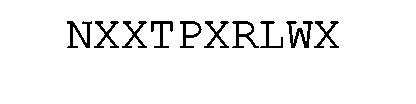

W[S,T]XXE[D,E]XX[L,I,V]
wherein X is any amino acid, and [] stands for one specific amino acid selected from the listed amino acids in square brackets,
accompanied with intervening 42 arbitrary amino acid residues located between said repeats. More preferably, such species include proteins comprising a sequence, with 150 amino acids, of the following formula:

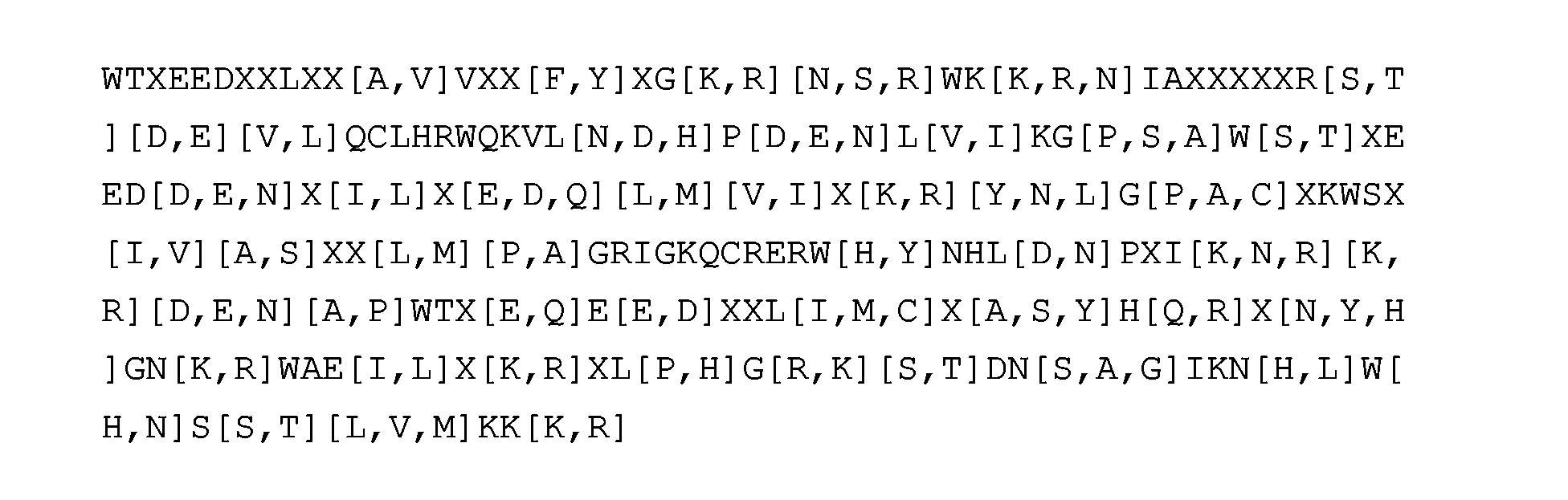
or a recombinant DNA construct or vector as set forth in the following (g):
culturing a transformed cell harboring the DNA of (14) or a vector carrying said DNA, and
recovering the resulting expressed protein product from said transformed cells or culture supernatants thereof.
US 5,459,252 and US 5,633,363(root-specific), US 5,097,025 ((i) seed, (ii) mature plant), US 5,391,725 ((i) chloroplast, (ii) cytosol), US 4,886,753 (root nodule), US 5646333 (epidermis), US 5,110,732 ((i) root, (ii) storage root), US 5,618,988 (storage organ), US 5,401,836 and US 5,792,925 (root), US 4,943,674 (fruit or nut), US 5,495,007 (phloem), US 5,824,857 (vascular tissue), the disclosures of which are incorporated herein by reference. Besides these promoters, the applicable promoters include the Arabidopsis thaliana AtHB8 promoter which acts as a vascular bundle procambium-specific promoter (Baima et al. Development 121: 4171 (1995)), the stem- or root-specific Arabidopsis thaliana ACL5 promoter (Hanzawa et al. The EMBO Journal, 19: 4248 (2000)), the terrestrial body-specific tomato RBCS3A promoter (Meier et al. Plant Physiol. 107: 1105 (1995)), etc.
modifying the function of a member selected from the group consisting of proteins, NtmybA1, NtmybA2, Os3RmybA1, AtMYB3R1 and AtMYB3R4, and
selecting said desirable molecule with at least a dominant negative activity on said endogenous plant 3Rmyb molecule, wherein said dominant negative molecule includes those with at least a diminished or extinguished transcription activating property as compared to the property inherently owned by said wild type protein selected from the group consisting of NtmybA1, NtmybA2, Os3RmybA1, AtMYB3R1 and AtMYB3R4.
| A: Alanine (Ala) | M: Methionine (Met) |
| C: Cysteine (Cys) | N: Asparagine (Asn) |
| D: Aspartic acid (Asp) | P: Proline (Pro) |
| E: Glutamic acid (Glu) | Q: Glutamine (Gln) |
| F: Phenylalanine (Phe) | R: Arginine (Arg) |
| G: Glycine (Gly) | S: Serine (Ser) |
| H: Histidine (His) | T: Threonine (Thr) |
| I: Isoleucine (Ile) | V: Valine (Val) |
| K: Lysine (Lys) | W: Tryptophan (Trp) |
| L: Leucine (Leu) | Y: Tyrosine (Tyr) |
| X: Any amino acid from the aforementioned amino acids or any specific amino acid (when indicated specifically) (Xaa) |
| A,a: Adenine | G,g: Guanine |
| C,c: Cytosine | T,t: Thymine |
| R,r: Guanine or Adenine | Y,y: Thymine/Uracil or Cytosine |
| M,m: Adenine or Cytosine | K,k: Guanine or Thymine/Uracil |
| S,s: Guanine or Cytosine | W,w: Adenine or Thymine/Uracil |
| D,d: Adenine or Guanine or Thymine/Uracil | |
| H,h: Adenine or Cytosine or Thymine/Uracil | |
| V,v: Adenine or Guanine or Cytosine | |
| N,n: Adenine or Guanine or Cytosine or Thymine/Uracil, Unknown, Any other nucleotide or Any specific nucleotide (when indicated specifically) |

























The transformed yeast cells were subjected to selection with histidine-free medium, and three clones (plasmids, OH53, OH60, and OH88) were recovered from grown colonies. Each nucleotide sequence of cDNA inserts in the three plasmids (OH53, OH60, and OH88) was sequenced and NtmybA1, NtmybA2, and NtmybB-encoding DNAs were obtained. An insert in plasmid OH53 is a DNA fragment coding for NtmybA1. A DNA insert in plasmid OH60 is a DNA coding for full-length NtmybA2. A DNA coding for full-length NtmybB is contained in plasmid OH88 as an insert. Since OH53 did not include the full-length coding region, the determination of 3'-ends was performed by 3'RACE. As a result, plasmid pGEMe-OH53i6 having an insert of full-length NtmybA1 cDNA was obtained.












Primers used in the PCR are:































DNA fragments, cut out by SalI cleavage of pP35S-NtmybA2T2, and OH60, are inserted into the site, derived by SalI cleavage of pPZP211-35S, to create pPZP211-P35S:A2T2, and pPZP211-P35S:A2, respectively.





















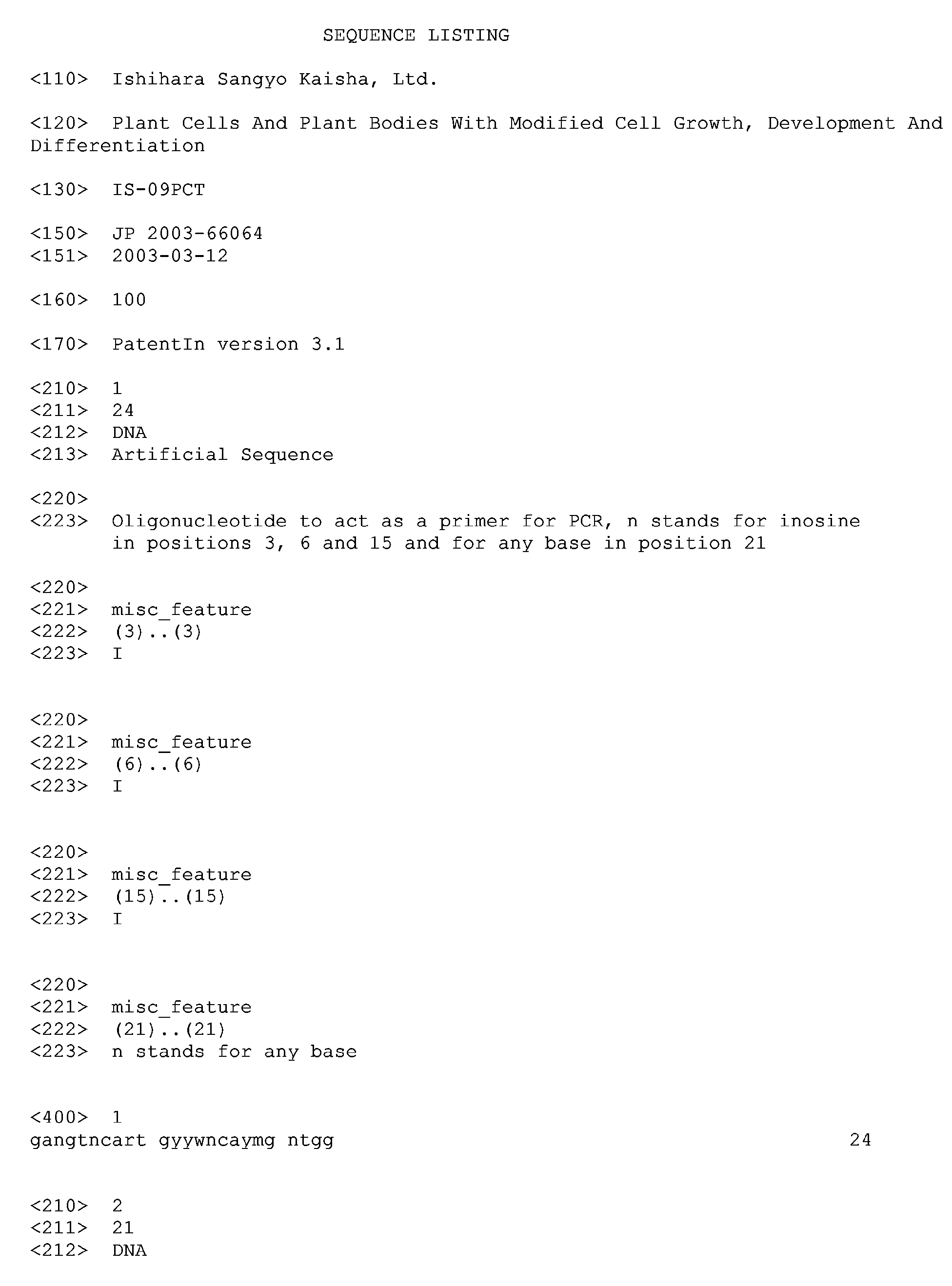


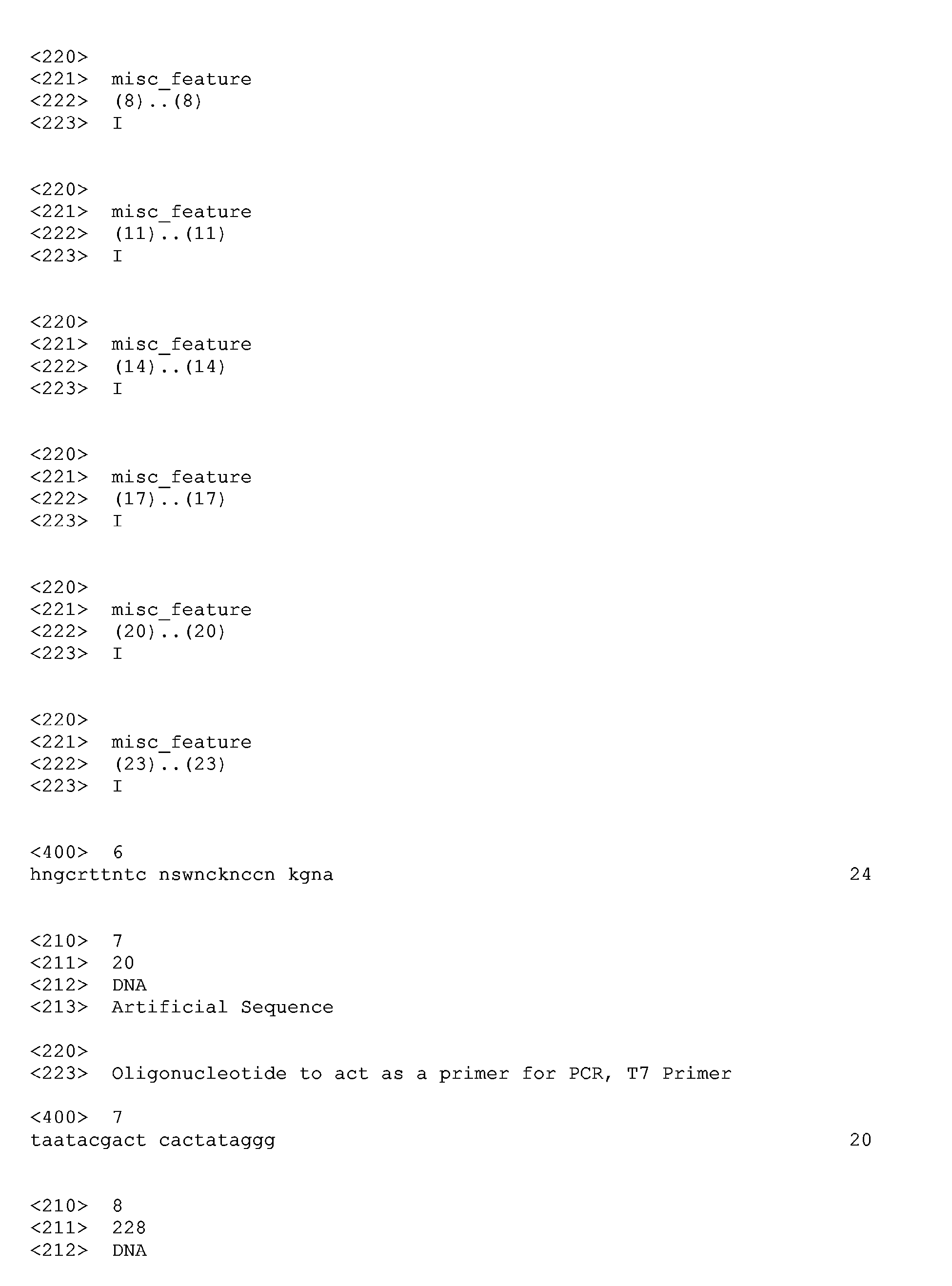

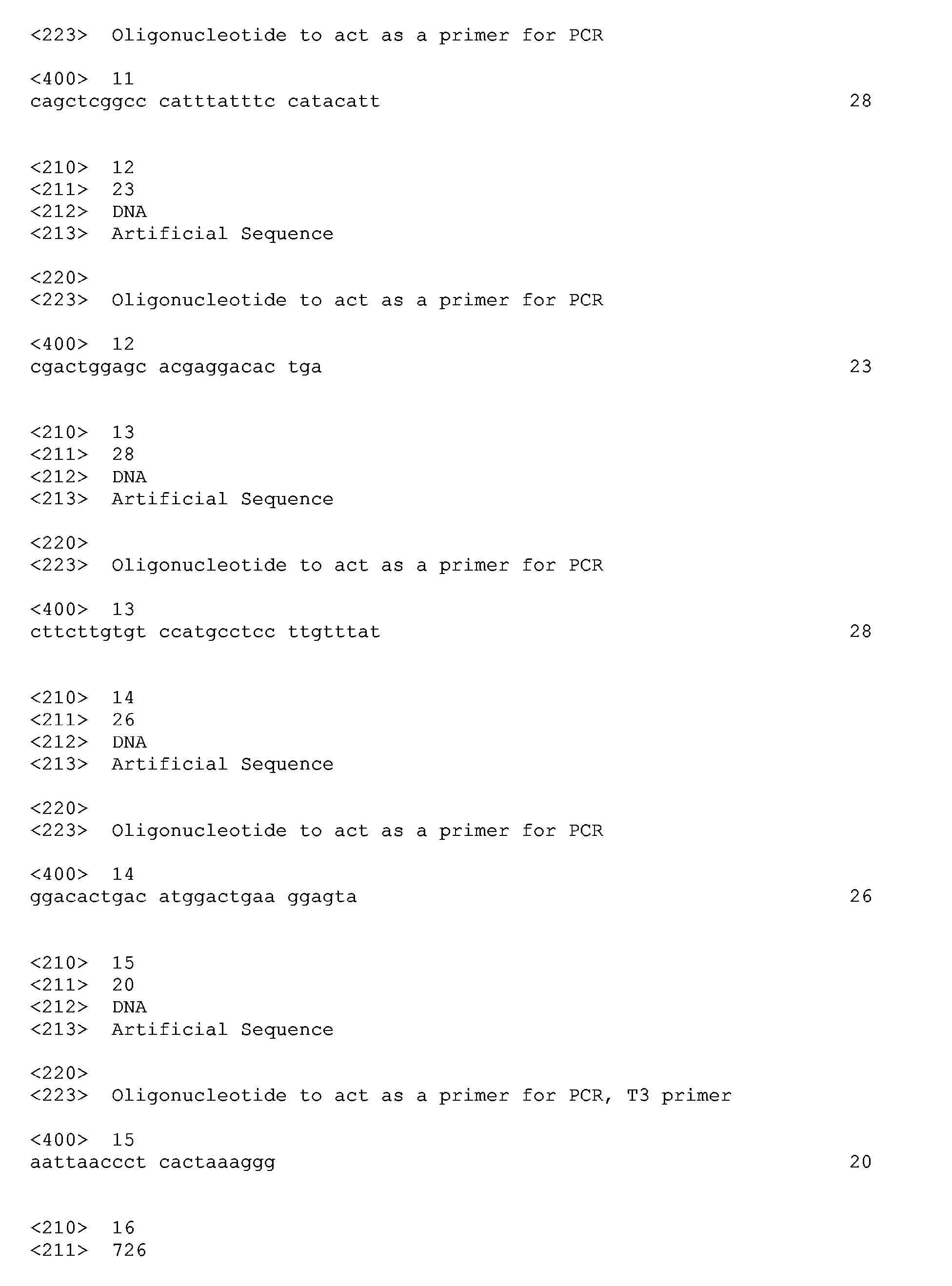
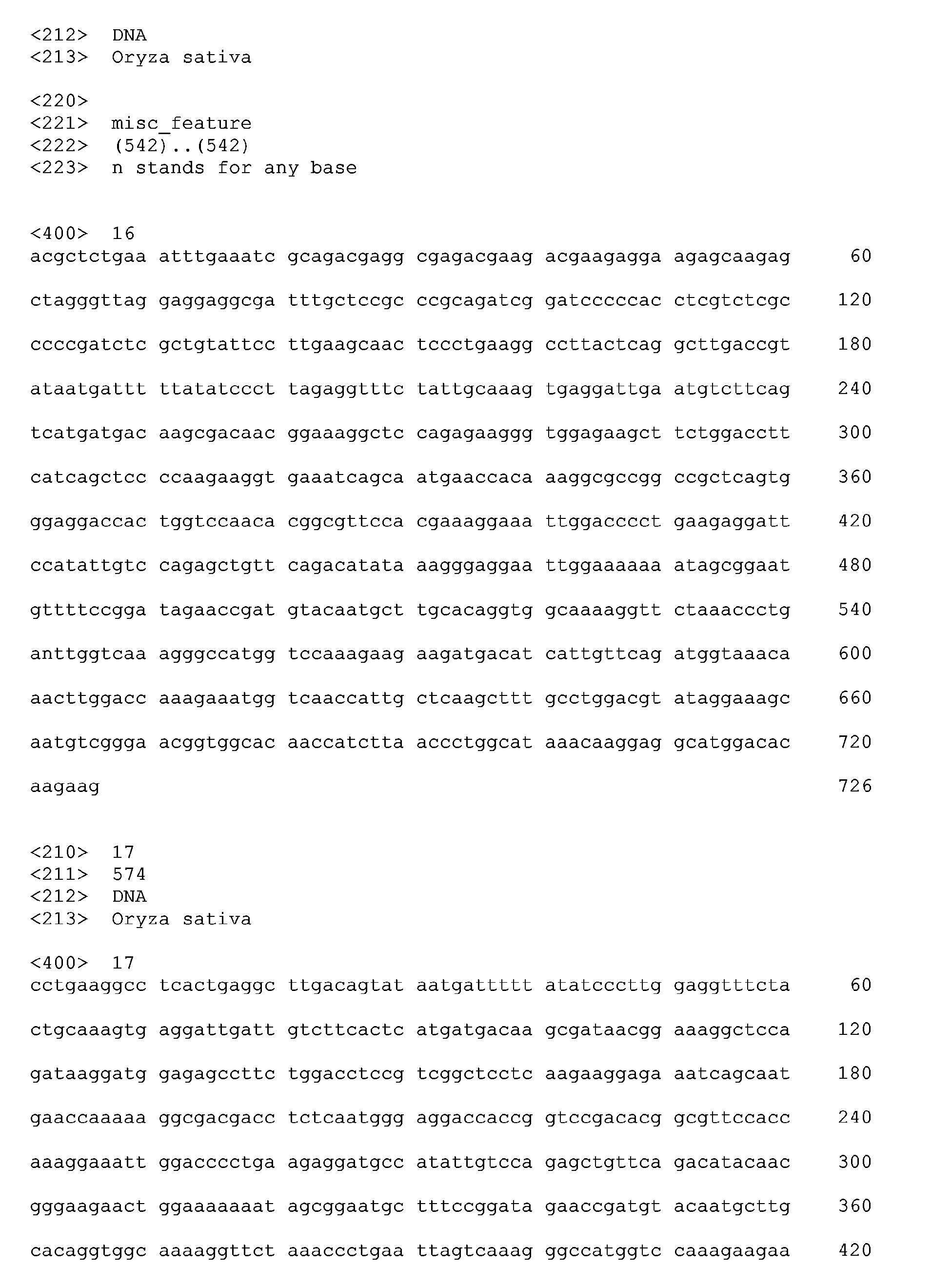
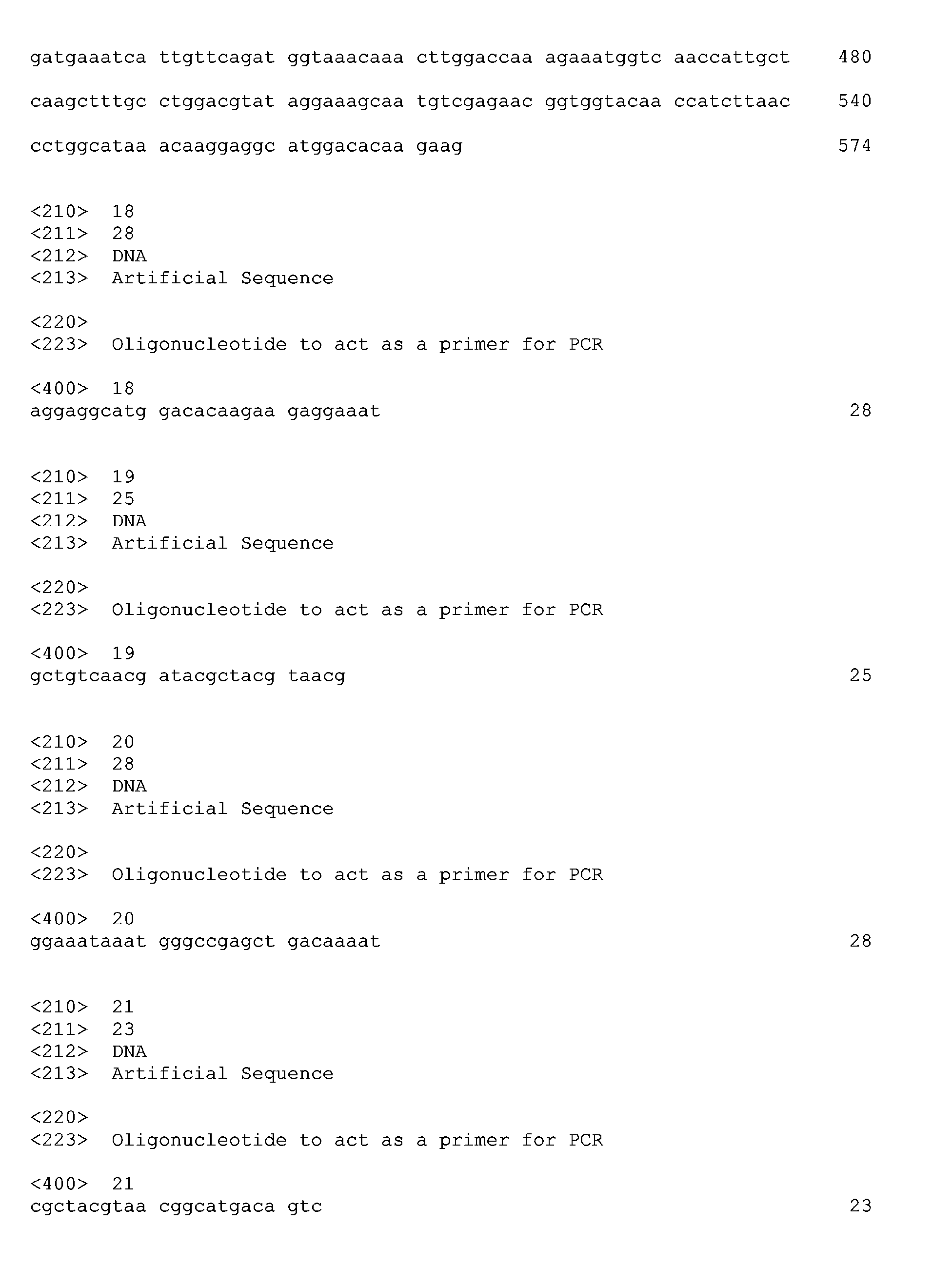

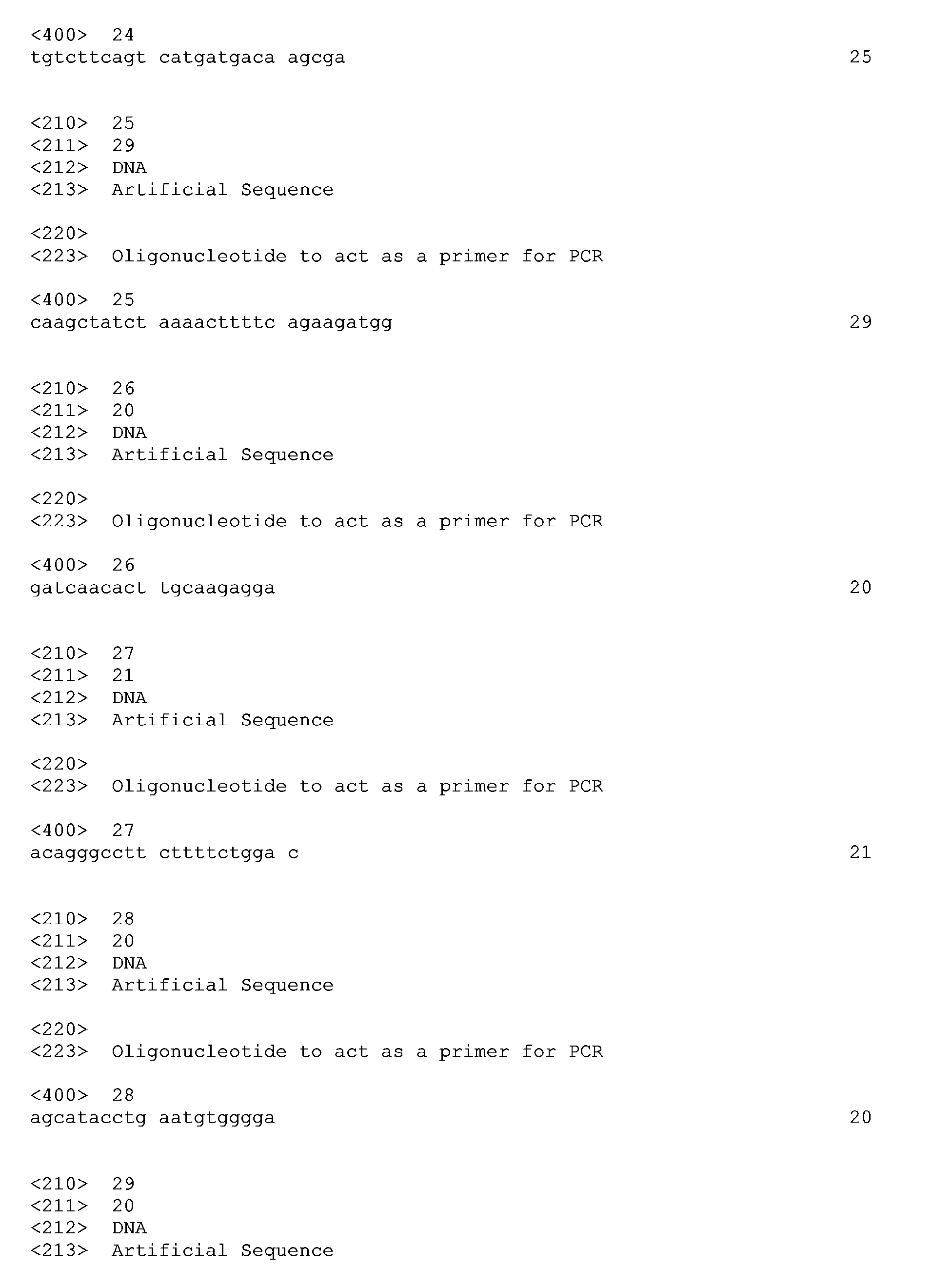


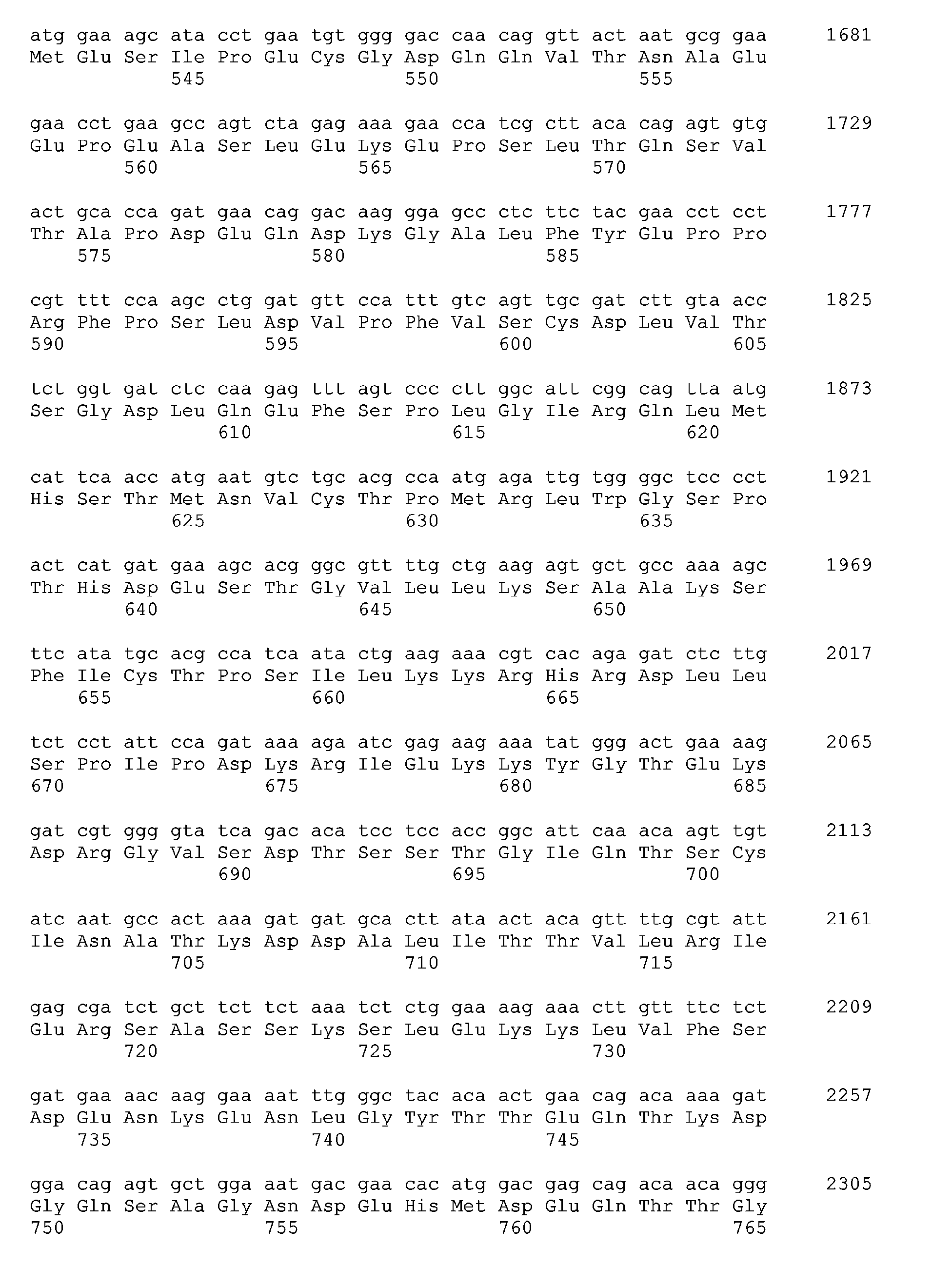

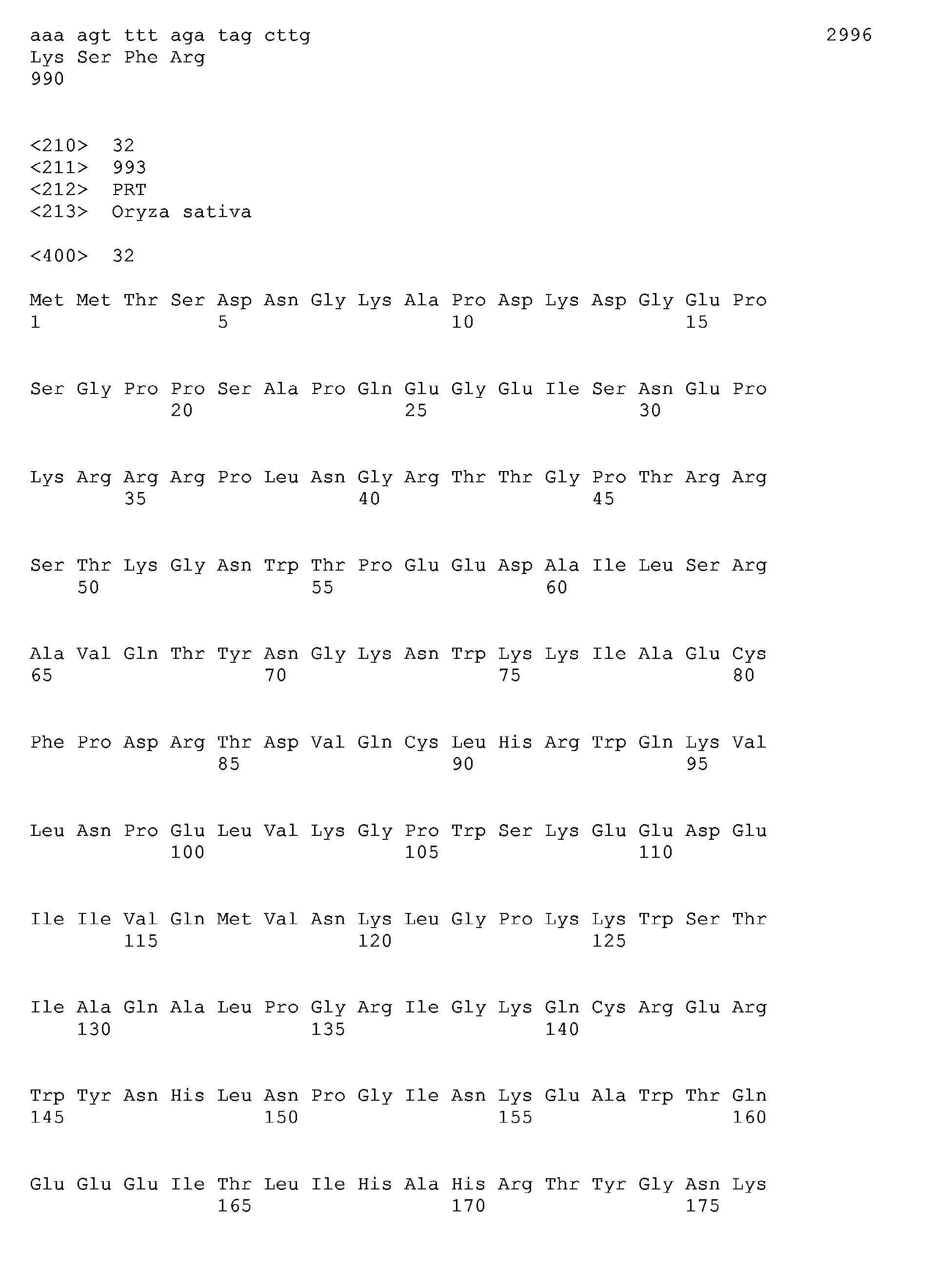
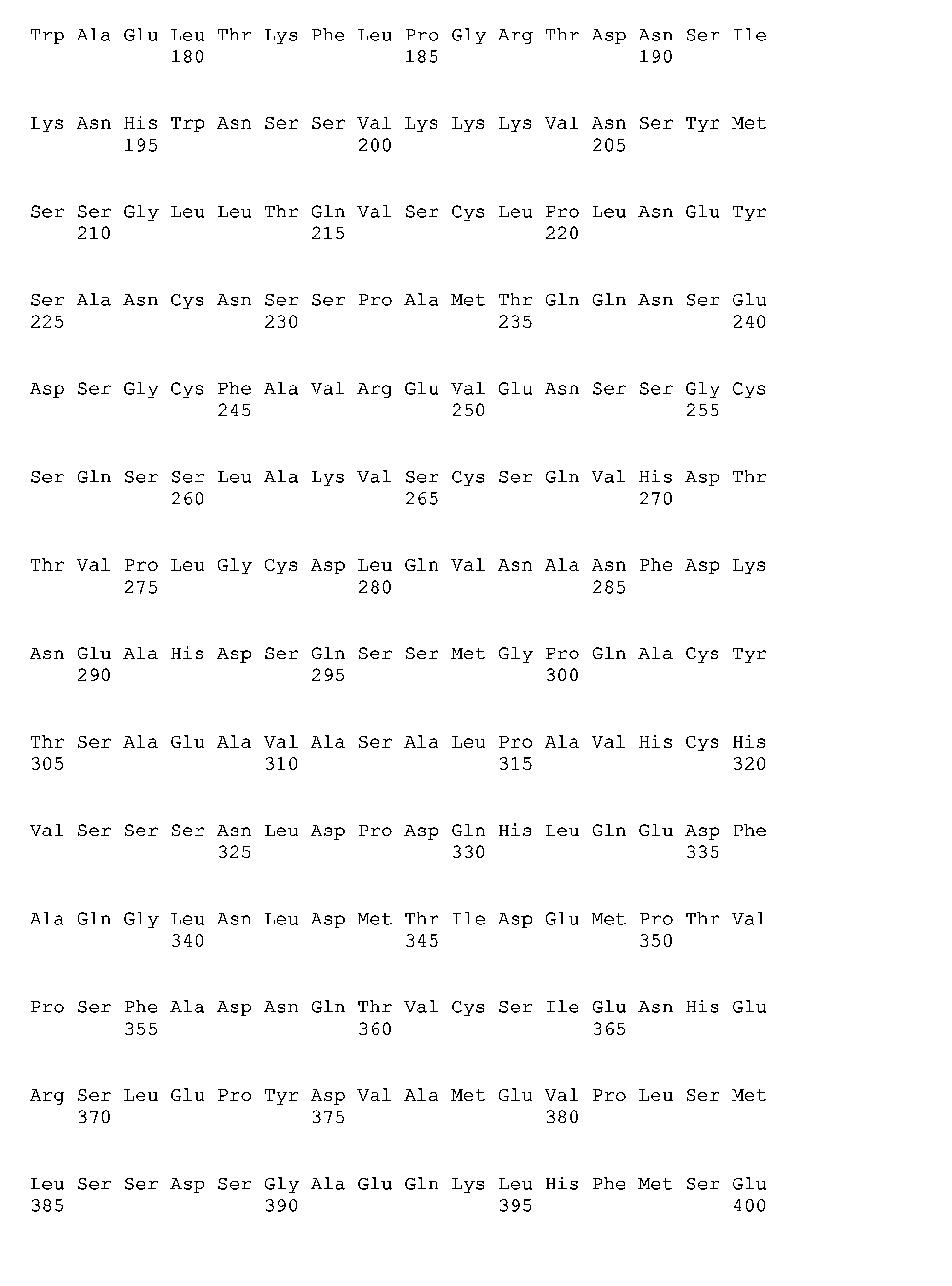

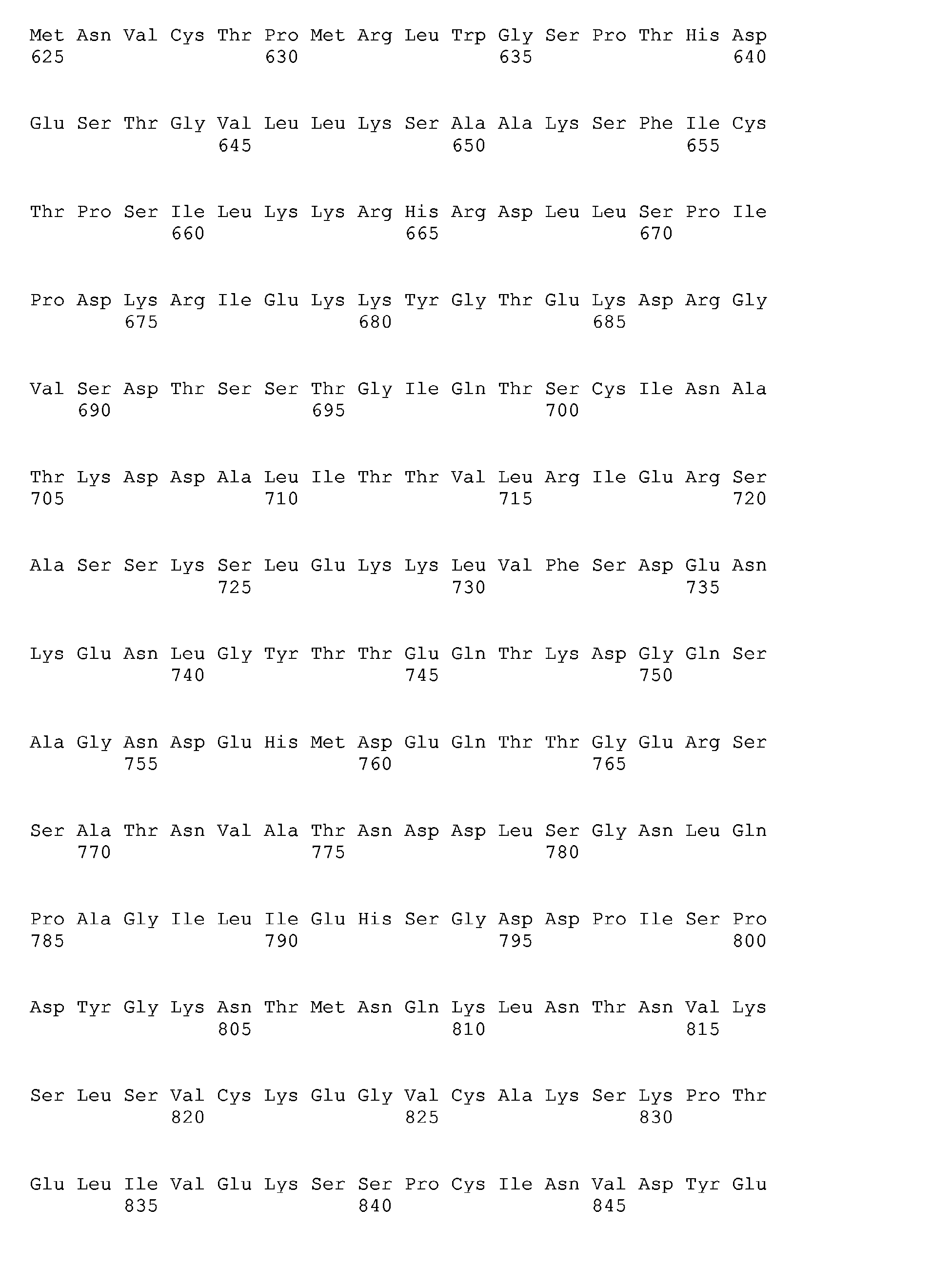
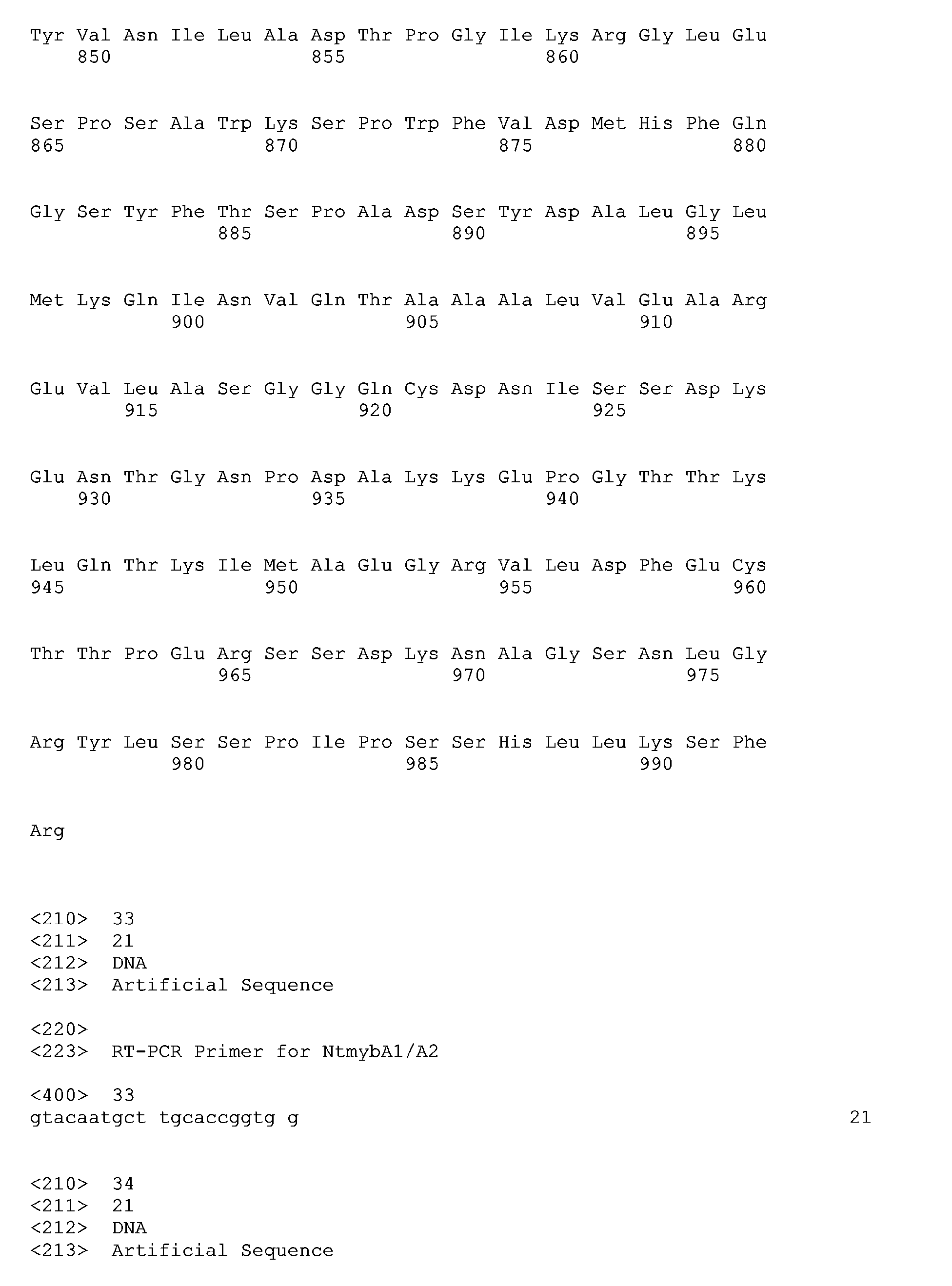
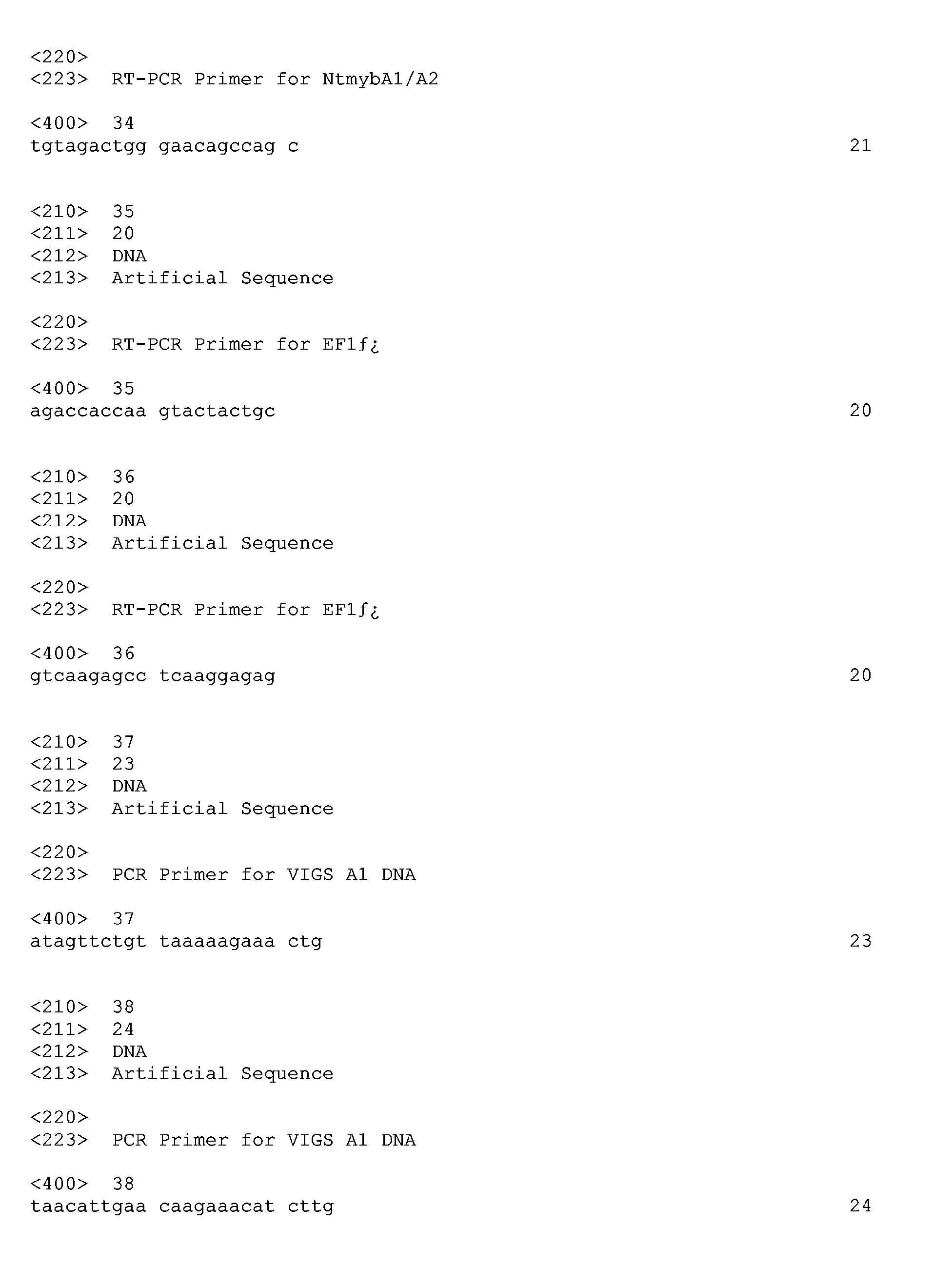

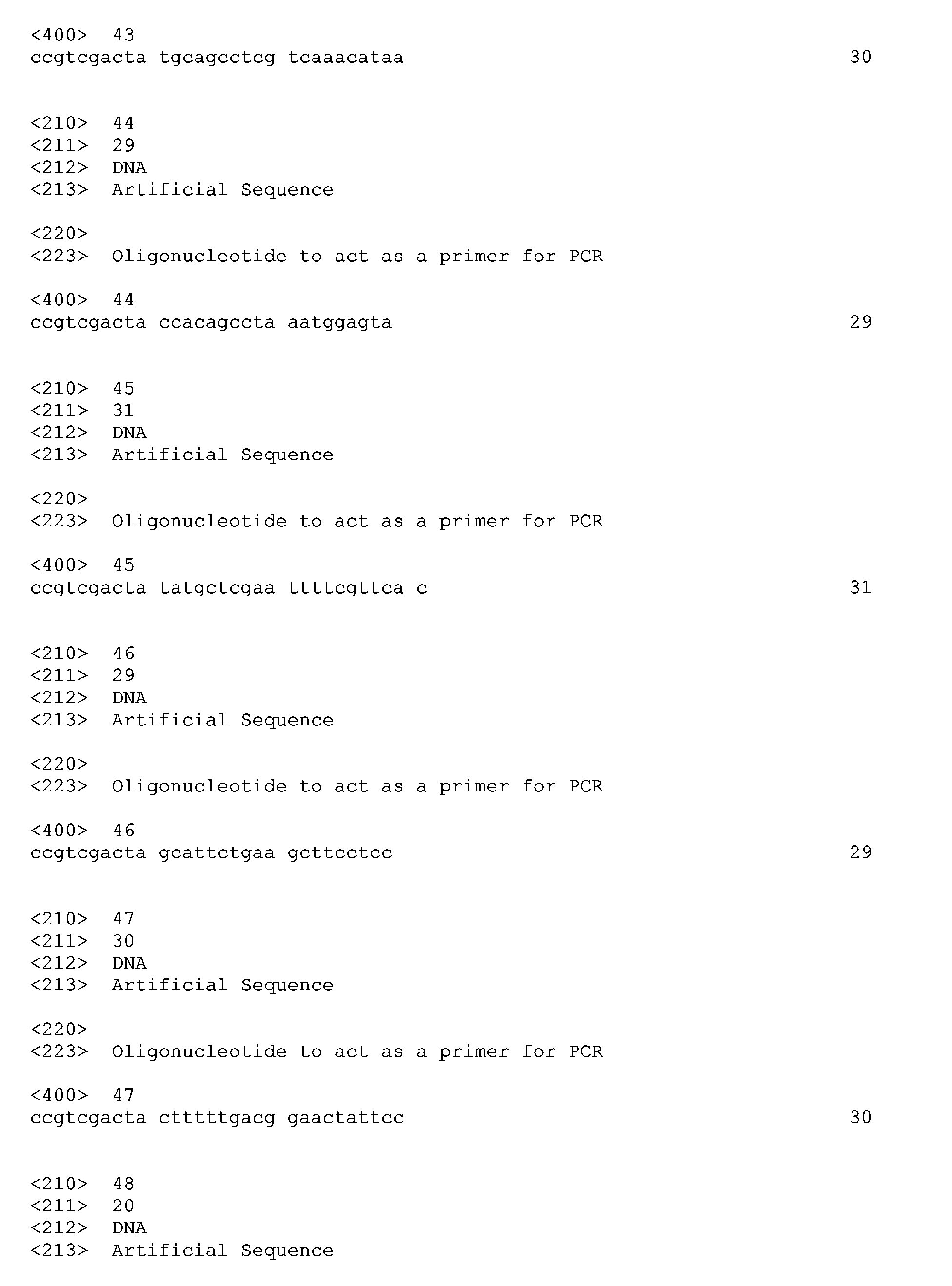
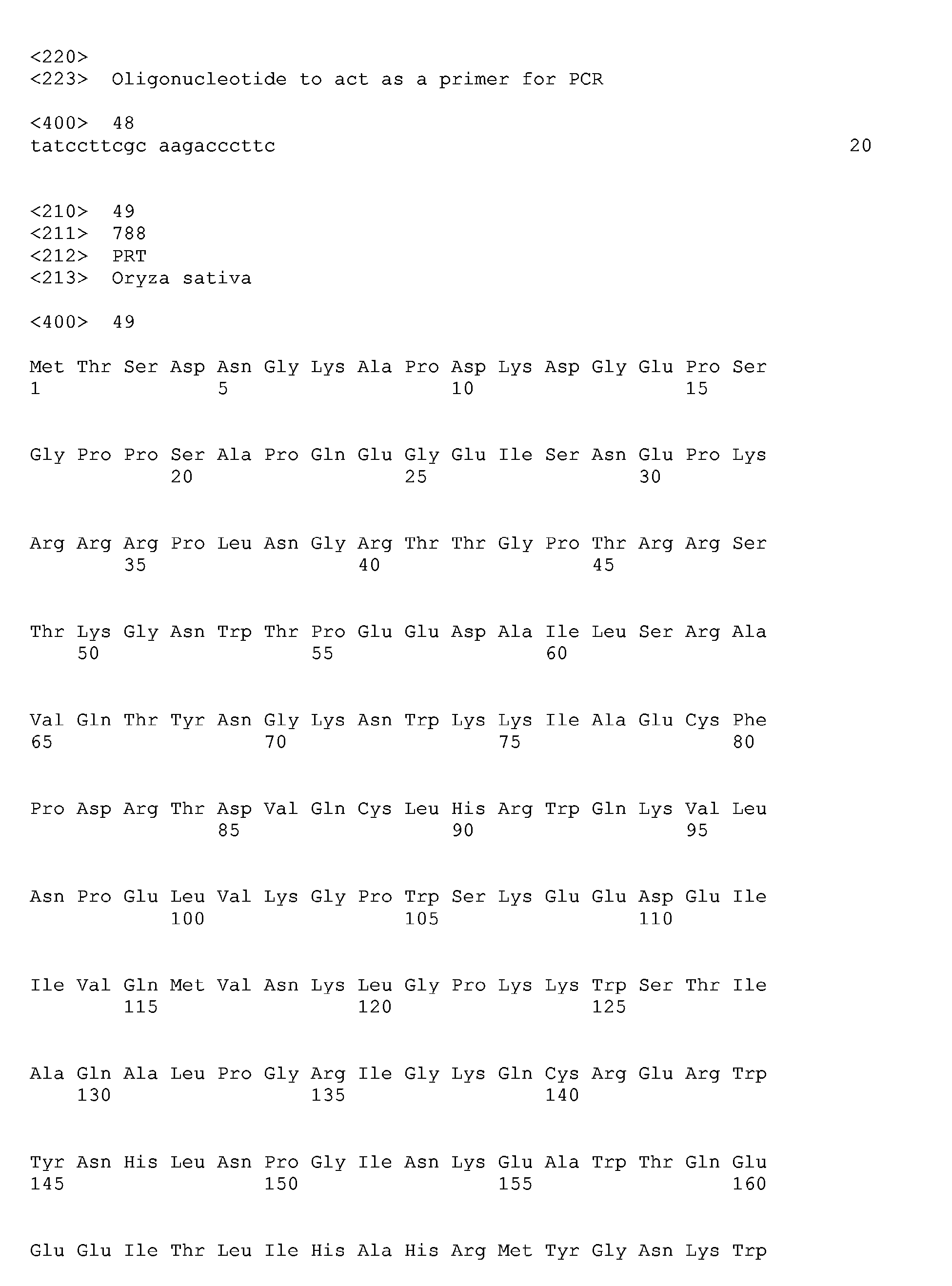


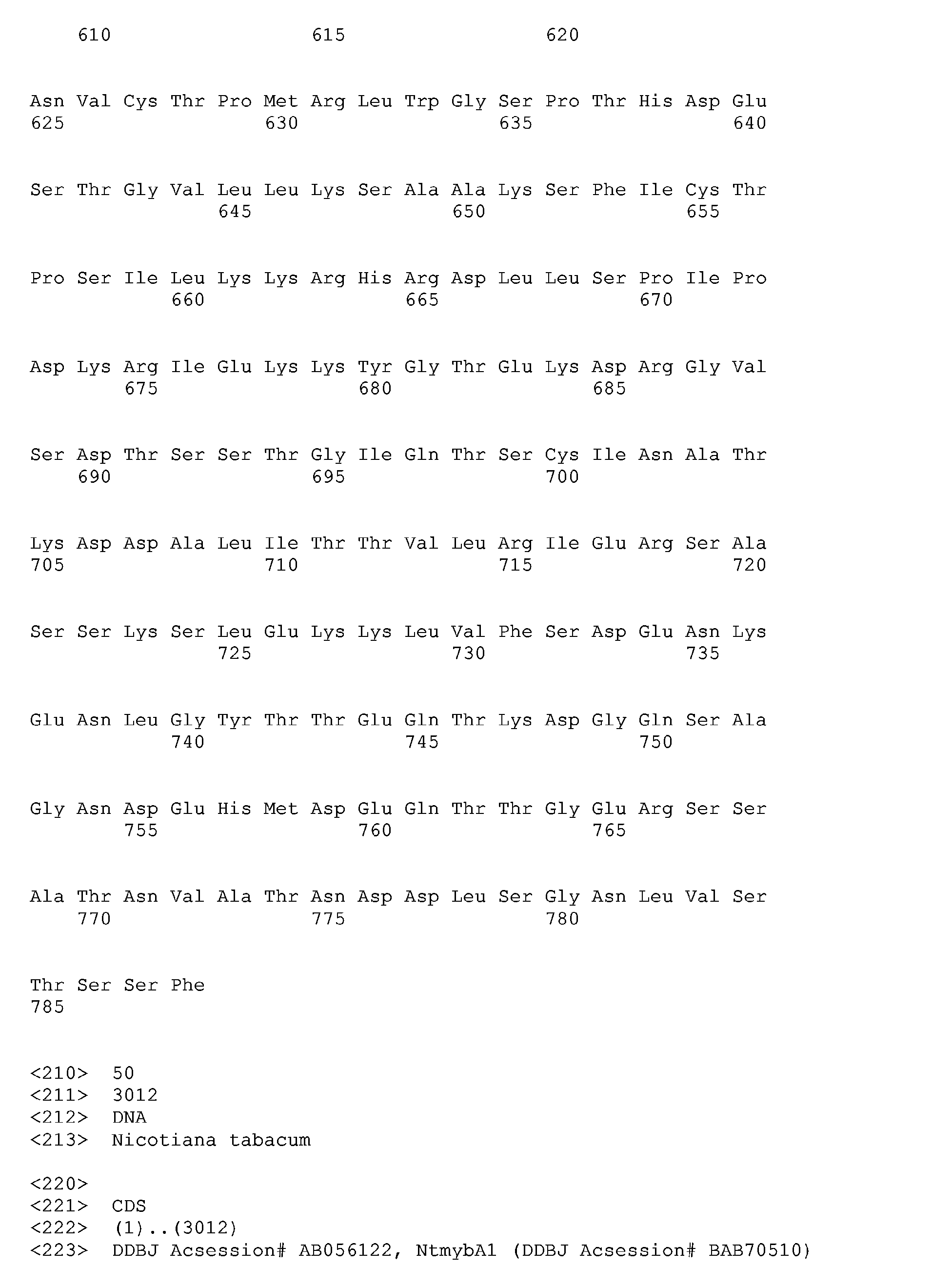
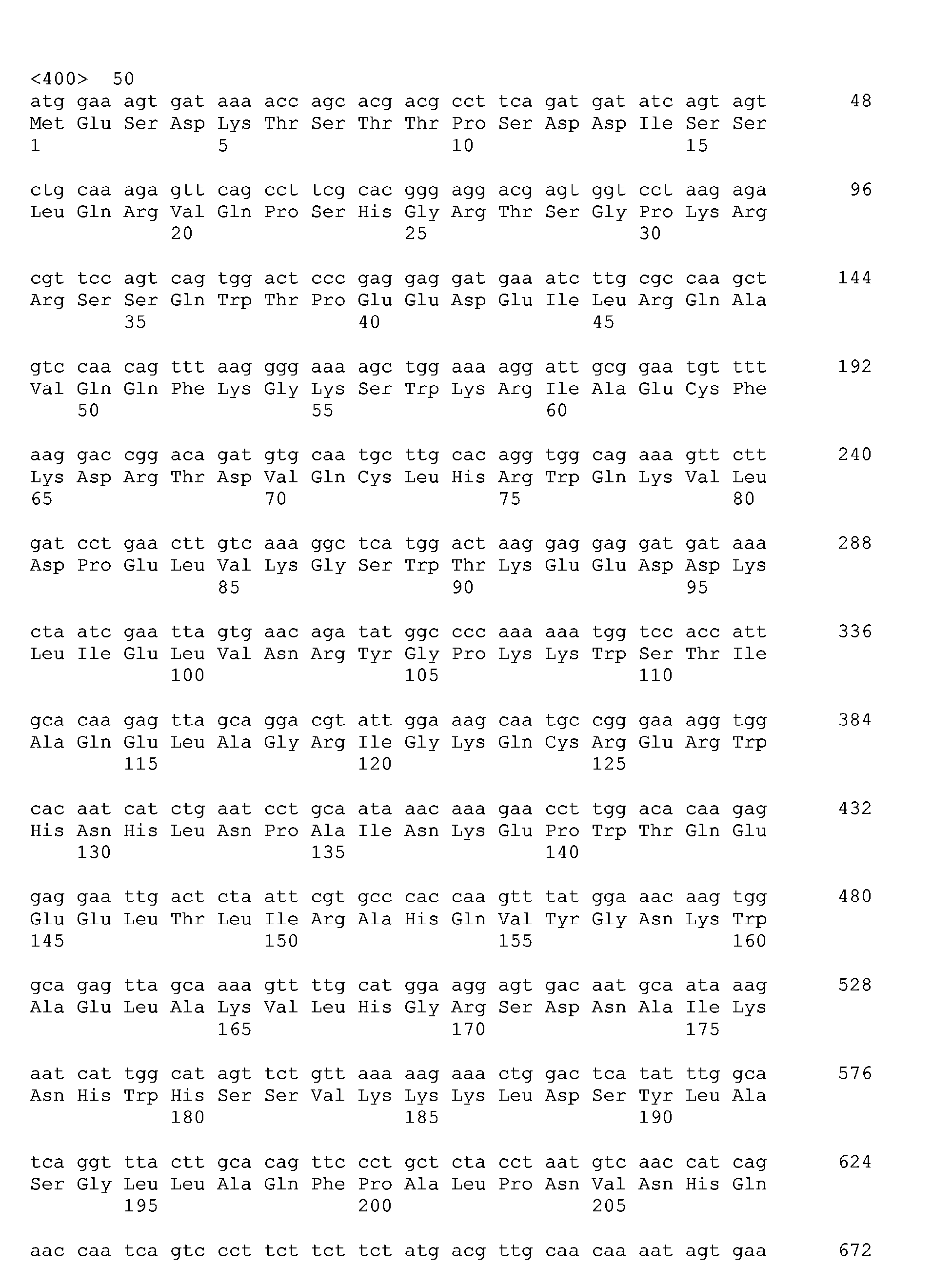

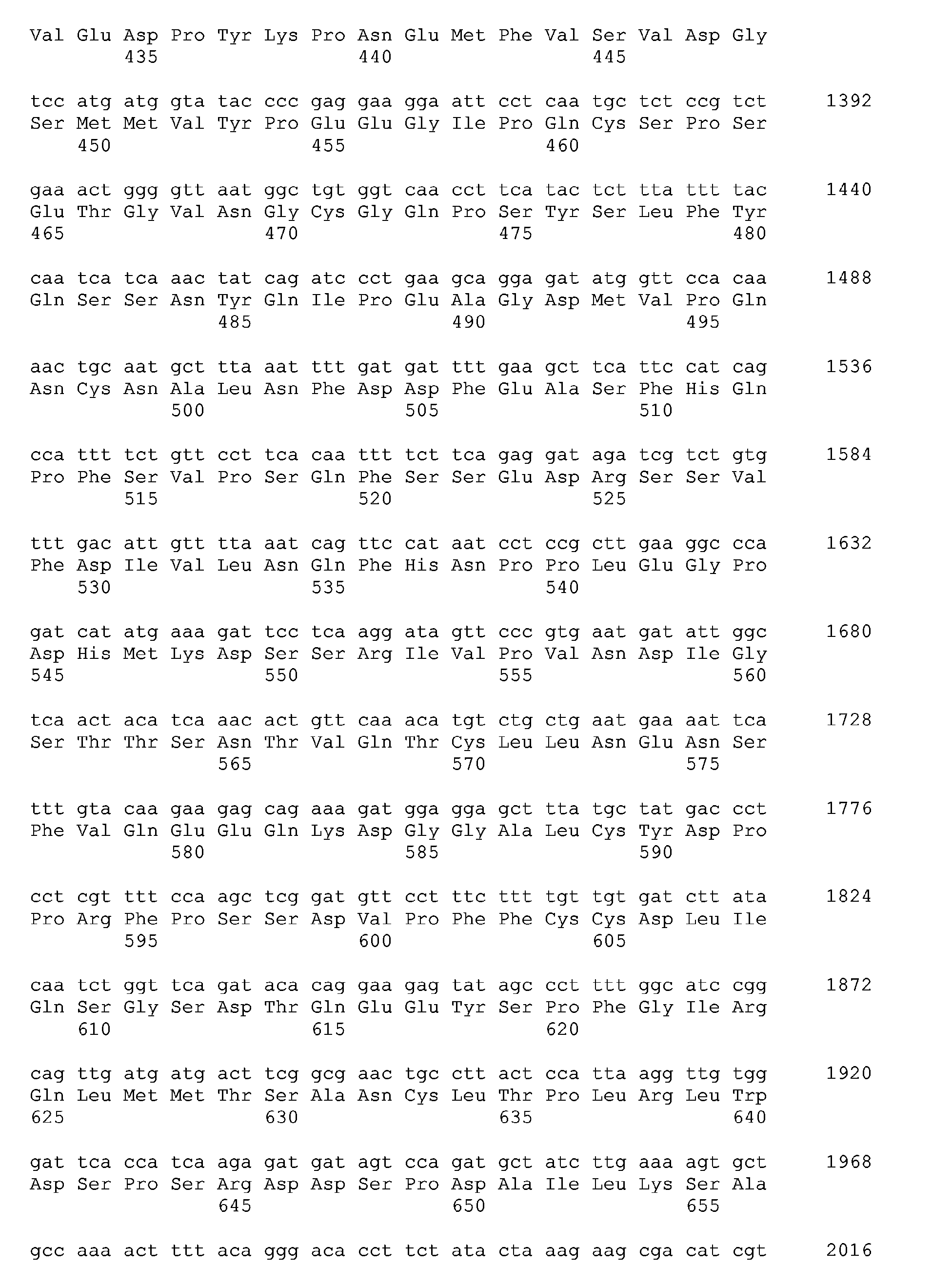
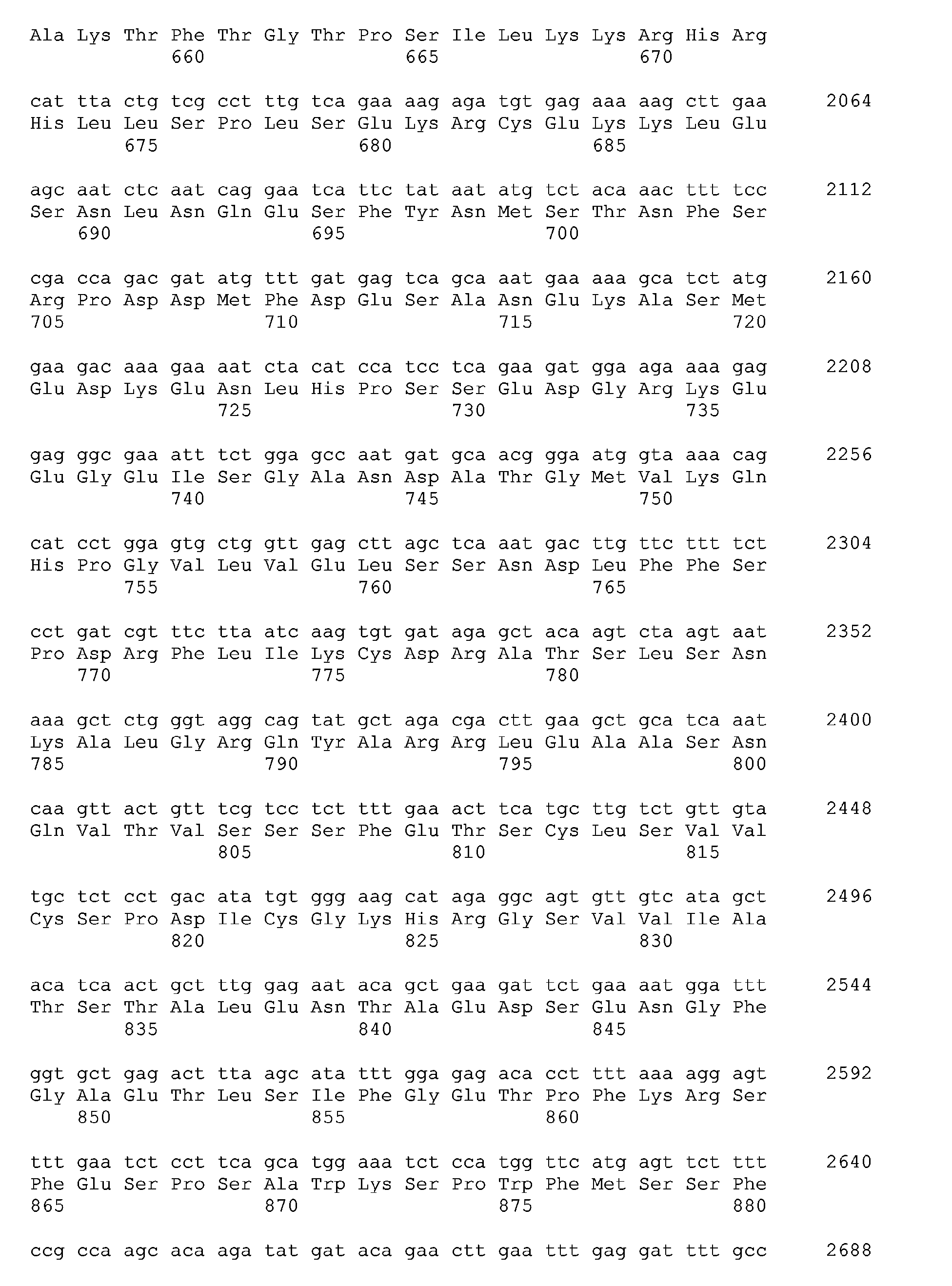


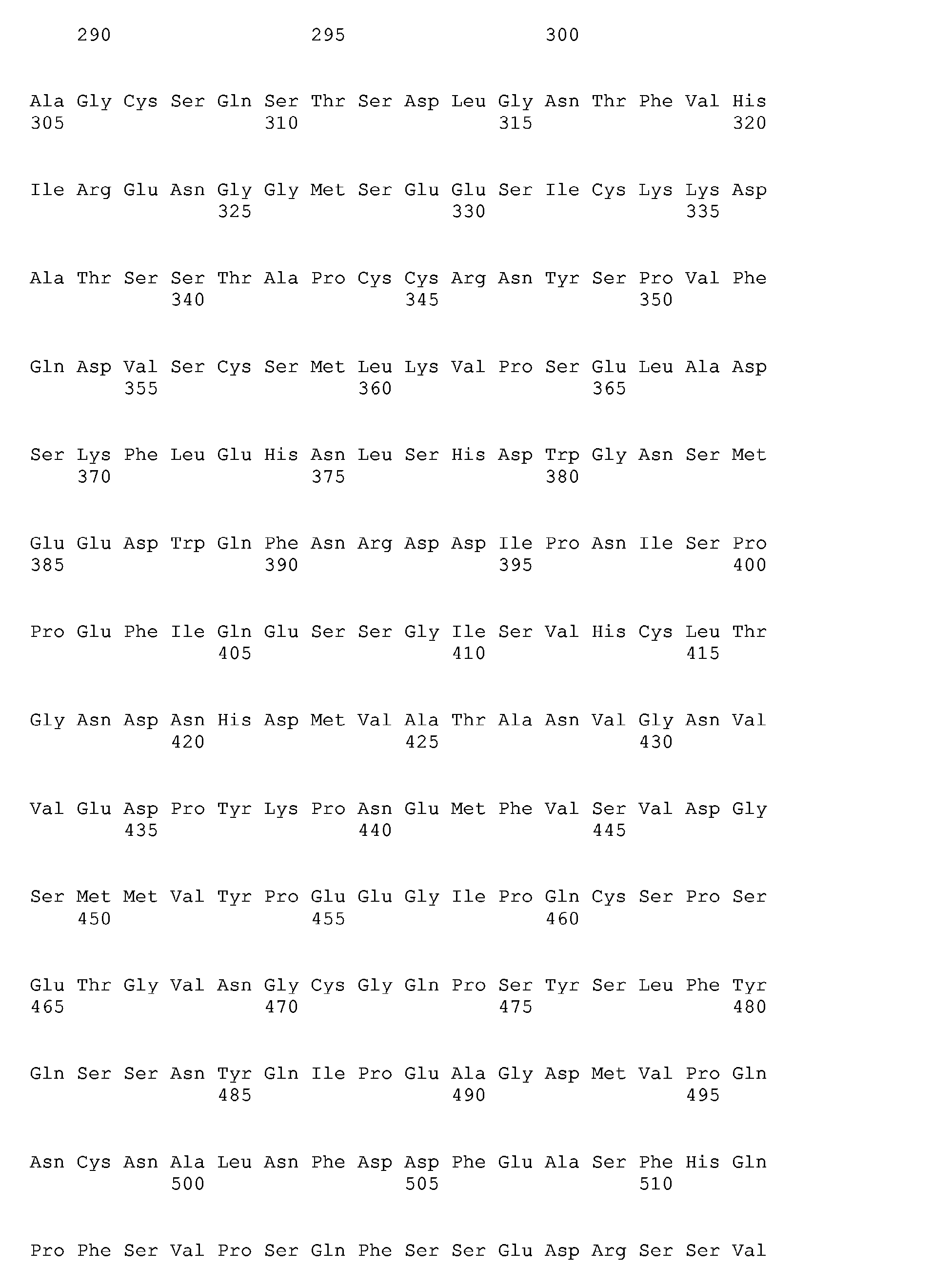
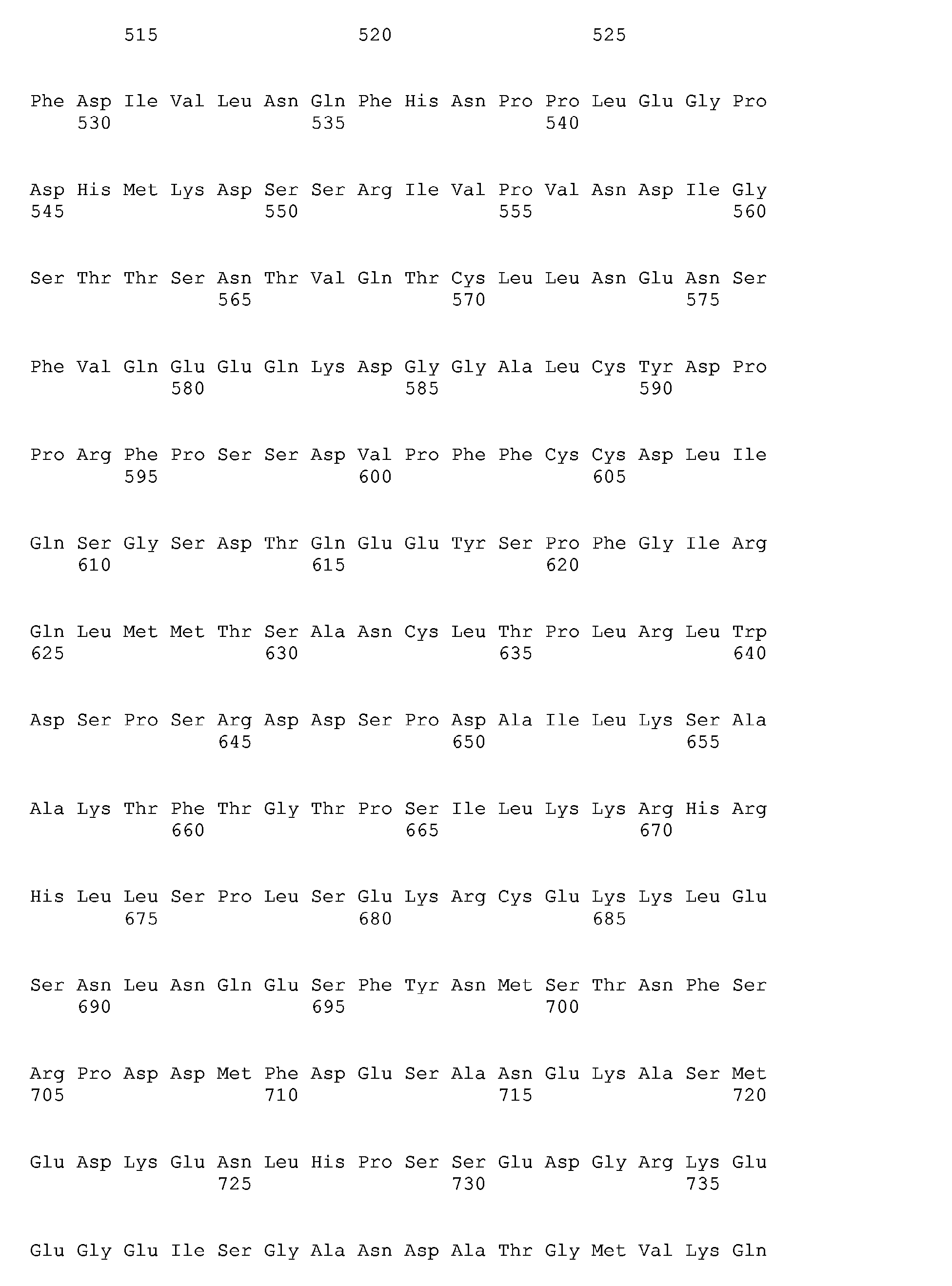
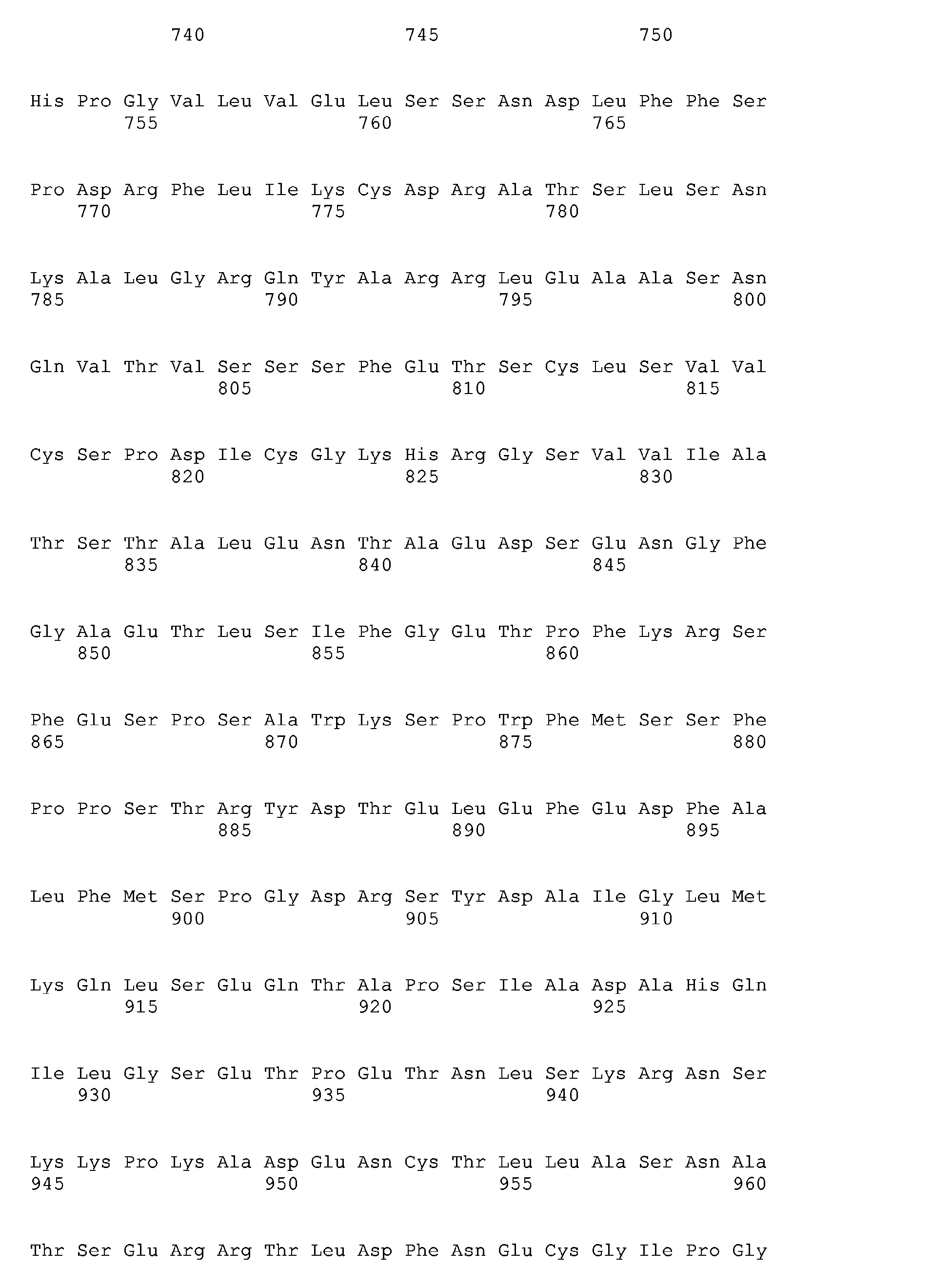
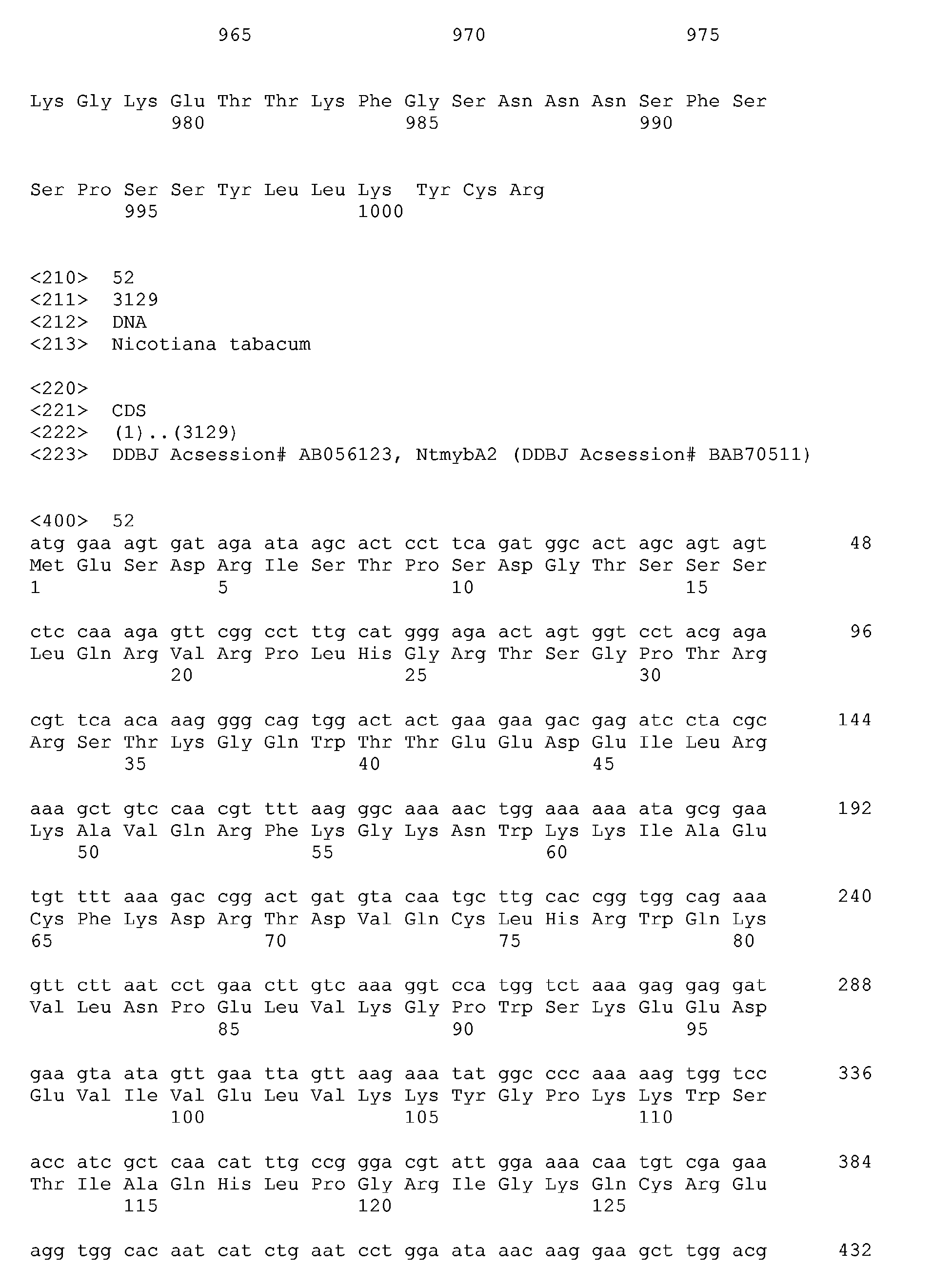


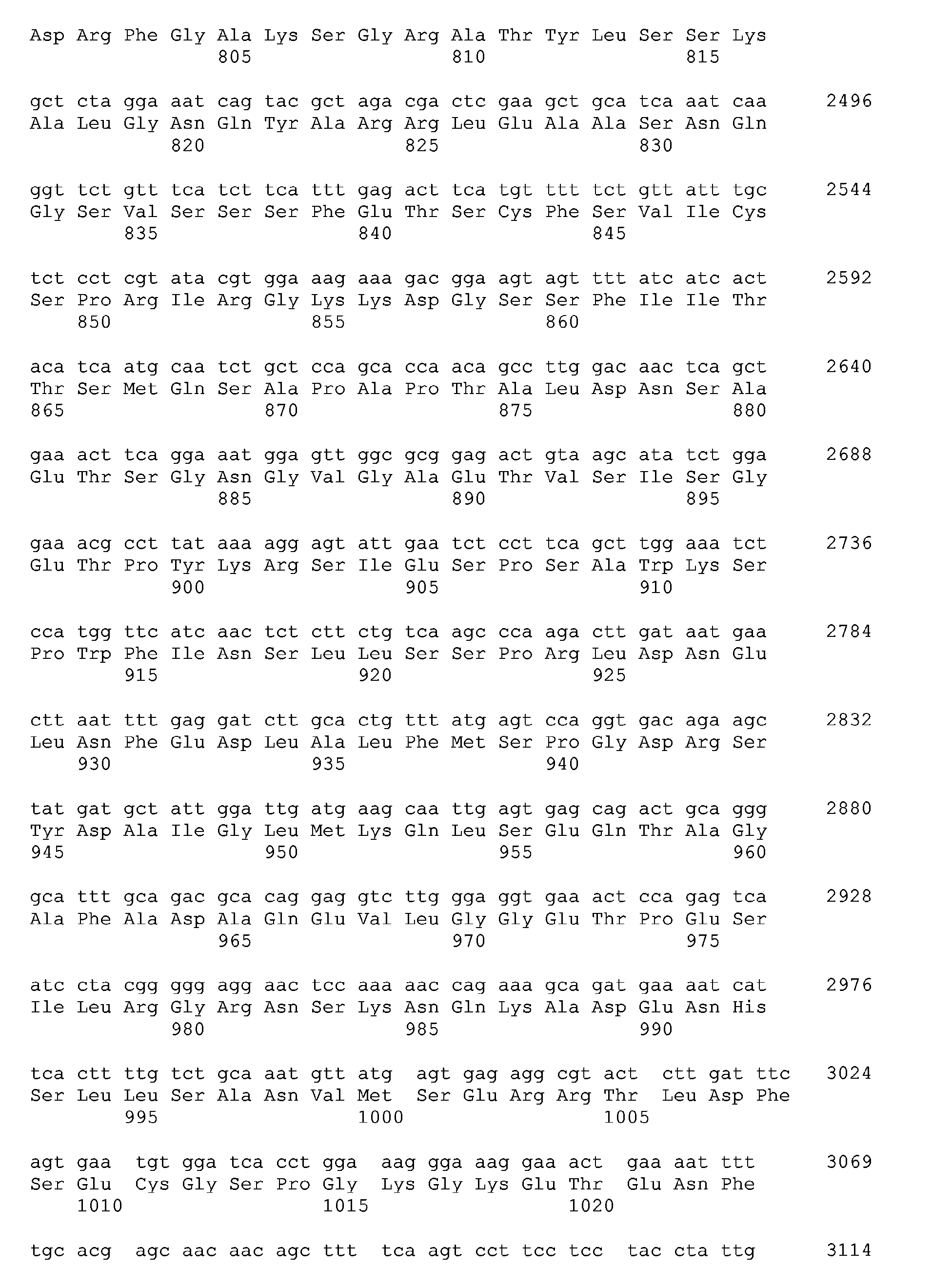

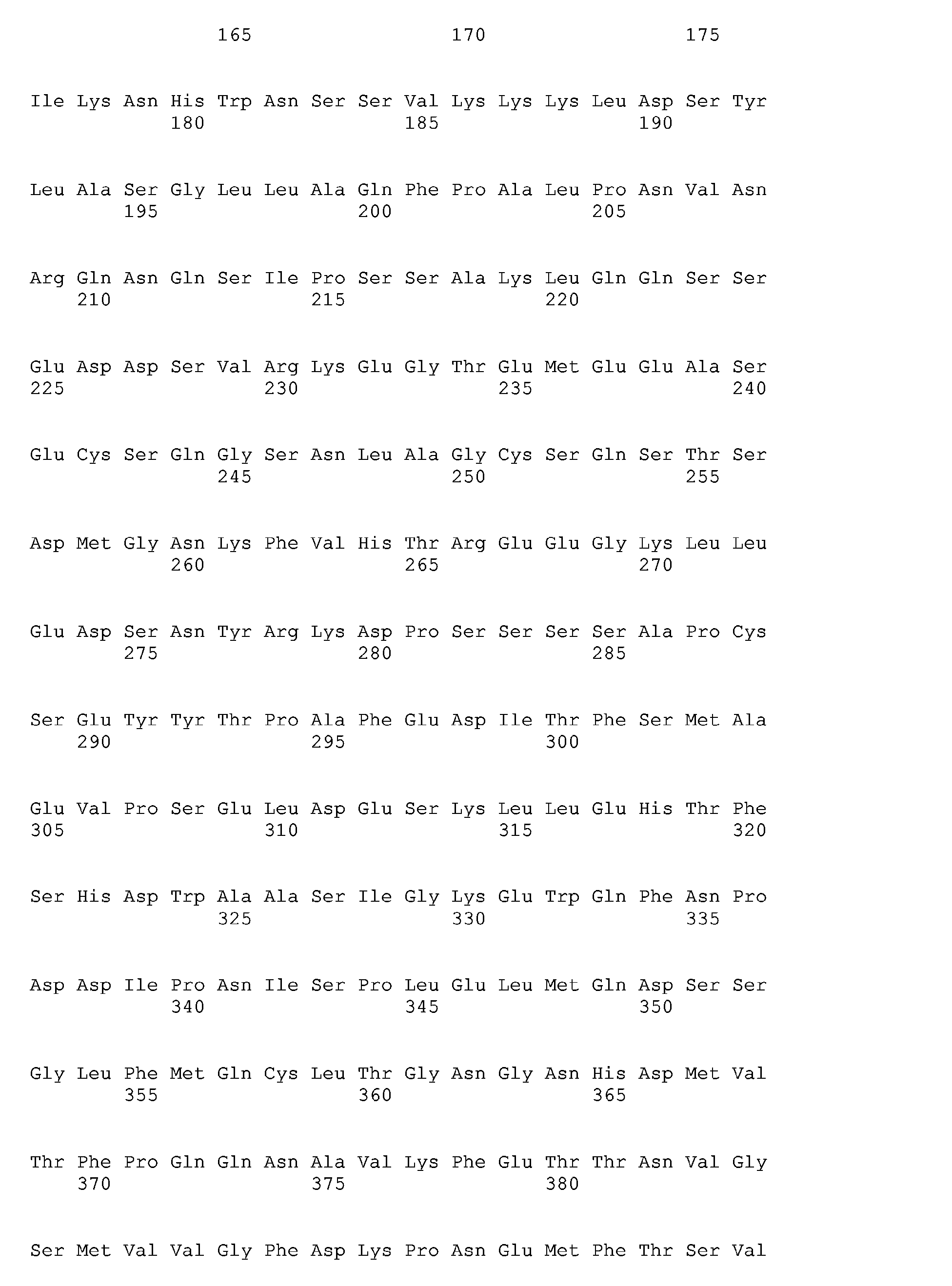
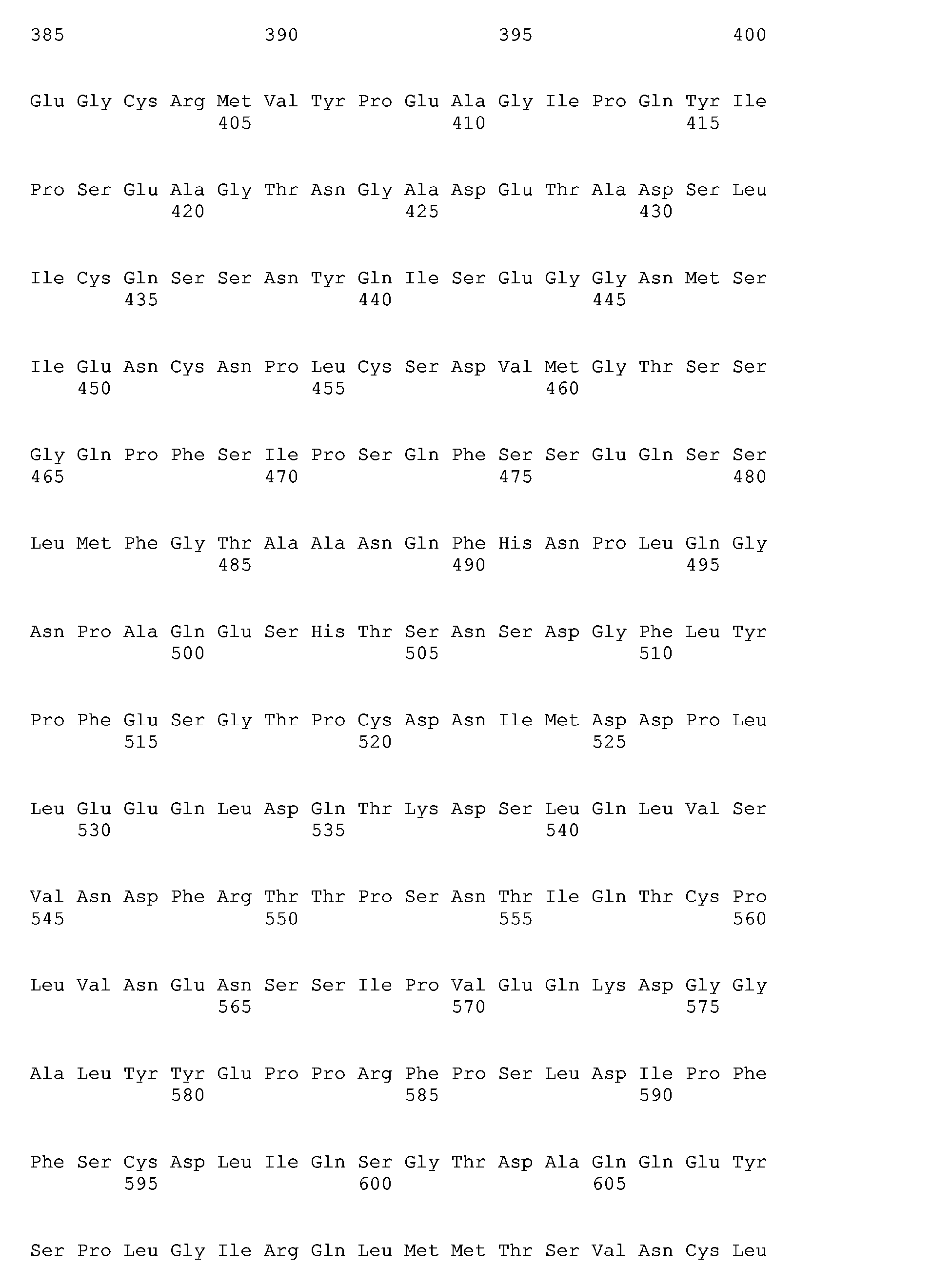
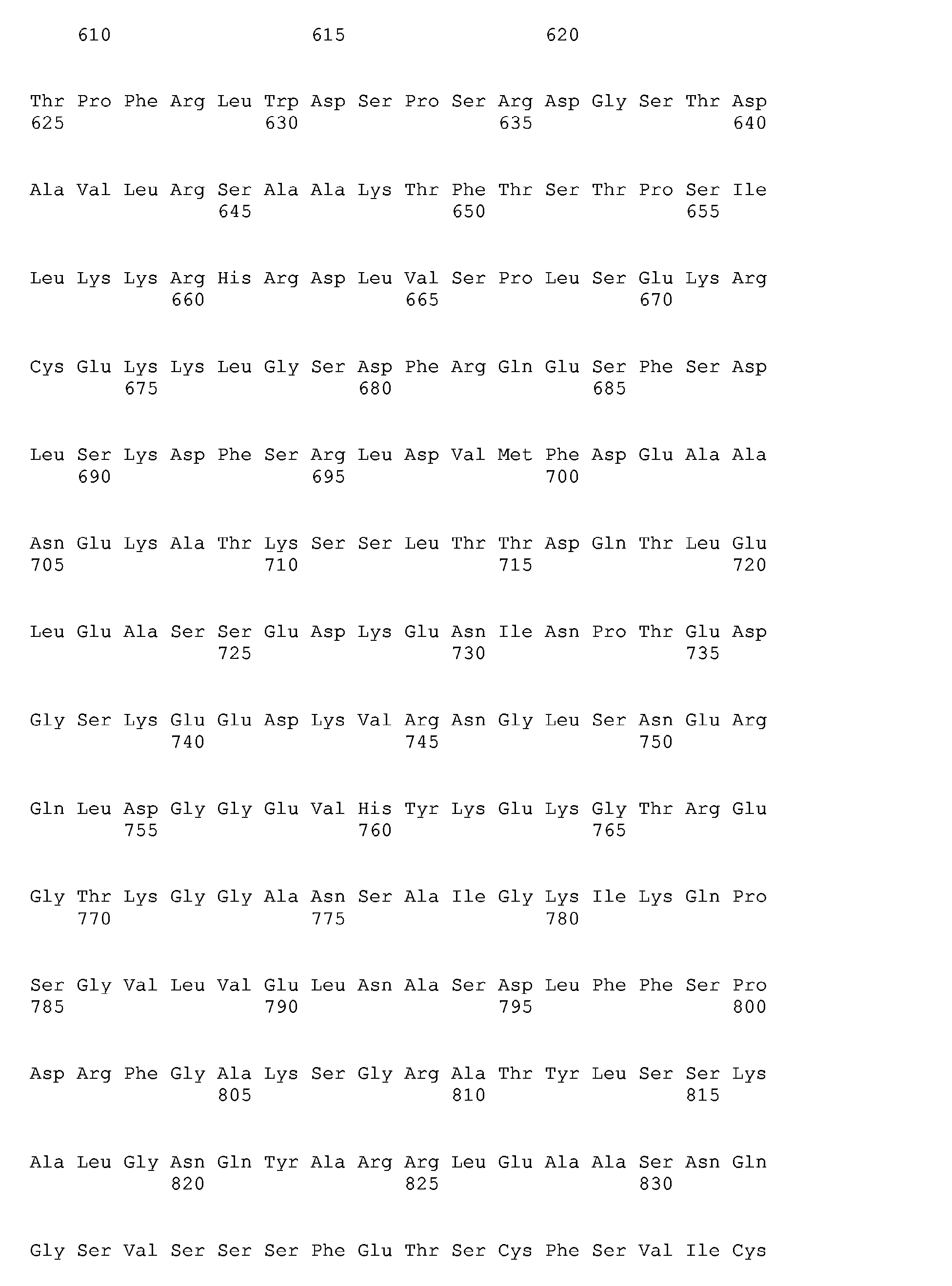
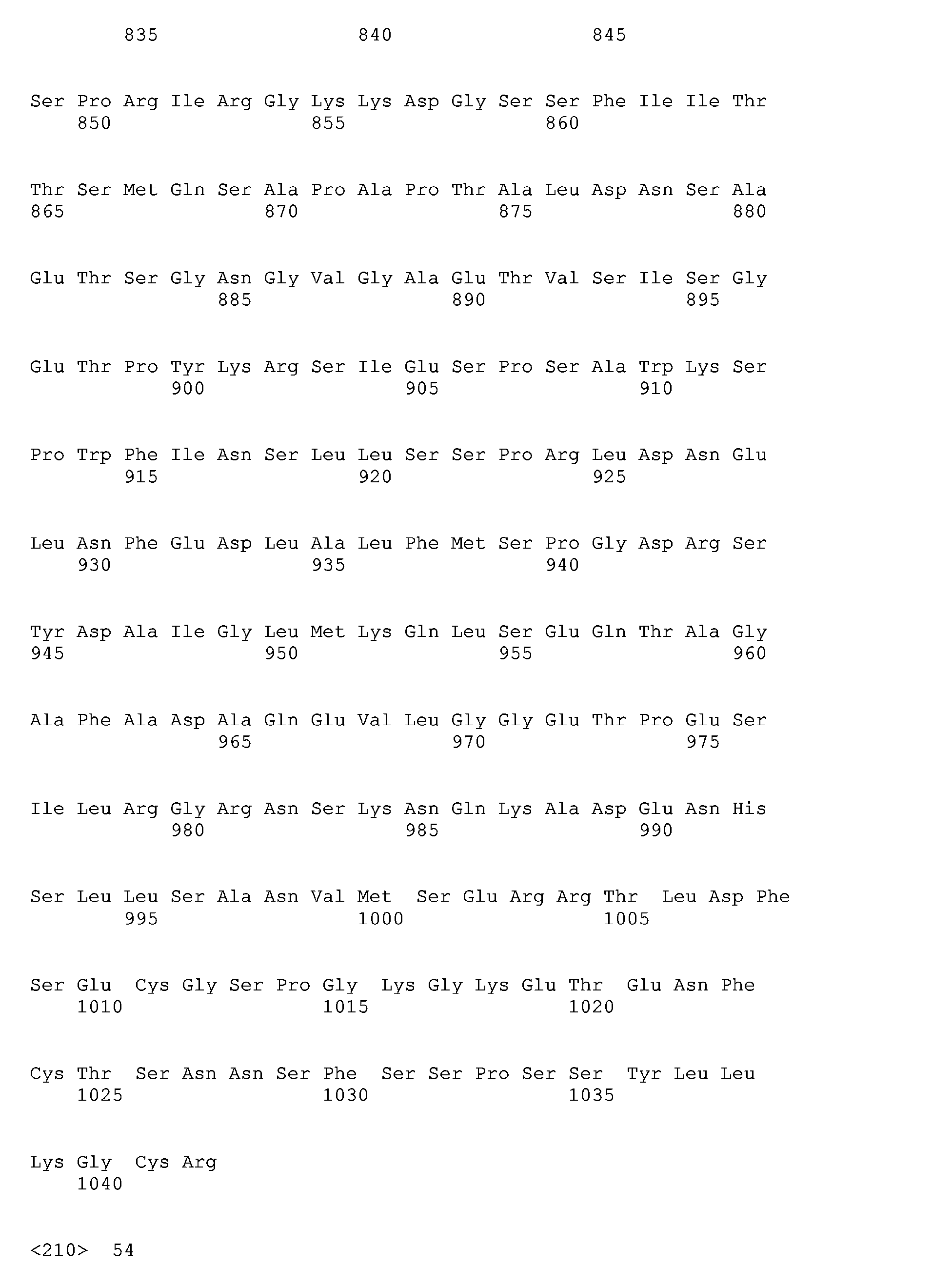

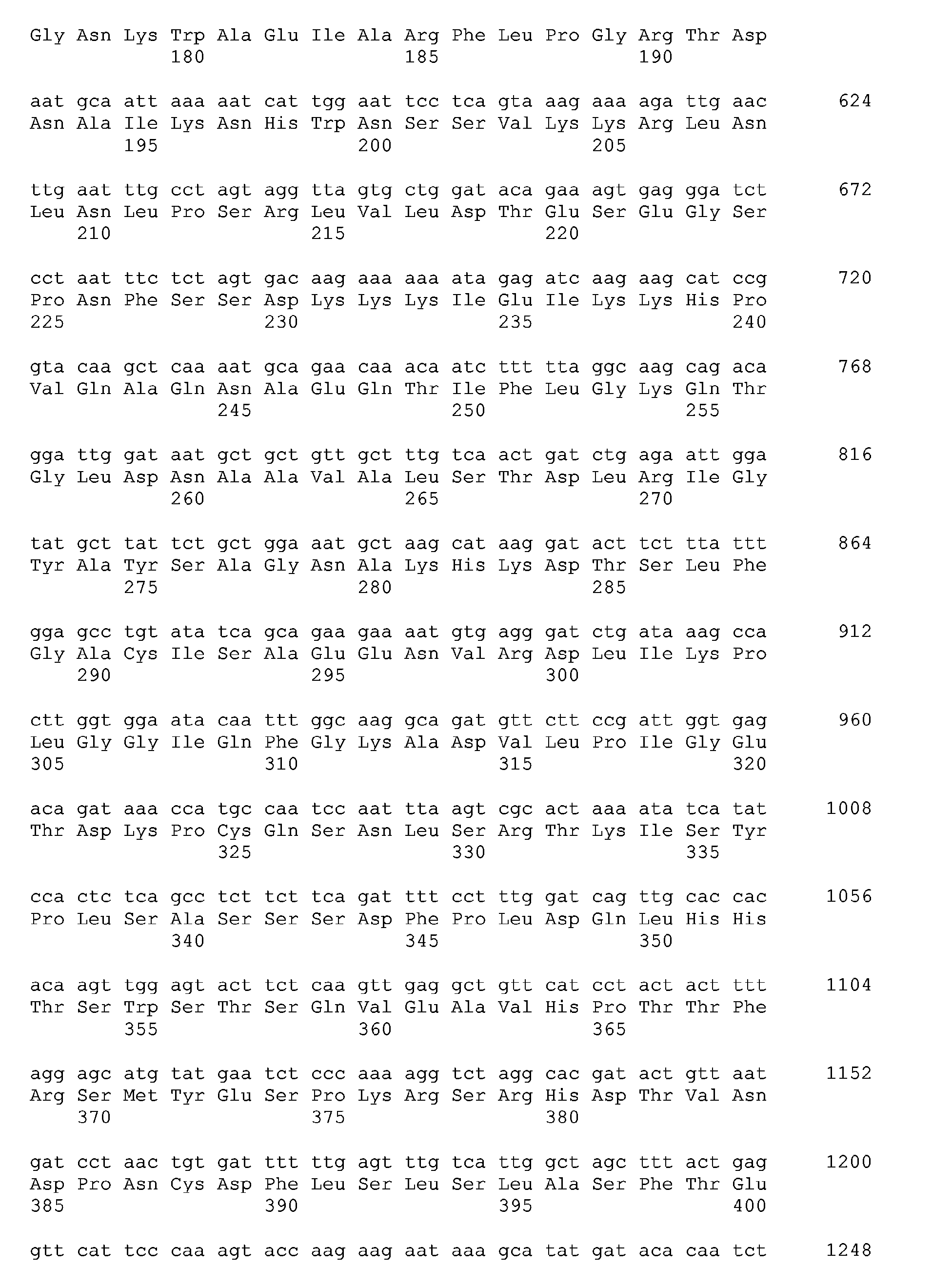


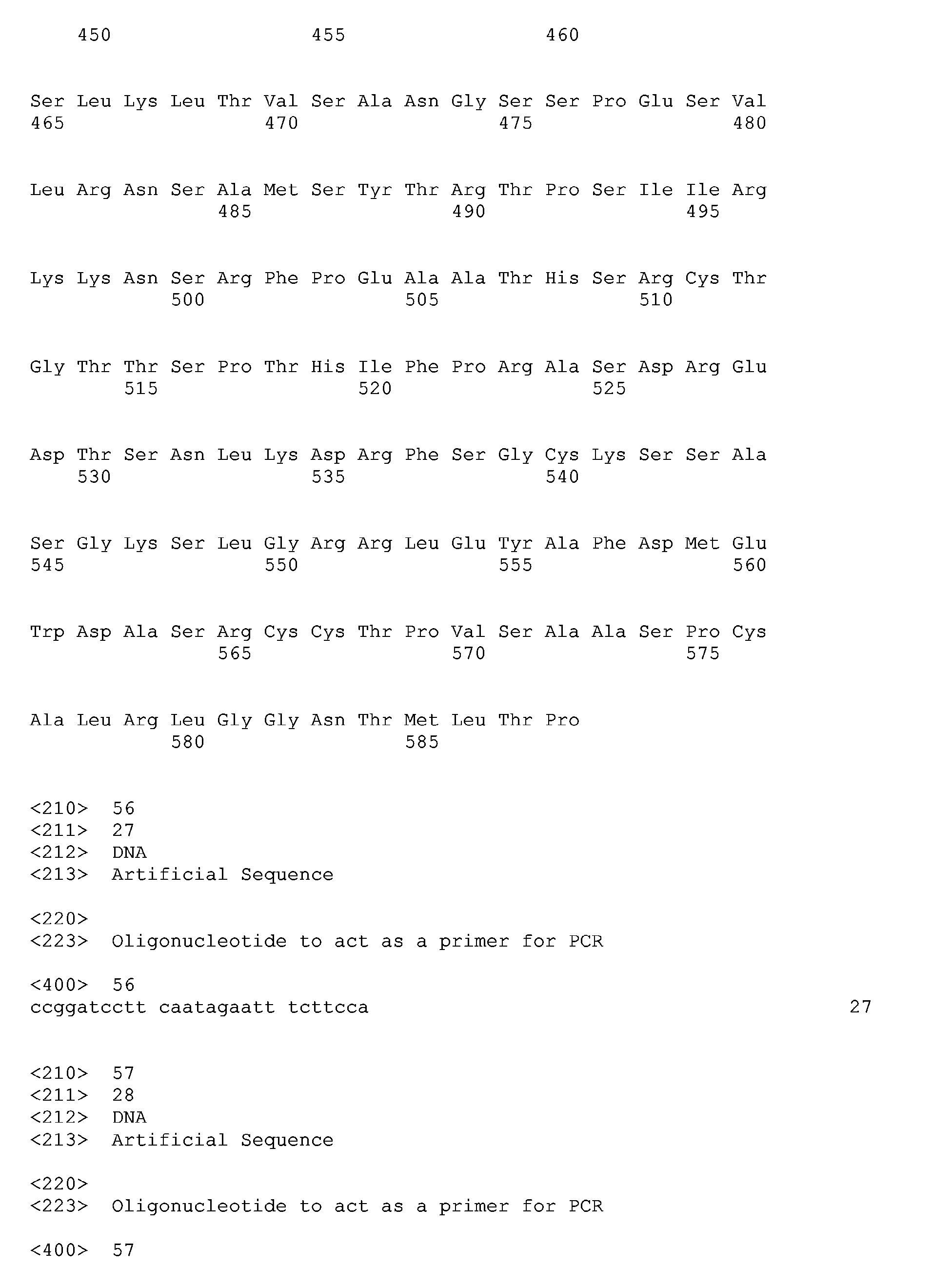


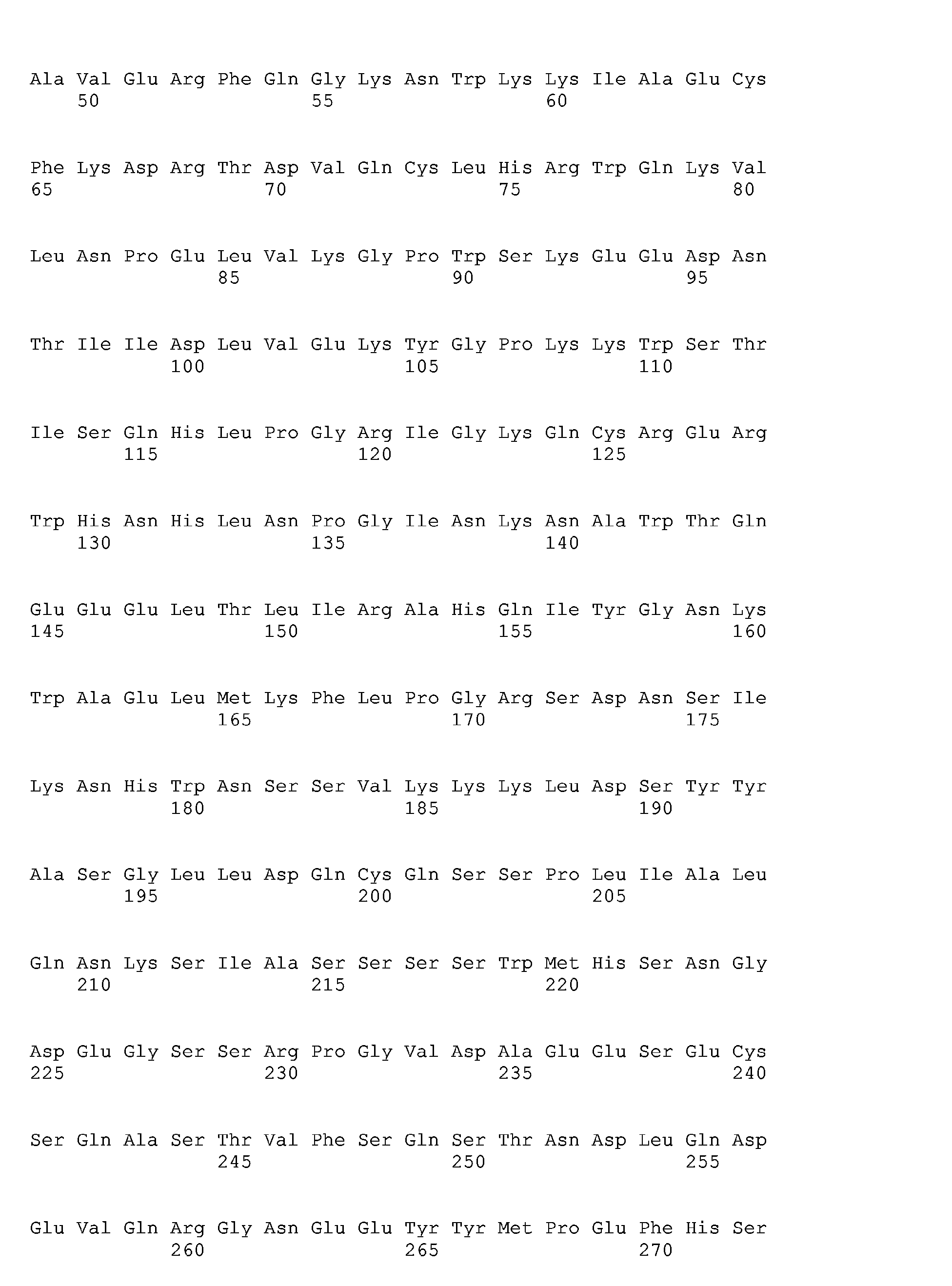


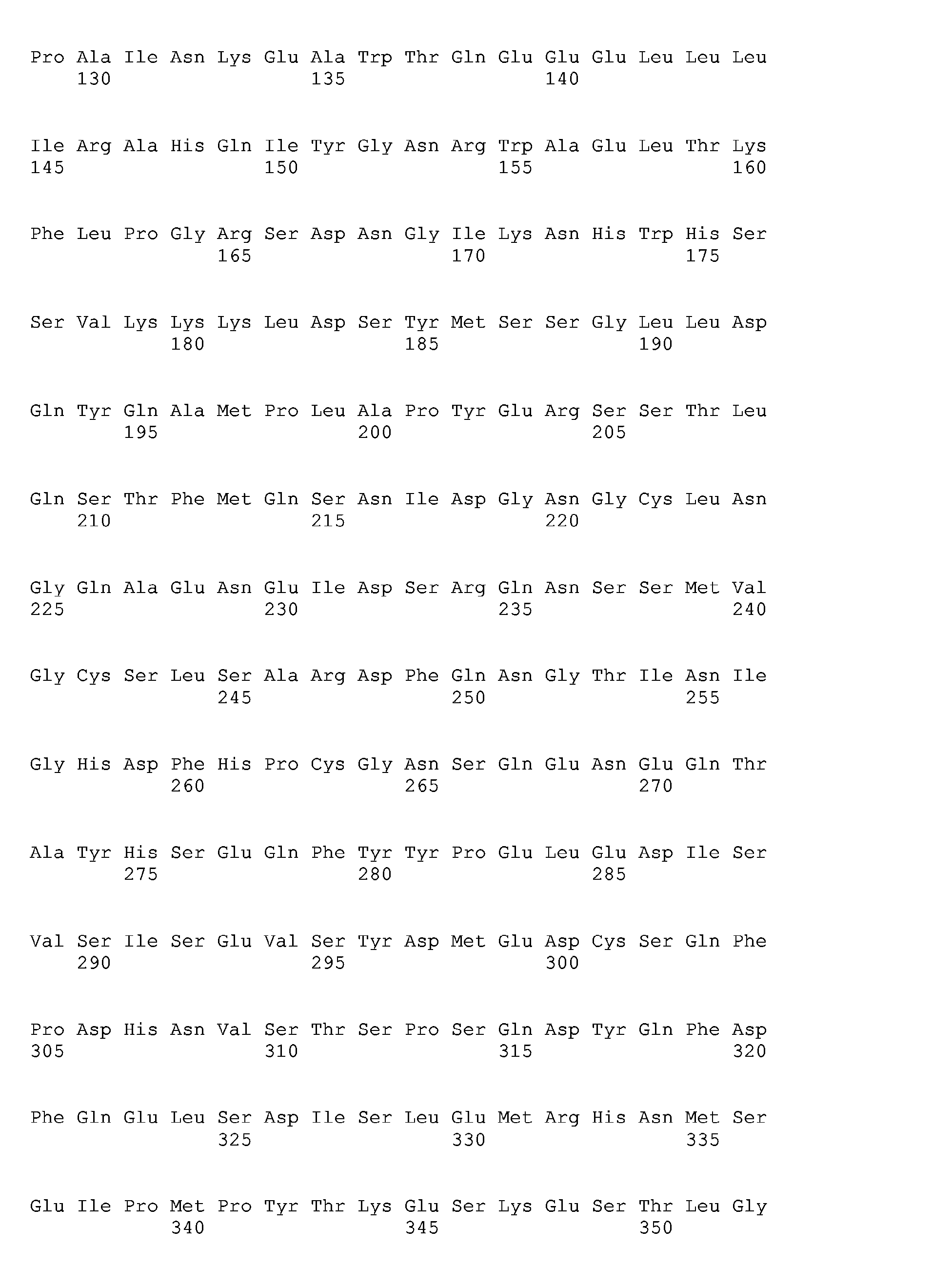
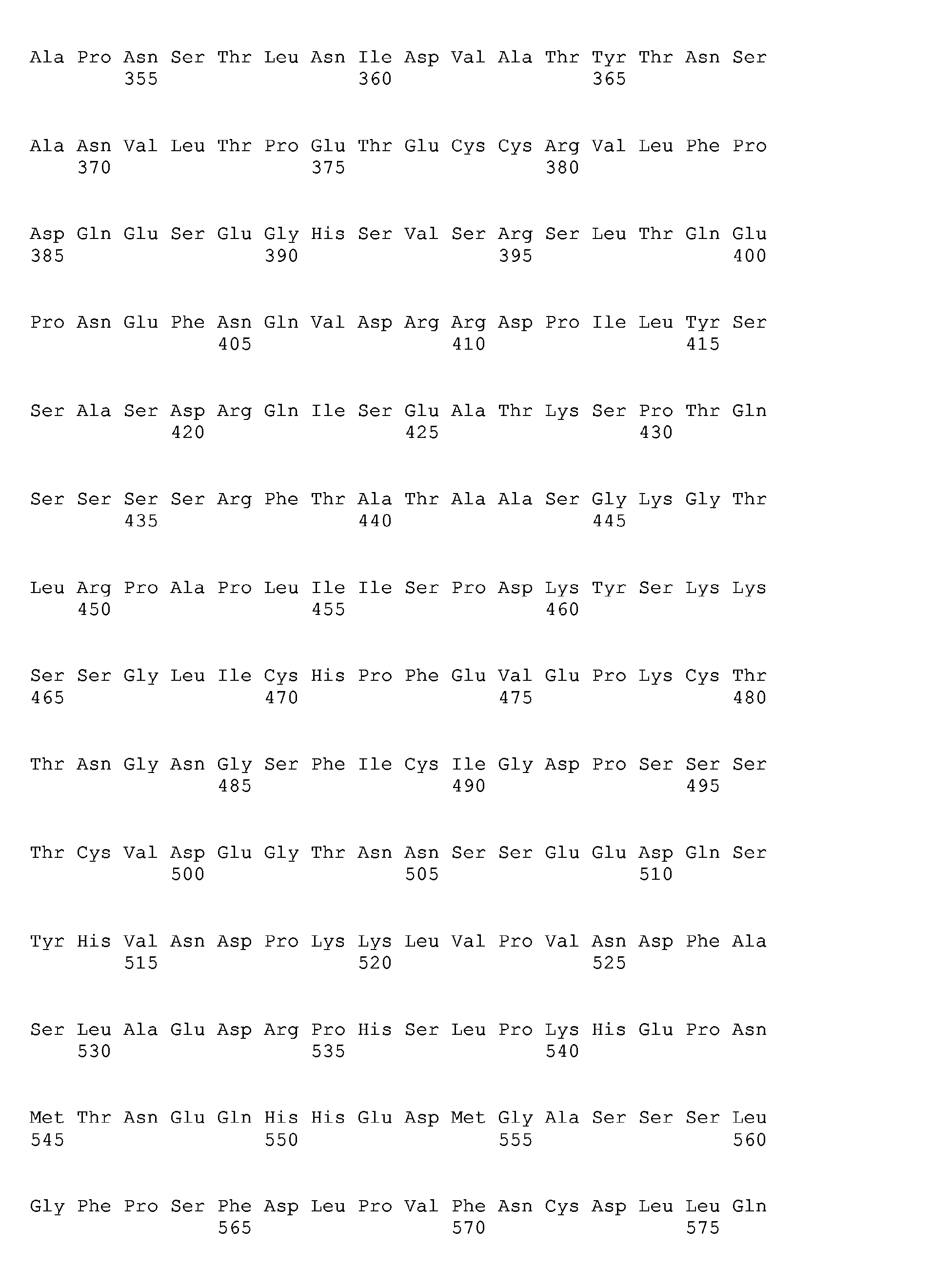


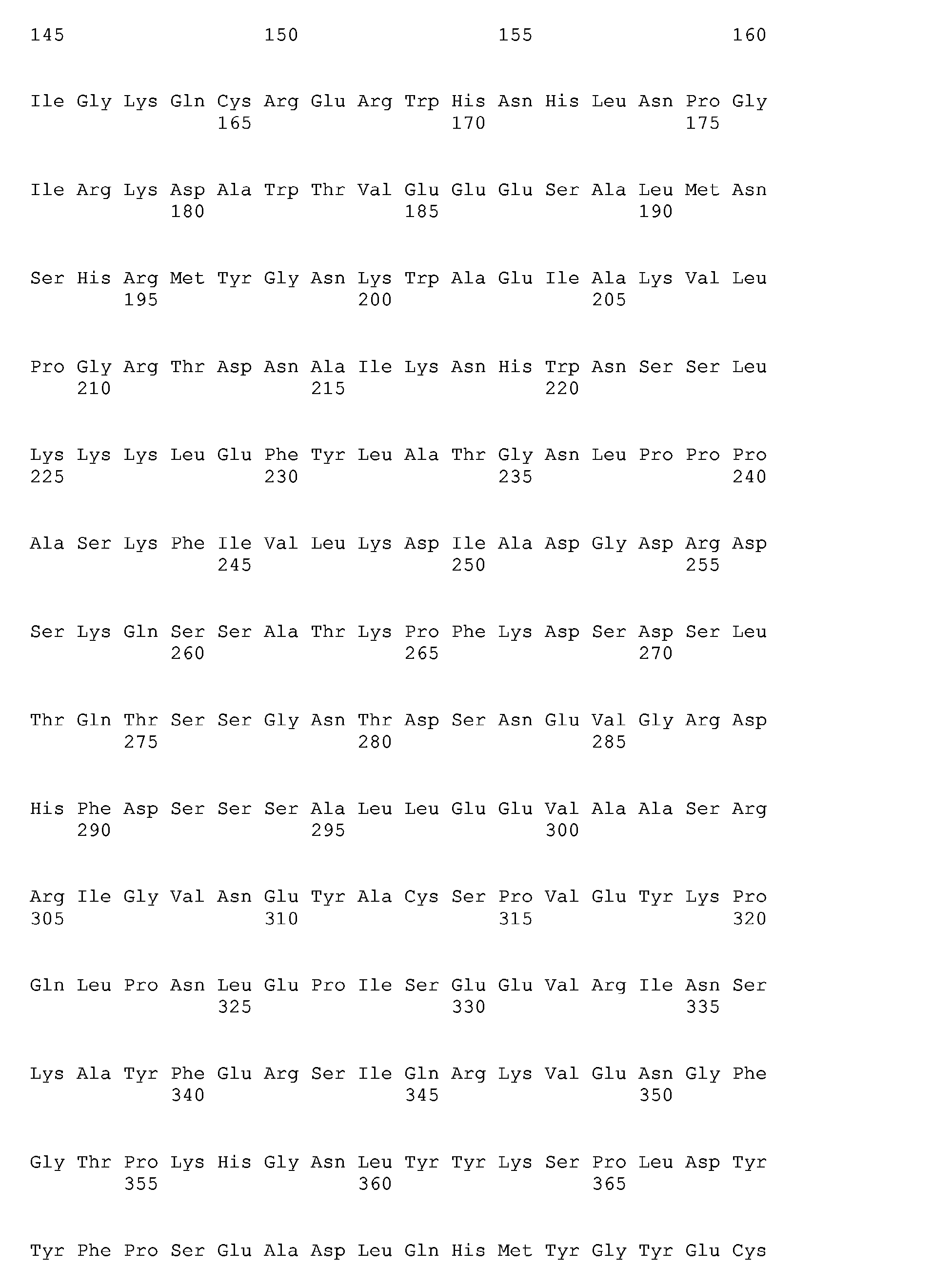
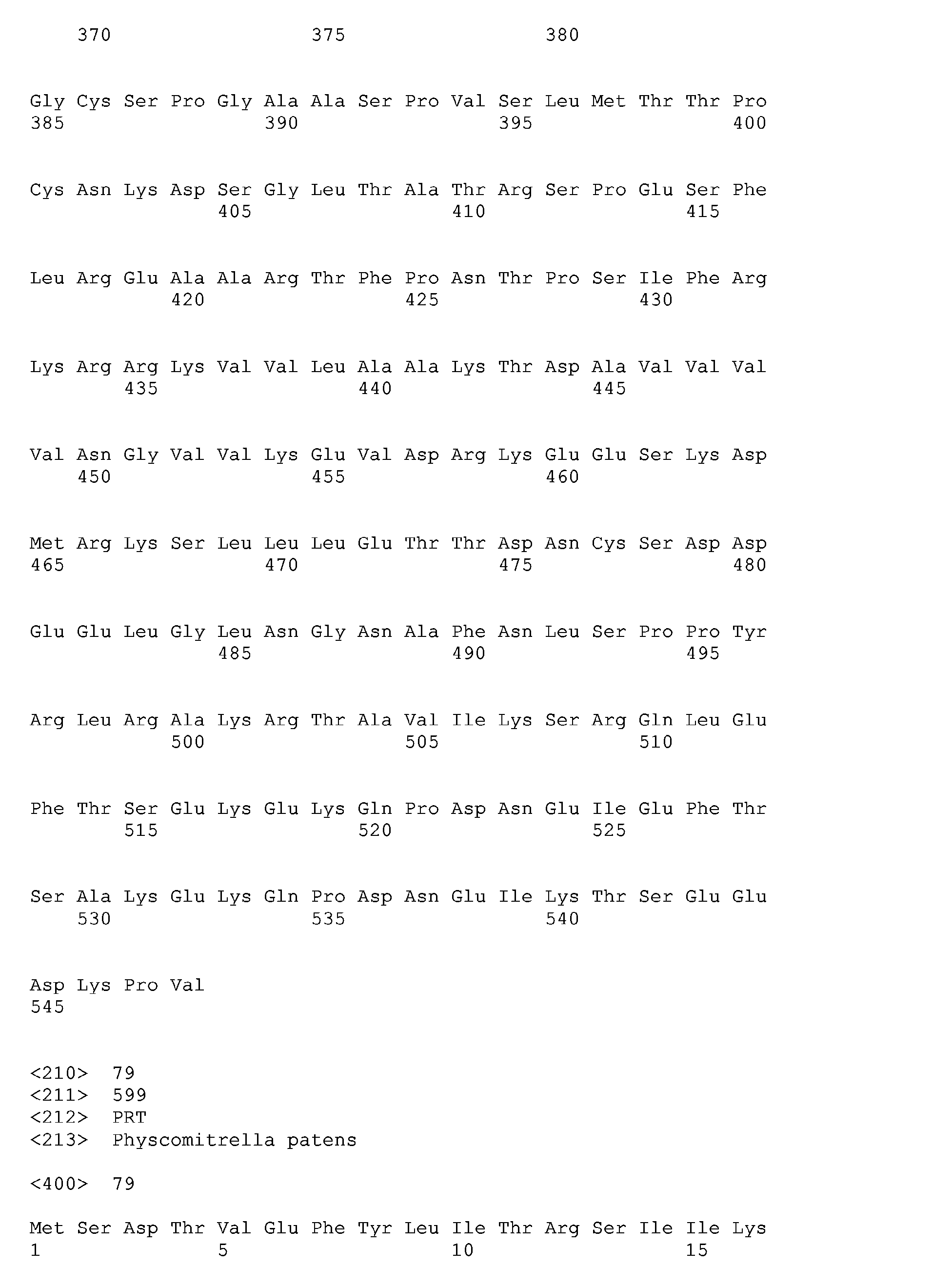
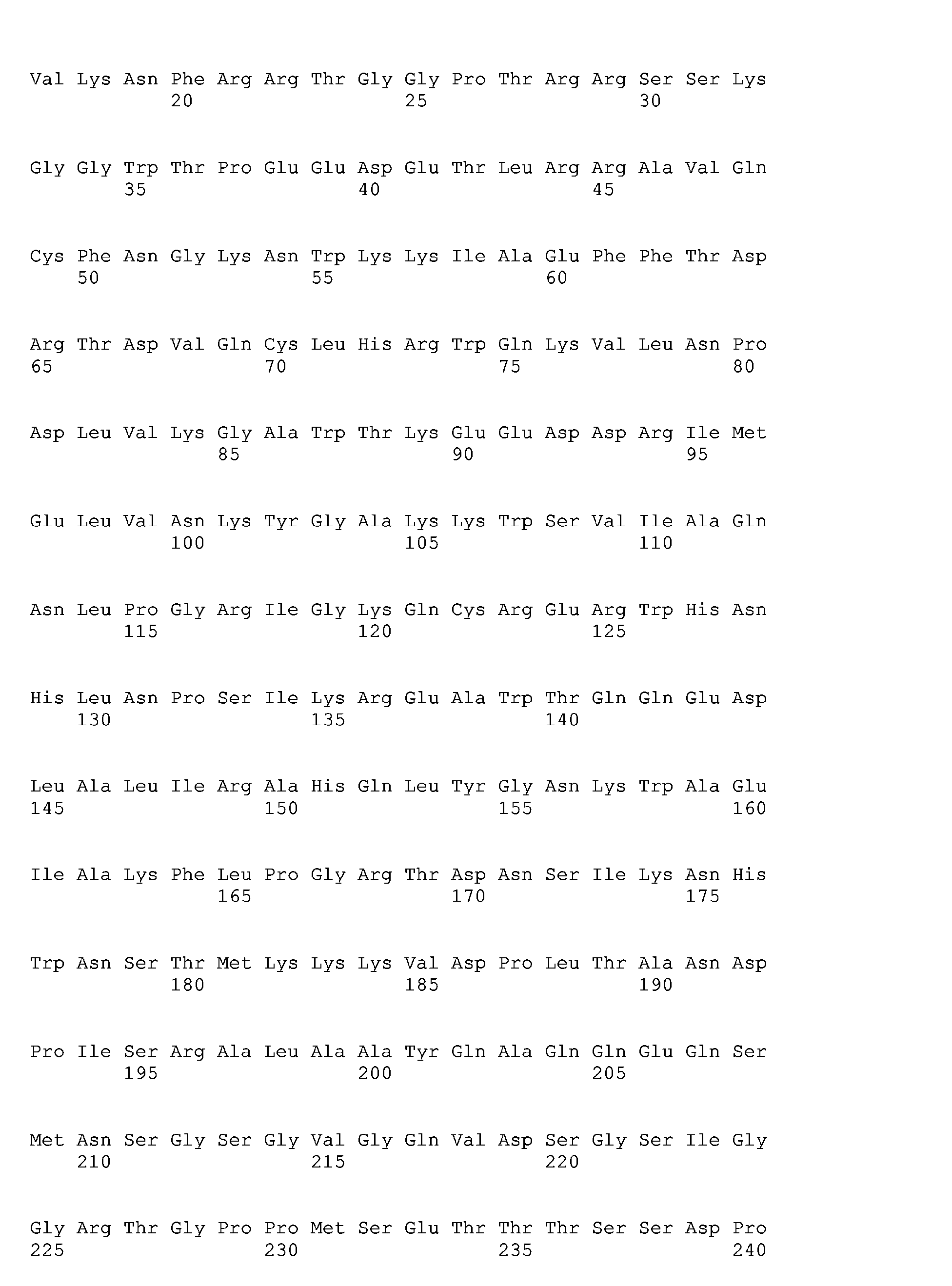
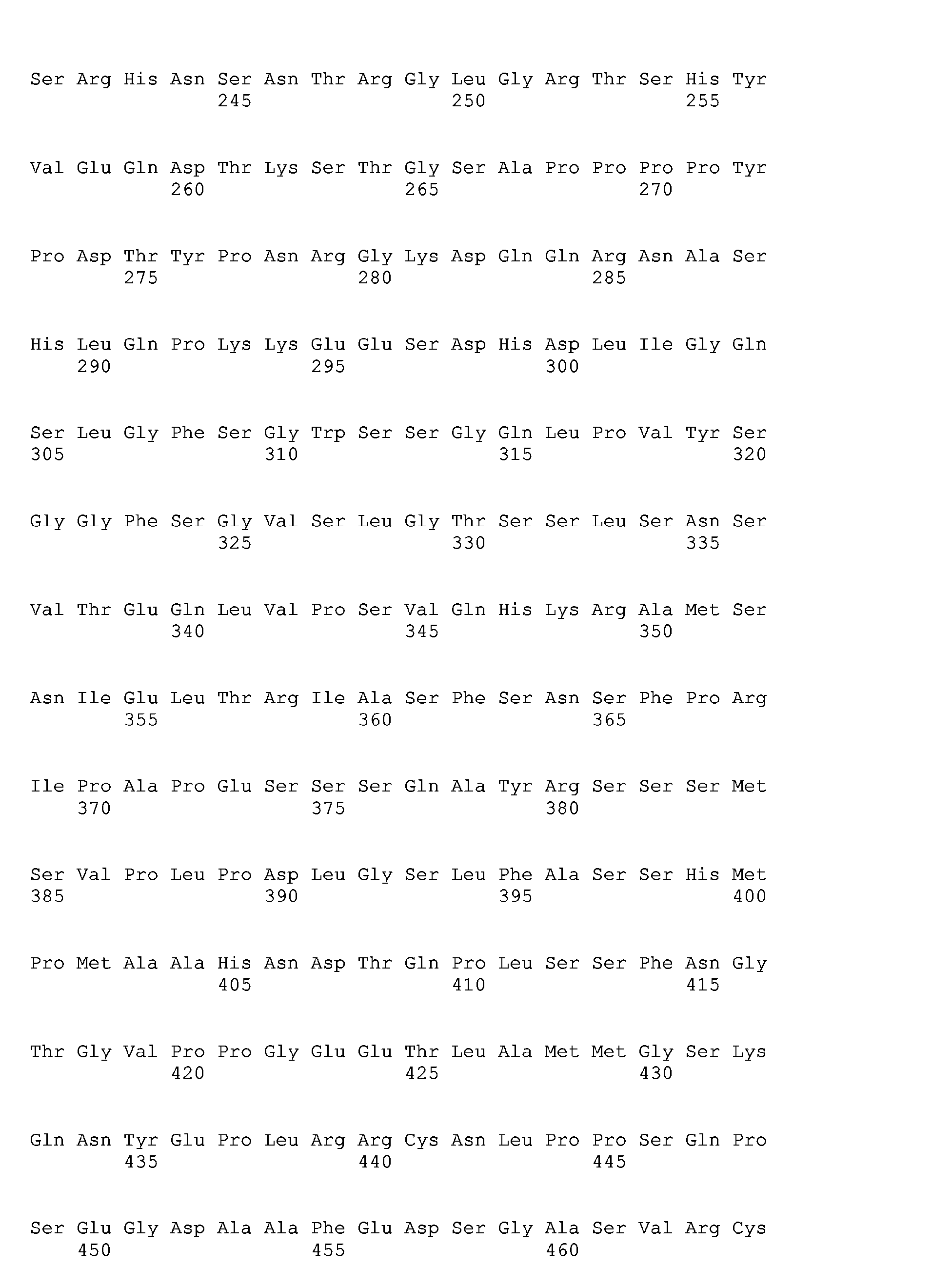
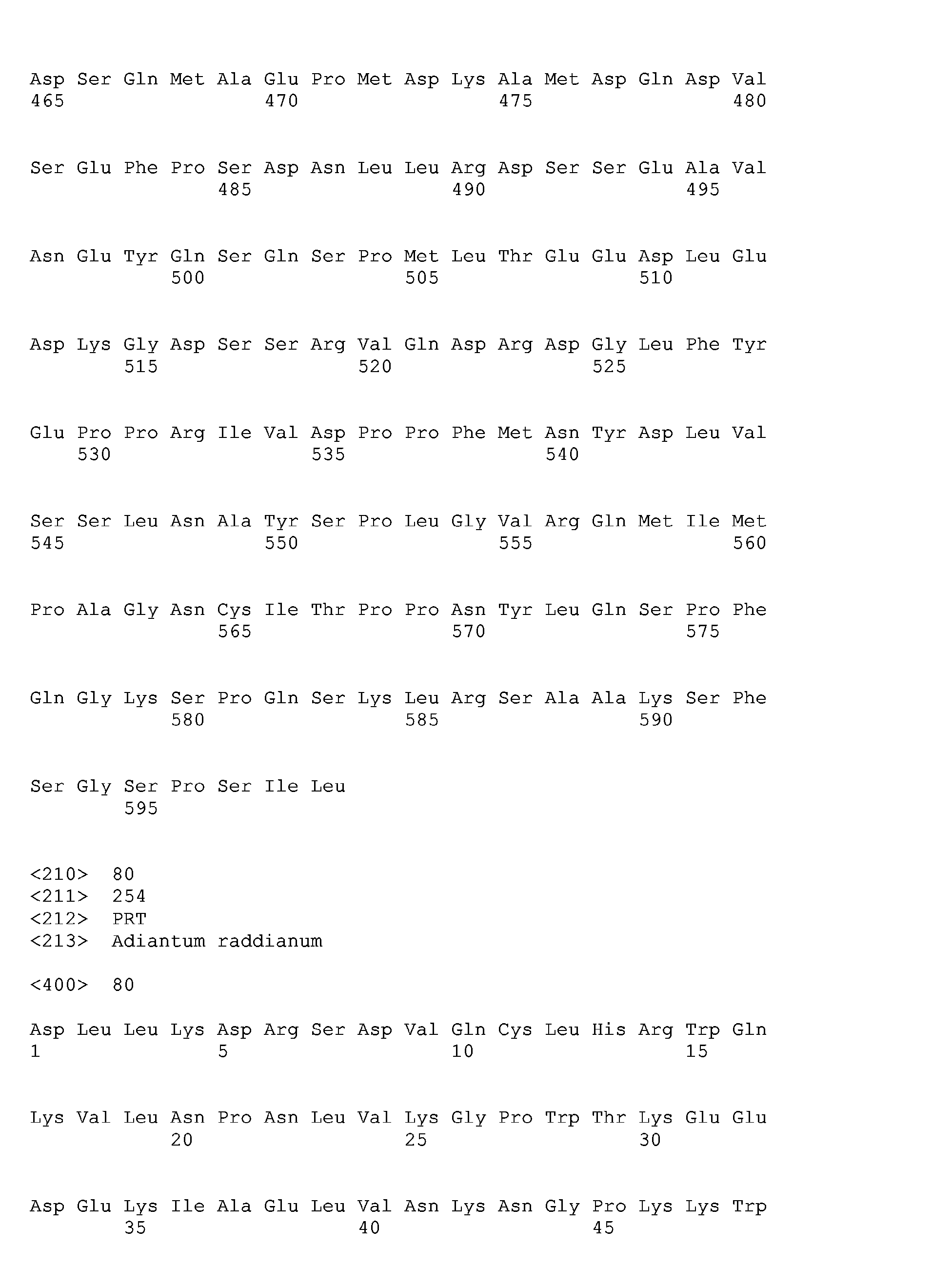


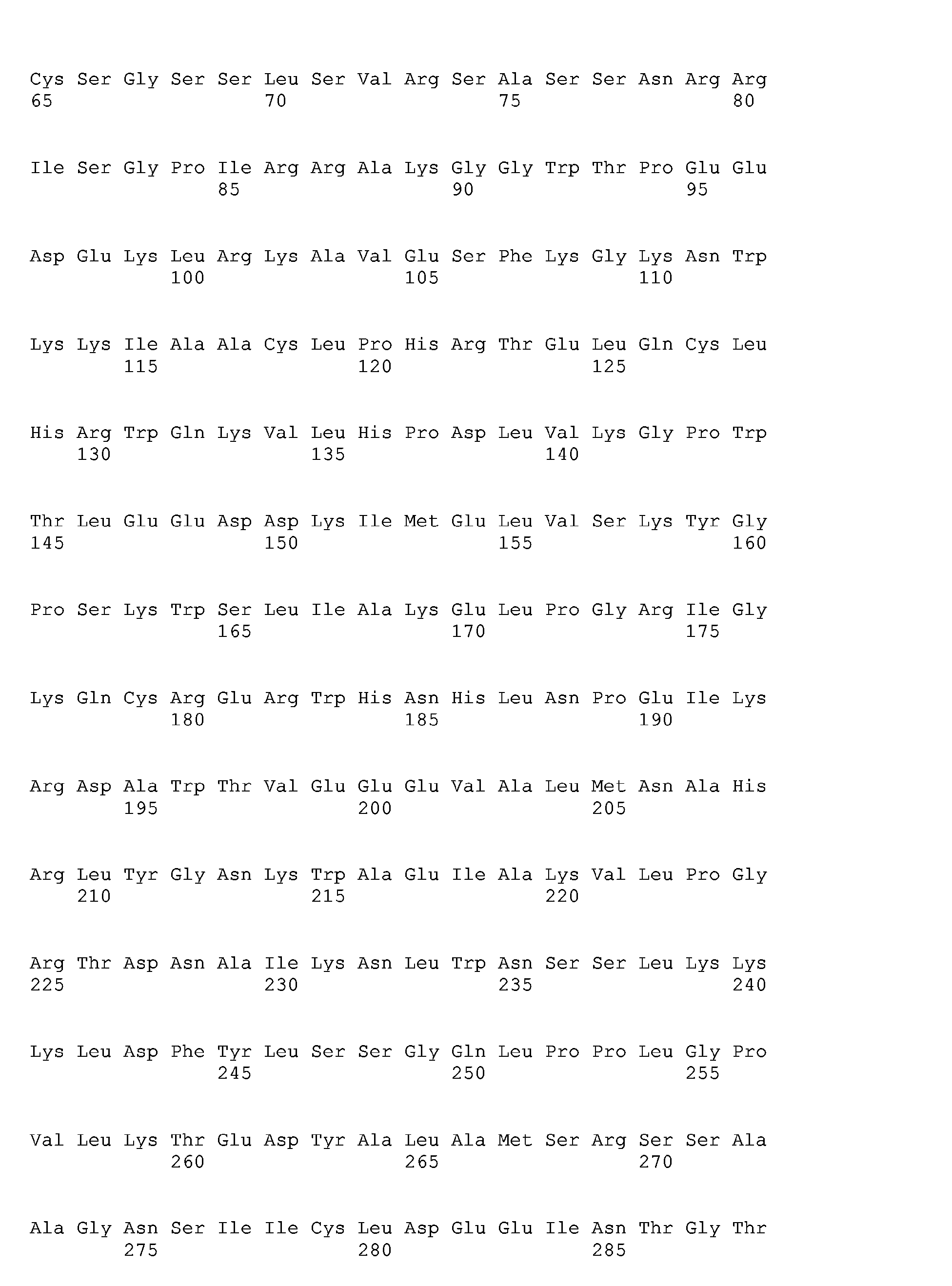
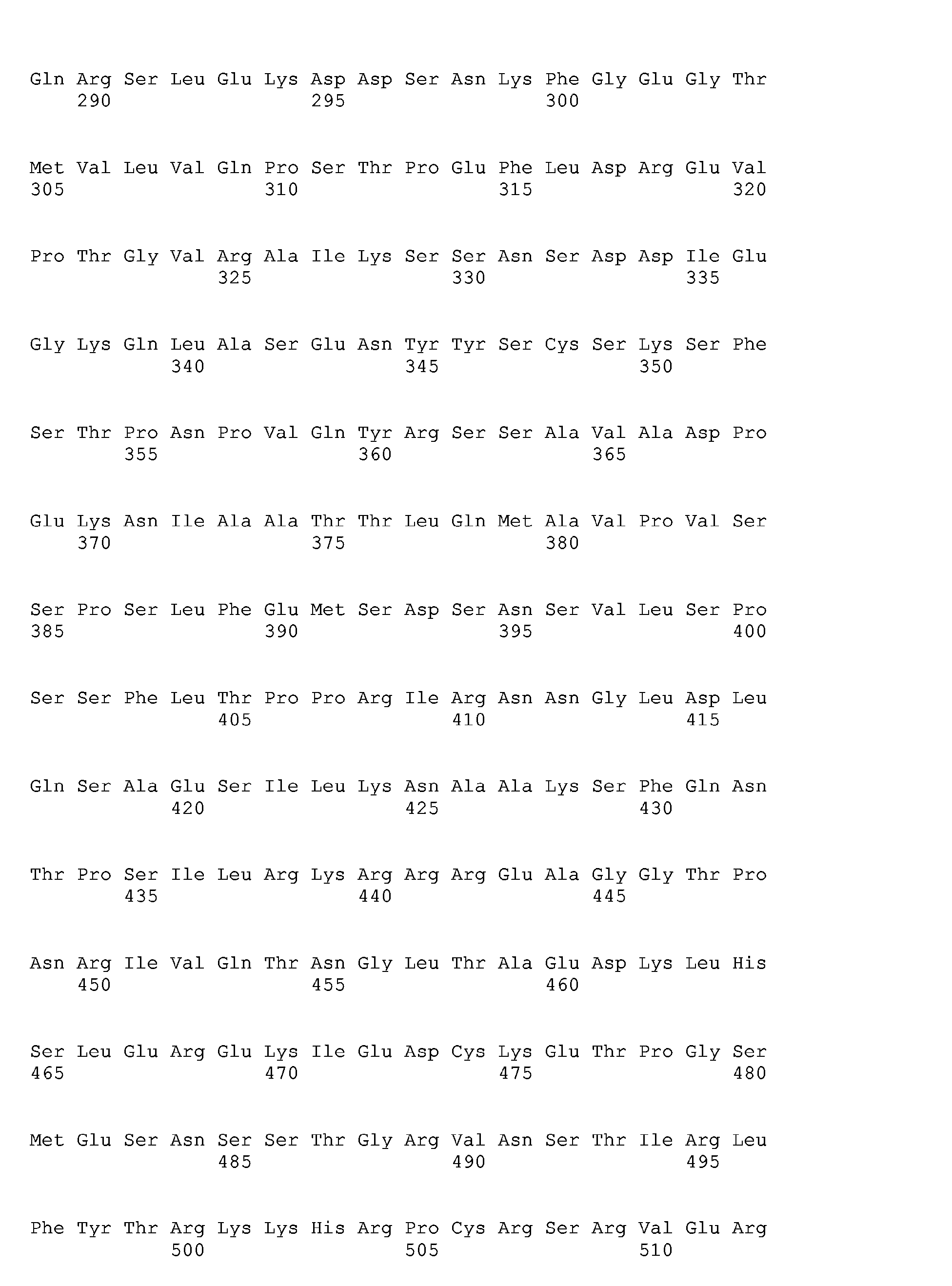
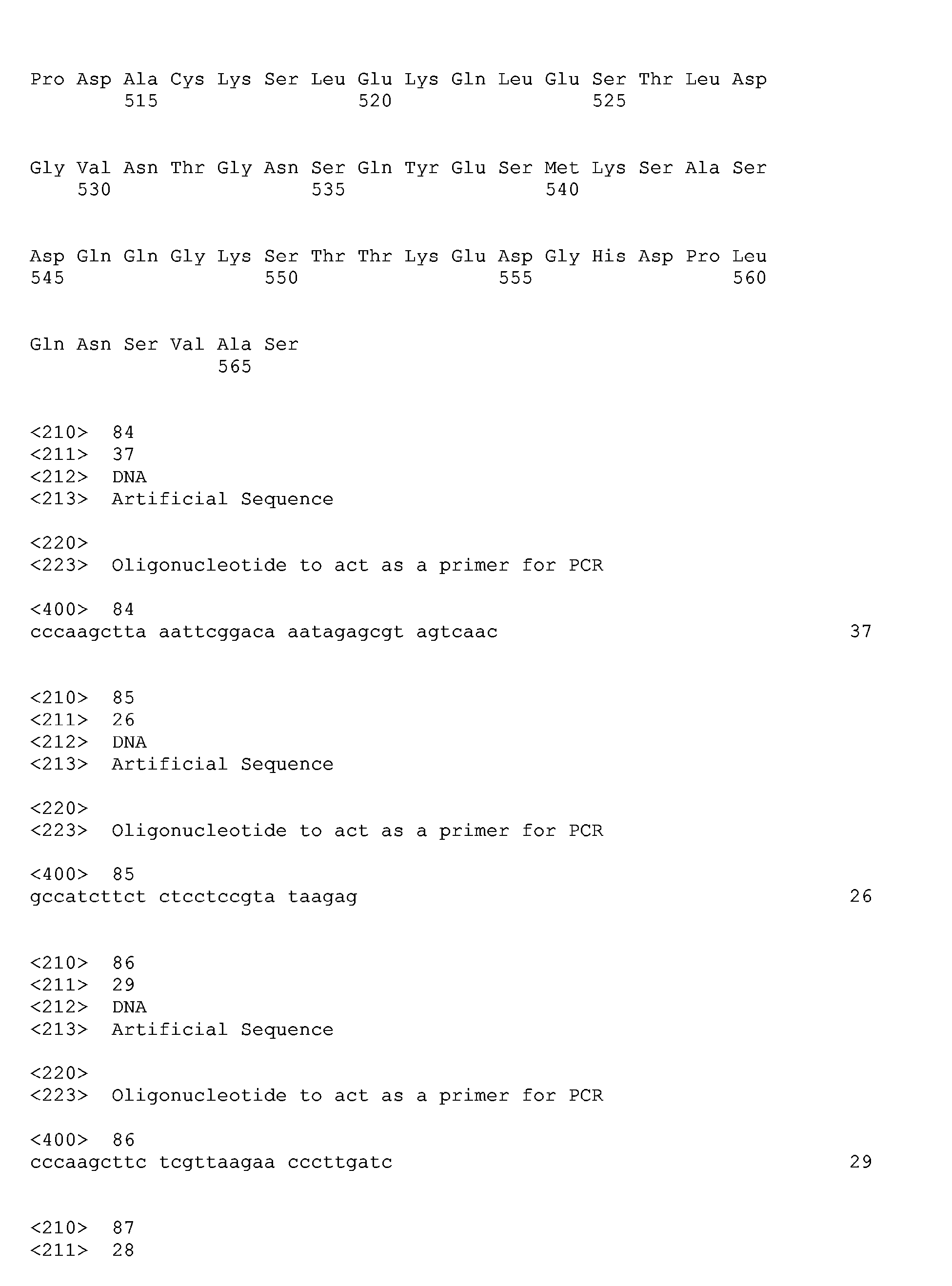
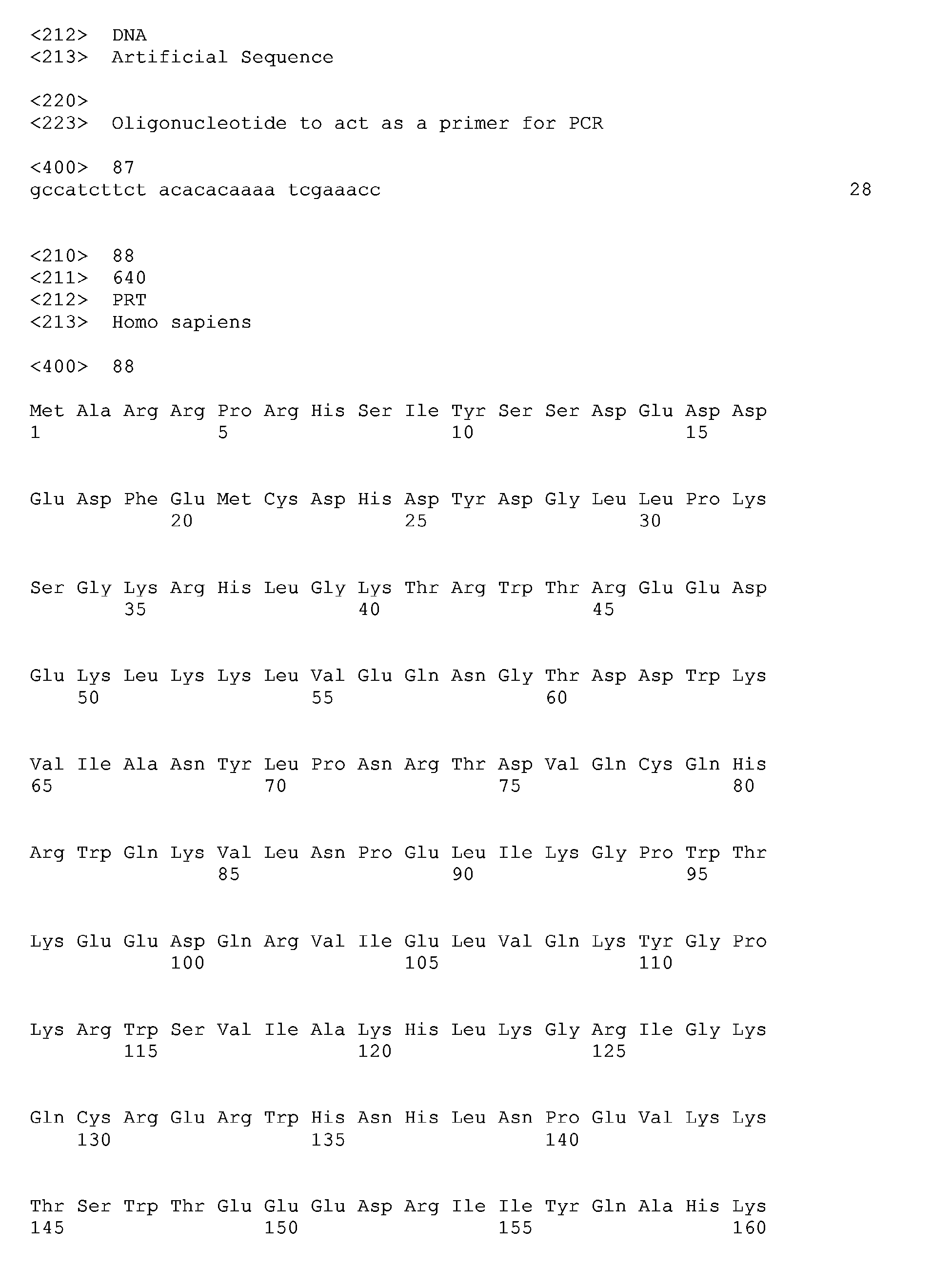

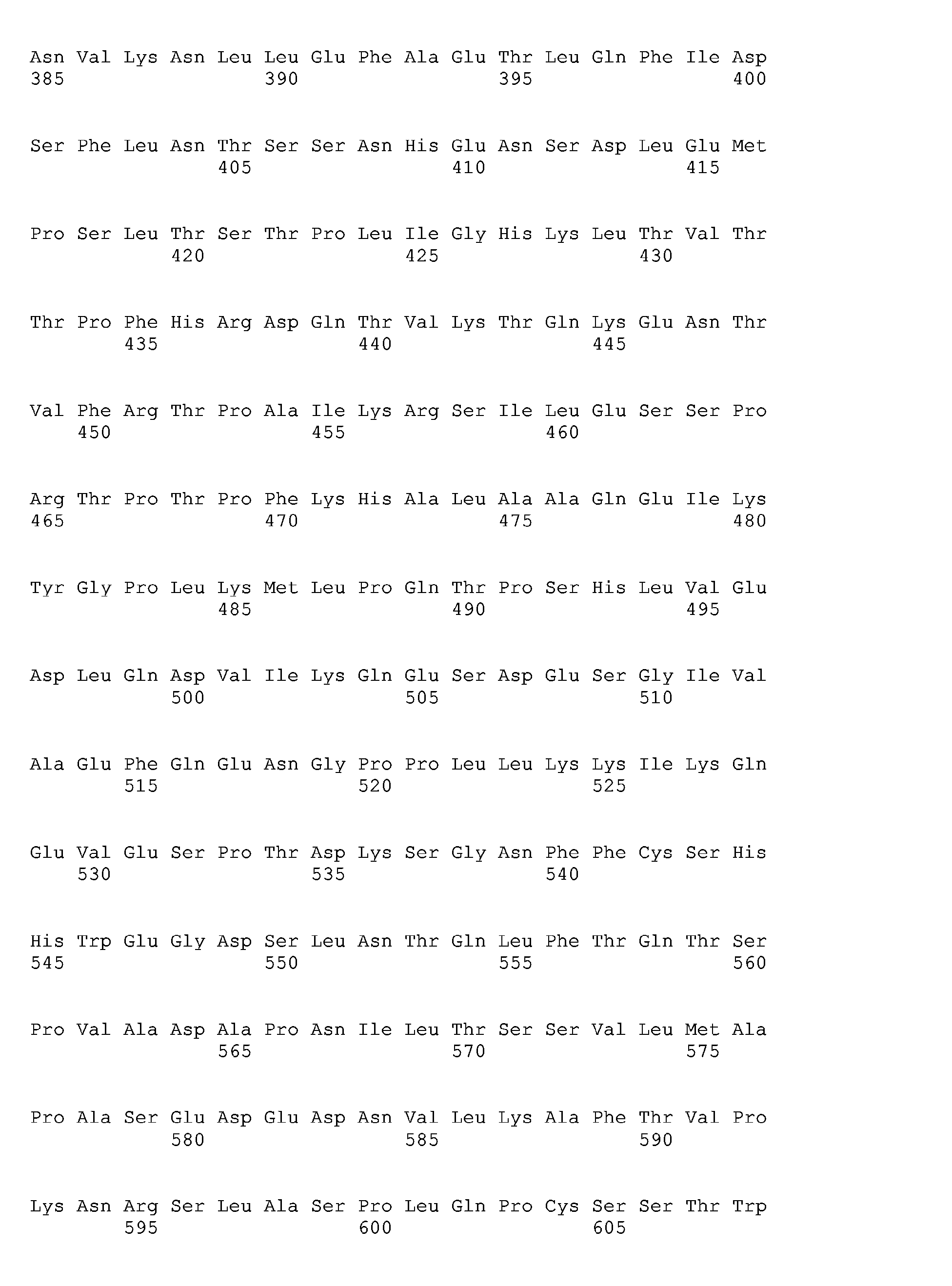
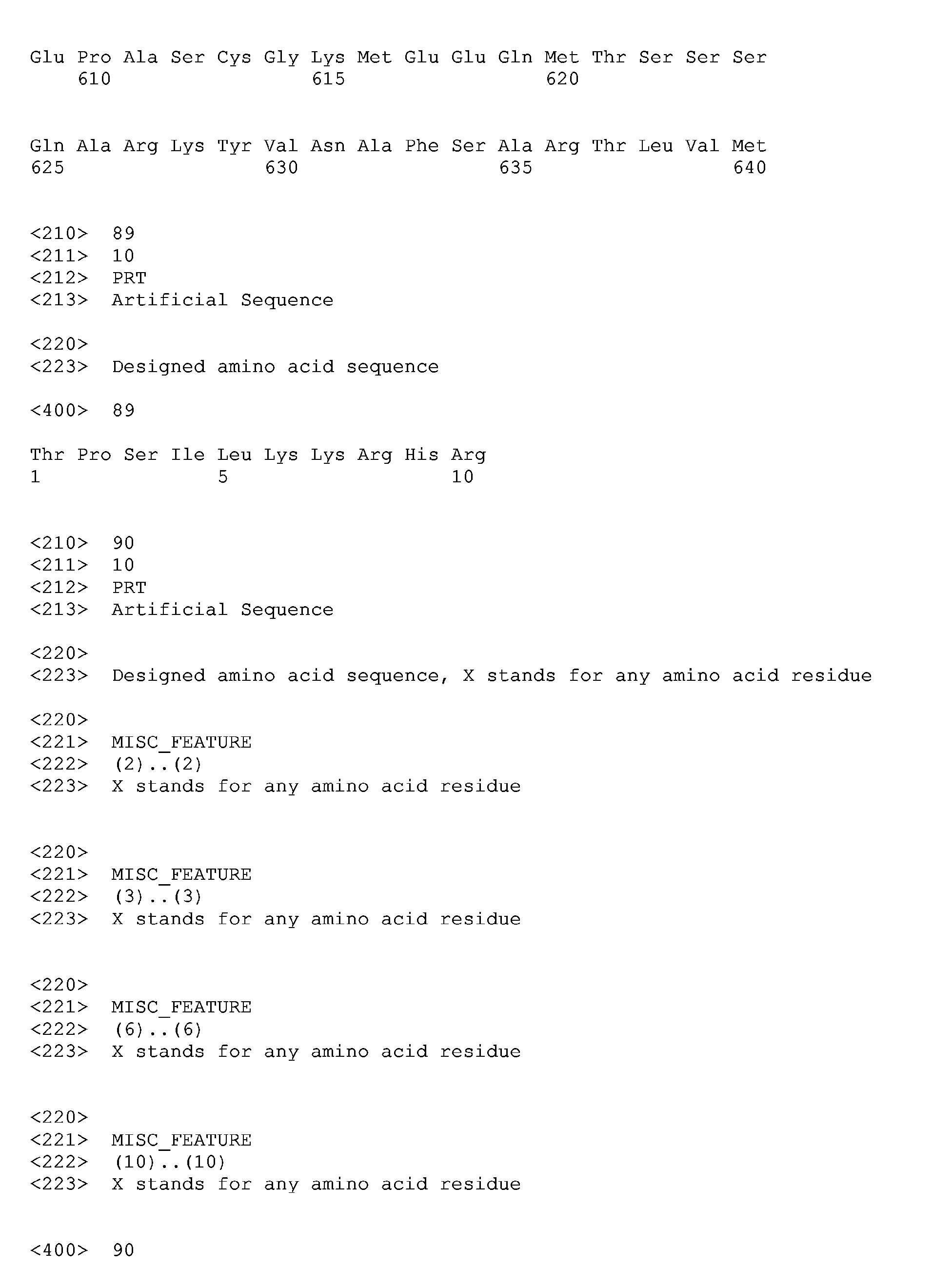
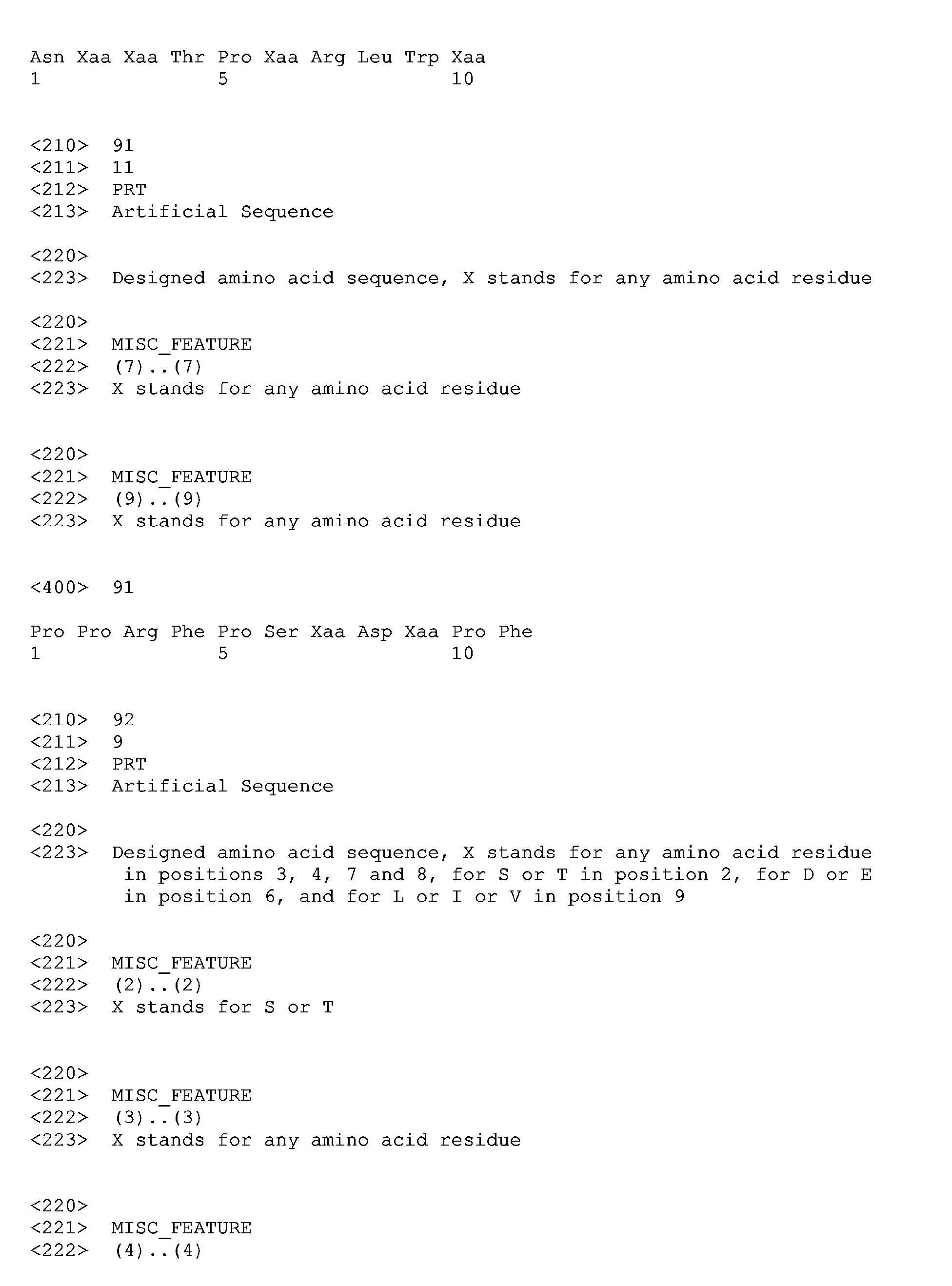
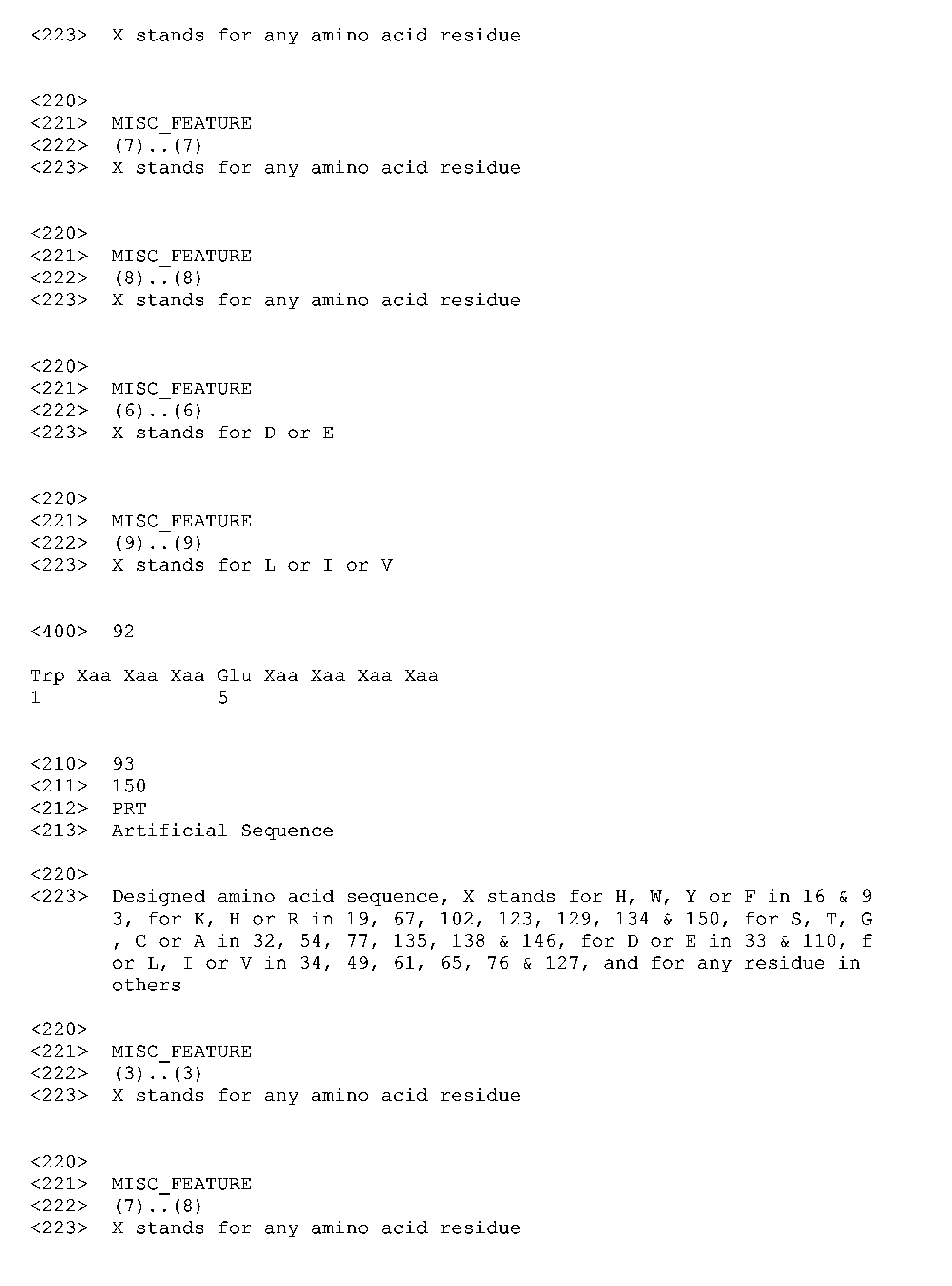
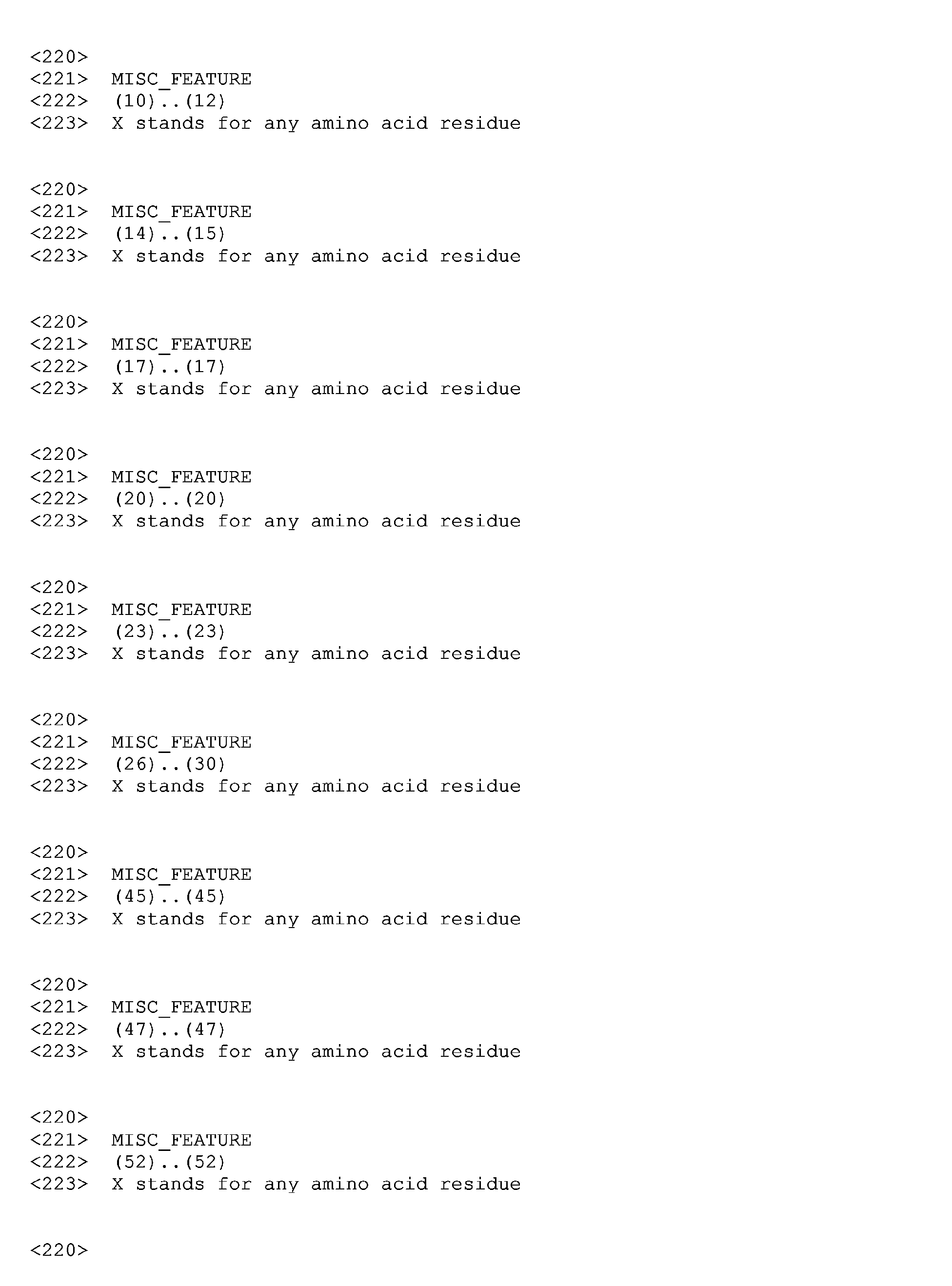
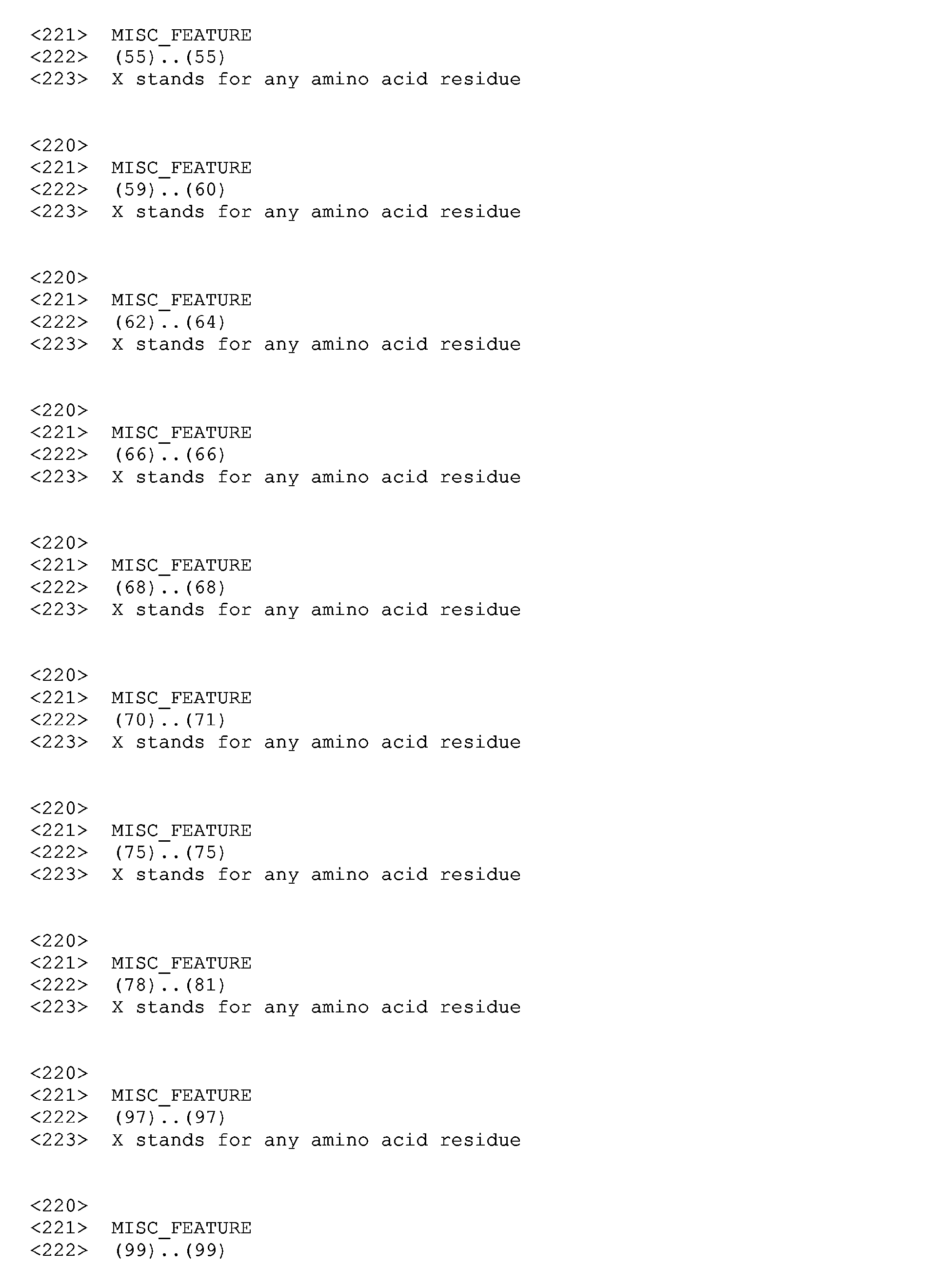

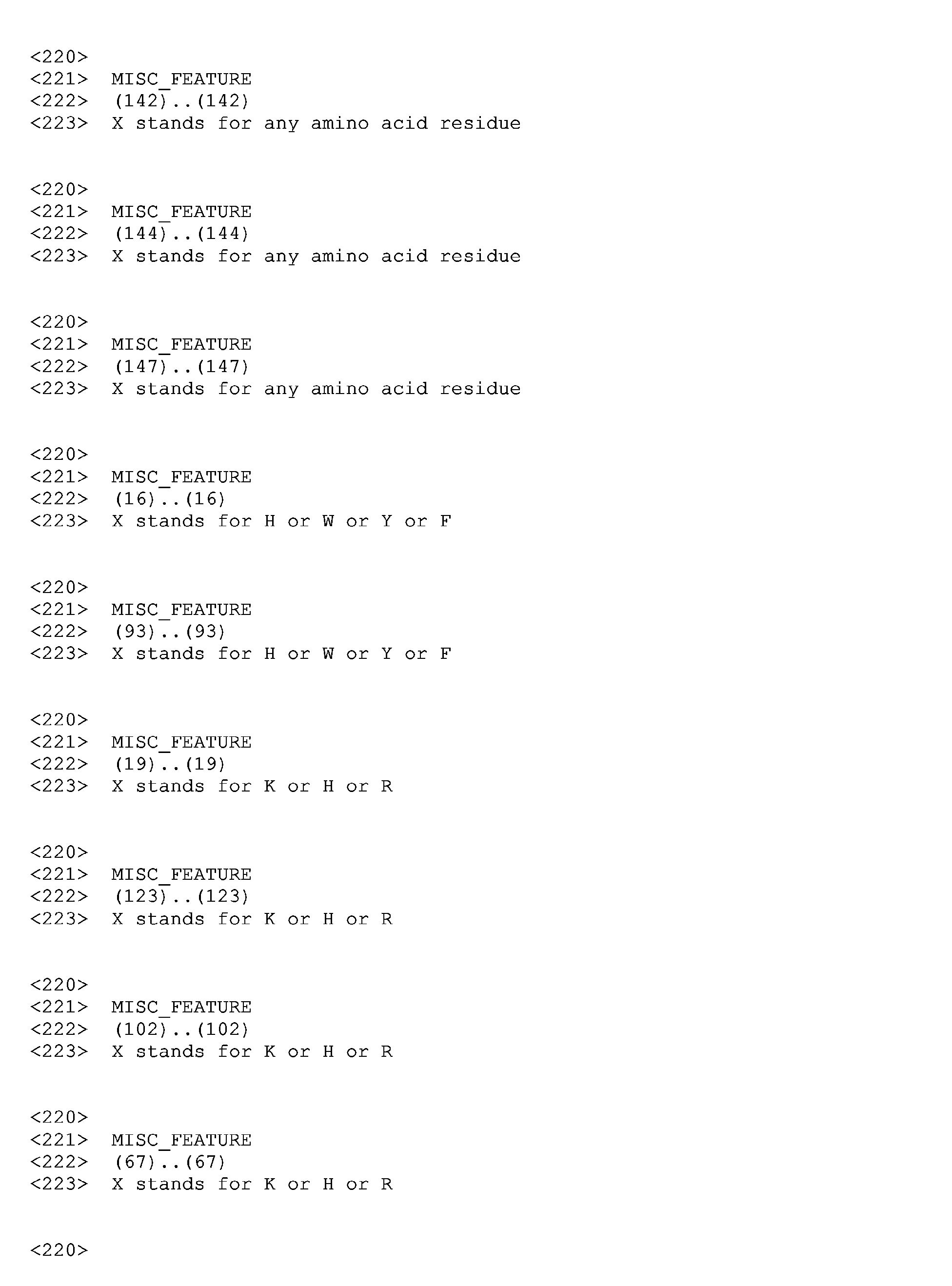
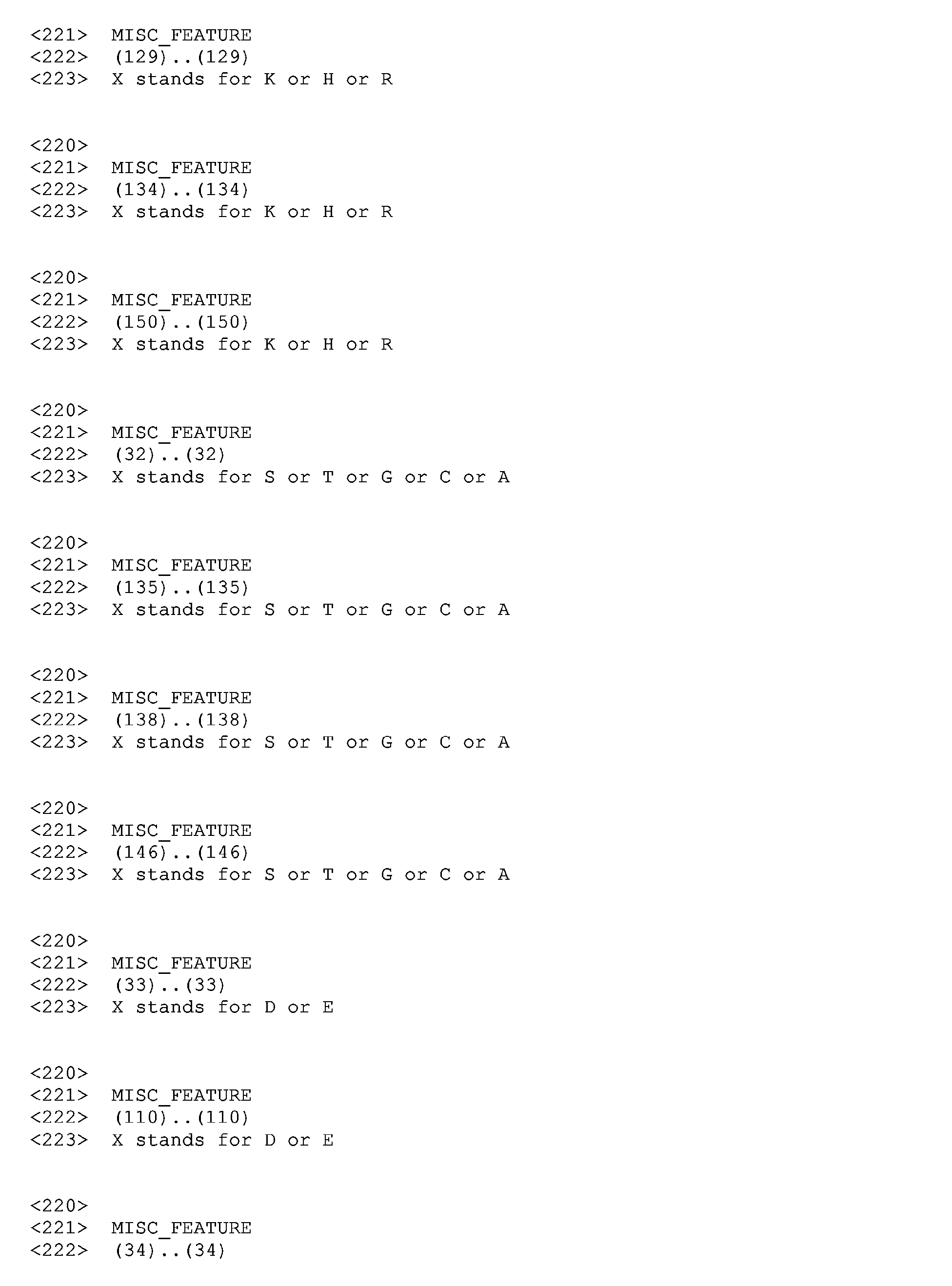

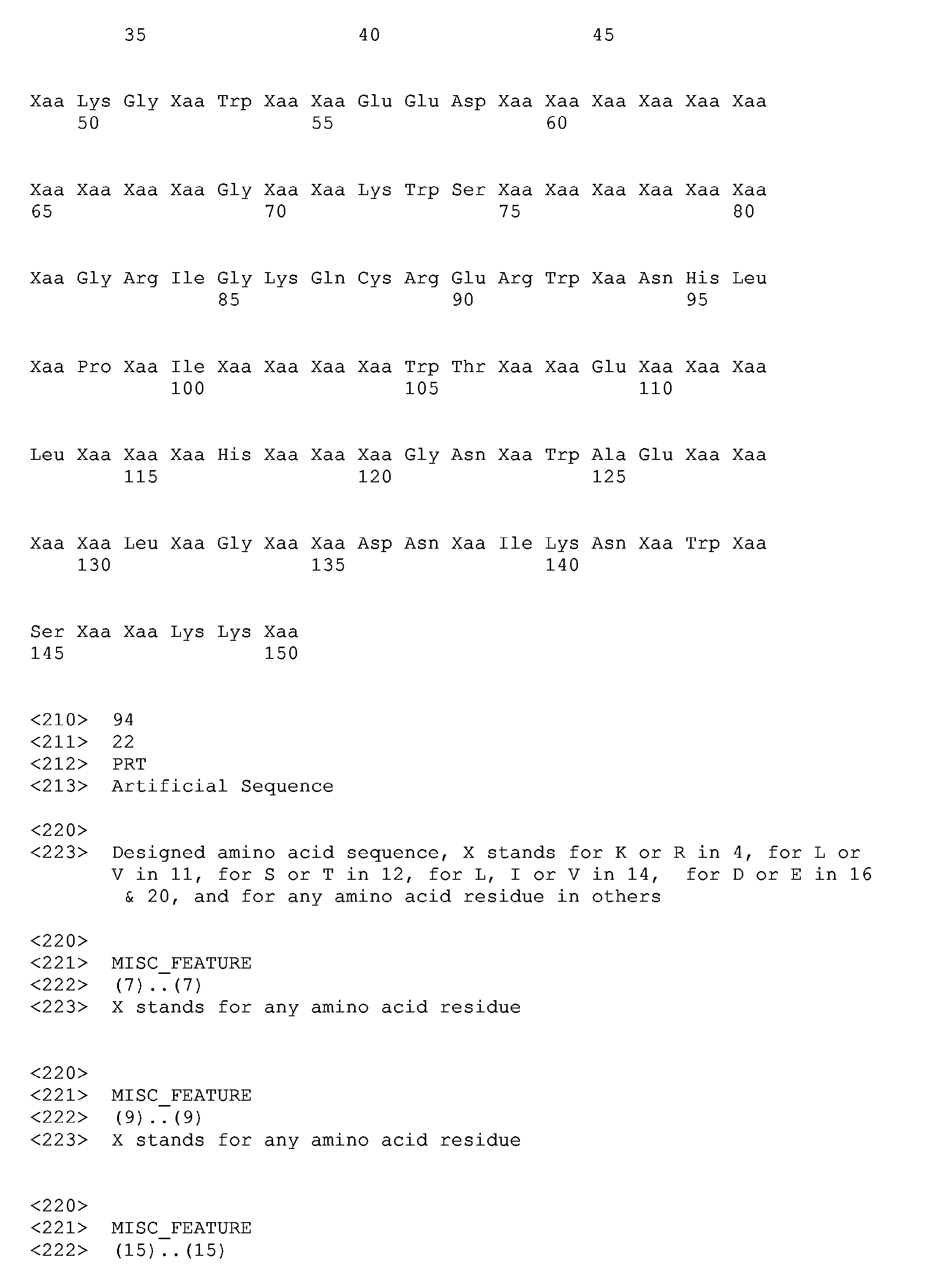
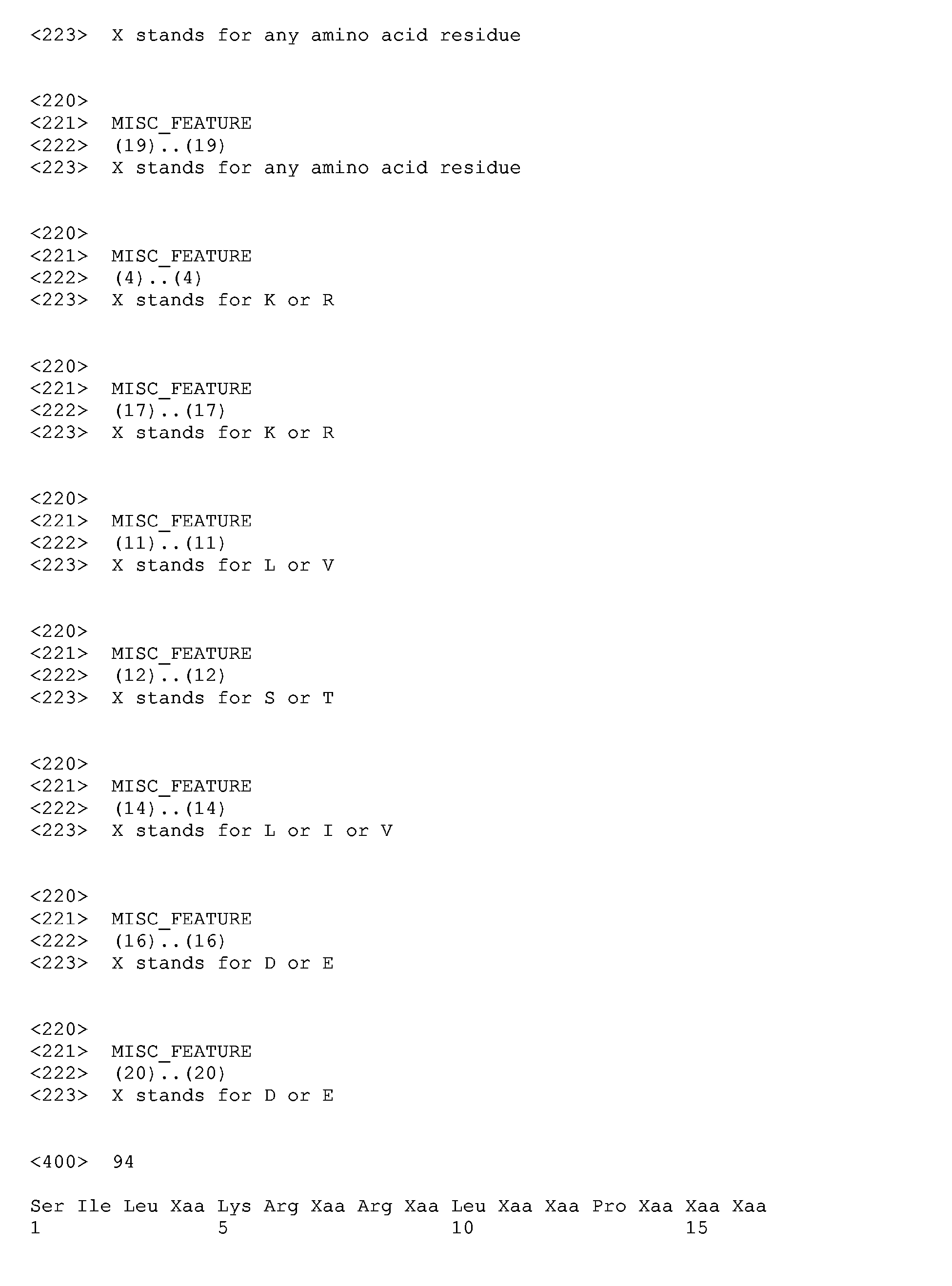
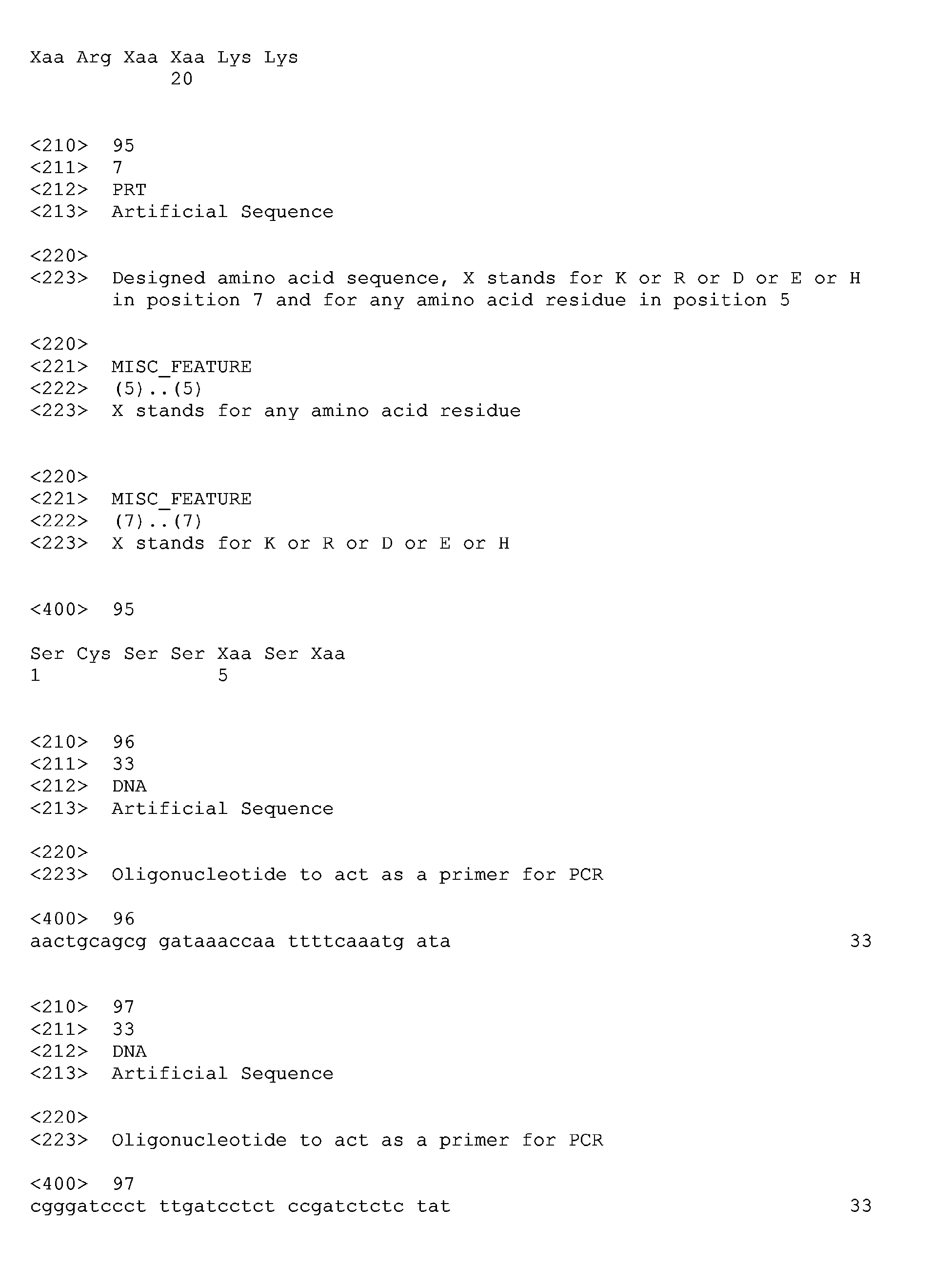
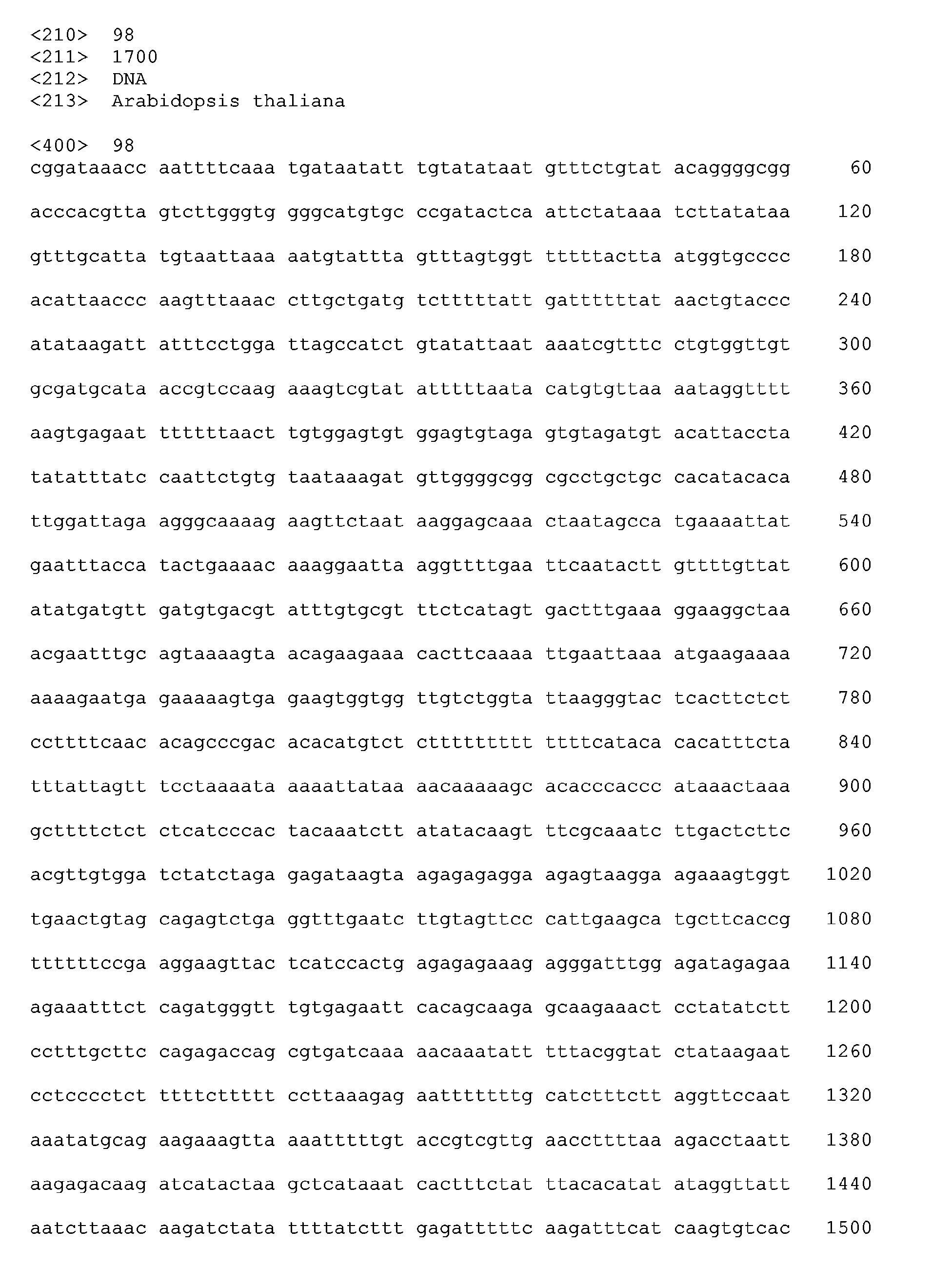
Claims (30)
- A plant cell having a modified plant 3Rmyb protein activity, as compared to the corresponding wild type plant cell.
- The plant cell according to claim 1, wherein said plant cell harbors, or has been transformed with, a DNA selected from the following (a) to (f), or a recombinant DNA construct or vector as set forth in the following (g):(a) a DNA coding for any amino acid sequence of plant 3Rmyb proteins;(b) a DNA which hybridizes, under stringent conditions, with a DNA coding for any amino acid sequence of the plant 3Rmyb proteins, and codes for a functionally equivalent protein to any of the plant 3Rmyb proteins;(c) a DNA coding for ribozyme catalytic RNA which specifically cleaves or destroys a transcript of DNA coding for any of the plant 3Rmyb proteins;(d) a DNA not only coding for RNA which suppresses the expression of DNA coding for any of the plant 3Rmyb proteins by co-suppression mechanisms when expressed in a plant cell, but also being at least 90% homologous to the 3Rmyb DNA;(e) a DNA coding for RNA which suppresses the expression of DNA coding for any of the plant 3Rmyb proteins by RNA interference mechanisms when expressed in a plant cell;(f) a DNA coding for antisense RNA which is complementary to a transcript of DNA coding for any of the plant 3Rmyb proteins;(g) a recombinant DNA construct or vector comprising at least a member selected from the group consisting of the following (i) to (iii):(i) a promoter transcribable in a plant cell,(ii) a DNA wherein the DNA according to any of the above (a) to (f) is linked to said promoter sequence in a sense or antisense direction, and(iii) a signal for transcription termination and polyadenylation of an RNA molecule.
- The plant cell according to claim 1 or 2, wherein the plant 3Rmyb protein is a transcription factor for activating G2/M phase-specific transcription mediated by the MSA sequence.
- The plant cell according to claim 1 or 2, wherein the plant 3Rmyb protein, which is a transcription factor for activating G2/M phase-specific transcription mediated by the MSA sequence, is a protein comprising at least an amino acid sequence ofwherein X is any amino acid, X1 is K or R, X2 is L, I or V, X3 is L or V, X4 is S or T, and X5 is D or E.

- The plant cell according to any of claims 1 to 4, wherein the plant 3Rmyb protein is an amino acid sequence selected from SEQ ID NO: 32, SEQ ID NO: 51, SEQ ID NO: 53, SEQ ID NO: 75 and SEQ ID NO: 76.
- The plant cell according to claim 1 or 2, wherein the plant 3Rmyb protein is a transcription factor for suppressing or inhibiting G2/M phase-specific transcription mediated by the MSA sequence.
- The plant cell according to claim 1 or 2, wherein the plant 3Rmyb protein, which is a transcription factor for suppressing or inhibiting G2/M phase-specific transcription mediated by the MSA sequence, is a protein comprising at least an amino acid sequence ofwherein X is any amino acid, and X6 is K, R, D, E or H.

- The plant cell according to claim 1, 2, 6 or 7, wherein the plant 3Rmyb protein is an amino acid sequence selected from SEQ ID NO: 55, SEQ ID NO: 77 and SEQ ID NO: 78.
- The plant cell according to any of claims 1 to 8, wherein the amount of expressed plant 3Rmyb proteins is modified as compared to the corresponding wild type plant cell.
- The plant cell according to any of claims 1 to 8, wherein its cell growth is modified as compared to the corresponding wild type plant cell.
- A plant comprising or harboring the plant cell according to any of claims 1 to 10.
- A plant which is a progeny, descendant or clone of the plant according to claim 11.
- The plant according to claim 11 or 12, wherein the cell growth and/or development/differentiation is modified, as compared to the corresponding wild type plant.
- The plant according to claim 11 or 12, which is used for modifying its cell growth and/or development/differentiation.
- A DNA encoding a 3Rmyb protein with an enhanced transcription activating property as compared to the corresponding wild type protein.
- The DNA according to claim 15, wherein the 3Rmyb protein with an enhanced transcription activating property carries a loss of the function exerted by the control region for regulating the transcription activating property.
- The DNA according to claim 16, wherein said loss-of-function control region is located at a position closer to the C-terminal side than the amino acid sequence ofas shown in SEQ ID NO: 89.
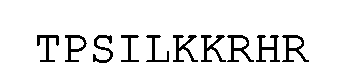
- The DNA according to claim 16, wherein said loss-of-function control region is located at a position closer to the C-terminal side than the amino acid residue W in the amino acid sequence ofwherein X is any amino acid, as shown in SEQ ID NO: 90.

- The DNA according to claim 16, wherein said loss-of-function control region is ranging from the amino acid sequence ofwherein X is any amino acid, as shown in SEQ ID NO: 91, to the C-terminal end.

- The DNA according to any of claims 15 to 19, which encodes a plant 3Rmyb protein wherein the loss-of-function mutation is attributable to the substitution, deletion (or disruption), and/or addition (or insertion) of at least one or more amino acids.
- The DNA according to any of claims 15 to 19, which encodes a plant 3Rmyb protein wherein the loss-of-function mutation is attributable to the deletion or disruption of at least one or more amino acids.
- A DNA coding for a dominant negative protein against the endogenous plant 3Rmyb protein.
- The DNA according to claim 22, which codes for a protein comprising the amino acid sequence of a plant 3Rmyb DNA-binding domain.
- A recombinant DNA construct or vector comprising a member selected from the group consisting of the following (i) to (iii):(i) a promoter transcribable in a plant cell,(ii) a DNA wherein the DNA according to any of claim 15 to 23 is linked to said promoter sequence in a sense or antisense direction, and(iii) a signal for transcription termination and polyadenylation of an RNA molecule.
- A transformed plant cell which harbors, or has been transformed with, a DNA, recombinant DNA construct or vector according to any of claims 15 to 24.
- The transformed plant cell according to claim 25, wherein the cell growth is modified, as compared to the corresponding wild type plant.
- A plant comprising or harboring the plant cell according to claim 25.
- A plant which is an off-spring, descendant or clone of the plant according to Claim 27.
- The plant according to claim 27 or 28, wherein the cell growth and/or development/differentiation is modified, as compared to the corresponding wild type plant.
- A DNA selected from the following (a) to (i) :(a) a DNA coding for a protein comprising an amino acid sequence of SEQ ID NO: 32,(b) a DNA comprising a nucleotide sequence of SEQ ID NO: 31,(c) a DNA coding for a protein which comprises an amino acid sequence with an amino acid substitution, deletion (or disruption) or addition (or insertion) of one or plural amino acids in the amino acid sequence of SEQ ID NO: 32, and is functionally equivalent to a protein with the SEQ ID NO: 32 amino acid sequence,(d) a DNA which hybridizes, under stringent conditions, with a DNA with the SEQ ID NO: 31 nucleotide sequence, and codes for a functionally equivalent protein to a protein with the SEQ ID NO: 32 amino acid sequence,(e) a DNA coding for a protein which comprises an amino acid sequence with the Aligned Score of 60 or more, as compared to the SEQ ID NO: 32 amino acid sequence, and is functionally equivalent to a protein with the SEQ ID NO: 32 amino acid sequence,(f) a DNA coding for antisense RNA which is complementary to a transcript of DNA selected from the above (a) to (e),(g) a DNA coding for ribozyme catalytic RNA which specifically cleaves or destroys a transcript of DNA selected from the above (a) to (e),(h) a DNA not only coding for RNA which suppresses the expression of DNA selected from the above (a) to (e), by co-suppression mechanisms when expressed in a plant cell, but also being at least 90% homologous to said DNA selected from the above (a) to (e), and(i) a DNA not only coding for RNA which suppresses the expression of DNA selected from the above (a) to (e) by RNA interference mechanisms when expressed in a plant cell, but also being identical over 20 or more contiguous nucleotides to said DNA selected from the above (a) to (e).
Applications Claiming Priority (3)
| Application Number | Priority Date | Filing Date | Title |
|---|---|---|---|
| JP2003066064 | 2003-03-12 | ||
| JP2003066064 | 2003-03-12 | ||
| PCT/JP2004/003228 WO2004081204A1 (en) | 2003-03-12 | 2004-03-11 | Plant and plant cell having been modified in cell multiplication and development/differentiation |
Publications (3)
| Publication Number | Publication Date |
|---|---|
| EP1602717A1 true EP1602717A1 (en) | 2005-12-07 |
| EP1602717A4 EP1602717A4 (en) | 2007-11-07 |
| EP1602717B1 EP1602717B1 (en) | 2014-12-31 |
Family
ID=32984525
Family Applications (1)
| Application Number | Title | Priority Date | Filing Date |
|---|---|---|---|
| EP04719645.6A Expired - Lifetime EP1602717B1 (en) | 2003-03-12 | 2004-03-11 | Plant and plant cell having been modified in cell multiplication and development/differentiation |
Country Status (13)
| Country | Link |
|---|---|
| US (1) | US7563947B2 (en) |
| EP (1) | EP1602717B1 (en) |
| CN (1) | CN1788078B (en) |
| AU (1) | AU2004219801B2 (en) |
| BR (1) | BRPI0408254A (en) |
| CA (1) | CA2518811C (en) |
| DK (1) | DK1602717T3 (en) |
| ES (1) | ES2531479T3 (en) |
| IL (1) | IL170789A (en) |
| NZ (1) | NZ542274A (en) |
| PT (1) | PT1602717E (en) |
| RU (1) | RU2349642C2 (en) |
| WO (1) | WO2004081204A1 (en) |
Families Citing this family (10)
| Publication number | Priority date | Publication date | Assignee | Title |
|---|---|---|---|---|
| CN103687951B (en) * | 2011-07-18 | 2019-08-02 | 德福根有限公司 | Plants that are resistant to insect pests |
| WO2013138354A1 (en) | 2012-03-13 | 2013-09-19 | Pioneer Hi-Bred International, Inc. | Genetic reduction of male fertility in plants |
| CN104703998B (en) | 2012-03-13 | 2020-08-21 | 先锋国际良种公司 | Genetic reduction of male fertility in plants |
| WO2013138289A2 (en) | 2012-03-13 | 2013-09-19 | Pioneer Hi-Bred International, Inc. | Genetic reduction of male fertility in plants |
| CN109982560A (en) | 2016-12-02 | 2019-07-05 | 先正达参股股份有限公司 | Gene editing and haploid induction simultaneously |
| US10519456B2 (en) | 2016-12-02 | 2019-12-31 | Syngenta Participations Ag | Simultaneous gene editing and haploid induction |
| EP3585171A4 (en) | 2017-02-24 | 2020-08-26 | Flagship Pioneering Innovations V, Inc. | COMPOSITIONS AND RELATED PROCEDURES FOR MODULATING ENDOSYMBIONS |
| CN106967670A (en) * | 2017-05-19 | 2017-07-21 | 江苏省农业科学院 | A kind of preparation method of birch-leaf pear protoplast |
| CN112391395A (en) * | 2020-12-03 | 2021-02-23 | 吉林省农业科学院 | Soybean sterile gene mutant, application and construction method of soybean sterile line |
| CN117050154B (en) * | 2023-10-10 | 2024-04-09 | 广东省农业科学院作物研究所 | Method for improving high temperature resistance, drought resistance and salt stress resistance of tobacco |
Family Cites Families (18)
| Publication number | Priority date | Publication date | Assignee | Title |
|---|---|---|---|---|
| US4816567A (en) | 1983-04-08 | 1989-03-28 | Genentech, Inc. | Recombinant immunoglobin preparations |
| US4943674A (en) | 1987-05-26 | 1990-07-24 | Calgene, Inc. | Fruit specific transcriptional factors |
| US4683195A (en) | 1986-01-30 | 1987-07-28 | Cetus Corporation | Process for amplifying, detecting, and/or-cloning nucleic acid sequences |
| DK162399C (en) | 1986-01-28 | 1992-03-23 | Danisco | PROCEDURE FOR EXPRESSION OF GENES IN BELGIUM PLANT CELLS, DNA FRAGMENT, RECOMBINED DNA FRAGMENT AND PLASMID FOR USE IN EXERCISING THE PROCEDURE |
| US4946778A (en) | 1987-09-21 | 1990-08-07 | Genex Corporation | Single polypeptide chain binding molecules |
| US5110732A (en) | 1989-03-14 | 1992-05-05 | The Rockefeller University | Selective gene expression in plants |
| US5097025A (en) | 1989-08-01 | 1992-03-17 | The Rockefeller University | Plant promoters |
| US5391725A (en) | 1989-12-08 | 1995-02-21 | New York University Medical Center | Organ-specific plant promoter sequences |
| US5618988A (en) | 1990-03-02 | 1997-04-08 | Amoco Corporation | Enhanced carotenoid accumulation in storage organs of genetically engineered plants |
| US5459252A (en) | 1991-01-31 | 1995-10-17 | North Carolina State University | Root specific gene promoter |
| US5824857A (en) | 1991-11-08 | 1998-10-20 | Washington University | Plant promoter |
| US5401836A (en) | 1992-07-16 | 1995-03-28 | Pioneer Hi-Bre International, Inc. | Brassica regulatory sequence for root-specific or root-abundant gene expression |
| US5495007A (en) | 1994-04-29 | 1996-02-27 | Thompson; Gary A. | Phloem-specific promoter |
| US5633363A (en) | 1994-06-03 | 1997-05-27 | Iowa State University, Research Foundation In | Root preferential promoter |
| US5646333A (en) | 1994-09-02 | 1997-07-08 | Drexel University | Plant promoter useful for directing the expression of foreign proteins to the plant epidermis |
| WO2003007699A2 (en) * | 2001-06-22 | 2003-01-30 | Syngenta Participations Ag | Transcription factors of cereals |
| WO2003000905A2 (en) | 2001-06-22 | 2003-01-03 | Syngenta Participations Ag | Identification and characterization of plant genes |
| AU2002313749A1 (en) | 2001-08-09 | 2003-02-24 | Mendel Biotechnology, Inc. | Biochemistry-related polynucleotides and polypeptides in plants |
-
2004
- 2004-03-11 PT PT47196456T patent/PT1602717E/en unknown
- 2004-03-11 DK DK04719645.6T patent/DK1602717T3/en active
- 2004-03-11 BR BRPI0408254-0A patent/BRPI0408254A/en not_active IP Right Cessation
- 2004-03-11 AU AU2004219801A patent/AU2004219801B2/en not_active Ceased
- 2004-03-11 NZ NZ542274A patent/NZ542274A/en not_active IP Right Cessation
- 2004-03-11 CA CA2518811A patent/CA2518811C/en not_active Expired - Fee Related
- 2004-03-11 US US10/548,484 patent/US7563947B2/en not_active Expired - Fee Related
- 2004-03-11 RU RU2005131582/13A patent/RU2349642C2/en not_active IP Right Cessation
- 2004-03-11 EP EP04719645.6A patent/EP1602717B1/en not_active Expired - Lifetime
- 2004-03-11 CN CN2004800128495A patent/CN1788078B/en not_active Expired - Fee Related
- 2004-03-11 WO PCT/JP2004/003228 patent/WO2004081204A1/en not_active Ceased
- 2004-03-11 ES ES04719645.6T patent/ES2531479T3/en not_active Expired - Lifetime
-
2005
- 2005-09-11 IL IL170789A patent/IL170789A/en not_active IP Right Cessation
Also Published As
| Publication number | Publication date |
|---|---|
| EP1602717B1 (en) | 2014-12-31 |
| CA2518811C (en) | 2013-09-17 |
| WO2004081204A1 (en) | 2004-09-23 |
| BRPI0408254A (en) | 2006-03-01 |
| US7563947B2 (en) | 2009-07-21 |
| CN1788078B (en) | 2010-05-12 |
| CA2518811A1 (en) | 2004-09-23 |
| RU2349642C2 (en) | 2009-03-20 |
| RU2005131582A (en) | 2006-05-10 |
| US20060107343A1 (en) | 2006-05-18 |
| CN1788078A (en) | 2006-06-14 |
| ES2531479T3 (en) | 2015-03-16 |
| PT1602717E (en) | 2015-02-13 |
| AU2004219801A1 (en) | 2004-09-23 |
| DK1602717T3 (en) | 2015-02-16 |
| NZ542274A (en) | 2009-08-28 |
| IL170789A (en) | 2010-12-30 |
| EP1602717A4 (en) | 2007-11-07 |
| AU2004219801B2 (en) | 2009-08-06 |
Similar Documents
| Publication | Publication Date | Title |
|---|---|---|
| US6307126B1 (en) | Nucleic acid encoding GAI gene of Arabidopsis thaliana | |
| EP1681349B1 (en) | Genetic control of plant growth and development | |
| US20200354735A1 (en) | Plants with increased seed size | |
| CN102144033A (en) | Plants having modified growth characteristics and a method for making the same | |
| AU2018253488B2 (en) | Methods of controlling seed size in plants | |
| CN102803291A (en) | Plants having enhanced yield-related traits and/or enhanced abiotic stress tolerance and a method for making the same | |
| Lago et al. | The Arabidopsis TFIID factor AtTAF6 controls pollen tube growth | |
| US7563947B2 (en) | Plant cells and plant bodies with modified cell growth, development and differentiation | |
| US7732663B2 (en) | Cyclin-dependent kinase inhibitors as plant growth regulators | |
| EP1016722A1 (en) | Method of dwarfing plants | |
| US8461414B2 (en) | Gene having endoreduplication promoting activity | |
| CA2372323A1 (en) | Methods for increasing plant cell proliferation by functionally inhibiting a plant cyclin inhibitor gene | |
| US6395892B1 (en) | Floral homeotic genes for manipulation of flowering in poplar and other plant species | |
| US20020152495A1 (en) | Plants having seedless fruit | |
| US20030018995A1 (en) | Plants with a modified flower and seed development | |
| JP2004236653A (en) | Control of formation of phragmoplast of plant and method for creating male sterile plant | |
| JP2004290193A (en) | Plant cell and plant body of which cell growth and generative differentiation are modified | |
| WO2001014519A2 (en) | Methods and compositions for regulating developmental identity | |
| Benedito | Flower development of Lilium longiflorum: Characterization of MADS-box transcription factors | |
| WO2007026310A2 (en) | Improved stress tolerance in plants |
Legal Events
| Date | Code | Title | Description |
|---|---|---|---|
| PUAI | Public reference made under article 153(3) epc to a published international application that has entered the european phase |
Free format text: ORIGINAL CODE: 0009012 |
|
| 17P | Request for examination filed |
Effective date: 20050927 |
|
| AK | Designated contracting states |
Kind code of ref document: A1 Designated state(s): AT BE BG CH CY CZ DE DK EE ES FI FR GB GR HU IE IT LI LU MC NL PL PT RO SE SI SK TR |
|
| AX | Request for extension of the european patent |
Extension state: AL LT LV MK |
|
| DAX | Request for extension of the european patent (deleted) | ||
| RIN1 | Information on inventor provided before grant (corrected) |
Inventor name: ARAKI, SATOSHI,ISHIHARA SANGYO KAISHA, LTD. Inventor name: ITO, MASAKI Inventor name: MACHIDA, YASUNORI Inventor name: KODAMA, HIROAKI |
|
| A4 | Supplementary search report drawn up and despatched |
Effective date: 20071010 |
|
| 17Q | First examination report despatched |
Effective date: 20081205 |
|
| REG | Reference to a national code |
Ref country code: DE Ref legal event code: R079 Ref document number: 602004046424 Country of ref document: DE Free format text: PREVIOUS MAIN CLASS: C12N0005040000 Ipc: A01H0005000000 |
|
| GRAP | Despatch of communication of intention to grant a patent |
Free format text: ORIGINAL CODE: EPIDOSNIGR1 |
|
| RIC1 | Information provided on ipc code assigned before grant |
Ipc: C12N 15/82 20060101ALI20140226BHEP Ipc: A01H 5/00 20060101AFI20140226BHEP |
|
| INTG | Intention to grant announced |
Effective date: 20140311 |
|
| GRAP | Despatch of communication of intention to grant a patent |
Free format text: ORIGINAL CODE: EPIDOSNIGR1 |
|
| INTG | Intention to grant announced |
Effective date: 20140718 |
|
| GRAS | Grant fee paid |
Free format text: ORIGINAL CODE: EPIDOSNIGR3 |
|
| GRAA | (expected) grant |
Free format text: ORIGINAL CODE: 0009210 |
|
| AK | Designated contracting states |
Kind code of ref document: B1 Designated state(s): AT BE BG CH CY CZ DE DK EE ES FI FR GB GR HU IE IT LI LU MC NL PL PT RO SE SI SK TR |
|
| REG | Reference to a national code |
Ref country code: CH Ref legal event code: EP Ref country code: GB Ref legal event code: FG4D |
|
| REG | Reference to a national code |
Ref country code: IE Ref legal event code: FG4D |
|
| REG | Reference to a national code |
Ref country code: PT Ref legal event code: SC4A Free format text: AVAILABILITY OF NATIONAL TRANSLATION Effective date: 20150209 |
|
| REG | Reference to a national code |
Ref country code: AT Ref legal event code: REF Ref document number: 703784 Country of ref document: AT Kind code of ref document: T Effective date: 20150215 |
|
| REG | Reference to a national code |
Ref country code: DK Ref legal event code: T3 Effective date: 20150209 |
|
| REG | Reference to a national code |
Ref country code: DE Ref legal event code: R096 Ref document number: 602004046424 Country of ref document: DE Effective date: 20150219 |
|
| REG | Reference to a national code |
Ref country code: NL Ref legal event code: T3 |
|
| REG | Reference to a national code |
Ref country code: ES Ref legal event code: FG2A Ref document number: 2531479 Country of ref document: ES Kind code of ref document: T3 Effective date: 20150316 |
|
| PG25 | Lapsed in a contracting state [announced via postgrant information from national office to epo] |
Ref country code: FI Free format text: LAPSE BECAUSE OF FAILURE TO SUBMIT A TRANSLATION OF THE DESCRIPTION OR TO PAY THE FEE WITHIN THE PRESCRIBED TIME-LIMIT Effective date: 20141231 |
|
| PG25 | Lapsed in a contracting state [announced via postgrant information from national office to epo] |
Ref country code: SE Free format text: LAPSE BECAUSE OF FAILURE TO SUBMIT A TRANSLATION OF THE DESCRIPTION OR TO PAY THE FEE WITHIN THE PRESCRIBED TIME-LIMIT Effective date: 20141231 Ref country code: GR Free format text: LAPSE BECAUSE OF FAILURE TO SUBMIT A TRANSLATION OF THE DESCRIPTION OR TO PAY THE FEE WITHIN THE PRESCRIBED TIME-LIMIT Effective date: 20150401 |
|
| REG | Reference to a national code |
Ref country code: AT Ref legal event code: MK05 Ref document number: 703784 Country of ref document: AT Kind code of ref document: T Effective date: 20141231 |
|
| PG25 | Lapsed in a contracting state [announced via postgrant information from national office to epo] |
Ref country code: RO Free format text: LAPSE BECAUSE OF FAILURE TO SUBMIT A TRANSLATION OF THE DESCRIPTION OR TO PAY THE FEE WITHIN THE PRESCRIBED TIME-LIMIT Effective date: 20141231 Ref country code: CZ Free format text: LAPSE BECAUSE OF FAILURE TO SUBMIT A TRANSLATION OF THE DESCRIPTION OR TO PAY THE FEE WITHIN THE PRESCRIBED TIME-LIMIT Effective date: 20141231 Ref country code: SK Free format text: LAPSE BECAUSE OF FAILURE TO SUBMIT A TRANSLATION OF THE DESCRIPTION OR TO PAY THE FEE WITHIN THE PRESCRIBED TIME-LIMIT Effective date: 20141231 |
|
| PG25 | Lapsed in a contracting state [announced via postgrant information from national office to epo] |
Ref country code: AT Free format text: LAPSE BECAUSE OF FAILURE TO SUBMIT A TRANSLATION OF THE DESCRIPTION OR TO PAY THE FEE WITHIN THE PRESCRIBED TIME-LIMIT Effective date: 20141231 Ref country code: PL Free format text: LAPSE BECAUSE OF FAILURE TO SUBMIT A TRANSLATION OF THE DESCRIPTION OR TO PAY THE FEE WITHIN THE PRESCRIBED TIME-LIMIT Effective date: 20141231 |
|
| REG | Reference to a national code |
Ref country code: DE Ref legal event code: R097 Ref document number: 602004046424 Country of ref document: DE |
|
| PG25 | Lapsed in a contracting state [announced via postgrant information from national office to epo] |
Ref country code: EE Free format text: LAPSE BECAUSE OF FAILURE TO SUBMIT A TRANSLATION OF THE DESCRIPTION OR TO PAY THE FEE WITHIN THE PRESCRIBED TIME-LIMIT Effective date: 20141231 Ref country code: LU Free format text: LAPSE BECAUSE OF FAILURE TO SUBMIT A TRANSLATION OF THE DESCRIPTION OR TO PAY THE FEE WITHIN THE PRESCRIBED TIME-LIMIT Effective date: 20150311 Ref country code: MC Free format text: LAPSE BECAUSE OF FAILURE TO SUBMIT A TRANSLATION OF THE DESCRIPTION OR TO PAY THE FEE WITHIN THE PRESCRIBED TIME-LIMIT Effective date: 20141231 |
|
| REG | Reference to a national code |
Ref country code: CH Ref legal event code: PL |
|
| PLBE | No opposition filed within time limit |
Free format text: ORIGINAL CODE: 0009261 |
|
| STAA | Information on the status of an ep patent application or granted ep patent |
Free format text: STATUS: NO OPPOSITION FILED WITHIN TIME LIMIT |
|
| 26N | No opposition filed |
Effective date: 20151001 |
|
| REG | Reference to a national code |
Ref country code: IE Ref legal event code: MM4A |
|
| PG25 | Lapsed in a contracting state [announced via postgrant information from national office to epo] |
Ref country code: CH Free format text: LAPSE BECAUSE OF NON-PAYMENT OF DUE FEES Effective date: 20150331 Ref country code: LI Free format text: LAPSE BECAUSE OF NON-PAYMENT OF DUE FEES Effective date: 20150331 Ref country code: IE Free format text: LAPSE BECAUSE OF NON-PAYMENT OF DUE FEES Effective date: 20150311 |
|
| REG | Reference to a national code |
Ref country code: FR Ref legal event code: PLFP Year of fee payment: 13 |
|
| PG25 | Lapsed in a contracting state [announced via postgrant information from national office to epo] |
Ref country code: SI Free format text: LAPSE BECAUSE OF FAILURE TO SUBMIT A TRANSLATION OF THE DESCRIPTION OR TO PAY THE FEE WITHIN THE PRESCRIBED TIME-LIMIT Effective date: 20141231 |
|
| REG | Reference to a national code |
Ref country code: FR Ref legal event code: PLFP Year of fee payment: 14 |
|
| PGFP | Annual fee paid to national office [announced via postgrant information from national office to epo] |
Ref country code: FR Payment date: 20170213 Year of fee payment: 14 Ref country code: DE Payment date: 20170307 Year of fee payment: 14 |
|
| PG25 | Lapsed in a contracting state [announced via postgrant information from national office to epo] |
Ref country code: BG Free format text: LAPSE BECAUSE OF FAILURE TO SUBMIT A TRANSLATION OF THE DESCRIPTION OR TO PAY THE FEE WITHIN THE PRESCRIBED TIME-LIMIT Effective date: 20141231 Ref country code: HU Free format text: LAPSE BECAUSE OF FAILURE TO SUBMIT A TRANSLATION OF THE DESCRIPTION OR TO PAY THE FEE WITHIN THE PRESCRIBED TIME-LIMIT; INVALID AB INITIO Effective date: 20040311 |
|
| PGFP | Annual fee paid to national office [announced via postgrant information from national office to epo] |
Ref country code: NL Payment date: 20170210 Year of fee payment: 14 Ref country code: GB Payment date: 20170308 Year of fee payment: 14 Ref country code: BE Payment date: 20170213 Year of fee payment: 14 Ref country code: PT Payment date: 20170308 Year of fee payment: 14 Ref country code: DK Payment date: 20170310 Year of fee payment: 14 |
|
| PG25 | Lapsed in a contracting state [announced via postgrant information from national office to epo] |
Ref country code: CY Free format text: LAPSE BECAUSE OF FAILURE TO SUBMIT A TRANSLATION OF THE DESCRIPTION OR TO PAY THE FEE WITHIN THE PRESCRIBED TIME-LIMIT Effective date: 20141231 |
|
| PGFP | Annual fee paid to national office [announced via postgrant information from national office to epo] |
Ref country code: ES Payment date: 20170214 Year of fee payment: 14 Ref country code: IT Payment date: 20170320 Year of fee payment: 14 |
|
| PG25 | Lapsed in a contracting state [announced via postgrant information from national office to epo] |
Ref country code: TR Free format text: LAPSE BECAUSE OF FAILURE TO SUBMIT A TRANSLATION OF THE DESCRIPTION OR TO PAY THE FEE WITHIN THE PRESCRIBED TIME-LIMIT Effective date: 20141231 |
|
| REG | Reference to a national code |
Ref country code: DE Ref legal event code: R119 Ref document number: 602004046424 Country of ref document: DE |
|
| REG | Reference to a national code |
Ref country code: DK Ref legal event code: EBP Effective date: 20180331 |
|
| PG25 | Lapsed in a contracting state [announced via postgrant information from national office to epo] |
Ref country code: PT Free format text: LAPSE BECAUSE OF NON-PAYMENT OF DUE FEES Effective date: 20180911 |
|
| REG | Reference to a national code |
Ref country code: NL Ref legal event code: MM Effective date: 20180401 |
|
| GBPC | Gb: european patent ceased through non-payment of renewal fee |
Effective date: 20180311 |
|
| REG | Reference to a national code |
Ref country code: BE Ref legal event code: FP Effective date: 20150106 Ref country code: BE Ref legal event code: MM Effective date: 20180331 |
|
| PG25 | Lapsed in a contracting state [announced via postgrant information from national office to epo] |
Ref country code: NL Free format text: LAPSE BECAUSE OF NON-PAYMENT OF DUE FEES Effective date: 20180401 |
|
| PG25 | Lapsed in a contracting state [announced via postgrant information from national office to epo] |
Ref country code: DE Free format text: LAPSE BECAUSE OF NON-PAYMENT OF DUE FEES Effective date: 20181002 |
|
| PG25 | Lapsed in a contracting state [announced via postgrant information from national office to epo] |
Ref country code: IT Free format text: LAPSE BECAUSE OF NON-PAYMENT OF DUE FEES Effective date: 20180311 Ref country code: BE Free format text: LAPSE BECAUSE OF NON-PAYMENT OF DUE FEES Effective date: 20180331 Ref country code: GB Free format text: LAPSE BECAUSE OF NON-PAYMENT OF DUE FEES Effective date: 20180311 |
|
| PG25 | Lapsed in a contracting state [announced via postgrant information from national office to epo] |
Ref country code: FR Free format text: LAPSE BECAUSE OF NON-PAYMENT OF DUE FEES Effective date: 20180331 |
|
| PG25 | Lapsed in a contracting state [announced via postgrant information from national office to epo] |
Ref country code: DK Free format text: LAPSE BECAUSE OF NON-PAYMENT OF DUE FEES Effective date: 20180331 |
|
| REG | Reference to a national code |
Ref country code: ES Ref legal event code: FD2A Effective date: 20190904 |
|
| PG25 | Lapsed in a contracting state [announced via postgrant information from national office to epo] |
Ref country code: ES Free format text: LAPSE BECAUSE OF NON-PAYMENT OF DUE FEES Effective date: 20180312 |