EP1600857A2 - Thread rendezvous for read-only code in an object-oriented computing enviroment - Google Patents
Thread rendezvous for read-only code in an object-oriented computing enviroment Download PDFInfo
- Publication number
- EP1600857A2 EP1600857A2 EP05252987A EP05252987A EP1600857A2 EP 1600857 A2 EP1600857 A2 EP 1600857A2 EP 05252987 A EP05252987 A EP 05252987A EP 05252987 A EP05252987 A EP 05252987A EP 1600857 A2 EP1600857 A2 EP 1600857A2
- Authority
- EP
- European Patent Office
- Prior art keywords
- instruction
- recited
- trap
- address
- execution
- Prior art date
- Legal status (The legal status is an assumption and is not a legal conclusion. Google has not performed a legal analysis and makes no representation as to the accuracy of the status listed.)
- Granted
Links
Images


Classifications
-
- G—PHYSICS
- G06—COMPUTING OR CALCULATING; COUNTING
- G06F—ELECTRIC DIGITAL DATA PROCESSING
- G06F9/00—Arrangements for program control, e.g. control units
- G06F9/06—Arrangements for program control, e.g. control units using stored programs, i.e. using an internal store of processing equipment to receive or retain programs
- G06F9/30—Arrangements for executing machine instructions, e.g. instruction decode
- G06F9/30003—Arrangements for executing specific machine instructions
- G06F9/30076—Arrangements for executing specific machine instructions to perform miscellaneous control operations, e.g. NOP
- G06F9/3009—Thread control instructions
-
- G—PHYSICS
- G06—COMPUTING OR CALCULATING; COUNTING
- G06F—ELECTRIC DIGITAL DATA PROCESSING
- G06F8/00—Arrangements for software engineering
- G06F8/40—Transformation of program code
- G06F8/41—Compilation
- G06F8/45—Exploiting coarse grain parallelism in compilation, i.e. parallelism between groups of instructions
- G06F8/458—Synchronisation, e.g. post-wait, barriers, locks
-
- G—PHYSICS
- G06—COMPUTING OR CALCULATING; COUNTING
- G06F—ELECTRIC DIGITAL DATA PROCESSING
- G06F9/00—Arrangements for program control, e.g. control units
- G06F9/06—Arrangements for program control, e.g. control units using stored programs, i.e. using an internal store of processing equipment to receive or retain programs
- G06F9/30—Arrangements for executing machine instructions, e.g. instruction decode
- G06F9/30003—Arrangements for executing specific machine instructions
- G06F9/3004—Arrangements for executing specific machine instructions to perform operations on memory
- G06F9/30043—LOAD or STORE instructions; Clear instruction
-
- G—PHYSICS
- G06—COMPUTING OR CALCULATING; COUNTING
- G06F—ELECTRIC DIGITAL DATA PROCESSING
- G06F9/00—Arrangements for program control, e.g. control units
- G06F9/06—Arrangements for program control, e.g. control units using stored programs, i.e. using an internal store of processing equipment to receive or retain programs
- G06F9/30—Arrangements for executing machine instructions, e.g. instruction decode
- G06F9/38—Concurrent instruction execution, e.g. pipeline or look ahead
- G06F9/3836—Instruction issuing, e.g. dynamic instruction scheduling or out of order instruction execution
- G06F9/3851—Instruction issuing, e.g. dynamic instruction scheduling or out of order instruction execution from multiple instruction streams, e.g. multistreaming
-
- G—PHYSICS
- G06—COMPUTING OR CALCULATING; COUNTING
- G06F—ELECTRIC DIGITAL DATA PROCESSING
- G06F9/00—Arrangements for program control, e.g. control units
- G06F9/06—Arrangements for program control, e.g. control units using stored programs, i.e. using an internal store of processing equipment to receive or retain programs
- G06F9/46—Multiprogramming arrangements
- G06F9/52—Program synchronisation; Mutual exclusion, e.g. by means of semaphores
-
- G—PHYSICS
- G06—COMPUTING OR CALCULATING; COUNTING
- G06F—ELECTRIC DIGITAL DATA PROCESSING
- G06F9/00—Arrangements for program control, e.g. control units
- G06F9/06—Arrangements for program control, e.g. control units using stored programs, i.e. using an internal store of processing equipment to receive or retain programs
- G06F9/46—Multiprogramming arrangements
- G06F9/52—Program synchronisation; Mutual exclusion, e.g. by means of semaphores
- G06F9/522—Barrier synchronisation
-
- G—PHYSICS
- G06—COMPUTING OR CALCULATING; COUNTING
- G06F—ELECTRIC DIGITAL DATA PROCESSING
- G06F12/00—Accessing, addressing or allocating within memory systems or architectures
- G06F12/02—Addressing or allocation; Relocation
- G06F12/0223—User address space allocation, e.g. contiguous or non contiguous base addressing
- G06F12/023—Free address space management
- G06F12/0253—Garbage collection, i.e. reclamation of unreferenced memory
Definitions
- the present invention relates generally to computing systems, and more particularly, to techniques for assuring thread rendezvous in an object-oriented computing environment.
- each thread of execution is suspended at a safe-point where all references (e.g., pointer types) used by the thread are known ("precisely known"). For example, all the pointers that reference an object should be known in case there is a need to move the object during garbage collection where objects may be moved in memory.
- thread rendezvous at a safe-point is needed for synchronization of all threads. As such, thread rendezvous is crucial to various applications (e.g., modern garbage collection applications).
- polling is used to achieve thread rendezvous where a polling code (or instruction) is generated at a number of critical points in the code. Every time a polling code (or instruction) is executed by a thread of execution, a determination is made as to whether there is a need (or a request pending) for all threads of execution to rendezvous (i.e., suspend execution until all other threads have been suspended). If there is a request for thread rendezvous, the thread is suspended at the point in the code where the polling was executed. The thread is suspended until all other threads have also suspended their execution (i.e., threads rendezvous).
- polling can effectively be used to achieve thread rendezvous, polling requires a significant amount of computing resources.
- the significant amount of computing resources is needed because, among other things, each polling code (or instruction) requires more than four (4) or five (5) Central Processing Unit (CPU) cycles.
- code patching dynamically writes (or patches code) with an "unconditional stop” instruction.
- the "unconditional stop” instruction is dynamically written (or patched) in a number of critical points in the code where it would be polled, but unlike polling, the "unconditional stop” instruction is “patched” only when there is a request for thread rendezvous. In other words, under normal circumstances, there is no “unconditional stop” instruction.
- the "unconditional stop” instruction is dynamically written (or patched) only when there is a need for polling. The execution of each thread is suspended as soon as the "unconditional stop” instruction is encountered.
- polling is relatively more efficient than polling, it can not be used, among other things, for “read-only” code.
- Read-only code requires that the code remain unchanged.
- patternching requires modifying the code.
- polling techniques are conventionally used to achieve thread rendezvous when code is implemented as “read-only.”
- polling is not as efficient as “code patching.”
- read-only code has many applications. Modern computing systems (e.g., virtual machines) require some code to be implemented as “read-only” code.
- "read-only” code is used in computing systems (e.g., virtual machines) that perform ahead-of-time compilation, or systems that use process cloning to implement a variety of functions (e.g., application startup).
- "Code patching" cannot be used for read-only code and polling uses a significant amount of resources. Thus, there is a need for more efficient techniques that can be used to assure thread rendezvous for "read-only” code.
- the invention relates to techniques for assuring thread rendezvous in an object-oriented computing environment.
- a Light-weight, Yet Trappable On Demand (LYTOD) instruction can be generated for code that is executed by one or more threads.
- a LYTOD instruction is generated at critical points of the code in order to assure safe-point thread rendezvous. Thread rendezvous is achieved when each thread of execution is suspended at a safe point (i.e., a point where the position of all pointers are known).
- the LYTOD is a lightweight instruction that takes less CPU cycles to execute than a conventional polling implementation which takes four (4) or five (5) CPU cycles for each polling instruction to execute.
- the LYTOD can change its behavior from a lightweight instruction to an instruction that causes a trap when executed.
- the LYTOD is a lightweight instruction that does not cause a trap or any other undesired side effects, yet it can be made to cause a trap on demand.
- the trap can invoke a trap-handler which in turn causes all threads of execution to rendezvous by changing the context of the execution to a rendezvous code. After execution of all threads has been suspended, the behavior of the LYTOD can be changed to be a lightweight instruction.
- the LYTOD is implemented as a read-from-a memory-address instruction that operates to load a register with a content of a valid memory location. Initially, the memory address location has a valid content so that the read-from-a memory-address instruction behaves as a light-weight instruction that does not cause a trap or any undesired side effects. When there is a need for thread rendezvous, the behavior of read-from-a memory-address instruction is altered so that it attempts to read from an invalid memory address (e.g., zero (0) in Unix operating systems). As a result, the read-from-a memory-address instruction causes a trap which invokes a trap-handler.
- an invalid memory address e.g., zero (0) in Unix operating systems
- rendezvous code which assures suspension of all threads.
- the rendezvous code can also restore the behavior of the read-from-a memory-address instruction to a light-weight instruction that does not cause a trap or any undesired side effects.
- the invention pertains to techniques and apparatus for assuring thread rendezvous for a plurality of threads executing in a computing system. As will be described below, techniques can be used to assure thread rendezvous for read-only code and in a manner that is more efficient than polling techniques.
- a Light-weight, Yet Trappable On Demand (LYTOD) instruction can be generated for code that is executed by one or more threads.
- a LYTOD instruction is generated at critical points of the code in order to assure safe-point thread rendezvous. Thread rendezvous is achieved when each thread of execution is suspended at a safe point (i.e., a point where the position of all pointers are known).
- the LYTOD is a lightweight instruction that takes less CPU cycles to execute than a conventional polling implementation which takes four (4) or five (5) CPU cycles for each polling instruction to execute.
- the LYTOD can change its behavior from a lightweight instruction to an instruction that causes a trap when executed.
- the LYTOD is a lightweight instruction that does not cause a trap or any other undesired side effects, yet it can be made to cause a trap on demand.
- the trap can invoke a trap-handler which in turn causes all threads of execution to rendezvous by changing the context of the execution to a rendezvous code. After execution of all threads has been suspended, the behavior of the LYTOD can be changed to be a lightweight instruction.
- the LYTOD is implemented as a read-from-a memory-address instruction that operates to load a register with a content of a valid memory location. Initially, the memory address location has a valid content so that the read-from-a memory-address instruction behaves as a light-weight instruction that does not cause a trap or any undesired side effects.
- the behavior of the read-from-a memory-address instruction is altered so that it attempts to read from an invalid memory address (e.g., zero (0) in Unix operating systems).
- the read-from-a memory-address instruction causes a trap which invokes a trap-handler.
- the context of the execution is changed to rendezvous code which assures suspension of all threads.
- the rendezvous code can also restore the read-from-a memory-address instruction to a light-weight instruction that does not cause a trap or any undesired side effects.
- Fig. 1A depicts a computing environment 100 in accordance with one embodiment of the invention.
- a code generator 102 generates a code portion 104 based on an input code 112 received as input.
- the generated code portion 104 includes a plurality of Light-weight, Yet Trappable On Demand (LYTOD) instructions 106, 108 and 110.
- LYTOD Light-weight, Yet Trappable On Demand
- the LYTOD instructions 106, 108 and 110 can behave in different ways.
- the LYTOD instructions 106, 108 and 110 may be referred to as having two different execution states, namely a light-weight execution state (or state L) and a trapping execution state (or state T).
- LYTOD instructions 106, 108 and 110 can be changed on demand. This means that LYTOD instructions 106, 108 and 110 may be changed from the light-weight execution state (or L state) to the trapping execution state (or T state) or vice versa.
- the code generator 102 generates a single type of LYTOD instruction, yet the behavior of the LYTOD instruction can be changed on demand. As such, unlike code patching strategy, there is no need to change (e.g., write over) the LYTOD instructions 106, 108 and 110. In other words, the behavior of the LYTOD instructions 106, 108 and 110 can effectively be changed without having to modify (e.g., write over) them.
- the LYTOD instructions 106, 108 and 110 are generated at critical points or safe-points where execution of a thread can be or should be suspended. This assures that all threads can rendezvous at a safe-point.
- Critical points of the code with respect to safe thread rendezvous include, for example, allocation points, method invocations, and backward branches.
- a LYTOD instruction can be generated anywhere in the program that would conventionally be polled using a polling technique, or anywhere in the code that a conventional patching technique would operate to write over instructions.
- the code generator 102 generates the LYTOD instructions 106, 108 and 110 in the light-weight state (or state L). This means that the LYTOD instructions 106, 108 and 110 in the light-weight state (or state L) take relatively few CPU cycles to execute. Typically, less CPU cycles are needed to execute a LYTOD instruction than polling would require (i.e., four (4) or five (5)). As will be illustrated blow, only one CPU cycle is needed to execute the 108 and 110 in the light-weight state (or L sate) in accordance with one embodiment of the invention.
- the LYTOD instructions 106, 108 and 110 may be implemented using instruction sets that are readily available.
- the LYTOD instructions 106, 108 and 110 do not cause any adverse side effects (i.e., causing a fault, trap, error, etc.).
- the code generator 102 can, for example, be a dynamic compiler that generates code at runtime or ahead of time compiler that generates code prior to execution time.
- the code portion 104 may, for example, correspond to a compiled code that is generated by the code generator 102 based on a code portion 112 received as input.
- the input code portion 112 can, for example, be a set of Java BytecodesTM which have been previously compiled from another code portion (not shown) written in JavaTM programming language.
- the code generator 102 can, for example, be implemented in a virtual machine.
- the code generator 102 initially generates LYTOD instructions 106, 108 and 110 which have the light-weight property when executed (i.e., instructions are in the L execution state). Moreover, these LYTOD instructions 106, 108 and 110 instructions can be made trappable on demand. When an instruction is made trappable, the instruction causes a trap which typically invokes a trap-handler.
- Fig. 1B depicts a computing environment 150 which includes a runtime system 152, execution threads 154 and 156, and a trap handler 158.
- the execution threads 154 and 156 correspond to code portions that include a plurality of LYTOD instructions.
- These LYTOD instructions have been generated by the code generator 102 of Fig. 1A.
- the same LYTOD instructions 106, 108 and 110 generated by the code generator are depicted in Fig. 1B in a trapping execution state (or T state) instead of the light-weight state (or L state) depicted in Fig. 1A.
- T state the trapping execution state
- L state light-weight state
- a trap is caused.
- a trap-handler 158 is invoked.
- the trap-handler 158 is invoked through the runtime system 152.
- the execution of a thread is suspended at the point where the LYTOD instruction was executed in that thread.
- the trap handler can be used to cause a suspended thread to remain suspended until all threads of execution have been suspended at a safe point.
- the LYTOD instructions 106, 108 and 110 can be changed back to the light-weight (L state).
- the state of the LYTOD instructions 106, 108 and 110 can be changed by the runtime system 152 on demand. This switch can be made, for example, when an input or event 159 is received from an application program 160.
- the runtime system 152 can change the state of the LYTOD instructions 106, 108 and 110 from the execution state L to execution state T on behalf of an application program 160.
- an application e.g., garbage collector
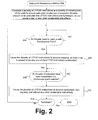
- a safe-point rendezvous method 200 for causing all execution threads to suspend execution and rendezvous at a safe point is depicted.
- LYTOD Light-weight, yet Trappable On Demand
- the Light-weight, yet Trappable On Demand (LYTOD) are generated at the critical points to ensure safe-point rendezvous of execution threads.
- these critical points can, for example, be the allocation points, method invocations, and backward branches.
- any point in the code can be considered to be a critical point if there is no need to generate a Trappable On Demand (LYTOD) instruction in order to ensure that the thread encounter the LYTOD instruction and suspend.
- LYTOD instructions are initially generated so that when executed they behave as a light-weight instruction. These LYTOD may be referred to as LYTOD instructions in a light-weight (L) state. It should also be noted that the LYTOD instructions when initially generated do not cause a trap, or any undesirable side effects when initially generated 202.
- the LYTOD instructions are generated 202 as light-weight instructions (or in the light-weight state)
- an application e.g., garbage collector
- a request can be received when there is a need to perform a garbage collection cycle as a result of an unsuccessful memory allocation attempt.
- the determination 204 can be made based on a need to have all threads meet at a safe-point for synchronization or any other purpose.
- the behavior of the LYTOD instructions are changed. More particularly, the plurality of LYTOD instructions are caused 206 to become trapping instructions (i.e., switched to a trapping state). This means that whenever a LYTOD instruction is executed, a trap is caused and the execution of that thread is suspended. The execution of the thread is suspended until all execution threads have suspended at a safe-point (i.e., meet at the rendezvous point).
- a determination 208 is made as to whether all threads of execution have been suspended (i.e., rendezvous point has been reached by all threads). By way of example, this determination may be made based on a thread-count to determine whether all threads of execution have been suspended.
- the behavior of the plurality of LYTOD instructions is changed back to its original form. More particularly, the LYTOD instructions are caused 210 to become lightweight, non-trapping, and without any other undesirable side effects.
- the safe-point rendezvous method 200 proceeds to operation 204 where it is determined whether all threads should rendezvous at a safe-point.
- the safe-point rendezvous method 200 ends when it is determined 212 that the safe-point rendezvous method 200 should end (e.g., when the system shuts down or there is no need or desire to use the rendezvous point method 200).
- Fig. 3A illustrates a LYTOD instruction which can be implemented using operations that are readily available in many computing systems in accordance with one embodiment of the invention.
- a LYTOD instruction 300 can be implemented as a "read-from-memory" instruction 300 which operates to load a Register-X 302 with the content of an ADDR-A memory address.
- the Register-X 302 will have the value of the content of the ADDR-A memory address.
- memory address (ADDR-A) is a valid memory address. This means that LYTOD instruction 300 does not cause a trap or any other undesirable side effects.
- memory address (ADDR-A) may be a reserved valid address that will not be used for any other purpose.
- the LYTOD instruction 300 is a relatively light-weight instruction which typically requires only one CPU cycle to execute. As will also be appreciated, there is no need for flushing and/or waiting for the LYTOD instruction 300 to complete because the result of the LYTOD instruction 300 is not really used. In addition, it is likely that the LYTOD instruction 300 will be cached because it will be executed frequently and/or it may be possible to explicitly cache the LYTOD instruction 300. As such, the LYTOD instruction 300 can be implemented using instructions (e.g., read from memory) that are readily available in many computing environments.
- the LYTOD instruction 300 can behave as a light-weight instruction that is executed efficiently without causing a trap or any other undesirable side effects. However, the same LYTOD instruction 300 can become a trapping instruction by making it attempt to read from an invalid address. As illustrated in Fig. 3A, Rgc can be assigned an invalid address which causes a trap when the LYTOD instruction 300 is executed.
- Rgc can be assigned the zero (0) value which will cause a segmentation fault error.
- a trap handler or a signal-handler
- a Seg-v signal-handler is invoked in the Unix operating system environment.
- a trap handler can be used to switch the context of the execution to a rendezvous code 306.
- the rendezvous code 306 can suspend the thread until all threads have been suspended (i.e., safe-point rendezvous has been accomplished). Thereafter, the context of the execution can be restored by the rendezvous code 306. In other words, the suspended thread may resume execution after rendezvousing at the rendezvous code 306.
- the rendezvous code 306 can restore Rgc to ADDR-A again.
- the LYTOD instruction 300 can again behave as a light-weight instruction that is executed efficiently without causing a trap or any other undesirable side effects.
- Rgc can be set to invalid address again (e.g., zero(0) in Unix operating environment)
- a trap-handler can be used to switch the context of the execution for each thread to rendezvous code 306.
- Various techniques may be used to accomplish this context switching. Some of these techniques are discussed below.
- Rgc is implemented as a global register which is viable to all threads. This means that Rgc can easily be changed, for example, by the runtime system to a constant invalid address (e.g., address Zero(0)) in Unix operating environment.
- the trap-handler 305 may receive the Program Counter (PC) as an argument to change the context of the execution to the rendezvous point.
- PC Program Counter
- the trap-handler 305 may be implemented as Seg-v Signal-Handler responsive to a UNIX Segmentation Fault received as a result of attempting to read from an invalid address.
- the LYTOD instruction 300 can be implemented using instructions and system capabilities that are readily available in many computing environments (e.g., Unix environment).
- the trap handler 305 can change the context of execution to the rendezvous point (rendezvous code 306) when Rgc is implemented as a global register.
- the rendezvous code 306 can easily access the global register to restore the valid value into the global register when all threads have rendezvoused.
- Rgc is implemented as a local register.
- the context (or a copy) of the Rgc can be changed for each thread.
- the context (or a copy) of Rgc for each thread can be set to an invalid or valid value on demand.
- This can be achieved, for example, by direct access through a kernel or a thread library which may be available or provided as a special operating system function.
- the LYTOD instruction 300 can be implemented using instructions and system capabilities that are readily available in many computing environments.
- a user-defined signal Sig-user [1-4]
- Sig-user [1-4] can be sent to each thread when there is a need for thread rendezvous. This causes a Sig-user signal-handler to be invoked.
- the Sig-user signal-handler is a user-defined signal-handler.
- the Sig-user signal-handler may be used to receive the context of the execution for each thread and change the context of execution to the rendezvous point.
- the trap-handler 305 can behave as a user-defined signal-handler.
- trap-handler 305 can be implemented to change the context of execution to the rendezvous point (rendezvous code 306) when Rgc is implemented as a local register.
- the rendezvous code 306 can restore the value of Register-X when all threads have rendezvoused at a safe point.
- Fig. 3B illustrates a LYTOD instruction 320 in accordance with another embodiment of the invention.
- the LYTOD instruction 320 is implemented such that the content of the memory address ADDR-A is initially equal to the ADDR-A itself.
- memory address ADDR-A is equal to Ox4,000
- the content of ADDR-A is initially set to be Ox4,000. Accordingly, this embodiment requires only one register to be reserved.
- a trap can be caused (or a signal can be thrown) to invoke a trap handler which is used to switch the context of the execution for each thread to rendezvous code 306 in accordance with various techniques.
- Fig. 3C illustrates a LYTOD instruction 330 in accordance with another embodiment of the invention.
- the LYTOD instruction 330 is a read-from-memory instruction.
- ADDR-A is implemented as a page 332.
- page 332 is a dedicated page.
- page 332 can be page protected/unprotected against read instructions.
- the protection of the page can be initially set to allow the LYTOD instruction 330 to execute.
- the page protection can be modified to disallow any reads from page 332.
- a trap (or signal) is caused and a trap (or signal) handler can be used to change the context of the execution to the rendezvous code.
- the invention contemplates many other embodiments of the LYTOD instruction 330 as possible.
- another light-weight instruction e.g., a math instruction
- a trap e.g., division by zero
- the LYTOD instruction 330 can be made to cause a trap to invoke a trap (or signal) handler that is, in turn, used to change the context of the execution to the rendezvous code.
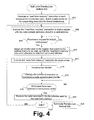
- Fig. 4 illustrates safe-point rendezvous method 400 for causing all execution threads to suspend execution and rendezvous at a safe point in accordance with another embodiment of the invention.
- a "read from memory" instruction at each critical point of the compiled code is generated 402.
- the compiled code can, for example, be generated by a compiler (e.g., dynamic compiler, ahead of time compiler).
- the "read from memory” instruction is generated at safe points of execution for suspending the thread.
- the "read from memory” instruction is generated at a point that is considered to be critical to assuring safe thread rendezvous (e.g., allocation points, function calls, backward branches).
- the "read from memory” instruction is a light-weight instruction.
- the instructions are executed 404.
- a designated register is loaded with the content of an address. It should be noted that both the address and its content are assigned a valid value.
- an invalid value is assigned 410 to the register that points to the address that is to be read, so that the "read form memory” instruction will attempt to read from an invalid address.
- a trap is caused because the "read from memory” instruction attempts to assign an invalid address (e.g., zero in Unix operating environment) to the assigned register.
- the trap caused 412 by execution of the "read from memory” instruction invokes 414 a trap handler.
- the context of the execution is changed 416 to a rendezvous code using the trap handler.
- the valid value is restored 420 back into the address used by the "read from memory” instruction.
- the "read from memory” instruction is executed 404 without causing a trap and the rendezvous method 400 proceeds in the same manner as discussed above.
- the rendezvous method 400 ends when it is determined that it should be terminated.
- the rendezvous method 400 can end, for example, when execution of the program has ended or there is no desire to allow causing all execution threads to suspend execution and to rendezvous at a safe point.
- one embodiment comprises apparatus for assuring thread rendezvous for a plurality of threads executing in a computer system, the apparatus comprising: means for generating an instruction at a plurality of points in one or more code portions which can each be executed by one or more threads, wherein said instruction is a light-weight instruction and does not cause a trap when executed; means for causing each instance of said instruction to become a trapping instruction, wherein when said trapping instruction is executed by a thread, a trap is caused and the execution of said thread is suspended; and means for determining whether execution of all threads have been suspended after causing each instance of said instruction to become a trapping instruction.
Landscapes
- Engineering & Computer Science (AREA)
- Theoretical Computer Science (AREA)
- Software Systems (AREA)
- General Engineering & Computer Science (AREA)
- Physics & Mathematics (AREA)
- General Physics & Mathematics (AREA)
- Multimedia (AREA)
- Executing Machine-Instructions (AREA)
Abstract
Description
- The present invention relates generally to computing systems, and more particularly, to techniques for assuring thread rendezvous in an object-oriented computing environment.
- In modern computing systems, often there is a need to suspend the execution of all threads. Typically, each thread of execution is suspended at a safe-point where all references (e.g., pointer types) used by the thread are known ("precisely known"). For example, all the pointers that reference an object should be known in case there is a need to move the object during garbage collection where objects may be moved in memory. In general, thread rendezvous at a safe-point is needed for synchronization of all threads. As such, thread rendezvous is crucial to various applications (e.g., modern garbage collection applications).
- Conventionally, polling is used to achieve thread rendezvous where a polling code (or instruction) is generated at a number of critical points in the code. Every time a polling code (or instruction) is executed by a thread of execution, a determination is made as to whether there is a need (or a request pending) for all threads of execution to rendezvous (i.e., suspend execution until all other threads have been suspended). If there is a request for thread rendezvous, the thread is suspended at the point in the code where the polling was executed. The thread is suspended until all other threads have also suspended their execution (i.e., threads rendezvous).
- Although polling can effectively be used to achieve thread rendezvous, polling requires a significant amount of computing resources. The significant amount of computing resources is needed because, among other things, each polling code (or instruction) requires more than four (4) or five (5) Central Processing Unit (CPU) cycles.
- A relatively more efficient technique for assuring thread rendezvous is "code patching." Instead of generating polling code, "code patching" dynamically writes (or patches code) with an "unconditional stop" instruction. The "unconditional stop" instruction is dynamically written (or patched) in a number of critical points in the code where it would be polled, but unlike polling, the "unconditional stop" instruction is "patched" only when there is a request for thread rendezvous. In other words, under normal circumstances, there is no "unconditional stop" instruction. The "unconditional stop" instruction is dynamically written (or patched) only when there is a need for polling. The execution of each thread is suspended as soon as the "unconditional stop" instruction is encountered. When all threads have been suspended and thread rendezvous has been achieved, the "unconditional stop" instructions can effectively be taken out of the code. When there is a need for thread rendezvous, the code can be patched again with the "unconditional stop" instruction at various points of execution to assure that the thread will suspend.
- Although "patching" is relatively more efficient than polling, it can not be used, among other things, for "read-only" code. "Read-only" code requires that the code remain unchanged. However, "patching" requires modifying the code. Hence, polling techniques are conventionally used to achieve thread rendezvous when code is implemented as "read-only." However, as noted above, polling is not as efficient as "code patching."
- It should also be noted that "read-only" code has many applications. Modern computing systems (e.g., virtual machines) require some code to be implemented as "read-only" code. By way of example, "read-only" code is used in computing systems (e.g., virtual machines) that perform ahead-of-time compilation, or systems that use process cloning to implement a variety of functions (e.g., application startup). "Code patching" cannot be used for read-only code and polling uses a significant amount of resources. Thus, there is a need for more efficient techniques that can be used to assure thread rendezvous for "read-only" code.
- Accordingly, alternative methods for assuring thread rendezvous are useful.
- Broadly speaking, the invention relates to techniques for assuring thread rendezvous in an object-oriented computing environment.
- As noted in the background section, alternative methods for assuring thread rendezvous are useful. These techniques should allow thread rendezvous for "read-only" code in a manner that would be more efficient than conventional polling techniques.
- In accordance with one aspect of the invention, a Light-weight, Yet Trappable On Demand (LYTOD) instruction can be generated for code that is executed by one or more threads. Typically, a LYTOD instruction is generated at critical points of the code in order to assure safe-point thread rendezvous. Thread rendezvous is achieved when each thread of execution is suspended at a safe point (i.e., a point where the position of all pointers are known). As will be appreciated, the LYTOD is a lightweight instruction that takes less CPU cycles to execute than a conventional polling implementation which takes four (4) or five (5) CPU cycles for each polling instruction to execute. Moreover, the LYTOD can change its behavior from a lightweight instruction to an instruction that causes a trap when executed. In other words, the LYTOD is a lightweight instruction that does not cause a trap or any other undesired side effects, yet it can be made to cause a trap on demand. The trap can invoke a trap-handler which in turn causes all threads of execution to rendezvous by changing the context of the execution to a rendezvous code. After execution of all threads has been suspended, the behavior of the LYTOD can be changed to be a lightweight instruction.
- In one embodiment, the LYTOD is implemented as a read-from-a memory-address instruction that operates to load a register with a content of a valid memory location. Initially, the memory address location has a valid content so that the read-from-a memory-address instruction behaves as a light-weight instruction that does not cause a trap or any undesired side effects. When there is a need for thread rendezvous, the behavior of read-from-a memory-address instruction is altered so that it attempts to read from an invalid memory address (e.g., zero (0) in Unix operating systems). As a result, the read-from-a memory-address instruction causes a trap which invokes a trap-handler. The context of the execution is changed to rendezvous code which assures suspension of all threads. The rendezvous code can also restore the behavior of the read-from-a memory-address instruction to a light-weight instruction that does not cause a trap or any undesired side effects.
- The invention can be implemented in numerous ways, including as a method, an apparatus, a computer system and a computer readable medium. These and other aspects and advantages of the present invention will become more apparent when the detailed description below is read in conjunction with the accompanying drawings.
- Embodiments of the present invention will be readily understood by the following detailed description in conjunction with the accompanying drawings, wherein like reference numerals designate like structural elements, and in which:
- Fig. 1A depicts a computing environment in accordance with one embodiment of the invention.
- Fig. 1B depicts a computing environment which includes a runtime system, execution threads, and a trap handler.
- Fig. 2 is a safe-point rendezvous method for causing all execution threads to suspend execution and rendezvous at a safe point is depicted.
- Fig. 3A illustrates a LYTOD instruction which can be implemented using operation that are readily available in many computing systems in accordance with one embodiment of the invention.
- Fig. 3B illustrates a LYTOD instruction in accordance with another embodiment of the invention.
- Fig. 3C illustrates a LYTOD instruction in accordance with another embodiment of the invention.
- Fig. 4 illustrates safe-point rendezvous method for causing all execution threads to suspend execution and Rendezvous at a safe point in accordance with another embodiment of the invention.
-
- As noted above, alternative methods for assuring thread rendezvous are useful. These techniques should allow thread rendezvous for "read-only" code in a manner that would be more efficient than conventional polling techniques.
- The invention pertains to techniques and apparatus for assuring thread rendezvous for a plurality of threads executing in a computing system. As will be described below, techniques can be used to assure thread rendezvous for read-only code and in a manner that is more efficient than polling techniques.
- In accordance with one aspect of the invention, a Light-weight, Yet Trappable On Demand (LYTOD) instruction can be generated for code that is executed by one or more threads. Typically, a LYTOD instruction is generated at critical points of the code in order to assure safe-point thread rendezvous. Thread rendezvous is achieved when each thread of execution is suspended at a safe point (i.e., a point where the position of all pointers are known). As will be appreciated, the LYTOD is a lightweight instruction that takes less CPU cycles to execute than a conventional polling implementation which takes four (4) or five (5) CPU cycles for each polling instruction to execute. Moreover, the LYTOD can change its behavior from a lightweight instruction to an instruction that causes a trap when executed. In other words, the LYTOD is a lightweight instruction that does not cause a trap or any other undesired side effects, yet it can be made to cause a trap on demand. The trap can invoke a trap-handler which in turn causes all threads of execution to rendezvous by changing the context of the execution to a rendezvous code. After execution of all threads has been suspended, the behavior of the LYTOD can be changed to be a lightweight instruction.
- In one embodiment, the LYTOD is implemented as a read-from-a memory-address instruction that operates to load a register with a content of a valid memory location. Initially, the memory address location has a valid content so that the read-from-a memory-address instruction behaves as a light-weight instruction that does not cause a trap or any undesired side effects. When there is a need for thread rendezvous, the behavior of the read-from-a memory-address instruction is altered so that it attempts to read from an invalid memory address (e.g., zero (0) in Unix operating systems). As a result, the read-from-a memory-address instruction causes a trap which invokes a trap-handler. The context of the execution is changed to rendezvous code which assures suspension of all threads. The rendezvous code can also restore the read-from-a memory-address instruction to a light-weight instruction that does not cause a trap or any undesired side effects.
- Embodiments of the invention are discussed below with reference to Figs. 1A-4. However, those skilled in the art will readily appreciate that the detailed description given herein with respect to these figures is for explanatory purposes only as the invention extends beyond these limited embodiments.
- Fig. 1A depicts a computing environment 100 in accordance with one embodiment of the invention. In the computing environment 100, a
code generator 102 generates acode portion 104 based on aninput code 112 received as input. The generatedcode portion 104 includes a plurality of Light-weight, Yet Trappable On Demand (LYTOD)instructions LYTOD instructions LYTOD instructions LYTOD instructions LYTOD instructions - It should be noted that the
code generator 102 generates a single type of LYTOD instruction, yet the behavior of the LYTOD instruction can be changed on demand. As such, unlike code patching strategy, there is no need to change (e.g., write over) theLYTOD instructions LYTOD instructions - Typically, the
LYTOD instructions - Referring back to Fig. 1A, generation of
LYTOD instructions code generator 102 generates theLYTOD instructions LYTOD instructions LYTOD instructions LYTOD instructions LYTOD instructions LYTOD instructions - The
code generator 102 can, for example, be a dynamic compiler that generates code at runtime or ahead of time compiler that generates code prior to execution time. Thecode portion 104 may, for example, correspond to a compiled code that is generated by thecode generator 102 based on acode portion 112 received as input. Theinput code portion 112 can, for example, be a set of Java Bytecodes™ which have been previously compiled from another code portion (not shown) written in Java™ programming language. As such, thecode generator 102 can, for example, be implemented in a virtual machine. - In any case, the
code generator 102 initially generatesLYTOD instructions LYTOD instructions computing environment 150 which includes aruntime system 152,execution threads trap handler 158. - Referring to Fig. 1B, the
execution threads code generator 102 of Fig. 1A. However, it should be noted that the sameLYTOD instructions instructions LYTOD instruction 108 in the execution thread-I 154 is executed, a trap is caused. Similarly, when aLYTOD instruction 110 in the execution thread-J 156 is executed, a trap is caused. When a trap is caused, a trap-handler 158 is invoked. Typically, the trap-handler 158 is invoked through theruntime system 152. In any case, when a trap is caused by execution of a LYTOD instruction in T state, the execution of a thread is suspended at the point where the LYTOD instruction was executed in that thread. The trap handler, among other things, can be used to cause a suspended thread to remain suspended until all threads of execution have been suspended at a safe point. This can be accomplished by causing the context of the execution of the thread to be changed to a rendezvous point where a thread remains suspended until all other threads have been suspended and reach the rendezvous point. When all the threads of execution have been suspended at the same point (i.e., reach a rendezvous point), theLYTOD instructions LYTOD instructions runtime system 152 on demand. This switch can be made, for example, when an input orevent 159 is received from an application program 160. As such, theruntime system 152 can change the state of theLYTOD instructions LYTOD instructions
After all threads have rendezvoused, theLYTOD instructions - However, referring now to Fig. 2, a safe-point rendezvous method 200 for causing all execution threads to suspend execution and rendezvous at a safe point is depicted. Initially, a plurality of light-weight, yet Trappable On Demand (LYTOD) instructions are generated 202. Typically, the Light-weight, yet Trappable On Demand (LYTOD) are generated at the critical points to ensure safe-point rendezvous of execution threads. As noted above, these critical points can, for example, be the allocation points, method invocations, and backward branches. In general, any point in the code can be considered to be a critical point if there is no need to generate a Trappable On Demand (LYTOD) instruction in order to ensure that the thread encounter the LYTOD instruction and suspend. Again, It should be noted that the LYTOD instructions are initially generated so that when executed they behave as a light-weight instruction. These LYTOD may be referred to as LYTOD instructions in a light-weight (L) state. It should also be noted that the LYTOD instructions when initially generated do not cause a trap, or any undesirable side effects when initially generated 202.
- After the LYTOD instructions are generated 202 as light-weight instructions (or in the light-weight state), it is determined 204 whether all threads of execution need to rendezvous at a safe-point. This determination can, for example, be made when a request is received from an application (e.g., garbage collector) to have all threads suspend execution. By way of example, a request can be received when there is a need to perform a garbage collection cycle as a result of an unsuccessful memory allocation attempt. In general, the
determination 204 can be made based on a need to have all threads meet at a safe-point for synchronization or any other purpose. - In any case, when it is determined 204 that all threads should rendezvous at a safe-point, the behavior of the LYTOD instructions are changed. More particularly, the plurality of LYTOD instructions are caused 206 to become trapping instructions (i.e., switched to a trapping state). This means that whenever a LYTOD instruction is executed, a trap is caused and the execution of that thread is suspended. The execution of the thread is suspended until all execution threads have suspended at a safe-point (i.e., meet at the rendezvous point).
- Accordingly, a
determination 208 is made as to whether all threads of execution have been suspended (i.e., rendezvous point has been reached by all threads). By way of example, this determination may be made based on a thread-count to determine whether all threads of execution have been suspended. When it is determined 208 that all threads of execution have been suspended, the behavior of the plurality of LYTOD instructions is changed back to its original form. More particularly, the LYTOD instructions are caused 210 to become lightweight, non-trapping, and without any other undesirable side effects. - Thereafter, if it is determined 212 that the safe-point rendezvous method 200 should not terminate, the safe-point rendezvous method 200 proceeds to
operation 204 where it is determined whether all threads should rendezvous at a safe-point. The safe-point rendezvous method 200 ends when it is determined 212 that the safe-point rendezvous method 200 should end (e.g., when the system shuts down or there is no need or desire to use the rendezvous point method 200). - Fig. 3A illustrates a LYTOD instruction which can be implemented using operations that are readily available in many computing systems in accordance with one embodiment of the invention. As shown in Fig. 3, a
LYTOD instruction 300 can be implemented as a "read-from-memory"instruction 300 which operates to load a Register-X 302 with the content of an ADDR-A memory address. In other words, initially, the register Rgc (Rgc) is equal to ADDR-A (Rgc = ADDR-A). As a result of the execution of the "read-from-memory"instruction 300, the Register-X 302 will have the value of the content of the ADDR-A memory address. It should be noted that memory address (ADDR-A) is a valid memory address. This means thatLYTOD instruction 300 does not cause a trap or any other undesirable side effects. By way of example, memory address (ADDR-A) may be a reserved valid address that will not be used for any other purpose. - It should also be noted that the
LYTOD instruction 300 is a relatively light-weight instruction which typically requires only one CPU cycle to execute. As will also be appreciated, there is no need for flushing and/or waiting for theLYTOD instruction 300 to complete because the result of theLYTOD instruction 300 is not really used. In addition, it is likely that theLYTOD instruction 300 will be cached because it will be executed frequently and/or it may be possible to explicitly cache theLYTOD instruction 300. As such, theLYTOD instruction 300 can be implemented using instructions (e.g., read from memory) that are readily available in many computing environments. - In any case, because the memory address (ADDR-A) is a valid memory address, the
LYTOD instruction 300 can behave as a light-weight instruction that is executed efficiently without causing a trap or any other undesirable side effects. However, thesame LYTOD instruction 300 can become a trapping instruction by making it attempt to read from an invalid address. As illustrated in Fig. 3A, Rgc can be assigned an invalid address which causes a trap when theLYTOD instruction 300 is executed. - By way of example, in the UNIX operating system environment, Rgc can be assigned the zero (0) value which will cause a segmentation fault error. In any case, when a trap has been caused, a trap handler (or a signal-handler) is invoked. For example, a Seg-v signal-handler is invoked in the Unix operating system environment. As will be further discussed below, a trap handler can be used to switch the context of the execution to a rendezvous code 306. The rendezvous code 306 can suspend the thread until all threads have been suspended (i.e., safe-point rendezvous has been accomplished). Thereafter, the context of the execution can be restored by the rendezvous code 306. In other words, the suspended thread may resume execution after rendezvousing at the rendezvous code 306. In addition, the rendezvous code 306 can restore Rgc to ADDR-A again. As a result, the
LYTOD instruction 300 can again behave as a light-weight instruction that is executed efficiently without causing a trap or any other undesirable side effects. When there is a need to have all threads rendezvous at a safe-point, Rgc can be set to invalid address again (e.g., zero(0) in Unix operating environment) - As noted above, a trap-handler can be used to switch the context of the execution for each thread to rendezvous code 306. Various techniques may be used to accomplish this context switching. Some of these techniques are discussed below.
- In one embodiment, Rgc is implemented as a global register which is viable to all threads. This means that Rgc can easily be changed, for example, by the runtime system to a constant invalid address (e.g., address Zero(0)) in Unix operating environment. This also means that the trap-
handler 305 may receive the Program Counter (PC) as an argument to change the context of the execution to the rendezvous point. By way of example, in the Unix operating environment, the trap-handler 305 may be implemented as Seg-v Signal-Handler responsive to a UNIX Segmentation Fault received as a result of attempting to read from an invalid address. Hence, theLYTOD instruction 300 can be implemented using instructions and system capabilities that are readily available in many computing environments (e.g., Unix environment). - In any case, the
trap handler 305 can change the context of execution to the rendezvous point (rendezvous code 306) when Rgc is implemented as a global register. The rendezvous code 306 can easily access the global register to restore the valid value into the global register when all threads have rendezvoused. - In another embodiment, Rgc is implemented as a local register. As such, the context (or a copy) of the Rgc can be changed for each thread. In other words, the context (or a copy) of Rgc for each thread can be set to an invalid or valid value on demand. This can be achieved, for example, by direct access through a kernel or a thread library which may be available or provided as a special operating system function. Again, the
LYTOD instruction 300 can be implemented using instructions and system capabilities that are readily available in many computing environments. By way of example, in the Unix environment, a user-defined signal (Sig-user [1-4]) can be sent to each thread when there is a need for thread rendezvous. This causes a Sig-user signal-handler to be invoked. As will be appreciated, the Sig-user signal-handler is a user-defined signal-handler. As such, the Sig-user signal-handler may be used to receive the context of the execution for each thread and change the context of execution to the rendezvous point. Hence, the trap-handler 305 can behave as a user-defined signal-handler. In any case, trap-handler 305 can be implemented to change the context of execution to the rendezvous point (rendezvous code 306) when Rgc is implemented as a local register. The rendezvous code 306 can restore the value of Register-X when all threads have rendezvoused at a safe point. - Fig. 3B illustrates a
LYTOD instruction 320 in accordance with another embodiment of the invention. As illustrated in Fig. 3B, theLYTOD instruction 320 is implemented such that the content of the memory address ADDR-A is initially equal to the ADDR-A itself. By way of example, if memory address ADDR-A is equal to Ox4,000, the content of ADDR-A is initially set to be Ox4,000. Accordingly, this embodiment requires only one register to be reserved. However, similar to the embodiment discussed above, a trap can be caused (or a signal can be thrown) to invoke a trap handler which is used to switch the context of the execution for each thread to rendezvous code 306 in accordance with various techniques. - Fig. 3C illustrates a
LYTOD instruction 330 in accordance with another embodiment of the invention. Similar to the embodiment discussed above, theLYTOD instruction 330 is a read-from-memory instruction. However, in this embodiment, ADDR-A is implemented as a page 332. Typically, page 332 is a dedicated page. In any case, page 332 can be page protected/unprotected against read instructions. The protection of the page can be initially set to allow theLYTOD instruction 330 to execute. When thread rendezvous is desired, the page protection can be modified to disallow any reads from page 332. As a result, a trap (or signal) is caused and a trap (or signal) handler can be used to change the context of the execution to the rendezvous code. - It should also be noted that the invention contemplates many other embodiments of the
LYTOD instruction 330 as possible. For example, another light-weight instruction (e.g., a math instruction) may be used to cause a trap (e.g., division by zero). In general, it is required that theLYTOD instruction 330 take less CPU cycles than polling techniques (e.g., four (4) or five (5) CPU cycles). In addition, theLYTOD instruction 330 can be made to cause a trap to invoke a trap (or signal) handler that is, in turn, used to change the context of the execution to the rendezvous code. - Fig. 4 illustrates safe-
point rendezvous method 400 for causing all execution threads to suspend execution and rendezvous at a safe point in accordance with another embodiment of the invention. Initially, a "read from memory" instruction at each critical point of the compiled code is generated 402. The compiled code can, for example, be generated by a compiler (e.g., dynamic compiler, ahead of time compiler). In any case, the "read from memory" instruction is generated at safe points of execution for suspending the thread. In addition, the "read from memory" instruction is generated at a point that is considered to be critical to assuring safe thread rendezvous (e.g., allocation points, function calls, backward branches). It should also be noted that the "read from memory" instruction is a light-weight instruction. - After the "read from memory" instruction is generated 402 at each critical point of the compile code, the instructions are executed 404. As a result, a designated register is loaded with the content of an address. It should be noted that both the address and its content are assigned a valid value. However, when it is determined at operation 406 that a request for thread rendezvous has been received, an invalid value is assigned 410 to the register that points to the address that is to be read, so that the "read form memory" instruction will attempt to read from an invalid address. As a result, when the "read from memory" instruction is executed 412, a trap is caused because the "read from memory" instruction attempts to assign an invalid address (e.g., zero in Unix operating environment) to the assigned register. The trap caused 412 by execution of the "read from memory" instruction invokes 414 a trap handler. Next, the context of the execution is changed 416 to a rendezvous code using the trap handler. When it is determined 418 that the context of execution for all threads have been switched to the rendezvous code, the valid value is restored 420 back into the address used by the "read from memory" instruction. If it is determined 420 that
rendezvous method 400 should not terminate, the "read from memory" instruction is executed 404 without causing a trap and therendezvous method 400 proceeds in the same manner as discussed above. Therendezvous method 400 ends when it is determined that it should be terminated. Therendezvous method 400 can end, for example, when execution of the program has ended or there is no desire to allow causing all execution threads to suspend execution and to rendezvous at a safe point. - The present invention also covers apparatus for performing any of the methods according to the invention. For example, one embodiment comprises apparatus for assuring thread rendezvous for a plurality of threads executing in a computer system, the apparatus comprising: means for generating an instruction at a plurality of points in one or more code portions which can each be executed by one or more threads, wherein said instruction is a light-weight instruction and does not cause a trap when executed; means for causing each instance of said instruction to become a trapping instruction, wherein when said trapping instruction is executed by a thread, a trap is caused and the execution of said thread is suspended; and means for determining whether execution of all threads have been suspended after causing each instance of said instruction to become a trapping instruction.
- The many features and advantages of the present invention are apparent from the written description, and thus, it is intended by the appended claims to cover all such features and advantages of the invention. Further, since numerous modifications and changes will readily occur to those skilled in the art, it is not desired to limit the invention to the exact construction and operation as illustrated and described. Hence, all suitable modifications and equivalents may be resorted to as falling within the scope of the invention, as defined by the claims.
Claims (28)
- A method of assuring thread rendezvous for a plurality of threads executing in a computer system, wherein said method comprises:generating an instruction at a plurality of points in one or more code portions which can each be executed by one or more threads, wherein said instruction is a light-weight instruction and does not cause a trap when executed;causing each instance of said instruction to become a trapping instruction, wherein when said trapping instruction is executed by a thread, a trap is caused and the execution of said thread is suspended; anddetermining whether execution of all threads have been suspended after causing each instance of said instruction to become a trapping instruction.
- A method as recited in claim 1, wherein said method further comprises:invoking a trap-handler when said trap is caused; andswitching, by said trap-handler, the context of the execution to a rendezvous code.
- A method as recited in claim 1 or claim 2, wherein said method further comprises:causing, by said rendezvous code, said plurality of said instances of said instruction to become lightweight and non-trapping when said determining determines that all threads of execution have been suspended.
- A method as recited in any previous claim, wherein said method further comprises:switching, by said trap-handler, the context of the execution to a rendezvous code.
- A method as recited in any previous claim, wherein said method further comprises:causing said plurality of said instances of said instruction to become lightweight and non-trapping when said determining determines that all threads of execution have been suspended.
- A method as recited in any previous claim, wherein said method further comprises:receiving a request for thread rendezvous.
- A method as recited in claim 6, wherein said request is received from a garbage collector.
- A method as recited in any previous claim, wherein said code is generated by a compiler.
- A method as recited in claim 8, wherein said compiler is a dynamic compiler or an ahead of time compiler.
- A method as recited in any previous claim, wherein said instruction is a read-from-memory-address instruction that operates to read the content of a memory address location; and
wherein said causing of each instance of said instruction to become a trapping instruction operates to assign an invalid address to the register that is used by said read-from-memory-address instruction. - A method as recited in claim 10, wherein said instruction operates to load a global register with content stored in a memory address.
- A method as recited in claim 10, wherein said instruction operates to load a local register with content stored in a memory address.
- A method as recited in any one of claims 10 to 12, wherein said memory address is page protected, and
wherein said causing of each instance of said instruction to become a trapping instruction operates to cause said memory address location to be protected against a read. - A method as recited in any previous claim, wherein said trap invokes a trap-handler or a signal-handler which is provided in an operating system.
- A method as recited in claim 14, wherein said trap is implemented as a seg-v or sig-user signal-handler in a Unix operating system.
- A method as recited in any previous claim, wherein said causing of each instance of said instruction to become a trapping instruction is performed without writing over any of said plurality of instances of said instruction.
- A method as recited in any previous claim, wherein said light-weight instruction can be executed in less then 4 CPU cycles.
- A method as recited in any previous claim, wherein said light-weight instruction can be executed in less cycles than a polling instruction would take to execute.
- A method as recited in any previous claim, wherein said generating an instruction at a plurality of points in one or more code portions operates to generate said instruction at each critical point of execution with respect to achieving safe thread rendezvous.
- A method as recited in claim 19, wherein said critical points include: allocation points, function (or method) calls, and backward branches.
- A method of assuring thread rendezvous for a plurality of threads executing in a computer system, wherein said method comprises:generating a read-from-a-memory-address instruction at a plurality of points in one or more code portions which can each be executed by one or more threads, wherein said memory address is valid address and contains a valid value, thereby when executed said read-from-a-memory-address instruction does not cause a trap;causing the content of a register that is used by said read-from-a-memory-address instruction to be an invalid address, thereby causing each instance of said read-from-a-memory-address instruction to cause a trap when executed;causing a trap (or a signal) when an instance of said read-from-a-memory-address instruction is executed by a thread after causing the content of a register that is used by said read-from-a-memory-address instruction to be an invalid address;invoking a trap or (a signal-handler) when said trap (or signal) is caused;suspending execution of said thread;switching context of execution, by said trap or (signal) handler to a rendezvous code;determining whether execution of all threads have been suspended after switching context of execution to said rendezvous code; andrestoring said register to a valid address when said determining has determined that execution of all threads have been suspended.
- A method as recited in claim 21, wherein said register is a global register with the content of said memory address.
- A method as recited in claim 21 or claim 22,
wherein said invalid address is zero (0), and
wherein said signal-handler is a Unix seg-V signal-handler. - A method as recited in any one of claims 21 to 23, wherein said read-from-a-memory-address instruction operates to load a local register with the content of said memory address.
- A method as recited in claim 24,
wherein said invalid address is zero (0).
wherein said signal-handler is a user-defined Unix sig-user signal-handler. - A method as recited in any one of claims 21 to 25,
wherein said memory address is implemented in a page that can be protected, and
wherein a trap is caused by causing the page to be protected against read operation. - A computer readable media including computer program code for performing the method of any one of the previous claims.
- An apparatus for performing the method of any one of claims 1 to 26.
Applications Claiming Priority (2)
| Application Number | Priority Date | Filing Date | Title |
|---|---|---|---|
| US847779 | 2004-05-17 | ||
| US10/847,779 US7770169B2 (en) | 2004-05-17 | 2004-05-17 | Thread rendezvous for read-only code in an object-oriented computing environment |
Publications (3)
| Publication Number | Publication Date |
|---|---|
| EP1600857A2 true EP1600857A2 (en) | 2005-11-30 |
| EP1600857A3 EP1600857A3 (en) | 2007-07-25 |
| EP1600857B1 EP1600857B1 (en) | 2017-12-06 |
Family
ID=34941313
Family Applications (1)
| Application Number | Title | Priority Date | Filing Date |
|---|---|---|---|
| EP05252987.2A Expired - Lifetime EP1600857B1 (en) | 2004-05-17 | 2005-05-16 | Thread rendezvous for read-only code in an object-oriented computing enviroment |
Country Status (2)
| Country | Link |
|---|---|
| US (1) | US7770169B2 (en) |
| EP (1) | EP1600857B1 (en) |
Families Citing this family (20)
| Publication number | Priority date | Publication date | Assignee | Title |
|---|---|---|---|---|
| EP1719056A4 (en) | 2004-08-26 | 2009-04-08 | Availigent Inc | Method and system for providing high availability to computer applications |
| US20060174230A1 (en) * | 2005-01-31 | 2006-08-03 | Honeywell International Inc. | Methods for hosting general purpose computer languages on speical purpose systems |
| US8082468B1 (en) * | 2008-12-15 | 2011-12-20 | Open Invention Networks, Llc | Method and system for providing coordinated checkpointing to a group of independent computer applications |
| US8752049B1 (en) | 2008-12-15 | 2014-06-10 | Open Invention Network, Llc | Method and computer readable medium for providing checkpointing to windows application groups |
| US8131983B2 (en) * | 2008-04-28 | 2012-03-06 | International Business Machines Corporation | Method, apparatus and article of manufacture for timeout waits on locks |
| US8904004B2 (en) * | 2009-04-10 | 2014-12-02 | Open Invention Network, Llc | System and method for maintaining mappings between application resources inside and outside isolated environments |
| US8341631B2 (en) | 2009-04-10 | 2012-12-25 | Open Invention Network Llc | System and method for application isolation |
| US8752048B1 (en) | 2008-12-15 | 2014-06-10 | Open Invention Network, Llc | Method and system for providing checkpointing to windows application groups |
| US8281317B1 (en) * | 2008-12-15 | 2012-10-02 | Open Invention Network Llc | Method and computer readable medium for providing checkpointing to windows application groups |
| US8464256B1 (en) | 2009-04-10 | 2013-06-11 | Open Invention Network, Llc | System and method for hierarchical interception with isolated environments |
| US8539488B1 (en) | 2009-04-10 | 2013-09-17 | Open Invention Network, Llc | System and method for application isolation with live migration |
| US8782670B2 (en) * | 2009-04-10 | 2014-07-15 | Open Invention Network, Llc | System and method for application isolation |
| US8880473B1 (en) | 2008-12-15 | 2014-11-04 | Open Invention Network, Llc | Method and system for providing storage checkpointing to a group of independent computer applications |
| US8555360B1 (en) | 2009-04-10 | 2013-10-08 | Open Invention Network Llc | System and method for on-line and off-line streaming application isolation |
| US8418236B1 (en) | 2009-04-10 | 2013-04-09 | Open Invention Network Llc | System and method for streaming application isolation |
| US10419504B1 (en) | 2009-04-10 | 2019-09-17 | Open Invention Network Llc | System and method for streaming application isolation |
| US9058599B1 (en) | 2009-04-10 | 2015-06-16 | Open Invention Network, Llc | System and method for usage billing of hosted applications |
| US9577893B1 (en) | 2009-04-10 | 2017-02-21 | Open Invention Network Llc | System and method for cached streaming application isolation |
| US11538078B1 (en) | 2009-04-10 | 2022-12-27 | International Business Machines Corporation | System and method for usage billing of hosted applications |
| US11080182B2 (en) * | 2019-01-07 | 2021-08-03 | International Business Machines Corporation | Object load introspection using guarded storage |
Citations (1)
| Publication number | Priority date | Publication date | Assignee | Title |
|---|---|---|---|---|
| US6308319B1 (en) | 1999-02-22 | 2001-10-23 | Sun Microsystems, Inc. | Thread suspension system and method using trapping instructions in delay slots |
Family Cites Families (28)
| Publication number | Priority date | Publication date | Assignee | Title |
|---|---|---|---|---|
| US4074353A (en) * | 1976-05-24 | 1978-02-14 | Honeywell Information Systems Inc. | Trap mechanism for a data processing system |
| US4484271A (en) * | 1979-01-31 | 1984-11-20 | Honeywell Information Systems Inc. | Microprogrammed system having hardware interrupt apparatus |
| JPS6362039A (en) * | 1986-09-03 | 1988-03-18 | Mitsubishi Electric Corp | Computer |
| US5088036A (en) * | 1989-01-17 | 1992-02-11 | Digital Equipment Corporation | Real time, concurrent garbage collection system and method |
| US7360213B1 (en) * | 1994-01-26 | 2008-04-15 | Emc Corporation | Method for promotion and demotion between system calls and fast kernel calls |
| US6098089A (en) * | 1997-04-23 | 2000-08-01 | Sun Microsystems, Inc. | Generation isolation system and method for garbage collection |
| US5953736A (en) * | 1997-04-23 | 1999-09-14 | Sun Microsystems, Inc. | Write barrier system and method including pointer-specific instruction variant replacement mechanism |
| US5987495A (en) * | 1997-11-07 | 1999-11-16 | International Business Machines Corporation | Method and apparatus for fully restoring a program context following an interrupt |
| US6862650B1 (en) * | 1997-11-14 | 2005-03-01 | International Business Machines Corporation | Data processing system and method for managing memory of an interpretive system |
| US6336184B1 (en) * | 1998-08-14 | 2002-01-01 | International Business Machines Corporation | Method and apparatus for performing a trap operation in an information handling system |
| US6742111B2 (en) * | 1998-08-31 | 2004-05-25 | Stmicroelectronics, Inc. | Reservation stations to increase instruction level parallelism |
| GB9825102D0 (en) * | 1998-11-16 | 1999-01-13 | Insignia Solutions Plc | Computer system |
| US6842853B1 (en) * | 1999-01-13 | 2005-01-11 | Sun Microsystems, Inc. | Thread suspension system and method |
| US7013454B2 (en) * | 1999-02-22 | 2006-03-14 | Sun Microsystems, Inc. | Thread suspension system and method using trapping instructions |
| US6934832B1 (en) * | 2000-01-18 | 2005-08-23 | Ati International Srl | Exception mechanism for a computer |
| US6704862B1 (en) * | 2000-03-06 | 2004-03-09 | Sun Microsystems, Inc. | Method and apparatus for facilitating exception handling using a conditional trap instruction |
| US6408383B1 (en) * | 2000-05-04 | 2002-06-18 | Sun Microsystems, Inc. | Array access boundary check by executing BNDCHK instruction with comparison specifiers |
| US6854115B1 (en) * | 2000-06-02 | 2005-02-08 | Sun Microsystems, Inc. | Process persistence in a virtual machine |
| CA2346766A1 (en) * | 2001-05-07 | 2002-11-07 | Ibm Canada Limited-Ibm Canada Limitee | Efficient locking for thread-safe self-modifying code |
| CA2347404C (en) * | 2001-05-10 | 2008-11-18 | Corel Corporation | System and method for recovering applications |
| GB2376100B (en) * | 2001-05-31 | 2005-03-09 | Advanced Risc Mach Ltd | Data processing using multiple instruction sets |
| US6907511B2 (en) * | 2001-06-11 | 2005-06-14 | Fujitsu Limited | Reducing transitions on address buses using instruction-set-aware system and method |
| CA2383832A1 (en) * | 2002-04-24 | 2003-10-24 | Ibm Canada Limited-Ibm Canada Limitee | System and method for intelligent trap analysis |
| US20030212878A1 (en) * | 2002-05-07 | 2003-11-13 | Chen-Hanson Ting | Scaleable microprocessor architecture |
| US7076631B2 (en) * | 2003-04-14 | 2006-07-11 | Adtran, Inc. | Mechanism for on-the-fly handling of unaligned memory accesses |
| US7313790B2 (en) * | 2003-06-23 | 2007-12-25 | Intel Corporation | Methods and apparatus for preserving precise exceptions in code reordering by using control speculation |
| US7694304B2 (en) * | 2003-08-28 | 2010-04-06 | Mips Technologies, Inc. | Mechanisms for dynamic configuration of virtual processor resources |
| US7552426B2 (en) * | 2003-10-14 | 2009-06-23 | Microsoft Corporation | Systems and methods for using synthetic instructions in a virtual machine |
-
2004
- 2004-05-17 US US10/847,779 patent/US7770169B2/en active Active
-
2005
- 2005-05-16 EP EP05252987.2A patent/EP1600857B1/en not_active Expired - Lifetime
Patent Citations (1)
| Publication number | Priority date | Publication date | Assignee | Title |
|---|---|---|---|---|
| US6308319B1 (en) | 1999-02-22 | 2001-10-23 | Sun Microsystems, Inc. | Thread suspension system and method using trapping instructions in delay slots |
Also Published As
| Publication number | Publication date |
|---|---|
| EP1600857B1 (en) | 2017-12-06 |
| US20050268273A1 (en) | 2005-12-01 |
| US7770169B2 (en) | 2010-08-03 |
| EP1600857A3 (en) | 2007-07-25 |
Similar Documents
| Publication | Publication Date | Title |
|---|---|---|
| EP1600857B1 (en) | Thread rendezvous for read-only code in an object-oriented computing enviroment | |
| US7647586B2 (en) | System and method for providing exceptional flow control in protected code through watchpoints | |
| JP4709469B2 (en) | Method and apparatus for bringing a thread into a consistent state without explicitly interrupting the thread | |
| US8924922B2 (en) | Pre-compiling hosted managed code | |
| US8917279B2 (en) | Method and system to dynamically bind and unbind applications on a general purpose graphics processing unit | |
| US7472383B2 (en) | System and method for providing exceptional flow control in protected code through memory layers | |
| EP2035926B1 (en) | Method and apparatus for handling exceptions during binding to native code | |
| US7945911B1 (en) | Barrier synchronization method and apparatus for work-stealing threads | |
| US7007198B2 (en) | Method for handling exceptions of applications | |
| WO2006069484A1 (en) | Methods and apparatuses to maintain multiple execution contexts | |
| US7600223B2 (en) | Abstracted managed code execution | |
| US7584452B1 (en) | System and method for controlling the visibility and use of data in a programming environment | |
| US20110238722A1 (en) | Object Distributed Computer Processing System and Method | |
| US10496433B2 (en) | Modification of context saving functions | |
| Srouji et al. | A transparent checkpoint facility on NT | |
| US6895583B1 (en) | Task control block for a computing environment | |
| US8490115B2 (en) | Ambient state for asynchronous methods | |
| US6748503B1 (en) | System and method facilitating unmanaged code participation in garbage collection | |
| US7203822B2 (en) | Unprivileged context management | |
| Kempf et al. | Cross-address space dynamic linking | |
| Yosifovich | Windows 10 System Programming, Part 1 | |
| Stilkerich et al. | A practical getaway: Applications of escape analysis in embedded real-time systems | |
| Korsholm et al. | Interrupt handlers in Java | |
| Buhr et al. | µSystem annotated reference manual | |
| Gebremichael et al. | Implementing On-line Software Upgrades in Java |
Legal Events
| Date | Code | Title | Description |
|---|---|---|---|
| PUAI | Public reference made under article 153(3) epc to a published international application that has entered the european phase |
Free format text: ORIGINAL CODE: 0009012 |
|
| AK | Designated contracting states |
Kind code of ref document: A2 Designated state(s): AT BE BG CH CY CZ DE DK EE ES FI FR GB GR HU IE IS IT LI LT LU MC NL PL PT RO SE SI SK TR |
|
| AX | Request for extension of the european patent |
Extension state: AL BA HR LV MK YU |
|
| PUAL | Search report despatched |
Free format text: ORIGINAL CODE: 0009013 |
|
| AK | Designated contracting states |
Kind code of ref document: A3 Designated state(s): AT BE BG CH CY CZ DE DK EE ES FI FR GB GR HU IE IS IT LI LT LU MC NL PL PT RO SE SI SK TR |
|
| AX | Request for extension of the european patent |
Extension state: AL BA HR LV MK YU |
|
| 17P | Request for examination filed |
Effective date: 20071221 |
|
| AKX | Designation fees paid |
Designated state(s): DE GB |
|
| RAP1 | Party data changed (applicant data changed or rights of an application transferred) |
Owner name: SUN MICROSYSTEMS, INC. |
|
| 17Q | First examination report despatched |
Effective date: 20080502 |
|
| RAP1 | Party data changed (applicant data changed or rights of an application transferred) |
Owner name: ORACLE AMERICA, INC. |
|
| GRAP | Despatch of communication of intention to grant a patent |
Free format text: ORIGINAL CODE: EPIDOSNIGR1 |
|
| STAA | Information on the status of an ep patent application or granted ep patent |
Free format text: STATUS: GRANT OF PATENT IS INTENDED |
|
| INTG | Intention to grant announced |
Effective date: 20170626 |
|
| GRAS | Grant fee paid |
Free format text: ORIGINAL CODE: EPIDOSNIGR3 |
|
| GRAA | (expected) grant |
Free format text: ORIGINAL CODE: 0009210 |
|
| STAA | Information on the status of an ep patent application or granted ep patent |
Free format text: STATUS: THE PATENT HAS BEEN GRANTED |
|
| AK | Designated contracting states |
Kind code of ref document: B1 Designated state(s): DE GB |
|
| REG | Reference to a national code |
Ref country code: GB Ref legal event code: FG4D |
|
| REG | Reference to a national code |
Ref country code: DE Ref legal event code: R096 Ref document number: 602005053176 Country of ref document: DE |
|
| REG | Reference to a national code |
Ref country code: DE Ref legal event code: R097 Ref document number: 602005053176 Country of ref document: DE |
|
| PLBE | No opposition filed within time limit |
Free format text: ORIGINAL CODE: 0009261 |
|
| STAA | Information on the status of an ep patent application or granted ep patent |
Free format text: STATUS: NO OPPOSITION FILED WITHIN TIME LIMIT |
|
| 26N | No opposition filed |
Effective date: 20180907 |
|
| P01 | Opt-out of the competence of the unified patent court (upc) registered |
Effective date: 20230522 |
|
| PGFP | Annual fee paid to national office [announced via postgrant information from national office to epo] |
Ref country code: GB Payment date: 20240404 Year of fee payment: 20 |
|
| PGFP | Annual fee paid to national office [announced via postgrant information from national office to epo] |
Ref country code: DE Payment date: 20240403 Year of fee payment: 20 |
|
| REG | Reference to a national code |
Ref country code: DE Ref legal event code: R071 Ref document number: 602005053176 Country of ref document: DE |
|
| REG | Reference to a national code |
Ref country code: GB Ref legal event code: PE20 Expiry date: 20250515 |
|
| PG25 | Lapsed in a contracting state [announced via postgrant information from national office to epo] |
Ref country code: GB Free format text: LAPSE BECAUSE OF EXPIRATION OF PROTECTION Effective date: 20250515 |