EP1600734A1 - Procédé et dispositif de guidage d'un aéronef à l'atterrissage - Google Patents
Procédé et dispositif de guidage d'un aéronef à l'atterrissage Download PDFInfo
- Publication number
- EP1600734A1 EP1600734A1 EP05290754A EP05290754A EP1600734A1 EP 1600734 A1 EP1600734 A1 EP 1600734A1 EP 05290754 A EP05290754 A EP 05290754A EP 05290754 A EP05290754 A EP 05290754A EP 1600734 A1 EP1600734 A1 EP 1600734A1
- Authority
- EP
- European Patent Office
- Prior art keywords
- aircraft
- point
- flight
- flight path
- altitude
- Prior art date
- Legal status (The legal status is an assumption and is not a legal conclusion. Google has not performed a legal analysis and makes no representation as to the accuracy of the status listed.)
- Granted
Links
Images


Classifications
-
- G—PHYSICS
- G01—MEASURING; TESTING
- G01C—MEASURING DISTANCES, LEVELS OR BEARINGS; SURVEYING; NAVIGATION; GYROSCOPIC INSTRUMENTS; PHOTOGRAMMETRY OR VIDEOGRAMMETRY
- G01C23/00—Combined instruments indicating more than one navigational value, e.g. for aircraft; Combined measuring devices for measuring two or more variables of movement, e.g. distance, speed or acceleration
- G01C23/005—Flight directors
-
- G—PHYSICS
- G05—CONTROLLING; REGULATING
- G05D—SYSTEMS FOR CONTROLLING OR REGULATING NON-ELECTRIC VARIABLES
- G05D1/00—Control of position, course, altitude or attitude of land, water, air or space vehicles, e.g. using automatic pilots
- G05D1/04—Control of altitude or depth
- G05D1/06—Rate of change of altitude or depth
- G05D1/0607—Rate of change of altitude or depth specially adapted for aircraft
- G05D1/0646—Rate of change of altitude or depth specially adapted for aircraft to follow the profile of undulating ground
-
- G—PHYSICS
- G05—CONTROLLING; REGULATING
- G05D—SYSTEMS FOR CONTROLLING OR REGULATING NON-ELECTRIC VARIABLES
- G05D1/00—Control of position, course, altitude or attitude of land, water, air or space vehicles, e.g. using automatic pilots
- G05D1/04—Control of altitude or depth
- G05D1/06—Rate of change of altitude or depth
- G05D1/0607—Rate of change of altitude or depth specially adapted for aircraft
- G05D1/0653—Rate of change of altitude or depth specially adapted for aircraft during a phase of take-off or landing
- G05D1/0676—Rate of change of altitude or depth specially adapted for aircraft during a phase of take-off or landing specially adapted for landing
Definitions
- the present invention relates to a method and a guiding device of an aircraft.
- the guidance of the aircraft is implemented at least on an intermediate trajectory between a first flight path for a low-level flight, and a second flight path that starts at an initial point, and from which is made a tactical landing.
- the present invention therefore applies to a tactical landing, that is to say a landing that is performed on an airstrip unprepared, for example in the military field to unload troops and equipment for unannounced action.
- a tactical landing that is to say a landing that is performed on an airstrip unprepared, for example in the military field to unload troops and equipment for unannounced action.
- the aircraft arrives stabilized at the right speed (with an acceleration appropriate), at the correct altitude and in an aerodynamic configuration appropriate to that initial point corresponding to the beginning of the (second) flight path, at the end of which will be realized the landing tactical.
- the aircraft is generally flown along a low altitude approach path, to said second trajectory of flight, to allow the aircraft to benefit from a masking by the ground and thus not be easily detectable.
- the pilot of such an aircraft generally only information about a deceleration point which is located upstream of the said initial point, and from which it is advisable to decelerate the aircraft.
- this deceleration point does not hold account of the terrain profile approaching the landing zone, and the The pilot must therefore manually adjust the piloting of the aircraft to reach said initial point to the aforementioned special conditions, which is of course very difficult to achieve.
- the present invention relates to a method for guiding an aircraft at least on an intermediate trajectory between a first trajectory flight for a low-altitude flight and a second flight path which starts at an initial point, and from which a landing is made Tactical, guiding method that overcomes the disadvantages supra.
- said intermediate trajectory corresponds to a line segment connecting said transition point to said point initial.
- the aircraft can continue flying at low altitude (or return to low-level flight) and benefit from masking by the terrain, especially when landing tactical could not be realized.
- the present invention also relates to a guiding device of an aircraft at least on an intermediate trajectory between a first flight path for a low-level flight and a second trajectory flight that starts at an initial point, and from which a tactical landing.
- the device according to the invention therefore provides valuable assistance allowing an aircraft flying at low altitude to reach the beginning a tactical landing phase in the best possible conditions, both in manual guidance and automatic guidance.
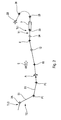
- FIG. 1 is the block diagram of a device according to the invention.
- Figures 2 and 3 are two graphs, respectively in the lateral plane and in the vertical plane, to explain the characteristics of the present invention.
- the guiding device considered here is a guiding device aircraft A, in particular a military transport aircraft, which allows the implementation, in the usual way, of a manual guidance by a pilot of the aircraft A and / or an automatic guidance, for example via an autopilot system.
- Characteristics essential of such a guiding device are known and do not enter directly in account in the context of the present invention. Also for reasons for simplification of the drawing, only the characteristics used for the implementation of the present invention have been represented in Figure 1.
- Said guiding device 1 makes it possible to guide the aircraft A along of a flight trajectory TO comprising a defined lateral trajectory TL0 in a lateral plane and partially shown in Figure 2 and a trajectory Vertical TV0 (or flight profile) defined in a vertical plane and represented partially in Figure 3.
- this flight trajectory TO includes a flight section SV at low altitude that starts at a point 2A, for example following a descent 3 from a cruise phase 4 at stabilized altitude, and ends at a point 2B.
- the flight path TO (at low altitude) must allow the aircraft A to follow closely the terrain overflown 5.
- the vertical trajectory TV0 is calculated, on this section SV of low-level flight, from a PT terrain profile that is located (at a predetermined guard height HG) above the relief 6 of the terrain 5 overflown, as shown on Figure 3.
- said flight path TO is a so-called string trajectory that consists of straight segments (Straight segments S1 in the lateral plane, separated by waypoints P1 as shown in Figure 2, and straight segments S2 in the vertical plane as shown in FIG. lateral and vertical transitions are constant radius arcs which are derived from setpoint speed considerations and maximum allowable load.
- the flight path can also be continuously curved in the vertical plane and / or in the plane lateral.
- This flight trajectory TO can be an anticipated trajectory, determined using predicted climb and descent performance. Of more, it is calculated using a digital database of the field and marry, at best and as close as possible, the configuration of the relief 6 of the ground 5 flew over.
- the present invention relates to the case, where during a flight on a such low altitude flight section SV, a tactical landing must be implemented.
- a tactical landing consists of landing the aircraft A on a landing zone 7 determined on the ground and unprepared.
- the aircraft A For able to perform in good conditions such a tactical landing, he It is necessary for the aircraft A to arrive stabilized at a speed appropriate and in a suitable aerodynamic configuration, to a initial point 8 corresponding to the beginning of a section of flight path T1 (with a lateral trajectory TL1 and a vertical trajectory TV1 which is located at a height H1 above the ground), from which is realized the tactical landing. He must also respect instructions from slope, acceleration, time, ...
- the aircraft A can benefit from effective masking by the terrain 5 overflown.
- configuration aerodynamic particular, a particular combination of positions movable elements (high lift flaps, landing gear, ...), on which the aerodynamic characteristics of the aircraft depend AT.
- the present invention applies equally well to a flight in conditions VMC ("Visual Meteorological Conditions"), that is to say meteorological conditions of visual flight that are expressed according to visibility, distance from clouds and ceiling, conditions equal to or greater than specified minima, than on a flight under IMC ("Instrument Meteorological Conditions” in English), that is to say instrument meteorological conditions that are expressed depending on the visibility, the distance from the clouds and the ceiling, ie conditions below the minimums specified for visual meteorological conditions.
- VMC Vehicle Meteorological Conditions
- IMC Instrument Meteorological Conditions
- Said set 11 of information sources also provides the time, slope, acceleration, ..., chosen by the operator.
- the aircraft A can reach the point 8 of the flight path T1 in a stabilized manner, that is to say at the predetermined speed and altitude and in the configuration planned aerodynamics, while respecting the instructions of time, slope, deceleration, ...
- This is very important to allow a landing tactical under the best possible stability conditions, after a low altitude approach that is often unstable, since the aircraft A follows as much as possible the relief 6 of the ground 5 for reasons of masking in particular.
- the device 1 according to the invention therefore allows to increase the comfort of driving, and to reduce the workload of the crew in such an approach phase which is often very demanding, while allowing to reach said initial point 8 in the best possible conditions.
- the aircraft A continues to fly at low altitude along said flight path TO (at low altitude).
- the pilot can decide, especially when the current operational conditions do not not allow, not to start the tactical landing procedure transition point 12 and continue flying at low altitude.
- the vertical trajectory TVi of the intermediate trajectory Ti corresponds to the segment of the line 13B, which is located between the initial point 8 and the transition point 12 determined in the manner specified above.
- the tactical landing can be achieved in the best possible conditions.
- the vertical trajectory TV1 generally comprises a horizontal section 21 having a bearing located at height H1 above ground 6 and a section of descent 22 having a constant slope ⁇ 3, leading to the end 23 upstream (in the direction of flight E of aircraft A) of the runway 7.
- the section descent 22 begins at a point 24 of the beginning of descent. This last point forms with point 19 a preparation phase 20.
- dashed lines are shown downstream of the point 23 the trajectory followed by the aircraft A, when the tactical landing could not be realized.
- the end point 2B of the low-flying SV section altitude is located downstream of said points 25 and 26, in the direction of flight E of aircraft A, the latter may continue to fly at low altitude after a tactical landing or at the end of a tactical landing procedure (without effective landing), and thus continue to benefit from masking by the field 5.
Landscapes
- Engineering & Computer Science (AREA)
- Radar, Positioning & Navigation (AREA)
- Remote Sensing (AREA)
- Aviation & Aerospace Engineering (AREA)
- Physics & Mathematics (AREA)
- General Physics & Mathematics (AREA)
- Automation & Control Theory (AREA)
- Traffic Control Systems (AREA)
- Navigation (AREA)
- Aiming, Guidance, Guns With A Light Source, Armor, Camouflage, And Targets (AREA)
- Control Of Position, Course, Altitude, Or Attitude Of Moving Bodies (AREA)
Abstract
Description
- une vitesse prédéterminée ;
- une altitude prédéterminée ;
- une configuration aérodynamique prédéterminée de l'aéronef ;
- un taux de décélération ;
- un horaire de parachutage à respecter ; et
- une pente sol maximale de rejointe de l'altitude de parachutage.
- dans une première variante relative notamment à un guidage manuel, à l'étape b), on présente ledit point de transition à un pilote de l'aéronef ; et
- dans une seconde variante, lorsque l'aéronef est guidé automatiquement, le guidage automatique pour suivre ladite trajectoire intermédiaire est déclenché audit point de transition.
- on projette dans le plan vertical, à partir dudit point initial, en amont, une première droite présentant une première pente qui est positive et une seconde droite présentant une seconde pente qui est négative ;
- on détermine, dans le plan vertical, les différents points de croisement entre, d'une part, lesdites première et seconde droites et, d'autre part, ladite première trajectoire de vol ; et
- on choisit, comme point de transition, l'un desdits points de croisement, à savoir celui qui est situé le plus près dudit point initial, pour bénéficier le plus longtemps possible du masquage par le terrain.
- à l'étape a), on détermine, de plus :
- au moins un premier point auxiliaire correspondant à un point de changement de vitesse où l'aéronef doit décélérer ; et/ou
- au moins un second point auxiliaire correspondant à un point de changement de configuration aérodynamique de l'aéronef. On prévoit généralement plusieurs seconds points auxiliaires qui sont relatifs respectivement aux différentes configurations aérodynamiques successives à commander avant d'arriver à la configuration aérodynamique adéquate ; et
- à l'étape b), on utilise ledit premier point auxiliaire et/ou ledit second point auxiliaire pour piloter l'aéronef.
- ladite première trajectoire de vol, pour un vol à basse altitude, en amont de ladite deuxième trajectoire de vol ; et
- une troisième trajectoire de vol, également pour un vol à basse altitude, en aval de ladite deuxième trajectoire de vol.
- des premiers moyens pour déterminer un point de transition qui se trouve sur ladite première trajectoire de vol, qui représente le début de ladite trajectoire intermédiaire, et qui correspond au point où l'aéronef doit quitter ladite première trajectoire de vol pour atteindre ledit point initial dans des conditions de vol prédéterminées ; et
- des seconds moyens qui utilisent ledit point de transition pour aider au guidage de l'aéronef entre lesdites première et deuxième trajectoires de vol.
- des moyens d'affichage pour présenter ledit point de transition sur un écran de visualisation, de type tête haute ou de type tête basse, en coupe horizontale et/ou verticale ; et/ou
- un système de guidage automatique (déclenchable par un pilote) pour guider automatiquement ledit aéronef au moins le long de ladite trajectoire intermédiaire.
- des moyens 9 qui sont reliés par une liaison 10 à un ensemble 11 de
sources d'informations et qui permettent de déterminer un point de
transition 12 :
- qui se trouve sur ladite trajectoire de vol TO à basse altitude ;
- qui représente le début d'une trajectoire intermédiaire Ti, dont la trajectoire verticale TVi est représentée sur la figure 3, ladite trajectoire intermédiaire Ti permettant de relier lesdites trajectoires TO et T1 ; et
- qui correspond au point où l'aéronef A doit quitter ladite trajectoire
de vol TO à basse altitude pour atteindre ledit point initial 8 (de la
trajectoire de vol T1 de la phase d'atterrissage tactique) dans des
conditions de vol prédéterminées. Dans un mode de réalisation préféré,
lesdites conditions de vol prédéterminées concernent au
moins :
- une vitesse prédéterminée ;
- une altitude prédéterminée ;
- une configuration aérodynamique prédéterminée de l'aéronef A ;
- un taux de décélération ;
- un horaire de parachutage à respecter ; et
- une pente sol maximale de rejointe de l'altitude de parachutage ; et
- des moyens 13A, 13B qui utilisent ledit point de transition 12 pour aider au guidage de l'aéronef A entre lesdites trajectoires de vol TO et T1.
- lesdits moyens 13A comprennent des moyens d'affichage 14 qui sont reliés par une liaison 15 aux moyens 9 et qui permettent de présenter sur un écran de visualisation 16 notamment ledit point de transition 12, ainsi que d'autres informations précisées ci-dessous. Ledit écran de visualisation 16 peut être un écran tête haute ou un écran tête basse. Il peut également s'agir d'un affichage horizontal ou d'un affichage vertical ; et
- lesdits moyens 13B comportent un système de guidage automatique usuel 17 qui est relié par une liaison 18 auxdits moyens 9. Ce système de guidage automatique usuel 17 comporte des moyens pour déterminer des ordres de pilotage et des moyens d'actionnement d'organes commandés (gouvernes, ...), auxquels sont appliqués ces ordres de pilotage.
- la trajectoire TO de vol à basse altitude, telle que prédite ;
- la procédure d' atterrissage tactique planifiée, avec la trajectoire de vol T1. Une procédure d'atterrissage tactique représente une section du plan de vol qui définit un atterrissage tactique dans la mission planifiée, c'est-à-dire un atterrissage intermédiaire sur une piste d'atterrissage 7 non préparée ;
- une consigne de vitesse courante de l'aéronef A ; et
- le vecteur vitesse (position, vitesse, configuration aérodynamique) de l'aéronef A.
- ils projettent dans le plan vertical, à partir dudit point initial 8, comme représenté sur la figure 3, en amont (c'est-à-dire vers l'arrière, dans le sens contraire au sens de vol E de l'aéronef A) une première droite 13A présentant une pente α1 positive et une seconde droite 13B présentant une pente α2 négative. De préférence, les deux pentes α1 et α2 présentent la même valeur absolue, par exemple 3° ;
- ils déterminent, dans le plan vertical, les différents points de croisement entre, d'une part, lesdites droites 13A et 13B et, d'autre part, ladite trajectoire verticale TV0 ; et
- ils sélectionnent comme point de transition 12, l'un desdits points de croisement ainsi déterminés, à savoir celui qui est situé le plus près dudit point initial 8.
- des points auxiliaires correspondant à des points de changement de vitesse, où l'aéronef A doit décélérer, selon un taux de décélération prédéterminé, de manière à atteindre de façon stabilisée ledit point initial 8 à la bonne vitesse. Ceci est très important pour pouvoir atterrir à la bonne vitesse. Le premier 1 9 desdits points auxiliaires peut être différent dudit point de transition 12, comme représenté sur la figure 3 ; et
- des points auxiliaires supplémentaires (non représentés) correspondant à des points de changement de configuration aérodynamique de l'aéronef A. Ces points auxiliaires supplémentaires permettent également à l'aéronef A de ne pas arriver trop rapidement audit point initial 8.
- un point 25 de début de rattrapage de la trajectoire TO à basse altitude, après un atterrissage tactique sur la piste d'atterrissage 7 et un décollage ultérieur ; et
- un point 26 de fin de procédure d'atterrissage tactique, notamment lorsque l'atterrissage tactique n'a pas pu être réalisé.
Claims (14)
- Procédé de guidage d'un aéronef au moins sur une trajectoire intermédiaire (Ti) entre une première trajectoire de vol (TO) pour un vol à basse altitude et une deuxième trajectoire de vol (T1) qui débute à un point initial (8), et à partir de laquelle est réalisé un atterrissage tactique,
caractérisé en ce que :a) on détermine un point de transition (12) qui se trouve sur ladite première trajectoire de vol (TO), qui représente le début de ladite trajectoire intermédiaire (Ti), et qui correspond au point où l'aéronef (A) doit quitter ladite première trajectoire de vol (TO) pour atteindre ledit point initial dans des conditions de vol prédéterminées ; etb) on utilise ledit point de transition (12) pour guider l'aéronef (A) entre lesdites première et deuxième trajectoires de vol (TO, T1). - Procédé selon la revendication 1,
caractérisé en ce que lesdites conditions de vol prédéterminées concernent au moins certaines des conditions suivantes :une vitesse prédéterminée ;une altitude prédéterminée ;une configuration aérodynamique prédéterminée de l'aéronef (A) ;un taux de décélération ;un horaire de parachutage à respecter ; etune pente sol maximale de rejointe de l'altitude de parachutage. - Procédé selon l'une des revendications 1 et 2,
caractérisé en ce qu'à l'étape b), on présente ledit point de transition (12) à un pilote de l'aéronef (A). - Procédé selon l'une quelconque des revendications précédentes,
caractérisé en ce que, lorsque l'aéronef (A) est guidé automatiquement, le guidage automatique pour suivre ladite trajectoire intermédiaire (Ti) est déclenché audit point de transition (12). - Procédé selon l'une quelconque des revendications précédentes,
caractérisé en ce qu'à l'étape a), pour déterminer ledit point de transition (12) :on projette dans le plan vertical, à partir dudit point initial (8), en amont, une première droite (13A) présentant une première pente (α1) qui est positive et une seconde droite (13B) présentant une seconde pente (α2) qui est négative ;on détermine, dans le plan vertical, les différents points de croisement entre, d'une part, lesdites première et seconde droites (13A, 13B) et, d'autre part, ladite première trajectoire de vol (TO) ; eton choisit, comme point de transition (12), l'un desdits points de croisement, à savoir celui qui est situé le plus près dudit point initial (8). - Procédé selon l'une quelconque des revendications précédentes, caractérisé en ce que ladite trajectoire intermédiaire (Ti) correspond à un segment de droite reliant ledit point de transition (12) audit point initial (8).
- Procédé selon l'une quelconque des revendications précédentes, caractérisé en ce que :à l'étape a), on détermine, de plus, au moins un premier point auxiliaire (19) correspondant à un point de changement de vitesse où l'aéronef (A) doit décélérer ; età l'étape b), on utilise ledit premier point auxiliaire (19) pour piloter l'aéronef (A).
- Procédé selon l'une quelconque des revendications précédentes, caractérisé en ce que :à l'étape a), on détermine, de plus, au moins un second point auxiliaire correspondant à un point de changement de configuration aérodynamique de l'aéronef (A) ; età l'étape b), on utilise ledit second point auxiliaire pour piloter l'aéronef (A).
- Procédé selon l'une quelconque des revendications précédentes, caractérisé en ce que ladite deuxième trajectoire de vol (T1), à partir de laquelle est réalisé l'atterrissage tactique, est insérée dans une section (SV) de vol à basse altitude comprenant :ladite première trajectoire de vol (TO), pour un vol à basse altitude, en amont de ladite deuxième trajectoire de vol (T1) ; etune troisième trajectoire de vol (TO), également pour un vol à basse altitude, en aval de ladite deuxième trajectoire de vol (T1).
- Dispositif de guidage d'un aéronef au moins sur une trajectoire intermédiaire (Ti) entre une première trajectoire de vol (TO) pour un vol à basse altitude et une deuxième trajectoire de vol (T1) qui débute à un point initial (8), et à partir de laquelle est réalisé un atterrissage tactique, caractérisé en ce qu'il comporte :des premiers moyens (9) pour déterminer un point de transition (12) qui se trouve sur ladite première trajectoire de vol (TO), qui représente le début de ladite trajectoire intermédiaire (Ti), et qui correspond au point où l'aéronef (A) doit quitter ladite première trajectoire de vol (TO) pour atteindre ledit point initial (8) dans des conditions de vol prédéterminées ; etdes seconds moyens (13A, 13B) qui utilisent ledit point de transition (12) pour aider au guidage de l'aéronef (A) entre lesdites première et deuxième trajectoires de vol (TO, T1).
- Dispositif selon la revendication 10,
caractérisé en ce que lesdits seconds moyens (13A) comportent des moyens d'affichage (14) pour présenter ledit point de transition (12) sur au moins un écran de visualisation (16). - Dispositif selon l'une des revendications 10 et 11,
caractérisé en ce que lesdits seconds moyens (13B) comportent un système de guidage automatique (17) pour guider automatiquement ledit aéronef (A) au moins le long de ladite trajectoire intermédiaire (Ti). - Aéronef,
caractérisé en ce qu'il comporte un dispositif (1) tel que celui spécifié sous l'une quelconque des revendications 10 à 12. - Aéronef,
caractérisé en ce qu'il comporte un dispositif (1) susceptible de mettre en oeuvre le procédé spécifié sous l'une quelconque des revendications 1 à 9.
Applications Claiming Priority (2)
| Application Number | Priority Date | Filing Date | Title |
|---|---|---|---|
| FR0405384A FR2870519B1 (fr) | 2004-05-18 | 2004-05-18 | Procede et dispositif de guidage d'un aeronef a l'atterrissage |
| FR0405384 | 2004-05-18 |
Publications (2)
| Publication Number | Publication Date |
|---|---|
| EP1600734A1 true EP1600734A1 (fr) | 2005-11-30 |
| EP1600734B1 EP1600734B1 (fr) | 2007-09-12 |
Family
ID=34942075
Family Applications (1)
| Application Number | Title | Priority Date | Filing Date |
|---|---|---|---|
| EP05290754A Expired - Lifetime EP1600734B1 (fr) | 2004-05-18 | 2005-04-06 | Procédé et dispositif de guidage d'un aéronef à l'atterrissage |
Country Status (6)
| Country | Link |
|---|---|
| US (1) | US7330781B2 (fr) |
| EP (1) | EP1600734B1 (fr) |
| AT (1) | ATE373222T1 (fr) |
| CA (1) | CA2503045C (fr) |
| DE (1) | DE602005002397T2 (fr) |
| FR (1) | FR2870519B1 (fr) |
Cited By (2)
| Publication number | Priority date | Publication date | Assignee | Title |
|---|---|---|---|---|
| FR2896072A1 (fr) * | 2006-01-11 | 2007-07-13 | Airbus France Sas | Procede et dispositif d'aide au pilotage d'un aeronef. |
| FR2947067A1 (fr) * | 2009-06-23 | 2010-12-24 | Thales Sa | Procede et dispositif d'optimisation du point de deceleration d'un circuit d'attente |
Families Citing this family (13)
| Publication number | Priority date | Publication date | Assignee | Title |
|---|---|---|---|---|
| US7228207B2 (en) * | 2002-02-28 | 2007-06-05 | Sabre Inc. | Methods and systems for routing mobile vehicles |
| FR2924505B1 (fr) * | 2007-12-04 | 2015-12-11 | Thales Sa | Methode de decouplage du mode de suivi automatique du profil lateral et du mode de suivi automatique du profil vertical |
| US8515596B2 (en) * | 2009-08-18 | 2013-08-20 | Honeywell International Inc. | Incremental position-based guidance for a UAV |
| FR2978589B1 (fr) * | 2011-07-29 | 2013-08-23 | Airbus Operations Sas | Procede et dispositif de gestion optimisee de la trajectoire verticale d'un aeronef |
| FR3014213B1 (fr) * | 2013-12-04 | 2016-02-05 | Airbus Operations Sas | Procede et dispositif de determination automatique d'un profil de vitesse a paliers de vitesse pour un aeronef. |
| FR3020478B1 (fr) * | 2014-04-28 | 2016-05-20 | Airbus Operations Sas | Procede et ensemble de guidage d'un aeronef lors d'un vol a basse hauteur. |
| US9536435B1 (en) | 2015-07-13 | 2017-01-03 | Double Black Aviation Technology L.L.C. | System and method for optimizing an aircraft trajectory |
| US9663241B1 (en) * | 2016-04-19 | 2017-05-30 | Honeywell International Inc. | Speed change and acceleration point enhancement system and method |
| CN107424441B (zh) * | 2017-06-08 | 2020-05-01 | 中国民航大学 | 基于Hotelling′s T2统计量的航空器航迹变点检测与估计方法 |
| CN109731349B (zh) * | 2019-03-06 | 2024-07-23 | 上海同济城市规划设计研究院有限公司 | 飞车娱乐用龟背 |
| US11358733B2 (en) | 2020-01-21 | 2022-06-14 | Rockwell Collins, Inc. | Optimum idle descent start point display based on current conditions |
| US20220100205A1 (en) * | 2020-09-25 | 2022-03-31 | Ge Aviation Systems Llc | Method and system for determining a descent profile |
| CN113296545B (zh) * | 2021-07-27 | 2021-11-30 | 北京远度互联科技有限公司 | 无人机返航路径规划方法、无人机、电子设备及计算机可读存储介质 |
Citations (3)
| Publication number | Priority date | Publication date | Assignee | Title |
|---|---|---|---|---|
| EP0798685A1 (fr) * | 1996-03-29 | 1997-10-01 | The Boeing Company | Méthode et appareil pour un système de gestion de vol procurant la liaison d'un ségment de route saillant à partir d'une position prédéterminée d'un plan de vol existant |
| US6289270B1 (en) * | 1998-05-19 | 2001-09-11 | Daimlerchrysler Ag | Method for generating connecting paths which can be used for guiding a vehicle to a predetermined target path |
| US6438469B1 (en) * | 2000-02-07 | 2002-08-20 | Honeywell International Inc. | Flight control system and method for an aircraft circle-to-land maneuver |
Family Cites Families (11)
| Publication number | Priority date | Publication date | Assignee | Title |
|---|---|---|---|---|
| US4862372A (en) * | 1985-11-26 | 1989-08-29 | The Boeing Company | Apparatus and methods for generating aircraft control commands using nonlinear feedback gain |
| US4792906A (en) * | 1986-08-29 | 1988-12-20 | The Boeing Company | Navigational apparatus and methods for displaying aircraft position with respect to a selected vertical flight path profile |
| US5796612A (en) * | 1992-11-18 | 1998-08-18 | Aers/Midwest, Inc. | Method for flight parameter monitoring and control |
| FR2741320B1 (fr) * | 1995-11-21 | 1998-01-02 | Sextant Avionique | Procede de pilotage a basse altitude |
| FR2752934B1 (fr) * | 1996-08-30 | 1998-11-13 | Sextant Avionique | Procede d'assistance au pilotage d'un aerodyne |
| US6038498A (en) * | 1997-10-15 | 2000-03-14 | Dassault Aviation | Apparatus and mehod for aircraft monitoring and control including electronic check-list management |
| WO2000023967A1 (fr) * | 1998-10-16 | 2000-04-27 | Universal Avionics Systems Corporation | Systeme et procede d'avertissement relatif a un projet de plan de vol |
| US6134500A (en) * | 1999-06-03 | 2000-10-17 | United Air Lines, Inc. | System and method for generating optimal flight plans for airline operations control |
| FR2822944B1 (fr) * | 2001-03-27 | 2003-08-29 | Eads Airbus Sa | Procede et dispositif d'assistance au pilotage d'un aeronef, notamment d'un avion de transport |
| FR2852097B1 (fr) * | 2003-03-07 | 2005-05-06 | Procede et dispositif pour construire une image de synthese de l'environnement d'un aeronef et la presenter sur un ecran dudit aeronef | |
| US7577501B2 (en) * | 2004-02-26 | 2009-08-18 | The Boeing Company | Methods and systems for automatically tracking information during flight |
-
2004
- 2004-05-18 FR FR0405384A patent/FR2870519B1/fr not_active Expired - Fee Related
-
2005
- 2005-04-06 DE DE602005002397T patent/DE602005002397T2/de not_active Expired - Lifetime
- 2005-04-06 AT AT05290754T patent/ATE373222T1/de not_active IP Right Cessation
- 2005-04-06 EP EP05290754A patent/EP1600734B1/fr not_active Expired - Lifetime
- 2005-04-08 CA CA2503045A patent/CA2503045C/fr not_active Expired - Fee Related
- 2005-05-06 US US11/123,171 patent/US7330781B2/en not_active Expired - Fee Related
Patent Citations (3)
| Publication number | Priority date | Publication date | Assignee | Title |
|---|---|---|---|---|
| EP0798685A1 (fr) * | 1996-03-29 | 1997-10-01 | The Boeing Company | Méthode et appareil pour un système de gestion de vol procurant la liaison d'un ségment de route saillant à partir d'une position prédéterminée d'un plan de vol existant |
| US6289270B1 (en) * | 1998-05-19 | 2001-09-11 | Daimlerchrysler Ag | Method for generating connecting paths which can be used for guiding a vehicle to a predetermined target path |
| US6438469B1 (en) * | 2000-02-07 | 2002-08-20 | Honeywell International Inc. | Flight control system and method for an aircraft circle-to-land maneuver |
Non-Patent Citations (2)
| Title |
|---|
| AIAA IEEE DIG AVIONICS SYST CONF PROC; AIAA/IEEE DIGITAL AVIONICS SYSTEMS CONFERENCE - PROCEEDINGS 1997 IEEE, PISCATAWAY, NJ, USA, vol. 2, 1997, pages 7.2 - 24 * |
| DATABASE COMPENDEX [online] ENGINEERING INFORMATION, INC., NEW YORK, NY, US; KRICKE K DIETER ET AL: "Low-level flight capability of a future military transport aircraft based on commercial avionics", XP002308965, Database accession no. EIX98114025910 * |
Cited By (3)
| Publication number | Priority date | Publication date | Assignee | Title |
|---|---|---|---|---|
| FR2896072A1 (fr) * | 2006-01-11 | 2007-07-13 | Airbus France Sas | Procede et dispositif d'aide au pilotage d'un aeronef. |
| US7702428B2 (en) | 2006-01-11 | 2010-04-20 | Airbus France | Method and device to assist in the piloting of an aircraft |
| FR2947067A1 (fr) * | 2009-06-23 | 2010-12-24 | Thales Sa | Procede et dispositif d'optimisation du point de deceleration d'un circuit d'attente |
Also Published As
| Publication number | Publication date |
|---|---|
| CA2503045C (fr) | 2012-08-07 |
| US7330781B2 (en) | 2008-02-12 |
| DE602005002397T2 (de) | 2008-06-19 |
| ATE373222T1 (de) | 2007-09-15 |
| CA2503045A1 (fr) | 2005-11-18 |
| US20050261812A1 (en) | 2005-11-24 |
| FR2870519B1 (fr) | 2006-08-11 |
| EP1600734B1 (fr) | 2007-09-12 |
| DE602005002397D1 (de) | 2007-10-25 |
| FR2870519A1 (fr) | 2005-11-25 |
Similar Documents
| Publication | Publication Date | Title |
|---|---|---|
| EP1598641B1 (fr) | Procédé et dispositif de révision d'un plan de vol d'un aéronef | |
| EP1600734B1 (fr) | Procédé et dispositif de guidage d'un aéronef à l'atterrissage | |
| EP1987503B1 (fr) | Dispositif d`aide au pilotage d`un aeronef lors d`une phase d`approche en vue d`un atterrissage | |
| EP1607816B1 (fr) | Système d'aide au pilotage d'un aéronef lors de l'approche d'une piste d'atterissage en vue d'un atterissage | |
| EP1598721B1 (fr) | Procédé et dispositif de guidage automatique d'un aéronef, pour un vol au moins en partie à basse altitude | |
| FR3017967A1 (fr) | Procede et systeme de gestion de vol | |
| FR3012630A1 (fr) | Procede d'aide a la navigation pour un aeronef en descente et en approche a poussee reduite | |
| WO2007093698A1 (fr) | Procede et systeme pour predire la possibilite d’arret complet d’un aeronef sur une piste d’atterissage | |
| FR2942566A1 (fr) | Procede pour la gestion du vol d'un aeronef | |
| CA2508287A1 (fr) | Procede de validation d'une contrainte de plan de vol | |
| WO2013079666A1 (fr) | Procédé de gestion d'un plan de vol vertical | |
| FR3037411A1 (fr) | Procede et systeme de determination automatique d'un profil optimise de descente et d'approche pour un aeronef | |
| FR2872316A1 (fr) | Procede de changement de procedure d'approche d'un aeronef | |
| FR2926156A1 (fr) | Methode de prise en compte d'une consigne de guidage htmb. | |
| EP1598719B1 (fr) | Procédé et dispositif pour déterminer automatiquement une trajectoire de capture d'une trajectoire de vol pour un aéronef, ainsi que méthode et système de guidage automatique d'un aéronef | |
| CA2503065C (fr) | Procede et dispositif de guidage d'un aeronef pour l'aide au parachutage | |
| WO2021239696A1 (fr) | Procédé et système d'aide à l'approche d'un aéronef en vue de l'atterrissage | |
| EP1598718B1 (fr) | Procédé et dispositif pour déterminer une altitude de sécurité pour un aéronef | |
| EP1598271B1 (fr) | Indicateur de pilotage affichant les informations de poussée de l'aéronef | |
| EP1684145B1 (fr) | Procédé de gestion de vol pour un aéronef | |
| FR2962819A1 (fr) | Procede et dispositif d'aide a la gestion de transitions de modes de guidage d'un avion | |
| FR2947067A1 (fr) | Procede et dispositif d'optimisation du point de deceleration d'un circuit d'attente | |
| FR2896072A1 (fr) | Procede et dispositif d'aide au pilotage d'un aeronef. |
Legal Events
| Date | Code | Title | Description |
|---|---|---|---|
| PUAI | Public reference made under article 153(3) epc to a published international application that has entered the european phase |
Free format text: ORIGINAL CODE: 0009012 |
|
| AK | Designated contracting states |
Kind code of ref document: A1 Designated state(s): AT BE BG CH CY CZ DE DK EE ES FI FR GB GR HU IE IS IT LI LT LU MC NL PL PT RO SE SI SK TR |
|
| AX | Request for extension of the european patent |
Extension state: AL BA HR LV MK YU |
|
| 17P | Request for examination filed |
Effective date: 20060117 |
|
| AKX | Designation fees paid |
Designated state(s): AT BE BG CH CY CZ DE DK EE ES FI FR GB GR HU IE IS IT LI LT LU MC NL PL PT RO SE SI SK TR |
|
| 17Q | First examination report despatched |
Effective date: 20060306 |
|
| GRAP | Despatch of communication of intention to grant a patent |
Free format text: ORIGINAL CODE: EPIDOSNIGR1 |
|
| GRAS | Grant fee paid |
Free format text: ORIGINAL CODE: EPIDOSNIGR3 |
|
| GRAA | (expected) grant |
Free format text: ORIGINAL CODE: 0009210 |
|
| AK | Designated contracting states |
Kind code of ref document: B1 Designated state(s): AT BE BG CH CY CZ DE DK EE ES FI FR GB GR HU IE IS IT LI LT LU MC NL PL PT RO SE SI SK TR |
|
| REG | Reference to a national code |
Ref country code: GB Ref legal event code: FG4D Free format text: NOT ENGLISH |
|
| REG | Reference to a national code |
Ref country code: CH Ref legal event code: EP |
|
| GBT | Gb: translation of ep patent filed (gb section 77(6)(a)/1977) |
Effective date: 20070927 |
|
| GRAC | Information related to communication of intention to grant a patent modified |
Free format text: ORIGINAL CODE: EPIDOSCIGR1 |
|
| REF | Corresponds to: |
Ref document number: 602005002397 Country of ref document: DE Date of ref document: 20071025 Kind code of ref document: P |
|
| REG | Reference to a national code |
Ref country code: IE Ref legal event code: FG4D Free format text: LANGUAGE OF EP DOCUMENT: FRENCH |
|
| REG | Reference to a national code |
Ref country code: SE Ref legal event code: TRGR |
|
| PG25 | Lapsed in a contracting state [announced via postgrant information from national office to epo] |
Ref country code: FI Free format text: LAPSE BECAUSE OF FAILURE TO SUBMIT A TRANSLATION OF THE DESCRIPTION OR TO PAY THE FEE WITHIN THE PRESCRIBED TIME-LIMIT Effective date: 20070912 Ref country code: LT Free format text: LAPSE BECAUSE OF FAILURE TO SUBMIT A TRANSLATION OF THE DESCRIPTION OR TO PAY THE FEE WITHIN THE PRESCRIBED TIME-LIMIT Effective date: 20070912 |
|
| PG25 | Lapsed in a contracting state [announced via postgrant information from national office to epo] |
Ref country code: AT Free format text: LAPSE BECAUSE OF FAILURE TO SUBMIT A TRANSLATION OF THE DESCRIPTION OR TO PAY THE FEE WITHIN THE PRESCRIBED TIME-LIMIT Effective date: 20070912 Ref country code: PL Free format text: LAPSE BECAUSE OF FAILURE TO SUBMIT A TRANSLATION OF THE DESCRIPTION OR TO PAY THE FEE WITHIN THE PRESCRIBED TIME-LIMIT Effective date: 20070912 |
|
| NLV1 | Nl: lapsed or annulled due to failure to fulfill the requirements of art. 29p and 29m of the patents act | ||
| PG25 | Lapsed in a contracting state [announced via postgrant information from national office to epo] |
Ref country code: ES Free format text: LAPSE BECAUSE OF FAILURE TO SUBMIT A TRANSLATION OF THE DESCRIPTION OR TO PAY THE FEE WITHIN THE PRESCRIBED TIME-LIMIT Effective date: 20071223 Ref country code: GR Free format text: LAPSE BECAUSE OF FAILURE TO SUBMIT A TRANSLATION OF THE DESCRIPTION OR TO PAY THE FEE WITHIN THE PRESCRIBED TIME-LIMIT Effective date: 20071213 Ref country code: NL Free format text: LAPSE BECAUSE OF FAILURE TO SUBMIT A TRANSLATION OF THE DESCRIPTION OR TO PAY THE FEE WITHIN THE PRESCRIBED TIME-LIMIT Effective date: 20070912 |
|
| REG | Reference to a national code |
Ref country code: IE Ref legal event code: FD4D |
|
| PG25 | Lapsed in a contracting state [announced via postgrant information from national office to epo] |
Ref country code: CZ Free format text: LAPSE BECAUSE OF FAILURE TO SUBMIT A TRANSLATION OF THE DESCRIPTION OR TO PAY THE FEE WITHIN THE PRESCRIBED TIME-LIMIT Effective date: 20070912 Ref country code: IS Free format text: LAPSE BECAUSE OF FAILURE TO SUBMIT A TRANSLATION OF THE DESCRIPTION OR TO PAY THE FEE WITHIN THE PRESCRIBED TIME-LIMIT Effective date: 20080112 Ref country code: SK Free format text: LAPSE BECAUSE OF FAILURE TO SUBMIT A TRANSLATION OF THE DESCRIPTION OR TO PAY THE FEE WITHIN THE PRESCRIBED TIME-LIMIT Effective date: 20070912 Ref country code: PT Free format text: LAPSE BECAUSE OF FAILURE TO SUBMIT A TRANSLATION OF THE DESCRIPTION OR TO PAY THE FEE WITHIN THE PRESCRIBED TIME-LIMIT Effective date: 20080212 |
|
| PG25 | Lapsed in a contracting state [announced via postgrant information from national office to epo] |
Ref country code: RO Free format text: LAPSE BECAUSE OF FAILURE TO SUBMIT A TRANSLATION OF THE DESCRIPTION OR TO PAY THE FEE WITHIN THE PRESCRIBED TIME-LIMIT Effective date: 20070912 |
|
| PLBE | No opposition filed within time limit |
Free format text: ORIGINAL CODE: 0009261 |
|
| STAA | Information on the status of an ep patent application or granted ep patent |
Free format text: STATUS: NO OPPOSITION FILED WITHIN TIME LIMIT |
|
| PG25 | Lapsed in a contracting state [announced via postgrant information from national office to epo] |
Ref country code: DK Free format text: LAPSE BECAUSE OF FAILURE TO SUBMIT A TRANSLATION OF THE DESCRIPTION OR TO PAY THE FEE WITHIN THE PRESCRIBED TIME-LIMIT Effective date: 20070912 |
|
| 26N | No opposition filed |
Effective date: 20080613 |
|
| BERE | Be: lapsed |
Owner name: AIRBUS FRANCE Effective date: 20080430 |
|
| PG25 | Lapsed in a contracting state [announced via postgrant information from national office to epo] |
Ref country code: IE Free format text: LAPSE BECAUSE OF FAILURE TO SUBMIT A TRANSLATION OF THE DESCRIPTION OR TO PAY THE FEE WITHIN THE PRESCRIBED TIME-LIMIT Effective date: 20070912 |
|
| PG25 | Lapsed in a contracting state [announced via postgrant information from national office to epo] |
Ref country code: MC Free format text: LAPSE BECAUSE OF NON-PAYMENT OF DUE FEES Effective date: 20080430 |
|
| PG25 | Lapsed in a contracting state [announced via postgrant information from national office to epo] |
Ref country code: EE Free format text: LAPSE BECAUSE OF FAILURE TO SUBMIT A TRANSLATION OF THE DESCRIPTION OR TO PAY THE FEE WITHIN THE PRESCRIBED TIME-LIMIT Effective date: 20070912 |
|
| PG25 | Lapsed in a contracting state [announced via postgrant information from national office to epo] |
Ref country code: BE Free format text: LAPSE BECAUSE OF NON-PAYMENT OF DUE FEES Effective date: 20080430 |
|
| PG25 | Lapsed in a contracting state [announced via postgrant information from national office to epo] |
Ref country code: SI Free format text: LAPSE BECAUSE OF FAILURE TO SUBMIT A TRANSLATION OF THE DESCRIPTION OR TO PAY THE FEE WITHIN THE PRESCRIBED TIME-LIMIT Effective date: 20070912 |
|
| PG25 | Lapsed in a contracting state [announced via postgrant information from national office to epo] |
Ref country code: CY Free format text: LAPSE BECAUSE OF FAILURE TO SUBMIT A TRANSLATION OF THE DESCRIPTION OR TO PAY THE FEE WITHIN THE PRESCRIBED TIME-LIMIT Effective date: 20070912 |
|
| PG25 | Lapsed in a contracting state [announced via postgrant information from national office to epo] |
Ref country code: BG Free format text: LAPSE BECAUSE OF FAILURE TO SUBMIT A TRANSLATION OF THE DESCRIPTION OR TO PAY THE FEE WITHIN THE PRESCRIBED TIME-LIMIT Effective date: 20071212 |
|
| REG | Reference to a national code |
Ref country code: CH Ref legal event code: PL |
|
| PG25 | Lapsed in a contracting state [announced via postgrant information from national office to epo] |
Ref country code: LI Free format text: LAPSE BECAUSE OF NON-PAYMENT OF DUE FEES Effective date: 20090430 Ref country code: CH Free format text: LAPSE BECAUSE OF NON-PAYMENT OF DUE FEES Effective date: 20090430 |
|
| PG25 | Lapsed in a contracting state [announced via postgrant information from national office to epo] |
Ref country code: HU Free format text: LAPSE BECAUSE OF FAILURE TO SUBMIT A TRANSLATION OF THE DESCRIPTION OR TO PAY THE FEE WITHIN THE PRESCRIBED TIME-LIMIT Effective date: 20080313 Ref country code: LU Free format text: LAPSE BECAUSE OF NON-PAYMENT OF DUE FEES Effective date: 20080406 |
|
| PG25 | Lapsed in a contracting state [announced via postgrant information from national office to epo] |
Ref country code: TR Free format text: LAPSE BECAUSE OF FAILURE TO SUBMIT A TRANSLATION OF THE DESCRIPTION OR TO PAY THE FEE WITHIN THE PRESCRIBED TIME-LIMIT Effective date: 20070912 |
|
| REG | Reference to a national code |
Ref country code: GB Ref legal event code: 732E Free format text: REGISTERED BETWEEN 20110721 AND 20110727 |
|
| REG | Reference to a national code |
Ref country code: FR Ref legal event code: CA Effective date: 20110916 Ref country code: FR Ref legal event code: CD Owner name: AIRBUS HOLDING, FR Effective date: 20110916 Ref country code: FR Ref legal event code: TP Owner name: AIRBUS HOLDING, FR Effective date: 20110913 Ref country code: FR Ref legal event code: CJ Effective date: 20110916 |
|
| REG | Reference to a national code |
Ref country code: DE Ref legal event code: R082 Ref document number: 602005002397 Country of ref document: DE Representative=s name: MEISSNER & MEISSNER, DE |
|
| REG | Reference to a national code |
Ref country code: DE Ref legal event code: R082 Ref document number: 602005002397 Country of ref document: DE Representative=s name: MEISSNER & MEISSNER, DE Effective date: 20120529 Ref country code: DE Ref legal event code: R081 Ref document number: 602005002397 Country of ref document: DE Owner name: AIRBUS OPERATIONS SAS, FR Free format text: FORMER OWNER: AIRBUS FRANCE, TOULOUSE, FR Effective date: 20120529 Ref country code: DE Ref legal event code: R082 Ref document number: 602005002397 Country of ref document: DE Representative=s name: ANWALTSKANZLEI MEISSNER & MEISSNER, DE Effective date: 20120529 |
|
| PGFP | Annual fee paid to national office [announced via postgrant information from national office to epo] |
Ref country code: SE Payment date: 20130418 Year of fee payment: 9 |
|
| PGFP | Annual fee paid to national office [announced via postgrant information from national office to epo] |
Ref country code: IT Payment date: 20130422 Year of fee payment: 9 |
|
| REG | Reference to a national code |
Ref country code: SE Ref legal event code: EUG |
|
| PG25 | Lapsed in a contracting state [announced via postgrant information from national office to epo] |
Ref country code: SE Free format text: LAPSE BECAUSE OF NON-PAYMENT OF DUE FEES Effective date: 20140407 |
|
| PG25 | Lapsed in a contracting state [announced via postgrant information from national office to epo] |
Ref country code: IT Free format text: LAPSE BECAUSE OF NON-PAYMENT OF DUE FEES Effective date: 20140406 |
|
| REG | Reference to a national code |
Ref country code: FR Ref legal event code: PLFP Year of fee payment: 11 |
|
| REG | Reference to a national code |
Ref country code: FR Ref legal event code: PLFP Year of fee payment: 12 |
|
| REG | Reference to a national code |
Ref country code: FR Ref legal event code: PLFP Year of fee payment: 13 |
|
| REG | Reference to a national code |
Ref country code: FR Ref legal event code: PLFP Year of fee payment: 14 |
|
| PGFP | Annual fee paid to national office [announced via postgrant information from national office to epo] |
Ref country code: DE Payment date: 20180420 Year of fee payment: 14 |
|
| PGFP | Annual fee paid to national office [announced via postgrant information from national office to epo] |
Ref country code: FR Payment date: 20180420 Year of fee payment: 14 |
|
| PGFP | Annual fee paid to national office [announced via postgrant information from national office to epo] |
Ref country code: GB Payment date: 20180418 Year of fee payment: 14 |
|
| REG | Reference to a national code |
Ref country code: DE Ref legal event code: R119 Ref document number: 602005002397 Country of ref document: DE |
|
| GBPC | Gb: european patent ceased through non-payment of renewal fee |
Effective date: 20190406 |
|
| PG25 | Lapsed in a contracting state [announced via postgrant information from national office to epo] |
Ref country code: DE Free format text: LAPSE BECAUSE OF NON-PAYMENT OF DUE FEES Effective date: 20191101 Ref country code: GB Free format text: LAPSE BECAUSE OF NON-PAYMENT OF DUE FEES Effective date: 20190406 |
|
| PG25 | Lapsed in a contracting state [announced via postgrant information from national office to epo] |
Ref country code: FR Free format text: LAPSE BECAUSE OF NON-PAYMENT OF DUE FEES Effective date: 20190430 |