EP1600170A1 - Sustained-release pharmaceutical composition for lung administration - Google Patents
Sustained-release pharmaceutical composition for lung administration Download PDFInfo
- Publication number
- EP1600170A1 EP1600170A1 EP04714460A EP04714460A EP1600170A1 EP 1600170 A1 EP1600170 A1 EP 1600170A1 EP 04714460 A EP04714460 A EP 04714460A EP 04714460 A EP04714460 A EP 04714460A EP 1600170 A1 EP1600170 A1 EP 1600170A1
- Authority
- EP
- European Patent Office
- Prior art keywords
- carrageenan
- pharmacologically active
- active substance
- pharmaceutical composition
- drugs
- Prior art date
- Legal status (The legal status is an assumption and is not a legal conclusion. Google has not performed a legal analysis and makes no representation as to the accuracy of the status listed.)
- Withdrawn
Links
Images

Classifications
-
- A—HUMAN NECESSITIES
- A61—MEDICAL OR VETERINARY SCIENCE; HYGIENE
- A61K—PREPARATIONS FOR MEDICAL, DENTAL OR TOILETRY PURPOSES
- A61K9/00—Medicinal preparations characterised by special physical form
- A61K9/0012—Galenical forms characterised by the site of application
- A61K9/007—Pulmonary tract; Aromatherapy
- A61K9/0073—Sprays or powders for inhalation; Aerolised or nebulised preparations generated by other means than thermal energy
- A61K9/0075—Sprays or powders for inhalation; Aerolised or nebulised preparations generated by other means than thermal energy for inhalation via a dry powder inhaler [DPI], e.g. comprising micronized drug mixed with lactose carrier particles
-
- A—HUMAN NECESSITIES
- A61—MEDICAL OR VETERINARY SCIENCE; HYGIENE
- A61K—PREPARATIONS FOR MEDICAL, DENTAL OR TOILETRY PURPOSES
- A61K31/00—Medicinal preparations containing organic active ingredients
- A61K31/70—Carbohydrates; Sugars; Derivatives thereof
- A61K31/715—Polysaccharides, i.e. having more than five saccharide radicals attached to each other by glycosidic linkages; Derivatives thereof, e.g. ethers, esters
- A61K31/731—Carrageenans
-
- A—HUMAN NECESSITIES
- A61—MEDICAL OR VETERINARY SCIENCE; HYGIENE
- A61K—PREPARATIONS FOR MEDICAL, DENTAL OR TOILETRY PURPOSES
- A61K47/00—Medicinal preparations characterised by the non-active ingredients used, e.g. carriers or inert additives; Targeting or modifying agents chemically bound to the active ingredient
- A61K47/30—Macromolecular organic or inorganic compounds, e.g. inorganic polyphosphates
- A61K47/36—Polysaccharides; Derivatives thereof, e.g. gums, starch, alginate, dextrin, hyaluronic acid, chitosan, inulin, agar or pectin
-
- A—HUMAN NECESSITIES
- A61—MEDICAL OR VETERINARY SCIENCE; HYGIENE
- A61K—PREPARATIONS FOR MEDICAL, DENTAL OR TOILETRY PURPOSES
- A61K9/00—Medicinal preparations characterised by special physical form
- A61K9/0012—Galenical forms characterised by the site of application
- A61K9/007—Pulmonary tract; Aromatherapy
- A61K9/0073—Sprays or powders for inhalation; Aerolised or nebulised preparations generated by other means than thermal energy
- A61K9/008—Sprays or powders for inhalation; Aerolised or nebulised preparations generated by other means than thermal energy comprising drug dissolved or suspended in liquid propellant for inhalation via a pressurized metered dose inhaler [MDI]
-
- A—HUMAN NECESSITIES
- A61—MEDICAL OR VETERINARY SCIENCE; HYGIENE
- A61K—PREPARATIONS FOR MEDICAL, DENTAL OR TOILETRY PURPOSES
- A61K9/00—Medicinal preparations characterised by special physical form
- A61K9/14—Particulate form, e.g. powders, Processes for size reducing of pure drugs or the resulting products, Pure drug nanoparticles
-
- A—HUMAN NECESSITIES
- A61—MEDICAL OR VETERINARY SCIENCE; HYGIENE
- A61P—SPECIFIC THERAPEUTIC ACTIVITY OF CHEMICAL COMPOUNDS OR MEDICINAL PREPARATIONS
- A61P11/00—Drugs for disorders of the respiratory system
-
- A—HUMAN NECESSITIES
- A61—MEDICAL OR VETERINARY SCIENCE; HYGIENE
- A61P—SPECIFIC THERAPEUTIC ACTIVITY OF CHEMICAL COMPOUNDS OR MEDICINAL PREPARATIONS
- A61P11/00—Drugs for disorders of the respiratory system
- A61P11/06—Antiasthmatics
-
- A—HUMAN NECESSITIES
- A61—MEDICAL OR VETERINARY SCIENCE; HYGIENE
- A61P—SPECIFIC THERAPEUTIC ACTIVITY OF CHEMICAL COMPOUNDS OR MEDICINAL PREPARATIONS
- A61P43/00—Drugs for specific purposes, not provided for in groups A61P1/00-A61P41/00
Definitions
- the present invention relates to a sustained-release pharmaceutical composition that can be administered pulmonarily, and a production method and use thereof.
- pulmonary absorption of drugs is faster than gastrointestinal absorption and it is known that the smaller the molecular weight and the higher the oil/water partition coefficient, the faster the absorption.
- pulmonary absorption is attracting attention as a new administration route for drugs expected to exhibit systemic effects such as insulin, calcitonin and like biologically active peptides.
- a means for prolonging the pharmacological effects of inhalants is, for example, the use of a liposome preparation as a liquid inhalant as described in U.S. Patent No. 5192528.
- liposomes are generally unstable and difficult to preserve stably at room temperature for a long period of time.
- Japanese Unexamined Patent Publication No. 36233/1992 discloses a sustained-release drug prepared by producing microspheres from an aqueous solution of a water-soluble polymer containing a physiologically active substance and encapsulating the polymer in a hydrophobic, biodegradable and bioabsorbable polymer.
- a water-soluble macromolecular substance the publication mentions sodium alginate, gelatin, carrageenan, etc. However, there is no mention about the administration of this sustained-release drug via the pulmonary route.
- An object of the invention is to provide a sustained-release pharmaceutical composition containing a pharmacologically active substance, the pharmaceutical composition being able to control the pulmonary absorption of the pharmacologically active substance and produce prolonged pharmacological effects when administered via the pulmonary route.
- the present inventors carried out intensive research to solve the problem in the background art and found that addition of carrageenan to a pharmacologically active substance that can be administered via the lungs can solve the problem.
- the inventors carried out further intensive research based on this finding and thereby accomplished the invention.
- the present invention thus provides the following:
- sustained-release pharmaceutical composition for pulmonary administration (hereinafter also referred to simply as “pharmaceutical composition”) of the invention is described below in detail.
- the pharmaceutical composition of the invention comprises a pharmacologically active substance that can be administered via the lungs (hereinafter also referred to simply as "pharmacologically active substance") and carrageenan.
- the composition is characterized by containing carrageenan as a means for controlling the absorption rate of the pharmacologically active substance in the lungs.
- the pharmacologically active substance used in the invention is not particularly limited so long as the substance exhibits pharmacological effects when administered to, for example, mammals via the pulmonary route.
- a wide variety of known substances that act locally, for example, on the trachea, bronchi, lungs or the like, or act on the entire body can be used.
- Examples of such pharmacologically active substances include central nervous system drugs, peripheral nervous system drugs, cardiovascular drugs, drugs for the digestive organs, antibiotics, chemotherapeutic drugs and the like.
- anticholinergic drugs e.g., ipratropium bromide, flutropium bromide, oxitropium bromide, thiotropium bromide
- ⁇ 2 stimulants e.g., procaterol, fenoterol, salbutamol, formoterol, salmeterol
- steroids e.g., beclomethasone, fluticasone, budesonide
- antiasthmatic drugs e.g., theophylline, aminophylline, ozagrel
- antiallergic drugs e.g., ketotifen, terfenadine, azelastine, epinastine
- antiinflammatory drugs e.g., diclofenac sodium, ibuprofen, indomethacin
- antibacterial drugs e.g., cefixime, cefdinir, ofloxacin, tosufloxacin
- antifungal drugs e.g., fluconazole, itrac
- Carrageenan used in the invention is a macromolecule having a molecular weight of 100,000 to 500,000 and obtained by extracting with water red algae such as Gigartinaceae Gigartina and Chondrus and Solieriaceae Eucheuma.
- Carrageenan is a polysaccharide mainly comprising galactose and 3,6-anhydrogalactose.
- carrageenan has sulfate hemiester moieties in the unit structure and may be classified into five types, i.e., kappa( ⁇ )-carrageenan, iota( ⁇ )-carrageenan, lambda( ⁇ )-carrageenan, mu( ⁇ )-carrageenan and eta( ⁇ )-carrageenan, according to the content of sulfate hemiester moieties.
- the five types of carrageenan can be used singly or in combination.
- the mixing ratio can be suitably selected according to the purpose of use.
- carrageenan kappa-carrageenan, iota-carrageenan and lambda-carrageenan are preferable. Especially preferable is carrageenan mainly comprising iota-carrageenan. iota-carrageenan is particularly suitable for use.
- the pharmaceutical composition of the invention contains the above pharmacologically active substance and carrageenan.
- the pharmacologically active substance is retained in the lungs by the action of carrageenan and gradually and sustainedly released. Therefore, the pulmonary absorption rate of the pharmacologically active substance can be controlled and the plasma pharmacologically active substance concentration is maintained sustainedly and stably.
- the pharmaceutical composition of the invention has good storage stability.
- the pharmaceutical composition of the invention may contain, in addition to the pharmacologically active substance and carrageenan, additives as described below.
- additives are not particularly limited and may be any additives used in the preparation of drugs. Specific examples thereof include solid excipients such as refined sugar, lactose, glucose, fructose, sucrose, mannitol, sorbitol, arabinose, xylitol, dextrose and the like; liquid excipients such as propylene glycol and like inert liquids; binders such as methylcellulose, hydroxypropylcellulose, polyvinylpyrrolidone, polyethylene glycols, refined sugar and the like; lubricants such as magnesium stearate, light anhydrous silicic acid, talc, sodium lauryl sulfate and the like; preservatives such as sodium benzoate, sodium hydrogen sulfite, methyl paraben, propyl paraben and the like; stabilizers such as citric acid, sodium
- the components and their proportions in the pharmaceutical composition of the invention may be suitably selected according to the targeted disease, age and gender of the patient, condition of the disease, etc.
- the pharmaceutical composition of the invention may contain carrageenan in an amount of about 0.001 to 10 7 wt.% (preferably about 0.01 to 10 6 wt.%, more preferably about 0.1 to 10 5 wt.%, particularly preferably about 1 to 10 4 wt.%), relative to the weight of the pharmacologically active substance.
- Additives may be incorporated in the composition in an amount of about 0 to 10 7 wt.% (preferably about 0.5 to 10 6 wt.%, more preferably about 1 to 10 4 wt.%, particularly preferably about 10 to 10 3 wt.s), relative to the weight of the pharmacologically active substance.
- the pharmaceutical composition contains carrageenan (particularly carrageenan mainly comprising iota-carrageenan) in an amount of about 0.01 to 10 5 wt.% (preferably about 0.1 to 10 4 wt.%), and additives (particularly water, ethanol, etc.) in an amount of about 0 to 10 7 wt.% (preferably about 10 to 10 6 wt.%), relative to the weight of pharmacologically active substance (particularly ⁇ 2 stimulants, antiasthmatic drugs and steroids).
- carrageenan particularly carrageenan mainly comprising iota-carrageenan
- additives particularly water, ethanol, etc.
- the pharmaceutical composition contains iota-carrageenan in an amount of about 0.1 to 10 4 wt.% (preferably about 1 to 10 3 wt.%), and additives (particularly water, ethanol, etc.) in an amount of about 1 to 10 6 wt.% (preferably about 10 to 10 5 wt.%), relative to the weight of pharmacologically active substance (particularly theophylline, procaterol, etc.).
- the pharmaceutical composition contains carrageenan (particularly carrageenan mainly comprising iota-carrageenan) in an amount of about 0.1 to 10 4 wt.% (preferably about 1 to 10 3 wt.%), relative to the weight of pharmacologically active substance (particularly ⁇ 2 stimulants, antiasthmatic drugs and steroids).
- the pharmaceutical composition contains iota-carrageenan in an amount of about 0.1 to 10 3 wt.% (preferably about 1 to 10 2 wt.%), relative to the weight of pharmacologically active substance (particularly theophylline, procaterol, etc.).
- the pharmaceutical composition of the invention for pulmonary administration is usually used as an inhalant.
- the composition can be formed into dry powder inhalants, inhalant suspensions, inhalant solutions, encapsulated inhalants and like known forms of inhalants.
- Such forms of inhalants can be prepared by filling the pharmaceutical composition of the invention into an appropriate inhaler such as a metered-dose inhaler, dry powder inhaler, atomizer bottle, nebulizer etc. before use.
- powder inhalants are particularly preferable.
- the mean particle diameter of the powder is not especially limited but, in view of the residence of the particles in the lungs, is preferably in the range of about 0.1 to 20 ⁇ m, and particularly about 1 to 5 ⁇ m.
- the particle size distribution of the powder pharmaceutical composition of the invention is not particularly limited, it is preferable that particles having a size of about 25 ⁇ m or more account for not more than about 5% of the particles, and particularly preferably 1% or less.
- the pharmaceutical composition in the form of a powder of the invention can be produced by, for example, the drying-micronization method, the spray drying method and the like.
- the pharmaceutical composition in the form of a powder can be prepared by drying an aqueous solution (or aqueous dispersion) containing a pharmacologically active substance and carrageenan and microparticulating the dried product.
- a pharmacologically active substance is added and dissolved (or dispersed) by stirring using a homogenizer, etc. to give an aqueous solution (or aqueous dispersion).
- the aqueous medium may be water alone or a mixture of water and a lower alcohol.
- Examples of usable lower alcohols include methanol, ethanol, 1-propanol, 2-propanol and like water-miscible alcohols. Ethanol is particularly preferable.
- the obtained aqueous solution (or aqueous dispersion) is dried by blower, lyophilization, etc., the resulting product is pulverized or microparticulated into fine particles using jet mills, ball mills or like devices to give a powder having the above mean particle diameter. If necessary, additives as mentioned above may be added in any of the above steps.
- the pharmaceutical composition in the form of a powder of the invention can be prepared, for example, by spray-drying an aqueous solution (or aqueous dispersion) containing a pharmacologically active substance and carrageenan for microparticulation.
- the aqueous solution (or aqueous dispersion) can be prepared following the procedure of the above drying-micronization method.
- the spray-drying process can be performed using a known method, thereby giving a powdery pharmaceutical composition in the form of globular particles with the above-mentioned mean particle diameter.
- the inhalant suspensions, inhalant solutions, encapsulated inhalants, etc. can also be prepared using the pharmaceutical composition in the form of a powder produced by the drying-micronization method, the spray-drying method and the like, or by using carrageenan and a pharmacologically active substance that can be administered via the lungs, according to known preparation methods.
- the inhalant comprising the pharmaceutical composition of the invention is preferably used as an aerosol.
- the aerosol can be prepared, for example, by filling the pharmaceutical composition of the invention and a propellant into an aerosol container. If necessary, dispersants, solvents and the like may be added.
- the aerosols may be prepared as 2-phase systems, 3-phase systems and diaphragm systems (double containers).
- the aerosol can be used in any form of a powder, suspension, solution or the like.
- Examples of usable propellants include liquefied gas propellants, compressed gases and the like.
- Usable liquefied gas propellants include, for example, fluorinated hydrocarbons (e.g., CFC substitutes such as HCFC-22, HCFC-123, HFC-134a, HFC-227 and the like), liquefied petroleum, dimethyl ether and the like.
- Usable compressed gases include, for example, soluble gases (e.g., carbon dioxide, nitrous oxide), insoluble gases (e.g., nitrogen) and the like.
- the dispersant and solvent may be suitably selected from the additives mentioned above.
- the aerosol can be prepared, for example, by a known 2-step method comprising the step of preparing the composition of the invention and the step of filling and sealing the composition and propellant into the aerosol container.
- the following aerosol can be mentioned:
- usable pharmacologically active substances include procaterol, theophylline, steroids and salts thereof (hydrochlorides, sulfates, etc.).
- Theophylline and procaterol (or hydrochlorides thereof) are particularly preferable.
- carageenan those mainly comprising iota-carrageenan are preferable.
- propellants fluorinated hydrocarbons such as HFC-134a, HFC-227 and like CFC substitutes are preferable.
- usable solvents include water, ethanol, 2-propanol and the like. Water and ethanol are particularly preferable. In particular, a weight ratio of water to ethanol in the range of about 0:1 to 10:1 may be used.
- the aerosol of the invention contains carrageenan in an amount of about 0.01 to 10 4 wt.% (preferably about 0.1 to 10 3 wt.%), propellant in an amount of about 10 2 to 10 7 wt.% (preferably about 10 3 to 10 6 wt.%), solvent in an amount of about 0 to 10 6 wt.% (preferably about 10 to 10 5 wt.%), and dispersant in an amount of 0 to 10 3 wt.% (preferably about 0.01 to 10 2 wt.%), relative to the weight of pharmacologically active substance.
- carrageenan in an amount of about 0.01 to 10 4 wt.% (preferably about 0.1 to 10 3 wt.%)
- propellant in an amount of about 10 2 to 10 7 wt.% (preferably about 10 3 to 10 6 wt.%)
- solvent in an amount of about 0 to 10 6 wt.% (preferably about 10 to 10 5 wt.%)
- dispersant in an amount of 0 to 10
- compositions of the invention are safe and effective for lung diseases and systemic diseases in mammals (e.g., humans, mice, rats, cats, dogs, sheep, horses, cows, monkeys) and can maintain therapeutic effectiveness for a long time.
- the compositions can be used, for example, as anti-asthmatic agents, antiallergic agents, eosinophil chemotaxis inhibitors and preventive and therapeutic agents for diseases associated with eosinophilic infiltration (e.g., urticaria, atopic dermatitis, allergic rhinitis, hypersensitivity pneumonitis and like allergic diseases, eczema, dermatitis herpetiformis, psoriasis and like skin diseases, eosinophilic pneumonia (PIE syndrome), chronic obstructive pulmonary disease (COPD) and like respiratory diseases) and infectious diseases caused by various bacteria.
- the compositions are particularly useful as anti-asthmatic agents and preventive and therapeutic agents for chronic obstructive pulmonary disease (COPD),
- the dosage of the pharmaceutical composition of the invention may vary depending on the type of pharmacologically active substance, the targeted disease, age, body weight, condition of the disease, administration route, number of administration times, etc.
- the composition is administered in an amount effective for allowing the pharmacologically active substance to exhibit its pharmacological effects.
- the composition is preferably administered such that the active ingredient (pharmacologically active substance) can be given to a human adult in a dose of about 0.001 to about 100 mg, and given in a single dose or twice-four times a day.
- the form of the pharmaceutical composition of the invention such as a powder, solution, suspension etc. may be suitably selected according to the type of pharmacologically active substance, the targeted disease etc.
- the pharmaceutical composition of the invention allows direct local administration into the airways, the pharmacologically active substances contained therein produce immediate effects. Furthermore, as it contains carrageenan, the composition enables the sustained release of the pharmacologically active substance in the lungs, and exhibition of prolonged pharmacological effects. Therefore, when the pharmaceutical composition of the invention is administered via the lungs, frequent administration is unnecessary, and patient inconvenience is reduced. In addition, the administration of the minimum dose required can largely reduce the risk of adverse side effects caused by massive drug doses. Thus the pharmaceutical composition of the invention can enhance therapeutic effectiveness of the drug and reduce adverse side effects.
- the carrageenan was dissolved in water heated to about 80°C and the solution was cooled to about 40°C. After addition of the procaterol hydrochloride, the mixture was stirred using a homogenizer. While cooling the mixture at about -30°C, 20 g of HFC-134a was added with stirring and then the ethyl alcohol was added with stirring. HFC-134a was further added with stirring to make the total weight of the mixture about 100 g. A 9 g portion of the resulting mixture was filled into an aerosol container and the container was furnished with a metering valve for releasing the aerosol in an amount of 50 ⁇ l each time.
- iota-carrageenan product No. C-1138, produced by Sigma Chemical Co. and sold by Sigma Aldrich Japan K.K.
- 100 g of water heated to about 80°C was heated to about 80°C and the solution was cooled to about 40°C.
- 20 g of theophylline was added and dissolved by stirring using a homogenizer.
- the resulting solution was dried with a blower drying machine (SPHH-200, manufactured by Tabai Espec Corp.) and pulverized to about 2 ⁇ m with a spiral jet mill ("50AS", manufacture by Hosokawa Micron Corp.).
- a 10-fold weight of lactose was added thereto and mixed using a drum mixer to give an inhalant powder.
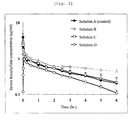
- Solution B is a composition of the invention
- solutions A, C and D are comparative compositions.
- Solution A Theophylline was dissolved in isotonic phosphate buffer (PBS(-), Product No. 05913, manufactured by Nissui Pharmaceutical Co., Ltd.) to give a 1 mg/ml theophylline solution A.
- PBS(-) isotonic phosphate buffer
- Solution C Gelatin (product No. 16631-92, produced and sold by Nacalai Tesque, Inc.) was dissolved in solution A heated to about 80°C, and the resulting solution was cooled to room temperature to give a 5 w/v% gelatin solution C.
- Solution D Sodium alginate with a viscosity of 500-600 cP (product No.199-09961, manufactured by Wako Pure Chemical Industries, Ltd.) was dissolved in solution A to give a 2 w/v% sodium alginate solution D.
- Wistar male rats (body weight about 220 g) fasted for about 18 hours were used as experimental animals.
- the intratracheal administration of the solutions was performed according to the method described in Schanker, L. S. et al., Am. J. Physiol., 222 (1972), p.409. That is, the rats were anesthetized with pentobarbital (about 32 mg/kg) and secured on their back on animal boards, the tracheas were exposed through a longitudinal incision.
- a section of polyethylene tube i.d. 1.5 mm, o.d. 2.3 mm
- 2.5 cm in length was inserted through the tracheal incision for a distance of 0.6 cm between the forth and fifth tracheal rings caudal to the thyroid cartilage.
- Each of one hundred microliters of drug solutions A-D was drawn into a glass microsyringe, and then rat was maintained at an angle of 80°.
- the tip of syringe was inserted through the polyethylene tube to 1-2 mm above the bifurcation of the trachea. Then, the solution was injected over a period of 1-2 sec. About 45 sec after the administration, the rat was positioned at an angle of 10°and the incision in the skin was then closed with suture.
- intravenous administration was performed by administering 100 ⁇ l of solution A through the femoral vein.
- 0.2 ml of blood was collected from the subclavian vein at 15 sec., 30 sec., 1 min., 2 min., 5 min., 10 min., 15 min, 30 min., 1 hr., 1.5 hr., 2 hr., 2.5 hr., 3 hr., 4 hr., 5 hr. and 6 hr. after the intratracheal and intravenous administrations and centrifuged at 1800 g for 10 minutes.
- the theophylline concentrations in the obtained serum were measured by HPLC.
- the parameters in Table 1 indicate the following:
- Fig. 1 shows that pulmonary absorption of theophylline was as quick and effective as achieved by intravenous administration.
- the serum theophylline concentration change after the intratracheal administration of 1 w/v% iota-carrageenan solution B shows sustained release pharmacokinetic properties, i.e., a 5.5-fold increase in time to reach the maximum serum theophylline concentration (T max ), 2.2-fold increase in mean residence time (MRT inf ), 4.9-fold increase in mean absorption time (MAT inf ) and 40.2% suppression of the maximum concentration without reducing the area under the serum concentration-time curves (AUC 6hr , AUC inf ).
- the pharmaceutical composition of the invention can advantageously control the pulmonary absorption rate of the pharmacologically active substance and allow the substance to exhibit prolonged pharmacological effects.
Landscapes
- Health & Medical Sciences (AREA)
- Chemical & Material Sciences (AREA)
- Life Sciences & Earth Sciences (AREA)
- Medicinal Chemistry (AREA)
- Veterinary Medicine (AREA)
- Pharmacology & Pharmacy (AREA)
- Animal Behavior & Ethology (AREA)
- General Health & Medical Sciences (AREA)
- Public Health (AREA)
- Engineering & Computer Science (AREA)
- Bioinformatics & Cheminformatics (AREA)
- Epidemiology (AREA)
- Pulmonology (AREA)
- Otolaryngology (AREA)
- General Chemical & Material Sciences (AREA)
- Molecular Biology (AREA)
- Organic Chemistry (AREA)
- Nuclear Medicine, Radiotherapy & Molecular Imaging (AREA)
- Chemical Kinetics & Catalysis (AREA)
- Inorganic Chemistry (AREA)
- Medicinal Preparation (AREA)
- Pharmaceuticals Containing Other Organic And Inorganic Compounds (AREA)
Abstract
Description

- AUC6hr:
- Area under the serum theophylline concentration-time curve to 6 hrs after administration (µg·hr/ml)
- AUCinf:
- Area under the serum theophylline concentration-time curve to infinite time after administration (µg·hr/ml)
- Cmax:
- Maximum serum theophylline concentration (µg/ml)
- Tmax:
- Time required to reach maximum serum theophylline concentration (hr)
- MRTinf:
- Mean residence time (calculated through infinite time after administration) (hr)
- MATinf:
- Mean absorption time (calculated through infinite time after administration) (hr)
| Solution | Dose (µg/body) | AUC6hr (µg·hr/mL) | AUCinf (µg·hr/mL) | Cmax (µg/mL) | Tmax (hr) | MRTinf (hr) | MATinf (hr) |
| A (Control) | 100 | 2.89 | 4.02 | 3.96 | 0.0042 | 4.43 | 1.32 |
| B (carrageenan) | 100 | 3.96 | 8.33 | 1.59 | 0.023 | 9.55 | 6.44 |
| C (gelatin) | 100 | 3.00 | 4.01 | 2.92 | 0.0042 | 4.29 | 1.18 |
| D (sodium alginate) | 100 | 2.11 | 2.44 | 0.96 | 0.033 | 3.00 | -0.11 |
Claims (16)
- A sustained-release pharmaceutical composition for pulmonary administration comprising carrageenan and a pharmacologically active substance that can be administered via the lungs.
- A pharmaceutical composition according to claim 1, wherein the carrageenan is at least one member selected from the group consisting of kappa-carrageenan, iota-carrageenan and lambda-carrageenan.
- A pharmaceutical composition according to claim 1, wherein the pharmacologically active substance is at least one member selected from the group consisting of anticholinergic drugs, β2 stimulants, steroids, antiasthmatic drugs, antiallergic drugs, antiinflammatory drugs, antibacterial drugs, antifungal drugs, anti-influenza virus drugs, peptide drugs, antitumor drugs and vitamins.
- A pharmaceutical composition according to claim 1, wherein carrageenan is present in an amount of about 0.001 to 107 wt.% relative to the pharmacologically active substance.
- A pharmaceutical composition according to claim 1, wherein the pharmacologically active substance is one member selected from the group consisting of β2 stimulants, antiasthmatic drugs and steroids, and carrageenan mainly comprising iota-carrageenan is present in an amount of about 0.01 to 105 wt.% relative to the pharmacologically active substance.
- A pharmaceutical composition according to claim 1, which is in the form of a powder having a mean particle diameter of about 0.1 to 20 µm.
- A process for preparing a sustained release pharmaceutical composition in the form of a powder for pulmonary administration, the process comprising drying an aqueous solution or aqueous dispersion containing a pharmacologically active substance that can be administered via the lungs and carrageenan, followed by pulverization, or comprising spray drying the solution or dispersion.
- An inhalant comprising the pharmaceutical composition according to any one of claims 1 to 6.
- An aerosol comprising the pharmaceutical composition according to any one of claims 1 to 6, a propellant and an aerosol container.
- An aerosol according to claim 9, wherein relative to the pharmacologically active substance, carrageenan is present in an amount of about 0.01 to 104 wt.%, and propellant is present in an amount of about 102 to 107 wt.%.
- An aerosol according to claim 9, which further comprises at least one member selected from the group consisting of solvents and dispersants.
- An aerosol according to claim 11, wherein relative to the pharmacologically active substance, the solvent is present in an amount of about 0 to 106 wt.%, and the dispersant is present in an amount of about 0 to 103.
- A method for administering to a patient a pharmacologically active substance that can be administered via the lungs, the method comprising administering an effective amount of a pharmacologically active substance in combination with carrageenan to the patient via the pulmonary route.
- A method for sustainedly releasing a pharmacologically active substance in the lungs, comprising administering via the lungs an effective amount of a pharmaceutical composition containing the pharmacologically active substance and carrageenan.
- Use of carrageenan for preparing a sustained-release pharmaceutical composition for pulmonary administration of a pharmacologically active substance.
- Use of carrageenan for sustainedly releasing a pharmacologically active substance in the lungs by administering via the lungs an effective amount of a pharmaceutical composition containing the pharmacologically active substance.
Applications Claiming Priority (3)
| Application Number | Priority Date | Filing Date | Title |
|---|---|---|---|
| JP2003049019 | 2003-02-26 | ||
| JP2003049019 | 2003-02-26 | ||
| PCT/JP2004/002193 WO2004075920A1 (en) | 2003-02-26 | 2004-02-25 | Sustained-release pharmaceutical composition for lung administration |
Publications (2)
| Publication Number | Publication Date |
|---|---|
| EP1600170A1 true EP1600170A1 (en) | 2005-11-30 |
| EP1600170A4 EP1600170A4 (en) | 2010-12-29 |
Family
ID=32923305
Family Applications (1)
| Application Number | Title | Priority Date | Filing Date |
|---|---|---|---|
| EP04714460A Withdrawn EP1600170A4 (en) | 2003-02-26 | 2004-02-25 | Sustained-release pharmaceutical composition for lung administration |
Country Status (9)
| Country | Link |
|---|---|
| US (1) | US20060078504A1 (en) |
| EP (1) | EP1600170A4 (en) |
| JP (1) | JPWO2004075920A1 (en) |
| KR (1) | KR20050105490A (en) |
| CN (1) | CN1744917B (en) |
| CA (1) | CA2512434C (en) |
| MY (1) | MY142361A (en) |
| TW (1) | TW200500085A (en) |
| WO (1) | WO2004075920A1 (en) |
Cited By (1)
| Publication number | Priority date | Publication date | Assignee | Title |
|---|---|---|---|---|
| EP2233130A1 (en) * | 2009-03-23 | 2010-09-29 | Genepharm (Europe) Trading Limited | A sustained release oral composition of an antipsychotic agent |
Families Citing this family (5)
| Publication number | Priority date | Publication date | Assignee | Title |
|---|---|---|---|---|
| US20130150810A1 (en) * | 2002-04-30 | 2013-06-13 | The Population Council, Inc. | Intravaginal ring for the delivery of unique combinations of antimicrobial compositions |
| US20080131454A1 (en) * | 2006-12-05 | 2008-06-05 | Marinomed Biotechnologie Gmbh | Methods and Compositions for the Treatment of Rhinovirus Infections with Carrageenan |
| MX2010001986A (en) * | 2007-08-24 | 2010-03-11 | Marinomed Biotechnologie Gmbh | Antiviral composition comprising a sulfated polysaccharide. |
| WO2010000437A1 (en) * | 2008-07-01 | 2010-01-07 | Marinomed Biotechnologie Gmbh | Antiallergic marine biopolymers |
| CN114191418B (en) * | 2021-12-21 | 2023-06-09 | 丽珠医药集团股份有限公司 | Tiotropium bromide double-layer microsphere, preparation method thereof and tiotropium bromide slow-release inhalant |
Family Cites Families (15)
| Publication number | Priority date | Publication date | Assignee | Title |
|---|---|---|---|---|
| US5192528A (en) * | 1985-05-22 | 1993-03-09 | Liposome Technology, Inc. | Corticosteroid inhalation treatment method |
| US5200195A (en) * | 1991-12-06 | 1993-04-06 | Alza Corporation | Process for improving dosage form delivery kinetics |
| DE69330672T2 (en) | 1992-06-12 | 2002-06-27 | Teijin Ltd., Osaka | PHARMACEUTICAL PREPARATION FOR APPLICATION IN THE AIRWAY |
| US5612053A (en) * | 1995-04-07 | 1997-03-18 | Edward Mendell Co., Inc. | Controlled release insufflation carrier for medicaments |
| US6126919A (en) * | 1997-02-07 | 2000-10-03 | 3M Innovative Properties Company | Biocompatible compounds for pharmaceutical drug delivery systems |
| JP2000070327A (en) * | 1998-09-01 | 2000-03-07 | Kao Corp | Nasal lavage |
| US6579968B1 (en) * | 1999-06-29 | 2003-06-17 | Palatin Technologies, Inc. | Compositions and methods for treatment of sexual dysfunction |
| US6461639B2 (en) * | 2000-05-01 | 2002-10-08 | Aeropharm Technology, Inc. | Core formulation |
| NL1015288C2 (en) * | 2000-05-24 | 2001-12-14 | Peter Ferdinand Elbers | Preparation for stabilizing the protective layer on the epithelium of the cornea or alveoli. |
| US6939568B2 (en) * | 2001-04-23 | 2005-09-06 | Nucryst Pharmaceuticals Corp. | Treatment of inflammatory skin conditions |
| US6749845B2 (en) * | 2001-02-15 | 2004-06-15 | Aeropharm Technology, Inc. | Modulated release particles for lung delivery |
| US6551578B2 (en) * | 2001-02-15 | 2003-04-22 | Aeropharm Technology Incorporated | Modulated release particles for aerosol delivery |
| US6475468B2 (en) * | 2001-02-15 | 2002-11-05 | Aeropharm Technology Incorporated | Modulated release particles for aerosol delivery |
| JP2002255852A (en) * | 2001-03-01 | 2002-09-11 | Toa Eiyo Ltd | Spray formulation for stomatitis |
| JP2003040766A (en) * | 2001-07-26 | 2003-02-13 | Kao Corp | Nasal lavage |
-
2004
- 2004-02-25 CN CN200480003325XA patent/CN1744917B/en not_active Expired - Fee Related
- 2004-02-25 TW TW093104753A patent/TW200500085A/en not_active IP Right Cessation
- 2004-02-25 KR KR1020057015827A patent/KR20050105490A/en not_active Ceased
- 2004-02-25 JP JP2005502902A patent/JPWO2004075920A1/en active Pending
- 2004-02-25 US US10/544,934 patent/US20060078504A1/en not_active Abandoned
- 2004-02-25 CA CA2512434A patent/CA2512434C/en not_active Expired - Fee Related
- 2004-02-25 EP EP04714460A patent/EP1600170A4/en not_active Withdrawn
- 2004-02-25 WO PCT/JP2004/002193 patent/WO2004075920A1/en not_active Ceased
- 2004-02-26 MY MYPI20040633A patent/MY142361A/en unknown
Cited By (1)
| Publication number | Priority date | Publication date | Assignee | Title |
|---|---|---|---|---|
| EP2233130A1 (en) * | 2009-03-23 | 2010-09-29 | Genepharm (Europe) Trading Limited | A sustained release oral composition of an antipsychotic agent |
Also Published As
| Publication number | Publication date |
|---|---|
| HK1083768A1 (en) | 2006-07-14 |
| MY142361A (en) | 2010-11-30 |
| CA2512434A1 (en) | 2004-09-10 |
| CN1744917A (en) | 2006-03-08 |
| EP1600170A4 (en) | 2010-12-29 |
| JPWO2004075920A1 (en) | 2006-06-01 |
| WO2004075920A1 (en) | 2004-09-10 |
| CN1744917B (en) | 2010-05-05 |
| KR20050105490A (en) | 2005-11-04 |
| TW200500085A (en) | 2005-01-01 |
| US20060078504A1 (en) | 2006-04-13 |
| CA2512434C (en) | 2012-01-03 |
| TWI332403B (en) | 2010-11-01 |
Similar Documents
| Publication | Publication Date | Title |
|---|---|---|
| EP1734938B1 (en) | Insulin highly respirable microparticles | |
| Liu et al. | Budesonide nanocrystal-loaded hyaluronic acid microparticles for inhalation: In vitro and in vivo evaluation | |
| US9155699B2 (en) | Pulmonary delivery for levodopa | |
| AU718593B2 (en) | Polysaccharide microspheres for the pulmonary delivery of drugs | |
| EP1107743B1 (en) | Stable spray-dried protein formulations | |
| US20080253971A9 (en) | Particles for inhalation having sustained release properties | |
| JP2009532489A (en) | Drug fine particles | |
| EP1259228B1 (en) | Therapeutic compositions for pulmonary delivery | |
| CA2512434C (en) | Sustained-release pharmaceutical composition comprising carrageenan for lung administration | |
| HK1083768B (en) | Sustained-release pharmaceutical composition for lung administration | |
| EP1857114A1 (en) | Particle and preparation containing the particle | |
| CN121648089A (en) | Sustained-release ciliristat composition and preparation method thereof | |
| AU2006236049A1 (en) | Stable metal ion-lipid powdered pharmaceutical compositions for drug delivery and methods of use | |
| KR20090117330A (en) | Pharmaceutical composition for dry powder inhalation and method for preparing the same |
Legal Events
| Date | Code | Title | Description |
|---|---|---|---|
| PUAI | Public reference made under article 153(3) epc to a published international application that has entered the european phase |
Free format text: ORIGINAL CODE: 0009012 |
|
| 17P | Request for examination filed |
Effective date: 20050728 |
|
| AK | Designated contracting states |
Kind code of ref document: A1 Designated state(s): AT BE BG CH CY CZ DE DK EE ES FI FR GB GR HU IE IT LI LU MC NL PT RO SE SI SK TR |
|
| AX | Request for extension of the european patent |
Extension state: AL LT LV MK |
|
| DAX | Request for extension of the european patent (deleted) | ||
| RIN1 | Information on inventor provided before grant (corrected) |
Inventor name: YAMADA, KEIGO Inventor name: YAMAMOTO, AKIRA,FORUMU HORIKAWA IMADEGAWA 205 |
|
| A4 | Supplementary search report drawn up and despatched |
Effective date: 20101130 |
|
| 17Q | First examination report despatched |
Effective date: 20120301 |
|
| GRAP | Despatch of communication of intention to grant a patent |
Free format text: ORIGINAL CODE: EPIDOSNIGR1 |
|
| RIN1 | Information on inventor provided before grant (corrected) |
Inventor name: YAMADA, KEIGO Inventor name: YAMAMOTO, AKIRA |
|
| STAA | Information on the status of an ep patent application or granted ep patent |
Free format text: STATUS: THE APPLICATION IS DEEMED TO BE WITHDRAWN |
|
| 18D | Application deemed to be withdrawn |
Effective date: 20121218 |